Filmmaking Books You Need to Read – Top Ten List

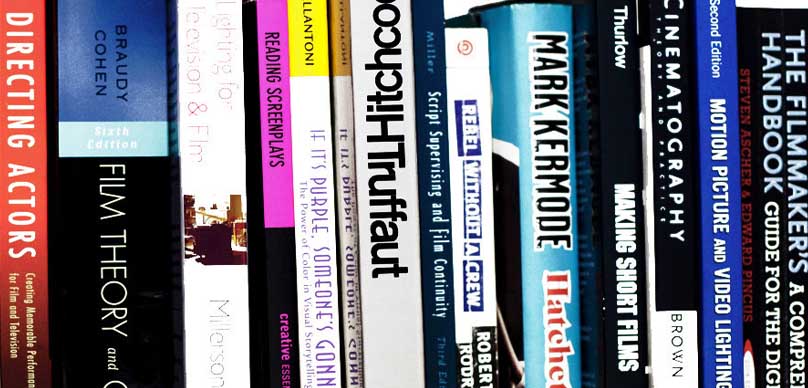
1) Rebel without a Crew by Robert Rodriguez

This is one of the first filmmaking books I read at film school and is still one of the best ever written. In Rebel Without a Crew, famed independent screenwriter and director Robert Rodriguez (Sin City, Sin City 2, Once Upon a Time in Mexico, Spy Kids) discloses all the unique strategies and original techniques he used to make his remarkable debut film, El Mariachi, on a micro-budget. This is both one filmmaker’s remarkable story and an essential guide for anyone who has a celluloid story to tell and the dreams and determination to see it through.  Part production diary, part how-to manual, Rodriguez unveils how he was able to make his influential first film on only a $7,000 budget.

2) Shooting for the Mob (Based on the Incredible True Story)

A bipolar gangster, a naive, young film director, and Batman. What could go wrong? Alex Ferrari is a first-time film director who just got hired to direct a $20 million feature film, the only problem is the film is about Jimmy, an egomaniacal gangster who wants the film to be about his life in the mob. From the backwater towns of Louisiana to the Hollywood Hills, Alex is taken on a crazy misadventure through the world of the mafia and Hollywood.

Huge movie stars, billion-dollar producers, studio heads and, of course, a few gangsters, populate this unbelievable journey down the rabbit hole of chasing your dream. Would you sell your soul to the devil to make your dream come true? By the way, did we mention that this story is based on true events? no, seriously it is.

Listen to the Podcast Interview

3) The Independent Film Producer’s Survival Guide

In this comprehensive guidebook, three very experienced entertainment lawyers disclose everything you need to know to produce, market and sell an independent film. From the development process to deal making, financing, setting up the production, hiring directors and actors, securing location rights, acquiring music, calculating profits, digital moving making, distribution, and marketing your movie. Highly recommended. This all-new second edition has been completed updated. 

4) In the Blink of an Eye by Walter Murch

In the Blink of an Eye is celebrated film editor Walter Murch’s vivid, multifaceted, thought — provoking essay on film editing. Starting with what might be the most basic editing question — Why do cuts work? — Murch treats the reader to a wonderful ride through the aesthetics and practical concerns of cutting film.

Along the way, he offers his unique insights on such subjects as continuity and discontinuity in editing, dreaming, and reality; criteria for a good cut; the blink of the eye as an emotional cue; digital editing; and much more.

5) Making Movies by Sidney Lumet

From one of America’s most acclaimed directors comes one of the best filmmaking books that is both a professional memoir and a definitive guide to the art, craft, and business of the motion picture. Drawing on 40 years of experience on movies ranging from Long Day’s Journey Into Night to The Verdict, Lumet explains the painstaking labor that results in two hours of screen magic.

6) Produce Your Own Damn Movie by Lloyd Kaufman

When it comes to producing, no one speaks with more authority than Lloyd Kaufman, founder of the longest-running independent film studio, Troma Entertainment. He reveals the best ways to seek out investors, scout locations, hire crew and cast talent, navigate legalities, and stay within your budget.

Also check out: Lloyd Kaufman’s Interview Podcast

7) From Reel to Deal: Everything You Need to Create a Successful Independent Film

Dov Simens was one of my first guests on the Indie Film Hustle Podcast and has become easily one of my most popular. From screenwriting & budgeting to marketing, Dov Simens provides encyclopedic, precise, & creative instruction for putting your vision up on the screen. With his aggressive and no bullsh*t approach, you’ll learn everything you need to know to create a successful indie film.

Also check out: Dov Simens Producing Master Class Podcast

8) The Filmmaker’s Handbook: A Comprehensive Guide for the Digital Age

A staple of indie filmmaker’s bookshelves for well over a decade, the latest edition of The Filmmaker’s Handbook has revitalized all of the essential knowledge which it has become known for and brought it right up to date. Widely acknowledged as the “bible” of video and film production, and used in courses around the world, The Filmmaker’s Handbook is now updated with the latest advances in HD and new digital formats. For students and teachers, professionals and novices, this indispensable handbook covers all aspects of movie making.

9) Save the Cat by Blake Snyder

You can see echoes of all the other aforementioned writers in this book. What I like about Save The Cat is that it’s a stripped down, fun read with a lot of helpful information. I especially appreciate Snyder’s Beat Sheet which shows with almost page number accuracy where to place those particular plot moments that help keep your story moving. Some might find it formulaic, but I think it functions very well and points to exactly the kind of scripts Hollywood has come to expect from writers. One of the best screenwriting books. (FREE AUDIO BOOK VERSIONS HERE)

10) The Declaration of Independent Filmmaking by Michael Polish

Less than a decade since they began working in the movies, Mark and Michael Polish have established themselves as critically acclaimed, award-winning independent filmmakers. Their innovative approach to art direction, use of digital photography, and ability to attract stellar talent to their modestly budgeted films sprang from necessity; now these aesthetics have become admired trademarks of their work.  Also check out: Michael Polish’s Podcast Interview

11) Indie Film Producing: The Craft of Low Budget Filmmaking

Indie Film Producing explains the simple, basic, clear cut role of the independent film producer. Raising funds to do your dream project, producing award-winning films with a low budget, putting name actors on your indie film-it’s all doable, and this book guides you through the entire process of being a successful producer with bonus tips on how to effortlessly maneuver through the sphere of social media marketing and fundraising tactics. Also check out: Suzanne Lyon’s Producing Podcast Interview

BONUS: Down and Dirty Pictures: Miramax, Sundance, and the Rise of Independent Film

A critical analysis of the rise of independent filmmakers examines Robert Redford’s Sundance Film Festival, the success of Miramax, and the careers of independent filmmakers whose work has transformed Hollywood and the film industry.

BONUS: Easy Riders, Raging Bulls: How the Sex-Drugs-and-Rock ‘N’ Roll Generation Saved Hollywood

When the low-budget biker movie Easy Rider shocked Hollywood with its success in 1969, a new Hollywood era was born. This was an age when talented young filmmakers such as Scorsese, Coppola, and Spielberg, along with a new breed of actors, including De Niro, Pacino, and Nicholson, became the powerful figures who would make such modern classics as The Godfather, Chinatown, Taxi Driver, and Jaws. Easy Riders, Raging Bulls follows the wild ride that was Hollywood in the ’70s.

BONUS: Spike Mike Reloaded : A Guided Tour Across a Decade of American Independent Cinema

Pierson’s name may not be a household one, but the filmmakers he’s been associated with – Spike Lee, Michael Moore, Jim Jarmusch – are well known to fans of independent films. Pierson has been friend, investor, and, most importantly, business agent to these and lesser talents and has been a fixture on the festival scene for over a decade. Go behind the scenes & see John Pierson’s pivotal role in the launching of such films as Stranger than Paradise, Clerks, She’s Gotta Have It, and Roger and Me.

SaveSave

WATCH: What Is Aspect Ratio?

An aspect ratio is simply an image’s width and height. As technology in camera advances, some standard ratios have fallen behind, giving way to exciting and new movie ratios. Good movie makers know how to make great choices in picking the aspect ratio to use to give viewers a wonderful viewing experience.

There are six basic aspect ratios made available for cameras today.

Below are the six ratio aspects:

1:1 – This is a square format ratio. This actually doesn’t cover landscape or portrait orientation. Its inherent symmetry can also be used for high formal composition. However, it seems that the non-square rectangles were much more common for taking photos, and the square was not really in use until the arrival of Rollei’s cameras in 1929. Hasselblad also followed suit by introducing their waist level SLR that also uses square format. This format is also commonly seen in smartphone apps. An example is Instagram that currently boasts of over 60 million square format images every single day.

5:4 – These are for sheet film and large format cameras, mainly as 8”x10” and 4”x5”, and this is where the well-known 8”x10” print came from.

4:3 – This aspect ratio is popularly used in videos and broadcast televisions, mainly in 640X480-pixel resolution: small compacts and cameras (that inherited prior CCD video architecture). Thomas Edison used this aspect ratio for one of his films, after then, the ratio as became a standard. People don’t really know why he chose that aspect ratio, but there have been some speculations about it. This is roughly the proportion of a ‘whole plate’ used in tintypes or Daguerreotypes before the arrival of cinema. This format is mainly 6.5”x8.5”, which is approximately 4:3. It is of worth to observe that 3:2 and 4:3 are geometrically related, because if you double or half a 4:3 aspect (in the right dimension) gives a 3:2 aspect, and doubling or halving 3:2 will give you 4:3.

3:2 – This format is the known format for 35mm film, and it’s also digital SLR standard format. Oskar Barnack made a little camera that makes use of cinema film rolls, and he decided to make use of the double frame. A double of 4:3 frame yields 4:6, which is the same thing as 3:2 when it’s turned 90 o. This is where the format for 35mm film originated, and it is currently what is in use today. Japanese camera inventors Minolta and Nikon used a 4:3 aspect format in their very first 35mm film camera, but they later switched to using a 3:2 format.

16:9 – This is the High Definition Television format, it is not used for still digital cameras, but it is used to render quality images for the cinematic view.

2.35/2.40:1 – This is a wide screen motion picture made for feature films, it is not commonly used for still images. And there are no still digital cameras that have this format. Not only is it very wide, but if you want to crop it down to 4:3 format, you will be cutting off almost half of your image.

Most recent cameras offer a variety of photo sizes in-camera, although, what they really do is to crop the bottom and top of the image. There are just a couple of cameras you’ll find that its sensor is bigger than the image circle of the lens. And this allows the diagonal view of an image to be maintained when copying it.

The early stages of filmmaking had a limitation of a 4:3 frame aspect also known as Academy ratio, until in the early 1950s when 16:9 frame aspect was developed. Subsequently, wide screen aspect ratios such as 1.85:1 and 2.35:1 followed suit. With a lot of choices to make, the aspect ratio can be utilized as a subliminal tool in Storytelling of a movie.

Ever since aspect ratios has been evolving continually, but this evolution has more to do with taste instead of technology. The most used aspect ratios for modern movies are 2.39: and 1.85:1, even though moviemakers now have a wide range of aspect ratio to choose from.

However, a lot of movie makers are never satisfied with a single aspect ratio. An example is a movie titled A Serious Man shot by Coen Brothers. This enigmatic prologue was shot in 4:3 frame aspect, but they later switched it to 1.85 for the remaining part of the movie. Also, another great movie that they used more than one aspect ratio is Oz The Great. In this movie, Sami Raimi also changed the aspect ratio at the mid-air of the movie from 4:3 frame aspect to 2.35:1 frame aspect.

When TV was becoming more popular and widespread in the 1950s, they maintained film dimensions that best suits the frame 4:3. But when the wide screen started gaining popularity, a lot of people had issues with it, because when wide screen movies were displayed on a 4:3 frame aspect TV, it did not fit. Movies like Citizen Kane were looking great, but Ben Hur did not fit and was having some big black bars at the bottom and top of the screen.

Finally, late in the 1980s, a shift in thought was in order. And after some stalling, the 16:9 frame aspect was settled upon, as it offered a sensible bargain between the different aspect ratios on offer. Continuously, TV shows got up to speed and began to deliver films to fit a 16:9 screen.

In conclusion, the way movies are portrayed on our screens means a lot. As no one wants to see a movie with an incomplete display of objects. How a movie is displayed, and its quality is one thing that captivates viewers emotions while watching the movie. Therefore, the aspect ratio of every film matters a lot.

What is a Costume Designer and Costume Design?

There is a lot that can be said about a character in a movie by what they wear. The costume of a character alone can give you a hint about the period the film was set (in the 50s, 60s, 90s, or 2000s), the profession of the character (lawyer, doctor, clown, gangster), the financial status of the character (rich and exposed or poor and timid). We all remember the image of the costume designer in the Pixar smash hit The Incredibles. Yes some costume designers can be eccentric but they are an interracial part of the film production team.

So what is costume design?

Costume Design plays an essential but seemingly quiet role in making a movie memorable and making the characters awesome, whether the character was meant to blend into their environment or stand out from it. Costumes can be described as aids by which film makers tell their stories.

Although costume designers play a crucial role in making characters realistic, they are less celebrated and recognized as actors and directors.

When the word costume is mentioned, what comes into most minds are Halloween outfits and people dressing to appear like someone else. Although this assumption is appropriate, it is only to an extent. The majority of costume designs in cinema is aimed at creating authentic and realistic people on the screen. Let’s profile some great movies and see how costumes influenced their stories.

As was mentioned earlier a costume design could be meant to place the character in a specific period of time. The award winning and one of the highest selling movies of all time, Gone with the Wind, was set in the American civil war era of 1939.

Scarlett O’Hara’s costume reflected the conventional outfit of that time and accurately depicts her subsequent fall from grace. Metaphorically, also, the way she attempted to design her outfit reflected the reconstruction era that was to come after the war.

The good folks over at Now You See It created an amazing video essay that deep dives in the role of the costume designer.

In the American epic and award winning movie by George Lucas, Stars Wars, attention is drawn quite quickly to the plot, character or special effects of the movie, but the costumes played as much role in the success of the blockbuster. Princess Leila’s costume design was able to transmit to viewers a blend of alienness and royalty, thereby interpreting that she was both from another world as well as of royal breed. The costumes of the other cast of the movie; The Generals, Robots, and soldiers were vivid enough to transmit to viewers their unusualness but not so much as to get them lost as to the meaning of the costume.

The problem of designing a costume for a present day movie is that when the movie is shot, edited and finally released, the costume would have been outdated. So the challenge is always to design a costume that is a little beyond the film time.

In the Academy Award, rap movie on Eminem, 8 Mile, his costume, the simple hoodie was aimed at reflecting his status and ambition to make it on pure talent and on nothing ostentatious, while keeping viewers’ attention on his face.

There really isn’t a costume design template for films. Every film has its own style style, and the costume design is meant to compliment this style be it realism or ostentatious.

SHORTCODE - SOUND FX

Need Sound Effects for your short or feature film project?

Download 2000+ sound effects designed for indie filmmakers & their projects for free.

Some costumes are meant to make characters stand out of their world while others are meant to blend in. In Roald Dahl’s 1964 Willy Wonka and the Chocolate Factory movie, the costumes of the other characters in the movie reflected the late 1800s while Wonka’s jacket was a hybrid of a later period, thereby visually portraying a character who is not only out of this world but also ahead of his time.

The costume made him stand out. The remake of the movie also reflected the ‘out of the world’ part but has no grip on reality thereby making him appear like a cartoon caricature. In both cases, he stood out from the pack and the designer should’ve gotten a costume design Oscar®.

Costume Design Guild

All major positions on a film set are represented by a union. The costume designers guild is a labor union of industry costume designers, assistant costume designers, and illustrators working in the film industry, streaming, television, commercials and other media.

Every year the costume designers guild awards its members for the best work of the year. Whether for costume design for theatre, film or television.

Costume design jobs are hard to come by but it really is all about building relationships with established costume designers. Offer the intern for them on their next gig. Work hard and network your but off.

Many people entering the film business ask how much do costume designers make? The average costume designer salary in Hollywood is $62,450 per year, or $30.00 an hour, in the United States.

Costume Design Schools

The next question I hear is their costume design school? According to the Hollywood Reporter the top ten costumer design schools are:

Bonnie and Clyde, the American crime biography film, is another movie where costumes were used to depict a standing out. Although the movie was set in the 1930s, the criminal duos style, costume, and obsession with the media placed them in the 1960s making them appear anti-establishment, much like the young people in the real world when the movie was made.

In the 2012 movie Django Unchained, Jamie Foxx’s bright blue costume was intended to make him stand out from his surrounding, perhaps to highlight his status as a free man.

In the 1972 American crime movie, The Godfather, the military costume design of Michael Corleone reflected his wish to stand out from the mafia, who were known to typically wear classy suits. But as the movie progresses, and his resolve broke, his costume design revealed his gradual switch to the mafia life.

Gangster and Mafia costuming reflects an ambition to fit in. Gangsters in most movies typically use costumes to try to fit into high society, but try as much as they may, it is always obvious they are only trying to play dress up and still stand out as mafia.

Another example of dress up can be found in AMC Breaking Bad, where the high school chemistry teacher Walter White tries to appear like a gangster. But as the series progresses he eventually gets what he wants and becomes a gangster.

Also, as mentioned earlier, costumes give an insight into the nature or profession of the character wearing it. In the Stars Wars movie, Luke Skywalker’s costume and aesthetics reflected his status as undergoing martial arts training, while Obi-Wan Kenobi is dressed as a monk or Knight because he is doing the teaching.

Costumes also tell more about a person, the variety of shoes in the opening scenes of Strangers on a train could give the viewers a hint on who is wealthy and who is more of an everyday person. The viewers can make several inferences just from the type or color of the different shoes.

In the movie, 500 Days of Summer, costume color was used to depict each of the two key characters. The opening scene establishes the color pattern for each of the character, brown for Tom and blue for Summer. The color continuously shifts as the film progresses. When Summer enters Tom’s world the color changes to brown.

A great movie is one in which all the production elements come together to do a good job, this includes costuming.

If you want to go deeper down the rabbit hole here are some essential costume design books for you to dive into.

Spoiler

These designs were almost as memorable as the movies themselves. I believe you are expecting me. Welcome to miss Mojo and today we’ll be counting down our picks for the top 10 best costume designs in movies. Before we begin, we publish new videos every day, so be sure to subscribe for more great content. For this list. We’re looking at the most influential costume designs throughout the decades that helped to make their films even more unforgettable. Bonus points were given for originality historical accuracy and good old fashioned razzle dazzle.

Number 10 The Great Gatsby
city packed into automobiles and all weekend every weekend ended up at Gatsby’s
highlighting the decadence of the roaring 20s in the biggest way possible. Everything is over the top to mere Gatsby’s ambition in this art deco soaked adaptation of F Scott Fitzgerald’s classic novel. And just like in a well planned party, no detail is lost in the costuming from the flamboyant to the subdued every bit of design works and drawing viewers into Gatsby’s world kind of Takes a Breath Away doesn’t. Although the film received mixed reviews overall, the look of the thing was overwhelmingly lauded by both critics and audiences. And it was nominated for Best Costume Design from many different awards circles, including the Academy Awards, which one can’t repeat the past. can’t repeat the past.

Number nine Titanic.
recreating the famous passenger liner wasn’t the only colossal undertaking in James Cameron’s 1997 blockbuster. According to designer Deborah Lind Scott, it took 50 people a full year to costume the entire cast. Accurate costumes in this dramatic period piece helped to draw audiences into the story of the doom ship and the star crossed lovers aboard. But it also told us subtle story underneath. Scott was able to use style and texture to bring out roses character using fiery reds hidden under heavy adorned blocks to depict the feisty spirit being buried under social traditions. With so much attention to detail 20 years on the film has barely aged today. Yeah. To make me account

number eight, Cleopatra, Mach Antony, how prompt you If I had not been it would be unforgivable of me. Taking a swing in the completely opposite direction on the historical accuracy scale is this Liz Taylor classic. But despite falling short in the realism department, the costume designers were able to achieve the fabled outrageous splendor of the Egyptian Queen and her court, lavish oversaturated and unabashedly reveling in every hue Technicolor had to offer it wasn’t just the Egyptian Queen that made a big scene. With CGI slipping into almost every Hollywood film these days. We are likely never to see a costume production of this scale on screen again. As the ever decked out Cleopatra, Elizabeth Taylor broke a Guinness record at the time for most costume changes in a film changing 65 times into increasingly wild getups. I asked it if Julius Caesar I demanded of you.

Number seven Amadeus gave me that longing and then made me mute. Okay, we admit that one could make a solid argument that some of the costumes here haven’t aged well, between the plastic wigs polyester dresses and really poor lace jobs. This one is starting to show it’s where as an 80s job, it captured more than enough mozartean atmosphere to convince the Oscar committee to hand over a gold statue to costume designer Theodore peach tech. While the look isn’t perfect, viewers love the cream puff hairdos, velvet slippers and tight bodices on top of that Amadeus set a high standard for costuming and period pieces and paved the way for future films. That really does rock Mozart, but also beautiful waterfire three heads.

Number six Star Wars franchise stuck up, half witted, scruffy looking nerf herder drawing inspiration from old comics, westerns, classic cinema and Japanese tales. The look of Star Wars has been frequently imitated, but never duplicated. Somebody has to say my skins at the time of a new Hope’s release in the late 70s. It went completely against the grain in almost every way, ropes fell helmets and tunics taking the place of traditional shiny spacesuits and overtly futuristic fashions. In doing so George Lucas and team created something that was at once familiar and totally exotic, from Han Solo space cowboy trappings to Darth Vader’s cape and Samurai inspired armor. To the sleek and medicine presence of the Empire. The echoes of Star Wars have rung through almost every sci fi endeavor since Everything is proceeding as I have.

Number five West Side Story. In this 20th century take on Romeo and Juliet. A lot of the work to highlight the two contrasting worlds is done through color and costuming. On one hand, there are the Jets, the Caucasian gang of Lincoln square on the Upper West Side of Manhattan. While they stand out against the backdrop of their own world. They are practically drab when pinned against the vibrant Puerto Rican gang. The Sharks baited. At the heart of the story are the innocent Maria and Tony gamely and white and yellow upon first meeting, but in defeated gray and passionate red by the end, it’s a little heavy handed, but it did wind designer Irene Sheriff and Oscar you all killed him. And my brother, Henry, not with bullets and gods.

Number four, The Lord of the Rings franchise. Costume Designer nyla Dixon certainly had her work cut out for her when she signed up to help Peter Jackson bring his magnum opus to life, she had to costume not just a few beloved characters, but an entire world. Along with fellow costume designer Richard Taylor, she did an absolutely stand up job. Creating culture and themes between each remarkably distinct race in Middle Earth would have been no easy task from the restoral hobbits to the earthy, but enthralling elves to the brutally savage orcs, but somehow it all came seamlessly together. Like all great epics, the look of this one is distinct enough to be immediately identifiable, but relatable enough to be timeless.
Let us together rebuild this world that we may share in the days piece.

Number three Memoirs of a geisha. When life goes well. It’s a subtle gift. It’s kind of lost forever. Set in Japan before and after World War Two. This movie presents a dreamlike Western gaze on Kyoto at a time when Western culture was just beginning to influence the Land of the Rising Sun. The hundreds of costumes required for this film, most of them hand painted silk kimonos were created by designer Colleen Atwood and just five months. You cannot
call yourself a true geisha until you can stop a man in his tracks with a single look like in many films color was used to bring out certain character traits in what at what considered her mood palette. This exceptionally careful attention to detail mix for some truly arresting scenes, like Joe’s transformation say UT snow dance and the chairman and CEO Yuri’s walk beneath the cherry blossoms.

You have to save our life when we count the lesson of terribleness number two Moulin Rouge spectacular spectacular, spectacular indeed. Has there ever been a musical as high octane as this one to bring that energy to life and in a way that might do justice to the stars incredible singing performances. costume designers Katherine Martin and Angus strappy pulled no punches. drawing inspiration from body late 19th century Paris cabaret as well as the allure of classic musicals, they created a vibrantly superficial look for all the characters involved. This works perfectly to propel the film’s restricted plot, creating a story in which the whole world truly is a stage in every interaction a show. By blurring the lines, this romantic musical becomes so much more than a wacky cabaret. Before we unveil our top pick, here are a few honorable mentions.What I’m sure any of our plans or bills would be proud to me, I said Mrs. Charles Hamilton. I suggest we go back the same way we came through the canyon.

number one, the Wizard of Oz. Computing we’re not in Kansas anymore. groundbreaking in scope. nothing quite like this film had ever been attempted before. In fact, the costumes and makeup were considered so good at the time that some of the younger viewers were frightened by the characters. know they’ll see the first three or four between the hundreds of extras and precise costuming for the leads. Achieving the storybook look took hundreds of hours. Today, it stands as one of the most iconic movies in cinema history. Wonderful. Every costume and character from this fairy tale brought to life is instantly recognizable from flying monkeys to the Cowardly Lion saggy, baggy fur to Dorothy’s ruby slippers, which are now on display at the Smithsonian’s National Museum of American History in close your eyes and kept your heels together three times.


We have the nominees here we have Pankaj Delgado by The Danish Girl. We have Jenny Beavan who worked on madmax. We have Sandy Powell, who’s hogging the stage with two films, Carol and Cinderella. We have Odile Dix Moreau, who works on Brooklyn. I’m going to start with paqo. If we can talk a little bit about the Danish Girl, Danish Girl is a movie about two characters that already existed. One of them is Lily l Bella. She was a professed transgender person we know well have the first talks with Tom Hooper, the director, he said to me that he wanted me to think that Lilly was a woman that was trapped in a man’s body, almost like a jail. And that was the more or less the sort of like the point of departure for the whole design.

At the beginning when she was in ins body to be like a sort of like a really rigid sort of costumes, like, you know, very, very tailored with high colors really hard and softening higher up through the whole movie, I always think that costumes have a really, really amazing power to communicate, and also to get emotions from other people. Sometimes people get so offended by the way you dress. And we have to think that at this time, a suit was always like, you know, assume they were men. And this particular suit we wanted to gravies and B was filling with, if lady was dressed as a woman, probably a lot of people wouldn’t even question. But I find sometimes some big with this, like much more shocking than the self assurance that people would have if they so Lily dressed as a woman.
Jenny, if we move on to you, did George approach you and say we should have the girls dressed in a certain way.

George Miller had seen a ballet in, I think in Germany possibly paint about where the dancers were likely bandaged. And he loved that image. So he wanted me to try and use that in these girls who are basically kept in a bubble. And we’re just there to breed for immortan Joe, because they’re trying to create some kind of continuity, and everyone is sick. And these five women are not safe.

After all, that sort of strange mayhem of the war boys and the blood bags and the wretched and the milkers. Suddenly, there’s something rather pure and innocent. We never had a script, we had a series of storyboards put into some kind of book form by Brendan McCarthy. So we had some images that had been created. What’s quite extraordinary about a project like this is how normal it becomes at the beginning. It’s like, we’ve never seen thought of anything like this, Oh, my God. And then as you work on the characters, they become completely normal. And they are dressed according to what they need. And a lot of them need breathing apparatuses, and they need body covering because they’re all rotting, basically. And so these pure girls, I mean, how point is they’re very pure. And I suppose slightly emphasizing that. I do think terribly instinctively. And of course, George was incredibly involved. And he’s, he’s not me as a control freak, most direct. So but equally, he’s a very giving control freak.

I’m gonna move to Sandy, how did you work with Todd? Well, I’ll go back to the beginning of Carol, when I’ve read the book. Several years ago, I found it on a station and read it in one one fell swoop thought this would make the most amazing film one day, I really wish somebody would make this film. And at the time, I thought the best way to be taught hands cut, too. And everything just fell into place. And Todd ended up doing it. Todd comes to every project massively equipped with reference material. I mean, he is a little bit OCD about the amount that he does. And he provides a lookbook of images that include photographs, artwork, paintings, advertising, whatever it is, and gives to all the creatives.

And then incredibly, I looked at this book recently. And it’s like looking at the film, it’s sort of like it’s so he really gives everything you want to pay to begin with. But of course, other than that, we discuss how everything should be each of the characters. And in this particular case, we had very little time it was a prep time for the whole thing was six weeks or something. For the younger characters, it’s a journey of self discovery, really, here, it’s a sort of transformation moment. She has grown up, found out who she really is. And then also with the clothes, she actually changes her style in that she’s grown up.

She develops her own sort of sense of style that is inspired by an influence by cow because in the beginning, she’s very plain when we first introduced what she’s playing and that she’s very young. I mean, she’s been recently been a student and has had not much money so she dresses comfortably and practically I suppose little bit arty, maybe, but not high fashion, you certainly can’t afford high fashion. And that was a big contrast with Kate’s character Carol who’s older with money and means and is able to sort of spend her money on the most up to date looks.

Now let’s move on to Cinderella. Is that something you looked at the original? Or did you the original meaning? I looked at the animation at the very beginning, when I took the job on that I actually don’t remember seeing it as a child. I didn’t really reference it at all, consciously. I think that but then when I look back at that now, there are elements that have been, but it’s obviously we know so much about the fairy tale style and the big ballroom dresses, was that something you just instinctively knew you wanted to replicate? or How did you want to put a twist to that?

Well, the reason I was excited about doing Cinderella was I come straight off the back of the Wolf of Wall Street. I could not wait for full of testosterone, you know, and the only women in it, you know, had no clothes on. So it was like, I want to do a girl’s film. I want to do a film about girls for girls. You know, what a great channel. I’ve never done a fairytale before never done anything, you know, aimed at children either. That was exciting. I mean, there’s a lot of visual effects the actual transformation scene but with the butterflies, the butterflies was actually my idea at the very beginning when I designed the dress, and I knew it had to be the simplest dress in the ball, anything.

That’s the biggest one I wanted it to be the least decorated, deliberately didn’t give her jewelry, much to Disney’s dismay. But it had to have some kind of decoration. And I kind of thought Cinderella was at one with nature. And the original scripts, there were lots more scenes with animals, which ended up getting cut. But I thought, well, maybe there is something like the mice helped to make the dress in the animation. The butterflies land on how to provide the decoration. So that’s why I put the butterflies on the dress to begin with. And then the visual effects people magic. Yeah, it came from, for me first and then working with the visual effects department who were really great bunch of people and we work together closely right the way through. But I mean, I know, I didn’t know what it would look like that, for that scene particularly.

And we’ll move on to Brooklyn. Can you tell me a bit about your work on Brooklyn how the film came to you? I’ve worked with Fernando and Amanda on a couple of films now. So they asked me if I’d be interested in working on Brooklyn. And they’re the producers producers. Yeah, I love that period, really like the early 50s. And it’s a quite a personal film for me, actually, because my father had just died beforehand. And I had a difficult year like you do with elderly gentlemen. And this was a sort of a film to escape in. It reminded me of my parents meeting in 1948.

My mother was French My father was English. And I discovered all these little pictures of them when I’d gone through all my father’s things to people meeting and trying to create a new life. You reference any real people or did you look back I did most of my referencing from photographs. My personal photographs of my family Finola had some wonderful home videos of her family, she was Irish and had gone to New Zealand, and they were really great. And then we found some amazing little clips of people coming back from New York visiting Ireland on YouTube.

And that was just you’ve really got the difference between how they came back from America and how completely differently look to the Irish and so it was pretty good funding Irish lotion, you know, lovely home nets and handmade things and then I never really done American clothing. So that was really nice because there’s a lot more color more boldness in their choice of their clothing. So it was very nice to do the to look. I wanted her to wear the same things and to similar scenes to emphasize her story and her conflicts, you know that she goes to Coney Island, which is so iconically American, and then suddenly you think, Oh, yes, she’s happy here. And then she goes back to Ireland wears the same outfit, but actually, she’s they’re in a quandary and, and turmel she’s being challenged by lots of personal emotions that lots of other people, I hope, have maybe felt themselves.

So I mean, I was equation for all of you now, which is, what’s the process when you receive a script? Is it the same or does it differ from film to film,
you know, if you actually want to do it, and you’ve met the director, and he’s offered you the job, then it’s process of list making, to be quite honest, you know, writing it out, you just get it in your head, you get in your head, and at the same time you’re researching you’re talking your internet helps hugely these days for speedy access to images. But still for me, there’s nothing like looking for a book or in something. If it’s modern. I people watch I did something years ago, but it was sort of rod Academy types. I used to sit in the cafe, the ROB Academy and just watch because completely different people go to the Royal Academy for their morning coffee. I’ma go to Starbucks done Piccadilly.

Um, it’s just really amazing how you can’t know every period and every, every world that you work on. So you do have to go. And sometimes Yeah, it’s impossible. Everyone thinks you’re an expert on every period. But actually, you’re not done a period before if you if you do another film set in the same period have already done it, there’s always a different asset and you’ll learn something else. And when you get to the end of a job, you think I was want to do it again, because I no more. Just go back and start again. Because Yeah, you’ve just just understood I think, also the amazing thing, I think you probably feel the same. It’s like, you know, the privilege, we have to be constantly learning new things, I find that the most.

For me, the most amazing thing I suppose for you too, is like, all the over all the work we do before designing, I love to, you know, submerge into this or like photography and paintings and looking at people.

Yeah, I recently did a job which was set in the 90s a true story. And so I had access to meet the real people who have been characterized. And so I went to meet this que si and he was completely flabbergasted at the detail I wanted to go into. And then and I said, but this is the best bit apagar jt, Sandy, thank you so much.
And the more I progressed, the more I realized this is incredible. This has never been told as a story. And this is, for me, the things that I have always gravitated towards, which is, you know, ordinary people in extraordinary circumstances, you know, the kind of people that you might live next door to or see on the bus or whatever.


This is Havasu Ballina yo has to be seen in this. Behind every memorable character is a meticulously chosen wardrobe. Whether the costume is extremely flashy or completely blends in costume design provides an amazing opportunity to give us insight into a character and the world around them. Because just like in the real world, what you wear says a lot about you mom always said, there’s an awful lot you can tell about a person by their shoes. I want to take a look at costume design as a tool for filmmakers to tell their story in many of cinema’s most important movies, costume designers are the secret heroes, the people who immerse us within a world seamlessly and effectively without getting nearly the same recognition as actors or directors.

So let’s get sketching. Don’t push too hard, darling Pat, I accept the word costume invariably gets associated with Halloween dress up and pretending to be somebody else. And sometimes that’s the function of clothing in a movie whose London pick a moon clothes but the majority of costume design operates on completely opposite principles. Their goal is to create authentic and realistic people on the screen not actors playing dress up Oh, it’s not a costume. I’m a no costume design is an added layer towards the immersive magic of film period clothing is meant to place you in the time period of the movie Gone with the Wind is famous for its engaging costume design father is some 1930s flair in the hairstyle.

The clothes still managed to immerse the audience in the Civil War era and accurately reflect Scarlett’s fall from grace. The way she designs her own clothing also serves as a nice metaphor for the need to literally and figuratively reconstruct herself after the war. at its best costume design is a vital layer of world building and it works well in totally foreign places. When people talk about the original Star Wars, they usually praise the plot characters or special effects, but the costume design was also fantastic. It combines what we’re used to seeing with the completely alien princess Leah’s costume design is right in the middle of looking like she’s from a foreign planet and looking like royalty as we understand it. In all the designs the robots, generals and soldiers their wardrobe is alien enough to transport us to an exciting and different worlds but familiar enough to keep us grounded in what we already understand.

Our immersive costuming is more difficult than you may think. He just had the winner of eight Oscars for costume design and the inspiration for Edna mode designed for many movies taking place in present day so she just dressed her characters in the style of her time. Problem is by the time the movie was shot, edited and released, the style would change and the Justice became tacky.

So she had to anticipate the future and make something look modern but not tied down to a specific trend. And she was one of the first to address this issue that still shows up today. striking the balance between looking too dated or too generic. So a movie made in the 70s might have generic costuming but a movie about the 70s embraces the old school style to bring about the nostalgia of a last time it’s why Eight Mile looks like it could have taken place at any time. But rappers look ridiculous in their music videos that came out the same year.

Fashion is not the primary thing. The primary effort in Motion Pictures is to tell the story the plain hoodie works as a blank slate, emphasizing Eminem’s quest to succeed purely on talent and nothing flashy while also focusing attention on his face. Either way, costuming is supposed to complement the style of your film, whether you’re going for realism or something more flashy, along with immersion. Many costume choices are to make characters stand out of their worlds Willy Wonka’s introduction takes place over 30 minutes into the movie and the praise always goes to gene Wilder’s amazing performance, but it’s also an example of great costume design.

While all the other characters dressed in clothing stylized from the late 1800s are as cowboys and other characters Wonka’s wardrobe is a hybrid of the Victorian jacket tail and buttoning of the 19th century but the color and color scheme all embody the style of the 1970s so we get a character who visually stands out as both out of his world and ahead of his time.

The costuming in the remake emphasizes the out of this world part but it has no grip in reality, so it makes him seem more like a cartoon caricature than an out of touch visionary Bonnie and Clyde takes place in the 1930s but their style wardrobe and obsession with the media put them right into the 1960s and helps make them appear anti establishment much like the young people in the real worlds during the making of this film in 1967 Michael Corleone wears his military uniform to stand out amongst the classic gangster suits but as he gets sucked into the life his clothing makes the appropriate transition for gangsters wardrobe indicates a transition into the mafia. This example of costume design actually does play into the initial concept of wearing a costume.

The gangster gets new attire to try to fit into high society but no matter what they stand out as gangsters in many movies, you can tell they aren’t really high society, they’re just playing dress up. My gangster. Like other gangsters, Walter White plays dress up to help him feel like a gangster but eventually he becomes the gangster he was only imitating before costumes give us insight into the character wearing it.

Luke Skywalker. His wardrobe has the visual aesthetic of martial arts gear implying he’s undergoing training Obi Wan Kenobi is dressed like a monk because he’s doing the teaching in The Force Awakens, the roles have reversed and so have the costume choices. new teacher, new student, the shoes and the opening of Strangers on a Train tell us which character is more well off and which character is more of an every man it may just be me but The black and white shoes look somewhat menacing.

They really stand out in the frame by being so bright and flashy Tyler Durden his costume design and fightclub always contrast the color palette of the setting and other characters almost like he isn’t supposed to be there in the first place along with actor personality and direction, color scheme and custom design is an impressive and effective way to make a character stand out or blend in in 500 Days of Summer.

The opening title sequence establishes the wardrobe color for the two characters brown for Tom and blue for summer throughout the movie the coloring shifts around them when summer enters Tom’s world The setting is colored Brown, while summer’s world is blue. The dance sequence has all the actors dressed in blue to represent Tom thinking about summer costume coloring gives us mental cues as to how the story is progressing.

And by the end of the movie, we realize their colors don’t mix and they part ways movies become classics when all of the production elements come together to make something great and that includes costuming. So when you look back at your favorite characters, think about what they’re wearing. And of course remember the most important rule of costume design nuggets.

IFH 459: Hercules, Hollywood Accounting and Indie Films with Kevin Sorbo


Right-click here to download the MP3

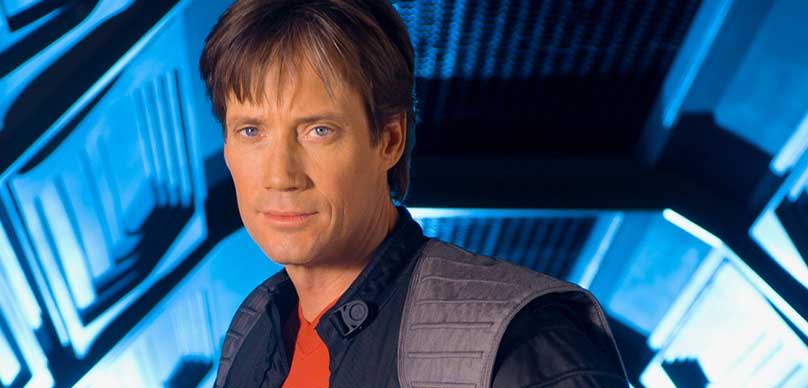
Today on the show we have actor, producer, and director Kevin Sorbo. Kevin spent 3 years traveling around the world, modeling for print ads and appearing in over 150 commercials, before becoming a full-fledged international TV star when he was cast as the lead role in the immensely popular series, Hercules: The Legendary Journeys.

In the mid-90s, Hercules became the most-watched television show in the world. Kevin also guest-starred as Hercules in episodes of the successful spin-off series Xena: Warrior Princess as well as providing his voice to the animated Hercules films.

In 1997 Kevin accepted his first leading film role in the fantasy action feature Kull the Conquerer.

Kevin guest-starred on the sitcom Two and a Half Men and played a recurring role in the final season of The O.C. One glimpse at Kevin’s IMDB and it’s clear that this hard-working actor takes no breaks! In addition to his work onscreen, Kevin now also produces films, recently serving as Executive Producer and star of the movie Abel’s Field.

Kevin recently authored the widely praised book, True Strength, which recounts the painful recovery from serious health setbacks that changed his life during his Hercules years.

We discuss what he looks for in movies today, his years on Hercules and Andromeda, directing indie films and how he too was a victim of Hollywood accounting when it came time to get paid backend on Hercules: The Legendary Journeys.

Enjoy my eye-opening and entertaining conversation with Kevin Sorbo.

Alex Ferrari 0:07
I like to welcome to show Kevin sorbo How you doing, Kevin?

Kevin Sorbo 0:10
I'm doing good. How you doing Alex?

Alex Ferrari 0:11
Good, my friend. Thank you so much for for coming on the show man. It's, it's, I'm a I'm a fan and, and believe it or not, we've worked together then beyond that you didn't even know but I actually worked on two of your films, one of them being abels field where I was the colorist and the post supervisor.

Kevin Sorbo 0:29
Wow.

Alex Ferrari 0:30
Unable to field.

Kevin Sorbo 0:31
I love that movie. That movie deserved the theatrical you know, it's weird with these independent movies. It's uh, yeah, if I could draw it's about PNA it's about word of mouth. But you know, we got a big battle when battling the Hollywood giant studios, but that's a really good movie.

Alex Ferrari 0:46
It was a fight. It was a fun movie. I love the director love the producer. They get picked up by Sony eventually. So I know that I know. It did at least get some sort of good release. And then I worked on another movie I forgot it was it was you in a jungle fighting a monster of some sort. I forgot the name of it. This is years ago. And I was the colorist on that one as well as in Louisiana.

Kevin Sorbo 1:08
So in Louisiana,

Alex Ferrari 1:10
Louisiana.

Kevin Sorbo 1:11
You're gonna jungle fighting a monster. It sounds like Hercules but I shot number seven.

Alex Ferrari 1:14
No, no, it was not. It was definitely not Hercules. It was another movie. I'll find it I was actually looking it up before interview I'm like I couldn't find in my I got a lot of pee. I got a lot of credits in my thing. So I was just kind of looking like where it is. And I know they changed the name afterwards. Anyway, but, but I've Oh, so I have you on I've had you on my demo reel for a while. Back in the day when I was when I was color grading. But, uh, but I was a fan of yours since the beginning. But let me let me start off the interview with how did you get into the business?

Kevin Sorbo 1:44
Um, a really small town in Minnesota about 7000 people in it. We're about 25 miles west of Minneapolis. It's called Mount Minnesota. It's on a beautiful shores of Lake Minnetonka. And so get the name Lake think Minnetonka we were home to Tonka toys. That was the industry in my little town employed like you know, 25% of the population there. But we went to the Guthrie Theater and the Guthrie Theater is very famous singer Minneapolis and back a lot of actors out of Broadway start there. A lot of things start there before they move like Lion King, for instance, was there before they moved to Broadway. So we went 11 years old went to see the Merchant of Venice. It was a field trip with my elementary school. I was 11 I don't know what the hell they were saying because it was Shakespeare but I was mesmerized by it all. And I you know, on the way home I told my mom I said, you know, I'm gonna be an actor. And she said, is that right? She goes, Well, that's nice, dear. And, you know, I I kept it quiet because you know, being a thespian, where I came from and we made fun of those people in the drama class. I was a jock. I was a football basketball baseball guy. So I had to hide in that closet so to speak, until I got into college where I had double major in business but I took my minor in drama so I but I, you know, Minneapolis, really offered a lot of great things for me because a lot of people don't realize that Minnesota Minneapolis is headquartered national core is seven 3am Honeywell Pillsbury General Mills target Best Buy so all these companies they said there that all their commercials back in the day there so I got that all important Screen Actors Guild card by doing commercials all through college.

Alex Ferrari 3:24
That's when I was I was when I was in Florida. You know, the actors I worked with they were just just dying to get on to the get that sag card. And that's how many of them got them just by doing that commercial like oh my god, I'm sag eligible now because I got this this commercial. So it is it is a hustled being an actor, there is no, no, no doubt about it

Kevin Sorbo 3:46
I double major marketing advertising, I tell people I market and advertise myself because you are your own product in this industry, you know, and you got to get out there. And most of the time I tell people that want to get a business they go What's the like, and I go, I'll get ready for you know, a lot of doors being slammed in your face because rejection is the main thing of Hollywood. So, you know, it's a matter of getting out and again out there. I remember I did a lot of commercials. I'm one of the few guys I know that I'd befriended when I moved out there because I didn't know anybody. I already had the sag card. I already had the commercial agent because I sent my reel out to the commercial agents that I you know, found out about and they all assigned me because you know, I had a good reel already. I already had like 40 commercials on there. And so they knew my face from commercials. So that wasn't a problem. I never had to work another job. between 1986 and 1992. I shot over 100 commercials.

Alex Ferrari 4:37
Wow, you were you were an actual working actor.

Kevin Sorbo 4:41
I was a working actor and in between that was enabled me to do the really good acting classes. I said I studied with Roy London, for instance. You know they were Roy Roy in my class alone I had Matthew Perry's classmate Brad Pitt was in that class with me, Charlotte Ross. With some really good people that went on to do obviously had really good careers. So it enabled me to study and not have to like miss things because of work or something like that. And I remember my commercial agent one time I called up because you know, once you start to get to know people, Hey, man, there's one for there's one for Coca Cola. You hear about that one, you know? And so I'd call my agent all the time. Hey, what about this one? And my commercial agent said to me one time it's Kevin, I got 100 other clients, you know, I said, I don't give a crap about your other clients. Do you think they care about me? My mantra is, let me have the opportunity to be rejected. That's why I said, let me at least go in there. I'm willing to drive and this craphole traffic of Los Angeles to do what you know, and wait an hour before they see me for my two minute little audition scene. Let me have the chance to get turned down. I mean, I treated it like a business. I really pounded the pavement.

Alex Ferrari 5:51
Now, you know, you know, I mean, I've I've been directed for a long time. And I've obviously done a lot of auditions. And we as filmmakers get a tremendous amount of rejection. But it pales in comparison to the immense amount of rejection that actors have to deal with on a day. I mean, sometimes being rejected 456 times a day, if they get to that many auditions. How do you deal how did you deal with rejection? Because I'm assuming Yeah, you were a working actor, but I'm assuming for those 100 so commercials, you probably went out for 2000 of them?

Kevin Sorbo 6:21
Oh, sure. I live in Santa Monica. Right. And Ocean Park Boulevard is right in the Venice border. And to deal with rejection. I went and pumped on everyday at Gold's Gym and bike and either bike or rollerblade to downtown Manhattan back every day. Otherwise, I think I would have gone postal on people you really have I think and I think being that jock. I used to be that outlet was amazing for me. And I needed it. I needed I also played I had six years I was in three basketball leagues. So I was I was playing basketball three times. We had one in Pasadena, one in Northridge and one in Beverly Hills. So I wasn't I was playing hoops all the time. So I was always physically staying active to burn off that frustration.

Alex Ferrari 7:03
Because Yeah, it's absolutely frustrating to say the least.

Kevin Sorbo 7:06
I got down the last two guys for Lois and Clark, who's Dean Cain and myself. Dean's very dear friend of mine. He's a great guy. And we both did our auditions. Our screen tests with Terry hats are have already had the role. And that night, my manager call she got the role cap. And that was when Laura Mar studios used to be in Warner Brothers. They're gone now. But I think Les Moonves was the president there before he moved to CBS. Right? So they call me you got the role. I got excited. We want party. And then the next day, yeah, they change your mind. They're going thinking, Oh, that'd be absolute high, high highs of acting Low, low lows. It's a very frustrating business. But ultimately, three months later, I did book the role of Hercules. And as I love to tell de my show, when for seven seasons found a new zealand around the world. 176 countries became the most watched TV show in the world. And you got Canada for three seasons. I'm okay.

Alex Ferrari 8:03
It all worked out for everybody

Kevin Sorbo 8:05
It worked out for me. Things are great. I've done a couple movies together and we got another one we want to do together next year. We're trying to raise money for right now.

Alex Ferrari 8:12
Now, what is the one thing you wish you would have known when you started in the business?

Kevin Sorbo 8:21
I wasn't surprised how political is I wasn't surprised how crazy it is, you know, because I knew enough about it. And even just in the commercial world in a smaller place like Minneapolis St. Paul, which really isn't that small. It's pretty big, pretty big around there too. But I just I I had a hard time dealing with the backstabbing, they came from your own agents and your own managers that you found out about later. I remember one time I was in talking my commercial agent a good buddy of mine I just finished golfing and I stopped by and say Hey, what's going on blah blah blah. And right next to me. I heard the Booker from my buddy say oh card no carts out of town right now but I got a much better person for the role anyway. And I stood up and I said I just got off. I just got off the golf course with corn I busted him and I told you this happens all the time. It's It's It's amazing to me and also you know when when you sign I got very lucky I two series Hercules and Andromeda. So I 12 straight years of two series I the lead in him, and both of them 117 years, 115 years, and the percentage of you getting a second season is very rare. So but the amazing thing is how corrupt the industry is because you've heard it before the creative accounting.

Alex Ferrari 9:43
Don't do it.

Kevin Sorbo 9:44
They admit to a back end deal on your series or movie means you're gonna take it in the back end is really what it comes down.

Alex Ferrari 9:51
Great. That's actually a really great term.

Kevin Sorbo 9:53
I spent nine years in my lawsuit for my back and I Hercules with Andromeda and ultimately I'm getting throwing out my phone out that the judge behind it all was in the back pocket of the studio already the whole time. And my man, I really I really big entertainment lawyers, big, big ones that handle like the big name actors out there. And they said to me, Well, you know, you know, I said, Why? Why can't they just be honest? And he said, whilst the price of doing business, really, the price of a business is trying to screw you over, when when Titanic was the first movie to make a billion dollars back in 1997. Yeah, Arnold Schwarzenegger gets up in front of an audience of 2 billion people around the world and says, here's a movie, even the studio won't be able to hide the profits and, and you got a lot of nervous laughter from those first 10 rows of all the big wigs that run the whole frickin world, you know, but it's amazing to me how corrupt the industry is, and it's pretty open about it, you know?

Alex Ferrari 10:49
Oh, and it's something I've been yelling and screaming from the top of the lungs trying to warn filmmakers about because and I've seen it like, you know, you know, working on posts for such a long time on films like angels field and things like that. I hear it from the producers, I hear what's going on with distribution, and the Hollywood accounting and, and all of that kind of it's, I remember, I had a conversation with a distributor on a film of mine. And he actually told me, he goes, Well, you I was asking him, why is the cheque so small? Or? Or where's this cheque coming from? Or like, I got a check, you know, like, but where I know reporting, I didn't know what it was from. I'm like, thank you for this little money. But I like what, what is it? And he's like, what are you complaining about? You got to check. Most filmmakers don't even get a check. so nonchalant about it. It was just like, it was just like, I'm gonna go get a cup of coffee. It was so nonchalant. I was like, Oh my god, this is completely entrenched information

Kevin Sorbo 11:40
If you get into a second season, third season, a TV series, press me, they're making money. And they're making big money. And behind closed doors, they will each admitted I've golf with these guys. And they sit there and go, yeah, it is kind of what goes on the business. But he goes, Oh, yeah, I made money in there right away. But you know, certain people get paid and other people don't get paid because you got to play that Hollywood game. And I'm not a very good player at this stupid game. I'm not a big fan of it. I'm not a Hollywood guy. But I love being on the set. I love making movies. I love doing TV series. I like you know, it's I still get very excited when I'm working. I love doing it. And I'm going to hopefully, you know, thank God for independent movies, I'm still able to keep a career going.

Alex Ferrari 12:18
Now with with Hercules, how did you get involved with Hercules? Because if I'm not mistaken, it started off with some It was like movies first, right? And then it turned into a series.

Kevin Sorbo 12:26
yeah we have five to our movies. What when my agent called me on this one, I kept, I'm not a small, I'm a six, three, you know, and back then I weighed around 225. I'm to 10. Now because I'm getting older. It's hard to keep the muscle mass, though working out every day, though. But, uh, when I got the call, I thought all right, you know, I mean, I'm athletic. I played sports. And I'm, you know, I work out all the time and lift weights all the time. But I tell them that they're gonna want some, you know, 280 pounds, no neck, you know, bodybuilder times they know, what they're looking for, is the guy that looks like he's an NFL quarterback, or maybe a decathlon guy. And I said, Okay, that's interesting. So I read the read the size that went in to read for that universal. About a week and a half later, they call me back and again, another week and a half later, they call me back in again, another week, they call me and seven times over like two and a half months. Wow. And the very last time i big build right off of the the the one on one that universal. Yeah, you know, the big tower hole in the big black towers, on the highway. I call it I call it the building where actors go to die.

But I went, I went in there, I was down the last three guys. And Sam Raimi was our executive producer. So I get in there, I'm on the stage. And that must have had there's like 30 people in there. They're all whoever's gonna make this decision for this TV series as all the men and women that have all the power and universal beside what TV shows get picked up and which ones don't. Right, so I got on stage and I said, you know, you guys have brought me in here a lot. I appreciate it. I signed the contract cuz now you're done the last three, they're gonna make it right. So we sign that five and a half year contract in case it goes more than more than one you know, turns into something more. And I said you guys never give me any direction here. Is there some way you want me to do this? You know, I'm looking at Mr. Ram. He says no, we like what you're doing. Just keep doing you're doing. So I read I read again with the with the actress. And then they said That's great. That's great. Okay, um, Sam hits the woman next. She goes, she goes, Oh, yeah, I need you. I have to ask you to take your shirt off, please. Right. And if you watch the show is in good shape. So I took my shirt off. And there was a you know, a few audible Oh, my sort of gas. And then being a smartass that I am I said, Well, I'm a lot bigger out of my clothes. Sam says to me, Ramy says so if you get the row Kevin Would you be willing to you know, shave your stomach and chest. I'm not like Robin Williams like seven inches. The girl but I got a little man cover there. Sure. And and he said, Would you be willing to shave it? And I went, Oh, I'm sorry. I thought you wanted a man for this role and I started walking off the stage. I got I got a big laugh and I said thank you all I left and the next day I flew to Vancouver because my ciclos series The commish so the third day on the set, I somebody had one of the pieces come up, Oh, you got to call your manager. So call my manager, Beverly Dean. And Beverly says you got the role. You're going to be Hercules. You're going to do five star movies are going down in New Zealand and blah, blah, blah. She's very she's all excited. I walked back on the set and I looked at checklist and I said I don't want to crap from you. I'm half God now. I went I went I went down there that actually for the next two months, I pumped a little hard to put another five pounds of muscle on and I trained with Douglas one Douglas one was one of Bruce Lee's original students.

Alex Ferrari 16:00
Oh yeah,

Kevin Sorbo 16:00
We went 60. Oh, great guy. We went his he developed thing called a white lotus kung fu method, whatever it was, but he taught me all kinds of weapon we work like eight hours a day for five days a week for two months. I go to New Zealand. Who do they book opposite me to play Zeus but Anthony Quinn. So I get a whole year working with Anthony Quinn Paulie and your listeners don't know he has Shame on you.

Alex Ferrari 16:24
Yes, please, everyone just google Anthony Quinn.

Kevin Sorbo 16:28
People need to in this industry they need to get schooled on the people that were there before us. And this is the guy that was nominated for six Academy Awards. He won twice. So it was halfway through the third movie where something happened on the set with Michael Hurst who played my sidekick Keolis and co crew laptop just cracked up and I looked down because we had we had live in the show not to make writers mad but we would add live stuff and they could take take it off they wanted to but I looked at Michael I said that's what this show is going to get picked up as a series he was a thing so I said yeah, because there's nothing like an on TV right now. There's nothing like this. It has this bigger scope with the cinematography what is New Zealand It was beautiful. The wardrobes we had the fight scenes that we did the monsters that we had. And sure enough by the end of the movie, the third movie, universal said we love what we see we haven't released anything yet. We're still cutting the first three movies but you're gonna stay down. We're gonna make this a TV series. And so by our season three, not only that we spin off. The female sort of Hercules version was Xena Warrior Princess. That same season. You know how Hollywood is is something's hoppy. I'll copy it. Sheena came out another another female thing. Robin Hood, Tarzan, Sinbad, Conan all these other shows came up sort of copy what we are doing. And by season three, we did pass Baywatch as the most watched TV show in the world which is pretty cool.

Alex Ferrari 17:53
That's amazing. And you guys were shooting in New Zealand before was in vogue. It was before Lord it was it was before Lord of the Rings right before

Kevin Sorbo 18:00
Peter Jackson used to come on the set the sailor cruise developing because we shot from 1993 through the end of 1999. I was down there for seven years. And we had Peter Come on a sailor cruise developing because all during that decade he was writing all three movies of Lord of the Rings. And when we wrapped he took 80% of my crew he took all the stunt guys. He took our our camera team we took well john Mahaffey and pm McCaffrey, the camera guys were just amazing. The john Mahaffey ended up doing second unit directing and all those things plus all the Spider Man movies after that, but nyla Dixon won the Academy Award for Best wardrobe for Lord of the Rings. I always told my crew I said, you know, it's ridiculous that they don't want to nominate us for a Golden Globe and me fine for acting, whatever like that, but to not look at us for cinematography. There's nothing on TV that looks as beautiful as his show and for our wardrobe and I was sort of like okay, she's not winning the Academy Award for the wardrobe on Lord of the Rings she should have got a gold over me on my show because the wardrobe on my show on Xena was amazing. And our stunt guys were just incredible as well so I don't know it's it's the politics of the business once again because we wrote first one syndicated show we weren't a network show so they just like they don't want to pay attention to us even though we had higher ratings than most shows on networks. And it was it was funny because

Alex Ferrari 19:17
I really never heard of and maybe you can tell me if this happened before but the studio doing a five movie like deal first then to see then roll it into a series has that been done before?

Kevin Sorbo 19:31
Well, here's what here's why that happens called the Action Pack wheel. Where they had they have four other shows doing movies we were the only ones that did five movies because they love with the show look like the other ones that for you had tech wars that Shatner was producing. You had midnight run where they took the movie that Charles Grodin and De Niro did was such a great movie it is had they had BJ in the bear and they had banishing sun does this karate thing. Okay. So we were the only one that it was funny because Sid sheinberg was the was the president of unify the time? And I remember, it was like, it was around season three, and I was back home with the universal Christmas party. And he comes up to me says, You know, I gotta be honest with you, when they came up with these action, we'll we just figured Hercules would be the first to go and you're the only one that still around? I don't know. It's just like throwing spaghetti against the bloody wall and see what sticks. But I you know, it's it's it's it's funny how what I was gonna say is if it back in the 70s, ed McMillan and wife in the cloud, and they had all these, these these two hour rotating shows that we're going over, like every Wednesday night, I think that's what they're trying to copy again with his Action Pack, but just it just didn't take off. I don't I don't know what happened to tech wars and why that didn't work. But we were the only ones that ended up surviving, which is great.

Alex Ferrari 20:51
I mean, to be fair, I mean, on paper, it does not sound like if you would sell like, you know, we're going to do tech wars with we're going to do and we're going to do Hercules. Like Hercules is one of those stories that has just obviously been beaten to death forever, because it's just an it's one of the oldest stories around. But yet you couldn't quantify the magic of the chemistry of what you did. And what the writers did with the directing team to production team, everything. It's just that old soup is not on the paper.

Kevin Sorbo 21:17
Yeah, well, you know, I think a lot of us do what Sam Raimi is brand new to you know, I mean, they love the quirky humor and breaking the fourth wall like Gilligan's Island or something. I mean, you know, every time I even turned my head they put a big sound effects. In the fight scenes, I love doing the fight scenes, you know, we did three every episode basically. And Peter Bell, our stunt choreographer would let me work with I mean, we would sit there and we shot like eight to 10 day episodes. So I was down in New Zealand 10 months here that was home for me for seven year. So when we were not shooting, I was fighting that day, we'd still be rehearsing I'd go in and block a scene that I'd go you know 50 meters away with the stunt guys to rehearse what the next you know fight or flight scene is gonna be and we always try to put in funny stuff. Like if I would throw a guy 100 meters and he lands he only put a wire economy lands in the Calpine pasture somewhere and then I kicked sword out of one guy's hand and flies through the air we've always made sure as that flies through the air make sure that guys getting back up and as sword hits some of the back of the head and knocks them back in the golf ball thing you know, in a bar fight I throw a guy out the bar you know through the wall and it's a cut up body of us you know, and you know, the hole in the wall is is kind of body and fans love that stuff. And it was it was corny it was cheesy but it was done that way on purpose because we knew with a show like this we got to have we want people to laugh with us and not laugh out. It works.

Alex Ferrari 22:41
Yeah, it's a very you had to do a little tongue in cheek I mean, if you would have done it dead serious. I think it probably would have not

Kevin Sorbo 22:48
I said tongue firmly planted in shape.

Alex Ferrari 22:53
And if so, and to go back to what you were saying earlier, you have to actually fight for back in participation on on that all that stuff for her.

Kevin Sorbo 23:01
Believe it or not, they after seven years they were gonna do seasons eight, nine and 10. Right. I got approached by major Roddenberry Gene Roddenberry's widow to do the first show ever created by Gene Roddenberry after the original Star Trek series back in 1969 was Star Trek it wasn't enterprise wasn't the next generation it was actually Andromeda. And my captain Captain Dylan Hunt was the first Captain ever created Captain Kirk so they she came to me and said, boom, they gave me a they gave me a two, two year guaranteed 44 episode pay or play. If the show the imago they're gonna pay me for 44 episodes holy cow at the salary that I was being offered for season eight on Hercules per episode. It was it was it was a mafia deal too good to turn down. Yeah, and I'm a Star Trek fan to begin with. And universal wasn't that mad about it because they own a sci fi channel anyway, so I was like, I was still part of that family. But because I didn't sign eight 910 I think it was like a screw you to me. And it's it's amazing what they will do to juggle the books. You know, they said they said oh, we lost so much money on the show. I wouldn't you lost money. I knew they were making money by season two, season three, they're making big money. But they can say whatever they want. And they own the court systems. They don't I mean, it's amazing to me how corrupt the system is and it and everybody knows it. Everybody knows it. I know guys that did other series that didn't get paid on their back end either. I know James Gunn, I used to golf with the late James Garner. And I was a big fan of Rockford Files. Yeah, he had a he had a fight 13 years or fers back end deal 13 years ago always make an improper file. It's It's unbelievable what these guys do. And it's it's they said oh, it's just part of doing business. Well no, it's not just being honest. But there's no honesty and integrity it's gone you know and it's it's bad that battle so I never got paid my back end.

Alex Ferrari 24:59
Oh my god.

Kevin Sorbo 25:02
They had Sam Raimi and Rob tappers contracts down there during the negotiations during the moderation mines next to theirs. My lawyer says their definitions are identical when you pay those guys. One lawyer from that studio said, well, all depends how you want to define the word definition. And that's when I said to the moderator, we better go to a different rooms right now, because I'm about to go across the table and probably do something that's going to hurt this guy. So Wow, it's amazing. What, what they'll do. So you know, and I'm a Midwest guy. I mean, a handshake shakes as good as a contract. But you know, you see, you'll see how thick the contracts are in Hollywood with all the double talk. And, you know, it's like, it's like Washington DC, right? What? 5000 page bill the other day, and they said, you got to read it.

Alex Ferrari 25:52
Yeah, they do. They do that constantly. All the time. They do stuff like that. It's so then but if you would have played ball and gotten 789 signed, that might have been different for is what they're saying?

Kevin Sorbo 26:03
Who knows, knows no one knows. I don't think I don't think would have been a different I mean, I know guys that didn't get paid in their backends other shows, I won't name them but they came back and said, Hey, we want to do a movie out of this. And they said forget it. And then they got paid their back and all of a sudden

Alex Ferrari 26:17
to do so when when So basically, if they want something from you, you can give them more money somewhere else. Generally, they they'll play ball like the Rockwood file thing is insane. That's insane. rockcliffe I was a huge I mean, what the 13 seasons, 13 seasons,

Kevin Sorbo 26:29
why don't win 13 seasons, but he took him through 10 years to fight it. Oh, yeah. I think I think they got seven years out of

Alex Ferrari 26:36
it. Exactly. But still

Kevin Sorbo 26:38
13 years before he got paid. And he did finally get paid. He finally got paid. How much money did they make on the money they owed him for those 13 years? Oh, of course. Of course.

Alex Ferrari 26:49
No. It's it's it is it is. It is. It's it's Aren't you happy? You're in a business?

Kevin Sorbo 27:00
It's amazing. You know, it's not the City of Angels. It's a city of broken dreams.

Alex Ferrari 27:04
But no, no question that

Kevin Sorbo 27:07
I think you'll agree doesn't matter what side of the cam you're on. Yeah. It's a business you want to be involved in.

Alex Ferrari 27:13
Especially if and the more I figured this out in my in my tenure in the business is the more control you have over the product, the distribution, their creation yourself, the better chance you have to actually get paid.

Kevin Sorbo 27:29
That's what we're that's what I'm doing my own stuff now. You know, so, but I mean, I don't think anybody gets in the business and say like an actor. Well, I didn't want to be an actor just sort of happened. Okay, right. Exactly. supermodel is I never really want to be a model. Yeah, you were just a hot babe that everybody was gawking at all. But I don't know, somebody took my picture and paid me $10,000

Alex Ferrari 27:47
an hour. So I'm like, why not?

Kevin Sorbo 27:52
Okay, I believe that.

Alex Ferrari 27:54
Now, um, can you explain something? Because I mean, obviously Hercules and Andromeda, you have fans, you have a really passionate sci fi fans? And what can you tell explain to people what it's like to actually be at Comic Con, and to meet your fans. Because I've been on both sides of the table. I've been on the I've been getting the autograph. And I've also given the autograph. And it is a really interesting experience. And I can only imagine what it's like for someone like you. So can you explain that to people?

Kevin Sorbo 28:25
You know, it makes a difference if the show is current as well. I mean, I still do Comic Cons, I still get invited a lot of them. I mean, this year socks, of course I had about, I pick out about eight a year, even though I probably get invited worldwide to maybe 30. I pick, okay, I've never been there. I want to do that one against that was good. But Hercules and Andromeda are still out there. And they're still fans out there with it. But when it's current, it's more rabid. It's more insane. Because I'm there as Hercules I come back for my two months, then I'm back home in the states before I head back down for the next season. And so I still got the long hair. I still got the you know, the look. And you sit across a table and people are there. They're nervous to shaking. Yeah, there's shaking. They're scared. I've had a couple women faint at the table. It's crazy. But But now because it's like those people now are in their 30s they're the age I was when I filmed this during my all my seven years of my 30s and now they got kids. So they're showing it to their kids. And there's more there. It's just kind of a nostalgic thing for them now to see me and meet with me but the kids are the ones that saw open eyes. But I love doing them. I have a blast doing them. I'm a golf nut so I'll golf every con i go to it I find a course Well let me tell you off at seven in the morning I go fast. I'll do 18 holes in less than two hours. And I go to the con and hang out and we go to dinner with some of the other actors like going to dinner. Shatner was just a just a hoot man banza come up to me during dinner and I'm cool about it. I chatted Like he won't take any of this like, he goes, Okay. You want to talk to me come to Canada. And I started get that two months I've been. I've been sleeping on an airplane. I've had people wake me up. No, I mean, I'm sleeping. And hey, can I get a picture?

Alex Ferrari 30:22
Here? Yeah, you kidding? No.

Kevin Sorbo 30:26
But but most people, most people are really cool. You get the people that hate you too. I mean, when I got married, I had female fans, right? And I hope people watch your show now. They got married, got married, I guess they thought that they sent me a picture of them in a bra or something. I ended up marrying them. Right? It was

Alex Ferrari 30:42
the it was that dream that hope that he's not married yet. So there's still hope that I might just maybe,

Kevin Sorbo 30:49
but I don't I don't know. But most fans are pretty cool. I gotta say most most people, especially now with the movies, I do a lot of family friendly movies. Like a whole spiel. But in the movies, I call with a good message in there and stuff. So I know I've lost some fans with that, you know, I'm heavy on Twitter and Social Media and I I posted truth. And like jack nicholson says you can handle the truth. And a lot of people can't they don't want to hear the truth. They want to believe whatever, whatever is fed them on the internet, because if it's on the internet, it must be true.

Alex Ferrari 31:17
Well, that'd be that's the law. I mean, that's the law says if it's on the internet, it has to be true. Now, there was a movie that you did call call the conqueror. Can you talk a little bit about that? Because it seemed to me that was in the middle of the Hercules. You know, fire not fire storm, but in the hurricane that was Hercules. And, and it was a universal project. I think they were kind of in you please correct me. They were kind of grooming you for something at that point. Can you talk a little bit about call? Um, yeah. I

Kevin Sorbo 31:45
mean, Raphael and Dale Aransas called me up and she's Dino's daughter. And she worked on the first she produced I think the first I think all three of the Conan movies. Conan called call was Conan his father in the books and also in the comic books. And they sent me a script, and I knew is in that vein of Hercules, but it was much more violent, much more sexual. And they were worried about me offending my Hercules fans, I was not I wanted to do with the way the script was written, which was much darker than what we ultimately shot. But they took the they made that our movie a PG 13. And a kind of a light pG 13. Really, we had a lot of humor in there as well, which I love humor and everything I want. I want the I love the humor and all that stuff. But yeah, they were kind of grooming me to sort of take over and not really take over our little bit, do the next thing because I had another movie right after that, that I was supposed to start filming as well. But that fell apart because of an illness that I suffered. And, but it was a bummer that I wasn't able to continue with them. But cold call was fun. It did. Okay. They opened on Labor Day weekend, which is just stupid. And I knew it was stupid. I said, I told my manager I said, we got to fight this. This is dumb. I mean, I know what the numbers are. People have gone to movies all summer long. And now Labor Day weekend, as most schools have been open for a week or two and people are done going to movies. And I said this is a Thanksgiving movie. Please wait. And they wouldn't universal wouldn't listen. And so the movie did. Okay. It's done very well in reruns and DVD sales. And because every time I go in autograph shows, Comic Con shows, I get at least 30 or 40 people that come up, they have any autograph the DVD. So I know it's out there and people like and it's funny. just mention it because I was at the gym just yesterday with my son here. And there's two people came up and they brought that up. What cracks me up is I did it. The last season of the OSI and I'll meet these these women are college girls. Oh, I love you on Oh, see. So I got you know, 250 episodes been Hercules and Andromeda. They don't nothing about that. But they know those eight episodes.

Alex Ferrari 33:47
It must be I mean, as an actor with such a fan base. And yet me you've done so much in your career. I mean, can you just we talked a little bit about it earlier, but for people to understand what it's like to kind of walk in your shoes, like when you walk out in public, you know, you do get recognized and and because I mean, Hercules was like you said one of the biggest shows in the world. And I'm assuming this is worldwide. I'm sure you probably have stories that you were somewhere in Europe one day and and people just walk up to you like Achilles and where they go Herky jerky, you know.

Unknown Speaker 34:21
Perfect. Exactly.

Alex Ferrari 34:24
But But how what is that? Like? Because I mean, I don't I'm never gonna have that experience. I'm just curious if you if you could share a little bit of that.

Kevin Sorbo 34:32
I said people are people really nice about it. Last year, I had three Comic Cons and row near. one weekend after the other. I looked at my wife and I said, I got three, three teenage kids, two boys and a girl. And I said, Let's take the kids, let's go spend a month in Europe. Thank God it wasn't this year because all would have been canceled, right? So year and a half ago already. So I had one in one in Vienna, one in Munich and one up in Brussels. And so when I was when I graduated college, I went to Europe to study In three months, I end up living in Europe for three and a half years. So a form of de la. I stayed in Europe, I was with an agent in Milan agent up in Munich, and Zurich, and, and Hamburg, London. So I shot a bunch of commercials when I was in Europe as well. So I love being there. It made me grow up. I was 22 year old kid, it made me grow up. And really, I'm in a different country, different language, different culture. And it was really good for me to do it. It's I mean, it's a different world over there now, but it was, it was great back then. So to take the kids back, there was amazing and to go back and walk through the old man, I live in Munich for like a year and a half, walk back my old neighborhood and go out wherever we went out. You know, it was like, Oh, my gosh, it's Hercules or, and drama. It was always it was all all of that. And every city we went to outside of the Comic Con, of course, the Comic Con brings in those crowds. We just walk in the streets. It happens every day. I mean, of course now I get to wear a mask when I'm walking around by yourself. And we can breathe our own, you know, carbon dioxide, which is great. But it happens every day through airports and hotels. But what's interesting now, most of the time, it's about my family friendly movies. Like what if God's not dead? Let there be light tables field. It's those kind of movies that people stopped me now more than anything else, which is pretty, pretty amazing.

Alex Ferrari 36:23
That's awesome. And that's really awesome. Now when you're working with a director, what do you look for in a director when when you're working with one?

Kevin Sorbo 36:32
I want him to let me do whatever the hell I want. As far as

Alex Ferrari 36:37
I know all stop it. Just let me do me.

Kevin Sorbo 36:42
You know, it's, uh, I have the progress. I do love blocking. I want to go out there and, and I like to rehearse with the actors off off. You know, when you guys are setting up lights, some actors want to do some some don't they want to be more spontaneous with or something like that. It's fine. Everybody's got this sort of little approach to things. But I want the words to be secondary, right? I want to be in them. I want to be in there with the the Meisner technique. I'm working off you, you're working off me. But like I said earlier, I like if there's any chance for humor in there, I want to throw in humor. So I talked to the writers all the time on a Hercules we were always three scripts ahead. So in between setups, to I'd be on, you know, on the set phone calling back to LA because the writers were in LA, they went with us there. And I say I'm looking at, you know, this episode we're shooting in three weeks. I don't get this. So I love this part here. Can we expand on that? So I'm always open to work with the writers. I'm always open to work with the directors. In all the years I've been involved the business I think it's only handful of directors that were really kind of a pain in the ass that were just tough to deal with. And it wasn't just me it was with everybody. And but for the most part, I've been very fortunate. And even all the actors I've worked with, there was only one person of all years and Hercules I'm not going to name his name. That was really a pain in the butt when it came down to guests on the show news Panda, but for everybody in dangerous, dangerous and the fights, you know, and that's why actors think that look, I'm a good athlete. I know I'm and I'm good at fight scenes. And all the fight scenes I did in Hercules which would be I don't know hundreds and hundreds of I only hidden one stunt guy physically hurt him. And it was because he went past his mark when I'm throwing elbow behind me because I'm throwing an elbow without looking as I'm fighting guys up here. Sure. Anyway, two feet past his mark. And I busted his nose. I mean, it was blood His eyes were cliff, I'm sorry. That's my fault, man is my fault. Me, but I felt horrible about it. And I know what the you know, I've heard stories of Steven Seagal hurting guys all the time on the set. Right? And I know, do that with other actors. their ego is why can do this. And I agree with Harrison Ford where he said I don't want to fight actors. Because I'm doing it all the time. And these guys are not but their egos why can do this. And I that's the time, I would tell my stunt guy. Sam, come on in and you're taking over for this point, you know, because it just wasn't worth it for me to get hurt because I got hurt enough on that show. Just doing stuff the way it was. And, you know, it was my ego that wanted me to do my own stuff, my own stunts, but I just had fun doing it. I loved him.

Alex Ferrari 39:17
And and now and I know you mean you've you've worked on the every scope of production from you know, indie indie budgets to multimillion dollar budgets. How do you deal as an actor with difficult production environments? Because I've been I've been I've involved the different production environments when I'm not the director, but and I just I just watched to see how and I can only imagine like on the production side of stuff enough. But if you're the actor in front of the camera, and you're the star, how do you deal with, you know, not to say in competence, but maybe you know, ego, things like that. What do you do as an actor especially, it also depends on where you are in your career at that point, too.

Kevin Sorbo 39:58
I think the best thing to do When you reach those points, which, thankfully for me, I have been having a lot in the creative span 35 years now. You take those people aside one on one I don't like making I don't like when I don't never want to embarrass people in front of the crew. I don't want it to me. I like I don't care if I'm acting or if I'm directing on it. I like to have a fun set. And I love to work fast. I believe in Clint Eastwood's mentality. You know, you're an actor. You come in prepared. You're on the camera team. You come in prepare, Clint those two takes and they move on one if it's if it's if he's happy with it, you know, and he's used to people coming in and whispered to directors. I mean, a lot of these younger directors think you know, all Hollywood, you got to work 16 hour days, you know, and I'll whisper in their ear. Oh, by the way, Clint Eastwood does eight hour days makes Academy Award nominated movies. Okay, just saying I'm just

Alex Ferrari 40:51
throwing it out there. You know,

Kevin Sorbo 40:53
there's so much waste of time on this.

I act.

I act like an assistant first ad. You have the first ad but then you got me and I walk on set and go. What are we waiting for? What's going on? You know, just get get going. And on Andromeda we kept a much. Hercules was longer days only because

Alex Ferrari 41:14
of the locations and an action to action always takes a little time.

Kevin Sorbo 41:18
And drama. We rarely went out even though you know, Stargate was filming down the road from us where their studio was, but every time Stargate was always outside, but every planet looked like Vancouver, you know, just pure, beautiful trees. That so we rarely went outside. We did a lot of green screen. We kept it we had two two big studios that we had my ship and one we have the rica Morrow and another one. And we did a lot of green screen and we worked that show Hercules including drivetime and lifting weights every day. I was 17 to 18 hours door to door. It was a brutal schedule. Wow. And drama those 12 hours door to door. If I if they picked me up at six I'm home at six my crew lovebugs that crew would just come off X Files. And David the company moved to X Files down to LA for last season there. were created a big stir he was like I'm done with Vancouver and I love Vancouver by the way but anyway um my crew love me because most one hour shows by your call time at 5am in the morning on Monday by Friday because those 12 hour turnarounds you're looking at a five o'clock in the afternoon start then you shoot till eight or nine Saturday morning. We wrap virtually every single day between five and 7pm every day. My crew is going home every day and having dinner with their family and they love me for after coming off the hellhole that they had on the hours they had on on x file so it can be done in I my latest movie miracle is Texas which will be in theaters next summer. I don't know if you can really see that post back. We can. I directed it. We got Lou Gossett Jr. We got john Ratzenberger was great. We got Tyler Maine. The WWF fans know Tyler Maine is the sixth dude. But he's also Sabretooth on all the x men movies. It's a great wonderful movie set in 1930. So people look for that when that when that does come out miracle in East Texas next spring. But that one we wrapped every day between 10 and 12 hours of shooting at the at the most. And we were outside at a ranch most the time we shot in the same location they shot Revenant where they set Unforgiven where they shot Lonesome Dove and open rains with Kevin Costner. So it was a great location and the people that crew we had was phenomenal. And I there's no reason that you can't, you know, shoot 12 hour days Max, there's no reason you just got to get people moving and keep things going. I like an ad I want to I don't want to be the jerk on the set. That's my abs job. I need the ad who's tough and on on top of things. And he's got to be he's got to be the bad cop. I'll be the good cop. But I've always trusted in everybody that I hire for their departments from hair and makeup to wardrobe to camera that you're hired because you know your job better than I do, which of course they did. So, you know, I may have ideas but I want I want it to be as corny as it sounds. I want to be a collaborative effort, which it should be, you know, if you have a bird's eye view of his set, I don't care what kind of movie there's independent big budget movie. As you know, it's a I call it organized chaos. You know, it's just it's crazy of all the people running around and hear people coming out and doing this person and camera guys lighting guys, and all of a sudden and action and then it's just becomes that scene once and cut and then it goes back into organized chaos.

Alex Ferrari 44:44
It's the second year everyone rushes in. It's like

Kevin Sorbo 44:49
It's like all the ants took a break and then oh, we found a dead animal.

Alex Ferrari 44:55
So So how do you how do you like directing now? I mean, I mean, you do to direct any Hercules episodes, I

Kevin Sorbo 45:01
started writing on Hercules. Yeah, I've been I've I've been DGA now for 2024 years and sag rover over 35 years. So yeah, I mean, it's uh i love it. Um I think I'm very good at that keeping separate the acting part and the dragged by when I'm in the scene because I'm in I'm in the movies I direct as well. I will I will leave it over to my first ad to do the action and cut. I don't know I I like to I love to film rehearsals. Because there's some wonderful things have happened. I do I'd love it

Alex Ferrari 45:43
if I can I do it.

Kevin Sorbo 45:44
How many times been on set when the director didn't film I so I go just shoot it. You know what it is? Oh, come on, in there. Get it on film. Because, and one thing that bugs me more than anything, is if an actor screws up in line, even if it's me, don't cut that it shuts the energy down right away. It just shuts it down.

Alex Ferrari 46:07
You know,

Kevin Sorbo 46:08
and we in very few directors did that on Andromeda, which is great. You know, you screw up. Now go, go, go, go, go keep going. And I just get back in that mode and go again, give me give me the lead in line, whatever it may be. But keep keep that energy going. Because a lot of times in the DPW goes, Wait, am I just got to fix the light. You know, that's 15 minutes.

Alex Ferrari 46:25
You they always have to fix a light?

Kevin Sorbo 46:30
Well, you know, I think I think for every for every department that a friend of mine who is an editor says you can never ever stop editing. You just got to find a place to finally stop.

Alex Ferrari 46:44
Yeah. Oh, yeah. You're never in a movie is never finished. It's abandoned? Yeah.

Kevin Sorbo 46:51
Okay, we're done. You know, cuz you sit in that editing room. And thank God, it's just as quick as it is today what it used to be, oh, cut a squirrel. But still, you get in there. And you can get glassy eyed after a while. It's just like,

Alex Ferrari 47:03
test me. I know. Trust me,

Kevin Sorbo 47:05
I definitely know what I will do. When I get my first director's cut in is I will bring over about 10 buddies of mine, friends of mine in the industry, and let them watch it and get their thoughts on it. I think is a smart. And I think every director, I'd read through that morning, every writer read throughs are important. And writers scripts, because writers are there and they're three in the morning. And they're writing and writing, writing. And then they get too close to it. And they can be such major holes in people's scripts that they can't see anymore. You get a bunch, you get a bunch of actors that you know, as a writer to read it out loud, and you can hear it out loud in yoga. Okay, yeah. And make your notes during that. I think it's important.

Alex Ferrari 47:45
That's so amazing. It's very, it's very, very true. And yeah, a lot of times when I tell writers as well, like, read the dialogue that you're writing, because it might read well, but when someone says it, not so much.

Kevin Sorbo 47:59
Those four writers take the most abuse, and they got the hardest job. They do the hardest job, you know, how do you find a great script? I mean, I've been on the set many times, and I've been guilty of it to where the actor goes, who wrote this crap. writers, you know, and actors take enough abuse the way it is. But yeah, it's it's a tough job. I wrote one episode of Hercules and we shot it. But I'll never do it again. It's just it's way too much work for me.

Alex Ferrari 48:25
And how and by the way, you've done so many projects. How do you pick projects, because I'm assuming you're getting bombarded with opportunities all the time.

Kevin Sorbo 48:32
You know, it's funny on LinkedIn, Kevin sorbo, dotnet, where people go get a hold of me as well. I get I get 1015 scripts a day sent. I mean, a week sent to me. And I got to type the same thing over again. I'm only looking for funded projects right now because I've got, you know, I've whittled down, down about down to about 20 that I want to do. And it was 25 but I've done five of those so far. The hardest thing is finding funding of course, it's so frustrating to find money for independent movies. And independent movies are fine with Avengers fine with the Pirates of the Caribbean. Why would they you know, all these action movies that cost 300 million bucks and they'll spend $100 million promoting it so they're on every their trailers and every football and basketball game and every whatever. And when I'm doing movies that are three $4 million people think that's a lot of money. That's like the catering budget on Pirates of the Caribbean. I mean, seriously, this and i i do movies that have that aren't filled with violence and hate and anger that seems the only thing coming out of Hollywood right now these movies that have such a negative viewpoint and just everything's got to be weird and just off beat and I like to do movies that people can go to and go like a blindside movie or Green Book which was awesome movie well.

Alex Ferrari 49:51
It's also a Soul Surfer and souls

Kevin Sorbo 49:53
yeah soldier. movies that have a positive message movies that characters. I can never be Hercules in real life. You'll never be Iron Man. Okay, but we can be the characters that we see. And what made me fall in love with acting was my mom. I'd sit with her when I was a kid watching Cary Grant and Katharine Hepburn and Spencer Tracy and, and, you know, all these wonderful actors that are in that golden age. And I love these movies and with with a with a humor and that whatever that was in there, I just said, You know, I see actors that never seen Casa Blanca, these young kids you've never seen Casa Blanca, you've never seen, you know, Lawrence of Arabia, all these great old these movies that were just mad 10 commandments, and there's so many massive movies out there. And people that get in this business, I think need to get more educated on the history of the business as well. I think this is important.

Alex Ferrari 50:43
I mean, I was I was doing a color session years ago with one of the hottest music video directors in the world at the time. And I'm color grading this and I'm working on this project like hey, do you want a little Blade Runner here? And he's like, what's that? And I'm like, wow, I'm like your music video director. And you haven't studied Ridley Scott, probably one of the greatest commercial and visual storytellers of all time. He's like, No, I'm like, I need to stop the session right now. We're gonna go, I'm gonna grab my blu ray, watch the seed. Like, I was like, Are you kidding me? And I was the old fogy in the room. And I was like 30 something.

Unknown Speaker 51:18
Yeah,

Kevin Sorbo 51:19
it was.

Alex Ferrari 51:20
It was it's, it's insane. I just want to touch back really quickly, when you're getting all these scripts, because I want to do you a service. So everyone listening because I know a lot of people are gonna try to probably reach out to you because they're all filmmakers and everybody wants to get their projects done. A lot of times when they're and I've tried to tell people not to do this. They'll reach out to, you know, actors of your statute and with with your credibility, your bankability, and they'll go, Hey, here's my script, I need a letter of intent to go help find money. Can you explain why that is something? Do you do Letters of Intent? Is it is that something? I mean, all

Kevin Sorbo 51:57
if I read the script, I give scripts 20 pages, hold my interest, then I'll keep reading if it doesn't, I'll move on. But I'll do a letter of intent only now if it really has my interest because almost all these movies come in with no money attached to it. Right? And there's it's in it's frustrating, but if it's a role that really hits me after 20 pages, then I'm interested I mean look I got three movies and they can right now one of them is miracle is taxes. They're going to be in theaters next year. Hopefully we get past as COVID ridiculousness is shutting down the world running people's lives. I got a new TV series called the pot wins. It's like a Last Man Standing Tim Allen series as we shot at it. We shot eight episodes this past July in August, in beautiful San Bernardino. And it was a very boss who plays my dad and it's it's hilarious. It's great. Very, very funny stuff. We'll see what happens with that we did like I said we did eight is

Alex Ferrari 52:51
that was that independent?

Kevin Sorbo 52:53
Yes independent. It's independent but Netflix is interested in fox is interested right now. So we'll see what happens with that but but I've got four movies lined up for next year already one of my directing as well. We just got funded for that one. We raised the like 4.2 million, but I'd see it's like every two years I'm able to raise this money I want to be able to do two of these movies a year it's tough out there guys. And I know people come to me saying well I got a nice little independent movie that's a good you know, I call them actors movies. I'm gonna backtrack a little bit when I look for movies now. I want to look for movies that that move people like you said that like Soul Surfer like lineside like like greenbook which I thought was amazing bigger Morton's incredible. Like, I love doing movies like that, that people go I know guys like that or I can relate to that make you laugh, make you cry, movies that have hope in them. You know, we lost them. We have so much anger and hate in our world right now. And divisiveness. I want to do movies that hopefully would pull people together and you know, have a good message in there for anybody and everybody looking for something good. And because I think I think most people are I just think the media loves to perpetuate the anger and hate right now. I think most people are good people. And you know, we just got to find a place where you know, we can do movies that that get made and I meet very wealthy people I do a lot of charity. I do a lot of charity golf events. I meet very wealthy guys and they can spend $9 million dollars you know promoting some candidate for governor a president that doesn't get elected and gone that 9 million bucks I can make two or three really good movies that would be out there forever because that candidate yard is backing no one remember that is anymore? No so it's weird it's it's weird where we got to fight for the culture now I think more than anything else and that's kind of the movies I want to do movies with a positive message.

Alex Ferrari 54:34
And you also have a book out right?

Kevin Sorbo 54:37
I got I have a book that came out called True, true strength that came out about eight years ago I finally wrote a follow up called true faith. true strength was born out of us in the season five and Hercules I was having all kinds of problems my left arm and my shoulder and my fingers were cold and nama comfort was going on. I came back to do promotional work on I was on Letterman Leno did all the talk shows before called the conquer So I went to see my doctor and Beverly Hills there and he found a lump way up here. Before they could do a bio Shannon, thank god they didn't end up being an aneurysm that had been spitting blood clots down my arm for months while it opened up, sent hundreds of class my arm. And unfortunately for class my brain I suffered four strokes.

Alex Ferrari 55:19
Oh my god. So

Kevin Sorbo 55:20
I spent the I had another action movie I was going to be doing and I couldn't do it because I couldn't walk anymore. So I learned to walk and balance over the next four months. Again, it took me three years to fully recover. If you watch the last two seasons of Hercules, you can see I lost about 15 pounds of muscle because I wasn't able to work out the way I was working out before and I went from an 18 hour door to door day to about a three hour door to door over those two years is slowly building myself back up to about 10 hours a day. But it took me three full years to recover from it and true strength. People go to Kevin Sobel dotnet and get an autographed copy. It opened a door for me I thought I'd never be doing which is speaking events I do about I've had all 12 speaking events are canceled because of COVID. I've been to in the last month fortunately, one back in my home state of Minnesota, and I just didn't want up in, in, in in Dallas. I was in Dallas last week. So it's starting to open up again slowly. But it's really about true strength is sort of plan words because it Hercules had a lot of stunt guys make me look like a stud. Right? So I couldn't beat up those guys. And really, for me, it's like, you got to find your own true strength because everybody's got a story. Everybody's gonna have a roadblock in their life. No matter what age you're at, that you got to find out. What am I going to do? Am I gonna blame God family, friends, everybody else? The reality is you have to look in the mirror and say, okay, it happened to me. What am I going to do about it now and you got to find your own way to get back to living a life again, instead of blaming and crying and whining about it.

Alex Ferrari 56:44
Amen, brother, amen. And then I'm gonna ask a few questions asked all my guest. What advice would you give a filmmaker trying to break into the business today?

Kevin Sorbo 56:54
Go for an intern intern. I mean, don't get paid for the hack where they get yourself in the set. You know, I tell people all the time I got when I my first my first acting coach is Bill trailer at the LA studios and they're in LA. And his wife, Peggy period died just the year before in a car accident. But he taught me so much in terms of just just sticking with it and going for it. But interning is just a way to get yourself on a set. He told me to keep doing the commercials I'm doing says because you're putting in miles, you're getting in front of the camera. Some commercials I talked in other ones I did. I got to be on a beach with a beautiful girl in a bikini selling, you know, orange juice or whatever, you know, but you're on that set, and you're doing stuff. I remember an actor in that class kind of make fun of you not a real actor doing commercials. Well, I got a hot date one night, he's my waiter, okay. I don't have to wait tables, I have money to be able to go out and have a meal. I do do commercials. I'm telling you one thing. Number one, you get your sag card. And number two, you'll make money. The first two years on Hercules, I made less money than I did the previous three years that I made in commercial residuals, because I would at any given time I have 15 checks a day coming in, whether it was $10 or $1,000, but I would rip off and every check while I'm watching Monday Night Football go on. This is awesome. You know, and there's money in there. But there's also a chance for you to do the things you want to do to further your career. And so I tell people get on a set and intern at any position. Watch what people do learn that way. Kevin Costner did Dan Raleigh studios, he learned what? Okay, this is what the carpenters guys are doing. This is what the camera guys are doing. Do you think he's a good director? Yeah, I think he's a damn good director of the no damn good actor.

Alex Ferrari 58:38
And Yep, absolutely. Now what is the lesson that took you the longest to learn whether in the film business or in life?

Kevin Sorbo 58:47
I think patience. More than anything else, I'm a very impatient person. Me to what I did learn earlier. That's that's that kind of ties in with patients as a as a positive thing against the negative of patients is failure. I used to caddy at this private Country Club in Minneapolis, very wealthy guys, mostly guys, I cared for between 30 and 70. Okay, they're all successful guys all had money. And I would ask them, you know, here I am, as an 1819 year old kid carrying double bags is walking a fairway? How did you become successful? They all said, Kevin, oh, I failed. And then I failed again. And then I failed again. Then I kept failing. He said failure is a positive thing, not a negative thing. You got to you got to get rid of all the bad stuff. But take the positive stuff and drag that along with you. Because that's what I learned getting out to Hollywood with all those doors being slammed in your face because I told you as an actor, oh, you're too young. You're too old. You're too fat, you're too skinny or too whatever. There's always reasons they want to get rid of you. So I just I looked at that is a positive thing. I said, I know every actor, they get in their car and they're chewing on their steering wheel when they're driving the four or five or whatever. Tell them I say it that way. Why did I do it this way. I got to the point. I just Get in the car and said, I did the best I could have. They don't pick me. It's their loss. And that changed a lot for me just being a lot more positive about it.

Alex Ferrari 1:00:08
Very cool. And last question, what are three of your favorite films of all time?

Kevin Sorbo 1:00:13
I already named one of them. Casa Blanca, no question about that one. Yes. Jeremiah Johnson, Ray, maybe Jeremiah Johnson. And then it's a tough one because there's so many great ones in there. But I'm gonna take HUD it's an earlier poem and believe what I, the reason I want to be an actor were Paul Newman, Robert Redford. I've met Redford Newman passed away. But I have a letter from Paul Newman that's on my wall in my office. And it was great supportive letter and how he, you know, was a fan of stuff I've done and it just, it was just, it was just pretty cool. But, of course, Butch Cassidy and Sundance Kid in the sting are pretty darn good.

Alex Ferrari 1:00:55
They're not bad. They're not bad films. They're not bad. Not bad at all. Kevin, I really appreciate you taking the time to do this and this crazy, crazy time that we're in. And I appreciate you, everything you've done in your career and a lot of joy that you've brought to a lot of people over the years as well with all the parts you've done. So thank you again, my friend and safe safe travels.

Kevin Sorbo 1:01:14
More to come more to come Kevin Sorbo Happy New Year. Let's make 2021 awesome.

LINKS

SPONSORS

  1. Bulletproof Script Coverage – Get Your Screenplay Read by Hollywood Professionals
  2. AudibleGet a Free Filmmaking or Screenwriting Audiobook
  3. Rev.com – $1.25 Closed Captions for Indie Filmmakers – Rev ($10 Off Your First Order)

What the Heck is a Key Grip & What Do They Do on Set?

As a famous actor once said,

“The film industry brings people together and so does technology – and I see them as similar platforms.”

The production rate of films all around the globe is sky-high, and new ideas are being implemented to old storylines, in order to provide a revamped version of films to people. As an actor, a director, a producer or anyone who is part of a film in the making, you need to make sure that you’re well aware of your responsibility.

A film needs a story in order to take shape – however, it is certainly not possible without a complete film crew. A film crew includes a number of different positions, being controlled by seasoned professionals and people well-versed in that certain niche.

A film crew position which most people are unfamiliar with, yet it plays a key role in the making of a successful film is a ‘Key Grip’. Here is everything you would need to know about a key grip!

Who is a Key Grip?

In the film industry, the key grip refers to a person who works with the Gaffer and the cinematographer in order to supervise all the grip crews, including lighting and rigging, to report the progress of the on-set gearing up to the Director of Photography, commonly known as the DOP. In simpler words, a key grip is a person who is in-charge of a number of different on-set activities, such as lighting and camera movement!

Responsibilities of a Key Grip:

  • The key grip executes the tasks demanded by the cinematographer in terms of lighting and camera movement.
  • The key grip is supposed to run the grip crew, which includes people like a crane operator and rigging grips.
  • Works with the gaffer in order to convert lighting positions into the equipment need and rigging options.
  • Key an eye out for any possible issue, and think of all preventive and precautionary measures to ensure the film-making runs smoothly. Moreover, the key grip is also in-charge of the safety of the crew!

Set of Skills Required:

Problem Solving Instincts:

One of the most important skills a key grip should possess is a set of problem-solving instincts. For example, if there is a lighting failure faced while shooting, the key grip should be fast to react to the situation immediately, and solve the problem – or provide an alternative to it!

Creativity:

In the film industry, regardless which role you are playing in the making of a film, creativity is a must! Moreover, if you’re someone who is in-charge of making the lead actors look good with an exceptional lighting effect or the right camera angle, you need to make sure that you’re creative enough to produce new techniques in order to achieve that.

Technical Knowledge:

As the key grip has to deal with a number of different gadgets over the set, one of the key characteristics a key grip needs to have is the right knowledge about technology. This makes the job easier and allows you to come up with innovative ideas.

Patience:

Patience is the key when it comes to playing a role of a key grip in the making of a successful film. You need to make sure you’re patient enough to work under a DOP and report every progress and the failures to your assigned cinematographer or gaffer at all times.

Strong Communication Skills:

A set of strong communication skills is also one of the most important things you need to have in order to become a successful key grip. This allows you to coordinate with your juniors, as well as your seniors effectively, and makes your job respectively easier.

Key Tools Needed in a Key Grip Job:

One of the most important tools a key grip needs to carry on the set is a C-Wrench. It makes the process of rigging much easier and helps you in carrying out certain tasks much faster than with the traditional methods. A few other tools are:

You’ll also need a measuring tape and a foot level needs to be in the bag at all times if you’re working in a film as a key grip. These tools allow you to carry out your task and do your job in an easier and effective way!

Tips to Prepare for Meetings:

  • Read the whole script, jot down notes and do not hesitate to highlight any issues or questions you might have regarding the script.
  • Make sure to watch any look references given to you by the cinematographer, or pay attention to the discussion between the director and the cinematographer.
  • Discuss the grip support and the camera movement with the DOP.
  • Make sure to talk about the lighting and the gearing up on the set with the Gaffer or the cinematographer.
  • If there are any extra production meetings being held aside from the daily schedule, make sure to attend them in order to stay on the same page as your other crew members.
  • Ask for any sort of expendables you would need and make sure to work properly on the list of tools and equipment you might need in order to carry out your task effectively.

Difference in Job Role of Key Grips:

In the United States, whoever holds the position of a key grip is responsible for lighting, camera, gearing up the state and a few more tasks. However, in a number of other countries, the key grip does not carry out certain responsibilities.

For example, in the United Kingdom, the grips are a part of the camera group exclusively, while in New Zealand and Australia, the key grip owns the grip equipment, which respectively includes tools such as dollies, cranes, track, insert trailers and camera cars!

The Bottom Line:

The film industry is growing at a neck-break speed and the number of films being produced annually is increasing in the form of heaps and bounds. As soon as the 21st Century mark hit the world, the film industry began to grow in terms of ideas and job roles, and since then, different positions have been created in order to promote employment.

Similarly, a key grip is a position in the film crew, which might not be known by most, but holds foremost significance in a project. Hence, if you’re looking to pursue a career as a key grip, make sure you understand and possess everything mentioned above!

IFH 455: The True & Raw Story Behind the Indie Classic Boondock Saints with Troy Duffy

I’m always looking for success stories in the film business to study and analyze. Edward Burns (The Brothers McMullan) Robert Rodriguez (El Mariachi), Kevin Smith (Clerks), and Oren Peli (Paranormal Activity) come to mind. I’m sure many of you are familiar with the cult indie film classic The Boondock Saints but many of you might not know the crazy story of its writer and director Troy Duffy.

Well, prepare to get your mind BLOWN. I had an EXCLUSIVE discussion with Troy this week, and let’s say, he did not hold back. Nothing was off-limits – from his instant rise to fame to the brutal fate he met – getting blacklisted, all of it. He wanted to set the record straight because there is always another side to the story, and what better side to hear than that of the man who lived this brutal Hollywood adventure?

Troy Duffy moved to Hollywood in his twenties to chase the dream of a music career with his band, The Brood. While seeking music gigs, he tended bar at a local Los Angeles dive, where he wrote the screenplay for The Boondock Saints during his break periods.

The muse for the script happened one day when he came home from his job to find a dead hooker being wheeled out of a drug dealer’s apartment across the hall. Duffy went and rented a computer (as he couldn’t afford to buy one) and wrote the screenplay for The Boondock Saints based on his feelings of disgust at what he had just seen. As he puts it:

I decided right there that out of sheer frustration and not being able to afford a psychologist, I was going to write this, think about it. People watching the news sometimes get so disgusted by what they see. Susan Smith drowning her kids… guys going into McDonald’s, lighting up the whole place. You hear things that disgust you so much that even if you’re Mother Teresa, there comes a breaking point. One day you’re gonna watch the news and you’re gonna say,

‘Whoever did that despicable thing should pay with their life. You think — for maybe just a minute — that whoever did that should die, without any fuckin’ jury. I was going to give everybody that sick fantasy. And tell it as truthfully as I could. I wrote Boondock Saints in three sections. I wrote the very beginning and then I started thinking of cool shit for the middle. Then somehow between the beginning and the middle, the ending dictated itself.

The screenplay featured two brothers in Boston dedicated to killing Mafia thugs. He successfully got the script into the hands of Harvey Weinstein of Miramax Films, who bought the screenplay for $300,000 intending to film the movie on a $15,000,000 budget.

Now what happened over the next three years is a remarkable cautionary tale. I saw this documentary called Overnight, the 2003 documentary that chronicled Duffy’s rise and fall. Troy was portrayed in the film as an egomaniacal maniac, obsessed with the heights of his talent and abusive to his friends. He goes on to lose his mega-deal, with the now conflict sexual predator Harvey Weinstein, his friends, and his Hollywood connections.

Of course, there are two sides to every story. Troy is too full responsibility for what he did and said in the documentary but as I told him editing can be a bitch. The filmmakers amplified the negative, manufactured storylines and really damaged Troy’s film career. I mean the film made Troy look insane. You can watch the film by CLICKING HERE and make up your own mind.

Now, this should have been the end of the tale but we all love a great comeback story. After being dropped by Harvey and Miramax, still believing that the film was a hot commodity, Troy Duffy convinced agents at the William Morris Agency to help him market it to other studios.

The independent production company Franchise Pictures agreed to finance the project, for $7 million, less than half of Miramax’s original budget. The Boondock Saints grossed over $50 million in domestic video sales, of which Troy Duffy received nothing due to the bad deal he signed with the distribution company but after the debacle of the Miramax deal, he didn’t have many options.

According to Troy Duffy, no one on the film got paid; not him, his producers, or the cast. He sued Franchise Pictures for royalties of the first film, merchandise, and sequel rights. After a lengthy lawsuit, Troy, his producers, and the principal cast received an undisclosed amount of The Boondock Saints royalties as well as the sequel rights.

Years later, Troy Duffy finally returned for the sequel to The Boondock Saints, titled The Boondock Saints II: All Saints Day which was released on October 30, 2009.

The film grossed $11 million at the box office (the film was released limited, never playing on more than 524 screens) and has grossed over $50 million in DVD sales (as of June 2012). The film had an $8 million budget.

Currently, Duffy has several projects in development, including “Boondock Saints III.”

Troy Duffy receives the golden ticket and then struggled to deal with it but it seemed that was the journey he needed to take as a filmmaker, a person, and a human being. If put on the same path in my early twenties I don’t know how I would have reacted. I would have probably wouldn’t have fared well at all.

Troy and I dive into the deep end of the pool in this conversation. He revealed things he never had before. We discuss the making of Overnight, his interactions with the now-disgraced Harvey Weinstein, and where he sees himself going from here.

Enjoy my eye-opening and entertaining as hell conversation with Troy Duffy.

Right-click here to download the MP3

Alex Ferrari 0:00
I'd like to welcome to the show. Troy Duffy, man, how are you doing brother?

Troy Duffy 0:05
Doing good. I'm doing good. That felt good. We like we have been talking for half an hour.

Alex Ferrari 0:10
Yeah, exactly, exactly. It's fresh baby. It's fresh. It's free. I'm a professional, sir. Now. Listen, man I am I'm so gratefully you wanted to come on the show. And and I've been a huge fan of yours, man. Because you are one of those stories, man you are. You are one of those stories that you tell filmmakers to scare them at the middle of the night. And I you know, and I heard this story when I was coming because you and I are of similar vintage. So we were coming up around the same time. So anytime and and I've said this 1000 times on the show man, the 90s was a crazy time to be an independent filmmaker. And it was these all these kind of crazy stories were coming up. And it was the rise of Miramax and the man who shall not be named, which we'll discuss later, and all of that, and all of all of that kind of stuff. And your story came out and it was just like, okay, that's another. That's another Ed Burns. It's another El Mariachi. It's another clerk. I mean, there was just so many current Carnahan, all those guys,

Troy Duffy 1:12
Joe Carnahan, just over a year, a year and a half ago turned out we were like secret fans of each other. It was this embrace between two owners that have been through it and independent film bad, you know, oh, my God just been there. It would have been great. It would have been perfect, perfect circle jerk.

Alex Ferrari 1:28
Due I swear to God, so I just had Joe on the show. And Joe and I become buddies. Matt. Joe, is I absolutely I understand that you too, just by the small amount of time I've spent with you. This the second I started talking to him like oh, yeah, you and Joe would get along famous. Joe would love you. It's just like kindred spirits.

Troy Duffy 1:45
I couldn't believe I'm not I met him. We went to his screening of the new movie he was doing about a year and a half ago with his best friend who is starring it ended up being a really great one. But I hadn't met Joe yet. I just meant like when I saw blood guts, bullets in octane.

Alex Ferrari 1:57
Yeah, man. It's like,

Troy Duffy 1:58
Who's this guy? And then, you know, every time we got interviewed, he seemed like the the john wayne of film, and I'm just tough as nails. And yeah, like, he sees me, it gets, you know, inundated by fans and stuff afterwards. And he sees me and he just he does one of these and he goes Duffy like, boom, and I'm getting close, like, this guy is he's really freakin strong.

Alex Ferrari 2:25
he's a big dude.

Troy Duffy 2:27
Exchange, even though I'm terrible social media. We did a little exchanging, you know, some grant money last night, and

Alex Ferrari 2:33
it shows you guys was oh my god, it would be amazing. If you guys

Troy Duffy 2:38
do a movie together, like maybe I produce some stuff that he directs and writes and vice versa.

Alex Ferrari 2:43
Would that be amazing?

Troy Duffy 2:44
Film guys helping each other? COVID crap.

Alex Ferrari 2:47
Jesus Christ, man. So um, so yeah. So I wanted to bring you on the show, man. Because there's been a lot of myths around your story. There's been a lot of, you know, things happening. There was obviously that documentary, which we'll talk about and things that happened in happens, I wanted to kind of really take it straight from the horse's mouth, from the from the guy who is in the center of the storm. What the hell happened? So take us back up this take us back to the bar, man, when you were when you're when you're bouncing, and you wrote a script? How take us from there. And take us down the journey, sir.

Troy Duffy 3:22
Well, you know, in long in the short of it is yeah, I've had quite the wild ride. But most of it has been extremely lucky to have been able to do what I do. And I'm very grateful that boondock turned out the way it did. You know, having faith in something like that, and then having it be confirmed by the public is about I have the greatest fans in the world. And believe me, they're long suffering because I'm not so good at the social media thing. It's like it's grown up around me. And I'm like, I started out with a guy like, you know, taking a picture of his croissant in the morning. It's Oh my god. 1000 people, like your croissant. I didn't get it. Right. But yeah, you know, I came to Hollywood. I can't once upon a time I came to Hollywood was a dream. And it was music at the time. When I first came out here. I wanted to be a rock musician, and my brother and I found some in one was our friend from Colorado, we formed a band and tried to make it happen. And then this all came up in the middle of it because what happened was I I got so sick of saying shitty movies that I said, I'm going to write one of these and I you know, I've had a bit of a history with writing. My father was a Harvard English Lit grad that made all of his kids read a novel a month, extra correctly, and we had to be ready to talk about it. That dinner on this particular you know, whatever Sunday we were done with the book and we better have known our stuff. My dad was also a wing English teacher. And so he made made it so I knew what good writing was great writing was was shitty writing was okay writing was and why the wise the W's of all that. So I had a lot of experience and I always had my head in a book, you know, always, always do today actually. So it wasn't the biggest leap in the world, you know, when it came out like, it's this guy's first script, you know, believe

Alex Ferrari 5:20
a bouncer a bound a bouncer from a bar in LA wrote a first screenplay and got picked up. That's the story that that was the narrative.

Troy Duffy 5:28
It was the first script and that really pissed every long suffering writer in this town off. I remember this one time, dude, when the script was really gaining speed, and everybody's hearing about it, and I maybe I made the deal at this point. I'm not exactly sure. But I went to the local Starbucks. And as I'm gonna line it to the back of this evidently writers frustrated writers quorum and they're all reading my script. I had no idea how they got it. But I didn't say anything. So I got this momentary glimpse into what other writers thought, and they just tore it apart, thought it was shit. And they were really upset about that. It was my first script and half of them didn't believe it. Like No, no no way

Alex Ferrari 6:08
Someone can Ghost ghost, Ghost writting.

Troy Duffy 6:12
So I you know, the instant ire of every long suffering writer in Hollywood was what happened like right away, but yeah, I just I got the thing done. I had a friend and contacted new line, cinema. CP was a buddy of mine from before, he was now an assistant on a producer's desk over there. He read the thing said, Would you mind if I handle this? And I was like, go ahead. I never thought it would even get read. I was just kind of doing it as a kind of side thing.

Alex Ferrari 6:43
But you by the way, when you were writing the screenplay, from what I understand you'd like didn't even know what format was like, What did you do? Like, did you longhand it and then transfer it? How would that go?

Troy Duffy 6:51
I had a friend you know, that worked in the in the movie business, you know, a huge surprise being here

Alex Ferrari 6:59
in LA.

Troy Duffy 7:00
I was like, Can you get me a script that's actually been made into a movie. And she got me the script of was a it was a Robin williams movie called jack. Yeah. Yes. Copeland, right. Yes, read the format. and copy it. I was scrolling things in notebooks while I was on the door at sloans. And then I would rent a computer, mid to late 90s. You know, 95, I think is when this is happening. Mid 90s. I would rent a computer every weekend, just transfer it over and copy the format from the from the draft script. So I cobbled together this thing that kind of looks like a script.

Alex Ferrari 7:39
So it makes it makes screenwriters hate you even that much more.

Troy Duffy 7:43
I don't even understand the time they were writing programs. I don't even know if there was but

Alex Ferrari 7:47
there was their final draft was around a final draft.

Troy Duffy 7:52
So yeah, and then it just took off from there. Evidently, you know, what I expected was for it to go into the you know, big gray ocean of crap that that that Hollywood was famous for churning out and what happened was the opposite. They read something that instantly had an effect on every reader and so began this, you know, court ship by all the agencies trying to get me you know, all the CIA's and William Morris is the one with William Morris. And, you know, the, the journey started right there. And that was like, it's funny, because there's a dichotomy here. There's the journey started with you know, Harvey Weinstein buys a guy a bar for his first first time fledgling director. So, you know, pull on a Troy Duffy in Hollywood became that type of thing, a success story. And then just a few years later, Paul and Troy Duffy was just going down in flames.

Alex Ferrari 8:48
Yeah, and, and that's what makes your story such a an amazing, kind of, you know, mythical stories because you dude, you flew to the top like you had a zoom

Troy Duffy 8:59
meeting with a producer the other day that was like I've been looking forward to this for like a week just to check you know, see you and how you are like all that shit that happened and what you did to Harvey Weinstein right well but there's like a circus freak thing with me now it's like like that is what

Alex Ferrari 9:22
what? No Yeah, I'm sure people are gonna ask me like Did he eat his children when he was off the off and like no

Troy Duffy 9:28
now you living under a bridge now?

Alex Ferrari 9:31
Yeah, this is this is a fake background that you've got going on? And that honestly man that's one of the reasons why I wanted you on the show today because I wanted you to set the kind of record straight because there is so much bs out there about it and so many rumors and stories and and you know, and obviously the doc which we'll get to in a minute and all of that kind of shit that just kind of built into this and then the whole mythology of boondock by itself, like the movie itself and, and all that. So it so you were at the top of the top You I mean, I don't think there was anyone faster to the top. And I don't think there was anyone faster that flew back down so quickly.

Troy Duffy 10:11
And I thought I was looking forward to getting into some of this because after, you know, 25 years I think I've finally figured out what happened.

Alex Ferrari 10:19
Exactly. Alright. So you get to William Morris has a script now they're wrapping it out there. And there's from I understand there's a bidding war right there became a bidding war.

Troy Duffy 10:28
Yeah, between the two biggest indie houses out there it was Mike DeLuca. At job, new line and Harvey Weinstein of Miramax. And it was that year that Miramax swept the Oscars. I think they took 11 Oscars, so it was a lot and all that. Yeah,

Alex Ferrari 10:42
yeah, it was like, it was like at the height of

Troy Duffy 10:45
Harvey had found out that new line wanted it. And every had it faxed to him on the private jet that he was on his way to the Oscars. By the time he landed and read every fact page, he was like, get this kid, you know, in my hotel room.

Alex Ferrari 11:03
So just that which is not as good. Which is not a good thing. Normally,

Troy Duffy 11:09
Yes it's not necessarily a good thing these days. But yeah, I mean, then that that bidding war started between the two bigger biggest guys out there in the indie world DeLuca and Weinstein

Alex Ferrari 11:22
and then and then you told me story. Last time we spoke about Harvey when he when you walked into the room when you first met Harvey, within the first five minutes, I found this so fascinating.

Troy Duffy 11:34
Yeah, the first one Okay, well, let's let's rehash Yeah. Harvey is every bit the the gangster that everyone thinks he is. I walked into the room. And you know, dairy is there's this nosh like a buffet set up in this place of the Peninsula hotel. And I'm his brother, Bob. And I remember Harvey was just like getting fitted for a tux. And he sits down in his chair and he's got he's got his knee up like this, this big belly sticking out. His brother's over his shoulder, almost like, like a bird on his shoulder that Bob has seemed to be the sort of brains of the outfit. And Harvey was the brawn, the muscle is like Harvey says, you know who? What actors are you seeing in this for the roles and he knew everything about the script. Right? So I was like, Well, you know, first guy I picked out was Jim Carrey. This is when Jim was in the process of doing The Truman Show his first dramatic picture. But I was friends with his man, I'd become good friends and his manager Jimmy Miller, at that point, who is Incidentally, Dennis Miller's brother, and they both have exactly the same advice. Just It was totally uncanny. But Jamie, hanging out the bar and stuff. And I love Jimmy and I was like, Can we get it was a moment where he was trying to get it. But I was like, So Jim Carrey for this woman I listed as actors for the other roles. And he goes, let me tell you something. You don't go with Miramax with Boondock out you don't get Boondock Saints to Miramax make a deal with me. I'm going to get every actor you just listed in my movies and you won't get a single one.

Alex Ferrari 13:10
Wow,

Troy Duffy 13:12
I was just like, dang, no, there was like, there's two things that happen when you get gangster that well that quickly.

Alex Ferrari 13:18
Yeah,

Troy Duffy 13:18
Number one, you're pissed. You're like, I totally just walked into that. Number two, you're like, I kind of want this guy on my side. If I go make a movie. Now. These days, probably not

Alex Ferrari 13:31
not. Not so much at the moment. And everyone listening. I mean, he was the he was the 800 pound gorilla literally and figuratively, in in Hollywood at that time. So I was telling you the other day, it was just like, it's kind of like you want a really cutthroat shark of a lawyer on your team and not against you. And that's kind of the same reaction you had.

Troy Duffy 13:53
Yeah, it was like, you know, is and I think I said the other day when we're talking Yeah, you want a real shark lawyer. You just don't want to have to go out to dinner with them. You know, which is not exactly I got a kick out of Harvey back in those days. And a lot of ways, but you know, that idea of reaching down into the gutter and pulling up this kid it was it was like pretty, pretty effective, man. All the stuff that was going on all the ink that came from it, because I think it was during a conversation that happened slightly after that, because I didn't make the decision in the room. We're going Miramax producers right behind me going don't do that. I'll shut you know tell them you've given us a gift. You'll think about it. He came down to the bar a couple days later, his big limo pulls up Harvey and his whole entourage come out. And we all sit around having beers and he was just like, Hey, what are you gonna do with the money because he knew that I hadn't had any real money in my life. I said, I'll probably buy this place. I love this bar. And he's like, I'll buy it with you. We'll split it 50 50 I said deal. You got the fucking script. Let's go and I got all that. So much. So That was like kind of the start of it. You know, I woke up, like a couple mornings later there I am on the cover of USA Today. odd feeling, you know, get a call from your dad, like, What the hell are you doing out there?

Alex Ferrari 15:13
Have you been telling your parents about this at this point, like, you're like telling what's going on,

Troy Duffy 15:17
I'm keeping them informed, but I didn't really, you know, know myself, it was such a whirlwind. I'm sure I forgot a bunch of stuff in the towel, you know, but it was, you know, my advice for anybody that this half for the three people this is going to happen to over the next 20 years. best efforts to negotiate the purchase of in a contract means no efforts, that actually did not happen. We didn't buy the bar together, and I didn't even buy it. So but they got a lot of ink, you know, and that was the beginning of all you want the Duffy deal type thing.

Alex Ferrari 15:52
Jesus Christ. All right. So you're, you're you've got to deal with, you go with Harvey. And now you start going through casting and now you're meeting everybody in town, you mean you're the you're the belle of the ball to like everybody wants to know, everyone wants to be in this is such an LA thing wants to be in Detroit Duffy business

Troy Duffy 16:17
was, that was what was happening at the time. And I think that I disappointed my handlers because all the people I wanted to meet were were my heroes of film, and not necessarily gigantic movie stars, which I didn't turn down. But I was like, you know, I want to meet Patrick Swayze, bro. And I mean, Jeff Goldblum I want to meet you know, and then I, you know, a bunch of others that have done the the movies that I loved and cherished, you know, and I was thinking about, I also didn't think that this was during the time where I don't know if you remember this, you have to remember that you were right there with me on this one. There was that time where big movie stars were coming down and doing small independent films to sort of reclaim their street cred. Tech, this movie from that I just thought like, no matter who the movie star is, they bring in that baggage. And I think I have a story here that's obviously effective. And I want to tell it the right way. So I thought it needed either no names or up and comers or slightly recognizable people a that guy saw what we can take them to the next level. And you know, not the best way I can terms of the business and producers. You know, if you're getting the movie star attention, but you want to go this way, that's not such a great thing. And then the next thing is he's difficult to work with.

Alex Ferrari 17:35
Right? And if your first one to this was your first or if you already had a huge hit. If you had Reservoir Dogs, and you want to do Pulp Fiction, or you want to do Jackie Brown and you want to you want to catch Robert Forster as a lead. You can you had that secret, but you were doing it right up front. And that's where that was one mistake.

Unknown Speaker 17:51
Yeah, and possibly, you know, my my adjustment on that because the Quentin used notable guys, though, that may not have been movie stars at the time. But you know, all those guys in Reservoir Dogs, one of my favorite film, they were all, you know, established actors. Yeah, period, I was actually looking for some pretty fresh faces. There was one point at which I found this new young actor who loved this script and camped out on my doorstep, Heath Ledger, and he

Alex Ferrari 18:20
Wow

Unknown Speaker 18:21
He loved it so much. And he was kind of coming off this kind of Teenybopper

Alex Ferrari 18:25
forgiving 10 10 10 Things I Hate About You. Is that, yeah, that's the one.

Troy Duffy 18:31
But I loved him. He was Australian. And he was like, way tougher in his image than he was. But he's a deep, deep artist. And so you know, I remember actually meeting with his agency and saying, Do you have anybody that looks like this? But they were you know, dangling movie stars in a very in silly would kind of surprise you know, this young upstart kid over here is who you want when we're giving you this? So that started the sort of he's he's difficult to work with,

Alex Ferrari 18:59
And and how old were you when this whole thing

Troy Duffy 19:02
It's happening? Maybe 24

Alex Ferrari 19:04
Jesus Christ, dude. And if I was telling you the other day that I had a similar, not nearly as publicized experience around 26 when I almost made that movie for the Mob, and I wrote the whole book about it and all that kind of stuff. And I did this I did. I almost did the same thing. I didn't have the President have the ink, but I was talking to the big producers. I was meeting some of those actors. You were talking to him going to people's houses. I'm like flying out to LA. And I'm going through all of this process. But the big difference was you had a gangster who actually can get things done on your corner. I had a gangster who was just threatening me on a daily basis.

Troy Duffy 19:41
Your fans out there Alex told his story yesterday and I was I was just got laughing. It was like you said something like, I was like going to set every day with Joe passion is like a kid. We're like what we're saying is incredibly terrific. Then you'd have like a death threat before.

Alex Ferrari 19:58
How am I clear to you? Am I funny? Why am I funny, they then you get that moment. So it's just absolutely brutal. So you're 27 of the budget, you know,

Troy Duffy 20:08
this is foods and beverages here, this is a serious thing and you get a ticket.

Alex Ferrari 20:13
So you're 24 years old, which meant, I don't know, any 24 year old who can handle the kind of that kind of pressure in general, like that kind of success so quickly, it's a difficult thing to handle. When you're our age. Like, it's, it's let's handle that kind of attention that success, man, what did you think?

Troy Duffy 20:30
I do, but well, you know, you're so reluctant to even admit that because, you know, there's so many, there's so many people out there that want to get into writing and directing and stuff like that. And, you know, oh, I don't know how I handle the success.

Alex Ferrari 20:43
No, but it's but I get that, but it's a real thing. It is

Troy Duffy 20:47
It's like because it's like anybody would want that. I totally wish I had the tools built into me to do the right things, you know, right. I could give advice like what I do now, I would make that black book, keep in contact with every big producer agent, I keep the numbers, make sure they knew what I was doing. Just call them up to chat every now and then. Because it is an incredibly social business. It is who you know, I did not know that at the time, I would also recommend that you've got to set up your second project immediately. You can't just roll all the dice and put all your focus on that you have to have a place to land no matter what happens here. Those types of things I wish I would have known. I was just kind of free fallen through it, you know,

Alex Ferrari 21:31
yeah. And

Troy Duffy 21:33
had the you know, I wish I'd had the wisdom. Maybe I if I had talked to you at the time. I

Alex Ferrari 21:39
was I all I could tell you is this when I was going through my version of Boondock Saints at a much smaller level of success. Or attentive for that matter. I was the only reason my head and my head was still so effing big man. It was I was I was like I'm being flown out. I'm meeting these legends and icons and big producers and, and all this kind of stuff. My ego was pretty big. The only thing that kept me in check was just a giant monster sitting behind me threatening my life. That's the only reason I was not completely out of control. Because my ego was so ridiculously out of control. At that age. I didn't know any better. So it's it's not surprising. So that's what you know, I was introduced to you, obviously through the ink that happened when the whole thing went down. But then years later, this documentary shows up called overnight, and it doesn't, I'm gonna I'm gonna I'm gonna I'm gonna say something though. It doesn't pay it doesn't paint the best picture. I'm just throwing it out there. There's it's a slight it's a slight slightly it's slightly off. So you know, you watch you watch that. And when you when I first watched it, I you know, I'll be honest with you, like anybody who watches like, Oh, this guy's a fucking maniac. This guy's crazy. He threw his whole life away all this stuff. But in when I got older man, I look back and I go, you know what, man First of all, editing. Secondly, firstly, editing, editing can be a bitch. And I can I can cut anybody to look like anything. I mean, even if you give them the meat, you can make it look much worse than it really was. That's one, too. I put myself in your place. And I go, you know what, man? If I was 24 25 and I had that go through me, I'm not sure I would be much better. To be honest. So I had compassion and empathy for what you were going through. So overnight shows up, you know, tell me what, what your experience was with that when it showed up? How it happened, all that kind of stuff.

Troy Duffy 23:32
How it happened is probably the place to start there. How it had first, like sort of blanket statement, this was totally my fault. 100% I'm like crow eat? Yes. I should never have even let it happen. Never mind. You know, with my friends and stuff all I had a I had an entourage around me that had had that was the guys in the band and a couple of really close friend we were all at the bar was like a social family. When I met Mark Wahlberg it was it was really funny because he had an entourage too, you know in our entourage like mirror images of each other is like the two Western guys coming across. But we really liked each other and I should have learned more from him. He was really good at dealing with his with his with his guys and I just kind of wasn't you know, those guys that did the actual documentary where a guy named more Brian Smith another guy named Tony Montana, aka Tony the pants, which was the monitor we gave him they were friends they were bros hanging out they were part of the gang and now you know one of them came up with this idea pitched it to me like you're going through all this stuff. Now we started documentary now you knew that idea was music and film go through another album The making of the film and it can become like an education. documentary for kids at Film School, which it did, it was great. Collections guys really pulled that one off. And the so they got they got together on it. And Mark had just graduated New York Film School and Tony wanted to be a producer. So they kind of seemed like a perfect match. And they were joking they started doing it. But I mean, if I if I really had the analogy that to describe what actually happened, it's when you invite like six of your buddies over your house to help you build a front porch within 10 minutes everybody's arguing about what kind of what kind of screws to use if the foundations Okay, now we got to demo the old one out all the way we got a day everybody Are you get it done at the end of the day with there's strife I think, and you feel like maybe I should have hired a subcontractor. Got my hands dirty on this one. But basically, you know, it sort of started out Well, these guys are like really highly motivated. And they were bros, you know, so we had when I would come out of the wherever I was, and Mark would come out of the bushes literally with the camera. I'm like, wow, that's dedication. Right. But I didn't I took my eye off the ball I but what happened was that, you know, antagonism between all of us. And the documentarians started feeling slighted, and a lot of ways and can't say they didn't have a point a bunch of times, but I was that naive kid that was like, it'll all work out in the wash. We're all bros, everything will be fine. Just do your documentary. And it was supposed to be you know, not not what it ended up being supposed to be like this story. And you know, the I think the the number one thing I those guys would say, I was like, Hey, don't worry, we're your friends, we'd never Fuck it. Because they were getting like, you know, some pretty saucy footage on all, I can't tell you how many times you know, after a drunken night, one of the guys called me up. All right, you know, bandmate and get those guys over here. And

Alex Ferrari 26:56
erase the tapes, or erase the tapes,

Troy Duffy 26:58
the tapes, call crack, call click. So, you know, it's it started that way with just these little seeds of discontent. And you know, by the time we were done, going through the whole rigmarole of the movie and the album and all have it was like the most It was the most the hardest year two years of my life, getting all that done, and all the ups and downs in it. And then they get their footage and they just like disappear. And, you know, the first thing we all felt was relief. We were like, Alright, we don't have to have these arguments anymore. Do what we thought they were just taking a break and when Kent would come back but you know, a year later this thing comes up. And when we did they did enact tell you

Alex Ferrari 27:45
anything that was going on, they just started cutting this thing. And they just said, because you signed it, you signed a release obviously. So they just cut it and released it without letting you know at all anything.

Troy Duffy 27:57
Correct?

Alex Ferrari 27:58
Oh, sun Jesus Christ. That's bad. Not only is it bad form, but I mean, at least I would if you're going to and I don't even hold with a man I'm carrying me they were kids to

Troy Duffy 28:12
the real tragedy there is that they they had it they had the film, they told me they were going to make that they had 400 hours I think of real depth. You know straight immediately when things happen. Behind the scenes, they had a deeper behind the scenes than I could ever imagine. I mean, the guys gave them all the access in the world even when we were doing movies and albums. We told everybody around but we'd hold them up these guys are doing it please help them. So the they have the day to day true story of what really happened there. And and the In my opinion, triumphant story that it is Boondocks ended up doing something and being something to people meaning a lot of to a lot of people and it came out of all that turmoil. And that documentary. I mean, can you imagine? What if the fans could get a hold of something like that? That, you know was wasn't a smeary thing, but like this is what happened. This is how we we we actually got there. I can't tell you how many people have done two things that really kind of jive. I find it jarring. Like a guy will go Hey, I saw your documentary last night. And I'm like, Whoa, that is not my doc.

Alex Ferrari 29:29
Why would I direct or release this?

Troy Duffy 29:33
Like who the hell would do that to themselves? And the other the other the other one I find jarring is that people kind of there's there's there's two there's two things about it like what you just said was kind of prophetic when you're young and in film school and you watch it you're just like tale of tragedy. This guy's a maniac dismissal I learned something from this. Don't be a dick.

Alex Ferrari 30:00
Exactly, it's exactly what I said,

Troy Duffy 30:02
watch it when you're your age and you go editing. There's a lot. So there's there is a Even though 100% my fault, so never let it happen, right? If I want I should have deign to control it better. But that yes, there is that aspect to it, there is an aspect to it, whether there was some very loosely edited scenes to make points that didn't really happen that way.

Alex Ferrari 30:33
Right. And the thing that's sad about it is I think you're right if they have 400 hours of footage of this entire experience of from from the beginning up to the beginning and the end. You know, what part of that journey is probably a little messy, probably a little egocentric. We lost our heads a little bit Hey, man, any of us would, but it would have been actually really more in just a better documentary if you would have gone back at the redemption phase where like, you know what, I've learned something. And I'm going to fight and I'm going to keep going I'm going to get Boondocks done. And again,

Troy Duffy 31:00
that's one of the things that you know, was kind of a necessity to make me We never had me and the guys that all signed off on this to the filmmakers who were just frankly our friends you know, we the whole thing was you know, we didn't hold back we gave them your part of the rub was we were giving them some pretty saucy footage we were hanging open their cameras up wide on some things that most people wouldn't you know, put risk making me or all of us look bad. And we started getting concerned in that way. And the the shame of it is that they have they had they had they had people that were willing to do that. Give them the real story all you got to do this a little bit and tell the real story. Don't embarrass people on unnecessarily don't attack them don't just tell the damn story in the people people are but by the way they're interested in the in the sensational for about two seconds.

Alex Ferrari 32:05
Right?

Troy Duffy 32:06
What depth What is this saying? What is this teaching me? And that story, I think is probably still out there somewhere in 400 hours of footage in a dark you know film film storage place and it's a shame.

Alex Ferrari 32:21
Have you guys and have you ever have you ever talked to them again after that or no? day they

Troy Duffy 32:25
walked out of my life? In this thing I have heard no hide nor hair. I have seen them talk to them nothing.

Alex Ferrari 32:33
Wow, for like that's took 20 years now something like that. It's only been since since then that happened. Jesus Christ man. And that's I because I went again, when I saw this. I was like one day I would love to talk to Troy and find out what the hell happened behind the scenes because nobody in their God in their, in their sane mind would allow this to happen. Like you just said, like you just

Troy Duffy 32:52
yeah, I wasn't as hard as it is to believe after watching that. I was saying that happened in a very, you know, the normal way rubs between antagonism between between people that are all trying to go towards the same goal. It just happens. You know, you get kind of sometimes I'm ashamed of it. Sometimes I'm sorry about it. Sometimes I can feel a guy in a room, you know, is looking at some producer over here is looking at me because they always come up afterwards. And I like well, what happened? You know, so it's something that haunts me and hangs over me. But, you know, I know what happened there. It's funny, too, because I didn't watch it for a couple of years or right when it came out. I didn't watch it. Right. And I was at on advice from Billy Connolly. He was like, you know, don't watch it. Boy, it might be a boy. And we could just say I haven't seen it fuck him. Right? then it came about, you know, it kind of screwed me in a business deal over here in the in the on a project. So I watched it. And there is nothing more boring than watching yourself for an hour. Yeah. It's just like, but then I saw kind of what they did. I was there. I know what really happened. And I kind of saw how it was, you know, I'm sure creatively edited together to surface you know, some some things that weren't. It gave false impressions here and there. But yes, I did all that stuff. I yelled all that all those people, I mistreated people. But you know, the question you have to ask yourself is Can somebody actually do that? And actually, why is everybody throwing money in deals with this kid if he's acting like this 24. So those were the exceptions, those moments where the exceptions, smooth things out, deepened my relationships. And I was able to get this done on my terms. My very first one, you know, and that's the story really. And yeah, they're never going to see that I guess.

Alex Ferrari 34:51
So. I mean, that would be amazing. If one day you know these guys, maybe they'll watch this and they'll go Look, man, let's try to do a real version of this. I don't I don't That'll ever happen. That's a magical world thinking but no, but like, you know, wouldn't that be amazing? If you're like, Look, I'll give you the 400 hours try you do whatever you want with it and cut your own documentary that way.

Troy Duffy 35:13
Then Then you go, you go to the other side, we're back to editing. I can't edit together truthfully, my own story.

Alex Ferrari 35:19
No, you have to hire somebody.

Troy Duffy 35:21
That makes me look bad. I just like hire you. I'd be like, Alex, you gotta fucking do this for me. You'd be like, 400 hours of footage. I got my own shit going, bro. I'm not doing this. And I'll be like, I need somebody that's not me that I trusted.

Alex Ferrari 35:34
Let's go. Let's You, me and Joe. We'll get together. Well, you so hard, dude. We'll all sit together, we'll get an editor to come together, we'll put all the footage together put out the true story of the making of Boondock saints. Finally, finally, after 25 years. All right. So good. I'm glad that would that's out of the way. And we kind of talked about Overnight, because I'm sure that's one of your favorite topics that always talk about.

Troy Duffy 36:00
It's great. It's wonderful. What was really bad was like, during the the sequel when we came up with a sequel, when we tell boondock to it, that had already been an old story for like, seven, eight years, from 2000 to 2003. We were coming out in 2009 ish. And almost every reporter It was like they just googled, okay, what's Who's this aihole? Oh, and they asked me questions about it, Norman, Shawn, would have to they were put in a position of having to defend their friend and director. And I, I was super pissed off about Now, of course, will embarrass but, you know, it also shows you when you got friends when you have friends in this business? Because even now today, you know, there are the pockets of producers at big companies and and people in the business that are pretty big fans of mine, regardless of all that, yes, there are those that have bought in like, oh, that guy, no, no way. I have my fans, you know, all in it's been a really positive thing. And I'm sort of glad I mean, you learn from your mistakes more. I mean, it preach such so many lessons about all that, especially in having to think about it and being confronted with it and having it haunt me over the years in this business and cost me you know, I got to sit back and go, what was the mistake I made? In the pinch of that moment? What should I have done? I was feeling this way why I need to be feeling this way and move forward. You know, so I learned a hell of a lot, I really wouldn't change a thing. You know, at the end of the day, I have had the wildest ride and yeah, maybe I have that reputation of, you know, the, the shining new talent that was in bam, you know, he's a maniac. But I think I've gotten a hell of an education in this business. Because of all that

Alex Ferrari 37:53
and then some and then some, so, so the Look, man, again, any of us put in that situation at that age? Look, look, and this is this is pre social media, bro, can you imagine if there was Facebook and Twitter, during that time, you would have been it would have been devante. I don't want anything that I was doing at that age out. I was I was probably I was probably a dick. You know, I know, there was relationships that were you know, destroyed because of of working on projects together and egos got involved and never spoke to them. Again, this happens. This is the business we're in. It is an ego driven, a lot of times ego driven, especially when you're young, especially when you're coming up, the ego is so powerful and so big. And I've talked to some really big guys in the business. And I realize the bigger they are, the egos seem to be more controlled more, they're more comfortable in their own skin. It's the new guys or the people who don't have experience in the in the battlefield that has that because like just talking to you here, man, you're much calmer than you were when you were 25

Troy Duffy 38:58
I'll tell you a fun little secret. Almost all of my friends got SOPA the people that were there with me and the people that love me, my real friends, both in the business and just you know, regular life. Sure. There have been times with all of them, this moment has occurred, you know, we got to speak out against this goddamn document. You know, it's like if people really got to know you and who you were, they wouldn't be they'd be seen as a big pile of shit.

Alex Ferrari 39:24
Yeah,

Troy Duffy 39:24
You know, and that's happened so many times and I've had to kind of talk them back from the ledge, you know, like this is I did this this is my fault is as bad as what you may think of what happened and it's unfair as it is. I did this, you know, it was the first real punch of ego control came when I understood that, that we're in control of our own things that were the ones that are responsible. Those two guys completely forgiven and understood. It was made it was made they they lashed out and did something to to hurt me because I had heard them and that's pretty much all there is to it and you know the and I don't think that one of the worst tragedies about it is they didn't get anything from it

Alex Ferrari 40:12
Really

Troy Duffy 40:13
No. But right now I mean I don't know any projects that these guys are on solid ground I got called Rocco called me up the other day and said one of them had just kind of totally left the business and retired from it years ago to so they didn't really get the made out with money but I know that it didn't make much money

Alex Ferrari 40:35
well no it's like a niche of like it's a niche of a niche of a niche of a documentary basically focused on filmmakers and that's not going to be you know $100 million doc

Troy Duffy 40:46
so they didn't I don't think that they benefited or had much success in terms of their their lives and careers from it and I certainly didn't benefit from it except in a sort of an inner way

Alex Ferrari 41:00
you I would argue I argue you got the most out of it sir because inner your inner peace sir. Important thing you're right i mean the growth that that has taught as he swings back a bottle No no, no the inner did look the look in no bullshit aside dude. Seriously, you have gotten to to evaluate what you did wrong. I look I wish I would have had not publicly but a documentary that would go back and show me all the idiot things I did like that whole thing with the gangster dude, my dp was telling me you should be filming this because this is more entertaining and more educational than any movie we will ever make. He told me this while we were there. Why did we film none of it? I wish we would have seen like what was going on? I wish we would have filmed that would have been the most amazing documentary ever about how to make them how not to make a movie it's the story right? That was the story but look man, but you have you had self realization and that is huge

Troy Duffy 42:00
worth its weight in gold. That's the important thing now you know, I I don't think that there's many situations that could arise in terms of me moving forward in my career and doing other films that are really that I can't ID and see coming from about 1000 miles away. And I it's not like I'm you know, Mr. super careful hide under a rock. No, no, I'm still paying myself. But I have I have definitely learned and I give it its due course and consideration right now, you know, at being a director is a very rare position to be in and it's it's a you're very blessed. If you get to direct a film I've been able to direct to I'm very blessed. And you know, knowing more and more about the business and moving forward. I'm going to you get stronger and stronger with this stuff. And it is the mistakes is the times you get kicked in the nuts if you're paying attention. That is the reason that you do is the reason that you get better with this. It is the reason you learn lessons and are able to move forward.

Alex Ferrari 43:06
And and look man, you've got shrapnel lots of it. I've got shrapnel lots of it. And that's

Troy Duffy 43:11
why report I got it off airport

Alex Ferrari 43:15
all the time. Because it but that's what makes us who we are. And I'm glad Look, I don't know if you've ever had this opportunity before. I'm sure you've been interviewed about this a million times. But I hope this is gonna get out there in a big way that really kind of set the record straight because I wanted to give you a platform to just go. This is what really effing happened, man.

Troy Duffy 43:35
Yeah, well, I guess you got the exclusive. I've never talked in depth like this about?

Alex Ferrari 43:42
Well, that's I'm humbled about that. And I hope this I hope this is a teaching tool, not only for you and me, sir, because I'm learning a lot from this as well. But for everyone listening because look, I started indie film hustle purely because of my experience in the business. And all this crap that I did my origin story, I was told when I wrote the book, I'm like, you guys want to know why I have this grizzled, like hard voice behind this mic all the time telling you guys that you're gonna get punched in the face in this business. I don't care who you are. It was because of that experience. And I'm trying every day to help filmmakers avoid those things. And I hope this interview in this conversation goes a long way by doing that. So I do appreciate you doing that brother,

Troy Duffy 44:24
though I appreciate the the platform to air it out a little bit. You know, I have not been I must have the most faithful fans in the world because I have not been good with social media or talking about any of this stuff. So it's good to kind of get it out there and I'm gonna be going on my own stuff and not right now. I'm about to make the biggest mistake of my career. Are you ready? Yes. I want to bear myself a new now. It's not just Yeah, he's the ideal deal and boom, he goes. It's now the new one. I am going to start getting into social media and

Alex Ferrari 45:00
gotta help us God help us all sir God help us all.

Troy Duffy 45:04
My fans are like, Listen, if you don't want to know what's going on Ask Troy. And this the whole thing is kind of that social media thing has kind of happened and I've been checked out on it, so I'm gonna start doing that. And half the reason is because you know, COVID This sucks. I got nothing to do, man. We're talking about that the other day too. Yeah, I've known for like dreaded it for years. I've known I had to do this and all those fans you know, they did they deserve a world of credit for kind of sticking with me and loving Boondock the way they do I don't know that there's many great films with that kind of shelf life, man. In fact, no

Alex Ferrari 45:40
I will tell you off air you and I could sit down and talk I could guide you a little bit on social media. I've been doing it for a little while as well so I can help you along those fine. Hey, I will I will help you sir. I will I will help you a little bit now. So now that that all's out of the way now let's talk about the redemption the the coming back up so you you get Boondocks back from from the band who shall not be named Voldemort. Let's call him Voldemort. If that's the Valdas theme, so you get your your script back eventually. And then you you get it released to tell the story of how it actually gets made.

Troy Duffy 46:15
Oh, man, yeah. Yeah, now you're hitting on some secrets that I've kept for 25 years. Good.

Alex Ferrari 46:21
Okay, cool.

Troy Duffy 46:22
Exclusive shit. I shouldn't say number two. Weird.

Alex Ferrari 46:30
Yeah.

Troy Duffy 46:32
The the. Alright, I'm not gonna give you all of it. But I'll give you a couple of

Alex Ferrari 46:37
as much as do as much or as little as you want.

Troy Duffy 46:40
When we came to blows, man, Harvey just disagreed on things and he's like, Alright, that's it. You're in turnaround. Now you know what it is? But for the for the viewers out there that don't that means Doug Harvey has say bought your script $350,000. JOHN, I paid a couple of your producers. JOHN, maybe one location, Scott, say he's in it a million bucks. What turnaround is, is that you put it like a yard sale, you put it back out for sale, you know the script that was highly desirable by the industry. And you try to recoup some of your money. But the most anyone gets in a turnaround situation is 50% after investment. So Harvey puts it in turnaround. Lo and behold, his other company wants to do it. A new a new company, new guy. And he charges 100% in a turnaround situation. I was friends at the time mall with a guy named Mario Rifkin, who was the president of William Morris and a friend. I had to tell you about going up to this house one day was unbelievable.

Alex Ferrari 47:50
I'm sure was

Troy Duffy 47:51
about a young man's ego sore. And I was like, This guy had guard dogs that responded to German. It was amazing.

Alex Ferrari 47:58
It was like two lines. It was like the opening of two lines. Got it? Alright,

Troy Duffy 48:01
so he was like, you know, I really looked up to Arnold and he gets super pissed. You know, like Harvey Weinstein will not be treating our clients like this. So he puts retel this whole company on Red Alert Boondock Saints gets made right now find somebody to pay the 100% or we chop Harvey down some way but this movie gets made and this young writer director gets out there. Wow. Because when you're putting turn around by the way, that's death. You're you're somebody you're nigh on now the black sheep of Miramax, no one wants to touch me. You know certain things are already known about me in the industry this sort of yay Troy thing is going downhill at this point and this couldn't have happened at worst times and first real tragedy that I absorbed in the business right so on comes a one of my favorite human beings in the world, Cassie and Ellis who was the president of film financing over there. He's actually carrying with his brother Men in Tights.

Alex Ferrari 49:02
Well, Princess, I mean Princess Bride saw but but you chose Men in Tights. That's fine. I mean, carry carries me hear me. He's done a couple things. I'm just saying.

Troy Duffy 49:16
So Kassian was a piece about the greatest guy in the world. So so he finds you know this, the company will come in, they're gonna pay the 100% turnaround situation. And it's the first time Rifkin said you know I'm all my years in this business. I've never seen this happen and clearly, Harvey does not want this movie being made for obvious reasons, not because I want to becoming successful and you know, he's looking right and writing you off as a mistake and trying to make everyone forget that this even happened. CUT TO GET THE THING made. I get a bottle of champagne note from Harvey on the first day of principle, which I completely mistake as genuine. But it was just a gangster chapter

Alex Ferrari 50:00
was to screw you up to screw you up on your day one. Yeah, that's all it was.

Troy Duffy 50:04
Yeah, I was like the gangster walking you too. So he does a good job. We're like him on the sand. Well,

Alex Ferrari 50:09
here's the fish.

Troy Duffy 50:11
But don't read into it don't get to, you know, get the movie made. And yeah, you know, we're gonna spare you some of the other stories, but there was there was there was some quite obvious things that happened once I tried to get my little movie out there where roadblocks were, you know, inexplicably being thrown up in front of this film. And I had people from this industry calling me telling me that they had been straight up intimidated either by him personally, or people representatives for from his company, you know, and so there was this campaign to then when the movie got made it to end to end and have no one see it. Strangely enough, though, and here's the fucked up part of this. Hidden how he wasn't able to study when you make a movie like that, that the kids are gonna find it's it's gonna happen no matter what. The thing that really screwed us at the time was a whole nother deal. It was caught off two weeks before we were we were having our screenings for the industry. And that's where you take your little movie, you go to the big lot, Sony, Paramount Fox, we went to all of them. And you have screenings for all them and their buyers and all buyers from all over the place. And so there's a you got Pat, I was we were having pack screenings, three 400 people, almost no one was leaving, which always happens on screen. But you're basically asking somebody don't buy my film, and distribute it through your, your engine, your network. And Columbine happened. And I don't know if you remember right. There, they're like it was on cue. We're having screenings that are off the charts, and people are loving it. And then coming forward, we were reading the kind of writing in the sand find this one. This one buyer comes up to us and says, you know, congratulations, highly competent. Congratulations, you made a great movie. And he very, very nice about it. So you've been you've been blacklisted from us screens. Nobody is going to theatrically released this movie, so you got to put it out. Yeah. And that was just like don't do it. You know, we were all talking about dizzy of trying to find your answer on the bottom of a beer glass. We just everybody I will hard how hard we work and this thing that had nothing to do with us. But all the all the touchstones in it. But people in trench coats did this, I decided it wasn't just two young men that did the violence. I had two young men. And it was just all the parallels were ridiculous. And it was exactly what they were stopping production on and pulling out of theaters right there at Clinton landed here and had a whole talk with the industry. And they they reacted that way. They just stopped production on anything with violence in it right now, especially in the US look youthful violence pull anything with violence out of theaters. They even started with video games, and I was right there. With my little film gone. Please help me. You know, and we just got screwed. But fun story. boondock was about to touch the public for the first time, right? And I was in the darkest depression ever because I'm like, it doesn't matter. Now. There's no theatrical release, there's no way this film is going to be successful. So I met this guy, Dean Wilson, who remained one of my dearest friends and contacts in this business until his death a couple years ago. Dean was the CFO of blockbuster. And they had 7500 store though that was the during the biggest they were huge. They were home video for every studio. And they got a lot of power. So I take him down it was like actually is me and Flannery. And a couple I think maybe even norm was there. We take him down to photochem and arrange a screening for him to see the film. I remember I'd already seen it a million times. I fell asleep in the only thing that I had bought with my newfound riches, which was a 68 Chevelle fire engine red with tinted windows bad ass car. I get knock on the window. And here's this excited guy, Dean Wilson, right. And he's like, Oh my God, that's great. It goes we're gonna we're gonna release this and make a deal for you to have a big blockbuster exclusive. I didn't know what that was at the time. But what they were doing. What they were doing was taking smaller films that they felt should have been theatrical released or that they saw some thought would really touch their their Republic and release them in blockbuster stores like they were big films. Instead of two copies per store. There was 60 or 120 shutting the store so boondock was released on video as if it was some big theatrical success. And I remember walking through the local my local blockbusters talking to just seeing shelves and shelves of boondock Saints you know at that time videotapes it was VHS at first and this was right during the crossover a DVD was beginning so I was like alright, makes it suitable they made the deal right. And come to find out later on that it was blockbusters highest grossing straight to video hit in their history now something I always kidded Dean about was he had the blockbuster had the he had the opportunity to buy the home video rights for 150 grand slightly after he saw how well it was doing and made some ridiculous amount in six months like like a million bucks

Alex Ferrari 55:57
you mean as a as a part as part of the deal and it's like it was a it was a

Troy Duffy 56:01
we're gonna take a variable the deal was we're gonna do an exclusive Blockbuster Video window we'll pay you this much and share this much of the profits with you and they were like all right, you want the video all the video rights to so you can sell all VHS not just rental deal but like you can sell all the VHS and DVDs that are going to come out because of this for 150 grand if he had taken that deal I remember just lightened into him once we're at dinner, he took me to dinner make surely icon. It was the best, the best. And I was like you got you guys had the opportunity to buy that for 150 grand in front Charlie icon. I went, you would have made $150 million. If you had done that that. And the By the way, by that time the numbers were in. So that wasn't a joke. And Dean was like thanks, Charlie icon Gilgo most embarrassing goddamn thing.

Alex Ferrari 56:58
It's kind of like, it's like when it's my

Troy Duffy 57:00
What do you want to see it if it wasn't for this guy? So I like modem everything.

Alex Ferrari 57:04
Right? It's kind of like when Fox gives Lucas the sequel rights and the merchandising rights for Star Wars. Yes. Similar times people

Troy Duffy 57:11
have compared me to George Lucas there. But let me show you how not. George Lucas was smart. Right? Just angry. At one point, I want the merchandising rights and they're like, you're making a $6 million film, who do you think's gonna buy a T shirt? It was the easiest thing in the world to shut me up and give me the merchandising rights. And that ended up being shaving my bacon and a lot of ways.

Alex Ferrari 57:35
Yeah, so the movie comes out. It's a huge success. Everybody sees it. Because it's, and for people who don't understand blockbuster in 2001 2000 to 2003 in that world, they were at the height of their of their

Troy Duffy 57:49
It was 2000 it was released to blockbuster. And you're right, it became a huge hit. Huge, apparent. Apparently, no one noticed, except the people the blockbuster and the fans. When a movie does that kind of business, you know, just think about a company owing on 10 other movies that maybe did not do. Didn't even recruit. There's all kinds of problems that can happen. And we got into this area where, you know, from from the industry, what we were being told was, it's not a success. You know, nothing, you got nothing we got a guy got a contract says I'm owed money here is No, it didn't do well. And I remember going to a gas station one day and seeing my first kid with fucking tattoos for my movie. And I just, you know, I'm looking and say anything to them, and they start noticing in public, you know, I'm at bars, and suddenly people will pop off lines from my movies while they're screwing around with each other at a pool table. So it was hard for me to believe that it wasn't doing well when I was seeing it in my own life just randomly, you know, so we ended up cut two years later had a big lawsuit settled that all out got rights and went forward with that which we may have to we may have to piece this into two interviews took my job to me But yeah, it became extremely successful.

Alex Ferrari 59:17
But so in in other words Hollywood accounting took over is what you're saying.

Troy Duffy 59:21
In a lot of ways there's a lot I can't say because it's fair enough.

Alex Ferrari 59:24
Fair enough.

Troy Duffy 59:25
But yeah, you know the the old adage of You must have heard to you know if you get fucked on your first one.

Yeah, yeah, you're never gonna make money in your first one. That's just just it's Yeah, it's the sequel that's where

the bias yeah and that yeah yeah, I happen to

Alex Ferrari 59:43
and to and to be fair George as well on the first one financially didn't do well on the movie that that merchandise he did okay. But the the movie didn't do well but Empire he that's where he started really making his money. So same thing. So you're so you go through this process, the movie gets out. You get the rights back. Now you own and control the sequel rights to boondock. Right? At this point we had the right back.

Troy Duffy 1:00:07
Yeah, we got the right because, you know, the the the sequel rights were wrapped into this company and this lawsuit around so once that was settled, we got our sequel rights and we were able to do too and within 48 hours of the conclusion of that of those legal troubles, we had a deal for two on the table with some

Alex Ferrari 1:00:29
and and then and then that when I remember reading, because I kept I couldn't follow you over the years I was like what happened to what happened to Troy What happened? So I'd always like read whatever was out and some some things on the sequel came out. I was reading like, how'd he do? What's going on? And from what I understood, and please correct me if I'm wrong to the merchandising rights. That's it's like George says, The money's in the lunchboxes, idiots.

Troy Duffy 1:00:56
Yeah, yeah. did well, and they still is, you know, but the it's that, you know, with with, with the sequel, yeah, that's made a metric ton of money and done very, very well and continues to, you know, call a cult cult classic is about the coolest, two words in film. And, you know, I wasn't the first to say that there was a whole bunch of other people that did. And that's what I'm, that's what I've done. And I'm extremely grateful to all those long suffering fans, because I mean, if you think about it, they're going to be waiting 10 years between one and two and another 10 between two and three.

Alex Ferrari 1:01:37
Yeah. Sucks. But if you're like the Kubrick of indie, of indie films, like he does one movie every 10 years. It's fantastic.

Troy Duffy 1:01:45
Yeah Yeah. I'm Mike Lucas and Cobra, just not half as talented

Alex Ferrari 1:01:51
or well, exactly. It's just like them, but completely different. So I have to ask you, though, the secret comes out, you didn't do very well, with that you're doing well with merchandising? What is the biggest lesson you learn man in this entire boondock? journey? Like, what was that thing that you just like? Fuck.

Troy Duffy 1:02:16
You know, I think it's what I said before, that this business is all about relationships, I may have been able to sustain some of the more controversial things that happened if I hadn't maintained my relationships properly, you know, with agents, with producers, and with actors. And also, people if you're learning from your mistakes, and right there, right after you make them don't take 20 years to figure something out, like I did learn, right? You have to walk out of the room say screwed up. How did I do it? What did I do, why don't do it again, here's the right thing to do. So learning from your mistakes, and keeping that black book going, would be the two essential pieces of advice. But really, if you boil that down, it's just growing up and maturing a level of maturity, and what a director just needs to be. And this is the part that I didn't need to learn and didn't make many mistakes, as a director needs to be somebody that people trust on set. This guy knows what he's doing and that they'll they will follow you to the ends of the earth, they will go into meal penalties, they won't call their unions and bitch about things, you know, they'll they will follow you and really, really give you 110% and when you're doing a movie that you truly believe in. That is the most important thing having that cast and crew go now this surrounds you and protect you and do you know execute perfectly. And with big, fat, beautiful hearts and put them they're all into it? That is the part that I had down. Yeah, that's why I think in a lot of ways boondock went so well. You know Boondock was the turned out the way it was this this film with a shelf life of fucking uranium.

Alex Ferrari 1:04:19
That's a great line. You should be right. You should be a writer, sir.

Troy Duffy 1:04:23
Today, even today, like when I'm almost forced, is he like people? What do you do? filmmaker? Well, I fell. I just did boondock Saints right? You get this? I've seen this so many times with my friends. They'll say like a movie. They did something. Oh yeah, that's great. I saw it was wonderful. This is what you get. Sometimes when you say you did Boondock Saints all of a sudden. They don't believe you. They did put you through a test to say the prayer, you know the fucking and they repeat it right to you. And they're like, oh my god. Oh my god. bleep. Joey. Joey. Never gonna fucking believe that. It's just like it's a whole different It's a whole different thing with boondock people have taken this one. So personally, it makes my heart sore every time you know, it's get the best goddamn fans ever. There was just one article that a critic wrote. And it was, I think it was entitled something like don't ever criticize boondock saints in a bar. A bunch of fans surrounded him and started reciting the prayer.

Alex Ferrari 1:05:24
Like a cult, like a cult.

Troy Duffy 1:05:26
It was a Randy fucking white man. And when I remember being with Rocco, when we we heard he's the one that found the article sent it to me, and he was just laughing his ass off. He's like, there's gonna be a way to, you know, send them off. Did you? Do we have like an assassination squad? Anyway, that fucks with us? Can we just send them there to deal with it? Oh, wow

Alex Ferrari 1:05:51
it's you know, and it's so fascinating, man, because boondock has this kind of lore about it. And you're absolutely right, out of all the films that came out in the 90s and early 2000s. Let's say that because you're part of that that group of, of crop of filmmakers from 1989 to 90 to 2001 2002. That kind of crew. There aren't in my understanding any films in that time period that have the level of fandom that you know, because look, we all know El Mariachi, well, clerks, I would argue clerks, but no one's beating anybody up over clerks. You know, they're not fighting over. You know, they're not. They're not like, what did you say? What did you say about to start that that star what like, it doesn't happen? But there's a different level of passion I feel with boondock and I've seen it dude, I've seen I've seen the tats. I've seen all all of that dude, it's like the it is it is going because deep and wet. What do you think that is? Do I mean, I know the story is really, you know, there's a religious, almost a religion aspect to it almost.

Troy Duffy 1:06:54
I would boil it down to two things, but it's almost to the you can do it to each individual, you know, and ask him that question, you might get a different answer, but I think it comes down to two things. brotherhood, people love movies about brothers and people have brothers and sisters blood. See Connor and Murphy shoot through a brick wall to save each other or back each other or kill somebody or survive together as blood and family that plays into it. Also, you know, the best friend aspect of it. We've all the Rocco's almost like that. That stereotypical friend everybody had in high school was like a puppy dog down for anything loyal as hell, even though he couldn't fight if you got in a fight. He was gonna jump in and get us ask him. Alright, so everybody had that the other part of it, I think, is just the slight adjustment on a theme. We all had seen vigilante movies in the superhero themed movies forever. But in terms of the vigilante movies, we know it's almost like you need to have personally offended me that I'm going to come after you or a group of people. I'm going to mow them down one by one because you killed my family. Batman, right? Our little our little, you know, like, yeah, like, like, it's Charlie Bronson stuff.

Alex Ferrari 1:08:09
Yeah, Punisher, Charlie Bronson, Batman and all those guys. Yeah,

Troy Duffy 1:08:13
the adjustment that I made was you don't need to have personally offended Conner and Murphy. They're killing you. Because you're a bad person. And that's it. But they're doing it in this way where there's belief and faith wrapped into it. Right. So I believe that young people that were watching that at a time who may have you know, I think that young people watching at that time saw that aspect of it. These are two boys following their moral code, you can believe they're just badass vigilantes. Irish guy is fucking killing it, or you can believe they were sent by God, it doesn't really matter. What they're doing essentially is protecting us protecting society. And I think that was that one little adjustment that we hadn't seen before that really got into people because if you think about it, you know, if you and your friend or you and your brother we're going to do a similar thing you would do exactly what if you know what we're going to kill the bad people the true threats to our community, we're going to kill them what you would do is you go get guns trying to shoot him in the head and get away with it not get caught. That's what we do. So it seemed also there was just a kind of reasonableness and logic to it that of course, you know, this would this would happen if it so I think that those are like, in a very general wide broad sense. Those were one of the reasons the was a probably a good part of the reason why boondock struck a chord so deeply with people but I think if you ask those people, you'll get a different you'll get a different fucking thing from each

Alex Ferrari 1:09:42
shirt. It's movies are always something to everybody else. But I was just curious what you thought because there is there's something visceral in it. There's there's no question. There's something very visceral in the reaction that people have to that film. Either you love it or you hate it. There is generally not a gray with with boondock it's, it's generally like a It's okay. No, no You'd love it or you hate it. It's funny.

Troy Duffy 1:10:01
I know it's really fun too because that frustrated the critic. We were critically just smashed to pieces. Fans just loved it. So, critics who would you know, do I even think I saw Kurt Loder say something about this on an MTV

Alex Ferrari 1:10:17
going back going back

Troy Duffy 1:10:19
set and they just couldn't be like, why do you all love this movie so much? I'm a critic. And I know what good moviemaking is. And that sucks. Why does that look like it? Oh, well, you know, and it was like, okay, that happens so many times, you know? Like, it became a joke for all of us afterwards. It's like, hey, so the guy love hated us. And right.

Alex Ferrari 1:10:42
Now, when you were doing when you were going back on that, I'm gonna want to go back real quick to the first day on set for for boondock. The first one, you're you first time you directing? Right first time you're on set. You've gone through hell. And back to get I mean, more than most filmmakers, because making any movie is held at almost any level, but you really have a documented journey of hell and back. So you're there on your first day, dude, and you're working with you know, amazing actors. How do you feel man? How do you like take it on? Are you just like, relieved to get going? Are you nervous? Like, what is it

Troy Duffy 1:11:17
anxious to get going anxious to get going? I by that point, I had grown up with a sort of East Coast mentality in terms of you can go out there you put in your day's work hard. You earn your money, you know, right, right. Oh, I was gonna I was gonna earn this, I realized how much time and money we had, I was keeping my eye on the ball. And what I did was just get through that day as hard as possible. And that first day is where I started to earn the faith of my cast and crew. You know, I remember this one time going up, and I was going on set, I was stopped by a PA and told that I couldn't come out. He had no idea who I was, you know, I would have overalls on I didn't blame the kid. I didn't you he wouldn't have known. But once we got you know, once we had a nice funny, ha ha, got our coffees in ice, it was like, Get to work. Right? Right, I realized, you know, just from you just feeling maybe from like, his sports and plan and things like hockey and stuff and how you can deal with actors. It's almost like a coach deals with players in a lot of ways. But just know you're each individual player, guy like Defoe, he likes to get inside of a room and feel the spatial pneus of a walk around mumbles lines now, but always kind of clear everybody out, give him some time. And then we were able to riff and this is a guy you approach you know, you're about to get something out of him, that's going to make what you had on the page way better. You know, what, you know, maybe when I'm dealing with the brothers, sometimes it's just like a coach psyching you up for the big game. That's what they need in the moment. So you know, I guess I'll probably go into that on my upcoming disastrous social media, videos and telling those stories, but it's you when an actor walks off feeling like they just got something good, they just do a great job. They're walking on air, they just simply begin to trust you and everything goes goes smooth from there. And when, you know, guys that have been like, you're you say your key grip, and this business has been in the business forever. And the guy is a legend ours was and he knows great directors and you know, at the bar that night after day one, if he's going, Hey, I just signed off on you with everyone. You know that you're you're getting there, you know. And then it just started to ramp up. By the time we were done shooting, nobody wanted to go home. Everybody wanted this film to continually shoot

Alex Ferrari 1:13:49
like a series.

Troy Duffy 1:13:52
TV DVD series, screw the movie, right? All here in shooting because we're all having such a fun time. And all the way from an actor to wardrobe people to hair people to food people. They all saw almost instant gratification for their work right there on set because they were invested in the characters and they were inventing this new guy, David della Rocco. They didn't know who he was. And the wardrobe ladies cried off, just off set when they watched his death scene. And I remember coming by I'm like, Whoa, what's going on? I didn't realize what was going on. They're like, no, it's fine. That's fine. And they were actually hurt that he was fake dying on screen. You know? That was one of those moments where you're like, whew, what, what the fuck is happening here? What do I have here? Cuz that doesn't happen, you know?

Alex Ferrari 1:14:45
No, it doesn't.

Troy Duffy 1:14:46
And a lot of other things like that. There's so many stories that I have to share with the fans who have been waiting along.

Alex Ferrari 1:14:52
So I got to ask you though, man, I think you kind of touched upon this earlier man that you know, you obviously are an accomplished filmmaker. You're obviously a good storyteller and a good director you've made to, you know, like almost legendary mythical movies that people just adore who've done big business. Why haven't there been other opportunities? Why haven't there been other projects? Are you Where are you still leaning? Is it still a spillover from the Harvey blacklist bullshit? Or is it just is it the doc I'm just kidding

Troy Duffy 1:15:24
everybody's all upset about what I did to Harvey No.

Alex Ferrari 1:15:29
Poor man,

Troy Duffy 1:15:30
not porn porn like no, it's it's it's it's definitely spelt documentary still haunts and I think that was kind of looked at as I let I let I made the cardinal sin of letting them backstage and airing Hollywood laundry, when it wasn't really me. I think that's also a lot of misunderstanding. You know, oh, my God, that maniac. What's happened is he all right is even doing anything. And but like I said, there are my pockets of fan. So yeah, this whole thing has affected me, it has not necessarily put me in the best light at, say, I am not popular with the Chicago Police Department. or places where I'm not popular, you know, they don't want me around them or the you know, their projects are there. And then there are other places where there are guys that were turned fan, you know, right out of college that are now running some big shit. And they're like, Duffy, get over here. And, you know, so it's, it's gone up and down, I'm going to try and you know, turn myself into a movie making machine. Over the next bunch of years, I feel I've accumulated enough knowledge and experience in this business, to really be a value we're going to start out, you know, hopefully with a part three, which we can talk about in a minute. But in terms of other projects, yeah, I have been writing my ass off with a whole bunch of stuff, too. I'd like to mention in particular, one we're trying to put together during this COVID this COVID time because there's a there's an opportunity, potentially in Australia, one of my dear friends and producers something we we did somebody we already pulled one off during COVID. I didn't even tell you about a guest house. Boom. Pauly Shore boy, Pauly Shore. I wrote it with my my friend, Sean Bishop and Sam macaroni who directed it. And we were the one comedy in America on item number seven on iTunes. It's again, it's like this thing that happens quiet. You know, if all this hadn't been happening, you know.

Alex Ferrari 1:17:31
I was like, I can't I can't walk the streets in Bulgaria. I can't.

Troy Duffy 1:17:35
I mean, I'm begging Japan.

Alex Ferrari 1:17:38
Huge, huge Japan. I can't walk the streets of Japan.

Troy Duffy 1:17:42
So it was the Sony movie. We did that. And it was really good polished Paul, I'm really proud of Paulie. He really killed it. It's sort of a comeback performance. We've seen Paulie in a while. And he's just amazing. Well, you told me about like, essentially, it's about a guy living in a guesthouse and his couple buys the house tries to get him out and he won't leave. So it's a War of the Roses. But we did it. Sam was a great director. It was wonderful producing experience for me. But my my guy, Scott Clayton helped finance that and he's out to Australia. And the reason we even knew each other was because of this other script I've written called the blood spoon Council. Now what that script is essentially about a group of serial killers of hunters of serial killers. Led by a mastermind profiler. One they call a one percenter profiler that goes out into the world identifies snatches, execute serial killers and delivers them to the doorstep of the FBI. And so the FBI is covertly looking for them and can't let the fact that they are out there murdering US citizens that don't get out because it would be way too bad. Because once people found out that they were serial killers, they might be like, just like boondock are they doing your job for you?

Alex Ferrari 1:19:02
And then and now you have the FBI pissed off

Troy Duffy 1:19:03
at you as well, me strangely dark thing. And I've put in about two years of research and I put pen to paper on it with my buddy Chris Lasseter, who helped me on the in the writing duties with it. But as soon as it hit this wonderful company called the grindstone over Lionsgate, you know, they were like, get in here. Turns out again, these were fans of mine. These guys had gone through other companies. And while boondock was happening, they were keeping an eye on it. They were saying things like we got to get a movie with this guy back in the day. So and when I got in there, I realized that he told you the they give you these stories. This is your this is how your film affected me when I was a young guy who got in college. One of them was already in the business over at some huge company that I've escapes me now but the other one was this, you know, they all have their their their their Duffy story and they all throw them on me. I was like, This is great. And then they were like, we read the script. And oh my god, and they put me right on the conference call with Clayton. Here's the guy money guy, we want to get moving on this right away. Now this was, this is how, you know, hard these things are to put together, you think you'd have a well heeled company like that willing to pick up the domestic REITs for however many million under finance, you're coming in from all the rest of it that they've worked with on a bunch of other movies, you think this is gonna get done quickly, it doesn't, you know, until all the lines that are dotted are signed, you got nothing. But here we all made the college try. And now we're trying again during COVID because there's a potential opportunity in Australia. But we're trying to get that one off the ground. That's one of those, you know, you must have it to like that project your your little

Alex Ferrari 1:20:44
Oh, I've got a couple.

Troy Duffy 1:20:46
Yeah, I just play spit, shine it every now and then pull it out, update it when it needs to be. And and now we've got some opportunity to potentially pull one off. Because really, the story is a cat and mouse game between the mind profiler for the council. And this kid that the FBI brings in was also a one percenter who doesn't really like the idea of what these guys are doing, but are so curious about this guy, you know, who's not going to be like, you know, he's like, you know, these guys pulled down seven serial killers in the last five years. You guys get like, what,

Alex Ferrari 1:21:22
one decade

Troy Duffy 1:21:25
and he has to virtually walk through the front door, you know, you want you really want to catch these guys kind of thing, you know, so it's really, really awesome. To me, you know, one of the one of the more well researched and exciting projects as long as we can find people that can deal with the darkness because, you know, you don't do you don't do Silence of the Lambs. You know, without Hannibal Lecter. And you don't, you don't give clerys a dog to make her more sympathetic. You got it, you got to go there with with stuff like that. And these days, you know, there's kind of a real the real violence and the real darkness they're made with. They're kind of pulling back on that now. And I think it's affecting storytelling in the industry. And I fucking hate it.

Alex Ferrari 1:22:09
Yeah, it's, it's, well, the whole thing with COVID. Man, that's the other thing I want to tell it. Well, first of all, by the way, I can't wait to see that movie. dynasty that that sounds absolutely remarkable. And I'm so I'm so glad that there are these fans of people that have gone through the system and grew up with you. It's like, it sounds like we're old farts you know, it's like, it's like, like I you know, when I was a kid, you're moving really did. I look at a much, much, much smaller level, I get it with a film I did in 2005 that people constantly come back to me. I'm like, Oh, I bought that movie. It was a short film. It was a short film. So short film called a short film called broken. But what I did in that movie in that little DVD, I threw three and a half hours of how to make a movie with a dv x 100 a final cup when nobody had any information about making movies. If you remember 2005 I don't know YouTube, there was no information. Yeah, yeah. And that that little movie people. I constantly get emails about that. And it's still when I meet people at our events or something like Dude, and they'll bring out the original DVD. I'm like, oh, wow, we got so I got a much, much, much smaller level than you do. I still get that kind of stuff, too. And it's just like, go ahead

Troy Duffy 1:23:20
it's cool that you had that trying to help out vibe. I mean, you probably were like, Hey, this is how to do it, guys. You know?

Alex Ferrari 1:23:26
Yeah,

Troy Duffy 1:23:26
I'm having that that instinct now. That's exactly what I'm gonna be going and doing. I did it guys. This is how you can do it. And that's like a that's like during this COVID time, man, I I look at it like that. Depression is probably the big culprit here. You know, you're seeing murders go up. Or you're seeing the suicides through the roof. Right depression is the culprit. And I've noticed, you know, even if you don't think you're having it, I've noticed like I have like different reactions to things and I wouldn't have normally you know, or I'm like experimenting, I'll be like, you know, what would happen if I ate nothing but carrots for three days? Would that fucking do it? You know? And I did. Essentially you want meat so bad. human being

Alex Ferrari 1:24:16
you know those you know what? Scorsese Scorsese made an iPhone short film quarantine short film. During like the height of the quarantine like after was like a month or two like when the world was shut like literally shut down. Like when nothing was moving. He shot whatever and it was like this weird. Like, you know, he's projecting stuff on his face. And it's like this whole weird like, it's basically if Scorsese made a quarantine film on his iPhone, whatever is in your head. That's what he shot.

Troy Duffy 1:24:44
Artists should not be left alone to their own devices. We are complete idiots who can't take

Alex Ferrari 1:24:52
it's insanity.

Troy Duffy 1:24:54
Even today, I I clicked on YouTube and typed in uplifting videos.

Alex Ferrari 1:25:03
Because it's a look, there's been some Look, there's been so much this last year has been horrible for the world. It's been devastating for the world, the psychological and I've been telling this to people for for a while now and I've said it on the show a bunch of times, there is going to be a hangover, a COVID hangover, that that society is going to have, not only in the world, but like for films like I don't know when I'm going to be able to go back to a movie theater and truly feel comfortable in a group environment or go to a film festival and just like, be like Sundance, like be in Sunday. Like I can't even I can't even think about handshakes. Hey, Chase me from the shit. Like handshakes. Like he. I don't even know if I'll ever handshake somebody again. I think the elbow thing is the closest I'm gonna do for a while. It's crazy. But there is it's it's really a serious thing that's happening to humans and us as artists. We're bouncing off the damn walls in here.

Troy Duffy 1:26:00
I know dude, I had the funniest interaction. If you had been with me it would have you to just laugh your ass off. We're gonna staples. I'm gonna save the story all of it but I had a reaction you know those guys that you know, staples are just huge. They're gigantic warehouse. I go in there. And maybe two employees. There's there's two other there's two other customers walking around a stupid mascot, right? I hate I hate this goddamn thing. And I have to buy is is a Velcro and rubber bands. The only reason I'm there? Sure you see one of these guys in like a supermarket. They're like, hey, yeah, what did he say? There was a dude being so it was bouncing off the walls. Oh my god, I did something that I'm going to preserve. But Fair enough, not I would have reacted in any normal situation. You know, I realized walking out of there that something's something's kind of wrong here. You know, I'm not reacting the way I normally would. And as a director, you have to have been in that position where he's going wrong, the whole world is coming down and you have to become you can't look for who made the mistake and try and get them you can't take you have to take all the blame yourself and just keep pushing it forward. Always been good at that. But this you know, the there's a part of maybe my personal depression that offends that very core area of mine. And I am rare. I find myself not reacting in similar ways that i i i don't know myself anymore, just a little bit here and there and send you those cues. Like just like little lightning bolts.

Alex Ferrari 1:27:48
Yeah.

Troy Duffy 1:27:49
Well, you don't do that you don't do it may have been funny. You know, I may have been fun to do. But you don't do that you don't act like that. You are the You are the sort of rock of calm in the middle of that stuff. And now it just doesn't take too much doesn't take too much to rile you, or me anyway, just speaking for myself. But I really wish you know that. Maybe that's what we can do with indie hustle Academy. Yeah, I should get a bunch of artists together to talk about their depression during this and why and how, man with a mom even combat it, you know, I have my little techniques and they work most of the time. But it's nobody's talking about it, bro.

Alex Ferrari 1:28:31
I've been I've been lucky enough because I I'm constantly talking to people interviewing people talking all the time to people like yourself and constantly. During this entire time. I've had human interaction and I'm home with my family and stuff. But I've had human interaction and I can talk things out. But I can't imagine just being locked up. Like I can't just watch the days of me sitting down and watching 10 hours of movies. I can't I can't do that anymore.

Troy Duffy 1:28:54
I know. And even when even when you go out like I'm coming to you from a man cave and in Old Town, Pasadena, right? One of my favorite spots on earth. And when you walk around here, and there's just nobody it's a ghost town. You know, you it's a ghost town and all the businesses are shut down. There's they're starting to open up now. But like I had a couple of months ago, I had the experience of jogging right down the main strip. I may have seen four people the whole time. I get busted by a cop for jaywalking,

Alex Ferrari 1:29:28
because he's got nothing else better to do with his life.

Troy Duffy 1:29:31
Zero. You could hear the tumbleweeds in the background. This guy was writing me the ticket. I was almost like really, really? This This seems like a good idea to you. There is no one around here. There's no there was no cars to because it was really early in the morning. You know? And I was just super like, you know what, what,

Alex Ferrari 1:29:54
what do you doing?

Troy Duffy 1:29:55
How is this affecting cops. Like I can't give tickets anymore. Cuz there's nobody to give tickets to. Yeah, there's a guy right there. What is it? I'm gonna get back to being an officer. Excuse me, sir.

Alex Ferrari 1:30:08
I was a good Jim Carrey. That was a very good Jim Carrey, excuse me,

Troy Duffy 1:30:11
the planet is blue.

Alex Ferrari 1:30:15
I would like to ask you a few questions. So, first of all, I want to thank you so much for being so brutally honest, raw, setting this record straight on everything that's happened to you and your career and where you're going, which is a question. I know a lot of people who are your fans want to know, like, when's Boondock Boondock Saints three, once that happened?

Troy Duffy 1:30:41
I want to say about one thing first, okay. Like if you include this quick project, there's always kind of writing writing projects on the, you know, on the horizon, one of the nice things to kind of keep you going, and we're trying to do this really cool one right now I remember that I this of there's a producer named Daniel McNichol and Scott Raleigh, they're out of this place called glacia. films and in hotlanta, they, again, producers that were fans, you know, can you take a look at this script, and it was a script called Glastonbury about Christ. There's a legend basically a legend that said, Joseph, his uncle Joseph era mithya, took him to Great Britain to this place called Glastonbury when he was in his teens, because of Christ was there, all this kind of evidence in the local area for it. And the story is based on this legend, so it was extremely well researched, I read it, I liked it. And then they basically say, you know, we are in a bit of a pickle here, because we need to bust this into a trilogy, we want to do more of a sort of Lord of the Rings trilogy. And funny thing, I had always had this kind of thing that question you have in your mind what happened after Christ died? rose from the dead. What happened then? Because all those biblical all stars, were still alive. All the apostles, but of course, Joseph farmer Thea has, has an uncle, Mary Magdalene, everybody was still there. What did they do?

Alex Ferrari 1:32:25
Did they Netflix and chill?

Troy Duffy 1:32:30
had this idea about, you know, a sort of historical fantasy story about Christ's All Stars going out into the world after he was gone. And they got this cup, which ends up being the most supernatural thing on earth, that can change the tides of war and men in nations. So I just kind of put it right over this idea and said, Look, here's how we go big, you know, without going to fucking you know, wizards and dragons. It's something that people are tangible that we'll have, you know, that if we move out into the world with Christ, all stars, and they've got the Holy Grail. And it starts showing itself and they realize that they're seeing these very powerful things happening. And this thing is it can be everything from something that that saves you to a weapon, you know, very dangerous. How dare God put this power in our hands, the hands of men, you know, so I thought, great, I so we made the pitch during COVID. It was like right here, you know, zoom, zoom call patch, and they love it. So we're trying to make that deal right now. So that is a potentially upcoming project for Troy. Now you want to get to three

Alex Ferrari 1:33:48
dots. Yeah, Boondock three, see what happened. What's going what's going on with Boondocks, I'm sure there's a few people who want to know.

Troy Duffy 1:33:56
Oh, man, yeah. So all right. You know how it is in the business? I can't tell you what will happen tomorrow on that. No one, nothing's happening until all the dotted lines are signed. And this is where I wanted to maybe segue into what's happening with independent film, especially budget levels that and the types of independent film that boondock is, yeah, we can talk about that in a second. Let's pare that one off. But what's happening with boondock is that script, there was a long and winding road to crack the code on that script. And I knew that I had to kind of get it right. And so I brought in a couple of writers who have been friends of mine for 25 years. I know the brand very well. Once I got to a certain point, we all started bouncing it. And over the last year and a half, I'd say we got it and it is done and I'm talking so hot off the presses. It's days. We have to put it through one or two more stages creatively. I hear it all loud, I need to hear that read out loud. With all the accents and everything, I need to then kind of pop it through this whole final phase that I can tell my fans about later on. But it is at that phase. The the problem, the problem with getting it done lies in in the scheduling, and availability. And the fact that there's the COVID has virtually ended the production of all films almost on this level at any time at this time. Two years ago, there would have probably been hundreds in the industry, if not 1000s, privately, of independent films of that budget level being shot.

Alex Ferrari 1:35:41
And we say budget, you're talking in the five to 10 million.

Troy Duffy 1:35:44
Yeah i will say five to 15 times that they've done it. And so I I needed to get a solid foundation on that script, I needed to have it feel more towards a sort of deeper, darker boondock. One, we finally did, there's also this kind of odd timely thing that that happened, whether it's kind of has some things to do with what's happening now in our society. So it's even more tangible. I love what we got, I love this script, sausage, we're going to try to move out with that. Here's one of the major problems. Yeah, COVID has really, really hurt independent film. What what's happening now is that the one of the reason is very few things, even big budget are being shot and done, that the production has virtually stopped. And only these really big streamers can handle it is because of an insurance issue. I've been involved in these talks for a long time, and they cannot find anybody is going to write COVID insurance. Yeah, the people that are shooting right now usually are self insuring because they're wealthy enough and well heeled enough companies to financially self insure, which is your Amazon's your Netflix, your hulu's the ones who can afford to self insure. But here's what it means what it would mean for an independent filmmaker. If I've got say a million dollars to go make miles let's make it even numbers. $5 million to make my film. No, let's make it 10 Yeah, I'm not I'm so great with math. Give me my phone. Now. 25% of it goes away. Right? Right, right to COVID protection on set. They're doing these crazy things with pods, where whole all your say your wardrobe people will actually never be in a room with your grips and electric people who will never have any physical contact with the top level producers and director of video village over here. They are literally one person comes down with COVID in the pod they remove everybody put a whole new pot of people in there. It's extremely expensive. It is financially debilitating. Yeah. Especially to independent films that ends us right there for now. It'll be fixed, we'll come back. But there is no way you're already on a tight budget. And historically and you know, this is just as well as I do. You've been through this many time that every single cent plus hopefully a rebate if you caught we know how to make these things with the money that we're given. We know what's possible and not possible. I know I have to give up that great location for this good one because it saves me this money that I need for this. That's how we do independent films to have something that comes in from which you get zero benefit. That sucks up 25% of your budget just gone burned up in flames in this you and they're usually kind of privately financed or financed by companies that really like to get their money back.

Alex Ferrari 1:38:57
Right?

Troy Duffy 1:38:58
Those people are going to be those people right now are going to have 25 I got to pay 25% right out the door for this crap.

Alex Ferrari 1:39:05
And it doesn't put 25% more on the screen. You're at all

Troy Duffy 1:39:09
and you don't get it back. You don't get it back at all in any way. Unless the movie makes so much money I everybody's happy. Right You know, but they're not they're just not doing it. So that that really does plan you know, I another thing that can make you depressed and like the state of my business, this is what I do, man. The state of my business is is going down in flames right now. It really it's really hurting. It's really on its knees. And yeah, it scares it scares me. I'm sorry. I want to see it come back and bounce back with full vigor and I know it's gonna,

Alex Ferrari 1:39:45
well, it will it will you can't you can't keep something like independent film or creatives down or it just the business model has to change has to adjust that you know, you know as well as I do. Those budgets have been coming down, down, down, down, down, down down. studios are only doing 80 to $250 million movies. They're not even touching. And in the end, the five to 15 is almost no man's land. It's a rough, it's a rough number,

Troy Duffy 1:40:11
you know, rarely happening. I've heard of one film,

Alex Ferrari 1:40:15
right. But it's I mean, you're talking about a sequel to two very successful, almost legendary films. So it would make sense in that budget range to kind of make that next movie, but Dude, I agree with you. I think it will come back. It is it is brutal. I talked to filmmakers every day. I talked to the big guys, I talked to the little guys. I talked to everything in between. and everyone's having problems. Everyone, people that you you would you know, who've been on my show who've won Oscars. And they're like, yeah, I yeah, I can't, I can't get that. And then I you know, privately, I'd be like, so get a movie. You can't get a movie made. What is what is the chance of me or Troy getting our stuff off the ground? You know, like it's, it's, it's, it's but that's the reality of our business and everyone's having a problem. So now it's really honestly man, this is when you know, all that shrapnel is going to come in handy because guys like you and me have been able to survive at this at this world where the larger guys who've been more comfortable. You know, they're like, how much did you make you made the movie for 5 million? I don't even know how do you make a movie for a million? And then like my last movie I made for 3000 bones and and got released and got released and all this stuff. And people were like, their minds just frickin explode with that. It also it's just like it the hustle the hustle.

Troy Duffy 1:41:39
The hustle. Oh,

Alex Ferrari 1:41:41
the hustle if I may, if I may plug word.

Troy Duffy 1:41:45
Ferrari Ladies and gentlemen, you lucked out with your last name for what? Hi, yeah, it's Troy Porsche coming at you with his buddy Alex

Alex Ferrari 1:41:52
Duffy's. Duffy's Not bad. Not bad. No bad but

Troy Duffy 1:41:56
I get you because I mean, I know that we're going to come in sometimes you have to have this odd kind of fate. I know is as depressed as you can be right now as prices I have been in as an under the threat that our business is in I know that we guys like man you and all those filmmakers you other film it that we're gonna come back 10 times stronger.

Alex Ferrari 1:42:19
Yeah,

Troy Duffy 1:42:19
We all left. We're not even done learning lessons from this, but the ones we will are going to carry us forward and make us do probably better work. I mean, there's nothing that makes you want it and appreciate it more like having it snatched away from you. And you can't do it anymore. Yeah. As felt like, you know, I've always been shooting something I've always been doing something and then this

Alex Ferrari 1:42:42
And but i think is honestly do sometimes you need I think it's you can see this throughout history. You've got to go into the dark phase. I mean, the Dark Ages, what came out of the dark ages, the Renaissance. Yes, yeah. And that's and that's, like, artistic move up period in history and human history. So I'm feeling that hopefully something like that will happen for independent film. I mean, the 90s was an explosion of creativity and think I think the landscape is different. And there's so many things, different things than it was in the 90s. And when we were coming up, but there's something new that we can't even see yet. That's going to be big. And I think that there will be hope there will be light at the end of this tunnel. But it's all about now just look and I say this all the time. Dude, I say this all the time, and I think you will agree with me 100%. No matter who you are in this business, I don't care if you're Steven Spielberg, Troy Duffy, Alex, Ferrari, anybody, you're going to get just jacked in the face by this business all the time. It happens at every level at every stage of your career, more at the beginning, but you could also get it at the end. The difference is what I try to do with indie film, hustle. And with everything that I do is I warn you that the punches coming because a lot of people are just walking around like, Hey, man, boom, done out, you're and you're gone, they're gone. They're gone from the business because they're knocked out because they didn't even know was coming in. They're like, wait a minute, I didn't sign up for this yet. And they're out. I'm warning you that it's coming. And you're gonna get hit. And it's about getting hit as like rocky says is about getting hit and keep moving forward. And then occasionally, as these gray hairs start popping out, like you and I have these little ways, these little gray start popping out, you start to learn how to duck a bit. You learn how to, you still might get hit, but you learn how to take that hit a little differently. You learn how to move, and occasionally you get so good that you just see them comment, and you just start bobbing and weaving and you don't get nearly hit. But those punches will always keep people coming

Troy Duffy 1:44:40
people throwing the punches give up and stop trying to punch you. They're like that guy's just too good.

Alex Ferrari 1:44:47
It's like it's like it's like Muhammad Ali Elliot is at his at his top like you couldn't

Troy Duffy 1:44:53
find the mat anymore. We did at the beginning. You know, you know the glory days when they first yelled action. He was like, Oh, it's such a special day, everybody.

Alex Ferrari 1:45:03
And you're out. He's he's learned how. Exactly. But I think we'll all come out of this man. It's a tough time. We've been in tough times before. This is unprecedented tough times. This is one of the such as once in a generation situation. But I do believe that something good will come out of it, man, it has to, I have to believe that to keep moving forward.

Troy Duffy 1:45:26
I have to to but just think about all the other times that we've been hit in this business with whatever you know, during the columbidae. That's when they first started discussing real censorship, and actually self censoring. And it all came back. You know, we've gone through dark parts of this business, you know, that there's been like, lately, everybody. What happened to Kevin Spacey being exposed in

Alex Ferrari 1:45:54
the Harvey Yeah, of course, Harvey.

Troy Duffy 1:45:56
I can't believe I used Kevin Spacey. When I had that one right in front of me.

Alex Ferrari 1:46:00
I mean, it's, it's called Getting Weinstein. I mean, it's literally he is now. He's Wow, he's an adjective.

Troy Duffy 1:46:07
Really funny. I put that in a script. yesterday. I'm filming horror film. This guy's explained to this girl. She's a wonderful actress. And she probably won't even have to get Weinstein during production. Last night, it's weird, but yeah,

Alex Ferrari 1:46:19
But exactly. But it's a word, business and

Troy Duffy 1:46:22
the people in it, you know, we have taken a lot of punches and a lot of different ways Yemen, and then rolled through it and came out the other side smart, and that we have to have faith in that. I do. It's just that, you know, I also understand we're still having we're still learning things right now. It's almost like we should well, like after all the vaccines to get everybody vaccinated, we start to return to normal, we should come back here, you know, maybe parse this one off for the academy or something. Come back here and say, okay, we talked about it on March 12 2001. All the things we're learning now. It's March 12 2022. We're through it. What did we learn? Where are we at?

Alex Ferrari 1:47:09
Yeah, amen. Amen. Now, I'm gonna ask you, bro, because we could keep going for at least another three hours. And I know we can. And we might, we might another day. But I'm just gonna ask you a few questions. I ask all my guests. What advice would you give a filmmaker trying to break into the business today?

Troy Duffy 1:47:27
To me, one of the the key skills a filmmaker needs, if you because you can go and take the classes, you know, you can go to film school and learn how to run cameras and become very proficient at that. But actually, successful filmmaking takes a another kind of thing, it takes another kind of talent. To me, it comes in two ways. One can almost be dressed as you have to know, let me be surprised how many people in Hollywood can put down a script? And just be like, what did you think? You have to know what great writing it you're What have you just read something,

Alex Ferrari 1:48:09
right?

Troy Duffy 1:48:10
Do you have to know and go, whether that kid is a dishwasher, or the best

Alex Ferrari 1:48:16
for a bouncer, a bouncer at a bar in LA, sir,

Troy Duffy 1:48:21
you got to go get them, you've got to secure that property. Because the stories that mean something, you know, I could have filled my first independent film, with movie stars, it wouldn't have been so independent, it probably wouldn't have had the impact that it had. Now, one of the things that told me that I was a good and real filmmaker was I took the chance and risk to do it. I put my faith in the story. And then you all told me

Alex Ferrari 1:48:49
right

Troy Duffy 1:48:50
it had that effect on you. And I went okay, all right. So that skill, almost like always have your head in a book, know what good writing is, know what good stories are. When you find the one raise heaven, and hell to get it and do it and do not stop until you're done. That was probably the number one piece of advice into being a filmmaker, which is a very specific thing or being a successful or good one, which is a very specific thing. The other one is we all have those friends say in high school and college, the charismatic people that can walk into a room and you know, light the world on fire. You don't necessarily to be one of those. But in dealing with actors, I mean, you will sometimes find a director that's a very great technical director that can pull off amazing shots. But then sometimes you'll see that his actor, the actors are sort of wooden in the scene. That's because that filmmaker hasn't put enough focus in that area, getting into actor's hands, or maybe joining kind of souls with them as candy asses that sounded coming out of my mouth. But knowing who they are really being able to talk with them and see how they feel, and really listen, and really respond, because sometimes it doesn't go immediately sets up a red flag, you know, like, there was this time where I'm talking to foe and he goes, he goes, I feel like I should dance in this scene. And right away, I'm gone. You know, there's that alarm in a you know, in a bad filmmaker reacts like that would be, you know, that you can't do that, because you're a cop and, and take it off the table, try to redirect him. So instead, I went, you know, that would be totally

Alex Ferrari 1:50:38
awesome.

Troy Duffy 1:50:38
Appropriate, but

Alex Ferrari 1:50:42
let's just shoot it.

Troy Duffy 1:50:43
Or here's an inappropriate. So in, you know, suppose like, Yeah, I know, now you're in the sandbox with an actor. Now you just open up that door,

Alex Ferrari 1:50:50
Right?

Troy Duffy 1:50:50
You're playing in a sandbox, this is that type of figure out ways to truly connect with the actor that get them in it deeper. Because you will always get something, always get something better than it is on the page, always 100% of the time. And that does require you putting your own sensitivities and ego aside, you know, there's that I hated this. But there was this there was this. There was a sort of attitude about me flowing forth from people or not actors from other people. sad that I was like this, you know, john Houston type of a overly confident Let's go. mount up, fellas. Go kill it forever. And you can, you could be like that sometimes that's more cast and crew general leaving his minions, his soldiers in ways. But that wasn't that I knew it was a lie. You know, you let it be said and you don't really, if you comment, but I was a lie. What the real with the real nitty gritty of filmmaking, as is when actors got blood all over them. And they're in the middle of a scene, and you help yell hold, and you are still filming. And you go down and whisper something right in their ear, and make them understand, and you feel their body shaking. And you just go and boom, you get something that you never thought possible because that person explodes in front of you. These are the things to me that make wise and good filmmakers. So

Alex Ferrari 1:52:25
that was arguably one of the best answers to that question ever, sir. Now I have to ask this question is, as I asked this question to everybody is not just user. What is the lesson that took you the longest to learn whether in the film business or in life, I swear, it's almost on every episode on my show, everyone's talking. This whole interviews been about that. I know, I know. But I just wanted to just I had because my fans with my audience, we just go he didn't ask them the question. I'm like, I

Troy Duffy 1:53:00
okay, that's a simple you know, you are, I am grateful, be grateful for your mistakes. Your mistakes, is what makes you a better person and a better filmmaker. And I have made some doozies. So now I am like, the best person the best moment, because I've made so many huge mistakes. What know when you know, another another one would be know when to fight for something. It's a series of compromises when you start to say make a film. You got producers over here, y'all and you're here about the money. Yeah, you got actors yelling about the story, they want this, that and the other you have need to know what to do. You need to know where to compromise but then you need to know where to plant your flag. If you've done a bunch of compromising before you plant your flag and defend something everybody knows, and then you get what you want. In those moments. choose your battles wisely, and make tons of compromise beforehand be a person that they tell on the phone to all the people they report to. Yeah, he's good to work with he gets it we got a good director here. And then when you stick your heels in, you dig your heels in they'll listen and passionate about it and you don't do it like I did where you yell at everybody god dammit.

Alex Ferrari 1:54:28
I told you no, look I you we are our mistakes. So again, if a mobster shows up and wants to make a movie with me, I'll say no.

Troy Duffy 1:54:38
And the next time two friends of mine say you want to do a documentary on you I'm gonna go No thank you.

Alex Ferrari 1:54:48
And

Troy Duffy 1:54:49
Oscars thing you know next time someone asks you if you're in God, you say

Alex Ferrari 1:54:57
and and scene. And last question, man, three of your favorite films of all time.

Troy Duffy 1:55:06
Okay, you'd have to go with Apocalypse Now for sure. Probably the shining but my buddy I would actually break that up into two categories. Sure. Your favorite indies of all time? No big big one big. You got your Apocalypse Now you have godfather I consider one into one of the greatest NO SEQUEL type things. entities I remember when I was a kid the first one that hit me was um what is escaping right now? Chris Lambert Highlander. Birth I loved it.

Alex Ferrari 1:55:48
When the Queen soundtrack dude Oh, one. Yeah, so good. It's great. And then

Troy Duffy 1:55:56
strangely enough, dude. Yeah. Number one independent of all time is a film called nil by mouth. Have you ever seen Nil by mouth?

Alex Ferrari 1:56:06
No.

Troy Duffy 1:56:08
Okay, you're about to have the same experience I did. I'm not going to ruin it for you. Okay, don't look it up to see anything.

Alex Ferrari 1:56:17
Just you know.

Troy Duffy 1:56:18
Put it in. Don't don't know directors writers who did it What? How much?

Alex Ferrari 1:56:23
What's the name? What's the name of it hit?

Troy Duffy 1:56:25
Nil by muoth. Okay, no English term. Are they used to hang over beds in triage units in World War One and to say that they couldn't receive medication orally.

Alex Ferrari 1:56:38
Okay. All right. I'll look it up.

Troy Duffy 1:56:41
And we should we should actually reconvene after you see that do a little mini

Alex Ferrari 1:56:45
Did you ever see the movie? This is an indie that i i always champion and it doesn't get talked about a lot. Man bites dog.

Troy Duffy 1:56:54
Love it. We see again called classics. There's difference between an Indian a cult classic. Yeah, I mean, that's, that's manbites dog and copies. olympischem I love that.

Alex Ferrari 1:57:03
Oh my god so god

Troy Duffy 1:57:04
It's so great then, you know like but take the Colt classics. Because if you're gonna actually do that, the I've seen I've seen awesome list of like the most hard the hardest indies of all time. You know, the hard cores and it's always Boondock, Man bites dog

Alex Ferrari 1:57:21
right?

Troy Duffy 1:57:23
Romper stomper. Yeah. Other big one. You know, right but the both classics are a different story. They can be all over the place. Yeah, well, how similar is Boondock to say Rocky Horror Picture Show?

Alex Ferrari 1:57:34
Nothing

Troy Duffy 1:57:34
nothing. Well, I mean, similar as Rocky Horror to man bites dog.

Alex Ferrari 1:57:40
Well, and also if you want to go down into cult classics, the worst movie ever made the room? I mean, it. I mean, it is one of it is a joy to watch. But I only want to watch that with other people and preferably filmmakers because it's much much more enjoyable to watch it then. And and people have been asking me a lot to get Tommy on the show. And I'm about it is it is a cool guy?

Troy Duffy 1:58:05
He's odd. It's odd

Alex Ferrari 1:58:07
Yeah, that's that's what I'm scared. I'm a little like, how do you talk for an hour with like, I like

Troy Duffy 1:58:13
the guy who introduced me to him was a friend of his and he's just like, it just kind of depends on how you catch him. You know, it's your stick. I had heard that he would he wanted to meet me and he was all excited and a boondoggle when I met him, he was like, Hey, Mike, well, hey. It was like nothing You know, I was weird.

Alex Ferrari 1:58:35
I'm kind of

Troy Duffy 1:58:36
here to have some fun. I just do weird shit to school or pack your lunch. It was fucking things that are gonna make them go away

Alex Ferrari 1:58:46
I'll take that into consideration sir. Dude brother man, thank you so much for being on the show man. It has been an absolute joy talking to you. And I'm so glad I've been able to give you this place to kind of set the record straight on everything and and and hopefully this will be the beginning of you being out on social media now talking a little bit more sharing with the fans and all that stuff so brother thank you for doing what you do man and keep doing it. We need films like boondock out there we need voices like yours out in the marketplace and out into cinema man so Thank you brother.

Troy Duffy 1:59:20
All right, next one is working hard on three exams are going to get what they want.

Alex Ferrari 1:59:25
Thank you my friend.

LINKS

SPONSORS

  1. Bulletproof Script Coverage – Get Your Screenplay Read by Hollywood Professionals
  2. AudibleGet a Free Filmmaking or Screenwriting Audiobook
  3. Rev.com – $1.25 Closed Captions for Indie Filmmakers – Rev ($10 Off Your First Order)

Alfred Hitchcock: Breaking Down the Master’s Techniques

Alfred Hitchcock is the master of suspense. You’ll see what I mean. A hand draws back a shower curtain and a blade appears through the steam. A man descends a staircase, bearing a tray with a glass of milk that appears at once nurturing and suspicious. A young woman, alone in a museum, stares transfixed at a mysterious portrait.

“In feature films the director is God.” — Alfred Hitchcock

A man trips and falls, his vision deteriorating into a disorienting spiral. A woman boards herself up in a house, to escape the incisive beaks of the murderous creatures outside. A man and a woman press up against a windowsill, watching domestic scenes unfold as though on a television screen.

WATCH Hitch20: Exploring Hitchcock’s 20 Works of TV on Indie Film Hustle TV

Docu-series bringing the forgotten skills of Alfred Hitchcock to today’s pro filmmakers, film students, and the wannabe videographer. Experts examine each of the 20 episodes of television that Hitchcock himself directed.

A woman enters a basement, spins around a rickety chair, and finds herself face-to-face with a decomposing corpse. A brooding man wavers on the edge of a wild, windy cliff, before stepping back from the precipice. A prisoner raises his eyes to meet the camera directly and breaks into a smile.

The Cinema of Alfred Hitchcock is such an integral part of the film canon that these descriptions instantly evoke iconic images. The blade in the steam has been reinterpreted so many times throughout the years that the image has taken on a life of its own, beyond the boundaries of the film Psycho.

Alfred Hitchcock’s classic titles feature in most critics’ Best Film shortlist. Indeed, since 2012, Vertigo has beaten Citizen Kane to the number one spot on the revered Sight and Sound critics’ film poll. Hitchcock’s position as a film master is a well-deserved one. Yet in canonizing – and parodying – his work, we often lose sight of how inventive it was. For the ‘Master of Suspense‘ taught us to question both the suspicious and the mundane.

He taught us to see the danger not only in the blade through the steam, but in the empty night sky. He taught us to fear not only the suspicious stranger in the trench coat, but the husband with the glass of milk.

Alfred Hitchcock is undeniably the world’s most famous film director. His name has become synonymous with the cinema, and each new generation takes the same pleasure in rediscovering his films, which are now treasures of our artistic heritage.

Alfred Hitchcock started out in the British silent cinema of the 1920s, which reached its peak with successful thrillers such as “The Man Who Knew Too Much” (1934), “Sabotage” (1936) and “The Lady Vanishes” (1938). Recognized as a ‘young genius’, Alfred Hitchcock moved to Hollywood and set about reinventing cinematic tradition, combining the modern with the classic in films such as “Psycho” (1960), “North by Northwest” (1959) and “The Birds” (1963).

Hitchcock gave talented actors such as James Stewart and Cary Grant the chance to play enduring antiheroes and imprinted the public imagination with the myth of the ‘blonde‘, as embodied by Grace Kelly, Kim Novak and Tippi Hedren.

Below I have compiled over 9 hours of the master breaking down his own work as well as many scholars doing the same. As a HUGE Alfred Hitchcock fan I really enjoyed putting this post together. It’s truly like going to film school watching all of these remarkable videos. Enjoy!

96-Minute ‘Masterclass’ Interview with Alfred Hitchcock on Filmmaking 

Spoiler

Alfred Hitchcock Analyse

We turn today to Alfred Hitchcock, one of the most remarkable if not the most remarkable and significant of what we might call the great studio directors, the people who worked with great ease and success inside the studio system that developed in the United States began to develop in the United States in more than embryonic form in early systematic form in the silent era, and then was fortified and extended into the great manufacturing mass manufacturing center for dreams and movies, the Hollywood system of the studio of the studio era, and I wanted to begin by saying a word about Hitchcock in relation to that great system. If we think about a famous quotation from the great film scholar, pioneering film critic, Andre balzan, to whom we will return later in the semester, because he is among his other influential comments.

This one is particularly powerful and significant one, the American cinema who said, wrote in 1957, is a classical art. And it’s unclear exactly what he meant by that. But most most critics assume that what he meant by that is that it’s a system that works according to essentially classical genre forms, that, that, that these genre forms have origins behind the movies and that that and that the system works in a kind of generic way.

That at least that’s a part of what he meant, when he called it a classical art. The American cinema is a classical art, but why not then admire it in what in what is most admirable, not only the talent of this or that filmmaker, but the genius of the system. I think I alluded to this phrase or use this phrase earlier in the term and want to do justice to it by acknowledging its origins.

Andre Bowser is also a wonderful book by a film scholar from Texas named Tom Schatz, called the genius of the system. And it borrows uses this quotation as its as its inspiration, and it’s an analysis, systematic analysis of the Hollywood studio system, in which he talks about the interaction of individual agency that writers, the directors, the camera people, and so forth of costumers, the interaction of those creative or semi creative figures with the with the manufacturing and publicity practices and rituals that surrounded the production of movies and books.

He tries to provide a kind of integrated sense of how the system worked to explore what present apparently meant when he talked about the genius of the system, when one way of understanding the genius of the system is to recognize that it creates a an environment, first of all of stability, in which particular filmmakers or particular writers or directors can have confidence, sometimes overwhelming confidence because they’re ordered to do the job by the studio head can have confidence that the job that the genre stories, they’re they’re creating have an audience.

That’s been sort of established by the essentially, assembly line system that develops them the elaborate system of distribution and access that developed in the United States, the major studios, actually, although they only controlled something like 16% of the resources, they have moviemaking actually controlled a much larger percentage of the theaters because many of the theaters either were owned outright by major studios, or until a certain point when the Supreme Court decision divested the studios from rip forced the studios to divest themselves from their theatrical holdings.

When it when the system was in place, it was a monopoly system in which the rich got richer in some sense, the major studios controlled owned many theaters themselves and and by a system of what was called block booking by they forced theaters, not just to book particular films in particular stores that they might like. But MGM would say to theater, independent theater owners, if you want the MGM films, you have to take my whole card, you can’t just choose the Clark Gable movies, you have to choose the whole thing.

This stability created an environment in which in which each student each major studio was confident that it had infected had a captive market for its product and it created an immense sense of stability and confidence that when the system was working at its best and what so what am i Of course, again, because it was a system that was committed to entertaining, the largest number of people that it could reach as possible.

It meant that there were certain parameters that were established within which the the entire system was forced to operate, whatever genre was involved, there were certain kinds of limits. It’s what I was talking about earlier, trying to get at this aspect of the system earlier, when I talked about the idea of consensus narrative, if the Hollywood film is reaching out to the whole of the society, and it’s telling, essentially a story that appeals to or is supposed to embody the consensus view, the largest general view of, of what the belief system of the of the society is, what that means is that there are limits very sharp constraints, political and moral constraints within which the text operates.

As you know, especially if you’ve been reading your cook, the introduction of a particular sensory system, introduced by Hollywood itself, in order to avoid other kinds of censorship, perhaps from the government, further constrained the kinds of stories that could be could be told, well, within those constraints, of course, as I hope I’ve already begun to show you, in our discussion of screwball comedy, there can be an immense range of of difference, but it’s still within certain controlled parameters. And one of the ways to understand Hitchcock’s immense success is to recognize that he had the kind of sensibility the kind of the kind of artistic impulses, and maybe even the kinds of limitations that made the studio system a kind of perfect environment for him.

Anyone who’s looked at a Hitchcock more than one or two Hitchcock films, is aware of the fact that there’s something obsessional, something deeply disturbing about Hitchcock’s imagination, he’s drawn again and again and again, to the same kinds of situations, to scenes of violence against women, to scenes of confinement, but the studio system was a kind of perfect environment for this kind of, for these kinds of preoccupations. On the one hand, the constraints of the system did not allow Hitchcock even if he had the impulse to do so, to press so far into the perversity and disturbance, that is the general subject matter, he is looking at, as to actually fall into, say, pornography or to fall into something that will deeply offend some segment of the population.

We can see that these were impulses in Hitchcock’s imagination, though, because after the Hitchcock lasted long enough, live for such a long time, he was he was a successful director in the silent era, then he worked in Britain during the sound era and was was was the most well known and successful of all British directors in the early sound era.

Then, in 1940, he came to the United States for what is most people recognize as his American phase, he emigrated to the United States. And and, and that that’s a separate kind of distinct part of his career, as I’ll describe more, in a little more detail in a moment. Well, when he, by the end of his career, hollywood itself was undergoing profound changes for reasons we’ve already begun to talk about in this course, and the most important of them having to do being the advent of television and the way in which through the 1950s, television began to leech away the consensus audience and the consensus function that Hollywood had played in American life.

The effect of this was to, in some sense, liberate Hollywood. And we’ll be talking about what this ambiguous liberation later in the course when we look at some of the great films that emerge in the 1970s that are free of the constraints of a consensus system, films like McCabe and Mrs. Miller, or cabaret, the two, two films that we’re going to be looking at later that embody these, these sort of post studio era ideals and principals.

Well, one of the ways in which you can see the damage that was the, the the help that was given to Hitchcock’s own imagination, by what I’m calling the genius of the system is that at we can see that Hitchcock’s Lee that the latest films that Hitchcock make, the films that Hitchcock makes, at the very end of his career, and especially a film two films, a film called frenzy starring Michael Caine in 1972.

The last film that Hitchcock made in 1976, called Family Plot, the same basic materials. But there’s something gratuitous about the nudity in these, he wasn’t allowed to show nudity in the, in the studio here, and it was good for his imagination. And when his imagination and any any honorable any any honest viewer of Hitchcock watching frenzy, or especially Family Plot, and watching this, there’s a scene in frenzy in which in which a murderer strangles a woman. Now, there have been strangulation is one of Hitchcock’s favorite forms of murder.

There have been many characters strangled in Hitchcock’s movie, but this strangulation has a pornographic dimension to it, that none of the early scenes like that. And it has to do with the fact that Hitchcock is now working in a film environment that is not telling him that he can’t go too far. And he does go too far and there’s a terrible scene in which a man a murderer takes off his tie, and he strangles this woman with a tie. The woman is naked from the waist up and you see her breasts bubbling around on the screen.

While she’s being strangled, and you can see that the camera is enjoying the looking looking at those breasts, even even though it’s a scene of murder, it’s a very, very horrible scene, very disturbing scene, it’s a scene that it almost is a scene that makes you believe in censorship and think that censorship ought to be certainly you wouldn’t want young people to see, the only reason that Hitchcock was free to make to create this scene is that they were no longer the same constraints being imposed upon him by what I want to call the constraining genius of the system.

So my point is that Hitchcock wasn’t a man of obsessional genius of a certain sort. But he had the great good fortune to work within a system that also limited his, his liabilities, that he didn’t even allow the full expression of his obsessions in ways in ways that might that might become deeply disturbing to audiences. The fact of the matter is, when you look at that scene, and then you think back at many earlier Hitchcock movies, you can see many equivalents of it. Violence and damage to women is a recurring obsession, and Hitchcock.

Hitchcock is a sick man in many ways. But he’s not a sick artist. He’s a sick person, he turns his sickness into art, he turns his sickness into us by dramatizing it. And reminding us of the though insofar as he’s a good filmmaker, he’s not a he’s not a horrible perv, right? But, but there are perverted dimensions to his guide.

In fact, part of why we find him interesting is his films are always hovering on the brink of awakening and us feelings that are disturbing and unsettling. And that, that touch on deep taboos in the, in the ways in which our culture sort of understands how we should behave, and especially in our attitudes, toward our attitudes towards sexuality, and, and, and, and, and toward the end towards seeing toward the act of seeing which in Hitchcock becomes a kind of wire ism. So one way to understand Hitchcock is to understand his genius, his greatness as a director as being directly connected to the fact that for the most part of his career, he worked in systems that constrained him, he worked in systems that had very sharp boundaries that didn’t allow him to do certain kinds of things.

Those limitations were turned into artful and, and and valuable gestures, an anecdote that Hitchcock told about himself many times, it’s deeply revealing anecdote. It may not be true, we’re not really sure. But he told it so many times that it’s true, even if it didn’t happen. That’s a line. It’s true. Even if it didn’t happen to line from Ken Keyes, his wonderful novel, One Flew Over the Cuckoo’s Nest. And the character that the narrator in the book that was sort of a crazy man, we think he’s in an insane asylum.

He’s in a loony bin, when he starts narrating the story, tells us a story of his confinement in a lunatic asylum. And he says, you think the man who’s saying this is Raven and crazy, oh, my God, this is true, even if it didn’t happen. And what he means is there’s a kind of emotional truth, even if the actual facts aren’t true. And I think that’s true of the Hitchcock anecdote as well. And this is the anecdote he said he he repeatedly told about himself, he said, when he was a young boy, five or six years old, he committed some indiscretion that his father disapproved of, and his father in response without saying anything to the boy, wrote a note, sealed it in an envelope, gave it to the boy and said, told him to take it down to the local Constable, the policemen and in the police station around the corner from where they lived in London.

Oh, the young boy dutifully took the note to them, and they gave it to the constable and constable opened it, read it, and locked the boy in a prison cell and kept him in there for a certain short amount of time. And then finally released him and said, This is what happens to to to bad boys. And his caucus said Ever since then, I have gone to any lengths to avoid arrest, and to avoid confinement in confining spaces. And in fact, if you think about it for a second, over and over again in Hitchcock’s films, the a basic story, not the only story, but a basic story, he tells us the story of someone who is wrongly accused, we might call it the wrong man thing.

Someone who was on the run, who looked at the the circumstantial evidence against him is over or her usually him or his overwhelming, right? Absolutely looks and all the authorities all the legitimate authorities of the culture think that this the protagonist of the Hitchcock case, film is guilty, right. And his obligation is to somehow not only escaped the authorities, who are much more powerful than he of course and have had their back they’re just at their fingertips, all kinds of modern systems for for for folks searching and following and capturing people.

The the fugitive is a lone fugitive on his own without resources, right and without allies. So he’s up against tremendously difficult forces and these are the forces of legitimate authority right? So the theme of the wrong man who’s wrongly accused, the audience knows that he’s wrongly accused. Often, Hitchcock will show the real murder and will and will show us how circumstantially persuasive but also falsely evidence is. So through the most of the movie, we identify with the fugitive with the person who’s running we know he is it, he is innocent.

So what part of it is so many of his films then sort of dramatize a kind of massive principle of injustice that happens again and again, in his movies, authorities are almost always after the wrong man. So and then, and then many of his films and overwhelming an overwhelmingly disturbing recurring element in his films, his confinement in tight spaces, is the sense of being caught. And you’ll see one of the great great instances of this one of his, one of his most artistic accountings of this impulse, is fear of confinement. But this fascination with confined in the great film you’re going to see tonight rear window, which takes place entirely in a single confined space in a room, because the man who the protagonist has a broken leg at the beginning of the film, and he’s literally unable to move out of his apartment. So the entire film is confined there.

Many of Hitchcock’s films love this. So what what an interesting anecdote to be told and think and think, by implication what it says about his father, not not not to mention what it says about Hitchcock himself to have been telling a story like to tell a story like this so many times over the whole of his career. But the idea that a world that seems perfectly benign and protective, could suddenly turn menacing and terrible, that behind any door or window, lurk some monstrosity, that the ordinary world is just a, it’s just an illusion, that what you think of as ordinary and plain and prosaic can suddenly erupt in violence or in terror, or in or in or in the audience, or in some form of unpredictable assault is a constant feeling you have in Hitchcock’s films.

His films, his films dance along an edge in which the whole of the universe could be said to be in some sense, endangered the basic laws of our experience in even even though even sometimes the physical laws of our experience are, are up ended or denied or suspended in Hitchcock’s world.

Can you think of one example where the laws of nature itself, suddenly go cuckoo, one of his most famous films, the birds, of course, the late film, the birds, what happens in the birds? Yes, the most benign and beautiful parts of nature suddenly begin to attack human beings. And then you give some partial explanation in the film where you see there’s a scene in your restaurant, where you see pictures of fried chicken and people talking about how they love roast pheasant, and so forth.

As if that’s an ad, but in all of Hitchcock’s films, there is never an adequate, a truly adequate motive for the madness of terror disorder that is released in the movies. There’s often an attempt to explain that, but nobody takes the explanations very seriously. Because the point is, his vision of life is a vision in which the world is an incredibly dangerous, wholly unpredictable, monstrously fearsome place. Maybe his dominant emotion is the emotion of fear. He dramatize his fear over and over and over again, in his movies.

Here is a brief selection this, he made over 50 films, and I think 53 total films, silent and sound films in his career. This is just the list I’ve put up there. It’s just a very brief selection. But let me say a few things about the the the the trajectory of that career. And then and then I’ll turn to a little bit more about his technical behavior, about his about his technical genius, and about the central themes of his work, which I’ve already begun to elaborate and won’t won’t repeat myself too much, I hope. But let’s let’s talk a bit about his career because he’s a he like the other like, like Howard Hawks and Frank Capra.

Hitchcock is maybe even more than those two, a figure of the a dominant figure of the studio, we are maybe the dominant figure. Certainly the director whose work has been most influential has lasted the longest. One of the most interesting things about his cuts career as a whole is that form, even after film came to be recognized as something more than mere entertainment. Hitchcock was always admired as a great entertainer, and was a successful director from the from from the sound era from the silent era from the time he began to work in Great Britain when he made his move to the United States. In 1939, he was Britain’s most famous and most admired director.

In fact, when he came to the United States, there was a kind of negative reaction in Britain, because because they felt it was unpatriotic of this great director to desert his date of homeland in the middle of the war, among other things, and he did and then he didn’t feel guilt over this in many ways. Some of that guilt is said by some scholars to express itself.

Some aspects of the other feeling you’re going to see this evening. And earlier Phil made in 1943. rut shortly after Hitchcock had come to the United States, it wasn’t his first American film, while he was making that film, he was receiving news from England about his mother who was very ill. And she actually died during the myth while he was in the United States filming shadow of a doubt.

There are some scholars who say that his familial feelings, his guilt over leaving England, his guilt about discerning his mother come out in various ways, in shadow of a doubt, I’m not so sure about that. It’s it’s a pretty cynical and tough minded an anti sentimental film in its own way. But there are some elements of family life in it that perhaps recover or allude to things, aspects of Hitchcock’s own career.

One significant thing, as I’ve already suggested, is that he was successful at every phase of in the history of movies that like hawks, and Capra, he began in the silent era distinguished work, they’re moved into the sound era and to distinguish work in the in the sound here, he has something else in common with hawks and Capra.

I only recently discovered this, it’s not as systematic as in the case of Hawks and Capra, but he too studied engineering. So and there must be something in this, you guys should maybe reconsider what you’re what you’re up to here, because three of the most remarkable and technically adept directors in the history of the students of the studio era, all had partially trained at partial training as engineers. So he begins in the, in the silent era. And in fact, he began, he, lets go behind, let me say just a little bit about his background. He was an outsider in a certain way, even though he was an Englishman, because he was a Jesuit. His parents were Catholic in Protestant England, and he felt himself well, his life, I think, in some ways to be a kind of outsider.

Someone who didn’t exactly fit in, in traditional society, he, he went to work out after his schooling in the advertising department of a Telegraph Company, began to write the title cards for silent films as early as 1921. And then began for this telephone Telegraph Company began to work on uncertain features, feature films that were co produced in Germany. And this is, of course, the great period of German Expressionism, when the great German, silent directors are are creating their science fiction and expressionist works. And Hitchcock in his early life is immersed in that stuff, learns that stuff goes to school in that and you can feel the expressionist impulse in the darkness and the disturbance.

That’s a central part of almost every Hitchcock film. He makes something like, I think, a total of six or seven silent films, of which, of which the Do we have the list up there? Yes, of which the most important is that the pleasure gardens was a co production, the first film that he worked on systematically, and it was a German co production. He wasn’t the prime director and the larger is probably his most almost surely his most important and most Hitchcockian silent film. Can you guess the topic? It’s jack the Ripper. It’s a story. It’s a silent film. It’s a story.

It’s a story about a landlady who thinks fearfully, nervously that she may have rented a room to jack the Ripper, the famous killer so he’s a successful silent director already and admire director makes the transition to sound in fact, historically, he’d be famous just for this one fact blackmail, a British film he made in 1929 is the first British talking. And he almost immediately began to began to figure out how to integrate very interested in all at all the technical aspects of moviemaking, especially interested in the way you integrate sound with image.

As anyone who’s watched the the shower scene in psycho, for example, would be a famous example. Anyone who’s watched these scenes like that, in his cut will recognize the tremendous importance of music in his films, the way he uses music, to deepen uncomplicate and the the the moods he is creating, and especially how we can use mute music to enhance your sense of terror and fear, as he does in certain frenzied, powerful scenes in his most remarkable films.

Then he goes on to a really an immensely successful career as the director of action adventure mystery films, of which I’ve listed the most famous and significant ones films that are still interesting to people that are still watched today for their own intrinsic excitement even though they also many of them also feel a bit old fashioned in their in their behavior. The man who knew too much the 39 steps and the lady vanishes and there are other films he made. In this year, I’m only listing a selection, as I’ve said, then he makes the transition to the United States.

He’s lowered here by David sells Nick, direct the head of a great la studio. Hitchcock is especially drawn to coming to the United States because he envies the technical resources that are available to American directors. So because they have much more budget, they can do much more when they when they have enough when they have enough money to add cameras and to have adequate crews and so forth. And the first film he makes in the United States, Rebecca, a remake of a famous novel won an Academy Award his best film of the year, although Hitchcock did not win a director’s award.

But it’s the least Hitchcockian of all of his films. And perhaps he was restraining himself a little bit in an attempt to establish himself in the American in the American audience. It’s a very interesting film. And you can still see that it in some Broadway fits Hitchcock. It’s a gothic story, the classic English novels about governesses who go to often the country to strange mansions, and there they are both they are both attracted to and repelled by the handsome sometimes scarred, stranger who runs the place, right, I’m talking especially about what novel Jane Eyre, right, Charlotte Bronte his great novel.

That pattern that got that pattern repeats itself again and again in the movies. And Rebecca is a version of that kind of, of that kind of story. And then Hitchcock goes on in the 40s. To make a series of films in which his own interest in the technology of motion pictures and his own obsession with sitting problems for himself that are difficult to solve his own sort of engineers obsession with the technology of Motion Picture begins to become clearer and clearer.

One of the another reason that the largest and important Hitchcock film is that it’s the first film in which Hitchcock himself makes a brief cameo appearance. And after that, it becomes a kind of signature feature of his movies, that at some point in the film, a character Alfred Hitchcock, what will appear briefly won’t be identified, he won’t be noticed in the credits. But as he became more and more well known, audiences began to watch for this act, right that this bothered him in some way, because it meant it distracted them, people from the movies from the movies themselves, because they were waiting to see when hitch would emerge. So he began to do it earlier and earlier in the films in a way in order to avoid distracting audiences.

Think what it means having to devise a way for him to be in the movie. In many cases, it’s easy, okay, a man is getting on a bus so he can be in the crowd. But what happens when he makes films that are arbitrarily restricted as he does in some cases, for example, the film lifeboat in 1944, some of you know about it, it takes place entirely on a lifeboat There are eight or nine characters they’ve they’ve escaped a ship brackets of world war two parable about Nazi ism. And they’re all stuck in the lifeboat and for the entire film.

The film is confined to that lifeboat, it mean it presents all kinds. It’s not one of his best films, but it’s, but the technical challenge presented is really interesting, isn’t it? vertigo is an even more interesting instance. And a much more successful instance of the same desire or the same weird impulse in in Hitchcock himself to create confining situations, and then see what that confinement allows him to do. What what what grows out of these arbitrary these arbitrary limitations, but just as a kind of minor instance of this kind of thing, if all the characters in in lifeboat are on a, on a on a, on a boat in the middle of the ocean? How can Hitchcock appear? Because he’s not one of the main characters?

Does anyone know how he did it? He has, there’s a newspaper lying on the floor of the boat, and you pick up the newspaper. And there’s a picture of Hitchcock in the newspaper. But it’s a trivial thing, right? But it should be and if but it’s it’s triviality is exactly what makes it so interesting. In other words, what Hitchcock loved this kind of problem, when he made when he took these problems in a serious way. And when these problems sort of led him into a kind of exploration of our darker and more disturbed and more uncivilized sides, he made remarkable films that’s that, that are that are memorable, and, and haunting.

One more example of him said of Hitchcock setting himself these difficult technical feats, the film rope, well titled, in a way, it’s a murder mystery. But Hitchcock set it up in a way it’s, it’s actually such that it creates the illusion that the entire film, I don’t remember how long it is, let’s say it’s a standard feature length film, let’s say it’s at nine minutes long. It’s a standard feature length film, it feels as if it’s all unraveled in a single take, as if there are no cuts, no edits in them. Now, it’s not exactly true.

What because that film was not capable, technically, of doing that. What Hitchcock did was he had cassettes of that would that were of film that would last say 10 minutes, so he would make 10 minute long takes, but then you’d have to change the cassette put in a new one, but he’s just Sky’s the takes he disguised the cuts. And in fact, it’s an unbelievably tedious film. And because when you’re watching it, you feel you can’t look away. One of the things that is discussed that you discover when you’re watching this film is that cuts are actually a relaxation.

They let you relax, they they breaks, they break the rhythm in some way. And if you sit there for 89 minutes, watching something that seems to be unfolding them film, of course unfolds in real time. Also, they have, right, so it’s so so he’s playing both with another kind of confinement, which is the duration of the movie, he’s saying, I’m going to make the duration of the viewing the same duration of the action of the movie, and I’m never going to cut or I’m going to create the illusion that there’s not going to be a single edit in my film, when you’re watching it, you actually yourself feel trapped.

You feel you feel guilty if you look away, or you but you constantly want to blink or look down, because there’s so it’s almost as if the absence of edits creates a kind of continuous stream of imagery, and you feel you’re trapped within it like a wall that doesn’t let you escape from it.

Well, that kind, I don’t know that Hitchcock actually intended such a reaction. But it is not inconsistent with Hitchcock’s desire to manipulate your feelings as you’re watching a film. And he became a master at manipulating your reactions as you as you watch the film. So there are many. And I could I could cite many other examples of this sort of technical obsession.

Let me just say a couple of things about the major films in so he and he’s successful in every phase, but he really comes into his own most critics would say, at the end of the 1940s, with a series of making the early 50s, with a series of films that run from 51, through, maybe most people would say, through the birds in 1963. I haven’t listed all the films he made in that era, but I’ve listed the most important ones.

If you can judge for yourself how significant this is why? Because look at how many titles you recognize how many titles by directors of so many years ago, would you actually have seen, it’s one measure of what an important figure what a successful figure Hitchcock is that that he’s still so widely known that he’s more famous today than he was when he was making his movies.

I started to say earlier, one of the most distinctive things, or interesting and revealing things about Hitchcock’s career is that through the through the massive his career, even though he was one of the most popular directors at his films, made money and he was he was a totally bankable director noted that maybe the most bankable director in Hollywood during the studio era, he didn’t get much respect. Part some people have have suggested that one of the reasons for is that he gave so much pleasure, that there was a feeling that anyone who gave this much pleasure couldn’t be an artist.

That that it worked against him that he would that he was such a great entertainer. And there may be something to that, but steadily over time, and especially since his death, his reputation has increased and increased and increased. And in fact, recently, his film vertigo was voted the best film of all time the best film ever made, displacing Orson Welles, the Citizen Kane, which had been at the top of this list for something like 20 years.

This Ascension from in which Hitchcock was sort of denigrated as a mere entertainer to now being recognized as one of the greatest artists of in the movies of the 20th century is a very interesting development. And it’s a development that’s partly a function of the fact that all of that happened after the movies were no longer the central experience in, in, in America, the central narrative experience in in the modern world in which they already been displaced, as a as a as a system. So in this period between the Strangers on a Train through the birds in 1963, he was some people might include mourning, in 64, he made a series of masterpieces that are among the most significant and most powerful films ever made. Two of which we’re talking about tonight.

Hitchcock the technician. I’ve already implied something about this. But it’s worth emphasizing this Hitchcock because Hitchcock became famous, especially in the industry, for the unbelievably fastidious, almost bored way in which he carried out his direction of the movie. By the time Hitchcock got to the set of the film, he had so obsessively planned out every aspect of the movie, that that he acted as if everything was all finished his enemy and he he often annoyed his actors, some actors disliked him a lot because he gave very little instruction to his actors.

Some actors like this, but many many resented in a great deal. He said he is often quoted as as he’s been quoted a number of times as showing a kind of disregard for actors. At one point he said actors are just capital. To be moved around on the set like animals, but but it was more of the fact that the actors had trouble with him, because he seemed to have worked everything out before he got to the set, he was always tremendously calm, he sat in his director’s chair would give directions, and he had storyboarded, he had drawn out every single scene and every single camera angle before he even came to the set.

So that it was as if he had worked everything out before he reached the set. And, and what that meant, of course, is that no improvisation on the set, he would be very unhappy if people tried to deviate, never allowed people to deviate from the plans that had been set before.

This is in shocking contrast to the, to the way in which let’s say a director like genre, Anwar or sometimes Orson Welles might operate in making their from quite the looking for the contingent and the accidental that happens while you’re at work creatively, Hitchcock would have none of that. Hitchcock came into the process of directing, with the film finished, completed in his head, completely, fastidiously blocked, angled, and so forth, and there was no deviation from it.

He actually did often act bored when he did it. But how interesting that is, so he, but he’s also of course, a supreme technician of the movies, a master of camera angle, a master of montage, a master of the mingling of of music and image, right? And, and, and you’ll see many, many examples of this in the two films you’re going to see this evening. How interesting then that he is this incredibly fastidious, granular technician, who plans out every single camera angle before he comes on the set. What does this tell us? Why would he do that? What’s interesting about it, what’s most revealing about it?

Why would someone do this? Maybe if the subject matter you’re trying to deal with is so unruly and so frightening, that the only way you could handle it is by surrounding it with this pretense of fastidious coherence and control. And I think that there’s no question at all, that his cool demeanor, his mocking demeanor, and especially his sense, when it comes to make the actual make the film to actually make the film that all the problems have been solved, that everything has already been done is an attempt to compensate for or defend himself against the roiling irrational power of the subject matter that his films mobilize.

What a wonderful revealing paradox, right? He’s this fastidious technician. And he’s, but his themes are the themes of craziness of madness, of murder, of wire ism, of violence, of rape, of strangulation, of fear, of pursuit, imprisonment, confinement, injustice, one of the most interesting things about Hitchcock. And those of you have seen more than two or three of his films will feel this much more strongly than those of you who’ve only seen a few of them is how over how, essentially passive deeply and aggressive and acted upon most of his protagonists are. They’re being pursued, they’re on the run.

They’re confined in small places. They’re full of fear. One of Hitchcock’s recurring moments, a recurring scene is, is the protagonist dangling from a height, you’ll see one magnificent instance of this at the end of rear window where Jimmy Stewart is hanging like this above avoid, you see his face, and you can see his face register abject fear, right? We could call that one of Hitchcock’s iconic moments, it occurs again and again, in his movies, characters hanging over a void, terrified, terrified of what of what of what is about to happen, and often they fall into the void their image. And some of the dream sequences in Hitchcock are show us characters falling through voids into nothingness. So the subject matter of Hitchcock’s films, couldn’t be more shocking and disturbing. In some sense.

They mobilize problematic subjects that are terrifying. And they obviously were so terrifying to Hitchcock that his only way of dealing with them was to surround them with all this appearance of control. Another thing that follows from this, and it’s a very one final point to make about Hitchcock’s films is how often his reassuring are happy endings don’t reassure or make us happy.

And the reason, of course, is that he doesn’t mean the happy endings. I’ll come back to this again. But very often he even though his films fit them perfectly within that with all in perfectly but well enough into the convention, that the endings of a in a consensus system that the endings of these stories have to in some sense, restore normality and reassure us Hitchcock goes through the motions of doing that, but again, and again the endings of his films are morally ambiguous and, and provide us with kind of subtext which put in question, the reassurance that we have superficially been offered, as if there’s a kind of, as if there’s a level of, of irony and cynicism, and deconstructive contempt beneath, undermining the reassurance that the endings that the endings offer us.

That’s also a part of this, of this idea that the themes that that Hitchcock mobilizes are the are the are the dark elements of our subconscious and of our unconscious and of the and, and the fear that people have fear of authority, fear of disorder, fear of disturbance, a sense that the ordinary world is full of menace, and terror. But again, and again in Hitchcock’s films, he doubles his characters, and you’ll have a good character in the evil character, the idea, he grew up in the era of Robert Louis, steeped in the late Victorian era of Robert Louis Stevenson, Dr. Jekyll and Mr. Hyde. And he actually thought that was a version of human psychology that there’s a kind of dark or savage aspect in ourselves that’s hidden or damped down by civilization.

If we, if we let it come out, we could turn monsters we could turn horrible, right? And, and again, and again, in Hitchcock’s films, we have a kind of doubling in which one character interacts with with a more villainous or murderous character who come who we come to recognize as a kind of double of the protagonist, or represents the darker, more disturbing energies within the protagonists. Nature, right. And in Strangers on a Train, what happens a guy pops up, a tennis star, who’s having trouble with his wife is on a train, and a guy pops up next to him and says, I know you’re having trouble with your wife, I read about in the newspaper, let’s make a deal.

Nobody can track us. It’ll be the perfect murder, I’m having trouble with my wife, you murder my wife, and I’ll murder yours. Then the guy said would get a Get thee behind me, Satan, right? Don’t ever talk to me again.

I’m very nervous about a few weeks later, his wife is murdered. And then he starts getting messages from this guy, when are you going to fulfill your part of the bargain, right? That’s what the film is about, right. But it’s a wonderful, interesting movie. The thing I want you to see now dramatize is some of this. And this is it comes at the end of the film at the great climax of the film. And one reason I want you to see it is that it also shows another aspect, another aspect of his what we might call sort of the world of the thematic world of Hitchcock’s films. And it’s his it’s his recurring interest in the subject of entertainment itself.

What he became aware of, and what his films often dramatize, is the illicit and disturbing dimension of our desire to go to the movies, or have our desire to have the kinds of excitements we get when we go to amusement parks. What Hitchcock understood was that these experiences have an illicit dimension, we sit in the dark, and what do we do when we sit in the dark, we watch people take their clothes off, we watch the murder each other, we’re sick, we’re in the dark, we’re safe. Nobody knows.

We’re Solitaire, we’re anonymous. But we’re what our wires were, what he understood was that wire ism was at the heart of going to the movies was not the heart of the movie experience. And if they will, we’ll come back to this, we’ll come back to this scene. So So at the end of Strangers on a Train, there’s a particularly wonderful and dramatic example of Hitchcock looking at the space of entertainment, as a space that can turn into an environment of menace and disturbance.

This his character. And and again, exactly because he’s Remember I said one of his deep themes is what might we might call the menace of the ordinary, well, what could be more ordinary and reassuring than a child’s merry go round? Here’s the great climax of Strangers on a Train in which the good and the bad, the good and the evil sides have to do engage in a kind of contest or wrestling match. And as you’re watching, note, the way in which characteristic of Hitchcock characteristic of him, there’s a combination of terror and comedy. He unsettles us also because the most often the most terrifying scenes are leavened with a kind of mccobb comedy that unsettles us even more. Here’s the seat.

Good guy, bad guy, he finally sees his problem. These are very helpful FBI people who do more harm than good. They shoot at the wrong person to begin with and they actually accidentally shoot the person who’s controlling the merry go round so it goes out of control.

Part of the comedy here is they’re wrong. They don’t know who they’re talking about. They have the wrong man, but we in the audience know it. Be able to do it yourself.

She only gets such confidence that he could introduce a comic moment like that in the middle of what is a terrifying climax, the only director would do that regularly.

Now you know who the bad guy is, right? So the hero rescues the kid. So my title reviews on Santa Fe, a montage effect, right? See the close up on the animal, the way, the way you get very, the camera itself doesn’t allow you to sort of look back and get a sense of the environment, your your emotions are controlled by the tightness of the shot by the quickness of the editing.

Comic version of a hero, right? And this is quintessential Hitchcock. Are we saved? Very helpful. All right, that’s, you get the idea. So the fact the fact that this space of entertainment, that you get lights up the fact that this space of entertainment could become a space, one more minute people could become a space of terror is the point. So finally, what would we say about Hitchcock?

He’s a double man, to borrow from the great essayist muntanya. Who said, I, we are we human beings are I know not how doubling ourselves, so that what we believe, we disbelieve, and cannot rid ourselves of what we condemn, what Hitchcock tries to condemn, or what Hitchcock thinks he hates, keeps coming back in his films. Images of strangulation, of damage to women of images of fear and, and, and terror in the face of irrational authority. These key these themes keep returning again and again in this film with the power of obsession, but he controls the obsession with that fastidious tactical distance that allows these obsessions to reach us in a way that disturbs and enlightens.


Transcript: 96-Minute ‘Masterclass’ Interview with Alfred Hitchcock on Filmmaking 

Interviewer 0:15
Good morning, and welcome to The Family Plot Follies. We’re, I am particularly pleased to be here. As some of you know, I’m sometimes what I like to think of as a critic. But I’m here less than my critical capacity than as a sometim. biographer, friend and longtime admirer of Alfred Hitchcock and his art. I can’t resist the kind of a brief critical comment, which is that it seems to me that this film is Hitchin, one of his most entertaining moods. And yet, it seems to me also a film that takes up as his films invariably do certain themes that have been repeated in his life and in his career, almost from the very beginning. But to begin to hit China, kind of a practical note, I’m sure everyone would like to know how long it takes you to prepare and shoot and get ready for distribution of film of the sort.

Alfred Hitchcock 1:27
Object before I answer that, I have to go back to your original comment. And that is about one doing similar themes all through one’s career. I believe it was someone who said that self plagiarism is tile. So just this particular job just completed, took about a total of two years. That was one year in the writing. And why you may ask why so long as a year. I think most of the time was spent trying to avoid the cliche. Because invariably, one worker said, Oh, this has been done before. So ideas did not flow as freely as one would like. And it was the effort to get something a little different. You know, crime is a crime, whichever way you commit it. Whether it’s a murder, kidnapping, what have you. you’re faced with that. The question is, it’s like writing the C, wave, say, Man comes through the door. But the big question is How?

Interviewer 3:19
I think you’ve said on a number of occasions that it’s important to you to be extraordinarily detailed, especially in terms of the visual aspects of a film on paper, before you ever get to the shooting stage.

Alfred Hitchcock 3:38
Well, people often ask this question. And I say, I’ve made it a practice over the years, many years to put a film down on paper. You see, people say to me, don’t you ever improvise on the set while you are shooting? And I say, certainly not. All those electricians around and everything. I would prefer to improvise in the office. And cheaper anyways, and cheaper and quieter. And after all, musicians are allowed to put their composition down on paper. And architects can put a building on paper. So why not film? It’s a visual thing. So mere description of the film on paper should suffice. I think the drawback with a lot of people suffer from is the difficulty in visualizing something you see You can’t, it’s no good for a Motion Picture, putting down on paper, he wondered, because how do you photograph one? So what what goes on paper is a description, going back to five said, how he came through the door on his face, knees or what

Interviewer 5:26
it does seem in this morning’s paper, one of the stars in the picture, Bruce Stern, is quoted as saying that, in fact, he found it very happy working with you that he finally had a lot of room himself in his performance, to go in directions, that, that he felt appropriate to his character that you were not restrictive in that sense.

Alfred Hitchcock 5:52
Well, I’m not as a matter of fact, I have had occasions with accesses, for example, who came to me extremely cheerful, and complaining they weren’t being directed. So I said, Well, I don’t read this script, we put the film down on paper, the only thing I have to do with you, is to tell you when you are doing it wrong.

Unknown Speaker 6:33
And and some of them can get in very, very intense. And mastering the entire remember, Ingrid Bergman used to get very worked up and say, Oh, I don’t know what to do here and so forth. And I used to say to Ingrid, it’s only a movie.

Interviewer 7:07
Well, this is only a television broadcast. But nonetheless, we have a lot of people out here with I imagine a number of questions. So I would like to open the floor here in Los Angeles, at least for questions. Right here for

Bruce Russell, of Reuters news agency. What is the mandatory retirement age for a director in Hollywood? I would say real well. Be told the lady right here.

The Australian consolidated press. Mr. Hitchcock, you’ve introduced many new faces to the screen. What do you look for when you’re searching for before?

Alfred Hitchcock 7:59
Well, it depends upon the character. You know, of course, in the old days, and are now going back to the 20s. The leading man had to be handsome, well groomed, dapper. The woman had to be a blonde, floppy blonde. And these were more or less stock characters. But of course today that isn’t so 110. Right. Didn’t Family Plot. Go for characters? purely characters?

Interviewer 8:47
Gentlemen, back here. stormlight archive. I’m San Francisco Examiner, Mr. Hitchcock. This firm has a great deal less violence, it seems to me than any of your others. As a matter of fact, there seems to bethe numbers move in the other direction. The one death in the film is accidental. There is no real violence in the film. I wondered if this was deliberate and why?

Alfred Hitchcock 9:16
I don’t I’ve never been a believer in violence. For example, when I when I made the film psycho, I deliberately made it in black and white, to avoid showing blood running down about I’ve never been one for violence. And this is a story called for it. Showing blood. You know, there’s nothing to it is just photography of blood. It doesn’t necessarily contribute cinematically to what the scene is about. So therefore, I’ve at least enjoyed be avoided. What about the absence of bodies? Here is where I’m at the absence of death and bodies in this in this film as compared bought you mean? nudity? No. You mean dead Bob? noodles? Well, don’t walk them. They don’t know, a dead body doesn’t that?

Interviewer 10:31
I think though there is a feeling perhaps just in contrast to your previous film friends here, which, after all does deal with a psychopath that I think is possible. And what the gentleman is getting at is that, in contrast, this is a film in which all violence is in a sense of violence of the mind. And perhaps you did deliberately veer away from the psychopathic theme to the rather clean, jewel theft kind of thing.

Alfred Hitchcock 11:08
That’s true. On the other hand, you see, the wharf kidnapping, and the kidnapping was done. with as much decorum as possible. Mr. Hitchcock since you brought up the subject of kidnapping, Do you sometimes feel that there really isn’t much room left for suspense film when you have events like this morning’s paper, kamikaze pilot trying to kill a Japanese financier or the Patty Hearst kidnapping? Is it sometimes Do you sometimes feel that real events have outpaced what you could possibly dream of in a suspense movie? Well as suspense movie, at least from my point of view, is giving the audience information in advance. Not after the fact. You see, there’s a great deal of difference between giving the audience the anticipation as again, surprising them. A surprise takes 10 seconds. But anticipation can take an hour as a big difference. But most people, you know, they made mystery films, which I don’t I call them mystifying film.

Interviewer 12:32
Yes, but you don’t you’re not really answering my question. I wondered if sometimes you feel that the real life dramas have sort of outpaced the film’s possibility of exceeding that or even giving the equivalent of that? No,

she’s saying world is such a violent and disturbing place. Is it difficult for you now?

Alfred Hitchcock 12:52
Yes, because we’re fighting headlines all the time.

Interviewer 12:56
To the degree this question raised the question in my mind, it seems to me the crime of our current time is in fact, kidnapping. There’s been an enormous Yeah. But is that to a degree? Is that in any way influenced your choice of the kidnapping theme? Or is it certainly something that filters into your mind? And no,

Alfred Hitchcock 13:17
I didn’t want I didn’t say, I’d like to do a kidnapping film. What what interested me about a story like family plot was that it was two sides of a triangle missing at a certain point. In other words, you say you started at the bottom, it was like a triangle without a base. And gradually, they apparently had no association, whatever. And as they came to their apex, that was the shape of the film. And the climax, the apex came when these two totally unrelated elements came together. And they came together, just as the leading lady rings, the front doorbell of the house, which contains a kidnapped bishop. And that’s what appealed to me was the structure of this story. And the kidnapping and all those elements were, you know, part of it, but certainly no great inspiration to me.

Interviewer 14:40
But the plot was, are you have you ever done a film with a structure at all similar to this? No, this is the first time Yes, gentlemen, right here. Craig McDonnell from lafer Publishing Company. Directors such as Francis Francoise Truffaut, and Brian dipalma. have made films that have been Hitchcock like films I wanted. That’s what the critics have called them. I want to know if you happen to have seen any of these directors films and what you may think of the influence you’ve had on directors.

Alfred Hitchcock 15:16
I’ve seen the film, but I can’t honestly say that I can see myself or one’s technique in. I think the one thing that Truffaut told me once, what he had learned from me, was the subjective treatment. In other words, a given example, what about subjective treatment is a picture like real window, you get a close up of a man, you cut to what he sees, and you cut back to his reaction. And the whole structure of that film was done on those lines, not a word, you use a camera. Or as the person who sees something, it’s a definite three piece structure. And that’s what Truffaut have learned, you see, it’s like, it’s like, when you see films of automobile crashes, the audience are on the sidewalk, they’re never involved. Now in Family Plot, you are entirely with the audience with the couple in a car, that is lost control. And the whole sequence is composed of close ups of the people and the road ahead. In fact, I took a step further than they usually do. In those sorts of scenes. I didn’t even include the dash, or the window frame or anything. I just dropped close ups of the people and the road ahead, which was the motion they were feeling our photographing an emotion, not a viewpoint. So that was a step beyond the rear window concept. Yes, well, that lady. Oh, I’m sorry, this lady. Yes.

Interviewer 17:21
I’m Nancy Anderson, with McFadden magazines and coffee News Service. But I’m also a grandmother of seven. And I think it’s in this capacity, I want to ask a question, because there’s so little violence in the picture. And it’s such good suspenseful at a time. And it would be great for family groups, except for some of the very body and blasphemous dialogue here on the air. And has there been any thought of editing any of that outgoing speech or general audience appeal?

Alfred Hitchcock 17:51
Not so far. The people speak contemporaneously, you know, if you eliminated that, I think he will cut down some of the quality of character in the two people.

Interviewer 18:12
Mike Callahan, National Catholic reporter destructure, it seems to me or apparently comes from the original novel. And I was curious in your adaptation, one thing is to kind of visualize it, the kind of thing you’re describing, but do you want adopting from another medium? Do you make large changes in the, in the original medium? And how do you do ever consciously you kind of put in Hitchcock themes or touches to original, twice, perhaps, and never look at it again. And start from scratch. Because if you look at a book, and you try to translate it, it’s very hard to do good literature does not make good pictures. That’s been shown again and again. I think we have time for this gentleman right here. James Mead, San Diego union, you were a very heavy user of coincidence. And I wonder if you feel it coincidence, actually does influence human lives in reality, or it’s a fictional person’s device to to make things progress either in writing or in filming, and so forth. I think coincidence belongs to ordinary life. There’s a phrase very often used in coincidence, which says, Fancy meeting you of all people.

Good morning, my name is Richard J and overlay. And I was wondering during the production of family plant, you had an implant operation for a pacemaker. When you return to work, did you find that this altered your normal work pattern? Or did you look at the film or your subject matter different?

Alfred Hitchcock 20:19
whatsoever? I’m not even aware that it’s there.

Interviewer 20:23
Fabulous. Time for one more this gentleman here, Tony price or UCLA daily Bruin, I might go back to that car chase for a moment. At what point did you

Unknown Speaker 20:33
decide to have the emphasis more on the humor than the terror or the potential terror and that scene,

Alfred Hitchcock 20:40
I think the humor emerged through the players actually, is a very fine line between humor and tragedy. But really what that car chase did, it combined both elements danger, humor, and the thrill of the thing.

Interviewer 21:12
I think it’s time now for us to go to the first of the cities. For those of you who didn’t get a chance in this first go round here in Burbank. We will be coming back here for more questions from you, as we will from the other cities. But at this point, I’d like to call upon Jerry Evans in New York, who has arranged his questions, I’m sure. extraordinarily intelligent order. Jerry. Good morning. And could we have your first question? Are you there? I noticed that you and I just celebrated your 50th anniversary. I hope that helps. I were having a little trouble hearing the questions up here on the stage. But as I picked it up, they’re asking if you have another picture in in the works at this point.

Alfred Hitchcock 22:13
Now the answer is definitely not. Not at all.

Interviewer 22:18
Well, perhaps I could ask you, is the process one of slow gestation? Or how is it that you go about seeking out material of your sort and come

Alfred Hitchcock 22:29
from all it comes through literary agents? It comes through book reviews from various countries that our family plot was an English book originally. One thing we never do, we never actually take material direct from a writer. It’s too dangerous if it arrives in an envelope that by that we feel it we wait. Not to get a quality of the material inside. But the fear of plagiarism is the last digress to tell your story of a local actor, an actor called English one called power the best he played in the film with Michael Caine called out fee. And he was a little Cockney type. And he was in a group of three and he was a little too short. So somebody sent for a script for him to stand on and raise him up. The camera man was very, very slow. And finally little Alfie bash said, Who wrote this script? He doesn’t have Berkshire feet.

Interviewer 24:15
Jerry, do we have another question from New York? Or we’re moving I see we’re moving on to Chicago. And to Mike Kaplan. Hello, Chicago. Are you there? And can we hear you?

Unknown Speaker 24:34
Hello, Mr. Hitchcock. This is our scene of the Milwaukee Sentinel. Getting away from the film, per se you have a reputation for being quite a practical joker in your own part. I wonder if you might tell us what was the best practical joke ever played on you?

Alfred Hitchcock 24:56
on me, no one would dare now The best practical joke one of the best I ever made was to give a dinner where all the food was blue. And having Gertrude Lawrence was one of the guests. He was in a private room above a London hotel, also. So Gerald Omari, who was the leading actor on the London stage, and we started off with blue cream soup, blue trout, blue chicken. And then we had blue peaches with blue ice cream. Refresh success.

Unknown Speaker 25:53
Do we have another question from Chicago? Christina on Chicago Daily News. Did you consider any different endings for the film? It seems to me that there was that huge inheritance sitting there with Kathleen Nesbitt. And did you ever think about maybe Bruce Dern posing as as the son himself and making up with the money?

Alfred Hitchcock 26:12
No, never did never thought about any other ending except the one that we have in the picture? Because there’s no drama and money match? Only if you don’t have it. Is there another question from Chicago?

Interviewer 26:37
Jean Cisco from the Chicago Tribune. Right now, in the movie industry, it seems that violent pictures, sell day in and day out the best. I’m wondering how that makes you feel about the profession that you’ve given your life too. I’m wondering if you’re very optimistic about the future of the movie business? And if so, can you point to either people or trends that make you optimistic?

Alfred Hitchcock 26:59
Well, of course, as you know, we’re going to have changes in the future. some extent on gather, there’ll be a certain amount of how movies through the use of disk of vision. But, you know, many years ago, I attended a new Herald Tribune forum, in front of about 300 school teachers. And this was when television was first started. And I was asked that I think television would affect the theaters. I said it might be a little. But on the other hand, the thing is, that is really going to be affected is the cloak and suit business. Because women will want to go out with a new dress on and reminds me of those pictures, which I call sink to sink pictures. The husband comes home and he finds himself confronting his wife who is washing dishes as a sink, and he takes compassion on her. Take off your apron, put a nice dress on, we’ll get a babysitter, we’ll go out have dinner, and take in the movie. And she’s overjoyed of the prospect of getting out of the house. So they parked eventually get to set apart a car, I had dinner, and they sit in the movie house, and the wife looks at the screen. And what does she see a woman washing dishes at the scent?

Interviewer 28:57
I take it you think there’s very little future in that line of work? Wow.

Alfred Hitchcock 29:03
I think people will want to go out. Otherwise it means that if it’s if they’re going to stay at home all the time, then you’re gonna have a revolt or by by the why. Do we have another question from out in the Middle West?

Unknown Speaker 29:20
on that question, what about the quality of filmmaking? I was trying to suggest that it seems that we’re getting into very crude, broad, violent strokes with sharks biting people, things blowing up fire spreading and none of the subtlety that you were talking about gave you so much pleasure in making this film. Other people that you see working either young or old people working with give you the kind of optimism Are we going to just get blown away with big action pictures?

Alfred Hitchcock 29:49
No, I think big action pictures have their day. We always had them for the last 20 or 30 years and We shall shall have them intermingled with the more intimate picture. Another question,

Unknown Speaker 30:11
I guess the calorie for winter, what is that? I noticed in this movie that there was more symbolism than usual like with a name rainbird. And shoe bridge and Blanche, and the two kidnapping victims were like one was the bishop and the other was the Greek Constantine. And I wondered how much of the symbolism you intentionally kept in there, how much was from the bullet car? How you feel about that?

Alfred Hitchcock 30:39
I don’t think that symbolism meant a lot to this story. They just happened to be names. And types really don’t look rarely for symbolism any more than I look for messages in a film, wasn’t it Samuel Goldwyn, who once said, messages off of Western Union.

Interviewer 31:09
It is true, though, hits really from, it seems to me the beginning of your career in film, that, in particular, religious symbols have played a part in a rather subtle way in.

Alfred Hitchcock 31:26
In your films, that may be true. But I don’t think in a very, very conscious way.

Interviewer 31:37
Well, one notices, for example, in this film, the business of the abduction of the bishop, right from a place of normally we think of as the most secure and the places that we can possibly go That is to say, a church is that we understand that disorder can intrude into even sacred places.

Alfred Hitchcock 32:03
Definitely, yes, I would, I would regard that as a piece of CounterPoint. Really? Could you explain that a little bit? Well, you know, of all places to go would be to a cathedral, just as much as you might have murder in a theater, which you’ve done a few times? Yes. Again, it’s an effort to avoid the cliche. You see, for example, in that film North by Northwest, I had a situation where Cary Grant was supposed to be put, quote on the spot. And what was the cliche the cliche was that he would stand under a lamp on an intersection, bathed in a pool of light from the lamppost. Then you cut through a black cat sliver in by, then you’ve cut through a window, and the curtains were pop, and somebody would appear out? He would be midnight, this clock would chime. So I decided this is all cliche. I’m going to do it in the open air in the bright sun will nowhere for him to shelter, and apparently no place from which the assassin would turn up. So I chose flat, open country. And where does the assassin come from out of the sky. Now, all that was done to avoid the cliche. And not only that, the the attack was contrapuntal by the use of the crop duster. Now, another important point is if you use a crop duster, it must dust crops. So he went to hide in a cornfield, and the crop duster came over and drove him out in front of a road. So there was an example of doing an attempted murder in very unconventional surroundings. Right. Have another question, please.

Unknown Speaker 34:34
Mr. Hitchcock, Roger Ebert from the Chicago Sun Times. The other day, I got a call from a graduate student who’s doing a paper on the use of the staircase as a motif in the films of Hitchcock. I suggested that she write to you. How would you respond to a question like that or to academic criticism in general?

Alfred Hitchcock 34:52
I think the staircases are made to go up and down And therefore, they become very photogenic. But they that they rise, they take a finger up and down. Instead of keeping a finger on the flat, I suppose the most famous staircase I ever used was her film I made in 19. Hold on to your breath 26 and there ever was a film about jack the Ripper and jack the Ripper have to go out at night about 2am and the landlady of the rooming house in wiki live, sat up in bed and listened. And I had a staircase bill for flights I and we had to photograph her from the studio roof. Looking down the well. You saw the continuous hand rail, and just a white hand sliding down the hallway. Of course, today with sound we would do Creek from the stairs. But that was the most valuable use of a staircase under those need for condition. Another question,

Unknown Speaker 36:21
Indiana post Tribune, Mr. Hitchcock, I enjoyed the film very much. But I noticed one thing that seems all by itself separated from the rest of the film. And that was the second scene in the cemetery, when the camera came away, and you saw them like working their way through a main. And it seemed rather a romantic kind of image that you had created. Is there any particular reason for it?

Alfred Hitchcock 36:48
No one had a practical value. It showed a kind of a chase. And I was possibly influenced by the paintings of Mondrian, which are a series of lines, straight lines converging into various squares and turns. And I felt it was just a fresh way of doing the small Chase. Instead of just cutting from one period to another, or cut into the feet. It was a more spectacular way. But nevertheless, its purpose was to show that our hero was getting nearer and nearer to his goal, which was the woman

Interviewer 37:39
also thought what was rather witty about that scene was the fact that he never left the path that he was on. He could have cut cross lots, as it were, and did not the notion of staying in the past. That was kind of humorous,

Alfred Hitchcock 37:52
as well, it was it was humorous to the extent that you do try and preserve in the cemetery, some decorum. Exactly. So is there another question? Charles calorie,

Unknown Speaker 38:09
Fort Wayne, Indiana journal Gazette, you mentioned that you don’t intentionally go in for symbolism those that would be say in the names quite a bit of symbolism on the part of the writers such as Adamson’s name, the son of Adam and the good and bad symbolism and you did put Blanche for example, in a white car, which goes along with the good angle there was that intentionally or how did that just add? Gotcha now hitch,

Alfred Hitchcock 38:33
the white car was definitely huge to let the audience know, whose car it was one of the things I make mistakes in film, they get an audience confused, they make an order in say now when when, when when which has is what these have got to be identified. And if you’re going to get suspense, you got to make everything very clear to an audience especially where the diamond was hidden in the house, I had to make that if I may say so. crystal clear. An audience wondering is not an audience emotion. That is why the clothing or the types of people you use must be extremely distinctive, so that the audience know who is who. And they must not wonder they must not Naji, Java in this data And get confused. I had a very interesting story showing audience confusion where one of my assistants went to see a performance of a musical, Sweet Charity. And in intermission when the lights went up behind her were two women with their husbands. And one woman said to the other, oh, I do like, Don’t Q. And the other woman said, well, I’ve always liked Barbra Streisand. So one of the men said, What are you talking about? Bob Ross Streisand in Funny Girl. So we have a woman said, Well, this is funny girl, isn’t it? That’s a confusion.

Interviewer 41:10
We’re gonna try and solve some earlier confusion. Apparently, the line to New York is now open. So we will leave Chicago briefly, and try once again to get in touch with my colleagues in New York. And with Jerry Evans. Do we have a question from New York?

We are awfully sorry, New York. We still can’t hear you. And we’re going to keep working on that. We will now however, go to Dallas to Bill Burton, who is organizing our sounds down there. Bill, do we have a question? from Dallas?

Unknown Speaker 42:03
Yeah. Don sacnas, Dallas times Herald, Hitchcock and you referenced before to self plagiarism? At what point is it cease being style and become a cliche?

Alfred Hitchcock 42:17
Well, the cliche belongs to anyone except me. Well, there’s a brief answer. Next question. Mr.

Unknown Speaker 42:38
Hitchcock, Patrick tankard of the Austin, Texas American statesman. You perhaps more than any director I’ve seen lately hard, generous to women, both in the number of roles you give to them and in the kind of parks they play. Is this a conscious effort of yours? Or is this just part of a being Alfred Hitchcock?

Alfred Hitchcock 42:59
Well, do you know the use of women in pictures is historical, and inevitable? I’ve often been accused of using cool blonde women. I think this is because I personally, on the screen, have an objection to the type of woman who wears has sex, ran her net like jury. Great big baubles, I think they would be cold. And I don’t think it’s interesting to label or put a label on a woman and say, Oh, she’s sexy. I think it has to be discovered. Whether the woman who can look like a beak, he knows schoolteacher. And y’all eventually discover it when you are both alone in a taxi. But otherwise, I think that the the women should be discovered in the course of the story. The cool blonde type, I think, come from Northern Europe, Scandinavians, the Scottish the English, the Norwegians, and perhaps North Germany. The further south you go in Europe, the more obvious they are. I won’t go so far as to say they are obvious enough to walk around carrying a rose by stem in her mouth but I think sex should be discovered in the course of the story. You can’t walk along the street, walk along New York in Fifth Avenue and point to every type, you see and say, Well, she’s sexy. She’s not sexy, or is it has got to be found out? I mean, that’s part of storytelling.

Interviewer 45:26
One thing that does occur to me is that perhaps what the gentleman was referring to is, there’s been a lot of talk of late that there or not, or have not been as many good roles for women in films in recent years, as there has been in past years. And which leads me to point to, which is that there’s very good role for a very good actress and Family Plot, namely, Barbara Harris. Yeah. And I thought perhaps you might want to comment first on the general point. And then on the more specific point of barbers performance.

Alfred Hitchcock 45:56
Well, the general point is that it’s true. They haven’t written so many stories about women. I think the stories about women go back to the end of the 19th century, who were the great French playwrights sardu who wrote the plot or some operas, or, and he said, sardu, he was preceded by screen for sardu said, talk show the woman as a piece of dramatic, and the travel is today. We don’t talk to the women enough.

Interviewer 46:49
Is that to the degree that suspense requires? I mean, what you’re saying there is that the woman in parallel is in some sense, more attractive to us or more attractive to an audience than than perhaps a man in parallel, allegedly, the innocent, helpless,

Alfred Hitchcock 47:08
the early stages, the early stages in films, who was tied to the railroad tracks the woman. It was always the woman over what was a serial called, in the silent days, the perils of Pauline. Nobody was interested in the perils of George. And all through we’ve had the woman in trouble, but somehow, maybe it’s due to women’s live, they can look after themselves, more than they were used to. But it is true that there are more men than there are women. But I believe that that really is due to the fact that customs have changed, that women are no longer what used to be called the weaker set.

Interviewer 48:13
We have another question from Dallas.

Unknown Speaker 48:16
Yes, Aaron Gerber Euston post. I noticed in the credits last night there was no producer listed. And I’m curious about that. And secondly, I given understand that Roy Cena was originally cast in the role of Arthur Adams and I’d like to know if that’s true and more or less what happened?

Alfred Hitchcock 48:34
Well, the reason there’s no producer credit, because I’m the producer, but I’ve never taken credit for it. I have in my time, done some writing, but I’ve never taken a writing credit in regard to the act that was miscasting on my part. I felt that he was too nice. He didn’t he didn’t have enough sinister quality. And that’s how I came to make the change. And I chose a man who was more who were previously played. Robert F. Kennedy. We have another question from Dallas, please. Patrick tagging him from Austin.

Unknown Speaker 49:34
You don’t have any specific projects right now. But will there be a 54th film by Alfred Hitchcock? Definitely. Yeah. Next question. Jerry Rice from the Arkansas authors that I’ve enjoyed your suspense very much Mr. Hitchcock. I’d like to know if you would consider doing a suspenseful Western perhaps with john wayne.

Alfred Hitchcock 50:00
No, because the trouble with my doing other types of films is right. There’s not enough detail in them. In other words, I haven’t any idea what a loaf of bread costs and a Western gas is not Supreme, per se say, why don’t you make a costume picture? And I say, well, the trouble is that no one in a costume picture ever goes to the toilet.

Interviewer 50:34
In other words, do you feel that suspense drives that you’ve said before the suspense derives from audience knowledge but in some way, I felt in conversing with you that details about everything from the the train schedules of Europe to we’re talking about yesterday, the herring run in England, but somehow that that stuff that may not be specifically related to the film, in some ways enriches your ability to make the film and someone can. Can you talk about that? What what what is that need for detail that you may not specifically use on the screen?

Alfred Hitchcock 51:15
Well, the need for detail is to create a greater audience identification. The audience Yeah, I’ve never seen a man try on the stats and then a West. I’ve never seen him in a store buying what they used to call chaps. I don’t mean English chat. I’ll chat on all those very thing. Never seen. You have another question, please.

Unknown Speaker 51:53
had more of the Dallas Morning News. Mr. Hitchcock, I understand that shadow of a doubt is one of your favorite pictures. Could you tell us why?

Alfred Hitchcock 52:03
Uh, well, well, because first of all, a lot of pictures up to that time had been made on the back lot. And this time, with Thornton Wilder, we eventually sought out a town in northern California, just about 50 miles north of San Francisco. And we went and stayed in the town, and got to know the price of everything, the houses, the bank, and all the detail. And then we went back to the town and shot the whole film there. And I found that very, very satisfying. We even the townspeople were so good to us, that they allowed us to take the red color bus, including all the passengers off its main route, and down the route in which we were shooting. And we got tremendous help. And it also satisfied me in this respect. It was a melodrama, but it was full of character and various characters. The central figure was a murderer, but attractive. And in many ways, in many aspects, Family Plot comes close to that in terms of character, not necessarily in terms of crime committed, because in the case of shadow of a doubt, the crimes had already been committed.

Unknown Speaker 53:52
We have another question then from Dallas. Fans caucus john. Our call I believe that recently, family flight entitled to sleep. Could you tell us what went into the change of title?

Alfred Hitchcock 54:09
But I felt the word just seat. Said suggested a bedroom fosse. It suggested. It was rather a mild word, it didn’t carry any meaning with it. pictorially when one began to think about this seat, there you had the woman in vade, the husband entering the bedroom, and the lava secreted behind the curtain where there was a row of the women shoes, and two big groups of a man standing up. And that to me epitomize the word to see Russell good, hardened

Interviewer 55:01
we’ve we’ve time for another question from Dallas.

Unknown Speaker 55:05
JOHN Buchan again, you were speaking of symbolism in our call in North by Northwest, kind of a famous symbol that you’ve created with the train tunnel. You’re you’re calling added? And if so, could you explain a little about what you had in mind?

Alfred Hitchcock 55:27
I think that comes under the heading of pornography ahead of its time.

Interviewer 55:36
Another question from Dallas. Okay, we’re going to try one more time for for New York, and hope that the lines are finally clear. Can you hear us New York and can we hear you?

Unknown Speaker 56:05
For win over Latin America? Mr. Hitchcock? You always talk about surprise. I love your movies. And I was surprised for two little shots. Why do you show yourself in the shadows? in flight you had Barbara Harris IBM wink at us, instead of you winking at us like you’re doing on the phone?

Alfred Hitchcock 56:31
Well, Barbara Harris really winked because he was telling us that she was not psychic. Because Robin carried through to the cellar, the sodium pentathol or whatever they stuck with, hadn’t taken. So she posed as being unconscious. And she actually heard a reference to the chandelier by the two kidnappers. What was the other part of the guideline? You’re yourself in shadow? Oh, in shadow that was here. That was sheer modesty. Another reason was that it was very short, so that I wouldn’t have to shaaka the indignity of being an actor for too long. Next question,

Unknown Speaker 57:34
drama CalFresh. Cincinnati Enquirer, the trench caulk is there? Maybe a MacGuffin gone wrong. It seemed to me, Karen black puts the wig into the refrigerator when they return. Why?

Interviewer 57:50
Well, when she came to put it on, it was nice and cool. It’s also an odd place to put a wig. Next question,

Unknown Speaker 58:08
Roberta plustek buffalo courier Fred, earlier, another questioner described you as being Alfred Hitchcock, at this stage in your life. Do you ever think about being Alfred Hitchcock person that all of us everywhere revere and admire? You have any philosophical comments on this? What’s it like to do for this?

Alfred Hitchcock 58:39
Not very comfortable. I don’t know it’s, I’m somewhat of a loner. I don’t flog myself publicly, unless there are occasions like this. But I suppose one must be honest and say it’s very pleasant when the film turns out to be alright. But when the film isn’t good, then it’s a very miserable condition. Next question.

Unknown Speaker 59:23
Norman Maclean asks the dark shots that interested me in family plots. Were when you had the camera, not only focused on but cover on finger marks around mice, switches, and closet handles. Was that because of your love for detail? Or was it symbolic?

Interviewer 59:54
fingermarks around she picked noticed lady no list a lot of finger

Alfred Hitchcock 1:00:01
walls, I think it’s very hard to switch on lights and leave a full fingerprint is just a flick. That’s all it is. And probably would end. Next question.

Unknown Speaker 1:00:27
Norman Maclean after dark suffered insisted me in family plots. Were when you had the camera not only focused on, but cover on finger marks around mice, switches and closet handles. Was that because of your love for detail? Or was it symbolic?

Interviewer 1:00:58
fingermarks around, she noticed the lady noticed a lot of finger walls,

Alfred Hitchcock 1:01:06
I think it’s very hard to switch on lights, and leave of full fingerprint is just a flick. That’s all it is. And probably would end up in the eyes of the face as a smart. And there was no other reason there was no symbolism attached to it, except that the switch is a symbol of light.

Unknown Speaker 1:01:36
It’s another question, john, john Simon, New York Magazine. Mr. Hitchcock does the fact that the acting in this film and family blog tends to be more of the overstated mugging kind of rather than your usual cool, understated kind of acting. Does this mean that you’re losing confidence in the audience? And in their ability to understand unless that’s over the explicitness is used?

Alfred Hitchcock 1:02:09
No, I don’t think I think the if there’s any excess of expression, is due to the characters about to leading people, as opposed to the more placid features of our kidnappers. I think it’s a matter of the Barbara Harris and Bruce Dunn, were rather extroverts in their way. Whereas the other two were more secreted.

Interviewer 1:02:45
It also strikes me is that the other two were more confident in themselves and thus, not necessarily in a state of adaptation, or at least two people were chasing around and not really knowing what was happening to them or around them. And it strikes me is fairly natural for them to be also there perhaps not as actually bright as the people know,

Alfred Hitchcock 1:03:07
they’re not. That’s certainly not what you would call sophisticated people. That’s right. Do you have another question? Please? Fiona, like?

Unknown Speaker 1:03:17
You said before that I come to you, incense, very workout. fearful. What about the How do they come to you? I’m sorry, I couldn’t quite follow the question. Do we have the question again, please? Yes. Before answering the question from somebody in California, you described that some actresses come to you very intense, very workout, and tearful. And I wonder, what is the reaction of the actors when they come to you?

Interviewer 1:04:00
You’d said before that some actresses come to you to fully and say, you know, you’re not directing? Right, not directing enough. What about she’s asking, I think, how about actors are the males have you ever had to

Alfred Hitchcock 1:04:16
lay down, lay down? They’re not cheerful people. We’re back to the weaker sex. Right?

Unknown Speaker 1:04:26
Well, you can use it when you need it. We have another question. Please. Make that remark that actors are like children, and should be treated accordingly.

Interviewer 1:04:40
As cattle, not children. We’re back to the famous cattle question. Oh, would you like to run through it one more time?

Alfred Hitchcock 1:04:51
No, I said hi. You know, an act. A Is something like a child, the interesting thing is that they spend, I would say 75% of their day, sitting in front of a mirror. Because you’ll find on any studio stage, the actor will go off, shooting a scene will go straight to his dressing room, and sit in his chair. And the chair is always facing the mirror. And then like the queen, and the various people stop doing the thing to their hair, the faces pacted. And they are treated almost like children, and some of this mustard.

Interviewer 1:05:52
Curry likely. Do you have another question? Please? I’m sorry, you really can’t hear it? Could you get the microphone closer? Whatever you have been quoted, from time to time as saying, you do not like to take photographs of people. And yes, your new film begin with relatively long sequences, establishing the four principal characters. Did you consider another way of opening this film?

Alfred Hitchcock 1:06:42
Yes, these feet, what you are dealing there in the story of this kind, is what we call the springboard situation. And that must be laid out perfectly clearly to the audience. And it calls for a certain amount of explanation, and words and so forth. I remember many years ago, and there’s always a very hard scene to do. I remember years ago, I made a picture 39 steps. And there I had the spring ball situation of a woman’s by describing her objective. And I found that I had to shoot the scene three times in order to get it spontaneous and clear to the audience. And I think the audience must be made comfortable at the beginning. So that then once you have given them all the information they require, then you can start to be purely cinematic, and start to tell your story in pictures. The only thing wrong with a silent picture was the actors or characters open their mouths and no sound came out. Otherwise, it was the ideal thing, even in those days to dispense with titles. I remember I was working on the Ufa a lot in 1924. And they were making a film with Emile yearnings, called the last law. And their objective in those days was to do without titles were only allowed one title in the whole picture. And that was to announce an epilogue to the picture. But otherwise murnau was the director. And they went through the whole film without a single word of explanation.

Interviewer 1:08:59
Did you feel in the very long opening sequence a Family Plot? I felt two things. One was that it was for you perhaps an interesting exercise to see how long you could sustain that remarkable long monologue of Barbara Harris’s and second wall I thought just possibly you were having on a previous success, namely the exorcist just slightly having a joke that it’s expensive. Is there any any truth of either of those suppositions? I

Alfred Hitchcock 1:09:30
don’t think so. Now, I think it was nearer. What one suppose? Was the sales as possible with the necessary work? Do we have another question from New York?

Unknown Speaker 1:09:47
Mr. Hitchcock, Tama CalFresh. Again, you said earlier that the humor in the cards sequence emerged in the play. Did it come as a surprise As an enrichment of characters that you had conceived perhaps in another way, whether whether others such surprises if there were if they were in this film, or have there been instances where the shape of films has changed, because of things you discovered on the set in performances in earlier films.

Alfred Hitchcock 1:10:26
Not rarely, in that particular car chase, the humor emerge by the actions of the characters in the car, you see, strictly speaking, the car sequence was created to get the audience to feel that ride. That is why after the first two cuts, looking out of the front of the car, I eliminated the dashboard, the hood, and only showed the road ahead. So the cutting backwards from forwards was just out to people in the road. Because if you found yourself in that particular position, realistically, you will be completely unaware of the car. And same time, the characters bouncing around as they did was a blend of humor, and horror. And it just showed the fine line. Now, if we hadn’t had those two particular types in the car, you would have had a real what our physical ride instead of a common one. And that’s where the characters emerge by the position in which they found themselves.

Interviewer 1:12:01
Next question, john, john Simon, again, leaving aside other kinds of symbolism, is there some kind of religious significance in the fact that what breaks the impact the momentum of Bruce Stern’s car is a large wooden cross, which they mowed down and which slows them down. And that later, Barbara Harris is tipped off by the fact that a bishops role, not just anybody’s clothes are revealed to her as speaking out of the car door? Is that some message of salvation of religious nature involved?

Alfred Hitchcock 1:12:44
Mr. Simon, I don’t think I’m that religious. I doubt that I don’t I don’t think I intended any acts of symbolism. If it were if they were there. They were, in the sense, accidental. Or, or at least unconscious. Do we have another question?

Interviewer 1:13:17
I can’t, I can’t hear Mr. Hitchcock, I noticed that you and Alma are having your 50th wedding anniversary this year. I hope you’re both in good health.

Alfred Hitchcock 1:13:28
Very much. Thank you. And a clear conscience.

Interviewer 1:13:38
Another question. That’s a sans was lots of hands up. Right over there. Yeah. I’ll build Ella from the Rocky Mountain News in Denver. Mr. Hitchcock, can you tell us something about the early encounters perhaps, perhaps in your childhood, with fear and evil that perhaps became the material for your films later encounters with the as a child, whether encounters with evil or displeasure, discomfort or anything that has led

Alfred Hitchcock 1:14:22
now to your kind of work. Now, I think that the English have always treated crime as literature. If you go back as far as Conan Doyle, Wilkie Collins, whereas in America, it never has been first class literature. It’s true. We’ve had Dashiell Hammett, Raymond Chandler, but not as many as they have had in England. We’ve had john back on we’ve had Agatha Christie Shame Mrs. Ballack Lown. And in our dealing with ghastly murderers, and yet to meet them, they are the mildest people. Did you read much of this literature as a child? a fair amount? I personally have never, if I may say so, being associated with evil. Tell you the truth. I had to be too scared. Right there it’s gentlemen.

Unknown Speaker 1:15:38
Richard Simon, Sacramento union. Mr. Hitchcock, there’s a certain amount of racy dialogue between Bruce Dern and Barbara Harris in this film, does that proceed strictly out of the characters conceived? Or is it a response to the growing permissiveness in motion pictures? characters entirely? Sure.

Interviewer 1:15:58
Isn’t it fair to say, though, that, to the degree that we are a little more permissive language that we are unable to perhaps get into some realms of characters that previously we might not get it? Right here?

Spring vacation Germany. Mr. Hitchcock, if you were not Alfred Hitchcock, I wouldn’t dare ask this question for putting a big foot in my mouth. But I noticed that you’re wearing a black suit and a black tie. Are you trying to put us in a somber mood was that? What is the symbolism behind that?

Alfred Hitchcock 1:16:38
It is a form of dignity. gentleman right here is held with Mexico. My question deals with the way which your way of working, it would seem that the creative process all the improvisation really takes place while you’re writing your film. After that, it would only be a matter of photographing what has been written.

Interviewer 1:17:04
Do you Is there a creative process while you’re shooting your film? Or how does that know? You know, people say to me, do you ever improvise on the set? And I say no. And improvisations are made in the office. While the film is being put on paper is a really interesting, I mean to improvise on the set with all those electricians and carpenters around. I personally don’t see how it’s done. I mean, imagine a composer was sheets of blank lines in front of him, and 100 piece orchestra. And he’s thinking and then he calls up, he said flute, give me a note. Would you get the note and he writes it down? What inspirate improvisation is on the set? And I don’t believe in it. Yes, right here. Yeah.

Unknown Speaker 1:18:18
Off the top there. sequences. So they’re set to look at themselves. And you find the same thing with the actresses, or there’s vein, or the actresses as well as the actors.

Alfred Hitchcock 1:18:30
Of course, they have to be back to me. They all go in front of that and mirror. Three quarters of their life, their work their their professional life is in front of that mirror.

Unknown Speaker 1:18:45
This lady back here hasn’t had a question in the red. Yes, with regard to what you said earlier about attention to detail suggests that you have a great respect for authenticity. Is that true? Yeah. Would you please define authenticity for us?

Alfred Hitchcock 1:19:05
Well, authenticity is a street outside of this studio. It’s there.

Interviewer 1:19:13
Yet it is fair to say I think that in this picture, you have deliberately not located in a recognizable city, right? Why is that?

Alfred Hitchcock 1:19:23
Well, so many cities are recognizable now. You know, we have the tall buildings. And they are not terribly distinctive, like European cities. If you go to Copenhagen, you know you’re in Denmark. In other words you prefer to create at this point your own city. The elements of other city Yes, sure. Yes, you haven’t asked Jani but gawkers Tokyo, Japan, Mr. Hitchcock in the past, you have made also trail There’s that follow the pictures as interesting. Is there a special travel for family plot this time? Yes, there is. Yeah. This lady back here and again. If for some reason one of your pictures had to be completely obliterated from the memory of man, which one would you choose to erase forever? If it was central, all of your pictures, this lady asked which one you would like to obliterate from memory forever? I think it’s a picture called Sham a. Because it was started without a script. And it was improvised the whole way through.

Interviewer 1:20:53
I’ll take one more question here and gentleman in the yellow shirt hasn’t had a chance as Vancouver Sun. You said no one had ever played a practical joke on you. I was wondering if the story is true or apocryphal that Gable in Lombard once buried a shrunken head in your yard, which was discovered when Mrs. Hitchcock complained to Lombard that you’re having marital difficulties?

Alfred Hitchcock 1:21:15
No, what actually happened was that we rented a house where they bill and Lombard had previously lived, and they came to dinner. And Clark described how you went to South America, and came on board, I think in Ecuador, a shrunken head. And suddenly somebody told them, it was very, very unlucky. So they drove up from Mulholland Drive, and threw it out of the car by the roadside, and they got back home. And I still pondered about the evil that this head might create over them. So they went back again and retrieved the head and brought it home and buried it in their garden. And as at this moment, the moment cloud fed, and it’s buried, and we buried it a Dane and Carol jumped up and says, Jesus is this God? Which it was.

Interviewer 1:22:28
I think that we are supposed to go back to Chicago for some more questions from that city. What’s your what’s your first question Chicago.

Unknown Speaker 1:22:39
Bob Curtis, Hubbard, Indiana. I enjoyed the movie thoroughly for the first thing, but I became rather curious to the one scene with the in the cafe. When the preset down with the young lady. I realized who love details. I was wondering what type of detail was this? It was the detail of religious reward. I’m certainly was an Anglican priest in the next question, please. Charles Calvary Fort Wayne journal Gazette. You mentioned that you go in for great human details in these films yet I found in this field much less than in others. In fact, a certain isolated isolation, isolated the characters from their environment. You tried to make it seem like they weren’t connected to practically anybody else in the film. And I didn’t find all of these human details outside. There’s another film’s it’s rather interesting question.

Alfred Hitchcock 1:23:52
The point is that story wise, we were interested in those two people. It would be so easy to say well, I wrote my mother a letter today, or I haven’t heard from my father lately. But those items are inconsequential. So why bother with them? It’s like, it’s like painting, if you take a certain painter, he can’t be one minute like Cezanne, and the next section of his picture, like

Interviewer 1:24:27
grandma Moses, Well, one thing that occurs to me which is that isolation of the surface gentleman is talking about implies obsession. And it struck me that these are all people who would be paying very little attention to the world outside because each is obsessed in some way. Wow,

Alfred Hitchcock 1:24:44
that is true. That is true. And, you know, up rotate myself, I’m a loner. I don’t know anyone around this town except in our profession. novel so

Interviewer 1:25:03
we have another question then from Chicago,

Unknown Speaker 1:25:06
Mr. Hitchcock, Frank hunter of the St. Louis globe Democrat, your work has always suggested to me that you might be easily bored by commonplace occurrences. If so, what do you like to do yourself for excitement and amusement when you’re not making a picture?

Alfred Hitchcock 1:25:24
Reading biography. I’ve just finished reading a book on the South African Boer War. Another question.

Unknown Speaker 1:25:37
Creepy now infamous, ecogra Daily News. The more time that you spend making songs, the more time that you spend as a film director, do you find that the process gets easier or more difficult or more or less enjoyable? Has it changed for you at all over the years?

Interviewer 1:25:54
The process of making films changed for you at all, is it more or less the same enjoyable?

Alfred Hitchcock 1:26:01
it’s enjoyable to the extent if you’re successful in avoiding the cliche, but that seems to be the one thing that obsesses me in, in making a picture is trying not always succeeding, but trying to avoid the cliche. I mean, I remember when I made that movie, north by North West, we did a journey from New York to Chicago, on the 20th century, your century limited. And I’d always noticed in all pictures concerning trains, and why they were do it I have the faintest idea. But they seem to take the audience of the train and stand them in a field. So they grow watch the train go by. And once the train have gone by, they all got back on the train again. So what I did in the in the North by Northwest, I went to the end of the corridor of the traveling train, and open the top half of the iron door and had a special rack made and let the cameras slide out and let it see the curve of the train. So I didn’t take the camera off the train, to have a look at it from a distance. Now the cliche of putting the audience in the field to watch the train go by, they still do today. Unless accepted. Do we have another question?

Unknown Speaker 1:27:48
Jean Cisco from the tribune in Chicago? You talked about reading biographies for pleasure. What about seeing films these days? Have you seen anything recently that you’ve enjoyed? And could you be specific about what you enjoyed about that film?

Alfred Hitchcock 1:28:02
Now I haven’t because I’ve been much too busy in the editing and cleaning up process, which has taken several months. And I like to go to bed at nine o’clock if possible. So that stops me going out. But otherwise, now that things are easy enough. I’ll begin to look at films again.

Interviewer 1:28:30
We have another question. I guess the calorie again. You said you weren’t all that religious? Are there any of the psychic phenomena that you take? Seriously? psychics phenomena, which take seriously? hunger?

Alfred Hitchcock 1:28:49
Not really. Do we have another question? I think that’s all from here.

Interviewer 1:29:01
We have some more questions here in Los Angeles. A gentleman in the back row.

From San Diego evening tribute. You suggested earlier the career was inappropriate, radical equality in the practice of longer perhaps the weaker sex makes the less credible villain. However, we still have small children. They’ve been used to some extent as victims in suspense films.

Alfred Hitchcock 1:29:28
But I rarely see small children in Hitchcock films. Could you comment on that? I’ve made made them with small children and use them symbolically. I made a film called net called it in this country. The girl was young. I wanted to do a murder story concerning young people and the young man who is alleged to be the murderer escapes and his help By the chief superintendent of the peace doctor, and she said, I got to go to my aunt’s and add her arms is a children’s party, and they’re playing blind men, but an auntie is blind man. And she grew up around the room and gropes after the accused murderer. And when it arrived in this country, for some reason, the distributors cut that scene out. And yet to me, it was symbolic of a children’s game, and a murderer and the elements went together. There’s also the child carrying the bomb. Of course, all the boys, teenage boy carrying the bomb across London, in the picture called the woman alone. But there have been other stories not made by me, like high wind in Jamaica, but a group of evil children.

Unknown Speaker 1:31:03
Over here, you haven’t had a chance, Robert Kendall with Hollywood studio magazine. I’ve been reading that Janet Lee still gets hate mail from the picture cycle. And I was wondering number one, if you can figure out any reason why the impact of that motion picture had such a tremendous effect that people still react to it. And number two, is there any other motion picture that people reacted to like this over a period of years?

Alfred Hitchcock 1:31:26
I don’t know one of why she should receive hate man when he was the victim. That’s right. I can’t figure it out are calm figure that out? You know, I once had a letter from a man who said, My daughter once saw the French film Dr. Bali, as well as the man who rises out of the top. And he said, we can’t we couldn’t get it to take a tub anymore. And now she’s seen cycle. He won’t take a shower. And she’s been been very, very difficult to be around. What should I do? And I said df, send it to the dry cleaner. gentleman here.

Interviewer 1:32:19
Ron Pennington, The Hollywood Reporter, you say that most of your improvising is done in the office. But do you have then have a long rehearsal period in which the actors are allowed to improvise? Not dialogue? But emotion reaction?

Alfred Hitchcock 1:32:30
No, because the picture having been made on paper, all I requests of them is to read and hear if you were to be approached and someone asked you to take five films, which represented the best of your talents, which films of yours would you choose? Oh, I don’t know. I’d have to go a long way back. Go back to that the nine step. Possibly, rear window. The original larger which was about jack the Ripper. And I think if I’m allowed to say so maybe family plot of heaven say about vertigo, I’m kidding how bad you go. I’m joined,

Interviewer 1:33:22
insensitive, growing reputation, in a sense, growing since its release it has

Alfred Hitchcock 1:33:30
over the years I remember. I remember an English report. And it said of vertigo. We cannot understand why the French chose vertigo one of their best 10 of the

Interviewer 1:33:49
but I think it’s growing reputation is it’s more than a cult I think people beginning recognized for the extraordinary work as is.

Unknown Speaker 1:34:00
Any sort of told her a time and is making a film these days more exhausting. And have you been told to lose weight?

Alfred Hitchcock 1:34:10
I’m losing weight all the time. All this morning. I’ve been losing weight.

Interviewer 1:34:15
Please question have you given any sort of retirement or retirement was that?

Alfred Hitchcock 1:34:24
Way to go? Yes, this lady wish you much longer and very continuously productive life. But since this movie is called Family Plot, what would you like to have inscribed on your tombstone?

Interviewer 1:34:41
I don’t know. I suppose it’s something to the effect.Quote.

Alfred Hitchcock 1:34:56
You can see what can happen to you if you are the good boy. Well, I feel that pitch has been an awfully good boy this morning. And that we’ve reached the point in which we might reasonably break this up. It’s been a pleasure for me once again to be here with Alfred Hitchcock. I again thank him for his presence and for his work. And I thank all of you for coming out and being so intelligent so early in the morning. Thank you and goodbye.

Interviewer 1:35:38
This has been the Alfred Hitchcock press conference originating in Burbank, California. We want to thank all of you for your participation, and we hope you’ve enjoyed it. Your announcer has been Donald rickles

Transcribed by https://otter.ai

IFH 449: How to Making Money Distributing Your Indie Film with Ben Yennie

Right-click here to download the MP3

Our guest today is no stranger to the show. Ben Yennie was my very first guest on the podcast and he returned this week to discuss the current state affairs of film distribution and his newest venture, Mutiny Pictures which is a full-service film distribution firm.

Ben Yennie is an author, film distributor, and producer rep with a high offer rate on films he’s represented at the American Film Market. After forging a successful career as a producer rep for some of Hollywood’s big talent names in the biz, he opted to go the distribution route. 

He is also the author of The Guerrilla Rep: American Film Market Distribution Success on No Budget, The First ever book on Film Markets, and used as a text at about 10 film schools.

Mutiny Pictures was launched in June 2020 to build transparent, modern development, sales, and distribution relationships with big pay-TV providers, and physical media retailers – prioritizing diverse filmmakers and stories to help move the industry into the world post-COVID-19. 

There are rapid changes affecting film distribution via theaters for independent filmmakers amidst COVID. Adjustment to new distribution models is a top issue these days.

We discussed the proliferation of virtual cinemas (PVOD) and building infrastructures towards that focus because theaters can not survive these COVID times and they may not meet head-to-head with VODs post-covid. So how can independent filmmakers adopt and better position themselves to the evolution of film distribution?

Enjoy my conversation with Ben Yennie.

Alex Ferrari 0:47
Today on the show, guys, we have returning champion Ben Yennie. Now Ben is a film distribution expert, and has been on the show multiple times talking about film distribution, one of my favorite subjects. Now in this episode, we're going to talk about what is going on currently, from his point of view in the film distribution game with COVID. And what's going on, and he just opened up his own distribution company, and is doing some really cool things with that. So we wanted to dig into what it's like right now on the street during these turbulent times in film distribution. So without any further ado, please enjoy my conversation with Ben Yennie. I like to welcome back to the show returning champion Ben Yennie. How are you doing, Ben?

Ben Yennie 3:12
Very well, Alex, thanks for having me.

Alex Ferrari 3:14
Absolutely. As I think this is your third time

Ben Yennie 3:19
Yeah, third time, right.

Alex Ferrari 3:20
But you have the distinct, distinct honor of being my very first interview ever on indie film hustle, not the first release, but I think you were the first interview I ever did. If I remember correctly.

Ben Yennie 3:34
I think I might have been the third but I was the first that wasn't your own personal friend.

Alex Ferrari 3:39
I think it's something like that. I remember you were you're one of the first two or three that got released. So you were you you humbled me by coming onto my little podcast all those years ago now we're over 400 episodes it's gotten insane

Ben Yennie 3:59
Yeah

Alex Ferrari 4:01
It's been it's been kind of crazy but you've been you've been busy as well for everybody listening. Ben is an amazing wasn't amazing sales rep but has since jumped over to the to the I guess to the good side of the Force. It all depends on how you look at it and become an became a full blown distributor which we're going to get into as well. But what I wanted to bring you back on the show man to talk about it's insane times we're living in and how they're affecting our business. So how has it how has COVID affected film sales from your point of view, domestically and internationally?

Ben Yennie 4:37
It's a weird mix for COVID it's much more affordable to be starting a sales and distribution company because we don't have to worry about market sees, which also means that we don't claim as oops, but we don't have to worry about actually traveling to Berlin, France and France and even LA for me now. We just Jump on zoom calls all a lot. And beyond that, we've also been able to get a lot of development executives on the phone a lot more easily than we think we would have. Although, on the same note, we had a big pitch, one of the big, big Kids TV channels, the day that everything shut down in LA in March, and if that had, if that had gone differently, I think we would have I think they would have bought that film, which ended up not happening.

Alex Ferrari 5:34
But of course, because it went upside down on that at that moment.

Ben Yennie 5:39
Oh, indeed, yeah, so that was a that was less than ideal. But we're still in talks with a lot of people about that good, takes longer than I would have expected.

Alex Ferrari 5:50
So the thing is that that's the, that's one area that I've always had to had a real big sticking point is those fees, those market fees that you need to recoup as a distributor, and they're still charging them now, even though there are no market fees. Arguably, I mean, AFM cost what this year to go in virtually, it didn't cost much at all.

Ben Yennie 6:11
I think we went as we had both a booth and everyone on my team had buyer badges because they were completely free. The Booth was something like five or $600. And we got a bit of that our total cost was right around 900. And we included a bit of MailChimp subscription, and that too

Alex Ferrari 6:31
Right? So then, so let's say a grant, let's say a grand total.

Ben Yennie 6:34
Yeah.

Alex Ferrari 6:35
Which is generally a price of doing business as a distributor, you generally wouldn't pass that on to this, to do your filmmakers. But before, how much does it cost to go to AFM.

Ben Yennie 6:46
Uh, I've had booths before, the very cheap end of it is 30 $500, which is just for the booth that's not including any advertising with

Alex Ferrari 6:57
or travel or food, or if you bring somebody else and all that stuff. So it could it could go up to comfortably five to 10,000. If you get bigger booths, it could go up to 50 or 100 tops.

Ben Yennie 7:09
Now easily. Yeah, um, yeah, it's a, it is much more affordable to get started now. But I'm sure you know, on this front, because it's something that you talked about on both in your book and a lot of podcasts that the for free, when it's that cheap to get started, the competition becomes really intense really quickly, if you don't know what you're doing with. And that took a bit of a double edged sword.

Alex Ferrari 7:36
So right now. So that's another thing you're seeing, you're seeing a lot of distributing startups coming up really quickly. Now, as before, it's like any part of our business like before, it used to be 100,000 to $200,000 for a camera. And now you can make a film with you know, for under five grand comfortably with a, you know, beautiful 4k image on a black magic, let's say or even on a red, that's a much smaller red, you can go for under 10 grand. So it now allows a lot of people to get into the business. But now the competition becomes a lot more. So the same problem that filmmakers are having with distributors, distributors are having to put themselves

Ben Yennie 8:12
a little bit yeah, it's a I mean, it's not as much of a problem because so much of being successful in this business is based on relationships, and long standing relationships. And those aren't something that really ever had $1 value attached to them, except that you had to travel to these places. So it's the biggest thing I actually worry about for the long term health of the industry. health of the industry, as it stands right now is finding a good entry point for the bigger platforms. And if markets like AFM have a big sea change in them, I worry about where you could actually go to start to come up if you haven't done anything yet.

Alex Ferrari 8:55
Be the as a distributor,

Ben Yennie 8:58
as a distributor or a filmmaker, frankly, I started going to AFM as a filmmaker and then became a producer's Rep. And then now I'm a distributor and something of a sales agent too. But we just got a partner on that to take some of that off my shoulders because I was doing too much. Um, but yeah, I don't think that I the biggest thing about becoming a successful filmmaker is hitting the point where you're actually broken enough that you can get attention and get an agent if you want to go the studio route. As opposed to the more film enterpreneur route, which I know you advocate night do too. But I don't know what the path for that would be. Now that there isn't something like the AFM where you can actually meet people who can get your film on Showtime or if you're a distributor, you can find those. You can establish those relationships with those buyers. So you can be That junction point.

Alex Ferrari 10:02
So it must Yeah, I understand because I've been to AFM a bunch of times and I get that like you just run into people, you have dinners, you meet people at parties, you make those relationships, you start, you know, you start building rapport. And that takes time, takes years. Like I think originally when we first started talking years ago, you were telling me that like when you show up to AFM no one's really gonna do business real business with you for a few years until they really like, Oh, this guy's still showing up. He's not my by night and, you know, takes those years of time where now that that avenue, at least as as of this recording is not there. Do I mean? I mean, I had Jonathan wolf on the other day on the show as well to talk about the future of of an AFM and markets in general. I mean, I think personally, I think they will come back in one way, shape or form, but they were hurting. They were hurting prior to COVID. So I'm not sure how, you know how? Well you and I knew, I don't think we're gonna go back there. Do you agree?

Ben Yennie 11:06
Yeah, I completely agree. I don't think that it's going to ever be what it was. But I mean, all the old timers I know, in the business have been saying it's not what it was, since I started going. And I mean, like, the apparently during like the 80s and early 90s, it was basically printing money. Because if you have access to a VHS player, you could just hand over fist, man. I mean, in the DVD, everything became much less expensive. But people were still making so much money on physical media, that it was a great time to be in sales and distribution. And then when the bottom fell out after 2008 it's been a lot rougher since then. And I'm sure you know, this is something that I believe I've heard on your podcast once or twice. I do still actually listen to your podcast.

Alex Ferrari 12:01
And I appreciate that, sir. Thank you. Yeah, no, Agreed. Agreed. I mean, I always tell people, there is no place for physical media, no question. But it's not what it was. And it's niche. It's much, much more niche for for physical media. And I think overseas, there's still physical media is still somewhat of a thing, or is it not, I'm not sure how much physical media is overseas anymore.

Ben Yennie 12:28
Depends on the territory more than anything, um, like the territories that are more technologically repressed, they're still a little bit of it, except there's a really interesting story in Africa as a territory, in that they just kind of skip televisions altogether. So they're straight on mobile and VOD, they just skipped physical media for a lot of the populace, which is interesting unto itself. But it is, it doesn't help your physical media numbers. I mean, mutiny is doing okay, with physical media. Still, we've got three Walmart releases coming up in the next four months. And one of those also as Best Buy, as for exclusive for blu ray, because it's a horror movie. And we know how horror likes their physical media. Um, and, but the only reason that we're able to do that is that we have an output partnership with. Yeah, I can say the name with Mill Creek. Um, and if we didn't have that, we would not be doing those wide releases there. Because the returns are terrible. If you make one wrong move on that it can bankrupt you.

Alex Ferrari 13:40
Were there that was going to save. I've talked about this a lot in my course, and I think even in my book that the Walmart idea that the myth of a Walmart release, or Best Buy release, is that like, Oh, my God, they just bought, you know, I just sold 3000 units. But they get to return anything that doesn't sell right. And that could really hurt. A distribution

Ben Yennie 14:01
is not. It's not even that they buy them and then you might return them, it's that they can sign off. So you paid to replicate sometimes 20,000 units, and that's on you until they sell there. And that is brutal.

Alex Ferrari 14:23
So as a distributor Why, why do that? So like, let's say, so let's say Walmart, let's say my film on the corner vehicle and desire. So let's say I had a Walmart deal in Walmart, and I'm going through mutiny, your distribution company and they go look, Walmart wants 20,000 units, they really think it's going to sell because it's Sundance, and a lot of people could buy this blu ray at Walmart because it's a Sundance time and all this kind of stuff. And, and you and you actually you incur the cost because the filmmakers that generally incurring that cost is Or am I wrong on that?

Ben Yennie 14:57
On we charge it as an Again, we deal through Mill Creek. So we don't actually have to bear that cost. That's part of why we deal with Mill Creek on this. But they also take a huge slice of the pie for taking on that risk. And

Alex Ferrari 15:11
Right. Yeah, that makes some sense. So then they so they take the cost, let's say they buy 20,000, or they replicate 20,000 of the movie, if 15 DVDs are sold, and, and the rest of them are just like, sorry, we can't use them and they return them, then you and millcreek have to eat that cost, right?

Ben Yennie 15:36
Yes, and no. One of the other things about dealing with millcreek is extremely established in this they've got I think, over 18,000 titles that they've released, so that having that that will now find the book does help a lot. Which also means that they, the unsold discs for them do go to places like Dollar General or Big Lots or anything like that. So you don't, you still lose a little bit per unit, but instead of losing like a buck 25 you're losing 25 cents, which makes all the difference in the world when you're doing a number

Alex Ferrari 16:14
A nickle. A nickle is a lot of money at that point. Every save is good, right? Yeah, that's a big lots we'll buy 5000 units at a buck apiece and then they'll sell it for 399 or 299 in their stores.

Ben Yennie 16:26
Something like that. Yeah. So that's how that's part of how they're able to cut risk. And that's the only way that this model makes sense right now. And frankly, if it were just us we wouldn't do it we would we deliver to red box on our own. And we also

Alex Ferrari 16:46
That's a straight out buyout, though, right?

Ben Yennie 16:48
Like they bought that freed up buyout, and you only have to replicate discs, which gets

Alex Ferrari 16:52
Yeah

Ben Yennie 16:52
In a way. Yeah, um,

Alex Ferrari 16:55
You need spindle.

Ben Yennie 16:57
Exactly. And the we also, when we're not dealing with Mill Creek, which is somewhat rare, we can also deliver to some of the smaller chain so Midwest tape and family video in places like that

Alex Ferrari 17:12
film a video just shut down, though, didn't they?

Ben Yennie 17:15
Did they? I am embarrassed on that

Alex Ferrari 17:17
Yeah, they just I saw an article that came out family videos. Like they just they're showing their stores, which is sad.

Ben Yennie 17:22
Yeah, I know. That's a while we were dealing with family video, and they I knew they had shut down in Canada. I didn't realize that they shut down in the us too. But that makes sense. It doesn't seem like a safe time. Yeah,

Alex Ferrari 17:35
it was. They had a video store chain that was still working. Like that's amazing.

Ben Yennie 17:40
Yes. I agree. I and I'm yet now I again, this is actually as I'm hearing about and I'm a little sad.

Alex Ferrari 17:48
But sorry. I didn't mean to break the news on air, sir. I just I fly by I was like, oh, family video. No. Like it was the last hope. But there's still that last blockbuster. Don't forget there's that last blockbuster. You could still sell one or two units.

Ben Yennie 18:04
It's that in Washington or Alaska.

Alex Ferrari 18:07
No, Alaska shut down. It's the one in Washington. I think Alaska was shut down because that was the one that Louis Oliver or John oliver sent that codpiece from Russell Crowe's codpiece from Cinderella man as a way to drive people. And it didn't work. So there is one more blockbuster left in the United States that's still alive. And it's now become a tourist attraction. It's just you could actually Airbnb there. By the way. You can you can, you can sleep over and sleep in. I would absolutely sleep in a blockbuster. Overnight

Ben Yennie 18:47
You are not alone. I would do that, too.

Alex Ferrari 18:50
So they're figuring it out. They're figuring out what to do. Because it's obviously the rentals is not the biggest thing. So they're trying to build up other and I'm gonna have the director of the movie on soon to directed the documentary on called the last blockbuster, which is doing really well as well. But But yeah, so. So wanted everyone listening to understand the physical media Gambit, it's still there. But there's some. There's a little it's a little weird, to say the least.

Ben Yennie 19:18
Yeah. And then the big reason we do it and the big reason that we still seek out these deals is just that. Having that physical presence does have an impact on your VOD sales as well, just the fact that people are going to the store if they see a non on an end cap, even if they don't buy it there, which is generally what we ideally want them to do. They're more likely to click through and buy it if they happen to see it when they're browsing movies on iTunes or Amazon or wherever else. So that's why we keep pushing out even though it comes out at Better than a wash, but not significantly better than a wash. When we're talking about all the money that is a potential between all of the returns, mill creeks, cotton, the other things there. I am not, it's not as much money as you think it is, like I

Alex Ferrari 20:22
So you were saying you still work with Redbox? how robust is red boxes business model at this point? Are they still like growing? And I mean, I still see their kiosks everywhere. And I think they are the only guys who figured out how to do physical media properly, because there's no overhead like it's barely any overhead. So that's why they're able to do and it's there's no employees. There's, there's no there's nothing, it's just a machine. So how robust is it? And how are the sales going to them?

Ben Yennie 20:51
So we had a red box. It's not exactly a red box exclusive, but it's a red box early release that happened earlier this month. And this was a small film with hardly with no extremely notable cast. But it had the first week it was out it did the first day it was out. It was number four it Redbox nationwide, and number four or and number one in horror for the entire week. And then nationwide on the rental charts. The first week it was number 12. Which is Yeah. And that's just Redbox. So that is something that in that film is I am Lisa because that's already out. I can say that. But the but it will be going to one of these other things later. And thanks to how well it did on red box, we've actually been able to get some international traction with it too. So it is

Alex Ferrari 21:54
What is the typical deal? Like what is the typical buy on a red box deal? Like 5000 units? 3000 units? 1000 units?

Ben Yennie 22:03
35,000

Alex Ferrari 22:04
35,000 units?

Ben Yennie 22:06
Yes. Is the full body?

Alex Ferrari 22:09
Full body? Do they do partial biser?

Ben Yennie 22:10
Or they will do the least I've seen is a half by and that is yeah 75 to 20 somewhere in that range. They also do double buys. So that's

Alex Ferrari 22:24
All to have extra copies.

Ben Yennie 22:25
They have extra copies because they have about 40,000 kiosks in the country. So

Alex Ferrari 22:31
40,000 kiosks no

Ben Yennie 22:34
Yeah,

Alex Ferrari 22:34
No wonder so they have to fill those kiosks even so and if you're buying in if you're doing you're replicating so you're doing other application but there by the way if you're if you're replicating 20 to 35,000 DVDs, DVDs, or blu rays or doesn't matter

Ben Yennie 22:51
yeah DVD they don't do well they raise from us I don't know if they actually do offhand so

Alex Ferrari 22:57
so if it's this a 30,000 35,000 DVDs I'm assuming you get those for 75 cents 50 cents.

Ben Yennie 23:06
Now it's more like do when you're dealing in that volume it's more like anywhere between 17 and 25 cents a day. So yeah, yeah,

Alex Ferrari 23:15
and then and then and then buying them out I don't know if you can tell me Alex I can't tell you that number but what is it like is there a ratio give me like a just because I'm just curious maybe I'll ask you off air but I'm just curious

Ben Yennie 23:28
Um, I don't know if I'm allowed to say that number public

Alex Ferrari 23:31
Okay

Ben Yennie 23:31
So I should be I should not I yeah.

Alex Ferrari 23:35
Given I don't don't say that number publicly but that but yet still see that there's a profitable there's some profit,

Ben Yennie 23:41
Oh it's very profitable.

Alex Ferrari 23:42
Yeah, it's a profitable as a profitable place. And it's a buy. So if you could get a Redbox deal as an independent filmmaker, you're in a good place.

Ben Yennie 23:51
Oh, yeah. It's a lot harder to that right now than it used to be they are also feeling a bit of a crunch to they used to buy about four times as many titles a month as they do now. So that is that can be difficult, man, but we seem to be doing decently well with it. So um, but we are. I would take Redbox deals are among the most profitable domestic distribution deals that exist right now. So

Alex Ferrari 24:25
I would imagine because God knows Amazon, isn't. And again. Yeah. And I want it I want I want to put something to rest here and I want I want someone like yourself to say it publicly on air with me. T VOD is dead for independent filmmakers unless you can drive traffic to the platform that you're doing the transaction to and then that and traffic of customers who are willing to purchase or rent your film. Is that a fair statement?

Ben Yennie 24:57
Yes, however, if You can drive enough people there to buy your movie to actually get picked up in the algorithm, you can get spillover sales from it. It's just but you have to do those upfront numbers for it to work out. All right, exactly.

Alex Ferrari 25:14
Yeah, with with that with iTunes, and Amazon and all those, yeah, if you can get into the top 100. And then if you get into the top of 50, and then if you can get in the top 10 of a category, not even the top 10 of all ages, then the algorithm will pick you up and kind of give you a little bit more of a boost. But that's, that's not easy.

Ben Yennie 25:32
No, it's not. um. Not at all

Alex Ferrari 25:35
And most filmmakers don't have that sophistication in audience or targeting or marketing or the research. Like it's a rarity to find filmmakers that have an audience and in the kind of movie that hits and, and you know, it's It's rare for my experience just doing what I do all these years. I don't see it very often. Does it happen? Yes. But someone won the lottery the other day. So you know, it happens. But by the way, it wasn't me. I didn't win the billion dollars. So if anybody was just wondering, I'm sure I'm sure you didn't. You probably wouldn't be on this call, sir. If you wouldn't want.

Ben Yennie 26:16
I'd be buying my own private Cayman Island, and just retiring.

Alex Ferrari 26:19
But I would say I'm out bitches, it just dropped it. I can just run.

But yeah, because a lot of a lot of filmmakers still think that T VOD is is an option. And they they they spent all this money on aggregators getting their films up on iTunes and Amazon and Google Play and God forbid Fandango and PlayStation and Xbox, which, I mean, it's so rare to generate revenue there unless it's a specific kind of title. But you really need to drive our audience. Do you agree?

Ben Yennie 26:57
Yes, the two that I've seen the best with from more of a, honestly from more of a producer's Rep. place because we haven't really started our VOD launches besides Amazon Muni, yet, but I've seen a lot of back end reporting. From my time as a producer for up. I was surprised, second to Amazon. YouTube and Fandango were often towards the top for the films that were going out through these aggregators. iTunes was hit or miss

Alex Ferrari 27:30
on iTunes is not Yeah

Ben Yennie 27:30
Yeah. I mean, I heard from somebody I've worked with a couple times that apparently, even for distributors who get much cheaper aggregation rates than standard filmmakers do. A lot of times when you aggregate to iTunes, I think it's something like eight and 10. Don't even make their aggregation feedback, which is atrocious, really?

Alex Ferrari 28:01
8. Only 8 or 10. I would think it would be 9.5 out of 10. I mean, it's, it's, that's why I always tell people like okay, should I should I spend 2000 bucks to get my film up on on Amazon, iTunes and Google Play? I'm like, do you think you're gonna, your movie is gonna make $2,000 in transactional? In all of those platforms, in the next 30 to 90 days? If you say yes, go for it. If you say no, why in god's green earth, I would spend that money print DVDs and sell them out of the back of your truck.

Ben Yennie 28:36
Yeah.

Alex Ferrari 28:38
Like go go door to door, go to flea markets. I mean, you're gonna make more money, you're gonna make more money doing that

Ben Yennie 28:45
You might well, you're right. I mean, like I yeah, it's, it's ridiculous how hard it is to actually make enough to move the needle enough that you can make any significant money from any single platform, which is why Amazon is just kind of the default because it doesn't cost anything to get you out there.

Alex Ferrari 29:08
But But the thing is that with Amazon, it doesn't cost anything to get up there. And also, everyone listening I want you to understand, too, that the reason why you want to have your film up on an Amazon or iTunes is because people feel comfortable. All they have to do is click a button, their information, their credit card information is there. That's why I always go against Vimeo or gumbo or gumroad or platforms for films because you're like you're asking someone to put their credit card in there's too many layers of entry, blocking the entry to like give you a reason not to do it but with Amazon's a click iTunes, it's a click. Even Google if you're if you're it's a click YouTube is a click it all depends on where you feel comfortable. It makes sense to put it on those platforms. But if you can't drive traffic man, it's it's useless. But with Amazon specifically You know, I want you to tell people why they're paying everybody. It's only a penny. Now for the work like, you know, it's a penny per hour streamed. And I think for my understanding is like the 50% point, like, if you hit like a certain point in the algorithm or the engagement, if you're under 50%, it's a penny, if you go 50 to 60 is like two pennies, like to get like the magical 11 or 12 cents. That'd be like, essentially, Avengers.

Ben Yennie 30:39
Yeah, and you've got to be like, you've got to be driving so much actually engaged traffic to watch your movie that most filmmakers will never realize anything more than the cent per hour mark. Um, specifically, when I said Amazon, though, I was actually talking about Amazon to Amazon. Yeah, if you're doing transactional through Amazon, that almost always makes sense for a window for S VOD. You, there's more you could talk about but the but the biggest thing you can do to help yourself on Amazon, either for transactional or S VOD is a get all of your friends to watch and or buy the content as close to release time as possible. And actually wash it through if even if they've already bought it or seen it somewhere else, or lately in the bank. Just leave it somewhere while you do something else. let it play there. That will actually help you rise through those rankings at least a little bit. I mean, again, unless you have that kind of a vendor's money, it's gonna be really hard to get to the point that you're making anything really, really good in terms of money? And I don't think it's ever good. Yeah.

Alex Ferrari 32:01
Would you recommend if someone had $1,000 for marketing? Do you recommend calling all of your friends everybody and go rent, buy the movie, watch it all the way through, send me proof that you purchased it and watch it all the way through, leave a review, and I will refund your money. So that way, there's absolute engagement, you're paying for the engagement. And that way, at least it kind of boosts it up a bit. I'm not even sure if 1000 will even the link, make a blink of it. But it might do something to get it into the algorithm.

Ben Yennie 32:34
If it did, if that would happen over this over your launch weekend that might move the needle a bit. But I'd be remiss if I didn't say that. Amazon might well know that it's you doing that,

Alex Ferrari 32:49
if that happened, if it's with different accounts, though, it's different people's accounts different all around the country?

Ben Yennie 32:55
I mean, I hope that that is Yes, that is true. But I don't know. So we've actually had several of our filmmakers who were trying to rate their own movie, and also get friends to rate their own movie that actually had their they were no longer able to do ratings for that title at all. And that is a thing that happens. And I believe what you're talking about here, Alex, might actually be against the TLS on Amazon, but who actually, like,

Alex Ferrari 33:26
I'm just trying, I'm just trying to hack. I'm just trying to hack the system, sir. So yeah, sure. If it's legal, not legal. I you know, according to Amazon, I'm just trying to help a filmmaker.

Ben Yennie 33:35
But I completely agree, I would not be

Alex Ferrari 33:38
I would never do anything like

Ben Yennie 33:40
that. Or do or things such as that.

Alex Ferrari 33:44
I never do anything like that, sir. That would be wrong. But there are people out there that might and would just float in a balloon. Anyway. So I wanted to ask you, there's this bit, there's been a big hoo ha ha about Warner Brothers and HBO Max's new release strategy. It is. It is split Hollywood down the middle. I'd love to hear what you think about what they're doing. And how do you think it's going to affect things moving forward. And for everyone listening, if you don't know what Warner Brothers has done, they're releasing all of their theatrical big movies. And in the theaters and on HBO Max, at the same time, and you don't need to pay any more on HBO max. It's included. So Wonder Woman was the first big test of that. Then every month. You know, I think Godzilla vs. Kong, the matrix, and I don't know about doing I think they're fighting Dune. There's so many of these movies are coming out like this. What do you think's going to happen?

Ben Yennie 34:49
I think theaters have been in trouble for a bit. And I think that, especially with COVID, we're going to see a massive change in that infrastructure. Structure coming very, very soon, several of the big chains might not come back at all, which is, which means that studios have to experiment and try new things here. From a consumer perspective. I think that removing the barrier for people who are worried about the Coronavirus to see your content, and legitimately worried about it. Um, I think it's the smart play from a humanitarian perspective. And I think that there is going to be goodwill that's generated from that. And I think the people who are really, really, really into your IP are still going to go out to the theater,

Alex Ferrari 35:53
I'm gonna go, I want to see a Marvel movie, I want to see I want to see bond in the theaters, like I don't want to see it at home only, I don't want to see Top Gun at home. I don't wanna see the new top, I don't want to I mean, I will. But I'm also not going to risk my health or my family's health to go see a movie. That's me personally, no, there's others that don't feel that way. And I also live in Los Angeles, which is the epicenter as of this recording, you know, maybe some other places in the country in middle of Wyoming somewhere, it's not that big of a deal, but where I'm living, it's a little bit more of a risk. But but it's, it's very interesting how the, the mindset is changing, because now people are going to almost expect it, it's gonna be it's gonna be like, you're changing everyone's mind or changing everyone's model of how they consume the content. Now, you gotta tell me like, in a year or two, the students are going to try to change it back. It's going to be it's gonna be it's gonna be tough. And you were saying the theaters were in trouble. It for the last 10 years, it's been, it's been going on a steady decline. If you pull Marvel out of magical experience, theaters would never survive. That look at the numbers. Just look at the numbers without Marvel movies, specifically Marvel movies, which is he they released, I don't know, 20 Films they are responsible for, I don't know what 35 40% of the box office over the last decade. It's insanity. If you pull out Disney, if you pull out Disney total, then they're responsible. 60 percents 65% of all box office. So it wasn't it wasn't going in a good direction, in the first place. And for generations, like you and me, we, you know, we grew up with theaters, we grew up going to the big screen. You know, my kids, they liked the movie theater, but they're just as happy watching it at home. And it's sad, but it's just the way people I mean, I don't want to watch Top Gun on my iPhone. That's wrong.

Ben Yennie 38:03
I agree. I think my big TV with my seven with my seven one surround sound is adequate for Top Gun, frankly, you need a screen

Alex Ferrari 38:15
I need I need like a personal like Quentin Tarantino screening room to enjoy like, you know, a bit like a real projector, a real screening room, to be able to to enjoy something like that at home. And I'm not rolling that deep just yet. So I can't afford it. Soon, but not just yet. But it's it's it's really interesting to see how our business is just changing. And whatever happens at the top, which is at the studio level, it is going to trickle down to you guys to the to the to the you know, B and C and smaller distributors. Because before theatrical was a tough sell for independent films, period, right? Before COVID.

Ben Yennie 38:57
Okay. I mean, we did, you did some of the articles we did for last year. And that's a I mean, we did them specifically for a press. That was really it. Because if you actually have any degree of press, any degree of a screening in a local market, you can generally get it reviewed, which helps it get discovered online, because they like back and it's all about SEO at that point. Um, we are still looking at doing a couple this year. But pretty much everything we're doing now is geared more towards virtual cinema because a lot of times it will actually help to suit that need. And there's not the health risk involved. There are a couple times we're looking at actually doing a physical one because of the title one we've just closed today. That I don't want to say the name of it yet, but we're actually doing a full day in date with it. Um, but we're not going to be releasing it for free anywhere on that day and date. It's going to be theaters virtual Cinema and some other platforms with the same day as theaters. And because

Alex Ferrari 40:05
Can you explain to everybody what virtual cinema is.

Ben Yennie 40:08
So virtual cinema can mean a couple of different things. But in general, it's a partnership with a theater chain that enables that is essentially just premium video on demand. But because it's partnered with theater chain, you can report it as box office to places like the numbers and Box Office Mojo. And that starts to make a difference for international sales and other things. And that's part of why we've been using this model. Um, the other thing from us is the virtual cinema model we use when we're partnering with local independent theaters as theaters as opposed to a big chain like longly, or Alamo, AMC or something like that, yeah. Where they have their own platforms. But when you're partnering with the local guys, we do it through Vimeo, Ott. And we just create a separate product that is film name at theater name.com Theater name. And we give the theater 50% of the take for sending it out. And we keep the rest. But we also capture the emails for that exact sort of consumer type. So for selling horror movies in to a theater in Kansas, all of a sudden, we have a list of poor consumers in Kansas, which helps

Alex Ferrari 41:29
huge so yeah. That's interesting. It's it's fascinating to see how, you know, the smart distributors are trying to do you got them, you've got to do something you got to you can't just sit around and wait for TV sales from Walmart like it's like it's it's it's constant change. And that's why I wanted to have you on because I wanted to see what you were doing and what you know, you got you definitely got your nose to the grindstone on what's going on, you got your hand on the pulse of what's going on, like daily, and the thing is changing daily, like it's almost weekly or monthly. There's something new happening, you know, something else is gonna happen, or there's a new model is a new thing. Like, you know, who would have told if I would have told you last year drive ins were gonna be a thing. He would have laughed in my face. But drive the drive ins have become I think one of the biggest revenue generators right now. Right?

Ben Yennie 42:25
Yeah, I will say that. I've always loved drive-ins by after the pandemic goes away. I don't think they're going to stick around. Which Yeah,

Alex Ferrari 42:35
but they wouldn't establish it to begin with. They're like, nostalgic, you know, squared. Because these are stylistic. And then that drive in theaters are even more nostalgic. I mean, it's like, like, I really want to go to a video store but I only want to rent VHS like okay, you've now you're going to multiple levels of nostalgia here sir. Only I only I only watched beta tapes like Betamax I think I read this Betamax. So

Ben Yennie 42:59
hey, LaserDisc man, don't forget about

Alex Ferrari 43:02
laser, Hey, I just saw my laser disc collection. And I'm still kind of sad about it. I just, it was sitting there, I had all my criterions and I had my laser disc player from high school that still worked. And I just like it, I'm never gonna watch this. Let me just and I sold it for a few 100 bucks to a collector. And I must have been easily like to $3,000 a day retail is you know, so if I got anything for it, I was so happy. Um, Now, another big question I get asked all the time, is how relevant are film festivals anymore? To the distribution model or marketing or things like that? My feeling has always been that they've been going down. It's not, I think I think film festivals are still riding high off the 90s the relevance of film festivals in the 90s, which was set the Sundance movement and that's when film festivals became kind of rock stars because before the 90s there's the film festivals in the 80s that mattered. I mean, and obviously in Berlin and some of the bigger older, you know, more established film festivals. But there wasn't like 5000 film festivals in the US back then. And filmmakers still have that mentality that film festivals are where I'm going to get found by a distributor you're a distributor. Do you look for Film Fest? do you look at me obviously you probably do look at film festivals. But is it if I if I won Best Picture at the Internet moosejaw International Film Festival which I don't feel that that's a real festival. If I want that festival I won Best Picture at the moosejaw International Film Festival. I put those laurels. Do you give a crap? Does it put anything to the bottom line?

Ben Yennie 44:42
It doesn't really put anything to the bottom line? No, unless you're doing the top, let's say 20 film vests in the world. It doesn't really matter that much to distributor. Um, I actually wrote a blog on this about my site specifically about why Your why you won't get distribution from your festival run. I think it's almost exactly that title, which is more there, but the gist of it is, while you're covering, there are too many festivals, there are too many films being made, and distributors don't have the time to track all of them. Um, now to largely reverse what I just said, mutiny actually has a invitation only a festival first look program. So we'll partner with a festival. And if the filmmaker opts in, we'll review their movie, and we'll take it, we'll make a what we think to be a fair offer for it. Um, and we do that because part of this game, being successful as a distributor is about finding the best content as early as you can. Because anything that's really in demand, there's going to be competition for there will be multiple offers for pretty much everything I chase, somebody else has an offer in on as well. And most of the time, I have to not so subtly say why these other people why we're better than these other people. So

Alex Ferrari 46:11
just send them you just send them over to the protect yourself from predatory film distributors, Facebook group and go do a search for their name on that group. And let me know what you find.

Ben Yennie 46:23
Yet, No, I haven't actually done that yet. But I probably will.

Alex Ferrari 46:28
You should that you should definitely answer. It's an easy. You don't have to say you don't have to be the bad guy. I'm like, No, that's just just go look, you know, there's a Oh, that bit or that other big guy who loves to buy independent films who will remain nameless. Oh, that guy. Oh, just go and do a search for them in that group and see how he how that worked out for for a lot of the people.

Ben Yennie 46:48
That that's that's a good call.

Alex Ferrari 46:51
I'm here to help. I'm here to help. And I'm here.

Ben Yennie 46:54
But yeah, I mean, so on that same level, we try to be ethical about that. Because most of the time when you get a distribution offer from a festival you should run. They're really bad. They do happen. Are you familiar with this?

Alex Ferrari 47:06
I've heard of it, vaguely heard of it. But it's just such an obscure weird thing, like the only festival that I know of that has a real release situation is Sundance. Like it'll pick up a film and they will release it through their through their banner and the Sundance TV and I have I know filmmakers who've gone down that road and but that's kind of like a lottery tickets, like a 20 for picking up your film, like 12 movies a year or 13 movies a year. Like, it's very selective.

Ben Yennie 47:35
Yeah. So the ones that I've seen and I ran into this a fair amount is rough. It's almost like the white labeling disturber I think some of them actually, at the time, were just white labeling disturber which, and then taking, you still make those, you still pay those fees. And they also take something so an absurd amount of the tape on it. So it's,

Alex Ferrari 48:00
it's that's a new one I it doesn't surprise me, but I hadn't heard that specific situation. So for everyone listening, who is not familiar with what the words that are coming out of Ben's mouth, it's basically this, a film festival will say, Hey, we're Film Festival x district, and we're gonna we'll distribute your movie under our banner, film distribution x company. And all they'll do is call up distributor or a film aggregator. And if you don't know who distributor is, just do a search for distributor on Google and you'll find a lot about them and probably see my face there. Then, then they'll pay for then they'll charge you what they're going to get paid charged to put their films up on iTunes, Amazon, whatever. And for the pleasure of that, that will also take 35% or 25% or something like that. Yeah, that's so abusive isn't even funny.

Ben Yennie 48:56
No, that is very much what happens and that that had I've seen those sorts of things. I can't confirm that it was a full white label of that, but given what they were offering, and given how long I've been in this game, it looked at a hell of a lot. Like that's what they were doing. And my lips were on your podcast.

Alex Ferrari 49:14
Generally, I don't like it but if you want to throw a couple f bombs in I'll allow it.

Ben Yennie 49:23
Yeah, so that is a I will try to refrain from George Carlin's most famous bit

Alex Ferrari 49:33
Yes. But um

Ben Yennie 49:37
so yeah, that is so the reason we do that and the the film festivals we target are the sort that um, attract the content that our biggest domestic buyers are looking for. Like we generally know what Showtime is looking for because we're really close with them. We know what stars is looking for, for the same reason and Satan for Re box, same for all of them. He's so in order to help us better find this content so that we can sift through and get the ones that we know we can really do well with and make sure the filmmaker does well out of as well. It just allows us to find those people more quickly by having those relationships with the festivals.

Alex Ferrari 50:22
So like, so, like some genre festivals, like some horror festivals or things like taxes, that's, that's an easier sell for you with your desk, your distribution, model connections and things like that. You can sell that fairly easily. But if I, but if I have a period drama, with no stars in it, it's going to be a little bit difficult to sell.

Ben Yennie 50:44
Yeah, yeah, that's that's a good way of putting it to say which period? Like if you were able to make, let's say, a Roman epic for 10 grand, and it doesn't look like total crap. Yeah, I'm pretty sure I could sell that. Oh, no,

Alex Ferrari 51:00
you could sell that. Yeah, I'm saying Okay, let's, uh, 70s. The 70s 70s inside an apartment. melodrama, no stars. Decent production, decent production, solid production. Acting solid. Let's just say in the right let's say writing, acting and production. directions. All solid? Not like Scorsese. 1976. But, but some, but solid. You're not going to sell that.

Ben Yennie 51:31
No, it's gonna be really difficult. Yeah, it's a Yeah, I have had to have more conversations about why traumas are hard to sell or care to on high places. Like

Alex Ferrari 51:45
I'm doing my best bro. I'm doing my best. I'm doing my best to preach the word man. I've been I've been yelling at filmmakers. I'm like, don't do drama with a movie star is hard to sell. It's hard. It's hard. Unless, unless it's niche. If you have a niche, yes. If you have a niche, that's a different conversation. But you're talking like a generic, you know, be family drama. No,

Ben Yennie 52:15
no. Defined family.

Alex Ferrari 52:19
Exactly. Because it could be a niche. It could be, you know, it could be dealing with autism. That's a niche, dealing with you know, but it's just and we don't want to get into the weeds on this. But generally speaking, if it's just a general drama about a family, you know, you know, just doing family stuff in the 70s. It's not, you're not going to sell, it's gonna be real. It's gonna be tough. And I've seen those movies, I've seen $250,000 dramas with no stars in it, and they come to me and they go, what do you think we could do with this? I'm like, I don't want to be the bearer of bad news, man, that's gonna be a rough sell. Yeah, and Oh, we got this deal from this big distributor. I'm like, you're probably not going to see a time.

Ben Yennie 53:01
Yes, it's,

Alex Ferrari 53:02
it's, it's true. It's sad. It's sad, but it's true. What do you What are you getting for Avon right now like, are you getting is Avon turning into a revenue, a real revenue stream for independent film in films? Because I know Avon is making a lot of money for studios established movies. But for in your world from independent films, how is it doing?

Ben Yennie 53:25
depends a bit on the on which genre in which niche you're talking about. Urban films are doing extremely well be they independent or big studio pictures on a VOD, you just kind of have. But in general, I'd say that Avon is probably going to be the biggest sector of growth in the industry in the next at least a year. Um, the there was just something that I think I actually saw it in one of your groups. That was to be dropping their numbers. And they've seen just gargantuan growth in this and I don't think that growth is really going to go away. Sure. It was aided by the pandemic and it might go down a little bit after this, but I don't think it's going to really I don't think it's going to completely retracting I think people are going to be I think A VOD for everyone under 35 is going to be the nail in the coffin for traditional cable is really where it's,

Alex Ferrari 54:28
yeah, I agree with you 100%. But the funny thing is I find about Avon is like, the advertisers are advertising to people who can't even afford a subscription A lot of times, so is that gonna, is that model Make sense? Or is it just more brand awareness? Because if you do it, I'm not saying that all people who watch A VOD can afford that. I'm not saying that. But generally speaking people who do consume A VOD are people who are not purchasing or don't have Disney plus HBO, Netflix and Hulu and some other platforms or has cable In general, so if I'm advertising a product on Avon that is, you know, higher priced. Does that make sense? So that's that's a much deeper question that I don't think you and I have above our pay grade.

Ben Yennie 55:19
More than likely, but I would put one, at least thought process on that. Um, some of the biggest ads vendors are companies like Coca Cola, you can afford a coke. It's a and other sorts of brands that are at a similar price point to that. So I think that Avon, I think in if TV ma spend tons of money on TV right now, if they're looking to access the key demographic, and they're all moving to Avon, I think they're going to start spending money on Avon.

Alex Ferrari 55:55
Yeah, I know, the Super Bowl this year is there, there's a lot of people who are not going to advertise, like Budweiser for the first time in 38 years is not going to advertise on the Superbowl. That's

Ben Yennie 56:07
Yeah, that's definitely a sign of the times. That says it's beer.

Alex Ferrari 56:12
Yeah, I doubt that beer is taken a hit

Ben Yennie 56:15
beer, though.

Alex Ferrari 56:20
The, the, the views of our guests and not that necessarily represent the views of the host or the show.

Yeah, no, but you know what I mean, it's it's alcohol that we can agree upon it is alcohol. But it's but yeah, so I doubt that beer is taking a big hit during this time. I'm assuming this. I haven't looked the numbers, but I'm assuming beer and alcohol sales have probably gone up a bit because of what's going on in the world, which is not a good thing. But why wouldn't they be advertising there? Could you get for that five and a half million dollars that you're gonna have for that 1/32 spot? If you do five and a half million into an EVA sequence? Like,

Ben Yennie 57:08
how much did so many impressions? I can't imagine.

Alex Ferrari 57:14
I mean, so think about that. Like, if if I'm gonna spend five and a half million for 30 seconds. Mind, you're gonna have 100 million eyeballs on it. Or you can have eyeball after eyeball after eyeball for probably months for that price. On Wednesday, and on a Pluto and those kind of places. It's it's pretty insane.

Ben Yennie 57:34
Yeah, I mean, I'd like if you use YouTube as an example. Um, it was actually pretty decent on this. I think it's something like 10 cents per full video view on YouTube. 10 cent times? Like, what? That's 50 million, easily. Right there. That's, yeah. That's actual views. That's not counting the skip after six seconds. So I, imagine they are

Alex Ferrari 58:02
I think the whole the whole world is changing so fast and so rapidly, that it's just difficult to keep up. And I think independent filmmakers are just, I just want everyone listening to understand we are not in the 90s anymore. We're not in the early 2000s we're not even a year ago. We are in a completely different world and it's changing so rapidly that by the time I know that some people started their movie before COVID with one business model and after it they're just like, oh my god, it that's how fast things are changing. And I do think and I truly believe this is going to happen but I would love to hear your thoughts. Amazon, Netflix, apple, Facebook, someone is going to buy not only some smaller studios because MGM is up for sale now they're that library and I saw that coming and someone's Apple doesn't buy MGM I don't even why wouldn't you why I don't understand why you wouldn't buy MGM at this point their libraries massive. But they're they're gonna buy out Sony's probably gonna go next. That not that TV, but the theatrical side because it's for years. Lionsgate is prime as well. That's another that's another potential acquisition. So those acquisitions, but then also would Netflix, or a company like Netflix, purchase regal or AMC and do some sort of mixture. I always said and I'm not sure might be Netflix but I said if someone like Disney bought AMC that makes a lot of sense because now there's a Disney Store and every single theater and and they could have Disney themed restaurants instantly becomes a completely different business model because now they're not it's not even about sharing money with the revenue but the movies, it's their movies. It's with that does that make sense?

Ben Yennie 1:00:11
Yeah, no, I think that from Disney's perspective, I can see that entirely. And that's assuming that we just that we have just stopped caring about antitrust laws, which we have. So that's,

Alex Ferrari 1:00:23
yeah, that's, yeah, that the whole

Ben Yennie 1:00:25
thing. But the, but I think it makes a lot of sense for Disney with someplace like AMC. I'm not 100% convinced that regal is as hurting as AMC is the AMCs just

Alex Ferrari 1:00:39
bigger, they just a much bigger.

Ben Yennie 1:00:41
Yeah, and they also kind of overexpanded for a bit there. So that was the thing and regal was not a victim to that. So they have a bit they can weather more of a shock than AMC good. Um, and so I think Disney and AMC would make a lot of sense. I think that you're right on Apple and MGM app. I haven't looked at the subscription numbers for Apple TV plus lately. But I can't imagine they're doing that well, on a lot of

Alex Ferrari 1:01:11
Yeah, because they're not taking it seriously yet. I don't care what they say they're not taking it seriously. This is kind of like, Apple. for them. It's, it's it's a line item. It's nothing. Like they're like, Oh, we spent 5 billion on content. That's nothing for Apple that's like literally, it's like craft services on an independent film. Like it doesn't mean anything to them. But if they're serious, and they want to, I think the second that, that Apple really becomes. They say, you know what, we want to buy Netflix. We then when they're sick, I don't know when they're going to be serious. But I think someone someone's going to do that.

Ben Yennie 1:01:50
Yeah. And I think that I was pretty convinced that they were gonna buy Netflix a few years ago. But I actually I think the last time I was on this podcast, I was also pretty adamant

Alex Ferrari 1:02:01
that Yeah,

Ben Yennie 1:02:02
yeah, the, but I'm less convinced of it. Now. They've actually done pretty well out of the pandemic. And they're in less of a dire financial straits than they were. But I am. But I do think that in order for Apple TV plus, to actually gain any major traction in the marketplace, you're right, they need to start buying up libraries, they need to look at, if they take over MGM library, they can afford to input it a lot of it is exclusive on Apple TV plus, overnight. Yeah, the entire James Bond collection overnight, that's that you can run a campaign ad campaign on that easily.

Alex Ferrari 1:02:44
And just on that, and they have multiple, Rocky, like, there's just so much stuff that they have, that they own. And then Lionsgate is another, another catalog, massive. And, you know, they dropped down 567 billion on it. It's not it, you know, I were talking about it, like you and I rolled like that, but we don't but, but for companies that size. It's it's not that big of a that's not that big of a purchase. So it's just all about a bigger conversation. But, um, so let's talk about why you decided to jump from a producer's rep to a distributor Like what? cuz I've only known you as a producer's rep all these years and then all of a sudden, you told me that you have a distribution company. So what what made you made the jump?

Ben Yennie 1:03:38
A lot of sales agents and distributors shifty as hell. And

Alex Ferrari 1:03:42
stop it stop.

Ben Yennie 1:03:44
I know, it's out here, right? Um, but the in even as a producer's rep, I was much better, like, part of the issue is that, um, there's a massive discrepancy in information for filmmakers versus a sales agent, having a producer for up, doesn't fully alleviate that, but helps a lot in alleviating that. And especially if the producers are rapidly working closely with your lawyer. But the but even then, pay a contract is only as good as the people who wrote it. So if you're dealing with a bad disreputable sales agent or distributor, even if you get the best contract in the world, it's not gonna matter that much.

Alex Ferrari 1:04:31
They don't pay you

Ben Yennie 1:04:32
so yeah,

Alex Ferrari 1:04:34
yeah, I had that I had that one. One filmmaker, unfortunately, who was diagnosed with terminal cancer, who had an contract that said that we're going to pay you $100,000 mg, and he spent all his money, get into deliverables ready sold this car because I got 100 G's coming then never got paid. Still, to this day

Ben Yennie 1:04:56
and that one's actually a pretty easy one to enforce. Because it's a Actual mg as far as these go. It's not I mean, I'm speaking copper like, it's obviously he's having trouble. And I don't remember actually heard that whole podcast. But it is. But it's much easier to chase down an mg or a license than it is to chase down royalty payments, is the big part that I'm going for there. And most independent films just don't get an mg or a license for it. And if you're in the producers rep position, I'm constantly having to pound sales agents and distributors for even just reports, not even money necessarily just reports. It I realized with how much of my time I was spending on I realized that I'd really like to get more into direct distribution. And then the opportunity presented itself where some of my favorite people to work with found themselves without companies, so we made one ourselves.

Alex Ferrari 1:06:04
So and that that's work. Yeah, so how, how do you guys do releases, how do you release during this insane time your films,

Ben Yennie 1:06:15
we take it a little bit on a case by case basis. But we always try to emphasize our we always tried to bring the things we do best every release we have, and the things we do best, our deep relationships to big pay TV providers, and big physical media retailers. As well as publicity, we're really good at publicity. We've only been around since June, which as of this recording is about seven months ago. And we've already been covered in Rolling Stone, The New York Times LA Times variety. Hollywood Reporter THE rap, I really could miss magazine, I could go on for a long time on this. And part of what we bring to the table as a full service PR firm with that actually gives you attention. And we don't touch pitch fees. We charge a percentage of press gotten. And it's capped at a frankly ridiculously low number. And then we are also really, really good at bridge booking. And because we're really good at bridge booking, and bridge booking is essentially short, like we know most of the independent theaters in the country. And we call them up a couple of weeks before the actual booking is to start. We secure the big markets, New York and LA further out. But after that we start trying to get stuff closer, because they find these theaters sometimes find themselves with holes in their schedule. So we just filled that hole. And it ends up meaning that we can do a 15 screen theatrical run this on, essentially, on I think, without paying a single rental fee. I'll say that I don't want to say exactly what the PNA spend is because that's separate. But you don't have to pay a single rental fee to the theater.

Alex Ferrari 1:08:26
And that's so that's, that's built on relationships.

Ben Yennie 1:08:28
Yeah. So that's part of what we do. We don't do a theatrical for everyone. We did, like I said we did for last year. We're kind of putting a little bit of a hiatus on it, because we don't necessarily feel right pushing theatrical when we ourselves wouldn't go to a theater. And there's just kind of a moral issue there.

Alex Ferrari 1:08:49
Yeah, like you're a butcher, but you're vegan. Like it's it's never off. Yes, exactly.

Ben Yennie 1:08:59
So that's why we do that. But we but even with that we still do virtual cinema we do. We work with millcreek to set a release date. Some days, we will do software, some films, we'll do an early Amazon release before we do a wider physical and VOD release. And then we do our absolute damnedest to get picked up by one of the big boys in pay TV. We have Yeah, we've already got a film. on Showtime we have some others coming to some of the other people but since they're not on there, and they haven't made an announcement yet, I'm not gonna say who they are. Um, but for the right films like this one I've alluded to a couple times to just close today. Some of the big theater chains still talk to us about getting a much wider release. And that is a and that's basically what we do for each film and after and depending on what we negotiate for. pay TV We'll, after the when the window allows us after the S VOD and pay TV window, we'll do a bomb. We've got a lot of contacts in that space, too. But the big thing about to be is you need to upload 100 films at a time right now. And that's why you kind of need to go through somebody if you're going to do it.

Alex Ferrari 1:10:21
So gotcha. You can't aggregate yourself onto to me. Yeah, unless you have 100 Films you've directed, and then that's a conversation.

Ben Yennie 1:10:30
That's not as easy as you might think it is it I hope you don't. Easy.

Alex Ferrari 1:10:33
Now it's not it's not at all from what I understand. Now, the most important question, I always like to ask any any distributor that I bring onto the show, how do you pay filmmakers?

Ben Yennie 1:10:46
So we are different in this and this is something that kind of I wrote, most of them uni contract myself, and then our lawyer punched it up. And then I went back and rewrote some of the lawyer bits. And we did that like three times. But the basically, we are, we tend not to pay minimum guarantees, just due to risk aversion, the fact that we're still a small young company, Mo, but we structure our contract in such a way that filmmakers are paid from the first deal. So that is no, we include a corridor that's equal to our commission in the first phase of the waterfall until we recoup. So that would be let's just say 25%. On commission right now, that's not always the case. But that would mean we take 25% after the uncapped and other recoupable expenses, and like the uncap, recoupable expenses, which would be things like DVD replication would be a cap,

Alex Ferrari 1:11:54
sure, because that's, but that's a sale. So you're only spending that money if money's coming in. So that makes sense.

Ben Yennie 1:12:00
Yes, and there's something like that, too. And also, we have a blanket, you know, policy that we grant access to the filmmaker, for that we charge a single flat fee, the first time we deliver something that requires and that is

Alex Ferrari 1:12:16
probably cheaper than me going out getting it myself.

Ben Yennie 1:12:18
Yes, granted, this thing is still it's significantly cheaper. I've looked into it. But the The other thing I would say there is, in general, you might still want to get your own because ours is tailored to protect us and the buyer more than you, but generally, it but yeah, so I would just say that for legal reasons. But the but it means that you are not required to do that, under some deals, which you would like pay TV, you always need that. So that's why we do it that the and then the other level would be so right, then it would be 25% to us, 25% to you, the filmmaker, and then the remaining 50% to our kept recoupable expenses, which as of right now are 10 to 1510 to 15,000 depending on whether or not we do a theatrical with it.

Alex Ferrari 1:13:17
And you're reporting all of those expenses and showing where you're spending money.

Ben Yennie 1:13:22
Yes, we are. And line item reporting even so shocking. Are you kidding me?

Alex Ferrari 1:13:27
Stop it. I just I literally just got off, I literally just got off the phone with a a filmmaker. I was consulting about about this. And they were like, Hey, I got this deal. They want to they want 40,000 expenses kept. And I'm like, but we asked them because we watched your course Alex. And we we asked them for Are you gonna report? And they're like, no, we're not gonna tell you what we're spending our money on. So I'm like, think like, straight up. They're just like, yeah, we're not going to give you any reporting.

Ben Yennie 1:14:00
Like that.

Alex Ferrari 1:14:01
Come on. And it's and by the way, it's a larger, it's a larger it's one of the larger ones.

Ben Yennie 1:14:07
That's just shocking.

Alex Ferrari 1:14:09
Shocking, I'd say it's, it's, it's the larger one that we all know. And it's like Voldemort, we don't say the name.

Ben Yennie 1:14:17
Yeah, that makes sense. Um,

so,

Alex Ferrari 1:14:23
so I'm glad you do it. I'm glad you actually are showing reporting and things like that. So so you seem to be a little bit more transparent than most distributors?

Ben Yennie 1:14:30
Yeah, we actually we're kind of a founded on transparency. It's not I don't think it's any Republic, but it's on a lot of internal documents as a brand and core value.

Alex Ferrari 1:14:41
So we should probably put it publicly that probably is a good thing to do.

Ben Yennie 1:14:44
Probably should I just have like, too many responsibilities. But yeah.

Alex Ferrari 1:14:51
Oh, man, Listen, man. It's been a pleasure. Talking to you. Where can people find out more about you and your company? What you do?

Ben Yennie 1:15:01
So the best places to find out about us are mutinypictures.com. And in general. Most of my content right now is through medium, which is just [email protected].

Alex Ferrari 1:15:22
Okay, fantastic, man. It's a pleasure to talk to you as always, sir. And next time we talk, the game will have changed again.

Ben Yennie 1:15:30
I'm sure we're talking next week.

Alex Ferrari 1:15:32
Yeah, exactly. But be well, stay safe, man. Thanks for everything you do. I want to thank Ben for coming on the show and dropping those knowledge bombs, as I knew he would. Thanks again, Ben. If you want to get links to anything we spoke about in this episode, head over to the show notes at indie film hustle.com Ford slash 449. And if you haven't already, please head over to filmmaking podcast COMM And leave a good review for the show. I really need your help to get better and better rankings for that darn algorithm to pick up this amazing content and help as many filmmakers as possible. And guys, the next episode will be Episode 450. And I promise you that this episode is going to be one of the most epic episodes I have ever released. I've been teasing you guys about who is going to be this mystery guest. But it is going to be a whopper. I promise you. The only hint I will give you is he was one of those 1990s lottery ticket-winning filmmakers who took off and blew up after screening at Sundance. That's all I'm gonna say. I'm not gonna say anything else. You'll just have to wait till Thursday. Thank you guys again for listening so much. I'd love teasing you guys. This is great. I'm so excited about this episode. I can't even just contain myself. I want to tell you so badly. But don't worry. There's the morning you guys will know. Thanks again for listening guys. As always, keep that hustle going. Keep that dream alive. Stay safe out there. And I'll talk to you soon.

IFH 448: How to Make Money with Film Tax Credits with Zachary Tarica

Raising money for independent films is the number one pain point for almost every filmmaker in the world. A buzzword so many producers hear nowadays is “film tax credits.”  These tax credits are magical and it’s like money falling from the sky but how do they work? How can indie filmmakers get their hands on these greenbacks?

Hopefully, this episode will make that struggle a bit easier. On the show today we have tax credit guru  Zachary Tarica, CEO of The Forest Road Company and Chairman of the Board & Chief Investment Officer at Forest Road Acquisition Corp.

The Forest Road Company (FRC) is a vertically integrated, specialty finance platform catering to the entertainment industry. Through tax credit lending, servicing, and brokerage, the team of finance professionals, tax credit experts, and lawyers work to empower responsible creators with the resources they need to bring their best work to life.

The company has also sponsored its first SPAC (special purpose acquisition company), Forest Road Acquisition Corp., which went public on the New York Stock Exchange in Nov 2020.

In its three years of business, Forest Road has remarkably funded over 150 projects in film and TV through tax credits and raised a staggering $300 million capital – working with state and federal officials and filmmakers to build independent filmmakers competition with big studio films.

Zachary had previously built a career in the private equity business. So when he was introduced to the filmtrepreneur side of the industry, he saw an opportunity to capitalize on a cost-effective, double-win, where filmmakers would avoid the bad distribution deals and States would benefit from the jobs created.

I consider this episode as one of the ultimate film business talks. With the challenges COVID has caused to every industry, the film industry is dealing with hurdles of the high replacement costs to make movies.

Being able to properly get allotted film tax credits is a massive advantage. Zachary shares prime investor insider knowledge and resources in this conversation that will blow your mind. And of course, you have to hear his hilarious story of how he discovered the Indie Film Hustle Podcast and my book Rise of the Filmtrepreneur.

Enjoy my conversation with Zachary Tarica.

Right-click here to download the MP3

Alex Ferrari 2:31
So I was very fascinated to talk to our guests today. Zack Ricca. Now Zach runs a company called forest road, and his company has raised over $300 million worth of capital and funded and brokered over 150 Film and Television projects exclusively using state Motion Picture tax credits. Now the world being what it is, today, it is tougher and tougher to make a major motion picture and an independent level. And we can use any little help we can get. And Zachary and I go deep into the weeds about how independent filmmakers can gain access to these tax credits around the country. And by the way, not only in the US, but there's tax credits around the world, different countries have tax credits as well. And we're going to go into all the details of what tax credits are, how you can get them how you need to properly get them and how not to get in trouble. Because I even tell a story of a few filmmakers that I've worked with in my career that got into a little bit of trouble when they did things that they shouldn't have been doing with t ax credits. So without any further ado, please enjoy my conversation with Zack tariqa. I'd like to welcome to shows actor rica man How you doing?

Zachary Tarica 3:57
I'm doing great. How are you?

Alex Ferrari 3:58
I'm good, man. I'm good. Thank you for being on the show. Brother. I truly appreciate it. We're going to talk today about tax credits, something we have never truly dug into in the podcast, which is a rare thing. Since we have over 400 plus episodes. We've covered a lot of stuff in the show. And I've never had an episode on tax credits. And I've talked them I've talked about them a little bit here and there. And I know I'm I know enough about tax credits to be dangerous. So I really wanted to bring an expert on to the show. But before we do that, how did you get involved in this ridiculous business? Sir

Zachary Tarica 4:37
How did I get involved? Well, thanks. Thanks for having me. And I've been I've been a fan of this and I'm glad we were able to make it work. I was working at a private equity firm, and I was spending a lot of time on tax credits. And I kind of fell into this. It's the classic story of a friend asking you to invest in a movie and me wanting to learn more about the different parts of it just because I'm a generally curious person. And I started digging into how tax credits were different in film, versus renewable energy and real estate. And ultimately found that there was a community of people like yourself, I think that that are film sharpeners. And, and dangerous in the tax credit game, but not really maximizing the value of the tax credit and how important the tax credit can be in your project. And so like anything else, when you go to buy something, or build something, capitalizing it properly is very important. Not taking too much debt versus having way too much equity and finding that equilibrium and balance. And I found that tax credits, allow for the win win win, right? We as a company, we win because we're helping filmmakers create their project. And we're also making money, right? I don't want this to be about why we're the Robin Hood company of this industry, we definitely make money. And the second part is, this process allows for us to win as a company, the filmmaker to win but most importantly, these states that have good programs, they're winning the with with an election coming up, and 2020 and America in the position it's in in the world. Job creation is probably one of the most bipartisan issues out there right now. And tax credits do a remarkable job of creating jobs. And that is the third winner in this, which is these states rely on our company to do things in accordance with their rules and regulations. And the filmmakers are relying on us to help them not only do it the right way, right, get that tax credit back or that rebate back. But they're also relying on us to maximize that value for them. We've had filmmakers come to us and say they have a tax credit worth $100 I'm using a fake number. And in reality when we get under the hood and do the work that tax credits were $300. And that means the world for them to not have to go and raise that extra hundreds of 1000s of dollars from equity. Or take the bad distribution deal that that I know, you might have so many times

Alex Ferrari 7:41
there's that there's bad distribution deals, what are you talking about?

Zachary Tarica 7:44
So never did one such thing

Alex Ferrari 7:45
stop that. Saying stuff

Zachary Tarica 7:50
But um, but But yeah, in short, I fell into this by accident. I'm excited to have fallen into it. The company that I worked at is called Forest Road. And it's been a great, almost three year run now at this point, being able to work with both elected and local officials at the state and federal level. But also to work with a lot of different filmmakers watching their projects and their their business, which is their film come to life.

Alex Ferrari 8:25
I love that last statement their business and their film because a lot of filmmakers don't think of their film as a business. They think of it as a creative outlet, which it is, but as I've said many times before, is there's twice as many letters in the word business as the word show. And there's a reason

Zachary Tarica 8:42
if they don't if your listeners don't know that by now they need to fix their air pod.

Alex Ferrari 8:47
Absolutely. And really quickly, I always like to ask, and we talked a little bit about this off air, how did you find me and the work that I'm doing and with indie film, hustle, I'm always curious.

Zachary Tarica 9:00
Pride myself on letting our customers know that I'm getting an industry, I'm not going to read a script. I'm not going to get into the creative chops of it. That's what that's what our team is there for. And the same way that I wanted to dive into the film tax credit side of it. I also wanted to dive into the film side of it, less the tax credits. And so I travel a bunch, obviously pre COVID and, and I'm always looking for the next good book or podcast. I came across your podcast. Um, and and actually I don't it's it's a funny story. I came across this podcast and every time I went to listen to it, I was on a flight and the flight every time three for three the first three times I literally hit play sat in my seat, put my seatbelt on and the plane would get canceled the flight would get and I was just like you know what, screw it on. done listening to this guy, head, it's bad juju. It's bad karma on the done. And it took a little bit of time. And in the earlier part of this year, I was home. And I was on a bike ride and I listened to some more of the episodes. Fortunately, not nothing got canceled or any muscles during my workout were you and then I heard you read off the first chapter of the book Rise of the film trip earner. And I quickly sent it around to the team on our end. And I, you know, told everyone that they should order the book and they should listen to this chapter, we were looking at a lot of different things in the space distribution deals and mg lending and presale lending and what was going to happen with international sales in the midst of the earlier parts of the COVID pandemic. And it just was very well received by our team, it was very informative, it helped answer a lot of questions that I think there are people out there spending hundreds of 1000s of dollars, either in losses or in education that they can get for the free admission of your podcast. And I believe the sub $20 investment of the book. And so I just, I love promoting things that I use myself and look into myself, and use myself. And this was one of those things. And so it was an easy reach out for me. And ultimately what I was doing was I was connecting our clients with you, you know, they would ask us about how should we think about, you know, raising money for this. And I was like, you should actually look at chapter three of rods of the film group runner, you know, I have to buy the book. And so that that's how I came across. And I think this business today, trying to launch your business, ie your film, you have to, you know, give give your vote or read. And there's so many of these podcasts that will save whoever it is hundreds of 1000s if not millions of dollars over the course of their career, hopefully their long career in this industry.

Alex Ferrari 12:23
Well, I will make sure to send you a check for that endorsement, sir. I appreciate that very, very, very much. Now, really, so let's get into it. What are tax credits? A lot of people don't understand what a tax credit is.

Zachary Tarica 12:35
Tax Credit is in its simplest form, we'll we'll start really high level and then we can get a bunch more in the weeds. a tax credit in its simplest form is something that you're doing to benefit the state in which you're doing it. So what did I just say? I kind of just said nothing. So the tax credit is there for you to get something back. You're you're helping someone do something. So you decide you want to make a movie. So let's just use a real life example. Alex tomorrow wants to make a movie in New York,

Alex Ferrari 13:14
a vegan chef, a vegan chef movie star, a vegan chef romantic comedy.

Zachary Tarica 13:18
Correct? Correct. And so, when Alex looks to make this movie, he's going to raise two types of capital, equity and debt. The debt has a lot of different pieces to it. And we'll put that aside for now the equity. Let's just use the example of friends and family to make this illustrative and simple. On the equity side, he calls 10 friends and they all give them money. Great. Alex is a good friend and everyone was happy to chip in and see this vegan chef, New York romantic comedy come to life. On the debt side, there are I'll just define as a bucket of pre sales and tax credits. tax credits are there to help promote things like tourism, this vegan chef romantic comedy movie is going to start off at the Empire State Building. He's going to fall in love at Madison Square Garden. He's going to go on his engagement proposal trip to the Natural History Museum. And then ultimately, this all will culminate with him finding out that the love of his life wasn't vegan the entire time at the Statue of Liberty and the end of the movie and you'll be left hanging on the edge of your seat to see if they end up making it work or not in the sequel.

Alex Ferrari 14:46
That's a horrible, horrible story pitch. Sir. You obviously are not in the film industry. Sir. You are. You are a finance guy. Through a through sir. That's a horrible, horrible

Zachary Tarica 14:58
That was my first pitch. That was my first pitch.

Alex Ferrari 15:00
Yes, sir. Horrible continue.

Zachary Tarica 15:04
The tax credit is there to promote New York, right. So Alex is going to bring a lot of jobs when he shows up on day one in pre, principal and post and we could talk a lot about COVID. Now, because the opportunity and replacement cost of making content is becoming more expensive. It today is more expensive to make a movie because of the Coronavirus, then it is to or was prior to February 25 2020. And so the tax credit gets allocated towards your hotel stay your transportation, your flights, the soundstage grip and lighting, the post production VFX the below the line and above the line expenses. Now every state has its different rules. So I name things that may not qualify for New York. But the important part here is you are spending money to earn a tax credit in the form of New York, it's a rebate so they actually just cut you a check. So here's a real example. Well, we'll do a little bit of math, which I know you like to jump into. On these, you've got a film that's being made for a million bucks. You've got 500,000 or half the budget, that's going to qualify for the rebate, and the rebate is 30%. So 500,000 times point three is 150,000. If you do everything the right way, which no one ever does, and even if you do, the state will not tell you you did it the right way. You will get back $150,000 making your vegan romantic comedy chef movie in New York. Why is that important? That is $150,000 of found money. It's money, you don't have to borrow from your dentist or your friends, it's money that you don't have to take from a distributor who may not have the film's best interest in their agenda. It comes from the state and the state is paying out 30% because you just created jobs, tourism and infrastructure. And so the tax credit in its simplest form is a thank you from the state you're shooting for creating those things for that state.

Alex Ferrari 17:41
Simple as that.

Zachary Tarica 17:43
Simple, it's as simple as that. The problem with tax credits is because it is so fairly simple. Everyone thinks they're an expert in it. Right? It's, it's like any other part of this industry. Um, because everything that I said, I hope would make sense for a fifth grader, everyone now becomes an expert on tax credits. And so you start to miss things. And I'll give a great example of missing something. You buy a whole bunch of stuff from Walmart, you go to the store and you buy it, and it qualifies for the tax credit. However, Alex, this time you messed up, instead of going to the store and buying it from the store, you order it on walmart.com and you ship it to the store. You no longer get the tax credit based on what you shipped. So every state and every year has its own intricacies has its own restrictions has its own rules. And you're not dealing always with elected officials. You're not always dealing with the right person at the Department of Revenue, or Revenue and Taxation or the Film Commission. You're dealing with a lot of people hearing a lot of things with constant law changes. So what we do as a firm is make sure that everything is done the right way. And ultimately what that right way means is we're maximizing the value of the tax credit. We're working hand in hand, not with what someone at the Film Commission tells us now with what your cousin who once made a movie in Pennsylvania two years before you told you what to do, we're doing this so that everything happens such that you maximize the value you get the most amount back on the tax credit, but also you're doing it the right way with the state and that happens faster. And and so another big thing that I know you like to discuss on this show, is the time value of money right? What is $1 worth today versus $1 worth in two years from now? We had a call today with someone waiting on a New York tax rebate from 2014. What is that money even worth any more to that person. So we're constantly doing these so that we can push the envelope and get this done as fast as possible. Because ultimately, with debt comes interest and with interest comes losses to your equity. And our goal is to maximize not only the value of the tax credit, but the value of your business, ie the film you are making.

Alex Ferrari 20:39
Now, each state obviously has different rates. And some states don't have tax credits, or tax incentives as they're as they're called. I remember when I used to live in Florida, Florida for a while, had a good tax incentive. But then a different party came into play and they killed it. And then with that killed all of the all the production that was going down in Miami and South Florida, because I remember when I was growing up, there's bad boys bad boys to try. I think transformer there's a ton of movies that went down there, to the point where they just when they made bad boys three, they shot just the bare essential exteriors and everything else they shot up in Georgia, why tax incentives? Which, arguably, Georgia now has is it's the best in this in the content of the country, one of the best.

Zachary Tarica 21:28
Georgia is the Hollywood of the South. Right, no question about it. The most prolific program highlighted by the investments that have been made by Disney and Netflix and and be bang for your buck you get there is great. No, no question about it. That is not to say that there are not a lot of other states that are in line with Georgia, or their goal is to, you know, overtake Georgia in that program. Right? New Mexico has made tremendous investments in their tax credit programs. Pennsylvania, Massachusetts, New York, Oklahoma, Alabama, Mississippi, what we do as a company is, in going to our website, we actually rank every state that has a program. And if you click on that state and type in your email address, we will send you a one page cheat sheet on everything you need to know in that state making a movie. So what we want to do is help filmmakers get to the right place for their project, every project is different. And so just because Georgia is the program to be in right now, that doesn't mean Georgia's the right program for your film. And so maybe, if you're based in Los Angeles, with everything going on in the world, Georgia doesn't make a lot of sense to be on flights back and forth, maybe you want to look into Puerto Rico, maybe if you're coming from New York, it doesn't make sense to shoot in New Mexico, it may make sense to go to Alabama, so every one of these programs constantly change. And so it's important to stay on top of that. And that's what we do as a company. But it's also important to know what your film is and what you're doing as a business such that you're shooting in the right seat for your project.

Alex Ferrari 23:33
Got it? Now, do you also work with international? Um, like, you know, because there's incentives in the UK in different countries? Is that something you guys work with? And can you talk a little bit about that it was basically the same concept as it is here in the States.

Zachary Tarica 23:47
The core vision or mission statement of our company is to add value is to help our clients. If you're, if you're if you're calling us, because you're really excited about a program in Romania, and you're exploring shooting there and earning those remaining credits, you will hear me quickly say you should probably work with someone else, we can't add value we can't help. So we work in jurisdictions where we can help in Canada, in the UK. Now in some parts of Latin America, where we not only know the programs, but we know the people within the programs to move things faster. The underlying programs are virtually the same, right? They're in place to do a bunch of different things tourism, infrastructure and job creation. We will turn down more projects outside of North America than we will take Because ultimately, we just can't add as much value.

Alex Ferrari 24:50
Alright, fair enough. Now, as with everything we're talking about with tax credits, the thinking and the concepts very similar. You spent $100,000 there, you're going to get 30% back so you're going to get $30,000 Back in that's a very generalized way of looking at it. Is there a way to leverage tax credits to help get financing saying like, Okay, guys, we have a million, this is a million dollar. This is a million dollars, but we really only need 700 1000. Because we qualify for a million dollars because we're going to do everything in Georgia. Where is it Georgia production, everything, we're not going to breathe outside of Georgia. So that means we know that 30,000 $300,000 is coming in. So when raising the remaining 700,000, can you leverage that 300,000 to help you get the financing?

Zachary Tarica 25:40
That's the biggest, that's that's the biggest thing, right? So what we want to do is make the cost of capital of the film as low as possible. So in that example, that you just gave a million dollars, where you only need to raise 700,000, because 300 can come from the tax credit. That's a home run, win win win scenario for all right? And so what were you going to do, if you didn't raise that extra 300,000, what were you going to do, if you had 700, making a million dollar film with that 300,000 coming in from the next one, it would have come at the expense of higher interest debt, it would have come at the expense of a bad potentially mg deal, it would have come at the expense of you know, less shooting days, it would have so the beauty in what we're doing is we're actually a capital provider. So we're coming to you saying look, you thought your tax credit was worth 300,000, we actually think it could be worth 400,000. And we're giving you that we're putting our money where our mouth is 100% of the time. So I believe in the ability to show you know the buy in buy action, not words there, you know, any one of them that I could point you to a long list of people that will tell you what your tax credits worth, I cannot point you to a long list of people that will actually put the money up for what they tell you it's worth. So when you get a number from us, that's a number not that we're going to go take to the bank, not that we're going to go do anything else with that we as a company that we're going to put the money in, we're investing that. So if you're looking for capital against tax credit, we are the one stop shop for not only maximizing the value, getting it back faster, brokering the tax credit, which is something we haven't hit on yet. But also lending putting capital in your pocket immediately.

Alex Ferrari 28:01
Now, how can how can the tax credit? If the state gives 30%? How can that tax credit be worth more than 30%?

Zachary Tarica 28:09
Well, it's worth 30%, on what qualifies. So you've got the numerator and the denominator. And the most important part is getting the qualified number, right? Because no matter what you're going to multiply by point three, whether or not you multiply by a million or 500,000. That's the differentiator. Oftentimes, the difference between 500 grand and a million is the fact that the filmmaker didn't know how to qualify and code, the expenses in the QR qualified report.

Alex Ferrari 28:42
So it could have been you could be adding, there's other things you like, it's basically like going into having a forensic accountant or just an accountant go in and go, yeah, you you could have saved another $10,000 in taxes this year, because you didn't expense this properly, or expense that properly.

Zachary Tarica 28:57
Absolutely.

Alex Ferrari 28:58
So that's, that's, that's fairly valuable. Now,

Zachary Tarica 29:04
from our standpoint, what we're trying to accomplish, because the more we can maximize that value for you, the better your film is going to be. I mean, it's so simple and I take over simplifying things, but less stress and pressure will generally always equal a better product

Alex Ferrari 29:26
nooo. Stop it.

Zachary Tarica 29:31
So it's just one of those things where if we can alleviate and we can give you the comfort of a couple extra days of shooting a couple extra days in a timeline for delivery.

Alex Ferrari 29:47
A bigger star,

Zachary Tarica 29:48
a bigger star, a better trailer better music. That's that's what we bring to the table.

Alex Ferrari 29:56
Now what Okay, so this sounds great and we've been throwing around them million dollars as a kind of number, but what is the minimum requirements to take advantage of tax credits because I know every state's different, some states won't even look at you for less than a million. And some will look at you for half a million, what is the kind of the kind of range, because I'm imagining a $50,000 indie film is not qualify for tax credits as a general statement.

Zachary Tarica 30:33
So what's interesting is that the states and we've been very active in promoting this, the states that we work in, and then I'll, I'll go through a couple now, they've done a great job of putting programs in place for the sub $200,000 film. And so what we've discovered, and actually, as part of a study that was done in conjunction with the University of Utah, was, we found that whether you're a $200,000 movie or a $2 million movie, there's still the same amount of effort and job creation and line producers and accountants and lawyers. And, and so we felt like there was this unfair bias to Well, it's got to meet this criteria of 2 million. Why? Actually, we've seen that on a $2 million movie, they actually have less people than the $200,000 movie. And so Louisiana has done an incredible job of building out their program for these smaller films. New York has done a great job, you know, promoting areas outside of Manhattan, Long Island upstate, for programs that are sub a million dollars. And I think the more that these programs can grow in Ohio, in Massachusetts, Kentucky, had this type of program, but recently shut it down in 2018. And 19. I think they will, I think people will realize that that they belong at the states at a lower budget range.

Alex Ferrari 32:31
Now, in your on your site, you talk a lot, you talk a little bit about buying and selling tax credits. Can you talk a little bit about that?

Zachary Tarica 32:40
Yeah, so we talked about New York where you actually get a check in the mail or rebate check. Right? You Alex made that movie 500,000 qualified, he finds out at the end that she wasn't a vegan. And the move is

Alex Ferrari 32:55
a horrible, horrible romantic, romantic comedy, horrible romantic comedy.

Zachary Tarica 33:01
Yeah, exactly. And and you get your check in the mail for 150,000. Everyone's a winner, you're all happy? Well, what happens when you don't get a check in the mail? What happens when you have a credit that you need to monetize? So what happens there is you need to find someone with income in that state. Because they're going to utilize the tax credit to offset their tax expense. And so let's just use Georgia because we talked about it before. Disney makes a lot of movies in Georgia. Disney has no income in Georgia. Therefore, they do not pay any Georgia state income tax. However, a lot of other companies do make income in Georgia, Coca Cola, delta, Cox Communications, Georgia Pacific. chick fil a, those companies do want to use those tax credits. So Disney earns that right? They generate them because they make a movie in Georgia and delta, bad example in the environment because they won't have much taxable income for the foreseeable future. But a company like Delta let's use Home Depot where everyone is improving their home right now because Guardian travel I did for for six months, yeah, eight months. And and they will buy the tax credit from Disney at a price where there's a spread in the middle. So Disney earns a tax credit. And then they sell it to the addressable market, ie the income earner. And what we do as a company is we connect buyers and sellers.

Alex Ferrari 34:57
So if I have, okay, so if I have $100 Tax Credit. I'm Disney, and I'm gonna sell it to, to Home Depot. I'm assuming I'm not selling it at $100. I'm selling it at a discount.

Zachary Tarica 35:10
Correct

Alex Ferrari 35:10
And now does Disney is there no other way Disney can use that money? Is that credit?

Zachary Tarica 35:16
There's no, there's no other way they can use it.

Alex Ferrari 35:19
Okay, so they have to go down this road

Zachary Tarica 35:22
They have to sell it. And so the market for Georgia tax credits right now is 88 to 91 cents.

Alex Ferrari 35:33
Okay.

Zachary Tarica 35:34
So it's got to trade at a steep enough discount for the buyer Home Depot to want to earn a return. So if you buy something, let's just use round numbers. If you buy something at 90, you just save 10% on your taxes.

Alex Ferrari 35:51
Right? And you want to buy as many of those as they're available?

Zachary Tarica 35:56
Well, in theory, you want to buy as much of it of the taxable income you have,

Alex Ferrari 36:00
right

Zachary Tarica 36:01
So that you can pay as little in state in income tax.

Alex Ferrari 36:05
So for the cost of 10%, they get to write off 90% of taxable income.

Zachary Tarica 36:12
Well said a little bit differently. Yes, you get to buy something at 90, you get to buy a million dollars of taxable liability for 900,000. So you've solidified you've crystallized a profit of $100,000.

Alex Ferrari 36:28
Got it

Zachary Tarica 36:28
Taking no risk?

Alex Ferrari 36:31
Well, that seems Is there a place for personal income like that, sir? can we can we do that? Or is there is there a place that we the the poor, independent filmmaker trying to scratch out a living here in Los Angeles? Because God knows LA doesn't have any taxes? We could purchase some

Zachary Tarica 36:47
California is is I don't want to go on the record for speaking poorly of California. But California is a good example of a state that doesn't have great tax credit programs for the film industry. Unfortunately

Alex Ferrari 37:03
No and it's been like that forever. And I know whatever tax credits there are, they get gobbled up by the studios.

Zachary Tarica 37:11
That's right. It is very hard for the independent film community. Despite our lobbying efforts, and what we have tried to accomplish working with the Film Commission and others, to have tax credits a lot of to the small indie filmmaking community. It's just, we just haven't had great traction and success.

Alex Ferrari 37:36
But there's plenty of places in the country that you can, can do that. Nowadays. And you know, things might change. Like, you know, I right now there's an exodus out of California. Yeah, there's an exodus leaving California because taxes are ridiculous. And now, I just just as a general statement, this is a little off the record off the topic. But the whole, our whole industry has changed so dramatically now, because the work from home model is now established. And employers like it, employees like it, it's less cost for the employer. It's more convenient and more productive for the employee. that's changing so dramatically. And then all of a sudden people living in large cities, especially in our in our it may be different for crew people, but people who live work behind the scenes or other things like that. They just they just like why am I spending obscene amounts of money living in LA in New York, Chicago, when I could just move to Georgia, where I could, I could buy a mansion for the price of a shack here in Los Angeles.

Zachary Tarica 38:43
I know. I do believe that. There are a few cities in in the United States right now that are going to have a tough time digging out of this hole that is created for them and those cities, as you look at them on a map, and you look at the percentage of the city that is taken up by the three R's, retail, residential, real estate, and restaurants. And any of those cities are not going to be able to bounce back in the way that other cities can and and on top of that. The tax rates in California and New York are going to go higher. I mean, I don't know how else to say it. And, and to me, it speaks volumes to why tax credits will become a more prevalent part of society and are in and community. But most importantly, I think it will just be tied to where people end up going to I think you will see a flight out of Manhattan, I think You will see a flight out of Los Angeles. I just I don't see how it's how it doesn't happen that way.

Alex Ferrari 40:09
No, Zack, can we talk a little bit about tax credit fraud? Because I have some personal experience with that. And I would love to hear some of your stories, and I'll be more than happy to tell mine.

Zachary Tarica 40:23
The tax credit, um, well, tax credit fraud. So let's start with there is a ton of it out there. And and I think maybe even taking a bigger step back. We talked prior in one of our earlier conversations, just the barrier to entry in the film industry. And I think what is unique is, you know, you want to be a dentist and you go to dental school, you want to be a lawyer, go to law school, you know, if you want to be a filmmaker, you just show up and you change your LinkedIn profile or your Facebook pitch. And so you will always deal with bad apples and this industry, like all others have the bad apples in it. And so fraud, especially in tax credits, is, I think, the most notable or relevant thing to talk about when you do talk about tax credits. I think most of the time, the filmmaker genuinely doesn't even realize they're committing fraud. And I think the examples that I would cite on this is examples where they did know that they were committing fraud, because look, at the end of the day, when you're working hand in hand with a state Commissioner, film office and accountant, a lawyer, you're gonna make mistakes, and hopefully, using far sword as a company, we can help avoid those mistakes. But the reality of situation is they're gonna happen. I think they become big issues when there's fraud. So what is tax credit fraud? It's actually pretty simple. The most notable form of tax credit fraud is related party transactions. So Alex moves to New York a month before he makes his movie about the vegan chef romantic comedy. And Alex buys three vans, we'll just make the super simple three white vans, and Alex charges. Every time an actor lands at JFK Airport, Alex jumps in his van, he throws on his little driver hat and his suit. And he picks up George Clooney from JFK. Right? It comes time to hit all the expenses. And Alex submits the expenses for the tax credit. And he says that every time you picked up George Clooney, or whoever was in the movie playing Alex in this romantic

Alex Ferrari 43:16
Thank you, sir.

Zachary Tarica 43:20
And he charges $100,000 to pick up George Clooney from the airport. No, no. Why would Alex do that? Well, Alex is the sole member of Alex transportation company, the white van that picked up George Clooney from JFK. And so you're saying yourself? Well, that's not fraud. I paid myself $100,000. From the money that I raised from investors. They didn't ask who or what I was doing with the money other than to say I was making a movie and I qualified that for the tax credit. Well, the problem is, is that the state is going to pay you a rebate amount off of the total amount that you spent. And in reality, it should not have cost you $100,000 to pick up George Clooney from the airport. Maybe it should have cost you $300. So that is the most relevant for our form of a related party transaction that is fraud. And so what happens is, is back to the numerator denominator, you are taking point 330 percent of the tax rebate, and you're multiplying it by the qualified expense of the film. And so if you only spent $300 at a 30% rebate, versus $100,000 at a 30% rebate, well, you just sold, you just stole about $29,000 from the state of New York. And so that is fraud

Alex Ferrari 44:57
and that it's also a federal situation. I'm not mistaken, can it?

Zachary Tarica 45:02
Well, it can be where we've had great experience is at the state level, where not only was it a related party transaction, but there are things like changing general Ledger's and cost reports.

Alex Ferrari 45:20
You mean having two sets of like two sets of books, like like the mob?

Zachary Tarica 45:23
to exactly, there's, there's two sets of books, there is, you know, we've seen a bunch of different things, I would say, the most common is not two sets of books, but we've actually seen just outright made up numbers in a cost report. And so the way accounting works really high level payroll providers, production accountants, are creating statements, both cost reports in general letters. And so if you are submitting material to an auditor, generally a third party auditor, and that auditor is using fake numbers tied to a mis represented costs report, which then created a fake general ledger, which then created a fabricated audit. That is fraud. And, and it goes all the way up, you know, potentially to the federal level, because what happens is, is that the auditor is being hired by the state to do the state's work. And so when the auditor doesn't catch the fraud, it becomes the state's problem. And when it becomes a state problem, it becomes a big problem.

Alex Ferrari 46:47
So I've actually heard of companies and tell me if this is actually legal or not, I've heard of this, in the years of me walking around in this business, were like, okay, we're going to go shoot this movie in Louisiana, because Louisiana has really great tax incentive, we're going to set up a post house in Louisiana, and we're going to open up a company that's going to do all the posts there, we're going to fly people in, and it's going to be a Louisiana post company. So we can qualify all that expense to the tax, the tax credit. And we're going to keep that company going for a few years doing other projects and stuff like that, because we're going to keep coming back. Is that legal?

Zachary Tarica 47:23
That is not only legal, that's a that's a great thing. Right? Okay, because that creating jobs, that's awesome. Here's where it becomes not awesome. That same example you gave, we're going to go to Louisiana, we're going to open up a post production company, and we're going to create jobs and it becomes not cool or not legal, when you don't disclose to the state, that it's your business. Right. So if you open that post house, right, and your form is also using it, what the states do, which I think is smart on behalf of the states is they cap the amount of tax credits that can come from related transactions. So using your example of Louisiana, it's great that they build a post house that they're creating jobs. However, what if the VFX normally would cost $100? And they're charging $100,000? Sure, same thing. Yeah, it's the same thing. As long as you can show, look, this is market. This is we're doing things the right way. Then there's a cap on how much that can be. So another good example is in Illinois, right? They have a post credit. So what you have is you have Principal photography that goes in Kentucky. And then you've got post production that goes in downtown Chicago, but now they're trying to qualify the entire expense of this post job. But we all know that some of it was done in Los Angeles and we all you know is especially in a world today where you can do a lot of this stuff from a lot of different places. So the states constantly need to be changing. And amending and working with production companies and working with lenders to make these programs more efficient and better.

Alex Ferrari 49:33
Because I've heard I mean I've I've been a party to I have not say I was involved in but I've heard of something setting setting up a company like that in Louisiana and then all of a sudden using let's say an LA or New York VFX guy and paying them the you know to do the majority of the work but funneling it through that post house that's now in and that's that's fraud?

Zachary Tarica 49:57
That is fraud.

Alex Ferrari 49:59
Straight up.

Zachary Tarica 50:01
Straight up. Yeah. And so generally and it's it's tough to stereotype, but when we hear words like in kind or funneling or defer or related party, our ears perked up a little bit, because we're trying to, we're not we're not trying to ruin anyone's day, but we're trying to steer people clear of of the danger that they can get themselves into and, and oftentimes are led into by some people in this industry, that better not having their best interests.

Alex Ferrari 50:41
So I promise that I promise I will tell you, My my, my tax credit fraud stories, which are terrifying, because I was sitting around selling olive oil, because I used to sell olive oil when I got out of the business for three years. And that's a whole other conversation for another day. I was sitting there and all of a sudden I get a call on my phone or like, Hi, is this Alex Ferrari? Oh, yes. And like, this is the FBI. And I'm like, No, seriously, who is this? I'm like, No, sir. This is the FBI. I'm like, I'm sorry. What would you What can I do for you? They're like, did you work on x movie? I'm like, yeah, Yes, I did. Because Do you know this person, this person that this person I go? Well, yeah, they were the producers of the film. We're flying in to talk to you. The term we're flying into talk to you from the FBI is not something you want. It's scary because they like it. This is like, we have to do this in person. We can't do this over the phone. So that I was like, Oh my god, like, Where can we meet you? I'm like, just beat me at my olive oil shop, I guess. So. We, they fly in? And they tell me like this guy did this, this and this. And we're just trying to figure out where the money trail is. How do they pay you this? And that and like, what what's going on? They're like, well, we really can't say, but these guys have been indicted. You can't say anything? I'm like, No, no, no, I'm not gonna say they've been indicted. And we're building the case up against them. They're currently under arrest. And we're doing this, this and this. And I was like, Oh, my God. And they, it was fascinating to see what happened. They went to jail. These guys went to jail for tax evasion. And I won't say what the state that they were in. But it's when I when I told you this story. You're like, Oh, it's this date? I'm like, yeah, it's that's it. But we won't say this date. Yeah. But that was one. And then another one, I was doing post on another job, which was a three or $4 million movie and had a big star that everyone would recognize their name if you heard it. And the director, who was also the producer stated that they that in their cost reports, which I don't even know how you can add that as a tax credit, because it's a salary, I guess it was a rules of that state. Because it's the salary of an actor who lives in Los Angeles. I didn't know how that worked. But whatever. He said he paid him 1.5 million. And in reality, when the actor was asked, the actor said, No, no, I was paid 300,000. And the guy went to jail for like, a year and a half in a federal penitentiary for tax fraud. And I was just like, oh, my, I'm like, this guy was sitting in my post suite, we would talk in the gym, and it was like, This is serious. It's serious guys happened.

Zachary Tarica 53:16
And and and these, you know, producers, they hear, oh, well, you can give, you know, actor XYZ a million dollars, and then have him reinvest 700,000 in the movie, and so instead of the 300,000, that would have qualified for the tax credit, the million is, quote, unquote, qualifying. And that's broad. I mean, that's illegal. And, and it's important for all of us to know the rules and to understand the consequences, that, you know, when you when you mess this up, you're not dealing with, you know, the dentists that lent you 100 grand, you're dealing with the state of New York, California, Georgia, you know, it's it's the state of New York versus and, and that's a scary, that's a scary letter to get or phone call to get for sure.

Alex Ferrari 54:16
Now is this. So you obviously would recommend if you're going to go down to tax credit road, to really partner with someone who's done it a serious serious company, and or producer who has vetted experience? And you can you can do the homework and check what they've done and see if they're real and do your homework. Because if you try to do this on your own, you'll never, you just can't

Zachary Tarica 54:43
wait, I think I think you look, I don't want to belittle anyone, right, you could if you wanted to. The question is, is you have a lot of when you're building this business, your film, there are only so many hours The day and having been a part of a lot of these, I get that you are working 24 hours, seven days a week until this thing is born. And the question you have to ask yourself is, is it a good use of my time to be reading the statute in New York, you to be filling out the endless amount of applications, and going through the final application process and the audit process and, and so what I would say to any of the listeners, when you're contemplating taking money from anyone, but but especially in something where you are not going to do the work yourself, I can say whatever I want to the first require them to walk through with you the deals that they have done, and give them the ability to put you in touch with their borrowers. The selling point that I give for Forest Road, is I'm not going to pitch you on what we do. But I'm going to give you a list of the 150 projects we've done in the last however many months, call them. Ask, here's their email address, ask them about it. Because whatever I say to you, you're not really going to underwrite to anyway, because I've got an agenda, and I'm running a business and I want to make money. So call them and ask that we turn down projects, because projects don't make sense for the borrower, for you, the end user, make sure you're working with someone that's going to do the same. Make sure that if you're doing a deal that it makes sense for them, because it has to, and no one's expecting charity, but that you understand what you're getting yourself into and how it works. Uh, that that to me, it's just not a good use of a filmmakers time to be the one doing all this tax stuff in air quotes. That's, that's what I would go.

Alex Ferrari 57:13
Well, I mean, it's the equivalent of like, I'm generating a million dollars in income and using TurboTax. As opposed to or using an accountant, could I do it? Yes. Now, if you're making, if you're making $50,000 a year, and you don't have a lot of it's not very complicated. TurboTax is perfectly acceptable. But if you're making a million dollars, or you have a million dollar film, and doing it yourself is the equivalent of doing TurboTax. And you really should get an accountant or someone who knows what they're doing to help you save money, because they're gonna see things that you won't see. And whoever that whoever that is your company, if it's another company that another individual that knows what they're doing, you should really reach out to these people. And I obviously your company is a front and center here.

Zachary Tarica 58:00
Look, I would go back to every dollar invested in a film is a risk dollar,

Alex Ferrari 58:08
it's all risk.

Zachary Tarica 58:11
So and so the app on its face, there is riskier parts of the capital stack, ie the equity. And then there are safer parts of the capital stack me the MG from Netflix, right. And so no matter how you cut it, there is risk involved. What I'm just saying is, if you partner with the right person on the tax credit, you can mitigate that risk entirely, and focus on other parts that are of more risk. So if you don't partner with the right person on the tax credit, and it takes you five years to get your money back, what will likely happen is you will end up losing money on other parts, like the equity will get hurt because of the interest expense of the tax credit loan. And so pick your spots as the CEO of your film on where you want to allocate the resources is that maybe a little bit differently. What makes a great CEO is their ability to invest capital, and then in human capital. So you as a filmmaker, you as the producer of this title, you need to pick where you want to spend your energy, both on the investment of dollars, but also on the investment of people and the product offering that forest road gives is the ability to bet on us that we cannot only maximize the value of the tax credit, but get it back faster to you than anyone else in the market.

Alex Ferrari 59:55
Now that's the that's the quote. Why does it Why would it take so long? What I mean? I mean, you're working with government, so obviously government's very speedy and efficient. And it's it's super efficient and nothing ever goes wrong. So I don't know why it would take long. But I understand it might be, you know, a year, two years, but four or five years down, like, what causes that? And what do you do to speed that process up?

Zachary Tarica 1:00:30
So, the number one thing that causes delays, I'll use the college admissions example. If you were to apply to college today, and I don't actually know what it would entail, and I feel like in this COVID world, who knows what is required, and with with standardized tests, etc. But let's use the let's use the pre COVID model for applying to college. You have your high school grades, you have your extracurricular activities, you have your standardized tests, you have the big three, then you have the sub tier things, your essay, and the questions Why? Why do you want to go to the University of Michigan, and you have those as sort of the sub tier things. Now, if you submit everything all at once, in one beautiful binder, and presented to the university, the likelihood that you will get in if you have the goods, if you have the grades, you got the essay nailed. And you did well on your tests, you're going to get in if you apply with your decent grades, but you left out the essay, or your essay, but you left out the standardized tests, guess what's going to happen, the University of Michigan isn't going to call you to remind you to send in the essay, they're going to sit on your application, and you will never hear from them. And then you will wonder why you didn't get in? Well, the difference is is that with college, you have a time period in which you know you need to apply and then accept and then enroll and then event with tax credits, you'll sit outstanding in perpetuity forever. Because because you still haven't sent in your Ei n number or you still haven't submitted your operating agreement or you still haven't finalized the payment to the auditor, and the state isn't there to remind you to do it, the state's not signing up to give you money. So if you don't do it, right, I promise you, you'll never get it. And so the difference between four years and four months, is making sure you did it right and making sure you have someone to hold your hand and take you through that process, right so that everything gets delivered timely, in a way in which the state can respond to a timely,

Alex Ferrari 1:03:04
it's similar. It's similar in post where if you've never delivered a movie before, to a distributor or to a streaming service, and you do it all yourself, because you saw some YouTube videos. That's one way. And then you're going to be going back and forth with QC issues and audio pops and technical things. Because you haven't gone through or you hire a post supervisor or an online editor who's done it 50,000 times you pay them a little money and they make sure everything gets done right. Yep, it's it's it's just Pennywise pound foolish basically.

Zachary Tarica 1:03:37
Exactly right

Alex Ferrari 1:03:39
now is with COVID man How is COVID changing the business right now for you guys? Because obviously production is unless you're Tyler Perry on the Tyler Perry lot. It's It's It's a little rough right now in the in the US.

Zachary Tarica 1:03:52
production companies are treadmills, right, they work as long as they're turned on, and they're keep and they keep going. And so COVID has halted that. And we've stopped. Now we actually do have four productions that are in principle photography right now. Which is crazy. I, I do not like risk that much. But if you're making a movie today, you are taking big risks huge. On top of which we as a firm don't require a bond. So we've been busier than ever. And that's great. But it's risky. Right? And so, for us, we are looking at a couple different projects. They're going in Georgia, you're going in New Jersey, we're going in Puerto Rico, and we're pumped to be a part of them and excited about being a part of them. But it is scary for sure. And with the union guidelines and the state guidelines, and the the risks of running false positives, and the

Alex Ferrari 1:05:11
reduction

Zachary Tarica 1:05:12
actors that are in an age gap or constraint where there's real risk to their health and well being, it's scary, for sure. And I don't see it changing for a long time, I think. I think obviously, we're not on this podcast to talk about a vaccine, but I don't see any part of the Union guidelines or state guidelines changing until a vaccine is acceptable

Alex Ferrari 1:05:45
to them, and, and tested for six months to a year to see what really happens. I've been, I've been saying that forever, and people are like, Oh, don't be so negative, I'm like, I'm not being negative, I'm, I'm preparing for the worst and hoping for the best man. But I think we're at least 2022 before things start to even remotely, really start to come back up. But to come back to pre night, pre 2020, it's gonna be it's gonna be yours.

Zachary Tarica 1:06:13
Well, it's, it's a good example would be like, buildings, right? So I'll, I'll make up an example, I don't even know if this is true. But you have buildings that are all made of wood. And then one day, someone says, All new buildings that are this high need to be made with steel. And so this transition from wood to steel occurs, well, if steel is more expensive than wood, which it normally would be in that period of transition, the price to make content I'm using as a building, ie we're building. And so right now, pre production is a lot more expensive than pre production, pre COVID. transdermal water V is a lot more expensive than it was pre COVID. So the cost of making content is going higher, at the same time, that demand for content is going higher. And I think that that is a great opportunity for your listeners. And for the producers out there that want to make titles want to make content, we just need to create a way to do it safe, and we need to work with state, both local and federal governments to do it the right way. And we need to make sure that not only are we doing it the right way, but we're also doing it the right way for the investors too, right. Like the the making the $10 million movie that only has the resale value of a million dollar Hallmark. And product is not a good idea, you may have made it safely. But it's not going to end well for your investors, and therefore it's not gonna end well for you. And so that's the second, you know, negative here.

Alex Ferrari 1:07:56
And when you when you send your book my book around to everybody in the company, you also do real estate and energy credits, as well. Um, can you please tell everybody, can you please tell everybody what the other two departments said to the filmmaking department?

Zachary Tarica 1:08:15
So so the quote that I got in an email is, why does anyone waste their time working in this industry? dot dot dot, wolf.

Alex Ferrari 1:08:29
And that was probably just reading the first chapter.

Zachary Tarica 1:08:32
That was probably that was probably reading just the title page or the back of the book with with the quotes, right. So still, yeah, I look, every industry has its headaches. And we as a company, we like to focus on correlating our headaches with our returns. So if we make 80% of our money in the real estate industry, but film is 50% of our headaches, that's a bad. That's a bad business line item for us. So we like to make our headaches align with our profitability. But that being said, I know some of the other members of our team on the real estate and renewable side that bet did very much, at least enjoyed some of the chapters in this book, as it pertains to some of the horror stories that uh, that you both and your reader have lived through.

Alex Ferrari 1:09:32
Yeah, and that's the thing I want people listening to understand when when you're talking to investors. It's a very specific kind of investor who invest in in in motion pictures. Because unlike real estate, at the end of the day, you have real estate. Like you have a tangible product that you own, whether the market goes down or up. You have land, you have a building in one way, shape, or form. When you make a movie, even if you've got a sucky building, like it's badly designed, it's still a building, it has some sort of value to it inherent value to it. Whereas in a movie, if the director was bad or ego driven, or the movies horrible, and it's not marketable, there's essentially no value there. And you've basically burned a million dollars, you hopefully have enough people on your team that can kind of mitigate that risk, by story, by talent, by genre by other things like that, to actually make it a viable product. But I want people to understand it's like, it's a specific kind of individual who wants to invest in movies. And I'm sure you deal with these these guys all the time. Because it's an there's endgame different end games, some guys just want like, Hey, this is fun. I'll throw I'll throw in a half a million dollars. I just want to be part of a movie, that'll be kind of cool. Can I go to a red carpet or you know, meet some cast and be on the set, it gets cool. And other people are in it for the money, which still, to me, it's like, if you have a million dollars, would you invest it in a film? Or would you invest it in real estate? Or would you invest it in any other million kinds of investments? It's it's really interesting. And you coming from what I find fascinating, you come from a financing background, you do not come from a creative artistic background, obviously with that pitch. That's very sad. Obviously, that's very evident. But no offense, sir. But but the but if you're coming from finance, and yet you decided to open up a shingle underneath this, this company for film financing. The reason why was because again, this is crazy. It's just crazy business where it's insane, ridiculous, upside down business. I understand why I'm in it because I was infected with the film bug 25 years ago, once you once you get it, you don't get it, get rid of it. And there's a passion behind it, because I'm an artist, as well as a businessman. But you're a straight A business guy. Why did you do this?

Zachary Tarica 1:12:10
Yeah, I Geez. If you ask me on the wrong day, I'll say I'll tell you that, that I still don't know why I did it. I I think so. I got into it in a way that was just bizarre, right? A friend had asked if I would look at his investing in his film.

Alex Ferrari 1:12:31
By the way, did you invest in that movie?

Zachary Tarica 1:12:34
I did not.

Alex Ferrari 1:12:35
Okay, good. So you're okay. That That says a lot about you, I just wanted to know, because I'm I don't know who I'm talking to.

Zachary Tarica 1:12:42
I did not. And, again, just going through the motions of I ultimately ended up doing a tax credit deal with with on this first one. But what ended up happening was just this ultimate curiosity with how this could work and creating this situation where the state could win, our company could win, the filmmakers could win, and us to earn an adequate or a good risk adjusted return. So I think, you know, in looking sort of like why we're in this industry now, it's worth noting, right, we do not ask for a credit in the film, we do not want to read your script, we do not want to be executive producers, we do not want to go to your premiere, we we are like the least sexy.

Alex Ferrari 1:13:43
That's amazing,

Zachary Tarica 1:13:44
you know, film investors you will ever meet. And so we really just like the notion that we can add value to the title and the business, and also the state and make a good return on our investment. So

Alex Ferrari 1:14:05
Go ahead

Zachary Tarica 1:14:07
So from from the standpoint of, you know, why are we doing this, and so we're doing it because we've done over 150 films in a really short period of time. We've put it this year alone, close to $90 million to work in this industry, in the film industry, or in the entertainment industry, I should say. And there are a lot of projects that would have never shown up on your television during COVID or in a movie theater near you prior to March. And it's pretty great to see the jobs that it's created. It's great to see the excitement and the underlying content that exists because of our business and not to mention we've we've made we're not out here to do for free, we're making money. And we've made great returns for our investors in the company as well.

Alex Ferrari 1:15:06
Because, you know, I've, I've talked to sales agents who, who not only want a credit, but they they want an executive producer credit, they want portions of the IP, they want a percentage of the the underlining IP, they want their logo in the front of the is a producers reps that do the same thing, let alone distribution companies, you know, and getting credits for them and stuff like that. It's It's refreshing, sir, it's refreshing.

Zachary Tarica 1:15:33
You will not and maybe maybe to our fault, you will not find our name out there because we are not, we're not the ones that put in the blood, sweat and tears into making it so we are not going to ask for credit. We are not going to be executive producers. We will we are excited in our involvement in the capacity we get involved in add value. And that's it. There's there's no strings attached.

Alex Ferrari 1:16:03
I it's It's unheard of what you're what you're doing, sir, you're actually leading with with your financial mind and not the ego, which is a very, it's just strange to talk to someone like that on in the business. It's just because I've just I've just talked to 1000s and 1000s of people in this industry. And generally speaking, I've met a handful I could probably count on one hand who are just, I'm just about the business. Because we're just

Zachary Tarica 1:16:31
Becasue we are just about the business. Yeah, I again, sometimes it doesn't work because I go into a meeting and someone wants to talk to me about you know how amazing that actor did on that day shooting. And I don't know the actor they're talking about. They're referring to when they're talking about what stage they're in, in principle. And I'm just sitting here saying like, Look, I love that you're so passionate excited about it. But can I go back to you know, creating my general ledger, and making sure that we do everything the right way so that we can get your tax credit back quick

Alex Ferrari 1:17:05
And that's kind of you don't want the guy who's doing your tax credit to be, you know, on set, you know, I don't want that guy.

Zachary Tarica 1:17:12
I never understood that. Like, why do you want the accountant there? Why? I mean, I guess you don't? But why should why did they think they should be there? Like, what what what right? Do they have to be, you know, as the tax credit lender or the broker or the servicer? Why are they on your set?

Alex Ferrari 1:17:32
Because everybody and their mother wants to be on set is a general statement. I've had it 1000 times like, Hey, can I come down to set one day while you're shooting? Can I do this or that? It is just the nature of our business because we are arguably one of the sexier businesses out there in the world. And Hollywood has done an amazing job selling that sizzle over over the last 100 plus years. And that's what people people you know, and that's why there's as we'd like to call dumb money, who who put in money into a movie because they just want to experience that. That experience. It's It's It's a fascinating.

Zachary Tarica 1:18:12
Yep,

Alex Ferrari 1:18:13
It's Look, it's a fascinating business man.

Zachary Tarica 1:18:15
150 titles. Plus, I, personally, I have never stepped foot on a movie set in my entire life.

Alex Ferrari 1:18:29
Well, sir, if you and I ever do business together, I'm gonna fly you in. So this is the way we're gonna do. I'm gonna fly you onto the set. And then you're and then i'm gonna i'm going to use that as a tax credit because I'm going to fly you in. I'm going to try and pick you up in my van for $300,000 because I'm an expensive van service, and we're going to use that money towards a tax credit in Georgia.

Zachary Tarica 1:18:48
There you go. And we're gonna have to figure this out. And then I will pick up the phone and they will say, sir, this the FBI

Alex Ferrari 1:18:56
Have you? Do you know Alex Ferrari? Have you have you worked with him?

Zachary Tarica 1:19:02
Exactly.

Alex Ferrari 1:19:03
We we kid sir, we're kid if anyone's listening out there. We're kidding. It's a joke. It's just jokes, guys.

Zachary Tarica 1:19:09
It's just

Collect Alex. Not me.

Alex Ferrari 1:19:11
Hey, no, no, no, no, I just I just joke, sir. It's just jokes. I'm going to ask you a couple questions, ask all of my guests. But since you are not a filmmaker, I'm going to tailor them a little bit towards you a bit. What advice would you give a filmmaker wanting to deal with tax credits? In today's world?

Zachary Tarica 1:19:34
Ask dumb questions, because no one. When we hire someone at Forest Road, they get this period of time in which they can ask anything they want. We expect them to know nothing. And so because people think like, Oh, I know. Yeah, tax credit. Yeah, you get it back from the state because they do that they don't feel like they are asking, I am constantly asking the state the dumb questions. And so your dumb questions are not dumb. And they can make or break this whole thing. So I know that sounds cliche, if you are a filmmaker, first off, do not make any film without exploring both the local wherever you are located your tax credit and rebate options. But if you are making content or you're investing in content, the first question you need to be asking yourself is how am I maximizing this municipal product that can reduce the amount of money I need to raise? And then the second part is, I need to hire the right people or partner with the right people? Or do the work myself to make sure I fully understand everything that needs to happen to do this the right way.

Alex Ferrari 1:20:57
Now, what is the lesson that took you the longest to learn whether in the film business or in life?

Zachary Tarica 1:21:06
Well, let's see. I learned this one. Recently, having never wanted to actually be an entrepreneur and start a business I love working for someone else. I love just being a soldier and, and marching orders and following them. No matter what you're investing in people, until you really understand that you don't get what investing is, it could be the best idea. It could be the most Sure. fire proof investment, it's bullet proof no matter what you're going to make x no matter how you cut it no matter how smart your lawyers I've got the best lawyers in the world that have paper this thing no matter what you're investing in people and until you underwrite to that and get it nothing else matters.

Alex Ferrari 1:22:02
Absolutely, I mean, if you watch Shark Tank, you see it week in and week out. It's these guys invest in people. Exactly. They're very smart. And I've seen so many investors who go you know, we want to invest in this filmmaker. They might not be the most experienced they might know this but they have a vision and I think they could bring it to the table and let's help them get to where but we're going to invest in this person as opposed to the script only or things like that. It's all about the it is all about the people now and of course three of your favorite films of all time, sir.

Zachary Tarica 1:22:36
Wooo this is. I haven't watched I haven't watched many. I'm

Alex Ferrari 1:22:43
You are kill killing me smalls. You're killing me smalls. And you don't even know that reference because you haven't seen that movie.

Zachary Tarica 1:22:50
I tell me what movie that's from now.

Alex Ferrari 1:22:52
Sandlot

Zachary Tarica 1:22:53
I will tell you if I saw it

Alex Ferrari 1:22:53
Sandlot,

Zachary Tarica 1:22:54
I have seen sandlot it was it was a long time ago, but I've seen it.

Alex Ferrari 1:22:59
Okay.

Zachary Tarica 1:22:59
Um, okay. Three of my favorite movies. Forrest Gump. Brilliant.

Alex Ferrari 1:23:05
Sure

Zachary Tarica 1:23:05
Um, the music, the story. It's, it's got it all. Okay, so I'll categorize with, I like movies that have it all. It's got romance, actions, sports war, it covers all the bases.

Alex Ferrari 1:23:22
Really? It really does.

Zachary Tarica 1:23:25
Um, second one, I'm gonna go with goodwill hunting. And I'll categorize that one as acting just Robin Williams in that movie. That's mark. Like, that's just that's just pure genius. The third one. The third one, I will come trying to go with something like that, that maybe your viewers have not seen before or something off the run. Um, there's a documentary called into the arms of strangers. Okay. It is about the Kindertransport, which was basically during during the the Nazi Germany in World War Two era where the United Kingdom sent Jewish children on a train for them to have never never see their families again. To live in the homes of of UK residents, basically saved a lot of 1000s of Jewish children. It's a it's a documentary. That is a it's it's incredible. It won an Academy Award. I do not know what year it won. This is years ago. But it's an incredible story. It's informative, it is touching. And I just think I'm not a big dock person. But I would recommend it highly as as it covers all the bases of a great documentary, which is it is super informative and it's a touching amazing

Alex Ferrari 1:25:00
And where can people find you in the work you're doing?

Zachary Tarica 1:25:06
Our website is The Forest Road Co. I would say check out obviously your podcast and and, and everything that you're doing. Yeah, we, again, you won't find us on the 150 plus films unless you wait till all the way at the end of the movie where it says, You know, I think some of the filmmakers have put thanks for tax credit financing, you know, whatever, in their credits. But um, check out you know, the films that we've done. I don't know how you would necessarily search for that. I guess maybe

Alex Ferrari 1:25:44
IMDb? Oh, yeah, I'll put I'll put links, I'll put links to all of that. And in the show notes, You're horrible. By the way, you're a horrible promoter. If you say

Zachary Tarica 1:25:54
I would much prefer to promote you, then. Then our business I'm, I'm honestly, most of our businesses were I should say 100% of our business is word of mouth. So we do not market we do not do press you know any of that stuff. It's it's all ways in which we believe in whoever we've reached out to. And they've recommended us to fellow filmmakers, and everyone else.

Alex Ferrari 1:26:19
I feel that the phone and the email might ring a bit after this episode airs. So I need you to prepare yourself where we are.

Zachary Tarica 1:26:29
We are flush with cash and

Alex Ferrari 1:26:33
stop saying things like that Sir. Stop saying things like that. You don't know what you're saying? You don't know what's going to happen. I've warned guests before. I've warned guests before I'm like, Listen, don't stay stuff like this. Don't put your email out there. Because you're gonna get and I get I get a call back. And like Alex, I'm so sorry. You're right. I got like got 1000 emails.

Zachary Tarica 1:26:56
Well, I'll I'll do a better job of of the promotion. But I'm just is is, is we were really passionate about what we do. We take our job seriously. We, if you go to our website, the first thing that you will see is redefining lending. And we do want to redefine how this process works in this industry. And so forest one are not like forest Comm. Forest Road co dot com check out our website. If you look at film lending, which is the third thing I think in there, you will click on New COVID reopening updates, as well as anything below where you see state rankings, click on any state on this interactive map type in your email, we can send you a cheat sheet on how to make your film in that state. We will work in accordance with the Film Commission with you, we do all of this free of charge, we are just trying to help put the most money on the silver screen and help the filmmaker so that we get that repeat customer. We have never had a one night stand if we work with you once we will work with you again. And that's the goal.

Alex Ferrari 1:28:13
And it's it's no longer the silver screen. So it's the silver monitor. It's really it's really the silver iPad. it's it's it's a it's a rough state of affairs we're in right now with the silver screen. But that's another conversation for another podcast. Zack man, thank you so much for being so candid and informative and dropping amazing knowledge bombs about tax credits for the trip today. So thank you again, my friend.

Zachary Tarica 1:28:39
I really appreciate it. I'm a big fan of you everything that you're doing the knowledge that that that you're dropping on, on, on your listeners on the readers, the book, I can tell you not only helped us as a company, be a better friend to the filmmaker. But I think it also helped our clients and customers make better product and ultimately make more money in what they seek out to do. So a lot of appreciation to you for putting that together and for putting your work out there.

Alex Ferrari 1:29:11
Thank you sir, I appreciate it. I want to thank Zack for coming on the show and truly dropping some knowledge bombs on the tribe. Thank you so so much that if you want to get links to anything we spoke about in this episode and get more information on how you can get access to tax credits in your state or country. Head over to the show notes at indie film hustle.com Ford slash 447. And guys, if you haven't already, please head over to eye f h tv.com. And check out the over 2200 videos we have to help you on your filmmaking and or screenwriting journey. It is the world's first streaming service dedicated to filmmakers and screenwriters. That's at I FH tv.com. Thank you so much for listening guys. As always, keep that hustle going. Keep that dream alive. Stay safe out there, and I'll talk to you soon.

LINKS

SPONSORS

  1. Bulletproof Script Coverage – Get Your Screenplay Read by Hollywood Professionals
  2. AudibleGet a Free Filmmaking or Screenwriting Audiobook
  3. Rev.com – $1.25 Closed Captions for Indie Filmmakers – Rev ($10 Off Your First Order)

Emmanuel Lubezki: The Best Cinematographers of All Time?

Emmanuel Lubezki, nicknamed Chivo, is a Mexican cinematographer. He was born into a Jewish family. He chose a career in the entertainment industry just like his father, Muni Lubezki, who is a producer and an actor.

Emmanuel Lubezki studied film at Centro Universitario de Estudios Cinematograficos (CUEC), Mexico. He met Alfonso Cuaron and Alejandro Gonzalez Inarritu, who later became his collaborators. He is married to Lauren Strogoff, and they had two daughters. The family resides in Los Angeles.

In the late 1980s, Emmanuel Lubezki engaged in the production of TV series and Mexican film. In 1993, he shot “Twenty Bucks,” which was an international film. He has worked with renowned directors like Michel Mann, Joel and Ethan Coen, and Mike Nichols.

Besides his two friends, he has also collaborated with Terrence Malick.

He has produced six movies with his Mexican filmmaker friend, Alfonso Cuaron. They include Children of Men, Gravity, Great Expectations, Solo Con Tu Pareja, A Little Princess and Y Tu Mama Tambien.

The film, Children of Men, received public approval due to excellent scenes shot in it with advanced equipment and unique techniques.

He became popular for his exceptional application of continuous, uninterrupted shots and natural lighting in cinematography. His excellent skills earned him awards and praises from his audience.

He was nominated eight times at the Academy Award for the “Best Cinematography.” He became the first person to receive awards for three consecutive years in this category. He was honored for the following films: The Revenant (2015), Birdman (2014) and Gravity (2013).

Emmanuel Lubezki first award in 2013 was in the science-fiction thriller, Gravity. This Cuaron’s film set in the outer space was outstanding for it’s the technique used in merging two shots to give the impression that both scenes were acted in a single shot.

The following year, he received a second award on the Birdman, an Alejandro Gonzalez Inarritu’s movie.

The scenes in this film seem to be in an uninterrupted one shot. The Oscar award winner disclosed that the single shot look of the film made its production exciting.

The story of a movie actor who appeared on the Broadway to begin his career appeared as if it was shot in a single extended shot. The cinematographer disclosed that most of the scenes shot in the movie lasted about 10 minutes while the longest one is in the 15-minute range. The $18 million movie, was filmed using distinctive techniques.

The lighting of scenes was timed to avoid shadows. Emmanuel Lubezki commended his team for an excellent production.

In 2016, he won the third award for Inarritu’s The Revenant, his third consecutive win for the Best Cinematography. He became a record breaker as the first person to receive such honor.

This film was set in the wilderness during a cold period. Only natural lighting was used for shooting the scenes. Despite the difficulties encountered in the production of the movie, Emmanuel Lubezki did a great job.

The award winner described himself as the luckiest cinematographer worldwide for receiving the third award in the same category. His skills and techniques in giving the illusion of an extended take in the Birdman as well as the use of only natural light in The Revenant have made him famous.

Just like Cuaron remarked, Emmanuel Lubezki became a celebrity with Chivo as his trademark.

He starred in a commercial that was aired during the Academy Awards on the Mexican television. Also, people do stop him on the streets for autographs.

Emmanuel Lubezki does not like attracting people’s attention or being in front of cameras. When the beer company, Indio, contacted him to be part of their commercial, he did not accept the offer immediately.

The ad agency had to convince him to star in the lyrical 60-second piece. With three Oscars to his credit, he will overcome his uneasiness about being in the spotlight. Though he is excited about the award but he is not at ease with the attention that follows it.

Also, he admitted that some of the cinematographers nominated along with him are famous. According to him, they are pacesetters whose works he has cherished for a long time.

He disclosed that he felt uncomfortable to be recognized among the prominent artists, some of whom are his teachers. Also, he pointed out that cinematography is a combined effort as each artist works with a crew.

Emmanuel Lubezki revealed that it is not easy to get recognized at the Academy Awards. Marching to the podium to receive the gold statue has become tougher for him.

For the award on The Revenant, he has to overcome the cold in the wilderness. He recounted that being on the podium makes him nervous as he cannot recall his any of the speeches he made when he received the awards. He felt that he was not the person talking when he viewed his previous speeches.

However, the award-winning artist is not shy when it comes to shooting films. His collaborators described him as a motivator to the crew whenever he is on a shoot. Inarritu disclosed that he was very helpful during the shooting of the Revenant.

Emmanuel Lubezki sense of humor eased the difficulties they were facing in the cold wilderness.

On his part, the cinematographer described the strenuous movie shoot as “a life-changing experience.” Though the weather condition was harsh but he enjoyed the shoot.

He praised his collaborator for his zeal for filmmaking and his persistence to achieve the best despite the circumstances. Emmanuel Lubezki stated that “The Revenant” has set standards for him. The experienced has challenged him to shoot exceptional films in the future.

The brilliant cinematographer shot two other films before The Revenant. These movies are the “Last Days in the Desert” and “Knight of Cups.” He revealed that his collaboration with Rodrigo Garcia, the “Last Days in the Desert” is a virtual reality project.

The artist has shown interest in telling stories in an immersive environment. This development is innovative as the movie will be viewed in VR.

Also, he won the 2016 Lumiere Award by the Royal Photographic Society for his accomplishments in animation and cinematography. Emmanuel Lubezki also received other industry awards as well as critic awards. Also, he got several nominations as an indication of his excellent performances.

Some well-known cinematographers like Ernest R. Dickerson and Barry Sonnenfield have upgraded to directing careers. However, it seems that Emmanuel Lubezki has no passion in becoming a film director. In reply to a question about this issue, the artist stated that he would only direct if none can a story the way he will do it.

Some of his well-known works are Reality Bites, Like Water for Choco, The Birdcage, The Assassination of Richard Nixon and Sleep Hollow. The Reality Bites is a comedy by Ben Stiller. It was set in the early 90’s and was a snapshot of the culture then. “Like Water for Choco,” is an adaptation of the novel “Like Water For Chocolate.”

The movie tells a story of a young woman who lived under the dictates of her mother. The lady was forbidden to marry, but to look after her mother until her death. Tita found out that she possesses supernatural power. With his skills, the cinematographer threw more light on the emotions displayed in the film.

The Birdcage is a Mike Nichols film. This Hollywood movie displayed the collaborators’ visual ambitions. The scenes from the Miami’s South Beach to the dance floor of a club were amazing.

The unique technique applied in its production is similar to the one Emmanuel Lubezki used for the Birdman. Niels Mueller’s 2004 film, the Assassination of Richard Nixon is related U.S history. The camera captured the expressions of the lone assassin, Sam Byck.

He appears like any normal individual to his neighbors and friends. Emmanuel Lubezki emphasized on Byck’s threatening looks and carelessness

Tim Burton’s Sleepy Hollow shows landscapes with distinctive details. The movie is interesting with its Gothic aura and Halloween artifacts. The ghostly pallor painted by Emmanuel Lubezki portrayed his expertise.

The scenes on Crane’s flashback dream were fantastic. The movie was an outstanding production.

Emmanuel Lubezki excellent skills in cinematography were displayed in his productions. Consequently, he was honored for his works.


Emmanuel Lubezki’s Remarkable Filmography:

 2015 – The Revenant
 2015 – Knight of Cups
 2013 – Gravity
 2012 – To the Wonder
 2011 – The Tree of Life
 2008 – Burn After Reading
 2006 – Children of Men
 2005 – The New World
 2003 – The Cat in the Hat
 2001 – Ali
 2001 – Y Tu Mamá También
 1999 – Sleepy Hollow
 1998 – Meet Joe Black
 1998 – Great Expectations
 1996 – The Birdcage
 1995 – A Little Princess
 1994 – Ámbar
 1994 – Reality Bites
 1993 – Miroslava
 1993 – Twenty Bucks
 1992 – The Harvest
 1991 – Sólo con tu pareja
 1991 – Bandits

Spoiler

Transcription of: The ‘Revenant’ cinematographer Emmanuel Lubezki talks finding the natural light.

Speaker #1: Emmanuel Lubezki or Chivo as you know, it amazes me to think that you and Inarritu went from shooting Birdman to shooting the Revenant. He was shooting while you’re winning Oscars for Birdman, keep trying or jumping one to the next.

Speaker #2: The funny thing is that we started Revenant before Birdman. We started reading the scripts and preparing this movie, I think a year or a year and a half before we do Birdman. We started discussing on how to do it and where to do it and all of that. Of course we wanted to start in the fall and then shooting into the winter and what happened was it was already too late to prepare them and shoot that year. So the movie fell apart; and with the movie fell apart, I think Alejandro went and resurrected Birdman also. And one afternoon he called and said, “You know, I never told you about this script that I have, would you like to read it”? And he said Birdman and it was diametrically different. I was so excited to do a movie in the wild, to do a movie in the outdoors. It’s like an adventure movie, it’s something that I never done before, I always loved the idea of doing it. So when I received Birdman, it was like a shock, and a movie indoor leads, a movie that probably takes place in a stage which is we’re not going to find a theatre that means is what do we want. And I am going to have to go into a stage and it’s a movie that shows business that is probably the least interesting thing evolve for me right now. I read it and I loved the script, and one thing I did not tell you, I don’t know if you felt it in the script but it wants to be shot in one shot which you read it in the script is pretty clear but I was not sure if he was that insane. And then big surprise he wants to watch it and that moment, truly, honestly I felt I hope this movie falls apart, I don’t want. Then we had a meeting and he is just extraordinary, he talked to me about the movie and how the movie was important for him and how he related to the characters and to the environment a lot. I was incredibly happy and honored to be invited to do the movie. So we shot that film and when we’re finishing it, he called back and said, “There is a chance that Revenant will come back and what do you think”? Can we do it? Are we ready to go? And so we started almost immediately prepare Birdman.

Speaker #1: So you jump into this new project outdoors, natural lighting, most of it shot during magic hour.

Emmanuel Lubezki: That’s not true. What happens is that it sometimes does look like magic hour; it’s so late, it’s so dark when you’re shooting in the winter in northern latitude; the Sun is very low. And the place that we’re shooting we had many hours of days behind mountain because we’re surrounded by the Rockies. So there is no chance in those places. It looks like magic hour but it’s not. We truly tried to use as much light as we could because of its work so short. For any other industry it would be a normal day of shooting, for the movie industry it’s a short base. As we were preparing, as we were location scouting and so on; we knew that the days were going to be very complicated because of how short they were. But not all scenes were shot off light. We’d really truly use magic hour for very specific reasons and for some moments. And when you see it, a magic hour has very mysterious already in those other scenes only.

Speaker #1: what was the thinking behind using magic hour for specific scenes?

Emmanuel Lubezki: Different times of the day express different emotions and depending on the location; some of the location make you feel sad, some of them make you feel lonely, some of them make you joyful, and all this is obviously subjective but when Alejandro and I started to feel the same way, we at least on those consensus and he’s feeling we’ve to go for it. And because this journey, the characters are taken is very much related to the environment than to the nature and Alejandro was trying to create these atmospheres and moods that express the inner life of this character. We just have to concentrate and try to shoot in the right place at the right time depending on what he was trying to express. It sounds easy but it’s not; in the sense that you have to do a lot of prepping, 10000 miles of car travelling around the US and Canada and narrowing it down and start walking for hours and hours and then finding the places and seeing the places at different times of the day to try to figure out the points you want to shoot and what kind of feeling you’re getting from each place. You know sometimes you’re right to place; after six hours of walking and it looks like a park. When you’re working in eco-park and you wonder why I am here and it’s not until you wait, a couple of hours the place looks like primordial and unexplored and mysterious and it definitely changes with the light and with the weather and so we’ve to prep for all these condition. So when we say where we shot with natural light; it’s not that simple. Because we’ve to do a lot of homework together and be very specific about how we wanted to shoot it and what time and you’ve to be incredibly flexible to meet these. Sometimes we’ve seen these locations from noon to 4 pm it’s working wonderful and the day you arrived there’s a big snowstorm and this will be different. Sometimes we’ve to be options, sometimes you’ve to be flexible and find the scene in with the conditions that are at that moment.

Speaker #1: Then add that, add the fact that you’re doing these long, elaborate shots that are going all around the place.

Emmanuel Lubezki: So for those shots, the workable or methodologies we used to shoot the film; one was the extensive rehearsal and we probably rehearsing one for more than a month, a lot of the scenes, especially at the beginning to the middle of the movie, and during those rehearsals, when we find the land of the film and blocking and during those rehearsals we learned also what kind of gear we want to use in which lands and really beautiful stuff came out of that.

Speaker #1: I think as I watched the movie, I watch a lot of your movies you got two senses. You got the sense of wow that’s amazing shot, how do they do that but also it adds and added sense of reality to what you’re watching. I think it really helps to put you there in the action.

Emmanuel Lubezki: Thank you so much. I mean that’s what we’re trying to do. In a way when we do a long shot with no car to attain the bear attack, when you’re working in the edge of a cliff in the sense that you want to achieve these what is kind of complex, that you’ve not seen in other movie. We then do it because you’ve not seen in another movie because we feel it’s the right language for that specific scene. And then the problem is that you don’t want the audience to notice it, so when somebody says, “Oh, that shot is incredible”. You then come; you wonder if you fail because the people were at one point so aware of the technique that we use to do the shot. So it’s always a big robe but it’s very much scary. Of course the people like you’re specialist in films are going to notice, they just call the general audience just gets in there and gets even worse and goes into the journey made for those.

Speaker #1: Talk more about the shoots. I mean you’re on these locations and it’s cold, wet and harsh.

Emmanuel Lubezki: Everything was very hard but we wanted the experience of the shoot to trickle into the spirit of the movie and I think it does. Let’s say ‘Children of Men’ when the guys are stalking the gun, they are really stuck in the car; emotion you get from that is really different from that you do in the stage even though the actors are wonderful, they can act induce a layer that doesn’t feel as real as if you’re in the real location shooting. The same as Sandra stock in the light box for months and months and being lonely there, cluster for leak. I think what we said the same as the actors go all around, they have to live in the jungles for months, the movie has a level of naturalism that you don’t often see, and we did that for this movie. We knew that it’s something that has a tremendous payoff.

Speaker #1: It translates in the film, I mean you look at these amazing landscapes that you guys shot at, stuff that you never seen on film before. I mean it almost makes it worthy of trek from base camp. I noticed; I want to ask you technical thing, I noticed a lot of wide angle lenses especially even in close-ups not just in the landscapes which you’d expect.

Emmanuel Lubezki: I think it’s the same idea of getting the audiences immerse in the movie. The wide angle lenses allow you to have a lot of that and to connect the characters to the environment. Even though sometimes you’re really tired, you still feel the environment, you still feel the light changes, you still be in the wind, in the cold and the surroundings. That relationship was very much important for the movie to constantly make the audiences feel that they are looking for a clean, known and something that he lost to do is this, the elastic shots will tell them where you go from objective to subjective and even then back to objective and I think that makes the audience feel that they are plunged in this world. At least we hope so, there’s no move that says three minutes without car. I wish there’re something like that. So it’s all speculation, all hypothesis and all guide by Alejandro a homeless instinct; that’s what I love, I think he has something, it’s very hard to tell a story without dialogue and take the audience through this journey and to be able to communicate so much without feeling and taking that chance and I think achieving it is just talks about how brilliant this Mr. Alejandro really is.

Speaker #1: I mean you guys, not just the 2 of you but the films you’ve done with Alfonzo Karen and Terrance Malick, there’s really a sense of the boundaries of what you can do.

Emmanuel Lubezki: Obviously it doesn’t come from me and by any means trying to push the line or language or anything; you’re trying to do just to find the language that is right for each movie and I think they are incredible artists and they do want to find a very unique and specific language or way of talking to the audience with each film they do and I don’t think they want to keep themselves unless the film requires to use something you find in another one. But it’s finding the right language for each specific project that makes them so incredible.

Speaker #1: I want to go back and talk some more about the use natural light because I don’t think people understand how difficult that is to do in a movie especially when you’re shooting at night.

Emmanuel Lubezki: It’s very hard and it’s hard if you don’t have the support of the studio, the producers and the actors and more than anything the director. This can only happen because the directors convince that this is an elemental part of the story. The light is almost done; it’s almost like a fabric that is underneath the whole movie that contains several that gives the move. It’s like broth that contains the soup and then you’re saying it’s the most important thing; everything is also important. But it deals determining the mood, the atmosphere of our scene more than anything and so many directors and so many filmmakers use this to be able to see without giving it out. The importance that it has dramatically and Alejandro believes that light is an important element in the drama, in the creation of this world.

Speaker #1: I think I read something that you said once and the famous quotes you have, I apologize about how the more films you shot, and it’s not about how many lights are used or how few lights I can use.

Emmanuel Lubezki: I think you’re right, I think the most important thing is to think of the uses of different unique course and try to find what it is needed for that specific project and specially it has to come from what is the vision of the director, what he wants to express, what is he attempting and that collaborator is you have to get in the mind of director and try to help them translated and doing just like this.

Speaker #1: Since you have won the award for cinematography two years in a row and you can very well in this year, which would make you the only person to do that. What does that kind of recognition mean to you?

Emmanuel Lubezki: When you’re experimenting without language and experimenting with all these ideas that we just talked about, it’s very gratifying to know that your peers in a way like telling you, you’re right. The scenes we’re right and we like what you did and that senses is very gratifying, and that senses of the honor. But it’s very clear to me that we are not making movies for that reason. The movies are much bigger than that and the movies are to transport millions of people in this world. When I was growing up I never thought about arts or box office or I was going to the movies to be transported and touch [indistinct 17:55]. So that’s what I am trying to do when I make a movie.

Speaker #1: So thanks a lot and congratulation.

Emmanuel Lubezki: Thank you so much.

Birdman Interview – Alejandro G. Inarritu & Emmanuel ‘Chivo’ Lubezki

Speaker #1: Came as we were shooting because I always said that you plan for years, you made an idea and I think you can come much more sensitive and attract more ideas when you’re doing accurately, solely that thing, that concept or emotional things, when it become to that shape and exist as it own thing, it began to attract different things that you’re not expected and that was one of the thing that I knew, that it needs something that imply something what I know is one of those unconscious things that is not a rational but it’s kind of like a thought without in mind. I saw some comments in some views and some images and I began to understand something that I was feeling but I was not being able to articulate in words of these groups or something that it was attached in the most [indistinct 1:13] when I saw that, I sorted that comment was basically a way to say without say it. The state of mind of this guy; he wasn’t fired, he was inspired, he was flying as super-heroes in stars, but the most important thing for me when I discovered the Jellyfish part, that Jellyfish, that’s exactly who this guy is. He is a guy who one hour, he feels like comments on fire and very usually you feel that jellyfish and that’s his life.

Speaker #2: I just want to know this because given how much takes place inside a man made structure as first few shots were taken into nature.  You know between the comment and seashore [indistinct 2:08] you’re starting at the outside and going inside.

Speaker #1: Something that Chivo and I discussed and I think that sends you and me, we got very close in concept or anything. That’s why I think you should work when you understand conceptually then you find yourself with your new explore what is that concept. We spent a lot of time on all of that to not be only radically, dictatorship, Taliban in one shot.

Speaker #3: That’s right. I mean I remember when Alejandro found this image of the comet, he could not really articulate it meant, particularly with words but definitely he could express that he finally have found this image that represent a character and the emotions of the character and so on. We’re trying to wonder how we integrate these into movie. Is it valid to suddenly cut and chop the movie if we’re trying to do this one shot and we got to the conclusion that we actually was better to have these cuts and not try to do an Olympic one shall be able to show up or anything like that. These shots also could be part of the memory of this guy, internal state also. So we didn’t want to cop orate them in the one shot but have them appear as cuts and they do appear later when he blow his nose and you think he might be dead. This might be what he’s thinking and he’s dying or something like that. I love Alejandro work there and unite all these images and it’s so funny because in marriage, a lot of people get almost upset like what is it, why is it something that is not explained [indistinct 4:30] what does the ending mean, I can’t tell you how many people approach me and say, can you explain is he dead? Is he not dead? And I just love these images that are almost poetic approach to the story telling that don’t really explain but make you feel something. They create emotions and I think that’s more important than explaining certain things. I love that piece of work.

Speaker #2: [indistinct 5:10]

Speaker #1: I think that making emotional character [indistinct 5:30] the form here of being inside or being without, I don’t say that honestly anything, that position of time and space is an inventor. So it’s an invention actually. Honestly now we’re trapped in a continuous time. So time is actually different from space of the three dimensions. Here we go up-down, left-right. Time is one dimensional, its one direction that where you get it all. We die and we can go back with you to visit 2000 years before it’s going to be one dimensional. And I think fiction related to a film it’s very hard to concept in a way to get out of a world. And only dimensional existence is time. And that’s why we love it. [Indistinct 6:37] so we’re imagining things from different reality that we can’t escape ours and in this case I think the fact that sold once in this continuous shot living with this guy breathing and not blinking, not buried and not supposed to rise. I think it has an emotional effect differently and you get the experience closer to what out real lives are. And I thought that was an interesting thing. I mean it could have been terrified, being wrong in every sense because when we are so used to be in a way comfortably taking to different place and then we understand that and that’s what makes us feel comfortable. We know that we’re not leaving, we can see water and people dying while we’re on our seats and say “that’s not real, we’re separated from fiction by that”. But in the moment you’re there I think you live things much more. I think that was something to make a movie on these and I also think it’s interesting.

Speaker #2: Are you attracted by these challenges Chivo, doing these?

Speaker #3: Honestly no, I was not; I was very worried because the tone of the movie scripts, its comedy and the rhythm of the movie in script, I was not sure if you could tell that started that way. I understood the importance of doing it, this way in terms of how to express the emotion of the character and get the audience immerse into movies. I thought it was important but I didn’t want to go through it. I knew that it was going to be incredibly hard and it takes an absolutely insane person like Alejandro to take a whole crew. [Indistinct 8:45] that’s what makes an artist an artist and that’s why I am an engineer and he is an artist and director. I would have never gone through this and many days I’d say, “Alejandro please, let’s just call it one more time, make it worthy to release” and you need somebody with the courage and strength to know where we’re going to go and to take all the crew and all the production and all the studio and all the actors that way. It’s very courageous and very irresponsible and Alejandro successfully did that.

Speaker #1: In a way I think many times when it was on solo not only technical, I think again it was in a way we forgot I think generally the cinema has been relying comfortably in a very artificial way that we ever accommodate events to make everybody understandably connected. We have to stop exploring possibilities [indistinct 10:34] he used to touch every note and he fail many time, he really. It was just an amazing discovery of a guy who has shown those musicians, he’s discovering new nodes or new harmonies but uses the same chords. And there’s a novel [indistinct 10:57] wrote in really short notes. And it was amazing; it was basically with no comments. And I wonder how the hell this guy did that. All the Latin Americans raise most of them we play a lot we do that. [Indistinct 11:21] I think we come from that cultural pulse, we play with a form that at the end become common, or the pattern become common. I think that’s something we’ve been lost.

Speaker #2: Why do you think this is lost?

Speaker #1: Because nobody is paying attention. I think everything is about the story or who they need to commodity. It’s like even such a thing, you see 99% we use when you see a review of some pretty talking what [indistinct 11:56] they don’t know even what is that, what means to do soft grades. So what I am saying is nobody talks about that. And I think everything about Cinema can be teached. I think that to make a film is easy; to make a great film is miracle. You don’t have anything to do without it. But I have to say that it has to do with the fact or things that you never do. Or things you find in a way that miracle and it has to do not with okay, everybody can understand how to make a film. It’s very easy technically but you cannot. The thing that nobody can teach you is doing things like that point of view if you put the camera here or hear and that thing changes it all. Nobody can teach you that, there’s no school.

Speaker #3: What I was going to say is also feel this industry and it has to produce a lot to keep moving and stop. It’s easier to make everything in the pattern and move it faster and do it in essential way. Again I am sorry to keep ruining that. It needs people like Alejandro to redeem industry and redeem all the stuff to go to the site and try to manufacture something like this is very hard and I am very lucky to meet people like him. Within these entire factories you can steal or try to find the language that is slightly different that takes the audience pulling to the movie in a different way or tell the story in a different way.

Speaker #2: What you’re talking about is, it’s about somebody who is not in the present and your movie is on people at the past, people at future not in the present. Where do you catch actually that kind of people?

Speaker #1: Because I think it’s very hard, I have been authoring all my life. Sometimes I have read, I’d be a liar I spent much more time in the past and future than in the present personally. I think all of us do this, we always thinking or interested in something that has to go to the next moment, when you’re in the next moment you’re thinking okay, what’s next? I think we’ve been teached like that. Like what I want to do as a kid, what I want to become when I grow adult and what I said to this film well, you think everybody knows what they’re, they’ve written the first stage short film or whatever. You are already a film maker. You don’t become a film-maker, you’re. This is the only thing that’ll exist always, this present. So you don’t become; you already are. And I have been learning that, what I think it’s very difficult thing to be present in a time or in a world we’re because we’re not teached to think like that.

Speaker #2: Chivo you told that you’re attracted to the film makers who are living in the future and past, who can’t live in the moment they are in. You must like that too?

Speaker #3: Yes, I agree with Alejandro, thinking about the past and the future is incredibly hard.

Speaker #1: I think I have to be with my age. I turned 51 and my mother told me I was 50 which probably hit me tired of approaching things. I have to say that the only way you can do films like this, you have to do control violence, you can’t use sword all the time. I think reality is defined by the fact how we know the possibly to have two opposite ideas simultaneously and oblige at the same time and we’re like that, it doesn’t mean we’re happy person or sad person. I think we’re both at the same time. That’s what really the human complexity is and eventually I have both of these in extreme condition. When I am happy, I am supper happy; when I am sad I am super sad. But I have to say that the way I approach these endless, I think in a different way to survive not the facts which are common or close to me but in a way to waste of life. The way we observe like they’re all set down, can change the fact that we’re used to these techniques sometimes. But I can change the way I approach it, I see them and I think I changed them. Not the fact, not if I can define things in the present, it’s the way I approach the film.

Speaker #3: I think there’s another thing that is what I said before Alejandro is very curious, he’s almost like a little kid. I knew this was going to happen. In a way yes, because he’s been doing something because I knock him and he’s talking about all his interests in movies that attract him not only painting, normal and travels and family and you know that he’s exploring and he’s curious and he wants to try new things. So I kind of knew he’s going to try to do something different. And also during the movie I could see it in the process even though the movie was much planned and you know we’d a stage where we rehearsed and rehearsed. Everyday he’d come with new ideas, he was exploring the music, the images, the comments and we’d plan something and at 11 pm he’s like what if the camera goes this way. So its constant exploration and I think that also takes him to different travels and journeys. It’s something like that. The digital version that you see in the first take of the movie when he is floating and the camera behinds and goes to the computer we shot that element that part well then. The first few shot of the film was the one that Emmanuel’s told you the flowers, the computer. We shot it with the actor and Emmanuel was over it, that’s the first flower [indistinct 25:25] and then we wanted to shoot that floating scene; the scary part was the silicon couldn’t float. But the scariest thing Emmanuel can you remember, it was the first thing and it was a bit before that, and he was floating and then there was a knock-knock in the door. Then the camera angle changes, there was the floor manager coming in and did a joke, bad joke, fart joke and was a very cheesy one; the one that you’ll find in classy bad comments. We than started to move and looked back to it and I said, “Oh, my god, this is very bad”. It was cheap, so we put the film in these jokes and I said let me figure out how, because everything was planned so good, so I think the camera do that, Michael opened the front door and then we went like that. It was a different move; it was a completely different move. Instead of that way is now that he used to stand up and go and sit quite far from speaker and then he go back. It was a completely different blog human state. It was terrifying for me, I stopped and I said this is also important, so I have to retrieve it like I want this stage, how I am going to install this. Okay, the sounds, so we have to record that timing for Michael to react and we have to [indistinct 27:18] so all the guys of the lights and all the frames and everything was but it was to change there’s one little camera, it’s hugely because if it’s not rehearsed nobody will do this entirely.

Speaker #3: It’s like you getting rehearsing of a light, and you then wants this 300 by arenas to go and that’d flat and you don’t like light. Again I am going back to this thing that you need somebody like Alejandro to keep the crew going because at that moment everybody panics.

Speaker #1: After the first day of shooting I am completely relieved and this is all because if I keep feeling these and doing the whole shooting it will be lost because then everything collapse, we’ll never being able. [Indistinct 28:12] honestly I was never in life under panic attack about if the film will work or not when I was watching it I understand how I did it, I see everything that could have been wrong. It’s almost like a mirror. I feel that this is not something that I am saying is prevents you. No, it really as film maker and we talk about them; all that could have been wrong, it’s almost an infinite list of things. So when I see a thing that could have been wrong I feel still panicked as he said this duty is very responsible.

SaveSave