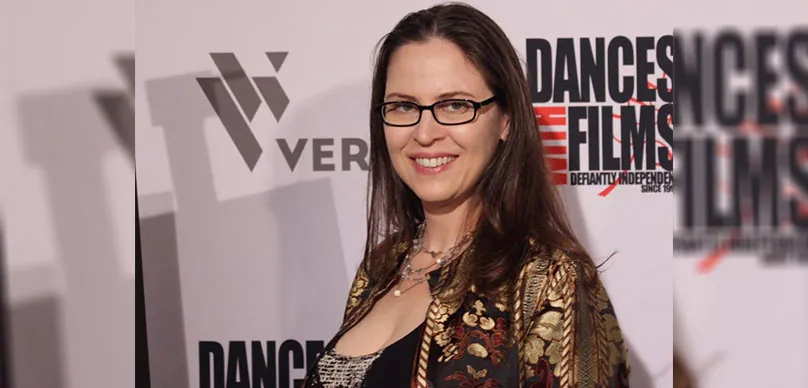
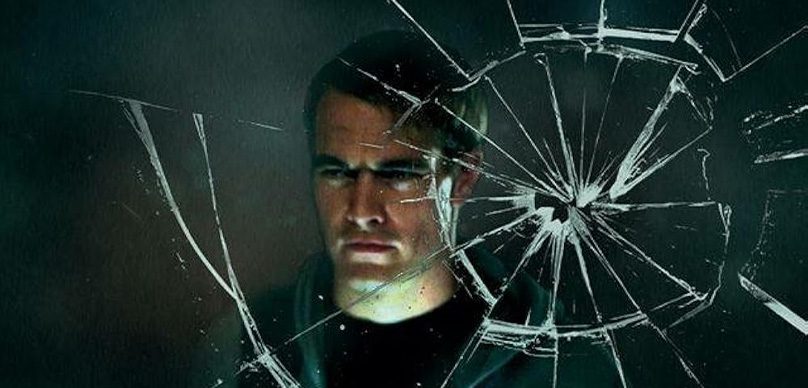
IFH 826: How to Turn a Script Into a Movie Without Hollywood’s Help with Chris Jay

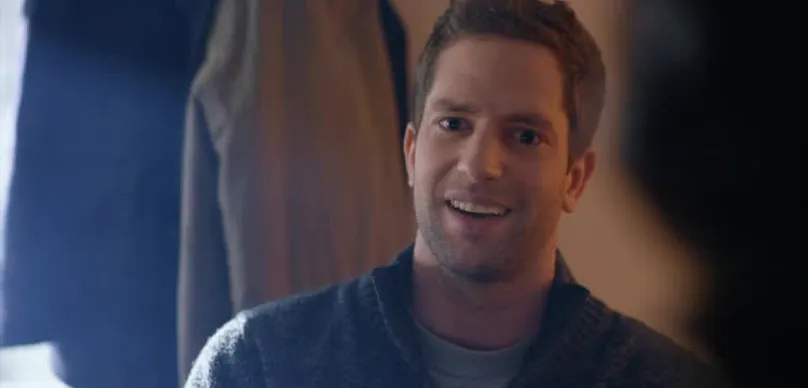
Every creative career has a turning point — for Chris Jay, it came when his rock band Army of Freshmen hit the wall of a collapsing music industry. Years of touring and chasing label deals ended with the rise of digital downloads and the 2008 financial crash, forcing him to rethink everything. Out of that chaos came a bold new pursuit: filmmaking. With no formal training, Chris and his bandmate Aaron Goldberg set out to write and produce a comedy called The Bet. They weren’t chasing approval from Hollywood — they were determined to make their movie, no matter the odds.

The idea for The Bet came from Chris’s own curiosity about reconnecting with old crushes from school and wondering how those stories might turn out decades later. The script, written entirely from scratch and formatted by hand before they even discovered Final Draft, became a crash course in DIY filmmaking. They didn’t have a studio or a rich backer; instead, they raised funds through family, friends, and a pair of theatre producers from the UK who believed in the project. That resourcefulness defined every part of production — from filming in Ventura, California, to juggling countless roles on set, from catering to prop design.

Chris and his team faced every imaginable indie film obstacle: tight budgets, long hours, and post-production delays that nearly derailed the entire project. Yet through determination, collaboration, and sheer grit, they finished The Bet, securing distribution on iTunes, Amazon, and cable VOD. The film also features one of the final appearances of wrestling legend Roddy Piper — a personal highlight for Chris, who grew up a wrestling fan.

What began as a long shot became proof that independent filmmaking still thrives on passion over privilege. For Chris Jay, The Bet wasn’t just a film — it was a statement of creative survival. It showed that even when the industry turns its back, you can still make something lasting with the right mix of heart, humor, and hustle.

Right-click here to download the MP3

Read more

IFH 824: The Screenwriting Secrets Every Indie Writer Needs to Know with Dan Benamor

Every writer’s journey begins with a blank page, but for Dan Benamor, it also began with an internship that grew into a career in film development. Starting at a small production company, he worked his way up from intern to head of development, gaining hands-on experience that taught him how vital confidence, responsibility, and strong opinions are in the industry. He saw firsthand how scripts live or die not just by their story, but by the conviction with which they’re written and pitched. “If you project confidence on the page, people will come with you,” Dan explained, underscoring the importance of writing with authority and clarity.

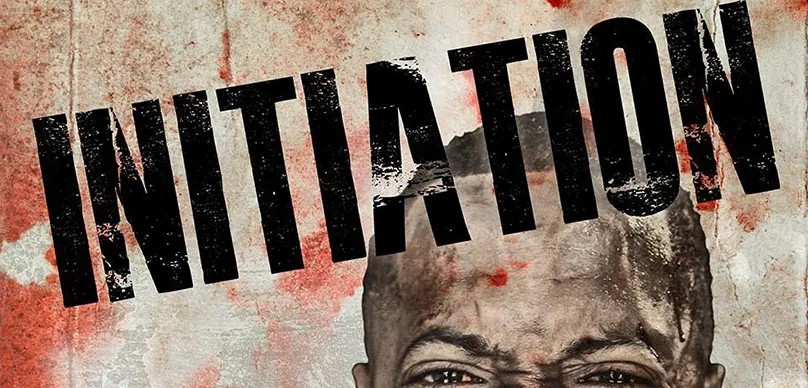
While Dan has directed, he realized his true passion lies in screenwriting. He thrives on crafting stories, breaking down structure, and refining characters until the narrative feels inevitable. His development background gave him “muscle memory” for story, allowing him to navigate theme, character, dialog, and pacing with ease. For him, the planning stage is where the heavy lifting happens — once the blueprint is clear, the writing itself becomes the fun part. This approach served him well on Initiation, a film he co-wrote with his cousin Oren, who also directed. The movie, distributed by Gravitas Ventures, follows strangers forced into a deadly cult ritual, blending action, horror, and a deeper message about inner strength.

What makes Dan’s story compelling is not just the film’s success, but the lesson it carries: you don’t need a massive budget or studio machine to create meaningful, marketable work. Initiation was made independently, yet earned legitimate distribution and strong reviews, proving that ingenuity and story can outshine resources. For aspiring filmmakers, Dan’s career is a reminder that discipline, persistence, and a fearless approach to writing can turn a simple idea into a film that audiences around the world can watch.

Right-click here to download the MP3

Read more

IFH 823: The Secret to Getting Noticed as a Screenwriter with James Moorer

The first spark of storytelling for James Moorer came in the fifth grade, when he wrote a play that hinted at the career he would one day pursue. But the path from childhood curiosity to professional screenwriter was anything but simple. James’s journey moved through Ohio State and eventually Los Angeles, where he started at the very bottom of the industry ladder. Even as a PA fetching water on set, he absorbed everything, knowing that each small step was part of a much larger climb.

Early experiments with short films exposed gaps in his craft, but those failures became his greatest teachers. James doubled down on learning, attending Robert McKee’s Story seminar not once but twice, and taking every screenwriting class he could find. It was here he discovered that writing alone wasn’t enough — success required understanding the business of Hollywood. “Half of the work is writing,” James said, “the other half is being a people person.” Screenwriting, he learned, demands not just strong pages but the ability to navigate relationships with producers, managers, and collaborators.

His real breakthrough came after joining Screenwriting U, a program that emphasized the industry side of the business. James realized credibility matters more than cash at the start of a career. He took on assignments not for big paychecks, but for credits that proved he could deliver. This “move the needle” approach — where every script, meeting, or assignment pushed his career forward — became his guiding principle. It wasn’t about chasing a golden ticket, but about building a consistent track record.

Networking, for James, isn’t about forced schmoozing — it’s about building real relationships. Whether it’s connecting through social media or face-to-face on set, he insists that a writer’s reputation is their most valuable currency. He often shares his passions online — from screenwriting tips to his love of pancakes — because being authentic and consistent makes people want to work with you.

The pivotal moment came when he signed with Purple Skull Management, not through blind queries but thanks to a trusted referral. What sealed the relationship wasn’t just his script, but his openness to feedback. Instead of resisting notes, James embraced them, expanding on producers’ ideas to make the story stronger. In his words, rejecting feedback is “the ultimate screenwriter’s fatal flaw,” while collaboration shows professionalism and staying power.

James also stresses the importance of paying it forward. He credits mentors and peers for opening doors and believes sharing knowledge with other writers strengthens the entire community. For him, progress in screenwriting is about steady improvement — reading scripts, writing daily, and treating every interaction as part of the bigger picture of a career.

In the end, James Moorer reminds us that screenwriting is both art and business. It’s a craft honed by constant practice and a career built on trust, adaptability, and persistence. His story shows that success doesn’t come from one big break, but from the accumulation of small, deliberate steps forward.

Right-click here to download the MP3

Read more

IFH 822: From Video Games to the Big Screen: The Filmmaking Journey of Nicole Jones-Dion

The lights of Los Angeles flicker differently when you’re chasing stories instead of stars. On today’s episode, we welcome Nicole Jones-Dion, a screenwriter, director, and producer whose journey took her from the world of video games and comics into the unpredictable realm of filmmaking. Her work spans from co-writing Tekken 2 to crafting the supernatural thriller They Found Hell for the SyFy Channel, to directing her first feature film, Stasis.

Nicole’s creative path began in the interactive worlds of games and graphic novels, where storytelling was often bold, visual, and larger than life. That same sensibility carried over into her screenplays, which naturally gravitated toward sci-fi, horror, and action. With a love for genre storytelling, she found herself writing for projects that demanded both imagination and grit — Dracula epics, video game adaptations, and stories designed to thrill audiences while tapping into familiar myths.

What makes Nicole’s story remarkable is not only her resilience but her ability to adapt. Before breaking into films like Dracula: The Dark Prince, she had already written over fifteen spec scripts, proving that persistence is as essential as talent. Many of her earliest opportunities weren’t born from original pitches, but from being brought in to rework or refine existing scripts — a reality she stresses is the bulk of Hollywood writing. “If you’re writing for someone else, your job is to give them the best possible version of their idea,” she explained.

She also experimented with crowdfunding to bring her short film Debris to life. Originally seeking just $5,000, she raised nearly $20,000 — 330% over her goal. The film, centered on a cursed samurai sword that washes ashore after the Fukushima tsunami, struck a chord with audiences and festival juries alike. For Nicole, the campaign revealed the power of a strong concept: if the hook is intriguing, audiences will rally to see it made.

Her passion for character-driven storytelling shines in her approach to screenwriting. Nicole Jones Dion works from detailed outlines and insists on strong titles and character names before diving into pages. She draws from methods like Save the Cat and the mini-movie structure, blending them into her own system. For her, clarity in the outline stage prevents wasted effort later. She builds stories where protagonists and antagonists clash as equals, each the hero of their own narrative. “The antagonist is the engine of the whole story,” she noted, underscoring how much weight villains carry in shaping drama.

Nicole also cautions against soapbox storytelling, advocating instead for themes that pose questions rather than dictate answers. Whether tackling sci-fi adventures or occult horror, she wants stories to leave room for audiences to think and engage with the material. Her love for speculative fiction — tales that echo the spirit of The Twilight Zone — continues to guide her work, from her award-winning samurai scripts to the YA sci-fi of Stasis.

Through all of it, Nicole embodies the philosophy of persistence. She writes daily, often at night, and embraces the idea that growth never stops. Even after multiple films, she continues to study, refine her craft, and chase new challenges. From feature films to shorts, from crowdfunding campaigns to international distribution, her career is proof that genre filmmaking thrives on both discipline and passion.

Right-click here to download the MP3

Read more

IFH 820: Screenwriting, The BAM Method, And How To Write A Screenplay That Stands Out with Mike Bierman

The lights of Hollywood may glitter, but behind them lies the quiet, disciplined work of the storyteller. On today’s episode, we welcome Mike Bierman, a 45-time award-winning screenwriter and the founder of the Facebook group Screenwriters Who Can Actually Write. His path is not a typical one, for he began not from film school corridors but from a father’s intuition, reading his daughter’s audition scripts and thinking, “I can do better.” That spark ignited a journey into screenwriting that has not only led to awards but also to a philosophy of writing that challenges the very conventions so many cling to.

Mike’s story begins with a simple observation: much of what passes for screenwriting is less than inspired. As he dove into the craft, he discovered both the rigid rules that bound beginners and the profound freedom of bending or breaking those rules once mastered. “Every writer is different,” Mike explained, “what works for me works for me. That’s a good place to start to look at. But it doesn’t mean it’s going to work for you.” His wisdom is clear: writing is less about formulas and more about discovering one’s unique method of bringing stories alive.

One of the most fascinating aspects of Mike’s process is what he calls the BAM method—the Bierman Asynchronous Method. Instead of marching forward from page one like a dutiful soldier, he starts with the ending. Knowing where a story resolves anchors the journey. He writes from the outside in, weaving scenes like a puzzle, placing them out of sequence until the picture emerges whole. This approach, he says, prevents the dreaded writer’s block and keeps the story tethered to a meaningful destination. To know where you are going, after all, is to never be truly lost.

And yet, Mike’s tough-love philosophy is equally important. He pulls no punches when it comes to the common mistakes of new writers. Formatting errors, bloated scripts, and the belief that software can replace skill are illusions that must be shattered. “You’re not a writer if you don’t write,” he says with conviction. Fear of failure, fear of the blank page—these are ghosts that vanish the moment one dares to type anything at all. A poor script can always be rewritten, but a script unwritten is nothing but dust in the imagination.

Beyond his personal method, Mike has also created a community. His Facebook group was born out of frustration with shallow discussions elsewhere, but it has grown into a gathering place for professionals and serious learners alike. Within that group, contracts have formed, films have been optioned, and wisdom is freely shared. It is, as he describes, a place where screenwriters commit to treating the craft not as a hobby but as a vocation worthy of study, rigor, and respect.

His upcoming book, Secrets of Screenwriting: Collected Essays, continues this mission. Unlike traditional manuals that promise formulas for success, Mike’s book is a raw compilation of essays, reflections, and, at times, rants that emerged from his years of guiding and challenging fellow writers. It is filled with cursing, passion, and honesty—meant not to coddle, but to awaken. Readers may feel scolded one page and inspired the next, but they will always feel challenged to rise higher in their craft.

In listening to Mike, one can sense the deeper undercurrent: screenwriting is not just about structure or technique—it is about truth. Flawed characters, difficult choices, and endings that reveal the essence of a story. Scripts are not machines to be engineered; they are living things to be breathed into existence. And like any living thing, they grow best in the soil of discipline, vision, and a willingness to face one’s own creative challenges.

In the end, Mike reminds us that the screenwriter’s path is both solitary and communal. Solitary in the hours spent with words that only we can birth, and communal in the shared wisdom, encouragement, and hard truths of those who walk beside us. Every page written is a step closer not only to a finished script but to a deeper understanding of the craft.

Right-click here to download the MP3

Read more

IFH 818: From Setbacks to Festival Wins: The Filmmaking Path of Dawn Fields

The magic of cinema often begins in the unlikeliest of places. For Dawn Fields, it all started when she signed up as an extra on the film Love Potion No. 9. What was supposed to be a day in front of the camera became a lifelong passion for the world behind it. Watching the crew work, she realized her true calling wasn’t to act, but to create. That spark ignited a journey that would carry her from the film sets of Atlanta to the heart of Los Angeles, where she would build a career as a producer, writer, and director—one forged not by ease, but by relentless perseverance.

Dawn cut her teeth in the early 1990s, working on big productions in Georgia as Hollywood expanded into the South. She worked her way up as a production assistant, grinding through long hours and tough assignments until she eventually landed opportunities with major companies like Lucasfilm, Fox, and NBC. But even with those early credits, she quickly learned that the film industry is as unforgiving as it is intoxicating. Seeking greater opportunity, she packed her life into a U-Haul and drove across the country to Los Angeles with nothing guaranteed. That leap of faith marked the beginning of a new chapter—one filled with both remarkable experiences and the kind of hard lessons every filmmaker eventually faces.

Her early years in Los Angeles brought valuable experience in acquisitions and distribution, where she scouted films at festivals and courted agents. But the allure of production kept pulling her back. Founding her company, Palm Street Films, she launched projects that taught her the intricacies of independent filmmaking, from raising money to navigating the demands of pre-production. Her first big crowdfunding effort, Zombie Elves, became a crash course in audience engagement and marketing. The idea—a zombie outbreak at the North Pole—generated excitement, but Dawn soon realized that a strong fan base is essential long before a campaign launches. The project may not have hit its funding goals, but it gave her the foundation to succeed later.

The pivotal turning point came with Shattered Love, a powerful short script she developed from a contest. What began with enthusiasm spiraled into a nightmare of budget overruns, director clashes, and ultimately a shutdown mid-shoot. The experience was crushing. As Dawn recalls, “I was heartbroken. It was the most devastating thing that’s ever happened to me, and for a moment, I thought about walking away from the industry.” But instead of leaving, she doubled down. Recognizing that she lacked directing experience to fully protect her vision, she made the bold decision to step into the director’s chair herself.

Her determination led to 209, a hotel-room drama that she later expanded into Found. That film not only premiered at festivals but won awards, including Best Director. Suddenly, Dawn had the redemption she was looking for. She had proven to herself—and to the industry—that she could take a project from concept to recognition. This confidence opened the door to even more ambitious work, including Fragile Storm, a short starring veteran actor Lance Henriksen. Securing a name talent was a challenge, but it elevated the project’s profile and showed her that persistence in negotiation and preparation can yield remarkable opportunities.

Through each project, Dawn has built a body of work that reflects both her resilience and her growing voice as a filmmaker. She openly shares the lessons she’s learned along the way—like how physical perks in crowdfunding can eat up budgets, or how vital it is to know exactly what kind of film you’re making before cameras roll. She’s also passed her knowledge on through seminars and script contests, helping other filmmakers navigate the same hurdles she once faced.

The picture that emerges from her journey is not one of overnight success, but of a career carved out by sheer tenacity. Independent filmmaking is filled with obstacles—funding shortfalls, casting challenges, crew missteps—but Dawn’s story reminds us that every setback can be fuel for the next project. As she continues developing features and guiding new voices through Palm Street Films, her career stands as a reminder that filmmaking is not just about vision, but about the will to keep creating when everything seems stacked against you.

Right-click here to download the MP3

Read more

IFH 814: Why Your Script Still Isn’t Getting Read; And What to Do About It with Whitney Davis

In a world where stories are the heartbeat of cinema, it’s a rare gift to hear from someone who not only understands the creative pulse of screenwriting, but also the business savvy required to get scripts into the right hands. In this candid and energizing episode, we welcome Whitney Davis, a literary manager and script consultant who’s carved out a unique path helping screenwriters navigate the often bewildering landscape of Hollywood. Her journey began in the most unexpected of places—pitching a book idea at a party while balancing motherhood—only to be discovered by a top TV lit agent who instantly saw the project’s potential as a television series.

What makes Whitney’s story so compelling is that she didn’t come to Los Angeles to break into the industry. It found her. Through a string of bold choices, lucky timing, and her fearless willingness to step into the unknown, she found herself developing a TV show and entering the high-stakes world of studio pitching. But when the writers’ strike hit and priorities shifted, she pivoted into script consulting. From there, one natural step led to another—and she began managing writers. For those of us in the filmmaking space, her story is a reminder that sometimes the career finds you when you’re already busy creating.

Throughout the episode, Whitney shares priceless insights into what truly makes a screenwriter stand out in today’s hyper-competitive industry. She isn’t interested in flashy gimmicks or name-dropping references to Tarantino or Nolan. Instead, she wants to see writers who know how to communicate authentically—people who can hold a conversation, who’ve honed their voice, and who understand the rhythm of story. “You don’t need a perfect pitch,” she says, “you need a great story, told like you’re chatting with a friend.” It’s advice filmmakers and writers alike would do well to remember.

Whitney dives deep into the art of the pitch and demystifies the often confusing world of representation. She breaks down the differences between agents and managers, noting that managers, especially, are essential early in a filmmaker’s or writer’s career. Managers help shape ideas, coach development, and create momentum. “It’s like a marriage,” she says. “If I’m going to rep you, I have to believe in your voice and know how to position your work.” That’s not just smart—it’s strategy.

She also highlights what turns her off: poor grammar in query letters, sloppy communication, impatience, and a lack of professionalism. For filmmakers and writers seeking representation, she urges a meticulous approach. Do your homework on the people you’re querying. Be respectful of their time. And never, ever spam them with mass emails. Whitney emphasizes that great writing isn’t enough. Being a great collaborator is just as important. “You’re not just pitching your story,” she explains. “You’re pitching yourself as someone worth working with.”

Her approach is refreshingly grounded and actionable. If you’re not in Los Angeles, she recommends saving up for a trip to attend top-tier events like the Great American PitchFest or Austin Film Festival. Better yet, build relationships online—Twitter, she says, has become a powerful hub for connecting with reps, writers, and producers. She encourages filmmakers to take advantage of contests, consulting services, and peer feedback as a way to sharpen their craft and increase visibility.

Perhaps the most refreshing aspect of Whitney’s perspective is her deep passion for helping storytellers rise. Whether she’s managing a writer or consulting on a script, she brings an energy that feels rare in an industry often marked by cynicism. Her goal isn’t just to sell projects—it’s to help people grow into the kind of creatives who can sustain careers. “Write because you love it,” she says. “The money and opportunities will come if you stay focused and keep showing up.”

This episode is a must-listen for any filmmaker who’s ever wondered what it really takes to get to the next level—not through shortcuts or formulas, but through clarity, consistency, and a strong creative voice. Whether you’re a writer, director, or producer, the lessons shared by Whitney Davis are a blueprint for building a career rooted in purpose and professionalism.

Please enjoy my conversation with Whitney Davis.

Right-click here to download the MP3

Read more

IFH 812: How Tremors turned into a Masterclass in Storytelling with S.S Wilson

There is a moment in every filmmaker’s life when the unseen becomes the spark—when what lies beneath the surface, figuratively or literally, begins to whisper its potential. On today’s episode, we welcome S.S. Wilson, a masterful screenwriter, director, and creative mind whose work reminds us that cinematic magic can erupt even from the dustiest corners of low-budget constraint. Whether you’ve laughed with Short Circuit or felt the rumble of Tremors, Wilson’s journey is one that stirs the creative soul.

S.S. Wilson is best known for co-creating the Tremors franchise and co-writing Short Circuit, yet his deeper legacy lives in how he approaches story: with reverence, structure, and devotion to the craft. In this wide-ranging conversation, he invites filmmakers to witness what it truly means to build a story from the inside out. He and his longtime writing partner Brent Maddock don’t chase ideas—they architect them. Their gospel? Outline everything. “We’re not comfortable until we know where it’s going,” Wilson shares. In a landscape where many chase spontaneity, Wilson reminds us that clarity of vision is a kind of sacred pre-production.

The Tremors films weren’t simply genre flicks—they were blueprints in filmmaking ingenuity. When the budget says no, the imagination must say yes. That’s why the monsters are underground for most of the film—not just to build suspense, but to bypass costly visual effects. “We knew sound was going to be critical,” Wilson says. “That’s part of why we picked underground monsters. You don’t have to see them… you have to feel them.” For filmmakers working with tight budgets, this is gold: design limitations into the concept itself. Make the unseen the story.

There’s a brilliant moment in the original Tremors where the creature is revealed incrementally—first a worm-like tendril, later the entire beast. That’s not just good horror. That’s good storytelling. Wilson orchestrates expectation like a symphony, pulling the audience forward with curiosity. And the characters—real people in an unreal situation—ground the entire thing. “Even the monsters follow rules,” he says. “We never change the rules just for a scare.” For any director or writer, that’s a North Star: consistency builds trust with the viewer. Break that, and the spell collapses.

Wilson and his team learned early that writers are often shut out of the process once the script is delivered. They decided they’d had enough of that. By pushing to become producers, they ensured the vision remained intact all the way to the screen. This wasn’t ego. It was stewardship. They built not just a film but an ecosystem of logic and love. No lazy tropes. No studio-fueled chaos. Just character, creativity, and continuity—from the first Graboid to the final Ass Blaster.

Today, Wilson writes novels, but his advice for filmmakers remains elemental. Don’t fall in love with your first idea. Don’t polish the same project endlessly. Make things. Learn from what you admire. And let go. “Write something. Get it done. Say goodbye to it. Write something else,” he advises. This isn’t just writing advice—it’s directing advice. Editing advice. Producing advice. Finish the scene. Finish the film. Then move on. What’s next will only reveal itself when you’ve cleared the space for it to arrive.

Right-click here to download the MP3

Read more

IFH 801: Breaking the Rules: Crafting Powerful Films Without Hollywood Money with Shawn Whitney

Sometimes, the fire of creativity is struck not by lightning but by the slow, smoldering ache of dissatisfaction. And in today’s soul-stirring conversation, we welcome Shawn Whitney, a filmmaker who found cinema not in the corridors of academia, but in the quiet rebellion of self-taught screenwriting and micro-budget filmmaking. Shawn Whitney is a screenwriter, director, and founder of Micro Budget Film Lab who empowers indie creators to tell powerful stories on shoestring budgets.

Our journey with Shawn begins not in childhood fantasies of movie stardom, but in the dense woods of Brechtian theater and the quiet study of old black-and-white films. His path wandered, as many worthwhile ones do, through rejection, basement solitude, and heartbreak—until something within him demanded not just expression but transmutation. Shawn didn’t study film in college. Instead, he emerged from the theater world and fell into filmmaking after a failed workshop production left him broke and dispirited. Yet that fall became his rise. As he said, “I just started writing screenplays and learning the craft in the quiet shadows.”

There’s something beautiful in learning the art of story not from glamorous sets or high-priced workshops but from the bones of failed experiments and the echoes of dialogue bouncing around your own mind. Shawn described his education not with fanfare but humility—referencing Sid Field, Blake Snyder, and the ever-controversial Save the Cat—tools that became his spiritual guides, not rigid masters. And with every script, he refined a method. Not the method, mind you. A method. “You just need a method. You can’t just be anarchy,” he mused.

But perhaps what struck me most was Shawn’s philosophy that screenwriting is not just structure—it’s an argument about what makes life meaningful. Films, he insists, must be animated not by market trends, but by inner turmoil, by the strange flickering passions of the human heart. “It can’t just be about chopping up zombies. Your characters must go through an inner transformation.” That idea—that a film is a living question—sets Shawn apart in a world often obsessed with following the formula instead of feeling the pulse.

Shawn’s micro-budget films—“A Brand New You” and “F*cking My Way Back Home”—aren’t just titles that stick. They are rebellious acts of filmmaking born from limited means and limitless creativity. His stories unfold not in sprawling CGI landscapes, but in human longing, funny sadness, and philosophical absurdity. One film follows a man trying to clone his dead wife in the living room. Another explores redemption from the passenger seat of a towed Cutlass Supreme. With a budget of $7,000 and a borrowed tow truck, Shawn pulled off scenes that feel bigger than most tentpole blockbusters.

But filmmaking, for Shawn, isn’t just about his own expression. Through Micro Budget Film Lab, he’s become a teacher, a mentor, and a kind of mad scientist in the alchemical lab of storytelling. His passion is not merely to direct, but to help others break free from the gatekeeping systems that keep fresh stories from being told. “We need a micro budget movement,” he declared, envisioning a cinematic rebellion where filmmakers use what they have to tell stories no one else dares to.

Right-click here to download the MP3

Read more

IFH 800: Behind the Scenes of Sharknado: Turning Sci-Fi Madness into Storytelling Gold with Andrew Shaffer

The mind is a curious trickster, delighting in dreams where logic pirouettes in absurdity. In today’s extraordinary episode, we welcome Andrew Shaffer, a humorist and New York Times bestselling author whose wit slices through the storms of reality with a twinkle in his eye and a chainsaw in hand.

From the earliest pages of his life, Andrew Shaffer was destined to dance with the ridiculous and sublime. As a child, he devoured horror and science fiction with a ravenous appetite, only to find himself drawn back to these imaginative playgrounds after a detour through the hallowed halls of literary fiction. His journey led him, almost inevitably, to the playful chaos of “How to Survive a Sharknado,” a manual for the absurd that demands both laughter and preparation.

In the dance of ideas, Andrew revealed how the birth of the Sharknado survival guide was as spontaneous as a tornado filled with teeth. Inspired by the original cult film, he offered his humorous talents when Random House and SyFy decided to create a companion book. Imagine being tasked with making flying sharks scientifically plausible; as he put it, “I had to talk to a marine biologist and ask, not could this happen, but how it might happen.” It is in such delightfully impossible questions that the spirit of creativity is set loose.

Throughout the conversation, there was a beautiful lightness, the kind one finds when nonsense is taken seriously. Andrew’s research involved binge-watching over 30 sci-fi films—some genuine, some fabricated solely for the book—to weave an interconnected universe of mayhem. When asked how one might survive a Sharknado, he smiled into the void and said, “The answer in the book is simple: Stand and fight. Grab a chainsaw.” It is a lesson not just for storms of sharks, but for all the monstrous whirlwinds that life throws at us.

Yet beneath the chuckles and chainsaws, Andrew’s words echoed a deeper wisdom. Too much meta-awareness, he warned, robs a story of its soul. “If everybody’s in on the joke,” he said, “then the joke itself isn’t that funny anymore.” Ah, but isn’t that true of life itself? When we cling too tightly to cleverness, we risk missing the raw wonder that makes each absurdity luminous.

Perhaps the most chilling revelation of the day was the invincibility of the ghost shark, a creature birthed from sci-fi chaos. Manifesting from toilets, swimming pools, and even water bottles, it served as a reminder: some forces cannot be outrun; they must be met with courage, humor, and an open heart.

Right-click here to download the MP3

Read more