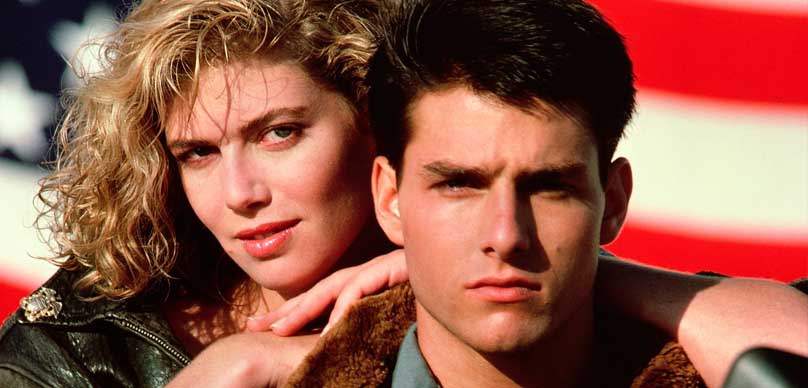
IFH 565: Inside Creating Top Gun & Writing in Hollywood with Jack Epps Jr.

It is an absolute thrill to have Jack Epps Jr. on the show today. The award-winning writer, USC Cinematic Arts professor and filmmaker is a member of the Writer’s Guild of America and the Academy of Motion Picture Arts and Sciences. He’s best known for writing Top Gun, The Secret of My Success, Turner & Hooch, and Anaconda 1997 screenplay. 

Jack first became involved in making films while doing his undergraduate at Michigan State University. Inspired by a student film festival, Epps made his first film the following semester which became Pig vs. Freaks that was later titled Off Sides.

Top Gun was Epps’ big break. He partnered with Jim Cash who was his screenwriting professor at Michigan State University, to write several projects and Top Gun was one of those screenplays. Top Gun’s success was seismic. It became a box office number one grossing $ 357.1 million on a $ 15 million budget while also stacking several accolades including an Academy Award, Golden Globes, and a number of other international film awards. 

As students at the United States Navy’s elite fighter weapons school compete to be the best in the class, one daring young pilot (Tom Cruise) learns a few things from a civilian instructor that are not taught in the classroom.

Epps is credited for the original screenplay in the sequel, Top Gun: Maverick which will be released this November.

Epps shares co-writing credits with Jim Cash and Hans Bauer for the screenplay of the Anaconda adventure horror film series of 1997 and 2004. The first story follows a National Geographic film crew in the Amazon Rainforest that is taken hostage by an insane hunter, who forces them along on his quest to capture the world’s largest – and deadliest – snake.

While the first film did not receive critical acclamation, it grossed $136.8 million worldwide against a budget of $45 million.

In the second film, Anaconda: The Hunt for the Blood Orchid, the premise is quite similar. A scientific expedition team of researchers set for an expedition into the Southeast Asian tropical island of Borneo, to search for a sacred flower for which they believe will bring humans to a longer and healthier life, but soon become stalked and hunted by the deadly giant anacondas inhabiting the island.

Here is a clip of Gordon (Morris Chestnut) after being paralyzed from a spider bite, who comes face to face with death.

These are some classics and I couldn’t wait to chat with Jack about his creative journey—from his work as a cinematographer and an assistant cameraman on various local productions, to his love for writing or reviewing romantic comedies films like Viva Rock Vegas, and Sister Act.

Let’s dig in, shall we? Enjoy this conversation with Jack Epps.

Right-click here to download the MP3

Alex Ferrari 0:04
I'd like to welcome to the show Jack Epps Jr. How you doing Jack?

Jack Epps Jr. 1:01
I'm doing really well. Nice to be here. Thank you!

Alex Ferrari 1:09
Thank you so much for coming on the show. Um, I'm excited to kind of get into the weeds about your career because you've written some of some of the some, you know, classic 80s and 90s films that I grew up with. And again, the audience will get tired of me saying this, but you had an impact on my video store days when I was working at the video store. Great days. Oh, those. Exactly. So all of all of your films and your especially in the 80s and early 90s, all the stuff that you wrote was like I was there moving the boxes, rec recommending them to the customers got me good. So. So let me ask you, how did you how did you get started in the business?

Jack Epps Jr. 5:41
Well, you know, it's one of those sort of long stories in the sense of, I became interested in film as an undergraduate at Michigan State University. I'm from Detroit, Michigan, moved out to California because I just fell in love with movies. And I said, this is what I want to do with my life. I actually came out to California be a director, because I was making short films, had no money, virtually no contacts, and the best way to direct was on paper and started writing. And in through a friend I met at Michigan State Anderson House, his dad knew the producer of Hawaii Five O and said, If we wrote a treatment, he could get it to him. So we actually put together treatment called the capsule kidnapping, sent it to his dad who sent to the Phil ECOC, who sent the the showrunner, who then called us and said, We love this idea. So quickly, I sold it exact. So we sold this script, and and had a Hawaii Five o produced very, very quickly, I mean, and then we worked together for a couple years trying to get other things produced. And we sold a Kojak and things like that, but didn't really move forward a lot. At the same time. I had to pay rent. And so I was because I was a filmmaker. I was actually an assistant camera man. And so doing a lot of work on stuff like that. I actually worked for Orson Welles on the other side of the wind. River, what was that? Like? You know, it was really great because it was there is Orson Welles. In the story. How it happened is my wife was my girlfriend at the time. She was working as a typist. And so she got a call from her temp agents agency and said, Orson Welles needs somebody and she she was in Peoria now to film family. So she goes Orson Welles, I know the name but don't worry, just go meet him. Because I knew the less she would know the more he would like her. And so he hired her. And then I said, he got to get me on this film. You got to get me on this film. So I spent a couple months with Orson and Gary Graver on the piano was great because it's Orson Welles omit really nice. I mean, he didn't throw a temper tantrum. He wasn't like this big. He was just Orson Welles. And there's the guy and you some pitching myself. I said, I cannot believe I'm pulling focus on Orson Welles here.

Alex Ferrari 7:58
That's, that's amazing. And that booming voice that he has,

Jack Epps Jr. 8:01
And the whole persona.

Alex Ferrari 8:03
Oh, my God, that must have been amazing. So yeah, so and everyone listening, when you're starting off as a screenwriter, generally it works out that you write a spec pilot for a television show or a television show, and it gets picked up right away and then you start making lots of money just like yourself, correct?

Jack Epps Jr. 8:20
Absolutely not. What happened is I then my my college screenwriting teacher, Jim Cash had contacted me and said, We should write together. And so Jim and I went back to Michigan to pick up my motorcycle to drive back to California. I looked him up. We sat down at the school union, and we pitched out eight ideas. I didn't think anything work. We said, Thanks, goodbye. I was riding back cross country. And I said, you know, this idea actually works. And Jim and I spent the next two and a half years doing about five different drafts and figure out how to write together long distance because he was in East Lansing and I was in Santa Monica. We wrote a script finally, that I felt was ready to take it to go into the business to let out because I had learned enough through internships and things to know that you really have to enter the business at a high level, the script has to be very, very good read. It's got to be a good story and show off your work as writers and storytellers. And that script was called Izzy and Moe. And we got representation to major agency through a friend who recommended us and it got optioned by Bud Yorkin of Yorkshire and Lear. And so suddenly, we were paid some pretty good option money that may both of us say we should stay at this. So we were lucky that our first spec actually got options.

Alex Ferrari 9:47
That right and again, a lot of in a lot of times when a lot of screenwriters think that just because you get the option, it's an automatic production, and that's not the case. At all, most most option scripts don't get into production is that is that a fair statement?

Jack Epps Jr. 10:00
All right, is that the truth? I mean, it's what it what it does is what it puts it. So yes, no is emo never got made, but Yorkin, who was a European leader could not get it made. And so but what it did is it put us on a spotlight, people knew we were there. And then we did a second script, a second spec script, which was called old gold. And that was a sort of Charmin Chase adventure set in San Francisco, about a fortune 100 looking for lost gold from the Nazis that ended up in San Francisco. And then that got that got bought on an auction. And so we earned good money and he was like, Okay, this is now we're throwing ourselves into it. But that didn't get me

Alex Ferrari 10:46
I've spoken to so many screenwriters over the years and known many during my time in the in the business that sometimes you look at an IMDB filmography, and you're like, oh, They've only done three movies. I'm like, Yeah, but they've been working steadily for a decade. And just because they haven't been produced. I mean, they're still pulling in six figures a year, and working on major projects that just either they're rewriting or polishing or Script doctoring. And don't get don't get made. Is that your experience as well?

Jack Epps Jr. 11:16
Absolutely. And what I learned very quickly is that if a studio has a choice between their idea or your idea, they're always going with their idea. So why not develop their ideas, which they already invested in. And SmartKey has yet been tricked into your idea. You have to you have to make it, you've got to own it, but realize that you're writing for them, and you want to make the producers in the studios happy. So we then started writing an assignment. And we had six unproduced screenplays and then yeah, we did Dick Tracy. For four directors that got shelved wasn't kidding me. We then Simpson Bruckheimer. We actually through Jeff Katzenberg was involved in Dick Tracy because it was actually owned by Universal and Paramount. So as a joint production, they had international and domestic rights. And so Jeff Katzenberg liked our work and wanted to hire us after Dick Tracy and I had a breakfast meeting the famous ADM breakfast meeting with Katzenberg. And he rolled out six ideas of which I thought this really interesting idea be stood out to me. Yeah, based on this school pilots called Top Gun. And I thought, wow, I actually got my private pilot's license at Michigan State, they had a flying club. So I thought, Well, if the movie doesn't get made, I'll get to find a navy jet. So okay.

Alex Ferrari 12:46
It's a win win win,

Jack Epps Jr. 12:48
That one get made. So why would this one get made but flying a navy jet? That's a hard thing to get to do,

Alex Ferrari 12:54
You got to go through, you have to jump through a few hoops to get to that tough life to say the least. So So okay, so the original idea for Top Gun was basically it was Jeff Katzenberg, kind of throughout the like, hey, there's a school pilots figure something out.

Jack Epps Jr. 13:09
Well, actually, it was actually, Jerry Bruckheimer, okay, we found an article in a California magazine. Based on that there was a school and there are these pilots, and they were having fun. There was no story, no characters, but it was a potential world. And so Jerry brought it to, you know, the producer will do product to he was had to deal with Paramount, but Don Simpson and Paramount want to develop the idea. And so for for us, it was like, Okay, we had just finished a Tracy and that was not going into production. And so

Alex Ferrari 13:42
This is at 84-85 for Dick Tracy?

Jack Epps Jr. 13:44
Actually, if Dick Tracy was actually in the early 80s, right, I went in for directors on that project.

Alex Ferrari 13:51
And we'll get to that we'll get to Dick Tracy it a little bit down the line. But so so with Top Gun so you're basically on assignment, essentially you you got it was an open assignment. Jerry came up with the the concept of just the world and you guys came up with Maverick and Iceman and the whole thing. I mean, so Okay, so when you're writing this, it's another assignment. You're like, this is not going to get me both hell, we'll have some fun. And we're getting paid to do it. So you didn't think it was Did you have any idea that it was actually going to go into production? Did you feel something?

Jack Epps Jr. 14:24
Well, so basically, sips and Bruckheimer when I met with him, I said, Look, guys, I don't want to do this unless we can actually get the planes but I really don't want to have these like little CGI is not what it is today, right today. Hold off, but then you could not and so they agreed. We went back to the Pentagon. We got approval by the Pentagon. They gave me a technical adviser but even Pete Pettigrew. I went to doubt the NAS Miramar and I got to fly jets and

Alex Ferrari 14:57
you and you were in the back like you The Oh absolutely. Oh, absolutely.

Jack Epps Jr. 15:01
Yeah, that's amazing. A couple of things happen. One is the f 14. Wow, I fell in love with the plane. I really didn't know about military planes at that time. And I fell in love with it for one or two reasons. One, it looks incredibly cool on the ground. It's like, wow, this thing is just the fastest, most beautiful thing ever designed. And to it had two people flying in it a front seat or in a back seat. And I didn't really know about that. And that gave me a relationship. So I already went, Yes. I don't have to have guys going from plane to going on Maverick are you doing in Qatar? Are you so I can actually have these two people and form a relationship, which gave me a core to develop in the story. So I said, Great. We've got a relationship. But I'm looking for all the guys there are great. Get along. And I'm going for where's the conflict? What am I writing here? I've got to look for the conflict. And then it came to me, like one of those bolts of thunder. Lightning is what if one guy doesn't get along? What happens if you got a guy who sticks out like a sore thumb? What happens to this environment? Maverick is born. So I had the conflict. And then we just start building out the story from there in a sense. And I pitched the DOD and Jerry said, Look, we're gonna do a school movie, but it's kind of a real fight in the end, guys. We're not going to have a school. It's got it. He said, Yeah, like Star Wars at the end. Absolutely. That's what we're gonna do. We're gonna do Star Wars. You know, the big dog fights for real stakes at the end. So I did all this research, Simpson Bruckheimer. Great. I said, Look, guys, you got to leave us alone, just let us go away, we're gonna have to find a story. I can't pitch it to you, you got to trust us. And if you don't want to trust us get somebody else because we just can't go through this development process. We have to find it. And they were great. They said guys go away. Afterwards, they said they will never do that again. So we're at able to just find the story, you know, and that was a hard story to find this set in the school. And I mean, so yeah, it's a school guys flying around. What's the story there? And so for us, that was the big thing, breaking that story, finding what that art was, and who those characters were in the relationships and what the whole, the drama of it was.

Alex Ferrari 17:09
And, and I mean, obviously, the top cons of a classic film, and you know, when I was when I've seen I've seen it a million times. But that whole movie is all about character. It's like, the plot is the plot moves things along, but it is about character so heavily as opposed to like, Sherlock Holmes story, which is all plot and character kind of rides along. It. Would you agree? I mean, this is the Iceman and Maverick and his interest and his father and that, that baggage that he's carrying and, and the conflict between him and Iceman, which is just amazing. And we'll talk about all the stars aligning in a minute, but as far as the character, do you agree with that?

Jack Epps Jr. 17:52
Oh, yeah, I mean, I think that that's why we couldn't pitch it. It's almost unpickable script, because it's like, well, what happens? And it's like, because so much came out of the research, I did about 40 hours worth of interviews with pilots. But first, the Pentagon had insisted in there with me, and they wouldn't talk and I said, Look, you gotta get out. I'm sorry, I got to talk these guys alone. And they know I won't, and then they call the Pentagon. So yeah, leave me alone. And then the guys opened up and you know, learn about their lives and met these guys. So they were inspiring as people. But also Gemini were athletes. So we knew what it meant to be on a team and to and to try to make sure you're, you know, the sense of being, you know, one of the stars on the team, you know, you got to be the best, you know, that's part of what sort of the drive for excellence is. But it's a long way to get to your question. We had in the script shift, since the break ever loved it. They loved this movie, but Paramount said, I don't get it. I don't get it. Of course, it's all these planes in the sky. It's like this. So they said no. And they put it on the shelf. So there's number seven unproduced motion picture and so we thought we had something we believed in and so so did Simpson Bruckheimer but not going to happen. So we want went on to a next project Legal Eagles with Ivan Reitman.

Alex Ferrari 19:15
Not a bad, not a bad

Jack Epps Jr. 19:16
project. Not a bad thing. And Ivan was great. And it wasn't until the studio changed. It. You know, the executives and new chickens came in TrackMan cuzzo, who called Simpson Bruckheimer. I said, Guys, we have nothing in the cupboards Do you have anything you want to make? And they pulled the script down and said, Yeah, we got this project we'd like to make and they say go do it.

Alex Ferrari 19:37
That it's just just like that. And then what I find so fascinating about that film specifically is it was a perfect alignment where Jerry and Don where we're coming up they had they had already started building from Flashdance. I think it was in probably a little bit before, but they started to build but they weren't yet. Jerry and they weren't Bruckheimer Simpson company. pletely yet that Top Gun is what took them to the next level. We'll be right back after a word from our sponsor. And now back to the show. So you have young producers who are about to explode, they bring in a commercial director who had done one other I think he did what did he What was the other film that he did? Oh, hunger, the hunger. So, vampire so in brought him in, and then this young actor who had been had success with risky business, but yet wasn't Tom Cruise. All these things aligned. And it exploded into this this supernova, essentially. And that movie was a massive for people understood triple net wasn't around at that time. It's a massive hit. And one of the best recruitment tools The Navy has ever added probably still as to this day.

Jack Epps Jr. 20:59
We wrote the movie for Tom, yet we wrote it with him in mind from the very beginning, when we gave the script to Don and Jerry, I said to Don says Jerry, I said, think Tom Cruise when you read this? And and they said Yep, absolutely. And that was the only person that they they went after Tom. Yeah. But Tom, but the ability factors. Part of it was because because of character. You know, Mary is a bit of a jerk. And so he's, he's really arrogant. So you've got to have an actor that you're going to like that you're going to stay with, or else just going to go after this guy. I'm out of here. And so and Tom did that he was the young American, so to speak, and he represented that sort of this bravado and, you know, pushing it at the limit. And, and, and, and they nailed it. They got him and that was in he was great. He actually he understood it. And he's played Maverick for the rest of his career.

Alex Ferrari 21:49
It's such a Top Gun in the car and Top Gun. He said that's well, he developed who Tom Cruise is and Top Gun basically. And he's, I remember some comedians like I love that movie with Tom Cruise with these young cocky white guy. Oh, you mean every movie? Got it? Okay, got it. All right, great. Yeah, I got it. But but but to be fair, though, that is a very slippery slope as an actor and a character to play because you're right. He's arrogant as hell but yet for some reason. You love him. What do you think about Mavericks character? Is it partly how it's written? And obviously how Tom performed it. But I think there there was meat in the script that allowed you to feel empathy towards him. And I think it might be the father baggage that you kind of, because if you don't add that baggage, I don't think he's as there's no empathy there. I don't know. What do you think? Yeah, no, I

Jack Epps Jr. 22:45
think that's all part of the story. And I'm part of it, we made him a second chance character. He was the underdog. Remember, he didn't have he wasn't going first. He had to win. A Cougar had to hand in his wings for him to get in. So he was he was always the underdog. And we tend to root for underdogs. And Iceman, of course, immediately is is a is a great counterpart. And, and that rivalry makes your root for Tom, you want that you want him to stick a nice man's face and you're rooting for him. And and, you know, you also feel for him, you know, he's he wants to do it, right. He's got some stuff. He's got to work out. Hopefully you can work it out. Right. And

Alex Ferrari 23:22
he put but at the end of the day, he's a good guy trying to do good work. And you know, he's trying to be all you can be, as they say,

Jack Epps Jr. 23:31
we've got some things to learn.

Alex Ferrari 23:32
Yeah, no question. And and I mean, how were you excited to know that they were breaking making a sequel?

Jack Epps Jr. 23:37
Yeah, yeah, I was excited. And I was happy that one times involved and Jerry is doing it because Jerry be true to the to the movie. And I know that he'll keep the continuity going with that. And so I think, you know, I'm excited to see it. I've read it. I know, I know what they've done. I can't talk about it, because there's any talk about it, but I think people will like it because it is a continuation.

Alex Ferrari 24:01
It's a true sequel. It's a true sequel. Yeah.

Jack Epps Jr. 24:03
Yeah, it is. It's a continuation. It's it's not just a different movie. It's the characters come back and there's some there's growth and development.

Alex Ferrari 24:10
That's amazing. That's amazing now, so you're ready. Are you worried working to Legal Eagles when before Top Gun gets into production?

Jack Epps Jr. 24:19
Yes. So we went from having seven unproduced screenplays to three films in production in 11 months. Jesus, that's unheard of. It was insane. It was insane. Because suddenly, you have Tompkinson production legalese in production. See for my successes in production,

Alex Ferrari 24:35
she's so so and for people again, that weren't around at the time Legal Eagles will start obviously, Robert Redford, Daryl Hannah and Debra Winger. That was a massive hit. It was and then and then secret of my success, which by the way, personally, one of my favorite 80s films of all time, I watched that. When I was a kid I watched I must have watched that story in that film 100 times because I was I was Michael J. Fox. I wanted it you know, it was During it was during the Wall Street day. So yeah, I wanted to make it in business and all of that kind of stuff. And it was just such a wonderful film. And that was a huge that was a massive hit as well. It was it was Michael J. Fox at the peak of his powers.

Jack Epps Jr. 25:14
Yeah, right after back to feature one. And he was great. I mean, Michael was fabulous. We wrote it for him, we were brought into a rewrite. So basically, it was a screenwriters dream. Frank Price, who was the executive of universal new as well, like, at work? I pitched him an idea. And they said, what if we took that idea and put it into this movie we have wasn't called secret of success, success at that time, something else? And they said, Yeah, sure. So we did a page one and just went through the whole script. But it was great. As they said, We have to start on June 1, because we have Michael J. Fox, and then we have to end by August, something because he's going back to his show, family ties. And, and so they had to shoot what we wrote.

Alex Ferrari 25:56
Oh, so there was no chances to rewrite. So it was perfect for you guys.

Jack Epps Jr. 26:00
Exactly. So we just we just bust through it had a great time. And really, you know, no, you don't you write from Michael J. Fox gives you a lot of fun in the script. And we also wanted to not demonize business as it always is. But as you were saying, people with ambition, and that character, I have a you know, coming to want to make his place in the world. And also, I wanted to do a, I've always wanted to be a big Billy Wilder fan, and wanted to do a, you know, a character who's assuming an identity. So a guy who's playing two identities, I always want to work that and that's really difficult to write that and, and but it was fun. There was a lot of fun to do it. And we were really pleased with the outcome. And Herb Ross, who was the director was a Broadway director, so he liked the words. He wasn't one of your Broadway direct, you direct the words and he wasn't playing with him and was really just going for it. And I thought I thought the movie really worked out well.

Alex Ferrari 26:57
Now with those three films, I mean, it's kind of unheard of for a screenwriting team, a writer screenwriters in general to have that many hits back to back to back in such short amount of time as well. How did the town treat you? I mean, after top gonna loan? I mean, I'm sure your phone was ringing off the hook at that

Jack Epps Jr. 27:15
point. Well, in my as my agent would say, at that time, don't ask they're not available.

Alex Ferrari 27:22
Everybody was reaching out to you at that point. It was you were the belle of the ball, as I like to say,

Jack Epps Jr. 27:26
right, it was that stuff. And because we knew Katzenberg and liked him. We worked at Disney worked on SR act. You know, he did a major rewrite on that. Turner and Hooch You know, Jim, Jim didn't want to write Topcat originally, because he didn't like planes, like flying planes. So he had a phobia. I said, don't worry about it. We'll do it. So he did it for me. And then he wanted to do Turner and Hooch because it's a, you know, he's has dogs. He's like four dogs, and I want to write a dog movie. i Okay, I owe you one. So we sort of traded off it, you know, things just came our way. And so it was it was it was fun. It was different. Because we were unknown people left us alone. And and the more unknown, you got the more of a looking over your shoulder. And that was a very different experience in terms of just how that could change a little bit.

Alex Ferrari 28:15
And for people listening, especially young screenwriters coming up, I mean, yeah, you had a lot of success in a short amount of time, but you had been putting in the years of work. Prior to that, like you said there was seven unpaid or six unproduced screenplays. Yeah, you had representation? Yeah, you'd optioned a few things. But you would have been, it's not like you just woke up one morning and like, Oh, here's Top Gun, like it took you years to get to that place. And I think screenwriters young screenwriters need to understand that you've got to put in the work, and it's not gonna happen overnight.

Jack Epps Jr. 28:45
I think we were actually fortunate that we didn't get our first movies produced, I think we would have grown as writers. No, you're right. You're right. I think we have tapped ourselves in the back and say how brilliant we were. And we would have been very happy at that level. And, you know, first movers are fine, they're good reads. But we had to grow. And we had to work harder and dig deeper, to basically teach ourselves how, you know, just because they were trying to figure out how does this thing work, and to basically, and the more and more we got to character was was really, really the breakthrough, you know, telling stories about people lives in crisis. You know, rewriting is a big part of what Jim and I did together. And it you know, we just realized you had to dig in. I mean, like I said, for Dick Tracy, we went through four directors, and for each director, we did two drafts

Alex Ferrari 29:33
now, so let's jump into Dick Tracy really quickly. So I remember 9090 Very well, it was right smack in the middle of my video store days. So I was it was in the heat and that was Dick Tracy, I think and please correct me wrong. This is my assumption. Dick Tracy got greenlit and got fast tracked into production after Batman came out in 89. Because that kind of just changed. It just changed the landscape. All of a sudden superhero movies. Were it because Prior to Batman for people not understanding because now every week there's a new Batman or Superman or Marvel film coming out, but there was a time there was a time where there was one maybe and it took every two, three years before you'd get orders something like that. Before Batman, there was Superman and Superman had pretty much petered off after Donner left. So when Batman came out, which was a absolute insane, massive hit, Dick Tracy showed up and then Dick Tracy, I, you know, watching it, I mean, it had Danny Elfman music, it had a lot of tonality. From Batman, it was a dark Dick Tracy was, you know, that the world was so it was that way just so beautifully constructed. And the colors were so vibrant, and the PErforM I mean, you had to look at a cast, but Donna ALPA Chino will enforce I am Warren Beatty, it's just amazing. Was Am I Am I correct in saying that? That was the reason why I got fast tracked?

Jack Epps Jr. 30:56
Yeah, I think so. I think it was the, at that point, looking for something to the big superhero type movie like that, and it was ready to go. The script is ready. And in Warren, people saw him as the only that was one of the problems getting that movie made is that Warren was who everybody saw is the Tracy. There's nobody else. And that becomes a problem because we only make it with Warren. And when we start we first started the script with John Landis, who for my business would have been probably the most interesting, wacky, crazy. Tracy. John had that terrible Twilight Zone accident. He exited. Then we got Walter Hill, who was who taught me a lot. Walter was a screenwriter editor. Oh, a good director. Yeah. And he basically taught us a lot. He was funny, because we're a little arrogant, you know, you know, we've been doing really well. And Walter SS do a fix on the script. And we push back to No, we don't want to do this. And he said, Well, okay, I'll do it. I'll write it, don't worry about it. And we went, Oh, hold on a second here. You know, that's not a bad idea. We'll do it. Because you don't want to direct your writing. You want to stay the writer. So we said, oh, I think I understand what you mean. So you know, Walter taught us a lot how to hang in the game, and also how to focus the characters. Well, I mean, you know, and then, Walter, the, as I understand the story, you talked to Warren and Warren said, Can I watch the dailies? And Walter said, No, I never let actors walk daily watch dailies. And Warren said, Thank you, God. Movie crashes, Dick Benjamin comes on to do a cheap version, Dick Tracy. We cut the script down for budget. That doesn't happen. And then Warren ends up after a couple years, languishing, walking over to Paramount and getting the rights and moving the rights to Disney. And then once he's on board, he's driving I taught him we met, you know, more and more. I went met and talked and he's a good director, you know, I mean, so he was should I direct this? I said, Absolutely. You know, we're doing better than you.

Alex Ferrari 32:55
Yeah. And it was it was, I think people wanted it to be the next Batman and I don't, but it wasn't it was a hit. It didn't didn't do good business, right.

Jack Epps Jr. 33:04
It could business it wasn't quite what everyone wanted it to be. It didn't it didn't get the debt super numbers in there. There was to me, there was a lot of things crammed into that movie. Like me, it's even Stephen Sondheim songs. You can't complain about that. But they took up a lot of space. A bit of a musical. You know, Madonna's done. Yeah, I'm surprised no one's done. Dick Tracy, the musical so far since it would work?

Alex Ferrari 33:30
Yeah, Madonna was at the height of her powers as well. So they had to put there has to be a couple of you know, song and dance numbers Madonna, and it has, that's why we're hiring her. So and that's another thing that screenwriters and filmmakers sometimes don't understand is that there's there's just politics involved here. There's a lot of politics involved. And there's a lot of not only egos, but you know, agendas that need to be cramped like you said a lot of things were crammed in because there was so much pressure on that film I'm surprised that it did as well as it did because of the amount of pressure you they were they were hoping for another Batman and that's like that's you know, lightning in a bottle that doesn't happen very often. And it's still it was still good enough that it did do good business but obviously didn't you know break out into what what Batman was but it still holds up very well today. I watched it the other day it was it still holds up very well.

Jack Epps Jr. 34:21
Or the look is great. Richard silver did amazing art direction let's say the colors and Warren was working to create a sort of a comic book structure if you look at the setups are almost like it's by panels comic panel. He was trying to do that specifically. And you know, you've got great roles with with Dustin Hoffman doing mumble Oh, yeah.

Alex Ferrari 34:38
Forgot definitely, of course.

Jack Epps Jr. 34:40
Yeah. No, he's all in everybody come in and do this little stuff.

Alex Ferrari 34:44
Like, exactly. He's just like, hey, can you just come down to do this character for us, please. But when you're Warren Beatty, you could do things like that? Not but I have to ask you though. How did you convert or adapt a comic strip to Twitter? feature film. I mean, it's not like a comic book, if I'm not mistaken. Right? It was mostly comic strips right? There wasn't like this all comic strip was just comic strips like you would read in the Sunday paper. So how do you take that and adapt it into a major motion picture?

Jack Epps Jr. 35:14
I'm a big believer in research. I did a lot of research on Top Gun secret success. We had a technical adviser from business so I could ask him questions about business because I didn't really I didn't want to make stuff up. I wanted to, you know, to, so I could put totally could feel like it's based on something for Nick Tracy. I asked, universal Can you get me all the comic strips that Chester Gould wrote? Like, can you get them and they got me from 1932 The first one Oh, all the way up into the mid 50s. So I sat down and read it like a book. I just literally read every comic strip. And I felt I could I want to understand Chester Gould's writing style, his intention, his storytelling, I want to know his characters. Because I had to be true to this. And I was, I was not the fan on the strip the gym was but I became a huge fan of Chester Gould, the creator, because He created all these wonderful characters. And I fell in love with characters, all that all his ghouls characters, and my favorite being the blank. I just thought the blank was so interesting. So it's like, okay, we're going to construct your own story, because I can't do none of the strip stories at work, but I can take the characters. And at the very beginning, John Landis said he wants to set around big boy Caprice in the roaring 30s, so to speak, 20s 30s. And so that was our original walking orders. That big boy Caprice at the center of the story, so we had to figure out okay, what can we do? And then once I found the blank, I said, Okay, now I've got a character I love. Let's figure out what the story is. And we and we started building that out with the blank at the center of the mystery. And then telling basically, you know, a basically prohibition style type story, which is sort of funny, those tropes and reach out and do those things.

Alex Ferrari 36:52
And the funny thing is now that, you know, Dick Tracy, always just speaking to his watch, and now we speak it to our

Jack Epps Jr. 37:00
exact Yeah, exactly.

Alex Ferrari 37:02
It was pretty rare. It's taken. I think that was even part of the Apple ad campaign. They put a little bit of Dick Tracy in there, I think was even the Warren shot of him talking into it as part of the that's part of the ads. Now, you when you did Legal Eagles, you worked with Ivan Reitman, who's, you know, a legend in our business? What was it like working with Ivan and Ivan right after ghostbuster. So he was he was on fire and Fago as they say,

Jack Epps Jr. 37:31
Well, part of that was that our agent was frustrated too, that we didn't get anything made. We didn't get Top Gun produce. So he said, Look, I'm gonna put you in. I'm gonna put you with Ivan Reitman, because they'll make anything he wants to make. At that point, Ivan was the hottest director in the world. And so he had this amuse his idea. He wanted to do a thing about the art world, and why to do sort of a romantic comedy set in the art world and so is up for us to once again, figure out you know, what's the story? Who are the people? You know, it's like, okay, that's the assignment. Now, let's go figure out what it is. So again, I went to New York, went to the pace gallery, interviewed people, you know, just to figure out the environment of building building out the story. He did originally this this is one of the funny things originally he wanted to take the characters from Tootsie, the Dustin Hoffman Bill Murray characters and and that was the original cast idea, and wanted to put them build a movie around those guys. A whole different story, but that's what we got the district attorney and then we got the, you know, the whole the fleabag sort of guy, which gives us the relationship that I've been wanting to explore. Well, he said he we had half a script, he said, Look, I can't wait. I gotta send it to these guys. They won't sit around. Wait, I've been to half a script notes. Give it to me now. So yes, sir. You know, exactly half a script. They said to Dustin Well, Warren had just, you know, talked him into doing what's that crazy movie where you know, that horrible film?

Alex Ferrari 38:54
Which one? Oh, God.

Jack Epps Jr. 38:57
Oh, it star. It's just all right. The Tyson needs to do a star. So yes. So Dustin was available. A Bill Murray said I hate attorneys. I'll never play an attorney in my life. So suddenly, that idea crash. We've got half the script. So either goes, what about a romantic comedy with Robert Redford? You think you could do that? I said, Yeah, we can do that. I can do that. So we got to fly in the Columbia plane out to St. George, Utah, meet with Bob hung out for a couple hours into that world. And, you know, found out that he was, you know, sort of self deprecating guy and make jokes about himself sort of clumsiness, which we Yeah, exactly, really, and, and we see that and said, Well, Bob, we would love to make that as part of the character, which we did. We wrote it with that sort of character. Although when it came to set, he wasn't quite thrilled to play that character. So we got a couple beats of him, you know, dancing to singing in the rain in his apartment chewing on ice cream, so we got a couple of beats out of them. They're sort of out of character, but not as far as we want to go.

Alex Ferrari 40:04
We'll be right back after a word from our sponsor. And now back to the show. Now with the thing about Legal Eagles is in those kinds of films. I remember them so clearly where it's a romantic comedy, but there is act, there's action and there's like thriller esque things in like, there's danger. There's real danger. I like remember, like movies like stakeout. And those kinds of that kind of time period. There were a lot. They don't make these films anymore. They're not really made anymore. And they're so wonderful.

Jack Epps Jr. 40:41
Yeah, they are wonderful. I mean, they get made us you can make a thriller like that, right. Hey, you can cope with a good idea, your thriller but but romantic comedies Gemini call them charming Chase movies, right? We were really influenced by North by Northwest in the films of Alfred Hitchcock, Howard Hawks started, Preston Sturges. And then these sort of big romantic comedies were something that we did well. But now they don't make those anymore, and they sort of fell out of fashion. You know, a lot, I have to do with the Apatow comedy, and how that came in and changed the whole comic tone. And it just, they became dated, in a sense, I think that's why they've ended up on lifetime. And you don't see those movies anymore. It's just it's it's sort of comedy changes a lot. And in the comedy and and so those will be just sort of went away. I mean, you can still do the biggest action movies like that you should do them in action, and create that the fun. I mean, I think it's Tom's done Mission Impossible. He created that sense of that.

Alex Ferrari 41:41
But those are those but those are mostly action with some humor, as opposed to romantic comedy with some some really thriller esque elements and real danger elements. But it is a romantic comedy. But yeah, action films with humor. I mean, that goes yeah, even bit Beverly Hills Cop, you can argue is it's more of a comedy than it is an action film, but it's pretty even keel as far as thriller and comedy. It goes. Without question. Now, when do you when you start working on a script Do you outline?

Jack Epps Jr. 42:17
Well, you know, the greatest, the greatest piece of advice I got was from a writer I was doing an internship on a movie called Hearts of the West was Jeff Bridges. And the writer was really great. I Tony, Bill gave me the job. I have six months, three months of pre production, three months of production, which really showed me what a movie is. Not not a screenplay. But here's what movies are. And Rob Thompson gave me a piece of advice. I was talking about how you know how he does scripts and all this stuff. And he said, I used the card method. I said, What? Yeah, I use index cards, I break each scene into an index card. And, and that was like a light bulb within on my on my head and changed my life. Because from that moment on, I've been using index cards. So I, I beat out a story, not an outline, because an outline to me. I want I don't start on page one, I don't start the first scene, I start with scenes I like to see. So what's what is the scene I like to see. And then I'm going to look at that scene, it might be a middle scene might be the ending scene. And so I don't work in any linear map method, I basically start to visualize how I see the movie and start to fill in the pieces. And for me, that allows and I also have to see my movie, if I'm doing an outline, it's I'm looking at one page, what's on page four, or five. So by laying it out in a big table, and I married the right woman, she allowed me to have the dining room table for 20 years filled with guards. Wait the small table. And I basically I'd have i movies about 55 cards, something like that. But I go through literally hundreds of them trying to figure out the movie and I replay them. And I use colored cards to code relationships. So the main characters, the white card, and then different colored cards for the relationships to show. So I can track my relationships and subplots through the movie. But I'm able then to read them in columns and see my movie in one glance, I can sit down and I can show before I work in a scene, I can get the beats the character development, and I got a hole here, I can work on the hole and fix the hole. And I also can change cards around it will because there's no it takes a couple seconds to write a new card. There's there's no like resistance to making a change. Right? And when I feel I'm ready, I've got it, then I've got something to write.

Alex Ferrari 44:26
Do you do you start with the scenes or plot? Or do you start with the character first?

Jack Epps Jr. 44:33
Question. The biggest two things I'm looking for is one, what's the story? What's this about? What's the movie? What's the essence of it? And two, I'm always looking for where's the conflict in the story? Because I learned early on you write the conflict. I don't have the conflict. I've got nothing to write. So and then I'm looking for who lives in this world. Who is the person what is their story? What do they want? What are they trying to achieve? What's what I'm looking for? What are they pushing against what's the antagonistic force? What's the opposition? So I'm trying to find whose story it is. I'm looking for major relationships. So I'm looking to build all these things and understand it before I start going to cards. So I have to pretty much know whose movie it is and what I'm trying to tell. And, and that's something that I work out well in advance of beginning to plot the movie. Now, I pretty much know the story. It is.

Alex Ferrari 45:24
Gotcha, gotcha. Now, another film that you did in that time period, which I literally just watched with my daughters, who are young, Turner and Hooch. And I am sorry, I'm

Jack Epps Jr. 45:37
sorry. I always apologize, because I held back, show it to my kids until they were like, a 12 and 13. So to break their hearts,

Alex Ferrari 45:47
it was like, so we watched it. And that was the other thing, dude, like, by the way, spoiler alert, something happens at the end. But but the thing is, but the thing about that is that they were concerned about the ending when it was happening, because they were just like, Oh my God, oh, my God, is he is he? Yeah, but the way you were able to just bring in that light at the end with the puppies was absolutely brilliant, because I hadn't seen it. Since my video store days, I really hadn't watched in a long time. You know, like, sat down and watched it all the way through. And my wife and I both were just looking at like this so much. And Tom Hanks in the 80s was just so brilliant. And that huge. Oh my god, that dog was remarkable. How would it turn around who show up? Because I know Tom. Tom loves to make jokes about these like, Yeah, I did the doc movie. I don't know why did the duck. But he always jokes about it in interviews.

Jack Epps Jr. 46:41
No, no. All the time. Good. Saves money except his academy word Philadelphia. Yeah. That's right. Better accurate. Exactly. I know. I know. Well, it was it was once again, we're working with Disney and Katzenberg, these things go into production. And they literally didn't have things for Tom to play, Tom, you know, because what we what we became known as the guys to come in and bring character to it. Bring story. We're really good. We're good at fixing things. Like I can read the script and say, Okay, I like this. But this, here's what it needs to make it a movie. And so that was they had the dog but we just double down on the world's messiest dog, and we double down on Tom being the world's cleanest guy, and letting that sort of OCD character sort of, you know, be a problem for him and creating a love story and creating a relationship in there. So

Alex Ferrari 47:29
conflict, a conflict was in there just from the beginning.

Jack Epps Jr. 47:32
Right? Absolutely. And, and also, and making you fall in love with hooch is just this grisly, the worst thing that could happen to the character is the best thing to happen in the character. And what was so much fun about that project is that Tom was involved in development. So I would meet with the director and Tom would be there, and he'd be thrown out lines, I'll be writing all these lines out. Thank you. No doubt, you know. And the thing about Tom Hanks, he is who you think he is. He's a remarkable guy. And great to work with as generous as can be. And it was just such a pleasure to have somebody like that in a development meeting, just just helping develop the character because he and his concern was his relationship with OCE, he wanted to make sure that relationship was solid, because that's the core of the movie. And and we worked on that.

Alex Ferrari 48:17
Now the one of the one thing I really think is a learning moment here in the in the in the conversation is conflict, and how perfectly you know, Turner and Hooch were the conflict was self evident. There's no working for the conflict, like you just put two forces on complete opposite sides of the spectrum. And you just threw them together in a room. And it writes itself almost because of that. And I think that is something that screenwriters writing screenplays now are in their stories. I've read so many screenplays, and you know, you're doing coverage and things like that, where the conflict is almost forced, like, it's like, I don't buy that, like, oh, that there's no motivation there. You know, like, the bad guy has this motivation. And the good guy has this motivation. And it's like, really like convoluted. But the core of conflict from just something as simple as Turner and Hooch. It's built in. And I think as you if you're writing a story, having two characters who are just completely on two opposite sides of the spectrum, without any major details, but it's it's very basic, I'm clean, you're dirty. Oh, my God, we've got to live together. It's the odd couple with a dog and a guy is actually do we agree with that?

Jack Epps Jr. 49:32
Oh, absolutely. And it's one thing I learned early in, you know, figuring out how to write and what's what screenplays are about, is using relationships to produce conflict. And I'm a big believer in having multiple layers of conflict. I call them opposition forces. I want to make sure that my characters have a lot of opposition. And no matter where they turn throughout the story, there's a point of opposition there. And there are different degrees. It's not like it has to be everything's huge. It doesn't matter the main character is going on a journey. And the journey is fraught with challenges of different degrees. And what that character is is trying to do is get what they want, but ultimately what they need at the end and in the process trying to get what they want, they bump into opposition characters and opposition situations, which, which helps define the character because we see who is this character? Who is this person? Why do we root for them? What do we want? Are they you know, what's their growth arc through the story, and by using plot and relationship to help tell the story and create conflict. It allows me to explore the character from from multiple points of view, and allows a character to express themselves to different people in different ways depending upon the relationship and a lot and then I'm a big believer in in you don't want to rely on plot all the time. It's just plot. Because what I say is curiosity. Oh, what's gonna happen but emotion is character. And character is about relationships. It's not no no character exist by themselves. I mean, you know, a castaway. They had to create Wilson, because he needed somebody to relate to so what does he do? He creates this character Wilson, who I don't know about you, but Wilson falls off.

Alex Ferrari 51:13
Oh my god. Oh my god, volleyball. Oh my god. It's a volleyball.

Jack Epps Jr. 51:17
Used emotion to it. I'm going Wilson though.

Alex Ferrari 51:21
And you're like I'm Why am I crying for damn volleyball? Like, what? If that's the brilliance of Tom Hanks. That's the brilliance of Bob Zemeckis. It's just the built brilliance of all of that. I mean, that. I mean, how he did not win the Oscar for that before. She's it's great. It's, it's remarkable. And I have to also ask you another great 90 film that you made Anaconda. I mean, where did that come from? The giant snake movie. It's like, it's pretty sharp, NATO. And it's not nearly as bad, by the way. So please, I'm not I'm not comparing them. But the big fun, there's so much fun. There's so much fun. It's fun. But Anaconda. I remember when it showed up. And we're like, Well, this is genius. I mean, this is like, why hasn't? Why hasn't there been a giant snake? Where did that come from?

Jack Epps Jr. 52:09
You know, it was once again, the agents call and said, By the way, you know, Sony is looking for rewriting this. They said, Yeah, you know, whatever, you know, so we just sort of dropped in our laps. And it was a very interesting, it's very different than any other film we've done yet is there, all the CGI was already being done. So the graphics were already being worked on. So we could not change the basic graphic attacks of the snake. But the story from our point of view didn't work, the characters didn't work, there was no antagonist in the movie. And so our job was to basically rethink the story of the characters. So we came on board and recreated, who the characters were all new story of why they're going up to the Amazon, what was happening, all the relationships and people, we created all of that material, and had to weave it around all the CGI effects.

Alex Ferrari 53:02
It's because the attacks were already that's when you have your cards up on the board, like, yeah, these are the 10. We got to we got to navigate this.

Jack Epps Jr. 53:11
We got to make those things happen. So we had to create new characters, and new relationships and new problems and different characters being caught by obviously, because that's not a problem because it hadn't been cast yet. And so that was sort of a fun thing to do. And it's just sort of fun to you know, to kill people. The way I read

Alex Ferrari 53:33
is, yeah, it's Yeah, it is. There's a bit of humor in it, but it is definitely not your typical, you know, as far as your filmography is concerned, it's definitely not secret of my success.

Jack Epps Jr. 53:43
It is yeah, but I'll tell you, it gets from residuals, I can see how many people watch it and it's still one of the most watched movies. So that it was actually during the pandemic. It was a top 10 of Netflix for one week. I was going through my list. Yeah, I'm going down. Oh, what's the top 10 ago? What? Anaconda is number nine for the week. Okay, so that's like

Alex Ferrari 54:02
23 years old. How is that?

Jack Epps Jr. 54:05
Well, it's cast I didn't have any to do with casting. The casting is

Alex Ferrari 54:08
remarkable. Oh, yeah. Ice Cube JLo JLo

Jack Epps Jr. 54:11
Ice Cube. I got to beat Ice Cube years later. And I said by the way, I'm the guy who stuck you in that swamp with the camera. He goes oh, man, he did that.

Alex Ferrari 54:21
He did okay. He did. He did okay. He did well, he did fine. Now one thing you you've said a lot of that you do a lot of rewriting and you worked on on you know massive hits like Sister Act and diehard three and now that I know that you had a hand in diehard three. It makes sense because there's a lot of my two favorite diehards is diehard one and diehard three with four coming up and then two is the last one and I don't even consider any of the other ones. But three was such a wonderful buddy and talk about conflict. I mean, Sam Jackson and John McClement and Bruce on that was great. How do you approach rewriting a script? Because you've done it so often in your life and you have also have a book, called screenwriting is rewriting. So I'm sure you have a couple things to say about that.

Jack Epps Jr. 55:11
Well, you know, rewriting is the key, every writer is going to tell you that, in screenwriting is rewriting is where the title came from. Because you have to be willing to dive in, you've got to be willing to take notes. And you know, we become very precious with our material. We don't want to, we don't want to, you know, make changes. But when you're a professional writer, and the studio tells you, here's what we want, you can't you can argue and get thrown off the movie, that's not going to help you. Or you can stay there and try to protect the movie. And that's, that's what basically my approach is, let me work with and not everybody's an idiot. Let me work with the best I can let me work with their ideas. And the key is trying to figure out not just the specific notes, but what's what are the notes saying in general, and trying to work on the bigger notes, which is the response you're getting from from people. We always were pretty lucky that took the notes we got were brought to one, we're never huge. The biggest note we ever got was John Landis. When we do the first draft of Dick Tracy, we didn't put Jr into the movie. And his first note was Where's Jr. Tracy? We went, Oh, yeah, right. Okay, we have a junior Tracy, in which we had to actually start all over again, because that's the core relationship of the movie. So suddenly, we can't just what you can't do in writing is just plug things in, you have to realize that there's a cause and effect of everything in the screenplay. So if you put something in this scene, it's going to relate to scenes later. And part of that is realizing the way the puzzle fits together and the way that everything sort of works. So we're always approaching, I'm always approaching rewriting, as, you know, while I'm trying to figure out what the assignment is, to figuring out what the notes are, three, getting a game plan, I'm going to address this in a certain way, I'm just not gonna have at it. As a professional writer, I'm trying to save every bit of work I can. So I don't want to rewrite the whole script I love people throw the baby out, and they start all over again. No, I'm gonna try to preserve everything I can, and try to weave it in the new elements into this existing story if I can, but also, I've had words changed all the time. So I'm not precious, super precious on things. I'm only precious on things I know the story has to have. So what's the heartbeat of this story? What's the core emotional moment of this movie about? How does the audience relate to this movie, I'm not going to give that up. Because that does get damaged story. So rewriting is about figuring out what's a game plan and then going at it my approach is to do a series of passes, not to try to do everything at once I like to do character. First, let's make sure we get this character story. Really well told we know who this character is. I like to know what the theme is. And then I thematic balance, I want to make sure that I understand the plot elements are not only telling a good story, but they're helping reveal the character. And this is really important plot reveals character, how our character responds to the plot. Problem is what tells us a lot about the character. And so using my storytelling techniques to tell a story about a life in crisis is what I like to say movies are about lives in crisis. So is my character in crisis is the crisis substantial is enough to motorhome movie.

Alex Ferrari 58:32
Right, exactly. And well, let me ask you a question, though, when you're working on projects, like SR act, and diehard three, I know a lot of a lot of screenwriters don't understand why some people get credit and while others don't, you know, Lee, you know, technically on their name on it, how does that work? And can you explain a little how the DG that the BGA kind of, you know, police's, that situation. Sure. Well, the

Jack Epps Jr. 58:56
WTA was founded basically, for to to award credits, that's what went on strike for because in the 30s, you know, the studios would give credits to their brother in law and whoever it was, and so writers had no say in what how they were credited, and that's what the original one of the original strikes was for. So the DGA, WGI handles all of the credit determination. There's a a anonymous arbitration panel that is convened, and they basically read the materials and there's rules that the guild is laid down and how credit is determined whether story credit screenplay credit written by credit the different layers of different different credit and depending upon the work that you've done on the script depends upon what credit you deserve

Alex Ferrari 59:43
so it so that all right so that makes perfect sense because obviously Sister Act had and diehard three both have a lot of your touches, I can sense a spirit

Jack Epps Jr. 59:53
is there Yeah, they definitely do and sister acts as sort of a sore point with me because we were advised not to see credit because The movie was a disaster on the set.

Alex Ferrari 1:00:04
We'll be right back after a word from our sponsor. And now back to the show.

Jack Epps Jr. 1:00:13
And, and I always felt bad about that, because I really liked the script. And so then of course, we went to well, you know, but we went to the premiere and I went like, Well, that was unfortunate because it there's a lot on Gemini in that movie, and we we feel a kinship to it. But you know, that's when they got away. So we're glad that we could basically put so much into it. It

Alex Ferrari 1:00:34
was it was it was there. I didn't I never heard that. I mean, I think I might have heard something in regards to the being a disaster onset and in nobody I knew no one was expecting subtract to be a monster hit.

Jack Epps Jr. 1:00:46
No, no, but I think any. Right and then from the first I was sitting at premiere for the first note, I went on it. And it was, it was not read for whipping Whoopi Goldberg. Originally, she was at Les cast, who was the winner for I'm trying to think of the actress to Broadway actress. I can't think of right now.

Alex Ferrari 1:01:08
Okay. Oh, she did. She did other movies. Yeah, yeah.

Jack Epps Jr. 1:01:12
I can look it up.

Alex Ferrari 1:01:14
Because now I'm fascinated because I cannot see Sister Act with anybody else other than the will be called her.

Jack Epps Jr. 1:01:18
No, no, she was the perfect cast. Absolutely. She was a perfect cast. That Midler.

Alex Ferrari 1:01:24
Oh, that myth. That would have been an interesting Sister Act. It wouldn't have been the same by any stretch. No, but it would have been interesting.

Jack Epps Jr. 1:01:33
Yeah, that was for bet Midler. And she didn't want to do what she said about two rows in front of me at the premiere. And I could tell that she slouched I think she even knew Oh, I you know, but what the was the perfect cast? Yeah, I think I think we bet I think she was in a good job. She's a talented actress, it would have been funny, but what the elevated that movie and made into what it was, what it is. And I think that was a brilliant casting that made it as a standout film and still is.

Alex Ferrari 1:01:57
And where can people find your book screenwriting is, is rewriting.

Jack Epps Jr. 1:02:02
It's on Amazon,

Alex Ferrari 1:02:03
it's on Amazon. And you run and you run it basically, because you want to help screenwriters, I wanted to kind of help them in that kind of process. Because rewriting it's hard, especially when you're not a professional writer, and you're like, become precious, and like, I can't do this word. And I know Stephen King's, like, just kill your babies.

Jack Epps Jr. 1:02:20
Well, it is you have to let go and letting go is really hard. And also how to approach it is hard. Because people get overwhelmed by notes, they get overwhelmed. They don't want to do it. They tend to take it personally, they tend to feel they've lost. You know, part of things about being a writer is the creative, creative people, we have a lot of insecurities, we there's a lot of imposter syndrome. And so now you're rewriting Oh, they found me out, and all this sort of stuff. And it's important for writers to know you're not alone. All writers virtually feel that. And that what you have to realize it's a process and that scripts don't get, you know, oh, I've written something. It's brilliant. Well, maybe there's some brilliance in there. But right now you got to get to work and make it into a movie. And be willing to let go of your darlings. And and realize that notes and feedback are what help you to write a better script. But my book is about how to approach it. How do you approach a rewrite, and it's not easy. And I tell you that you get 100 screenwriters in a room together, they all do it differently. So there's no one way to do it. This, this book presents My Way, which is really about organizing, I believe that you organize a rewrite and prepare for a rewrite. If you organize it, then all the sort of the right call the circle confusion of these notes, what should I do? Where's the answer? I don't know I'm doing it, you're gonna find me out. If you start to put it on paper and you start to organize it into categories, character plot, theme, scene structures, you know, just relationships, if you start to break those notes down and then address the notes that you're going to the most important for you. Oh, okay. These are the ones that start first to lay this thing out. It will get better over time, if you're willing to give yourself time which it's, it's, you know, it's the process, not the product. And that's where we're young writers have had, they want the product. And I can tell you that what was what the advantage of Gemini having seven unproduced screenplays is it became the process. We didn't believe there was a product

Alex Ferrari 1:04:24
right? Apparently our career is just gonna be writing stuff that never gets made.

Jack Epps Jr. 1:04:28
And there are guys who have as you say, you've earned a good living and never gotten a single thing made right. But are super talented writers. Absolutely talented. And there's no good reason that and my favorite script is never got produced. And it just Well, there it goes. That's just how it happened yet got close, got close and never got got done.

Alex Ferrari 1:04:47
I've read I've read script by by scripts by screenwriters that I'm like, This is awesome. This shoulder masker like this. This is amazing. This is remarkable. And there's tons of those scripts scattered on shelves and how Would from decades and decades, I remember when Billy went back and got the body guard and Unforgiven, out of the archives, and they brought it back out and look at turn into two hits, there's always these two. So it's about not only the talent, and the skill, but luck being at the right place at the right time.

Jack Epps Jr. 1:05:18
There's a lot of luck, but I also think it's staying with it. Right? Just you know, Damien Chazelle, said he had he had no the plan, you know, there's only a plan. And that's it. If you're in for it, you're in for it. Which means that you've got to be willing to dive in, do the hard work that has to be done. I also any writer listening to this, find yourself a writers group. Don't be out there. There. No matter where you are, what city you're in, there are people doing what you're, what you're doing, find them get together, give each other feedback, you're writing support group, it helps, it helps to get feedback. Secondly, you need people just to help keep you in the game. And realize that you will get stronger, the more you stay at it. And if you want to become a better writer, learn to be a rewriter because that's where you get stronger, because it teaches you how to be a better writer, because what you find out is I want to rewrite, so I'm gonna make sure I have all this shit down right from the beginning, so that I don't have to do this next time. So I'm gonna make sure my characters have a really good story. They have a really good strong one. I'm gonna make sure that I have great opposition in my story that I understand, you know, what is what is driving this movie and what the emotional stake is for the reader in the audience. I mean, those things you've got to have.

Alex Ferrari 1:06:35
Now I'm gonna ask you a few questions. I asked all my guests. What are three screenplays every screenwriter should read?

Jack Epps Jr. 1:06:41
Chinatown. Robert Towne who I basically interviewed my book, which was great talking about his rewriting process, and I think it really was because everybody's different and but Robert, it's he's really opens up and he's honest guy. It's, it's really amazing. I think that's a great script. And not on old script, but I love it is the apartment. Yep. Oh, yes. Come up a couple times here. Yeah. And I say that because to me, that script had a huge influence and Gemini because the character development, the storytelling, the emotion of it, Billy Wilder and Aiello, diamond are amazing. Just amazing screenwriters. You and I don't, it's always hard to say what is that other one? I'll tell you what's a good one to read? Okay. Read go look for the first draft of goodwill. Honey. Not not the one that got produced? Yeah, go read the first draft, or the first draft of Back to the Future? Hmm. Okay. Because what you see there are two scripts that that don't work too well, they got some real problems, especially back to future. And then you see what they ended up doing through a series of rewrites and needs. It teaches you that, that those guys you know, they didn't hit the ball of the park in the first swing? You know, they barely got the first base. And and it's it's I think the port is read scripts and didn't work. But the movies did because it shows you okay, they really work this they took the idea and and built it out. And they see what works. Oh, I see why this movie works. Now of course. Yeah. How could why were they it seems obviously to have those elements that they weren't there. And that the back the future off? You know, it is the the ending takes place. They had to get to a nuclear power plant to power the car back to get back to the future. Oh, yeah. Yeah, yeah. So it's this whole big thing that goes through this news. There was no clock tower. But But universal said, Guys, we don't have the funds for this. We can't do this. You got to do we got to do it on the standard lot. So they looked at the clock tower, and they said, alright, well, we'll have lightning hit the clock tower. You can't imagine the movie without it. I know that but he wasn't there. And they basically, you know, they just they just were okay, here's how we made it work.

Alex Ferrari 1:09:01
And it gives us hope. When you read when you read scripts like that gives us hope as screenwriters and filmmakers. You're like, look, they look like geniuses. And they are in many ways, but they don't not everyone hits it out. Like no one comes out of the womb, and writes the great American novel or the great American screenplay. It takes work, and even the best ones. I remember Casa Blanca, they were writing it on the on the set,

Jack Epps Jr. 1:09:23
writing on the set. Absolutely.

Alex Ferrari 1:09:25
And it's one of the best screenplays ever written. And it's like they were just trying to figure it out. You know, what looks like genius to us was some some screenwriters in there going, I don't know how we're gonna get to next.

Jack Epps Jr. 1:09:37
You know, I asked Robert Towne. I said, Does it ever get easier? And he said, eff No, no, and he wrote to me is one of the great screenwriters of all time and Robert, you've written all these great things is never easy. You know, it's so I mean, and that's the truth. It is a hard thing to do. But the most important thing is, is that one you're telling a story you you're passionate about. You have characters that that have a story to life going On a crisis at the heart of your movie, and or your TV show, why do we care? What's our emotional state? What does the audience care about? Why is it important for this character to basically achieve their need at the end of the movie, what it is emotionally that they need not only just the physical thing that happened, but what does it mean to them emotionally?

Alex Ferrari 1:10:20
Now, what advice would you give a screenwriter wanting to break into the business

Jack Epps Jr. 1:10:23
today? I would say that don't be frustrated, it's going to take time that what you need to do is to read a lot of scripts, see how they work. Make sure you have a support group writers group so that you know you're getting feedback as you're going along. Know when your script is ready, that's a question I get a lot is, when do you know your script is ready? You know, because there's a thing of, I don't want to send it out, I don't want to send it out. I don't want to send it out. Eventually, you have to let it go. Which means that you're telling your story as best as you can, or the feedback you're getting from people and you do need to get feedback. Is it you know? Is it not like to the heart of the story, and then send it out, take the bumps, whatever happens and then start another one? You have to continue? It's not it's not? I've seen so many people I have this one idea. My one idea. No, no, my pitching story is so I go, you know, you try to go pitch ideas, right? So I got the pitch I want to sell. I walk in there, it's my you know, my eight minute pitch. I've got my song and dance routine of doing the whole thing and they go, what else you got? Alright, now I got my three minute pitch. Alright, here's this one. I really like this one. They go Alright, what else you got? I get my thumbnail is 20 seconds ago. I love that one. I mean, so you just don't know what is going to hit. You don't know what's gonna strike the chord. Right? But if you write from your heart, and you write from your passion that will come through as a writer, and it's got to be a good read. This is a reading process. It's got to be a good read. And again, Damien Chazelle is listening to an interview he had on on fresh air. And Robin, I think it's Robin grosses and said, Damien, you did all these sort of horror movies and all these rewrites. What did you learn from that? He said, I learned how to make them turn to the next page. Credit. Is that to me, I CIA? Holes. I got chills because I think he's a cool character. And no, he learned how to hold their attention and make them read to the end. And I thought that's just brilliant and simple and honest.

Alex Ferrari 1:12:31
That's amazing. Now what is the lesson that took you the longest to learn whether in the film industry or in life?

Jack Epps Jr. 1:12:39
I think understanding character, understanding what character was and I had a tough stay ahead. here's the here's a story how I learned the meaning of what how to write character and what true character was. This, Andy and I had sold a Kojak and we pitched the idea of a cop who shoots his partner. And we want to get the script screenplay. So we sold the idea for it. Right? Okay, they bought the idea. So we kept going and pitching to the showrunner. Okay, here's what the show is. He goes now I don't like that we can't came back and came back. We never got the script. We didn't get it. We watched Kojak. I watched the hired somebody watch the episode. And it blew me over like like a bolt. Okay, we were pitching plot. This veteran writer wrote story of a character. And the whole episode was about this character, and about his life and about his wife who was having a drug habit. And she was chained to a bed, and he was out there and he kills a partner and his whole life is falling apart. And all we were doing was doing people chasing running around shooting is like, no, the emotional core. That's what character is. And that taught me that I needed the center of my stories to have stories about people and lives that we relate to.

Alex Ferrari 1:13:48
Yeah, and I think and I've said this many times on the show before is that you remember character, you remember Indiana Jones, you remember James Bond, you might not remember all the details of the plots of those films, but you definitely remember those characters. And that's, that's what we're not emotionally attached to plot plot is just a vehicle in my opinion, you're attached to the you're emotionally attached to character, what happens to them, if they're going to make it if they're not going to make it, they're gonna find love, they're not gonna find love, or they're gonna beat the bad guy, or they're gonna beat are they the bad guy, whatever that is. That's what you are attached

Jack Epps Jr. 1:14:21
to. But you still have to have a good plot.

Alex Ferrari 1:14:24
Again, it's a vehicle. It's a it's a vehicle because it's

Jack Epps Jr. 1:14:28
what it's what pulls us through it. But you know, and you have to have isolated you know, cool shit happens. You have to be a part of it's a piece as well, it's sort of it you know, I'm good at set pieces. I love writing set pieces. They're fun to write, I think it's one of the joys of writing action movies is creating thinking of big set pieces. And it's hard to think they're really harder to write than people would think of, because it's all been done. You know,

Alex Ferrari 1:14:49
it was a lot easier in the 50s 60s. To come up with these kinds of things.

Jack Epps Jr. 1:14:53
It's really hard to write something new and so but but if there if we don't care about that person at this center of it. It doesn't matter what happens. Um, it's not about the explosions. It's about the person in the explosions. And we're worried is he going to get out of these motions? and at what

Alex Ferrari 1:15:09
price? Right I mean, drastic Park is about dinosaurs. But we're not emotionally attached to the dinosaurs were emotionally attached to the characters and running around in that park. It's yeah, and I think sometimes I think some sometimes screenwriters get a little bit too uppity when it comes to plot. Like you were just saying with your when you were pitching Kojak.

Jack Epps Jr. 1:15:30
Yeah, yeah. Well, that's it. I mean, you have a tendency to Well, it's funny because you actually have to pitch plot, it's very hard to pitch character, because character development you but you have to have it there. And you tell it, and then you guys say, Okay, here's the story, because I'm looking for what are the events, and then how this person was woven into the story. But it's, that's that's pitching, which is a whole different game in itself.

Alex Ferrari 1:15:51
I've had many episodes about pitching just on pitching alone. And it's always tough. It's an art. It's an art form. It's an absolute art form. And last question, three of your favorite films of

Jack Epps Jr. 1:16:01
all time. Oh, three are favorite films of all time. Okay, well, we already mentioned one, which is the apartment because it just, I saw that when I was really young, and I never could forgive Fred Astaire no matter what made me Fred. About Yeah, no. Okay. All right. So and so I love that movie again. I like Chinatown for how it works and how it weaves? So isn't it? Yeah, it just is one that is, you know, you it's got a great sense of place. In the end, I'll tell you a movie that really had a huge influence on Gemini was the sting. Oh, that makes him ID that makes sense. I mean, yeah, it's because it totally kept you off guard off balance expectations. And the movie just it tricks you so many times. It was really and David S word want to wrote a wonderful script that basically I went to school on June, but we broke that script down every line every just the way it was done.

Alex Ferrari 1:16:59
And do you do you advise that to screenwriters to actually like take structure from other other screenplays and just maybe use it as inspiration to, because if it's been if it's been not storyline, but structure of like, this happens at this point, this happens at this point, and kind of start off, it's kind of like a roadmap a little bit. And it's gonna probably change obviously, as you write it. But I've seen a lot of I mean, if you look at I've said this so many times, if you look at Fast and Furious, it's Point Break, it's Point Break with cars. I mean, that's exactly the same story.

Jack Epps Jr. 1:17:27
Yeah, no, I think the danger is make copies, right? The danger is, I'm going to make a copy of something because I really liked a lot, doing homage to it, you can love it, and have a feeling and tone of it. But you got to tell your own story. And yes, you can learn how we structurally put this type of movie together what have successful movies, I mean, I I'd like to break down and understand how movies work. And and you know, what the core of the storytelling is? So yeah, I mean, absolutely. You can go in I mean, every all art is referenced from something else. But you want to make it yours. And yours is who that character is, what is the story? What's that emotional relationship going on? Because that then makes it yours. I'm not a big believer that this things have to happen on page 30. And page 40. In this sort of, I'm a big, I don't believe in that. There are there we definitely have a three act structure and culture. So as a beginning, middle and end we'd have we definitely have coming out of a first act where a character is thrown into a situation. I believe that I've learned that a mid mid term midpoint Plot Turn is really good. If you have something happened in the middle, it makes your second act easier to write because as a writer, the hardest place to write is the end of the second act. That's that's really hard, you know, easy. First acts are easy. endings are fairly easy. If you know if you set it up well, you can edit. But that big middle is really where it's hard. So you got to keep that middle moving. And that's where that's where I use relationship to keep that middle moving.

Alex Ferrari 1:18:56
But Jack, I appreciate you taking the time to talk to the tribe today and in sharing your knowledge and experience in in your screenwriting journey with us today. So thank you so much, Jack. I truly appreciate it, man.

Jack Epps Jr. 1:19:08
It's been fun. It's been fun chatting with I feel like we've been chatting for a long time. Like, I've known you for a while.

Alex Ferrari 1:19:12
Thank you my friend

Jack Epps Jr. 1:19:15
Pretty comfortable to do.

LINKS

SPONSORS

  1. Bulletproof Script Coverage– Get Your Screenplay Read by Hollywood Professionals
  2. AudibleGet a Free Filmmaking or Screenwriting Audiobook
IFH 564: SXSW 2022 Inside Making the Cow with Eli Horowitz

Eli Horowitz is the co-creator/co-showrunner of HOMECOMING, both the Gimlet podcast and Amazon series, which stars Julia Roberts and Janelle Monae. He received a WGA nomination for the series in 2019. Previously, he co-created of The Silent History, an innovative digital novel; The Clock Without a Face, a treasure-hunt mystery; and Everything You Know Is Pong, an illustrated cultural history of table tennis. He was the managing editor and publisher of McSweeney’s. He was born in Virginia and now lives in Northern California.

His film The Cow is world premiering at SXSW 2022.

Upon arriving at a remote cabin in the redwoods, Kath and her boyfriend find a mysterious younger couple already there — the rental has apparently been double-booked. With nowhere else to go, they decide to share the cabin with these strangers until the next morning. When her boyfriend disappears with the young woman, Kath becomes obsessed with finding an explanation for their sudden breakup— but the truth is far stranger than she could have imagined.

Right-click here to download the MP3

Alex Ferrari 0:00
This episode is brought to you by Indie Film Hustle Academy, where filmmakers and screenwriters go to learn from Top Hollywood Industry Professionals. Learn more at ifhacademy.com. I'd like to welcome to the show Eli Horwitz. How're you doing, Eli?

Eli Horowitz 0:14
I'm good. Thanks for having me.

Alex Ferrari 0:16
Thanks for coming on the show. Man. I appreciate you coming on the show you are your new film, the cow is going to be premiering at South by and we're going to get into the weeds on how the hell you made that thing come to come to life. I'm really curious to see how that came to life. It's a fantastic film. But um, but first man, how did you and why did you get into the film industry I mean, this is an insanity.

Eli Horowitz 0:40
Well, yeah, it's been a circuitous path. Me. I wasn't ever something I imagined would happen. Because this is my first movie. My first, I never even made a short film or anything. So I spent most of my 20s and part of my 30s A good part, my 30s kind of doing independent publishing. I work for this place McSweeney's. So I was editing and designing the books. And so that was my world for about 10 years or so. Moved from that into some kind of weird digital novel projects, some sort of apps and exploring geography, all sorts of weird stuff. I can ramble about if you want. From there, I stumbled into podcasting. And so I ended up CO creating the homecoming podcast with my with Michael Bloomberg. And that was sort of at this beginning kind of, of podcasting, stepping into the spotlight, these narrative podcasts. And it started Kevin Keener, and Oscar Isaac and David Schwimmer. And so that got some attention. And as a result, it became the homecoming TV show, which Mike and I were the CO showrunner. So that was on Amazon for a couple years. And then from that, I ended up doing this. So it was really very much a one step leading to another never having a plan. You know, I'm from Virginia, and like, the idea of actually making a movie was always felt very far. So it wasn't even really on my radar.

Alex Ferrari 2:05
So the traditional way you make movies is what you're saying the traditional path that everybody goes down is what you're saying. Got it. So, so Yeah, cuz I, you know, doing research and you're like, Oh, this is these guys are the homecoming, you know, you did homecoming. And, and, you know, I'm obviously a podcaster. So, you know, I've been podcasting since 2015. When apparently it wasn't cool back then. Now, it's super now. It's super cool. People are getting deals off a podcast. I'm still waiting. I'm still waiting for my phone call. But but the but you had a narrative podcast. So how did you I've always been fascinated. How did you put together such a cast for a narrative podcast, which you didn't have, like, a wealth of history doing podcasts or anything like that? So how did you even get that small project off the ground?

Eli Horowitz 2:53
It was very strange. I mean, so it was with gimlet, this podcasting company that was kind of gaining some energy that's that gave it credibility. But it was their first narrative one. We were working with this producer in East Vancouver ring, who I mean, I was thinking we were just fine. Like, whoever or use my friends or something. She thought no, it could be more. And so she kind of led the train and trying to get them. But it was also, I think, a novelty. I mean, the first one we got was Catherine Keener. And it all flowed from there. And that was just, it was a huge shock. I don't really know why it happened. I can say it was partly because, you know, she just for the whole first season, she had to work for I think four days, you know, you're obviously an African into costume or makeup or anything like that. And, you know, they really get to actually act, which I think for most of them is what they actually liked to do. And more than anything, you know, be in the scenes, we designed to explore these characters. There was no setup, there's no tear down, there was no waiting in the trailer, there was none of that. Round the dough, I think it was an easy thing to kind of take a chance on. But I don't really know. I mean, the real answer is I have no idea. It was a strange fluke, that continues to have strange repercussions until today.

Alex Ferrari 4:12
And then how did you get the call that Amazon wanted to produce a show a narrative show based on this podcast?

Eli Horowitz 4:19
Well, it was one of these things where at each step of the way, the thing seemed somewhat plausible, the next step, right, so it's like, you know, once we had this great cast, then okay, some people are going to it's going to get some attention. It's not crazy. Then when it's getting some attention, it's well, sure, like people are gonna kind of Hollywood stick around and make conference calls, you know? And then okay, we're having a conference call where we have another conference call to each case, it was just like, flipping a coin and it coming up tails, right. And so no one thing was such a shock, but then it just happened kind of 13 times in a row and then six months later, we were there. You know, Julia Roberts and Sam Esmail making the TV show.

Alex Ferrari 5:04
That's pretty quick, too. That's a really quick turnaround.

Eli Horowitz 5:08
That might be slightly generous for the first episode, the podcast came out in November of 2016. and finished in I think, January 2016. We were in the writers room by August of 2017. So in the writers room, yeah, basically seven months after the podcast ended, and then it came out. Yes, seven months after that, or something.

Alex Ferrari 5:30
And how, and how did you attract Julia Roberts to tell me cuz she doesn't do TV.

Eli Horowitz 5:37
Yeah, it was another one of these things where it's like, when we were like having all our conference calls, people were saying, like, we heard Julia Roberts has entered Julia Roberts is definitely a big fan, you know, and it's like, exciting. But it's also like, really, in my old age, I've earned to like, alright, that's cool, you know. But then, because of that, it wasn't shocking when someone said that, again, that she was still interested. And then because of that, after we heared she'd be interested five times, well, then it made sense that she was doing it, you know, maybe I was delusional, but it just kind of one thing kept leading to another. I can't really explain it, but I stand back. I'm aware how strange it is. But

Alex Ferrari 6:14
So so have you been buying lottery tickets lately? Because there's apparently some sort of lucky streak that you should be taking advantage of? Even more. So you've used all, you know, and again,

Eli Horowitz 6:28
You know, plenty of other things. That's the only I mean, this, there's like a survivor bias or confirmation bias, but all this stuff, you never see all the things that fizzle, right, that going, oh, this person just did. And then you never hear about it again. Right? So it was give a kind of weird sense of it, I think, to hear these stories.

Alex Ferrari 6:48
Right! Exactly. And I always like telling the audience is like, look yet, because I've had a lot of I love dissecting the path of filmmakers and how they get, especially from their beginnings, how they got the opportunities, because it's so difficult to get into the business, you know, let alone when you're trying, as opposed to when you're not trying. And I've had many filmmakers on the show that weren't trying either and got these things. But I Oh, it's never like someone just knocked on your door. And like, here's some money, let's let's go make a movie. You're working, you're doing stuff that's putting yourself out there. And yes, certain chips fell at the right place, right time, right? Product kind of scenario that allowed this to kind of go, but it just like, Man, when that's your path, it's your path, man. There's just like doors just swing open. When you're supposed to be doing when you're walking the right path. Things just happen for you. And sometimes, you know, it doesn't. And most of the time since,

Eli Horowitz 7:44
I mean, you mentioned lottery tickets, I do think it's like that, like, you need to have a bunch of them, right. So I did a bunch of different projects, try a bunch of different things worked a bunch of different mediums, a lot of them, you know, did a book that probably sold like I wrote a book that was like 1500, people, you know, and you just keep kind of making things and doing things and then maybe something will work. For me, I didn't feel like the other thing didn't work, because I wasn't going towards a certain goal. I was trying to focus on the project at hand. So

Alex Ferrari 8:15
You were you were you were blessed without having the goal of being a filmmaker at 20. And you are struggling at a publishing company. But what you really wanted to do is direct, you are stuck, you're not stuck, but you were on that path, trying to make that work. And then these other opportunities presented themselves.

Eli Horowitz 8:32
I could never have done that. But I think a lot of people have to do you know, that really like having a goal and I don't think I would have had what it takes to really have that kind of focus and drive. While sensing, I've actually kind of convinced myself that I'm doing something that no one's ever done before or is even trying to do. Because if I feel that kind of crowd around me, it becomes a little depressing.

Alex Ferrari 8:55
Yeah, I can imagine. Now you also you with your partner, you guys will show runners on homecoming, which is yeah, very odd as well, that doesn't happen first time out, let alone you've done. Not even a short prior to this. So what was that experience? And how did that happen?

Eli Horowitz 9:14
Well, that was that was really due to Sam Esmail and to Chad Hamilton, his producing partner. So say my smells from Mr. Robot and stuff. And you know, I think he likes to kind of Blaze his own trail, too. And so very much had the attitude of like, you guys want to do this, just do it. You know, we'll figure it out. There's nothing fancy about it. And it also really helps her he, Mike and I were the showrunners Sam directed all the episodes of the first season. So you know, that took a big part of the classic showrunner responsibility off our plate in terms of like, managing all these different directors for every episode or recreating the show each time. But there was a ton to learn mica definitely knew more than I did going into it, he had been working as a production production sound for indie films for like 10 years before that, for me, everything was new. And again, the only the only way I was qualified or ready for it was because I hadn't really been qualified for anything else I'd done before. You know, when I was dropped into like editing, designing a book, I had done that for when I did homecoming, I had done a podcast before. So I did have a kind of sense that if you just pay attention and work hard, and listen, you can you can figure things out. And it sends it all a lot of it comes down to story, right. And I did think I had a good sense of that. Had a lot of experience of collaboration. So maybe like the core core skills I was sort of equipped with. But in terms of the details, I mean, yeah, I was in way over my head. I mean, I remember even you know, the first day on set, like putting on the headset, you know, listen in, and I was thinking, Oh, this is just like that scene in Notting Hill, when he goes, you know, like my reference point for childish. But you know, you learn you get help you do your best. And then I mean, that's still where I'm at very much. So you know,

Alex Ferrari 11:14
So you were Hugh Grant in that scenario, you were. That's amazing. So but also, I mean, I have to imagine because, you know, after I've spoken to so many different people on my show over the years, the one thing that's a common thread is imposter syndrome, which people just think at any moment, security is going to come and escort you off the set, I have to believe that you must have had that and by the buckets on that set, because literally, you're just like, I feel like I'm in Notting Hill I am I is someone going to come and take me off the set at any moment, it happens to Oscar winner, so I have to imagine that happen to you.

Eli Horowitz 11:49
I would say yes or no, yes. And probably for the most part, even on this movie, when we can talk about that, right? It's more like, I guess I have a constant. Sense of, of I'm trying to figure this out. But like I was saying for all those other projects. So it's not like that there's a level you're supposed to be at. And I'm not at that. It's like, I don't know what I'm doing. So let me try to figure it out. So it's imposter syndrome. But maybe without the panic. I mean, my biggest day of panic of this whole process was the night before the first day cast because I was directing that. And I didn't even know, I had never literally never seen anyone direct before. And it's a hard thing to you can't watch clips really on YouTube, particularly. I mean, maybe there's a clip someone could send me you know, so it's literally Googling, like how to direct you know, because I was sure these people would be like a plus plus, cuz I got these amazing actors. And it was all about how do I look like a director? How do I not like, just seem like a frog, you know, so that day very much had it. But then what I find is, you know, once you jump in, essentially everything is like everything else. On some level. It's like you're in this group or small group of people. You're trying to figure out how to make it work, and you're just trying to give and take and find solutions, you know,

Alex Ferrari 13:12
So you didn't say you didn't come on set with a director shirt on? I said director with a monocle and a bullhorn. You didn't you didn't do that.

Eli Horowitz 13:21
I had them in my bag.

Alex Ferrari 13:26
Yeah, that's always my favorite when I go on a set and I see the director has a director shirt on that says director on it. Like oh, this is this probably not gonna end well. It just says director it literally just says that. Oh, no, that isn't that is that is not only just a thing, on a project that I was on years ago, I wrote my first book was based on a meet you almost directing a movie for the mafia back in when I was in my 20s that the gangster that I was playing with the producer, literally bought shirts for all the crew members for the day that we were doing the sizzle. He put director on every shirt. So the entire cat, the entire crew was walking around with director. So think about imposter syndrome at that point.

Eli Horowitz 14:11
It'd be good to like I guess stop. Like if there was assassin coming for the director, then you have.

Alex Ferrari 14:16
So they're that sense. On that sense. I was safe that day, that day, I could at least two or three would have gone down before they got to me. So now

Eli Horowitz 14:26
The opposite. It's where when I get nervous, is when I feel like I have to look like I totally know what I'm doing wrong. Of course, that's one of the parts about directing. I probably still of course. I mean, there's many parts I still need to work on. But that's really one of kind of, because people do I think want to look to you as someone. I mean, there's a balance. You want to seem present and question collaborative. But I think it's also helpful to seem like you've got a you've got a clear vision, and everyone is going to play their part in that. And I always have, I think a tougher time of that second half of that. Captain like,

Alex Ferrari 15:01
Right! Because Because you've got to have that fine balance of everybody has trust that you know where the ship is going. But you're also open enough to and not to be so arrogant to go, I know everything, I don't need any help. So you get a really fine balance, like, Hey, I don't know this, how can we work and you have great collaborators, your DP, your production designer, your actors, you know, especially the caliber of actors that you know, you've been working with. So you can kind of work it all together, I have to ask, so when, when the first time you met Julia Roberts, and she walked into the room, dude, what's that, like? Me got a guy from our generation, just like, you know, Robert, you're like, What the hell, man?

Eli Horowitz 15:41
You know, it was crazy. But it was the same kind of thing, where by the time we got there, I mean, a, it was very strange. Like with Catherine Keener with Oscar Isaac, your swimmers trained even before that, which other kinds of authors that I've worked, you know, we're like, sure, we would even chain in my 20s. You know, that was like, so again, you kind of get used to the general phenomenon. And then also, you know, someone like Julia has been spending the last 30 years meeting people who are meeting her for the first time, you know, so putting people at ease and setting the good challenge to as she was such a professional to that whole project.

Alex Ferrari 16:21
That's amazing. Now on that on the on either both the, the podcast and or the show of Homecoming. What was the worst day where you felt like the entire world was coming crashing down around you? And how did you kind of overcome that? And that could have been completely internal. It could be a completely internal break. Which happens to all of us, by the way.

Eli Horowitz 16:45
Yeah, yeah. I'm trying to think I mean, definitely the, in some ways, it was that kind of night before the podcast started. Where I felt the most just like, Why did I do this? Can I just go home and said, you know, and once you're in it, you're just figuring it out. You know, like, they were certainly like, while shooting it, there's days where things are going wrong, or just long days or whatever, or, you know, I can't get into full stories. But to homecoming, got, you know, like, when you get more organizational and with levels of studios and networks, some of that can be kind of frustrating, let's say, but almost everything else after that first night, was in a it was out there as a problem to be solved. It didn't I can't remember a time when I felt like totalizing like, Oh, we're due, you know, we will just like well, let's let's figure it out, you know,

Alex Ferrari 17:50
I mean, you had hell, I mean, you have some hell of a collaborators on that show. Gorgeous, it was so well done. So well produced, so will act as a well written, you know, it's you could think directly half of, I mean, I'd say 90% of directing is who you collaborate with, between actors, and dp and all your crew, because they're bringing so much experience to the table. You just kind of like.

Eli Horowitz 18:15
In a way, it's the easiest job, you know, being the showrunner. I mean, sure, when I did, we just kind of like sit there and sort of say what we thought about things orientia Look, you know, but like, all the other work was everyone else was actually doing the actual work. Seeing the collaborators make so much of a difference. And that's how I like to work anyway. So

Alex Ferrari 18:34
Now, now the cow I just had the pleasure of watching the cow it is, is a fascinating film, to say the least. It stars. Two of our generations, great actors. Winona Ryder and Dermot Mulroney. I can never say his last name.

Eli Horowitz 18:53
Mulroney.

Alex Ferrari 18:54
Mulroney thank you. I thought. Dermot. Oh, yes, yes, exactly. But they, they're fast. They were just wonderful. And I have to ask you first how did you get this? What what how did you come up with this script first of all, and then how did you get money for this film? Cuz this is not blockbuster. You know, there's no, there's no capes here.

Eli Horowitz 19:18
Well, it was a nother fairly random thing. It was while I was working on homecoming, the TV show. I got this cold email from these guys at Boulder like this. These kind of knew it got about 11 movies, but then we get there with these two friends from childhood who were like 28 years old at the time, you know, mostly doing I think low budget horror. And they just asked if we could meet and you know, I was in LA we were I think writing the second season. I live in San Francisco. So it was kind of very out of place. Didn't really know attentive people. My wife was still back here. A friend right here. There's a girl you don't hang out. We hung out once, I guess maybe twice and then They and meanwhile, I was feeling somewhat frustrated in that second season. You know, I come from this kind of indie publishing background, very hands on you and all the things. And then the bigness of Homecoming, it has a lot of advantages, but also was becoming a little wearying. Just whenever there's that much money and size involved, it has ripple effects, both in terms of like, you know, all the different voices and factors you have to consider. And even just little things, like, you know, when you're choosing a location, you have to think of like, how you're going to park these five camera trucks at that little kit, you know, just like the physical size of it, wasn't you. So that was all the infield totally in tune with my DNA, just how I like to work and how I came up. And I think they picked up on that. And they were looking to work with different kinds of people. And so they just send me an email that said, like, if you want to make a movie, true crime thriller, or horror at 220 minutes, write and direct budget of $200,000. And that just sounded like such a nice change of pace, you know, when I was doing and also, it's a good experiment, like, I was probably ready to kind of probably be like, well, this world's probably not for me. And I thought, well, before I decide that, let me try working in this medium, but in a different style, and see how I feel about that, you know, and so it sounded like a great opportunity. You know, I thought I imagined kind of like Roger Corman type situation, you know, banging it out, getting it done figuring it out, no one watching. So it was that so then I just started writing, I thought it was a done deal. I guess it probably in reality could have fallen apart at any moment after that, you know, but I was like, I think I'm making this movie. So then I hooked up with my friend, Matt Derby, who someone I've written another book and did some other projects with him earlier, really talented writer and hard worker. But so the genesis of the actual movie, and the story was, well, how do you make a movie for $200,000? So the budget I said, ended up creeping up. As we got this cast and stuff, I think, more and more than 2 million or so that's a secret enough. They won't tell you that someday. Go. But meanwhile, what I had been doing while I was just before I did, the homecoming podcast was I bought and fixed up this rundown old cabin in the woods about an hour and a half north of here in the redwoods. And so I've been staying there sometimes and renting it out sometimes. And I thought, Well, one way to make it for cheap is putting it in my house.

Alex Ferrari 22:51
So that literally was your that was literally your place. Wow. That's a beautiful, that's a beautiful location.

Eli Horowitz 22:57
Great location. Yeah, the house is actually a mobile home. There's still wheels underneath it, but then this whole kind of cabinet around it. But yeah, the location is amazing under the road redwoods view. Oh, yeah, I just thought let's set it there. And that was before I had a story or anything, it was just, it's going to happen in this house. So part of what happened in the house

Alex Ferrari 23:21
You back, you backed into the budget, you backed into the budget.

Eli Horowitz 23:25
So that's how I work. You know, it's hard for me just to think of story in the abstract. It's, I sort of try and think a lot about the forum first with all my projects. You know, the whole story of Homecoming came out of what how do we tell a story and audio without a narrator? And every detail about the story kind of flowed out of that. So this was how, how do you make a movie turn $1,000? You know, I'm sure there's a lot of other ways that people have done it for less, of course, but starting point.

Alex Ferrari 23:58
Well, yeah, I mean, so Alright, so you start off with $200,000 you start backing into this thing. So you write the script, they give you they love that they read the script, they love the script. They're like, let's make this thing happen. Now let's get a cast together. How do you how do you get Winona and Dermot on board?

Eli Horowitz 24:15
I just wrote her a note. I mean, you know, went through normal channels, went through her manager, I believe, but I had two things in my favor, never met her before. I didn't know anyone who knew her. But one. She actually grew up for a lot of her childhood in this area in this kind of Northern California. Even some of these specific locations we went to we filmed half of the movie in Petaluma, which is actually where she went to high school. So there was kind of that whole connection. I don't know whether that sealed the deal or not, but I threw that out. And then also, her name isn't actually Winona Rider, that's

Alex Ferrari 25:01
No no, I wait a minute, if I may, if I may, because I am an 80's geek. Her last name is Horwitz.

Eli Horowitz 25:11
So more related anything, but I was able to throw that out, you know? And then we just sent the script, you know, and four days later, she texted me just like 11 at night and she texted me I was like, I dude, it's a no wanna love the script? Let's do it. That was another one. That was very strange moments, but I guess she liked the script. I mean, there was nothing else going for it. So

Alex Ferrari 25:36
That's, and then of course, once we're known as involved, then it's a little bit easier now to start building up on other cast

Eli Horowitz 25:41
I guess one other thing if we're looking for like life lessons, or whatever, I think another thing that helped was so McSweeney's and the publishing company I worked at for 10 years, she had back then been a big fan of McSweeney's. So that's just to say, like, when you make things and put them out into the world, their lives and ripple effect can go by very conventional patterns. You know,

Alex Ferrari 26:05
Listen, I just had a little yesterday, literally, this happened to me. I won't say who it is. But I got an email from a former guest, who's like, Hey, man, I just want you to know, I got this email from this guy. Take a listen. And I'm reading it. I'm like, holy cow, this person is listening to my podcast. And I'm like, how is that what? I'm like, and I just kind of like, put it out there. And I'm always fascinated about who you meet along the way. Like, dude, I've been a fan of yours forever. I'm like, What

Eli Horowitz 26:42
Ways or I can come years after the fact.

Alex Ferrari 26:44
Exactly. Yeah, it's and you don't do it because you're like, Okay, when I put this one out, you know, Steven Spielberg is gonna listen to this. I'm that's not Steven, by the way. I'm just throwing that out there. Everybody, it's not Steven Spielberg.

Eli Horowitz 26:58
But which, wow, that's exactly what you tamper with Steven Spielberg.

Alex Ferrari 27:06
It's really It's James Cameron.

Eli Horowitz 27:07
It's Steven Spielberg.

Alex Ferrari 27:09
It's James. It could be James Cameron. But No, I'm joking. Trust me, James is probably he's not listening to podcast right now. Let's just put it that way. He's an avatar world. So um, but yeah, you're absolutely right. You never know what happens when you put something out and how it affects other people. And that's remarkable. So So you got you got the one you got, you know, the big the big fish, which is well known. And then then kind of just as a ripple effect. I'm bringing everybody else in.

Eli Horowitz 27:33
Yeah. I actually worked with with Dermot Mulroney on homecoming here that he was in a couple episodes of that. And he was great to work with. And then yeah, but it really, you know, same as having Catherine Keener for the podcast, getting on it for the mood, makes things easier.

Alex Ferrari 27:47
Do you recommend? Yeah, it makes things easier. And I want people listening to understand that, that if you're able to nobody wants to be the first to the party. That's with financing. And that's with cast, though cast. If they really are attached to the project and the creator. It's easier to get a big name attached first before money shows up. And then that kind of helps the doors all start swinging open after the fact. I would go. But

Eli Horowitz 28:15
And having a date, I think right? Like having a production date is the only thing that like this is actually happening. It's not just one of the many other things in a big mushy pool.

Alex Ferrari 28:25
Right! Exactly. You get you get like we need you on November this to November this. That's when we're shooting. Are you available? Yep, we have an opening in that schedule. Perfect. Let's lock that in. And then now you're now you're in a mad rush to make sure every other part of the puzzle is prepared for that.

Eli Horowitz 28:41
Right. Right.

Alex Ferrari 28:43
So what was the so Okay, so now you're directing your first feature? You've got an amazing cast. Yes, you're in your home, so you feel a little bit more comfortable. But you know, on that first day, man, when you walk on set as a director, man, what the hell was that like?

Eli Horowitz 28:59
Well, that was definitely there was definitely alive. And plus to that. I mean, I remember even more than the first day I remember when you're about to start the first scene. Because I had this great ad this guy, Travis LaSalle. And we worked on a bunch stuff. We had talked over a couple of just key basics, which was like, Oh, am I actually gonna, like they had this scene start like, they were already and I was watching and then Travis looked over me. I was like,

Alex Ferrari 29:31
Say action.

Eli Horowitz 29:36
And then we finished again, I was like, cut. So yes, on a very basic level I was doing um, but But it was great. I mean, it was especially just as it happened, like the first few days. The cast was super prepared. The crew was ready. We had good scenes. We didn't overload the days for those first couple. So yeah, that was really helped us get off to a strong start. And again, it's like I keep saying like, the, all the packaging or trappings or cosmetics. That's where it's kind of be unfamiliar and stressful. But then, once we were in it, you know, obviously knew this story really well had good relationship, I made sure to as much as possible talk to the cast, you might have actually rehearsal time. But individually with each of them, we had kind of multiple times talking to the script and the role in the scenes, which wasn't even so important for the actual content. I mean, maybe some, but it just really helped kind of build up this level of trust. So then when the scenes are working, you just get in there and say, what do we think I'm trying to get more like this? What do you think you know, and you're just two people working for a solution.

Alex Ferrari 30:48
Right! So that's how that that's how you approach directing the actors, you kind of just sit there like me, you obviously know what you want, in a scene you want and you know what you want out of the actors, but you're like, What do you think? How do you? How do you see this going? I mean, because again, when you're working with the kind of actors, you're working with them in a one on one deal, and they've been around the block so, so much, you'd be foolish not to listen to some other ideas at this point.

Eli Horowitz 31:14
But just as much for you know, other actors as well. Yeah, like 20 more. So yeah, I mean, the thing, I don't know how to do it all, you know, there's this other version of directing where you're kind of like, somehow eliciting these performances, I mean, I don't want to call it mind games, because that makes it sound too negative, although I'm sure sometimes it is a bad thing. But just like, pushing the buttons and triggering the moment and stuff and having a certain mystique, I just don't, I don't know how to pull it off. And that's when I would really feel kind of imposter syndrome. You know, I just find that too exhausting. So, and I've just been ever. I haven't in my experience, people haven't also responded to things like, you know, pretend like this table is on fire for this scene. Right? And like, that's your triggering sense memory. You know, it's a thing, and I'm sure it works sometimes. But I just can't take myself seriously, unless I'm just having a normal conversation with someone.

Alex Ferrari 32:12
No, the best is the I had a director on the show, tell me this amazing technique, which I've used since then as onset, where you tell one actor two people in the scene, and they're talking to each other, and you tell one actor to like, Okay, make sure that anything that this person says to you, you are completely rejecting it internally. And then the other one is, like, you say the opposite the other one, and then they don't know that as and when they're in the scene, they just start feeding off each other. And that that work, I think that's a really good way to kind of, it's not a manipulated, it's not a mind game. It's just motivations, but the other person doesn't need to know the motivation. It's a personal thing. But the fact that I found really works well as as a director, as opposed to, you know, if you want to make someone cry, you yell and scream and insult them on set like that's,you know,

Eli Horowitz 33:03
Right. right. I mean, every now and then I would get, I'm trying to think like, one thing I did that. Proud of that, I don't know, it probably had no effect at all was, um, so just couple which is going to give Brienne Chu this kind of a couple, they both had some tattoos. Take that too, as you know, for the character. But I had them come up with a matching basically matching pair of tattoos. And not tell me what they meant. So only they would know what those tattoos met. So I kind of thought that would kind of create a, you know, a sense of them as a couple with a secret, you know, right. Maybe that were mostly probably made me just feel like I was the clever guy for a day and made them feel. Yeah, I tried sometimes.

Alex Ferrari 33:57
No, exactly like that. But those are the those are the little fun things you get to do with actors. It's it's just a lot of fun. Was there a day on on the cow where you felt the world was coming down crashing around you as a director?

Eli Horowitz 34:09
Oh yeah, a lot of those? I mean, one thing I kept going back to was it was an interview with George Miller, who said that, like he was talking to some other young director who's giving them advice, and he said, like, the day will come when you feel that everything's going wrong, and you have no idea what you're doing. Just keep going. And then at the end of that, that director called him back and was like, Yes, that was good advice. But we didn't tell me was that that would be every single day. And yeah, that definitely happened. Almost every day. There was some time or another one it was just like,

Alex Ferrari 34:50
Yeah, yeah, the camera's not working. We're losing like the actors that there's something wrong with the location. There's, oh, there's, you did this during COVID as well. So there's COVID protocols. The money's not there foods not arriving at this time, the trailer does show up all this craziness that we have to deal with as a director. It's insane.

Eli Horowitz 35:09
Yeah, yeah, it was really just good to know that, like, my job is just to get through these 19 days, kind of as if we decide whether this is any good, whether this was a good decision, whether this is going to work out whether it was worth doing first place, just shut that part of my brain off, and just just get through it.

Alex Ferrari 35:31
And you did, man, and you got it, when you got it done. It looks fantastic. You get it through post. And then you guys submit to, you know, to the festival circuit, and you get the phone call, what was the phone call from South by like?

Eli Horowitz 35:45
That was great. I mean, it was it was another one of these things where you hear kind of rumblings before columns. But this was really my, you know, my two things I wanted was to get to go with it to a festival. And then for one of these for Brianne, and oh, and like, because I thought they did such a great job for them to see them like go on to bigger and better thing. Those are the kind of two concrete things that I could could look for, for this movie. Because everything else is so nebulous to go out into the world, some people see it, some people don't see it, some people like it, some people don't like it, whatever. But so it was really fun. So I'm so excited. I'm going to fly down to Texas tomorrow. And yeah, I'm just excited for the whole experience of it eating, you're seeing the other movies. I mean, also just after these two years of COVID, like I'm excited to see like a hunger food, open bar, you know, like, oh, yeah, it's gonna be lively things for me.

Alex Ferrari 36:46
Bring a bring a jacket, just going to bring a jacket. It's not, it's not hot right now in Texas. Just it's a little bit chilly, especially at night. Now, is there something that you could if you could, would you go back? And what would you say to your younger self, starting this part of your journey, like when you went into the, like on the podcast, if you could go back and like a few days before the podcast and go, Look, dude, you're gonna go through a hell of a journey. Right now, this is the one thing this is the one thing I wish I would have known.

Eli Horowitz 37:22
Two things. One is this kind of point I'm making where it's like, in the end, it just comes back to normal foundational skills, you know, if you know the story, and you're willing to talk and listen and be collaborative, and ask questions that can take you through almost everything to some extent, you know, so no need to panic about anything. And then the other one I'm still trying to keep an eye on is just make sure you have a decent sense of why you're doing the thing that you're doing. I think it's especially something that I'm grappling with now is, you know, in this industry, it seems like there's a lot of like opportunities that are half presented that are floated that you're supposed to chase for, there's a kind of a clear sense of like, what the ladder is, and you're supposed to always be moving up a bit. You know, previously, I'd have that as much because we were sort of, in my own little world doing things I was out of the publishing was on New York, I was living in San Francisco, it was just, it was easier to just focus on the thing at hand and try and do it as well as you can. And now there's, sometimes you'll you'll hear about something that seems like a good opportunity, or can I pass this up, or I should jump on it while I can. And sometimes that's true. But there's also just a kind of gravitational pull of those things that might not really speak to who you actually are, what you actually want to be doing. And so being willing to actually chart your own path in this industry that I don't think is particularly suited for that. Or they snap very encouraging of that. It's something I'm still trying to grapple with.

Alex Ferrari 39:10
Oh, yeah, you definitely have not walked the path of what Hollywood expects, or wants. Yeah, you've definitely been burning.

Eli Horowitz 39:18
I mean, even doing this movie, probably, like, if I had, I don't know, I'm just making this up. But like, you know, like, after going to Kolkata, which is like a big show, I think probably a lot of people would have thought like, well, now I should be trying to do a movie as big as that.

Alex Ferrari 39:34
Right! With a Julia Roberts style. You know, it's,

Eli Horowitz 39:38
You know, as I said, just being like, I like these guys. It sounds like a fun opportunity. Let me just do it. You know, I think I'm really glad I did. But it's still like, every week, there's something that you kind of need to check in with yourself about that. It's hard to calibrate. Exactly right,

Alex Ferrari 39:54
Right. No, I agree with you. 100%. And look, you're doing fine brother. Don't Don't You don't you? Don't you let anyone else tell you any different but you are doing just fine. I always tell people to listen to your gut man, if it makes sense to your gut don't if you start trying to play the Hollywood Game, you will lose because that game has been lost by the best.

Eli Horowitz 40:18
No one ever feels like they've made it no one can ever like snap their fingers and get what they want. Maybe two or three people entire ages.

Alex Ferrari 40:26
Even the two or three people in the entire industry that could do it is it is specific kinds of films, right James Cameron can make get avatar made which is an insanity, but arguably the only human being on the planet that could do something like that. But if he's like, what I really want to do is a comedy. That cost 500 million. You see that's not happen. That's not That's not how Spielberg couldn't get Lincoln made. Man. You know? Scorsese couldn't get Irishman made until Netflix showed up like, well, it's it there's very few

Eli Horowitz 40:57
You were to think you're ever gonna get to this like promised land if I just do this bad. You know, you're still always yourself.

Alex Ferrari 41:04
The only the only guy who could do that is Nolan. Nolan is the only human being right now on the planet could basically could do whatever he wants. He has it. He has a blank check right now. It's pretty amazing.

Eli Horowitz 41:14
I wonder if he feels like, you know, everyone, I think still feels kind of agreed, constrated or limited? Or why is this working out the way I showed? Or if I only this or?

Alex Ferrari 41:23
No, I mean, look, I mean, he's making a movie about Oppenheimer for $100 million at a studio. Not many human beings get to do that. So it's, it's pretty, but you're right. I don't think he's sitting there and going, ha, smoking the cigar going, Hey, so what else am I gonna do now? Let's Let's shoot it in black and white. While we're at it, let's. But it's always like I always like I always I don't know about you. But I always like watching, you know, the titans of our business take swings at the bat. Just at bat, because they're the ones that move. They move. They move the line, man, they move the chains for all of us. Because if they don't, man, you know, it starts started back in, you know, in the early silent days with Chaplin. They were all taking swings, and we all kind of move the whole medium forward. Right, right. Pretty remarkable. Oh, no, where's Where is? Where's the cow going to be screened? Like, what are the days and times?

Eli Horowitz 42:17
Sunday at the Zach theater that's the premiere and then it's Tuesday. I'll be there. Also, at the screening on Tuesday. I'm not sure which theater and then also I think Wednesday.

Alex Ferrari 42:28
Great. And there. Is there any distribution yet or not yet?

Eli Horowitz 42:31
Yeah, I think that's the what the festival is.

Alex Ferrari 42:34
Oh, I wish I wish I wish you the I'm sure I'm sure you'll do. Okay, brother, I'm sure you're going to do. If if your road that it's up to this point is any indication of how things are rolling out for you on certain things

Eli Horowitz 42:47
I'm only hearing about the good roads.

Alex Ferrari 42:49
No, I know. No, I look, I know. And I'm joking with you. Because I know there's been a lot of pain. I know, there's been a lot of suffering a lot of those things, a lot of things.

Eli Horowitz 42:56
I mean, I could list my four other projects in the last few years that you haven't heard of that you've never heard of, uh, no one's ever listened to they came out last year, you know? Oh, come on the show. You know,

Alex Ferrari 43:10
It happens. It happens. I know. I know. I know. But but I think on this, I think I think you'll do okay, if it is any indication after watching the movie, I think I think you'll be fine. Now I'm gonna ask you a few questions. I asked all my guests. What advice would you give a filmmaker trying to break into the business today?

Eli Horowitz 43:26
I think like we're saying just finish things have things that exists around the world. Don't just try and wait for things to line up for that one big strike. Just make things.

Alex Ferrari 43:36
What is the lesson that took you the longest to learn whether in the film industry or in life?

Eli Horowitz 43:41
Honestly, the thing I've been finding myself lately is that actually like to work, because I kind of reflects it and like I don't want that sound. And then I sit around, and I'm just doing nothing. And I feel really grouchy all day like what do you know, some kind of guy something actually like doing these things you want to do them. So

Alex Ferrari 44:00
Fair enough, and three of your favorite films of all time.

Eli Horowitz 44:05
Of all time, I'm just gonna say in the last I'll have to just saying the last few weeks or something I don't even know all the time. I can say something I can say three films that helped inspire the cow. How about that? Fair enough. So one was this movie came out about maybe three or four years ago called border it's a Danish movie. That this is definitely goes in the category of the less you know, the better. These are really my favorite movies in general is ones where what the movie is kind of unfolds in front of you, as you're watching. Instead of saying like, this is a heist movie, and then it's going to be a fun heist, but you basically know the star in the middle, whatever. So borders the first one and that it's I don't mean to make it sound kind of impenetrable or anything. It's almost like a fairy tale, but me to noir and it helps really inspire The cow keeping with the bat category, maybe I would say pig, which I hadn't seen yet, when I made cow, but I felt definitely some affinity for, you know, there's definitely a whole cow pig, lamb livestock, triple feature movement coming on. But I really loved the way that one kind of created its own world and its own tone, it was a very specific tone, which I feel like some people even viewing didn't quite get. I mean, I know everyone can get their own view of it, but I feel like it was very aware of its own sense of humor and its own sense of strangeness, and was willing to, to be kind of elusive in that way. You know, something I wonder about for the cow and all my projects is like, are they a fun mix? Or are they neither here nor there. And that was very willing and bored or also want to just straddle those lines and be their own thing and just let the chips fall where they may. And then let's say I know something that I really liked was 10 Cloverfield Lane, just like a nice contained class movie that I thought was really smart about always being aware of what your expectations were, and meeting them quite soon, instead of like stretching out for an hour like wait, is it possible that this guy's lying or is it possible there you know, into there and 15 minutes and then do another and then another and then another? So really being conscious of the viewer and giving them a credit and playing with that being a dialogue with that? I thought that movie did a great job of

Alex Ferrari 46:49
Eli man, I appreciate you coming on the show. Congratulations on the cow I wish you nothing but success with the film I think it's going to do very well like I said before and just keep keep walking the path whether you do it you do it you do it. You do it just fine brother walk that path man. Thanks for being on the show brother.

Eli Horowitz 47:05
Alright bye bye!

LINKS

  • Eli Horowitz – IMDB

SPONSORS

  1. Bulletproof Script Coverage– Get Your Screenplay Read by Hollywood Professionals
  2. AudibleGet a Free Filmmaking or Screenwriting Audiobook
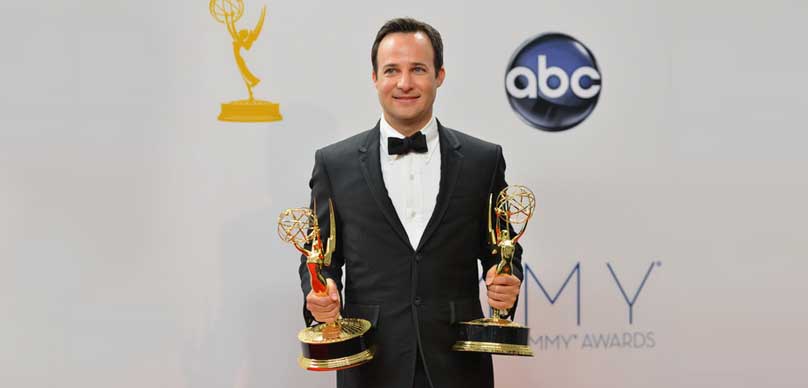
IFH 563: Writing Blockbuster Movies & Television with Danny Strong

Today on the show we have writer, producer, actor, director and Emmy® winning show runner Danny Strong.

Danny started his career as an actor in numerous classic films and TV shows such as Buffy The Vampire Slayer and Gilmore Girls, then transitioned into screenwriting, exploding onto the scene with his 2007 script Recount which was #1 on the Hollywood Blacklist and became an award winning HBO Film.

Since then he has become a prolific film and TV writer, director and producer, garnering numerous awards for various projects, including two Emmys, a Golden Globe, two WGA awards, a PGA Award, and the Peabody Award.

Through out his career he has shown a wide range and versatility moving between mediums and genres with films like the political docudramas Recount and Game Change, the civil rights epic The Butler and the big budget action blockbusters Hunger Games: Mockingjay (Part I and II).

He co-created the smash hit TV show Empire which won him the NAACP Image Award and he produced the civil rights drama The Best of Enemies starring Taraji P. Henson and Sam Rockwell. He has also written numerous theater projects having made his theatrical debut with a new book to the musical Chess that premiered at the Kennedy Center.

Strong transitioned into directing with several episodes of Empire. He made his feature directorial debut with Rebel in the Rye that premiered at the Sundance Film Festival and was distributed by IFC Films.

Over the years he has continued his acting career with recurring roles in many highly acclaimed TV shows including Mad Men, Girls, Justified, Billions and The Right Stuff. He grew up in Manhattan Beach, California and attended the USC School of Dramatic Arts.

Enjoy my enlightening conversation with Danny Strong.

Right-click here to download the MP3

Alex Ferrari 0:17
I like to welcome the show Danny Strong how're you doing Danny?

Danny Strong 3:36
Good, Alex, how you doing?

Alex Ferrari 3:37
I'm doing well, my friend. Thank you so much for coming on the show. I've I've been following your career for quite some time. And, and of course, a fan of many of the shows that you've worked on and things that you've written. So I'm excited to kind of jump into your process and what we do. So before we get started, how did you get started in this insanity that is the film industry?

Danny Strong 3:59
Wow. That's a very good question. So I was a theater major in college. And I did plays in high school. And I was able to get an agent while I was in high school. But I never booked anything. So I was it was wasn't exactly a successful time. So I never booked anything. But I kept you know doing theater non stop and then majored in college and then I booked a couple jobs in college. You know, I booked a couple commercials and then a roll on Saved by the Bell, the new class probably the favorite show of your audience. I think that's all they want, I think their audiences and not even the original set by about the new class that they're particularly. So I did that and then and then I didn't really start booking jobs as an actor until I graduated college. And it was a few months after I graduated that I booked an episode of Third Rock from the Sun which was a huge cinema And then a month later, I booked an episode of Seinfeld. And so now I kind of went from no resume to two biggest sitcoms on television, which was incredibly exciting. And then in the next six months, I booked Buffy the Vampire Slayer and did that for several years as a recurring. So so things started happening pretty, pretty fast out of college, although it seems like endless at the time. And then by that by the time I was 24, I was working full time as an actor, in that I was supporting myself. And I didn't need a day job. So that was very exciting. And it was, by the way, I wasn't even working all that much. But I was making enough money with sort of a combination of small guest stars on TV commercials, voiceover an occasional movie. It was real scrappy, of just anything, I can land, voiceover radio, jobs, you know, anything I could get I did and, and then I started writing when I was about 25. And that's when I wrote my first script, and didn't sell my first script until I was 32. So it took seven years of writing before I was able to get my first paycheck as a writer. That's kind of the faster the fast version

Alex Ferrari 6:19
Of the beginning of your career. And that's, that's fascinating, because, you know, as so many filmmakers think that it takes in screenwriters think it's overnight? Like oh, yeah, Danny Strong, he must have just jumped in like, Hollywood loves to put you in a box and you're the you are in the acting box. So when you try to break out of that box to do something else, it's even that much harder than if you try to go in at the beginning. Is that correct?

Danny Strong 6:43
Well, to be honest with you, that wasn't my experience at all. Okay, it was it was the second I started writing scripts. A couple people were a bit I Rowley about it, but but the scripts speak for themselves. Okay, so I, you know, once I was able to get some people to read that first script, I wrote what people really liked it. And then it didn't matter that I was an actor. And most people in the development world, which are the people who read scripts for a living, they know that actors that can write, make can make really good writers. So it's sort of understood that that's not an unnatural progression from actor to writer, they've got a real good grasp of dialogue, usually a good grasp of character. And it's in its many are many a writer, and many writers I've worked with either on staff on one of my TV shows, or just screenwriters that I know, started off as actors. So it's, it's a natural progression. So now I find that Hollywood can follow your lead times when you say what you want to do. So I want to do this. It's like, okay, well, are you doing it? Are you trying to do it? And if you are, then then people respond to that. It's usually not a situation where no, you're an actor, and you will never write you will never write. It's, it's really not as close minded is the perception is

Alex Ferrari 8:10
Very, very cool. So then, as an actor, what did you bring it from being an actor to writing? Like, what were the skill sets that you brought in? From just those two years of work and I'm assuming being on sets and watching everybody and all that stuff over the years.

Danny Strong 8:23
Yeah, I think that my background is an actor is sort of my biggest weapon as a writer, director, producer, everything it is, as a writer, it's I spent years and years reading and working on the best plays ever written in the history of humanity. Right, working on the plays of Shakespeare and check off and Ibsen and Edward Albion, Arthur Miller, and, and I spent years working on that material, and you're reading it, you're analyzing it, you're inside of it. And I think it's the inside of it. That is one of the biggest tools for me as a writer, because I write is someone who, you know, when I when I, when I start writing the dialogue, I write as if I'm inside the scene, playing the scene as the characters and and that comes from my background as an actor from spending endless numbers of years just doing that for a living or doing it for free. And, you know, doing all the plays that I did, and all the auditions I did, it didn't go anywhere. You're constantly just working on material. And and that's a different stage of the writing process than the early stages, which is the outlining stage for me. That's what I do. You know, it's sort of the the beginning stages. So, so less my acting background comes into play there. But then when it comes to actually writing the scenes, the acting background is a huge part of it.

Alex Ferrari 9:53
Do you recommend screenwriters take an acting class or two just to kind of get inside?

Danny Strong 9:57
Oh, yeah, I mean, why why were you how that'd be a bad thing. And I've been in acting classes. So I stayed in acting classes. Like I said, I was a theater major at USC, graduated. And then I stayed in acting classes the whole time until my first movie went into production when I was 33. So I spent 11 years in acting classes. And in my attitude was I treated it like I was a professional tennis player. And I just need to be hitting balls as much as possible. So I was constantly in class. And there would be writers and directors that would, from time to time come in, and they would, you know, be there for three months, two months, that sort of thing. And they go, yeah, their director and the writer and, and I couldn't think of a more valuable thing for either one of them to do than to do that.

Alex Ferrari 10:48
Now. Is it true I read somewhere that you used to rent videos from video archives, and there was a young store clerk they used to talk to quite often about movies is that true?

Danny Strong 10:59
Yeah. So I grew up in Manhattan Beach, California, very different now than it was then it's like it now it's very wealthy. When I was a kid there, it was lower middle to lower middle class, sleepy beach town, right. And there was this avant garde video store where they would have foreign films, and the films would be categorized by director. And, and my mom knew I loved adult movies as a kid. So she would, she would take me there. And the clerk was this really eccentric young guy. And I was 11. But I looked like I was seven. And, and I would just spend all this time with him, getting advice on certain movies, and I spent so much time talking to him that it made my mom feel uncomfortable. She's like, why are you spending so much time talking to him while I'm like talking to him? And it was Quentin Tarantino. And it was and so I and because I was in there so much. They called me little Quinton. And that was my nickname. Wow. Yeah, it was little Quentin. And then many years later, Quentin got this huge award from the home video Association. And he asked if I would come to the ceremony. So and we live in stay tight is a you know, in my adult age, but but perfectly friendly, you know, and he loves that I became a writer. And he and he, he, in his in his big speech to the big to the audience, he had me stand up and introduced me as a little Quinton from the video store and told the whole story about how I used to read videos from him. And he had the funniest and that was literally he ended his speech. It was so funny, he said, he said, So now when I look back upon my career, and I see that little Quinton is so successful. Oh, I just think God that I was successful too. Because of little Quinton was successful. And I wasn't, I would blow my fucking brain.

Alex Ferrari 12:54
One of the amazing that it does it oh my god, that's an amazing story. Because it's on brand for Mr. Tarantino.

Danny Strong 13:03
It is very, very much on brand. Yeah. And then he finally cast me in a movie, which was so exciting. I was in Once Upon a Time in Hollywood.

Alex Ferrari 13:10
Oh, right. That's right.

Danny Strong 13:11
My scene was cut, although it is in the DVD. And it was, it was an amazing experience getting to watch them direct for a day.

Alex Ferrari 13:23
That must have been awesome. Now, you know, with all you know, being an actor, you deal with a tremendous amount of rejection. And I'm assuming as a writer, you do as well, how do you deal with rejection? Because we get mostly, if I may say we get mostly no's then rather than yes's in this business, correct?

Danny Strong 13:40
Yeah. Yeah. It's all no all the time. I mean, now, that was why I started writing was that I was working as an actor. Like I said, I was supporting myself, but yet all year long, I would hear no. And the no would be no, they don't want to see you for the part. No, you didn't get the callback, or no, you didn't get the part. And that's literally, you know, three, four times a week. That's what you're getting. And it's maybe once every three or four months, you're finally getting a yes. And a great song you. So for me, I actually started writing to deal with the sort of subconscious trauma being rejected all year long. And then I remember there was a period of about 18 months, when I couldn't get arrested as an actor. I just went into this. I don't know what happened. I just couldn't get hired. And then that was part of the seven years where no one was buying my scripts. So it was like a brutal 18 months of, of things not working out. Now, what's great about writing versus acting, is that as a writer, you can go do it. So you can just you can just go write a script, it doesn't matter if someone has bought it. If someone's interested in it. You can literally just sit down and write whenever you want or whenever you have availability based on if you have a job etc. Right but you can Go do it. And so for my attitude is particularly on the writing, when you write a script, and then you're ready to show it to people or to take it out to market, whatever that means. You should be working on your next scripts. So that when the nose do start coming in, and the noes come to people at the highest levels of the industry there have the biggest screenwriters and biggest directors, you know, they're well this only get made if I can get one order to Caprio or Tom Cruise, and then they send it to an art gallery or Tom Cruise and they go, No, we don't want to do the movie. You know, so everyone deals with that. But as a writer, what you can do is you can just go start working on your next script, and it really does help get your mind off the rejection because you're creatively grooving on something new.

Alex Ferrari 15:48
No, do you? What is your writing process? Do you start with character? Do you start with plot? Do you outline?

Danny Strong 15:54
Yeah, it's a combination of things. It's sort of hard to say, because it differs for every project. But I will say the one place that is pretty kind of a standard starting point for me is research, right? So if I'm writing a true story, like in dope sick, it's the opioid crisis, well, I just start reading books. And then I'll usually read two books on something, just read it without even taking notes. So I get a sense of the global macro of the story, I get a sense of characters that have kind of popped for me, you know, hopefully, these books are good. Hope you pick the right ones. Yeah, yeah. Well, and by the way, I go to a certain amount of research to figure out what are the right books, you know, sometimes there's only one book, depending on what it is, but, but um, or even if it's a fictional piece, I'll start with research. You know, when I started, when I wrote Empire, the pilot, I started just watching documentaries on hip hop, right? Just let me just watch some Hip Hop documentaries. So so so that's phase one, which is just get information coming in, and then maybe notetaking, maybe not, then once I kind of feel like I've got a sense of the global. So let's say there's two books on something that I've read, and I'm like, Oh, I really get this now. Then I go reread those books. But now I'm taking careful notes. And I'm writing notes, I'm writing characters, I'm writing scenes, I'm writing all this information. Because things can inspire other things. Right? So I can get I can get it will be like, Oh, this Oh, look at it, there's a whole sequence that I'm coming up with based upon a sentence. You know, when I adapted the book, Game Change into the movie game change. There was one paragraph that was the gave me the inspiration for the entire film. And I was like, oh, that's the whole movie right there. That one paragraph, we're talking about Steve Schmidt did this and then he did this. And then he had to do this. And I'm like, oh, that sounds like my entire movie. It was and it outlined it for you. But film, yeah, was was essentially inspired from that paragraph. But so. So that's what it is, then it's like taking notes, writing scene ideas, character ideas. Sometimes it's stuff from the books or the documentaries, sometimes all it does is it starts inspiring ideas, and then I go off on my own tangent entirely. And then once I've finished the that stage of the research, and this is important, don't get bogged down in definitely in the research, because you can, you can do that for three years if you want, right. So what I do is literally, I try to do enough of it, where I feel like, Oh, I've got a sense of what this is and how I could pull this off. Um, then I'll start actually outlining from those set of notes and kind of freeform thinking that I've done. And then once I have an outline, before I go write the script, sometimes what I'll do is I'll go read another book, or I'll go read two more books. You know, sometimes there's like 20 books on something, right? And then there's a new set of ideas that come in. And then from there, then I go, actually, write.

Alex Ferrari 19:15
Now, I always love asking creators this, there's I always say that there's this kind of, well of inspiration that is ours, that we can tap into. It's kind of like almost being in the flow or in that state of mind, the flow state of mind. What is it in your actual writing process that allows you to tap into your creativity, that inspiration, the muse for better or worse, because sometimes the Muse shows sometimes she does it, you know, how do you tap into that?

Danny Strong 19:42
So I don't I just show up every day.

Alex Ferrari 19:45
And she shows and you let her know, hey, I'm gonna be here. If you're ready.

Danny Strong 19:48
I'm just there. I'm there every day and I'm going to do something. Some days. There'll be today I had all these great plans. Those plans did not succeed, but I did get something done. Yes. Clearly it happened today.

Alex Ferrari 20:04
We'll be right back after a word from our sponsor. And now back to the show.

Danny Strong 20:13
And but something was achieved today, right? So so it's really a matter of just showing up every day. And you know, I say that inspiration is for amateurs. And I don't mean that in in a hostile way. You know, if you're, say, a lawyer, and you want to write a book, and you've always had this novel, you want to dry it, or you wanted to write a memoir of a case you had, right, but you're not a professional writer. But you're gonna try it by the way, you may be great at it, it's very possible that you are, but that's the kind of person who's like I need to be inspired. And maybe I need to rent a house by a lake, you know, and go away, because that's what writers do. And it's very romantic write, for me, I'm a professional writer, I've been writing now for 22 years, and and of those 22 years, I've been getting paid 15 of those years, which has its own set of, I mean, it sounds incredible. But there's a whole lot of stress that comes from taking people's money, and then delivering a script to them, right? So so it's literally a matter of, no, I just have to go do it. Now I'm at a point where I'm trying to take days off, where I'm like, just you shouldn't write on Sunday, you need to take Sunday off. You know, my fiance does not appreciate it, she would like me to take Sunday off. Yeah. And so it's it's um, but that act of doing it consistently, what it does is that you do it, then for the rest of the day, your mind is processing things that you don't even know it's processing. You may have hit some walls that day, then you come back the next day, and you have solutions to those walls that your mind has just figured out on its own throughout the course of the day. I've had so many solutions to problems company when I wake up in the morning. And it's sometimes it's it's that period where you're not fully awake, but you're kind of starting to get away. Oh, this is the best part. Yeah. Yeah. You know, and then I'd be like, but that solution would have showed up that next morning, had I not had the session the day before. So it's it's the consistency of the back the back of it is is what I think is is what I do. And I think it's incredibly important.

Alex Ferrari 22:27
Now your one of your scripts got to the top of the blacklist, which is recount was that the was that the you know, was? Was the town or was Hollywood taking you like taking notice of your writing? You know, heavily? I mean, because when you get to the top of the blacklist, everybody in town knows who you are. Was that like a career defining moment for you as a writer?

Danny Strong 22:50
You know, it actually wasn't because the script had already exploded. Okay, gripped, had blown up and become a huge deal. And then had already gone into production. And I actually found out about the blacklist on the plane ride home after we wrapped production. Oh, Jesus, isn't that crazy? Like I was sitting on the plane going through my phone and someone congrats, and I didn't really know what it was. And what was great was, that was the year the blacklist kind of became famous. And there were all these newspaper articles on the blacklist. And so to be number one on the blacklist the year was on payment. That's a very cool year. So, so it didn't add that disrupted already sort of changed everything for me before that, that was just a really neat kind of cherry on top.

Alex Ferrari 23:37
Now, how did you approach adapting the Hunger Games? Mockingjay? Because I mean, at the point that you came in on it, it already is a pretty well established franchise, and there has to be slight pressure on you.

Danny Strong 23:52
Yeah, the pressures enormous. That was a very strange job, because there was this enormous, you know, it was one of the biggest jobs in the business at the time, everyone. Yeah, I mean, it was just like, the first one was the biggest movie of the year. The second one was in production. Um, and so you had to go pictures. The franchise was particularly strong, in that that first movie was really terrific. Everyone really respected it. The book, The books were really beloved amongst a huge swath of age range. So it was a it was just I was really flattered when I got asked to pitch on it. I was told they'd gone out to 10 writers and I'm one of the 10. And to me, that was the when I'm like, Oh my God, how cool was that? And I'm like, one of the 10 that they've asked to, to pitch on this. And then lo and behold, I get the job right. Now, I hadn't even read the books before. They come to me to pitch and they asked me in that in that meeting, they said have you read the books? I said, No, I haven't. So I saw the first movie, and I loved it. And they said, Well, okay, read the next two books as fast as you can, and then come up with a pitch. So that's what I did. And then the job itself, it was very unusual because it was they wanted it to be really close to the book. There wasn't a lot of room for veering away from the book, which I totally understood and didn't disagree with. Then at the same time, they wanted some new ideas, of course, but they didn't like my new ideas. Right? Well, I thought I'd pick shag new ideas. And I always get like, Now now, you know, and so I, you know, and it was just this weird tightrope where I was like, Wow, I'm a really, really high paid plagiarist. You know, they just want me to stick to the book. So then I wrote the first, you know, part one of Mockingjay. And they really liked it. And they hired me to write part two. And I was, I was like, okay, it was, by the way, wasn't, I didn't love doing the job to be honest with you. Because of everything I just explained. Just weird. I mean, it was like, it was like, we want this really close to the book. Okay, but but then we want other things, okay, but we don't like what you're pitching. Okay, but we do like you now, you know, um, and it was I didn't, I just didn't enjoy working on it. But then they hired me to do the next one. Which was, I mean, it was like, Well, I can't say no, right. So so then I did, I did the next one. And then they brought in another writer, which was the first time that had happened to me, you know, they had me do rewrites? No, no, they had them do rewrites on three. And then I finished four, and I turned in four. And then by that point, they really liked the writer who did rewrites on three, and they had them do rewrites on four and they sent me on my merry way. They said by It was a pleasure. Not really. And and I was actually quite happy to move on from the job to be honest with you. Very honest answer.

Alex Ferrari 27:11
They're very, that's a,

Danny Strong 27:13
But that's what but yeah, that's how it went. It was it was like I wrote three they liked it. They hired me to write for while they simultaneously hired someone to do rewrites on three, they did that because they were shooting them at the same time. So there was they in their minds, there wasn't enough time. And and then so then I wrote four, then that same writer came on here, Craig, lovely guy. And then they had him do rewrites on four. And that that was the end of my journey on the Hunger Games.

Alex Ferrari 27:40
And that's the thing that a lot of writers don't think that there's a glow. Well, you know, Danny Strong is not going to get, you know, rewritten or that it happens to everybody. I talked to Eric Roth, and it happened to Eric Roth.

Danny Strong 27:51
Oh, yeah, it's not so not in movies at that budget. It's extremely common. And in this case, there were two movies before, in which these huge writers of high Academy Award nominated or winning writers were rewritten. So I kind of knew going into it that that's kind of the deal. And it was it was pretty common for big budget. tentpole movies to have multiple writers on them. So it's not like you I go in, I don't go into that job, thinking, Oh, this is my artistic vision. I sort of go into the job hoping that I can get through it without having people upset with me. Which, by the way, is not, you know, and I haven't done a job like that sense. Because of it, though.

Alex Ferrari 28:37
And you I'm sure you've been offered a pitch or you've been offered.

Danny Strong 28:40
Yeah, I get offered all the time, you know, different things. And, and I'm and I have done a few in that time period since then. But for the most part. It's a it was a very good life learning experience of situations I'd prefer not to be in.

Alex Ferrari 28:58
Right. And that's kind of where you've made your bones heavily in television where the writer is more keen, especially.

Danny Strong 29:04
Yeah, well, it's a combination of a few things, which is, right if it's time that the medium started changing, right where movie dramas started becoming smaller and smaller are not being made at all. And then there's massive tentpole movies, you know, like what I was working on, but I didn't enjoy working on it. So I didn't want to do that again. So literally for the next year and a half after Hunger Games. I was getting offered a sort of big tentpole things and I didn't want to do them. So then the drama that I want to be working on, they're not really making anymore, so I but I go and I make an independent film. And then simultaneously, television is now starting to take off dramatically, creatively, in many ways to a number of writers feeling like that's actually a much more interesting space to work in. On a multiple different levels, so it was like the business starts changing. I was very fortunate that right when that happens, I created the show empire that was a massive hit. So now I've gotten cachet. And some, you know, a lot of interest in me in a space that is simultaneously kind of becoming the booming space. So the timing was was really great. And I feel very fortunate.

Alex Ferrari 30:27
Now I have to ask you, because I mean, I'm a huge empire fan. I watched every episode and loved empire. I think I caught up to it on seas. I think you guys were in season three. And someone said, You got to watch empire. So I binged the first seat and I was just like, the writing was so tight. The characters were so outlandish. They were beautiful. How did you? What made you jump into this world? I mean, I'm assuming you haven't been hardcore hip hop your entire life. So how did you jump in?

Danny Strong 30:54
What was great was the only person who knew less about hip hop than me was Lee Daniels. Literally would joke about how we know nothing about hip hop, right. But when it happened was I wrote the movie, the butler that leaving directed, and then we'd become pretty close and post production on that project, where he really valued my feedback and notes. And it was the kind of thing where he started, you know, just saying, like, what are we doing next? What are we doing next? We're magic together, we're magic together. And that was before the film came out and succeeded. Right. So then I came up with this idea to do King Lear and a hip hop empire, you know, which is what Empire was. And, and I pitched the idea to lead annuals as a movie, he loved it. He just said that I love this idea. And then it was his idea, which was good as a TV show instead of a movie. And I thought, that's perfect. You're absolutely right. It's about a family fighting, which is what TV shows are about is about families fighting with each other. So that's how it all came together was, was an idea I had that I brought to Lee, based on the fact that we had just done the belt were together. And then the butler comes out and it was a huge hit. You're not remember it was one of the sleeper hits of the year, particularly for a movie that no one wanted to make. Yeah, not a tentpole by any step by any stretch, the opposite of a temple, right? It's kind of like, sort of in the category of one of the last dramas of that era when they would make these kinds of dramas, right, that have this kind of sweep and a motion to it. And so, uh, so we took this pitch out with with having just had this big hit drama, and then we had multiple bidders. And then and then that was that. So that's how it began, it was a random idea. I had one day listening to a radio news piece. On a deal, Sean Combs it just closed. And I just thought hip hop. So so cool, and dynamic and exciting. And I got to do a musical and hip hop, that's back that I knew nothing about hip hop did not determine, whatsoever. And then it's funny, because when I did Pixley, thinking, Well, I don't know much about this world, but I'll dive into it, but we will know a lot about it. And then literally, he's like, I don't know anything about hip hop. I'm like, really? He's like, No. And I'm like Me neither. So it's so that's where that's where Empire began.

Alex Ferrari 33:18
That's amazing that neither of you had a hip hop knowledge that you could bring to the table.

Danny Strong 33:23
No, he was really into Marvin Gaye. And like, like, it was like, loved Marvin Gaye and kind of that era of Motown. Sure. And, and I loved that era of Motown. Now, even though I feel like some of my tastes even went further back to the 50s. And pretty funny how these things can happen. But I think I think the lesson in that is, you don't have to live a life to write about it, or to direct it. And that is a that is not a popular opinion right now. And there's very much discussion right now of who gets to tell what story and if you haven't lived it, you don't have the right to tell it. And I fundamentally disagree with that. And I just think, well, if you had to live, everything you wrote, then just let's go set fire to most of Shakespeare's plays, you know, all the Shakespeare plays that don't take place in England, you know, even Macbeth, that doesn't count. Is that Scotland? Who the hell is he think he is? Right? Someone in Scotland, you know, I mean, let's just take let's take ship set that on fire right? So I just I just fundamentally disagree with it. It goes against sort of my entire background as an actor, stage actor lover of cetera so so an empire is as a prime example of literally two guys that didn't know anything about hip hop. And then we draw upon different things and what we don't know we weren't. And then you know, and then when it goes to series, in that writers room, we've got multiple writers in there that know a lot about hip hop. And they some real huge assets to it and in keeping the show alive,

Alex Ferrari 34:59
You know, It's funny because, you know, I had Taylor Hackford on the show. And we were talking about Ray, which is one of the one of the best, you know, musical movies. credible, incredible film. And he was telling me, he's like, Ray wanted me to do it. And but in today's world, I would have never been allowed to do Ray. And I'm like, Wow, what a devastating blow to cinema that you wouldn't have been able to make. Ray. It's I agree with you. 100%.

Danny Strong 35:23
Yeah, yeah. And by the way, there's there's like, I don't know, that doesn't mean to not be cognizant of certain sensitivity course. It's like, yeah, I don't know. I think everything has its own sort of has its own path. And we're doing a pilot right now that I'm producing. And it's it's basically eight women are the leads of this pilot, right. And this, the network wants a woman director, and I could not agree more. I'm like, Yeah, of course. Of course. It should be a woman director. It's about eight women. Right? It's like in the creator is a woman. But I just seems to me like I you know that that's a perfect example of as us out looking to hire a director. My partner on it on the producing side is a famous male director. And he completely agrees he's like, Yeah, we need to find a woman. So it sounds like every every kind of project has its own path or life. But as a writer, if you're not getting, you know, this is not an open writing assignment, and you want to write something that has nothing to do with your life experience. Go write it.

Alex Ferrari 36:30
That's your absolutely, you're absolutely right.

Danny Strong 36:33
I know what you're passionate about.

Alex Ferrari 36:35
One of my favorite characters of empire, and arguably one of the best characters written for television. That's 15 years. Cookie. How the hell did you come up with cookie? And how much did the Hajah I can never pronounce your dad? Yeah. How did she influence that character?

Danny Strong 36:52
So cookie lion, which I think is hilarious that it could be on my tombstone, he co created cookie lion is a is a it came from. So the show is King Lear and a hip hop empire. But it's also the line in winter and a hip hop empire, sort of both of those classical pieces. And Eleanor of Aquitaine is Henry, the second wife that he would put into a dungeon, you know, this, he put her an exile all year long. And then every year at Christmas time, he would let her outs of exile to see the family. And in the play the line and winter, the play takes place during Christmas time when he lets Eleanor of Aquitaine out of prison, and she just fucks his shit up, right? Like, literally, she just shows up and tries to derail all of his legacy plans. And that was one of like, the early ideas I had for Empire, which was that it would be sort of a fake. You know, like, like a fictional Jay Z, who was a older, you know, a, like an he had an empire like Jay Z, but he was older with these three older sons. And that and that his wife went to prison, selling drugs. And that drug money is what created is what is the origin story of his empire. Alright, so that the pilot would begin with, what's the inciting incident? She gets out of prison, and he doesn't know it. And she's coming back to get what she wants, what she deserves, what's hers, right? And she wants half the company and she wants her beloved Son, the only one that would visit her in prison, and the most talented to be take over the family company. And he shouldn't take over the family company, except for the simple fact that he's gay and his father fucking hates him for being gay is a template homophobic, right? So that was that was like the genesis of cookie wine that she was very much inspired by Eleanor of Aquitaine. It comes from that and then we Daniels had a sister that kind of had this vibe that he would talk to me about. And I remember when I pitched Lee, the movie when it was still a movie. And I talked about Eleanor aqua and everything I just said to you, I said to him in a shorter version. And I said, so this role, she's going to be like an expert in music, and she's going to become the music manager to her gay son. And I said she's gonna be like, Mama Rose on crack, and lead and you'll start screaming. Yes, darling. Yes. Darling. I love it. You know? It was, like I said, the perfect thing to get really excited about about this idea. And that was, that was that was the genesis of it.

Alex Ferrari 39:55
We'll be right back after a word from our sponsor. And now back to the show.

Danny Strong 40:04
Then, once we got to shooting it, it went from the writers role to terace his role. And terace is a genius a to Well, I don't know, day two into shooting, Lee and I were an offer the pilot, we knew this can be if this show was successful, we felt this would be a breakout character that she was just just like she blew us out of the water, you know, on just everything he did. And the part very much I think it was an amalgamation of the writers but of her two, as far as she would, she would sometimes improvise, sometimes just tweak dialogue just a little bit. Sometimes she would pair dialogue down. And and I actually really learned how to write cookie by following terace Li and seeing kind of the stuff that she would reject or the stuff that she would, she would improvise really inspired a lot. And I remember in shooting the pilot, she had a Nika shows up and it's it's her her ex husband's new girlfriend, right? And it's literally it's the first time I think the audience sees and Nika and it's certainly the first time cookie season Mika and I had written some, you know, calm some just like dig that she does. And drazi took me aside we got along like gangbusters mean to Rosie? And she said, she's like, I don't know about this. And I remember what I'd written. And I said, oh, we'll just say whatever you want. And she went really I go Yeah, I say whatever you want. Right? At this point I had I've come to understood that this woman's a genius. And and so those, she starts to exit she stops. She looks at her and she goes, Huh, booboo kitty, and then walks out a herd of booboo kitty, I had no idea what she was talking about. I was laughing so fucking, that I almost ruined the take, except Lee Daniels was laughing as hard as I was. It was just like, oh my god, like, Oh, you're genius. Just you do it, and it will follow your lead.

Alex Ferrari 42:14
That's amazing. That's a great cookie story. It's a great story that you have obviously run a lot of writers rooms, what is it that you look for as a showrunner in writers for your writers room.

Danny Strong 42:25
I look for writers that. And I look for writers that are bold, that aren't afraid, that have a sense of originality. You know, one of the first things I say on day one day one of school is I say I don't want you to think about what you think the network wants, what you think the studio wants, or what you think the audience wants, or what you think what I want, I don't want you to think about any of that, I want you to think about what you think is great, right, we're gonna follow our own instincts, because of many writers that have been stamped on a lot of shows, you know, they're very, they seem very kind of programmed to clean about the network because of network notes. And then and then they write to the network's AST. Um, I don't do that ever, um, I write to my taste, and then I use the network to help me make it better, right. So I don't do what they want, I do what I want. And then I listened to their notes, though, on how I can improve it. And it's very collaborative. And it goes very well. You know, I don't have big blowout fights with my studio in my network. In fact, most of the time, we have a very fun positive relationship and experience and I'm very open to notes, but I'm not open to dictation. And I think it's a bad idea. Because if, if they could, if they're in charge of something, well, they should be writing it. Right, like I'm the one that has to execute it. And that philosophy which is highly respectful of them as essentially editors, has served me very well politically, but more importantly served me very well creatively, where I get a lot of great feedback from from from my my producers in my studio executives in my network executives, and I think people that come into that relationship a thinking that they're idiots and they're adversaries, I think it's a way to fail and then be people that go into that relationship just wanting to please them or wanting to write to what they think their taste is, is they're not following their artistic self and their artistic soul. And and I think the writer you know, particularly on a TV show needs to be there and on a movie that's what I meant to until until I'm you know, let go until the director has said thank you for your the script now go fuck yourself. happen in film, although most of my experiences on film has been that the director and I have gotten along very well, and I've stayed part of the process all the way through. But there is a power dynamic where once they're there, they're in charge. So then I have to maneuver, you know, kind of my way to either stay in their good graces or if you shouldn't have to then becomes like a different thing. But but a game worth playing, I think, for long term success on multiple fronts. Now, TV is different. You know, I'm in charge if I'm the showrunner creator, by the way, I supervise showrunner creators, and I don't boss them around, I don't tell them what to do. I'm like, they're to like, have, like, hey, what do you think of it? You know, I'll have a note. And then sometimes I'll pitch three or four solutions, only to help demonstrate what the note is, and then be maybe one of these ideas will work for them? Maybe not, but maybe it'll inspire something else. So so it's really, it's really going back to your question, you know, day one, it's like, let's not write for the network. And let's not write for what we think the audience wants. Because that's such a audience. I mean, the four people in a room and they'll all want different things out of story. Right? Right, we need to lead the audience. And and sometimes there are things that don't work in the story. Right, that it's not clear, or there's not enough depth, or it's or it's kind of lame, or, like there that can be improved. And that's what I'm open to, of like, how can I make this better? How can I make it deeper, funnier? If it's a if it's a thriller? More suspenseful, right? Depending on what genre you're working in? And then how can you find some things to subvert the genre so that it's rich and doesn't feel expected or, or it can be multi dimensional, and tone and style? You know, there's all sorts of things I'm trying to achieve. And worrying about what the network thinks is not one of them. I'm more worried, I'm more of like, looking forward to hopefully trusting them, so that it'll be like, Okay, so here it is. So help me like, give me some thoughts like, how can I make it better.

Alex Ferrari 47:11
Great, great answer. I love the answer. No, no, that was a great answer. Now, I'm gonna ask you a few questions to ask all of my guests. What advice would you give a screenwriter trying to break into the business today?

Danny Strong 47:24
Follow your bliss, like write, don't write what you think the market wants, right? What you think, is going to be great. You know, and sometimes the weirdest scripts and ideas make people's careers because they just loved it, by the way in the movie never got made, but it wants their career, I got them an agent and manager got them up. I know for jobs, right? So it's really about, it's really about writing every day, or five days a week is good, you know, like you can take the weekends off this week is four days a weekend, borderline three days a week, you're an amateur writer now, you know, it's so so you know, getting a lot of writing done, because you improve as you write, I'm constantly working on projects, and then don't write what you think the marketplace wants. Right? What you think is great, right, what you want to see, I've got friends that are professional, that were professional writers that had a lot of success. And for whatever reason, you know, things have have gone different ways for them. And sometimes they're still chasing the market. And I don't understand like, the market changes weekly. By the way, the markets are different now than it was five years ago, three years ago, years ago. I don't even really completely understand the whole market anymore, to a certain extent. And I think it's different for almost every buyer. I mean, I get you know, if you I know they all want to make spider man like that I get, you know, I just want to write Spider Man on every script, I write and turn it in and see if I can any motherfuckers exactly like that. It just becomes a whole intricate sort of dance. And I think the thing that I do is if I have an idea I'm really excited about I then we'll figure out okay, so how can this get done? What's the pathway to production to get this made, you know, oh, this is actually something you know, HBO Max could be really into or something that a 20 is a perfect age 24 movie, right? That doesn't mean you have a 24 passes, you're dead. But but you're like, it kind of gives you a sense of okay, this is a 24 this is more like a universal, like, I'll think about what makes these kinds of things. And then what budget does it need to be you know, if it's something that's a period piece that you know that that's like a period drama that's really small. While obviously I can't write a script, that's going to cost $60 million to make, right because it's most likely not going To get made unless David Fincher or Martin Scorsese,

Alex Ferrari 50:03
Ridley Scott Ridley Scott,

Danny Strong 50:05
By the way you made you couldn't end up landing one of them. Right. But but but for the most part, it's sort of like, okay, so So how can I make this for 5 million? 10 million, 1 million, 2 million? You know, is there a path to that? So there's, there's a number of things you can think about on the business side. But first and foremost, start with the creative side, and start with like, oh my god, I would love to see this movie. Oh, my God, I could write the hell out of this movie. I could crush this movie. Because that's how things get made. That's how writing careers flourish. Okay, is that that's my advice.

Alex Ferrari 50:43
That's great advice. What is the lesson that took you the longest to learn whether in the film industry or in life?

Danny Strong 50:49
What I just told you?

Alex Ferrari 50:51
Fair enough.

Danny Strong 50:53
100% true. took me six years, something like that to figure out? Oh, because I was writing high concept comedies all through my 20s. Okay, because Jim Carrey comedies were those those like real high like liar liar man, Bruce Almighty, those were the biggest hits, and I was trying to write comedies. So obviously, I got to write these because that's what the market wants. And, and they were pretty good. You know, I did a pretty good job. I got some attention from them. And, but none of them sold. And then all of a sudden, seven years later, I'm like, wow, I've just spent seven years writing movies. That is not really my thing. Good. Right.

Alex Ferrari 51:29
Good advice. And last question, three of your favorite films of all time, or three screen pilots that anyone should the screenwriter should read either one.

Danny Strong 51:41
Well, I would say my three favorite films are Apocalypse Now. The Sweet Smell of Success. Why don't we say number three, we'll say Chinatown.

Alex Ferrari 51:57
All good choices. And three pilots.

Danny Strong 52:00
Those are all three of my favorites. Three pilots have a madman pilot? Yeah. Wowza. Yeah, that's something to behold. I'm trying to because pilots are hard because you're setting so much stuff up. They're really hard. I, you know, I don't know if it's one of my favorites of all time, but a great pilot, and a great show from this last year was hacks. Yeah. That's a great pilot. And in the show is fantastic. It's probably one of my favorite things of the year was hacks and, you know, really set up these two characters and these two different places. And I remember there was a scene towards the end, because one's a comic and one's a comedy writer, and they just start shit talking each other in comedy. And it was like, you know, it just was like, like Star Wars with two lightsabers battling each other, except in their case, their lightsabers. What were their comedy skills. And so it was hilarious in character driven and tense all at once, which made it pretty effing genius. So big big hacks fan. I don't know I it's tough. Get you know, it's a I maybe I'm biased. I have a limited series this year with dope sick, but I think the limited series space is pretty incredible. Shows out this year. They're so well done, you know, Mayor of Eastwood, per Mary's town, here. He's calling it Murphy's book, or is that correct?

Alex Ferrari 53:37
It might be No, I'm not sure if it's East. I

Danny Strong 53:40
Whatever it is fucking great. White Lotus is great. And underground railroads

Alex Ferrari 53:47
Queen's Gambit. Yeah.

Danny Strong 53:48
Queen's Gambit is unbelievable. So there's these pieces that there are I don't know to me there's in some ways more exciting the movies. I get more excited about these these kind of prestigious limited series right now. And in that there, I just get more caught up in them. There it is. And they seem to break out in a bigger way than movies have for a little while. I mean, I don't know what movie was as big as the Queen's gambit was that year, right?

Alex Ferrari 54:16
Look at Squid Games. I mean, look at Squid Games for god sakes.

Danny Strong 54:18
Yeah, yeah, Squid Games is an ongoing but it's it's a it's just there's some really explosive rich stuff happening in that space right now.

Alex Ferrari 54:28
Dan, it has been an absolute pleasure talking to you, my friend. I thank you so much for taking out the time and please continue to make great television. Great work out there. We really appreciate you man.

Danny Strong 54:37
Oh, Alex, thanks so much, man. It was so much fun chatting with you and and thank you to everyone listening to this. I really appreciate it.

LINKS

SPONSORS

  1. Bulletproof Script Coverage– Get Your Screenplay Read by Hollywood Professionals
  2. AudibleGet a Free Filmmaking or Screenwriting Audiobook
IFH 562: The Director’s Six Senses with Simone Bartesaghi

Simone Bartesaghi is an Italian award-winning filmmaker who has been recognized by the Directors Guild of America (DGA) and AMPTP (Alliance of Motion Picture and Television Producer) as an artist with “Extraordinary Ability in Directing”.

At the age of 24 Simone received his Master’s Degree in Economics at the University of Pisa, Italy. Three years later he established a successful Consulting Company specializing in Corporate Organization and Planning. In 2001 he gave up his thriving career to pursue his childhood dream.

Two years later he won several prizes as the Writer/Director of short films, but the highest recognition came when he won the first and second place at the Milan International Film Festival, and became the recipient of both the Top and second Award, TWO Scholarships for THE LOS ANGELES FILM SCHOOL.

Only four years after his arrival in the United States, he directed his first feature film DOWNSTREAM, that acquired a theatrical release and also received the prestigious Accolade Award.

Simone’s second feature RUN, a 3D film that he wrote and directed, has won several prizes including Best Screenplay and Best Emerging Director and is distributed in USA by Millennium. The movie is about the new discipline Parkour (Freerunning) with a rich cast including Eric Roberts (The Dark Knight), Adrian Pasdar (Heroes), Kelsey Chow (Pair of Kings) and William Moseley (Chronicles of Narnia).

Simone’s accomplishments and communicative skills have been recognized by many educational organization around the world and he is now an Adjunct Professor in Filmmaking at the prestigious Santa Monica College.

Simone is also a published author with his book “The Director’s Six Senses”, an innovative, unique, and engaging approach to the development of the skills that every visual storyteller must have.

The Director’s Six Senses is an innovative, unique, and engaging approach to the development of the skills that every visual storyteller must have. It’s based on the premise that a director is a storyteller 24/7 and must be aware of the “truth” that he or she experiences in life in order to be able to reproduce it on the big screen. Through a series of hands-on exercises and practical experiences, the reader develops the “directorial senses” in order to be able to tell a story in the most effective way.

Enjoy my conversation with Simone Bartesaghi.

Right-click here to download the MP3

Alex Ferrari 0:00
This episode is brought to you by Indie Film Hustle Academy, where filmmakers and screenwriters go to learn from Top Hollywood Industry Professionals. Learn more at ifhacademy.com. I'd like to welcome to the show Simone Bartesaghi how are you doing Simone?

Simone Bartesaghi 0:16
Very good thank you. Very good.

Alex Ferrari 0:19
Thank you so much for coming on the show. I worked. I worked hard on that name pronunciation. So I hope I did. Okay.

Simone Bartesaghi 0:25
Very good. You did very well. You did very well thank you.

Alex Ferrari 0:32
So thank you for coming on the show my friend, I wanted you to come on the show because you have a book called The director's six sense. And I have the book here. And everybody should definitely check it out. And we're going to talk all about your approach to directing which I'm really excited when I you know, when I was looking over the book, it was a very interesting approach and how you do things. So before we get into the meat and potatoes of the book, how did you get started in the business?

Simone Bartesaghi 1:00
Well, I always had a passion for storytelling in general. Since I was a kid really and for for part of my life, I went to a different direction, I didn't think that I really even at the seven was actually a director or a screenwriter behind I was just watching them and being excited and actually writing the stories when I was back in Italy, but then I got my MBA from University of Pisa get a business started and got married and life was proceeding in a kind of normal direction. And then slowly, the desire to do more creative work so to emerge, and my wife is way smarter than me for Christmas, give me a gift and it was three months attendance, night class about filmmaking and at the end of these three months, we are meeting every Wednesday night for three hours and at the end of that we will shoot a short and so for the first time in my life I had a project to say action. And I still remember that night I still remember this man I still remember everything about it because it was the moment that I thought okay, these were the progress of my life. Then moment of focus of everything, everybody around you're working so hard to achieve a common result and then that momentous shift between the real world that is as preparing and working with lives and always to many people in this small space. And then on a sideways when you say action everybody just stop reading. And the only thing that comes alive is actually the what you created what the fantasy that you had until you sang before. And so that transition became kind of a ritual and something else over certain religious religion element for me. And I got hooked and I started to shoot more shirts and a few years later I want actually a festival you need I was filming an international festival and that festival that year, I was very lucky the price was actually the full tuition for the egocentrism school program. Yeah. So they shipped me here in 2004 When my wife decided to do this adventure together and at the end of the 12 months we were ready to go back to Italy when I got the first offer for the job and and now you're still here

Alex Ferrari 3:40
You're stuck there you haven't escaped yet. You haven't escape yet.

Simone Bartesaghi 3:43
No, no no. Actually, now even American citizen so we do the the full transition.

Alex Ferrari 3:51
That's amazing. I always like to refer to what we do as the beautiful sickness. Because it is it is it is exactly that is beautiful. But it is an absolute sickness is a compulsion that we have to continue to make movies and create and there's no logic behind what we do. Like in the sense of like, a normal human being with leave after certain like if you get beat up as much as you do in this process.

Simone Bartesaghi 4:18
Yeah, and you know, the dishes that you know, because it comes out through passion. It doesn't die and you almost would be willing to pay to do it.

Alex Ferrari 4:31
But that's the sickness. It's it but that's the sickness that's the thing and you just you you would it's like I You mean I get paid to do this. Like I still remember the first time I got a check for directing. I'm like, wait a minute, I would have done this for free. I have no problem doing this for free. But of course not of course not. And of course not. I'm way past the days of I'll do it for free. I've got a family to support when you when you're 20 something and sleeping on a couch somewhere. Yeah, you could do for free. But it is it is this kind of compulsion to continue to create. And I always tell people, once you get bitten by that bug, it never goes away ever. It can go dormant for decades. But it always shows it's it's ugly and beautiful head. Now, was there a film? Was there a film that kind of lit your fire? Was there a movie that you saw that you just like, oh, wait a minute, I think I want to go down this road, that's something that kind of sparked the idea.

Simone Bartesaghi 5:32
In movie in particular, I mean, I movies has always been kind of part of my life, and they've been inspiring in different ways. You know, the very first movie, ever, so was Star Wars and then I always say that, that, you know, you have a little taste of that one, it's a pretty good, then, more influential for me, were later on Dead Poets Society, because I was watching exactly when I was in high school. And I wanted to create my dead point, society, and nobody would follow me. But the idea was there. And then, and several American music came at a moment in life where the feeling of a sense of a crisis or thinking about, you know, what you really want to do in life was more present. And again, the, the possibility is actually to have that an opportunity that we had in 2004, to really change everything is not easy to come. So can it can kind of at the same time. And so this relation it was from, from American Beauty, and literally even from Matrix eventually, of course, was actually to think about, you know, who you are and what you want to do. And that's what when managing started to spin around and strange enough, one, three, that I just remember that when Star Wars Episode One came out, in my way to deal with my creative side, was actually on Saturday afternoon to play, do role playing games. And I mean, at that time was already 2829. So usually, you stop sooner, but I was gonna be doing that in my Saturday afternoon was my ritual with role playing games. And we decided actually to put out a little play with costume and lightsaber and everything. And I clarified the entire fight and, and the whole thing, and then we presented the event on the stage. And that's where I think I had the first taste of food together team and have the sense of how collaboration incredulity can really bring something is bigger than the sum of the single parts. Exactly the time is when my wife started to feel that I needed more to release my attention in some way. And when I went to the that school, so all those things kind of happened at the same time.

Alex Ferrari 8:12
That's, that's a great story. Now, let me ask you, how do you what is the six senses, in your opinion of directing?

Simone Bartesaghi 8:21
Well, the basic idea is that when we tell stories, especially when we tell stories in the film, we are telling stories about human experience. And the basic of human experience is our life. Right? So I felt that I could compare the six senses, to way to pay attention to things that are happening to you in your life, that in a certain way, will resonate and will help you later on while you're making your movie. In some ways, very basic way of thinking relates to the fact that everybody can be a director if we pay attention to things in a certain way. And we look at him feel things in a certain way. And of course, the v1 is, you know, when you when you watch something new compared to using the camera or other elements, like when you touch things, it's compared to production design, and a little more complicated things like smell that he's about better performances. And the final one is the sixth sense that represent the vision of a director. And so analyzing and comparing the fact that when I was started writing, and I was starting to think about the study on the Intel, many studies were coming out out of my personal experience, and the more I was authentic, and the warning was honestly what I want to tell, the better. I was working as a director and a storyteller, and that's how the whole idea of the book came out. Also the time I started to teach, and I realized that there were no books about be in a director, there were many how to, you know how to do a breakdown of a script, you know how to hire a writer, or how to do blogging and this kind of thing. But there was nothing about how to be how to leave, and how to, you know, some way pay attention to all the inputs that life is giving you in order to become a better director. And because there was no book about it, I wrote it.

Alex Ferrari 10:29
Right, right. I got you. Now, in your book, you actually, you had a great, great chapter of how to smell a bad performance. It is a great, great question, because so many directors don't understand the difference between a good or bad performance. It's not something, it's hard to teach it. It's something that you have to have instinctually, you can give cues. But I'd love to hear your definition of how to smell a bad performance in an actor.

Simone Bartesaghi 11:00
Well, again, it said, even before working with actors, it start with your research and your openness to look at how people behave. Because after all, especially in film, different Academy in theatre, where everything is kind of more fake in some way, in the production of The Voice, everything but the larger life. But in movies, we can be as sophisticated and as subtle as we want. And, you know, having the opportunity to pay attention to how other people behave, and also apply a strong empathy to how people behave around you and how they react to things that you say or more each other. It's a great source of inspiration, because you use you see around real life. And then when you apply these elements to, to the acting, for me is always getting to the harnessed level of the of the actor, there is lots of layers of sophistication of training in other things that get into real emotion. But in the end, what we need to see is honesty and all those layers of protection that we create on our in our life, and being put aside in order to give something to the to the audience. And the process for me goes from a very simple word that is the trust. So the ability to create a relationship with the actor, in knowing that the actor is trusting the director to always push to the limit, to be honest about the performance and never short can because of necessity. And on the other side, the trust of the director to the actors to know that they're going to push themselves and they're going to be willing to open themselves up. One of the processes I follow a lot is to actually work with the actors before as much as we can in pre production so that we can understand the character as much as we can. But also there are two points that I try never to avoid or to break. One is actually avoiding casting. It's, I try to have meetings at lunch or coffee. I like to meet the person before meeting the character. Because usually when you do casting, there's always that element of selling yourself in some way. When you have lunch, when you have lunch, or dinner, all those barriers, quickly, they go down and you really meet more real person or is realistic. And the second element is the fact that I rely a lot on their instinct in terms of, of blocking and owning the place. So I have my shortlist, my blocking diagram, I have everything ready. But I like the fact that once we get to the set, they must feel it is their that is their environment to to deal with. And I take lots of time, usually in during the day to make sure that that part comes as honest as possible. And I have my own recipe that is kind of a checklist for blogging, because through that process, the actors start to lose the feeling of performing, but they start to actually feel the environment and the environment itself gives them inputs and suggestions on what to do. So I'm just trying most of the work is to try to eliminate the focus on the performance and on the lines and to more on the leaving the moment and only in the moment.

Alex Ferrari 15:01
So that that's a bad answer really covers, which was going to be my next question, how do you work with actors? But is there a technique you use? Or what is the thing that you when you see a bad performance? Like that's something that you it's hard to, it's really hard to pinpoint. Like, is it? Is it because it's stiff? Is it because it's not honest? Is it because it you're not feeling it? What is there any little cues that you can any advice you could give to directors listening?

Simone Bartesaghi 15:26
Well, there are there are elements that are instinctive, that you feel that there is something that is not working, right. And the nice thing is, can we time and time comes with? Also how much you know, the character, how much you know, well, your world and how much you do your researches. But I'd say that there is one element that I always pay attention to, that is little, little east to embody language that actor sometimes have, you might see someone delivering a line and then having a little moving forward or on the side, that would you have a sense of their actor had an instinct to move to do something different or to react in a certain way. And those little moments, I feel a lot of attention to them in blocking and during rehearsal, because usually, they mean that we are not done with the quality of the performance that we can get. Because there is a level of uncertainty in owning the moment that we can keep exploring. And usually, the actors themselves that are giving me the sense of, oh, there is a moment that is stiff, there is a moment that doesn't really work because their body language itself in some way, give away. That is something that is not working. So what I look for is a moment of uncertainty in body language, literally the little gesture that doesn't work. And what I do I go to doctor says, And he said, I noticed that when you said that line, I, I felt that there was something more you wanted to do something stimuli and maybe you didn't do it, because I told you to stay there. So feel free to do it. And from that moment, usually, again, there is more trust, but also there is the understanding of exploration. And the other thing that for me is really an indication that we were a little far away from direct performance, is when there is too much staring in the eyes, when they keep looking at each other for the entire dialogue. That's where I feel that is totally not authentic, they will never do something that's in life. And so I always try to give them some activities of some business to do to make sure that these help them to not be stuck with the with the staring moments that are very unreal.

Alex Ferrari 17:55
No, that's, that's excellent. That's a great that's a great, great, great advice on how to pick out some bad performances. Now have you ever on set? I mean, I've had this happen. I've seen this happen, you know, it's all about trust with with an actor if the actor doesn't trust you. They can go off the reservation. Have you like on day one when an actor shows up been tested? Like testing to see am I safe? A seasoned you're a seasoned actor depends on who it is if it's like Meryl Streep, Meryl Streep could do it in any conditions like I don't care I'm Meryl Streep, I'll be fine. But but for other actors, they'll test the the the director just to see if they're in a safe space and that will determine how far they go in their performance that will determine a lot of different things and if they don't feel safe, they act up they push they create problems there's other things that are they'll just not listen to you and do their own thing because like I got to protect myself How is how have you dealt with that one that one has had has happened to you in your in your career?

Simone Bartesaghi 19:00
Well to be honest, that I had a more kind of this situation with less known or less prepared actors. Yeah and we professional actor very well, you know, well known are professional actors. The test actually happened before happen almost outside to set the dinner I did it at dinner. Exactly. That's the moment where you really you feel if they if you own them, if you if you trust the trust is really up or not. And little hiccups on set. They are normally they're part of the research is what we do all the time. So that's usually we very good actors. They they eventually help you if you are if you're in trouble, more than anything. I mean, I heard that in the Marlon Brando, testing directors and other situations there but so far to me, we just kind of actors I never had any any issue and I with some very good one. So most with with less known actor or less prepare, that they have actually the biggest issue that they don't own their method yet, whatever that method is, in terms of their approach to the material. And sometimes their uncertainty built up on moments of mistakes and moments of difficulty that happened on set. And my solution is always very, very simple, is you're taking five minutes and talking on the side and figuring out if there is something that actually the tension has created. And I'm very honest, I mean, I remember one time I went and said, Listen, if you don't like me, I understand. But you need to like your character, that actually was a villain. So it was even more complicated. But you need to, it's going to be your face on the screen. So it's not delivering or keep being distracted by the thing that everyone said. And actually, it was it was a little bit of stiffness in the performance, but mostly was attitude on set that was really preventing these actor to deliver. And I feel that in that moment of honesty, where I explained exactly what I was feeling, and I didn't have any problem in saying, you know, we don't need to be friends, we just deliver and agree on what to deliver, everything went. So to go in the right direction. One thing that I tried to avoid is to trick the actors into something that the classic example of telling them, You know, I think your cat will feel better if it goes, you know, to open the door or lean backward or deliver the line with a specific performance. Because I think that if there is a technical necessity for me, because I need the next clause of done in a certain way, they understand better than me, because they've been on more set than any other director that they work with. Right? So just statistically. So when you when you tell them your necessity, and you're honest about what you want to do, they should react in the right way and help you that way. When you try to treat them. In defense, that is a difficult situation, because sometimes you might actually lose that trust, because they see that you're lying. Right? Someone said the actor is a lie detector, right? So as lie detector, they can see through you very, very quickly if they do the job.

Alex Ferrari 22:42
Now, with that said, I know a lot of times when you're a young director, or inexperienced director and you walk onto set for the first time, a season crew will smell it in a seconds. And how did you deal with and have you ever had to deal with, you know, department heads, crew people, grips, DPS production designers, who, who test you and push you into like, oh, this kid doesn't know what he's doing. I'm going to do whatever I want. And you've got to take command of it. You know, and I my famous story is I, I worked on a set of a show that I was producing. And I was like the production company behind it. And I was literally writing the check the paid this guy. And he didn't know who I was. He just saw this, this director. And he was like this frustrated first lady who wanted to be a director, you could tell he just was very frustrated. And I didn't hire him. And he started giving me crap, day one. And within a few hours, I had to pull him aside and I said, Look, man, I can do this without you. I've been doing this for 20 years, I don't need you here. Me and my DP had been working for a long time together, we can run this set without you. So either get in line, or you can leave. And oddly enough, he was very sweet after that. He was very nice. And it worked out well. But though sometimes as a director, you want to keep a nice harmonious set, but sometimes you gotta show a little teeth every once in a while. So what's your experience?

Simone Bartesaghi 24:16
Yeah, well, I mean, they were right in some way because I, at the time, I was on this project that someone else started directing. And I was doing behind the scenes from for a production company on several other projects. And at the same time, I was shooting shots on the side and I remember showing my directly reel to the producer and say, hey, you know, whenever project that maybe you think I'm right, I would love to direct them. I've done several shorts and several festivals. And we'll, we'll see. And, and he told me Listen, this could be this could be the project I already have The writer, but if something doesn't go the right way, I would like for you to write these words. And when the writer said yes, it was good to do it, I told him, Listen, give me a chance here, I will write three webisodes really the stories to put on the DVD or to start a web series, whatever, based on the same character in a different moment of their life. And if you like them, then we can, you know, you can use them, but at the same time, I can start to slip my legs as a director. And, you know, I can prove you that I can do it maybe for the next time. And of course, the situation started to be that I was evolving the whole production because I was scouting with them, because I was going to do the shooting in the same locations and using kind of the same resources and so forth. And so I knew the project and the script, I knew the, the actors from the casting, I knew the location, I did the whole preparation with them. And when I studied when we probably said that there were certain dates on which the main crew will shoot in a corner and I will be in another space nearby to shoot my little shots. And whatever it was that the pressure wasn't doing very well that producer wasn't very happy about the relationship and the style, literally the visual size that the writer was using. And then when I started to show him my material, he liked it a lot he was you know, I liked it the Tony like the style. Also, I overcome certain kind of very difficult situation and still deliver something usable. And, and the producers at one point said listen, we were working with other directors, directors is now working. I want you today to direct it. I was like I cannot tell you I mean this morning it's Saturday I cannot be the director I didn't prepare the scene. Nothing certainly is a give me two weeks to regroup and figure out what we are missing what is that and because we are really like one week into production, so only two and a half weeks project. So it wasn't that it was much theoretically almost more than half of the Moon was shot. And so he granted these two weeks i i sent work with the same DP kind of same crew but the only people that knew what was happening was me the producer, the DP and another person that was a rental equipment that that was on board with the project, they knew that I was going to be the new director. And then the the day of the night before the first day of shooting on my shooting, we regrouped in like I said in the hotel, and the whole crew was there nobody wanted to start a movie again because it was very miserable whatever before nobody believed that we could go anywhere even the actors there were some friction and some issues mostly with the previous director. So when I was introduced to the crew the crew was like so now for from the writer The reason I did a few feature we go to Director lecture was the behind the scenes again, what's going on here. So the very first day on set was trial by fire on every level because the crew was just waiting to see me failing and having no expectation it was very hard today and nobody wants to be there again because it was too hot. And you know in the desert we like Aimia like I said it can be quite brutal. Remember that that hey, you know that the big change was because the welfare said I was a few on a different location from the base camp. And we went there to do the setup. And we did apparently something that the crew didn't do before it was a Dutch angle. It was just a very quick simple shot Shimpo simple but we did a silhouette the the side of the gun, something very strong for that kind of genre right that the you can see Madmax himself. So apparently I didn't know these a friend of mine told me later that one we're shooting voice came back to base camp for that actually, this director maybe we knew what he was doing because the style was totally different, the styles etc. And we are doing some new action things that weren't even in the script and they were like very quick and what we are doing. And by the end of the day, it was the first day actually finishing the 12 hour and when we went back to the hotel pretty much everyone It was very odd that they applauded the returning together, the dinner that we had was a very jovial and happy moment for everybody. And from that moment on, kind of the crew was behind me one other percent. And as either it was, just by doing it and not trying to be arrogant about what I was doing, it was literally I know, it's difficult. Actually, I did something that I still remember, when I did it, I thought, this is going to be backfilled so badly, because they think that I'm just a rookie, or I think it's something that is so he, when he when everybody was looking at each other and saying, you know, what's going on here? Why this guy is now the director. I stopped and I said, Listen, you know, I don't care. What is your agenda with this movie as an idea here, because like, the scripts are like the producer, you want the money or you want experience, the only thing they need from you, is to make sure that tomorrow morning, when it comes to the set, you remember when you were in the dark place called theater, and you were dreaming to do this? Can we that attitude, and we'll get to do miracles together. And I really can't get everybody. I can't get a couple of people that well enough to give me at least a little bit of chance, a chance in the morning. And then throughout the day, I kind of gain my my their trust.

Alex Ferrari 31:29
You know and I mean, when I was starting out, I mean, I had I literally had spies on the set to see if like they were reporting back to the producer like I had. On one show. I did a one one project I did. I had the scripts, the scripts he she was literally second guessing me every time. Why don't we do this? I'm like, girl, you need to step back. Like I am the director. Yeah. And I was 26 or something like that was a young director. But I knew enough. I'm like, No, I can do this. And I ended up that day with like, I think we ended up with like 75 setups. I move. I move very quickly when I direct and and we moved really, really, really quickly. And at the end of the day, she went back to the bruisers like he's fine. Yeah. You'll be okay. He's okay. But these are the kinds of things they don't talk about at film school, they don't talk about these things, these, these are things these are politics of the real world inside of being a director. And you know, you just, you can't read it in the textbook even it's like you've got to live it. But at least if you know that there's a potential of it coming. You can somewhat prepare yourself for it. But sometimes it was like I had spies. I had people that would, you know, I had DPS I wanted to take control. And that's why I became so educated in the in lenses and camera and I come from post production. So I could I have I have a language in post production as an editor as a colorist as a post production supervisor as a VFX. Supervisor. So I can just start talking Well, yeah, I know that was like a start talking about lenses. I could talk about that I geek out about that kind of stuff. So that at least I can talk the language with the peacock. Yeah, at least we could talk. I'm not saying I could do what you do. Because I've tried it. I don't like it. i It is a whole other like thing to be a DP. But at least you can show them that you know what you're doing, and have basic understanding. Because there's some directors who are like I hadn't even in my edit room that would walk in there. Like, they don't know anything about the product. Like they know nothing about the process. They're like, so what are you doing? I'm like, this is a rough cut. What is a rough cut? I'm like, Are you kidding me? You need someone gave you $3 million, what the hell is going on here. So which made me a very angry and bitter filmmaker.

Simone Bartesaghi 33:49
But I mean, the the thing is that every time when you start but also when you are in a different kind of pond when you move from one level of budget to another, from one city to another, it definitely be something similar when I was when I prepare a movie to shoot in LA. And then literally two weeks before the shooting, we had to move everything to New York. We couldn't we couldn't bring anybody. So I had a new crew as part of the new cast. And especially the new crew, although kind of we liked each other but literally we met in two weeks before the shooting and they all knew each other so it was kind of them versus me in one way or another time I had this conviction that that I want to be democratic director I want to be the director is always nice. There's always sounds with a huge motivation when there is a yes or no. And then backfire bad

Alex Ferrari 34:43
Oh, they'll tear you apart.

Simone Bartesaghi 34:48
Didn't have any idea of mine because I was listening too much. So I got to the point where at one point I remember there was a setup that was I had my idea It was good. And then the DP came up with an idea. It was good, too. But I said no, just for the sake of now I'm, I need to start to say no, because otherwise is going to go bad. And in the end, everybody was like, Oh, you did three CT one ad, from, you know, not knowing much to do a stellar job at the end, I'm like, Well, I kind of manipulate all of you, because in general, is really what I wanted. But the problem was that I the beginning, the the feeling that there was this country testing was criminals. Also lots of anxiety on me. And only when I started to realize that, after all, we didn't know each other. We know the famous trust and the chemistry was in there. Because really, we started from the from a few days before, and then started working on the relationship also outside the set helped a lot to to move in real actually, a crew that worked together with me, on my vision.

Alex Ferrari 35:59
It sounded very much like an arranged marriage, like your it looks like you, you would like build a relationship with your la crew. And you were like, Okay, these are people I know, I have a relationship with them, I feel comfortable. But then you're like, thrown into an arranged marriage where like, these are the people you're going to shoot with, like, you're going to live with these people now. It's like, what, and then you've got to like, okay, I guess I got to learn how to fall in love with them. Like I learned how to learn how to live them, because I don't know them.

Simone Bartesaghi 36:23
You know, at the end, that doesn't happen. I mean, I really love working with them with considering the situation and other issues. But I think we did a terrific job. And the chemistry, the end was very strong, it was just a matter of let's start to trust each other. And let's start to not second guess too much. But also that lesson as he went deeper for me, because actually, it was one of the things that I realized, and I tell my students all the time in terms of these politics, that there is there that, you know, there is a very fine line between being an arrogant director and being a good writer. And the fact that you have your vision, your ideas, and you need you need to fight for them, doesn't mean that you need to be blind in front of, you know, a good suggestion as these are coming in, I think that the way to see that is most important is after all you are as a director, you're the only person on set that has a full vision of every component, how they're going to work together. So you're the only through judge about these kind of close up, or this kind of shot work because of different elements, again, for music, and again, for words, in order thing, everybody else with all the good intensity they have, they come with a specific agenda and somebody with a specific point of view, that is their professional view. So when an EP comes in and says, Oh, this angle will be beautiful. Well, it's true, it's a beautiful angle, but maybe you want ugly for the moment of the story. And only, you know, that arguably is what you're looking for. You shall do it as much as you can. But you know, you're the only final judge about it. And I think that when you look at the suggestion from these lamps from this perspective of saying, I understand where they're coming from, no need to judge if they build up the world I want to build or not. It's not arrogance anymore. It's just the fact that actually, you're paid for the vision that you have, and the producer choose you or you put together the team, because of that vision. And everything that doesn't belong to that vision is not good or bad. It's just not right for the story. And then I think that the best way to see is not that you want to be stronger or show off or you want to shut down everybody else. The reality is that everybody can come with great ideas that could belong to the project, or great ideas, they don't belong. And you're the only judge about it.

Alex Ferrari 38:53
You're the filter, you're the filter that has to filter all this stuff out. And you're you're absolutely right. Because I mean, I've had, you know, I've had DPS who've come on the set. And by the way, just as a as a disclaimer, I love DPS. I love what they do, and they would they're an invaluable part. Many of my best friends are DPS, but in my in my directing career, you've had DPS who come in and they're thinking about their demo reel. Like I can use this production design, I can use their budget to build my reel. And it's not about the story. So they come in with a very egotistical sense of it. And that goes along with every aspect of the business from an actor to a production designer to to to stunts. Oh my god stuff, guys. I love stunt guys. Aren't stunt guys, the craziest people I've ever I've never met a stunt person when I did love them all. They're always tweaked because they're the only ones that go okay, I need you to jump off of that building off the second floor. And then this is what the stunt person will I've never met a stunt person doesn't say this. I could do the eighth floor can I do the eighth floor I want to jump off the eighth and while I'm well let me set the kind of set myself on fire and then do the eight foot but There's no need for fire in the scene. Can we write that into the scene? Can we put it? That's what they're looking for. They're always looking for that thing. They're insane. But I love them for because without great stunt people, you can't make good movies and action movies.

Simone Bartesaghi 40:12
They push you in directions that you didn't expect,

Alex Ferrari 40:15
Right! Because we're scared because we're human beings. We're human beings, and we have fears. So we're like, I'm not going to ask you to jump off the eighth floor on fire. I think the second floor will be fine. And they're like, no, no, no, no, what we can do is then we can take the car and shoot it off the floor will spin the car out like you would what is going on? They always push you good stunt people. Good stunt coordinators always push you and your storytelling but it's it's something that it's it's I've never met a stunt person who's not completely tweaked in one way. And I mean that with all the love in the world. Now, can you

Simone Bartesaghi 40:57
I worked on a movie that was about free running and parkour so those kids they really want to jump from buildings.

Alex Ferrari 41:03
Just like, yeah, I could jump off the 10 storey building like what do you What? What? There's no, there's no, there's no wiring? I don't care. I'll do it. Yeah, that's, that's you? That's, that's absolutely. Now, um, are there any pitfalls that directors should always look out? For? I think we've talked about a bunch of them. But are there any ones that stick to your head to like, you know, I wish someone would have told me this, when I first started.

Simone Bartesaghi 41:32
Yes, yes, the many. But I'd say that probably, to start with one is to understand everybody's role in the production. I, I think that when you are informed, and also if you have experience even more every position or as much as you can, first of all the respect for every position grow, because you realize how much actually contribute with for the for what they're doing to the to the project. And also, you start to realize you can speak the language, as you were saying before, made up about lenses and about camera movement or detail about including all these elements are making the conversation richer, deeper, and faster. Just because you are able to understand their thoughts where it's coming from and what they pay attention to. So definitely, I'd say that one people nowadays, especially coming from now, minasi Teacher, that lots of students, they want to jump into one thing, especially when they want to be directors, and didn't want to try they want to do they want to spend their time doing something different. And that's something different can actually open up doors for them. Like it's different for me to do behind the scenes, but also gives you the sense of everybody position, and everybody contribution to the project. So one suggestion is don't make the mistake of these gigantic pitfall because actually, you are going to carry on longer in your life. Because if you start at the very beginning, and you don't know much, but you're still able to fake it in some way. You keep going in a career, kind of limping. Because you can never really take off as much as I think you can want sexually you know what you're doing. I remember, this was actually to a an editor told me actually, Danny green that his famous editor unfortunately passed away a few years ago, and then he was an editor he was saying, you know, know how to read the camera know how to do change lenses know how to clean them know to push Dolly, and at the school, it was it was at school, we had all these equipment. We even had the Steadicam vest, and I tried to do Steadicam operator. And it was so hard and complicated. So I actually rotated I feel I did everything by Makeup pretty much all position. And every time learning something working on a project in that position, and then how much maybe I didn't like the position but I knew understand what they were doing. And it very connected to this. I think then the other pitfall is not understanding actors and not respecting actors. And I think that the best way is actually acting in the course. Yeah, 90 person in some way also, you know, maybe you do an acting course and you learn a few things if you tricks. But the main goal is to learn how to appreciate the difficulties as they go through so that you can you know, empathize and understand them. But I would say once in a while, put yourself again Maybe you know, in a class of a friend that you know, or something like that, to refresh your mind about the fear of the stage and being in front of the camera instead of behind, because it's something that, you know, sometimes we see give for granted. But that moment where everything is around you and you need to perform, you need to deliver, because everything has been designed for you to do it. The weight of those moments is in the pressure is incredible. And I think that is it, too. Sometimes they will with a reminder, every few years old and pressure to be helpful.

Alex Ferrari 45:39
Now, what advice would you give a filmmaker trying to break into the business today?

Simone Bartesaghi 45:46
Well, today, I think that we are in a very good place, actually, with respect to a few years ago, I think that there are many more opportunities, because there are many more screens that you need to fill out. So there is a need for much more content. Whether it's, you know, it's the classic film for theatres, that is kind of a, in a dire situation right now, or, you know, web material that you can watch on the on the phone, the more and more opportunity to produce your own content, and put it out there and find find an audience. So I'd say it's very important for me to, first of all, be honest with yourself, and see if this is a fire that you really you cannot put out through passion. And the best way to test it for me is figure out a way to be on a set, being a PA, if you if you survive a full production on a set as a PA, then probably have the stamina to do whatever whatever else is needed, or the passion that is needed. So let me experience on set I think is vital. And the other thing is to start working in shooting your own project, write scenes, or even a scene that you see in a movie to like, try to replicate it with your iPhone and some friends. The opportunity to shoot and to learn everything you can from that shooting is so valuable. And then any level of production. So even just by yourself, I think it's it's vital. I think it's worth our heads I did said, every time you're on set, you learn from every minute that you're spending there, correct. And I think I think it's certainly true. And you can learn as a PA, but of course, when you direct your own things, from your mistakes. And actually, also, by your successes, you know much more about your strengths and what you can do to do better to do better next time. And I started that way. I mean, I literally started with basically no knowledge of filmmaking, just reading a few books to understand, you know, crossing the line and a couple of these. But, you know, my, my very first shirt was, you know, a consumer camera and me dancing in front of it for a specific reason that is better as a share. But that shirt was something that actually opened doors because it's it's something that was done with lots of passion, and with a message we wanted to be expressed, it was very clear to me. And still today is something that helped me out at the beginning. We again no knowledge, technical knowledge, but the desire and the will to shoot whatever was happening. And then the technical audience kind of came later.

Alex Ferrari 48:44
Now and what are three of your favorite films of all time?

Simone Bartesaghi 48:48
I think that we go back to what we mentioned before Star Wars, because was the first one then point society because was the one that I watched at the right time. In a moment where I started to understand that my quirkiness or my interest, about you know, filmmaking and writing, were in that crazy but they were actually somebody that could make sense. And later on American Beauty because it kind of came full circle. After that point society that society feels you seize the day. And I might have skipped that moment in when I was in high school and college. And then I'm making really kind of taught me is never too late to seize the day. So when I had the chance to sit around, I grab it and now I'm here. So that's why this is the My trilogy.

Alex Ferrari 49:45
And similarly, where can people buy the book?

Simone Bartesaghi 49:49
The book is on Amazon right now. And probably some bookstores if they still exist, otherwise can be bought on the MWP. Michael Wizard Production, the publishing company and mwp.com. And you can find it there also other discounts.

Alex Ferrari 50:11
Simone, thank you so much for coming on the show. It was been a pleasure talking to you talking shop with with fellow director and talking about the trials and tribulations of being a director and hopefully we've inspired and scared the hell out of some people listening today. So thank you, my friend for being on the show.

Simone Bartesaghi 50:28
Thank you. Thank you very much. It was great being here. Thank you.

LINKS

SPONSORS

  1. Bulletproof Script Coverage– Get Your Screenplay Read by Hollywood Professionals
  2. AudibleGet a Free Filmmaking or Screenwriting Audiobook

IFH 561: How to Raise $2 Million Using NFTs with Arel Avellino

NFTs are all the rage today but how can indie filmmakers use them to generate revenue? I did an entire episode dedicated to NFT and Indie Films last year and it is, by far, one of the most downloaded episodes ever.

Today on the show we have a filmmaker and creator that was able to raise $2 million for a brand new IP using NFTs. His name is Arel Avellino. His brother and him launched an NFT collection called Strange Clan and raised $2 million dollars in sales of the NFTs which has basically helped kickstart the launch of the Strange Clan IP.

Arel told me:
As someone who is in the film space, I know you know how challenging launching a new IP is which is why so many of our movies today are recycled IPs, spin offs, sequels, and relaunches of old IPs that were successful. I’m not sure if I’ve heard you talk about this yet on your show, but crypto is an incredibly powerful tool for funding new IPs because it is transparent, gives your audience huge exposure to the success of the project, and allows for a deeper level of community engagement.
He wants to see more filmmakers coming to space and taking advantage of the innovations of crypto without getting sunk by the hype.
Enjoy my enlightening conversation with Arel Avellino.


Image credit: (Quantum Ai)

Right-click here to download the MP3

Alex Ferrari 0:00
I'd like to welcome to the show Arel Avellino, how're you doing Arel?

Arel Avellino 0:14
I'm doing good how you doing Alex?

Alex Ferrari 0:16
I'm doing good brother. I'm doing good, man. Thanks for reaching out because I this is going to be a very interesting conversation I, I've had other conversations about NFT's on the show before and kind of were like one of the first shows to even discuss NFT's as a way to generate revenue, sell collectibles, things like that. But you have a very unique way of approaching NFT's. And we're gonna get into that in a second. But before we started talking, or before we started recording, you told me that you had been in the indie film world, you come from the indie film world. So tell me how you got involved in the indie film world? And why in God's green earth did you, were you in this world?

Arel Avellino 0:54
So good question. So when I got out of high school, like literally from high school, I knew I wanted to be an indie filmmaker. Like, that was the dream. Cuz I had a teacher who was a major film buff, and just, you know, talking with that guy about movies just suddenly gave me this, like, massive appreciation for the art form. Storytelling, all of that really interesting to me, especially visual storytelling. So I went in, I didn't know what the path I said, I wanted to be a filmmaker, I didn't even know that there was like, a different classification of filmmaker called an indie filmmaker, I only learned that trying to just find out what the path was at all. Right. And it's very clear path, right? You know, you have, you know, you go to school for four years, and you do the, you know, work on on on set for free, another free or nothing. Yeah. All right. Yeah. So basically, I found out that there is no path and I went to college for a little bit dropped out of that. Then just started finding sets to be on. I played that game for like four years, met a lot of great people. And then I started a podcast where I was still looking for, hey, how do people even make a living doing this, because it feels like it feels like everybody was just inventing it. Like I would talk to people on sets. And I was like, everyone kind of just invented how they made this sustainable. So talking to enough people, I started interviewing people who are in just different cities and stuff like that, give them excuse to talk to me. And after talking with enough people I just started realize that the the path is essentially just go do enough things continue to offer yourself up to enough people. And you'll you'll start to develop what starts to look like a career, but it's always going to kind of be this like freelance lifestyle. And so that kind of actually started me on a journey in business, which ultimately kind of led me to where I'm at right now. But we can kind of break the story up a little bit, too.

Alex Ferrari 3:04
Yeah, absolutely. So um, and then you you said you were, you've been following Indie Film Hustle for a while, and you're the younger back older days.

Arel Avellino 3:11
I read the book.

Alex Ferrari 3:12
Oh, thank you.

Arel Avellino 3:13
Yeah, man. Cuz I, I, to me the most interesting part about filmmaking, like that has just like, even now, even though I'm not making films right now, I you know, it's not to say that I've stopped, right. Still talk about scripts with friends.

Alex Ferrari 3:32
You can't get rid of it, brother. It's, it's, it's a beautiful illness.

Arel Avellino 3:36
Even with what I'm doing right now has major crossover, which I've had to explain to a couple people like, yeah, why are you? Why are you doing, you know, the game stuff? Like, you know, is that really going to, like, you're going to be in this for like, two, three years, at minimum on this game, you know, are you are you sure you're gonna be able to go that long, perhaps about making a movie, I'm like, Hey, I might still make a movie in there. But at the same time, it's not going to be like, you know, somebody else is going to have to go make that movie. I'm going to just help that person out with that movie, or help with a script, whatever. But anyway. So point being is is, yeah, follow your work, phone, a lot of the guys who have been in the indie space, just trying to speak to people who are up and coming just because the thing that was most interesting to me about indie filmmaking is it was an art form that had to in some way, be a business, because it requires collaboration, perhaps more than most other art forms, you know, save a few others that are kind of like in the immediate space. This is one of the like art forms that requires the most collaboration. So you have to have it be a business otherwise, you can't, you can't do it. You know, you think about how many times a painter punches out a painting. It's so many times, but a director, how many movies does he punch out right so

Alex Ferrari 4:54
Exactly at the best case scenario at the highest end, you get Ridley Scott who put butts out one every three months. Especially nowadays, and then you've got in then you got Kubrick and Malik, who you know, busted out like, nine or 10. And their entire life, you know

Arel Avellino 5:09
Right right!

Alex Ferrari 5:10
So it's, it's, it's, I always say that to people like as an artist, you, as a director, you very rarely get to do your art. It takes years, most of your career is getting revved up to do your art as opposed to a painter or a musician or a writer. It's it's a pretty brutal but we love it, but we love it. There's the craziness.

Arel Avellino 5:34
Definitely takes a different type of person for sure. And I think that that's kind of what cued me up into wanting to do anything else that felt like that, like I couldn't, I don't think I could ever go to even even though business has always interested me especially need to get into it with filmmaking. I don't think I could do a business that was just, you know, trying to sell widgets, you know, or you're trying to do some type of other service other than, you know, creating things for people.

Alex Ferrari 6:05
Yeah, no, I completely understand. Now. We're gonna talk about NFT's can you tell people listening? What are NFT's if they don't know what they are already?

Arel Avellino 6:13
Yeah. So I've always had a struggle with the word NFT. Like just the the term because there's very few things that we refer to by such a technical term, but literally, NFT all it means is non fungible token. And it's very technical, because all those words existed before the term non fungible existed before, but we just, you know, call this thing a non fungible token, because some developer said, you know, this makes the most sense to call it this, because that's great, right, it is a non fungible token, then basically, you've probably explained it before in other episodes. For anyone who's hearing this for the first time fungibility is literally just, if I have $1, that dollar is always the same dollar like it doesn't change in value from $1 to another you can have any dollar and it will always be worth the exact same you know, same thing with if I bought an apple apples are always the same value from apple to apple, so long as all things being equal that apples the same no matter what, but a non fungible asset is essentially an asset of any type, where the specific the specificity of that asset itself is important. So for example, a, a baseball card or any collector's item is considered a non fungible asset. Because you know, when that card was minted matters, you know what the what the cards overall value in the marketplace matters. So the almost the serialization of it is what really matters. So you see this a lot with collectors stuff. Probably collectors are some of the most familiar with non fungible assets because they've literally been dealing with these you know, from the get go shoes to one person might be a fungible asset, but shoes to another person might be a non fungible asset, because you know, the the shoe collector is looking at well which print was the shoe the shoe come from, you know, what is the you know, basically going into the specs from every single shoe not just you know, this particular not just this particular brand, or even that it's a shoe this specifically the manufacturing line this thing came out of

Alex Ferrari 8:34
So basically an apple is an Apple because an apple when it was manufactured still had the value of an apple and when it was grown, it was the value of Apple. Whereas a baseball card for example, or or a Pokemon card for the for the youngins listening today, that nods that back man, they're hot now still, like they're huge now apparently.

Arel Avellino 8:56
Way back for me. Yeah. I dont know the names of the Pokemon anymore.

Alex Ferrari 9:03
I mean, I don't even know I didn't know then dude, um, dude, I was Garbage Pail Kids, man if you want to go real back. First series Garbage Pail Kids. Anyway, the but the cost of the creation of that item. Let's say it's five cents to print the baseball card for just better or worse, it's five cents. That is the actual value and cost of creating that, that asset. Now, the in the collectibles world if it's a printed or if it's a printed baseball of a baseball card of a guy you've never heard of who batted you know 150 It costs the same to make him as it did to make a Mickey Mantle rookie card. It's the exact same cost, but the value is associated with that non fungibility into it which is the collectible aspect of it. And that's the difference between us. So that brings us to NF Ts. So now we've actually brought in baseball cards and comic book ideas into a digital space. So the cost to mint as they say, a non fungible token, argue, let's say to argue we'll say still five cents. But the value of what has been minted is in the eye of the beholder based on the collectible market fair, a fair way of saying it?

Arel Avellino 10:28
The reason why the reason why I say it's bad, like it's a bad name, or a bad because NFT, you have to do all the explaining to simply say, Hey, this is actually just a digital item, like this is a way for us to prove ownership of a digital item. And why that kind of matters, is, we've never had the ability for us to sell digital goods on a secondary market. Great. So it wasn't possible. Think about it. If I buy a DVD, or sorry, if I buy a DVD, yes, I'll go down that rabbit hole, I buy a DVD, which very few people do anymore, we have moved mostly digital, I can sell that DVD to yard sale, I can sell them on Amazon, I could sell it on eBay, like I truly own that DVD. But if I were to buy a digital copy of that, and now it's on my Amazon library, I can't sell it back to Amazon, like I now have that stuck in my library. I couldn't sell it to another person, I couldn't give it to a friend. Like it is stuck in my library and it's trapped there. And FFTs actually give us the way to make that function more like an item. So rather than it being about, you know, essentially just you know, you once you have this digital thing, and you got from that guy, yeah, now it has to stay on that guy's website. And you can only go to it when you go essentially to that guy's house. That's kind of a bad deal. Right? Correct. So now we're treating these like real items that you really own, which is you own it. So now now that you own it, you can go sell it to, you know, one of your buddies, you can sell it to somebody online, or you can give it to them doesn't matter. It's yours, you do with it what you want

Alex Ferrari 12:21
It it's the thing is fascinating to me, because when I discovered, you know, I had the same problem with the NFT name and understand it and I'm a fairly technical and educated man. And I had to go really deep down the rabbit hole, I read probably five or 10 books on blockchain. And crypto. And I really just wanted to get understood. I just want to understand this new world. And then NF T's came out and I just educated myself. I watched every movie I could get my documentary on as I could. So I became a fairly well versed in this world. And yet, it didn't click for me until I said, Oh, this is a digital baseball card. God Yeah, it's a digital comic book guy. Because I've been I was a collector for a long time collected comic books, baseball cards, Garbage Pail Kids, since I was a kid, all that kind of stuff. So I was like, oh, that's what this is. But they're, they're so confusing everybody with this terminology in the way they're trying to explain him like, Dude, it's a digital baseball card. And the NBA is literally made digital clips now with NF T's and they're doing they're doing okay, they do. And Major League, Major League Baseball starting to get into it. It's a whole, it's a whole new world. And for people who don't understand why because if they if they're if you're holding on to a book or a DVD, I hold on to like, Okay, this is something I could hold on to this is a product. But to mentally think about that book as a digital item. It's hard for certain people to grasp that concept, because it's, it's beyond their ability. Whereas the new generation growing up, who's been playing, Roblox has been playing all these role player games, who are literally paying sometimes 1000s of dollars for a digital X that they now own, that makes them more powerful inside of the game. That's a digital item that there's so it makes sense to that generation, but not so much to the baby boomers, if that makes sense.

Arel Avellino 14:10
Yeah, yeah. Because they're used to dealing in digital economies already. And so for them, it makes for most people who are, you know, kind of locked into that digital economy. I mean, we now have a generation that's literally only dealt with digital economies. And so, those guys, yeah, just comes very intuitively, that this makes sense. But for the rest of us, what matters the most here is that the innovation itself, there's a ton of hype, there's a ton of hype, right? But the innovation itself that this is a digital item is is the massive part of the innovation, not just the you know, if we're trying to get all technical, like the the non fungibility asked like, if we try to talk about what NF T's are, I think if we keep the conversation on that, hey, these are digital atoms, it starts to simplify it for everyone else. And then they can start to understand the implications or the implications of that. Because again, like, I think what made it click for even people who I know who have been in the crypto space a long time, very educated in blockchain more than I am, when I told them that what I'm trying to make is a game, that when somebody buys it online, like let's say that steam is selling it, which by the way, they said, they won't, they won't sell it. But we'll come to that whatever version of steam sells this game, somebody, somebody, the person who buys it should also be able to sell it themselves. And what's even more is, me as the developer, that game or any indie developer, who makes a game should also get a cut of every single sale of that of that item, that digital item, which is something you cannot do with a physical item. Correct. But at the same time, it's now possible with the digital stuff. But every other rule of what's possible with the physical stuff as far as being able to do a secondary marketplace, is also now finally true digital stuff, which has been a huge user experience problem with the digital space, held back a lot of Indies from being able to really take advantage of their community, essentially helping to market this thing, because sometimes you get a movie because somebody recommended to you or gave it to you or sold it to you. Or you get a game because somebody gave it to you sold it to you,

Alex Ferrari 16:34
Yeah, I mean, back in the day, I mean, I'm dating myself when CDs there used to be CD. Yeah. There used to be CD stores where you could just buy new and use CDs. Yep. And it was cotton into a lot of the market share of music, an artist. And I remember Garth Brooks, like sued to get to stop that. And the Supreme Court said not when you buy an item, it's yours and you can resell it. And it's just like if you bought a refrigerator, you can resell a refrigerator. A CD or movie is no different. But in the digital space, we haven't been given that option up into this time. Like when you buy a movie on iTunes. I've got movies on iTunes, I can't resell it. I can't sell that same movie that I bought for 10 bucks for two bucks later if I want to in a garage sale or in a digital version or in a Metaverse garage sale. Something like that, which will happen for you go. Yeah, imagine if there will be eventually Metaverse Metaverse to garage sales because there's Metaverse real estate too. There's people buying so much Metaverse real estate since like, and that's another thing you can't even comprehend. Like how much did you just spend? I just saw this whole thing was it on? I think it was on 60 minutes or CBS or something like that, where they're doing Metaverse sale real estate deals, and Snoop. Snoop Dogg bought a big piece of real estate. And then the value of the space is next to him. Just blew up and then people bought in because why? Because they want to be neighbors with Snoop Dogg in the metaverse. It was just like, it's, it's, it's hard, it's really hard to grasp, because it's so new and so revolutionary, that people can grab it. But we can go down the NFT and blockchain rabbit hole for at least another 15 days. So the reason I wanted to bring you on is what you've been able to do with an IP. So can you tell me how you use NFT's to launch your new IP strange clan?

Arel Avellino 18:31
Yeah, so So one of the things that I realized real fast and probably most filmmakers realize this is that nobody cares about your story, because the intellectual property behind your story is brand freaking new. And that's why we don't see original ideas anymore within the film space. So we, me and my brother, both been creative guys, we we've had a creative career for a long time, you know, essentially being creative for other people, most of our career has been creative for other people. So when we were watching kind of like the development of NF T's, and you know how people were using them, one of things I kept telling him and I couldn't commit, I felt like I couldn't convince other creators of this. But one of things I was telling them is like, Hey, this is like a launchpad for intellectual property, because I'm seeing board apes now all over the place. So why, like that's, that's brand new intellectual property that if somebody were to then take that, and now make a board a TV show now make like, now people will recognize it, right? And the value of that asset is going to go up similar to Snoop Dogg moving next door. Like the more the more things you begin to attach to these brand new piece of intellectual property, the more you start to get really interesting, but I wasn't seeing projects do that. I was just essentially seeing a ton of like, you know, spammy looking. You know, images come out with no vision of like, where we're supposed to go after this? So we started talking about what what would it look like if we did a, an NFT launch? And where are we do it and, and all that stuff. Because a cerium, the two main problems with Aetherium. It thought the, there's a, there's lots of different reasons why there's a problem with Aetherium. But one of them being that you, if you bought something for 100 bucks, you might spend $200 in fees. So that's kind of an issue. Plus, also the that area is very saturated. So we looked at several places to try to do this. And that was a huge factor into it. And I'll get into that. But basically, what we want to do is we want to create something brand new, completely unique. And we want it to be something that was unique. The second you saw it. So we came up with this idea for strange clan, because we had a guy on our team. He's a concept artist for us, and he really loves art for for our team as a whole. And we started to really grow out our art team underneath him. And he just said, Hey, man, like, we're, this is totally exploratory, like we really want to try to do something, here, come up with some images. And we want to do like animals, we want to do animals that look like people. And we want this to be like kind of a fantasy esque thing. But we also want to look really like lots of different styles present in it. And my brother did a, we did a talk together, just essentially, like every single day, we kind of have this where we're bouncing ideas back and forth. And one of the big conversations was, well, what's the name going to be? And because we kept talking about having like, Well, lots of different, lots of different looks and styles and feels kind of at the start of it. We, we had this feeling of like, well, it's really, it's really just a strange group of people. Because originally, the idea was actually that we're going to pull in more artists. So we wanted the style of our characters to look really wild for a second. So that other strange looking styles that came in would also match up. And the more we looked at the idea of actually collaborating with other artists, the more realized we were it was it was mainly for us to do kind of a community thing, where all of our IPs started all come up. And maybe we do something where we're trying to make sense of why they're all connected. But it actually turned out that our IP took off. And we really didn't need to like pull in other IPs to make that work. So going back to it, we came with this idea of strange when we said hey, it's a clan, it's a family. It's a it's a, it's a tight knit group of people. And there's kind of a strange environment about the world. And the more that we let that idea play, the more the so you'll see over the last several months of like, our development on our social channels, that idea has grown into a much more mature IP, at the very beginning at the launch of these NFT's. This looks like really raw, like the beginning development of what even this IP is supposed to supposed to be. And that's what's strange about the the NFT world and the way that people are treating these because it's almost as if they are looking to the future of what it's supposed to be very similar to how people treat Kickstarters. But instead of it being you know, all about getting a t shirt or you know, getting a hat or getting a copy of the movie. Instead, they're they're taking the messy artwork that you're producing or, or the things that you're producing. And eventually they'll have to get more mature over time as as people get used to seeing a lot of the same style, right? But they're looking at that and they're looking ahead and saying, Okay, how important is it going to be that this with a vision of where the craters are going? How important is it gonna be that I own a piece of this intellectual property, they own a piece of the starting launchpoint like the first Pokemon card as it were like if Pokemon cards came first and launched that IP, it certainly launched in the US but if Pokemon came for Pokemon cards came first and really launched that IP. This is like the Pokemon card and owning the first Pokemon card, especially projects do it right, because that's kind of what we're trying to say is we're only ever going to do 10,000 of these only ever going to do 10,000 of these. So Amelie that set the value of our if we're successful with making a great looking game, then the collector's cards that we're making at this side of things will always be very rare and always have value on a secondary marketplace.

Alex Ferrari 24:42
So yes, kind of like if you would have owned the NFT's of the original concept art of Star Wars

Arel Avellino 24:50
Yeah, yep.

Alex Ferrari 24:51
If that if that would have been a thing if George was trying to get things off the ground and there was a studio in the Susan environment and he had those those awesome Some, I don't know, 10 or 20 paintings Yeah, put those out on NFT. What would the value of that be based off the backtest IP that is Star Wars. So similar, you're doing that similar for a game, but easily this can be translated into a film as well, if properly. So, okay, so you also told me that you raised a substantial amount of money? How much did you raise with this NFT in launching this IP?

Arel Avellino 25:30
So we only launched 5000 of the 10,000. NFT's and with that five, those 5000 NFTEs, we raised $2 million.

Alex Ferrari 25:37
So like every other independent film, basically, so every other Yeah, generally easily, easily can raise $2 million.

Arel Avellino 25:44
We also raise that money for an independent game with unknown developers. You know, they those, those usually get about $2 million.

Alex Ferrari 25:52
So if you're not if you don't understand this as sarcasm, this is extremely people because so people might be listening like, oh, it's that easy. Am I doing something wrong? No, you're not, it is extremely difficult to raise $2 million in any space under any circumstances. But for an independent game from unknowns, is is the equivalent of trying to raise $2 million for an independent film, with unknown actors with unknown filmmakers with unknown producers and everybody else involved as well. So that is a feat that caught my eye when you when you reached out to me, how did you first of all, how did you? Because it Look man, I could I could tomorrow, I tomorrow, I can come up with some strange pictures, and some cool characters, which there are billions of out there right now. And especially in the NFL space, how did you target the audience? And convince the audience on your vision? That was you able to do this fairly quickly? This was not like over five years.

Arel Avellino 26:51
Yeah, we're talking about two to three months worth of time for the even the lead up to it. So if I were to chart the timeline, we came up with the idea in the the conversate. Wall, between me and my brother. We're like, Oh, hey, one. That'd be a great idea around July time. All right. And then last year of last year, of this past year, yep. Yeah. 2021. And then, in August, was when we started some of the art. We opened up the Twitter in September, and I believe one of our first posts on the strange plan quitter was September like early September, September 1, September 2, like with literally within the first week, and then September, October, October, October 15. It was when we launched, we lost the first time and we actually broke our website. So we actually had to launch again, we were open for less than an hour, probably 30 minutes, we broke the website. We took a week to fix a lot of the problems

Alex Ferrari 27:54
Alright so stop for a second how did you generate enough interest to break a website from an unknown IP and unknown creators?

Arel Avellino 28:03
Yeah, no ad spend,

Alex Ferrari 28:04
Right! So how so how did how did they find out about it? How did how did you target your audience? Yeah.

Arel Avellino 28:10
Yeah, so I've This is really hard for me to like, this is really hard for me to also then make sense of with a lot of the things that I have told people and I have also thought myself, but the people who came on were solely people interested in the technology more than they're interested in the IP. And because we were supporting the technology of what they were doing, the IP became important to them so we grabbed on to a neighboring thing that they cared a lot about, and then the IP became important. Okay, so let me just get specific so the, the place that we chose to build on is Cosmos so what for people who don't know you know, you have Bitcoin you have Aetherium, you have polka dot, you have Cardano Well, Cosmos is within like the top 25 blockchains. And the reason nobody was doing a piece on Cosmos the reason why we said that we needed to go to Cosmos was one it was actually it was blue ocean, and I think you've talked about Blue Ocean. Oh, yeah. Yeah, yep. It's a blue ocean. There's not there's not a lot of people who are over there. But also very different from other blockchains was Cosmos reminded me of where the ball is going versus where everybody is paying attention to the ball right now. Because cosmos is not all these all these blockchain, Bitcoin Aetherium. They're what are called layer ones where basically, this is the blockchain like if you want to build on it, you're basically saying, Okay, I'm gonna try to take a piece of this. I do a little copy code and try to make a weird little copy of it that borrows security borrows a lot of different features from this thing, but it's also kind of like a Frankenstein off of the the original blockchain because block chains were not meant to build these Frankenstein blocks. chains off of them. So what cosmos is, is it's basically the internet of blockchains. It's not really a layer one blockchain, it is a thing that you build block chains on. Because it was meant for that, if you think about Bluetooth, and how your phone can connect so seamlessly to your bluetooth headphones, even though they're made by completely different people. The reason is because there's a standard that says, oh, every time Bluetooth every time we're trying to enable Bluetooth, this is the standard for Bluetooth. And this is how we're going to make this connection. So where I saw the ball going, and where my brother like, honestly, here, I'm gonna actually give all the credits like says, Lex easily prove the idea to me, he said, Errol, I think cosmos is the place to pay attention to, because of interoperability. There's a lot of smart people over there who doing some really cool stuff. And he was basically telling me like this concept of Bluetooth, I got it really quick, because I was like, the way that this is going reminds me a lot of the.com Boom. And the way that we saw the internet develop was you had all these disconnected websites. But even before that, just creating the standard of you know, the internet as a whole was important to even get to that place. And then things have become more and more connected. As we have progressed. So much so that I can log into a website using my Facebook login, right. So as we develop these standards, the standard is going to be what's really important. So I saw cosmos is hey, they are setting the standard. And so if we build here, we actually should be able to connect to anybody else in the in the blockchain world. So we build here we might not have ever have to build anywhere else, again, the people who are in the cosmos space, there they are, oh, and also it's green, like I this is important, too. I think a lot of people, it's green, we're not dealing with a lot of high energy usage. You You also have the community as a whole is actually very positive. I like that about them right away. But anyways, to the community that's there. They believe in this idea that this is going to be the internet of blockchains. Everybody, all the blockchains that are out there are going to try to conform to the standard because they're talking about it now. And ultimately, that standard has to happen. And this is the only blockchain that's really said, Hey, we're setting the standard. This is what the standard is, you know, go out and make your blockchains.

Alex Ferrari 32:20
Does it does does Cosmos have a token? Or is it it doesn't have crypto versa? How do you how do you work with that?

Arel Avellino 32:28
Yeah, so cosmos itself is is the standard there is what's called Cosmos hub, which is essentially the first blockchain built on this cosmos standard. So if you want to think about it, like, Hey, this is the web. Well, what if the, you know, internet said, Hey, we're gonna make the very first website internet hub.

Alex Ferrari 32:47
It's like HTTP. It's HTTP basically. Yeah, it's like that's Yeah.

Arel Avellino 32:52
So Cosmos, hub has a coin. It's called atom. It's available on coin base. It's a way to get your dollars into the whole,

Alex Ferrari 33:00
How much is it right now? How much is it right now?

Arel Avellino 33:03
I think it's like 20 27, it hangs around about $30. So so at the time, we, when we launched our entities, we actually had to do a lot of blockchain development, we had to, we had to find guys who could do the blockchain development, which is actually becoming easier and easier. So that part's actually not terribly hard. And the people who are coming into the cosmos space now including us, are helping, you know, essentially set up marketplaces so that it's easy for people to make, make NF T's and mid 80s at without having to go and build, you know, essentially your own blockchains stuff like Juno stuff like stargaze. And then us.

Alex Ferrari 33:46
So So alright, so just so I can I'll kind of translate that for everybody. And because there's, there's a lot though you discussed there. So basically, one of the big pluses you did is you decided to leverage a community that existed already, which is the cosmos. And by leveraging that, that community, it wasn't particularly ready for you, but it was ready for you. Because there was nobody else doing what you were doing in that community. So that you built a product in that community, which is your IP use, like let's put it over here. And they're just like, Oh, my God, you're over, you're over and our party. We're gonna support you purely because you decided not to go to the cool kids party, you came over to us because we're, we're cool, but nobody really knows that. We're cool. And that's and you kind of leverage that. And that's what built the speed up so fast, as opposed to you going to a general marketplace. Right. So the equivalent

Arel Avellino 34:44
Projects,

Alex Ferrari 34:44
Just before I lose my train of thought. It's the equivalent of you trying to sell a movie about aging athletes. Let's say there's a I'm using this as an exact example there. was a documentary about aging athletes, that are athletes who are you know, Centurions and they like go to the Olympics and said, Now you put that into the iTunes marketplace, you might sell some. But if you head over to a convention that is aimed at retirement homes, and they're looking for entertainment, you're going to clean up. And that's exactly what that filmmaker did. They made over a million dollars in a weekend by selling rights to his movie. That's what you basically did with this is a fair a fair analogy.

Arel Avellino 35:33
That's it. That's a That's exactly right. Because the community, so so the way that we also build our audience up, because we have about 20,000 people in our audience, which, you know, pretty decent for only being around for, you know, five, five months, absolutely. And the way that we kind of made that happen is, you know, we went and engage with the people who are already talking to people in the cosmos space, we talked with the influencers, which is a big, it's that that's a that's a word that's probably a little flexible here, because literally, they only had like 2000 followers or 3000 followers. But that starts to add up over time. And then you start to talk to more people or get to know more people who have actually a lot of influence in the space, that seems actually pretty subtle, because they don't necessarily have the follower count that makes you think that but they know all the guys because they've been around for, you know, years. And everybody respects them in the space in the second. And they can give you an introduction to the guy who actually has, you know, 20,000 30,000 or 50,000 followers. Right, right. And so most of you

Alex Ferrari 36:41
You were leveraging you were leveraging the influencers inside of the community to get the word out on your new IP and your new basically everything you were doing. See, I mean, so so that so you know, ad spend, so everyone listening, no ad spend, it's just understanding the community and then going after influencers in that community. And now when you're going after them, did the influencers just were very happy? They're like, dude, I'm just, I want to support you because it's a school? Or did you have to like, hey, you know, I want a piece of the action. How does it How does that work? Generally,

Arel Avellino 37:10
Ohh dude 100%, there they came in, they're like, Hey, this is cool. Because the the thing about thing about a lot of these very connected ecosystems is they have many ways to win without needing to say, Yeah, I need a piece of the action. Because if let's say you launch an NFT collection, and they know about it, like one they can, they have more time to be able to convince you, maybe they can get on the whitelist it so whitelist, by the way, within the NFT world is just essentially like, Hey, you, you, not everybody's gonna get the chance to even buy this thing. And we're making sure that you're on the list to be able to even get into by it. So there's a lot of exclusivity there. So we can make sure we get them on the whitelist and certain things like that. But at the same time, there isn't a there isn't a agreement, essentially that like, hey, you know, you do this for me, I do this for you, it's really trying to develop that relationship with them. Because when we talked to a lot of these guys, it was, you know, Hey, we love what cosmos is doing, we want to make sure that we are supporting that ecosystem, and adding a lot of value to it. So they're all about that. Because, you know, when you're an influencer in a very tight arena, it feels like pulling teeth to get people to even notice this space that you're talking a ton about. Whereas, you know, somebody comes just comes to you and says, Hey, I already love what you guys are doing. I want to come in and support that. I want to bring my project into that. That gets people really excited. And just so you guys know, this isn't a ship that's like sale. Like if you're listening to this. Oh, so we're so we're extremely early, even you don't have to go find your own cosmos. If you were to bring a project in the cosmos. Right now, the community within cosmos is extremely hungry. You can't be a prick. So don't go in and be like, Alright guys, I thought there was a lot of money in here. So fork it up. But at the same time, there's way more opportunity than you're probably used to, in most other avenues because I've tried to launch projects on Kickstarter. I like Indiegogo. I've had to ask for investment money. I've raised 100 grand on Kickstarter, and I felt really good about that one time. And I raised or I was a part of the raised for 200 grand on a but it was all investment money that was coming into this film. And it was just like pulling teeth it was an absolute nightmare. Launching strange plan was one of the easiest things I've ever done. And that was the most amount of money that we have ever seen. especially for a brand new IP.

Alex Ferrari 40:03
Now, um, yeah, it's it's the equivalent of being on MySpace in the early days or being on Facebook in the early days or being on YouTube in the early days. I interviewed a bunch of guys who were on YouTube early on. And it was so early that they were able to figure in seven. Yeah, I mean, I was on I was, I was there in 2005. And I just stopped and I wish it would have kept going. And that's a whole other I actually have minted, and FTEs of the very for I have the have the privilege and the honor of being the first filmmaking tutorials ever on YouTube. I have Yeah, i and i minted those NF T's. And they sold out like that, because I did only one offs on them. But the thing is that early on, if you're in a platform early on, there's things that you'll be able to do there, that in a few years, you won't be able to do so like I interviewed some I interviewed the RocketJump guys, who are very big in the filmmaking, like showing you how to tutorials and stuff like that. But they Freddy, and those guys, they started in like 2011 2010. And even then, they they were like, oh, yeah, man, we figured out how to hack the front page. So we would do stuff to get our stuff on the front page. And that's how they got to like 11 million followers over the bright, right, but you can't do that now. Like, that's, that's gone. You know, but but that's kind of like what you're able to do here, because it's just so fresh

Arel Avellino 41:29
Because like when when they came in, they were doing something different that you hadn't seen yet, right? You too. And so even though it was not day one for YouTube, it was still new for the platform. So if you even as the space within Cosmos, or any one of these marketplaces starts to fill up, there's a lot of new things that you can bring in to these spaces, especially when you think about, you know, well, who is it that I'm that I'm talking to that needs to buy into this. And I would just start that exploration because we had no idea whether or not this was going to do well, it was all exploration all trying to say, you know, alright, let's just have this conversation with them, you know, let's continue to paint our vision. But our vision was always for that for that to three months, our vision was always kind of like, only about a month out really, for what we were like, really trying to plan. And so everything was, you know, making decisions on the spot, really trying to cultivate, you know, what is it that we're, we're ultimately trying to bring to this and listen to people when they said, Hey, I love what you're doing. I think that if you just did this over here. So for example, we didn't even consider the idea of trying to launch your own token, because none of us were like, particularly blockchain developers. We just happen to have some people who had a gist of it. We had no concept of launch our token, people convinced us to do it. And now we're about to do it. And that's a much bigger money raised for the stuff that we're trying to build. Because now we're getting way more ambitious as far as like, the the types of things that we're trying to take on. Yeah, there's

Alex Ferrari 43:12
Multiple, multiple, multiple IPs, multiple everything. All right, so if you are going to go into the cosmos space right now. Yeah, with an independent film project. Mm hmm. How would you go about it?

Arel Avellino 43:25
Yeah. So for me, I would try to pick something that you could actually carry on because there's a difference between, you know, like, for example, you know, you have the, the point about the, like, retired athletes, right? If you're looking at that project, and you're saying like, yeah, I just want to do like this one off thing, right? I don't know, that's a great place to start, I would say, if you if you're wanting to do that project, think more like the the toys that made us or, like brand like IPs that actually have, you know, longevity to him. Because when you think about the toys that made us that's something that could go on for a long time and continue to go on have a life of its own.

Alex Ferrari 44:07
So you wouldn't say so let's say I just want to do I'm going to create an IP. Um, I have I have I'm not doing this by the way. So everyone's like Alex is fishing. I'm not gonna do this, but I have I have a short film called Red princes blues. It's an entire universe that I created years ago. And I created an animated short film prequel of it, I created a full length you know, had some Oscar winner Oscar nominees in it, it was a big IP. It was an IP that was trying to launch back in 2010 before any of this happened. Now don't get pulled up. It is known as a pretty it's pretty badass is a pretty badass idea. But um, if I would bring this to them and go look, I want to make a feature film of this. I need $2 million to generate revenue. I've got this person involved in this person involved in this person involved. Then I've already packaged a nice, you know, I've got this actor who's thinking, this actor is committed, this actor is committed. I've got this Oscar winning producer on I've got this Oscar winning screenwriter on, you know, and I create a really cool package and go, How would you approach that? I'm not doing this, by the way. So no one email me, but I'm just using it as an example.

Arel Avellino 45:21
Yeah. So the I use the I use the example of the toys that made us thing because I there's probably somebody out there who's like, maybe Oh, well I'm not I'm a fantasy guy or I'm not trying to tell like fiction stories like, that's fine. You can tell like real stories, but there's a way to frame it so that it's actually a unique IP, versus like, the toys that made us create a brand, right? And now they've created a brand that's all about idealizing, you know, brands from the past. That's cool. There's something about that, right. But for years, it's that's easy to talk about. Right? Okay, so step one, you got to be on Twitter, if you're not on Twitter, then you're not talking to the community, especially when we talk about Cosmos, but really all of crypto talk and discussion and, and where the real influences are. Like, that's Twitter. I was not a Twitter guy for the longest time because I freakin hate, like the

Alex Ferrari 46:20
Tweeting, you hate tweeting,

Arel Avellino 46:22
I hate tweeting. It's just obnoxious. So the the problem with well, okay, so go to Twitter first. And then when you talk about this package, to me, that's that's your roadmap, right? And everybody understands, like every project needs a roadmap, because if all this is going to be is just an image that lives on a marketplace, then all those, you know, right click copy, guys, you know, those guys are all right there. Correct. Which basically is like, there's a whole argument to well, it's just a freakin image or a JPEG. You know, if I copy this, and then I go mint, this on the same place that you did, what's the difference between yours and mine? Well, alternately, if you have this roadmap laid out, yours is the only one who's got commerce roadmap ideas are worthless, unless there's actually the ability to back them up. And that's what that roadmap is all about. The Roadmap says, Alright, I'm not just going to make these images. I'm bringing on these actors, I've got this plan for where this is going. So mine is valuable because mine has all these things versus yours, which is just a copy of mine. That's it. Okay, so. So I would say that step one is going on Twitter. Step two, is people are gonna start asking you, okay, Discord, what's the discord, you want to go follow the people who are following influencers within the blockchain and trying to build on I would obviously push towards Cosmos, because I think that's one of the greatest communities that's out there. As far as crypto goes. And you want to go follow the people who are talking about projects, especially ones that are in NFT world, because the people who are looking at those, they not only want to support the ecosystem, but they also believe in the power of NF T's and what what that technology is bringing to the ecosystem, which is most of the guys to be honest, you're rarely going to miss. And then from there, it's all about one continuing the dialogue with the community as far as like, you know, this is what we're doing to lead up to the launch. These are the conversations that we're having. I have we have somebody hired on our team who literally her only job is to every single day, have coffee in the morning with our community answer questions, and then tweet out updates. And, you know, post discord updates, you know, all that stuff. So there's a whole process of engaging with community while you're going through this development process. But then leading up to the launch of just ENFPs that first like two months, let's say it's, you know, make the artwork, the posting little bits of the artwork, find ways to collaborate with the influencers, doing giveaways, potentially giving people whitelist spots on onto your NFT launch. And, I mean, all these are very, like community engagement oriented things. But that's, that's, that's where that's where I would lay the groundwork. That's where I would say that that's the that's the foundation point of it.

Alex Ferrari 49:30
And then from there, you launch and then you will launch NFT's. So when you say and if so, because it's such a broad term, when you raised money for your IP, were you selling collectibles, or were you selling pieces of the will you're selling pieces of the IP or the owners? How is that work?

Arel Avellino 49:49
Okay, okay, so we were selling images of the characters that would be in the game, and these would all be characters that were playable in the game. Our main goal was We were trying to launch this IP was one, we wanted to want to be able to make a game. There were several reasons for that, because we were actually working on a project that could essentially be a form of a Metaverse project. Everyone started calling it Metaverse, we called it a virtual event platform. And we wanted something that we could show like, Hey, this is the power and the complexity of what this thing can actually do. But we want it to be very, like, customer focused. So we're like, Let's build a game on this thing. You guys, if we build a game on this thing, I think that people will people come to the game not knowing all what we're doing. And then there'll be attracted to what it is that we're doing with this platform. So the game itself was kind of like always part of the plan. So when we priced out what our NF T's were going to cost one, we knew they were going to be the playable characters. So that was always something that oh, God, we made a ton of artwork around what the character playable characters were. And then I've been by I've been mentoring another guy who mentoring, mentoring is a big word, I would, I would say that I have been talking with a good friend of mine who has a pretty big audience that he wants to launch NF T collection to. And I've been giving him the same counsel, like, you know, these should be playable characters, or these should be access points, you know, into a community, depending on whether or not he wants to go down the route of making a game or whether or not he wants to, you know, give people access to just a community.

Alex Ferrari 51:26
So in other words, I would if I would do references blues, I would actually introduce my main character or multiple characters, I could create NFT's that were playable inside of strange clan, or another community as a as a way to generate revenue. If we wanted to. Yeah, even though it's based on a movie, it's just using those NFT's inside of one more

Arel Avellino 51:50
Metaverse project, because that is that's the other thing too is, so long as somebody is building something on on the same thing that you are building, there's ways to make connection points that but even the easiest thing, because this does not take a lot of money to do is creating a community. The only people with these NFT's get access to the whole board is Yacht Club, the reason why people spend like half a million dollars on a yacht club is because it is a access card into a private community. And if you don't have that access card, you don't get in, it doesn't matter how many times you try to copy that NFT and mint it yourself, it does not matter you cannot get into this community unless you have that NFT.

Alex Ferrari 52:28
So would you would you like be doing you know, concept our character artists, and NFT's? Would you

Arel Avellino 52:36
Character art, Concept art, I love all that.

Alex Ferrari 52:39
You know, you could you could do you know, anything, you can do 1000 Different kinds of NFT's and you can meant, you know, 100 of them, you can one of them, you can make 500 of them, depending on how you want to do it and price them accordingly. But for an unknown IP, but because I've seen this, I've talked to other filmmakers who have gone on to like the main NFT platforms, and they made a little bit of money with it. And some of them has sold their distribution rights through NFT's and you know, all of that, wow, whole life, all of that world. But it's so early on, it's hard to even fathom how that is going to work. Like you're then

Arel Avellino 53:15
I would say that I would say that there's you're not gonna you're probably not going to make too many mistakes here in the beginning, because we don't even know what the mistakes are. So

Alex Ferrari 53:22
It's it's the internet 1997 Man, that's where we're at

Arel Avellino 53:25
Yes 100% percent. So what I would say is, is there's, there's, there's a few big things to watch out for, if you're going down this space, there's a few big things to watch out for. One is creating something that ultimately has absolutely no utility whatsoever. And you don't put any kind of utility into the plan. Like, honestly, I would just say from the get go say this is going to be access point into a private community, at least have that. And then when you do your agreements and stuff with actors and stuff, you know, I would say try to pull those guys into the private community, at least for you know, a time period q&a, stuff like that, like that should be part of the agreement. The second thing is is you have to watch out for language that's insinuates, unless you're ready to do this insinuates that this is going to be a security. So this is what we're dealing with right now.

Alex Ferrari 54:22
That'd be real careful.

Arel Avellino 54:23
Yeah, this is what we're dealing with right now. Because we're now talking about why our RFPs are totally safe. Now we're talking about better offers offered any like profits and stuff if you own the entities or anything like that. The the main thing that we told people was, this is what we're building this is gonna be the starting price. You know, the we never speculate on what the future price could be. We let other people speculate on that. And but the second you say that, hey, you're going to have the profits from x, which a lot of people even Gary Vee has been like, you know, hey, if you if you're a music guy If you make an NFS, if you make your song into an NF t, and then just share all your profits from that, you know, you can make you can make a ton of money doing that. Yes. If you're also ready to, you know, make an agreement with the SEC, and label this as a security, which you can totally do. They're down with it, they'll let you do that. The only issue is, is are you ready to go hire that lawyer? You can, and you can do it in the reverse. And you can, by the way, this is not legal advice is not financial advice. Yeah, of course. Of course, yeah. 100 of that 100% Entertainment is just my opinion. But what you can do is you can say, I'm going to launch this project, we are going to share the profits. And you build into your pricing and your budget, like whatever the prices, you're going to sell each individual and yet, with the understanding that you're going to pay for the lawyer who's going to help set you up with the SEC to be able to do this legally.

Alex Ferrari 55:54
Man, this is man, we are in the wild, wild west right now. It is it is crazy. Even in the short time that I've been talking about NFTs, and blockchain and crypto and all the stuff that we've been able to talk to you about on the show. It's changed dramatically. someone like yourself comes on and does what they do, man, it's just like, I mean, I had a website in 98. I remember what it was like, I mean, I was making $6,000 a month back in 1997. But unfortunately, my server bills were 6000 bucks a month. So really, yeah, it didn't really,

Arel Avellino 56:30
The price of things goes up, the price of things goes down as development continues. It's crazy, man.

Alex Ferrari 56:36
It is. So I remember the wild wild west at that time. And like nobody even remember flash. Like everyone's Oh, Flash is the future. Like, so so many things are in flux right now. And there is opportunities just like there was in the wild, wild west to you know, put a stake in the land that might be worth worthless now, but oh, yeah, I was. I was in California. And I went to Hearst Castle, up in Northern California, where, you know, the guy that they built the basis again on, but he bought mountain side, real estate on the ocean. 19 cents an acre. Wow. 19. So he owns I think about like 10 or 20,000 acres on the ocean in Northern California. That's insane. But that was the wild wild west of the time. Like if you could afford to buy 19 cents of it to buy an acre. You could you could buy it, other people were buying other things. But so it's the exact same thing. We're here. But now we're in the digital world, where real estate and NF T's and you know, crypto and all this kind of stuff. It's still very volatile, and still very crazy. Yeah, but but it is the future

Arel Avellino 57:58
It is more of the more of the things that you want to see happen. Like, honestly, it's a good thing that we have regulators who are now taking it seriously. What they are saying is, is, in a lot of ways, they're saying that what is happening is legal, or just trying to figure out how to treat it. And so like the internet, for example, the internet, like, you have things like regulators, I mean, literally, so this is what we're dealing with is we talk to our lawyer, probably three times a week. And every time we do a conversation with him, not only do we get an update on how things are going with us setting up some of the regulatory needs, because there's very, there's a reality in which we if in order for us to launch the token that we're applying the launch, we will have to be we will have to be a security, there's a reality in which that happens. And so the crazy part is though is that every single week, we have a new update about what the government is still figuring out about whether they want to treat it as a security or what they even consider to be security when it comes to crypto, and there's constant pushback. So we're literally at the bleeding edge of a lot of stuff like you're saying, and so when it comes to when it comes to some of the unknown unknowns, there's a lot of potential upside. You just also have to prepare for the very worst case scenario. And and that's something that we just knew going in was yes, we're going to we're going to have a lot of money suddenly come in. But then how do we also protect our butts? When while the government is still trying to decide how things are supposed to go? So always back to that subject.

Alex Ferrari 59:37
It is it is a crazy, wacky world that we're going into and man I can't see I honestly can't see. Excuse me a a future in the next 10 or 15 years. It doesn't have this stuff. I mean regarding ingrained in our not only society but specifically in the film industry. It is the future I think people will start to Manding fungible copies of their movies and music that they can resell on a secondary marketplace that will become a thing in the future No, no question because it's just people will start demanding it and, and then films will start, you know, Studio will one studio will do it. The studio that's the scrappy one in the corner, like Cannon Films back in the day. I don't know if anyone listening, I just did an episode with one of the founding guys from Canon, who was one of the directors there. He basically he directed American Ninja. So back in the day, and he was telling me he's like, the reason why can and blew up in the 80s was because the studios were scared to get into VHS. Hmm. So because no studio wanted to put their movies up on VHS. There were all these video stores opening up across the country that needed content needed product. So all the independents started coming in. And that's when you had, you know, not the Terminator, but the exterminator and all these other B movies. But they made so much money. I mean, the American Ninja IP was massive around the world. And then after the studio said, well, we'll wait wait a bit. Well, we can't let these guys make all this money. And then the studio showed up and they start throwing their weight around. So that's what's going to happen here too. Right now. Everyone's dipping their toes. Look when Tarantino just dipped his toes into NFT's and and got his hand slapped. I do I'm on. I'm on Team Tarantino on this. Because I think he does have the right to do whatever the hell he wants to do with that. But yeah, it's but I even said it on the show. I'm like, imagine if guaranteed or bust out an NFT. Like who listens, man? Yeah. Well, then if you're listening

Arel Avellino 1:01:47
And he was like, Hey, I that's a great idea.

Alex Ferrari 1:01:49
If someone from Quintin's team is listening, can you come on the show Brother? I would really appreciate it. I'd love to talk to you.

Arel Avellino 1:01:55
So we're trying to did he actually tried to like tokenize each of the frames?

Alex Ferrari 1:01:59
No, no, no, no, no, no, no, not frames, original copies of the script. And he had an audio commentary explaining why he wrote some scenes like complete, original and NFT. But then, the company Miramax sued him? Because like, Oh no, we own the copyright to the pulp fiction trademark and, and the script that we purchased. And so now you're like, Well, wait a minute, this is a one. This is our this is a one off, we're not mass produced. Like there's a whole thing. So it's a really interesting conversation to be had. But like I always said, Imagine if if George Lucas busted out and NFT for Star Wars back in the day, or Raiders of the Lost Ark or any of the Spielberg's movies or any of Cameron's movies or any of that kind of stuff. You know, it's only a matter of time before we have the avatar and a tease, you know, that yeah, you know, James talking through it, and there's two of them. Yeah, is that gonna be valuable? Same way Mickey Mantle rookie cards valuable man or Babe Ruth card is valuable is because there's, there's there's scarcity of it, and so on and so forth. But again, do we could keep talking for hours, but I really appreciate you coming on the show and explaining your process on how you were able to raise $2 million for a brand new IP, it is a really interesting way of looking at how to raise money for independent films, especially, you know, in a world that it is getting tougher and tougher for independent films to get financed. Is this going to be for every project? Probably not. But can it be, but can it be? Can it be, you know, framed in a way like that could sell in a cosmos or an Aetherium, or in another community, another blockchain community. And if you guys want it.

Arel Avellino 1:03:42
The framing is way more forgiving than people think. I almost just want to say to the community, like hey, go give it a shot, go go, like start talking to people, you know, in Cosmos community in, you know, other crypto communities, especially ones where there's a lot of there's, there's there's two different types of people in the crypto world, you got the builders, and you got the hype, guys, and most, most communities are very much filled with a lot of the hype, guys, but not so much the builders, the builders became a very small percentage. There's a massive amount of builders within the cosmos community, and not quite as many hype guys. So the people who the people who are talking right now are people who they're very level headed. It's a very cooperative community because they just need more people present in order for mass adoption to kick in. So the more you find communities that have that kind of sweet spot where they they're in this collaboration mode, they want to be able to connect with, you know, other audiences get more attention, all that stuff. That's a that's a massive sweet spot for a filmmaker to come in and say, you know, all I want to do This documentary or I want to do, I want to actually launch an IP. Because that's the other thing too is there's lots of people out there who are trying to be the person who's going to launch that first major NFT documentary. And I've seen quite a few, raise your hand and say, yep, we're gonna jump in we're gonna be wants to do it.

Alex Ferrari 1:05:21
So it's and Listen, guys, if you want to get more information about blockchain and NF T's, I'll put the other episodes that I did in the show notes as well, because they're, they're pumped full of a lot of information that we didn't cover. But arrowmen I want to appreciate I appreciate you coming on the show. I'm gonna ask you a couple questions. I asked all my guests. What is the lesson that took you the longest to learn whether in the film industry or in life?

Arel Avellino 1:05:44
Hmm, the lesson that took the longest to learn, probably, I'm a slow learner. So it's probably more to do with patience and planning. Because I tend to like to just jump straight in and not take my time. Taking that time like in pre production in setting methodical goals, probably planning,

Alex Ferrari 1:06:11
And three of your favorite films of all time.

Arel Avellino 1:06:16
So Eternal Sunshine of the Spotless Mind, massive one, um, I would say this is kind of funny, because it's like a completely different type of film. But Incredibles, if I somebody asked me and somebody asked me, What is the film that you've watched, like, 12 times? The first Incredibles movie, I watched that so many freakin times. So I have to include it because Sure, sure, sure. I'm grateful. Yeah, yeah. Um, and then the third one, I would say, Hmm, this one's there. There's a lot of good ones, but I'm just gonna be kind of like basic and I'll say inception. Because I felt like that movie. Ah, no, I'm taking it back. Sorry. Inception. You don't get it. You don't get it. Grand Budapest Hotel because that movie I was just about to say that inception was like Christopher Nolan's like, that was what put it all together for like a lot of things that he was on a trip to try and bring together but Grand Budapest Hotel to a whole nother level of that. Sanderson

Alex Ferrari 1:07:16
I love Grand Budapest Hotel great, great film, brother, man, I appreciate you coming on man continued success in the in the wild west. That is the NFT space and, and and please, if if you raise it, let me know how this goes, man. I want to see where this goes. So let me know if you if you're pulling in 10 15 20 mil let me know. I want that success. I want the success story to come back on the show. So I

Arel Avellino 1:07:39
Yes sir, absolutely.

Alex Ferrari 1:07:40
I appreciate you.

Arel Avellino 1:07:41
Let's talk. Let's talk in maybe three months.

Alex Ferrari 1:07:46
That would be an amazing conversation. I appreciate you, brother.

Arel Avellino 1:07:49
All right, appreciate you too.

LINKS

SPONSORS

  1. Bulletproof Script Coverage– Get Your Screenplay Read by Hollywood Professionals
  2. AudibleGet a Free Filmmaking or Screenwriting Audiobook
Screenwriting Books You Need to Read – Top Ten List

1) Screenplay by Syd Field

The first book I ever read about screenwriting. Syd Field is the forefather of the how-to for screenwriting. He cracked the code of the three-act structure and paved the way for all other screenwriting gurus that would follow. As far as I know, he created the terms like “turning points,” and “pinch”, and much of the language that screenwriters use to describe elements and devices used in their scripts. (FREE AUDIOBOOK VERSIONS HERE)

2) Story: by Robert McKee

Immortalized by the film Adaptation, McKee delves deeply into the components necessary for making a great script. I find his principles of “controlling idea” (which closely resembles Lagos Egri’s concept of “premise” in The Art of Dramatic Writing) and “gap between expectation and result” incredibly useful. I always turn to McKee’s teachings for guidance. (FREE AUDIOBOOK VERSIONS HERE)

3) The Writer’s Journey by Christopher Vogler

Vogler takes the workings of Joseph Campbell about myth and archetypes and breaks it down into easy to chew, bite-size portions. What makes Campbell so special? His writings about the universal appeal of mythological tales have inspired many other storytellers to create great pieces of work with timeless resonance — does George Lucas ring a bell? (FREE AUDIOBOOK VERSIONS HERE)


4) Making a Good Script Great by Linda Seger

Seger’s book I found as a great companion piece to Syd Field’s Screenplay. What I particularly like from this book is her method of ramping up conflict by the use of “obstacles,” “compilations,” and “reversals.”

Also, check out Linda’s amazing podcast interview here: Making a Good Script Great with Linda Seger (FREE AUDIOBOOK VERSIONS HERE)

5) Save the Cat by Blake Snyder

You can see echoes of all the other aforementioned writers in this book. What I like about Save The Cat is that it’s a stripped-down, fun read with a lot of helpful information. I especially appreciate Snyder’s Beat Sheet which shows with almost page number accuracy where to place those particular plot moments that help keep your story moving. Some might find it formulaic, but I think it functions very well and points to exactly the kind of scripts Hollywood has come to expect from writers. One of the best screenwriting books. (FREE AUDIOBOOK VERSIONS HERE)

6) How Not to Write a Screenplay by Denny Martin Flynn

Just when you think you’ve got it all figured out on how to write a screenplay along comes this book to point out where you may have gotten it wrong. Despite the length of the title, it’s a quick read and VERY illuminating. As I skimmed through the examples of what not to do, I discovered what I was doing right, and most importantly what I was getting wrong. They say you learn from your mistakes, and reading this book sure helped to show how. (FREE AUDIOBOOK VERSIONS HERE)

7) The Complete Guide to Standard Script Formats by Cole Haag

This book was a required textbook back when I was at film school. Some of the formatting suggestions may be a little outdated, especially if you have Final Draft or Movie Magic screenwriting software, but there’s still a ton of knowledge to be gained about proper formatting. The quickest way to spot a novice writer is by how unprofessional their script is formatted — this book shines a light on the Hollywood standard. (FREE AUDIOBOOK VERSIONS HERE)

8) The Screenwriter’s Bible by David Trottier

Not only do I dig this guy’s first name, but I found his book to be more current as far as the conventions of formatting. It covers a lot of ground with how to write a screenplay and everything else that goes with being a screenwriter and Filmtrepreneur, like how to register your script and how to write a query letter to literary agents. It’s a broad overview, but one of the most informative screenwriting books. (FREE AUDIOBOOK VERSIONS HERE)

9) The Art of Dramatic Writing by Lajos Egri

This is actually a book for the aspiring playwright, but most if not all the principles can apply to screenwriting. Egri gives examples of poorly constructed scenes and explains why they don’t work — then compares and contrasts against scenes that do. This is one of my favorite books, and one I strongly recommend. One of the best screenwriting books out there. (FREE AUDIOBOOK VERSIONS HERE)

10) The 101 Habits Of Successful Screenwriters by Karl Iglesias

(FREE AUDIOBOOK VERSIONS HERE) Have you ever wondered how successful writers do it? If you’ve reached this point on my top ten, I would say, “of course you do!” There are good work regimens and not so constructive methods. This book gives us a glimpse into how the top Hollywood writers work, how they fight writer’s block, as well as deal with the daily grind of writing. I found it very insightful and definitely worthwhile. 


BONUS: Pulp Fiction – The Screenplay by Quentin Tarantino

A must-read for any screenwriter. Tarantino…nuff said! These are our Top Ten Screenwriting Books You Need to Read. We hope they help you on your journey as a screenwriter. Remember just keep writing! 


David R. Flores is a writer and artist (aka Sic Monkie) based in Los Angeles. He is the creator of the comic book series Dead Future King published by Alterna Comics and Golden Apple Books. Website: www.davidrflores.com & www.deadfutureking.com

Transcript for Robert McKee Interview:

Alex Ferrari 0:04
I'd like to welcome to the show, Robert McKee. How are you doing, Robert?

Robert McKee 0:08
Very well, very well. Thank you.

Alex Ferrari 0:10
Thank you so much for coming on the show. I am have been a fan of your work for quite some time. I've read your first two books, and I'm looking forward to reading your new one, which we'll talk about later character. But I was first introduced to your work in the film adaptation like so many. So many screenwriters and filmmakers were how, by the way, how, how was that whole process? I mean, it was a very odd request, I'm sure that you got when you got that call?

Robert McKee 0:40
Well, it certainly was, my phone rang one day and producer named Ed Saxon calling from New York and, and he said I am mightily embarrassed. This is a phone call I've dreaded. We've got this crazy screenwriter Charlie Kaufman and, and he has made you a character in his screenplay, and he has freely cribbed from your book and from your lectures, and he has no permission to do either. And, but we don't know what to do. So I said, well, send me a script, you know, I'll you know, see what's going on. So they sent me a script, and I read it. And I saw immediately that he really needed my character as a central to the film, because he wants me to, he wanted my character to represent the the imperatives of Hollywood. And that you have to do certain things certain ways, blah, blah, blah. And, you know, which is on one level nonsense. Such rules, they their principles, and there's genre convention, but anyway, but so I was a typical kind of need to slander Hollywood in favor of the artist. And, and they wanted me to do the slandering. So, but I realized that without my character there to provide some source of conflict. The story didn't work at all. So I said, and so I tell you what, I made two phone calls. I called William Goldman. And I said, Good, he was, you know, a student of mine. And I said, Bill, they there's a film and they want to use me as a character in it. What do you think? And he said, Don't do it. Don't do it. He said, it's Hollywood. And he said, they're out to get you don't do it. I said, Yeah, but I'm okay. But suppose I had casting rights. And he says, Okay, okay, who do you want? I said, Well, let's say Gene Hackman, is it? Okay. Okay. It'll be Gene Hackman, with a big pink bow around his neck. If they want to get you, Bob, they're gonna get you don't do it. So then I called my son. And I said, Paul, you know, and he said, do it. I said, Why isn't because Dad, it's a Hollywood film, you're gonna be a character in the Hollywood film. And he said, it'll be great. Do it. So I talked to Ed Sachs, and I said, Kenny, three things. One, I need a redeeming scene. I said, you know, you want to slander me fine. But then you can't leave it at that. You got he got to give me a redeeming scene. Right? To I have to have the controller the casting, I won't tell you exactly who to cast. But you got to give me a list because I ended need to know their philosophy. I mean, for all I knew this was the Danny DeVito Dan Ackroyd School of casting,

Alex Ferrari 4:28
you know, fair enough.

Robert McKee 4:31
I said, and very importantly, the third act sucks. And I cannot be a character in a bad movie. So we need meetings, they're going to have to be willing to rewrite. And, and those are my three conditions. And, and they agreed to them. And, and so they sent me a casting they gave me my redeeming scene and then they they they sent a list. Have the 10 best middle aged British actors alive? You know, everybody from Christopher Plummer to Alan Bates and I, and and I looked at the list. And I said, I want Brian Cox. And they said, Who's Brian Cox? And I said, He's the best British actor you don't know. Because Brian had been a student of mine up in Glasgow, and I'd seen him on stage in the West End of London and, and what I didn't want, see all those actors. They're all wonderful. But there's always actors have this Love me Love me thing, no matter what they want to be loved. And there's always this subtext like my heart's in the right place. And I really, you know, and I don't want to be loved. I really don't want to be respected, I want to be understood. And I want to inspire people and educate, but I do not want a bunch of people following me around like a guru. Right, loving me, right? And I knew that Brian would not do that. And, and then we had meetings and about the Act Three, and eventually got to a never got to a perfect accuracy. But it got to a point where I could sign off on so and it was, so they took my son to a screening at so at Sony and I said, you know, we think ball, and he said, Dad, he said, Brian Cox nailed you. Which I thought was great. So you know, and it was, it was, but that's not the, you know, I was I put myself in a funny date. So it's not just, but yeah, it was, um, it was a difficult choice. But I think William Goldman was wrong, that, you know, there was a way to you have your cake and eat it too. And I think an adaptation is loved. Oh, and millions and millions of people. So, so it certainly didn't hurt my brand.

Alex Ferrari 7:20
It didn't hurt your brand or business, I'd imagine. It's the term irony comes to play where you would be working with Charlie Kaufman, on a script, where your character is the establishment that he's trying to get away from and to give art but yet you are working with him to put the script together and finish the third act, which is amazing. Charlie,

Robert McKee 7:42
Charlie's one of those guys. He's got, you know, a great talent. But he's a bit delusional. What he wants to achieve is the commercial art movie. He wants it both ways. He wants to be known for making art movies, but they have to make money too. And a lot of it because he knows that, you know, his career. If he loses money, it's over. And so and, and so he wants to he wants to create the commercial art movie and a salsa dance understood, you know, things, the notion of the commercial art movie, you know, the, the, the English Patient and films like that. And I you know, in the meetings with a spike and and, and, Charlie, I, you know, I pointed out to Charlie, so you can't have it both ways. It's a you, you know, you if it's a true art movies have a very limited audience period. And art filmmakers understand this. And they budget accordingly. You want 30 million

Alex Ferrari 8:59
for an art film?

Robert McKee 9:03
Was 5 million we could, but Okay, so anyway, but it was. Yeah, the irony of it is wonderful.

Alex Ferrari 9:10
So, so you've worked with so many screenwriters and filmmakers over the course of your career, what is the biggest mistakes you see screenwriters, new screenwriters to the craft make?

Robert McKee 9:24
Well, it's not mistake so much. Yeah, I guess it is a mistake. But, uh, there's two problems. One is cliches. And they think that it that they want to be, you know, like an artist, they want to be original, but at the same time, they want. They want to be sure that it works. And so they recycle the things that everybody's always done. And they've tried to recycle them with it. difference and which is absolutely necessary, I mean, that's I get it, you're not going to reinvent the wheel, you have to just spin it yet another way. And, but then they get very easy once they sell their soul. It's hard to get it back. And, you know, you can pour on your soul for a while, but you've got to get the cash to get back. And, and so that's the war on cliches is not some, you know, it's not a fault, it's just a problem everybody faces. And, but there's a greater problem. And it's the willingness to lie. In an effort to tell their story to get it out, somehow they get it together. And they will write characters and scenes, and whatever that that lack credibility that they know perfectly well, in their heart of hearts is pure corn of some kind. And it's a it's, they're bending the truth. It's not it's, there's something false to some. And, and, and to, to, to get to something that is really profoundly honest. And it doesn't matter what the genre is, from action, to comedy. to, to a you know, as an education plan, something very interior doesn't matter what the genre is, there's truth, and then there's lie. And somehow they think that because it's fiction, that gives them a license to lie. But but they don't have that license, they have a an obligation to express the truth of what it is to be a human being and in whatever genre, they're they're writing, they have a, they have a an obligation, if they're writing comedy, to really stick a knife in some sacred cow and expose the bullshit of society. I mean, they, you know, it's not enough to be amusing. comedy is a is an angry art, that savages, all those things that, that that that are false in life, and starting with politics. Right. And, and so there's they, there's a willingness to, to fit and lie and in order to please that, okay, let me take a step back. I bulldozing cliches and truthfulness are all the byproduct of the young writer, especially the young writers desire to please they want to be loved, they want people to love what they do they want to please people. And so they write what they think, is pleasing for people, whether it's all the cards in fast and furious. Right, or the sentimentality or whatever they want to please people and and which is fine, but you can't please everybody and so you're going to write for a certain mind a certain audience a certain mentality and an educational level and taste and whatnot in a certain group of people that you know, are out there, they're like you pay and and you can't please everybody. And and so, a film like for example, Nomad land is certainly not trying to please there's an audience for it, that will get it and enjoy it and and recognize this as a deep truth about our society and about human nature.

But it's, it's not going to have a mass audience. And because it will turn off more people than it will turn out. And, but it's, it's a excellent film is an honest film. So that's the I think it's fishing around here. Because when you open the door and say, you know whether

Alex Ferrari 14:53
you're wrong, there's 1000s of things

Robert McKee 14:57
to bring up, but if I can do it down, it's that it's that the willingness to please results in recycling cliches, and basically not telling the the, the, the dark truth of things. And so you have to be it's tough, you have to be disciplined not to copy other people's success, but to, to write what you honestly believe to be the

errors in the central new genre.

And, and be rigorous about that.

Alex Ferrari 15:36
Now, one of the the hallmarks of a good story is conflict. How do you create conflict in a story?

Robert McKee 15:46
Well, depends on where you start. If you start with a choice of genre, let's say you're going to write a thriller. Right? You know, the source of conflict immediately by that choice. I need some kind of psychopathic villain. Right? I need Russell Crowe, in unhinged. Why? And so that's done for you. So that the genre sort of automatically tells you, right, on the other hand, if you're telling a family story, and that will be called domestic. Until the characters are a family and it's a family with problems, wow. The conflict could come from any direction. Who's with? Is it the mother? Is it the father? Is that rebellious children? Is it Whose is it? Some some, you know, older grandfather grandmother figure that's pulling people strings, and you know, whatever, given a family what's wrong with this family? And so you have to figure out what is it and is it social, or psychological? Is it instinctive is a deliberate you have to think your way through all that. And so you, you you start with a family and you create a little you know, a cast? And then and then you ask the question or what's wrong with this family. And a million different things can be wrong in human nature inside of a family. And that requires knowledge, you have to understand people, you have to understand that you know, the mother, daughter, mother, son, Father, daughter, Father, Son relationships, and, and you need to dig into your own experience. And ask yourself, you know, what was wrong in my family? What What do I believe, to be the truth about families? And, and, and that the genre doesn't give you that answer. And so, you have the answer will come from your depth of understanding of human nature, human relationships of a certain personal kind in this case. And, or if you're writing comedy, so as mentioned, the starting place of writing a comedy is to ask yourself what is pissing me off? What in this world is pissing me off? Is that relationships? Is it men women? Always it? Is that the is that the the the the social networks? Is it is it politics? Is it the military? Is it the church? Why what what is what what do I hate? What's pissing me off? Because the root of comedy is is anger. The comic mind is an angry idealist comic comics are idealists who want the world to be perfect or at least and when they look around the world they see where sorry, sick one place it is. And, and they realize that they're complicit, they're part of it too. And so what spacing me off then it points them in a direction to an institution or behavior in society. me like I think that great comedy series. Curb Your Enthusiasm. You know, and, and, and yes, you know, what is pissing me off and he will finds really egregious fault in, in, in people's lack of propriety. Or, or logic or clarity of thought, you know, why should there be a handicapped stall in toilets? Right that no one can use except the two times a year that a handicapped person comes into this particular toilet. Okay. Right. That is

Larry David, that is an egregious absurdity and it infuriates him. And so he goes into the handicap stall, and sure shit, this is the day

a guy in a wheelchair. So, um, so that, you know, that that's, those are the various things, you know, you, you look at yourself, as a writer, and you you have to understand your vision of life, you have to understand the genres. When you make a choice, there's certain conventions. And, and a, you can bend those conventions, what breaker if you want, but not without an awareness of what the audience expects. And so somehow, it'll between picking the setting and the cast, the genre, and then looking inside of yourself, like your comic wouldn't ask you what's pissing me off? You find your way. If I if you're in conflict, and the the most importantly, you know, it has it that you know that that conflict has to be something you deeply believe in. Now, or, or you will do what we were talking about earlier, you will fall prey to cliches because you'll you'll create false conflict, false antagonist empty, a cliched antagonisms. And like that. So it's a very important question. Now.

Alex Ferrari 22:28
So as far as one thing a lot of a lot of screenwriters try to get away from is structure, saying that structure and trying to fall into side of a structure is, it's like holding me back as an artist and I need to be free and I need to run free like a wild stallion, I personally find structure to be very freeing, because it gives me a place to go. How do you approach structure?

Robert McKee 22:55
Well, in this day, people have a course accused me of imposing structural rules in my teaching, and it's nonsense. When

I am opposed to structure, it's inhibiting my creativity do not know what the hell they're talking. They just don't they use the word structure. But they wouldn't understand or know story structure, if it fell from a height under their foot, okay, they just don't know what they're talking about. structure in every scene, ideally, is a turning point of some magnitude, the character's life, they go into a situation wanting something. And something in that moment, kind of prevents them from getting it. They struggle with that. And they either get what they want, or they don't get what they want. Or they get it at a price or they don't get it but learn something. Change takes place. And it's in a simple scene is minor. And then these changes per scene build sequences in which moderate deeper change wider change happens, these sequences build x in it. And then that climax is a major turning point that has greater depth or greater breadth or both have impact on a character's life. And so minor moderate major changes are building a story progressively to an absolute irreversible change at climax. Now, why would anyone object to what I just said? Why would anyone think that you can change Do concrete scenes in which nothing changes. And do that three scenes in a row and people will not be walking up. They come there, they come to the writer, they read a novel, kind of trying to have insight into life as to what forces in life positive and negative, bring about change outwardly or inwardly in characters lives. I mean, that's why we go to the storyteller. And so and so why would you not want change? Or why would you want repetitious change? Because the same change degree of change, that happens three times in a row, you know, we're bored. So because it's not giving us what we want, it's not giving us the insight that into character that we want. And so people who say they're opposed to structure don't understand what structure is it they don't understand, it's a dynamic and a progression of minor moderate major changes. And so I have no patience with that kind of ignorance. Hear the people who say that are the very naive, ignorant, really, people who think that if they just open up their imagination, emotion, picture will flow out of it.

Alex Ferrari 26:30
Very true.

Robert McKee 26:32
And, and they are childish in that way. I mean, you open up your imagination and see what flows out, then you have to go to work on it. And you have to step back from every, every time you you know, or let me put you this way. What in truth is it to write? What is writing actually, like, as an experience, you open up your imagination, and you have an idea for a character or two or three, and you write a page, things happen? Action reaction dialog, that when you write a page, that takes 20 minutes, then what do you do? You read that page? And you could take it does this work? would he say that? Would she act like that? would this happen with it? Is there a better way to do this? And is this repetitious? Is there a hole does it make sense, you constantly critique what you've written, and you go back, and you rewrite it. And then you read it, again, you critique it again. And this goes on all day long. And so you go inside to create, you go outside to critique, you create, your critique you curate, and the quality of your critique that guides your rewriting is absolutely dependent on your understanding to make judgments, when you ask the question, does this work? You have to know what works and what doesn't work. And, and so that on one level, everything you do is structure. Its structured to have a character say x and another character respond with y that structure action reaction, that the person who said x did not expect to hear why

Alex Ferrari 28:36
right exit Exactly.

Robert McKee 28:39
And that structure that beat of act reaction and human behavior, that structure. So is I said, People say this, say it out of out of emit amateur understanding of what the creativity, what the act of writing really is.

Alex Ferrari 29:07
And I, whenever I've come up against that, when I say no, every you know, every movie has some sort of structure. Most movies, especially popular movies have structure. And your definition of structure is wonderful. They always throw out Pulp Fiction, and I'm like, no Pulp Fiction is an extremely structured film. Do you agree?

Robert McKee 29:28
Yeah. I've when I was we were talking about when I was when they were doing adaptation, and I was working with Charlie Kaufman. Charlie had exactly that attitude. I said, the third act doesn't work. We have to restructure it. And in the end is his face went into a panic mode. He didn't want you know, scared the hell out. He said, I know. I know that. It needs some, you know, just it'll come to me it was a clo and whatnot. And it's as easy as I don't write with structure. He said that I don't write with structure. I said, Charlie, would you like me to lay out the three act design of being john malkovich as because it's a three act, play, want to hear them, act 123. And, and he almost ran out of the room. He didn't want to hear it. He wants to live in the delusion that it somehow flows, and there is no structure. And when in fact, subconsciously, at least being john malkovich is a three activist

Alex Ferrari 30:48
is a great, it's

Robert McKee 30:50
a model, it's a model, BJ Mack is a model three act design. But it's but to the romantic like, Charlie, he doesn't want to hear it. Because he thinks that that's going to constipate his creativity. And I have to agree with it. If he wants to write out of this notion that it's all a flow. And if he is aware that there's a, that there's a design happening, it would, it would inhibit him. So it's because he's a good writer, he's very talented. So it would be better for him to live in that delusion, and let it all pour out. And then he goes back, and his taste guides the rewriting and so forth. And, and, and so if you're talented, like Charlie and, and the idea of structure is frightening, then you should listen to those feelings. And not think about structure and just, you know, do what you do, and hope it works.

But

that's rare.

Alex Ferrari 32:10
Very, very, very rare. But yeah, but and so for everyone listening, you have to understand that someone like Jeff Hoffman is writing. And as he's writing, he's subconsciously working within the three act structure, honestly, on a subconscious level. And even the great writers is like, Oh, I never even think about outlining or plotting, is because they have such a grasp of the craft, that it's already pre wired in them. It's like me building a house, I wouldn't even think twice about how to pour a foundation, or how to how to how to lay out the walls, because I've done it a million times. I don't have to sit there and think about it, it's just done. But that is rare, and it takes sometimes years to get to that place or you're a prodigy, which happens once in a generation or twice in a generation.

Robert McKee 32:57
And and you're absolutely right. That's very, very well put and, and in fact, it goes beyond that you have been watching the stories on screen you have been reading them in novels, you've been to the theater, that form form is a better word than structure that form of action, contradictory reaction and reaction to that and a giant dynamic of action reaction building to change that is so built into you as a as a reader as an audience member from I don't know two three years old. Mother read your little you know, bunny rabbit stories, right? Your bunny rabbit goes out and something happens that not happy for the bunny rabbit and then you know of bunny rabbits mother comes along and pictures things whatever it takes, I mean that that form is ingrained in you from from the earliest. And so you do know it?

Alex Ferrari 34:08
Without question. Now you do more dialogue is something that is you've wrote an entire book dedicated to dialogue. Obviously, your first book is story. But your second book is dialogue. What are the three functions of dialogue in your opinion?

Robert McKee 34:25
Well, there's many of them and certainly one of them is is the obvious one of exposition by various means. So for examples simple in writing dialogue, a character has a certain vocabulary so for example, you you've done construction on houses, right? Some sure I And so how many different kinds of nails Do you know? From spiked to tact of,

let's say 10? Yeah. Okay. Now most people may know, to me one nail on a screw, basically, that's all they know.

Okay. So if if in there, if a character in their dialogue uses the, the carpenters terminology. And even metaphorically, you know, call something a five, many nail, right? The fact that he knows the difference between a temporary nail and pipe and whatever it is, his exposition is it tells us something about the life of this character, by the very word, the names of things that that this character uses in their vocabulary helps us understand the whole life of this character. So if somebody grew up, you know, around boats, and they use nautical terminology, right? And so that they the language inside of the dialogue, all that just the vocabulary alone gives us exposition, it tells us who is this character? What's their life been like? Etc. Okay, then, at the same time, the characters talking about things that are happening, or have happened. And when somebody says, you know, you're not going to leave me again, we are to instantly know, that's it, she's already left them once, at least before

Alex Ferrari 36:46
it says it says volumes with one word.

Robert McKee 36:49
Yeah, there's no word again. But so we have an insight into what their life has been like, in this relationship. And so that's number one is is, is exposition. And number two is action. When people speak, what they say, is an action they take in order to get what they need and want in the moment, but underneath that is what they're really doing. And it's what in the subtext, the action they take in the subtext is what's driving the scene? So when somebody says, Well, I didn't expect that. Right? What they're really doing, perhaps, depending, right, is attacking, criticizing the other person for doing something that's completely inappropriate. What they say is, well, I didn't expect you to say that I didn't expect you to do that. I didn't expect that. But what that is, is a way of attacking another person for inappropriate behavior. And so it's right. And so and so the dialogue is the text by which people carry out actions. But underneath the dialog, is the true action. And it that's based on a common sense, understanding that people do not say out loud and do out what they're really thinking and feeling. They cannot, no matter how they try, if they're when they're, when they're pouring their heart out and confessing to the worst things they've ever done. There's still another layer, where they're actually begging for forgiveness, let's say, right? So by confessing, actually, you're begging for forgiveness or whatever it is. And so dialogue is the outer vehicle for interaction. And, and the great mistaken dialogue is writing the the interaction into the dialogue. stead of having somebody confess, did they beg Please forgive me, please forgive me, forgive me, forgive me. Right. And, and if somebody is actually begging, there's got to be another level of what they're really doing underneath the baking. And, and so you have to, you know, the writer has to think to that by begging. What that dialogue is actually a mask for manipulating that person. Do what you have to do, right. And so, exposition, action. Okay. And then, you know, just beauty. Just Just wonderful dialogue, in character, and all that, but but a way of creating a surface that is that it draws us. Because, you know, we just love to see scenes where characters speak really well. in there. And even though even if we're using just gangster talk, good gangs, your dog, it's right to talk to each other and that kind of rap and that kind of unite. Right? That's, that's a form of beauty. It's wonderful, you know, it's pleasurable, right. The dialogue ultimately ought to be pleasing, and in his sense of kind of verbal spectacle. And so that's just, you know, that just three off the top of my head functions, but there's is there's much more right and I, I like I'm sure like you, we all love. Wonderful, memorable quotable dialogue.

Alex Ferrari 41:24
Yeah, very much like it's so obviously Tarantino and Sorkin and Shane Black and these kind of screenwriters, their dialogue is just, it's poetic in the way that they write something, certainly is, certainly, and the genius of them is they're able to do the first two things you said, within that poetry, as opposed to just poetry for poetry sake,

Robert McKee 41:46
which is, you know, that is that just decorative. They all happens all at once. You know, you're getting exposition, see who these characters are, whatever actions or reactions are driving the scene, and it's a pleasure to listen to.

Alex Ferrari 42:03
Now, one thing I've noticed in years and even in my own writing descriptions, in a screenplay, a lot of screenwriters, when they starting out, they feel like it's a novel. So, they will write a very detailed description about a scene or about something, where from my understanding, over the years, less is more and it becomes more of a of an exercise in Haiku is than it is in the novel writing. Can you kind of talk a little bit about the importance of of compacting your description?

Robert McKee 42:37
Well, it does need to be economical. Of course. On the other hand, it has to be vivid,

Alex Ferrari 42:44
right?

Robert McKee 42:46
And that's, you know, where does that balance strike you that the ambition is to project a film into the readers head. So that when they read their screenplay, they see a motion picture without camera directions without you know smash CUT TO for transitions and, you know, Dolly on and you know, and you know, pull focus, whatever nonsense, you got to use the language and description to create the effect of a motion picture, then you only use ideally, you only use the master shots, it you you only the the the shots, the angles, the setups, camera setups that are absolutely necessary. And no more you do not try to direct the film. And, and instead, you project a motion picture into the readers head. And, and, and so you need to it over, often in overriding and when, in fact, was not only overwritten, but it's not vivid. It's because writers rely on adjectives and adverbs. And what they need is to know the names of things. You know, he, he, he picks up what we're talking about before a big nail. Well, you know, big is an adjective. And so, put an image in the readers head, he picks up a spike. Spike is a vivid image. A he, he walks slowly across the room, will slowly is an adverb. Right? Right. And so you name the action of verb is the name of an action. He pads across the room he ambles, he strolls he saunters. He you know, Waltz's is an active verb without an adjective, adverb, concrete nouns without adjectives. And we see things and we see actions. And it becomes vivid. It reduces the word count. And, and here's here's something a good it's a good note for writers take your screenplay. And, and search the verb is or our urge is an are throughout your descriptions and eliminate every single one of them. know things are nothing is in a screenplay. Everything in a film is alive. And action. So you know, a name the thing. So a line like a big house, there, there is a big house on a hill.

Okay.

And what's a big house a mansion or a state? a villa? What's a, you know, a hill, a mountain. At add and add and turn it into a villa sits just that verb sits is more active than is a big house sits with a spectacular with this spectacular view. And so easy, a big house up high with a great view. And it's an image and it's active, it sits sprawls across, whatever. And so active verbs concrete nouns, and and make us see a movie. And every writer finds every good writer finds their own personal way to do that. And Paddy Chayefsky wrote elaborate descriptions. Harold Pentre described, nothing, nothing. He would just go interior kitchen dialogue, dialogue, dialogue, dialogue, describe nothing. And because his attitude was, we all know what a kitchen looks like. And they'll probably play it in the garage anyway. But if they mess if they mess with my beats of action reaction and you know, in dialogue, then they're in trouble. Okay, so every writer has to find their own way to accomplish the task of a vividly projecting emotion picture in the imagination, as you turn pages who make them see a movie.

Alex Ferrari 48:23
Now, your new book is called character. And I wanted to ask you a couple questions in regards to character because, arguably, I always like to ask the question, do you start with plot or you start with character I always say to people, you don't like Indiana Jones, his plots aren't nearly as memorable as Indiana Jones James Bond's plots aren't as memorable as James Bond. Like I don't you throw me the plot of thunder ball. I don't remember. I remember scenes, but I do remember James Bond. And that's what draws me back to his stories. So, can you talk a little bit about the difference between roles and character?

Robert McKee 48:58
Well, a role is a generic term. And so hero is a role villain is a role victim is a role. You know, sidekick is a roll. goon is a roll. shopkeeper his role in the role is as a position in a in a cast. as defined by its relationship to other characters, and or a profession. Like waiter, asked driver. And, and they're generic, they wrote something waiting to be filled by a character. And as a character comes into a story to fulfill a certain role but it's a it's a You know, it's it's a, it's a generic to that to that genre. And so if you have a family, the roles are mother, father, children guide, they're okay, those are roles, characters are our unique human beings, we inhabit those roles. And and there's a design of a cast, such that the protagonist, and the central character at role is the most complex character role. And they are they, they're, depending on the genre, they are the most dimensional character of all. And they are ideally, they, they are the center of good, there's a, there's a positive human quality, not every way certainly, but there's, there's some quality, within the complexity of that character, with which we recognize we empathize, we recognize a shared humanity, the character is then in orbit around that character that protagonists are less dimensional, but they can be dimensional as as well, then you go all the way out to the second third circles, where you have people only playing a role. cashier, restaurant cashier, okay. Now, even when you're writing a scene where your character goes up to the cashier in a restaurant, to pay a bill, and discovers that his credit card is cancelled, right, you have a clerk standing there, at the at the take, who takes the credit card and finds that it's, it's been rejected that clerk character, he be very useful to imagine that role, very specifically, what kind of human being, you know, is she or he, it because it does the, the way in which that clerk that roll says responds to your card is canceled. Your card didn't go through the, the, the way you write the words and gesture for that character gives her a trait. And so roles have traits and, and to make, even that moment, when there's a human being behind that, that trait. And so if she's sarcastic, if she's fed up with with the job itself or with with people whose cards never work, or she's sympathetic because her cards don't work.

Alex Ferrari 53:19
So,

Robert McKee 53:21
so, even in a in a simple role like that, you try to write it with a as a specific trait in the way in which he deals with that moment. And it creates a character for an actor. And so the actor come in there and realize, Oh, this is an antagonistic clerk or this is a sympathetic cleric, or an indifferent or bored or falling asleep, or glancing at her watch constantly, she just wants to get out of here, whatever it is, you give her a trait. And that makes her a character, she sends the GM to life and it gives the actor something to hang their performance on. And so dimensions the protagonists, the most dimensional of all dimensions are contradictions within the nature of the girl. And so you populate that with in my book on character, I look at characters everybody from from Odysseus in Homer's Odyssey has an eight dimensional character, all the way up to Tony Soprano, as a 12 dimensional character Walter White, as a 16 dimensional character. And so and so the complexity of character today given long form television, especially, is at is becoming your astronomical And then you have to give all the, that every one of these dimensions if a character is, is kind and cruel, okay? Sometimes they're crying, sometimes they're cruel. Therefore, you're going to need a cast of characters where the protagonist, when they meet character a, they treat them kindly character B, they treat with, with a slap with cruelty and, and so you need to design a cast around each other characters. So that when, whenever any two characters meet, they bring out sides of their dimensionality or traits of behavior that no one else brings out of them. And so, every single character is designed that whenever they encounter any other character, they bring out each other's qualities in ways that no other character does. And, and when you have a, you know, when you have that kind of cast, where every single character services, every other character, and no redundancies every relationship is unique. every relationship develops a different aspect or a different dimension. Then you have a fascinating group of people that creates a world that the audience can really

Alex Ferrari 56:38
dive into,

Robert McKee 56:39
dive into now, you know, when characters when and carrot one characters behave toward each other in the same way, no matter who it is. That, you know, that's it's a boring and do it's false. People do not treat other people, different people the same. Everybody behaves in a uniquely subtly but uniquely different way, depending upon the relationship. And it takes a lot of concentration and imagination in the writer to realize that every relationship brings out different sides of the character's nature.

Alex Ferrari 57:21
Now, I'm gonna ask you a few questions. Ask all my guests. Robert, what are three screenplays every screenwriter should read? You see? I don't answer that question. Okay. For this reason, I don't want people to copy anybody. Okay, fair enough.

Robert McKee 57:46
And so if I say, you know, if I named my, you know, my favorites, like, say, trying to tell people you know, then run to study Chinatown and emulate it. And that's a mistake. The really important question to ask people is, what's your favorite genre? Because they should be writing the kind of films they love.

Alex Ferrari 58:15
It's a good point, what

Robert McKee 58:16
I love, what are my favorites may have nothing to do with their favorites. And so the first question is, you know, what do you love? What kind of movies do you go to see what kind of things do you read? What do you love? And then seek out those? And the second thing is that if I name favorites, and, and that they, you know, they're in their pieces of perfection. Okay. What does that teach the writer? They got a model of perfection. Great. Okay, that's important, you should understand you should have an ideal, what you're trying to achieve. But one of the ways to achieve it, is to study bad movies. break them down and ask yourself, why is this film so boring? Why can't I believe a word of it? Why does this fail? and break it down and study it? To answer what this What does it lack what went wrong, etc. Okay, and then rewrite it.

Alex Ferrari 59:37
Just thing,

Robert McKee 59:39
rewrite it. fix that broken film. Because that's what you're going to do as a writer. Your first draft is going to suck. And you're going to go in and try to fix your broken script. Try to bring it to life. Try to cut edited shape and rewrite it reinvented, you're going to read it over and over again, right? Having fixed broken films, not just one, but many, many, many take bad movies, studying them and make them make them work is practice for what you're going to have to do with your own screenplay. Because it's not going to work in the beginning, it's going to need a lot of work to work. And so having rewritten bad films to make them work is, is a real learning experience. And so I say, study good films are of your genre, so that you have a an ideal that you achieve, rewrite the bad ones to teach yourself how to fix broken work. And so, and that's a personal choice. I can't say what that should be for those people. For every one of them, loves whatever they love, which may or may not be what I love.

Alex Ferrari 1:01:00
Now, where can people find out more about you? And where can they purchase your new book character? Amazon? It's pretty much it is pretty much it nowadays, isn't it? It's pretty much it nowadays, isn't it? Amazon.

Robert McKee 1:01:17
bookstores, I'm sure are opening up. And if you know if you love bookstores, as I do, you know, you can go to a bookstore and get it. But the most direct way that will be there in your budget for the next morning. It's incredible what they do, what Amazon does, and bash, you know that the other other Barnes and Noble stew or whatever it is, but yeah, it's very simple. You just go to amazon.com. Right? Just write the word McKee. And comes story, dialogue, character, in hardcover, in an audio and in Kindle,

Alex Ferrari 1:02:05
and everything else? And then how can people read it? And how can people learn more about you what you offer?

Robert McKee 1:02:13
Ah, the go to make peace story.com. The key story.com will take you to our website. And we have a upcoming. We've been doing webinars now for a year and a half since the plague hit us. And they've been very successful, very, very pleased with it. And in July, we're doing a series on action. Nice on the action genre. And so these, these are every Tuesday, three Tuesday's in a row. And they're two hour events, hour and a half worth of lecture and a half hour of q&a. Then on Thursday, I I give an additional two hours of q&a.

Alex Ferrari 1:03:01
Fantastic.

Robert McKee 1:03:03
And because I realized how important it is for people to get answers to things they're working on. So So Tuesdays and Thursdays for three weeks in a row. And there's you know, four hours of material each week. So and we will we will look at the action genre in depth with lots of illustrations and examples of an adage and I love giving these acts. webinars. And it's a favorite of mine. Actually,

Alex Ferrari 1:03:38
I love a good action movie is it's hard to come by nowadays. So I appreciate it. Robert, thank you so much for taking the time to talk to to my audience and I appreciate all the work that you have done over the years and help so many screenwriters as well. So thank you so much for everything you do.

Robert McKee 1:03:54
It was a lovely chat. Great chat. Nice talking to you.


IFH 560: Getting Your 1st Film Off the Ground with Brian Petsos

Today on the show, we have actor, writer, director Brian Petsos. Brian is the writer director of the new film, “Big Gold Brick” starring Andy Garcia, Oscar Isaac, Megan Fox and Lucy Hale just to name a few.

After graduating from art school, Brian Petsos eventually began acting and improvising. While in the conservatory at Chicago’s famed SecondCity, he started writing; and later he began making films. Since leaving Chicago for New York City, he has carefully expanded his repertoire to include varying wor ks that he has written, directed, produced, performed in, or some combination thereof.

Petsos started his company, A Saboteur, with the mission of producing innovative, original, boundary – pushing films that challenge traditional expectations and underline artistic integrity. His work has run the gamut, from short form content on HBO and spots for commercial clients, to full – length feature films and writing scripts for major studios.

But today he is primarily focused on writing, directing, and producing his own distinctly flavored work. Petsos’s highly anticipated feature debut, BIG GOLD BRICK, will be released by Samuel Goldwyn Films in North America in winter of 2022.

The film recounts the story of fledgling writer Samuel Liston (Emory Cohen) and his exper iences with Floyd Deveraux (Academy Award nominee Andy Garcia), the enigmatic middle – aged father of two who enlists Samuel to write his biography.

Golden Globe winner Oscar Isaac, Megan Fox, Lucy Hale, and Shiloh Fernandez round out this incredible cast in key supporting roles. The film was written and directed by Petsos, and produced by Petsos and Greg Lauritano under Petsos’s A Saboteur banner, with Executive Producers Isaac and Kristen Wiig.

Prior to BIG GOLD BRICK, Petsos wrote, directed, and produced the highly lauded LIGHTNINGFACE (starring Isaac, executive produced by Isaac and Wiig; lightningface.com). The film was an Official Selection of over 30 festivals around the world — including the 60th edition of the BFI London Film Festival, among other high lights.

It received a Best Actor nomination for Isaac at the 2017 Vaughan International Film Festival and a nomination for Best Narrative Comedy at the 2016 Miami short Film Festival, and it was the winner of both the Vortex Grand Prize at the 2016 Rhode I sland International Film Festival and Best Short Film at the 2016 Filmfestival Kitzbühel.

The film premiered online in summer of 2017 as a highly coveted Vimeo Staff Pick and received an abundance of press coverage — from The Hollywood Reporter to The Huffin gton Post, from Indiewire to /Film, to Slate, BuzzFeed, Gizmodo, Film Threat, Nerdist, and many other outlets globally — which ignited virulent enthusiasm and a continuing flurry of social media chatter.

Film School Rejects referred to it as, “Quite simply one of the most intriguing short films of 2017,” adding that, “if LIGHTNINGFACE is eligible for an Oscar Nomination…the other contenders should look out.”

Brian and I had a very raw and open conversation about how difficult it was to get this project.

Big Gold Brick recounts the story of fledgling writer Samuel Liston and his experiences with Floyd Deveraux, the enigmatic middle-aged father of two who enlists Samuel to write his biography. But the circumstances that lead up to this arrangement in the first place are quite astonishing—and efforts to write the biography are quickly stymied by ensuing chaos in this darkly comedic, genre-bending film.

We really get into the weeds about how difficult it was for them to get it going off the ground. Just because he had major talent involved doesn’t mean that it got any easier getting the budget together and so many other little gems.

Enjoy my conversation with Brian Petsos.

Right-click here to download the MP3

Alex Ferrari 0:00
I like to welcome the show, Brian Petsos. How you doing, Brian?

Brian Petsos 0:14
Really good, man. How are you?

Alex Ferrari 0:16
I'm great, brother. I'm great. Thank you so much for being on the show. Man. I'm, I'm excited to get into the weeds with you on your new film, big goal break, dude, because like I was saying, I want to ask you in a little bit. How the hell did this get produced in today's world is fascinating to me. But before we go down, that the insanity that is big old brick, what is how first of all, how'd you get into the business man?

Brian Petsos 0:41
Sure. So I actually Well, I went to art school. And part of my education, which I sort of designed my own program was, I started off kind of on the directing path in film. And I was I grew up a film buff, both of my parents are like huge film buffs. And so it was just always a thing that I really wanted to try to see if I could do and, and make stuff and was very discouraged. Actually, after a year with that kind of focus. I kind of always been like an ideas person. And that was so vocational, that it sort of set me off doing other art making, basically, and then was sort of coerced into going to Second City by a bunch of friends repeatedly goading me. And so I ended up at the Second City doorstep one day and started studying there. And absolutely loved improvising. And then I started kind of studying with improvisers would used to call straight acting. And, yeah, and then, you know, it's funny, because like our first day of class, I remember we all went to the bar after and pretty much everyone wanted to be on SNL course, and I wanted to make movies. And that's kind of what I raised my hand and said, I was there to do and I know it's a super kind of circuitous path. But I knew that was something I always wanted to do. So then I started writing, I actually got an agent as an actor in Chicago, then I moved to New York, that agent got me a new agent in New York was very kind to sort of set that up. And then I kind of kept getting more and more agents eventually ended up at UTA as an actor. And then there was a point where I mean, I was writing and producing like short films. And there was a point where I just realized I, I had to, like, stop performing, because I really wanted to take a crack at trying to be a fancy pants writer, director, dude. And I just felt like I didn't want to be that guy who I with all due respect to my friends who do everything. We're like, Yeah, so I'm acting on this TV show. And then I'm also trying to get this thing I'm directing doing and then I just, I just was like, I need to go like, full priests style. And just give over and like, just see just, honestly, if it takes, like bleeding over, then I'm going to bleed. And so that's sort of where that one.

Alex Ferrari 3:17
So you went full monk, full monk mode. Full monk.

Brian Petsos 3:20
Yes. Yes. Minus the haircut.

Alex Ferrari 3:22
Yes. minus the haircut. So you did a lot of you did a little bit of right interacting with Funny or Die back in the day when when they were kind of launching and it was early on, right? They were only a couple years old or something like that when you were working with them. Right?

Brian Petsos 3:36
Yeah, that was, they were so kind to me, they were you know, I did some stuff that was a little bit higher production value, but the stuff that I was personally directing was like, really low fi. And, you know, still absolutely had its own kind of voice and stuff. But, but then we started, I was performing and writing and producing, we kind of made some higher production value things that they picked up for the HBO show. And they picked up two pieces of ours and sort of featured them as like movie of the week in the in sort of inside the show. And she gave it a like little premiere kind of moment. And that was really cool. And then yeah, and so that, you know, that was a great help and definitely got some of that stuff out there. And so I'm very thankful to them still.

Alex Ferrari 4:26
What were some of the lessons you learned from doing all that kind of work? Because you mean you were that I mean, I know a bunch of guys who worked in at Funny or Die and you know, that's kind of like running gunmen like you do everything?

Brian Petsos 4:38
Yeah, yeah. I mean, well, you know, it's, it's, I'm, I come from a long line of, like hardworking Greeks. And so this kind of entrepreneurial thing is been something twin a constant in my life. And I, for me, the only logical thing to do even when I was acting You know, I'm like new to New York is like, let's just start making stuff. And I think that served me really well. You know, initially, as as I do think there's a point where you need to slow down and not just make tons of stuff and really kind of tried to, you know, concentrate your resources and try to make bigger, more impactful stuff. But I think initially, it served me very well just get out and kind of gather, gather the troops and make stuff. So that entrepreneurial thing I think is a is absolutely a thing.

Alex Ferrari 5:32
Now, you, you hooked up with a couple of little actors, Kristen Wiig, and Oscar Isaacs, back in the day, you were doing short films with them and working with them? How did you get hooked up with those guys?

Brian Petsos 5:44
Well, I mean, Chris's are known for a while Oscar and I had the same age. And we're all here in New York, New York is a very small, very big town. So you end up kind of, you know, running into people and becoming friends. And, you know, both of them were involved. With lightning face, the short that preceded, they go brick, and you'll find a lot of the same people that were involved, because I kind of developed those two projects in tandem. Because I was writing big gold brick, and I knew it was gonna have a bunch of visual effects in it. And the only sort of, kind of higher production value short film that I directed was ticky tacky, which I shot in one day, by one day, I mean, I think we had eight hours of the actual set. So you know, so with lightning face, I knew that I could incorporate some of that visual effects stuff. And I felt like that was gonna really help buffer out conversations, when people got this big goldbrick feature script. And they're reading all these crazy visual effects sequences. I was like, I can do it.

Alex Ferrari 6:53
Here's, here's a proof. Here's some proof.

Brian Petsos 6:55
That was the whole but evidently, it worked out a little bit, I guess.

Alex Ferrari 6:59
So then you you've been acting for for many, many years. What from your acting experience did you bring into your directing and writing?

Brian Petsos 7:08
For sure, I think, to start with the writing, actually. You know, I, I've been told that I tend to shed light on even smaller characters, or at least give smaller characters. A moment here, there, which is something that I really appreciate, especially as an actor, because I do try to really think about creating a moment for everyone. But process wise, you know, improvising, is really informed my process as a writer, so just me alone. I'm kind of improvising a ton when I'm when I'm writing. So that means me sort of going through and playing multiple parts in a scene. Probably talking to myself probably pacing around my apartment. So yeah, there's there's a lot of that. Yeah, I know, it seems kind of crazy. So there's that whole side, which is, which is absolutely thing, the irony is when it goes, turns to time to be on set and shoot stuff. I actually don't do a ton of improvising. I probably am trying to come out of the Hitchcockian School of let's like come with a plan and try to stick to it as much as possible. It's not to say that I don't like I will absolutely let takes go places for sure. But I just I really need to know that what mechanically worked for me on the page, like at least we get that. And I also don't think of improv is like, I need my actors to try to be really smart writers while they're acting, you know, that's let's have them just be really good actors and hopefully trust the text. So that sort of, you know, I also think you can improvise in space and it doesn't have to be saying crafty stuff. I think you can think about performing an improvisational way that doesn't include necessarily having to create dialogue. Think that type of thinking I really hope I can foster but I really work with everyone differently. I feel like everyone has their own kind of needs. Hopefully my past as an actor, even though I never reached any real heights. I had a fair amount of experience in different venues. Hopefully, there's a commonality there and people can feel comfortable and at the very least, that comfortability will allow them to explore and I can guide them the best that I can.

Alex Ferrari 9:25
It's really interesting from from someone who comes to have such a strong improv background, you are more militant, a little bit more militant to the page than I would have thought because I would thought that you'd be much more loosey goosey on the page but I feel that you probably doing all the loosey goosey stuff in the prep in the in the in the development.

Brian Petsos 9:43
That's exactly what it is like and you know, I've I sort of consider my job is being like a perpetual student of the medium. Perpetual student of everything really, but definitely the medium as well. And, and I've read a lot about people that I admire that have similar kind of flow He's on this. I'm, it seems to me that that's gonna be the way it is for me. I really, I spent so much time writing a screenplay. Like I just, I just finished my next script, and I've been working on it for several years, you know, a fair amount of that full time. Right? So, yeah, it's, it's, um, you know, I write a pretty deliberate script. You know, hopefully I've done I've worked out a lot of the kinks by the time you get the PDF.

Alex Ferrari 10:30
Exactly. You know, and in any other any other profession, you walking around talking to yourself, they would commit you. But as a writer, that completely makes all the sense of the world. I've done that myself, like, as long as I'm writing dialogue in the scene, or something like that, I'll be like, and I'll catch myself like, You're mad. But this is a process. This is the process.

Brian Petsos 10:51
I don't know that I was ever a big talking to myself person until I started actually acting.

Alex Ferrari 10:57
That's probably a good, that's probably a good thing, sir. I'm just saying you shouldn't generally talk to yourself.

Brian Petsos 11:02
Like, you know, you're you're you're, you're on the subway, and you're running lines before an audition show, your mouth is gonna move a little bit, right, and then you just start to just not really give a blip.

Alex Ferrari 11:14
And if it's if you're in the subway, really, who cares? Really in New York,

Brian Petsos 11:17
New York subway, like, after the pandemic.

Alex Ferrari 11:21
No one, no one really cares. Let's just be honest, no one really, you're the on the on the scale of things that people are looking at. In the subway, you're probably really low on the totem pole, the guy talking to himself with a script, just a guy talking to him. It's just a guy talking himself. That's completely fine. Now I've shot a couple I've had my last two features were mostly improv. So I know as a director and as an editor, that it is fairly difficult to edit improv. So because it's just like, every takes different. So you're trying to find gems, and moments, and takes at least when you when you have scripted stuff, it's like, you get the same line 20 times. But when you don't, when you have every line is different. Every take is different. It's so difficult. Do you have any advice on how you put that together in the edit room and all of that, like, I usually try to get whatever's on the script once out. And then I kind of let them kind of go, generally, that's what I did.

Brian Petsos 12:23
I think, you know, you've I've not done a ton that I've directed that has been largely improvisational, I've performed in stuff that has been filmed that has been largely improvisational, but I always remember hearing about Christopher Guest having to wade through, like 80 hours to get down to to write and, you know, I that sounds to me, like

Alex Ferrari 12:47
It's insanity it's insanity,

Brian Petsos 12:49
Which is one of the reasons why, you know, I probably don't want to do that. I mean, it's it's hard enough wading through stuff that was planned. Um, but I think, you know, it's tough again, also, because time truly is money, especially when you're trying to be conscious of a budget, it's, the stuff really comes into play, but I would say, you know, to me, managing a bunch of improvised material is, I think, in the Edit to me would be largely organizational write, um, you know, finding a way to sort of, you know, filter through segments, like story beats as fast as possible. And then kind of honing from there. I mean, the closest thing I can think process wise is the way I actually work as a writer is I catalogue tons and tons and tons of notes. And my process is very editorial in weeding out or moving notes from one area to the other. So I think thinking about like, that massive amount of material that way is probably to me the most logical way to do that.

Alex Ferrari 13:55
Now, how do you? I mean, how do you direct any advice on directing improv improv because you've been involved with a ton of improv in your life. And you know, some people like Mark Duplass and, and just Winesburg and Christopher gas and these kind of guys who do a lot of heavy improv like, to the point where it's just an outline, a scriptment, and they're like, Okay, guys, you got to get from point A to point B, however you get there is up to you. That's how I basically did my first two features. And it's I always, for me, as a director, I always like I'm just there to catch, capture the lightning, like that's my job. That's my job is to capture lightning and make sure it doesn't go too far off the reservation and just kind of keep but as opposed to script, it's a scripted story. Your your, your lane is very thin, whereas within privates a lot wider, but there's still a lane that you got to control.

Brian Petsos 14:47
For sure, for sure. I mean, I think, you know, obviously, you're dealing with you want to sort of you want to be there to support a performer. I think, to me, good filmed and improvisational stuff Is, is not good until you have performers that you can really trust to do that. Because to me, you know, it's interesting because coming out of, you know, Chicago, at least the second city thing when I was there as a student, you know, all the way through the conservatory it was, it was, yeah, be funny do good improv but do good acting to correct. And I know in the conservatory program, and this the way it used to be, you know, it was pretty rigorous audition wise that it tends to, like really scale down to less and less people as you go through that whole program there. And I think the people that end up kind of the last people standing are really good actors that are also really good at improv. And so I think that duality, that's going to probably yield the best results if you're a director who's, you know, I mean, the level of collaboration is just different. It's a different kind of, you know, kind of arrangement you have with the performer, I think. And so it's to me, it's really more of almost, you know, playing the role of conductor, right, a very real way, whereas I am more of a voyeur, I think in my stuff. Sorry about the siren. Yes,

Alex Ferrari 16:12
You're in New York. It's completely acceptable.

Brian Petsos 16:15
This is This is white noise.

Alex Ferrari 16:21
So if you guys didn't know, we're not in a studio.

Brian Petsos 16:25
Certainly not.

Alex Ferrari 16:28
No, but I really do agree with your, your analogy of a conductor because that's what it felt like for me, when I'm directing that you're just like trying to move the different the brass over here, and the, you know, the the horns over here, and the drums over here, and, and all the different kinds of components to make the scene work. But they're kind of, they have a guiding force, but they're on their own. And it's really exciting for me, directing that kind of movie, it's like you're on the edge as a as a creative, and there's no met. And it's super exciting to know, again, you're making a half $1,000,000.02 million $3 million movie? Um, no, absolutely not. But if you make a lower budget film that you can do, it's super exciting as a director to play like that with the actors.

Brian Petsos 17:20
Yeah, I would imagine it is again, I've got much more experience performing right, and directing the stuff. But I mean, I, I still love improv, I'm very grateful for the education that I have and the experience that I have. And again, like I said, I don't discount it in any way I do try to think about it differently. Sure, you know, for me, I will tell you, you know, with big Olbrich being my first feature, and me also being a producer, I mean, every page I'm looking at, you know, there's there's money being spent, and I don't cripple my own, you know, creative side of my mind thinking about that, but I am absolutely cognizant of it. And it's very real. You know, the dollars they are swimming away.

Alex Ferrari 18:07
Oh, my God, it's, it's, it's, I still remember when I was shooting film back in the day, and it was like, when film would start turning on you here. And it was just a money burning, just money burning. And that's every second you're on set. Money is burning, it's very valuable, some of the most expensive time on the planet.

Brian Petsos 18:26
I know. And that's, you know, I've talked about before, it's so ironic that, you know, you spend all this time kind of, you know, in advance of actually shooting, and then you get any of this huge, very concentrated amount of time where you're working to the bone everyone is, and you know, you're making yourself ill and you just try to cram it all into the sausage casing. And it's super expensive.

Alex Ferrari 18:51
It's, it's an expensive sausage. It's an expensive sausage.

Brian Petsos 18:54
Certainly, what a strange medium.

Alex Ferrari 18:57
It is, it is it is a weird and wacky world that we live in, especially in the film industry. It's just and it's getting more and more interesting. Which, which brings me to how in God's green earth did you get the financing for big gold brick? And how did you get that film off the ground? Because you know, when you see it, you're just like, I am glad that this exists in the world. I truly am. How did you get this thing off the ground, man?

Brian Petsos 19:24
Well, first of all, thank you for being glad that that exists. Yeah, absolutely. It's so fun. Oh, that's I say that about a lot of movies. I'm like, I'm so glad this movie exists. Oftentimes, those are the movies that I cherish the ones that I say that about. I'm not saying you know, you necessarily cherish big break but the it's it's a it's a great place to be. You know, I'm someone as I mentioned, you know, an ex art school, dude, and you know, I It sounds pathetic. Just put, like the art side of it is like really, really important to me, the medium happens to also be entertainment. And that's something that I never want to disrespect. And I love movies that are just pure entertainment. But for me, the stuff that I really kind of worship on screen is the stuff that really takes that intersection and sort of savors it. And so that is kind of, you know, especially for this, this first one, I was very deliberate in kind of, you know, what I wanted this thing to sort of do when it got out there, that the thing that I just finished writing is much bigger, and probably a little more straight ahead, that that there isn't a couple snazzy parts here and there. Quote, unquote, snazzy. But But yeah, I, you know, this one had to sort of be what it was. And, you know, I think having the two short films precede this screenplay, getting out there. This is something I've talked about before, where, you know, there were certain people, both on the financing, and on the talent side who were like, this is just too much.

Alex Ferrari 21:09
Likely you want to do all of this, and you've only done two shorts. Are you out of your mind?

Brian Petsos 21:14
Yeah, absolutely. And then there were other people who were like, you know, I'm down, like, Let's go crazy, like, let's get this done. And, and, and that happened, both with on the finance, the financial side, and, and with actors kind of coming and committing. You know, Oscar was, was the first person attached, because, you know, the whole lightning face thing, the genesis of all that, and Oscar is always just been such a huge supporter. And I'm tremendously thankful, I think, you know, when the scripts started floating around the agencies and stuff. I was very pleasantly surprised with, you know, kind of, you know, it's like I said, this, you know, you got a script out there circulating. The next thing, you know, Andy Garcia was just calling you and saying, let's talk about your crazy movie. And so, you know, that's a real moment, but

Alex Ferrari 22:07
I'll just stop for a sec. I gotta, I gotta unpack that for a second. What's it like, Andy? Like, Andy, for Andy Garcia to call you and you have that conversation for the first time. I'm like, Are you like, just kind of grabbing yourself a bit?

Brian Petsos 22:20
Yeah. Yeah.

Alex Ferrari 22:23
Just like literally just say. Yeah.

Brian Petsos 22:25
I think because I have just been such an Andy Garcia fan. Oh, like, I just his body of work is incredibly. He's amazing. And, I mean, it's, you know, I could I could talk about him for hours. But when he calls your phone and you've never spoken to him, yeah, you kind of need to stop shaking. And then you need to start talking about stuff. You know, you're aware of the fact that he's worked with Hal Ashby, Francis Ford Coppola, Brian De Palma, Steven Soderbergh. And then this is the list in the list here with his hat on. You know, so it's Yeah, yeah. I mean, it's,

Alex Ferrari 23:02
And then me, yeah, like Francis Ford Coppola, Brian De Palma, Steven Saab, and me. Yeah.

Brian Petsos 23:09
And other people as well. But it says, yourself in that, in that in that context, it's absolutely fine. You know, so yeah, but I mean, you know, the way this there's such a dance, if I can just talk boring producer stuff. Sure. There's such a dance between compiling the cast and actually closing the money. And this was a film where, you know, I wrote a film, what you see represented, I think, ultimately, is pretty close to the script. Pretty damn close to the script. There were a couple sequences that I had to I had to peel some layers off because I, we didn't get quite where I wanted to financing wise, but I will say having having friends who make movies, I feel like we did okay, we did pretty good with the amount of money that we had to spend first feature especially I'm you know, I'm very thankful for that. But yeah, it's a process you know, you you get the cast and you get the money and you close the money and you make sure the cast is gonna show up and next thing you know, you're in Toronto shooting and it happened.

Alex Ferrari 24:10
Okay, the waiting for the money to drop phase of the project must it's just just torturous. Like, any day the money the money is gonna drop tomorrow, money's gonna drop tomorrow. And you're like,ohh god!

Brian Petsos 24:22
Well, especially when you have like, it's coming from disparate sources, right? I'm person drops out, you know what, like, now I have to go get this $500,000 chunk. And it's, you know, it's, it's a thing, man and I do have to say, like, there were two times I think we thought we had all the money and we didn't and delayed our start date. And, you know, it's, you know, you break down I mean, these I'm a pretty sensitive person. You know, I am no stranger to letting myself feel emotion. There's just gonna rip your hair out. And you know, I mean, that's your shed.

Alex Ferrari 24:59
Yeah. I want I want to make a point of this is that you had you know, Oscar Isaacs, you know, and, and Andy Garcia, and you had a decent a really good gas, not a decent gas, an amazing cast. And yet you're still having struggles to Close to close financing on films like that. And I want everyone listening to understand that that did like, oh, it's like, oh, well, you had Oscar on board. So it just must have been cake all the way. I'm like, No, that's the beginning of the conversation is having an Oscar or an Andy aboard? That just starts the conversation and then when that got the beginning of the beginning, exactly. And if money drops out and you got to go find 500,000 Well, Andy might be going on to the next Steven Soderbergh film, and you might lose them, because scheduling.

Brian Petsos 25:46
True as well, this schedule thing comes into play, you know, people are representative of very big agencies. And, you know, the whole agency system is is you know, I don't want to I don't want to like rain on the mystique, but it's, that's a businessman in a very real Oh, yeah, they're trying to make money and that's great. That's that's what their job is, is to make money. And if that means like carding an actor off to the next project like you're Sol and that's that and you're right. It's there's so many the plates that spin it's unbelievable. And you know, I've also talked as you said, like, yeah, Oscars my friend Oscars done stuff for the Oscars attached to this, like this. The pain involved in getting this movie together. I think it'd be impossible for me to put into language. It is not easy. It's not easy for anyone. Making an indie, as you said, doesn't matter how big the indie is. If it's an indie, any Hey, even if you have fancy pants, actors, it's torture. I would never advise anyone to do what I do

Alex Ferrari 26:51
I should have been independent filmmaker, absolutely not go get a real job.

Brian Petsos 26:57
I I've said before, like, film is the closest thing I have to religion. Yeah, if you want ledges go be religious man.

Alex Ferrari 27:05
Yeah, no, there's there's no question. And I just I always like to demystify this for people because some people just think because there's certain costs involved. You know, look, Scorsese has problems getting projects off the ground. Spielberg has problem getting projects off the ground. They're obviously at a much different level than you and I are talking about, but they still at their level, they're still having struggles. You know, the only person that probably doesn't is Nolan. He's the only person I think in Hollywood, you could just basically walk in anywhere and go, I want to make a movie about Oppenheimer. And I need $100 million. Who else?

Brian Petsos 27:35
Yeah, gets one hand is the amount of people that can just ease into something it's always difficult from what I gathered from from as a student of other directors and just doing a fair amount of reading and hearing some stuff, you know, through through people. It's, it's always difficult. i It's probably though it's probably a little easier for Scorsese,

Alex Ferrari 27:57
No question. But the thing is, is that it's just not trying to make a $25 million movie because he can make those movies all day he needs $100 million movies about two months

Brian Petsos 28:06
$200 million movies,

Alex Ferrari 28:09
Exact $100 $200 million movies with like two monks that are you know, going off and are silent for most of the film. Like that's, that's what he wants to do it. It's relative. I mean, look at Coppola. He's like, he can't get financing with Oscar. He's gonna Oscar is gonna be in this movie. And he's like, Screw it. I'm just gonna drop $120 million out of my pocket for my crazy wine money.

Brian Petsos 28:31
You know, I had heard that. Right. I believe I read it. If I didn't read it. I heard that for Gangs of New York. There was a point where a Scorsese wanted another 20 million bucks or something. Yeah. And studio was like, Sorry, man, you're cut out like we given you more like one or two times. That's it. He's like, okay, cool. And he just threw 20 million of his own dollars. And now, I'm happy to say I couldn't throw 20 of my dollars. Did her but to be able to buy coffee from my art department that day was was humbling.

Alex Ferrari 29:04
Wait a minute. How many coffees are you buying here? I mean,

Brian Petsos 29:07
He was like, well, Starbucks was like four

Alex Ferrari 29:09
Four I was gonna say there's not I was like, 20 How many coffees you buy with 20 bucks these days?

Brian Petsos 29:14
Canada man, so

Alex Ferrari 29:15
Okay, just five, maybe five, maybe five? Exchange? No, but I'm glad but I'm glad we're talking about this because it really kind of demystifies it a lot for for filmmakers coming up with they have these delusions in their head or illusions in their head that it's a lot easier once you get to a certain level. And dude, absolutely. Having Oscar attached to your project opens doors, but it's the beginning of the conversation. It's not like how much money do you want? Where do I send the cheque? That's not the way this business works with anybody really? It really is very few people who have the ability to just make things on a whim.

Brian Petsos 29:51
Yeah, I mean, I think I had the advantage. I did have some money attached right away. That helps. Yeah, it wasn't a ton, but it was it was it was a little chunk of the budget that was sort of pledged by, you know, someone who's have a fair amount of net worth. And that that also, I think helps, you know, even the agents here that at least, this isn't like a total fantasy and, and especially when they know, they know some of the finance years and, you know, it's it's a whole sculptural game, like I said, I've just kind of the money in the cast, and you're kind of piling all together and using your hands to, to work out the undulations of what the sculpture looks like. And it takes a little while. And then like I said, in retrospect, it seems like it didn't take as long but it's it was, it was a slog, man,

Alex Ferrari 30:36
Yeah, and then that's another piece of advice, if you can have some money up front in you, nobody wants to be the first one to the party. So if you can have even a little bit of money, it makes everyone feel a little bit more comfortable, that there is some money involved, you know, out and specifically, outside money, because even if you threw in the first 20%, that'd be like, yeah, that's nice. But you know, you don't have anybody at the party, still your party.

Brian Petsos 31:03
They're looking for faith. Right. And I think I think that's, that's what it is a lot of times, and, yeah, I mean, it's, it's, um, you know, I, there's also two different kinds of businesses in the indie world, I think there are people that wish you had the next kind of horror film, or the next, whatever it is, and there are other people that aren't trying to make those kind of movies. And so I think you'll find, you know, as you go through these conversations, the group divides pretty quickly.

Alex Ferrari 31:28
Now on on big old brick, you know, as directors, we always have that one day, if not every day, but I always look for that one day, that the entire world come crashing down around you. And you're losing, you're losing the sun, the camera broke, the actors can't get out of their trailer, something happens. What was that day for you? And how did you overcome it?

Brian Petsos 31:48
Well, we shot for 30 days, I had about 40 days worth of stuff. And we had to do it in 30 days. So to answer your question, that was day 12345. I mean, there wasn't a day where you know, from from a generator blowing up to, as I've talked about this before, there was there we were on the 55th floor of a building, which is Megan's office or law office, and someone pulls a fire alarm. Elevators go out, Megan, start sprinting down 55 floors, takes her heels off and starts putting down to decline floors. had to sprint back up. 50 not a half hour later. I mean, to say that, you know, that's, that was that was the kind of thing that would happen about every other day. Losing locations, sure, oh, I need I need 100 feet of clearance on a ceiling and a studio and I get 50. You know, so I have to cut like three really huge signature shots. Sure, I have to lean on the visual effects more than I intended to, which is also an expenditure, you know, after the fact. I mean, it's every day man, like, and I'm the writer, the director, and I have my producing partner, my producing partner. And then we also had Canadian producing partners facilitating locally. I mean, it's, it's, it's a tough job, man, I honestly, I feel like just sort of that it was my first time and it was, it was just guns blazing all the time. I didn't allow myself to like feel discouraged ever. It was just, I need to have an answer. I need to have it now. You are the person that literally everyone from you know, from whoever it is, you know, the literally the PA out there gathering cones to Andy as a question for me, and I have to have the answer to it. So it's no waffling. It's have the answer and just, you know, take the beating.

Alex Ferrari 33:47
I mean, so if anyone still listening who wants to be a filmmaker, you could just look at the bottom line is look, anyone who listens to my show, you know, knows how I feel about making films. I love it. It's an it's an addiction. It is a I call it the beautiful illness, the beautiful sickness. Because it's it well, we're ill we're ill. I mean, we're not well, this is not a normal way. But artists in general are not well, and that's what makes artists great and makes artists so wonderful to be around. Because they're insane. And I say that with all the love in the world. But this is unfortunately one of the most the toughest businesses for an artist to survive and thrive in than any other art. Really. I mean, music even is is tough, obviously, as well. But music doesn't cost that much.

Brian Petsos 34:38
Exactly true. I mean, someone like me, I get paid every two years, man. I mean, it's it's that that alone is tough,

Alex Ferrari 34:46
Right! You get paid every couple years and you're just like, What am I going to do? It's like it but you gotta love it. It's this this this kind of love for it. And like when when someone asked like, you know, should I go into the business and I will say absolutely not. If you agree or my advice, then you might have a shot? For sure. That's that. Because if I say, oh, yeah, come on in, it's great. I'm generally you know, then I'm a giant film school that's trying to sell you an $80,000 degree, that by the time you're in, you'll never pay that off.

Brian Petsos 35:16
Like, exactly true. I do think it does help if you think of it, like a calling, correct and not a job. And, and something that I've touched on before in conversations is, there is a certain amount of sacrifice, be great to be Todd Phillips, and make a movie as crazy as the Joker and make a ton of money making it

Alex Ferrari 35:41
And and have and play in that sandbox, play with that character with that kind of those kinds of resources with that kind of caliber of talent attached. It That's the dream, obviously.

Brian Petsos 35:52
Absolutely. But, uh, you know, you can't just walk into that door and be that guy. I mean, and so you know, but I mean, look, those those, those scenarios are out there. I mean, you know, but for me, it's like, if you just keep your expectations low, and stay humble, and, you know, I don't live a very crazy lifestyle at all, I live a very, very simple lifestyle. And, you know, to me, any additional money is appreciated. But it's, I just, I just keep it to where I can get the next movie going. And so that's the only way I know.

Alex Ferrari 36:26
So after this movie that Hollywood didn't come with the truck of money, and just dump it on your that's not?

Brian Petsos 36:31
No, I mean, look, I think I think people have read this new script a bit quicker than it took them to read, of course. But um, yeah, I mean, it's like, do you know, am I am I buying a new apartment this Saturday? I don't think so. man

Alex Ferrari 36:45
Not in New York. And Idaho and Idaho yet, possibly. Now, what is something? Is there something you wish you You're what is there something that you wish you could tell you, you could have told your younger self? When you first started coming in from your experience so far in the business?

Brian Petsos 37:07
Yeah, I mean, I think, well, you know, that's a tough one. I, if you if I could have told my younger self that wasn't yet in the business, I would say, you know, are you sure, I would say, being who I am now, I would say, you know, like, it's possible to make cool stuff and survive. I was very concerned, like, especially right out of college, that I was going to be literally homeless, and especially when you have no desire to create, but it's, it's a condition that you have to, which is something that I have, you know, I wish someone would have came in and told me, like, don't be scared, like, stick to it. You know, what I was going to say, in terms of my time actually working in the business in the professional realm. You know, I spent a handful of years out there as an actor. Yeah, you know, with with a real agent, like, you know, a pretty big agent, actually. And, you know, it's even at the time, like Oscar and I had the same agent. Oscar has already worked with Ridley Scott at this point. If Oscar and I are getting the same script, I mean, Oscars like, five notches above me on the roster there. So, you know, your job for someone like me was to go in Audition all the time. And I would actually audition quite a bit. I mean, even getting auditions is I've found is miraculous. So I'm out there auditioning all the time. And, you know, it's, it's at a point what I stopped acting, I kind of started from square one with trying to be a director. And even though I've achieved, you know, no real height yet, as a director, I've already achieved more than I did as an actor, as a director. And so good for you. I think this directing thing was a thing that I was going to do when I was like super old and gray. And something always felt wrong. And I got to the point where I decided to be a director and I think even you really need to listen to yourself and what is going to be creatively satisfying to you.

Alex Ferrari 39:11
Now where can people see the film?

Brian Petsos 39:14
They can see the film, in theaters, on demand, and digitally all the same time. Friday, the 25th of February.

Alex Ferrari 39:25
My friend I'm very excited about the film coming out and I am I'm proud of you sir. That you got this damn thing off the ground. This has been his journey and I'm so glad you shared the journey warts and all with the audience. And with my tribe, so they understand even a little bit more how difficult things are and what it was like five years ago is not like what it is today and what in five years from now, it will you know, I don't even know where we'll be trying to get these kind of projects off the ground but they you were able to get this off the ground. It is a small miracle, my friend, and I'm so glad it was it was able to be made. And when you're saying films that I appreciate that are that were made, I always think of Mars Attacks. Like, I like that Tim Burton got Mars Attacks made. It's not as bad as a system. It's not as best film by any stretch of the imagination. But that it was made that it exists. It is amazing. And when I saw this, I'm like, I'm so glad that he's been able to get this off off the ground and it's out there in the world brother. So I, I applaud you, man and congratulations. And I hope everybody goes out and rents it, watches it in the theater sees it on demand wherever they get to. So thank you, my friend, thank you for the inspiration to hopefully, we've scared off people who were never going to make it and hopefully inspired people who now are like, You know what, I think I'm going to go for it. So I appreciate you my friend.

Brian Petsos 40:55
I appreciate you and thanks so much.

LINKS

SPONSORS

  1. Bulletproof Script Coverage– Get Your Screenplay Read by Hollywood Professionals
  2. AudibleGet a Free Filmmaking or Screenwriting Audiobook
Cinematography Books You Need to Read + Video – Top Ten List

1) Lighting for Cinematography

We can’t shoot good pictures without good lighting, no matter how good the newest cameras are. Shooting under available light gives exposure, but lacks depth, contrast, contour, atmosphere and often separation. The story could be the greatest in the world, but if the lighting is poor viewers will assume it’s amateurish and not take it seriously. Feature films and TV shows, commercials and industrial videos, reality TV and documentaries, even event and wedding videos tell stories. Good lighting can make them look real, while real lighting often makes them look fake. One of the best Cinematography Books out there. 

2) The Five C’s of Cinematography: Motion Picture Filming Techniques

With the aid of photographs and diagrams, this text concisely presents concepts and techniques of motion picture camerawork and the allied areas of film-making with which they interact with and impact. Included are discussions on: cinematic time and space; compositional rules; and types of editing.

3) Cinematography: Third Edition

Since its initial publication in 1973, Cinematography has become the guidebook for filmmakers. Based on their combined fifty years in the film and television industry, authors Kris Malkiewicz and M. David Mullen lay clear and concise groundwork for basic film techniques, focusing squarely on the cameraman’s craft. Readers will then learn step-by-step how to master more advanced techniques in post production, digital editing, and overall film production.

4) Painting with Light

Few cinematographers have had as decisive an impact on the cinematic medium as John Alton. Best known for his highly stylized film noir classics T-Men, He Walked by Night, and The Big Combo, Alton earned a reputation during the 1940s and 1950s as one of Hollywood’s consummate craftsmen through his visual signature of crisp shadows and sculpted beams of light. No less renowned for his virtuoso color cinematography and deft appropriation of widescreen and Technicolor, he earned an Academy Award in 1951 for his work on the musical An American in Paris. First published in 1949, Painting With Light remains one of the few truly canonical statements on the art of motion picture photography, an unrivaled historical document on the workings of postwar American cinema.

5) Notes on the Cinematograph

The French film director Robert Bresson was one of the great artists of the twentieth century and among the most radical, original, and radiant stylists of any time. He worked with nonprofessional actors—models, as he called them—and deployed a starkly limited but hypnotic array of sounds and images to produce such classic works as A Man EscapedPickpocketDiary of a Country Priest, and Lancelot of the Lake. From the beginning to the end of his career, Bresson dedicated himself to making movies in which nothing is superfluous and everything is always at stake.

6) Grammar of the Film Language

This unique magnum opus — 640 pages and 1,500 illustrations — of the visual narrative techniques that form the “language of filmmaking has found an avid audience among student filmmakers everywhere. This “language” is basic to the very positioning and moving of players and cameras, as well as the sequencing and pacing of images. It does not date as new technologies alter the means of capturing images on film and tape. Basic to the very scripting of a scene or planning of a shoot Arijon’s visual narrative formulas will enlighten anyone involved in the film industry — including producers, directors, writers and animators etc.

7) Cinematography: Theory and Practice: Image Making for Cinematographers and Directors

The world of cinematography has changed more in the last few years than it has since it has in 1929, when sound recording was introduced. New technology, new tools and new methods have revolutionized the art and craft of telling stories visually. While some aspects of visual language, lighting and color are eternal, shooting methods, workflow and cameras have changed radically. Even experienced film artists have a need to update and review new methods and equipment. These change affect not only the director of photography but also the director, the camera assistants, gaffers, and digital imaging technicians.

8) Film Directing: Shot by Shot – Visualizing from Concept to Screen

A complete catalogue of motion picture techniques for filmmakers. It concentrates on the ‘storytelling’ school of filmmaking, utilizing the work of the great stylists who established the versatile vocabulary of technique that has dominated the movies
since 1915. This graphic approach includes comparisons of style by interpreting a ‘model script’, created for the book, in storyboard form.

9) Lighting for Digital Video and Television, 3rd Edition

Enhance the visual quality of your motion pictures and digital videos with a solid understanding of lighting fundamentals. This complete course in digital video lighting begins with how the human eye and the camera process light and color, progresses through the basics of equipment and setups, and finishes with practical lessons on how to solve common problems. Filled with clear illustrations and real-world examples that demonstrate proper equipment use, safety issues, and staging techniques, Lighting for Digital Video presents readers with all they need to create their own visual masterpieces.

10) Film Lighting Talks With Hollywoods Cinematographers And Gaffers 

Film lighting is a living, dynamic art influenced by new technologies and the changing styles of leading cinematographers. A combination of state-of-the-art technology and in-depth interviews with industry experts, Film Lighting provides an inside look at how cinematographers and film directors establish the visual concept of the film and use the lighting to create a certain atmosphere.

Kris Malkiewicz uses firsthand material from the experts he interviewed while researching this book. Among these are leading cinematographers Dean Cundey, Dion Beebe, Russell Carpenter, Caleb Deschanel, Robert Elswit, Mauro Fiore, Adam Holender, Janusz Kaminski, Matthew Libatique, Rodrigo Prieto, Harris Savides, Dante Spinotti, and Vilmos Zsigmond. This updated version of Film Lighting fills a growing need in the industry and will be a perennial, invaluable resource.

IFH 559: How to Get Your Project on Netflix with RB Botto

RB BOTTO, NETFLIX, STAGE 32

Today on the show we have returning champion RB Botto.

For many, the holy grail of television has become Netflix. It’s a titan in the industry, and with over 200 million subscribers worldwide, no one can put out content quite like them. Just look at the recent hit show BRIDGERTON, which has already been seen by a massive 80 million households (!!) since its release. If you’re a writer or creator, getting your series onto Netflix’s platform can spell success in a big way. But first there’s the matter of getting your series in front of them and pitching it effectively.

It should be a comfort to know that you’re not the only one who wants your series on Netflix. Netflix wants that too! Netflix execs are constantly on the lookout for exciting new voices and new series to fill their slate. Yet it takes more than just a good series or a good pilot script to get on Netflix’s radar; you need to be able to communicate it well and pitch it in a way that will get their team excited. This certainly takes some work, but it’s absolutely achievable. If you’re interested in getting your show on Netflix, it’s time to learn directly from the source what it will take to make that happen.

In an effort to reach more writers and find more content, Netflix has joined forces with Stage 32 to present a FREE and invaluable workshop on what it is that they’re looking for in new shows and how you can best pitch your series to their executives. In Stage 32’s continued effort to help level the playing field for content creators worldwide, we felt it’s important that we help you get tools you need to be able to make sure that you can pitch effectively.

Kicking off the workshop will be Stage 32 CEO, Richard “RB” Botto (@rbwalksintoabar), and hosting this presentation will be Stage 32’s Managing Director Amanda Toney with Netflix’s Director of Creative Talent Investment and Development for International Originals Christopher Mack. Christopher was previously Senior Vice President of Scripted Content for Stage 13, overseeing all of the brand’s original scripted series and development slates across multiple genres, including Emmy nominated Netflix series’ SPECIAL and IT’S BRUNO. Before Stage 13, Chris headed the Warner Bros. Workshop, the writing and directing program for professionals looking to start and/or further their careers in television. Over a period of 10 years in this role, Chris curated a roster of close to 100 writers and 50 directors representing the breakthrough emerging voices working on high-profile television shows today. In addition to these responsibilities, Chris has covered hit shows such as TWO AND A HALF MEN and SMALLVILLE for the Current Programs department.

Prior to joining Warner Bros., Chris spent seven years writing on various one-hour dramas including ER, THE PRACTICE and THE NEW TWILIGHT ZONE. After graduating from Loyola Law School, Chris got his start in television at NBC Studios as an associate and he quickly rose to becoming an executive. During his time at the newly created NBC Studios, he oversaw a varied list of shows including: THE FRESH PRINCE OF BEL AIR and IN THE HOUSE, among others.

In this exclusive Stage 32 workshop, Christopher will delve into what exactly makes a television pitch work at Netflix.He’ll discuss the essentials you’ll need to catch Netflix’s eye and will zero in on how to write an effective pitch document.He’ll pose questions you be able to answer and communicate for your series and give you ideas on how best to communicate your show’s overview, world, tone, and characters. Christopher will then discuss how season summaries should be built and give you ideas on how to think about and present potential episodes. Finally, you will have the invaluable opportunity to ask Christopher your own questions. You will leave this presentation with the understanding of how to structure and present your series, not in theory, but directly from the source.

Enjoy my epic conversation with RB Botto.

Right-click here to download the MP3

Alex Ferrari 0:00
I like to welcome back to the show, I can't get rid of him. He's it'll be share roaches, and dirty penny back on the show, RB Botto from state 32. My friend how are you?

RB Botto 0:24
I am doing well. Sir. How are you doing? Well, you know, it's a good place to start. How are you doing? Because the last time you know, regular listeners know that I've been on this show many many times. And I'm very thrilled to be here. I feel like you know, like Cato on the couch sometimes. But it's, you know, always great to be here. But the last time I was on the show, you were in a room that I could only describe as minimalist modern meets witness protection program, and you will going on and on about how all art is meaningless and that everybody is exposable and that and disposable.

Alex Ferrari 0:47
We're all gonna die. We're all gonna die. It doesn't matter.

RB Botto 1:07
And that yeah, we're all gonna die and it's going to be all meaningless anyway, so I'm hoping you know, my hope today is that you're in a better place. It seems like a brighter room. Seems like you've decorated a few things. So how are you doing? I think we should start with that.

Alex Ferrari 1:20
I am. I am doing I thank you for your concern, sir. I do appreciate it. I I am doing better. Because you know, it was it was a darker place when I spoke to you last, no doubt because we were in transition. So that dark witness relocation room. Minimalist relocation with a one chair in the back was the rental that I was in while we were looking for a home here in Austin where I just moved to so um, it was a tough year, let's just say was a tough year 2021 was a tough year. A lot of transition a lot of moving I don't know if you've moved recently, cross country with two children and a cat. Not not easy selling one house.

RB Botto 2:03
It is one of my 2022 goals.

Alex Ferrari 2:06
I'm sure it is. But anyway, it was very it was it was it was I wasn't, I was I was not in the best place, let's say but it wasn't in a bad place. It just wasn't in the best place was a rough time. But I'm doing much better. Now. As you can see, I have a you know, my set that I put together and we you know, we're settled in now and loving, loving life here in Austin man. It's, it's, it's great. And I'm happy I made the move to Austin. It's it is obviously where all the cool kids are moving to. So it's it's a nice place to be. And you know, and no state tax helps.

RB Botto 2:42
I know you're trying to get me to get down there and everything like that. And, you know, like I said, it's one of my 2022 goals. I have to have two kids and get a cat. That's the first part of the goal. So maybe we'll be shooting I mean, a few more years. But you know, maybe there's a time where I'll be a neighbor or something.

Alex Ferrari 2:57
There would be nothing better in in my life if I could see you have a child. Ohh My God, have you change a diaper?

RB Botto 3:08
Yeah.

Alex Ferrari 3:08
Oh my god,

RB Botto 3:10
I have nephews, I mean, don't say it like that.

Alex Ferrari 3:13
No, no. Don't be throw that niece. That's only one step above. Like, I've got a dog. It's the same thing. But um, you know, everybody's listening, you know, RB comes on the show, periodically about, you know, to talk about the business and talk about what's going on and, and he's definitely got his ear to the grindstone about what is happening right now in the business. And, you know, he reached out to like, Hey, I think I think we got some cool stuff to talk about. I'd love to come back on the show and kind of like give, you know, give, give the listeners a little bit of insight of what I'm hearing. Because our business is changing man like God every 15 minutes, it seems like what we talked about an episode 500 Besides the all artists meaningless, everything that's ever it's evergreen. But the business from that point on, which was only like probably four, four or five months ago, is changed dramatically. And it's changing so dramatically that it's hard for people like us to keep up with it. And we're like in we're in as they say in the shit. You know, we're in We're back. We're in the we're in the trenches every day seeing what's going on. And it's hard for us to keep up, let alone someone who's outside of the business trying to break in and it's kind of like you're aiming like, Okay, I'm going to aim for this, this little hole that I see. I'm like, Oh, the hole moved that way. It's like you're playing golf and every time you hit the damn golf ball, the pole moves and it's exactly does exactly what's happening as opposed to as Wayne Gretzky says, You have to think where the pucks going, not where it has been.

RB Botto 4:55
Yeah, well, you know, there's nothing I enjoy more with them when you wade into the waters sports metaphors just you know, it pumps me up it really

Alex Ferrari 5:07
I was I was a triple threat as a kid so I don't know what you're talking about I was a triple threat I almost I almost played baseball, almost play basketball almost play football. So that's

RB Botto 5:18
2022 goes to maybe you could actually go do it.

Alex Ferrari 5:21
Not with this body. Not now things things creek a little bit more than they use too

RB Botto 5:29
But yeah, I'm picking up on your vibe about everything. I mean, you you know, obviously you running everything that you run, not just the show, but your entire empire. You know, you're talking to people in the business all day long, and you're hearing what's going on? And you know, it's it's been, I think it's a fascinating time right now. And, you know, one of the reasons why I reached out to you is, you know, first of all, if people aren't familiar with me, you know, if they haven't met me before, heard me before, I am the CEO stage 32. Real quick, I'll give you the tagline that our world's largest platform for connecting and educating film, television and digital content creators and professionals. We act as a marketplace between content, producer and content, you know, the content creator and content maker. And we have the world's largest library of education anywhere with over 2000 hours of education for anything that you're doing craft to professionalize and the business. The big thing that we announced recently, was a partnership with Netflix, where Netflix is paying us to educate the world on how to produce content, create, develop produce content, for Netflix. And the reason why Netflix is doing this is you know, they have a 17 billion by order basically for 2022. And it's probably going to go higher, Disney plus is committing 33 billion, and that's probably going to go higher. And the question becomes, how can you create all this content at scale? First of all, I'd like to say to that anyone who's listening to this, I coined the phrase and 2020 2020 21, even during the pandemic, and I've extended it to 2022. And beyond, this is the great content gold rush right now, if you believe that you're not paying attention, Netflix certainly believes that Disney plus believes that Peacock, they all believe it. Right? HBO believes it. So Netflix is basically, you know, for Netflix to be able to produce $17 billion in original content for 2022. And they're expected to extend that by in 2023 and 2024. Year over year, how can they go and train the world? On how to do it? And how can they shorten their path to finding quality content. And that's why they apply it us to serve as that education arm and to partner with us to be that education on because if they had to do this on their own, they'd have to hire you know, hundreds of new people, train them, get them on planes to go around the world to find people that they can train to produce all this stuff, then you go through development, making sure the content is right. So basically, what they're doing is they're hiring us to act as their training arm to help find creative voices all over the world, producers all over the world, to create content for Netflix and their main goal in a lot of ways, you know, Netflix right now, keep in mind that they're a publicly traded company, and they have shareholders to, you know, to answer to, they have basically saturated the American market, the only way they're going to get another subscription out of the American market is to get some get one, you'll get people that have cut the cord, the new cord cutters, or to get people who had Netflix before cancelled and coming back again. So what they want to do is, and you're seeing it already is they they can add members all over the world, in foreign countries, right? And in foreign areas where they're not saturated. So what they want to do is create local language content that plays well in America. So you think about squid game, the pin, Narcos, sidebar, things like that. And what basically said, where do you find that content? How do you go to South America and find that content? How do you go to South Africa and find that content? How do you do that? And that's what they've kind of hired. That's what they've hired us to do. And by virtue of that, since this was announced in the trades, and the business trades over the last few weeks, we've just been getting hit up with every studio, every production company, every management firm, every agency coming to us saying we want in how do we get to your best content, you know, they wanted to first looks at it.

Alex Ferrari 9:29
So it's interesting because you know, it filmmakers and screenwriters listening, they're all like, well, you know, I'm, I can provide, I can provide content, I can provide value I can provide like, why can't I get in? And a lot of times, they don't understand that there's right now. There's so much need for content and there's so much money. There's no other time in the history of our industry. Has there been so much money thrown around, not even in the 90s and the early 2000s when everybody was making a lot of money There's so much money being thrown around right now. I don't know if it's a bubble, I don't know if it's gonna pop eventually, who who knows there's only so much of this, you could only spend $33 billion a year and not make $33 million a years for so many years before you eventually crash, so something might happen. But there's also we're running into the place of like, we're running out of people to create this content like, like skilled, labored people from from writers to grips to electric, like there's never been more of a need for support, and for positions in our business, not only in America, but definitely overseas and everywhere else around the world. But the problem is where a lot of you know, filmmakers listening right now they're like, Well, why don't they give me a shot? I'm like, because you haven't been vetted. And they're not gonna throw a billion to a million dollars on you just because you have an idea. That is a funny SNL skit that they did, where like, do you see that skit where they just walk? Guys just walking down? Like you, you what do you what I have the show, think about bread, good million dollars, go, you know, and they just start handing out shows left and right, because it seemed like that's what they were doing. But there needs to be some sort of way to vet people to come in. And that's where you guys come in. And that's where Netflix is trying to do is trying to build an infrastructure where they can educate people around the world to build this content, and then also vet creatives who come in, because if not, it's it's you can't you can't run a business like that.

RB Botto 11:31
Yeah, well, you're 1,000% Right. And this is exact, everything you said is spot on. And that's exactly why Netflix has come to us to train but they have but the conversations have gone beyond that to say how do we create that pipeline because it's not enough to train people. You got to get this content in you got to get it in fast, right? But you don't have the time to vet through and to sift through the shit that you know, inevitably in an invariant and variably production companies streamers managers agents get on their desk every day. So basically what they're coming to us and saying okay, you guys go to the marketplace anyway, you content that comes through you on the premium side gets vetted by executives in the business if it gets spit out the other side. With recommendations on it. We want to see that content if it falls into this genre at this budget, so they're able to come to us and that's why I was saying about the stage 32 writers room. By the way, this is just a giveaway for your for your for your listeners if you want a free month the state's 32 writers if you're a screenwriter, producer, filmmaker, whatever just write Jason merch is His email is Jay dot merch M IRC H at stage 30 two.com Tell him that you heard this on indie film hustle. And that will give you you know that I said free month for you guys, anyone who's listening. But what what we've been able to do in the writers room. And if you're not familiar with the writers room, it's basically a REIT, an Online Writing Community is 1000s of writers. We do education every week, we bring an executive from all over the world every week. But one of the biggest things we've been able to add since we announced the Netflix thing is open writing assignments. So what's happening is all these studios production companies are coming to us streamers are coming to us saying this is the content we need. We need female driven romantic Baba by half hour show half hour comedies, who do you have, and we're able to connect that content creator that's been vetted to that to that production company or studio, whatever. But with the ows, what they're coming is they're saying we need somebody to write this project. And then people that are in the writers room can submit their material to that production company into that studio. And that that has already been vetted through us. And they're able to be put up for these writing assignments. So we've been doing this for a couple of months. Right now, we've already had 20 writers that have moved on to the next level as far as within that particular company to write these projects. So that's exciting, because you know that during the 90s, and you know, maybe 80s 90s, open writing assignments were very common, then they kind of went away. Now they're coming back in a big way. Because again, how can you fill this content by this content spend? If you don't go out there and say, Look, you know, we have Emily in Paris, we need three more of these. Okay, where are the writers to do it? Right? Okay. So they come to us and they say, Okay, we're looking for it in the vein of Emily in Paris. We give them the scripts, they hire the writers. So again, if you want a free month, at that

Alex Ferrari 14:28
So you're basically tell me that Taylor Sheridan is not able to read everything, is what you're saying.

RB Botto 14:33
By the way, you want a great article on this. I don't know if you've seen it yet. Oh, yeah. Have you read it?

Alex Ferrari 14:40
No. Go ahead.

RB Botto 14:42
Let me just tell you this. There is a site called you should write this down because I know you'll love it. It's called puck.news. Okay. It's an article called The Triumph and the tragedy of Yellowstone and it speaks all about how this whole tale of Sheridan and thing went down. And I think writers and everybody, any creative that's listening to the show will be fascinated by the fact of the hoops that everybody had to jump through just to make this show happen, even with all the attachments. So here's what I would say to this audience, because I know the first thing that everybody is thinking right now, and there's no question and you're going to get 6000 emails, I'm going to get 6000 emails. So let's nip this in the bud right away, is I have a great project for Netflix, how do I get in there? How do I pitch them? How do I do this? Alright, so let's get this out of the way. First, the first webcast that we did in our partnership with Netflix was taught by Chris Mack Chris Mack is a 20 year development executive in the business. He was a writer, he started in writers rooms, he moved on to become an executive, he heads up, he's one of the main development executives at Netflix, he came in and taught a three hour workshop on what you need to do basically get to Netflix, okay? He said on that show on that workshop, quite clearly and upfront. Look, you can't call up Netflix and go, I got a great script, it's not going to happen. Doesn't work. That way, it doesn't work that way. We only have so many bodies, we can only listen to so many pitches a day. And oh, by the way, those pitches are being listened to those of Fincher and Spielberg. And those are the people you know, and the top agents of CAA and web and yada, yada, okay. But here's how you can do it. Get a manager or an agent that could walk in, attach an actor that has a first look, deal with Netflix, attach a director as a first deal, Netflix, go to producers who have deals with Netflix, attach a show or honor, that means something to Netflix, okay, these are all ways that you can control what you can control to get there. Now, let me put this in perspective, I don't want to, I don't want monopolize, I'm just saying one put this in perspective to put a button on this. That Chris Mack workshop has been viewed by 140,000 people. Now I want you to think about that. That means there are 140,000 people that have logged into state state two.com registered for that it's free. By the way, it's a free web, you could still watch it. If you go on to education stay stay to type in Chris Mack, when Netflix you can watch it. Or you can see all that if you type Netflix, and you can see all of them right there all 340,000 people now think about this, that's 140,000 people that we reached, there's a whole world out there you could x multiply that by people that we haven't reached yet that haven't seen this, but that means there's at least 140,000 people that you're in competition with, to get your show a movie on Netflix. So my question back to you is how do you get to Netflix? My question, the answer that question is a question to you. What are you prepared to do to get it to Netflix? How much are you willing to control because if you don't go out there and connect to you know, get a manager or an agent that has a deal that can get in and walk it in, or get a producer or get an actor or get a director that has a deal or a pipeline in to any of these streamers by the way, you're not going to walk it right in. So that's what you need to be looking for. So I know all of you just banged out emails, and we're seeing, you know, copying Alex and me and everything yet, click, delete that draft and go, go watch the workshop. It is master class. Chris did an amazing, amazing job.

Alex Ferrari 18:14
It is it is fascinating because God, there's so much there's so much need for content. And there's so many people wanting to jump in. But you're right, what are you willing to do to get there? And you know, I've been I've had the pleasure now of being another what episode Am I on 540 30 20 something. And I've talked to so many people in the business. And within the last year, I've been had the pleasure of talking to Oscar winners and Emmy winners and all the you know, this insane, insane people that I've had on the show and been humbled to have on the show. And one thing I've always I always find out, which is really interesting is it's not always about talent, though talent is important. It's not always about experience, but experience is important. What the main criteria of making it in our business is is resilience. That's it, that's the number one thing, because there's people and you know this for a fact there's people who shouldn't be writing in Hollywood today that shouldn't be directing in Hollywood today. But they were more resilient than anybody else and they were willing to take the hits and kept moving forward. As Mr. Rocky Balboa always said,

RB Botto 19:22
Say that was very that was really that was bullish. Yeah, that was yes. I couldn't agree with you more 1,000%. I will say there's a one a two that that is more important, or it was always important. But it literally is more important at this moment in time than any other is you have to understand how the business operates. Absolutely. I'll give you an example. We just talked about the idea of attaching one or attaching this whatever. People have heard me say it probably on your show that we are out with a pilot that I wrote, okay, we attached David Weddell, who is the showrunner for for mankind on Apple TV. He was number two on Battlestar Galactica. Then number two on the strain. He has been around for 30 years, he just be loved in the industry. Okay, we've pitched it, and we've had some success. But a lot of people, even with David on board have said, Okay, well, what else? Like what do you have? Do you have any actors interested? Do you have any, you know, that, again, it's sort of an we don't take that we don't. We're not, you know, beaten down by that or offended by that we're sitting there going, okay, the competition has gotten so great. And you have all these actors that have deals now. And these directors that have deals now, and these actors, and these directors have relationships with other actors and other directors and other showrunners. So they are coming in with even bigger and bigger packages, right? More more elite, right? So it's like, okay, how do we make ourselves better? So literally, last night, the brain trust of this show the producers, David, myself, a manager, friend of mine, who's helping push this thing around, we sat down and we discussed strategy of do we go directly to the dealmakers do we hire another producer? That means something to these particular pods, these people who have pods? Do we go to actors who have pods at the at the you know, and this was, so this was a business conversation amongst the creatives, but we understand what we need to do, and how the business works, that we're not just saying, like, well, let's just bomb everybody, or let's just hit up, like, who makes this type of show, at this price, who has a production deal, who's an actor that we think we could attach, that means something, and that becomes a business strategy. So totally agree with you on resilience, but you really, really need to understand how the business operates. And that's why if you're blind emailing people going I got a show from Netflix, you're, I'm saying you're basically proving to people that you don't understand how the business suffers. If you're spending 17 hours on screenwriting, Twitter arguing about whether names should be capitalized in a screenplay, and executives go who book and see that that's what you're arguing about, they're going to go one year difficult to you're going to be difficult to work with three, you don't understand how the business operates. So you got to be aware of your brand. And you got to be aware of how everything works.

Alex Ferrari 22:08
But so it's it's so funny now because and I want people listening to understand this. It's gone from the 90s. From you know, if you watch the movie, the player, which is, which is a classic, Robert Altman film about the business, that first 10 minutes shot in them film, it went from what those guys would those screenwriters were doing, which is pitches, and people and in studios buying pitches to then produce and attach and package and get a movie made to the point where we are today where you need to have a full package ready to go. And that gives you a fighting chance, it doesn't guarantee it gives you a fighting chance to get through the door. Because like you just said in your example, you've got this very well known a beloved show runner. And that's not enough. That's like, that's great. You've got a good foundation, but we need dressing. We need actors, we need directors, we know who else because there's so much competition now for these places that if you don't package something together, you don't get involved in this kind of pod like you were talking about. The chances of you getting it. I mean, when Spielberg and Fincher are having problems, getting stuff done, what chances do you think the newcomer has? So that's the world we live in? Whether you like to hear it or not. It's the it's unfortunately, the where we're at.

RB Botto 23:31
Yeah, but I would say at the same time, a lot of and it's a good, it's actually a good kind of convergence of the conversation. Like, you know, I said that, they asked us what else, but sometimes it's not what else we also get, this isn't a fit for what we do, of course, or we know we're where we usually don't get that because we target people that are doing this kind of thing. But we'll get some clients as we shifting gears, or sometimes we'll get we love the concept, but it's a little every tickets gonna be a little expensive. That's all fine and good, too. But again, how do you react off of that? And what do you do about it? And sometimes, you know, the finches in the Spielberg's aren't getting a deal, simply because it's too expensive, expensive. It doesn't make sense. It's not mainstream enough, or whatever. And then sometimes you get first time show first time writers. And it happens all the time that you get deals, but they get the deals because they bought some something more than the script, right? So I think that's something that we can impress upon the audience, too, is when it comes to TV. Sometimes the script is not enough. But also this is another mistake I see TV writers make all the time. And this is one of the things that we teach in the writers room all the time is you see writers come in with a pilot, and they don't have a pitch deck. And basically anyone can write a pilot that can knock your socks off. But every executive is going to want to know not only how to season one end, how does Season Three end, how does the show end? What happens with these characters? Where are the arcs? and you need to be able to hand them a pitch deck and say, Here you go. In fact, the trend today is and this has shifted dramatically over the last few years, a lot of times, they only want to see the pilot, they want to see the pitch deck, because they want to understand the world. They want to understand the entire thing. And if they liked the world, and they see the value in it, then they might say, Okay, let me read the pilot.

Alex Ferrari 25:20
But isn't it isn't it nowadays, like before. Again, it's just it's a shift in mentality. Because again, in the 90s and early 2000s, you know, it was all about based on the pilot, and how good they weren't thinking about season two or season three, because there was a 24 episode, pick up and it was network, and it was a whole thing. But in today's world, they're thinking about just buying out two or three seasons. And like, oh, yeah, like, if you give us three seasons, we'll probably you know, we'll do the first season, see how it's done. But we're prepared to rock on the next two or three, instantly, and we don't need it next year. We need it now. My friend, I had a friend of mine who works Cobra Kai. He, when I was talking to him, he's like, oh, yeah, Cobra Kai is just coming out. It's like, yeah, we already shot. We're editing Season Five already. Because Netflix bought this like no, go right into next season. They did not want to wait, they're like, You know what, just in case COVID. And that's the other thing COVID might happen. There's a window, let's shoot in this window before God knows what else happens and shuts everything down again. So they were just preparing for it. And I was like, amazed at that. Like, they already knew that coke Cobra was gonna be a big hit for season four was going to be a big hit. And by the way, anyone who's not watching Cobra Kai, what do you do with your life? You need to watch Cobra Kai. And, like, I don't even I could do a whole episode on Cobra Kai, I'm such a fanatic about go and Yellowstone, both those both those that could do a completely separate song. But it's the truth that that is the that's where the world is going. And that's where these streaming platforms are going. And yeah, you know, you're talking about someone like Netflix, which is really creating a lot of IP. They are they they're buying a little bit of IP, but they're really creating new IP, or leveraging.

RB Botto 27:11
I mean, they are buying but they're buying in small pockets. Now their goal, Look, you know, at the end of the day, this is why everybody is going where they're going. There's only so many libraries that are left to buy. You got Lionsgate out there you got Viacom that, are they going to be a buyer or they're going to be acquired, you know that every day is

Alex Ferrari 27:26
Sony, Sony. Well, not now.

RB Botto 27:29
But certainly, you know, if you woke up one morning, and you found that there was some sort of deal with Sony, or some sort of m&a with Sony, you wouldn't be strong. And it won't be strong with anything right now Apple buys a studio, you just you wouldn't be surprised by anything at this moment. But the point of the matter remains, there's only so much content left to buy. So they have to go out and create it. And that's where the creative you know, the putting this committing the $17 billion spent and Disney 33 they need to do it. So the Cobra Kai example is really interesting, because Netflix has, again, if you watch Chris's workshop, this is in there, but Netflix, their way of viewing TV is tell us three seasons, okay? And what they are hopeful for is that maybe we can add a fourth and a fifth. But at a minimum, we have three. And now if you're thinking about the fact that again, it's been 17,000,000,030 3 billion the next year, and I think they're talking about maybe 50,000,000,020 24. What they can do now is they say, Okay, if we have show a if you just produce show a and we know this is going to be at least three seasons. In our forecast, we could plug in season two and 2020 for season three and 2025. So good. That's one line done. That's what they were spending there was spending there. So that's why they want to know three. And if they can get beyond three fantastic that's like, you know, playing with house money in their opinion. There are other platforms that think much longer and you know, like a platform like Showtime. They're like, free man, if we could, you know, 10 years out of this, we'll move 10 years out and you saw it with like the affair and Homeland and you're seeing right now what billions, though goes 789 10 years, HBO is the same way. Although HBO has shifted a little bit into let's do a limited series. But let's do multiple series, multiple seasons of the limited series, right? And what why did they do that?

Alex Ferrari 29:10
A true detective and yeah!

RB Botto 29:12
We'll look into like, like white lotus, whatever the hell? Where's why low. But the point of matter is to bring in a whole new cast this season two. So why is why would they do that? Well, they don't have to give raises to everybody from season one. So again, if you don't understand you got to understand the business. And you got to ask yourself like these are questions you really honestly, you need to ask yourself, is my show a series? Is my show a limited series? Is Is there enough for it to be three seasons? Or is there you know, is it there's a finite end? It's based on something real, like the show we're pitching is based on a true story. And we've been asked in pitches, they're like, Well, you know, I see you see three seasons, but is there any way you could do this in six episodes? And I'm like, what the story takes place over six years, so be really difficult to do. I'm not saying we can but I'm saying that and then they're like, yeah, yeah, yeah, but they think that way. You got to be able to have an answer to that. But to be able to have an answer to that you have to understand how the business operates.

Alex Ferrari 30:06
Right and like, I'm sure everyone's trying to figure out how to make a sequel to Queens Gambit. Like everybody's trying to figure out how can we leverage Queens Gambit, even though that was a one off? Obviously, it's a one off like, you know, and if you try to do something, you know, contrived just to squeeze out another seat like they did with Tiger King, by the way like I I couldn't watch without your game was an anomaly. But then, like, I watched like the first 1015 minutes of Tiger King second season. I'm like, why am I watching this? This is garbage. This is garbage.

RB Botto 30:34
About like the fifth episode of the first one.

Alex Ferrari 30:36
No, no, no, I was it was a pandemic. Don't judge me. We were we were locked up.

RB Botto 30:43
We want to do this Cobra Kai episode in the Yellowstone episode, I will just come down there and sit next to you in full garb.

Alex Ferrari 30:49
Yes. Because I swear to God. But But So look, let's actually look at Cobra Kai for a second because Cobra Kai, I saw it on YouTube. When it first arrived. It was I was an original Cobra Kai fan when it came out on YouTube bread or whatever the hell they call the premium. And then it kind of died on YouTube. It was very popular on YouTube, but it died because nobody had there was no eyeballs on it. So then they're like when YouTube read shut down. And they had this show. Netflix like oh, we'll take the Karate Kid show. On paper. This doesn't sound good. On paper. This is like this is not a good idea on paper. And but they bought it. It exploded. And then I mean, it became the number one show ever on on on Netflix. And then it's just grown and grown and grown. And I talked to the guys I know on on on COBRA. Kai and I go, how much? How much longer can we go with this? Like how? How many more seasons can you guys squeeze out because they're good. They're not they're not waiting. Season Four was excellent and ended amazingly setting up Season Five like in a way that you're like, like but there's only so many more characters they can go back to like there's only and I don't know if you know this or not, but the rules are. Any movie that has Mr. Miyagi in it is part of the lore. So that doesn't include the Will Smith reboot with that doesn't include anything as Mr. Miyagi in it is where they can pull characters from.

RB Botto 32:18
Interesting. So that sort of rights must be traded off when they did the Will Smith.

Alex Ferrari 32:21
No, it's not the rights now Will Smith's a producer on the show, that's all there. But creatively, creatively, they don't pull from anything else other than if Mr. Miyagi was in it. So that's why we went we exhausted a karate kid one exhausted Karate Kid to now they've pulled in all the care almost all the characters from Karate Kid three. And now the only other one is the next, The Next Karate Kid, which was with Hilary Swank. And, and that would be effing amazing if they brought it back. But it's interesting that they grabbed this IP and then took off with it. And it was really interesting and something like glow, before they cancelled it because of COVID. Right? That was a, that was a niche IP. Only guys love your you and my age, would even remember Glow grown up,

RB Botto 33:09
She got two different types of IP. Right? Right. So this is another thing that a lot of these these platforms are doing. So you know, when I say what I said earlier about the fact that there's only so many libraries you can pull from library by that is true, there's a finite amount of content that can be bought. Right. So as far as existing libraries that trail back, so what the what a lot of these and clearly Disney is the king of this, right? What they're doing is they're taking the IP that they own, or the IP that they get the hands on and playing into the the soldier aspect, right? So that's one thing is something like glow. What's really fascinating about that show is, you know, they pitch that around quite a bit. And you know, it's an interesting concept. But again, it's like, this is something that Chris talks about to on the workshop. Why didn't why why why that show. It's not that people knew that world, it's that the characters are these female characters. And the female empowerment aspect is what sold the show. So again, if you understand what we're talking about when you and I say, you know, understanding the industry and paying attention to what's happening. We're not talking in code here. We're talking. It's not always like, you know, like this, the show we're pitching Weddell is, you know, it's a crime to true story. 1950s, late 1950s, Crime corruption, you know, on the surface, you could sit there and say, it sounds like a billion other shows, you know, it's like Boardwalk Empire West, let's say whatever. Right? But so when we go in to do our pitch, we talk about what the cat what the show is about, but what are the characters about what are the themes that we're going to hit in this show? What are we trying to say? And how does it relate to the world today? Politics, global warming, like all this shit is involved and what happened in this environment back then it wasn't global warming that there are But the the the ignorance to what was happening with the environment leads to destruction of what happened in the space, right? When you bring that in, you could see when you're doing these zoom meetings and I've done some of them in person to when you start bringing in those themes and everything like that they go that's interesting to them, right? That's the that's the like, that's what I'm saying, like, you know, when I listened to people pitch, or when people approached me, you know, we were in Austin, for example, we were hanging out and, you know, invariably I'll get, you know, over the course of a weekend on screenwriters that will walk up to me and start pitching me that stuff or giving me the logline to tell me about the story. And it's fascinating to me, how many of them talk about the world, and not about the characters. And at the end of the day, the only reason why we watched the best piece of advice I ever got, not today know this, but it was good to hear from a Yoda type figure in the business. My original manager, David Greenblatt, like, you know, David founded endeavor with Ari Emanuel. He still manages shame black, he's managed to sleep the weapon, the guy is a genius. The guy is known the Business Insider now, you know, story inside out. And he basically said to me, he goes, your world, he goes, Star Wars. He goes, you could take in Star Wars, this character, he goes and put him in a bar in Boston, like cheers. He goes and played on the same themes. He goes, you know, without the mysticism without all the bullshit, he goes, and you would still have these amazing rich characters, right? And he goes, at the end of the day, he goes, you're taking relatable character traits and relatable things that people will experience in life that they could hold a mirror to with the with those characters, nigga hold the mirror to themselves. And you could put them anywhere. But you need to be able to explain what are the themes? What are these characters going to experience, and he said it and this is film or TV, by the way, it's film or TV. You know, at the end of the day, we see a lot of films that are very, very similar in theme or in world even like crime dramas and all this stuff. What sets them apart the characters, what makes us go back to watch them again, the characters we fall in love with the characters. Oh, we call the characters right? So what we have, you know, severe writer out there in any level, even a filmmaker or producer or financier pitching the project, the characters or everything like

Alex Ferrari 37:17
Right! Like you don't go back and watch Seinfeld and friends, because they they're in New York, New York is just happens to be the backdrop you don't watch Indiana Jones.

RB Botto 37:25
They're in certain in certain in certain,

Alex Ferrari 37:27
Absolutely. No, it's a character in it, but you could take friends and put them in Boston

RB Botto 37:33
100% a character Right, right. You know, like, cheers that Boston ish ship because talk about the Red Sox. And you know that that culture is embedded in that show. But you're a hunter, so right. That could have been a bar in Austin. It could have been a bar.

Alex Ferrari 37:48
Right! And then if you look at something like I'm going to go back to Yellowstone. I mean, yeah, Yellowstone is in Montana. But you could put that in Texas, you could put that any place where there's horses in the cowboys and a ranch and it would work perfectly fine.

RB Botto 38:05
We got Taylor Sheridan an article. I don't think he would he'd be having none of it.

Alex Ferrari 38:09
No, obviously Taylor has

RB Botto 38:10
Had a shot at the Taylor Sharidan and I wanted to Taylor Sharidan an article. He, they called him and he said, you know, they're interested in talking to you. And he's like, I'm not coming in for a meeting. So they sent the plane to Park City if I'm on a plane to come for 45 minutes. 45 minute meeting at Paramount. It's fucking classic.

Alex Ferrari 38:30
It's, it's no, it's it's amazing, because I love you know, a lot of people don't know about Yellowstone. Yellowstone is not very well known. It's known within the business. Well, now it's grown. It's grown. We're in season four.

RB Botto 38:44
Yeah, no, it took four years.

Alex Ferrari 38:46
It's and people aren't listening, and people are watching now. But I would say that if you just take Yellowstone as it exists right now and throw it on Netflix, it would explode in a way that we couldn't even understand. Because it's just because my Paramount doesn't have the Paramount plus definitely doesn't have the audience and Paramount network where it started. Didn't have the audience. It was this quiet little show that had Kevin Costner in it. That's all they knew is like a cowboy show with Kevin Costner wasn't a big deal. And I just started I think I think I came in on season two is when I came in on it. I was like, Oh, I hear it's really good. And you hear rumblings like, oh, it's really well written and you watch it. You're just like Jesus Christ. And then the cat. Its character man, a cat. Taylor writes such amazing dialogue, such amazing characters, the arcs of the season. It's remarkable. And then you start seeing him what he did with Mayor Kingstown. And now 1883. And then he's got the four sixes coming out afterwards, and now he's building and I've never seen this before. Ever in maybe Shonda was shaundalyn Shonda Rhimes. But in the corner of the episodes, it's like the Taylor it's Taylor Sheridan universe, or Taylor Sheridan. And it's right there.

RB Botto 40:03
Read this article, dude.

Alex Ferrari 40:04
It's like literally Oh, I like so what Taylor was able to do. Because look, Taylor is a very talented screenwriter. And he was I mean, he did Sicario. He did hell and high water. He's known as. And he was also an actor. He was also an son of anarchy and a couple other things. But what he was able to do, and I got to read this article, because I really want to read it because I was like, how he was able to leverage this. And I'm assuming it didn't happen overnight. But they figured out that like, oh, Yellowstone's a thing, maybe we should let this guy do some other stuff. And he is running with it. He's grabbing it and running with it. Now he's literally building out a universe in off of the Yellowstone brand, which is just fascinating to watch, just from a business standpoint and a creative standpoint, because he's got carte blanche, he does whatever the hell he wants. They just random attack. It's pretty fascinating to watch right now. But he's successful. He's really good.

RB Botto 40:58
Yeah, yeah. And I again, we'll maybe we'll put it in the show notes or whatever, we'll put a link to the article because it I think it's an edge. I think it's a you know, a masterclass in how these things happen and how they could fail. Because you know, this is a Viacom Paramount plus production, Viacom only owns piece that if you'd like there's, there's so many moving parts to how this happened. And then how they got into detail showered in business after it became a hit. And it's fascinating. But there's a lesson in here as well. There are a lot of writers out there. And you know, like, I don't want to wait for a network show. I don't want to I don't want my film on Netflix, because it's going to get buried and nobody's going to see it. And you know, I'm not saying that same valid, I'm not saying you won't get picked up from the algorithm, but you want to be working and you want to be able to see your produce screenwriter on any level any way that you can. Because the other thing that's happening right now, again, with this content by and what Paramount plus parent, what they realized is, again, if we're going to spend more money, let's go with the entity we know. So let's instead of going to find more shit, let's go to Taylor and say, Hey, what else you think? And oh, okay, yeah, we'll do that. Okay. Yeah, we'll do that. Okay. Yeah, we'll do that. And guess what the phone up there, Ross that this is happening over and over and over again, there is a commitment by this is why Netflix and some of these, these platforms are giving deals, to even, you know, even to actors to say, if you're attending a production company, we want to see what you're bringing in. Okay. It's the reason why Jamie Foxx right now is producing like 15 movies that he's not going to be in because he knows that this if he does it, right. They're going to be like What else you got, what else you got, what else you got? We want more, we're gonna buy more. So it's not only the great content Gold Rush, because there's so much content that there's so much money that needs to be spent, and so much content being produced. But it's a content gold rush because if you play your cards right and you embrace the long game, and you get a ahead for example, that if you're not a you know, if you've never run a show, if you've never been on a show before been in the writers room before that you're not going to be the showrunner somebody buys your show, but you'll be happy to be in the writers room and work your way up. And you already got a year of people because they're buying your shit, man, you can fast track right now. It's not a five year process to get the show on air. It could be season two, okay? Because they they're running out of show runners, they're running out of people to do right, right. So it's just I always it fascinates me when people shoot themselves in the foot and everybody's sort of like, oh, you know, I don't want to take the low money from Netflix. I want the residuals I want this I want that I'm not going to put my film on there and have nobody see it. I want the ads going theatrical doesn't even exist anymore. You want to be a working writer and if your first paycheck is not what you know, it's not going to allow you to go buy you know, a house on the beach. So big. Okay, weren't getting the fucking game. Like you know what I mean? Stop listening to everybody on freakin broadbased social media by the way. I mean, somebody sent me a Facebook thread screenwriting Facebook thread the other day, I looked at this thing, and I was like, this is carnage. Like the the shit that was being disseminated by people who had never done anything in this business have never sold anything that were preaching their gospel and other people were eating it up. Like it was like God came down, you know, Moses came down from the mountain. It's, it's debilitating, and it's going to set you back years, do whatever you can to get your ass in the game. And oh, by the way, curate your social media feeds and put yourself on platforms like the reason why I started stage two is that's all we talk about is film. Okay. And we have professionals in there talking about all of it. We have 3000 executives there in the platform, talking about the business. Nobody's ripping anybody down. Nobody's telling anybody, they're an asshole. What they're doing is to disseminating the proper information on how to navigate this business. And it's up to you. Totally up to you to treat your career like I always say, and Alex says it all the time as well. You're the CEO of your career. If you are not If you're running a business, okay, if you did a startup tomorrow, would you just go out and listen to all these people who have never done it all these people that are aspiring to do it in the same way you're doing it? Or would you surround yourself with people who have done it? Well, that's what a lot of people do on broad based social media stream writings with a film, Twitter, some of these Facebook groups that are just poison. And then they end up saying and so's back us because they're listening to advice that doesn't translate to reality. And

Alex Ferrari 45:28
I mean, look, if you want to, if you want to look at reality right now, I mean, I just read in the trades that read notice that the biggest Netflix film of all time, which you know, I watched, it's okay, it's fine. It's fine.

RB Botto 45:41
It's when you tie me to a chair in front, my eyes open.

Alex Ferrari 45:44
It was it was fine. It was okay. I love the rock. And I love Ryan Reynolds. And like, you got the basically the two most charismatic human beings on the planet one movie, you're like, I watch it, it was fine. They've now committed to read notice to and read notice three, back to back, that doesn't that never had happened before. Really, other than the Back to the Future two and three back in the 90s. Like it doesn't, it doesn't happen in the studio system in the normal world. But now, and those aren't like little movies, those are huge movies. And not based on IP. That's an original IP that was created on Netflix, and they just know that out that the data is so compelling that like, well, we slot it for 2022. We slot it now for 2023. We got to take those off, they got to take those off. And then then like you start seeing all of a sudden, all you see is Sandy Bullock coming out with movies on Netflix. And you're like, Okay, Sandra Bullock movie done. Check to another boom, check. Okay, when smart is Marty coming out with another movie soon? Okay, let's Okay, he's over an apple. Now next time, he'll come over here. And they'll just start. They're just going after these these people constantly. And just because they need to fill they need to fill man, every week. Every week, they've got a tentpole movie coming out every week, almost, it's insane.

RB Botto 47:01
Wow. And then they released what 42 movies in q4 of 2022 2021 42. Movies, you know, extrapolate that out that's 168 movies over the course of a year, that's literally one every other day. They're committing to more they're committing to I forget the number in 2022, the sheer number of movies was pretty much close to one a day. And it's going to extend it to 2023 and 24. It's going to go up. So the idea that now of course, are all those songs going to be quality? No, are all those films gonna be high budgets? No fucking white, right? There's always for every red notice, you're gonna have, you know, 1020, you know, five to 10,000,002 to 5 million, whatever, okay, that they're gonna get me with people that you've never heard of before, whatever. Okay? If you are one of those screenwriters that wrote one of those movies, and you're just thinking like, Oh, my God, that sounds so soul sucking, in comparison to maybe the way the industry ran, you know, 20 years ago? Yeah, I can understand why because you wanted the article and you wanted, you know, 2000 screens and all that crap and everything I get it. But if you're not fitting with the times, and you're not understanding that, that gets you in the game, and that that allows you to go to the next thing into the next thing. And the next thing, is it a natural thing that's going to happen is what else do you got? What else do you want to work on next? Then you're missing, you're missing the idea of how you build a career in this business in 2022. And it's the same thing for directors, you know, if if, you know they need to hire people to do fucking 42 movies in a quarter, you got to have directors, you know, 200 movies a year 300 movies a year. And that's just one platform for its sake. I mean, like, you know, you talk about Apple doing this span and Disney doing this, but Oh, so you got to be able to put yourself in the game and

Alex Ferrari 48:37
The scary, the scary, the scary, unknown quantity. The beast in the room that no one's looking at is Apple, because Apple come out Apple could outspend everybody tenfold in their starting and they're starting to they're slow and methodical. But they're starting to build up and they're starting to build up and start and you can you can start seeing it because now I I subscribed to them because I saw I'd love I'd love the morning show. I watched the morning show and I got in for title so because everybody was talking about that last I was like I gotta watch that last one. That's great. That sounds fantastic. And then Finch with Tom Hanks and but it but it's but they're the giant that that at any moment could come in and really do and look Disney Disney was it quiet until now they're outspending Netflix, which no one really saw coming at the beginning.

RB Botto 49:29
Them to they saw in the span, they want to go back. It's almost like the touchstone days. So they want to go into adult again, right? They want to go into adult oriented material, not have everything be you know, friendly, all the IP stuff that they have. So that's another opportunity for eyes but you're 100% right, I say this. This is gonna sound like an insult, but I'll say it as a comment. I always call apple and it's the biggest compliment I can pay as a business person as somebody in the tech world. Apple is the ultimate SNAKE IN THE GRASS company. They're always lying and wait and you You never know like, well everybody's looking up over here at the beautiful trees, they're moving along and, and it's with everything whether it's friggin Evi zone. I mean like, it doesn't matter. It doesn't matter moving DVDs now automated driving all this stuff. They but absolutely there is no way that Apple is not going to make a significant move. I mean, they already are in the content space. But I mean, like I am waiting for that day where they, you know, leap up and bite you in the calf. And all of a sudden everybody's

Alex Ferrari 50:30
Don't buy don't buy Sony.

RB Botto 50:32
They might

Alex Ferrari 50:33
Don't buy so they'll buy Sony though Dell, you know, I don't know if they'll by Lionsgate I don't think that's the content doesn't match, but because they're not just a library, they're very specific with the stuff they're doing. They're not

RB Botto 50:45
Interesting, right? Because do they go like you look at what HBO does? Right? Right? Well, they're extending their buys, but they're still staying in within their brand, which is the prestige brand, right? So HBO is very interesting right now, because they are extending, but they're not losing sight of who they are apple, if you you know, if you had to put everything into columns right now and you're forced to put them into columns, you would sit there and say, Apple almost seems like they're gunning for HBO, they'll go on to the prestigious type stuff with the big names, right. But I don't believe for a second with their reach. And with everything that they got going on, they still may go high level, but I think that they're gonna go high, like, you know, high level on steroids, I think they're gonna go, you know, for the big, maybe the big content bar, maybe maybe the big library buy, that's certainly in play. But you know, that historically, they don't really do that kind of thing. They're not usually an acquire, not too often, you know, like, even the beach thing, when they do not happen. Like that was like one of the most fun because they didn't do that kind of thing, you know, not to billions of dollars, they just create their own right. But in this particular case, you know, this is an arms race right now, right? This is an arms race for dollars. You know, Disney, which so interesting about Disney, to me, was Neff Disney was first sort of like, Yeah, we're gonna do this spend, you know, and we're gonna stick with our IP, and we're gonna do all this stuff, and whatever. And then as soon as Netflix said, we're going $17 billion. And we're going around the world that we have enough, not that we have enough us content, we have enough of a pipeline to get more. And you know, we know where to go to get more, we need to go around the world and get more of that stuff. All of a sudden, you know, chapek was on CNBC going, oh, yeah, by the way, we're going into adult content, and we're going all over the world for local language, and we're spending $34 billion. And it was like, wait, what? That was a massive, should you just want the first kid if like, what, what the hell just happen? Right? But everybody else has an answer. I'm sure that made everybody at Apple go, you know, get up on their on the heels a little bit and say, Wait, what, okay, you know, how do we compete with that, at the end of the day, you know, people are only going to have so many subscriptions, they're only going to be able to hold so many. So, you know, you're going to have consolidation in the space, not everybody's going to survive. You're definitely gonna have more m&a. You know, you do have those few libraries that are hanging out there. I think Viacom is so much a wildcard like, oh, there are there acquirer. What are they, you know, those with the Paramount deal make, you know, and Yellowstone, and that is that shifted thing. It's so interesting. But you can see whether themselves, I mean, they were actively pursuing a sale up until about September, and then they pulled themselves off the market, or at least they fronted that they announced that, and they fronted that. And you wonder why, you know, a lot of it could be like, you think you can get me but now you can't, and now you got to raise your price. And now you got to sweeten the deal, or quite a bit could be they, you know, it's almost like a team that hits the trade deadline. And that kind of, you know, right on the cusp of the playoffs, so like, you know, are they buyer's or seller's? And I think that's kind of the place that they're at right now.

Alex Ferrari 53:49
Well, we you and I, last year, I think when we were I think when it was last year, or the COVID, I think was the COVID episode when when COVID hit you and I talked about what was going on in the business. I mean, we call it out MGM or like MGM is going to be bought like that, that brand is going to be bought. So there's no question in my mind that Viacom will be purchased at one point. I don't know if they have, you know, Sony, look, Sony has been in trouble for a long time. And now because of spider man, and Marvel's connection with Spider Man and what they were able to do. That's an anomaly. And yeah, they'll be able to make a few more Spider Man movies, and they'll make a couple Bond movies, but generally speaking, you know, they're not, they're not Disney. They don't have the IP that Disney has, like they don't nobody has that Disney has Warner Brothers is the next closest one that has anything like that. But uh, but I think you're I think you're absolutely right. I think Sony will go somewhere. I've been saying paramount for a long time to and I don't think, I don't know, maybe this new shift the Paramount plus. We'll see how that plays out. I'm not sure how many people are signing up for Paramount plus, because again,

RB Botto 54:59
It's helped me This is the most stream show, I think, you know, which one is Yellowstone,

Alex Ferrari 55:03
Yellowstone. Without Taylor Sheridan, the entire company goes down.

RB Botto 55:09
Thinking, right, because the Viacom, it's a complicated thing, because there would have to be some unraveling, not for the audience at all this, but I'm saying that would have to be some unraveling, actually, it shouldn't bother the audience, because every single thing that we're talking about creates opportunity, every single thing here every day. But they would have to unravel some of this. Like, again, when you read this Yellowstone article that I was telling you about, you'll see that like, you know, part of the problem was that like Viacom really wasn't benefiting off of this as much as they wanted to because of what they had done with Paramount plus, so they've become sort of this complex thing that's going on right now. Which is why it fascinates me that Viacom kind of pulled themselves back, you know, Viacom, CBS was walking about, by the way, she talked about the whole CBS let you know, that whole library as well. You know, they're pulling themselves back. Right. So does this does a hit and getting into bed with a guy like Taylor showered in? Well, you know, you're going to have you know, Mayor Kingston is going to be ahead if it isn't already, and you know, the Yellowstone prequels gonna blow up, it does change, right? Does that change the entire? Or does that just raise the price or raise the attractiveness or whatever. But that's See, the thing is, is that all of this shit that we're talking about? Everybody positioning themselves in a way to either make themselves more attractive to be bought? Or, you know, escalating the war, so to speak? Benefits every single creator, every single professional, whether your producer or financier whatever, listening to this show, right? What What are regularly?

Alex Ferrari 56:38
What was the MGM library sold for? Do you remember? No, I don't I forget. It's like, it's like, we were talking about 5 billion, 8 billion American. But it's somewhere in that world. Right. So why would Netflix buy that? Because Amazon bottom?

RB Botto 56:55
Yes. Well, I'm sure that 8.45 Yeah, yeah. I mean, I'm sure they, I'm sure they, I'm sure they bid on it. I'm just sure that, you know, maybe they just thought you know, again, that their their money is better spent on original content. That's what they want to be. You don't I mean, parmesan. See, it's really interesting, cuz we haven't even touched on them, which is so fascinating that Amazon is I was on the phone, literally, with an executive yesterday, whose production company has a first look deal with Amazon and has done a bunch of phones with Amazon, I'm not going to name because I want people spamming them an email. But they've done some of the biggest ones, including one that might be nominated this year. So they were talking about, like, you know, Amazon has a very complex system right now. They're figuring out their way, like, you know, like, what do they really want do they want because they've done it both ways. For them, they've gotten like, they've gotten involved, this production company has gotten involved with existing projects that were on the way that needed some finishing, and they came in late, and then they brought it to Amazon, and it's sold. And they've also been involved with ground up, you know, from, from the script on, right. And the like, you know, she said to me, this executive, she's a top Senior VP SVP at this company said, there, every time you talk to them, they're kind of like, we're gonna go this direction we want we want to buy more stuff. And then it's like, we want to create more stuff, we want to buy more stuff, we want to develop more stuff. So I feel like they're kind of in this weird nebulous space, too. But I don't see how they don't go out and increase their spend as well on original content, I think they have to. So I think that ultimately, this is where they will go, will they buy one of these existing libraries that are out there? They certainly can. Okay, but does it increase the value and make more people want to buy prime to get more shipping? And, you know, they enter that flywheel that they talk about all the time? I don't know. I don't know. Okay, buying content as well and developing it. So no, yeah.

Alex Ferrari 58:55
And they're the only they're the only company that has a completely different business model than all the streamers. Because it's a it's an add on, it's a plus they did the same thing with the music, they you know, they just kind of like, Oh, here's a little bit of you get this for free, you get this for free. If you just sign up for 100, whatever, I have 120 bucks under 40 bucks a year for prime. And so for them, it's just like a little, little add on a value for prime, which makes all the sense in the world. But my main question to you is, can someone I mean, they are Amazon's a tech company, right? They're a tech company.

RB Botto 59:28
Company. Absolutely.

Alex Ferrari 59:30
Yeah, they're dead company. Right? Can someone please work on the frickin app? It looks horrible, though. Is a horrible it's the worst app of all the streamers out there it is ugly. It is nasty. It just it is so unappealing. And it has been for so long, please RB you know people can you call somebody and say Please, for God's sakes.

RB Botto 59:55
I will do that. I know that she of by MDB and the CEO of IMDb Pro, but I don't think they can do anything about

Alex Ferrari 1:00:01
It looks sharp in 1996 man looks like MySpace designed dude. I'm sorry. I'm sorry. I'm sorry.

RB Botto 1:00:07
The question I have is just that crypto LogMeIn haven't spoken, so we're gonna

Alex Ferrari 1:00:13
No, it's just it always fascinates me, I'm like, it's I barely go there, because it's so ugly, and it's so hard to kind of navigate and there's so much crap on there. So it's hard to navigate that thing. And if I was actually paying for it, like, if I was actually paying for it as a separate, I would have never in a million years bought it ever.

RB Botto 1:00:28
It's horrible interface. And the thing that's the guy, you know, is that a tell? That's something that, you know, I've talked about with people too, is that a tell that they're not really committed to it? I don't believe that that's the case. I think we wake up today, and it's really glossy and shiny, then you know, that the probably next thing you're gonna see is, you know, something in variety that they, you know, spending a gazillion dollars or, you know, in ink or something or Forbes or something that spending a billion dollars, and they listen to and then listen to this podcast, obviously, his podcast No, like, of course, you know, Alex and RBO, right? Of course, even right. Yeah, I listen, you know, at the end of the day, for everyone listening, it's this is just such a keep saying it's the great content, gold rush. It's such a an opportunity right now, but it's why it behooves you to start treating your life like a business. You know, your career, like I said, your, your, your entire being where you're the CEO of everything you're doing. And again, not wasting your time. I mean, right now is not a time to be, you know, everybody needs entertainment, everybody needs to have downtime, and I get that. But you really right now need to not be wasting your time on some of these threads and some of this stuff and put yourself in a position where again, you're surrounding yourself with the right people, where you can get to the right people where you're investing in yourself and in bed at a time. Because the competition is just because the doors are open wider than they've ever been doesn't mean that there aren't more people trying to jam through those doors. And the question becomes, can you scale the wall? You know what I mean? Can you scale the wall as opposed to standing behind 60 billion people trying to get through the doors, and they're always scaled the wall and and really, honestly begins with your relationships and your contacts and getting to people that can that want to be in the business with you. And that can help you get to the people that you want to get to the people that you can't get to yourself, which is really what this business is all about.

Alex Ferrari 1:02:28
I want to ask you, you know that there's something that Disney and Netflix and HBO are doing at a high level that a Sony and Paramount aren't yet and I'm fascinated why they aren't. I think the king of this is Disney, where they take one IP and they spin off shows. So obviously Mandalorian was their test subject and now there's literally I think this year they're releasing five shows from I think it's I just literally saw this as a book a Boba a Mandalorian they are Saska forgot I can't even say her name, you know, Rosario Dawson character. And then two other Obi Wan Obi one show and the the Rogue One prequel, all spin offs of the Star Wars world. And then obviously, you know, Cobra Kai, and all that kind of stuff. But you look at Paramount that has IP, not maybe as glossy as, as Disney. But let's let's just take it and we're just gonna spit ball here. Let's take an IP like The Godfather, or the IP of Top Gun that they own. Yeah, why wouldn't they spin off a show about fighter pilots and the drama that goes along with that, that you know that that the Top Gun school after they released the top, the Tom Cruise thing? And Tom Cruise would have to be a part of it, obviously, unless you produce it or something like that? And maybe he does. If you're lucky, you know, maybe you can come and have him come in Cameo once or twice. And then to the end of that. Why couldn't they do a spin off of the godfather? Take one of those characters and build a world around the Godfather universe? Why hasn't that happened? Because those like because it's all nostalgia, right? So the generation right now that's alive, that that's paying for all of these subscriptions are not the 18 year olds. They're it's our generations Generation X Generation Y. Those are the guys guys and gals who are buying into Cobra Kai. And yeah, other generations are jumping on board because it's good written stuff. But is that nostalgia that the tapping into select? Would I watch a Top Gun Show if it's well written has good characters? I would would I rather watch The Godfather universe unfold in the mafia that time and maybe fast forward and do like what they're doing with Taylor Sheridan, but why do you think they haven't done things like that? I'm sure and Sony has many other IP like that as well.

RB Botto 1:04:55
Alex, this is your lucky day. I have The answer to this question, okay, will I have the answer to this question. So, and it's a great question actually, I, we, I had the fortune of pitching this project to television project that I'm talking about, to Paramount plus, and to about one of the lead development executives there. They really, really liked the project. Okay. And what they said to me was, look, here's the deal. At this moment, we are setting our plans for 2022 and 2023. Now, again, that includes Are we a buyer? Are we, fender? Or are we going to get acquired or something else is going to happen? Or are we going to merge? Or what's going to happen? Right? So the answer to your question is, so the way it was explained to me is they I don't know if you're aware of this, but the big clay that Paramount is making this year outside of yellows, which is not really a play on this year, right? I mean, they all the spin offs, and all that is a, a limited series on the making of The Godfather. So the making of the car. So they using their IP of the Godfather, and they're basically telling the story about Robert Evans, and you know, the whole deal.

Alex Ferrari 1:06:17
Oh, well, narrative, not documentary narrative, narrative, oh perfect!

RB Botto 1:06:22
Miles Teller, I think is playing. Maybe playing Evans I forget who's but but milestone was one of the big guys in it. And but it's, you know, it's cast up it stunted up. And by all accounts, you know, at least by their accounts, but they were telling me it's amazing. And it looks I mean, it looks,

Alex Ferrari 1:06:38
I'm watching it, I'm watching it,

RB Botto 1:06:40
Definitely watching the night one. So the point of matter is, is that they're using their IP for that, what that IP is, right now, what this show is, is a line in the water to see how the public response and if the public response, so like this show that we're pitching kind of fits the sensibilities of this audience, because it's crime, corruption, all this stuff and everything. So that's why he said, love this show. Love this pitch, love this package. Got to give me a couple of months, right? So the answer to your question is, is that they're not going in for the big spin yet? Because they kind of want to see what they got? And why are they going to commit a ridiculous amount of money and go it alone? Or go it stay the course and do original content? Or are they going to drive up the price of what they have with Yellowstone to spin off Mayor Kingstown and now this Godfather thing, and maybe either become part of a bigger package or something bigger? Or what you know, I mean, what's that going to be? So that's the that's the big answer. Right now there's they're still feeling their way. They're kind of in the infancy of creating new content, even though they've had yellow sofa for years. It's not like they created iOS on and then 30 of the shows 50 of the shows. And you have a lot of which really interesting, we just got interest from it. But I honestly have to be honest, I didn't really know I knew this was a thing. But I didn't know. It was an expanding thing. Spectrum originals. So spectrum, the cable network, right? Spectrum has produced six shows a year for the last few years. No one's seen it. Yeah, basically, what spectrum? So think about it, what what is spectrum doing now spectrum knows that people are cutting the cord. And they saw how do they keep them, they're going to try to create their own content. It's gonna work. But they came to us, for they heard about the show that we're pitching. And they said, We want to read it, we want the Bible. So we just sent it over to him a few days ago. But this is another example of the fact that there this there are going to be more and more and more of these companies, but any streamers, and these platforms, everything that are going to keep the need to move into original content. And not all are going to survive and some get snatched up if they do it right. And, you know, benefits everybody.

Alex Ferrari 1:08:57
So how I mean, in all honesty, though, I mean, no offense. Okay, let's say DirecTV starts building out their own content. I'm not sure if they are they're not. But they can't compete. They can't compete on IP. They can't compete. Like you're not going to woo the best of the best.

RB Botto 1:09:14
Well go look at it.

Alex Ferrari 1:09:16
Unless it's cash

RB Botto 1:09:17
After this going IMDb Pro and look up the spectrum originals. And look at the cash of these shows. All A list.

Alex Ferrari 1:09:24
There's only one there's only one show. I know that have that it was the Jessica Alba show. That, that that one more than I knew. Right! That was the one show that one cop show was and it was a spin off of bad boys. It was a good Gabriela I forgot her last name. Yeah, yeah, get her and Jessica and it was the spin off of her character from bad boys. And there was two seasons of that and then it went on Netflix and that's the only time I even realize it was originally a spectrum because I was looking Oh, when's the next season coming out and like it's not

RB Botto 1:09:41
Can and Meryl Streep, I mean, they get names. I mean, it's just a And apparently I'm sure they're paying up for it, they got more money than that too right? But the question, I guess, at the end of the day, like I said, I think a lot of these platforms like that and even power mountain to go back to your question, I think a lot of them is still feeling like, you know, ultimately, the end of the day, you really have two choices, right? You either become a nice kind of, you know, you fit into some sort of nice, where people want to come for this content, you know, you're going to get a limited audience, but that's good enough, okay, maybe it's three lanes, there's that, okay, which is, you know, like stars and stuff like that, which, of course, is owned by, you know, it's all this stuff that goes on, and who's owned by WHO, and who's a division of what and everything like that, but you're either in that lane, your own lane, you're in the prestigious business, like HBO and possibly Apple, or you're in the mass, you know, so, you know, a spectrum is never going to be any of those. Right? Well, it's gonna be Netflix, it's gonna be they're gonna find a niche of some sort if they can find it. Like, for example, one of the reasons why they were interested in the show is they're not afraid of period and not afraid of expensive. So they're basically saying, okay, maybe we can do six big budget prestigious shows that maybe get us, you know, some sort of me awareness that we got profile. And I don't know,

Alex Ferrari 1:11:20
It's interesting, because I was talking to a showrunner of a very, very, very, one of the biggest shows of all time, comedy shows all time. And I was talking to them about how they got their start. And they got their start on HBO. And on that show, I was asking, like, how the hell did you guys were so young, when you guys were brought on to show run them, you were just starting out. And they're like, What HBO didn't have, they would just starting out, they it was the Wild Wild West, they didn't care. So they basically gave the keys to the to the inmates to run the asylum. And that's where that happened at Netflix at a certain point, though, the asylum the the inmate was David Fincher, so not a bad inmate to start rolling. Exactly the other perspective, but you know, the game with House of Cards was like that was that because people forget House of Cards was an on godly deal for its time. And it was such a huge risk that everybody in Hollywood was just like, What is going on? This is insane. I think that the only way the smaller ones are going to go is that they they pull out, they basically give the keys to the to the inmates on certain part on certain things. And if they can find that niche, and I think you're right, so like could spectrum become if the niche is big enough? I'm just throwing this out there, you know, could they become could have a could a tailor shared and open up a Yellowstone in spectrum with the same cast the same everything and could spectrum have built a whole network based off of that and then Okay, so we're gonna go Americana we are thing as Americana cowboys, you know, down that because that's a huge country music. That's a huge huge swath of of the US. Does that travel though? I don't know. So that's so these are all the things but that's the only thing I think that's gonna give these guys a shot, is they gotta let the the aside, Disney didn't have to do that. Disney owned all the IP. So they didn't give the key, though. They gave the keys a little bit the junk favourite, they fall for it with the Mandalorian. They're like, okay, you can kind of did you ever see that meme on Facebook is genius, where you see this giant train locomotive. And then you see this little, this little model train, and there's a string pulling the big one, you see conductors there and you're like, the Star Wars universe, the Mandalorian. You know,

RB Botto 1:13:52
I mean, I think this is where we're going though, right? I mean, Netflix isn't the show on the rise, but I think you got to people that you know, these these streamers have figured it out. That again, you know, to be able to fulfill this, this amount of content, we need to have some short things. You need to have people that can produce it mass, right. It's sort of why CBS got into the the guy who created Two and a Half Men and

Alex Ferrari 1:14:12
Oh yeah, Tricolore

RB Botto 1:14:15
Yeah, I mean, they did try they got into the business of that, right. If you could produce five or six shows, we only have another 10 slots to fill through primetime in the next year. Right. So why not go with proven thing? Why not make the show runner a star? You know, that people actually know the audience knows that a shaundalyn or on the live show? shaundalyn right. movie goers know this to Fincher movie. This is a Sorkin movie, Amazon, whatever. I think that that's where we're going. I mean, I think that you're right. I think this is why Paramount made the move they made with Sheridan is they basically said okay, if we are going to make this move really into original content go heavy, which it seems like that's where they Luening like, again, you're at the trade deadline and we buyer's or seller's seems like they're leaning to Buying. If they're leaning towards buying, why not go with a proven entity, see if we could build those up that audience see if we could build these subs up. And then let's go out and we'll test the waters with rip, like you said with the Godfather thing. And if that works, then it's the next thing. It's the next thing. It's the next thing, right? Like one of the things that they talked about this executive talked about to me was if the Godfather one of the things are talking about is because they own Chinatown, right so they were like you can you can make a modern day Chinatown or the book based on China great book called The the last goodbye of the great goodbye. I've read it's fantastic. A look it up. It's great. It's about China, when I within the last year that the rights that have book around by Ben Affleck like David talked Affleck about, you know, maybe that's the Chinatown thing that they do a paramount because you know, so there is going to be again, every big star right now knows, they see the writing on the wall, the day of the movie star as it relates to film stars, is not coming back in a meaningful way in any sort of meaningful way. You'll always have, you know, Orion metals, rock and Gilda doe in a read notice. But that's also not in theaters that's on, you know, just sitting on your couch watching it. They know that so all of them are very, very happy to go do TV right now they look at TV as the new film. This also gives creators out there an opportunity to be able to attach talent to your products, projects. And that's why it's important that you cultivate these relationships. Because these actors know that the idea of being able to film Three to be in three films a year doesn't really exist in the way it used to. But you can be in the latest you could be in too limited series and make a film in a year for sure. And, you know, you look at Nicole Kidman, you know the Ricado she's on big little lie she's on she did the other the other one that she did the other TV one that she

Alex Ferrari 1:16:55
The one with Hugh Grant Yeah.

RB Botto 1:16:57
Yeah. I mean, this was she's I mean, you know, she's working constantly. But you know, 10 years ago, if you told her come to a limited series, she'd be like, Are you kidding me? I got you know, 15 films lined up over the next six years. You know, so that, that's why it's, it's an exciting time to and that's why there's this paradigm shift. And and again, I know I keep harping on this. This is why you need to be listening to the right voices, and most importantly, be educating yourself every day on what's happening in the business.

Alex Ferrari 1:17:22
What do you think? I'd love to hear what you think about universal NBC Universal, you know, they don't have a streaming service yet. Or do they? I don't even know about it. They don't have a streaming service yet. They have. It's so funny right now, RB is going to his computer to check if universal has announced a streaming service yet.

RB Botto 1:17:40
Yeah, peacock. Yeah, of course.

Alex Ferrari 1:17:41
Well, peacock again peacock is

RB Botto 1:17:45
This is another this is another thing, right? Like his peacock. That is amazing. But as I was typing it, I might pick up but I mean, but it's

Alex Ferrari 1:17:52
Exactly. But look, you took your second

RB Botto 1:17:55
That's the thing, right? I'm in the trenches with this every day, which they tell you to literally every day on the phone executives everyday, you know, hear come up. Very rarely

Alex Ferrari 1:18:04
Never hear pick up, come up.

RB Botto 1:18:06
What do I hear come up all the time. Of course, it's the usual suspects, Netflix, Amazon, Apple, Disney. It's, you know, it is paramount now because everybody's getting curious, right? It's all of those over and over and over again. And then it's sort of like who the production companies that have deals. That's what I listen to all day long, where I talk about all day long. Who are the actors that have deals? Who are the directors that have deals, whether they have deals? What are the pods? And if people don't know what a pod is? Basically, the every manager agent in the business, gets these pods where they're able to see what act or what production company where do they have a deal with? Where do they you know, like, Where does Brad Pitt's company how to deal with the TV? Right? It's HBO you know, as HBO is it Showtime is whatever. And you get to see where these people have deals. And then basically, if you have some knowledge, and you're really planning things like for us again, period show, it's going to be expensive. We sit there and go okay, first thing we think about is who makes this type of show. Okay, HBO would make it Showtime we make it scars and probably make it okay, let's go see who has deals with them. And oh, let's go to them first. Because if we went to HBO first HBO could fall in love with it but HBO might say yeah, but who you have your show runner but like who packaging more packaging more and bring it back to us? Give us one you know, give us an idea that you like

Alex Ferrari 1:19:25
Right! Right!

RB Botto 1:19:25
Right. So but that also but again every you put the little fish on the line to catch the big fish right if HBO came back to us and said you know, you know the actors we like to work with go to their agents and whatever we could sit there and go okay for our main guy, Bobby Cannavale is always on HBO shows. If they know if we go to court Bobby Cannavale is agent and say to him Listen, we spoke to HBO and HBO so cast act as HBO likes they're gonna read but if we just went right to that act, we went right to directors agents and said, you know, they might read because We have Weddell attached, that might be enough, but it might not be, you know what I mean? But again, this is how you need to be able to position yourself and how you need to be able to see the business. Everything in this business is a puzzle piece, man. Everything is a puzzle piece, everything it's a chessboard, it really is. And you got to see three, four or five moves ahead. But you can't see three, four or five moves ahead. If you're caught in the mentality of I have a great project.

Alex Ferrari 1:20:23
It doesn't matter. It's everyone's got a great look, everyone's got a great first of all, it starts with the idea. So everybody on the planet has an idea. Okay, everyone's got an idea, then okay, then I've got a script. I got a great script. Okay, that's step next step. Okay. Now have a great project. When I say project, that means there's more than one person attached to it. So now you have a project.

RB Botto 1:20:44
Maybe there's money attached to it, maybe something, something, some sort of other value beyond the script, like I would say, if I'm using the chessboard metaphor, I would say that the script, you literally just set up your board. Okay, your pieces are all in place. All right. What's your next move? Right, what's your next move? Can I get money? Can I get a showrunner let's just say if it's TV money, show runner, attachment production company, producer. If it's film, you know, can I get a director? You know, which is gold and when it comes to film, you know, films a different thing TV, it's more of a show or honor? Just people are curious about this? You know, if you asked me like, what's the first thing I should go after? If I'm packaging something for TV, I would say show Rob Phil runner, and maybe a name producer and or maybe a name producer because maybe you don't have the context of the showrunner but that producer might okay,

Alex Ferrari 1:21:37
But a cast cast as well. Obvious always cast.

RB Botto 1:21:40
If you get a great producer on board, they may they may go after the cast, right? You know that. But again, you're bringing the piece that can bring more pieces. With film, I would say you know, it's either money or a well I'll say three things money, a name producer that can get to money or can get to talent, and Endor a director.

Alex Ferrari 1:22:01
So do you happen to know that the longest how the longest running Netflix show in history, which is what do you know that what the show is?

RB Botto 1:22:10
You got me I don't know.

Alex Ferrari 1:22:11
Grayson, Frankie

RB Botto 1:22:13
I would never have guessed that.

Alex Ferrari 1:22:14
Great. Exactly. No one ever have guessed that. And I and I found out the story of how Grace and Frankie came to be. And just like Martha Kaufman happened to find out that, Oh, I heard that Lily Tomlin and James Fonda. Were looking to do television. This is seven years, eight years ago. And she called the PR agents like, Hey, I heard that Jane Fonda and Lily Tomlin are looking to do television. What what's going on? 15 they call up? And apparently it was that each of them individually, were thinking about doing television. And then the agent calls back and like, yeah, they were thinking individually, but now they want to do it together. And go really why? Because Because you called. And it was the power of the showrunner. The showrunner attracted the odd that the cast and honestly written one of the best sitcoms of recent in my opinion. One of the bestest comes in recent years.

RB Botto 1:23:07
I hope everybody's listening is taking this, you know, that's listening is taking it constructively. I have an agent friend that bought a show to showtime. This is a well known agent. And this is a you know, a person that's sold. You know, I mean, he's he's one of the top and packaged, it checks all the boxes, he has diverse hires in there, it's got some great characters, checks all the boxes for Showtime, what they are looking for which you need to know as well, like, what are they looking for? And they still basically said that they will like he called them in the morning, but he thought it was a slam dunk. He's like, when can we have when can they pitch? And he came back and they were like, we don't think we're interested in they were like, how can you not be interested? He said, You know what, let we'll get back to you. And they got back to him in the afternoon. They email them and basically said, you can send us the deck. But we don't want to hit a pitch yet. And this was with a major package. So the point of the matter is, is that wow, he adjusted on the fly every single place he's bought it to they'll like oh my god, yeah, like what listen to this pitch, like, Oh, my God, but it just goes to show you that, you know, you got it. You got to have multiple lines in the water. You have to keep perspective, you have to realize that there's only for like companies like Netflix where they're spending this kind of money. Yes, the opportunity is great. They do need to they need to fill a quota. But places like Showtime and HBO. Certainly they want to bring in more content, but they're doing it at a lower level. And they only have so many spots to fill. And they already are in the business of so many people that are bringing them stuff and have first book deals with a million other people that you have to be able to say to yourself, Okay, I think I think it's a great show for HBO, that you're positioning yourself in a way to get there. But then you prepare yourself with five, six other places to bring it you know, and you don't put all your eggs in one basket because you know they may have their quota filled for 2022 they may have the quota filled for 22 Through them, I only have like four or five spots open or eight spots open when it comes to like narrative shows, let's say, okay, so you got to you got to keep perspective with everything you got to keep you got a, like I said, stay on top of every single announcement that's being made and deadline and other places, who's doing what, who's moving where, who's looking for whatever. And you got to put yourself in a position to win. You know what I mean?

Alex Ferrari 1:25:23
So to close off the episode, sir, what chance and what should better question what should a screenwriter do a young screenwriter or someone who's just starting out, wants to get their stuff seen once they get into the business, best piece of advice for writers, and best piece of advice for a filmmaker director.

RB Botto 1:25:44
Clearly, if you're just starting out as a screenwriter or a filmmaker, you need to take action you need to do you need to learn the craft, you need to, you know, keep writing and obviously create stuff and get proper feedback on it. You need to go to you know, like I say, invest in yourself. Okay. One of the reasons why I mean, we've talked about this in the past, but the one of the reasons why the only way I would do development services on stage 32 was if there was full transparency, and you will getting reviewed by executives working in the business, and you get to do that. So my first suggestion would be, get your script, right, Jason, like I keep saying J dot merch, M IRC H at stage 30 two.com, let them know what you're working on. Let them know the log line, the genre, the the budget, and he can point you in the right direction. So that's the first thing. The second thing is for every creative that lives that's listening to this thing, community is more important than it's ever been. Relationships are more important than it's ever been. Trust me when I tell you when, when with everything that we've talked about today about the streamers and everything like that, they want to move fast. And the only way they can move fast is to work with known entities, right? They can't keep saying like, let me take a shot, let's develop this thing, it's gonna take two years to develop it. So you need to be connecting with people that are like minded, and that can help you and that can elevate you. And I'm sorry, but I think on broad based social, it's a reason I started stage 32 Because I wanted a platform that's just people like us talking about this stuff, and not about the salvage argument for 24 hours about slug lines, okay? You need to stop wasting your time with that shit and put yourself in a position to win and invest in yourself. Okay? And then the third thing I would say is man, you have to know the business. I know we keep repeating ourselves, but you have to know Chinnery of the business, alright. And you know, put yourself in a position where you could speak knowledgeably about what's going on. And that where and where, you know, your knowledge is your brand, man, you have to have a brand people. And the most important part of your branding can be that you know what the hell, you're talking about your professional. And that's what people when you're in a room, that's what they want to know, when we're pitching the show. They don't know me, I'm not known as a TV writer. I've sold a bunch of feature scripts, but never done TV. So when I'm in that room, I have to prove myself. And when they asked me questions about like, how do you see this fitting? Or how do you what do you think the budget is? Who do you think the actors are? I gotta have answers. If I just sit down go, Well, I haven't really thought about that. But here's my story. They're gonna be like, well, we don't want to work with you know, we need you to help us, everybody, you know, they need the showrunners and their people and their writers to know what the hell they're doing because they can't look over everybody. You know, I mean, they got to give you the money and let you go, go go do it. And you know, they got to have trust, right? So your brand is so wildly important right now. So put yourself in a position to win. I said at the beginning of the show. The writers room is free to everybody that comes on that everybody that listens to this show because Alex is my boy right Jason a che dot merch at age 30 two.com. Get in there. There's open writing assignments, everything like that. But most importantly, be active, be visible, be visible and active in the right places. value your time, value your money that you invest in yourself. Don't go with Fly By Night services and people that make bullshit promises demand transparency, and put yourself in a position to win and that's it. We could put all these links I could give you these links right

Alex Ferrari 1:29:10
Yeah, I'll put them in the show notes. Just send me stuff.

RB Botto 1:29:13
And yeah, man, if I could throw out I know we're gonna fly so I'm gonna switch out my my social handles as well,

Alex Ferrari 1:29:20
Which is arguably one of the best social handles on Twitter. And I,

RB Botto 1:29:25
I share a ton of free the reason I'm giving out my social animals not same reasons that Alex does what he does, we're not throwing it out because I want 60 billion new followers. To me follower account doesn't mean shit. It's about the quality. But Alex and I put out a ton of free information all the time. He does the show for free, obviously. And if you go on my Instagram and my Twitter you'll see that I'm putting out free content daily. And it's just RB my initials RB walks into a bar RB walks into a bar and also on stage 32. When you sign up and it is free to sign up. It's a free class. Warm, you will get my message on your wall that is automated. That's the only thing in my life that is automated, you respond to that you will get a response from me, every single social media post every single answer you see on social media, everything is me, just like Alex does, because we stand in front of everything that we say and integrity rules. And that's one of the reasons why I love this gentleman gentleman in front of you, and why I'm gonna, why I'm gonna, you know, to stop, stand him up. And

Alex Ferrari 1:30:27
I don't appreciate, I don't appreciate your tone, or your or your, you forget

RB Botto 1:30:32
I just want to say, that's the thing surround yourself. I'm, I'm hyping both of us up saying that we were men of integrity, I think we are. But my entire mantra of this business. I know Alex is the same way as I surround myself with people of integrity. And I surround myself with people that know more than I know, and help elevate me and want to take me with them. And that's been the key to my success this entire time in this business. And I it's the reason why we're partners with Netflix now. 10 years ago, five years ago, when we would talk to Netflix, they were like, Yeah, sure, guys. Yeah, yeah. And now they're coming to us paying us and we're working with them. And we're partners with them. That comes from proving yourself over and over again. Oh, businesses.

Alex Ferrari 1:31:15
Yeah. And and look, yeah, everyone listening to the show can see how the show has grown over the years. And it's because I've been here and just every day showing up

RB Botto 1:31:23
Stone overnight, you didn't get any of these people overnight, you work your ass off, to build this audience and build the show. And you did it. Like I said, with style and integrity. And anybody that you go out to can listen to one of your shows and go, I get it like, wow, this guy is really giving back like this guy does this from you could tell why he does it, and how he cares. And of course, why wouldn't an Oliver Stone want to do the show then? Right? Why wouldn't anybody in this business not want to have an audience with your audience? And I think that that's, you know, it's Yeah, but it's the truth, right? So that's what I'm saying to your audience right now. Be good to yourself, Okay, you're always going to be your own biggest champion. And you always have to find integrity in yourself. And you always have to inspire yourself, you should be your biggest inspiration, quite frankly. Okay.

Alex Ferrari 1:32:18
And just to put a button on this, man, you've been doing this 11 years, I've been doing it six and a half years. And, you know, that is a testament to resilience. But it's also a lesson for everyone learning and listening that this ain't gonna happen overnight. No, no, and neither you or I have made it but we've gotten to a certain level in our in what we do, that it's taken us a long time to get here, you're one you're not getting a call from Netflix, you know, you know, it takes time to get to these places in whatever you're trying to do. And if you think you have a one or two year plan, you're sadly mistaken, you have to have a one to two decade plan.

RB Botto 1:32:57
And that's what real goals, right this is. The other thing I would say to this audience is, you know, I see everybody going onto social media saying like, these are my 2022 goals, that's fine. I think you should have goals. I think, you know, some people have vision boards, I don't, that's fine. If you have one, it's all good. I don't care what your method is, but you need to be fair to yourself. And if your goal is, you know, by the end of this year, I want to have XY and Z. You got to recognize the fact that you get to X, Y and Z you need to have micro goals every day. You need when the day like I just had this conversation I did a sorry, awake a webcast the other day and they said, you know the guy that was hosting said You know, you're everywhere like you're always you know, you see here I see that how do you do it? Like how do you wake up every day? And you know, feel that fire? And the reality is it's routine. I wake up every day and my first hour is pretty much the same almost every single day. Because I know if I win that hour, I have a great chance to win the day

Alex Ferrari 1:34:01
And that's just it and that's just eating raw meat right you just eat little raw meat bourbon and smoke a cigar.

RB Botto 1:34:09
That's pretty much the entire plan.

Alex Ferrari 1:34:14
That's that's the voice that's how the voice has gotten to where it is. It's just raw meat bourbon cigar first thing in the morning breakfast.

RB Botto 1:34:20
Oh, definitely the bourbon contributed by

Alex Ferrari 1:34:25
Guys, RB man I appreciate you coming on the show. As always my friend you're always welcome back anytime. You you. You hold a record. I don't think anyone's gonna break your record of the most appearances on the show. I think were 13 14 15 I don't even I lost track. I have to go back and count them all. But but it's a pleasure as always your wealth of information. A gentleman and a scholar sir. So I appreciate your time my friend.

RB Botto 1:34:51
Well, I appreciate you having me on as always, you know I love you to death and appreciate everything that you do for the community of course and Yeah, man, I'm looking forward to 16 We'll get both I'm also looking forward to my gold watch 15 So I expect that in the mail and

Alex Ferrari 1:35:06
The jacket, the jacket will be coming soon his jacket,

RB Botto 1:35:10
Welcome jacket 20 I'll even get made.

Alex Ferrari 1:35:14
I'll get a smoking jacket and then I'll get a bid for the raw meat. So the blood doesn't get on the smoking jacket. So

RB Botto 1:35:21
Make sure now I feel like I have to come with a cigar and bourbon.

Alex Ferrari 1:35:24
Well, I don't know why you haven't you've yet to do that.

RB Botto 1:35:27
Yeah, I've well I used to book but actually when I used to do shows to do that was Bourbon and

Alex Ferrari 1:35:31
There was always there was oh, no, did you actually had bourbon straight up? Like you weren't trying to hide it? Like Yeah, no. depends on the time of day. This is early for you. So I understand. Six o'clock in the morning. I'm drinking. It's fantastic.

RB Botto 1:35:45
Well, listen. It's five o'clock somewhere. It's just it's just, I'm awake.

Alex Ferrari 1:35:52
It's a and I do I do hope to see you my friend at South by hopefully if it goes off. We'll hopefully have you here. It will be my first South by Southwest I've never been so it's going to be exciting. I expect you to be here to show me around. Tell me where to go where not to go. And and Sundance unfortunately. Not so much this year.

RB Botto 1:36:12
That full range into my scheduling. Holy shit.

Alex Ferrari 1:36:15
Well, maybe one day we'll come back to normal man I miss I miss Park City, but I think it's gonna it'll never be what it was. It will never be what it was. It'll never be what it was when we shot the movie. It'll Yeah, it'll never be that again. I think we're gonna be wearing masks for quite some time.

RB Botto 1:36:31
I mean well, we'll see what happens with South by if I can make it down there. If they have it. You know, I'd love to see we could probably do something.

Alex Ferrari 1:36:38
My friend a pleasure as always my friend. Thanks again.

RB Botto 1:36:42
I love you my brother. I really do. I love you to death. Alright my friend.

IFH 558: Directing the Oscar® Nominated King Richard with Reinaldo Marcus Green

Reinaldo Marcus Green is a writer, director, and producer. He most recently directed the critically acclaimed Warner Brothers film King Richard starring Will Smith. The film is nominated for Best Picture at the Critics Choice Awards, was named one of the Top 10 Films of the Year by both AFI, the National Board of Review and an Academy Award® nomination for Best Picture.

Based on the true story that will inspire the world, Warner Bros. Pictures’ “King Richard follows the journey of Richard Williams, an undeterred father instrumental in raising two of the most extraordinarily gifted athletes of all time, who will end up changing the sport of tennis forever. Two-time Oscar nominee Will Smith (“Ali,” “The Pursuit of Happiness,” “Bad Boys for Life”) stars as Richard, under the direction of Reinaldo Marcus Green (“Monsters and Men”).

Driven by a clear vision of their future and using unconventional methods, Richard has a plan that will take Venus and Serena Williams from the streets of Compton, California to the global stage as legendary icons. The profoundly moving film shows the power of family, perseverance and unwavering belief as a means to achieve the impossible and impact the world.

Aunjanue Ellis (“If Beale Street Could Talk,” TV’s “Quantico”) plays the girls’ mom, Oracene “Brandi” Williams, Saniyya Sidney (“Hidden Figures,” “Fences”) stars as Venus Williams, Demi Singleton (TV’s “Godfather of Harlem”) stars as Serena Williams, with Tony Goldwyn (the “Divergent” series, TV’s “Scandal”) as coach Paul Cohen and Jon Bernthal (upcoming “The Many Saints of Newark,” “Ford v Ferrari”) as coach Rick Macci.

The ensemble also includes Andy Bean (“IT Chapter Two”), Kevin Dunn (the “Transformers” films, HBO’s “Veep”) and Craig Tate (“Greyhound”).

Green directed “King Richard” from a screenplay written by Zach Baylin. The producers were Tim White and Trevor White under their Star Thrower Entertainment banner, and Will Smith under his Westbrook banner.
Isha Price, Serena Williams, Venus Williams, James Lassiter, Jada Pinkett Smith, Adam Merims, Lynn Harris, Allan Mandelbaum, Jon Mone and Peter Dodd served as the executive producers.

The behind-the-scenes creative team includes Oscar-winning director of photography Robert Elswit (“There Will Be Blood”), production designers Wynn Thomas (“Da 5 Bloods,” “Hidden Figures”) and William Arnold (“The Hate U Give”), Oscar-nominated editor Pamela Martin (“The Fighter”), and two-time Oscar-nominated costume designer Sharen Davis (“Dreamgirls,” “Ray”).

His first feature, Monsters and Men had its world premiere at the 2018 Sundance Film Festival. The film received a Special Jury Prize for Outstanding First Feature. Reinaldo directed the first three episodes of the Netflix series, Top Boy, executive produced by Drake and SpringHill Entertainment.

His sophomore feature Joe Bell, starring Mark Wahlberg, premiered at TIFF 2020 and was distributed by Amazon and Roadside Attractions. He is currently in post-production on the upcoming HBO Limited Series We Own This City. Reinaldo directed all of the episodes of the series, written and executive produced by David Simon and George Pelecanos. Following, Reinaldo is attached to write and direct the upcoming Bob Marley biopic at Paramount.

Enjoy my conversation with Reinaldo Marcus Green.

Right-click here to download the MP3

Alex Ferrari 0:00
I like to welcome to the show Reinaldo Marcus Green, how're you doing Reinaldo?

Reinaldo Marcus Green 0:16
Good! Thank you for having me man!

Alex Ferrari 0:18
Thank you for coming on the show, brother. I really do appreciate it. Man, I absolutely love King Richard, I sewed over the holidays with my family. And, you know, I'm I'm definitely not King Richard with my daughters, thank God. But the man had his man had a vision. And we'll get into it a little bit. But first man, how did you get started in this insanity that is the film industry?

Reinaldo Marcus Green 0:43
Oh, you know, I have a brother Rashaad Ernesto Green, that, you know, he first became an actor and you know, started, you know, doing the whole traveling the world doing theater, and I was following him. And then he decided to go to NYU graduate film school. And I remember seeing him start as a young director and I was working, you know, as a teacher, and then went to Wall Street for a few years, while my brother was becoming this burgeoning filmmaker, and, you know, sort of entering sharing stories from from and look, I had no interest at the time, I just had a brother that was doing it, and was becoming successful doing it. We were really close. And I thought, you know, what if what if we did it together? What if we became the green brother somehow I don't really even know what that means. But like, maybe I should apply to film school and I can learn to produce movies, you know, I could I could help my brother, make his films, you know, that was really the first you know, thought when I decided to go to film school. And that's exactly what I wanted to produce, I wanted to write and I applied to NYU, left my my desk job at AIG, to this crazy wild journey of filmmaking. And, of course, look, NYU is a writing directing program. So sure, though, I was producing as a as a focus, you know, you have to write in direct and some of my short films, you know, started to take off as a writer, director, and it opened up this opportunity for me to direct and what lineman, if, you know, to use a sports analogy, if you give a lineman the ball and he can throw it, like, who doesn't want to do that? That's pretty cool. I've been blocking my whole life, but I'm the big guy that can run like yeah,

Alex Ferrari 2:25
I gotta tell you, anytime alignment gets the ball, it is the best entertainment you can watch.

Reinaldo Marcus Green 2:31
I was I was the guard on the pulling guard, and you give me the ball, I'm taking it, I'm picked six, I'll do anything to get the ball

Alex Ferrari 2:40
Dude when you see when you see them stumble, it when you see them stumbling down the

Reinaldo Marcus Green 2:46
Knee just waddling down, shaking my belly and just loving, it just ended up being big and brutal. And so like, I felt like a lineman who got the opportunity to get behind and somehow through the ball and connected and, and that's how it started. For me, I really, it started with a with a with a hair luck, and then realizing like, Okay, if I really work at this thing, if I work at this, and I really pursue it, you know, I might, there might be a path. And that's the path I decided to take.

Alex Ferrari 3:18
So then you were actually in you were at in Wall Street working on Wall Street during the financial crisis at AIG. So literally, that's I'm sure there's a script somewhere that you have not put out yet.

Reinaldo Marcus Green 3:32
Like, literally, like, so I worked in diversity and inclusion. Right. Okay. So that right? AIG brings down like the entire system, but what do they do? They cut the Diversity Department. Like as if it was our fault somehow, that, you know, the CDCs went sour, you can't break. But somehow I got very, you know, look, I was I was savvy, and I was just, you know, just trying to survive, really. And I found another role within, you know, AIG, they changed the name of the company to choice at the time. Anyway, I found some solace, you know, through some connections I made to find some work. And then he of course, the stock came back share then came back and I remain there and but then what I realized was like, Look, they could pull the rug at any time. Right? Yeah. And, and what I was doing felt, when that happened, when I realized that diversity was the first thing that they were going to cut, or one of the first things that they were going to cut, it made me realize, like, okay, like, what, my skills are better used somewhere else, right? Even though this is it's more window dressing than it is believing in the mission. And it was probably the best thing that could have happened because it made me realize at a young age, like okay, I have a lot more to give. I don't feel quite as passionate about this thing that I was giving everything to And I want to put it somewhere else.

Alex Ferrari 5:04
And then you. And then you decided to go into the lucrative business of being an independent filmmaker.

Reinaldo Marcus Green 5:11
Yeah, the $330,000 of debt.

Alex Ferrari 5:16
That hurts.

Reinaldo Marcus Green 5:17
Not the wisest thing on paper. But in my mind

Alex Ferrari 5:21
It worked out. Let's just be saying it's worked out okay for you so far. You did i You're doing all right, you know, but all right. But but but when you walked in, but you wouldn't when you walked into that path, there was no signs going. You're going to be working with Mark Mark Wahlberg. You're going to be working with John Rogen, today watch you're going to be working with Will Smith, there was no like, no one whispered that in here and like, just keep going, it's gonna be alright, you were just like, I'm rolling the dice.

Reinaldo Marcus Green 5:46
I'm rolling the dice. And you know, I rolled the dice because I had a brother that proved that he can do it. He was being successful. He paved the path like there's no path to me becoming a filmmaker without him being a lead blocker and I had someone that did the hard road did the work and was was making it was was developing for HBO had made his first movie which went to Sundance, he did everything right. And this is what no contacts no nepotism, right? No. Industry like literally put his head down and did the work. And I saw that there was a path. Okay, if he can do it, you know, his baby. Brett look Peyton's already doing it, Eli, look, Eli is coming right behind you. And we're gonna win some championships you. And that was the mindset, like, let me just let me get my foot in the door. And let me try to navigate, you know, and look, I'm the baby brother, right. So, of course, it's easier for me to see what worked and didn't work. And I can collapse that time a little bit like, okay, it took four years for you to do that. I'm going to do it in two, just because you saw the mistakes. You know, it, you know, I have a lot to be grateful for, for having had a brother who had experienced the film festival circuit, had had gone through the process of ups and downs, and maybe realize like, Okay, if you stay together, you find the right crew, you have good ideas that there is a path towards success. And who would have thought mark and will and all those other things? We're going to be part of that. But But yeah, you put your head down.

Alex Ferrari 7:23
And it's and that's why it's so important. I think that we see ourselves represented in mass media, because you were lucky enough to have a brother who saw you know, but before spike before Robert Townsend, there weren't a lot of you know, before van Peebles, there weren't a lot of African American directors to look into me. I'm a Latino. If it wasn't for Robert Rodriguez, I wouldn't even a thought that it was even possible. You know, and when I saw Robert do it, and I was just in high schools, like, wait a minute, maybe I there's a path for me in this. They've just wasn't anybody out there. So it's so important to see someone else if you wouldn't have had a brother. Baby, this is not a conversation we're having today.

Reinaldo Marcus Green 8:07
Right! Absolutely not a conversation. I don't even there's that for there's no doubt. I'm probably back in education. I'm probably a superintendent of a school district in Newark, or Oakland. And, and that was the path I wanted to work with children. I wanted to, you know, rebuild school systems. My mother was a, you know, a Puerto Rican from South Bronx, who? Newark for, you know, for 30 years. So, you know, my dad was an attorney, you know, that was the path.

Alex Ferrari 8:37
I thought there was boricua, I thought that some boricua there, man, I thought

Reinaldo Marcus Green 8:40
We are not Puerto Rican for sure. We grew up with a black father, we grew up in a single parent household, my mom was always in our lives, but she certainly like we lived with that. And he was, he was the anchor, he was the home here. You know, he was everything for us. And, and my mom wanted that she really wanted us to grow up with a father too many too many black men, Latino men didn't have fathers in their lives. And my mom, it was important for her right to to make sure and so like, I credit my mom for that decision, because it's hard for a mother to say, You know what, I think it's, it's better for your lives. You know, to have your father right now, you know, and that's a big decision. And, you know, look, we're fortunate for it. You know, my mom is in our lives and, and thankfully so but but yeah, Pop's was really there holding it down, man.

Alex Ferrari 9:33
I feel Yeah. 100% Man, I was raised by single mother and I feel you man. I feel you know, without question. Now, what was the biggest lesson you think you pulled out of NYU? Besides, maybe I spent too much on student loans.

Reinaldo Marcus Green 9:50
Biggest lesson you know, I think look, if I were if I were going to give any student advice, it's you really have to To stay to your true north, there's going to be a lot of people telling you don't do this, don't do that. Don't do this, don't do that. It's too ambitious, it's to this, it's to that. And you have to look, you have to listen to those things, but ignore them at the same time. Because if I had listened to every professor or my students, I wouldn't have made the short films that I made, you know, I would not have taken the path that I took. And it's not that you don't value what they're saying. They're, they're telling you because they're trying to look out for you. They're scared. Well, yeah. And it's, it's one of those things where you just have to push through if you know that you're capable of doing it. There's nothing wrong with failing. There's nothing wrong with failing, especially in films school

Alex Ferrari 10:46
You have to you have to fail, you have to fail.

Reinaldo Marcus Green 10:49
You have to and you and I made seven short films, a lot of them are on hard drives. So you feel like no one knows what those are. There's some some rough homework assignments. But you know what it was, it was part of the growth of finding your voice. You know, I think when you're in school, you're in some ways, you're doing a lot of mimicking, that's what we do, right? We watch filmmakers, and you're just, you're just copying until it becomes yours. And then you realize, like, okay, there's only so much copying you can do, you know, and look, that's where every sketch comes from. That's where every art comes from. It truly is, like, we're always stealing. That's what we're doing constantly. But at some point, you have to rest on your own ability to actually be able to form a vision. And that just takes time it takes it's failing a bunch to to find that voice.

Alex Ferrari 11:39
And that's the thing. It's about fun. I mean, I always tell filmmakers, like you've got the thing that you have going for you is there's only one of you. And that is the juice that juice that you have that creative juice that you bring to the table. No one can steal that from you. Like I could try to be David Fincher. I could try to be Christopher Nolan. And you know, we might get real close. But there's never going to be another David Fincher in the way he does it. So you can't that's and that's what a lot of filmmakers make that mistake. They mimic so much too. Like I'm gonna make a Tarantino film, Jesus, how many movies in the 90s were rip offs to pulp fiction that were horrible, like because no one can ever mimic Tarantino.

Reinaldo Marcus Green 12:16
And that's, and that's in look, it takes? It just takes time to find it. Because it's not. If you haven't done it, how do you know what your voice you know, it's just tricky. Until you realize like, Oh, that was me. Like, my perspective. I'm half black. I'm half Puerto Rican. Like my first film, I got a Latino character by like, I just tried to stay very true to the voices that I grew up with and knew I knew that community, I knew what those homes look like, I knew what that world looked like. And I knew the kinds of films that I wanted to make, like anybody else, maybe they do a cutaway of the garbage on the street. Like, I don't care. That's not I'm not I'm not interested in poverty. I'm interested in telling a different part of our stories that haven't been told before. I'm in I'm interested in showcasing us in a way that we haven't been lens before. You know, I'm interested in showing us as heroes, as giants. I'm interested in our unsung stories. So I'm trying and I tried very much like, I don't want to see us in orange jumpsuits. I've seen too many of those stories before. You know, I could have started my story anywhere coming out of prison. Look, how many stories do week we come out of prison?

Alex Ferrari 13:29
Mm hmm. You're right.

Reinaldo Marcus Green 13:31
Let's start it right after let's just start it right after I don't need to see him in the jumpsuit. We get it get we get it I and I think that's that's that's the difference. It's like okay, it's just finding those little things that make you uniquely you. And if you look at the body of work, people will say oh, okay, wasn't just one time or by accident that he's been doing this all along. Right. It's the language

Alex Ferrari 13:54
Yeah, exactly. And like I always tell people like you know, Mark Scorsese would have made a very interesting jaws. And Steven Spielberg might have been a made a very interesting Goodfellas, but it's not gonna be it because that's not that that's not their lane. That's not their juice. That's not what they you know, gets you know, can you imagine a Martin Scorsese presents E.T Like, how is that? you know, the aliens died?

Reinaldo Marcus Green 14:16
Naturally,

Alex Ferrari 14:17
Someone is good at them. I would watch that. I would love to see. I would like to see Tarantino's E.T

Reinaldo Marcus Green 14:27
Would be like Gremlins on on, you know,

Alex Ferrari 14:29
That's as close as you're gonna get to Tarantino's E.T is watching Gremlins 2 not Gremlins one. Gremlins two which is insane of a movie. It's insanity of a movie and all that thing got made. Now you got your first film is your first film got into Sundance, right?

Reinaldo Marcus Green 14:45
Yeah, so we you know we were fortunate to get to Sundance with

Alex Ferrari 14:49
What was that experience man? What was that experience like as a as a filmmaker growing up in the 90s and, and you come on like

Reinaldo Marcus Green 14:55
I want to say I enjoyed it, but it was like the most painful week I ever had because, you know, I'll never forget, look, I had, you know, I made the movie and getting into Sundance was an absolute dream. You know, I had been there with a short film and should get there with a feature. I felt like, you know, I felt like I really had done I had done it. In my mind. I remember the the reception to the film, in my mind, I saw people standing, I saw people crying. I remember people coming up to me after the film saying it moved me so much. So I was on this high, like, wow, we did it, people love it. And then the first review of the movie came. And I thought, my, I thought my life was over. Well, I guess I should not have gone to you because I'm never gonna be able to pay this off. Literally, that's the only thing that went through my mind. You know, the review was like, he should essentially stop making movies. And, you know, like, like to stop now and save us all save the Earth from this part. And I was like, it felt personal. Oh, yeah. I felt attacked, I felt. And look, look, it was the most humbling thing that could have happened. Because, you know, up until that point, I had only made short films, it had only been praise. It had only been pat on the back. Good job, son. It had only been good. And, and in life, things just aren't that way, you're gonna lose, you're gonna face adversity, things are gonna be tough. And like, it was just like, punch in the stomach. And I remember like, I think Atrus was like DJing, the after party. He was like, and he was like, one of my favorite and I look I had my backpack on and I was just soaking like, like a, like a, like a, like a baby beat. And it was just, it was a horrible eight hours. It was like it was the it was the worst eight hours of my life. And and look, thankfully, you know, the net, every other report after that was positive. And then we sold the movie. I mean, it was literally like the complete opposite then we wanted an outstanding award a Jury Prize for the movie. So like, it was like the, like a 360 Turn around emotionally that week. But to say I enjoyed it was like, you know,

Alex Ferrari 17:17
But you know, look, that's the thing, man. Because I mean early on, even in my career, like like my first short film, Dude, I got so much praise dude. Like, yeah, it's like The Matrix meets Fight Club and like David Fincher reborn, and I'm like, what is it like, and your ego starts to grow, it starts to grow. And then I had I had, I had like, 60 reviews, just like, Dude, it's the second coming out just a second coming. And then I had Roger Ebert review it a short film, Roger Ebert, the great late great graduate reviews, it gives me a positive review. From that point on the haterade was massive everybody came after me. And it was just like this humbling experience if you're like, oh, so I think George Clooney said that the best because I never believe all when they're saying you're really great don't believe it when they say that's really bad don't believe it just

Reinaldo Marcus Green 18:07
100% and it says that it was the best thing that happened I asked you know, you know your distribution companies they put you on you get links to all the reviews I asked to be taken off the distro lists, I'm not on social media. It changed my life in the best way I just I wanted to make I just wanted to focus on making good films and films that I feel complete about films that I feel that I did everything in my power to do justice to them to the subject matters or to the to the people or the communities that I was reflecting and that's it look don't get me wrong it's really great when you get the the shirt shirt and I find out you know, I find out you know, or they told me don't look at you know, just don't look at that one you know, but it's been great it's been great because it truly is now just about the work and not about you know who wrote who said what and who said this If you believe what in what you did and there's going to be good there's going to be bad. There's not 100% of people are going to love your stuff

Alex Ferrari 19:08
So no I had George Lucas on the set and he had a t shirt that had a bad review of Star Wars audit. It was like amazing and anytime you feel bad after a bad review just type in bad review Shawshank Redemption and you read it and you'll just laugh at like some idiot writing a bad review about Shawshank Redemption or bad review Godfather like it's just like

Reinaldo Marcus Green 19:30
You know it is what it is you know and and look you need those people to yeah and always something in it to be learned from and I think look I take all the good with the bad you know you hopefully more good than bad but but certainly take it all. soak it all in. You can learn from every experience. No film is perfect. We just you know I'm very proud of that and look Monsters and Men completely open the door. For a lot of you know a lot of a lot of even being able to be in the room for King Richard so

Alex Ferrari 20:02
Right, exactly which lesson so bring me let's bring into your character. How did you get involved with King Richard?

Reinaldo Marcus Green 20:09
So when I first read the script, I hadn't even I hadn't even shot Good job belt at the time. And so I remember when I read it, I thought it was such a great script. Zach Baylin, who wrote it, I thought it was a great script. But apparently at the time, the they didn't have the rights of the family rights. And so my agency was like, Look, we're not we you know, we're not support we're not supporting this because the family is not on board yet. And so, you know, I said, look, okay, cool. Let me know if the family comes on board. I got the opportunity to direct mark in a, in a film written by, you know, like Larry McMurtry, the great Larry McMurtry and Diana Santa, produced by, you know, Jake Gyllenhaal and Cary Fukunaga said, I got to jump on this. And then of course, the day I'm flying to go make that movie, I got a call say, Hey, are you available for King? Like, even to meet on King Richard? And I was like, no, look, just let me know if anything changes schedule wise. And you know, just just, you know, I'm gonna go shoot this movie and let me know. And sure enough, sure enough, I don't know, they went through the director cycle or whatever they did. And they pushed. And I was just coming out of finishing my movie at a shooting the movie, I was in the final week of shooting and I landed a landed a meeting a virtual meeting with with Warner Brothers. And I pitched a pitch on that on King Richard from there. And that meeting, one of the producers of the project, I flew out to LA on Mark's plane, so that was cool, you know, for the weekend, met the producer. And then a week later I finished the shoot flew straight to LA and then I met with will and that was the final step in the process. was was really meeting well.

Alex Ferrari 21:56
I got to ask him actually, I cuz I've been in the I've been in those rooms with those kind of that caliber of star in the world met and what was it like walking in a meeting? Will Smith mad like you grew up you must have grown up with well, obviously, you must have seen him, as you

Reinaldo Marcus Green 22:12
It wasn't the scariest for me. It was the two other dudes that were with him

Alex Ferrari 22:18
As they should be, as they should be, as they should.

Reinaldo Marcus Green 22:21
So if it were just like Will and I maybe it would have just been fine, you know, but I was like, two dudes here that are like not smiling. And they're sitting like on, you know, like literally right next to Will. And they're not saying anything. So their body guards like what? You know, one was James Lasseter, who is Will's producing partner, or longtime business guy. You know, James is great, but like he's scary, like, you know, you know, he doesn't say much. He just kind of listening. And so, you know, part of me was like cleaning the room a little bit like, Who do I talk to? But then I was like, You know what, I can't worry about these two dudes over here. I'm gonna just focus on Will and see if we have a connection. The other guy was Caleb Pinkett Smith who's Jadah's. Brother. And and look, they were they were great. But it was really about well, it was really about will wills his own man will have his own thoughts in the in that meeting, Cory Booker shows up and like knocks on the door. Like I guess he was campaigning at the time. He must have been looking for a big check. But it was cool. And he literally like did a FaceTime for my mom because she taught Newark. So he got on FaceTime my mother. So here I am with my mom. Will Smith Cory Booker, in my meeting with Will it was just like, what's gonna happen?

Alex Ferrari 23:38
What's this is my life. And you flew over on Mark Wahlberg's plane on top of it all.

Reinaldo Marcus Green 23:44
Which was pretty, which was pretty epic. You know? Look, I know who would have the world is crazy like that. But look, I think if I step out of it, I realized like, Okay, I actually I did go to school. I did. I did all the steps. Yeah, you're supposed to do. So although it feels so insane. It actually like oh, okay, like, all these things are possible. When you're in the NFL, so to speak, when you're playing at a certain level. It doesn't matter. rookies are playing with veterans. Like that's how teams are built. That's how championships are built. And when I got in that room, that's what it felt like it felt like, okay, Tom Brady, is leaving New England to go to Tampa Bay, and he's looking to win a championship like that's what I felt in that room. And here I am, like, oh, okay, I have a player that really wants to do this. And now I have to assemble a cast around him. I have to. I saw it as a bit like I saw it very clearly. I saw his intention for wanting to be a part of this movie was not like, Oh, I'm doing 10 other things. And this is just one. Keep clear. The slate for King Richard and I felt that in that meeting, I felt like it was a genuine connection to the material. And I felt like he was a dude from Philly, who saw another dude from New York who was like, Yeah, we know what this is. We understood how someone like, like Richard Williams could be misunderstood for being an outspoken black man. He understood how a black mother could go overlooked, you know, for the work, and the all the things that she was doing. I think innately we understood that story, because we grew we, it was part of our own journeys. Sure, sure, sure. And, you know, well, being a father himself, I think, obviously added a completely another dimension to his relationship with his daughters. His relationship with Willow, I think was able to just completely help shape that father daughter relationship, I don't think there's anything like it. Um, you know, so I think we'll had his own engine when it came to that. And I think he just, he pulled a lot from his own relationship with his own father, you know, wills dad was military and militant. But clearly, you know, what was able to draw a lot from personal experience and Richard's memoir, to to form what we what we did and then collectively, finding the right look, the right balance of prosthetics, the right balance of dialect, you know, so that we can so we can build, you know, our version of what Richard was going to be in the film.

Alex Ferrari 26:25
So, you know, as directors, there's always that day, if not every day, but generally, there's always that one day that the whole worlds come crashing down around you. You lose in the sun, you know, actor breaks his leg camera lens falls like something happens. What was that day for you? And how did you overcome it?

Reinaldo Marcus Green 26:44
Oh, I'll tell you. It's the kitchen scene in the movie.

Alex Ferrari 26:47
Oh, yeah. I remember.

Reinaldo Marcus Green 26:48
You know, and

Alex Ferrari 26:50
In Orlando, and in Orlando, the Orlando kitchen scene?

Reinaldo Marcus Green 26:54
Yeah. The Orlando kitchens. Yeah. And so, you know, what has ended up being one of the most talked about scenes in the movie was certainly one of the most challenging scenes to create. It was a it was a challenging day, because we had to shoot the exterior of the house early in the morning, we were supposed to shoot the kitchen scene in the first half of the day. And the second half of the day, was the scene with Serena and Will, which was not originally intended to be in the location that you see in the film, it was written to be in the house. So all of that was supposed to happen in the house that day. So clearly, I screwed that up. I screwed up that scene. I left no time for that scene. But I think what was the best thing that happened is that we, you know, really the night before, I think that scene was just always the trickiest on paper, all the ideas were there. All of the ideas for the scene were there, the dialogue was there in certain form. But how you get to it, the blocking the movement, you know, the staging, the motivation, how you kind of come to was an indoor outdoor, you know, how to, it was coming off of one scene into another scene, the fluidity of it, how how the argument builds, was just always a real challenge when you're right, like, the writer wrote it in, it didn't write it into space, he wrote it in his room, you know, in a coffee shop, I don't know where it's at. And of course, when you get the space, the challenge is now how do you make that scene come to life? That's part of the directing of it. It's like, okay, I have all these ideas, but it's, it doesn't work for this space. And now we have to find it, we have to create a moment. And I think the actors were game. Luckily for me, we shot most of the film in chronological order. So they knew their characters by this point in the movie. And then it was really just finding out the levels. Okay, like, what is underlining what's the most important part of this scene is that no matter what happens, no matter what said here, that you guys love each other, that your daughters are first that despite your disagreements, but despite the history here, that you guys will find a forge a path forward, because those kids are the most important things in your lives. And so you know, look, it just, it just took the whole day to find it. It had to do it. Yeah, you we were not supposed to shoot in the kitchen. Actually, it was the only place in the house that wasn't designed. Wasn't period correct, but it didn't matter. That's where the actors went. This is what felt the most natural we didn't even have props set for the kitchen. Why had to pull from, you know, the the Crafty truck to get peanut butter sandwiches for ingenue. You know, the only thing in the fridge was orange juice. I mean, Will's just looking for glasses. He's just like finding something. You know what was in the cabinets?

Alex Ferrari 29:51
I gotta, I gotta stop you for a second. I think this is such a great lesson is that everyone thinks that you like you're working on a Will Smith, HBO Warner Brothers project Millions of dollars. Everything is like perfectly set up. No things go wrong on these goes. It's just the nature of the process no matter if you've got $500 million, if you got $5 The nature of the process is going to be this. And I love that you're able to say like, I was just going to craft you guys and grab some stuff like, Yeah,

Reinaldo Marcus Green 30:20
I think that the two things I'm most proud of that scene on top of the performances, right willing ingenue are incredible in the scenes. But we, it's subtle, but we have a cutaway of the kids. And that was not scripted. You know, we have the kids listening. And it was a shot that we stole, but I think it allowed us to obviously work with different takes, it allowed us an opportunity to see that the kids were involved that were in the house that were engaged. And it was it was important, you know, something that we stole on the day, which I think was was was really, really helpful for us, you know, in terms of in terms of that. And then I think allowing the actors to be free in that space to use the kitchen, even though it wasn't designed. And I think in a more rigid scenario, you know, we have to be here. And I think allowing that fluidity to happen, allowing them to find it, allowing them to look, Patrick mahomes has an offensive play. And then what makes him dynamic is that when he's about to get sacked, he then MIT, he turns it into a 20 yard game. And that's what that play kind of felt like, Okay, we set them up with a good play call, but the play didn't quite go right. And the actors were able to adjust, make adjustments in real time and, and make a play. And that's kind of what it felt like. And together, we created what you see on the screen. The words were always there. Right. But how do we create those words? And I think it was it was a, you know, look, it was a collection of ideas that that made their way into that scene. Thankfully, the writer wrote the words for us to play with, and or a scene, the real mom. The story that that ingenue tells there is almost word for word from a conversation I had with that writer and I had with a real mom. And so we heard those words that it's verbatim out of her mouth. And for for ingenue to perform it the way the way that she did was remarkable will is fantastic in that film and that scene, and that's and it's a one two punch, they go straight from there, and then we'll go to the court and then hit you with another dagger. So yeah, it really sets up that scene on the court in a tremendous way. But yeah, that was the toughest scene for me for sure. In the whole film.

Alex Ferrari 32:36
Now, you've worked with some amazing actors in your in your career so far. I mean, Will is, you know, a legend and arguably one of the most famous people on the planet. And he's done so much in his career. Was there a lesson that you took away from working with an artist of that caliber?

Reinaldo Marcus Green 32:54
Oh, my God. Yeah, just the just the the sheer preparation, you know, it's it's not there's. Look, I think will has afforded himself the opportunity to work on what he wants to work on. Sure. When he wants to work on it. And that amount of power and leverage gives you time. If if, if the world slowed down a little bit for you. Imagine what you can accomplish. And I think that's what it felt like working on a film with will because everyone else is in two minute offense all the time. And he's not wills not in two minute offense, Will is in a is playing a different game. And every film I've ever made felt like I was in two minute offense the whole time. And it's a different strategy when you're in two minutes, which is good because when you are in two minutes, you have those skills, right? You can, you can get out of the pocket, you can scramble, you can make things happen, you can see the play very quickly. But when you have time to slow it down. When you have time to be methodical when you have time to be strategic. You can craft craft moments, and I think that's what the film allowed us to do. But by virtue of working with will, I was able to have time to craft, not just make a play, but to craft a play to design a play to design a moment of ingenue going across this country to put well in the tunnels versus having him sit in the stands for the whole game to allow, you know, to move the scene of you know, for will and scenario to be on the court as opposed to a bedroom. And I think had we not had the time. It wouldn't. I just wouldn't have been able to do those things and I think that's what you get with Will you get time that the world slows down just a little bit. And in order for you to make more informed decisions. And it's the luxury of time. Yeah, which we really have in this business or industry. And look, we're still running. But I was just running a lot. And it felt like, I could just see the field of play a lot better,

Alex Ferrari 35:16
Ya I know, I get I get you look, I've had that opportunity to do it when it's my money. And like, oh, it's like, I have three actors. And yeah, we'll shoot for 10 hours today. And maybe we'll go off and shoot 10 hours tomorrow. And there's nobody on top of us, because we're doing it at such a low budget, that we're just having fun and exploring and things like that. So I remember those. And then I remember having to shoot 96 pages in four days on a TV show. So I, I get, I get that and it took him but you need both skill sets, you definitely need that you need that two minute offense, if we're going to use the sports analogy, you need that two minute.

Reinaldo Marcus Green 35:46
Like, there's nobody you want more with, like, put me in touch with the homes with 13 seconds. You don't want me with the ball with 30 seconds, at the very least, I'm going to I'm going to make the pass, I want the ball. Sure with no time left on the clock. So people that don't want the ball they want to pass. Now I've always got to give me the ball. Look, if it falls on me, at least I'm gonna take the shot. And that's just always been my mentality. And look, it served me well, so far. I'm just gonna keep going with it.

Alex Ferrari 36:14
Now, what advice would you have for a filmmaker man who wants to get into the business today?

Reinaldo Marcus Green 36:20
Uh, you know, there's got to be a reason for it. Right? Like, what is it that's driving you to do this thing. Um, you know, for me, it was I just wanted to tell stories, I didn't again, I didn't care whether I was the lineman, the running back receiver, or the quarterback to me, I just wanted to be part of telling stories. And you have a winning team, so to speak. That's That's it, I was motivated by sportsmanship motivated by being part of a team collaboration. Well, my position. And so I think anybody that's exploring the idea of becoming a filmmaker, you know, just be flexible and finding what position you're going to play. And then once you find that position, which could be wide receiver, put everything into that position, because ultimately, there's a certain level of skill that you need. And then you need the ability and belief that you can make it at that level. And that's it, it's finding your voice on that team, finding your voice in that space. And whether that's a writer or producer, or director, both. Of course, in the beginning, you're doing all of it, right, right, you're doing all three, I'm still doing all three, but truly, you're you're, the more you can focus, you're in terms of percentages, if I'm directing 80% of the time, versus 60, I'm going to be a much better director, if I'm if I'm only directing 30%, and the rest of my time is producing, you can see where the math is it's trying to invest in yourself in in those places. And look, as you know, as a person of color, our stories are not being told by us. And so we have to tell our own stories. So if we can write them, they they have a chance to be made you write them for us, right. So I would just say start with that start within start writing the stories that that haven't been told, from perspectives that we haven't seen them before. And trying to find that niche. If you were going to start any business, you would try to put your twist on that business, what makes it you what makes what's gonna make you profitable, you know,

Alex Ferrari 38:34
Like, if you can open up a cookie business, you're going to put pot in it, and then

Reinaldo Marcus Green 38:38
Whatever's gonna work for you the brand and that's all you're doing, building a little bit of a brand you're building your your resume, you're building your voice, all those things. So let's start small. Think Big, and the sky's the limit.

Alex Ferrari 38:54
What is the lesson that took you the longest to learn whether in the film business or in life?

Reinaldo Marcus Green 38:59
To say no, you know, I'm I'm genuinely like a wake up on the right side of the bed kind of person. I'm genuinely like a pretty nice dude. And I have a hard time saying no hard time, because I don't I have, you know, why not? Like I'm gonna do from the hood. Like, all I wanted was five seconds from for somebody just give me five minutes. Well, just give me five minutes. Let me talk to you. Like, that was me. I was on that hustle. So I understand that and so I always try to make time for people because I was that person. And so you know, but but it is it's hard when you stretch yourself then you can't say yes, all the time. I'm challenging. I know it becomes challenging and you know, you you have the best intentions but you end up making nobody happy, you know, um, and so I've been I've been learning to say no, a little bit more graciously, as as graciously as I can be about saying No but I think people appreciate no two people appreciate a hard no looking rather than wasting my time and telling me you could do it and you can't just say no, man. All right, fair enough. I just I've given myself the ability to say no. And it's it's it's afforded me more time to focus on the things that are most important.

Alex Ferrari 40:20
And last question, sir three of your favorite films of all time.

Reinaldo Marcus Green 40:23
Oh, I got weird films man like Willy Wonka Chocolate Factory. Yeah, my good. That's a good one. Strange films, you know, look, do the right thing is a staple. For me for sure. Boys in the Hood is a staple. For me, for sure. You know, um, you know, look, I don't know Godfather one Scarface? He The list goes on. It's so hard man. It is. It depends on my mood. I could watch Goodwill Hunting at any time. Sure. And as on any plane, it's not your fault. So I to me, I don't know there's moments in films you know there's moments in film there scenes in films. You know Rudy Rocky, you know there are just certain films that have left lasting impressions on on my life.

Alex Ferrari 41:13
Is there a guilty pleasure? Is there a guilty pleasure in film?

Reinaldo Marcus Green 41:16
A Guilty pleasure?

Alex Ferrari 41:17
Like if you would like your like

Reinaldo Marcus Green 41:19
Good Burger Yeah, I like

Alex Ferrari 41:20
Which one?

Reinaldo Marcus Green 41:21
Like good burger like I love that little movie. I'll watch Good Burger all day I love I love all those movies movies.

Alex Ferrari 41:35
Dude I saw I was talking to a filmmaker the other day I'm like, you know off air I'm like mid Jersey last dragon because dude, I love last dragon, showing up.

Reinaldo Marcus Green 41:47
I have no issues. I watch every survivalist show. I have to light a fire you're reading I know. I'm doing it from my my TV. We didn't we grew up like we weren't allowed to go outside. We weren't allowed to be in the wilderness. That was not us. So certainly certainly like love watching people in like crazy places

Alex Ferrari 42:13
That you will never

Reinaldo Marcus Green 42:17
Tent together. Nope. No, not. When my son bought a tent. I was like, Yeah, I don't know.

Alex Ferrari 42:23
Is there a YouTube?

Reinaldo Marcus Green 42:27
Is there like an app for this? Which I'm sure there is. But but but but yeah, no, I have plenty of guilty pleasures. I love all movies, all sizes, all shapes. You know, I think art can come from so many different ways. Man, I love comedies. I love to laugh I love. I love to just suspend my disbelief and go somewhere else. And that's what movies can do for you,

Alex Ferrari 42:52
Brother man. I appreciate you coming on the show man. Continued success. Man. I really am looking forward to seeing the other stories that you're going to tell in the future man. So I appreciate you being on the show. And thank you for making a great movie and I wish you nothing but continued success brother!

Reinaldo Marcus Green 43:06
And I appreciate you. Thank you very much!

LINKS

SPONSORS

  1. Bulletproof Script Coverage– Get Your Screenplay Read by Hollywood Professionals
  2. AudibleGet a Free Filmmaking or Screenwriting Audiobook