When my team and I were making my first short film, BROKEN, we really wanted to have functional and professional-looking guns for the project. Obviously, we weren’t going to use real guns, and getting our hands on working prop guns was too cost-prohibited. We also wanted to ensure that everyone on set was safe, which was our main priority.
We knew we could create some badass muzzle flashes in visual effects, but I wanted to have some realistic-looking guns on-set that had blowback to enhance the VFX and ultimately make the gunfights look real.
These Airsoft guns added so much realism to the film. The combination of practical blowback with high-end visual effects was a great combo.
Safety First
When using Airsoft guns or any firearm prop on set, you MUST assign someone to be responsible for all the weaponry. These guns might not be real, but they can hurt people. By law, if you use professional prop guns, you need an armorer on set at all times. Everyone on a film crew must act professionally, even if you are using Airsoft weapons on a low-budget independent film.
The late actor Brandon Lee was infamously killed on the set of The Crow by a misfiring prop gun. (Brandon Lee Death)
More recently, a terrible incident on a professional film set in New Mexico occurred where actor Alec Baldwin accidentally killed cinematographer Halyna Hutchins and injured director Joel Souza with a misfiring prop gun. Prop guns, even Airsoft BB guns, are no joke and NEED to be respected as if they were real.
Also, please check your local state and city laws in regard to owning or using Airsoft guns. Always be careful, responsible, and above all, safe. Getting some cool shots in an indie film is not worth getting people hurt or worse.
Need Sound Effects for your short or feature film project?
Download 2000+ sound effects designed for indie filmmakers & their projects for free.
This is the way to go if you want to have real-looking guns in your film. We purchased most of our guns through a local Airsoft or Air Gun reseller, Amazon.com.
We even asked the local reseller if he had any broken Airsoft guns in the back. He gave most of them to us for FREE and charged $5-$10 for $100 pistols. They didn’t work, but they look great on camera.
Click on any of the links below to get some examples of Airsoft weapons.
Airsoft Prop Gun – Pistols Metal Pistols (with Blow Back):
If I may quote one of my favorite Christmas films:
“You’ll shoot your eye out kid.” – A Christmas Story
It may be funny, but it’s true. Have fun and be very careful. Good luck and happy filming.
Spoiler
A lot of the things that we used in BROKEN were done on a shoestring. One of the bigger things that we ended up having to use as far as props were concerned were the weapons, and the guns that we decided to go with were airsoft weapons; airsoft weapons gave us the ability to have blowback as well as a realistic feel and look to them, the nine-millimeter weapons that we used for a lot of the main characters and the 45, those things had an amazing amount of blowback, which looked very realistic. The shotgun was completely composited and, and, and plastic and metal weapon and the realism that imparted on to, to the shoot were, you know, insert me, it was irreplaceable because we would never have been able to acquire weapons of either having a real professional there with real guns or some kind of a weapons Wrangler, that would have been able to give us the resources.
Plus, from an insurance standpoint, there is no way that we could have afforded to have weapons that were blank-firing or squibs going off or anything of that effect. That was just not something that we could have done logistically or financially. The weapons, the guns themselves that have blowback, are powered by something called green gas. And what you basically do is the clip that’s normally filled with bullets or any kind of a projectile comes out of the bottom of the gun, you take it, flip it upside down, and then force the can nozzle into the top of the weapon. By doing that, you force the compressed green gas into the chamber, which is very cold. And it’s pretty, it’s pretty toxic as well.
So you don’t want to inhale it or anything like that. Once you put it back into the weapon, and you caulk it like you would a regular weapon, you have blowback, and it kind of also shot a bit of the cold air because the room was so hot, it shot a bit of that cold green gas would come up off the top and gave a great look as well for the transitions that the vs. VFX guys needed for, for the weapons to integrate the visual effects with the practical shooting of the weapon itself. You would think that the level of these weapons would be expensive, but they actually weren’t relatively; we found for a lot of the static shots that we use that we didn’t have to use actual working weapons; we bought weapons for as little as two or $3. apiece, the larger weapons and the weapons that actually had blowback were a little bit more costly, but they weren’t any more expensive than 20 to $30.
We were very fortunate to be able to locate them at the airsoft depot here in South Florida. And we recommend that you either go online or visit one of these locations if you’re going to use these weapons because they’re both safe. And as long as you don’t put a projectile in them. You have nothing to worry about. And just get somebody to be responsible for them and, you know, make them completely responsible, not anybody else. touch those guns and make sure they get anything else in there because you don’t want a liability problem on your hands.
As an avid read of independent filmmaking blogs and news sites, I was first exposed to indie horror director Ti West around 2011, when his feature THE INKEEPERS was making the rounds at film festivals. He was praised for his old-fashioned aesthetic, and for making scary movies that were actually artful and high quality.
I became a firm believer in West after watching THE INKEEPERS and finding it to be one of the most energizing horror films I’d seen in years. That impression was further reinforced by watching his 2009 feature THE HOUSE OF THE DEVIL and finding it to also be a brilliantly crafted film. As a filmmaker with the grand majority of his career still ahead of him, West may seem an odd choice for a retrospective essay series such as this one.
He really only has a few high-profile features to his name, and even then he hasn’t caused a significantly large ripple in the film community yet. However, with each film he makes, his profile grows a little more, marking him as a director to watch. His commitment to bringing the genre back from the uninspired dregs of such studio horror franchises as the SAW series or PARANORMAL ACTIVITY is both refreshing and promising.
As his career grows, he’ll almost certainly become our preeminent director of scary content, redefining horror for a whole new generation.
Born in Delaware in 1980, West is one of the few working directors that is close to me in age, so thusly, he belongs to my generation of filmmakers: old enough to remember the days of VCRs and video cassettes, but young enough that we’ve always had access to cheap digital video cameras. As such, a lot of us have been making films quite economically from a very early age.
We were also the first generation of filmmakers to directly benefit from online video and the rise of Youtube, which allowed us to distribute our films directly to fans without the need for conventional theatrical releases or film festivals. West’s formative years were no doubt spent watching and re-watching videocassettes of horror classics until the tapes wore out. The fuzzy, lo-fi aesthetic of the format played a huge role in influencing his own.
He studied filmmaking at the School of Visual Arts in Manhattan, where he found himself under the tutelage of noted indie director Kelly Reichardt (WENDY AND LUCY (2008), MEEK’S CUTOFF (2010)). From her, he learned the value of minimalism, resourcefulness, and conviction of vision.
It was his relationship with Reichardt that led to his internship at Glass Eye Pix, run by director/producer/actor Larry Fessenden. Fessenden had starred in Reichardt’s debut feature RIVER OF GRASS (1994) and had since carved out a niche for himself as a producer of grindhouse genre exploitation films in the vein of Roger Corman. Fessenden took an active interest in his talented young intern, and agreed to executive produce his first few features, bringing West some instant indie cred.
While he was at SVA in 2001, West completed three short works titled PREY, INFESTED, and THE WICKED. PREY appears to be the only of these shorts that is publicly available, so I only have that go off on in exploring West’s first forays behind the camera. PREY concerns two young men who are chased through snowy woods by a bloodthirsty creature.
It’s a pretty standard horror story, with the bulk of the action focusing on the protagonists evading the unspecified monster. What it lacks in story, PREY makes up for in execution— West’s confidence behind the camera is already apparent.
PREY was shot on 16mm film, as were his other two student shorts, so the film is naturally constrained to a square 4:3 frame. The cinematography by West himself is unadorned, with the young director hand-operating his camera and employing zooms for dramatic effect. He takes a lot of visual cues from THE BLAIR WITCH PROJECT (1999), like the woodsy setting and handheld camera shakiness but he also employs his own visual language with the monster, giving its POV an eerie, supernatural feel with a monochrome negative filter.
We only see the Monster in extreme close-ups, its snapping jaws most resembling a wolf. Even then, West knew that the key to effective horror is that our imaginations can conjure up something far scarier than what he could realize on-screen. PREY also shows West’s affinity for immersive sound design, an aspect on which most horror films live or die.
Despite the lo-fi nature of the cinematography, PREY comes off as pretty polished thanks to a high quality sound mix.
In his student films, we can already see West’s defining characteristics emerging. His influences and inspirations are incorporated into his work in the form of old school techniques and suspense. Make no mistake, PREY is very much a student film, much like the subpar shorts I saw in my own days as a film student at Emerson College, but it also has a distinct confidence behind it.
Without being able to see THE WICKED or INFESTED, it’s still clear that West knows what he’s doing, and that he already possesses the skills that will make his feature work stand out from the pack.
THE ROOST (2005)
These days, it’s extremely rare that an internship will lead to a full-time job. It’s rarer still, as an aspiring filmmaker, for an internship to lead directly to your first professional directing effort. However, that’s what happened with director Ti West, who interned under producer/actor Larry Fessenden’s Glass Eye Pix.
Fessenden was impressed by West’s student films, so when West pitched him a feature idea about a pack of killer bats called THE ROOST, Fessenden was quick to come onboard as executive producer. Released in 2005 with intentions as a modest, low-budget throwback to cheesy horror films from the 1980’s, THE ROOST exceeded all expectations. West’s confident direction propelled it to a warm reception at various film festivals, effectively launching his career as a feature filmmaker worth watching.
THE ROOST follows four friends driving through dark woods en route to a Halloween wedding, when suddenly a renegade bat surprises them and causes the car to swerve into a ditch. Unable to free the car, the friends set off into the night to search for help. They come across a dilapidated barn and take shelter from the elements, but it’s not long until they discover that they’ve wandered directly into the bats’ roost, and their bite has the power to turn the bitten into bloodthirsty zombies.
One of the film’s peculiar quirks is the use of a framing device that resembles those late-night horror movie presentations introduced by a ghoulish host. West’s fictional show, which he calls Frightmare Theatre, places the macabre host inside of a chintzy, gothic castle and takes time out of THE ROOST’s narrative so that he can crack blackly humorous jokes.
This bookending conceit boasts the film’s one recognizable face, in the form of Tom Noonan (famous for his portrayal of The Tooth Fairy in Michael Mann’s classic MANHUNTER (1986). Noonan is pitch perfect as the droll, Vincent Price-esque Master of Ceremonies, his naturally-gangly physicality adding to the cheesy spookiness on display. Securing the services of Noonan was THE ROOST’s ultimate coup, as his name brought a great deal of legitimacy to West’s efforts.
The cast inside of THE ROOST’s main narrative doesn’t fare as well, unfortunately. West casts a quartet of unknowns (Karl Jacob, Vanessa Horneff, Sean Reid, and Will Horneff) that are most likely friends of his from film school or from local auditions. The characters are standard horror archetypes: the bookish nerd, the sassy girl, the stubborn stoner, and the virtuous alpha male.
Not a lot is required of the actors other than to scream and run on cue, which to be fair, they all do effectively. Otherwise, the performances are wooden and uninspired. There’s a reason why none of them broke out along with West in the wake of the film’s success. On the brighter side, Fessenden himself appears towards the end in a cameo as a tow-truck driver attacked by the flock of bats.
Of the filmmakers in my generation, West is unique in that he mostly shoots on film. Since he’s also shot a feature on video, I don’t think he necessarily prefers film to video, but I do think his old-fashioned aesthetic demands film because video can’t replicate it (at least it couldn’t when THE ROOST was made).
West is a capable cinematographer in his own right, but he’s probably like me in that his shooting on actual film tests the limits of his skills when he’s also directing. The mechanics and mathematic calculations inherent in film is best left to a dedicated cinematographer, so West entrusts the Super 16mm photography to DP Eric Robbins.
The aesthetic of THE ROOST is relatively unadorned, with the majority of camerawork being handheld. Robbins’ lighting setup is low-key, with lurid colors similar to the carnival-esque aesthetic of Rob Zombie’sHOUSE OF 1000 CORPSES (2003). It embraces the lo-fi natures of 16mm film, creating a similar look to the heyday of VHS horror.
The color red is used specifically for effect, popping out of the darkness and flashed in gory freeze frames. The Frighthouse Theatre segment gets its own particular look, with black and white photography filtered to resemble an old TV broadcast. Production Designer David Bell populates the set with loads of cheesy gothic objects and dressing, completing West’s tongue-in-macabre-cheek vision.
West also incorporates storytelling elements whose influence comes from unexpected places, like Michael Haneke’s FUNNY GAMES (1997). Three quarters of the way through the film, the story abruptly ends with the surviving characters giving up and accepting their fate. Noonan’s unhappy host returns, expressing his disapproval of the ending, so he actually rewindsthe film and plays it back to show the alternate, definitive ending. Haneke did the same thing in his film, toying with his audience by presenting false hope only to snatch defeat from the jaws of triumph.
Composer Jeff Grace also received a modest breakout with THE ROOST, having previously assisted Howard Shore in his work on THE LORD OF THE RINGS TRILOGY for Peter Jackson and GANGS OF NEW YORK for Martin Scorsese. He crafts an ominous, discordant suite of cues where shrieking string instruments evoke the terror of killer bats.
He also uses a gothic organ in the Frighmare Theatre scenes that further lends to the intended cheesiness. Diagetically, West incorporates a few underground punk songs into the mix, giving us a little view into his own particular musical tastes. The sound mix as a whole is incredibly strong for a film this low-budget. Graham Reznick serves as the sound designer, turning in what would be the first of many mixes he’d create for West over the years.
THE ROOST immediately differentiates itself from other indie horror films because of its old-school aesthetic. While most directors of our generation are trying to make slick, glossy horror films with digital cameras, West is appropriating the look of a by-gone era and making it his own. There’s a distinct charm in his approach, a palpable soul.
In taking this old-school approach, the evidence of West’s craft and direction becomes more visible. Filmed mainly in West’s native Delaware, THE ROOST is the first appearance of a peculiar signature of West’s, namely that the story revolves around a singular locale. This signature may be borne out of the needs of low-budget indie filmmaking where the locations budget is sorely lacking, but inTHE ROOST, West uses it to his advantage to paint a compelling portrait of the abandoned barn in which our characters take refuge.
THE ROOST is stuffed with references to various non-filmic Halloween-time media traditions, like spooky radio shows and the aforementioned Frightmare Theatre presentation. It’s difficult to tell how much—if any—inspiration is sourced from Zombie’s HOUSE OF 1000 CORPSES, which was a similarly old-fashioned horror jaunt that premiered only two years prior to production on THE ROOST.
Knowing their shared affinity for 80’s horror, it’s unlikely that West didn’t like Zombie’s film—which makes the similarities to Zombie’s own debut hard to ignore. For example, both films open with the cheesy, late-night Frightmare Theatre conceit.
THE ROOST leveraged Fessenden’s name to draw attention to itself during its South by Southwest festival premiere. But once West filled out the auditorium, attention shifted directly on him, with several critics and horror blogs naming THE ROOST as one of the best films of the year. Now, THE ROOST isn’t a great film by any stretch of the imagination.
It’s a serviceable entry in the genre, mostly notable for that fact that it is West’s debut. His direction shows the signs of a young filmmaker, frequently indulging in awkward, unnecessary exposition. But with his effective direction of the horror sequences and convincing visual effects, West is able to hit where it really counts. The film was eventually picked up for distribution by Showtime—quite the feat for any aspiring filmmaker. With the success of THE ROOST, West had staked his territory in the genre and established himself as a director to watch.
TRIGGERMAN (2007)
Director Ti West enjoyed the modest success of his feature debut THE ROOST (2005), but quickly found himself languishing back in the same obscurity as his peers while he was trying to get his next project off the ground. After about two years, West approached his executive producer and mentor Larry Fessenden with an idea for a film that he could shoot down and dirty with little money, about a group of friends hunted by a sniper in the woods.
He pitched it as a subversion of the “hunters become the hunted” subgenre, but made in such a realistic way that the banality of key moments could go by without audiences barely registering. West based his idea off a purportedly true story (I call bullshit), and convinced Fessenden to finance and produce the film.
With $10,000 in hand and seven days to shoot, West ventured once again into the woods of Delaware and shot his second feature, TRIGGER MAN (2007).
The story concerns three old friends who get together and head out of Manhattan for a weekend hunting trips in the woods. We can tell they’re old friends because they’re so stylistically different from each other that the only way they’d be friends is if they went way, way back. Sean (THE ROOST’s Sean Reid) is about to get married and dresses like he just scored a shopping spree from Abercrombie & Fitch.
His friends, Reggie (Reggie Cunningham) and Ray (Ray Sullivan) are still in an adolescent, grungy, punk phase and lead seemingly aimless lives focused on getting drunk, stoned, and laid. What promises to be a relaxing weekend of camping and hunting gives way to terror when the trio is attacked by an unseen sniper that’s been relentlessly stalking them.
Keeping true to his minimalist approach, West keeps his cast at a bare minimum, having them use their actual names as their character names. He once again directs Reid, who previously played the stubborn stoner in THE ROOST, and gives him a character in TRIGGER MAN that’s the polar opposite.
The character of Sean, as played by Reid, is rich, well-groomed/dressed, and is clearly leaving his two old friends behind as he climbs the social ladder of life. This adds a degree of simmering tension with Cunningham and Sullivan, the two greasy punk types. Cunningham emerges as the unlikely protagonist of TRIGGER MAN, making for one of the more unconventional leads in recent memory (what with his unpleasant mullet and, frankly, thuggish countenance).
I took this as another sign of West’s unfettered bravery and confidence in his craft despite his early age. The fact that we come to care about this conventionally un-savory character by the end is perhaps West’s most substantial accomplishment in the entire film. And like THE ROOST, Fessenden himself appears in a cameo at the very end as the sniper’s henchman who ends up on the wrong side of Reggie’s gun barrel.
What’s immediately apparent upon watching TRIGGER MAN is how starkly different it looks compared to THE ROOST– so much so that one could be forgiven for thinking West made the former first as a shoestring feature long before his 2005 breakout. West slimmed down his crew considerably by also acting as the Director Of Photography and shooting on digital video with primarily natural lighting.
He opts for an untreated, unfiltered, inherently “video” aesthetic, letting the natural earth tones of his location dominate his muddy color palette. This allows the bright orange of hunting vests and the visceral crimson of gore to really pop out and jar the audience. West shoots almost entirely handheld, reveling in slow, quiet stretches of observational camerawork that’s only broken by in-camera rack zooms.
The zooms themselves have no motivation or logic behind it, other than making the camera itself a living, breathing participant. It also echoes the visual sensation of acquiring a target through a sniper scope. West chose the forested Delaware location because he grew up in the area, and could secure a singular park permit to shoot anywhere he pleased, thus wringing as much production value as he could out of the concept.
Jeff Grace once again collaborates with West to create the score, crafting an ominous, pulsing energy that propels his ambient soundscapes. It’s an effective and perfectly serviceable score, but nothing truly stand-out. West also peppers in several underground hardcore songs for a punkish vibe that reflects the musical sensibilities of his protagonists.
The unglamorous, amateur nature of West’s video aesthetic is bolstered by Graham Reznick’s accomplished sound design, proving the old age that sound is instrumental in the audience’s perception of a film. If it sounds good, they’re much more adept to watch something that may not be quite up to par, visually.
West’s aesthetic continues to be influenced by the heyday of 1980’s VHS chillers. While utilizing the relatively new medium of video to shoot TRIGGER MAN, his dedication to the old-fashioned ways is reflected in, among other things, the yellow, vintage font of his titles. The action of the story occurs around a singular structure, which is another recurring trope within West’s filmography.
In THE ROOST, it was an abandoned barn, and in TRIGGER MAN it manifests as an abandoned factory in the middle of the woods. Really, the main deviation from West’s style is his decision to shoot on video, as he has shown himself to be a staunch advocate for film-based acquisition as his career has progressed.
West’s second feature turns out to be a taut, surprisingly entertaining little thriller. TRIGGER MAN has a few flaws in logic indicative of a young filmmaker at the helm, like the main character completely not once calling for help despite the working cell phone in his pocket. Such flaws only amount to minor quibbles, and ultimately the film premiered to a warm reception at South by Southwest, further reinforcing West’s reputation as a director of finely-crafted, old-fashioned thrillers.
Soon enough, West found himself in the company of like-minded filmmakers in the SXSW social circle, like mumblecore king Joe Swanberg and splatter master Eli Roth. But it was his friendship with Roth specifically that would lead to his next project—and his first major studio film.
CABIN FEVER 2: SPRING FEVER (2009)
My first job out of college was as an administrative assistant at Lionsgate Entertainment in Santa Monica. On my first day, I had a lot of downtime, so I delved into the script library and, out of pure boredom, chose to read director Eli Roth’s early draft of CABIN FEVER 2: SPRING FEVER. It was as awful as I expected.
I only mention this because it was my experience with Lionsgate and approach to filmmaking that gives me some insight into the subject of this essay. The movies that came out of Lionsgate at the time were juvenile, uninspiring works of commerce whose story elements were coldly calculated by the marketing department to wring the maximum amount of money from fiercely loyal niche groups.
It explains why Lionsgate is such a successful studio- they have a theoretically great business model, but their movies are devoid of soul or any real cultural value. Because of this single-minded drive for profit, a lot of filmmakers get burned when they work with them. It happened to director Ti West when Roth, his friend and the helmer of the first CABIN FEVER in 2002, personally nominated him to direct the sequel and helped to set West up at Lionsgate with his first major studio gig.
Executives loved West’s unconventional take on the concept, which had already seen two rejected screenplays previously, and when shooting began in 2007, he was more or less left to his own devices. But then, something went seriously wrong in the editing stages, and these same executives unhappily ripped the film out of West’s control.
Subsequent re-edits sullied his original vision, so he campaigned to have his name removed from the credits altogether. However, because he wasn’t a member of the DGA, he wasn’t privy to the same Alan Smithee privileges that a more-established director would have. His only other option was to publicly disown the film, so it languished on Lionsgate’s shelf until it was quietly released in 2009 to critical pans and dismal box office performance.
CABIN FEVER 2 takes place immediately after the events of Roth’s original film (which I never saw, so I have no idea what transpired there). The flesh-eating disease upon which the series centers itself around spreads from a rural camp setting to a local private high school. John (Noah Segan) is your typical, nerdy virgin character who wants to ask his crush to the prom.
The only problem is his crush, a girl-next-door type named Cassie (Alexi Wasser), is part of the popular clique and already has a boyfriend. Meanwhile, the skin-eating disease quietly spreads amongst the population until prom night, where it rages fiercely inside the contained school grounds. Now, John must fight to save himself and the girl he likes from a certain, gruesome death that they can’t begin to comprehend.
As far as teen horror goes, the story has been done to death. There’s nothing original for West to play with, so he tries injecting a great deal of humor into the proceedings and embracing the inherent absurdity of his premise.
CABIN FEVER 2 makes no bones about what kind of movie it is: a disposable adolescent gross-out flick. As such, it can skate by with a cast of unknowns to save a couple bucks. I won’t even mention Rider Strong’s presence—he’s in so little of the film he was better off staying home. It’s the first of many red flags in the film, because you know you’re in trouble when the biggest name actor the film has is killed off in the first minute.
As John, Segan is handsome in a geeky sort of way. You could see him being the type of nerdy dude who comes into his own in college, but with this disease running rampant, prospects that he’ll even make it far that look pretty dim. Alexi Wasser plays Cassie, the popular girl with shades of geekiness of her own. The true highlights of this film, however, lie in the supporting cast and cameos.
Michael Bowen plays the toupee’d, disgruntled principal while Mark Borchardt of AMERICAN MOVIE (1999) infamy and 30 ROCK’s Judah Friedlander make memorable appearances. West’s producer and mentor Larry Fessenden shows up as Bill, a tow truck driver whose graphic death in a diner alerts the townspeople to the presence of the flesh-eating disease.
CABIN FEVER 2 marks the first of several collaborations between West and cinematographer Eliot Rockett. West takes the opportunity of major studio funding to shoot on 35mm film, amplifying his cinematic conceits with the panoramic 2.35:1 aspect ratio. It’s hard to tell who exactly is responsible, but the visual presentation of CABIN FEVER 2 is seriously messed up.
I can’t tell if the color timing, with its super-crushed blacks and gauzy cream highlights, is intentional or not. The overall color palette skews towards warm autumnal colors, which seems odd given the film is supposed to take place in the spring. But the true elephant in the room is the warped nature of the image, which looks like it stems from either a strange spherical aberration on the camera lens or editor Janice Hampton seriously screwed up her media management in the cutting room. There’s no way it’s intentional.
Ultimately, CABIN FEVER 2 just might be the most vile–looking film I’ve ever seen. I get that it’s supposed to be exaggerated body horror, but it goes too far several times. I tend to have an iron stomach when it comes to gore, but even I was left feeling queasy for hours afterwards. I simply have no desire to ever revisit this film– its aesthetic was thatoppressively unpleasant. I don’t blame this on West’s participation, or even Rockett’s, but rather on Lionsgate for unceremoniously dumping the film in post without the resources it truly needed.
The music is even more atrocious than the visuals. For whatever reason (probably Lionsgate again), West foregoes Jeff Grace’s services in favor of Ryan Shore, who crafts an uninspired industrial score. Its shortcomings are propped up by heavy source cue usage that draws from the psychobilly genre. It might have seemed a bold, edgy move at the time but the result is an awful sonic experience.
I can’t imagine too many copies of the soundtrack were sold.
Because CABIN FEVER 2 is such an obvious chop job, it’s hard to tell which elements of the film bear West’s mark. There are a few obvious ones, such as the use of handheld POV shots, and the fact that the story is built around a singular location (the school). There’s still something of an old-fashioned 80’s aesthetic, but it’s much more downplayed (most likely as a result of Lionsgate’s meddling).
One of the film’s only bright spots are a pair of animated bookend sequences that render the uncontrollable spread of the virus in a comedic way.
CABIN FEVER 2’s utter failure on all fronts is easily the lowest point of West’s career so far. The satisfaction of working on his first major studio film was replaced with the disappointment of having it taken away, shelved for years, and ultimately dumped by the same uncaring entity that hired him in the first place. Still, it was a valuable learning experience for the young director.
Whereas most directors would retreat into the relative safety of working within their wheelhouse, West instead doubled down on his desire to work in the independent realm and forego safety altogether.
THE HOUSE OF THE DEVIL (2009)
Every week, it seems like a handful of new horror films hit store shelves, coming seemingly from nowhere and looking like complete and utter garbage. The market is literally flooded with these derivative shlock films, but why? A staggering majority of independent filmmakers have clued into the fact that horror films are proportionally higher sellers than other genres.
It’s a genre where quality doesn’t matter, which explains why a horror film that looks like it was made by the high school AV club would be bought and distributed by boutique labels while a high-quality dramatic film would be left behind like a redheaded kid at an orphanage. A lot of these films are styled after current genre trends like “torture porn”, or “found-footage”, and as such, they are quick to fall out of style and thus languish in eternal obscurity. In other words, these films are meant to be disposable entertainment, nothing more.
But director Ti West doesn’t his work to be seen as “disposable”. He wants his films to stand the test of time and scare generation after generation of cinephiles, and his intentions of timelessness are evident in his work. After getting burned by studio meddling with his third feature CABIN FEVER 2: SPRING FEVER, West was back in the independent realm and found he needed to do something really special to distinguish himself from all the product that was over saturating the indie horror market.
But rather than embrace current trends, West decided to stay true to his character and tapped into his nostalgia for the old-school horror films of the early 1980’s—a nostalgia he was surprised to find was shared by a great many horror aficionados. His resulting vision, 2009’s THE HOUSE OF THE DEVIL, was a hell of a comeback after the disappointment of CABIN FEVER 2. It’s easily West’s best film, and arguably his masterpiece.
The time is circa 1983. The place is rural Connecticut. Samantha (Joceline Donahue) is a college co-ed who is looking for her first apartment so she can escape an oppressive dorm environment. She scores her dream pad, but her joy turns to anxiousness when she remembers she doesn’t have the money to afford it. She sets about looking for a job, eventually finding one as a babysitter.
She travels out to a big house in the woods with her friend Megan (Greta Gerwig), and despite both of their misgivings about the situation, the owner’s offer of $400 for one night of work is too much for Sam to pass up. So she musters up the courage to hang out in this huge house all alone, but as she explores the dark corridors to stave off her boredom, she uncovers clues that suggest she just might be dealing with a murderous cult of Satanists intent on offering her up as the mother of the devil’s child.
West is lucky in that his inspired casting choices were fully onboard with an admittedly risky conceit. As the sweet and virginal Samantha, Donahue is a great find—her subdued, involving performance suggests that she’ll one day be a huge star in her own right. When someone can pull off the high-waisted mom jeans look and actually make it look good, you know you’ve found something special.
She has to carry the weight of the film, and she does so effortlessly.
After Tom Noonan’s campy appearance in West’s debut film, THE ROOST (2005), he once again collaborates with the young director and plays the role of Mr. Ulman, the quietly strange owner of the house. Noonan’s physicality is perfect for the role, what with his imposing slenderness and sunken facial features. He’s almost like a walking corpse in a tuxedo.
Mumblecore queen Greta Gerwig rose to attention through her collaborations with the movement’s forefather, Joe Swanberg—himself a friend and colleague of West’s. The role of Sam’s sassy friend Megan is a small one, but Gerwig’s spunky personality is highly memorable. Dee Wallace rounds out the cast as the kindly, maternal Landlady of Sam’s new apartment, but it’s more of a cameo role honoring madam’s rich legacy within the horror genre.
Eliot Rockett returns as the cinematographer, proving that West’s experience on CABIN FEVER 2 wasn’t all for naught. The film was shot on Super 16mm film, as West desired to make the film appear as if it was actually shot circa 1983. This meant appropriating camera techniques like slow zooms instead of what would usually be accomplished with a dolly move today.
The image is grainy and lo-fi, using moody intimate light to cast key portions of West’s classically-composed frames into the dark shadows of the house. Colors are mostly subdued, save for pops of crimson blood when things really start going down.
A lot of credit goes to Jade Healy, the production designer, who absolutely nails the period elements. I’ve never seen such a flawless recreation of the 1980’s, right down to the feathered hair and mom jeans. THE HOUSE OF THE DEVIL absolutely succeeds in convincing audiences that it is a lost film from the VHS format’s heyday.
The score by returning composer Jeff Grace is slow and haunting to match West’s razor-taut, patient pacing. The musical palette is appropriately creepy and moody, using different instruments to create an old-fashioned aesthetic that further enhances our sense of the time period the story takes place in.
There’s a great sequence where West drops The Fixx’s energetic “One Thing Leads To Another” onto the soundtrack and simply lets Donahue spazz out around the house in one last moment of unbridled youth and innocence before the horror truly sets in. Graham Reznick supports Grace’s score with another excellent sound mix. West’s films have placed such a priority on immersive sound design that by this point in West’s career, Reznick has emerged as the young director’s most valuable collaborator.
Obviously, West’s affinity for the 80’s aesthetic conceits run rampant throughout THE HOUSE OF THE DEVIL. It serves a very real story sense, in that there was a very real “Satanic panic” in the early 80’s that fueled mainstream paranoia over murderous cults, which informs West’s approach to the film.
However, the 80’s conceit goes one step further in amplifying the suspense because it places the story at a point in time where breakdowns in communication were still possible. With no cell phones or internet, Samantha is truly isolated in the house, which generates that kind of terror that comes with being helpless and alone.
It’s a specific type of terror that you simply can’t get with a story set in our current, always-connected day and age. West furthers the structural aesthetic of 80’s horror filmmaking by mimicking old-fashioned freeze-frame opening titles, right down to the vintage yellow type.
The film bears another of West’s signatures in that it takes place in a singular location. In THE HOUSE OF THE DEVIL, the locale is a spooky Victorian mansion in the woods—charming and idyllic by day, but instantly foreboding once the sun sets. West also attempts to create something of a contained universe across his work, like the reference to Frightmare Theatre, the late-night horror TV show that Tom Noonan hosted in THE ROOST. In THE HOUSE OF THE DEVIL, Samantha is watching late night programming on the television via—you guessed it—Frightmare Theatre.
The show’s presentation that night (George A. Romero’s NIGHT OF THE LIVING DEAD (1968)) is another instance of West overtly acknowledging his influences and idols. It also helps that he didn’t need to pay licensing fees to use Romero’s footage in the film (thanks, public domain!).
The supreme care that West put into THE HOUSE OF THE DEVIL was immediately apparent to audiences when he premiered it at the Tribeca Film Festival in 2009. Praise was so abundant that his association with CABIN FEVER 2 was almost erased entirely before it had even begun (CABIN FEVER 2 actually came out several months after THE HOUSE OF THE DEVIL, despite being shot two years prior).
His commitment to the 80’s aesthetic extended to the film’s home video release, which featured a very clever promotional release in the VHS format, indulging in our shared nostalgia for the glory days of videocassette horror. If ever a modern film were more perfectly suited to release on an anachronistic format, THE HOUSE OF THE DEVIL is it.
Ultimately, THE HOUSE OF THE DEVIL is not just a rousing success, but a crucial turning point in West’s career. It’s where he went from rising star to the de-facto horror director in the independent realm. By taking his cues from Kubrick or Polanksi, and not from what was currently selling, West has made an effortlessly smart slice of horror that’s several cuts—nay, slashes– above the rest.
DEAD & LONELY (2009)
With the advent of his career occurring squarely in the middle of the social media age, director Ti West created opportunities for himself by befriending and collaborating with like-minded contemporaries, much like the Film Brat generation had done decades before. The SXSW success of his earlier films THE ROOST (2005) and TRIGGER MAN (2007) led to burgeoning relationships with tastemakers within the Mumblecore movement—most notably Joe Swanberg.
Their friendship paved the way for West using Swanberg’s muse, Greta Gerwig, to great effect in THE HOUSE OF THE DEVIL (2009), but it also opened doors and granted access to some of Swanberg’s executive friends at IFC. In a bid to build buzz for the imminent release of THE HOUSE OF THE DEVIL, West decided to collaborate with IFC on a short web series called DEAD & LONELY (2009).
Released daily during the week leading up to Halloween that year, the series split its story over five separate episodes- “DATE OR DIE”, “MAKING CONTACT”, “SECOND THOUGHTS”, THE DATE PART 1”, and “THE DATE PART 2”. One narrative spans the episodes, telling the story of a lonely, nerdy guy (Justin Rice), who invites a strange girl named Lee (Paige Stark) that he met on the dating site dateordie.net to his home, only to find that he’s just invited a bloodthirsty vampire intent on sucking his blood.
Each big story beat is spaced out so that each episode ends with a little cliffhanger that leads directly into the next story beat.
West’s collaborators on DEAD & LONELY are some of the biggest names in Mumblecore cinema. Swanberg himself serves on the crew, as well as David Lowery, an editor/director in his own right that would later go on to great success at the 2013 Sundance film festival with his feature AIN’T THEM BODIES SAINTS. Justin Rice, of the band Bishop Allen, rose to indie prominence when he starred in MUTAL APPRECTIATION (2005), directed by the founding father of Mumblecore, Andrew Bujalski.
In DEAD & LONELY, Rice doesn’t stray too far from the awkward, nerdy character he usually plays, which is basically just a fictionalized version of himself. Paige Stark plays Lee, the predatory vampire. She’s expectedly eerie in her behavior, but she doesn’t quite pull of the sultry sex appeal that West aims to imbue her character with. Swanberg also provides his voice as an unhelpful friend over the phone, as does Lena Dunham of TINY FURNITURE (2010) fame in the role of Justin’s ex-girlfriend.
West even gives himself a little cameo in the form of a profile photo on Date or Die’s website.
IFC may have produced DEAD & LONELY, but it certainly looks like the burden of funding was shouldered by West. The web series was shot (probably by West himself) on a prosumer DV camera like the kind Mumblecore director Aaron Katz shot his early features DANCE PARTY USA (2006) and QUIET CITY (2007) on.
West throws a black matte over the image in post to approximate a 2.35:1 aspect ratio, and the camerawork seems mostly made as up the filmmakers went along. By this, I mean that West composes his shots mainly in extreme close-ups and unmotivated rack zooms— all aesthetic hallmarks of the Mumblecore movement. By appropriating the lo-fi video look of his contemporaries, West shows he is very much a filmmaker of his generation.
Even the film’s location, a dumpy apartment in LA’s Silverlake neighborhood—a hipster mecca and my former (and hopefully future) stomping grounds—reinforces the cultural trappings of this particular indie movement.
West’s regular sound designer Graham Reznick pulls double duty, doing both the mix and the score. He creates a pulsing ambient soundscape, with drums that pump like the rhythm of a heartbeat. The score buzzes under the entirety of the episodes, propelling the story along and sustaining dread where it might otherwise be lost.
The lo-fi look is part of West’s aesthetic, but it doesn’t have the same old-fashioned patina that usually comes with shooting on film. Instead, the digital video format creates something at once both new and disposable, and West is forced to appropriate the style of Mumblecore while applying horror genre conceits to it.
The result is almost a casual, indifferent horror—not truly horrifying but darkly quirky and detached. As West’s first foray into the peculiar, nebulous format of the web series, it generated a healthy amount of buzz on blogs but didn’t make much of a splash beyond that. It was a great way to introduce West to audiences who might otherwise be familiar with him, but the final product probably needed to be of a higher quality to lure people into investing their time in his feature work.
West’s career growth here lies instead on the social side of things, as he strengthened his bonds with the Mumblecore crowd, and used their influence to realize his next round of works in inspiring new dimensions.
THE INNKEEPERS (2011)
After the success of 2009’s THE HOUSE OF THE DEVIL, director Ti West teamed up once again with his mentor and producing partner Larry Fessenden to realize his vision for an old-fashioned ghost story titled THE INNKEEPERS (2011). He was inspired by a charming, spooky hotel in Connecticut called the Yankee Pedlar Inn, where he purportedly stayed during the production of THE HOUSE OF THE DEVIL.
His idea was a return to the haunted-house chillers that he had loved as a kid, the kind that were popular in the 1980’s and didn’t take themselves too seriously. THE INNKEEPERS was the first West film I had the pleasure of seeing on the big screen, and it was maybe the most visceral experience I’ve had watching a horror film in quite a while—I saw it with two other guy friends of mine, and we were literally jumping out of our seats.
When we begin the story, we find the Yankee Pedlar Inn on the eve of it’s closure—the historic old hotel’s glory days are far behind it, and it is slowly being forgotten in the rush of the modern world. Two concierge clerks, Claire (Sara Paxton) and Luke (Pat Healey) keep the hotel running, despite the fact that there is nothing to run.
There’s maybe one or two guests staying in the entire building, so they spend their days and nights goofing off and recording their nightly ghost hunts for their paranormal website. For the most part, any paranormal activity seems to have departed with the hotel’s business, but their luck changes when an ex-actress and spiritual mystic named Leanne Rease-Jones (Kelly McGillis) checks in and helps them contact the spirit of a bride who was murdered on the grounds.
Claire and Luke soon get more than they bargained for when the spirits multiply and began to exact punishment for having their slumber disturbed.
West is an unconventional independent filmmaker in that his rise hasn’t necessarily been dependent on casting well-known names and faces. He instead prefers talent that’s well-known to loyal niche groups, such as Tom Noonan or Dee Wallace. With THE INNKEEPERS, his highest-profile performer is Lena Dunham, and she only has a brief cameo as an over-talkative barista.
His leads are unknowns—Paxton is cute and spunky as the nerdy, asthmatic tomboy Claire, and her general physicality is very unconventional for the female lead of a horror film. As her counterpart Luke, Healey is the other kind of nerdy: aimless and aloof. Rounding out West’s cast is McGillis as the acerbic, chain-smoking mystic Leanne Rease-Jones. She brings a somewhat granola gravitas to the role, and helps transition the film from a realistic state of mind towards one that’s open to the presence of the supernatural.
West once again collaborates with cinematographer Elliot Rockett, this time shooting on 35mm film with the 2.35:1 aspect ratio. Because this results in an inherently cinematic, somewhat modern look, West’s old-fashioned aesthetic is instead rooted in his approach to the camerawork.
The film’s obvious influence is Stanley Kubrick’s THE SHINING (1980), what with its long, slow takes moving down empty hallways and parlors. His movements are indicative of a substantially larger budget, and he utilizes various dolly and steadicam shots to add a classical touch and a sense of high production value.
He supplements this with several handheld POV shots when things get really hairy, which is true to his stylistic roots as a director. He favors wide compositions, with a deep focus that has our eyes constantly scanning the frame in anticipation of a ghost emerging.
Returning production designer Jade Healy doesn’t need to do much in the way of set design, as their real-world location was so moody and evocative to begin with. Rather, she works within the generous confines of the location to reinforce West’s naturalistic, subdued color palette and timeless sensibilities.
The scale of Jeff Grace’s score is expanded to match West’s visual upgrade. He crafts a lavishly orchestral suite of cues that are appropriately creepy and suspenseful, while also playful during several moments to reiterate the several instances of comedic relief that West uses to inject levity into the proceedings. It’s almost something like the spooky score you’d get in an early 90’s horror TV show, like Nickelodeon’s ARE YOU AFRAID OF THE DARK?
Returning sound designer Graham Reznick really outdoes himself this time around, creating an immersive mix that plays to West’s carefully-cultivated sense of creeping dread. When you boot up the film at home, it advises you to play it loud—this should give you a sense of how important the subtle bits & pieces of Reznick’s mix are to the overall experience.
A standout sequence concerns Luke and Claire stalking the back hallways and grand parlor rooms of the Yankee Pedlar while recording Electronic Voice Phenomena (EVPs)—aka voice recordings not present during the time of capture, but manifesting instead out of the white noise of the recording itself and commonly believed to be of supernatural origin.
West effortlessly builds suspense in this sequence with nothing but silence, leaving us hanging on the edge of our seats as we strain to hear whatever the microphone is picking up. It’s a lo-fi, un-showy technique but its use results in some of the spookiest moments I’ve ever experienced in a horror film.
With THE INKEEPERS being West’s fifth feature film, his style has been well-established. An old-fashioned approach guides every decision, typified by a slow, brooding pace and a great deal of importance placed on the sound mix. Even when he’s working with high production values and a contemporary story such as this one, his old-fashioned aesthetic demands that he doesn’t rely on cheap “jump out” scares like modern horror films do.
While he does acknowledge it within THE INNKEEPERS, he appropriates it to make a mockery of audience expectations, fooling us into bracing for a shock scare but continually giving us cinematic blue balls by never delivering (until the very end, that is).
This slow pacing adds an extra dimension of creepiness to his ghosts, which are easily the most viscerally terrifying depictions of apparitions that I’ve seen on-screen. They possess all of the menace with none of the corniness, behaving much like you would expect a malevolent supernatural entity to do.
The other important element of West’s aesthetic is his placing of the story within a singular locale. He creates in his fictionalized Yankee Pedlar Inn an insular world that’s able to block out the cynicism of our everyday reality, and allows us to indulge in superstition and belief in the paranormal. This signature of West’s may have emerged out of indie/no-budget necessity, but he’s truly at his best when he’s guiding us through empty, foreboding architecture.
THE INNKEEPERS is West’s biggest film yet, and its release translated to a significant amount of career exposure for the young director—not just in horror circles but the larger indie world. He always has a home for his pictures at the South By Southwest film festival, but THE INNKEEPERS propelled him to international success for the first time with screenings at Stockholm and Melbourne.
His old-fashioned approach was ironically praised as fresh, probably because the increasingly homogenized horror genre has left fans clamoring for something new, different, and bold. THE INNKEEPERS opened may doors for West professionally, potentially providing a new path back into studio filmmaking that would be more respectful and aware of his considerable talent and vision.
While his next feature has yet to materialize, West has kept himself very busy in the independent world by collaborating with his friends on another time-honored horror genre tradition: the anthology film.
ANTHOLOGY SHORTS (2012)
While THE INNKEEPERS (2011) is director Ti West’s latest feature as of this writing, he’s kept busy with a number of directing efforts that take a page from another grand tradition of the horror genre: the anthology, or omnibus, film. As part of the first generation of directors to come up in the age of social media, his interaction with his peers led directly to his participation in two such projects: V/H/S and THE ABC’S OF DEATH, both released in 2012.
The great thing about anthology films is that they offer the chance for a director to fully assert his or her vision. It’s like a playground where id, ego, and superego can run around unchecked. Omnibus films often give us a raw, unfiltered glimpse into a director’s particular aesthetic conceits.
Of his two 2012 projects, V/H/S is easily the most prestigious, having debuted at Sundance as part of their late-night programming. His involvement with the film positioned himself alongside Joe Swanberg (his DEAD & LONELY (2009) collaborator) and Adam Wingard (2013’s YOU’RE NEXT) as emerging masters of horror.
The conceit of V/H/S is that a group of gutter punks rage across town, videotaping their exploits as they destroy abandoned houses and force women to expose themselves on-camera. One night they break into somebody’s house to steal a particular VHS cassette tape for an unnamed client, only to find hundreds of unmarked tapes and a dead body sitting in front of a bunch of TV screens.
Undeterred by this foreboding sight, they begin to go through the tapes one by one, with each of the film’s individual segments making up its own tape.
West’s contribution appears second, and is titled SECOND HONEYMOON. It concerns a young married couple—Sam (Joe Swanberg) and Stephanie (Sophia Takal)—on a vacation in the southwestern desert, filmed entirely from the husband’s digital video camera. By day they explore the desert around them, but at night an unknown third entity films them with their own camera as they lie asleep in their beds.
Naturally this all leads to a bloody, surprising twist that I won’t spoil, but I will say this: SECOND HONEYMOON is easily the best segment in the film, with Swanberg’s own directorial piece (the cleverly webcam/Skype-recorded THE SICK THING THAT HAPPENED TO EMILY WHEN SHE WAS YOUNGER) coming in at a close second.
SECOND HONEYMOON was filmed on a digital consumer video camera, probably by West himself, so it fits within V/H/S’ aesthetic conceit—but it also begs the question why such a new digital format would ever be transferred back to VHS in the first place. The camerawork is mostly handheld, utilitarian coverage- the kind you’d expect of someone who isn’t a filmmaker shooting video.
The pacing is pretty slow, as is par for the course with West, but it picks up quite luridly by the end with some excellent gore effects that only become more visceral and realistic using the found-footage conceit.
For THE ABC’S OF DEATH, twenty-six directors were each given $5,000 to make a short with complete creative autonomy. The only requirement is that the subject matter had to do with death, and should take inspiration from a singular letter of the alphabet. West’s segment, titled M IS FOR MISCARRIAGE, is a short work—running less than a couple minutes. It concerns a woman whose clogged toilet threatens to overflow.
What’s in the bowl? Why, wouldn’t you know it– a dead fetus! Charming.
The video itself is pretty grainy, with a short zoom being the only camera movement that West indulges in. The effort as a whole is decidedly lazy, like he spent maybe $30 of the $5000 in making it and then just took off with the rest of the money for himself. He probably knew he could do so without consequence, as he’s easily the highest-profile director associated with the work.
His laziness is pretty insulting however, and M FOR MISCARRIAGE is easily his worst, and least-inspired, work.
V/H/S brought a little more exposure for West in the form of his his first trip to Sundance, while THE ABC’S OF DEATH is (much like West’s segment) dead on arrival. These are somewhat lackluster films to end West’s career examination on—they’re really more in-between jobs that fill out time between features, but that’s where he currently stands as of this writing.
You won’t find many instances of me dissecting the career of a director who is still very much on the rise. But West is a special case, as he has managed to make some incredibly large waves in less than a decade of independent filmmaking. He’s brought a sense of craftsmanship, patience, and prestige back to a genre that’s been creatively bankrupt for several decades.
There’s no telling how he’ll do when he inevitably branches out into other genres, but as of right now, West represents a beacon of hope for hungry horror aficionados, as well as the indie scene at large.
THE SACRAMENT (2013)
Up until September 11th, 2001, the greatest loss of American life in a single event was not, as some may think, Pearl Harbor—or any other act of war for that matter. On November 18th, 1978, United States Congressman Leo Ryan and a small delegation visited the Peoples Temple Agricultural Project— led by a religious zealot and fanatical communist named Jim Jones and located near the northern border of Guyana.
Ryan and his delegates found a surprisingly peaceful utopia, where Temple members had settled with their families and built a new kind of society that saw everyone living in harmony and united by the teaching of their charismatic leader. However, on that fateful day in November, Jones became convinced that Ryan would return to the United States and send in the military to destroy everything they had built.
After his armed guards murdered Ryan and the delegates, Jones assembled Temple members for a meeting and announced that it was time to commit “revolutionary suicide” against the so-called fascist pigs who would most surely descend upon them in short order. They mixed cyanide with fruit punch and drank it—willingly. Over 900 people died that day, and ever since then, the specter of Jim Jones has loomed large in our collective unconscious.
Director Ti West had long held a fascination towards what came to be known as the Jonestown Massacre. He initially envisioned it as a miniseries that would follow the formation of Jones’ cult in San Francisco through their relocation to Guyana and eventual suicide. Despite being a young, upcoming independent filmmaker with a handful of well-received features under his name, West realized that his vision perhaps might be too ambitious, and subsequently scaled it back into a feature film that would apply a fictional, contemporary take on the subject matter.
Despite the failure of his first studio effort, CABIN FEVER 2: SPRING FEVER (2009), West had gained a trusted collaborator in producer Eli Roth, and it was Roth whom West first approached with his idea for a film that would come to be known as THE SACRAMENT (2013). With Roth’s help as producer, West was able to obtain financing without having written a single page of script—a testament to the benefits of having a reputation as a fiscally responsible filmmaker working within a genre that almost always makes money.
The finished product, while far from perfect, shows a great deal of growth for West as he branches out into other forms of horror and gives us a darkly disturbing glimpse into the follies of blind faith from which we can’t look away.
West’s fictional take on The Jonestown Massacre focuses through the prism of the found-footage subgenre of horror—a conceit that has admittedly been done to death by greedy studio executives looking to trim budgets and maximize profits. However, it is an extreme disservice to West in calling THE SACRAMENT a found-footage movie.
Instead, the film presents itself as a documentary by Vice Magazine, the real-life purveyor of immersive journalism documentaries. Patrick (Kentucker Audley), a young fashion photographer, has just received correspondence from his sister after several years of silence, inviting him down for a visit to her new home at a place in South American known only as “Eden Parish”. Sam (AJ Bowen)—Patrick’s friend and a journalist for Vice—volunteers to accompany Patrick and bring a videographer named Jake (Joe Swanberg) in a bid to make a documentary about this mysterious alternative community.
When they arrive at Eden Parish, located in the jungles of an unnamed South American country (but filmed in Georgia), the filmmakers are surprised to find this “utopia” guarded by aggressive men packing AK-47 machine guns. Patrick’s sister, Caroline (Amy Seimetz), welcomes them and takes them on a tour of the encampment.
Along the way, Sam and Jake interview the campers, who have nothing but high praise for Father (Gene Jones)—their charismatic leader who has devoted his life to creating a community founded on the principles of clean living and independence from the modern world. They’re even granted an interview with Father himself, and they can’t help but be impressed by his charismatic intelligence and folksy, unpretentious appeal.
But the longer they stay in this utopia, the more they uncover the darkness hidden within—a growing number of campers desperately want out, while others will stop at nothing to keep their secret society contained and unduly influenced by the outside world. In spite of the uninspiring found-footage tropes that it employs, THE SACRAMENT is a riveting looking into the dark aspects of human nature, as we all a shocking exploration of the nature of cult.
West anchors his narrative between his five leads, complementing them with one of the best cast of extras in recent memory. In lieu of casting recognizable celebrities in the roles, West plays to the POV conceits of his approach by casting two independent filmmakers—Joe Swanberg and Kentucker Audley. Both men are collaborators and close friends of West, and have been running in the same film circles for quite some time now.
Swanberg and Audley know their way around a camera, which makes it quite easy for West to simply hand off his camera to his actors and let them shoot the movie for him. AJ Bowen, who previously appeared onscreen for West in THE HOUSE OF THE DEVIL (2009), is convincing as an idealistic young journalist who is unafraid of pursuing dangerous stories.
The biggest plaudits, however, belong to Gene Jones and Amy Seimetz as the film’s best revelations. Gene Jones, perhaps best known for his bit role in the Coen Brothers’ NO COUNTRY FOR OLD MEN (2007) is a spellbinding and charismatic presence as Father. His grandfatherly, southern drawl is warm and inviting to the point that it’s easily to take anything he says as the hard-earned truth, yet he’s always hiding behind dark sunglasses (even at night).
It’s an unforgettable powerhouse of a performance, and fellow directors would be wise to keep him in mind for the future. The same can be said of Amy Seimetz, who plays Caroline, Patrick’s friendly hippie sister. She’s intensely dedicated to the cause, to the point where she becomes a crucial agent of destruction as chaos breaks out amidst Eden Parish.
Throughout his career, West has cultivated a reputation for utilizing an old-fashioned, lo-fi, film-based aesthetic. This approach served him well in his debut, THE ROOST (2005), and even more so in THE HOUSE OF THE DEVIL—which could actually fool someone if you told him or her it was made in the mid-80’s. With THE SACRAMENT’s contemporary setting and new media storytelling conceit, West foregoes the vintage patina of film for the sleek perfection of digital.
West uses the new Canon C300 line of HD video cameras, which combine the mobility and ease of 1080p-capable DSLRs with the higher bitrate and lowered compression found in digital cinema cameras. The demands of West’s found-footage conceit result in the actors operating the camera in naturally-lit, real-world locales—yet West doesn’t forego a cinematographer here, where he probably could have gotten away with it.
Instead, he recruits Eric Robbins, the cinematographer for THE ROOST, for their first collaboration in nearly ten years. Robbins’ hand is nearly imperceptible, helping West craft a bright and sunny aesthetic that’s not auspiciously scary-looking— which of course makes the horror to come all that more terrifying. Returning production designer Jade Healey does a great job turning Georgia farmland into a convincing jungle settlement in South America with the strategic placing of palm trees and spartan dwellings.
Prior to THE SACRAMENT, West had collaborated primarily with composer Jeff Grace in scoring his films. For whatever reason—perhaps Grace’s own rising star precluding his availability—West goes a different direction here with the hiring of well-known composer Tyler Bates. The character of Bates’ score accurately reflects West’s intended tone with a tribal, ominous sound that never spills over into outright horror.
Instead it lingers at a simmer, building up pressure as the film unfolds towards its finale. West also managed to secure the use of indie rock band Heartbeats’ popular track, “The Knife” for his opening credits, further establishing the “hipster cred” of the Vice documentary framing conceits.
With THE SACRAMENT, West is clearly attempting to branch out from the specific brand of contained horror that has so far been his bread and butter. It may take place in a singular location like his previous features have done and it may be marketed heavily on its horror merits, but THE SACRAMENT is unlike anything West has ever done.
Whereas found-footage films tend to pigeonhole their makers into a strict set of rules about form and execution, here West is able to liberate himself from his own strict aesthetic rules and in the process, imbue greater meaning into the film. Take the character of Father, a compelling personification of cowardly evil who exploits blind faith towards his advantage.
Through the lens of Father, THE SACRAMENT becomes a salient meditation on how religious texts can be perverted by zealotry and distorted to justify evil intentions. West’s self-discipline and courage as an artist is highly evident in how he shoots the death of one of the key characters. It is presented in a beautifully-composed wide shot (ironic considering the haphazard, chaotic aesthetic) that continues unbroken for quite a while as the character succumbs to an injection of cyanide into his neck.
We watch the poison course through his body in real time, easily becoming one of the most unnerving deaths in recent cinematic memory. This is the point where West hammers home the true terror of his idea and exhibits his mastery of the craft.
In a market oversaturated with uninspired found-footage horror films, THE SACRAMENT stands out as one of the most original, thanks to West’s careful crafting of visceral suspense which suggests that suggests none of our characters might make it out alive— therefore hooking us deeper into the film as the objectivity of the footage is suddenly called into question.
Despite a successful premiere in Toronto, THE SACRAMENT was only given a limited release that saw mixed critical reception—many no doubt were unable to get past the found footage conceit. However, THE SACRAMENT seems destined to live on in the home video market as a cult (sorry) hit, and its success there will undoubtedly position West will as he develops his next adventure.
TELEVISION WORK (2015)
Over the course of a decade, director Ti West had been quietly building an accomplished body of independent feature film work in the horror genre. In the absence of breakout hits, he had nonetheless managed to accumulate a notable degree of creative and cultural capital that enabled his continued output.
It was only a matter of time before the indie cred he generated with films like THE HOUSE OF THE DEVIL (2009), THE INKEEPERS (2011) and THE SACRAMENT (2013) could be leveraged towards his first gig directing for prime-time television. That time arrived in 2015, at the height of what has come to be known as the Golden Age of Television– an age in which the proliferation of limited series and serialized content would attract a caliber of directing and performance talent normally reserved for cinematic features.
A lot of good television has come out of this era, but so has a lot of bad– and, unfortunately, West’s first two efforts in this arena would fall into the latter category. The constricting nature of the medium ultimately stifles his creative individuality, resulting in a pair of perfectly serviceable, yet anonymous and uninspired, episodes.
SCREAM: “THE DANCE” (2015)
In 2015, MTV released its serialized reboot/sequel to the SCREAM horror franchise, becoming a part of the larger wave of TV series adapted from iconic films. West’s experience with horror, particularly the teeny-bopper variety seen in his disowned feature CABIN FEVER 2: SPRING FEVER (2009), positioned him as an ideal candidate to helm an episode of the show.
The series was executive produced by SCREAM stewards Wes Craven and the Weinstein Brothers, but the showrunners depart entirely from the established franchise canon in a bid to update the property for a new generation. An inspired choice finds the show incorporating the framing device of a podcast, a la SERIAL, to detail the exploits of a new generation of beautiful teenagers trying to evade a mysterious masked murderer in the sleepy town of Lakewood.
West directs “THE DANCE”, the penultimate episode of the first season that culminates in an eventful Halloween dance. For such a high profile property as SCREAM, there’s surprisingly little in the way of familiar talent– indeed, the only recognizable face here is Bella Thorne, and even then you’re probably asking yourself “who?” as you read this. The acting is fairly awful across the board, with MTV seemingly banking on the fresh-faced beauty of its young unknown cast distracting us from noticing.
Beyond the appearance of Halloween iconography enabled by the titular school dance, there’s little to no evidence of West’s hand here. Well-known for his vintage visual style and fondness for shooting on film, here he must service the pre-existing digital aesthetic, which bears all the hallmarks of a fast TV shoot– utilitarian and blunt lighting, the deployment of faster handheld and steadicam moves instead of deliberate dolly or crane setups, etc.
All this being said, West does allow some creative ambition to shine through, staging a scene in which the town sheriff makes a shocking discovery during a house call in one, unbroken tracking shot. The episode also includes a teaser prologue, which West renders in a harsh green color cast, and peppers with POV shots and surveillance camera angles that recalls the found-footage conceit of THE SACRAMENT.
SCREAM: “THE DANCE” is currently available on Netflix.
SOUTH OF HELL: “TAKE LIFE NOW” (2015)
West’s second directorial effort in the television realm is “TAKE LIFE NOW”, an episode of the little-known WEtv show SOUTH OF HELL. Starring Mena Suvari and absolutely nobody else we’ve ever seen before, SOUTH OF HELL styles itself as a campy Southern Gothic series in the vein of TRUE BLOOD or TRUE DETECTIVE but faceplants in its execution.
Concerning something about demons inside people who can appear with the simple application of cheap green contact lenses, the story is a muddled mess of horror cliches and formulaic plotting. West’s hiring for “TAKE LIFE NOW” no doubt originated with his relationship to the show’s executive producer, fellow horror director Eli Roth.
The episode finds the show’s characters getting involved with a mind-control cult disguised as a self-help program and led by a charismatic charlatan– a plot that echoes the setup of West’s THE SACRAMENT and most likely further facilitated his hiring.
Drunk on the spooky atmosphere of its South Carolinian setting, SOUTH OF HELL whole-heartedly embraces the iconography of the resurgent Southern Gothic subgenre, especially its trashier aspects. Again, West is compelled to replicate a visual aesthetic that had been determined long before he was brought on board, gamely working with cinematographer Walt Lloyd in crafting the digital, harshly-lit image.
A muted color palette deals primarily in large swaths of teal, amber, and green– a common color scheme for the genre. The cinematography is easily the strongest aspect of the show, at least as I could judge from this particular episode, but it still can’t overpower the distinct whiff of bad fan-fiction that stinks up the overall proceedings.
Despite the deliberate absences of his distinct directorial signatures, West nonetheless delivers competent work that plays into his genre wheelhouse. This pair of episodes nonetheless marks an important milestone in West’s burgeoning career– by leveraging his success in the indie sector into paying work that will keep his skills sharp and his name on the callsheets, he continues to build a solid financial platform that will enable his creative freedom in larger, more-ambitious endeavors.
IN A VALLEY OF VIOLENCE (2016)
With an enviable body of well-crafted and warmly-received horror features under his belt, director Ti West was no doubt eager to show the cinematic community what else he could do. He had an idea for a western that drew inspiration from classic genre touchstones like HIGH PLAINS DRIFTER (1973), as well as recent action pictures like JOHN WICK (2014).
In short order, he managed to secure the participation of producer Jason Blum, whose production company, Blumhouse Pictures, had carved out a comfortable niche for itself in microbudget genre features and television shows– one of which, SOUTH OF HELL, West had recently directed an episode of.
Blum’s involvement also enabled access to actor Ethan Hawke, who had a collaborative relationship with Blum thanks to prior indie hits like THE PURGE (2013). Reuniting with his producing partners on THE SACRAMENT (2013), Peter Phok and Jacob Jaffke, West and his creative team would venture into the deserts of New Mexico to commit his vision to celluloid.
The result, 2016’s IN A VALLEY OF VIOLENCE, would find West entering uncharted territory in a personal artistic sense, while staying true to the aesthetic conceits that have thus far propelled his career.
Like previous West narratives, IN A VALLEY OF VIOLENCE takes place in a singular, somewhat-confined location: the dying frontier town of Denton. Ethan Hawke plays Paul, a civil war vet haunted by some untold tragedy. He’s on his way down to Mexico, his only companion being his trusty dog– who he’s trained to be a ruthless killing machine on command.
Paul stops in Denton’s saloon for a quick drink before continuing on, but manages to entangle himself in a fight with James Ransone’s Gilly, a cocky lawman with a chip on his shoulder and a lot to prove. He wins said fight, utterly humiliating Gilly in the process in full view of his posse (one of whom is played by Larry Fessenden, an early collaborator of West’s and an old filmmaking mentor from his internship days).
In retaliation, Gilly and his posse ambush Paul in the middle of the night and kill his beloved dog. A heartbroken Paul vows total revenge, riding back into town for a day of reckoning. West spins an incredibly lean and straightforward narrative, venturing little outside of the central Paul vs. Gilly conflict save for Paul’s alliance with Taissa Farmiga’s sweet, lovestruck hotel clerk Mary-Anne, and his reluctant enmity with Gilly’s father, Marshal Clyde Martin.
John Travolta earns second billing as the good Marshal, a morally-compromised lawman with a wooden leg. The action builds to an appropriately-explosive climax with no shortage of bloodletting, but West’s true interest lies in the nuanced relationship between his morally-ambiguous leads. The white hat/black hat dichotomy is a well-trod convention of the western genre, but West subverts it entirely in favor of letting the dynamic complexities of his gray-hat leads shine through.
IN A VALLEY OF VIOLENCE may be West’s first film working with bonafide star talent like Ethan Hawke or John Travolta, but behind the camera, he assembles a core creative team made up of longtime collaborators. Some, like cinematographer Eric Robbins or sound designer Graham Reznick, have been with him since his first feature– 2005’s THE ROOST.
Robbins imbues the 2.35:1 35mm film frame with a dusty, earth-tone palette appropriate to the Old West setting, embracing the iconography of classic westerns past while bringing its own unique identity to the table. West and Robbins also utilize classical camerawork like cranes and dollies in conjunction with modern techniques like handheld setups and slow zooms, injecting a kinetic freshness into a genre that hasn’t seen much innovation since the days of Sergio Leone.
Perhaps the most striking aspect of the film’s cinematography lies in the way West and Robbins render Paul’s civil war flashbacks. They present these sequences as nightmares, borrowing contemporary horror techniques like staging a chase in the woods at night and lighting it almost entirely by flashlight.
Longtime production designer Jade Healy returns as well, building the entirety of Denton out in the New Mexican desert quite literally as a sandbox for West and company to play around in. Finally, frequent composer Jeff Grace returns after sitting out THE SACRAMENT, channeling the style of Ennio Morricone with an eclectic mix of guitar riffs, drums, spurs, and synth strings.
As previously mentioned, IN A VALLEY OF VIOLENCE is West’s first genre exercise out of the horror/thriller realm, seemingly content to tackle the conventions of the western in a straightforward manner. Indeed, on first glance, most if not all West’s features seem rather straightforward in their storytelling– another look, however, reveals these otherwise “straightforward” narratives are nevertheless born of a postmodern technical approach.
THE HOUSE OF THE DEVIL (2009) embraced its 1980’s period setting to the point that it was physically crafted and marketed to appear like it had been made contemporaneously. THE INKEEPERS (2011) married the visual conceits of the Victorian haunted house story with the modern technological era. Even THE SACRAMENT used its found-footage structure to question the objectivity of the format itself.
IN A VALLEY OF VIOLENCE subverts the swashbuckling nature of the western genre by using the visual grammar of horror during Paul’s climactic vengeance spree. Beyond narrative beats like Larry Fessenden’s character getting his throat slashed in the bathtub, West employs the type of framing and movement one expects to see in a scary movie– or not see, given West’s strategic withholding of visual information from his compositions in favor of aural suggestion.
The vintage aesthetic that’s marked West’s body of work to date expectedly surfaces IN A VALLEY OF VIOLENCE, even if West is barely making a conscious effort to do so. In an age where most indie films like this one would have been shot digitally, West’s choice to shoot on glorious 35mm film is an old-fashioned one by its very nature.
West further evokes the mid-century style of spaghetti westerns by borrowing (rather liberally, I might add) from the graphic style of Leone’s FISTFUL OF DOLLARS’ opening titles for his own credits. The result is a modern, modest western that pays homage to its cinematic forebears, destined to age gracefully thanks to the timeless quality of its execution.
IN A VALLEY OF VIOLENCE received a high profile premiere at South By Southwest, bowing to mostly positive reviews. However, it didn’t have much staying power at the box office, leaving the arthouse circuit almost as fast as it arrived. Thankfully, it was made under the Blumhouse model, which it to say it was churned out on the cheap as part of a larger slate, and its failure to perform could be subsidized by the profits from Blum’s other pictures.
Despite its almost-certain destiny as a minor work in West’s filmography, IN A VALLEY OF VIOLENCE nevertheless exhibits an ambitious young director using his established skill set in the horror realm to become a more well-rounded filmmaker overall.
“WAYWARD PINES” EPISODES (2016)
Director Ti West’s 2015 stints on MTV’s SCREAM and WEtv’s SOUTH OF HELL established him as a viable filmmaker in the television space, which, in the age of streaming and endless content, presents a far more reliable supply of paycheck opportunities than feature filmmaking can provide. After releasing his under-the-radar western IN A VALLEY OF VIOLENCE (2016), West returned to TV, leveraging his experience working with high-profile talent like Ethan Hawke and John Travolta into the bigger-budget world of broadcast productions.
He was hired to direct two episodes from the second season of the popular Fox show, WAYWARD PINES— the brainchild of M. Night Shyamalan and Chad Hodge, adapted from the eponymous book series by Blake Crouch. He was assigned a mid-season episode titled “EXIT STRATEGY” as well as the season finale, “BEDTIME STORY”, either of which would have been a plum gig for an enterprising young filmmaker like West.
Considering that the series has yet to get picked up for a 3rd season, West’s effort takes on an added significance: making him responsible for the finale of the entire series. In effect, he would have to finish what Shyamalan started.
WAYWARD PINES is a mystery drama in the vein of David Lynch’s TWIN PEAKS, albeit with a major sci-fi twist: it’s actually the year 4032, and the small mountain town of Wayward Pines is the last bastion of humanity after a mutated strain of humans has obliterated the rest of the species. West’s episodes in particular both circle towards the endgame, showing how the threat posed by the Abbeys (as the mutants are called, short for “aberration”) will reach its logical conclusion.
The plots of the individual episodes don’t quite transcend the well-worn plot manipulations of standard broadcast dramas, but the show’s sci-fi/horror twist provides enough intrigue to keep things moving along at a brisk clip. Far more interesting about the stories contained within West’s episodes is the opportunities it provides to work with established character actors like Jason Patric, Djimon Hounsou, and Shannyn Sossamon.
As appropriate for the medium of broadcast prime time television, “EXIT STRATEGY” and “BEDTIME STORY” contain little to none of West’s unique artistic signatures. He’s forced to adapt to the stylistic decisions of others– Shyamalan’s most of all, considering his role in establishing the series’ overall aesthetic by directing the pilot.
The digital cinematography is appropriately dark and moody, albeit with an intangible flimsiness, an unfortunate byproduct of TV production’s fast-paced nature. That being said, there’s definitely a concrete style at play here– a shallow depth of field coats the background of nearly every shot in a thick veil of fuzziness, and flashier techniques like canted angles and drone photography supplement the standard coverage workhorses.
Judging from West’s episodes alone, one compelling aspect of WAYWARD PINES’ aesthetic is the recurring use of unconventional compositions, which often throw the subject off to an extreme edge of the frame in favor of a considerable amount of dead space. This makes for a captivating, if slightly uneasy, viewing experience that pulls the audience ever deeper into the gloomy intrigue.
West’s work here is serviceable, delivering what I imagine is a satisfying conclusion to the season (or series, as it may turn out). It doesn’t offer much in the way of personal artistic growth, other than the continued experience of working with recognizable performers, but it nevertheless solidifies West’s portfolio of commission work and positions him well for the leap into prestige TV, should he want it.
Author Cameron Beyl is the creator of The Directors Series and an award-winning filmmaker of narrative features, shorts, and music videos. His work has screened at numerous film festivals and museums, in addition to being featured on tastemaking online media platforms like Vice Creators Project, Slate, Popular Mechanics and Indiewire. To see more of Cameron’s work – go to directorsseries.net.
THE DIRECTORS SERIES is an educational collection of video and text essays by filmmaker Cameron Beyl exploring the works of contemporary and classic film directors. ——>Watch the Directors Series Here <———
In this episode, you get a FREE PREVIEW of the IFH Books release of Writing for Emotional Impact: Advanced Dramatic Techniques to Attract, Engage, and Fascinate the Reader from Beginning to End by Karl Iglesias. Enjoy!
When reading a story, there are three kinds of feelings: boredom, interest, and wow! To become a successful writer, you must create the wow feeling on as many pages as possible, which requires writing that engages the reader emotionally.
In his best-selling book, screenwriter Karl Iglesias explored the working habits of A-list Hollywood scribes. Now, he breaks new ground by focusing on the psychology of the reader.
Based on his acclaimed classes at UCLA Extension, Writing for Emotional Impact goes beyond the basics and argues that Hollywood is in the emotion-delivery business, selling emotional experiences packaged in movies and TV shows.
Karl not only encourages you to deliver emotional impact on as many pages as possible, he shows you how, offering you hundreds of dramatic techniques to take your writing to the professional level.
In this audiobook, you will learn:
Over 40 techniques to humanize a character for instant empathy
The seven essential storytelling emotions
Over 70 techniques to create them
Over 50 ways to craft powerful scenes, including the emotional palette
Over 30 techniques to shape your words and energize your narrative description
The most common dialogue flaws and fixes for each
Over 60 techniques to craft dynamic dialogue that snaps, crackles, and pops off the page
Not only does Karl Iglesias “get” emotion, but he also shares insider secrets for moving the reader from tears to laughter and everywhere in between.
Alex Ferrari 2:12
Well guys, today you are in for a treat. I am bringing to you a another audio book preview from IFH books. Now the author of this book is Karl Iglesias, who is a author story guru, and been a guest on the show many times actually is one of the most popular guests that's ever been on the Bulletproof Screenwriting Podcast, and Karl and I got together to release the audio book version, which is basically a seminar based on his best selling seminal work in story called Writing for Emotional Impact. Now you're gonna get a little bit of a taste of what this book is. And if you want a free audiobook copy of Writing for Emotional Impact by Karl Iglesias, all you have to do is go to freefilmbook.com And subscribe to a free account on Audible. When you do that. You get one free book and you just go to go pick up that book. And there you go. Now you could do that or you could just pick it up on Audible if you already have an account and and pick it up that way. But it is a great, great, great book. And I'm so excited to be sharing this with you guys. So without any further ado, enjoy your free preview of Writing for Emotional Impact by Karl Iglesias.
Bulletproof Screenwriting and IFH books presents Writing for Emotional Impact, advanced dramatic techniques to attract engage and fascinate the reader from beginning to end by Karl Iglesias performed by Karl Iglesias
Introduction. It's not about plot points. It's not about act structure. It's not about character. It's all about emotion. There are three kinds of feelings when you read a story, boredom, interest, and wow. To become a successful screenwriter, you must create that wow feeling on as many pages as possible. And this requires writing that engages the reader emotionally. In his best selling book 101 Habits of Highly Successful screenwriters, screenwriter Karl Iglesias explored the working habits of a list Hollywood scribes. Now he breaks new ground by focusing on the psychology of the reader based on his acclaimed classes at the UCLA Extension. Writing for emotional impact goes beyond the basics, and argues that Hollywood is in the emotion delivery business selling emotional experiences packaged in movies and TV shows. Karl not only encourages you to deliver emotional impact on as many pages as possible. He shows you how offering you Hundreds of dramatic techniques to take your writing to the professional level. What you're about to listen to, is the screenwriting masterclass that inspired Karl to write the book Writing for Emotional Impact. Everything in the book is based on this seminar. But this seminar goes a little bit deeper than the book does. So you are in for a treat. I personally read this book early on in my screenwriting career, and I can't tell you what an impact no pun intended, it had on my life as a storyteller, and specifically as a screenwriter, getting my screenplays read and optioned by major Hollywood producers. I am so proud to present Writing for Emotional Impact as the first of many books in the bulletproof screenwriting audio book series, sit back and enjoy. Alex Ferrari, writer, director, producer podcaster, author, public speaker, and founder of Indie Film, Hustle, Filmtrepreneur, and Bulletproof Screenwriting.
Karl Iglesias 6:04
Thank you very much. And welcome to this seminar on dialogue. When we talk about crafting fresh dialogue for emotional impact. We're presenting lots and lots and lots of techniques, along with script examples to give you a set of tools that you can use to go over your dialogue and and make it that much fresher and sharper, and just make it like crackle, pop and pop off the page. So my name is Carly glaces. I'm the author of the one on one Habits of Highly Successful screenwriters, and the upcoming writing for emotional impact, which is all about the craft. Okay, without further ado, let's dive into what we're going to what are we going to be talking about today? What dialogue must accomplish in the script, the most common dialogue problems and how to fix them? What constitutes great dialogue. And I've actually separated into four categories emotional impact, individuality, meaning how to write individual dialogue, unique voices to separate your characters. One of the most important things how to provide information through your dialogue in a subtle way. Because what I see a lot in scripts, amateur scripts, is just plain old on the nose, really boring, an obvious exposition. And lastly, we're going to talk a little bit a little bit about subtext, which actually will be covered in depth in the next seminar, the psychology of subjects. So I'll talk a little bit about it, but I won't give you actual techniques that will be the next seminar. And you will have a lot of homework after this seminar because I will tell you give you a list of the dialogue masters that you have to read. Okay, one of the best ways to learn how to write is to read scripts, rather than going to the movies, because you can actually see how the other writer writes on the page and how we evokes an emotion in the reader. Whereas in the movie theaters, you're experiencing the emotions, from the craft of about 200 craftsman, the music, the cinematography, the editing, so there's no way to find out how to do it on the page. So the only way to do it is to through reading the scripts. And I'll tell you which writers are considered great dialogue masters for you to study. Okay, so let's start with what dialogue must accomplish. Most of the books and seminars, unfortunately, dialog tend to be glossed over. And the reason for that is that most people believe that data cannot be taught in a sense. And there's a little bit of truth to that people thinking I've ever an ear, just like a musician. You know, Downton has a good ear, that one must accomplish several things. What you read is that it must advance the plot, right? It must events provide exposition, and reveal character. This is usually the two things that teachers teach. But as you'll see right now, it actually has to accomplish a lot of different things too. And I'll go through each one carefully. The very first thing is reveal character. That's an obvious what a character says and how he says it or she says it reveals their character, it must reflect the speaker's mood, and emotions. It must also reveal or hide the speaker's motivation. The most common one is advance the action and carry information or exposition. And this is what I see in about 99% of amateur scripts. Most of the dialogue is a straight information. It should foreshadow what's to come. And of course, it should have emotional impact. And by that I mean that the dialogue should be funny, tense, you know, etc, etc. This is what great dialogue does, it provides emotional impact. So what I'm going to do is actually talk about some of the most common dialogue problems that I see in amateur scripts. And we'll talk about also how to fix them. Okay. And this will be in order meaning from the least common to the most common
So what I see a lot is what we call stilted or formal dialogue. And stilted means that it's very literary, it's grammatically correct. Another thing you see a lot is that dialects are hard to read. A lot of amateur writers create a character that's from a particular region or country and actually write and actually phonetically spell the dialect, so that when you when you read it, you technically hear it. It's good to certain point, but what I see a lot is that there, it's really hard to read, and that takes you out of the reading, you try to figure out what is he saying, okay, and I'll show you a way of how to fix that. So Dalits are to read, try to avoid, try to avoid that characters talk too much. In other words, you see a lot of huge chunks of dialogue, in scenes, characters all talk the same, this is a very, very common thing. And usually the voice is the writers, obviously, you know, it's every chunk of dialogue, you see, every character speaks the same way. And one of the ways to, one of the standards you should shoot for is to actually hide the characters names in your script, once you print it out, like the first draft, hide it and then read the dialogue. And you should be able to know who's speaking just from the dialogue customer, that's your standard. Dialogue is predictable. You see this a lot in bad television, and even good television sometimes actually see that. And this is when you're able to predict what the next response will be to dialogue. You know, if somebody says I love you, the most common response I was all the time I love you to write. And your job as a screenwriter is to write unpredictable dialogue. Dialogue is wooden, flat and bland. And this usually occurs through the exposition when you see exposition, and this is, you know, straight information. It's also flat, it's bland, it's boring. Dialogue is to expose a story. And the reason for that is because the writer doesn't know how to write, provide exposition in a subtle way. And then, of course, who can predict what the last and biggest problem is? Dialogue is on the nose, the most common problem. And under nose means that the dialogue has exactly what a character is thinking, what the character wants. character's motivation, desires, it's just on the nose when it's exactly what they're thinking and want to say. And the reason is boring. I'll talk about it in a second. I shall talk about it in subtext seminar, because that will be the bulk of this of this problem. Okay, so what constitutes great dialogue, emotional impact, individuality, meaning each character has their own voice, subtle exposition, and then subtext. Okay, so I'm gonna start now with the very first category, emotional impact. And what I'll do is actually give you the technique, and I'll show you examples from scripts, okay? And you'll be able to see it in action from great scripts, so cliche alternatives as your very first technique. And as the title implies, it just means turning nucleus taking cliches, cliche lines, as you've heard and turning them to your advantage meaning use an alternative to that okay. And let me show an example. This is from Lethal Weapon by Shane Black. Oh, by the way, guy who shot me Yeah, same dose shot Lloyd Jesus. You sure? I never forget an asshole. Okay, now what would have been the cliche there? The cliche would have been I never forget to face right that's a line you've heard 100 times shame black to deadline. It's a cliche and just tweak tweaked it just a bit. And made I never forget an s&m it that made it funny. All right. So that's one example. This is an example from body heat by Lawrence Kasdan. This is a scene where received played by William Hurt and Maddie played by kissing Turner are in the bar. And obviously they're attracted to each other. Most men are a little boys. Maybe you should drink at home. Too quiet. Maybe you shouldn't dress like that. This is a blouse and a skirt. I don't know what you're talking about. You shouldn't wear that body. Okay, great line. What would have been the cliche line there? You shouldn't wear that dress. Okay, in this case, you just tweaked a little bit. You shouldn't wear that body and just raise it to another level. So that's an alternative to a cliche. Let me give you another example is from 48 hours. I love this example.
Crazy. Oh, you guys were in like last week. You better ask around. I'm not supposed to be hassled I got friends. Hey, Park the tongue for a second suite bands. We just want to search the room. Okay, where's the well What would have been the cliche, this isn't the second response that from vents on Twitter said, Hey, shut up, or Hey, quiet. That would have been a cliche, right? But he said, park the tongue for a second. Okay, a little witty alternative. So that's three examples for a cliche alternative. Let me give you another technique. That's called the combat Zinger. This is pretty self explanatory. Now, everybody knows what a zinger is. Right? So it's a quick way to come back. That's usually supposed to attack a person. This is very common in buddy films, right? Like 48 hours rush hour, one person sets up the line, the other person just comes back with a zinger just back and forth. And I think in Saturday Night Live too they had they have a character who's like, Mr. Zinger, right and the whole thing so you understand the concept. So let me give some examples of combat zingers. This is also from 48 hours. We in brothers, we ain't partners and we ain't friends. And if Dan's gets away with my money, you're gonna be sorry, you ever met me? I'm already Sorry. Okay, so it's a little Zinger there. From aliens. One of the lines that got the biggest laughs laughs in the movie. Vasquez is a is the woman Marine, right? Hudson Hey Vasquez Have you been mistaken for a man? No Have you Okay, come back so you hear this from All About Eve great strip by the way to study because it's got like hundreds and hundreds of really witty lines and comebacks from Mankiewicz. Bill is it sabotaged as my career nothing to you have you know human consideration? Show me a human and I might have Okay, so Margo is insulting. All right. Exaggeration is your another set of techniques. And this is a great device to amuse the reader. Now exaggerations are not meant to be taking literally okay, you exaggerate something so they're supposed to be taking metaphorically and I want to show you examples. You'll see what I'm talking about. This from Annie Hall, Woody Allen. After he parks the car. Don't worry, we can walk to the curb from here. Okay, remember she parked the car a little far. Okay, that's an exaggeration. And then later on, there's another line where it says Honey, there's a spider in your bathroom the size of a Buicks. Okay, that's an exaggeration. Obviously, there's a spider is not the size of the Buick, but just the line itself. Metaphorically, it just sounds great. Okay, so exaggeration. Another example. This is from the Gilmore Girls. No, I don't watch that show. But I I've seen a couple episodes. And it's incredibly witty is like the lines just go like that. So it's a great script. I actually read a couple of scripts and it has been going oh my god, this is really great, great dialogue. My parents set me up with a son of a business associate. He's going to be a doctor, how old is he? 16. So he's going to be a doctor in 100 years. My parents like to plan ahead. Okay, so the exaggeration there is gonna be a doctor in like 100 years, okay. And from as good as it gets, Carol, an ear infection can send us to the emergency room maybe five, six times a month, where I get whatever nine year old they just made a doctor nice chatting with you. Okay, you see the with exaggeration here is the nine year old doctor, whatever nine year old, they made a doctor. So it just raises your dial up to my level when you use that particular technique. All right, call me comparison is another technique. Now this is about humor. It's a humor technique, actually. And a lot of people think, well, you need to be funny. I agree. Okay, you need to actually be funny to come up with funny lines. But if you really study humor, you come up with actually the code the sides. So universally, humor is a science in a sense, you know, probably more science than art. And if you really study this is one technique, which is the most common techniques in humor, which is to compare two things that creates the laughter and I'll show you an example. So this is technical comic comparison. Nice to meet you. Oh, and who might this be? This is Eddie. This is the dog. I call him Eddie spaghetti. Oh, he likes pasta. No, he has words. Okay. So that that laugh was generated because he's actually comparing it with spaghetti pasta and comparing it with worms. Okay, here's another example. This is from Notting Hill. Ah, there's something wrong with this yogurt. It's mayonnaise. Oh, okay. Remember that? That scene? Okay. It's comparing, you know, yogurt with mayonnaise.
Okay, next one is from Monty Hall. It's so clean out here. That's because they don't throw their garbage away to turn into television. And okay, we're talking about Los Angeles. You remember that is a great script to read to, obviously this Picture Academy Award. So obviously compared TV with garbage in this case. So common comparison. All right, moving on. Something called lists. This is very self explanatory. This is about using specific lists for dramatic effect, which can include usually, this is used a lot to show a character's frustration. Just feels a little secret there. Let me show you some examples. This is gonna be hard to read because a lot of it but this is the scene in Erin Brockovich where the love interest is introduced, and Isa is asking for her number. And she says, which number do you want? George? You got more than one? Shit? Yeah, I got numbers coming out of my ear. Like for instance, 1010. Sure, that's one of my numbers. is how many months old? My little girl is you got a little girl. Yeah, sexy, huh? And here's another five. That's how old my other daughter is. Seven is my son's age two is how many times I've been married and divorce you getting all this? 16 is the number of dollars in my bank account. 4543943 is my phone number. And with all the numbers I gave you, I'm guessing zero is the number of times you're gonna call it. Okay. So there's the list right there. So giving him a list of numbers. And this is really, really well done. Give me another example. Numbers some something's got to give with Jack Nicholson and Diane Keaton. Can we talk tomorrow? What for? I saw your friend you were having dinner with is that what is that what you want? It's never going to work with me. Look at me. I'm, I'm a middle aged woman. Don't let this brown hair fool you. I don't have real brown hair on my head. I'm almost all gray. That would freak you out, wouldn't it? And I have high cholesterol and my back hurts every morning and I'm postmenopausal and I have osteoporosis and I'm sure arthritis is just around the corner. And I know you've seen my varicose veins let's face it, man, that's not quite the buzz you're looking for. All right, a list of all her little ailments. Now actually, this illustrates a good point because you know you have a lot of teachers that tell you to not have huge chunks of dialogue right? Tell you only one or two liners, but this works because it's using one of the techniques or this particular chunk of dialogue has emotional impact. And the secret here is that when you have emotional impact, it doesn't matter how long your your speech is. Okay? The reader is not thinking oh, this is too long. This is amateur because he's really impacted by that speech. Okay, another example this from be dazzled. Not a good film, but the script was okay. The original is even better by the way. The devil there's nothing sinister here paragraph one states that either devil and nonprofit or corporation with offices in purgatory hell in Los Angeles will give you seven wish wishes to use as you as you see fit. Why seven? Why not? Eight? Why not? Six? I don't know seven. Sounds right. It's a magical mystical thing. Seven Days of the Week Seven Deadly Sins seven ops seven dwarfs, okay. Okay, so there's the list right there at the bottom. It also creates a nice rhythm to it, which is really important in in dialogue. All right, one of my favorite techniques is metaphors and similes. Now, I think they spoke about metaphors and similes into description when you use descriptions. This is for dialog. Jenna metaphor for those. Those of you who don't know is when you compare something you say this particular thing is something else. Like, you know, you try to describe somebody, sneaky guy and you say he's a snake. Okay, that's a metaphor, but if you say he is like a snake, that's a simile. So let me give you some examples of this from Bull Durham. Another excellent script. Is somebody going to go to bed with somebody or what your regular nuclear meltdown honey slow down. Okay. So the very first one there your your conscious comparing to a nuclear meltdown, your regular nuclear meltdown, that's a metaphor. And then later on, crush this guy hit the shit out of that one, huh? Well, I held it like an egg. And he scrambled the son of a bitch. I mean, fun yet. Okay. This is after he told him you have to hold the ball like an egg when you pitch it. The guy doesn't think I pitch the ball and he slams it like a hole for a homerun and he's trying to figure out so I held it like an egg is the simile and then he scrambled a son of a bitch. Right? Instead of saying he hit the homerun which would have been on the nose. He says he scrambled the son of a bitch. That's really interesting. Metaphor. And then of course All About Eve which has hundreds of them.
There's a sudden Sharpie out from the bathroom. You're supposed to zip the zipper not me like trying to zip a pretzel standstill. Bill grins To what a documentary those two would make, like the Mongoose and the Cobra. Okay. So just in that little three lines you have like to write, zipper pretzel, and like a mongoose and the Cobra and from Casa Blanca, another great script that has a lot of metaphors, similes, and just all around great dialogue. My interest is whether Victor Laszlo stays or goes, is purely a sporting one. In this case, you have no sympathy for the fox, not particularly, I understand the point of view of the Hound to Okay, so you're comparing what's going on, you know, the Nazis after Victor Laszlo, like a fox hunt. And this is the reason when, you know, obviously, when you don't know the all these techniques, basically, when you read the script, you're going wow, this this is also conscious reading that you're going wow, this is great writing. You're not stopping on this is it? But as a writer, you have to notice this as a writer when you have mastery of the craft. This is what we're talking about. Okay. Really funny one from Austin Powers, The Spy Who Shagged Me Dr. Evil, you're not quite evil enough. You're semi evil, you're quasi evil. You're the margarine of evil. You're the Diet Coke of evil, just one calorie not evil enough. Okay. This can also be also like lists too, because he's going through the whole list of them, but obviously a lot of metaphors there. Okay. Another great technique is called parallel construction. Now this is to create rhythm and dialogue. A lot of politician use that in speeches, by the way, the parallel construction. And like, for example, Martin Luther King, I have a dream you keep repeating of a dream. Jeff Kay's line, a famous line asked, not what the country can do for you ask what you can do for your country. That's a parallel construction. And we'll show you some examples of that. This is from Rocky. Look, Bob, if you want to dance, you got to pay the band. If you borrow, you got to pay them in me I get emotionally involved. Okay, so the parallel construction is this the first line if you want to dance, you got to do this. If you borrow, you have to do that. Okay, so it's, it's the same construction as the first line, and it just creates a nice rhythm. Let me give you another example. From Apocalypse Now. shirts. We must kill them. We must incinerate them pig after pigs cow after cow village after village army after army. So you see a whole bunch of them. You see how they're all constructed the same way parallel construction. And then from the Gilmore Girls again. Oh grandpa as the insurance biz, people die. We pay people crash cars we pay people lose the food we pay. All right. Another technique progressive dialog. Now as the name implies, this means it's dialogue that actually progresses either upwardly or downwardly. And I'll show you an example what I mean by that. This from Monty Python, flying circus. This is sketch the interview is interviewing a camel spotter. So in three years you spotted no camels? Yes, in three years. I tell a lie for be fair five. I've been camo spotting for just the seven years. Before that, of course, I was a yeti spotter. A Yeti spotter? That must have been interesting. You've seen one, you've seen them all. And have you seen them all? Well, I've seen one. Well, a little one. A picture of I've heard of them. Okay, so actually this liquid exam because you have both you have the upward progression where he's talking about the years, right? I've seen him in three years on or four. I've seen seven years, right. So that creates an effect that's progressively up. And then the last line is progressively down. I've seen one. I've seen a picture. You know, I've heard of him. Okay, so that creates a nice effect. This is another example from almost famous Cameron Crowe script. Penny Lane. How old are you? 18 Me too. How old? Are we really? 17 Me too. Actually. I'm 16 Me too. Isn't it funny? The truth just sounds different. I'm 15 right? Remember that scene. So this here we have a downward progression. creates a really nice exchange, and then a famous one from Glengarry Glen Ross, David Mamet. Blake, we're adding a little something to this month's sales contest. As you all know, first prize is a Cadillac Eldorado. Anyone wants the second prize. Second prize is a set of steak knives, third prices, you're fired. Okay, so obviously another upward progression here. Okay, this is one of my favorite favorite favorites. techniques are called push button dialog. Now as the name implies, eyes. This is dialogue that pushes someone else's buttons.
And causes an emotional reaction. Now, it doesn't have to be a nasty thing like you're trying to insult them, they'll be like a combat Zinger. It could be also you want to make them like you want them to love you. So, you know, you also would say a line, and I'll show examples of that too. But if you if you think about your most famous of like, favorite favorite lines of dialogue in the history of movies, okay, there, chances are like seven out of 10 of them are push button dialog techniques. Okay? They're really really effective. So famous lines, like, you know, frankly, my dear, I don't give a damn. That's a push button dialog. You're not too smart. Are you? I like that in a man. That's that's from body heat. And okay, let me give some examples of this from real genius. Oh, you're the new starter? Are you? Or is it dud? How do you mean start hotshot brain? Your 12 year old right? I'm 15. Does you probably know that. Okay, He's insulting his intelligence push button. Right? They're as good as it gets as a couple of them there. Oh, come on. Come on in and try not to ruin everything by being you. All right. And then later on, Carol, when you first came into breakfast, when I saw you I thought you were handsome. Then of course you spoke and other push button. And now there's a great line from Silence of the Lambs. laughter Why do you think he removes their skins agent Starling thrilled me with your acumen. It excites him. Most serial killers keep some sort of trophies from their victims. I didn't know you ate yours. Okay, cool. Push, push his buttons there. And vice versa. Actually, one of the most most memorable scenes is when both people are pushing their buttons back and forth, you know. From another example, from something's gotta give, wow, it's the perfect beach house. I know, my mother doesn't know how to do things that aren't perfect, which explains you. Okay. So in this case, that's, you know, he's actually giving her a compliment, right? So it's pushing her romance buttons there. So it doesn't all have to be negative. Okay, and this is kind of a little long, but this is the famous body heat scene. I'm a married woman, meaning what? Meaning I'm not looking for a company she chose back towards the ocean, then you should have said I'm a happily married woman. That's my business. What? How happy I am. And how happy is that? You're not too smart. Are you? I like that in a man. All right, famous line from body heat. All right. Let's do one of three more techniques under that category. This is reversals. And this is when, as the name implies, a reversal is when a character takes the opposite turn in the middle of a thought. All right, let me give some examples of that reversals as good as it gets. You want to dance I've been thinking about for a while. And Carol rises and no. Okay. You see the reversal there? That creates humor. When Harry Met Sally. I've been doing a lot of thinking and the thing is, I love you what? I love you. How do you expect me to respond to this? How about you love me too? How about I'm leaving. Okay, so you got a reversal? And actually, this is also an example of another technique you just saw. How about you love me to hop on? I'm leaving parallel construction right? From Butch Cassidy and the Sundance Kid William Goldman's famous script. I think we lost them. Do you think we lost them? No, neither do I. Okay, it's a very simple right very simple reversal. Creates creates an emotional impact right there. Okay. Another technique you have at your disposal is understatement. And this is the opposite of exaggeration, right? Remember, you had exaggeration in your toolbox? This is the opposite understatement. And this is when you actually that you downplay the dial up downplays you know the problem. Like the famous line in Apollo 13 Houston, we have a problem. That's a good example of understatement. All right, from almost famous, and he just shakes hands with mom and exits. As the car takes off. She'll be back in the distance we hear the whoop of her daughter. Maybe not too so that's an understatement. From psycho mother isn't quite herself today very simple. The Mother of All understatements right from last boyscout want to shame black scripts the two minute approach to door Jimmy takes out his key ring the cops are going to want to check this place out so don't disturb anything. Yes Massa Jimmy opens the door flips on the lights stopped stops in his tracks in his tracks the room has been systematically torn to pieces broken furniture shredded clothing everywhere it looks like a combat zone. I think someone disturbed some stuff Joe okay understatement.
Sign up to receive email updates
Enter your name and email address below and I'll send you periodic updates about the podcast.
powered by
LINKS
Audible– Get a Free Copy of the Audiobook “Writing for Emotional Impact”
Have you ever thought to yourself as you were watching a movie
“I’ve seen this somewhere before.”
Well, today’s guest Chris Vander Kaay, breaks down the formulaic and predictable glory that is Hollywood filmmaking and how to avoid it.
His new book Spoiler Alert!: The Badass Book of Movie Plots: Why We All Love Hollywood Cliches takes 38 mainstream movie genres, from ‘Teen Sex Comedy’ and ‘Buddy Action Comedy’ to ‘Film Noir Detective Thriller’ and ‘Alien Invasion Thriller’, and through detailed illustrations reveals what makes them so hilariously recognizable: the key lines of dialogue, the essential visuals, the crucial characters and the indispensable cast, scenes, and props.
So grab some popcorn and buckle up for a laugh-out-loud ride through the wonderful world of cliché!
Please enjoy my conversation with Chris Vander Kaay.
Alex Ferrari 6:05
I'd like to welcome Michelle Chris Vander Kaay How are you sir?
Chris Vander Kaay 6:07
Not too bad. Thanks so much for having me on the show Alex.
Alex Ferrari 6:09
Thank you for thank you for being on the show. Man. You have a really cool idea for a book and and it's really beautifully laid out. Can you tell the audience what the name of your book is?
Chris Vander Kaay 6:20
Yeah, it's called spoiler alert, colon, the badass book of movie plots. And if I had to sort of encapsulate it, I guess I would say that it's sort of an infographic style template that walks you through the tropes and the cliches and the the framework of a lot of well known sort of popular Hollywood genres.
Alex Ferrari 6:39
Now, in the book, you talk about the good bad film, can you can you give me your definition of a good bad film?
Chris Vander Kaay 6:48
Yeah, the difference I guess the difference between a bad film and a good bad film is that both of them might not be great movies. But the ones that are good, bad films are still enjoyable, even if they're not particularly excellent that we wouldn't necessarily necessarily reward them with awards or anything like that. But they're still fun to watch. We kind of call them comfort food movies, you know, you kind of go in knowing what you're going to expect. And as long as they don't just horribly insult you, or if they do insult you, it's it's fun, and they're aware of it, then there can be a fun to it. We Kathleen and myself and Steven Kathleen Fernandez and Steven Espinosa, my co writers, we're big fans of horror films and an awful lot of horror films, or what you would consider comfort food movies. They're not going to win any awards. But they're, they're fun. And even if they are sometimes riddled with cliches, there, there's still a blast to have. And so the reason we wrote this book is it's kind of lovingly pointing those out and having fun with them. But at the same time, hopefully also being instructive. In a sort of a, I don't wanna say like, in a negative, instructive way, but in a way that we're saying, watch out for these traps, it's easy to fall into these, you know, take an extra, you know, take an extra pass at your story and see if there's a way for you to avoid some of the pitfalls that a lot of these movies have fallen into.
Alex Ferrari 8:02
So as far as good bad movies are concerned, I mean, my favorite of all time is the room. Because it is I mean, it is as perfect of a bad film as you can get. And I always I always tell people like a good bad film is it's if you try to make a bad film, like, like a cult favorite, like a being and I've seen those movies that they try to do something like they know, they have the intention of making a bad movie, kind of like Sharknado, which kind of which kind of took its own that just, I mean, you can't really be tornadoes and sharks. I mean, I mean, it's such a bad concept that it was, they knew exactly were self aware. The best good bad movies are the ones that are not self aware that authentically feel like they were creating cinema. And the room is the pure ation of that.
Chris Vander Kaay 8:51
For sure. I mean, one of the things we always talk about when we talk about these kinds of movies is that there needs to be some level of sincerity into the badness in order for us to be able to enjoy it. Because when you are cynically making a bad movie, in some ways, especially to you and to me and to other filmmakers. It feels insulting because it's like there are a lot of people out there trying to make good movies. So when you're taking up money and time and resources and intentionally making something that you think is Olafur, throw away. It, it feels kind of hostile to people who are working so hard to try and make it in this industry. But when you get a sincere filmmaker who was trying and just it's there's something about the way that they made the things there's there's a humorous ineptness sometimes that but but it's never cynical, they were really trying and they really love movies too. And there's something endearing about that. This was
Alex Ferrari 9:38
like one of my favorite movies of all time. It filmmaking movies of all time is Ed Wood. Because you watch Ed Wood, which is not a it's not a bad movie. It's a movie about Edward who was considered one of the worst directors of all time. But the sincerity, the love, the cluelessness that he had in the filmmaking, the way he made his films is what matters Plan Nine from Outer Space. So pleasurable to watch, because you watch that you're like this, like the guy took two Styrofoam plates, spray painted them, and put them on a string and expected us to believe that that was a spaceship. Like, but he wholeheartedly did like it was amazing.
Chris Vander Kaay 10:18
Yeah, well, and it's funny because one of the things he said in the in the movie that I think is really funny is he said, if if you're noticing little things like that, then you you missed the point, right? You missed the point of the story that I'm telling. And that seems funny. But then at the same time, I was literally just watching a documentary yesterday or the day before, where George Miller's cinematographer on Fury Road, was talking about how they shot on very different days, weather wise, and the cinematographer kept saying, We can't shoot this to match with what we just did. It looks completely different. And George Miller kept saying, if people are noticing the sky, I've already failed as a filmmaker. So when you look at like Ed Wood doing plan nine, and then you're in real good Fury Road, it's like it's not all that different and ethos that they're talking about. It's not
Alex Ferrari 11:01
that different, but yet it's miles apart. Like IQ shoot is everything. Yeah, my last, my last film that I directed, there were scenes where there was, there was no, there's no snow on the ground. And then there was snow on the ground. And not one person has ever called me on it, because you kind of just roll with it because the story moves along. But it's also not an element that's strict, like the sky, and the snow are nothings in your face their background elements where a spaceship is where the camera is looking.
Chris Vander Kaay 11:36
Right? Yeah, or a an orthodontist that's a foot and a half taller than your lead actor who died. And so you have him walk around with a cape in front of his face the rest of the film.
Alex Ferrari 11:46
It's just anyone listening, you have to watch Edward Snowden, the room and the documentary, The best worst movie ever made about troll two, which personally I can't watch troll to because I feel troll to suck. I think I died a little bit after I watched that movie. But the documentary about the making of the movie, and the fandom after is is brilliant. But I'm sorry, we went off on a tangent there because I don't get to talk about good bad movies very often. But so you you really break down, you know, from what I saw, you really break down a good amount of plots. But there's always so is there a number of plots that you feel that's like this is a good core plot, and then you could obviously, you know, mix them in left and right all over the place?
Chris Vander Kaay 12:30
Well, when we originally did, when we originally pitched the book, it was actually going to be 50 genres that we were going to cover. And we brainstormed out God, almost 100 I think total. And what we realized was that there were certain ones that overlapped on each other a tiny bit. And so we would start to eliminate the ones that were going to be a little too close to each other. And once we started doing that, you know, there's there's certain horror sub genres that will we'll touch on each other a little bit. And so we were like, well, we don't know which one is going to be the most fun of the two of these to do what has the most the cliches that are easier to exaggerate or to get jokes out of, because we want the book to be entertaining at the same time that it's, you know, helping someone to learn about the structure of a story. But and so we ultimately settled on 38 Out of the 50 that we constructed. And for, you know, page count and cost count issues, were the other reasons we decided on that. But the 38 that we came up with, were the ones that we thought for volume one of a book like this, and hopefully, fingers crossed, we'll have a second volume, depending on how well it sells. But for the first volume, the goal was pick the big ones. These are the ones that hopefully everyone will recognize at least a few tropes from every one of these movies, because they've seen at least a handful of these movies. And so that was sort of our guiding light for the first book was, even if you haven't seen a bunch of heist movies, it's well enough known culturally that you'll recognize some of these cliches. Yeah, and
Alex Ferrari 13:51
I find that a lot of first time screenwriters and myself included when I was starting to write, I would fall into the as Robert McKee says the dreaded the dreaded cliche, the dreaded dialogue, cliche or story plot cliches, and you are pointing out every one of these cliches in these genres. So it's a very valuable book to have on the shelf just to kind of skim through maybe you maybe you're writing the cliche, you don't even think you're writing the cliche, and all of a sudden you're like, oh my god, is this a cliche you like, you might not even be aware of it, because it's something that you might like, no one's ever done this before. I'm like, No, everyone in this genre has done this before. Which is which is really interesting. And I think it is one of the really, I mean, I've read a lot of scripts over my in my years. And the biggest problem is cliched dialogue, cliche story plots, cliche characters, especially in every single one of these genres. So like, when Lethal Weapon came out. Every everybody was about the buddy cop movie. You know, it was like, it was like, I think 48 hours came out first. I think if I'm not mistaken. 48 hours came out before Lethal Weapon it was like 85 it and that was kind of I don't know if that was the birth of the buddy cop movie, but it was that kind of comedic. Well, I'd never seen anything like
Chris Vander Kaay 15:13
that before. Yeah, I mean so far as I know Walter Hill is generally credited with sort of creating the buddy cop not that there haven't been movies with two characters before. But that specific dynamic of the of the either the the straight laced cop and the wild card or the the cop and the criminal partnering up, that is pretty much Oh, to Walter Hill, and in large part, not that it's never been done before, but he really codified it, so that it was clear what the elements of that sub genre were going to be moving forward.
Alex Ferrari 15:41
Yeah. And then Shane Black took it to a whole other place with lethal weapon and then, and it just kept going. And then red heat. I remember right, he came out a little while after that, with Arnold and James Belushi and, and then the buddy cop movie was like a trope of the 80s Like, it's, you still see it nowadays, but not as much as you did in the 80s and early 90s.
Chris Vander Kaay 16:00
Yeah, it's kind of moved into TV. Now, TV is kind of the place where you have the it's almost sort of like leaned into that the first iteration was the the straight laced one of the wildcard. And now they're sort of The X Files dynamic, which is the believer skeptic dynamic, right? And that's sort of become the new trope for the two person team of investigators.
Alex Ferrari 16:19
Right so yeah, in the the CSI style worlds or or the SVU style worlds right out there, they have those kinds of dynamics. I still like the buddy cop movie I mean, it's a good buddy cop movies never can know for sure
Chris Vander Kaay 16:33
was a nice guys, another one from Shane Black, you know, 30 years removed from it's a, you know, probably it's the era it would have done great in, but you know, just a few years ago, again, really, really fun. It's so it's such a simple construction, but if well executed can be so fun and super entertaining,
Alex Ferrari 16:51
and it didn't do as well as it should have. I mean, it's just a different time. This this time is not for that kind of film as much anymore, unfortunately, but I think you're right TV is the place for genres like that. And I think writers in general, understanding these tropes. That's why I think your book is so valuable, is because you like you just don't analyze you generally not you, but like, writers don't go into a genre and start analyzing the bad stuff, the tropes, the the cliches, you don't do that. But you have this like little guy that can kind of go in there. By the way, guys, I make no money by promoting this. I just think it's a cool idea. Because I'm like, Oh, this is this is kind of spying the way you did it with the infographic kind of ways even even so much cooler, because you're just like I looked at, I was looking at I was like, that's that's just kind of cool. The way you laid it all out.
Chris Vander Kaay 17:40
Yeah. Thank you. I appreciate that know what one of our goals was, there are filmmakers who do what you're talking about, which is that they work in film and television. Ryan Johnson is the first one I think of but then J Michael Straczynski, and, and I can't think of his name who created Buffy the Vampire Slayer,
Alex Ferrari 17:56
just just me and Justin. Yeah,
Chris Vander Kaay 17:57
they both studied very strongly the genres that they worked in specifically, so they could figure out how do I create something that seems like it's heading in the direction I would expect, so that when I do something completely different, it totally catches you off guard. So in a way, they were very smart, because instead of just trying to do something different, they knew what was already expected and sort of headed in that direction so that when they finally do take that surprise left hand turn, it's that much more powerful. Because you'd already been roped into thinking you were going down a specific path. Brian Johnson doesn't knives out.
Alex Ferrari 18:29
Right, exactly. And the which was so great. I love knives out. But let's analyze Buffy for a second which you know, I love I saw Buffy in the theater. I'm a little older. So I remember seeing Buffy when it came out with Luke Perry and Christie Christie, Christie Swanson. And then when it really took off when he had control complete creative control with the show, but he I saw many interviews with him about that genre, which is like oh, the Vampire Slayer is usually then Hellsing it's usually some big muscular dude fighting Dracula or fighting you know these big things. And he's like, what if it's the victim that usually they're say being saved from how about the victim is the Slayer, which is an is a and they made it somewhere ridiculous calling her Buffy the Vampire Slayer which, in general is just a weird, wonderful name. And then it just created this whole this whole world and he did keep turned it on its head. And I think good. Good creative writers can turn a whole genre on its head. I mean, Tarantino's made a career out of that. And Josh as well,
Chris Vander Kaay 19:35
well, and Josh Sweden and Drew Goddard teamed up to do it again, with the cabin in the woods. That is a fantastic example of a way that you take not just invert the tropes, but actually use the tropes as the central premise of the film in sort of a meta way, like really pointing out that they're there to the degree that actually in the movie, a lot of those characters don't fall into the tropes, but they're actually being forced into them by external circumstances. So that's a really clever way of pointing out the problem with these tropes and these cliches these things we come to expect. So two,
Alex Ferrari 20:06
so two, two examples I can think of right in the horror genre that I think one of the first guys to do it was Hitchcock with psycho. He completely took that genre of film and completely changed the killing office. Sorry, spoiler alert, guys.
Chris Vander Kaay 20:22
So I think we should be saved by that. I
Alex Ferrari 20:23
mean, if it's, it's 70 years, what is it? 60 7060 years. 60 years ago, guys, if you haven't seen it's not on me by killing off your main, your main movie star within the first 20 minutes. And then your audiences like who? Who's? Who do I follow? Who's the protagonist? That was great. And then Wes Craven did it again, and scream, which was an homage to what Hitchcock did with Drew Barrymore. I mean, and Wes did it with Drew Barrymore. Again, so the audience had no idea and that was another scream completely flipped all the horror tropes upside down.
Chris Vander Kaay 20:55
Yeah, well, because that was the first time that people in a horror movie had ever seen a horror movie. And in a way, they were armed with the weapons that they needed to survive. And that's sort of the humor of the film is in watching. Some of them figure it out, and some of them not.
Alex Ferrari 21:08
And the ones who didn't obviously ended up where they end up, dead.
Chris Vander Kaay 21:11
What it's funny, you mentioned Tarantino a couple of minutes ago, in the way that he reinvents genres. And I think it's interesting, you can draw a direct parallel between the original Psycho and from dusk till dawn because they both do the same thing, which is they start as a crime film, and then they become a horror film at the halfway point. Yeah, it's a crime film about her stealing money. And is she going to get away with it? Until he kills her? And then from dusk till dawn, it's are these guys gonna rob the bank and get to Mexico safely. And then at the halfway point, it becomes a vampire film,
Alex Ferrari 21:38
right? So I want I want to talk to you about this, because this is this is a pet peeve of mine. I'm a huge Robert Rodriguez fan. I'm a huge Tarantino fan. I completely understand what you're saying. I feel that psycho did it. Right. And I don't know why he did it. Right. Why that worked? Or I feel that from dusk till dawn did not work in many ways. And Robert and twitten both are they've come out said you know, like, we made two movies. There was not even a sense of vampire anywhere, anywhere in the world of the of the heist film. So when it came out, it literally comes out of left field it literally it just comes light and I knew what we were all knew what was going to happen. But a lot of people were like this just felt it felt weird. We're in psycho. It doesn't feel weird, maybe because it kind of fit. I mean, everyone knew was called psycho. So there was going to be someone who died. So I guess people were kind of waiting for something to happen. It was shocking the way he did it. But from dusk till dawn. I don't I don't know. And I don't know if you're the first to ever hear this an animal analysis of from dusk till dawn. But I when I was watching it, which I'm a fan of the movie, I do like the movie, but it literally just felt like it came out of left field and a lot of people were turned off by it.
Chris Vander Kaay 22:48
Yeah, for sure. I wasn't I enjoy. I mean, I'm one of those people that I would rather a big swing and a miss in a film. That's an interesting try. Yes, then a success at doing okay, so when a movie even if a movie is not super successful at something, if they tried it, I'm happy that they tried something wild and different. I do think one thing that might be the difference between Psycho and from dusk till dawn. And I think because you and I are similar ages that the difference is that there was a psychic awareness in the world about psycho by the time we even became aware of it. Whereas from dusk till dawn was birthed within our lifetime. Right. Right. So I do think that there is to some degree, a level of us whether we're doing it consciously or not recognizing that generations have already accepted this as the thing that it is right. Whereas from dusk till dawn, we were the ones that are actually making that decision, you know, when it was happening in the moment. So I actually think I would have been more excited. Had there been no mention of vampires in the in the trailers, in the same way that there was no mention of the murder in psycho show that I did go in thinking that it was a Quentin Tarantino crime drama, and then have the rug pulled out from under me. The thing that I thought was kind of sad was that you did know it was coming? Yeah, I would agree with that. I probably would have upset more people.
Alex Ferrari 24:03
But no, I would. I would agree with that. And I always find it fascinating because that was the time right after that was such a very unique time in history, because Robert had just finished this Desperado, which was a big hit. And Pulp Fiction had just came out. So basically, the studio said, Hey, guys, what do you want to do? And turn to us like we're not going to get a chance to do this again, let's just do from dusk till dawn and they just had carte blanche to do whatever the hell they wanted. And and you could kind of tell like the first part of the movie is more Tarantino on the second part of the movie is more Rodriguez.
Chris Vander Kaay 24:33
Yeah, for sure. Well, and I it's funny, you said they have carte blanche, which I think is mostly true. But the one thing they didn't have control over is actually the marketing, which is I believe Tarantino even said that when he originally when they came up with the idea, he wanted to only market the first half of the film. He did want it to be a surprise. But I think in the day especially, you know nowadays, maybe you could do a stunt like that. But in the mid 90s You're spending a lot of money to put a film out in theaters. It's risky and These guys have been big hits, but within the indie industry, you know, they're gonna try and mark it the old fashioned way, you know, they're going to tell you everything that there is to know about this film. And so I would be curious to know, you know, what the thought experiment would be of how the film would have been received if everybody went in not knowing that it became a supernatural horror film at the halfway point.
Alex Ferrari 25:18
And to be fair, I mean, it did spawned two sequels and a show on El Rey so it's done. Okay. I mean, it's, that's not that it's not done. Well. It's done. Okay. Without without any questions. So, I wanted to kind of go over some of the tropes of certain genres, I saw the list of, of genres and I want to hear some of these in there and they're not the usual ones, but the first one obviously, is the slasher film. So the slasher film which was birthed in the in the late 70s, because when Halloween is the is the is the birth of the slasher film, right? Well, there's,
Chris Vander Kaay 25:51
you know, depending psycho, psycho age, you want to get into a psycho, you could say, beta blood by Baba.
Alex Ferrari 25:58
I mean, you've exchanged a lot of
Chris Vander Kaay 26:00
text. And I think the big dispute is that actually, people think Black Christmas is really the birthplace more than Halloween because it came out, was it a year or two earlier? Yeah. And it has the point of view killings and the, you know, the girls in the house. And so while Halloween gets the credit, because it is a world class film, and it is like unbelievably good at creating tension. There were a few films that were sort of proto slashers around before that one really sort of coined the phrase.
Alex Ferrari 26:24
Real quick. On a side note, this is some useless trivia. Did you know that John Carpenter was going to USC or had just graduated from USC film school at the time, and used some of us er C's film equipment to make Halloween? Then USC sued John Carpenter for that, because it was a huge hit. They wanted money. And John Carpenter never forgave them for that. That was because you know, can you imagine like a student all of a sudden, it was a monster hit. I mean, it was. It was a monster hit. But that's just a little, little ridiculous, useless trivia?
Chris Vander Kaay 27:01
Yeah. I mean, it doesn't surprise me because he made him a dark star at school. So obviously, you still had the connections. But yeah, I mean, Halloween, I think was the biggest independent film until was it either clerks or Blair Witch came along? I mean, so for years,
Alex Ferrari 27:14
I would I would say, I actually know that the answer to that it was the Teenage Mutant Ninja Turtles released in 1989, which made 120 million domestically for a eight $9 million budget at that point. And it was in 19. Whatever. 91
Chris Vander Kaay 27:29
It can't hurt it. That's a good that's a good long run. 12 year run that it was the most successful independent release. Yeah,
Alex Ferrari 27:35
yeah. Without question. Now. So what are some of the tropes of the slasher film? So you know, so we can kind of go into it?
Chris Vander Kaay 27:41
Oh, for sure. I mean, obviously, the one of the biggest ones is that there almost always is an opening set piece that not only that, we see characters die, so that we know what the stakes are. But also usually we're seeing some sort of origin of the slasher. Oftentimes, it'll be something that happened in the slasher, his childhood, or some person that was connected to the character that will eventually be revealed as the slasher, so that later in the story, we get the big reveal of, oh, it's the sister of or the child of or their mother or the mother of Exactly, yeah, yeah. So that's a big piece, right? The opening set piece, there's the one we always laugh about, which is that there's always a scene where somebody is playing strip poker or skinny dipping or some other way in which you can make only the female cast member take off their clothes and the the guy maybe gets naked, but it's always hidden by strategic shrubbery, right? And then, and there's a few of them, you know, there's the cat in the closet, right? That mean that how many times has that been done that the noise that someone hears and goes to investigate by themselves? The funny thing is, we only had room for six tropes per act. Oh, wait. There's so many tropes, and especially in slasher film we could have filled, we could have filled the whole book with the tropes of the slasher film, but we ended up with about 18 Plus our splash page. And then, of course, at the end, the fake the fake out death.
Alex Ferrari 28:59
That's a big one. Right? Oh, when they come back to life. Yeah. When they get back? Yeah.
Chris Vander Kaay 29:03
Yeah, in Halloween, it was she sat down on the floor with her back to him. And he sat up slowly. And, you know, or, you know, Jason jumping through the window after we think he's already expired or coming up out of the lake or whatever, you know, whatever that final jolt moment is, which all of them are really sort of playing off of, well, Halloween, and then Friday, the 13th was sort of ripping off the end of carry. And so that's kind of where that tradition comes from.
Alex Ferrari 29:25
Yeah, when Karis hand comes out of the grave, back, yeah, that was 76 If I'm not mistaken, so yeah, that was yeah, that was that was another one. I'm sorry. Let's do another one. This one. I'm actually curious about the creepy kid movie. Yeah, that's not as John that's not a genre that's been abused as much.
Chris Vander Kaay 29:44
No, not so much. It's interesting because a lot of these genres are cyclical, right? They'll be super popular for a short time and then they'll vanish and it'll be gone for a while and then something resuscitates them I mean, we were just talking about knives out when was the last time we saw like a big budget of star studded Murder Mystery, you know, like one of those men are home stories like clue. It had been years. And then this one comes out. And I think the same thing is true of the creepy kid movie because they were big in like the 50s in the 60s. And I think a lot of that had to do with sort of the symbolic struggle of the breaking of the home, right, because of the the war effort. And then father's coming home damaged. And then, you know, a divorce becoming a thing in American culture. And so I think a lot of that was speaking to that.
Alex Ferrari 30:26
We'll be right back after a word from our sponsor. And now back to the show.
Chris Vander Kaay 30:37
But then they did start to pop up again in the 80s and 90s. You know, films like the good son and things like that. And then I do think we had a couple years back, there was a short time where we're getting a chunk of them again, we got an orphan, which was pretty fun. And then I think Vera Farmiga was in that and I think she was in one other one too, maybe with Sam Rockwell where they were parents.
Alex Ferrari 30:56
Oh, God, what was that movie?
Chris Vander Kaay 30:58
Joshua, I think, yeah, yeah, yeah. Yeah, but every once in a while, you'll just get like a sort of a small batch of them sort of popping back up, but for whatever weird reason that that's the way that the systems work, you know, we're, we're cyclical, and then suddenly, this thing sort of organically just resurfaces. And that's
Alex Ferrari 31:15
another that's a genre that isn't, like I said, is not a genre we see very often so that is something that could make your story as a screenwriter pop out a little because if you make a slasher film, you know, there's a million of those, and, um, they're not as popular anymore. slasher films are not as popular anymore unless you make a self aware ad slasher style film, which is something that be a lot of filmmakers do another that pay homage to the 80s slasher films. But the creepy kids genre is not. It's not done very often. So if everyone listening out there, if you're making a horror movie, a creepy kid, you know, a creepy kid ghost story would probably not be a bad thing to do.
Chris Vander Kaay 31:55
Yeah, for sure. And one of the things that's good about the creepy kid genre is that it just has sort of built in creepiness. Because if you catch the right child, oh, a lot of your work is done for you. You know, yeah, well, like
Alex Ferrari 32:05
six cents, which was like a twist on the creepy kid movie. Because he Yeah, he wasn't the bad guy. But he was still kind of creepy. Yeah, for sure.
Chris Vander Kaay 32:13
Yeah. You go back and forth for the first act of that movie about what's what's his kids deal?
Alex Ferrari 32:17
Okay, exactly. So what are some of the tropes of that of that genre
Chris Vander Kaay 32:20
up so one of the one of the big tropes that comes up is oftentimes it's a childless couple, right is going to be part of the center, because they're going to be bringing a child into their life, right? Either we beat them before they'd had their own kid, and then they have a kid, Allah, Rosemary's Baby, or like, or I guess the Omen, too. But then you have other movies where you're adopting a child, right? You're bringing a child that didn't, that does not your child, and you're adopting them, bringing them into your life, and then realizing that because you didn't raise them, there are secrets that this child has, that you didn't know about. But it's almost always that there's some sort of secret about your child, right? In Rosemary's Baby is that it was the son of Satan in the Omen, same deal. But in in orphan actually, I don't want to spoil orphan. So I won't say what the twist is in that one, because it's pretty fun. But it's almost always there's some sort of secret Revelation, we don't know. And when we find that out, you know, it hits the fan. It's either that or the other cliche sometimes is that one of the parents seems to know that something is going on with their kid, but nobody else believes them, because it's just an innocent little child. Right? And so there's that element of like, oh, you know, Susan couldn't possibly be doing that. There might be something wrong with you, dear. Right. And almost always, it's the mom, right? Because we're gaslighting the mother for having any question about being a loving mother. You know, that's where that sort of 5060s ideal comes in.
Alex Ferrari 33:34
And there was that movie that came out a few years ago, which was the combination of the creepy kid superhero genre. What was the name of that one?
Chris Vander Kaay 33:42
Yeah. brightburn Bright burn. Yeah,
Alex Ferrari 33:44
that was like when I saw the trailer, I was like, that's a pretty good matchup.
Chris Vander Kaay 33:48
Yeah, for sure. I mean, if What if Superman was a sociopath, but what would happen to him as a kid as a kid?
Alex Ferrari 33:53
Yeah, it's like that. That's insane. Yeah, and then, and we'll talk a little bit about that. Because I think one of the ways that you can create new twists on these these older genres is to combine them, you know, like to combine like, obviously, scream, added a level high level of comedy and self awareness, to a horror film, essentially. And it is a fairly bloody, brutal horror film. But there's a lot of laughs in that movie,
Chris Vander Kaay 34:20
for sure. Yeah, I mean, I feel like oftentimes horror is the genre, with the most experimentation gets done. And then it just sort of filters out eventually into other arenas. And I think it's because you're allowed to get away with a lot more in horror. But definitely, I mean, one of the things we've always talked about, I've been a screenwriting professor for a few years, and even before that, when I was just a writer, I would always talk to people about the idea of the power of crossing genre means you had expectations but now that you've joined those expectations with an arena that has other expectations, you've now created a circumstance where your audience doesn't know which set of expectations to look for and that's powerful because it means now you have the element of surprise back In a way that you didn't view, we're just working in the one,
Alex Ferrari 35:02
right? So it's like the comedy, The comedy buddy cop movie versus the a little bit more serious buddy cop movie with some comedic elements. So like Lethal Weapon, arguably has some funny scenes in it. But it's pretty dark. I mean, you meet Martin Riggs, and he's got a gun to his mouth. I mean, it's, it's a it's a fairly dark film. But then you got 48 hours, which is a straight up comedy with action elements in it. With that.
Chris Vander Kaay 35:26
Yeah. And I think the genre obviously goes, it's flexible. Most genres tend to be kind of flexible about what you can. And so you'll have ones that go to the more dramatic and the more serious or the more action oriented, the more comedic. And I think that's one of the great things about genre is the elasticity. Like how far can you take the framework of this one kind of thing that we've already codified? How far can you stretch that before it snaps? You know, before it becomes another thing, like I used to joke about the problem with drama is it's the most recessive genre, right? You put enough jokes in a drama, it's a Comedy, Drama goes away, right? You put a time machine in a drama becomes a science fiction, film drama goes away. So this is this running joke that like dramas, the least interesting genre to work in, because it's so easy to turn it into something else by just adding one thing, you know,
Alex Ferrari 36:11
right. So yeah, I mean, Back to the Future is a sci fi i It's funny, I wouldn't call it a comedy. But it is funny. And it's heartfelt. And there's, there's a, there's drama in it. And but it's a it's a sci fi film is the site. Well, how would you jump into that? Well,
Chris Vander Kaay 36:29
for sure, it's science fiction. But if I had to stick it in another genre, I would say at the coming of age comedy, for sure. And it's it's almost sort of 5050 Because there's a storyline with him and Doc Brown, that's almost all science fiction. And there's a storyline with him and his dad and his mom, which is almost an all coming of age story, you know, obviously with the thread of the the time problem within it. But that's one of the things I loved about it. And it was the 80s was really where the idea of cross genre or cross pollination of genres kind of came in. Because you have all these film students who were coming out having studied genre for the first time, it's like the 60s and 70s and 80s. These filmmakers were going to film school for the first time. So they're the only ones that ever had the conversation about what genres are, what what elements codify them, right? The generation before them was the ones that were actually inventing them, right? Your John Ford's, they were building genres. They weren't defining them. They were just making them. And then after,
Alex Ferrari 37:21
and then also this, the film school generation didn't really cross genres too much Spielberg, Lucas. I mean, I mean, look, it's it was sci fi, sci fi action adventure. And Indiana Jones was kind of like that serial adventure. But like, you know, taxi driver, pretty straightforward Raging Bull. Pretty straightforward, right? Godfather pretty straightforward. You know, they weren't as cross genre ring. They weren't combining genres, much in the 70s. I agree with you in the 80s.
Chris Vander Kaay 37:45
They debts. Spielberg is interesting, because he kind of has a foot in the 70s in the 80s, right? Most of the other guys you mentioned were late 70s, right? You're Coppola's and your Scorsese. And those guys are more sort of traditional in the shape that they put their story in, where Spielberg while he came up in the same era and did some stuff early on, that maybe falls directly into genres. I think, you know, JAWS and duel are pretty clear what those are, but close
Alex Ferrari 38:09
encounters close at but at his upcoming coming of age. Exactly.
Chris Vander Kaay 38:14
Yeah. And for sure. And I think it was it was Spielberg's influence both as a as a director but mainly as a producer, working with guys like Robert Zemeckis, Joe, Dante, big in a big way. has a huge love for film, but also understands the ways to play in different sandboxes I mean, Gremlins is a perfect example. It's a horror film. It's a Christmas film. It's a coming of age film. It's a comedy, right? Yeah, it covers a lot of ground
Alex Ferrari 38:39
Goonies. Yeah, I mean, Goonies is an adventure coming of age comedy, as well, if you just don't, I'm trying to think of films in today's world that kind of does that. I mean, they're not a lot of our there. I mean, maybe I'm wrong, but like, it's from the studio system. Everything's so homogenized right now. And it's all based on IP, and they pretty much staying strict to, you know, I mean, Avengers and Marvel movies have just, they're basically action comedies, with adventure comedies, with some dramatic elements drizzled on top.
Chris Vander Kaay 39:11
Yeah, I think all of the adventurous stuff that's being done it sort of the nebulous edges of genres are mostly being done in the independent arena. Horror used to be the independent arena. It has, you know, since the late 80s, I would say become more respectable and become more of a studio thing. But horror has always been sort of toying around with that stuff recently. other genres, like especially the I guess you'd call it, the indie drama world, or the indie world has sort of taken on that mantle now, because when you're spending at least $150 million on a movie, you're not allowed to experiment the people paying for it won't let you, you know, and the mid budget movie is gone. So it's only small budget movies that can have the risk of doing something daring anymore,
Alex Ferrari 39:52
right in the days of the 18 to $20 million. Goonies is gone.
Chris Vander Kaay 39:58
Yeah, it's unfortunate because It's now the $80 million Goonies is now a $40 million season of Stranger Things on television. It's like movie at all.
Alex Ferrari 40:06
Right? And that's where you can make the more money. I mean, in all honesty, you'll make more money on that and that button business model than you will and more creative freedom than you Oh, for sure. We're just shifted
Chris Vander Kaay 40:17
now. Yeah, that there's more there's more creative freedom in television storytelling than there is in theatrical storytelling to a degree.
Alex Ferrari 40:23
Now, the Christmas film, we were Christmas film has a lot of tropes in it. And I love to talk about because it's a genre I've seen grow exponentially in the in the last four or five years, or I'm seeing because Hallmark and was a Hallmark and lifetime have their, you know, they just they just spitting these things out all day and on Netflix as well. It's putting these things out well, perfect example was the Gremlins, which is I forget that is a Christmas movie, arguably, arguably diehard is the greatest Christmas movie of all time. And we can have that conversation. I did a whole episode on that. But we could talk about that later. But the book The Christmas film is, is a genre that there's there being made more and more because there is so much more need for all the streaming services to have Christmas films. So what are some of the tropes of a Christmas?
Chris Vander Kaay 41:12
I think the strongest central trope of any Christmas film is the massive conflict that's going to ruin the holiday. Whatever shape it comes in. That's always the element, right? You never get a movie where it's like, where it's a straightforward drama where you like it'll say, romantic comedy. I know there's romance in the Christmas films on Hallmark. But there's almost always some enormous hook in the center of it. That's going to ruin someone's Christmas, right? It's funny because almost all Christmas movies are actually about how someone's Christmas is going to be ruined. And it's kind of funny because the the goal of the movie then is to just solve how do we not ruin Christmas and almost every single one whether it's the Gremlins are ruining Christmas, or Tim Allen accidentally murdered Santa Claus on his roof during Christmas, you know, there's always some element where the the holiday itself is at risk. And we have to save it in some way. Whether it's on a small scale the family, right, everybody's coming together, like in home alone. It's home alone, right? Yeah. Or whether it's on a cosmic scale like Santa the Santa Claus with an Allen there's always some existential threat to the idea of the holiday of Christmas. And I think it's it's funny that no matter what genre you put it in, whether it's a romantic comedy, whether it's supernatural, like Santa Claus, or Krampus, or you know, any of them, they all seem to fall existentially into that same thing, which is like save Christmas, it's gonna die if this thing happens, you know?
Alex Ferrari 42:30
And I always I always, I always joke, but it's not. It's not too far off. If you've got a dog saving Christmas, it's pre sold. Me. It's not. It's it's that if you got a dog saving Christmas, or better yet, all the litter saving Christmas like there's puppies involved? Oh, yeah, it just it's presold.
Chris Vander Kaay 42:47
Even better if you want to have a kid from a family whose parents are about to divorce runs away to save a dog. And then the parents have to get back together in order to save the kid not dog.
Alex Ferrari 42:57
Stop it'll stop it stop it. We're just spitting out gold here all day guys. This isn't this is these are free to take them and do with them as you wish. And one others honor I wanted to talk about which is a newer genre. The young adult dystopian romance, which is it is a 2000 Beyond 2000s genre. I don't remember seeing my I've seen dystopian before, but the young adult dystopian is something of the 2000s Am I wrong?
Chris Vander Kaay 43:29
I think in film, it is of the 2000s it was I mean, if you can go back to the I think the giver is probably the most famous example is a film that was wrapped up in you know, production staff was for 25 years before Jeff Bridges finally got it made. But that was a book that came out before the millennium. So I think yeah, it came about in why a fiction first, you know, young adult fiction, and then became a genre because they started adapting the books. Interestingly, we sort of oh, why a dystopian romance in some way to Harry Potter because Harry Potter was a why a series that became so successful that everybody just wanted to adapt the next popular why a series because if you can find a franchise and the first one does good money, you're set for a few years at least you know, and that's when they started rolling in right we got our hunger games and we got our turn remember the one about the divergent divergent
Alex Ferrari 44:14
Yeah, that died the die that that the last one they didn't even release? Yeah, the Maze
Chris Vander Kaay 44:19
Runner right? Yeah, people were finding and what happens is and you the industry will sort of write which books it wants, right? Because somebody immediately tried to make one that was much closer to Harry Potter, which was the was the one about the gods.
Alex Ferrari 44:35
Oh, yeah. Percy, Percy, Percy, Percy Jackson Verstegen, I actually enjoy the Percy Jackson
Chris Vander Kaay 44:41
and and there was two of them and they did fairly well but in the scheme of things the YA dystopian romance you know like the the self sufficient girl who has to choose between one of two guys right that sexy punk rocker or the you know the straight laced whoever that really connected with broader audiences and also the the big hook about the world, the crazy world that they live in, those really seem to connect with audiences. And so that became a thing. Obviously, I listed the three that I just mentioned. But then there were ones that popped up on TV as well. There were TV series that were clearly influenced by it and you'd find on places like ABC Family. And so yeah, it became, it became its own sub genre to the degree that it definitely felt like it belonged in the book.
Alex Ferrari 45:20
Yeah, it is a it is an interesting genre. I mean, Twilight, let's not even get into that. That debacle. I'm sorry. Everybody out there. I'm sorry. I saw Twilight and I mean, you don't introduce the villain to the last 20 minutes. I'm sorry. You've lost me. It's just very upsetting. You're staying quiet. Do you agree? Do you disagree?
Chris Vander Kaay 45:39
No. I always I always say that there there's an audience for every movie Fair enough. Just because I'm not it. So to be clear, I'm not but
Alex Ferrari 45:49
you know your closet in your closet a Twilight fan let's just admitted here on the show. Now,
Chris Vander Kaay 45:53
I'm not gonna lie. I've seen all the movies but to be fair, the reason I watched them is because as a screenwriter, you have to know what everybody else around you is watching for sure. That's the reason I watched one of them because because the my one of my favorite directors of all time, David Slade, directed one. Oh, yes. Great director. Yeah, he's fantastic. I couldn't believe he directed the Twilight Zone. But turns out he's the smart one because he laughed all the way to the bank. And he has a fantastic career now. So
Alex Ferrari 46:18
yeah, he did. Okay. It okay. And I think the genius of Harry Potter, obviously, among many things, it's generational. You start with the character when he's when he's what at first grade, essentially. And then you take them all the way through high school or the equivalent of So, I mean, that was just a money making money printing machine.
Chris Vander Kaay 46:36
Yeah, I Well, in the film smartly learned to mature along with the viewers, right, because the first ones were much more sort of, I don't wanna say cartoonish, but
Alex Ferrari 46:45
Goonies more, more, more Guney asked like they're going on an adventure. And it's more innocent, like when you get the prisoner Aska ban for just gets dark.
Chris Vander Kaay 46:54
Well, I mean, the smartest thing they ever did was to hire quadros, to take them from childhood to adolescence, because he understood how to sort of muddy the waters of the world and make it feel even though it's fantastical, it still feels there's some sort of realism to the way that he photographed it, you know, so it starts to become higher stakes. And then in the fourth one, a character actually dies. And we have to see the ramifications of that. And so the film sort of matures, the franchise matures in the way that the people reading them would be maturing or watching them.
Alex Ferrari 47:20
And fun fact, the guy who dies in the Goblet of Fire is now our new Batman. Yep.
Chris Vander Kaay 47:25
He died in Goblet of Fire and then he went to be an immortal shiny vampire.
Alex Ferrari 47:30
But to be fair, and I'm gonna get on to this too much, I think. I don't know. He's a fantastic actor. He's actually got a bum rap because of the Twilight films, but he's actually a really, it'd be interesting. I'm interested to see where this goes. Every time they've ever cast a Batman or a joker. They always crap all over it. And people all the fanboys come out and just like this is horrible. And then yeah,
Chris Vander Kaay 47:49
that is how fandom works, right? People get mad about stuff. It seems like a weird, you know, a weird moniker but it did come from the word fanatic. So I guess it does make sense to a degree
Alex Ferrari 47:59
I mean, I mean, you and I are both have similar vintages. So you remember when Michael Keaton was cast? I mean,
Chris Vander Kaay 48:04
oh my Yeah, the comedy guy from Beetlejuice. Really, Mr.
Alex Ferrari 48:07
Mom, Mr. Mom is gonna be Batman. And now they're talking about bringing them back to play the old like, like an older Dark Knight kind of Batman?
Chris Vander Kaay 48:17
Wouldn't that be amazing? Fingers crossed? I want to Batman Beyond for sure. Oh,
Alex Ferrari 48:21
that would be amazing. Alright, so I'm gonna ask you a few questions ask all of my guests are? What advice would you give a screenwriter wanting to break into the business today?
Chris Vander Kaay 48:29
Um, I would say a, you're lucky that you decided to be a screenwriter instead of any other job, because it's the only one you can do from almost anywhere. So good choice on that,
Alex Ferrari 48:38
and essentially free and essentially, almost free to do it doesn't cost?
Chris Vander Kaay 48:43
Oh, for sure. It's one of the only ones that doesn't have any overhead for you to have to do your supply your trade? You know, if you became a drummer instead of a guitarist, that would be a bad idea for investment purposes. I think writers are the same way. But my advice would be well buy this book. But um, no. My real advice would be you have to you a you have to watch a lot of stuff. But you have to you have to actively watch is it's the thing that most people don't do when they watch something. They watch something and they're entertained by it. And then they emulate the things that they like or, but they don't, they don't dig further into what it is that they like to understand what that thing did in order to be effective, that made you like it. You have to be able to watch actively. And that's one of the reasons why even though I don't tell people to go to film school, I don't tell people necessarily to take screenwriting courses. I do. Tell them read books that can teach you how to do what I'm talking about. And it could be in any way you can learn how to do analysis, from reading books about literature and things like that. But learning how to do analysis of a film is super important for writers. Because you have to you have to be able to create a thing that will capture the spirit of a movie in the heads of every single person who wants to make the movie but hasn't made it yet. And that is a very difficult task. So you have to understand how to be able to push all the buttons in someone's brain, so that they get a sense of the movie in their head, and it's excites them enough that they want to go and make it. So learning how to do the deep dive on a film, watch something, enjoy it the first time, but when you watch it the second the third time, watch it with an eye towards how is this film doing what it does not just I like this film. And that's not always a tough thing to do to separate yourself like that.
Alex Ferrari 50:20
Wouldn't you agree, though, that it is tougher than ever to be a writer in the sense that we as an audience are so much more savvy, so much more educated in what story is like things that I saw in the 80s You know, when Bloodsport came out Bloodsport was the greatest action film ever made for my time and my age. But now, you know, there's you got another 30 years of just story story story. Now kids coming up are literally got every film ever made every TV show ever made on at the tip of their fingers. So as a writer, you've got to be so much better and so much sharper, to tell a compelling story that people will not just go, Oh, I've seen this 1000 times,
Chris Vander Kaay 51:03
for sure. But I will also say that all of those, say when we're talking about the movie from the 80s, right, we're talking about an action film, everybody watching, it wasn't exposed to the entirety of the action canon that we've seen. But neither were the people writing it. Right. Right. So the idea is that writers have the same responsibility now that they did then, which is to know what's already happened, and how you can move it further down, right, but how you can take it to the next step. The thing I love about Ryan Johnson is that he's really good at that he understands where he doesn't just write stories, he understands where the framework for the story and the understanding of the story exists in society now, so that he can use that to further what it is that he's getting out with his story. I mean, they were doing the same thing with the the film, the I guess you'd call them the what the film Brad's right from the 80s of Spielberg, and all of them, they were making their own marches to 50s films in the 80s. Right. That's what Star Wars is. That's what Indiana Jones is. But they were they were taking that and then they were turning it into something that would come out from the 80s. And you just you have to be able to do the same thing now at Yes, it's more work, certainly. But in a way, I think in some, in some ways, it feels more rewarding. Because when you think about oh, no one knew anything in the 80s going into a movie, right? So I can impress them pretty easily. You can impress them now. It means you're pretty good.
Alex Ferrari 52:18
Yeah, yeah. I mean, exactly. If you're, if you're really good now you would have killed in the 80s.
Chris Vander Kaay 52:26
You would have been so ahead of your time that no one got you. I mean, if that happened to John Carpenter more times than I can count, everybody thinks that the thing is a classic now it bombed when it came was horrible.
Alex Ferrari 52:35
Yeah, it's, it's a delicate balance.
Chris Vander Kaay 52:37
Right?
Alex Ferrari 52:38
And yeah, exactly. You don't want to be too ahead of your time.
Chris Vander Kaay 52:41
Yeah. Doesn't do him any good. Now that clap that it's a classic, because he still didn't make any money off of it, you know?
Alex Ferrari 52:47
But he's not bitter at all. He's not bitter at all. Now, what is the lesson that took you the longest to learn whether in the film industry or in life,
Chris Vander Kaay 52:56
um, the tear is gonna sound crazy for a writer, don't be taken in by the tyranny of story. And I've watched this happen in the in the fan community, which is the demand that everything in a story be answered. It's the death of storytelling in some ways. They're not to be able to be question marks at the end of a story. Everybody wants everything answered. And that in some ways kills the interest that you could, like, the best example I can use is, the best way to explain it is to say, when something isn't answered in a film, it doesn't mean it's unanswerable. It just means it wasn't answered. Right. And that sense of mystery needs to exist to some degree for people to want to revisit something, if I can watch a movie. And then by the end, everything has been handed to me in a neat package, and there's nothing for me to pour over. Why would I bother revisiting that? And the thing that that made me realize that was actually sort of watching the career of David Lynch. And as it sort of culminated in Twin Peaks, the return that show so brilliantly, gave people answers that only revealed more questions that they thought they wanted. answers to, yeah. And and what was powerful about that is he did answer questions that he started asking in the late 80s, with the TV series, but more importantly, he had a conversation, he gave you an emotional experience. And he asked you a few more questions. And at the end of the day, that is what art should be doing. Right? So don't feel so paralyzed by the need to answer every question about your story, that you lose the emotional impact that's going to make it powerful. And that sense of mystery or ambiguity that allows that thing to keep its life and vitality past the point that someone's even seen it once.
Alex Ferrari 54:32
Yeah, I when you said unanswered questions, I just the first thing that popped in my head was inception. You know, then the the that the ending you just like waiting in waiting, and he cuts him like, Oh, my God, it was so good.
Chris Vander Kaay 54:45
Yeah, and in forever, even if people think they have theories about what the movie actually means, because of that ending image, it will always be discussed, right? If we've been given the answer, find that would have been satisfying in the moment maybe, but ultimately, would that have been the best decision For the life of the film past the first time that you've ever seen it, and when the next generation of film gets to filmmakers gets to watch it, or critics get to write about it, you know, that's where it's fun is where there are holes left for us to participate in that.
Alex Ferrari 55:14
And, and Kubrick was pretty much the master of that, for sure. And every single one of his
Chris Vander Kaay 55:20
films in 2001 is in microcosm, you know, that's but almost every one of his films leaves that beautiful ambiguity in some way for you to be able to have to be in concert and in conversation with the movie.
Alex Ferrari 55:32
Yeah. And not to not to jump on on Kubrick, but like, every time his films are so in his stories, because he was the writer for most of those. He was either the CO writer or the writer, the screenplay, as well are adapted from a novel. They age, like all art does. So like good art will mean different things to you at different points in your life. So I still remember watching Eyes Wide Shut in 99. When they came out, and my friends came out, we can't I was a film geek and my friends, like, what do you think of like, I don't know, I don't understand it, but I probably will in 10 years. And, and then, you know, once I was married and had kids, and I watched it, I was like, oh, okay, I kind of get what you get. And then in about another 10 or 15 years, I'll watch it again and go. Okay, Stanley, now I get what you said. It's like great art. Does that great stories do that?
Chris Vander Kaay 56:22
Oh, for sure. I mean, I think 2001 doesn't really hit home for anybody until they've either had a massive loss in their life or they've had a child. The idea of the cycle of human life doesn't mean as much to you in its profundity in that film until you've witnessed one end or the other of it.
Alex Ferrari 56:36
Yeah, it's and we could I should do a whole episode on just Kubrick. I haven't never done that. I'm just such a maverick fan.
Chris Vander Kaay 56:42
Let me know because Steven Espinosa, my co writer would love to join you for that. It's his favorite film of filmmaker of
Alex Ferrari 56:47
all time. Oh, yeah. I mean, I I've gone deep down the rabbit hole on Kubrick more times than I care to admit. Now three of your favorite films of all time.
Chris Vander Kaay 56:57
Okay, so my three favorite films. It's funny, anytime somebody asked me to come on to do an appearance on a podcast, if they're discussing movies, they'll say what movies you want to talk about. And the first thing is the first three movies I asked him if they've covered because they're my three favorite movies are Magnolia by Paul Thomas Sanders. Sure. The documentary American movie grand. And this is the this is the one that always throws people a little bit. The other two are like okay, I get that there is a, a small Canadian horror film directed by Bruce McDonald called Pontypool from 2008. And that is my third favorite film. Many people have not seen it, those who have don't understand my love of it. But I think any great enterprising independent filmmaker who watches that movie will be deeply inspired because it is a film that cost I think, right around a million dollars, maybe it basically takes place inside of a radio station in a basement, in a tiny church in the middle of Canada. But it is one of the most beautifully shot films, it does so much with the budget that it has. And it's just endlessly clever. One of the things I always say as a writer, is ideas are the only thing that you can continuously produce for free in a film, everything else costs money. And that movie had great ideas, crazy ideas in spades. And that's one of the things I always point out, like, especially young filmmakers are trying to put a film together, they got almost no money to scrape together I say, Well, you know, the idea is where it's at, right? That's the thing that's free, find the thing that's going to get people talking, usually it's in the idea phase, that doesn't cost you anything.
Alex Ferrari 58:19
Now where can people find the book and and pick it up.
Chris Vander Kaay 58:23
So it will be available to like, it'll be shipped to you on March 24. It's already available for preorder. And you can either get it from the publishers website, Lawrence King, which in fact, if anybody wants to see what the book looks like, if you go to Lawrence King, I believe there's an entire genre available that you can flip through on the pages there. So you can see the style. I want to say it's the Western revenge film, I can't remember for sure, but I think that's the one. So you can go and you can get the tone, you know, and get a sense of whether you'd like it or not. But you can pick it up from the Lawrence King website and get it from amazon.com. And then once the actual street date hits, you'll also be able to get it at brick and mortar stores. If any of those still exist, you'll still be able to pick them up there.
Alex Ferrari 59:02
I appreciate it. Man. Thanks so much for coming on the show. It's been an absolute ball geeking out with you about genre, and about the different kinds of plots and tropes that we have to avoid. So thank you so much for being on the show, brother.
Chris Vander Kaay 59:14
Absolutely. Thanks so much for having me.
Sign up to receive email updates
Enter your name and email address below and I'll send you periodic updates about the podcast.
Few directors are as high profile and equally controversial than Quentin Tarantino. The man is a lightning rod for criticism and praise. Make no mistake, there is no middle ground here—you either love his work or are physically repulsed by it. However, one objective fact remains: he is syllabus-grade essential when it comes to the wider discussion of cinema during its centennial.
His impact on film has left a crater too big to ignore. Having broken out into the mainstream during the heady days of indie film in the 1990’s, Tarantino has influenced an obscene number of aspiring filmmakers my age. 80% of student films I saw in school were shameless rip-offs of Tarantino’s style and work.
I was even guilty of it myself, in some of my earlier college projects. Something about Tarantino– whether it’s his subject matter, style, or his own character– is luridly attractive. His energy is infectious, as is his unadulterated enthusiasm for films both good and bad.
Despite going on to international fame and fortune, Tarantino is a man who never forgot his influences, to the point where the cinematic technique of “homage” is his calling card.Why is this admittedly eccentric man so admired in prestigious film circles and high school film clubs alike? Objectively speaking, his pictures are pure pulp. Fetishizations of violence, drug-use, and sex. By some accounts even, trash.
If you were to ask me, it’s none of those things that make him a role model.
Tarantino represents filmmaking’s most fundamental ideal: the notion that anyone, regardless of who they are or where they come from, can make it in movies if they try hard enough. Any producer’s son can nepotism his way into the director’s chair, but for the scrawny teenager in Wyoming with a video camera in her hand and stars in her eyes, Tarantino is proof-positive that she could do it too.
Born in 1963 to separated parents in Knoxville, Tennessee, Tarantino grew up without privilege or the conventional nuclear sense of family. He was raised mostly by his mother, who moved him out near Long Beach, California when he was a toddler.
He dropped out of high school before he was old enough to drive, choosing instead to pursue a career in acting.
To support himself, he famously got a job as a clerk at the now-defunct Video Archives in Manhattan Beach, where he gained an extensive film education by watching as many movies as he could get his hands on, and cultivating an eclectic list of recommendations for his customers. He found himself enraptured by the fresh, dynamic styles of directors like Martin Scorsese, Sergio Leone, Brian DePalma, and Mario Bava, and he studied their films obsessively to see what made them tick.
This is noteworthy, because most directors traditionally gain their education via film school or working on professional shoots. Tarantino is the first mainstream instance of a director who learned his craft by simply studying films themselves.
Before the dawn of the digital era, aspiring filmmakers had to have a lot of money to practice their trade—something Tarantino simply didn’t have as a menial retail employee. What he did have, however, was time, and he used it well by gaining an encyclopedic knowledge of the medium and making a few crucial connections.
When he was twenty four, Tarantino met his future producing partner, Lawrence Bender, at a party. Bender encouraged him to write a screenplay, which would become the basis for Tarantino’s first film: MY BEST FRIEND’S BIRTHDAY (1987).
While the film didn’t exactly prove to be a stepping stone to a directing career, and still remains officially unreleased, it served as a crucial crash course for the budding director.
MY BEST FRIEND’S BIRTHDAY was intended to be a feature length film, but an unfortunate lab fire destroyed the final reel during editing. The only surviving elements run for roughly thirty minutes, and tell a slapdash story that only emphasizes the amateurish nature of the project.
Set during a wild California night, MY BEST FRIEND’S BIRTHDAY concerns Mickey Burnett (co-writer and co-producer Craig Hammann), whose birthday is the day of the story. His best friend, Clarence Pool (Tarantino himself), takes charge of the planning by buying the cake and hiring a call girl named Misty (Crystal Shaw) to… entertain his friend.
Along the way, things go seriously awry and Clarence must scramble to save the evening.At least, that’s what I took away from the story. It’s hard to know for sure when you’re missing more than half of the narrative. My first impression of the film is that it reads like a terrible student project, which is more or less what it is.
It was filmed over the course of three years (1984-1987), all while Tarantino worked at Video Archives. The characters are thinly drawn, performances are wooden, the technical quality is questionable, and the editing is awkward and jarring. However, Tarantino’s ear for witty dialogue is immediately apparent.
It sounds strange coming out of the mouths of untrained actors who don’t know how to channel its intricacies and cadences into music, but it’s there. The myriad pop culture references, the creative use of profanity, and the shout-outs to classic and obscure films are all staples of Tarantino’s dialogue, and it’s all there from the beginning.
There is no filter between Tarantino and his characters—it all comes gushing forth like a fountain straight from the auteur himself.
In his twenty years plus of filmmaking experience, Tarantino has been well-documented as a self-indulgent director, oftentimes casting himself in minor roles. It’s telling then, that the very first frame of Tarantino’s very first film prominently features Tarantino himself. Sure, it might be a little narcissistic, but it makes sense when taken into context; his characters are cinematic projections of him, each one signifying one particular corner of his densely packed persona.
Why not begin at the source?His performance as Clarence Pool is vintage Tarantino, with an Elvis-styled bouffant, outlandish clothes, and an overbearing coke-high energy. It’s almost like the cinematic incarnation of Tarantino himself, albeit at his most trashy.
He even goes so far as outright stating his foot fetish to Misty in one scene, a character trait we know all to well to be true of Tarantino in real life.For a director who is noted for his visually dynamic style, the look of MY BEST FRIEND’S BIRTHDAY is incredibly sedate. Of course, the film’s scratchy black and white, 16mm film look is to be expected given the low production budget.
For a film where the camera never moves save for one circular dolly shot, an astounding four cinematographers are credited: Roger Avary, Scott Magill, Roberto Quezada, and Rand Vossler. Visually, it’s an unimpressive film that contains none of the man’s stylistic flourishes, but Tarantino’s rapid-fire wit more than adequately covers for the lack of panache.
A distinct rockabilly aesthetic is employed throughout, from the costumes to the locations. It even applies to the music, which features various well-known surf rock, bar rock, and Johnny Cash cues.
Much has been made of Tarantino’s inspired music selections, and his eclectic choices have served as a calling card for his unique, daring style. Music is an indispensable part of Tarantino’s style, from its overt appearances over the soundtrack to certain recurring story elements like the K-Billy radio station (which makes its first appearance here). His signature use of off-kilter, counter-conventional music sees its first incarnation in MY BEST FRIEND’S BIRTHDAY, where he employs a jaunty pop song during a violent fist fight.
Watching MY BEST FRIEND’S BIRTHDAY, it’s clear that Tarantino’s films have always been unabashed manifestations of his personality and his influences. Tarantino’s storylines and characters exist in an alternate reality, where extreme violence and profanity are more commonplace.
There are whole fan theories that draw lines between his films and connect them together into a coherent universe. For instance, there’s a moment in the film where Tarantino’s character, Clarence, calls somebody using the fake name Aldo Ray.
Attentive listeners will note that a variation of the same name would show up over twenty years later in the incarnation of Brad Pitt’s Lt. Aldo Raine in INGLOURIOUS BASTERDS (2009).
Further adding to the theory of Tarantino’s “universe” is the fact that MY BEST FRIEND’S BIRTHDAY would go on to form the initial basis for his screenplay TRUE ROMANCE (which was later directed by the late Tony Scott). There’s even a kung-fu fight in MY BEST FRIEND’S BIRTHDAY, which would become the genesis for his fascination with the martial art form over the course of his filmography.
It’s interesting to watch this film, as it bears every hallmark of the traditional “terrible amateur film”. It has none of the slick polish that Tarantino would be known for, but it makes sense given his inexperience and meager budget. Everybody’s first film is terrible. But Tarantino’s unstoppable personality barrels forth, setting the stage for the firestorm he’d create with his debut feature.
MY BEST FRIEND’S BIRTHDAY didn’t lead to anything substantial, simply because it was never released. It’s a dynamic illustration of auteur theory at work, where the director’s personality shines through regardless of the resources or story. We can literally see Tarantino finding his sea legs, feeling it out as he goes along.
The film is basically an artifact, but it’s much more than that: it’s both a humble introduction to a dynamic new voice in film, as well as a (very) rough preview of the radical shift in filmmaking attitudes that would come in the wake of Tarantino’s explosive arrival.
RESERVOIR DOGS (1992)
In terms of American independent film, there is Before RESERVOIR DOGS (1992), and After RESERVOR DOGS. Director Quentin Tarantino’s feature debut was a truly paradigm-shattering event, single-handedly turning a sleepy Utah ski town into something of a promised land for aspiring filmmakers the world over. No one quite knew what to make of its razor-sharp wit and unflinching violence, but they knew that a forceful new voice had just descended with a vengeance on the complacent Hollywood system.
It’s hard not to speak in hyperbolic terms when discussing Tarantino—the man’s style and subject matter practically begs for it.
RESERVOIR DOGS has often been voted as one of, if not the best independent films of all time. As a hard-boiled gangster/crime picture, it wears its influences on its sleeve, but then proceeds to upend every expectation in the book like a bull in a china shop. Despite multiple viewings, it will still grip its audiences with gritted teeth and clenched knuckles like it did the first time.
I was a senior in high school when I familiarized myself with Tarantino, having casually heard how PULP FICTION (1994) was such an incredible film throughout my life. It wasn’t until I watched my first Tarantino film, 2004’s KILL BILL VOLUME 1 in theaters that I was compelled to visit his back catalog.
On a whim, I snatched up both DVDs of PULP FICTION and RESERVOIR DOGS, with only the faintest idea of what I was getting myself into.While his later films would sprawl out to broader scales, RESERVOIR DOGS tells a very tight, very compact story that could easily be translated into live theatre (and has, on multiple occasions).
Five common criminals team up to stage a simple diamond heist, only for it to go horribly wrong. The dazed and confused criminals rendezvous in an industrial warehouse on the fringes of town, trying to make sense of what happened.
As they argue and debate amongst themselves, they slowly realize that there’s a rat, or worse—an undercover cop—in their midst. But figuring out the identity of the rat won’t be so easy, with tempers flaring and unexpected loyalty defections that raise the stakes to Shakespearean proportions.
Tarantino got his break off of RESERVOIR DOGS simply by the strength of his crackerjack script. Through some personal connections, the screenplay winded up in the hands of character actor and frequent Martin Scorsese collaborator, Harvey Keitel.
Upon reading Tarantino’s script, Keitel immediately called up the young aspiring director and asked to take part in it. Keitel’s participation proved instrumental, bringing in $1.5 million in financing and serious name recognition for a film that Tarantino had initially envisioned shooting with his friends for $30,000.
Coupled with the opportunity to workshop his script in-depth at the Sundance Institute’s Directing Labs, Tarantino was able to come to set on the first day with all the tools he needed to deliver a knockout film. Tarantino has always had an impeccable eye for casting, and the ensemble he collected for RESERVOIR DOGS is filled with unconventional, yet incredibly inspired choices.
The aforementioned Mr. Keitel experienced a late-career resurgence as a result of his performance as Mr. White, the tough yet tender thug at the center of the story. Tim Roth, as Mr. Orange, is convincing as both a dangerous criminal and a cocky undercover cop.
Roth’s performance is superlatively dynamic despite spending the majority of his screen time lying in a pool of blood. Michael Madsen plays one of the film’s most terrifying characters, a smooth and squinty-eyed career criminal with a volatile sadistic streak—Mr. Blonde, real name Vic Vega.
Madsen’s too-cool-for-school performance results in a simple torture sequence becoming one of cinema’s most profoundly disturbing moments. Mr. Blonde is a sick fuck, taking great pleasure in torturing a cop by cutting off his ear and soaking him in gasoline, only for his own amusement.
Steve Buscemi plays Mr. Pink, a squirrelly, self-deluded member of the team. Tarantino initially wanted to play the part of Mr. Pink, but Buscemi’s energetic, bug-eyed audition convinced him otherwise. Buscemi’s performance is incredibly memorable, with his argument for why he doesn’t tip waitresses in the opening diner scene being one of the most iconic moments in the movie.
Veteran character actor Lawrence Tierney plays the gang’s curmudgeonly fat-cat boss, Joe Cabot, with a tough, yet paternal flair. Rounding out the cast is the late Chris Penn as Nice Guy Eddie, Joe Cabot’s vindictive rich-prick son.
As Tarantino’s first, true professional work, RESERVOIR DOGS looks slick and polished, with none of the amateur-looking roughness that plagued his first attempt, MY BEST FRIEND’S BIRTHDAY (1987). The first film to be produced with his frequent production partner, Lawrence Bender, RESERVOIR DOGS puts every cent of its $1.5 million budget on the screen.
For his first time working with 35mm film, Tarantino chooses the inherently-cinematic 2.35:1 aspect ratio to create dynamic wide compositions and infuse the maximum amount of style. Cinematographer Andrjez Sekula gives the film a mid-80’s Technicolor patina comprised of washed out colors to complement Tarantino’s “Valley burnout” aesthetic.
The muted color palette also makes the bold splashes of crimson blood all the more jarring and visceral. I’ve written before about how Tarantino educated himself on filmmaking primarily by the voracious consumption of films, so it’s interesting to see how he uses the camera when he has the financial resources to be creative.
For the most part, RESERVOIR DOGS assumes a somewhat formalist style, preferring wide compositions and deliberate, smooth dolly movements. This is interspersed with jarring handheld work, especially in the use of long tracking shots—a technique that would later become one component of Tarantino’s signature style.
For instance, there’s a moment halfway through the film when Mr. Blonde interrupts the torture of his captive to retrieve a gas can from his car outside. The camera follows Michael Madsen as he steps outside, grabs the canister, and returns inside in one continuous shot.
While admittedly simple visually, this technique is incredibly complicated to pull off in one long take—there’s exposure switches and focus pulling to worry about, not to mention the fact that film is designed in two different color temperatures (daylight and interior), and can’t exactly be switched out mid-take. Techniques like this require a competent, steady hand that fundamentally understands the nature of film-based acquisition.
RESERVOIR DOGS is full of these understated, incredibly complicated visual flourishes. For a first-time director with no formal film education to effortlessly do this time and time again, with style and grace to boot, is truly an astonishing thing to behold.
Tarantino’s mastery of the craft on his first time at bat also extends to the film’s sonic aspects, specifically the music. The director eschewed the use of a conventional composer or score, opting instead to create a rockabilly musical landscape of old 70’s rock songs.
This conceit is incorporated into his self-contained universe, as the broadcast content of Tarantino’s fictional, recurring radio station K-Billy. Tarantino’s eclectic taste in music is responsible for perhaps the film’s most infamous, enduring scene—who can easily forget the uneasy juxtaposition of watching a man’s ear hacked off while the jaunty rhythm of Stealer Wheel’s “Stuck In The Middle With You” bounces along the soundtrack?
As a developing filmmaker myself, Tarantino was a huge influence in the sense that his style exposed the unlimited possibilities of inspired and unexpected musical selections.
RESERVOIR DOGS put Tarantino’s bold, take-no-prisoners style on the map. It suddenly became very cool in mainstream entertainment to find creative combinations of wit and profanity, to play up violence to an almost-cartoonish degree, or to make left-field pop culture references.
When Tarantino used his crucial opening minutes to ramble at length about the true meaning of Madonna’s song, “Like A Virgin”, he jumpstarted the era of self-referential pop culture that gave us the likes of Joss Whedon and Wes Craven’s SCREAM (1996). As an interesting little aside, the characters mention Pam Grier at one point, who would later go on to start for Tarantino in his third feature, JACKIE BROWN (1997).
Other elements of Tarantino’s distinct style make their first appearance here in his filmography. He incorporates a nonlinear storytelling structure, a chronological conceit that withholds key information for maximum dramatic impact, courtesy of Tarantino’s most valuable collaborator: the late editor Sally Menke.
His penchant for twisting his characters’ motivations into Mexican Standoff scenarios manifests itself quite literally in the climax of RESERVOIR DOGS, an occurrence that accurately reflects the uncertain loyalties and hidden intentions of its characters. Other, lesser Tarantino-esque tropes also pop up throughout, like extended sequences set in bathrooms or diners.
Tarantino, along with Generation X contemporary Kevin Smith, were two of Sundance’s first high-profile breakout filmmakers. RESERVOIR DOGS was a game-changing picture, with its release launching the career of one of cinema’s most audacious, divisive characters.
All those years of watching countless films, hacking away at his old scripts, and good-old-fashioned networking had finally coalesced into a directorial style that was comprised of everything that came before it, yet completely unlike anything that had ever been seen.
PULP FICTION (1994)
Director Quentin Tarantino made waves in international pop culture with his 1992 debut, RESEROVOIR DOGS. Suddenly, his explosive, unpredictable style was the one to emulate, and he found himself besieged by Hollywood power players who wanted his grubby little paws all over their high-profile projects.
Proving himself as a true artist, Tarantino rejected the opportunity to turn himself into a big-budget tentpole director and instead retreated to Amsterdam to work on the script for his follow-up. The result was 1994’s PULP FICTION, and if Reservoir Dogs made waves, then PULP FICTION was a tsunami.
PULP FICTION, generally regarded as one of the greatest films ever made, is inarguably a zeitgeist film. Not only is it one of the definitive 90’s films, the film itself played a significant role in defining the 90’s. It influenced trends in fashion, music, art, film…the list goes on.
It remains most of the quotable films ever produced, and continues to have a huge impact on contemporary films. PULP FICTION is a once-in-a-lifetime cinematic event, a work that shakes the language of film so fundamentally to its core that the medium never truly recovers.
I was a senior in high school when I first saw PULP FICTION. I had heard about it all my life, and had that iconic teaser poster with Uma Thurman lying on a bed seared into my brain by virtue of a decade’s worth of pop culture exposure. Watching PULP FICTION was a visceral experience for me, one that I count as highly influential within my own development as a filmmaker.
Most of us have seen PULP FICTION. It is simply one of those films that, if you don’t seek it out yourself, is forced upon you by well-meaning friends. So much has been written about the film that I won’t go into the specifics of the labyrinthine plot.
Chances are that I could show you a picture of a guy in a black suit, white shirt and sunglasses, and you’d instantly think “Tarantino”. His stories and creations have entered the realm of archetype, becoming instantly recognizable across linguistic and cultural barriers.
In terms of the cast, PULP FICTION will always be remembered as the film that (briefly) resurrected John Travolta’s career. He had been one of Tarantino’s favorite performers and was plucked from actor jail to headline the film as long-haired hitman Vincent Vega.
While its arguable that Travolta has since squandered the goodwill he earned from this film, it’s hard to deny that he’s never been better than he is here. Samuel L. Jackson also received a considerable career boost as Vincent’s jheri-curled partner, Jules Winnenfield.
His wild-eyed performance results in a collection of some of the most memorable one-liners in cinematic history (“English motherfucker, do you speak it! Say what again, I dare you! This is a tasty burger!”). I’m not sure if Jackson himself has ever topped this performance, which quickly followed after his turn as “Hold On To Yo’ Butts” in Steven Spielberg’s massively successful JURASSIC PARK (1993).
The inclusion of Bruce Willis to the cast is heavily significant to Tarantino’s development as a filmmaker. For a guy who was on the outside for so long, who lived and breathed movies as if they were air, the signing of Willis to the cast must have felt like a monumental event.
Willis gamely leaps out of his comfort zone for Tarantino, resulting in one of his greatest performances as Butch, a gruff boxer whose dignity refuses to let him throw a fight for money.Tarantino fills out the remainder of his supporting cast with faces both new and old.
Returning to the Tarantino fold are Tim Roth as Pumpkin—a manic bloke and professional robber—and Harvey Keitel as The Wolf—an urbane, sophisticated “fixer” for Marcellus Wallace (Ving Rhames). Despite being the leads in RESERVOIR DOGS, here they are relegated to minor (albeit memorable) roles.
Amanda Plummer plays Honey Bonny, Pumpkin’s unstable wife and fellow partner-in-crime. As Marcellus Wallace, Rhames gives one of his most iconic performances, completely nailing the imposing, brutish nature required of him. Eric Stoltz and Rosanna Arquette steal their scenes as husband-and-wife heroin dealers Lance and Jody.
Christopher Walken appears in a cameo as the preternaturally creepy Captain Kuntz, who visits a pre-teen Butch to explain the significance of a watch that belonged to Butch’s father.And then there’s Uma Thurman, who is usually featured prominently in advertising for the film (see the aforementioned one-sheet poster).
Her unforgettable turn as Marcellus Wallace’s femme fatale, cokehead wife turned her into a star overnight. Tarantino has often gone on record declaring that Thurman is his “muse”, the one talent that inspires him more than any other. Their collaboration for the KILL BILL films began during production of PULP FICTION, when Tarantino and Thurman would hash out the Bride’s story during breaks in filming.
Indeed, Mia Wallace’s story about her work on the fictional “Fox Force 5” pilot reads like a rough draft of the character dynamics of The Viper Squad in KILL BILL. It’s easy to speculate that their relationship was/is romantic in nature, as most director/muse relationships are, but I’m not exactly here to talk about the man’s sex life.
With the financial backing of Miramax producers Harvey and Bob Weinstein (as well as a continuing collaboration with RESERVOIR DOGS producer Lawrence Bender), PULP FICTION jumps leagues beyond Tarantino’s debut in terms of visual presentation. Retaining the services of cinematographer Andrzej Sekula, Tarantino opts to shoot on 35mm film in the anamorphic 2.35:1 aspect ratio.
This makes for bold, frequently-wide compositions that highlight the characters amidst the dried-out San Fernando Valley landscape. Tarantino and Sekula cultivate a color palette that’s reminiscent of aged Technicolor—creamy highlights, slightly washed out primaries and slightly-muddled contrast.
The result is a burnt-out rockabilly aesthetic that jives with Tarantino’s Elvis-inspired, anachronistic visual style.For PULP FICTION, Tarantino also brings back his RESERVOIR DOGS production designer, David Wasco. Wasco does an incredible job of applying Tarantino’s signature sense of “movie-ness” to a realistic world.
Everything is believable, yet just a little larger than life. One of the film’s biggest set-pieces is the Jack Rabbit Slim’s set, which was built from scratch to evoke kitschy Americana diners that were popular in midcentury Los Angeles.
The restaurant reads as a geek shrine to Tarantino’s love of cinema, with posters adorning the walls, pop culture relics scattered left and right, and waitstaff dressed up as famous Old Hollywood icons (look out for RESERVOIR DOGS’ Steve Buscemi in an unrecognizable cameo as “Buddy Holly”).
The increased budget also means new toys for Tarantino to play with, and where RESERVOIR DOGS was compact and minimalist like a stage play, here he goes all-out with a dynamic camera that bobs and weaves as it follows its subjects. A Steadicam provides ample opportunity for Tarantino to explore his enthusiasm for long tracking shots.
Watching the film recently, I became acutely aware of how subtly complicated Tarantino’s tracking shots are. There’s one in particular about three quarters through the movie, where the camera follows Willis’ character as he stalks through a vacant lot and squeezes through a chain-link fence.
The camera doesn’t break stride as it glides through the hole after him. The hole was barely big enough for Willis to slip through, so it blows my mind how someone wielding a cumbersome Steadicam rig could effortlessly slide through the same opening without getting caught up in it.
This shot in particular has stuck in my mind, and I still can’t figure out how they did it. Tarantino’s mastery of camera movements is matched only by the sheer audacity with which he employs them.
The infamous “trunk shot”, one of Tarantino’s most well-known signatures, is employed here as well. It had previously turned up in RESERVOIR DOGS as well, but PULP FICTION was where Tarantino’s style became really established and the awareness of the trunk POV shot was first recognized.
One of the film’s more-subtle techniques, however, was the employment of rear projection during several driving sequences. Rear projection is an old filmmaking technique from the days before green screen that would project travelling road footage behind actors to simulate motion (i.e., driving).
More-realistic compositing capabilities were very much available during the production of PULP FICTION, but Tarantino’s employment of the outdated technology was an inspired melding with his vintage aesthetic. What’s so brilliantly subtle about it is that the rear projection itself is in black and white, while the actors are rendered in full color.
The effect is so understated that it’s easy to miss it, but adds a sophisticated, vintage flair to the film’s look. Of course, no discussion of PULP FICTION would be complete without mentioning its groundbreaking use of music.
A sourced soundtrack comprised of prerecorded music hasn’t been this revolutionary since Martin Scorsese made the practice en vogue with his debut film, WHO’S THAT KNOCKING ON MY DOOR? (1967). Instead of hiring a professional music supervisor, Tarantino assembled his eclectic mix from his own record collection, oftentimes sourcing it from the vinyl itself—hiss, cracks, and all.
This creates a warm, vintage sound that perfectly complements the use of various soul, pop, and surf rock tracks. In particular, Dick Dale’s “Miserlou” was rescued from relative obscurity to become one of the most iconic pieces of music of all time, all because PULP FICTION decided to use it as its de facto theme song.
It’s very rare that a piece of music becomes so indelibly tied to its appearance in a film, but Tarantino manages to do this regularly. It’s become so much of a calling card that his fans eagerly await the soundtrack listings of every upcoming project to see what musical treasures he’ll dig up.
There are numerous storytelling conceits that make up Tarantino’s directorial style. The razor-sharp wit. The creative use of profanity. Self-invented product brands like Red Apple Cigarettes and Kahuna Bruger as part of a fabricated sandbox reality his character inhabit.
But it is also his structural quirks that reveal a lot about him as an artist. Most Tarantino films begin with lengthy, simple opening credits of text over black. To me, this reads like a reverential nod to formalistic influences from classic cinema; a humble genuflection at the altar of The Church of Film before he delivers a fiery sermon.
His tendency to construct his films in a nonlinear timeline reflect the way his mind works—those who have watched an interview with him can attest that he’s all over the place mentally, hopping around from point to point at a dizzying speed, overlapping, pre-lapping forward-lapping while still somehow making sense.
The use of book-like intertitles and chapter designations to divide up his narratives come from the pulp inspirations behind his stories and the lack of a formal education in traditional three-act writing structure.Placing himself in a small cameo/supporting role speaks to both a mild narcissism on Tarantino’s part, but forgivable given how damn earnest he is about his work.
The lingering shots on feet, well…. that’s fairly obvious why he does that.Together with his longtime editor, the late Sally Menke, Tarantino has made a motif of the Mexican Standoff. Even when it’s not explicitly included in his films, as it is in RESERVOIR DOGS, he incorporates its compelling aspects seamlessly into the narrative structure.
He uses incredibly long, drawn-out dialogue sequences to sustain suspense almost to a breaking point, and when violence finally erupts, it is quick, shocking, and efficient. The magnitude of the carnage is amplified by the sustained build-up, a fact that Tarantino and Menke know all too well.
This dynamic is included in some form in virtually all of Tarantino’s film, with INGLOURIOUS BASTERDS (2009) seemingly made up entirely of Mexican Standoff-like sequences.To prepare for writing this entry, I watched all of the supplemental features for PULP FICTION, including Tarantino’s appearance on the Charlie Rose Show in 1994.
I mention this because Tarantino regularly does something akin to The Directors Series himself, in which he watches a given director’s body of work in chronological order to determine the course of their career and the evolution of their style. I was blown away to see the reasoning behind my efforts validated by a successful major filmmaker.
A filmmaker like Tarantino knows that it’s absolutely essential, if you’re going to make film, to watch and study the broad spectrum of film works. One would be shocked to find that many aspiring filmmakers aren’t versed at all in the century-long history of the medium.
I forget who made this point (it might have been Charlie Rose or Siskel & Ebert), but there was an observation that those who tried to mimic Tarantino’s style as their own would cite him as a major influence, yet they showed an ignorance to the directors that inspired Tarantino himself. They had no interest in familiarizing themselves with Howard Hawks, Brian DePalma, or Mario Bava, all of whom left an indelible mark on Tarantino’s artistic formation.
A limited sphere of influence is a major hindrance to true creativity. I don’t need to elaborate on the windfall that the release of PULP FICTION bestowed on those behind its production. It was a major box office success, it won Tarantino his first Academy Award, and it won him one of the most prestigious prizes in all of cinema: the Cannes Palm d’Or.
It single-handedly enabled the Weinstein Brothers to become the producing and award-lobbying powerhouses that they are today. Audiences responded to it in a manner as violent as its content, with patrons suffering heart attacks in the theatre or laughing so hard their chairs broke.
By rousing the moviegoing audience from its unknowing complacency, Tarantino had become the hottest filmmaker in the world, and one of the leading cultural tastemakers of the 1990’s. And most importantly, he had done it entirely on his own terms. The cinema would never be the same.
E.R. EPISODE: MOTHERHOOD (1995)
I remember E.R. as a zeitgeist show, a conceit that strikes me as odd since I never watched it. Hospital procedurals were all the rage in the late 90’s/early 2000’s, but there was just something so off-putting about the entire concept to me. I hate spending time in real hospitals, so why would I want to spend an hour each week in a fictitious one?
The closest I ever got to E.R. was during my internship at Warner Bros, where the E.R. exterior set occupies a permanent place on the backlot. However, it’s not hard to see why other people would find this setting dramatic. Hospitals are where people go to be born, die and everything in-between. Suspense is the dominant tone of the day, followed by chaos.
It makes sense that so many television shows have mined the field of medicine for inspiration.After the success of 1994’s breakout hit, PULP FICTION, it’s a little perplexing to see director Quentin Tarantino segue into television. This guy practically lit the world of cinema on fire with his last feature, so why would his next move be a journeyman directing gig on a weekly episodic?
To me, it makes a weird sort of sense. Tarantino has always been associated with pop culture and genre-fare, and it’s entirely possible that he was a huge fan of the show and jumped at the opportunity to contribute to it.
E.R. is not very different from other serials of its ilk, in that it is essentially a soap opera set in a high-stress workplace. Tarantino’s episode, “MOTHERHOOD”, serves as the penultimate episode of the first season, so naturally the characters’ stakes are running high.
“MOTHERHOOD” takes place, appropriately, on Mother’s Day, so everyone is dealing with maternal nature in some way. Babies are born, mothers die, futures are considered. George Clooney rose to fame during his tenure on ER, and he’s easily the most watchable thing about the show.
Tarantino gets his first chance to work with his future FROM DUSK TILL DAWN (1996) co-star here, but the limitations of the episodic format means that he has to stay firmly within showrunner John Wells’ boundaries. Other actors of note are Noah Wyle as the indecisive, wide-eyed John Carter and a cameo by Tarantino’s then-girlfriend Kathy Lee Griffin (who also pops up in a cameo in Tarantino’s PULP FICTION).
By the nature of the television medium, where the showrunner– not the director– has final say on the overall direction of the production, Tarantino eschews his recurring collaborators for E.R.’s sanctioned department heads. He also has to forego his dynamic visual style and adapt his aesthetic to E.R.’s pre-defined look.
Thankfully, the style of E.R. is well within Tarantino’s wheelhouse, with a gritty, handheld sensibility. Tarantino makes extensive use of a Steadicam rig for long, complicated tracking shots, but I can’t tell if that is his own design or a regular technique on the show.
Granted, you don’t sign Tarantino to direct an episode of your TV show without allowing him to sprinkle in some of his signature touches. The dialogue is witty, laced with verbose profanity (albeit tamed by primetime TV standards), abundant references to pop culture and movies, and the inclusion of unexpected source music like hip-hop during a birthing sequence.
There’s even an overdose character that calls to mind the infamous overdose scene in PULP FICTION, and a girl with her ear cut off serving as a callback to the ear-cutting sequence in RESERVOIR DOGS (1992).For a director known to exclusively make his own material, “MOTHERHOOD” is an interesting anomaly in his canon.
It reads to me like an energetic, young director with a veritable buffet of opportunities laid out before him, and he wants to try one of everything. Perhaps he wanted to challenge himself by submitting his unique style to the strict parameters of a pre-established serial. Or maybe he just really, really likes E.R., you guys.
1995 was definitely an experimental year for Tarantino. He was in between features, and needed to do something to stay relevant and active. By taking a quick TV directing gig, he was able to find the unexpected creativity that comes from working under well-defined parameters.
“MOTHERHOOD” is a very minor entry in Tarantino’s filmography, owing to its more-or-less disposable subject matter, but it ultimately benefits him by throwing him out of his comfort zone. And as any director worth his salt knows, challenging yourself is the only real way towards growth.
FOUR ROOMS: THE MAN FROM HOLLYWOOD (1995)
Every director experiences a misfire at some point in his/her career. Even Stanley Kubrick, widely considered to be one of the greatest directors that ever lived, felt the bitter string of failure once or twice. It’s as inevitable as the sun coming up each day. For a director as strong-minded and controversial as Quentin Tarantino, it was only a matter of “when”, not “if” his misfire would occur.
It’s arguable that he may have had more than one of these ill-advised projects within his filmography, but I feel that most would agree his first brush with failure came when he involved himself in the 1995 anthology feature, FOUR ROOMS. All but forgotten within Tarantino’s own canon, FOUR ROOMS is only talked about now in hushed whispers in dark corners of movie nerd chat rooms.
FOUR ROOMS features the work of four directors—Allison Anders, Alexandre Rockwell, Robert Rodriguez and Tarantino—each contributing a short sequence that when put together, presents the story of Ted (Tim Roth), an anxious bellhop, and the eccentric characters he encounters during his first night of employment at a fictional Los Angeles hotel.
While the film admittedly possesses an intriguing executional premise, the film didn’t perform well at the box office, and was met with heaps of scorn by critics. While Tarantino can’t claim 100% of the blame here, his work can certainly be viewed objectively outside of the context of the larger project.
Tarantino’s section, entitled “THE MAN FROM HOLLYWOOD”, occurs as the film’s climax. Rightly so, as Tarantino is arguably the biggest name in the film. His section finds Ted nearing the end of a long, crazy night and called up to the penthouse to deliver a few very specific items to its guests.
Upon entering the penthouse, Ted is roped into the aftermath of a boozy Hollywood bender, hosted by film director Chester Rush (Tarantino himself). It’s New Year’s Eve, everyone’s drunk, and their wealth has left them bored and restless. Rush and friends devise a treacherous game- if one of the guests can successfully light his lighter ten consecutive times, he wins Rush’s cherry red Chevy convertible.
If the lighter fails to light even once, he loses his pinky finger. Soon enough, Ted finds himself in big dilemma when Rush coaxes him into wielding the hatchet intended for the aforementioned pinkie. Will he take the $1000 offered to him for going through this morbid gamble, or will he cave to fear and lose out on an easy payday?
This is the kind of story that’s perfect for short films. A simple, one-off scenario that creates natural conflict between characters who don’t need a lot of fleshing out. Roth, once again collaborating with his RESERVOIR DOGS and PULP FICTION director, assumes the effete, nebbish expectations of a stereotypical bellhop.
It’s not much of an acting challenge on its face, but it certainly pays off in the piece’s ending moments by a huge subversion of audience expectation. Tarantino has a penchant for casting himself, and he takes advantage of the opportunity afforded by a lower-profile project to give himself a starring role.
His Chester Rush character plays like an exaggerated, in-on-the-joke version of himself in real life. Rush is a motormouth with a short temper and a sense of self-importance that isn’t entirely earned. Roth’s PULP FICTION co-star Bruce Willis also makes a glorious, uncredited appearance as one of Rush’s freeloader friends undergoing severe marital troubles.
Willis wasn’t credited because he violated SAG rules by appearing in the film for free. Unexpectedly liberated by the constraints of Willis’ public image, Tarantino plays with his celebrity persona by dressing him up as an intellectual type boiling with impotent anger. It’s a deeply funny turn by Willis, the kind I’d like to see him do more often.
Despite being an anthology film with a singular through-story, each director is allowed to collaborate behind the camera with whomever they want. To this end, Tarantino recruits his regular collaborators—producer Lawrence Bender, director of photography Andrzej Sekula, and editor Sally Menke.
Taking a cue from Alfred Hitchock’s ROPE (1948), Tarantino strings along a series of long takes to construct his film. Sekula and Tarantino utilize a Steadicam rig to wantonly careen around the penthouse set. Tarantino and Roth also repeatedly break the fourth wall by talking directly to the camera, but the effect is jarring and counterintuitive rather than inspired.
THE MAN FROM HOLLYWOOD is most definitely a Tarantino creation, what with its creative profanity and numerous pop culture and film references. It’s worth noting that a very striking corner has been turned here. Now that he is in a position to directly influence pop culture, Tarantino’s signature references have begun referring back to himself and his creations.
For instance, Tarantino’s character not-so-casually mentions that a particular drink was a “tasty beverage”. Of course, Samuel L. Jackson made the line famous in PULP FICTION. It’s a very specific collection of words, first spoken by a black man and now—like so many arbiters of “cool” in our culture—appropriated by a white man trying to trade in his inherent nerdiness for an effortless swagger.
THE MAN FROM HOLLYWOOD also exists as a distilled example of Tarantino’s most potent signature conceit: the slow-burn suspense sequence capped off by a short explosion of violence. This is manifested in the film’s pinkie bet centerpiece, and is a classic Tarantino creation.
We see the elements of this absurdly-complicated bet slowly come together throughout the entirety of the piece, with Tarantino’s character verbally building anticipation with each passing minute. When the inevitable moment of violence comes, it still arrives with a great deal of surprise and unmitigated glee.
While they aren’t working directly with each other, THE MAN FROM HOLLYWOOD finds Tarantino in his first collaboration with fellow independent maverick and close personal friend, Robert Rodriguez. Tarantino would go on to script and star in FROM DUSK TILL DAWN for Rodriguez, beginning a decade-long fascination with each other that would result in shared directing projects like SIN CITY (2005) and GRINDHOUSE (2007).
When all is said and done however, THE MAN FROM HOLLYWOOD, like the larger FOUR ROOMS project encapsulating it, is a dud. Tarantino’s contribution is most likely the strongest part of the film, but it’s dramatically/comically inert.
Rather, it feels more like an indulgent victory lap celebrating Tarantino’s ascent into the Hollywood elite, painted in the broad strokes of caricature as a means to veil said victory lap. The aftermath of the pinkie bet is easily the best part about the film, but it only comes after a long, bloated slog through boring-town.
Thankfully, the low profile of the film upon its release didn’t have any sort of long-term negative effect on Tarantino’s career. Ultimately, THE MAN FROM HOLLYWOOD is forgivable as an act of experimentation, but shows no real growth on behalf of Tarantino besides more practice with long, complicated Steadicam takes.
JACKIE BROWN (1997)
Three years after his breakout hit, PULP FICTION (1994), set the cinema on fire, director Quentin Tarantino returned with a follow-up feature that again confounded his audience’s expectations. Primarily known for directing his own material, Tarantino found himself adapting pre-existing material for the first time.
He had always been a fan and kindred spirit of author Elmore Leonard, and found in Leonard’s novel “Rum Punch” the inspiration for what he would come to call “his take” on the Blaxploitation genre. The result was 1997’s JACKIE BROWN, a solid and surprising film that was met with modest commercial success, a warm critical reception, and indisputable proof that Tarantino wasn’t a one-trick pony.
JACKIE BROWN tells the story of the titular character, played by 1970’s blaxpoitation icon and sex symbol Pam Grier. Jackie is an aging career criminal, down on her luck and trying to save up legitimate money for retirement on her paltry airline stewardess salary.
To make ends meet, she smuggles cash for arms dealer Ordell Robbie (Samuel L. Jackson) across international borders. When she’s caught by agents from the Alcohol, Tobacco, and Firearm Bureau, she strikes a deal to help the ATF catch Ordell in exchange for her freedom.
An elaborate sting involving marked bills and a Torrance shopping mall is devised, drawing in aging bounty hunter Max Cherry (Robert Forster) and schlubby ex-con Louis Gara (Robert DeNiro) into the complicated plot.Emboldened by John Travolta’s career resurgence in the wake of PULP FICTION, Tarantino runs with the idea of stocking his JACKIE BROWN with aging (yet still excellent) performers that have seen better days.
Pam Grier is a revelation as the titular heroine. She’s a former sex symbol that is unafraid to show her age, which gives her the perfect amount of gravitas for the role of a weary stewardess with a con-man’s disposition.
It’s easily the best performance of her career, and I’m uncertain that any director will ever again use her as well as Tarantino does here. While she didn’t exactly go on to accumulate more work in the wake of JACKIE BROWN’s modest success, her profile was raised considerably as was the level of professional respect afforded to her.
Venerable character actor Robert Forster also became a beneficiary of Tarantino’s “Travolta Effect” when he signed on to play the role of Max Cherry, the bounty hunter with a heart of gold. Forster has certainly seen better days—a fact that Tarantino emphasizes with every close-up, revealing entire canyons of wrinkles etched into the man’s face like dry riverbeds.
Max Cherry is an honorable, decent, and good man whose judgment is compromised by his love for Jackie Brown, but he never approaches anywhere near unlikeable because of it. He gives the film a paternal presence that elegantly counters Grier’s feisty persona.
Tarantino had always been fond of Forster as an actor, and used his powers of cultural persuasion for good once again to make us remember Forster’s subtle, compelling talent for eons to come. Samuel L. Jackson, in his second consecutive Tarantino appearance, plays the film’s main heavy—the inimitable, ratty-ponytailed arms dealer Ordell Robbie.
There seems to be a thing with Jackson and having creepy/weird hair in his collaborations with Tarantino, because the style he rocks in JACKIE BROWN makes me all kinds of uneasy. Ordell is a cold-blooded psychopath who commits murder in the name of his business interests, and there is simply no other actor on earth that can convey that kind of charismatic menace.
Jackson plays the character like a classic Blaxploitation antagonist, albeit updated with a Kangol hat and a 90’s sensibility. Similar to Bruce Willis’ inclusion in Tarantino’s previous film, it must have been a dream come true for a director profoundly influenced by Martin Scorsese to sign an actor like Robert DeNiro to his film.
De Niro, who spent much of the late 90’s and 2000’s taking uninspired paycheck roles, gives one of his best performances in years as the fu-manchu’d ex-con Louis Gara. DeNiro wheezes and mumbles his way through his performance, giving off the impression of a weary tough guy who’s content living out the rest of his days as a total slob.
The veteran actor does a great job amping up the sleaze by going for broke with his greasy, unkempt hair and prison tattoos peeking out from underneath baggy Hawaiian shirts. It’s a deeply funny and macabre performance that shows us a side of DeNiro we’ve never seen before.
Michael Keaton also turns in one of the best performances of his career as ATF agent Ray Nicolette. He assumes a gum-smacking nervous energy as a man who thinks he’s cooler than he actually is. It’s an inspired, left-field casting choice on Tarantino’s part, but then again so was Keaton for Batman in Tim Burton’s 1989 film of the same name.
Keaton steals every scene he’s in, which says a lot when he’s up against the likes of Grier, Jackson or DeNiro. What makes Keaton’s participation even more charming is the fact that he reprised the role a year later in another Elmore Leonard adaptation (Steven Soderbergh’s OUT OF SIGHT), as a good-natured nod to Leonard’s wider literary universe.
When you’ve got a starring cast primarily composed of character actors, it stands to reason that the supporting cast might get overshadowed. However, the supporters of JACKIE BROWN hold their own against their leading counterparts. Bridget Fonda adopts the perfect beach bunny/stoner affectation as Melanie, Ordell’s Hermosa Beach girlfriend (he’s got them all around town).
Chris Tucker gives, frankly, his best performance ever as Beaumont, a petty criminal and squirrelly character that finds himself on the wrong side of Ordell’s good graces. And finally, Rob Zombie mainstay and veteran exploitation film actor Sid Haig has a brief cameo as the judge at Jackie Brown’s trial—a nice nod to the long list of films they’ve done together.
Right off the bat, most people will notice how visually sedate JACKIE BROWN is compared to PULP FICTION or RESERVOIR DOGS (or even his later work, for that matter). That’s not to say that the film isn’t visually dynamic, but it deals in metaphorical shades of grey, rather than stark black and white.
Working again with his regular producers Lawrence Bender and the Weinstein Brothers, Tarantino has a significantly-sized tool chest to pull from, but he opts for a restrained, mature approach. Foregoing his usual cinematographer, Andrzej Sekula, Tarantino instead has hired Guillermo Navarro, who brings a naturalistic look to the proceedings.
Gone are the burned-out Technicolor hues of Tarantino past—JACKIE BROWN’s 35mm film image boasts an earth-toned color palette, peppered with bold swaths of reds, blues, greens, and yellows that harken back to the colorful Blaxploitation films that inspired it. Returning production designer David Wasco helps translate Tarantino’s San Fernando Valley burnout aesthetic to the inner industrial wastelands of central LA.
The predominantly warm color scheme of the film further plays into the 1970’s vibe, along with the incorporation of other stylistic relics of the era, like parallel action shown in split-screen and punchy, detail-filled insert shots. Camera movements and pacing are a huge component of Tarantino’s style, and JACKIE BROWN showcases considerable development for the young director in that regard.
He has an uncanny intuition that tells him when (and how) to move a camera, and when to keep it still. This is complemented by his trusty editor Sally Menke’s keen ear for the natural rhythm or music of the scene. One example occurs early on in the movie, where Ordell has just locked Beaumont in his trunk under the auspices of rolling up on some shady arms customers with bad intentions.
Once inside the car, Ordell turns on a classic soul tune that stands in stark contrast to the pitch-black events on-screen. He drives him to an adjacent vacant lot, fires a couple rounds into Beaumont, and drives away. What’s remarkable about this scene, however, is that Tarantino presents the action from an objective, omniscient point of view, whereas he usually opts for an extremely subjective angle.
The camera slowly cranes from the street up over the vacant lot’s fence, where Ordell’s car and his crime are framed in the distance. Despite our emotional remove from the central action, it’s a haunting sequence because Ordell’s cold-blooded nature is emphasized even more so than if we had seen the blasts close-up.
The off-tone musical selection is the coup de grace, and a textbook example of why Tarantino stands apart from his contemporaries and copycats. Tarantino’s visual style is easily definable due to his recurring compositional conceits. There’s the well-known trunk POV shot (manifested in JACKIE BROWN prior to the aforementioned Beaumont murder scene, where Ordell squabbles with Beaumont about actually getting inside the trunk).
The film also sees the introduction of another major composition conceit- the profile shot. By this, I mean his tendency to frame his characters in profile. This is seen most often in dialogue sequences, but he also uses it to striking effect in motion, such as the iconic opening of the film featuring Jackie Brown riding an LAX people-mover while a colorful mosaic of wall tiles rolls past (which is itself a reference to the same opening shot in Mike Nichols’ THE GRADUATE (1967), that time against blank white tiles).
The use of profile shots points to parts of Tarantino’s aesthetic influenced not by film, but by pulp novels, Japanese manga, and comic books. These influences would go on to manifest themselves to a much larger degree in his next project: KILL BILL (2004).
The opening credits for THE GRADUATE for comparison:
While JACKIE BROWN is Tarantino’s first true linear storyline, he can’t help but incorporate nonlinear elements into the narrative. In a design inspired by Akira Kurosawa’s RASHOMON (1950)—a film about a singular event retold in the differing perspectives of its ensemble—Tarantino stages the central money-switch sting as a converging event for all the characters involved.
We see the plan carried out from the point of view of each key character, and each time a little more information is revealed until we have the complete picture. Tarantino makes extensive use of long tracking shots here to convey the size of the mall location, effortlessly weaving in dialogue of peripheral characters into the ambient sound mix in a way that conveys where the current subject is on the overall timeline.
It’s a showy technique, to be sure, but Tarantino resists the urge to showboat his directorial skills and lets his perspective shifts naturally build the story and the suspense. Music plays an integral role in JACKIE BROWN, as it does in all of Tarantino’s films.
While it is certainly an inspired and eclectic mix of source tracks, it is admittedly more on-the-nose than the likes of using surf rock for PULP FICTION’s pulp noir. The soundtrack throws many nods to the Blaxploitation genre by including a mix of classic R&B and soul cuts. Bobby Womack’s “Across 110th Street” in particular is used to striking effect in the opening credits, becoming the film’s de facto theme song.
Some hip-hop, as well as an off-tone country ballad by Johnny Cash also makes an appearance. Unlike his previous films, there is somewhat of a score element in JACKIE BROWN, albeit it is culled from a pre-existing work: Roy Hyer’s score for COFFY (1973), a classic in the Blaxploitation genre that made Pam Grier a star.
JACKIE BROWN effortlessly crosses out each item on the Tarantino Style checklist: closeups of feet implying the director’s own admitted fetish, chapter-like inter-titles used as scene divisions, yellow-colored title fonts, long tracking shots, creative profanity, abundant pop culture references, etc.
I wrote before in my analysis of FOUR ROOMS: THE MAN FROM HOLLYWOOD (1995) how Tarantino had become such a force in pop culture that he was now referencing himself. This trend continues over into JACKIE BROWN.
For instance, when Jackie Brown conducts the sting operation, she purchases and changes into a feminine version of the black suit and white shirt worn by the archetypical Tarantino criminals in RESERVOIR DOGS and PULP FICTION. There’s also a fictional “Chicks With Guns” TV program that the characters watch, which comes off as a satirical version of the way Tarantino’s films are negatively characterized by the press as violence porn.
Another interesting trope of Tarantino’s style that makes its first appearance in JACKIE BROWN is echoing a hard cut visual transition in the non-diagetic music mix. In other words, Tarantino and Menke simply cut the music without a fade or transition as the shot changes. It’s a jarring effect that traces its roots back to the innovations of the French New Wave, and I find it endlessly amusing.
Casual moviegoers might find it odd for a white man to tackle such a specific ethnic genre, but Tarantino has always been comfortable within African-American culture. By his own account, he grew up in a housing project in Tennessee shared by both blacks and whites, so he feels right at home in JACKIE BROWN’s cultural wheelhouse.
This conceit is not without its problems, however. Much has been written about Tarantino’s controversial use of the “n” word, and reactions to it fall on both sides of the line—director Spike Lee loathes it, Samuel L. Jackson defends it. I’m not here to debate whether Tarantino has a right to use the word by virtue of expressing his fictional characters’ convictions, but I am here to note its significant role in his legacy.
The “n” word has always lurked in Tarantino’s filmography: dropped casually/almost unnoticeably in RESERVOIR DOGS (1992), picking up steam and mild outrage when the director (acting in character) says the word himself in PULP FICTION, coming to a common, yet justifiable occurrence in JACKIE BROWN, and finally tipping the scales back into gratuitous-or-not uncertainty with its pervasive presence in Tarantino’s latest, DJANGO UNCHAINED (2012).
JACKIE BROWN occupies an interesting space in Tarantino’s filmography. Upon release it was hailed as a worthy successor to the groundbreaking PULP FICTION, with influential critics like Roger Ebert going nuts for it. It was a commercial success and kick-started the flagging careers of many of its cast.
A little less than twenty years later, JACKIE BROWN has been overshadowed by the sheer bombast of his more-recent work, enough to the point where most might consider JACKIE BROWN a minor, yet solid, entry. It hasn’t aged as well as PULP FICTION has, but then again it always belonged to another dated era entirely.
Among his major motion pictures, it is likely the least seen, but those who give the disc a spin are instantly charmed by its unique characters and throwback vibe. JACKIE BROWN is a love letter to a genre of films that profoundly influenced Tarantino, and this film is his way of giving back to the ideas and people that gave him so much.
KILL BILL: VOLUME 1 (2003)
The 4th film by Quentin Tarantino (as it reads in the film’s advertising copy), KILL BILL: VOLUME 1, was released during an odd time in my cinematic development. The year was 2003, and I had just entered my senior year of high school. By that time, I was of age to see R-rated films in theatres without any kind of hassle or sneaky spy shit—but my friends were not.
And that is how on a cold winter night in Portland, my younger brother and best friend were stuck in another auditorium watching a stale biopic on the religious reformer Martin Luther, while I was alone in another auditorium gleefully taking in the literal bloodbath that was KILL BILL: VOLUME 1.
I had heard of Tarantino prior to this, by virtue of being a casual participant in cinematic pop culture. However, KILL BILL: VOLUME 1 was the first Tarantino film I ever saw, and I was riveted for its duration. After leaving the theatre, I immediately (okay, maybe it was a week or two later) went out and bought PULP FICTION (1994) and RESERVOIR DOGS (1992) on DVD so I could check out his other work—the first time I had ever done so as for a given director.
I hadn’t yet gone to film school, so I had yet to learn about Andrew Sarris’ auteur theory, but I intuitively understood the sentiment because of Tarantino.
Tarantino’s grand return to cinema after 1997’s JACKIE BROWN, KILL BILL: VOLUME 1 was almost ten years in the making. What began as excited chattering and brainstorming between Tarantino and actress Uma Thurman during the production of PULP FICTION slowly grew over the years to become a gargantuan celebration of cinema’s various forms and a legitimate pop cultural phenomenon unto itself.
KILL BILL: VOLUME 2 (2004) was released only six months later, but Tarantino had initially conceived the idea as one epic revenge tale spanning vast swaths of time and space. Rather indulgently, Tarantino added new scenes to the script as he shot—a testament to the unfettered, unadulterated giddiness with which he approached the project—only to find himself in the editing room with a film that ran a (bladder-annihilating) four hours.
His producing partners—Lawrence Bender, Bob Weinstein, and Harvey Weinstein—successfully argued for the film to get released in two parts. Hence, VOLUME 1.
The KILL BILL saga tells the blood-soaked tale of The Bride (Thurman), who lost her baby and four years of her life when she was attacked and left for dead on her wedding day by her old boss and lover, Bill (David Carradine) and his gang of elite killers, the Deadly Viper Assassination Squad.
When she comes out of her coma, she immediately sets to work planning the execution of each and every person involved. KILL BILL: VOLUME 1 sets up the Bride’s quest, travelling as far as Japan as she pursues the first two ex-Viper Squad names on her Death List: Pasadena homemaker Vernita Green (Vivica A. Fox) and Yakuza boss O-Ren Ishii (Lucy Liu).
Along the way, she coaxes the legendary Hattori Hanzo (Sonny Chiba) into constructing a new samurai sword for her, and encounters a masked Yakuza gang called the Crazy 88’s.
Tarantino’s cast is first-rate, turning in performances that are at once both over-the-top and sincere. This is Thurman’s show, through and through, and she soaks up every ounce of energy in the scene, channeling it into an aggressive performance. With revenge tales, it’s easy for the protagonist to become so focused in their vendetta that they become one-note and cease being multi-dimensional.
Fortunately, Thurman imbues The Bride character with unfathomable complexity and grit. She courageously stares down every challenge and continually summons up vast wells of strength to overcome them. It’s one of Thurman’s most high-profile performances, and easily one of her best.
I’ll elaborate more on Carradine’s portrayal of Bill in my analysis of VOLUME 2, as he is only heard, and never seen during the entirety of VOLUME 1. However, his seasoned growl of a voice does the heavy lifting for us, telling us everything we need to know about the chief target of The Bride’s obsessive quest. Instead, the chief antagonist of VOLUME 1 is O-Ren Ishii, played by Lucy Liu in the role she was born to play.
O-Ren is a highly-skilled assassin and can match the Bride in sword combat blow for blow, so it was crucial that whoever plays the role can convey the appropriate amount of fierceness and conviction. Liu pulls this off effortlessly, channeling her years of experience in other action films into a surprisingly subversive performance.
Of all the members of the Deadly Viper Assassination Squad, she is given the most amount of backstory, which paints her as the dark mirror image of the Bride and the strongest possible antagonist for her to face in the first installment.
Tarantino’s supporting cast is stuffed with scene-stealing turns, their interactions against the relatively blank canvas of The Bride’s personality serving to highlight their unique character traits. Vivica A. Fox plays the most against type as the fierce, sassy Vernita Green, who—in a brilliant manipulation on Tarantino’s part—finds herself fighting for her life against the Bride while simultaneously trying to hide the violence from her young daughter.
Julie Dreyfus is the most conventionally-feminine presence in the film, as O-ren’s half-French, half-Japanese lawyer and protégé, Sofie Fatale. Chiaki Kuriyama plays Gogo Yubari, O-Ren’s teenage bodyguard with a mean psychotic streak and the appearance of a giggling Japanese schoolgirl. Sonny Chiba is a welcome comedic presence as Hattori Hanzo, a wisened sage and retired swordmaker who is called out of retirement when he learns the intended target of The Bride’s vendetta.
And finally, veteran character actor Michael Parks plays Earl McGraw, a Texas cop and gruff, tobacco-spittin’ sonabitch. This is Parks’ first collaboration with Tarantino, and he would continue working with Tarantino in bit roles throughout the mid-2000’s. He’d even go on to reprise his role as the fan-favorite McGraw character in both sections of the joint-Tarantino/Robert Rodriguez directorial effort GRINDHOUSE (2007).
KILL BILL: VOLUME 1 is arguably one of the most dynamic and strikingly visual films ever made. The utmost care and passion went into the composition of every shot, and Tarantino’s love for the art form and its seminal works comes through in every frame. He enlists the services of cinematographer Robert Richardson for the first time, who gorgeously captures Tarantino’s wild vision and arresting 2.35:1 compositions on Super 35mm film.
Gone are the burnished Technicolor hues of Tarantino past; this film is slick, with brightly saturated colors and high-key, expressionistic lighting. Each scene references some form of cinema that Tarantino loves, whether it’s a kung-fu flick, a spaghetti western, a Blaxploitation film, or even a Brian DePalma shlock thriller.
The umbrella term for Tarantino’s visual presentation here would be “grindhouse”, but he pulls inspiration from every corner of the film universe, mashing it together into a Frankenstein-ish form that’s astonishingly coherent.
Tarantino has always been a referential filmmaker, appropriating bits and pieces from his influences into a style that’s both his own and an homage to the works that came before it. KILL BILL VOLUME 1 is arguably the most nakedly referential film in Tarantino’s canon, adapting the look and style of each scene to the subgenre of film it is paying homage to.
For instance, the use of split-screen and that unsettling “whistle” song during the sequence where the eye-patched assassin Elle Driver (Daryl Hannah disguised as a nurse) sneaks into a comatose Bride’s room to inject poison into her veins is a direct reference to both Mario Bava’s BLACK SUNDAY (1960) and Brian De Palma’s DRESSED TO KILL (1980).
Both directors are commonly cited as huge influences on Tarantino, and he (along with the help of unsung hero, the late editor Sally Menke) manages to wordlessly reference both of them while creating something entirely his own. The KILL BILL saga is littered with mish-and-mash sequences like these.
For me personally, the most jarringly original thing about the film is Tarantino’s inclusion of an animated sequence midway through the film. Another reference to the director’s pulp inspirations, the sequence is rendered in the style of Japanese anime, depicting O-ren Ishii’s traumatic witnessing of the murder of her parents, and her eventual revenge on the man responsible (which makes her a kindred spirit with The Bride).
Her skill with murder leads her to becoming one of the best female assassins in the field, and her rise is chronicled in stylish animated fashion. When I first saw the film and this scene began unspooling, my jaw dropped. I specifically remember thinking to myself, “wait, we can do that?!”—I was literally shocked that someone would have the audacity to even include such a bracingly different animated style into a live-action film, much less pull it off with the effortless grace that Tarantino does here.
This inspired blend continues into the film’s centerpiece: The Bride’s showdown with the Crazy 88’s at the House of Blue Leaves. Japanese samurai and Yakuza crime films are the chief stylistic influence on VOLUME 1, reaching an apex in this brutal, bloody showdown. The extended sequence is undoubtedly one of the best pieces of work that Tarantino has ever done, containing little bits and pieces of his best techniques to delirious, expressionistic effect.
There are four key bits to this scene that illustrate Tarantino’s impeccably thought-through approach to the film. The first is the beginning, with O-Ren and her Crazy 88 entourage entering the House of Blue Leaves. Tarantino frames the action head-on in wide shot, with the actors walking towards the camera and breaking the fourth wall by looking directly into it.
Tarantino then punches in to closer shots, revealing the performers to be walking in slow-motion. All the while, he uses a Hotei Tomaya song, “Battle Without Honor or Humanity”, which has since become the de facto KILL BILL theme song. Granted, this scene has been endlessly parodied nearly shot for shot (TEAM AMERICA: WORLD POLICE did it best in 2004) in the years since we first laid eyes on it.
However, Tarantino of all people knows that imitation is the best form of flattery, and the fact that this specific pairing of motion, composition and song choice has entered into our collective cinematic consciousness as the visual shorthand for “badasses on a mission” speaks to Tarantino’s intuitive connection to archetypal scenarios.
Shortly after The Bride arrives at the club, Tarantino takes us on an expansive, bird’s eye-view tour of the House of Blue Leaves. Over the course of a single shot, we zoom across the rafters looking down at the action, descend to eye-level and follow the Bride through the hallway into the bathroom, and pull back out again for a wide shot of the scene.
Whereas Tarantino usually opts for subtle tracking techniques that hide how complicated they actually are, here he is an unabashed showman. It’s almost a brazen “look what I can do” kind of statement, an elegant dance between camera and director to the accompaniment of Japanese surf rock, courtesy of real-life rock band The 5,6,78’s.
(Their iconic “Woo-Hoo” song would be driven into the ground by a particularly aggressive and annoying series of Vonage commercials a few years later). This kind of show-boaty tracking shot draws its inspiration from a cadre of influences like Martin Scorsese, Robert Altman, and Tarantino contemporary Paul Thomas Anderson.
The actual fight itself is somewhat of a tour de force for Tarantino, who up to this point had never actually filmed anything as openly “action film-y” as this before. It helps that his location was a specially built set in China’s venerable Shaw Studios, where many of Tarantino’s favorite kung-fu films had been shot in the past (he even references the studio by including a vintage “Filmed In Shaw Scope” card at the beginning of the film).
This sequence alone has the highest body count within Tarantino’s entire canon, and is one of the most viscerally violent scenes ever put to film. It’s so violent, in fact, that Tarantino switches from color to black and white for a large portion of it to tone down the sight of the literal ocean of blood he sheds.
Despite its cartoonish brutality, Tarantino helms the sequence with such an artful eye that it becomes more expressionistic than violent. This is further evidenced when the sequence switches back to color, and The Bride and her adversaries are silhouetted against a bright blue grid (one of my favorite images in film, ever).
The final beat of the House of Blue Leaves setpiece is the final showdown between The Bride and O-Ren, which takes place in a gorgeously tranquil, moonlit & snow-covered garden. The transition from blood-soaked nightclub to the peaceful, quiet and beautiful scene lying just outside is breathtaking.
Tarantino is able to harness the full beauty of this sequence, crafting some of the most aesthetically gorgeous compositions of his career. The final battle between the two expert samurai swords-women is paired with the unexpected choice of a flamenco salsa music track. It works surprisingly well, and is a perfect illustration of the grindhouse/arthouse, East-West dichotomy Tarantino incorporated into his story and themes.
Everything that Tarantino is trying to aesthetically express with his KILL BILL saga is effortlessly distilled down to its essence in this single scene.
David Wasco returns as Production Designer for the film, this time collaborating with Yohei Taneda in creating a series of vibrant set-pieces. The House of Blue Leaves is an incredible set, as is the whimsical miniature model of Tokyo that The Bride watches roll by as her plane descends. The model itself doesn’t look photo-realistic, but its sublime, old-school charm gels the highly expressionistic vision Tarantino has cultivated.
Tarantino has always been known for his eclectic, tastemaking soundtracks. KILL BILL VOLUME 1 ups the bar considerably, drawing in a veritable potpourri of influences from every corner of the music world. The aforementioned “Battle Without Honor or Humanity” is undeniably the highest-profile piece, achieving a level of instant recognition and fame on par with Tarantino’s use of “Miserlou” in PULP FICTION.
VOLUME 1’s disparate musical styles bear no resemblance to each other on their face, but Tarantino combines them in a way that creates a unique character for the film. Nancy Sinatra, Charlie Parker, Ennio Morricone, and Zamfir the flutist all contribute to a mish-mash musical palette, weaving into one another in a rich tapestry.
In a first for Tarantino, original score elements have been commissioned by RZA of the Wu-Tang Clan. His work doesn’t particularly stand out against Tarantino’s needle drops, but it adds another layer of chop-socky/funky sound to an already-impressive landscape.
I mentioned earlier how KILL BILL VOLUME 1 was the first Tarantino film I ever saw, and for the uninitiated, it’s the clearest example of his directorial style. Every one of his signature flourishes is in here and amplified to an almost cartoonish degree. Creative dialogue and profanity is blended in with oddly formal language, which Tarantino cites as a callback to the formalist dialogue in the old samurai films that influenced his script.
Events are presented in non-chronological order, separated by inter-titles that divide the story up into book-like “chapters”. The use of the color yellow in his on-screen text is abundant (although he seems to switch between colors and fonts at will, and with reckless abandon). There’s a plethora of pop culture references, even at the beginning when Tarantino flashes the “revenge is a dish best served cold” quote from STAR TREK.
Non-diagetic music stops abruptly on a hard cut. Lots of close-ups of feet feed Tarantino’s personal fetish. Lots of compositions featuring characters in profile during build-ups to showdowns. A general grindhouse vibe helped by the inclusion of rack zooms and vintage sound effects. The black suit/white shirt combo reserved for Tarantino’s professional criminals is represented in the wardrobe of the Crazy 88’s.
Even the infamous Tarantino trunk POV shot is included here, manifested in the form of the Bride delivering a cryptic threat to Bill through Sofie Fatale, who lies bound and injured in the trunk. If one ever needs a crash course on what separates Tarantino from any other director, they only need look at KILL BILL: VOLUME 1.
Tarantino often cites Sergio Leone’s THE GOOD, THE BAD, AND THE UGLY (1966) as a huge influence on his style. The spaghetti western homages are liberally sprinkled through the KILL BILL saga, but one thing in particular stands out to me. The Sergio Leone DOLLARS TRILOGY famously featured Clint Eastwood as The Man With No Name.
The Bride has a similar unidentified persona, albeit she experiences a much wider range of emotions than her Leone counterpart. She does happen to have a real name, but whenever the characters speak it, Tarantino physically bleeps it out. It took me a few instances to catch on when I first saw the film, but it’s an amusing little conceit that pays off well in VOLUME 2, in addition to being a nice callback to one of Tarantino’s chief influences.
In a previous post, I mentioned how Tarantino’s characters inhabit a self-contained universe of the director’s own design. Some fans have taken his filmography as a whole and placed them along one timeline in an alternate reality branching off from ours sometime around the end of WW2.
I’m paraphrasing a loose collection of separate articles written by other people, but the general idea is that the events portrayed in INGLOURIOUS BASTERDS (2009)—the murder of Adolf Hitler in a movie theatre—began a different reality in which movies play a much larger part in society, and society as a whole has become more attuned to pop culture and exaggerated in violence, profanity and sex.
The KILL BILL films don’t fit into the timeline itself, but are rather a manifestation of what kind of movie that this exaggerated society would produce—in other words, a movie whose violent aspects would be cranked up to 11 for an audience already desensitized to violence as an everyday fact of life. When Vincent and Vic Vega go to the theatre together, they’d be seeing a movie much like KILL BILL.
KILL BILL: VOLUME 1 also begins what I like to refer to as the “Tex-Mex” phase of Tarantino’s career. It is with the KILL BILL films that he began working in earnest with good friend and fellow filmmaker Robert Rodriguez, who’s own distinctly Mexican/Texan aesthetic undoubtedly influenced Tarantino.
During this period, from roughly 2003-2008, Tarantino’s work takes on a distinctly southwestern vibe removed from the SoCal Valley locales that defined his earlier work. A great bulk of KILL BILL VOLUMES 1 & 2 takes place in Texas, Mexico, and California. His next project with Rodriguez, 2007’sGRINDHOUSE, again takes place in Texas and utilizes a lot of the same imagery.
During this time, Rodriguez and Tarantino were partners in crime, mimicking and riffing off each other in their own separate works until their directorial styles achieved a symbiosis in which it was hard to tell the two apart.
Tarantino’s distinct style played such a significant role in defining 1990’s pop culture that some rightly wondered after the release of 1997’s JACKIE BROWN whether Tarantino was fated to be a relic of that decade. He stayed off the screen long enough that it became a very serious question.
The world of cinema had already changed so much since the turn of the new millennium; would Tarantino still have a place at the table when he came back? Fortunately, the extended hiatus proved refreshing for Tarantino, and he returned to the cinema world with the same fury and intensity that had propelled PULP FICTION a decade earlier.
But don’t call it a comeback—the success of KILL BILL VOLUME 1 proved that Tarantino could adapt with the times while still doing what he does best: crafting a killer film.
KILL BILL: VOLUME 2 (2004)
Director Quentin Tarantino returned to cinemas with a vengeance with his 2003 hit, KILL BILL: VOLUME 1. A scant six months later, he capitalized on the film’s shocking cliffhanger ending by releasing the finale to his blood-soaked saga, KILL BILL VOLUME 2. Originally conceived as one epic film, an initial 4-hour running time prompted Tarantino to split the film in two—an inspired decision, considering that the second half of KILL BILL is radically different in tone and style than the first.
Audiences with expectations of another high-octane blood bath were shocked to find themselves watching a different kind of film entirely—a slower, more somber movie that put a priority on dialogue over action. The Bride must have killed upwards of forty people in VOLUME 1, but her body count in VOLUME 2 can be tallied on one hand.
Audiences were understandably disappointed by what they deemed a lackluster conclusion to a brilliant set-up, but they fail to see a richer, more personal film that eloquently carries the Bride’s bloody quest to a satisfying, emotionally resonant close.
Shifting the action from exotic Japan, Tarantino brings us back to the western deserts of California and Mexico as The Bride closes in on the last few names remaining on her Death List: burnt-out strip club bouncer Budd (Michael Madsen), treacherous and one-eyed assassin Elle Driver (Daryl Hannah), and the big man himself (David Carradine).
Along the way, we find out more about the circumstances of Bill’s original attack on our hero’s wedding party that began this whole story. Most importantly, we learn that The Bride’s unborn baby, thought lost in the wake of the wedding rehearsal massacre, is alive and well— a fact that complicates The Bride’s desire to kill Bill, given that he’s the father.
Uma Thurman continues her scorched-earth performance as the Bride, with VOLUME 2 requiring her to convey startlingly real vulnerability while still retaining almost-biblical levels of courage. Her evolution from cold-blooded killer to fierce lioness protecting her cub is the film’s heart and soul, creating a surprising dramatic resonance amidst all the bloodshed. And along the way, we find out her real name—Beatrix Kiddo.
I’d say you can’t make that shit up, but Tarantino clearly did.
The late David Carradine is a revelation as the film’s eponymous target. Heard only in voice in VOLUME 1, Tarantino chooses to reveal his weathered visage in spectacularly anticlimactic fashion. Carradine plays the sadistic boss as a warmly paternal poet. It’s easy to see why The Bride once loved him; Bill is intelligent, cultured, and– despite his criminality– very fair.
His actions in massacring The Bride’s entire bridal party, while undeniably cruel, come from a place of honor that supersedes his relationships. It’s the mark of a man with integrity and conviction—the kind of man you wouldn’t expect to be the chief antagonist.
Carradine, who featured in a variety of kung-fu films that Tarantino cites as huge influences, had largely fallen out of the public eye when he was cast as Bill. Much like John Travolta or Robert Forster before him, he became blessed by the Tarantino Effect, whereby aging character actors experience a career resurgence after working for the director.
Unlike the others, this resurgence manifested itself in a general awareness and newfound respect to his long career, but didn’t really result in getting more high-profile work. It’s very possible that he might have, but sadly Carradine passed away in 2009 before he could really capitalize on it. His performance as Bill is probably the best career capstone and farewell anybody could ask for.
Michael Madsen– in his second performance for Tarantino after RESERVOIR DOGS (1992)–was barely alluded to in VOLUME 1, but VOLUME 2 allows us to experience his Budd character in all his burnt-out, redneck glory. Essentially a recluse living out of a trailer in the desert, Budd has forsaken the assassin lifestyle and brings in a meager salary as an underappreciated strip club bouncer.
Madsen breathes palpable life into his performance, his withdrawn eyes channeling a fundamental regret and weariness. He relishes the opportunity to ham it up in a gross mullet and a beer belly, but he still hasn’t lost his dangerous, sadistic edge. Despite looking nothing like Carradine, Madsen makes us really believe that he is Bill’s brother.
Daryl Hannah continues her devious, eye-patched performance as Bill’s current beau and arguably the deadliest member of the Viper Assassination Squad, Elle Driver. She gets a fantastic, no-holds-barred fight sequence with The Bride in Budd’s cramped trailer, and she plays up her insidiousness to the requisite cartoonish degree.
Hannah doesn’t seem to do much acting these days, but it’s easy to see why Tarantino wanted her in the film. Despite her playing someone far from her type, she embraces every challenge and really puts all of herself into the role.
Michael Parks also returns, albeit as a completely different character than the Texan cowboy cop he played in VOLUME 1. This time around, he’s completely unrecognizable as Esteban, an elderly Mexican pimp and father figure to Bill. I remember being absolutely shocked when I learned that it was Parks buried underneath some incredible makeup.
He’s easily characterized as the Texas lawman archetype, but he has a startling range that further lends credence to my personal theory that character actors are the most legitimately talented kind of actors.
This is further illustrated by Tarantino’s recurring guest stars, who continue popping up in small roles and cameos in his films, regardless of how big of a name they are. Sid Haig, who appeared as a judge in JACKIE BROWN (1997) turns in another small cameo here as the bespectacled bartender of Budd’s nudie bar.
Tarantino mainstay Samuel L. Jackson appears as Rufus, the blind piano player caught in the unfortunate crossfire of Bill’s wrath during the Bride’s wedding rehearsal. We don’t even see Jackson’s face in the film, so it says something about Tarantino in regards to the respect afforded to him by his actors that they’ll show up for what essentially amounts to a walk-on voice role despite being internationally-known stars.
Stylistically speaking, KILL BILL VOLUME 2 turned a lot of people off when it was released. After gleefully taking in the frenzied bloodbath of VOLUME 1, they were shocked to find that Tarantino had chosen to make the concluding entry so drastically different. Since both films were shot at the same time, VOLUME 2 retains many of the main visual conceits as VOLUME 1: Super 35mm film negative source, dramatic 2.35:1 anamorphic aspect ratio, a brightly-hued color scheme and book-like chapter designations to divide up big sequences.
However, if VOLUME 1 represented the East with its Japanese stylings, than VOLUME 2 is full-on Sergio Leone West, placing the bulk of its action in dusty California, Texas, and Mexico.
Despite its drastic departure from VOLUME 1’s presentation, the structure of VOLUME 2 reveals it to be very much of the same mind. The non-chronological order of sequences is retained, as are the stylized compositions that have come to characterize not only the series itself, but Tarantino’s aesthetic as a whole.
Take, for instance, the sequence where The Bride trains with ancient martial arts master Pai Mei (Gordon Liu). One shot in particular shows The Bride and Pai Men practicing their kicks, silhouetted against an expressionistic red background. This mirrors, as well as contrasts, a similar shot in VOLUME 1, where the silhouettes of The Bride and her Crazy 88 adversaries are set up against a similarly-expressionistic blue background. This illustrates how each film is really half of a whole, with one thematic through-line running across both of them.
Tarantino continues utilizing various camera techniques that are emblematic of the genres he is paying homage to, most notably the quick rack zooms that have become associated with pulpy grindhouse films. Ironically enough, the film’s best moments come when he stops moving the camera altogether and lets the characters do the heavy lifting. Halfway through the film, The Bride is captured by Budd and buried alive.
This terrifying scene is one of the strongest moments in Tarantino’s entire career, and he does it all by simply and subtly evoking the very real horror of being buried alive. He throws the image into complete darkness, letting his creative sound design drive the tension in the scene. As each shovel-full of dirt lands on top of The Bride’s coffin with a horrifying thud, we feel hopelessness and utter fear set in. It’s pure brilliance on Tarantino’s part, making for one of the most harrowing, unforgettable cinematic experiences I’ve ever encountered.
The music also takes a decidedly different tack than VOLUME 1, opting for a spaghetti western sound to reflect Tarantino’s arid and dusty images. Interestingly enough, the film isn’t as loaded with pre-recorded needle drops as its predecessor—which means that for the first time, Tarantino is making substantial use of original score, provided by fellow filmmaker and friend Robert Rodriguez. Rodriguez does a great job emulating Morricone’s sound, enough so that the difference between score and Tarantino’s well-placed Morricone source tracks is hard to discern.
VOLUME 2’s ties to its predecessor are further solidified by the inclusion of a few Blaxploitation/funk tracks, but for the most part VOLUME 2 is very much its own beast.
Tarantino’s characters continue to be an exceedingly verbose lot, with filthy mouths to match their creative wits, a tendency for those of the female persuasion to not wear shoes, and an-almost meta awareness of pop/film culture. This is most easily seen in Bill’s climactic monologue where he espouses the theory that Superman’s alter ego of Clark Kent is really his critique on what he perceives to be a weak, ineffectual race of life forms.
Another moment is the film’s beginning, which seems to achieve multiple layers of meta in its presentation. In the sequence, Thurman is driving to kill Bill, and she’s talking directly to the camera. That’s one layer of meta, the 4th wall-breaking that Tarantino loves to do. Her dialogue is basically re-capping the events of VOLUME 1, but said in such a way as if she just came from the movie herself—she even references critic quotes from the trailer. Now that’s two layers of meta.
Finally, no effort is made to conceal the old-school rear projector technique that throws up a moving background behind her as she speaks. At this point, I’ve lost track of how many layers of meta we’re dealing with here. The important thing is that it works.
There’s a lot of other stylistic conceits I could list here, like characters being shown in profile, long dialogue sequences building up to violent outbursts, professional criminals clad in variations on the black suit/white shirt aesthetic, long tracking shots, etc. Tarantino’s style is one of the most well-known in all of cinema—so much so that I feel like I’m insulting your intelligence by even writing it here.
His style has been more or less established since day one, and each film builds on it according to the demands of the story.
Many are divided over which volume of KILL BILL is actually better. Personally, I find them so different that it’s hard to compare them. If I had to choose a favorite, however, it would be VOLUME 2. In my eyes, it is the stronger film because the substance, and not the style, is driving the plot forward. It’s one of the most subversive films Tarantino has ever made.
A VOLUME 3 has been rumored for years, tentatively featuring the exploits of Vernita Green’s daughter as she seeks out the Bride for her own vengeance, but given how Tarantino regularly speculates but never follows through on sequels to his films (nothing ever did come of that Vega Brothers film, I highly doubt a VOLUME 3 would ever come to fruition.
I would be remiss to mention the cut that combines both films into a semblance of Tarantino’s original vision, titled KILL BILL: THE WHOLE BLOODY AFFAIR. Currently unavailable on home video, this rare print premiered at Cannes and has been shown in arthouse theatres across the country (most notably at Los Angeles’ New Beverly Cinema, which Tarantino just so happens to own).
I’ve been curious to see this four hour cut, which reportedly contains a longer animation sequence and restores the color to the Massacre at House of Blue Leaves sequence. It seems to me like THE WHOLE BLOODY AFFAIRwould be the superior version of either film, but who knows if I’ll ever get to make that conclusion.
KILL BILL VOLUME 2 finds Tarantino at the apex of his “Tex-Mex” phase, with his closest collaborator (outside of editor Sally Menke, of course) being Robert Rodriguez. The film is Tarantino’s own personal zeitgeist, where his tendency for homage and imitation reaches its zenith. The KILL BILL saga is the biggest thing he’s ever done, and he pulled it off with obscene style.
Literally no other person could dream up what Tarantino did here, and the result is a piece of pop culture that helped to define the Aughts, just like PULP FICTION did for the 90’s.
SIN CITY SEQUENCE: “DESIGNATED DRIVER” (2005)
In 2005, filmmaker Robert Rodriguez and comic book auteur Frank Miller collaborated on a film adaptation of Miller’s seminal work, “Sin City”. Shot digitally entirely against a green-screen virtual “backlot”, the film told three lurid stories in the tone of classic noir and pulp fiction. The film was released to critical and audience acclaim, and to date stands as the biggest hit of Rodriguez’s career.
It was around this time that Rodriguez began regularly collaborating with his close friend, director Quentin Tarantino. Similarly influenced by little-known classics of the grindhouse genre, the two formed an easy rapport in their working relationship. Rodriguez, wanting Tarantino to experience the pleasures of an original score, performed said duties on KILL BILL: VOLUME 2 (2004) for the price of one dollar.
To return the favor, Tarantino charged Rodriguez a dollar to shoot a special segment in Rodriguez’s SIN CITY (2005). This segment was titled “DESIGNATED DRIVER”, and features the actors Clive Owen and Benicio Del Toro conversing with each other as Owen drives through a particularly soggy night.
I remember going to see a midnight screening of SIN CITY when it was released. I was a sophomore in college, and was becoming acutely aware of Andrew Sarris’ auteur theory after learning about it in my Media Studies class. 2004 had been a particularly energizing year for me in that regard, thanks to the release of Tarantino’s KILL BILL: VOLUME 2 and Rodriguez’s ONCE UPON A TIME IN MEXICO.
The prospect of both men teaming up for a slick neo-noir promised to be a hell of an experience.
Oddly enough, Tarantino’s segment isn’t presented with any kind of moment that alerts you to the scene’s director. The trailers billed Tarantino as a special guest director, but no one knew which scene was actually his; each scene flowed so effortlessly into the next. I spent the entirety of my first viewing trying to figure out which sequence it was, only to later learn that it was the DESIGNATED DRIVER scene.
It’s one of the film’s strongest moments, so I wasn’t surprised at all to learn that fact.
In the film, Owen’s character- Dwight- has just killed Jackie Boy (Del Toro) outside Sin City’s Red Light District. His prostitute allies have hooked him up with a stolen car to drive to the tar pits so that he can dispose of Jackie Boy’s body, and thus of the murder evidence. As he drives, Jackie Boy appears to come back to life—a macabre sight with his throat slit and the barrel of a gun lodged firmly through his head.
We realize that Jackie Boy’s re-animation is only a manifestation of Dwight’s imagination, taunting him with the gravity of the situation, which is only made worse when his gas runs out and a cop pulls him over.
The performances are consistently great throughout the feature, but this scene in particular belongs to Del Toro as some of his greatest work. The dull glimmer in his eyes, along with that painted on grin is absolutely haunting. I can’t be the only one who thinks he’d make a perfect Joker in a future BATMAN film, right?
Because he’s acting as a special guest director, Tarantino doesn’t get to impose his own style on Rodriguez’s pre-established aesthetic. As such, DESIGNATED DRIVER marks Tarantino’s first brush with the digital format and the Sony CineAlta series of cameras. Rodriguez serves as the Director of Photography, deftly lighting the car set against a green-screen so as to believably convey motion.
Shot in full color, the footage was later digitally de-saturated to a high contrast black-and-white, with punches of color and the stormy, wet environs added later via CGI.
After shooting, control of the film was taken away from Tarantino so Rodriguez could conform the footage to his vision. This meant he, not Tarantino’s usual editor Sally Menke, edited the dailies, and he also composed the scene’s ominous score together with John Debney and Graeme Revell. Really, the only dead giveaway that this is Tarantino’s scene is the handful of references to famous films in the dialogue.
DESIGNATED DRIVER is admittedly a very small part of Tarantino’s oeuvre, but it’s incredibly notable for its digital production aspect. A vocal proponent of celluloid, Tarantino has famously eschewed digital filmmaking out of a purist mentality, and its entirely possible that he would never have touched the format if it weren’t for SIN CITY.
Whether it convinced him that film is the only way to go, or made him reconsider the usefulness of digital, he won’t say. But what we do know is that he can make the jump between formats with ease, while still delivering some of the most arresting moments in cinema.
CSI “GRAVE DANGER” EPISODES (2005)
The crime procedural is a staple of primetime television. There’s at least three different shows focused on criminal investigations for every major broadcast network. As someone who doesn’t regularly watch these shows, much less primetime broadcast TV, I frequently joke that they’re all the same show. One of my best friends works on USA’S BURN NOTICE and I frequently ask him what antics David Caruso is getting into this week.
If I have to explain that joke to you, perhaps it’s better that you don’t have to put up with me on a regular basis.
The chief target of my impotent assassination attempts is the CSI brand, which seemingly has a separate series for every major American city. Until recently, I had never watched an episode and had no intention to start. I was surprised to find that the mainline series takes place in Las Vegas, instead of where I thought it logically took place (NYC). Like the hospital drama genre, the crime procedural held very little appeal to me due to the overexposed, cliché-ridden story conceits that litter this particular corner of the medium.
So color me surprised when, after the massive success of his KILL BILL saga, director Quentin Tarantino signed on to direct the two-part finale to CSI’s fifth season. Then again, at the time I hadn’t known that Tarantino directed an episode of E.R. almost ten years prior. Upon learning that the storyline for the episode involved a detective who is buried alive, I immediately remembered the harrowing live burial scene from KILL BILL VOLUME 2 (2004), and thought “well of course.”
Aptly enough, his episodes were titled “GRAVE DANGER: VOLUME 1” and “VOLUME 2” in a further nod to Tarantino’s blood-splattered opus.
I suppose if I had watched the entire season, Tarantino’s episodes would have accomplished their required dramatic weight. Of course, I can’t be expected to care about people I’ve only just met. However, the cast does a good job of endearing themselves quickly. I had always wondered what happened to William Petersen, the dashing star of Michael Mann’sMANHUNTER (1986), and I finally got my answer: he gained some weight and started slumming it in disposable primetime TV series.
Years of taking TV movie roles has largely kept him from the big screen, and his leading-man muscles have atrophied. And now he’s the weirdly-goatee’d leader of Las Vegas’ crime scene investigation unit. I found it hard to empathize with his character, and couldn’t stop my (completely unfounded) speculation that he’s probably the type of actor who’s a total dick in real life.
Again, that basis has no claim in fact. For some reason or another, I just assume all these crime show stars are bitter about their fading celebrity and compensate by being prima donnas on set. Probably because David Caruso is a prime example of that. Christ, he ruins everything.
George Eades, who plays the unfortunate detective that’s drugged by an unknown assailant and wakes up in a glass coffin underground, gives the best performance by channeling the sheer terror that such a scenario would generate. Personally, I can’t think of anything more horrifying than being buried alive. And a glass coffin, where it can really hit home that you’re surrounded by at least a meter of solid earth on all sides? Fuck that, man.
Because Tarantino is working in a medium where the producer traditionally has creative control over the director, he has to reign in his own personal style so that it meshes with the aesthetic of the overall series. However, you don’t hire someone of Tarantino’s stature and not have him inject his personality into the damn thing.
As a result, the look of the episode becomes like a strange hybrid: unimaginative compositions and lighting interspersed with energetic camera movements. Oddly enough for a show set in the desert, the color palette skews towards a cold, bluish cast. Stock helicopter footage of Vegas is peppered throughout to cheaply convey a sense of scale.
The crime investigation office is overly designed, with a high-tech feel that, honestly, is far out of reach for most private sector budgets, let alone a public service like law enforcement.
There are a few giveaways that Tarantino was involved with the episode. He sprinkles in various signatures like pop culture references, the casting of the short gravedigger from KILL BILL VOLUME 2 as a cowboy lawyer, a Johnny Cash music track, and a poster for filmmaker friend Eli Roth’s CABIN FEVER (2002) on an apartment wall.
There’s also a stylized black and white autopsy scene, done from the perspective of the detective who was buried alive. He imagines that he dies from bites sustained by a legion of (terribly-CGI’d) fire ants, and his guts are splayed out for his uncaring parents and supervisors to irreverently dismiss. Most of the coverage is captured from the victim’s POV looking up, which is a regular visual trick that Tarantino employs.
I have a feeling interior perspective sequences like this are rare in CSI, so I’m pretty confident in saying this was Tarantino’s handiwork.
In retrospect, it’s fairly easy to see why Tarantino was brought on board to direct these episodes. In my opinion, the producers stunt-casted him as a contrived way to revive interest in their flagging show. Tarantino’s first television directing effort in ten years shows a great degree of competency, but lacks the flair of his feature works. It’s a journeyman effort done by a rock star, treading water with subject matter that he’s already done before (and better). In other words, a well-executed “meh”.
DEATH PROOF (2007)
The series of collaborations between directors Quentin Tarantino and Robert Rodriguez reached their apex in 2007 with the release of GRINDHOUSE. The project was an ode to a bygone era from their youth, where cheesy genre and exploitation films where shown on a double bill in cheap art-house theatres.
As the megaplex and the blockbuster rose to prominence, both the double feature and the grindhouse tradition fell to the wayside. Because this kind of cinema had so profoundly influenced the styles and careers of both Tarantino and Rodriguez, they felt compelled to keep the grindhouse tradition alive.
So plans were hatched for each director to make a feature typical of the low-budget cheese that held such a special place in their hearts, with the aim to present both films together as one big experience. Rodriguez shot a sci-fi zombie film entitled PLANET TERROR, and Tarantino paid tribute to the shrinking stunt industry with his auto slasher picture DEATH PROOF.
They even went so far as to include fake trailers for other, nonexistent films shot by like-minded directors (such as Eli Roth and Rob Zombie, to name a few). Working out of Rodriguez’s Texas-based Troublemaker Studios, the two men feverishly constructed this passion project of theirs, eventually releasing the final 4-hour film to cinemas in the spring of 2007. The reward for their all that hard work and passion? Widespread disappointment and failure.
There’s a story from my own experience with GRINDHOUSE that I think perfectly sums up why the film failed. I went to the opening day screening with a college buddy of mine, and a great deal of excitement—we both knew what to expect and were looking forward to 4 hours of trashy fun. A small crew of bros sat in the row ahead of us, no doubt buzzing with anticipation for the jeager bombs they’d slam later that night.
An usher stood up in front of the audience and announced that the film we were about to watch ran for almost four hours. The bros in front of us, who had obviously not done their homework, immediately balked. “Fuck that bro, let’s go watch TMNT instead!” I’m not joking—they literally said those exact words.
Naturally, my buddy and I found this and their subsequent march out of the auditorium hysterical, but in retrospect I can’t help but wonder if this was going on in every theatre across America. Audiences today are different than they were during grindhouse’s heyday. Their attention span literally can’t handle the idea of a four film, regardless of who made it or how good it might be. In many ways, GRINDHOUSE was doomed to failure before the directors even began writing it.
Personally, I loved GRINDHOUSE. I found each entry to be tremendously entertaining, especially the fake trailers that played between the features (Eli Roth’s THANKSGIVING trailer is easily superior to anything else he’s ever done). DEATH PROOF, Tarantino’s entry, is the better film on almost every level, and while it could be counted as the director’s first high-profile failure, it is also something of a triumph on many levels.
DEATH PROOF is the hokey slasher film that John Carpenter never made. It concerns a salty character named Stuntman Mike (Kurt Russell), who drives around in a jet-black hot rod that’s been outfitted to sustain the driver’s life in the event of a horrible collision. Initially designed to allow stuntmen to walk away without a scratch after performing their daredevil feats, Stuntman Mike now uses this car to stalk and kill hapless young women.
The story is divided into two acts. In the first, a group of girls, led by a sassy, Amazon queen and radio host named Jungle Julia (Sydney Tamiia Poitier), are en route to a lakeside cabin vacation for the weekend. They stop off at a local Austin dive for some drinks, where they meet and ultimately fall victim to Stuntman Mike.
In the second half, Stuntman Mike has relocated to rural Tennessee and stalks a group of young girls on leave from a film shoot, only to find that they’re just crazy enough to play his own game against him.
DEATH PROOF exists in two versions: a two hour director’s cut that screened at Cannes as well as on its own during a European theatrical release, and a heavily-streamlined cut that was included in the American GRINDHOUSE theatrical release.
Mostly available now in its longer form on home video, DEATH PROOF can be a bloated film prone to long stretches of dialogue that subverts the very nature of the type of film its trying to be. Thankfully, Tarantino’s cast is so charming that you don’t mind these long stretches.
Kurt Russell is perfect as the deceptively disarming Stuntman Mike. Firmly ensconced in middle age, Russell is in the perfect window to benefit from the Tarantino Effect, and like John Travolta or Robert Foster before him, he saw his celebrity rise in the wake of his devious performance. Russell doesn’t act much these days, but DEATH PROOF became a cause to look at his career in a different light, one that afforded more respect and recognition of his contribution to the art form.
Russell’s psychopathic cowboy demeanor is captivating, making for one of the most fully-realized movie monsters in recent history. I could watch him play the role all day. Hell, he’s a psychotic murder and I want to be friends with him!
In the first half, Sydney Tamaiia Poitier (yes, as in the daughter of that Sydney Poitier) leads the story as the sultry Jungle Julia. She’s a Tarantino creation through and through, with a firm command of obscure pop culture to match her large vocabulary. To help her get into character, Tarantino reportedly told Poitier that Jungle Julia is to music as what Tarantino is to film.
Relative unknown Vanessa Ferlito scorches up the screen as Roxanna, a no-nonsense Brooklynite who is cajoled into giving Stuntman Mike a lapdance (one of DEATH PROOF’s centerpiece sequences).
Rose McGowan, who headlined PLANET TERROR for Rodriguez, appears in a small role as Pam, a bubbly, ditzy platinum blonde bimbo that finds herself the unwitting occupant of the one seat in Stuntman Mike’s car that isn’t death-proof. Fellow director Eli Roth–whose breakout film HOSTEL (2005) was produced by Tarantino–plays Dov, an aggressive frat dude hellbent on getting laid.
Omar Doom plays Dov’s Jershey-Shore-styled buddy, who pursues girls in an effete, whiny manner that suggests heterosexual sex may not really be his bag. And finally, Tarantino himself appears as Warren, the dive bar owner who’s getting just a bit too old to be partying alongside his young customers. Like his performance in 1995’s FOUR ROOMS, he mentions a particular drink being a “tasty beverage”, yet another reference to the endlessly-quotable lines he’s concocted for his fictional characters throughout his work.
The second half is comprised of an even livelier cast than the first. This group of girls is arguably the most archetypically Tarantino-esque that he’s ever created. They all work in various positions in the film industry as actresses, makeup, and stuntwomen. This means that they’re all incredibly well-versed in pop culture and can act as Tarantino’s mouthpieces through which to reference obscure cult films.
Rosario Dawson plays Abernathy, the sassy, sensible member of the group. Mary Elizabeth Winstead plays Lee, the dainty, feminine actress in a cheerleader outfit. Tracie Thoms comes off as the female Samuel L. Jackson in her performance as feisty stunt-driver Kim. And finally, Kiwi revelation Zoe Bell, who performed as Uma Thurman’s stuntwoman in the KILL BILL saga, plays a leading role as a fictionalized version of herself.
For a stuntwoman, she has a remarkably charismatic screen presence that allows the audience a window into the story. She just seems like a person who’s endless fun to be around, and her unmitigated zeal for life and adrenaline is infectious.
Rounding out the supporting cast are a few familiar faces. Veteran character actor Michael Parks reprises the Earl McGraw/cowboy sheriff role he originated in Rodriguez’s FROM DUSK TILL DAWN (1996) and continued on through KILL BILL VOLUME 1 (2003), each performance more exaggerated than the last. Jonathan Loughran, a member of Adam Sandler’s repertory of performers, plays a redneck mechanic played Jasper.
Nicky Katt, who has been well-utilized by such directors as Christopher Nolan and David Gordon Green, has a small cameo as a shady convenience store clerk who hawks European versions of Vogue Magazine under the table like they’re narcotics.
Because he’s working away from his home base in California and setting up shop in Rodriguez’s Texas studios, Tarantino doesn’t have the luxury of working with most of his regular collaborators this time around. Sure, he’s got editor Sally Menke and the Weinstein brothers as his producing partners, but he’s firmly in Rodriguez’s territory.
For the first time in his career, Tarantino takes a stab at being the Director of Photography, which works out pretty damn well. Having taken a film class or two, I know firsthand how difficult it is to light for, expose, and shoot actual celluloid film. Despite never receiving a formal education in this arena, Tarantino pulls off the feat effortlessly. It also probably helps that the film is supposed to look junky and battered.
Shot in the 2.35:1 aspect ratio, Tarantino cultivates a look that’s very much like they shot using the cheapest film stock around. The colors are burnt-out, with a strong magenta cast that suggests the fading that comes from storing film in improper conditions. The image is littered with scratches and frame drops that give the appearance of a film that’s been beaten up and dragged across rough terrain– which is what Tarantino and company physically did to achieve this look (no digital trickery was used!).
Menke–one of the greatest editors to have ever lived–does a great job emulating an amateur hack job with dropped frames, jumpy edits, and repeated takes. Strangely enough, both Menke and Tarantino are fully committed to this stylistic conceit during the first half, only to all but abandon it for a cleaner, clearer approach in the second half.
In terms of the cinematography, Tarantino lenses the film in a way that stays consistent with his earlier work. When shooting close-ups, he tends to show his characters in profile instead of the standard over-the-shoulder composition. In the first half’s dive bar sequences, he uses high-key, expressionistic lighting and copious amounts of neon to create a lurid, foreboding look that also evokes the surrounding Texan desert.
In the beginning of the second half, Tarantino chooses to show the convenience store sequence almost entirely in black and white, like he did for the House of Blue Leaves massacre in KILL BILL VOLUME 1. Why he does this, I’m not entirely sure. It seems to be a pure style indulgence on Tarantino’s part, as it doesn’t call attention to itself as a grindhouse-specific homage.
Tarantino’s camerawork is solid and unencumbered, moving with deliberate purpose. He uses tracking shots and circular dolly shots to decent effect, which is appropriate considering the grindhouse films he is evoking weren’t necessarily known for their virtuoso camerawork. His restraint pays off when the film abruptly changes gears and becomes a breathless car chase.
The undeniable highlight of the film, this sequence contains some of the imaginative chase coverage put to film, thanks to Tarantino’s surprisingly confident eye for action. When a list of Tarantino’s best film moments are eventually compiled, the driving sequences of DEATH PROOF will easily rank within the top five, if not higher.
Tarantino’s eclectic mix of pre-recorded music for DEATH PROOF stands out as one of the best amongst his entire filmography. He’s compiled a truly inspired mix of southern rock, soul, surf rock, and other sounds that bolster and complement the grindhouse aesthetic. The two most notable tracks are The Coasters’ border town booty-shaker “Down In Mexico”, as well as a hyper, slasher-movie appropriate theme song by April March called “Chick Habit”.
Once again, Tarantino rescues a handful of excellent songs from obscurity and pairs them with the visuals in such a way that one can never be disassociated from the other ever again. Just try listening to Dave Dee, Dozy, Beaky, Mick & Tich’s “Hold Tight” again without thinking of a dismembered leg flopping onto the highway:
Tarantino has gone on record stating that he personally believes DEATH PROOF to be his worst film. This is most likely because it is by far his most indulgent film, where all his signature techniques and tropes are cranked up to eleven. What can you expect from a film directed by a noted foot fetishist when the opening credits play against a women’s foot in close-up?
The extreme gore, the yellow-colored title font, abrupt non-diagetic music stops, seemingly-interminable sequences of clever dialogue and profanity combinations, the trunk shot (this time from the hood’s POV) Kurt Russell breaking the fourth wall by smirking directly at the audience—all the Tarantino tropes are here in some form.
By now, the components of Tarantino’s self-contained universe are well-established amongst his followers, so he treats DEATH PROOF as one big in-joke. Characters mention Big Kahuna burger, order Red Apple cigarettes (both Tarantino-created brands), one character has the Twisted Nerve song that Daryl Hannah whistles in KILL BILL VOLUME 1 as her cell ringtone, the action takes near his birthplace in Tennessee, and (in a well-hidden nod to the fake trailer he directed), Eli Roth toasts to Thanksgiving before pounding a shot of Wild Turkey.
Tarantino fans will undoubtedly enjoy discovering each hidden reference, but for the casual viewer, this all might fly right over their heads.
DEATH PROOF may be Tarantino’s weakest feature, but it is still a recklessly entertaining ride that I wouldn’t hesitate to revisit. Its vintage charms make for one of the most bracingly original films in years, despite the fact that it’s essentially a pastiche of exploitation film conventions. DEATH PROOF marks a stylistic saturation point, the end of Tarantino’s Tex-Mex phase and his last (so far) collaboration with Rodriguez.
Whether the failure of DEATH PROOF and the complete dismantling of their original distribution plan for GRINDHOUSE caused him to back away from this direction is open to debate, but I’d suggest it’s likely. For a lot of directors, creating an overly-indulgent film can have career-wrecking consequences, but by getting it all out of his system in DEATH PROOF, Tarantino is able to clear the way for new ideas and concepts that will elevate him even further into the pantheon of great directors.
INGLOURIOUS BASTERDS (2009)
Director Quentin Tarantino’s seventh feature film, 2009’s INGLOURIOUS BASTERDS, is a very personal film for me, in that various facets of its existence coincided with my own at the time. I had moved to Los Angeles in the summer of 2008, and my first job was as an intern floater at Lionsgate Entertainment. During this period, I was assigned to cover reception for weeks at a time, where I developed a strong rapport with the co-receptionist, who has gone on to a successful writing career and has also become a very dear friend and writing partner.
He was always getting his grubby little mitts on high-profile scripts that were typically shielded from public consumption, and one day he slipped me the leaked script for Tarantino’s INGLOURIOUS BASTERDS (I’ll never forget the title as it looked on the cover page, scrawled haphazardly by Tarantino’s own hand).
It was the first time that I got to see this angle of Tarantino’s work—the script itself. The man had always been hailed as a visionary screenwriter, beginning from his early days when he famously sold the scripts to TRUE ROMANCE and NATURAL BORN KILLERS to Tony Scott and Oliver Stone, respectively.
His talent for dialogue had always been well-known, but this was the first time I got to see it on the page with my own eyes. It was like having intimate, unrestricted access to Tarantino’s brainwaves, undiluted by the restrictions of production or budget.
My personal connection to INGLORIOUS BASTERDS continued in the wake of the film’s release the next summer. A few days before, I was killing time browsing the sea of DVDs in Hollywood’s Amoeba Records, oblivious to the surging crowd that was buzzing in the hangar-like space below me. Then that familiar, manic voice boomed over the PA system.
Tarantino took the stage of the store’s little performance space and began whipping the crowd into a frenzy with his infectious enthusiasm. I couldn’t believe it—Tarantino had such a formative effect on my filmmaking development and here I was looking at the man himself, in the flesh. He was just like how he is in interviews, all antsy and motor-mouthin’, even a little sweaty.
I’ve seen very few great directors in person (the others being Gus Van Sant and Ridley Scott), so this was an electrifying moment for me. Like being nailed by a bolt of lightning.
There’s a third connection that I didn’t even realize I had until today. The film’s centerpiece sequence, the massacre of Hitler and his top lieutenants, takes place in a French theatre that Tarantino and his production designer, David Wasco, modeled after the Vista in Los Angeles’ Silverlake neighborhood.
The Vista is my favorite theatre in all of LA, which is saying something for a city that boasts veritable film cathedrals like the Arclite and the Cinerama Dome. The Vista is a small, Art Deco one-screen theatre on an unassuming block in Silverlake, but its marquee signage and the auditorium’s hokey Egyptian design theme are anything but. It’s an endlessly charming cultural landmark that I love seeing movies in any chance I get. The $6 matinee price doesn’t hurt either.
Tarantino had been gestating the concept for INGLOURIOUS BASTERDS for nearly a decade prior to its release, scratching out and scuttling numerous drafts in the pursuit of perfection. He came to see the film as his magnum opus, and he felt that every word had to be perfect. After the disappointment of 2007’s DEATH PROOF, Tarantino felt that it was an appropriate time to seriously tackle his long-in-development WW2 film and return to cinemas with his guns blazing.
INGLOURIOUS BASTERDS was initially conceived as a men-on-a-mission film, similar to THE DIRTY DOZEN (1967) or its own namesake, Enzo Castellari’s THE INGLORIOUS BASTARDS (1978). Tarantino mainstay Michael Madsen was supposed to star as a character named Babe Buchinsky, and Adam Sandler was intended to play a role that made it into the finished film: Sgt. Donny Donowitz, a role eventually filled by Tarantino’s filmmaking colleague Eli Roth.
As it did with hisKILL BILL saga before it, Tarantino’s script inevitably got away from him. It sprawled in scope and size, and before he knew it, Tarantino’s small band of Nazi scalpers found themselves as supporting characters in a larger ensemble piece about the conspiracy to kill Hitler.
Tarantino’s finished film follows two separate threads that eventually combine. The first is the story of the Basterds, headed by a tough SOB named Lt. Aldo Raine (Brad Pitt) who charges his men with a personal debt to him—one that can only be repaid in 100 Nazi scalps. Meanwhile, a young Jewish girl named Shoshanna hides in plain sight under an assumed name and occupation as a French theatre owner after escaping the massacre of her family at the hands of the ruthless Jew Hunter, Col. Hans Landa (Christoph Waltz).
When events conspire to hold the premiere of a prestigious Nazi propaganda film at her theatre, she hatches a plot to burn the theatre down with the Nazis inside. The Basterds learn of this premiere separately, hatching their own plot when they learn from their German film star-turned-double agent Bridget Von Hammersmark (Diane Kruger) that Hitler and his top officers will be in attendance. What follows will change the course of history as we know it.
For a film about World War 2, INGLOURIOUS BASTERDS is infamously short on action, choosing instead to create a handful of setpieces featuring the actors sitting around a table and talking. Naturally, the performances have to be compelling, and Tarantino coaxes career-best performances out of every single one of his cast members.
Even though he gets top billing on the poster, Pitt is simply one cog in Tarantino’s complex machine of a plot. The widely recognizable film star crafts perhaps his most outlandish persona yet as the Tennessee-bred Lt. Aldo Raine, better known by his enemies as The Apache. Pitt plays the character as a charmingly vengeful force of nature—a tough, gruff proto-American with a mysterious neck scar that’s never explained but alludes to the magnitude of his resilience and grit. He’s a perfect avatar to convey Tarantino’s cartoonish take on history.
I initially found Tarantino’s casting of the remaining Basterds to be surprising, given the earlier rumblings about Madsen and Sandler. In retrospect, the casting is inspired and fits the tone very well. Eli Roth had left a bad taste in my mouth after seeing his film HOSTEL (2005), but he won me back over after performing as the Bear Jew, Sgt. Donny Donowitz.
He assumes a boarish demeanor and a heavy Masshole accent as he bashes in Nazi brains with a bat bearing the names of Jewish friends and family back home. He’s not the best actor in the world, but he has an unexpected degree of talent in this arena that serves the film very well.
THE OFFICE’s BJ Novack gets his first high-profile film role here as Pvt. Smithsen, as does DEATH PROOF co-star Omar Doom as Pvt. Omar Ulmer. Finally there’s Til Schweiger as the stoic Nazi hunter Sgt. Hugo Stiglitz. In addition to getting his own grindhouse-esque backstory sequence, Schweiger gets some of the film’s best lines, like “say goodbye to your Nazi balls”.
INGLOURIOUS BASTERDS also features some fierce females, in the form of Diane Kruger and Melanie Laurent. Kruger uses her natural glamor to striking degree as the elegant German film star, Diane Von Hammersmark. In such a testosterone-laden film, she’s a breath of fresh air—but make no mistake, she’s just as tough as any Basterd, if not more so. She plays a crucial role as the Basterds’ inside woman, and her participation helps pave the way for Hitler’s downfall and the end of World War 2 (at least in Tarantino’s timeline).
Equally as determined is European revelation Melanie Laurent, who is heartbreaking as the vulnerable Shoshanna. After suffering the horror of having her family massacred by Nazis, she channels her trauma into a strength that helps bring down the entire Nazi regime. It’s a career-making performance, and I hope to see her utilized in more American films down the line. Shoshanna is a perfect example of Tarantino’s nuanced understanding of the fairer sex and his penchant for empowering them.
Less fierce is Julie Dreyfus, who serves in a similar capacity to her Sofie Fatale role in KILL BILL VOLUME 1 (2003). Here, she plays Francesa Mondino, Joseph Goebbels’ French interpreter and sexual plaything. It’s really more of a small cameo, but her reprisal of the glamorous assistant/interpreter/confidante archetype points to running themes and in-jokes across Tarantino’s entire body of work.
Irish actor Michael Fassbender finds in INGLOURIOUS BASTERDS his mainstream breakout role as British film critic and serviceman, Lt. Archie Hicox. He only appears in one chapter, but, Christ….what an appearance. Fassbender effortlessly assumes the droll, aristocratic nature of his character. He has a subtle confidence that somehow makes him even more badass than his Basterd colleagues.
There’s a moment in a tense Mexican standoff at a basement bar crawling with Nazis, whereby Fassbender has a pistol pointed directly at him under the table. Sensing his impending demise, he calmly takes a shot of whiskey and drops his cover as a fellow Nazi officer by stating: “since it appears I’ll be rapping at death’s door very shortly, I hope you don’t mind that I go out speaking the King’s.” Ugh, so badass. So fucking classy. In this single sequence, Fassbender assured his stardom in addition to capturing the lusty hearts of women (and men) the world over.
Suprisingly, Mike Myers makes a cameo appearance as Hicox’s commanding officer, General Fanny. Prior to seeing the film for the first time, I was aware that Myers was in the film. However, I strained to find him until I suddenly realized that the balding British general giving Fassbender his orders was in fact, Austin Powers himself. Myers serves up a positively chameleon-esque performance that makes great use of his comedic talents to subtle, engaging effect.
And then there’s INGLOURIOUS BASTERD’s big revelation. The man that anybody who saw the film could not stop raving about. The man whose performance was so striking that it launched him from European obscurity to American Oscar-winner overnight. Yes, I’m talking about Christoph Waltz, the seasoned character actor who until recently was completely unknown to our shores.
As the chief antagonist Col. Hans Landa, Waltz is positively electrifying. He’s at once both charming and cold-blooded, concealing a very deadly ferocity with a dandy, effete demeanor. He goes against every single villain expectation in the book, even going so far as to defect to the Allied side when he realizes the Nazis can’t win.
Waltz is endlessly entertaining in the role, and it’s baffling to think that Tarantino once wanted Leonardo DiCaprio in the role. Literally no one else could have played this part as well as Waltz has. His performance single-handedly elevates this film from a great film to cinematic history.
Tarantino once again utilizes the talents of cinematographer Robert Richardson to render the somber French locales in vivid, bright color. They style the film as a modern-day spaghetti western, albeit set in World War 2. The 2.35:1 aspect ratio allows for dramatic, expansive compositions, and the high-key lighting scheme allows for a deep contrast that gives the film a palpable weight.
INGLOURIOUS BASTERDS boasts an autumnal look, with desaturated greens and wet, drab stone-greys that allow for the bright red of blood and Nazi flags to really pop. Camera-wise, INGLOURIOUS BASTERDS is Tarantino’s most low-key work yet. He chooses to keep the camera locked-off for a vast majority of the film, employing the strategic use of dolly and crane shots only when it serves a strong purpose.
As Tarantino’s first period piece, production designer David Wasco faithfully creates authentic costumes and sets for the cast members to inhabit.
Tarantino initially wanted legendary composer Ennio Morricone to score the film, owing mainly to the fact thatINGLOURIOUS BASTERDS took so much inspiration from spaghetti westerns. Unfortunately, Morricone was unable to commit, and Tarantino subsequently used selects from the maestro’s existing score work for his own purposes. He also includes a few cues that he previously utilized in his KILL BILL saga, which ties his self-contained universe closer together.
Tarantino has to be the first director in memory to use scores for existing movies as source tracks, almost as if they were pop music or rock and roll. To Tarantino, film music is rock and roll—there’s no difference. What it was initially created for or when it was created bears no difference to the story, only that it should strike to the core of whatever emotional truth Tarantino is trying to convey at any given moment.
This is best exemplified in the use of an anachronistic David Bowie track during an introductory montage to the cinema-house massacre. In perpetuating this practice, Tarantino has given a huge gift to cinema; he has unshackled music from the context of its time and allowed for unparalleled levels of commentary and thematic expression.
INGLOURIOUS BASTERDS is an unconventional war film, in that it doesn’t concern itself with battle but with the thematic conceit of language. Right down to the misspelled title, Tarantino makes no bones about language as the driving force of the film. The majority of the film is in a language other than English, with several characters switching between languages as easily as you would slip out of a t-shirt and into a new one.
Christoph Waltz flits from German, to Italian, to English and French without so much as a second thought, making his Hans Landa character a truly formidable foe in a world where language means the difference between life or death. Tarantino also plays the cultural linguistic divide for laughs, such as a truly hysterical moment where Brad Pitt’s American character must butcher the elegant musicality of Italian through his thick Southern drawl. And who can forget Waltz’s absolutely ridiculous delivery of “That’s a bingo!”?
Indeed, the film itself is structured like that perennial celebration of language: the novel. Tarantino’s use of book-like chapter designations has never been more appropriate and justified than it is here, whereby he eschews typical three-act film structure and bases his story around a handful of distinct, elongated set-pieces he deems as “chapters”.
And just like a novel, Tarantino isn’t afraid to dwell on the minutiae of a single moment. The longest scenes in the film—the opening in the French farmhouse and the basement tavern rendezvous with Hammersmark—go on for almost half an hour each, dragging out the suspense to an almost unbearable degree until it is released in an explosion of blood and violence. For most directors, this approach would be highly ill-advised, but Tarantino’s preternatural talent for engaging dialogue keeps his audience dangling on every well-chosen word.
Tarantino’s signature structural trademarks are all present and accounted for—the yellow title font, the creative profanity, abrupt music drops, a victim’s POV shot looking up at his aggressors, elaborate tracking shots, the Mexican standoff, etc. However, here they mark a profound change in maturity; that is to say, there’s a refined, worldly sophistication to his techniques where they were once vulgar, coarse, and undisciplined.
It’s fitting that Tarantino’s story uses a movie theatre as an important element, so much so that it plays a hand in ending World War 2. The film references in his previous films have all built up to this, wherein a movie premiere becomes a watershed moment in world history and turns a generation of Americans into film buffs (albeit, only within Tarantino’s self-contained universe).
He uses Shoshanna’s theatre as the climax’s venue, showing it off in an elaborately elegant tracking shot similar to how he presented the geography of KILL BILL VOLUME 1’s House of Blue Leaves set. Whereas the latter sequence tends to come off as showboat-y, here Tarantino exercises a degree of restraint that builds tension and anticipation by expertly setting up the dominos for an explosive finale.
Despite being consistently hailed as an auteur, Tarantino has always relied on the talents of an elite pool of collaborators. The aforementioned Richardson and Wasco have played an integral role in bringing Tarantino’s vision to the screen, as have regular producing partners Lawrence Bender and the Weinstein brothers.
Past Tarantino performers like Harvey Keitel and Samuel L. Jackson appear in voice cameos as an OSS Commander and an omniscient narrator explaining nitrate film’s flammability, respectively. Tarantino also finds another use for Eli Roth’s talents by commissioning him to direct NATION’S PRIDE, the film-within-a-film whose premiere the Nazis are celebrating.
Throughout his career, Tarantino has shown considerable respect towards his collaborators. There are stories from the set of INGLOURIOUS BASTERDS about how he’d hold screenings for his crew featuring the movies by their co-stars and fellow craftsmen. Not many directors show such reverence towards the people they work with; it’s no wonder that Tarantino is so highly regarded amongst actors and below-the-line talent alike.
Of course, I must mention Tarantino’s biggest collaborator, the superbly-talented Sally Menke. Out of all the people who could lay claim to helping Tarantino become the director he is today, Menke’s contributions put her head and shoulders above every single one. She is the shaper of Tarantino’s vision, finding the music in his dynamic compositions and harnessing the raw energy of his direction into a coherent experience.
The flawlessly-edited INGLOURIOUS BASTERDS marks the high point, the culmination of their work together. Unfortunately, it also marks the last time they will ever work together. Sadly, Menke passed away in 2010 as she was hiking in Los Angeles’ Griffith Park, and with her death Tarantino lost his co-author and his platonic partner. It remains to be seen how this will play out in Tarantino’s work going forward, but the success of 2012’s DJANGO UNCHAINED is promising.
INGLOURIOUS BASTERDS was an unprecedented success for Tarantino, besting even 1994’s PULP FICTION. Until it was unseated by DJANGO UNCHAINED, INGLOURIOUS BASTERDS was Tarantino’s highest-grossing film and still remains as his best-reviewed. True to form, the film was met with considerable controversy upon its release.
Some were uncertain whether the concept of Jews aggressively pursuing revenge on the Nazis was in poor taste or not, or if it was respectful to survivors of the Holocaust. Still others were frustrated by Tarantino’s blatant historical revisionism, which takes the apocryphal tack of gunning down Hitler in a gleeful hail of bullets during the theatre inferno sequence (as opposed to shooting himself in a bunker like he did in real life).
Personally, it’s an act of wish-fulfillment that’s firmly on-tone with the story that precedes it. By taking such a cartoonish attitude towards his aesthetic, Tarantino grants himself the license to alter history as he sees fit, making for a much more cathartic ending to World War 2 than we actually got.
As far as Tarantino’s career development goes, INGLOURIOUS BASTERDS marks the beginning of a new phase for the controversial auteur. If DEATH PROOF saw the end of his Tex-Mex/grindhouse phase, then this film begins something much more prestigious. Indeed, INGLOURIOUS BASTERDS is the closest that Tarantino has ever come to Oscar respectability in the Academy’s eyes (PULP FICTION’s screenwriting win notwithstanding).
The reverence bestowed upon his follow-up, DJANGO UNCHAINED, only reinforces the notion that he is in a prestige phase. Perhaps it’s only appropriate, given that Tarantino is now firmly in middle-age and has gone on record to state that he would be happy only having ten features to his name (INGLOURIOUS BASTERDS is the seventh). Faced with the possibility of his career winding down, it’s only natural that Tarantino would be concerned with his legacy.
The film’s final moment has Pitt carving a swastika into the forehead of a screaming Waltz. Admiring his handiwork, he muses: “you know what, I think this just might be my masterpiece”. All cheekiness aside, INGLOURIOUS BASTERDS might very well be just that: Tarantino’s masterpiece.
DJANGO UNCHAINED (2012)
The success of 2009’s INGLOURIOUS BASTERDS sent director Quentin Tarantino off on another career high. It was the realization of an idea that had been a long-time coming, with Tarantino purportedly first conceiving the idea around 1994, after the production of PULP FICTION. In 2012, he realized yet another idea he had been developing for a long time.
For years, Tarantino had talked about his take on the spaghetti western, a genre that had profoundly influenced him. However, he wanted to use the genre to explore America’s uneasy relationship with slavery using a revenge story set in his native Tennessee—a concept he dubbed a “southern”.
The final result, 2012’s DJANGO UNCHAINED was a massive commercial and critical hit, eclipsing that even of INGLOURIOUS BASTERDS (at least financially). True to the director’s form, its release also ignited a firestorm of controversy over it subject matter and the heavy use of the racially-loaded “N” word. It continued a prestigious phase in his career (one which he currently still enjoys), netting him his second Oscar win for Best Original Screenplay, as well as actor Christoph Waltz’s second consecutive Best Supporting Actor Oscar.
Few directors remain relevant within a twenty-year period of their careers, and the fact that Tarantino keeps scoring hit after massively-influential hit is a testament to the man’s innate talent and unique vision.
Set in 1858 in America’s deep South (the antebellum years before the Civil War), DJANGO UNCHAINED concerns itself with the plight of its namesake—a slave named Django (Jamie Foxx) who’s wife was ripped away from him after a failed escape attempt and sent to another plantation, never to return.
He is sent to auction himself, but on the way, he is rescued by an eccentric bounty hunter masquerading as a dentist: Dr. King Schultz (Waltz). Schultz needs Django to identify a number of targets he’s pursuing, but soon enough Django proves to be a formidable partner and a skilled bounty hunter in his own right. The pair find Django’s wife—the demure Broomhilda Von Schaft (Kerry Washington)—has taken up residence as a house slave to Calvin Candie (Leonardo DiCaprio), one of Mississippi’s wealthiest and most-feared slave traders.
They infiltrate Candie’s plantation compound under the guise of wealthy dealers of gladiator slaves—also known as mandingos—and set about trying to secure Broomhilda’s freedom through duplicitous means. Unbeknownst to them, Calvin’s confidante—an elderly slave named Stephen (Samuel L. Jackson)– senses their treachery and works to root them out before they con his beloved master.
This being a Tarantino film and all, the performances are expectedly top-rate. The part of Django was initially written for Will Smith, but he turned it down because he rather foolishly thought Django wasn’t the lead. Instead, the part went to Jamie Foxx, who is an exponentially better choice. His self-serious, grim demeanor gives the comedic moments an ironic flair, making it all the more hilarious.
Foxx always surprises me when he really applies himself to his performances. He seems to have this narcissistic, over-confident persona in public that he continually subverts with the kind of roles he plays in films like RAY (2004) or COLLATERAL (2004). In DJANGO, he is convincing as the humorless badass archetype, but he also shows a considerable ability to poke fun at himself (see the Lord Fauntleroy costume he wears early in the film, which got a huge laugh in the theatre).
Christoph Waltz’s two Oscars have both stemmed from his collaborations with Tarantino, and while I admit I was (pleasantly) surprised to see him take home the gold statue again this year, he certainly earned his keep as Dr. King Schultz. Waltz steals nearly every scene as Schultz, a radically different character from the Col.
Hans Landa role he made famous in INGLOURIOUS BASTERDS. He’s still a German, but Schultz sports a full beard and a dandy’s approach to monotone clothing. He’s every bit as eccentric as Landa, prattling on in a verbose manner as he scuttles about the frontier in a rickety wagon with an oversized tooth swinging around on top. However, his jovial nature belies his deadly ferocity as a bounty hunter and marksman.
Many thought it would be for hard Waltz to top his performance in INGLOURIOUS BASTERDS, and while I don’t know if this one necessarily supersedes the former, it definitely rivals it.
Tarantino had been trying to work with Leonardo DiCaprio for a while—he had been the first choice to play Landa before Waltz was cast. In a rare villainous turn, DiCaprio plays Calvin Candie as a dandy playboy. A wealthy Southern charmer, DiCaprio hides his villainy behind a warm smile and a hospitable nature. Make no mistake, though—he is a ruthless, volatile man who must not be crossed.
DiCaprio commits himself entirely to Tarantino’s demented vision, unabashedly digging into his character’s inbred, racist leanings and nefarious desires. The extent of his commitment can be witnessed in a scene where he smashes a skull in front of his dinner guests, bleeding out all over his hand. During the take used in the film, he cut his hand badly upon smashing the skull, yet continued to stay in character despite his own, very real, blood leaking all over the place.
Tarantino’s supporting cast is rounded out by a cadre of new and familiar faces alike. As Broomhilda, Kerry Washington brings a much-needed sense of femininity to Tarantino’s machismo revenge tale. She appears to Django throughout the film as an ethereal vision amongst the cotton fields, and we feel that we’ve come to know her just as well as the other characters when we finally confront her flesh-and-blood form.
Frequent Tarantino performer Samuel L. Jackson is fabulous as Candie’s key confidante, Stephen. Acting under heavy prosthetics and makeup, he assumes an elderly, feeble affectation that enhances the comedic value of his impotent rage and suspicion. After not being prominently featured in a Tarantino film since 1997’s JACKIE BROWN, Jackson’s presence is a welcome one that helps to reinforce Tarantino’s signature charms.
Seasoned character actor James Remar plays two roles, one as Ace Speck—a gruff slave poacher—and Candie’s silent associate, the bowler-derby’d Butch Pooch. MIAMI VICE star Don Johnson plays Big Daddy, a rival Colonel Sanders-esque plantation owner and progenitor of the Klu Klux Klan.
There’s also a few notable cameos peppered throughout the film. Jonah Hill is funny and memorable as Big Daddy’s son and a fellow proto-Klansman. DEATH PROOF’s (2007) star Zoe Bell plays a deadly, masked tracker that silently lurks in the fringes of her scenes. She initially had a much larger subplot, but for whatever reason it was cut and her screen-time became significantly reduced.
Michael Parks, who was so memorable as Texas Sheriff Earl McGraw in KILL BILL: VOLUME 1(2003) and DEATH PROOF, plays a sunbaked poacher here. Tarantino himself also pops up in the same scene as an Aussie-accented poacher. The accent isn’t terribly convincing, and he’s carrying a few extra pounds., but I don’t say that as a necessarily bad thing; it’s just a far cry from his well-acted and talkative cameos in PULP FICTION and RESERVOIR DOGS(1992). Even powerful Hollywood directors are subject to the ravages of old age.
I remember when I first saw a trailer to DJANGO UNCHAINED, my immediate reaction was that one could be forgiven for mistaking it for a Terrence Malick film. By this, I mean that DJANGO UNCHAINED is easily Tarantino’s most beautiful film to date. Working again with cinematographer Robert Richardson, he captures the expansive vistas of the West and the sun-dappled willow trees of the South in stunning 35mm filmic beauty.
Utilizing the anamorphic 2.35:1 aspect ratio, Tarantino opts for a richly-realized cinematic look, complete with deep contrast and natural earth tones and bold, saturated primary colors. A sepia tint casts a nostalgic glow over the Mississippi sequences during the day, and at night is replaced by a handsome amber candlelight that romanticizes the otherwise horrific Candieland plantation.
Flashback sequences are even more stylized, employing a low-contrast bleach-bypass technique to suggest faded, heat-baked film. The camerawork adapts to the scale of the story, favoring sweeping crane shots reminiscent of old spaghetti westerns as well as frenetic rack zooms typical of the grindhouse genre. Tarantino’s signature compositions of characters in profile are considerably less present here than in his previous work.
DJANGO UNCHAINED finds Tarantino working with a host of new collaborators, replacing several of his key craftspeople for reasons unknown to this devastatingly handsome author. For the first time in Tarantino’s career (not counting DEATH PROOF), Lawrence Bender isn’t a producer. This responsibility instead goes to Pilar Savone and Stacey Sher (in addition to regular executive producers Harvey and Bob Weinstein).
Tarantino’s usual production designer David Wasco sits out this round as well, with J. Michael Reva filling in to recreate an authentic sense of the antebellum period. Tragically, Reva passed away midway through the shoot, but he leaves behind a strong legacy and a singular vision for Tarantino’s revisionist take on history.
And finally, due to Tarantino’s editor Sally Menke passing away in 2010, DJANGO UNCHAINED finds him working with a new editor for the first time since his career began. It remains to be seen whether this new collaborator, Fred Raskin, will become Tarantino’s new Menke, but he more than makes up for the lack of Sally by crafting an explosive, exhilarating edit that proficiently captures Tarantino’s storytelling dynamics in a way that feels continuous with his earlier films.
The soundtrack is classic Tarantino, featuring obscure needle-drops that give the film a unique, offbeat, and vintage vibe. For the first time, Tarantino also uses original songs commissioned for the film (but not an original score). As a result, contemporary artists like John Legend and Rick Ross share album space with Johnny Cash, Wagnerian opera, and the spaghetti western sounds of Ennio Morricone.
It’s an incredibly eclectic mix that favors Morricone’s sound more than any others due to the genre it deals in. Oddly enough, Morricone has since stated that he would not desire to work with Tarantino again due to his “incoherent” approach to film music. I would imagine that Tarantino would be greatly dismayed and disappointed to hear one of his heroes and primary influences publicly disparage him in so personal a manner.
Despite its pitch-dark reckoning with America’s original sin of slavery, DJANGO UNCHAINED is absolutely hysterical. One of the best scenes in the film is an extended sequence lampooning the Klu Klux Klan and the absurdity of their disguises.
Like INGLOURIOUS BASTERDS before it, the violence is gleeful to an almost-cartoonish degree. The film is absurdly gory, with veritable geysers of blood vomiting from bullet wounds; the climax even utilizes an expressionistic sound design that likens bullets striking flesh to bombs dropped on loose soil. Despite being grotesque, the violence is almost cathartic in a way.
Like the riddling of Hitler’s face with hot lead in INGLOURIOUS BASTERDS before it, the messy obliteration of white slave-owners serves as safe fantasy for a group of people who were so horribly wronged and dehumanized by their oppressors. It may not be the most tasteful tack to take with such delicate subject matter, but Tarantino exhibits no reservations about being an agent for bloodthirsty indulgence.
With the success of DJANGO UNCHAINED, Tarantino doubled down on the notion that he is one of the world’s greatest filmmakers. The notion of a white man taking revenge on slavery on behalf of the black man is understandably offensive to some (Spike Lee is still furious about it). However, racial relations have always been an integral part of Tarantino’s work, and the only ones who really seem to be offended are the advocates of so-called political correctness (and knee-jerk reactionaries like Spike Lee).
Yes, it’s true that the N-word flies around carelessly throughout Tarantino’s work, but he has always leveled with us about why, citing his responsibility to write his characters true to personality—regardless of their own politics. White, black, or Asian, he treats all as equals but has the courage to openly acknowledge that there are social customs, language, and habits exclusive to their respective races. These characters feel inherently authentic, as opposed to a “politically-correct” character who is whitewashed of any racial identity whatsoever.
With each new entry, Tarantino manages to satisfy his acolytes with the continuity of creative/profane dialogue, explosive violence, punchy insert shots, or vintage touches (such as the use of old studio logos at the start of his films). However, he has also become a master of subversion, surprising even those who think they’ve got him all figured out. One never truly knows what they’re in for when they go to see Tarantino’s films, but it can be guaranteed that it’ll be a wild ride.
Unlike his contemporaries, the middle-aged Tarantino isn’t content to rest on his laurels. He’s still actively prepping his next magnum opus, excitedly dropping tidbits to the hungry press that he loves to engage. We don’t know what it is yet (as of this writing) but rest assured it will be every bit as challenging and entertaining as what came before it. DJANGO UNCHAINED marks Tarantino’s eight film, and if his recent comments about stopping at ten films is to be believed, then the world only has two more Tarantino creations to look forward to. But what an incredible set of films those ten will be. Not since Stanley Kubrick has a filmmaker’s oeuvre been so small yet so consistently excellent.
From indie maverick, to incendiary provocateur, to seasoned craftsman of international prestige, Tarantino has carved out quite the legacy for himself. Not many people can claim two screenwriting Oscars in one lifetime. He’s reinvigorated the careers of many “washed-up” performers. His characters and dialogue have captured an entire generation’s imagination and woven themselves into the fabric of American pop culture.
He could retire tomorrow and still remain one of the most profoundly influential voices of the medium. Quite a remarkable set of accomplishments for a former video-store clerk with no connections, a VCR full of classic films, and a head full of dreams.
THE HATEFUL EIGHT (2015)
Sometime after the runaway success of 2012’s DJANGO UNCHAINED, director Quentin Tarantino was taking in a viewing of John Carpenter’s horror classic, THE THING (1982). He came away from this particular screening with complicated feelings– an impression that compelled him to take to his writing as a way to process his reaction (1).
The idea that would eventually become his eighth feature film, 2015’s THE HATEFUL EIGHT, was initially envisioned as a novel he called “Django In White Hell”, a sequel of sorts to his previous film. Naturally, a director with as feverish a cult following as Tarantino’s is going to be the subject of intense scrutiny during the creation of a new project; somehow, an early draft (complete with his signature hand-scrawled title page) leaked to the internet and was widely circulated amongst the filmgoing public.
A despondent Tarantino hastily announced he was canceling any further development of the film in light of the leak, but after a warmly-received live table read at the Ace Hotel in downtown Los Angeles, he was ultimately persuaded to continue forward with the project (1).
Having dropped the “Django sequel” aspect early on in the writing process, Tarantino structures THE HATEFUL EIGHT as a chamber piece in the vein of his 1992 debut, RESERVOIR DOGS— albeit filtered through the prism of a harsh Wyoming winter in the post-Civil War era.
He began with a basic premise: what would happen if you stuffed eight hateful and untrustworthy miscreants into a room and slowly started turning them against each other? The answer, obviously, is a total bloodbath. Though the film’s shoot in Telluride, CO during an unseasonably warm and pleasant winter might suggest otherwise (1), the story finds a monstrous blizzard forcing several shady and unpredictable characters to seek shelter at Minnie’s Haberdashery, a rustic cabin in the woods outside of the fictional town of Red Rock.
A perennial Tarantino repertory player since 1994’s PULP FICTION, Samuel L. Jackson is finally given top billing for his performance as Major Marquis Warren– a taunting and tempestuous bounty hunter whose journey to Red Rock is cut short when he’s stranded out in the middle of the storm.
He hitches a ride to Minnie’s with an old acquaintance and fellow bounty hunter, John Ruth The Hangman, played by Kurt Russell in his second collaboration with Tarantino after 2007’s DEATH PROOF. Russell enthusiastically hams it up with his best John Wayne impression, turning in a performance that, in any other director’s hands, would steal the show at every juncture.
But this isn’t any other director’s film– it’s Tarantino’s, and both Jackson and Russell have stiff competition in the gallery of murderous rogues drawing ever closer around them. The remainder of the titular gang of disdainful scoundrels is comprised of the likes of Jennifer Jason Leigh, Bruce Dern, Demian Bichir, and longtime Tarantino players Tim Roth, Walter Goggins, and Michael Madsen.
Leigh was nominated for a Supporting Actress Oscar for her performance as Daisy Domergue, the stubborn and vicious prisoner chained to John Ruth’s hip. As the ringleader of a roving gang of bandits, Leigh’s devious presence unifies this seemingly-random assortment of killer oddballs into something resembling a cohesive conspiracy that plots to free her from the clutches of The Hangman.
Fresh off the heat from his acclaimed turn in Alexander Payne’s NEBRASKA (2013), Bruce Dern gets to spend the entire shoot reclining in a cushy chair in his role as a cranky Confederate general named Sandy Smithers. Initially a happenstance visitor at the Haberdashery, Smithers’ personal history is found to be intermingled with the other guests in surprising fashion, but none more so than his “intimate” connection to Major Warren– the man who murdered his son.
Also seemingly there by total coincidence, Roth, Madsen, and Bichir’s characters are revealed to be members of Domergue’s gang; Roth being the well-dressed executioner with a British accent, Oswaldo Mobray; Madsen being a gruff and reclusive cowboy named Joe Gage; and Bichir being the squinting ranch-hand, Mexican Bob.
After a minor supporting turn in DJANGO UNCHAINED, Goggins receives an increase in screen-time with his role as the goofy hayseed Sheriff-elect of Red Rock, Chris Mannix. His folksy drawl helps sell his background as a Confederate rebel, an affiliation that initially aligns him with Dern’s General Smithers before forging an unlikely alliance with the person who by all accounts should be his mortal enemy, Major Warren.
Tarantino’s cast is slightly larger than the eight advertised on the marquee, incorporating James Parks (son of another Tarantino regular, Michael Parks) as an irritable cart driver named O.B, DEATH PROOF’s Zoe Bell as a bubbly frontier Kiwi named Six Horse Judy, and Channing Tatum as the rakish Francophile bandit (and Daisy’s brother), Jody, amongst others.
Tarantino engineers his films entirely around the interactions of these characters, strategically employing surprise revelations and backstabbing double-crosses to ratchet up the tension until it explodes in grandiose, bloody fashion.
Tarantino initially broke out on the strength of his unique voice as a screenwriter– a voice that fueled a highly-identifiable energy and visual style. As his voice has matured, his aesthetic has mellowed out; relying less on kitsch and pop flash and more on beautiful, technically-accomplished cinematography.
This shift began in earnest with 2009’s INGLORIOUS BASTERDS, and continues with THE HATEFUL EIGHT by retaining Tarantino’s regular cinematographer Robert Richardson. The affected retro vibe of his earlier work feels uniquely organic here, owing to the fact that Tarantino and Richardson shot the film in the Ultra Panavision 70mm format– the first film to do so in fifty years.
The decision to utilize an otherwise-extinct format subsequently informed every technical decision down the line. Shooting on 65mm film stock that would later be projected in 70mm, THE HATEFUL EIGHT boasts an ultra-wide 2.76:1 aspect ratio (the widest around). Tarantino’s compositions and camera movement are tailored accordingly, framed into a wider panorama to compensate for the snow-capped vistas that tower in the distance behind Minnie’s Haberdashery.
Majestic crane and dolly movements appropriately evoke the sweeping scope of westerns past while also enabling modern stylistic conceits like split-focus diopter compositions, slow-motion bullets that hit home with the sonic force of bombs, and Tarantino’s own signature low-angle POV shots.
Tarantino’s old-school approach continued on to the film’s post-production. While 35mm prints for the shorter theatrical version were struck from a digital intermediate, Tarantino specifically avoided the D.I. suite when it came time to color the 70mm Roadshow version, which means the cold blue exteriors, warm amber interiors, and the rich hues of the period costumes are the result of organic photochemical color-timing.
THE HATEFUL EIGHT also marks Tarantino’s second consecutive collaboration with editor Fred Raskin, who stepped in to replace Tarantino’s longtime cutter Sally Menke after her unexpected death in 2010. Raskin proves an invaluable ally in helping Tarantino achieve the unique retro flavor of the bygone “roadshow” presentation format.
A staple of midcentury American cinema, the “roadshow” is a term typically ascribed to 3 hour+ epics that adopted a presentation style not unlike stage performance, complete with an orchestral overture and intermission. Whether its due to dwindling audience attention spans or a desire to cram more screenings into a single evening, the roadshow has long fallen out of fashion.
The last high-profile roadshow presentation was relatively recent, for Steven Soderbergh’s s CHE (2008) — a sprawling, 4 hour portrait of the eponymous revolutionary fighter — but even then, it was regarded as a once-in-a-lifetime anomaly. The 187-minute 70mm roadshow presentation, containing an overture, intermission, alternate footage and six minutes of extra footage over its shorter 35mm sibling, is Tarantino’s preferred version of THE HATEFUL EIGHT— yet it’s also the least-seen.
Tarantino and his producers (Stacey Sher, Shannon McIntosh, Richard N. Gladstein, and longtime collaborators Harvey and Bob Weinstein) knew that the considerable cost (reportedly $8-10 million) to retrofit enough theaters with analog 70mm projectors capable of handling over 250 pounds worth of film reels was going to be an extremely limiting factor in distributing Tarantino’s intended vision (1).
Instead of simply giving in to the realities of the market, however, they aggressively pushed to install the necessary equipment in 50 theaters around the world while promoting the roadshow version as a special, must-see limited engagement. The 35mm version saw a much wider circulation, and as of this writing is currently the only version of THE HATEFUL EIGHT available on home video.
However, Tarantino does manage to nod towards his preferred vision within the 35mm cut by using the occasion of his opening credits to allude to an informal overture via a long, glacially-paced shot that allows the music to take prominence.
In addition to THE HATEFUL EIGHT’s considerable technical innovations, the film also marks Tarantino’s first time using a wholly-original score, courtesy of legendary spaghetti western composer Ennio Morricone. A longtime idol of Tarantino’s, Morricone had lent some pre-recorded cues to the director for use in THE DJANGO UNCHAINED, only to publicly express his displeasure at how his music was handled and vow to never work with the provocative auteur again (1).
Morricone obviously changed his mind somewhere along the way, as THE HATEFUL EIGHT boasts a suite of new cues that would land the venerated composer his first-ever Academy Award. Combining a grandiose, lumbering new sound with a few of his unused cues from THE THING, Morricone’s score benefits from the total creative freedom afforded him by Tarantino.
This being a Tarantino film, however, THE HATEFUL EIGHT would be remiss not to include a few choice, anachronistic needledrops (and to drop them just as suddenly in transitioning to a new scene). Towards this end, Tarantino incorporates an inspired mix of tracks from the likes of Jack White and Roy Orbison, and even throws in a poignant piano rendition of “Silent Night” to hammer home the film’s Christmas-time setting.
There are few voices in cinema as singular as Tarantino’s, each of his films proudly bearing his unique stamp. THE HATEFUL EIGHT is undoubtedly a piece with Tarantino’s efforts to expand his interconnected cinematic universe while simultaneously drawing it closer together (see the surprise revelation that Roth’s character is actually an ancestor of Michael Fassbender’s Lt. Archie Hicox from INGLOURIOUS BASTERDS, or Madsen’s musings that “a bastard’s work is never done”, also from the 2009 film).
Like his previous films, THE HATEFUL EIGHT is structured in his distinct format– self-contained sequences that are partitioned off into book-style chapter intertitles yet presented in a nonlinear fashion as a means to bring further illumination and context to previous events. Within the story itself, his characters are gifted with an almost metatextual awareness about the greater universe around them.
They seem to know they are inside a Tarantino film, readily breaking the 4th wall as if acknowledging their shared creator. Indeed, Tarantino himself is often a character in his own films, deploying himself into a range of capacities from full-fledged characters (RESERVOIR DOGS, PULP FICTION), to cameos (DEATH PROOF, DJANGO UNCHAINED), and even as an omniscient narrator, as seen in THE HATEFUL EIGHT during the feverish “Domergue’s Got A Secret” sequence.
The characters within THE HATEFUL EIGHT— like Tarantino’s other iconic creations dating all the way back to RESERVOIR DOGS — all possess a sharp wit, a profanely florid speaking prose, and a gleeful eagerness for borderline-sadistic violence against their fellow man.
Tarantino has always worn his B-movie influences on his sleeve, and the trajectory of his career has seemingly organized his favorite genres into distinct eras. His love for 70’s crime and heist films is evident throughout RESERVOIR DOGS, while his passion for Blaxploitation pictures from the same era fundamentally inform PULP FICTION and JACKIE BROWN.
Schlocky kung-fu and bloody grindhouse flicks merged with westerns to create a distinct hybrid of styles that gave us KILL BILL (2003) and DEATH PROOF (2007). Starting with INGLORIOUS BASTERDS, however, a very curious thing is unfolding. The western genre continues to inform Tarantino’s storytelling, but rather than simply homaging that particular period, he is actively deconstructing them to discover the nature of the engine that fuels them.
INGLOURIOUS BASTERDS, DJANGO UNCHAINED, and now, THE HATEFUL EIGHT come together to form a loose trilogy of Revisionist revenge westerns that directly confront America’s ugly racial history. Tarantino’s longtime, almost-casual use of racial and sexist epithets in his work has earned him several enemies in addition to a reputation as a deeply divisive and controversial voice in mainstream American cinema.
A truly equal-opportunity offender, he has never shied away from carpet-bombing his narratives with some of the most egregious profanity known to man. However, it’s hard to argue that Tarantino lacks empathy with his minority characters– they are frequently empowered to take up arms in their own defense or to right the wrongs of their persecution, and nowhere is this more evident in his last three features.
INGLORIOUS BASTERDS reveled in depicting a coalition of American soldiers hunting Nazi scalps to avenge their Jewish brethren. DJANGO UNCHAINED showed a slave rising up to annihilate his white masters without losing his own humanity in the process. THE HATEFUL EIGHT evokes the profound racial tensions between Union and Confederate ideologies while simultaneously suggesting they might be more alike than they are different.
Tarantino’s usage of contentious terms like the N-word in this context, while coming at great risk to his own personal character, evidences his unwillingness to shrink away from the ugly racial nature of America’s engine, pointing it out plainly for all to see.
His placing of these interactions firmly in the past only highlights their importance to our modern times, and considering the fact that America’s first black president will be succeeded by an openly-racist, xenophobic sentient tangerine, the conversation is far from over. Tarantino’s voice may be abrasive and offensive to a lot of people, but it’s hard to argue that his voice isn’t more relevant than ever.
Another aspect of this period in Tarantino’s career has been the huge critical and financial success of his work. After a long awards-circuit dry spell, INGLORIOUS BASTERDS marked Tarantino’s return to the Oscar shortlist– a return he cemented with the even-larger success of DJANGO UNCHAINED and its subsequent win for Best Original Screenplay.
THE HATEFUL EIGHT was similarly praised, earning mostly-positive reviews that noted his continued excellence in both writing and direction. The film grossed $155 million against its $44 million budget– a notable downturn in the recent trend, but far from his worst showing. Well-earned Oscar nominations for Jennifer Jason Leigh’s performance and Robert Richardson’s cinematography followed suit, calcifying THE HATEFUL EIGHT’s reputation as an excellent addition to Tarantino’s canon.
As the eighth picture in what Tarantino vehemently insists will be a filmography totalling only ten films, THE HATEFUL EIGHT’s warm reception positions the controversial auteur for success going into what is expected to be his last two films. Rumors that his ninth film will be about Australian outlaws in the 1930’s suggests that Tarantino plans to continue his run of revisionist westerns, but one thing we know for certain is that, whatever form the film takes, it undoubtedly will shock, surprise, and outrage.
ONCE UPON A TIME… IN HOLLYWOOD (2019)
It’s often said that the 1960’s came to an end, not on New Year’s Eve 1969, but several months earlier, on August 9th— the night that film actress Sharon Tate and her houseguests were murdered in her home in the Hollywood Hills. The shocking event signified a collective innocence not so much lost as it was slaughtered— the progressive ideals that embodied the decade having met a grisly, untimely end at the hands of a magnetic cult leader named Charles Manson and his acolytes.
With this singular act, followed the next night by the murder of a upper middle class couple a few miles east, the hippie mantra of “peace & love” had been twisted and perverted to the whims of a persuasive psychopath who wished to ignite a vicious race war he dubbed “Helter Skelter”. Especially for those living in Los Angeles during the time, the murders became a shared cultural flashpoint akin to the JFK assassination— the world had changed almost instantaneously, and nothing would ever be the same. The dream was dead.
Somewhere beneath the layer of collective anxiety and fear that blanketed the southland’s suburban sprawl, a six-year old Quentin Tarantino was just beginning to discover his insatiable love for cinema. Even in a neighborhood as far removed from Hollywood as Long Beach, the glamorous atmosphere of LA’s movie industry was palpable enough that Tarantino could soak it into the fabric of his very being, where it would marinate over the next fifty years while he embarked on a film career of his own.
The idea to make a film about this period, however, would not arrive for quite some time: it was around the time of KILL BILL’s production, when Tarantino found himself struck by the fascinating dynamic between an actor and an accompanying stunt double whose continued employment was very much tied to the actor’s success (4). When he married this to the memories of his formative years, he realized he had the seeds of an idea that he could enthusiastically commit years of his artistic energies to; an idea that he would come to call ONCE UPON A TIME…IN HOLLYWOOD.
The form this story would take, however, was initially uncertain. Tarantino initially envisioned it as a novel, but as the years stretched on, he found he couldn’t deny its potential as a screenplay, and subsequently, a motion picture (5). That he would be able to make the film at all was a foregone conclusion — this is Quentin Tarantino we’re talking about here — but he did face an immediate wrinkle in regards to his producing partner.
His longtime home, The Weinstein Company, was in flames, embroiled in a massive scandal involving producer Harvey Weinstein’s long and terrible history of extreme sexual, mental, and physical abuse. Associated for decades with awards circuit domination and a tempestuousness that had heretofore been tolerated as the cost of doing business, the Weinstein brand had become radioactive overnight, subsequently kickstarting a cultural reckoning that would topple many other famous and influential figures.
Tarantino cut ties with the Weinsteins immediately, his back catalog now tarnished somewhat by his association with them. As he navigated these turbulent waters, Tarantino knew he had to be more protective of his work than usual. He was well aware of the cultural and economic value of his name, but even that couldn’t be relied upon in a rapidly changing & globalizing industry that had become addicted to compound franchises and connected cinematic universes of superheroes.
Indeed, ONCE UPON A TIME…IN HOLLYWOOD is a film that simply would not be made today by any major studio specializing in theatrical releases— that is, if not for Tarantino’s name on the marquee. Tarantino “The Brand” was far more valuable than any individual work, so he knew he had to capitalize on it while he still could.
The news of Tarantino’s free agency sparked a bidding war, and the outcome would depend on whoever could meet a set of demands that, frankly, no one else outside of maybe Steven Spielberg could ask for in this climate: a $95 million production budget, final cut, so-called “extraordinary creative controls”, 25% of the first-dollar gross, and his regaining of the film’s rights after a period of ten to twenty years (8).
Sony would eventually emerge as the winner, subsequently setting up the project under its heritage Columbia Pictures banner. Even then, Sony would need to co-produce with entities in the UK and China— a sign of the increasing globalization of film financing, whereby the profit potential of international markets compels other countries to share in the risk.
If producing a Tarantino picture could be called a gamble (which, let’s face it, is a stretch), then Sony’s gamble paid off handsomely. ONCE UPON A TIME… IN HOLLYWOOD stands as another contemporary (and profitable) classic in Columbia’s venerated library— and another sparkling jewel in the crown of a director who continues to prove that there is still more life yet in original, character-driven stories for adults.
Produced by David Heyman and Shannon McIntosh, in addition to Tarantino himself, ONCE UPON A TIME… IN HOLLYWOOD was shot in Los Angeles from June to November of 2018 (6); a rather shocking feat considering studio filmmaking’ s mass exodus to venues like Toronto or Atlanta in pursuit of generous tax credits to balance their runaway budgets.
Furthermore, production was able to faithfully recreate the LA of 1969 with minimal CGI (7), going so far as to transform an entire section of Hollywood Boulevard — multiple city blocks — into a veritable time capsule of the era that required the cooperation of countless businesses and government entities.
Such a sprawling production scope encompasses the scale of Tarantino’s story, which primarily concerns the relationship between struggling television star Rick Dalton and his longtime stuntman, Cliff Booth, all while the go-go optimism of the 60’s curdles into something altogether more cynical and sinister.
Leonardo DiCaprio and Brad Pitt, two of the biggest movie stars in the world as well as prior Tarantino collaborators, headline the film as Dalton and Booth, respectively; each taking home a $10 million payday for their trouble (which actually was a pay cut for DiCaprio (9)). Both men prove their value by delivering career-best, endlessly-watchable performances.
An amalgamation of figures like Steve McQueen and Burt Reynolds, DiCaprio’s Dalton is a successful actor by any conceivable metric — a fancy car, a big house in the Hollywood hills, and his own television show — but has grown bitter and paranoid over his inability to break free of his TV cowboy typecasting and become a superstar of the big screen.
Further compounding his insecurities are a slight stutter that pops up in moments of extreme anxiety and, apparently, undiagnosed bipolar disorder (10). Booth is Dalton’s best friend and creative partner, a stuntman by trade who has only grown more laidback and carefree with age. He seems to have no insecurities at all, utterly at peace with his station in life— a middle-aged bachelor sharing a junky trailer behind a Van Nuys drive-in with his beloved pit bull.
His cheery disposition, however, hides a darker side— rumors persist that he might be directly responsible for his wife’s premature death, but until it can be proven, he is determined to enjoy the benefit of the doubt. Even if he didn’t do it, events ultimately transpire that show he is quite capable of the deed.
However, his display of these hidden “talents” is carried out in the name of self-defense and under the heavy influence of illicit narcotics. Although not quite a redemption arc, Tarantino nevertheless presents this climactic development as a comparative good: the snuffing out of darker forces intent on destroying something as beautiful and fragile as the dreams of a generation.
Nowhere are those dreams more embodied than in the guise of the ill-fated actress Sharon Tate, resurrected through Margot Robbie in an elegantly ethereal performance. The real life figure of Tate has ballooned into something of a cultural myth, known far better for her grisly end than her life’s work. Robbie’s performance endeavors to take back her narrative somewhat, imbuing the character with a poignant idealism.
She’s living the California Dream— married to a world-famous director in Roman Polanski (played here by literal doppelgänger, Rafael Zawierucha), her own career in the movies poised on the verge of lift-off. In the context of Tarantino’s love letter to Hollywood, his Tate is an avatar for the magic of the movies, as well as a bittersweet vision of what could have been.
Even though she lives right next door to Dalton on Cielo Drive, she operates in a totally different social strata, enjoying flashy movie premieres and partying with celebrities at the Playboy mansion while he labors through the sweaty production of western TV serials.
Tarantino’s at-times meandering plot ultimately builds to the inevitable moment that these two worlds collide, but the manner in which it happens is surprisingly sweet, giving Tate the Hollywood happy ending she never got in real life. In retrospect, it seems inevitable that Tate’s inclusion would draw criticism— indeed, a key part of Tarantino’s appeal lies in his career-long flirtations with what one could call questionable taste.
Never one to shy away from controversy, Tarantino was quick to reject some critics’ arguments that his rendition of Tate was inherently sexist on the basis that she has only a few lines throughout the film’s nearly three-hour runtime. Their trivial line counting betrays a fundamental misunderstanding of character, if not a takedown made entirely in bad faith.
It also diminishes Robbie’s performance, which doesn’t necessarily need words to convey the complex interiority of the character. Indeed, it’s the deliberate lack of characterization that gives Robbie’s Tate her humanity, allowing us to fill in the missing pieces with our own humanity in a bid to capture her spirit— and what we lost collectively as a culture with her passing.
These three figureheads anchor a huge ensemble of supporting players, enough to populate a small town. As the story splits off to follow the exploits of Dalton, Booth, and Tate individually, each character essentially gets an entire movie’s worth of supporting characters to interact with. Dalton’s social circle primarily concerns his western co-stars.
Tarantino mainstay Michael Madsen makes a brief appearance early in the film as Sheriff Hackett, a character on BOUNTY LAW, whereas his hippie-appropriating villainous turn on LANCER — itself predicting the same appropriation Charles Manson would use to attract followers to his murderous cause — makes memorable (if brief) use of Scott McNairy and Luke Perry, the latter of whom would receive the film’s dedication following his untimely passing from a sudden stroke in 2019.
Timothy Olyphant leverages his smarmy handsomeness as James Stacy, the hero of LANCER and a friendly rival competing for the same roles, his own career ascendancy highlighting the sharp downward slope of Dalton’s. Julia Butters outright steals the show as precocious child star Trudi Fraser, a pint-sized acolyte of the Stanislavski method and a harbinger of the sweeping sea change in acting style set to overtake the industry in the early 70’s that would leave old-school performers like Dalton in the dust.
Then there’s Al Pacino, who slips so effortlessly into Tarantino’s cinematic universe it’s a wonder it took him this long to get involved in the first place. He delivers a delightful performance as Marvin Schwarz, a Hollywood producer of the oldest school. Rarely seen without his coke bottle glasses and a fat cigar in his hand, Schwarz has taken a special interest in Dalton’s career; he’s hellbent on recharging Dalton’s fading star with an unconventional plan that involves starring in Italian westerns.
Pacino brings the same intensity he’s always brought to his performances, only this time the character allows him to display the soft edges of grandfatherly charisma.
Like Dalton, Booth’s journey involves a wide range of colorful characters— only with much more dangerous capabilities. His roadside flirtations with Margaret Qualley’s Pussycat, a cheery hippy girl and frequent hitchhiker, unwittingly leads him to the maggot-infested snake pit that is Charles Manson’s Spahn Ranch commune.
The dusty, forgotten movie ranch has been commandeered by Manson’s family members and turned into an isolated community where their supposedly “utopian” ambitions can be put into practice. Manson himself is something of a non-presence, played by Damon Herriman in only a brief visit to Tate’s house on Cielo Drive during broad daylight— a development only we the audience realize as a harbinger of imminent doom.
Herriman, who has effectively been typecast as Manson seeing as he plays the same character in Netflix’s MINDHUNTER series, leans into Tarantino’s rendition of the real-life figure with a searing creepiness that leaks out from behind a crooked grin.
Manson’s relative absence nonetheless looms large over the proceedings, given its sinister weight through the actions of acolytes like Qualley’s Pussycat, Dakota Fanning’s Squeaky Fromme, or even Lena Dunham’s Gypsy. Together, Dunham and Fanning embody the two-faced nature of Manson’s cult mentality, Dunham as the soft-spoken “earth mother” who welcomes new faces with open arms, and Fanning as the protective Squeaky who wields a bitter malice in order to maintain her fragile position.
Squeaky in particular is tasked with the important mission of keeping Spahn Ranch’s eponymous owner happy and oblivious to the cult’s complete takeover of his property. Bruce Dern, who previously appeared in Tarantino’s THE HATEFUL EIGHT, plays the blind, bedridden George Spahn with an impotent irritability that shows how easily he can and has been taken advantage of. Without Spahn’s cranky complicity, there is arguably no soil for Manson’s hateful ideology to take root.
Booth’s career as a stuntman is also illuminated through the famous and not-so-famous faces he comes into contact with on set. One of the film’s more memorable sequences finds Booth getting into a scrap with none other than Bruce Lee— played by a conflicted Mike Moh as a pompous prima donna.
Like Robbie’s performance, some critics and audiences would find fault with this depiction of Lee, blasting it as racist caricature. This aspect even led to the cancellation of the film’s premiere in China (11). While Tarantino’s portrait most definitely doesn’t cast Lee in a reverential light, it does give a degree of volume or complexity to a figure otherwise reduced to a two-dimensional “cut down in his prime” narrative by Hollywood mythmaking (while alluding to the outsized ego recounted by some of his collaborators).
This sequence also coincides with memorable performances by Tarantino regulars Zoe Bell and Kurt Russell, both belonging to the same stunt world as Booth— and a reflection of the success Booth himself might have attained had he not hitched his wagon so intensely to Dalton’s. As Janet Miller, Bell leverages her own outsized persona so as to give her vocal disapproval of Booth a comic edge.
As her husband and stunt coordinator Randy Miller, Russell shows us the flip side to the psychopathic Stuntman Mike character he played in Tarantino’s DEATH PROOF, regarding Booth somewhat more diplomatically out of professional obligation while nevertheless sharing in his wife’s disdain. Russell’s participation gets even more mileage by serving as an omniscient narrator in select scenes.
Of the rest of ONCE UPON A TIME… IN HOLLYWOOD’s huge ensemble, Emile Hirsch, Maya Hawke and Damien Lewis stand out. Hirsch, once groomed as a leading man in his own right, seems to settle quite naturally into character work as Jay Sebring, a music industry player and Tate’s ex-fiance & now-best friend (it’s complicated).
In real life, Sebring would also meet his untimely end on that fateful August night on Cielo Drive, but Hirsch’s easygoing performance as this alternate-history version of the man works similarly to Tate’s, in that he brings out and preserves the humanity that’s otherwise been reduced by his victimhood to Manson. Damien Lewis makes a memorable, if brief, appearance as acting legend Steve McQueen, painted by Tarantino as a would-be rival for Tate’s affections who never really had a shot to begin with.
Maya Hawke, daughter of acclaimed actor Ethan Hawke, plays Flowerchild, the rare Manson acolyte with a conscience. 2019 proved a breakout year for the emerging actress, who also made waves with a starring turn in Netflix’s STRANGER THINGS series, and her performance here solidifies the notion that her career is built on natural talent, not nepotism.
Though her scene is brief, she brings an unexpected levity to an otherwise dark, pivotal moment where Manson’s flunkies decide to leave their car and commit murder. Her last-minute abandonment of the group— taking their sole means of transport along with her — is emblematic of Tarantino’s pitch-black sense of humor, but it’s also based on a real-life episode that actually happened on the second night of the Manson murders.
The remaining cast is far too sizable to go into further detail, but only in Tarantino’s career is the prospect of what might have been as intriguing as the actual final product. Deleted scenes would have seen reprisals from prior Tarantino players like Tim Roth and James Remar as Sebring’s butler and a western character named Ugly Owl Hoot, respectively.
A brief appearance by James Marsden as a young Burt Reynolds in a deleted Red Apple commercial also provides a glimpse of what might have been. Speaking of Reynolds, the late actor himself would have appeared in the film as George Spahn, but as fate would have it, his final performance would be at the initial table read (12).
Early development reports would also suggest a much different thrust to Tarantino’s story, detailing the negotiations of Tarantino regular Samuel L Jackson for a major role and a reconfigured plot where the Tate murders were actually carried out as they were in real life. In this version, Tarantino intended Pitt to play a detective investigating the killings, and the role of Cliff Booth would have been played by Tom Cruise (13). Pitt, however, didn’t particularly respond to this iteration of the story, leading to the story recalibration that ultimately went before cameras.
ONCE UPON A TIME… IN HOLLYWOOD easily counts among Tarantino’s most stunning work from a visual standpoint, suffused with a high degree of stylistic flourish while never imposing itself on the narrative. Tarantino’s fifth collaboration with cinematographer Robert Richardson yields its biggest return yet: an impeccably-lensed feast of composition and color, all of it bathed in the golden glow of Los Angeles sunshine.
Though the story unfolds in the present tense, Tarantino and Richardson immerse their visuals in a warm bath of nostalgia— as if the camera itself were looking back fondly on its heyday. Indeed, a special sort of energy courses through the film, evidenced most potently in frequent driving sequences that Tarantino lets run for extended periods of time.
There are moments when, driving around LA on a warm sunny day, unencumbered by traffic, that you become acutely aware that your heyday is here and now. It’s the feeling of being alive and in your prime, and it’s easy to believe this feeling will stay with you forever— your youth, your virility, your association with other young and beautiful people, your “coolness”.
The film’s long driving sequences show that Tarantino understands this notion— that it’s nothing less than the foundation of the Hollywood Dream; a fragile and delicate thing that can quickly curdle into a nightmare if one dreams too much.
Tarantino’s love letter to cinema asserts its passion through a dizzying mix of formats, genres, aspect ratios and techniques— nearly all of which are achieved through technical in-camera means rather than with digital emulations. He and Richardson shoot the primary storyline on Super 35mm film in the 2.35:1 aspect ratio.
They roll a combination of Kodak 200T and 500T film through Arriflex 435 and Panavision Millennium XL2 cameras, ably replicating the premium cinematic look of the Hollywood films they pay so much homage to while taking advantage of recent developments in film stock’s low-light sensitivity.
This means a lot more of Tarantino’s vision can be captured with natural light, leading to the voluminous golden glow that envelopes the story— further complemented by the use of vintage Cooke, Angenieux, Panavision Primo and ultra-speed “golden” lenses.
The filmmakers also shoot in the lower-gauge 16mm format in the 1.33:1 aspect ratio for television sequences like BOUNTY LAW or FBI, the former shot on Kodak’s Eastman Double X black-and-white stock and the latter on their Ektachrome 100D offering. These sequences adopt the stylistic vernacular of their era, limiting themselves to the techniques and tools available to crews of that time.
That they feel so effortlessly authentic is a testament to Tarantino’s self-immersion in the long and varied history of the motion picture.
Though a ton of energy is expended on simulating these styles, ONCE UPON A TIME…IN HOLLYWOOD sees Tarantino working at the zenith of his aesthetic. His gleeful embrace of dynamic camera work enjoys the benefits of his lavish budget, leaning into the decadent excess of its 60’s setting with a delirious mix of lens flares, whip pans, jump cuts, soaring crane moves, creeping zooms, slow-motion moments, and punchy detail inserts.
The crane shots in particular distinguish this film from the rest of Tarantino’s filmography, showing off the sheer scale of his world while suggesting a kind of swooping omniscience — or fateful inevitability— as it tracks his characters through the landscape. At the same time, the personal sophistication that comes with age evidences itself in Tarantino’s restraint; exaggerated though it may be at times, Tarantino’s aesthetic is clearly calibrated towards the demands of his story rather than the self-aggrandizing motivations of a younger artist.
For instance, several scenes unfold with only one static setup; we don’t notice the extended duration because Tarantino converts kinetic momentum into conversational energy via his gift for endlessly captivating dialogue.
Production designer Barbara Ling complements the quiet elegance of Richardson’s cinematography by comprehensively replicating the story’s “summer of ‘69” setting, while avoiding the typical signifiers and visual cliches of the era. A lot has been written about the attention she and her team paid to detail, faithfully recreating their locations exactly as they were at the time.
Tarantino’s name recognition — and the logistical doors it opens — gives Ling license to transform several city blocks at a time; and not just the aforementioned sequences on Hollywood Boulevard. The production’s large-scale recreations extend to other iconic LA locales like Westwood Village, or long stretches of Wiltshire Boulevard.
That said, some aspects of 60’s Hollywood have been completely lost to the ravages of time, requiring a little more craft in the way of their resurrection. Keeping in line with Tarantino’s “no CGI” mandate, detailed miniatures allow production to bring back lost-lost locales like the Van Nuys drive-in. Naturally, CGI couldn’t be totally avoided— DiCaprio had to be digitally inserted into a scene from THE GREAT ESCAPE for a gag, but even then the effect is done so as to achieve the look of something captured in-camera.
Returning editor Fred Raskin further sells the illusion in creating a temporal and narrative continuity between setups. His work is nothing less than magical, erasing the seams of the film’s making while eliciting a genuine emotional response. Indeed, one of the film’s most sublime, memorable moments can be attributed to Raskin’s unique ability to create meaning between disparate setups.
A short, wordless sequence heralding the arrival of August 9th, 1969 finds several Hollywood landmarks firing up their signs and lights as dusk settles over the landscape and Mick Jagger croons over the soundtrack. Raskin strikes a perfectly-calibrated poignance that rests at the convergence between the story’s two competing tones: wistful nostalgia for a bygone era and the dread of inevitable calamity that we know is coming but can do nothing about. It is the last, gleaming moment of the 1960’s just before it all comes crashing down.
After working with Ennio Morricone on the score to THE HATEFUL EIGHT, Tarantino once again foregoes original music in favor of the eclectic jukebox approach that has been a defining characteristic of his career. The story’s period setting allows him to indulge in the tunes of his youth, constantly beaming out across the sprawl via LA’s radio station KHJ— notably not the fictional KBilly that pops up throughout the Tarantino universe in previous films, but the actual station Tarantino listened to himself back in the day.
The film’s ample budget allows for high-profile needle drops from the era like Simon & Garfunkel’s “Mrs. Robinson”, Deep Purple’s “Hush”, and The Rolling Stones’ “Out Of Time”, while Tarantino’s own stack of deep cuts enables him to drag out several gems from obscurity.
Of all these, José Feliciano’s laidback acoustic cover of “California Dreaming” proves an unexpected grace note, perfectly complementing Tarantino’s wistful nostalgia with its elegiac tribute to a beautiful dream that may have already passed by. In his hands, KHJ becomes something like an omniscient period narrator, constantly playing in the background across the disparate story threads and uniting his characters in a shared existence.
As Tarantino nears the end of his oft-promised ten-film filmography — indeed, ONCE UPON A TIME… IN HOLLYWOOD very well may be his penultimate film — the stakes couldn’t be higher for a filmmaker with as sustained a track record for excellence. The film often feels like nothing less than the Ultimate Tarantino Film, crammed to the gills with his artistic signatures and stylistic flourishes.
It’s no coincidence that the color yellow, a kind of chromatic motif throughout his work, is so dominant throughout ONCE UPON A TIME… IN HOLLYWOOD. Countless accent details bear a bold saffron hue, from his signature title cards, to a television director’s turtleneck (sweater) or even Tate’s outfit at the Playboy Mansion party.
Other surface trademarks repeatedly stamp Tarantino’s name all over the material, like his supernatural gift for creatively profane dialogue, indulgent shots of women’s bare feet, the iconography of the Western genre, and a general bloodthirstiness that manifests in gnarly explosions of violence. That said, save for the film’s climax and a short scrap between Booth and a Manson acolyte at Spahn Ranch, ONCE UPON A TIME… IN HOLLYWOOD is Tarantino’s least violent film by a mile.
His careelong homage to cinema and self-referential fascination with pop culture (and his own place within it) reach their zenith here, with a celebration of Hollywood as a mecca of culture, the pulsing center of the universe. The presence of certain character archetypes and fictional brands like Red Apple cigarettes connect Tarantino’s latest efforts to his previous work, further expanding the cinematic universe he’s spent his entire career building. Tarantino being… well, Tarantino… he can’t help but pepper the film with winking references to his position as the creator of this universe, itself a sizable pop culture phenomenon.
If Dalton’s cream-colored ride looks familiar, that’s because it should: it’s the hero car from RESERVOIR DOGS (3), now owned by Michael Madsen. There’s also a beat that acknowledges Tarantino’s New Beverly Cinema, whereby the characters notice a premiere at the sleazy “adult theater” down the road, in effect mapping out its location relative to the infamous El Coyote restaurant where Tate had her unwitting last supper.
The film stands alone within Tarantino’s filmography, however, in its unconscious acknowledgment of a core — if little-discussed— aspect of his legacy: his commitment to the perpetuation of photochemical film. Joining fellow filmmakers like Christopher Nolan, Tarantino has used his influence to ensure the continued availability of celluloid in an industry that’s been completely overtaken by digital formats.
With the exception of generational cohort Paul Thomas Anderson and the battle between film and video seen in 1997’s BOOGIE NIGHTS, Tarantino stands apart in his treatment of the format as dramatic subject matter itself. One needs only look at the sequence where Tate spends an afternoon at one of her own movies to see the reverence and awe he clearly holds for the communal experience of cinema; of watching real film unspool through the projector.
Just as his characterization of Sharon Tate is meant to show us what we collectively lost as a culture with her death, so too does ONCE UPON A TIME… IN HOLLYWOOD try to convey what we stand to lose in our spurning of the theatrical experience for the comforts and convenience of streaming at home. The sharing of laughter or tears with a bunch of strangers in the dark is a sacred experience not dissimilar from churchgoing; it fosters empathy, and stitches us ever deeper into the fabric of community.
The spectre of moviegoing’s complete obliteration has hung over the entirety of the coronavirus pandemic— the recent announcement of the closure of LA’s beloved Arclight theater chain is a particularly sobering blow— and while it’s still too soon to see if the media’s breathless proclamations of cinema’s total demise will pan out, Tarantino’s film is nonetheless an urgent reminder to preserve this beautiful dream before it’s gone forever.
Tarantino is no stranger to success— indeed, he’s had one of the most remarkable runs in the entire art form. The success of ONCE UPON A TIME… IN HOLLYWOOD, as assured as it may have been, nevertheless represents a new height in his career. After premiering at Cannes with a seven minute standing ovation (1) and a nomination for the prestigious Palm d’Or, the film would go on to gross $374 million in international box office receipts.
Though his prior films were fairly polarizing among critics, Tarantino’s latest effort met with positive reviews across the board. Ten Oscar nominations would follow, honoring the film’s achievements in sound editing, sound mixing, costume design, cinematography, direction and production, among others. DiCaprio and Pitt were also nominated for their performances, with Pitt ultimately taking home the gold statue for the Support Actor category.
Though it may not qualify as a full-stop phenomenon like PULP FICTION or even RESERVOIR DOGS, ONCE UPON A TIME…IN HOLLYWOOD nevertheless poses several opportunities for its continued presence in pop culture. Tarantino will be releasing his own novelization, and is reportedly working on an extended 4-hour cut for Netflix (14). If that wasn’t enough, he’s also developing a BOUNTY LAW television series, for which he plans to direct every episode. Where he gets the time or energy to do all of this, this author has no idea.
ONCE UPON A TIME…IN HOLLYWOOD is a bookend to INGLOURIOUS BASTERDS, in that it neatly concludes a run of revisionist historical pictures that seek a kind of lopsided justice for the industrialized world’s racial inhumanities. Tarantino’s “alternate history” period, if it can be called that, and which may or may not be over depending on the as-of-yet-undetermined subject matter of his next film, employs exaggerated violence to cathartic ends.
The victories may not be moral, but they are most definitely personal. Though ONCE UPON A TIME… IN HOLLYWOOD similarly ends in a carnival of bloodshed, Tarantino’s underlying motives for said revisionism finally becomes clear. If anything, these films are about choice— things may seem destined or inevitable when viewed through the rearview of history, but nothing is pre-ordained.
As ONCE UPON A TIME… IN HOLLYWOOD unfolds, the wistfulness we feel about Tarantino’s ode to Old Hollywood is tempered by a mounting dread; the knowledge that the fateful night of August 9th is drawing close. That a simple, almost thoughtless, intervention from Dalton redirects the Manson cult’s murderous attentions is nothing less than a seismic historical shift that would reframe the entire remainder of the 20th century.
The cult’s humiliating, cartoonishly-absurd demise at the hands of a party much better prepared to defend themselves than Tate is itself a kind of revenge.
Where INGLOURIOUS BASTERDS and DJANGO UNCHAINED saw Tarantino create revenge fantasies for the benefit of people other than himself, this alternate take on the Manson murders is his own personal revenge: revenge for killing the dream of the 1960’s, for killing the Hollywood he loved so much. In the process, however, Tarantino uncovers a much more poignant truth— one that better speaks to the unconditional love of cinema that has fueled his career. More so than Charles Manson, or the free love generation, ONCE UPON A TIME… IN HOLLYWOOD is about the magic of the movies.
Through cinema, we can create new realities that fix the broken aspects of our own; the dead can be resurrected, horrible fates can be averted, dreams can live on. Perhaps even he didn’t realize it until now, but Tarantino knows this better than anyone. It is why his figure continues to loom so large over the industry, and why he has become such a singularly successful force; his passion for the art form is infectious, sure, but it’s also restorative. As long as Tarantino’s work endures, the dream of a new golden age of cinema will always lie on the horizon— its contours ringed by the bright, promising glare of the California sun.
Author Cameron Beyl is the creator of The Directors Series and an award-winning filmmaker of narrative features, shorts, and music videos. His work has screened at numerous film festivals and museums, in addition to being featured on tastemaking online media platforms like Vice Creators Project, Slate, Popular Mechanics and Indiewire. To see more of Cameron’s work – go to directorsseries.net.
THE DIRECTORS SERIES is an educational collection of video and text essays by filmmaker Cameron Beyl exploring the works of contemporary and classic film directors. ——>Watch the Directors Series Here <———
Academy and Emmy Award-winning writer/director/producer Alan Ball is among our generation’s most important creative voices. Born in Atlanta, Ball studied Theatre Arts at Florida State University. In March 2000, AMERICAN BEAUTY, Ball’s first screenplay to get produced, won five Academy Awards, including Best Picture and Best Original Screenplay.
Ball went on to create and executive produce the groundbreaking HBO drama SIX FEET UNDER. The series ran for five seasons and received two Golden Globes, six Emmys, and an Emmy and DGA Award for Ball’s direction of the pilot.
In 2007, Ball made his feature film directorial debut with TOWELHEAD, distributed by Warner Independent Pictures. In 2008, Ball continued his successful collaboration with HBO by creating and executive producing the series TRUE BLOOD.
The series received two Golden Globe nominations for Best Television Drama Series, as well as an Emmy nomination for Outstanding Drama Series, a Producer’s Guild nomination, and a Grammy soundtrack nomination for Ball.
Then, in 2018, he created, and executive produced HERE AND NOW for HBO. Most recently, in 2020, Ball wrote, directed, and produced UNCLE FRANK for Amazon Studios, which was nominated for an Emmy.
Alex Ferrari 0:14
I like to welcome to the show, Alan Ball. Thank you. Thank you so much for coming on the show, Alan.
Alan Ball 0:29
Yeah, my pleasure. I'm happy to be here.
Alex Ferrari 0:31
I appreciate you, man. I've been a fan of yours for a long, long time. Six Feet Under my wife and I were obsessed. And we caught it after it went off the air and we just binge the entire show, which is the only way to watch truly that show is just just to sit there and just enjoy it all at once. And, and we were to blood, of course and American Beauty and so many things you've done over the years. But my very first question to you sir, is Why and how did you get into this insanity that is the film industry?
Alan Ball 1:03
Well, I wanted to be a playwright. I majored in theater when I was going to college and I started a theatre company. I started to theatre companies actually. And I was I was writing plays. I was working for Adweek magazine during the day living in New York. And then our theatre company would put on plays in basements, you know, and often dark nights for theatres. And, and I wrote a play called five women wearing the same dress about bridesmaids at a wedding in Knoxville, Tennessee and it got a it got produced off Broadway off off Broadway, to be honest. And somebody from Carsey, Warner TV, a man named David talked to man saw it, and, and suggested that they hire me to write for sitcoms, and I got I got a job offer to write for the second season of grace under fire. And I figured, well, how many times is this gonna happen, and the theatre company I was working with in New York was more of a hobby for most of the people in it than it was actually pursuing, you know, what they want to do with their lives. I mean, it started out that way. But then as the years went by people's day jobs turning into careers, people started having children. And so I thought, well, how many times this is gonna happen? And I came out to Los Los Angeles, I think it was probably around 1996 or 97. And, and started working in television. And that was where, you know, that's, that was where it all started.
Alex Ferrari 2:58
What was what was the culture shock of going from playwright to a writers room?
Alan Ball 3:07
Well, first of all, in the theater, everybody has a certain respect for the text and a certain respect for the writing that just did not exist in at least on the shows that I worked on. Writing was just viewed as disposable. And I remember, you know, we would, we would have a table read on Monday morning, and there would be a joke that would kill and then we'd have to run through on Tuesday. And it wouldn't, it wouldn't kill as much because people they'd heard it, you know, it didn't. It wasn't a surprise. And then when the network came on Wednesday, for the run through, they go, well, that joke doesn't work anymore. And you're like, oh, it's, it does work. It just doesn't work for you, because you've heard it. And then we'd have to stay and write a whole new script. And then on, on show night, when the show was being filmed, you know, the new joke would do, okay. And then everybody would huddle. And they say, let's go back to the to the table read joke. And they would, and it would kill because the audience had never heard it before. It was also sort of shocking to me. I mean, this was so long ago. But, you know, there was a there was there was a level of political correctness, for lack of a better term that was prevalent in the theater when I worked in the theater. Whereas when I worked in, when I started working on grace under fire, that writers room, anything could be said, and things that wouldn't that would get a lot of people in trouble today. I mean, I remember one of the writers, a guy who I love actually said, you know, at one point he said, if it was reining horse, I get hit by a fag. Which is funny. I mean,
Alex Ferrari 5:08
To be fair, that to be fair, that is a funny gag a funny joke, but I could understand how the Twitterverse might not accept that right now.
Alan Ball 5:14
Well, at the time, I was like, wow, I didn't, I'm not used to people who, you know, talk like that. So, you know, but it took some getting used to. So that was the biggest culture shock. And also, I think, you know, working multiple seasons, you start to just feel like, the work is so disposable, you know, it's like, okay, there's, you know, Sybil got a bad haircut, and it reverberates through what was civil was the show I worked on after grace, and you're fine. You would, you know, you would spend all this time on this 22 minutes, and then it's done. And then you're doing it again. And basically, it's just like, you know, figuring out ways for a bunch of people in designer clothing to, to insult each other. And I sort of felt like, this isn't about anything. And it really wasn't, you know what I mean? And it sort of frustrated, it frustrated me a lot, because I felt like my work, which has always been something that I didn't get paid for, but that I was really personally invested in, had become just, you know, like punching a clock and doing factory work. And I started to feel really disgusted with myself. And ultimately, that led to me writing American Beauty because I just had to write something that I cared about, and that I felt like had something to say about something, even if just to me
Alex Ferrari 6:48
Now, and that's so that I as you were saying this story, I'm like, This must have been what led up to American Beauty because it's around that same time that you were writing it. I always like to ask this question, because a lot of people think that you just sit down for the first time like the the legendary Stallone rocky script. I wrote it in a weekend and I won the Oscar, how many? And he actually said he goes I wrote the first draft in a weekend but I beat the hell out of that thing for the next handful of months. But so for people listening have to kind of take the delusion away. How many scripts? How many things have you written? Either plays or, or sitcoms or other scripts? Have you written before you tackled American Beauty?
Alan Ball 7:28
Well, I had written a bunch of sitcom scripts, but you know, I hadn't set I mean, I wrote a bunch of sitcom first drafts, but the sitcoms I worked on got rewritten by an entire room of people. I had written several one act plays, I had written a full length play the bridesmaid play. But, and I had written the screenplay, because I wanted to just teach myself if I could, if I could do it, if I could write in the medium. And I had written that before I moved out here. So I had you know, I and I had been I guess, you know, that I had written a fair amount of stuff. But in terms of writing American Beauty, that was my second screenplay, and my first produced screenplay,
Alex Ferrari 8:25
And, and how did American Beauty come to, like come to life? Like how did that story it's a such a, such a brilliant story in the inner and inner the way the characters work with each other. And, you know, obviously, how it was directed and how it was produced was, you know, magical as well. But it all starts with the text. How did it even come to life? How did that idea Germany?
Alan Ball 8:46
Well, when I was living in New York, and I was working with my theatre company, there was the I don't know if you remember this, you probably maybe were not even born. But there was a there was a big trial going on. And they're this Long Island. guy. His name was Joey but Foucault Oh, I'm
Alex Ferrari 9:09
I'm older. I'm old enough, sir. I know who.
Alan Ball 9:13
So the whole Joey by the Fuko Amy Fisher thing was happening. And I remember they were selling comic books outside the building that I worked. And, and they were these weird comic books and on the cover was Amy Fisher looking off virginal Catholic school girl and Joey but uh, Foucault at the door, leering at her with a big beer belly and wearing a white, you know, theater and having a beer and looking at her monstrously and then you turn, you flip the comic book, and on the other side, there's joy, but a Foucault standing at the door with his shirt all buttoned up, and a tie and he's going to work and it looks like a good husband and a good Christian and AMI by Foucault is all tarted up and looks like a sled trying to seduce him. And I remember thinking, the truth lies somewhere in between that, and we'll never know, we will never know what happened. And, and, and so then when I moved to LA, I had written, I was working on TV. Actually, I'd written two screenplays before the American Beauty, I did a rewrite on this, this romantic comedy about two divorce lawyers who fell in love with each other, who had been married before, but they were divorced now. But they fell back in love with each other. And I, I, my agent, I switched agents, because my agent left his agency. And it was it was a time, it was time for me to kind of get better agents. And I had dinner with him. And he said, I need you to write a new script, because everybody's read these two scripts, and nothing has happened with them. So I need to write I need you to write a new script to reintroduce you to the town. And I said, Okay, well, I've got these ideas here. One, this is pretty standard romantic comedy, too. Here's the second pretty standard, romantic comedy, and I was pitching these to him. And then I said, and then there's this movie, I don't even know how to characterize it. There's this, you know, this couple in the suburbs and their daughter and, and there's a guy next door with a video camera. And, you know, and, and I just expected his eyes to sort of glaze over because it was not. I couldn't, you know, it wasn't like a one sentence pitch.
Alex Ferrari 11:43
It's not a great, it's not a great pitch. It's not a great pitch.
Alan Ball 11:46
And he said, that's the one you should write. And I said, really? Why? And he said, because that's obviously the one that you feel the most passionate about. Later, he told me, I had no idea that I could sell it, I just thought we'd have a really interesting writing sample. So that's how that came about. And so I worked on it for about I, I was doing the sitcom Sybil by then. And there was this big meltdown on the staff and a bunch of people quit. And I wanted to quit and they said, please stay for one more season. And they offered me so much money. At the time for me that I thought well, okay, I'll stay and I'll just bank this money. And then I'll write the great American screenplay. But I hated the work I was doing on civil and I hated, I hated it so much. And I was filled with so much rage. You know, mostly at myself for having accepted, you know, another season on that. And I couldn't wait. I just, you know, I would come home at like, you know, midnight to in the morning. And I would sit down at my computer, and I would just pour all my rage into the screenplay.
Alex Ferrari 13:06
And so when the the script gets sent out the town and and then you've got, if I remember it was Spielberg was, was the was the producer on that. Or it was DreamWorks, if I remember. Right. Yeah. So Spielberg was involved. And I mean, when all of this this magic happened of, you know, the filmmakers behind it, and Spielberg and what were you feeling like? Because at this point, you were really just a sitcom writer, essentially. Yeah. So you weren't like, you know, you weren't any big time screenwriter or anything like that. So what what was it like for you going through that process? I'm assuming you met Stephen. And you sat down and had conversation like, This must have been a world win experience for you.
Alan Ball 13:45
It was crazy. You know, I have the script went out. And it got passed on by most everybody. But then there were a few people who wanted to meet with me, and who and DreamWorks was one of them. And I went over to DreamWorks and I met with Dan Jenks and Bruce Cohen, who were the producers. And Bob Cooper, who was I believe, Head of Production over there. And they were talking about it and then and how much they loved it and you know, that they really wanted to do it and and I had gotten a I had gotten a phone call from my agent the day before saying, Steven Spielberg's reading the script, so let's wait until he reads it to, you know, decide where we're going to go. And so I met with Dan and Bruce at DreamWorks and Bob and I was walking back out to my car and Dan and Bruce were following me, you know, saying, you know, just they read, they were really passionate about it, and they really wanted to do it. And then I see Steven Spielberg coming out and walking towards us, and I was like, oh, okay, I'm about to meet Steven Spielberg Just act normal. Because I felt like a big geek and and he said, Oh, hi. You know, he said, I really thought they introduced me. And he said, I really love your script. Why haven't I heard of you? And I said, Well, I've been working on sitcoms, you know? And he said, Well, you should only be writing screenplays and you should only be writing your own screenplays. And would that was an amazing thing to hear from, you know, a filmmaker like him. And then through the whole process seem just sort of charmed. You know, I, I met Sam Mendes, I went to see cabaret on Broadway, which was running at the time that he had directed. And I really liked how he had put his stamp on on it, but was, it was always in service of the story. It wasn't like, you know, here's some directorial flourish that I put in here because it's cool. Everything was always in service of the story and, and the characters. And then I met with him and we immediately hit it off. And we immediately you know, found realize we were both sort of on the same page about the movie. I,
Alex Ferrari 16:09
And then by the way, that was that was that was the first movie he directed if I'm not mistaken. Right. So yeah, the first time quote, unquote, first time writer, first time director, with Spielberg and DreamWorks pushing, this is a this is a unicorn of a story, essentially.
Alan Ball 16:22
I know. I know, everybody kept saying to me throughout the entire process, you know, it's not always like this.
Alex Ferrari 16:29
Right!
Alan Ball 16:31
No, it is not, it is not always like that. But then Sam was, you know, we were talking casting and Sam was like, you know, I personally see Kevin Spacey and Annette Bening. And I was like, Okay, get them. That's great.
Alex Ferrari 16:46
Sure, why not? Yeah.
Alan Ball 16:50
And it went into production relatively quickly. And, and the whole thing was felt sort of charmed.
Alex Ferrari 16:59
So let me ask you, so, you know, obviously, the movie came out. And it was it was a big hit. And it's such an interesting movie, because it's, it's a hard sell. It's not an easy trailer. It's not an easy. The poster was like, what it's like it all was extremely unique. And so outside of a Hollywood studio, imagine Hollywood studio doing that today like that wouldn't have. There's no way a Hollywood studio would release a movie like that in a major way today, in the way that the studios are right now. But so let me ask you that once it got out, and Oscar showed up, and you're there at the night, and you're have to did you think that you had a shot in the world to win an Oscar?
Alan Ball 17:41
I did, because I had won a bunch of other awards.
Alex Ferrari 17:46
Awards season. Yeah, there's awards.
Alan Ball 17:47
I won the Writers Guild Award, I had won a Golden Globe. So I was like, this might actually happen. I had a flask of whiskey in my tuxedo pocket, which I hit throughout the night, because it was so overwhelming. Sure. And yeah, it was really weird. Especially once, once the award season, things started. And DreamWorks started sending me to Santa Barbara Film Festival, this particular conference where screenwriters are talking and I just said, yeah, how I did everything. And it became very strange for a while it became like, my job was just being me. And being the scoop the screenwriter of American Beauty and talking about it at, at Panels and film festivals and, and, you know, on radio stations, and I got interviewed by CBS this morning, and it was, it was crazy. It was it was really sort of insane. But fun. You know, in a, you know it all it it was an experience that I will both treasure and feel like I'm lucky I survived that. Because I think that kind of attention can make you go crazy.
Alex Ferrari 19:20
Especially early in your career. Like if you're if you're young screenwriter, young director, young actor who gets that kind of attention. Like yeah, I mean, you worked with Anna Paquin. She was one of the youngest ever won an Oscar, it can destroy a person, that kind of that kind of attention, that kind of love and you're the best, you're the best. You start believing that hype and all of a sudden you just derail,
Alan Ball 19:42
Especially if you're like a neurotic person who was all for that without ever getting it. But I was lucky that I was in you know, I was like 4243 44 So I wasn't I think if it had happened in my 20s I would have gone crazy and probably become like a coke addict or something.
Alex Ferrari 20:00
Right exactly any success at that young age is so, so, so difficult. So you win the Oscar, I always look into this question from Oscar winners. How did the town treat you? What was that? What was that? Because that's another the next world win of the water bottle tour. I'm assuming you're starting to take meetings all around town, and what's your next project? And there's throwing, like, what do you want? What do you want anything? So you got a golden ticket for a short window of time? If I'm not mistaken, correct? Almost. So how did that how did it work for you? How did you capitalize on on that time in your career?
Alan Ball 20:36
I noticed that when I went to meetings, people would people acted like, what I what I was saying was worth listening to. Prior to American Beauty prior to I would go to these meetings and you know, talk about, you know, I remember I got a script. And I went in. I had a meeting at Sharon stones house with the producer. And they they wanted to remake this old movie. And and so I watched the movie. And then I came over to meet Sharon, and we, you know, I started to pitch my take on the movie. And I said, I think, you know, if you're going to update it, I would make this guy a politician. And, and immediately somebody said, or an art gallery owner. And I was just like, okay, yeah, I guess you could do that changes the pitch that I have prepared. So, and I there was a lot of, I remember I went to a meeting and and I had, I had written a screenplay of five women wearing the same dress. And I went to a meeting. And there was this, this young woman, she she must have just gotten out of college. And she looked like Katharine Hepburn. And I remember she was wearing black velvet pants. And she had requested a meeting with me. And I went into the meeting. And she was like, so I read your script. And I suppose I admire what you were trying to do. And I was just sort of like, well, okay, so why did you want to meet me? Why? Why am I here? Because she then proceeded to trash the script and told me that ensemble comedies didn't work, of course. But then after I won the Oscar, every time I went into a meeting, everybody was sort of sitting there leaning forward, like listening to me. So it validated my thought, you know, in a way that I nothing else could have, I think. So it was very, it gave me a certain amount of freedom in the stuff that I wanted to do. Go ahead. No, no, no.
Alex Ferrari 23:05
So so. Yeah, it's it's always it's very interesting with with Oscar winners, because sometimes it's like, it opens a lot of doors. And other times, it's like, I have 15 minutes, and then I'm back to back to the grindstone. So it all depends on how you capitalize, but I always tell people, I would rather have one to not, Oh, yeah. Even years later, it's like, what a master screenplay. It's definitely a badge of honor for for any screenwriters career, regardless of how it works out. Now, one thing I noticed in your filmography, though, is after the winning the Oscar for American Beauty, you decided to kind of jump back into television and not continue the road of a, you know, prolific screenwriter doing movie after movie after movie. You said no, I think television is where I want to be. And I want to hear why you decided to do that. Because at least from my point of view, it seemed that the more there was more exciting stuff happening especially on HBO at that time in, in the in the time of the of when you were starting to come into HBO. They were doing really amazing stuff. I mean, the sopranos obviously with David and, and, and Sex in the City and all these kinds of things that they were just breaking moles. So is that what attracted you to back to television? Because you weren't doing sitcoms? Obviously, you were like, Nah, I'm gonna do something a little different.
Alan Ball 24:22
Well, I had signed a three year development deal a week before I sold the script to American Beauty. So I was committed to this to this TV development deal and I created a sitcom for ABC that was called Oh, grow up there was did not work and didn't, did not succeed. And actually in 90 at the end of 1999, there was a people's best and worse. Magazine, People Magazine best and worst of 1999 and there was the top 10 movies. And American Beauty was one of them. And literally you turn one page and it says the worst TV shows, and my TV show which was called Oh, grow up, was there. And so at the time, I was winning all this acclaim and stuff for American Beauty. I was also trying to salvage this sitcom that eventually got canceled. So it was a great lesson in perspective. But I had, you know, so then I had, I had two years left on this development deal. And I, I didn't want to just like, say, Fuck you guys, I'm gone. I, I was trying to figure out what to do. And I kept being kept taking these meetings about sitcoms, and it's like, we, you know, we have a deal with this stand up that we think you're perfect to write a show around them. And we have, you know, or I have, you know, we have this idea about a man who dies and is reincarnated as a dog and his wife gets, you know, rescues infinite power. And she doesn't know he's her husband, I'm like, you please just shoot me. And then I had a meeting with Carolyn Strauss from HBO, who was head of original programming at the time. And she said, I've always wanted to do a show about a family run funeral home, and that something in my head clicked. And I just went, I can't I, I, I, I spent a lot of time in funeral homes when I was growing up, because people a lot of people in my family died during a certain time. And so I had a very specific emotional can feeling about what that show could be. And and I went home for Christmas break. And I, I wrote this back on pilot, I mean, I wrote the pilot on spec. Because I just was I was dealing with grief because my sitcom had been canceled. And all these people had been put out of work. And even though the show was bad, it was a great group of people. And I was gonna miss them. And I just sort of poured it all into this pilot for six feet under I got back to town after the holiday and in call, my agent said, Call HBO and tell him that that pilot I wrote it, and and she sent it over to them, my TV agent, Sue Nagel, send it over to them. And they read it and they wanted a meeting. And I came in for this meeting. And they said we really liked this, it feels a little safe. Because there any way you could just make it up a little more fucked up. And I was like, Yeah, I'd love. I've been working in network TV for so many years, I just, you know, I always assumed assumed, you know, that you have to the notes that I would get in network TV were always, always could be distilled into two thoughts. Make everybody nicer, and articulate the subtext. Which are, yeah, terrible. You know, both of them are terrible. And so I did another pass on it. And they said, Great, we like it, we want to make it. Again, I was having an experience where everybody was saying, you know, it's not.
Alex Ferrari 28:20
So okay, so I've been ever since I saw six feet under the if I ever get a chance to talk to Alan, I got to ask him these questions. You obviously now you kind of explained a little bit that you had a little bit of an inside view of a funeral home run by I don't know if I run by family, but you said funeral homes, because the depth of what's happening like did you like did you do research? Did you jump into? Did you hang out a funeral homes? Did you interview family run funeral homes? How did you get the details of stuff? Or did you make a lot of it up?
Alan Ball 28:53
Well, I read a book, a book called the American way of death, which is a book that was originally published in the 60s. And it is a sort of screed against the what refers to itself as the death care industry. You know, just sort of saying It's so terrible and they you know, people are customers are at their most vulnerable and people are trying to sell them you know, use that to sell them the most expensive casket because that means that you really loved the person who died. And it went into a lot of detail about what happens within bombing and in the in the, the prep room and what what actually goes on with these bodies. So that they can be looked at before you know, they go in the ground. So I did do a lot of research we had we had a some consultants that we talked to, but in terms of the story in terms of the emotional arc of the characters and of the fish Your family. I just made all that up. I mean, of course, it's based on I come from a very emotionally repressed family where people don't really deal with what's going on. So that that kind of found its way in there, too. But
Alex Ferrari 30:17
It's fascinating that, you know, I had a chance to talk to David chase on the show, and finding out that the sopranos was really about him. And his mom's relationship was fascinating. So it seems that you know, as far as the shows, it's the writer, the creator is pouring part of themselves in there. That's what makes it seem really does it makes it sing if you didn't have that personal Yeah, it made but the audience feels the authenticity of it. In the writing, and, and obviously, in the performances. And I mean, the whole beginning of each episode. With the deaths, it's just so brilliant, bad. So absolutely, bro. Did you did? I mean, did you? I mean, obviously, you came up with that. And it was just like this gag that just, it was part of the story for for the rest of the series? How? How did you come up with that like that this would be a good way to start show an episode.
Alan Ball 31:09
You know, I think it was just, it was very obvious that that was the way to open each episode. You know, obviously, we're gonna need obviously, it's a story about a family. Yes. But it's also a story about America's relationship with death, you know,
Alex Ferrari 31:30
Very much so.
Alan Ball 31:32
And these are, and these people who work in these funeral homes are the people that we hire to face death for us. You know, what I mean? We don't do things like, keep the body at home. And, you know, the family washes the body, and that kind of we don't do that kind of stuff anymore. So I, what was the question?
Alex Ferrari 31:59
The the beginning of the show the death of each?
Alan Ball 32:01
Yeah, it ultimately, you know, after, after the pilot was shot, and HBO, we sent it to them on a Friday, and they call it on Monday, and they said, Let's go to series. So I was like, okay, and then I was sitting down to write the second episode. And I was like, Well, how do you start and it was, like, we started with a death, then we should, that's what everyone should do. And then that that'll be, you know, the person who goes through and, and we can build the stories around that. So it turned into the death of the week, that kind of the way that hospital shows are the, you know, disease week, because it worked. And it was it was just, I don't remember struggling a lot to figure that out. I remember it just sort of being obvious that that's what it should be.
Alex Ferrari 32:52
Well, let me ask you, what was the biggest struggle with telling the stories of that show a lot of those characters, because, I mean, it was groundbreaking for David's character. And, you know, coming out, I mean, there's so many groundbreaking parts of that show. I mean, it is in the it's in the conversation every single time when you're like, Oh, the great television revolution, you know, that started arguably with the Sopranos. And then you had, you know, the Breaking Bad Six Feet Under, it's always in the conversation, what was the toughest part for you as a creator, telling those stories and, and specifically, how those characters were kind of brought out into, into the public the way they are, they were?
Alan Ball 33:33
I mean, the toughest part for me, I hate to say this, but it wasn't all that tough. I mean, working at HBO, at that time, they wanted a specific point of view, they wanted, you know, a voice. They weren't, I wasn't getting tons of notes to like, you know, blend everything out and make it palatable for the lowest common denominator, or make it really resemble something that had already been successful. You know, they wanted something that felt new, that was interesting. And and because they were working with a different business model, then, you know, network television, we didn't have to worry about ratings, you know, and are the advertisers gonna be happy. They just wanted a good show. They just wanted to show that would sort of, you couldn't see anywhere else. So the kind of freedom that we were given was was was great. And I'm not sure it exists that much anymore.
Alex Ferrari 34:49
Huh, not much. I mean, they I mean, yeah, it's not it's there was a window of a good
Alan Ball 34:55
10 fit there was a window and then I you know, since I've, you know, stuff I've done Since I've, you know, I mean, I would get network, I would get HBOs notes for six feet on there and for True Blood, and it would be like three notes. You know? That? Yeah. And most of them made sense. And, but then later Later, you know, I did a show, and I would get pages and pages of notes. And I was just like, what, what would? I don't? Yeah, it was, it's been a, it's the industry has changed a lot. And I'm trying to now I find myself in a place where I'm trying to figure out how to fit into it and how to it's interesting.
Alex Ferrari 35:45
It's, it's, it's a struggle with a lot of creators. I mean, the business changes so rapidly, I mean, you know, show a show, like six feet, or two blood could have never come out in the 90s, or the 80s. And then I wouldn't, it just wouldn't have existed. And it's so well, let me ask you this. And please remind me because I know David's character as a gay character, on on six feet under how many other gay characters were on television. Prior to his carry, I mean, it was pretty. If I remember, it was pretty like, oh, that Wow. The first time like, you're treating a gay character as not a token character is not a, as a funny sidekick, as like, Oh, this is a real human being with real feelings. And, you know, who's a real person?
Alan Ball 36:30
I mean, I think there was, I think there had been a bunch there. There was a, an auxiliary character on 30, something who was gay. And they showed him in bed with another man and like, everybody's heads exploded. And ABC removed that from reruns or something like that. Now, while we were on the air, Will and Grace came out. Because I remember there's a there's a scene where Nate catches David watching gay porn and, and David is like, mortified. And Nate is like, come on, David. I watched Will and Grace. I have gaydar. So I know wheeling Grace was on the air, I think, I think Queer as Folk was on the air as well. I can't remember if that was on Showtime or what, what
Alex Ferrari 37:22
It was, yeah. But, but
Alan Ball 37:25
In terms of in terms of, in both of those shows, where like, everybody's gay. You know, this is a this is a show about gay life. Whereas David was just a character within a family. And the show wasn't so much about gay life as about this one gay man struggling to come to terms with his own internalized homophobia. All right.
Alex Ferrari 37:52
Well, let me ask you this. When you sit down to tell a story, what is like, what is your process? Do you outline? The mean? How do you face a blank page, which is always the end of every writer's dread? Is that blank? That blinking cursor, not the blank, but that blinking cursor? Do you outline a lot? Do you just sit down and just start stream of consciousness? How do you approach a new project?
Alan Ball 38:13
If I'm rolling, if I'm writing something for myself, and like a spec pilot, or a spec screenplay? I don't outline because for me to outline, it becomes well, okay, that's the story. I've told the story. The story is told. So now I'm gonna go back to the beginning and just it so and I liked the journey of discovery. You know, I'll things will percolate. And I'll think about something and I'll think about the character and I'll think about what is the opening and I'll, I'll have a lot of that figured out before I sit down to right. But if I'm working on a show, everything is outlined? Absolutely. Because other people are going to be going off and writing scripts, you can't just say like, Okay, everybody, just go write what you feel. You have to you have to outline what's going on so that it tracks over the course of the season. And so that's but but on my own, I don't outline. But let me let me be honest, I have like a drawer full of scripts that I started that never did, I never finished because the steam or I didn't know where how to make it go anywhere or whatever.
Alex Ferrari 39:34
And also, I think, you know, for young screenwriters thinking that like you see, Alan Ball doesn't doesn't outline I don't need to outline I'm like, Well, there's a difference to you've been doing this for how many years? You know, so it's like you already a lot of the things that you would work out in an outline as far as pacing and Archons in structure and plots are all that you have that almost innately in the back of your head and your subconscious when you're writing or because you've done it so many times. So it's not like Have you a lot of time because I know a lot of writers who do that they'll just kind of stream of consciousness and just go, and then go back and tweak. But, but because you have this base, you can do that, as a young writer, it would probably be not a smart idea that just start, let's just write and see what happens. But it depends.
Alan Ball 40:17
Also, I think everybody has their own technique. I don't, you know, and I think part of one's journey, as an artist, as a writer is to discover what that technique is, and to be true to it. Some people, you know, outline everything, extremely, you know, very intricately before they start writing the script, and it works. You know, some people do stream of consciousness, and it works for them. I always, I'm always a little bit leery of, of any formula for, for what is what is storytelling, because I think the minute you do that, you're limiting yourself. There are formulas that work for certain people, but they don't work for other people, you know. So ultimately, it's up to the it's up to each person to discover their own technique. What works best for them.
Alex Ferrari 41:15
Now, Alan, I imagine that I know you had a good start with American Beauty and a fantastic start. I'm assuming it wasn't Yes. Is the entire way through your career. I'm assuming you've had a couple of knows along the way. Yeah, how? What advice can you give people who are at that place in their career where they're just getting the No, the No, the no, what did you do to just keep moving forward? Even early on? I'm imagining even during the grace, grace under fire, and several times, you were getting those left and right or being rewritten or being overruled? And, and that was where that frustration line? And how did you keep going? Because a lot of people would have just said, you know, what, screw this Hollywood crap, I'm just gonna go back and be a playwright, I don't need this, I want to go back and be, you know, an important writer with my, my, my stories that I want to tell that are important to me. You know, but you decided to keep going and keep going. So what was it that what advice can you give? And what did you do to just keep going?
Alan Ball 42:11
Um, I mean, a lot of people say like, what should I do? I think you should just one of the things I learned when I was working as a playwright in New York, with our little gorilla theatre companies, and everything is we weren't waiting for permission. We were putting on a show at midnight on Thursday, that maybe 10 people came to see, but we were still putting on a show. You know, and I think I would say, do it yourself, especially now, when you can make a movie on your iPhone. You know, if if you're getting though, then do something, start short. Start short. Start Something short, do like a five minute film, but do it yourself, make it get your friends to work on it, make it make it with your iPhone, it's not going to go you know, it's probably not going to go become like an award winning short at festivals, but it might and at the very least, what you have learned from making that is things that you can only learn by making things and if you're sitting around waiting for permission waiting for somebody to give you permission. Maybe they will most likely they won't because you know I think most everything that gets submitted gets turned down. I mean, I'm dealing with that now I just I just my producing partner and I suddenly you know submitted for scripts of a of a TV series that I think I was super proud of and everybody passed on it I don't know if it was I don't know if it's because it was too expensive or because there we didn't have any stars attached because it seems like TV has become that movie star test or a TV star tat but it's frustrating and if you are creatively if you are organically connected to your work emotionally which I feel like is important is important for work to feel really personal and and and emotional.
When it gets passed on it's gonna hurt but you just you can't give up you can't give up.
You know, just keep going and and ultimately figure out ways to do it on do it yourself.
Alex Ferrari 44:32
Now before I move on to Trueblood I have to just say thank you for arguably one of the greatest last episodes on 66 feet under it it is it is a tightrope that is is walked by many show creator on on the ending of a show and it is one of the most beautiful endings so satisfying. So wonderful. Arguably you couldn't end it any other way. I mean We won't ruin it for people who haven't seen it. But it is it was just so beautifully done. And I just felt so warm inside at the end of that, like, okay, I can let go of these characters now, as opposed to, you know, just turning to black David, or any other shows that just it's hard to nail that ending the nail the ending of a show, so I wanted to thank you for that because that's just what it was. I was I was scared to by the way as I was going through last season, I'm like, Oh God, how are they gonna finish this man? How are they going to finish this? Please don't let me down, please. I've spent hours and hours and hours. Please don't Don't drop the ball Alan please. It was so beautiful that you guys did it so well. So I just wanted to thank you for that.
Alan Ball 45:42
Oh, thank you. I appreciate that.
Alex Ferrari 45:44
Now True Blood another, you know, iconic show. How did you get involved with because that wasn't an original. That wasn't an original idea that was based off a series of books. How did you get involved?
Alan Ball 45:56
I had a dental appointment in the valley, and in Encino. And I was I got there early, like, you know, an hour early. I there was a Barnes and Noble nearby. And I went and I was just perusing books. And I was and I saw this book. And it was called dead until dark. And the the logline on the cover was maybe having a vampire for a boyfriend wasn't such a good idea. And I thought, that's funny. And I looked at it a little book. And, and so I bought it. And I started reading it in the waiting room. And it was like crack. And I remember at that point, there were four books he originally wrote. I mean, she eventually wrote 13. But it was you know, it was it was all about this world where vampires came out of the closet because of this synthetic blood that they can drink. And, and it was just, you know, I'm from the south. I that whole Southern Gothic thing is in my blood. And I just remember reading it, and I couldn't put it down. There was just such a great world in such great characters and so much fun. Oh, yeah. You know, and I think after six feet under, I think I just wanted to do something that was really fun. And so I called the I had my agent call the woman who wrote it, and it was under optioned by a filmmaker, but it was about to run out. And I said, Well, I'd like to purchase it. And I'd like to and I bought the rights and wrote the script, on spec, took it to HBO. And they said we have a vampire show and development. I said, Okay, well, you know, I'll take it somewhere else. And they were like, No, you can't you can't go anywhere else. Because you know, you're part of the HBO family. And I said, Well, shut up. Yeah. And they did they they killed that other show. And I feel really, really bad about her. You know, about the person who was working on that show. But I remember Chris Albrecht was still there. And he called me a before they said, let's go ahead and do it. He called me and he said, Just give me a one. One sentence thing. What is this show about? And I was like, Oh, my God, I don't know. What am I going to say? It's about the terrors of intimacy. Which is something I just pulled out of my ass. You know, I guess it's kind of true. But But I can see now when he went okay. All right. And they they greenlit it and we shot the pilot. And then. And then it took and Chris Chris had left at that time. And it was Richard Plepler. And Mike Lombardo, who were in charge, and it seemed like they were gonna pass on it. And they it seems like we were, you know, that it had taken like, a couple of months. We hadn't heard back, they were still deliberating. And finally they they said yes, and, and we made the pilot and, and we made the series.
Alex Ferrari 49:32
And it is in I mean, the stuff that you did in that show. I mean, you could tell you were having some fun.
Alan Ball 49:38
Oh my God, it was so much fun.
Alex Ferrari 49:40
Oh, my God, the characters were so brilliantly written, acted. I mean, it was like a magical each actor was magically designed for the character that was written on the page. It was so beautiful. And, and I mean, let's not even talk about the sex stuff. I mean, that's, I mean, it was you're just sitting there like, we gotta keep the kid A robot got locked the door when we watch True Blood? Yeah, they could just walk in on the wrong seat. And all of a sudden,
Alan Ball 50:07
Totally
Alex Ferrari 50:08
It was so much fun to watch that show. Now I know, you know, and I know you directed a little bit on on a bunch of your shows on set, there's always that day that you feel like the entire world's coming crashing down around you, as a filmmaker, we all have those days, regardless of budgetary cars, or anything. What was that day for you either on six feet under? Or any of your shows? For that matter? What was that day that you felt like? Oh, man, I'm not sure how we're gonna get out of this. What was that thing? If you could talk about it publicly? And how did you overcome that event in the day as a filmmaker.
Alan Ball 50:42
Um I remember there was an episode of six feet on there, I think it was the I think it was this season finale of Season One. And there was Rico and Vanessa are having a party for their for their, they just recently had a second child and they're having a christening party, and they're doing it at the funeral home. And for some reason, we just got so behind, you know, and it was like, we've been working for, you know, 10 hours already. And we have at least five hours that we left that we have left to do. And we can't push it off to another day, because this is the last day that we're shooting. And I remember just feeling like oh my God, I'm such a failure. I'm such a failure that I had, that I that I allowed things to get this far behind. And, but we you know, we worked overtime, and we got it and we got everything we needed. We simplified the shot list, but there was a moment where I felt, I have no idea what I'm doing and it's about to come out and everybody's gonna see what a big imposter I am. And, and, you know,
Alex Ferrari 51:59
It's, it's fascinating, too, because as I've talked to, you know, more and more high profile people on the show like yourself, we've had some Oscar winners, Emmy winners, things like that. I always find it so fascinating. And I think so educational for people listening that, you know, a lot of times they put, you know, people like yourself and other you know, Oscar winners up on a pedestal like, oh, they just they must just wake up in the morning. And it's pretty though, I'll just write an Oscar winning script today. Or I'll just why, you know, I'll just write six, under, I'll just, I'll just whip up, Trueblood, like these things I found to for after speaking to so many people like yourself that imposter syndrome is a thing. A thing. So even at the day that you're talking about, you've already won an Oscar. Yeah, you might have won an Emmy or I'm not sure. But you were on the way you want Golden Globes, you'd won a lot of awards already. Your award winning writer, and filmmaker and you still at that moment had like, Oh, my God, security is going to come in and they're going to find out what a fraud I am. And I'm going to be escorted off the set. And that was the feeling that you had still had after the success you had. And it's I think such an edge. Such a wonderful educational tool for people coming up to understand that throughout your career. It never leaves you.
Alan Ball 53:12
Oh, yeah. No, it never does. It never does. I have such a weird relationship to if I'm, if I'm about if I'm finishing a script, and I'm doing that last portion of it. I'll read it and I'll be going this is really good man. I really love I think I think I did something really great here. Close it file, you know, turn it to PDF, send it off to my age at the minute I send it off. I'm like, oh, there's a typo of fuck. And then and then from there, it just completely unravels. It's like, why is this scene even here? What the fuck are they saying? This is the worst dialogue I've ever read in my entire life. And so, you know, I mean, I think, you know, insecurity and it fuels a lot of people to become to express themselves in ways that I think they probably wouldn't do if they were more self esteem. I think a lot of a lot of great work comes from people who are working out their own
Alex Ferrari 54:24
Now if you if you had a chance to go back in time and talk to your younger self, and you could tell that person one thing if you were on that when you were making those off off Broadway plays and and the Alan Alan Ball of today could go back and just say one thing to that person to that island ball, about what the journey is about to be he's going to go on is what would be that warning or piece of advice.
Alan Ball 54:48
When I first I thought I'd say don't take the sitcom job, but I had to I had to, I had to and I wouldn't, I would just say like Try to keep keep your perspective. Ultimately, it's, it's just a movie, it's just a TV show is not worth making yourself crazy about, it's not worth destroying relationships over. It's just, it's, it's not real life. You know, because I get so invested in my work that it becomes, like, you know, when, when my sitcom for ABC got canceled, I got really depressed. And in retrospect, if that show hadn't been canceled, I would never have done six feet under, you know what I mean? And I guess I would, I would just say, like, try to take your work seriously, but don't take yourself so seriously, and don't take praise and or criticism that seriously. Because ultimately, you do the work that you do, you do the best work that you can do. And that's the reward. Whether you get a, you know, a statue or a nice review, or somebody pans you or your show gets canceled, that stuff is just whether, you know, it changes, it always changes, and just stay focused on being true to yourself and don't. And also don't compare yourself to other people. You know, don't compare yourself to other writers or other directors. Because you just don't
Alex Ferrari 56:47
It's so tough though.
Alan Ball 56:48
I mean, we're always gonna find somebody that you feel like is better than you and that you feel inferior to and that's in just don't, don't feed that particular demon.
Alex Ferrari 56:59
Before I go to my last few questions I always ask, I just have to say, in Banshee because I know you worked on Banshee, the fight sequence in the jail. One of them was brutal things I've ever seen filmed. It is. It is a it is an an art piece. And how you how on God's green earth did you guys do that? In the way that you did it? It was so brutal. It is not it was violent and brutal, but it it's visceral. The way it was shot? How did you guys get that?
Alan Ball 57:33
I mean, it's, you know, I was I was like an exec producer on it. I was not really that involved in the day to day, day to day. So that was that was Jonathan tropper, writer, and Greg etain Is Director and Anthony star who is now on the boys was just a really just a really genius. I mean, he was he was so good in that role. I mean, I gave notes on on, on on cuts. But usually I would just be like, Oh, good, I gotta Banshee cut because it would just be fun to watch because they were doing such amazing work, you know, and I really wasn't that involved. So I can't really take credit for that.
Alex Ferrari 58:23
Okay, fair enough. But it was for anyone watching you kind of watch that sequence. Watch the show. Watch that sequences. Yeah, that's it's a good show. And it was a very, very good show. Now, I'm gonna ask you a few questions as all my guests, what advice would you give a screenwriter wanting to break into the business today?
Alan Ball 58:39
First and foremost, write about what you care about. Don't write about what you think will sell. Don't write it, write about something that matters to you. Because that, that's going to infuse it with love level of personal passion that hopefully will make, you know, make it rise to the top of because everybody's writing scripts that they think will sell everybody's writing scripts that resemble something that have that has already been successful. So I would say write what you care about.
Alex Ferrari 59:13
I would agree because American Beauty is not like anything that anybody had written before or since. And there's there's not like an American Beauty type of script. Without question, now, what is the lesson that took you the longest to learn That failure is part of it, you know, if you if you if you insist on seeing things as success or failure you're gonna you're gonna get in trouble. Failure is part of it. Sometimes. You're never going to get to a place nor should you want to, I think where everything you do is good. Because you're because to grow as a writer to grow as a An artist you have to try things, you'd have to try things. And not everything is going to fly. That doesn't mean you're a bad person. It doesn't mean you're you're a shitty writer and you've lost your touch or whatever. It just means that that's part of it. And try not to take it too personally and just keep going. You know?
I think the big swings is what you say. Yeah. Without question, three screenplays that every screenwriter should read
Alan Ball 1:00:32
Three screenplays every screenplay Well, Chinatown I would say Nashville so bad I'm stuck on this third one.
Alex Ferrari 1:00:49
Anything that comes to mind?
Alan Ball 1:00:51
Well, one of my favorite movies of all time. Oh, the apartment.
Alex Ferrari 1:00:57
Oh, God. Yes, check. It still holds today. The timing jokes the way they popped it. You know a lot of movies from the 60s do not hold from but The Apartment still hold and what are what are I always ask what are your favorite films of all time?
Alan Ball 1:01:16
To Kill a Mockingbird. I Nashville and Chinatown. And the apartment that I mean, those are three of my favorite films too.
Alex Ferrari 1:01:28
Well, Alan, I appreciate you coming on the show. Thank you so much for sharing your journey with all of us. Hopefully it inspires a few screenwriters and filmmakers out there. And thank you for all the hard work and great stories you've been telling over the course of your career. You You're making a difference out there not only entertaining but shaping the young minds of people out there.
Alan Ball 1:01:46
Thank you so much, Alex, appreciate it. pleasure talking to you. I'm really glad that we did this.
Sign up to receive email updates
Enter your name and email address below and I'll send you periodic updates about the podcast.
Scott Copper (Director, Screenwriter, Producer) made his feature film directorial debut in 2009 with Fox Searchlight’s Oscar-winning CRAZY HEART, which he also wrote and produced. The film, which starred Jeff Bridges, Maggie Gyllenhaal, Colin Farrell and Robert Duvall, earned three Academy Award nominations, winning for Best Actor (Bridges) and Best Original Song (T Bone Burnett and Ryan Bingham). Cooper won an Independent Spirit Award for Best First Feature and earned WGA, USC Scripter and Independent Spirit Award nominations, for his screenplay.
Cooper’s follow-up was the Leonardo DiCaprio/Ridley Scott-produced OUT OF THE FURNACE, starring Christian Bale, Woody Harrelson, Casey Affleck, Zoë Saldana, Forest Whitaker and Sam Shepard. For his work as writer, director and producer, Cooper won the Best Debut and Second Film Award at the 2013 Rome Film Festival, where he was also nominated for a Golden Marc’Aurelio Award. Next was Cooper’s 2015 Warner Bros. gangster film BLACK MASS, which Cooper both directed and produced and which made its worldwide debut at the Venice International Film Festival.
The box-office hit garnered wins from critics associations across the country, and earned lead actor Johnny Depp the Desert Palm Achievement Award at the Palm Springs International Film Festival, as well as a Best Actor nomination from the Screen Actors Guild. In 2017, Cooper’s western epic HOSTILES debuted at both the Telluride Film Festival and Toronto International Film Festivals, earning widespread critical acclaim. The film reunited Cooper with his OUT OF THE FURNACE star Christian Bale and featured performances from Rosamund Pike, Wes Studi, Jesse Plemons, Rory Cochrane and Ben Foster. Cooper followed this up with ANTLERS, an exploration of yet another genre in the Guillermo Del Toro-produced horror film. Searchlight released the film to acclaim in October 2021.
Most recently, Cooper re-teamed for the third time with Bale on THE PALE BLUE EYE, an adaptation of Louis Bayard’s novel of the same name. The film tells the story of a series of murders at the United States Military Academy at West Point in 1830 and a cadet the world would later come to know as Edgar Allan Poe. Robert Duvall, Gillian Anderson, Timothy Spall, Toby Jones and Harry Melling round out the cast. The Netflix film will debut in Fall of 2022. Born in Virginia, Cooper now resides in Los Angeles.
Scott Copper 0:00
I mean, even when you work with trusted collaborators, there will be moments on set where there is Sturm and Drang as the director, and as the writer and as the producer, you have to be able to solve those issues.
Alex Ferrari 0:12
This episode is brought to you by the Best Selling Book, Rise of the Filmtrepreneur how to turn your independent film into a money making business. Learn more at filmbizbook.com. I'd like to welcome to the show, Scott Copper man, how you doing, Scott?
Scott Copper 0:26
Great. Thank you, Alex.
Alex Ferrari 0:28
Thanks for coming on the show. Man. I'm a fan man. I've been a fan for a while. Man. You you're doing some really good work, brother seriously, man.
Scott Copper 0:35
Thank you. Thanks. So upper and tougher.
Alex Ferrari 0:38
It's man, I I was just talking, I was just talking to somebody a few minutes ago about how the movie business is changing so dramatically, even from when you made Crazy Heart to now getting somebody to the movie theater. If avatar is having a problem. I mean, is a problem? You know,
Scott Copper 1:01
I suspect people go out for that though.
Alex Ferrari 1:04
I did. And I saw it. It's one of the most beautiful things I've ever seen in my life. Like what Jim Jim did was, ya know, it's remarkable, but it's doing well. But people are like, Oh, I should be doing better. And there's a lot of pressure on a movie like that. But other than avatar in Top Gun last year. It's tough to get people out.
Scott Copper 1:24
Man. Yeah, well, in fact, maybe that was happening also a little bit before COVID Certainly accelerated during COVID. Look, it's expensive to consider dinner and parking and then price of a movie, maybe for the kind of movies that I make. And some of my favorite filmmakers, perhaps the ticket prices should be lower. And then right will be more likely to come out because there really is nothing like experiencing. And in fact, that film will not have the same effect on you, regardless of what it is if you're watching it anywhere. But in this.
Alex Ferrari 2:05
There's no There's no question my friend. But But you've lived a very interesting life in the film industry. You've you've you came up as an actor. So my first question, how did you and why did you want to get into this insanity that is the film industry?
Scott Copper 2:19
Well, look, it's you don't choose your obsessions, your obsession, you choose you right very much. I also spent, I was born and spent a lot of my formative years in this kind of artistic crown jewel of Virginia called Abingdon, Virginia, where the State Theatre is also a lot of great music comes out of that, that region, the mountain empire, as well as a lot of arts and crafts. So the arts were always a part of my life. My father would take me to see films at a young age at a local college. And then you know, when you're young, and you're transfixed by that, and you also had spent time as an actor, Christian Bale and I had discussed this, that people who get into the film business aren't meant to have office jobs. And I think I realized that at a young age, I also realized at a young age that there were actors who were a whole lot better at this vocation than I, especially when you're on the other side of the camera and your first film is your you're recording Jeff Bridges for posterity and Robert Duvall and Maggie Gyllenhaal and Colin Farrell, that quickly makes you realize that there are people who do it a whole lot better than you. And then my second film was Christian Bale and Casey Affleck and Woody, Willem Defoe and Sam Shepard and, and Forrest Whitaker and Zoey Sadat. And then I'm like, Okay, well, I'm definitely not gonna be an actor again. So, but quite honestly, Alex, this is I mean, I couldn't imagine a better job than being a film writer, a film director. I mean, I suppose being Mick Jagger, or Bano, Eddie Federer, someone who's a rock star, right and sings to at 100,000 people, certain events. But I love being able to express myself as a filmmaker. I love the people that I've met over the course of my career. I mean, look, I've been for an actor with an unremarkable career, I have been incredibly fortunate as a filmmaker, I'll just say that.
Alex Ferrari 4:31
You know, it's interesting, because a lot of people like, you know, everyone could play basketball. You know, generally everyone could take a ball and try to make a shot, but we're not all Michael Jordan or LeBron James. And, and that's, I think that's where you were at?
Scott Copper 4:44
Well, sure. I mean, even Robert Duvall, who was my mentor and expressed to me and still does how much he liked me as an actor Jeff Bridges the same thing but but I just have much more fun doing this and and I never even really had A chance to grow as an actor, I wasn't getting the kind of challenging parts that, that I now write for actors and I adore actors. And performance is critical to me and, and, and working with actors that I've always admired. And, you know, also being able to work with actors that teach me something, as Jeff certainly has, or Robert ball or Christian. Or even Johnny Depp. So I'm blessed man i But that's, that's just the truth.
Alex Ferrari 5:36
So at what point? Because I'm assuming as you were going down the path as an actor, there might have been some rejection not much, I'm sure but some rejection all
Scott Copper 5:45
The actor who isn't? Who isn't rejected a lot. Right. So I'll look at started 12 I mean, so yeah,
Alex Ferrari 5:53
He had he had a good start. That's Little Spielberg independent film thing. He did. Yeah. But so when you're going so when you're going through the the acting process, at what point did you say, you know, what, I'm not going to hit the all star team as an actor, I want to jump to the other side of the like, what was the point where you just said, I'm
Scott Copper 6:14
I was just auditioning a lot, and you know, kind of becoming a bridesmaid coming in second. And, and, and not getting the parts that made me want to become an actor in the first place. I think everybody who's you know, a young actor coming up in the 90s, one, you know, a career or at least I did, like Sean Penn or dinero, or PacMan or Pacino. So, when you're not getting those parts, and you're going up for leading men, and you're not really loving them, but you have to support yourself. It just, ultimately, the rejection, that's a lot. And I mean, look, we all get rejected, certainly in the arts, sure, when you make things that, that take big risks, for sure. But it was really just the continual process of of auditioning and films that I would have liked to have been in not getting parts in them. Whether it would be thin red line or Saving Private Ryan. And then I was doing a Western with Duvall being directed by the great Walter Hill, who's also a mentor of mine. And, and and you've all said, you know, you should really write something. And of course, I ended up at the time I had spending a lot of time considering writing the film about Merle Haggard. He had too many ex wives getting the rights were difficult. So I ended up writing precis Hart and Duvall was the first person to read it. And, and you know, Alex, the truth is when Jeff Bridges says yes to your film, it changes your life. And that's exactly what happened to me.
Alex Ferrari 7:52
So is that how you got? Because I was gonna ask like, you're basically a first time filmmaker at this point. Yeah, you've been on set for a long time. But you're a first time writer.
Scott Copper 8:00
That's right. never directed a film. I've never directed a commercial. I've never directed a high school play. But I know this world. And I know that by surrounding myself with great collaborators, production designers, customers, cameraman, women, that sort of thing that I knew that I can tell the story. And Jeff, I remember it is is though it were yesterday, Jeff said, so this is your first time. Yeah. So it is. He said, Well, I've had a lot of success with first time directors, Fabulous Baker Boys being one of them. That I'm in. And you know, Alex, at that point in my life was never the same.
Alex Ferrari 8:40
And so I have to ask you, first day on set, you're sitting, you're the big man on your big man on campus first day? How do you deal with not only the pressure of the first day and making sure that you make that first day, but you're looking through the lens? And you see Jeff Bridges? They're like, and you're directing a legend? Multiple legends, by the way in that film? How do you deal with that as a director?
Scott Copper 9:07
Well, you deal with it by forgetting to call cut. And my ad cabinet shows looking at me as the scene had finished. And I'm transcendent, this is the truth and I'm transfixed and, and she looked at me, she said, and I said, Cut. And literally, it was like, my god, I remember that night that Jeff Bridges is taking dialogue that I have written in taking it to places that I never expected. And that's especially because I've written specifically for him. That's the sign of a great actor. And now, five films later it's happened in, in every film, thankfully.
Alex Ferrari 9:46
So the one thing that's so impressive about your work not only the writing and the directing, but the cast that you're able to attract is honestly unheard of. I mean, your second film, that list of actors, any one of them could have been the star. But a lot of them took secondary roles because they wanted to work on the project. How do you attract all of these? I mean, it's film after film after film after film. As I'm going through filmography, I'm just like, how the hell is this guy grabbing, I know it's the material. But like, even good material doesn't attract a lot of times because of politics and schedules. And this or that.
Scott Copper 10:23
And often that is that is the case, it's difficult to get all the actors that you're referring to everybody else wants, and trying to fit them into a schedule is often one of the most difficult things to do about making a film. But I think, look, certainly the success of of of Crazy Heart has helped when when you're filming, your first film is nominated for three Oscars of wins a couple. That certainly changes the calculus for everybody else, when they see how wonderful Jeff is Maggie and Colin and Duvall, and on and on and on, right. So that probably doesn't happen if that film doesn't have the success, but it did. And then out of the furnace had kind of like a murderer's row of actors that all of whom are, you know, considered to be favorites of mine. So I think once those two films were made, I think actors felt like you know what he, I can feel safe with Scott, because that's the key is to really make an actor feel very safe, safe to take big risks, knows that I'm going to protect them not only on the day when we're shooting, but also in the cutting room. I think the actors that we're talking about know that I'm more interested in films that push me into an uncomfortable space, I've spoken to all of them about the great danger is really doing safe work, where all of the edges are sanded off, so that a lot of people will like your film, The Academy or people who are voting bodies, right. And I think they realize that those don't, those concerns don't really concern me. So it's all about telling a very honest story, a very authentic story. And a story that's not afraid to not let the audience off the hook. I think striving for consensus is not something that I tend to do. I don't make films out of fear, and certain actors respond to that.
Alex Ferrari 12:32
And so another thing about working with all of these amazing actors is I know that all of them have very different processes. So as a director, I mean, as a director, how do you handle like when you have, you know, four or five different of these actors in, in a scene? You can't just yell out direction, you got to kind of go,
Scott Copper 12:52
I've never do that I own two actors that nobody hears, but the actor, I'm actually exactly mixer has turned off all mics and nobody on set will hear the direction that I give Sam Shepard, right? Where Robert Duvall, Christian whomever it is, I think, why don't think I know you have to be very specific, with actors. Don't talk in the abstract. It's really about who is your character? What does the character want the scene? What's the subtext? And again, make them feel safe, safe and free to take big risks. And every actor comes at a scene differently. Casey Affleck and Willem Defoe couldn't be more dissimilar in terms of styles. You have to on the day balance those styles to make sure that all ideas are welcome. But that we're all trying to serve the theme of the film. And what's the subtext of a theme. And then when you cast people, Willem Defoe has made that around probably 100 films or Christian who's made 50 Evolve is made 100 I mean, it's like, and I've said this before, it's almost as though you're like a jockey at the route. Imagine wanting to be at the Kentucky Derby, you're on the best. And it's a little bit of guidance here, a little bit of guidance, they're showing the whip, you know, and then let them run rest of the work. I mean, that's the key is like not getting in their way. And helping an ice ball would always say to me, the key to being a successful director of performances, which is what I hope I am, is knowing how to help an actor when he or she is in trouble.
Alex Ferrari 14:29
Now with crazy heart you I mean, again, you very rare example of your first film being nominated for three Oscars. It doesn't happen quite very often. How did you
Scott Copper 14:42
I gotta be honest
Alex Ferrari 14:43
Yeah, I that was my question. How did you handle the print not only the pressure, the accolades the year, the greatest the ego trips, being in the center of that hurricane and then after winning, you know, the film winning a few a couple Oscars, and how the town entreated you because Hollywood's a dangerous place. And, and but you already been in town a bit as an actor. So you've seen a few things that I'm Oh yeah. So how did you deal with it man?
Scott Copper 15:13
Well, by making a film that was the complete polar opposite, which was out of the furnace, which, you know, I hope to make as an L.A giant crime film. Right, that would remind me of smaller version of The Deer Hunter, right? And you feel like, okay, well, you're definitely not going to sand off the edges. You're not going to strive for consensus, you're gonna make a film that is as hard hitting as the people experience who actually live there. Right. And fortunately, that's where Christian and I met in Braddock, Pennsylvania Mayor John Fetterman, who's now the senator from Pennsylvania. Right. And I know how tough it was to live in a place like that probably still is in Braddock. So if you're being authentic to tell him the story, that's really the key. And you don't worry about what others will say. You know, worried about what category voters will say you don't worry about what critics say because if you look at most of Stanley Kubrick's films, they were not well received when they first came out.
Alex Ferrari 16:18
All of them almost I think all of them unanimously were not well received.
Scott Copper 16:21
And time is what settles the score. Right? So often, you see movies that go on to win Oscars and receive a claim and you watch them 234 years later, if not sooner, you've and you realize that they don't really hold up right so if you're if you're playing and these actors that I work with know that you're playing for the long game. And really what what means something to me is that when I hear from people who are also filmmakers who have responded to me whether it's Bogdanovich with crazy horror, whether it was Michael Cimino calling me or William freaking after seeing out of the furnace, you know, Michael Mann, who was has been very kind to me, Mike Nichols, like all of these people that I admired, really reached out to you after seeing your films and, and continued to applaud you and continue to push.
Alex Ferrari 17:14
How do you as I mean, as a filmmaker, there's so many traps with that, because you know, when you're getting you're, you're basically the people you admire calling you telling you that you're great. And to keep going. The ego has to fall into how do you keep that in place? Because that's a problem when you have so much
Scott Copper 17:33
Yeah, of course, yes. And you have to, of course, my wife would disagree with saying that I feel like I have no ego she
Alex Ferrari 17:42
Wives do that.
Scott Copper 17:43
Yes. But ultimately, it's really about serving the story about telling the stories that that you want to tell. And you and Alex, what you try to do is, is try to keep ego out of any decisions that you make. Which is often very difficult for artists to do, whether you're a painter or whether you're physician, whether you're a filmmaker, Jeff Bridges, said to me, I don't care what happens to a movie when it comes out in terms of winning awards that the reward is, is in the journey for him. And it's the experience and the more movies that I make. That's the truth. It's when you and a group of gifted collaborators are, are all striving for the same goal. And I think that's really important. I think, also, I have tended to try to figure out how the how to tell the truth about how tragic and unfair life is without losing hope. You know, most narratives lie to the audience about how life works out. And shocking. Yes, and
Alex Ferrari 18:53
Hollywood does that. No, you're kidding me?
Scott Copper 18:57
Yes. So that's our bread and butter. It is yeah. So for me really, it's it's about, you know, working through the difficulties in my life by dressing them through art.
Alex Ferrari 19:09
Fair enough. Fair enough. Now, the one thing that's not spoken a lot about in, in the filmmaking space, especially in the film, schools, and for young filmmakers coming up, is the politics of the set. As a first time director, you know, you have collaborators who you might have chosen wrong, you know, incorrectly that you didn't align with what you want it or or try to enforce their vision on top of the director. Have you dealt with any of that? And if you have, how did you overcome it?
Scott Copper 19:37
No, frankly, I haven't. Because I didn't think so having gone to film school, actually, all six of my films have been incredibly harmonious. Now I work with the same crew largely over and over because we have a shorthand, and you know, my films are not inexpensive and every moment counts. And every minute is, you know, you can just hear the dollar sign I think it was Kubrick again who, who said that actually, prepping is much easier editing, you're much more relaxed. But when you're shooting, it's like you're in this cauldron of fire because you have to make so many decisions every day. And you're dealing with production designers, actors, cameramen, and women sound. Everything is coming together at once. So the key is, how do you hire people that see the world as you do, who will make push you to become a better filmmaker, because I didn't go to film school and all of my film school is reading as much as I can about film directors, watching their movies over and over and over with the sound off, how do they move the camera. Most importantly, when they don't move it, how they use composition and missile scene and lighting, staging, to help tell the story. And which is more and more difficult because we're living in the most impatient of ages. Because of this, right? And because we're getting instant, in social media, we're getting instant gratification constantly, and that we were no longer patient. We have to you have to really resist that when you're making a film. Because if you were to put an audience today in front of 2001 I knew what that was. Barry Lyndon The Godfather even and it never heard of these actors have seen it, people would find it painfully slow, boring. And if they were watching home, they would turn it off. Not everybody but a lot of people. And you have to resist that. You have to say okay, well, this is the story I'm telling you, you might find it to be a slow burn. But I said this before making you know, experiencing a film in a cinema is not like getting an enema. You don't want to have wanted to get over as fast as possible. luxuriate in Stanley Kubrick's world, or in Jane Campion's world, or countless other filmmakers that have inspired me for years. Right? That's the key. So. So it's really about trying to assure an ego, hire people that see the world as you do know their work incredibly well. Take meetings with them. And then you will just learn to push one another. I mean, even when you work with trusted collaborators, there will be moments on set where there is Sturm and Drang as the director, and as the writer and as the producer, you have to be able to solve those issues, you also have to be open, and realize that all ideas are welcome. And that is the key, you can't only just say it's my way, you have to very strong vision. But it's clear that there are people that you hire, who will bring ideas to make you not only a better filmmaker, that makes the film better.
Alex Ferrari 22:46
Now, how do you approach the writing process? Because your your, your, your work is so character driven? How do you how do you just deal with the writing process?
Scott Copper 22:57
Quite quite frankly, and and I work very long stretches from early in the morning, through lunch, take a break, and then get back at it because I do kind of what Coppola did, which is like this vomit draft, where you don't go back and edit. You literally write the story from page one to page 120 or however long it is without going back to edit and reading it it very often will be terrible to see if if this is a story that you would want to race out to see on Friday night. That's my litmus test. And before I became a writer, I would study Robert towns work I would study free King's work I would study the network perish is the whoever. And I would I would try to understand these are all people who write characters. How is it that they're telling the story largely through subtext. And they're telling it visually, they're telling it with spare dialogue? All these sorts of things that you just keep writing, writing is rewriting and and eventually you come to a place where we feel like you can share a screenplay with Robert Duvall, who's the first one to to read crazy art or now, the person who reads all my scripts, whether he's in them or not, is Christian Bale. Right. Christian has been making films since he's 12. He'll tell you if a story of a character is working quickly. And it's great to have and I'm very fortunate to have those kinds of trusted collaborators who read my things, and help guide me because so often, and even in the editorial process, you get very Snowblind it's snowballing and you can't quite see think things are great. But then there are other people who will come in and say this didn't quite land for me. This isn't working. This is overstated. This is understated. So all of those sorts of things. I'm just getting a text from my pal Casey Affleck right now speaking. So Alex, that's really hitman. It's about how do you use other people's ideas? Look at I mean, I can't say enough to young filmmakers read great screenplays. see not only what a writer is trying to express, but what they aren't. So much is left to the unspoken, that will make a real connection with the audience. And I tell people all the time, first time filmmakers tell the truth. write stories that are close to you that you know, and personalize everything. Because then if you do, your theme will become universal. And it will speak to most everybody because we're all suffering, right? And we all if you if you deign to make the kind of films that I do, you want to move people, or you want to challenge people, a great filmmaker who shall remain unnamed, once said to me, and this guy's one of the greats. He said, Scott, if everybody likes you film, it's likely not very good.
Alex Ferrari 25:57
Very true. Now do you outline at all
Scott Copper 26:02
If I'm adapting something, if I'm writing an original, it's funny because I use Kubrick again, because I've read everything he's ever said, Oh, me to my friend to me to all of his interviews. And he would never direct an original screenplay always has to be based on existing material, because he says you can sit down in one city and tell this is a story that I want to tell. This is what I want to spend the next five years of my life. Outlining can be really quite helpful. If there's existing, the pale blue i Very sprawling novel, more characters that I could, that I could or should explore on a two hour timeframe different if you're making a limited series. Something that's longer, more sprawling, you should certainly outline but original screenplay. It helps it helps to give you guideposts as you're writing for sure. But certainly, if you're adapting something, and it's really all about finding the essence of the novel, or nonfiction pieces, or magazine, or whatever it is you're adapting podcast. And then it helps to outline that for sure. But there's also something very freeing about not knowing where narrative is going. You have a kernel of an idea, like out of the furnace and off I went in and just wrote, and I was doing press for crazy hard. I was in Pittsburgh, drove over to Braddock, Pennsylvania, wrote very specifically for all of these locations, took images. Out of that came the narrative. So I do both. I've just just adapted something that I hope to make certainly my next film or a film after that. And I didn't outline, I'd read the novel four or five times William Goldman, but certainly once he realized he was going to read something and read it two or three times, did I like it the second time as much as the first, what are the themes? Who are the characters that I'm going to exercise, who the characters I'm going to focus on. That's, that's the piece that I just that I've just adapted with that. When you have someone who's given you a great piece of source material, like for instance, those by art in the pale blue eye, you can take that. And if the author knows and understands that a film is very different than a book, you could just use a sea and off you go. So it really is is project continue whether I outline or not. I don't do always.
Alex Ferrari 28:42
Now, as directors, there's always that day on set where we feel like the entire world's coming crashing down around you the sun's every day there is that but there's that one day that's like, oh, I don't think we're going to make it that day that you like holy cow. What was that day on any of your projects? And how did you overcome it?
Scott Copper 29:00
Well, you never have enough time. Honestly, even though you've got and I've got 55 days to shoot this Jesus, I had 24 for crazy heart. Every day by the time you're finished up, you know, there are no easy days on a film set. One of them of course is is if you have to vacate a location because it's a restaurant that you've rented or someone's house and they're ready to move back in. Or it can be because you have monsoon rains coming and that would have been in hostiles where I was shooting the sequence towards the end of the film where Rory Cocker this character before he before he meets his maker and it's pouring rain and it's I think it's probably 38 degrees. It's going to be snowing later. Rory is dressed only in a very thin shirt, but we hadn't quite gotten the scene but I could tell that he was. He was very affected by the weather and was starting to become hypothermic. I'm not a doctor, I'm supposing I can see how it was affecting him. In these monsoon rains up in the Continental Divide, you just can't control but it was giving me everything that I wanted in the scene. So you're trying to balance somebody's help with also trying to know that you have to vacate a location, vacate a location and trying to balance the scene but and I would go to Rory and say, Listen, I think we have this. But I'm also very concerned that you are experiencing something now that you shouldn't be. No, Scott, I haven't quite gotten it is what Rory would say, we're going to keep pushing. And then you're sitting behind the monitor next to the lens and you're thinking okay, man, I've got to stop him because he'll keep going until it until he falls down. Because he's that kind of actor he's so great, Rory, great actors I've worked with. So seems like that really pressure you or when the monsoon rains and rattlesnakes have come out of the ground, they're everywhere, but you're still shooting, you know, those sorts of things. So it's all about really balancing. And you know, if you're 810 1000 feet above sea level, and oxygen very difficult for people, it's always trying to balance those sort of things, or shooting the pale blue eye and and it's eight below zero. And those are long days. And you want to make certain that the crew are well taken care of. But if you're the writer, director, producer, and you're in a location, and you're focused on that, and then but you're also concerned about the crews. Well being you know, those are things that you really have to juggle as a filmmaker they certainly don't teach you in film school having gone to film school, I don't know for sure, but I suspect they don't rattlesnake. Elevation,
Alex Ferrari 31:57
I missed the rattlesnake. Bears bronze class. When I went at least it wasn't there. It wasn't in the curriculum. I went I went.
Scott Copper 32:08
Right. Maybe there should be a class on.
Alex Ferrari 32:10
I mean, if someone's listening at USC USC film school should have that exactly. Now, I've talked to so many writers that when they are when they're writing, and it happens, it's happened to me, it happens to every writer, I think, is when you're writing you, you're almost channeling, you're almost like it's something flowing through you to what point to the point where after you're done, you look at and you go, Holy crap, who wrote this, this is good,
Scott Copper 32:41
Almost every time. And quite frankly, it comes from a very deep, subconscious place. I mean, you're very conscious as you're writing it. But you're not questioning that my wife asked me that all the time when she when she reads something. She's like Jesus, where'd this come from, and you can't quite really understand it. And, and quite frankly, the more films you make, and the more experienced you become known as a film director, but as a film writer, the more difficult it gets about saying less, and not over imparting to the audience, and trying to give them enough information to keep them satisfied, but not too much information. And that's where you become more conscious about it. But generally, if you're writing, if you're in that flow, and that stream of consciousness, and it's coming from a place, don't question it, and don't stop
Alex Ferrari 33:30
So it seems like it's, you know, we could call it the other side, the ether, wherever ideas come from ethics, Spielberg talked about it. And I think Prince and Michael Jackson talked about it as well, like where ideas come from. And I think Spielberg said it in an interview where he's like, if an idea comes to me, I know that if I don't act on it, in a week or two, I'll hear that Marty got it, or someone else got it, because the idea needs to be birthed into the world. And they chose you first. But if you don't move, they'll move on to the next one.
Scott Copper 34:02
Look at those are three geniuses that you just mentioned. So I wouldn't question any of that, but I think he's probably right. And I try not to I try not to question anything, honestly, in terms of where it comes from, because when you make the kind of films that that I make you you have to understand that no two people see the same film. Right. And which is why I think it's so frankly, absurd to rank art as we do in America. What's the best, you know? Who do you Who do you think's a better painter Cy Twombly or Jackson Pollock? You're gonna have very responses, right from a number of people when you present them with that. Are those better Meyer miles or Coltrane? Right? Those were things in the fact that we that we rank are something that are a whole nother discussion. Keep out. But you can't really be concerned with any of that when you are making a film, or when you're. So these come from don't know, how are people going to receive this?
Alex Ferrari 35:13
Oh, God, no, you can't think that. No, you have to just let it come out. And, and that's where I think a lot of writers
Scott Copper 35:20
Will be generic and easily forgotten.
Alex Ferrari 35:24
One thing I've noticed with your work is, it seems that there hasn't been a drop off. Meaning that the level that you were able to set the bar, you were able to sit with Crazy Heart, you've been able to keep that film after film, on the level of the writing and the directing, because to be honest, and I know you know this as well, there are directors who pop, but then they overthink or they and then you could start seeing it in their work, their work starts to drop off, unfortunately. Do you think when you wrote crazy heart where you were basically, there was no pressure to recreate the heart? Oh, no, no, that nobody? No, no. So it was such a freeing experience that you let go? Yes. Do you? Are you able to continuously do that with your work? Or do you start to get in your own way and stop that flow sometimes from happening?
Scott Copper 36:13
Well, both only because my work explores the darker corners of the human psyche. And since crazy heart have gotten progressively darker, although pale blue eyes, certainly it's not that I mean, that's much more accessible. So you try to guard against that, only because you know that your films affect people in ways and I've been to countless screenings over the last six movies, where people have come out of my films as though they were just, you know, festivals, screenings, because they were just hit by a two by four. And you can tell that they were deeply moved or deeply angered, or upset. Whatever it is. So you're sometimes mindful of that, like, you know, and I never tried to make the same film twice, you make it music film, you make a gangster movie, a Western for our family, hard trauma with antlers. And now this. So I never tried to repeat myself, but I also never let the audience off the hook. And that is something that you sometimes have to be reminded, because look we want I mean, movies are an expensive endeavor, and their investment want their movies at least to break even. But they want to make money. You know, it's cliche as it is it is show business and not show art. So I've been lucky to make the kind of films that I make. And quite frankly, I think actors and other directors, whether they're my contemporaries, or people that I have long, long admired became a filmmaker, because of them, have embraced my work in ways that the public just isn't aware of. And that really keeps you going. Walter Hill, got an email from Walter today, telling me how much that he loved pale blue eye. And what he thinks is my same reason I bring it up because you just mentioned it, and how he's seen my career ascend. And if you know, I think people are thankful when directors really, really respect the audience, and want to give them something that's challenging and something that's different, and most importantly, something that, and I do believe this will stand the test of time.
Alex Ferrari 38:31
Let me I gotta ask you this question. Because I mean, we you and I are both of the generation that remembers all those great filmmakers. You talked about all those great movies, from the 70s in the 60s in the in the 80s. And I feel like those kinds of filmmakers and to be honest filmmakers, like yourself aren't dangered species right now. Because of what's happening in the in the business. There's, it's, it's just getting crazier and crazier. And if it wasn't for people like Netflix, you know, a pale blue eye, which is your new movie. That's not getting a theatrical release today. That's not being made today. It just wouldn't get made unless it was with a streamer who wants to do that kind of work. Because the studios, honestly, if Scorsese is having a problem getting his films made, and he has to go to netflix. We're all in trouble.
Scott Copper 39:28
So we'll make it his new film.
Alex Ferrari 39:30
Right, exactly. So what do you think about the future of where we're going? Because as a film lover, I'm seeing I'm seeing a problem, the new generation coming up. It's,
Scott Copper 39:41
I mean, Christian and I just spoke about it today. Because the pale blue eyes debut on Netflix, it's been in theaters for the last two weeks. I mean, I'm eternally grateful that Netflix have allowed this film should people want to see it in the big screen experience to debut in the top markets. All over the world, you got two weeks to see it in a theater, if you want to see that. And should you want to wait until it comes to your house, which is what most people will do to your home theater. That's how the majority of people will see my film, then that's how they're gonna see. I am eternally grateful that Netflix, Apple, Amazon are making films that the legacy studios no longer want to make, because those are the films that that the reason I became a filmmaker, and the movies that still excite me, I mean, I've been asked to do major superhero films, or the kind of films that that guarantee an audience have been offered as many times and have as of yet elected not to do them because I want to tell these stories. Stories that make me want to race out to see a film on Friday night. It's getting tougher and tougher. Because if you look at this fall, and some of my pals their films, that debuted in cinemas just no one came to see them. And these are excellent films, and made them with the highest craftsmanship in great performances. And it's a bit terrifying, and we're heading into potentially strike here. we potentially could be facing the facing, you know, economic headwinds. So all of these things make it more difficult for people to get their films made. Certainly more difficult than than it does for Scorsese. Or, or, or your those Landmaster, myself, whoever are making, you know, challenging adult dramas. But still, it's never easy. And I fear that people until we're really beyond COVID, which we certainly are not. I think an older audience won't come back. And I think ticket price is probably going to have to come down to entice people to come back to the cinemas. But I can assure you because you look around the world are such great cinema being made. And those are the films that I most respond to, quite frankly, international filmmakers who've inspired me a great deal over the last 1520 years. They're still getting their films made. Their their home, countries sometimes help subsidize them, which we don't quite have here. It is getting tougher, but then every year movies come out you think okay, great. This is why we love cinema. It's just just getting harder and harder. Alex and James Rockwell any filmmaker, you should make the film you're about to make is though it's your last.
Alex Ferrari 42:58
Yeah, and it's good. You know, a lot of times, well, first of all, I think what you said about foreign films, we're getting access to them so much easier now because of streaming services. They're just coming in, and something like parasite winning the Oscar and things like that, that would have never happened. No, 1020 years ago, we just wouldn't have happened. So that's a good, those are good signs. But the younger generation of filmmakers coming up because I teach these filmmakers I they listen to me all the time. And, and they watch the show. And it's I see them at festivals, and I see them at events and I talk to them and it's just it's so much harder now to get stuff off the ground than it was before and especially to tell the kind of challenging stories that you're telling. And I mean, any of Kubrick's films, any of them tried to release them today. Oh, any Kubrick film today release it. It's not it's not even possible. You can you imagine the Clockwork Orange, I watched the other day, just the first. The first 20 minutes of that. I'm like, you can't release that today. It's just not in today's environment. You can't release a film like that. Or a taxi driver?
Scott Copper 44:10
No. Are you kidding? Are students dispirited from from following their passions? Or do they you know, it's gonna be a tougher road to hoe?
Alex Ferrari 44:21
Well, this is the thing, man, I think that filmmakers, the younger film generation coming up, are still stuck. A lot of times in the glory days, which in many ways for our generation was the 90s, which was the independent film movement, the Sundance movement where and I've spoken to a lot of these filmmakers, you know, the Ed Burns and the Robert Rodriguez and the Tarantino is these guys that there were legendary stories of what happened in the 90s. And they're stuck into that world that like think that that's the path and I keep yelling from the top of the mountain. This is not the way anymore but you can't. I talked to Ed burns about Brothers McMullen. That movie wouldn't make it De Klerk wouldn't make it today. El Mariachi wouldn't make it today. Slacker wouldn't make it today. It's there and they think that that's the path. So then I have to kind of break that illusion a bit. And then they go, Well, what do I do? And I go you that the game is so different now. And it's so much easier to make a film. But it's so much harder to get it seen. Because when we were coming up, it was impossible to make a film cos you needed 35 You need 16 If you were lucky, and then you had to really understand technology, you really need to understand lighting now anyone can make it I had Shaun Baker on a few a couple times on my show it what did he did with tangerine with the iPhone and and cameras are so cheap and things look so good
Scott Copper 45:45
Sean's doing it the right way.
Alex Ferrari 45:47
No, Sean is amazing. And he's, you know, Red Rocket, I love red rocket. I saw I saw that in the theater shot that 16 It was great. But that but that it's I think people are starting to get disheartened a bit. And I think what we're our generation looked into the 90s, let's say for for hope. And and of course, obviously the 70s and the 80s. And the 60s and the great filmmakers and the legends. We were we kind of like if you remember when that when everybody wanted to grow up to be a rock star, right. Then, in the 90s, everybody wanted to grow up to be a director, because Quinton made it so cool. And Robert made it so cool. And it was just like everybody. Yeah, so Soderbergh everybody was so cool to be a director. Now, the younger generation didn't, they want to be content creators. They want to be YouTubers to tell their stories, and they're able to monetize they're much faster than they could with film. And then don't get me started about film distribution, which is a whole other world that I've deep into as far independent film distribution. So it's such a difficult, it's so hard, man, at certain levels. Yeah, you're gonna get the rank Googlers that come out of film school and, and make some great films and your film like crazy are these but these are anomalies. I mean, your story is an anomaly, right? So I don't know, I don't know where this conversation is going. But I just love to hear your thoughts on where you think from your point of view.
Scott Copper 47:09
Well, now you might want to crawl up in the fetal position. Jesus, Alan Toro, who write my film antlers, and yes, it was a great pal of mine said, he said, Look, you know, if COVID remind us of anything, we know that we need food. We need shelter. We need medicines, and we need stories. And we will always need films, we will always always need long form television. Whether it's content, as you mentioned, on YouTube, whether it's short films, people need stories we always have ever since when we go back to caveman, right, the corpse of corpse, in cave art in caves in France and elsewhere. So that I'm not concerned about what I am concerned about are the economic headwinds. The difficulty to entry for the marketplace? The marketplace and distribution. And my hope is that that I don't know that we're on the tail end of COVID. Hopefully, still have it now. And it's as bad as ever as intense as ever. Hopefully, once people come back, the older audience come back to cinemas, perhaps it will get easier. But I don't know that film going is the first choice for 18 to 34 year olds. I have kids, they love going to the cinema. They try to go as often as possible. But it's also because I'm a film director, I love to go to the movies. But they're also on Tik Tok all the time. And they're on Instagram and they're on YouTube. owns YouTube. Yeah. So it's it's there are many things that are challenging our time for movies. Because it's expensive and time consuming to get to the to the cinema. I hope that changes. I hope that that will shake out with COVID and the Lego studios now realize that making films, like the films that I make are more important, but it's really all about economics always has been,
Alex Ferrari 49:25
But you know, it has but I think that the studios are now run by corporations and by boards of directors. Oh, but before they were run by filmmakers, you know, you know, I mean, arguably Iger, Bob Iger is probably the only guy who understands it. Look what he's done with Disney for God's sakes. He got his back and think he's back. He understood he understands storytelling understands filmmaking. But I remember growing up I worked at a video store and we would have movies like What About Bob? You know, and these smaller films in Virginia. Right, exactly. So the smaller films with big stars Nice budgets, you know, 10 million 15 million, that there was a shot that do 10 Of those, and one would pop, and the other ones would do, okay, and then maybe two or three would bomb, but they will all work together. And there was more content, more ideas, more things. And that's why we're going back to those times to mind those ideas, because everyone's terrified of doing that kind of stuff right now, where Netflix, and Amazon and Apple aren't scared to do that, because their business model is different. That's right.
Scott Copper 50:28
And I suspect that there are a lot of different streaming platforms, which are expensive for people to have six or eight of them. I imagine that there will be fewer going forward. And but those will still be providing great content. And that's, of course, Netflix and Apple and Amazon Disney plus who are well capitalized. But then I think you'll probably also see some consolidation. And the less buyers the worse off for all of us.
Alex Ferrari 51:03
Agreed my friend agreed that's without question
Scott Copper 51:06
Companies like Sony Pictures, classics, and my good friends at Fox Searchlight who backs Yeah, a couple of my films, and they and they really are run by filmmakers. Films, year in and year out. They're great supporters of film
Alex Ferrari 51:24
A24 A24.
Scott Copper 51:26
And, and and now and of course, Netflix, Netflix as a whole division that will allow you to make Romo or Bardot or power of the dog or the pale blue eye or on and on and on. And hopefully we can continue to make that because there's so many young filmmakers who are listening to this podcast or your podcast in general, who have stories to tell and should be absolutely, there's no problem. And if you can, if you have that burning desire that says this is the only thing I can do with my life, which is ultimately what I said, then you'll find a way to succeed and tell your story.
Alex Ferrari 52:01
Amen, brother, I think that's that's the key is it's not and maybe you should, maybe you can back me up on this. It's always not about the talent. But perseverance, because there's a lot of people who are around. They're like, man, they're not the best, but they just stuck it out.
Scott Copper 52:18
They just survived. Oh, yeah, we all know examples of that for sure. Yeah.
Alex Ferrari 52:24
And that's something they don't teach you in film school. It's like, I don't look, Michael Jackson, Michael Jackson, Michael Jordan got cut from his high school team talent wasn't enough talent wasn't he had to go and hustle and work and build it up and keep going. And, and that's something that I try to I try to yell at from the top of the mountain here as well.
Scott Copper 52:41
Hey, if you had my pal, Adam Sandler on to talk about hustle,
Alex Ferrari 52:45
Please, I would love to have Adam on the show. Please call them up and let them know because I love the show. He should be on. I don't know why he didn't come on hustle. I love by the way, love that movie, love.
Scott Copper 52:56
He's a great, great man. And he's great in the film. And
Alex Ferrari 52:59
If he's if you want to talk about Adam, and people always ask, like, how come Adam keeps getting all these this deal on Netflix? And I always say like, the reason why is because when you're on Friday night with your wife sitting on Netflix, and you're scanning all those thumbnails and you see Adams face. You go, I know what I'm gonna get. And I'm gonna get some livers, man, and he's going to be super funny. Or when he gets into this drop dramatic stuff, which is so underrated. It's dramatic acting great. He and he just he gets it and he understands his brand. He understands what he's doing. And man, he unlike any other actor, I really, he's he's done such amazing stuff over the years. Whether you like yeah, whatever you like. I don't care if people like his films or not everyone has their opinions on stuff. But you can't deny what the man has done. And continue to do it keeps knocking it out of the park. I love to hustle. I love to hustle. So good. I love the guy. So let's talk about the pale blue I you know with Netflix, I you know, it looks beautiful dude. It's stunning. It is stunningly shot. It almost reminded it almost has a Sleepy Hollow vibe to it as far as it gets. Yeah, that's right, that that has that kind of texture? Well, for sure. It's It's stunning, man. So tell me how that that whole thing came to be and and how you were able I mean, I'm assuming you gave the script to Christian Christian said yes. And then Netflix.
Scott Copper 54:31
Yeah, he read it probably a lot. I don't know 10 or 12 years ago after we get out of the furnace. That he was too young to play Augustus landour The world where he detected with too old to play. Edgar Allan Poe, but we'd always talked about it. I mean, I've written a lot of things that I think he and I will make at some point. It's all about as we discussed early on in the podcast, all about timing availability, what we feel like making but we both We're interested in what drives someone to madness, how much pressure has to build before they explode. And violence is what causes morality and decency to erode and otherwise decent people. Right? real horrors seldom have easy explanations. And that's what we wanted to explore with the story. In terms of the aesthetic. It was a it was a brutal shoot is all my wife thinks I'm a masochist. But like I said, it was incredibly cold was bracing winds coming from the northeast, or just almost revenant style. Yeah, it was it was tough. But that was all in serving kind of this Gothic aesthetic, and, and really trying to serve as a, an Edgar Allan Poe origin story, that the two hours that take place in this film, motivate Poe to become the writer that we know and love, the writer of the McCobb, the man who bequeathed to us detective and horror fiction, the man who writes about tragedy and death and the Satanic and the occult, and where life ends and death begins, all those sorts of things that kind of course, through this narrative. And I thought that again, in trying not to do Safe Work. Christian stood on that ledge with me. And then we both took the took the leap, and we're, yeah, so once I attached Christian, my agency, creative artists took the screenplay out and, and we got a lot of bids from Legacy studios, a lot of bids from streamers. But Netflix made us an offer that we thought was too good to pass up in terms of having both a theatrical experience and streaming my first platform experience. And also, quite frankly, there there have the ranks are filled with great filmmakers who really understood the film and allowed me to make the film that you see. I hoped that people find it, you know, starting today on the on the streamer and, and allow people coming behind me to make films that are similarly difficult to make in this marketplace.
Alex Ferrari 57:21
And you've worked with Christian so many times now. I mean, you guys are you're the Scorsese to his dinero at this point, or to his DiCaprio, at this point. Christian is one of the greatest actors of his generation. There's no no question one of the greatest actors of his generation, and his physical transformations that he's done over the course of his life, which I know it's harmed his health.
Scott Copper 57:43
Oh, it has to harm himself. And
Alex Ferrari 57:46
There's nobody who's ever done anything at that again, and again, and again. And again, from the machine is to Batman. You're like, what, how? Tao? How? It's really remarkable. What is the what is the biggest lesson you've learned working with an actor like him?
Scott Copper 58:05
No detail is too small. And always striving for the truth. always striving for excellence, and realizing that we can always do better. And you need people like that to make you a better filmmaker. spoken about it publicly, Christian is my closest pal, my closest collaborator, is a brother to me. And and I'm thankful that as a director, I've had someone who has served as a muse for, for the stories that I want to tell, and people continue to come out and see our work, it won't be the end of it, our collaboration for sure. But he pushes me to be the best filmmaker I can be. And and quite frankly, I admired him more off the set than I do on music is incredibly devoted father and husband and you'll never see Christian in the public eye. You never see him on talk shows. Because he always thinks the less the public knows about him, the more easily they will believe Him as Batman, or Dick Cheney, or Augustus landour and the pale blue where he pumps his gas who he's partying with, where he went through holiday. Never see it.
Alex Ferrari 59:16
Yeah, it's almost a Daniel Day Lewis vibe to because when Daniel, he just wouldn't you don't? Nothing. You didn't do nothing about it. He just show up. 310 years later, I'll do a part now.
Scott Copper 59:27
And that way, you're able to be transported with the filmmakers to a world never even question. Hold on. Is he dating?
Alex Ferrari 59:36
You're right. You're right. He's brilliant. He's brilliant on multiple levels without question, and I have I continue to write for him. Now I have a few questions. Ask all my guests. What advice would you give a filmmaker or screenwriter trying to break into the business today?
Scott Copper 59:49
Tell personal stories, tell personal stories that you know will connect in a very universal way to people in America. Are people in Iran, people in Afghanistan, people in Ukraine, all people need stories tell make personal films?
Alex Ferrari 1:00:08
What is the lesson that took you the longest to learn whether in the film industry or in life?
Scott Copper 1:00:14
It's difficult but patience, and to believe in yourself into Believe in your stories and to believe that you will ultimately cultivate your talent in such a way that it will be undeniable that people will want to work with you. But it all takes patience and experience.
Alex Ferrari 1:00:32
And the toughest question of all three of your favorite films of all time.
Scott Copper 1:00:38
I would say even though I have yet to make a documentary, I love them. I would say Barbara couples, Harlan County, USA. That's a great movie. One thing that really has influenced me the Maysles brothers salesman. It's another I would say John Pierre Melville's, Last Samurai.
Alex Ferrari 1:01:06
Nice. Very nice, very nice list. My friend, Scott brother, I appreciate you coming on the show and and sharing all your knowledge and experience with the audience, man and please continue to make movies man.
Scott Copper 1:01:15
Great questions, man. Keep it up and please people. In all seriousness, don't lose faith. We got to tell stories.
Sign up to receive email updates
Enter your name and email address below and I'll send you periodic updates about the podcast.
In the United States, feature films are given ratings by the Motion Picture Association of America as a means to prohibit members of certain age brackets from exposure to mature content. The R rating in particular is meant to prevent anyone under the age of 17 from gaining admission to a film that’s been deemed either too violent and/or sexual for their age.
Thanks to home video, I had seen plenty of R-rated films before I turned seventeen, but once I did, damned if I didn’t go straight to the theatre to enjoy some hassle-free Restricted film viewing. The first R-rated film I ever saw in theatres was director Martin Scorsese’s GANGS OF NEW YORK (2002).
The subject matter and historical period attracted me more to the film than the authorship of its director—indeed up until then, I had only been tangentially aware of Scorsese’s influence on the medium. Nevertheless, it was one of the most visceral filmgoing experiences of my young life, and I became acutely aware I was in the hands of a master filmmaker.
In many ways, it was the beginning of my filmic literacy and education. As of this writing, Scorsese is currently 72 years old, and shows no signs of slowing down or retiring. He belongs to the Film Brat generation of filmmakers, amongst contemporaries like Francis Ford Coppola, Brian DePalma, and Steven Spielberg.
Theirs was the earliest generation to attend and graduate from dedicated film schools like New York University or University of Southern California, and as such, the first generation to truly bring the idea of “community” to filmmaking.
The 1970’s and 80’s were heady days for Scorsese’s generation of filmmakers, with their overlapping social circles causing them to feed off of each other’s creative energies and funnel it into a collective stylistic movement we now call New Hollywood.
In the decades since, Scorsese has emerged as something of a national treasure—he’s not only one of the most significant and influential filmmakers in American history, but he’s also one of its most prolific producers as well. Scorsese’s body of work largely deals with stories about the Italian-American experience, Roman Catholic concepts of sin and redemption, modern masculinity, and organized crime.
He was instrumental in the development of modern cinema, popularizing many of its core conceits like dynamic camera movement, fast-paced editing, and laying popular music into the soundtrack. His depictions of the Italian American experience in his native New York City is rivaled in influence only by Woody Allen’s documentation of the Jewish experience.
Younger filmmakers like Spike Lee, James Gray, and even Lena Dunham have followed his example in using the city as a prism with which to focus on certain subcultures (the African-American, Polish/Eastern European, and Millennial/hipster cultures, respectively).
Scorsese is also one of the most decorated filmmakers of our time—he has the most Oscar nominations for Best Director (eight, with one win) of any living director. When considering the total nominations of ALL directors living or dead, he comes in second only to William Wyler, an honor he shares with Billy Wilder.
“Marty” Scorsese was born November 17th, 1942 in Queens, New York to Charles and Catherine Scorsese. Both parents worked in the Garment District in addition to being actors. They were emigrants from the Italian island of Sicily, which meant that Scorsese was a first generation American, and thus better positioned than his parents to pursue the American Dream as he saw fit—a quest that would become a key theme in his body of work.
Having moved to Manhattan’s Little Italy shortly before attending school, Scorsese grew up as a sickly child—his severe asthma prevented him from playing sports, so he would go to the movies instead. The Scorsese household was strictly Roman Catholic, and little Marty had initially planned on becoming a priest when he grew up.
After taking in a screening of Michael Powell and Emeric Pressburger’s BLACK NARCISSUS one day in 1947, however, he found himself bit by the film bug. Hard. He began mainlining a steady diet of films—mostly historical epics and the Italian neorealism of Ingmar Bergman and Federico Fellini.
Films like BICYCLE THIEVES (1948) and ROME OPEN CITY (1945) gave Scorsese a deeper appreciation of his Italian heritage, but the idea of pursuing filmmaking as a career didn’t occur to him until independent director John Cassavetes released his self-financed debut feature, FACES, in 1959—a flashpoint event that forever dispelled any excuse an aspiring director had for not actively making his or her movie.
That same year, Scorsese followed Cassavetes’ example and made his first short film, VESUVIUS VI. Like the historical epics he loved growing up, the film was set in Ancient Rome and drew inspiration from the then-popular television series 77 SUNSET STRIP.
For whatever reason, VESUVIUS VI is unfortunately unavailable for public viewing, but it was enough to land the academically challenged Scorsese a spot in New York University’s class of 1964. From 1960-1964, Scorsese worked towards a bachelor’s degree in English while making two short films that would serve as his first true experimentations with the art form and help solidify his aesthetic.
WHATS A NICE GIRL LIKE YOU DOING IN A PLACE LIKE THIS? (1963)
The ideas and practices of the French New Wave can be felt heavily throughout Scorsese’s earliest publicly available work, WHAT’S A NICE GIRL LIKE YOU DOING IN A PLACE LIKE THIS? The short is about an anxious writer who becomes so entranced by a particular photograph that it gives him terrible writers block.
He meets and marries a young bohemian girl whose carefree ways release him from his internal struggles—that is until her art begins to take a crippling hold on him as well. Scorsese tells a very fractured narrative, switching between subjective first person perspective to documentary-style testimonials and various non sequiturs with reckless abandon.
Shooting in black and white, Scorsese wields his handheld camera with a dynamic, exaggerated sense of reality that’s almost cartoon-like in nature. His compositions and lighting setups are bold, confident, and very impressionistic- indeed, the influence of Fellini and his distinctly magical style is felt in every frame.
WHATS A NICE GIRL LIKE YOU DOING IN A PLACE LIKE THIS? closes with the line, “Life is fraught with peril”—an interesting conclusion that feels very prescient when we consider the films yet to come from the young Scorsese.
ITS NOT JUST YOU, MURRAY! (1964)
The next year, Scorsese made his third work, titled IT’S JUST NOT YOU, MURRAY! It starred Ira Robin as the titular Murray, Sam DeFazio as his buddy Joe, and Andrea Martin as Murray’s aloof wife. Catherine Scorsese even appears, beginning a long tradition of making cameos in her son’s work.
The short follows the black and white, French New wave conceits of its predecessor, going a step farther by exposing its artificiality as a film by acknowledging the presence of a sound man. The film is mostly comedic, but it introduces several ideas that Scorsese would incorporate into his dramatic aesthetic.
Examples include weaving the story specifically into the fabric of New York City and the depiction of violence in a hard-hitting, messy, and realistic manner. IT’S NOT JUST YOU, MURRAY! also sees the first appearance of a common trope within Scorsese’s work—the introduction of the love interest (in this instance, Andrea Martin) as a blonde in a white dress.
It’s not that Scorsese just has a thing for blondes—the frequent appearance of this scene throughout his body of work can be traced back to his Roman Catholic background and the dogma that gave birth to the madonna/whore complex that drives his films’ sexual conflicts.
As a whole, IT’S NOT JUST YOU, MURRAY! is the first of Scorsese’s works to follow his signature narrative framework: a man hailing from an immigrant family (usually Italian) and living in New York City gets involved in shady dealings with a business partner, becomes rich, marries above his social caste, and achieves the American Dream only to lose it all to hubris and ego.
The titular Murray of this short film introduces himself by saying he wants to learn how to live A Good Life—it’s the pursuit of “The Good Life” that Scorsese’s films are all about, and his characters are determined to get it by any means necessary.
Scorsese graduated from New York University’s undergraduate program in 1964, and then went right back in to earn an MFA in Film. He finished in 1966, the same year he made NEW YORK CITY…MELTING POINT, a film about which little is known other than the fact that it’s a documentary.
My guess is that it was Scorsese’s master’s thesis film, but until it is publicly available, we’ll never know for sure. Thankfully, however, we have the above short films to show us that his aesthetic was already highly developed, thanks to a firm command of the craft that he’d cultivated from a childhood spent in the movie theatre. They prove, without a shadow of a doubt, Martin Scorsese was a natural born filmmaker from the very start.
WHO’S THAT KNOCKING AT MY DOOR (1967)
Nowadays, going to college to pursue filmmaking is almost as commonplace as studying law or economics. Nobody bats an eye when a young man or woman declares his or her intentions to become a filmmaker (except maybe for the parents shouldering those insane tuition fees).
It’s hard to believe, in the late 60’s when the idea of “film school” was new and untested, that pursuing a profession in film carried a certain stigma with it. That first class of school-taught filmmakers, comprised of the likes of Francis Ford Coppola, Brian DePalma, or George Lucas, would prove invaluable in legitimizing the idea of film schools as a breeding ground for tomorrow’s top cinematic talents.
Sometime in the mid-60’s, a young man named Martin Scorsese was sitting in a film history course at New York University and found himself struck by his professor’s sheer enthusiasm and love for cinema, beginning a journey that bring him to the forefront of his particular generation of filmmakers.
The young Scorsese would try his hand at filmmaking by directing two shorts during his undergraduate studies—WHAT’S A NICE GIRL LIKE YOU DOING IN A PLACE LIKE THIS? (1963), and IT’S JUST NOT YOU, MURRAY! (1964).
However, the real test would come in the form of a student short he embarked on the following year—a film about rambunctious young Italian men called BRING ON THE DANCING GIRLS. He might not have known it at the time, but what he was reallyembarking on was his very first feature film—albeit the process of how it came to be deviated greatly from conventional processes.
In 1967, Scorsese added a romantic sublot with actress Zina Bethune to the short and changed the title to I CALL FIRST, eventually screening it at the Chicago Film Festival the following year (and even earning high praise from a young Roger Ebert).
This led to the film’s acquisition by exploitation distributor Joseph Brenner, who forced the young director to add in a gratuitous sex scene (spliced quite literally into the middle of a dialogue scene) and retitle the film to WHO’S THAT KNOCKING AT MY DOOR.
The film takes place in a world the young Scorsese knew quite well: the Little Italy neighborhood of Manhattan. JR (Harvey Keitel, in his first of several collaborations with Scorsese) is a young hood who spends his days raising hell around town with his no-good friends, and his nights getting his kicks with an endless rotation of loose women he dismisses as “broads”.
He’s a little bit of a dreamer, but for all his open-mindedness, he can’t help fall in line with the community mentality towards women. One day, he meets a girl (the aforementioned Bethune and the first of many Scorsese blondes) on the Staten Island Ferry and is taken with her effortless charms and virginal purity.
They begin a courtship, bonding over their differences as well as their similarities (for instance, a shared obsession with movies). When JR announces to the girl that he wants to marry her, she reveals a dark secret about her past—a few years ago, she was raped while on a date with another boy.
JR is unable to deal with the revelation and storms off into the night for a round of raucous partying with his friends. Unable to forget her, he returns to her apartment the next morning to say that he’s forgiven her—but it’s not forgiveness that the girl seeks, and their incompatibility as a couple is ultimately revealed.
A relatively simple narrative told in an endlessly complex fashion, WHO’S THAT KNOCKING AT MY DOOR shares its provocative insights into the double standards that men impose on women. It has lost none of its relevancy considering today’s problems with rape culture and attitudes of entitlement that perpetuate the objectification of women.
WHO’S THAT KNOCKING AT MY DOOR was cobbled together over the course of several years and different shoots, so the cinematography varies throughout its brisk running time. Michael Wadleigh and Richard Coll are credited as the directors of photography, shooting on a mix of 35mm and 16mm black and white film.
At first glance, Scorsese’s stylistic approach here reads like a grab bag of French New Wave tricks: handheld camerawork, jump cuts, fast-pacing, cross-cutting, non-chronological ordering, and impressionistic flourishes (like a party sequence rendered in slow motion).
Independent filmmaker and actor John Cassavetes was a big influence on Scorsese, and the mark of Cassavetes’ 1959 film SHADOWS can be felt in every frame of Scorsese’s debut. Thelma Schoonmaker had the unenviable job of piecing together no less than three separate stories and shoots into one coherent whole in the editing room.
For her efforts, she would be rewarded with a long, fruitful working relationship with Scorsese as his regular editor—a relationship that continues to this day. Scorsese is credited with helping to popularize the use of contemporary rock music in modern American cinema, and WHO’S THAT KNOCKING AT MY DOOR gives us our first glimpse at the young director’s musical affectations.
Scorsese populates the soundtrack with several jukebox and doo-wop hits. They may sound antiquated to us today, but back in the 1960’s, these songs had the establishment clutching their proverbial pearls. The standout is the use of The Doors’ “This Is The End” during JR’s sex fantasy in the middle of the film, predating Francis Ford Coppola’s use of the song in APOCALYPSE NOW by nearly twelve years.
The sound of Scorsese’s music may have changed over the course of his career, but the character remains the same— full of vitality, energy, and rebellious spirit.
Scorsese’s early work deals heavily with Catholic concepts of redemption and guilt, as well as how it relates to the Italian American experience in New York. In this regard, WHO’S THAT KNOCKING AT MY DOOR is perhaps the bluntest instrument of the bunch, hammering its themes home with extended montages of old world Catholic iconography—cathedrals, statues of Mary, Christ on the cross, prayer candles, etc.
The love plot serves as a prototypical form of the classic Scorsese romance archetype—a man comes to love a woman who appears like a vision out of a crowd (usually a blonde wearing white), promising to be his salvation from a brutal world— but when she fails to live up to his exacting, ultimately unrealistic standards of purity and innocence, discord most surely ensues.
This Madonna/Whore complex runs through Scorsese’s work—it even pops up in his most recent narrative feature, THE WOLF OF WALL STREET (2013). It’s a conceit deeply rooted in the social and religious structures of Scorsese’s Italian heritage. Other hallmarks of Scorsese’s work—depictions of violence as messy and chaotic and cameos by his mother Catherine Scorsese—make their first appearance in the young director’s scrappy debut.
WHO’S THAT KNOCKING AT MY DOOR was a strong, albeit technically flawed debut that heralded the arrival of a major new voice in American cinema. It brought Scorsese to the attention of commercial production companies as well as the studios, and it saw the beginning of a long series of fruitful collaborations with Thelma Schoonmaker and Harvey Keitel.
It may have been overshadowed by the visceral power of his better-known masterpieces, but it holds it own as a daring entry in the annals of independent film. After an adolescence spent idolizing the cinema as a spectator, Scorsese was now officially a participant—and the art form would never be the same.
EARLY PROFESSIONAL WORK (1967-1970)
After the release of director Martin Scorsese’s debut feature, WHO’S THAT KNOCKING AT MY DOOR (1967), he found himself the recipient of attention from advertising agencies, who wanted him to bring his fresh, bold style to the world of commercials.
The relative infancy of educational filmmaking institutions at the time meant that there was a relatively small pool of directing graduates, thus it was relatively easy to gain attention after making a film and parlay that into a full-time career. That’s not to belittle Scorsese’s achievement, it’s simply a statement of fact— the odds of something like that happening in today’s media-saturated world are slim to none.
As the 1960’s drew to a close, the young Scorsese’s world was opening up. He made his first trip to Europe, immersing himself in its culture and applying his expanded worldview to his art while he made a living directing commercials.
THE BIG SHAVE (1967)
During this busy, exciting time, Scorsese was able to fit in another short called THE BIG SHAVE—his first work in color. The film takes place entirely in a colorless bathroom as a man undergoes his morning shaving ritual—only this particular morning he shaves until his face bleeds profusely, finishing it off by slitting his throat and letting the blood pour into the sink.
Shot by cinematographer Ares Demertzis mostly in punchy closeups, THE BIG SHAVE acts as something of a color study, studying the contrast of dark red blood against the pristine ivory sink with an almost fetishistic curiosity.
While the short definitely stays consistent with Scorsese’s career-long fascination with visceral violence and bloodshed, it also plays to the iconography of his Roman Catholic heritage—specifically the Old World notion of self-flagellation and punishment as a way to redeem one’s sins. It’s a pretty morbid piece of work, especially because of the playful big-band jazz song that Scorsese uses to counterbalance the macabre action.
ARMANI COMMERCIAL (1968)
As I previously mentioned above, Scorsese’s first commissioned gigs saw him traveling abroad for the first time. I was only able to find out about three commercials he made during this period, and only one of them is actually available online.
Scorsese’s spot for ICELANDIC AIRLINES is generally credited as his first commercial, and whatever information is available for his REVLON spot doesn’t leave a lot to go of off. The commercial that is publicly available—done for ARMANI—is interesting in how it is at once both anonymous in authorship (as most commercials are) and indicative of Scorsese’s hand.
Presented in artful black and white, the spot features a young woman teaching a young man Italian—so right off the bat there’s the nod towards Scorsese’s Italian heritage. Furthermore, the spot takes place in a baroque space that suggests something not unlike a Catholic cathedral.
STREET SCENES (1970)
Perhaps Scorsese’s most significant work from this period remains publicly unavailable—the 1970 feature documentary STREET SCENES. The first of many documentaries that Scorsese would make throughout his career, STREET SCENEScovers two historical rallies held to protest the war in Vietnam: New York City’s Hard Hat Riots and the Kent State protests in Washington DC.
The New York protest turns violent, which no doubt resulted in visceral footage. The film also features interviews with his WHO’S THAT KNOCKING AT MY DOOR star, Harvey Keitel, as well as feature collaborators Jay Cocks and Verna Bloom. Coincidentally, one of Scorsese’s camera operators on the film was a young Oliver Stone.
Unfortunately, STREET SCENES was never released on home video, which seems like a huge oversight given the historical importance of its subject matter. The creation of STREET SCENES illustrates Scorsese’s desire to explore social issues not just in a narrative context, but also in a real-world one.
Indeed, Scorsese is one of the very few filmmakers who can regularly alternate between fiction and documentary and provide consistently brilliant quality. This busy time saw the young Scorsese developing and experimenting with his aesthetic while mingling with an older generation of artists who recognized his considerable talent.
After WHO’S THAT KNOCKING ON MY DOOR, Scorsese cultivated a friendship and mentorship with independent film icon John Cassavetes, but his next feature project would come as a result of his association with an independent filmmaker of a very different kind—exploitation king Roger Coran.
BOXCAR BERTHA (1972)
In the late 60’s and early 70’s, the first crop of film school graduates began entering the work force. Many were lured into the lucrative world of commercials, while others struggled to get their own films off the ground. Music videos hadn’t been invented yet, so that was not yet an option.
One of the biggest employers of filmmakers during this period was B-movie kingpin Roger Corman, who built an empire off of cheaply made exploitation schlock pictures. He’s still doing it, aided and abetted by an even cheaper production pipeline thanks to the digital revolution, and he’s still pulling promising young film school graduates to work for him (a good college buddy of mine recently starred in one of Corman’s producing efforts, 2010’s SHARKTOPUS).
It was through the Corman production pipeline that generation-defining filmmakers like Francis Ford Coppola and Brian DePalma first came up, and in the late 1970’s, Corman roped yet another promising filmmaker into his fold: director Martin Scorsese.
Fresh off the release of his 1967 debut feature, WHO’S THAT KNOCKING AT MY DOOR, Scorsese was hired to direct Corman and co-producer Samuel Z. Arkoff’s production of BOXCAR BERTHA, based on the novel “Sisters Of The Road” by Ben L. Reitman.
For Scorsese, it was his first color feature, and it was strictly a for-hire project—Corman cast lead actors Barbara Hershey and David Carradine himself and oversaw the creative direction of the project. To his credit though, he recognized Scorsese’s immense talent and handed him a significant amount of artistic freedom.
The result is an artfully realized film that transcends its exploitation flick roots and joined an emergent wave of lovers-on-the-run films from the era like Arthur Penn’s BONNIE AND CLYDE (1967) and, later, Terrence Malick’s BADLANDS (1973).
Shot over the course of twenty-four days in Arkansas, BOXCAR BERTHA takes place in the deep South during the rail-riding heyday of the Great Depression. Bertha (Hershey) is a young girl in mid-blossom, on her way to becoming a beautiful young woman.
When her pilot father is killed in a plane crash, the newly orphaned Bertha falls in with a charismatic union organizer named Big Bill Shelly (Carradine). Big Bill is an outspoken critic of capitalism, and he’s followed wherever he goes by authorities suspicious of his Communist sympathies.
After Bertha shoots a wealthy gambler following a heated argument at a card game, she ropes Big Bill into going on the lam with her, along with their friends Rake Brown (Barry Primus) and Von Morton (Bernie Casey). The foursome embarks on a life of crime, riding the boxcars from town to town and stealing from the rich to give to…well, themselves.
As their notoriety grows throughout the land, they become aware that this won’t end well for them, so they might as well enjoy it for as long as it lasts. Their devil may care attitude turns them into folk heroes, admired for their open defiance of the authorities—right down to the bitter end.
Though he may not have had a say in the casting, Scorsese gets great work out of his performers, particularly Barbara Hershey as the titular Bertha. Hershey projects a virginal innocence to the undereducated and impressionable girl who grows into her own as she quickly adjusts to a criminal life on the road.
The late Carradine, who enjoyed a brief career resurgence as a very different Bill in Quentin Tarantino’s KILL BILL VOLUME 2 (2004), plays the rakish folk hero Big Bill Shelly with a calm, inviting demeanor. Rounding out the band of crooks are Barry Primus and Bernie Casey as the foppish Yankee Rake Brown and the strong, quiet Von Morton, respectively.
The inclusion of Casey’s character is especially effective, as it gives off a real sense of period authenticity to the film and gives the film a racial tension that helps us sympathize with the criminal antics of our protagonists as they fight against authorities painted as reprehensible racists and sexual sadists.
Director of photography John M. Stephens helps Scorsese craft a naturalistic look for BOXCAR BERTHA, punctuated with a heavy dose of techniques popularized by the French New Wave—handheld, documentary-style camerawork, realism and immediacy, impressionistic compositions and edits, rack zooms, etc.
Scorsese applies these touches particularly well during the artfully rendered lovemaking scene, which plays out in fleeting closeups and echoes Scorsese’s prior use of the style during the love scenes in WHO’S THAT KNOCKING AT MY DOOR.
Scorsese has built his career off of dynamic camera movements that bring an unparalleled sense of life and energy to his work, and BOXCAR BERTHA is certainly no slouch in that department. The climax in particular sees Scorsese bravely experiment with new visual techniques, such as assuming the POV of someone getting blown back by a shotgun blast.
While the technique itself is a little crude thanks to what little resources he had on set, Scorsese succeeds in injecting the scene with an exhilarating sense of impact and carnage. All in all, BOXCAR BERTHA’s low budget results in a lo-fi feel, an aesthetic that both works for and against Scorsese’s vision.
Given what we know about Scorsese’s immense interest in blues music and culture, BOXCAR BERTHA becomes very relevant indeed when it comes to talking about its music. Gib Guilbreau and Thad Maxwell provide a folksy score heavy on the harmonica and violin, resulting in a sound that’s very much country-bumpkin.
Outside of the score, Scorsese uses a plethora of blues songs—specifically of the Mississippi Delta variety—, each selection curated and informed by his lifelong love for the genre and an intimate knowledge of its culture and history that he showed off in his 2003 documentary THE BLUES: A MUSICAL JOURNEY.
This same knowledge and passion soaks through in every frame of BOXCAR BERTHA, making for a much richer experience than its makers probably aspired to initially. Scorsese had little to do with the film besides on-set directing and editing, but BOXCAR BERTHA still manages to bear the mark of his participation (outside of his brief cameo as a brothel customer).
For instance, he depicts the film’s violence as rowdy, chaotic, and messy. Like many of the protagonists that populate Scorsese’s work, the heroes of BOXCAR BERTHAaren’t actually heroes at all—they’re likable criminals, or antiheroes whose misdeeds eventually catch up to them and result in their downfall.
It’s in Big Bill Shelly’s downfall that the film most overtly shows the authorship of its director. Bill Bill is nailed to the side of a train—essentially crucified. It’s a very potent image that brings to mind Scorsese’s Catholic heritage and the iconography of his religious upbringing, and it wouldn’t be the last time Scorsese crucified someone onscreen during his career.
BOXCAR BERTHA didn’t make much of a wave when it was released—Corman’s business model was to cheaply make films, quickly release them and reap as much profit as possible before moving on to the next one. Corman specialized in disposable entertainment, but Scorsese made a film that has somehow endured through the ages as a film that can’t be disposed of.
While it lacks the authenticity of his NYC-based work, Scorsese’s vision manages to elevate the mediocre material to the level of historical curiosity.
Despite its status as one of Scorsese’s lesser films, BOXCAR BERTHA acts as unexpected turning point in the young director’s career. He could have very easily gone on to work with Corman again and become an especially good exploitation filmmaker.
Thankfully for us, Scorsese’s friend and mentor, indie icon John Cassavetes, had the courage to tell him that “he had just spent the past year making a piece of shit”—his next work needed to be more personal, or else he ran the risk of struggling in B-movie obscurity.
It was a very fruitful piece of constructive criticism for the young Scorsese to receive—and perhaps the most impactful—as his next project would take that advice to heart and subsequently launch his career in earnest.
MEAN STREETS (1973)
Director Martin Scorsese may have made his first feature in 1967, but it wasn’t really until six years later that his filmmaking career kicked off in earnest with the release of his third feature, MEAN STREETS. Fresh of the whirlwind shoot of 1972’s BOXCAR BERTHA for producer Roger Corman,
Scorsese was sat down by his friend and mentor, John Cassavetes (a fellow independent filmmaker who resided on the opposite side of the artistic spectrum from Corman) and told that while BOXCAR BERTHA was good, he had “wasted a year of his life making shit”.
Cassavetes feared that Scorsese might end up boxed in as an exploitation director, so he challenged Scorsese to tackle something intensely personal as his next project. Scorsese took Cassavetes’ advice to heart, and immediately began writing a feature film inspired by the culture he experienced in his youth in Manhattan’s Little Italy neighborhood.
Scorsese called this script SEASON OF THE WITCH, and it was a story about a young hood rising up the ranks of the Mafia while dealing with his religious beliefs and guilt. Corman offered Scorsese money to make the picture, but true to the producer’s exploitation form, his funding was contingent upon Scorsese assembling a cast comprised entirely of African Americans actors.
While this would be great from a diversity standpoint, Corman’s insistence was most likely rooted in making a proft from the “urban”/”blacksploitation” market, and it was ultimately a tone deaf demand that missed the point of Scorsese’s story entirely.
Thankfully, Verna Bloom (who Scorsese had worked with previously in his 1970 documentary STREET SCENES) was able to set Scorsese up with Jonathan Taplin, who was the road manager for The Band and was looking to get into producing.
This relationship would prove mutually beneficial in that Scorsese would later direct a documentary on The Band called THE LAST WALTZ (1978), but in 1973 this association was already proving quite fruitful in getting Scorsese’s vision off the ground.
The film was released as MEAN STREETS, named after a passage in Raymond Chandler’s essay “The Simple Art of Murder”, and it would become instrumental in launching not only Scorsese’s career, but those of his collaborators as well.
MEAN STREETS takes place entirely within the Little Italy neighborhood of New York City (although ironically a great deal of the film was actually shot in Los Angeles). Charlie (WHO’S THAT KNOCKING AT MY DOOR’s Harvey Keitel) is a small time hood, quickly rising up through the ranks of the Mafia.
Far from the elegant, old-world, and moneyed mafia depicted in Francis Ford Coppola’s THE GODFATHER only a year prior, these “made men” are living in slummy, crumbling tenements and are barely eking out the money with which to buy their fine Italian suits.
Charlie is still somewhat on the outskirts, not yet a made man himself. He’s held at arms length by his higher-ups, mostly because of his lack of seniority but also because of his jerkoff friends, whose wild ways constantly get him into trouble by virtue of association.
His good friend Johnny Boy (Robert DeNiro) is the worst of the bunch—an unpredictable loose cannon who owes money to just about everybody in the neighborhood and can’t ever seem to pay anything back. Johnny Boy’s in hot water with Michael (Richard Romanus), a local loan shark whose patience is growing quite thin.
Charlie feels responsible for Johnny Boy, partly because of the fact that their circle of friends looks to him as their unofficial leader, but also because he’s romantically involved with Johnny Boy’s cousin, Teresa (Amy Robinson).
As he schmoozes with the sharks in a bid to solve Johnny Boy’s debt problems before they get out of hand, Charlie finds himself dragged into Johnny Boy’s downward spiral, and realizes he has to cut his ties from everything he’s ever known if he’s to make it out of this alive.
Take away all of its technical and aesthetic brilliance or its groundbreaking approach to music, and MEAN STREETS would still be one of the most important films of Scorsese’s career, because Robert De Niro. Scorsese and De Niro are practically joined at the hip as far as cinematic history is concerned, and through the decades both men have continued to collaborate together to make truly incredible, unimpeachable masterworks of cinema.
MEAN STREETS was their first time ever working together, and their volatile chemistry literally explodes off the screen from De Niro’s first appearance. De Niro had acted in movies prior to MEAN STREETS, but the role of Johnny Boy—a wild anarchist and financial delinquent—would become his breakout.
Keitel’s brilliance remains consistent in his second starring role for Scorsese as a Roman Catholic man who questions his faith and tests himself by seeing how long he can hold his finger to flame, which points to a very Old World, self-flagellating view on religion.
As the chief antagonist—the loan shark Michael—Richard Romanus projects an icy, restrained demeanor that’s quite effective. As the sole female presence amidst all this unchecked machismo, Amy Robinson holds her own as a force to be reckoned with as well as Charlie’s refuge from a brutal, cold world.
Scorsese also peppers in a few cameos from his BOXCAR BERTHA cast (David Carradine as a drunk and Victor Argo and Harry Northrup as a Mafia underling and returning Vietnam vet, respectively), in addition to making one himself as a gunman for Michael that plays a crucial role in the film’s climax.
Stylistically, MEAN STREETS marks a return to the aesthetic that Scorsese cultivated in WHO’S THAT KNOCKING AT MY DOOR, shooting this time on color 35mm film instead of the mix of 16mm and 35mm black and white film that he shot his debut with.
Lensed by cinematographer Kent Wakeford, MEAN STREETS incorporates Scorsese’s affection for the techniques of the French New Wave as well the aesthetic of John Cassavetes’ work, which– combined with the physical limitations of his budget—results in the predominant use of handheld camerawork.
The naturalistic immediacy of the handheld camera gives MEAN STREETS a very gritty and tough feel that lends well to fast cuts and bold compositions—the boldest of which is undoubtedly the strapping of a camera onto Keitel’s body and pointed to his face for a woozy, drunken feel that Darren Aronofsky would use even more effectively a generation later in his 1999 film REQUIEM FOR A DREAM.
The overall effect is a realistic, yet expressionistic aesthetic that would become a flashpoint in the development of the modern crime film. The experimentation that gives MEAN STREETS its vibrant originality extends to the editing, which was performed by Scorsese himself under the consultation of Sidney Levin (who ended up receiving the onscreen credit because of his membership in the editing guild).
Throughout his career, Scorsese would go on to shoot his projects in a variety of different formats, often even mixing them together and embracing the technical incongruities. MEAN STREETS sees the beginning of this aspect of Scorsese’s work in his use of 8mm footage during the opening credits, which results in a “home movie” feel.
There’s also Scorsese’s interesting use of voiceover in the film, which he recorded with his own voice—despite it belonging to Charlie’s inner monologue. Apparently, this was done as a way to separate Charlie’s thoughts and his actions, almost like two separate people were living inside his head.
A very interesting technique, no doubt—one that Scorsese pulled from a similar conceit of Federico Fellini’s in his 1953 film I VITELLONI. One of MEAN STREETS’ most enduring legacies can also be ascribed to Scorsese’s work as a whole, which is the popularization of the “jukebox” soundtrack, or the wall-to-wall incorporation of prerecorded needledrops—a boon to record labels and a curse to score composers everywhere.
MEAN STREETS in particular uses a lot of music from popular acts of the era like The Rolling Stones and The Ronettes, combining it with Italian folk music and opera to give us a sense of history and cultural heritage existing in concert with a fast-paced modern world.
MEAN STREETS marks the first time that Scorsese’s key aesthetic fascinations really come emerge. It’s a New York City-set story about the experience of Italian American immigrants chasing their own version of the American Dream—but as a put-upon, disenfranchised minority, they must cheat if they hope to even play the game.
They accumulate money and power through illegitimate means, and hold on to it through the use of violence and intimidation, which Scorsese depicts as messy, chaotic, and unorganized as it is in real life. The Feast of San Gennaro, the world famous festival that unfolds annually in the streets of Little Italy, factors heavily into MEAN STREETS’ plot, a further illustration of Scorsese’s fascination with his Italian heritage as well as a device in which to introduce religious imagery and dogma into a film about amoral, murderous mobsters and imbue his scrappy, low-level protagonists with a great deal of likeability.
The burden of religion hangs heavily over the film, looming large in the consciousness of Keitel’s character especially. He’s always testing how long he can hold his finger to an open flame, which calls to mind the fire and brimstone imagery of Roman Catholicism at the time as well as their self-flagellating approach to atoning for one’s sins.
Keitel’s character’s motivations are driven out of a fundamental Catholic guilt—from his association with his friends to his courtship with his girlfriend— but his constant doubt about his worthiness in Jesus’ eyes gives MEAN STREETS a rich ideological complexity that feels just as relevant today as it did then.
MEAN STREETS debuted to near-unanimous critical applause, hailed for its boldness in storytelling and technical mastery of craft despite its low budget. And rightly so—MEAN STREETS is essentially a cinematic declaration by Scorsese, announcing his presence to the world and just what he thought of it.
It was a career breakout for both the young director and his two leads, and with De Niro in particular it was the blossoming of a long, fruitful working relationship that would last decades. MEAN STREETS plays like Scorsese’s true first feature, wherein his aesthetic was solidified and the potent cocktail of elements that constituted a “Scorsese film” first gained traction as a tangible idea.
In the years since its release, Scorsese has gone on to fulfill the initial promise of MEAN STREETS with a string of inarguably classic works, becoming one of America’s most treasured auteurs in the process. It may not have won a great deal of awards in its day, but MEAN STREETShas proved its staying power with its inclusion into the National Film Registry in 1997, ensuring that Scorsese’s groundbreaking breakout will be accessible to film lovers for generations to come.
ITALIANAMERICAN (1974)
Director Martin Scorsese has built a decades-long career off of his explorations of his Italian American heritage, mostly through the more lurid aspects of his culture like the Mafia and criminals which, while they certainly gets butts into the seats, only represents a small slice of his people’s immigrant experience in America.
After his directorial breakout MEAN STREETS brought the young director to mainstream Hollywood attention in 1973, Scorsese wanted to shed some light on an underserved aspect of Italian American culture—the humble, everyday working family. In 1974, he created the documentary ITALIANAMERICAN, turning the camera on his own parents in a bid to chronicle the simpler pleasures of his heritage, like the communal experience of dinner.
ITALIANAMERICAN takes place entirely within Scorsese’s parents’ apartment in Little Italy, with the director himself appearing onscreen as he casually interviews his father Charles and mother Catherine. They talk about their forty years of marriage to each other, as well as their early lives as first generation Americans and children of Sicilian immigrants.
Catherine and Charles’ chemistry still sparks, even after four decades of marriage, and we can see how they informed and shaped key aspects of Martin’s own personality. Catherine in particular is quite the firecracker, joking to Martin and his friends and lovingly busting Charles’ balls at every opportunity.
ITALIANAMERICAN resembles documentaries of the era, with Scorsese and his cinematographer, Alec Hirschfeld, using natural light to capture the (what appears to be) 16mm film image. The handheld camerawork feels very improvisational, lending a cinema-verite feel to the proceedings.
Scorsese accentuates the natural banter and atmosphere by splicing in family photographs, stock footage of Little Italy at the turn of the century, and Italian folk music in a bid to weave his parents’ story into the larger tapestry of the Italian-American experience.
The documentary finds Scorsese intimately engaging with his roots, both in the superficial aspects like when he asks his mother how she makes her spaghetti sauce (the recipe for which is actually included in the end credits), as well as the deeper aspects about the immigrant experience.
One compelling part of the film concerns the idea of 1st generation Americans, born from immigrant parents, who as a result of their assimilation into American culture at birth gives them a worldview directly at odds with their parents—they see their cultural homeland, indeed their own flesh and blood, as exotic.
They have a distant concept of a place they may never get to visit. They experience their heritage in black and white still frame, while their parents remember it in glorious Technicolor. For instance, Scorsese’s parents recount how they didn’t visit Italy themselves until their honeymoon—forty years after their wedding.
That alone is a baffling concept to most second, third, fourth, etc- generation Americans, who have enjoyed the benefits of an upward mobility built on the foundation of their ancestors’ pursuit of the American dream. In exploring his heritage in this way, Scorsese is able to connect with a larger audience that may not share his Italian ancestry but shares a common human experience within their own family history.
While it’s a relatively minor work within Scorsese’s canon, even within his body of documentary work, ITALIANAMERICANis still an important one. It’s an unfiltered view into the young director at his most intimate and private—sharing a meal with the people who shaped him into the man he is today.
ALICE DOESN’T LIVE HERE ANYMORE (1974)
In 1974, director William Friedkin released THE EXORCIST and created a genuine phenomenon. His lead actress, Ellyn Burstyn, was vaulted into a position of creative power off the strength of her performance in the film, bestowed with the enviable privilege to choose whatever role she wanted next.
A brilliantly gifted performer, Burstyn was dissatisfied with the limited number of options available to actresses—she didn’t want to play another supportive housewife or put-upon mother, but ironically her next role would be just that, albeit with a twist that would allow her to own the role completely— all the way to a Best Actress win at the Academy Awards.
She chose a script by Robert Getchell called ALICE DOESN’T LIVE HERE ANYMORE, and acting as the de facto executive producer, she went about searching for a young, up-and-coming director to helm the film.
Burstyn started by soliciting suggestions from director Brian DePalma, who would serve as her conduit into the larger pool of young directors. Interestingly enough, they all knew each other from film school—they were an entire generation linked together as a social community, something that young filmmakers take for granted now.
DePalma led Burstyn to Francis Ford Coppola, who in turn recommended a young hotshot named Martin Scorsese, fresh of his breakout third feature MEAN STREETS (1973). Burstyn liked the gritty immediacy of Scorsese’s film, but was unsure his sensibilities would translate to a feminine perspective.
During their meeting, Burstyn reportedly asked Scorsese what he “knew about women”, to which Scorsese replied, “nothing, but I’d like to learn”. Burstyn hired him on the spot, and before he knew it, Scorsese was on the set of his first true studio feature film.
ALICE DOESN’T LIVE HERE ANYMORE takes place in the arid deserts and crumbling dwellings of the American Southwest. Alice (Burstyn) is a humble housewife living in New Mexico with her rowdy, rebellious son Tommy (Alfred Lutter), and a husband who only pays attention to her when he’s angry with her.
Alice is fundamentally unhappy with her situation—not that she’d ever admit it to anyone. One day, her husband is killed in a trucking accident, leaving Alice and Tommy’s future very uncertain. With little money to go off of, they decide to pack their things in search of a better life in Monterey, California—the idyllic town where Alice spent her childhood.
They hit the road, stopping along the way so Alice can find work as a singer. While this provides some cash flow, it also attracts bad characters, like a philandering, abusive young buck named Ben (Harvey Keitel) who is no better than the dead husband she left behind. Alice gets another job as a waitress in an Arizona diner so that she can more reliably provide for her young son.
It’s here that she meets David (Kris Kristofferson), a quiet rancher with kind eyes. Alice and David eventually fall in love, but like any relationship, it’s not without its share of turbulence. Ultimately, ALICE DOESN’T LIVE HERE ANYMORE is a character test—Alice has to go through a crucible of her very own in order to prove her mettle as a modern woman and take charge of her own destiny.
As I wrote above, Burstyn won the Best Actress Oscar for her portrayal of Alice, a modern woman with old-fashioned sensibilities. She’s put through the veritable wringer and somehow comes out the other end not just intact, but better than before.
The same year that ALICE DOESN’T LIVE HERE ANYMORE was released, Scorsese’s friend and mentor John Cassavetes released his acclaimed A WOMAN UNDER THE INFLUENCE, and Burstyn’s performance in the former film sharing some character traits with Gena Rowlands’ performance in the latter leads me to wonder if Scorsese’s direction wasn’t informed by Cassavetes’ work somewhat.
The Oscar win was just the icing on the cake of a banner year for Burstyn. Burstyn is surrounded by an ensemble of fine actors, led by Kristofferson’s strong silent-type rancher, David. Harvey Keitel, in his third collaboration with Scorsese, bring his signature New York-style machismo to the role of Ben, a foppish, philandering cowboy with a serious anger problem.
Alfred Lutter makes his film debut as the nerdy smartass Tommy, and while he makes quite a splash here, he couldn’t quite generate the momentum he would need to sustain a serious acting character as he grew up. A young Jodie Foster also appears as Audrey, a tomboyish delinquent and latchkey child.
Scorsese was pleased enough by Foster’s performance to bring her back for his next feature, 1976’s TAXI DRIVER and set her on her way to becoming the world-famous actress she is today. The film also contains a few cameos by early Scorsese regular Harry Northrup as a bartender and the director himself as a barely-visible patron in Alice’s diner.
Scorsese reteams with his MEAN STREETS cinematographer Kent Wakeford for ALICE DOESN’T LIVE HERE ANYMORE, giving the film a brighter color palette and overall feminine touch to distinguish it from their previous effort.
Scorsese and Wakeford use a variety of handheld, dolly, and crane movements to inject an immediate sense of reality and grit to the 35mm film image, which contrasts quite starkly with the opening sequence set in idyllic Monterey, which—with its nakedly theatrical soundstage look—serves as an homage to THE WIZARD OF OZ and conjures up the idea of Monterey itself as this mythical place full of happiness and innocence that may have never actually existed to begin with.
Scorsese also incorporates touches of French New Wave technique, like rack zooms and jump cuts as a way to add some edge to an otherwise conventional “flyover-country melodrama”. His inspired approach to the execution of the film extends to the selection of his key collaborators behind the scenes.
As a young man, Scorsese wisely assumed he had no proper frame of reference to authentically portray a female point of view, and as such he turned to strong, talented women for help at every opportunity. For instance, Toby Carr Rafelson (wife to Bob Rafelson of FIVE EASY PIECES (1970) fame) served as the production designer, while George Lucas’ then-wife Marcia performed editing duties.
Finally, Richard LaSalle is credited for the film’s music, but ALICE DOESN’T LIVE HERE ANYMORE is another instance of Scorsese’ affection for rock music bleeding into his art, incorporating contemporary tracks from artists like Mott the Hoople and Elton John in a bid to flesh out Alice’s particular world.
While Scorsese may be way out of his comfort zone in terms of locale and subject matter, ALICE DOESN’T LIVE HERE ANYMORE still bears his undeniable stamp. The men in Alice’s life are impulsively violent and quick-tempered, and when they indulge in their impulses, the results are messy, chaotic and unpredictable.
Indeed, even out in the vast expanse of Southwestern desert, Scorsese still can’t escape the random violence of urban life, such as the scene where Alice and Tommy lay in bed listening to a couple loudly fighting in the next hotel room over. Like their east coast counterparts, the characters that populate Scorsese’s Southwest don’t put on any airs, unafraid to utter casual profanities or rough up their spouses in the presence of others.
ALICE DOESN’T LIVE HERE ANYMORE was released to near unanimous praise from critics, leading all the way to the aforementioned (and well-deserved) Best Actress Oscar win for Burstyn. The film was so well received that it even went on to inspire a sitcom called ALICE, set in the same diner as the film and featuring some of the original cast members in regular roles (Burstyn herself would not reprise her role).
For Scorsese, his great work here would eventually be overshadowed by the outstanding legacy of his later works, and thus remains a minor entry in his canon—a curious departure from the east coast world he knew so well and the hard-edged mentalities of the people who inhabited it.
Nevertheless, the production ofALICE DOESN’T LIVE HERE ANYMORE broadened Scorsese’s worldview and bestowed him with the necessary creative momentum to get his next feature off the ground—a feature that would undoubtedly become his first true masterpiece.
TAXI DRIVER (1976)
I’ve always believed that great art is born from a place of deprivation. The state of needing something—love, companionship, comfort, etc.—can result in greater urgency and intensity on behalf of the person expressing an idea. Conversely, some of the most banal, meaningless art comes from a place of complacency—simply collecting a paycheck.
One of the most influential films of the 1970’s, director Martin Scorsese’s TAXI DRIVER (1976), was born of deep, existential deprivation. Writer Paul Schrader wrote the screenplay during a very turbulent time in his life that saw a series of escalating mishaps turn him into something of a recluse.
Inspired by his interior monologue and self-perceived outsider status, Schrader fashioned a story about an everyday taxi driver as a study of pathological loneliness. The script was picked up by producers Julie and Michael Phillips, and was separately brought to the attention of Scorsese by his filmmaking contemporary Brian DePalma.
By this point, Scorsese had a handful of successful features under his belt and was teaching film at his alma mater, New York University. He strongly responded to the script, and actively campaigned for the job. It was only after his MEAN STREETS (1973) star, Robert De Niro, won the Best Supporting Actor Oscar for his role as the young Viteo Corleone in Francis Ford Coppola’s THE GODFATHER PART II (1974) that Scorsese was able to leverage his collaboration with the actor into landing the job.
TAXI DRIVER would become a transformative project for both men, propelling them to the forefront of the contemporary cinema scene with a bold piece of work that would define not only its decade, but an entire generation.
TAXI DRIVER is striking to watch today because it depicts a New York City that simply does not exist anymore—a time before Giuliani, when crime and decay spread through the crumbling streets like a cancer. Travis Bickle (De Niro) is an insomniac Vietnam vet without much of a social life.
He takes on a job as a cab driver working the night shift, where he can connect with the beating pulse of the city and its eclectic mix of inhabitants. He drifts aimlessly through his days, eating junk food and going to porn theatres. The fog lifts when he encounters a beautiful young woman named Betsy (Cybill Shepherd).
She’s put-together, elegant, and motivated—everything he’s not. He obsesses over her, lurking outside the Presidential campaign office she works for a few days before working up the nerve to ask her out. He bungles their first date by taking her to a porn theatre, and while he tries to regain her trust, he becomes simultaneously fixated on a child prostitute named Iris (Jodie Foster).
At first he attempts to talk her out of leaving the profession, but a growing obsession with guns, knives, and Old Testament/fire & brimstone righteousness alters the plan to include forcefully liberating her from her sexual oppressors. Through it all, Travis Bickle is reborn as something of a vigilante—a man who will take the salvation of his beloved city into his own hands. A man who will cleanse it with fire and blood.
Scorsese’s second collaboration with De Niro proves so sharp that it draws blood. As the lonely sociopath at the center of the story, De Niro channels a quiet, intense sense of judgment and superiority, giving him a buzzing latent racism while abstaining from indulgences that would make the character unlikable.
The horror of the character comes in our recognition of ourselves in Travis Bickle, and De Niro is able to strike right to the heart of our deepest fears. Fresh off his Academy Award win, De Niro showed no signs of complacency and dove headlong into the preparation of his role, to the extent that he actually drove a cab around New York City for twelve hour stretches at a time.
Foster, who was only twelve years old during filming and had previously appeared in Scorsese’s ALICE DOESN’T LIVE HERE ANYMORE (1974) plays the extremely risky and controversial role of Iris, a child prostitute who may be disillusioned and cynical through her decidedly adult activities, but still has the naiveté and innocence of a young girl.
Also returning from the pool of previous Scorsese performers is Harvey Keitel, who plays Iris’ pimp, Sport, in a long black wig that makes him look like Tommy Wiseau. Scorsese rounds out this trio of antisocial weirdos with otherwise normal people who seem to be visiting from another world completely.
There’s Cybill Shepherd as Betsy, the first true Scorsese blonde and an intelligent, sophisticated, and ultimately unattainable beauty. She’s introduced wearing all white in a slow motion shot, which would become a recurring trope in Scorsese’s later work, and she also embodies the Madonna/whore complex that the director likes to give his protagonists. There’s also comedian Al Brooks in his younger days as the ineffectual, bookish Tom—Betsy’s co-worker and a fellow Presidential candidate canvasser at the office.
Scorsese populates his day players with cameos from past collaborators both present in the flesh and absent yet alluded to. Among the familiar faces we see are Harry Northup as a fellow taxi driver, Steven Prince as a black market arms dealer, Victor Argo as a racist shopkeeper, and Scorsese himself as a murderous, cuckolded husband.
Fleeting references are made to Kris Kristofferson, the star of Scorsese’s previous feature, as well as his parents Charles and Catherine Scorsese in a newspaper photo implying they are Iris’ parents. TAXI DRIVER is an undeniably gritty film, and Scorsese doesn’t shy away from exposing the seediness of Travis’ surroundings in full detail.
Working with cinematographer Michael Chapman for the first time, Scorsese aims to immerse us in Bickle’s consciousness while reinforcing the character’s internal dialogue with himself that permeates the film. Bickle’s New York is rendered in a sickly, lurid yellow/green patina, echoing his solitude and mental sickness, while the camerawork mixes the documentary immediacy of handheld shooting with virtuoso flourishes like the traveling God’s eye view of Bickle’s carnage after the film’s bloody climax.
The result is a dark, expressionistic aesthetic at odds with the relative realism of Scorsese’s other crime films. TAXI DRIVER is a fever dream of acid rain, sweat-soaked skin and cold metal, complemented perfectly by iconic composer Bernard Herrmann’s dissonant, brassy score that throbs along the long Manhattan avenues while dangling the promise of cosmopolitan happiness in the form of a sultry jazz theme.
Hermann was an Old Hollywood maestro, composer of the scores to classics like Orson Welles’ CITIZEN KANE (1941), and his hiring points to Scorsese’s deep affection for film history. Ironically, TAXI DRIVER would be Hermann’s last work—he died only hours after returning home from the film’s final recording session.
TAXI DRIVER sees tremendous growth in the development of Scorsese’s aesthetic, especially in the evolution of his visual language. The cinematic transgressions of the French New Wave have informed his aesthetic from the start, but TAXI DRIVER marks the point where he’s no longer content to simply steal its stylistic conceits, opting instead to run with the ball and find entirely new visual ideas all his own.
Take for instance the scene where Travis calls up Betsy and begs for a second date in the phone booth of some dingy elevator lobby. As Travis’ pleas become more desperate and pathetic, Scorsese simply dollies the camera away from his original composition to look down the length of an empty hallway instead—as if we are physically looking away from the embarrassment of Travis’ phone call.
There’s also a scene in an all-night diner where Travis zeroes in on the alka-seltzer tablet dissolving in his glass of water. It’s a trivial detail, ultimately unimportant to the scene, but Scorsese slowly zooms in on the violent bubbles until they fill the screen.
Scorsese has said publicly that the shot was inspired by a Jean-Luc Godard film, but here the technique takes on a life of its own, becoming a rich metaphor for the bottled fury bubbling up under Travis’ calm exterior. In retrospect, it’s hard to imagine anyone else but Scorsese directing TAXI DRIVER—its subject matter falls in line so squarely with his aesthetic fascinations that one could be forgiven he wrote the screenplay from his own idea.
There’s the New York setting (Schrader’s original script placed the action in Los Angeles), the unflinching portrayal of seedy urban life and the use of antiheroes and/or criminals as protagonists. TAXI DRIVER takes this latter point to its ironic conclusion, with the media hailing Travis as a hero after a violent rampage that leaves Sport and his colleagues dead, whereas if he’d only been a little more organized in his earlier assassination attempt of Presidential candidate Palantine, he’d be condemned as a villain.
While Travis does not share the Roman Catholic heritage of previous Scorsese protagonists, his inner convictions take on a somewhat religious bent and provide him with an almost biblical desire to purge the city of filth and sin. TAXI DRIVER is easily Scorsese’s most darkly disturbing film when it comes to depictions of violence onscreen.
While the action is staged in the chaotic, unorganized way that Scorsese is known for, it is rendered in exaggerated form. Bullet wounds don’t just cause bleeding—they cause profuse bleeding. Hands don’t just absorb a gunshot– they blow apart into millions of pieces.
It’s not enough to kill somebody with a single shot—it takes several. Indeed, it’s because of TAXI DRIVER’s bloodbath finale that Scorsese found himself having to deal with real censorship for the first time. To avoid an X rating that would doom the film before it was ever released, he had to desaturate the colors during the climax so the blood wouldn’t be so bright and red.
When it was released in 1976, TAXI DRIVER was met with healthy box office numbers, heaps of critical praise, and even some prestigious awards like the Cannes Palme d’Or. It was, without a doubt, Scorsese’s biggest success to that date. When the Academy Awards came around, it was rewarded with nominations for Best Picture, Best Actor (De Niro), Best Supporting Actress (Foster), and Best Original Score.
TAXI DRIVER is something of an apex in terms of the kind of gritty dramas that Hollywood made in the 1970’s, but by 1976, the tide was turning against them—Steven Spielberg released the first modern blockbuster JAWS the year prior, and George Lucas would essentially blows the doors wide open the following year with STAR WARS.
In the decades since its release, TAXI DRIVER’s legacy has continued to grow, positioning itself as a critical film within Scorsese’s filmography. Several of its scenes would become iconic in cinema history, especially the “You Talkin’ To Me?” scene that everybody and their mother has imitated at some point or another.
On a more unfortunate note, the film would go on to inspire vigilante actions in the real world, with the most famous case being John Hinckley’s attempted assassination of President Ronald Reagan—all so he could impress Jodie Foster. Nevertheless, TAXI DRIVER’s importance to the film medium cannot be overstated, and in 1994 it was inducted into the National Film Registry for preservation, ensuring the perpetuity of Scorsese’s first true masterpiece.
NEW YORK, NEW YORK (1977)
There seems to be a particular aura about American life in the 1940’s that’s ripe for nostalgia. While we were engaged in the biggest, most devastating war in history, we ascribe a certain romantic, optimistic idealism to the period. We continue to celebrate the decade– especially within Los Angeles in particular, which came of age during the time and was fundamentally shaped by its cultural values and styles.
Even as I write this, I will be going to a 1940’s-themed song and dance show in downtown tonight, where my wife dances for a troupe that specializes in songs and styles from the era. The midcentury design and lifestyle aesthetic is an inescapable part of Los Angeles daily life, even today.
The 1940’s appears to have also had quite the profound effect on members of the Film Brat generation of filmmakers. Steven Spielberg is the most visible example, with a substantial majority of his works either taking place in or directly influenced by the 1940’s.
To a lesser extent, Francis Ford Coppola and George Lucas also took artistic cues from the period, with Coppola making THE COTTON CLUB in 1984 and Lucas drawing inspiration for INDIANA JONES and STAR WARS from the serialized format popular during the era.
In the late 1970’s, rising young director Martin Scorsese was coming off the runaway success of TAXI DRIVER (1976), and found himself in a position of power. For his follow-up, Scorsese desired to make a film that harkened back to the era of 1940’s MGM musicals that he had adored and grown up with.
But as a battle-tested acolyte of the French New Wave, Scorsese could not simply make a straight musical—he saw the idea as an opportunity to experiment with the boundaries of the genre and subvert its lavish production values. Working with screenwriters Earl Mac Rauch and Mardik Martin, Scorsese developed NEW YORK, NEW YORK– an oversized musical about the city he called home and the artists that inhabited it.
It was the biggest film of his career to date, and when it was released in 1977, it would also become his first high profile failure. NEW YORK, NEW YORK begins in, where else, New York City on a momentous day: VJ Day, 1945.
The end of World War II. A young, brash jazz saxophonist named Jimmy Doyle (Robert De Niro) shows up at a big USO celebration gala, where he proceeds to use the same pickup lines on every attractive girl in the room. He eventually winds up at the table of Francine Evans (Liza Minnelli), a pretty young singer sitting alone.
Her witty rejection of his lame lines only emboldens him, and from that point on, he dedicates himself to winning her heart. While he aggressively woos her, Jimmy tries to find a regular performing gig, but his tendency to improvise outside the lines of the sheet music grates on the ears of his potential bookers.
In a twist of fate, Jimmy and Francine are booked on a cross-country tour, boosting each other’s careers significantly. While on the road, they fall in love and are quickly and quietly married. As a gifted singer, it’s only a matter of time until Francine’s star starts to rise faster than Jimmy’s.
Envious of her success, he leaves Francine at a critical juncture—the birth of their son. NEW YORK, NEW YORK may be presented in a happy-go-lucky visual style, but it tells a very modern, complicated story about love’s waxes and wanes over the course of several years, as well as the explosive chemistry that can result from mismatched artistic styles.
Despite the lavish production values and large groups of bodies constantly moving through the frame, NEW YORK, NEW YORK really is an intimate examination of two people. De Niro’s third collaboration with Scorsese results in yet another bold protagonist—a womanizer and self-interested man whose very ambition will doom him to a life of loneliness if he can’t change.
Like just like had driven a taxi cab for twelve hours a day while preparing for TAXI DRIVER, De Niro prepared for his character here by not just learning how to play the saxophone, but mastering it to the point where it feels like he’s played all his life.
Every time I see Liza Minnelli on screen, I only see Lucille 2 from ARRESTED DEVELOPMENT, but her performance here as Francine Evans positioned her as a glamorous starlet following in her mother, Judy Garland’s, footsteps.
She’s a natural fit for the role, bringing a strength and grace that’s slightly off-kilter in her signature Minnelli way. Barry Primus, who previously appeared for Scorsese in BOXCAR BERTHA (1972), shows up in NEW YORK, NEW YORK as Paul Wilson, a pianist in Jimmy Doyle’s band and a wedge that comes between the two lovers.
Scorsese intended for NEW YORK, NEW YORK to be a break from the gritty realism that had made his name, and to that extent, the film is quite successful. In a bid to achieve the old-fashioned grandeur and slickness of MGM musicals, Scorsese turned to venerable cinematographer Laszlo Kovacs to lens his film.
Shooting on the real MGM soundstages in LA, Scorsese used all the studio resources at his disposal to create a sweeping, operatic film quite unlike the gritty immediacy that marked his earlier work. Like the polished Hollywood musicals of old, Scorsese paints in the broad strokes of sweeping dolly and crane movements, framing his subjects in wider compositions while abstaining from close-ups as much as possible in a bid to emulate the stylistic conceits of the genre.
The central relationship between De Niro and Minnelli plays off the dynamic between structure and improvisation—Francine’s composed, controlled singing and Jimmy’s off-the-cuff rebellion against sheet music. Naturally, this dynamic is reflected in the actual look of the film, which juxtaposes realistic, Cassavetes style method improv acting against the palpable artifice of studio sets and theatrical lighting schemes.
Scorsese and his Production Designer Boris Leven never try to hide the fake facades and sets, opting instead to embrace the artifice as a means to evoke our collective romantic memory of old New York. Stanley Kubrick used this same approach, albeit to a more realistic degree, in the New York street sets for 1999’s EYES WIDE SHUT.
Naturally, music is a key focal point in the musical genre, and NEW YORK, NEW YORK is perhaps strongest in this area. Written by John Kander and Fred Ebb, the film’s music perfectly captures the jazzy, big band sound of the era.
Even if you’ve never seen the film, you know its music—the “Theme For New York, New York” came into existence because of this film, and it would go on to become an iconic theme song for the city itself when Frank Sinatra covered it in 1980. The song has gone on to outshine the film from which it sprang, and serves as perhaps NEW YORK, NEW YORK’s biggest contribution to pop culture.
Though NEW YORK, NEW YORK might be a huge stylistic departure for Scorsese, his unique worldview bears an unmistakable imprint on the film itself. The New York City setting falls in line with Scorsese’s career-long examination of the city’s history and people.
The film’s naturalistic approach to drama and conflict also results in outbursts of violence that are rendered in the chaotic, messy way that Scorsese is known for. The subversion of musical genre tropes is also indicative of Scorsese’s habit of filtering classical filmmaking techniques through the lens of postmodernism as a way to comment on the art form itself while finding new forms of visual expression at the same time.
The 1970’s were a triumphant era for personal filmmaking and experimentation. It was a perfect confluence of factors that gave rise to filmmakers with anti-establishment sensibilities like Scorsese and turned them into household names.
NEW YORK, NEW YORK is very much in line with this string of challenging, personal works, but it may have come too late to the party. Only a week prior, Scorsese’s contemporary George Lucas released STAR WARS to unprecedented success. The audience changed nearly overnight, effectively killing the market for smaller, unconventional films like NEW YORK, NEW YORK.
The box office and critical failure of the film reportedly drove Scorsese to depression and drugs, but reports from the set suggested that his downward spiral was already in motion—his insistence that the actors improvise their lines led to a lack of control on his part, and a rapidly worsening cocaine addiction wasn’t doing anything to help matters.
The disappointment over NEW YORK, NEW YORK’s reception would cause Scorsese to embark on something of a hiatus from narrative filmmaking for the rest of the decade. The newly humbled director turned his attention to documentary works while his wounds healed, but the time away would reset his approach while setting the stage for a triumphant return in 1980.
THE LAST WALTZ (1978)
After the disappointing reception of 1977’s improvised musical, NEW YORK, NEW YORK, director Martin Scorsese retreated from the narrative realm for a couple years. It was something of a crucible for his burgeoning career, and an escalating cocaine addiction threatened to derail everything he had built.
However, Scorsese’s recuperation period was by no means a dormant one. He embarked on a series of documentaries, the first being 1978’s THE LAST WALTZ—a concert film chronicling The Band’s farewell concert in San Francisco on Thanksgiving Day, 1976.
Scorsese became involved through Jonathan T. Taplin, a manager for The Band who had previously produced 1973’s MEAN STREETS. Rock and roll has played an integral role throughout Scorsese’s career, and though he would go on to make several more concert documentaries as the years went on, THE LAST WALTZ is generally considered his finest work in the arena.
THE LAST WALTZ is relatively straightforward, featuring The Band performing their hits in full, joined by a veritable who’s who of 1970’s rock like Eric Clapton, Bob Dylan, Neil Young, Ringo Starr, Van Morrison, and Muddy Waters.
Scorsese also peppers interview footage throughout of the film in which he appears onscreen talking to members of The Band about their experiences with the group, focusing particularly on Robbie Robertson. The cinema-verite feel of the film’s presentation is complemented by a few instances of staged performance, shot a few days later in a nearby soundstage.
To accomplish a multi-camera shooting scenario while capturing artful footage, Scorsese recruits his TAXI DRIVER (1976) cinematographer Michael Chapman, who leads a small team of fellow venerated cinematographers Vilmos Zsigmond and Laszlo Kovacs. The mid-to-late 1970’s were something of a “rock star” period for Scorsese—a time when his national profile soared as a director.
His success was offset by the hazards of fame and fortune, the most dangerous of which was his fondness for cocaine (which no doubt the green rooms backstage were awash in). In a way, Scorsese was the perfect guy to chronicle this event, further solidifying his artistic association with and importance to rock and roll music.
A concert film might not provide a plethora of opportunities for artistic indulgence, but Scorsese still manages to make his mark known by referencing his cultural heritage in the form of an Italian waltz during the opening credits, as well as continuing his examination of urban street life by showing the fans waiting in line for the concert.
THE LAST WALTZ may be a minor work within Scorsese’s filmography, but it was formative in his approach to music documentaries in the future. Even today, the film is still considered as one of the greatest rock documentaries of all time. For Scorsese personally, it would be a major development in his career in that his relationship with Robbie Robertson would result in him becoming a key music producer for Scorsese’s later works.
AMERICAN BOY: A PROFILE OF STEVEN PRINCE (1978)
In addition to his prolific narrative output, director Martin Scorsese has also built up a healthy body of work on the side that focused on his personal fascinations with people and culture from a documentary standpoint. He had previously explored his Italian heritage through the stories of his parents in ITALIANAMERICAN (1974), and chronicled The Band’s final farewell concert in 1978’s THE LAST WALTZ.
For his next documentary work, Scorsese turned his camera on a bit player who could be found in several of his early narrative features—Steven Prince. Best known for his role as the gun-dealer Easy Andy in 1976’s TAXI DRIVER, Prince has arguably lived an even wilder life than Scorsese’s fictional protagonists.
Inspired by Prince’s wild stories and effortless charm as a raconteur, Scorsese pulled together producer/co-editor Bert Lovitt and his TAXI DRIVER cinematographer Michael Chapman to make AMERICAN BOY: A PROFILE OF STEVEN PRINCE (1978).
Filmed over the course of fifteen hours in a nondescript house in Los Angeles, Prince captivates Scorsese and his crew with various stories from his life—his days as a road manager for the biggest bands of the 70’s… his tales of drug addiction… even the time he shot and killed a guy who was trying to rob a gas station he worked at.
AMERICAN BOY is shot in the improvisational, unstructured way that Scorsese shot ITALIANAMERICAN, making the two documentaries companion pieces of sorts. One might think an hour-long film about a guy sitting around a couch and telling stories might be boring, but Prince’s personal eccentricities and lively stories make for a compelling watch.
Scorsese organizes these stories into vaguely-defined chapters, punctuating them with home movie footage of Prince as a young boy. At this stage in his career, Scorsese appears to have a few stylistic trademarks he regularly implements in his documentary work.
As he does in AMERICAN BOY, he appears onscreen himself as he interviews his subjects, making for a very personal, intimate mood. There’s also the use of rock music, evidenced here by the inclusion of a Neil Young track during the opening and closing credits.
There’s even a quick bout of violence—Prince and another man playfully wrestle each other—and Scorsese captures it in the same chaotic, spontaneous way in which he depicts fictional violence in his features. AMERICAN BOY is undoubtedly an oft-overlooked work within Scorsese’s filmography, but it has influenced pop culture in an unexpected way.
At one point in the story, Prince recounts the story of how he saved someone who had overdosed on drugs by stabbing him in the heart and injecting him with adrenaline. This story reportedly inspired Quentin Tarantino to include a cinematic depiction of it in his 1994 breakout film, PULP FICTION.
In relation to Scorsese’s work as a director, AMERICAN BOY doesn’t show a distinct growth—in fact, it shows Scorsese at something of a low point; his dabbling with drugs and surrounding lifestyle can be seen at their most intimate here. The film makes no mention of Scorsese’s personal drug use, nor does Scorsese’s appearance clue us into cocaine addiction.
Yet, the dangers of his lifestyle hang in the air like the Ghost of Christmas Future. With this in mind, AMERICAN BOY becomes much darker than its intent, telling us just as much about Scorsese’s junkie days as it does Prince’s.
RAGING BULL (1980)
Every director, no matter how good he or she may be, will have to face failure at one point in his or her career. It’s an inherent part of making art—the personal nature of expression doesn’t necessarily translate to a positive, objective impression on the receiving end.
Thus, true artistic success or failure cannot be measured by financial or cultural metrics; it is how the director handles praise or rejection that decides his or her fate as an artist. By all accounts, Martin Scorsese in the late 1970’s was decidedly failing.
The cold reception of 1977’s postmodern musical NEW YORK, NEW YORK sent his career into a tailspin—a dive worsened by an escalating cocaine addiction. He retreated into the world of documentaries, releasing THE LAST WALTZ and AMERICAN BOY: A PROFILE OF STEVEN PRINCE in the same year (1978) and toying with idea of retiring from feature filmmaking forever.
Scorsese no longer felt the burning passion for narrative film that had fueled the likes of MEAN STREETS (1973) and TAXI DRIVER (1976), so when his frequent collaborator Robert De Niro pitched him a movie based off the tumultuous life of middleweight boxing champion Jake La Motta, Scorsese shrugged with ambivalence.
It would take Scorsese nearly dying from a cocaine overdose for him to come around to the idea—when De Niro visited him in the hospital and repeated his plea to take on the job, Scorsese suddenly found himself connecting to Jake La Motta’s story of glory and ruin.
In relatively short order, Scorsese and De Niro turned to trusted writing collaborators Mardik Martin and Paul Schrader to translate the book to a script they called RAGING BULL. They set the project up through United Artists, an independent studio noted for its director-friendly approach to filmmaking—an approach that led their 1976 film, ROCKY, to Oscar glory.
To further cement their boxing bonafides, Scorsese and company brought the producers of ROCKY—Robert Chartoff and Irwin Winkler—onboard. And so it was that Scorsese found himself with the opportunity to redeem his narrative feature career, and if by chance he went down for the count, it would be on his own, uncompromising terms.
RAGING BULL tells the story of champion boxer Jake La Motta (De Niro) during his rise to glory in the New York boxing scene during the 1940’s. He’s a relentless fighter, and he won’t stop until he achieves greatness. However, his proclivity for violence extends outside of the ring, affecting his wife and his brother and manager, Joey (Joe Pesci).
His eyes are dead set on winning the title belt, but it isn’t long until those same eyes wander towards a young neighborhood girl named Vicki (Cathy Moriarty) and he sets about claiming her as his own as well. Soon enough he has both and retires to a life of luxury in Miami in 1956—but just like the hardscrabble New York life he left behind, Jake finds that retirement isn’t all daiquiris at the poolside.
Once the very image of fitness, Jake is now flabby and too complacent to fix his life as it crumbles around him. Ultimately, RAGING BULL is a cautionary tale as old as time, about the rise and fall of a man whose dreams exceed his grasp.
De Niro soars in his fourth collaboration with Scorsese, arguably delivering the best performance of his career (and one rightfully recognized by the Academy with the coveted golden statue). As Jake La Motta, De Niro ably channels the Bronx Bull’s brutish charisma and explosive fury.
De Niro has a history of extensively preparing for his roles, and with RAGING BULL he trained with the real La Motta until he was up to professional boxing standards, and subsequently ruined it all when he put on the significant amount of weight required to play an older, obese La Motta in retirement.
La Motta is a fundamentally unlikable character, but De Niro imbues him with a relatable pathos, giving the audience a window into our own ambitions and the lengths at which we’ll go to achieve them. Joe Pesci, who would go on to become a regular Scorsese cast member in his own right, finds his career breakout here through the role of Joey, Jake’s brother and manager.
A character actor who had struggled in obscurity for decades and was just about to call it quits, Pesci’s anxiously combative performance in RAGING BULL is a revelation. To portray the role of La Motta’s duplicitous wife Vicki, Scorsese found an unknown named Cathy Moriarty, and her chilly, tough (but no less feminine) performance here rocketed her straight to an Academy Award nomination.
Out of all of Scorsese’s leading ladies, Moriarty is arguably the purest example of the “Scorsese blonde” archetype—a beautiful, calculating woman who knows how to manipulate the men around her to get what she wants. Finally, there’s Frank Vincent in the bit role of Salvy, a neighborhood thug and a rival of Jake’s for Vicki’s affections.
He was a non-actor when he was cast, but his compelling performance in RAGING BULL was enough to turn him into the go-to actor for Italian/Mafia type characters. RAGING BULL is infamous for its revival of black and white cinematography in a time dominated entirely by color.
This was done to give the film some period authenticity while also differentiating it from ROCKY. Scorsese enlisted his regular cinematographer Michael Chapman to lens the film, and together they create a hybrid aesthetic that deals in both documentary-style realism and impressionistic experimentalism.
They save the naturalistic cinematography for La Motta’s life outside the ring, punctuating it with documentary-style intertitles to quickly establish when and where we are. Additionally, they supplement the realism with color 8mm footage meant to evoke La Motta’s home movies. However, it’s inside the ring where RAGING BULL really distinguishes itself and leaves it mark on the history of cinema.
Whereas most boxing films prior to RAGING BULL covered the action from an outside perspective, Scorsese and Chapman literally step inside the ring. In that simple switch from an objective to a subjective perspective, Scorsese grants himself an unprecedented amount of creative freedom.
We first see hints of it during the opening credits, where La Motta is depicted in distant silhouette, pacing around the ring in slow motion, set to the mournful dirge of Pietro Mascagni’s “Intermezzo” from the Cavalleria Rusticana. As the boxing sequences unfold, Scorsese turns the ring into a smoky, molasses-slow hellscape where La Motta must do battle with his own internal demons manifest in physical form.
Scorsese and Chapman’s expressionistic camerawork is complemented by editor Thelma Schoonmaker’s fearlessly dynamic cuts. Schoonmaker, who had previously worked with Scorsese on his feature debut WHO’S THAT KNOCKING AT MY DOOR (1967), had been unable to work with the director ever since—barred entry into the editing guild simply because she was a woman.
The guild finally came to their senses in time for Schoonmaker and Scorsese to reunite on RAGING BULL, and the pair has been inseparable ever since. Scorsese has a habit of eschewing conventional original scores in favor of needledrops from his own record collection, resulting in films that feel like they inhabit the same world as ours.
Towards that end, RAGING BULL is consistent among Scorsese’s works in that it utilizes a mix of period music from the 1940s through the 1960’s—both popular jukebox tunes as well as traditional folk ballads that flesh out the Italian heritage of La Motta and the neighborhood that surrounds him.
Scorsese also uses a few works from classical composer Pietro Mascagni, most notably the aforementioned “Intermezzo” to add an air of melodrama, subverting the image of a brutish lout with a sophisticated, elegant sound. Funnily enough, the most powerful aspect of RAGING BULL’s soundtrack is silence.
The film is a master study in the strategic absence of sound during crucial moments, like La Motta’s final fight against Sugar Ray. Scorsese’s initial reluctance in taking on RAGING BULL stemmed from his distaste for sports and a general emotional disconnect from the psyche of a man who earned his living by knocking people out.
He must have been surprised then to find that RAGING BULL falls right in line with his artistic aesthetic and thematic fascinations. His affection for the Italian American experience in New York City provides colorful background detail to La Motta’s home life, perfectly capturing the shouting and random fights that constitute the chaos of an urban existence.
This acknowledgement of the messy violence in the streets allows Scorsese to draw compelling comparisons with the disciplined, almost elegant violence inside the boxing ring. An archetypical Scorsese protagonist is both saint and sinner, and Jake La Motta is no exception to the rule.
Despite associating with thugs and gangsters and being a lowlife himself, he lives by his own, principled code. La Motta isn’t outwardly religious, but he shares a similar Roman Catholic tendency for self-flagellation with protagonists like Harvey Keitel’s character in MEAN STREETS.
La Motta takes a lot of abuse in the ring (at one point even giving himself entirely over to his opponent in atonement for throwing an earlier fight), denies himself sexual pleasure, and beats himself up in a jail cell. Unlike a typical Scorsese protagonist, however, La Motta’s gospel doesn’t come from the bible– it comes from the streets.
Take the ending scene, where a plump, washed-up La Motta gives himself a pep talk in the mirror before going onstage for his nightly lounge act. He recites Marlon Brando’s seminal “I Coulda Been A Contender” monologue from director Elia Kazan’s ON THE WATERFRONT (1954), a film which no doubt would have struck a profound chord with people of La Motta’s persuasion and background at the time.
On a surface level, the scene could be read as Scorsese paying homage to a cinematic influence of his own, but it really serves to illuminate the inflated “noble victim” mentality that La Motta uses to shield himself from actually changing for the better.
Scorsese couldn’t have known it at the time, but this scene in particular would go on to become one of the most iconic moments in cinematic history, rivaling even that of the scene in ON THE WATERFRONT that it references, as well as directly inspiring the final scene of Paul Thomas Anderson’s BOOGIE NIGHTS (1997)—a film similarly about the rise and fall of a showman whose greatest asset is his own body.
RAGING BULL is an incredibly significant milestone in Scorsese’s filmography, whereby he demonstrates his maturation as an artist and fulfills the promise of his early work. It is arguably Scorsese’s most pure and uncompromised film– indeed, he fought tooth and nail over every little artistic choice in a bid to make sure every frame demonstrated his vision.
All this passion wasn’t unwarranted—after the failure of NEW YORK, NEW YORK, Scorsese truly thought RAGING BULL would be his last film, so he summoned all his creative energies to make it just the way he wanted.
The result was a cinematic rebirth for Scorsese, who went on to secure Oscar nominations for Best Picture and Director, alongside the film’s other nominations for Best Actor, Supporting Actress, Cinematography, and Editing.
In a stunning display of short-sightedness on the Academy’s part, RAGING BULL was only awarded two Oscars—one for De Niro’s performance and the other for Schoonmaker’s groundbreaking edit. The film’s direction and cinematography have proven massively influential over the years, completely overshadowing the legacy of Robert Redford’s ORDINARY PEOPLE—the film that the Academy passed RAGING BULL over for.
Thankfully, RAGING BULL isn’t an easy film to forget, and it has stood the test of time. When it was selected for preservation by the National Film Registry in 1990 (its first year of eligibility), RAGING BULL’s cinematic legacy was finally assured, marking it as the point in which Scorsese had emerged as a true master of the art form.
THE KING OF COMEDY (1983)
There’s something about show business that attracts the most delusional, self-absorbed and borderline-psychotic of people. We’ve all seen the lurid tabloid headlines about the bizarre behavior exhibited by celebrities, as if being rich and famous were a license to flagrantly disregard any semblance of normal social standards and decency.
Perhaps even more interesting is the behavior exhibited by those who aspire to fame but for whom success has been elusive. One of my best friends has an acquaintance from film school that completely embodies this particularly noxious brand of ego and desperation.
His social media posts are single-mindedly about his meetings with studio heads to direct the next installment of a major franchise, or his interactions with A-list celebrities that consist of nothing but said celebrity’s effusive praise for his genius and unparalleled talent. That’s a pretty remarkable career for a guy without even an IMDB page to his name, let alone a single film.
His boasts are almost reckless in their falseness, yet he broadcasts them widely to his social media audience as if it were truth. Nothing can ever truly prepare someone for encountering that kind of wanton delusion in the real world. Judging by the reception of THE KING OF COMEDY(1983)– director Martin Scorsese’s follow-up to his career comeback RAGING BULL (1980)—we apparently don’t even know how to deal with that delusion in a fictional world.
After the success of 1980’s RAGING BULL, Scorsese wanted to focus on a passion project he had developed for quite some time—a radical take on Jesus Christ and his crucifixion called THE LAST TEMPTATION OF CHRIST, starring Robert De Niro as the titular Son Of God. De Niro didn’t greet the touchy subject matter as enthusiastically as Scorsese, and instead suggested the idea of doing a comedy together.
He reminded Scorsese of a script he had brought to the director’s attention way back in 1974—a script by film critic Paul D. Zimmerman titled THE KING OF COMEDY.
Back then, Scorsese found that he couldn’t really connect with the material, but in the tumultuous years that followed—years that would see him skyrocket to fame with 1976’s TAXI DRIVER, then nearly lose everything from overindulging in eccentric projects and substance abuse, only to then reinstall himself at the top of the art form with RAGING BULL—Scorsese had gained a lifetime’s worth of experience in the trappings of fame, suddenly finding the content of THE KING OF COMEDY much more relatable.
Scorsese and De Niro’s explosive collaborative chemistry had fueled each other’s careers to ever-loftier heights, but 1983’s THE KING OF COMEDY would slow their ascent to an abrupt halt with its disappointing reception. It would be their last collaboration for seven years. Despite the film’s perceived failure, the quality of Scorsese and De Niro’s work has endured, and THE KING OF COMEDY is now regarded as something of a minor masterpiece in the director’s filmography—a grand satire of fame, ambition, and the ravenous appetite of the media.
As Scorsese’s first outright comedy, THE KING OF COMEDY doesn’t try so much for hearty belly laughs as it does for the nervous laughter elicited in awkward situations we’d rather escape. Rupert Pupkin (De Niro) is an aspiring comedian—emphasis on “aspiring”.
He’s currently living in his mother’s basement in an outer borough of New York City, and completely preoccupied with meeting his idol, a Johnny Carson-type late night show host named Jerry Langford (Jerry Lewis). One night, he finally succeeds by saving Jerry from the other rabid fans outside the stage door, throwing himself into the getaway limousine as it speeds away.
Finally face to face with his idol, he does what most desperate wannabe’s do—immediately pitch his act. Jerry brushes Rupert off in the worst way possible; he tells him to call his assistant to set up an appointment to listen to his act, assuming that Rupert will never actually follow up.
Much to the chagrin of Jerry and his employees, Rupert dutifully (and repeatedly) shows up to the show’s offices until he has to be thrown out of the building by security. Undeterred by this minor “mishap”, Rupert continues his bid for Jerry’s attention, indulging in fantasies wherein he and Jerry are best friends.
His daydreams grow increasingly more delusional, with Jerry praising Rupert’s act as nothing short of revolutionary and inviting him out to his house in the Hamptons for the weekend. The extent of Rupert’s disconnect from reality becomes painfully apparent to everyone around him when he actually shows up at Jerry’s Hamptons house unannounced.
Feeling that his “friendship” with Jerry is slipping away, and by extension his chance for his big debut on Jerry’s show, Rupert concocts a last-ditch scheme to launch his career by kidnapping Jerry and leveraging his hostage for a spot delivering the opening monologue on the show.
In his old age, De Niro has tried to soften his tough guy image by appearing in comedies like MEET THE PARENTS (2000), so one could look at THE KING OF COMEDY as the beginning of De Niro’s desire to try his hand at comedic roles.
As the wannabe fanatic Rupert Pupkin, De Niro excels at projecting a disturbingly needy and desperate vibe—the complete opposite of the aloof tough guys he played in previous collaborations with Scorsese. This complete lack of machismo and posturing on De Niro’s part results in an unforgettable performance that Scorsese reportedly considers the actor’s best within their own work together.
THE KING OF COMEDY would serve as De Niro’s last appearance in a Scorsese film until 1990’s GOODFELLAS, a development that the director attributes to the uncomfortable nature of the story and the subsequent difficulty in shooting said uncomfortable moments. Real-life comedian Jerry Lewis plays the object of Pupkin’s idolatry- the conceited and egotistical Jerry Langford. Lewis has a reputation for being somewhat of a dick, so naturally he excels at capturing the authenticity of an impatient, rich asshole here.
De Niro’s then-wife, Diahnne Abbot, plays Rita—a bartender and a romantic interest for Rupert. Abbot is for all intents and purposes the straight character, giving a grounded performance that establishes perspective for the delusionary characters that populate the film.
While she had cameos in a couple of Scorsese’s films previously (most notably as a lounge singer in 1977’s NEW YORK, NEW YORK), her performance in THE KING OF COMEDY is the first real instance of substantial screen time in a Scorsese film. Sandra Bernhard plays Masha, a contentious friend of Rupert’s and a fellow nutbag with a dangerous, unpredictable edge.
Additionally, THE KING OF COMEDY features brief appearances by Scorsese’s friends and family—both of his parents make respective cameos, with mother Catherine as Rupert’s heard-but-not-seen mother and father Charles as a patron at the bar. Scorsese’ longtime writing partner Mardik Martin also makes an appearance at the same bar, and NEW YORK, NEW YORK’s Liza Minnelli appears in cardboard cutout form in Rupert’s basement apartment. Finally, Scorsese himself appears briefly as a television director for Jerry’s show.
THE KING OF COMEDY greatly deviates from the established Scorsese “look”– that signature blend of grit, immediacy, and lurid color– opting instead for a straightforward, unadorned look. For whatever reason, Scorsese’s regular cinematographer Michael Chapman is absent from the proceedings, replaced by director of photography Fred Schuler.
Like most comedies, Scorsese emphasizes broad, even lighting and wide compositions to better capture the physical comedy on display. THE KING OF COMEDY makes no distinction between Pupkin’s humdrum, everyday existence and the ego-stroking daydreams he indulges in; indeed, the fantasy sequences are presented so mundanely they often feel more realistic than the grounded sequences.
Whereas works like 1973’s MEAN STREETS and RAGING BULL spliced 8mm color home movie footage into the 35mm presentation, THE KING OF COMEDY marks an early acknowledgement of the aesthetic of television video. For the opening of the film as well as Rupert Pupkin’s big monologue delivery, Scorsese shot these sequences on broadcast video, the medium’s scratchy fuzziness standing in stark contrast to the crisp film visuals.
The rise of Steadicam in the early 80’s also allows Scorsese to experiment with long takes and sustained camera movement, often walking with characters for extended charges down the long Manhattan boulevards. The absurdity of the film’s humor is balanced with a straightforward, non-flashy edit by Thelma Schoonmaker, a key creative partner of Scorsese’s.
At first glance, THE KING OF COMEDY seeks like an odd choice of project for Scorsese to take on. There’s no swaggering masculinity, no Catholic imagery, no room for popular rock songs, or insights into the Italian American experience. On a surface level, the film’s setting of New York City and the participation of De Niro are the only markers of Scorsese’s participation.
However, closer inspection reveals the presence of a few more directorial trademarks, like the depiction of chaotic street life in the form of rabid, screaming fans and autograph hounds lurking outside the backstage door of Jerry’s show.
Scorsese’s filmography is also characterized by protagonists who are thugs, miscreants and lowlifes—Pupkin may not be a thug per se, but he’s most certainly a lowlife, dwelling haplessly at the bottom of the New York food chain, and he’ll have to resort to illegal means if he’s going to stand a shot at achieving his own version of the American Dream.
THE KING OF COMEDY proved something of yet another career setback for Scorsese, who had previously been riding high on the success of RAGING BULL. The film was a flop at the box office, with many people turned off by the awkward, uncomfortable nature of the comedy.
They might not have understood how a film this “unpleasant” would be nominated for the prestigious Palm d’Or at that year’s Cannes Film Festival, but as the years have passed, the Cannes jury’s judgment would prove itself as remarkably ahead of its time. THE KING OF COMEDY has aged surprisingly well, growing in appreciation and critical regard over the years as an underrated gem within Scorsese’s filmography.
Scorsese’s “uncomfortable” satire has proved eerily prescient, predicting our media-saturated, celebrity-obsessed age, where anyone can become famous despite a total lack of talent or conviction. As long as there’s a little a little Rupert Pupkin inside all of us, THE KING OF COMEDY will endure as one of Scorsese’s most relevant achievements.
AFTER HOURS (1985)
The 1980’s was a turbulent decade for director Martin Scorsese—he kicked things off in high form with RAGING BULL (1980), overcoming a substance abuse problem that had nearly killed him and regaining his artistic relevancy in the process. However, the rest of the decade would not be so kind to him. He began to move away from the kind of projects that made his name (gritty urban crime dramas) and explored other avenues like comedic features (1983’s THE KING OF COMEDY), television, and music videos.
All the while, he was feverishly developing his true follow-up to RAGING BULL, a passion project called THE LAST TEMPTATION OF CHRIST. Shortly after the release of THE KING OF COMEDY, it looked like Scorsese would have his shot to make his dream film. He had his cast assembled and funding secured, and had even gone out to Morocco to scout locations. However, it all came crashing down when the studio called Scorsese on Thanksgiving Day (of all days) to inform him they had abruptly pulled the plug.
Scorsese had just turned forty, firmly crossing the barrier into middle age. Now that his longtime passion project was dead, he was at a crucial crossroads in his career. What kind of filmmaker did he want to be? Were his best days, his best films, already behind him? Would the legacy he left be one of a swift rise to glory followed by excruciating decline?
It was at this time that his old MEAN STREETS (1973) star, Amy Robinson, contacted him with a project she was producing with her partner Griffin Dunne. She had a script called AFTER HOURS, written by a recent Columbia University graduate named Joseph Minion for his student thesis.
On a surface level, it seemed an odd choice for an Oscar-nominated director to adapt a script by a fresh-faced kid straight out of film school, but THE KING OF COMEDY had just bombed and the struggling director would try almost anything to get out of his current rut. He saw in AFTER HOURS an opportunity to return to his independent roots, using the mobility afforded by a small budget and crew to creatively reinvent himself.
In a way, it was almost like he was going back to school—only it wasn’t his grade that was at stake, it was his career.
Paul Hackett (Griffin Dunne) is a mild-mannered word processor content to live out his days at the office and his nights inside of his well-appointed (but personality-devoid apartment) in Manhattan. One night, he decides to break up the routine by going out to eat at a local coffee shop—a decision that he could never have guessed would have absurdly outrageous consequences.
He strikes up an innocent conversation with a pretty blonde a few tables over named Marcy Franklin (Rosanna Arquette). She indirectly invites him over to her apartment by giving him the number of her roommate, a local artist specializing in plaster paperweights—a product which Paul feigns some interest in. As soon as he returns to his apartment, Paul arranges to come over to her loft to “see the artist’s work”.
However, once he finally arrives in the unfamiliar neighborhood of Soho and starts getting to know Marcy, he decides that they aren’t exactly a great fit for each other. He tries to sneak out, beginning a cascading chain of events that will see him dodging the varied, colorful characters of the neighborhood and a series of absurd scenarios that no ordinary man could possibly encounter in the course of one night. He just wants to get home to his cozy apartment uptown, but as he finds out, that will prove to be a task far more difficult and dangerous than he ever thought possible.
In keeping with the “reinvention” conceit that he applied to the production of the film, Scorsese mostly dispenses with his habit of re-using actors from previous projects– including Robert De Niro. Indeed, the only familiar faces in AFTER HOURS include Victor Argo and Verna Bloom in a pair of unremarkable cameos.
Griffin Dunne proves himself a Scorsese protagonist of an entirely different kind– a reactive yuppie and beta male fine-tuned for the Wall Street-obsessed New York of the Reagan era. Rosanna Arquette equally embodies the classic Scorsese blonde archetype retooled for a brave new world characterized by prescription medication and open acknowledgment of mental health issues.
The rest of the cast is populated by the bizarre, mysterious characters that Griffin’s Paul Hackett encounters over the night, the most notable of which being Linda Fiorentino’s punk sculptor/artist Kiki Bridges and stoner comedy duo Cheech and Chong as a pair of burglars stalking the neighborhood in their junk-filled van.
As appropriate for a scrappy, low-budget feature, the cinematography of AFTER HOURS is quick on its feet and unburdened by cumbersome equipment that would’ve been employed to sell a sense of scale. AFTER HOURS marks the first collaboration between Scorsese and cinematographer Michael Ballhaus, who would go on to lens a majority of Scorsese’s future works.
Scorsese’s camerawork has always been dynamic, but in AFTER HOURS the camera threatens to run off the rails entirely, giving the film a reckless energy that’s aided and abetted by the mobility of the Steadicam. With the exception of the bookending sequences in Paul’s office, the film takes place entirely at night, so Scorsese and Ballhaus adopt a high contrast lighting scheme to better convey the lurid colors of Soho—providing a marked contrast to Paul’s drab, beige apartment.
This aesthetic dichotomy (that of young urban professional against urban bohemian artist) illustrates a major theme of AFTER HOURS, which is the convergence and collision of subcultures that marks the vitality and unpredictability of living in New York City. Scorsese’s regular editor, Thelma Schoonmaker, returns to lend her talents to AFTER HOURS, creating an unrelenting pace that drives our wearied, haggard protagonist ever forward with nary a chance to catch his breath.
Revered composer Howard Shore, who would become a regular collaborator of Scorsese’s during his string of works in the early 2000’s, establishes his relationship with the director here in AFTER HOURS with a score marked by an electronic synthesizer and the propulsive percussion of a ticking clock.
This being a Scorsese film, AFTER HOURS naturally makes potent use of an eclectic mix of needledrop cues ranging from classical, mariachi, jukebox rock, and punk. This diverse musical landscape cannily reflects the film’s focus on the collision of radically different subcultures that New York City enables.
The early 80’s marked a period of Scorsese’s career in which he experimented with different aesthetic and filmmaking techniques, exploring his range as an artist and branching out into new genres. AFTER HOURS is much more of an outright comedy than the pitch-black farce of THE KING OF COMEDY, yet it still retains some of the qualities that signify Scorsese’s vision—the requisite New York city setting, the explosive chaos of urban life, and the messiness of passionate violence (like the scene where Paul witnesses the murder of a husband by his wife in the apartment across the street, via several angry bullets delivered haphazardly into his abdomen).
Despite these consistencies with Scorsese’s aesthetic, AFTER HOURS deviates greatly from other thematic conceits like the exploration of the Italian experience in America and protagonists who deal heavily in crime. In a stark contrast from films like MEAN STREETS and RAGING BULL, the protagonist of AFTER HOURS is not a thug—rather, he’s a well-adjusted yuppie who’s main goal in life is to not rock the boat.
The story’s developments constantly seek to emasculate him, so Paul Hackett’s growth trajectory becomes reliant on him taking charge of his own masculinity—an idea that falls in line with Scorsese’s career-long exploration of masculinity as an engine of conflict and drama.
AFTER HOURS marks the end of a curious comedic phase of Scorsese’s career, managing to end said phase on a high note after the disappointment of THE KING OF COMEDY. By embracing his indie roots and scaling back his approach, Scorsese was able to rejuvenate himself creatively while delivering a lifesaving jolt of electricity to his career.
A warm reception at the Cannes film festival resulted in an award for Best Director, and while it may not have gotten any Oscar love, AFTER HOURS took home top honors (Best Feature and Director) at the indie sector’s equivalent gala, The Independent Spirit Awards.
Today, AFTER HOURS is something of a cult favorite amongst Scorsese’s followers, and while it may not rank among his most significant works, it is significant in the context of his filmography for re-establishing his value in the minds of Hollywood executives and giving him another shot at realizing his longtime passion project, THE LAST TEMPTATION OF CHRIST.
AMAZING STORIES: MIRROR, MIRROR (1986)
The mid-1980’s saw director Martin Scorsese experiencing a bit of a rough patch in terms of his career, with his attempts to branch out and experiment with his aesthetic largely falling flat. When his 1985 independent feature AFTER HOURS experienced modest success, he was able to pull out of his tailspin and right himself. In a bid to get more work under his belt, Scorsese would turn to the realm of television for the first time.
That same year, Scorsese’s contemporary Steven Spielberg had launched an anthology television series called AMAZING STORIES. Over the course of the show’s short run, it would feature contributions by several key members of the Film Brat generation of filmmakers, with Scorsese in particular adapting a story by Spielberg himself that was further fashioned into a screenplay by AFTER HOURS screenwriter Joseph Minion.
Titled “MIRROR, MIRROR”, Scorsese’s episode of AMAZING STORIES finds him tackling the horror genre for the first time. Actor Sam Waterston plays Jordan Manmouth, a successful and famous horror novelist who doesn’t actually believe in any of the spooky hokum he peddles.
That is, of course, until he starts seeing a mysterious black-clad phantom (played by Tim Robbins, randomly) lurking behind his reflection in the mirror. As the intensity of the phantom’s mirror appearances mount, he spirals into terror and insanity. But is the phantom really out to get him, or is it just another product of his overactive imagination?
After the goofy opening credits featuring positively prehistoric CGI, “MIRROR, MIRROR” unfolds primarily under the harsh light of day—a curious choice for an otherwise gothic tale that would be right at home among the works of Edgar Allan Poe.
Due to the producer-centric model of television at the time, Scorsese doesn’t have as much creative leeway here as he does in his feature work, rendering the story instead with a straightforward, rather unremarkable look. This approach is reinforced by production designer and regular Spielberg collaborator Rick Carter’s set design, which paints Jordan’s suburban house in the hills in a modern, yet sterile white patina that feels more like a museum than a home.
“MIRROR, MIRROR” is a fairly anonymous piece of work, bearing almost no evidence of Scorsese’s hand at all except for surface things like the presence of his regular background actor Harry Northup in one scene as a security guard, or the open acknowledgment by the characters of movie culture.
The appearance of Robbins’ phantom plays into this, resembling Lon Cheney’s frightening visage in the iconic Universal silent monster film, THE PHANTOM OF THE OPERA (1925). As Scorsese’s first stab at the horror genre, “MIRROR, MIRROR” is a fairly effective chiller, but it doesn’t show a great deal of growth, artistically speaking.
However, his participation with the medium of television would recapture the attention of Hollywood executives, who would give him the opportunity to reclaim cinematic glory before the close of the decade.
THE COLOR OF MONEY (1986)
The modest success of 1985’s independent comedy AFTER HOURS, as well as a detour into episodic television with 1986’s AMAZING STORIES brought director Martin Scorsese back to the attention of Hollywood studio executives following a long rough patch. Scorsese’s career had been flying through severe turbulence since the disappointing reception of 1977’s NEW YORK, NEW YORK, but the surprise success of 1980’s RAGING BULL proved that Scorsese still had untapped brilliance to spare.
The same year that Scorsese delivered his AMAZING STORIES episode, he was given another shot at a big time feature, but it wasn’t an original work developed by the director himself. It was a sequel to 1961’s THE HUSTLER, with Hollywood icon Paul Newman attached to reprise his seminal role of Fast Eddie Nelson in a story set a quarter of a century after the original.
Titled THE COLOR OF MONEY (1986), the film was written by Richard Price and produced by Irving Axelrad and Barbara De Fina, who saw in Scorsese an unexpected, yet highly inspired match for their material. THE COLOR OF MONEY was moderately successful in its day, and even earned Paul Newman a long-overdue Oscar. Today, it’s a forgotten work within Scorsese’s canon, eclipsed by far greater films.
The legacy of the film itself may not be much to sneeze at, but THE COLOR OF MONEY is important nonetheless for giving Scorsese the strong foothold he needed to launch his career’s second act.
Set twenty-five years after the events of THE HUSTLER, THE COLOR OF MONEY finds notorious pool shark Fast Eddie Nelson (Newman) living somewhere outside Chicago. He’s long since given up pool, scraping out a meager living hawking knockoff liquor instead—but he’s not removed from the sport entirely.
He grooms promising young men with the hopes they’ll become profitable hustlers like he once was, pocketing a share of their earnings in compensation for his mentorship. In a dive bar in a neglected section of town, Eddie encounters a young hotshot pool player named Vincent Lauria (Tom Cruise).
Impressed by his raw talent, he encourages Vincent to quit his dead-end sales job and hit the road with him, where he’ll teach him how to be a true hustler. Thus begins something of a road picture, whereby Eddie, Vincent, and Vincent’s girlfriend/manager Carmen (Mary Elizabeth Mastrantonio) drive down towards Atlantic City, taking every hapless sucker for the contents of their wallet every stop along the way.
Eddie and Vincent’s partnership is not without conflict, however—one of Eddie’s key strategies is losing on purpose, a skill that Vincent’s pride and stubbornness rails against. Causing further chafe-age is the possibility that Vincent might actually be a better pool player than the aging Eddie—a possibility that will be put to the test when they go head to head against each other during a large pool tournament in Atlantic City.
Scorsese’s history of working with star-name actors is somewhat funny, as we tend to think that he’s always done so. It’s easy to forget that Scorsese helped to discover Robert De Niro and turn him into a major Hollywood player. THE COLOR OF MONEY, made nearly twenty years into his filmmaking career, marks Scorsese’s first time working with a true Hollywood superstar in the form of Paul Newman.
Newman is highly effective in his reprisal of one of his most iconic roles, Fast Eddie Nelson. His seasoned, autumnal countenance provides countless layers of depth to what could otherwise be a stock “mentor drawn out of retirement” archetype. Newman’s nuanced performance would result in his first win for Best Actor—a win that many in the industry dismissed as a life achievement award rather than recognition of his particular performance in the film.
Tom Cruise, who of course is now a Hollywood superstar all his own, was cast by Scorsese right before his national profile soared in the wake of Tony Scott’s TOP GUN that same year. Cruise is a natural fit as Vincent Lauria- the untamed, passionate hotshot with an equally untamed bouffant. His pride can’t compensate for his naiveté, making him the perfect foil to Newman’s wizened, humbled old-time pool shark.
While the film is framed as a battle of wits and will between these two men, THE COLOR OF MONEY sheds some light on interesting periphery characters, such as Carmen (Mastrantonio), Vincent’s street-smart girlfriend who we come to suspect might just be conning Vincent herself, or Helen Shaver as Jannelle, an aging cocktail waitress and Eddie’s on-again, off-again love interest.
Notable characters actors John Turturro and Forest Whitaker make early career appearances in the film as a failed hustler protégé of Eddie’s and a small-time hustler who manages to con Eddie, respectively. Scorsese’s tendency to appear in his own films also manifests here in the form of a voiceover during the opening credits whereby he explains the game of Nine-Ball—a variant on classic pool that the characters play almost exclusively throughout the film.
Scorsese reunites with cinematographer Michael Ballhaus to create a look that is, admittedly, not very appealing. The entire 35mm film image is awash in a drab, grey color palette that evokes the cold winters of the Midwest as well as the cigarette haze of cave-like dive bars. Scorsese and Ballhaus counter this unappealing look with delirious camerawork and dynamic compositions.
There’s an unrelenting sense of energy, with the camera constantly whip-panning to new tableaus, or screaming forward with a rack zoom onto pool balls scattered around the table. Indeed, Scorsese’s expressionistic rendering of the game of pool (artfully strung together by longtime editor Thelma Schoonmaker) takes a similar approach to the dreamlike boxing sequences in his other big sports film, RAGING BULL.
Whereas RAGING BULL tended to emphasize the increasingly diminutive size of boxer Jake La Motta in contrast to his opponent or the ring itself, THE COLOR OF MONEYtakes the opposite approach: distorting the pool balls into titanic spheres tumbling around a tiny arena.
The Band frontman and music supervisor Robbie Robertson once again collaborates with Scorsese, generating a bluesy score as well as sourcing an eclectic mix of needledrops like rock, blues, opera, and jazz. The effect is an energy that’s much more breathless and lively than a film about pool could ever reasonably hope to have.
Despite THE COLOR OF MONEY ostentatiously being a work-for-hire, Scorsese seizes the opportunity to stamp his distinct imprint on the material. As a result, the film falls right in line with Scorsese’s other examinations of dishonest men as protagonists, as well as the particular brand of conflict that arises from masculine pride and posturing. Of course, this being a Scorsese film, the violence is messy, chaotic and unpredictable.
THE COLOR OF MONEY’s third act concerns Eddie reawakening his talents at pool and mounting a comeback, ending with his victorious proclamation that whether he wins or loses, “I’m back!”. The same sentiment can said of Scorsese, who was able to mount something of a comeback himself– thus pulling out of the funk that had hung over his work for nearly a decade.
The film’s modest success and Oscar win for Newman was enough to re-establish Scorsese’s viability as a commercial filmmaker, paving the way for a new act in his career that would not only see his longtime passion project, THE LAST TEMPTATION OF CHRIST, finally realized, but his prestige and importance to the world cinema stage grow exponentially.
MUSIC VIDEOS (1986-1988)
The moderate success of 1986’s THE COLOR OF MONEY gave director Martin Scorsese the leverage he needed to finally put his longtime passion project THE LAST TEMPTATION OF CHRIST into production. Before the latter film would be realized, however, Scorsese’s rediscovered value as a filmmaker led to two music videos for some of the biggest names in music at the time—the late Michael Jackson and former The Band frontman Robbie Robertson.
MICHAEL JACKSON: “BAD” (1986)
Scorsese’s music video for “BAD” is arguably Michael Jackson’s highest profile music video, second only to John Landis’ groundbreaking video for “Thriller”. The video is set underground in an archetypical New York City subway station while Jackson and his tough-looking friends aggressively dance around and mean-mug to the camera.
Scorsese’s hand is very evident in the video—not just in the NYC setting but in the dynamic camera movement, which incorporates a series of whip-pans, zooms, dolly, and Steadicam moves to match Jackson’s explosive footwork.
One very interesting aspect about the video is Scorsese’s decision to incorporate production sound into the video. We can actually hear the chains of Jackson’s outfit clank together, boots scuffling along the concrete, and the guttural yells from the dancers. The overall effect is a liveliness and sense of presence that’s missing from the grand majority of conventional music videos.
“BAD” is perhaps Scorsese’s best-known work within the music video genre, and it is still highly regarded today as one of the best ever made. However, like other pop culture artifacts of the 1980’s, the video contains none of the timelessness of Scorsese’s feature work. While Jackson’s cadre of backup dancers might have passed for intimidating, tough street hoods in 1986, today it just looks like Jackson is hosting a leather daddy party.
ROBBIE ROBERTSON- “SOMEWHERE DOWN THE CRAZY RIVER” (1988)
Scorsese and Robbie Robertson have had a long, fruitful working relationship for many years, going all the way back to their concert film THE LAST WALTZ (1978)—so when Robbie Robertson released his new single “Somewhere Down The Crazy River”, hiring Scorsese to direct the music video must have seemed like a no-brainer.
“SOMEWHERE DOWN THE CRAZY RIVER” is a minimalist performance piece, with Robertson singing and speaking to camera while he stands against a series of stylized one-color backdrops. The lighting is very theatrical, washing over Robertson with bold, glowing color (and alternately framing him in silhouette).
Besides Robertson’s presence, the only other thing that suggests Scorsese’s hand is the appearance of a blonde woman wearing white, which we should recognize as one of Scorsese’s most-visible tropes in his narrative feature work.
Ultimately, the video is rather forgettable, as is the song. If it does manages to stick in the mind, it can probably be attributed to the creepy, sexually over-aggressive vibe Robertson gives off, akin to a dirty old man undressing you with his eyes.
THE LAST TEMPTATION OF CHRIST (1988)
From the years 2000-2004, I went to a Catholic high school whose ministries were overseen by a group of Jesuit priests. It was an interesting time for Catholic education, as it was when Mel Gibson’s controversial film THE PASSION OF THE CHRIST (2004) was released. The film caused an uproar over its focus on the gory details of Jesus’ crucifixion—a fascination that brought the film to the brink of the torture porn genre.
As a hardcore conservative and member of a controversial sect of Christianity, Gibson’s aim was to present a very literal interpretation of Jesus’ sacrifice, using the actual language of the time and showcasing the true brutality of crucifixion in a misguided bid for “authenticity”. This approach proved incredibly divisive, with conservatives and evangelicals hailing it as if it were the literal Second Coming of Christ.
The release of the film caused me to realize that my Catholic high school was actually quite liberal—our priests-in-residence railed against the film during their homilies, calling it out as a single-minded bloodbath. They maintained that faith doesn’t deal in absolutes; it’s not about blindly following ideology and dogma.
True faith means questioning your beliefs—digging deeper, enriching it through other interpretations and personal experience. This is why a film like THE PASSION OF THE CHRIST is ultimately so ineffective, and why an equally controversial film like Martin Scorsese’sTHE LAST TEMPTATION OF CHRIST(1988) endures through the ages.
Scorsese’ film takes the opposite tack—depicting Jesus as both fully human and fully divine. The film (and the book it was based on) serves as likely the first time that anyone dared to really examine Jesus’ humanity—by showing us his naked thoughts, doubts, and hopes, the figure of Jesus as well as his teachings suddenly become very tangible, real, and relevant. Ironically, exploring Jesus’ humanity also makes his inherent divinity all the more powerful.
Jesus’ teachings played a hugely influential role in Scorsese’s development as a young man. His Roman Catholic and Italian backgrounds compelled him to be devout in his beliefs, to the point that he had even considered pursuing a profession in the priesthood. Even when he decided that he would become a filmmaker instead, a project about Jesus’ life never remained far from his list of dream projects.
The idea existed as a vague, remote notion until the production of Scorsese’s second feature film, BOXCAR BERTHA (1972). He was given a copy of Nikos Kazantzakis’ book, “The Last Temptation Of Christ” by the film’s star, Barbara Hershey, under the condition that she would be cast as Mary Magdalene if he ever made the film one day. Scorsese latched on to the idea of a film exploring Jesus’ humanity from an angle never before portrayed, and after a few more projects were under his belt, he hired his TAXI DRIVER (1976) screenwriter Paul Schrader to adapt the book into a screenplay.
This inadvertently began a long stretch of development hell and false starts that would prevent the film from being realized for nearly another decade. THE LAST TEMPTATION OF CHRIST was supposed to follow the making of 1982’s THE KING OF COMEDY, with Aidan Quinn starring as Jesus—but the original studio could not reconcile the film’s required budget with the risk of its anticipated reception, so it abruptly cancelled the film just prior to the start of shooting.
Scorsese was understandably depressed over the cancellation of his longtime passion project, but he channeled his energies into the production of other projects. After the surprise success of 1985’s AFTER HOURS, Universal stepped into the fray and offered Scorsese the chance to finally make THE LAST TEMPTATION OF CHRIST under the provision that he also shoot a commercial film for them (1991’s CAPE FEAR).
It was under these circumstances that Scorsese finally found himself in the fall of 1987 in Morocco, realizing a project he had dreamed about since childhood—a project that would become one of the most seminal, heartfelt films of his career.
We all know the story of Jesus Christ from Nazareth—the man who preached about God’s will and unconditional love and was subsequently branded as a blasphemer by his own people, crucified by the Romans, and rose from the dead three days later to prove his divinity. There’s a reason it’s known as The Greatest Story Ever Told—it’s one of the most well known stories throughout the entire history of humanity.
THE LAST TEMPTATION OF CHRIST tells this same story, but from a radically new perspective. Jesus (Willem Dafoe) is a Jewish crossmaker who suffers from debilitating headaches and terrifying voices inside his head. Scorsese doesn’t put Jesus up on a pedestal—he brings us right into Jesus’ head and lets us hear his own internal monologue as he wrestles with his faith and his doubts about his destiny.
When his good friend Judas (Harvey Keitel) rather forcefully demands that he follow his heart and begin preaching a radically new interpretation of God (one that eschews the fire and brimstone of the Old Testament in favor of a friendlier, unconditionally loving deity), Jesus finds himself cultivating a humble–yet steadily growing– following.
He finally accepts his destiny and agrees to be sacrificed on the cross in order to absolve humanity of sin, but it’s not until he’s actually up on that cross that the story diverges greatly from the established gospels. He is greeted by an angel in the form of a young girl, who brings him down from the cross and takes him to be married to his lifelong love, Mary Magdalene (Hershey).
He is told that all of his suffering was simply a test, and his reward is a normal human life with a wife and children. He grows old, begetting many sons and daughters, but upon his deathbed, he realizes that the angel may have actually been Satan in disguise, and in his selfish pursuit of happiness and normalcy, he has unwittingly betrayed his destiny and forsaken his people.
Right off the bat, Scorsese signals that THE LAST TEMPTATION OF CHRIST isn’t your grandfather’s biblical epic. Whereas conventional Hollywood films about biblical times would have you believe everyone spoke in British accents, Scorsese allows his actors to use their natural vocal inflections and accents—to the point that a large section of the cast sounds like they walked right out of Little Italy.
While the approach sound incongruous in principle, it’s really no less incongruous than using British accents. On the contrary, Scorsese’s approach actually brings out a sense of truth and immediacy to the characterization while diminishing the pageantry of it all. Willem Dafoe makes for an unexpectedly brilliant Jesus—one who is very relatable in his quiet doubt.
Far from the strong, pious image of Jesus seen in a Sunday school textbook, Dafoe’s portrayal is conflicted and frail. Even his carpentry background is given a new complication with the revelation that he specializes in making crosses for the Romans.
Harvey Keitel had been absent from Scorsese’s frame since TAXI DRIVER, so the longtime collaborator’s gruff, self-righteous countenance is warmly welcomed here as Jesus’ friend and betrayer, Judas. Keitel’s bright red hair matches the inner fire driving his convictions and thirst for justice, and the actor’s unquestioning love for his master provides an extremely compassionate insight into one of the most hated men in all of recorded history.
As of this writing, THE LAST TEMPTATION OF CHRIST would become the last collaboration between Scorsese and Keitel—a poignant capstone to a series of projects that propelled both men to the forefront of their respective professions.
Scorsese’s supporting cast is populated by some of the most iconic names of 70’s and 80’s cinema culture. There is, of course, Barbara Hershey’s performance as Mary Magdalene—a prostitute and the woman who would become Jesus’ wife if he were not called a life of celibacy.
BOXCAR BERTHA saw Hershey as a pretty and carefree young girl, so it’s incredibly striking to see her next collaboration with Scorsese blossom into a performance that’s world-weary and hardened. Verna Bloom, another longtime collaborator of Scorsese’s who had previously appeared in AFTER HOURS, plays Mary the mother of Jesus. Bloom’s Mary is frail and stricken with grief—a far cry from the traditional image of The Virgin Mary that adorns stain glass windows and paintings.
Victor Argo, who up until this point had been content to appear in small cameos throughout Scorsese’s work, is given a big job in the form of Jesus’ most famous apostle, Peter—a job that Argo handles quietly, yet powerfully. Harry Dean Stanton plays Saul, the murderous zealot turned prophet of Christianity, while THE EMPIRE STRIKES BACK (1980) director Irving Kershner pops up as one of Jesus’ earliest and most curmudgeonly followers.
Finally, there’s David Bowie as the infamous Roman judge, Pontius Pilate. Bowie’s slender, androgynous physicality lends an urbane and sophisticated touch to yet another well-trodden biblical character.
In order to shoot THE LAST TEMPTATION OF CHRIST, Scorsese and company had to make sacrifices in their budget. This meant a scaled-back shooting aesthetic, but fortunately the minimalistic look works in the film’s favor. Scorsese reteams with cinematographer Michael Ballhaus to recreate the warm, dusty landscapes of ancient Jerusalem, with the locations carefully chosen to convey a great degree of grit and immediacy.
Scorsese is able to retain the use of dynamic camera work, with the mobility of the Steadicam rig affording him the ability to convey delirious energy and movement despite limited time and resources. Longtime editing partner Thelma Schoonmaker weaves it all together in expectedly brilliant fashion against Peter Gabriel’s groundbreaking New Age score, which combines the ancient character of the old world with contemporary rock percussion that sounds like a prehistoric antecedent to Phil Spector’s Wall Of Sound.
The incorporation of seminal rock figures like Gabriel and Bowie points to Scorsese’s inherent love of the musical genre while taking some out of the piss out of the conventional Hollywood bible epic genre.
As Scorsese’s longtime passion project, THE LAST TEMPTATION OF CHRIST understandably bears the director’s mark quite heavily. His filmography is littered with disadvantaged, sometime-criminal protagonists grappling with matters of faith and religion while navigating the unpredictable chaos of urban life.
His career-long incorporation of Roman Catholic dogma, imagery and behavioral practices (such as self-flagellation) goes right to the source in THE LAST TEMPTATION OF CHRIST, examining the genesis of Catholic ideas and iconography while underscoring their inherent meaning in a modern context.
Instead of a community of Roman Catholic Italian Americans attempting to eke out an existence under the established dominance of Protestant Anglo-Saxons, we are presented with a community of Jews scraping by under the watchful eye of the ancient Roman Empire.
Jesus in particular can be seen as a lowlife among lowlifes—he is a Jewish man making crosses for a foreign authority that will turn around and hang his own people up on his creations. This causes significant discord between Jesus and his friend Judas, who deplores Jesus’ work as an act of betrayal. Indeed, much of the film’s dramatic weight hinges on the interplay between Jesus and Judas.
Their conflicting ideologies represent the core sentiments of their respective Testaments; Judas represents the bloody righteousness of the Old Testament while Jesus puts forth the idea of a new covenant between God and his people based on love, acceptance, and forgiveness.
One of the film’s more striking directorial signatures plays into Scorsese’s membership in the New Hollywood school of filmmaking—a generation that embraced the medium of film directly into their work in a decidedly postmodern fashion. For instance, the film is infamous for its last shot, which is a close-up on Jesus delirious with relief and shouting, “It is accomplished!” shortly before dying on the cross.
The music builds into a crescendo as the frame itself bursts into a series of colors that imply his glorious entrance into the afterlife. In reality, this is actually a severe light leak happening in-camera and overexposing the film. A very technical and common occurrence, yes, but one has to admit that the timing is incredibly fortuitous. Scorsese chose to leave this “happy accident” in, taking advantage of the medium’s particular quirks to help tell his story.
THE LAST TEMPTATION OF CHRIST was a lifelong labor of love for Scorsese, one that caused many years of grief and heartbreak in his attempt to realize his vision onscreen. It is one of his most significant achievements– a fact that the Academy recognized when it nominated him for a Best Director Oscar later that year.
The film is remembered as violently controversial still to this day, the irony being that those spewing the most venom haven’t actually bothered to see the film itself. Admittedly, a film that dares to show Jesus in the act of sexual intercourse with a woman is, suffice to say, going to be met with a great deal of controversy—but there’s no way Scorsese could have anticipated the level of furor that greeted the release of his film.
Forget the pearl clutching and condemnation from America’s pulpits— the global Catholic community was so outraged by the film’s existence that some individuals took to radical forms of protest. For instance, a fundamentalist sect reportedly torched a Parisian cinema during a film screening. This film is still banned in some countries.
In the long run, all this outrage has amounted to little more than white noise. Time has revealed THE LAST TEMPTATION OF CHRIST for what it is: a respectful examination of Jesus’ life and teachings that refuses to pander to blind ideology. It’s a responsible, thought-provoking look into Jesus’ humanity that’s more relevant to modern Christianity than anything Kirk Cameron is currently hawking.
THE LAST TEMPTATIONOF CHRIST is a triumph of passion and perseverance for Scorsese, and by creating an intimate reflection of Jesus as a man just like us—a man besieged by doubt, regret and fear—he has invited us into the most intimate aspects of his own life and worldview.
NEW YORK STORIES: LIFE LESSONS (1989)
The Film Brat generation of filmmakers—directors of the Baby Boomer persuasion like Martin Scorsese, Francis Ford Coppola, George Lucas, and Steven Spielberg—can be credited for popularizing the idea of filmmaking in the context of a social community. This could be credited due to their upbringing during the emergence of filmmaking as an area of academic collegiate study.
Their close personal friendships informed and influenced each other’s work, inspiring them to take risks with the assurance that their buddies would always have their backs. This communal, collaborative mentality also encouraged them to join forces on projects beyond the scope of conventional narrative features. One of these projects, 1989’s NEW YORK STORIES, was an anthology film comprised of three short works from directors with a reputation for New York-centric stories: Francis Ford Coppola, Woody Allen, and Martin Scorsese.
Scorsese’s contribution, which opens the film, is called “LIFE LESSONS”, and follows the plight of a successful abstract paint caught in the throes of creative blockage in the wake of his lover/assistant threatening to leave him. Written by Richard Price, the short features Nick Nolte as the aforementioned artist, Lionel Dobie.
Dobie is a revered, massively successful New York abstract painter who derives inspiration from the women in his life. He’s got a big show coming up, but he can’t bring himself to create any work—he’s having a bit of a tussle with his live-in assistant, Paulette (Rosanna Arquette).
For a while, they had a mutually beneficial relationship—she had a place to work on her own art and a mentor who always had some helpful paternal advice about her life and career, while he had sex, comfort, and inspiration. The trouble begins when Paulette returns from a trip home, only to reveal she didn’t actually go home—she went off on a sordid sexual affair with a young avant-garde comedian named Gregory Stark (Steve Buscemi), the kind of pretentious prick who hosts his shows in abandoned subway tunnels.
The affair didn’t end well, and Paulette has returned heartbroken and homesick. She falls into a full-blown artistic crisis, but as her threats to give up and move out escalate, Dobie finds new creative inspiration in the turmoil—giving him the bold new work he needs for his big show and reaffirming his own creative talent.
Working with cinematographer Nestor Almendros for the first time, Scorsese gives “LIFE LESSONS” an unadorned, naturalistic look that’s complemented by an incredibly dynamic camera. The advent of the Steadicam in the early 1980’s gave Scorsese an unprecedented freedom of movement.
He had always been inclined towards flashy, daring camerawork, but the Steadicam gave him an ease of movement that was simply impossible on a dolly or crane. “LIFE LESSONS” also demonstrates the debut of a particular technique of Scorsese’s that I like to call the “scream-in”—a movement in which the camera rushes in on its subject (with the steadicam operator presumably running at full speed), going from a wide composition to a close-up in a deliriously forward motion.
While THE LAST TEMPTATION OF CHRIST (1988) had previously flirted with this technique, it’s in “LIFE LESSONS” that Scorsese fully incorporates the technique into his stable of visual tricks. “LIFE LESSONS” also makes frequent use of an old-fashioned visual motif en vogue during the silent era: the iris shot, which is used to spotlight our attention on one specific detail of the frame by quite literally blacking out the rest of it.
Scorsese’s filmography is littered with casual nods and homages to notable artifacts of cinema history, so while the iris shot’s inclusion here might seem off-tone, it certainly keeps in line with Scorsese’s larger body of work.
The short anthology format, while constraining in run time, proves actually quite liberating for Scorsese, freeing him from the expectations that a studio would normally impose on him if it were a narrative feature. The New York City setting conceit, while admittedly a recurring motif of Scorsese’s, is more so motivated by the larger ambitions of the project as a slice-of-life chronicle of The Big Apple.
“LIFE LESSONS” is sterling example of Scorsese’s penchant for rendering a gritty, naturalistic storyline in expressionistic, colorful ways. Working with longtime editing partner Thelma Schoonmaker, Scorsese peppers “LIFE LESSONS” with signature tropes like the introduction of the blonde female lead in slow motion, or the heavy usage of rock music, blues, and Italian opera (with a particular focus on Procol Harem’s “Whiter Shade of Pale”).
By nature of being lumped into an anthology work with other filmmakers just as well known and revered as Scorsese is, “LIFE LESSONS” is an oft-overlooked gem within the director’s filmography. The piece’s focus on characters grappling with their own self-doubt about art is emotionally gripping—there’s a quiet drama in denying one’s inner voice for freedom and expression in favor of taking on a “rational”, non-creative occupation.
Scorsese’s own experience in this regard makes “LIFE LESSONS” all the more potent—one could easily see Nolte’s creative frustration as a fictional stand-in for Scorsese’s own soul-searching as his career collapsed around him in the mid-80’s.
Fresh off the controversial accomplishment of THE LAST TEMPTATION OF CHRIST, Scorsese’s work on “LIFE LESSONS” serves as something of a palette cleanser and creative refresher that would lead directly into his next feature—a project that would come to be seen as a masterful capstone to his career and would enshrine his reputation as one of America’s foremost filmmakers.
GOODFELLAS (1990)
Director Martin Scorsese had risen to prominence as a filmmaker primarily through his depiction of organized crime in the Italian American community in films like WHO’S THAT KNOCKING AT MY DOOR (1967) and MEAN STREETS (1973). Naturally, while he excelled at that sort of material, he didn’t want to be pigeonholed into only making those kinds of films.
Even as his national profile soared, Scorsese vowed to never make another mafia/organized crime film again—he had already said his piece on the matter, and there was an endless assortment of new stories to tell. However, during the production of 1986’s THE COLOR OF MONEY, Scorsese came across a book by Nicholas Pileggi called “Wise Guys”, which detailed the criminal exploits of Mafioso-turned-FBI-Informant Henry Hill.
Scorsese was fascinated by Pileggi’s authentic portrayal of life in the Mob from the perspective of the grunts on the street, and not as it was classically depicted and glorified in films like Francis Ford Coppola’s THE GODFATHER (1972).
As a young boy growing up in the Little Italy section of Manhattan, Scorsese personally witnessed the good and the bad of the mobster lifestyle—an upbringing that made him especially suitable to bring Pileggi’s book to the screen. He enlisted Pileggi himself to collaborate on the screenplay, and reteamed with his regular producers Irwin Winkler and Barbara De Fina to set up the project with the biggest budget he had worked with to date (yet, still a modest one by mainstream Hollywood standards).
Scorsese may have reneged on his vow to never make another crime film, but the move would pay off in spades—the finished work, released in 1990 under the title GOODFELLAS— would become a seminal masterwork in the director’s career, and cement his legacy as one of cinema’s greatest artists.
GOODFELLAS tells the sprawling story of Henry Hill and his experience working for the Lucchese crime family in New York City and its surrounding suburbs from 1955-1980. Growing up as a half Irish, half Italian kid in Brooklyn, the young Hill finds himself fascinated by the lifestyle of the Italian gangsters that populate his neighborhood.
He volunteers himself to do small odd jobs for them, and is eventually taken in under the wing of local capo Paul “Paulie” Cicero (Paul Sorvino), who teaches him how to exploit the system for quick, easy profit. As he grows into a young man, Henry finds himself in Paulie’s inner circle—amidst the likes of contemporaries like Jimmy Conway (Robert De Niro) and Tommy DeVito (Joe Pesci), who become his closest friends and partners in crime.
They revel in the wealth that a life of crime affords them, building up homes and families of their very own. Not content having achieved the American Dream, however, they branch out into drugs and mistresses as if they were untouchable—a delusion that is coldly shattered when they kill Billy Batts (Frank Vincent), a made man from the rival Gambino crime family, in retribution for a petty slight.
Fearing that they might get whacked by some vengeful Gambinos, they bury their secret along with Batts’ body in the country, and turn to farther-fetched grabs for money and power. Conway orchestrates and successfully pulls off one of the biggest scores in New York history—the infamous Lufthansa Heist, netting him and his friends a cool six million.
Naturally, a quick influx of cash and a lifestyle suited towards the lavish spending of it doesn’t mix well when the authorities are watching your every move. As the weak links of his team begin to fray, Conway sets about silencing them permanently. Hill sees the writing on the wall, and decides to rat his former friends out to the FBI in exchange for his safety in the Witness Protection Program.
GOODFELLAS marks Scorsese’s first collaboration with Robert De Niro in eight years—the two hadn’t worked together since 1983’s divisive production of THE KING OF COMEDY, so De Niro’s presence here is a welcome, and long overdue, one. De Niro excels as James Conway, an Irish guy in an Italian world.
It’s a powerhouse performance, with Conway’s brutal and aggressive affectations perhaps driven by the frustration that no matter how close he gets to the Lucchese crime family, he will never be fully considered as one of their own. De Niro’s RAGING BULL co-star Joe Pesci also returns to Scorsese’s fold here as the explosively unpredictable Tommy DeVito, a small-time gangster with a nasty comic wit and an even nastier temper that would land Pesci the Oscar for Best Supporting Actor.
GOODFELLAS’ real revelation, however, is Ray Liotta as central protagonist Henry Hill. Liotta was born to play this role, that of a charmingly cavalier and somewhat narcissistic gangster. The film proved to be quite the career breakout for Liotta, and while he may have yet to transcend his work here, he has nonetheless enriched the art of cinema with a series of notable performances that live up to his initial promise.
GOODFELLAS’ supporting cast may not match the star power of De Niro, or even Pesci, but its members more than hold their own in memorable performances. Lorraine Bracco, who already had a longtime connection to Scorsese as Harvey Keitel’s partner and mother of his child, plays Henry Hill’s wife, Karen. She’s the antithesis of the archetypical Scorsese Blonde—she’s feisty, hotheaded, and very, very Jewish.
The film, like much of Scorsese’s other works, is a predominantly masculine affair, but Bracco’ willful, calculating performance sees her join in the proud tradition of headstrong, defiant Scorsese leading women. Paul Sorvino is perfectly cast as Henry’s father figure and revered criminal “Paulie” Cicero. He’s absolutely believable as a man who is at once both ferocious and gentle—a man who is not just respected, but feared.
Frank Vincent, who previously appeared in Scorsese’s RAGING BULL alongside De Niro and Pesci, plays the pivotal role of Billy Batts, a wise-talking, disrespectful ball-breaker from a rival crime family who winds up on the wrong end of our protagonists’ wrath. Two years before his breakout in Quentin Tarantino’s PULP FICTION, Samuel L. Jackson shows up in the minor role of Stacks Edwards, a member of the Lufthansa Heist crew and the first casualty in Jimmy Conway’s campaign to tie up loose ends.
Of course, GOODFELLAS wouldn’t be a true Scorsese film without an appearance by the director’s parents, and the film delivers rather memorably on that front. Mother Catherine appears in one of the best sequences of the film as Tommy DeVito’s doting mother, and father Charles shows up as a fellow inmate and cook in the spacious jail cell that Henry and Paulie occupy for several years.
GOODFELLAS marks the emergence of Scorsese’s late-era visual style, which combines flashy camerawork with an exhilarating pace, punctuated by French New-Wave-inspired techniques like jump cuts, freeze frames, extended tracking shots, whip-pans, and wall-to-wall source music.
The effect is very punk rock, and has served Scorsese considerably well from here to CASINO (1995), to THE DEPARTED (2006), and all the way to 2013’s THE WOLF OF WALL STREET. The vibrant energy of Scorsese’s visual style can be attributed to the strength of his collaborations with regular cinematographer Michael Ballhaus and editor Thelma Schoonmaker.
The jumping off point for GOODFELLAS’ distinct presentation was Francois Truffaut’s seminal 1962 classic JULES AND JIM, which pioneered the dizzying mix of narration, quick cuts, freeze frame and location switches that GOODFELLAS concocts so effortlessly into an intoxicating Molotov cocktail.
The pace literally screams by, compacting years into minutes and further compacting the sequences themselves into exponentially tighter running times. By Henry Hill’s last day as a wise guy in 1980 (in a sequence which serves as perhaps the most effective depiction of a cocaine high in cinema), we feel like so much has already happened– but the momentum keeps building, threatening to careen out of control and spin off into space.
Scorsese and Schoonmaker charge into scenes like a gunshot—whip-panning, zooming, freeze framing, and “screaming in” with the mobility afforded by a Steadicam rig. Indeed, Scorsese makes excellent use of the Steadicam throughout GOODFELLAS, the most memorable instance of which is inarguably the extended tracking shot that follows Henry and Karen from the street outside the Copocabana club, through the back door and the twisting corridors, through the chaotic kitchen, and finally to their specially-reserved table right in front of the stage.
In that one shot, the allure and excitement of Henry’s chosen profession becomes immediately apparent. Scorsese’s unique approach proves just as effective in its subtleties, such as the observation that he frames his close-ups in such a way that other characters’ performances are incorporated into the frame—further reinforcing the film’s themes of family and community, while conveying the intimate nature of their relationships.
Scorsese also allows the characters to address the camera directly, inviting the audience into their world while implicating us in their crimes by association. One notable instance at the end of the film sees Henry Hill delivering his voiceover directly to camera, the first instance of a storytelling conceit that Scorsese would later explore in full in THE WOLF OF WALL STREET.
Scorsese has been a key player in integrating rock and roll into the cinematic landscape, but GOODFELLAS goes above and beyond the concept of sourcing pre-existing records. The soundtrack is nearly wall-to-wall music, helping charge the narrative along while placing it in a proper cultural (and period-accurate) context. The mix Scorsese looks to is quite eclectic, ranging from big band performers like Bobby Darin and Tony Bennett, to jukebox mainstays like The Cadillacs and the Harptones, all the way to modern punk and rock.
GOODFELLAS makes especially potent use of The Rolling Stones’ iconic track “Gimme Shelter”, an anthem Scorsese would incorporate into several later works.
Simply put, GOODFELLAS is a sterling example of what constitutes “a Scorsese movie”. In addition to hitting all the requisite thematic beats, it is perhaps the best example of the classical Scorsese narrative archetype: the rise and fall of a member of a disenfranchised white minority (usually Italian or Irish) as they pursue the American Dream.
The aforementioned requisite thematic beats place GOODFELLAS squarely within Scorsese’s domain: examinations of Italian American immigrant culture, thugs and hoods as the protagonists, and explosively disorganized violence. He builds on his past use of internal voiceover—most effectively in MEAN STREETS and TAXI DRIVER (1976)—by incorporating multiple points of view that show us characters and plot points from a different perspective (mostly Karen Hill’s).
Scorsese’s thorough knowledge of and affection for the history of cinema comes through in an unexpected, inspired moment at the film’s closing. Knowing that the general story beats of GOODFELLAS followed that of the classic silent film THE GREAT TRAIN ROBBERY (1903), Scorsese decided to pay homage by emulating the latter’s final shot of a cowboy shooting directly at the camera, modernizing it with the image of Pesci in full gangster regalia doing the same.
In doing so, Scorsese manages to pay respect to the cinematic pioneers that had preceded him, even while furiously blazing new artistic trails all his own.
Any bit of behind the scenes footage or interviews one could watch for GOODFELLAS shows a cast and crew well aware of the fact that they were making an extremely special, once-in-a-lifetime film. Their collective hunch was validated whenGOODFELLAS premiered at the 1990 Venice Film Festival and Scorsese took home the Silver Lion for Best Director.
Big box office receipts and heaps of critical praise would greet the film when it was widely released, along with six nominations from the Academy Awards, including Best Picture and Director (Scorsese’s loss in the Director category is, to this day, still seen as an outrage). This immediate success wouldn’t just be a flash in the pan; GOODFELLAS has seen remarkable staying power in the years since its release.
Its influence is immediately apparent in Paul Thomas Anderson’s BOOGIE NIGHTS(1997), or anything Quentin Tarantino made in the 90’s. It went on to directly inspire David Chase’s THE SOPRANOS, which would itself serve as a watershed moment in the television medium– the full effects of which are still unfolding today.
The film would also be inducted into the National Film Registry for preservation by the Library of Congress in 2000, its very first year of eligibility. Many film buffs have come to see GOODFELLAS as the apex of Scorsese’s talent, with the more cynical among them seeing his eventual Oscar win for THE DEPARTED as an apology for the Academy’s oversight here.
GOODFELLAS is consistently ranked among the very top of the best crime and gangster films of all time, locked in a constant duel with Coppola’s THE GODFATHER (or its sequel). For Scorsese himself, the film’s widespread success would mean a return to directorial glory and the beginning of a new, prestigious act in his career—one in which he would work as a world-recognized master of the medium and the preeminent cinematic chronicler of the American experience.
MADE IN MILAN (1990)
The same year that director Martin Scorsese released his crime epic GOODFELLAS to worldwide acclaim, he also released a short documentary work shot in Milan, Italy called (appropriately) MADE IN MILAN (1990). The latest installment in a series of documentaries about people that captured Scorsese’s interest, the short showcases high-fashion icon Giorgio Armani as its subject.
As the film unspools, Armani talks about his influences and his passions, as well as his philosophy towards his craft. Armani is shown to be a consummate artist, with a laser-like attention to detail and an intimate sense of connection with every single aspect of his work. Unlike the profession in which he works, Armani comes off as very modest and unpretentious—a man who values refined simplicity over exhibitionism.
Shot by Scorsese’s NEW YORK STORIES: “LIFE LESSONS” (1989) cinematographer Nestor Almendros, MADE IN MILANis very artful and expressionistic in presentation. Many of its visual techniques foreshadow the ubiquitous style of current fashion films—while they’re rooted firmly in the 90’s, Armani’s draping, baggy designs could pass for what you would see on the street in 2015.
Scorsese continues his employment of the Steadicam rig to give the film a nonstop, elegant sense of motion. The camera glides through iconic Milanese landmarks like The Duomo, as well as quaint, tucked-away avenues, eventually transporting us to Armani’s offices. The roaming exploration of the baroque architecture of Armani’s office combines with the designer’s reflective voiceover to create an evocative mood reminiscent of Alain Resnais’ LAST YEAR AT MARIENBAD (1961).
When the action shifts to the runway, Scorsese trades in the classical, Old-World look for a stark, modern feel that contrasts the pitch-blackness of the audience and the pure glowing white of the runway stage with the neutral tones of Armani’s clothing designs. Working once again with regular editor Thelma Schoonmaker, Scorsese punctuates the naturalistic aesthetic of the documentary format with expressionistic touches like slow motion shots and subjects breaking the fourth wall.
Composer Howard Shore builds upon said expressionism with a score that infuses a traditional Italian folk sound with a sense of brooding intrigue, as well as the rhythmic pounding of tribal drums during the runway sequence. The drums themselves seem to reference mankind’s ability to continually reinvent a technology (clothing) that’s been around for thousands of years.
MADE IN MILAN stays consistent with Scorsese’s career-long exploration of his Italian heritage, marking the first time in which he travels directly to his homeland to document his people’s traditions with fashion, family, and food—free from any American influence.
Technical signatures, like extended tracking shots and the exposure of the filmmaking craft within the piece itself mark the presence of Scorsese’s artistic vision, even going so far as to turn the camera around on the crew at one point and reveal Scorsese along with his producer Barbara De Fina and writer Jay Cocks. As a short documentary, MADE IN MILAN doesn’t particularly lend itself towards personal artistic growth for Scorsese, but it rather quietly announces a major milestone in his career—his ascension as an equal to cultural tastemakers on the world stage.
CAPE FEAR (1991)
For just over twenty years, director Martin Scorsese had consistently achieved something rather remarkable for an artist in his field— the development and realization of original ideas and passion projects. Outside of BOXCAR BERTHA (1972) and maybe ALICE DOESN’T LIVE HERE ANYMORE (1974), the bulk of Scorsese’s output up until 1990 had stemmed from original visions or properties he was passionate about.
The runaway success of 1990’s GOODFELLAS—still regarded today as perhaps his finest film—gave him the opportunity to continue making the movies he wanted to make, but there was just one little snag. In order to get his longtime passion project THE LAST TEMPTATION OF CHRIST financed in 1988, Scorsese had agreed to direct an additional, more-commercial film for Universal Pictures at some point in the future. When they saw GOODFELLAS’ success, Universal decided it was time to collect.
The film that arose from this agreement (one could call it a deal with the devil) was 1991’s CAPE FEAR, a remake of the 1962 classic film of the same name starring Gregory Peck and Robert Mitchum. The new version had been in development for quite some time, with a script written by Wesley Strick and overseen by super-producers Kathleen Kennedy and Frank Marshall.
Originally, CAPE FEAR was to be directed by Steven Spielberg, but Scorsese’s association with Spielberg and the larger generation of Film Brats led to the two men orchestrating a switch for the respective projects they were attached to: CAPE FEAR for SCHINDLER’S LIST (1993). Let that sink in for a moment—we came this close to a Scorsese-directed SCHINDLER’S LIST.
It was thus that Scorsese found himself in Fort Lauderdale, Florida, directing his first mainstream thriller– a move that would exhibit his flair for thrilling narrative while giving him the wide berth he needed to explore uncharted territory.
CAPE FEAR is a story about violation, intrusion, and redemption set in the idyllic vacation town of New Essex, North Carolina. Sam Bowden (Nick Nolte) is a successful, respected lawyer who has recently relocated his family here in a bid to make a new start after his infidelities nearly destroyed his marriage.
However, Sam finds that his past has followed him into his new life in the form of Max Cady (Robert De Niro), a former client of Sam’s and an illiterate serial rapist. Fifteen years before, Sam had sold Cady out to the jury instead of defending him—a betrayal motivated by his utter disgust with Cady’s transgressions. Cady is now a free man, having spent his time in prison boning up on law books and the bible.
He makes his presence known to Sam, lurking on the edge of his property and always in his periphery in public. As Sam and his family rail against Cady’s cultivated climate of dread and fear, Cady becomes even more vicious and reveals his murderous intent. With the lives of him and his family now put on trial, Sam must contend with a purified force of true evil.
CAPE FEAR is a showcase for De Niro’s darkest impulses as an actor, and his longtime collaborative relationship with Scorsese allows him to go deeper and farther than ever before.
His Oscar-nominated iteration of Max Cady is a far cry from Mitchum’s original portrayal, decorating himself with ominous religious tattoos that hint at his Pentecostal fanaticism and hiding his slithery, pedophilic nature behind an almost-friendly Southern drawl. It may not be De Niro’s most powerful performance, but it lingers in the mind as a personification of some primal evil archetype lurking along the fringes of our subconscious.
Nolte also benefits from a prior collaboration with Scorsese (1989’s NEW YORK STORIES: “LIFE LESSONS”), with their personal familiarity giving Nolte the confidence to channel the driving fire underneath the mild-mannered, WASP-y character of Sam Bowden. Jessica Lange plays Bowden’s wife, Leigh, as a strong-willed woman who refuses to become a victim either to Cady’s campaign of terror or her husband’s unfaithful nature.
And then there’s 90’s indie queen Juliette Lewis, who was nominated for a Best Supporting Actress Oscar for her role as fifteen year-old Danielle Bowden– Sam’s pouty, rebellious daughter who finds herself turned on by Cady’s dark charisma.
Scorsese’s supporting cast features some surprising faces, such as Joe Don Baker (better known for his appearances in the Pierce Brosnan James Bond films) as private investigator Claude Kersek. Illeana Douglas, a bit actor in Scorsese’s “LIFE LESSONS” as well as GOODFELLAS, plays Lori Davis, an emotional mistress of sorts for Sam and one of Cady’s victims.
In a pleasantly surprising move, Scorsese also casts the two leads of the 1961 CAPE FEAR in supporting cameos. Mitchum plays Lt. Elgart, an elderly, dignified police captain, and Gregory Peck (in his final film appearance) plays Cady’s lawyer Lee Heller— a performance that’s reminiscent of something like Atticus Finch’s evil twin.
Working for the first time with cinematographer Freddie Francis, Scorsese gives CAPE FEAR the distinctive aura of the Southern Gothic subgenre—taking his tonal cues from Charles Laughton’s THE NIGHT OF THE HUNTER (1955), the seminal hallmark of that particular style (which also starred Mitchum, funnily enough).
Right off the bat, CAPE FEARdeparts from Scorsese’s established aesthetic in that it’s shot in the anamorphic 2.35:1 aspect ratio. As a student of film history, Scorsese had always admired the panoramic vistas afforded by a wider canvas, but he refrained from using it in his own work simply because he didn’t like the fact that he would have to compromise his original framing when performing the pan-and-scan transfer for the home video market.
He decided to adopt the anamorphic ratio for CAPE FEAR partly out of an eager optimism that true widescreen video presentations were just around the corner. Of course, this didn’t come to pass and his nightmares were realized when he had to chop up the film to fit our square television sets.
As a mainstream studio thriller, CAPE FEAR benefits from a lavish, big-budget look that builds on classical filmmaking tropes popularized by old school masters like Alfred Hitchcock. Indeed, CAPE FEAR plays like the best film that Hitchcock never made, with Scorsese using bold, sweeping camera movements and theatrical stage lighting to add scope and grandeur to the story.
Scorsese even steals Hitchcock’s closest collaborators, like iconic titles designer Saul Bass and composer Bernard Herrman (or rather, Herrman’s music reworked by Elmer Bernstein). Despite his desire to emulate the style of old-fashioned Hollywood moviemaking, Scorsese still injects his own dynamic aesthetic into CAPE FEAR’s veins.
He utilizes a chaotic, dizzying mix of canted camera angles, whip-pans, rack zooms, split-focus diopter compositions, and even his signature “scream-in” shots—all assembled by regular editor Thelma Schoonmaker into a coherent (if delirious) whole. The overall effect is one of Scorsese adding his own particular brand to a familiar property while still being respectful to the original film’s legacy. If you’re going to remake a movie, this is how you do it, folks.
Color plays an important part in the visual storytelling of CAPE FEAR. The 1962 original was presented in black and white, and while the use of color in the remake is a no-brainer, Scorsese actually manages to justify its use as a storytelling tool that actually enhances the narrative. Bowden’s life is rendered in large, impersonal swaths of beige, pastels, and neutral tones—this is a man who doesn’t want to make a fuss, happy to live out a quiet life in relative anonymity.
By contrast, De Niro wears screamingly bold colors, with his blood red Hawaiian shirt and muscle car acting as particularly effective agents of aggression. In another nod to Hitchcock, Scorsese repeatedly makes lurid use of expressionistic blocks of color that bloom to envelope the frame, acting as a propulsive pulse that shifts the colors into black and white or even negative.
This creative use of color points to Scorsese’s genius as an artist and a storyteller—a lesser filmmaker would simply update an old black and white movie to color for the sheer sake of modernity, without giving it a proper justification in the first place.
As previously mentioned, Scorsese uses Bernard Herrman’s original 1962 score for CAPE FEAR to sell the old-school vibe of his modern-day update. Herrman’s disciple Elmer Bernstein reworks, re-arranges, and re-orchestrates the late composer’s work, even including portions of his unused score for Hitchcock’s TORN CURTAIN (1966).
The score is iconic for its orchestral, brassy sound, and Scorsese knows not to mess with a good thing. Nevertheless, he does manage to find a few instances to include his own musical tastes, incorporating some opera as well as R&B into the soundtrack when characters play music on-screen.
In translating the story of CAPE FEAR to modern day sensibilities, Scorsese turns to his signature thematic fascinations in a bid to inject complexity and nuance. Scorsese’s take is less of a good vs. evil/hunter vs. prey parable than it is a meditation on machismo and power dynamics—comparing and contrasting the raw, unhinged masculinity of Max Cady with the quiet, disciplined masculinity required by Bowden’s existence as a father and husband.
The iconography and dogma of Christianity is quite prevalent as well, except in this case it takes on a particularly perverted brand of Pentecostal belief instead of the director’s own Roman Catholicism. De Niro sports a giant crucifix tattoo across his back, with the rest of his body covered in various passages from the Bible. Indeed, De Niro’s Cady seems able to call up any passage from the bible at will, entirely from memory.
Of course, he’s able to pervert those same passages for his own twisted means, giving him a deluded sense of righteousness that justifies his quest to punish Sam Bowden for the wrongs done to him. Scorsese’s use of the institution of cinema as an everyday part of his characters’ lives also sees an appearance here, with Cady and Bowden first crossing ill-fated paths during a movie screening.
And finally, other aspects of the presentation like characters breaking the fourth wall to gaze directly into the camera and messy, unpredictable displays of violence further point to Scorsese’s guiding stewardship and influence.
CAPE FEAR occupies a strange place within Scorsese’s body of work—it is lost in a sea of far superior films from the director, but for a long time, it stood as his most commercially successful work in terms of box office numbers. It also marks Scorsese’s first experience with optical effects, like matte paintings and blue screen replacement.
His confidence with visual effects would grow with each film, to the point where his most recent films make copious use of computer-generated effects and digital backdrops (for better or worse). Now, over two decades removed from the film’s release, CAPE FEAR holds up as a strong, albeit minor work in Scorsese’s filmography.
As an excursion into genre-oriented filmmaking (and a genre Scorsese was previously unfamiliar with, to that end), CAPE FEAR proves itself as an effective foray into the heart of darkness found buried at the bottom of each and every man.
THE AGE OF INNOCENCE (1993)
Director Martin Scorsese is best known for his cinematic depictions of New York City and its varied inhabitants.
Most of the time, these explorations are filtered through the prism of the contemporary Italian American experience, so when it was announced that Scorsese’s follow-up to the commercially successful CAPE FEAR (1992) would be an adaptation of Pulitzer Prize-winning novelist Edith Wharton’s “The Age of Innocence”—a novel about forbidden love in the elite social circles of Victorian-era Manhattan– many were left scratching their heads as to why a director so prized for his skill with visceral on-screen carnage and foul-mouthed, thuggish characters would want to take on a stuffy chamber drama.
To his credit, Scorsese (along with co-screenwriter Jay Cocks and regular producer Barbara De Fina) manages to bring a sense of immediacy and devastating emotion to THE AGE OF INNOCENCE(1993) while expanding his own repertoire of New York-centric stories. Unlike CAPE FEAR, THE AGE OF INNOCENCE didn’t perform well at the box office, but it has managed to hold up as one of the finer, more-underrated films in his canon of work.
THE AGE OF INNOCENCE takes place in nineteenth-century era New York City, complemented by brief detours into Paris, London and Manhattan’s eternal rival: Boston. Newland Archer (Daniel Day Lewis) is a wealthy lawyer navigating New York’s elite social scene.
He’s recently become engaged to young socialite May Welland (Winona Ryder), but his feelings are complicated by the unexpected arrival of May’s cousin Countess Ellen Olenska (Michelle Pfeiffer) from Europe. The Countess is having trouble integrating into New York society, on account of her failed marriage staining her dignity in the eyes of the Gotham elite.
Newland agrees to represent her in her bid for a divorce, only to fall helplessly in lust with her. While it is eventually consummated, their affair is one carried out from afar, yearning longingly across vast distances and societal constraints. All the while, a narrator styled in the literary vein of Wharton herself gives context to the events, filling out the world with some much-needed exposition.
Through it all, THE AGE OF INNOCENCE arises not as a love story, but a story about the specter of love when it goes unfulfilled, as well as the haunting, lingering nature of heartbreak.
THE AGE OF INNOCENCE makes a clean break in terms of Scorsese’s gallery of recurring performers. Besides the absence of the obvious like Robert De Niro or Harvey Keitel, Scorsese doesn’t even see fit to include smaller favorites like Victor Argo or Verna Bloom. Instead, he opts to work with an entirely new ensemble of actors, headlined by the inimitable Daniel Day Lewis as the distinguished, yet conflicted protagonist.
Caught between his emotions and a society that frowns upon them, Day Lewis is incredibly effective in his first performance for Scorsese. Day Lewis does not have a habit of working with the same director more than once, so his explosively iconic reunion with Scorsese on GANGS OF NEW YORK a decade later is a testament to the strength of their collaboration here.
As the Countess Ellen Olenska, Michelle Pfeiffer channels the effortless cool and aloof-ness of the Scorsese blonde archetype. Winona Ryder ably rounds out the third corner of the central love triangle as Newland’s innocent and demure (but most definitely not oblivious) fiancé/wife May Welland. Scorsese himself shows up briefly in a nonspeaking cameo as the wedding photographer. The performances in THE AGE OF INNOCENCEare effective enough, struggling valiantly against the unwieldy, formal vernacular of the time.
Though Scorsese may be working with an entirely new set of actors in front of the camera, his key collaborators behind it are quite familiar indeed. Having sat out the cinematographer’s chair on CAPE FEAR, Scorsese’s regular DP Michael Ballhaus returns to lens THE AGE OF INNOCENCE.
Once again shooting in the 2.35:1 anamorphic aspect ratio, Scorsese and Ballhaus imbue the otherwise-stuffy, staid Victorian chamber drama style with New Wave-inspired camerawork and compositions that subvert the formalized nature of the subject matter. The dynamic camera injects a great deal of life into the picture, using a frenzied (yet always motivated) variety of dolly, steadicam and crane moves.
The straightforward, realistic presentation is given expressionistic flourish with picturesque matte painting backgrounds, theatrical stage-lighting setups (like an instance that dims the practical lights to focus on Newland), and the recurring use of crossfades and superimpositions to gracefully bridge each of editor Thelma Schoonmaker’s cuts to the next.
Legendary titles designer Saul Bass, who first worked with Scorsese on the opening titles to CAPE FEAR, returns to render THE AGE OF INNOCENCE’s opening with a simplistic design that juxtaposes blooming flowers over lace textures meant to echo the film’s themes of passionate love being boxed in by societal constraints and expectations.
Finally, Elmer Bernstein, who reworked Bernard Herrman’s CAPE FEAR score for Scorsese’s remake, jumps at the chance to create wholly original music as the composer for THE AGE OF INNOCENCE. Bernstein’s lush, romantic score is quite fitting for a period costume drama, dovetailing quite nicely with Scorsese’s use of pre-existing, era-authentic march and waltz songs.
THE AGE OF INNOCENCE is about as far as it gets from other, career-defining Scorsese works like TAXI DRIVER (1976) or GOODFELLAS (1990), but the film fits into the director’s overall aesthetic in several unexpected ways. On a technical level, Scorsese uses recurring visual tropes like extended track shots (see the scene where Day Lewis walks us through a grand ballroom and its surrounding parlors), silent film-era iris shots, and actors breaking the fourth wall to speak directly to camera.
Thematically, there’s the afore-mentioned Scorsese blonde character archetype—framed here (as in his earlier works) as the seductress that temps our male protagonist away from the brunette he’s currently involved with. One can draw several lines of similarity between Scorsese’s depiction of nineteen century New York WASPs and twentieth century Italian American immigrants: for instance, dinners are presented as large social events, and opera plays a large role in the entertainment culture.
As Scorsese’s expansion into the uncharted waters of the unfamiliar costume drama genre, THE AGE OF INNOCENCEpresents compelling insights into a culture and society that the filmmaker admittedly didn’t have much firsthand experience with growing up.
The film is something of a companion piece to Scorsese’s other Day Lewis-starring work about 1800’s-era New York, GANGS OF NEW YORK (2002), in that it shows the trials and tribulations of Manhattan’s elite social circles (while GANGS OF NEW YORK took on the perspective of the street people who envied them).
While decidedly not a commercial success, THE AGE OF INNOCENCE was modestly successful on a critical level, resulting in an Oscar for Best Costume Design. THE AGE OF INNOCENCE’s real impact on Scorsese’s career, however, would be its status as the film on which Scorsese was working when his beloved father, Charles Scorsese, died.
The elder Scorsese had made several cameos in his son’s work over the decades, and his passing was marked with THE AGE OF INNOCENCE’s dedication to his memory during the closing credits. For all of its mediocrity as a box office draw, THE AGE OF INNOCENCE has shown remarkable resilience in the years since—stubbornly refusing to be swept under the rug by its maker’s more famous, successful works.
There’s a reason that Scorsese considers THE AGE OF INNOCENCE to be his most “violent” film– it’s a stunning look into the emotional inhumanity and carnage that even the most well-heeled and extensively educated people are capable of inflicting on each other.
A PERSONAL JOURNEY WITH MARTIN SCORSESE THROUGH AMERICAN MOVIES (1995)
One of the many defining characteristics of the Film Brat generation of filmmakers is their inherent affection and thorough knowledge of the medium. They were second-generation artists, the spiritual successors to early pioneers like Alfred Hitchcock, Howard Hawks, DW Griffith, King Vidor, and several others.
They were born after the language and conventions of cinema had been firmly established, which meant that the very nature of their own roles in the medium needed to question and rebel against those very foundations. In order to do so effectively, they naturally would have to be well versed in the medium’s history, major works, and key players.
This cinematic literacy is common amongst the second-generation of filmmakers, the first to benefit from a formalized film education—but of all those directors, none were as arguably immersed in the art of cinema than Martin Scorsese. As a sickly child barred from outdoor activities, the majority of Scorsese’s formative years were spent in movie theatres voraciously consuming anything and everything that was released.
Scorsese’s work is littered with references, homages, and techniques gleaned from his influences, and in 1995, he decided to pay tribute to his cinematic forefathers with the feature-length documentary A PERSONAL JOURNEY WITH MARTIN SCORSESE THROUGH AMERICAN MOVIES.
Produced by the British Film Institute and aired in three parts on the UK’S Channel 14, A PERSONAL JOURNEY unfolds over the course of three and a half hours (!) in a series of on-camera interviews and film clips. Scorsese plays host and narrator, framing the role of the director as that of a storyteller, an illusionist, a smuggler, and an iconoclast engaged in an eternal push and pull against the studio.
Through this framework, he presents a survey of the art form’s development from its birth to around 1969: the early silent works, the transition to sound and color, and finally the advent of Cinemascope. He focuses acutely on the genres that shaped him directly—the western, the gangster picture, and the musical—and spends a significant amount of time charting the growth and development of those genres.
Further solidifying his social connection to the Film Brat community of directors, Scorsese sees fit to throw in filmed interviews featuring George Lucas, Francis Ford Coppola, Brian De Palma and Clint Eastwood, along with older filmmakers like Arthur Penn, Billy Wilder and Samuel Fuller. There’s even an appearance by Scorsese’s own personal mentor, indie pioneer John Cassavetes.
Because A PERSONAL JOURNEY is mostly comprised of pre-existing film clips, there is very little original material besides interviews that had to be generated. To this end, the film employs a combination of three cinematographers: Jean-Yves Escoffier, Frances Reid and Nancy Schreiber.
Despite the presence of new cinematographers and a new producer in Florence Dauman, Scorsese surrounds himself with familiar collaborators like Thelma Schoonmaker (overseeing an edit by Kenneth Levis and David Lindbom), Saul Bass (turning in a series of minimalistic, hand-drawn intertitles), and Elmer Bernstein (composing a quietly nostalgic, piano-based score).
However, it’s not just the returning collaborators that mark A PERSONAL JOURNEY as an inherently “Scorsese” work—his signature is evident in the documentary’s fundamental conceit of celebrating America’s major role in the medium of cinema.
Scorsese’s presentation is informed by a lifelong passion for movies, and as the narrator/host, he is able to penetrate the fourth wall and address the audience directly in his bid to reiterate the importance of our filmic legacy. One very interesting anecdote finds Scorsese describing one of the very first films he ever saw in a theater, King Vidor’s DUEL IN THE SUN(1946)—an epic western starring Gregory Peck—as a revelatory experience in the range of narrative that cinema was capable of telling.
This observation is all the more poignant knowing that Peck himself would later make his last film appearance in Scorsese’s CAPE FEAR (1991).
Anyone with a self-described love for cinema or Scorsese’s artistry owes it to their selves to watch A PERSONAL JOURNEY. It’s an exceedingly intimate portrait of Scorsese and his artistic worldview as informed by those who preceded him, and his refusal to comment on his own work or those of his contemporaries in the context of the documentary points to a fundamental respect and dignity that is sorely missing from most working directors today.
In its decision to focus exclusively on American cinema and its development, A PERSONAL JOURNEY barely scratches the surfaces of the wider story of film—but at three and a half hours long, it’s clear to see that Scorsese’s focus, while narrow, is exceedingly thorough and endlessly informative. With the completion of A PERSONAL JOURNEY, Scorsese doesn’t just take another step in his personal development as a documentary filmmaker, he establishes himself as America’s pre-eminent film historian and the guardian of its legacy to the world.
CASINO (1995)
Director Martin Scorsese’s collaboration with author Nicholas Pileggi on GOODFELLAS (1990) led to arguably the biggest success of either man’s careers. Their shared affinity and thorough knowledge of Italian American culture as focused through the prism of organized crime created one of the best films of the 1990’s.
So when Scorsese heard that Pileggi was sniffing around a story on the golden heyday of Las Vegas and the mafiosos who ran it, a second collaboration seemed inevitable. The project was inspired by a newspaper article about a car bombing that nearly claimed the life of Stardust Casino boss Frank “Lefty” Rosenthal— an event which was only the latest salvo in a long-standing war between the organized crime families that ran Las Vegas.
Before Pileggi could finish his non-fiction book on the subject, Scorsese already had him collaborating on a screenplay that would serve as something of a spiritual sequel to GOODFELLAS. While CASINO isn’t quite the runaway success that GOODFELLAS was, it nevertheless stands apart as its own triumph and ranks amongst Scorsese’s very best work.
CASINO depicts the freewheeling golden days of Las Vegas, circa 1973-1983—before the corporations took over the Strip and turned it into a family-friendly Disneyland in the desert. Sam “Ace” Rothstein (Robert De Niro) runs the fictional Tangiers casino (realized in the film via The Riviera) like a mayor runs a town, overseeing all aspects and making himself highly visible and available to his employees.
Bequeathed this post by his mob associates back home in Chicago, Ace finds he has a real knack for the business, and CASINO follows his meteoric rise in a culture defined by excess and pleasure. Despite all his wealth and the ability to buy anything he’s ever wanted, there’s one thing he just can’t seem to have—love.
He marries blond bombshell Ginger McKenna (Sharon Stone) knowing full well she doesn’t love him, but that doesn’t stop him from hoping she might one day grow to love him back. Unfortunately for him, Ginger only cares about herself, her jewels, and her money. As Ace’s American Dream turns into disillusionment, his ties with the Powers That Be back home sours as his relationship to their local figurehead, Nicky Santoro (Joe Pesci) begins to fray against a barrage of deceit and treachery.
As Ace struggles with the realization that his golden days are behind him, he finds that not only is his ownership of the Tangiers on the line– so is his life.
Scorsese and De Niro had come up together through the decades, forming a mutually beneficial symbiosis that propelled both men to the forefront of their craft. As of this writing, CASINO would serve as their last collaboration together, and while De Niro’s performance as “Ace” Rothstein might not match the iconic status of Travis Bickle or Jake LaMotta, he nonetheless hits it out of the park as a ruthlessly determined and savvy casino boss.
His low-key, non-flashy personality is offset by a flamboyant sense of style, and his Jewish nature sets him apart from the Mafioso types that surround him. Sharon Stone was nominated for an Academy Award for her unhinged performance as Ace’s wife, Ginger— a woman who initially strikes us as glamorous and confidently rebellious, but grows increasingly more manipulative and vindictive as the years pass.
Joe Pesci, in his third and final collaboration with Scorsese, plays the unpredictably explosive east coast transplant Nicky Santoro. Despite playing a character archetype quite similar to his role in GOODFELLAS, Pesci turns Nicky Santoro into an altogether different animal—a loose cannon with a pinpoint laser focus.
CASINO’s supporting cast is an inspired mix of eclectic actors and actresses, led by James Woods as the gloriously sleazy Lester Diamond, a smalltime pimp and Ginger’s longtime love interest. Woods effortlessly affects a low-class sleaze and poor taste that conveys how broke he truly is. Comedian Don Rickles plays Billy Sherbet, the affable Tangiers floor manager and Ace’s right hand man.
Scorsese stalwart Frank Vincent plays Frank Marino, a lackey of Pesci’s who betrays him quite brutally in the film’s denouement. Finally, there’s Scorsese mother Catherine in the latest of a long string of cameos, playing a mother to a mob boss operating a Kansas grocery store. Her comedic chops are on full display, hilariously prickling at her son’s constant profanity and verbal tirades like only a strong, no-bullshit Italian mother can.
CASINO’s visual style can be summed up in one word: excess. Scorsese takes the kinetic, roaring style he established in GOODFELLAS and amps it into overdrive. Every aspect of the film– the camerawork, the music, the lighting, the voiceover narration featuring multiple perspectives, even the costumes– are taken to their outermost limits (the costume budget alone was reportedly one million dollars).
Scorsese’s regular cinematographer, Michael Ballhaus was unavailable to work on CASINO, so instead the director turned to first-time collaborator, Robert Richardson, who Scorsese had previously known for his work shooting the films of Oliver Stone (a student of Scorsese’s from his side gig teaching film at New York University).
Richardson has since gone on to lens several further Scorsese works and become a regular collaborator akin to Ballhaus, a fact that’s evidenced by the strong work on display in CASINO. Shooting on Super35mm film and once again in the 2.35:1 anamorphic aspect ratio, Scorsese and Richardson render the world of Las Vegas in lurid, glowing neon and gaudy, twinkling lights.
Like GOODFELLAS before it, Scorsese utilizes dynamic, virtuoso camerawork to give his story a screaming pace and slick sense of motion. By this point, Scorsese has distilled his style into an eclectic mix of crane shots, steadicam moves, whip-pans, canted angles, freeze frames, speed ramps, iris shots, split-focus diopter compositions, and his signature “scream-in” technique (in addition to the new usage of grandiose helicopter-mounted shots).
CASINO is less of a film with linear scenes conveying plot than it is one long montage encompassing a decade of high times and bad behavior, and regular editor Thelma Schoonmaker expertly puts every little piece in just the right place, making sense out of what must’ve been an incomprehensible jumble of dailies and fashioning it into the definitive Las Vegas film.
Iconic titles designer Saul Bass also returns, creating an unforgettable opening credits sequence that alludes to Ace’s narrative arc as a swift free fall into the fiery depths of hell.
With CASINO, Scorsese’s career-long habit of peppering the soundtracks to his films with preexisting rock, blues, and jukebox hits is dialed up to an unprecedented degree. The aforementioned excessive style that Scorsese is after translates to a nonstop string of wall-to-wall music. While some might this call this indulgent, it’s a choice that fits right in line with the world he’s depicting onscreen.
Because he has to cover a decade’s worth of story in just under three hours, Scorsese adopts the conventions of montage and applies them on a macro scale. The constant, ADD-style switchover to various rock, blues, jazz, country, and even operatic classical tracks communicates the passage of time as well as the characters’ dizzying, fast-paced lifestyle quite efficiently.
The Animals’ “House Of The Rising Sun” is emphasized quite heavily in the narrative as a musical allegory for the dangers of a life lived in vice, but Scorsese also channels the spirit and character of Las Vegas itself through the use of tracks from Frank Sinatra and other members of The Rat Pack.
And of course, a Scorsese film wouldn’t be complete without an appearance by The Rolling Stones, and several of their tracks make it into CASINO—including “Gimme Shelter”, which had previously been used in GOODFELLAS and has become something of a theme song for Scorsese’s work itself.
Like GOODFELLAS before it, CASINO is seen as one of Scorsese’s most archetypically “Scorsese” films. This is thanks to the narrative’s “rise and fall” format, which in the context of Scorsese’s body of work takes the form of Italian-American lowlifes and hoods as the protagonists, trying to achieve a materialistic version of The American Dream through illicit criminal means.
While they succeed for a while, they are forced to watch their hard work implode around them in a frenzied fit of chaotic violence, domestic treachery, and legal consequences. When it comes to the depiction of essential components of this lifestyle—excessive profanity, nudity and violence—Scorsese doesn’t shy away from their hard R-rated portrayal, yet he doesn’t sensationalize it either.
To these characters, delivering a lead slug to the back of some schmuck’s skull is as everyday and routine as fetching the paper or making a pot of coffee. Some of Scorsese’s other identifiable tropes– like the archetype of the blonde bombshell/femme fatale– are exaggerated to an over-the-top degree, while others—Roman Catholic imagery and dogma—are relegated to mere cameo appearances.
If GOODFELLAS was the height of what might be considered a “Scorsese” movie, then CASINO’s highly exaggerated, almost-absurd appropriation of that same aesthetic could be considered a parody (despite its pitch-black seriousness).
This sense of indulgence on all fronts might be why CASINO isn’t held in the same regard as its sister film GOODFELLAS, but it doesn’t make it any less important to Scorsese’s body of work. Much like TAXI DRIVER is a document of the seedy decay of Times Square before Giuliani turned it into a corporate tourist trap, so to does CASINO preserve the character of a Las Vegas that no longer exists—a haven for sin and vice that was paved over to make way for one big family-friendly amusement park.
CASINO ends with the demolition of several of Old Las Vegas’ most iconic landmarks, marking the end of an era. In some ways, it was also the end of an era for Scorsese himself: CASINO would serve (as of this writing) as the director and De Niro’s last collaboration together—a collaboration that lasted nearly thirty years and gave us eight unforgettable performances that would define both men’s careers.
Johnny Boy, Travis Bickle, Jake LaMotta, Jimmy Conway, Max Cady, and Ace Rothstein loom large in the collective cinematic psyche, each one a testament to the extraordinary relationship between director and actor.
While Scorsese has tried to recapture that magic in recent days with Leonardo DiCaprio and found success, their collaboration will always pale in comparison to his works with De Niro.
Both men are still alive and still actively working, and as such could easily get together once again and give us yet another iconic character, but perhaps it’s best that they stopped here with CASINO. Filmmaking, like gambling, is a game of both skill and chance—a triumphant outcome is never guaranteed, no matter how good you are at counting cards or framing up shots.
With CASINO, Scorsese and De Niro had come out ahead with a jackpot of creative fortune, and now perhaps the time had come to triumphantly cash out.
KUNDUN (1997)
By the mid 1990’s, Martin Scorsese was well into his third decade as a successful filmmaker. After a long career spent as a chronicler of inherently American stories and worldviews, Scorsese now found himself on the world stage as a major voice in international cinema. This development would explain why, sometime in the mid-90’s, Scorsese sat down to dinner with Harrison Ford, his wife Melissa Mathison, and the Dalai Lama.
Mathison had written a script about the Dalai Lama’s life and his rise to prominence during a very tumultuous period in Chinese and Tibetan history, and she was convinced that Scorsese was the right person to put her vision on the screen. Scorsese was understandably skeptical— he was an asthmatic Italian Catholic kid from New York, how could be possibly be the right guy for this job?
Over the course of that dinner, however, Scorsese was inspired by the Dalai Lama’s gentle courageousness and began to see the project as something of a non-denominational prayer; an act of worship that strove to connect with the shared experiences of all humanity. So it was that Scorsese teamed up once again with producing partner and ex-wife Barbara De Fina and followed up CASINO’s (1995) rollicking tale of sin and excess with a paean to peace and modesty—1997’s KUNDUN.
Because Scorsese and company were not allowed to enter Tibet as a shooting locale, the production returned to Morocco—the site of filming for 1988’s THE LAST TEMPTATION OF CHRIST— as a substitute for the dramatic vistas of both Tibet and China. KUNDUN (the Dalai Lama’s alternative name and the Tibetan word for “presence”) charts the course of the Dalai Lama’s formative years during 1937-1959, a time of great social change and upheaval.
Eschewing traditional narrative structure, Scorsese presents the story as an episodic tapestry: he shows us Kundun’s discovery as a baby in a village located along the Chinese border, a childhood spent grappling with his preordained fate and duties, and his rise to power as a leader of the Tibetan people.
The key conflict in KUNDUN is the Dalai Lama’s struggle against the invading Communist forces, which have just emerged victorious from the Chinese Revolution and want to claim Tibet as its own while assimilating Tibetans into their atheistic culture.
Kundun meets with with Chairman Mao Zedong to find a peaceful resolution, but it becomes increasingly clear that not only do the Chinese have no intention of compromise, but they also have no qualms about killing him if that’s what it takes. In order to continue leading his people, Kundun must leave his native land and secretly smuggle himself out of Tibet and into India.
KUNDUN is notable within Scorsese’s body of work in that it represents a total departure from the director’s stable of regular collaborators. The cast is populated by real Tibetans—not a single American actor shows up. Tenzin Thuthob Tsarong, the real-life grandnephew to the Dalai Lama, plays his grand-uncle as a quiet, compassionate man who is resolutely steadfast in his convictions.
The character is a very unconventional protagonist for Scorsese to explore—in the absence of a character arc, Kundun emerges instead as the personification of human ideals about faith and grace. Because Scorsese chooses to portray the antagonistic Chinese forces as more of an unseen force, Robert Lin downplays the role of Chairman Mao Zedong into something more resembling an effete Saturday Night Live sketch instead of a nuanced portrayal.
Just as Scorsese is working with an entirely new set of faces in front of the camera, so too does he recruit a new key behind-the-scenes collaborator in the form of venerated cinematographer Roger Deakins. The first thing that strikes me about the visual presentation of KUNDUN is just how lush and gorgeous it is.
The film is awash in bold, brilliant reds and yellows (and to a lesser extent, blues). Deakins’ strengths with natural light are a key factor here, but so too is Scorsese’s decision to compose his anamorphic 2.35:1 frame as if it were a Western film. Scorsese was profoundly influenced by the genre in his youth, and KUNDUN serves as a chance to emulate that style of filmmaking.
As such, Scorsese often frames his subjects as small figures (on horseback too, naturally) against dramatic vistas and landscapes. The camerawork reflects this aesthetic choice, adding a sweeping sense of scope with inspired dolly, crane, and helicopter shots. Famous for his hyperkinetic camerawork, Scorsese surprisingly employs a fairly reserved sense of movement, allowing a lyrical presentation style to generate the requisite energy instead.
Working once again with regular editor Thelma Schoonmaker, Scorsese departs from his blunt, rough-around-the-edges editing aesthetic. Perhaps inspired by the visual motif of colored sand arranged in intricate patterns that recurs throughout the film, Scorsese and Schoonmaker fashion a refined edit that makes extensive use of dreamlike crossfades and expressionistic cross-cutting reminiscent of the French New Wave.
Combined with several slow motion shots that highlight the graceful beauty of movement, KUNDUN comes off as the most lyrical, poetic work Scorsese has ever accomplished.
Revered minimalist Philip Glass provides KUNDUN’s score, rendering his signature staccato/legato hybrid style in an appropriate mix of Eastern-influenced strings, gongs, and chants. The music flows like a coursing river through Scorsese’s vignettes, connecting each moment together into the grand flow of time while giving each story beat a poignant resonance.
On its surface, KUNDUN seems like a film extremely disconnected from Scorsese’s body of work, to the point that Scorsese himself initially questioned why he should become involved. However, KUNDUN actually dovetails quite harmoniously with Scorsese’s career-long thematic fascinations.
Grappling with religion and faith has always been an essential component of Scorsese’s work, and KUNDUN couches that search in the context of Eastern philosophies like reincarnation. Atheism is also tackled, with Chairman Mao’s line, “religion is poison”, given significant emotional weight as the yin to Kundun’s yang.
KUNDUN’s dramatics hinge entirely on this dichotomy of an ancient culture clashing with the rapid modernity of the 20thcentury, or in other words, a war of the Enlightened between religion and science. The friction caused by this collision of mismatched ideals is reminiscent of Scorsese’s prior portraits of old-world Italian culture—a culture steeped in tradition and ritual—butting up against the materialistic ideals of modern America.
Additionally, KUNDUN contains some other surface signatures of Scorsese’s aesthetic: violence portrayed as sudden and chaotic, and cinema as part of the characters’ lives (Kundun is shown watching a silent “magic” film and old Hollywood epics).
KUNDUN closes with a very notable dedication— Scorsese’s mother, Catherine, had passed away during the film’s preproduction. The director’s parents had always been an integral part of his filmmaking, even going so far as to make regular cameos, and Catherine’s passing (as well his father’s passing a few years prior) now meant that he was now truly on his own.
Despite any sympathy this may engender for the director’s efforts, KUNDUN failed to find success at the box office upon release, and reviews were… polite, to put it mildly. Many critics were reverent of Scorsese’s beautiful filmmaking, but were ultimately bored by the lack of a compelling narrative.
Stateside, the film was nominated for Academy Awards for its art direction, cinematography, costume design, and original score, but in Tibet and China, the film was hastily scorned (with Scorsese himself banned from ever entering China as a result of his making the film).
Nearly twenty years removed from its release, KUNDUN has positioned itself as something of a companion piece to THE LAST TEMPTATION OF CHRIST. It’s an Eastern equivalent to the Western question of religion and man’s place in the grand cosmic machinery, a concept that Scorsese has struggled with throughout his whole life.
While KUNDUN may be an oft-neglected work in his filmography, Scorsese’s attempts to further his own understanding of his faith from a wildly different perspective gives the final film an enduring emotional richness.
BRINGING OUT THE DEAD (1999)
The emergency room is a space that’s inherently loaded with extreme emotion—the drama of life plays out here on a daily basis, constantly reminding us of our own mortality. It’s a place that nobody ever wants to go, especially when it’s an unexpected visit in the middle of the night.
In the mid-to-late 1990’s, director Martin Scorsese would find himself here on several occasions, summoned from his bed in the wee hours of the morning to bear witness– first to the passing of his father Charles, and then to his mother Catherine. He no doubt perceived the emergency room as a limbo made manifest on earth—a stopgap between the living and the dead.
It’s an admittedly easy allusion to make, and one that’s been made by many others, like New York City parademic-turned-novelist Joe Connelly, who’s book “Bringing Out The Dead” was sent to Scorsese’s attention by producer Scott Rudin.
It didn’t take long for Scorsese to make the connect with his own life, but it would be a different kind of connection that proved more compelling: the perspective of a lonely, haunted man who roams New York City’s nocturnal city streets and bears witness to the gamut of human experience was the purview of 1976’s TAXI DRIVER, and the subject matter of BRINGING OUT THE DEAD (1999) would serve as a return to that world and emotional state.
To this end, Scorsese sought out a fourth collaboration with his TAXI DRIVER, RAGING BULL (1980) and THE LAST TEMPTATION OF CHRIST (1988) scribe, Paul Schrader. While the finished film (produced by Rudin and Scorsese’s producing partner Barbara De Fina) was not fated to replicate the financial or critical success of Scorsese and Schrader’s prior collaborations, BRINGING OUT THE DEAD excels at capturing a particular nihilistic sentiment commonly expressed as the new millennium approached, and today stands as an underrated gem within Scorsese’s sterling body of work.
BRINGING OUT THE DEAD is set in the early 1990’s, shortly before Mayor Rudy Giuliani’s city-wide crackdown on crime and subsequent “Disney-fication” of Manhattan. The action takes place entirely in a Hell’s Kitchen as perceived through the eyes of paramedic Frank Pierce (Nicholas Cage), a graveyard-shift insomniac who becomes increasingly haunted by the spirits of those he was unable to save.
One of those people in particular—a young homeless girl he only knows as “Rose”—pops up almost everywhere he looks, poking at the fringes of his conscience. On the night we meet Frank, he’s reached the end of his rope and is actively trying to get himself fired. He transports the victim of a massive heart attack back to the emergency room, thinking he just might have saved this one.
The man fights for his life over the course of several days, during which Frank befriends the man’s daughter: a compassionate, but troubled woman named Mary (Patricia Arquette). As he steers his ambulance through the city’s rain-slicked streets, he and a revolving door of partners continue responding to calls.
He begins to notice that his calls all have one thing in common—a potent new street drug named Red Death whose tentacles are seemingly branching out into the city’s every nook and cranny. As Frank follows the trail, his journey becomes a descent into an underworld of sickness and vice—and the only way back up into the light is the one thing constantly eluding him: self-redemption.
Nicolas Cage is a loaded name in cinema these days— the internet loves him for his special brand of wild-eyed and bizarrely-toupee’d performance, but the pedigree of the films he has chosen to partake in recently are… dubious, at best. Thankfully, Scorsese recognizes Cage’s true strengths as an actor and puts them to sublime use in BRINGING OUT THE DEAD.
Cage’s gaunt physicality and heavy eyes are perfect at communicating a man who lives on the border between the living and the dead, acting as something of a ferryman at the river Styx. Patricia Arquette, at her prime here, plays Mary, a sinner whose hidden compassion is brought out by Cage. She comes to be seen in his eyes as a saint, and a path to salvation from of his own emotional purgatory.
John Goodman, Ving Rhames, and Tom Sizemore appear as Cage’s revolving door of paramedic partners, each with his own particular quirks and sensibilities. Goodman plays Larry, a boisterously jovial man with his wits still lodged firmly on the ground. Rhames plays Marcus, a suave and charismatic con man with a fondness for taking his tentpole-revivalist preaching and sermonizing out in the streets.
Sizemore plays Tom, a ticking time bomb of pent-up aggression and machismo. Additionally, BRINGING OUT THE DEAD contains a few notable cameos in the form of indie horror producer Larry Fessenden as a cokehead, future THE WIRE star Michael K Williams as a shot-up gangbanger, and Scorsese himself in voice form as the radio dispatch operator.
After the dearth of familiar faces to be found in 1997’s KUNDUN, BRINGING OUT THE DEAD brings us back home to New York, where regular collaborators like cinematographer Robert Richardson and production designer Dante Ferretti are readily available. Filmed once again in the anamorphic 2.35:1 aspect ratio, BRINGING OUT THE DEAD is easily Scorsese’s grungiest, most-atmospheric film to date.
The dawn of digital color correction technology at the turn of the millennium allows Scorsese and Richardson to boost the mood of their visuals after the fact, enhancing the film’s rain-slicked blacktops with glowing neon lights so as to resemble a scene out of Ridley Scott’s sci-fi dystopia BLADE RUNNER (albeit without the futuristic aspects).
The contrast is stretched almost to a breaking point, where any hint of black falls right off into the abyss, and the color of white is so pure that it literally glows. The overall color palette deals in blues, greens, greys, and cyans (notably colder than Scorsese’s conventionally warm color aesthetic), which makes it all the more striking when the color red does show up.
Like the lifeless cadavers he delivers to the emergency room, Frank Pierce’s world is one drained of color, and Scorsese’s strategic placement of reds cleverly conveys his transformation into a man rejuvenated by his experiences.
There was a distinct sense of nihilism to be found as the twentieth century drew to a close. With the specter of Y2K looming large as an unknowable existential threat, the idea of the end of the world took on something of a begrudged acceptance in American culture.
BRINGING OUT THE DEAD capitalizes on this sentiment, conjuring a tone that’s reminiscent of a cocaine addict’s fever dream, or as one critic puts it: “a methamphetamine jag”. Scorsese and his editing partner Thelma Schoonmaker take the template of TAXI DRIVER (lonely man watching city streets from his car, figures in the night obscured by expressionistic smoke and slow motion, etc.) and crank it into overdrive.
Hopped on this anxious, jittery energy, Frank and his partners fly through the city like bats out of hell, accompanied by an eclectic chorus of blues, soul, reggae, and punk music (UB40’s “Red Red Wine” is particularly used to outstanding effect).
BRINGING OUT THE DEAD is a fine return to form for Scorsese, the cinema’s great chronicler of New York City. Towards the end of the film, Patricia Arquette’s character proclaims, “this city will kill you if you’re not strong enough.” It’s a compelling conceit, one that echoes throughout several of Scorsese’s best works.
Much like 1985’s farcical AFTER HOURS, BRINGING OUT THE DEAD revels in the collision of New York City’s various subcultures—Frank’s journeys take him all over town and into the homes, offices, and nightclubs of varying kinds of people.
Scorsese’s New York City is one of great diversity, and BRINGING OUT THE DEAD uses the institution of emergency care as a lens to examine all the various walks of life the city has to offer. Finally, Scorsese’s long association with Roman Catholicism rears its head during a few scenes, when Frank and Mary talk about wanting to be priests and nuns.
BRINGING OUT THE DEAD flopped at the box office, but critics found no shortage of things to like about Scorsese’s last feature of the twentieth century. While a cultural re-appraisal doesn’t yet seem to be in the cards for the near future, BRINGING OUT THE DEAD has a fair amount to offer in terms of signaling Scorsese’s development as an artist.
The most visible example is Scorsese’s discovery of stylized color correction as a tool to convey mood and tone— a platform he’d build upon in later films like THE AVIATOR (2004) and SHUTTER ISLAND (2010). In returning to TAXI DRIVER’s sphere of influence, Scorsese’s fourth (and final) collaboration with Schrader doesn’t quite recapture the magic of that first effort. Instead, BRINGING OUT THE DEAD is an entirely different beast altogether, complete with a beating heart all its own.
MY VOYAGE TO ITALY (2001)
At the dawn of the new millennium, director Martin Scorsese was approaching a major life milestone—the venerated filmmaker was turning sixty, which meant that he was now emerging from middle age into his twilight years. While most people his age would start preparing for retirement by now, Scorsese was beginning a third act in his career—one that would finally see Academy recognition and prestige on the world stage with works just as dynamic and energetic as his early films.
Faced with the fact that the bulk of his career was now behind him, Scorsese was compelled to once again pay homage to his heritage and his influences. He partnered with longtime producer (and ex-wife) Barbara De Fina, as well as Italian fashion icon Giorgio Armani (the subject of Scorsese’s 1990 documentary MADE IN MILAN) to make a documentary on the legacy of Italian cinema and its voices.
Adopting the clip-heavy template of A PERSONAL JOURNEY WITH MARTIN SCORSESE THROUGH AMERICAN MOVIES (1995), Scorsese set about making MY VOYAGE TO ITALY—a four-hour odyssey to Italy through the eyes of its greatest filmmakers.
Hosted by Scorsese himself, MY VOYAGE TO ITALY uses a treasure trove of film clips to study the broad sweep of Italian culture and history during the twentieth century. We’re all aware of Italy’s role in the Great American Century– beginning with the mass exodus of hopeful immigrants to Ellis Island, to the rise of dictatorial fascism via Mussolini and an ill-fated union with Germany in World War II.
Scorsese takes a particularly personal tack in his approach to the subject matter, detailing how Italian cinema affected his family and helped link their home in Little Italy to the Old World of Sicily. He focuses acutely on influential Italian filmmakers like Roberto Rossellini, Vittorio De Sica, Luchino Visconti, and Federico Fellini—all of whom had profound influences on Scorsese’s artistic aesthetic.
He describes his experiences watching their films as he charts the development of Italian Neorealism, beginning with its inception in Rossellini’s ROME OPEN CITY(1945) and all the way through works like PAISAN (1945), BICYCLE THIEVES (1948), JOURNEY TO ITALY (1954), GERMANY YEAR ZERO (1948), STROMBOLI (1950), EUROPA ’51 (1952), UMBERTO D (1952) and 1953’s I VITELLONI(which would be a huge influence on Scorsese’s own MEAN STREETS (1973).
He traces how these filmmakers inspired artists of the French New Wave, artists like Jean-Luc Godard and Francois Truffaut who lit young Scorsese’s imagination alight and motivated him to make films for himself. The hosting footage with Scorsese is filmed in 35mm black and white, effortlessly fitting in with the monochromatic Italian films thanks to the participation of longtime editing partner Thelma Schoonmaker.
Despite its existence as a broad overview of Italian cinema at the macro scale, MY VOYAGE TO ITALY is as personal as documentaries get. Scorsese’s longtime exploration of the Italian immigrant experience in America is given added nuance and subtext, showing the audience how his homeland’s cinematic culture has shaped his people’s assimilation into American culture and laid the groundwork for a new set of social customs and traditions going forward.
When paired together with its companion piece A PERSONAL JOURNEY THROUGH AMERICAN MOVIES, we get an incredibly intimate glimpse into Scorsese’s artistic heritage, with Scorsese solidifying his position as the preeminent steward of the world’s cinematic legacy.
GANGS OF NEW YORK (2002)
Thanks to the rise of home video, it has become all but inevitable that we’ll see an R-rated film before the MPAA-mandated age of seventeen. However, it still somehow feels like a rite of passage to take in one’s first R-rated film at the movie theatre after crossing that age barrier. For me, that experience was particularly impactful—a few days after reaching that magic number in 2002, I went to go see a new film titled GANGS OF NEW YORK.
By this time, I had already decided that I wanted to pursue film as a career and had begun my cinematic education in earnest. I knew that the film was directed by Martin Scorsese, and that he was a giant of the art form, but seeing as this was the first work of his I ever saw, I quite simply had no idea what to expect.
In a way, I suppose I was always predisposed to liking GANGS OF NEW YORK—I’ve long been particularly fascinated by the history and culture surrounding the Civil War and the mid-1800s (I even went through a strange Tom Sawyer phase when I was in grade school). But even my own enthusiasm for the time period couldn’t quite prepare me for the purely visceral experience of seeing GANGS OF NEW YORK for the first time.
It literally blew my young self away—a reaction only matched by my first viewing of Paul Thomas Anderson’s BOOGIE NIGHTS (1997) a few years later during college. I became a little obsessed with GANGS OF NEW YORK, even going so far as to read the 1920’s-era source novel by Herbert Asbury. From that point on, I was firmly in Scorsese’s camp, and GANGS OF NEW YORK reigned for quite a while as my favorite film of all time.
Going by my unbridled enthusiasm for the film, you’d think it was a universally beloved landmark in contemporary cinema. However, GANGS OF NEW YORK was received by the masses as something of a wounded lion—powerful and awe-inspiring, but ultimately compromised by fatal flaws.
I can only imagine that this must’ve come as a great disappointment to Scorsese, who had wanted to make the film since he first read Asbury’s novel in 1970. The troubled development history of GANGS OF NEW YORK is long, with a version starring Malcolm McDowell– fresh off his breakout in Stanley Kubrick’s A CLOCKWORK ORANGE (1971) –nearly going into production after the success of 1976’s TAXI DRIVER.
This was during the heyday of the American auteur, when art-minded directors easily found funding for expansive passion projects. That is, until the cataclysmic failure of Michael Cimino’s indulgent HEAVEN’S GATE (1980) brought that era to an abrupt end, and Scorsese’s first iteration of GANGS OF NEW YORK was indefinitely shelved.
Fast forward to the late 1990’s. Scorsese was now pushing 60; worlds removed from the young man that he was in the 70’s. The raw, uncompromising works that established his career had been tempered by a string of disappointments and small victories (most notably, 1990’s GOODFELLAS). However, as the new millennium loomed on the horizon, Scorsese found his value in the business slowly declining.
He hadn’t had a bona fide hit since 1991’s CAPE FEAR, and his most recent film—BRINGING OUT THE DEAD (1999)—hadn’t performed as well as he had hoped. On the set of that film, Scorsese was visited by longtime friend and agent Mike Ovitz, who asked the director what project he wanted to do more than anything. Scorsese’s reply was simple—“Gangs of New York”.
Ovitz had been instrumental in helping Scorsese bring previous passion projects to the screen, and he was extremely beneficial in this regard towards GANGS OF NEW YORK. He brought producers Alberto Grimaldi and Harvey Weinstein on board to produce, and helped to snag the participation of rising star Leonardo DiCaprio—a crucial development in securing funding.
While there was no way Scorsese could have known at the time, the production of GANGS OF NEW YORK would coincide with one of the most defining events in the city’s history—the September 11th terrorist attacks in 2001. What would result is a film whose epic scope is given something of a personal touch by a filmmaker who’s life and art had been so fundamentally shaped by the city of New York.
It would become an imperfect, wounded love letter to a heartbroken city and the bloody passion of all those who built it.
GANGS OF NEW YORK tells the story of the infamous Five Points neighborhood in Manhattan, a notorious slum which has long since been bulldozed over to make way for civic judicial structures and Columbus Park. Because this particular neighborhood no longer existed in the way that it did during the film’s Civil War setting, it had to be recreated entirely from scratch.
A gargantuan, mile-long backlot was constructed at Italy’s world-famous Cinecitta film studio, a massive undertaking that Scorsese himself admitted would probably never be replicated ever again. Scorsese’s contemporary George Lucas would validate this notion during a set visit where he remarked, “you know, they can build all of this in the computer now.”
While this may be true, watching GANGS OF NEW YORK makes it all too clear that a computer could never match the impact of an old-fashioned set. Watching the film is akin to witnessing history coming alive, but this effect did not come effortlessly. The production of GANGS OF NEW YORK was long and arduous, with Scorsese and Weinstein coming to blows quite often.
The story, written by Scorsese’s longtime friend and collaborator Jay Cocks, as well as Steven Zaillian and Kenneth Lonegan, distills the sprawling character and experience of life in The Five Points circa 1862 down to a battle between two strong-willed personalities. In one corner, there’s Bill “The Butcher” Cutting (Daniel Day-Lewis), a native-born Protestant with a very strong “America for Americans” worldview and a sizable gang of followers who help him maintain power over the neighborhood.
His authority is challenged by Amsterdam Vallon (Leonardo DiCaprio)– the son of an Irish immigrant named Priest Vallon (Liam Neeson) who twenty years before had led a rival gang called The Dead Rabbits only to be cut down by Bill The Butcher’s blade. Having spent the majority of his life in a reformatory outside the city, Amsterdam has returned to the Five Points as a young man—nearly unrecognizable to his father’s former cohorts, who have since exiled their convictions and ceded to The Butcher’s authority.
Amsterdam uses this anonymity to his advantage, managing to gain access to Bill’s inner circle as well as his trust.
Amsterdam plans to avenge his father by slaying Bill in a public manner, but while he waits for the perfect opportunity, he finds that Bill’s dark charisma is working itself on him—to the point that Amsterdam even throws himself into the line of fire to protect Bill from another would-be assassin.
When Amsterdam’s true identity is revealed by an act of betrayal, he’s cast out from The Five Points and brutally branded with the great indignity of being “the only man spared by The Butcher”. He retreats underground to lick his wounds, only to rise back up again with renewed conviction.
He rebuilds The Dead Rabbits from the masses of disenfranchised Irish immigrants who made the journey to the new world looking for opportunity, only to find poverty and Bill’s indiscriminate scorn. The immigrants are further angered by the civil unrest spreading throughout the city in response to the Civil War draft, which has polarized the population along economic lines.
Those who can pay $300 can send a substitute off to war in their place, which only feeds the mentality that the Civil War is a rich man’s war fought by the poor. With temperatures and passions rising, the powder keg finally explodes into what would become known as the Great Draft Riots of New York, plunging the city into anarchy and violence as the armies of Amsterdam and Bill meet in Paradise Square to settle their beef once and for all.
Scorsese’s sweeping examination of organized crime’s roots during a forgotten chapter of New York’s history manages to attract top-tier talent like the aforementioned DiCaprio and Day-Lewis, among many others. GANGS OF NEW YORK marks the first collaboration between Scorsese and DiCaprio, who has since gone on to become a filmmaking partner in a similar fashion to Scorsese’s earlier work with Robert De Niro.
Coincidentally, it was De Niro who clued Scorsese into DiCaprio as an actor he needed to work with, having been impressed by the young man’s superlative talents during their collaboration on Michael Caton-Jones’ THIS BOY’S LIFE in 1993. Desperate to slough off of the teenage heartthrob reputation he had acquired from his performance in James Cameron’s TITANIC (1997), DiCaprio cultivates a feral grunge here as Amsterdam Vallon.
He depicts the character as crudely Machiavellian—hotheaded and undisciplined, yet single-mindedly focused on calculated vengeance. The role of Bill The Butcher was initially offered to De Niro, but Daniel Day-Lewis proves arguably an even better choice as the jingoistic “Native” American. His Bill is a far cry from the gentleman lawyer he played in THE AGE OF INNOCENCE (1993), his previous collaboration with Scorsese.
Sporting a waxed-up mustache, long plaid pants, and a glass eye adorned with an American eagle iris, Day-Lewis turns in a rather flamboyant, menacing performance. He doesn’t shy away from the unsavory aspects of the character (like his indiscriminate racism and bilious hatred for Abraham Lincoln), but he also embraces a darkly attractive charisma, imbuing it with a respectful reverence for the virtues of his enemies.
Day-Lewis completely immerses himself in the role, stalking around the Five Points as if he were intent on sucking up every last extra drop of oxygen before the foreign hordes can get to it.
While the story hinges entirely on the dynamic between these two opposing personalities, Scorsese takes great care to flesh out the universe of characters spinning around their orbit (even placing himself into one scene as an unnamed aristocrat). Cameron Diaz is effective as the lone female presence and DiCaprio’s love interest, a street-smart pickpocket named Jenny Everdeane.
John C. Reilly plays Happy Jack Mulraney, a former Dead Rabbit turned corrupt cop, while unabashedly-Irish actor Brendan Gleeson plays a fellow former Dead Rabbit who pursues a righteous future as a community leader with political aspirations. Finally, there’s Liam Neeson as Priest Vallon, Amsterdam’s father and the fallen leader of the Dead Rabbits. He’s seen only in the beginning battle, but is instantly memorable as a devout Roman Catholic leader with the heart of a warrior.
GANGS OF NEW YORK is a peculiar sort of historical epic, in that its grandiose sweep is confined to a relatively small, extremely grimy section of Manhattan. This deliberate mixture of nineteenth-century grunge and operatic theatricality is captured on 35mm film in the 2.35:1 anamorphic aspect ratio by Scorsese’s longtime cinematographer Michael Ballhaus, who comes back into the filmmaker’s fold after an extended absence.
The color palette deals primarily in earthy browns, searing reds, and amber sepias (along with shocking pops of blue). Overall, the picture is very warm, owing in large part to the decision to illuminate this pre-electrical world with lots of candlelight. Scorsese and Ballhaus take every opportunity to show off production designer Dante Ferretti’s expansive sets with sumptuous crane, dolly and Steadicam shots.
One such shot in particular is incredibly striking, in that it is acts as a condensed, poetic metaphor for the trajectory of a soldier. In one fluid move, Scorsese shows gaggles of Irish immigrants queuing up for military enlistment, then moves on to another group getting fitted for uniforms and boarding ships bound for battle while coffins containing dead soldiers returning from the battlefield are unloaded to make room for new blood.
It’s not exactly subtle, but it is very elegant in execution, fitting right in line with Scorsese’s long line of iconic tracking shots throughout his career. Combined with other signature visual techniques like whip-pans, split-focus diopter compositions, and a dynamic edit by longtime editor Thelma Schoonmaker, GANGS OF NEW YORK is classic Scorsese, and then some—its outsized aspirations are reminiscent of the storyboards the prepubescent Scorsese drew for imagined Roman epics long before he ever touched a foot of celluloid.
To realize his vision of Civil War-era New York from a musical standpoint, Scorses reteams with his AFTER HOURS (1985) composer Howard Shore, whose profile was experiencing a huge surge in popularity at the time due to his work on Peter Jackson’s THE LORD OF THE RINGS TRILOGY (2001-2003).
Because of the massive undertaking such a job entails, it is perhaps somewhat inevitable that the lilting, fairytale feel of Shore’s LOTR cues seeps into his approach for GANGS OF NEW YORK. The score is very orchestral, highlighted by low, heavy strings as well as fiddles to evoke the Irish heritage of the film’s protagonists.
Former The Band frontman and longtime Scorsese musical consultant Robbie Robertson utilizes his extensive knowledge of American folk music to cherry pick an eclectic mix of sounds that give a modern edge to antiquated rhythms and tones. The approach is somewhat anachronistic, but it works on an emotional level. The use of Mississippi mountain blues goes a long way towards communicating a sense of what the streets sounded like at the time, while newer works like Peter Gabriel’s “Signal To Noise” or even U2’s “The Hands That Built America” (one of the few U2 songs I can actually stand) work overtime to connect these long-ago people and events to our time.
This appeal to modern culture permeates the film, with Scorsese going to great lengths to avoid the airs of a stuffy costume pageant. Instead, he blurs New York City’s history in a somewhat expressionistic manner that seems to encapsulate the entirety of the city’s social story within the Five Points neighborhood. GANGS OF NEW YORK begins in an incredibly compelling fashion—down in the subterranean labyrinths of a manmade cave, populated by what looks to be a medieval tribe of people preparing for war.
We could be anywhere, anytime. We follow these people up to the surface, realizing that the caves are underneath what appears to be a large brick brewery. The warriors emerge onto the snowy streets of a small village and engage in battle with an opposing tribe. Scorsese’s camera soars above the bloody aftermath, pulling further and further out to reveal that this tiny, primitive village is in fact what we know today as the bustling metropolis of Manhattan, circa 1846.
Had we not known the title to the film in the first place, this revelation would surely rank among cinema’s most shocking surprises.
Just as the beginning of GANGS OF NEW YORK evokes the tribal nature of the origins of civilization, so too does the film allude to the present with its final shot, which features Amsterdam and Jenny walking away from the graves of Priest Vallon and Bill The Butcher, which stand on a hill in Brooklyn overlooking the Manhattan skyline.
Scorsese dwells on this shot, crossfading as the decades pass and the Manhattan skyline transforms before our very eyes. The Brooklyn Bridge appears, and then church steeples are replaced with early skyscrapers, themselves dwarfed by even taller, modern skyscrapers (all the while, the graves in the foreground are reclaimed by nature and fall into ruin).
Finally, the skyline appears as it did in the 2002 present-day, albeit with one major alteration: the presence of the World Trade Center towers, which in real life had been destroyed in terrorist attacks only a year earlier.
This inclusion was somewhat controversial, but Scorsese’s decision to keep them in (when everyone else was rushing to scrub them out) is reinforced by a body of work that is inherently about New York City and the people who built it (the triumphant strings of U2’s “The Hands That Built America” swelling over the soundtrack drives this notion home with all of the subtlety of a bull in a china shop).
Thirteen years after the film’s release, this shot remains as breathtaking as it’s ever been, and stands as one of the most moving directorial flourishes in Scorsese’s body of work.
Despite the story occurring over a hundred years ago, GANGS OF NEW YORK boasts several similarities to our current political climate. The film depicts an America greatly divided over various economic, political, and racial lines—a situation largely spurned on by a controversial, transformative President with lofty, progressive ambitions for the country’s future.
Bill The Butcher’s open hatred for Abraham Lincoln could just as easily be transplanted today to certain sects of the population who despise Barack Obama. In both cases, the offended party is threatened by a President who wants to diminish their stranglehold on power and influence in favor of bringing equality to Americans from all stripes of life.
In both cases, they come across like dinosaurs refusing to cede the world to mammals, completely unaware that a giant meteor has just entered the atmosphere. Watching GANGS OF NEW YORK in today’s context, it becomes clear Scorsese has hit on sentiments that stretch back to the country’s very founding, and as such they are an inescapable part of our social fabric and identity. This gives the film an added immediacy that will remain relevant into the foreseeable future.
GANGS OF NEW YORK is arguably the most overt example of Scorsese’s career-long exploration of the immigrant street-life experience in New York City, where conflict is driven by the eternal clash of opposing subcultures, ethnicities, and heritages.
These conflicts usually explode in fits of messy, chaotic violence, documented by Scorsese’s camera in an almost-documentarian manner—but in GANGS OF NEW YORK, these hostile exchanges take on the air of blood-soaked opera in their sweeping expressionism. Scorsese’s Roman Catholic heritage also plays an integral role in the proceedings, with the character of Priest Vallon becoming the personification of Catholic ideals and virtues (albeit in the body of a ferocious warrior).
Priest’s (and by extension, the Irish’s) identification as Catholic stands at strict odds against Bill the Butcher’s Protestant worldview, who’s unwavering belief in the supremacy of America and its founders leads him to be vehemently opposed to those whose loyalties lie an ocean away with the Pope. Quite literally, the central conflict in GANGS OF NEW YORK is between Church and State.
A tattered American flag is displayed prominently on a wall in Bill’s quarters, while the newly-reformed Dead Rabbits take over a local Catholic church as their home base– providing Scorsese yet again with the opportunity to fill the frame with the various iconography of Catholicism.
The process of making GANGS OF NEW YORK was a difficult, drawn-out one that saw numerous delays. It was so long, in fact, that Scorsese was able to release another project—a short film called “THE NEIGHBORHOOD” that screened during The Concert For New York City, a benefit concert held in October 2001 in response to the 9/11 attacks.
When GANGS OF NEW YORK was finally released in 2002, the city’s wounds were still raw, and as such, they might not have quite known what to make of it (especially that final shot prominently featuring the Twin Towers). This translated to somewhat disappointing box office numbers and mixed reception from critics, who appreciated Scorsese’s ambition and intent but felt the execution didn’t quite stack up.
Some critics would make an interesting observation that GANGS OF NEW YORK could be read as the end of the western film overlapping with the gangster picture, while others noted an increasing reliance on computer-generated imagery that sucked out the sense of immediacy and vitality that made his earlier work so affecting.
Despite the lukewarm reception, the film was nominated for ten Academy Awards, including Best Picture, Director, Actor (Day-Lewis), Screenplay, Cinematography, and Editing. While it would win nothing, the film’s strong awards show presence was enough to knock Scorsese out of his recent slump and renew his energies towards creating a string of critically and financially successful works that count among the best in his career.
The beginning of the 21st century would coincide with the beginning of a third act for Scorsese—one that would see him take on the role of cinema’s elder statesman and finally bring him his long-overdue Oscar.
JOHNNIE WALKER “SCORSESE” COMMERCIAL (2002)
In between 2002’s GANGS OF NEW YORK and his 2004 follow-up feature, THE AVIATOR, director Martin Scorsese embarked on a series of projects that saw him step in front of the camera once again, not as an artist, but as a personality and authority figure in the mass media conversation.
Thanks to the success of his feature film career, Scorsese hadn’t directed a commercial since he was a young filmmaker struggling to get his first feature off the ground in 1968.
Several decades later, however, Scorsese didn’t need to make commercials to pay the rent, so his taking on a spot in 2002 for whiskey brand Johnnie Walker speaks to a genuine interest in the subject matter. And why shouldn’t he be interested— the subject matter is HIM. Titled “SCORSESE”, the commercial is a strange bit of advertising in that it doesn’t actually allude to whiskey or a product of any sort.
Instead, it is more of a lifestyle spot, providing a fictionally exaggerated look into Scorsese’s interior monologue in a bid to make the audience associate Johnnie Walker with a seasoned artistic elegance.
The spot is rendered in the visual and tonal aesthetic of Scorsese’s seminal work, TAXI DRIVER (1976), right down to the text font and Bernard Herrmann’s score. Instead of Travis Bickle driving through the city and delivering a monologue on his hatred of New York’s street scum, we get Scorsese riding in the back seat of a taxi and observing the street life around in wistful admiration.
The color palette is very cold, emphasizing blues and greens that blend together in a series of cross fades and speed ramps that suggest a hybrid between TAXI DRIVER and BRINGING OUT THE DEAD (1999).
This being a spot that highlights Scorsese himself—a portrait of the artist, if you will—it’s expected that the director’s signatures (like the NYC setting and an appreciation for film history) will be front and center.
In a way, “SCORSESE” is a quick primer on the director’s worldview and lifestyle to those who, in the wake of his return to the highest echelons of treasured American filmmakers, are only now just becoming aware of the profound mark he’s left on the art form.
THE BLUES: FEEL LIKE GOING HOME (2003)
In the fall of my junior year in college, I took a class on the history of American blues music. Outside of another class on the sociological impact of world cities, this was a pretty striking break from an otherwise long stream of film production and theory classes.
Prior to taking the class, I wouldn’t have really called myself a blues aficionado—I was only taking the class in the first place because The History of Rock And Roll was all booked up. Thankfully, the blues class turned out to be one of my favorite classes of my entire college experience, and I relished the homework that sent me out to various blues festivals and concerts around Boston so I could report back on the experience.
I came to see blues as not only its own distinct genre, but the ancestor of pretty much all popular American music today, from jazz, to rock and roll, and even to hip-hop. It’s an incredibly eye-opening experience to see the interconnectedness of various musical genres, giving an immense appreciation for all styles regardless of personal taste.
This class was also where I first saw an episode from a documentary series titled THE BLUES (2003), commissioned by director Martin Scorsese in collaboration with several other prominent filmmakers in a bid to chronicle America’s musical heritage through the prism of blues music.
Scorsese himself directed the premiere episode, “FEEL LIKE GOING HOME”, which chronicles the genre’s beginnings in the Mississippi Delta region as well as its roots further back in Africa. Hosting via voiceover,
Scorsese blends together a mix of archival footage and original video documentary work in a bid to profile some of the biggest names in blues music: Lead Belly, John Lee Hooker, Muddy Waters (who showed up in Scorsese’s 1978 concert film, THE LAST WALTZ), Son House, and Charley Patton.
Perhaps as a reference to his previous work (2002’s GANGS OF NEW YORK), Scorsese opens the documentary with a drum and fife performance similar to the music heard at the beginning of his historical epic. Indeed, THE BLUES: “FEEL LIKE GOING HOME” is a natural fit within Scorsese’s documentary career, continuing his longtime exploration of rock music and its culture.
What’s perhaps most telling about Scorsese’s own personal interests is the significant amount of time he dedicates to the subject of John Lomax, who collaborated with the Library of Congress to travel the country and record authentic regional folk music in the early twentieth century.
Scorsese has made something of a side career for himself in his efforts with film preservation, and just as he believes its important to preserve our cinematic heritage, so too does he relate to Lomax’s own bid to chronicle the work of a certain set of people during a certain point of time before they’re lost to the tidal sweep of history.
All told, THE BLUES: “FEEL LIKE GOING HOME” is an interesting foray into the history of blues music, as told by an artist who was fundamentally shaped by the genre and has incorporated it into his own aesthetic.
AMERICAN EXPRESS COMMERCIALS (2004)
2004 was one of the busier years for director Martin Scorsese, who had been showing no signs of slowing down in his sixty-two years. Indeed, he was on the cusp of a new act in his career, which would see him garner international acclaim and recognition and establish his legacy as one of America’s pre-eminent stewards of the film art form.
He was putting the finishing touches on THE AVIATOR, his follow-up feature to 2002’s GANGS OF NEW YORK that was scheduled for release later on that year. He also found time to direct a television documentary for the History Channel, LADY THE SEA: THE STATUE OF LIBERTY (2004), commissioned to commemorate the grand re-opening of the iconic New York landmark after its closure following 9/11.
The documentary was produced in partnership with American Express, who also hired Scorsese that same year to direct two commercials that paid homage to the treasured filmmaker and his relationship with New York City.
“TRIBECA”
The first spot out of the gate was an ad produced in conjunction with the Tribeca Film Festival, a New York-based festival established by actor Robert De Niro. Serving as an unofficial reunion between the star and his longtime director, “TRIBECA”features De Niro walking the streets of New York while reflecting on his relationship to its people and culture.
Scorsese creates a somber mood, bathing the frame in a monochromatic cobalt cast, cutting away from De Niro’s weathered mug to the clash of cultures that the city plays host to on a daily basis. While the reunion is fleeting and doesn’t offer much in the way of growth for either man, it’s nice to see them working together once again after their last collaboration nearly ten years prior in CASINO.
“ONE HOUR PHOTO”
The second spot, “ONE HOUR PHOTO” features Scorsese himself in front of the camera, lampooning his image with a gag that sees him obsessing over how the photos he took at his nephew’s birthday party turned out. It’s a pretty memorable ad, one that distinctly stood out to me when it first aired and that I still remember fondly.
The spot manages to capture the peculiar manic energy and rapier wit of Scorsese via the fast-paced editing and the curious choice to compose his set-ups with a large degree of headroom. An interesting note about this spot is that it really reinforces a particular perception of Scorsese’s character that was taking hold at the time—the idea of Scorsese as “Uncle Marty”, a jovial, grandfatherly man with a big heart and a mischievous twinkle in his eye.
This is far removed from the young man Scorsese was at the beginning of his career: hoovering up lines of cocaine and threatening studio executives with handguns. We all tend to become gentler and mellowed out as we grow older, and the name of “Uncle Marty” becomes perhaps the best way to describe the master filmmaker during his late career resurgence.
THE AVIATOR (2004)
Despite the somewhat-middling success of his period epic, GANGS OF NEW YORK (2002), director Martin Scorsese experienced a resurgent wave of popularity and critical appreciation that re-established his position as one of the world’s greatest living filmmakers.
Even though GANGS OF NEW YORK underperformed against expectations, a plurality of public goodwill prodded Scorsese towards yet another period epic—and another shot at the golden statue that had eluded him ever since his first nomination for RAGING BULL in 1980.
This new attempt would be 2004’s THE AVIATOR, a lavish biopic about eccentric billionaire Howard Hughes and his innovations in the field of flight. The project, like Scorsese’s Oscar ambitions, had long been in development—the earliest version dates back to the early 1970’s as a vehicle for Warren Beatty.
As the twentieth century gave way to the twenty-first, the project landed under the stewardship of director Michael Mann, who had just come off a string of biopics like 1999’s THE INSIDER and 2001’s ALI and was developing the project in partnership with Leonardo DiCaprio’s production company, Appian Way.
When Mann decided that he no longer wanted to direct, DiCaprio immediately took the project to Scorsese, expressing a fervent desire to work with the master filmmaker again after their successful collaboration in GANGS OF NEW YORK. Scorsese agreed to take on the project, and despite knowing absolutely nothing about aviation, was able to channel his love for old Hollywood and cinema history into making THE AVIATOR an exhilarating spectacle that would count as one of the biggest successes of his career.
Despite their friction on the set of GANGS OF NEW YORK, THE AVIATOR finds Scorsese reteaming with executive producers Harvey and Bob Weinstein to realize a script by John Logan, who sets the action in California during the prime of Hughes’ life: a twenty year period that spanned the Roaring Twenties and World War II.
Hughes was a notable figure in American history—he was the country’s first billionaire, and was responsible for a number of game-changing innovations that would make aviation one of the dominant forces of the twentieth century. He was the embodiment of that particular brand of rugged individualism espoused by figures like Ayn Rand and perpetuated by hypocritical politicians who lack the courage to make bold choices out of the fear of alienating their base—but I digress.
THE AVIATOR follows Hughes from his days as an idealistic young man mounting his troubled passion project—a film called HELL’S ANGELS— and continuing onwards to chronicle his efforts to build the fastest, sleekest airplanes around. His high-profile business exploits, romantic dalliances with the biggest movie starlets of the day, and bottomless pockets make him the toast of the town.
He ably projects the aura of a charismatic playboy and titan of industry, but in private, he is a tortured soul—beset by his escalating condition as an obsessive-compulsive germaphobe and the looming encroachment of a US Government intent on discrediting him as a fraud. As his sanity threatens to depart from him entirely, Hughes channels his energies and obsessions into building the world’s largest airplane—a plane he lovingly calls The Hercules but the press dismisses as The Spruce Goose.
Building it is one thing… but getting it to fly is something else entirely, and it becomes a challenge that Hughes will only overcome by putting his reputation and entire life’s work on the line.
In his second collaboration for Scorsese, DiCaprio assumes a nasally affectation to channel the spirit of Hughes- an eccentric billionaire, filmmaker, aviator, and all-around Renaissance Man. While he can easily assume the persona of a rich playboy, the necessity of believably conveying a man crippled by his OCD provides a great challenge—the sort of challenge usually rewarded with an Oscar.
DiCaprio has often been called out for what appears to be a constant campaign to win a gold statue for himself, but the fact of the matter is that the guy is one of the best actors out there. He pours all of himself into every performance, just like Robert De Niro did at his age—it’s no wonder Scorsese continues to work with him again and again. As expected, DiCaprio was nominated for his performance, but he didn’t leave the ceremony with an Oscar of his own. That honor would to go his co-star Cate Blanchett, who would hold the dubiously-meta distinction of being the first person to win an Oscar for her performance as a real-life Oscar winner. As golden age Hollywood icon Katharine Hepburn, Blanchett slathers on a thick Transatlantic accent to play the spunky, tomboyish thespian. Character actor Alan Alda plays Senator Owen Brewster, the film’s de facto antagonist—a cynical, calculating man who harbors a personal grudge against Hughes and uses his powers as a politician to pursue his petty vendetta.
As befitting a lavish period epic detailing the golden heyday of old Hollywood, Scorsese populates his supporting cast with some high-profile faces. Kate Beckinsale plays a secondary love in Hughes’ life– the aloof, sultry starlet Ava Gardner.
Beckinsale plays her as strong-willed and tempestuous, but she also allows us a glimpse into the character’s hidden compassionate side when she helps pull Hughes out of a debilitating downward spiral brought on by a particularly harmful obsessive compulsive episode. After his turn as a corrupt cop in GANGS OF NEW YORK, John C Reilly is called right back to action as Noah Deitrich, Hughes’ money man and business partner.
Danny Huston plays Jack Frye, Hughes’ partner at TWA. Alec Baldwin essentially plays himself, but in the guise of a Pan Am executive by the name of Juan Trippe. Interestingly, some of the most recognizable faces in the film are relegated to cameos, like the appearance of Gwen Stefani in the persona of platinum blonde starlet Jean Harlow, or Jude Law as the debonair actor Errol Flynn.
There’s also THE LAST TEMPTATION OF CHRIST (1988) star Willem Dafoe, who pops up in in one scene as a private investigator who’s Communist sympathies are used against him as blackmail.
Collaborating once more with his CASINO (1995) and BRINGING OUT THE DEAD (1999) cinematographer, Robert Richardson, Scorsese applies a drastically different look to THE AVIATOR than any of his prior films—netting Richardson an Oscar win of his own in the process. The most immediately striking aspect of the visual presentation is the color timing of the anamorphic film image.
By 2004, digital intermediates were commonplace, and the tool set that a filmmaker had to manipulate his or her image had multiplied exponentially. Whereas most filmmakers at the time were giving their films highly stylized looks simply for the sake that that they could, Scorsese stood beside other artists like the Coen Brothers in using stylized color timing as a valuable storytelling tool.
In keeping with his extensive knowledge of film history, Scorsese colors THE AVIATOR in a way that conveys the look of color films from the era, depending on the technical limitations of the time. For instance, the first half of the film is rendered in various shades of red and blue—notice that there is no green whatsoever.
Indeed, the fact that naturally green objects, like grass on a golf course or peas on a plate, turn up in a bright blue hue caused many people to wonder if their projectionist was projecting a faulty print, or if was off on their TV sets. This is intentional—a look that’s meant to replicate the capabilities of the bipack color process that was in use during the 20’s and 30s—a process that could only convey color in shades of red and blue.
As time passes, Scorsese quietly switches to a naturalistic, albeit highly saturated color scheme—if we missed the greens before, they’re certainly here now and they won’t be ignored. This look resembles the midcentury advent of 3-strip Technicolor, a primitive iteration of the process now in ubiquitous use today. Scorsese complements this exaggerated color timing with theatrical, expressionistic lighting setups.
One shot in particular acts like a variation on Scorsese’s signature “iris shot”, wherein DiCaprio’s head is framed looking out onto a black void in the background, which is then illuminated section by section to reveal the large crowd before him.
Scorsese retains several core elements of his visual aesthetic in THE AVIATOR, like the constant use of Steadicam rigs, split-focus diopter compositions, push-ins, and long tracking shots. The sheer momentum of Scorsese’s camera allows for a dynamic, energetic, and Oscar-winning edit from his longtime cutting collaborator Thelma Schoonmaker.
Production designer Dante Ferretti also took home a golden statue for his Art Deco-inspired set designs, which help sell the exaggerated, grandiose sense of history that Scorsese is after. It’s interesting to note that a director’s most valuable technical collaborators– the cinematographer, editor, and production designer– all won Oscars for their work on THE AVIATOR; work that was done under the singular direction of Scorsese, who himself would be shut out from sharing in that glory with his collaborators despite a nomination of his own.
After their successful collaboration on GANGS OF NEW YORK, Scorsese re-enlists the talents of Howard Shore, who takes his biggest cues from the classical music that Scorsese inserts into various aviation scenes. To accomplish this, Shore incorporates several classical techniques, like fugues and canons, into his own compositions, supplementing them with trumpets and other regal-sounding instruments.
In order to give us a definitive sense of the period, Scorsese sprinkles the soundtracks with needle-drop cues featuring the rock music of the day: jazz, ragtime, and swing. He makes particularly strong use of Artie Shaw’s track “Nightmare”, as well as the Glenn Miller Orchestra’s “Moonlight Serenade”, hammering home the film’s 1930’s/40’s setting and capturing the romanticism of a bygone era in Hollywood history.
Despite personally knowing nothing about aviation itself, Scorsese’s approach to making THE AVIATOR comes across as personal and resonant as a result of the director drawing several connections from Hughes’ life to his own. The film’s first act concerns Hughes’ attempts to shoot his independent opus HELL’S ANGELS and gain entry into the elite bubble of Hollywood.
Scorsese knew this struggle well, having risen up through the indie ranks himself with low-budget labors of love like WHO’S THAT KNOCKING AT MY DOOR? (1967) and MEAN STREETS (1973). The medium of film itself has always played a prominent role in the lives of Scorsese’s characters, and THE AVIATOR allows him to indulge in this affectation to an unprecedented degree.
The characters of THE AVIATOR are filmmakers themselves, key players living in a momentous time in cinematic history– the transition from silent pictures to sound—and their reactions to such developments comprise significant plot points within the narrative.
Scorsese has dabbled in this period before, in the guise of 1977’s revisionist musical NEW YORK, NEW YORK. Indeed, many of the scenes set in the lavish nightclub recall moments and imagery from his earlier film. However, THE AVIATOR gives us a much more comprehensive view of the era, utilizing the latest advances in computer-generated technology to bring the era back to life in glorious Technicolor.
While CGI has enabled Scorsese to realize his vision on a scale never before possible for him, it has had the unfortunate side effect of an increased reliance on the technology—making his recent output appear more stylized and fantastical than the rough, gritty street epics that he’s best known for.
However, audiences didn’t seem to particularly care for the loss of raw immediacy in favor of polished sleekness, as THE AVIATOR was met with positive critical reception and very healthy box office numbers. The film holds the distinction of being the first of Scorsese’s films to break the $100 million mark in grosses during its initial theatrical run.
Besides the aforementioned Oscar wins for Blanchett, Richardson, Schoonmaker and Ferretti, THE AVIATOR would go on to snag Academy Award nods for Best Picture and Best Director, for a grand total of eleven Oscar nominations.
In finding the wide success that had eluded THE GANGS OF NEW YORK, THE AVIATORpropelled Scorsese to even loftier heights as the most-nominated living director (equal to the late Billy Wilder and second only to the late William Wyler), and reinforced his entrance into a third act in his career—an act that would bring him international prestige and cement his legacy.
NO DIRECTION HOME: BOB DYLAN (2005)
When I went off to college, I experienced an explosion in terms of my awareness of the music world. My exposure to different artists and genres was no longer limited to the radio, and I began devouring music of every type in a process resembling a chain reaction– the discovery of an interesting artist led me to research into their influences, which would then spiderweb into a broader excursion into their influences. Towards the end of my freshman year, I began really getting into Bob Dylan’s particular brand of politically-charged protest folk.
I eagerly told my parents about my newfound taste for Dylan, assuming that since they were growing up in the same period Dylan achieved popularity, they would naturally be fans themselves. I was taken aback to find out that my mother had no taste for him whatsoever—the news that I was into Dylan was met with mild disgust. I couldn’t comprehend why at the time, but as I began to delve deeper into Dylan’s artistic legacy, I became aware of just how divisive a figure he was in music and pop culture.
During my college years, Bob Dylan was undergoing something of a cultural re-appreciation, no doubt inspired by his latent relevance in the wake of protests against the war in Iraq. In 2007, director Todd Haynes released his expressionistic Dylan biopic I’M NOT THERE, which attempted to chronicle Dylan’s various artistic personas through the years as a series of vignettes revolving around fictional manifestations of said personas.
A few years earlier, Dylan’s manager seemed to have anticipated Dylan’s reinvigorated profile and commissioned a documentary film about the folk singer’s life and career. He conducted several filmed interviews with Dylan himself, among others, and gathered a mountain of archival concert footage.
He just needed someone to shape it, and to accomplish this, he turned to director Martin Scorsese, whose legendary rock documentary THE LAST WALTZ (1978) featured Dylan performing onstage with The Band and established the director as an astute scholar of rock and roll music. To help him in his task, Scorsese recruited his ex-wife and former producing partner Barbara De Fina and editor David Tedeschi.
In 2005, Scorsese released NO DIRECTION HOME: BOB DYLAN, which initially aired on PBS as part of the American Masters series, but was soon quickly released to home video.
Dylan has been around for a long time now, but Scorsese chooses to concern himself with the most tumultuous period of Dylans’ career, beginning with his childhood in 1950’s Minnesota, to his rapid rise in the Greenwich Village folk scene in New York, and ending with his quasi-retirement following a motorcycle accident in the late 1960’s.
NO DIRECTION HOME uses a mix of vintage concert footage, archival stock film, and talking head interviews to create an oral history of Dylan’s music and its artistic and sociological impact on a country deeply divided over the Vietnam War. Scorsese digs deep, tracing Dylan’s roots and influences—especially his fascination with Woody Guthrie—and doesn’t shy away from showing some of Dylan’s alienating character traits (and the backlash they engendered).
Watching NO DIRECTION HOME, it’s a no-brainer on why Dylan’s manager decided to approach Scorsese. The film falls stands shoulder to shoulder with THE LAST WALTZ and Scorsese’s other chronicles of the social history of rock and roll music.
Vestiges of the director’s own personality crop up, such as the detailing of street life around Minnesota parades, or the inclusion of clips from old films like THE WILD ONE (1953) and REBEL WITHOUT A CAUSE (1955). Scorsese foregoes one of his most visible documentary tropes (appearing onscreen as the host, narrator, or interviewer) in favor of one singular instance of voice recording in which he recreates one of Dylan’s public speeches.
Rewarded with a Grammy for direction of a long-form video, Scorsese’s success with NO DIRECTION HOME would help fuel Dylan’s twenty-first century resurgence while reinforcing Scorsese himself as the go-to chronicler of American music.
THE DEPARTED (2006)
In the late 2000’s, the city of Boston experienced a surge of popularity in terms of its presence within cinema. A variety of films—from Ben Affleck’s crime thrillers GONE BABY GONE (2007) and THE TOWN (2010) to Dane Cook comedy vehicles like MY BEST FRIEND’S GIRL (2008)—didn’t just use Beantown as their own personal Hollywood backlots… they channeled the city’s particular essence and character into the films themselves.
The trend started in 2006, when director Martin Scorsese released his Boston-set, Irish-mafia crime thriller THE DEPARTED to massive success and critical appreciation. Just like that, the city was red-hot—and as a film student at Emerson College during that time, it was incredibly exciting to be so close to the action. Emerson’s importance to the city’s local film community even proved helpful to Scorsese himself, who used the college’s facilities to view THE DEPARTED’s dailies.
Produced by Brad Pitt’s production company Plan B and written by William Monahan, THE DEPARTED started life as a remake of the 2002 Hong Kong crime thriller INFERNAL AFFAIRS. Monahan’s take transplanted the story to his native Boston, giving THE DEPARTED a flair and attitude all its own. If you have to remake a foreign film, this is how you do it.
Monahan and Scorsese’s fractured, tangled narrative hopscotches all over the place while disregarding traditional film narrative conventions—indeed, the title card doesn’t even show up until eighteen minutes in. The plot plays to a similar relationship dynamic that Scorsese previously used in GANGS OF NEW YORK (2002), that of a young Irish man who is taken under the wing of the powerful crime lord who killed his father.
THE DEPARTED begins on Graduation Day at the Police Academy, focusing on two young cadets with similar backgrounds, but who couldn’t have turned out more different from each other. Colin Sullivan (Matt Damon) is a well-heeled, ambitious man and a rising star within the force.
Unbeknownst to his colleagues, however, he’s also a double agent providing inside information to Frank Costello (Jack Nicholson), one of the most prominent figures in Irish organized crime. On the other side, a less-promising recruit named Billy Costigan (Leonardo DiCaprio) is enlisted to go undercover on a very special assignment: infiltrate Costello’s inner circle and help the State Troopers take him down from the inside.
What follows is an elaborate game of “Find The Rat”, in which both sides manipulate the actions of the other and task themselves with finding the mole within their respective organizations. The crux of the plot revolves around efforts to stop Costello from selling valuable microprocessors to the Chinese, but the film’s heart lies in the cloak and dagger treachery between cops and robbers—but in this new post 9/11 world, neither side can afford to trust any of its own men.
THE DEPARTED continues Scorsese’s collaboration with his new leading man, Leonardo DiCaprio. As Billy Costigan, DiCaprio takes an unexpected approach and injects a twitchy, strung-out sensibility into his performance aimed at assuring those around him that he is most definitely not a cop.
He’s a deeply troubled young man without much in the way of possessions or friends and family—the perfect guy to infiltrate Costello’s tight-knit unit. Being of Boston stock himself, Matt Damon is a natural at conveying Colin Sullivan’s cocky, swaggering bravado. The role is a rare villainous turn for Damon, and he uses his leading-man charisma to play the two-faced rat bastard brilliantly.
Ultimately, however, THE DEPARTED belongs to Jack Nicholson and his show-stealing performance as Irish mob boss and secret FBI informant Frank Costello. As Nicholson has gotten older, he’s become extremely selective in the roles he takes on, but the lure of working with Scorsese proved to be undeniable to the veteran actor.
In fact, Nicholson’s performance here will arguably go down as his last great role when the time comes to assess his legacy. The character of Frank Costello is based off real-life Boston crime boss James “Whitey” Bulger, who fled Boston in the 90’s to escape arrest and was only recently discovered living in an nondescript apartment in Santa Monica.
Nicholson plays Costello like a loaded gun liable to go off at any moment, and the characters’ salacious affectations for casual racism, prostitutes, and flamboyant animal prints give him a carte-blanche license for an indulgent performance.
Scorsese’s brilliant supporting cast gives inspired, outsized performances that threaten to steal the show right out from under Nicholson and DiCaprio. Any film has its own alternate cast history— legends of offers made and rejected, actors and fans alike left to wonder what could’ve been.
We like to think that accomplished directors like Scorsese always get their first choices in talent– but had Scorsese’s original vision come together, we would’ve have a version of THE DEPARTED featuring Robert De Niro as Captain Queenan, Ray Liotta as Dignam, Mel Gibson as Captain Ellerby, and Brad Pitt as Colin Sullivan.
As it actually worked out, we got the version with Martin Sheen, Mark Wahlberg, Alec Baldwin and Matt Damon (respectively) instead. Thankfully, the result is nothing short of fireworks. Like Damon, Wahlberg is a born-and-raised son of Boston, and his Oscar-nominated portrayal of foul-mouthed staff sergeant Dignam comes off as extremely natural.
Sheen plays his superior, the paternal and soft-spoken Captain Queenan. After previously appearing in THE AVIATOR (2004) for Scorsese, Alec Baldwin again plays what I suspect to just be another fictionalized variant of his own self—the explosive, coked-out Captain Ellerby. Vera Farmiga plays Madolyn, a demure police psychologist who finds her affections torn between Costigan and Sullivan.
Ray Winstone, Anthony Anderson, and Kevin Corrigan fill out the remainder of the supporting cast of note—Winstone plays Costello’s right hand man, the gruff and stoic Mr. French. Anderson’s casting as a fellow State Trooper and colleague of Sullivan’s is pleasantly surprising, and Kevin Corrigan (who previously appeared in Scorsese’s GOODFELLAS (1990) when he was just a kid) plays Billy Costigan’s cousin Sean- a smalltime Southie drug dealer.
As far as thrillers go, THE DEPARTED is quite possibly Scorsese’s most accessible film from a visual standpoint. Collaborating once again with regular cinematographer Michael Ballhaus, Scorsese renders Boston’s gritty streets in a sleek, polished style that calls to mind the breathless energy of GOODFELLAS and CASINO (1995). Shot in the 2.35:1 anamorphic aspect ratio, THE DEPARTED revels in its reckless disregard for conventional scene coverage.
Scorsese and Ballhaus utilize a delirious combination of Steadicam, crane, and dolly camerawork to give an operatic feel to the proceedings, while the intermixing of documentary archival footage of civil unrest in the opening credits creates a raw sociological immediacy. From extended tracking shots to simple push-ins, Scorsese keeps the camera in constant motion.
He indulges in expressionistic flourishes, such as the near-abstract rendering of a footchase through the streets of Chinatown, where (literal) smoke and mirrors obfuscate DiCaprio’s tracking of Damon.
Composition-wise, THE DEPARTED is filled with Scorsese’s usual imagery (split-focus diopter and old-fashioned iris shots to name a few), in addition to a few playful flourishes, like the placement of X’s in the frame whenever there’s an onscreen death—a subtle trick Scorsese uses to homage their original use in Howard Hawks’ SCARFACE (1932).
Working once again with longtime editor Thelma Schoonmaker (who won an Oscar for her work here), Scorsese reflects the jittery, jumpy nature of DiCaprio’s protagonist by employing New Wave-style jump cuts and dropped frames that give the picture a hopped-up sense of reality.
These jump cuts become yet another point of homage, with Scorsese alluding to Stanley Kubrick’s infamous millennia-spanning “bone to spaceship” jump cut in 2001: A SPACE ODYSSEY (1968) by depicting Damon’s character’s growth from boy to man in extreme close-up via a single hard cut.
Music plays an integral role in any Scorsese film, and THE DEPARTED counts as one of the most musically-distinguished films in the director’s oeuvre. Reteaming with Howard Shore for their fourth feature together, the soundtrack is notable for its inspired tango sound, which alludes to the back-and-forth pursuit of the film’s events as a kind of elaborate dance.
It’s one of the most original score approaches in recent memory, going a long way towards establishing a tonally-appropriate levity in an otherwise darkly morbid plot. Right off the bat, THE DEPARTED’s source cues inform us we are watching a Scorsese film, blending classic rock from the Rolling Stones (specifically, “Gimme Shelter”—the third time Scorsese has used it) and newer tracks (like the Dropkick Murphy’s anthemic “Shipping Up To Boston”) with the timelessness of Old World opera music.
Scorsese takes a particularly punk-rock approach to THE DEPARTED’s musical landscape, throwing everything together without any regard for harmoniousness or congruity; he even goes so far as frequently dropping the music out abruptly and entirely via a hard cut. The effect adds a vibrant, comedic punch to the proceedings.
This technique has been used before by younger directors like Quentin Tarantino, and Scorsese’s use of it in THE DEPARTED shows us that he may be an elder statesman of cinema, but he’s not afraid to look to the work of his successors for creative inspiration.
Boston and New York City share a peculiar kind of rivalry, and it’s not just limited to baseball. I’ve known several Bostonites who’d rather die before moving to New York. As one of New York City’s most-treasured artists, Scorsese’s depiction of Beantown stands to tell us a lot about how a native Gothamite might view the city.
It turns out that, in the eye of Uncle Marty, Boston is just a smaller version of New York in which the passionate staccato of Italian culture is simply replaced with the lilting brogues of the Irish. Scorsese has always been interested in chronicling the immigrant experience in America, albeit from his native Italian perspective, but THE DEPARTED’s modern context continues the director’s insights into the Irish experience initially explored in GANGS OF NEW YORK.
The city of Boston boasts one of the biggest population of Irish Roman Catholics in the country, thus Scorsese is able to naturally incorporate his fascination with his Catholic heritage and the iconography it engenders: cathedrals, priests, nuns, and funerals. Keeping in line with his very best work, Scorsese’s set of protagonists in THE DEPARTED is comprised of hoods, thugs, and otherwise-fatally-flawed men.
Moral ambiguity has always been the name of the game for Scorsese, but the twist here is that now these people are in a position of civil authority—they’re cops, charged with protecting the peace, yet they’re still resorting to crime and manipulative tactics for the sake of their own self-betterment.
THE DEPARTED might be one of Scorsese’s most commercially-accessible works, but that doesn’t mean he skimps on gore and violence; indeed, he portrays the bloodletting in unpredictably chaotic, signature fashion, with the climax taking this approach to absurd, near-comedic extremes. In a way, it both channels and parodies the climax to Scorsese’s other disturbingly-violent masterpiece, TAXI DRIVER (1976).
THE DEPARTED was released in the fall of 2006 to strong box office and healthy critical praise—to the point that it quickly overtook CAPE FEAR as Scorsese’s most commercially successful film to date. Much like they had done for GANGS OF NEW YORK or THE AVIATOR in recent years prior, industry insiders buzzed in hushed whispers that this might finally be the year that Scorsese takes homes The Gold Statue.
Oscar night finally arrived, and Scorsese and company sat patiently as Schoonmaker won for editing, and Monahan won for the screenplay. When it came time to announce Best Director, a beautiful thing happened:
The highest-profile filmmakers of the Film Brat generation—Francis Ford Coppola, George Lucas, and Steven Spielberg—strode on stage to present the award. I was three thousand miles away, watching the telecast in a dumpy apartment in Boston, but the sheer electricity in the air of the Kodak Theatre auditorium was palpable even to me.
We all knew he’d finally done it; the reading of the actual envelope was at this point merely a formality. Scorsese’s long-overdue acceptance speech was filled with his characteristic self-deprecating wit (“did you double check the envelope?”), but even he couldn’t help but be moved by the vocal approval of hundreds of people applauding in waves of overwhelming joy.
As night turned to day, and our collective euphoria began to wear off, detractors began to dilute the importance of the win, dismissing it as an unofficial Lifetime Achievement Award by an apologetic Academy for all those prior times he probably should have won. However, this detracts from the ability of THE DEPARTED to stand on its own merits, of which there are many.
Scorsese may jokingly attribute the success of THE DEPARTED to it being “the first film he’s ever done with a plot”, but as the film’s tenth anniversary rapidly approaches, time has shown that THE DEPARTED isn’t just his best film of the 2000’s—it’s one of the best films in his entire filmography.
THE KEY TO RESERVA (2007)
Hot off the success of 2006’s THE DEPARTED and his subsequent, long-overdue Oscar win for Directing, Martin Scorsese could do anything he wanted. What he actually did next, however, came as something of a surprise. It was an advertisement for Freixenet champagne, but simply calling it a commercial would do injustice to Scorsese’s vision and subsequent accomplishment.
Having built up a formidable reputation as a vocal preservationist of classic cinema, Scorsese used the opportunity to do something that had never before been attempted in the field of film preservation—preserving a work that had never been realized on-screen in the first place. To accomplish this feat, he looked to a lost script, of which only three pages still existed.
The script was called THE KEY TO RESERVA, and it was written by one of Scorsese’s key influences, the late Alfred Hitchcock. In a bold conceit that would seamlessly combine narrative filmmaking with documentary, Scorsese aimed to recreate those three pages in an attempt to channel to the ghost of Hitchcock via his own handiwork.
Hitchcock’s pages are set in an opera house, where a dashing spy (played here by Simon Baker) attempts to steal secret plans hidden inside the cork of a bottle of Freixenet champagne before his presence is discovered. Helping him in his mission is a classic Hitchcock blonde (a conceit Scorsese has incorporated into his own work), played by Kelli O’Hara.
Scorsese successfully emulates Hitchcock’s filmmaking style, right down to Hitchcock’s particularly iconic use of subjective perspectives and his signature “falling” shot. The late, great Harris Savides serves as cinematographer, helping Scorsese pull off his ambitious vision with classical crane and dolly-based camera movements and polished, old school Hollywood lighting setups.
Scorsese scores the scene to Bernard Herrmann’s iconic theme for NORTH BY NORTHWEST (1959), played by the onscreen orchestra, and longtime editing partner Thelma Schoonmaker ties everything together with a vintage flourish. Finally, Scorsese caps off the Hitchcock homage in a playful way during the film’s final shot, which calls out to Hitchcock’s 1963 masterpiece THE BIRDS as countless flocks of ravens begin assembling outside of Scorsese’s meeting room.
The documentary side of THE KEY TO RESERVA also boasts Scorsese’s signature documentary conceits, right down to the director appearing onscreen and incorporating handheld photography to capture the unpredictability and immediacy of real life. All told, the extended spot is quite striking, and anticipates the wave of “branded content” that pervades the advertising field today.
AMERICAN EXPRESS “MEMBERS PROJECT” COMMERCIAL (2007)
The same year he shot the long-form commercial THE KEY TO RESERVA, director Martin Scorsese also created another commercial for American Express, entitled “THE MEMBERS PROJECT” (2007). Featuring celebrities like Alicia Keys, Sheryl Crow and Ellen Degeneres against a generic photo portrait cyc, the spot pokes fun at those self-serious celebrity charity/human rights campaigns.
The spot has little to do with Scorsese’s own development as a filmmaker, but the director’s playful onscreen appearance as himself further points to the solidification of a particular image that he’s presented to the media as his age has advanced—that of the friendly, jovial “Uncle Marty”.
SHINE A LIGHT (2008)
Director Martin Scorsese has made something of a two-pronged career for himself—the prong that gets the most attention would undoubtedly be his work in narrative feature films. While the lion’s share of attention towards the auteur focuses acutely on that side of his output, Scorsese has built up a formidable documentary filmography, focusing almost entirely on rock and roll music and its key players.
After winning his long overdue Best Directing Oscar for 2006’s THE DEPARTED, Scorsese leapt right back into production on a concert film featuring The Rolling Stones—a band that’s as inextricably tied to Scorsese’s own body of work as they are to the history of rock music itself.
Shot over the course of two nights in New York City’s historic Beacon Theatre, SHINE A LIGHT (2008) plays like a relatively conventional concert film, albeit a blockbuster one with some giant names on the marquee. Besides the Stones’ iconic roster consisting of Mick Jagger, Keith Richards, Ron Wood, and Charlie Watts, SHINE A LIGHT also features surprising appearances from Jack White, Christina Aguilera, and even former President Bill and (future President?) Hillary Clinton.
This being a Scorsese documentary, the director also puts in a sustained appearance as well—mostly during the beginning of the film when he takes us behind the scenes of mounting a concert as large as this one.
For the most part, SHINE A LIGHT is your run-of-the-mill concert film, covered by multiple cameras while the talent performs onstage. But this being a Scorsese picture, the people behind those cameras read like a veritable who’s who of world-class cinematographers: Robert Richardson, Robert Elswit, Andrew Lesnie, John Toll, Ellen Kuras, and Emmanuel Lubezki.
The fact that they’d all collaborate together in capturing a live event under Scorsese’s direction speaks to the immense stature that the director enjoys in the film world. SHINE A LIGHT was shot using a variety of formats, including 35mm film and HD video, making this the first time that Scorsese had worked with digital footage.
The choice to shoot HD may not have been the best choice in shooting the Stones, as the increased detail makes them positively ancient. Scorsese’s regular documentary editor David Tedeschi helps cull the best angles from what was no doubt a massive amount of coverage, and that’s before one counts the behind-the-scenes documentary footage shot prior to the concert or the archival interview footage featuring the Stones in their prime.
In what could be read as one of his signature directorial flourishes, Scorsese ends the film with an extended Steadicam tracking shot that maneuvers the backstage corridors en route to the chaotic New York City streets. Reminiscent of similar shots in 1980’s RAGING BULL and 1990’s GOODFELLAS, this shot is notable for the opportunity it provides for Scorsese to appear as a subject himself within one of his own signature conceits.
SHINE A LIGHT premiered as the opening film for the 2008 Berlin Film Festival, and went on to a healthy run at the box office (arguably due to its presentation in the IMAX format). While it doesn’t tell us anything new about the Rolling Stones and their music, Scorsese’s reverent approach captures the sheer energy of their live performance. In the process, he preserves the band’s cultural legacy while preserving his own as our country’s greatest rock documentarian.
SHUTTER ISLAND (2010)
The east coast has a storied history in regards to thesubject of asylums and mental hospitals. The landscape is dotted with imposing Gothic structures like Eastern State Penitentiary– built to house and rehabilitate the mentally ill and criminally insane.
Their foreboding architecture and lurid accounts of torturous experimentation tend to grip our horrified imaginations—they’re haunted houses on a massive scale, and as such they tend to make excellent settings for scary stories. One such story is Dennis LeHane’s novel “Shutter Island”, a haunting yarn about a federal marshal traveling to Ashecliffe, a mental hospital on the titular island, to investigate the mysterious disappearance of a female patient.
Boston-bred LeHane’s novel is, like his previous works “Mystic River” and “Gone, Baby, Gone”, is naturally suited towards cinematic adaptation. In 2010, its potential as a provoking horror film was realized in SHUTTER ISLAND, director Martin Scorsese’s feature follow-up to his Best Picture-winning film THE DEPARTED (2010).
Writer Laeta Kalogridis adapts LeHane’s prose to the screen, keeping the book’s setting of an isolated island somewhere in Boston Harbor and the 1950’s timeline intact. Scorsese and company combine multiple locales around the greater Boston area to form the eponymous island on which federal marshal Teddy Daniels (Leonardo DiCaprio) arrives to investigate the disappearance of a patient named Rachel Solando.
Accompanied by his new partner Chuck Aule (Mark Ruffalo), Daniels commences his investigation by interviewing various patients, employees, and the facility’s head, Dr. Cawley (Ben Kingsley). However, strange behavior and conflicting testimony leads Daniels to believe that something is amiss about the entire situation.
Nobody is quite who they say they are, but then again, neither is Daniels, as it is revealed when we find out that he’s using this investigation as an opportunity to locate and kill an inmate named Laeddis, an arsonist who he believes is responsible for his wife’s death. The story builds to a lurid twist of a climax that dares to venture into the innermost chambers of the psychotic mind.
While the twist itself may be predictable, it helps to make repeat viewings of SHUTTER ISLAND a completely different experience, as every line, glance, or gesture can be interpreted as entirely different. Thanks in no small part to Scorsese’s direction and attention to generating dramatically rich performances, SHUTTER ISLANDcomes off as more than the sum of its parts—a hauntingly dense horror film that operates on multiple levels.
With his fourth collaboration with Scorsese, Leonardo DiCaprio officially gives Robert De Niro a run for his money as the director’s leading-man muse. DiCaprio once again relishes the chance to subvert his boyish good looks with a haunted, twitchy performance as federal marshal Teddy Daniels. For a horror film, the role demands quite the heavyweight performance, and DiCaprio delivers in kind with a nuanced pathos.
Mark Ruffalo plays the cool and collected Chuck Aule, a fellow marshal and Teddy’s enigmatic new partner. Veteran performer Ben Kingsley plays the island’s head psychiatrist, Dr. Cawley as a sophisticated dandy and caring father figure to the patients at Ashecliffe.
By contrast, Max Von Sydow plays his colleague Dr. Naehring, a German psychiatrist from the Freudian old school—he views everything in terms of Jungian archetypes and styles himself as a Van Helsing who has committed himself to slaying the monsters within man’s mind.
Michelle Williams plays Dolores, Teddy’s dead wife that appears to him in ghostly visions as a calming, feminine presence amongst the brutish insanity only to reveal herself as an altogether different monster. Scorsese’s prestige as a director also affords him the opportunity to cast some intriguing names in what amount to extended cameos.
The character of Rachel Solando is played by two different actresses- Rachel 1 is embodied in Emily Mortimer, who channels a quiet desperation into her otherwise demure demeanor, and Patricia Clarkson, who is found hiding out in a cliff-side cave and presented as “the real Rachel Solando”, but who may just be a figment of Teddy’s overactive imagination. Jackie Earle Haley plays the deformed, ratty inmate George Noyce, and Elias Koteas appears in a nightmarish dream sequence as the heavily-scarred arsonist Laeddis.
Shot by Scorsese’s regular cinematographer Robert Richardson, SHUTTER ISLAND’s anamorphic presentation channels the late Stanley Kubrick in its visual precision and foreboding atmosphere. Ominous storm clouds hang over every scene, casting the image in cold, desaturated blue tones that contrast with the warm, golden glow of several dream sequences.
Scorsese and Richardson unify these distinct looks with a stylized lighting scheme that blows out highlights to the nth degree (similar to 1999’s BRINGING OUT THE DEAD) and incorporating strategic use of artful camerawork that keeps us guessing just as much as the characters.
Longtime collaborator Dante Ferretti’s realistic approach to Ashecliffe and its environs is augmented by somewhat-noticeable CGI and longtime editor Thelma Schoonmaker’s skillful editing, both of which work together to seamlessly combine the various Massachusetts shooting locales used to double for the fictional Shutter Island.
Scorsese wisely doesn’t resort to cheap jump scares to spook his audience—rather, he uses the natural expressionism inherent in the film medium as a classical horror filmmaker might have done fifty years prior. For instance, during a key dream sequence, Scorsese has his actors perform their actions in reverse, which, when the film is run backwards in the edit, gives off a supremely unnerving vibe that the motion isn’t quite right.
It’s a simple, yet chillingly effective technique, and Scorsese’s use of it in SHUTTER ISLAND echoes its earlier use in his close friend Francis Ford Coppola’s nouveau gothic film, BRAM STOKER’S DRACULA (1992).
In lieu of a traditional composer, Scorsese enlists his longtime music supervisor Robbie Robertson to assemble SHUTTER ISLAND’s soundtrack from a mix of dark classic cues from modern artists like Max Richter, Brian Eno, Ingram Marshall and Gustav Mahler. Richter’s beautiful, elegiac track “The Nature of Daylight” is a particular standout, appearing during a soulful, haunting nightmare Teddy experiences.
The scene itself is already stacked with memorable imagery—black ash falling like snow, blood pouring through the cracks in fingers from an unseen wound, a body collapsing into a pile of embers and ash, etc. By overlaying “The Nature of Daylight” over the soundtrack, Scorsese inadvertently creates one of the most poetic, expressionistic, and beautiful sequences in his entire film career. Much like he did in THE DEPARTED, Scorsese finds key junctures to abruptly end his music cues with a hard cut, like someone being forcefully awoken from a dream.
The Boston Harbor setting of SHUTTER ISLAND allows Scorsese to return to that particular salt-of-the-earth idiosyncratic brand of personality that he previously explored in THE DEPARTED, albeit with flashbacks and dream sequences that take the action back to Scorsese’s home city of New York.
While a gothic horror film about dead wives and insanity is a far cry from the rough and tumble Italian street films Scorsese is best known for, his singular artistic fascinations permeate every nook and cranny of SHUTTER ISLAND. For instance, the confused, merciless slaughter of Nazis lined up in a row speaks to Scorsese’s penchant for rendering violence as sudden, unpredictable, and horrifyingly chaotic.
A tattoo of the crucified Jesus Christ emblazoned across the back of an inmate is indicative of Scorsese’s long association with Roman Catholic imagery and dogma. His usage of gothic iconography throughout the film—candelabras, an ominous storm, spooky shadows and dark, cavernous spaces—evokes the imagery of classical horror films from cinema’s golden age heyday while further pointing to Scorsese’s obsession with film history and its disparate genres.
Tod Browning’s DRACULA (1931) comes immediately to mind, no doubt owing to Max Von Sydow’s round glasses and mad scientist-esque demeanor evoking the character of Van Helsing, while still other elements of SHUTTER ISLAND’s direction point to the best of Alfred Hitchcock’s work.
After its initial premiere at the Berlinale film festival, SHUTTER ISLAND went on to become Scorsese’s highest-grossing film to date. Despite a mostly positive critical reception, the film is seen by the larger film community as something of an albatross in Scorsese’s late-era career—a misstep or misguided choice, as if doing a horror film was beneath a director as prestigious and respected as he was.
However, Scorsese’s first foray into horror proves just as successful as his last genre venture- 1992’s CAPE FEAR. Both films take major cues from the work of Hitchcock rather than attempt to emulate the trends and fads of modern chillers, and in the process achieve a transcendent timelessness. With the great majority of his career behind him, the aging Scorsese proves he still has a few unexpected surprises in store.
This is not to say that SHUTTER ISLAND doesn’t have its share of flaws, but it is, by and large, an extremely underrated film that easily outclasses its genre contemporaries to become something of a modern classic.
BLEU DE CHANEL “THE FILM” COMMERCIAL (2010)
In 2010, director Martin Scorsese collaborated with Chanel on a sixty second commercial for the brand’s new Bleu De Chanel cologne line. Titled “THE FILM”, the piece stars French model Gaspard Ulliel as a famous film director besieged by the media during a press conference for his new film, only to experience a reverie into his early days as a struggling young artist when his former muse presents herself to ask him a question.
Kinetic and fast-paced in signature Scorsese fashion, he shoots the press conference scenes in a slick, high-fashion style that’s bathed in a cobalt blue hue (to match the branding of the product, naturally). The flashback scenes are rendered in a mix of different vintage film stocks, suggesting his rise from nothing to the top of his field.
The piece is scored “She Said Yeah”, performed by Scorsese’s perennial favorite band The Rolling Stones. The in-story film that our protagonist is promoting is evidently set in New York City, but that’s not the only affectation of Scorsese’s permeating through the piece. His love for midcentury Italian cinema and history is also reflected here, with the story playing a little bit like a modern-day update to Federico Fellini’s 8 ½.
Scorsese may seem like an odd choice to spearhead a commercial shoot for an international fashion juggernaut like Chanel, what with a feature filmography consisting of tough, brutish Italian Americans and explosively unrefined violence.
However, Scorsese’s choice in commercial projects has always leaned towards a sense of international glamor, from 2007’s THE KEY TO RESERVA ad for French champagne all the way to his first ad in 1968 for Armani. “THE FILM” continues this tradition with a cinematic flair that plays into Scorsese’s late-career stature as a master filmmaker operating on the world stage.
A LETTER TO ELIA (2010)
Of all the filmmakers that director Martin Scorsese could cite as a key formative influence on his own art—filmmakers like Roberto Rossellini or Vittorio De Sica—he keeps coming back to one in particular: Elia Kazan. A fellow New Yorker, Kazan was a kindred spirit to Scorsese, helping the young director understand his own place in the world through powerful, staggering films that explored the hardened men and women of the American immigrant working class.
After a series of documentaries paying tribute to the midcentury American and Italian films that inspired him to pursue filmmaking as his vocation, Scorsese collaborated with co-director Kent Jones on a documentary that zeroed in on Elia Kazan’s work and legacy in particular.
Much like A PERSONAL JOURNEY THROUGH AMERICAN MOVIES (1995) and MY VOYAGE TO ITALY (2001) before it, 2010’s A LETTER TO ELIA blends a series of film clips and stills to illustrate how profoundly Kazan affected Scorsese’s worldview and established a standard to which he still holds himself to today.
Narrated by Scorsese himself (an endearing touch that recurs throughout his documentaries), the film goes into detail on three works in particular—ON THE WATERFRONT (1954), EAST OF EDEN (1955), and AMERICA AMERICA (1963)—and explains why they best embody Kazan’s unique worldview and artistic fascinations.
Despite being about another filmmaker, A LETTER TO ELIA can’t help but bear Scorsese’s mark when it explores how Kazan’s Greek heritage informed and shaped him as not just an artist, but as a man. After all, the same thing could be said about Scorsese himself and his cinematic chronicles of the Italian immigrant experience in New York City.
2010 was a relatively prolific year for Scorsese, but not in the way that one might immediately suspect. The year saw him release a feature film, a television pilot, a commercial, and two documentaries. Ironically, this increased output happens to coincide with a general slowdown in the pace of his feature film delivery.
Yes, SHUTTER ISLAND (2010) was quickly followed the next year by HUGO, but there’s a two year gap between HUGO and WOLF OF WALL STREET (2013) and a void of four years between THE DEPARTED (2006) and SHUTTER ISLAND. The slowdown is probably not attributable to Scorsese’s old age, like some would naturally think—we’re seeing instead the trickle-down effects of a much larger movement in the film industry.
This particular climate was born from the onset of the Great Recession in 2008, a recession that hit the film industry hard and made it significantly harder for even prestigious directors like Scorsese to find financing for their projects.
This climate continues to this day, and while other filmmakers have simply withered on the vine, Scorsese’s inherent nimbleness and resourcefulness have allowed him to recalibrate his approach and pave the new for a new generation of filmmakers, all while safeguarding the principles and legacy of the generation that preceded him.
BOARDWALK EMPIRE: “PILOT” (2010)
As the multiplexes have become more crowded with the latest blockbuster superhero epics at the expense of richly-drawn, adult-oriented character pieces, television has emerged as an unlikely candidate to fill the void. Channels like HBO and AMC have paved the way for premium episodic content that can match cinema from nearly every angle– save for the building-sized screens.
HBO in particular has been a trailblazer on this front, regularly producing cinematic, compelling shows like THE SOPRANOS, THE WIRE, and TRUE DETECTIVE. In 2010, HBO added another feather to their cap with creator Terence Winter’s BOARDWALK EMPIRE, a series about crime and corruption in Prohibition-era Atlantic City and inspired by the book of the same name by author Nelson Johnson.
Such material demands a strong, visionary director, which Winter found in Martin Scorsese. Scorsese’s successful direction of BOARDWALK EMPIRE’s pilot episode launched the series in high style, setting the stage for a five season-run that would become one of HBO’s most prized properties.
The pilot episode begins on the night that the alcohol ban takes effect and Prohibition becomes the law of the land. In Atlantic City, the occasion is marked with a mock New Orleans funeral and a lavish, booze-soaked gala. The smirking revelry, however, belies the fact that alcohol’s illegality is a huge problem for a city whose main source of income stems from sin and vice.
Where most see a great loss, others, like city treasurer Enoch “Nucky” Thompson (Steve Buscemi), see an opportunity for immense profit. Over the course of the episode, the story follows the fledgling underground booze trade while setting up its key players. Like any good pilot, the episode establishes the tone and the world quite well, and ends with a dramatic flourish that compels us to keep watching more.
BOARDWALK EMPIRE benefits from an immensely talented cast; a development that is no doubt directly attributable to Scorsese’s involvement and inherent attractiveness to serious actors. In a rare starring turn, Steve Buscemi headlines BOARDWALK EMPIRE as Nucky Thompson, a brutish dandy and the corrupted treasurer of Atlantic City.
Michael Pitt plays his right hand man, Jimmy Darmody- an ambitious former Princeton student and veteran of the Great War. Kelly MacDonald plays Margaret Schroeder, a demure, pregnant housewife who is active in both the temperance and woman’s suffrage movements. Michael Shannon plays Nelson Van Alden, a newly-minted lawman tasked with cracking down on offenders in the alcohol beat.
Shea Whigham plays Eli Thompson, a crooked lawman under Nucky’s employ. Finally, Paz de la Huerta plays Lucy Danziger, a tempestuous nymphet who is currently shacking up with Nucky. Due to the conventions of the pilot episode tradition, no one actor really gets a chance to shine in the spotlight, but each one is set up with a strong set of motivations, ambitions, and flaws that will no doubt be explored to their fullest dramatic potential as the series unfolds.
BOARDWALK EMPIRE is similar in spirit to Scorsese’s other period crime epic, 2002’s GANGS OF NEW YORK, in that both projects recreate the rough-and-tumble grit of a bygone era with expansive sets and a generous costume budget. Cinematographer Stuart Dryburgh bathes the image in a wash of earth tones, ambers, and sepias, while Scorsese employs his signature mix of camera techniques— like Steadicam shots, cranes, still frames, whip-pans, push-ins and iris shots—to add immediacy and energy.
For reasons most likely owing to the shorter television format, Scorsese eschews some of his regular collaborators in favor of people like editor Sidney Wolinsky and production designer Bob Shaw, who help him in establishing a look, tone, and pacing for others to follow in future episodes.
Directing the pilot episode of a given series is often an enticing prospect for established filmmakers because it allows them to imprint their stamp on a project that will continue long after their initial involvement (and the regular Executive Producer payments that go with it aren’t bad either).
As such, BOARDWALK EMPIRE fits in quite naturally with Scorsese’s feature filmography—a body of work well known for featuring hoods and gangsters as protagonists (usually of the Italian variety), as well as depictions of chaotic, violent street life and explorations of the American immigrant experience. Nucky sums up Scorsese’s sentiments quite tidily when he casually remarks, “we’re all immigrants, are we not?”.
Scorsese’s love of film history is also acknowledged in a scene where Pitt’s character’s family takes in a viewing of a silent Fatty Arbuckle film. Music, a hugely important part of any Scorsese project, likewise plays an integral role in fleshing out BOARDWALK EMPIRE’s bygone era.
Scorsese starts on an anachronistic, yet inspired note, with Brian Jonestown Massacre’s modern rock track “Straight Up and Down” accompanying the opening credits. As the story unfolds, he peppers the soundtrack with vintage recordings from the period, with a particular emphasis on the era’s version of popular rock and roll music—ragtime, blues, and opera.
Not having been involved in the narrative television medium since his contribution to 1986’s AMAZING STORIES, Scorsese’s first full-on TV pilot was a smash hit, whose big ratings and strong critical praise helped to propel the show onwards for five more seasons.
In addition to being a boon for the series’ longevity, Scorsese’s involvement in BOARDWALK EMPIRE had a much bigger effect than he probably could have ever anticipated. An Oscar-winning director of Scorsese’s stature taking on an episode of television was a huge deal—his participation helped to legitimize the current phenomenon of major directors moving into the televised entertainment space.
This development created a safe space for an endangered species—directors of intelligent, challenging, and thought-provoking fare—and ensured their survival in a landscape dominated by corporate homogeny, bloated budgets, and disposable blockbusters.
PUBLIC SPEAKING (2010)
As an artist whose work is inextricably tied to the city in which he lives, director Martin Scorsese can be mentioned in the same breath with notable Gotham luminaries from a variety of disciplines—Andy Warhol, Truman Capote, John Lennon, and even Jay Z. Something about the culture and makeup of New York City fuels groundbreaking creativity, and as long as he’s been around, Scorsese has been capturing that quintessential Big Apple spirit in both his narrative and documentary works.
In 2010, Scorsese collaborated with HBO and American Express to make a documentary on Fran Lebowitz, a speaker and writer best known for her sardonic acid wit and hilariously blunt honesty. Entitled PUBLIC SPEAKING, Scorsese uses the subject of Lebowitz to explore the broader scope of New York’s long history with unconventional creativity.
Shot by cinematographer Ellen Kuras and edited by Damian Rodriguez and David Tedeschi, PUBLIC SPEAKING is presented in the conventional documentary format, mixing talking head interviews filmed in a dark, quiet booth in some tucked away corner of Manhattan with vintage footage of Lebowitz at old book readings and press interviews.
Scorsese largely abstains from his usual habit of placing himself inside the documentary, save for one brief appearance, but he does incorporate some footage from his own quintessential New York film, TAXI DRIVER (1976), as well as Bernard Herrmann’s iconic score from the same at different points in the timeline.
He also stitches in a recurring motif of French pop singer Serge Gainsbourg performing “New York USA” throughout as a kind of punctuation mark. This has the effect of placing Lebowitz’s personal accounts and anecdotes against the bigger landscape of New York’s varied art scene. To put it another way, it’s a portrait of NYC from the perspectives of those who shape it in the collective hive mind of culture.
PUBLIC SPEAKING is a natural fit within Scorsese’s filmography, serving as yet another love letter to the city that he calls home. Like his best work, it is fundamentally about American ideals, as told from a minority perspective. At one point in the film, Lebowitz notes that when she was a child, her habit of being outspoken and honest “used to be called talking back… now it’s called public speaking”.
When taken in context of Scorsese’s broader explorations of success in America, the message becomes quite clear—it’s in our national character to take what makes us unique and turn it into something of value.
While PUBLIC SPEAKING may not be Scorsese’s most high-profile documentary, its message of recognizing our calling through our own natural-born talents (which may seem like flaws to some) positions itself as an intimately optimistic look into one of the cornerstone conceits of Scorsese’s own artistry.
GEORGE HARRISON: LIVING IN THE MATERIAL WORLD (2011)
Director Martin Scorsese’s long and storied film career has followed two distinct paths—narrative features and documentaries about culture, music, and identity. Both paths have been lauded with equal heaps of critical praise, with his documentaries on music being a particular beneficiary of said plaudits.
Scorsese’s artistic aesthetic is tied to music—early works like WHO’S THAT KNOCKING AT MY DOOR (1967) and MEAN STREETS (1973) helped to popularize the idea of the “jukebox soundtrack”, or the usage of popular music instead of an original score. The sound of a Scorsese film is congruent with the sound of some of the greatest acts in rock and roll history, like The Band, The Rolling Stones, and Bob Dylan to name a few.
It was only a matter of time until he tackled the subject of arguably the most iconic rock band of all time, The Beatles.
The Beatles are one of the most-listened to, most written-about, and most-dissected acts in the history of music, so what more could Scorsese possibly have to add to the conversation? To answer this question, he decided to focus the grand narrative of The Beatles through the eyes of its most enigmatic member, George Harrison.
It was thus in 2011 that Scorsese teamed up with Harrison’s widow Olivia to release GEORGE HARRISON: LIVING IN THE MATERIAL WORLD, a long documentary on Harrison’s involvement with the Beatles and subsequent struggles with fame, as well as his lifelong search for spiritual enlightenment through Eastern philosophies and Transcendental Meditation.
Scorsese presents the documentary in the conventional format, featuring talking head interviews with Paul McCartney, Ringo Starr, Ravi Shankar, Yoko Ono, Phil Spector, Eric Clapton, and Tom Petty (among many others). Harrison himself even makes a filmed appearance in an interview taped before his death in 2001.
Shot by Scorsese’s regular cinematographer Robert Richardson (as well as Martin Kenzie), and edited by his regular documentary cutter David Tedeschi, GEORGE HARRISON breaks up the informative interview footage with several vintage film clips, archival footage, and live concert recordings. Starting in midcentury London and extending all the way to present day, the film charts Harrison’s personal growth and experience with fame and fortune.
Besides being just a signature Scorsese “rockumentary”, GEORGE HARRISON tells its story in such a way that finds the subject’s artistic fascinations dovetailing with Scorsese’s own. For instance, he takes the time to paint a larger picture of the culture in which Harrison was brought up, a culture that placed an importance on family and ritual even while the chaotic social unrest that marked the mid twentieth century raged in the streets around them.
The director’s love of film history is present in the form of clips from classic films like Michelangelo Antonioni’s BLOW-UP (1966), employed to demonstrate the counterculture that The Beatles themselves helped to shape.
Most importantly, GEORGE HARRISON shares a kinship with narrative works like THE LAST PASSION OF CHRIST (1988) and KUNDUN (1997), in that Scorsese obliquely uses his own identity struggles with his Roman Catholic heritage to understand alternative religious viewpoints—in this case, the influence of Hinduism and other schools of Eastern thought that took hold of Harrison later in life.
As a documentary, GEORGE HARRISON: LIVING IN THE MATERIAL WORLD paints a thorough, detailed portrait of a man who lived an extraordinary life and left a profound mark on international culture. Harrison’s journey is characterized as a search, or an ongoing dialogue, rather than a definitive statement on who he was and what kind of legacy he leaves behind.
This is very personal territory for Scorsese, whose lifelong soul-searching with his own faith has led to some of the cinema’s most affecting and thoughtful works on religious belief and conviction. Judging by the Emmy that Scorsese collected for his direction here, this shared journey between director and subject results in one of the finest and most unexpected rock documentaries ever made, shedding new light on a figure that’s already been in the blinding glare of the spotlight for over half a century.
HUGO (2011)
Since the beginning of filmmaking, the city of Paris has played an integral role in its development. It was, after all, where cinema was born—the Lumiere Brothers held the first public exhibition of a film in the basement of what is now the Hotel Scribe, located along a major boulevard in the Ninth Arrondissement.
Indeed, the ideals of Parisian culture are instilled into the DNA of celluloid itself, and as long as the art form is around, the City of Lights will continue to be its gleaming capital. Naturally, this makes Paris a natural fit as a setting for a film that concerns itself with bringing back a sense of wonder and awe that has long since taken a back seat to blockbuster box office receipts and gimmicky fad “innovations” like 3D or High Frame Rate.
This film is 2011’s HUGO, a love letter to the cinema from an unexpected, yet highly qualified, admirer—director Martin Scorsese. He’s done more for today’s cultural appreciation of film history than perhaps any other living filmmaker, which makes him the obvious candidate to tell a story about rediscovering the magic of film.
Best known for his gritty, hard-hitting and hard-R rated urban crime films, Scorsese’s artistic aesthetic doesn’t seem particularly suited to a project marketed as an adventure for children, but ever since Scorsese’s young daughter Francesa gave him a copy of the source novel and expressed a desire for him to make it, not even he could deny his inspired appropriateness for the material.
And so it was that Scorsese was hired by producers Graham King, Johnny Depp, and Tim Headington to direct HUGO from a script by his scribe on 2004’s THE AVIATOR, John Logan. As perhaps Scorsese’s most radically different work, HUGO holds an interesting place in his filmography as a critically-lauded, yet financially, unsuccessful film– but in the context of his late-era career, it becomes an intimate glimpse into the director as a young boy and the blooming of his own lifelong love affair with cinema.
HUGO unfolds in 1930’s-era Paris, where a young boy named Hugo (Asa Butterfield) lives in an apartment carved out of the interior workings of the clocktower topping the Gare Montparnasse train station. He lives there alone, having lost both his father and uncle to untimely deaths, and he steals food and other items to scrape out a life for himself.
One day, he picks the wrong man to steal from—the owner of a toy shop within the station, who seizes Hugo and doles out punishment by taking the boy’s prized notebook, which he carries everywhere and contains his father’s drawings and schematics for a broken writing robot (known as an “automaton”) that he’s been trying to fix.
In a bid to get his notebook back, Hugo befriends the man’s goddaughter, a plucky young sprite named Isabelle (Chloe Moretz). To his surprise, he discovers that Isabelle is unknowingly carrying the last missing piece to the puzzle of the automaton—a heart-shaped key she’s currently wearing as a necklace.
They use the key to bring the automaton back to life, and watch rapt as it begins to scrawl out a mysterious picture of a bullet slamming into an anthropomorphized moon’s agitated visage—an image that’s then signed with the name George Melies.
Isabelle recognizes the name as belonging to her godfather, and so they start investigating his past only to discover that he was once a great magician and filmmaker who made hundreds of films, only to fall into ruin when the Great War broke up and devastated Europe. Armed with this knowledge, Hugo and Isabelle set about restoring Melies’ faith in cinema by trying to arrange a private screening of his last remaining work, A TRIP TO THE MOON (1902).
Anchoring a Scorsese film is a tall order for anyone still dealing with the ravages of puberty, but child stars Asa Butterfield and Chloe Moretz more than capably deliver. As the precocious gearhead Hugo, Butterfield puts an interesting, unexpected spin on the classic “orphan pickpocket” archetype, while Moretz’s friendly and compassionate Isabelle provides a nice counterpoint to Hugo’s hardscrabble existence.
The kids are surrounded by a group of extremely talented adults, many of whom have performed for Scorsese before. Ben Kingsley, who previously appeared as the head psychiatrist in 2010’s SHUTTER ISLAND, plays the legendary filmmaker/magician George Melies as a cranky, forlorn old man who has lost the creative spark.
While Melies is a real-life figure, Kingsley reportedly chose to model his performance after Scorsese’s own personality instead. Emily Mortimer, who also showed up in SHUTTER ISLAND, plays a meek flower seller in the station named Lisette, and THE DEPARTED’s (2006) Ray Winstone plays Hugo’s Uncle Claude, a drunkard who’s vice propels him to his untimely demise.
Jude Law, who had a bit role in THE AVIATOR as actor Errol Flynn, has another bit part in HUGOas Hugo’s father, a mild-mannered clockmaker with a voracious imagination. New to the Scorsese fold are Christopher Lee and Sacha Baron Cohen as Monsieur Labisse and the Station Inspector, respectively.
Labisse is a kindly bookshop owner who lends books to Isabelle, while the Station Inspector is a bumbling, doggedly rigid lawman hobbled by his bum leg. Finally, Scorsese incorporates a couple playful cameos in the form of his BOARDWALK EMPIRE (2010) star Michael Pitt as a disgruntled projectionist for the Lumiere Brothers, and Scorsese himself as a photographer in a flashback sequence with Melies as a younger, successful man.
Scorsese once again collaborates with regular cinematographer Robert Richardson, who won the Oscar for his efforts with HUGO. The film’s visual style is extremely important in the context of Scorsese’s career in that it marks a bold new foray into both digital acquisition and 3D.
These two developments are directly related, as shooting digital was necessary to capture the footage in the new three-dimensional format championed by James Cameron and his blockbuster phenomenon, AVATAR (2009). The film is presented in the standard Academy aspect ratio (the first time Scorsese has done so since 1999’s GOODFELLAS), which leaves plenty of frame for the director to fill his practical green-screen compositions with the computer-generated vistas of a Paris long past.
Indeed, the film comes across as very digital and artificial, almost like a storybook. In the hands of a lesser filmmaker, this approach would be off putting and unconvincing, but Scorsese finds a charming balance that encourages us to entertain the fanciful and allows us to immerse ourselves in the world.
This digital set allows Scorsese to explore uncharted territory with camera movement, taking his penchant for extended tracking shots and giving him the means to design shots only possible in the virtual space. Two such shots bookend the film, starting out with the Parisian cityscape on a wide macro scale before gliding onwards with omniscient precision to a close up detail far in the distance (like Hugo’s eye peering through a hole in the clock face, for instance).
Scorsese already possesses a considerable reputation for virtuoso camerawork, but the technology afforded him during the production of HUGO allows him to re-conceptualize his entire approach to coverage from new, never-before-seen angles. In the process, he exhibits an unbridled energy that even filmmakers half his age struggle with attaining.
Returning production designer Dante Ferretti, who also won an Oscar for his work on the film, fills the industrial, labyrinthine Gare Montparnasse set with a fine layer of smoky haze and lots of churning gears, all rendered in bold color tones that confine themselves to a complementary blue and orange dynamic (similar to the bipack process that Scorsese incorporated in THE AVIATOR, except more naturalistic).
Scorsese’s editing partner Thelma Schoonmaker blends all the film’s disparate practical and CG elements seamlessly, topping things off with a poignant tribute to celluloid itself in a swelling montage of clips from Melies’ actual films and other cornerstone works of silent film history like SAFETY LAST(1923) and 1903’s THE GREAT TRAIN ROBBERY (the last shot of which serves as the source for an homage Scorsese placed at the end of GOODFELLAS).
Howard Shore once again reteams with Scorsese to create HUGO’s soundtrack, which swells and flows through the entirety of the film like a coursing river, albeit one with a distinctly Parisian flair thanks to the recurring use of an accordion.
While the 1930’s setting doesn’t allow much opportunity for Scorsese to throw in a Rolling Stones track as per his signature, he employs a few needledrops in the form of opera and the modern classical piece “Danse Macabre” by Camille Saint-Saens, which is generally regarded as the earliest song ever commissioned for a film’s soundtrack.
HUGO contains many of the thematic hallmarks of Scorsese’s work, like hardscrabble, disadvantaged protagonists who resort to crime as a means to live, detailed depictions of street life (the train station in particular serves as a contained social ecosystem), and the Roman Catholic imagery of popes and monks scattered throughout the landscape in the form of cold, imposing statues.
Most of all, HUGO speaks to Scorsese’s lifelong affection for the cinema, a love that drives every frame and camera flourish with an endless energy. The film dedicates large portions of the story to cinema’s profoundly emotional affect on the characters. The fact that the film is set in the city of cinema’s birth makes this aspect of Scorsese’s approach all the more poignant.
The idea of film preservation, another avenue of the art form that Scorsese had dedicated his career to, makes a strong case for higher visibility in HUGO when Scorsese shows us the tragic development of Melies’ beloved films boiled down and destroyed because the raw chemicals from the celluloid were deemed more valuable than the images they contained.
In Scorsese’s eye, this is a great crime toward humanity akin to the burning of the Great Library of Alexandria—countless works of art and knowledge become lost forever if we don’t take the necessary steps to safeguard and preserve them.
Scorsese’s love letter to cinema was well received by critics, who couldn’t help but be infected by the director’s unconditional affection for the art form. While this reception unfortunately didn’t translate to strong box office, it did result in several Oscar wins for its cinematography, art direction, sound design, sound mix, and visual effects.
In his first large-scale experience with digital cinematography and the 3D format, Scorsese proves himself more than capable of adapting his craft to new technologies, lending firm evidence to the notion that a film’s strength is attributable to its author and not the particulars of its production.
Some will find great irony in the fact that the movie wasn’t shot on the celluloid film it places so much celebratory emphasis on, but to dwell on that aspect is to miss the point of Scorsese’s message entirely. HUGO is not a celebration of film… it’s a celebration of cinema, and cinema will endure long after the last rolls of celluloid are exposed to the light.
COMMERCIAL WORKS (2011-2013)
In the years between the production of HUGO (2011) and (as of this writing) his latest feature THE WOLF OF WALL STREET, director Martin Scorsese picked up some quick work back in the commercial realm. He appears himself in all but one of them, and such, continues to maintain a presence in pop culture as a brand unto himself—that of kindly, kooky old Uncle Marty.
AT&T COMMERCIAL (2011)
What appears to be a domestic scene of a young boy calling his out-of-town father to wish him goodnight is revealed to be a film set commanded by none other than Scorsese. Playing an exaggerated version of himself like he’s done in his previous American Express commercials, he breaks the focus of the scene to deliver direction to his subjects in his characteristic rapid-fire delivery.
His direction to imbue the performance of this sweet little boy with all the pathos and angst of a broken home parodies the decidedly adult themes that Scorsese is best known for within his feature work.
APPLE: “SIRI” (2012)
Scorsese’s spot for Apple hawks the iPhone’s voice assistant function Siri with a playful spot that puts Scorsese himself front and center, albeit in the backseat of a taxi cab in his native New York City. The piece shows an ever-busy Scorsese using Siri to schedule his many work appointments and meetings, emphasizing the comedic dynamic between Scorsese’s manic, off-the-cuff ramblings and Siri’s monotonous precision.
The success of the spot hinges on the audience’s recognition of Scorsese as a prominent social figure within mass media, and any effectiveness it does hold in that regard owes to the groundwork he previously laid in prior spots as his exaggerated Uncle Marty character.
DOLCE & GABBANA THE ONE: STREET OF DREAMS (2013)
In 2013, Scorsese directed another long-form fashion film in the vein of Bleu De Chanel’s “THE FILM” (2010). This time, the commission came from Dolce & Gabbana in a bid to promote their fragrance The One. Titled “STREET OF DREAMS” the spot drops any pretense of Uncle Marty’s media profile and allows for the director to use classical cinematic conventions to evoke an old-fashioned glamor.
The spot stars Matthew McConaughey, fresh off his collaboration with Scorsese in THE WOLF OF WALL STREET and well into a career resurgence colloquially dubbed The McConnaissance, as well as Scarlett Johannson as two wistful former lovers reconnecting in New York City. There’s no real story to speak of– just a series of vignettes meant to generate a glamorous sense of nostalgia.
Scorsese’s execution of the concept accomplishes this quite effortlessly, with the gorgeous black and white anamorphic cinematography paired with midcentury Italian singer Mina’s soulful love ballad “Il Cielo In Una Stanza”. Scorsese emphasizes elegant camerawork via Steadicam shots, cranes, and subtle push-ins.
“STREET OF DREAMS” is quintessential Scorsese, what with it’s New York City setting and Johansson’s embodiment of the “Scorsese Blonde” archetype that is present throughout most of his best feature work. Crucial influences like Federico Fellini are also felt in the piece’s DNA, brought out to the fore by the aforementioned Mina track.
While fashion films as a concept can all too easily veer into nonsensical indulgence, Scorsese’s “STREET OF DREAMS” sublimely captures an old-school elegance appropriate to the brand, and stands to endure as the reference-grade gold standard to which all fashion films should aspire.
THE WOLF OF WALL STREET (2013)
The Great Recession drastically changed the American landscape like a megathrust earthquake. The epicenter was Wall Street, which, during the freewheeling, deregulated Bush years, enjoyed unprecedented levels of financial revenue and autonomy.
When the bottom fell out, and all those zeroes in our bank accounts turned out to be just that—zeroes that amounted to nothing– the finance industry imploded, and took countless other industries, companies, and jobs with it. There is perhaps no greater cinematic metaphor for greed and excess than Wall Street (thanks in no small part to Oliver Stone’s seminal 1987 film of the same name), so in the aftermath of such unrivaled financial destruction, stockbrokers and bankers became very easy villains to pin the blame on.
It was around this time that a novel by disgraced stockbroker Jordan Belfort named “The Wolf Of Wall Street” was published and gained traction as a scathing expose on the immense fraud perpetrated upon the American public as told through the eyes of the perpetrators.
Naturally, it was only a matter of time until the book was optioned for translation to the feature film format. Actor/producer Leonardo DiCaprio and his team scooped up the rights as a starring vehicle for himself. In relatively short order, DiCaprio was able sign filmmaker Martin Scorsese to direct a script by his screenwriter on the 2010 BOARDWALK EMPIRE pilot, Terence Winter.
One would think this dream team of director, actor, and writer would be enough to immediately greenlight THE WOLF OF WALL STREET (2013) with a budget of ALL the dollars—and maybe it would have been prior to the 2008 crash.
But the landscape was different now—film studios had taken a major hit too, and the prospect of making a hundred million dollar film without a popular pre-existent property to base around it was simply off the table, no matter who behind the wheel.
In light of this new, filmmaker-hostile climate, DiCaprio, Scorsese, and co-producers Riza Aziz, Joey McFarland, and Emma Tillinger Koskoff financed the film independently via lots of foreign cash. THE WOLF OF WALL STREET’s greenlighting is a direct result of Scorsese’s ability to adapt to the shifting business landscape, which shouldn’t be a surprise considering the seasoned director weathered a similar storm when the challenging character dramas he’d excelled in during the 1970’s gave way to the mindless corporate blockbuster fare of the 1980’s.
It’s a good thing that Scorsese was up to this new challenge, because otherwise we’d have never been blessed with his best film since 1990’s GOODFELLAS.
THE WOLF OF WALL STREET, much like its amped-up, cocksure protagonist, is all over the place in terms of setting, but Scorsese chooses to focus the bulk of the action as it occurred during the late 80’s and early 90’s in New York City and Long Island.
Jordan Belfort (DiCaprio) starts out as an aspiring stockbroker at a legendary Wall Street firm, only for the ’87 market crash to hit hard during his first week on the job and subsequently wipe out the entire company. Desperate for work, he takes a job at a small time brokerage firm out in the Long Island suburbs hawking worthless penny stocks, but his natural, aggressive salesmanship sends him rocketing up the ranks of power and fortune.
When he decides to step out on his own, he recruits a business partner named Donnie Azoff (Jonah Hill) as well as a group of his childhood buddies—a motley crew of scoundrels and miscreants whose only sales experience is hawking weed. The newly-formed firm of Stratton Oakmont quickly rakes in obscene piles of cash by bending the rules of the game (or outright breaking them), and as the office grows in both size and personnel, so too does their indulgence in vice, revelry and debauchery.
With a massive mansion, bottomless pockets, and a blonde trophy wife in the form of Margot Robbie’s Noami Belfort, Jordan soon finds himself with more than one man could ever possibly want. The only problem is that, for him, it’s not enough.
His unquenchable thirst for profits and pleasure lands him under the suspicious eye of both the SEC and the FBI, and it’s only a matter of time until all these factors converge into a catastrophe whose cost is too high– even for a man with all the money in the world.
DiCaprio’s fifth collaboration with Scorsese cements his bid to succeed Robert De Niro as the director’s male muse with an Oscar-nominated performance that could, quite frankly, be the best of his career. DiCaprio’s Jordan Belfort is a shameless braggart, a philandering playboy, and a voracious drug and sex addict all wrapped up into a singular, darkly charismatic package.
Channeling the same sort of supreme hubris exhibited by Ray Liotta in GOODFELLAS, DiCaprio is endlessly entertaining to watch in the role, and his innate likability allows him to get away with everything short of murder.
If DiCaprio is the star of the show, however, his co-star Jonah Hill outright steals it in his depiction of the awkwardly bespectacled Donnie Azoff, an impish little devil of a business partner who goads Belfort on towards new heights of debauchery. Fulfilling the hothead/clown archetype previously filled by Joe Pesci in GOODFELLAS and CASINO (1995), Hill received his second Oscar nomination for his work here, which uses nuance and genuine inspiration to transcend the raunchy, juvenile comedies he’s best known for.
A director of Scorsese’s stature can get pretty much any actor he wants, and it’s in his supporting casts that he injects an eclectic and offbeat ensemble energy. A relative newcomer to the scene, Australian national Margot Robbie makes quite the splash as Jordan’s second wife, Noami—the self-styled “Duchess of Bay Bridge”.
Her feisty, fearless performance doesn’t just fulfill the “Scorsese blonde” archetype that’s present in Scorsese’s classical rise-and-fall narratives, it outright smashes the competition to establish her as one of the very best of Scorsese’s leading ladies. Matthew McConaughey turns in a brief, memorable appearance as the powerful broker Mark Hanna, Jordan’s first mentor figure and one spacey dude.
Kyle Chandler, best known for his involvement in the FRIDAY NIGHT LIGHTS series, positions himself for a feature breakout as FBI Agent Denham, the boy scout tasked with taking Belfort down. Shea Whigham, who previously appeared in Scorsese’s BOARDWALK EMPIRE pilot, pops up briefly as the captain on Belfort’s yacht.
Jean Dujardin, fresh off his breakout turn on the Academy Award-winning THE ARTIST (2011) plays on his “suave rich gentleman” physicality as Jean Jacque Surel, a French banker who hides Belfort’s immense cash reserves in Swedish bank accounts. Noted NYC personality and writer Fran Lebowitz, subject of Scorsese’s 2010 documentary PUBLIC SPEAKING, also makes a brief cameo as the judge who sentences Jordan to prison.
Like other directors of his generation, Scorsese occasionally likes to cast other directors in bit roles, and THE WOLF OF WALL STREET boasts the participation of no less than three. Rob Reiner, best known for 1989’s WHEN HARRY MET SALLY, subverts his warm, cuddly image as Max Belfort—Jordan’s father and a man with a foul mouth and a hairtrigger temper.
Jon Favreau, of IRON MAN (2008), MADE (2001) and CHEF (2014) fame, plays Manny Raskin—an SEC attorney who aids and abets Jordan’s corrupt business practices. Finally, there’s HER (2013) director Spike Jonze, who briefly appears as the meek owner of the smalltime penny stock firm that Jordan turns to in desperation.
Whereas 2011’s HUGO was shot entirely digital due to the demands of 3D technology, THE WOLF OF WALL STREET’s return to two dimensions meant that Scorsese could return to his beloved film, but the nascent digital format left a lingering mark on the seasoned director.
The piece incorporates a seamless mix of 35mm film and digital footage courtesy of the Arri Alexa (mostly during visual effects shots or low light nighttime scenarios), unified by an anamorphic aspect ratio and the consistent mixing of bright pops of color with neutral tones.
He may be working for the first time with a new cinematographer in Rodrigo Prieto, but the aesthetic is vintage Scorsese: whip-pans, freeze frames, extended tracking shots, mixed media, characters breaking the fourth wall, and colorful voiceover narration all swirl together into a noxious brew of unbridled testerone.
Indeed, Scorsese’s high-energy take on this modern-day Caligula tale gives the viewer a dizzying contact high, as if they were mainlining it directly into their veins. If the brisk, freewheeling style of CASINO was the amped-up son of GOODFELLAS, then THE WOLF OF WALL STREET is like their trucker-speed snorting cousin on an eight day bender.
Thankfully, Scorsese’s veteran editor Thelma Schoonmaker knows this territory like the back of her hand, cultivating a delirious pace that never falters or wobbles– which is quite an achievement, considering its near-three hour running time.
Like GOODFELLAS and CASINO before it, THE WOLF OF WALL STREET incorporates a jukebox-style soundtrack to musically reflect Belfort’s rollercoaster ride of a lifestyle. Scorsese popularized the usage of rock needledrops in contemporary films, but as THE WOLF OF WALL STREET’s soundtrack suggests, his tastes are far more diverse than his earlier work might suggest.
The sonic palette here is just as ADD as its protagonist– chasing down a meal of rock and blues with washes of samba, opera, rap, and punk. Despite the disparate genres and styles, the cumulative effect is that of a cohesive, colorful vision that only Scorsese can provide.
Just as THE WOLF OF WALL STREET shares its structural DNA with the rags-to-riches formula of GOODFELLAS and CASINO, so too does it revel in the same type of thematic fascinations. This makes for an old-fashioned, quintessentially Scorsese-ian experience.
The director is at his best working within the confines of a narrative that has us rooting for a ragtag crew of hoods and thugs as they try to make their own way in America. We care about these brutish, foul-mouthed, and unpredictably violent characters, no matter how reprehensible they may be– but why? It’s certainly not because we find them “likeable”, despite their slick charlatan charisma– it’s because we recognize a fundamental aspect of ourselves in them.
The desire to improve one’s station in life is a universal feeling, and we can’t help but admire Scorsese’s characters for working hard to achieve their goals, even if the nature of said work isn’t exactly legitimate. The coup de grace in this approach is imbuing these thugs with a sense of responsibility and love for the family unit, an understanding that that likely stems from Scorsese’s family-centric Italian heritage.
Like many of the director’s best works, THE WOLF OF WALL STREET hangs its dramatic values along the hinges of Belfort’s family dynamics– while a good deal of the film’s tension arises from Belfort’s attempts to elude the SEC and the FBI (and subsequently, jail time), the meat of the story resides in the conflict between Belfort and his wife, or his co-workers at Stratton Oakmont (who he loves as if they were blood-related).
The establishing of a family dynamic amongst otherwise non-biological tribes is a very American idea, rooted in the twentieth-century immigrant experience from which Scorsese draws one of his chief artistic inspirations. It should come as no surprise that THE WOLF OF WALL STREET feels like the most-inspired Scorsese film in years.
Just as THE WOLF OF WALL STREET was produced through unconventional means that hinted at the future of large-scale indie film financing, so too was it distributed in a way that heralds the arrival of a new industry paradigm. Towards the end of 2013, Paramount announced that it would no longer distribute its films to cinemas on celluloid prints, opting instead distributing them digitally.
By virtue of its release timing, THE WOLF OF WALL STREET was thus the first major studio feature to be distributed entirely digitally. No release print was ever struck on film– an ironic development, considering Scorsese’s reputation as one of our most vocal film preservationists.
Of course, at the end of the day, a film’s quality isn’t decided by its release format, and THE WOLF OF WALL STREET’s digital-only release certainly didn’t hinder its performance. The film was financially successful despite being unabashedly controversial– with its rampantly shameless drug use, copious nudity, and the current record for most “fucks” dropped in a single narrative feature, the film is probably one of the hardest R’s (rating-wise) in recent memory.
It went on to become a major contender at the Academy Awards with nominations for Best Picture Best Director, Best Adapted Screenplay, in addition to the aforementioned acting categories. It would win none, but when it comes to Scorsese, awards don’t matter. He had proved himself as one of our greatest living filmmakers yet again, turning in what no doubt will be remembered as one of his best works, as well as one of the best films of the decade.
At 72 years old, Scorsese is approaching the tail end of a long, celebrated career. Thanks to the success of THE WOLF OF WALL STREET, he could retire tomorrow and go out on a hell of a strong note, but thankfully Scorsese’s unflagging energy and zeal for filmmaking shows no sign of slowing down anytime soon.
In 2015, he’s already released a documentary entitled THE 50 YEAR ARGUMENT, and is set to release a new short called THE AUDITION that will reunite him with Robert De Niro and Leonardo DiCaprio. He’s currently shooting SILENCE, a long-gestating passion project that will see him return to the realm of influence that fueled his introspective religious epics, KUNDUN (1997) and THE LAST TEMPTATION OF CHRIST (1988).
Beyond that, he’s attached to direct a biopic on Frank Sinatra. As one can see, that’s a pretty full slate for someone approaching his fifth decade of filmmaking. At this point, every new Scorsese work is a gift, which makes it hard to accept the fact that one day he will stop. When that day arrives (and not soon, hopefully), Scorsese will leave behind a towering collection of works and an unrivaled legacy in the history of the medium.
Like the early filmmakers he so often cites as inspiration, Scorsese has fundamentally shaped and defined cinema– and unlike a lot of contemporary directors his age or even younger, he’ll continue shaping the medium for as long as he’s around.
THE AUDITION (2015)
Director Martin Scorsese’s celebrated collaborations with legendary actor Robert De Niro are the stuff of cinematic legend– TAXI DRIVER (1976), RAGING BULL (1980), GOODFELLAS (1990); to name just a few. Each project they undertake together seems to bring out the very best in the other, even if the finished products don’t quite meet expectations.
To a somewhat lesser extent, this is also true of Scorsese’s more-recent string of collaborations with Leonard DiCaprio, an acclaimed performer in his own right. GANGS OF NEW YORK (2002), THE DEPARTED (2006), and THE WOLF OF WALL STREET (2013) may not be on the same level as Scorsese’s earlier classics but they too constitute a body of work that has seen both director and actor feeding off the other’s highly-attuned creative energies.
Most directors are lucky to get one muse in their lifetime, let alone two, so it’s understandable that many in the cinema world viewed a collaboration between both men under Scorsese’s direction as something of a cinematic holy grail akin to the long-anticipated team-up between De Niro and Al Pacino in Michael Mann’s HEAT (1995).
In 2015, this dream scenario finally arrived, albeit not in the form fans were expecting. Instead of a sprawling feature with characters these actors could really sink their teeth into, we would get a 16 minute short film called THE AUDITION. Actually, to call it a short film is disingenuous; a more accurate description would be an overbaked commercial and one of the more egregious displays of #content in recent years.
Commissioned by the owners of the then-unbuilt City of Dreams and Studio City casinos in Manila and Macau, respectively, at a cost of $70 million dollars, THE AUDITION is nothing less than the most expensive advertisement ever made. With RSA and Brett Ratner’s Ratpac Productions serving as his production team, Scorsese and his key collaborators are just barely able to stay above the profound level of sleaze coating the project.
Written by Terence Winter, Scorsese’s writing collaborator on BOARDWALK EMPIRE, THE WOLF OF WALL STREET, and the then-upcoming HBO show VINYL, THE AUDITION plays like one big meta joke. De Niro, DiCaprio, Scorsese, and even Brad Pitt appear as highly exaggerated versions of themselves, with De Niro and DiCaprio running into each other in a Manila casino and discovering they’ve both been summoned by Scorsese to audition for his next picture.
For the ensuing 16 minutes, the two actors expend a great deal of energy trying to one-up each other and prove they’re the right choice for the part. For some reason, this effort takes them from Manila, to Macau, and finally to Japan, where Scorsese realizes (erroneously) that Brad Pitt is actually the man for the part.
Visually speaking, THE AUDITION plays like the cinematic equivalent of the uncanny valley– as if some 22nd-century artificial intelligence used the raw data from the director’s previous films to simulate a new “Martin Scorsese” picture long after he and his collaborators have passed. In other words, there’s no life to this picture; no blood flowing under its veins.
It’s an animated corpse of a movie; a zombie. This is due in no insubstantial part to the heavy use of poorly-rendered CG environments– indeed, the entire film was shot in a matter of days in a small soundstage in New York, and most definitely not at the three casinos featured in the film (seeing as they had yet to actually be built).
Scorsese brings his signature visual style to the proceedings, collaborating with THE WOLF OF WALL STREET’s cinematographer Rodrigo Prieto for a high-contrast, glitzy look that crosses CASINO (1995) with BLADE RUNNER (1982) in the worst possible way.
It’s unclear from this particular viewing whether Scorsese acquired the 2.35:1 image photochemically or digitally (I suspect the latter considering the heavy use of CGI backdrops), but other signatures like a dynamic, zooming camera and a rollicking jukebox soundtrack make it clear that his employers hired him for his unique style just as much as his famous name.
Indeed, the concept hinges on the audience’s cognizance of Scorsese’s most high-profile artistic trope– his consistent collaborations with De Niro and DiCaprio. It milks this central joke for every ounce of comedic juice, nevermind the fact that their age difference alone makes the idea that they’d ever compete for the same role a patently absurd and unrealistic one.
It’s a common saying in the gambling industry that “the house” always wins, but in the case of THE AUDITION, it’s clear that the players walked away from the table as the true victors. There’s no doubt that the project is the very definition of selling out, but if some big casino is willing to wastefully spend $70 million on a glorified commercial with limited appeal, then the vendors involved should be commended for taking those suckers for all they’re worth.
Indeed, a huge percentage of that $70 million went to the talent– Scorsese, De Niro, DiCaprio, and Pitt all received $13 million for only a few days of shooting. Odds are they’re still enjoying that cash, while their employers gave the film a lavish world premiere at the Studio City Casino’s grand opening and then screened it only a select few times since.
The film still hasn’t received a proper release in the United States (a mindboggling development considering the talent involved), but those who want to see Scorsese’s latest cheeky foray into the world of branded content can find an awful-quality rip on Youtube. THE AUDITION gives us no new insights into Scorsese’s artistic character, but it does serve as further evidence of the iconic director’s playfulness in his old age as well as his recognizance of his own place in American pop culture.
“VINYL” PILOT (2016)
New York City in the 1970’s was a vastly different metropolis than the one we know today– a gritty, crime-riddled furnace of vice and decay. Forever committed to our collective filmic memory via director Martin Scorsese’s classic noir, TAXI DRIVER (1976), this world also informed the gestation of the venerated filmmaker’s earlier 1973 breakout, MEAN STREETS.
Nearly fifty years on, post-Giuliani Manhattan is an international capitalist’s playground where foreign oligarchs go to store their fortunes in the form of obscenely-expensive high-rise condos. For artists of all stripes, Manhattan has become a place where they commodify their art instead of create it.
In 2016, Scorsese would venture back to MEAN STREET’s seedy New York of 1973 with the pilot for VINYL, an HBO series developed by him in collaboration with his BOARDWALK EMPIRE partner Terence Winter, Rich Cohen, and The Rolling Stone’s Mick Jagger.
Envisioned as a rollicking portrait of his beloved city during a watershed moment in the music industry that saw the dawn of both punk rock and hip-hop, VINYL boasted a creative alchemy that must have seemed like a surefire hit at the time. Scorsese, NYC, HBO, the 70’s, sex, drugs, rock ‘n’ roll… how could VINYLnot be a monster success?
They didn’t count on their audience’s capability for indifference, however, and interest in the show quickly tapered off after Scorsese’s splashy feature-length premiere. VINYL’s one and only season may be underwhelming, but Scorsese’s inaugural episode kicks off the series in style while leaving his audience with the kind of gleefully-dizzying contact high that only he can deliver.
It’s 1973 and rock ‘n’ roll is at the heights of success– excess and indulgence is everywhere, from the bands to the record executives. Richie Finestra (Bobby Cannavale) is the hard-working, and even-harder-partying, owner of American Century Records, currently navigating the sale of his company to a conglomerate of shady German businessmen.
He’s full of the cocky Italian swagger we’ve come to expect from the prototypical Scorsese crime-film protagonist, but he’s also a product of runaway American upbringing– a coke-hoovering capitalist who shamelessly employs tricky accounting to ensure his company’s profits go to him and not to the artists who’ve made him rich in the first place.
He’s also got a sweet side, evidenced in the scenes where he travels back to the home he shares in Connecticut with his children and his loving (but decreasingly patient) wife, Devon (Olivia Wilde). Scorsese’s pilot finds Richie navigating a crisis on multiple fronts: in addition to the sale of his company, he’s also looking for the next big thing.
He’s grown disgusted by the excess and interior decay of the music industry, embodied in figures like Led Zeppelin’s Robert Plant and Andrew Dice Clay’s boorish, Caligula-esque pig of a radio gatekeeper, Frank “Buck” Rogers. A chance encounter with an old protege named Lester Grimes (Eto Essandoh) leaves him haunted by an earlier failure within the crushing jaws of the music industry machine— a personal, moral failure that quite literally ruined Lester’s life.
The pilot juxtaposes the sleazy decadence of 70’s rock ‘n’ roll with the ideological purity and raw, unleashed energy of the nascent punk movement. The climax of the episode finds Richie reborn in the glow of a raucous underground concert that quite literally brings the house down.
His earlier mandate to employees to find The Next Big Thing helps open up the world of VINYL via its supporting characters, most notably with Juno Temple’s Jamie Vine, an assistant in the A&R department derided by her male colleagues as “the sandwich girl”. She’s isn’t afraid to let her ethics get in the way of her ambition, evidenced by the veritable candy drawer of drugs she keeps at her desk so as to curry favor with her bosses.
With Richie’s blessing, she leads ACR’s charge into the world of punk by going after Kip Stevens, the rough-edged frontman of The Nasty Bitz (and played, interestingly enough, by Mick Jagger’s own son, James). Scorsese’s two-hour pilot ducks and weaves through its various subplots at characteristically-breakneck speed, delivering all the satisfaction of a feature film with none of the resolution.
Obviously, that’s not a flaw in this situation– such a wild, indulgent and sprawling world deserves the same from its maiden episode. Indeed, Scorsese succeeds in setting the table for the main course to come, filling the seats with compelling, out-of-the-box casting choices like Ray Romano as ACR’s neurotic head of promotion and Paul Ben-Victor as a brusque, unsentimental vestige of the music industry’s Old World.
Scorsese’s THE WOLF OF WALL STREET cinematographer Rodrigo Prieto returns to shoot VINYL, bucking the recent trend towards pristine digital photography in favor of 1.85:1 35mm film. The high contrast, gritty texture of celluloid and saturated colors ably capture the griminess of NYC circa 1973, becoming a quite literal return to the “mean streets” of Scorsese’s formative years.
Indeed, a sequence in which Richie and his driver sail through Times Square and the rainy, nocturnal Manhattan landscape almost plays like a shot-for-shot recreation of TAXI DRIVER’s most atmospheric sequences. Scorsese’s dynamic, high-energy style is immediately identifiable here, using a mix of kinetic steadicam, dolly, and crane shots in addition to rack zooms and whip pans.
When combined with Richie’s braggadocious, cocksure voiceover and a rollicking jukebox soundtrack that ducks and weaves through the pilot’s duration, this results in an exhilarating and unique fusion of sound and image that recalls the very best of the director’s crime epics.
Still more of Scorsese’s stylistic signatures make their routine appearance in VINYL: jump-cuts, punch-ins, split-focus diopter compositions, and even the usage of extreme slow-motion during the book ending warehouse concert sequence. All told, VINYL’s technical presentation slips quite effortlessly into Scorsese’s larger filmography, reinforcing the consistency of his particular visual grammar.
From a thematic standpoint, VINYL is also vintage Scorsese– from its NY setting, to the rampant substance abuse, and even to the wise-guy businessmen who employ blunt force and gangster intimidation in their dealings. Like most of the director’s previous work, VINYL possesses a strain of unpredictable tension that usually erupts into chaotic and messy violence (seen best in the sequence where Richie visits “Buck” Rogers’ opulent Long Island home at the end of a two-day bender).
Cultural history, particularly of the musical and cinematic variety, continues to play a substantial role in Scorsese’s artistic identity. The aforementioned “Buck” Rogers home-visit sequence throws a nod towards film history by projecting James Whale’s horror classic FRANKENSTEIN (1931) onto a large screen in Buck’s foyer/living room.
The show as a whole honors the history of twentieth-century American music, narratively tracking how blues became rock ‘n’ roll, and how rock further transmogrified and branched out into punk and hip-hop. Scorsese’s appreciation for the history of rhythm & blues is particularly evident, with VINYL incorporating several interstitial vignettes that artfully showcase various musicians as they perform seminal genre hits.
As exciting and as artfully made as it is, the pilot for VINYL doesn’t necessarily break any new ground in Scorsese’s artistic development. Marking his return to television since he shot the pilot for BOARDWALK EMPIRE in 2010, VINYL was a project that Scorsese no doubt felt particularly enthusiastic about; indeed, he hoped to shoot further episodes in future seasons (1).
Unfortunately, it wasn’t meant to be. Interest in the show dive-bombed after the premiere of Scorsese’s pilot, and the series’ co-creator and showrunner, Terence Winter, left the show over creative differences towards the end of the first season (2)(3). Steven Soderbergh’s frequent writing collaborator, Scott Z. Burns, was hired to take the reigns for Season 2, only for HBO to ultimately cancel the show a few months after making the initial renewal decision (4).
Resting somewhere in the middle ground between success and failure, VINYL nevertheless serves as a visceral portrait of a bygone era, and something of a prologue to the contemporary music industry’s peculiar quirks. Scorsese’s pilot, which garnered generally positive reviews from critics, sets the world of the show up in impeccable fashion. More importantly, it serves as further evidence that, after nearly half a century of filmmaking, Scorsese still serves as a vital force in the contemporary cultural landscape.
SILENCE (2016)
The “passion project” is a common trope in the film industry– every director has a story he or she feels innately compelled to make for any variety of artistic reasons. In the context of director Martin Scorsese’s filmography, this idea takes on a higher, reinforced meaning. He is an inherently religious director, but rather than preach to the pews, he brings his Roman Catholic heritage and identity to bear in films that actively explore what it means to be faithful.
Best known for his bloody gangland epics, Scorsese has repeatedly tackled highly-personal projects about the interior conflict of faith and belief, laboring for years to get these films out of the hangar, let alone off the ground. The most famous example of this is 1988’s THE LAST TEMPTATION OF CHRIST, which dared to examine Jesus Christ’s inherent humanity during his last, agonizing days on Earth.
Scorsese found himself confronted with seemingly insurmountable obstacles at every step of the way, only for the finished film to be met with widespread controversy and the condemnation of his own people. He would follow that film up with 1997’s KUNDUN, which tackled similar ideas from an Eastern viewpoint as it followed the Dalai Llama’s exile from his homeland.
During this time, Scorsese began developing another project that would serve as the capper to an informal trilogy about faith under fire– a story called SILENCE, about a pair of Jesuit missionaries struggling to keep their faith while contending with the persecutions of a hostile Japanese government.
Adapted from the eponymous novel by Shusaku Endo, which was given to Scorsese in 1988 by the Episcopal priest Reverend Moore (who would later serve as the Bishop of the Diocese of New York (1)), SILENCE would follow the long-gestating template of its spiritual predecessors and take nearly two decades before it would reach the screen in 2016.
The earliest draft, by Scorsese and his longtime colleague, Jay Cocks, dates back to the 1990’s, and initial plans to make SILENCE following their 2002 collaboration GANGS OF NEW YORK fell apart due to their inability to obtain financing (1).
While Scorsese moved onto other projects with more momentum, he continued softly packaging SILENCE, attaching his GANGS OF NEW YORK star Daniel Day-Lewis, Gael-Garcia Bernal and Benicio Del Toro to play the film’s three key roles (1). One by one, all three dropped out in the aftermath of repeated delays.
Even his Oscar win for directing 2006’s THE DEPARTED wasn’t enough for Scorsese to generate the necessary financing for SILENCE. All the while, he was facing legal problems with his production team– producer Vittorio Cecchi Gori filed suit against Scorsese for not making SILENCE in a satisfactorily-timely manner per a previous agreement.
Following THE WOLF OF WALL STREET’s widespread success in 2013, Scorsese declared enough was enough: he would not make another narrative feature until he made SILENCE (2). If this weren’t difficult enough, Scorsese had decided to finally make the film during the current Hollywood climate, where mainstream studios only greenlit superhero tentpoles and endless franchise installments and the independent route offered only a complicated maze of shady foreign financiers.
Nevertheless, Scorsese would persevere, aided by his longtime producer partner Barbara De Fina and a deep production bench that included Emma Tillinger Koskoff, Randall Emmett, David Lee, and Gaston Pavlovich. SILENCE would finally go before cameras in 2016 with minimal funds, forcing everyone (including Scorsese himself) to work for scale during a grueling, weather-plagued shoot in Taiwan (3)(1).
Despite its overlong gestation period and the numerous difficulties in getting the film made, the finished product stands as a gripping, profoundly powerful film and the latest beacon of excellence in Scorsese’s celebrated career.
SILENCE is set in 17th century Japan, a time when the country’s Roman Catholic population went into hiding to escape religious persecution following the Shimabara Rebellion against the Tokugawa shogunate.
Two young Jesuits, Father Rodrigues (Andrew Garfield) and Father Garupe (Adam Driver), are sent from their native Portugal into this treacherous climate– not to spread the Gospel, however, but to find and recover their fellow missionary Father Ferreira (Liam Neeson), who is thought to have “apostasized” (renounced his faith) after his capture and subsequent torture by the Japanese government.
Summoning up all their courage, the two priests venture deep into the heart of Japan in hopes of retrieving him, knowing full well that they too will face a harrowing crucible of faith that will test their beliefs to their very core.
In casting SILENCE, Scorsese places a great emotional burden on the two young leads, demanding performances that require a total investment of mind, body, and soul. Many young actors simply do not possess this depth by virtue of their relative inexperience or still-embryonic artistic development, but fortunately, Garfield and Driver prove far more than capable of the challenge.
As the quietly passionate and conflicted Father Rodrigues, Garfield demonstrates how his natural talents have grown since his breakout performance in David Fincher’s THE SOCIAL NETWORK (2010). He reportedly prepared for an entire year, and it shows– Garfield reaches deep down into himself, pulling out a heart wrenching performance that ably conveys the magnitude of Rodrigues’ crisis of faith.
Likewise, Driver continues to bolster his reputation as a serious thespian, losing a sum total of seventy pounds over the course of preparation and production to play Rodrigues’ tempestuous counterpart, Father Garupe (1). Neeson, who last worked with Scorsese on GANGS OF NEW YORK, completes SILENCE’s trio of compelling performances as Ferreira, the apostatized priest at the center of the story’s drama.
The film begins with the moment of his spiritual breaking, unable to no longer cope with the persecution and torture of his fellow Christians. When he’s finally located in SILENCE’s second half, Ferreira is living in a tenuous peace with the Japanese and is no longer conflicted about his apostasy.
He’s used his intellect to rationalize his abandonment of faith, and subsequently presents to Rodrigues SILENCE’s central moral quandary: is it more Christ-like to hold strong to your faith, or to sacrifice your spiritual being so that others don’t suffer? Indeed, SILENCE posits that, sometimes, the most sacred show of faith is one that’s done in secret.
SILENCE follows KUNDUN’s visual template as a spiritual epic, presenting itself as a prime example of lush production value despite its limited funds. Working with returning cinematographer Rodrigo Prieto, Scorsese captures SILENCE primarily on 35mm film, supplemented by digital Arri Alexa footage for candlelit nighttime shots and other select scenes.
The 2.35:1 aspect ratio provides Scorsese with an appropriate canvas for epic, atmospheric compositions with a sprawling sense of depth. A desaturated color palette renders 17th-century Japan as a cold, wet land with a stark beauty all its own, and hinges on the orange/teal chromatic dichotomy that has become fashionable in regards to contemporary color grading practices.
A heavy blue cast coasts exterior sequences, while interior nighttime scenes lean heavily into the orange glow of their practical candle light sources. Scorsese forgoes his usual “rock n’ roll” style of movement, opting instead for the austere sobriety of classical, formalist camerawork.
That said, SILENCE does bear subdued variations on some of Scorsese’s technical signatures, like whip-pans, expressionistic slow motion, compositions that employ a split-focus diopter, and even his trademark “scream-in” move (which reverses itself here to move away from Garfield at breakneck speed during a climactic moment of despair).
Like much of the director’s work as of late, SILENCE employs a fair amount of CGI to help him recreate the period– while these moments tend to stick out like a sore thumb (perhaps by virtue of a meager special effects budget), Scorsese never sacrifices character or story to the altar of artificial visual grandeur.
Scorsese’s longtime production designer Dante Ferretti returns for their first collaboration since 2011’s HUGO, as does editor Thelma Schoonmaker– arguably the director’s closest technical collaborator. While SILENCE is presented in a relatively straightforward, linear fashion, Scorsese and Schoonmaker pepper the story with moments of Malickian voiceover that convey Rodrigues’ interior monologue.
Much like fellow director Terrence Malick’s signature technique, Garfield’s voiceover takes on a quiet, searching energy– becoming something more like a prayer than a narrative device. There’s even echoes of THE LAST TEMPTATION OF CHRIST, in a climactic scene that finds Rodrigues forced with a devastating choice: condemn himself to horrific religious persecution, or renounce his faith by stepping on a metal plate bearing Christ’s visage.
At this moment, he hears the voice of God in his head, letting him know it’s okay to apostatize– but is it really God? Or, like Jesus’ visions in the desert in THE LAST TEMPTATION OF CHRIST, is it actually the voice of Satan, tempting him with comfort in a moment of crisis?
SILENCE naturally presents itself as a blend of Eastern and Western philosophies and iconography. The influence of master Japanese filmmaker Akira Kurosawa has always been felt throughout Scorsese’s filmography, but it is particularly palpable here– indeed, Kurosawa was the context in which Scorsese first read the source novel, having traveled to to Japan to play the part of Vincent Van Gogh in the director’s 1990 feature, DREAMS (4).
That same spirit extends to SILENCE’s compelling compositions and dramaturgy, while also reflecting the core thematic conceits of Scorsese’s artistic identity. The iconography and dogmas of Catholicism inform many characters throughout his body of work, but none have been called to test their faith as SILENCE does of its two leads (well, with the exception of Jesus himself in THE LAST TEMPTATION OF CHRIST).
Whereas early films like WHO’S THAT KNOCKING AT MY DOOR (1967), and MEAN STREETS (1973), and even newer works like GANGS OF NEW YORK and THE DEPARTED, used Scorsese’s familiarity with Catholicism to shade out their respective characters’ backstories or provide blooms of regional color, SILENCE serves as the rare occasion in which spiritual belief becomes the conflict itself.
In his own words, Scorsese has said SILENCE is about “the necessity of belief fighting the voice of experience” (1), and Rodrigues and Garupe cling fast to their beliefs in the face of unthinkable experience in the form of violent religious persecution.
The Christians of 1600s-era Japan are forced to endure horrible torture simply for believing, with their only reward being an unceremonious and unexpected beheading or being strung up on a cross themselves and slowly beaten to death by the ocean’s endless onslaught of vicious tidal waves. Scorsese stages these moments of visceral carnage much like he does in his previous work, depicting the horror of violence by virtue of its chaotic, unpredictable messiness.
In both form and content, Scorsese crafts SILENCE as the third part of his loose trilogy about religious persecution and the spiritual battle for the soul. It’s fitting that SILENCE blends the core thematic conceits of its two predecessors, allowing ideas, imagery and even characters to overlap– one of the film’s chief antagonists, The Inquisitor, is personified in a particular manner so similar to the characterization of Mao Zedong in KUNDUN that I was initially convinced the two parts were played by the same actor (they aren’t).
While these three films are separated by the passing of a decade (two in the case of KUNDUN and SILENCE), they are unified by Scorsese’s thoughtful, passionate approach to his own spirituality– one that doesn’t deal in trite platitudes or preaches to the choir like so many cynically-crafted, cringe-inducing “religious” films, but instead chooses to actively explore and challenge what it means to be faithful, and in the process creates a living, breathing covenant far more relevant to today’s world than the stubborn faux piety that often characterizes modern religion.
The initial rollout of SILENCE proved promising enough– following its world premiere at a venue no less than The Vatican, the film screened at Cannes and then received a wide release by Paramount timed for prime awards season visibility.
Whatever momentum it had was stopped short by that all-powerful arbiter of a film’s “worth” — box office performance — and was summarily dismissed as a financial failure whose worldwide sales could only recoup half of what the filmmakers spent.
As unfortunate as this is, it’s hard to see Scorsese and company envisioning a different outcome– passion projects hardly ever set the box office on fire, especially ones with an overtly religious affectation. That being said, no one makes a passion project so the studios can cut fat holiday bonus checks for its executive.
These kinds of films have a place in our culture, and they shouldn’t be devalued simply because they didn’t meet Viacom or General Electric’s bottom line. Thankfully, the critics immediately recognized the power of Scorsese’s monumental accomplishment– many were quick to praise SILENCE’s complex, nuanced depiction of faith in action, and some went even further to call it an outright masterpiece.
Naturally, the film has its usual share of detractors, but barely a year on from its release, a consensus has already emerged that SILENCE is a truly important film in Scorsese’s body of work, standing confidently amongst his best.
Sure, it doesn’t have the sexiness of his drug-fueled crime capers or the “must-see” controversy surrounding other religious pictures like THE LAST TEMPTATION OF CHRIST, but SILENCE is nonetheless a profound statement on one of the key pillars of Scorsese’s identity.
It provides unimaginably intimate insights into the faith system of its creator, but more importantly, SILENCE serves as a challenge to all of us: no matter our creed, no matter our God/s, we must all strive towards a higher ideal if we are to realize our full potential.
STREET SCENES (1970)
“Not my President!”
This phrase, loaded not just with implicit political bias but with a readiness to reject the opinions of an entire demographic as inherently invalid, has been thrown around with reckless abandon over the past few years. We live in an extreme climate of political polarization, having nuked the common ground between our opposing ideologies.
Maybe it shouldn’t be, but it’s surprising to hear the same phrase barked out during a tense moment in director Martin Scorsese’s 1970 STREET SCENES. If nothing else, Scorsese’s documentary about a pair of anti-Vietnam and anti-war protests makes it clear that there’s always been two Americas, each absolutely convinced of their own superiority and righteousness as they lunge at the other’s throats.
Add to that the image of a downtown bank’s windows boarded up in sheets of plywood in preparation for a riot, and one comes to an undeniable, sobering realization: all of this has happened before, and it will happen again.
To inhabit the world of academia in the late 1960’s was to apparently live in a climate of constant political agitation and radicalization. A new generation of Americans was rising up to assert their opposition to the military-industrial complex, using their God-given right to free speech as well as an unparalleled media literacy to issue forceful calls for peace.
In the chambers and corridors of the constellation of buildings surrounding Washington Square Park that constitute the New York University campus, students were actively learning how to harness the tools and technology of media messaging to affect change. They found the documentary format a particularly effective tool in their efforts, having been turned on to the power of cinema verite by professor Haig Manoogian.
He exposed his students to the groundbreaking work of documentary filmmakers like D.A. Pennebaker, the Maysles Brothers, and Chris Marker, drawing a direct line to the narrative flourishes of the Italian neorealist and French New Wave pictures that inspired them so. Scorsese found himself particularly energized by the format’s truth telling qualities, vowing to always capture its powers no matter the nature of the project (2).
This conviction has led to a flourishing second career in documentaries that stands side by side with his theatrical narrative work. His earliest professional brush with the form occurred as a result of his taking a second job to supplement his teaching work at NYU.
He was moonlighting as an editor alongside Thelma Schoonmaker at Paradigm Pictures, where they would spend business hours cutting the Merv Griffin show, and once everyone else had gone home for the day, they would cut his debut feature WHO’S THAT KNOCKING AT MY DOOR?
The gig would ultimately lead to his very first professional screen credit, as a first assistant director and co-editor with Schoonmaker on Michael Wadleigh’s WOODSTOCK (1970). Though the film would go on to win the Oscar for Best Documentary, Scorsese eventually found himself locked out of the editing room because of his creative differences with Wadleigh (2). Thankfully, Scorsese had another documentary project in which to occupy his time.
As a member of a group of film students who dubbed themselves the New York Cinetracts Collective, Scorsese naturally emerged as a creative figurehead. Though the Collective championed the removal of individual authorship from their work, the production of STREET SCENES required a singular presence in the edit bay to supervise the assembly of disparate protest footage into a coherent story.
In an attempt to capture the roiling anger of the student anti-war movement, STREET SCENES gives an eyewitness, street-level account of two protest rallies: the Hard Hat Riot on Wall Street on May 7th and 8th, followed on May 9th by the Kent State Incursion Protest in Washington DC.
The film combines protest footage with heated symposiums in student dorms as well as dispassionate conferences in a newsroom in a bid to capture the unbridled passions of American youth fighting against the might of the military-industrial complex as well as the well-oiled engines of commerce and mass media.
Featuring appearances by present & future collaborators like Verna Bloom, Jay Cocks, and Harvey Keitel (in addition to Scorsese himself), STREET SCENES is a raw howl for peace, rendered in the handheld, casual vernacular of direct cinema.
Though IMDB lists the film gauge as 35mm, the hardscrabble mix of black & white and color footage suggests itself as the cheaper 16mm format— a far more likely scenario given their expectedly limited resources. Scorsese oversees the collective efforts of friends like Schoonmaker as well as his students, including a young Oliver Stone, who operates one of the cameras.
Despite STREET SCENES’ origins as a collective effort, Scorsese’s burgeoning artistic identity can’t help but assert itself. The inclusion of pre-existing rock tracks from bands like Canned Heat and Blind Faith might be the most conspicuous example, with the film’s general unavailability in the public forum likely owing to the expectation that these tracks were never properly cleared or licensed.
There’s also images that speak to Scorsese’s upbringing in a world caught between crime and faith, with protestors climbing up on a cross, or clashing participants lobbying their fists against their enemy as a kind of impotent substitute for their inability to reconcile the simmering conflicts within their own ranks.
Cinema itself becomes a kind of unspoken theme throughout STREET SCENES, a prelude to larger documentary explorations of the art form like A PERSONAL JOURNEY THROUGH AMERICAN MOVIES or MY VOYAGE TO ITALY as well as narrative meditations like HUGO.
This starts with the formation of the Cinetracts collective itself, underlining the communal attitude towards filmmaking espoused by Scorsese’s generation as they searched for an alternative to the capitalistic hierarchy of traditional production. The opening finds students discussing the form & theory of cinema, especially as it pertains to conveying their anti-war message.
Their formal education in film makes for a palpable media literacy rivaled only by professional craftsmen; that they grew up immersed in this medium allows them to harness its power to an unparalleled extent.
There’s a reason why the filmmakers of the 1960’s and 1970’s loom so large over the art form, and why so many groundbreaking works were produced in that era. STREET SCENES, like other works from its time, is cinema by those with an over-abundance of passion and a complete lack of things to lose.
Untempered by the cold, compromising realities of the adult world, these young voices endeavor to point out complicated injustices with the clarity of condemnation. They refuse to inherit this broken world; better, then, to simply smash everything up and start over fresh.
The raw power that drove Scorsese’s early successes is clearly behind the wheel here as well— though it may be something of a “lost” work in his larger canon, STREET SCENES is nevertheless an important one. In its forceful rebuke of Vietnam and the events of Kent State, the film sees Scorsese step out from the shadow of his Old World heritage and embrace his destiny as an artist of his own time.
Author Cameron Beyl is the creator of The Directors Series and an award-winning filmmaker of narrative features, shorts, and music videos. His work has screened at numerous film festivals and museums, in addition to being featured on tastemaking online media platforms like Vice Creators Project, Slate, Popular Mechanics and Indiewire. To see more of Cameron’s work – go to directorsseries.net.
THE DIRECTORS SERIES is an educational collection of video and text essays by filmmaker Cameron Beyl exploring the works of contemporary and classic film directors. ——>Watch the Directors Series Here <———
Cassian Elwes began his producing career with 1984’s Oxford Blues, starring Rob Lowe and Ally Sheedy, and has enjoyed continuing success in film. His earlier roles include Men at Work with Emilio Estevez and Charlie Sheen, The Chase with Charlie Sheen, Kristy Swanson, and Henry Rollins, and The Dark Backward with Judd Nelson, Bill Paxton, and Rob Lowe. In 1989 he produced the independent film Never on Tuesday, which featured a cast of cameos including Charlie Sheen, Emilio Estevez, Judd Nelson, Nicolas Cage, and Cary Elwes.
The Hollywood Reporter has said that Elwes was “involved in a virtual who’s who of every great independent film of the last ten years.” with films such as Thank You for Smoking, Half Nelson, and Frozen River (the last two of which garnered Oscar nominations for Ryan Gosling and Melissa Leo, respectively).
“What people lose sight of,” Elwes said to Screen International, “is that these films cost a tenth of the films that they competed against at the Academy Awards.
The privilege was the recognition.”[citation needed] Elwes is an expert in the field of arranging financing and distribution for independent films, having done so for 283 films during his tenure at William Morris Independent.
Since leaving William Morris Independent, Elwes has been involved in arranging financing and distribution for 23 films, including Lawless, directed by John Hillcoat (The Road), starring Shia LaBeouf and Tom Hardy, and the thriller The Paperboy, directed by Lee Daniels (Precious), starring Matthew McConaughey and Zac Efron.
Elwes produced the period drama The Butler, which was directed by Lee Daniels and featured an ensemble cast, including Forest Whitaker, Oprah Winfrey, John Cusack, Jane Fonda, Terrence Howard, Vanessa Redgrave, Alan Rickman, Liev Schreiber, Robin Williams, among others.
He also produced Dallas Buyers Club starring Matthew McConaughey and Jennifer Garner, Ain’t Them Bodies Saints starring Rooney Mara, Casey Affleck, Ben Foster, and Hateship, Loveship starring Kristen Wiig, Guy Pearce, Hailee Steinfeld, and Nick Nolte.
On 29 October 2013, Elwes launched the Cassian Elwes Independent Screenwriter Fellowship, in conjunction with The Black List, to award one writer an all-expenses-paid trip to the 2014 Sundance Film Festival and mentorship from Elwes. Elwes and The Black List plan to award the fellowship annually. – Wikipedia
Cassian Elwes 0:00
Some projects will come from people that you didn't know or never heard heard of. But somehow rather they got that script in front of somebody. Now they maybe they met somebody in a bar or restaurant
Alex Ferrari 0:12
This episode is brought to you by the best selling book, Rise of the Filmtrepreneur how to turn your independent film into a money making business. Learn more at filmbizbook.com. I'd like to welcome to the show, Cassian Elwes. How you doing Cassian?
Alex Ferrari 0:28
Thank you so much for coming on the show. My friend. I know you're in the middle of producing 75 movies this year alone?
Cassian Elwes 0:34
Yeah, you know, I keep I keep myself busy, which is getting you know, I literally wrapped a movie about eight days ago on Saturday, and Kentucky and then started shooting another one. Three days later on Tuesday here in Los Angeles. So you did I do I really do. You gotta keep hustling. You gotta keep trying, you know, you can't give up. It's a very difficult thing to make a movie happen. But I you know, I'm very driven.
Alex Ferrari 1:04
No doubt I saw your filmography for God's sakes. I mean, you've been doing it for a while and, and, you know, before you get started, thank you for making some amazing films in the 80s and 90s, while I was working in the video store, so I appreciate that. I was like, Oh, I remember that one.
Cassian Elwes 1:20
I remember that was the days of blockbuster, you know, where you go down there and go go over the racks and look at all the ones that that had multiple copies, and a bunch of them were at, you can tell the success or failure of each one. They were stocking and how many that were at rent at that particular moment. It was a different time, you know, the video stores will pretty much buying almost anything, and you can just make a movie, you know, three or $400,000 and which I you know, dead exploitation movies and sell them off to cut two companies here that in America that were looking to try to stop those video shows and and it was a great business.
Alex Ferrari 2:01
Well, yeah, and those VHS is were like, retail was like, 79.99 That's crazy. It was insane. It was I mean, I always tell people, You have no idea how much money you could have was being made in the 80s in the night,
Cassian Elwes 2:16
You know, it was interesting, you know, I got I got one of the first Betamax machines. So you know, because I decided that that it was easier to get the Betamax tapes, because you know, the video stores, they would suck some Betamax and some very few people that had Betamax machines. But I thought I'd get one because the quality was slightly better. At the beginning anyway. And then. And then I you know, wouldn't have a problem, being able to read whatever I wanted to see. And then just the sheer ease of it, being able to take a movie home and watch it happen. People don't realize how incredible that experience was. Because now of course, you can go online read anything you want to see and see it and you know, three seconds later is up on your screen. But that wasn't the case in the in the 80s. You know, the you really had to go see movies in the movie theater. And then occasionally they would play on network television. But you you the advent of the film rental business, you know, the getting getting VHS, getting VHS tapes, and Betamax as of movies was incredible. So I mean, they were literally companies like restaurants, that were just putting out hundreds and hundreds of titles. And people.
Alex Ferrari 3:21
Yeah, Canon canon trauma, fullmoon all of them.
Cassian Elwes 3:24
Yeah, they just were making money hand over fist on these things and making you know, trauma. Love, you know, the the Lloyds the greatest, you know, I'm always I've always been a big admirer of his. But you know, those films were horrific. And but people rented them. And he's the first one to say it, too. was doing.
Alex Ferrari 3:45
And I was and he's, by the way, he's one of the most intelligent people I've ever had on the show.
Cassian Elwes 3:49
And it's really was the New York Film Commissioner, you know, he's He's a lovely, lovely guy. You know, I always would love when I can, you know, we'd have an office on a quiz that with a window looking down on the present and see the Toxic Avenger and the whole kind of parade of, of his characters going down the street, you know, you look at Oh, my God, I'm surprised that no one's actually made the toxin venger yet, and to kind of studio level kind of action franchise
Alex Ferrari 4:15
Like a real like a real
Cassian Elwes 4:18
Marvely version that talks
Alex Ferrari 4:20
You know, it's so fascinating. I always tell people that in the 80s You literally if you finished a movie, you made money if you just if you were able to finish it. And then that
Cassian Elwes 4:31
One picture called the invisible maniac. And I did it with with a friend of mine cool Adam Rifkin. And we're like talking to each other. And we were both completely broke. And I said, Dude, we just need to go and make a movie. And we just need to make something really cheap. And I'll get the money quickly for it. And then we'll just turn it around. We'll make a bunch of money out of it. If we can shoot it fast. He goes, Well, I've got a great idea. I go, what's that he goes, and he was using the pseudonym riff Coogan because he didn't you know, wanted to have you know, we want to real careers Movie Maker. And we did some films together doc backward and, and the chase you for example but um, you know, he he he said I got this great idea for a movie it's called the invisible maniac and it's it's kind of a homage to the visible man. And but you know it's like a guy who's janitor in high school go invisible seal, the ghosting that close up in the, in the in the locker rooms. And and the beauty of it is we only need the star for a day because he's invisible for the rest of the picture. I was like, Oh my God, that's brilliant. We were shooting it 11 days later. And, and we shot the whole movie in 12 days. And I was joking around with him the other digs, we're still friends. And I said, Nina, do you remember the last day of shooting we were shooting in this place that was like it was at the bottom of Laurel Canyon Adventure and it's now some kind of Korean university but at the time, it was like a it was it was like a university campus, small one. And it was being used by some foreign university as a staging point in Los Angeles for for, you know, students that were taking the year off. So they had it looked like classrooms in there. And on the last night day of shooting, we shot for 18 hours straight, which, you know, if you make films, you know, that's pretty gnarly, to be going for 18 hours, you know, the as each hour winds past the 12 hour mark, you're doing less and less because everybody's just exhausted and they can't even like function anymore. And it's diminishing return because you're not getting that many shots and the six hours later that you've been shooting, and it was our last night late. Well, it's you've got to keep going and get these shots. And I said to him, do you remember that the last thing I just remember you standing in the hallway and there's like the scene where they they pulled the fire alarm? And you would like, okay, was that shot in focus? They were the guide camera was like, yes. Because was it in English? He goes, yes. All right, fine. That's good. We're moving on. And that was literally it. You know, it was, it was hilarious. But yeah, it was a different kind of filmmaking in those days. You know, really, I learned how to make films, actually in that period of time.
Alex Ferrari 7:08
So I don't mean shorter. But is that where you got your start? How did you actually get started in this in this business?
Cassian Elwes 7:15
Well, you know, it sounds kind of privileged but I when I was about 10 years old, my mother met an American movie producer was in London making a film with Warren Beatty, called Kaleidoscope his name was Ali Kassar, and they fell madly in love and moved in together. And two more children. I had two brothers already. And then they had two more, my little brother sister, and and the so from from 10 years old, we were suddenly thrown from a very normal sorry about that, for a very normal existence into this movie existence. We come to California and we would see movie stars and movie stars go to film sets. And you know, he was making films with me Missouri Breaks with Jack Nicholson and Marlon Brando. He did harbor with Paul Newman, multiple films with with Richard Burton and Elizabeth Taylor. So you know, they, we met all these mega movie stars, you know, as kids. And, and so from, from the time I was 15, I was desperate to do it. I really wanted to do what he was doing, you know that one day, I'm gonna be like, Elliot, I'm gonna wake up at two o'clock in the morning and yell at people in California, on the phone from London. And, but I don't yell, I'm not that person. He was he was he was quite a yeller. And, but he he made like 60 movies or something like that, which I just thought was credible number of movies. And you know, I've actually finally made almost twice as many. Right, he made some really good movies, he made some really good movies. And so I would watch, you know, he knew by the time I was 15, or 16, that I was really interested in what he was doing. And I'm not sure that I would do this, but he would let me go to meetings with him. He was saying, shut up and sit in the corner. And you can listen to what I'm saying. I listened to him hustling people for money. And so I kind of, you know, understood what the what the game was. And then, and then, you know, during my vacations, he'd make me go work, you know, very early age, on sets, basically getting tea and making copies of scripts and things like that, like really menial jobs. But it was good, because it was, you know, got exposure to have problems with being made and see the directors working with the actors. And, you know, that was that was an incredible thing. And then, you know, went to college, but I dropped that the parents were furious in California after I worked on a movie called The Dogs of War and had a bit of money and said I'll stay in California to like get a job, got a job worked for a company called film ways, which was you know, had success with a with a movie called dressed to kill the brand department movie. And, and then they all went belly up, ended up being sold to Orion pitches, but by that point, by the time I was 22, or 23, my my stepfather and I had had a refreshment and he said, Listen, why don't you come up with an idea for a movie and we'll do it together? And I said, I've got a great idea. I saw this movie called Fast Times at Ridgemont High and I think the idea of taking the characters Nikoli, the, you know, the Sean Penn thing of the guy with a pizza, and taking that kind of separate dude, kind of crazy thing, and putting him into Oxford University would be a funny fish out of water story. He said, I love that, let's do it. And we develop a script with a guy called Robert Boris by bars. And then we made it school awesome blues with Rob Lowe. And it wasn't quite what I had in mind. But you know, it was more romantic version of the story than I thought it was going to be kind of more kind of wacky, funny comedy, but it was it was a charming movie. And he sold it for a lot of money. And I didn't make any money out of it, which said it. But if you make a lot of money at this, at this point in your life, you'll never have any appreciation of it later. And it was a great lesson life lesson.
Alex Ferrari 10:48
But so, yeah, so you made you made a lot of film. I mean, it sounds like you were born into this, and you were just ready to rock and roll.
Cassian Elwes 10:55
I was a child of an athlete, you know, I was ready to do it.
Alex Ferrari 10:59
So then what is it? Because this is the biggest question I get from producers. How do you get money? How does it change the difference between raising money in the 80s and 90s, versus today's marketplace, which is so vastly different.
Cassian Elwes 11:16
Here's the crazy part of it, you know, it's like, it never changes. And it's the same, it's the same thing is the faces change, but the, the but the, you know, the posture of the studios remain, the face has changed. You know, there's different buyers, different people, different names, different companies, different whatever, but the same basic tenant is still true, which is that you got to have the package, you got to have the script, you got to have the idea, you got to have the director, you got to have some of the actors and, and the money. You know, I'm always a great believer that if you, you know, I I'm crazy, you know, I'm a I'm a complete gambler, I find things I want to do. And I just set the start date. So I just said about it and say okay, I'm gonna make the movie and somehow or other, you know, when the chips are down, I somehow or other theory that and also a great believer making movies for what I can raise, meaning that, you know, I can say to myself, Okay, this is a $5 million budget, but all I can do is raise $3 million for it. That's the best offers that I've got on the table and then got attached, but it for, you know, half a million dollars, I gotta figure out if I can make this actual movie for three and a half million dollars instead of $5 million. So I'm a great believer in making films. I know, there's a lot of people in our business, they get caught up in the idea of like, I gotta have my 7.3 to $3 million,
Alex Ferrari 12:38
Can't make it for a penny less.
Cassian Elwes 12:40
And the like, you know, come on, that's a joke. And you know that that was that was a skill set. Because I have, I had a whole career in the middle at William Morris, when when ran out there independent film division, just out of the blue, they hired me to come and run it for them for 15 years. And that's why I was so successful with them is because my mindset as a producer, which I brought to the agent, and part of that was totally different from anybody else inside the agency, you know, they, they would go well, I says he's got this budget for $5.3 million, and he has to have $5.3 million, or the phone's not going to be made. And I'm like, I'm in touch with me, let's meet, let's go over this, let's trigger that. And we would go over it together. And we ended up making some of the greatest independent films ever made. Because we weren't worried about budgets, we were worried about, you know, the quality, of course, you want to make sure that you're not compromising the quality of the sounds, but you know, the cost of a movie is relative. And, you know, I've seen films that cost $30 million dollars that look like absolute garbage and symbols that mean that were made for $3 million, that look incredible. So it's like, you know, the relative costs of films, to their quality is not necessarily the perfect ratio.
Alex Ferrari 13:51
So let me ask you the whole, the whole chicken and egg thing, which is like you need the package, but will you need the money to get the package and can you can't get the package without the money unless you are someone like yourself who has relationships, and you have a track record. And you might be able to put the, you know, you call up somebody like oh, it's costly. And this is gonna go, this is a serious dude. But for young producers coming up who might not have 120 films on their belt? How would you go about trying to package a film to raise money and vice versa?
Cassian Elwes 14:21
Well, you know, I always tell people that, you know, if you partner up with somebody who doesn't know what they're doing, because, you know, the business is about relationships, it's about how you meet people, how you get to know people, how you meet the agents, how you meet the people that are making decisions, how you get to, you know, somehow or other actors. You know, I've always tried to be very friendly towards the actors that I'm working with hope that I'll get to work with them again. Good example is Garrett Hedlund to I just finished a movie with I met him while we were doing my band and just hit it off with him right away. He's such a great actor. He really is incredible. And, and we tried for three and have yours for years, quite another patient that we want to do together and finally found one desperation road wishes shot, as I said, we wrapped in about eight days ago. But, you know, it's keep those relationships intact with the people that you're working with. You know, if you look through through my, my bio, you'll see that I've worked with lots of people multiple times, you know, the trick is, is to, is to keep those relationships going. And then as far as the financing is concerned, you know, there is keep your ear to the ground, as I said, find somebody who actually doesn't know what they're doing partner out with them, because only 50% of a film that is actually going to go is a lot better than 100% of something that's nothing. And you know, so people go, I don't want to give away a piece of my movie to somebody else. And they all they did was make an introduction to that. But you know what, honestly, if that was the thing that triggered the movie, then it's worth it. And then at least you have a movie under your belt. So when you call up an agent and go, I produce blah, blah, movie, you actually have a movie you've produced, as opposed to saying, Look, I've never made a movie before. But I've got this great script, and I want to make this film and agents are like, oh, yeah, please. Alright, everyone's got a great script. You know, I can't tell you how many times people call me up and said, I got this fantastic script, it's going to win a bunch of Oscars, everyone says that the movie is gonna win us. That's how many films actually do. And there's very few, you know, certainly not the ones that there's only really a few that came to me, the people patient that way, and they ended up winning or being nominated for Oscars. And so you know, but that is the dream, that's what everybody's looking for is, is that golden ticket, somehow or other the film that they make is going to be the one that scores, the the, what you have to do is keep at it, keep making movies, keep, keep doing it, because each film that you make, is another incredible learning curve. And I'm still learning and it's, you know, many, many, many movies later. And things continue to happen to me that I wasn't expecting to be hit with. And but I'm very calm. You know, that's the other thing for me is I'm very sad about it all. And you know,
Alex Ferrari 16:58
I can tell I can sense your energy already, just by talking to you just you are a chilled producer. I've talked, I've worked in the business for 30 years, I've worked as a director, and I've worked with many producers, and I've spoken to many producers. And you could tell pretty quickly that you're not the guy who's going to be on set, yelling, I'm sure there's moments. But generally speaking, that's not the thing. And that's the good sign of a good producer. But I have to ask you, though, agents, that's one of the the these not roadblocks. Gatekeepers, the gatekeepers of, of actors, so many young producers have problems, just getting through any tips on how to approach an agent of an actor or a director or even a writer when you're young producer? Well, interesting thing.
Cassian Elwes 17:41
As I said, I was an agent, I went to William Morris for 13 years. So I got to work and see the inner workings of the agency very closely, because I was, you know, as the head of a department, you know, I'd be in the department head meetings, I would be involved in a lot of the decision making in terms of what was going on inside the agency. I was, and I was working on, you know, 25 movies a year, a lot of films, anything that was not a studio 100% A studio movie was something that I would work on, meaning that if there was a studio film, but it was partially financed by independent film financing by some big company that was going to co financed with the studio, they would bring me in to help to help figure out how to make those deals, I really did watch the whole way that agencies operated inside the studio filmmaking business, and also inside the independent film making business and I, I hope, actually that I've influenced quite a bit, the way the agencies now operate inside the independent film space, because they are basically copied the formula that I came up with, of how to do it. But you know, some projects will come from people that you didn't know or never heard heard of. But somehow rather they got that script in front of somebody. Now they maybe they met somebody in a bar or restaurant and they've given the script to an actor, an actor read it. So it's pretty good. I'd like to do this. And then the first thing they do is call their agent say like, I don't know, this agent is this Matt, this producer for madam. But the script was actually pretty good. I'd like to do it, or I'd be interested in doing it. So there was there were lots of different ways that people would get into the game. Another one was that they would make friends at parties with agents assistants, and, and the agents assistant would read the script and say to their boss, I read the script, and it's really good, you know, like, all the agents really want is to make great movies. Now that doesn't always happen in our business has changed so much now that it's fact it's, it's rare that great movies are being made. They're mostly studio battery pitches that are some copy of another picture that's already been done, or a sequel or prequel or another comic book that they bought the rights to using the metaverse of that or the universe of that character to spin off a bunch of garbage that looks the same as the one that you just saw. But you know, the great and great movies that are being made are being made within the independent film sector and in the international, independent film sector. And, and so the, you know, the again, that was trying to get the scripts in front of directors, directors would would meet people in the most random ways, read the script and go Yeah, like that. So I would say don't, don't give up again, try to find somebody who does know people that is that you are sympathetic with and that or some particle within that you guys, women team up together to make something come together, it all comes down to the same thing always spin the spin the golden rule from the day I started, it's about the screenplay, if you've got a great piece of material, I'm a great believer that that movie will, that script will somehow rather find its way into the hands of the right people to be made. And because there's so few, so few scripts that are out there that are really fantastic. And if your script, your friend who wrote it, you have a fantastic piece of material, then you know, then you've got a chance you got a chance to read or read of the interest, you got a chance to act or be interested, you got a chance to other producers would read it and say we'd like to be involved in the financing company, we'd like to be involved. You know, there's many, when you have something that feels like it's a movie, and it's a real movie, a lot of people will appear out of the woodwork that will help you get this on me.
Alex Ferrari 21:22
Now, I'd love to hear your point of view on this because the film independent film space specifically and cinema in general has been devalued, so dramatically by the streamers. We're now on Amazon, you're getting fractions of a penny for an hour long play and, and you know, in the beat and we were talking about the video store days, there was a value there, there was a value went to the theater, then you would maybe you know rent it or it was a 79.99 product that you would give to video stores then sell through, there's still a $20 value there than a rental was. So there was and then it just kept getting diminished, diminished diminish, even when TVOD showed up on iTunes, it was still kind of the model of rentals. But now films are, you know, almost almost doesn't have the value. The same thing happened in music before it was an album than it was a single. And now, you know, Beyonce is not making a whole lot of money on Spotify. Not that I'm she's hurting. But you know, the the idea is it's the devaluation of art. How can a producer in today's world, you know, without the connections, like maybe you have with output deals, and maybe pre sales and things like that, that are automatic make money with an independent film, especially in this in the genre you'd like to play in dramas?
Cassian Elwes 22:34
Well, that's a very good question. And I you know, I struggled through it every day, because you see the market changing constantly, you know, part of the problem with the streaming companies is that they're making all these series, there's just so much material that's appearing, this new material that's appearing every week or every month, on their platforms that are endless, you know, is eight hours of this 10 hours of that or six hours, you know, so and also with recognizable movie stars, because, you know, during that COVID period, when when a lot of films weren't being made, there was a lot of streaming platforms that were making television shows, and they were hiring. bonafide movie stars, you know, the mayor of East East way or whatever it was the one with with with Kate Winslet was like a movie, but it was fantastic was six hours or eight hours of the movie. Really good. So you know, that they they are making and competing in the independent film circuit, because they're making films, they're making television shows that look like independent movies. And so yeah, it's getting harder. But again, I don't want to give up because I believe in what I'm doing. I don't want to give up and just say okay, it's all over the streaming companies and just making you know, independent movies that look like independent movies or eight hours long. That's okay, you know, you know, you just gotta get keep making something that turns out to be really good. And I just made a picture called robots. That is a comedy futuristic, romantic comedy with with a wonderful British comedian called Jack Whitehall, and a fabulous American actress Shailene Woodley. It was directed by Anne Hines and Casper Christiansen he's Casper is the sort of Larry David Denmark. He is long running show called clown and that he writes directs and stars and there's kind of a Larry David Danish, Larry David. And Heinz is Sacha Baron Cohen's guy. He's been running with him, Sally G. He's written everything and was nominated for Academy Awards for four out one and two. And the movie is fantastic. And I think it has a chance to really work that has been acquired by one of the one of the top independent film distribution companies I can't say who yet because they haven't made and that's why, but that movie has a shot. That movie has a real shot, and it has a shot to continue to have sequels and prequels for it because the funny funny idea And so, you know, you gotta you gotta keep keep plugging away and
Alex Ferrari 25:06
There's no easy answer is there?
Cassian Elwes 25:08
No, there isn't, you know, I, I just made a pitch with desperation rope. As I said, I wanted to work with Garrett had, I been very involved in gender politics over the last few, you know, several years on my programs that promote female directors and female writers one with a blacklist one one that I set up myself with Christina shadow, Lynette Howell and my partners in color rising what, and we bring directors, female directors that come out of colleges across the country to some instrumental ships. So this picture desperation road is directed by a woman, I've worked on one movie with her that was tiny, $600,000 movie that was incredible. And I put her into this or wanted her to direct it. And we assembled a great cast for it, you know, how do we make money from that? I'm not sure because we haven't really made any money from it yet any of us, but we will. Because it's going to turn out to be good movie. And, you know, we all work for low money upfront, but we will gambled on it. So, you know, that's the other part of it is that, you know, if you're coming into this business, because you got to make some huge score, don't chase the money, and money ain't gonna be there, you got to chase a great product. And if you grit make a product that hate to use that word, it's not a product, that's how the studio's view movies. But if you make great movies, the money will come to you somehow or other, I really do believe that, and, you know, may not be on that movie, but it'll come on the next one. And you know, you got to try to keep making something great. Because, you know, if you're just coming to like, make some huge score, that's not going to happen, then it might get lucky. But it's not it certainly on the independent film business, not gonna make some huge score up front, you'll make a big score at the back end if it works out if it turns out to be good for them.
Alex Ferrari 26:50
So you're speaking of the back end, which is, you know, that's the long running joke. Like, you know, have you ever made any money off of a point and
Cassian Elwes 26:57
That's true, you know.
Alex Ferrari 26:59
It's one of those. It's one of those things, but I wanted to ask you, though,
Cassian Elwes 27:03
The studio's most creative part of the studios is their accounting departments.
Alex Ferrari 27:07
Oh, brilliant. Which brings me to my next question. I'm assuming that every movie that you've ever made, has been sold to a reputable distributor who get your payments and reports on time, every time and you've been paid all he's choking ladies and gentlemen. So how do you deal with that?
Cassian Elwes 27:31
Yeah, I don't I don't I'm not trying to work with the back ends although on some films I have gotten big backhand like gone on the butler we you know, is so huge that it but that was a bit that was a studio film, though, wasn't it? It was Weinstein's? Yeah. So it was released that was released. But now it's bankruptcy. And I don't know what's gonna happen with that. But but, you know, the movies really good movie and there was was so successful, there was hard to hide it all. Although they did their best. And they it was it was made as an independent movie. So when we made the deal with them, it was a very aggressive deal for us. I like to take some credit for that, because I know what I'm doing in that area. And we made extremely aggressive deal on that. So I'm for were the people that invested in it. And they all made a lot of money out of it, which I'm very happy about. But, you know, I'm not in the game of like waiting for the back ends, I hope that they'll come. But that's not necessarily the way that I think about making films, I think about making a film for X and selling it for y, which is more than what it costs. Hopefully that the way we try to make more money from the films that we're making, independent films that we're making. So it's not, it's not about the back end, necessarily. Or that sometimes it comes to that you can sell the movie for anything, you know, close to what you really wanted. So you make some deal where you make aggressive back end, and you hope that the movie performs. But, you know, as you said, the business is constantly evolving is changing, you know, the day and date, which was one point is unknown, you know, was never wasn't being used at all, it's now become the norm. You know, one of the first one of the first movies that ever was a success on the day and date release was movie entaco magical, and wonderful picture at the time. We were so depressing, like, oh my god, it's not gonna be great for the movie, because we've got to come out day and date on it. And and then, you know, we got very lucky because two weeks before the film was got released that way, Wall Street, you know, the whole kind of Wall Street, whatever that thing was cool, though, is that? Yeah, they were all like, you know, if you want to know what, what that whole thing is about, you got to see this movie because it explains it very well. And, and so yeah, it was a huge success. And then after that, a lot of people started using it, they platform now it's the norm for independent films, because, you know, they realize that if you're gonna spend a bunch of advertising on a film, you might as well get it into as many different ads to the consumer in as many different ways as you can imagine, while you're spending the advertising And, and so and so that that's become the norm because in the past, we're in the old days, old days, you know, the 80s and 90s and early 2000s, you know, you'd release movie independently replayed for six weeks, then you release it on DVD and then you spent a bunch more money promote the DVD release, and then you would you know, do the pay television and then Sony, you know, it's showtime or HBO or ever bought that window would do a bunch of advertising for the film on their platform. So, you know, that's, that's all changed. People realize that, you know, why are we spending all this money three different buckets of spending money on promoting a film, we might as well just spend it all in one go and put it into every single hand that we can find whether it's on a movie screen, and home on that computer or a television screen or in the DVDs at Redbox and the supermarket might as well get it all out at the same time and get people buying as many copies of that movie as you possibly can all in one go.
Alex Ferrari 30:56
So you mentioned the butler that year wasn't a bad year for you because that's the another year another movie came out that your Dallas Buyers Club, which on paper seems like a very successful wildly well known like, it doesn't is a pitch. You know, it's not a feel good movie. But it's a fantastic film. I know. I heard the script had been bumping around for what a decade or something like that?
Cassian Elwes 31:20
Yeah, you know, I was a movie I was desperately I loved. I thought it was when I first read it, I was an agent at that time, I'd worked on a tiny film called everything put together with a guy called Mark Forster. And then Forster and I had gotten to be friends, even though I didn't represent Him. And we worked on the second picture, Monsters Ball, and which then became a huge success. And it was a little budget movie, low budget movie, but it became Yeah. Halle Berry won the Oscar for it. And then I said tomorrow, we'll come on, what's the next one? And he goes, Well, I just read the script. That's incredible. It's called dad spies. But, and I read it. I was like, what, this is a really good script, but it's very risky, risky, because it was and that 10 years, you know, it's now 15 years ago, 20 years ago, it was still very, you know, Ace was still very much a risky subject matter. And, and so we we, I said, Listen, you need to get a real movie star for this because like who I go, I don't know, like Brad Pitt two weeks later becomes vaccines. Brad Pitt's going to do it. And, and this is a long story, but I won't go into it because I tell this story a few times. But basically, Brad Pitt and his team sold a script to universal, they developed it for 10 years, nothing happened. And then there's a rule came into place at Universal that, that if a film isn't made for 10 years, the writer has the right to get the script back for a year and see if they could set it up elsewhere because they don't want the writers to never have a shot to get that movie made. And so the script came back to the original writers. And I was making a movie called The Paperboy with Matthew McConaughey. And I didn't know him. So I was chatting him up. And I was like, if you find your next pitch, he goes, Yeah, I have I go, what is it? Now? This is 10 years later, he goes the phone call the Dallas Buyers Club. And I'm like, fuck, and I called the producer. Sorry, my bad. I was rubbing Brenner. She was a friend. I'm checked in with her over the years. And she's like, Yeah, I was gonna now we're gonna do it. Right. Because like, I think it's gonna be the guy did, you know, this director that he wants to do it with and never happened, you know, and universal developed, like five different versions of the script. 1.8 we're just developing it as the cops who are chasing them, which is ridiculous. And and I said, I said, Robbie, what's happening? But she said, Well, I've got this great director called Sean McVeigh out there, and he's gonna do it. And we're shooting a cannon. We raised all the money and $78 million film and you know, we're going to do it. And as I said, bombax I really wanted to do that script. I loved it. And then as luck would have it, about three months later, the agent who'd worked with me on the butler called me opposite he can't believe this I go what she said that the Dallas Buyers Club just fell apart the people in Canada with financing it can't finance it. You know? And sometimes this is also famous stories out of the rap I've written this stories and you got the rap to deep dive you can find it how I raised the money in five days. They basically told me I have five days to come up with the money or forget it. And I did the money and five days for the phone which was insane. But I you know, I got I was making a movie called Ain't Them Bodies Saints with David Lowry. And I got that crew that was there out in Louisiana to stay on and go go to straight to New Orleans. And, you know, we set that we we shot that whole picture in New Orleans even though it's also in Texas tonight. You know, it's a fabulous Matthew McConaughey and Jared Leto are fabulous. You know, interestingly enough on that picture, the John Mark, you know, who's who tragically died last year. He wanted to use the sky Ezra Miller to play the part that Jared ended up playing and I was nervous because I didn't really know who I was. I said please let slip use yard lead. I've worked on a picture with him before and I was a huge fan of his. And and I and the director said, not only why there was a lot of hemming and hawing, but in the end, I set up a zoom because Jared was touring. We couldn't do it meet face to face with Shama. So he came onto the zoom in full costume at the end. Shot and Mike Sharma. And at the end Shama is like, Yeah, fine. Okay. And he won the Oscar, which is, you know, incredible.
Alex Ferrari 35:33
Yeah. So the Matthew.
Cassian Elwes 35:35
Yeah, that movie was something that's very near and dear to me. And I, you know, I got to to work with Jim Seamus brand focus at that time. And, you know, it was it was a, a, who I'm a big admirer of, because, you know, produce some of the greatest films, independent films ever, in the prior 10 years. And he was running focus at that point, he got movie and, you know, it was, it was it worked. That's the beauty of that patient work.
Alex Ferrari 36:05
So, after doing so many projects, I mean, as a filmmaker, I think, no matter what you do, there's always that day on set, that the entire world is coming crashing down around you. And you feel like Oh, my God, I don't think we're gonna be able to make it through today. What was that day for you on any of your projects? And how did you overcome it?
Cassian Elwes 36:22
Every habit every day, every single moment? Of course, every day, every single day that I'm shooting, it's like, how are we going to make this day? How are we gonna make the state you know, we've got the entire movie in 16 days. Now that that was kind of a record for me. Insane, that means a shooting six pages a day. And, you know, was the only way that we can figure out how to actually get the movie made. With the money that we had, you know, each day is like a nightmare. And then you're worrying the whole time, it's anybody gonna get COVID It's gonna get shut down on a movie, two summers ago, with Aaron Eckhart for 18 months ago, called rumbles through the dark, turned out to be a fabulous movie with these two young directors, brothers who wrote it and directed it co directed it. But on the fourth day of shooting, this was at the height of COVID, they had 22 cases on the set, the movie got shut down. For two weeks, everybody's split. You know, it was quite hairy, trying to get everybody come back. You know, that took a lot of negotiation with all the various different parties, including the actors. When we didn't start shooting again, until about six weeks later, in the end, which was you know, nightmarish and movie turned out to be fantastic. The story behind the making of it was very difficult. So yeah, every single movie, there's some kind of story, everyone's got the war stories of what they went through making multiple war stories from all of them, but I I'm a sucker for film. So I keep doing, keep I keep this, I want to do it. And I kind of, you know, my family, my two daughters both want to be in the movie business. Now, the oldest one, and I just produced a movie together called Bella Thorne. This summer, these they tell people that I actually thrive on the disasters, that I look forward to the disastrous results, because that's where I really come into my own. And I don't know if that's necessarily true. But I am very, very good in those disastrous situations in terms of trying to stay calm, figure out what the what the what we should actually do. And since I'm extremely experienced, I've seen a lot of that, you know, think touch one, I've never actually killed anybody on a set. You know, that's the worst case scenario. But people have been injured. You know, it's the filmmaking can be dangerous sometimes. But it's what they recovered fine. You know, it's it's not easy making films, and it's not easy making films.
Alex Ferrari 38:59
But how do you deal with the stress, man, I mean, this, it's so stressful. You've made so many?
Cassian Elwes 39:04
Well, like I said, I, you know, I don't know if I'm allowed to say this. In the early part of my career before I became an agent, I spent a lot of weeks. Sure I was making,
Alex Ferrari 39:13
I mean, it's 2022 you can say that,
Cassian Elwes 39:16
You know, I was get very, you know, get stoned whenever there was a disaster, which I realized later on probably wasn't a good idea, because it wasn't necessarily like, Oh, I got a great idea. Let's do this. You know, I'm like, No, I it is very, very stressful. Very stressful. As I've gotten older, I've realized that, that there is going to be enormous amounts of stress all the time. And, you know, the film I did with, with Bella Thorne that was mentioning that my daughter produced we were three weeks out I was prepping the movie with with my own money. And we still didn't have the male star for the film and the distribution company that was by the thumb said low I think we're out of my tears of people. put in this movie. So I went back to one of the ideas that they had had prior who said no to me, rank really big. And I called him up. And I said, and I know him really well. And I said, right, you have to do this for me, I'm gonna pay a lot of money for five days, I gotta come and do this. And I know you want to direct this other film, I'm aware of the horror picture that you're interested in directing, I will make that movie, you just got to come into this movie with me. And he came saying the film. So you know that that was a very stressful situation.
Alex Ferrari 40:28
Yeah, and it's, it's, they don't tell you that in film school. I mean, this the amount of stress that you do on one movie, but you are doing, you've met, you continuously made four or five, six,
Cassian Elwes 40:42
Between four and six a year, which I'm literally shooting a movie every two months, and then the stress levels are very high. And then
Alex Ferrari 40:50
I mean you got a system, you got a system, I'm assuming
Cassian Elwes 40:53
It's kind of you know, then you're, you know, while you're shooting the films, you're actually delivering the ones that you've already just made, right, polishing one's editing, the ones you just made, delivering the ones that you made, like six months before, you know, it's a constant stream. You know, I had one friend who said that it's like an assembly line for you. And, you know, that might be doing to that, too.
Alex Ferrari 41:12
Do you have a core group of collaborators that you've been using? Post houses, and yeah,
Cassian Elwes 41:19
I, you know, work with everybody. So I figured out which ones are the good guys, and the bad guys, you know, I, I have I do have a support system, they don't work for me, but they will work with me if I find the right things to work with them on. And so each film is like Mission Impossible. It's like picking the right people for each thing. You know, what, if you accept that if you choose to accept this mission, you have to come with me. And I have great libraries that I've worked with, I'm now working with the best line producer I've ever worked with Italian women. And I've never worked with somebody so good. And she is hilarious to me because she's a chain smoker. And I feel like I'm in an Italian 70s movie, when I'm around her all the time, like Fellini is gonna pop out. And he's like, oh, yeah, so I feel like I'm in the in a spaghetti western, you know, and which I love, you know, because making independent films is there's, there's a history to it, you know, there is a real history. And I was it makes me think about the history of what we're doing. You know, there were some incredible filmmakers that have been behind me, and there'll be some incredible filmmakers in front of me. You know, I want to make films, people say, Well, what do you want to do? And it's hard to say I want to do this kind of movie, I want to do something that I haven't done before. I want to do something that I feel like, will actually outlive me later, you know, like, Butler and Dallas will be films that will be talked about a long time after I'm gone. And that makes me excited, because that means that somehow that did something that actually become more became part of the Zeitgeist as opposed to just being another title. You can switch on your pay per view, which I'm sure you do, and a lot of people do. And you scroll down, the films are available, the new titles are at this week and click on the one that you want to see, you know, you want to you don't want to just be part of the cannon fodder. You want to be the one that people like, Man, I'd like to watch that movie again. You know, 10 years later, or five years later, and those are the films you want to be making. You know, you don't do it every time. It's very rare that you do do it. I mean, that year that you're talking about, was incredible. Because they worked on cat when Kevin Costner and worked on their body sights, you know, it was like, it was like the Year of Living Dangerously for me. I literally kept throwing sevens. It was incredible. It was, you know, fabulous. Fabulous. Yeah, they don't come along that often. But when they do, you got to enjoy the ride. And, you know, my band was there kind of hear from you, too. When we made Medan, you know, got nominated for three Academy Awards. Netflix bought, it was one of the first acquisitions. Awards were the pitcher for them. They were willing to spend a lot of money on it, because they never heard of them that they wanted to move to the Oscars before they treated us like I've never been treated in my entire life. I mean, that by limos every night taken to the screening and first class flights to London and like, it was it was fabulous. Because it's an independent filmmaker, I go coach, you know.
Alex Ferrari 44:08
We give me to tell me that independent filmmakers aren't just loaded with cash all the time?
Cassian Elwes 44:12
No, you kidding? Listen, if I really want to make some real money, I'd be doing something else.
Alex Ferrari 44:17
Do you know what I always tell people like how was that the old joke? How do you become a millionaire in the film business? Start with a billion.
Cassian Elwes 44:27
That's that that's not you don't go into it for the money. You go for the love. And you hope that the money will come along during the way during now when you're prepared.
Alex Ferrari 44:38
So another question. I'd love to hear your perspective on. What do you look for in a film director? When you're packaging a project? What are the elements?
Cassian Elwes 44:46
Okay, well, first of all, you got to have seen that films that they've already made. You got to understand what it is that they're there, their vision, you know, what, what are they capable of? And then you got to listen very closely. I listen. Really closely when they come to tell me what they're gonna do, because, you know, I can tell in five minutes, they have no idea what they're doing, I can tell them five minutes, if they're going to make something great. If I liked the material, like the way they're talking about it, and I like the way that they're, you know, they're thinking about it and the actors that they kind of want to work with. And, you know, the way that they want to make it where they want to shoot, and all of those things, those are all kind of secondary on some level, it's, it's got to be about understanding their passion, and understanding their ability to deliver what they're saying that they're going to deliver it by watching what they've done already. So I think that's, that's what I'm looking for in directors all the time. It's not necessarily that, of course, there are directors that that I hear about, or like to work with multiple films, when they hear something negative, something because I don't really care about any of that stuff. My my own experiences with people are totally different from other people's experiences with them, I run a very different kind of ship from a lot of other producers. And I think that's why some of these filmmakers gravitate towards me that as I've gotten older, I tend to find that there's a lot of young directors coming back, because, you know, they, they're the ones that want to work with me, you know, the guys that are big star directors have a career, they don't, you know, they can pick up the phone and say, I'm gonna make this and Quentin Tarantino, they don't need me to make pictures with that producer movie. So the film directors that I mainly have been working with over the last few years are the ones that are coming up that really need me, or the older ones who can, who are struggling, and in need some energy behind them to figure out how to change their careers and start over. So that tends to be the types of directors and I work with. As I said, I work with any level of director, I just got to make sure that I understand what it is that they're going to do and that we're on the same page.
Alex Ferrari 46:49
Now, if you could go back to your younger self, at the beginning of this journey as a film producer,
Cassian Elwes 46:57
By the way, this is a good one I can feel.
Alex Ferrari 46:59
What what would you what's the one thing you would say, hey, you know, What, did you want to go for a hell of a ride, but this just watch out for this one thing?
Cassian Elwes 47:11
Really good question.
Alex Ferrari 47:12
Thank you.
Cassian Elwes 47:13
Not sure I, you know, not sure what the answer is to that. Because, you know, I don't think that I would want to alter the way that I approached any of the films that I worked on, by having some hindsight to what I what I learned later on, I think that each firm, this might sound like a pat answer, but it's really not. Each film, I learned something new about myself, I learned something about my own abilities. I learned something about my persistence, I learned something about my, my, my, my tastes level. Each firm was really something that pushed me into thinking a different way. And I you know, so I don't think I would have necessarily want to go back and say, Hey, watch after this. Don't do that. You know, I, I think that, um, you know, maybe I maybe, you know, I people say, Well, you know, you made psycho cop and invisible maniac and some of these other small pitches when you were starting at, I don't regret them, you know, honestly, kind of embarrassing on my, on my resume, but I don't regret them at all. Because, you know, what, I learned how to make films that way, then was incredible learning curve, you know, make a film for $300,000 is insane, actually. But I learned how to do it. And it taught me much. And it was such a great learning curve for me later, when I became an agent to be able to talk to filmmakers about how to make their films as opposed to just being an agent saying, Okay, here's the script, here's the budget, or whatever, try to set it up. As you get into it. You know, one of the filmmakers that I got to work with quite a bit at William Morris was Gus Van Sant. And he taught me how to talk to directors, talk to artists. You know, I talked to a lot of directors, I mean, a lot of movies, but he actually taught me how to how to deal with an artist, which was incredible. And one of the greatest going back to school ever, and I was being paid to do it, which was incredible. But we worked on worked on elephant which won the Palme d'Or. Last days we worked on Paradise Park worked on Jerry, which I love, people think I'm insane, but I love that movie. It's it's like a zen experience. You know, melt he's, he's a brilliant dude. And one of the best directors out there. And I got to spend five movies worth with him. Which was a longer period of time obviously than we buy movies of baby. And I really learned how to how to talk to him and learn how to gain his confidence and, and be able to to understand where his mind was coming from. valuable lesson for me later on with other directors. Valuable
Alex Ferrari 49:53
No, no, I'm going to ask you a few questions ask all my guests. What advice would you give a filmmaker trying to break into the business today?
Cassian Elwes 50:01
Don't give up, you know, look, if you really want to do it don't give up. I mean, that's, that's the, that's the best advice I can give you, you know, it seems daunting, it's a lot of these things seem insurmountable and go, I got a script I really want to make, but nobody wants to deal with me. I mean, any movie can be made for any amount of money, you know, it's a question of how much you're going to compromise on it. You know, you can make films for $50,000. I mean, tangerine is incredible movie that was made for $25,000, you know, on an iPad, you can, you know, that guy Schonbek is brilliant. And, you know, you don't have to, you don't have to be limit, the way you think if you really are an artist, you can do anything. And you can create anything as a piece of art, you know, whether people appreciate the movie on the other end, you know, that's, that's, that remains to be seen. But you shouldn't be limited by the, somebody told me you have to get $3 million to make this film, to get the star to be in it today, you know, that that should be the all those filmmakers that we all love and admire, they all started somewhere, they all had to break into the business, somehow or other, they all wrote a script, mainly wrote scripts, or developed scripts that they attach themselves to, that somehow or other that some producer somewhere introduced him some other producer somehow or other got the money to make those vows, you know, you know, they can't give up, if you've got something great, it's probably going to happen. And, and so I wouldn't, I wouldn't be, you know, you can't give up your day job, obviously. But you got to keep your eye on the prize, which is get my movie made, even if you make a little short, and that ends up playing in a film festival somewhere that you made for $5,000 that might find you an agent that might get so get you get people interested in your work. I mean, i i There are great agents and sign directors that I mean that I know they'd sign off from shorts, and, and turned out to have incredible careers. So you know, there's so many routes and you can't be limited by your, your fear of that you gotta be you gotta be very aggressive about yourself in front of figure out how you're going to make it and, and that means just making stuff. Because you know, you're not really a filmmaker, unless you're making films, and you've got to get out there and make stuff and show people what you can do, because one thing will lead to another and promising.
Alex Ferrari 52:18
Now, what is the lesson that took you the longest to learn whether in the film industry or in life?
Cassian Elwes 52:24
I don't know, I'm constantly still learning. So I don't know if I've learned any particular lessons other than I guess that? That's a good question, too. I don't know where you come up with these things.
Alex Ferrari 52:35
I've been doing this for a few years, brother.
Cassian Elwes 52:39
One of the things that I that I'm constantly surprises me, honestly, is that the lack of loyalty in our business, you know, and that's, that's the sad part of it, you know, they're people that I've helped get their careers going, who like, Cassie, you know, but I, you know, it's, it's, it's a long business, and sometimes I'd get back with them, you know, when they need me again. But I, you know, that was that was that was a good lesson early in my career. Some of the people I was working with and ended up having like, huge careers outside of me, you know, ratty, Harrington, did Jack's back with got to meet Roadhouse. John McTernan, who I didn't know events with his first pitch of these were both of those movies, ended up going straight from my film to predator and then to die hard. And it was like Cassie knew that they did come back into my life later, because I was in a position what could actually help them? But, but you know, that that's the thing as I did think you can sit there and go, Well, if I discover all these people, they're all gonna stick with me, they're probably not you know, that everyone, everyone's some type of stepping stone to each other. You know that that was a hard lesson that I've learned, but I accept it now that that's part of the game and that, that not I'm not sitting there going. Why don't they come back? Make the next movie with me? You know, I gotta get on to the next one.
Alex Ferrari 54:02
What did you learn from your biggest failure?
Cassian Elwes 54:07
To Dust yourself off? You know, I mean, that's, that that is the real thing. You know, I funnily enough, we had such high expectations for the chase, you know, we, we sold that pitcher to 20th century box. I remember. Charlie Sheen was a huge star at that time, Chris theta, Kristy Swanson, who I knew because my brother dated her, Carrie. And we thought that issue was going to be hit and and then we went, you know, the head of the studio, or the head of distribution at the studio. Lovely man invited us over to, to sit there on Friday night and listen to the first returns coming in from all the different offices around the country. And it wasn't working. And he he told us he knew it wasn't going to, but he said I wanted to be here with you guys. You know that my other young partner We were both in our late 20s, at that point was a big deal for us because we finally made a studio level film. And he said, I wanted to be here with you. And I wanted to tell you that, you know, it's just about getting up to the bat, you got to keep swinging, because one day, you're going to just hit it out of the park. And I'm tearing up thinking about it now. Because he, you know, he really, really, really, really helped me at that moment, because it could have been just down in the dumps for months afterwards. And I wasn't, I was like, he's right, I'm gonna get back up.
Alex Ferrari 55:32
He was me. He was a human being, he was a human being, which is not what you don't get often in this business.
Cassian Elwes 55:39
And, you know, he that was, that was good, like, less than two feet in he was, you know, I'm trying to remember his name. I'm totally blanking. This is what happens when you get older. But he was he was a lovely man, and very good at his job. And he, you know, he told us, took us down the corridor and goes, boys. Not all movies work out, most of them don't. But you just got to keep swinging. And you know, what's crazy about it is that movie has continued to have a big life. And whenever I mentioned people like a lot that the chase, I remember the day, of course, you know, I had a crazy idea on that picture, which is the, you know, the Red Hot Chili, chili peppers were huge at that point. And as they finally get the Red Hot Chili Peppers, you know, we'd have like crazy out of body experiences in our chili peppers. And I called their managers and we weren't Anthony and flew to be in our movie. And they're like, Sure, great. What is it that we tell them? And they're like, great, they're in, they're coming over. And they came and they were on the set? I got to meet these guys. It was fantastic. You know, you're only limited by your dreams.
Alex Ferrari 56:39
And last question, three of your favorite films of all time.
Cassian Elwes 56:43
Okay, well, the they're they're really, you know, there's a number of films that I have, obviously, my favorite movie of all time is 2001 A Space Odyssey because, you know, Kubrick was a friend of my families. When I was a kid, we went to the zoo shooting that picture.
Alex Ferrari 57:00
No! you were on the set of 2001?
Cassian Elwes 57:05
Yes.
Alex Ferrari 57:06
Oh my, you mean, you saw the wheel and the whole
Cassian Elwes 57:08
Oh, yeah, we saw the whole thing. Hollywood shooting it. They were, you know, the camera was on, it was on a kind of a man with gimbal spin around and made it feel like that they were inside. And that was sad. Kubrick was a genius. absolute genius. And we were too young to appreciate it, actually. And then when I saw the film, I didn't understand it at all. But now, as an adult much later on, I was like, That is a total work of genius. And the man was an absolute genius. So when you think about it, like when the woman in the spaceship comes in, and whatever the kind of pan app, which doesn't exist that thing and but he's on it, he's on the, the spaceship that's taking him to the middle planet before they go on to whether they've discovered the the talking, right? The she comes in, and then she she walks in a circle. And then she comes back that comes into like the pod where they're they're sitting in there and kind of airplane seats, you know, but it's really on a spaceship. And his pan is like, do you remember this is floating off the course and puts it back into his pocket? Right? All done on wires. But you know, all the all the things that were in that dump, I don't think you can look at it and go, that's any worse than a lot of the big visual effects films. And much later on, you know, like the one with George was the name that was stuck in space and George Clooney was in it. Yeah, there you can't say that the visual effects of gravity were like 1000 times better than 2001 because they're not he he came up with all those credible imagery that Doug Trumbull and, and then you know, the production design light, and they were they would throw the paint into a huge pool with other types of paint and it would just explode like that. And then that's what it would look like on screen. You know, he was so ahead of his time. And that film is an absolute work of genius. Later on in the early 70s. I was at the Cannes Film Festival because as I said, my staff on the producer, we would go to the Cannes Film Festival every year. He says, Hey, I got I got a couple of tickets to this movie. I heard it's a total piece of shit. I don't want to see it. Why don't you go ticket? You go see the film. And I was like, what is it? You said? It's called Apocalypse Now. Can I have this awful. And so I went to see it. I literally sat there with my mouth hanging open for two hours. It's one of the greatest films ever made in greatest war pitches ever made. And I literally came out of that movie theater guy. Holy shit. That is one of the greatest films I've ever seen. And it still is to this day, I watched that film ever or never. I mean, I've seen the elongated version. When it gets to the French chateau along the river. It's not as good. The final version of his original version is the best version of that movie. And it's incredible. And you know, I know what I know because I'm such a movie buff about viruses how that picture was made. We you know, I I, you know, it was it was insane what they went through, they went there for three months to make this movie, they ended up staying there for 16 months, the making of that film. Oh, I started to a bar to darkness. Yeah. My my friend George Hickenlooper, who sadly died later on. But we worked on a number of films together when I was an agent, and I loved him.
Alex Ferrari 1:00:21
But that documentary is a must
Cassian Elwes 1:00:23
Greatest single greatest line of any movie of any film documentary feature, whatever ever, in any movie whatsoever, which is then when he finds that he's in a tent in the middle of absolutely jungle where there's no no connection to the outside world whatsoever, etc. He's got a satellite phone machine has had a major heart attack, and has been helicoptered out of the out of the camp. And nobody knows if he's alive or dead. He's, he's on his way. And he had a major heart attack, you know, the, because Amelia and Charlie are good friends of mine. And they were there as kids you know, watching their dad making their movie. They it was very touch and go they didn't know if he was going to survive. And you know, Joe, their uncle. Their the uncle came in, and they shot over his shoulder because he had the same kind of body type as, as Marty. So they use Joe to do a lot of this, you know, over the shoulders and do some scenes just keep shooting while they were waiting to see if Marty was going to recover. But as I said in the documentary, he's on a satellite phone to his office in California. And he says to them, and motherfuckers he's not fucking dead until I say he's dead. That's the greatest line I've ever heard of anybody ever say that's so brilliant. Oh, my God. That's Francis. Francis that I love that line. And he's like, I don't see it. I mean, that was not a fun experience.
Alex Ferrari 1:01:52
That was that. And going back to that 2001 gag with a pen. From what I remember, you know, studying that film, he did that on tape. It was clear tape that he they stuck the pen on a piece of tape, and you couldn't see it in the film. And she just plucked it right off. And did that. To think that way? Is, is brilliant. So that's to Apocalypse Now. 2001? What's the last one?
Cassian Elwes 1:02:18
There's so many other films that I just look back at and go. I love that picture. I love that picture. You know, the I can't say those are the two main ones for me. You know, they, they they're so different from each other. But they really kind of resonated with me in a very special way. That's different. You know, there's a ton of other movies. I love Eastwood pictures. I love the Westerns. I love the spaghetti westerns. I like the you know, I love the love of those movies from the 70s Taxi driver, you know. And then later on as Spielberg pitches, the close encounters, whatever, but I met films that are that really sit with me as an adult later on. I mean, those are really good movies. They're just solid, solid, good, original pictures.
Alex Ferrari 1:03:01
Yeah, I really appreciate you taking the time. I know you're in the middle of 5000 movies, producing them right now. So I do appreciate you taking the time to share your stories. But thank you, my friend and continue fighting the good fight and getting us these great movies. And keep keep keep swinging the bat. Brother, I appreciate you.
Cassian Elwes 1:03:18
You keep swinging to man. It's the as I say, as I'm looking at this thing behind you. It is hustling you know you are a hustler on some level of your app raising money. You know, that's what hustlers do. They try to raise money now. It comes up with a negative connotation because people go you know, if you're hustling, that means you're trying to get money out to somebody and you know, it's not they're not going to get their money back. That's not true. I think every time I go out to try to raise money, my assumption is that it's a risk. But if I play if I do it, right, and if I make the right movie at the right budget level, I am going to get these people their money back. So my my mindset is different. I'm constantly thinking, How do I get money back to them?
Alex Ferrari 1:04:00
You keep doing your thing, my friend, I appreciate you.
Cassian Elwes 1:04:03
Thank you!
Sign up to receive email updates
Enter your name and email address below and I'll send you periodic updates about the podcast.
Have you ever wanted to know what happens behind the scenes at Hollywood’s major production companies and studios? How do new screenplays get read, approved and pass on by the script reader? What are the politics behind the scenes that make it almost impossible for a screenplay to make it through the Hollywood System?
Today on the show, we have a former development executive, current script coverage reader, and professional screenwriter. He asked to remain anonymous, so I just refer to him as Deepthroat. Yes, I know that’s a bit on the nose, but we both thought the Cloak and Dagger angle would be funny. He is a screenwriter that has worked in both television and features, a sought-after script doctor (he’s worked on some MAJOR studio films), and a script coverage specialist.
Deepthroat spills the beans on the inner workings of some of the biggest studios in Hollywood. He discusses how an idea he presented to his boss years ago was once stolen from him within the system and was turned into a successful property and shares tips on how to impress those studio readers that are the gatekeepers to getting your screenplay sold and produced.
He is one of the amazing script coverage specialists I have worked with at Bulletproof Script Coverage. Deepthroat agreed to do this interview to help screenwriters try to break into the business. He’s tired of seeing so many talented writers get eaten up by the system.
The information in this interview is raw and real and will give you a much clearer idea of what happens behind the scenes in Hollywood. If you enjoy this episode, please share it with as many screenwriters and filmmakers as you can. We need to get this information out there.
Alex Ferrari 0:01
I'd like to welcome you to a very special episode of The Bulletproof screenplay podcast today because today we have an unknown script write a script reader by the name of Deep Throat, I wanted to bring in Deep Throat to give him complete an unlimited, to say whatever he is that I say that we're talking about, something like that, something like that. So English, my second language. So I wanted to have someone to come on and be free to talk about everything that goes on behind the scenes in regards to script coverage, script, reading, working with the studios development, all that kind of stuff. And deep throat is definitely that guy. So welcome to the show Deepthroat.
Deepthroat 4:10
Thank you. It's awesome to be here. The freedom that I have right now is dangerous and exciting. I love it. Yes, it is. I I am very excited to give you all the dirt on anything that you'd like.
Alex Ferrari 4:25
Oh, thank you, sir. I appreciate that. So are first of all, how did you and again all these questions yet we'll have to watch ourselves. But how did you get started in the business? As much as you can say so people can find out a little bit about your background.
Deepthroat 4:39
Okay, cool. So I back in the day, once upon a time,
Alex Ferrari 4:45
the 90s
Deepthroat 4:47
Right. I went to college for creative writing loved it. While I was there. I wrote a script that ended up winning. Actually, I wrote two scripts that place first and second and a writing competition I ended up selling those two scripts to a no name, producer, husband, wife, couple in Florida didn't have a manager didn't have an agent didn't understand what weta minimum basics were at all. So they basically wrote me a check and say goodbye and said, thank you very much. Instead of going to law school, I packed my car full of my crap, but my dog in the front seat and drove to Los Angeles, where I used that money to get an apartment and eat for like four months, because it wasn't a whole lot of money. And LA is expensive. And I managed then to intern at as many places as I could using my free time. talent agencies, production companies, you name it, that was before they you had to like claim school credits, like people were looking for free work wherever they could take it. So I got my foot in the door at a lot of these places, mostly mom and pop shops, but also like big agencies as well. So I was on the front lines of like, and they all knew that I was creative writing now. Like, I'd read a script, and I give them feedback on it, whether it was for an actor or for a producer or for Director, whatever, whatever. I was able to give them notes. And they were like, this kid actually knows what he's talking about. So let's give him more work. And eventually, that led to me going into development. And eventually that led to me producing, getting my own work out there in some capacity. And then, you know, reading for production companies and studios, giving them notes on their scripts, doing rewrites, etc. So that's kind of where we're at now. And I also got involved with a couple covered services. Can I say those names?
Alex Ferrari 6:38
I would say no, let's hold those off. Let's keep the names off. But you are working with other coverage you working with? You worked with covered services.
Deepthroat 6:44
Yes. And the goal there is to discover talent, you know what I mean? Like I have some pretty solid relationships in town now. And when I see these writers coming in, who don't who you know, living, for example, from Anchorage, Alaska, and they've got no idea what the film business is like, but they've got some writing talent, we hone that a little bit. You know, I've got one client I've worked with for a year and a half. And she's, you know, last year, she was a semifinalist in the Nichols competition, you know, what I made, and she didn't have any writing experience, her first draft looked like a transcript of a, of a show, you know, what I mean? Our training, you know, how you can download those training. Like, that's what she was going off of, and that's what she thought it was supposed to look like. And then, you know, a year and a half later, she's now you know, in the process of being wrapped, and she's, she's talking to producers about her script. And it's, it's wonderful to see. So and you also work the
Alex Ferrari 7:39
development of it? Yes, yes, I did. What's that process? Like?
Deepthroat 7:45
So I worked in? So that's a great question. So I worked at several different levels, right? Intern, Assistant, Development Coordinator, etc. And I actually, at one point, started my own production company with a couple buddies, and we were I was active CEO of that company, so and we acquired a couple scripts, and it was good. And then we all had creative differences, as as you know, can be expected in
Alex Ferrari 8:09
no way. It's very difficult to hear that everyone works. So well together here in Hollywood.
Deepthroat 8:14
Everybody does. Everybody wants to be so friendly. And just we just want to get stuff made, you know, nothing to do with ego, nothing. Yeah, and, and money has nothing to do with anything.
Alex Ferrari 8:22
Exactly. So,
Deepthroat 8:25
yeah, so the so the process was when I was an intern, it was like, here's some scripts from writers that we already represent, or movies that we've already purchased, like, here's, let me give you, why don't you write up some coverage on me in this latest draft? And we'll see where that goes. So that would be basically what it was, right? So I'd write coverages for scripts that they had already acquired, that they were currently developing, meaning like, they were taking it, they they wanted to make this movie, they had either a pitch that went well, or they had an internal idea that they then went and hired a writer for and this writer is now writing the script, and it's like, their various stages, you know, you get x amount of drafts, and then the ideal thing is you make the movie, right. Alright, so. So from an intern standpoint, it was like, Okay, I don't know what the purpose of this is. But sure, I'll read it. I'll give me notes. And then eventually, I found out the purpose was like, they were testing me, right, like, do your notes match up with my notes? Do we think alike? You know, do you have an understanding of what structure and character development and pacing and dialogue? Do you understand the concepts of what actual screenwriting is and what actual development work entails? And finally, when I had written enough coverages, they hired me as a development assistant, in which case, I was paired with a specific producer who found my notes especially useful and then that went from here's a project that we've already acquired two projects that we potentially could acquire, or here's a book that we're thinking of, but that's going to be released in two months. Like, read the book. Is there a movie there? If so, what kind of movie what do you think you pitch it so that then we can pitch it to a writer as an open assignment? Right? So that happened a couple times, and then when We, when I started working as a development coordinator, it's like, Okay, now we have a list of, of projects in development. And it's like this one's for this along. So now we're acquiring talent, or we're looking for a director, the scripts out for investment opportunity, blah, blah, blah. So there's, when you get to the coordinator, it's sort of more of like project management status, right? You're, you're giving notes on projects, sure. But it's more of like, let's keep things on track for where they're supposed to be at X amount of time, right? Because as we know, time is money. And every time we do a draft, that cost money, we got to take time to wrap the project, etc. So then when you get to the sea level, it's now it's about what do we want to be as a company? Do we want to specialize in sub 1.2? million? Do we want to go the low budget route? Do we want to go medium budget route where we co produce, you know, which would look you know, two to 12 million, depending on who he CO produced it with? And then past that, it's like, do we want to be somebody who gets a first look, deal with the studio or making studio quality movies, whether that be in the or, you know, the Suicide Squads of the world? You know,
Alex Ferrari 11:04
yes, good. Good example.
Deepthroat 11:07
So that's, that's sort of the spectrum of the development ladder. And I'm sure that there are people out there with different experiences I've did that's just speaking from my own. And if there's one thing that I want to tell other people who are aspiring to be developers, or readers or whatever, they're, it's done several different ways at several different companies. That's why there are different companies, you know what I mean? That's why there are different companies that make better movies than others, or there's why some people specialize in making B hot horror movies, as opposed to the Black Panthers of the world. You know, I mean, that's two different styles of readers. That's two different styles of writing. And that's two different styles of development. So each one, I will say to that, though, that I've sat down at multiple companies as an intern, like I said, when I first got out there, I did everything I possibly could, right. There were a number of of, and I'm not promoting this book by any means. But there are a number of companies that basically slapped down the book, save the cat, and they were like, go read this, and then we can talk and it's like, okay. Don't need to read it again. But like, that's why I feel like a lot of these movies nowadays are so formulaic, right, but it's paint by numbers, almost, you know, that doesn't mean that it's easy, and that people do it well, but there is, I mean, you can watch pretty much any movie and the inciting incidents gonna have between 10 and 15 minutes, and the first actor is going to happen between 25 and 30 minutes of the movie, it's just, that's how movies are made. Audiences have been conditioned to do like that. So you kind of have to write and develop a movie that speaks to that, you know,
Alex Ferrari 12:37
at that, but at those huge studio levels, absolutely. Course. Yes. Even when you're in the indie world, even though it's even some of the most successful indies follow it in one way shape, or form
Deepthroat 12:47
into like, the indie market, like, that's where the art is made. I mean, like, let's not kid ourselves, like, like, yes, we see a lot of these huge budget budget movies that are that are really well done and really great movies and they gross a lot of money. But a lot of it has to do with spectacle and a lot of it in a you know, story off in an art often become secondary to revenue and profit. And, and, you know, other things that, you know, that tentpole movies are sort of built on, you know what I mean?
Alex Ferrari 13:19
So when you so when you were doing the, when you were in development, can you tell me a story that you were just like, I can't believe I'm witnessing this. As as much as you can give away without actually giving everything away, you can make a little bit
Deepthroat 13:36
brought about a really good cautionary tale, because I'm still sore about it. And I could tell I could hear it in your voice. So this is this is gonna be funny. And I have another one too. So go for it. So I'll start with the one that's not about me. How about that? So I read this book, right? I read this book, I was a development assistant. I was like, I was in the office every day like 730, my Boston show until 1030. And I was sitting there reading when he got there. Even calling it he didn't like reveal me. Sure. Anyway, so I read this book. And he always told me he was like, if you see something that we could acquire, like, make sure you tell me about it. Like make sure you bring it to my attention. I'm like, Okay, sweet, like for sure. So I'm about 30 pages into this 900 page book. I want I run into his office and I'm like, Dude, we've there's, there's so much here.
Alex Ferrari 14:26
It's Harry Potter, isn't it? Just tell me. Tara Potter's Harry Potter.
Deepthroat 14:29
I just covered Harry Potter. So we, we he was like, Oh, great. Like I finish it and write up the coverage. I'm like, now you should probably start reading this now. He's like, Oh, yeah, cool. And I was like, Dude, you told me if there's something online not to wait. And he was like, okay, you know, all right. Well, I'll see what you got. So I spent hours and hours I read this book. I didn't sleep for three days getting through this book. I wrote up 11 pages of coverage, which obviously young, obnoxious, too long did not read type of shit, right? So, uh huh. So I said handed to him and I'm like, boom. It was like two days later, three days later, maybe. And I'm like, Alright, I sent it to you like, and he's like, okay, good. Cool. I'll read it over the weekend. So a week goes by, I don't hear a damn thing. Another week goes by what happens that fall? Going Friday, the book was optioned for $1.7 million by Warner Brothers. And it will currently be be adapted by a writer who had just come off and asked her when, and I'm like, I told you, I was like, I told him all the dude wrote me back was good instincts, period. That's it. That's all the acknowledgement I got. Oh, good. And I was like, You got to be kidding me, like, so all these guy, all these production companies are out there looking for like the next great piece of material. But it's also worth understanding to from a writer standpoint, like, they're just inundated. You know, I mean, like, he had scripts that were towering, you know, seven, eight stacks that were taller than I was that he had yet to read, you know, and it's just like, good projects slip through the cracks. Taste is often an issue. Art is subjective. So, like, if you get 1500 knows, all you need is one yes. You know what I mean? Like, you could be that diamond in the rough. It's just a matter of somebody seeing, you know what I mean? It was just disappointing that that could have been like, Hey, this guy found this great project. And, you know, we're gonna make a whole bunch of money off of it. And good for him. Now, let's promote him. Now. Let's give him producer credit, and blah, blah, blah, blah, blah. that ever happened. I'm curious to know what my past would have been like, had he been like, oh, yeah, I'm gonna read that tomorrow reads it and is like, Oh, dang. Like, this kid? He's right. You know what I mean? Like, let's go buy this, let's go. And they didn't have a $1.7 million. But hey, if they've gotten and presumably had, you know, it's not like that deal happened overnight. You know what I mean? In hindsight, it's like, that deal was probably being negotiated Well, before I was even given the book. So you have to take that into account too. But it's just a matter of like, things. It's like, sit around and wait, and then sprint, and then sit around a wait, and then sprint. And that's kind of like the business, you know, I mean, and it's very much a hurry up and wait, kind of kind of deal. So, you know, I would say a lot of these young writers, like, be patient, you know what I mean? Because when it happens, it's gonna happen really freakin fast.
Alex Ferrari 17:15
You know? And what's the second story?
Deepthroat 17:16
So the second story is different company, different company, bigger company. It was a manager slash production company, right? So I was they wrapped writers, they wrapped actors, they did a lot of packaging house, they got a lot of movies made, and they wrecked some pretty awesome people. So I felt blessed to work there, right. And they had this really cool thing where they would bring us all in and we get to talk to the executives for lunch. And like, they really made it so that like we met people, you know what I mean? So we got to know the people that we were working with and working for, which is really cool. One of them happened to be a manager that I really liked. And we bonded over fantasy football. I actually, obviously. And my script that I wrote, it was a it was a pilot. It was I was like, hey, this it's a sports related drama. He likes sports. So I was like, Hey, let me would you be interested in reading this? And he was like, hell yeah, I'll read it, blah, blah, blah. And he actually did, which was awesome. You know what I mean? After he read it, he came back the next week. And he was like, Hey, man, I'm gonna need you to sign the submission, like our submission agreement, because it's technically unsolicited material and you know, blah, blah, blah. And I was like, alright, yeah, cool. What's the worst they can do? I mean, I work here, right, blah, whatever. So then I sign it, and I don't think anything of it. And then I can see where this is going. Yeah, it's a heartbreaker dude. And let's just say my script ended up being the companies that they then shifted, so that there wasn't any legal issues to a different sport and a different, it was a one hour drama, and they put it into not a one hour drama. And let's just say it's, it's a it's it made it.
Alex Ferrari 18:56
Oh, and it was your story. It was my story. So So okay, so there's that there's a lot of look, there's a lot of people out there that always are concerned, especially young writers about they're going to steal my idea. They're going to steal my story. And then I've always heard that, like, look, professionals don't worry about these kinds of things, because you'll get sued. But you that's a perfect example of them, taking it, twisting it a bit. And all of a sudden, they've got it. So showing your opinion is thievery a major issue.
Deepthroat 19:26
And no, I think it was one guy who I trusted when I maybe shouldn't have I'll say this too. He no longer works there. Shocker. I'm sure that's not the first sleazy thing that he's done. So it's a person by person basis, right. Are you a good judge of tat? Are you a good judge of character? Those are the two things that really come up in this business. You know what I mean? So, because there's a lot of sleazy people out there, yes. But I would say that it's a one in 1000 chance that someone's gonna steal your project. So I would say in the big scheme of things, register it. If you want to spend the extra money Get the copyright from the Library of Congress. bucks. Yeah. But but you know what? Don't worry about it as much as, like, I'm the exception, not the rule. You know what I mean? So while I do have some horror stories, right, it also gave me the fact that like, it was a learning it was, you know, it was, my script wouldn't have gotten made, you know what I mean? Like, I'll say that right now, they turned it into what it needed to be, I just wish they would have done it with me, as opposed, which is, which is, again, if I had written the script, largely on company computers with company resources, it was theirs. You know what I mean? Because of those laws. And it's just like, having an understanding of what intellectual property law is, is different than writing a spec script in your basement and sending it out to people. Like, it's completely different. You know, what I mean? Like, don't worry about submitting your script to contest that somebody's going to rip you off. It's not going to happen. You know what I mean? And if so, you have, you have your receipt, you have the person, probably who read it, if it becomes that, at least the company does. I would just say that it's, it's again, I'm the exception, not the rule. And while that is a terrible story, it's it's rare, if ever happens, you know, and it's just my luck that happened to me. So. And that's where I would end it, you know what I mean?
Alex Ferrari 21:14
But I also heard the mythical story of how when Tim Burton was working at Disney, he drew Jack's skeleton and a bunch of the characters from Nightmare Before Christmas, and threw them away in the trash can, someone picked it up and said, these are great. And these are great. And he put them away. And from that point on, it was owned by Disney, because he signed the contract that said, anything they creates, while they're on company, time is theirs.
Deepthroat 21:39
And the same thing works. So where I work now, it's the same situation, right? So it I don't know, should I even say what I do now? Yeah, okay, that's fine. So. So the, it's the same way, right? So if I develop something on, like, I'm even scared because of that process, to like, bring my personal computer in and use the Wi Fi. You know what I mean? Because they could, even though I'm doing it on my computer, I may not even be working at that time. But I'm still using technically their resources, because they're the ones paying for the life, you know what I mean? So it's like, I don't even it gets crazy. You know what I mean? So it's like, if you're going to be working at a company, like a production company, and you're going to be one of these low level employees with thoughts of like, I'm going to get my work out there. Just be cautious. Just understand the game. You know what I mean? Don't do it on your company computer, which, at this point, sounds like common sense, right? It didn't five, seven years ago, you know, right. So I wasn't even thinking that that would be a thing. But it was a learning process. And I've since sold other things. And I'm not, you know, it's not like I'm my dreams were shattered. My, my swan song that I was getting out there. It's like,
Alex Ferrari 22:50
well, one thing I find fascinating about your story in general, is that your your script, you also do, obviously script writing or script reading and script coverage, which we're going to get into but you're also a, a successful screenwriter, you actually sold material you've developed material, you're not just a script, a script reader, or a script, or script, someone who does script coverage, which I think is an assumption that a lot of people, especially screenwriters, young screenwriters think that the script coverage guys are all, you know, 18. Yeah. You know, and there is some truth to that there is there is.
Deepthroat 23:26
So, again, I'm the exception to the rule. All right. So I've actually, I've actually been in talks with, you know, actually, we'll talk about that, when we'll talk about that when you and I sure. But you know, so there are sites out there, you know what I mean, that do have working writers. But to be perfectly honest with you, you don't want to get the coverage notes that you're going to get from a working writer necessarily all the time, because those aren't the people that are going to be reading your material at the production companies. You know what I mean? The first line of defense at any production company is the internet is the development assistance. So if you're writing for the people who are actual writers, you're going to get a vastly different perspective on what the material should be, versus what the 18 to 24 year old fresh out of college doesn't have a effing clue about what good writing is. And it's just hoping to maybe become a producer or a low level employee at this company that they're working for. Those are the people that are reading scripts.
Alex Ferrari 24:26
So let's go so let's go real quick. Let's back up for a second let's go through the process of getting coverage like can you explain to the audience what the process is completely from soup to nuts, so they can get a better idea?
Deepthroat 24:38
Yeah, so are we talking from like a coverage site? Or are we talking coverage from a development company
Alex Ferrari 24:45
I'm gonna go development company because I mean, when you go to a coverage site, like like, you know, my coverage site, or something like that, you're you're working with readers, and they're just you're getting notes from your you know, and trying to help the writer move forward with their process in one way, shape or form? Is that accurate? Yeah. Okay. But now when you're sending it to a development company production company, I would rather get that workflow involved because I think that's a little bit more behind the curtains.
Deepthroat 25:14
Yeah, yeah, it's Yeah, I agree with you. So the big hurdle that you have to get over it, right is getting it there in the first place, you know, because a lot of these companies, it's not like, you can call them up and be like, Hey, I have this script. Do you want to read it? Because they're not even gonna answer your call, you know, get get past the gatekeeper. If you send them to like the info at production company.com email address, it's gonna go straight to the trash, you're gonna get a note that says, hey, we don't accept unsolicited material. By the way, please sign this, your script is not going to be read your blah, blah, blah, you ended up in the trash. So get it. So how do you the question should be first, how do you get there? Right? And you get there by having a friend who possibly works there. You know what I mean? Which means, you know, there's a lot of runners out there, like, oh, I don't have to live in LA. If you're an aspiring writer, chances are you do have to go out there at some point, you don't I mean, you have to you have to do your time. You have to Yeah, everybody has to, you know what I mean? Go Live, go get coffee, go grind it out. That's why I interned you know what I mean, because I got to know these people, who could then get my script into places without me needing representation. Now, the other side of that is if you have a manager, or you have an agent that can say, pick up the phone and be like, hey, Steven Spielberg, do you want to read the script? Oh, yeah. Thanks, John ROM, and then, right. So there's that side of the coin, too. For people who are looking to get, you know, to break into the industry? That one's more rare than the other side of the coin. Right. So my was to pull the curtain back a little bit. You have to understand the level of fear that these developments teachers and assistants have?
Alex Ferrari 26:46
Well, generally, the business in general is
Deepthroat 26:48
fearful. Yeah. Oh, and yes, absolutely. And I think the higher you get up, the higher the stakes are, but those people are already making, presumably a decent amount of money. You know what I mean? It's the people who are making $450 a week who are there from seven o'clock till 10 o'clock at night reading scripts, who are wanting to put their neck out there because they want to get noticed and appreciated and, and promoted, etc. They want to get to that next level. But it's like you get just to like, you get one chance to submit your script and impress a producer. It's the same with being an intern or an assistant. If you bring them garbage, they're going to think of you as a person who enjoys garbage, you know what I mean? So the level of fear at these places and this is why you get 1500 nose is because you have to have you have to find the person who's got the stones, or you know, the the guts.
Alex Ferrari 27:39
Oh, nice Kahunas right to to be like,
Deepthroat 27:43
Hey, boss person, I think I found a really good script. And I think you should read it, you know what I mean? Like,
Alex Ferrari 27:50
okay, because they got one shot. So as much as the writer has the one shot, the script reader has the one shot
Deepthroat 27:55
exactly. And as I think as writers, we forget that, you know what I mean, especially aspiring writers, because it's not just your career that's in jeopardy here. It's it, you start at the entry level, you your entry level script, goes to the entry level person. Now, do you think Jonathan Nolan scripts go to the entry level person, you got to be out your damn mind? All he has to do is pick up the phone and say, hey, it's Jonathan Nolan. You want to read my script? And it's like, oh, we'll buy it. You know, like the page one title. Okay, great. It's got a title page, this is probably going to die. You know, I mean, right. And let's like, so that's a completely different scenario. But the people who aren't on the people who aren't Jonathan, the ones of the world, and the people who maybe are like, second and third tier, Jonathan Nolan's even, they go straight to the development assistance first, you know, and I think that that is something to understand his level of fear and hesitation there. So they're always looking to find what's wrong with your script. They're looking, I worked for a boss once who told me to read a script till it's third mistake, and then throw it in the trash. So that that could have been grammar that could have been spelling, they could have been formatting, which is a big one. Because if you don't know how to format a script, you don't know you don't understand what a script is, you know what I mean? So it was like, we read the script to the third mistake. And if it's in the first 10 pages, throw it away, you know what I mean? If you get past 30, and then you get it, and it's like, you already invested in the story. At that point, you might as well just finish it, you know. But if they make three mistakes in the first three pages of the first 10 pages, like people always say like, it's your first 10 pages that sell you know what I mean? If nobody's gonna watch if you're not hooked in the first 10 pages of a book, or have a have a play, or have a film or have a script, like it's dying, you know what I mean? The same goes for us aspiring screenwriters. So it's like, you have to be sure that that at least the your first 30 pages are absolutely flawless. You know what I mean? And I'm not just talking story, I'm talking formatting spelling.
Alex Ferrari 29:49
Yeah, talk a little bit about that, because that is something that is unknown to me, because I've read so many scripts that I'm like to spell check man, right? Like just for me, it's final draft. You format, this is not difficult anymore, guys. We'll be right back after a word from our sponsor. And now back to the show.
Deepthroat 30:15
You know what it is? Honestly, it's a pride in one's work. And if, if you're asking somebody to take an hour to three hours out of their day to read your script, you better give them something that's looks like you put a lot of effort into it. You know what I mean? Because if you're trying to get somebody to buy your stuff, but you have, you can't spell the name of your main character, right? Four or five times? Why should we? You obviously didn't care? Why should we? You know what I mean? And I think that's another thing that goes missed on people. So it's like, as as when you pull back the curtain, those are the things that first stand out, right? The first thing that anybody's gonna do when they read your script, as a development assistant is flip to the back page and see how long it is. Yep. They're gonna say, this is going to take me. So if you're submitting 130 page script, they're going to put that on the bottom of the pile and go to the 90 page script, because the in their eyes, it's like, oh, I can go tell my boss that I read four scripts today. So I'm going to do the short ones first and save the long one for the weekend. You know what I mean? So again, something to acknowledge right
Alex Ferrari 31:14
now. But also, I also heard that sometimes you can lie and change the the number count inside. So if you're like at 101, you could put you could just omit numbers in the middle of the script to make it look like it's a 90 pig script when it's actually really, I've never heard of that. You've never heard I've seen that.
Deepthroat 31:34
That's hilarious. I've probably read scripts where I was just flying through it so fast that I didn't realize that there was that for page four.
Alex Ferrari 31:43
They just skip a page and you just forget about it. And but that's it. I'm not suggesting anyone does that. But I've heard of it. So I didn't know if you've ever apparently worked because you've never seen one.
Deepthroat 31:54
Yeah, right. Yeah, exactly. Which is, which is an interesting thing. But also it's like I it's pretty easy to tell when you've got a 90 page script sitting next to 130 page script. Well, then if there's
Alex Ferrari 32:03
yeah, there's only a handful of pages you could cut off with that technique. Yeah. Yeah. Five, six pages, Shane, like
Deepthroat 32:10
101 to 1909 is gonna break. If you're really hiding pages at that point, like, yeah, like, I think you've got bigger problems.
Alex Ferrari 32:18
You know, you're absolutely right, if you're exactly if you can't shave eight pages off, or 10 pages off, you're going to close,
Deepthroat 32:25
you know, and that's, so my manager, and my agents are very good about allowing me, especially my early drafts, to write what I want to write. But then, you know, when we're about to go to market, they're very good about being like, listen, you're at 117 right now, which is fine. But like, go through the script, again, take a couple days off, get drunk, you know, maybe smoke a joint, like, do do whatever it is that you need to do to get out of the writer mind frame and get into the reader mind frame. And think to yourself like, this is your final draft short, but what absolutely doesn't have to be there. And undoubtedly, I end up cutting four or five scenes, which brings it from a 117 to a 108 or a 104. You know what I mean? Because it's so it ends up being like, no, yes, I love this sandwich. It was Ernest Hemingway that says, like, go back through, delete all your good lines. See if the story still works, or something like that. Yeah, something like that. It's like, it's so true. You know what I mean? Because we as writers, we like get attached to certain things that as writers we love, but it's like readers, it's like, okay, this is just more for them to get through to get to the next point. You know what I mean? And I hate to say that, because that's where a lot of the art comes in. You know what I mean?
Alex Ferrari 33:42
Well, no, it was Hemingway or Mamet that said, writing is easy. All you have to do is sit at the typewriter and bleed.
Deepthroat 33:48
That's a Yeah, that was a Hemingway. Yeah, yeah, that's Yeah, yeah, exactly. It's so true. You know what I mean? And it's even believed even more, because he's also saying writing and after all, is rewriting, you know, I mean, so he's, he's a big proponent of like, Sure, bleed, but then go back and cut yourself open a few more times. And when you don't die, that's, that's the script of the story.
Alex Ferrari 34:11
It is, it is it's quite brutal sometimes.
Deepthroat 34:15
To be really diligent, because those are the types of things that is development assistance. If you go through and they, they see that you've got like, eight scenes that don't necessarily, like if you've got a savvy reader, you know, you're lucky, but you're also in a spot where it's like, you better be on out. Yeah, you your script better be on because this guy is gonna be or this girl is gonna be, you know what I mean? So it's like, she's got a great perspective of what a good script is. So you're better you better fit the mold, you know what I mean? And realize too, that like when you pull back the curtain i, this is I think I speak for every development or reader person, regardless of you're in, you know, a major studio or a small production company, you're looking for reasons to say no, you know what I mean? Like from, from the title page, the end of the script, you're looking for reasons to say no. And protect your little area of comfortability that you've built it your internship or your development assistant jobs. Yeah. You know what I mean? So it's like, you're looking for reasons to say no, because no doesn't put you risk, you know? Uh, yes. Is immediately when you like, roll the dice at the craps table, you know what I mean? So, I think from and, Dude, I gotta tell you, I read some fantastic scripts, as well, that like, didn't fit in line with what our production companies mandate was at that time. You know what I mean? So even though we had, we've maybe had won an Oscar for a drama movie, we were focusing on low budget comedy. So while I've got this great script that I would love to recommend, because yeah, when you look at our, our, our IMDB page of scripts that we've done, it's like, yeah, that would definitely fit into the mold, but not our current mandate. You know what I mean? So like, understanding what a production company's current mandate is, and understanding that that's fluid and changing. Whereas like, you know, most production companies, if your horror, your horror, you know what I mean? Like your blue house, your blue house, you could sort of have a mandate. It's like, we're looking for female led horrors, or we're looking for, you know, paranormal type of stuff or, you know, purge just did really great. Can we find our own purge? You know, what I mean, it's like, they think like that, you know, what I mean? Like, trend followers, writers like to think of themselves as trendsetters, where do you find the balance of fitting into what these production companies are trying to do moving forward in the future? And the truth is, is that a lot of them don't have a clue what they want? What
Alex Ferrari 36:37
do you agree right now, how many production companies around town are looking for the next Crazy Rich agent agents?
Deepthroat 36:44
Oh, I think I think every everyone, right,
Alex Ferrari 36:47
everyone right now is looking for that script.
Deepthroat 36:50
But three years ago, whenever when that was going out to market, nobody would have Crickets. Crickets, you know, I mean, it's the same way the Stranger Things I don't know. And our story, you're wrong. I I've only heard it secondhand, but they got like, reject everybody, every network. Every right. Yep. Look, they're like, We don't understand the tone. We don't understand the tone. Like why are these kids like swearing and stuff like that, like, we just don't is as an adult adult show his kid show it's fantasy. It's
Alex Ferrari 37:16
reality could not deal with it. They just couldn't deal with it. They couldn't wrap
Deepthroat 37:20
their heads around it. And now guess what they're doing? Everybody wants their own Stranger Things? You know, of course. So like, if you think if these companies like if you live in LA, and you meet a producer at a bar, and you're getting drunk next to the pool or something like that, he's like, oh, yeah, you know, we're looking for female led crime thrillers that are four quadrant. And you're like, yes. Okay, I've got one of those. You know what I mean? Like, say, Yes, obviously, you know what I mean, right? Even if it doesn't fit all those bills, because they're not, they don't know what they want, they know what they think they want. And you have to convince them that what they think they want is actually what you have, you know what I mean? But isn't it just, there's just so many hurdles that you have to get through, you know,
Alex Ferrari 38:06
but there are those few those are those few producers and companies who are ahead of the curve. And I think 99% of the rest of the town is chasing the
Deepthroat 38:16
chasing. Yeah, I agree. I agree. 100%? Because those
Alex Ferrari 38:20
because the ones the first ones through the wall are always bloodied.
Deepthroat 38:23
Yeah, exactly. And and, and I think to that, like, it's a great observation to make, because those are also the companies who may not be around in five years, you know what I mean? Correct? Because, because they were willing to take chances. And I think it goes back to what we were talking about before, which is like, why do we, why are we risking our comfortable ball here to potentially be out of business in five years, because we went and bought three scripts that we're not going to be able to get cast or financed or packaged, or in front of screen, you know, in front of viewers, you know what I mean? So it's like, I, everybody wants to call themselves a producer. You know what I
Alex Ferrari 39:01
mean? Oh, everyone's a producer. And everyone. Yeah, and
Deepthroat 39:05
it's just like I, you know, it comes back to what my first story, which is, are you a good judge of character? Are you good judge of talent, pair yourself up with the people that you trust that you work with that, you know, and before you start slinging your script around to like, everybody in their mother trying to get in front of as many people, it's not about getting it. It's not about a numbers game. It's about the right people. Because if you get in front of the right people, like I've got a buddy that works. He's a very successful agent, and he works in a very successful company. He he came out a couple years after I did, I knew him through a friend we've since become great friends. Even though he read some of my he actually read that that script that I was talking about, he was one of the guys that read it and he was like, Dude, this is a fucking great script. Like, I want you to change this, that and the other and then all that shit went down and it was like dude, don't worry about it. Work on Next one. And he was very good about like keeping, he wasn't even my agent. And he was really good about like keeping me more like, focused, you know? He says, And he was like, Dude, it's not going to be the only good thing you ever write. You know, it's just the first thing, first good thing you ever wrote. So, keep writing and just know that this door's always open. And even if I say no, even if it's not for me, I'm not closing the door on you. And that's the type of people that slider should look for. You know what I mean? Because you build the bond first, I didn't meet this guy, knowing that he was going to become this great agent, I met this guy, because, again, ironically, we bonded over football, he went to a big football school, I went to a big football school, my buddy, who I knew from high school, went to that school, we were rivals, we were at a we were at shit with Barney's Beanery, watching college football, I get I get introduced this guy who's a low level intern at the point at that point, and I'm like, Dude, I like you. Let's hang out, let's get beers. And we became friends. And as he climbed the ladder, so did I. And even to this day, if I wanted to fire my current agent, I'd know that I had an open door at his because I know that I could send him stuff. And that's the type of people that you need to be looking for. It's not the it's not the numbers, it's the quality is quality, not quantity. So make the relationships with people. Keep those relationships up. I think if you come out here, looking for money, and looking to network and meet as many people as you possibly can to help you, you're going in with the wrong mentality, you go in knowing that like, you want to make this place a home, you want to make this business a home, you want to make these people, your friends. And that's so rare to find in LA. And that's why so many people turn tail and run after five, six years, because they can't afford it. And they know that their yoga job isn't gonna make them enough money to survive and raise kids, you know,
Alex Ferrari 41:45
who do Uber job, every time I get into an Uber, I always go, how's the script gone? I've actually done that a few times. And they go, how do you know, you know? Are you a producer? I'm like, No, I'm
Deepthroat 41:57
not. Sorry, but I guarantee you, they said, if you said that you were they'd be like, Oh, well, do you mind if I get your email address? It's like, that's not a relationship built on trust and integrity is really built on wants and needs and unrealistic expectations.
Alex Ferrari 42:11
That's a great, great, that's a great way to put it. It really is. Because I always tell people like if you if you met someone at a party, you wouldn't just jam your script in their face. Yeah, you would meet them, you introduce yourself, if you're if you're a human, if you introduce yourself and go, Hey, how are you? And I always tell people, you always ask them what you can, what can I do for you? How can I be of service to you, then that's a great way to start a relationship and start building
Deepthroat 42:39
truly is and you know, and even like so, even outside of that, you know what I mean? Where it's like, it's like, Hey, you we have something on common ground to bond over? You know what I mean? Maybe they're excited about going to see Crazy Rich Asians. And so are you. It's like, dude, let's go together. Right? You know what I mean? Let's go together. Let's go talk. You know what I mean? Like, build a relationship up from the ground, just like you would if you were moving to, you know, Podunk Ville, wherever. Yeah. And I mean, it's like, how are you going to meet people, you know, what I mean, you're going to get involved in the community, you're going to do things that the community likes to do, you're gonna find common ground. And maybe I have a different perspective, because I moved around a lot as a kid. So whenever I go, it's like, when I was going to a new place, it was like sports, it was clubs. It was it was, you know, community, you know, meetings, whether it be churches or whatever, you know what I mean? Like, that's how our family integrated in the community and you have to go out with the mentality of like, I'm going to integrate into the community first. And you're going to find that like, if you go out there with genuine intentions to like, meet people, instead of meet people that are going to help you. The perspective is it may not seem like it, but the perspective is drastically different. And so are the results.
Alex Ferrari 43:55
Amen, preach, sir, preach
Unknown Speaker 43:59
my candles.
Alex Ferrari 44:02
Now, as going back to being a script reader, what is the biggest mistake you see screenwriters make?
Deepthroat 44:09
So every I've met a woman, changed my life, changed my perspective, really, on what it meant to be a writer. And granted at this point, I'd already sold two scripts, blah, blah, blah. You know, got my, my creative writing degree. I got my MFA in screenwriting, I got all this stuff, right. And I went to the WNBA. And this woman, I'm not gonna say her name. She was giving a talk. They're super successful. And she was like, you know, everybody around town has kind of come up with that next great idea when they should be coming up with the next great character. And that really spoke volumes.
Alex Ferrari 44:47
Let's see. That's deep, but yet simple.
Deepthroat 44:50
It's so simple, right? And it's like, I'm sitting there in the audience and all of a sudden, it's like, light bulb going off and like I'm getting tingling feelings in my feet and my toes. wasn't I'm like, oh my god like she's so right i mean you think about it like like madmen great great great show but is a great character Breaking Bad Breaking Bad sopranos Walter White sopranos like all of these great shows all the even movies like like looking at Little Miss Sunshine all it is a great character you know I mean that's filled with great characters William Wallace in Braveheart Braveheart wouldn't be Braveheart without that character. You know, I
Alex Ferrari 45:31
mean, and I think yeah, Jones, of course, Indiana Jones,
Deepthroat 45:34
Indiana Jones like it, it complete. And that's the, that's the biggest thing that I feel like writers don't understand is that they're trying to write for the spectacle and not for the character, you know what I mean? And he can, he can, I mean, I was about to say structure, because they don't understand structure. And, and, and I think that's one of the most important things to learn, right. But really, when you come down to it, when you approach the premise, or the idea that your structure comes later, right, from simply from an idea standpoint, like, if I don't care about your character, or I don't know what they want, or what they're after, you could have the most structured story in the world, it's not gonna make sense, because I need to know exactly who this character is motivations, right? what their goals are, why they're working towards it, and subconsciously, why do I give a shit? You know what I mean? And that, that, I think, is a lot of what, you know, a lot of these scripts that I cover, don't seem to understand, because I've given the note. I mean, I could probably give this note on every single script that I see coming in from a first time writer, which is decent story, it functions, but like, why do I care? You know, and I'm gonna care when I care about the character when you when you've created a good enough well rounded character. And I mean, that character could exist in a tentpole movie, it can exist in a micro budget $100,000 film, I don't care. That note applies to every single budget and genre that there is if you don't care about the characters if they're not making. So I call it the Cha Cha Cha has of storytelling, right? It's it's a character that is approached with challenges. And then in the end, they change, you know what I mean? It's like those three simple things, the Cha Cha Cha, character challenges changes, if their script isn't built on those three simple things. It's, it's just not I'm not gonna care, you know. And I think crafting a really solid character with clear motivations and a clear flaw that we can both sympathize with and root for that that's when magic starts to happen. structure it any way you want at that point, because at this point, I care about the character, I'll spend 20 pages in their normal world because I'm interested. You know what I mean?
Alex Ferrari 47:47
I mean, look, I mean, I watched I watched the last Indiana Jones film purely because of Indiana Jones. Right? The script was
Deepthroat 47:54
right, and you make these good characters, and it does it creates its own franchise. I mean, like it they call it, what is it the Spielbergian way of crafting a character or introducing a character like he does it so wonderfully? You know what I mean? Yeah, yeah. And Paul Thomas Anderson, what am I mean? I want to clarify, it's not that you have to like the main character, no, no, activated by the main character. So like, There will be blood as a great example of that first seven minutes of that movie. Both I mean, the script is a little less, right. And if you look at the final draft of the script, like it's a little it's different than what you see in the movie, but the premise of it is the same, right? This this guy, who is relentless, and unbelievably motivated to get rich, you know what I mean, to the point where he drags himself, leg broken, and all to go turn in the little chunk of silver that he has to start his takeover
Alex Ferrari 48:46
of the world? Basically, yeah.
Deepthroat 48:49
And I didn't like I knew from like, the instant that this guy was on screen, I was like, This guy is a maniac. But I can't take my eyes off of him. You know what I mean? And David Lewis did a great job. But even on the screen, when you are even in the script, when you read it on the page, it's like, this is a such a well crafted character. You know what I mean? And know the summation. I don't want to spoil it or anything to know what that person goes through. You have the script. It's like, you don't have to like him to care about the movie. You know what I mean, and to care about what happens.
Alex Ferrari 49:17
So right, Joe Pesci in Goodfellas. I mean, he's a psychopath. But whether you're like, you cannot take your eyes off of him, or Jack Nicholson and the departed, you just can't take your eyes off.
Deepthroat 49:31
Yep. I mean, and that, and that, to me is like when I enter into a script, like, I get really excited when I read a shitty script with a fantastic character because like, they're miles and miles ahead of somebody who's got a a good script with a bad character. You know what I mean? Yes, yes. Like that. I mean, you can sell, you can sell a bad script with a great character. You can't sell a decent script, a functional script with a bad character. It's just not gonna happen.
Alex Ferrari 49:59
Right now. I just actually just started watching the Americans for the fun if you guys seen that show, have you seen the show?
Deepthroat 50:04
Graham Yost is probably my favorite writer ever him and I really love Taylor shared I'm really into Taylor Sheridan right now but like,
Alex Ferrari 50:11
but this I mean, I just we're literally in season one my wife and I, this is the summer we you know, our shows haven't started yet. And I'm like, This is so well, the characters are are so well crafted you hate you love. They go back and they go for them. Like we're six, seven episodes in. I'm like, There's six seasons of this. I can't wait. Yeah, it's so well done when you put it but it begins with character. It always began with character, at least with this show. And with most of the shows that are great. It's always character. And you're right, you can you if you have a good character with a bad script, you could turn a bad script into a good script with some other work with it. I can work but to create a good character is much, much more difficult.
Deepthroat 50:55
Like, so we just watched justified. Yeah, my wife and I, I'd seen it before she had again, great character, right. Like it's, it's say what you want about the show? I mean, I think it's a great show. But like, if you read Elmore Leonard's short story that it's based off of that is all about character. You know what I mean? That that translated well into the actual show, and obviously, character is more. What do you say? Like it's put on a higher pedestal when you're watching a TV show? Because it's built on characters, right? Like the stories, whatever. It's not supposed to end his stories and television are all about keeping it going. Right? Whereas a film, like let's end it properly, right, right, right. So the reason we keep coming back, especially to like procedural shows, like NCIS, for example, it's like, we keep coming back because we love these Knossos, these Eva's these, you know, like be that we just love these people. And it's like, it's, it's, it's pretty outstanding. And
Alex Ferrari 51:51
yeah, I get you. And no, no, absolutely. Without me character and structure. I think both of those two, those are the two things characteristic first, and then you got to get that structure. You have to you have to have a good, good clothes to put on the character, if you will.
Deepthroat 52:07
Yeah, yeah. And I actually made a mistake earlier, the Americans is not by Graham Yost. But
Alex Ferrari 52:12
no, it is. It is enough for guys to Judge Joe Wiseman. Yes, yes,
Deepthroat 52:15
yes. But but they're very similar. You know what I mean, especially in the way that they currently portray their characters. And I I feel bad that I messed that up.
Alex Ferrari 52:23
But it's, it's all good. It's no one knows who you are. So it's fine.
Deepthroat 52:29
Sorry, Graham. Sorry. Yeah.
Alex Ferrari 52:32
So in general, well, first of all, can you give us any tips? On what get that? What would catch the attention of a script reader? For that low level? I think we kind of touched on it. But is there any specific thing besides having a great character?
Deepthroat 52:47
So I feel like a lot of is just to make the readers job? Easy. You know what I mean? So it's like in in when you're reading a novel, like, you can spend six pages describing the color of the lamp? Yeah, yes, in a script, you just say the lamp is yellow. And if that doesn't matter to the scene that the lamp is yellow, then get it the eff out of there. I mean, it's like, so one of the first things that I'll see on page one, which is like, if it doesn't have to be there, it shouldn't be. And I can tell right away, whether or not the reader or the writer is going to be showing us is going to be showing us the thing, the information rather than telling us you know, and leaving enough room, and acknowledging the fact that this is a collaborative endeavor, you know, what I mean? Like you shouldn't direct the scene you shouldn't have, you know, close up here. Really good scripts, describe those moments in a way that they don't have to sit there and tell you that you're reading a script, a dolly shot in, yeah, like, take that out, you know what I mean? Like, if you can tell right away, so that would be one thing that I would say is like, don't direct the script, don't director writers understand formatting, grammar, spelling, take pride in your work, and then do a good job of making us care about your character in the first three pages, you know what I mean, or at least make it interesting enough, or fascinating enough to where we can't take our eyes off the script. And there's a trick that my manager actually taught me, which is, uh, you know, it's not just about hooking them into the first couple pages, right, if you can hook them to the point where you leave something at the bottom of page nine, that makes them turn to the page, top of page 10, and then leaving something at paid the bottom of page 10, that forces them to turn the page. It's super hard, right? But once you start getting into the final drafts of your script, like it should flow like that, you know what I mean to where it's like, they can't stop turning the page, you know? But it's super, it's, it's very, very difficult to get on that microscopic level. But if you're submitting a script to a production company, you should have thought about those microscopic things. It's very easy to tell when a writer has or hasn't simply, you know, grammar, spelling, formatting, you know what I mean? So make sure that those are the those are the things But right off the bat and if you've got 130 page script like, I hope it comes with a two page treatment or something like that, because they're gonna get too long did not read. Well,
Alex Ferrari 55:10
let's Tarantino's names on it. Sorry, well, unless Tarantino's name is on it.
Deepthroat 55:15
Yeah, exactly. I mean, Jonathan, Nolan's Dark Knight was like, what, like 152 pages or something like that.
Alex Ferrari 55:21
But it's Jonathan Nolan and Chris Allen. And it's okay. And I
Deepthroat 55:25
get that a lot with new writers. And they're like, oh, but so and so did it this way. It's like, Yeah, but so and so made a shitload of money in the last. And so it's like, you're not, you're not so and so
Alex Ferrari 55:37
you're given? Is it fair to say that you're given a lot of leeway in this business? Once you start making a lot of money?
Deepthroat 55:43
Well, 100%, you could do. And that's why I tell I'll tell young writers too. It's like go read scripts, right? And it's like, but I'm going to tell you right now, don't describe characters like they do. Don't format like they do. Don't do that kind of stuff. Because they've earned the right to misspell their character's name. They've earned the right to have formatting errors. You know what I mean? They've earned that right? So you haven't. So you have to play by those rules before you either a are too lazy to break them or to care, or you are established enough to where you can break them and break them. Well, you know, so. Yeah, I mean, that's, that's another thing. It's like. Don't compare yourself to successful writers just yet. Oh, God, I know, I get that all the time. Like, I don't like okay, good lord. I also hate when people use the word we in scripts. I know a lot of people do it, especially professional writers, and especially writer, director types. It's just like, it just reminds you that you're reading a script, you don't say we see this or we see that? Yeah. And at the very basic level, what you're trying to do is you're trying to absorb the reader, especially a reader who doesn't really have a clue about screenwriting, or storytelling. Like you're supposed to absorb them into the story as much as possible. So your imprint on the script should be as minuscule and invisible as possible. And when you start bringing in we, we know you're a real person, we know this is written by somebody. It's not just a story that we're, you know, swimming around. And it's, it's a, it's a script, and I think if you can make like, Brian Delfield does a really good job of making you forget that you're reading a script. Have you have you read any of his
Alex Ferrari 57:18
I have not read any script? Can you tell the audience who he is and what he's done? Yeah,
Deepthroat 57:22
he just had a movie coming out called the babysitter.
Alex Ferrari 57:25
Oh, oh, yeah. The one by MC G. Yeah,
Deepthroat 57:29
yeah, he has a so Brian Duffield. I think somebody told me this. I don't quote me on it. Don't. Don't tell me if it's right or wrong. I don't even really want to know. But I like telling the story that he sold more spec scripts or had more time. He's one of the more successful spec writers over the last like five or 10 years.
Alex Ferrari 57:47
I think so. I think Astra house has that.
Deepthroat 57:50
Yeah. But it's like it's like a you read their script. It's a I you can find it online. Good. I'm in fact, I'm going to do it right now. The babysitter, it's like it's, it's okay, there it is. It's 93 pages. The first line is interior nurse's office day call is 12 years old and losing his mind. That's the first line.
Alex Ferrari 58:15
That's a good symbol.
Deepthroat 58:17
You know what I mean? Yeah. And it's like, you don't have to overthink it. You don't have to over describe it. And I love Brian Duffield writing because he lets the he lets you make the picture in your own head just as if, like, you're I had a I had a writer once told me that what you're writing is actor bait. You know what I mean? And it's so true, right. But it's also director bait. You know what I mean? So if you're over describing your scenes that just takes away from the creative side that a director, the creative imprint that a director can put on to the, to the script, right? So it's like, the less you can tell the more leeway you can give to those other creative elements that are brought on to make to bring your script to life. Like do it. You know what I mean? So like, I think less is always, always, always, always more and it's so difficult to like, get that to come across people because they're like, what does that mean? And it's like, if it doesn't absolutely have to be there. Don't let it be there. And Duffield is so good at it. And he's, he's always properly formatting stuff. And even though he's an established writer, you can tell like, he doesn't shortchange the other like, two pages down. There's another wonderful description. Cole is waiting for the school bus besides Melanie, another 12 year old also his neighbor also definitely not a potential love interest for coal. So whoever told you that is an idiot and a liar and loser and it interrupts the conversation with her dialogue. So it's like, it's like you've seen it happen. You know what I mean? You has a voice? You know what I mean? Like, I don't know, like, I go read Brian Duffield scripts that he's a fantastic writer as well. The guy deserves a lot more credit.
Alex Ferrari 59:51
Now than we asked you also, can we please just put out there in the universe to people stop using 75 cent words in script in screenplays. We'll be right back after a word from our sponsor. And now back to the show. Is that Is that a big is that a big? No, no, they want to prove to you that they have to have a complete grasp of the English language and want to prove to you how smart they are by using words that no one has ever used in conversation.
Deepthroat 1:00:26
You again, it comes back. Yes, short answer your question? Absolutely. It again comes down to knowing who's reading your script, right? If you have to send a 19 year old out to go get a dictionary. You know what I mean? So it's like, Have you ever read the alien script? Yeah, well, I
Alex Ferrari 1:00:44
love that script. Walter. Walter helps amazing interior engine
Deepthroat 1:00:47
room, empty, cavernous. That's it. Like straight up. That's, that's it, like jammed with instruments, all of them idle console chairs for to empty. It's like, Yes, that's what you need to be doing. Like, paint the picture, build it up, there's a
Alex Ferrari 1:01:02
patina of the walls can be smelled and like, you know, do know that that's a book. That's a book.
Deepthroat 1:01:10
Exactly. That's no your medium. You know what I mean? And then like, a lot of writers I see too, especially young writers. And I see a lot of this with writers who, and this always gets me where it right where it's like on the title page, it'll say written by, you know, John Stevens, based on a book by John Stevens. Like, oh, God, this is gonna be rough, because it's Jon, snow literary background, you know, what I mean, a prose writing background? How is that going to translate? And sometimes I've been surprised there have been a couple writers who have surprised me. But for the vast majority, it's like, yikes, you know what I mean? Like, you're basically copying and pasting certain elements of description from your book into the script format. And dialogue editor, like there was one writer who I could tell was copying pasting dialogue directly from like his Microsoft Word document into the final draft document, because a lot of the dialogue like he forgot to delete the quotation marks like parts. So I was like, Oh, this is great. Or it would be like said eagerly.
Alex Ferrari 1:02:10
At the end of the dialogue,
Deepthroat 1:02:12
oh, man alive. Okay. So note that I'll say about that is like, if you can't see it on the screen, it shouldn't be in the script. And there are exceptions to that, especially when like, describing a character for instance, like, I feel like you can do a little bit of editorializing in those moments, to give a bigger shape to like who that person is, you know, or like Shane Black had a really good one where it was like, he's always really good at describing things, right. But he also has a voice and at this point, he was Shane Black. So he wrote something. I can't remember what it was. It was like, it was like, a huge penthouse, the type I'm gonna own with this fucking movie. So
Alex Ferrari 1:02:47
yeah, yes, that is so shameful. Introduce yourself.
Deepthroat 1:02:51
Like if you can, if you can inject yourself into the script in that way. That's different than what we were talking about earlier, which is like, Do you know what I mean? Yeah, I
Alex Ferrari 1:03:00
mean, yeah, there's I have heard of God. I've heard of screenwriters, I've read screenplays that have that kind of stuff. Like they'll put a little note like, and this is for the script reader, and blah, blah, blah, like those. But they're at an established point. They're an established point, and they can play with a medium a little bit, but Shane Black is a perfect example. You read lethal weapon you we kiss me? I was gone. Kiss me. Long Kiss. Goodnight. Yeah. Any of those? I'm dying to see predator, the predator. I can't wait to see that. But he's amazing in the way he writes. You're like, okay, I get it. But he is that kind of writer. You're absolutely right. It's like, the penthouse. Like after I saw the script.
Deepthroat 1:03:40
Yeah, he's got a voice. You know what I mean? He's got a voice that doesn't interfere with the story. In fact, it does the opposite, where it's like, I want to see what else this guy's got to say shit. You know what I mean?
Alex Ferrari 1:03:50
Because if you have the balls, if you have the balls to do that, and again, I wouldn't suggest have no
Deepthroat 1:03:54
time to go out right like Shane, battle black for sure.
Alex Ferrari 1:03:58
It's been done. It's been tried many times before and it's fail. It's like when people try to look after Pulp Fiction came out. Forget everybody was trying to write chapters. Everybody's writing chapters. Everybody was writing chapters. Everybody was trying to be Yeah, that was that was that movie that came out of how to die in Denver. What to do in Denver when you're dead. And there was like a bunch of rip off pulp fiction movies. Right afterwards, Pulp Fiction course.
Deepthroat 1:04:20
There's gonna be a whole bunch of crazy rich Asian movies that are but you can't
Alex Ferrari 1:04:23
write like Tarantino, I always tell people like you can't direct like Fincher, you can direct like Nolan or Kubrick, you could be inspired. Absolutely. But at the end of the day, they're going to do them much better than you could ever do it.
Deepthroat 1:04:37
One of my one of my best friends is a very, very talented writer. And he doesn't write he does write scripts, but he mostly writes prose. published the works, you know what I mean? And he was like, when I first started out writing, he was like, I was trying to I would read a book by somebody that would really impress me. And then I would go and try to write like them and he was like, it took me years to get something published because I was Isn't writing for who I am, or what I want to say I was writing what I thought people wanted to read. And I think that that you know what I mean? It goes back to like, don't don't think that you are submitting, writing that somebody else absolutely wants to read. Like, don't go, don't approach it like that approach. If you're starting from that place, you're already making mistakes, you know what I mean? It's gonna take you a long, long time to figure out that you're making mistakes. And hopefully, like, you have a really stable job at Starbucks, because you're going to need it, you know?
Alex Ferrari 1:05:31
No, and that advice goes exactly for directors as well. Because I mean, I've made those mistakes. I have my Robert Rodriguez Quentin Tarantino film, that I tried to make that look just like theirs and tried to show everybody Oh, hey, look how cool I am. And it didn't work out. Because I wasn't using my own voice. And well, I didn't find I didn't. I didn't know who I was. Yes, yet. And I know that sounds pretentious as fuck. But it's true.
Deepthroat 1:05:55
It doesn't though. It doesn't because it makes so much sense. For those for those of us out there who actually did that, you know, who who tried to write like the people that inspired us only to find out like, like, okay, maybe certain elements of them work for me, but I'm not going to be successful until I find my own. And it Hey, writers out there. It's gonna take you years to figure that out. Do it is to keep writing. And for you directors, the only way to do it is to keep directing the garbage so that you can figure out what you like to do you know what I mean? You can figure out your inner Spielberg, without having Spielberg attached to it. You know what I mean?
Alex Ferrari 1:06:32
I mean, JJ, JJ Abrams, who is is probably close to Spielberg as your path today, but JJ movie is a JJ movie. Yep. No question. I mean, you could smell that you can, even when he did Super Eight,
Deepthroat 1:06:46
was gonna say Super Eight was like, Oh my gosh, it was literally
Alex Ferrari 1:06:50
like if Spielberg was reincarnated. Yeah, but it still had his flavor. Absolutely. It was not a rip off. It was not a rip off at all. So that's why those movies are successful. Now before before we finish because I mean, we could talk for hours, I can say I don't know. Right. And I appreciate your time. I appreciate your time, Deep Throat. Um
Deepthroat 1:07:13
give me some nuggets. You know, you've
Alex Ferrari 1:07:15
dropped a lot of stuff. Honestly, this this podcast, I'm going to recommend anytime I made a screenwriter, I'm like, you're going to need to listen to dethrone screenwriting about the bottom. Yes. No, no, no, it's because you're showing you have given. I mean, a lot of the stuff I knew from being in the business, but you don't talk about it. But I definitely don't have your perspective. Because you're you've walked, you walked in places I haven't walked. So it's fascinating to see the inside story about other things that I didn't have access, I didn't know about. And it's the truth and you are completely liberated to say whatever the hell you want to
Deepthroat 1:07:48
say. I know when you when you told me, we're just gonna do it anonymous, I was like, that completely changes my brochure, I was just so sweet. Because it's like, now I get to actually talk about the stuff that matters. You know what I mean? Like, I get to tell these young writers or even established writers who are kind of hitting like a LOL, you know what I mean? Cuz that happens to happens to me. I think it's super important to just understand and be reminded of what you're up against, you know what I mean? And, and, and knowing that it's a fluid process, you know, what I mean? Like the end. Another thing to keep in mind, too, is like, the turnover at these places is insane. God is insane. So like, you could submit a draft to an assistant who doesn't put it up, but then that assistant could go on to work at another company who then it does work, or the newest system was hired and you can resubmit to that person inside knowledge of like, okay, the turnovers happening, like or, or, you know, what was it like? Legendary, legendary, like, revamp their entire executives, you know what I mean, I had a script in there that they had passed on. And I didn't even get an acknowledgement of the first around. They had the turnover my agents, resubmitted it, and they were like, oh, let's get a meeting. You know what I mean? Like, like, the new regime is willing to meet me but the old regime things on garbage.
Alex Ferrari 1:09:08
It's a lot. It's a lot of so much politicking. And it is and it's just it's a it's a game of, of humor. It's a human game of personalities and psychological psychology. It's, it's so more complex than what people think it is like, Oh, you submitted to a company and oh, it doesn't get in. You don't get in? No, this is a game. It's chess,
Deepthroat 1:09:30
basically. Yep. Yep. And I think there are certain ways and we talked about this already, there are certain ways to go about it that make you seem more genuine. And I think that if you can find if you're more genuine, you're gonna be you're gonna find people that are more genuine, and then you don't have to worry about anything else. You know what I mean? Those doors are gonna be open for you. You can write a script that isn't that great, but like, the genuine nature of that relationship is going to leave that door open. You know what I mean? And that's what I feel like a lot of writers are gonna be surprised I think to hear because Because I think even when I was coming up, I was told by people that it's like you have one shot with these people. And while there's a lot of truth to that, there's also the truth. It's like, yes, with the people that you don't know, you know what I mean. But a lot of what you need to do when you come out here, and you should come out here is, like, just go out and meet people and be genuine. Like, be yourself. Don't be Oh, I'm the aspiring writer and, like, tell myself that, like, I'm the writer, that's gonna be the next big thing. It's like, No, dude, go talk to somebody about your fantasy football team. That's what's gonna get you in the door.
Alex Ferrari 1:10:32
You know what the funny thing is, though, when you say that, you have to remember that it is so difficult to be yourself at every stage of growth in your life. That's true. And only because you know, both you and I are in similar vintages. As far as age is concerned. We take it for granted now because I don't I am who I am. And if you don't like it, go off yourself. I just don't care. Yeah. But it took 20 years to get to this place in my life.
Deepthroat 1:11:04
And a lot of it was the last What 1015.
Alex Ferrari 1:11:09
I want to say the last go through all
Deepthroat 1:11:10
of that to figure out that, okay, this is how it's done, you know, and then business I am.
Alex Ferrari 1:11:15
And then the second I decided to finally just be myself. All the doors swung open. Yep, everything's clicking, everything starts clicking the second you are yourself, and you're comfortable within your own skin, which is has less to do with the craft of screenwriting, and more about your own personal development, but it is part of the equation.
Deepthroat 1:11:33
Yep. Yeah. And it's funny that you say that because one of my best friends successful writer, really, I mean, dude, this kid got talent out the ass, right? Like he's such a talented writer has, has like a stack of scripts that I think anybody would love to buy. Right? But he can't sell them for the life of him because he is not personable. Oh, yeah. Like, he's great at making these characters personal. But you put him into a pitch room and done, the guy just shuts down. Like, he's like, the most dry person to like, I mean, if you could, if you could, like, split a bottle of whiskey over a pitch meeting, like he would be good to go, you know what I mean? But like, I feel so bad for him. Because like, honestly, he's brought me into his pitch meetings being like, Dude, I will put your name on the script, if you helped me pitch it. I mean, it's just like, a lot of it has to do with like, putting yourself out there and confidence level. And like, those are all things that like are ancillary. You know what I mean? Writing, it's all you're all safe and sound when you're in your dark room, and you're typing in the glow of your computer and everything. Like that's all great, right? But the true reality is, is that this is a human business. It's and you have to make human connections with people and and you can't be a robot trying to sell your script. And and realize, too, that when you go out and meet these people at the bars, they're used to people being like, oh, this person only wants to talk to me, because they know I can help them get something. Right, right. Now,
Alex Ferrari 1:13:08
we could talk for hours about this for hours.
Deepthroat 1:13:11
No. Question.
Alex Ferrari 1:13:15
No, I do have I have one more question because we were talking about this before we started recording. And I said, don't stop, stop. I want I want to put this in. You have done rewrites on some major studio tentpole things that and I want you just to give a little bit of a glimpse behind the scenes of those studio movies, those writers that first draft that final draft conversation?
Deepthroat 1:13:39
Sure, sure. So a lot. And you'll see this a lot when you work in development, right? Where it's like, we'll have acquired the script. It's from a talented writer, you get the first draft of it. It's absolute trash. You know what I mean? And I think
Alex Ferrari 1:13:54
they buy it, but why do they buy it? Is it because of the concept? Yeah, they,
Deepthroat 1:13:57
I mean, sometimes it's open assignment, right? So it's like the production company itself will be like, we want a movie that is about a guy that finds a girl in the trunk of his rental car. And that's the premise of the movie. That's all we've got come and pitch us on your take on that, right? And then it'll bring in like four or five writers and one of them will be hired to write the script because they came in and they did a good pitch, you know what I mean? Like, that's, that's one way. And then they go out and they rush through the draft because they have a deadline of like three weeks. And I guarantee you they didn't start it until four days before because that's what we do, you know? And then it's like, then the then who reads the first draft? It's like, first, it's the development assistant. Let's get your take on it. How's the story function? We've trained you to do this, we understand that you have good notes like you read a first while I read it. And if you have a really cool boss, like we'll compare, you know what I mean? The other the other side of the coin is like, Okay, we've hired this writer or we bought the script, hoping that this guy would like or this girl will be able to rewrite it. You know, we paid them for a rewrite, you know, but realize that the WJ They standards have certain fees for rewriting and in a contract, you're guaranteed certain aspects. And the reality is if like, if you don't deliver in that amount of time, they own the property so they can go out and they are they have an option to the property so they can go out hire their own writers to rewrite your stuff for the WJ standard, if that writer then changes more than 50% of the script or something like that. And I don't know the rules, I'm sure there's probably somebody out there. That's like, that's not entirely true,
Alex Ferrari 1:15:26
yes. But the concept was
Deepthroat 1:15:29
significant changes to the actual piece of property that was optioned or acquired, then your name gets put on is like, uh, you know, whatever. And most of my rewrites have been about like, you know, restructuring story or punching up jokes, or something like that, right? Where it's like, I'll do a past that purely Comedy Based where it's like, okay, we've got the story now. But we're struggling to find the areas of comedy, like, we need to bring in somebody who's not as close to us to see where those opportunities lie, you know, so that's when they bring in sort of an outside resource, like myself, or like many, many other people out there who make a living off of rewriting as opposed to selling their own stuff, sometimes in the lols. Right. So it's like you go in, and you'll punch up like a good bit of the jokes, or maybe like, change the perspective of one character's voice, and it ends up working out. And then it goes to script and you get to know your girlfriend or your wife and be like, hey, that one was mine. Look, everybody's laughing at it. And you know, and it's super fun. And you get to, you know, you get to buy, you get to, you know, make your car payments for a little while and buy a nice steak dinner. And that's about it. I mean, it's like, if you're Aaron Sorkin, you're brought on to do a dialogue punch up and you make half a million dollars. I'm not Aaron Sorkin, so I don't get that kind of, right. But at the same time, it's like, you see a wide variety of quality, a wide quality of scripts, right. So like, if you're brought in to rewrite a second draft, that the writer, you know, was hired to write their idea didn't pan out, they've got two cracks at it. And now this is this is you're bringing on somebody else? You know, I mean, like, sometimes those scripts are, are painful to read. A lot of it, I think, is because and I and I think I speak for a lot of writers that get to the level of where they're being called into these meetings, it's like, or pitching for open assignments. It's like, a lot of writers actually hate the physical act of writing. You know what I mean? Like, oh, it's a burden to tell stories, they love to craft characters, but like to sit down and actually do the work is like excruciating. Sometimes, you know what I mean? Especially when it's somebody else's idea and not your own, you have to sometimes find the passion. And it happens a lot on TV shows a lot on TV shows, because you're all hired drag, something that somebody else created. And especially if it's an early season, it's like you're trying to figure out what the show is, in, people bring in stuff that, you know, they're given a week, right? Like, you go off the script, and you come back, and it's like, one week later, and it's like, now we have to spend the next month punching the script up as a group, you know what I mean? Like, that's kind of how it works. And to the level of quality that you see from like, these professional writers with big names, submit these drafts. And when you're brought in as a rewriter, do it, the quality is variable, sometimes it's a really great script. And you're like, God, I can't believe that they weren't, that they weren't on board with this, like this is a great take. But again, you got to think about their mandate, where they're going, where they want to go, what they expect to see who maybe they have somebody attached, who doesn't like it, you know what I mean? There are a lot of auxilary issues that could be there. Whereas if you're just brought on to the scripting phase, with no attachments, and this is just an open assignment that they wanted, and you come in, and it's like, you can tell that this writer put together a pitch like 48 hours before they got the meaning. And it's like, okay, this, you can tell that in the script, because they didn't really have, they may have had the hour long pitch thought out, but they didn't have the, the actual story fleshed out and given like, you know, two or three months, or six months, or 40 days, whatever it was, to write the script, you can tell that it's suffered, you know what I mean? Because it's even hard for us professional writers to go in and be like, Okay, I completely understand what this is, like, it's a process for us to, you know, and I think that, again, a lot of these young writers probably don't understand that that's the case. They're like, Oh, I'm gonna sell my script to this production company, and it's gonna go straight to principal photography, and it's gonna go straight to theaters, it's gonna have my name on it, it's gonna be exactly how I did it. And you have to be out of your mind, if you think that's going to be exactly how it works. Like you're going to sell the script you make, if you're lucky, get a crack at the rewrite. If not, they're gonna bring in somebody who isn't Aaron Sorkin or is an XYZ, you know, that they can afford and that fits with the genre or whatever. They're gonna do the punch ups. If they rewrite more than you, they're gonna be the ones that get the credit, you may be lucky enough to get a producer credit or a story by if it's in your contract. If you had a good manager, agent, whatever, right? And then at the end of the day, you may go to the theater to watch the movie that you set out to write and it'd be completely different than Your pitch that actually got you the job in the first place. That's how it works. It's like, it's like when you make a product for it's like Apple updates, like you get a new Apple update every three days. You know what I mean? Like their Apple updating scripts every three days, you know what I mean? Right. And I think that as rewriters, as writers in general, like, understanding that that's the name of the game is critical. I've seen, I've seen some
I've seen, let's say that I've seen some scripts that will never ever see the light of day because they were good. And I've seen really bad scripts get made because of those auxilary factors. You know,
Alex Ferrari 1:20:38
a man actually gets actual wants to do it. That's yeah,
Deepthroat 1:20:40
yep. Yep. Whether or not the original writer who pitched it is good. You know, and a lot of it's done in house, if you get hired by a management slash production company. They have a team of writers and a team of directors and a team of actors, like they have all of that stuff in house, so they can go in and package it and then sell it. You know what I mean? Right, as a package, which is a lot of how movies get sold these days, you know, at the big
Alex Ferrari 1:21:02
book studio stuff. Yeah, without question. Yeah. And
Deepthroat 1:21:05
it's like, if you if you have a shitty draft, that Matt Damon is like, Yeah, I'll do that movie. That sounds like a cool movie. I'll do it. Like when we read the script, and you get like an attachment letter. And there's a big PR release. And like, it's a variety and all this stuff. Matt Damon signs on to blah, blah, blah. That movie could never get made. Sure. But it's going to end up in the trades because they want to generate buzz and they want to keep the momentum flowing. But honestly, it all it all comes back to is the script going to function? Is the script going to be good? Is this going to be ready? You can have all the elements attached in the world. And even then, Guillermo del Toro will tell you, it's not doesn't mean it's going to hurt Terry Gilliam, I mean, is going to be like, Okay, I've had what does it Donquixote now, in terms for 25 years, you know what I mean? Yeah. And, you know, it just,
Alex Ferrari 1:21:53
it's exactly what happens. Alright, man, you've been so frickin amazing. Deep Throat. That is deep throat that you've dropped some major bombs on knowledge bombs on on the on the Dr. Mensa. Thank you so much. I have a few questions. I asked all of my guests. So that's kind of rapid fire. What advice would you give a screenwriter wanting to break into the business today? Cross your fingers. It's very uplifting. Extremely uplifting, sir. Thank you. Um, can you tell me what book had the biggest impact on your life or career? Harry Potter. Okay. What is the lesson that took you the longest to learn whether in the film industry or in life?
Deepthroat 1:22:44
Mmm, that's a great question. I would say being genuine and and owning who I am as opposed to what I think other people want me to be.
Alex Ferrari 1:22:56
That's a great lesson to learn.
Deepthroat 1:22:58
It's applies to both business and life, man.
Alex Ferrari 1:23:01
Absolutely. Now, what are three of your favorite films of all time?
Deepthroat 1:23:05
Three of my favorite films of all time. Okay, off the top of my head, I would say Braveheart. Okay, excellent film. A movie network.
Alex Ferrari 1:23:16
Another amazing both very well written. Uh huh. You know,
Deepthroat 1:23:19
and, and a Lord of War. I love Lord of War. Really? You like what do I know if I wanted to throw you a curveball? Something that like maybe wasn't, you know, really, Lord. But I love that movie. I mean, say what you want about the story and the writing and my wife hates the ending. Like, I love that movie so much. I love how it starts. I love how finishes I love the character I like can't take my eyes off of him. I love the midpoint reversal and best
Alex Ferrari 1:23:47
part of that movie. That stuff. For me the best part of that movie was the opening title sequence.
Deepthroat 1:23:52
I mean, that's an opening title sequence. It's so good. And it's like, I for those I'm not gonna ruin anything for those who haven't seen the spoiler alerts here, right? Because go out and watch it I think is awesome. And say what you want about the writing and say what you want about the characters like that movie kept me entertained. I cared about whether or not and I love like movies where it's like there's an antihero. You know what I mean? Like I grew I'm rooting for the guy who's the bad guy. You know what I mean? I love that. And that was like one of the first times where and I could have set the matrix I could have set Jurassic Park and I mean the last in my real life in my in my life. first movie I ever saw was Land Before Time. Genius film. My mom took me it was the first movie I ever saw in the theater. And I was like, blown away. I was like, oh my god, movies are great. I've been obsessed ever since. And yeah, Harry Potter was what convinced me that I wanted to write matrix changed my entire perspective of the world and of filmmaking and but my favorite movies are Braveheart network and board of war because I wanted to put something in that you probably haven't heard before.
Alex Ferrari 1:24:54
That's never been on the show on any of my pockets. Ever been on the show. So you,
Deepthroat 1:24:59
like at this point? They're probably like, I wasted an hour and a half listen to this dude and his favorite movies Lord of War.
Alex Ferrari 1:25:05
This guy knows nothing. But then again, because we don't know who you are, it doesn't matter. So you can be free. Maybe I'm wrong. Maybe you did you don't know.
Deepthroat 1:25:16
But I definitely, it was Andrew nickel, I think
Alex Ferrari 1:25:18
yes, it was it was now the, the this is the part of the show where I generally ask where we can find you. But you will now go back into the into the darkness of the parking, the parking,
Deepthroat 1:25:30
maybe, maybe in a future episode, you can drop my name as being like, Oh, if you guys are looking for somebody who can help you develop your script, you know, check this guy out, and we just never know who it was.
Alex Ferrari 1:25:41
Maybe we could do something like that if you like. But now you're gonna go back into the shadows of the parking garage, sir.
Unknown Speaker 1:25:48
Thank you. Thank you.
Alex Ferrari 1:25:49
Thank you, man so much for being so candid. And and really, I think I think we helped hopefully helped a lot of people listening because there was some great, great practical industry advice in this without question. And you didn't expose yourself too much, sir.
Deepthroat 1:26:04
No, I mean, we only had to, we had to edit out one part. So just one
Alex Ferrari 1:26:07
part. That's it. Thanks again, man. Little seed
Deepthroat 1:26:11
there for the people listening to be like, Oh, I wonder what that was.
Alex Ferrari 1:26:15
Exactly. Thank you. Thank you for your time.
Deepthroat 1:26:18
I appreciate it. Thanks for having me.
Sign up to receive email updates
Enter your name and email address below and I'll send you periodic updates about the podcast.

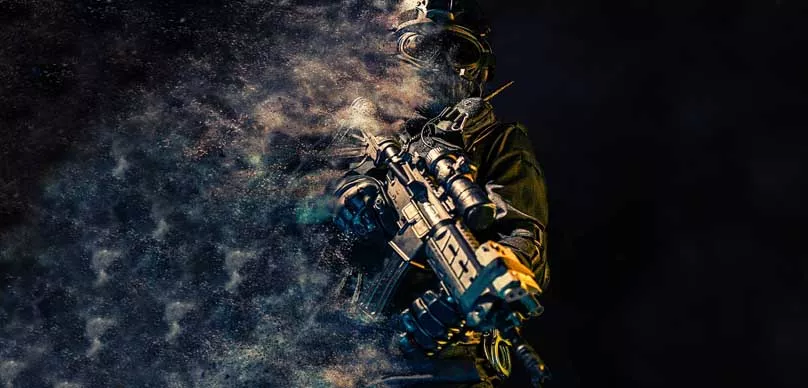
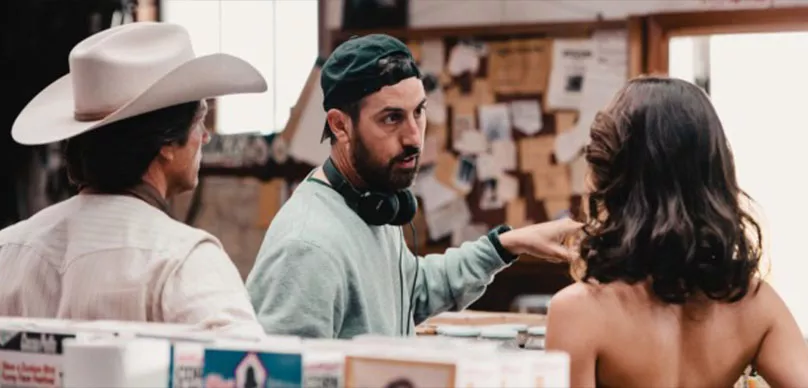
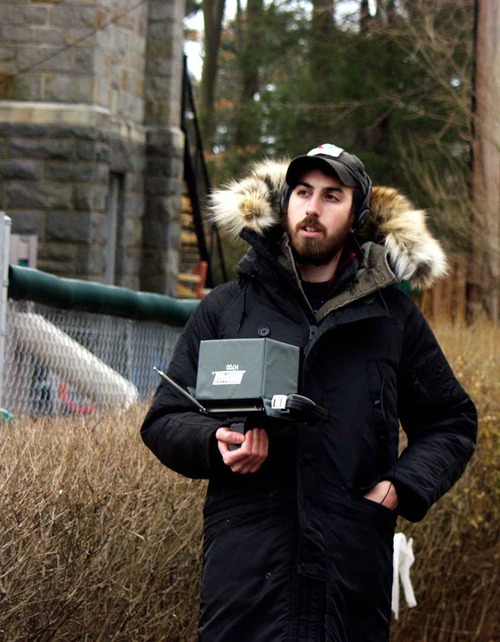


 takes 38 mainstream movie genres, from ‘Teen Sex Comedy’ and ‘Buddy Action Comedy’ to ‘Film Noir Detective Thriller’ and ‘Alien Invasion Thriller’, and through detailed illustrations reveals what makes them so hilariously recognizable: the key lines of dialogue, the essential visuals, the crucial characters and the indispensable cast, scenes, and props.