Star Wars Holiday Special: Watch it in All its Glory!

So as an early Christmas gift to all of the Indie Film Hustlers and Star Wars fans out there I decide to give a home to the infamous 1978 Star Wars Holiday Special on Indie Film Hustle.

I have to admit I have never been able to watch it all the way through, it’s just too painful. The Star Wars Holiday Special is basically a tragedy set to film. It defies all attempts at logic and all methods of explanation. It’s like watching a train wreck…you can’t look away.

Related: Star Wars – The Power of Myth: Creating Star Wars’ Mythos with Joseph Campbell

It’s fascinating how a tiny handful of Betamax and VHS recorders (kids Google Betamax if you want to laugh) back in 1978 apparently managed to record a television special that has never again been officially released within the U.S.

Is the Star Wars Holiday Special (some know it as the Star Wars Christmas Special) the most duplicated home video recording of all time? Probably.

Considering the technical limitations inherent in a 30-year-old home video master, there are hundreds, perhaps thousands of surprisingly high-quality versions of this program floating around.

Now The Star Wars Holiday Special even lives on Youtube for all to watch and cringe! Enjoy my Jedi Junkies with the classic that George Lucas wants to go away but never will.

BONUS: 1978 Star Wars Holiday Special Commercials — all 19 minutes of them!

The Hypothetical Star Wars Holiday Special 2015

The good folks over at Funny or Die did this AMAZING Hypothetical Star Wars Holiday Special. Too funny for words and actually better than the original, depending on how you look at it. Starring Jason Alexander, Lydia Hearst, Keith David, Train, and DJ Qualls,

Before you see Star Wars: The Force Awakens, find out if BB8 makes it home for Droid Day in the only holiday special based solely on rumor and conjecture about the upcoming film. Featuring a cavalcade of stars and a very special performance from “Train.”

IFH 644: From Synopsis to Subplots – The Secrets of Screenwriting Revealed with Geoffrey Calhoun

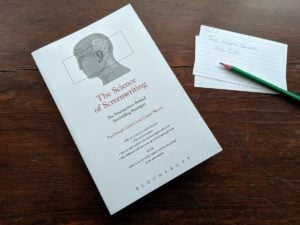
Today’s guest is screenwriter Geoffrey D. Calhoun. Geoffery is the author of the #1 best-selling screenwriting book The Guide For Every Screenwriter: From Synopsis to Subplots: The Secrets of Screenwriting Revealed.

Screenwriting made simple. The Guide for Every Screenwriter is one of the most efficient instruction manuals on the craft. This book cuts past the verbose film school expository and gets straight to work, delivering sample-driven outlines and templates that anyone can follow. It is quick to apply to your work and serves as a side-by-side checklist for the writing process. This book is for anyone looking to write a screenplay and for any professional needing a refresher. Whether you are learning to write a screenplay or are a veteran screenwriter, this is the perfect tool. This book reveals the mysteries of screenwriting, from concept development and subplots to format and beyond, by using easy-to-follow templates and examples.

Geoffrey D. Calhoun (Heroes from Heaven – S.O.S. – Lily) is the founder of WeFixYourScript.com, where he and his team mentor indie filmmakers and support them with all aspects of screenwriting from concept to development, polishing a script, one on one consultation, and even write for hire. Geoffrey is a multi-award-winning screenwriter and is sought out as a script consultant and a re-writer for various stages of development and production. He is the director of the Script Summit Screenplay Contest, which is listed as one of the biggest Screenplay Competitions by The Script Lab.

He is known for his fast-paced thrillers but has also won awards for comedies and dramas. He has received honors in several film festivals and contests, including the Louis Mitchell Award for Excellence in Writing. In 2017 Geoffrey was listed as a Top 100 Indie Writer in the World. He believes everyone is a writer at heart and has dedicated himself to helping others learn the craft. His seminars are designed to break down the mysteries of screenwriting by using easy-to-follow templates, outlines, and modern popular films as examples.

Enjoy my inspirational conversation with Geoffrey D. Calhoun.

Alex Ferrari 0:28
I like to welcome the show Jeffrey Calhoun brother, how you doing, man?

Geoffrey Calhoun 3:21
Good, man. Thanks for having me on. I appreciate it.

Alex Ferrari 3:24
Oh, man, thanks for thanks for being on. We're gonna hopefully drop some knowledge bombs on the screenwriting tribe today. But before we get going, Man, what, how did you get into the business man

Geoffrey Calhoun 3:35
actually started on a bet about 15 years ago,

Alex Ferrari 3:40
the best step best beginning to any story about the film.

Geoffrey Calhoun 3:46
I had aspirations to be a writer at all. Alright, so

Alex Ferrari 3:50
how did you do it?

Geoffrey Calhoun 3:51
I had a friend I was working with and he was an editor on a on a local TV shows like a morning show. And he wanted to get into screenwriting. So he wanted to motivate himself to write it. So he bet me out of the blue to write a screenplay. It was more like a script. And we had like a month to do it. So you know, I got like, you know, a bunch of books, screenplay and stuff like that. And I wrote it. And then we compare it and I ended up winning. But you know, I was really into it. Because I'm, I'm a little competitive. And I don't know, people don't realize that. So then I set it down in the kitchen table and my wife read it. She's like, Hey, you know, this is pretty good. And I said, I actually confessed to her like I really got a kick out of it. I really liked this thing. And it was just funny because I'm dyslexic and writing for me it was very difficult. So I ended up trying it again and I just fell in love with it and haven't stopped since.

Alex Ferrari 4:49
That's amazing. Now, you know, we were talking a little bit about this ON OFF AIR, but there's so many different people. If there's a there's a few screenwriting books out there. There's a couple There's a counterpoint there's at least there Syd field and like save the cat. And I think there's a couple maybe one or two other screenwriting books out there. What makes your book which is called a guide for every screenwriter, which is, which is a bold or a bold title in the screenwriting space, I have to say one of the reasons I caught my eye I'm like, well, who is this guy? Um, what makes your perspective on screenwriting different than then the plethora of other options out there?

Geoffrey Calhoun 5:28
No, that's a great question. I mean, the the title is supposed to wave a flag, of course, but I wanted this to be the biggest little book in screenwriting, I wanted this to be a one stop shop in screenwriting, because something I found with the industry of screenwriting books is that they all kind of specialize in one particular field. And so you end up having a library of like 20 bucks, and I wanted to take all of that condense it into one book, while still really honoring these great screenwriting masters, because I don't believe in reinventing the wheel, you know, and, and then write this in a way that is so efficient and fun to read that you can be you know, going back to it regularly, it could be your desktop book, it could be your back pocket book, and, and really get a lot out of this thing.

Alex Ferrari 6:15
That's awesome. And yeah, I guess it's it, you're right, there's a, there's a there's a 1000s of books, and they all are like, because screenwriting is such a vast, deep, dark hole that you could fall into. You could literally just talk about character arcs for 200 pages, you know, it's it's, and there's actually a book called character arcs, which is, it's water based. So there's multiple ways to do it. So to kind of put together a guide that kind of, at least hits everything you need. And you could always go deeper into any specific field and any specific thing, but just something like that reference guide. Yeah, it's a great idea. Now, what advice would you give for filmmakers? You know, because I think genre is a big issue. People people get pigeonholed in. Oh, I'm only the comedy writer. I'm only the act. Yeah, I'm only the romance and romantic comedy guy, or girl? What advice would you give to write in any genre cuz I know a lot of screenwriters out there would love to just jump, like the Coen brothers to like jump from wherever they want to go and just do it. Any tips? Yeah, man, I

Geoffrey Calhoun 7:19
don't limit yourself to genre. I have this section of the book called The Myth of writing, which you know, where people think that they should only just stay in a little circle. And that really pigeonholes you as a writer and limits your your overall vision. And I tell in the book, you know, if you're a horror writer, right around calm and just see the difference, do your research on a rom com and see the tone, hit the beats, and I even give like, methods of how to do that type of research in the book. But really doing that will give you a larger overall breath of writing and make you even better and deepen your craft. I mean, Me Myself, I can't be married to a particular genre. Because I work as a script doctor or a consultant where I get called in to fix screenplays. I mean, sometimes last minute, like days before shooting, I come in, and I do a reread, you know, and I can't be limited to a horror and just say, Well, you know, it's a rom com, you guys are so well, like, I have to be able to come in, right and really kind of hit those hit those beats in those tones. So I think, yeah, if you want to be a better writer, work outside of your genre, you know, just be brave and do it.

Alex Ferrari 8:25
And when you're building a screenplay, it's it is very similar to building a house, you know, the bones, of all stories are similar, if not the same, but different. There's different blueprints, let's say for different kinds of houses. But there's a limited amount of houses you can buy. But generally speaking, the bones are the same, the structure, the frame is all the same, the foundations the same, it's when you start designing within those parameters. It's what makes a story, what makes the screenplay work. Every once in a while, you'll get a pulp fiction that kind of like, well, we're just gonna build a whole other kind of thing over here, or there's those kind of films that just kind of like, throw everything upside down. But that's very rare, generally speaking, and even then, even when you and I've talked about Pulp Fiction multiple times on the show, even if you look at poker fiction, if you even if you look at Pulp Fiction, and you say, Oh, it's so like, it's all over the place. Like, if you look at it, and you actually find the beats, he's hitting the exact beats, but and that's what makes that film so ridiculously genius. Like, how do you do that with changing the timeline with jumping back? And you're still hitting the beats? Like, that's insanity?

Geoffrey Calhoun 9:33
Yeah. Yeah, I mean, 17 was a master of structure, and he really loves to play them. And I always respect that when a writer can just play with structure and come up with something out of left field. It gives you a good template of like, okay, I can do that now. And they really start to try and figure out and break that down. See, I agree, the structure is there in when you start to master that thing. You really start to see the craft change another guy, another writer who's like that it would be Jonathan Nolan. You know, a few years ago Westworld the TV show, I mean, oh my god, they're knocking them out of the park. The structure is is amazing, but it's all there the beats are there, especially with the, you know, full season arc.

Alex Ferrari 10:11
And that's a whole other like a whole other conversation let's talk about series versus screenwriting. Is this like feature work? But at the end of the day, though, it's similar beats, it's similar things just stretched out over a larger budget, or, or larger timeframe without question. Now, can you the one thing a lot of screenwriters always especially young screenwriters coming out? is what's a high concept versus a low concept? That's, that's a big thing. Can you just explain to people what a high and low concept is?

Geoffrey Calhoun 10:44
Oh, man, thank you appreciate that. I actually love talking about this, because high concept is so huge right now, but I actually have some theories on it. So high concept is really an easily explainable idea. It's something that's easy to market, which is kind of why producers really hop on it. Because it tends to have a wider demographic. So you know, something like Jurassic Park is a high concept film because it's, you know, a dinosaur park where the dinosaurs get out and go crazy, it's really easy to explain. But a low concepts are also called like a non high concept is really your character study, film. It's the it's the indie film, where they kind of lean into a character and less about the world, and more about how the character sees the world and interacts with the world. And personally, I feel that high concepts are, are getting less popular, and you're seeing lower returns on these films, but you're seeing an uptake and in the low concept, character study films, and a nice example I like to use is that new Joker film coming out Joaquin Phoenix, I mean, that's a low concept film. And it's getting it's getting a lot of buzz. And I think you're gonna really start seeing that a big uptake in that with the with the market right now.

Alex Ferrari 12:02
Yeah, I think I think the audience or the thing is that the audience is just getting smarter, man, we're so much more sophisticated. I mean, you know, you and I are of similar vintages. So, you know, we, we we've seen hundreds of 1000s of hours of entertainment and story, and I must have easily seen 10s of 1000s of movies in my life. Oh, sure. I mean, with without him, and I've worked in a video store. So I mean, for four years, five years, I'm like that. So I mean, I've seen a lot of stuff in my day. So all of that input, and and we're trained like we're in the business. So it can you imagine someone who's not in the business. And still, like, I always use my wife as the barometer, like if she calls it out. Like, she's like, Oh, that's, that's the character development was just so weak, wasn't it? And I'm like, Who are you? And I didn't marry this, like, I don't understand. That way. She's like, Look, I've been living with you for so many years, something has to have rubbed off on some point or another. But when she's talking about, oh, that care, oh, that was just no motivation there or all this it felt dry or this or that. It's interesting to see people outside the business. And that's what the reality is of our world. Now. We're so savvy. And can you imagine the kids coming up now? Well, I

Geoffrey Calhoun 13:21
mean, my son is, you know, he started writing screenplays and he actually won a bunch of awards. He's 13 now, but when he was 10, he was really getting getting into screen.

Alex Ferrari 13:31
So let's stop this. Stop this right here. Bastard. I can't believe a 13 year olds writing screenplays. I didn't even know what a movie camera was at 13. Are you kidding me? No, I had a kid on who's like, yeah, I'm 17. I've shot you know, like six features already. And I've, you know, yeah, they're on amazon prime. I'm making a little bit of money with them. But I really want. And I'm like, first of all, we all hate you to understand. So let's get that out of the way. And let's move on from there. But no, it's it's just a different world. Like it's a world that you and I can't even think about. Because it was just, you know, we didn't have this. It didn't exist. I didn't mean to call your son a bastard. I apologize. All right. So you're saying so I'll tell him. He really started at 10 years old. So

Geoffrey Calhoun 14:17
we were we were sitting in a theater and this is before he started writing. And we got through moving. I don't want to name it. But he looked over to me and he goes, that character development was terrible. Oh, you and the ending of the movie totally destroyed the ark. Whoa, hold

Alex Ferrari 14:34
on. Please name it. Please name it. I want it. It's Justice League. It's Justice League. Go

Geoffrey Calhoun 14:39
ahead. With that one, too,

Alex Ferrari 14:43
I'm sure.

Geoffrey Calhoun 14:44
But I looked at him as like, you want to do a daddy does and he's like, I'll give it a shot. So then he wrote his little screenplay. Yeah, it was cool. Yeah. So I mean, they're just they get it. You know, they've seen the same beef, like you said, and they've kind of learned it through analysis.

Alex Ferrari 14:59
Right. Exactly. mean the things that you know when I read Syd field book? That was the first time I think for a lot for an entire generation? Yeah. It was like the book that everyone was like, what what we all do sit. It's all the same story. At 20 minutes something happens at this time it happens here. Like, that was mind blowing to me. And I wasn't even in I think I was just I wasn't even in film school. I just got out and film school when I read that it was insane when I read that. And now that's common knowledge. Like the hero's journey, everybody Yeah, knows the hero's journey, like, you know, it's just something that's built into our psyche at this point again. So that would make sense why high concept movies are starting to waver. And yeah, the Joker is a really great example of that. I was gonna ask you, what word is the matrix fallen? Because the matrix is not high concept. It isn't it isn't. Because you can't pitch that balance, doesn't it? You can't pitch that in a sentence.

Geoffrey Calhoun 15:54
Yeah, and I think you're right. They definitely lean in to the the monomyth figure though the show the holy figure that way. And so I think by doing that, they're able to lean into the inner character relationships, and then they really explore that world. And exploring that world is definitely a high concept take. But yeah, I think they strike that balance, which is incredibly difficult. You know? It's,

Alex Ferrari 16:20
it's a it's a masterpiece. I mean, that first, yeah.

Geoffrey Calhoun 16:21
Oh, that's classic. So I use it in the book.

Alex Ferrari 16:25
Yeah. I mean, it's, there's, there's certain movies that come out into just kind of change things. And that matrix was definitely one of those films when it came out. It definitely changed things without question. Now, can you? Can you give me some ideas of how to create a high concept project some tips? Um,

Geoffrey Calhoun 16:41
well, I think one of my favorite tips is to find a classic, and then put a nice twist on it. And that is, that is a good way to to get into high concept with with something that's original, but yet put your own spin on it, like I think of was the lungs, Chris Hemsworth, and Snow White, like Snow White and

Alex Ferrari 17:00
the Huntsman or the Monte Carlo Count of Monte Cristo or something along those lines? Yeah,

Geoffrey Calhoun 17:04
yeah. I think that, that doing that. And then just when you're coming up with your concept, you want to just keep bringing it down and making it simple and more simple and easy to understand. Because when you get into concepts that are like 234, sentences long, like it's too much, gotta cut it down, make it easier, make it easier.

Alex Ferrari 17:20
So what's when you're saying make it easier, you're just thinking is like, simple simplify the story. So like, Jurassic Park story, so Jurassic Park is so simple. It's like it's a dinosaur park where the dinosaurs are alive. I mean, that that pretty much. That's the sales page. That's a search. You know, but what is like the superhero genre? So monstrous right now? And it's I mean, it is it is the film industry. If you take out movies, it's huge, right? If you take Marvel away from the film industry over the last 10 years, they will I mean, seriously, $20 billion would be gone.

Geoffrey Calhoun 17:54
Like, simply now. Yeah, they're there. They're definitely huge. they've they've, they've created their own marketing kind of saved the industry in several ways, which is just crazy.

Alex Ferrari 18:04
It's it's it is insane. I mean, we could talk a little bit about Marvel's I mean, because I Oh, and I don't want to do the Marvel DC thing. But I see a Marvel character in your background. So I'm assuming you're a Marvel guy. I see Iron Man I a little bit more often. I see. Because your star wars and marvel. I'm assuming your Marvel. Yeah. I'd like stories. I mean, I like DC movies as well. There's I mean, I love Batman and all that stuff, though. Arguably, Batman is the only Marvel character in the DC Universe. But that's a whole nother conversation. If you think about it, if you think and I yeah, I can see. So I love to ask, I'd love to ask story. You know, gurus or alchemists, if you will, why Marvel has made it so been so successful in DC has not in the end, you know, and I was I beat up Justice League so much because it is it is the lowest hanging fruit there was like you're talking about the five four or five biggest superheroes with the biggest, you know, no, like no one knew the hell out Iron Man is the Avengers. These are all bc character B character

Geoffrey Calhoun 19:19
and in the nail, I mean, but you got to look at the casting though.

Alex Ferrari 19:23
Nobody's the casting character. There's a four, you know, like Black Widow like you kidding me? Like Hawkeye? Like you all the work that had to be built to build up that entire movie, where literally, all you had to say is Batman, Superman and Wonder Woman are going to be in this movie. That's all you have to say. And everybody in the world knows what that is. And they screwed it up so royally, that it's upsetting. was literally upsetting. So, in your opinion, what do you think Marvel has done and why their films have hit so many beats and so much success with Is the DCS habit?

Geoffrey Calhoun 20:01
Well, it's the long game for Marvel because the brilliant thing they've done is with each film, they release, they release it in a different type of town. So you'll have you know, Captain America Civil War is more like World War Two film, I'm sorry, is more like a spy thriller, whereas Captain America was like, you know, World War Two. But then you have Thor Ragnarok. That's obviously a comedy. So they keep releasing it, change it up.

Alex Ferrari 20:28
It's like it was a psychedelic comedy. Yeah, the colors and it was just always

Geoffrey Calhoun 20:32
vibrant. Yeah, I mean, so they keep changing it up, you know, in the Marvel movies that don't do well, or the Marvel movies where they don't have that really interesting new type of tone where it freshens it up. Whereas DC they kind of kept trying to just imitate, you know, The Dark Knight and go dark and dark and dark. And the audience kind of got tired of it. And so by the time they brought, you know, Wonder Woman and Aquaman, and I think it was too late, because they were changing up the tone there a bit. And then they just leaped right into the Justice League, but the groundwork wasn't laid the way you need it to be. So you get a you get a film that tonally is all over the place. It's dark and somber, but then it's funny, and it's a buddy comedy, but we don't really know the characters and their relationships aren't really that well defined. So actually think about this a lot. And I feel that DC is better suited for television. I think if they were given a bit longer of a game on television, I think they would be far more successful. And Marvel will continue to be rocking out these films and their phase. What are they in phase 20? Now?

Unknown Speaker 21:39
phase three,

Unknown Speaker 21:40
three, or four? I

Alex Ferrari 21:41
think. Yeah, I

Geoffrey Calhoun 21:42
think it says you're in and you're going to see more and more various genres coming out. I think with that Black Widow is going to be another spy thriller. And you'll see really cool stuff like that. I mean, they're bringing in changxi right. So that's going to be like a kung fu action film is totally different. I mean, was last time you see that? I mean,

Alex Ferrari 22:02
and also and also Natalie Portman is going to be the new Thor eventually. Yeah, that's gonna be like insane. Like, I mean, it's there's so much cool, you know, and then blades coming back the blade being done within the world of the Marvel the MCU right.

Geoffrey Calhoun 22:18
And they're talking about bringing Deadpool and so that can be really interesting. We

Alex Ferrari 22:22
haven't even talked about x men Deadpool Wolverine with you know, fighting alongside like, they haven't even we haven't even spoken about five and Fantastic Four and all these other Yeah.

Unknown Speaker 22:31
Oh,

Alex Ferrari 22:33
x men, and maybe we'll finally get a real Fantastic Four.

Geoffrey Calhoun 22:38
That's gonna be a hard one to figure out, baby. I would like that challenge. Just because that's such a tough nut to crack.

Alex Ferrari 22:44
It's well they've tried it a bunch of times and they have not been able to hit it. But look, man, they made Ant Man. I know. They made Ant Man they made

Geoffrey Calhoun 22:55
which is which is a heist film, right?

Alex Ferrari 22:57
Which is a high school. Yeah, high school both of them but and wasp is kind of like a romantic heist film like a will they won't they kinda When Harry Met Sally,

Geoffrey Calhoun 23:07
another different genre, right? So they just keep hitting these different genres throughout each film,

Alex Ferrari 23:11
and they made Guardians of the Galaxy. Are you like we're not even on the B or C level characters that basically the bottom of the bargain bin, like knew nobody ever was like, What? Did you ever see the Saturday Night Live skit about like, Guardians of the Galaxy about Marvel, like Guardians of the Galaxy is coming out. And you know what? We're Marvel so ftu because we knew we could do whatever we want. We're gonna have a talking raccoon and you you're not gonna love it. Why? Cuz we're Marvel. That's awesome. We're gonna have a talking tree. Why? Cuz we're Marvel. What are you gonna do watch DC? just brilliant. Brilliant. Brilliant skit. Alright, so we've gone off this I've gone on a tangent. I do those tangents every once in a while the Marvel star. But we'll get we'll get back looking back to the screenwriting. But it's important because I want to I want people to understand why those characters and why those movies have resonated in a way that no other series ever in the history of films has done. Yeah. And there's something to be studied there. And to lay down that they lay down the work they took the time, you know, imagine if they would have brought out the Avengers before Thor. Or before was it Thor or Captain America and they just kind of threw this character. It would have never worked.

Geoffrey Calhoun 24:28
It goes back to what we talked about earlier about trying out different genres. You know, obviously Marvel has proven you know, doing these different genres can lead to success. So as far as a screenwriter, why would you ever want to limit yourself to a genre?

Alex Ferrari 24:40
Yeah, and that and I've never actually I've never thought about it before like that with the Marvel films being different genres, but they are. They're all. They're all. They all have the good ones like, you know, you watch a winter soldier. That's just an amazing spy thriller.

Geoffrey Calhoun 24:54
Absolutely.

Alex Ferrari 24:56
It's kind of like when you watch Dark Knight. Well, that's just heat. That's just a quick Yeah, that's just heat with a super Yeah, it's with a superhero and a crazy man. It's, it's really, really good. Um, now you also talk about mind mapping in your book, what is Mind Mapping in your, in your opinion,

Geoffrey Calhoun 25:13
oh man, mind mapping is so useful and really underutilized. So all mind mapping is just a way of an exercise to create freeform thought. So you just write down whatever your you know, concept is in a metal bubble, whether it's a concept or a character or something like that, that you want to build off of. And then you create branches of ideas. And now the really fun thing about this is to not be married to any particular idea, and just let your imagination go wild and crazy. And then when you come up with another idea, you do like little sub branches, and then you kind of cross out what you don't like and what you like, and you circle and then you just kind of follow it around, and you create this beautiful myriad tree of ideas. And then you're able to come up with with what you're looking for. And it's amazing. And if you do it in a public place, it's really cool, because then you start getting influenced by your surroundings, and actually did it with a with a new writer a little while ago, who couldn't come up with a with a killer concept, right? So we sat down, and they wrote down their, their concept idea, and they started doing all these crazy branches, and within 15 minutes, they had everything figured out.

Alex Ferrari 26:21
It's amazing. It's amazing. Are there any tips you have for mind mapping,

Geoffrey Calhoun 26:24
I say mind mapping is just be free with it. Don't Don't worry about going crazy. Just, you know, let it happen. You do it in a public place. And, and don't be overly judgmental of it. And like I said, if you want to use the environment, and you know, you can even do fun things like write down sounds or noises, if that even trigger something in your mind and just kind of let that flow happen. It's kind

Alex Ferrari 26:51
of like turning on the faucet and just whatever comes out comes out basically.

Geoffrey Calhoun 26:55
Yeah, absolutely. You know, your subconscious is always working on this stuff. Like if you're writing a script and say you get stuck at a point, I say go take a little time off, come back, you know, while you're out cooking dinner or running errands, your brain is working on it. And then when you come back and you sit down you like finish that scene, oh, it's a miracle. Well, it's the same thing with with developing concepts. So if you can just sit down and then just let all predisposition goes and just sit down as Okay, I'm just going to create this now I'm just going to write down whatever happens, then you're gonna get some really cool stuff coming out.

Alex Ferrari 27:28
Now, what is the biggest mistake you see with first time screenwriters

Geoffrey Calhoun 27:32
that they think it's easy?

Alex Ferrari 27:35
Well, I mean, obviously, it's easy. All you need is final draft and an idea, right? And you should just and you should just get the million dollar check any day now?

Geoffrey Calhoun 27:42
No, that's not how it works this out work for you. Right.

Alex Ferrari 27:45
I've done that four times by myself, sir. Just four times. And that was this week. And that was

Geoffrey Calhoun 27:51
that was right before lunch.

Yeah, I know that they think that they think it's easy, that they don't have to do things like format and structure. Or when I meet with new writers, they say, well, do I have to do it this way? And I'm just like, Oh, I mean, yes. You know, and so

Alex Ferrari 28:08
I have to hit the nail in the wood to build the house. Do I

Geoffrey Calhoun 28:13
know that's perfect? That's exactly yeah, yeah. No, no,

Alex Ferrari 28:17
I want to I want to use duct tape. I think it's prettier, and it'll be fine. What could go wrong? What is it about our industry that in filmmaking and in screenwriting that you'd like anybody feels like they they can do it? Like, you don't listen to a symphony and go, Oh, yeah, I could do that. Like, you know, you don't you don't go like you know what, today I'm gonna go build a house. I've never built a house before I've seen it on TV I've seen I've watched HGTV. So I'm sure it's not that hard. And I'm also going to mortgage my house. Yeah, I'm gonna mortgaged my house, I'm gonna take $200,000 out of my house, take a credit line off my house, and I'm gonna build this house that I've never had any experience doing?

Geoffrey Calhoun 29:02
What? I'm gonna build this house because I saw one on the street. So obviously, I know how to do it. With the only industry

Alex Ferrari 29:09
this the only industry that does that, like, I mean, other than being an entrepreneur, where people like, Oh, I could I could run a business. But it's, it's like, even that, it's like, well,

Geoffrey Calhoun 29:22
when I teach seminars on this stuff, and I sit down, and I tell people, like screenwriting is the most difficult literary art that exists, and I just kind of watch everybody's eyes glaze over. Like it doesn't land, you know, but like writing a book is is forgiving. Like, you can write in whatever voice you want. You can you know, you do you do Haiku, you just hit the beats, you know, you can write a poem. There's not a free form of that. But when you write a stage play or screen for a screenplay, I mean, you've got to write something that some producer is going to consider for, you know, 100,000 to a million dollars, but now you're going to write something that has to be very specific and deliberate and it's not open. To you know, your your your willingness to just kind of do what you want to do like you have to do in a very specific way

Alex Ferrari 30:09
you can play around but within the box there is a box you got to fill up. And I can tell you being an author, I'm sure you as well. writing a book is so much easier than writing a screenplay like infinitely. I sat down and I wrote a book like that that a Tata Tata Tata Tata Tata, like I'm like, Oh, I could just, I could just write, I don't have to worry about beats, or I don't have to worry about like, structure, like basic grammar structure, but that's basically what a paragraph in a sentence is. And that's basically all I have to worry about. Oh, it's It was so free. Yeah,

Geoffrey Calhoun 30:43
I gotta get screenwriting is the hardest, most difficult, soul crushing, best, wonderful, amazing thing you can do. But writing this book was just like, This is fun.

Alex Ferrari 30:57
This is exactly it is. It is something and I hope everyone's me. If there's any screenwriters listening to this. It's exactly what we're saying. It is. It is soul crushing. It is brutal, but yet wonderful, lovely. Amazing. But you've got to love it.

Unknown Speaker 31:12
Yeah.

Alex Ferrari 31:13
Gotta love what you're doing, man. No, this is.

Geoffrey Calhoun 31:16
There's a quote that. You just reminded me of that. I think Jonathan Nolan says I hate writing. But I love having written.

Alex Ferrari 31:25
Oh, it's great quote. Oh, man. That is an amazing I wrote. And then I think it's a I think it's Hemingway who said writing is easy. All you got to do is sit at the typewriter and bleed.

Unknown Speaker 31:37
Yeah, absolutely.

Alex Ferrari 31:39
It's so true. Now I wanted to talk a little bit about loglines because it's something that we we hear about in screenwriters like oh, you have to have a good logline has a good luck. I have a compelling logline, just about to let everybody listening know what a logline is, and any tips on creating a compelling logline.

Geoffrey Calhoun 32:00
So a logline is just a one to two sentence breakdown of your story. Really. It has to be efficient, brutally efficient has to be interesting if to hook the reader. It can't be boring. It can't be overly wordy. And I have a template in the book on how to efficiently write one and kind of create that hook for it as well.

Alex Ferrari 32:22
Excellent. Because it's it's not easy writing a logline. Like if writing a screenplay is hard if writing a screenplay is hard, like boil, boil down those 90 pages into a sentence or two. Good luck. Oh God, when I had to write once for like my short films that I did back in the day, I was just like it would they were perfect. I'm like, Dude, it's a short film. If you can't get this out in a sentence, dude, it's it's 10 minutes, man, let's let's move it a lot. Yeah. And one thing I want to talk to you about, and this is something that writers and because I've read a lot of scripts in my day, especially young writers, they, they will bust out the thesaurus out in in your script, and you will start getting these 5075 cent words out there even some dollar 50 words, man, and it's just like this, this hodgepodge, and I'm reading it, I'm like, dude, if I gotta look, I'm like, if I'm fairly literate, I read. I personally read around two to three books a week, you know, I try to mice, I really try to consume as much information as possible. Man, if I've got to look up the word, it's probably it shouldn't be here. It shouldn't be a hero. So can you can you please just talk about stop trying to show off your English Lit degree.

Geoffrey Calhoun 33:46
That's really interesting. Um, yeah, writing a screenplay when you reading it needs to be. It needs to be pleasant to the eye. So you don't want it overly wordy. So you want to be Spartan with your words. You know, when I do like action blocks, for lines, I don't do five. I don't do more than that. I do four lines, it makes my scripts just a breeze for a read. You want to be efficient with with your description. But if you start playing out those dollar 50 words, you're not impressing anybody. And if you're frustrating them, they're not going to want to keep reading your script. I don't want to be looking at boards. You know, I mean, you know, there's there's, you know, instead of saying very tired, you can say exhausted Sure, that's easy. But if you start getting into something crazy, you're not impressing anybody you know the goal and I mentioned this is is that my job is to glue you to your chair with my words. If you're reading my my script, and you have to go to the bathroom, I want your bladder to be killing you because you can't get up and walk away from the script because you need to know what happens. And I'm not gonna do that if I'm if I'm getting crazy with with really fancy words.

Alex Ferrari 34:56
Because there is a plethora, a cornucopia, if you will, sir have options. Exactly. Bye bye if anyone please look up cornucopia do not use that in the screenplay. It's a red flag. Can you imagine just like the the he ran, ran into the store where there was a cornucopia of gun options. Could you imagine if you read that line, it's so pretentious. It's like, yeah, it's a lot. I

Geoffrey Calhoun 35:28
wanna, I wanna, I want to buy that script right now.

Alex Ferrari 35:31
Exactly. I think that's a dog safe school, though. I think that's a dog saves Christmas movie, I'm not sure. But which is obviously pre sold in most of multiple markets around the world right away. That's another thing I wouldn't mind talking about is is is aiming your script, making your script marketable? Because there's, there's something that's that screenwriters also don't do a lot of is think about, specifically about, oh, is my script even marketable? Is my script even doable? Am I presenting this script to the right producer? If you're if you made a 200 million if you wrote a $200 million visual effects extravaganza, and you give it to a producer who's used to making one to $2 million, and most of their movies are the dog saves Christmas movie that goes straight? The hallmark? Yeah. That and you're like, what? Nobody? Nobody understands me? No, dude. You didn't you didn't do market research. You've got to, you got to understand my kid is a cornucopia of scripts. I

Geoffrey Calhoun 36:34
have a cornucopia of awards.

Alex Ferrari 36:36
Exactly. Oh, God. That is the word of the day, everyone cornucopia. But it's so true. So they don't they don't start to make Look, it's an art form. So we want to write a story that just means something to us. That's great. And you should write that. And it's, it's fairly cheap to do. So. You can write whatever you want. It's the cheapest part of this entire process. Sure, without question, but if you but what are your end goals when you start writing? And that's I think something that is not talked about a lot is like to actually sit down and go, Okay, I'm going to write this story. What is my goal with this story? Is it for me is am I something that I'm going to try to produce? This is something I'm going to make for a few, you know, $100,000? Am I going to try to sell this? What can I do? If I am going to try to sell this? What can I do? What can I put in that script? That's going to give me a better chance? How can I load up the script, if you will, with things that are going to make me more appetizing for purchase? Or for actually a movie to go into production? What advice do you have?

Geoffrey Calhoun 37:31
Well, I it's funny that you mentioned this because I was literally talking about this a couple nights ago with a young screenwriter. And he was frustrated with, you know, a lack of direction with his writing. And I, I tell everyone, I have a strategy. Whenever I plan to do anything with this craft. I strategize if I want to get an indie horror film made, I look at the market, I look at the democratic demographic I want to work in, I looked at the budget I want to work in. And then I hone a screenplay around that. And then approach producers who are making those films, and then pitch it to them in a way that they want to hear it. And so when they say Wow, this is great, I think I want to option this. And all makes sense. Because it's all lined up. I've set myself up for success. No one else is going to make you but you so you can't just you know write this crazy $300 million feature and then send it out to people wonder why they don't want it. You have to set yourself up for it. So yeah, I mean, strategize and plan, you know, outside of like hiding and some producers bushes. I'm not saying you want to work. But I'm not saying

Alex Ferrari 38:44
don't do that. Don't do that. Let's just put that out there. Don't do that. Don't. Don't hide in the bushes. Don't stalk. Generally speaking, don't stalk them. Don't try to don't do not approach them in the bathroom. That's not it. Like as as he's as he's like unzipping. You're like I can't do you have to use your logline. That's what I like, I just need two seconds. It's about a park with Dinosaurs get out.

Geoffrey Calhoun 39:11
It's not called Jurassic Park. So it's called Carnot. It's called connoisseur.

Unknown Speaker 39:17
Cars. Oh, fantastic. Oh, Roger Corbett baby. You're welcome.

Geoffrey Calhoun 39:21
So yeah, just just strategizing. And there's ways there's ways to do it. There's ways to find the connections that you need to get there and get your script to where it needs to go. And in always have a plan and by doing that you're setting yourself up to succeed.

Alex Ferrari 39:36
Can you please tell me your opinion and I think I know the answer this, but I'm gonna ask it anyway, because I want this information out on this episode. A professional writer does not spend five years on the script. A professional writer has 20 scripts in their in their desk or on their laptop, and they're not precious about any of them. They might be more passionate about some of them, but they're not precious. And that's a professional writer. Is that a fair statement to say?

Geoffrey Calhoun 40:07
I think that's 100% accurate. I mean, I mean, as far as gigs go, I have a nine week turnaround time, I can do it. And I've done it in six. But I don't take I don't take three years to write a script.

Alex Ferrari 40:19
But you know, but you know that but you do know those screenwriters who've been on that screenplay for like, and every time you run into them, like, how's that script? Go? It's almost there. Yeah. I'm like, Oh, so close. I'm almost there. Have you been working? Anything else? Nah, man, just focusing all my energy. Yes,

Geoffrey Calhoun 40:33
this one script. Yeah. And in the meantime, I've sold two scripts, and I got one producer, you know. And so and like, my career's is going where it needs to go, and they're just stuck. And then I just want to like, shake them. But you know, that's, that's where they're at. So yeah, the the other thing is, is our job is to make a product that the producer, the director really wants to see come to fruition, if that means they need their voice in there somehow, or they need things change in a particular way. We're not here to fight and argue and, and and attack, we're here to Yes. All right, give me whatever notes you have, I love notes, I want this thing to be the best possible outcome for you. And and then you make that happen. And so I mean, that's always been, my, my attitude. And it's, it's, I mean, producers like to work with me. So I'm assuming it's the right it's

Alex Ferrari 41:26
another mistake that I've seen a lot of is, and I did it back in the day, because I'm a director for first and foremost, but I would write in my screenplays, camera direction, dolly, dolly, in crane up, things like that, or you start creating the visuals of the film are so detailed. That's also a sign of like, unless you're directing it yourself, and you financing it yourself. It's it's difficult. I mean, maybe if you're a writer, director, you might be able to get away with that. But if you're not the writer, director, and it's a it's a work for hire, or if it's a product that you're trying to get sold, a director reads it and like, I don't need anyone telling me how to shoot.

Geoffrey Calhoun 42:05
Exactly. Yeah, no, I think you're absolutely right. I mean, we are the screenwriters, our jobs, aren't to create the story. But we're not the costume designer. You know, we're not, we're not the set designer. We're not the we're not the director, we're not the cinematographer, there's, there's subtle kind of cool ways that you can make that happen suggestively, but you don't have to be married to it. And the other issue with camera directions is one thing I hear back is, I'll hear well, I really love your voice as a writer. Well, if you're lost in camera directions, the reader, the director, producer, they can't hear your voice as a writer because it's hidden behind those camera directions. And that actually cuts into your creativity as well.

Alex Ferrari 42:49
Now, another big thing I'd love to talk about is the reading script versus the shooting script. And oh, man, is that a big difference? Can you talk a little bit about the difference between those two?

Geoffrey Calhoun 43:01
Yeah, well, so the shooting script is what we just talked about. It's chock full of camera directions, and it's created specifically for production. The reading script is a script that we use a screenwriter writes to make this thing be really interesting to, to what to create what I call the theater of the mind. So as you're reading, you know, you read aloud, so as you're reading your books, are you reading the script, you start to see the script happen, you start to see it become a movie, you've cast it in your mind, and, and in the end, it happens as a play in your mind. So that can't really happen with camera directions, because the camera directions pull you out of story. If you're if you've written a really great script that reads well, and it's beautiful, and isn't overly wordy, and you don't have $1 50 words in there, and it's natural, then that theater of the mind kicks in, and then they're able to become lost in the story. And they walk away with a positive feeling for it.

Alex Ferrari 43:58
Yeah, without question. Now, can we talk a little bit about the difference between sympathetic versus empathetic characters? Because that's again, another confusion that I see a lot of.

Geoffrey Calhoun 44:10
Yeah, they're two different things. So sympathetic, is when I know you're hurting. And I understand that as a fellow human, you're hurting and I and I feel bad for you. But empathetic is will say, I see you're being abused. And I can feel that pain because I've been abused. And so it runs deeper into my core and I have a stronger emotional attachment to you as a person or on film as a character. And you mentioned the Dark Knight. So really cool thing about that film is they tried creating empathy for the Joker character by consistently changing his origin story.

Alex Ferrari 44:50
Yeah. Yeah. He keeps telling the different origin story how he has a smile which is which is brilliant, which is brilliant and and you know it to talk about dark night. For just a quick second, I mean, I've never seen such a perfect villain. For the hero like, Yeah, it's great. Like the Joker as a villain works only because of Batman and vice versa. Like you can't put the Joker in another movie and he's not gonna play the same. You can't put the Joker in Indiana Jones like it's not, you know, you can't put Batman, Darth Vader in the, to create a good villain you need to create basically a polar opposite, right? And that's basically what that is. Do you agree? Absolutely. I

Geoffrey Calhoun 45:31
mean, it's that order versus chaos. I mean, that's why the Joker does not work very well in team ups because it's just too random. And and you know, things like Luke and Vader, they're polar opposites. And it really plays thematically and with the character because well, if you do the character, right, you can have that villain character arc will be the polar opposite of the hero or throughout the story.

Alex Ferrari 45:54
Now what is what is what makes a good hero? In your opinion?

Geoffrey Calhoun 46:00
Yeah, so I think Yeah, character that has. Yeah, deep empathy. So some somebody that you can feel for and understand what they're going through and why they're going through it. Somebody who's who's written with kind of universal human truths involved in them. So if you kind of infuse a hero character with someone suffering with loneliness, or they don't feel like they belong, or trying to overcome some kind of internal sabotage mechanism, that you know, the loss of a loved one things that we've all gone through as the human experience, if you can infuse that in a character, and then you put them on a journey through through this arc of them going through this pain and then learning to overcome it makes a great character because when we're watching these films, and we're watching this character, and we and we and we really attached to this character, eventually we're not really rooting for the character anymore. We're actually rooting for ourselves because we want to succeed ourselves. So when we see this character going through this we envision it as us and not them, which is why you want to have this character have an arc that it's satisfying because I want to win as a person so if I see them when I went and there's this moment of catharsis and release that happens within us which is why you see like a movie that does really well in an act two and act three or an act one and act two, but kind of loses it in an act three and people go nuts is because they didn't get that they were hooked to this character they love this character and then the ending made them feel wanting and that reflects us as as a lashing out at the story.

Alex Ferrari 47:45
Can you give us an example of some anti character anti heroes that are like like our so I love anti heroes

Geoffrey Calhoun 47:53
like also like Logan was

Alex Ferrari 47:55
yeah you read you

Geoffrey Calhoun 47:56
can read my mind forgiven Unforgiven was anti hero you know Dan Poon ways but he kind of borders on the parody as well. So these guys that are

Alex Ferrari 48:08
like let's let's analyze Logan for a second what makes him like Wolverine as a character is such a he's such a for lack of a I don't want to bust out Shrek but he's like an onion. He has multiple he's there's a reason why that character has is the most popular character in the x men universe and has been able to go and obviously the casting with Hugh Jackman is an amazing amazing I don't even know how they're gonna do another one but oh man Yeah,

Geoffrey Calhoun 48:37
we said the same we said about Batman too. So

Alex Ferrari 48:39
yeah, it's always the same thing but we haven't seen it yet with the same thing with Iron Man. Eventually they will there will be another Iron Man one day yet. How is that going to be? I don't know. But Logan, can we analyze Logan? What makes what what what? What are the characters clicking in logon? Because obviously, there's a lot of history that the audience has has brought to the movie. You know, like like, like Marvel when they start up Avengers, endgame. There's or even Avengers Infinity War? Like, there's no conversation about who these people are. There's no conversations about what's going on. They just they just assume that you've been on for the ride for the last time. Yeah. Yeah.

Geoffrey Calhoun 49:17
I mean, it's just the Avengers is all high concept. And it's just action and let's get to it. They do weave in some subplots, and some some theme there going on with with the Avengers without teamwork and regret. But the interesting thing about Logan, but I think what makes him really empathetic is a couple of reasons. One is he's a character that craves to have people in his life but he pushes them away. And I mean, that's like, we all suffer with that. And another thing is resentment. He has a lot of resentment about the decisions he's made in his life. And I mean, who doesn't regret, you know, something they did in their life. And so by by putting that in this character, and then Watching him go through this arc, especially with a little girl, where he opens his, you know, her his heart to her eventually, and then sacrifices himself to see that type of thing. I mean, if you're a parent, you're on board with this, you know, right away. So I think those are the things that really kind of bring you into this on top of the whole fact that it's actually a Western and people don't realize it, or that, you know, he's the he's the lone wolf that we've loved. And he's he's coming to the end of his journey on top of all that thing, putting in the resentment, the fact that he craves to be loved, but can't let him self love and putting these things in there and then just suddenly hitting those beats.

Is, is what does it and then he's ended he's also fighting his younger self in Oh, yeah. I mean, that's just a whole other, the whole other layer of doubt I do it. I argue. I always tell people, I argue that dark nights still probably the best overall superhero film of all time, but Logan is probably a close second, in my opinion, my solid, it's so it should have been Oscar nominated. In my opinion, it was so because you take away the superhero aspect of it's still just, it works.

It's the last one. Yeah, it works.

Alex Ferrari 51:13
It works without question. Now, what do you have any other tips on? creating great characters in general, villains and heroes?

Unknown Speaker 51:24
Um,

Geoffrey Calhoun 51:26
yeah, I mean, making them likable, obviously, making them unique and interesting, giving them some internal conflict that actively sabotage is their external conflict is really important. So and we talked about that with Logan, putting them on a journey, that that doesn't leave any threads undone. So making sure that they have that that resolution in the end is incredibly important. Making sure you have supporting characters that, that reflect aspects of the hero, that, that allows them to interact and show aspects of the hero that he needs to sell to the audience in order to really get them behind. You know, are they likable? Are they? Are they frustrated? Are they angry, you know, you know, like, like Logan's relationship with with Professor X, for instance, you know, his his relationship, there is definitely one of a son who has to take care of an elderly father. So there's the regret and the resentment that he has to do that, but then a deep love for him. And then moments of where he's embarrassed by his dad being you know, I get

Alex Ferrari 52:40
almost killing it almost killing everybody, because he has a seizure. Got it?

Geoffrey Calhoun 52:43
Yeah. So yeah, there's all these these moments and building that relationship allows us to see different aspects of Logan. and kind of get into that onion that you're talking about

Alex Ferrari 52:54
now is what can screenwriters do to get the work read by the right people? That's a big question. But I was just curious.

Geoffrey Calhoun 53:02
Yeah.

Oh, no, I you know, I do things like you do your research and find who wants to read it? So are you talking about getting it produced or getting it or getting it kind of rewritten or

Alex Ferrari 53:14
getting it read by the right like either getting sold or getting produced? Or getting a writing assignment from it like, yeah, how will any advice on get because look, we all know that there's 1000 script I made literally, I've been in rooms and studios where there's a wall, from floor to ceiling just piled up with screenplays that if they've been read once, it's amazing. There's so much competition out there. So what can you do to set yourself apart? Besides write the greatest screenplay ever written?

Geoffrey Calhoun 53:42
Yeah, other than writing that killer script that we know you have inside of you, um, networking, I think is huge for this for this industry. Film Festivals is a great way to network, getting out there making connections with with that script. And the really cool thing about networking is, you just don't know where it's gonna go. I met the very first person I ever networked with, we are still friends to this day, we still have each other's back when things go wrong, or we promote each other when things go great. And we kind of you know, help each other out as their careers get better. So like the rising tide lifts all ships. So I think networking is huge. Outside of that, if you're looking to like, I want to get into this guy, and I'm able to meet him, you just do your research, find out you know, who's who's reading for this producer. You can do that on IMDB, IMDb Pro, or you can find it on, you know, there's books that tell you who to find. And then you send out your query letters. Outside of that. I mean, getting a manager and isn't isn't as crazy difficult as everybody thinks it is. It's just about forming that relationship with a manager and making sure that there's someone that can get you to where you need to go because managers are like a great key to doors. Cuz querying Can Can, can lead to more querying, and you can kind of get addicted to it like a slot machine and not get any returns. So but if you foster you know, relationship with a manager over time and then they decide to, you know, take you out if they believe in you, you know, lots of doors open for you.

Alex Ferrari 55:19
Okay, can you please just tell everybody to, to do some damn research before they Curie anybody? When I get a link to a screenplay, they're like, hey, Alex, I need you to read my screenplay. So you can get it produced. I'm like, you have not done your research. I am not in that position. Maybe what I like you get it too, right. So and it's the shotgun approach. It's just like, I'm just gonna, I'm gonna spam everybody. Yeah, and hopefully something will happen. And generally speaking, nothing ever does, because you're pissing off. If you're a professional in this business that pisses you off, and you'll never look at that person again, or work with that person.

Geoffrey Calhoun 55:54
Not spam. It's spam. Yeah, that's why, like I said earlier, strategize, have a strategy, find who you think this works for, and then send them the query if you have to, and, and then go from there. But I think networking is use us as an even better alternative and, and building those relationships within the industry. And because nepotism is real well, you know, you know, if you're, if you're working your way through the industry, and you start getting your reputation, like I did, were like, hey, this guy is he's got something. I mean, I was going to film festivals as a film festival in London. And I ended up not going in any of the screenings, because as I said, I'm sitting in the lobby, and a director came up to me, and he's like, Hey, what are you doing on the writer, and he had a script with them, and he's like, I have issues. I'm gonna go on board. So then I look at the script, you know, and I give them notes on it. Well, the next thing you know, I'm holding court at this film festival. And I have people literally Alex running to me with scripts in hand. handyman. What do you think of this? And I spent my time in London doing that just looking at scripts and and, and,

Alex Ferrari 57:00
and some kids came out of that, I'm assuming.

Geoffrey Calhoun 57:02
Yeah, I mean, you know, and then people start liking and it just builds your reputation. So I mean, things like that are are priceless.

Alex Ferrari 57:09
Without without question, man. I'm gonna ask a few questions. I asked all of my guests. Sure. What advice would you give a screenwriter wanting to break into the business today?

Geoffrey Calhoun 57:20
Yeah, it takes time. It just takes time. You got to put it in

Unknown Speaker 57:27
the game.

Geoffrey Calhoun 57:28
It's the long game and and everybody says that I say time, talent and tenacity personally, so how long can you go for? Can you build your skill? And are you are you strong willed enough enough or like me pigheaded enough to really really stick it out and take take the damage? You know what I mean? Sometimes you get feedback when you're just starting out that is brutally personal. And I remember going to to the grab a drink a few times with a buddy and be like, Oh, man, this was rough. You know, but you just kind of get through it and then you go do I really want to do this and if you do, you stick it out and eventually you will get there but it's not gonna be pretty and it's not easy. It could take 10 years it could take 15 years but if you think you're gonna break out tomorrow one I pray that you don't because you're not ready for it. You don't have the tough skin so if you break out tomorrow I really worry about you because I don't know how well you're going to handle this system. You know you kind of have to develop the shell around you not in a rude way but in a like in that in I they don't understand my genius we need shrapnel

Alex Ferrari 58:39
you need some shrapnel you need some scarring. You need some shrapnel you need some some you need that rhinoceros skin and yeah, that's Yeah, but this is my this is my this is my brand, sir. This is exactly this is I always tell people I'm like, I'm like I've like I tell people all the time. Like the reason why there's a grizzled voice on the other end of this podcast because i've i've got shrapnel lots of it. In my in my in my body. So and and it's just kind of like that. Being a kid star. Like that's why so many kids scars don't break out eventually from being kickstarts because it's just too much. It's too much and you can't handle it. And it's kind of like I've never swung a bat before but now you're on the New York Yankees lineup and you're batting you're back and forth. Like but I've never swung a bat but you're here you're at the show. But yet you're just so unready, like you see baseball on TV. It seems easy enough. I mean, and you just swing the bat and the ball goes somewhere. No. It's just that easy, but it's completely 100% agree with you. I rather I rather take some a little bit more to and I think that's only when you're young. You don't want to go through this. But when you're older you go Ah, you needed to go through this. You need you need it. You need those obstacles.

Geoffrey Calhoun 59:54
I had a full head of hair when I started.

Alex Ferrari 59:57
I'm 25 Dude, I look at me Yeah, no I do not sir. I look horrendous for 25 I look fantastic for 65 but I look horrible for 20

Geoffrey Calhoun 1:00:06
I read it. I think we're the same age and I get 5011 I'm like,

Alex Ferrari 1:00:10
oh I haven't gotten that yet. I'm some No, no, I haven't gotten 50 yet no one has had the balls to call me out 50 yet, but it's worse because I'm vegan. That's why but I clean living baby clean, clean, live and medically living. All those impossible burgers. They are tasty. Don't get me started. Alright, so what was the book that had the biggest impact on your life or career?

Unknown Speaker 1:00:42
Oh

Geoffrey Calhoun 1:00:46
yeah, I gotta go with I'm gonna I'm gonna be honest. Gonna go with the screenplay. Yeah, that was the first book I read on screenwriting. And that Yeah, blew my mind. And then from there that led into you know, like story. And then I went into a hero with 1000 faces. And then I was well into the rabbit hole, my friend and as like, Well, I'm not coming out of this for a decade, you know? And, and I was just like in it. Because when I do something I have to some weird like this. I can't just learn something, I have to break it down to the genesis of it. Like, where did this start? Where did this come from? Oh, that's how I have to understand. So it's a lifetime. That's a lifetime. Yeah. So I mean, so I just spent like a decade really diving into this stuff going into the monomyth. And then kind of seeing how the different master screenwriters kind of took parts of the monomyth and then kind of call it their own and then tracking that was actually fun to me, because I've been recently as called a screenwriting geek. And it's incredibly appropriate. And so yeah, I'd say that was that was the entry to my to my journey on this.

Alex Ferrari 1:01:51
Now what is the lesson that took you the longest to learn whether in the film business or in life Oh,

Geoffrey Calhoun 1:02:00
that I needed to be better that I wasn't you know, this screenwriting genius because I actually had an early success in screenwriting. I optioned my first screenplay.

Alex Ferrari 1:02:12
It's easy that all of them should be that like, exactly right. That's the worst thing that could happen to you because they was awful because that's that that's the only reference point you have to the business. Like why does anyone talking about this? It's super easy. They just right? option. Yeah, it

Geoffrey Calhoun 1:02:26
was so in Detroit, we had incentives for while they were filming everything here, like you know, like the dark night and and so there was a studio here that the option my very first screenplay, and this is great. We did a table read, you know, they did the whole show. Oh, okay. Great. And then the then we got a new mayor in and then the incentives disappeared. And I'm not kidding you. A week later, the studio folded, of course. And then I had like a 10 year drive period after that. I was like, Okay, so this is this is, you know, I guess I'm not this genius. This isn't not supposed to be this easy.

Alex Ferrari 1:02:59
My first short film, I'll never forget this my first short film, which went on to have a lot of success on my first short film, the first film festival I got into I won. And I'm like, wow, what are you talking about? This is great as this did not win an award for like 50 other screenings, like 50 other festivals have to go through before. I mean, it did it did was a very successful film eventually, but right. I didn't win another festival 50, like 50 submissions, or some 50s. It's

Geoffrey Calhoun 1:03:24
great. And you're there, and you're that guy at the festival, like, Oh, yeah, it's my first piece. It was my first work. And he won, and everybody else is like, this guy.

Alex Ferrari 1:03:36
is son of a. Now what did you learn from your biggest failure?

Unknown Speaker 1:03:45
Um,

Geoffrey Calhoun 1:03:46
so yeah, one of them. I would say that. You can't please everybody. You know that, that a lot of this craft is subjective and not objective. And so you're going to get work in front of people that people are going to hate. I did this script that was very much like in Tarantino, as it was a Rashomon style three different stories coming together, interweaving really difficult. A lot of fun structure was cool. And I like you like personal attacks from people. You know?

Unknown Speaker 1:04:26
What the hell's going on?

Geoffrey Calhoun 1:04:27
I mean, people complaining about my characters, what they do after the story, and I put the scripts open, you're talking about like, a month later, I didn't read any of it. You know, and then I one of my future mentors. He said, Well, you know, it's probably pretty good. Yeah, I sent him and it was really your brand. It's and he's worked on a lot of great stuff. And then he read He's like, oh, man, you've got some skill. And so then he took me under his wing. And in the same with like that Weston, he took me under his wings moment when he when he read that type of stuff that I did, so Then I ended up thinking about like, Well why was it and is because my characters were hitting that emotional core with the with the audience I was making them feel and they are getting pissed about it because they didn't like the ending. And so that's what I started to take away from that.

Alex Ferrari 1:05:17
Yeah, very cool. Now what was the biggest fear you had to overcome to write your first screenplay?

There's just for everyone not watching this there's a smile on his face.

Geoffrey Calhoun 1:05:35
So and I actually want to equate this to the book as well if you don't mind because it's the audacity to create something to say that you're good enough to do this. Maybe like cuz this guy's guys writing a screenplay? You know? Like same thing like the Who is this guy's thinking that he's good enough to write a book you know, it's there is that audacity I had to get over and not be like, I'm a screenwriter now, you know, and like, just just to just get into the craft and really enjoy it and, and leave the ego out of it.

Alex Ferrari 1:06:05
Oh, it's it. There's a little bit of ego in this business. Just a slight bit of ego in this business that we deal with and let alone our own egos. Kind of like when you get your first screenplay options, like instantly. I'm sure you do. I'm sure you were a little difficult to be around during those days. I'm sure.

Unknown Speaker 1:06:27
I just like you said,

Geoffrey Calhoun 1:06:28
I just thought it was like totally normal like this, how you read a screenplay and someone wants it? I mean, isn't that how it works. And then life just beat me down for like years on end.

Alex Ferrari 1:06:38
And I think life did that on purpose. So like, let's give them a taste. So he doesn't have his guard up. And then all of a sudden, we're gonna just clock him across the face. Like Mike Tyson says, great quote, everyone's got a plan to get punched in the face. And it's so so so true.

Geoffrey Calhoun 1:06:55
How bad is this guy? Want it? You know, I think that was but

Alex Ferrari 1:06:59
that's but that's isn't that a definition of this business? Like, how bad do you want it like because in every aspect of this business, being a cinematographer, being a director, being a writer, being a producer, whatever aspect you're trying to go after in this business, it's all about how bad do you want it? How much are you willing to put up with? How long are you willing to hustle? The tenacity of it? And yes, as the famous Rocky Balboa said in Rocky Balboa? How hard can you get hit and keep moving forward? And it's, I mean, it's so true. It's so true. And that's what this business is all about. And, yeah, when I talk to kids, man, when they're coming up, and they got the stars left in their eyes, that's why I always anytime I meet someone like that, I beat them down right there. And I do it in a very loving, I do it in a very loving and constructive way. Because I tell them after I'm done doing it, that they'll go. I rather you get it from me that we're sitting in a room with someone who can actually do something for you. And then you've earned that opportunity. I rather you hear it from me. I was at a festival the other day, I was up on a panel and this filmmaker, I swear to God, he comes up and he's like, and there's like a bunch of power hitters on this panel. Like these guys are all like they can they can greenlight a movie tomorrow, you know, the 2030 $40 million guys, right? And this kids like, raises up his arm. He's like, so how can I get you guys to watch my short film that's in the festival? And I just, I mean, we all and then you saw them they kind of saying they're all awkward. They all the guys are awkward because they don't want to deal with it. I you I'm used to this. I'm used to filmmakers, I know how to deal with it. So. And I said, Well, first off, you don't do that. You don't you don't you don't just walk up to somebody you've never met before. It's like Do me a favor, like you don't do that you need to provide value to that person before Yeah, and build a relationship with that person. Then later on in the in the battle, he raises his hand up again. And before I answered my go, we're not gonna watch this. We're not watching you're short and out. And, and the guys on the panel like, dude, you're brutal. Like I rather them get it from me now when rather than when they're in the room with you.

Geoffrey Calhoun 1:09:10
You know, you just said something. That is really a great point, though. And, and I talked about this actually, when I did a seminar recently in Vegas, I'm providing value. When I network with people. It's not about read my script. It's about providing the value of what they need, how can I help you so it's not but what I need is what I can do for you. And when I network with people, I make sure that they get that vibe from me because I'll listen to them. And you know, everybody wants to talk about themselves. Everybody wants to talk about their project. So I'll listen. I'll ask some probing questions. And eventually, they're like, Hey, you know, I heard you I heard about that your issue with character development, and I'm actually pretty good at that. I'd be happy to take a look at your script. And next thing you know, you're working with that person. They're hiring you for a gig. You know, so that's, that's Yeah, that's a great point, man.

Alex Ferrari 1:09:58
Yeah, being a value is the first thing I ever tell anybody in this business because it's like that's what that's all I was that guy I was that when I was coming up when I was younger, I would walk up to somebody have any sort of power and you could feel the desperation you could smell it just comes out just comes off you that desperation. They're like, Can I get your card? Can I get the eyes are open Can I get your card? I can you read my script? Can Yeah, I mean I've got and then you start going into the pitch. You've just met this person. You haven't even gotten their name yet. Oh, and now like my radar for that stuff is so like, within a second I'd be like, dude, just stop. Just stop.

Geoffrey Calhoun 1:10:39
We've had very similar journeys.

Alex Ferrari 1:10:41
I don't think it's unique dude, we all we all I think we all start when we're young. Like you know, Tarantino was like he said it very beginning like he couldn't get arrested in this town. And he was literally always looking through the window at the party, like no one would even look he was desperate to get his stuff seen. But his talent finally rose to the top and somebody I think it was Tony Scott was Tony Scott was the first one who bought Drew romanski Yeah, he brought romance and then Oliver Stone bought Natural Born Killers. And then that's how it kind of and then he started doing rewrites and script doctoring and all that kind of stuff. But, but it took how long he was in his mid 30s. When Yeah, when he finally got hit, you know, he was Yeah, it took a minute. It's a it's a Yeah,

Geoffrey Calhoun 1:11:22
I'd rather have a late start honestly, to have the mental maturity behind me and be able to handle it, you know,

Alex Ferrari 1:11:27
without question and this business. Now I'm gonna ask you the last question. The hardest question of all three of your favorite films of all time.

Geoffrey Calhoun 1:11:34
The fountain

Alex Ferrari 1:11:35
I love the fountain. Oh, so under, under under, under. appreciated.

Geoffrey Calhoun 1:11:40
It's It's beautiful. It's it's literally a beautiful film. Aronofsky is a genius. You're gonna laugh at this one. Return of the Jedi

Alex Ferrari 1:11:52
over Empire,

Unknown Speaker 1:11:53
dude. Oh, is the emotional

Geoffrey Calhoun 1:11:55
it's

Alex Ferrari 1:11:58
a box, isn't it? It's the box. You know, I saw

Geoffrey Calhoun 1:12:01
it in the theater when I was a kid. There's a whole story behind it. And then there was at the theater as actors and Darth Vader walking up and down the aisle and actually crawled over people to get to him and as he walked by a touchdown, and so there's just that emotional. Yeah, and

I think so has less to do with the movie and what to do with your personal experience. Got it. I love return to the jet. I think return is fun. But you compared her Empire to do but I get it. Yeah, no, I see. I was the third one.

Oh my god. Um, you're gonna make me think pretty hard now because I never really considered I love I love all movies. Um, let's go with i i'd say man wasn't Empire. Yeah,

I don't know, man.

Alex Ferrari 1:12:50
I'd have to say any movies. Any movie. Any movie that comes to your head right now. It doesn't mean you're not like we're not going to put it on your gravestone, dude, it's okay. The Matrix matrix is my top five. I always use Yeah, matrix and the top five I always my top five. Number one is always Shawshank that's always gonna be mine. Yeah. Shawshank Fight Club. Fight Club. The the matrix, Pulp Fiction. Fiction salad. Oh, God, what's up? I mean, I could I could I mean, I can then then now it's a free for all like,

Geoffrey Calhoun 1:13:29
yeah, I mean, there's so many films, you know,

Alex Ferrari 1:13:31
but Fight Club Fight Club, Fight Club specifically. I just frickin love. I mean, I'd love seven to I think seven is amazing.

Geoffrey Calhoun 1:13:39
I mean, I mean, I like the sixth sense. You know, that was a huge one for me. I was like, Oh my God. You know, my

Alex Ferrari 1:13:46
mind was blown. Of course. Yeah. Spoiler alert. He sees dead people. But

Unknown Speaker 1:13:53
actually.

Alex Ferrari 1:13:58
And if I if I get any angry emails, it's over, like almost 30 years old at

Geoffrey Calhoun 1:14:02
this. But I was gonna watch it next week.

Alex Ferrari 1:14:07
Never seen this movie. Now, where can people find you and your book and all the wires that you have, sir? Yeah, so

Geoffrey Calhoun 1:14:15
the guide for every screenwriter is, is on Amazon. It's on Barnes and Noble. There's the guy for screenwriter.com You can find me at we fix your script.com because that's that's the brand that I run. And I also run the script summit screenplay contest as well, which is top 20 biggest screenplay contest by script lab.

Alex Ferrari 1:14:37
Awesome, dude. Well, man, listen, it's been a pleasure. I'm sure we could talk for at least another two, three hours, which is always a sign of a good guest when we could just keep chatting chat and sauce. Thanks. I appreciate it, man. So thanks again for dropping those knowledge bombs on the tribe today. Hopefully we've done some good here today. Maybe we've saved some egos maybe we've helped somebody along their path a little bit and things that you And I take for granted they might have just gone, huh, so, so don't don't yell out read my scripts. Hmm, that's don't do that.

Geoffrey Calhoun 1:15:07
Yeah, don't run after him.

Alex Ferrari 1:15:09
Don't approach them in the restroom. Yeah, if we could take if there's a because there was a cornucopia of things we learned in this episode. Man, it was a pleasure having you on the show, brother.

Geoffrey Calhoun 1:15:21
I really appreciate it man. Nice to meet you.

LINKS

SPONSORS

  1. Bulletproof Script Coverage – Get Your Screenplay Read by Hollywood Professionals
  2. AudibleGet a Free Filmmaking or Screenwriting Audiobook
Ultimate Guide To Steven Spielberg And His Directing Techniques

tumblr_inline_mpqo1tuc6r1qafciz

Ask anybody with a passing interest in movies who they think of when they hear the word “director”, and 9 times out of ten, you’ll get the same name:  Steven Spielberg.  The man is undoubtedly the most successful director of our time, perhaps of all time.

He single-handedly invented the blockbuster with 1975’s JAWS, but he’s also responsible for some of the most viscerally powerful “serious” films ever made: SCHINDLER’S LIST (1993) and SAVING PRIVATE RYAN (1998).  He’s one of the biggest personalities in entertainment, recognized the world over with several entries in the top ten highest-grossing films of all time.

His brand has bled over into new media like videogames and television and his influence can be felt in the ambition of every single up-and-coming director.  Simply put, Steven Spielberg IS movies.

There’s a growing pool of cinema enthusiasts who are quick to discredit Spielberg as a studio hack or a peddler of maudlin entertainment.  I’ve certainly been guilty of downplaying his accomplishments on occasion, which is a hard feeling for me to grapple with since much of his work has directly inspired me to pursue film as my life’s work.

No matter your stance on the man, you have to respect his contribution to the art form, as it has indelibly shaped the very fabric of the entertainment industry.  The earliest film I can remember seeing was a Spielberg film.

It was E.T: THE EXTRATERRESTIAL (1982).  I could have only been three or four years old at the time, and I remember it well because it was during a tumultuous period in my brand-spanking-new life.  My younger brother had just been born, and due to our growing family, my parents moved us out of the home in the working-class southeast Portland neighborhood in which I was born.

As my architect father was designing and building the house that I would eventually spend the bulk of my childhood in, we lived in a small apartment out in the suburbs, with a large, vacant field serving as a backyard.  One day my mother sat me down in front of our TV and popped in a VHS cassette of E.T. THE EXTRATERRESTRIAL while she prepared dinner.

I don’t know why I connected with it at such an early age—perhaps the film’s suburban setting subconsciously connected with my own alienation that stemmed from my new, similarly-suburban surroundings.  By the end of the film, I was a sobbing mess.  Just soggy as all hell, blubbering as the credits rolled.

My mother leaned out from the kitchen to ask what was wrong.  I remember my reply very distinctly, delivered between wet gasps of air as my little frame shook: “It’s just SO SAD!!!”.

Most people don’t really begin to start forming concrete memories until about four or five.  And indeed, this early period of my life I can only remember in brief snippets, like a hazy half-forgotten dream (oddly enough, I can still remember some very vivid dreams from that time).

But there was something about this movie that just cut right to the core of my little heart, searing itself into my permanent memory before I could really begin to process what I was even watching.  It’s a great illustration of cinema’s profound emotional power in the hands of a capable filmmaker.

Like laughter or music, cinema is a global language in its own right, transcending borders and cultures and connecting us all to the greater human experience.  Spielberg is an aspirational figure for many wannabe filmmakers because he’s proof positive that anyone with talent and passion could go on to become the biggest filmmaker of all time.

Many of these filmmakers, myself included, will find parallels between Spielberg’s development and their own—to a point.  In fact, the parallels stop right around the internship phase, unless you too got signed to a television-directing contract after showing your short film to an executive at Universal. My point is that Spielberg didn’t have the luxury of connections to get him in the door.  What got him there was the singular desire and drive to make movies.

EARLY AMATEUR WORKS (1959-1967)

Spielberg was born in 1946, in Cincinnati, OH to a concert pianist mother and electrical engineer father.  He moved around a lot as a kid, spending good chunks of his childhood in New Jersey and Scottsdale, Arizona.  The Spielbergs came from an Orthodox Jewish heritage, which Spielberg would grapple and explore with in his films later in life.

As a child, he initially found himself embarrassed by, and at odds with, his family’s faith.  As you can imagine, Orthodox Jews were probably rare in midcentury Arizona, so he was self-conscious about its strange perception to his WASP-y set of friends.

Despite his exotic heritage (to Arizonians, at least), Spielberg grew up like any other prototypical suburban American boy in the mid-twentieth century.  He was quite active in the Boy Scouts, and as fate would have it, it was his stint in the Scouts that would lead to the making of his very first film.

The twelve year-old Spielberg found himself with a photography merit badge to complete, but his father’s still camera was broken.  Instead, he got permission to make a movie with his father’s working motion picture camera.  He conceived and shot a short western, called THE LAST GUNFIGHT (1958).  And just like that, Spielberg was bit by the bug.  Hard.

I spent the majority of my childhood and teenage years making movies with my neighborhood friends, so it’s reassuring to see that Spielberg did the same thing when he was young.  Even at such an early age, his aptitude for composition, pacing, and grandeur is immediately apparent.

It’s interesting that the subject matter of his early amateur work deals with the same themes as his professional oeuvre.  Amongst his movies in this time period, he shows a preoccupation with alien encounters and World War 2, no doubt inspired by the stories his father would tell him after returning from the war.

He’d later realize a lot of these themes again on a professional level, such as CLOSE ENCOUNTERS OF THE THIRD KIND (1977) and SAVING PRIVATE RYAN.  Looking at the whole of his filmography, one notes that a substantial percentage of his work takes place in the World War 2 era.

It’s clear that the conflict and the resulting cultural shifts profoundly shaped him, giving him an appreciation for history and dramatic stakes.  His 1961 short, FIGHTER SQUAD, would be the first time Spielberg ever tackled the subject of World War 2.

Even in his teen years, Spielberg accomplished big production values with inspired resourcefulness.  In filming a story about WW2 fighter pilots, he used his father’s access to military equipment to achieve an unbelievable degree of authenticity.

He even went so far as to shoot in the cockpits of grounded fighter planes, which he shot using 8mm black-and-white film seamlessly intercut with stock footage of aerial dogfights.  I did something similar in one of my own early shorts, whereby I cut in the climactic explosion shot from Terence Young’s DR. NO (1962) when I needed a big explosion to happen in my story.

There’s a tactile joy and magic to editing when you first discover it, and the purity of youth makes for some charming resourcefulness.  It was this very resourcefulness that would propel Spielberg to unparalleled heights throughout his career.


Also in 1961, Spielberg filmed the short ESCAPE TO NOWHERE, inspired by a World War 2 battle that occurred in East Africa.  Spielberg shot it on 8mm color film with his friends and siblings in the dusty Arizona chaparral that was his neighborhood’s backyard.

Originally running 40 minutes long, there’s only a 2 & ½ minute excerpt that exists for public eyes.  The excerpt depicts a heated battle, with no real coherent sense of geography or who’s who.

Due to the limitations of childhood, Spielberg’s actors are all dressed the same—army pants and helmets, and white t-shirts—and probably all are using the same handful of rifles.  Young boys frequently play war in their backyards, filling in the majority of the battle with their imaginations.

ESCAPE TO NOWHERE is just like playing war as a kid, only fully realized.  There’s a palpable homemade, amateur element to the film, understandably due to Spielberg’s resources at the time, but he makes up for it in sheer zeal and energy.

However, even at age 13, it’s striking to see his craftiness with homegrown special effects (stomping on shovels to kick up dust in simulated landmine explosions) and his imaginative approach to composition and camera movements—one handheld tracking shot is clearly intended to emulate a dolly, etc.  It’s unclear whether the soundtrack on the excerpt—Wagner’s “Ride of The Valkyries” laid on top of a booming sound effects mix—accompanied the original film or was the work of whoever uploaded it to Youtube.

If it’s original, it shows Spielberg’s innate sense of spectacle and understanding of sound’s crucial role in film.  It also predates his filmmaking contemporary Francis Ford Coppola’s infamous use of it in APOCALYPSE NOW (1979) by nearly twenty years.

Regardless, ESCAPE TO NOWHERE is a captivating and chaotic look at Spielberg’s fascination with World War 2 and how it shaped his approach to one of his finest films, SAVING PRIVATE RYAN.


Spielberg’s success as a filmmaker can’t be attributed to talent alone.  He’s also proved himself as a cunning businessman and studio head.  The long, (somewhat) healthy life of his own Dreamworks Studios is a testament to his grasp on the business side of filmmaking.

The origins of this aspect of his career can be traced back to his very first amateur feature film: 1964’s FIRELIGHT.  In shooting a story about alien UFO’s terrorizing a small town (a forerunner to CLOSE ENCOUNTERS OF THE THIRD KIND), the 18-year old Spielberg set about making his first serious-minded film.

By this point, he knew that filmmaking was what he wanted to pursue as his career, and he was eager to get started on it.  Shooting again with friends and family in Arizona, Spielberg put in $600 of his own money, emerging with a 150 minute long 8mm sci-fi epic.

FIRELIGHT became his first work viewed by a paying audience when he booked a screening at the Phoenix Little Theatre and charged 75 cents a seat.  The budding entrepreneur turned a profit of only one dollar, but the fact remains that he had nonetheless turned a profit.  It was a formative night in what would become an exceptional career.

tumblr_inline_mpqo5haxih1qafcizUnfortunately, only a few minutes of FIRELIGHT are available for public view, and they seem to be random excerpts taken throughout the film.  Again, however, these excerpts show a young Spielberg already in control of his craft, with his now-signature style beginning to find its footing.

The excerpts depict a dark film, with high-key lighting giving an unworldly glow to the proceedings.  A variety of suburban, Americana character archetypes—the high school couple on a date in dad’s pickup truck, the young child playing in the yard, etc.—look up in awe as a red flare of light (standing in for the UFO) slowly jerks across the screen.

The sound design reflects the grand cinematic ambitions Spielberg has for the story, even if his limited visual resources can’t quite pull it off.  It’s a curious prelude to his further exploration of alien life forms in films like CLOSE ENCOUNTERS OF THE THIRD KIND, E.T: THE EXTRA-TERRESTRIAL and WAR OF THE WORLDS (2005).

tumblr_inline_mpqo5yq1ye1qafcizDuring this early amateur period, Spielberg made another short, the unfinished SLIPSTREAM (1967).  Like THE LAST GUNFIGHT before it, it is unavailable for public viewing so I can’t consider it in the context of Spielberg’s development.  It’s unclear to why the film was unfinished, but it probably owes to the fact that the young Spielberg was embarking on college, and the significant life changes it brought likely derailed the project.

While Spielberg’s amateur work is scarce, the scraps available to us give intimate insight into the mind of an auteur who would go on to help make cinema what it is today.  By starting out in childhood, Spielberg got a head start over his contemporaries.

He had already been making movies for ten years by the time he received attention for his 1968 short AMBLIN’.  Thusly, when Hollywood came knocking, Spielberg was ready.


AMBLIN (1968)

When I first decided that I wanted to make films for a living (which was at the tender young age of eleven), I immediately began to dream about one day moving to Los Angeles to pursue that career.  I knew that I’d have to go to film school, and had heard that the School of Cinema-Television at the University of Southern California was the best in the country.

 Naturally, that meant that I would go there.  For the next seven years, all my filmmaking efforts, as well as my school performance, were aimed towards the singular goal of getting into USC.  Of course, you can imagine my crushing disappointment when that rejection letter came in the mail one sunny spring day.  As fate would have it, I was destined for a detour in Boston to study film at Emerson College before moving to the balmy climes of southern California.

It’s impossible to tell whether a USC education would have had a different impact on my still-budding career, but funnily enough, next year I’ll be marrying a Trojan, so in a way I still get to have my cake and eat it too.  I say all this because in those dark days following the USC rejection, I had one bright, shining beacon of hope to guide me onward: the knowledge that director Steven Spielberg, inarguably the most successful filmmaker of all time, had been rejected from USC too (twice!).

By virtue of his association with high-profile USC alumni like George Lucas and Robert Zemeckis, many people simply assume that Spielberg had gone there as well.  Instead, he attended California State University at Long Beach and dropped out altogether after his sophomore year (he later finished his degree in 2002).  I was reassured in the notion that, if he could accomplish all that he has without the aid of a USC education or family connections to the industry, then surely so could I.

Of course, Spielberg experienced his own trials and tribulations to get where he is today.  During his late teens and early twenties, Spielberg was desperate to break into the movie business any way he could.

Rather famously, he took a tour of the Universal lot and ditched the tram halfway through, wandering around for hours and making friends with various people who then allowed him to sneak back onto the lot whenever he pleased.  This bold move on his part would indirectly lead to him getting an audience with Universal VP of television of production, Sid Sheinberg—a story that I’ll get into a little later.

All this sneaky stuff would be for naught if Spielberg had nothing to show for his own talents.  Obviously, he couldn’t show his amateur home movies (except maybe 1964’s FIRELIGHT) and still be taken seriously.  To that end, he began writing a short script about a young man and woman discovering each other and themselves on a hitchhiking trip to California. Spielberg met an aspiring producer named Denis Hoffman who was looking to fund a film, and they decided to begin work on what would eventually become Spielberg’s first 35mm short: AMBLIN’ (1968)

Presented completely without dialogue for the entire duration of its 25-minute running time, AMBLIN’ is a light-hearted romp through the Joshua tree-dotted landscapes of the Mojave Desert.  Actor Richard Levin plays the unnamed young man, and Pamela McMyler plays his free-spirited female companion.

As they work together to hitch a ride to the coast, the woman coaxes the man into several rites of passage—like smoking pot and having sex in a sleeping bag, to name a few.  All the while, the man carefully guards his guitar case, which only makes the woman more curious to find out what’s inside.

Shooting on a budget of $15,000 with a crew of college kids, Spielberg nevertheless makes the film feel professional and polished.  Together with cinematographer Allen Daviau, Spielberg employs a blown-out aesthetic and sun-bleached color palette.

He resourcefully creates a grand sense of scale by composing his characters as lone figures against the expansive desert landscape (an effect somewhat dampened by the format’s limiting 4:3 aspect ratio).  Spielberg’s camerawork is youthful and energetic to match the tone of story, using dolly shots, rack zooms, and handheld takes that evoke the experimental style of the New Hollywood movement with which Spielberg would later become associated with (a movement that itself was directly influenced by the bold cinematic transgressions of the French New Wave).

Michael Lloyd contributed the film’s score, which plays from end to end in place of dialogue.  Lloyd’s work takes on a boppy, travelling vibe that sounds a lot like the easy-going folk/hippie rock of its day.

The folk-y/western theme song that plays over the opening credits is performed by a band called October Country, which conveniently happened to be one of the acts that producer Hoffman was managing at the time. Spielberg knew he was making a career game-changer, even if his disgruntled, unpaid crew didn’t.

He was so nervous during production that he reportedly puked every day before showing up on set.  Despite the adverse conditions of the shoot, Spielberg came out with a finished film that he could use as a calling card.

This may not seem like that big of an accomplishment in today’s democratic age of filmmaking, where everyone has a short to their credit. But in 1968, the sheer cost of film stock meant that the pool of successful short film directors was pretty thin.

Spielberg had a leg up over the countless mob of LA wannabes simply by virtue of having something to show.  This is where the aforementioned Universal connection comes into play.

After spending a summer getting to know various people on the Universal lot, a copy of AMBLIN’ found its way into the office of television VP Sid Sheinberg.  Sheinberg was so impressed by the film that he signed the young Spielberg to a seven-year TV-directing contract.  With that, the ambitious 22-year-old filmmaker had officially become a paid director.  Achieving his dreams came at a cost, however—Spielberg had to drop out of college and put his education on hold.  Real-world directing would be his film school now.

AMBLIN’ continued playing an influential role in Spielberg’s career by giving him the name for his first big production company, Amblin’ Entertainment.  Amblin’ Entertainment has gone on to become one of the most iconic shingles in cinematic history—every kid who grew up watching movies in the 90’s has that logo (featuring the classic E.T. bicycling against the moon imagery) seared into their memory.

For the film that launched the biggest career in the game, AMBLIN’ has been surprisingly neglected.  Judging by the stream available on Youtube, it hasn’t been officially released since the days of VHS.  The well-worn copy available online has warped the presentation to a far-from-pristine state.

Given the extensive number of film restorations that Universal has been commissioning for its centennial celebration, it strikes me as odd that they wouldn’t preserve the debut work of its most valuable director.  Perhaps Criterion will come to its rescue if it ever decides to give one of its coveted spine numbers to a Spielberg film.

For a film that’s now more than 40 years old, AMBLIN’ comes off as very dated due to its focus on late 60’s youth culture.  Its poor visual presentation doesn’t help either.  However, it is still a fascinating document by the world’s most successful filmmaker at the shaky beginnings of his career.

A far cry from the big-budget blockbuster spectacles that would make his name, AMBLIN’ is a quiet, intimate story with themes of discovery and innocence against the wider world—themes that would come to define Spielberg’s style and chart the course of his career.


NIGHT GALLERY: “EYES” EPISODE (1969)

American screenwriter and TV producer Rod Serling was a household name in the 1960’s, due to the massive popularity of his show “THE TWILIGHT ZONE”.  This was not only due to the strength and quality of his work, but also due to the fact that he introduced each segment on-screen in his now-signature enigmatic showman’s demeanor.

In 1969, Serling created a second series titled NIGHT GALLERY that would serve as another outlet for his exploration of the weird, the strange, and the macabre.  It was also around this time that Side Sheinberg,

Universal’s VP of Television, signed the young, twenty-three year-old director Steven Spielberg to a television contract after being impressed by his short film, AMBLIN’ (1968).  To his credit, he was wise enough to see both Spielberg and Serling’s new series as complementary to each other, and thus Spielberg found himself with his first paid directing assignment: one of the three segments that would make up a televised anthology movie/pilot.

Spielberg’s segment is entitled “EYES”, and tells the story of a rich, elderly, and vainglorious blind woman who contracts her (very reluctant) doctor to perform an eye transplant surgery that will restore her vision, albeit for only twelve hours.  The eye comes from some sad sack who is desperate to pay off his own debts, unaware that he’s losing his eyesight forever in exchange for a paltry sum that will be gone just as soon as he’s paid.

  The surgery goes off seemingly without a hitch, only for the woman’s new eyes to fail her shortly after exposing them to light.  Subsequently, she is plunged into a dark nightmare of a night that will take away her very sanity.

As Spielberg’s first big directing job, “EYES” naturally marks the first occasion that Spielberg works with big Hollywood talent.  And during that time, it didn’t get much bigger for him than working with Oscar-winning screen legend Joan Crawford, star of such seminal Hollywood classics as MILDRED PIERCE (1945) and WHAT EVER HAPPENED TO BABY JANE? (1962).

In one of her last high-profile performances, Crawford looms large on NIGHT GALLERY’s small screen as the blind Mrs. Menlo, who lives on the top floor of her large Park Avenue apartment complex like a Queen lording over her castle.  Being as such that she is the sole tenant in the entire building, however, she has no subjects to rule over besides her trusted doctor.

Crawford’s performance is “old-school Hollywood” big, much like Gloria Swanson in Billy Wilder’s SUNSET BOULEVARD (1950).  By this point in time, the old guard of Hollywood’s Golden Age starlets were just that: old.  A lifetime of excess and indulgence had made them grand old dames, stubborn in their ways and their collaborator choices.

Upon learning that the young hotshot Spielberg would be directing her on his first time at bat, Crawford reportedly called up Sid Sheinberg to demand he be replaced by someone more experienced.  It could’ve ended Spielberg’s career before it even begun. Fortunately for him (and us), Sheinberg talked Crawford down from the ledge and backed his man.

Despite this early hiccup, Crawford and Spielberg got along famously, even so far as keeping in touch for the remainder of her lifetime.

tumblr_inline_mq06daon7y1qafcizTelevision isn’t the most director-friendly medium, in that directors are subject to an aesthetic and tone predetermined by the producer or show runner.   Since Spielberg was helping to launch a new show, he enjoyed much more freedom in shooting his segment.

While he most likely didn’t have a hand in creating NIGHT GALLERY’s recurring moments (the spooky opening titles or Serling’s on-screen segment introduction), Spielberg gives his segment a bold, colorful, and bright look that sets it apart from the other stories.

Working with cinematographers Robert Batcheller and William Margulies, Spielberg opts for a classical approach to match the elegant production design by Howard E. Johnson.  A neutral color palette accentuates bold punches of color, and high-key lighting adds a lurid quality to the 35mm film image.

Camera-work is fairly reserved, employing both dolly shots and locked-off static shots.  Spielberg covers most of the action in well-composed, evocative wide shots, which gives a greater heft to his strategic close-ups.  Despite the sober “establishment” approach, Spielberg was able to incorporate elements from the transgressive, burgeoning French New Wave movement into his coverage.

He uses a well-placed series of jump cuts to add intensity to an already-intense outburst by Crawford, and creates an expressionistic climax by swapping out a traditional set for an inspired blend of sound design and well-placed pools of light that cut through a harsh blackness.  In doing so, Spielberg shows a remarkable aptitude for turning the ordinary into anything but.

The eye-swapping conceits of the story are highly reminiscent of the same conceits that would shape the plot of Spielberg’s sci-fi masterpiece MINORITY REPORT over thirty years later.  The imagery of gauze bandages wrapped around the eyes is consistent between both works, and the imagery of eyes in a larger sense recurs throughout Spielberg’s filmography, like the iconic T-Rex pupil dilation shot in JURASSIC PARK (1993).

For his first real directing gig, Spielberg’s contribution to NIGHT GALLERY is a curious rarity in the pop cultural wasteland. The series is highly-regarded amongst cult fans, but even then, it’s difficult to find the TV movie that launched prior to Season 1.

To view it, I had to venture into the dark corners of the internet to salvage an old VHS rip with Spanish subtitles. Hardly the sort of preservation and reverence you expect would be given to the first professional work of the biggest director in mainstream American cinema, but these are the times we live in.

EYES is a humble beginning for Spielberg, a project overshadowed by Serling’s then-celebrity and influence.  His natural talent is immediately apparent; one could be forgiven for thinking that he had already been a working television director for several years.

Due to the quality of his segment, Spielberg would be called to work on several other shows (including another episode of NIGHT GALLERY), and his status as a “director to watch” was affirmed.


NIGHT GALLERY EPISODE: “MAKE ME LAUGH” (1971)

In 1971, the young television director Steven Spielberg was invited back to the scene of his first major directing gig, ROD SERLING’S NIGHT GALLERY, for another crack at bat.  His second episode, titled “MAKE ME LAUGH”, told the story of a failing comedian (Godfrey Cambridge) who would give anything just to make people laugh.

By chance, he runs into a self-described “miracle guru” (Jackie Vernon) who reluctantly grants him his wish after his pleas for caution fall on deaf ears.  Sure enough, the comedian shoots to stardom off of his ability to make guts bust at the slightest of utterances.

But he soon finds that this dream comes at a price—no one can ever take him seriously.  For a comedian, this would be all good and well, but his gift becomes a curse when he loses out on a serious dramatic part on Broadway and, subsequently, the career acclaim and reverence that he truly desires.

There are a few notable performers in the piece, led by Godfrey Cambridge, who excels at appearing sweaty and desperate as his dreams unravel before his very eyes.  Tom Bosley, who previously appeared for Spielberg in his “EYES” NIGHT GALLERY episode, plays the comedian’s mild-mannered agent.

Real-life comedian Jackie Vernon seems an odd choice to play a turban’d mystic/sage, but his goofy cadence brings an unexpected flavor to the proceedings.  And finally, Al Lewis—who’s better known as Grandpa Munster—makes a cameo as a gruff nightclub owner with little patience for the comedian’s failings.

As far as NIGHT GALLERY episodes go, “MAKE ME LAUGH” is probably the most straightforward and non-surreal. Spielberg presents the story in a reserved manner with classical camera moves and non-distracting locked-off shots.

Little of the New Wave flourishes that dotted his camerawork in “EYES” shows up here, but he does utilize the scale-generating power of a crane for his ending shot.  I mention this crane shot mainly because it hints at Spielberg’s own internal ambitions and what was likely his nagging desire to graduate from TV into big-budget feature film making.

Even the most pedestrian of coverage angles, the close-up, possesses a strange kind of subliminal vocation in its composition.  Spielberg was trying very hard to be noticed while simultaneously “coloring inside the lines”.

“MAKE ME LAUGH” doesn’t show much in the way of growth for young Spielberg, but it doesn’t necessarily have to.  These were journeyman years for the director, whereby he cut his teeth over the safety net of a predetermined aesthetic and a support group of producers, supervisors, editors, and other craftsmen.

The urge to get into features was growing stronger, but he was only midway through his television phase when he made “MAKE ME LAUGH”.  I imagine that he felt like he was spinning his wheels, but with each successive television gig, Spielberg was  growing stronger and more confident.  When his day in the sun came, he would be ready.


COLUMBO EPISODE: “MURDER BY THE BOOK”, AND OTHER TELEVISION WORKS (1971)

The year 1971 was a fateful one for director Steven Spielberg.  The young hotshot had already racked up some impressive credits on ROD SERLING’S NIGHT GALLERY and MARCUS WELBY, MD in the years prior, but 1971 in particular saw the production of no less than 6 television projects—one of which became his break-out into features.


First up is THE NAME OF THE GAME, a series that was well into its third season when Spielberg came onboard to direct an episode titled “LA 2017”.  The show revolved around the magazine industry and was set in the present day, but “LA 2017” used the “it was all a dream” conceit as an excuse to transport the show’s main character (Gene Barry) into a future version of Los Angeles.

Why they did this, I haven’t the slightest clue.  Anyways, the series appears to be unavailable on DVD, and the only version of the episode that exists online is a short fan-made trailer featuring scenes from the episode.  Going off that, it’s quite apparent how much of a deviation it is from Spielberg’s previous television work.

As his first project with a feature-length running time, Spielberg uses imaginative, slightly kitschy production design to create a dystopian Los Angeles of the future.  Based off the trailer, it seems to be populated by geriatric hippies who perform in underground rock clubs.

This makes a strange kind of sense, given the fact that most of pop culture’s predictions about the future are really just projections of the present times they’re made in.  As the father of the modern blockbuster, Spielberg’s career has understandably been heavily associated with visual effects

“LA 2017” marks the young director’s first professional use of visual effects, as well as his first professional dabble in the sci-fi genre.  Judging by the glimpses given in the trailer, Spielberg’s visual style at this time seems to be coalescing around evocative low-angles and compelling close-ups, with camerawork reminiscent of—and no doubt influenced by—the French New Wave movement that was then-unfolding across the pond.

After the successful reception of “LA 2017”, Spielberg contributed two episodes to the unsuccessful television show THE PSYCHIATRIST.  His episodes, “THE PRIVATE WORLD OF MARTIN DALTON” and “PAR FOR THE COURSE”, were unavailable for viewing, as is the entire series.


Later that year, Spielberg landed a plumb job in directing the series premiere of COLUMBO, a property that had already enjoyed a few successful TV movie incarnations.  Featuring well-known film actor Peter Falk as the titular detective, COLUMBO bucked the trend of most television serials at the time by regularly crafting movie-length episodes.

Each COLUMBO episode was self-contained, further leading to its cinematic nature.  Spielberg’s episode, titled “MURDER BY THE BOOK”, featured a “perfect crime” mystery, wherein Columbo cracks the case of a brilliantly covered-up murder.

Jim Ferris (Martin Milner) is one half of a writing team behind a successful series of murder mystery books, but in reality he is the one that does all of the writing.  His partner, Ken (Jack Cassidy) enjoys all of the benefits of the series’ success without actually contributing anything.

This poses a problem when Jim decides to go solo, which would dry up all of Ken’s income.  Naturally, Ken kills Jim and covers it up using a ruse from one of their stories.  Once the murder is discovered, Columbo gets on the case, immediately setting his sights on Ken as a suspect and unraveling his so-called “perfect plan” quite easily.

Ken was so confident in getting away with murder, he neglected to mind that his meticulous plan was laid right out in the open—inside Jim’s own books—for Columbo to find.  Despite being a series premiere, Spielberg still adheres to the aesthetic established in previous COLUMBO TV movies by going with a naturalistic, high contrast look.

Dolly and crane-based camera movements give the episode a high degree of production value, while Spielberg’s use of a handheld, documentary aesthetic in the crime-scene sequence further points to his fascination with the French New Wave.  One of the great things about watching old TV shows and movies shot in Los Angeles is recognizing certain landmarks and how their surroundings looked at the time of production.

I remember seeing an aerial shot of downtown LA in Michelangelo Antonioni’s ZABRISKIE POINT (9170) and being blown away by how non-existent today’s skyline was back then.  Similarly, I recognized the locale of an early scene in “MURDER BY THE BOOK”, which featured a building on Sunset Boulevard that I came to know very well after working inside of it for two years.

However, in COLUMBO this building was still under construction, having only reached the steel frame stage.  It has no real bearing on my analysis of Spielberg’s work here, but I couldn’t resist mentioning it.

Spielberg would go on to direct an episode for the series OWEN MARSHALL: COUNSELOR AT LAWcalled “EULOGY FOR A WIDE RECEIVER”.  This too wasn’t available for viewing at the time of this writing, so “MURDER BY THE BOOK” is the latest example of Spielberg’s episodic work.

However, it is appropriate given the fact that it was his work on COLUMBO that directly resulted in Spielberg being hired for the television film DUEL (1971).  To him, it was just another TV gig, but fate had other plans.


DUEL (1971)

By 1971, the young Steven Spielberg had made significant headway as a television director.  His eye started to wander into theatrical feature territory, but he was uncertain how he’d get there.  Until a better opportunity would arise, the best he could do was approach each TV gig with the same kind of attention to detail that he would lavish on a work of cinema.

Ironically enough, Spielberg’s first foray in theatrical exhibition wasn’t so much a calculated move as it was stumbling headlong into it.  After his successful foray into feature running times with his “MURDER BY THE BOOK” episode of COLUMBO earlier that year, Spielberg’s assistant brought him a short story written by I AM LEGEND author Richard Matheson about a man stalked on a desert highway by a trucker stricken by a serious case of road rage.

The young director was immediately enamored with the simplistic, yet almost Hitchcock-ian story conceit.  Using the rough cut of his COLUMBO episode as proof of his ability, he acquired the rights to the story and set it up at ABC as a Movie of The Week.

Spielberg’s adaptation, DUEL, is ferocious in its simplicity.  A mild-mannered salesman named David Mann (stage and screen veteran Dennis Weaver) is driving through the California desert en route to an unspecified “appointment”.

He encounters a monstrous truck lumbering slowly ahead of him, so he drives around to pass the behemoth.  Unfortunately, this incites a murderous rampage of terror as the truck stalks David’s car across the vast expanse of desert.


Literally driving for his life, David soon realizes the only way to rid himself of the menace is to confront it head-on.  Dennis Weaver gets the majority of screen-time to himself, as his co-star is the faceless hulk of a truck looming ever closer in his rearview mirror.

To this end, Weaver ably holds our attention and interest like one would endeavor to do in a one-man stage show.  His transformation from mild-mannered pushover, to terrified impotent, and finally to cunning fighter is compelling to watch.

The truck itself, however, is just as much a leading character as David is.  It becomes a primal force of nature, belching black smoke into the sky and bearing down in David’s rearview mirror like some vengeful beast.  Spielberg brilliantly never shows the actual truck driver at the helm, thus giving the truck itself a malevolent sentience.

A lot has been written in recent times about “the decline of men”.  In a nutshell, the phenomenon is described as men relinquishing their “traditional” status as heads of households, breadwinners, masters of the universe, etc.  Analysts like to argue that distractions such as video games and pornography have lulled men into a state of submissive complacency, in addition to abdication from parental and social responsibilities.

Now, I personally think a lot of that talk is bullshit, but the greater conversation does have a lot of valid points.  Watching DUEL, I noticed several corollaries that lead me to believe this isn’t a recent conversation at all.

One of the major themes running through DUEL is this concept of emasculation.  David Mann (the last name isn’t coincidental) is initially depicted as something of an ineffectual pushover.  The truck that chases after him is a symbol of a primal masculinity, roaring like hellfire as it mercilessly hunts down its prey.

Those are the obvious signs, but Spielberg cleverly peppers in several other subtle moments that reinforce the theme.  For instance, the film begins with audio from David’s radio: a man calls into a local radio show and expresses his paranoia over his neighbors getting a hold of his tax return and finding out that he has filed his family’s taxes with his wife designated as the head of the household.

Yet another instance finds David entering a roadside diner to gather himself together and eat some lunch, only to find that the trucker that’s been terrorizing him is in there too.  Spielberg blocks the action so that David is sitting alone in the corner of the diner, a section that’s been painted entirely with pink.

The image of a grown man relegated to “the pink corner” is understandably emasculating, made even more so by the curious glances he receives from the line of grizzled truckers eating at the bar. David’s internal monologue, rendered as a breathless voiceover, also reinforces the story’s challenge of his masculinity.

He describes his ordeal as being “suddenly back in the jungle”, with the stakes being reverted to a primal state of life or death. He is the hunted, and he has to become the hunter if he is to survive.

While DUEL was intended for television exhibition (the 1.33:1 aspect ratio is a dead giveaway), Spielberg strives for a grandly cinematic approach in his collaboration with cinematographer Jack A. Marta.  The 35mm film image looks as sun-baked as its desert setting, with saturated orange, red and brown tones burnt into the high-contrast frame.

The camerawork evokes the relentless juggernaut pursuing David by using a restless mix of cranes, rack-zooms, and car-mounted POV shots that speed along the cracked two-lane blacktop.  Since this is the first professional work where Spielberg is truly calling the shots in terms of style, he indulges in a variety of nouvelle vague techniques that make DUEL one of the most visually stylized films he’s ever made.

In creating the film’s score, Spielberg turned to composer Billy Goldenberg, who had scored early television works for the director like ROD SERLING’S NIGHT GALLERY: “EYES” (1969) and COLUMBO: “MURDER BY THE BOOK” (1971). Goldenberg creates a driving, discordant score that would not be out of place in a Hitchcock film.

Furthermore, Spielberg uses a variety of bland, generic muzak for the in-radio music.  By using source music that’s devoid of any personality, Spielberg reinforces the tamed, neutered aspect of David’s personality, as well as the film’s theme of masculinity on the wane.

Spielberg once said that he watches DUEL about twice a year so he won’t forget how he made it.  He was only given ten days to shoot—a tall order when you are a relatively inexperienced director and want to shoot everything on location.  He had to fight to shoot the film in the way he wanted.

In those days, television simply wasn’t given the same kind of care and consideration that cinema enjoyed.  Most directors would have shot the majority of DUEL on soundstages using chintzy rear projection techniques, but Spielberg wasn’t like most directors.

He barnstormed through the shoot so fast, that it’s actually something of a miracle that it turned out this good.

tumblr_inline_mqepjmj8zr1qafcizDUEL is consistently rated as one of the best television films ever made.  We all know the stigma that comes with the Movie Of The Week format, so the fact that Spielberg worked so hard to transcend it as a testament to his love for the craft.  When it aired, it scored some of the biggest ratings ever—even by today’s standards.

In Europe, it was released theatrically in cinemas after Spielberg shot a few extra sequences to pad out the running time.  Its association with the cinematic medium has become so entrenched over time that it is commonly thought of as Spielberg’s first feature film.

DUEL comes off as understandably dated now, but the action is still as pulse-pounding as the day it came out.  Its success showed that Spielberg was capable of making a killer film, and that his days in television were numbered.  Indeed, the road ahead was paved with the promise of greater things.


SOMETHING EVIL (1972)

Spielberg’s first television movie, 1971’s DUEL, was a big success—even going so far as to screen theatrically in European cinemas.  Before he could go headlong into features however, there was still the matter of that little seven-year TV contract he signed for Universal.

The very thing that had kickstarted his career now held him back from reaching new heights.  In 1972, Spielberg once again tackled a Movie Of The Week, this time for CBS.  Capitalizing on a surge of fascination with demonic possession and exorcism brought about by the publication of the infamous novel by William Peter Blatty (I’m talking about “The Exorcist” of course), Spielberg and CBS embarked on a little horror tale called SOMETHING EVIL.

SOMETHING EVIL is pretty standard as far as horror films goes.  An idyllic, nuclear American family (and almost always white) moves into their dream home in the country—in this incarnation, rural Pennsylvania.  Soon enough, the wife begins hearing strange sounds at night, and before she knows it, she’s caught in the grip of a horrific demonic possession.

In SOMETHING EVIL’s case, the possessed is the family’s young son, and the mother must fight to save her little boy from Satan himself.  The film stars Darren McGavin and Sandy Dennis as Paul and Marjorie Worden, respectively.

McGavin is the father who reluctantly leaves their home in NYC for Dennis’ impulsive plea to buy a country house two hours away.  As he is frequently away on business for his high-powered career in advertising, Marjorie is usually alone in the house with the children.   The performances of SOMETHING EVIL are not really noteworthy.


Uninspired at best.  Dennis’s shrill Mid-Atlantic accent is grating on the ears, and I found her overall character to be really irritating.  The usage of such stock tropes, even in the fledgling days of demonic horror stories, points to writer Robert Clouse’s utter disinterest in crafting a television experience that aspired to anything higher than its station.

SOMETHING EVIL could be considered Spielberg’s first (and only?) dabbling in the horror genre, except it’s really more of a melodrama than an outright scary story.  It doesn’t boast a conventionally moody aesthetic, instead opting for a straightforward, unadorned visual presentation by cinematographer Bill Butler.

Unimaginative, sedate camerawork counters Spielberg’s reputation for inspired compositions and moves, save for a few evocative frames seen from a low angle. Despite the success of DUEL before it, SOMETHING EVIL has never been released publicly, so it’s hard to discern whether it looks any good or not.

The only version of the film that seems to be available is a badly-worn VHS dub loaded onto Youtube, which washes everything out into a smear of green and yellow.  As a horror story, SOMETHING EVIL is completely ineffective, save for one singular thing.

Marjorie is woken up in the middle of the night several times by sounds of a baby crying.  Naturally she gets up to find out what the sound is, and spooky-time commences.  Nothing scary actually happens during these sequences, but that damn sound effect Spielberg uses is unnerving.

When I have kids, if they cry like that at night, they’re on their own.  Nope nope nope.  SOMETHING EVIL does contain a theme that runs throughout Spielberg’s body of work, that of the “absent father”.   This theme is a reflection of Spielberg’s own difficult relationship with his father, and tends to manifest itself most strongly in stories with suburban, familial settings.

In SOMETHING EVIL, it isn’t exactly a broken home, per se, but Paul and Marjorie do have their share of marital troubles—namely, his rational disbelief alienating his over-sensitive wife.  A long commute and a successful career in the city takes him out of the story for long stretches at a time, leaving Marjorie to face the forces of evil alone.

And in the end, it is only a mother’s touch that can save a young boy from possession.  All told, SOMETHING EVIL is probably the most lackluster thing Spielberg had done up to that point (at least from what I’ve seen).  As an exercise in horror, it falls flat on its face—making me wonder if that’s why Spielberg has never really attempted a true horror film in his career.

It’s not terrible, it’s just an uninspired hour of television that is as easily forgotten an hour later.  It’s so generic that the writer couldn’t even be bothered to specify what the “evil” was that he was referring to in the title.  SOMETHING EVIL is…. something bland.


SAVAGE (1973)

1971’s television film DUEL had generated director Steven Spielberg some significant attention from the cinematic world. Longing to answer their call, he frustratingly found himself still bound in place by his TV contract, which was nearing its end.

His impatience to graduate into feature filmmaking showed through in his 1972 TV film SOMETHING EVIL, and 1973 saw the production of the last television work that he was contractually obligated to.  This project was SAVAGE, a feature-length pilot about a muckraking journalist named Paul Savage (Martin Landau) who investigates rumors of a sex scandal concerning a nominee to the Supreme Court.

Despite the lurid subject matter and its high-profile star, SAVAGE ultimately failed to be picked up as a series.  To this day, it remains unreleased on home video, and the only version I could find on the internet was a five-minute cut-down of various scenes.

From what I can piece together, Spielberg attempted to make something slick and entertaining (unlike the indifferent SOMETHING EVIL before it).  The 35mm film image is appropriately polished and lit by SOMETHING EVIL’s cinematographer Bill Butler.

Spielberg employs various low angle compositions and extensive camera moves as his aesthetic by this point had begun coalescing into something distinctly his own.  Gil Melle is credited as the music composer, but I can’t tell if the music on the embedded Youtube video is from SAVAGE itself or was added for the cut-down.

If it’s original, then the light jazzy mood fits the sophisticated, urban sensibility Spielberg is after.  Like that trailer of THE NAME OF THE GAME: “LA 2017” (1971), I can really only comment on what I can see from the cut-down.

Spielberg– already a TV veteran by age 27– seems to be in firm command of his faculties within the medium.  It’s almost like he knows this is his last hurrah in this world (even though it wouldn’t be), and he wants to go out on a strong note.  SAVAGE also finds him taking on the sort of serious, decidedly adult issues for that he would later explore in films like SCHINDLER’S LIST (1993), SAVING PRIVATE RYAN (1998) and LINCOLN (2012).

SAVAGE itself looks to be entertaining and strong, but its inability to amount to a successful series dooms it to the footnotes of a career that has all but overshadowed it.


THE SUGARLAND EXPRESS (1974)

The success of 1971’s television film DUEL generated some momentum for director Steven Spielberg’s career, and as soon as his TV contract with Universal expired, he decided it was time to make the jump into feature filmmaking.

In 1974, he partnered with producers David Brown and Richard Zanuck to make a fictionalized film about a true event that took place in 1969-era Sugarland, Texas, whereby a young couple broke out of jail and abducted a police officer en route to steal their son back from the foster family he was given to by social services.

This film was THE SUGARLAND EXPRESS, and was a striking debut in the feature film realm for the young director. Boasting a box-office friendly star like Goldie Hawn and with the full financial backup of Universal Studios, Spielberg was able to make an earnest, crowd-pleasing take on the then-popular “lovers on the run” genre.

This genre in particular, kickstarted in 1967 by Arthur Penn’s BONNIE & CLYDE (1967), served as an ideal format for many of Spielberg’s directing contemporaries to make their debut—Terrence Malick had BADLANDS in 1973, and Francis Ford Coppola had THE RAIN PEOPLE in 1969, to name a few.

The story begins when Lou Jean (Hawn) smuggles her husband Clovis (William Atherton) out of the pre-release facility where he’s got just four months left on his prison sentence.  Their intent is to get to Sugarland, Texas and reclaim the infant son that was taken away from them and placed into foster care when they were arrested.

  Their escape is briefly foiled by a young police officer named Slide (Michael Sacks) until Lou Jean steals his gun and takes him hostage.  As they make the policeman drive them to Sugarland himself, the couple incites a media frenzy and a police response of epic proportions.

As the sole recognizable “name” talent, Hawn anchors an eclectic cast of solid performances.  Hawn plays well into type as a gum-smacking, feisty redneck queen who doesn’t take no for an answer.  I’m familiar with Hawn mostly as an older actress, so it was striking to see her so young here, looking very much like her daughter, Kate Hudson.

The rest of the cast is relatively unknown to me, but I was impressed by their performances nonetheless.  Atherton is appropriately jittery as Lou Jean’s anxious husband, Clovis.  As Clovis and Lou Jean’s police hostage, Michael Sacks does a great job of portraying his conflicted emotions as he comes to befriend his captors.

In many ways, he is the film’s protagonist, as he undergoes the biggest transformation by the end of the film, which concludes on a shot of him in a moment of solemn contemplation beside a lake.  And then there’s Ben Johnson as Sacks’ superior, Captain Tanner: a seasoned Texan cop whose sensitivity and expertise is challenged by Lou Jean and Clovis’ unpredictable streak of mayhem.


Spielberg fully embraces the opportunity of making a feature film by hiring the great Vilmos Zsigmond as his cinematographer.  Zsigmond had already shot 1972’s DELIVERANCE for director John Boorman, but the man who would eventually lens Michael Cimino’s THE DEER HUNTER (1978) and HEAVEN’S GATE (1980) was still a young upstart when he collaborated with Spielberg on THE SUGARLAND EXPRESS.

Zsigmond is one of the best cinematographers to ever work with the anamorphic 2.35:1 aspect ratio, a personal conclusion that’s evident in Spielberg’s film.  The 35mm film image is high in contrast, with a dusty color palette evocative of the Texas setting.

Spielberg had gained something of a reputation in the TV realm for placing a lot of his focus on camera movements and lens choices (more so than his peers), and his comfort with movement brings a great deal of energy to the film.  He uses cranes, dollys, car-mounted POV shots, and complicated zooms to tell his story, as well as employing his now-signature low angle compositions to powerful effect.

Spielberg’s use of a surreal perspective technique in 1975’s JAWS, accomplished by zooming in while dollying out and first used by Alfred Hitchcock in VERTIGO (1958), is heavily referenced in film circles.  What’s not mentioned, however, is that Spielberg first uses it in THE SUGARLAND EXPRESS, during the climax where snipers hide inside the foster family’s house and wait for the fugitive couple to approach.

THE SUGARLAND EXPRESS also marks the first collaboration between Spielberg and world-renowned composer, John Williams.  The two must have gotten along quite well during production, but I wonder if they had any clue that their collaboration here would result a lifelong friendship and several of the most iconic film scores ever produced.

Williams’ score for THE SUGARLAND EXPRESS is considerably less iconic, but still effective in setting Spielberg’s intended tone.  It’s appropriately cinematic, utilizing various folk instruments like harmonicas and guitars to convey the country tone.

There’s even a strange kazoo-like instrument thrown into the mix, which reminds me of SESAME STREET, but seemed to be the sound du jour for this type of picture at the time.  A modest selection of honky tonk source cues fill out the world and place the story inside of a palpable reality.

tumblr_inline_mqif2q6klw1qafcizTHE SUGARLAND EXPRESS fits comfortably within Spielberg’s body of work as one of his more-daring films, ending on a note of ambiguity and uncertainty rather than the cathartic happy endings for which he’s known (and often derided).  It also deals heavily with the concept of a broken family, a theme that runs heavily through Spielberg’s canon.

Here, both parents are to blame for their separation from their son due to their criminal behavior—a stark difference from Spielberg’s other depictions where the father is the main absentee.  It should be noted, though, that Goldie Hawn’s character is the instigator and key proponent of the plot; Atherton is initially reluctant to break out of his pre-release facility to fetch his son, and is more prone to doubt about the success of their mission.

In that sense, the father is not as invested in his family as the mother is, a notion that fits much more easily into Spielberg’s thematic conceits.  Spielberg’s first true feature film was well-received, even going so far as to receive the Best Screenplay at that year’s Cannes Film Festival.

Most directors don’t enjoy the benefits of making their first film with the backing of a major film studio– a significant perk that made Spielberg’s debut more high-profile than it might have otherwise been.  Interestingly enough, it hasn’t been paid as much attention in recent years by Universal’s home video department.

One would think that their most treasured director’s first feature film would be readily available in the high definition Blu-Ray format, but as of this writing, there are no plans for its release in the foreseeable future.  Time has shown that many films are simply lost forever when they fail to make the jump to subsequent video formats, so we should be concerned that an important work of cinema is at risk of being lost beneath the tidal wave of the massive studio blockbusters that Spielberg helped to create in the first place.

As well as THE SUGARLAND EXPRESS was received upon its release, and as much of a career game-changer as it was for the young director, it could not begin to compare to Spielberg’s next film, which would change the face of Hollywood filmmaking forever.


JAWS (1975)


“We’re going to need a bigger boat”.

It was an unscripted line, an off-the-cuff remark during a take that somehow grabbed hold of an entire collective consciousness.  The phrase has become a linguistic shorthand for confrontation with insurmountable odds.

It came from the 1975 film JAWS, a seemingly frivolous B-film about a Great White shark terrorizing a small beachside community.  However, something about the movie tapped into a primal fear, generating an unconscious callback to those terrifying caveman days when we weren’t at the top of the food chain.

The fear generated by the film also leaked out into the real world: people refused to go swimming in the ocean, and beachside resort towns felt the sting of needed tourist dollars going elsewhere.  The 28 year-old director Steven Spielberg couldn’t have possibly known what he was getting himself into when he signed on to JAWS.

He had seen the galley version of the eponymous novel by Peter Benchley in his producers’ office, and was drawn to it because of the thematic similarities to his 1971 TV film, DUEL.  He responded to the struggle between anonymous, unknowable evil and an every-man protagonist, and saw an opportunity in JAWS to do for water what he did for the open road in DUEL.  In the process, however, he’d inadvertently change the face of cinema forever.

JAWS is the kind of movie that most of the world’s population has seen, so we are all familiar with its story.  Amity Island—an idyllic, fictional seaside community—finds itself besieged by a monstrous shark during peak tourist season.

The town’s chief of police, Brody (Roy Scheider) is tasked with subduing the shark threat while contending with familial troubles and hamstringing, bureaucratic challenges on his authority by a shamelessly negligent mayor.  As the body count climbs and the town’s paranoia reaches a fever pitch, Brody teams up with a shark expert (Richard Dreyfuss) and a skilled fisherman (Quint) to take down the fish themselves out on the open water.

Spielberg and his producers (David Brown and Richard Zanuck) agreed that hiring a cast of well-known faces would ultimately take away the effectiveness of the shark.  To that end, Spielberg sought actors like Roy Scheider to headline his shark tale.

Scheider is a strong everyman type, somewhat like Dennis Weaver’s mild-mannered protagonist in DUEL. Scheider gives a tremendous amount of paternal pathos to the part, and many times comes off as an authority figure not unlike Gregory Peck.  The emotional through-line of JAWS is embodied in him, wherein one must conquer their own doubts and believe in themselves if they are to conquer unstoppable evil.

Robert Shaw plays Quint, a tough, salty bastard of a fisherman straight out of MOBY DICK.  I was blown away to find that this was the same Shaw who terrorized Sean Connery’s James Bond as SPECTRE agent Red Grant in Terence Young’s FROM RUSSIA LOVE (1963).

In that film, he’s so young, fit and Aryan he qualifies as Hitler Youth, but only ten years later in JAWS, he’s just as believable as an old, burnt-out barnacle of a man.  Shaw’s performance as Quint is just as iconic as the titular shark itself, although I will say that his accent is bewilderingly ambiguous.  Is it Irish?  Pirate?  What?

Richard Dreyfuss plays Hooper, a shark expert from the Oceanographic Institute who’s called in because of his extensive knowledge of sharks.  Dreyfuss is a fine foil to Scheider and Shaw, balancing out their measured machismo with an anxious, nerdy energy and hotheadedness.

JAWS is one of Dreyfuss’ earliest appearances, and one that almost never happened at all—he famously turned down Spielberg upon first approach, only to come crawling back to the production after convincing himself that his perceived “terrible” performance in a prior film would sink his career if it came out and he didn’t have something already lined up.   Given Dreyfuss’ long and fruitful career since then, those concerns obviously never came to pass.

Rounding out Spielberg’s cast is Lorraine Gary as Ellen Brody and Murray Hamilton as Amity’s mayor, Vaughn.   Gary balances out the prevailing machismo tone fairly well, but is ultimately never really given anything substantial to do besides fret and wail about the wellbeing of her husband.

Hamilton does a great job playing the opportunistic mayor archetype, giving the glad-handing character a smarmy, curmudgeon edge.  JAWS finds Spielberg collaborating with Bill Butler, his cinematographer for the television films SOMETHING EVIL (1972) and SAVAGE (1973).

Freed from the boxy constraints of the small screen, Spielberg and Butler take full advantage of the panoramic real estate that the anarmorphic 2.35:1 aspect ratio offers.  For a film with such dark subject matter, JAWS looks surprisingly bright and sunny (as befitting a film set in an idyllic beach community).

Spielberg and Butler have cultivated a palette of neutral tones and striking primaries, especially the blue of the ocean/sky, and the red of blood in the water.  In fact, red is used so little throughout the film that, when it bubbles up from the ocean depths, the effect is acutely arresting.

Spielberg makes no attempt to avoid lens flare, which not only gives the film its sun-bleached patina, but also marks the first instance of a visual conceit that would mark many of Spielberg’s works to come, as well as influence the filmmakers who would follow in his footsteps (I’m looking at you, JJ).

tumblr_inline_mqq2iaxr9d1qafciz

Spielberg’s first high-profile film utilizes surprisingly primitive camerawork, mainly because of the realities of location shooting under harsh conditions.  For instance, the majority of the camerawork is handheld, due to having to counterbalance the roll of the ocean during boat-based sequences.

The well-documented technical difficulties with “Bruce” (the life-sized shark animatronic) resulted in a lot of unusable takes, so Spielberg embraced the Alfred Hitchcock approach and created a palpable atmosphere of suspense by showing the shark as little as possible.  In a further nod to Hitchcock, Spielberg reprises the infamous VERTIGO zoom technique during a key beach attack sequence, and in the process created a reference-grade example of the technique that he first used in THE SUGARLAND EXPRESS.

Spielberg also ratchets up the tension by continually adopting the shark’s POV as it swims towards its prey.  The underwater photography results in some of JAWS’ most enduring and iconic moments, but many film buffs will be able to see the influence of another underwater monster movie: Jack Arnold’s CREATURE FROM THE BLACK LAGOON (1954).

There’s one sequence in particular that illustrates the fundamental effectiveness of JAWS as well as the young Spielberg’s mastery of the craft.  This is the aforementioned beach attack that occurs early on in the film.  The scene assumes the POV of Chief Brody as he uneasily watches over a crowded beach blissfully unaware of the shark that lurks in its waters.

Spielberg gives us several character threads to follow—a dog, a young boy, an obese woman—and we see them through Brody’s eyes, with the uneasy tension that comes with knowing something everyone else does not.  Spielberg, along with editor Verna Fields, strings together these vignettes into a suspenseful edit that commandeers our eyeballs and rumbles ominously in our gut.

In addition to the already-virtuoso nature of the sequence, Spielberg had initially planned to cover the entire thing in one continuous shot.  While this conceit was highly indicative of traits shared by many a young, overconfident director, Spielberg was experienced enough to realize that there was little value in an approach that wouldn’t justify the considerable resources he’d need to accomplish it.

Instead, he used screen wipes of people walking past the camera as a way to seamlessly hide his cuts and punch-ins. The “Get Out Of The Water” sequence has become one of the most well-known in cinema, with Spielberg channeling the likes of Hitchcock and Sergei Eisenstein to remind us of the primordial power of montage.

For the most part, Spielberg brings back his core creative team from THE SUGARLAND EXPRESS for JAWS.  The film was production designer Joe Alves’ second collaboration with Spielberg, and he would eventually go on to direct JAWS 3-D (1983) himself.

Editor Verna Fields won an Academy Award for her work on JAWS, and ironically, her work would prove to be too good—many critics attributed the film’s greatness to Fields’ touch instead of Spielberg’s.  In somewhat of a dick move designed to assert his talents better on the next project, Spielberg would never again collaborate with Fields.

Spielberg’s collaboration with John Williams on the score continues, this time resulting in the first of many films together to boast a universally recognized theme.  I don’t even have to describe the JAWS theme to you, because you’re playing it in your head right now.

Williams’ Oscar-winning theme has become the archetypical cue for looming danger, imitated and parodied countless times throughout pop culture.  Spielberg initially thought Williams was playing a joke on him when he played him the two-note theme; he didn’t realize that he was the first one to be hearing what is arguably the most iconic film theme of all time.

JAWS was one of the most difficult shoots of Spielberg’s career, owing primarily to his insistence that the film be shot in the choppy waters surrounding Martha’s Vineyard.  Between various instances of the shark animatronic malfunctioning, the cast and crew getting seasick, or even the Orca boat set sinking in the ocean, the production was literally a baptism by fire for the young director.

What was initially scheduled to be a 55-day shoot ballooned to 159, and Spielberg feared that he’d never work again because no one had ever fallen that behind on a schedule before.

tumblr_inline_mqq2heqn2v1qafcizDespite the hardships, however, fortune was smiling on Spielberg and his beleaguered crew.  Much like the accidental capturing on film of a gorgeous shooting star (which remains in the final edit), there was a magical quality to JAWS that fundamentally connected with audiences.

When he was 18, Spielberg made a $1 profit from his film FIRELIGHT (1964). Ten years later, he found himself the director of JAWS: the highest-grossing motion picture of all time.  If that’s not encouraging to aspiring filmmakers than I don’t know what it is.

All that success at such an early age has its drawbacks.  JAWS gave Spielberg the freedom to pursue any film he desired, with final cut privileges to boot.  Critical acclaim was pouring in alongside the box office receipts, and Spielberg began to believe that JAWS was not only bound for Oscar glory, but would sweep the whole damn thing.

There exists a fascinating home video of Spielberg, literally drunk off of his own confidence, watching the Oscar nominations come in on live TV—only for him to grow increasingly dejected as reality set in.  Spielberg was so confident that he’d net a Best Director nomination that it’s almost disgusting to watch his hubris try to compensate for the subsequent deflation.

I didn’t think it was possible for anyone to be so unenthused about scoring a Best Picture nomination at that age.    JAWS eventually won for Best Editing, Score and Sound, and Spielberg would go on to personal Oscar glory for SCHINDLER’S LIST (1993) and SAVING PRIVATE RYAN (1998), but I like to think this early disappointment was a learning experience for the young director, and turned him away from the entitled, bratty persona he was dangerously flirting with.

Ultimately, JAWS got something even better than the Best Picture Oscar when it was inducted into the National Film Registry as an important artifact of American culture by the Library of Congress in 2001.  Even with its massive success, the rippling wake of JAWS’ release proved farther-reaching than anyone thought.

Before JAWS, the summer season was a cinematic dumping ground, a clearinghouse of sorts to make way for the big studio releases in winter.  JAWS proved that summer could be an extremely lucrative season for profits, and thus the summer blockbuster phenomenon was born and an entire way of organizing the release calendar was fundamentally altered.

As the “first” blockbuster, JAWS became the benchmark against which all others were, and still are, measured.  It reigned supreme as the highest grossing film of all time until two years later, when it was unseated by Spielberg’s friend, George Lucas, and his humble little space opera.

JAWS itself would go on to get three sequels, but with each one bringing in exponentially diminishing returns, the original remains the only entry that still enjoys relevancy today.  While the rise of the summer blockbuster has resulted in several decades’ worth of cinematic memories, the coming of JAWS could be likened to letting the Trojan Horse inside the city walls.

JAWS’ Trojan Horse hid a battalion of studio executives, who used the film’ unprecedented success to leverage more power for themselves and ring in the age of high-concept spectacle films at the expense of thoughtful, auteur-oriented cinema.  Spielberg is often regarded as an auteur in the same breath as Kubrick or Fellini (and rightfully so), but he is one of the few auteurs whose work has the unintended effect of displacing auteurs altogether.

When one entity rises, another must fall, and as JAWS gave rise to the modern spectacle film, it did so at great detriment to the adult, auteur-oriented cinema of the 1960’s and 70’s—ironically, the very kind of films that influenced Spielberg’s style in the first place.  JAWS transformed Spielberg from a French New Wave fringe-kid into an establishment director, and it earned him just as many detractors as it did admirers.

All told, the effect of JAWS on Spielberg’s career cannot be understated.  The little boy who had grown up in the Arizona desert with dreams of making movies was now the biggest filmmaker of them all.  In doing so, he had—for better or worse– fundamentally changed Hollywood for decades, if not forever.


CLOSE ENCOUNTERS OF THE THIRD KIND (1977)


After the breakout success of 1975’s JAWS, director Steven Spielberg earned the privilege to pursue any project he desired. Instead of attaching himself to whatever high-profile project was currently circulating around town, he chose to go back to his roots.

He updated the central idea behind his 1964 amateur feature, FIRELIGHT, a story about aliens descending on earth as told from the point of view of regular folks on the ground.  Now with a big studio backing him—in this case, Columbia Pictures—Spielberg wanted to expand the story out on a grand scale.

After having already completed what is essentially the rough draft of the film in his youth, Spielberg’s third professional feature—CLOSE ENCOUNTERS OF THE THIRD KIND (1977)—is widely considered in several film circles to be his first master work.

Spielberg’s story begins in rural Indiana, when an electrical engineer named Roy sees (and subsequently chases after) a fleet of mysterious, blindingly-bright aircraft zipping through the night sky.  He soon grows obsessed with seeing them again, and is consumed by visions of an ambiguous mountain shape.

 Meanwhile, a woman named Jillian Guiler is having unexplained experiences of her own and seeks out Roy’s assistance after her son is abducted in the middle of the night.  And on the other side of the globe, French scientist Claude Lacombe and his aides have come to the conclusion that a string of recent, mysterious phenomena are alien in nature.

These story threads converge at Devil’s Tower in Wyoming, where an elaborate facility has been constructed out of the geological formation’s bedrock in a bid to establish contact with the extraterrestrials. And once they do, their understanding of the universe is fundamentally altered.

Richard Dreyfuss, who had first appeared for Spielberg in JAWS previous, plays the protagonist, Roy Neary.  In stark contrast to JAWS’ Hooper, Neary is a clean-cut family man, and something of a brute.  His obsession with his mountainous visions spirals out of control, as does his grasp on his own family, who increasingly fear for his sanity.

  This is easily one of Dreyfuss’ best performances, definitely his strongest one for Spielberg, who has come to use Dreyfuss as something like an avatar when the director decides to inject some of his own psyche into a character.  Famed French New Wave director Francois Truffaut—helmer of the groundbreaking 400 BLOWS (1959)—was Spielberg’s first choice for the scientist Lacombe, and an unconventional one at that.

The nouvelle vague style (that Truffaut helped to invent) greatly influenced a younger Spielberg, who was elated to be working with one of his heroes.  Truffaut plays Lacombe as a sophisticated, urbane academic, and holds his own mightily against Dreyfuss.

The inclusion of the acclaimed director to the cast lent a great deal of prestige to the picture, and even though one might reasonably expect two directors on one production would butt heads, Truffaut was gracious enough to submit himself entirely to Spielberg’s direction.  Class act.

Dreyfuss and Truffaut are perhaps the biggest names involved in CLOSE ENCOUNTERS OF THE THIRD KIND, although they can’t help but be eclipsed by the celebrity of Spielberg himself.  The supporting cast doesn’t fare any better, but they turn in solid, effective performances.

As Roy’s wife, Ronnie, Teri Garr gives a good turn as a beleaguered woman who runs out of patience with her husband.  However, the character itself is underwritten, and she ultimately fails to transcend the trappings of the archetype.

Melinda Dillon, as fellow believer Jillian Guiler, proves a better companion for Roy, but Spielberg forces a romantic angle between the two that feels forced.  Veteran character actors Carl Weathers and Lance Henricksen– albeit before the “veteran” part– appear in brief cameos here, but their presence is more amusing than notable.

CLOSE ENCOUNTERS OF THE THIRD KIND finds Spielberg re-teaming with his director of photography from THE SUGARLAND EXPRESS, the venerable Vilmos Zsigmond.  The film’s visual language deals predominantly in beams of light, so Zsigmond adopts a high-key approach that accentuates the bright blue lights of the alien craft.

Once again, Spielberg shows little regard for lens flares leaking into his shot, which is suitable for the blinding wonder of the film’s starships.  His embrace of lens flares has become massively influential in modern filmmaking, especially in the sci-fi genre.

One very striking aspect of the film’s cinematography is the numerous panoramic vista shots, complemented by the wider field of view afford by the anamorphic 2.35:1 aspect ratio.  Many of them are notable for the sheer number of stars visible in the night sky, which is next to impossible to capture using natural methods.

Instead, these shots were accomplished using the tried-and-true matte painting technique.  While it can’t quite compete with the realism that CGI-based methods have to offer, matte painting has a charm all its own that adds to the timelessness of the story.

Spielberg’s camerawork in CLOSE ENCOUNTERS OF THE THIRD KIND marks a shift away from the experimental, nouvelle vague techniques that peppered his television and early film work, and towards a formalist, locked-off aesthetic (necessitated by the heavy use of pre-motion-control/in-camera effects shots like the aforementioned matte painting joins, etc.).

Another classic Spielberg technique finds its first concrete use here: the dolly-in “wonder/awe” shot.  By this I mean: a character looks up in wonder/awe at something past the camera as it dollies in on the subject.  This could be seen as an evolution of the low-angle compositions that Spielberg frequently uses, and has become a staple of his spectacle-based work.

For instance, look at the compositions in the big “Devil’s Tower” reveal sequence in CLOSE ENCOUNTERS OF THE THIRD KIND compared to its counterpart, the brachiosaurus reveal in JURASSIC PARK (1993).  They are essentially the same shot, with a colossal object slowly revealed from the point of view of the subjects as the camera cranes up and the score swells.

CLOSE ENCOUNTERS OF THE THIRD KIND also sees the solidifying of Spielberg’s core team of collaborators.  Joe Alves, production designer for JAWS and THE SUGARLAND EXPRESS (1974), returns to give CLOSE ENCOUNTERS OF THE THIRD KIND a lived-in, every-man reality to the production.

After dumping Verna Fields, who won an Oscar for her work on JAWS, Spielberg hired Michael Kahn as his editor.  Much like John Williams, Kahn has since become an integral part of Spielberg’s team, cutting nearly every film the director has made to this day.

Doug Trumbull, who created the groundbreaking effects for Stanley Kubrick’s 2001: A SPACE ODYSSEY (1968), lends his expertise to CLOSE ENCOUNTERS OF THE THIRD KIND as well, giving a wondrous believability and tangible weight to the UFO sequences that still comes across as realistically as they did over thirty years ago.

John Williams once again returns to Spielberg’s fold, making for their third consecutive collaboration.  Williams crafts a grand, romantic score that gives a sense of wonder to the unfathomable reaches of the cosmos.  In the 1980 Special Edition, he even riffs on this further by playing a new arrangement of “When You Wish Upon A Star” when Dreyfuss’ character enters the starship.

Much like the iconic two-note theme of JAWS, Williams is able to construct an equally-recognizable theme for CLOSE ENCOUNTERS OF THE THIRD KIND using five notes.  This fragment has a diagetic purpose within the narrative, whereby music is used as a form of communication between the scientists and the aliens.

Because of music’s mathematical properties, it is truly a universal language that can be understood across cultures, so why not use it to communicate with an advanced extraterrestrial civilization?  Regardless, William’s five-note theme instantly became part of pop culture, and has been parodied and referenced countless times since.

Due to Spielberg having complete creative control, CLOSE ENCOUNTERS OF THE THIRD KIND is perhaps one of the most “Spielberg-ian” of his early films.   It introduces many of the hallmarks that would become his aesthetic: the suburban/ Americana setting, WW2-era imagery (the opening sequence with the lost fighter planes), and the sense of childlike wonder and innocence inherent in Spielberg’s awed approach to the story (rather than taking a fearful tack).

There’s even a guy who runs to hide from the aliens in the bathroom, much like the lawyer in JURASSIC PARK hides from the T-Rex.  The most prominent Spielberg-ian conceit is the estranged father trope, which is given focus as one of the main storylines of the film.

As Roy descends deeper into his obsession, he drives his wife and kids to the point of fleeing from him out of neglect.  Once they’re gone and he gets to Devil’s Tower, he proceeds to forget all about them, even going so far as to kiss another woman and leave Earth behind indefinitely to travel with the aliens across the stars.

It’s a peculiar choice on Spielberg’s behalf for the character to indulge in behavior that, while probably justified in his own mind, is inherently misguided in the audience’s perspective.  If anything, it suggests a sympathetic exploration of Spielberg’s own father’s reasons for dissolving their family.

In other words: trying to put himself in his father’s shoes.  Of course, Spielberg made CLOSE ENCOUNTERS OF THE THIRD KIND while he was thirty and single, so he had yet to experience a family of his own.  He has admitted in later years that were he to re-make the film now that he’s got seven kids, he would never have Roy get on that ship and abandon his family.

There’s a few other various observations I made while watching CLOSE ENCOUNTERS OF THE THIRD KIND.  One is the presence of some strangely blatant branding; the conspicuous inclusion of McDonald’s and Coca-Cola imagery seems like a half-baked attempt at product placement.

I remember seeing in a making-of featurette that this was due to an idea whereby the aliens would attempt to establish contact using imagery familiar to the population (hence huge corporate logos), but a coherent follow-through is never applied towards this end.

There’s also the notable presence of a TV playing LOONEY TUNES in the background of a scene, which doesn’t say much on its own but is a subtle foreshadowing of Spielberg’s eventual involvement with Warner Brothers’ 90’s-era re-launch cartoon, TINY TOONS.

A true labor of love, CLOSE ENCOUNTERS OF THE THIRD KIND was released to great financial and critical success. Spielberg’s optimistic approach made for one of the first Hollywood films to portray aliens as benevolent ambassadors, and not destructive invaders.

The financial windfall from the film secured Spielberg’s reputation as a dependable filmmaker of blockbuster spectacles, and even led directly to his first directing nomination at the Academy Awards.  He didn’t win it, but his film did take away two other Oscars: one for Sound Editing and the other for Zsigmond’s striking cinematography.

Like JAWS before it, CLOSE ENCOUNTERS OF THE THIRD KIND was inducted into the National Film Registry in 2007.   It is widely recognized as the definitive film about UFOs, and has been an inspiration to countless of filmmakers who aspire to follow in Spielberg’s footsteps.

In the years since its release, CLOSE ENCOUNTERS OF THE THIRD KIND has been released in no fewer than three separate cuts.  Spielberg was initially unsatisfied with his first cut, which he had to rush out to meet a December deadline imposed by a financially-struggling Columbia Pictures.

So in 1980, he obtained permission to re-cut the film to his satisfaction, but with the stipulation that he shoot new footage showing the inside of the ship so that the studio would have something to hinge a marketing campaign on.  Spielberg complied, but quickly realized that the interior of the alien craft should have never been shown.

It wasn’t until 2001 that Spielberg was able to go back and create a third cut, dubbed The Director’s Cut, whereby he condensed the best parts of both prior cuts and restored the original ending.  There doesn’t seem to be a consensus as to what is the definitive, superior cut of the film, but logic would appear to dictate that honor probably would go to The Director’s Cut.

For his third professional feature film (and his first done outside Universal, his home base studio), CLOSE ENCOUNTERS OF THE THIRD KIND shows a full realization of Spielberg’s unique vision and promise.  The freedom he earned from the success of JAWS manifested itself in creative control and final cut privileges on CLOSE ENCOUNTERS OF THE THIRD KIND, arguably making it his first true auteur work.

CLOSE ENCOUNTERS OF THE THIRD KIND has endured for over thirty years against a yearly onslaught of new films by continuing to capture our imaginations and cast our eyes up towards the stars.  And as long as we wonder about our place in the heavens, Spielberg’s vision will continue to dazzle us.


1941 (1979)


Director Steven Spielberg’s 1977 feature, CLOSE ENCOUNTERS OF THE THIRD KIND, was the culmination of many years of personal development.  It was a passion project wrought from the skeleton of an amateur feature (his first) that he had shot in his teens: FIRELIGHT (1964).

 Once CLOSE ENCOUNTERS OF THE THIRD KIND was completed and became another hit for the young director, he found himself with no immediate plans for his next project.  At this same time, a couple of interns named Robert Zemeckis and Bob Gale were being groomed as Spielberg’s protégés.

They were working on a zany WW2 comedy about the hysteria in America following the bombing of Pearl Harbor, which piqued Spielberg’s curiosity enough to attach him to the script as a director.  Spielberg initially saw an opportunity to create a lavish WW2-era musical, but he ultimately chose to pursue the black comedy/slapstick satire approach that his idol Stanley Kubrick had previously employed with DR. STRANGELOVE OR: HOW I LEARNED TO STOP WORRYING AND LOVE THE BOMB (1964).

In the end, however, Spielberg wasn’t Kubrick, and his comedic talents weren’t as well-honed as his dramatic ones. The film as it came to be known, 1941, debuted in 1979 debuted with a lackluster thud at the box-office and was deemed Spielberg’s first high-profile failure.

Watching the film, it’s easy to see why people didn’t exactly cotton to the idea in 1979.  While the story becomes more rewarding towards the end, the picture as a whole feels off-tone and obtuse.  1941 sheds a humorous light on the wave of hysteria and paranoia that swept over America in the days following Pearl Harbor.

A regiment headed by Sergeant Frank Tree (Dan Aykroyd) is arming the coastline while Captain “Wild Bill” Kelso flies like a bat out of hell towards the west coast. Meanwhile, a Japanese sub has surfaced off the coast, their sights set on destroying Hollywood.

  Their geographically-inept soldiers accidentally kidnap a redneck Christmas tree farmer named Hollis Wood instead, and set about interrogating him to “hilarious” results.  The whole thing culminates in a massive, confused air battle over Hollywood and a standoff in Santa Monica.

If you didn’t know 1941 was a comedy by reading the script, then you’d know once you saw the cast, which is headlined by SATURDAY NIGHT LIVE stars John Belushi, and Dan Aykroyd, as well as popular comedian John Candy.  The late Belushi gives a great performance as the wild-eyed lunatic Bill Kelso, giving him a kamikaze-like obsession with finding and defeating the Japanese.

Aykroyd makes his film debut in 1941, finding the goofiness inherent in a bumbling salesman persona transposed to the rigid protocol of the military.  As Private Foley, Candy isn’t given a lot to do, but he is nonetheless a welcome, friendly presence.

Spielberg’s supporting cast is equally off-kilter and eccentric.  Treat Williams plays Stretch, a young, handsome corporal with anger problems and entitlement issues.  Veteran horror icon Christopher Lee plays Captain Wolfgang Kleinschmidt– a great casting choice on Spielberg’s part that allows Lee to eschew his Hammer Dracula image and indulge in some Nazi goofery.

A regular of films by Akira Kurosawa (another huge influence on Spielberg), Toshiro Mifune gives one of his very few performances in an English-language film as Commander Mitamora, the gruff Japanese officer leading the charge against Hollywood.  In a quasi-reprisal of his role in Kubrick’s DR. STRANGELOVE, Slim Pickens serves as a great foil to the would-be Japanese invaders as the redneck Christmas tree farmer named Hollis Wood.

And apparently Mickey Rourke makes his film debut in 1941 as well, but I never saw him anywhere.  Maybe that was the part of the film I missed when I dozed off on my couch.  Nancy Allen and Lorraine Gary provide a small measure of femininity to balance out the machismo of 1941’s narrative, but for the most part their characters are fairly over-looked and under-developed.

The youthful Nancy Allen is there to fulfill the “ingénue love interest” archetype, while JAWS’ (1975) Lorraine Gary doesn’t fare much better as the “shrill harpy wife” character, even if it’s a marked improvement on her prior performance.  It could’ve been the shitty transfer of the DVD I viewed, but cinematographer William A. Fraker’s work on 1941 is far less impressive than that of Vilmos Zsigmond or even Bill Butler’s work previous (it also might account for why Fraker was fired midway through the film).

The 2.35:1 aspect ratio is consistent within Spielberg’s filmography, but Fraker seems to have muddled the image with a middling contrast and diffused light that blights exterior daylight sequences.   Sweeping crane shots add to an imaginative mix of matte paintings and miniature work, resulting in an epic sense of scale.

Say what you want about Spielberg’s technical proficiency, but the man truly knows how to move a camera.  Overall, he cultivates a hyper-comedic vibe with strangely racist undertones.  I’ll admit that the race humor was appropriate given the story’s midcentury setting, but watching it in 2013, it still felt like it was in poor taste.

Along with editor Michael Kahn, John Williams is one of only two of Spielberg’s regular collaborators to return for 1941. Williams crafts a serviceable score that’s appropriately patriotic to match the heroic, bombastic comedy on display.

Spielberg has gone on record to state that Williams’ march theme for 1941 is one of his personal favorites from the acclaimed musician, but I personally found it nowhere near as iconic as the bulk of their work together.  1941 occupies a strange place within Spielberg’s canon, as it is very self-aware of the fact that it is a Spielberg film.

Obviously, the film deals heavily in WW2 imagery, which Spielberg has trafficked in from his early childhood films all the way to present day.  But this same familiarity is also used for laughs that poke fun at the director himself.  The humor is surprisingly sexual for Spielberg, who has built a bonafide institution around his family-friendly brand of filmmaking.

There’s also the parody of JAWS that opens the film, which replicates the earlier film’s cold open right down to the naked blonde girl and Williams’ ominous two-note theme.  As a native Oregonian, I should also take this opportunity to note that this sequence was shot in Cannon Beach, a very iconic landmark on Oregon’s coastline.

Like I mentioned before, 1941 went down in history as Spielberg’s first big flop.  It wasn’t necessarily a financial failure, but critics were aching for some blood in the water after the one-two strike of JAWS and CLOSE ENCOUNTERS OF THE THIRD KIND—so when they smelled it, they pounced.

By experiencing this kind of disappointment, Spielberg learned a very valuable lesson: even the world’s most successful filmmaker had a ceiling that his talent could not surmount.  The stillbirth of 1941 showed Spielberg what he was best at– and comedy was not one of those things.

To this day, Spielberg has never made another film that could be considered a full-on comedy.  Even the lighthearted, freewheeling nature of CATCH ME IF YOU CAN (2002) was counterbalanced by the pathos of serious adult problems.

Every filmmaker will experience a dud at some point in his/her career; it’s inevitable.  1941 isn’t a particularly good film, but it’s not terrible either.  Despite a sluggish opening, the investment in Spielberg’s 150-minute epic farce pays off towards the end with a relatively enjoyable battle sequence over the low-slung buildings of Hollywood and the darkened boardwalks of Santa Monica.

1941 hasn’t been given much respect in the years since its release, and as long the current DVD (with its terrible transfer struck during the format’s early days) remains in print, it’s not likely to gain further appreciation anytime soon.  It may wallow in obscurity and mediocrity, but there are far worse fates awaiting films out there.

Those who do give 1941 the time of day will, at the very least, find a curious look into Spielberg’s career at one of its humbling moments.


RAIDERS OF THE LOST ARK (1981)


Indiana Jones.  Few names have such cultural cache, fewer characters are so instantly iconic.  Indiana Jones and his adventures have tapped into an inherently American psyche, channeling a Theodore Roosevelt-esque masculinity in its attitude towards danger and mystery.

He is a mythic character that was given breath by an inspired Harrison Ford, a performance that defies the ravages of time (even as it acknowledges their inevitability like it does in the fourth installment of the series).  As long as movies are around, there will always be Indiana Jones.

The failure of 1979’s 1941 was a sobering experience for director Steven Spielberg.  Thinking he was untouchable because of JAWS’ (1975) and CLOSE ENCOUNTERS OF THE THIRD KIND’s (1977) mega-success, his indulgent approach to 1941’s making led to its shaming at the box office.

Shaken by his sudden mortality, Spielberg knew that he needed to bring his best to the next project, lest it be his last.  Spielberg turned his attention to an idea he had first heard about from his filmmaking pal, George Lucas.  It was the summer of 1977, and the two were vacationing in Hawaii to escape the hullabaloo over STAR WARS’ record opening.

As they built sandcastles on the beach, Spielberg mentioned his dream of making a James Bond film.  Lucas replied that he had something better:  a callback to the cliffhanger serials of Hollywood’s Golden Age featuring a rugged character named Indiana Smith.

Spielberg suggested the Jones surname might be better, and a cinematic institution was subsequently born. Despite Lucas’ STAR WARS clout backing their collaboration, the duo’s idea was rejected by every studio in town until it finally found a home in Paramount.  The result?  1981’s RAIDERS OF THE LOST ARK—one of the biggest, most-cherished films of all time.

tumblr_inline_mr6lq8twqp1qafcizAs depicted in RAIDERS OF THE LOST ARK, Indiana Jones is a mild-mannered archaeology professor by day, and an adventurous, death-defying tomb raider by night.  He serves as an independent contractor, recovering priceless relics from the bowels of antiquity for museums and academic preservation.

His latest assignment has him tracking down the Ark of the Covenant, the chest built by the Israelites said to contain the remnants of the Ten Commandments.  To accomplish this, Indy will need to team up with his feisty ex-lover and the daughter of his mentor, Marion Ravenwood, while racing against the efforts of the Nazis– who plan on recovering the Ark for their own nefarious purposes.

The action is sprawling, taking Indy to such far-flung places as Nepal and Egypt in pursuit of the lost Ark.  By 1981, Harrison Ford was already internationally famous for playing the role of Han Solo in STAR WARS and THE EMPIRE STRIKES BACK (1980).

Lucas initially didn’t want Ford to play Indy for fear of overexposure, but Spielberg won out.  In taking on the role of Indiana Jones, Ford escaped the STAR WARS typecasting curse that afflicted his co-stars Mark Hamill and Carrie Fischer.

Not only that, he arguably created a performance in Indiana Jones that would define his career. He inhabits the role so naturally that no other actor could ever replace him.  The fact that Ford’s rugged, gruff characterization is still a model of masculinity for millions of men is a testament to the character’s enduring quality.

For all his skill and wit, Indiana could never make do without the help of his friends and the challenges of his enemies. Karen Allen, then a stage actress from New York, plays Marion Ravenwood with a tough, yet feminine air.  She can hold her own, often proving to be every bit Indiana’s equal (out of all the women Indiana is shown to be romantically involved, there’s a reason that Marion is the only one he actually has children with).

Spielberg’s career up to this point had been littered with lackluster female characters, so Marion Ravenwood is easily his most-fully realized yet.  Paul Freeman plays Dr. Rene Belloq, a sophisticated rival archeologist in the Nazi’s employ.

Freeman’s performance is charming but deceitful, and his dedication to his craft is palpable—at one point, he swallows a fly that randomly lands on his lips without blinking or breaking character.  Jonathan Rhys-Davies finds an iconic role for himself in Sallah, Indiana’s Egyptian ally.  Rhys-Davies plays the character as jovial and boisterous, giving the film some inspired comic relief.

Furthermore, Alfred Molina makes his film debut as Satipo, a colleague of Indiana’s in the prologue who dies after betraying our hero.  Always interesting to see the humble beginnings of such a seasoned character actor as Molina.

In shooting RAIDERS OF THE LOST ARK, Spielberg turns to a new cinematographer, Douglas Slocombe.  Slocombe crafts an appropriately epic feel using the panoramic 2.35:1 anamorphic aspect ratio and warm, natural colors that evoke a romantic, swashbuckling tone.

Spielberg’s camerawork matches the impressive scope, infusing an exhilarating sense of energy and scale through the unrelenting use of dolly and crane movements.  Production designer Leslie Dilley brings an authentic, dusty air of mystery to the set design, while returning editor Michael Kahn blends it all together, in the process managing to create an entirely new visual language for the adventure genre.

John Williams is back on scoring duties, creating his single most recognizable theme outside of STAR WARS.  The “Raiders March”, as it was known on the cue sheets, is heroic and appropriately adventurous while infusing hints of Old-World, biblical mystery.

It’s the kind of theme that most composers will struggle their entire lives to create just one of, but Williams churns these iconic cues out with an almost-superhuman ease.  William’s contribution to the Indiana Jones series is incalculable—without its rousing music, the series would not be nearly as effective and memorable as it is.

With Spielberg’s fifth professional feature, his style has coalesced into something imminently recognizable.  RAIDERS OF THE LOST ARK represents Spielberg’s aesthetic operating at its best, an ironic fact given that the schedule was so tight that the director barely had time to consider aesthetic.

The film appropriates a gritty edginess, eschewing the glossy indulgence that sank 1941.  Spielberg also employs direct lens flares to amplify the scorching sun of the Egyptian desert.  I had seen RAIDERS OF THE LOST ARK several times previously (who hasn’t?), but on this particular viewing, I was uncharacteristically sensitive to the amount of violence on display.

For a Spielberg film, it is surprisingly graphic, what with the on-screen bullet wounds and exploding heads.  There’s a tone at play here that skirts the line between PG and R, and it would eventually lead directly to the creation of the PG-13 rating with the series’ second installment, INDIANA JONES AND THE TEMPLE OF DOOM (1984).

tumblr_inline_mr6lwodeta1qafcizA combination of a great character, unparalleled talent, and a strong vision, RAIDERS OF THE LOST ARK finds Spielberg at the peak of his powers.  He knew that he had to create something truly great in order to come back from the failure of 1941and reinforce his reputation as a blockbuster director.

In the undertaking of RAIDERS OF THE LOST ARK, Spielberg demonstrates his mastery of that time-honored staple of the spectacle genre: “the setpiece”.  RAIDERS OF THE LOST ARK is littered with several, distinctive and memorable set pieces: the boulder-rolling opening, the bazaar chase, getting trapped in the Well of Souls, the truck chase, etc.

And of course, who can forget that infamous ending shot of the Ark all boxed up and stowed away in a warehouse that seems to stretch on towards infinity? It’s the perfect note to end the film on, with each mysterious crate suggested an endless universe of adventures that lay in store for Doctor Jones.

Each sequence is given an incredible attention to detail, and Spielberg’s thorough preparation leads to well-structured sequences where character isn’t lost among the action. Spielberg’s natural ability to deliver well-executed setpieces is arguably his most valuable asset as a filmmaker, allowing him to turn in iconic film after iconic film.

As such, his films feel like full-bodied experiences that invite the audience to actively participate.  As we all know, RAIDERS OF THE LOST ARK was a box office hit upon its release, restoring Spielberg to critical and financial glory.

It won several technical Oscars, but also netted Spielberg his third and second Oscar nominations for Best Picture and Director, respectively.  It also established the Indiana Jones franchise, which has generated untold millions in revenue in the form of sequels, TV shows, action figures, Disneyland rides, etc.

It endures today as one of the most-cherished and loved films of all time, and despite its age, feels truly timeless.  The film’s future was secured in 1999, when it was deemed culturally significant and worthy of preservation by its induction into the National Film Registry.

By this point in his career, RAIDERS OF THE LOST ARK was easily the biggest production Spielberg had ever mounted, and he pulled it off with grace and style.  Having atoned for the disaster that was 1941, Spielberg was back on top of his game, and proved to the world that he was here to stay.


E.T. THE EXTRA-TERRESTRIAL (1982)


1982’s E.T. THE EXTRA-TERRESTRIAL holds a special place in my heart, as it does for a whole lot of people.  It was the first film I ever saw, and as a filmmaker myself, this was understandably a watershed moment in my life.  Despite only being two or three years old, I remember every little detail like it happened yesterday.

My mother plunked me down in front of the TV and popped in this bright green VHS cassette to entertain me while she cooked dinner.  My eyes didn’t move from the screen for the ensuing two hours, transfixed by what I was seeing.  By the end, I was a blubbering mess, and when my mom asked me why I was crying, I responded: “it’s just so saaaad!”.

Something about E.T. connected with me on a primal level.  I didn’t get this kind of visceral response when I watched TV, or even with the next-earliest film I remember seeing (Disney’s PETER PAN (1953)).  I was living in the suburbs of Tualatin outside of Portland at the time, so I felt that the suburban-based events of the film were happening right out in my backyard.

As far as first films go, E.T. is probably a perfect choice, as it truly captures the magic inherent in cinema.  Oddly enough, I can’t remember watching it another time since then, but after re-watching it the other day, I zeroed in on crazy little details that captivated me when I was 2, such as the rainbow blinds in Elliott’s room.

It all came rushing back to me, transporting me to an innocent state of mind, untainted by the cynicism of adulthood.  For director Steven Spielberg, E.T. was also a transformative experience.  It’s the film that convinced him he was ready for a family of his own.

Even though he wouldn’t be married for another three years, the acknowledgement of “readiness” is still an unfathomably huge ideological shift in a man’s life.  As such, E.T. shows a marked change in attitude towards family and responsibility.

tumblr_inline_mrjg1cxzcd1qafciz

After the success of 1981’s RAIDERS OF THE LOST ARK, Spielberg turned his attention to a long-gestating alien invasion idea called NIGHT SKIES.  After careful consideration, he decided it was better to create a friendly alien, so that the film could be told from a child’s point of view.

He reached deep back into his own childhood, calling on an imaginary friend he had created to cope with his alienation in school and his parents’ growing marital discord.  The lonely child archetype is seen a lot in Spielberg’s films, but E.T. places it front and center.  And in the process, it becomes one of the most personal stories that Spielberg has ever told.

The film is set in a generic, geographically-unspecified suburban town, where an alien (affectionately known to us as E.T.) has been accidentally left behind by his spaceship.  A young, lonely boy named Elliott discovers E.T. has taken refuge in his backyard shed, and they form an instant bond.

Elliott takes the creature in, revealing its existence only to his siblings. Meanwhile, a group of scientists and government bureaucrats are searching for E.T., whom they witnessed getting left behind.  As they converge on Elliott’s home, and E.T. begins to weaken from an Earth ecosystem that can’t biologically support him, Elliott and his siblings have to find a way for E.T. to reconnect with his spaceship before the government finds them.

There’s a common saying in the film business: “never work with children or animals”.  You can’t direct an animal, you can only manipulate it into doing the desired action.  Children are a little easier to direct, but they lack discipline and the level of skill that comes with years of experience.

Spielberg had his work cut out for him by fashioning a story where a group of kids were the focus, but incredibly, E.T’s child performers are pitch-perfect.  Henry Thomas plays Elliott, the misunderstood and lonely boy at the center of the story.

He’s somewhat of an avatar for Spielberg as a child, dealing in the same marginalized existence that the director experienced in his school days.  Thomas anchors the film with an authentic, engrossing performance, and it’s strange that he never went on to a larger career in film after this.

By contrast, Drew Barrymore obviously did go on to bigger fame as an actress, so it’s incredibly striking to see her as Elliott’s little sister, Gertie.  Even as a girl barely out of toddler-hood, she displays the same kind of spunkiness that is so evident in her adult persona.

Knowing her problems with drug abuse later in life, it’s somewhat tough to watch this pristine, innocent version of her—a version completely unaware of the rough years that will lie ahead.  Thankfully, she came through it all okay and avoided the typical Hollywood overdose tragedy.

Seeing as the film is told form a child’s perspective, Spielberg wisely chooses to portray the adults from the waist down for the majority, save for Dee Wallace and Peter Coyote.  Wallace plays Mary, Elliott’s mother who has been left to raise a family of three rambunctious children all by herself.

She whirls through the film in a breathless huff, always on her way to the multiple jobs I assume she has.  The whereabouts of the father are left enigmatic, but Wallace’s stressed, courageous performance goes a long way towards filling in the gaps.  The great thing about her character is that she’s not the “cynical nonbeliever” that adults are so commonly portrayed as.

While she’s initially terrified of E.T. when she discovers it, she becomes supportive of her kid’s attempts to return the creature to his spaceship.  Coyote is the only other adult who’s given considerable attention by the camera.  He plays a man known only as “Keys”, evidenced by the dangling keys that hang from his belt.

For the bulk of the film, it’s implied that he’s this ominous force relentlessly tracking E.T. down—a directorial decision further enhanced by the fact that Spielberg holds off on showing his face until well into the second act.  Keys is ultimately revealed as a benevolent character who is trying to help them after encountering these aliens himself in his own childhood.

Strangely, I found the character to bear a striking resemblance to Elliott, right down to the huge ears shared between both actors.  It’s a far-fetched theory with no further evidence to support it, but I had the distinct thought that perhaps Keys is the adult Elliott, who travelled back in time to save his alien friend.

In terms of Spielberg’s collaborators, E.T. marks the rise of one his closest and most trusted: producer Kathleen Kennedy. Having first served as a production assistant under screenwriter John Milius on 1941 (1979), she rose through the ranks from Spielberg’s secretary to executive quite quickly, thanks to her ability to distinguish a good story.

She co-founded Amblin with producer (and eventual husband) Frank Marshall and Spielberg in 1981, and since then has become Spielberg’s key producer.  She recently became president of Lucasfilm in 2012, so it’s uncertain how future collaborations with Spielberg will pan out.

One thing I will not be surprised of, however, is if she eventually goes on to be the head of Disney– and the company will be all the better for it.  To accomplish E.T.’s iconic visuals, Spielberg recruits a new cinematographer, Allen Daviau.

While the general look of the film is signature Spielberg, there’s one glaring difference: the 1.85:1 Academy aspect ratio.  Until E.T., all of Spielberg’s feature films had been shot in the anamorphic 2.35:1 aspect ratio, so why does he change up here?  My guess is that Spielberg felt the family genre had no need for panoramic vistas, choosing instead to emphasize character over spectacle.

There is no doubt, however, that E.T. is one of Spielberg’s most gorgeously realized films (despite the blandness of the suburban setting).  The colors are bright and strong, with the predominantly earth-toned palette giving a natural feel to the visuals.  Spielberg favors wide compositions as well as evocative silhouettes, which creates an inspired hybrid of Rockwell/Americana imagery and intrigue.

In the days before CGI, Spielberg relied on a mix of special effects disciplines to realize his vision, from landscape matte paintings, to spaceship miniatures, to the complicated animatronics of the E.T. puppet.  The camerawork, while classical in nature, is actively telling the story through elaborate dolly movements and swooping aerial shots.

All of these visual elements blended together result in some of the most iconic shots in cinematic history.  Composer John Williams returns, winning his second Oscar from his collaboration with Spielberg.  The E.T. theme is arguably cinema’s most iconic—it’s a sweeping, magical piece of music that’s full of heart-bursting wonder.

They simply don’t make film music like this anymore; you’d be hard-pressed to find a theme so earnest and uplifting today, much less anything so instantly memorable.  Williams’ work adds a substantial degree of magic and emotion to the film, and while Spielberg’s story would be effective without it, it’s Williams’ score that puts the film over the top and captures our imaginations.

If you had to choose only one film that would serve as the complete reference of Spielberg’s style as a director, E.T. would most likely be it.  The film contains all of Spielberg’s trademark visual conceits: lens flares, the low angle “awe/wonder” shot of characters looking off-camera in amazement, the suburban setting, the Hitchcock-pioneered vertigo zoom, jump cuts, city lights laid out in a flat vista, etc.

His recurring thematic conceits are all present as well: the use of aliens as part of the storyline, the broken family with a neglectful/absent father, an innocent/childlike perspective, and the upbeat/optimistic tone.  In many ways, it is the ultimate Spielberg film.

E.T. is easily the most self-referential of all of Spielberg’s films, chock full of little in-jokes to his past films and to those of his RAIDERS OF THE LOST ARK collaborator George Lucas.  As such, E.T. is Spielberg’s first movie to openly acknowledge an awareness of his direct impact on pop culture.

For instance, Spielberg indirectly references his work on Rod Serling’s NIGHT GALLERY when one of the characters sings the TWILIGHT ZONE theme (the series that made Serling a household name).  Of course, Spielberg would go on to contribute a segment to TWILIGHT ZONE: THE MOVIE (1983) as his next project.

There’s a John Ford movie playing on the television in one scene, which is an instance of Spielberg acknowledging one of the filmmakers that influenced him.  The open referencing of elder directors and the recycling of their style is a tradition that largely began with the Film Brat generation, populated by the likes of Spielberg, Martin Scorsese, and Francis Ford Coppola.

Lucas’ STAR WARS (1977) and THE EMPIRE STRIKES BACK (1980) are also heavily referenced, from the inclusion of Greedo and Boba Fett action figures to a Yoda costume during the Halloween sequence (complete with a musical flourish of the Yoda theme by Williams).

Ironically enough, E.T. would go on to secure its own distinct merchandising empire that rivaled Lucas’ creations. Spielberg’s future involvement with HOOK (1991) is foreshadowed when Mary reads “Peter Pan” to Gertie, but this can also be read as an apt metaphor for Spielberg’s child-like approach to storytelling in general.

And of course, there’s the much-publicized depiction of Reese’s Pieces, the inclusion of which not only ignited sales of the candy but kick-started the practice of product placement in mainstream studio film making.

tumblr_inline_mrjg4giw2q1qafcizStill riding high off of the flyaway success of RAIDERS OF THE LOST ARK, Spielberg found yet another massive hit in E.T. Box office receipts surpassed even Lucas’ STAR WARS to become the highest-grossing film of all time (an honor that held until Spielberg broke his own record with 1993’s JURASSIC PARK).

E.T. went on to win a slew of technical Oscars, and critical praise was so near-unanimous that Spielberg was invited to a private screening and reception with President Ronald Reagan at the White House.  Not many directors get to meet the leader of the free world, let alone watch one of their creations alongside him.

This development marks Spielberg transcending his the station of his occupation, becoming recognized as a genuine voice in American culture.

C8853-5When E.T. was inducted into the National Film Registry in 1994, the film became a cornerstone of Spielberg’s cinematic legacy.  The director acknowledged the profound effect E.T. had on his career by incorporating the iconic “bicycle across the moon” shot into the logo for Amblin.  Simply put, E.T. is the kind of film that only comes around once in a lifetime.

Many have tried to imitate it or emulate it, but none have come close to capturing the same sense of magic and wonder as Spielberg so effortlessly did.  My mother didn’t know it at the time, but she was giving me a profound gift when she popped in that cassette tape on that fateful day: a lifelong love of film and its many wonders.

I fully intend on showing E.T. to my own kids, and I suspect many others will do the same.  As it is passed down from generation to generation, it will achieve what eludes 99% of other films: true timelessness.


TWILIGHT ZONE: THE MOVIE SEGMENT: “KICK THE CAN” (1983)

With the one-two punch of RAIDERS OF THE LOST ARK (1981) and E.T. THE EXTRA-TERRESTRIAL (1982), director Steven Spielberg was in a position to tackle any project he wanted.  His choice on a follow-up was a surprising one: contributing a segment to TWILIGHT ZONE: THE MOVIE (1983), an anthology feature that updated four of the seminal show’s most popular episodes— each one under the direction of a different filmmaker.

The film also boasts the work of fellow directors John Landis, Joe Dante and George Miller, with Spielberg and Landis serving as the producers shepherding the project to completion.  Spielberg’s segment, an adaptation of KICK THE CAN, occurs after Landis’ opening film, and tells the story of Sunnyvale retirement home, where the kindly old Mr. Bloom has arrived to stay.

After an interaction with his crabby houseguests, Mr. Bloom announces that he can help them recapture their past youth, and all they have to do is play kick the can with him at midnight.  He convinces the houseguests to join him, and sure enough, as they play they find themselves physically transformed back into children.

This soon causes a mix of emotions, with the joy of youth countered by the anxiety of having to grow up all over again.  Scatman Crothers anchors the film, who Spielberg no doubt cast after seeing his memorable performance in THE SHINING (1980), directed by his friend and mentor Stanley Kubrick.

Crothers’ performance as Mr. Bloom is pitch-perfect in conveying the necessary warmth and friendliness of the character, but it still comes off too much like the “magical Negro” stereotype most of the time.  It does help that Crothers is so damn charismatic—that dude could talk me into happily jumping off a bridge.

Cinematographer Allen Daviau returns, showcasing the same talent for nostalgic, golden-tinged images that gave E.T. THE EXTRA-TERRESTRIAL its magic.  Spielberg and Daviau adopt the 1.85:1 aspect ratio once again, and fill the frame with a warm color palette favoring brown and orange.

The camerawork, utilizing primarily classical dolly movements, is very reserved and makes for a conservative visual presentation (much like its subjects).  In terms of other key collaborators, producing partner Kathleen Kennedy and editor Michael Kamen also return, with the latter back after sitting out cutting duties on E.T. THE EXTRA-TERRESTRIAL.  KICK THE CAN is one of the only Spielberg films not scored by John Williams; instead, Jerry Goldsmith fills those shoes with a generic, romantic score.  The E.T. theme, this ain’t.

Due to its existence as a short film within a larger anthology feature, KICK THE CAN feels like an exercise in amusement on Spielberg’s part instead of genuine artistic expression.  In that regard, he shows no noticeable growth in his craft here—despite turning in top-quality work.

  KICK THE CAN is integrated into the larger TWILIGHT ZONE: THE MOVIE narrative, and doesn’t blatantly announce itself as a Spielberg piece.  However, most would be able to easily tell based off Spielberg’s signature directorial style: the low angle compositions, the upbeat/optimistic tone, and even a moment where Crothers breaks the fourth wall (much like John Belushi did in 1941 (1979).

  One curious aspect to Spielberg’s approach, however, is the openly Jewish comedy on display, which gives off a little insight into an area of Spielberg’s personality that he had previously omitted from his work.  While it’s a source for comedy here, it reads to me as Spielberg beginning to reckon with his Jewish heritage via artistic expression, which as we all know, would ultimately manifest itself in his de facto masterpiece, SCHINDLER’S LIST (1993).

Initially, Spielberg was going to adapt the arguably higher profile TWILIGHT ZONE episode “THE MONSTERS ARE DUE ON MAPLE STREET”, a factoid that caught my attention because it’s my own personal favorite TWILIGHT ZONE episode and I’ve wanted to make my own adaptation of it for several years now.  For whatever reason, Spielberg chose to film KICK THE CAN instead, which ultimately ended up as one of the weaker segments of the anthology feature.

TWILIGHT ZONE: THE MOVIE encountered middling success when it was released; it wasn’t a flop, but it wasn’t a hit either.  If anything, it only proved that anthology films aren’t a big draw for modern audiences.  The film is largely forgotten about today, eclipsed by the very television series it was trying to modernize.

If it’s remembered for anything, it’s the horrible tragedy that engulfed the film when actor Vic Morrow was killed by a helicopter crashing on top of him during the shooting of Landis’ segment.  Ultimately TWILIGHT ZONE: THE MOVIE is a nice callback to past forms of cinematic storytelling, but its legacy stands today as more of a curiosity than anything.


INDIANA JONES AND THE TEMPLE OF DOOM (1984)


RAIDERS OF THE LOST ARK (1981) was a massive commercial and critical hit, with the adventures of Indiana Jones captivating audiences around the world.  Naturally, fans were clamoring for a sequel– something Spielberg had never actually attempted before.

Indiana Jones’ co-creator, George Lucas, persuaded Spielberg to return, citing the need for a consistent vision across multiple films.  Confident in the knowledge that they had a sure hit on their hands before shooting even a single frame of film, Spielberg and Lucas went about assembling their team.

Spielberg recruited producing partners Kathleen Kenned and Frank Marshall, while Lucas passed off a story treatment to writers Willard Huyk and Gloria Katz, who were chosen due to their extensive experience with Indian culture.  The film that resulted, INDIANA JONES AND THE TEMPLE OF DOOM (1984), is generally considered to be the darkest entry in the series.

While Lucas attributes this to replicating the template set by THE EMPIRE STRIKES BACK’s (1980) darker tone, it was also fueled by a dark phase in Lucas’ personal life caused by his divorce from his wife following the completion of RETURN OF THE JEDI (1983).  He used the story as a forum to express said darkness, manifesting in ritualistic sacrifices, child slavery, and demonic entities—not to mention people getting their hearts ripped out of their chests (in a poorly-veiled metaphor for Lucas’ own internal state).

It’s 1935, a year before Indiana Jones’ encounter with the lost Ark of the Covenant, and our intrepid hero is in Shanghai dealing with a dangerous crime lord.  A business deal between the two at a swanky nightclub goes south, and Indiana (Harrison Ford) barely escapes with his life.

Making the escape with him is his trusty child sidekick, Short Round (Jonathan Ke Quan), and a hysterical showgirl named Willie Scott (Kate Capshaw).  They board a plane out of China, which is subsequently sabotaged by the crime lord’s underlings and crash lands over India.

After seeking directions to Nepal in a rural village, Indiana and company are corralled into recovering the tribe’s precious lost stones, as well as their missing children—abducted into slavery by an evil religious cult operating a temple deep underground.  What Indiana doesn’t expect, however, is that his attempts to recover the children and the artifacts will take him on a pitch-black journey into his own heart of darkness.

Harrison Ford, operating at his prime, effortlessly slips back into the fedora and whip.  However, he also expands upon the character by creating a version that’s appropriately younger and less experienced (given the fact that the film is technically a prequel).

Ford endured excruciating pain throughout most of the production after a back injury, so most of his action scenes had to be completed by a stunt double.  Thankfully though, it doesn’t detract from the film at all—Indiana Jones ably delivers on all fronts.

Kate Capshaw’s Willie Scott is the very antithesis of both Jones and RAIDERS’ Marion Ravenwood (Karen Allen).  Willie is a blonde, ditzy showgirl with an insufferable vain streak and a tendency to complain about everything.  Capshaw, who is naturally very likeable, does a brilliant job depicting someone so inherently unlikeable.

However, her performance is overshadowed by the happy fact that her collaboration with Spielberg eventually resulted in their marriage in 1991.  As the film was shot in 1984, Spielberg was still a year away from his first marriage to actress Amy Irving, but seeing behind the scenes footage of the Spielberg and Capshaw interacting, it’s clear that they’re totally smitten with each other.

Jonathan Ke Quan makes his mark as Short Round, easily one of the most enjoyable characters in the series.  In the wrong hands (aka: Lucas’), Short Round could be a supremely annoying Jar Jar Binks-style character, but Quan succeeds with a winning mix of rakish charm and mischievous innocence.  I wish he was my sidekick!

To recapture the warm, exotic look of RAIDERS OF THE LOST ARK, Spielberg brings back its cinematographer, Douglas Slocombe.  INDIANA JONES AND THE TEMPLE OF DOOM also marks Spielberg’s return to the 2.35:1 aspect ratio format, which helps things look consistent and appropriately epic.

Red is used as dominant color throughout, hammering home the fire & brimstone aesthetic of the story.  Spielberg also finds several instances to incorporate his signature visual flourishes, like lens flares or an on-screen shooting star.

Despite a substantial increase in production resources, the filmmakers had difficulty in securing location permits from the Indian government—which combined with a series of other mishaps, translated into much of the film being shot on soundstages.  This has an adverse effect on the film, whereby the look is contained and distinctively stage-y, not gritty and expansive like RAIDERS OF THE LOST ARK was.

In other words, TEMPLE OF DOOM looks a little too polished.  Editor Michael Kahn does an admirable job sewing it all together, utilizing a swift pace that balances the darkness with lighter, comedic elements peppered throughout.  Despite all the doom and gloom, this is a film that doesn’t forget how to have fun.

Just as Spielberg and Slocombe slip right back into the style of INDIANA JONES, so does John Williams effortlessly return to form, expanding on RAIDERS OF THE LOST ARK’s iconic, adventurous theme with ethnic flourishes and dissonant choral chants.  Some of these flourishes—especially in the Shanghai and India sequences—lean heavily on stereotypical conceptions of those cultures’ music.

While it goes a long way towards establishing a geographically-convincing musical palette, it hasn’t aged as well in the context of today’s politically-correct society.  INDIANA JONES AND THE TEMPLE OF DOOM finds Spielberg operating at the peak of his powers as a spectacle director—a peak he still sustains today.

Several of the film’s setpieces—the monkey brain dinner scene, the minecart chase, and the rope bridge finale—stand out as some of the best moments in the entire 4-film saga.  Not only that, they have become classic, enduring moments in cinema at large; a benchmark that most contemporary action films struggle to meet and rarely achieve.

As far as action direction goes, THE TEMPLE OF DOOM is chock full of reference-grade moments.  The success of RAIDERS OF THE LOST ARK also allows for some indulgences on Spielberg’s part, as well.

The Shanghai nightclub sequence that opens the film provides him with the opportunity to combine two types of films that he’s always wanted to make: the Old Hollywood/Busby Berkeley musical, and the James Bond spy film.  Sure enough, TEMPLE OF DOOM starts off with a musical dance number led by Capshaw, which must have surely surprised anyone expecting the same kind of Roosevelt-esque rough rider opening that RAIDERS OF THE LOST ARK provided.

Likewise, Indiana channels Sean Connery when he appears in a white dinner jacket and tuxedo while dealing with crime bosses in a cool, collected manner.  Complete with hidden guns and shifting power dynamics, the sequence would not be out of place in a Bond film.

Like E.T. THE EXTRA-TERRESTRIAL, Spielberg includes several references to his past work, as well as those of his collaborators and influences.  The instance of the Shanghai nightclub being named Club Obi-Wan (after Lucas’ seminal STAR WARS character) is well known, but often overlooked is 1941 star Dan Aykroyd, who makes a brief cameo in the Shanghai sequence.

And just like Spielberg cast THE SHINING’s Scatman Crothers for his KICK THE CAN segment in TWILIGHT ZONE: THE MOVIE (1983), here he casts frequent Kubrick character actor Philip Stone (THE SHINING’s ghostly bartender) as a British military officer who comes to Indiana’s aide in the climax.

tumblr_inline_mrnb2wikc81qafcizAs expected, INDIANA JONES AND THE TEMPLE OF DOOM was a smash hit when it debuted, but it received decidedly mixed reviews.  Some found the darkness of the story to be off-putting and overwhelming, while others simply found it not as enjoyable as its predecessor.

For a long time, TEMPLE OF DOOM was generally considered to be the worst film in the INDIANA JONES series— that is, until INDIANA JONES AND THE KINGDOM OF THE CRYSTAL SKULL came about in 2008.  Today, TEMPLE OF DOOM simply stands as a solid, albeit flawed entry in the Indiana Jones saga, with an Oscar for visual effects as its strongest selling point.

For all its efforts, INDIANA JONES AND THE TEMPLE OF DOOM did manage to make cinema history.  Together with Joe Dante’s GREMLINS (1984), THE TEMPLE OF DOOM is credited with inspiring the creation of the MPAA’s PG-13 rating.

Families with young children lured into the theatre criticized it for its pervading darkness and violence, which was graphic but not enough to warrant an R rating.  As such, it was deemed that a middle rating was necessary, and Spielberg himself suggested the term “PG-13”.

The rise of the PG-13 rating soon became a boon to both Spielberg and the studios, which were able to counter-act years of flagging sales wrought by a growing cynicism among audiences and a wariness of “family-friendly” films.  The rating is still extremely relevant today, with many studio tentpole films going to great pains in achieving it and maximizing earning potential for mature subject matter.

tumblr_inline_mrnb3bj87f1qafcizINDIANA JONES AND THE TEMPLE OF DOOM, while far from Spielberg’s best film, is highly notable in the context of both his career and his personal life.  It was his first full-fledged sequel, and turned Indiana Jones into a bonafide franchise.

But more importantly, it was the film where Spielberg met the woman he’d later marry.  He had given us the gift of magic and child-like wonder for over ten years now, so it was high time that he finally got to experience some of that for himself.


AMAZING STORIES EPISODES: “GHOST TRAIN” & “THE MISSION” (1985)

tumblr_inline_mruoxkjuzx1qafcizIn the mid-80’s, director Steven Spielberg had begun to hit his stride as a feature filmmaker.  After the expected success of 1984’s second installment of the Indiana Jones saga, INDIANA JONES AND THE TEMPLE OF DOOM, Spielberg surprised his fans with a return to the medium that created him: television.

In 1985, he joined up with his Amblin producing partners Kathleen Kennedy and Frank Marshall to create AMAZING STORIES, an anthology-format show that would run on NBC until 1987.  AMAZING STORIES takes its title from the science fiction magazine of the same name, and is notable (to me at least) for its hilarious opening credits, which feature terrible CGI in its earliest incarnation.  Spielberg himself developed a substantial number of the episode stories, yet only directed two of them: GHOST TRAIN and THE MISSION.

tumblr_inline_mruoygc1yo1qafcizGHOST TRAIN begins in typical Spielberg fashion—an idyllic, Norman Rockwell-esque family moves to a new house in the suburbs, with the frail patriarch/grandpa Opa Globe in tow.  Just as soon as they arrive, Opa begins to ramble about a train whose track used to run right through where their house currently stands.

The train derailed one night back when he was a child, and he’s been obsessed with it ever since.  He soon becomes convinced that the train is returning to pick him up, despite there no longer being a train in those parts.  Only his grandson Brian believes him, with his grown son Fenton and his wife Joleen convinced that he’s gone senile.

However, one night the train does arrive, just as Opa said it would: right through the middle of their living room.  Spielberg uses a cast of mostly unknowns for GHOST TRAIN, with Robert Blossom being the most recognizable face as Opa Globe (people my age will remember him fondly as the creepy shovel guy from HOME ALONE (1990).

In GHOST TRAIN, Blossom is basically playing the same character, only less creepy.  Scott Paulin plays Fenton, Opa’s disbelieving son and father to Brian, while Gail Edwards plays Fenton’s equally-cynical wife Joleen.  Lukas Haas– only a child here– plays wide-eyed and optimistic Brian, fitting well into the frustrated, innocent child archetype that Spielberg is fond of.

Haas had yet to hit puberty when he shot GHOST TRAIN, but the natural talent that would lead him to working under the likes of Gus Van Sant and Christopher Nolan is already evident here.  Cinematographer Allen Daviau returns, which results in a piece that feels very much like E.T. THE EXTRA-TERRESTRIAL(1982) in presentation.

While Spielberg’s composition suffers from the confining 4:3 aspect ratio dictated by the television medium, his tone still feels distinctly familiar.  Naturalistic, muted colors fill the frame, while a pop of ethereal green lighting creates a mystical, magical aura to the climatic train arrival sequence.

Rick Carter, who would go on to become Spielberg’s regular production designer, finds his first collaboration with the director here.  John Williams is once again on music duties, crafting a score that’s not exactly memorable, but unmistakably his.

Several of Spielberg’s key directorial conceits are present in GHOST TRAIN.  Most notable is the presence of kids, which justifies Spielberg’s adoption of their innocent, untarnished perspective.  As a result, the tone feels whimsical and sentimental.

The absent father trope is also present, manifested in the strained relationship that both sets of sons have with their respective fathers.  Train imagery also runs throughout Spielberg’s work, oftentimes in the form of a toy train set chugging through the living room as it did in CLOSE ENCOUNTERS OF THE THIRD KIND (1977), as well as GHOST TRAIN.

tumblr_inline_mruoyso4wo1qafcizSpielberg’s other episode, THE MISSION, is far more affecting and better crafted than GHOST TRAIN.  Set during World War 2, THE MISSION is about an Air Force squadron sent up on their 24th mission into enemy territory to drop some big bombs.

Along the way, they encounter heavy bombardment and take heavy damage to the plane, but come through victorious.  Unfortunately, the gunner in the turret underneath the craft is trapped by debris spewed forth from the enemy plane’s explosion, and to make matters worse, their landing gear won’t deploy.

Tension and emotions flare as the plane limps back to home base and their efforts to free the gunner from his claustrophobic prison fail.  As the situation becomes more dire, the men have to reckon with internal conflicts and decide whether they can salvage the situation, or give their friend the blessing of a mercy killing before he’s crushed to death upon landing.

THE MISSION boasts some high-profile cast members, albeit they’re high profile only in hindsight as THE MISSION was filmed before their careers took off.  Kevin Costner plays the Captain—the superstitious, paternal pilot and leader to the men.

He’s not given the kind of attention on-screen that you would expect for someone of his stature, but keep in mind he wasn’t universally-known at this point in his career.  Keifer Sutherland plays Static, an aspiring engineer and the brains of the ship.

It’s a sensitive turn for Sutherland, who is better known for his knack for cracking skulls on 24.  Relative unknown Casey Siemaszko gives the most captivating performance as Jonathan, the gunner trapped underneath the plane.  His increasing hopelessness and despair is palpable, making for some extremely moving movement as the story approaches its climax.

To shoot THE MISSION, Spielberg hires cinematographer John McPherson—his first collaboration with this particular DP. THE MISSION differs drastically in visuals to GHOST TRAIN, featuring a mostly-gray, smoky color palette and handheld camerawork that amplifies the cramped nature of the aircraft set.

THE MISSION also sees Spielberg working for the first time with the nascent tool of CGI, which is deployed in service to the cartoonish, yellow landing gear that miraculously saves the day.  This being the early days of CGI and all, it absolutely does not fit in with the realism of the other visuals.

Rick Carter and John Williams return as Production Designer and Composer, respectively- with the latter adapting the Air Force anthem (“Into The Wild Blue Yonder”) as a recurring musical motif.  Spielberg’s hand in directing THE MISSION is quite evident.

The WW2 imagery and setting allows him to indulge in the trappings of his favorite time period and the romanticized iconography of flight (no doubt inspired by the stories his WW2 vet father told him upon returning from the war).  The tone is sentimental, with a moving dramatic arc that hammers home despite being a little overwrought in some instances.

THE MISSION is frankly one of Spielberg’s best narratives, and would adapt well into the feature-length format.  In terms of his television work, it’s easily his best (to date).

Spielberg’s work with AMAZING STORIES is indicative of his embracing the role of producer/developer, whereby he’s creating a television series and shepherding it through several seasons.  Much of Spielberg’s current success and wealth derives from his participation as a producer or executive producer in dozens of films, almost as if he was diversifying his portfolio in the business/investment sense

AMAZING STORIES is one of Spielberg’s less-successful projects, ending its run after only two seasons and quietly immigrating into the syndication market for a few years thereafter.  But as his grand return to the television medium, Spielberg is able to channel his experience in directing features and apply its sensibilities into markedly improved TV work.


THE COLOR PURPLE (1985)


After several features completed in the Hollywood studio system, director Steven Spielberg had built up quite the reputation as a maker of spectacle-based “event films”.  Due to this success, he had friends in high places—President Ronald Reagan, Michael Jackson, and Quincy Jones to name a few.

And it was Mr. Jones who approached Spielberg after the completion of INDIANA JONES AND THE TEMPLE OF DOOM (1984) with the idea of adapting author Alice Walker’s seminal novel, “The Color Purple” into a feature film.   The plan was simple: Jones would produce, and Spielberg would direct.

In a rare display of humility that’s uncommon among most directors today, Spielberg was initially reluctant about helming the project, citing his existence as a white man disqualifying him from taking on an inherently African-American story.  Jones disagreed with Spielberg’s assessment, and shot back with some clever logic of his own: he wasn’t an alien when he made E.T. THE EXTRA-TERRESTRIAL (1982), so why should that kind of thinking prevent him from taking this job?

Jones made a pretty good argument, and as such, Spielberg took the helm.   It can be argued that he also came aboard because he wanted to expand his reputation; no doubt he felt he had more to offer than just big-budget spectacle; this was his opportunity to make a film in the interest of social good.

As such, THE COLOR PURPLE (1985) became Spielberg’s first “serious” film- a streak that would eventually deliver him to the Oscar glory that long eluded him in 1993 with SCHINDLER’S LISTTHE COLOR PURPLE is set in rural Georgia, and spans the years 1909-1937.

A poor woman from a poor family, Celie Johnson (Whoopi Goldberg) is given away by her father to marry an abusive farmer named Albert (Danny Glover).  She endures a lonely, miserable life in which Albert drives Celie’s own sister away from her, while also making a cuckold of her each time he heads into the city to meet a glamorous singer named Shug Avery (Margarety Avery).

One day, Shug comes to stay with Albert and Celie, and the two women soon become friends.  They develop a deep love for each other, whereby Celie’s self-esteem is strengthened—and after a lifetime of being beaten down and humiliated by her tyrannical husband, she finally gains the strength of conviction to stand up to him and assert herself.

Actress Whoopi Goldberg was nominated for an Oscar for her debut in THE COLOR PURPLE by fully embodying the low self-esteem brought about by a lifetime of mental and physical abuse, rape, incest, and the like.  Her Celie is meek, with a latent intelligence brought about by her sister teaching her how to read.

While Goldberg is now known primarily as a comedic actress, her performance here packs a real dramatic punch—and is easily her best.  Danny Glover plays her husband Albert, a sophisticated yet vindictive force of nature.  He plays the unfaithful, abusive bastard quite well.  T

hen there’s daytime TV mega-personality Oprah Winfrey, who also makes an Oscar-nominated film debut in THE COLOR PURPLE as Sofia, Albert’s son’s sassy, tempestuous wife.  Her character is subject to humiliation and scorn by white people who use her stubborn feistiness as an excuse to put her in jail.  By the end of the movie, she’s a broken shell of her former self.

The Big O isn’t really an actress by trade, but whenever she does go before the camera, she tends to be excellent.  Spielberg’s supporting cast also turns in notable performances, especially Margaret Avery and Laurence Fishburne.

As the beautiful songstress Shug, Avery adds a bit of glamor to the film as well as supplies it with a compelling lesbian subplot that’s never fully explored.  Fishburne plays the bit role of Swain, a friend to Albert’s son and a musician at the rickety dive bar they build together.

He doesn’t get to do a whole lot, but his inclusion is a reminder of his general association with the Film Brat generation of directors (as readers of this series will remember, he was frequently cast by Spielberg’s friend and filmmaking contemporary Francis Ford Coppola).

With the exception of Douglas Slocombe working on the INDIANA JONES films, Allen Daviau was shaping up to become Spielberg’s regular cinematographer.  Like E.T., Spielberg and Daviau decided that the 1.85:1 aspect ratio was the best format to tell their story in (which is a little bit at odds with the scale Spielberg was pursuing).

Bold colors (especially purple) punctuate the frame, with golden sunlight and the pastoral setting rendered with a subtle tobacco-sepa tint.  Despite being somewhat of an intimate character drama, Spielberg employs sweeping crane and dolly movements to exaggerate the sense of scale.

This approach gives THE COLOR PURPLE the vibe of an old Hollywood musical in some instances, but the effect is more maudlin than romantic.  The earnestness of Spielberg’s tone and execution also works against him when the narrative gets dark, with the true horror of Celie’s plight swept under the rug and obscured by sunflowers peacefully swaying in the breeze.

THE COLOR PURPLE is the only theatrical feature film in which Spielberg does not retain the services of composer John Williams.  This is easily explained, however, because with Jones—easily more famous for his music—acting as the producer, it’s only logical that he’d want to do the score as well.  Jones proves adept at creating a sweeping, cinematic score.

Lush, romantic strings evoke Williams’ work to the best of their ability, but Jones’ mimicry of the maestro’s style only reminds us that the maestro himself is absent.  Jones’ score is complemented by a small selection of ragtime source cues, Billy Holiday tracks, and even some seasonal Christmas music.

The subject matter of the film allows Spielberg to indulge in both of his most-used thematic conceits.  His fascination with the 1930’s/pre-WW2 time period (most easily seen in 1941 (1979) and the INDIANA JONES films) gets the opportunity to explore a different, understated side of that era: America’s rural south.

His continuing exploration of the absent/negligent father dynamic is manifested in Albert’s character.  While Albert is a prominent figure within the narrative, we don’t really ever see him being a father to his kids.

They’re simply human presences in the house that he has little interaction with, let alone any sort of paternal relationship with.  Several of Spielberg’s technical signatures, like low angle compositions and lens flares, are all present and accounted for.

05_Flatbed_2 OCTOBERTHE COLOR PURPLE is firmly ensconced in Spielberg’s expansive, earnest style—sometimes to the detriment of what the narrative requires.  This is illustrated in the homosexual subplot between Celie and Shug, which Spielberg shies away from at the last second and never comes back to for the remainder of the film.

Essentially, it’s a wimp-out; a caving to mainstream aesthetics and values.  It would have been much bolder and courageous to flesh out and explore Celie’s lesbian relationship, and most certainly would have created a better legacy for the film than the modest one it currently enjoys.

The film was well-received upon its release, securing no less than eleven Oscar nominations—albeit with the curious absence of Spielberg on the Best Director shortlist (a repeat of what happened with JAWS (1974)).   Objectively speaking, it’s impossible to know why this happened, but we can speculate.

Maybe there was a general notion among Academy voters that Spielberg wasn’t a “prestige” director?  That the success of his spectacle films boxed him in?  If so, it would definitely lend support to Spielberg’s motivations for taking the job in the first place.  THE COLOR PURPLE, to my eyes, hasn’t aged terribly well—its overwrought sense of melodrama is the very definition of an “Oscar bait” film.

Regardless, THE COLOR PURPLE is a very important film within Spielberg’s body of work.  It marks the moment when Spielberg proved that he was capable of making films that were more substantial and serious than his already-emotionally-effecting spectacle work.

In many ways, it began the era of Mature Spielberg, brought about by his ascension to the head of his own family (his first son was born during production of THE COLOR PURPLE).  He had bigger responsibilities now, and as such his responsibility to his art demanded a refined, mature touch.

In shooting his first serious social issues film, he proved he didn’t simply want to be a great filmmaker—he wanted to be an important one.


EMPIRE OF THE SUN (1987)


The warm reception of 1985’s THE COLOR PURPLE emboldened director Steven Spielberg to continue down the path of creating serious prestige films instead of his usual blockbuster fare.  Meanwhile, an adaption of J.G. Ballard’s novel Empire Of The Sun had been kicking around Hollywood with one of Spielberg’s key influences, David Lean, attached to direct.

Lean eventually left the project, which opened the slot up for Spielberg (who had been wanting to direct the property himself). Well-respected playwright Tom Stoppard had written the script, and when Spielberg came aboard, the project was infused with a great deal of prestige.

Two years later, EMPIRE OF THE SUN was released, but despite Spielberg’s passion and optimistic expectations, the film was met by an indifferent audience response, disappointing box office returns, and confused critics who found the story muddled and unsure of its message.  Appreciation for the film has only grown over time, and the general consensus today is that EMPIRE OF THE SUN is an underappreciated, overlooked masterwork within Spielberg’s oeuvre.

tumblr_inline_ms05vypldm1qafcizOur story begins in 1941, in Shanghai shortly before the Japanese bombing of Pearl Harbor.  Jamie Graham (Christian Bale) is a young boy, a British ex-pat born with a silver spoon in his mouth and a deep fascination with airplanes and flying.  He lives with his parents in a big house outside Shanghai, oblivious to his parents’ growing unease with events on the world stage.

His idyllic life is suddenly upended when the Japanese march on Shanghai, and he’s separated from his parents in the ensuing chaos.  While he searches for them, he joins up with a pair of American con-men: Basie (John Malkovich) and Frank (Joe Pantoliano), only for the three to be swept up into a Japanese internment camp next to an airfield.

As he languishes in the camp for several years, Jamie learns to survive and forgets all about his past life.  He becomes a contributing member of the makeshift society constructed by the prisoners.  As the events of the Pacific Theater of World War 2 play out beyond the confines of the camp, Jamie experiences an awakening to the wonders of the natural and industrial world, with the cost being his childhood and innocence.

Christian Bale makes his film debut as Jamie, proving his skill in playing rich brats extends all the way back to his boyhood. He captures that unmitigated sense of wonder and fascination that all boys concentrate onto a singular object- in Jamie’s case, airplanes.

He’s always carrying around a toy plane, which becomes the catalyst for him getting separated from his parents.  Even at such an early age, Bale is a striking actor, turning in one of the most convincing child performances I’ve ever seen.

It’s also interesting to watch his performance in light of his later success as Batman/Bruce Wayne in Christopher Nolan’s DARK KNIGHT TRILOGY; the early mansion scenes in Shanghai could have been lifted directly out of the flashbacks of Bruce Wayne’s childhood in BATMAN BEGINS (2005).  Veteran character actor John Malkovich brings a great presence to the film as the cool, collected con-man Basie.

He’s rakish, and almost paternal in away, despite a general untrustworthiness and an “every man for himself” kind of mentality.  Pantoliano plays Frank, Basie’s volatile counterpart.  Its surprising to see Pantoliano so wiry and with a full head of hair, having previously been exposed to the characteristic stockiness and baldness that defined his roles in The Wachowski Brothers’ THE MATRIX (1999).

A young Ben Stiller plays the bit role of Dainty, one of Basie’s wild-eyed, buck-teethed goons, with a grungy appearance and awkward body language that belies his future stardom.  Spielberg brings back cinematographer Allen Daviau, who retains the 1.85:1 aspect ratio, big-budget filmic look that defined most of Spielberg’s 80’s output.

The color palette is warm and natural, with strong reds and oppressive greys.  Spielberg uses bold camera movements like cranes and dollies to give an impressive sense of scale.  While this same approach didn’t necessarily work for his previous THE COLOR PURPLE, it works quite well in EMPIRE OF THE SUN—an appropriate choice since the film was originally supposed to directed by David Lean, king of the sweeping epic genre.

Norman Reynolds serves as the production designer, creating a compelling aesthetic that uses artifacts of wealth and privilege as ironic commentary on the rich’s inability to comprehend the struggle of true daily survival.  Expensive furniture, automobiles, statues, etc. gather dust in a large stadium, unattended to and forgotten about.

They take on the form of clutter and junk, their value summarily dismissed in the chaos and anarchy of war.  Even commerce is rendered useless, symbolized by a battered mural advertising the release of the film GONE WITH THE WIND—sticking out of the ruins of Shanghai like a haunting reminder of our collective innocence after having been ripped away by the ravages of World War 2.

Norman Rockwell has a significant influence on Spielberg’s visual aesthetic, arguably more so in EMPIRE OF THE SUN than his other films.  The early sequences in Shanghai before the invasion are almost blatantly Rockwell-ian, with many frames ripped straight from the artist’s paintings.

This serves to amplify Jamie’s removal from that way of life later on in the film, when he posts Rockwell paintings next to his bunk—yet another haunting reminder of innocence lost.  After a brief absence for THE COLOR PURPLE, John Williams returns to score Spielberg’s films, crafting a moving suite of cues for EMPIRE OF THE SUN.

The music is not as memorable as their most iconic collaborations, but it is affecting and cinematic.  Williams uses a Welsh hymnal as Jamie’s musical motif to great effect, giving the film one of its most poetically sublime moments when he juxtaposes it over a dawn prayer ritual for Japanese kamikaze pilots before their departure.

The effect is an inspired blend of eastern and western ideas of honor and reverence, and makes for one of the best moments in the film.  Perhaps it’s best that Lean didn’t direct the film, since so many aspects of the story are so inherently within Spielberg’s wheelhouse.

EMPIRE OF THE SUN is one of the best instances of Spielberg using the earnest, awe-filled perspective of a child as his way into the story.  While E.T. THE EXTRA-TERRESTRIAL’s Elliott is probably the de facto symbolic avatar of Spielberg’s own childhood, EMPIRE OF THE SUN’s Jamie shows another side of the director as a young boy—the adventurous one fascinated by his father’s stories of air combat from World War 2.

A preoccupation with World War 2 imagery and aviation is a staple of Spielberg’s style, but it all blends together so naturally in EMPIRE OF THE SUN that it becomes his most potent, concise statement on the idea.  His signature awe/wonder shots don’t come from a manufactured obligation to story, but rather from a genuine amazement at the modern miracle of flight that translates organically into the story.

EMPIRE OF THE SUN also contains the first instances of several images that Spielberg would explore later on his career to effects both potent (concentration camps and SCHINDLER’S LIST (1993) and insipid (nuclear bombs and INDIANA JONES AND THE KINGDOM OF THE CRYSTAL SKULL (2008).  Spielberg’s continuing on-screen exploration of his strained relationship to his father is somewhat inverted in EMPIRE OF THE SUN, which features an involved, loving father who is only absent because he is physically, unwillingly separated from his son.

As I wrote before, critics saw a muddled message in EMPIRE OF THE SUN, befuddled by what they assumed was a simple-minded or naïve narrative.  Twelve years later, a writer named Ernest Rister came up with an interpretation of the film that reconciled many of the problems critics faulted the film with in an insightful essay.

His piece claimed that EMPIRE OF THE SUN was Spielberg’s overlooked masterpiece, and argued that critics simply missed the point of the film.  The general gist of his essay was that Spielberg, for the first time in his career, chose to use a subjective point of view rather than an objective one.

We’re seeing reality through Jamie’s eyes as an unreliable narrator that looks back on his time in the internment camp with rose-tinted glasses, his innocence blinding him to the suffering going on around him.  Rister obviously can explain it better than I can, so I’ll simply direct you here to his thoughtful article.

If this was indeed what Spielberg was trying to capture in EMPIRE OF THE SUN, it’s an uncharacteristically subtle, mature move on his part.  Regardless of what Spielberg was trying to do, the film flew directly over the critics’ and the audience’s heads.

EMPIRE OF THE SUN wasn’t a flop, but it was most definitely a disappointment for a filmmaker whose body of work boasted several of the highest-grossing films of all time.  More importantly, it was a blow to Spielberg’s artistic sensibilities, as his attempts at branching out and becoming a serious filmmaker were met with scorn and indifference.

This began a relatively dark period for him, in which he retreated into the safety of his usual blockbuster work, but his flirtations with greatness now only made him bored and uninspired.  Much like EMPIRE OF THE SUN’s young protagonist, he was feeling grounded—but it was only a matter of time until he took flight again, and when he did, he would soar.


INDIANA JONES AND THE LAST CRUSADE (1989)


By 1989, Steven Spielberg was in need of a career pick-me-up.  When he made the commitment to direct RAIDERS OF THE LOST ARK (1981), he did so under the assumption that series creator/producer George Lucas would mandate that he direct an eventual trilogy.

The second Indiana Jones outing, INDIANA JONES AND THE TEMPLE OF DOOM (1984) was a perceived disappointment, and he’d been burned by an indifferent audience reception to his attempts in making serious dramatic works.  As such, Spielberg decided to finish his Indiana Jones trilogy and retreat into the blockbuster genre he knew he was good at.

The story wasn’t easy to crack- several drafts saw iterations as different as Indy exploring a haunted castle, or searching for the fountain of youth in Africa.  Finally, Spielberg and Lucas settled on something far more epic: the search for the Holy Grail, the legendary chalice that Jesus purportedly drank from during The Last Supper.

The result? INDIANA JONES AND THE LAST CRUSADE (1989), generally considered to be the best film of the Indiana Jones series and a return to glory for Spielberg and Lucas.

tumblr_inline_ms5s887rgk1qafciz

The film begins with a prologue that shows a young Indiana Jones (River Phoenix) in his boy scout days.  We see his early love for archaeology, while also seeing how several of his iconic character traits came about: the whip, the hat, the fear of snakes, etc.

Decades later, Indiana (Harrison Ford) receives a battered diary in the mail that belonged to his father, Henry Jones Sr (Sean Connery), and which documents his lifelong quest to find the Holy Grail.  Not long after, Indiana discovers that his father has been abducted and decides to venture to Europe to recover him by retracing his father’s latest steps as outlined in the diary.

Accompanying him on the journey are his university confidante Marcus Brody (Denholm Elliott) and a blonde doctor named Elsa Schnieder (Allison Doody); opposing him are the Nazis, who have kidnapped Henry and are after the Grail for their own nefarious purposes.  Once Indiana frees Henry and Elsa is discovered to be a Nazi spy, father and son must race to recover the Grail before the Nazis do and subsequently change the course of history.

Harrison Ford reprises his most iconic role once again, now looking noticeably older as flecks of grey are beginning to pepper into his hair.  Whereas Ford’s Indy was busy establishing himself in RAIDERS OF THE LOST ARK and more or less treading water in TEMPLE OF DOOMTHE LAST CRUSADE allows ample opportunity for Indy to grow in a nuanced way.

The father/son exploration of the film (more on that later) gives us much greater insight into Indiana’s own behavior and conduct, ultimately endearing himself to us in a more intimate way than the cold, aloof archetype he was originally sketched from: James Bond.  Appropriately enough, James Bond himself makes for the perfect father figure to Indy.

Sean Connery was an easy choice to play Henry Jones Sr, but thankfully they subverted his classically suave, sophisticated persona in favor of an esteemed, bookish scholar who was something of a wimp in the physical department.  Connery is responsible for the film’s biggest laughs and lends a tremendous deal of heart to the film in what has become a performance whose legacy rivals even that of a certain British secret agent.

Allison Doody does a fair job as Elsa Schneider, the love interest who stands out mainly because she’s a bad guy.  Other than that, there’s nothing terribly interesting or groundbreaking about the character.

Having previously appeared in RAIDERS OF THE LOST ARK, Denholm Elliott’s Marcus Brody character is significantly expanded for THE LAST CRUSADE.  Elliott plays Marcus as casually inept, and a secondary source of comedic relief. Jonathan Rhys-Davies also reprises his role from RAIDERS OF THE LOST ARK, the jovial ally Sallah.

And then there’s River Phoenix, one of the most notable additions to the cast, who nails Ford’s mannerisms while bringing a headstrong, inquisitive, and slightly awkward physicality that’s believable as the younger form of our favorite hero.  The strength of Phoenix’s section (the opening prologue) eventually led to the creation of THE YOUNG INDIANA JONES CHRONICLES TV show—even though Phoenix didn’t reprise the role himself.

Spielberg re-enlists the talents of cinematographer Douglas Slocombe, who has shot both previous installments of the Indiana Jones series.  THE LAST CRUSADE adheres to the established Indiana Jones template: 2.35:1 anamorphic aspect ratio, high contrast, warm-exotic tones, a swashbuckling scale created by expansive crane and dolly camera movements, etc.

It also has somewhat of a Medieval vibe to it, due to the nature of their quest and the locations, which are both very Europe-centric.  Naturally, John Williams also returns to score the film, with that iconic Indiana Jones theme throwing us right back into the fray like we never left.

By 1989, the theme had become such a part of the American cultural fabric that audiences felt like they had been been cheering on the adventures of Indiana Jones for half a century already.  Much like he did for the Ark of the Covenant in RAIDERS OF THE LOST ARK, Williams also adds a special theme for the Grail itself that is appropriately drenched in Old-World/Medieval intrigue.

INDIANA JONES AND THE LAST CRUSADE contains some of the most overt references to Spielberg’s influences and idols of any of his films.  The opening train chase and Monument Valley vistas are highly reminiscent of John Ford’s STAGECOACH (1939).

Another early moment finds Spielberg using Indy’s signature hat as the basis for a match cut spanning a vast amount of time and space, much like Stanley Kubrick had stitched together a bone and a spaceship for 2001: A SPACE ODYSSEY (1968).  And yet another instance finds Spielberg re-employing the VERTIGO (1958) lens zoom technique that Alfred Hitchcock invented and Spielberg himself popularized with JAWS (1974).

As to be expected with the Indiana Jones series, World War 2 imagery is highly prominent, with the setting allowing for the use of Nazis again as the main villains— a visual conceit that reaches its arguable apex when Indiana literally runs into Adolf Hitler in one of the film’s most clever moments.  Planes and the phenomenon of flight are recurring staples of both Spielberg’s work and the Indiana Jones series, and THE LAST CRUSADE is no different.

Interestingly enough, Spielberg is able to fuse this fascination with another—his ongoing exploration of the distant father dynamic—into a compelling character setpiece set aboard a zeppelin.  One could argue that Spielberg’ s veiled exploration of his issues with his own estranged father reaches it apex during this sequence, with a literal reckoning between father and son.

They sit down at a table and take a time out from the narrative at hand to address their beef with each other, with Indiana complaining how Henry was always into his work and never had time for him.  In real life, it was around this time that Spielberg’s estrangement with his father began to wind down.

It’s more literal than metaphor (one can imagine Spielberg’s real-life sitdown with his dad playing out exactly in this fashion), but it still offers remarkable insight into the slow paradigm shift Spielberg was undergoing in his personal life—further compounded by his own entrance into fatherhood with the birth of his first son.

tumblr_inline_ms5sb47b011qafcizINDIANA JONES AND THE LAST CRUSADE was warmly received upon its release, and is generally considered to be the superior Indiana Jones film.  This is attributed to Spielberg and company placing the emphasis on character instead of action, and the exploration of deep character dynamics that shed further light on Indiana Jones and allowed him to grow instead of becoming stagnant.

An Oscar for Best Sound Effects Editing further reinforced the public’s embrace of the film. While most consider RAIDERS OF THE LOST ARK to be the quintessential Indiana Jones film, THE LAST CRUSADE arguably has it beat in almost every way.  It’s really saying something about the quality of your franchise when the third film is just as valid a choice for best entry as the first one.

There was also the bittersweet assumption that THE LAST CRUSADE was the last film in the series, and for the better part of twenty years it appeared it was going to stay that way.  That is, until 2008’s INDIANA JONES AND THE KINGDOM OF THE CRYSTAL SKULL– but that’s a story for another day.

INDIANA JONES AND THE LAST CRUSADE is as fine as film as Spielberg has ever made.  It’s definitely the best within the series, and maybe even breaks the top five of Spielberg’s overall filmography—albeit that’s an admittedly tough call to make considering so many other films in his body of work can make just as strong a case.

After his brief excursion into the prestige/awards film arena, THE LAST CRUSADE marks Spielberg’s return to the spectacle genre that made his name. More importantly, the lessons he learned on THE COLOR PURPLE (1985) and EMPIRE OF THE SUN (1987) were applied here to great effect—in other words, his “popcorn” work suddenly became much more nourishing and substantial.


ALWAYS (1989)


In 1943, an unassuming melodrama known as A GUY NAMED JOE was written by legendary screenwriter Dalton Trumbo and released in cinemas.  The film concerned a fighter pilot who is killed in combat, only to return as a spirit and help his love move on with her life.

It came and went without much of a ripple in the grand scheme of things, but it made a world of an impression on a young boy named Steven Spielberg.  Some distance away, it also profoundly affected another young boy named Richard Dreyfuss.

As these two grew up, met, and began collaborating with each other out of a shared love for the cinematic medium, A GUY NAMED JOE always remained at the back of their thoughts, subtly influencing their art.  What began as casual references tossed back and forth between the two men on the set of JAWS (1975) and CLOSE ENCOUNTERS OF THE THIRD KIND (1977) soon grew into a strong desire to re-make the film with a modern spin.

In the same year that INDIANA JONES AND THE LAST CRUSADE debuted, Spielberg and Dreyfuss joined forces for the first time in over a decade to create their take: a romantic drama called ALWAYS (1989).  Pete Sanditch (Dreyfuss) is a daredevil pilot who extinguishes forest fires for a living.

He’s one of the best at what he does, but he’s a reckless flier- much to the chagrin of his lover, Dorinda Durson (Holly Hunter).  Just as she convinces him to finally hang up his hat and go to Colorado and teach firefighting techniques to aspiring pilots, he gets the call to execute one last job.

As any dutiful moviegoer might predict, this “one last job” is the one that kills Pete, sending him to a fiery grave after rescuing his buddy Al Yackey (John Goodman) from a similar fate.  To his surprise, Pete wakes up seemingly alive and well in the middle of a burnt-out forest.

He stumbles upon Hap, an ethereal barber who tells him he is indeed dead and he must go watch over a young pilot before he can enter into heaven.  That person is Ted Baker (Brad Johnson), a rugged dreamer with eyes towards the skies and a heart for Dorinda, the girl that Pete left behind.

Pete must now struggle with the conflict of carrying out his heavenly duties against the heartbreak that comes with seeing Dorinda move on and find happiness without him.  Dreyfuss anchors his third Spielberg film in ALWAYS, and has aged quite a deal in the intervening years since CLOSE ENCOUNTERS OF THE THIRD KIND.

He’s good at exemplifying a rakish, jovial personality– somewhat reminiscent of a favorite uncle.  Holly Hunter is every bit his equal as the feisty Dorinda.  She’s a salt-of-the-earth tomboy and a convincing love interest for Dreyfuss that also fits well within the man’s world that Spielberg has established here.

As Pete’s kindly, oafish buddy Al Yackey, John Goodman is basically playing…John Goodman.  Brad Johnson’s Ted Baker is the handsome young hotshot pilot vying for Dorinda’s affections, but he’s so impossibly-good-looking that he’s boring. Audrey Hepburn (making her last film appearance ever) plays the God-like character of Hap.

It was shocking for me to see her as an old woman, considering she’s much better known for her youthful pixie appearance in films like BREAKFAST AT TIFFANY’S (1961) or ROMAN HOLIDAY (1953).  Hepburn’s casting is an inspired one, however, and makes for a great secular substitute for God.

Finally, Roberts Blossom—who previously worked with Spielberg on his AMAZING STORIESepisode “GHOST TRAIN”– has a small cameo that plays to his strengths as the hobo that helps Pete communicate with Ted.In accomplishing ALWAYS’ look, Spielberg works for the first time with Director of Photography Mikael Salomon.

The 1.85:1 aspect ratio makes for a large, expansive frame that, when combined with a mix of dolly, crane, and aerial shots, creates a surprisingly dynamic presentation for a romantic drama.  Spielberg’s color palette is mostly muted and naturalistic, save for a heightened blue light for night sequences and a bright orange/red color when sunsets or fires are present.

This treatment also extends to Spielberg’s non-secular presentation of the afterlife.  Heaven is depicted as a circle of untouched pastoral beauty surrounded by trees scorched black by wildfire.  And later in the film, Pete’s attempts to steer Dorinda to safety as she flies through the center of a wildfire is akin to a descent into hell.

John Williams, as expected, scores the film—but his execution is anything but routine here.  Surprisingly, Williams opts for a subdued, low-key score that’s more tonal than melodic.  It’s peculiar for a Williams score in that it doesn’t really call attention to itself.  Instead, the musicality of ALWAYS relies more on source cues from R&B and doo-wop crooners.

While Williams is to be commended for branching out and trying something new, I can’t help but wonder if the inclusion of the type of iconic theme that Williams is so good at might’ve helped elevate the film into more of an emotional and resonant space.  Like EMPIRE OF THE SUN (1987), ALWAYS takes Spielberg’s love for planes and aviation and puts them front and center in the narrative.

This approach allows for the natural incorporation of his aesthetic quirks: lens flares, low-angle compositions, star fields, and his trademark awe/wonder shot.  Although the film takes place in the 80’s (present day then), Spielberg’s and Production Designer James Bissell’s hearts are firmly rooted in the 1940’s.

When the firefighter pilots aren’t dressed in a manner reminiscent of old WW2 air aces, they’re blatantly expressing their desire to be like them.  Even Dreyfuss gets in on the act by wearing a WW2-era leather bomber jacket for most of the film (a look that Spielberg himself has employed frequently in public).

Eagle-eared audience members will also catch a very sly reference to Spielberg’s friend and collaborator George Lucas when Dorinda’s proclamation of “I love you” to Pete is met with a snarky “I know”.

tumblr_inline_ms7ml1dxyf1qafcizALWAYS was a modest flop at the box office, met with an indifferent critical and audience reception.  The lack of love given to the film is apparent in its treatment on home video, which hasn’t seen a decent re-release since the dawn of DVD when films were formatted for obsolete 4:3 displays.

The result is a tiny picture surrounded by a sea of black when watched on a modern HD TV.  Hardly the engrossing experience that Spielberg intended.**Edit 12/13/16** ALWAYS has since been released on high definition Blu Ray disc, recapturing its former glory.

Most can agree that Spielberg’s lofty romance, while interesting in its non-secular exploration of the afterlife, never really takes flight.  This might be because his attention was divided by the simultaneous post-production of INDIANA JONES AND THE LAST CRUSADE.

This exercise in attention-splitting soon became a regular occurrence for Spielberg, serving as a neat personality division that enabled him to effectively make a big blockbuster and a thought-provoking drama simultaneously. The combination of ALWAYS and THE LAST CRUSADE isn’t a great case example towards this end, but it was great practice for the one-two punches to follow: JURASSIC PARK and SCHINDLER’S LIST (1993), THE LOST WORLD and AMISTAD (1977), WAR OF THE WORLDS and MUNICH (2005), etc.

To speak of ALWAYS’ legacy is to make a short and (bitter) sweet statement.  Within Spielberg’s larger filmography, its existence is severely overlooked and hasn’t presented much of a case for reappraisal in recent years.  Despite its surface demerits, however, those who give ALWAYS the time of day will find it to be at least an entertaining, if not absorbing, experience.


HOOK (1991)


Peter Pan is one of those cultural touchstones which tends to have a profound effect in people’s lives.  For many, it’s one of the earliest stories told to them, and the details stick because a child’s mind—untainted by the lifetime of experiences that await it– is like a sponge soaking up every little nuance.  This was certainly the case for me.

The memory of watching Disney’s PETER PAN (1953) on VHS during my fifth birthday party is seared into my brain, not to mention an even earlier memory of seeing the film during my first trip to the movie theatre.  I was six when director Steven Spielberg’s HOOK came out in 1991, and it was the first instance where I became cognizant of movies as a big, commercial thing.

I remember all the merchandising and tie-ins that was released in the wake of the film, especially the Lost Boys gear.  Much like re-watching E.T. THE EXTRA-TERRESTRIAL (1982) the other day, watching HOOK again for the first time in nearly twenty years was a visceral experience for me.

I’ve accumulated a lifetime of other memories since then, but watching it again was like returning to that innocent, primal mindset.  It’s a testament to Spielberg’s pure, visceral power as a storyteller that he regularly makes such profound marks on the minds of young children.

Given the subject matter of HOOK, written by James V. Hart, it’s clear that nobody else could’ve made this story.  But over twenty years later, the question still remains: was this a story worth telling?  People my age love HOOK, united by the rose-tinted glasses of childhood and the common refrain of “Rufio! Rufio!  Ru-fee-oooooh!”.

But in the cynical adult world, HOOK was a very different beast altogether.  It was considered an indulgent, sloppy affair with little redeeming value.  Spielberg himself had been long perceived as the live-action Walt Disney due to the whimsical sentimentality he brought to his films, so when it was announced he would tackle the ultimate childhood tale that was Peter Pan, nobody was surprised.

His involvement with the project began with its gestation in 1983, back when Michael Jackson was attached to play Peter Pan (which makes a perverted kind of sense).

tumblr_inline_ms9hbjan4u1qafcizPeter Banning (Robin Williams) is a high-powered attorney and a (increasingly absent) father of two children.  One Christmas, he and his family travel to London to visit an old friend of his: Wendy Darling.  While he, his wife, and Wendy are away at a benefit gala in Wendy’s honor, Peter’s two children are abducted from their beds.

Left alone to his grief and at a loss for what to do, Peter is visited by the feisty fairy Tinkerbell (Julia Roberts) who transports Peter against his will to the magical world of Neverland.  Once he arrives, he learns that not only are the stories of Peter Pan true, but that he is Peter Pan—and all grown-up.

He’s been away for so long that he’s forgotten how to fly, fight, and crow.  He soon encounters Captain Hook (Dustin Hoffman), who is shocked at the sight of the flabby, middle-aged Pan before him.

Peter narrowly escapes with his life and joins up with the Lost Boys, who whip him into shape and help him discover his past and his destiny—just in time to challenge Hook to one last fight to the finish and save his abducted children.  In the process of re-awakening the dormant child inside of him, he also learns to become a better father.’

Admittedly, Robin Williams is an eccentric choice for a grown Peter Pan, but I can’t imagine anyone else who could’ve done it better.  He’s convincing both as the workaholic attorney with bad parental skills, as well as the childish, wide-eyed Pan.

It’s a performance reminiscent of his starring turn in Francis Ford Coppola’s JACK (1996)—except inherently more watchable.  You wouldn’t know it by looking at his normal appearance, but Dustin Hoffman is spot-on casting for Captain James Hook.

He absolutely owns the role– so much that friends to this day still use it as a nickname.  Hoffman infuses Hook with the requisite sophistication and gentlemanly airs that the animated Disney incarnation established.  Quite simply, Hoffman is responsible for any joy felt in watching the film, and he’s the best manifestation of the character that ever has been, or will be.

Julia Roberts brings a 90’s edge to Tinkerbell, as well as pint-sized attitude to the grandiose world of Neverland.  Reportedly, she was nicknamed “Tinkerhell” on set due to people finding her difficult to work with (which may have been brought about by an untreated mental disorder, in her defense).

Bob Hoskins is yet another example of pitch-perfect casting as Smee, Hook’s bumbling and jovial henchman.  He becomes such a perfect representation of the character that he’s since gone on to reprise the role in completely unrelated films.  Dante Basco is Rufio, the punk leader of the Lost Boys, and easily the coolest thing about the movie (he still is, damnit).

For many in my generation, his death was the first major cinematic death we experienced and it TORE US APART.  Maggie Smith plays the elderly Wendy Darling, bringing grace and sophistication to a frail old woman who still hasn’t lost her sense of wonder.

And somehow, Gwyneth Paltrow pops up in quick cameo as teenage Wendy, managing to be just as annoying in two seconds as she is in entire films.  HOOK marks Spielberg’s return to the panoramic 2.35:1 aspect ratio, which is used to convey the sweeping, magical scope of the story.


Working with cinematographer Dean Cundey for the first time, Spielberg adopts a palette of bright, bold colors that help Production Designer Norman Garwood’s strikingly imaginative sets come to life.  These sets are further augmented by Spielberg’s inherent sense of sweeping, epic camera movement, which makes Neverland feel like a real, natural place (despite the picture being shot entirely on soundstages).

The stage-show legacy of Peter Pan is also paid homage in the film’s lighting scheme, which opts for a theatrical approach full of deep shadows, moody lantern lights, and even an ethereal green light during the abduction scene reminiscent of Spielberg’s GHOST TRAIN episode for AMAZING STORIES (1985).

Nowadays, Neverland would be entirely rendered in the computer, but the technology’s infancy necessitated the use of matte paintings, miniatures and other old-school techniques to achieve Spielberg’s vision—which has the added benefit of an appropriate handcrafted, childish vibe.  Spielberg’s realization of Neverland is palpable and tangible, and completely captivated my imagination as a child.

John Williams’ score is one of the earliest examples of film music I can remember.  It’s easily the best thing about the film, and far more transcendent than the story it’s meant to support.  The theme as concocted by Williams is soaring and magical—everything that a Peter Pan adventure should be.

While it’s shamelessly manipulative in the sense that it tells us exactly how to feel at any given moment, it’s appropriate for a film like HOOK, which requires a certain degree of checking out on the audiences’ part to fully suspend our disbelief and transport us to the wonderful world that Spielberg and company have created.

To me, William’s HOOK theme is right up there with his best work for Spielberg.  All my childhood daydreams and imagination-based adventures were accompanied by this very theme, and as such it holds a very special place in my heart.

Like ALWAYS (1989) before it, HOOK allows the chance for Spielberg to use the story as a focal point for his own thematic preoccupations.  Even in the adult sequences, HOOK is told from a child’s point of view.   I don’t know why I’m only realizing this now, but it’s clear that his preference for a child’s perspective is why he frequently places the camera at a low angle looking up: it’s how a child would see the world.

Spielberg’s continued use of this technique is appropriate for HOOK, a film whose message is that just because you’re an adult doesn’t mean you have to let go of your childhood.  His fascination with flight and aviation is also creatively realized in HOOK.

The film’s story begins with the ironic notion that a grown-up Peter Pan is terrified of flight, evidenced by his crippling anxiety when his plane to London encounters modest turbulence.  Here, flying is depicted as a cramped, regulated and dangerous form of transport.

But later on in the film, Spielberg shows us the exhilaration of soaring, unencumbered flight as Peter takes to the skies with nothing but his own body.  Flying then becomes freeing, transcendent and enlightening.  It’s a physical representation of pure joy and an unburdened zeal for life and creation.

Like INDIANA JONES AND THE LAST CRUSADE (1989), HOOK places the father/son relationship dynamic center stage. Peter Banning is the classical absent dad of the 1990’s: a high-powered businessman attached to his cell phone, too little time for his family and too stern in his discipline.  He’s forgotten how to have fun.

As such, his son Jack is alienated from him, and becomes easily swayed in Captain Hook’s favor when the treacherous villain gives him the attention he craves.  The focal point of the story then becomes the inverting of Spielberg’s “absent father” trope—Peter must fight and risk his life to win his son back, and has to embrace his childhood in order to do so.

Roberts, Spielberg, Williams Watch Dailies on 'Hook' Set, 1991.Any way you slice it, HOOK is a divisive film.  While a lot of people within that perfect 5-10 age range (like me) loved the film when it was released, a huge majority of adults hated it.  Spielberg himself has gone on record to express his displeasure with the finished product.

In my opinion, to cynically dismiss the film as whimsical drivel while not allowing for one’s own childhood experiences to transport him/her into the narrative is to miss the entire point of the film.  Then again, the film was such a magical experience for me as a kid that maybe it’s impossible for me to judge it objectively.

Perhaps the rose-tinted glasses have been permanently welded onto my face.  HOOK made a fair amount of money at the box office, but it was deemed a disappointment in the broad stroke.  Even its several Oscar nominations weren’t enough to improve public perception of the film.

Twenty-two years later, HOOK is an albatross that still hangs over Spielberg’s filmography, quickly glossed over if it’s even mentioned in the first place.  Despite its cheery, optimistic tone, HOOK is representative of a very dark, albeit short, period in Spielberg’s life and career.

On the home front, he was wading through a divorce from his wife Amy Irving, and at work he had retreated to the safety of his spectacle work after he wasn’t taken seriously in the dramatic film arena.  The result was akin to seeing the light but then having to go back into the cave.

Spielberg knew he was capable of so much more, but the constraints and restriction of his bread-and-butter genre now left him uninspired and indifferent.  This indifference is certainly tangible in ALWAYS, but much less so in HOOK.

By 1991 however, things were looking up for Spielberg despite HOOK’s public drubbing.  Spielberg re-married, this time to his INDIANA JONES AND THE TEMPLE OF DOOM (1984) star Kate Capshaw.  He also began work on two very promising projects- one about dinosaurs and the other about the Holocaust- that would not only catapult him out of his slump, but throw him headlong into the best days of his career: days that would shake the foundations of cinema forever.


JURASSIC PARK (1993)


Every kid is fascinated by dinosaurs.  It’s a universal given, at least in America.  The idea of giant monsters stomping around a lush, primordial jungle is the stuff that fuels pint-sized imaginations, and the fact that dinosaurs don’t exist anymore gives them a mythic quality.

Understandably, a big Hollywood film purporting to feature realistic dinosaurs was always going to be a gigantic hit.  So when JURASSIC PARK was released to record-breaking numbers in 1993, nobody was surprised.

I was very young in 1993, around 8 or 9 years old.  I had heard stories of how scary JURASSIC PARK was, and was terrified at the prospect of seeing people eaten alive on-screen.  As such, I stayed away from the theaters, and I didn’t see the film until I could watch it in the safety of my own home on VHS.

In terms of my moviegoing life and sense of participation in cinematic history, not going to see JURASSIC PARK during its initial theatrical run and experiencing it with everyone for the first jaw-dropping time remains one of my biggest regrets. For all you punks who were yet to be born in 1993, it’s hard to quantify in words how big of a cultural phenomenon JURASSIC PARK was.

It just wasn’t one of the biggest movies of all time, it was a watershed moment in our culture.  The advent of computer technology that could convincingly render living, breathing animals that had been extinct for 65 million years meant we had the crossed a line– the cinematic equivalent of Prometheus stealing fire from the gods and bringing it to humanity.

We now had the ability to render, on film, anything we could dream up.  The possibilities were endless.  Unlike CGI-heavy fare nowadays, JURASSIC PARK’s effects stand the test of time due to mixing new technology with old techniques from the early days of cinema: matte paintings, miniatures, animatronics, etc.

As a result, not only is JURASSIC PARK just as visually convincing as it was twenty years, ago, but it remains the benchmark against which all other spectacle films are measured.  JURASSIC PARK began with author Michael Crichton’s own fascination with dinosaurs, which he later adapted into the novel upon which the film is based.

He had casually mentioned the idea to director Steven Spielberg as they worked together on a medical procedural film that would later become the hit television show E.R.  After an intense bidding war that saw four studios bid for the project with their best directors, Spielberg was bestowed the honor out of his desire to do for land what JAWS (1975) did for water.

Spielberg obviously knew he had (yet another) massive hit on his hands, but he most likely had no idea at how big the film would actually become.  A billionaire entrepreneur named John Hammond (Richard Attenborough) has established an amusement park on a secret island off the coast of Costa Rica.

The attraction?  Real dinosaurs, cloned from the DNA discovered in prehistoric mosquitos trapped in petrified tree sap.  Hammond wishes to obtain the endorsement of one of the world’s leading paleontologists, Dr. Alan Grant (Sam Neill), so he invites him and his colleague/girlfriend Dr. Ellie Satler (Laura Dern) for a weekend trip down to the island, where they would preview the park along with a few other members of Hammond’s think tank.

  Also making the journey is chaos theory mathematician Ian Malcolm (Jeff Goldblum), the anxious lawyer Gennaro and Hammond’s own grandchildren (and target audience for the park), Tim and Lex.  They are shocked and stupefied by their first encounters with the dinosaurs, but their wonder and awe is soon replaced by fear and terror when a tropical storm knocks out the park’s power grid and the dinosaurs escape their paddocks.  Trapped on the island, this ragtag group must fend off Hammond’s vicious creations and restore power to the park if they are to escape with their lives.

Spielberg’s cast is notable in that, despite the film’s supersized production value, there aren’t any superstar names involved. By going with less recognizable faces, he further enhances the believability of his story and its characters.  Sam Neill plays Dr. Alan Grant, the tough rugged paleontologist and our protagonist.

He’s somewhat of a technological luddite, which is perfect for a profession focused on the past.  His unease about the future is also manifested in the fact that he is not fond at all of children.  This was a breakout role for Neill, although he hasn’t really been able to transcend it.

In essence, he fell victim to the same curse that Mark Hamill of STAR WARS (1977) did, whereby an actor becomes so well known for a particular role that it’s difficult for them to stand out in others.  As Grant’s colleague/girlfriend Ellie Satler, Lauren Dern is the archetypical 90’s feminist—just as tough and rugged as the men.

Jeff Goldblum is easily the audience favorite as Ian Malcolm.  Malcolm is a sleazy, yet awesome, womanizer who specializes in mathematics and chaos theory.  His enormous intelligence belies his sardonic wit and slick appearance.  Goldblum is such a gifted character actor, and he’s only gotten better with age.

He was such a hit with fans that he was brought back as the lead character for the sequel, THE LOST WORLD: JURASSIC PARK (1997).  Always dressed in an immaculately white suit, Richard Attenborough lends a jovial, grandfatherly air to the entrepreneurial showman Hammond.

Spielberg felt a personal connection to the Hammond character due to their shared love of putting on a show.  Attenborough is a director himself—his best-known film is the Academy-Award winning GANDHI (1982)—and his inclusion in the film is the second instance of Spielberg casting a well-known director that has influenced him.

The first, as you may remember, was French New Wave pioneer Francois Truffaut in CLOSE ENCOUNTERS OF THE THIRD KIND (1977).  Bob Peck plays Robert Muldoon, a South African game hunter who keeps the dinosaurs in check.  He’s my favorite character in the entire film, and he gives a subdued and intense performance throughout.

His character is responsible for the “clever girl” line, which is still widely quoted today.  Martin Ferrero is perfect casting as the nebbish, ineffectual attorney Gennaro.  Spielberg has a habit of messing with lawyers in his films, so his insistence that it’s all in good fun rings a little false to me.

Joseph Mazello plays the talkative, inquisitive Tim, and made something of a short-lived splash as a viable actor shortly after the film’s release.  Unlike a lot of child actors whose careers were ruined by puberty, he has experienced a surprising career renaissance in recent years, even performing for David Fincher in THE SOCIAL NETWORK (2010).

Ariana Richards, who plays Tim’s vegetarian, “hacker” sister Lex, didn’t fare as well as Mazello did career-wise—but not for lack of a compelling performance.   Like Satler, Lex is also indicative of the 90’s girl-power movement in that she is embraces the typically-male-centric world of computers and technology, and is just as (if not more) proficient at it.

And finally, we have Samuel L. Jackson (a year before his PULP FICTION breakout) and Wayne Knight as Ray Arnold and Dennis Nedry, respectively.  Ray is the surly, chain-smoking IT guy responsible for the film’s other line still in widespread use: “hold on to yo’ butts!”.

SEINFELD cast member Knight gets to indulge his sleazier side as the corporate spy charged with smuggling dinosaur embryos out of the park for a rival company.  Nedry is a slimy, vile cretin of a man and Knight plays him with a great deal of glee, relishing the chance to play such an incompetent villain.

JURASSIC PARK finds Spielberg once again working with HOOK’s (1991) Director of Photography, Dean Cundey.  Filmed primarily in Hawaii, JURASSIC PARK has a lush, tropical look that harkens back to the primordial era of the dinosaurs.

The setting allows for the kind of expansive vistas that Spielberg’s idols John Ford or David Lean might shoot, but Spielberg has the modern advantage of aerial helicopter shots and other expensive toys to create the huge scope.  Rick Carter, who previously worked on AMAZING STORIES (1985) for Spielberg, is brought onboard for his first feature with the director as the Production Designer, charged with creating JURASSIC PARK’s primal world.

Several aspects of Carter’s design—from the King Kong-esque park gates to the driverless Ford Explorer SUV’s—are now unspeakably iconic.  Spielberg’s regular editor Michael Kahn shaped the pacing of film primarily on his own after the near-simultaneous production of SCHINDLER’S LIST that same year required Spielberg to depart and entrust the construction of the film to him.

Of course, no discussion or analysis of JURASSIC PARK worth its salt would neglect to mention the invaluable contributions of the late Stan Winston and Phil Tippet.  One of the industry’s foremost creature creators, Winston was responsible for the dinosaur animatronics, which were cumbersome and prone to technical difficulties (especially when rain was involved).

The experience was not unlike the problems encountered by JAWS’ animatronic shark, which regularly broke down in the ocean. Winston added several subtle effects, such as the infamous shot of the T-Rex’s pupils constricting in light, which made the dinosaurs come alive.

His work was a triumph of his trade, and reinforced the believability of the CGI creations.  Phil Tippet was one of the best stop-motion animators in the business, until his craft suddenly became obsolete with the rise of CGI.  As consolation, he was given the title of Dinosaur Supervisor (you had one job, Phil!), which allowed him to use his extensive animation experience in consultation with the CG team’s efforts.

While you could say this was a tragic story for Tippet, it actually opened up a whole new direction for his career, and he’s still in demand today as one of the industry’s top effects experts.  The contributions of these real-life wizards are unfathomably valuable and directly responsible to JURASSIC PARK’s groundbreaking success.

More importantly, their efforts paved the way for a new generation of films limited only by their makers’ imaginations.  As expected, John Williams is once again on scoring duties, crafting yet another insanely iconic suite of cues that rival his work on STAR WARS, JAWS or RAIDERS OF THE LOST ARK (1981).

Williams adopt a big, soaring orchestral sound as well as primal drums to convey the lofty themes of the film, perfectly capturing Spielberg’s tone and joining in our collective amazement of witnessing dinosaurs walk among us.  One aspect of Spielberg’s work that I never realized before is his propensity for making his protagonists scientists, or teachers– people who are on a quest for knowledge.

JAWS has Hooper the shark expert, Indiana Jones is both an archaeologist and a university professor, and Dr. Alan Grant is a paleontologist.  I suspect this is because Spielberg’s films are about the joy (and alternatively the terror) of discovery, of encountering the unknown.

His protagonists not only help deliver otherwise-clumsy exposition through their characterization, but ground his films in fact and reason.  The nature of a movie that takes on an awed emotion in the presence of dinosaurs automatically assumes a child’s perspective.

Tim and Lex are there to justify it in a literal sense, but even the adult characters experience a child-like amazement at what their creations have wrought.   Additionally, Spielberg’s depiction of the strained father relationship continues with Grant presented as someone with an inherent dislike of children.

The events of the story force him to intervene and save the vulnerable Tim and Lex, and he subsequently develops a paternal bond with them.  By the end, he’s at ease with his patriarchal relationship to them, and his character arc is complete.

This arc continues the inverted trajectory of Spielberg’s own explorations with his father and the softening of their tense relationship in the wake of his own fatherhood.  JURASSIC PARK is the kind of movie that only comes along once in a lifetime.

Even when watching the dailies, Spielberg and company knew they had something really special.  Their predictions were validated when the film became a box office juggernaut, quickly ascending to become the highest-grossing film of all time (reigning for a short period before James Cameron’s TITANIC deposed it four years later).

JURASSIC PARK also received widespread critical and audience acclaim, with the general conclusion being that Spielberg had made a veritable masterpiece.  The film’s stratospheric performance resulted in a new franchise that would birth two more sequels in 1997 and 2001 (with a third in development for 2015).

It also became an unstoppable merchandising force, flooding the marketplace with toys, t-shirts, lunchboxes, video games, Halloween costumes, etc.  The infamous skeleton logo of JURASSIC PARK was inescapable in the summer of 1993.  In 2013, it was converted to 3-D and re-released in cinemas to celebrate its twentieth anniversary.

While I’m always wary of 3D films in general, I wasted no time in getting myself to the theater.  I had missed the boat the first time around, and now I finally had a chance to redeem myself and experience JURASSIC PARK the way I had always wanted to.

The 3-D was meh, but the visceral thrill of seeing those dinosaurs up on the big screen was undeniable.  I can’t stress how significant the year 1993 is in the context of Spielberg’s career.  He directed two features that year—one being the biggest film of all time and the other being a personal masterpiece.

For one director to achieve that in a single year, let alone a lifetime, is a feat that most likely will never be surpassed.  This feat also gave rise to the curious bifurcation of Spielberg’s aesthetic and general approach to filmmaking.

Spielberg is not a filmmaker like Christopher Nolan, who can infuse a big-budget spectacle film with a layered thematic subtext and characterization usually reserved for a serious drama. Instead, Spielberg has to parse and divide it out.

That’s not to say his blockbuster work is devoid of serious moments or in-depth characterization—rather, he makes more of a concrete distinction.  This bifurcation tends to occur most blatantly in the years in which he does two films.  Just as he 180’d from the soaring spectacle of JURASSIC PARK to the intimate heartbreak of SCHINDLER’S LIST, so did he pivot from the explosive apocalyptica of WAR OF THE WORLDS to the brooding, controlled anguish of MUNICH in 2005.

No other director, aside from maybe Steven Soderbergh, is able to flip on a dime like this, going from a “movie” to a “film”.

tumblr_inline_msk7g9sgib1qafcizThere’s no understating how much of a cultural transformation JURASSIC PARK brought about.  It recaptured our thirst for discovery and science, unburdened filmmakers of the shortcomings of technology, and redefined humanity’s collective interpretation of dinosaurs.  When we think of dinosaurs, we think of JURASSIC PARK.

The two are inextricably linked now.  For Steven Spielberg, JURASSIC PARK not only assured his legacy as a great filmmaker, it enshrined it.


SCHINDLER’S LIST (1993)


When I was 10, 11 years old, I acted in little plays at a local theatre in Portland.  One of the instructors there was in the process of making a film—her “directorial debut”—called “The Christmas Menorah”.  One weekend she needed some child extras for the shoot.  I was discovering my love for movies at that time, so I eagerly volunteered my services and looked forward to seeing a real film shoot in action.

So I showed up on the appointed day in an industrial alleyway somewhere in east Portland to a curious sight: a dingy old Bolex on a rusty tripod, pointed at a line of children made up to look like dirty, hungry orphans and a man in a Nazi uniform shepherding them along.  Even at my young age, I realized I was on the set of a movie about the Holocaust.

I still remember the scene well.  It was one of those melodramatic scenes you’d see in an old Hollywood film like CASABLANCA (1942), with a man in a noir-ish fedora hat picking his Jewish lover out of the marching line and stealing one last silver screen kiss before they were wrenched apart, and she was sent off to some terrible fate at the concentration camp.

In other words, it was trivial and clichéd.  I ran into the director sometime after the shoot and asked how the movie was going, and she casually replied that she’d “be a famous Hollywood director in five years”.  Something about the naïve confidence and air of entitlement in her remarks struck me as false, despite being the wide-eyed little boy I was.

  Looking back on it now, I realize how calculating and cynical her motives were, and how disgusting it is when aspiring filmmakers exploit such grave subject matter as the Holocaust solely because they think it will grant them instant prestige and respectability (and I’m pretty sure she wasn’t even Jewish).  For the record, I don’t think she ever finished the film, and Googling her name doesn’t yield a single result, let alone any sort of Hollywood fame.

I mention this little anecdote because it’s relevant to a larger phenomenon that cropped up sometime around the mid-1990s: the clichéd Holocaust/Oscar Bait melodrama.  It’s such a broadly-recognized trope that it’s still used as a comedic shorthand for poking fun at pretentious art films.

Just yesterday I read an article previewing this fall’s awards season lineup, which awarded a spectrum of 1-4 Holocaust Orphans to convey how “artsy” it was anticipated to be.  Callous, insensitive jokes like this persist because, I believe, it is only human nature to respond to unfathomably inhuman evil and cruelty (like genocide) with humor.

Of course, every meme (for lack of a better word) needs a collective inciting event to base itself around, but all of the genre’s clichés and ridicule can’t detract from the heartwrenching power of its source: SCHINDLER’S LIST (1993).  SCHINDLER’S LIST is one of the most powerful films ever made, bar none.

It is impossible to get through the film without openly weeping.  It’s not just a great film, but it’s an important document about one of the worst atrocities ever committed upon humanity.  When it was released, it sent shockwaves throughout the industry, stunning fans of director Steven Spielberg with an abrupt dismissal of his signature theatricality and sentimentality in exchange for an unadorned, intimate and heartbreaking verite style of filmmaking.

To many who had followed his life and career, it was an overnight paradigm shift.

tumblr_inline_msmmf2yxpm1qafciz

For Spielberg himself, it was anything but abrupt.  SCHINDLER’S LIST had been a long-gestating project that he was courting for a decade, and at some points had even tried to pass on the directing duties to Martin Scorsese and Billy Wilder because he didn’t feel he had reached the maturity required to tackle it.

However, the birth of Spielberg’s son began a long reckoning with his Jewish heritage and the anti-Semitism he had encountered in his youth.  He channeled these meditations into his most personal film, and the ordeal of making it became an artistic rebirth that rewarded him with the best reception of any of his works, and long-overdue recognition at the Oscars.

SCHINDLER’S LIST is set during World War 2 in Poland, the epicenter of Hitler’s Final Solution that saw millions of Jews relocated in urban ghettoes and subsequently into murderous concentration camps.  Oscar Schindler (Liam Neeson) is a wealthy playboy industrialist aligned with the Nazi Party.

Sensing an opportunity for mass profit with minimal expense, he opens a metal goods factory staffed by Jews contacted into indentured servitude.  When the Nazis’ murderous operations begin robbing him of his work force, Schindler fights to get them back, but purely out of capitalistic sentiments.

His close relationship with his business partner and well-respected elder member of the Judenrat, Itzhak Stern (Ben Kingsley), soon opens his eyes to the horrible atrocities inflicted upon his employees.  After witnessing firsthand the extent of the Nazis’ inhumanity, he spends his massive fortune bribing SS Lieutenant Amon Goeth (Ralph Fiennes) in exchange for extracting his employees to a sub-camp where he can guarantee their safety.

Soon, Schindler and Stern establish a special list, and subsequently, a plan that will spare his workers’ lives and redeem his own shameful association with the Nazi Party.  Neeson paints an atypical vision of a Nazi associate as the sophisticated showman, Schindler.

His performance resulted in a significant boosting of his profile, all the more impressive considering how tough it is to make someone sympathize with a Nazi.  Despite the odds, he pulls it off with effortless class and grace.  On the other end of the spectrum lies Fiennes’ Amon Goeth, a cold-blooded Nazi Lieutenant and the personification of evil.

He uses Jews as target practice, sniping them from his villa atop the mountain ringing the concentration camp, and imposes his sexual will on any camper who captures his fancy.  Fiennes gives an unforgettable performance, adopting a flabby frame that belies the icy focus and discipline he applies to ideological pursuits.

Kingsley disappears into his makeup as Itzhak Stern, Schindler’s confidante and authority figure amongst the Jewish community.  His performance is heartbreaking in his depiction of a man who can only watch as his world is swallowed up around him.

For the rest of the cast, Spielberg wisely used complete unknowns to fill out the key Schindler Jews, further lending to the film’s overall sense of realism and immediacy.  SCHINDLER’S LIST marks the first time that Spielberg works with Janusz Kaminski as his Director of Photography.

This began a long collaboration, in which Kaminski has served as DP for every one of Spielberg’s films since.  Visually, Kaminski’s participation also brought out a distinct change in Spielberg’s aesthetic—harder, gritter, more distinctive.  They didn’t just ease into things, they jumped headlong into the change by choosing to shoot entirely on black and white film.

The change in film format required a drastic change towards a noir-ish lighting style, with Kaminski expertly navigating the grey spaces between his deep, dark shadows and diffused, blooming highlights.  Despite being shot primarily on black and white film stock, punches of color dot SCHINDLER’S LIST in key moments, such as the opening and closing ritual sequences and the infamous Girl In The Red Coat scene.

Spielberg’s camerawork, which is usually preoccupied with elaborate camera movements designed to give a grandiose scale, is appropriately reserved to reflect the somber subject matter.  His coverage is straightforward, often opting for handheld set-ups that establish a simple, unadorned look that’s at once both journalistic and formal.

Simply put, SCHINDLER’S LIST is one of the most visually striking yet stripped-down films to come out of Hollywood in recent memory.  Reinforcing this new aesthetic is editor Michael Kahn, who won an Oscar for his somber construction of Spielberg’s footage.

Several distinct moments—the clearing of the Krakow ghetto, the shipping off of the camp’s children while the parents are oblivious—are indicative of the care and thought that went into every splice.  At over 3 hours, the film is long.  But a film like this needs to be, as every detail needs to be reflected upon, and the full weight of the Nazis’ atrocities need to come to bear for Spielberg’s message to hit home.

Spielberg’s musical maestro John Williams, also returns, winning yet another Oscar from their collaboration together.  Like Spielberg, Williams opts for a reserved approach, crafting a simple suite of cues that takes inspiration from traditional Jewish hymnals.

His elegiac theme acutely captures the heartache and tragedy of the Holocaust as well as the dignity and courage of the people who endured it.  A variety of period music fills out the soundscape, most notably during the glamorous social bashes that Schindler attends.

The somber subject matter of SCHINDLER’S LIST requires an honest, authentic, and serious approach.  Spielberg realizes this, and he foregoes his usual box of tricks in favor of a “back to basics” philosophy that prizes simplicity and the immediacy of documentary in telling his story.  Despite looking so different from every Spielberg film that came before it, SCHINDLER’S LIST is still inherently a Spielberg film.  T

he World War 2 setting continues the director’s exploration of and fascination with that particular time period.  What’s important to note, however, is that the Nazis are no longer the harmless cartoon villains that they were in 1941 (1979) or the INDIANA JONES series.

SCHINDLER’S LIST is a true story, and the Nazis are depicted as they were in real life- vicious, cruel, and ingrained by Hitler’s cult of personality that denied Jews any semblance of humanity and allowed them to carelessly execute Jews in the street like they were putting dogs out of their misery.

Instead of channeling the likes of big-budget influences like David Lean or John Ford, Spielberg draws inspiration from farther-flung idols.  The unadorned black and white cinematography recalls Roberto Rossellini’s Italian Neorealist works.  Several instances of jump cuts suggest the influence of French New Wave vanguard Jean-Luc Godard (who hated SCHINDLER’S LIST, by the way).

A match cut from the smoke of a recently-extinguished candle in the present day to the ashy cloud belching from the stacks of a train in 1939 Poland is obviously expressing his admiration for Stanley Kubrick’s own radical use of match cuts.  There is no child-like perspective on display here, as this film is very much about the loss and rape of innocence that an indiscriminate genocide such as The Holocaust engenders.

Children are present, but all we see through their eyes is fear and confusion.  They have no way of comprehending what is being done to them, no explanation their parents could give to pacify them.  It’s heartbreaking to watch unfold, especially with the knowledge that all of this actually happened.

Spielberg made SCHINDLER’S LIST with every expectation that it would be a massive flop.  And he had every reason to: who would pay to see a black and white film about a depressing subject that was over three hours long?  Thankfully, he was wrong.

The film was released to surprising box office success and a wave of critical praise that led to Oscar statuettes for Spielberg’s key collaborators (writer Steve Zaillian for Best Adapted Screenplay, Kahn for Editing, Kaminski for Cinematography and Williams for Music), as well as personal wins for Best Picture and the Best Director Oscar that had long eluded him since 1975’s JAWS.  His big gamble paid off with some of the highest honors Hollywood could bestow on its own, thereby cementing his status as one of the best American directors working today.

It was so good that even his idol, Stanley Kubrick, felt he couldn’t surpass its quality and subsequently abandoned his own long-gestating Holocaust film, THE ARYAN PAPERS.  SCHINDLER’S LIST’s legacy has only grown, notching an induction in the National Film Registry in 2004 and creating a tidal wave of goodwill with Shoah Foundation, which Spielberg founded in the wake of the film’s success to record the testimonies of those who lived through this horrible atrocity so that it may never happen again.


tumblr_inline_msmmdntk9u1qafcizPersonally speaking, SCHINDLER’S LIST was the most emotionally affecting and exhausting production of his entire career.  Several parts of the film are difficult to watch, so I can only imagine what it was like to actually stage it.  Rumors abounded that Spielberg would openly and privately weep several times throughout the shoot.

The production of the film became a transformative event in his life because for the first time, the public looked upon him as an artist, not just as a director of mainstream, blockbuster studio films.  In the same year, he achieved every filmmaker’s dream (secret or not): having the highest-grossing film of all time in JURASSIC PARK and a critically lauded film that swept the Oscars in SCHINDLER’S LIST.

He was at the apex of his career– the culmination of decades of hard work, passion, and agony.  Since then, his career has seen its up and downs, and he’s even managed to make several films that come close to equaling his efforts on SCHINDLER’S LIST.  However, SCHINDLER’S LIST will remain the film that he is forever remembered for, and the one that will secure his place in the pantheon of Great Directors for all of time.

THE LOST WORLD: JURASSIC PARK (1997)


The year 1993 was such a rewarding and exhausting year for director Steven Spielberg that he needed a fair amount of time to recover.  After taking home the Directing Oscar for SCHINDLER’S LIST, he embarked on a directing hiatus that would last for four years.

During this time, Spielberg was busy shepherding other project as a producer, and the author of the novel “Jurassic Park”, Michael Crichton, had begun working on a sequel novel called “The Lost World”.  Obviously, Spielberg had first crack at the material once Crichton was finished, and he was eager to return to the world of JURASSIC PARK as his follow-up to SCHINDLER’S LIST.

In 1997, he got his wish and after four long years away from the camera, he returned to the set of THE LOST WORLD: JURASSIC PARK as Steven Spielberg, Academy-Award Winning Director.

tumblr_inline_msq6hdbjsc1qafcizFour years after the incident on Isla Nublar, control of billionaire entrepreneur and CEO John Hammond’s Ingen Corporation has been wrestled away from him and handed to his own nephew, Peter Ludlow (Arliss Howard).

In an attempt to staunch the bleeding inflicted by all the wrongful death suits filed by the families of the original film’s victims, Ludlow discloses the existence of Site B—a separate island called Isla Sorna where dinosaurs have been allowed to roam and breed freely.  Ludlow plans to send a crack team of mercenaries to Isla Sorna, capture some of the dinosaurs, and bring them back to San Diego where he can exhibit them in a scaled-down facility.

  Meanwhile, the increasingly-frail Hammond (Richard Attenborough) has sent a team of his own to photograph the animals in their natural habitats for environmental purposes. Dr. Ian Malcolm (Jeff Goldblum), a survivor of the first incident on Isla Nublar, leads this team with the intention of rescuing his paleontologist girlfriend, Sarah Harding (Julianne Moore), who has already been working on the island alone for weeks.

As the two teams butt heads with each other and the dinosaurs inflict catastrophic damage on their operations, they find they must work together if they’re going to get off this island alive.  Reprising his role of Dr. Ian Malcolm from the original JURASSIC PARK, Jeff Goldblum’s trademark sardonic wit is intact, but mellowed out by age.

I initially thought it a strange choice to make Malcolm the lead the second time around and forego Sam Neill’s Alan Grant, but it’s clear that Spielberg was after a very different flavor of adventure here, and Goldblum more than holds his own as a heroic leading man.  Julianne Moore plays his girlfriend Sarah Harding, a woman whose toughness, resilience, and intelligence makes her a great match for Malcolm.

THE LOST WORLD: JURASSIC PARK was the first time I had ever seen Moore in a film, and the same goes with the late, venerable character actor Pete Postlethwaite as Roland Tembo.  Tembo is a layered, inherently likeable antagonist, and fills in the “great white hunter” archetype that Bob Peck’s Robert Muldoon so eloquently established in the original.

And then there’s a young Vince Vaughn, thrust into the big leagues off of the strength of his performance in SWINGERS (1996).  He plays Nick Van Owen, a no-nonsense documentary photographer and environmentalist.  I always liked Vaughn’s character and hoped he would return in future installments, but Vaughn’s too established as a comedy star now to make that a likely proposition.

Also reprising his role from the original JURASSIC PARK is Richard Attenborough as John Hammond.  Four years on, Hammond is sickly, but Attenborough still has that grandfatherly twinkle in his eye.  Vanessa Lee Chester plays Kelly Curtis, Malcolm’s daughter and an aspiring gymnast.

Her performance is fine, but she can’t hold a candle to JURASSIC PARK’s Tim and Lex (both of whom make a brief, pleasant cameo early in the film).  Peter Stormare of FARGO (1996) and THE BIG LEBOWSKI (1998) fame plays Dieter Stark, Roland’s second-hand man.

Dieter is a ruthless mercenary who gets his come-uppance after antagonizing a pack of Compys.  Eddie Schiff, prior to his WEST WING breakout, plays Eddie Carr, the blue-collar equipment specialist of the group.  Spielberg brings back SCHINDLER’S LIST’s cinematographer, Janusz Kaminski, to lens THE LOST WORLD: JURASSIC PARK– bringing a distinctively darker edge to the JP universe.

Kaminski’s style is very different from cinematographers Spielberg has used in the past, opting for a grittier look that favors dark shadows and blooming highlights.  Kaminski’s lighting is also more theatrical, favoring evocative shafts of light that give off something of an industrial edge.

THE LOST WORLD also sees a return to the David Lean-esque style of filmmaking that Spielberg was known for: big, sweeping camera movements, aerial shots, cranes, etc.  JURASSIC PARK’s Production Designer Rick Carter returns, as does editor Michael Kahn.

There’s significantly more CGI present this time around, as the technology had developed by leaps and bounds in the intervening years.  Unfortunately, this also has the unintended side effect of dating the film more drastically than the original.

Maestro John Williams reprises the iconic JURASSIC PARK theme, modifying it to fit Spielberg’s darker tone with a moodier, dissonant sound.    Williams also uses a variety of drums and horns to add a primal, tribal nature that reflects Isla Sorna’s foreboding, untouched jungle.

THE LOST WORLD is a return to Spielberg’s bread-and-butter, the blockbuster spectacle genre, after the personal artistic renaissance that was SCHINDLER’S LIST.  For the most part, Spielberg falls right back into his comfort zone: low angles, the requisite awe/wonder shots, lens flares, silhouettes, superbly-crafted set pieces (the nail-biting cliffhanging scene), suburban settings (such as when the T-Rex terrorizes a quiet residential street in San Diego), and the estranged father dynamic illustrated by Malcolm’s quarrelling with his daughter Kelly.

However, there’s a palpable edge and darkness that hangs over the proceedings, as if Spielberg had lost his sense of cinematic innocence after SCHINDLER’S LIST.  He’s even said in interviews that he grew increasingly disenchanted with THE LOST WORLD during filming because he began to miss the richness of story that a film like SCHINDLER’S LIST afforded him, that a blockbuster monster movie had no need for.

People noticed Spielberg’s disenchantment when it was projected on the big screen, and it had a profound effect on how the film was ultimately received.  Financially, THE LOST WORLD was a huge hit, breaking several records when it released in the summer of 1997.

However, most critics and audiences considered the film a disappointment.  They were put off by the dark tone, and a story that simply wasn’t as compelling as the first one.  Of course, a sequel to a towering cinematic phenomenon like JURASSIC PARK was always going to have unrealistically sky-high expectations, but even the efforts of a newly-minted Oscar Winner couldn’t measure up.

In the years since, THE LOST WORLD’s image has improved slightly, but only because it status as “Worst Jurassic Park Movie” was usurped by Joe Johnston’s hollow entry, JURASSIC PARK III (2001).

tumblr_inline_msq6ieg2di1qafcizThere’s a well-documented phenomenon concerning Oscar winners: usually, their next project after taking home the gold comes out to be a flop, or a disappointment of some sort.  Why does this continually happen?  Does scoring Oscar gold open filmmakers up to the temptation of indulgence, or even complacency?

In the case of Spielberg, it’s a little easier to discern.  It’s clear that his experience on SCHINDLER’S LIST fundamentally changed who he was as an artist.  He could no longer make the family-friendly popcorn movies that made his name– at least not in the way he had done so in the past.

His disenchantment with the genre is highly evident in THE LOST WORLD’s final product, and what should have been a slam-dunk became an off-tone, half-hearted effort.


AMISTAD (1997)

1997 was shaping up to be a year similar to 1993 for director Steven Spielberg.  Both years had him working on two films simultaneously, one a massive popcorn blockbuster and the other a harrowing historical drama.  But if the one-two punch of twin successes JURASSIC PARK and SCHINDLER’S LIST were a career-high for Spielberg, then 1997’s double-feature was something of a letdown.

THE LOST WORLD: JURASSIC PARK, while financially successful, was mostly a disappointment.  During its production, Spielberg grew bored with the material and longed to return to the world of serious social drama, a genre that invigorated him and satisfied his creative cravings.  At the same time, he was in full-on Producer mode, establishing an independent studio called Dreamworks with his colleagues David Geffen and Jeffrey Katzenberg.

Meanwhile, David Franzoni (who would later write the Oscar-winning film GLADIATOR (2000)) had written a script called AMISTAD about the mutiny of a slave ship and the ensuing court case over their legal rights as people—a case that went all the way to the Supreme Court in 1841.

Spielberg responded strongly to Franzoni’s script, and despite the poor reception of 1985’s THE COLOR PURPLE with black audiences, he felt compelled to make AMISTAD as his next film, getting right into it after wrapping production on THE LOST WORLD.

The year is 1839, and a slave ship called The Amistad is en route to Cuba.  One night, a captive slave named Cinque (Djimon Hounsou) manages to free himself and his people from their shackles and take over the ship with murderous force.  Without a crew to steer the ship, they are stranded at sea for several days, until an American ship rescues them and, upon discovering their mutiny, promptly throws them into prison in the port city of New Haven, Connecticut.

  Several parties lay claim to the prisoners, ranging from Queen Isabella of Spain (Anna Paquin) to a cadre of various property owners asserting their own claims on the captives.  Enter an ambitious young real estate lawyer named Roger Sherman Baldwin (Matthew McConaughey), who sees not a civil property case, or a criminal case, but a case that gets to the very heart of the American principle of Freedom—and who is entitled to it.

With the help of colleagues Theodore Joadson (Morgan Freeman) and former President John Quincy Adams (Anthony Hopkins), Baldwin launches an aggressive campaign to secure the prisoners’ liberty.


The great thing about helming a historical drama is a director like Spielberg gets to surround himself with a host of the finest actors around.  Hounsou has the role of a lifetime as Cinque, the determined slave at the center of the story.

He effectively channels the primal, tribal nature of his character, and his un-tempered ferocity is striking against the sophisticated forces of civilization against him.  McConaughey’s real estate attorney Roger Sherman Baldwin is intellectual and insightful.  McConaughey has been enjoying a career renaissance as of late, turning in several compelling performances for great directors (after a string of insipid, uninspired romantic comedies), but his knack for great characterization is evident even during his relatively early years.

Revered thespian Anthony Hopkins is great casting as John Quincy Adams, who assumes a regal, frail frame possessed with an acerbic wit.  By the time of AMISTAD, he’s already an ex-President, and now serves as a Congressman where he lives out his days aimlessly until he’s re-energized by the Amistad case.

Hopkins turns in a masterful, Oscar-nominated performance that perfectly captures an admittedly evil-looking man with a sense of grace, dignity and righteousness befitting an American president.  Morgan Freeman also gives an expectedly great performance as Theodore Joadson, an ex-slave turned free man/abolitionist who finds himself confronting his own demons in the wake of the Amistad case.

Spielberg fills out his supporting cast with some old faces, as well as some new.  THE LOST WORLD alums Pete Postlethwaite and Arliss Howard were plucked from that film’s production to perform in AMISTAD as New Haven District Attorney Holabird and ex-Vice-President John Calhoun, respectively.

Just as they were in THE LOST WORLD, they are antagonistic towards our heroes’ goals, but here they are much more humanized and richly-layered in their intentions.  Anna Paquin is serviceable as Isabella, the bratty child queen of Spain.  Chiwitel Ejiofer plays the important role of Ensign James Covey, the British translator between McConaughey and Cinque.

His appearance here foreshadows his reportedly compelling, potentially-award-winning performance in Steve McQueen’s upcoming 12 YEARS A SLAVE.  Stellan Skarsgard gives a good go at Tappan, a bank owner and McConaughey’s ally, but he’s lost in the clutter of Spielberg’s talented, yet crowded cast.

Cinematographer Janusz Kaminski returns to lens AMISTAD, bringing his signature aesthetic (deep wells of shadow against diffused, blooming highlights) to bear on Spielberg’s traditionally grandiose, David Lean-esque style.  For a historical drama, the look is surprisingly atmospheric: shafts of light give an impressionistic vibe while an unflinching eye stands steadfast in the face of gore.

Spielberg also uses colors in a meaningful way, with a cobalt blue tinting prison sequences that illustrates the somberness of the slaves’ plight.  Conversely, the courtroom and aristocrat/bureaucrat sequences are rendered in warm, sunny tones to greater convey the contrast between classes.

Spielberg’s camerawork is somewhat reserved, relying chiefly on dolly tracks to add production value while keeping an intimate degree of scale.  Also returning are Production Designer Rick Carter, Editor Michael Kahn, and musical maestro John Williams, all dedicated to subtly reinforcing Spielberg’s aesthetic.

Williams bases his somber, elegiac score off of choral elements and primal drums that convey both the forces of religious Anglo-Saxon-dom and the African slaves.  The effect is at once both harmonious and disharmonious.    AMISTAD’s score is a fairly unmemorable one, but it does a good job of complementing the period trappings and tone of Spielberg’s vision.

There are several visual conceits that give away Spielberg’s hand: lens flares, silhouettes, low angle compositions, star fields, and the awe/wonder shot (manifested most concretely in the “give us free!” sequence).  Spielberg’s continued reverence for and friendship with fellow director Stanley Kubrick is hinted at once again via a jarring match cut that occurs early in the film, whereby we cut from the face of a black prisoner to that of a pristine, white doll in Spain.

While AMISTAD is visually in-line with Spielberg’s past work, it doesn’t retain some of his most consistent thematic preoccupations—there’s the noticeable absence of a child-based, innocent perspective or a strained father/son relationship.  However, AMISTAD does continue Spielberg’s emergent exploration of people in persecution—a thematic conceit that arose with THE COLOR PURPLE and EMPIRE OF THE SUN (1987), and was masterfully depicted in SCHINDLER’S LIST.

The emergence of this theme as a prominent aspect of Spielberg’s filmmaking can be traced back to the alienation he felt as a child due to his Jewish heritage.  While AMISTAD can be counted among Spielberg’s now-populous corner of serious “social issue” works, it didn’t make a splash like its counterparts have.

AMISTAD received mostly positive reviews and moderate box office receipts upon its release, along with a few Oscar nominations (but no wins).  Today, AMISTAD’s legacy is almost negligible compared to the rest of its genre, but on its own, it holds up as a compelling, finely-crafted historical drama.

Within the broad strokes of Spielberg’s career, AMISTAD feels less like a fully formed feature and more like a dress rehearsal for his 2012 opus LINCOLN (both films occur in a similar time period and have similarly bureaucratic storylines and stately tones).  The film’s biggest contribution to Spielberg’s growth as a filmmaker is its existence as one of the first releases of Dreamworks Studios—the culmination of a dream between the director and several industry titans to make big films like the traditional studios, but on their own terms.


SAVING PRIVATE RYAN (1998)


The DVD format is significant within the world of cinema, because it really established the idea of a home video “library”—even more so than VHS or Laserdisc before it.  DVDs were (relatively) cheap, so the cost of entry was low, and the inclusion of special features enhanced the sense of value and ownership while creating an unheard-of level of public appreciation for films and the art of making them.

The purchase of our first DVD player was a momentous occasion in the Beyl household.  We bought it as a gift for my dad on Father’s Day, and of course we needed an appropriate DVD to go along with it.  Judging by the hours spent watching old documentaries on the History Channel, my dad was fascinated by World War 2, so SAVING PRIVATE RYAN– a well-respected WW2 film from director Steven Spielberg– was a no-brainer.

I was about thirteen years old at the time, and I had never really been exposed to R-rated films.  As such, SAVING PRIVATE RYAN became my introduction to the R-rated, adult world of cinema, much like how 1982’s E.T. THE EXTRA-TERRESTRIAL was my introduction to cinema altogether.

Watching SAVING PRIVATE RYAN was a powerful experience—my young mind was unaccustomed to the brutal violence on display.  It was shocking, to say the least.  Yet, it wasn’t disgust, or horror, or even titillation at the sight of the festival of gore that was the film’s opening D-Day sequence.

Rather, the unflinching violence hammered home the horrors of war and provided illumination on the absolute hell confronted by The Greatest Generation.  The trials faced by The Greatest Generation in World War 2 had always shaped director Steven Spielberg’s sensibilities in a profound way.

He has stated in interviews that he considers the war to be the single most important event of the last 100 years; a moment where the fate of the world hinged on the efforts of brave men and women standing up to combat unfathomable evil.  His father, Arnold Spielberg, served in the war, and would regale his children stories of his experiences.

Young Steven was fascinated by these stories, so when he managed to get his hands on a film camera, he made several amateur war films like ESCAPE TO NOWHERE and FIGHTER SQUAD (1961).  These productions, filmed with the help of his friends, enjoyed Arnold’s access to authentic military props, uniforms, and even grounded fighter planes.

Ever since then, the defining conflict of the Twentieth Century has played some role in most of Spielberg’s films, with his very best works taking place directly inside it.

tumblr_inline_mt1fkupndj1qafcizDespite World War 2 being such a prominent fixation in his work, Spielberg had yet to actually make a film that addressed the conflict directly.  In other words, he had yet to make a “war movie”.  When he was presented writer Robert Rodat’s script about a band of brothers risking their lives behind enemy lines to rescue one man, Spielberg was immediately drawn to the concept.

Having been artistically reinvigorated after the production of SCHINDLER’S LIST in 1993, Spielberg started shooting SAVING PRIVATE RYAN almost immediately after production on 1997’s AMISTAD wrapped.  The finished film became a perfect meld of story and Spielberg’s sensibilities, and has come to be regarded as an important masterpiece to rival even SCHINDLER’S LIST.

Additionally, it led directly to Spielberg’s second Directing Oscar, further cementing his legacy as not just one of our greatest directors, but also as a national treasure.

tumblr_inline_mt1fmeiw1u1qafcizSAVING PRIVATE RYAN takes place in 1944, near the end of the European theatre of World War 2.  It begins on D-Day, the Allied invasion of Normandy, France, that began with one of the most horrific singular slaughters in human history.

Amidst this chaos, Captain Miller (Tom Hanks) plays a pivotal role in securing the beach, and for his efforts is rewarded with a mission that comes “straight from the top”.  There is a family of four brothers—the Ryans—and the military has just learned that three of the four have died in battle, with the mother set to receive all three death notifications on the same day.

They have arranged for the surviving brother, Private James Francis Ryan, to be sent home—but the only trouble is he’s gone missing after the botched air assault and parachuting-in of troops that preceded D-Day.  Captain Miller and a ragtag team of soldiers must now traverse the Nazi-occupied French countryside, dodging death and their own misgivings about the mission at every turn.

Spielberg and Tom Hanks go together like peanut butter and jelly—Hanks’ everyman qualities lend themselves quite well to Spielberg’s Frank Capra-influenced sensibilities.  As Captain Miller, Hanks is an unheroic, conflicted protagonist with a form of PTSD that manifests itself in a constantly-trembling hand.

Hanks turns in a great performance, despite not being the type of guy you think of when casting a war film.  He’s a humanized avatar for the Greatest Generation—we think of them as this heroic set of people, full of confidence and valor.  But the truth is they were scared and uncertain, battling their own personal demons and the burden they carried.

It’s at once both a realistic and honest portrayal, as well as a reverential tribute to their sacrifice.  Matt Damon plays the titular Private Ryan, a stubborn, All-American farm boy from Iowa.  When SAVING PRIVATE RYAN was made, Damon was enjoying a mainstream breakout in the midst of winning an Oscar for Gus Van Sant’s GOOD WILL HUNTING (1997).


Appearing in a Spielberg film raised his profile significantly, and positioned him to work with some of the very best directors to ever grace the screen.  SAVING PRIVATE RYAN’s supporting cast is just as fleshed out as its leads, a crucial necessity if we are to care for the wellbeing of this platoon of soldiers.

Tom Sizemore, who apparently is in every war film ever made, plays the gruff, blue-collar Sergeant Horvath.  Fellow director Edward Burns plays Private Reiben, a cynical, hot-tempered Brooklynite and the main voice of rebellion against the mission.  Barry Pepper turns in a memorable performance as Private Jackson, a religious sniper with a southern drawl.

Comedian Adam Goldberg plays Private Mellish, the Jewish member of the squad who is overwhelmed by the Nazis’ slaughter of the Jews and fights to avenge his people.  Vin Diesel finds in the role of Italian brute Private Caparzo his mainstream breakout.  Before SAVING PRIVATE RYAN, he was a little-known actor and indie director in his own right, and was cast after Spielberg saw his feature debut and wrote in a role specifically for him.

Giovanni Ribisi rounds out the supporting cast as the stubborn and determined medic, Wade, who is constantly risking his life to save others who have fallen in the line of fire.  SAVING PRIVATE RYAN also contains a number of fascinating cameos.  Ted Danson plays the Allied commander in Neuville.

Paul Giamatti plays Danson’s neurotic sergeant, who acts as a guide when Miller’s squad arrives.  A young-looking Bryan Cranston shows up as a one-armed desk jockey Officer who brings the Ryan brothers to the attention of his superiors.  And the late, great Dennis Farina plays Lt. Col. Anderson, the field commander on Utah Beach who gives Miller his fateful assignment.

Spielberg re-teams with cinematographer Janusz Kaminski, their second collaboration to net an Oscar for the cameraman.  The first thing to notice about SAVING PRIVATE RYAN’s look is the use of the gritty, verite handheld aesthetic during the combat sequences, similar to the style that made SCHINDLER’S LIST so powerful.

This look is employed to great effect, amplified by a 45 degree shutter that makes the action faster and more frenetic, while exaggerating the sense of chaos and disorientation.  It’s almost hyper-real.  The quieter scenes are supplanted by the traditional, sweeping Spielberg style created through the extensive use of crane shots and dolly track moves.

SAVING PRIVATE RYAN is easily one of Spielberg’s most visually-stylized films, exaggerating the now-trademark Kaminski/Spielberg look (crushed blacks, diffused blooming highlights) with a high contrast, cross-processed look that washes out all the colors and skews the palette towards drab earth tones while increasing the grain structure.  The effect is intended to emulate old color newsreel footage from the period, which wasn’t as glamorous as Technicolor.

SAVING PRIVATE RYAN’s award-winning cinematography proved highly influential.  In embracing chaos and employing a documentary style of filmmaking, Spielberg and Kaminski redefined the cinematic language of the ware genre.  Most, if not all, of the war films that followed in the wake of SAVING PRIVATE RYAN’s success—BLACK HAWK DOWN (2001), THE HURT LOCKER (2008), to name a few—mimicked this shaky, disorienting style to communicate the horror and confusion of modern war.

Michael Kahn’s editing deserves singular praise for stringing together the massive amount of footage in a compelling, visceral manner while keeping our sense of geography and character amidst the cacophonous chaos.  It’s insanely immersive, throwing us headlong into the maelstrom from Frame 1.

Of further note, SAVING PRIVATE RYAN was one of the last major motion pictures to be edited during the days of linear flatbed editing’s dominance.   The film’s release coincided with the rise of digital nonlinear editing systems like Avid and Final Cut Pro, one of the quickest adoptions of a new technology the film industry had ever seen.

Spielberg’s maestro John Williams turns in an elegiac, somber, and reverent score that pays a moving tribute to the heroes of World War 2.  One of Williams’ most accomplished works, the theme evokes the honor of sacrifice with a militaristic sound comprised of horns and snare drums.

Spielberg also uses period music from Edith Piaf during an effective sequence, which has her ghostly voice bouncing off the crumbling ruins of the city where Miller’s squad prepares the last stand against the Germans.  SAVING PRIVATE RYAN is unmistakably a Spielberg film, through and through.  His direction is in top form here, inferior only to the quality of SCHINDLER’S LIST.

Spielberg is constantly criticized for his tendency to over-sentimentalize, a valid claim judging by his incorporation of a present-day bookend that finds an elderly James Ryan paying a visit to Miller’s tombstone while a gigantic American flag flaps in the background.  However, while it can be construed as a misstep on Spielberg’s part, the jingoistic sequence’s inclusion is necessary to get to the core of Spielberg’s message and intent.

The film begins and ends with a pair of brutally realistic battle sequences.  The first bravura set piece (the storming of Omaha Beach on D-Day) is one of Spielberg’s finest moments as a filmmaker.  However, it is lacking in characterization—the battling hordes are faceless soldiers. Meat for the grinder.

A few faces begin to materialize out of the bloody ether—Hanks, Pepper, Sizmore—but we don’t really know them yet.  We only see their primal reaction in the face of open slaughter.  This dynamic is repeated again in the closing battle, only now Spielberg’s focus is squarely on characterization.

We’ve marched alongside these troops for nearly three hours now, and have come to know them as closely as we would brothers.  As such, each squad member’s fate is meaningful and tragic, and the stakes are so much higher.

Due to SAVING PRIVATE RYAN being a war film, there’s a distinct lack of a child-like perspective, the likes of which have populated many a Spielberg film.  Instead, we get an appropriate variation on that theme, like the fatally wounded soldiers who regress into childhood and scream out for their mothers as they lay dying on the battlefield.

Likewise, Spielberg’s tendency to explore father/son dynamics is subverted, both in the form of Hanks acting as a father towards the men under his command, or the scene with a dying Carpazo pleading to have a letter delivered to his father.  The mildly jingoistic nature of SAVING PRIVATE RYAN’s story allows him to indulge in several of his favorite visual conceits- silhouettes, Americana settings (in the form of idyllic rural landscapes), lens flares, and aviation.

The presence of planes in the film also corresponds to Spielberg’s (personally speaking) most frustrating story conceit: The Deus Ex Machina.  Deux Ex Machina refers to a miraculous, random occurrence that saves our heroes right at the last moment.  It’s present in several of Spielberg’s works as a way to quickly wrap up his stories (as if he painted his story into a corner), and in SAVING PRIVATE RYAN, the Deux Ex Machine arrives in the form of a fighter plane descending on the battle and blasting the German tanks away.

SAVING PRIVATE RYAN was well-received upon its premiere, becoming Dreamworks Studios’ first verifiable hit, and was widely considered to be the best film of 1998.  Many praised Spielberg’s sensitive direction, likening it to his accomplishments on SCHINDLER’S LIST.

It was nominated for several Oscars, resulting in Spielberg’s second win for Best Director, and was the odds-on favorite for Best Picture.  Shockingly, that award went to SHAKESPEARE IN LOVE (1998) in an upset, but even to this day SAVING PRIVATE RYAN is still considered the superior film. (I also can’t get over how the Academy shows the reclusive fellow nominee Terrence Malick when they announce his nomination for THE THIN RED LINE in the Oscar telecast).

While SAVING PRIVATE RYAN represents another career high for Spielberg, it also marks him going back to his roots for inspiration.  He called upon his father’s stories from the war, as well as the memories of making his own WW2 films in childhood, and channeled them both into an experience that was at once both realistic and reverential.

SAVING PRIVATE RYAN established Spielberg as one of our pre-eminent cinematic chroniclers of American history, much like John Ford before him.  The film leaves behind a beautiful legacy for WW2 veterans, coming at a time when many of them are quickly dying out before their stories can be told.

In 2012, the very last veteran of World War 1 died.  Now that WW2 is already almost 80 years in our rearview, we’ll shortly be upon a time where there are no WW2 veterans remaining.  Fortunately, their courage and sacrifice will continue to live on in SAVING PRIVATE RYAN—a moving tribute to those who paid the ultimate price for freedom.


AN UNFINISHED JOURNEY (1999)

Having won his second Directing Oscar for the deeply American story of SAVING PRIVATE RYAN (1998), director Steven Spielberg had positioned himself as something of America’s Filmmaker In Residence—the cinematic ambassador to the world tasked with chronicling America’s legacy and character.  Around this time, the twentieth century—known colloquially as the American Century—was coming to a close, and people were eagerly looking forward to the future.

They were on the precipice of not only a new year, or even a new century, but a new millennium.  Massive celebrations were planned around the country to ring in the year 2000, despite the creeping threat of Y2K, which predicted a computational apocalypse that would throw us back into the Stone Age (and never happened, judging by the fact that I’m typing this on a computer right now).

For a big celebration in Washington DC, Spielberg was commissioned to create a short film celebrating the American spirit, which would accompany a live musical performance conducted and composed by John Williams.  It wasn’t a surprising choice—Spielberg’s work had always dealt with the fabric of American life—but what was surprising was how his twenty-one minute short, THE UNFINISHED JOURNEY (1999), managed to stitch Spielberg himself into that very fabric.

THE UNFINISHED JOURNEY is unlike a traditional short, in that its effectiveness lies in its unconventional presentation.  The most immediate aspect of this was the fact that it was a one-time, live performance.  Spielberg’s main contribution was an edited montage projected onto a large screen, with John Williams and the Boston Pops Orchestra playing the live score.

A pair of speakers accompany the presentation and read aloud a combination of prose, poetry, and famous speeches from influential American identities.   The recorded part of the presentation also employs the voice talents of President Bill Clinton, Edward James Olmos, and Sam Waterston.

In making this film, Spielberg attempts to tell the great story of the twentieth century, starting with the promise of America signified by the arrival of immigrants at Ellis Island, continuing on to the progress of the early years before reflecting on the difficulty of the Great Depression and the Civil Rights movement, and then finishing with the impressive technological and social advances of the latter half.

These events are not necessarily presented in chronological order, but Spielberg instead opts to group things together by theme for added potency.  What results is an earnest, optimistic look at our accomplishments and shortcomings over the last century as we prepare to enter a new one that promises unlimited possibilities.


THE UNFINISHED JOURNEY is packed to the brim with Spielberg’s visual and thematic preoccupations, which is appropriate given the occasion.  The piece starts off with a quote from Abraham Lincoln, foreshadowing Spielberg’s future involvement with LINCOLN (2012), as well as being evidence of his long-held desire to do so.

The inclusion of famous footage from the Civil Rights movement and subsequent rioting is indicative of his sympathies for people in persecution.  His fascination with aviation is also touched upon, with a lengthy sequence depicting the evolution of flight– from the Wright Brothers, to Charles Lindbergh, to commercial jets, and finally to the moon landing and space-bound rockets.

Overall, there’s a child-like optimism to the proceedings, an eagerness directed towards the future alongsidea reverence for what came before.  While an unconventional project of sorts for Spielberg, the subject matter is well within his wheelhouse.

Because it isn’t a feature film or traditional short, THE UNFINISHED JOURNEY’s very existence is suggestive of Spielberg’s desire to give back to the public that has helped to elevate his own stature in American pop culture.  It’s a recognition of the importance of his voice in the American Conversation, as well as the responsibility he bears as an influential artist to chronicle the ongoing American Story while it plays out against this brave new world.


 A.I.: ARTIFICIAL INTELLIGENCE (2001)


 As a member of the Film Brat generation—that first generation of filmmakers to reap the benefits of academic film schools—director Steven Spielberg was one of the earliest to explicitly reference his influences within his own work.  His early output was littered with riffs on such French New Wave luminaries as Jean-Luc Godard and Francois Truffaut, but as he established himself within the American studio system, he began to increasingly reference that unassailable icon of cinematic excellence, Stanley Kubrick.

Kubrick was well aware of these loving homages, and saw in Spielberg a kindred spirit—despite their very different styles of filmmaking.  The two maintained a close friendship by regularly calling each other long-distance and swapping ideas.

In the mid-80’s, Kubrick looped Spielberg into a long-gestating passion project adapted from Brian Aldiss’ short story, “Super Toys Last All Summer Long”.  He was planning on turning it into big science fiction film called A.I.  Several times, Kubrick implored Spielberg to take the director’s chair, as he saw the project in line with the blockbuster director’s distinct sensibilities.

Spielberg politely passed each time, deferring to the notion that no one could realize the idea as well as Kubrick could himself.  Then, in 1999, Kubrick suddenly passed away, leaving his long-developing story unfinished.  Kubrick’s widow, Christiane, gave the rights to Spielberg, and he finally decided to make A.I: ARTIFICIAL INTELLIGENCE in 2001 as a tribute to his late friend and mentor.

A.I: ARTIFICIAL INTELLIGENCE is set in an unspecified future, where the melting ice caps have flooded the world’s coastal cities and mankind has retreated into the interior of the continents in order to survive.  Humanoid robots have reached a point of maturity and have been integrated into almost every facet of daily life: labor, service, even romance.

A prominent thinker in the field of robotics, Professor Hobby (William Hurt), announces a new endeavor: to create a child-like robot that’s capable of that fundamentally human feeling—love.  Elsewhere, a young married couple has cryogenically frozen their young son in the hopes of finding a cure for the mystery illness that plagues him.

To fill the void, the father brings home the culmination of Professor Hobby’s work: a prototype robot named David (Haley Joel Osment), modeled after Hobby’s own son and programmed to exhibit unconditional love.  The mother, Monica (Frances O’Connor), is initially off-put by what she perceives as an abomination, but soon she warms up to him and becomes emotionally attached.

One day, a cure for their real son’s disease is found, and he is brought back to live with his family as he recovers.  The boy and David try to co-exist, but normal tiffs of sibling rivalry are amplified by David’s programming, which is ill-equipped to deal with subtle variations of emotion and threatens to make him a danger to others around him.

  The parents make the difficult decision to return David to the factory, where he’ll be shut down and recycled.  En route to the factory, however, Monica drops David off in the forest with a robotic teddy bear (appropriately named Teddy) and urges him to flee.

Confused and afraid, David does as he’s told—only to get caught up in a Flesh Fair, a carnival dedicated to the violent and twisted destruction of robots for amusement.  He meets Gigolo Joe (Jude Law), a kindly male pleasure bot, and together they escape with their eyes set towards Manhattan—the ruined city at the edge of the world—where they hope to encounter the Blue Fairy and have David’s wish to be reunited with his mother granted.

A.I: ARTIFICIAL INTELLIGENCE boasts one of the most eclectic casts that Spielberg has ever assembled.  Due to his breakout performance in M. Night Shyamalan’s THE SIXTH SENSE (1999), child star Haley Joel Osment was a no-brainer to portray David, the child robot with the capacity for love.

Osment strikes a perfect balance between warm, cuddly intentions and cold, calculated delivery.  He never blinks throughout the film, which is the key to his engrossing performance.  Osment, unfortunately, never really had a big role like this again—he fell victim to the same curse that has struck down many promising child actors: puberty.

For his performance as Gigolo Joe, Jude Law studied Frank Astaire and Gene Kelly as a reference for the theatrical grace in which his character is required to move.  The playboy dynamic is not a stretch for Law, but he also turns in a compelling, nuanced performance despite his character being a robot.

Frances O’Connor gives a heartbreaking performance as David’s mother, Monica, by painting a portrait of a very flawed mother.  David’s unwavering devotion to her only enhances the humanity of her character and the burden her conflicted emotions bear.

Filling out is the supporting cast are Sam Robards as Harry Swinton and William Hurt as Professor Hobby, respectively.  Robards is initially a warm and hospitable father figure—indeed, bringing David into the family is his idea.  But when David proves to be a danger to his real son, Robards grows cold and stern, able to quickly differentiate his emotions towards man and machine.

In contrast, Hurt is a warmer father figure and his stature as a philosopher and robotics visionary makes him something of a God-like figure as well.   A.I: ARTIFICIAL INTELLIGENCE is also populated by a variety of interesting, sometimes strange cameos.

Brendan Gleeson plays Lord Johnson-Johnson, a robot wrangler for the Flesh Fair and a carnie perversion of the Robert Muldoon character from JURASSIC PARK (1993).  Chris Rock makes a brief appearance as a robotic version of himself.  A pre-ENTOURAGE Adrien Grenier has a small cameo as an eager bro travelling to Rouge City.

Robin Williams voices Dr. Know, a hologram that dispenses advice to David and Gigolo Joe.  Williams’ voicework was purportedly directed by Kubrick himself, well before even Spielberg directed Williams in 1991’s HOOK.  And finally, Ben Kingsley and Meryl Streep lend their vocal chords as the Narrator and the Blue Fairy.

Kingsley’s luscious, Thespian (with a capital T) voice does a great deal in helping Spielberg achieve a fairy-tale feel to the sci-fi story.  Spielberg reprises his collaboration with cinematographer Janusz Kaminksi, continuing the turn towards highly stylized visuals and evocative camerawork that began with 1998’s SAVING PRIVATE RYAN.

Their trademark look consisting of crushed blacks and blooming highlights is retained, along with the incorporation of a cool color palette that favors cobalt blues and steely greys.  The Rouge City sequence also features bursts of colorful neon that convey the seedier side of this increasingly-unfamiliar future.

Despite being entirely under Spielberg’s direction, the specter of Kubrick is strongly felt.  There’s an icy intellectual, distant tone that counteracts the relatively warm domestic sequences.  This tone is complemented by returning art director Rick Carter’s production design, which channels a neo-retro, modernist style comprised of rounded metallic surfaces akin to Kubrick’s 2001: A SPACE ODYSSEY (1968).

The level of control attained by the production approached Kubrickian levels, as nearly all of shooting was done on soundstages (with the exception of a few wooded sequences shot in Oregon).  Also notable is the return of producer Kathleen Kennedy to Spielberg’s team after a conspicuous absence.

To the surprise of absolutely no one, John William returns for scoring duty, crafting an intriguing, somewhat muffle suite of cues that deal in a minimal, ambient texture.  It’s a far cry from the brassy, sweeping sound he is typically known for, but it captures the futuristic tone of A.I: ARTIFICIAL INTELLIGENCE quite well.

In a further nod to the film’s connection to Kubrick, Spielberg incorporates a variety of classical and choral music cues that the late director might’ve used himself had he lived to tell the story.  Due to the considerable reverence towards Kubrick on display, A.I: ARTIFICIAL INTELLIGENCE has a strange reputation amongst Spielberg’s larger body of work.

Like the mother who rejected her adopted robot son, repulsed by his inherent inhumanity, audiences rejected A.I: ARTIFICIAL INTELLIGENCE for a stylistic presentation that left them uneasy and cold.  Spielberg aims for a hybrid blend of his and Kubrick’s sensibilities, and as a result the film feels uncharacteristically cold and distant for those accustomed to Spielberg’s conventionally warmer, cuddly style.

Because of this, many things that people thought were the result of Spielberg’s involvement were actually Kubrick’s doing, and vice versa.  For example, Spielberg had gained a reputation as something of a live-action Walt Disney– criticized for a perceived maudlin sentimentality—so most people could be forgiven for thinking the narrative’s PINOCCHIO allegories were his doing.

It wasn’t, surprisingly—that story conceit went all the way back to Kubrick’s initial development, as he often referred to the film in casual conversation as PINOCCHIO instead of A.I.  Despite honoring Kubrick’s memory by channeling his style, several moments are indicative of classic Spielberg tropes: low angle compositions, child-based perspectives, father/son tensions, moody shafts of lights, the requisite awe/wonder shot, and depictions of people in persecution—albeit, in this instance, the people aren’t really people at all.

They’re robots, subjected to torture and destruction at the Flesh Fair.  A.I: ARTIFICIAL INTELLIGENCE contains several of the most visually arresting images in Spielberg’s filmography—quite a feat, considering a career that boasts living dinosaurs and boys on flying bicycles.

The most captivating sequences are set in Manhattan, which in the context of the film has been rendered uninhabitable after half of the city is submerged by biblical flooding.  All that remains above the surface are the crumbling ruins of only the tallest skyscrapers.  The film encountered a degree of controversy after its release, as it was released prior to 9/11 and prominently featured images of the World Trade Center towers.

By the time the DVD was prepping for release, the Twin Towers had already been destroyed, and Spielberg was faced with the choice of retaining them or erasing them altogether so that his vision of the future would be congruent with our new, sobering reality.   He decided to leave the towers in, at a time when several other filmmakers were in a mad scramble to erase any trace of the towers from their work, and their inclusion adds a further sense of loss to the desolation on display.

Spielberg chose to depict the version of New York that was true to the story and the context in which it was made, at the great risk of immediately dating the film.

tumblr_inline_mtc3zdp6r11qafcizA.I: ARTIFICIAL INTELLIGENCE was a middling success, with audience put off by its unfamiliar tone.  Spielberg was further derided for a sentimental epilogue that flashed forward thousands of years into the future and saw a highly-evolved race of robots (not aliens as is commonly thought) rescuing David from deep beneath the ice that buried Manhattan and granting his wish to be finally reunited with his mother, albeit for only one day.  Ironically, this sequence was part of Kubrick’s original vision, not Spielberg’s.

A.I. ARTIFICIAL INTELLIGENCE is an easy film to deride, but those who are quick to do so are missing the point.  As a tribute to the late Stanley Kubrick, Spielberg meant to make a very cerebral story, with enough ideas about the transience of man and the permanence of our creations to fuel several college-level philosophy classes.

There’s also the intriguing idea of mankind’s folly as creators and God-wannabe’s, trying to reduce such a profound and irrational emotion like love down to a logical, mathematical function.  In the end, Spielberg accomplished what he set out to do- honor his dear friend with a work that was worthy of the late director’s own canon.

Even after the passing of twelve years, A.I: ARTIFICIAL INTELLIGENCE is still considered today to be an albatross around Spielberg’s neck, but let us not forget: Kubrick’s own films were criticized and misunderstood in their time too, and now they’re considered unassailable cornerstones of the cinematic experience.  Perhaps a similar fate awaits A.I. ARTIFICIAL INTELLIGENCE.


MINORITY REPORT (2002)


Director Steven Spielberg had been good friends with superstar Tom Cruise ever since they met on the set of 1983’s RISKY BUSINESS.  Throughout the next two decades, they were constantly on the lookout for a project to collaborate on, but could never quite settle on an idea that they both loved.

Enter MINORITY REPORT—an adaptation of a Philip K. Dick story that originally began development life as a TOTAL RECALL sequel.  It was a meaty script about a world where murder has been all-but eliminated thanks to a specialized crime division’s ability to predict a murder, resolve the suspect’s identity, and apprehend him or her before the act ever occurs.

Spielberg and Cruise immediately saw the opportunity to meld their blockbuster sensibilities with a heady, interesting story while indulging in futuristic world-building.  As it turned out, MINORITY REPORT was one of the biggest hits of 2002, and stands even now as one of the most compelling, essential films in Spielberg’s entire filmography.

The year is 2054, and Washington DC is on the cusp of voting for a national rollout of an experimental technology called Pre-Crime, which utilizes “Pre-Cogs”—mutated human beings psychologically sensitive to killing who can see into the future—to stop murders before they happen.

Heading up this elite set of future cops is Chief John Anderton (Tom Cruise), the best operative the division has ever seen.  His ability to suss out and identify the hazy, tangential aspects of the PreCogs’ visions is unparalleled.  However, his motivation comes from a dark, secretive place: a desire for catharsis after his young son was abducted from a swimming pool several years ago.

He has thrown himself into his work, forsaking his wife and his health.  As the vote to take Pre-Crime national looms, intense scrutiny of the program arrives in the form of Danny Witwer (Colin Farrell), a government auditor with extreme reservations about the ethics involved in arresting would-be murderers without them actually committing any crime.

When none other than John Anderton himself shows up as a future murder culprit, the well-respected chief must flee from his former colleagues.  Thinking that Danny has set him up, John abducts one of the Pre-Cogs, Agatha (Samantha Morton) so he can figure out who framed him and clear his name, all the while going against the very system that he spent so much of his work and beliefs fighting for.

tumblr_inline_mtft6mdruy1qafcizAs the publicly virtuous, privately-conflicted pre-crime chief John Anderton, Tom Cruise does what he does best: leading a blockbuster film by running his heart out.  The role is much grungier than the sort Cruise typically goes for, and requires him to go very dark in several instances.

Cruise does a great job with the material, taking what could be a relatively bland protagonist and making him compelling.  Farrell fares just as well as the skeptical bureaucrat Danny Witwer.  He’s a worthy adversary to Anderton, almost a dark mirror image in every way.

This was an early, breakout performance for Farrell, evidenced by the fact that he manages to constantly steal the scenery away from Cruise (no easy feat) with his cocky, gum-smacking delivery.  Samantha Morton gives a haunting performance as Agatha, the most gifted Pre-Cog of the three in existence.

  When submerged in the milky substance that facilitates the reading of her brain signals, Agatha is something like an emotion-less oracle figure, but once freed from her shackles and let out into the real world for the first time, she’s vulnerable, frail and weak.  She reacts like a child, terrified and overwhelmed by the sheer chaos of the outside world.

Notable members of the supporting cast include Max Von Sydow, Neal McDonaugh, and Peter Stormare.  Sydow plays Director Lamar Burgess, the paternal head of Pre-Crime, and mentor to John Anderton.  Sydow’s Lamar Burgess is a compelling character, with one of the more unexpected twists in recent memory.

McDonaugh plays Fletcher, Anderton’s second in command, proving his great range with a conflicted performance that must wrestle between duty to justice and duty to friendship.  Stormare, who previously performed for Spielberg in 1997’s THE LOST WORLD: JURASSIC PARK, plays Dr. Solomon Eddie.

Eddie is a grungy, black-market eye surgeon, and Stormare revels in the utter ickiness of the character.  He’s directly responsible for one of the most sickeningly realistic sequences in the film, and an example of where Spielberg’s decision to pursue an “ugly” aesthetic finds validation.

Right off the bat, MINORITY REPORT establishes itself as one of the most visually dynamic films that Spielberg has ever made.  Working once again with cinematographer Janusz Kaminski in the panoramic 2.35:1 aspect ratio, Spielberg employs the bleach-bypass exposure process to create the film’s highly-stylized look.

The effect, in Spielberg’s words, is that the film looks like it was shot on chrome.  The black are super crushed, blown-out highlights flare with wanton abandon, grain is exaggerated, and a steely cobalt hue soaks the image.  The rest of the color spectrum is highly desaturated, save for bold pops of dark red for effect.  The monochromatic look, combined with Kaminski’s signature low-key lighting style, gives the film a futuristic noir-vibe.

Spielberg’s camerawork is down and dirty, in the tradition of 1998’s SAVING PRIVATE RYAN.  A mix of handheld movements, canted angles, and 90 degree shutter speeds are employed to communicate Anderton’s chaotic disorientation.  However, Spielberg isn’t afraid to also use his traditional swooping crane shots to show off the enormous scale of the world he’s created.

This grim and gritty aesthetic is complemented by editor Michael Kahn’s participation, most notably in the opening sequence depicting a fractured vision of a husband murdering his unfaithful wife.  The scene is rendered in an unconventional style that wouldn’t be out of place in the work of experimental vanguard Stan Brakhage.

Despite his relative inexperience in this arena, Spielberg’s embrace of avant-garde techniques is highly indicative of his late-career desire to push the boundaries of his own artistic expression.  MINORITY REPORT’s most potent imagery lies in the incredible production design of Alex McDowell, who previously art directed David Fincher’s FIGHT CLUB in 1999.

To conjure up an all-encompassing vision of 2054-era America, Spielberg and McDowell assembled a think tank comprised of the world’s most prominent industrial personalities and futurist thinkers.  Their key approach was different than conventional visions of the future, in that it conservatively extrapolated how technology would evolve fifty years from now, and how it would alter our daily lives.

The result is a world that feels at once both familiar and exotic—a future that we would aspire to live in, despite a pervasive police state.  Product placement is a key part of the story.  While Spielberg has never been shy about including it in his work before, in MINORITY REPORT he places it front and center to illustrate a realistic conceit: advertisers will always take advantage of technology in order to find new ways to shill product.

Just look at your News Feed on Facebook.  The very same eye scanners that allow for widespread police surveillance are also used to project customized ads for Lexus, Coca-Cola and even Gap (a clever little moment in a film pleasantly besieged by them), tailored directly to the individual and their prior history with the brand.

MINORITY REPORT has been more influential than perhaps any other film in its treatment of technology.  Over ten years later, the prescience of Spielberg’s assembled think tank has already become apparent.  Several of the film’s key gadgets, civic infrastructure, and innovations have become realized within our present lives in some capacity—or at the very least, are deep into the research and development phases.

One of the most striking innovations is the gesture-based computer that Anderton uses to virtually examine a crime scene.  Gesture-based computing is now a part of our life, with technology like Xbox Kinect allowing us to interact with software without the aid of traditional user interfaces like a keyboard or mouse.

There’s even a working prototype of the very same interface that Anderton uses, designed by a small tech company that hopes to employ it as the next generation of film editing.  If it ever takes off, I’ll be the first in line to try it out.  I’ve wanted that shit for years.

2002 was a busy year for musical maestro John Williams, which saw him board MINORITY REPORT relatively late in the game due to his commitments on George Lucas’ STAR WARS EPISODE 2: ATTACK OF THE CLONES.  For inspiration, Williams looked to the scores of Alfred Hitchcock’s collaborator, the great Bernard Hermann.

Williams’ electronic, dissonant score is appropriately futuristic while still retaining bombastic, brassy orchestrations to drive the story.  Spielberg also continues the musical homage to his late friend and mentor, Stanley Kubrick, that began in 2001’s A.I: ARTIFICAL INTELLIGENCE by incorporating a suite of classical cues to accompany Cruise’s ballet-like maneuvering of virtual crime scenes.

But despite all this futurist imagery on display, Spielberg doesn’t lose sight of the fact that the past plays just as important a part in our daily lives.  Visually, this is signified by the famous, unaltered landmarks of Washington DC, existing in a timeless bubble while surrounded by mega-skyscrapers and gravity-defying transportation infrastructure.

Musically, this conceit is subtly reinforced by the inclusion of recognizable, old-timey tunes, such as a muzak rendition of Henry Mancini’s “Moon River” heard in a shopping mall.  On visuals alone, MINORITY REPORT doesn’t look like your typical Spielberg spiel (see what I did there? No?  I’ll show myself out).

Sure, there’s lens flares, low-angle compositions, the requisite awe/wonder shots, etc.—but the overarching style is so drastically different from anything that came before it.  Thematically, it’s highly reflective of the experimental fascinations of Spielberg’s late-era career, as well as his continuing desire to explore mature, socially important subject matter.

But the more things change, the more they stay the same.  His fascination with flight manifests itself in the futuristic choppers of Pre-Crime and the individual jetpacks that its operatives wear.  The broken home/estranged father/son dynamic is also a key part of MINORITY REPORT’s emotional arc, with Anderton unable to move past his grief over the abduction and presumed murder of his son several years ago.

He was a great father when his son was alive, but he is consumed by debilitating guilt over the fact that his son disappeared under his direct supervision.  The specter of Abraham Lincoln continues to haunt Spielberg’s filmography, and it should surprise exactly nobody familiar with his work that he would direct a biopic of the man in 2012’s LINCOLN.

A little reference to the sixteenth President is thrown in towards the beginning of the film, when a young boy cuts eyeholes in a mask of Lincoln’s face.  Spielberg’s tendency to cast other directors in his films, such as Francois Truffaut in CLOSE ENCOUNTERS OF THE THIRD KIND (1977) and Richard Attenborough in JURASSIC PARK (1993), gets a brief workout in MINORITY REPORT as well—albeit in the form of small cameos.

They both occur in the subway sequence.  VANILLA SKY (2001) director Cameron Crowe repays the cameo that Spielberg made in that Cruise-starring film by appearing as a suspicious commuter that notices Cruise on the train after his digital newspaper flashes Cruise’s wanted mug across the front page.  Paul Thomas Anderson, the director of another Cruise-starring picture MAGNOLIA (1999) apparently appears in the scene too, but he’s nearly impossible to spot.

After the disappointing reception of A.I: ARTIFICIAL INTELLIGENCE, the runaway success of MINORITY REPORT was a reaffirmation of Spielberg’s dominance of the medium.  It was one of the biggest hits of the year, both critically and financially, and is generally considered to be one of the top films of its decade.

Thanks to its considered approach to the future, MINORITY REPORT also stands a great chance of not aging as badly as similarly futuristic films.  The danger of giving a film a concrete time and date in the future is to immediately date it once the chosen date passes in reality.

This happened with Stanley Kubrick’s 2001:  A SPACE ODYSSEY (1968)—we don’t even have Pan Am anymore, let alone interplanetary space travel—and it will happen to other films, like Ridley Scott’s 2019-set BLADE RUNNER (1982).  Conversely, the somewhat-reserved projections of Spielberg’s think tank stand a chance of actually existing come 2054.

The tech on display is based on concepts we’ve already mastered or are currently on the brink of mastering.  The innovations of scientists, thinkers, and industrialists bring us a little closer each day to the world of MINORITY REPORT.  We can interact with our computers via hand gestures, we have self-driving cars, advertising is tailored to the micro/individual level, etc.

Because the tech seems realistic and achievable, people are inspired to go out and achieve it.  Spielberg’s dystopian vision inspires us to find the utopia within.  This is MINORITY REPORT’s true legacy.  To put it mildly, MINORITY REPORT is another win in Spielberg’s column.

His mastery of big-budget spectacle is almost effortless.  Nobody does it better than him.  His desire to experiment and distinguish himself in darker, more-artistic ways only enriches his popcorn work.  And unlike many of his peers, the sea change that digital technology has brought to filmmaking has not deterred him from staying relevant and exciting.

While his adoption of CGI technology has become more involved with each picture, he hasn’t lost sight of what makes his films truly special: their heart and their soul.


CATCH ME IF YOU CAN (2002)


As a young man coming off age in the early 1960’s, Frank Abagnale Jr found himself caught in the middle of his parents during their divorce—a scenario that has become unfortunately ordinary to scores of kids like him.  But Frank wasn’t like most kids, and his response to the scenario was anything but ordinary.

  He ran away home, staying afloat by forging checks and conjuring up fake identities for himself to escape detection.  Frank was a cunning kid, and a master of disguise, which enabled him to con his way across America for the better part of a decade, fooling people into believing that he was everything from a Pan Am pilot to a doctor to a lawyer.

He was caught, of course, but only after accumulating millions of dollars’ worth of damage.  But instead of languishing in a jail cell until old age, he served only a few years before a paroled release turned him over to the custody of the FBI so he could help them bust other fraudsters just like him.

Frank eventually became the leading check fraud expert in the country, and has designed much of the anti-counterfeit measures found on checks today.  Frank’s sensational life story was soon turned into an autobiographical novel called “Catch Me If You Can”, and unsurprisingly, attracted attention from several major studios.

After a revolving door of directors like David Fincher and Gore Verbinski attached themselves to the project, director Steven Spielberg finally took the helm in the same year he shot his gritty sci-fi noir, MINORITY REPORT (2002).  Of all the directors in the mix, Spielberg had the most personal connection to the source material—in his youth, he disguised himself to trick people into thinking he was somebody that he wasn’t.

He wore a suit every day of one college summer and pretended to be a studio executive, which repeatedly allowed him to waltz right into the Universal lot.  Now, forty years later, Spielberg was the studios, and after the dark dramatics of MINORITY REPORT, he desired to make a self-described “cupcake of a film”.

He saw in CATCH ME IF YOU CAN a light-hearted, jet-setting romp through the 1960’s.  But what was meant to be a diversion—a mere mood-lifter—was a smash hit when it debuted, and still stands today as one of Spielberg’s most thoroughly-entertaining films.

tumblr_inline_mtn3j6pxzk1qafcizCATCH ME IF YOU CAN closely follows Abagnale’s life from his first con all the way through to his success as a parolee FBI consultant.  Much like Frank’s life, the truth has been smudged here and there, but it’s hard to complain when the final product is such a breezy, stylish ride.

Spielberg had always wanted to work with Leonardo DiCaprio, and he finally got his wish with a role that was tailor-made for the young star’s talents.  As Frank Abagnale Jr. DiCaprio is charming, resourceful and ambitious.  He’s driven by a desire to reunite his parents– a desire borne from the assumption that money broke his family apart so money will therefore bring them back together.

Despite the flashiness of the film’s surface, however, DiCaprio finds the pathos in Frank Jr and brings it out in a sympathetic, convincing way.  Tom Hanks, in his second starring effort for Spielberg, plays Carl Hanratty as a very unique, interesting antagonist.

Hanratty is an FBI agent obsessed with tracking down Abagnale and bringing him to justice.  In general, he’s got a kindly, determined temperament—and like most establishment officials of the time, he’s a straightlaced, uptight square.  As he tracks Abagnale, they form a strange symbiotic relationship, and before he know sit, he’s become something of a surrogate father figure to the young con artist.

Hanks’ performance benefits from his familiarity with Spielberg’s directing style, easily finding the requisite paternal warmth required from his very unconventional antagonist.  Christopher Walken was nominated for a Best Supporting Actor Oscar for his performance as Frank Abagnale Sr, a well-respected community figure and WW2 vet burdened with a secret, debilitating financial debt that forces him to lie in order to save face.

As DiCaprio’s dad, Walken is inspired casting.  He’s a con-man charmer with an affinity for women—it’s easy to see why he would be a hero to a young lad such as Frank Jr.  Venerable character actor Martin Sheen plays Roger Strong, yet another father figure in Frank’s life as well as Brenda Strong’s real father.

His role as a wealthy New Orleans attorney is brief, yet memorable, and Sheen counts it as one of his most rewarding experiences on a set.  He was so intent on working with Spielberg that he secured a leave from THE WEST WING (where he played a little role called The President) when the call finally came.

 James Brolin plays Jack Barnes, the President of the Rotary Club who’s having an affair with Frank’s mother, eventually becoming her new husband after the divorce.  It’s a small role, but Brolin is adept at projecting the seediness underneath his regal, gentlemanly exterior.

The film makes it very clear that Frank Junior, much like his dear old dad, had quite a way with the ladies.  As such, CATCH ME IF YOU CAN boasts a rogue’s gallery of then-burgeoning starlets (most of whom now enjoy significant celebrity status).  Ady Adams plays Brenda Strong, the most emotionally significant woman in Abagnale’s young life.

She’s initially introduced as a dorky hospital nurse with braces, but she slowly reveals a layered, complex character with a troubled history.  Her emotional vulnerability encourages Abagnale to let his guard down, which sets his downfall into motion when he confides his real name and gives up his invented identity to her.

Elizabeth Banks plays Lucy, a bashful southern belle and bank teller who is easily conned by Frank’s charm.  Jennifer Garner plays Cheryl Ann, a sultry, cynical model who smell the money on Frank, and thus, opportunity.  Her scene results in one of the film’s best laughs, when she demands a large sum of money for a night of her company, only to unknowingly accept a fake cashier’s check from him and pay back the overage difference in cash.

After a string of moody-looking pictures, Spielberg and returning cinematographer Janusz Kaminksi go for a distinctly brighter, cheerier, and decidedly mod aesthetic to reflect the jet-setting 1960’s time period.  The black are still crushed and the highlights still bloom, but the color palette is much richer and warmer (save for a heavy blue tint in cold prison sequences).

Spielberg brings back a stylized sense of camera movement, using lots of dolly and crane shots to echo the old-Hollywood glamor they’re aiming to emulate.  Also mixed in are several handheld moments that add complexity and grit to an otherwise confectionary visual style.

Jeanine Claudia Oppenwall’s production design authentically recreates the 60’s without ever feeling like a costume pageant.  Every frame is soaked in the retro aesthetic, all the way down to the truly-great, Saul-Bass inspired opening credits that utilize inventive graphic art.

Returning editor Michael Kahn keeps pace with the breeziness, creating an edit that heartily careens through Abagnale’s decade-long con in a swift way that belies its two and-a-half hour running time.  Spielberg’s maestro John Williams creates a score that departs heavily from their typical collaborations.

To reflect the times in which CATCH ME IF YOU CAN takes place, Williams opts for a distinctly jazzy sound, incorporating beatnik-style finger snaps as a percussive motif.  Spielberg also relies heavily on source cues to further convey the period.

He uses a mix of popular torch and pop songs from the era that serve as inspired and unexpected musical texture.  In a little bit of levity, Spielberg also includes the iconic James Bond theme during a gag wherein Abagnale tears around town in Bond’s Aston Martin after seeing GOLDFINGER (1964).  Remember that Spielberg had always wanted to direct a James Bond film himself—a desire that led to his involvement with RAIDERS OF THE LOST ARK (1981).

After the grim and gritty MINORITY REPORT, Spielberg understandably was looking to take on something more light-hearted as his next project.  As a result, CATCH ME IF YOU CAN is one of Spielberg’s most cheery, earnest, and upbeat beats (at least on the surface—the emotions fueling the story are dark and complex).

CATCH ME IF YOU CAN, as well as Spielberg’s ensuing film THE TERMINAL (2004), marks the beginning of a somewhat micro-phase in Spielberg’s career, in which he draws heavily from the style of one of his key influences: Frank Capra.

tumblr_inline_mtn3imjzqr1qafcizDespite channeling Capra’ ghost with its upbeat, old-fashioned, everyman/Americana goodness, CATCH ME IF YOU CAN still bears Spielberg’s unmistakable stamp.  His fascination with aviation takes center stage, devoting large chunks of screen time to Abagnale’s adventures posing as a Pan Am pilot.

He ably captures the high-fashion glamor of air travel that defined the jet-set era, an era I frequently find myself wishing for when I’m sharing a cramped coach cabin with a legion of tacky people in velour track suits.  Another key part of the narrative is the relationship between father and son, being the product of a broken home.

Every action that Abagnale takes is in a bid to reunite his parents.  He tries hard to attain his father’s approval, but his success is all built on the same sort of lies that splintered his family apart in the first place.  Despite the 1960’s setting, World War 2’s specter emerges once again, in the subtle form of Walken’s Abagnale Sr being a war vet who plays the sympathy card with it frequently.

Other hallmarks of Spielberg’s visual conceits make their requisite appearance: low angle compositions, shafts of light, lens flares, jump cuts, silhouettes, and even a brief instance of a character breaking the fourth wall.  CATCH ME IF YOU CAN was well-received upon its release, both financially and critically.  It be

came an instant crowd favorite, even giving Spielberg’s other 2002 hit MINORITY REPORT a run for its money as one of the best films of the year.  DiCaprio and Hanks’ performances were universally praised, but it was Walken who was really singled out come awards time.

Ten years later, CATCH ME IF YOU CAN is still considered one of Spielberg’s best works, and easily one of his most enjoyable to watch.  His ability to abruptly pivot from cold, gritty drama to warm, upbeat comedy shows how effortless of a storyteller one can be with thirty years’ experience churning out consistently and reliably entertaining works.

To put it simply, when it comes to studio filmmaking, Spielberg is king.  The rest are just imposters.


THE TERMINAL (2004)


Every director has that film that holds no interest to you, even the directors you admire.  For director Steven Spielberg, there are a few—but only by virtue of the sheer size of his catalog.  One of those, for me at least, is THE TERMINAL (2004)—Spielberg’s follow-up to 2002’s dual hits MINORITY REPORT and CATCH ME IF YOU CAN.

I remember that the trailers made THE TERMINAL look almost too Hollywood, like it was a maudlin or trivial experience.  So color me surprised to find that I actually enjoyed the film when I finally sat down to watch it the other day.  The tale of an Eastern European man trapped in the international terminal at JFK proved much more charming and funnier than the trite romantic comedy it was positioned as.

THE TERMINAL works in the same vein as CATCH ME IF YOU CAN—a throwback to well-crafted, old-school Hollywood entertainment.  Viktor Navorski (Tom Hanks) has travelled to New York City from his homeland of Krakozhia, a fictional country in the former Soviet bloc of Eastern Europe.

While he was in the air, his country exploded into a violent coup, and now that his country doesn’t technically exist anymore, his passport and travel documents are no longer valid.  He is denied entry into the US, instead having to languish in the international terminal at JFK until world events sort themselves out.

He stays for nearly nine months, learning how to survive in the peculiar, contained ecosystem while dodging the attempts of Customs Director Frank Dixon (Stanley Tucci) at tricking him into leaving the terminal.  If he does, he’ll be arrested and therefore no longer be the airport’s responsibility.

Viktor befriends several low-level workers in the terminal, and even manages to fall in love with a beautiful stewardess named Amelia Warren.  All in all, THE TERMINAL is a good-natured comedy about a warm, trusting man who beats the cynical bureaucrats while teaching them a lesson in basic human dignity.

Tom Hanks’ everyman likability lends itself well to Spielberg’s sensibilities, especially in his Frank Capra micro-phase that began with CATCH ME IF YOU CAN.  As Viktor Navorski, Hanks ably assumes the affectations of a generically Eastern European man.  He’s initially unable to speak English, so at first brush he comes off as dumb to most Americans.

However, he’s supremely intelligent and surprisingly handy, quickly learning enough English to function and make the most of his situation.  While it’s likely that Hanks’ performance in THE TERMINAL will not be remembered in time, it’s still a reminder of just how good he is and how unexpectedly diverse his range is.

Catherine Zeta-Jones plays Amelia Warren, the beautiful, elegant stewardess who Viktor pines after.  She’s in the midst of an affair with a married man who won’t leave his wife for her, a scenario that leaves her emotionally vulnerable and open to Viktor’s friendliness.

Somewhere in his good heart, Viktor must know his love for is a doomed love that can never be, but she becomes a beacon of hope and motivation for the displaced foreigner.  As the bespectacled, cynical Customs Director, Stanley Tucci’s portrayal of Frank Dixon is unconventionally temperamental for an otherwise conventional antagonist.

At times, he is rather warm towards Viktor’s plight, but then he switches on a dime to cold dismissiveness.  I never quite knew how to read Tucci’s true mood in several scenes, but the well-respected character actor still manages to turn in a consistently surprising performance.


The international terminal at JFK is populated by several smaller characters, each with their own plight and purpose within the narrative.  Diego Luna plays Enrique Cruz, a lowly luggage boy hopelessly in love with Zoe Saldana’s customs officer character.  Saldana, conversely, is straightlaced and by-the-book as Dolores Torres.

She isn’t even aware of Cruz’s love for her, but she harbors a personal secret that he is able to exploit to gain her affection: she is a hidden Trekkie (amusing, considering she would later go on to star in JJ Abrams’ rendition of STAR TREK in 2009).  Wes Anderson mainstay Kumar Pallana plays Gupta Rajan, the terminal’s paranoid janitor.

He’s hiding a secret about his own past that threatens to come to light when Viktor enters the picture.  And Barry Shabaka Henley plays Thurman, a customs security officer and Tucci’s right hand man.  Thurman is far more considerate than Tucci is, and serves as a warm, stoic, authoritative presence.  It’s interesting to see this side to Henley after his cool-as-ice performances in Michael Mann’s movies.

tumblr_inline_mtp03yvplw1qafcizTHE TERMINAL delivers a fairly straightforward visual presentation, using its simplicity for maximum effect.  The signature Janusz Kaminksi/Spielberg look (crushed blacks and blooming highlights) is significantly toned down here.  Their color palette echoes the sleek, modern terminal with a teal, steely hue.

The same goes for the calculated dolly and crane movements that Spielberg employs throughout.  THE TEMRINAL’s biggest visual conceit is the set design of MINORITY REPORT’s art director Alex McDowell.  A full-size airport terminal set was constructed inside a hangar, with fully-functional and operational stores and restaurants.

The effect is an impressive sealed-off bubble for the film to play around in.  John Williams’ regular musical contribution has been considerably toned down in THE TERMINAL.  What little score there is has an Eastern European flair, serving as a motif for Viktor.

Instead, Spielberg opts for lots of muzak, adding to the sterile authenticity of a massive shopping and transit complex.  Jazz also plays an important element within the story, so it’s appropriately woven into the soundtrack as needed.

THE TERMINAL takes place entirely inside an airport, so it’s understandable that Spielberg’s preoccupation with aviation gets a heavy workout.  But rather than revel in the glory of flight, here Spielberg chooses to explore the surrounding infrastructure and sociology of airports.

International terminals are peculiar in that they are contained economies, under the jurisdiction of no particular country.  With their murky legal status, they’re the land equivalent of the High Seas—threatening to trap any one unfortunate enough to fall through the cracks.

Product placement plays a prominent role within the narrative, with Spielberg choosing to depict real brands and food chains as the arbiters of society in place of traditional governmental bodies.  It’s not lost on me that the most financially successful filmmaker of all time has no issue with the presence of corporate logos and branding in his work.

It stands to reason that a “corporate” director would take care of his own.  However, it’s important to note that Spielberg doesn’t include blatant product placement for an easy payday—it’s always in service to the story.  His approach has been consistent, all the way back to CLOSE ENCOUNTERS OF THE THIRD KIND (1977), which postulated that the widespread iconography of corporate logos would be understood by a visiting alien race as a legitimate form of human communication.

Upon its release, THE TERMINAL was met with modest success and mostly positive reviews.  As an engaging and entertaining bit of cinema, it earns points for never trying to be anything more than what it is.  It’s a minor entry in Spielberg’s body of work, to be sure, but THE TERMINAL is a fresh breath of levity before the director would descend back into his gritty aesthetic with his next two projects.


WAR OF THE WORLDS (2005)


After the runaway success of their first project together (2002’s MINORITY REPORT), director Steven Spielberg and actor Tom Cruise were eager to collaborate again soon.  Cruise pitched several ideas, one of which was a modern update to H.G. Wells’ seminal novel, “War Of The Worlds”.

Spielberg immediately responded to the idea, as he was a fan of the property to the extent that he owned an original copy of the script that Orson Welles read from during his infamous “War Of The Worlds” broadcast in 1938.  In doing a new adaptation, he saw an opportunity to tackle the alien genre in a way that he had never done before.

  He’d been profoundly influenced by the events of 9/11, and felt that he could infuse the subtext of the film’s story with several allegories to that fateful day as a way of making the century-old story relevant.  His first alien film, CLOSE ENCOUNTERS OF THE THIRD KIND (1977) was all about the awe of discovering that we are not alone in the universe.

His second, E.T. THE EXTRA-TERRESTRIAL (1982), was about benevolent aliens and their peaceful mission to Earth.  Spielberg had yet to make an alien film that depicted them as unstoppable harbingers of mankind’s doom.  Such an approach would require going back to the grim, gritty aesthetic that marked MINORITY REPORT.

Working once again with his JURASSIC PARK (1993) screenwriter, David Koepp, as well as his regular producer Kathleen Kennedy, Spielberg had to shoot WAR OF THE WORLDS (2005) on an astonishingly fast timetable for an effects-heavy film.  Shooting only began seven months prior to its release, which even today seems impossible.

Despite its rushed production, WAR OF THE WORLDS was a breakout success and hailed as one of the best films of the year.  I first saw the film in theaters during its initial release.  I was home from college for the summer, and I remember being completely stunned by the experience.

There were so many haunting images that resonated with me, especially the shot of Cruise looking at himself in the mirror, horrified to see that he’s covered in a thick layer of human ash (a familiar sight to anyone who watched 9/11 unfold live on the news).  For a long time, WAR OF THE WORLDS held a spot in my “Favorite Films Of All Time” list, and while time and experience with other films may have dropped its standing by relative comparison, re-watching the film again for The Directors Series was still as visceral and effective an experience as it was the first time.

WAR OF THE WORLDS was produced during the zeitgeist of George W. Bush’s War on Terrorism—a conventional military response against an unconventional enemy in the reeling days after 9/11.  As such, the film asks several salient questions while playing on our uncertainties and sobering realizations that disaster could strike whenever, and wherever, we least expect it.

It could even come from right up underneath our feet.  The story begins with Morgan Freeman’s velvety narration, describing how mankind—certain of their dominance in the universe—spread throughout the earth and erected monuments to themselves.   Meanwhile, an advanced alien race was watching us with envious eyes, biding their time until they invaded our planet and claimed it for their own.

Presented with a panoramic view of the Manhattan skyline, we zero in on one man in particular—a blue collar dock worker named Ray Ferrier (Tom Cruise)—who will be our guide through the destruction to come.  His best days behind him, Ray is content to live in his ramshackle house in Bayonne, New Jersey and share custody of his children with his estranged wife, Mary Ann (Miranda Otto).

On the fateful day we meet Ray, a freak lightning storm knocks out all the power in his town.  And that’s when the ground starts shaking and buckling, and gigantic tripedal crafts explode up from underfoot, destroying everything and everyone in sight.  Ray escapes the initial attack, collects his children into the only working car in town, and sets off towards Boston to find Mary Ann and keep the family together.

Surprisingly WAR OF THE WORLDS is really an intimate story about the importance of family—it just happens to take place against the backdrop of terrifying alien attacks that threaten to wipe out mankind forever.  Cruise plays Ray as something of a child himself.  He mouths off to his boss, squeals around town in a souped-up hotrod car, and revels in utter aimlessness.

His journey to deliver his kids to safety is part of a greater arc that finds him maturing and becoming the father figure he’s called to be.  It’s compelling to watch his character try so hard to keep it together for the sake of his kids, when he’s just as scared (if not more so) as them.

Cruise slips effortlessly into the cocksure swagger that the role initially requires, almost as if it was his Maverick character from TOP GUN (1986) 20 years later, burnt-out and washed up.  It’s an interesting take on a potentially bland protagonist, besting even his prior performance for Spielberg in MINORITY REPORT.

Much like Haley Joel Osment in 2001’s A.I: ARTIFICIAL INTELLIGENCE, Dakota Fanning was the go-to, supernaturally talented child performer of the day.  She’s quite believable as Rachel Ferrier, Ray’s daughter.  She more than capably projects the precociousness of the little brat, balanced with wisdom beyond her years.

She’s a source of levity throughout the film, as well as a compelling stakes character for Cruise’s character arc to play out against.  Tim Robbins plays Harlan Ogilvy, a reclusive conspiracy theorist/survivor that Cruise and Fanning encounter.  Ogilvy used to drive ambulances in the city, but now he’s holed up in the basement of a farmhouse—drinking peach schnapps and plotting an ill-equipped retaliation against the aliens.

Robbins delivers a deliciously unhinged performance, which is crucial to sustain the audience’s interest during this section of the film.  Spielberg and Koepp chose to place a substantial chunk of the second act running time in Ogilvy’s basement, which runs the risk of completely derailing the breathtaking pace Spielberg and editor Michael Kahn have established.

Thus, it falls to Robbins to transfer the overt terror of aliens attacking the surface over to the creeping dread of Ogilvy’s increasingly-evident dangerousness.  Spielberg’s supporting cast is rather small, despite the humongous scale that the film plays out against.

Miranda Otto was cast off the strength of her performance in Peter Jackson’s LORD OF THE RINGS TRILOGY, and here she plays Cruise’s ex-wife, Mary Ann.  Her performance effectively communicates that she and Cruise came from different worlds, and she simply outgrew him.

However, she continues to harbor a begrudging love for him, an unconditional love that serves as a great source of exasperation when Ray is acting childish.  Justin Chatwin experienced a career breakthrough as Robbie, Ray’s son.  He’s the typical American teen: sullen, rebellious, and impulsive.

He fights with his dad on every little thing, but he’s a lot like him in many ways.  If they were the same age, they’d probably be best friends. WAR OF THE WORLD’s aesthetic is a return to the dark, gritty cinematography that marked MINORITY REPORT, or to a lesser extent SCHINDLER’S LIST (1993).

Regular Spielberg cinematographer Janusz Kaminski utilizes his familiar crushed blacks and blooming highlights to striking effect, while sucking a great deal of color out of the film until a pallid, bluish hue remains.  This becomes all the more effective when pops of red (the blood-infused terraforming vines) sear the screen, or purple and green strobe lights flash from the alien warships like some intergalactic EDM concert.

Spielberg also appropriates some of his aesthetic from 1998’s SAVING PRIVATE RYAN (handheld camera work and 90 degree shutters) to complement the ground-level sense of chaos.  Spielberg and Kaminski also make the conscious decision to eschew the hallmarks of the disaster genre, like the violent destruction of landmarks.

Instead, the entire film takes on the point of view of Ray’s indirect confrontation with the aliens.  We only see what he sees, and the carnage he witnesses is on a local, more personal level.  There are several virtuoso camera moves that sell the spectacle aspect of the story, like the impossibly continuous take of Cruise and family sorting out their confusion as they weave through dead cars on a crowded highway.

Several other visual signatures of Spielberg’s make appearances: the awe/wonder shot (although this time around it reads as stupefied horror), lens flares, shafts of light, breaking the fourth wall, and low angle compositions.Maestro John Williams creates a pulsing, ominous score to match the aliens’ malicious intent.

He eschews his usual bombastic themes in favor of a percussive, driving sound.  The music plays largely in the background, never fully exerting itself or taking center stage—thus allowing Spielberg’s jaw-dropping visuals to speak for themselves.

In a haunting echo of the scene in SAVING PRIVATE RYAN where Edith Piaf’s voice bounces out among the ruins of a bombed town, Spielberg chooses to blare Frank Sinatra from the loudspeakers of a refugee encampment.  He sees music as a mood-lifter in troubled times, as well as ironic commentary on lost innocence in the wake of incomprehensible destruction.

The tension between Ray (father) and Robbie (son) is the single-most prominent signifier of Spielberg’s authorship.  As a trope that he has continuously explored throughout his filmography, his message has likewise continued to evolve.  His shift is best illustrated by the bookends of Spielberg’s experience with the alien genre, starting with CLOSE ENCOUNTERS OF THE THIRD KIND and ending with WAR OF THE WORLDS.

In CLOSE ENCOUNTERS OF THE THIRD KIND, the protagonist leaves his family behind without a second thought—excited beyond all reason at the prospect of exploring the cosmos.  The notion that family can be so casually shrugged aside was indicative of Spielberg’s towards his father at the time: a bitter resentment over his father’s seeming abandonment of him in the wake of his parents’ divorce.

But by WAR OF THE WORLDS, Spielberg has reached the opposite pole of that spectrum.  The protagonist must risk his life to keep his family together as malevolent aliens arrive to destroy mankind.  Spielberg’s estrangement with his father began to ease when he has children of his own and he could see things from his father’s point of view, and his depiction of fathers in his films has evolved accordingly.

Refugees and their encampments are common images in Spielberg’s films, especially in SCHINDLER’S LIST and EMPIRE OF THE SUN (1987).  These images are part of a larger exploration of the idea of people in persecution.  Spielberg uses this same imagery in WAR OF THE WORLDS to make an astute observation about how a rich nation such as America would respond in the face of widespread destruction.

Throughout the film, we see American refugees (a stunning notion in and of itself), walking alongside the road pushing shopping carts full of useless junk.  There’s a distinct message that, in a crisis, we’d be waiting in the bread lines while our tattered Louis Vuitton overcoats shielded us from the elements.

Spielberg’s spectacle films are structured like rides, so it’s not surprising that many of his films have gone on to become just that.  He uses his mastery of set-pieces to pepper the film with propulsive action that thrills us.  WAR OF THE WORLDS boasts several such set-pieces—like the initial Bayonne attack, or the ferry boat ambush.  Sequences like this are destined to become just as iconic and memorable as his work on JURASSIC PARK or RAIDERS OF THE LOST ARK (1981).

James DevaneyWAR OF THE WORLDS was a box office hit, and was warmly-received by audience and critics alike.  Millions marveled at Spielberg’s pitch-dark vision of a seemingly-unstoppable alien invasion—even if many of those same people rolled their eyes at the deus-ex machine ending in which it’s revealed that the aliens ultimately couldn’t survive the common cold despite their advanced technology.

While Spielberg’s films have a history of these “random hand of God” cop-out endings, most forgot that WAR OF THE WORLDS’ ending was actually pulled directly from H.G. Wells’ book.  There might have been a bigger outcry had he not ended it in that way.

For those traumatized by the events of 9/11, WAR OF THE WORLDS is an emotional outlet, a catharsis, and a fantastical escape that allow them to process the emotions and fears of that fateful day in a safe setting.  After a cuddly, gentle phase that began with CATCH ME IF YOU CAN and ended with THE TERMINAL, Spielberg hits back with an unrelentingly dark vision that reminds us of his pure, visceral power as a filmmaker.


MUNICH (2005)


It wasn’t until I got to college that I really began to “read” films.  Sure, I’d watch them, and usually enjoy them- but I didn’t know how to admire the subtle artistry, the nuanced layering of thematic subtext.  I couldn’t effectively articulate why I liked the movies I liked.  Naturally, my paradigm was radically shifted by a few media theory college courses.

Instead of simply taking films at their face value (like your average moviegoer), I realized that there was an entire unseen world between the frames.  You just had to have the presence of mind to recognize and engage with it.

2005 was a watershed year for me in that regard, especially when it came to the work of director Steven Spielberg.  I’d always liked his work, but I never saw him as anything more than a blockbuster popcorn filmmaker.  It hadn’t occurred to me that he was capable of the same kind of layered subtext that defined the types of films that gripped me at the time, films made by auteurs like PT Anderson or Michael Mann.

 WAR OF THE WORLDS (2005) was the first of Spielberg’s works to truly hit me in the gut in that way.  Even for a run-of-the-mill summer disaster flick, it dealt in potent 9/11 allegories that resonated inside of me.  I couldn’t shake it out of my head for months afterward.

In the winter of 2005, I was again home from college for the holidays, and went with some friends to see Spielberg’s other film that year: MUNICH.  For the ensuing three hours, my eyes were glued to the screen.  I was absolutely riveted by this film that was unspooling before me.  It’s hard to describe the visceral thrill of realizing that you’re watching an absolute masterpiece for the first time.

Here Spielberg was taking his decades of experience and expertise, and blending it all together into an effortlessly moving, dramatically potent film about controversial, relevant subject matter.  He was using the past to illustrate very relevant issues about our present.  As I sat, stunned, watching the credits roll, I knew that I had just seen what was one of my favorite films of all time, and just maybe the most important of my time (or at least, its decade).

tumblr_inline_mu01op2xhq1qafciz

Much like 1993, 1997, or even 2002, the year 2005 marked the production of twin films for Spielberg and the flexing of both his spectacle and prestige muscles.  This meant an incredibly accelerated production schedule for both WAR OF THE WORLDS as well as MUNICH.  He started shooting the latter the day that the former was released in theaters, having it finished only 5-6 months later.

The fact he did this for both films is absolutely astonishing.  MUNICH was a return to the kind of social message film that netted him the Oscar for SCHINDLER’S LIST (1993) and SAVING PRIVATE RYAN (1998).  However, MUNICH is an altogether different animal—unlike the aforementioned films, this wasn’t a heartbreaking take on objective subject matter.

Spielberg is traditionally a very risk-averse kind of filmmaker, in that he never does anything to intentionally alienate his audience, but by taking on a controversial story with multiple, conflicting perspectives, he is also taking on the biggest risk of his career.  He embraces these contradictions by presenting a film about a team of globetrotting assassins exacting vengeance as a soulful cinematic prayer for peace.

Similar to WAR OF THE WORLDS, MUNICH was released in the zeitgeist of our long War on Terror, but instead of appropriating the genre to make evocative 9/11 allegories, Spielberg uses the questions MUNICH raises to directly engage the ethical conundrum of terrorism.  It aims to dig deep into the psychological roots of ideological conflict, and figure out why an in-kind response only muddies the moral waters and makes the reactors no better than the perpetrators.

Despite being set in the 1970’s, MUNICH places its thematic focus squarely on the issues facing the world stage during the first decade of the Twentieth Century- a decade whose initial promise of technological wonders and human advancement was shattered on one clear September morning.  The film asks us to look long and hard at our tendency of choosing vengeance over reflection on what it was about ourselves that compelled the terrorists to act in the first place.

MUNICH also addresses the other key issue in the War On Terror: the inability to clearly distinguish between ally and enemy.  There are no uniforms, no national boundaries to rally around.  The War on Terror is fought blindly on city streets, in our own backyards, against an enemy we’ll never seen coming.

It’s why the Iraq War drew to a flaccid, stumbling close: even the most highly-trained and well-equipped military in the world is no match for an enemy that can strike without warning, blend right back into the crowd, and is ultimately eager to die for his cause.

During the 1972 Munich Olympics, a terrorist group known as Black September broke into the athletic residential compounds and took the Israeli team hostage, ultimately murdering them all in a horrifying airport massacre captured live by speechless news crews.  Israel was still a new country—barely 30 years old at the time—and they were absolutely devastated by the attack.

Like 9/11 for Americans, it was a national tragedy that shattered the Israelis’ sense of innocence and optimism about the future.  In the wake of the attacks, Prime Minister Golda Meir assembled a secret Mossad team to track down those responsible and execute them.  In doing so, Meir wanted to send a message to the world that Israel was a strong, righteous country, and they were not—to put it bluntly—to be fucked with.

So it falls to a young Mossad agent and new father named Avner (Eric Bana) to lead this team as they stalk their prey across Europe and the Mediterranean.  Avner hooks up with a shady French informant named Louis (Mathieu Amalric), who provides them information about their targets for a hefty fee, but his allegiance is questioned when it’s revealed that he might also be selling information about Avner and his team right back to their targets in Black September.

As the weight of their murderous deeds take their toll on the team’s souls, as well as their lives, Avner begins to question his loyalty to his own country.  Are they any better than the terrorists they’ve been ordered to kill, or are they instead making the world a worse place for their children by perpetuating vengeance?

Bana anchors the film as Avner, the conflicted yet righteous Mossad leader. He’s burdened by the state secrets he carries, wondering if it’s all at the expense of his soul.  Avner is a warm-hearted family man, which belies the cold-blooded nature in which he must dispatch his mission’s targets.  Bana turns in perhaps the best performance of his career, his soulful eyes clearly communicating his profound inner wrestling.

Spielberg casts a gallery of eclectic international actors to support Avner’s efforts.  A pre-James Bond Daniel Craig plays Steve, who—as a blonde South African—does not look like a conventional Jew.  He’s hotheaded and hopped up on a cocksure swagger, advocating for fighting dirty with the terrorists as the only way to beat them.  Ciaran Hinds plays Carl, one of the dapper, elder gentlemen of the team.

He’s the cleanup crew, erasing the murder scenes of any Mossad culpability.  The classy, well-dressed character comes naturally to Hinds, who enjoyed something of a career renaissance in the late 2000’s, working for other directing luminaries like PT Anderson and Michael Mann.  Matthieu Kassovitz plays Robert, the anxious toymaker who has to adapt his skills towards making bombs.

Robert is the most open with his misgivings about the operation, manifest in the fact that he constantly messes up with explosives because his training was actually in dismantling bombs, not making them.  Kassovitz’s presence in MUNICH continues Spielberg’s affinity for casting other directors in his work, like Francois Truffaut in CLOSE ENCOUNTERS OF THE THIRD KIND (1977) or Richard Attenborough in JURASSIC PARK.

Kassovitz was (“was” being the key term here) a well-respected French filmmaker and the helmer of arthouse masterpiece LA HAINE (1995)—until he allegedly went nuts and began directing poorly-received drivel like GOTHIKA (2003) and BABYLON AD (2008).

Geoffrey Rush plays Ephraim, the case officer for the Mossad crew and Avner’s only point of contact with Israeli officials.  Rush is fatherly and jovial, but his dedication to Israel above all else quickly becomes an antagonizing aspect when Avner feels his loyalty wavering.  The assassins are helped by a French family of independent anarchists cum informants, headed by the GODFATHER-like Papa (Michael Lonsdale).

But it is Louis (Almaric), Papa’s tempestuous son that is Avner’s main source.  Almaric fits well into the archetype of an affluent French aristocrat with a disdain for authority.  He looks dignified in his reserved suits, but they only mask the simmering political rage boiling underneath.

Spielberg’s core roster of collaborators had been established for more than decade by this point—Kathleen Kennedy (producer), Rick Carter (production designer), Michael Kahn (editor), John Williams (music), and Janusz Kaminski (cinematographer).  Of all these people, Kaminski has had the most overt influence on Spielberg’s late-career style.

MUNICH retains their signature collaborative look—crushed blacks with blooming highlights— while imbuing the film with an aesthetic all its own.  Colors are generally desaturated and favor the colder spectrum, but each locale gets its own distinct color palette.  This palette is carried over into Rick Carter’s production design, which gives the film a soft period look: unmistakably seventies, but authentically reserved and low-key.  There’s no polyester disco suits to be found here.

The camerawork of MUNICH plays a huge role in determining the aesthetic.  Its presence is immediately apparent, injecting a great deal of energy and Hitchcock-ian suspense into the story (a fact all the more striking considering that Spielberg eschewed storyboards on set and made it all up as he went along).  Complementing the usual crane, handheld, and dolly camera movements is the distinctively copious use of period-appropriate zoom-ins.

Spielberg and Kaminski also use reflections and foreground prisms (like glass windows) as a compositional motif, echoing the murky moral dilemmas the story raises and the overall idea that nothing is quite what it seems.  Despite all these fluid camera movements and parallel action, we thankfully never lose our orientation due to Michael Kahn’s masterful editing.  It’s a perfectly paced film; even though it runs nearly three hours, the story zips breathlessly along.

Spielberg also incorporates a lot of news footage, blending it seamlessly alongside his recreation of true events (especially in one chilling shot where a TV in the foreground depicts a masked terrorist stepping out on the balcony, while in the background we see that same terrorist from behind as he steps out of the room).

Spielberg has always relied on convenient news broadcasts as an easy source of exposition, a habit that stretches all the way back to his debut in THE SUGARLAND EXPRESS (1974).  But in MUNICH, he weaves the news directly into the narrative.  History is literally in the making.

Despite one of his busiest years in memory (2005 also saw him working on George Lucas’ STAR WARS: EPISODE THREE and Spielberg’s WAR OF THE WORLDS), maestro John Williams turns in a masterful, inspired score for MUNICH.  He bases it off the Israeli national anthem—a soulful march that when played slowly with string instruments, becomes a mournful prayer for peace.

He also uses full-throated female vocals to convey the fundamental humanity on display, suggesting that the act of killing is the dividing line between civilization and nature.  During suspenseful sequences, he adopts a pulsing percussion motif that gets our blood pumping and our stomachs fluttering.

Spielberg fills out the 70’s setting with an eclectic mix of American R&B tracks (Bill Withers, All Green) and old-fashioned European torch songs (Edith Piaf—a recurring artist within Spielberg’s filmography).  This makes for an interesting juxtaposition, especially in the Middle Eastern and Mediterranean locales where it speaks to the increasing Westernization of these ancient Eastern cultures (which itself is a primal contention point that religious extremists use to justify their aggression).

MUNICH showcases Spielberg at the absolute height of his game, and is one of the most powerful and clear examples of Directing (with a capital D) that I’ve ever witnessed.  His mastery of elaborate camerawork is used to full effect here, with nary a shot wasted or indulged in.  His visual conceits—light shafts, silhouettes, and low angle compositions—are made even more potent by his sober approach to the material.

The theme of fatherhood also poses strong questions throughout the story.  How can you raise a family when you don’t have a country to belong to?  What are we doing to ensure a better future for our children—and at what cost to our own souls?  Avner’s personal journey is vintage Spielberg in its exploration of a son grappling with his father and the idea of legacy; only in MUNICH, the father figure is his homeland of Israel (itself ironically lead by the maternal Golda Meir).

MUNICH might also be the closest that Spielberg has come to an outright James Bond film, seeing as he had always wanted to direct one himself.  It’s not just the globetrotting exploits in exotic European locales, or even the cloak and dagger theatrics.  It’s also the fact that it stars both James Bond (Daniel Craig) and his nemesis from Marc Forster’s QUANTUM OF SOLACE (2008), Mathieu Amalric.  And don’t forget that Michael Lonsdale was once a Bond villain himself in 1979’s MOONRAKER.

MUNICH excels the most in its quiet moments.  In the middle of all the bloodshed and spy games, Spielberg takes a time out for a frank conversation between Avner and a Palestinian rebel, a conversation that digs right into the heart of the conflict.  Avner can’t understand why Palestinians would sacrifice so much for their own state on a “worthless slice of land in the desert”.

The Palestinian responds by explaining such thinking is missing the point—the whole idea is that their people would finally have a place they can call “home”.  They would finally have a place on Earth; the irony here being that the same sentiment is espoused by Golda Meir earlier in the film, indeed by Israel itself.  This chilling, quiet scene calls for listening, empathy and understanding, and is where Spielberg’s approach resonates the strongest.

However, this self-conscious air of importance leads to some missteps on Spielberg’s part.  At the climax of the film, he chooses to juxtapose a recreation of the Munich massacre against Avner making love to his wife.  I understand the intent was to illustrate the polar extremes of love and hate, using the act of destruction to say something about the act of creation.

The scene is meant to show how the events of Munich and Israel’s murderous response have penetrated the most private corner of Avner’s psyche, a perfectly valid story conceit.  In execution, however, the final effect is more laughable than impressionable.  It’s just too weird, with mechanical thrusting and strangely sweaty slow motion shots accompanied by gunfire blasts and orgasmic screaming.

Granted, it’s arguably Spielberg’s one misstep in the entire film, but it’s an especially catastrophic one considering the scene is the apotheosis of Avner’s entire character arc.  Thankfully, it doesn’t derail the film, but it comes close.  MUNICH was a controversial film from the start, and it’s very rare that such a film ever lights the box office on fire (Mel Gibson’s PASSION OF THE CHRIST (2004) being an exception).

However, Spielberg’s name and reputation ensured a strong financial performance, with the marketing touting MUNICH as the successor to his other “important” films like SCHINDLER’S LIST or SAVING PRIVATE RYAN.  Reviews were mixed, but they were charged with strong emotions.  People either loved it, or hated it, and there were very good reasons for both reactions.

Overall, impressions of the film largely adhered to how one came down on the political spectrum.  As a work of art, however, MUNICH was better acknowledged.  It was nominated for several Oscars including Best Director and Best Picture, only to win none.  However, this was also the year that Paul Haggis won for CRASH, so to say the Academy’s judgment is suspect would be to make quite the understatement.

Removed from the immediate heat of America’s War on Terrorism, however, MUNICH’s message fares much better.  It asks the hardest, most fundamental dilemma of its era: what good is cutting off a snake’s head only to have two more sprout up in its place?  Where does it all end?

MUNICH is highly indicative of Spielberg’s evolving relationship with his Jewish heritage, whereby he strengthens his faith by asking hard questions about core values.  We’re taught to take religious teaching as unimpeachable truths, but I would argue that the truly faithful are the ones who grapple with core conceits and let their beliefs evolve and resolve themselves within the modern world.

Some saw Spielberg’s questioning of Israel’s motives as blasphemous slander, but Spielberg shows true righteousness in finding empathy for both sides of the conflict, thereby proving his dedication to Jewish ideals.  As far as his directing goes, I personally believe MUNICH is Spielberg’s finest moment, at times even besting his efforts on SCHINDLER’S LIST.

Spielberg had long felt that it was his patriotic duty to act as America’s filmmaker-in-residence, a cinematic chronicler of our nation’s shared experience.  While MUNICH sees Spielberg stepping out onto the world stage, the narrative’s implications for American interests helps to form his approach.  MUNICH’s ultimate connection to the American experience is made clear in his subtly-devastating final shot.

It finds Avner standing on the banks of the Hudson, looking out on the skyscrapers of Manhattan after his homeland of Israel (personified by Ephraim) has abandoned him.  As John Williams’ score swells to its denouement, the camera pans down the skyline to find the World Trade Centers, their monolithic silhouettes hanging in the distant mist like twin specters.

They stand stoic and new, symbols of a brighter future ahead—but of course, we know the end of that story.  And it’s in this one image that Spielberg hammers home the central truth behind the film and his reasons for making it: the roots of 9/11 reach back much farther than Al Qaeda.

This is only the latest salvo in a war that’s been raging ever since we invented civilization and displaced whole swaths of people in the process.  Spielberg has often been criticized for the way he ends his films, but MUNICH’s conclusion is elegant, understated, and heartbreaking.  You know you’ve got a master filmmaker on your hands when they can say more in a single frame than you could ever write inside of a 7 page essay.


INDIANA JONES AND THE KINGDOM OF THE CRYSTAL SKULL (2008)


When Indiana Jones rode off into the sunset at the end of 1989’s INDIANA JONES AND THE LAST CRUSADE, creator/producer George Lucas and director Steven Spielberg considered the series over and done with (despite a studio contract that originally required five films).  The two friends parted ways professionally for the ensuing two decades, but they stayed close personally and would casually talk about Indy’s next adventure whenever they got together.

  The idea started picking up steam as a serious venture around 2000 when Spielberg’s son began to ask his father why a fourth film hadn’t been made yet, especially since all the key players (Spielberg, Lucas, and star Harrison Ford) were game to return.  Spielberg then became fascinated by the possibilities of a new adventure, and the interesting ways they could take the series by acknowledging Ford’s aging.

Several drafts were commissioned, including one by Frank Darabont, but Lucas in particular was very picky about what the fourth film would entail.  Despite Spielberg’s initial reluctance, he and Lucas settled on crystal skulls in the South American jungle as their maguffin, and used it as a launching pad to tell an intriguing story about ancient Native American secrets and the possibility of their civilization’s advancement being fueled by a superior race of inter-dimensional aliens.

So come 2008, Ford once again stepped in front of camera wearing the iconic hat and whip for INDIANA JONES AND THE KINGDOM OF THE CRYSTAL SKULL.  There was an epic level of excitement surrounding Indy’s big return to the silver screen, fating the film to be one of the biggest hits of 2008 before a single frame was even shot.

By not making any attempts to hide Ford’s age, the filmmakers’ approach dictated that the story’s timeline had to be set forward appropriately—namely, the 1950’s.  The decade saw the downfall of the Nazis as well as the transition of the ruff-and-tumble Roosevelt Americans into patriarchs of domesticated nuclear families.

As the earlier films took a cue from the eras they were set in, they naturally resembled the serial, swashbuckling style of the 30’s and 40’s.  Thus, Lucas and Spielberg had the logical line of thinking that CRYSTAL SKULL should resemble something of a 1950’s B-movie/sci-fi film—the type of which was popular in reaction to our mastery of nuclear power.

Of all the questionable decisions made for this film (more on that later), this is one that I actually support—albeit in theory, not necessarily in execution.  After all, this line of thinking was the basis for the filmmakers’ approach to the previous three films, so this way they can stay consistent within the spirit of the series while still showing us something new.

Besides, aliens aren’t exactly out of place in the Indy universe—we saw similarly fantastical things like ghosts in RAIDERS OF THE LOST ARK (1981) and phenomena like eternal life in THE LAST CRUSADE.

tumblr_inline_mu2e8epwow1qafcizWe’re reintroduced to Indiana Jones—now well into his fifties and quite the cantankerous grump—as he’s dragged out of the trunk of a truck driven out into the middle of the Nevada desert by Russians masquerading as American soldiers.  Their leader, the stern Irina Spalko (Cate Blanchett) forces Indy at gunpoint to enter the warehouse we saw the Ark Of the Covenant stored in at the end of RAIDERS OF THE LOST ARK—now revealed to be Area 51.

They track down a box containing the remains of a dead alien that crashed in Roswell, New Mexico.  As Spalko starts to leave with it, Indy escapes his captors and returns home, where it’s revealed he’s living a lonely existence after losing both his father, Henry Sr, and close friend, Marcus Brody.

An investigation by the FBI into his Communist sympathies prompts Indy’s dismissal from his teaching post at Marshall College.  As he’s leaving town, Indy is tracked down by a cocky young greaser named Mutt Williams (Shia LaBeouf), who needs his help in finding a mutual friend of theirs: fellow archeologist and teacher named Professor Oxley (John Hurt).

Their search takes them to the jungles of Peru, where not only do they find Oxley has been kidnapped and pressed into the services of Spalko, but so has Indy’s former lover and Mutt’s mother Marion Ravenwood (Karen Allen).  At this point, Indy discovers he is a father, and Mutt is his son.  But there’s no time for family reunions- the search party must seek to retrieve the coveted crystal skulls before the Russians find them and use them for world domination.

After being away from the role for nearly twenty years, Harrison Ford slips effortlessly back into the fedora.  However, he changes his temperament to reflect an older, wiser, and more stubborn version of his iconic character.  He’s now a decorated war hero, having risen up to the rank of Colonel after his service in World War 2.

Despite being in his mid-60’s, Ford is in incredible shape, and he very quickly regains his mojo as the Indy we all know and love.  Ford famously didn’t want to hide his aging with hair dye, makeup, stunt doubles, etc.  The end result is noticeably creakier than previous installments, but it does add a particular geriatric charm that suits the character.

Cate Blanchett plays the rare villainous role as the stern, cold Soviet Irina Spalko.  As the first female antagonist in the series that isn’t also a love interest, Blanchett turns in a somewhat cartoonish performance with a stereotypical Russian accent.

Shia LaBeouf has a lot of his dad’s stubbornness in the highly controversial role of Matt Williams.  LaBeouf received a lot of flack when he was cast, and rightfully so—a lot of people straight up just don’t like LaBeef.  I wouldn’t say his casting was “inspired, since he already had a high profile in Spielberg’s universe thanks to his role in the Spielberg-produced DISTURBIA and TRANSFORMERS (2007).

However, his casting might have been the right choice at that specific moment in time, given his (albeit pudgier) semblance to Ford and his rising star in the industry.  LaBeouf portrays Mutt as a stereotypical greaser ripped straight from THE WILD ONE (1953), as its only natural that Indy’s son would rebel against the style of his dad like Indy himself rebelled against bookish Henry Sr.

Karen Allen reprises the role of Marion Ravenwood from RAIDERS OF THE LOST ARK, but she’s older here, and not as feisty or independent as she was before.  Besides serving as Indy’s love interest, she doesn’t necessarily need to be in the film.  I think her inclusion, while welcome, owes more to nostalgia than an actual story need for her presence.

Her participation is also incongruent with the series’ notion that Indy would have a different love interest for each film.  Sure, one would argue he’d want to settle down in his old age, but is settling down truly in Indy’s nature?  Ray Winstone plays Marc, Indy’s Ernest Hemingway-esque companion and war buddy with an Australian accent.

He’s duplicitous, constantly double crossing his friends and enemies.  Winstone does a great job playing a despicable character that values money more than friendship.  And finally, John Hurt plays the frail sage and Indy’s old friend, Professor Oxley.  He’s a little bit batty with dementia, but he achieves clarity when his friends need him the most at the end of the film.

Hurt turns in a serviceable, entertaining performance for a serviceably entertaining film.  CRYSTAL SKULL adheres to the established aesthetic of the Indiana Jones in that it was shot on 35mm film, but it doesn’t have the same texture and patina that its predecessors had.  It feels noticeably glossier and digital, most likely due to the heavy implementation of CGI techniques.

Cinematographer Janusz Kaminski found himself in the unenviable position of having to emulate prior series DP Douglas Slocombe’s aesthetic, right down to the broad lighting style and sepia-hued, earth-toned color palette.  Spielberg was initially adamant about utilizing old production techniques as much as possible, but he quickly realized it would be easier and cheaper to go digital in several instances.

However, this approach hurts the very reason we like Indy in the first place: the fact that the action was dangerous and exciting, and never looked fake.  Indy’s globetrotting exploits to exotic locales suddenly don’t have quite the same impact when you can tell it was shot on a studio backlot or rendered in a computer.

A perfect example is the creepy crawlies aspect of the series—previous entries did it for real, heaping thousands upon thousands of snakes, rats, and bugs on our heroes.  The fear on their faces was palpable and real.  But in CRYSTAL SKULL, their tormentors are killer ants rendered digitally, and it all looks so fake that the end result is hollow and disaffecting.

Maestro John Williams proves the most adept at slipping right back into the iconic Indy style.  It’s exciting to hear that theme once again blare through theater speakers after a twenty-year absence.  He doesn’t really evolve the music or explore its potential, but then again he doesn’t really need to.  He’s giving us exactly what we came to hear.

He even manages to have a little bit of fun with in-jokes, like a brief reprisal of the Ark theme from RAIDERS OF THE LOST ARK when the destructive action inside the Area 51 warehouse exposes the Ark’s hiding place.  Spielberg uses source music to show the passage of time in Indy’s world, incorporating a little Elvis in the opening hot rod sequence as not only a nod to the 1950’s, but also to Lucas’ Eisenhower-era set film AMERICAN GRAFFITI (1973).

Spielberg has stated in interviews that returning to the world of Indiana Jones meant a swallowing of pride on his part.  He had to emulate his directing style from the 1980’s, which was considerably less mature than in his post-SCHINDLER’S LIST (1993) days.  As a result, CRYSTAL SKULL channels the swashbuckling approach of the pure, old-school Spielberg we saw in earlier Indy films.

It’s visually consistent with his previous work, featuring silhouettes, low angle compositions, lens flares, and the requisite awe/wonder shot (a trope that’s particularly well-suited to the series).  The narrative also allows Spielberg to indulge in his fascination with aviation and Americana/suburban imagery.

The fake town constructed for the atom bomb test is a perfect representation of the suburban dream of toaster ovens and white picket fences that characterized the 1950’s.  The exploration of the father/son dynamics that were so well realized in THE LAST CRUSADE are expanded upon in CRYSTAL SKULL while having their polarity flipped.  Indy is now the stern father trying to reign in his rebellious son.

It’s a touching way to acknowledge Sean Connery’s mark on the series when Indy calls on him for patience and strength in dealing with his own son.  This subplot culminates in Indy feeling comfortable calling Mutt “Junior”, just as his father did to him.

CRYSTAL SKULL’s legacy is very much like George Lucas’ STAR WARS prequels, in that an enormous tidal wave of impossible expectations were met with rage and disappointment upon arrival of the final product.  Make no mistake, the film was a box office hit, but the critics and audiences alike were quick to cry foul.

A lot of the ire centered on preconceived notions about LeBeouf’s legitimacy as an actor, as well as the perceived over-use of CGI effects.   Vitriol was thrown at the cartoonish gophers that open the film, the infamous monkey-swinging treevine sequence, and to a lesser extent, the presence of aliens in the narrative entirely.

But what made the critics really sharpen their daggers was the sequence in which Indy survives a nuclear explosion by locking himself in a lead-lined refrigerator.  Even for a character as fantastical and bigger-than-life as Indiana Jones, the scenario was well outside the boundaries of suspending disbelief.

Some were so riled up over its inclusion the film that they claimed Indiana Jones had officially “jumped the shark”.  Indeed, “nuking the fridge” has now become just as popular a derogatory term to describe when a popular TV show or movie crosses over into the realm of irrelevance, un-believability, or self-parody.


After the combined disappointment of CRYSTAL SKULL and the STAR WARS prequels, frothy-mouthed fanboys understandably felt betrayed by Spielberg and Lucas.  They were disillusioned to see their former idols show fallibility in their old age.  The sentiment was best captured in the notorious SOUTH PARK episode “THE CHINA PROBREM”, where dastardly cartoonish depictions of Lucas and Spielberg literally rape Indiana Jones, DELIVERANCE-style.

tumblr_inline_mu2e7rjm8o1qafciz

For Spielberg, INDIANA JONES AND THE KINGDOM OF THE CRYSTAL SKULL marked his first high-profile disappointment in over ten years.  It hurts more, because it was for the series that helped to make his name, not some unknown property that he took a gamble on.

He had intended to make the film as a gift for those who propelled him to his success in the first place, but they burned him for the effort.  For all its faults, CRYSTAL SKULL is still an enjoyable entry in the franchise.  Will I rush to watch it again?  No.  Am I okay with its existence?

Sure.  It is, in effect, the act of two aging men letting their nostalgia get the better of them in a bid to recapture the glory days of their youth.  Looking at Indy’s journey in this film as a reflection of his two creators taking stock of their legacy adds an intriguing angle—but not intriguing enough to reappraise its quality.

Ultimately, CRYSTAL SKULL is a story that didn’t really need to be told.  Riding off into the sunset at the end of THE LAST CRUSADE was about as satisfying an end to the Indy series that we could ask for.


A TIMELESS CALL (2008)

The year 2008 was an important year in American history.  It saw the lows of the Great Recession, as well as the highs of electing Barack Obama, our first black President, into office.  To quote Dickens, it was the best of times and the worst of times.  Like Ronald Reagan or Bill Clinton before him, Obama’s popularity among voters was bolstered by widespread celebrity support.

One of these celebrities was director Steven Spielberg, who didn’t pull any punches in singing Obama’s praises and helping him raise campaign funds.  Long considered the preeminent chronicler of American history in cinema, Spielberg had carved out a comfortable little niche for himself as our “resident filmmaker”.

His natural patriotism made working with him for political gains quite the beneficial endeavor.  For the 2008 Democratic Convention, Spielberg was commissioned to make a short documentary titled A TIMELESS CALL.  It was to focus on the courage and sacrifice of our armed forces, at the time engaged in the quagmire of the Iraq War.

Cynics could see this as a calculated move meant to placate the critics slandering Obama for his lack of military service and overt desire to end the Iraq War.  The result of Spielberg’s work is an inspiring piece of propaganda (well-intentioned propaganda, but propaganda nonetheless) that paints our troops in a reverent, heroic light.

Since it was commissioned for a convention hall screen and not a movie theater, Spielberg shoots in the 1.85:1 aspect ratio to better fit the dimensions of a squarer screen.  As to whether he shot on film, it’s hard to tell, as by this point in time it was near-impossible for the average moviegoer to distinguish between film and digital.

However, knowing Spielberg’s aesthetic tendencies, I’d wager he shot on film.  He follows the conventional documentary format, featuring talking head testimonies from members of the military as well as their families.  These snippets form the emotional through-line of the piece, and are mixed in with still photographs and battle footage and wrapped up in a nice little package hosted by Spielberg’s patriotic avatar, Tom Hanks.

Right off the bat, the influence of SAVING PRIVATE RYAN (1998) is immediately felt—even down to the reverent horns and strings score by John Williams.  While A TIMELESS CALL focuses squarely on the current conflict in which we were engaged, Spielberg can’t help but draw back the tradition of military sacrifice to World War 2 (his favorite historical period).

There’s even a passing reference to the storming of Omaha Beach on D-Day.  Thankfully, Spielberg opts out of including any actual footage from SAVING PRIVATE RYAN, whereas lesser directors might have found the temptation too great.  Like 1999’s THE UNFINISHED JOURNEY, Spielberg uses the short documentary format to embrace his position as “America’s Filmmaker”, just like his patriotic forebears and influences, Frank Capra or John Ford.

Spielberg’s participation with A TIMELESS CALL ensures his legacy as a national treasure.  As his profile diversified from filmmaking to include philanthropic pursuits and political support interests, he’s done more than his share of helping our nation get its first black President elected.  He wasn’t just only recreating history inside of his art, now he was actively making it.


THE ADVENTURES OF TINTIN (2011)


When RAIDERS OF THE LOST ARK was released all the way back in 1981, some reviews compared the swashbuckling, grave-robbing exploits of Indiana Jones to a relatively obscure European cartoon named THE ADVENTURES OF TINTIN.  Curiously enough, the cartoon’s author, Herge, had pegged director Steven Spielberg as the only filmmaker he felt could do his creation justice on the big screen.

Spielberg himself was drawn to Tintin’s adventures after the Indy reviews piqued his curiosity, and this mutual lovefest eventually resulted in Spielberg buying the rights to the property in the early 1980’s.  Active development on a film version began as early as 1984, but Spielberg’s other, more immediate projects pushed it out of his mind.

In the late 2000’s, Spielberg was inspired by what filmmaking colleague Robert Zemeckis had done with motion-capture animation for his film THE POLAR EXPRESS (2004).  What initially began as a technical inquiry about the technology with LORD OF THE RINGS TRILOGY director Peter Jackson unexpectedly blossomed into a full partnership on the project.

The two men struck an agreement that they would both produce, with Spielberg directing the first film and Jackson directing a planned sequel.  They settled on the motion-capture animation concept, and set to work realizing the iconic Tintin character for a new generation of moviegoers.

  Spielberg’s first foray into animation and 3D technology was relatively painless, as he shot the motion-capture elements in as little as 31 days while Jackson supervised via webcam.  The finished product, THE ADVENTURES OF TINTIN, was released in the winter of 2011 to modest box office performance (the character wasn’t as popular domestically as he was overseas), strong critical reviews, and lots of praise from the audiences that bothered to go see it in cinemas.

Spielberg had another crowdpleasing winner on his hands, which must have felt like a relief after the public shaming of INDIANA JONES AND THE KINGDOM OF THE CRYSTAL SKULL (2008).

tumblr_inline_mu5ts2ulat1qafcizThe time and location of THE ADVENTURES OF TINTIN isn’t specified, because it’s not the point.  It’s supposed to be old-fashioned and modern at the same time.  The effect is truly timeless, which a movie such as this needs to be in order to work.  The film concerns the adventures of Tintin (Jamie Bell), a boyish European journalist, who buys a model replica of a Victorian-era warship named The Unicorn.

For unknown reasons, he finds that several outside forces desire that same replica after he comes home to find his apartment ransacked and the model stolen.  As he cleans up, he finds a hidden scroll (that fell out of the model and rolled under the dresser)– a scroll that contains clues to the location of a hidden treasure.

As he follows the clues, he comes into contact with the nefarious Sakharine (Daniel Craig) who is in pursuit of the same treasure.  He’s stolen a freight ship and kidnapped its’ captain, a boorish drunkard named Haddock (Andy Serkis), who TinTin encounters after stowing away.  They escape, and the race is on to find the treasure.

THE ADVENTURES OF TINTIN boasts an impressive cast, but since this is animation, we don’t get to see their faces.  Spielberg instead adapts Herges’ distinctive caricatures into a photorealistic setting, giving them wrinkles and even individual hairs while still retaining their cartoonish features.

Jamie Bell voices Tintin, having been recommended by Peter Jackson after their work together on the remake of KING KONG (2005).  He ably projects the boyish, determined, and friendly demeanor required of the role, like a European, family-friendlier version of Indiana Jones.Andy Serkis was also recommended by Jackson for Captain Haddock, the drunk Irish sea captain with a noble ancestry.  Serkis is a pioneer of motion capture performance, having provided his services as Gollum in the LORD OF THE RINGS TRILOGY as well as Caesar the ape in RISE OF THE PLANET OF THE APES (2011).

His character of Haddock resembles Peter Jackson, especially when we flashback to his ancestor, the proud captain of The Unicorn.  Daniel Craig plays the snobby, serpentine villain Sakharine in his second performance for Spielberg.  Like Haddock resembling Jackson, Sakharine resembles a cartoonish Spielberg, which is amusing to watch as the film plays out.

Having two key characters resemble the two directors involved with the project can’t be a coincidence… it has to be a fun little in-joke they tossed into the mix.  Right?  Am I the only one that noticed this?

British comedians Simon Pegg and Nick Frost were enjoying a career breakout on the heels of SHAUN OF THE DEAD’s (2004) success, so it makes some sense that they were recruited for a mainstream project with European sensibilities.  They play a pair of bumbling Scotland Yard detectives named Thompson and Thomson.  Diminutive character actor Toby Jones rounds out the cast as Silk, an anxious pickpot.

Because THE ADVENTURES OF TINTIN is a computer-animated film with no need for traditionally-photographed elements, Spielberg has to (out of necessity) embrace digital filmmaking for the first time in his career.  Instead of serving as director of photography, Janusz Kaminski was brought on as a lighting consultant to help the animators achieve a noir-influenced visual style.

The digital/virtual environment allows Spielberg to really go hogwild with camera movement.  He can swoop in, out and through elements with reckless abandon since there’s nothing to physically block his way.  For a film that’s entirely computer-generated, THE ADVENTURES OF TINTIN is startlingly photo-realistic.

And it’s not just the static set textures, it’s the organic elements such as hair and skin that show a marked improvement over previous “mo-cap” films like THE POLAR EXPRESS or BEOWULF (2007).  The telltale vacant look in the eyes of computerized characters isn’t as noticeable in this film, mostly because Spielberg and company fully embrace the cartoonish aspects of their aesthetic.

I almost had to pause and catch my breath in a few instances—we’ve come so far since the heady days of JURASSIC PARK (2003), when we found we could convincingly realize dinosaurs licking spoons.  John Williams is once again on music duties, riffing with a jazzy, midcentury Euro sound.

It’s not an entirely standout score amongst Williams’ work, but it’s effective for the narrative’s purposes.  The music has hint of CATCH ME IF YOU CAN (2002) flavor to it, a conceit that’s echoed in the Saul Bass-inspired, graphic art-animated opening sequence that calls back to a similarly-executed title sequence in the jet-set con-man comedy.

Despite being a radical departure from traditional Spielberg films by its nature as an animated work, he’s able to artificially implement several of his signature conceits into THE ADVENTURES OF TINTIN.  There’s low angle/child’s eye perspectives, lens flares, the awe/wonder shot, and even the return of the shooting star trope that marked his first few features.

Of course, it wouldn’t be a Spielberg film without a sequence involving aviation.  TINTIN is no different, featuring a high-flying airplane battle over the high seas.  Some tropes, like the estranged father/son dynamic, are almost entirely absent—but then again, the nature of his collaboration with Peter Jackson means that Spielberg can’t claim total authorship with the film.

tumblr_inline_mu5tvm7x3n1qafcizTHE ADVENTURES OF TINTIN affords Spielberg several opportunities to branch out and acquire new skills.  This is the first film that Spielberg and frequent editor Michael Kahn ever assembled together with the nonlinear Avid editing system, and not the traditional flatbed setup that they so fervently adhered to in the past.

This is also the first time that Spielberg has worked in the 3D format.  When composing shots for his previous works, he’d look at the scene with one eye closed to approximate the flattening perspective inherent in film.  However, here he is able to keep both eyes wide open as he composes for three dimensions.

The utilization of 3D in TINTIN benefits from Spielberg’s direction, as he uses it as a vital storytelling tool and not just some marketing gimmick.  Granted, I didn’t see the film in 3D, but I can imagine what the experience must’ve been like.  Animated films are better suited to the format and often make for highly entertaining experiences.

I have no reason to believe TINTIN was any different.  I don’t know if Spielberg’s experience with 3D was transformational enough for him to adopt the format again, but it’s clear that his unfamiliarity with it didn’t hinder his natural talents as a storyteller.

I initially stayed away from THE ADVENTURES OF TINTIN when it was released.  Going off the marketing materials, it simply didn’t appeal to me.  But sometimes I can be a pretentious bastard.  I was pleasantly surprised by the film, with “surprise” being a ridiculous reaction considering the overall quality of Spielberg’s filmography.

It’s modest performance and strong critical appraisal bodes well for a future franchise, but for now we have one more rollicking, albeit minor, entry in Spielberg’s body of work.


LINCOLN (2012)


You might not think that a biopic about our sixteenth President bringing the Civil War to a close is relevant in our modern day and age.  But watching director Steven Spielberg’s 2012 film LINCOLN on the eve of the recent government shutdown, I was struck by just how exceedingly relevant and important this film is right now.

Many comparisons to Abraham Lincoln were made when President Barack Obama swept into office in 2008—both were from Illinois, both were highly controversial when they assumed office, both were met with extreme venom from southern bureaucrats, and both were charged with uniting a highly divided nation.

  Obama used Lincoln as the model for his administration, assembling his Cabinet with several of his political opponents– just as Honest Abe had done.  It’s obviously not as bad now as it was during the Civil War, but it’s hard to think of another recent time when members of Congress were so openly hostile towards each other.

Everyone is doubling down on the extreme end of their ideology, at great risk to the progress of the American people.  Watching LINCOLN in this context only further highlights the absolute absurdity of our current situation.  In the film, Congress is battling over whether or not to end slavery, but our current government has a fringe faction so rabidly against universal healthcare that it’s willing to turn the lights off on Congress entirely.

I’ll stop before I go into full-on political argument mode, but the irony here wasn’t lost on me:  then, politicians came together despite extreme opposition for an honorable cause that advanced human rights, but now, politicians are using government as collateral bargaining chips to advance their selfish, misguided and short-sighed interests.

This is why LINCOLN needed to be made, to remind us how great we can all be when we all come together to work out our differences, and our leaders encourage us to be the best version of ourselves.  Obama may be no Lincoln, but damn it if he isn’t trying.

LINCOLN marks the culmination of decades in development and the realization of a lifelong dream of Spielberg’s to make a film about our sixteenth President.  His reverence and affinity for the man is present throughout his entire body of work.  His films throw in little nods towards Lincoln, but it’s also in how Spielberg adopts a reverential tone when depicting American history.

It’s the kind of reverence that Lincoln embodied; an optimism that believes in the greater good and potential of the people.  When Spielberg learned about the publication of Doris Kearns Goodwin’s book “Team of Rivals”—a nonfiction tome on Lincoln’s unorthodox cabinet—he immediately bought the rights to use as the basis for a biopic.

He commissioned his MUNICH (2005) screenwriter, Tony Kushner, to craft the screenplay and recruited his SCHINDLER’S LIST (1993) star Liam Neeson to play Lincoln.  When Kushner turned in an insanely long script based off Goodwin’s book, Spielberg knew he would have to apply dramatically more judicious focus on which period of Lincoln’s life to portray.

He decided on the last four months of Lincoln’s presidency (and life), wherein he passed the Thirteenth Amendment abolishing slavery and ended the Civil War.  LINCOLN languished briefly in development, and due to the delay, Neeson bowed out of the film by reasoning he was now too old to play the part.

Spielberg then turned to Daniel Day Lewis, who had previously won the Oscar in 2007 for his performance as ruthless oil baron Daniel Plainview in PT Anderson’s THERE WILL BE BLOOD.  Day Lewis initially passed, but Spielberg’s CATCH ME IF YOU CAN (2002) star Leonardo DiCaprio allegedly convinced Day Lewis to reconsider.

It turned out to be a wise decision, as it netted the already-legendary actor his second Oscar statue when the film was released during the 2013 holiday season.  LINCOLN performed well at the box office and garnered strong critical acclaim, with most reviews singling out Day Lewis’ performance and Spielberg’s restraint in crafting what amounts to a parlor drama and foregoing the tropes of the biopic genre.

  But beyond being just another Oscar winning film in Spielberg’s oeuvre, LINCOLN proved to be something altogether more important: an excellent historical document about an important period of American history, a document that will inevitably be shown in classrooms across the country for decades to come.

LINCOLN is set in Washington DC in January of 1865.  The Civil War is in its dying throes, Lincoln has signed the Emancipation Proclamation, and a struggling Confederacy is beginning to show symptoms of surrender and a desire to be reintegrated into the Union.

Lincoln sees his re-election as a mandate for bold legislation that would uphold the central tenet of our nation: that all men are created equal.  This meant the immediate and total abolition of slavery, put forward in the chambers of Congress as the Thirteenth Amendment.  Lincoln employs his supreme intellect and political cunning to manipulate members of Congress as pawns to get the needed votes from a deeply-divided caucus.

As the film unfolds, we see Lincoln not as a saintly caricature, but as a flesh and blood man with fallibility and regrets.  LINCOLN is a moving tribute to one of our greatest Presidents, allowing us to really know the man who’s stern visage graces our currency.

Daniel Day Lewis, notorious for the choosiness with which he accepts roles, won his second Oscar because he basically resurrected the late President.  He looks exactly like Honest Abe, right down to the facial bone structure and gangly physicality.  Lewis goes against typical portrayals of Lincoln as a booming orator, giving him a higher vocal inflection that most historians agree is close to how Lincoln would have really sounded.

Day Lewis conveys the weary, quiet righteousness of this hallowed American icon, showing exactly why Lincoln is such an influential figure in our history.  He prepared meticulously for the role, going so far as to never break character on or off set.  He even sent text messages in character to members of the cast!

Day Lewis is directly supported by several incredible character actors.  Sally Field is great as Mary Todd Lincoln, the combative, yet supportive First Lady.  Field gives real depth to a figure whom historians have written off as a legitimately crazy person.  David Strathairn plays William Seward, the educated, worldly Secretary of State and Lincoln’s right hand man.

Joseph Gordon-Levitt plays Robert Lincoln, a debonair idealist that wants to fight for the Union despite his father’s wishes.  As a stubborn, passionate young man, Gordon-Levitt is able to show us another side of his personality in the same year that also gave us his memorable performances in Christopher Nolan’s THE DARK KNIGHT RISES and Rian Johnson’s LOOPER.

Tommy Lee Jones also gives an incredible performance as Thaddeus Stevens, the grumpy congressman who was instrumental in swaying the needed votes for ratification.  LINCOLN also boasts the participation of several world-class character actors that weave in and out as part of a larger narrative.  James Spader plays W.N. Bilbo, an eccentric, jester-like lobbyist.

Tim Blake Nelson makes his second appearance for Spielberg after 2002’s MINORITY REPORT as another lobbyist, Richard Schell.  One of my favorite actors, John Hawkes, plays a third lobbyist named Robert Latham.  I had the pleasure of directing Hawkes in a small project a few weeks ago– a career highlight for me personally—so it was quite interesting to watch him under Spielberg’s direction.

Hal Holbrook plays Preston Blair, a doggish, elder statesman who helps to kickstart peace talks with the Confederacy.  Jackie Earle Haley plays Confederate Vice President Alexander Stephens as a stubborn, yet honorable politician.  Michael Mann-mainstay Bruce McGill plays Edwin Stanton, Lincoln’s supremely bearded Secretary of War.

Jared Harris of MAD MEN fame plays Ulysses S. Grant, the gruff, cigar-chomping Union general that won the war and would eventually become President himself.  LINCOLN also has a few cameos featuring younger up-and-comers, such as Dane Dehaan and Lukas Haas as two Union soldiers, and Adam Driver as a telegram operator.

LINCOLN finds Spielberg working once again with cinematographer Janusz Kaminski, harnessing the 2.35:1 35mm film image to create crushed blacks and blooming highlights that take on a cream-colored hue.  LINCOLN’s overall color palette is greatly de-saturated, leaning heavily towards the colder blue end of the spectrum.

Kaminski creates a low key lighting setup not unlike stage theater to light the dark parlors of a pre-electricity White House, and Spielberg utilizes dollies and cranes to add a Ford-ian level of scale to the story.  He also chooses to include a curious nightmare sequence—distinguished by a stylized, billowy, grainy look—that is off-tone with the rest of LINCOLN’s straightforward presentation.

The fact that it only happens once in the film is further disconcerting to me—it would have made more sense if it were a recurring motif.  Returning Production Designer Rick Carter won an Oscar for his recreation of 1865-era Washington DC.  Granted unfettered access to some of Richmond, Virginia’s oldest government buildings, Carter was able to faithfully recreate the period in full fashion.

His best work on the film belongs to his treatment of the White House as a gloomy, haunted mansion that has somewhat fallen into disarray in our nation’s darkest days.  What’s most immediately striking about the White House sets is the wallpaper that covers every wall from head to toe.

Graphic wallpaper is not something one typically thinks of when imagining the White House, but Carter conducted meticulous research so that he could really fill out a sense of the time with little visual details.  John Williams returns to provide the music, as expected.

He creates a regal, sweeping score, with horn and string arrangements giving a reverential vibe not unlike his work on 1998’s SAVING PRIVATE RYAN.  His score is anchored by a moving theme that, while not his most memorable composition, pays fitting tribute to Lincoln’s legacy.  Spielberg also incorporates a series of period-accurate ballads and folk songs like “The Union Forever” to further convey a time very much removed yet similar to our own.

Of all of Spielberg’s works to come before it, LINCOLN is most similar to 1997’s AMISTAD in that both are 19th century political dramas concerning the rights of African Americans.  They both tie into Spielberg’s larger exploration of people in persecution.

Father/son tensions manifest themselves in the form of Lincoln squabbling with his son Robert over the latter wanting to go off and join the Union army, a subplot very similar to Tom Cruise and Justin Chatwin’s dynamic in WAR OF THE WORLDS (2005).  Other Spielberg-ian visual conceits (shafts of lights, silhouettes, lens flares, child’s eye level compositions) are all present and accounted for, bringing LINCOLN’s aesthetic right in line with our auteur’s previous work.

tumblr_inline_mubq3huxwp1qafcizWhen I first heard Spielberg was doing a film about Abraham Lincoln, a sicker part of my personality immediately became curious how he’d show the assassination.  After all, you can’t make a film without Lincoln without the assassination at Ford’s Theatre, right?  As I watched LINCOLN in theatres, I had a growing pit in my stomach.

I knew it was coming, but I didn’t want it to anymore—seeing how reverent a tone Spielberg had struck, suddenly it seemed to me that including his murder would be crass and out of line with the story.  So imagine my relief when Spielberg chose to depict the event off-camera, letting a lingering look of his long, gangly walk down a White House hallway to the carriage that will whisk him away to his inevitable death serve as the graceful, dignified exit that the real-life Lincoln deserved.

While Spielberg chose to indulge his sentimental tendencies and end the film with Lincoln delivering his second Inaugural speech, it was the long, quiet walk away from us—cutting that iconic figure in his stovepipe hat—that should have been the final shot.  LINCOLN was released to the expected financial performance and critical acclaim that has come to define the wake of a new Spielberg film.

It was nominated for all the major Oscars, and was even considered to be the odds-on favorite for Best Picture and what would be Spielberg’s third Directing statue.  While Ben Affleck’s ARGO pulled out a surprise win in the end, LINCOLN’s long-term legacy is assured.  It is one of Spielberg’s most relevant films, using the past to teach us an important lesson about our present.

It will be remembered long after ARGO has had its day in the sun.  As of this writing, LINCOLN is Spielberg’s latest work, which puts a temporary end to the examination of his career for The Director’s Series.  Spielberg’s filmography holds many lessons for every aspiring filmmaker, regardless of personal taste or aesthetic.

You don’t need family connections or wealth to become the most successful filmmaker in the world, you just need the insatiable desire to tell great stories.  In studying Spielberg, I’ve learned that it’s also important to be well-versed in the business side of the art form.

A lot of Spielberg’s influence (and affluence) comes not from his directorial efforts, but his business/producing ventures.  He’s the world’s highest-profile filmmaker, and his influence will be felt on the medium long after he’s gone.

tumblr_inline_mubq36uzev1qafciz

But he’s not done yet.  As he enters his twilight years, Spielberg is just beginning the third act to his career.  After inventing the modern blockbuster, only to reinvent himself as an auteur of important social issue works, Spielberg has become the Abraham Lincoln of filmmaking.  In other words, he uses his gifts to inspire us to pursue the best possible versions of ourselves.

Having risen from the first generation of filmmakers to openly acknowledge their influences and the mastery of their cinematic forebears, Spielberg has gone on to eclipse his idols, and in the process, fundamentally and repeatedly change the art form.


BRIDGE OF SPIES (2015)


More so than any other historical era, World War II has sculpted the filmography of director Steven Spielberg.  Whether he’s examining the conflict directly in films like SAVING PRIVATE RYAN (1998) or SCHINDLER’S LIST (1993), or the ensuing cultural fallout in MUNICH (2005) and even CATCH ME IF YOU CAN (2002), this particular era courses through the DNA of a substantial portion of Spielberg’s twenty-seven theatrical features.

 BRIDGE OF SPIES, released in the fall of 2015, follows in this tradition in its retelling of an American lawyer’s struggle to negotiate a trade of political prisoners in divided Berlin during the height of the Cold War.  While he didn’t conceive the idea for the film or author its screenplay, the real-life story of James Donovan has, in a sense, been with Spielberg for almost all of his life.

 As a boy, his father, Arnold, had often regaled him with stories about his service overseas in Europe during the war, and one of those episodes had been glimpsing the actual wreckage of the U2 spy plane piloted by captured pilot Francis Gary Powers.  The prisoner exchange had been a mere footnote in a biography of President John F. Kennedy, but yet it was potent enough to stir the imagination of British playwright and screenwriter Matt Charman as the basis for a feature film adaptation.

 After Charman had developed a few drafts at Dreamworks and attracted Spielberg’s interest as a directing vehicle, no less than the beloved writing/directing team of Joel & Ethan Coen came aboard to infuse the script with a concentrated dose of character.  This creative momentum translated to logistical momentum, and soon Spielberg and his co-producers Kristie Macosko Krueger and Marc Platt had worked out a $40 million production budget financed by Dreamworks, Twentieth Century Fox, and Participant Media.

Arriving in theaters three years after his previous effort, LINCOLN, the impeccably-crafted BRIDGE OF SPIES marks a high watermark in Spielberg’s reverential chronicles of important events in America’s sociopolitical history.

In his fourth collaboration with Spielberg, Tom Hanks anchors the story as James Donovan, the idealistic and altruistic lawyer charged with defending a suspected Russian spy at a time when the tensions between the two countries have never been higher. BRIDGE OF SPIES sees Hanks working in full-on Jimmy Stewart mode, effortlessly putting midcentury American ideals like patriotism and religious faith into action even as he contends with the internal conflict of defending the most-hated man in the country.

With his reputation stained by association, Donovan’s job nevertheless requires tremendous compassion for his charge, Rudolf Abel.  Played by Mark Rylance in a breakout, Oscar-winning performance, Abel doesn’t look the part of a Soviet spy– he presents himself as a quiet painter living out of a grungy Brooklyn studio, wryly musing on his imminent fate with a droll, unflappable quality that is arguably the film’s most visible evidence of Joel and Ethan Coen’s literary participation.

 The first half of the film details Donovan’s defense of Abel and the ensuing strain it puts on both him and his family, anchored by his supportive yet strong-willed wife, Mary (Amy Ryan).  The more involved Donovan gets with the case, the more convinced he becomes of the constitutional righteousness of Abel’s defense, risking conflict with his own boss, Thomas Walters (Alan Alda), in his argument that the American justice system should assert its ethical superiority over the Soviet Union’s by trying him under the same God-given rights afforded of any naturalized citizen.

The second half of BRIDGE OF SPIES abruptly pivots to East Berlin in 1960, where a dashing American pilot named Francis Gary Powers (Austin Stowell) has been taken prisoner after his top-secret U2 spy plane was shot down over Soviet airspace.  Having chickened out in his directive to commit suicide before capture, Powers represents an urgent intelligence risk and must be recovered.

Donovan once again answers the call of duty, making a secret journey to divided Berlin in the hopes of negotiating a prisoner exchange: Abel for Powers.  As he ventures further into this foreign world of cloak-and-dagger diplomacy, Donovan also angles for the release of a captured American exchange student named Frederic Pryor in addition to Powers.  It’s a huge risk that threatens the success of his original mission, but for Donovan, the risk is worth the reward if that means he can liberate as many Americans as he can from the grips of the Soviet Union.

Visually-speaking, BRIDGE OF SPIES plays like a convergence of the shadowy cinematography of MUNICH and the stately aesthetic of LINCOLN, resulting in a stylish, moody look consistent with Spielberg’s late-career work.  Familiar, well-established collaborators like cinematographer Janusz Kaminski and editor Michael Kahn share the credits roll with new creative partners like production designer Adam Stockhausen and composer Thomas Newman.

Kaminski is so entwined with Spielberg’s recent body of work that their individual aesthetics are nearly synonymous, and with BRIDGE OF SPIES, the celebrated cinematographer continues to deliver some of the most compelling images in modern studio filmmaking.  Shot on 35mm celluloid film, BRIDGE OF SPIES plays out within the 2.35:1 aspect ratio, taking on the desaturated, high-contrast look that we’ve come to expect from Spielberg’s social justice pictures.

A cold blue cast dominates the film’s color palette, bathing highlights and shadows in cobalt and cerulean hues.  Bursts of yellow and red complement this scheme, with the latter almost exclusively used to signify Soviet influence.  Spielberg and Kaminski adopt a classical approach to their camerawork and lighting setups, reinforcing their stately tone with fluid, elegant movements and a theatrical luminescence marked by the pair’s signature lens flares and blooming practicals.

Editor Michael Kahn, one of Spielberg’s longest-serving collaborators, has a gift for creating powerful, affecting edits that don’t call attention to themselves.  BRIDGE OF SPIES is consistent with this established approach, putting an emphasis on seamless transitions that hinge on the shared elements of any two adjacent scenes to keep the pace brisk and propulsive.

The aforementioned new collaborator — Stockhausen and Newman — inject fresh blood into the proceedings with their efforts, with Stockhausen striking nary a false note in his impeccable period reconstruction of postwar Berlin and Newman further asserting his unique musical voice with a stately score comprised of swelling strings, a male choir, and his signature arrangement of light piano chords that sound as ii they were hanging in the air or falling softly to the ground like snow.

Newman’s participation is particularly noteworthy because of Spielberg’s long and storied partnership with John Williams, who had to break a successive string of collaborations stretching back to 1985’s A COLOR PURPLE due to a minor health issue.  The challenge Newman faced was understandably daunting– how could anyone ever hope to deliver a suite of cues that lived up that kind of legacy?

Thankfully, this proved not to be a problem; Newman was sought out by Spielberg precisely because of his own artistic character, and was encouraged to follow his own inspiration and tastes without regard for Williams’ influence.  The result is an atmospheric and reverential score that nonetheless favors a subdued approach, perhaps out of respectful deference to Williams’ legacy.

As mentioned before, BRIDGE OF SPIES follows in the tradition of Spielberg’s previous social justice pictures like SCHINDLER’S LIST, AMISTAD (1997), or LINCOLN in its depiction of the protagonist’s righteous quest to deliver a subset of people from persecution.  Here, that subset consists of prisoners of war– military and civilian alike.

The fragile peace that emerged out of the devastation of World War II resulted in the proliferation of spycraft between the USA and the USSR.  The Berlin Wall served as something of a flashpoint in this regard– a literal embodiment of the divide between two starkly different world views.  As one of the few capable of traversing the Wall freely, James is duty-bound to help those who find themselves trapped on the wrong side of it.

His righteousness in this regard drives him to push for the release of an additional prisoner beyond Powers (the aforementioned Pryor)– even when it angers his superiors and risks the success of the entire mission.  He doesn’t care about political expediency or “the optics”; he cares only about the souls he can deliver to safety, and delivering as many souls as he can.

Spielberg further alludes to this quality of Donovan’s during the epilogue, superimposing text that briefly details a future mission to Cuba where he arranged for the freedom of over 9000 souls.  BRIDGE OF SPIES possesses several additional qualities consistent with Spielberg’s artistic character, with the subplot about the U2 spy-plane reinforcing his cinematic fascination with flight and aviation in the detail he lavishes upon the plane’s shape, function, and ultimate destruction thousands of feet up in the air.

Family and the complex nature of domestic relationships, a staple of Spielberg’s signature since at least JAWS (1975) if not earlier, also plays a prominent part in BRIDGE OF SPIES’ narrative, complicating Donovan’s efforts by positioning the sentiments of his own family in quietly contention to them.  His kids, who understandably possess a more simplistic view of US/USSR relations (“us good, them bad”), regard his attempts to spare a Soviet spy the death penalty with wariness if not outright hostility.

Donovan’s attempts to negotiate the freedom of a downed Air Force pilot, then, becomes a personal quest for redemption in the eyes of his children.

Spielberg has crafted BRIDGE OF SPIES with a profound earnestness that is characteristic of his prior work– and decidedly out of fashion with contemporary filmmaking.  This only makes Spielberg’s earnestness more prominent and visible.  Critics may dismiss his formalistic reverence as “outdated”, but in so doing they betray their confusion of “timeliness” for “timelessness”.

Yes, Spielberg’s saccharine sentimentality might seem out of step with our cynical age, but that’s only because he’s more interested in creating work that resounds through all ages.  Thankfully, most critics were as reverential of Spielberg as the filmmaker was of his material, empowering BRIDGE OF SPIES with near-universal acclaim.

Audiences followed suit, driving the film to $165 million in worldwide box office receipts.  As the latest work from an elder statesman of American cinema, BRIDGE OF SPIES’ high profile at the Academy Awards was a foregone conclusion, earning nominations for its score, production design, sound mix, original screenplay, as well as the coveted Best Picture category and an actual win for Rylance’s performance.

While it may not have reached the monumental heights enjoyed by Spielberg’s previous social justice pictures, BRIDGE OF SPIES proudly follows in their footsteps while carving out a new niche of twentieth century history for the venerated filmmaker to explore.


THE BFG (2016)


Roald Dahl’s iconic novel “The BFG” holds a special place in almost every child’s heart as a hallmark in his or her early literary development, much as director Steven Spielberg’s 1982 film E.T: THE EXTRA-TERRESTRIAL does for a child’s burgeoning appreciation for cinema.  It was perhaps inevitable, then, that these two giants of pop culture would come together at some point.

The convergence happened in 2016, with Spielberg delivering his adaptation of Dahl’s novel to cinemas after gestating for nearly 30 years in development hell.  THE BFG’s production history extends back all the way to the 1990’s, when Spielberg’s frequent producing partners Kathleen Kennedy and Frank Marshall obtained the film rights and tried to crack a version that would have featured the late Robin Williams in the title role.

Following a reportedly disastrous table read of this early draft, the project fell into turnaround until the rights reverted back to the Dahl estate, only to be subsequently picked up by Spielberg’s company, Dreamworks, in 2011.

Melissa Mathison, who had previously collaborated with Spielberg on E.T: THE EXTRA-TERRESTRIAL, delivered a screenplay that convinced Spielberg to direct in addition to producing alongside Marshall and Sam Mercer.  The reunion of Spielberg and Mathison (and the ensuing creative energy that previously drove E.T. to dizzying heights of success) proved to be the key development that finally got the project before cameras in the spring of 2015.

THE BFG marks Spielberg’s thirtieth theatrical feature (and his first for Walt Disney Pictures), benefitting from his extensive experience in capturing the magic of childhood despite its chilly reception from an audience that had little use for it.

null

Spielberg’s film faithfully adapts the major beats of Dahl’s novel, which details the friendship between a young orphan girl named Sophie and the titular friendly giant.  The adventure begins in London, when the precocious Sophie (newcomer Ruby Barnhill) glimpses the sight of a giant roaming the streets for supplies in the middle of the night.

Having been sighted, the giant has no choice but to snatch the young girl from the window of her orphanage and steal her away to Giant Country, a wondrous fantasy land inhabited by giant folk.  Mark Rylance, cast by Spielberg during the production of BRIDGE OF SPIES (2015), delivers a whimsical (and slightly grumpy) motion-capture performance as the Big Friendly Giant.

Funnily enough, he’s the runt of his bigger giant brethren– thinner, shorter, and endlessly bullied by the likes of alpha-giants like Fleshlumpeater and Bloodbottler (imbued with the vocal talents of Jermaine Clement and Bill Hader, respectively).  As Sophie develops a relationship with her benevolent captor, BFG shows her his extensive dream collection, visually manifested as brilliantly-colored lights trapped in glass jars.

These jars allow him to manipulate the dreams of others– an ability that comes in handy when they hatch a plan to rid Giant Country of its abrasive bullies by planting the idea in the dreams of none other than the Queen (Penelope Wilton).  A thinly-veiled fictionalization of Queen Elizabeth II (complete with a detail of corgis at her heels), the Queen wakes from her dream ready to accept the existence of the BGF when he and Sophie make themselves known to her and her daughter Mary (played by Rebecca Hall in the vein of Kate Middleton).

Together, they launch a coordinated offensive to rid Giant Country of Fleshlumpeater and his ilk once and for all.

THE BFG distinguishes itself amongst Spielberg’s deep filmography as the director’s first feature to be shot digitally– a move made necessary by the sheer amount of CGI required to realize the whimsical sheen he brings to his 2.35:1 image.  Indeed, the film plays like a living storybook, not unlike the visual style of his animated co-venture with director Peter Jackson, THE ADVENTURES OF TINTIN (2011).

THE BFG was always going to be a challenging prospect from a visual effects perspective, and in this regard, its long gestating period actually works out in its favor.  The astronomic advances made in digital technology since the film’s development began in the 1990’s empowers THE BFG to fully realize itself.  Just look at the insanely-detailed and lifelike skin textures on the all-CG giant characters– not even five years ago, that skin would have appeared noticeably more waxy and smooth.

 The enormous logistical challenge of shooting a film where the characters have such a dramatic size discrepancy meant that Spielberg and his longtime cinematographer Janusz Kaminski would have to turn to unconventional methods.  Towards this end, they utilized the Simulcam process developed by director James Cameron during the making of 2009’s AVATAR— a technology that allowed actors to interact with digital sets and CG characters via advanced motion-capture techniques in real time.

Even under all this CG scaffolding, THE BFG still manages to visually assert itself as an identifiably Spielbergian work, digitally recreating the lens flares and blooming lights sources that have become such a staple of the director’s late-career aesthetic.

His intuitive ability to compose a frame that sears itself into our unconscious memories finds endless opportunity in THE BFG’s narrative, and he exploits this opportunity at almost every turn by shooting most of the film in the wide so as to better communicate its scale and the aforementioned size discrepancy between its two leads.  Simply put, an all-digital environment allows Spielberg’s imagination to run free, allowing him to execute complicated camera movements that would be extraordinarily difficult — impossible, even — to achieve in reality.

THE BFG marks Spielberg’s reunion with several other longtime collaborators who, for one reason or another, sat out BRIDGE OF SPIES.  Longtime production designer Rick Carter teams up with co-designer Robert Stromberg to create an enchanting digital environment for Barnhill and Spielberg’s CG creations to inhabit.

Carter and Stromberg cultivate a blue/orange palette that, by virtue of its chromatic restraint, makes the saturated rainbow colors of the BFG’s dream jars all the more brilliant and magical.  The city of London is realized as a fictional recreation outside of time, full of various anachronisms that place the audience in a vaguely modern timeframe without being able to pinpoint an exact year.

A handmade sensibility reminiscent of Spielberg’s HOOK (1991) directs the design of Giant Country, a fantastical wonderland where giants use beaten-down cars as roller skates.  After missing out on BRIDGE OF SPIES due to health concerns, composer John Williams returns to Spielberg’s fold with a subdued orchestral score that complements the wonder and intrigue of the film’s visuals without ever claiming the spotlight for its own.

Roald Dahl’s literary universe proves an apt playground for Spielberg to explore his particular set of longtime thematic fascinations.  Spielberg’s films about childhood adventure — films like E.T: THE EXTRA-TERRESTRIAL, EMPIRE OF THE SUN (1987), HOOK, and to a certain extent, A.I: ARTIFICIAL INTELLIGENCE (2001) — often adopt a pint-sized perspective that regards the world around them with wonder and awe.

With its pre-pubescent protagonist, THE BFG naturally defaults to this particular perspective, complete with framing that literally looks up to see the actions of giants working overhead.  Sophie’s background as an orphan finds added poignancy by virtue of Spielberg’s experience with depicting strained family dynamics onscreen; her lack of a family emphasized by her isolation even within a large orphanage, she finds in The BFG not only a companion, but the father figure she’s been longing for.

Spielberg even indulges his love for aviation in the film’s soaring climax, which finds a fleet of military helicopters sent to Giant Country to trap the evil giants and drop them onto an isolated island in the middle of the ocean.  Spielberg’s reverence towards Dahl’s classic novel is palpable, never letting his own directorial signatures get in the way of a faithful adaptation.

The release of THE BFG in 2016 was a bittersweet affair– the film’s positive reviews and modest box office take were tempered by the sadness of writer Melissa Mathison’s cancer diagnosis and untimely passing during production.  Mathison had been a tremendously influential voice in the early stages of Spielberg’s cinematic development, helping him find his signature style with E.T: THE EXTRA-TERRESTRIAL’s story about a young boy’s friendship with a benevolent alien.

It’s apt, then, that their last collaboration together would cover similar territory.  After premiering out of competition at the Cannes Film Festival, THE BFG found a generally warm reception from critics.  The audience reception was a different story, with the film managing to garner only a tepid interest despite the widespread familiarity of Dahl’s book or the mainstream pedigree of Spielberg’s name.

Analysts decried its lackluster performance at the box office on opening weekend, and its eventual profit of $40 million in worldwide receipts over a $140 million budget would cement THE BFG as one of the lowest grossing films of Spielberg’s long and celebrated career.  All things considered, this wasn’t the worst of all possible fates for a project that spent decades in development hell.

I’ll be updating all of Spielberg’s recent films in the coming months.


Author Cameron Beyl is the creator of The Directors Series and an award-winning filmmaker of narrative features, shorts, and music videos.  His work has screened at numerous film festivals and museums, in addition to being featured on tastemaking online media platforms like Vice Creators Project, Slate, Popular Mechanics and Indiewire. To see more of Cameron’s work – go to directorsseries.net.

THE DIRECTORS SERIES is an educational collection of video and text essays by filmmaker Cameron Beyl exploring the works of contemporary and classic film directors. ——>Watch the Directors Series Here <———

IFH 643: Directing the #1 Christmas Film on Netflix with Janeen and Michael Damian

Michael Damian is an award-winning actor, singer, director, writer, and producer. He first gained recognition for his 18-year run in the role of rock star Danny Romalotti on the #1-rated daytime television drama, THE YOUNG AND THE RESTLESS. On the stage front, Damian starred as “Joseph” in the Broadway production of the Andrew Lloyd Webber/Tim Rice musical JOSEPH AND THE AMAZING TECHNICOLOR DREAMCOAT, which broke box office records in both Los Angeles and on Broadway and earned Damian a Grammy nomination. In addition to his Broadway career, Damian has released five albums and has had eight Top 40 hits, including the smash single “Rock On,” which shot up the Billboard music charts landing at #1 and garnering Damian two gold records.

Damian won the BMI Song-writing Award for his hit single, “Was It Nothing at All,” and has also written and produced songs for the soundtracks of A PRINCESS FOR CHRISTMAS, FLICKA 2, FLICKA: COUNTRY PRIDE, MARLEY & ME: THE PUPPY YEARS and SWEETER SIDE OF LIFE. Damian has also enjoyed a prolific career behind the camera and has co-written/directed/produced 15 films and television movies.

He is a filmmaking partner with his wife Janeen Damian and most recently co-wrote, directed and produced Hallmark’s #1 movie of the year for 2020, CHRISTMAS WALTZ. Some of his other recent credits include the feature film HIGH STRUNG FREE DANCE and its predecessor, HIGH STRUNG, Lionsgate’s holiday romantic comedy, A PRINCESS FOR CHRISTMAS, which starred Sir Roger Moore and Sam Heughan (Outlander) and launched Hallmark’s smash hit Princess Christmas franchise.

Janeen Damian is an American writer, director, and producer of film and television. Together with her husband, Michael Damian she has made 15 feature films and TV movies. This year she co-wrote and produced the #1 add-supported cable movie of the year for 2020, CHRISTMAS WALTZ. She also co-wrote and produced the award- winning feature films HIGH STRUNG and HIGH STRUNG FREE DANCE which were released theatrically worldwide and distributed by Sony and Disney. Ms. Damian also co-wrote and produced A PRINCESS FOR CHRISTMAS starring Sam Heughan and Sir Roger Moore and distributed by Lionsgate and received Hallmark’s highest ratings for the year launching their original Christmas Princess franchise. The Damians went on to co-write A ROYAL CHRISTMAS and A CROWN FOR CHRISTMAS.

All three films air annually on Hallmark’s power rotation with continued high ratings. Some of Ms. Damian’s other Filmmaking credits include 20th Century Fox’s MARLEY & ME THE PUPPY YEARS and the popular reboot of the Flicka franchise, FLICKA 2 and FLICKA COUNTRY PRIDE starring Clint Black and MOONDANCE ALEXANDER, which starred Don Johnson and garnered Ms. Damian best screenplay honors at L.A. Femme Film Festival.

She also co-wrote and produced THE SWEETER SIDE OF LIFE, starring Katherine Morris and James Best. LOVE BY DESIGN starring Jane Seymour and David Oakes, and the award-winning independent feature film HOT TAMALE starring Jason Priestly and Randy Spelling. She co-directed the TV Pilot RED EYE for France’s #1 television broadcaster, TF1. She also co-directed the award-winning film FINDERS KEEPERS starring James Best.

The Damians went on to co-write A CROWN FOR CHRISTMAS and A ROYAL CHRISTMAS. Damian also directed three films for 20th Century Fox: FLICKA 2, MARLEY & ME: THE PUPPY YEARS (which he also wrote), and FLICKA: COUNTRY PRIDE starring Clint Black. He directed, wrote, and produced the feature film MOONDANCE ALEXANDER, which was also released by 20th Century Fox, and romantic comedies SWEETER SIDE OF LIFE and LOVE BY DESIGN. Damian also co-wrote, directed, and produced the indie crime comedy HOT TAMALE and co-wrote and co-directed the television pilot Red Eye for France’s TF1 network, which he also starred in.

Falling for Christmas is about a young, newly engaged heiress who has a skiing accident the days before Christmas. After she is diagnosed with amnesia, she finds herself in the care of the handsome cabin owner and his daughter.

Enjoy my conversation with Janeen and Michael Damian.

Janeen Damian 0:00
I think that it starts with the fact that we have very similar artistic tastes and tendencies. And so our vision tends to be a cohesive idea. And we don't really argue a lot about stuff because we, we tend to like the same things. And we, we tend to want and a lot, and especially because we write, you know, most of us have at least rewrite and polish everything we do. We're so close to it, we've already worked through it. So

Michael Damian 0:32
We finished a lot of thoughts in writing, like, we'll be writing and she'll start a sentence. And then I'll just say it just comes out and finishing and that she's perfect. And then I ended and then she does the other character. And then we start to have a dialogue and we start acting out the scenes right there in the office. And so it's

Janeen Damian 0:48
Between the script and then pre production, we're mostly we'd like to we're really specific about everything that we want to put on screen. So by the time that we finally get there, I think that we have a pretty good a pretty good idea and we don't really have a lot to fight about except for fight for something together.

Alex Ferrari 1:08
This episode is brought to you by the best selling book, Rise of the Filmtrepreneur how to turn your independent film into a money making business. Learn more at filmbizbook.com. I'd like to welcome the show to Janeen and Michael Damian, How're you guys doing?

Janeen Damian 1:23
Hi!

Michael Damian 1:25
Alex hi!

Janeen Damian 1:25
So nice to be here. Thank you for having us.

Alex Ferrari 1:28
Oh, thank you for coming on the show. This is like a Christmas special episode because I haven't had a like a Christmas heavy filmmaking, you know, partnership on before. I mean, looking at your filmography. You guys are fairly obsessed.

Michael Damian 1:44
She has some decorations here. I just realized we don't have any decorations.

Janeen Damian 1:50
Heavy weights before that. Yeah,

Michael Damian 1:51
Yeah, we're honored we'll take it.

Alex Ferrari 1:55
Before we get started, I have to ask you one question. What was it like working on the set of Captain EO?

Janeen Damian 2:02
Oh, that was a career highlight, I have to say,

Alex Ferrari 2:06
For everybody for everybody listening. Captain EO was a short film, directed by Francis Ford Coppola produced by George Lucas starring Michael Jackson in 1983, something like that he 45. In that world, when Michael Jackson was basically at the they just made a they made an amusement park ride around Michael Jackson at that point. That's how big he was. And it was, I remember seeing it at Epcot. And many times and I've watched it online ever since. But I've never spoke with anybody was on set. What was that like?

Janeen Damian 2:40
It was it was phenomenal. You know, the production design was by the production designer who did Blade Runner so. So there was all that steam and all this crazy smoking. And it was really loud, actually. And Michael had to speak with me to everybody with his with a microphone on there. And when we first we actually hadn't rehearsed with Michael, we rehearse without him. And then he came out on set. And the very first take, you know, you got Francis Ford Coppola yelling action. You've got George Lucas, who's created this 3d camera for this movie and bleachers, for guests like Elizabeth Taylor, Nick Cage. And you know, it was just this celebrity bleacher over there. And I was in the bleach and Michael was in the waiter, I got to invite Michael because Michael is a celebrity too. So that was there watching it. And they and so when he yelled action, Michael Jackson goes. And it was rainbows flew out of him. And it blew all our hair back. And we all messed up the choreography, the first take, and they had to redo it. But it was really amazing. It was an amazing experience. So that's one of those special ones.

Alex Ferrari 3:49
I mean, I think it's such an in the George Lucas Coppola and Michael Jackson all of like, with a short film with an insane budget that never would have had happened any other way other than if it was an amusement park ride. Like,

Janeen Damian 4:06
I mean, Angelica Houston was was the was the Wicked Witch as well.

Alex Ferrari 4:10
I forgot. She just did such a great job. I can't recognize her. But she was there.

Janeen Damian 4:15
She was terrifying and fabulous.

Michael Damian 4:17
I told him about the music wasn't loud enough when they first started. And Michael Jackson couldn't feel the music, the rhythm and so he quietly

Janeen Damian 4:28
So he gets it gets on the microphone and he says, you know, I'm sorry. I can't feel I'm not gonna try to him. Anyway, he says, I'm sorry, I can't feel the rhythm of the music and until I can, I can't work so thank you very much. And then he and Macaulay Culkin whom you keep brought with him left. And we all stood there said okay, what's happening? And so that's when we're going to take a break. And while we're waiting, they bring in these ginormous stacks. Have martial speakers that go from all the way to the to the ceiling. I go to the soundstage. And that and then the music was so loud that, you know, we came back in and Michael was happy. Everybody's happy. We're shooting and then we get a visit from next door and they were shooting Matthew Broderick and Ally Sheedy in WarGames, WarGames is that? Yeah, I'm working. And they said, Well, we hear you were over here, so we can't work now. And so we had to stagger our shooting between work and

Michael Damian 5:32
It was either war games, or I think it was more games or

Alex Ferrari 5:35
No it was war games with John John Batum directed that one. Yeah.

Janeen Damian 5:38
Yeah. So that so that was kind of that was, I don't even know how they work that out. But they worked it out to where we actually rotated, who was going to shoot when awesome. So that's insane. It's a great story, though. And it was really, it was intense and amazing. And we had a phenomenal photographer. So

Alex Ferrari 5:59
How long did you guys shoot for, by the way,

Janeen Damian 6:03
Month that we were I mean, it was also it was we had rehearsals as well, and then they shut up shot a bunch of stuff without us without the dancer. So that was that was a big printer. We were on that show for I was on it for a month, but I don't actually know

Alex Ferrari 6:19
What I had. When I saw that on your filmography. I had to ask you, so thank you for indulging me. I appreciate that. Yeah, how did that how did you guys meet and start collaborating working together as a direct producers?

Michael Damian 6:32
Oh, how did we meet? Well, we met on an airplane. And I thought that Jane's dad was her boyfriend because I didn't know at the time and I later found out it was her dad and it was awesome. And I was like, Oh great, because it was one of my favorite actors James best Roscoe from the Dukes of Hazzard. So I got himself a young girlfriend. But I want to make her mind. Jessie's Girl Roscoe is the girl now. And we met at Utah going to the Osmonds, Children's Miracle Network. telefone. And that's where we first met. And then we started writing together. Janine was dancing. You know, she was on the show solid gold she was dancing with, as you know, Michael Jackson, Prince, George Michael, Elton John. Dinah Ross, Lionel Richie, the list goes on and on. And on a mile long. It said I was doing young and the restless and my music career. Rob, you know, tours and Broadway and all that. And we just started. We started writing together. We started with a script as short stories in New York. Yeah, started there. And

Janeen Damian 7:40
Well, Michael started he wanted to, he wanted to try the other side of camera. So he actually was the impetus to us trying to write together actually he was writing and he said, Well, we can write I said, Well, we can't write. We're not writers.

Michael Damian 7:54
Well, Janine really helped me a lot. You are you're a

Janeen Damian 7:58
Guy that he doesn't take No, he doesn't put limits on himself. And so it was really amazing the way we've made that career pivot together, but it started small and then just kept going. And we

Alex Ferrari 8:13
Mike, if I may. Correct. Rosco P Coltrane. If you if you just go be

Michael Damian 8:17
Coltrane. Yeah, you got to put the gold

Alex Ferrari 8:23
Trade back in the day. Oh my god, solid gold. I remember watching that growing up, Mike. That's it. I'm going back for Michael Jackson.

Michael Damian 8:30
Roscoe was Quentin Tarantino who was engineerings dad's acting school. And he was one of the students.

Alex Ferrari 8:36
Also, he's he was the one that was teaching Quinton, How to Act back in the day when he was trying to be an actor,

Michael Damian 8:42
Urging them to write their scripts. And he brought scripts in from Reservoir Dogs and Janine would rehearse the scenes with him. Because, you know, she was just an actor. Yeah. And she was always she was very kind to everyone. And she was rehearsing dialogue. And the scenes are like, it's kind of weird that all these characters with bizarre names and Mr. What

Janeen Damian 9:00
Were the listeners think Mr. Blonde? Yeah, Mr. Payne? Yeah,

Michael Damian 9:04
She was just kind of wild, you know, but he's really, you know, passionate about, you know, quit acting.

Alex Ferrari 9:10
I've never heard this guy. Did he ever do anything ever come out of him? Did he ever do anything else? Yeah. Never heard

Michael Damian 9:21
About the Oscars all the time.

Alex Ferrari 9:23
Anytime you write something, you just see him at the Oscars.

Michael Damian 9:26
Oh, he's amazing. I love Quinton. So those are all really fun. These are all the movie experiences, you know that we grew up in our background. You know what you mean when I say dance? It's really important because she worked with Barry Levinson. She worked with a lot of well there so the list goes on and on. Some great people and I got a chance to work with Gary Marshall and a lot of faculty directors and so you know, this was our background we were take we were like sponges, not really knowing, not realizing effort. time, this will be transferred to the other side of the camera. We were just taking it all in, as performers, and, and you know, great experiences and always listening. And you know, I had a great opportunity working with Angela Webber for two years when I did Joseph on Broadway. And that was an amazing experience. So we got, we got all these, you know, these amazing mentors. And that's really kind of that's why it started.

Alex Ferrari 10:23
So I mean, you it was pretty much osmosis at this point. You're just kind of absorbing it all just being on set. Yeah. For Masters. I mean, you're talking about legends. Yeah, yes,

Janeen Damian 10:33
Exactly. It's really inspiring and a little intimidating, but at the same time.

Alex Ferrari 10:39
I mean, I can only imagine being on set and just watching these these masters work, and then just not knowing that this will ever do anything else for you, other than like, oh, you know, it's nice that I worked with Andrew Lloyd Webber and, and parva joven

Michael Damian 10:54
Fans, and really, it was great. And it's really great to you know, we ran into Paul a couple times. And it was their home and, and it was really wonderful to see how we reacted when he saw you Jeanine, it was it was what do you say?

Janeen Damian 11:09
He was really nice to me. Yeah. So that was a that was a really fun experience working with him because he's kind of a little bit of a different personality than what I had worked with before.

Michael Damian 11:19
They worked on Basic, Basic Instinct.

Alex Ferrari 11:21
And I saw that too. I was asked about you worked on basic is, you know, so funny. I have a funny Paul story. Paul Verhoeven story. I reached out to his people a year or a year or two ago. I'm like, Hey, would you like to come to? I'm a huge fan, Paul, you know, would you like to come on the show? And he goes, Paul, is going to respectfully decline, actually, I'm putting the respectfully and because he thinks podcasts are absolute shite. And that is perfect. Because that's Paul Verhoeven. He's,

Janeen Damian 11:54
He doesn't, that's for sure. You know, he's just honest.

Alex Ferrari 11:57
Oh, he's so honest. But he'd made some of the greatest movies. I mean, just whatever Mr. Verhoeven, whatever you like, but I just thought that was such a wonderful way, if I make so much sense coming from him, it just like, because I've known, like, I've heard stories about him, and just seeing his interviews, he's just a, he's an intense dude. But that's how he made his movies back, back in the day, so they're great. Now, all those years that you guys have been in the business, kind of believe that it wasn't all happy go lucky puppy dog tails and unicorns, the entire ride, right? I'm assuming as,

Janeen Damian 12:31
As actors and performer as

Alex Ferrari 12:34
Well as acting performers, on one side of the camera is one thing, and you guys get just the nose, the amount of rejection that you get, as an actor, I'm assuming that prepped you for the moment, you said, hey, I want to be a filmmaker. And people are like, yeah, that's nice. Pretty much, right?

Janeen Damian 12:55
That's the biggest level you get, actually, because I think that I think that today, they're much more open to people crossing over. And but at that time, you didn't you I mean, you get a film, or you did TV, or you or you did Broadway. And, and Michael, is he's just, he, he, the other day was saying to me, he's like, I'm just better at denial than you are. You know,

Michael Damian 13:24
I cross the streams, like, it goes both ways. It's like, you know, when when I was doing the music, that, well, you can't act and do music. And I just didn't understand why I couldn't do that. And then it was about, well, you can't do this and then do Broadway. That's just not how it works. And so all these kinds of things, you know,

Janeen Damian 13:42
You started actors weren't really directing so much. And now I have to say that we've really evolved and as, as in the entertainment community, and, and I think the streaming services have helped also to sort of to make it an easier flow to move from one, you know, one side of the cameras or the other. But you're right, that was a really big no, as a matter of fact, we actually had to go to France before somebody would let Michael direct something because he was the most popular in France than anywhere else in the world at the time. And we thought what was my accent? Can we go where you have the most heat? And that was France? Yeah.

Michael Damian 14:19
And we developed a pilot. With TF one. It took quite a while because everything had to be written in English, translate translated back into French, and then back into English again. And we had to do to two languages. And she looked into languages. And it was a it was an adventure, but it was a great experience. And that really got the ball rolling. Yeah, that was actually there. It was off and running.

Alex Ferrari 14:44
Well, Mike, I mean, I completely understand because I can't walk the streets in Japan. I mean, I'm just saying I'm joking. I was gonna say I've seen you before. And I saw you everywhere is funny is funny. I was doing The the the alcohol ads, the whiskey ads just like just like Bill Murray.

Janeen Damian 15:07
John Travolta Can't you hide?

Alex Ferrari 15:09
Did you did you do you must have in the same amount of stories I mean things you could say on air and things you could say off air.

Michael Damian 15:17
He was riding horses in commercials. Nice knife wheeling.

Janeen Damian 15:22
I mean, no, but the country high commercial was was back when celebrities were doing Japanese commercials when you didn't do television commercials in America back then. Yeah, back then.

Alex Ferrari 15:33
You know now for me it was and there was no YouTube or there was no internet. So it stayed in Japan.

Janeen Damian 15:38
Exactly. Nobody knew that they were doing them. Yeah.

Michael Damian 15:41
Except you're giving away John Travolta secrets now.

Alex Ferrari 15:45
Trust me this. He's fine. He's done. All right. I think I think the cats out of the bag on that one. That's all right. I remember when doing some like commercials over because in Japan, he was huge after all, you know, Pulp Fiction, all that stuff. And he would do commercials over there too. And I've seen some of them. It's just like, the weird is to have weird commercials. I read just When was your was,

Janeen Damian 16:13
It was weird. It was at the Hilton estate in the pool. And we had, um, for some reason, they put bunny tails on us, and 50 swimsuits and beach balls. And John was doing well, we were riding rockets. And this was on a soundstage. We did a couple with him and they put these crazy wigs and they could only bottom fake eyelashes. Honestly, it was really you know, and they were like fashion.

Alex Ferrari 16:39
Bats. That's a very polite way of saying it's weird.

Michael Damian 16:44
To the director, they said, put this on and you said

Alex Ferrari 16:47
So so once you got once you got that first production off in France, which is faster, because I've heard that from so many actors that they go overseas, because they can't, they won't get a shot here. But overseas, they're much more open. Even back then to actors are like, oh, yeah, he's a big star here because we weren't watching him and you know, all that kind of stuff. After you got done with that. Did that open the door here for some projects?

Janeen Damian 17:11
Well, no, because then we're back in America, and then the nose kept coming. But you just have to keep pushing, you know,

Alex Ferrari 17:16
Just so so let me ask you this, then how did you guys keep moving? I always love asking that question. How do you guys keep moving forward, when you keep constantly getting nose and nose and nose? And I remember that time I remember, you know, I was I was young coming up in the 90s as a director, and I remember everyone was you have to be in a box. You couldn't move back and forth between things. You know, like I was I came up in the commercial world and like if I happen to do a Spanish language, commercial, my agent would tell me, you're done. You have to then you can't do general market. I'm like, What? What? Like, oh, we can't you didn't get the job. Why? Because you never had you never shot anything with any dialogue in it. I'm like, a camera just speak. I could I don't it didn't. It didn't make any sense to me. Like you have to like, everyone's so boxy and everything. So how did you during that time?

Janeen Damian 18:04
Well, actually, in the movie, well,

Michael Damian 18:06
Actually, let's back up just a little bit. If you don't mind. We, we did a short film. And this was really great. We put together a short film, yes, I'm going to show and Janine produced it. And and I directed and we wrote it but what was great about it was that Janine did all the producing and the line producing so she literally had to learn on the fly hire everybody ensure the film every single grip trucks this I mean, she she really it was like a super Master's quick class on on, you know how to produce and, you know, run a budget. And and I was, you know, doing the same thing, and we were working together. And we picked a lot of people's brains. I was over burns and Sawyer seeing them there every day after young in the restless. Yeah, we leave to go to the rest of the time, do my shoot my scenes. That was his, that was his school, and I go over there and I would, I would just harass them. They were so nice to me. And I just I said can you can I see the inside of the 35 millimeter. Okay, now what now? What is this now? How do we load this and these guys were, they were showing me everything. And I just sat and learn how to load, learn how to shoot bought my own cameras and started shooting. And we and we were we started making stuff you know.

Janeen Damian 19:23
So then what then I guess are the first project that we did in America was we but then we came back and we raised money.

Michael Damian 19:30
Well Michael raise money, and we shot an indie film was like what no one's going to go in. And then we sold it after. Yeah, we did a product and we were off and running. Yeah, we did a modest, you know, indie film, met fabulous producer named Brad Krivoy. Who makes a lot of movies. You know, Brad, Dumb and Dumber. He's the guy that made that film happen. And he bought the movie. Yeah. And so he bought that short film and sold it worldwide. And then we we've been

Janeen Damian 19:56
Working together. We worked with him on falling for Chris I say yeah, we it's he's actually Brad was the one who was the big turning point in

Michael Damian 20:05
Our career. Brad introduced us to 20th Century Fox Fox hired us for the flickers the prequel to Marlene, the. And so we just sort of, again, networking through people and working with people and building up, you know, you just have to, you've got to, it's great where we started. And we were able to, to, you know, inch up the budgets and get higher and higher with the budgets and take on bigger responsibilities. And it's been it's still understand the value and understand the dollar. Because when you raise your own money, and you're working on that, it really teaches you a lesson on Oh, yeah. And really how to and putting your own personal money into into it. And we've learned a lot

Alex Ferrari 20:43
You wish you don't do. Don't do that. Don't

Janeen Damian 20:44
No, no, no, we don't

Michael Damian 20:48
But we used to, but it really helps you respect, of course, every dollar you put into a film, and that's why, you know, we're always asking a lot of questions about stuffing, can we get this? And do we have to, you know, what's that going to cost? And is there any other options? Because we'd love it, but it's too expensive.

Alex Ferrari 21:05
Right! Exactly. Yeah, it's, well, it's nice that Brad was like the 800 pound gorilla in the room that kind of opened the door. And you know, you need everyone needs a champion. Everyone needs a champion. I mean, and it's many times I've interviewed so many filmmakers on the show, Oscar winners and everyone in between. They, they always have a champion, they always have either someone who's crazy, like the producer of Oliver Stone, who's like go make go make this into the Vietnam movie here 6 million that nobody would give it to him for 20 years. And they in the heat goes off and makes platoon and then the rest of it. So you have to have a crazy 800 pound gorilla or, or an 800 pound gorilla is very skilled. Or

Janeen Damian 21:46
See something in you, you know.

Michael Damian 21:50
And Brad was like, I really would love a Christmas script. Can you write a Christmas script?

Alex Ferrari 21:55
So that's the next question. What is this this obsession with Christmas guys? Seriously, you're out of control? Like, no, I just know. You filmography I'm like Christmas, Christmas Christmas. But like, I think I think I see a pattern here. So this is what I mean. It's great. And it's fun. And I see that I mean, obviously the Marlene me and the flickers and death thing. But then recently, it's just been Christmas, Christmas, Christmas, Christmas. And another new movie coming out with balloons. These next ones the Irish bride the bride movie.

Michael Damian 22:25
Spooky. Yeah, so we go ahead. Yeah, no, no, it's like, well, well, we

Janeen Damian 22:35
Well, we love doing Christmas movies. So I mean, you know, the first one was because we actually love Christmas. And we're big fans of Christmas. So we thought, well, let's make one and see if everybody watch ours every year.

Michael Damian 22:47
Yeah, let's do a castle and let's go to Europe and shoot it at this beautiful castle. Let's find someplace to go off. I'm going to send you I found he sent this to Romania. Castles a castle in Romania. And here's you go and make the movie. And it was he got us. You know, Roger Moore got us. Roger Bowie, Sam. It was awesome. Yeah, Sam, Sam. Nobody knew who Sam was. And we were telling back to the stage. Like, we have this. This guy is amazing. And he's gonna be a megastar. And like, Oh, really? Yeah. Yeah. And Sam is obviously he has, you know, exploded and, but as Janine said, Roger Moore. I mean, Brad is like, I know, Roger Moore. Do you want James Bond in the movie? Like, yes. How do we get him in this movie?

Janeen Damian 23:31
And, and so it was a it was an awesome movie. And it went number one. So then we then we were sort of, you know, we were proven in Christmas films.

Michael Damian 23:40
And I had a lot of requests a lot of Christmas. Yeah.

Janeen Damian 23:43
And so I'm going to work is, and they're beautiful. And they're inspiring and hopeful. And so why not, you know,

Alex Ferrari 23:51
You go where the work is, hey, you know, people like what, you know, it's that's the that's one of the big mistakes. I've heard from a lot of people on the show that talked about the like, they get a big hit in something and they're like, Christmas now I, I want to do horror. Now. I don't want to do Christmas, but I just want to go into horror films, because that's where my passion is, like, no, just stick to Christmas a little bit longer, and then go off and make something else up. But you have to establish yourself on a path of success before you can start, you know, you know, playing bass. In other words, Michael Jackson can Amanda Michael J. Michael Jordan can jump from basketball to baseball because he was Michael Jordan. He shouldn't have we all agree. But because he had established himself.

Michael Damian 24:30
Yep, he shot Yeah, yeah, you're right. Yeah, right guy. I forgot about that.

Alex Ferrari 24:37
But imagine after his rookie year, he's like, You know what, I know. I'm like the greatest but I really needed a little time. So that's the lesson that people should take. If you're lucky enough to have a lot of success in one arena. Stay one stick with it. And you gotta love it too. It seems like you guys do love it though. You do love the Christmas would

Janeen Damian 24:51
We love it. I mean, if it was if it was something that we were really unhappy doing, then I'm sure that we would, you know, look, another way to kind of transition out but we really do. We really do like we love rom coms in general and also what's happened is is that rom com sort sort of had you know, they sort of kind of fell out of fashion and they're now coming back again but they but Christmas is always rom com so so for us we thought well that's great well we can stick with rom com you know, if we stay in Christmas, then we can still do our rom com. And now it's starting to have a resurgence again. So, so Irish wish is not Christmas, and it's still a rom com.

Alex Ferrari 25:29
Right! Exactly. And the days of When Harry Met Sally and Sleepless in Seattle, where the studios were making these big rom coms they don't like or my best friend's wedding. Those don't exist anymore in the studio system. Not really. Now it's all Netflix. Hallmark. These many studios, right? Yeah, the

Michael Damian 25:47
Ones Yeah, they're the ones making the rom coms. The bigger studios are more on the franchise, franchise action. You know,

Janeen Damian 25:55
I mean, I think Amy Schumer is doing stuff and you know, Rebel Wilson a little bit. I mean, I think they're starting to kind of come back in a more offbeat way. But you know, not quite the classic rom com like they were back then. But Irish wishes is I think more what, what people are thinking of when they think of like, following Yeah, that's exactly what fanbase is looking for.

Michael Damian 26:16
Because it's not the Christmas genre. It really is more of a classic rom com.

Alex Ferrari 26:20
Yeah. So let's talk about your latest film fall, falling for Christmas, which I saw on Netflix before I even knew that you because my wife and I were looking and like, oh, this would be a great family film that we got the girls their moods are watching it. And it's just a fun, you know, Saturday night, you know, everyone around around the campfire kind of watching movie and was so it was so beautiful. It looks gorgeous. And I was I was asking you before we got on, I'm like, is that a real place? That you build the sets like, and I'm like, analyzing I'm like it think it's because my wife was like, I don't know, it looks. I think it's real. I'm like, Yeah, I think it's real, too. So I like that there's some sets there. They built some stuff there. But it's not like a completely. It's not the Grinch that stole Christmas, dumped the entire world scenario.

Michael Damian 27:02
What it was, yeah,

Alex Ferrari 27:03
But it was beautiful. So how did that how did did did Netflix get involved first? Or did you make it and they get Netflix? How does that work?

Janeen Damian 27:10
No, this was our first movie with Netflix. And we were really excited when they they approached us with the script and Lindsey attached. So yeah, so we with

Michael Damian 27:20
Brad, our wonderful, Brad. Yes. And we all came together. Yeah. And we Yeah, and

Janeen Damian 27:28
They wanted to and what was great was that Lindsey schedule worked out so that we could shoot it actually in December. So we shot it in the snow in Utah, Deer Valley Park City midway, so we were able to actually shoot it in the snow. So that made it just that much more authentic and

Michael Damian 27:44
The locations that you're talking about are extraordinary because what we found was a gem it's the Goldener Hirsch in Deer Valley is they have the Austrian side and then they just built this spectacular modern side and there's a pasture rail between them and not to give away all the secrets and the magic of it but we had some stuff at our that was real physical right there that we had at our disposal that we could really dress and work with those structures

Janeen Damian 28:14
And they were and they were so close in proximity that we didn't have to move our base camp so we were able to shoot so we saw our dates we were able to use our our days actually shooting as opposed to moving around and then we found

Michael Damian 28:25
A beautiful North Star extender is this charming in in Midway Utah called blue bar end and we that's the one you know the the North Star exterior you saw that's the BlueBoard en and it's and we did build like the we built a little stable for

Janeen Damian 28:41
The horse and the work shed and they're still there they kept a basket

Michael Damian 28:45
Keep them sure it's a term down we didn't talk about apart now we just don't know and so fun because we go visit

Janeen Damian 28:55
The blue bar and you go you simply have brunch and then there's boundless our there's our settings so stable right there. private dining area so

Alex Ferrari 29:05
And this in this film, if I'm not mistaken he went to number one right on Netflix.

Janeen Damian 29:09
Yeah, it went number one on Netflix and in the world. And then I think of all streamers of all streaming of almost all streaming service. That's insane.

Alex Ferrari 29:20
How did you guys feel after you? I mean, that's, that's a pretty decent accomplishment. Yeah, it was.

Janeen Damian 29:24
I was huge. We were really excited.

Michael Damian 29:28
We pop some champagne for sure.

Alex Ferrari 29:30
I mean, so you know Lindsey is such a wonderful actress. I mean, I've been a fan of her since since she was a kid and I've spoken to some of the directors who worked with her on like Freaky Friday and, and Parent Trap and those kinds of things. But she's such a fantastic actress. And in this project she was she was she was great. And she has his fan base that just love her obviously. Because I saw it I was like, Oh yeah, Lindsey Yes. She's one of those people that we all recognize. We all were Remember, and we all genuinely have fond memories of the work that she did you know, when she was coming up? And I think that's one of the reasons why everyone just gravitated to this film and made it number one around the world no less.

Janeen Damian 30:12
Yes, you know, it's multigenerational her her fan base and then the young people are embracing Mean Girls again. And so everybody's kids and grandkids so her her fans when when we were in Ireland, her fans were you haven't split. There's all these little school girls and they're little.

Michael Damian 30:31
They're like, 1315 years old aside, you

Janeen Damian 30:33
Know, her hundreds of, you know, streets.

Michael Damian 30:36
Yeah, we're Wow, where are these? How do they know her? And like you

Janeen Damian 30:40
Said, so she just crosses over and, and well deserved because she really is an amazing talent. And we're so excited that she's decided to come back.

Alex Ferrari 30:50
Right, exactly. And then yeah, now you have the new movie coming out, which I'm excited to let them I love romcoms it's like one of my dirty, deep secrets. I just love walking. Dirty, stupid. I just love walking. It's like killing

Michael Damian 31:02
Cars, but it's a dirty secret. It's

Alex Ferrari 31:04
A dirty secret. That and, and boy bands like I like listening to boy band. What am I gonna do what I mean? Come on. I don't care. Leave the comments if you want guys. I don't care. I wear it with pride now.

Michael Damian 31:16
Yes. When's the best one? Right? I swear.

Alex Ferrari 31:19
Oh, no, stop it. Don't get me started. I'm not You're not gonna get me to sing it on there. Because they will become a meme. And I'm not gonna let that happen. It's already in my head. I can't. I won't be there. But. But so I always like asking directors, this producers this. What was the worst day on set? Meaning like we all have that day that the entire world's coming crashing down around us? Because that's production. So what was that day for you? And how did you overcome that challenge? I know the day.

Janeen Damian 31:52
Well, what happened was is that we had no snow and it was December. And we all did a snow dance. Oh, yeah. And it snowed so much that we couldn't get anybody through the

Michael Damian 32:03
Mountain. Everybody was stuck down at the bottom of the mountain. We and Janine and I stayed at the top of the mountain. So we

Janeen Damian 32:09
Lost a half a day. And also none of our background talent made it out. Yes. So we had to figure out how to Yeah, we had all the crew had to step in and be in the background. I got my Yeah, it was. But it was we really I mean, it's really hard to maneuver in a lot of snow. Yeah. And

Michael Damian 32:30
So however, the market the Christmas markets, of course, that was coming out. It was 10 below zero.

Alex Ferrari 32:36
I was gonna say, You know what? I literally said, my wife, my wife look at it, because we're, she's she's become a visual effects expert, all of a sudden, over the years after being with us, is that it's just like, is that real? And I go, they didn't have the budget. This is no way they had the budget to do that digitally. That's not that's real. So it's really that polar. Like, I promise you, it's probably that gold. And it was,

Janeen Damian 32:58
It was It wasn't all that snow and we were in a watershed so we weren't allowed to make any snow. So that's why we all had to do the snow dance.

Michael Damian 33:05
The snow on the trees, we couldn't put it on a synthetics. We couldn't do any synthetic anything.

Janeen Damian 33:10
Nothing or the soap bubbles. We couldn't do anything. So we're so here we are with a Christmas market, no snow, and then all of a sudden, it just dumped it snowed three feet. And then we couldn't get anybody up there. We all know and then we couldn't get anybody up there or any of the equipment. But anyway, so that was the most challenging day. But so we had to shoot really fast because we lost a half a day.

Alex Ferrari 33:31
And that's it. So in other words, you showed up with 150 shots on your shot list and you shot 10

Michael Damian 33:39
Exactly. Okay, wide

Alex Ferrari 33:41
Shot here. Move the camera there and we're out boys. Let's

Michael Damian 33:44
Go. Okay, move on. Next. Move on. The 500 extras we have 50 Okay, so let's put them all over here. Now. In other jackets are moving over here.

Alex Ferrari 33:56
I did that all the time. That's the best. I mean, you don't need 500 I mean, unless you're Ridley Scott. I mean, you don't need them and you need good 20 or 30 Yeah, fill the screen just fill the frame. That's all you need.

Janeen Damian 34:10
That when you watch it that you can't tell. Yeah.

Alex Ferrari 34:13
I couldn't tell at all. No, that was a beautiful little Christmas Town.

Michael Damian 34:16
And we did get we finally they came up and what was great is that they actually made it but it was now 11 o'clock at night. And and then then

Janeen Damian 34:26
We weren't allowed to sing. They said we can't play music after 11 So we had the whole singing and the fireworks when everybody's singing and they're all there to sing and then we couldn't sing because we couldn't play music. So we just kind of you know, it's one of those

Michael Damian 34:38
We just said just ask forgiveness. Let's just crank up the music once. We'll probably get one take at this. Let's just turn around, put it on 11 Go to 11 Sing everybody until they just say stop you know the till they pull the power plug on

Janeen Damian 34:54
Us eat us but you know it was Christmas and it was a Christmas song and everybody loved it. Yeah, nobody complained

Michael Damian 34:59
Actually. Thank you We're so worried about the people in the condos complaining but nobody was complaining

Alex Ferrari 35:04
About like, hard. It's not like thrash metal, you guys.

Janeen Damian 35:09
World, the world of your shop and not to

Michael Damian 35:14
Shut us down on Joy to the world.

Alex Ferrari 35:15
I mean, what kind of, you're gonna go straight to hell, you're gonna straight to hell at that point. I mean, what's the point? Now, another question of asking, you know, especially couples who work together, how do you balance? I mean, because it's insane to be in the film industry? How do you balance the work relationship with a personal relationship, especially onset, because onset is a stressful place, production is a stressful place, feelings get hurt, egos get crushed? You know, how do you especially working so closely together as a producing directing team? How do you balance that for other other teams out there might be listening?

Janeen Damian 35:54
What you know, go ahead, you say so, oh, I think that it starts with the fact that we have very similar artistic tastes and tendencies. And so our vision tends to be a cohesive idea. And we don't really argue a lot about stuff because we, we tend to like the same things. And we, we tend to want a lot. And especially because we write, you know, most of us ever at least rewrite and polish everything we do. We're so close to it, we've already worked through it. So

Michael Damian 36:30
We finished a lot of thoughts in writing, like, we'll be writing, and she'll start a sentence, and then I'll just, it just comes out and finishing and then she's perfect. And then I ended and then she does the other character. And then we start to have a dialogue. And we start acting out the scenes right there in the office. And so it's

Janeen Damian 36:46
Between the script and then pre production, we're ammonius. Mostly, we'd like to we're really specific about everything that we want to put on screen. So about time that we finally get there. I think that we have a pretty good a pretty good idea. And we don't really have a lot to fight about except for fight for something together. Exactly.

Alex Ferrari 37:07
It's done. That makes sense that makes perfect sense. Let me ask you, if there was something that you guys could say, each of you, if you can go back in time and tell your younger self one thing about this business, a warning, if you will, just a little piece of advice at the beginning of the career, what would that be?

Michael Damian 37:28
Well, I would say I would say, if you really believe in yourself, and you really believe in something, and know it to be true. You've i You're gonna hear a lot of stuff down the road. And I'll give you my quick, probably my quick story on that, which is my record, when you say that's probably the best,

Janeen Damian 37:51
I'm always saying you're gonna tell yourself something, something different.

Alex Ferrari 37:54
Something that something like you know, guys, it's gonna be

Michael Damian 37:58
Other people, others wanting other people something that happened to me,

Alex Ferrari 38:02
No, no, no warning set, like you personally can go back in time with Marty McFly, you talk to your 16 year old self and you're thinking about getting into this business. And you go Listen, guys, you're gonna have a hell of a ride, I can't tell you anything else. But the one thing you should worry or be wary about is it's going to take a long time, you're gonna have to write, don't eat carbs, I don't know.

Janeen Damian 38:23
The sooner that you can figure out what what it is, what your passion is, and what it is that you want to do. Go for it. And it may it may not present itself right away, but really pay attention to what is meaningful to you. In, in whatever industry, you know, within the industry, I wish that I would have paid more attention. And I wish that I would have transitioned out of dancing sooner. Or at least while I was while I was on camera, I would have paid more attention to what was going on. But I didn't know that that's where I was gonna go. So I went to like Michael Jackson.

Michael Damian 38:56
And he went to bed with Coppola and Lucas and all those great people.

Janeen Damian 39:00
So don't really waste your youth. Don't waste your seize the moment. Really. I mean, if you want to go into the entertainment industry, the sooner you know that you can get in and get work experience and actually dive in there and not and not wait for stuff to come to you. I don't know. That's what I would say.

Alex Ferrari 39:21
That makes perfect sense. Now I'm going to ask you a few questions. I ask all of my guests. What advice would you give a filmmaker trying to break into the business today?

Janeen Damian 39:29
Be tenacious and creative. Because, you know, if one door doesn't open find another door because there's a lot of doors available now.

Michael Damian 39:38
I would say get on a movie set as fast as you can. Yeah. I don't care. Where are you going to be because Janine and I have elevated people on our sets that came in and had no experience and we just said you know what? This young person should be over with the production design team. They're there. They're getting us coffee and this person needs to be over there learning. Because we saw what we saw what was happening here. I mean, and so

Janeen Damian 40:09
70 and be really good troubleshooter and elevate quickly.

Michael Damian 40:14
Yep, exactly. And be open and listen. And anybody, just any department engaged with them? You know, don't harass them. But you know, like I did with burns and Sawyer but the camera. Yeah. How did was that sprocket doing? No, but you know, you know, there's a point where you're annoying but but just really be there and be present. And listen, and pay attention is so important and have positive energy on set. When you don't you don't yawn? Yawn. That's a really big one.

Janeen Damian 40:45
Yeah, don't ever yawn to really try not to yarn.

Michael Damian 40:48
Yeah, go outside, go away, go go in the outhouse or something and move on, but just don't let anybody see of yawning on a set.

Alex Ferrari 40:55
Now, what is the lessons that took you the longest to learn whether in the film industry or in life?

Janeen Damian 41:00
Good question. i Okay. Why is the opposite of my goals is to, to be confident in myself

Alex Ferrari 41:09
Believe in myself more,

Janeen Damian 41:10
Believe in myself. And that I am, I am prepared. And I am. I am worth it. So, it took me a long time to have a lot of confidence in my stuff. Michael is the most confident person I've ever met.

Michael Damian 41:30
I was just naive. I just thought you know, I My parents just instilled that it's just sad. If you're going to do it, go all the way. Do not ever quit anything. I don't care. What is the only thing I did quit, I want to tell you is that I had a paper route. And I had to quit because the dogs attacked me. Every time I went down the road. My pants were shredded. Sorry. I just I've never told anybody in any interview that so anyway, I quit. Question, What was the question?

Janeen Damian 42:05
It's a basic question. Alex, remind me that.

Alex Ferrari 42:09
What is the lesson that took you the longest to learn whether the film industry or in life?

Michael Damian 42:15
The longest to learn? I would say probably not to echo you. But I think I think a lot of it was learned, really just learning and paying attention. And really picking up all the all the nuances on the set, I could have learned a lot more. I did learn but I think if I would have I guess I didn't know I was going to be on the other side of the camera, I would have been, I would be paying a little more attention to certain things. But gosh, did He mean Good answer?

Alex Ferrari 42:48
Good answer. That's a good answer. And also never underestimate the power of naivete. It is it is

Michael Damian 42:56
It's denial

Alex Ferrari 43:00
It is a gift. It is a gift. But also the the thing I always tell people is like there is an there's an insanity to what we do. It's insane. It's insane. It's insane to get a whole bunch of people together to tell a story in up a hill with snow. And there's just it's an insanity to even believe that we could do this in the first place. So you need that to even just get on the field to play. But then when you're you have denial, and you have night, like you're completely clueless along the way, but it's very powerful, but extremely dangerous.

Janeen Damian 43:36
I came along. Got me for no, you're just that you've got such a good team. Why are we such a good team? This is why you balance?

Michael Damian 43:46
Yeah, you got to you got to know your stuff. And we're have we'd like to have a lot of fun. But we're really detail oriented, we have a plan every single minute. And you know, and of course the plan is gonna go right out the window, the minute you get on the set. And we now find out that we can't shoot this way because now all the wind is blowing the blue screen into the set. And now we have to shoot another thing. And you got to learn how to adapt quickly. The most important thing is keep the train moving. Don't panic. Find a way to adapt and always keep rolling camera. It's really when I see people just stop and everything just grinds to a halt. It's painful. Sometimes it's necessary but

Janeen Damian 44:30
Try to keep shooting, find solutions, find something to

Michael Damian 44:33
Shoot, find solutions and find something to shoot. Because the clock it's in the taxi with the meter running and you've got at the end of the day time is the enemy obviously you know the enemy but constantly, you know, have a plan, but be prepared for the unexpected. And I think that's what happens almost every day on the set to be honest with you.

Alex Ferrari 44:52
And three of your favorite films of all time. Days of Heaven, Star Wars The natural Field of Dreams. Where's your baseball movie coming out? I'd love to I'd love all three of those movies. But what?

Janeen Damian 45:15
Romeo and Juliet. And he's having

Michael Damian 45:18
Romeo and Juliet as

Janeen Damian 45:20
Well, because these jerseys are sort of life forming experiences for me. So and then Also A Star is Born the Barbra Streisand one.

Alex Ferrari 45:28
Okay. All right. That's a good that's that's a good that's a good set.

Janeen Damian 45:33
Those were the ones that made me want to get into the film.

Michael Damian 45:37
Can I throw a fourth in there? Sure. Nice. Oh, that was the one that when I sat in that theater, it just,

Alex Ferrari 45:45
I mean, you want to talk about suspense of disbelief, though. You were 45 year olds playing teenagers? I mean, seriously. I mean, seriously, I mean, what was it was it candidate was that what's what's her name? Stockard Channing. She was like, 33.

Michael Damian 46:04
I didn't know we listened. I didn't know.

Alex Ferrari 46:08
I love that movie. But like, like, we go back and like, they're, they're like, 50 What is going on? Why are they flying away at the end into the sky that was never established, like what's going on?

Janeen Damian 46:24
All those questions just said, you know, I liked Greece. But I did want to know what was with the aja. She said you

Michael Damian 46:29
she was asking me all these. I was like, I don't really care. I just love them.

Alex Ferrari 46:35
Michael, I'm like you I completely suspend disbelief. My wife on the other hand, like that's not the way it would happen. And I'm like, can you just enjoy Can you suspend a little disbelief?

Michael Damian 46:48
Together Alex, you and I need to watch you because

Alex Ferrari 46:50
I just like to name my mighty cruise. But she's like, she just watches it and she like ruin stuff. And I'm like, I'm like, it's like, oh, that's not the way a doctor's office would be because I don't care. I don't care. I just let me enjoy. Like, she's ruined many a movie for me. And I'm very careful now. Like, this is okay. So I forced her to watch Star Wars. Okay, Michael, I forced all six of them. It this is years ago, years ago when we first started dating. And at the end, she goes like, she's like, you know, Darth Vader's kind of a punk. And I'm like, What do you mean? She's like, he you know, he's basically the the Emperor's like, you know, you know, like lapdog and he goes around intimidating people with his deep breathing and choking people out with his imagination. I didn't understand it. And I was like, Oh, my God, that is really amazing description. is deep breathing and chokes people out with his imagination. I was just like, You know what? I think so. You want to talk about balance? There's the balance. There's you always need. I love Star Wars too, though. Thank you. I like to

Michael Damian 48:06
Sneak I love. I sneak up and all of a sudden I hear God like, are you watching Star Wars again? It's either that or Indiana Jones and Oh, I love it. I really? That is my fourth my fifth film. Indiana. Yeah, Raiders. The Lost Ark.

Alex Ferrari 48:24
Oh, I did see the new trailer. I just came out. It just came out like two hours ago. I looks really nice. It looks good. I enjoy it looks good. I'm a James Mangold is the director. So awesome. I have high hopes I have high hopes that he's not going to be blown up by a nuclear bomb in a refrigerator this time. So buddy, we could keep geeking out about movies forever. Guys, I appreciate you coming on the show was such a pleasure talking to you guys. Continued success. I can't wait to see Lindsay's new movie and your new movie when it comes out coming out by the way. I wish wish

Janeen Damian 49:00
Oh, we don't have a release date. Well, we're just editing it now. So I think they'll it'll be forthcoming your release date but we're not sure yeah. 2023 2023

Michael Damian 49:11
Yeah, we're we'll be done. Probably around April May when you know when we've picked your lock and color and sound music all that should be around May, April May. So alright.

Alex Ferrari 49:21
Well guys, continuous access, and it's been an absolute pleasure talking to you guys. Thank you so much for coming on the show.

Janeen Damian 49:27
Thank you so much for having us.

LINKS

SPONSORS

  1. Bulletproof Script Coverage – Get Your Screenplay Read by Hollywood Professionals
  2. AudibleGet a Free Filmmaking or Screenwriting Audiobook

David Fincher’s: Honda Del Sol Commercial

Fincher’s final spot during this period was for Honda, which parodied the style of James Bond as a secret agent tries to outrace a particularly aggressive helicopter that is pursuing him. With the dynamic camerawork and plentiful helicopter POV aerials, the spot is less James Bond than it is Michael Bay. It also doesn’t really look like Fincher’s handiwork, what with a heavy orange and black color scheme instead of his trademark cold palette.

After the disaster that was ALIEN 3’s production, Fincher publicly stated that he would rather die of cancer than ever make another feature. However, his success in returning to the medium that made him famous served as a refreshing boost of confidence, recharging him to make another run at movies once again and give him the proper launchpad for takeoff.

David Fincher: The Ultimate Guide To His Films & Directing Style

David Fincher Film’s Screenplay Collection (Download)

IFH 642: Free Screenwriting Masterclass – The Anatomy of Story Genres with John Truby

John Truby is one of the most respected and sought-after story consultants in the film industry, and his students have gone on to pen some of Hollywood’s most successful films, including Sleepless in SeattleScream, and ShrekThe Anatomy of Story is his long-awaited first book, and it shares all his secrets for writing a compelling script. Based on the lessons in his award-winning class, Great ScreenwritingThe Anatomy of Story draws on a broad range of philosophy and mythology, offering fresh techniques and insightful anecdotes alongside Truby’s own unique approach to building an effective, multifaceted narrative.

His new book, Anatomy of Genres, is NOW Available!

A guide to understanding the major genres of the story world by the legendary writing teacher and author of The Anatomy of Story, John Truby.

Most people think genres are simply categories on Netflix or Amazon that provide a helpful guide to making entertainment choices. Most people are wrong. Genre stories aren’t just a small subset of the films, video games, TV shows, and books that people consume. They are the all-stars of the entertainment world, comprising the vast majority of popular stories worldwide. That’s why businesses―movie studios, production companies, video game studios, and publishing houses―buy and sell them. Writers who want to succeed professionally must write the stories these businesses want to buy. Simply put, the storytelling game is won by mastering the structure of genres.

The Anatomy of Genres: How Story Forms Explain the Way the World Works is the legendary writing teacher John Truby’s step-by-step guide to understanding and using the basic building blocks of the story world. He details the three ironclad rules of successful genre writing and analyzes more than a dozen major genres and the essential plot events, or “beats,” that define each of them. As he shows, the ability to combine these beats correctly separates stories that sell from those that don’t. Truby also reveals how a single story can combine elements of different genres and how the best writers use this technique to craft unforgettable stories that stand out from the crowd.

Just as Truby’s first book, The Anatomy of Story, changed the way writers develop stories, The Anatomy of Genres will enhance their quality and expand the impact they have on the world.

Enjoy my conversation with John Truby.

John Truby 0:00
Hollywood is in the business of buying and selling genres. That's what they're actually buying. And therefore, if you're going to be a writer who sells to them, you've got to write a genre story that they want to buy. That's their product.

Alex Ferrari 0:15
This episode is brought to you by Bulletproof Script Coverage, where screenwriters go to get their scripts read by Top Hollywood Professionals. Learn more at covermyscreenplay.com I'd like to welcome back to the show returning champion, John Truby. How you doin John?

John Truby 0:32
Doing great, Alex, good to be with you again.

Alex Ferrari 0:35
Yeah, man, I listen. We're here to talk about your new book, anatomy of genres, how story forms explains the way the world works. And as we were talking before we started, this is the most insane book I have ever seen in the screenwriting space there is, or in the story, space period, it applies to all sorts of story, which is very smart on your part, sir. But it is, it's 700 Plus pages. And it is a manual that I've never seen. It doesn't exist. This thing is comprehensive. Of a book about story, story forms genre, there's just nothing else in the world that's ever been written like this in my in such. I mean, it's insane. And it took you you told me six years to write this thing.

John Truby 1:29
Six years into writing. Yeah, yeah.

Alex Ferrari 1:31
Oh, God. God bless you, brother. I mean, I mean, they got you did because God knows. It's a lot. I wrote ever 50,000 words, and I was exhausted.

John Truby 1:41
Yeah, I it was, it was exhausting. And I didn't know if I could do it, because it was such a marathon. But you know, what, what needed to be covered? what needed to be said about these different story forums, because they're so massive and so important to writers, whether it's screenwriters, novel writers, whatever, is so huge, that that that was kind of what kept me going was to know that this is going to provide help to writers that they have never had, and that especially in the current worldwide story, situation, worldwide story world. It is absolutely essential.

Alex Ferrari 2:24
Yeah, without question. So my, my first question is you in your book, the very beginning, you say world, you look at the world as story, can you kind of dive into that? A little bit of what you mean by that?

John Truby 2:36
Yeah, it's, it's, it's super important to start with that. Because, you know, we always think of the world tells stories. And we tend to think, well, this is you know, it's for entertainment. And that's great. So on, but you know, it's not a big deal. No, the world is story. The way that we understand the world is always done through story, including the way we understand ourselves. Because it's one of the things I talk about in the detective chapter. Your, your image of yourself who you are, is a story that you began telling from earliest consciousness. And it is a story that you play out every day. But so story is how we understand the world and how it how the world is organized for us. And it's done through characters. And you know, we are the hero. We have opponents out there antagonists out there that we have to deal with obstacles we have to overcome, we have goals that we want to succeed in our life, and so on. So that's how we work through the world. And what this book does is not only talk about how story shapes our understanding of the world, but how these different types of stories give us a different world view of how the world works. So each one is its own separate model of how the world works, and the genres that you write, and the genres that you'd like to watch and read, really mirror your view of how the world works. And it's something that is super important in the book that to get into each genre expresses a life philosophy, and that's why they're so powerful. That's why they're so popular with audiences is not just that they're a sequence of plot beats, that that are really compressed to tell a great story. No, each genre has its own view for how to live successfully in this world. And so, the the stories that you go back to let's say you love action stories, it's because the philosophy of life that an action story tells is something that that generates that that appeals to your sense of how you want to live in the world how you try it'll live in the world. And it it reaffirms your values by which you live. And so and so you know, for example, you you have people, you know who go who read tons of romance novels, love romantic comedies and so on, they go back to them again. And again, they're not going back to those stories because they are looking to be surprised by the plot beats, they know the plot beats, they love the plot beats, they love to see it played out, but there's no surprise there know what's playing out, what they are really going back to again, and again is to get that reaffirmation of the values and the life philosophy that Romans gives us.

Alex Ferrari 5:44
So it's, that's why revenge films are like montcada. Monte Cristo is so you know, well, people love revenge stories, because it's a form of justice, you're wrong doing something that was you were wrong than many of us, if not most, if not all of us feel wronged at certain points, and we'd love to get what we consider justice in our life. So that's just a small example of what you're talking about.

John Truby 6:07
And in fact, the crime chapter is all about justice is all about that's the larger thematic issue that it's dealing with. And what what each of these genres do is they come up with a dramatic sequence of plot events, to express that deeper thematic view.

Alex Ferrari 6:29
So you mentioned something that was very powerful. And before we get into the nuts and bolts of story, but when you said that we have been telling ourselves and living our own stories, since conception is basically since we came out into the world, and that story is told to us by our parents, our community, our religion, all of that is, is kind of imprinted is downloaded into a Matrix style, because we come in pretty much a blank hard drive, if you will. Yeah. And that's brought in, and then a lot of the limiting beliefs that humanity has about themselves, is stories, we tell each other like, oh, I can, I can never make more than $100,000 a year, I can never lose that weight. These are stories that we tell ourselves. Right?

John Truby 7:12
Right. Absolutely. Right. And and those, those stories are miniature ideologies. They are many, they're not just different thoughts. No, they're a pattern, a sequence of thoughts that hang together, that we formed very early on. And therefore changing those is very difficult, because we keep going back to playing out that same script, that that same story sequence, that maybe it worked, when we first created that story. But typically, when we get older, we don't need that story. And that story is not actually justified by our life. But we are so hung up on that story that we made, what I talk about in in the anatomy of story book, in terms of stuff that I call the ghost, is that it's it's so deeply embedded from very early on, that's a very hard story for us to get beyond and one of the, one of the marks of a good story is to get you as the audience's the reader to see the ideology, ideological story in your own mind in your own life, and say, Hey, wait a minute. There's a lot of flaws in that you can do better than that. And, and, and by showing us characters going through a similar life situation that we are doing, basically creating an avatar for us. We then are able to say, Hey, maybe I can have a self revelation of my own, and say, Wait a minute, I'm making that mistake, too. And it's really holding me back.

Alex Ferrari 8:50
And I mean, when you look at I mean, I don't know how many times you've read a story or watched a movie, and afterwards you were a changed person, especially when you're younger when you watch certain movies. You watch the godfather. Yeah. And I mean, it's all about family. It's not about the mob, it's about family, you watch Goodfellas in the same genre, you might want to go to Shawshank you know those kinds of films, move you and change you the matrix, right changed people's perception about life and their worldview and their ideologies. And and it's such a powerful tool. It's honestly a very powerful responsibility as storytellers of what we put out into the world because it does. It does affect the world in general.

John Truby 9:37
Yeah. And interestingly enough, all of the films that you just mentioned, I talked about heavily in the book because they are so fundamental, not just as a story that was meaningful to us. But the stories that actually formed that particular genre. You tell him that, you know, the godfather in Goodfellas, they're right up there in the top five gangster stories ever made. And they when we think of the ideology, the life philosophy that's embedded in the gangster story. A lot of it is coming through those particular films.

Alex Ferrari 10:18
And those films. They, like I said, they change society, there are films that that just change the way you look at life. And again, in there's novels upon novels that changed the way I mean, when when Frankenstein showed up, it completely changed the way I mean, when Christmas carol showed up. It completely changed. You know, when Shakespeare showed up, it completely changed the perspective of story. And is it because when we when we were watching or reading story, or listening to a story and around the campfire, when we identify ourselves, we put ourselves in that story. We're like, hey, you know what? I feel like I was wrongly imprisoned in my marriage, or in this partnership with this business person, a businessman that I'm with. And that's why I connect so heavily to Shawshank, let's say, or I feel wronged. And that's why I just love Count of Monte Cristo, and I want revenge. And I want to feel that getting getting justice, is that why these stories move society in so many ways?

John Truby 11:22
Well, there's a couple of things going on. One is the impact that they have on the individual viewer, individual reader in terms of touching something, either an experience that they've had from early on, or wrong that they've experienced, but remember it is it at that level, it's even below genre, because we're talking about, we're taking the basic setup of any story, including our own, which is on the hero, but I've got these opponents who are preventing me from getting the goal in my life. And so when when I am prevented or even wronged, this is so deeply felt, because you're talking about your entire life passage. And if it's a big enough, wrong, it can destroy you for your whole life. So when you see something like Count of Monte Cristo, which is probably the greatest revenge story ever done, and it's so beautifully done, and it's got all fantastical elements with the Chateau de F, and all these kinds of things, and you know, it's still fantastic. What he's got, and he's got these, but what it's interesting, that writer was probably the apex of plot in the history of story. So it's interesting. You mentioned that particular one, this guy was the master of plot, do and do loss. Exactly. And and what genres do is, they are plot systems. So it's not just that it's about revenge. It's about the way he shaped this revenge story. wronged by three people. He goes to prison this and fantastical prison that he escaped from it. And then he takes revenge, not on one, not on two on three guys. And it's so beautifully plotted out. That's what in this is really the source of why I wrote the book was it was a deep need, and pain that I saw. And I've seen for the last 10 years that writers have it, especially in screenwriting, but also a novel and television, right, which is the great distinction that between the top 1% of writers, the top 1% of professional writers, and everybody else is the ability to plot. That's it. You know, character development, super important dialogue, obviously, very important, so and so forth. But what distinguishes those who really succeed, and in screenwriting, we're talking about a very small percentage to do. So what is it? What is it, I had to put my finger on it, but what it is, is the ability to plot and unfortunately, for decades, the tools that writers have had in screenwriting, to be able to come up with a plot that would work at the top 1%. Were just, they just weren't there. I mean, 3x structure, save the cat these kinds of things. They're fine when you're first starting out. But if you're talking about for example, in 3x structures, two or three major plot, plot beats in the story, that's not going to get you close to a plot that's complex enough to work at that high professional level. Just to give you an example, a successful film will have anywhere from 10 to 12. Major plot beats not two to 310 to 12. And in fact, the last 20 years one of the biggest trends in screenwriting and in film industry in general, is the densification of plot. And there was there droop, demanding more plot per two hours, because that's all you got. Right? Unless you're James Cameron, you just got two hours, right? So how do you get more plot, what you do is a, you have to use genres. And two, you have to mix genres. And this is something I talked about in the opening chapter, when I talk about the three unwritten rules of the entertainment business today. One is, it's a genre world. Hollywood is in the business of buying and selling genres. That's what they're actually buying. And therefore, if you're going to be a writer who sells to them, you've got to write a genre story that they want to buy. That's their product. Right? The second rule is, you have to mix two to four genres. It used to be 30 years ago, you could write a single genre story, no more, especially since the initial the original Star Wars came out. It's all about combining genres. And why because you give them you give them two to three times the number of plot beats. That's the real reason. And so you got this super dense plot, because you're bouncing back and forth, for between the 15 to 20 plot beats of each of those genres. So you've got upwards of 60 plot beats that you're working on, in a script, which, which, in a mixed genre scrip, so this was what I was trying to see was, Okay, if that's the world we're dealing with, as writers, what is the solution, the solution is, you got to write a book that lays out all the plot beats for for the 14 major genres, from which 99% 99.9% of all stories in the world come from either singly or more likely, in a mixture of two to four. And so that's where I started laying out. Each chapter, lays out the plot, first of all lays out the plot beats, the unique plot beats of that particular genre, because that's your first job. As a writer, you got to beat those beats, you've got to hit those beats, if you don't hit all the beats of that form. People who love that form will get really pissed off. Right, you so that's your first job. But that's just job one. Then what I talked about, which, with the third unwritten rule of Hollywood, is that if you just hit the beats of that form, that's going to get you in the ballpark. But how do you separate yourself from everybody else writing that job? Right? Because I always tell writers, you're not competing against everybody in Hollywood writing a script, you're competing against the people writing in your genre, you got to write it better than they do. And how do you write it better than they do? You have to transcend the genre.

Alex Ferrari 18:10
So in you know, I remember growing up in the 70s and 80s, where plot points and stories were simpler. And if you go back in the 40s, and 50s. I mean, they're super, super simple. were things that would get what you would get away with, then you just couldn't get away with in the 70s and 80s. And now that we are bombarded with so much story so often, from so many different mediums, whether it's video games, or store plays, or screenplay movies, or novels, or you know, social media stories, like there's just so many different kinds of stories, we've also seen, like my generation is probably the first generation because I'm the video store generation to, to watch movies again and again in the cable generation. And there's just so much content that we grew up on that we've seen plots. Now I see my daughters who are young, and they call out plot points in movies, they're like, that's the bad guy. Oh, he's just gonna and I hear and I'm like, my god, they're so trained already. Right? That the writers of today can't write the script of the 70s or 80s or 90s, early 2000s Even Oh, it has to be more complex it has to do and I love the IDF and if we can go through the top 10 or 20 movies of all time every single one of them combined genre Yes. Every every there's not one that's a straight story. It's a love story to tell the story action store and they're all called together and anytime you make genre, like a horror comedy, with maybe a love story tapped in there. That's that's the thing and people always ask like, Why did avatar become the biggest movie of all time? It's such a big like a lot of people Call it a basic plot we've all seen it's like Dances with Wolves meets FernGully meets Pocahontas. Yeah. But not only because of the spectacle, but he through how many genres are in that movie,

John Truby 20:11
You come over to just a perfect example. Because avatar, and this is what Cameron does repeatedly combined these genres, myth, action, love, you don't get three better genres for worldwide success than those three. And he knows those forms form backward. And he knows how to combine the forms. And this is one of the difficulties that writers have. Many writers understand that they can't write a single genre story anymore. So they say, okay, yeah, I gotta mix genres. But saying it and doing it are two very different things. It's very complex, because the the genre beats in one genre may cancel out the genre beats in another genre. Because they're telling, they're telling that the overall story, what makes a great story, they're telling it in different ways, with different beats and different sequences. So mixing them is very tricky. A guy like Cameron with avatar, not only was able to combine those three very popular forms, in an almost perfect seamless way. But in this is the other part of what the book is all about. It was that. And this is something that that almost no writers get now, which is that that top 1% is not just writing complex plots, with mixed genre stories, they are expressing advanced theme through that complex plot. And that's why I want to talk about in the second half of the chapter after I've gone through the beats of that particular form. I've talked about what is the theme, what is the life philosophy that this genre is expressing. And if you can tap into that, and do it in a new way that we haven't seen before, then the audience is going to just go through the roof. And that's what that's what camera is able to do with avatar. And something I talk about in the myth chapter of the book. I talk extensively about avatar, I talk about it as the first of the new female myth story. Female myth is a story form that has been gone for 3000 years in Western culture. And just in the last 15 years, it's come back and it's come back with a vengeance, I believe it's going to be one of the major forms in worldwide storytelling in every medium for the next few decades and beyond. Why, and and it's because the female myth, you know, with things like hero's journey and so on, we hear about Joseph Campbell, we hear about this mono myth that supposedly all the all stories are this mono myth. Wrong. I have a bit of a major disagreement with Joseph Campbell. And of course, I, I presume to the root because he's one of the greats. But I believe this mono myth idea is really wrong. It's based on the fact that the stories that he's talking about, were all male myth stories, because it says the female myth was wiped out 3000 years ago, when Hunter societies basically male myth, societies wiped out gatherer societies, which is basically agriculture societies. And so what happened was, you have this, the this male myth that that Campbell is talking about, is really a male warrior myth. And those beats, yes, those are the beats of a male warrior story. But those are not the only kind of myths stories that are out there. And with avatar, what happened was, you see not only the overall movement of that story is not only from a technological society, to a nature society. More importantly, it is the movement over the over that script and over that film, from a male myth story to a female myth story. And the way each handles the basic beats of myth. And the basic beats of story are radically different. And he was able to see this and lock into it. And then you had things like gravity inside out. These are female mysteries with massive worldwide appeal. And if you break them down, you see that they're telling the story to myth, form, and overall story structure in a fundamentally different way than male myths. maleness stories are told, and what they're very hard to do. They're very and I talk about exactly how you do that how you write the female ms story in that chapter, but is going to be huge on talent. I keep telling people, this thing is huge. And if you want to express the theme of the female myth, which is, in my opinion, a superior theme than the male myth theme, you need to learn how to tell this story because it is going to be huge.

Alex Ferrari 25:30
And on top of that with other other genres Heath Austin, there were obviously action and sci fi and, and a few other dazzles that hit in the notes. As you were talking, I was thinking back through his filmography. And you're absolutely right, every single James Cameron movie for other than Parana to the spawning. But from Terminator on, it's all he combines those three main things. But there's always a love story. There's always a love story in his movies. And there's always action. And there's always myth. There's always cultural, you know, societal conversations like in Titanic, and in the abyss. He has big themes. He deals in very big themes where, you know, you've got corporate, you know, in Aliens is all about the corporation, and the Abyss it was all about the corporation and the humanity of connecting with aliens underneath the water. And in Aliens, it was connected with that. And I remember I think I watched I think it was his masterclass, which, if you haven't seen, it's just wonderful to watch. But he talked about aliens. And he goes, if I would have made a movie about a bunch of Marines fighting a bunch of space roaches, it wouldn't have worked. This movie is about two mothers protecting their young. Yeah. And I was like, Holy crap. I can't believe I never saw that before. But he's, he broke it down. It was pretty fascinating to see.

John Truby 27:04
Yeah, and this is this is what I try to get across to readers in the book, which is that the many of them will understand the importance of knowing what these plot beats are for each genre. What what but for decades, there's been this idea that if you want to, you know, there's a famous line, if you want to send a message, send it Western Union. In other words, you know, don't get heavy handed with the theme. And there's a certain truth to that you don't want to be heavy handed with. But that doesn't mean that would you go to the opposite extreme. And you say, Well, I'm not going to get into theme at all, no, the real key to success is having that complex plot that gives the reader and the viewer, this really exciting, twisty kind of story that they're not expecting, but also a deeper theme with which is expressed under the surface, through the plot beats through the genre beats, that tells a larger theme that the audience can hook into without being preached to. This is the key thing, if you can combine. And that's why Why saying the book genres are plot systems, they are also theme systems. The theme systems are the part that most people do not understand and therefore are not tapping into. And if you as the writer can tap into both of those plots system and theme system, there's nobody's going to touch you, you are not going to be a whole different league.

Alex Ferrari 28:32
Right! And if you look like I mean, and I can will bring up Shawshank probably a few more times in this conversation. But when you look at Shawshank, I mean, the spiritual undertones of that film, which is not preachy, in the least they never mentioned it they never say it. It's but I mean, literally him coming out. Sorry, spoiler alert. If you haven't seen Shawshank guys, you could fast forward for about a minute or two.

John Truby 28:57
Who in the audience is going to have not seen Josh?

Alex Ferrari 29:00
I mean, if you haven't heard this fast forward about a minute, guys, but when he comes out at the end, and literally is spit out of crap into a basically a resurrection scene, and he's resurrected. There's so many themes, so many things that that is touching upon, that Frank Darabont did and see the Kingdom I'm not sure how much about Steven or was Frank, but it was so beautifully and artistically done. That that is why it connects I think at such a high level with so many people. And when I ask people about why do you like that movie? They can't put their finger on it. There's just something about that story that just makes you connect to it. Is that fair?

John Truby 29:44
I think it's one of I always thought this is one of the hardest movies to try to explain to people why it was so popular. Because on the surface it looks it's a prison escape movie.

Alex Ferrari 29:57
How simple it's basic. Right?

John Truby 29:59
You know? The guy is gonna get out of prison. Okay, so, you know, it's like, what I made one of the biggest mistakes in my, in my life. What before Titanic came out, I said, this isn't going to be successful or I know what's gonna happen? You know? It's not

Alex Ferrari 30:15
You're not the only one, I said the exact same thing. Like we all know the boat goes down, like why am I watching this

John Truby 30:20
Right! Not only do we know what's gonna happen, it's really depressing. So but you know, that shows you what I know but but the point is in Shawshank. It's not going to be up, although how you get from point A to point B, the plotting in that, and that's one of the reasons that I am such a huge fan of it is that with plotting within a confines like that is much more difficult. And, and in what he does plot wise. And then, as you just said, tying the theme, which is also expressed through his friendship. Tying that theme into that plot beat in that overall success story is brilliant. And again, I don't know either. How much of it is Stephen King, and how much he was the screenwriter for Shawshank. But I do know that it is a beautiful example of what I'm talking about in terms of knowing your plot beats, but also using them to express a unique and powerful theme.

Alex Ferrari 31:24
Right. And also, I mean, there's a love story in there between read and an Andy. I mean, there's a friendship love story there that is so powerful as well. And so it basically drives the movie that that relationship just drives the movie completely. It I mean, we should one day, John, you and I should just sit down and have a two hour conversation about just Shawshank and let's break it down for everybody because it's just one of those movies that you just like, why is it so like you're gonna look at the Godfather and get it and you could break it down. You could Goodfellas you get it? You look at Titanic, you get it? And you look at these popular films and you just go okay, I understand. You can break it down. But Shawshank is one of those slippery stories the way like it's the worst pitch. It's the worst title in history of cinema. And, and it took a while years before it actually got it started to pick up and pick it up. People started liking it. So alright, we'll get off the Shawshank for night now guys. So um, so let's talk about genre specifically, and I'm going to read off. And this is really interesting. I'm going to read them all off and then we can tie and talk about what you mean. Because there's there's the genre and then what it means I guess the theme of it or what it is a whore is religion. Action to success myth is the life process. memoir and coming of age is creating the self science fiction a Science Society culture is yes, Science is a story for crime is morality and justice comedy manners and morals Western The Rise and Fall of civilization. Gangster the corruption of business and politics fantasy, the art of living just so interesting. Detective and, and thriller, the mind and the truth. And love is the art of happiness. So some of those I understand. Yeah, but like horror and religion. I know you said it Adam and Eve is is the one of the first horror stories. Yeah. Can you just dive in a little bit of why horror is connected to religion. I mean, I understand an exorcist and things like that. But what is it? Sure theme.

John Truby 33:29
Let me let me let me just back up for a second. So your listeners have a little context for what those things that you just read off or because I was just talking about, if you want to step out from the from the crowd, from everybody else who is writing in your genre, you have to transcend the genre. Now there's three major ways you do that. One is you twist the beats, you do them instead of the normal sequence of beats, you flip that around, or they are an individual beat, which is normally done this way you do it that way you do it the reverse of the way it's normally done. That's the first way on the plotline. The second way you do it is that a mention that each genre expresses in underneath the surface deep down a life philosophy, which is a view of how to live a successful life. And the third way that you transcend the genre is that you explore the life story form, the life art form that is embedded in that in that genre. By that I mean these these these major activities that we do on our life are not just activities. They have a story or shape of a story. They are themselves a story. So for example, religion is a story and we're not just Talking about religious stories we're talking about religion itself is a story form. You talk about, you mentioned morality, morality and justice, which is the art form of the crime story. Morality is and I break it down in the book, it is its own story form. And it's expressed through story through your particular story. So when you're really getting to the deepest part of this, of each of these genres, you're not just expressing its own life philosophy, you're expressing that larger activity of life that we do that is so important, it shapes our entire life. So you mentioned the, the example of Adam and Eve, as one of the talked about as one of the first horror stories. And what do we have there we have the, the two heroes, Adam and Eve, they are in this utopian world. And they are visited by a monster in the form of a snake. And this snake gives them basically poise. And because of that, because the because they bite the apple, because they take the boys, they commit this moral crime, and who is this crime against the crime is against the Father, God the Father. And because they have made these mistakes, made this mistake, they are sentenced to eternal hell. And in other words, what they in this particular case, they are driven out of the garden, and this utopian world, into the harsh world outside, and they are now more, they will die. Religion is basically as a story form, when you analyze it as a story form. It is basically a combination of myth and horror. Because the sequence of beats that it goes through or miss beats, but the overall theme is horrible, which is, if you do the proper thing, you go to heaven. If you do the improper thing, you go to hell. And this is, and what I talked about in that whole first chapter on horror. And this deeper, these deeper themes that horror talks about is, it's hard. It's really about how do we avoid death? It's it is, and that's why it's the first genre I talk about, because it's the most, it's the most fundamental, it's the lowest level, but also the most fundamental of all genres. And it's, it's because as human beings, we're this magnificent artistic creatures, who are able to create amazing castles and, and, and beautiful symmetries in this in our entire world, and, and in our lives. And then all of a sudden, that stops, and it just disappears, it's gone. This, this is fundamentally impossible for us as human beings to get, we cannot see this. That seems so wrong. That seems so unfair. But it's a game that we will all lose. And so what do we try to do try besides horror, which is a form of way that we deal with it. religion itself is a story form that deals with it, and it says, okay, yes, you die. But if you act a certain way in life, you're going to have life after death. And if you don't act a certain way, you're going to go to hell, which is a dystopia forevermore. So this is, and this is, so it's, you know, it's punishment, reward and punishment. And, and I go through, I love the heart chapter, because I go through it. And I talk about one of the stories I talk about it is A Christmas Carol, which is one of the most influential, in my opinion, the most influential story about Christianity that there is, and it is, you know, very much this concept of, do you do you act? Well, in this life, if you don't, you're going to pay a price. Right? If you do, you will get eternal reward. And so this, these deeper art forms that each of these genres talks about, only the very top stories, explore those get into what that deeper thing is, and what I'm trying what I try to do in the in each chapter in the second half of each chapter, is explored how this genre it expresses those deeper art forms. And therefore how can you as the writer do that too. Because once you tap into that, again, you're you're dealing at a level that no other writer is dealing with. And, and, you know, it's interesting. I don't know if I, if I pointed this out to you before or not but, but the way that the genres are sequences, very important in the book, because what I found out, as I was always looking at what each life philosophy for each genre is, I realized that there's a ladder going on here, there's a ladder of enlightenment. And that's when it goes from the lowest to the highest, the lowest is our next. And then myth, and what are the highest three, the highest three are fantasy, which is the art of living detective and thriller, which is the art of the mind and truth, and love, which is the art of happiness. And so in reading, you know, I think of it I think most readers will, most writers reading the book are going to go to the genres that they specialize in. But if you read it in that sequence, you will track a sequence of enlightenment for how to live in this world, the way genres express it.

Alex Ferrari 41:14
John Hughes, you just blew my mind open open, sir, I, it's, it's this is this, this whole book is so revolutionary. And the way it approaches story is remarkable. When you go back to horror, horror is primal. Religion is primal, the stories of religion had to be told to us, in order for us to deal with a cause with the knowledge that we're gonna die. It's especially at the primal level, at the primal level, this is something that needed to happen. And then it also might have turned into control and instead of morals and like, you know, do this or you know, the big bad, you know, someone's gonna get you kind of thing. So you were talking about Christianity, and love for you, if you can look at, let's say, an Eastern philosophy, or Eastern religion like Buddhism, which doesn't have as much, it doesn't have a hell, it doesn't have the hell is this we are in hell, we are trying to escape this hell into enlightenment, which is to, to leave my to leave this illusion, and go into enlightenment everlasting. So it's a kind of a twist on the Christian story. Did you talk a little bit about that? And because we've been taught, we're talking about enlightenment?

John Truby 42:31
Absolutely. Because if you again, if you, if you look at all of these art forms of life, through the prism of story and story beats, it immediately breaks down so clearly, and you can see oh, this is why this is this way. And that's that way. So for example, Christianity and Western religions are very much goal focused, and it's very much goal focused to what are the things what are the actions I need to do to get to that afterlife to defeat mortality? Right. Eastern religion is the opposite of that. And what is the difference in terms of the basic seven structure steps that I talked about? Starting with weakness deed, second step is desire? Well, what is Buddhism but taking that desire step and says, No, reverse it. The trick is not to desire because your desires will take you down the road of addiction and take you into love of false value that is not going to be good for you. So it's very much anti materialistic. It's very much anti live for the future and future meaning after you're dead. No, it's how do you live now? No, all religions have moral stories. Because they're all about how do you live this life? In something like Christianity it's about how do you live this life to get you into the future life? Isn't religion is not that it's how do you live this life best and of course, keep in mind that you're also doing but much more hierarchical societies that when these when these particular region religions evolved, and so but but the point is in certain if you look at it from these basic structures steps you see the the fundamental ways in story terms of how these different religions express the right way to live but they're all expressing a view of how to live well.

Alex Ferrari 44:44
Right their roadmap on how to live basically that's what a religion generally it's a set of either philosophies or rules in Western is more rules and Eastern is more philosophy based on how to live a good life a proper life and but I love that you did You said in regards to the Western religions are much more focused on goals because you're absolutely right they are. And the Eastern philosophies and religions are not like Taoism and, and they're completely differently focused, but they all have a story on how to live life. And I bring this up because of as storytellers we can start tapping into these because these are very powerful themes. We're talking about extremely powerful themes. And, you know, if you start analyzing, I mean, something like The Matrix, the themes in there are so multi layered. Yeah, and goes so deep in the philosophy and philosophical terms, that it's, it's mind blowing, you can watch the matrix 100 times the first one 100 times and still get something new out of it, because it's just so dense.

John Truby 45:54
Well, it's in the book, I go, I talk a lot about the matrix. And one of the things I talk about is the concept of the chosen one, which is a major element in many myths, stories. And of course, the matrix is basically a combination of science fiction and myth. And that says, part of the reason that it has such power is it combines these two forms. And one of this this element of the chosen one, and a distinguished that was something you also see in science fiction that you don't see in religion you don't see in myth stories, which is the niches Superman concept the also known as the over man, and what the differences between the chosen one versus the overmanned character and Neo is basically he's, he's both his vote. In my opinion, they don't quite get to the level of requirement in philosophy, although it's a very philosophically savvy story. They don't get quite to the level of the overmanned but then, but then as I pointed out in the book, no writer has ever been able to express in, in fictional terms what the over when each is over man character would would actually be because he's a character who is of a higher level morality than than humankind.

Alex Ferrari 47:18
But isn't that isn't that Buddha, Jesus, Muhammad, you know, Confucius and the list goes on and on.

John Truby 47:24
Yes, if it is commonly thought that these great religious characters are the closest actual human beings to get to Nietzsche his view of the over man, but in case of the matrix, they were they're able to ask the questions, but they don't quite go far enough in terms of and they probably are doing that on purpose. They, you know, there's a, again, there's a fear that a lot of people have, I don't want to be too, too forceful in my thematics. Because I don't want to hit people over the head with I don't want to be preachy. And you definitely don't want to do that. But the matrix is obviously one of the great science fiction films ever made. And as I say, I talk a lot about it as an IT, but especially in terms of it's because it's not science fiction, it's not myth, it's the combination of the two. And that's what kicks it to this higher low,

Alex Ferrari 48:22
And obviously has some kick ass kung fu in it, that doesn't hurt. For for its day as well, which is, you know, the term that, as far as storytellers go and spectacle is part of a spectacle is part of the storytelling process. Avatar is spectacle, as well,

John Truby 48:40
Talking about what you're talking about, there is a sub form of action, which is basically the samurai movie, it's the same thing in Star Wars, it's the it's the same thing in a lot of these movies that have the big spectacle. So you're talking myth, action, and science fiction, that is an incredibly powerful combination of forms. And one of these I talked about in the book is that it's really a great technique for success is to combine genres that are not normally combined.

Alex Ferrari 49:12
Now, right, mixing them throwing them all together,

John Truby 49:14
Exactly. But But doing in ways and there's a reason why certain ones are not combined. As I mentioned earlier, some of them come into conflict. They're, they're fundamentally different messages. And they're fundamentally different sequences of plot beats. So there's certain ones that don't go together. But if you can figure out how to put ones together that are not normally connected. The fact that it's so new, the fact that it's never been seen before on the worldwide market means everybody goes, Wow, that thing's incredible. Let me give you an example. Inception. Inception is a combination of science fiction, and heist. Science fiction, also known as caper. It's a science fiction caper story. Now, nobody does that. Nobody does that. They do it by doing it in such a way that, you know, with the kind of brilliance that they can do it. They, they had one of the great science fiction movies. And this is what you try to do in terms of use, because you think, well, if it's a genre world, and I have to hit all these beats that everybody else is hitting, how do I do something that's original that stands out? Well, as they say, one way you do is you twist the beats. Another way you do it is you mix genres that are not normally mixed together. But again, the main way to do it, is to get into that thematic level to express the life philosophy, and to express that deeper art form of life.

Alex Ferrari 50:41
So just looking at your genres here, which is I mean, I would suggest every writer take that list, I read off, photocopy and put it on their, on their wall, because you could just start looking like well, what if I threw a comedy Western, that's Blazing Saddles, okay. And you start throwing things together, and the one that I just threw together as we were talking, horror love story. That's Bride of Frankenstein, essentially. Right?

John Truby 51:07
That would be an example. Yeah, but there's not that's not a very common one is not it is not, it's a great idea for a combination

Alex Ferrari 51:15
Because it's just it's you're taking the highest and the lowest on the, on the on the ladder, and slamming them together where they shouldn't mix because love is at a much higher quote unquote, vibration than horror, which is at a very low, primal, right? Vibration, if you will,

John Truby 51:33
Especially when you break it down into structured terms. And the plot beats, you see exactly why, which is the desire. And the desire line is one of the most important things that determines that defines the genre in terms of how it works. What is it is Ireland? What is it Caroline is the goal of the hero? Okay, what does the hero want in this story, and so that the desire Line tracks the entire plot. So all those plot beats, or, or landmarks on that desire line, on that goal line there steps beats to getting that goal. So the one of the reasons that Har is the lowest level is its desire line is the lowest desire you can have, which is to escape. And so it's a very reactive desire line. Love is the most active and it's the highest level in terms of, it's not just I want to form an attraction with another person. No, it's how do I live my life in love with another human being, so that both of us are at the highest level of human being that we can be. So combining that escape with how do I find that person who I can be my best self with? That's why they're almost never combined. But that's, that is the challenge, but that's always the opportunity, which is if you can figure out how to do that. Nobody else is doing it. And you stand out and everybody says, Wow, that person is brilliant.

Alex Ferrari 53:11
Well, that's what exactly what happened with Jim Hart when he wrote Dracula, Bram Stoker's Dracula with Francis Coppola, that is a perfect example of a love horror story. And this is pretty, I mean, as beautifully executed of that genre of that mixture of genre that I've ever seen, because it is a true love story. Pretty off

John Truby 53:32
I admit to you, I have not seen it since it came out so I don't really remember it.

Alex Ferrari 53:38
But it is about remember I made a post that literally the tagline is love never dies. Because it's this you know, gender you know, multi, you know, generational love story between the two main characters. And it's just, you know, reincarnation and multiple, I mean, it's just a pretty deep conversation. But again, that's one of those examples of that. Now, Ken, let's because a lot of people are probably listening going, okay, great, multiple genres. Great. Let's throw let's throw some movies out. And let's see how we can see what those genres are combined and see if we can kind of give examples so people kind of understand why certain things are successes. So we've talked about avatar and the matrix Fight Club let's see if you can you can you do something with Fight Club.

John Truby 54:24
Fight Club is really interesting. And I talk about fight club, in the in the detective story. And I talk about it as because I talked about really high level detective stories are about the mind itself. They're about how does the mind soul problems? How do we How does the mind operate at the highest level which is truth? And this end quote is a detective form. The way you live a good life is you become very good at understanding Finding where is the where does the truth lie. And then, of course, in a social world, with all the facades that we face day every day, that's very hard to do. But it's essential, it can mean our life, we could die if we don't make that we don't have that understanding. And so what you get with Fight Club is, it's a story about I talk about it as one of the sub genres of transcended detective stories, which is a story about the self, the story of the Senator Lee, literally, the first thing that we talked about, we were talking about, you know, what is story story is, we live through story from the day we're born, because we're, we start to immediately form that sense of I am a unique individual, I am a self. And I'm different from that person, who may be an ally, to me, that's mom, or is a little bit older, people who try to prevent me from getting my desires, those are opponents, right. And so we formed this sense of self. But that sense of self is not necessary. And it usually becomes hardened into someone I saw ideology, which we talked about. But at the level of Fight Club, what happens is that and there's other stories like this, to deal with this, like breathless, which is a famous French New Wave story, which is, when you get into the technological world, it's highly technological, the ability to divide the self from the image becomes magnified exponentially. And as soon as you are able to divide the image of the self from the self, then the ability to essentially destroy yourself goes way up. And what you get there in Fight Club, is, you get a guy who is he is in deep trouble, right? And so he creates again, I don't want to give it away to anybody who's never

Alex Ferrari 57:10
Again, for it fast forward about a minute or two right now, if you haven't seen Fight Club,

John Truby 57:13
Yeah. But he creates this alter ego, who we think is his ally, becomes his opponent. But it's actually the image of himself that he would like to be. But in doing that, and dividing himself off from himself, and having it be somebody who is basically, you know, the Id run rampant. He goes down a series of path of destruction that can only you know, they've, he basically pulls back from it at the end. But it is a very destructive sequence. So that's why I think fightclub was very unique and very advanced, in terms of what it's trying to do, of focusing on the war within the self,

Alex Ferrari 58:05
Which is a war that we're all fighting. Yeah, throughout life, you know, they were always get That's the voice in our head, telling us not to eat the cheesecake, or to eat the cheesecake and then beat ourselves up afterwards, later that night.

John Truby 58:20
And that's why it's so fundamental to the mind itself, which is the is somebody talked about throughout the book, that all this comes off the ability of the human mind, to project to create an image of not only itself, but of anything. And so, so examples you just gave a perfect example. I am me, but I'm also somebody who would like to eat that cheesecake, but I know I can project forward, if I eat that cheesecake, I'm gonna add five pounds into I'm really gonna like the way I look with five pounds, and all that extra fat. No, I'm not, but I really want it. So we're at war with ourselves. Every day, in every decision that we make, there is some level of conflict going on. And if you don't learn to manage that, and of course, Fight Club has many stories zoo just takes it to its logical extreme, you get this massive destruction.

Alex Ferrari 59:16
You know, I want to go a little deeper into what we're talking about here about the self because I think this is and the ability to project because as storytellers and anybody else listening who might not be a storyteller, I think it's fascinating to understand that the reason why stories even work is because of our own ability to project into the future to connect with the characters. That's why when a dog watches it doesn't, doesn't do so well. Unless there's, you know, a cat in the video or something. But generally speaking, that ability in when we're all these examples we're talking about, let me throw an example out to you because this is such a classic. It was one of my top 10 films of All time and arguably one of my favorite Stanley Kubrick films, The Shining. Yeah, there is so much going on in The Shining. It is such a dense, dense film. But on the on the surface, it's not every I think every single movie we've kind of brought out on the surface, it doesn't seem like what's going on behind. There's multiple layers about it. There's something psychological about the shining, that just just digs into you in a way that normal horror. Doesn't doesn't do, because it's yeah, it's horrific. And yeah, there's some graphic Gore in it, but it's, it's not?

John Truby 1:00:43
Well, Alex, that's, that's because you put your finger on one of the main transcendent our films ever made. Right? It is a trend, it's because it transcends the form. And I talk in a book, I break it down, I talk about why is this a transcendent horror story. And one of the things is that, you know, in a basic horror story, you've got this external monster, who's constantly attacking, and we get the problems are hitting the same beat, and bam, bam, bam, and so and so the very low level plot, that's why Asia heart is probably the least respected over all genres, although when it's done at a high level

Alex Ferrari 1:01:24
Silence of the Lambs, yeah, right.

John Truby 1:01:28
Well, Silence of the Lambs this is actually thriller, but thriller, and I talked about this in the book thriller is actually a combination of detective and horror. Got it. And, but but the point is, with with the shining, you get, instead of the external opponent, he is the external police, both the hero and the external opponent, because he is projecting this image. And what he's really fighting against the prison that he is, in is of his own making. And so you know, he's his, his sense of responsibility, his drive to be successful, you know, his, and it's so great that it's about a writer. We all know what it's like, you know, all work, and no play makes Jack a dull boy, generically. You know, and he is so driven, because he's going off to this Overlook Hotel, to try to write this book. Right. And, and so all that's doing is putting him into this, this haunted house, basically, it's a haunted hotel, but puts him in a haunted house. And I talk in in our chapter, that haunted house is simply the character's great fear made physical and then we force them to live in the opponent, especially in a transcendent horror story, is the opponent's the heroes greatest fear turned into a character that then attacks him constantly. Now, most horror stories don't get to that level, they don't get to that metaphorical thematic level. But the shining does. And and one of the things that that I talked about in The Shining dim that why it's so great is because they connect the heroes, great flaws, weakness need, with the flaw of the house with the flaw the hotel, the hotel has a ghost. And it's the same ghost that Jack has only Jack's goes to the beginning, which is that he's gotten in trouble with social services, with physically abusing his son, whereas the ghost for the house is that this guy murdered his family. But what you see there is Jack's ghost, Jack's weakness is at a much lower level than that of the house. But it plants the seeds of potential for him to commit that same crime at the very end of the story. So there's just all kinds of reasons why the shining is this transcendent horror story, in my opinion, one of the all time greats. And it's, but it again, it goes to that idea that if you want to get to that level, as a writer, you've got to go to the transcendent level. And you got to know how to do that. And so and that's why, basically, this book was not just about how do you write a story in this form? It's how do you write a great story in this form?

Alex Ferrari 1:04:20
And I love that what you're saying is like, instead of the outside in, it's inside out, yes, fight and that's what makes that horror movie. So so because it is it's a representation of what we deal with on a daily basis, which is more horrific than any monster trying to come at us. It is the monster inside that little voice, that little thing that is being projected out to an extreme, obviously in the story, but that's probably one of the reasons why it is so unsettling and that's the best word I can use for that though. It is on settling. It is horrific in a unset way where, you know, Friday the 13th or nightmare before November, and I'm St. They are just fun rides of like I get scared, right? There's none of that in the shining, the shining, I always said shining was psychological I couldn't, I didn't have the language to understand what was going on, I think you've finally just helped me with that.

John Truby 1:05:19
And one of the major things for transcending every form, every genre is this personal psychological element. In other words, what we're trying to do is because Because keep in mind, the hero of each of these genres, is in some way a mythical character. It is the cowboy, the detective, and so on. They're an iconic character. So and there's great power in that that's why they're the genres. And that's why the genres are the All Stars of the story world. They've got the each one is led by an iconic type. But the trick then is use the power of that type, but then individualize it with those psychological dramatic elements. That's why I talk in the book about the really top transcend stories in every genre, take that, that genre plot system, combine it with drama techniques, which is not actually a genre, technically speaking genre. But it's, it's, it's story techniques that are very personal, with a very highly detailed hero, with a very personal opponent, typically within the family, typically, to deal with moral problems, and so on. So you're taking those kinds of techniques, combining them with these genre beats and genre elements and type elements. That combination is incredibly powerful. And shiny is just an example of that. You got all the elements of horror, but it's coming in at this really super personal psychological level, that you can't watch it and not think, man, especially if you're a writer, not think, hey, that could be me.

Alex Ferrari 1:06:56
It is it is pulling strings, that you as a writer know what strings you're pulling, but the audience member is not aware of it. Right? And Hitchcock did that so beautifully. In that special in that run of 678 films that he did that were you know, from psycho on that were, they just connect and they're pulling on certain strings in your psyche, that you walk out going, I don't know what I just went through. It's like when you watch the shining, you're like, I can't express to you, the Shawshank I can't express to you what I'm feeling or how I got there. So I think this is a, this would be a really interesting exercise. Can we go through a few of the genres? And can you give an example of a transcendent film in the genre?

John Truby 1:07:43
Absolutely. So Action. Action, first of all, you got to start with Seven Samurai with the greatest action film ever made, and it's transcended. And I'd make the argument that it's probably the best film ever made. Now, obviously, that that's a that's a personal opinion, but I go through a lot of reasons why it is and why is it because it is a it is a action epic, it's basically combining acts taking action, the act the key action elements, putting it to it, the epic level which in epic, the definition the story definition of Epic is the fate of the nation is determined by the actions of a single individual or family. And so, when you and by the way, this is one of the ways that all of the genres can go to the transcendent level, you take the form and you make an epic out of it, you take it to the national level. So seven you got to start with Seven Samurai other other story action stories that define the form diehard is is to this day, it is beat for beat. It is great stories if you look at you go all the way back to the original great action, great action epic, which is the Iliad. And you look at and in this in the book I talk about about sub genres, certain sub genres of each form. And the because action is about keeping score. Actions about do use How do you succeed and so in anything where you keep score, that's what we're action is involved. So I talked about some form of sports stories. And there you've got things like Rocky which is a combination of sports story plus love story. And you've got what I think is probably the best quote sports story film ever made, which is the hustler brilliant script. Absolutely brilliant. Yeah, who also did what was the chest thing that that that was on? It was on Netflix a couple years ago?

Alex Ferrari 1:09:51
Oh, um, the intimate intimidation game. No, no intimidation game. No. Yeah, the God I know which one Queens gambit. Thank you. Thanks.

John Truby 1:10:00
Written by the same guy does Queens gambit which is also terrific. But then you look at you look at also talk a lot in the action. form of Mad Mad Max Fury row. Oh, yeah, I mean, this thing is just No, it's very simplistic action on the level that you talked about action as the cleanest desert island of St. John. And basically it's restored here. We go to there, we get to there we find it, there's nothing there we go back, straight, literally straight line run right there. But the way that he adds, he kicks those action elements up to the epic level and adds horror to it. Again, it's as good as it gets in that action for

Alex Ferrari 1:10:46
Now, let's talk about myth. Yeah.

John Truby 1:10:49
Well, with myth you've got, you know, again, you go back to the original I talk about the Odyssey as one of the keys to is one of the transcendent ones. Lord of the Rings, of course, is in myth form, I break down Lord of the Rings as the ultimate male myth story. Also talk about Wizard of Oz as a female Mr. It's one of the first and it she goes on a journey, but the way she handles the beads is very different than a male in that story. also talks about Star Wars A New Hope. This story is a combination of that four or five genres. The most important one is myth. And, and that brace basically brought on the modern world of film, everything, everything after Star Wars, it talked about this right in the opening chapter, the book, everything in everything before Star Wars was was primarily a single genre movie, everything after his multi genre movie, and it was, it was all that because Hollywood, Hollywood execs realized, oh my god, if we mix up these genres, we get four times the plot beats than if we have one genre. And and, and the fact that its primary genre was myth, and that combination is key. Mixing genres. Myth is the most popular genre form there is. So and that's why, for example, James Cameron Hughes always uses it.

Alex Ferrari 1:12:25
But why, why is it so popular,

John Truby 1:12:29
Because it transcends cultural differences. So for example, comedy is very tough to get a worldwide hit with because so many of the references are to that particular culture. And even within a subculture, where as myth, the story beats of the myth journey, are, are something that everyone will pass through, because what myth is, as they talked about, in terms of what that art form is that that myth is actually dealing with, it's the life journey. And so it's, it's a, it's a metaphorical expression of the life journey, we will all go through. And that's something everybody around the world in any culture can understand and can be moved by. So So in terms of you get Star Wars, Lord of the Rings, Wizard of Oz, I talk about Black Panther, extremely important film on for a number of reasons. And, and Avatar, those are the big ones.

Alex Ferrari 1:13:27
Coming of Age, which is also really interesting one,

John Truby 1:13:30
Yes. Coming of age, I talked about that in the memoir chapter, because they're both what they are fiction and nonfiction versions of creating the self. And so with coming of age, you've got things like moonlight. Cinema, Paradiso, Koto, recently, was tremendously powerful. I think you look at that movie, and you think, you know, that that was basically TV movie from the 80s. Right? What Why would that be? Why would that be so popular and so powerful? Well, it's because the things of the TV movies of the 80s did, which was tell a dramatic story that is highly personal, that is highly moving, but done it with a twist. That's really powerful. You know, it's like when King's speech came out, won the Academy Award. You know, that's a TV movie when he's talking about well, what they're doing there is very powerful. It's again, you using genre with tremendous dramatic elements and that combination is unbeatable. So you got caught up and and of course you've got To Kill a Mockingbird

Alex Ferrari 1:14:43
And yeah, now one of my favorite genres is sci fi. Yeah, I can I can. I mean, ones that I think that do it and now tell me if you agree or not, Blade Runner, alien but aliens throwing horror in there as well, too. Terminator, Jesus and Terminator two, both are bat at the abyss, you just got that James campus.

John Truby 1:15:06
Those are what you're talking about a lot of those are at least some of those are they're not primarily science fiction, in turn, why? Because, yes, they have the science fiction overlay in terms of the world in terms of setting the future, for example, but what you what you want to look at when you're trying to identify what is the primary genre that's being done here is where the structured beats, what are the plot beats that they're tracking? Okay. So when you're talking about science fiction, and sometimes it's difficult to pull them apart, you can't see what a what the primary form is. But I in science fiction I talk about the matrix is primarily science fiction, but it's got a myth addition to it. Of course, you got 2001 arrival, which is a female myth, science fiction story. It's very holistic, it's not about battle. It's about preventing battles from happening. Very advanced this film very advanced me huge fan of that. So and you got things like Inception and inner star? These guys, these guys are the best in terms of film, understanding techniques of screenwriting, I'm not talking about necessarily, would they make a great science fiction novel, but in terms of science fiction film, using the benefits the strengths of the film medium, there's nothing there's there's no rebirth. Nice guy.

Alex Ferrari 1:16:43
One of my favorite as well, comedy, I love to hear what is a transcendent comedy?

John Truby 1:16:51
Well, first of all, comedy is really interesting, because in a way, you could argue that it is the opposite of every other form. Almost almost every other form is about accomplishing a goal. Comedy is about failure as a goal. It's about every other genre is about how things work in some way. You know, we've got problems, but they're fixable, and we're going to society is going to succeed. Well, comedies about how things don't work, right, how things are screwed up, and how the hero is incompetent, and yet somehow succeeds at the end, in spite of his incompetence. To me, the I use a lot of TV examples, because I believe that especially over the last 20 years since the sopranos, but we're really farther back to Seinfeld. TV has overcome film, in terms of the best storytelling in the world. And I think it's even close. And so I use a lot of TV examples in in comedy. The biggest example I used transcend a comedy is Seinfeld, Seinfeld revolutionary, in my opinion, even greater than then sopranos, which I put number two is the greatest series ever made. But Seinfeld, the excellence the level of excellence, per episode, per season, over nine seasons, there's nothing that matches that level of brilliance. But it's rare. It was revolutionary in terms of character. It was revolutionary in terms of plot, in comedy on revolutionary in terms of character, because you had four equal characters, not just the star, four equal characters, and you had their own like, in the classic sense of the term, that was unheard of. It was unheard of at the time, you did not do that. Right? Not just one, four of them. And then it was revolutionary and plot because you were tracking for typically four different storylines within a 22 minute episode. And they track for each one of those characters and then woven together with a kick at the end, in terms of how it all wove together, you never know really how it's going to come together. And it always did. And it was always brilliant. So in terms of comedy, I think you got to start with Seinfeld I talked about a lot about Little Miss Sunshine,

Alex Ferrari 1:19:18
Which is just watched that the other day Oh, so beautifully

John Truby 1:19:22
Groundhog Day. Perfection, perfection and the most philosophical comedy ever written by far by far. And and an interesting I talk a lot about Wedding Crashers in terms of combining Comedy genres. Because you're there you're again, why because you're getting the densification of plot, and a lot of times comedies don't have the densest plot. So what do you do? You've combined comedy forms. In this particular case they combined buddy picture with romantic comedy. Both Both of them are very popular. You put the two of them together and it's almost never done. You put the two of them together, and you have this massive hit

Alex Ferrari 1:20:09
In something like Oh god, it's just I mean, it will Dumb and Dumber. Is a buddy film mix with a quote unquote love story.

John Truby 1:20:17
Yeah, yeah. Yeah.

Alex Ferrari 1:20:21
But you started looking at the biggest hits of all time as far as comedies are concerned. And you can start seeing how they it's not a simple, right straight line as far as like, Oh, it's just a buffoon, you know, doing stuff. It's, it gets complex. But the thing about common is that when you said Wedding Crashers, I was like, Oh, that doesn't seem very complex. But with the second you said, are those two general like, I guess it's, it's not on face surface? On a surface level? You really can't tell. That's what's about with other genres you can't.

John Truby 1:20:54
It's also the level of the quality of the writing. What I've said that early on that a lot of writers know that you need to mix genres, but they don't know how, because mixing is very difficult, because you don't what is the main line? What's the main desire line? Who's the hero who's driving the story? Who's the main opponent? What are the main beats that we're going to talk about, so on and so forth. So it's hard to do. So when you can mix genres in a seamless way. So the audience can't see it. That's brilliant. That that's that is, that is the level of craft that we're talking about. And that's why I wrote the book, which was to say, here's how you do it. Right? You know, these are all these great films that we love. Well, you know, what she has to I have to write something on that level? Well, it's technique, it goes down to technique, and using the old things of three act structure, and so on and so forth. That ain't gonna get you anywhere close to that the technique that's required to, to write these kind of transcendent stories.

Alex Ferrari 1:21:52
You're talking about scripts, and movies and novels and stories that are at the top 1% of nought point 1% of all stories being told right now, you're literally laying things out that these are the top five or the top 10 screenplays. Yep, of every year at the Oscars like this is what this is the kind of storytelling we're talking about, is to elevate yourself to that level. Yes, by understanding these genres and being able to combine them. And I think that so many, so many young writers don't understand that. The key, as we've been saying, in this entire conversation, is combination of genres, because that's what's interesting. We're far beyond the straight hero, woman in distress villain hero saves her from the trip. We're way beyond that, at this point.

John Truby 1:22:44
Well, you pointed out earlier, the viewer is so knowledgeable about storing because he's seen 1000s of them from the earliest age, that you know, I talked about this, and Detective Detective Story is a game that the author plays with the audience, can I get you to the end of this thing before you figure out who did it. And it's gotten harder and harder because the audience is so savvy, they know what tells to look for in terms of oh, that means that that person is probably not guilty. And that means they probably are guilty, and so on. So you got to take it, one step above that. And and what I'm saying in this book is, that is how all these genres work. The level of story that is required story mastery that is required to succeed in any of these genres is so high. And what I'm showing you, you know, me from things we've done in the past together, I'm all about being honest with riders in terms of this is what is required to be in that competition to be at that level. You know, it's like, it's like you want to play professional sports, you type at the top point 1% athletes, right? You want to play at that level, this is what you got to do. This is a training you got to get and so what I and that's why this book is 700 pages, because to break down each of these 14 genres, to the degree required to write professionally in those genres. That was the kind of detail that was required.

Alex Ferrari 1:24:17
And unlike sports, anyone could intended if you have a typewriter and a brain that understands this, you're not limited by genetics, right? Because you and I are not going to the NFL or the NBA or the MLB or NFL.

John Truby 1:24:32
I have always wanted to be the point guard for the for the Lakers.

Alex Ferrari 1:24:37
And I wanted to be a wide receiver for the Miami Dolphins. You know, it's like it's just wasn't in our cards or we're doing God's work though. I'll go with that. I'll go we're doing God's work. We're trying to tell better stories out there. But that's something that it's kind of a reality bomb and truth that this is what you need to do to try Ansem to really get to a higher level of storytelling, if, if this is the craft that you want to go down. Look, we all aim to be that top 1%. But you have a better chance if you start understanding the technique a little bit more and use. And there's only so many times you can read a Tarantino script or a Shane Black script or an Aaron Sorkin script. It's kind of like reading, in many ways, unless you really understand technique. It's like reading a physics equation. Exactly. And someone's telling you this, this really is important. I'm like, I kind of understand what x is. But what is why that go?

John Truby 1:25:39
What if you don't know what you're looking for? You read those scripts. And what that's really that was a really fun script, it was really great. You have no clue as to why what is really structurally going on, that produces those effects. That's why technique is so important. And added, you know, I talked to us that sports analogy again, you know, these guys that the top athletes in their field, they weren't. They didn't just show up on the court being super talented from the beginning. Yeah, they probably had some real DNA, great natural ability in certain ways. However, they also have been getting training, coaching, deep training, probably from the age of six years old, if you want to get to the professional level. So what I'm what I try to do with this book, whereas as I mentioned earlier, it's not just how do you write the shot? Or how do you write a great one, because that's the what's what's going to be required to get set you above everybody else and get you into that 1% You got to get professional level training. Right, you got to know what to look for. And you got to know the techniques for producing it yourself.

Alex Ferrari 1:26:50
Now in the detective genre, things like knives out more recently, yeah, that I feel did a really amazing job because when I watch television shows that are like, you know, let's say procedurals, you know, cop shows, which are, you know, they're everywhere. I've gotten to the point where I could watch them and my wife and I, oh, watch him. Oh, sit there going. It's a janitor. No. And then as you and your rights that game, you're like, how far can I go till I figure it out? Yeah. And at a certain point, you're like, Well, there's only one character left that has to be that person. So it's just kind of like in TV, you kind of run out of time to do that. But in a feature or in a show, let's say if it's a long show, you have more time to kind of throw a lot of red herrings out at people. But in your opinion, what are some transcendent detective stories? Obviously, you know, we'll go back to to Sir Arthur Conan Doyle who I think it was Edgar Allan Poe, who created that detective story. But gone, Doyle really took it to another place.

John Truby 1:27:51
Well, you know, I think Sherlock Holmes is still the greatest detective ever. And, but But you're right. Edgar Allan Poe created the form and hidden and had many of the beats that are still the key beats in the form. I mean, this guy Edgar Allan Poe was was so underrated in terms of his influence in the world, in the history of story. Because he not only was probably the premier master of the horror form, and what I call the psychological horror form, where you're getting that Stephen King thing with the psycho psychological elements, infusing the horror and making it even greater. He also created the detective form two radically different forms in certain ways, opposite forms. So I mean, you know, that's an incredible achievement. Um, Sherlock Holmes, to this day is probably the most popular character in storytelling and in television. One of the main ways that you pitch a show is Sherlock Holmes doing X. You know, house was Sherlock Holmes was pitching Sherlock Holmes in a hospital you know. And and what was The Mentalist was pitched as? What would happen if Sherlock Holmes and Angelina Angelina Jolie had a baby. I mean, it's just incredibly influential. But in terms of transcendent ones, I go back to vertigo. Which is, I think in many people in terms of film historians, it's in the top 10 of films ever made. But I break it down extensively in the book in terms of why is it a transcend detective story, what are the key techniques that kick in it kicked it up to that level and make it to this day that great more recently I think knives out did a lot of unique flips to the form that was very necessary now because detective story is almost completely left film and gone to television. police procedure is an example. As you say, Detective form is the most popular form in television worldwide, not just the US worldwide, but it's for that reason, it's rarely seen in film. But you have talked about Chinatown. My opinion, probably the most creative. Transcend transcendent detective story of the last 100 years is Murder on the Orient Express. And I don't want to get into why that is. But some of the things that Agatha Christie who is still in the top three in terms of detective writers, the things that she is doing there that that thematically have so much more powerful than the normal detective story, or just you just phenomenal. So I have great respect for her on the Orient Express. And, and so Chinatown and and then in terms of I talked about transcendent detective story where we're talking about the mind. The key film there is Rush Limbaugh. Oh, because you're right, were influential.

Alex Ferrari 1:31:08
But then but they also he also created a new genre of story. Oh, of course, I did that multiple times in his career, but with Russia, man, there's like the Russia mon movie like, yeah,

John Truby 1:31:19
It's the Russia mon effect. And now you can't do that without somebody saying, oh, yeah, you're doing the Russia mon effect. Yeah, he he now owns that.

Alex Ferrari 1:31:28
I mean, yeah, it was it's a historic one incident from three different perspectives, all in the same. And then you have to make the choice who's telling the truth. Right. Yeah, I mean, not only that, but it's a beauty of how we shot it. And all that stuff is crazy. Another genre love the love story. I love to hear your opinion and transcendent love stories.

John Truby 1:31:49
I could have picked all kinds of things here is just such a beautiful form. The problem with love story is that so many people write it. You know, it is romance is the most popular genre in novels, by far, by far. And romantic comedy. It's a it's a lovely combination of romance and comedy. It's extremely difficult to write well, and because it's been written so many times, again, you get that problem that you get with horror, which is you just doing the basic one. It's predictable. You can't succeed with that. But recently, I think some ones that are really stood out are Silver Linings Playbook. Yeah. And 500 Days of Summer. Yep. A you know, in the in kind of an indie thing, small level thing, but super creative in the script. Super creative and how it is flipping a lot of the beats of love story. I think you have to go back to When Harry Met Sally. As masterpiece, we Yeah, it's certainly in the top three of romantic comedies ever made. And I go back to its predecessor, which is still in the top three, which is Philadelphia Story.

Alex Ferrari 1:33:09
Ah, yeah. I mean, yeah. And then of course, there's,

John Truby 1:33:14
You look at you look at Alex, you look at the you look at that again, and it's basically a stage play, but you'll look at it again. And you will see techniques that are still used predominantly in the form. Because what we have here is we have the female lead with three male suitors. And it is the where does that come from? All comes from Jane Austen. Jane Austen is the mother of romantic comedy. She created the form, she is the master and everybody else is using her techniques. But Philadelphia Story does them beautifully in the sense that it the whole point of the love stories and not just about the guy and the girl. It's about comparing, comparing love. It's comparing marriages, it's comparing, in this case, the men because you have three very different kinds of men who will produce three very different kinds of marriages with her, and the way that they treat her and the way they look at her. And so it's just

Alex Ferrari 1:34:18
Again like my mom, it's like Mamma mia, Philadelphia stores kind of like Mamma Mia. And

John Truby 1:34:22
Remind me how that works.

Alex Ferrari 1:34:24
Mamma Mia was the three fathers. Oh, they were trying to figure out who the father is and the seizures are and and then they throw the daughter and and there's Meryl Streep singing Alba. And

John Truby 1:34:37
Yeah, I don't necessarily think of Mamma Mia with Philadelphia Story. But you make a good point you made Yeah,

Alex Ferrari 1:34:44
Exactly. And then if even going back farther in cinemas, like it happened one night with Clark Gable. That was another one. And I mean, you can't talk about romantic comedies. You know, you know politically correct or not Annie Hall is still masterpiece. Oh, yeah. I mean, is what you can separate the director. That movie is a masterpiece and it based the form of modern date romantic comedies, would you agree?

John Truby 1:35:12
Absolutely. I it is, unfortunately, because of the person. And I'm not making any judgment one way or the other. We can't talk about him. But in terms of which cannot be denied that any Hall is one of the three greatest romantic comedies and majorly transcends the form main

Alex Ferrari 1:35:37
Events in it was a 1980 that came out I think it was like 79 He 77 Yeah, something like that. It was around that time. Can you imagine that time of it's, it's, it transcends today, if that movie came out of transcendence. is it's such an influential film. There's two authors I want to just ask you about because I think both these authors transcend their genres, in so many ways, and the first one is Shakespeare. And what he was able to do, not only in one genre and multiple genres, what is going on in his storytelling that connects so much with all of us? Because he was a playwright, like many other playwrights of his day, but there's something about his storytelling. What is it about the themes of like, I mean, obviously, Romeo and Juliet, you know, is the ultimate love story tragedy? You know, you know, King Lear, Macbeth, Hamlet, I mean, Hamlet, arguably one of the most perfect stories ever written? These, what is he doing? on a on a nuts and bolts level that makes us connect so much with his storytelling?

John Truby 1:36:48
Well, you know, it's such a crucial question. That's why I talk about it quite a bit in the book. And we talk about it both in the tragedies, and in the comedies. And his, his skill is equally in both of those areas, I think most people would say is tragedies are, are at the highest level. But that may be because of the bias towards serious storytelling as opposed to Congress. And I'm not sure that that's justified. But having said that, you know, when I'm in my story class, I've always talked about him, as you know, we all consider him the greatest writer of all time. And one reason for that is that of every level of story of every level of technique, whether it be plot, character, theme, etc, etc, he is the best at that level, dialogue, he is the best at that level. So so, you know, we could go on forever in terms of what he's doing in the book I talk about in the tragedies I talked about one of the tricks that he uses, is that he matches the story with the psychological flaw of the character at that age. Zone. So in, in the romantic tragedy of Romeo and Juliet, if the tragedy evolves from the flaws of these two young people, they're very young, I think they're 14 or something in the in the play. It could be wrong, but they're very young. But but this is from the tragedy evolves from the overwhelming passion of first law, and the inability of these young people to understand how they can put not only deal with their, their families, but how they can more importantly, deal with their own passion. And that's where the true that's where the true tragedy lies. You then go to Hamlet, Hamlet is a young adult. And so the great flaw for Hamlet is he is trying to make moral sense of the world. And his flaw is not that he's not normally talked about as well. He didn't know how to make a decision. He didn't know how to act. Well know what his flaw is. He is so conscious of the moral conundrum that he is dealing with, and whether the right and wrong of what his response is going to be that it leads to the tragedy that ultimately kills him. And this is the flaw of a young person, a young adult who is still formulating their moral code. Then you get up to a Macbeth Macbeth is middle aged. And what is the key flaw there? It's when you're in middle age, it's all about ambition. You know, it's it's it's it's, it's how far do you go to get the life success that you're looking for? And then we jump way up to lear. That is the flaw of an old man. That is a flaw of somebody who does not cannot recognize When His power is over, and he cannot recognize which daughter really loves him. And so he again, these are all characters who create their own demise. Now, in the comedy chapter I talk about Shakespearean comedies and all of the techniques that, that he uses the major structure techniques that he uses to get his comic effects. One of the most important which he also used in Romeo and Juliet is mistaken identity. And this is a major This is a major technique in all comedy is mistaken identity. Or, and, and playing, taking on a role taking on a disguise, because comedy is all about facades, it's all about people put on facades to be successful and worker and loved. And then the story tracks how we pull those facades down. And so and so, you know, the second identity and, and, and role playing is one of the ways people put on facades, but because it's done in a comic vein, we get to laugh at it. Whereas in when when there's mistaken identity in Romeo and Juliet, it creates the tragedy.

Alex Ferrari 1:41:16
Yeah, something like Much Ado About Nothing or Midsummer Night's Dream it, I think, much ado about nothing, there is a mistaken identity that kind of spawns the whole, yeah, spins the story to start, I mean, and it just keeps going and going even though it was planned, you know, false identity, things like that. But that is the brilliance of that film. Or excuse me of that story. Another one I wanted to talk about author wise, and it's an ask about these authors, because it's so important, because these are the top level of these are the All Stars of writing. And it's really interesting to deconstruct why they're successful. JK Rowling, and the Harry Potter series, you know, on the surface, it's about a wizard, going to a school, some spec, there's definitely spectacle in there. We've all heard wizard stories before I met in magic stories. But there was something that connected with the worldwide audience that sent kids standing in line at a bookstore for a book and you imagine, what is it about? That that those eight books or seven books assuming those seven books that just connected with us at such a deep, deep level?

John Truby 1:42:31
Well, again, there's a ton of reasons, but I believe you have to start with how she mixed genres. That is a definitely somebody who is pre, before the writing process spent major time figuring out how am I going to combine genres here. And what did she do, she took fantasy. She took coming of age, she took elements of horror. And she used a sub genre that is very much in British storytelling, which is the Public School Story, meaning private school,

Alex Ferrari 1:43:13
All of her

John Truby 1:43:15
Boarding school based learning school. And the combination of basically coming up with a boarding school for wizards. is just is just when you think about it, of course, why didn't I think of that, because it's just so brilliant. But then you get the elements of the, and I talked about it in the coming of age check, because you get because it's such a unique coming of age story, because you're tracking every year and this kid's coming of age, you're breaking it down into literally literally seven years of his coming of age from 11 to whatever 70 And so you've got you're tracking that which makes it very personal deserves the drama elements again, you tracking that coming of age within a school environment, which is a school that everybody would have loved to go to. Right. And you're doing it with all of the great fantastic stuff that comes with the fantasy form you know, in You I mean but the immense amount of inventiveness that you know we're including the sport that they play Quidditch, you know that an entire sport that she's going to have these people play you know the the Mogul mogul, Mughals, Mughals, Mughals. Yeah the different characters in you know the fantasy character web is among the greatest ever done. The you know, the use in terms of plot of a does something I talk about my story class a lot, which is the use of the, what I call in between characters flip characters, which are characters that appear to be an ally but are really an opponent or they appear to be an opponent and they're really an ally. If she does that would just even one character Snape, that track attracts the plot for seven books?

Alex Ferrari 1:45:07
And you really don't know, you don't until the end is Yeah. Is it for me? Or is he against because sometimes it's for me, sometimes it's against me. And it keeps you like, you know, like, and then people who you who are like, Oh, this professor, he must be he's so nice he must be. And then it's Voldemort in disguise, like,

John Truby 1:45:24
Right. And that's what I was talking about earlier in terms of this is a level of plot excellence that she has, that when you combine it with the right mix of genres, and again, these are genres that have never been mixed before. You combine that with amazing cast of characters, you combine that with the technique of The Three Musketeers, really characters been one of the most popular again, we go back to do ma that the height of plot in the history of story. I mean, it's just just so many things that she's bringing to the table. Not to mention one of the best story worlds ever created, which is story worlds one of the most important trends in the last 20 years and worldwide storytelling in every medium. I mean, it just goes on and on with with what she's done there. And that is why it is the most popular series of books ever written.

Alex Ferrari 1:46:21
It is it is remarkable what she was able to do with that book series. And, and we'll be talking about I mean, there'll be talking about Harry Potter, and a 200 years, 300 years, it will be it'll be just, they'll just keep talking about it forever and ever. Because it's just done so well. And so, like when I first read the first book, I felt like, and I hadn't read a book at that age for a while. And I was like it was I called it literary crack. Because you just, you just couldn't put it down. And it was so apt. That's why I was wanting to kind of deconstruct what she was doing there. Because if we can even get a little bit of that magic on our stuff. It is a man, it definitely elevates you to another level. And the last, the last big author of our time is Stephen King. Yeah, who is a master of horror. Obviously, we I mean, I'm not saying anything that nobody knows, but and there's so many different stories and so many different things, but like just take into stories like Carrie, which was his first book, and it you know, the psychological things going on there. And the themes that he touches on? What how can you how can you kind of deconstruct what he does again, and again and again and again. And he does it so fast? And how many books is even 100?

John Truby 1:47:45
Yeah, I don't know, the guy is incredibly prolific and yet incredibly good. Really, for me, to understand Stephen King, you have to go back to Paul. And what Paul was really crucial for is, he was really the first and in certain ways the greatest obviously not nearly as prolific as Stephen King, but still may be the greatest in terms of taking her with all his very symbolic elements, very mythical elements, and grounding it in the psychological in the personal in the real. And this is like the tell tale heart, the House of Usher on the pit in the pendulum, these these kinds of things, you're getting all the power of the horror form, with making it so personal that the reader can get the terror of it, because that's really what we're talking about horror or terror. That is it is it is a genre that is about one emotion, care. Right? How do I get that? How do I get that or the reader or the viewer? And so what I think King did was he brought that to the, to the modern day. Because she you look at the great stories that he's done. They're very personal, they're very, most of them are there within a family. There is a person with a tremendous psychological flaw, that it's not some weird, otherworldly thing. It's very personal that we all can see. You know, Carrie is an example Pet Cemetery is an example. But he then takes the the foundation of the of the real individual within a family and then creates, he spells it he spins out a greater and greater harm coming from the internal flaw of that person. And that, again, is where you're combining and that's how you transcend in every in every one of these genres. You get the power of the tight the power of of the genre. And genre means type. It's a type of story. And then you combine these highly personal dramatic elements. And that that combination, I've said this in my story class forever. That is this in terms of a single strategy, there is no greater strategy in terms of having both a popular and a critical success, then those then combining those two elements, and King within the horror form, does it better than anybody's ever done?

Alex Ferrari 1:50:30
Now to start wrapping up this because we could keep talking about this for days, even if you just sat here and read your book, it would be nice. I wanted I think one of the main reasons you decided to put this book together was the art the business of selling, genre buying and selling genre and whatever form you're using, whether that be novel, whether that be screenplay without the video game, whether it be anything, can we talk a little bit about the business of buying and selling genre, so people really understand what the marketplace is looking for?

John Truby 1:51:04
Sure. The, as I mentioned, where this really happened, there's before Star Wars and there's after Star Wars, before Star Wars and I talked about in the introductory chapter, the book. The I believe it was the year before two years before Star Wars, JAWS came out. Jaws was a massive worldwide hit. Single genres story done very, really. Okay. Two years later, you have Star Wars. And everybody turned down that script, everyone. Yeah, everyone literally ether. Now, it did this. Basically what this is, is, who is it? Who is the what was the old TV show sci fi TV show, Buck Rogers, Buck Rogers, right. I see. Come on, and nobody's going to come to see this is fine. Nobody wants to watch stuff. No, no, of course. And there was a reason for it. Because sci fi films of the 50s because they didn't have the special effects. There are a lot of times they just look ridiculous, you know. So they had this unintentional come comedic effect. But the what was what they were not seeing was what that was in the script was in the script, in that he was combining all these genres in a seamless way. And that had worldwide effect. Because no matter the culture, I love that story. And I love how plot dense it is. And so what I what I was told, you know, up and up through probably the 80s the perception was in Hollywood, that Hollywood buys and sells movie stars. After Star Wars, and definitely into the 90s. And beyond, especially when you had massive success, like Pixar, no movie stars there. You hear some voices, but they're not successful because of movie stars, and other newer movie stars. Its story star, they're selling the story. That's why it's so it's not a movie star world in Hollywood anymore. It's not certainly not directors, we like to think we know the names of these directors. So what has nothing to do with that? It's and certainly not buying and selling writers, because we're screenwriters are still low person on the totem pole. Right? They're selling great story. And what that means is and what has come to, to me, especially over the last 20 years, is dense plot. And what is the key to them? It's genres. Because genres are platforms that have been tested over centuries, centuries, they've gotten rid of all the drawers, they've gotten rid of all the wasted time. It's pure story. And especially in screenplays, you know, it's all about the bones. It's pure story beat. There's no time for any padding there. And so what genres do is to give you this vehicle for telling a really well plotted story, and at the same time, hooking in a really powerful thing that also has already been worked out. That's what Hollywood that's what the Hollywood money people are looking for. And you don't think they know that you better believe they know that? They know because they've heard all the stories about Star Wars and reading Joseph Campbell and so on and so forth. They know that which is why the most popular story form genre, as I mentioned, is to this day myth because it has worldwide appeal. So typically, least with all the superhero movies, what are you getting, you're getting this story plus action, maybe love but but not even they're not really but you're getting mythic plus action, and you're getting a savior store, which is a sub form of men. So the money guys know that they know that what we're buying, we're in the business of buying and selling genres. And so you need to bring us what a story that is one hits the genre beats two dozen away we've never seen before, because if you can surprise us, you can surprise them.

Alex Ferrari 1:55:16
So is that why Marvel has basically taken over the box office? Because if you pull up Marvel and Top Gun 2022 is not a great year in the box office. There's just not enough product going out to the theatrical experience. So why is that why Marvel has just taken over? I mean, they literally taken over Hollywood. I mean, it's either a Marvel movie, or IV, obviously a big IP, but Marvel is one of those most arguably the biggest IP in cinema today. Is that why they're so successful? Because I mean, comic books have been around superheroes have been around since the 30s. In origins, in the sense that they

John Truby 1:55:59
Didn't know the power of comic books could have in terms of cinematic appeal, right, because they were comic books. But as soon as Star Wars came out, you essentially had a comic book story form with comic book characters, but done really, really well. And Stan Lee, what was the what is the trick to Marvel is that Marvel took the mid form with the superhero character, and brought in drama elements. What do I mean by that? I mean, they had main characters with flaws. And the real distinction here that you have to understand it wasn't a marvel. But this is where their lesson is clear. This is the difference between Superman and Batman. Superman was the first superhero, right, but he's perfect. The only flaw he has is a physical flaw. It's kryptonite. Right? But basically, and of course, it's also based on one of the greatest mistaken identity jokes in the history of story, which is, you know, he puts on a pair of glasses, we can't tell who

Alex Ferrari 1:57:04
Where did Superman go?

John Truby 1:57:07
Oh, but the point is, Superman would love to see his success. And he does all these great things, and he flies and blah, blah, blah. But by far the greater character. And the greater story for him is Batman. Why? Because he has massive internal flaws. And all this story plays off of that. And all of the problems with Justice play off of how far do you go to get justice before becomes revenge. And then because then you have a moral decline. And so, Marvel, if you look at all their characters, they're all whole console. And they all have these internal flaws, which in the old days, is early as the 70s are, Fargo is the 760s 60s and 70s, the the conventional wisdom in Hollywood was, you want a superhero with no flaws, because then they're not unlikable, and therefore, it'll cut into box office. And then all of a sudden, Marvel comes along and shows us and there were other examples of this. But Marvel is probably the best example of it shows us that just the opposite is the case, that when you have a superhero with real flaws, we we can feel this guy, we can understand what they're going through. And it's not just a sequence of stunts, where they fly around and you know, knock somebody across 10 buildings, and so on, so forth. So, so this is, this is why, and Marvel was able to do it not just for one superhero character, they've been able to create an entire universe of characters that interplay this story weave on their films, is amazing. I would love it's very similar to a TV writing room, in terms of how they're doing this. And, and what you what you see the complexity of how these characters are going to interplay with and interact with each other is incredible. But that's how they, they take films and basically hit the same story beats all the time, and still have that kind of success.

Alex Ferrari 1:59:18
Well, I mean, it's going back to Greek mythology, I mean, the gods, literally the gods all had flaws, the human flaws, to make them accessible, because if it was just Zeus and Venus, and everyone was perfect, and we were like, who cares? Yeah, what's interesting is that they have flaws and they in in the storytelling, whoever came up with these stories of Greek mythology, or at the time the religion of of Zeus and and all of that was that they added human elements to it and watching them you know, sleep around and do this thing and there was anger that's what made those those those characters if you're looking at it, historic point of view, so interesting, to watch.

John Truby 1:59:59
That's why That's why I talked about in the book that that Marvel and superhero movies in general, are the modern religion, they are doing exactly the same thing that the Greek gods did 2500 years ago. So there is option there are a collection of hero superheroes with superhero abilities with that also have human all too human flaws, and that combination who then go around and save the world, it's, as I say, it's, it's a sub form of myth and religion, which is the Savior story.

Alex Ferrari 2:00:36
And it's so powerful that there is a universe or a timeline where, let's say, we wipe ourselves out, and only a handful of primitive human people are around and they find the stories of Superman, and Spider Man, they they become gods. And this this, this, this mythology would easily become, or Star Wars, the myth of the Jedi, that's many people consider that a religion, because it's all the beats,

John Truby 2:01:02
It does! It is a religious story. And one of the things that contained in the book is that if you can do if you can get theme to that level, because theme at the highest level is essentially your religion that you're expressing to the audience. It's a collection of stories for how to live. And so if you can get your theme to that level without appearing to be religious, there is nothing more powerful than that. You have to hit the jackpot.

Alex Ferrari 2:01:32
And that's what all of these stories that we've been talking about have hit in one way, shape or form. I mean, the matrix and Shawshank and the storyteller is telling you their perspective on how to live life. And it was George Lucas said it very easily. Back in the day, he said, stories are the meat and potatoes of our society. That's how we, that's how we transfer over the moral code that we live. We live by this. And that's why he wanted to create something like Star Wars that passed along this insanely powerful moral code. And he wasn't hidden about that, by the way, it was hidden with all the flashiness in the spectacle.

John Truby 2:02:16
Right!

Alex Ferrari 2:02:18
But it's pretty clear. Yeah, I mean, the Jedi said, AI

John Truby 2:02:20
The Jedi is a religion, it may not be a very defined one, but it is very definitely a religion. It's it leans more toward an Eastern religion than say, a western region. No question. But the point is, that is that that combination of mixed genres, execution of the story beats, and the fact that is theoretically, a powerful religion, you know, may the force be with you who the hell on this world doesn't know that line? So the point is, that combination is unbeatable. And George Lucas, show the world how that would be in his defined storytelling. From then on.

Alex Ferrari 2:03:02
John, when is this insane book going to come out? So people can buy this book, start reading it, and, and spend a good part of their life reading it because it's pages. But where can they find when is this book coming out when it's going to be available to the public

John Truby 2:03:18
The best way, the best way to get it is to go to this website anatomyofgenres.com.

Alex Ferrari 2:03:27
And now have links to Amazon and

John Truby 2:03:29
It has links to all of the bookstores, wherever you want it. The book comes is officially out on the 29th of November. But if you would like to get your preorder in again, go to that site anatomy of genres.com. And you can make your order now and they'll send it to you as soon as available.

Alex Ferrari 2:03:49
And what and where can people find out more about you your other book anatomy of story and the courses you teach and seminars and all the stuff that you do?

John Truby 2:03:57
That's at truby.com truby.com and it has all the information you need.

Alex Ferrari 2:04:04
John, it is been an absolute pleasure talking to you. I mean, seriously, we're gonna I want to have like some spin off episodes where we just sit down and break down Shawshank matrix, Fight Club. I'm just all my favorite movies. We're just gonna sit there and wear them down to see what makes these things tick so beautifully. But I appreciate you, man so much for everything you're doing for storytellers around the world. But I think in many ways in this conversation, it I think the conversation transcended a bit in the sense that this is more about not not as much, only about not only about story, but about the self, and about our journey through life and the power. The stories have to help us along that path and the responsibilities of storytellers that we have, and you've given us a great toolbox to go into to really understand how to do that at a very high level. So, John, my friend, thank you so much for coming. back on the show, and we will do that other episode one day soon.

John Truby 2:05:03
Alex, it's always a blast talking with you, you're the best in the business. I will talk with you about any film you want anytime you want. There's nothing more fun for me to do. So thank you so much appreciate it.

IFH 641: The Art of Being a Military Advisor on Set with Jariko Denman

Jariko Denman was born in Washington DC and, as a military brat, grew up all over the world. In 1997 he enlisted in the US Army. After basic training and Airborne School, he completed the assessment and selection process for the 75th Ranger Regiment and was assigned to the 2nd Ranger Battalion at Ft Lewis, Washington. Jariko went on to serve in the Ranger Regiment for 15 and a half years. Jariko deployed to combat 15 times in Iraq and Afghanistan from 2002-2012 as a Weapons Squad Leader, Rifle Platoon Sergeant, and Ranger Company First Sergeant, amounting to 54 months of total combat experience as part of a Joint Special Operations Task Force.

Jariko Retired from active duty in 2017 after four years as the Senior Military Science Instructor at St. John’s University in New York City and now lives in Los Angeles. Since Retiring he has advised on several major motion pictures, national ad campaigns, and television series’ as well as continuing to train and work within government and tactical industries.

Enjoy my conversation with Jariko Denman.

Jariko Denman 0:00
You know, I retired as a master sergeant, I am a master of this craft. How do I take all that knowledge and use it? You know, I don't want that to be a waste there are there are these intangible things of work ethic and leadership and you know these things that I've learned but the actual skill set the things that I am an absolute master of, how do I use those and not carry a gun anymore right?

Alex Ferrari 0:26
This episode is brought to you by the best selling book Rise of the Filmtrepreneur how to turn your independent film into a money making business. Learn more at filmbizbook.com I like to welcome to the show Jariko Denman. How you doing Jariko?

Jariko Denman 0:40
I am great. Thanks for having me on.

Alex Ferrari 0:42
Hey, man, thanks for coming on brother you you are a unique guest to the show because I've never had a a filmmakers last soldier slash media slash Ayahuasca taker and so many other things. You know, when the when you're when our mutual friend connected us. I just felt fascinated by your story in general man and I have all sorts of questions for you. So. And by the way, the best quote, I think that pretty much sums you up. If I may be so bold is one of your quotes, sir. I don't want to be rich or famous. I just want to be a fucking storyteller. pretty much sums it all up.

Jariko Denman 1:27
Yeah. Well, I've told some stories. And I'm pretty far from being rich or famous.

Alex Ferrari 1:30
So is it then you're right on tracks? Are you right on your mission? You're on a mission. So So first question, how did you get involved in the military? How did you become an Army Ranger, all that kind of stuff?

Jariko Denman 1:45
Yeah, I got it. All I was I was an Army brat. So I grew up in a military household, my dad served over 20 years, he's a Vietnam vet. Desert Storm grenades and a few wars. So I just, you know, for me, it was kind of normal. He did want me to join the Air Force. So I got treated better than an army guy. But I, I pulled a fast one on when I joined the Army, just like just like he was in. So yeah, you know, growing up in a military family, it was kind of a natural pacing for me. I was you know, as a kid, though, I was pretty artistic, I drew a lot painted and stuff like that my dad really wanted me to go to art school. So I always did, I was always very creative. But I also wanted to go into military, I want to do get some adventure, I wanted to get out of my parents house, I hated school. So it was just a natural progression. It was either, you know, be a be Jeremiah Johnson living in the mountains or join the military. So I chose the military. And then my brother also joined the military, and we both you know, kind of went down the Ranger track, just a I'm not sure how familiar you are, but you know, not the number. The Ranger community, the Ranger Regiment is basically the only special operations unit. At that time, you know, I joined in the late 90s, it was the only special operations unit you could go to work or assess and select for off the street. So back then, at least when I went to the Navy recruiter, you couldn't get a buds or a seal contract, right, you had to join the Navy with some other job that they had assigned you. And then just hope that you were able to get to buds or assess for the SEAL teams. Same with the Air Force. Same with the Marine Corps. All those other branches basically said, Hey, you can come and be a cool guy. But you have to sign up for this and hope that we accept you into the selection process. Whereas to become a ranger, you walk in off the street and say, hey, I want to Ranger contract, which doesn't guarantee you're going to become a ranger. But it does guarantee that you will be given the opportunity to assess and select or assess and be selected. So that was the reason that basically the whole reason I became an Army Ranger is because it was the only one you could sign up to go directly to the selection.

Alex Ferrari 4:04
So what I mean, I've heard I mean, obviously the seals is the legendary selection process. It's been talked about a lot, but I don't know a lot about the Rangers, which I hear. It's no joke.

Jariko Denman 4:16
Yeah, it's, you know, all all those selections are, you know, they're similar. They just, they choose different things by which to torture you with and they, you know, every selection process in the military or in the Special Operations community, it's just a series of gates through which you have to pass before you you know, you can call yourself whatever that may be. And, you know, in in buds, they use a lot of like maritime stuff swimming and, you know, Zodiac rafts and all these all these things, physical things, but most of them having to do with the water. Whereas, you know, the the selection pipeline for the Ranger Regiment is you know, it's very ground based it's it's a, the Ranger Regiment is known as most elite light infantry in the world. So every gate we pass through is an assessment in your skills in that in that environment, right? So you go through so when I went in you, you go to you join the army, you go through basic training as an infantry man. You go to Airborne School jump school where you learn how to jump out of a plane, which is, it's like a little break, honestly. Not not a hard school. And then you go to a thing that is now called rasp, the Ranger assessment selection program. It's an eight week course. And it's just physical and, you know, academic tests that test your mettle in, you know, doing ground combat, right. So, patrolling in the woods, doing raids, recon ambush. And then just like physical things, ruck, marches, runs, you know, PT events. And one of the big differences in being a ranger and being in a couple of these other units is in the regiment we have, I'll refer to it as the regiment because you know, it is, and, but at the end of that process, you basically you're assigned to a Ranger Battalion. But a difference with us is, once you're assigned to the Ranger Battalion, that's when we say, Okay, you're three raste. Now the hard part starts, right. So you get placed in kind of a, an unofficial probationary status. Much like a, you know, a probationary firefighter, their first year on the job, they do anything wrong, they're gone, right? So you have that same kind of environment as a new guy in the Ranger Regiment. And then there's kind of a confusing thing for a lot of people you go to, you then go to Ranger School, right? Which is a school run by the training detachment of the US Army. It's a it's an army school. It isn't necessarily a special operations course. It's it's very old school, but it's another gate, right? And in order to become a leader, or really to survive past a year in the Ranger Regiment, you have to complete Ranger School. So all in you know, your pipeline is around a year and a half. From off the street to then getting there and being like, Okay, I am a an established Ranger. So, you know, Ranger School is it's mainly it's a leadership course. That's what they say. But they basically don't let you sleep and they don't let you eat and they have you patrol for, you know, two and a half months. Constant raid recon ambush patrols throughout carrying about 100 pound rucksack in three different phases, you do your first phase in Fort Benning, Georgia, she's just kind of like, run of the mill woods. And then you go to mountain phase, which is in Salonika, Georgia, North Georgia, which is the base of the Appalachian Trail. So pretty, pretty legit mountains there, you do patrols there, and then you go to Florida, and you do what's called, like, Florida phase or swamp phase, and you're in the swamps for the last last little bit there. And then hopefully, you graduate and you know, you can get recycled, dropped all those things. So it lasts anywhere from about two and a half months to if you're just not a lucky fella, you can be there for you know, a long time.

Alex Ferrari 8:31
So it's it's just like filmmaking, but different. Yeah,

Jariko Denman 8:34
yeah. You know, it's, I found a lot of parallels in the in the film community. I think you're making a joke, but

Alex Ferrari 8:41
I know, I know. I know. There isn't. I mean, I've been a director for almost 30 years. i It's always I always looked at it as very much like a, like a military unit even though I'd never been in the military. But from from watching and understanding and just studying what that's like, you know, seeing just movies, you just go oh, this seems like a group of guys or group of people trying to make something happen. Different departments, central leadership, and and then there's sub leadership's all around and you just got to keep going. And it's and it's, you just move into an area that wasn't there before. Generally speaking, occupied by force. Yeah, yeah, exactly. Yeah. I always say we're carnies. You just put up tents, we should do a show. And then the car he pulled the tents down, and then you're off? Because I don't know about you. If, if you've met any people in the industry that are very corny, like,

Jariko Denman 9:28
yeah, it's I mean, that's one of the things that attracted me to the film history too, is it's a very kind of nomadic lifestyle. Like you're not nomadic in the sense that you don't have a home but like, you get to go all over the place. You get to go see, you know, I don't know a lot of other things being like, Oh, I'm gonna go live in New Orleans for three months. You know, it's great. I think it's

Alex Ferrari 9:46
going to New Zealand for six months or a year so I'm like, they had some things like that is Yeah, it is a very, it's a sexy business. On the outside, and the inside Isn't that so much. So one thing I you know, there's a lot of misconception Since about military and soldiers and you know, especially in the world that we live in today, what's the biggest misconception that you you feel that people have of military of soldiers of, you know, people, you know, going out there and doing their job? Yeah, I think

Jariko Denman 10:20
that's a really good question. The biggest misconceptions, I'd say, is just it's kind of like how society in general is right now. Right? Like, as a veteran, I find myself either completely lionized, like, oh, man, you're you. If you fart, it doesn't stink to two being completely demonized, like, oh, man, that guy's probably got PTSD. He's probably crazy, you know, that type of thing. So it's just that I'd say that the biggest, you know, misconception is like, we're not Jason Bourne, you know, but we're also not Travis Bickle. You know? Like, they. We live in the middle there somewhere. Right.

Alex Ferrari 11:01
Basically, exactly. Because movies have not helped us the stereotype. They used to they go to the extreme, most movies. Exactly. I mean, other than full metal jacket.

Jariko Denman 11:12
Right? Yeah. I think within my community, the thing I often battle with is like I volunteered, I really enjoyed my time in the military. I loved it. I liked deploying, I liked doing missions. I liked I liked it. So was there was there some degree of sacrifice? Absolutely. But they're, they're ones that I chose, you know, like, yeah, I missed a bunch of birthdays. And I didn't do this and that, but I also got to do some really, really, really cool stuff that not a lot of good people get to do.

Alex Ferrari 11:42
And you get to play with some pretty pretty gnarly toys.

Jariko Denman 11:46
Yeah, yeah, that too. Um, I've never really been a gun guy or a gear guy or whatever. I just like kind of like whatever they give me out of the armory, I'll take it and use it and, but there are a lot of there are a lot of people in the military that they're really into that. So like, every day they come to work. They're like, Oh, this is awesome. I get this, you know, widget or this rocket or this, whatever. And I was like, Whatever, man, it's just Wednesday to me, you know?

Alex Ferrari 12:10
Now, you, you said you enjoyed your time in the military? Apparently you did? Because you had is it 54 months? of

Jariko Denman 12:17
combat? Yeah, that's correct. That's it was the

Alex Ferrari 12:21
15. Tours.

Jariko Denman 12:23
Yeah, 15 tours. So in, in in the regiment, you know, we were part of the Special Operations community. So our deployments weren't as long. So a conventional army unit usually deployed 12 to 15 months for deployment. But just because of our op tempo, or operational tempo, we were like, hit it so hard, and did so much. Our deployments were generally shorter. So my, you know, deployments, those of those 15, those were anywhere from like, 60 to 180 days each, they weren't years long. But when you add them all up, it's yeah, they're about four and a half years, or however long that is difficult.

Alex Ferrari 13:02
So, you know, being in the military, as long as you haven't seen as much combat as you have, what do you think, is the mentality that you need to have in order to survive, that kind of, you know, that kind of nut trauma, but just that whole, the whole thing? I mean, there's a special kind of human that goes into that, like, I can't comprehend going into that, even though I'm a filmmaker, I can pretend it. But like, it's, there's a certain mindset, there's a certain mentality that that you need to have, what do you what's your experience? And what do you think it

Jariko Denman 13:32
is? So another good question. So I'm almost like you do this for a living?

Alex Ferrari 13:39
It's not my first rodeo, sir.

Jariko Denman 13:43
No, yeah. I think I think it's finding whatever your motivation is, and it's different for everyone. You know, for me, as corny as it sounds, for me, it was it was service. Not so much a grandiose service to our nation. While that did come in, you know, as a youngster, but for me, it was in and these are all cliches, but cliches come from somewhere. It was service to the people with me, I, I never wanted to, you know, punch out and then, you know, find out on the next appointment, one of my friends got hurt or killed. So it was it was kind of a, you know, almost a selfish act. It's like a FOMO kind of thing. You know, you get on these deployments, you start, you know, stacking up accolades, you start to develop a reputation and you just, you just want to keep, you know, feeding the beast. It can also be a bit of an addiction. Yeah, so, while I was well, I would love to say it was like, oh, man, I really I it was it was 50% motivation to do it again and 50% fear of missing out on the next one.

Alex Ferrari 14:58
That's that's a really interesting because I've heard that from from, you know, other military people, I've seen that it's just kind of like, it's an adrenaline rush, like you're on, on like a high adrenaline high all the time. Like, you can't rest when you're on deployment almost to a certain extent, if I'm not if I'm not mistaken.

Jariko Denman 15:18
Yeah, yeah. And, you know, now we're finding, there's like, a lot of physiological effects of that. We're in, you know, like, just the hyper vigilance and, you know, a lot of hormonal things that have that have happened to guys just because it takes, you know, it takes a long time to unpack that and, like, reverse the effects of that. But absolutely, you're, you're, you're in that environment all the time. And you're just like, you kind of need it. After a while.

Alex Ferrari 15:43
It's yeah, it's almost like yeah, it's it's from what I hear and from what I've heard, that a lot of soldiers have been out into deployment, they say, Look, I'm I'm not fighting for my country. I'm fighting for the my brother next to me. Absolutely. Yeah. That's, that's basically because, you know, there's the macro. And then there's the micro of what you're fighting for. And you're like, right now, I can't think of the macro. I'm thinking about these guys next to me, this this my unit?

Jariko Denman 16:08
Yeah, yeah. And, you know, you, you also really don't have time to think about like, the macro, you know, kind of the tactical level, like, Okay, we're gonna go out and raid this house or raid this place. Like, you're like, oh, actually, should we like are? You don't have time for that. So it does you you really circle the wagons with the group you're with, and do the best job you can and hope that it's all chipping away at the Great, the greater good. But it doesn't So

Alex Ferrari 16:42
fair enough. Now, you know, from from my research on you, I did hear that you, you took Ayahuasca now I, I've been fascinated with that, that stuff. I haven't taken any, nor do I plan on taking it. But I'm always I always love asking people what they saw. Because from what I understand, it is not only trippy, but it's like and I've gotten deep into the psilocybin and all of that stuff that it's kind of in the similar BLT, and all that stuff. It opens up doorways in your mind that you can't even comprehend. I love to hear straight from the horse's mouth, no pun intended, sorry.

Jariko Denman 17:21
Absolutely, yeah, if I were to describe it, say indescribable. But you know, I've had a few years now to sit with it. And I do, I do a lot of work with plant medicine and with with psychedelics, in general, I think they're really, really good. When done intentionally, I think there are a lot of people that are running from their problems with them. But when done with intention, you know, not only the the spiritual changes in myself, but also the physiological changes that can be proven through science. You can't argue with it. But as far as things I saw, like the big takeaway for me, and the thing that I think, I will say openly the like, I think I want to save my life. Not in that I was gonna go kill myself. But I was just miserable. I was just a miserable person. I couldn't experience happiness. I couldn't, I couldn't. I couldn't meaning I couldn't connect with people in a meaningful way. But I can now and I credit Ayahuasca with fat and what it really did for me, the thing that I can like, really take out of it is that it put me into such amazingly dark places like fear and terror and, and just bad stuff. indescribably bad, like, really feeling that, and then being able to pull myself out of it, in my own mind, gave me back the power to feel how I want to feel, if that makes sense. Oh,

Alex Ferrari 18:55
it makes it makes all the sense in the world. It seems like it's from what I've heard it just like it does open up, different consciousness opens up. Like if your consciousness is normally this way, you have a window of opportunity of maybe a few if it's like a few hours, if I'm not mistaken, like this. And that's a lot that comes in and it's all personalized. It's not like everyone, we're all going to McDonald's. Now everyone has their own own experience in that time period.

Jariko Denman 19:22
Yeah. Yeah. And it's, I mean, like, when you when you talk about it being indescribable, it's like, you know, there was no sense of time no sense of space, absolute. Just being in not even being it is it's very hard to explain, but again, once you once you're in there and your mind can kind of like navigate your way out. It gives you this power again to you know, I still I still get in bad moods. I'm still sad. I'm still angry, but now I'm like, Okay, I'm feeling angry. Is this like a? Is this a, a logical response to what's going on right now? Yes, it is. Okay. Okay, good. You know, whereas before, you know, I would put myself in a loop of like anger and depression and anger and depression. And I'm able to kind of pull myself out of that.

Alex Ferrari 20:19
So it's kind of like it almost simulates the darkest parts of your soul in many ways, and allows you to figure your way back out of that. So it's almost a training in, in a virtual environment. It's almost like virtual VR training of the soul. And then you come back out, you're like, is that good? Good? It's

Jariko Denman 20:39
a very good way of putting it. Yeah, yeah. And, you know, one of the kind of physiological ways of how to explain to me because it's a very spiritual experience, but I'm also like, I like to figure things out, you know. So the way it's kind of been explained to me is, you know, when, when our, when our brains experience trauma, when we experience trauma, whether it's childhood, or adult trauma, our brain is a is a living being that figures out, okay, I'm going through this, I'm just going to like, you know, if there's a pathway between here and here, my brain just says, Okay, I don't like it here, I'm gonna go around this spot. Right. So then we will have these coping mechanisms for our traumas, whether it's, you know, not feeling safe as a kid or experiencing, you know, a blunt trauma of seeing something really bad, our brain shuts off certain pathways. Those pathways, however, are very necessary for our brains to work and for us to be at our true top for himself. So what I Alaska does, or a lot of psychedelics do is they go back in, and they turn those pathways back on. But in doing so, we have to re experience whatever level of trauma there was, that made that turn off. Like the brain remembers, and it puts us back through it. But then we come out and they're turned back on and we have a better brain for it.

Alex Ferrari 21:57
Sure, it basically goes in and rewires you, in many ways. It's kind of like the the groove in the in the record, there was a scratch, they went in and made that right out and made that connection again.

Jariko Denman 22:08
Exactly. Yeah. And, you know, I'm not a scientist or anything, but I like that way.

Alex Ferrari 22:13
It's very scientific. That's, that's proven science or the record theory. So you mentioned something a few times in our conversation, the spirituality aspect of it. And I've heard that as well. What did you when you walked in? Were you a very spiritual person? Or when you walked out? Did you become more spiritual? Did you see something in there that just made sense to you? Because I've heard many different scenarios.

Jariko Denman 22:41
I wouldn't call myself spiritual I do. A there's somebody up there pulling the strings on something, right? But I can't put my finger on it. I'm not a religious person never have been I wasn't raised that way. You know, I do feel I do feel a really strong bond to the earth, you know, like with nature, with animals, but as far as I wouldn't describe myself as a spiritual person. And I think if anything coming out of it, I feel a stronger bond at the Mac, like talking macro level, like to the universe, like I, I absolutely think that we are a speck in, in in something. So, you know, I feel like coming out of that I was in some places, whether it was in my mind only or not that or, you know, I recognize that there's a lot bigger of a there's an indescribably big something out there. And I can't ignore that anymore. So it just kind of universal rather than spiritual. Maybe

Alex Ferrari 23:46
you've been either you mean you could say either one really because it means spiritual has a connotation to it. And understanding that there's your greater part of a larger universe is in many ways a spiritual, a spiritual thing. It just all depends on how you look at it. And it sounds to me that it also kind of humbled you and humbled the ego a bit because when you say we are a speck, that is diminishing the ego. Dramatically.

Jariko Denman 24:12
Yeah, absolutely. I mean, there is yeah, no ego left coming out of coming.

Alex Ferrari 24:19
I mean, the hell out of Yeah. Oh,

Jariko Denman 24:21
yeah. The first ceremony you know, you call them ceremonies. I did four

Alex Ferrari 24:25
did four ceremonies.

Yes, you did. Because that's who you are.

Jariko Denman 24:31
I'm telling you that after coming out of that first one, I was like, I mean, just like bug eyes like I don't know how I'm gonna do that again. Like I was

Alex Ferrari 24:40
you how long of time did you have between?

Jariko Denman 24:43
I did. So did four ceremonies. I did one one night one the next night, took a day off and then did two more. Yeah.

Alex Ferrari 24:54
You are a soldier brother. That's me. That's a mental that's that's a military mentality. to this thing, like you're like, I don't care. It's it almost killed me the first time. Screw it.

Jariko Denman 25:04
I'm going back in. Yeah, yeah. And, you know, I've I've talked to you know, I get a lot of questions from people in the in the veteran community about ayahuasca and I kind of tell people, the best time to go into it as if you've got nowhere else to go, it's best to do it when you kind of feel like you are out of options. Because I was able to, you know, with a lot of a lot of turbulence, obviously given to it, and just say, hey, like, Here I am, like, you can kill me if you want to do whatever, but I am at your mercy. Basically,

Alex Ferrari 25:39
you You surrendered, which is not in your nature is a general statement, which is fascinating because you as a soldier, you're not built to surrender. But in that environment in the iOS basket, it pushes you to a place where you like, I'm done. I have and that's basically spirituality. If you give up you'd be like, fine, I just go, take me. And then then you come back from that, and it even changes you forever. And I understand that. So many PTSD and traumas are being saved or being like with one or two doses of psilocybin or peyote or ayahuasca, these kinds of psychedelics are doing some really amazing things politically, like they're doing it clinically, too.

Jariko Denman 26:25
Yeah, there's, there's people out there doing really, really amazing work with it. There's a couple of, you know, veteran, nonprofits out there that are setting veterans up with, with ceremonies, like very responsible ceremonies, you know, there's, there's a lot of there's a lot of weirdos out there. You know, like, Ayahuasca in the basement in West Hollywood. Like, that's not where you want to go. But

Alex Ferrari 26:48
I used to live in elixir. I understand exactly what you're talking about. I've I've heard of these. Hey, man, we're gonna go do Ayahuasca in West Hollywood. I'm like, you let me know how that works out for you. Yes, I don't want to go to Iowa, Tosca and walk out into West Hollywood. Oh, man, that would be that'd be much rather be in the jungle. With a panther someone?

Jariko Denman 27:08
Yeah. Yeah. That's funny.

Alex Ferrari 27:11
So speaking of Hollywood, you go, you've gone you've lived a fairly exciting life. And then Hollywood comes a calling. And you get you get caught up in this insanity. That is Hollywood. As a as a military specialist, right? As a consultant, right? Yeah. At Tech advisor, so tell me why. And how did you get in.

Jariko Denman 27:35
Um, so I think the how became came before the Y, which was I was, you know, I was getting ready to retire. I was working, teaching college ROTC in New York City. And a friend of a friend who was a Navy guy, Seal Team guy, which seals kind of have Hollywood debt market corner right now. Advising thing it's, it's, it's very seal heavy. So friend of a friend got called for a job tech advising on a limited series by NatGeo called The Long Road Home. That series was about army guys in Sadr City Iraq. And just one major battle they had so this Navy guy got the job call for the job. And he's like, I don't know anything about the army and I'm not gonna be a shithead and take a job that I really am not qualified for. So he called another guy was like, hey, you know, he, this other guy had worked in the in the industry a little bit in like stunts and things like that, and helped out on set, you know, being a PA here and there. So he know the business a little bit, but he was also not necessarily a very experienced army guy. So he, he called me and said, hey, they allowed him to have a second guide just for pre Pro, just for you know, the table reads and the getting getting wardrobe and props and all that stuff together. So he called me because he knew I was getting ready tires. Like, Hey, you wanna come check this out? I know, you were in solder city, you really experienced guy you can help out. I'll handle the movie stuff. You just handle the army stuff. I was like, okay, so I went and did it. The pre pro thing and they they liked my work. So they say you can stay on for the run of the show. So I stayed on for the run the show doing tech advisor stuff. And you know, at this point, I was retiring. I knew that I didn't know what I was going to do when I grew up. So I was like, alright, I'll kind of pursue this. So you know that Navy guy, his name is Raymond Doza. He's tech advised and produced on a lot of thing. He just got done doing the run a show for terminal lists. He's got a great, you know, list of credits in that world. So he's like, yeah, man, I'll kind of champion you into the into the industry. Um, anytime I got a job, I'll bring you along, and we'll be a team. So, him and I just, you know, we worked several things kind of we had a deal like he called you eat what you kill. So we all went out and tried to, you know, you know, you know it is trying to get jobs, hustle, you, hustle, you hustle, yeah, you're on that hustle. So getting jobs, and then you'd get a job and be like, initial entry on the job like, Hey, I can't do this alone. And you bring another guy. And if they're, you know, if the penny pincher say, well, we only got room for one or like, all right, and it is what it is. So, you know, I did that for a long time, like, four years with Ray, you know, both of us on a project him doing a project alone, me doing a project alone. And, you know, once I was into it, I guess the Y comes is like, I really enjoyed it. It was like a really, because something I struggled with, in my, you know, transition out of the military in the civilian world is how do I take all this knowledge I have, I'm like, you know, I retired as a master sergeant, I am a master of this craft. How do I take all that knowledge and use it? You know, I don't want that to be a waste. There are there are these intangible things of work ethic and leadership, and you know, these things that I've learned, but the actual skill set the things that I am an absolute master of how do I use those and not carry a gun anymore, right? This was it, it was alright, I can be, I can be creative, I can be engaged. And I can use these skills to like, make art and to help people, you know, bring their visions to life, and I loved it. And I loved how, you know, a set, it works like a military unit, there are people who do XYZ, they do those things they perform, or they don't work, you know, reputation carries you along way in the industry. There were there were a lot of different things that once I did it, I was like, I really liked this. And that that was that was kind of my why it wasn't. I had to get into it to see it. But once I was there, I was like, Oh, this is this is what I want to do with my

Alex Ferrari 32:16
life. That's awesome. And it's, and you've worked on some pretty cool shows along the way. Without question I have to ask, though, because I've been in the business for few years. And you know, Hollywood actors, they tend to be a little flaky, sometimes a little bit soft. But they feel like they they pretend they forget that they're pretending to be a tough guy until they run into a tough guy. So off the record, you don't have to say names. You don't have to say a show. Have you ever had to check somebody? Have you ever had to say, Dude, you're gonna hurt somebody shut the EFF up.

Jariko Denman 32:56
Oh, yeah, I mean. Yeah. And that's a lot. That's one thing that's really good about Ray and I's relationship. I will tell her like, Hey, man, I don't fucking care if I get fired. Like, you're not gonna make me fucking look bad. You know? I don't like it is if you do take ownership of these projects, like, you know, one. One a thing that I'm on comes out. I'm I'm nervous, because my friends are gonna watch it and be like, would you let this do do that? Peer pressure? Yeah, yeah. But I will say and I get I get this question a lot from people from the military. They're like, Oh, man, Mark work with actors, all those primadonnas, like the most. I've had, I would say, 95% positive experiences. Because at the end of the day, they're actors, they want to look good, you know, and if you present yourself as a professional that can make them look good. They'll listen to you. There is one, there's one time when I would say like, I had to check someone and be like, Hey, shut the fuck up. And listen to me. You don't know what the fuck you're talking about? It happened? Yeah, and yeah, I won't name names.

Alex Ferrari 34:08
Off the record will when the camera stops recording will will turn I will say

Jariko Denman 34:11
he took very, like, he took this feedback very gracefully, and was like, You are absolutely right. I'm sorry. But he did have to get checked.

Alex Ferrari 34:22
Yes. Like the stories I hear of stunt coordinators and people who like, you know, play kung fu guys on screen. And they, they try to test the stunt guy who happens to be like a martial arts expert. And

Jariko Denman 34:33
yeah, you know, well, I will say to, you know, in doing what I do in the tech advisor world, some of my biggest issues are usually with stunt guys. Yeah, it's,

Alex Ferrari 34:46
you know what I think because I've had, I've had a lot of big stunt guys on the show, and I've worked with stunt guys. They're all nuts. I'm not sure it's nuts as you guys are, but it's nevertheless and I can imagine those two Hitting on a set must be interesting. Well, it's,

Jariko Denman 35:03
it's, I get it, it's, for me, I don't I don't have ego, I just want the movie to look good. You know, and I think what it is, is a lot of times, you know, when you're a stunt guy, if you're on an action movie, there's not usually a tech advisor on like an action movie, right? And I've done some action stuff that's like, sci fi centric, like, but I still want the people shooting to look right, you know, for their character or whatever. And they'll be like, oh, man, I was in such and such and I was in so and so. And it's like, Alright, great, man. I don't care that look. Yeah, watch that you looked fucking stupid when you're shooting a rifle. So listen to me. But, you know, for for the most part. stunt guys are great. There's and stunt coordinators are always awesome. They all I always have a very good working relationship with the coordinators. It's it's usually like the guys who have been steady for, you know, a year or two. And they're like, oh, man, I know. It's the egos. Yeah, I have a friend who was in Special Forces. I'm like, okay, cool. Like, I don't care.

Alex Ferrari 36:06
He's not here now. And I am.

Jariko Denman 36:09
I am. You're the guy that you're saying. Like I told you something like, I'm the same as them. So like, shut the fuck up and listen to me.

Alex Ferrari 36:17
Yeah, no stunt coordinators always because they have to be there. They're the leaders there. They're the majors. They're the masters of that of that craft. And if they screw up someone could get hurt or, or die. Yeah, so every stunt coordinator I've ever met, they're like, they're right on the money all the time. No messing around. But the stunt guys are the Hey, man, can I jump off that roof? I only need you on the fifth floor. But I want to do it off the 20th floor. I could do it off the 20th floor like the camera it I don't need it. But let me try it for my real. I'm like, No, fifth, fifth floor is fine.

Jariko Denman 36:46
That's definitely a guy. That's definitely a stunt guy that's been in the business for like less than five years. Right, exactly.

Alex Ferrari 36:51
And then there's the old guy who's been around 20 years, he's like, Dude off the third floor, and just move the camera over here like that. Throw the light over there. It's gonna look like it's on the seventh floor. And let's go. Now, during all of your, your tech advising, what was the most difficult day you've ever had to overcome? And how did you overcome it? either mentally or either just the day because you know how it is on a set, things don't go right things go off things, you know, the guns didn't show up that day, because they get stuck in traffic, something like that. What was that thing for you? I know, it's not. It's not like a director who's like the entire world's gonna come crashing down around you. But was there something really difficult that you were able to overcome? And how did you overcome it?

Jariko Denman 37:36
Yeah, I'd say, you know, when I, when I take advice for the outpost, there were just a lot of a lot of challenges in that I wouldn't put it to a day but like the pre production, you know, it was all Bulgarian crew, you know, doing it in Bulgaria a lot, a lot of like, additionally, doing it with a studio that wasn't used to doing kind of semi documentary style, like war movie, they're used to doing action, they're not used to doing war, totally different genre, which was kind of hard to explain to them at times. But, you know, there were there were producers and even, you know, studio guys who really understood that. But sometimes things would happen, you know, you'd get just the wrong guns, you know, or you know, one of the things that happened with that was like, the, it kind of worked differently over there with the crew and the, you know, the, the prop master was kind of handling a lot of stuff that like an armor would handle here. So he was just kind of out of control, like kind of an egomaniac and just didn't order me any ammo for training for the boot camp that the actors had to do. So just getting really creative in in because I had to produce you know, a good in product of these, these cast members being able to portray professional soldiers and you know, every step along the way during that process, I was just thrown you know, thrown resistance because and I'm not done at the end of the day I know that that guy was probably getting told some by some line producer somewhere like you don't need ammo for training let's just save it until the movie it's going to save us you know X number of dollars or whatever so yeah, it was it was getting through the pre production in that in that movie in a way that still accomplish the directors intent for what he wanted these these guys to step on set for day one. Acting and feeling like and it was it was i i had hardly any gray hair before I started that movie.

Alex Ferrari 40:00
In this industry, so this is you'll do that to that movie age. I'm 20 I'm 22 years old, sir, look at me. So I have to ask you though, man, you mean obviously you've seen movies over the years. You know, I see that you have Mr. Criminal is a criminal Hicks, a corporal Hicks, Corporal hex behind you. From aliens. You know, obviously Full Metal Jacket is considered one of the classics. What is the best? One of the best films that you think that really capture? What it's like to be in the military? Even if it's a sci fi movie? They did like they nailed it because I think I've heard aliens is pretty, pretty, like, Rock on.

Jariko Denman 40:40
I love aliens. So my favorite my favorite movie is platoon.

Alex Ferrari 40:47
I had Oliver. Yeah. That's, that's as real as it gets.

Jariko Denman 40:52
Yeah, I mean, there are you know, some technical aspects that are that are weird, but I wasn't in Vietnam also. So yeah, I think just the how it feels, it just feels just, it feels right. In the end, how they they really captured in platoon, they, they showed how you never really, at least in my experience, you'd never really hate your enemy. Like you hate your chain of command. Like you hate your leadership. Right. Right. Right. It showed that in a really thoughtful and beautiful way that like, yeah, these people are trying to kill us but our real enemy is this. And I love that about it. It also you know, it showed how many different walks of life people come from in the military, you know, and those people's strengths and like, you know, you have a you have Chris Taylor, who's a rich college kid and then you have guys you know, who are rednecks or who or whoever and they you see their strengths and their weaknesses and their their their scar tissue from home and their their fears and their hopes all coming together and that and that's what it's like it's it's it's a lot less your experiences they're a lot less focused on the enemy and then the actual fighting as they are in the in the in the mundane in the every day. And that's why I love platoon.

Alex Ferrari 42:32
Yeah, it's had Oliver on the show and we talked about amid the stories he told on Aronoff about how he got that thing made is it's it's insane

Jariko Denman 42:43
it's amazing anything anything that even has a with a patina on it all in jest. I've read all his books, like watched every behind the scenes like I love that. I love that movie. Yeah.

Alex Ferrari 42:53
And there was once I think there's one story that I think it was one of the making of that the that all the all the actors are like coughing up a hill. And they were just dying because he treated them like soldiers. And then he just drove up on a Jeep just like smoking a cigar and just go into set. Yeah. And they're like, this is the frickin general here. This is horrible. And he hated he hated that they hated the command. They hate.

Jariko Denman 43:16
I mean, he nailed it. Yeah.

Alex Ferrari 43:19
Yeah. You got to do it, man. No question. Now. I wanted to ask you about another bout another part of your life where you were on the ground level of Afghanistan when we were when we were leaving Afghanistan over a year ago. But you were like, right there. You were at the gates. You were at the airport. What?

What was that like, man?

Because all I saw, I mean, we all saw the video, we all saw the footage and we saw, you know, people crying and trying to escape, you know, before the Taliban came in? What was that like brother

Jariko Denman 43:50
in it? You know? So it was it was so we just like, I don't know if irony is the right word ironic is the right word, whatever. But I went through, you know, I did all these deployments to Afghanistan, I kind of came back I got the film history. And then, you know, between jobs and stuff, I was just kind of trying to find hustling. So I know schools and stuff. So I got into, you know, doing a little bit of freelance journalism, writing, writing articles, doing a little bit of stuff. And, you know, I was, you know, presented with the opportunity to go to to the gate to the airport during the evacuation, and I thought I was just going to go on a plane, land, watch a bunch of evacuees get on the plane and fly out. Well, then I got there and I realized like no one was going to keep me from getting off the plane. Like I anticipated there being military personnel on the ground. Like I was like, Shit, I'm gonna get off I'm gonna get a better story.

Alex Ferrari 44:49
Once a soldier always a soldier.

Jariko Denman 44:50
Yeah. And because of my background and the you know, the network I have, I was able to kind of get a little bit of a support network there of basically a room to go to and plug my phone into charge it and get a couple hours a rack and, but it was weird because I, you know, I'd spent years kind of deprogramming myself from the things that, like helped me survive there. And then I went back, and it was a lot of the experience was a lot more profound and raw. Right? gunfire and, and things like that were like, Oh, that's a big deal. You know, whereas before it was totally within context, it was never something that like raised my hackles or or got my, my heart rate going. Because it was in context, if that makes sense, like, I'm an award, this is what I'm supposed to doing. But then you go back and you're there with no, no rifle, you're there, you know, as a noncombatant, you don't really affect it, the experience just became a lot more profound. You're a lot more of a human in that not to say that, like, I was a sub human or something like that before, but I was there to do a very specific job and tasks. So I feelings didn't have a big part in my experience, right. But in at those gates, just seeing the, the scale of like human suffering, there was like a really big, profound time. You know, and it took me a little bit of time to unpack that and kind of, like, process it. And, you know, I'm healthy with it now. But, you know, I did have as, as my time there wore on, I was only there about a week. But you know, the first couple days, I was like, Alright, I'm gonna, I'm here to get a story. And then, you know, as you saw, probably in the news, like the evacuation thing started to happen. So people figured out I was there. And I started getting calls and texts and WhatsApp signal messages and, you know, hundreds of messages a day. Hey, my Herbert errors there, my, my so and so is there, whatever. So my, my, my focus shifted from just journalism to helping pull people through those gates. And, yeah, and I did that as long as possible. I had, you know, people on the ground there that were still in the military, I was talking to you, they're like, Hey, you gotta get the fuck out of here. You know, like, we're leaving. So you gotta go. So I left and I left. Kind of right in the nick of time, right before the bomb in that final bombing that happened. I left? About a half hour before that. Really? So you would have been in that area? Oh, yeah. That's where I spent, you know, 80% of my time that whole week was on that abrogate? So, yeah, it's it's crazy. You know, Korea is what movies are made of, you know, and it was everybody, you know, I I had that long Army career, but like, since I've been out I've been like, I'll be, I'll be perspective. Yeah. First, when I have this perspective, I'm like, What the fuck are like, What are you doing, bro? This is weird. This is wild. Like, Choose Your Own Adventure book. And, like, pick the wrong page.

Alex Ferrari 48:14
Exactly. I mean, God, I mean, it's, uh, you're, you're helping as many people as you can. But then, you know, obviously, you can't help everybody because you're getting bombarded with so many messages and things like that. It was heartbreaking to watch from our perspective, I can't even imagine what it was like from you and for others on the ground there.

Jariko Denman 48:34
Yeah, it was, it was it was rough. It was it was it was a it's one of the worst things I've witnessed in my life. Really? Yeah. It's, it's socks. I mean, but, you know, it, it's something like that, being a soldier prepared me for it's like, I don't make policy. You know, I just, I can just do the best I can. So

Alex Ferrari 48:57
and I saw that picture that you took in the in the, in that big giant jumbo carrier with like, you know, 1000 people or whatever behind you. You know, you one of those guys that took me you were one of the people that the news was showing that image around constantly. I mean, you were you were in as they say this shit.

Jariko Denman 49:16
Yeah, yeah. Well, I mean, literally, yeah,

Alex Ferrari 49:19
literally. Well, well, I mean, I appreciate you sharing that with us and and doing what you could when you were there, man. I do appreciate that. Now, switching gears to another insanity. Your new film. You're working on? triple seven. Oh, yeah. Yeah, you forgot all about that.

Jariko Denman 49:40
Oh, yeah. Well, you call it I. It is going to be a documentary film that I'm like, I'm not even there yet. Like, my mind. I didn't that part.

Alex Ferrari 49:49
But yeah, so triple seven. Talk to the audience about what triple seven is and what you guys are trying to accomplish with it.

Jariko Denman 49:55
Yeah, so triple seven is seven skydive into the seven continents in seven days, hopefully, to break a world record for seven skydives into seven continents, the current world record is month long, so we're definitely gonna break the world record for the skydiving into the seven continents. I mean, unless I like burn in on continent three or something like that, but it's, it's basically we are doing this as I don't want to call it a stunt. But we're doing a stunt to raise awareness and funds for a, an organization called Folds of Honor Folds of Honor, raises money to give scholarships to Goldstar kids, so kids whose parent was were killed in either combat or as a first responder. And the reason that we're, we're kind of const, there's, you know, you can't swing a dead cat without hitting a veteran nonprofit these days, everybody knows. But the reason we picked Folds of Honor is because, you know, the the war has been over for a year now and people are already forgetting. And, you know, if there's a there's a kid out there right now, who's five years old, whose parent was killed in Afghanistan, you know, four, four years ago, okay. And in, you know, 12 years, whatever, whenever that kids applying to college, we're definitely going to have forgotten about these wars. So we're trying to one things are fresh in people's minds go out, do things that are crazy, to raise awareness for this nonprofits, so we can put as much money in their bank as possible. So that as all these kids, you know, it's in the it's in the 1000s of kids whose parents were killed in these wars. So having funds ready for when they hit, you know, those years that they're taken care of? So that's the long and short of that's the why. And the how is you know, it's myself about nine other guys are jumping. former Marines former SEAL Team guys, former SF guys. Yeah. And we're starting in Antarctica on one January.

And this year,

Alex Ferrari 52:08
that's coming up January. Yeah. Yeah. So

Jariko Denman 52:10
about what is that about six, seven weeks away?

Alex Ferrari 52:12
So is it just because I'm not familiar with any articles weather patterns? January 1, hotter, colder?

Jariko Denman 52:22
It's summer there. Yeah. Okay, good. So you did choose that at least. So

so when we jump, if we jump in, you know, around 13 grand, it'll be negative 75 at jump altitude,

Alex Ferrari 52:34
at jump altitude, and then on the ground, it'll be like Hawaii.

Jariko Denman 52:37
Negative 40. Ish.

Alex Ferrari 52:40
Yeah. And that's, that's in the summer. Yeah, yeah. So I have to ask, well, you guys all drunk one night and said, You know what, be fun. Because it sounds like a bunch of guys hanging out shooting pool, drinking and going, what we should do, man, we should just do seven continents and seven days and raise some money for some kids, man,

Jariko Denman 52:59
what do you think? Yeah, yeah, I got brought on a little later. But that's probably exactly what happened.

Alex Ferrari 53:04
Because this is not a same idea. It's it's a fairly, I mean, just to travel alone, and the fatigue on the traveling alone. I mean, I know you're being strategic about where you're going in the world, but still, it's

Jariko Denman 53:16
like, yeah, we'll just drink a lot of coffee, you know, and it'd be fun black rifle coffee. Obvious. Yeah. Yeah, for sure. Yeah, but it's, uh, it is going to be very, very difficult. And like, that's, that's kind of the point. I think, for me, and one of the things in doing, you know, all the social media activations, and then the documentary for me, something that's very important to me, and in being a storyteller is inspiring my generation of veteran to realize that, like, our best days are behind us, like, Yeah, those were the glory, I call them the glory days to it was, you know, I did a lot of live in, but like, we've got so much time left, and we've learned so many lessons, and we've done. So we put so much in our like, life experience bank, we can't waste that. We have to continue to find ways to serve, and you know, hear it, black rifle, we're coffee where I work. That's what we do. We try to go out and inspire veterans inspire young people to find a purpose. You know, find something that really makes you passionate makes you want to do things for that thing that suck. You know, I mean, it's like anyone with their art. It's like being a filmmaker, like, you know, getting that first movie across the line as a filmmaker that almost kills people. And people go work their whole life trying to do that. And but that's what's that's what makes people wake up in the morning is like having a struggle having a purpose. And for me, this is just a great example of that, like, Yeah, it's crazy. But I mean, no one's gonna watch something that ain't crazy. So

Alex Ferrari 54:59
well. I mean, in today's world, I mean, that's for sure you gotta get you got to get attention. Well, I mean, I not only do I appreciate your service, and I thank you for the service as well for all the years and time that you put into your to defending our country. But what you're doing now is, is really that this project seems so wonderful. And I'll make sure to promote it as much as I can, through this interview, and through all my platforms as well, because it's a wonderful charity of what you're trying to do. And I love insanity. Obviously, I do have been in the film industry for close to 30 years. So obviously, I'm not wired well, either. But just, it's just a different kind of rewiring that as needed. You know, I'm going to ask you a few questions, I ask all of my guests, and this is going to be interesting, I'm going to be interested to see what you say about this. What advice would you give a filmmaker trying to break into the business today coming from your experience?

Jariko Denman 55:57
Coming from my experience, I would give them the advice of, you know, a, to use a an analogy, don't be scared, don't like start in the mailroom. Right. Like, I, my first job, I went and shared a hotel room with my buddy because they weren't paying me at first, you know, I mean, you can't, you don't get to skip the line. So drop your ego and start in the mailroom. Even if you're not getting paid to be in the mailroom, like you just got to get your foot in the door and show your value.

Alex Ferrari 56:28
With all the training you've had over the course of your career, is there any lesson that you can pull out of that that can help filmmakers deal with the industry? Because the industry is so absolutely brutal?

Jariko Denman 56:40
Yeah, I guess a couple things. One, being absolute master the basics. That's, that's, yeah, it's something I tell people for everything. You know, in the military, in the Special Operations community, we always said like, we don't do anything special. We just absolutely master the basics. That's the first one. And then the second one is like it's not personal. It's not. It's not. It's not show Friends. It's show business. So get over yourself and realize it's not personal for every time you get your feelings hurt. There's 10 people behind you that won't so thick skin and realize it's not about you.

Alex Ferrari 57:19
Yeah, I mean, you're breaking hearts all around the world right now, sir. I mean, what do you mean, it's not about me and my vision? Come on Jericho. I mean, oh, God, I'm sure you've met a few people along the way. Now, what is the lesson that took you the longest to learn whether in the film industry in the military or in life?

Jariko Denman 57:40
I guess it would be listening to my own advice. Like I, I take things too, personally.

Yeah, I think it's, it's just realizing that you're a cog in the wheel, you know, and you're replaceable. But, yeah, I think for me, that's the heart. That's been the hardest thing I have to learn every day and not. Not so much. Like I get offended. I take it personally, but I just really care. You know, and sometimes I care too much.

Alex Ferrari 58:18
It's not about you, is you and you and you can be replaced. That's a really tough lesson. Like, because when you're coming up, you're like, I am replaceable, until you get fired. And you're like, oh, there was three other people that could do my job. Using that that special mommy lied to me. Yeah.

Jariko Denman 58:36
I'm not a special snowflake.

Yeah, there's two kinds of people, people whose mom told them they're special too much. And people whose moms didn't tell them they're special enough. Right?

Alex Ferrari 58:45
Exactly. There. You're absolutely right. There's those are two very specific groups of people. And three of your favorite films of all time.

Jariko Denman 58:56
Ooh, that's a that's a tough one. Because you know how like they

Alex Ferrari 58:59
did they always change right now this moment?

Jariko Denman 59:03
Yeah, platoon. Always gonna be number one. I love the film. Big Wednesday. The Wednesday. I love it. Oh, yeah. That's

Alex Ferrari 59:11
a good one. Julius.

Jariko Denman 59:13
Yeah. I can't get through that movie with with dry eyes. I cried.

Alex Ferrari 59:17
That's it. That's a dude movie, though. That's like a Yeah, that's. Oh, it's such a sentimental do testosterone film. Oh, it's spiritual with the waves and offense. Great.

Jariko Denman 59:29
Yeah. Yeah. It's, it's so good. And I think you know, I've been watching Dunkirk a lot lately. And I love the I've been kind of like SPIVA working on a project in my own creative space that has that, you know, those parallel stories. I just the way they did that. And it's also just gorgeous. Like, you can mute that movie and watch it and it's still great.

Alex Ferrari 59:54
It's what's Christopher Nolan. I mean, I mean, I can't wait for Oppenheimer. I mean, who else gets like two? 100 million dollars to make a movie about Oppenheimer. Like, who else is gonna get that no one is really gonna get a move to earn a million bucks and go make an Oppenheimer and he's he's sure to get a black and white too. I think it's like, it's easy. I've seen black and white. I've only seen black and white images of the movie so

Oh, let Chris do what he does. Come on. I mean, it'll be

Jariko Denman 1:00:23
at number three spot. It's constant rotation. But I've been watching. I've just been like, you know, you have to rewatch troubles that come up. Every now and again. And for me right now that's done Kirk.

Alex Ferrari 1:00:34
Brother Jericho. Man, I appreciate you coming on man. And thank you so much for being so raw and honest about your experiences and your story that you're telling and, and the good work that you continue to do, not only in Hollywood to make make these actors and these things look good. But the work you're doing with your new project and, and charity, so I appreciate you brother, where can people find out more about you? And the end? triple seven and and where they can donate if they want to?

Jariko Denman 1:01:00
Yeah, so the triple seven you can find out all about that on legacy expeditions.net Just as it's spelled. And then Jericho Denman I guess Instagrams where I'm kind of like the most active my handle is kind of funny. I made it years ago. It's laid back Berzerker as

Alex Ferrari 1:01:19
an adult, that's amazing. zerker that's all this

Jariko Denman 1:01:25
Yeah, and then you know, I'm currently you know, working now I'm seeing I don't even know my time I make I make long form content for black rifle coffee. So, you know, go on our YouTube channel, check out our work there. We we've done some pretty awesome lifestyle stuff here recently. And then getting ready to start kind of a bigger, bigger lift on this documentary about the triple seven. So yeah. All things on YouTube black rifle coffee. We have podcasts we do all kinds of stuff and then legacy expeditions on that.

Alex Ferrari 1:02:01
Man, you are a busy busy man, man. Your your your retirement is. It's not very relaxing, sir. Yeah, no. I appreciate you again. Man. Thank you so much again for doing doing everything you've done. Ben, I appreciate you.

Jariko Denman 1:02:14
Thanks a lot for having me.

LINKS

SPONSORS

  1. Bulletproof Script Coverage – Get Your Screenplay Read by Hollywood Professionals
  2. AudibleGet a Free Filmmaking or Screenwriting Audiobook

Ultimate Guide To David Fincher And His Directing Techniques

FIRST WORKS & THE BEAT OF THE LIVE DRUM (1984)

1999 was a watershed year for people in my generation, as it no doubt was for other generations as well. On the eve of the new millennium, we were caught in a place between excitement and apprehension. The 21st century loomed large with promises of technological and sociological innovations, yet we were beset by decidedly 20th century baggage, like an adultery scandal in the White House or the nebulous threat of Y2K.

This potent atmosphere naturally created its fair share of zeitgeist pop culture work, but no works had more of an impact on the public that year than The Wachowski Brothers’ THE MATRIX and David Fincher’s FIGHT CLUB. I was only in middle school at the time, but FIGHT CLUB in particular captivated my friends and I with the palpable substance behind its visceral style.

As a kid already consumed by a runaway love for movies, FIGHT CLUB was one of the earliest instances in which I was acutely aware of a director’s distinct voice. As such, the films of director David Fincher were among the first that I sought out as a means to study film as an art form and a product of a singular creative entity.

His easily identifiable aesthetic influenced me heavily during those early days, and despite having taken cues from a much larger world of film artists as I’ve grown, Fincher’s unique worldview still shapes my own in a fundamental way.

Fincher was essentially the first mainstream feature director to emerge from the world of music videos. Ever the technological pioneer, Fincher innovated several ideas about the nascent music video format that are still in use today. This spirit of innovation and a positive shooting experience on the set of 2007’s ZODIAC eventually led to him becoming a key proponent of digital filmmaking before its widespread adoption.

A student of Stanley Kubrick’s disciplined perfectionism and Ridley Scott’s imaginative world-building, Fincher established his own voice with a cold, clinical aesthetic that finds relevancy in our increasing dependency and complicated relationship with technology.

image

Fincher was born in 1962, in Denver, Colorado. His father, Howard, worked as the bureau chief for LIFE Magazine and his mother, Claire Mae, worked in drug addition facilities as a mental health nurse. Fincher spent most of his formative years in northern California’s Marin County (a setting he’d explore in his features THE GAME (1997) and ZODIAC), as well as the small town of Ashland, Oregon.

Inspired by George Ray Hill’s BUTCH CASSIDY AND THE SUNDANCE KID (1969), an 8 year-old Fincher started to make little movies of his own using his family’s 8mm film camera. Having grown up in a time when film schools were well established, Fincher—rather interestingly—opted against them in favor of going directly into the workforce under Korty Films and Industrial Light and Magic (where we would work on 1983’s RETURN OF THE JEDI).

It was Fincher’s time at ILM specifically that would shape his fundamental understanding of and appreciation for visual effects, and his incorporation of ILM’s techniques into his music videos no doubt led to his breakout as a director.

AMERICAN CANCER SOCIETY: “SMOKING FETUS” (1984)

At the age of 22, Fincher directed his very first professional work, an anti-smoking ad for the American Cancer Society called“SMOKING FETUS”. Anti-smoking ads are infamous for being shocking and transgressive as a means to literally scare people out of lighting up. “SMOKING FETUS” was the spot that undoubtedly started it all by featuring a fetus in utero, taking a long drag from a cigarette. The crude puppetry of the fetus is horrifying and nightmarish—an unholy image that delivers a brilliant whallop.

Fincher has often been called a modern-day Kubrick because of his visual precision and notoriety for demanding obscene numbers of takes—a comparison made all the more salient when given that both men shared a thematic fascination with man’s relationship (and conflict with) technology. Fincher’s modeling of his aesthetic after Kubrick’s can be seen even in his earliest of works.

Shot against a black background, the fetus floating in space resembles the Star Child of 2001: A SPACE ODYSSEY (1968). “SMOKING FETUS” brought Fincher to the attention of Propoganda Films, who subsequently signed him on in earnest, effectively launching his career.

RICK SPRINGFIELD: “DANCE THIS WORLD AWAY” (1984)

Due to the strength of “SMOKING FETUS”, 80’s rock superstar Rick Springfield enlisted Fincher to direct his 1984 concert film, THE BEAT OF THE LIVE DRUM. The responsibility also entailed the shooting of four pre-filmed music videos to incorporate into the live show.

“DANCE THIS WORLD AWAY” features three vignettes: a man dancing amongst the ruins of a post-apocalyptic wasteland, a happy-go-lucky TV show for kids, and a ballroom filled with socialites oblivious to the nuclear missile launching from underneath the dance floor. The piece establishes several traits that Fincher would incorporate into his mature aesthetic like stylized, theatrical lighting, an inspired use of visual effects and elaborate production design.

RICK SPRINGFIELD: “CELEBRATE YOUTH” (1984)

“CELEBRATE YOUTH” is presented in stark black and white, punctuated by bright pops of color like the red of Springfield’s bandana or the indigo of a child’s sneakers. This conceit further points to Fincher’s familiarity with special effects, as such a look requires the shooting of the original footage in color and isolating specific elements in post production.

The look predates a similar conceit used by Frank Miller’s SIN CITY (both the 2005 film and the comic it was based upon), so it’s reasonable to assume that Fincher’s video very well could have served as an influence for Miller. “CELEBRATE YOUTH” also highlights Fincher’s inspired sense of camera movement, utilizing cranes and dollies to add energy and flair to the proceeds.

RICK SPRINGFIELD: “BOP TIL YOU DROP” (1984)

“BOP TIL YOU DROP” tells Fincher’s first narrative story in the form of a slave revolt inside of a futuristic METROPOLIS-style dystopia. This is Fincher’s earliest instance of world-building, using elaborate creature and set design, confident camera movements and theatrical lighting (as well as lots of special visual effects) to tell an archetypal story of revolution.

RICK SPRINGFIELD: “STATE OF THE HEART”(1984)

Rounding out Fincher’s quartet of Rick Springfield videos is “STATE OF THE HEART”, which compared to the others, is relatively sedate and low-key in its execution. While the piece takes place inside of a single room, Fincher still brings a sense of inspired production design in the form of a cool, metallic color palette. Indeed, “STATE OF THE HEART” is the first instance within Fincher’s filmography of the cool, steely color palette that would later become his signature.

THE BEAT OF THE LIVE DRUM (1984)

All of the aforementioned music videos, while capable of acting as standalone pieces, were produced for eventual incorporation into Rick Springfield’s larger concert film, THE BEAT OF THE LIVE DRUM. With his first feature-length work, Fincher more or less follows the established format of concert films—performance, audience cutaways, wide shots that give us the full scope of the theatrics, etc.

He makes heavy use of a crane to achieve his shots, partly out of necessity since he can’t exactly be on-stage, yet it still shows a remarkable degree of confidence in moving the camera on Fincher’s part. And while it probably wasn’t Fincher’s idea or decision, THE BEAT OF THE LIVE DRUM contains a pretty blatant Kubrick nod in the form of a guitarist wearing Malcolm McDowell’s iconic outfit from A CLOCKWORK ORANGE (1971).

The concert film format doesn’t allow much room for Fincher to exercise his personal artistic voice, but he does manage to add a few stylistic flourishes in the form of visual effects that were added in after the live filming. He adds a CGI blimp hovering over the stage, as well as fireballs that erupt from various places throughout the stadium (several audience cutaways appear blatantly staged to accommodate the inclusion of these effects).

Despite being something of a time capsule for ridiculous 80’s hair rock, it’s a high quality romp through Springfield’s discography that briskly clips along its brief 70 minute running time without ever really sagging. Fincher’s involvement with THE BEAT OF THE LIVE DRUM wasn’t going to net him any opportunities to transition into features, but it did generate a significant amount of buzz for him in the music video and commercial world, where he’d spend the better part of a decade as one of the medium’s most sought-after directors.

image


MUSIC VIDEOS (1985-1988)

The success of THE BEAT OF THE LIVE DRUM (1984), director David Fincher’s feature-length concert film for Rick Springfield, led to a very prolific period of music video assignments for the burgeoning auteur. In three short years, Fincher established himself as a top music video director, held in high regard and higher demand by the biggest pop artists of the era. It was the golden age of music videos, and Fincher was the tastemaker at the forefront developing it into a legitimate art form.

THE MOTELS: “SHAME” (1985)

In his early professional career, Fincher’s most visible influence is the work of brothers Ridley and Tony Scott, two feature directors who were quite en vogue at the time due to blockbuster, high-fashion work like BLADE RUNNER (1982) and THE HUNGER (1983). Tony in particular was a key aesthetic influence, with Fincher borrowing the English director’s love for theatrical lighting and the noir-ish slat shadows cast by venetian blinds.

For The Motels’ “SHAME”, Fincher makes heavy use of this look in his vignette of a woman stuck in a motel room who dreams of a glamorous life outside her window. Because computer-generated imagery was still in its infancy at the time, Fincher’s penchant for using special effects in his music video work is limited mostly to compositing effects, like the motion billboard and the fake sky behind it.

THE MOTELS: “SHOCK” (1985)

Fincher’s second video for the Motels features lead singer Martha Davis as she’s chased by an unseen presence in a dark, empty house late at night. The concept allows Fincher to create an imaginative lighting and production design scheme.“SHOCK” also makes lurid use of Fincher’s preferred cold color palette, while a Steadicam rig allows Fincher to chase Martha around the house like a gliding, ominous force. This subjective POV conceit echoes a similar shot that Fincher would incorporate into his first feature, 1992’s ALIEN 3, whereby we assume the point of view of a xenomorph as it chases its victims down a tunnel. The piece also feature some low-key effects via a dramatic, stormy sky.

THE OUTFIELD: “ALL THE LOVE IN THE WORLD” (1986)

By 1986, Fincher’s music video aesthetics were pretty well-established: cold color palettes, theatrical lighting schemes commonly utilizing venetian blinds, and visual effects. While The Outfield’s “ALL THE LOVE IN THE WORLD” was shot on film, Fincher embraces the trappings of the nascent video format by incorporating tape static and a surveillance-style van.

THE OUTFIELD: “EVERY TIME YOU CRY” (1986)

Fincher’s second video for The Outfield in 1986, “EVERY TIME YOU CRY”, is a concert performance piece a la THE BEAT OF THE LIVE DRUM. Like the latter’s incorporation of rudimentary visual effects, here Fincher uses the technology to replace the sky with a cosmic light show and add in a dramatic moonrise.

HOWARD HEWETT: “STAY” (1986)

In “STAY”, a piece for Howard Hewett, Fincher makes use of another of Tony Scott’s aesthetic fascinations—billowing curtains. He projects impressionistic silhouettes onto said curtains, giving his cold color palette some visual punch.

JERMAINE STEWART: “WE DON’T HAVE TO TAKE OUR CLOTHES OFF” (1986)

While Jermaine Stewart’s “WE DON’T HAVE TO TAKE OUR CLOTHES OFF” is a relatively conventional music video, Fincher’s direction of it is anything but. The core aesthetic conceit of the piece is the playful exploration of aspect ratio boundaries. Fincher conceives of the black bars at the top and bottom of your screen as arbitrary lines in physical space, so when the camera moves to the side, those lines skew appropriately in proportion to your perspective. He takes the idea a step further by superimposing performance elements shot in the 1.85:1 aspect ratio over the main 2.35:1 anamorphic footage, giving the effect of visuals that transcend the constraints and the edges of their frame.

STABILIZERS: “ONE SIMPLE THING” (1986)

Fincher’s video for Stabilizers’ “ONE SIMPLE THING” is notable in that it marks the beginning of a phase that would become one of Fincher’s aesthetic trademarks: grit and grunge. Shot in black and white in smoky, industrial/urban environs, “ONE SIMPLE THING” eschews the gloss and glamor of Fincher’s previous work and establishes a style that he would build upon over the next several decades.

WIRE TRAIN: “SHE COMES ON” (1987)

The video for Wire Train’s “SHE COMES ON” begins a long run of grainy black and white videos by Fincher. “SHE COMES ON”, seemingly shot in a staccato, stuttered motion effect, takes place in a dark, sweaty music venue. Interestingly, the video seems to anticipate the aesthetics of the grunge music genre popularized by early 90’s acts like Nirvana or Pearl Jam.

WIRE TRAIN: “SHOULD SHE CRY” (1987)

While technically shot in color, Wire Train’s “SHOULD SHE CRY” leans heavily into a brownish sepia tone. Fincher finds another instance to project silhouettes onto the background, while the stripped down lighting and practical bulbs used for artful effect also anticipates the un-glossy iconography of grunge.

EDDIE MONEY: “ENDLESS NIGHTS” (1987)

The video for Eddie Money’s “ENDLESS NIGHTS” again finds Fincher working with grungy, grainy black and white photography in a smoky urban setting, creating a distinct noir vibe with evocative lighting.

PATTY SMYTH: “DOWNTOWN TRAIN” (1987)

Patty Smyth’s “DOWNTOWN TRAIN” features gritty black and white photography that highlights Smyth’s punk persona as she performs on a smoky, industrial subway station set.

BOURGEOIS TAGG: “I DON’T MIND AT ALL” (1987)

“I DON’T MIND AT ALL”, a video for Bourgeois Tagg, sees a return to the glossy pop look for Fincher. Surprisingly, there’s little to no camera movement here. Instead, Fincher relies on a visual effects conceit using clear prisms that reveal and refract the performers as they drift through the frame and the empty set contained within it.

LOVERBOY: “NOTORIOUS” (1987)

Fincher’s high demand as a director was due to his slick, high-fashion aesthetic, and Loverboy’s “NOTORIOUS” is one of his best examples of the look. He treats the rowdy streets of Hollywood at night as one big fashion runway show, with the Loverboy band members acting as eager observers while “the talent” strut their stuff down the concrete boulevard. In an inspired moment, Fincher even uses a helicopter as the source of a spotlight that shines on a model.

https://www.youtube.com/watch?v=ryFwZFFU-pg

LOVERBOY: “LOVE WILL RISE AGAIN” (1987)

Fincher’s second video for Loverboy, “LOVE WILL RISE AGAIN” is a concert performance piece like THE BEAT OF THE LIVE DRUM, only more stylized. It’s got all the hallmarks of a Fincher video: dynamic camera, cold color palette and theatrical lighting, but isn’t terribly memorable on its own merits.

THE HOOTERS: “JOHNNY B” (1987)

Cool color palette? Check. Billowing curtains? Double check.

MARK KNOPFLER: “STORYBOOK STORY” (1987)

“STORYBOOK STORY”, as performed by Mark Knopfler, was created as a promotional tie-in video for THE PRINCESS BRIDE’s release. It’s a fairly unremarkable video, so I’ll just mention Fincher’s compositing of black and white performance footage against color clips from THE PRINCESS BRIDE (and I definitely won’t mention that Knopfler’s John Waters mustache is super creepy and the 80’s were a hell of a drug).

COLIN HAY: “CAN I HOLD YOU” (1987)

Filmed in black and white, Fincher’s video for Colin Hay’s “CAN I HOLD YOU” is by-the-book, with its straightforwardness only challenged when Fincher projects video onto taxicab windows.

THE OUTFIELD: “NO SURRENDER” (1987)

Fincher’s third video for The Outfield again blends his affectation for grainy black and white photography with his high-fashion pop work.

FOREIGNER: “SAY YOU WILL” (1987)

Fincher’s video for Foreigner’s track “SAY YOU WILL” incorporates black and white photography along with a series of impressionistic close-ups, culminating in the compositing of images onto the pupil of a woman’s eye.

MARTHA DAVIS: “DON’T TELL ME THE TIME” (1987)

In 1987, Martha Davis, lead singer for The Motels, released her own solo record. Having worked with The Motels previously, Fincher was enlisted to shoot the video for a track named “DON’T TELL ME THE TIME”. Unlike his work for The Motels, Fincher’s video for Martha possesses some of the grunge that marks his other works from the period.

The piece is notable for another peculiar aspect of Fincher’s music video work, which is his tendency to show the artifice of the production. For instance, the end of “DON’T TELL ME THE TIME” dollies out from Martha to reveal the whole crew hiding behind the boundaries of the set. Because music videos were such a new art form, its early directors had a lot of freedom to develop its visual language.

Conceits like casually (almost dismissively) revealing the “man behind the curtain”, so to speak, allowed music videos to assert themselves as an entirely new form of entertainment, one where experimentation could occur freely, and regularly.

JOHNNY HATES JAZZ: “HEART OF GOLD” (1987)

Fincher’s video for Johnny Hates Jazz’s “HEART OF GOLD” re-uses his clear prism idea from the Bourgeois Tagg video, but this time he allows the prisms to roam outside the boundaries of the aspect ratio (a further exploration of boundaries and delineations.

STING: “ENGLISHMAN IN NEW YORK” (1988)

The black and white video for Sting’s “ENGLISHMAN IN NEW YORK” is gritty, but also very sophisticated and distinguished, like a well-read businessman. Fincher’s stripped-down photography suggests an air of documentary, while his appreciation for design is seen in several shots that dwell on Manhattan’s iconic architecture.

RY COODER: “GET RHYTHM” (1988)

With his video for Ry Cooder’s “GET RHYTHM”, Fincher works for the first time with a Hollywood star in Harry Dean Stanton. Stanton plays the manager of a failing Cuban music club on a hot, sweaty day. With the help of Ry Cooder and their tex-mex cover of Johnny Cash’s classic song, Stanton is able to fill up his club with happy dancers. The black and white photography and stylized lighting lend themselves well to the sweaty setting.

“GET RHYTHM” is a particularly interesting project in regards to Fincher’s career development. While it didn’t do anything notable on its own merit, it would be the first instance of Fincher’s world crossing with that of the ALIEN franchise: Stanton starred in Ridley Scott’s original ALIEN film in 1979, whereas Fincher himself would go on to direct the series’ third installment in 1992.

JODY WATLEY: “MOST OF ALL” (1988)

High contrast black and white. Billowing curtains. Fincher.

STEVE WINWOOD: “ROLL WITH IT” (1988)

Another hot and sweaty monotone piece, but this time in sepia.

PAULA ABDUL: “JUST THE WAY THAT YOU LOVE ME (2nd VERSION)” (1988)

In 1998, Fincher directed a series of four music videos for superstar Paul Abdul. His video for “JUST THE WAY THAT YOU LOVE ME” was actually the second video produced for the track (not sure why exactly), and sees Fincher return to the high-fashion pop look that made his name. The piece has a distinct 80’s sense of sex appeal, fetishizing the luxury items of the rich and glamorous—especially tech items like computers, TVs, cars, and CD’s.

PAULA ABDUL: “STRAIGHT UP” (1988)

The most stylized of Fincher’s videos for Abdul, “STRAIGHT UP” is filmed in a high-contrast black and white, with Abdul performing high energy dance moves in front of a black and white split cyc (think the poster for Brian DePalma’sSCARFACE). I remember seeing this video on TV when I was little, and the track itself was a huge hit, so I can only imagine this must be one of Fincher’s most well-known videos.

PAULA ABDUL: “COLD HEARTED” (1988)

“COLD HEARTED” takes on the conceit of Abdul and her gang of dancers performing a routine for some label executives. Taking place in a raw, unfinished New York City rehearsal space, Fincher juxtaposes the resulting grungy, industrial look with the classical architecture of the surrounding space. He also juxtaposes the sensuality of the dancer’s exposed skin against the hard metal of the scaffolding on which they’re dancing.

It’s a very well done, minimalistic piece that also incorporates a little narrative introduction, which suggests that Fincher is expressing a desire to expand his oeuvre into features and other forms of conventional storytelling.

PAULA ABDUL: “FOREVER YOUR GIRL” (1988)

The last of Fincher’s 1988 Abdul videos, “FOREVER YOUR GIRL” mixes gritty, handheld black and white, documentary-style behind the scenes footage with slick, polished, high-fashion color photography. Again, Fincher chooses to show us the artifice of the production process within the finished piece, this time on a much more involved scale.

While Fincher was still half a decade away from making his first feature, his pioneering sense of innovation during these early years fueled a meteoric rise in the music video sector, placing him squarely at the forefront of an important new art form that still bears his mark to this day.


COMMERCIALS & MUSIC VIDEOS (1988-1990)

Throughout the 80’s, David Fincher became a director in high demand thanks to his stunning music videos. As he crossed over into the world of commercials, his imaginative style and technical mastery began to command the attention of studio executives, who desired to see his visceral aesthetic to features. During the late 80’s and early 90’s, Fincher churned out some of his most memorable music video work and worked with some of the biggest stars around.

YOUNG MISS MAGAZINE: “HER WORLD” (1988)

(Video starts at 01:19)

While his “SMOKING FETUS” spot for the American Cancer Society in 1984 was his first commercial, Fincher’s “HER WORLD”, a spot commissioned by Young Miss Magazine, kicked off his commercial directing career in earnest. The spot stars a young, pre-fame Angelina Jolie walking towards us, clutching a copy of YM Magazine as several cars painted with the words “sex, “love”, “work”, “family”, and others zip and crash around her in a ballet of violence.

Even when working in the branding-conscious world of advertising, Fincher is able to retain his trademark aesthetic (indeed, you don’t hire someone like Fincher if you want a friendly, cuddly vibe). His characteristic cold color palette is accentuated by stark lighting and slick streets. An eye for stylized violence that would give 1999’s FIGHT CLUB its power can be glimpsed here through the jarring collisions of the cars.

COLT 45: “IMAGINATION” (1988)

Fincher’s spot for Colt 45, titled “IMAGINATION”, stars Billy Dee Williams and bears the director’s distinct mark: smoky, industrial environs, a cold color palette, and artful silhouettes.

NENEH CHERRY: “HEART” (1989)

By the end of the 80’s, Fincher had cemented the idea of “grunge glam” as his trademark aesthetic. By this, I mean the heavy use of smoky, atmospheric production design combined with soft, diffused highlights and a striking battle between blue and orange color tones. His video for Neneh Cherry’s “HEART” is a prime example of this.

GYPSY KINGS: “BAMBOLEO” (1989)

Fincher’s video for Gypsy Kings’ “BAMBOLEO” places the band members in silhouette against bold, color-blocked backgrounds (think an early version of Apple’s iconic iPod campaigns in the mid-00’s). By virtue of its core conceit, “BAMBOLEO” might just quality as Fincher’s most colorful music video.

ROY ORBISON: “SHE’S A MYSTERY TO ME” (1989)

In the video for Roy Orbison’s “SHE’S A MYSTERY TO ME”, Fincher shows us the artifacts of romance—rose petals on the bed, lipstick stains on sheets, etc— with the bright red color shared between them standing out against the relatively neutral background. Fincher’s camera is in constant motion, often framing these artifacts against billowing curtains as a nod to key influence Tony Scott’s visual aesthetic.

DON HENLEY: “THE END OF INNOCENCE (1989)

With Don Henley’s “THE END OF INNOCENCE”, Fincher paints a rustic, black and white portrait of rusted-out, small town Americana as his camera travels through several low-key vignettes. It’s an evocative, considered piece that stands out amongst Fincher’s frenetic body of work precisely because of its restraint.

MADONNA: “EXPRESS YOURSELF” (1989)

In 1989, Fincher embarked on a trilogy of videos for pop superstar Madonna. “EXPRESS YOURSELF” is considered to be Fincher’s mainstream breakout, as his elaborate, METROPOLIS-style dystopian cityscape earned him the attention of studio executives. The piece features chiseled, hard men toiling away in the city’s dank, industrial underbelly.

High above them, Madonna lives a life of glamor amongst the rich elite. Like any class-based romance, one of these workers and Madonna are bound for a collision course. “EXPRESS YOURSELF” is one of the clearest early examples of Fincher’s style, with its evocative use of the color blue and the smoky mood created by a noir-style lighting approach.

MADONNA: “OH FATHER” (1989)

Madonna’s “OH FATHER” is shot in high contrast black and white, featuring Madonna in a variety of snowy, gothic vignettes. The soft, diffused highlights lend an air of glamor and polish, while looming silhouettes projected onto the side of buildings allows for an expressionistic chiaroscuro. One of the highlights of the video is the spooky image of graveyard statues standing stone-still while singing along.

MADONNA: “VOGUE” (1989)

The video for Madonna’s “VOGUE” is also shot in black and white, and takes on a distinct haute couture attitude to reflect the song’s subject matter. Another one of Fincher’s best-known videos, “VOGUE” combines striking choreography with dynamic camerawork for a final result that is far better than Madonna really deserves. (yeah, I went there).

AEROSMITH: “JANIE’S GOT A GUN” (1989)

Capitalizing off the momentum from working with one of pop’s biggest personalities, Fincher worked with Aerosmith on a video for their hit single “JANIE’S GOT A GUN”. The piece is classic Fincher: smoky industrial environs, diffused highlights, silhouettes, dynamic camera movement and a cold color palette.

BILLY IDOL: “CRADLE OF LOVE” (1990)

Something about Fincher’s style is well-suited towards the iconography of culture. This can be attributed to his fascination with characters on the fringes of society, an exploration that gives his work a distinct hard edge. We saw it in Patty Smyth’s “DOWNTOWN TRAIN”, and continue to see it today (look at his depiction of THE GIRL WITH THE DRAGON TATTOO’s Lisbeth Salander).

Naturally, an artist liked Billy Idol (who drapes himself in the dressing of punk culture) will bring out inspired work from Fincher. 1990 saw them collaborate on two videos together. “CRADLE OF LOVE” is fairly glossy and high-fashion like much of Fincher’s other work from this period, featuring the return of diffused highlights and even venetian blinds (a visual/lighting trope borrowed from Tony Scott).

Fincher is also able to incorporate some great visual effects in the form of the Andy Warhol-style paintings hung in the apartment set, which come to life as Warhol appears in them and performs the song.

BILLY IDOL: “LA WOMAN” (1990)

Fincher’s second video for Billy Idol, “LA WOMAN”, opens with a plane flying over the Hollywood sign—a visual that I’m pretty sure fellow Propoganda Films director Michael Bay outright stole for his 1995 feature BAD BOYS. “LA WOMAN” is a grand piece, with expansive, imaginative sets and aerial helicopter footage of downtown LA giving off a large sense of scale.

The piece plays like a punk-rock combo of Tony and Ridley Scott’s aesthetics, with the nightclub’s architecture emulating BLADE RUNNER’s look (right down to the iconic architectural tiles inspired by LA’s Ennis House that we see in Deckard’s apartment), and the billowing curtains and goth stylings imitating the nuveau vampire vibe of THE HUNGER (1983). Fincher bathes his video in vibrant blue and orange tones, which battle for supremacy like a clash between good and evil.

GEORGE MICHAEL: “FREEDOM ‘90” (1990)

The video for George Michael’s “FREEDOM ‘90” is quite notable within Fincher’s body of work because it’s the first confirmed instance that I could find of his collaboration with cinematographer Jeff Cronenweth, who would shoot several of Fincher’s features. It’s entirely possible (and likely) that Cronenweth shot any (or all) of Fincher’s work previous to “FREEDOM”, but this was the first instance I could find of the two names attached to the same project in my research.

George Michael is one of the biggest musicians to publicly affirm his homosexuality, so it’s no surprise that “FREEDOM ‘90” has become something of an anthem for the LBGTQ community. In the music video, this is reflected in an inspired way: female supermodels lip sync over male vocals.

It’s a subtle way to highlight themes of gender identity and expression. Fincher’s approach juxtaposes steamy sensuality against cold stone and classical architecture, in addition to his usual additions (blue color palette, diffused highlights, silhouettes). Fincher’s fascination with tech is also incorporated with the appearance of lasers and compact discs.

MICHAEL JACKSON: “WHO IS IT” (1990)

In terms of 90’s pop music, it doesn’t get bigger than Michael Jackson, the King of Pop himself. In the video for “WHO IS IT”, Fincher crafts a dynamic energy that features a battle between orange and blue color tones, billowing curtains, and high contrast lighting with diffused highlights. Besides Jackson’s performance and the choreography, Fincher places a major focus on architecture and design, seen in the sets and locations featured throughout the piece.

Various visual effects are also incorporated, like a haunting face that briefly emerges from several inanimate surfaces, blurring the lines between reality and dreamscape.With a sizable amount of music video and commercial work under his belt, Fincher had established himself as a highly desirable director in firm command of his craft.

However, that craft would soon be put to the test when Twentieth Century Fox gave him the opportunity to finally jump into feature filmmaking with ALIEN 3— an opportunity that would prove to be a baptism by fire.


ALIEN 3 (1992)

The runaway success of director James Cameron’s ALIENS sequel in 1986 turned the property into a major franchise for Twentieth Century Fox. Executives wanted to strike with a third ALIEN film while the iron was hot, but coming up with the right story proved tricky. Adding to the threequel’s film’s development woes, a revolving door of writers and directors experienced immense frustration with a studio that was too meddlesome with its prized jewel of a franchise.

In a long search for an inexperienced, yet talented, director that they could control and micromanage, Fox settled on David Fincher—a rising star in the commercial and music video realm with a professed love for the ALIEN franchise and its founding director, Ridley Scott.

Fincher jumped at the offer to direct his first feature film, but in retrospect it was a naïve move that almost destroyed his career before it even began. His supreme confidence and bold vision clashed with the conservative executives, causing a long, miserable experience for the young director. He eventually disowned ALIEN 3, abandoning it to flail and die at the box office.

However, as Fincher has grown to become recognized as one of America’s major contemporary auteurs, his debut has undergone something of a reappraisal in the film community, with fans choosing to see the good in it instead of the bad. More than twenty years after its release, ALIEN 3’s legacy to the medium is that it makes a hard case against the kind of filmmaking-by-committee that meddlesome studio executives still impose on gifted visionaries to this day.

ALIEN 3 picks up where ALIENS left off, with Lt. Ripley (Sigourney Weaver), Hicks (Michael Biehn), and Newt (Carrie Henn) resting in cryosleep as their ship, The Sulaco, drifts peacefully through space. However, in their hibernating state, they are unaware of the fact that an alien facehugger has stowed away onboard their craft. Its attempts to penetrate and impregnate our heroes leads to a fire on deck and the cryosleep chambers are jettisoned away in an escape pod that crash lands on nearby on Fiorina 161, a sulfurous industrial prison planet colloquially known as Fury.

Tragically, Hicks and Newt don’t survive the crash, but Ripley does when she’s discovered by a group of inmates and nursed back to health. Once restored, Ripley finds herself thrust into an all-male, religious extremist culture that hasn’t seen a woman in decades.

Ripley quickly toughens up to counter the sexual aggression of the inmates, but her problems multiply when its discovered that one of the alien xenomorphs has followed her to Fury 161 and is picking off the inmates one by one. A distress signal is dispatched to a rescue ship, but Ripley and the inmates still have to contend with the xenomorph before help arrives, a task made all the more difficult by the lack of conventional weapons anywhere in the prison facility, as well as the discovery that Ripley is hosting the embryo of a new egg-laying Queen alien inside of her.

In her third performance as Ripley, Weaver yet again transforms the character via a radical evolution into a tough, resilient survivor. Her arc throughout the three films is compelling, and for all the controversies over the film’s storyline, Weaver deserves a lot of credit for never phoning it in when she very easily could have.

Hers is the only familiar face in this hellish new world, save for the mutilated visage of Lance Henriksen’s android Bishop (and his flesh-and-blood counterpart that appears towards the end of the film).

Among the fresh blood, so to speak, Charles S. Dutton, Charles Dance and Pete Postlethwaite stand out as the most compelling inmates on Fury 161. Dutton plays Dillon, a tough, righteous voice of spiritual authority that the other inmates can rally behind. Dance plays Clemens, the sensitive, intellectual medical officer who helps Ripley acclimate to this harsh world and harbors a dark secret of his own. The late, great character actor Postlethwaite plays David, an observant prisoner with a high degree of intelligence.

Fincher’s collaborations with director of photography Jeff Cronenweth in the music video realm led to Fincher hiring his father, the legendary Jordan Cronenweth, as ALIEN 3’s cinematographer. Best known for his work on Ridley Scott’s seminal 1982 masterpiece, BLADE RUNNER (itself a huge influence on Fincher’s aesthetic), Cronenweth was being slowly consumed by Parkinsons Disease during filming.

The earliest of ALIEN 3’s several considerable production woes, Cronenweth’s condition deteriorated so quickly that cinematographer Alex Thomson had to step in and replace him only two weeks into the shoot. Despite this setback, ALIEN 3 is a visual stunner that firmly established Fincher’s uncompromising style in the feature realm.

Fincher’s stark, grungy aesthetic translates well into the theatrical anamorphic aspect ratio format, with the smoky, industrial production design by Norman Reynolds giving Fincher plentiful opportunities to incorporate artful silhouettes and his signature cold, desaturated color palette (only Fincher can make a palette that deals heavily in oranges and browns feel “cold”).

Fincher’s emphasis on architecture and world-building manifests in a subtle, surprising way—he chooses to shoot a great deal of the film in low angle shots that look up at the characters and expose the ceiling. This creates an air of helplessness that pervades the film, like we’re way over our heads and drowning in despair.

While this hopeless mood ultimately might have contributed to the film’s failure at the box office, it’s an inspired way for Fincher to communicate a real, tangible world that draws us into it—most sets are built without a ceiling so a lighting grid can be easily installed overhead, but by showing the audience the existence of a ceiling, it subconsciously tells us we are in a place that exists in real life… and that the events of the film could very well happen to us.

Fincher and Thomson’s camerawork in ALIEN 3 is also worth noting. Fincher has always had a firm, visionary command of camera movement, and the considerable resources of studio backing allows him to indulge in sweeping, virtuoso moves that bring a fresh, terrifying energy to the film. A particular highlight is a tunnel sequence towards the end of the film, where the xenomorph chases the inmates through a huge, twisting labyrinth.

Fincher uses a steadicam that assumes the POV of the xenomorph as it rages through the tunnels, twisting and spinning at seemingly impossible angles to communicate the alien’s terrifying agility and speed.

The industrial, foreboding nature of Fincher’s visuals are echoed in composer Elliot Goldenthal’s atmospheric score. Instead of using traditional symphonic arrangements, Goldenthal blurs the line between music and sound effects by incorporating non-instruments and electronic machinations into an atonal blend of sounds.

In many ways, this approach proves to be even scarier than a conventional orchestral sound could conjure up. To reflect the medieval, religious nature of Fury 161’s inhabitants, Goldenthal also adapts haunting choral requiems that weave themselves into his tapestry of ominous sounds and tones.

ALIEN 3’s infamous production disasters are well documented, hopefully as a means to ensure that the film industry as a collective learns from the production’s mistakes. These woes began during the earliest stages of pre-production which saw the hiring and resigning of director Renny Harlin before Vincent Ward came onboard for a short period to realize his vision of a wooden cathedral planet populated by apocalyptic monks.

While a semblance of this conceit remains in the finished film, the script was changed radically several times before cameras started rolling, and even then the filmmakers didn’t have a finished version to work from. The ramifications of this were numerous, from actors being frustrated with constantly-changing character arcs, plot inconsistencies, and even $7 million being wasted on sets that were built and never used.

The process was particularly hard on Fincher, who was constantly fighting a losing battle against incessant studio meddling that overruled his decisions and undermined his authority. Fed up with the lack of respect his vision was being given, the young director barely hung on long enough to wrap production, and walked off entirely when it came time for editing. The fact that he ever decided to make another feature film again after that ordeal is something of a miracle.

Despite constant challenges to his control of the film, Fincher’s hand is readily apparent in every frame of ALIEN 3. A science fiction film such as this is heavily reliant on special effects, a niche that Fincher’s background at ILM makes him well suited for. Computer-generated imagery was still in its infancy in 1992, so Fincher and company had to pull off ALIEN 3’s steam-punk vision of hell and the devil through a considered mix of miniatures, puppets, animatics and matte paintings.

Some of the earliest CGI in film history is also seen here in the film, in the scene where the skull of the hot-lead-covered xenomorph cracks under the sudden onset of cold water before exploding. Fincher’s fascination with technology plays well into the ALIEN universe, where the complete absence of technology—and for that matter, weapons—is used as a compelling plot device to generate suspense and amplify the hopelessness of the characters’ scenario. In order to vanquish the monster, they ultimately have to resort to the oldest form of technology known to mankind: fire.

ALIEN 3 fared decently at the box office, mostly due to franchise recognition and the considerable fan base built up by the film’s two predecessors, but was mercilessly savaged by critics (as was to be expected). Long considered the worst entry in the series until Jeanne-Pierre Jeunet gave Fincher a run for his money with 1997’s ALIEN: EVOLUTION, ALIEN 3 has become something of a cult classic as Fincher’s profile has risen.

Fans forgave the film of its transgressions because they knew Fincher’s vision had been hijacked and tampered with. They knew that somewhere out there, in the countless reels of film that were shot, Fincher’s original vision was waiting to be given shape. In 2003, Fox attempted to make amends by creating a new edit of the film, dubbed the Assembly Cut, for release in their Alien Quadrilogy DVD box set. Fincher refused to participate in the re-edit, understandably, so Fox had to go off his notes in restoring the auteur’s original vision.

The 2003 Assembly Cut differs markedly from the 1992 original, restoring entire character arcs and adding a good 50 minutes worth of footage back into the story. There’s several key changes in this new cut, like Ripley being discovered on the beach instead of her escape pod, the xenomorph bursting out of an ox (and not a dog), and the removal of the newborn alien queen bursting out of Ripley’s chest as she falls to her death.

The end result is a much better version of the film, giving us greater insight to the characters and their actions. While it doesn’t quite make up for the studio’s stunning lack of respect for Fincher during the making of the film, it ultimately proved that their concerns that the untested young director didn’t know what he was doing were completely unfounded, and were the film’s ultimate undoing.

The experience of making ALIEN 3 would be enough for any director to quit filmmaking forever, but thankfully this wasn’t the end for Fincher. He would go back to the music video and commercial sector to lick his wounds for a while, but his true feature breakout was just on the horizon.


COMMERCIALS & MUSIC VIDEOS (1992-1995)

The abject failure of ALIEN 3 was director David Fincher’s first high-profile disappointment. It nearly made him swear off filmmaking altogether and he publicly even threatened as much— but when the dust settled, Fincher was able to slip back into commercial and music video directing with ease. Working once again in his comfort sphere, Fincher churned out some of his best promotional work between the years 1992 and 1995.

NIKE: “INSTANT KARMA” (1992)

1992 saw sports gear giant Nike commission Fincher for a trio of commercials. The most well-known of these is “INSTANT KARMA”, which mimics the energetic pace of music videos. Fincher’s touch is immediately evident here, with his high-contrast look that incorporates key components of his style like silhouettes and a cold color scheme.

NIKE: “BARKLEY ON BROADWAY” (1992)

Nike’s “BARKELY ON BROADWAY” is shot in black and white, a curious choice for a high-profile spot like this. The central conceit of a theatrical stage show lends itself quite well to Fincher’s talent for imaginative production design and lighting. Like “INSTANT KARMA”, “BARKLEY ON BROADWAY” has taken on something of a cult status, especially because of Charles Barkley’s cheeky persona.

NIKE: “MAGAZINE WARS” (1992)

The third spot, “MAGAZINE WARS”, revolves around the conceit of sports magazine covers in a newsstand coming to life and causing a mess. The idea is heavily reliant on visual effects, which comes naturally to Fincher. While it’s a brilliant idea, it’s one that’s most likely inspired by a similar scene in Gus Van Sant’s feature MY OWN PRIVATE IDAHO, which had come out only a year earlier.

NIKE: “BARKLEY OF SEVILLE” (1993)

In 1993, Fincher once again collaborated with NBA superstar Charles Barkley on another spot for Nike called “BARKLEY OF SEVILLE” that makes use of some potent old world imagery that Fincher’s prime influence Stanley Kubrick used so excellently in 1975’s BARRY LYNDON (while also foreshadowing the eerie Illuminati imagery that Kubrick would depict inEYES WIDE SHUT six years later).

The piece is textbook Fincher, featuring a dueling orange and blue color palette, theatrical lighting that highlights some excellent production design and casts artful silhouettes.

BUDWEISER: “GINGER OR MARIANNE” (1993)

Also in 1993, Fincher took on two spots for Budweiser beer. The first, “GINGER OR MARIANNE” features young adults playing pool and debating their preferences of old TV character crushes. The pool hall is lit in smoky, desaturated warm tones with high contrast, as per Fincher’s established aesthetic.

BUDWEISER: “CLASSIC ROCK” (1993)

The second Budweiser spot, “CLASSIC ROCK”, features a handful of middle-aged dudes golfing and arguing over their favorite acts. Fincher utilizes the high contrast natural light on the scenic golf course, supplementing it with a subtle gliding camera as it follows the characters. The result is a pretty conventional, but no less well-crafted, piece of advertising.

CHANEL: “THE DIRECTOR” (1993)
(starts at 3:54)

Fincher’s spot for Chanel, called “THE DIRECTOR”, is an excellent example of his “grunge-glam” aesthetic. The piece makes evocative use of its cold, blue color palette and smoky, European urban setting, with the director’s high contrast lighting bouncing off the wet streets and old-world architecture.

Fincher’s fondness for revealing the artifice of the shooting process is incorporated into the narrative, as his opening vignette is revealed to be the shoot for a large movie, with the titular director being shown mostly in abstract, silhouette form.

COCA-COLA: “BLADE ROLLER” (1993)

Fincher’s filmography owes a lot to the work of Ridley Scott and his brother, Tony Scott. Ridley’s influence in particular is deeply felt in the fundamental building blocks of Fincher’s aesthetic, and Fincher’s “BLADE ROLLER” spot for Coca-Cola seems to be directly lifted from Ridley’s visionary sci-fi masterpiece BLADE RUNNER (1982).

We see a dystopian city of the future, characterized by neon lights and Asian architecture, bathed in perpetual smoke and soaked through to the bone. Fincher’s signature high contrast, cold look plays directly into the BLADE RUNNER style, which the young director builds upon by adding his own flourishes like artful silhouettes and a high-energy camera that screams through the cityscape.“BLADE ROLLER” is one of Fincher’s most well-known commercials, and easily one of his best.

AT&T: “YOU WILL” CAMPAIGN (1993)

It’s not uncommon for advertisers to create entire campaigns with multiple spots centered around a singular idea. In 1993, AT&T wanted to communicate how their technologies were going to be at the forefront of the digital revolution, which would have long-term ramifications for how we live our lives and connect with others. To convey this message, AT&T hired Fincher—a director well known for his fascination with technology—for their “YOU WILL” campaign.

The campaign is a series of seven spots that actually predict many of the things that are commonplace today, albeit in a laughably clunky, primitive form that was the 90’s version of “hi-tech”. The spots show us various vignettes of people connecting with others through AT&T’s theoretical future tech: GPS navigation, doctors looking at injuries over video-link, video phone calls, sending faxes over tablets, and more.

Fincher’s high contrast, cold palette serves him well with this campaign, further enhancing the appeal of this promising technology that aims to transform our lives. Looking back at these spots over twenty years, it’s easy to laugh at the clunky tech on display, but it’s remarkable how much of it they actually got right.

MADONNA: “BAD GIRL” (1993)

Fincher’s output during this period of his career was heavily weighted with commercials, but he did make a few music videos, one of which was another collaboration with pop diva Madonna for her track “BAD GIRL”. The video incorporates some Hollywood talent in the form of Christopher Walken who plays a silent, watchful guardian angel of sorts and supporting character stalwart Jim Rebhorn, who would later appear in Fincher’s THE GAME four years later.

The look of“BAD GIRL” is similar to Fincher’s previous collaborations with Madonna, featuring high contrast lighting, diffused highlights and a smoky, cold color palette. The video is very cinematic, no doubt owing to a large budget afforded by the combined clout of Madonna and Fincher (as well as Walken’s goofy dancing, seen briefly towards the middle).

LEVI’S: “KEEP IT LOOSE” (1993)

The first of several spots that Fincher would take on for jeans-maker Levi’s, “KEEP IT LOOSE” features the director’s iconic blue color palette as a static background, with a variety of actors composited into the scene dancing wildly and expressing themselves in their hilariously baggy 90’s jeans.

LEVI’S: “REASON 259: RIVETS” (1994)

1994 saw several more Levi’s spots put on Fincher’s plate, with “REASON 259: RIVETS” being the standout. The piece features the cold, blue high contrast look Fincher is known for, along with a premise centering around tech—in this instance, a machine that is able to punch a single jeans rivet into someone’s nose as a decorative stud. The spot as it exists online currently can’t be embedded, but you can watch it here.

LEVI’S: “THE RESTAURANT” (1994)
(starts at 6:48)

Fincher’s next Levi’s spot, “THE RESTAURANT”, riffs off the climactic scene of Mike Nichols’ THE GRADUATE (1967) with a young man pounding at a glass window to get the attention of his love interest, who is currently out with another male suitor. Like several of Fincher’s other works, his treatment of color pits the orange of the warm restaurant interior with the cold blue exterior.

Diffused highlights and high contrast lighting complete the look for yet another classic Fincher commercial.

LEVI’S: “501 JEANS” (1994)
(starts at 7:19)

Fincher’s last spot for Levi’s done in 1994 doesn’t have an official title that I’m aware of, although it focuses specifically on their 501 style of jeans. Fincher turns the piece into a counterculture anthem, creating several vignettes of young people rebelling against corporate suit culture (a theme he’d explore again—quite viscerally—in 1999’s FIGHT CLUB).

Fincher’s interest in architecture is also apparent in the spot’s closing shot, which features Los Angeles’ iconic US Bank Tower, at the time unfinished and under construction.

NIKE: “THE REFEREE” campaign (1994)

Another of Fincher’s most infamous commercial campaigns was for Nike, called “THE REFEREE”. The series features Dennis Hopper as an unhinged NFL referee, who excitedly obsesses over football to the camera in various places. NFL game footage is intercut to match the visceral energy of Hopper’s ranting and raving, with Fincher’s high contrast, cold color palette further accentuating his mania.

The campaign even boasts that holy grail of commercials—A Super Bowl spot—which riffs on the famous opening sequence of PATTON (1970). The spots have a small cult following, and while most are still publicly available, a few are extremely hard to find and don’t seem to exist anywhere on the internet.

THE ROLLING STONES: “LOVE IS STRONG” (1994)

Fincher’s video for The Rolling Stones’ “LOVE IS STRONG” is shot in high contrast black and white, featuring grungy bohemian types in a smoky, urban setting. The video shows off Fincher’s natural talent for visual effects, as he composites his actors as giants against various NYC landmarks, using the dwarfed city below them as their own personal playground. It’s a pretty simple concept, but extremely well-executed and staged—a credit to Fincher’s meticulousness.

HONDA: “DEL SOL” (1995)

Fincher’s final spot during this period was for Honda, which parodied the style of James Bond as a secret agent tries to outrace a particularly aggressive helicopter that is pursuing him. With the dynamic camerawork and plentiful helicopter POV aerials, the spot is less James Bond than it is Michael Bay. It also doesn’t really look like Fincher’s handiwork, what with a heavy orange and black color scheme instead of his trademark cold palette.

After the disaster that was ALIEN 3’s production, Fincher publicly stated that he would rather die of cancer than ever make another feature. However, his success in returning to the medium that made him famous served as a refreshing boost of confidence, recharging him to make another run at movies once again and give him the proper launchpad for takeoff.


SE7EN (1995)

In the mid-90’s, a script by newcomer Andrew Kevin Walker called SE7EN (a stylization of “seven”) was making the rounds and generating excitement all over town. Readers and creative executives alike hailed its bold, original storyline and that ending. That audacious, coup-de-grace ending that nobody saw coming. That ending that could possibly never be put into the finished film and thus had to be rewritten and castrated into oblivion for fear that its inclusion could break cinema itself.

Indulgent hyperbole aside, it was the ending that cajoled a young David Fincher back into the director’s seat that he had so publicly sworn off after a catastrophic experience with his debut, ALIEN 3 (1992). While Fincher didn’t have enough clout on his own to drop mandates that the original ending would remain as written, his stars (Hollywood heavyweights) Brad Pitt and Morgan Freeman did, and they used that clout to back up this untested auteur.

As such, Fincher was in an enviable position to infuse this hauntingly original story—free from the baggage of franchise—with his unflinching style and uncompromising vision.

SE7EN takes place in an unnamed, crumbling metropolis of perpetual precipitation and endless blight—an oppressive environment where hope goes to die. Detective Somerset (Morgan Freeman), a longtime member of the city’s police force, is in his last week of retirement, with a young, headstrong detective named Mills (Brad Pitt) arriving in town to take his place.

On their first day together, they are called to a murder scene where an obese man has been forced to literally eat himself to death. Initially assuming it to be another one of the city’s routine murders—business as usual—, a similar scene at a lawyer’s office the next day (where the victim was forced to carve up his own body and the word “greed” is painted on the floor in his blood) prompts a second look at the fat man’s murder scene (where Somerset finds “gluttony” written in grease behind the fridge).

This discovery prompts the detectives to realize that they are in the midst of a killing spree perpetrated by a psychopath who carries out his murders in accordance with the seven deadly sins and leaves behind grisly scenes that taunt and challenge his pursuers. With the days passing and the bodies piling up, Somerset and Mills must race against time to deduce the killer’s identity and stop him before his grand plan reaches its shocking and grisly conclusion.

Morgan Freeman is pitch perfect as the insightful, bookish Detective Somerset—a man haunted by the mistakes of his past and the city that threatens to consume him. His presence lends a great deal of gravitas and authority to the film, grounding the outlandish story developments in reason and logic and making them all the more scarier because of their realism.

Brad Pitt’s performance as the hotheaded, impatient Detective Mills is interesting in that the performance itself tends to be wooden at times but we as the audience are still pulled into his swirling emotional whirlpool. Perhaps it’s only because Pitt has become such a sublimely subtle actor in the twenty years since that his forcefulness in SE7EN reads now as a younger man struggling with inherent talent but an unpolished craft.

Mills’ impatience and stubbornness is well set-up throughout the film—when assigned a handful of heavy philosophical books by Somerset, he opts instead to read the Cliff Notes versions. Because he takes shortcuts and is quick to action without necessarily thinking things through, he’s in a prime position to be manipulated by Spacey’s John Doe and play into his twisted, murderous scheme.

Speaking of John Doe, Kevin Spacey absolutely murders it as SE7EN’s creepy, calculating killer (puns!). Spacey imbues this psychopath with a degree of intelligence and brilliance that one doesn’t necessarily expect in their garden-variety serial killer. For Doe, his life’s work IS his life—he has no job or relationships to speak of, only a single-minded focus to complete his grand plan and etch himself permanently into the criminal history books.

As evidenced by Netflix’s HOUSE OF CARDS series, Spacey is at his best under Fincher’s direction, and their first collaboration together in SE7EN results in the actor’s most mesmerizing performance in a career stuffed with them.

While the potency of SE7EN’s story hinges on this trifecta of brilliant performers, Fincher doesn’t skimp in the supporting department either. He enlists Gwyneth Paltrow (who coincidentally was dating Pitt at the time) to play Pitt’s supportive, sweet wife, Tracy. Paltrow has something of a bland reputation of an actress, but collaborating with auteurs like Fincher, James Gray, or Paul Thomas Anderson bring out the very best in her and remind us why she’s an excellent actress.

Paltrow takes what could easily be the standard non-confrontational, supporting house wife stock character and infuses it with a creeping pathos and dread— grappling with moral conflict over bringing a child into the dark, overbearing world that Fincher has created on-screen.

In another nod to director Stanly Kubrick’s profound influence on Fincher, FULL METAL JACKET’s (1987) fire-and-brimstone drill sergeant R. Lee Ermey shows up here as Somerset’s weary precinct captain. Additionally, John C McGinley shows up against-type as a militaristically macho SWAT commander, as does Mark Boone Junior as a shady, scruffy informant to Somerset.

To accomplish his stark, pitch-black vision, Fincher enlists the eye of cinematographer Darius Khondji, who is able to translate Fincher’s signature aesthetic (high contrast lighting, cold color palette, silhouettes and deep wells of shadow) onto the 35mm film image. The film is presented in the 2.35:1 anamorphic aspect ratio, but in watching some of the film’s supplemental features (and with no other evidence to go on), I’m convinced that Fincher and Khondji didn’t actually shoot anamorphic.

It appears the 2.35:1 aspect ratio was achieved via a matte in post-production, which plays into Fincher’s reputation as a visual perfectionist who uses digital technology to exert control over the image down to the smallest detail. This control extends to the camera movement, which uses cranes and dollies for measured effect, echoing John Doe’s precise, predetermined nature.

In fact, the only time that Fincher goes handheld is during the foot-chase sequence in Doe’s apartment complex and the finale in the desert, both of which are the only moments in the film that the balance of control is tipped out of any one person’s favor, leaving only chaos to determine what happens next.

While SE7EN was filmed in downtown Los Angeles, Fincher intended for it to stand in for an unnamed East Coast city, which he successfully achieved via a mix of careful location selection and production designer Arthur Max’s vision of oppressive decay. A never-ending, torrential downpour of rain amplifies Fincher’s signature grunge aesthetic, although its presence was initially less about thematics and more about creating continuity with Pitt’s scenes (who had to film all of his part first before leaving to work on Terry Gilliam’s 12 MONKEYS).

Howard Shore crafts an ominous score that utilizes a particular brassy sound evocative of old-school noir cinema, but its’ in Fincher’s source cue selection that SE7EN’s music really stands out. He uses a cover of Nine Inch Nails’ “Closer” for the opening credits, foreshadowing Fincher’s later collaborations with NIN frontman Trent Reznor on the scores for THE SOCIAL NETWORK (2010) and THE GIRL WITH THE DRAGON TATTOO (2011).

Other standout cues include a Marvin Gaye track playing in the Mills apartment, and—in another nod to Kubrick—classical arrangements that waft through the cavernous library Somerset conducts his research in. It’s also worth highlighting SE7EN as Fincher’s first collaboration with Ren Klyce, who would go on create the visceral, evocative soundscapes of Fincher’s subsequent films.

Overall, SE7EN is a supreme technical achievement on all fronts— a fact realized by the studio (New Line Cinema), who then mounted an aggressive awards campaign on the film’s behalf. Only Richard Francis-Bruce’s crisp editing was nominated at the Academy Awards, with neither Fincher nor his stellar cast getting a nod.

Despite the cast turning in great, truly original performances, it’s apparent that Fincher’s emphasis on the visuals and the technical aspects of the production came at the expense of devoting as much energy and attention to the performances as he probably should have. The result is a visually groundbreaking film with slightly wooden performances, despite the cast’s best efforts and a first-rate narrative.

An oft-mentioned aspect of SE7EN is its haunting opening credits sequence, designed by Kyle Cooper. The sequence acts as a preview of John Doe’s meticulous psychosis, with jittery text trying to literally crawl away from the disturbing images that we’re shown in quick, rapid succession.

Shot separately from the main shoot after the original scripted opening credits sequence was trashed, the piece both pulls us into this sick, twisted world and prepares us for what comes next. The sequence was shot by late, great cinematographer Harris Savides—who would go on to lens Fincher’s THE GAME (1997) andZODIAC (2007)—and edited by Angus Wall, who has since become one of Fincher’s key editors.

Fincher, more so than a great deal of his contemporaries, uses the opening credits of his features to set the mood and the tone of his story in a highly creative and stimulating style. His incorporation of the technique began in earnest with SE7EN, but the practice hails back to the work of Alfred Hitchchock, who pioneered the idea of opening credits as part of the storytelling and not just an arbitrary device to let the audience know who did what.

SE7EN is one of the earliest instances in Fincher’s feature filmography in which his aesthetic coalesces into something immediately identifiable—no small feat for a man at bat for only the second time. The film places a subtle, yet strong emphasis on architecture—specifically, an early twentieth-century kind of civic architecture seen in noir films and old New York buildings (a mix of classical and art deco).

There’s a distinct claustrophobic feeling to the city Fincher is portraying, which is reinforced by his framing of several shots from a low angle looking up at the ceiling (implying that the walls are closing in around our characters). Fincher’s fascination with technology is also reflected in a mix of cutting-edge forensic tools and outdated computer systems that are used by the protagonists to find their man.

Lastly, a strong air of nihilism marks Fincher’s filmography, with the incorporation of its philosophy giving SE7EN its pitch-black resonance. Several story elements, like the moral ambiguity of Detective Mills, the rapid decay of the city aided and abetted by uncaring bureaucrats, and the darkly attractive nature of John Doe’s crimes cause a severe existential crisis for our protagonists.

SE7EN was a huge hit upon its release, and put Fincher on the map in a way that ALIEN 3 never did (or could have done)—precisely because it was an original property in which Fincher could assert himself, free from the excessive studio needling that plagued top-dollar franchises back then (and still today). This freedom resulted in one of the most shocking thrillers in recent memory, jolting audiences from apathy and re-energizing a fear response that had been dulled by the onslaught of uninspired slasher films during the 80’s.

SE7EN, along with Fincher’s other zeitgeist-y film FIGHT CLUB (1999), is frequently cited as one of the best pictures of the 90’s, perfectly capturing the existential, grungy essence of the decade. Above all, SE7EN is a gift—for Fincher, another chance to prove himself after the failure of ALIEN 3, and for us, a groundbreaking new voice in the cinematic conversation. That, my friends, is what was in the box.


MUSIC VIDEOS & COMMERCIALS (1996)

The proper film debut that should have come in 1992 finally arrived three years later when director David Fincher unleashed SE7EN upon an unsuspecting world. As he prepped his follow-up feature, 1997’s THE GAME, he found himself with very little time to indulge in the commercial and music video-making aspect of his career. In the intervening year of 1996, Fincher did manage to create two works in each realm.

While fairly memorable in their own right, these two short works aren’t much in the way of a substantial challenge for Fincher, but serve rather as a way to keep his skills sharp in the time between features.

THE WALLFLOWERS: “6TH AVENUE HEARTBREAK”

Fincher’s video for The Wallflowers’ track “6TH AVENUE HEARTBREAK” takes an interesting tack in that it is presented as a series of still photos that progress in such a rapid motion that it gives off a crude illusion of movement. The photos were taken in gorgeous black and white, and are framed against a white background that’s had some grungy elements like scruff and scrapes applied to it, giving it a texture that’s reminiscent of the opening credits of SE7EN.

The conceit is another riff on the “moving prism” aesthetic that Fincher previously applied in his music videos for Bourgeois Tagg and Johnny Hates Jazz, but it’s also indicative of Fincher’s playfulness when it comes to what constitutes the boundaries of a given frame.

LEVI’S: “THE CHASE”

Fincher’s commercial for Levi’s called “THE CHASE” is a fairly conventional ad in the vein of high-energy advertising that was rampant in the 90’s. His signature dueling blue and orange color scheme makes a comeback, along with high contrast lighting and a grungy/industrial vibe. Notably, the spot credits Angus Wall as the editor, who would go on to become a key editor in Fincher’s later feature work.


THE GAME (1997)

Director David Fincher had built up quite a career for himself in the commercial and music video realm through his association with Propaganda Films. After the breakout success of his feature SE7EN (1995), Fincher was able to leverage this newfound clout into a collaboration with Propaganda for his third feature, a suspenseful puzzle thriller in the vein of Alfred Hitchcock called THE GAME (1997).

THE GAME’s origins are interesting in and of itself, with Fincher actually being attached to direct the script by John Brancato and Michael Ferris as his return to features after his abysmal experience onALIEN 3 (1992). The sudden availability of SE7EN star Brad Pitt forced the production of that film to go first and delayedTHE GAME by several years. Ultimately, this proved to be a good thing, as SE7EN’s runaway success set THE GAME up for similar success with a built-in audience hungry for the visionary director’s next work.

Nicholas Van Orton (Michael Douglas) is a wealthy investment banker who lives by himself in a huge mansion outside of San Francisco. His solitary existence keeps him at an emotional distance to those around him, a result of some deep emotional scarring that stemmed from his father’s suicide during childhood.

On a particularly fateful birthday (having reached the age his father was when he killed himself), Nick’s brother Conrad (Sean Penn) shows up with an unusual present: the opportunity to participate in a live-action game, organized by an enigmatic entertainment company called Consumer Recreation Services. Nick ventures over to the CRS offices to indulge his curiosity, but after a rigorous mental and physical evaluation, he’s ultimately deemed unfit to take part in the game.

So imagine his surprise when he arrives home that night to find a clown mannequin in his driveway (placed in the same position that his father was found after jumping off the mansion’s roof), and the nightly news anchor interrupts his television broadcast to address Nick personally and announce the beginning of his “Game”.

Trying to ascertain just what exactly is going on, Nick follows a series of perplexing and macabre clues, eventually encountering a waitress named Christine (Deborah Kara Unger) who may or may not be a part of this Game. As his life is manipulated to increasingly dangerous degrees, Nick loses control of his orderly lifestyle and begins to question CRS’ true intentions for him—- is this really just a game, or is it an elaborate con designed to drain his considerable fortune and rub him out in the process?

With THE GAME, Fincher has constructed an intricate puzzle for the audience to solve, wisely placing the narrative firmly within Nick’s perspective so that we’re taken along for his wild ride. Because the story is so dependent on shocking twists and turns, subsequent re-watchings can’t replicate the exhilarating experience of seeing it for the first time.

However, Fincher does a great job of peppering clues throughout that are so subtle I didn’t even notice them until my fourth time around, such as Unger’s character being on the periphery of the first restaurant scene without so much as a close-up or wide shot of her face to announce her presence.

Likewise, Nick’s first visit to CRS contains a strange interaction wherein the receptionist appears to give an order to the Vice President of Engineering (played by recently-diseased character actor James Rebhorn)—- why would a receptionist be telling a VP what to do? These are only two subtle clues in a story that’s absolutely stuffed with them, which makes for something new to find with each re-watching.

Douglas turns in a fine performance as a cold, lizard-like Scrooge archetype. Nicolas Van Orton plays like a subdued, less flamboyant version of WALL STREET’s Gordon Gekko, which works because the distant, calculating aristocrat archetype is one that Douglas can pull off better than anyone.

Fincher’s casting of Douglas also adds reinforcement to the idea of Fincher as Stanley Kubrick’s heir apparent (Douglas’ father, Kirk Douglas, was also a famous film star who headlined Kubrick’s PATHS OF GLORY (1957) and SPARTACUS (1960).

As the cold, cynical waitress Christine, Deborah Kara Unger is a great foil to Douglas’ character, as well as an inspired female part that resists becoming a conventional “love interest” trope. Her ability to mask her feelings and intentions is crucial to the success of THE GAME, leaving Douglas and the audience constantly trying to figure out where her loyalties lay.

Sean Penn’s role as younger brother Conrad is smaller than his usual performances, but he is no less memorable as a disheveled, mischievous agent of chaos. The late character actor James Rebhorn may have never held the spotlight in his own right, but every one of his performances was never anything less than solid, as can be seen in his performance as the disorganized, CRS VP of Engineering Jim Feingold.

Rebhorn’s talents get a chance to truly shine in THE GAME, becoming the human face of the ominous CRS entity and, by extension, the film’s de facto antagonist. Fincher also throws in some small cameos in the form of fellow Propaganda director Spike Jonze as a medic towards the conclusion and SE7EN’s Mark Boone Junior as a private investigator tailing Nick.

THE GAME is also Fincher’s first collaboration with the late, great cinematographer Harris Savides in the feature world (they had previously shot a number of commercials together). The anamorphic 35mm film frame is awash in steely blues and teals, accentuated by high contrast lighting that signifies Fincher’s signature touch.

Flashback sequences filmed on 8mm provide a dreamlike nostalgia that appropriately dances along the line of sentimentality and melancholy. Savides is well-suited to translate Fincher’s vision to screen, ably creating a push-and-pull dichotomy between the sleek polish of Nick’s old money world and the slick CRS offices and the seedy grunge of the back alleyways and slums that Nick’s Game takes him to.

The film is essentially about Nick’s loss of control, which juxtaposes his confused flailing against deliberate, observational compositions and precise dolly movements as a way to echo CRS’ forceful herding of Nick along a predetermined path.

This visual precision is highly reminiscent of Kubrick’s work, and very well may be what it would have looked like if Kubrick had ever decided to make an Alfred Hitchchock thriller. Another nod to Kubrick can see in the video slideshow that Nick watches as part of his initial evaluation, which in and of itself highly resembles its infamous counterpart in A CLOCKWORK ORANGE (1971).

SE7EN’s Howard Shore returns to create the score for THE GAME, crafting an intriguing, brassy sound to reflect the propulsive mystery and peppered with a tinge of melancholy piano that hints at Nick’s inability to move past his father’s death.

Fincher’s stellar ear for needle drops also results in the incorporation of the White Rabbits’ iconic “Somebody To Love” as a psychedelic taunting mechanism in the scene where Nick arrives at his mansion to find it’s been vandalized with black light graffiti. All of these elements are tied together by Ren Klyce’s sound design into an evocative sonic landscape that draws us further into the puzzle.

Fincher’s music video work often explored the boundaries of the film frame, transgressing arbitrary lines to see what was being hidden from view. Most of the time, this meant that the artifice of the production process (crew, set facades, equipment, etc.) was made known to the viewer.

THE GAME is an appropriate avenue to explore this idea in feature form because the story concerns itself with what happens when Nick is essentially placed inside of his own movie. This plays out in the form of any close inspection of a given object or development by Nick reveals its inherent fakery and connection to filmmaking. Christine’s apartment is revealed as a fake set via various set dressing techniques Nick stumbles upon. The hail of gunfire directed at Nick and Christine by masked gunmen is comprised of harmless blanks.

Nick’s iconic plunge from the top of a San Francisco skyscraper is cushioned by a giant stunt airbag. The game Nick has been thrust into is an elaborate, deliberate manipulation of actors and events designed to take him on a film-like character arc and transformation.

To this effect, architecture (another of Fincher’s thematic fascinations) plays a huge role in the proceedings. Fincher’s locations and sets are always architecturally impressive, and THE GAME doesn’t disappoint in the classical style seen in Nick’s mansion and San Francisco’s financial district, as well as the sleek modernity of CRS’ futuristic offices.

Fincher often frames his subjects from a low angle in order to show the ceilings—this accomplishes the dual effect of establishing the realism of the space as well as conveying a subtle sense of claustrophobia (a sensation very important to THE GAME’s tension). Production designer Jeffrey Beecroft makes great use of lines as a way to direct your eye (especially in the CRS headquarters set). These lines subtly point Nick (and by extension, us) in the right direction to go despite the orchestrated chaos around him.

Fincher is able to find several instances within the story to indulge in other fascinations. THE GAME uses technology to striking ends in advancing the plot, like the television magically talking to Nick in his own home, or the hidden video camera lodged inside the clown mannequin’s eye.

A distinct punk aesthetic runs through Fincher’s filmography, with the most literal examples being found in FIGHT CLUB (1999) and THE GIRL WITH THE DRAGON TATTOO (2011), but even in a cold-Scrooge-turned-good tale such as THE GAME, Fincher is able to incorporate elements of punk culture in a natural way (the aforementioned mansion break-in and black light graffiti vandalism sequence).

And finally, Fincher’s approach to the story is informed by a nihilistic sensibility, in that Nick is inherently a cynical, selfish person, along with the prominent theme of suicide and the ultimate revelation of the film’s events as orchestrated manipulations and inherently false.

THE GAME was a modest hit upon its release, bolstered by a compelling story and strong performances that were, in this author’s opinion, much better than those seen in SE7EN. By achieving a balance between engrossing performances and superb technical mastery, Fincher shows off huge growth as a director with THE GAME. Ultimately, the film itself was somewhat lost in the sea of late 90’s releases, and for the longest time it languished on a bare-bones catalog DVD with a neglected transfer.

Thankfully, THE GAME has undergone something of a cultural reappraisal with the release of The Criterion Collection’s outstanding Blu Ray transfer. Now, THE GAME is often referenced among film circles in the same breath as his best work, and is fondly remembered as one of the best films of the 1990’s (alongside SE7EN and FIGHT CLUB). For Fincher, THE GAME cemented his reputation as a great director with hard edge and reliable commercial appeal.


image


FIGHT CLUB (1999)

1999’s FIGHT CLUB was the first David Fincher film I ever saw, and it became a watershed moment for me in that it was absolutely unlike any movie I had ever seen. Granted, I was only in middle school at the time and hadn’t quite discovered the world of film at large beyond what was available in the multiplex.

FIGHT CLUB was one of the earliest experiences that turned me on to the idea of a director having a distinct style, a stamp he could punch onto the film that claimed it as his own. My own experience with FIGHT CLUB was easily dwarfed by the larger reaction to the film, which has since become something of an anthem for Generation X—a bottling up of the 90’s zeitgeist that fermented into a potent countercultural brew.

Coming off the modest success of 1997’s THE GAME, director David Fincher was in the process of looking for a follow-up project when he was sent “Fight Club”, a novel by the groundbreaking author (and Portland son) Chuck Palahniuk. A self-avowed non-reader, Fincher nonetheless blazed through the novel, and by the time he had put the book down he knew it was going to be his next project. There was just one problem—the book had been optioned and was in development at Twentieth Century Fox, his sworn enemies.

Their incessant meddling and subterfuge during the production of Fincher’s ALIEN 3(1992) made for a miserable shooting experience, ultimately ruined the film, and nearly caused Fincher to swear off feature filmmaking forever. This time, however, he would be ready. He was now a director in high demand, having gained significant clout from the success of SE7EN (1995), and he used said clout to successfully pitch his vision of FIGHT CLUB to Laura Ziskin and the other executives at Fox.

The studio had learned the error of its ways and was eager to mend relations with the maverick director, so they allowed him a huge amount of leeway in realizing his vision. Armed with the luxury of not having to bend to the whims of nervous studio executives, Fincher was able to fashion a pitch-black comedy about masculinity in crisis and the battle between modern commercialism and our primal, animalistic natures.

The novel takes place in Wilmington, Delaware (home to the headquarters of several major credit card companies), but Fincher sets his adaptation in an unnamed city, mostly because of legal clearance reasons (which would have been a nightmare considering how much FIGHT CLUB disparages major corporations and institutions).

Our protagonist is the unnamed Narrator (Edward Norton), an insomniac office drone obsessed with Swedish furniture and support groups for serious, terminal diseases he doesn’t have. He finds in these support groups an emotional release and a cure for his insomnia, achieving a stasis that props him up while pushing down the nagging feeling that he’s wasting his life away. His world is up-ended by the arrival of the acidic Marla Singer (Helena Bonham Carter), a fellow support group freeloader that confounds his perceived progress at all turns.

Constant travel because of his job as a recall analyst for a major car manufacturer provides some relief, and it is on one particular flight home that he meets Tyler Durden (Brad Pitt), whose effortless cool is unlike anything the Narrator has found in his so-called “single-serving” flight companions. Upon returning home, he finds his apartment has blown up due to mysterious circumstances. With nowhere else to turn, the Narrator calls up Tyler on a whim, who offers him a place at his ramshackle squatter mansion on the industrial fringes of town.

As the two men bond, they discover a cathartic release from an unexpected source: fighting. They channel this release into the founding of an underground brawling organization called Fight Club, where similarly culturally disenfranchised men can get together and unleash their primal side in bareknuckle grappling matches.

Soon, the duo’s entire outlook on life and masculinity changes, with the Narrator in particular taking charge of his own destiny and liberating himself from his perceived shackles at work. In Fight Club, they have tapped into something very primal within the male psyche—a psyche subdued in the wake of rampant commercialism, feminism, and political correctness, just itching to be unleashed.

Fight Club grows larger than Tyler or The Narrator had ever hoped or expected, with satellite chapters popping up in other cities and the purpose of the secretive club evolving to include acts of domestic terrorism and anarchy. When The Narrator finds himself losing control of the monster that they’ve created, he comes into mortal conflict with Tyler, who has gone off the deep end in his attempts to fundamentally and radically change the world.

Norton brings a droll, dry sense of humor to his performance as the Narrator, a medicated and sedate man who must “wake up”. In what is one of his most memorable roles, Norton ably projects the perverse, profoundly morbid thoughts of his character with sardonic wit and a sickly physicality. This frail, scrawny physicality is all the more remarkable considering Norton had just come off the production of Tony Kaye’s AMERICAN HISTORY X (1998), where made him bulk up with a considerable amount of muscle.

In his second collaboration with Fincher after their successful team-up in SE7EN, Brad Pitt also turns in a career highlight performance as Tyler Durden, a soap salesman and anarchist with a weaponized masculinity and radical, seductive worldview that he is fully committed to living out. His character’s name and persona have entered our pop culture lexicon as the personification of the unleashed, masculine id and the grungy, counter-commercial mentalities that defined the 1990’s.

Helena Bonham Carter counters the overbearing masculinity of Fincher’s vision while oddly complementing it as Marla Singer, the very definition of a hot mess. Marla is a cold, cynical woman dressed up in black, Goth affectations. Her aggressive feminine presence is an appropriate counterbalance to Tyler Durden’s roaring machismo, as well as serves to highlight the film’s homoerotic undertones. Meat Loaf, a popular musician in his own right, plays Bob—a huge, blubbering mess with “bitch tits” and a cuddly demeanor, while Jared Leto bleaches his hair to the point of anonymity in his role as a prominent acolyte of Durden’s (and thorn in the side of The Narrator).

To achieve FIGHT CLUB’s oppressively grungy look, Fincher enlists the eye of cinematographer Jeff Cronenweth, the son of legendary DP Jordan Cronenweth (who had previously worked with Fincher on ALIEN 3). The younger Cronenweth would go on to lens several of Fincher’s later works due to the strength of their first collaboration on FIGHT CLUB. The film is shot on Super 35mm and presented in the 2.40:1 aspect ratio, but it wasn’t shot anamorphic—it was instead shot with spherical lenses in order to help convey the gritty tone Fincher intended.

Indeed, FIGHT CLUB is easily Fincher’s grungiest work to date—the image is coated in a thick layer of grime and sludge that’s representative of the toxic philosophies espoused by its antihero subjects. The foundation of FIGHT CLUB’s distinct look is built with Fincher’s aesthetic signature: high contrast lighting (with lots of practical lights incorporated into the framing), and a cold, sickly green/teal color tint.

Fincher and Cronenweth further expanded on this by employing a combination of contrast-stretching, underexposing, and re-silvering during the printing process in order to achieve a dirty, decaying look.

The production of FIGHT CLUB also generated some of the earliest public reports of Fincher’s proclivity for shooting obscene numbers of takes—a technique also employed by Fincher’s cinematic forebear, Stanley Kubrick. Both men employed the technique as a way to exert control over their actors’ performances and wear them down to a place of naturalistic “non-acting”.

While this earns the ire of many a performer, it also earn as much respect for a director willing to sit through the tedium of dozens upon dozens of takes in order to really mold a performance in the editing room.

In a career full of visually dynamic films, FIGHT CLUB is easily the most volatile and kinetic of them all. Fincher employs a number of visual tricks to help convey a sense of surrealist reality: speed-ramping, playing with the scale of objects (i.e, presenting the contents of a garbage can as if we were flying through the Grand Canyon), and Norton’s Narrator breaking the fourth wall to address the audience directly (a technique he’d later use to infamous effect in Netflix’s HOUSE OF CARDSseries).

Production designer Alex McDowell supplements Fincher’s grimy vision with imaginative, dungeon-like sets in which to house this unleashed sense of masculinity, all while countering the sterile, color-less environments of the Narrator’s office and apartment. Interestingly enough, the Narrator’s apartment is based almost exactly off of Fincher’s first apartment in (soul-suckingly bland) Westwood, an apartment he claims that he had always wanted to blow up.

THE GAME’s James Haygood returns to sew all these elements together into a breathtaking edit with manic pacing and psychotic energy, creating something of an apex of the particular sort of music-video-style editing that emerged in 90’s feature films.

FIGHT CLUB might just be the farthest thing (commercially-speaking) from a conventional Hollywood film, so it stands to reason that a conventional Hollywood score would be ill-fitting at best, and disastrously incompatible at worst. This mean that Howard Shore, who had scored Fincher’s previous two features, had to go. Really, ANY conventional film composer had to go in favor of something entirely new.

In his selection of electronic trip-hop duo The Dust Brothers, Fincher received a groundbreaking score, comprised almost entirely of drum loops and “found” sounds. I have almost every note from that score memorized—I used to listen to the soundtrack CD almost every day during high school as I did my homework.

And then, of course, there’s The Pixies’ “Where Is My Mind?”: a rock song that will live in infamy because of its inclusion inFIGHT CLUB’s face-melting finale. Sound and picture are now inextricably linked in our collective consciousness— I defy you to find someone whose perception of that particular song has not been forever colored by the image of skyscrapers imploding on themselves and toppling to the ground.

The music of FIGHT CLUB is further heightened by the contributions of Fincher’s regular sound designer Ren Klyce, who was awarded with an Oscar nomination for his work on the film.

A main reason that Fincher responded so strongly to his initial reading of Palahniuk’s novel is that it possessed several themes that Fincher was fascinated by and liked to explore in his films. On a philosophical level, the story contains strong ties to nihilism with Tyler Durden’s enthusiastic rejection and destruction of institutions and value systems, and the subsequent de-humanization that stems from Fight Club’s evolved mission objective (which extrapolates nihilistic virtues to their extreme).

The novel’s overarching screed against commercialism also appealed to Fincher, who gleefully recognized the inherent irony in a director of commercials making a film about consumerism as the ultimate evil. Fincher plays up this irony throughout the film by including lots of blatant product placement (there’s apparently a Starbucks cup present in every single scene). This countercultural cry against commercialism and corporate appeasement is inherently punk, which is yet another aesthetic that Fincher has made potent use of throughout his career.

With FIGHT CLUB, Fincher also finds ample opportunity to indulge in his own personal fascinations. His background at ILM and subsequent familiarity with visual effects results in an approach that relies heavily on cutting-edge FX. This can be seen in the strangest sex sequence in cinematic history, which borrows the “bullet-time” photography technique from THE MATRIX (1999) to turn Pitt and Carter into enormous copulating monuments that blend and morph into one single mass of biology.

The idea of stitching numerous still photographs to convey movement (where the traditional use of a motion picture camera would have been impractical or impossible) also allows Fincher to rocket through time and space, such as in the scene where we scream from the top of a skyscraper down to find a van packed with explosives in the basement garage.

Architecture also plays in important role, with Durden’s decrepit (yet organic) house on Paper Street resembling the grand old Victorian houses in LA’s Angelino Heights juxtaposed against the faceless, monolithic city skyscrapers that are destroyed in the film’s climax. Here, as in his earlier features, Fincher tends to frame his subjects from a low angle looking up—this is done as a way to establish the realism of his sets and locations while imbuing the subjects themselves with an exaggerated sense of power and authority.

FIGHT CLUB also contains Fincher’s most well-known opening credits sequence: a dizzying roller-coaster ride through the Narrator’s brain.  Beginning with the firing of impulses in the fear center, the camera pulls back at breakneck speed, with our scale changing organically until we emerge from a pore on Norton’s sweat-slicked forehead and slide down the polished nickel of the gun barrel lodged in his mouth.  It’s an incredibly arresting way to start a film, and prepares us for the wild ride ahead.

Finally, FIGHT CLUB allows Fincher to really play with the boundaries of his frame and reveal the inherent artifice of the film’s making. This conceit is best illustrated in two scenes. The first is the “cigarette burns” projection-room scene where the Narrator reveals Tyler’s fondness for splicing single frames of hardcore pornography into children’s films by explaining the projection process to the audience in layman’s terms.

This scene is present in the novel, but Fincher’s approach of it is further informed by his own experience working as a movie projectionist at the age of 16, where he had a co-worker who collected random snippets of a given film’s most lurid moments into a secret envelope.

The second scene in question is Tyler’s infamous “you are not your fucking khakis” monologue to camera, whereby his intensity causes the film he is recorded onto to literally wobble and expose the film strip’s sprocket holes. The effect is that of the film literally disintegrating before our eyes—the story has gone off the rails and now we’re helpless to do anything but just go along for the ride.

Fincher’s terrible experience with the studio on ALIEN 3 directly contributed to FIGHT CLUB being as groundbreaking and shocking as it was. When studio executives (most notably Laura Ziskin) inevitably bristled at the sight of Fincher’s bold, uncompromising vision in all its glory, their attempts to tone it down were blown up in their faces by a director who had already been burned by their tactics once before and was one step ahead of their game.

A great example of this is Ziskin asking Fincher to change a controversial line (Marla Singer telling Tyler Durden that she wants to have his abortion), which Fincher responded to by agreeing to change the line under the condition that it couldn’t be changed any further after that. Ziskin quickly agreed, because how could anything be worse than that?

Imagine her outrage, then, when Fincher came back with Marla’s line changed to “I haven’t been fucked like that since grade school” and she couldn’t do anything to change it back. Once Fincher knew how to play his meddlesome executives to his benefit, he became truly unstoppable.

FIGHT CLUB made its world premiere at the Venice Film Festival, and its worldwide theatrical run was met with polarized reviews and box office disappointment. Quite simply, audiences were not ready for Fincher’s abrasive vision. However, it was one of the first films to benefit from the DVD home video format, where it spread like wildfire amongst eager young cinephiles until it became a bona fide cult hit.

It probably couldn’t have been any other way— FIGHT CLUB was made to re-watch over and over again, to pore over all the little details and easter eggs that Fincher and company peppered throughout to clue us into the true nature of Tyler Durden’s existence. FIGHT CLUB’s release also had real-world implications in the formation of actual underground fight clubs all across the country.

In mining the dramatic potential of a fictional masculinity crisis, FIGHT CLUB tapped into a very real one that was fueled by a noxious brew of feminism, political correct-ness, the new millennium, metrosexuality and frat-boy culture (a subgroup that glorified the carnage and violence while ironically failing to recognize the film’s very palpable homoerotic undertones and thus assuming them into their own lifestyle). Fifteen years removed from FIGHT CLUB’s release, the film stands as the apex of the cynical pop culture mentality of the 1990’s, as well as a defining thesis statement for a cutting-edge filmmaker with razor-sharp relevancy


A PERFECT CIRCLE: “JUDITH” (2000)

After the release of 1999’s FIGHT CLUB, director David Fincher’s feature career was well established. In theory, he had earned the privilege of never having to return to commercial and music video work again, but unlike a lot of filmmakers who followed this path, Fincher didn’t see features as the be-all-end-all of his career.

So in 2000, before pre-production on his 2002 follow-up feature PANIC ROOM got off the ground, Fincher was able to squeeze in a music video for “JUDITH”, the hit single from post-grunge rock band A Perfect Circle.

“JUDITH” is incredibly grainy and grimy, in accordance with Fincher’s aesthetic during this period. He incorporates a “jumpy film” conceit that mimics the nervous, manic energy of FIGHT CLUB. Visually, the piece is well within Fincher’s wheelhouse— what with its high contrast lighting, cold brown color palette and artful silhouettes— but what really distinguishes “JUDITH” as a Fincher work is its exploration of the artifice of filmmaking.

Fincher loves to play with the boundaries of his frame, and here he exposes the weaknesses of film as a recording medium. This is achieved most likely via CGI and post-production effects work that mimics the look of degrading film: light leaks, scratches, fluctuating contrast, and the drift that occurs when the projected film can’t quite line up evenly along the perimeter of each individual frame.

“JUDITH” is a pretty pedestrian video for an unmemorable song, with its sole value being Fincher’s continued exploration of aesthetic fascinations. He wouldn’t return again to the world of music videos for another five years, but that’s okay—his feature work in the interim would be more than enough.


PANIC ROOM (2002)

The expansive, sprawling nature of FIGHT CLUB’s story meant that director David Fincher spent a great deal of the film’s production in a van traveling to and from the film’s four hundred locations. Naturally, he wished to downscale his efforts with his next project and find a story that took place in a single location. He found it in a screenplay by David Koepp called PANIC ROOM, inspired by true stories of small, impenetrable fortresses that New York City’s wealthy elite were building for themselves inside their homes.

Because the story lent itself so well to an overtly Hitchockian style of execution and form, Fincher approached PANIC ROOM (2002) as an exercise in pure genre, refusing to “elevate” the material with the infusion of potent allegory and subtextual thematics like he had done with FIGHT CLUB or SE7EN (1995). The film is expertly constructed in a way that only Fincher could have envisioned, with top-notch filmmaking on par with any of his best work.

However, PANIC ROOMwas somewhat lost in the noise of 2002’s other releases, and thus doesn’t enjoy the same cherished status of Fincher’s higher-profile work (despite the argument that it should).

Meg Altman (Jodie Foster) is a recently divorced single mom, looking for a new home in Manhattan for her and her young daughter, Sarah (Kristen Stewart). They are shown a beautiful, expansive brownstone complete with cathedral ceilings, original crown molding, and a panic room—a hidden concrete room outfitted with survival and communications tech and designed as a refuge in the event of a home invasion.

Despite Meg’s misgivings that the property is simply too much house for the two of them, she buys it anyway. As Meg and Sarah sleep during their first night in the house, three burglars—Junior (Jared Leto), Burnham (Forest Whitaker), and Raoul (Dwight Yoakam) break inside. Meg and Sarah are awakened by the commotion, and instinctually barricade themselves in the panic room.

Any assurance of safety soon vanishes when Meg realizes that she never hooked up the panic room’s dedicated phone line, along with the revelation that what the burglars are after—millions of dollars in US bonds—is hidden in a floor safe underneath their feet. What ensues is a suspenseful, contained thriller that would make Hitchcock green with envy as Meg and Sarah fend off this trio of unpredictable male intruders who will stop at nothing to get what they want.

Jodie Foster is compelling as lead heroine Meg Altman, a fiercely maternal woman whose initial mild-mannered-ness gives way to a resourceful, cunning bravery. Interestingly, Foster replaced original actress Nicole Kidman, who had to leave the production due to the aggravation of an earlier injury (she still has a voice cameo as Meg’s ex-husband’s new girlfriend). Despite the short notice, Foster exhibited enormous dedication to the role by giving up her chair on the Cannes Film Festival Jury as well as working through the pregnancy of her second child.
Kristen Stewart, who was only eleven at the time of filming, turns in a great performance as Sarah, Meg’s punk-y daughter with a cynical attitude and intelligence beyond her years. Stewart provides a nice balance to Meg’s refined femininity with a rough, tomboyish and androgynous quality (something which Foster had herself at Stewart’s age). In making the character of Sarah a diabetic, Stewart is able to become an active participant in the suspense and engage us on a personal, visceral level.
The three burglars prove just as compelling as our female protagonists due to a complex combination of values and virtues that causes conflict between them. The most accessible of the three is Forest Whitaker as Burnam, a professional builder of panic rooms and a sensitive, honorable man who projects a warm, authoritative presence.
This complex physicality is essential to the success of the role, and Fincher’s choice of Whitaker, who he previously knew not as an actor but as a fellow director at Propaganda Films, is an inspired one. Burnham is compelled not by greed but by obligation to his family, meaning that while he’s misguided in his attempts to right his wrongs, he’s not beyond saving.
His antithesis is Raoul, a mysterious, volatile man who quickly asserts himself as the group’s dangerous wild card. Raoul is played by Dwight Yoakam, a country singer turned actor who injects a great deal of menace to the proceedings. Jared Leto, who previously appeared in Fincher’s FIGHT CLUB in a small role, benefits from the expanded screen presence that the character of Junior affords him.
Junior is the self-designated leader of the operation, but he quickly finds control of the situation slipping from his grasp as the night unfolds. Leto finds an inspired angle into what would otherwise be the stock hotheaded, impatient villain archetype by turning Junior into a trust-fund kid who’s ill-advised attempts at giving himself some edge (take those atrocious dreadlocks, for instance) only lead to the hardened criminals he’s trying to impress taking him less seriously.
PANIC ROOM, like all of Fincher’s pre-ZODIAC (2007) feature work, was filmed in the Super 35mm film format. While shot open-matte in the full-frame Academy aspect ratio, the finished film is presented on the widescreen 2.40:1 aspect ratio so that Fincher had total freedom to compose the frame as he saw fit. He did it this way, as opposed to shooting in the anamorphic aspect ratio, because he apparently hates the limited lens choices and shallow depth of field that plagues the anamorphic process.
Fincher hired Darius Khondji, who had previously shot SE7EN, but Khondji left the production two weeks into the shoot due to creative differences with Fincher’s meticulously planned and extensively pre-visualized approach (which stifled any on-set spontaneity). Cinematography duties were then passed on to Conrad W. Hall (not to be confused with his father, the legendary Conrad Hall who shot ROAD TO PERDITION (2002) and COOL HAND LUKE (1967)).
Hall Junior proves adept at replicating Fincher’s signature aesthetic via a high-contrast lighting scheme and a cold color palette whereby traditionally warm incandescent bulbs glow a pale yellow and the harsh fluorescents of the panic room take on a blue/teal cast. Fincher’s mise-en-scene is dotted with practical lights, creating an underexposed, moody image that is bolstered by a “no light” approach—meaning that Fincher and Hall sought as much darkness as they could get away with, primarily using the extremely soft light afforded by kino-flo rigs.
A highlight of PANIC ROOM’s look is a constant, fluid, and precise camera that glides and floats through the house, as if unfettered by the limitations of human operation. This technique is achieved through the combination of the Technocrane and CGI that stitches multiple shots into one, seamless move. The best example of this in the film is the virtuoso long take that occurs as the burglars break into the house.
We first see them arrive, and swoop through the house as they try various entry points, all the while taking the time to show us Meg and Sarah asleep and unaware of the impending danger. This shot would have been impossible to achieve before the rise of digital effects, a revolution that Fincher helped usher in due to his familiarity with the process from his days at ILM.
Because of his natural grasp on digital filmmaking tech, he is able to turn this incredibly complicated shot into a “thesis” money shot that condenses his entire visual approach to the film into a single moment while effortlessly establishing the geography of the house and orienting us for what’s to come.
As I mentioned before, the extensive location shoots and setups required by FIGHT CLUB resulted in Fincher desiring a singular, contained scenario for his next project. In developing PANIC ROOM, he realized he wanted to create the entire house as a studio set (a la Alfred Hitchcock’s REAR WINDOW (1954)) so that he could exert complete control.
Toward that end, he hired SE7EN’s production designer, Arthur Max, to construct the full-featured house inside a large soundstage as one continuous structure whose walls could be flown out to accommodate a camera gliding through the set. Max’s work here is nothing less than masterful, as nary a seam of the complicated construction exposes itself throughout the entire film.
The same could be said of the fluid edit by Fincher’s regular editor James Haygood, working in collaboration with Angus Wall. Wall had previously edited bits and pieces of Fincher’s commercial work, as well as the opening credits to SE7EN, but PANIC ROOM is Wall’s first feature editing job for Fincher, and his success here has to led to continued employment in Fincher’s later features.
After a brief hiatus taken during the production of FIGHT CLUB, composer Howard Shore returns to Fincher’s fold with a brassy, old-school score that oozes intrigue and foreboding. During this time, Shore was consumed with scoring duties for Peter Jackson’s THE LORD OF THE RINGS trilogy, so PANIC ROOM was an assignment taken on precisely because of its low musical demands. As it turns out, Shore’s work in PANIC ROOM is generally regarded as some of his best and most brooding.
The score is complemented by a superb sound mix by Fincher’s regular sound designer, Ren Klyce.
When done right, genre is a potent conduit for complex ideas and allegory with real-world implications. PANIC ROOM is essentially about two women fending off three male home invaders, but it is also about much more: the surveillance state, income equality, the switching of the parent-child dynamic…. the list goes on. A visionary director like Fincher is able to take a seemingly generic home invasion thriller and turn it into an exploration of themes and ideas.
For instance, PANIC ROOMaffords Fincher the opportunity to indulge in his love for architecture, letting him essentially design and build an entire house from scratch. The type of architecture that the house employs is also telling, adopting the handsome wood and crown molding of traditional brownstone houses found on the East Coast.
Architecture also serves an important narrative purpose, with the story incorporating building guts like air vents and telephone lines as dramatic hinging points that obstruct our heroes’ progress and build suspense. Again, Fincher employs low angle compositions to reveal the set ceiling in a bid to communicate the location’s “real-ness” as well as instill a sense of claustrophobia.
Fincher’s fascination with tech is woven directly into the storyline, which allows him to explore the dramatic potential of a concrete room with a laser-activated door and surveillance cameras/monitors. The twist, however, is that despite all this cutting-edge technology (circa 2002, provided), both the protagonists and the antagonists have to resort to lo-fi means to advance their cause. Another aesthetic conceit that Fincher had been playing with during this period is the idea of micro-sized objects sized up to a macro scale.
In FIGHT CLUB, this could be seen with the shot of the camera pulling back out of a trashcan, its contents seemingly as large as planets. Fincher echoes this conceit in PANIC ROOM via zooming in on crumbling concrete until it’s as big as a mountain, diving through the gas hose as the burglars pump propane gas into the panic room, and jumping inside the glass enclosure of a flashlight to see a close up of the bulb spark on and off.
image


Fincher ties this visual idea in with another signature of his films—imaginative opening credits sequences.  With PANIC ROOM, he places his collaborators’ names against the steel and glass canyons of New York City, as if the letters themselves were as big as skyscrapers and had always been a part of their respective structures.

As interesting of an idea it is, I’m not sure the large scope that these credits imply fully gels with a movie that’s so self-contained and insular.  And finally, the punk/nihilistic flair that hangs over Fincher’s filmography has a small presence in Kristen Stewart’s androgynous punk stylings, as well as the appearance of The Sex Pistols’ Sid Vicious on one of her t-shirts.

Fincher’s desire to exert total control of the shoot via meticulous set-building and extensive computer previsualization ended up working against him, making for a long, strenuous shoot bogged down by technical difficulties and slow advancement.  However, the effort was worth it—PANIC ROOM became a box office hit upon its release, receiving generally positive reviews.

As a lean, mean thriller, PANIC ROOM is incredibly exhilarating and well-made; perhaps even one of the best home invasion films ever made.  More importantly, PANIC ROOM would be the last feature that Fincher ever shot on celluloid film (as of this writing).  The 2000’s would bring the swift rise of digital filmmaking, a technology that Fincher—as a noted perfectionist and control-freak—would swiftly embrace.


image


COMMERCIALS & MUSIC VIDEOS (2002-2007)

After the release of director David Fincher’s fifth feature, PANIC ROOM (2002), he took a five-year hiatus from feature work. However, this doesn’t mean he was lounging poolside with margaritas for half a decade. He was hard at work in other arenas: prepping a sprawling film adaptation of the infamous San Francisco Zodiac murders during the 70’s, as well as taking on select commercial and music video work. During this five-year period, Fincher created some of his highest profile (and most controversial) short-form work.

ADIDAS: “MECHANICAL LEGS” (2002)

Fincher’s 2002 spot for Adidas, called “MECHANICAL LEGS” is a great little bit of advertising done in the classic Fincher visual style: high contrast lighting, steely color palette and a constantly-moving camera. The entire piece is a digital creation, featuring a pair of disembodied robot legs exhibiting superhuman agility and speed as they test out a new pair of Adidas sneakers. Fincher’s flair for visual effects and dynamic compositions really makes the spot effective and, more importantly, memorable.

COCA-COLA: “THE ARQUETTES” (2003)

I remember this particular ad, Coca-Cola’s “THE ARQUETTES” when it came out, as it received a lot of airplay based on the popularity of the titular couple following Courtney’s successful run on FRIENDS as well as their combined appearances in Wes Craven’s SCREAM films. Of course, I had no idea Fincher was behind the spot when I first saw it, but having grown accustomed to his aesthetic, I can easily spot it now.

It’s evident in the desaturated warm tones that favor slightly colder yellows instead of typical oranges, as well as the high contrast lighting. The spot’s tagline, “True Love”, is poetically tragic now after the couple’s divorce in 2011.

XELEBRI: “BEAUTY FOR SALE” (2004)

In 2004, Fincher was commissioned by Xelebri to realize a stunning concept in the spot for “BEAUTY FOR SALE”. The piece takes place in a futuristic world, filled with the imaginative production design and world-building Fincher is known for, and bolstered by the visually arresting conceit of normal people wearing supermodel bodies as costumes (achieved through clever CGI and other visual effects). A cold color palette and high contrast lighting wraps everything up into a neat little Fincher package.

HEINEKEN: “BEER RUN” (2005)


Fincher’s spot for Heineken called “BEER RUN” is also a commercial that I remember quite well from its initial run, primarily due to the fact that it was a big, lavish Super Bowl ad. The piece stars Fincher’s regular feature collaborator Brad Pitt as himself, adventurously trekking out into the urban night for a case of Heineken while avoiding the hordes of paparazzi.

Visually, a green/yellow color cast is applied over the image which accentuates the high contrast lighting and evokes not only the color branding of Heineken itself, but Fincher’s FIGHT CLUB (1999). Dynamic camera movement and the inclusion of The Rolling Stones’ “Gimme Shelter” over the soundtrack further point to Fincher’s confident vision.

NINE INCH NAILS: “ONLY” (2005)

Fincher’s only music video during this period was created for Nine Inch Nails’ single “ONLY”. Fincher had already been associated with NIN frontman Trent Reznor due to the inclusion of a remix of Reznor’s “Closer” in the opening credits toSE7EN (1995), but this is the first instance of the two men working together directly. This is notable because Reznor would go on to become a regular composer for Fincher, beginning with 2010’s THE SOCIAL NETWORK and continuing to the present day.

Interestingly, the video is presented in the square 4:3 aspect ratio, but the look is classic Fincher: high contrast lighting, a steely/sterile grey color palette and a constantly-moving camera that gives the simple concept a dose of electric energy. The concept serves Fincher’s fascination for tech, with a Mac laptop acting as the centerpiece to this 21st century orchestra. CGI is used to inspired effect in incorporating sound waves on the surface of coffee, as well as conveying Reznor’s face and performance via those needle-art slabs that were popular during the era.

MOTOROLA: “PEBL” (2006)

In 2006, Fincher reteamed with his cinematographer on THE GAME (1997), the late Harris Savides, to shoot a commercial for Motorola called “PEBL”. The spot tracks the long, slow erosion of a rock until it becomes so smooth that is adopts the form factor of Motorola’s Pebl mobile phone. Fincher uses CGI in the form of meteors, craters, and weather to portray eons of time in only sixty seconds.

This spot was filmed with digital cameras, and is credited with giving Fincher and Savides to adopt the format for the production of their next feature collaboration, 2007’s ZODIAC.

ORVILLE REDENBACHERS: “REANIMATED” (2007)

A commercial recently started airing that digitally recreates the late Audrey Hepburn, and understandably caused a lot of furor. There’s a huge ethical debate about using CGI advancements to bring long-dead celebrities back to life, a debate that more or less began in 2007 when Fincher and Orville Redenbachers had the audacity to bring Orville himself back from the dead to hawk some popcorn.

I understand advancing the technology so that it can be used for necessary purposes (i.e, finishing the performance of an actor who died during production like Paul Walker), but the final effect is never truly convincing. It’s mildly upsetting at best, and pants-shitting horrifying at worst.

Here, Fincher’s familiarity with effects works against him, with his excitement at bringing dear old Orville back from the dead perhaps blinding him to the resulting “uncanny valley” effect. “REANIMATED”is easily one of Fincher’s most controversial videos, and for good reason.

LEXUS: “POLLEN” (2007)

Another spot that’s heavily-reliant on CGI, Lexus’ “POLLEN” is set inside of a greenhouse that was created entirely in the digital realm. Here, Fincher is able to exact total control over his image and dial in a high contrast, steely color palette that highlights the car’s streamlined design. You can watch the spot here.

The main takeaway from this period of Fincher’s career is his experimentation with digital cameras and acquisition would result in his overall confidence in the format and its future. Once he shot the majority of ZODIAC on digital, his film days were basically over. His early adoption transformed him into the poster boy for the cinematic potential of the nascent digital format on a large, blockbuster scale.


ZODIAC (2007)

I’ve written before in my essays on Paul Thomas Anderson and The Coen Brothers about how 2007 was a watershed year in modern cinema. That specific year saw the release of three films that are widely considered to be the best films of the decade, the apex of efforts by specialty studio shingles like Paramount Vantage and Warner Independent.

Mid-level divisions like these flourished during the Aughts, with studios putting up considerable financial backing into artistic efforts by bold voices in an attempt to capture the lucrative windfall that came with awards season prestige. It was a great time to be a cinephile, but it was also ultimately an unsustainable bubble—a bubble that would violently pop the following year when these shingles shuttered their doors and studios turned their attention to blockbuster properties and mega-franchises (ugh) like the Marvel Cinematic Universe.

As an eager student in film school, 2007 was a very formative year for me personally. It was the year that Anderson’s THERE WILL Be BLOOD and The Coens’ NO COUNTRY FOR OLD MEN were released, but those films are not the focus of this article. This particular essay concerns the third film in the trifecta, David Fincher’s masterful ZODIAC. When the film was released, I was already a Fincher acolyte and had been awaiting his return to the big screen five years after PANIC ROOM.

As I took in my first screening of ZODIAC on that warm, Boston spring afternoon, I became acutely aware that I was watching a contender for the best film of the decade.

ZODIAC’s journey to the screen was a long, arduous one—much like the real-life investigation itself. The breakthrough came when writer James Vanderbilt based his take off of Robert Graysmith’s book of the same name. From Graysmith’s template, Vanderbilt fashioned a huge tome of a screenplay that was then sent to director David Fincher—helmer of the serial-killer-genre-defining SE7EN (1995)—basically out of respect.

Fully expecting Fincher to pass, Vanderbilt and the project’s producers were quite surprised to learn of the director’s interest and connection to the material— but Fincher himself wasn’t surprised in the least. He remembered his childhood in the Bay Area, where Zodiac’s unfolding reign of terror was the subject of adults’ hushed whispers and his own captivated imagination.

In an oblique way, ZODIAC is an autobiographical and sentimental film for Fincher—a paean to an older, more idyllic San Francisco whose innocence was shattered by the Zodiac murders and ultimately lost to the negative economic byproducts of rampant gentrification.

ZODIAC spans three decades of San Francisco history, beginning in 1969 and ending in 1991. The focusing prism of this portrait is the sense of paranoia and panic that enveloped the city during the reign of terror perpetrated by a mysterious serial killer known only as The Zodiac. Simply murdering people at random is a scary enough prospect to shake any city to its foundations, but Zodiac’s command of the media via chilling correspondence sent to newspaper editors and TV stations allowed him to disseminate his message and strike mortal fear into the heart of the entire state of California.

At the San Francisco Chronicle, crime reporter Paul Avery (Robert Downey Jr) takes up the Zodiac beat and finds an unlikely ally and partner in plucky cartoonist Robert Graysmith (Jake Gyllenhaal), whose familiarity with pictorial language and messages aids in the endeavor to decode the Zodiac’s cryptic hieroglyphics. Meanwhile, Inspector Dave Toschi (Mark Ruffalo) is breathlessly canvassing the populace and questioning hundreds upon hundreds of suspects in an effort to crack the Zodiac case, only to find frustration and confusion at every turn.

As the months turn to years, Zodiac’s body count continues to rise—until one day, it stops entirely. Time passes, nobody hears from the Zodiac for several years and the city moves on (including the increasingly alcoholic Avery). That is, with the exception of Graysmith and Toschi, whose nagging obsession continues to consume them whole. With each passing year, their prospects of solving the case drastically decreases, which only amplifies their urgency in bringing The Zodiac to justice before he slips away entirely.

What sets ZODIAC apart from other serial-killer thrillers of its ilk is its dogged attention to detail. Fincher and Vanderbilt built their story using only the facts—eyewitness testimony, authentic police documentation and forensics evidence. For instance, the film doesn’t depict any murder sequence in which there weren’t any survivors to provide accurate details about what went down.

Another differentiating aspect about the film is the passage of time as a major theme, conveyed not only via on-screen “x months/years later” subtitles but also with inspired vignettes like a changing cityscape and music radio montages over a black screen. ZODIAC’s focus lies in the maddening contradiction of factual accounts that stymied real-life investigators and led to missed clues and dead-end leads. The true identity of The Zodiac was never solved, and the film goes to painstaking lengths to show us exactly why that was the outcome.

ZODIAC attempts to deconstruct the larger-than-life myth of its namesake, but it also can’t help exaggerating him in our own cultural consciousness as the serial killer who got away—a modern boogeyman like Jason or Freddy that transcends the constraints of time and could pop up again at any time to resume his bloody campaign.

ZODIAC centers itself around a triptych of leads in Gyllenhaal, Downey and Ruffalo. The author of the film’s source text, Robert Graysmith, is depicted by Gyllenhaal as a goody-two-shoes boy scout and single father who throws himself into a downward spiral of obsession. His sweet-natured pluckiness is the antithesis of the hard-boiled, cynical detective archetype we’ve come to expect from these types of films.

Downey, per usual, steals every scene he’s in as the flamboyant, acid-witted Paul Avery. Ruffalo more than holds his own as the detail-oriented police inspector in a bowtie, David Toschi (whose actions during the Zodiac case inspired the character of Dirty Harry). These three unconventional leads ooze period authenticity and help to immerse the audience into the story for the entirety of its marathon three hour running time.

By this point, Fincher had built up such an esteemed reputation for himself that he could probably cast any actor he desired. With ZODIAC’s supporting cast, Fincher has assembled a, unexpected and truly eclectic mix of fine character actors. John Carroll Lynch plays Arthur Lee Allen, the prime suspect in Toschi and Graysmith’s investigation.

Lynch assumes an inherently creepy demeanor that, at the same time, is not overtly threatening. Lynch understands that he has a huge obligation in playing Allen responsibly, since the storyline effectively convicts him as the Zodiac killer posthumously (when it may very well be not true at all). When the Zodiac killer is seen on-screen, you’ll notice that it’s not Lynch playing the role.

Fincher wisely uses a different actor for each on-screen Zodiac appearance as a way to further cloud the killer’s true identity and abstain from implicating Allen further than the storyline already does. Additionally, this echoes actual survivor testimonies, which were riddle with conflicting and mismatching appearance descriptions.

Indie queen Chloe Sevigny plays the nerdy, meek character of Melanie. As the years pass in the film, she becomes Graysmith’s second wife and grows increasingly alienated by his obsession. She possesses a quiet strength that’s never overbearing and never indulgent. Brian Cox plays San Francisco television personality Melvin Belli as something of a dandy and honored member of the literati. His depiction of a well-known local celebrity oozes confidence and gravitas.

Elias Koteas plays Sergeant Mulanax, an embattled Vallejo police chief, while Dermot Mulroney plays Toschi’s own chief, Captain Marty Lee. PT Anderson company regular Phillip Baker Hall appears as Sherwood Morrill, an esteemed handwriting analyst whose expertise is thrown into question as he succumbs to an escalating alcohol problem. Comedian Adam Goldberg appears in a small role as Duffy Jennings, Avery’s sarcastic replacement at The Chronicle, and eagle-eyed Fincher fanatics will also spot the presence of Zach Grenier, who played Edward Norton’s boss in FIGHT CLUB (1999).

ZODIAC is a very important film within Fincher’s filmography in that it marks a drastic shift in his style, ushering in a second act of creative reinvigoration fueled by the rise of digital filmmaking cameras and tools that could match celluloid pixel for crystal. Fincher’s early adoption became a tastemaker’s vote of confidence in a fledgling technology and substantially bolstered the rate of adoption by other filmmakers.

Having shot several of his previous commercials on digital with THE GAME’s cinematographer Harris Savides, Fincher was confident enough that digital cameras could meet the rigorous demands of his vision for ZODIAC and subsequently enlisted Savides’ experience as insurance towards that end.

Shooting on the Thomson Viper Filmstream camera in 1080p and presenting in the 2.40:1 aspect ratio, Fincher is able to successfully replicate his signature aesthetic while substantially building on it with the new tools afforded to him by digital. Because of digital’s extraordinary low-light sensitivity, Fincher and Savides confidently underexpose their image with high contrast, shadowy lighting—many times using just the available practical lights, which resulted in moody, cavernous interior sequences and bright, idyllic exteriors. Fincher also is able to create something of a mundane, workaday look that stays within his established color space of yellow warm tones and blue/teal cold casts.

The procedural, methodical nature of the story is echoed in the observational, objective camera movement and editing. Fincher’s dolly and technocrane work is deliberate and precise, as is every cut by Angus Wall in his first solo editing gig for Fincher having co-edited several of his previous features. Wall’s work was certainly cut out for him, judging by Fincher’s well-documented insistence on doing as many takes as required in order to get the performance he wanted (it’s not uncommon in a Fincher film for the number of takes to reach into the 50’s or 60’s).

To my eyes, ZODIAC is quite simply one of the most realistic and authentic-looking period films I’ve ever seen, owing credit to Donald Graham Burt’s meticulous production design. Burt and Fincher aren’t after a stylized, exaggerated vintage look like PT Anderson’s BOOGIE NIGHTS (1997), but rather a lived-in, well-worn, and low-key aesthetic. Absolutely nothing feels out of place or time.

Fincher’s borderline-obsessive attention to historical detail extended as far as flying in trees via helicopter in one instance to make the Lake Berryessa locale look just as it did at the time. Practical solutions like this were augmented by clever, well-hidden CGI and digital matte paintings that never call attention to themselves.

Funnily enough for a film so predicated upon its historical authenticity, Fincher also acknowledges a surprising amount of artistic license taken with the film’s story— compiling composites of characters and re-imagining real-life events in a bid for a streamlined, clean narrative.

In developing the film, Fincher initially didn’t want to use a traditional score, instead preferring to incorporate a rich tapestry of popular period songs, radio commercials, and other audio recordings. Toward that end, he used several different styles of music to reflect the changing decades, such as jazz, R&B and psychedelic folk rock like Donavan’s “Hurdy Gurdy Man”, which takes on a pitch-black foreboding feel when it plays over the film’s brilliantly-staged opening murder sequence.

Once the film was well into its editing, Fincher’s regular sound designer Ren Klyce suggested that the film could really use some score during key moments. Fincher agreed, and reached out to David Shire—the composer of Alan J. Pakula’s ALL THE PRESIDENT’S MEN (1976), a film that served as ZODIAC’s tonal influence. Shire’s score is spare, utilizing mainly piano chords to create a brooding suite of cues that echoes the oblique danger and consuming obsession that the story deals in.

The story of ZODIAC is perfectly suited to Fincher’s particular thematic fascinations. Architecture plays a big role, with Fincher depicting San Francisco as a city in transition. He shows cranes on the skyline, holes in the ground waiting to be filled, and most famously, an impressionistic timelapse of the TransAmerica tower’s construction.

This approach extends to his interiors, specifically the Chronicle offices, which slowly transform over the years from a beige bullpen of clacking typewriters and cathedral ceilings to a brighter workspace with low-slung tile ceilings and fluorescent light fixtures (as seen in the well-composed low angle shots that pepper the film). Nihilism— another key recurring theme throughout Fincher’s work— pervades the storyline and the actions of its characters. Because they’re unable to solve the mystery and tie things up with a neat Hollywood ending, they either fall into an existential crisis about all their wasted efforts, or they simply lose interest and move on.

Fincher’s exploration of film’s inherent artifice is present here in very meta stylings: film canisters and their contents become promising leads and clues, and the characters get to watch movies about themselves on the screen (Fincher makes a big show of Toschi attending the Dirty Harry premiere). ZODIAC’s unique tone and subtext is perfectly indicative of Fincher’s sensibilities as an artist, and frankly, it’s impossible to imagine this story as made by someone else.

ZODIAC bowed at the Cannes Film Festival to great views, its praise echoed by a cabal of prominent critics stateside. They hailed it as a masterpiece and Fincher’s first truly mature work as a filmmaker—the implication being that the maverick director was ready to join the Oscar pantheon of Great Filmmakers.

The critics’ high praise hasn’t eroded since either; it consistently ranks as one of the best films of the decade, if certainly not the most underrated. I wish the same could be said of the box office take of its original theatrical run, which was so poor that it only made back its budget when worldwide grosses were accounted for. Thankfully, the release of Fincher’s director’s cut on home video managed to bring the film a great deal of respect and attention.

As a reflection of Fincher’s strict adherence to facts and eyewitness testimony in making the case for Arthur Lee Allen as the Zodiac, the long-dormant case was actually re-opened by Bay Area authorities for further investigation. When the pieces are put all together, the evidence clearly points to ZODIAC as Fincher’s grandest achievement yet.

image


THE CURIOUS CASE OF BENJAMIN BUTTON (2008)

With some films, there’s an intense connection that you can’t fully explain. It resonates deep inside of you, in that cloud of unconsciousness. At the risk of sounding a little hippy-dippy, director David Fincher’s THE CURIOUS CASE OF BENJAMIN BUTTON (2008) is one such film for me.

It feels like a life that I’ve already lived before, despite the fact that I’ve never been to the South and I was born too late in the twentieth century to remember most of it. Yet, there’s something about the film’s eroded-paint interiors in particular that reminds me of a distinct time in my life, a time when I was re-discovering my hometown of Portland, Oregon with new eyes during summer breaks from college.

I only realized it after my most recent viewing, but the film also sublimely foreshadows major developments in my own life: The treasured tugboat upon which Benjamin Button spends a great deal of his early adult years is named The Chelsea (coincidentally the name of my fiancée), and the love of his life is an elegant dancer (again, the soon-to-be Mrs.).

I can’t make it through the film without tearing up a little bit (or a lot), especially during the last montage where Fincher shows us the smiling faces from Button’s life as Button himself opines in voiceover about how relationships are life’s biggest treasure. The scene utterly slays me. Every. Single. Time.

THE CURIOUS CASE OF BENJAMIN BUTTON is based off the F. Scott Fitzgerald book of the same name, published in 1922. A film adaptation had been in development since the 1970’s, associated with a wide variety of big-time Hollywood names like Steven Spielberg, Robert Zemeckis, and Jack Nicholson.

Due to the storyline of a man aging in reverse, which would require 5 different actors playing Button at various stages of his life, the idea never picked up much steam. A leading role split up between five men wouldn’t appeal to any one movie star, and the studio couldn’t justify the required budget with unknowns. After a while, most executives considered it to simply be one of those great screenplays that never got made.

By the early 2000’s, executives began to realize that CGI technology had caught up with the demand for a single actor to portray Button throughout the ages. They brought FORREST GUMP scribe Eric Roth aboard to try his hand at a new draft, but the project really began generating momentum when Fincher, fresh off his success with 2002’s PANIC ROOM, became involved.

Working with Spielberg’s producers Kathleen Kennedy and Frank Marshall (in addition to his own regular producer, Cean Chaffin), he developed the film simultaneously with his 2007 feature ZODIAC, which ended up going before cameras first. Fincher’s creative steerage was instrumental in securing the participation of Brad Pitt, and with the decision to forsake the novel’s original Baltimore setting in favor of New Orleans and its generous post-Katrina tax incentives, the project was finally given the greenlight after decades of development.

Within Fincher’s filmography, THE CURIOUS CASE OF BENJAMIN BUTTON is just that—a curious case. It’s his most honored film, and certainly his most emotionally resonant and powerful. However, the film is not well-liked amongst the film community at large, let alone his devoted fanbase. It is commonly accused of maudlin sentiments, which at the time of its release were at odds with a cynical American mentality wrought by terrorism and an unpopular war abroad.

However, as the long march of time strips the film of the context of its release, its fundamental integrity increasingly reveals itself. Like its sister project ZODIAC, THE CURIOUS CASE OF BENJAMIN BUTTON makes a strong case for one of the best films of its decade.

THE CURIOUS CASE OF BENJAMIN BUTTON is bookended with a framing narrative that concerns an elderly woman named Daisy (Cate Blanchett) lying on her deathbed in a hospital while Hurricane Katrina approaches. She implores her daughter to read her a series of journal entries she’s saved in a box, all of them written by a mysterious man known only as Benjamin Button.

His story begins on the eve of World War 1’s end in New Orleans, where a baby is born with quite the defect: severely wrinkled skin and a frail condition that’s consistent with an old man at the end of his life. The baby’s mother dies during labor, and the father, wealthy button manufacturer Thomas Button (Jason Flemyng), flees with the baby in horror, abandoning him on the back steps of a nursing home.

The home’s caretaker, a fiercely maternal soul named Queenie (Taraji P. Henson) discovers the baby and takes him in as her own, giving him the name of Benjamin. The child confounds all expectations as he continues growing up into an elderly-looking little boy, appearing better and healthier every day. Benjamin (Brad Pitt) fits right in with the residents of the creaky old nursing home, and they become something of an extended family around him. One day, Benjamin meets a precocious little girl named Daisy, who sense just how different he is, and they begin a lifelong friendship.

As the years give way to decades, Benjamin continues to age in reverse, becoming more youthful and virile as he sets out into the world on a grand adventure that places him against the backdrop of the 20th’s century historical moments. He becomes a master sailor, battles Nazi submarines in open waters, and even experiences a secret love affair with an old married woman (Tilda Swinton) in Russia.

When Benjamin returns home from his adventures, he finds Daisy has grown into a beautiful young woman as well as a successful ballet dancer in New York. Their attraction towards each other alternates erratically, never overlapping until Daisy’s career is cut short after getting hit by a taxi in Paris. Middle age sets in, and as Daisy becomes acutely aware of her mortality, she and Benjamin finally give in to each other and start a grand romance.

When Daisy announces she’s pregnant, Benjamin becomes withdrawn emotionally—he’s reluctant about becoming a father because as the child grows, he’ll only get younger still and, as he puts it, “(she) can’t raise the both of us”. As Benjamin’s singularly unique life plays out, the film reveals itself to ultimately be about the heartbreak of age and time. It plays like a melancholic yearning for youth, while at the same praises the experience of life and living it to the fullest with the time you have.

Brad Pitt’s third collaboration with Fincher is also his most sophisticated. As Benjamin Button, Pitt needs to be able to convey a complex life through all its various stages and differing attitudes. The main through-line of Pitt’s performance is that of a curious innocent, who soaks in everything around him with wide-eyed glee because he was never supposed to live long enough to see it anyway.

The majority of Pitt’s performance is augmented by CGI, but his characterization is consistent and his physicality is believable across the spectrum of age. Simply put, Pitt’s performance is a career-best that takes advantage of his off-kilter leading man sensibilities. Blanchett’s Daisy is an inspired counterpart as a complex character who is both tender and cold, idealistic and practical.

Like Pitt, Blanchett must convey the full spectrum of womanhood with her performance, and does so entirely convincingly (with a little help from CGI “youth-inizing” techniques and conventional makeup prosthetics).

Tilda Swinton plays Liz Abbott, Benjamin’s mistress and lover during his short residency in a grand, old Russian hotel. Swinton, like Blanchett, is capable of playing a wide variety of age ranges, and here performs beautifully as an older, sophisticated and worldly woman who introduces Benjamin to the world of caviar and secret love affairs. As Benjamin’s adopted mother Queenie, Taraji P. Henson is a revelation.

She projects a strong, resilient dignity that allows her to essentially run the show at the old folks home Benjamin lives in. Mahershala Ali, better known for his role in Fincher’sHOUSE OF CARDS series, works for the first with the director here as Tizzy, Queenie’s lover and a distinguished, mild-mannered father figure to Benjamin. Jason Flemyng plays Benjamin’s real father, Thomas Button, as a man besieged by melancholy over how his life has turned out.

He’s a rich man, but all of the money in the world couldn’t have prevented his current situation, so he keeps Benjamin at an emotional distance until its time to pass his legacy and wealth on. And last but not least, Elias Koteas— in his second consecutive performance for Fincher following ZODIAC—plays Monsieur Gateau, a blind clockmaker.

Consumed by grief after losing his son to the Great War, Gateau constructs a clock that hangs in the New Orleans train station and runs backwards—thus paralleling Benjamin Button’s own life.

THE CURIOUS CASE OF BENJAMIN BUTTON furthers Fincher’s foray into the digital realm. Working with a new visual collaborator in cinematographer Claudio Miranda, Fincher once again utilizes the Viper Filmstream camera to establish an all-digital workflow. Indeed, not a single frame of the film was ever printed to film before the striking of release prints. Acquisition, editing and mastering was done entirely with bits and pixels— ones and zeroes.

Presented in Fincher’s preferred 2.40:1 widescreen aspect ratio, the film is easily the director’s warmest-looking picture to date. The frame is tinged with a slight layer of sepia, while the warm tones veer towards the yellow part of the color spectrum and a cold blue/teal cast defines the current-day Katrina sequences. The incorporation of practical lights into the frame creates a high contrast lighting scheme while making for moody, intimate interiors that evoke the old world feel of New Orleans.

Fincher’s color palette deals mainly in earth tones, which makes the presence of red (see Daisy’s dress during their first romantic date) all the more striking when it finally appears. Red in general seldom makes an appearance in Fincher’s work (except for blood, of course), a phenomenon that can be chalked up to Fincher’s self-avowed aversion to the color as it appears on film due to its distracting nature. However, with Daisy’s dress in particular, the costume designers were able to convince Fincher that the distraction served a legitimate story purpose.

For a director well known for his dynamic sense of camera movement, THE CURIOUS CASE OF BENJAMIN BUTTON is a surprisingly sedate affair. While certain key moments are punctuated with dolly or Technocrane movements, for the most part Fincher is content to let the frame stay static and allow the performances to take center stage.

This approach is bolstered by returning production designer Donald Graham Burt’s exceptional period reconstructions (themselves augmented with CGI and digital matte paintings). Fincher’s regular editor Angus Wall stitches everything together in a deliberate, meaningful fashion that eschews flash in favor of truth and emotion. Kirk Baxter joins Wall, and would go on to become part of Fincher’s core editing team himself.

For the film’s music, Fincher collaborates with Alexandre Desplat, who creates an elegiac, nostalgic score that sounds lush and romantic. Desplat’s work stands in stark contrast to the moody, foreboding scores that Howard Shore or David Shire created for Fincher’s earlier films. Fincher supplements Desplat’s whimsical suite of cues with several historical needledrops that fill out the period: southern ragtime, R&B crooner hits like The Platters’ “My Prayer”, and even The Beatles’ “Twist And Shout”.

Above all of these, the incorporation of Scott Joplin’s Bethena waltz stands out as the most powerful and cutting of cues (in my mind, at least). The song is as Old Time Dixie as it comes, but it’s a nostalgic little tune that resonates with me on a very strange level. I can’t hear it without tearing up a little, and I can’t figure out why besides the obvious beauty of the song.

The best way I can describe it as if it’s some remnant from a previous life that only my unconscious soul recognizes—which is an odd thing to say coming from a guy who doesn’t believe in reincarnation.

For a lot of people, THE CURIOUS CASE OF BENJAMIN BUTTON doesn’t feel like a Fincher film, mainly because of its overall optimistic and sentimental tone that stands at stark odds with the rest of his emotionally cold, nihilistic filmography. However, the film is right in line with the trajectory of Fincher’s other thematic explorations.

While the passage of time is a key theme specific to the film’s story, it builds upon the foundation that Fincher established in ZODIAC (a story that also took place over the course of several decades). The old world New Orleans setting allows for lots of Victorian/classical architecture in the form of ornate southern mansions and municipal buildings that, as the years tick by, give way to a distinct midcentury modern feel (see the duplex where Benjamin and Daisy’s daughter is born).

And finally, despite being shot on digital, THE CURIOUS CASE OF BENJAMIN BUTTON plays with the artificial constructs of the film medium. Flashback sequences, like the blind clockmaker scenes and a man getting struck by lightning seven times are treated to look like old silent pictures from the Edison era—jittery frames, contrast fluctuations, and heavy scratches, etc.

These filters, applied in post-production, serve to differentiate the flashbacks from the sumptuously-shot main story, but they also clue in to a curious phenomenon that has risen out of the industry’s quick shift into digital filmmaking: the treating of digital footage to look like film, which is akin to a vegetarian trying to make a soy patty taste just like the chicken he refuses to eat in the first place.

To my memory, THE CURIOUS CASE OF BENJAMIN BUTTON is one of the earliest instances of applying filmic artifacts onto a digitally “pure” image, along with Robert Rodriguez’s PLANET TERROR in 2006.

It’s a commonly held tenet that age softens even the hardest of personalities. The production of THE CURIOUS CASE OF BENJAMIN BUTTON saw Fincher enter middle age and come to grips with his own mortality after the death of his father. As such, the film stands as a testament of an artist looking back on life and softening his edge without sacrificing who he is.

The film’s release in 2008 was met with modest commercial success and polarized reviews, with some deriding it as aFORREST GUMP knockoff while an equally vocal contingent hailed it as a technical triumph and a masterpiece of storytelling. Fincher had his first real brush with the Oscars after the film’s release, with his direction receiving a nomination in addition to a nomination for Best Picture amongst a slew of actual Oscar wins for its groundbreaking visual effects work in seamlessly mapping a CG face onto a live-action body performance.

The cherry on top of the film’s success was its induction into the hallowed Criterion Collection, which—while met with scorn by Criterion fanboys for its perceived maudlin mawkishness— earned Fincher his place in the pantheon of important auteurs. It is an admittedly easy film to dismiss for cynical reasons, but THE CURIOUS CASE OF BENJAMIN BUTTON holds many treasures for those who choose to embrace it.

Like its unique protagonist, the film will persist through the ages precisely because of its poignant insights into the meaning of our fragile, fleeting existence on this earth.


COMMERCIALS (2008-2010)

The release of 2008’s THE CURIOUS CASE OF BENJAMIN BUTTON found director David Fincher without a follow-up project immediately in the pipeline. His search for new material would eventually lead him to Aaron Sorkin and 2010’s masterful THE SOCIAL NETWORK, but due to the fact that the story wasn’t nearly as development-intensive as his previous film, Fincher was able to squeeze in a few commercials.

His most notable work from this brief period consisted of multiple spots done for Nike and Apple, both giants in their respective fields.

NIKE: “SPEED CHAIN” (2008)

One of several spots that Fincher created for Nike in 2008, “SPEED CHAIN” is simply masterful in concept and execution. It depicts the evolution of speed, starting with a snake coming out of the water, morphing into a man, a leopard, a car, and finally a speeding bullet train. The piece is presented in Fincher’s preferred 2.40:1 aspect ratio, as well as his signature cold color palette and dynamic camera movements that are augmented by CGI.

NIKE: “FATE: LEAVE NOTHING” (2008)

“FATE: LEAVE NOTHING” is yet another exceptional piece of advertising, set to a trip-hop remix of Ennio Morricone’s score for THE GOOD, THE BAD, AND THE UGLY (1966) as two young boys grow and develop essential football skills like agility and strength. It all culminates in a key confrontation between the two on the field as they collide with explosive force. Alongside the ever-present visual signatures, the piece is indicative of a major fascination of Fincher’s from this period in his career—the passage of time.

NIKE: “OLYMPICS FILMSTRIP” (2008)

Fincher’s third spot for Nike, “OLYMPICS FILMSTRIP” is heavy on the post-production, framing Olympians in film frames as the strips themselves run and twist through the frame. Shot by THE CURIOUS CASE OF BENJAMIN BUTTON’s cinematographer Claudio Miranda in Fincher’s characteristic steely color palette, the piece also falls in nicely with Fincher’s continued exploration of the film frame’s boundaries and the mechanics of film itself as an artificial imaging medium. The spot doesn’t appear to be available for embed, but can be watched here.

STAND UP 2 CANCER: “PSA” (2008)

Stand Up 2 Cancer’s “PSA” spot features several vignettes in which celebrities (and scores of regular people too) stand up and face the camera—an admittedly literal concept. Several of Fincher’s previous feature collaborators make an appearance here: Tilda Swinton, Morgan Freeman, Elle Fanning, and Jodie Foster. Others, like Susan Sarandon, Keanu Reeves, Casey Affleck, and Tobey Maguire also pop up.

SOFTBANK: “INTERNET MACHINE” (2008)

Fincher’s “INTERNET MACHINE” is a spot for a foreign cell phone company that, to my knowledge, never aired stateside. It’s a strange piece, and so dark that we almost can’t see what’s going on at all. Cast in a heavy, Fincher-esque green color tint, Brad Pitt walks down the street and casually talking on his phone— all while CGI cars are blown away by apocalyptic winds behind him.

APPLE: “IPHONE 3G” (2009)

In 2009, Fincher did two spots for Apple’s iPhone line of products. The first, “IPHONE 3G” teases the secrecy that usually surrounds the release of a new iPhone by depicting the complicated security process of accessing the prototype stored within Apple’s laboratories. The sleek, high contrast and steely look is characteristic of Fincher, but fits in quite sublimely with Apple’s own branding. The colorless set is full of various security tech and looks like something out of a Stanley Kubrick movie, which is fitting for a director whose work is profoundly influenced by him.

APPLE: “BREAK IN” (2009)

“BREAK IN” advertises the imminent release of the 3G’s successor, the iPhone 3GS. This spot echoes the look of “IPHONE 3G” with a similar steely color palette and Kubrick-style setpiece, but this time around Fincher has a little more fun with the storyline and technology on display.

LEXUS: “CUSTOM CAR” (2009)

“CUSTOM CAR”, done for Lexus, is simple in concept and execution, featuring Fincher’s steely, cold, urban aesthetic and fascination with mankind’s relationship to technology—seen here via the convenience of custom car settings that help identify ownership in the absence of visual differentiation. The piece isn’t available to embed as far as I can tell, but can be seen here.

NIKE: “TRAIL OF DESTRUCTION” (2009)

Fincher’s 2009 spot for Nike, “TRAIL OF DESTRUCTION” is incredibly artful in its high contrast, black and white approach. It might be one of the most expressionistic depictions of football I’ve ever seen. Fincher’s characteristic use of CGI as a storytelling tool (not just for visual flash) can be seen at the end, where the football player/protagonist retires to the locker room and exhibits a lizard-like skin pattern of scales.

NIKE: “GAMEBREAKERS” (2010)

“GAMEBREAKERS” is all computer-generated, and as such it hasn’t aged as well. It looks more like an old videogame, but perhaps that was the intent. Fincher once again works with cinematographer Claudio Miranda, who shot live-action face elements that were then mapped onto CG bodies. The idea is similar to the tech employed for THE CURIOUS CASE OF BENJAMIN BUTTON, but reversed and applied to a dynamic action sequence.


THE SOCIAL NETWORK (2010)

Facebook is easily the biggest, most transformative development of the early twenty-first century. It completely revolutionized how we communicate with each other, how we keep in touch with old friends and family, and even how we use the Internet on a fundamental level. It single-handedly ushered in the era of “Web 2.0” that experts spent most of the 90’s predicting and theorizing about.

The fact that Facebook was born in the dorm room of some Harvard kid meant we had entered a brave, new digital age. We were now in a world that benefitted the young and the savvy, the likes of who didn’t wait to “pay their dues” or obtain a blessing from the old guard before going about casually changing the world.

At the end of the day, however, Facebook is a tool. A product. A collection of ones and zeroes organized just so and projected onto our monitors. So, when it was announced that THE WEST WING creator Aaron Sorkin had written a screenplay based off “The Accidental Billionaires”, Ben Mezrich’s book on Facebook’s turbulent founding, the question on everyone’s minds (as well as the film’s own marketing materials) was: “how could they ever make a movie out of Facebook?”.

As Mezrich’s book revealed (and Sorkin’s screenplay built upon), the inside story of Facebook’s genesis was fraught with a level of drama, intrigue, and betrayal normally reserved for Shakespeare.

Sorkin’s script, THE SOCIAL NETWORK, was a high-profile project from day one. It attracted the efforts of top producers like Scott Rudin, in addition to well-known personalities like Kevin Spacey, who signed on to executive produce the film. Directing duties were eventually handed to David Fincher—- the right decision, given that literally nobody else could’ve made this film as masterfully as he has done here.

When THE SOCIAL NETWORK debuted in October of 2010, it enjoyed very healthy box office receipts, mostly due to the name recognition of Facebook as well as a collective curiosity about its eccentric founder, Mark Zuckerberg. Others—like me—simply came to worship at the altar of Fincher, subject matter be damned.

Because life is unfair, THE SOCIAL NETWORK came close to Oscar glory but was ultimately robbed by some movie about a cussing monarch or whatever that nobody will remember in ten years. There’s a strong case to be made that THE SOCIAL NETWORK is the best film in Fincher’s entire body of work, but that’s a hard case to argue considering the strength of the rest of his filmography.

One thing is for certain: we hadn’t even completed the first year of the Teens before Fincher had given us a strong contender for the best film of the new decade.

THE SOCIAL NETWORK uses Zuckerberg’s deposition hearings as framing devices, allowing for the bulk to story to occur as flashback while the “present-day” sequences orient us in time and space and help keep us on the same page as the characters. We see Zuckerberg (Jesse Eisenberg) under fire from two fronts—Cameron and Tyler Winklevoss (Armie Hammer and Josh Pence) are suing him because they believe Facebook was an original idea of theirs that Zuckerberg stole, while Zuckerberg’s former best friend and Facebook CFO is suing him because he cheated him out of millions of dollars that were rightfully his.

Fincher then transports us to Cambridge, Massachusetts during the mid-2000’s where Zuckerberg was an undergrad at Harvard. When his girlfriend Erica Albright (Rooney Mara) dumps him for being a cold, cynical little twerp, Zuckerberg goes home and creates Facemash—a website that compares randomly-generated portraits of female students. The ensuing traffic crashes Harvard’s computer network and gains him a large degree of notoriety among the student body as well as disciplinary action from Harvard’s board.

Word of his antics reach the Winklevoss twins (henceforth known as the Winklevii), who hire him to realize their idea of a Harvard-exclusive social networking site called Harvard Connect while dangling the vague possibility of an invitation to their prestigious Final Club in front of him like a carrot. But in bouncing their idea off of his friend Saverin, Zuckerberg realizes he has a much better one, disregarding his commission to build Facebook with Saverin instead.

The popularity of Facebook explodes around the campus, turning Zuckerberg and Saverin into local celebrities. It’s not long until the site expands its user base to other Ivy League schools as well as Stanford, located right in the heart of Silicon Valley. Understandably, the Winklevii finds themselves humiliated and infuriated by Zuckerberg’s deceit, and so begin building a nasty lawsuit against him.

Having left Boston for the warmer climes of Palo Alto for the summer, Zuckerberg and Saverin hustle to find more capital for their successful little business, eventually starting a partnership with Napster founder Sean Parker, who helps set them up with meetings with big-time investors as well as some primo office space. As Facebook is launched into the stratosphere, Zuckerberg finds himself accumulating enemies faster than friends.

Much is made in the film about the inherent irony of the creator behind the world’s most successful social networking endeavor losing all of his friends in the process. This idea is most potent in the major conflict between Zuckerberg and a scorned, exiled Saverin who rages back with venomous litigation after he’s deceived out of hundreds of millions of dollars in potential earnings.

THE SOCIAL NETWORK would live or die on the strengths of its performances, a notion that the technically-minded Fincher recognized and applied to his strategy by putting an unusual amount of focus (for him) on the performances. Beginning with a generous three weeks of rehearsal time prior to the shoot, and following through with consistently demanding obscene numbers of takes (the opening scene had 99 takes alone), Fincher led his cast into delivering searing, career-best performances.

The lion’s share of the attention and the film’s only acting nomination at the Oscars went to Jesse Eisenberg’s pitch-perfect performance as Mark Zuckerberg, or rather, the fictional version of the real-life Facebook founder that Sorkin had created. Eisenberg portrays Zuckerberg as a cold genius with sarcastic, antisocial tendencies. He is regularly absent from the present—his mind is elsewhere, preoccupied by his duties back at the office.

At the same time, he can be calculating and ruthless when he needs to be. As Eduardo Saverin—the initial investor and embattled ex-CFO of Facebook—Andrew Garfield delivers a breakout performance. Decent, passionate, and perhaps a little squirrely, Saverin is Zuckerberg’s closest friend and confidant; a brother.

But their relationship is a Cain and Abel story, and because of his blind trust that Zuckerberg will do the right thing and look out for him, he inevitably assumes the Abel position. Pop icon Justin Timberlake— in a performance that legitimized his status as a capable actor— plays Sean Parker, the creator of Napster and Silicon Valley’s de facto “bad boy”.

Timberlake easily channels a flashy, cocky, and flamboyant physicality that’s at once both undeniably attractive to Zuckerberg and duplicitously sleazy to Saverin. Fincher’s casting of Timberlake is quite playful, and he doesn’t pull any punches when it comes to pointing out the irony of a pop star playing a man who single-handedly transformed (some might say ruined) his industry.

Fincher’s eclectic supporting players serve as rock-solid satellites that orbit around the film’s three titanic leads. Fincher’s series of collaborations with the Mara clan begins here with the casting of Rooney Mara as Erica Albright, Zuckerberg’s ex girlfriend. She’s patient and honest, but in a no-bullshit kind of way that’s not afraid to tell people off and put them in their place.

Mara’s character is presented as a major driving force behind Zuckerberg’s actions, with their breakup becoming the inciting event that drives him to create Facemash in the first place. Mara turns in a spectacular low-profile performance that would lead to high-profile roles in other films, not the least of which was as the lead in Fincher’s next project, THE GIRL WITH THE DRAGON TATTOO (2011).

Rashida Jones, better known for her work on PARKS & REC, plays the admittedly thankless role of Marilyn Delpy, an insightful young lawyer in Zuckerberg’s deposition. Her knack for comedy is well documented in her larger body of work, but in THE SOCIAL NETWORK she shows off a fantastic serious side that is consistently realistic.

Armie Hammer’s dual performance as the Winklevoss twins was yet another of the film’s many breakouts. Hammer’s portrayal of the film’s primary set of antagonists required the dashing young actor to not only change his physicality between Tyler and Cameron by mere degrees, but also to undergo the arduous process of motion-capturing his face for its later digital compositing onto the body of actor Josh Pence.

Pence, it should be noted, is the great hero of the piece, as he valiantly forfeited his own performance in service to Fincher’s vision. And last but not least, Joseph Mazzello turns up in his highest-profile role since 1993’s JURASSIC PARK as the anxious, nerdy Dustin Moskovitz— Zuckerberg’s roommate at Harvard and one of Facebook’s founding fathers.

As I’ve grown older and more entrenched in Los Angeles’ film community, I’ve found that my connections to major studio films have become increasingly personal, and my degrees of separation from the prominent directors and actors I admire decreasing exponentially. THE SOCIAL NETWORK is a personal flashpoint then, in that a lot of my friends and acquaintances are a part of the film.

I suppose this is due to the story’s dependence on talent in their early twenties, as well as just being associated with the larger Los Angeles film community at the right time. For instance, my co-producer on my 2012 feature HERE BUILD YOUR HOMES, Josh Woolf, worked on the film as a production assistant and was there during the filming of the aerial title shot with Zuckerberg running across Harvard Square (a shot we’ll address in detail later).

Additionally, an actor friend of mine who I shot a short film with in January 2014, Toby Meuli, plays one of the more-prominent Harvard students during the Facemash sequence. A member of my group of friends from University of Oregon makes a brief appearance during a Final Club party sequence in which he chugs from a bottle of liquor and hands it off to Andew Garfield standing behind him.

I even went to a party in Los Feliz in 2010 that was thrown by the young woman with a pixie cut who was featured prominently during the opening frat party sequence. And finally, Mike Bash—a very close friend of mine—was cast in a great scene that followed the Bill Gates seminar. He was originally the guy who didn’t know that it was actually Bill Gates who was speaking.

The scene was initially shot in Boston, but his role was cut when Fincher eventually decided that he didn’t like how he directed the scene.

Rather than live with what he had, Fincher reshot the scene in LA with new actors. Naturally, Bash was pretty despondent over his exclusion from the finished product, despite my assurances that he achieved a dream that eludes the grand majority of aspiring (and successful) actors: receiving direction from David Fucking Fincher.

Fincher’s foray into digital filmmaking soldiers on in THE SOCIAL NETWORK, but this time he swaps out the Viper Filmstream camera with its maximum resolution of 1080 pixels for the glorious 4k visuals of the Red One camera. HisFIGHT CLUB cinematographer, Jeff Cronenweth, returns to shoot THE SOCIAL NETWORK in Fincher’s preferred 2.40:1 aspect ratio, ultimately bagging a Cinematography Oscar nomination for his trouble.

Fincher and Cronenweth convey an overall cold tone without relying on the obvious blue side of the color spectrum. Warmer shots are dialed in to a yellow hue, with a prominent green cast coating several shots. Fincher’s visual signature is immediately apparent, once again utilizing high contrast lighting and practical lamps that make for dark, cavernous interiors.

In shooting the film, Fincher and Cronenweth pursued a simple, unadorned look. Combined with the digital format’s increased sensitivity to light, most lighting setups were reportedly completed in twenty minutes or less. The camerawork is sedate and observational, containing none of the flashiness of its kindred tonal spirit, FIGHT CLUB. When the camera does move, the name of the game is precision—meaning calculated dolly moves or the motion-controlled perfection of the Technocrane.

There’s only one handheld shot in the entire film, when Timberlake’s Parker drunkenly approaches a bedroom door at a house party to find police on the other side.

THE SOCIAL NETWORK marks production designer Donald Graham Burt’s third consecutive collaboration with Fincher—and third consecutive period piece. Thankfully, reconstructing the mid-2000’s isn’t as arduous a process as recreating the 70’s or large swaths of the twentieth century. The major challenge on Burt’s part was replicating a well-known campus like Harvard in an authentic manner when the school refused to let the production film on their grounds.

Shots filmed at Johns Hopkins University, as well as various locations in Los Angeles are unified in time and space by Fincher’s editing team of Angus Wall and Kirk Baxter. The director’s adoption of digital techniques extends well into the post-production realm, with any promise of the technology’s ability to make editing easier going right out the window because of Fincher’s preferred shooting style.

Fincher had routinely used two cameras for each setup, effectively doubling his coverage, in addition to regularly demanding dozens upon dozens of takes until he was satisfied. At the end of it all, Wall and Baxter were left with over 268 hours of raw digital footage to sift through—a momentous task made all the more complicated by Fincher’s tendency to mix and match elements from various takes right down to individual syllables of audio to achieve the cadence of performance he desired.

The new tools that digital filmmaking affords have certainly unleashed Fincher’s control-freak tendencies, but when that same obsession results in his strongest work to date and Oscar wins for his editing team, it can hardly be called a bad thing.

One of the most immediate and striking aspects of THE SOCIAL NETWORK is its unconventional musical score, written by Nine Inch Nails frontman Trent Reznor in his first scoring job after a series of casual collaborations with Fincher (SE7EN’s opening credits and the music video for Reznor’s “ONLY”). Partnering with Atticus Ross, Reznor has managed to create an entirely electronic sound that not only evokes his own artistic aesthetic, but also complements the film’s tone perfectly.

Reznor’s Oscar-winning suite of cues is quite spooky, incorporating a haunting droning sound that unifies all the disparate elements. It almost sounds like someone dancing upon a razor’s edge. The now-iconic main theme uses melancholy piano plunks that recall nostalgia and childhood, slowly getting softer and lost to audio buzz and droning as Zuckerberg strays from innocence.

Another standout is a rearrangement of the Edvard Grieg’s classical masterpiece “In The Hall Of The Mountain King” that appears during the Henley Regatta rowing sequence, which sounds as through it were filtered through the manic, electric prism of Wendy Carlos (Stanley Kubrick’s composer for THE SHINING (1980)).

Fincher’s go-to sound guy Ren Klyce layers everything into a coherent audio mix that would net him his own Oscar nomination. Klyce and Fincher’s approach to the sonic palette of THE SOCIAL NETWORK is quite interesting, in that they don’t shy away from mixing in loud music and ambience during crowded scenes like the opening tavern sequence or the midpoint nightclub sequence.

The dialogue is almost lost amongst the loud din of activity, becoming a counterintuitive strategy to invest the audience and signal to them that they’ll really have to listen over the next two hours. Despite being a primarily talky film, the experience of watching THE SOCIAL NETWORK is anything but passive.

THE SOCIAL NETWORK takes all of Fincher’s core thematic fascinations and bottles them up into a singular experience. The director’s opening credits are always inspired, and THE SOCIAL NETWORK is no different (despite being relatively low-key). Echoing Zuckerberg the character’s composed, plodding nature, Fincher shows us Eisenberg running robotically through the Harvard campus late at night, which not only establishes the setting well, but also introduces us to the lead character’s relentless forward focus.

Treating the text to disappear like it might on a computer screen and laying Reznor’s haunting theme over the whole thing are additional little touches that complete the package. The title shot in this sequence, where we see Zuckerbeg run through Harvard Square from an overhead, aerial vantage point, also shows off Fincher’s inspired use of digital technology in subtle ways. The shot was achieved by placing three Red One cameras next to each other on top of a building and looking down at the action below.

This setup later allowed Fincher to stitch all three shots into one super-wide panorama of the scene that he could then pan through virtually in order to follow Zuckerberg. It’s insane. It’s genius.

Mankind’s relationship to technology has always been a major staple of Fincher’s films, a thematic fascination influenced by his forebear Stanley Kubrick. In THE SOCIAL NETWORK, Fincher’s career-exploration of this theme comes to a head as the story’s main engine. The saga of Mark Zuckerberg is inherently about computers, the Internet, our complicated interactions with it, and its effect on our physical-world relationships.

Whereas Kubrick painted technology as dehumanizing and something to be feared, Fincher sees it as something to embrace—- something that distinctly enhances humanity and differentiates one person from the other. In Fincher’s work, the human element tends to coalesce around the nihilistic punk subculture. Our protagonist is inherently nihilistic and narcissistic, willing to burn whatever bridge he needs to advance his own personal cause, despite his actions not being fueled by money or power.

The story hits on Fincher’s punk fascinations with Zuckerberg’s rebelliousness and devil-may-care attitude, in addition to the overt imagery of antisocial computer hackers and the inclusion of The Ramones’ “California Uber Alles”. Finally, Fincher’s emphasis on architecture helps to evoke a sense of time and place, mixing in the old-world Harvard brownstones with the sleek modernism of the Facebook offices and deposition rooms that echoes the film’s subtext of the old guard stubbornly giving way to a new order.

THE SOCIAL NETWORK is easily Fincher’s best-received film. When it was released, it scored high marks both in performance and critical reviews, going on to earn several Oscar nominations and even taking home gold statues for some of the big categories like Editing (Wall & Baxter) and Adapted Screenplay (Sorkin). Ultimately, Fincher himself lost out on its deserved Best Director and Best Picture awards to THE KING’S SPEECH, but anybody could tell you which of the two films will be remembered in the decades to come.

THE SOCIAL NETWORK again finds Fincher operating at the top of his game —a position he’s held since SE7EN even though he only broke through into true prestige with 2007’s ZODIAC. It may not be an entirely accurate reflection of its true-life subject, but THE SOCIAL NETWORK is a pitch-perfect reflection of what Zuckerberg left in his wake: a society that would never be the same, fundamentally changed by a radical new prism of communication.


THE GIRL WITH THE DRAGON TATTOO (2011)

The late 2000’s was a golden era for young adult fiction in both the novel and film mediums. Just look at the runaway success of the TWILIGHT series or THE HUNGER GAMES—books or films. Doesn’t matter, because they both are equally prominent within their respective mediums. Despite your personal stance on these properties (trust me, I want them gone and buried just as much as you), you can’t deny their impact on pop culture.

During this time, another book series and subsequent set movie adaptations captivated an admittedly older set—Stieg Larsson’s MILLENNIUM trilogy. Named after the muckracking news magazine that central character Mikael Blomvkist works for, the books (and movies) comprise three titles: “The Girl With The Dragon Tattoo”, “The Girl Who Played With Fire”, and “The Girl Who Kicked The Hornet’s Nest”. In 2009, the first of the Swedish film adaptations came out based on “Dragon Tattoo”, featuring newcomer Noomi Rapace in a starmaking turn as the series’ cyperpunk heroine, Lisbeth Salander.

As the Swedish film trilogy proved successful both at home and abroad, it was inevitable that the major US studios would remake the property for American audiences. The task fell to Sony Pictures, who set up THE GIRL WITH THE DRAGON TATTOO with super-producer Scott Rudin overseeing a screenplay by esteemed writer Steve Zaillian. Rudin’s natural choice for a director was David Fincher, who he had previously worked on the very successful THE SOCIAL NETWORK(2010) with.

Fincher was drawn to the story of two mismatched misfits trying to solve a decades old murder, despite his misgivings that he had become the go-to guy for serial killer films after the success of SE7EN (1995) and ZODIAC (2007). The tipping point came in Fincher’s realization that he would be at the helm of one of the rarest projects in mainstream studio filmmaking: a hard R-rated franchise. As expected, Fincher delivered a top-notch film with Oscar-caliber performances and effortless style.

For whatever reason, THE GIRL WITH THE DRAGON TATTOO didn’t connect with audiences, and its lackluster box office performance probably aborted any further plans for completing the trilogy.

THE GIRL WITH THE DRAGON TATTOO is structured differently than most other thrillers, in that it eschews the traditional three-act design in favor of five acts. This might be perhaps why the film floundered in the United States, where audiences have been subliminally conditioned to accept the ebb and flow of three acts as acceptable narrative form.

The film’s first half tells a two-pronged story, with one thread following Mikael Blomvkist (Daniel Craig)—a disgraced journalist who has recently lost a high-profile lawsuit against wealthy industrialist Hans-Erik Wennerstrom. After taking some time off from his co-editor gig at news magazine Millennium, he is approached by Henrick Vanger (Christopher Plummer), a rival of Wennestrom’s and a wealthy industrialist in his own right.

Vanger brings Blomvkist to his sprawling estate in rural Hedestat under the auspices of authoring a book of his memoirs. However, the true purpose of Blomvkist’s employment is much more compelling—to try and solve the decades-old case of Henrick’s granddaughter Harriet, who went missing in the 1960’s and is presumed killed. Blomvkist takes up residence in a guest cottage on the property and dutifully begins poring over the family records and taking testimony from the various relatives, some of who have shady ties to the Nazi Party in their pasts.

Meanwhile in Stockholm, a young computer expert named Lisbeth Salander (Rooney Mara) grapples with the fallout of her foster father’s debilitating stroke. She’s forced to meet with state bureaucrats for evaluation of her mental faculties and state of preparedness for life on her own.

Her case worker—a portly, morally-bankrupt man named Yils Bjurman (Yorick van Wageningen)—forces her to perform fellatio on him in exchange for rent money, his abuse eventually culminating in Salander’s brutal rape. However, he doesn’t expect Salander’s ruthlessness and resolve, made readily apparent when she returns the favor and rapes him right back.

Blomvkist requests the help of a research assistant, and in an ironic twist, is paired with Salander—- the very person who performed the background check on him prior to Vanger’s offer of employment. They make for an unlikely, yet inspired pairing—both professionally as well as sexually. Together, they set about cracking the case, only to discover their suspect is much closer—and much deadlier—than they could’ve imagined.

James Bond himself headlines Fincher’s pitch-black tale, but it’s a testament to Daniel Craig’s ability that we never are actually reminded of his secret agent exploits throughout the near-three-hour running time. Craig has been able to avoid the sort of typecasting that doomed others like Mark Hamill or Pierce Brosnan before him, simply because he refuses to let his roles define him.

As disgraced journalist Mikael Blomvkist, he projects a slightly disheveled appearance (despite still being an ace fucking dresser). It may not be the most memorable role of his career but he turns in a solid, faultless performance regardless.

The true spotlight goes to Rooney Mara’s cold, antisocial hacker punk, Lisbeth Salander. Mara underwent a radical transformation for the role, even so far as getting real piercings, tattoos, dye jobs, even having her eyebrows bleached. Considering her previous collaboration with Fincher was as the squeaky-clean girl-next-door Erica Albright in THE SOCIAL NETWORK, Mara’s appearance in THE GIRL WITH THE DRAGON TATTOO is gut-level arresting.

The depth of Mara’s talent is evident in her unflinching confrontation with the most brutal aspects of her character arc. By giving herself over to the role entirely, she’s able to take a character that was already so well-defined by Rapace in the Swedish versions and make it completely into her own. Her Best Actress nomination at the Oscars was very much deserved.

Christopher Plummer, Stellan Skarsgard, and Robin Wright round out Fincher’s compelling cast. Plummer is convincing as Henrick Vanger, depicting the retired industrialist as a good-natured yet haunted old man, as well as a bit of a dandy. Skarsgard’s Martin Vanger is the current CEO of the family business, and his distinguished-gentleman persona cleverly hides his psychopathic, murderous inclinations.

Wright plays Erika Berger, Blomvkist’s co-editor at Millennium and his on-again, off-again lover. Wright is by her nature an intelligent and savvy woman, as evidenced not just here but in her subsequent collaboration with Fincher in HOUSE OF CARDS as Kevin Spacey’s Lady MacBeth-ian spouse.

In keeping with Fincher’s affinity for digital filmmaking technology, THE GIRL WITH THE DRAGON TATTOO takes advantage of the Red Epic digital cameras, the next generation of the type that THE SOCIAL NETWORK was shot on. The film is presented in Fincher’s preferred 2.40:1 aspect ratio, but again it is not true anamorphic.

Besides being a reflection of Fincher’s general distaste for the limitations of anamorphic lenses, the shooting of the image in full-frame and the later addition of a widescreen matte in postproduction is a testament to Fincher’s need for control. This method allows him to compose the frame exactly as he wants, and the Red Epic’s ability to capture 5000 lines of resolution allows him an even greater degree of precision in zooming in on certain details, blowing up the image, or re-composing the shot without any loss in picture quality.

This technology also affords better image stabilization without any of the warping artifacts that plague the process.

Cinematographer Jeff Cronenweth returns for his third collaboration with Fincher, having replaced original director of photography Fredrik Backar eight weeks into the shoot for reasons unknown. Despite his initial position as a replacement DP, Cronenweth makes the picture his own, with his efforts rewarded by another Oscar nomination.

Fincher’s signature aesthetic is very appropriate for the wintery subject matter, his steely color palette of blues, greens and teals evoking the stark Swedish landscape— even warmer tones are dialed back to a cold yellow in Fincher’s hands. The high contrast visuals are augmented by realistically placed practical lights that suggest cavernous interiors.

Fincher’s sedate camera eschews flash in favor of locked-off, strong compositions and observant, calculated dolly work. When the camera moves, it really stands out in an affecting way.

Nowhere in the film is this more evident than in the shot where Craig’s Blomvkist is in the car approaching Vanger’s extravagant mansion for the first time. Presented from the forward-travelling POV of the car itself, the mansion grows larger in the center of frame— the symmetrical framing conceit suggesting ominous perfection.

The fact that the camera is stabilized makes for a smooth foreboding shot that takes any sort of human element out of the equation and replaces it with a fundamentally uneasy feeling. In the commentary for the film, Fincher cites a favorite book from childhood, Bram Stoker’s “Dracula”—the sequence in which Harker approaches Dracula’s Castle serving as inspiration for his approach to this particular shot.

The connection is certainly not lost on this writer. Like several key shots in Fincher’s larger filmography, the Vanger Estate Approach (as I like to call it) would become a tastemaker shot that has not only been copied in his successive project HOUSE OF CARDS, but in subsequent pop culture works by other artists as well.

Production designer Donald Graham Burt returns for his fourth Fincher film, artfully creating an authentic sense of place in the Swedish locations while showing off his impeccable taste and eye for detail. Editing team Angus Wall and Kirk Baxter are key collaborators within Fincher’s filmography, and THE GIRL WITH THE DRAGON TATTOO would become their second consecutive Oscar win for editing under the director’s eye.

Their work for THE GIRL WITH THE DRAGON TATTOO really utilizes the advantages that digital filmmaking has to offer in realizing Fincher’s vision and creating a tone that’s moody but yet unlike conventional missing-person thrillers. Angus and Wall establish a patient, plodding pace that draws the audience deeper into the mystery before they’re even aware of it, echoing Blomvkist’s own growing obsession with the case.

Nine Inch Nails frontman Trent Reznor and his music partner Atticus Ross reprise their scoring duties, giving the musical palette of THE GIRL WITH THE DRAGON TATTOO an appropriately electronic and cold, wintery feeling. Primarily achieved via a recurring motif of atonal bells and ambient soundscapes, the score is also supplemented by a throbbing, heartbeat-like percussion that echoes Salander’s simmering anger as well as the encroaching danger at hand.

One of Reznor’s masterstrokes is his reworking of Led Zeppelin’s “Immigrant Song” for the opening credits and trailer, featuring vocals by Yeah Yeah Yeahs frontwoman Karen O. Given a new coat of industrial electronic grunge, the rearrangement instantly conveys the tone and style of the film.

Fincher’s needledrops are few and far between in THE GIRL WITH THE DRAGON TATTOO, but one sourced music track stands out because of the sheer audaciousness of its inclusion. In the scene where Skarsgard’s Martin Vanger tortures Blomvkist in anticipation of butchering his prey, he fires up the basement’s stereo system and plays, of all songs, Enya’s Orinoco Flow.

I remember the moment getting a huge laugh in the theatre, and rightfully so—the song is just so cheesy and stereotypically Nordic that it acts as a great counterpoint to the sheer darkness of the scene’s events. The laughter instead becomes a nervous sort of chuckle, the kind we employ to hide a certain kind of fundamental unease and anxiety.

Fincher’s go-to sound guy Ren Klyce was nominated for another Oscar with his standout mix, taking this noxious brew of sounds and turning it into a razor-sharp sonic landscape that complements Fincher’s visuals perfectly.

On its face, THE GIRL WITH THE DRAGON TATTOO doesn’t seem like it would call for a substantial amount of computer-generated visual effects. Fincher’s background in VFX results in the incorporation of a surprisingly large quantity of effects shots. Almost every exterior shot during the Vanger sequences has some degree of digital manipulation applied to it in the way of subtle matte paintings, scenery extensions and weather elements that blend together seamlessly in conveying Fincher’s moody vision and desire for total control over his visuals.

His affinity for imaginative opening title sequences continues here, in what is arguably his most imaginative effort to date. Set to the aforementioned “Immigrant Song” cover, the sequence plays like a dark nightmare version of those iconic James Bond title sequence, depicting key moments from the film in abstract, archetypical form as a thick black ooze splashes around violently. The choice to incorporate a black on black color scheme is undeniably stylish.

THE GIRL WITH THE DRAGON TATTOO sees Fincher at the peak of his punk and technological aesthetic explorations. While not Fincher’s creation, the character of Lisbeth Salander fits in quite comfortably within his larger body of work—the culmination of a long flirtation with punk culture. She is most certainly the product of the cyberpunk mentality, which values not only rebelliousness but technological proficiency as well.

Unlike other depictions of this subculture in mass media, it’s easy to see that Fincher obviously respects it for what it is and aims to portray them in a realistic manner. He builds upon the downplayed foundation he laid in THE SOCIAL NETWORK here by refusing to generate fake interfaces for Salander to use. He shows Salander actively Googling things, looking up people on Wikipedia, etc—he doesn’t shy away from showing corporate logos and interfaces as they appear in real life.

While a lot of people have a problem with blatant product placement, I can respect a director who doesn’t go out of his way to hide (or aggressively feature for that matter) brands and logos when depicting a realistic world. After all, we live in a world awash with corporate branding, so why pretend it doesn’t exist?

Fincher’s body of work is defined by a distinctly nihilistic attitude towards story and character, even though I don’t believe he’s nihilistic himself. With THE GIRL WITH THE DRAGON TATTOO in particular, these sentiments are a prominent part of the storytelling. These protagonists are morally flawed people who aren’t afraid of doing bad things to get ahead.

They’re mostly atheists, and they don’t care whether you like them or not. The themes of abuse that run through the narrative also reflect this overarching mentality, playing out in the form of authority figures exerting their influence and selfish desires over the women that depend on them. We see this reflected both on the bureaucratic level with Salander’s lecherous case worker, as well as on the familial level in Harriet Vanger’s repeated rape and abuse at the hands of her brother and father.

Architecture plays a subtle, yet evocative role in THE GIRL WITH THE DRAGON TATTOO. One of the core themes of the story is the clash between new Sweden (Salander’s weapons-grade sexual ambiguity and technical proficiency) and old Sweden (the Vanger family’s moneyed lifestyle and sprawling compound). This clash is echoed in the architecture that Fincher chooses to present.

The Vanger estate consists of classical Victorian stylings and rustic cottages; compare that to the harsh lines and modern trappings Martin Vanger’s minimalist cliffside residence (all clean lines and floor-to-ceiling glass), as well as the whole of Stockholm—very much the model of a modern European city. In showing us this duality of place and time, Fincher is able to draw a line that also points us directly to the narrative’s major emphasis on the duality of man.

Despite THE GIRL WITH THE DRAGON TATTOO’s impeccable pedigree and unimpeachable quality, it was a modest disappointment at the box office. It opened at a disadvantage, placing third on its debut weekend and never rising above it during the rest of its run. There were, of course, the inevitable comparisons to the original series of film adaptations, with purists preferring them over Fincher’s “remake”.

Having seen Fincher’s version before I ever touched the originals, I quickly found that I couldn’t get through the first few minutes of the Swedish opening installment—Fincher’s execution, to me, was so much more superior in every way that it made the originals look like cheap TV movies of the week. Unfortunately, we will probably never get to see what Fincher would have done with the remaining two entries in the series, as the poor box office performance of THE GIRL WITH THE DRAGON TATTOO most likely put the kibosh on further installments.

But, as I’ve come to discover again and again since I’ve started this essay series project, time has a way of revealing the true quality of a given work. THE GIRL WITH THE DRAGON TATTOO is only three years old as of this writing, but the groundswell of appreciation is already growing—hailing the film as the most underrated in Fincher’s filmography and an effort on par with his best work.


image


HALO 4 “SCANNED” TRAILER

In 2012, the long-awaited, highly anticipated HALO 4 was released for the Xbox 360. During the buildup to the release, the game-makers enlisted director David Fincher to craft an unconventionally long commercial/teaser trailer. Titled“SCANNED”, the piece takes on the POV of Master Chief, showing us flashbacks from his life as he was selected for the Master Chief program, surgically enhanced, and let loose into the galaxy to protect Earth.

The flashbacks are triumphant in nature, which only underscores the severity of the situation when we cut to the present and reveal Master Chief in captivity, facing off against what appears to be a greater threat than he’s ever encountered.

“SCANNED” is a combination of live-action and all-CG elements, evoking the slick commercial work of Fincher’s earlier advertising career as well as reiterating his confident grasp on visual effects. The high contrast, cold/blue color palette is one of the piece’s few Fincher signatures, in addition to the focus on the futurist technology required to make Master Chief in the first place. At two minutes long, “SCANNED” is a supersized spot and must have been incredibly expensive.

Considering that both the HALO video game series and Fincher have huge fan bases between them, it’s a bit surprising to see that their collaboration here wasn’t hyped more than it was.

There’s not a lot of growth to see on Fincher’s part here, other than the observation that his long, successful commercial career has made him the go-to director for only the highest-profile spots and campaigns.


HOUSE OF CARDS “CHAPTER 1 & 2” (2013)

Director David Fincher has long been a tastemaker when it comes to commercial American media. His two pilot episodes for Netflix’s HOUSE OF CARDS, released in 2013, are simply the latest in a long string of works that have influenced how movies are made, how commercials are engineered, and how music videos have evolved.

Due to HOUSE OF CARDS’ runaway success, he has played a crucial part in making the all-episodes-at-once model the indisputable future of serialized entertainment and reinforcing the notion that we’re living in a new golden age of television.

HOUSE OF CARDS had originally been a successful television series in the United Kingdom, so of course it had to be re-adapted for American audiences, who presumably have no patience for British parliamentary politics. On principle, I think this is a terrible practice that discourages us from learning about other cultures based off the assumption that we’re too lazy to read subtitles.

But like Fincher’s THE GIRL WITH THE DRAGON TATTOO (2011) before it, once in a while the practice can create an inspired new spin on existing work that distinctly enhances its legacy within the collective consciousness.

HOUSE OF CARDS’ origins stretch back to 2008, when Fincher’s agent approached the director with the idea while he was finishing up THE CURIOUS CASE OF BENJAMIN BUTTON. Fincher was interested in the idea, and enlisted hisBENJAMIN BUTTON writer Eric Roth to help him executive produce and develop the series.

After shopping it around to various cable networks around town, they found an unexpected home in streaming movie delivery service Netflix, who was in the first stages of building a block of original programming in order to compete with the likes of HBO and Showtime while bolstering their customer base.

Along with LILYHAMMER and the revived ARRESTED DEVELOPMENT, HOUSE OF CARDS formed part of the first wave of this original programming, which took advantage of Netflix customers’ binge-watching habits by releasing all episodes at once instead of parsing them out over the space of several weeks. It was (and still is) a groundbreaking way to consume television, and despite the naysayers, the strategy worked brilliantly.

Funnily enough, the reunion between Fincher and SE7EN (1995) star Kevin Spacey didn’t occur out of their natural friendship, but because Netflix found in its performance statistics a substantial overlap between customers who had an affinity for Fincher and Spacey, respectively. As such, executives at Netflix were able to deduce and mathematically reinforce the conclusion that another collaboration between both men would generate their biggest audience.

This also gave them the confidence to commit to two full seasons from the outset instead of adhering to traditional television’s tired-and-true practice of producing a pilot before ordering a full series. Admittedly, the use of metrics and numbers instead of gut instinct might be a cynical way to approach programming, but in HOUSE OF CARDS’ case, the idea really paid off. Under Fincher’s expert guidance, Spacey has delivered the best performance of his career and HOUSE OF CARDS has emerged as one of the best serialized dramas around, rivaling the likes of such heavyweights as MAD MEN, THE WIRE, and BREAKING BAD.

Fincher directed the first two episodes in the series, which takes place during the inauguration of fictional President Garrett Walker. Walker wouldn’t even be taking the oath of office if it weren’t for the substantial canvassing done by House Majority Whip Frank Underwood (Kevin Spacey) in exchange for the coveted position of Secretary of State.

After taking office, however, Walker has a change of heart and reneges on his promise. Underwood shows grace and discipline in accepting the President Elect’s decision, but immediately begins scheming how to manipulate his way to the top. He’s simultaneously challenged and reinforced by his wife Claire (Robin Wright), the CEO of a prominent nonprofit and a strong-willed leader in her own right.

On the President’s first day in office, Underwood targets the new nominee for Secretary of State, Michael Kern, via an education reform bill— which is revealed to be radically left-leaning and unacceptable to the public’s interests. Underwood leaks the bill to the press through Washington Herald reporter Zoe Barnes (Kate Mara), whose story on the matter lands on the Herald’s front page and prompts the education reform chairman to step aside and designate Frank himself to head up the authorship of a new bill.

It isn’t long until Underwood manages to unseat Kern by exploiting his handicaps via hardline questions from the press, subsequently installing a pawn of his own as the new candidate. Over the course of the first season, Underwood’s machinations and orchestrations will whisk him up into the upper echelons of power and within a heartbeat of the highest office in the land.

Kevin Spacey has always been a well-respected actor, but his performance as Frank Underwood reminds us of his unparalleled level of talent. Underwood is an unconventional narrator, straddling a line between an omniscient and personal point of view. A southern gentleman from South Carolina first, a Democrat second, and currently the House Majority Whip (a temporary position, to be sure), Underwood is a ruthlessly calculating and manipulative politician—but at the same time he’s endlessly charismatic and armed with an endless supply of euphemisms and folksy proverbs.

Although Spacey and Fincher haven’t worked together on this close a scale since 1995, it seems they’re able to slip right into the proceedings with a great degree of confidence and comfort.

Robin Wright, also on her second collaboration with Fincher after THE GIRL WITH THE DRAGON TATTOO, plays Underwood’s wife, Claire. Every bit as strong and calculating as her husband, the character of Claire adds a distinctly Shakespearean air to the story by channeling the insidiously supportive archetype of Lady Macbeth. The CEO of a successful nonprofit firm, Claire pulls her weight around the Underwood household and becomes Frank’s rock during difficult times.

Wright does a great job of making Claire inherently likeable and relatable, despite her outwardly cold characterization.

With HOUSE OF CARDS, the Mara family has established something of a dynasty in their collaborations with Fincher. After Rooney’s career-making performances in THE SOCIAL NETWORK (2010) and THE GIRL WITH THE DRAGON TATTOO, older sister Kate proves every bit her equal as Zoe Barnes, a wet-around-the-ears journalist for the Washington Herald. Plucky, street smart and ambitious, Barnes is able to use her intelligence as a tool of empowerment just as well as her sex.

Corey Stoll and Mahershala Ali, as Peter Russo and Remy Denton respectively, prove to be revelations that stick out amidst the clutter of Fincher’s supporting cast. Stoll’s Russo is a politician from East Pennsylvania who has problems with alcohol and drug abuse. He’s severely disorganized and impulsive, despite his promising intelligence and ambition.

Ali’s Denton is almost the exact opposite—super focused, disciplined, and exceedingly principled. Denton is a high-powered lawyer who serves as a great foil to Underwood’s scheming. Ali’s performance also benefits due having worked with Fincher on THE CURIOUS CASE OF BENJAMIN BUTTON.

Like all of Fincher’s late-career work, HOUSE OF CARDS is shot entirely digitally, taking advantage of the Red Epic’s pure, clean image to convey the series’ sterile, almost-surgical tone. Instead of hiring a cinematographer he’s worked with before, Fincher enlists the eye of Eigil Bryld, who ably replicates the director’s signature aesthetic.

The cold, steely color palette has been desaturated to a pallid monotone in its treatment of blues, teals, and greys. Warm tones, like practical lights that serve to create a soft, cavernous luminance in interior chambers, are dialed into the yellow side of the color spectrum. The aesthetic deviates from Fincher’s style, however, in opting for a much shallower focus—even in wide shots. Curiously, the aspect ratio seems to be fluid from format to format.

When streamed on Netflix, HOUSE OF CARDS is presented in 1.85:1, but watching it on Blu Ray, the image appears to be cropped to Fincher’s preferred 2.40:1 aspect ratio, making for an inherently more-cinematic experience.

HOUSE OF CARDS plays like an old-school potboiler/espionage thriller, featuring shadowy compositions and strategic placement of subjects in his frame that are reminiscent of classic cloak-and-dagger cinema. The camera work is sedate, employing subtle dolly work when need be. The effect is a patient, plodding pace that echoes Underwood’s unrelenting focus and forward-driven ambition.

Perhaps the most effective visual motif is the inspired breaking of the fourth wall, when Spacey pulls out of the scene at hand to monologue directly to camera (which makes the audience complicit in his nefarious plot). Spacey delivers these sidebar moments with a deliciously dry wit, enriching what might otherwise be a stale story of everyday politics and injecting it with the weight of Shakespearean drama.

The foundation of this technique can be seen in 1999’s FIGHT CLUB, where Fincher had Edward Norton address the audience directly in a few select sequences. HOUSE OF CARDS fully commits to this idea, doing away with conventional voiceover entirely. While it’s been used in endless parodies since the series’ release, the very fact that the technique is commonly joked about points to its fundamental power.

Another visual conceit that has been copied by other pop culture works like NONSTOP (2014) is the superimposition of text message conversations over the action, rather than cutting to an insert shot of the message displayed on the cell phone’s screen. Considering that characters have been texting each other in movies for almost ten years now, I’m frankly surprised it took us this long for the on-screen subtitle conceit to enter into the common cinematic language.

It’s an inspired way to dramatize pedestrian, everyday exchanges that act as the modern-day equivalent of coded messages in cloak-and-dagger stories.

Behind the camera, Fincher retains most of his regular department heads save for one new face. Donald Graham Burt returns as Production Designer, creating authentic replicas of the hallowed halls and chambers of Washington DC. Kirk Baxter, who normally edits Fincher’s features with Angus Wall, goes solo in HOUSE OF CARDS and weaves everything together in a minimalist, yet effective fashion.

The ever-dependable Ren Klyce returns as Sound Designer, giving an overly-talkie drama some much-needed sonic embellishment. The only new face in the mix is Jeff Beal, who composes the series’ music. Beal’s theme for HOUSE OF CARDS is instantly iconic, fueled by an electronic pulse that bolsters traditional orchestral strings and horns— echoing the romantic statues of fallen heroes that dot the DC landscape with a patriotic, mournful sound.

The series doesn’t rely on much in the way of needledrops, so Fincher’s inclusion of two pre-recorded tracks is worth noting. The first episode features an inaugural ball where we hear Dmiti Shostakovich’s “Second Waltz”, which cinephiles should recognize as the main theme to Kubrick’s EYES WIDE SHUT (1999). Additionally, the second episode features Lynyrd Skynyrd’s “Free Bird” when Russo goes to visit a conspiracy theorist in rural Massachusetts. While not exactly the most original choice of music, it’s appropriate enough.

For visionary directors like Fincher, television is tough because of the need to work within a strictly defined set of aesthetic boundaries. While this is changing and becoming a better stage for visually dynamic work every day, the basic rule of thumb is to direct the pilot in order to set the style in place and make the entire series conform around it.

In that regard, HOUSE OF CARDS as a series absolutely oozes Fincher’s influence, despite 24 of the (to-date) 26 episodes being helmed by different directors. This phenomenon can be ascribed to the fact that Fincher’s episodes dovetail quite nicely with several themes and imagery he’s built his career on exploring.

Take the opening titles for instance—while they are usually part and parcel with the conventional television experience, Fincher makes them his own by showing time-lapse footage of Washington DC locales, suggesting the bustling scope of his stage while further exploring the passage of time as a thematic idea— also seen in earlier work like ZODIAC (2007) or THE CURIOUS CASE OF BENJAMIN BUTTON.

This theme is also reflected in Fincher’s depiction of DC’s iconic architecture. Like he did in THE GIRL WITH THE DRAGON TATTOO, his compositions and location selections when taken as a whole suggest a clash between the old Washington and the new. Old DC, marked by classical, colonial structures like The White House and The Lincoln Memorial, face off against the growing tide of steel and glass towers, or the modern infrastructural design of subway stations.

A key takeaway of HOUSE OF CARDS is that Washington DC, a city defined by its romantic memorials to the past, is increasingly modernizing into a world city of the future.

This transition is aided by mankind’s increasing dependence on— and complicated relationship with—technology; another core idea that Fincher has grappled with throughout his career. HOUSE OF CARDS’ focusing prism is communication: cell phones, text messages, the Internet, Apple computers, CNN, etc. The series goes to great lengths to depict how information is disseminated in the digital age, with government and the media forming a complex, symbiotic relationship.

In asking the audience to root for, essentially, the bad guy, HOUSE OF CARDS echoes the strong undercurrent of nihilism that marks Fincher’s stories. Underwood is less of a protagonist than he is an antihero. Objectively, he’s a bad person who’s scheming to outright steal the Presidency to rule the world as he sees fit. In real life, we’d react to this sort of notion with outrage—just ask anyone who’s ever irrationally obsessed over a particular birth certificate of a certain standing President.

However, we can’t help but root for Underwood to succeed, simply because he’s just so damn attractive and charismatic (on top of actually being, you know, a fully-fleshed out, relatable person with moral shades of grey and not a stock villain archetype).

HOUSE OF CARDS’ groundbreaking release was met with quite the warm reception. It was nominated for several Emmys (a big deal for a series that hadn’t been broadcast first on television), and launched Netflix into HBO’s orbit in terms of compelling original content. For Fincher as a director, HOUSE OF CARDS served as a great comeback after the disappointment of THE GIRL WITH THE DRAGON TATTOO.

The series, whose third season is scheduled to premiere in February 2015, is a confident, near-flawless exploration of man’s lust for power and our complicated governmental structure—and wouldn’t be nearly as successful without Fincher’s guiding hand. My one regret with HOUSE OF CARDS is that he didn’t direct more episodes.


MUSIC VIDEOS & COMMERCIALS (2013-2014)

Director David Fincher barely had any time to notice the modestly-disappointing performance of 2011’s THE GIRL WITH THE DRAGON TATTOO, what with the continuing development of several projects he was attached to make. It would be 3 years before he was back in cinemas with another feature, but the years between 2011-2014 were by no means a fallow period.

His sheer love for directing and for being on set couldn’t keep him away for long— and so in 2013 he returned to the arena that first made his name, armed with a new commercial and a new music video.

JUSTIN TIMBERLAKE: “SUIT & TIE” (2013)

You couldn’t go anywhere in the Summer of 2013 without hearing Justin Timberlake’s “Suit & Tie” on the airwaves. As Timberlake’s own bid for Michael Jackson’s pop throne, the song’s broad appeal couldn’t be denied. The inevitable music video for the song couldn’t be trusted with just any filmmaker—it was too high-profile to go to anyone but the biggest directors in town.

Most likely due to their successful collaboration in 2010’s THE SOCIAL NETWORK, Timberlake chose Fincher as the director for “SUIT & TIE”—their union begetting one of the better music videos in many, many years.

Fincher’s visual aesthetic proves quite adept at its translation into the world of high fashion and style. He uses black and white digital cinematography and a 2.40:1 aspect ratio to echo the polished, sleek vibe of Timberlake’s song. While a lot of his earlier music videos were shot in black and white to achieve a sense of grit, Fincher’s use of it here echoes the crispness of a black tuxedo against a white shirt.

There’s a great interplay between light and dark throughout the piece, both in the broad strokes like the dramatic silhouettes he gets from his high contrast lighting setups, as well as smaller touches like Timberlake’s white socks that peek out from between black pants and shoes (another homage to Michael Jackson).

Despite being primarily a for-hire vehicle for Timberlake and a selling tool for his single, “SUIT & TIE” manages to incorporate a few of Fincher’s long-held thematic fascinations. Fincher’s exploration of our relationship with technology sees a brief occurrence here as Timberlake and Jay-Z utilize state of the art recording equipment in the studio, as well as employing iPads as part of the songwriting process.

Fincher features Apple products in his work so much more prominently than other filmmakers that I’m beginning to think he has a secret product placement deal with them. Architecture also plays a subtle role in the video, seen in Timberlake’s slick, modern bachelor pad as well as the Art Deco stylings and graceful arches of the stage he performs on.

One strange thing I noticed, though: the size of the stage itself doesn’t match the venue it’s housed in. For example, when the camera looks towards Timberlake, the stage extends pretty deep behind him like it was the Hollywood Bowl. But when we cut to the reverse angle and see the audience, the venue is revealed to be disproportionally shallow and intimate. If you were to draw out the geography onto a blueprint, you’d realize it was a very unbalanced auditorium. Most likely, these two shots were shot in separate locations and stitched together with editing.

As his first music video in several years, “SUIT & TIE” finds Fincher working at the top of his game in familiar territory. It’s easily one of his best music videos and will no doubt serve as a taste-making piece and influencer for many pop videos to come.

CALVIN KLEIN: “DOWNTOWN” (2013)

Later the same year, Fincher collaborated with his THE GIRL WITH THE DRAGON TATTOO star Rooney Mara in a spot for Calvin Klein perfume called “DOWNTOWN”. Also shot in digital black and white, the spot finds Fincher and Mara eschewing the punk-y grunge of their previous collaboration in favor of an edgy, glamorous look. Mara herself is depicted as a modern day Audrey Hepburn—being adored by the press as she attends junkets and does photo shoots—but is also seen engaging in daily urban life and riding the subway (while listening to her iPod, natch).

Fincher’s love of architecture is seen in several setups, the most notable being a shot prominently featuring Mara framed against NYC’s George Washington Bridge. The whole piece is scored to a track by Karen O, a kindred spirit of Mara’s and Fincher’s who provided the vocals for Trent Reznor’s re-arrangement of Led Zeppelin’s “Immigrant Song” for THE GIRL WITH THE DRAGON TATTOO. Overall,“DOWNTOWN” is a brilliantly executed and stylish spot that sells its product beautifully.

GAP: “DRESS NORMAL” CAMPAIGN (2014)

2014 marked director David Fincher’s return to cinema screens with his domestic thriller GONE GIRL, following a three year hiatus from feature filmmaking.  It also saw the infamous provocateur release a series of four commercial spots for the blandest clothing label in the business: Gap.  In a transparent bid to regain some cultural relevancy, Gap released a campaign entitled “DRESS NORMAL”, a move that could be construed as the struggling brand capitalizing on their sudden popularity amongst the emergent “normcore” crowd– arguably one of the more idiotic non-trends in recent memory.

To his credit, Fincher achieves Gap’s goals brilliantly, creating four effortlessly cool and stylish pieces (despite what some of the more-cynical voices in the blogosphere might say).  Titled “Golf”, “Stairs”, “Kiss”, and “Drive”, all are presented in stark shades of black and white, rendered crisply onto the digital frame.

Fincher eschews a sense of modernity for a jazzy mid-century vibe, with the old-fashioned production design and cinematography coming across as a particularly well-preserved lost film from the French New Wave.  Each spot pairs together a couple (or groups) of beautiful urbanites living out the prime of their youth in generic urban environs.

Fincher’s hand is most evident in the sleek, modern camerawork that belies the campaign’s timeless appeal.  He employs a variety of ultra-smooth dolly and technocrane movements that effortlessly glide across his vignettes while hiding the true complexity of the moves themselves.

All in all, Fincher’s “DRESS NORMAL” spots are quite effective, injecting some much-needed style and sex appeal into Gap’s tired branding efforts.


GONE GIRL (2014)


Since the beginning of time, men and women have been at odds with each other.  One of the grand ironies of the universe is that testosterone and estrogen act against each other despite needing to work in harmony in order to perpetuate the species.  We scoff at the term “battle of the sexes”, like it’s some absurdly epic war over territory or ideology, but the fact of the matter is that, no matter how hard we try to bridge the gap, men and women just aren’t built to fully comprehend each other like they would a member of their own sex.

 Yet despite these fundamental differences of opinion and perspective, we continue coupling up and procreating in the name of love, family, and civilization.  In this light, the institution of marriage can be seen as something of an armistice, or a treaty– an agreement by two combative parties to equally reciprocate affection, protection and support.  Naturally, when this treaty is violated in a high-profile way like, say, the murder or sudden disappearance of someone at the hands of his or her spouse, we can’t help but find ourselves captivated by the lurid headlines and ensuing media frenzy.

Names like OJ Simpson, Robert Blake, or Scott Peterson loom large in our collective psyche as boogeymen symbolizing the ultimate marital transgression.

The treacherous world of domesticity serves as the setting of director David Fincher’s tenth feature film, GONE GIRL(2014).  Adapted by author Gillian Flynn from her novel of the same name, the film marks Fincher’s return to the big screen after a three year absence following the disappointing reception of 2011’s THE GIRL WITH THE DRAGON TATTOO.  In that time, he had refreshed his artistic energies with Netflix’s razor-sharp political thriller HOUSE OF CARDS (2013), with the serial’s warm reaction boosting his stock amongst the Hollywood elite.

Fincher’s oeuvre trades in nihilistic protagonists with black hearts and ruthless convictions, so naturally, the churning machinations and double crosses of Flynn’s book were an effortless match for his sensibilities.  Working with producers Joshua Donen, Arnon Milchan, Reese Witherspoon, as well as his own producing partner Cean Chaffin, Fincher manages to infuse a nasty undercurrent of his trademark gallows humor into GONE GIRL, making for a highly enjoyable domestic thriller that stands to be included amongst his very best work.

GONE GIRL begins like any other normal day for Nick Dunne (Ben Affleck).  But this day isn’t like any others– it’s the fifth anniversary of his wedding to wife Amy Dunne (Rosamund Pike), a privileged New York socialite and the real-life inspiration for “Amazing Amy”, the main character in a series of successful children’s books authored by her parents.

He leaves home to check in on the bar he runs in the nearby town of North Carthage, Missouri, expressing his dread of the occasion to his twin sister Margot, who mixes drinks there.  When he arrives back at the generic suburban McMansion he shares with Amy, he finds a grisly scene– overturned furniture, shattered glass, streaks of blood… and no Amy.

 The police launch an investigation into Amy’s whereabouts, with her status as minor literary celebrity causing a disproportionate stir in the media.  He’s taunted at every turn by deceitful talk show hosts and news anchors, as well as clues from Amy herself, left behind in the form of letters that are part of gift-finding game that’s become their anniversary tradition.

In her absence, the clues have taken on a more much foreboding aura– channeling similar vibes and imagery from Fincher’s 1997 classic mystery THE GAME.  The media’s increased scrutiny on Nick’s life and the history of his relationship with Amy drags his flaws as a husband out into the light, where they’re subsequently used against him to raise the possibility that he just might be responsible for her disappearance.  But did he kill his wife?  Maybe he did, maybe he didn’t… but the truth will be more surprising than anyone could’ve expected.

Ben Affleck headlines the film as Nick Dunne, skewering his real-life image as a handsome leading man by bringing to the fore a natural douchebag quality we’ve always suspected he possessed.  Dunne covers up his supreme narcissism and anger issues with a thin layer of charm, finding the perfect balance between a sympathetic protagonist who is way in over his head and a slick operator who thinks he’s got his game on lock.  Affleck proves inspired casting on Fincher’s part, and it’s nice to be reminded that besides being a great director in his own right, he’s still a great performer.

As Amy Dunne, Rosamund Pike conjures up one of the most terrifying villainesses in screen history.  An icy, calculating sociopath, Amy will do anything and everything necessary to carry out the perfect plot against her husband– even if the physical harm she deals out is on herself.  Pike’s skincrawling performance resulted in the film’s only Academy Award nomination, but it’s a well-deserved one that will be remembered for quite some time.

If the pairing of Affleck and Pike as GONE GIRL’s leads seems a bit odd or off-center, then Fincher’s supporting cast boast an even-more eclectic collection of characters.  Neil Patrick Harris– Doogie Howser himself– plays Amy’s college sweetheart Desi Collins.  A rich pretty boy and pseudo-stalker with bottomless reserves of inherited funds, he’s so intent on dazzling Amy with his high-tech toys and spacious homes that he’s completely oblivious to her machinations against him.

Primarily known for his comedic roles in TV and film, NPH makes a successful bid for more serious roles with a performance that’s every bit as twisted as the two leads.  Beating him in the stunt casting department, however, is maligned director Tyler Perry, whose films are often derided by critics as patronizing and shamelessly pandering despite their immense popularity amongst the African American population.

The news of his involvement in GONE GIRL with met with gasps of disbelief and confusion by the blogosphere, but here’s the thing– Tyler Perry is great in this movie.  He effortlessly falls into the role of Tanner bolt, a high-powered celebrity lawyer from New York, soothing Nick with his seasoned expertise and wearing expensive designer suits so comfortably they might as well be sweatpants.

He’s extremely convincing as a whip-smart, cunning attorney, never once hinting at the fact this is the same man who became rich and famous for wearing a fat suit under a mumu.

Emily Ratajkowski and Patrick Fugit are great as Nick’s jiggly co-ed mistress Andie and the no-nonsense Officer Gilpin, respectively, but GONE GIRL’s real revelation is character actress Kim Dickens.  Calling to mind a modern, more serious version of Frances McDormand’s folksy homicide investigator in FARGO (1996), Dickens’ Detective Boney is highly observant and sly– almost to a fault.

The joy in watching Dickens’ performance is seeing her internal struggle against the growing realization that none of her prior experience or expertise could ever prepare her for Amy’s level of scheming.

GONE GIRL retains Fincher’s signature look, thanks to the return of his regular cinematographer Jeff Cronenweth.  As a team, they’ve built their careers out of using new filmmaking technologies to fit their needs, and GONE GIRL isn’t one to break the tradition.  One of the earliest features to shoot on Red Cinema’s new Dragon sensor, GONE GIRL was captured full-frame at 6k resolution and then thrown into a 2.35:1-matted 4k timeline in post-production.

This allowed Fincher and his editing partner Kirk Baxter to re-compose their frames as they saw fit with razor-precision and minimal quality degradation.  This circumstance also afforded the ability to employ better camera stabilization in a bid to perfect that impossibly-smooth sense of movement that Fincher prefers.  As one of the medium’s most vocal proponents of digital technology, Fincher inherently understands the advantages of the format– an understanding that empowers him with the ability to make truly uncompromised work.

Appropriate to its subject matter, GONE GIRL is a very dark film.  Fincher and Cronenweth use dark wells of shadow to convey a foreboding mood, while Fincher’s signature cold color palette renders Nick’s trials in bleak hues of blue, yellow, green, and grey.  Red, a color that Fincher claims to find too distracting on film, rarely appears in GONE GIRL, save for when he specifically wants your attention on a small detail of the frame– like, say, a small blood splatter on the hood over the kitchen stove.

Despite the consistent gloom, the film does occasionally find short moments of warm, golden sunlight and deeply-saturated color.  Fincher’s slow, creeping camerawork leers with omniscience, placing its characters at an emotional arm’s distance.


Knowing Fincher’s background as a commercial director, it’s not surprising to see GONE GIRL throw around nonchalant product placement for flyover-country conglomerations like Walmart, KFC and Dunkin Donuts.  Looking back over his other features, it’s clear that Fincher has never been one to shy away from the presence of well-known brands in his frame– indeed, a large chunk of his bank account is there as a direct result of his interaction with brand names and logos.

Product placement is a controversial topic amongst filmmakers, with many seeing the intrusion of commerce as an almost-pornographic sacrilege towards art, but Fincher’s view seems to be that reality is simply saturated with corporate logos, branding, and advertisements, so why should a film striving for realism be any different?

In Nine Inch Nails frontman Trent Reznor and his musical partner Atticus Ross, Fincher has found a kindred dark soul, and their third collaboration together after 2010’s THE SOCIAL NETWORK and THE GIRL WITH THE DRAGON TATTOOdoesn’t surprise in its aim to bring something entirely unexpected to the proceedings.

Working from Fincher’s brief that the music reside in the space between calm and dread, Reznor and Ross’s electronic score for GONE GIRL is characterized by soothing ambient tones interrupted by a pulsing staccato that conveys the razor-sharp undercurrents of malice that Amy so effortlessly hides behind her statuesque facade.

Outside of John Williams and Steven Spielberg, it’s hard to think of a composer/director partnership where each artist’s aesthetic is so perfectly suited towards the other.  Reznor, Ross, and Fincher have cultivated a symbiotic relationship that, together with Fincher’s regular sound designer Ren Klyce and his consistently excellent and immersive soundscapes, elevates any project they undertake into a darkly sublime experience.

A nihilistic sentiment abounds in the style of GONE GIRL, falling quite effortlessly into Fincher’s larger body of work.  The same attention to detail and insight into the banal side of law enforcement (paperwork, legal red-tape, etc.) that marked 2007’s ZODIAC is present in GONE GIRL’s almost-clinical depiction of the day-to-day process of investigating such a luridly mysterious crime.

Two of Fincher’s most consistent fascinations as a director– architecture and technology– play substantial roles in the drama, but never at the expense of story and character.  The architecture that Fincher concerns himself with in GONE GIRL is the domestic structures in which we house our families, or to put it another way, the castles in which we shelter our charges.

However, as seen through the perspective of Fincher’s particularly dark and ironic sense of humor, our suburban castles instead become prisons.  The neutral tones of upper-middle-class domesticity that pervade Amy and Nick’s McMansion are almost oppressive in their blandness, while the structural elements on which they’re painted bear no characteristics of the values of those who inhabit them.

Fincher reinforces this idea by shooting from low angles to expose the ceiling, suggesting that the walls are figuratively closing in on his characters.  Likewise, Desi Collins’ grandiose, rustic lakeside retreat is simply too spacious to ever feel constricting or claustrophobic, what with it’s cathedral-height vaulted ceilings and oversized windows letting in an abundance of sunlight.  However, Desi has rigged his well-appointed home with an overblown array of security cameras and other surveillance, effectively trapping Amy inside if she wishes to remain under the auspices of “missing, presumed dead”.

And speaking of technology, Fincher places a substantial focus on Nick’s distractions with video games, cell phones, oversized televisions and robot dogs.  This “boys with toys” mentality is quite appropriate to Fincher’s vision, as it is crucial to the authenticity of Amy’s convictions that Nick has fallen prey to that all-too-common suburban phenomenon of men turning to the stimulation afforded by electronics and gadgets after growing tired of their wives.  The dangers of growing complacent in your marriage– whereby we distract ourselves with screens instead of with each other– is a key message in GONE GIRL, and Fincher’s career-long exploration of mankind’s relationship to technology makes him a particularly suitable messenger.

Thanks in part to GONE GIRL’s high profile as a bestselling book as well as Fincher’s own profile as a highly skilled artist with a fervent cult following, the film was a strong success at the box office.  As of this writing, it actually holds the records for Fincher’s highest-grossing theatrical run in the United States.

Critical reviews were mostly positive, and while it received only one nomination for Pike’s performance at the 2015 Oscars, it’s generally regarded as one of the best films of the year.  The tone and subject matter of GONE GIRL may not feel particularly new for Fincher (a notion that may have played into the film’s lack of Oscar nominations), but this well-trodden ground provides a solid platform for Fincher to perfect what he already does best: delivering taut, stylish thrillers with razor-sharp edges.

Now firmly into middle age (52 as of this writing), Fincher could be forgiven for what so many other artists his age do: slowing down, mellowing out, looking backwards, worrying about legacy, etc.  It’s pretty evident however that he has no intention of doing any of those things.  While his next feature has yet to be announced, he’s deep in development on several projects running the gamut from theatrical to television.

Fincher’s skill set may have become more refined and sophisticated in its taste, but that doesn’t mean he’s gone soft on us.  Indeed, he’s actually grown much sharper.  He’s cleaved off extraneous waste from his aesthetic, and in return he’s able to focus his energies to the point of laser precision.  One only needs to look at GONE GIRL’s gut-churning sex/murder sequence to see that he hasn’t lost his unflinching eye for the macabre and his affinity for stunning his audience out of complacency.  He may be older, yes, but in many ways, he’s still that same young buck eager to shock the world with Gwyneth’s head in a box.


Author Cameron Beyl is the creator of The Directors Series and an award-winning filmmaker of narrative features, shorts, and music videos.  His work has screened at numerous film festivals and museums, in addition to being featured on tastemaking online media platforms like Vice Creators Project, Slate, Popular Mechanics and Indiewire. To see more of Cameron’s work – go to directorsseries.net.

THE DIRECTORS SERIES is an educational collection of video and text essays by filmmaker Cameron Beyl exploring the works of contemporary and classic film directors. ——>Watch the Directors Series Here <———


IFH 640: The Essentials of Screenwriting with Richard Walter

Our guest today, is expert storytelling educator, author, and UCLA professor, Richard Walter— bestselling author of Essentials of Screenwriting: The Art, Craft, and Business of Film and Television Writing.  He recently retired as Professor and Interim Dean of the UCLA School of Theater, Film, and Television where, for more than forty years, he chaired the graduate program in screenwriting.

The amazing thing about Richard is he has been the instructor of some of the most amazing screenwriters in Hollywood history. A handful of them has been on the show, including Sacha Gervasi, Jim Uhls, the writer of Fight Club, and Paul Castro, just to name a few. 

He’s written scripts for major studios, television networks, and even wrote the earliest drafts of George Lucas’s American Graffiti. Talking to Richard in this conversation was essentially sitting front row at a masterclass of storytelling and screenwriting.

It was an absolute treat talking to Richard. Not only has his work been appreciated in the US but in other parts of the world, conducting lectures in London, Paris, Jerusalem, Madrid, Rio de Janeiro, Mexico City, Beijing, Shanghai, Sydney, and Hong Kong.

He complains that L.A. has relentless good weather which he says, ‘Is not writing weather’, yet, in 1988, he released his first instructional book Screenwriting: The Art, Craft, and Business of Film and Television Writing (Plume). This was followed a decade later (2000) by his debut novel Escape from Film School, which tells the sprightly tale of a young man who makes it in Hollywood without ever leaving film school.

Richard is one of the few OG writers who have studied, and taught through the evolutive eras of screenplays and screenwriting in Hollywood. With his wealth of knowledge, he released his third and most recent book, Essentials of Screenwriting: The Art, Craft, and Business of Film and Television Writing. In this one, he shares the secrets of writing and selling successful screenplays for aspiring screenwriters.

It contains highly coveted lessons and principles from Screenwriting with material from his companion text, The Whole Picture, and includes new advice on how to turn a raw idea into a great movie or TV script and sell it.

Besides his outstanding career, we chatted about his love for Spike Lee films, we talked about screenplay structuring and many more. It’s been an absolute treat talking with Richard.

Enjoy this epic conversation with Richard Walter.

Alex Ferrari 0:43
I'd like to welcome to the show Richard Walter, how you doing Richard?

Richard Walter 3:31
I'm doing well. And thank you I'm happy to be here.

Alex Ferrari 3:34
Thank you so much for being on the show. I mean, we've been trying to get this going for about a year now.

Richard Walter 3:39
My fault

Alex Ferrari 3:42
but I've always wanted to have you on the show because a lot of my former guests have been your students like Jim boules was your student I think Paul Castro as well and a bunch of I mean to me I mean the list goes on and on of your ex students

Richard Walter 3:58
That was my teaching assistant. And I also brought him in to teach from time to time after he had graduated.

Alex Ferrari 4:07
Yeah, exactly.

Richard Walter 4:08
I am I am blessed in crossing paths with with artists like that. I consider myself very, very fortunate.

Alex Ferrari 4:17
Yeah, exactly. So I've always heard about you through my other guests and then when I did research on you like I gotta get Richard on the show and we just one thing led to another my schedule your schedule technology, but we're here now and we are

Richard Walter 4:28
we're gonna get the students might you know, my dad rest. His soul was a musician and quite a successful musician, the bass player primarily in the classical repertoire, but also jazz and pop, and it was primarily a performing player. But he also was the bass department at Juilliard. The outstanding a world class music conservatory needs to say that if he was working with musicians have limited talent That'd be okay. You're still reaching, you know, you're still working with people who are trying to be creative, who are reaching and stretching and taking risks, you know, with their lives. And that would be an expansive even though they're not going to, you know, become successful professional musicians. Being part of supporting creativity in that way is an affirming expansive experience for the treating the structure. But more better. He is to say, if you're going to teach artists, you might as well teach the best scientists in the world. And that's what we have at Julliard, he would, he would tell me and that's what we had at UCLA when I was there. And I'm sure Still, we still do. And it is a blessing to, to work with writers of such skill, as the two names you just mentioned, have been guests on your own show full Castro and GMOs boy, by the way, made a film that was produced by another student was Lewis. He, you know what, but we we butt heads with these students. They compete with us, they challenge us and they keep us fresh. They keep us from getting into the kinds of ruts and grooves that you can get into in a freelance community, like the screenwriting community in Hollywood. So I am the lucky guy in that in that equation.

Alex Ferrari 6:16
Yeah. And you? I mean, you use the chair and obviously teach at UCLA is famed screenwriting program. When I when I've heard I was hearing about it, I think even from Coppola went to UCLA. So I mean, even back then, I mean, you see, there's obviously there's USC and UCLA and NYU but UCLA screenwriting, it was unpair. Yes.

Richard Walter 6:37
Yes. I am, myself a Trojan to I went to film school. at USC. In the 60s. George Lucas was my my classmate. We call that the Lucas era, but I'm told George calls it the Walter era. Just joking, just like to say we were the first class to move on from the academic community to own Hollywood except for George, who owns Marin County.

Alex Ferrari 7:07
Pretty much and I've been there I've been to Marion County, he

Richard Walter 7:10
it's funny his the ranch is on Lucas Valley Road, but that was Lucas Valley Road 100 years earlier. You can't make this stuff.

Alex Ferrari 7:19
There. Yeah. When they were looking for it when they're looking for property from what I saw. They were like, did like which ones should we pick? And George like? Well, I think we should pick the one on Lucas value.

Richard Walter 7:31
In any event, yes, there are, I think three major film schools and it's UCLA USC and NYU. People that a if I will argue with me, I think asi is a great institution. Some people say Columbia, you know. But yes. In screenwriting, UCLA was number one, not according to me itself suffering of me to say that, sure. But you know, the New York Times the LA Times The Times of London, and those are just the times is also the Wall Street Journal. They they identified the UCLA pro writing program as as outstanding. And I like to tell the writers there that we the faculty, whenever we would meet them in the fall, the new class and have orientation, I would always tell them that, you know, that the faculty sitting on one side of that, this table, and then the room was filled with the new students. And I would say we sitting here and we faculty at this, on this Saturday, but we are the second most important people in the room. The most important people in the room are the writers, we can't be better than our writers we intend on Oh, we rely on them. Not just predominantly, or largely, or to some extent, completely and totally 100% to make and sustain our reputation. So the first challenge in a screenwriting program is getting the writer if you you know, we can we can supply all sorts of things, but you got to bring your own talent.

Alex Ferrari 9:01
And that's one thing that I always I always tell people is like talent is is great. But it's not enough. It's never enough. Because there's a lot I've known a lot I'm sure you've met a lot of talented writers out there. I've known a lot of talented people, but talent without hustle talent without work ethic. It's useless.

Richard Walter 9:20
Just like I said about the student speed. Faculty being the second most important people in the room talent is the second most important quality that you have to have if you're going to if you're going to succeed as a writer refreshing you got to have this discipline. And what is discipline? I'm not sure what discipline is but here's the measure of discipline I'm you know, my 13th on a Casio this guy they they jumped in. They stole this guy's half million dollar watching from a restaurant in the Beverly Hills. I don't think anybody's my Amazon delivered by Amazon for 13 bucks. Yeah, but the point is, it's how much time will you give to this How much time would you get to this script? How much time will you give to this career? People don't quit. You know, people don't fail in Hollywood, they sort of just just drift away. It's a question of staying in the game, I recommend everybody that you'd be as lucky as you can. And that seems you're laughing and it is kind of a joke, but it's only a kind of a joke, because the truth is, you can affect your luck. And how can you do that by staying at the table? You know, if you're around the table at poker, everybody gets the same cards over the night. Come on. It's how you play those cards, how attentive you are, how disciplined you are, to your strategies and wielding them and stuff like that. So it's really about putting in the time and I will tell you, I see more writers defeat themselves by hiring, you know, john wooden, very, maybe probably the most famous name associated with UCLA. used to say, be quick, but don't hurry.

Alex Ferrari 11:00
Yeah, that's a great quote. Oh, my be quick, but don't hurry. It's apt. It's absolutely true. And I mean, I've been, you know, I got to LA around 12 years ago, and I already had, you know, some experience and

Richard Walter 11:11
where did you come from

Alex Ferrari 11:12
Miami, Miami, so it was a smaller market. But I'd already made my bones I had been directing and, and doing post production, everything. So when I showed up, I showed up with a wealth of experience already. But the first year here, I learned more than the past five there, because of the caliber of people I was working with here. And I've been here now over 12 years. And it is it is something that you do like being here, you just get opportunities that you just wouldn't get elsewhere. Not in before and we can I don't want to get too deep into the weeds on this. But before you had to be here all the time. Like there was no other options. Really, if you weren't New York, you could be in New York, maybe but not really la was the place to be. Yeah, but But now, LA is you don't have to be here, you could maybe go Atlanta, you maybe could go to other areas of the of the US and also of the world. But LA is always going to be LA in one way, shape, or form. But you don't have to do it as much as it used to.

Richard Walter 12:11
You know, Los Angeles is the world's most creative community and all platforms and all formats and all media. I came to California, I'm a New Yorker, I'm a Queen's boy. I was living in upstate New York. And I was going to continue, I've gotten my master's, the summer of 66. And I had about six weeks to kill before going back to get my PhD. back east, and I'd never been west of Cleveland. So a little along with a buddy of mine, I got into my VW Beetle. And in three days we got to the coast. And I was planning to be here about three weeks but I I fell into film school at USC and I never, I never really looked back three years later, that was August of 69. Three years later, my wife and I, and all this I'm sorry, that was 66. Three years later, August of 69. My wife and I went on holiday we just motored we wanted to go up to the Redwood National Park. We were still relatively new to California and really dazzled by this dazzling state. And we went on Indeed, we went as far as the quad dunes that the Oregon California border. The first night we got to San Francisco and stayed overnight with a friend and from my friend's house I call this was a Saturday night. I called water merge who was a classmate of mine at the UFC and a huge, famous and winning sound man and the editor amateur. He's a famous editor with a very famous book on editing blink of an eye. He's also this is a little less known to the film people but he's also an amateur astrophysicist. And amateur in that context is not a pejorative, it means he's he's not formally trained, but he's known all around the world for theories that he has regarding orbits of, you know, planets around suns, for example. And I mean, this guy is just a giant. He lived at that time on I say, a houseboat with his wife just off the the shoreline at Sausalito in the Bay Area. Just the other side of the Golden Gate Bridge. And the previous time that we'd been up to San Francisco we had a lot of friends there and we used to go up there a lot we'd had a big party on Walters boat. So I called him up that night. I said anything any action going on? He said nothing tonight on the boat but tomorrow's a few of us are getting together for brunch at a place called the Trident and eatery along the water in Sausalito. So we we invited us and we we joined them there so there was nine people my wife and I the other seven included an Oscar is a woman who would would win an Oscar for editing. Her name was Marcia Griffin along with a writer, he was not there but Richard Chu. And she won the Oscar for editing Star Wars. Scorsese's Alice Doesn't Live Here, I believe it was. She was also her husband is also there, George Lucas.

Alex Ferrari 15:23
Right. It was Yeah, she also helps with Star Wars.

Richard Walter 15:25
Right sitting next to him. Caleb Deschanel, very famous cinematographer, but probably better known now for his very successful daughters who are actors. With with Caleb is the guy whose name is a little less known, less well known, but a wonderful fellow in a very successful producer David Lester. He produced most of Ron Shelton's movies, Bull doormen and so on. did a lot of line work wonderful guy. So there's Marcia Griffin, George Lucas, Kevin a Chanel. And David listed also Walter merchant, his wife, Aggie, also, john malleus. He's known as three years.

Alex Ferrari 16:11
what's what's it what's what's witness, Mr. Spielberg? Steve wasn't there. Steve Spielberg was

Richard Walter 16:16
six months later, I get a call from Jerry Lewis. I believe it or not, when I went to sc Jerry Lewis came on to teach a directing course. And I ended up being his teaching assistant. He called me six months after that meeting at the trade end, in Sausalito. The phone rings and it's Jerry Lewis, I still can't believe that ringing phone and it's Jerry Lewis calling me. And he said to me, he was he shooting a movie at Warner Brothers. And in December in January, this was actually about like, the October November was a few months after the Sausalito dinner and a few a couple of months before he shot the movie. And it was looking for dialogue director, somebody to work with the actors, run them through the lines and this and that he works with certain actors who are amateurs and he needs and he wondered if I could refer him to somebody if I knew anybody might be good for that. So of course, I said to mobile, what I mean, and and he said to me, of course, that's that's what I hoped you would, you would say. So suddenly, there I am, you know, heartland really brand new, not yet full out, even out of film school completely. And I'm the dialogue director on a major animators on a movie, you're talking about the things that happen to you when you're in LA. And when you actually mix with mixed with people I used to tell people, it's actually an advantage to be from out of town. And I even know writers who would mask their addresses. I know one writer who had who made it appear as if he was in living in Tennessee. He thought it was sexier and niftier to be somebody other than yet another writer from the San Fernando Valley, you know. And the truth is, unless you were actually working in TV, on a staff situation, you did not need to be, you did not need to be in town. Again, if you're in television, either on staff or even a freelancer in those days, you need to be available to pitch. And you could I knew a guy in love. Eric tarloff, who lived up in Berkeley and would come down you know, I mean, I used to, I lived in Queens, and I used to take the, what we call the BMT, the subway into Manhattan to go to high school, Stuyvesant High School in Manhattan. And nobody ever gave me a glass of tomato juice on the train, you know, like, on the plane. So it really didn't matter where where you are. And to no small extent today it doesn't either, except that the big thing in television now is really in the business is staffing Did you get staffed on a show, and stamps do meet regularly daily around the table and so on. So you do need to be in town? Yes, there are some productions like that going on in Atlanta and other Vancouver things. However, it's still pretty much centered here,

Alex Ferrari 19:12
right? And I always tell people that, you know, when you're starting out, if you can afford to get out here, it's probably best because you got to do some time out here. make those connections, make those relationships, establish yourself. And then then if you want to leave, but almost everybody as far as screenwriters and filmmakers, almost all of them except for maybe some of the famous New York guys like Spike Lee and, and Marty and I think even Oliver Stone was out here as well. But some of the day they are everyone spends time out here building those relationships, taking those meetings until they established themselves, but is definitely something that young riders should take a look at.

Richard Walter 19:50
Yeah, I mean, I expected to be here for three weeks and here it is. I'm gonna give it the salary so I'm gonna give it another 54 years and it's still hasn't worked out for me back then. The truth is, I grew up in New York, everybody hated New York, it was a very much, much criticized place. And New Yorkers never defend New York, you know, to live there, that's your problem.

Alex Ferrari 20:18
I was reading. I was raised in New York.

Richard Walter 20:20
Yeah. Somebody, you know, tells a story to a Londoner that maybe they're there. Something happened to them that was was untoward. And I say, Oh, so sorry about that. That's most unusual, you know. Sorry. Yeah. But if you if, if it were in New York, and they say, yeah, that's not you know, what they've done on my monitor, they threw her on the train and nobody's trying to convince you. Nobody's trying to recruit you to move there. I stayed in LA because it's the greatest place on the planet. I'm right now. I'm looking at the snow capped mountains across the valley. Culturally, artistically, creatively, there's not a more more fertile ground for that anywhere on the on the on the planet. It's a hugely diverse communities are shifting I grew up in and, and the only thing I don't like about LA is the relentless good weather. It's not writing weather. You know, this is why the Irish, right so well, I believe, we never we never every once in a while we were at UCLA, we would admit an Irish writer, somebody applied from Ireland. I worked with an Irish writer who wasn't the genius. And I'm sure it's because of the rain, you know,

Alex Ferrari 21:40
there it is. There it is. Now, so speaking of, you know, young writers, you obviously worked with a ton of young writers in your program. What are some of the biggest mistakes you constantly saw young writers or writers who are just starting out make

Richard Walter 21:54
young writers make the same kinds of mistakes that old writers make? I want to say something about young writers. So we are the the program that I taught was a for the most part was a master Fine Arts, a graduate program. So most of the writers were a little older, and then we actually tilted I had a pro age bias. I like to bring in older rather than younger writers, people who had experiences that are worth writing about other than the funniest prank they ever played on the Resident Advisor in the dormitory. So yes, it's true. I lectured to undergraduates. But it was not a typical class. It was generally people were more among undergraduates at a at a college. But people were generally more mature. The single biggest mistake writers make including this writer who's talking to you is we write too much, too much language, too much description, too much dialogue, too many pages, the scripts are too long. I like to you know, I'm I'm a retired college professor, I was over 40 years doing that, and I kind of have an occupational hazard. If we could call it that. I can't help myself. I sometimes just stop people in the street and give them a pop quiz. So here's one for you and anybody who's watching us, don't worry, it's just mobile choice three answers. How long should a movie be? Should it be a too long be too short? See just exactly the right length? The answer is be too short. If you're on a vacation, and you're ready to go home, then you were there too long. You should be reluctant to go you know, last summer there was a racial reckoning and a lot of protests all across the nation. A lot of people were carrying signs that said enough. exclamation point. Did they mean enough? No, they meant too much. You know, somebody says Enough already. They mean they don't mean enough they mean they mean too much. Right? So if you're if your film is ready to end then it's it's too late. I'll also say this and I think this is sort of original with me the the three act structure it's it's our song never called structure just got the beginnings middles in and and and that applies not just to the beginning, you know, is the beginning is the part before which you need nothing. And the end is the point after which you need nothing. When I tell that to audiences, and the classes I usually take a pause then because I wait for somebody to say what yours is that you just told me that the big there's nothing before the beginning of something after the end. I have a dog that knows that. And yet I see movies, right? That stopped before the big let's go on after the after the end. I am a spike lee fan. My favorite movie my spike is actually x i think it's it's the the Malcolm biopic. Then A Washington I think underappreciated what a terrific actor he is a lesser actor would have been chewing the scenery but that's, that's not the way Malcolm was. But any event, one of the spikes really, really good early films. I think the one that made his reputation is do the right thing and do the right thing at the end it ends you know, Danny Aiello is the pizza owner and spike explain mukhi who works in the shop, it's one of the few establishments in the neighborhood that had offered a job to anybody and the brothers industry to that they're resurrecting that, you know, they're they're, they're, they're in an interaction, they're, they're writing they're losing they're they're burning. And spike mukhi is trying to figure out what to do and he finally decides to join the should he protect the pizza are, you know, guy, his boss and independent entrepreneur trying to scratch out a living there? He doesn't seem like a really evil die. Why burn down his story, you know, on the other hand, it shouldn't be with the brothers and and joining the movement and so on. And he did and he chooses the latter. Spike says he wasn't endorsing violence, he was just asking the audience to, you know, decide for itself what's the right thing, I'll give him that. But it's clearly the end of the movie and it doesn't need it fades out, you know, he's he throws the the trashcan, trashcan through the plate glass window, and it fades out. Now you can expect the credits to rolling and now it fades back in and this spike. And then a yellow, the pizza owner, the store owner, side by side and and they're having a discussion. And there's a croal from from Dr. King about non violence. And then there's a crawl from Malcolm about violence. And I'm waiting for a crane to lower Ted Koppel or

I don't know if that couple of names that they pick anymore. But he was a he was a like a news anchor who would moderate and facilitate discussions. And so I mean, this is going on and on after the after the point before which you you need nothing. I'm arguing that not only to home movies have places before which you need nothing. And places after which you need nothing but so also the new parts of movies for example scenes, even parts of parts like lines of dialogue. I remember, I was talking before about the Meili, as I mentioned my old classmates to classmates, George Lucas, chameleons, john, as he became very successful. Went to direct I think it was his first movie. And it was the first movie that he's gonna direct he had written some very successful movies. We wanted to direct and so he was directing Dylan ger and kill injure starring Warren Oates. rest his soul Warren gone now decades, not only a very good actor, but a really, really nice man. miss him every day. So john put together the rough cut, I wasn't even a rough cut was like an assemblage of the movie. And he invited a bunch of us in former classmates, half a dozen, maybe eight people, including George. And I remember to, you know, to look at the film and to comment on him on it and give them advice. And remember George saying, john, you don't need to show the cop pulling up. Turning off the you know, hand turning off the ignition, getting out walking across noggin, you can jump around, you can move around in ways that that maybe in the earlier days, you could not audiences, the more savvy and now they're they tip HIPAA to the to the literate, they're more literate, or cinema literate, or they hate to use the word cinema. Let's call it movie literate. And likewise, that applies even to lines of dialogue, you know, any line of dialogue that starts with, with, you know, or I've been thinking or I think, or it seems to me, that's before the beginning. Or at the end of a line, your main character might say, Monica, and I really mean that, you know, that people say to me, and I'm always saying no, no, that's after the and that is after the point after which you need nothing, by the way that test for that is very easy. You just imagine it's not fair does it? If it still makes sense, you didn't need it? If it all goes to hell than then you need it. And it's just so easy to know what to do. It's hard to do it. Because of the reason we said earlier takes a bunch of a bunch of time to do that. So once again, people will say to me, when I'm telling I'm telling you know, you got an urge you got vocalized pauses, um, or, I mean, or I'm thinking all of those kinds of things. I'm like that I you know, the way people people talk to this played on the language the I'm like, yeah, so I'm like, and he's like, and I'm like, and he's like, so somebody will say, I'll tell people No, no, no, no. You know, get rid of And you can guess what they said to me, they say, but that's the way people really talk.

Alex Ferrari 30:07
We'll be right back after a word from our sponsor. And now back to the show.

Richard Walter 30:16
Well, is it the way people really talk? Absolutely. Yes, it is. So what's wrong with that? Well, two things are wrong with that. The second thing first. The second thing that's wrong with that is you don't need to go to the movies to hear the way people really talk. You just go out

Alex Ferrari 30:31
on the street. No One No One talks like Tarantino's characters. No, but

Richard Walter 30:36
I mentioned Jerry Lewis, you know, if you say, Hey, hi, how you doing? You know, Mazel. Oh, pretty good. You know, I am now taking walks. We've been in lockdown for a year, I can't tell you enough for a retired professor. The question is, How does he know the difference? You know, the, you know, for a writer, it's, it's a terrific excuse not to go swimming. I'm a swimmer, not to go to physical therapy. I go to physical therapy. I have arthritic issues. I'm just kind of kind of liking that actually actually liking the isolation and, and, and so on. But I mentioned Jerry Lewis, if you asked, when you when I take walks around the neighborhood, and I see. Hey, hi, how are you? Nice to see you night. Yeah. Oh, yeah. Hi, you know, kind of masked and distance and everybody kind of greeting each other. If you say that to Jerry Lewis, of you, Hey, how you doing? He said, Well, I have a rash on my crotch. The truth is that you do not need to go to the field of the pay that for that second of all, but first of all, the way people really speak violates the single most fundamental rule in all of it's the only rule you ever really had at UCLA. You can do anything you want. As long as you don't violate this rule. And I can say the rule in three words, right? Here it is, don't be boring. The way people release because boring. Hey, how you doing? Oh, not good. Boy, you believe that it's really clouded and thank God it has been so dry here. Now we've had a number of drop lab like yakka kid to teach every single line of dialogue that any character speaks in Alliant has to in a screenplay has to move the story forward. It's just as simple as that, again, very easy to understand. The question is why does it really do this? And and the answer is they just will not give it the time. Somebody said to me the other day, I gave the agent. I gave it to the agent two weeks ago in under two weeks to blink of an eye. Now. Somebody said to me the other day, this is my fourth three, right? Well, one of the most you mentioned the gym owners you mentioned, Paul Castro, I certainly rejoice in in being able to brag about about having worked with a lot of really, really famous writers. Now, of course, I'm not bragging, I'm bringing them out, bragging about them. One of the most successful writers I've ever worked with is David cap. Oh, yeah. He EP EP, he's so famous now that people pronounce his name correctly. It's not cope. It's a cap. And he says this, he's written several, at least three pictures to Stephen, maybe four. He wrote at least two of the Jurassic Park's he wrote War of the Worlds. And and I mean, it's just the gigantically successful writers also very good director. And David says, The secret of his success is 17, the number 17. And what does it mean by that? I mean, that's the number of drafts that he goes through. before he's really, really, really ready. So once again, you want to succeed is right, he got understand two things, essentially. One is that and a lot of writers don't get this a screenplay is only two kinds of information. It's an elaborate list of only two, only two kinds of information. Anybody want to know what they are, they aren't what you see and what you hear. From the point of view of the right it's what the actors do and what they say. From the point of view the right I mean, there's a lot of sound in a movie, but from the point of view, the writer it's almost all dialogue. I can't tell you how many times I see descriptions with somebody remember something describes how they feel what their mood is interior internal mental processes and what what does that look like? Your hair we realize is that the gun is that when I'm sitting in a movie theater, looking at a screen, the job of the writer is to replicate for the reader of that script, the experience that will be had by somebody sitting in a movie theater watching it unfold on the screen. So You can tell me the reader that Joe realizes that the gun is in the nightstand. You know, at the motel when I'm trying to imagine somebody sitting in a movie theater looking at the screen, how are they getting that? So that's the first thing you got to recognize. It's just sight and sound. By the way, in final draft, the Rolls Royce, of

screenwriting software is creating a Richard Walter template, you know, you can get different templates if you want to write for the script for the Simpsons, you can go to the template list and menu and hit Simpsons it'll come up or like, the Simpsons office likes it, you know, what they want from me. And among other things it's going to have is in descriptions, wide margin, if, if there's a word like realizes, thinks, remembers, feels any internal mental process like that, it's going to be highlighted, do you really want to? Do you really want to sell That's amazing.

So the trick is, again, first of all, only sight, the sound, what we see and what we hear and don't say we see. Because if it's in the wide margin, we see, right? That means we see you don't have to say what what you don't have to say, you don't have to repeat yourself. You don't have to repeat yourself. You don't have to repeat. If I say that three times, and yet I see I see repetition and the script to go on. But much worse than that. So that's the first thing sight, sound. And next thing I've already said palpably, measurably whatever half happens has to move that story forward. And that's it. If you'll do that, it doesn't matter what the scripts about doesn't feel close genre. Doesn't matter what happens. It Matter of fact, you can even have nothing happen. And if it's integrated, that is safe, it moves the story forward. Even nothing happening. Will will attract an audience and work effectively in a screenplay. Now how can that possibly be that nothing I will give you an example from from a writer that I worked with years ago, he's only won two Oscars for Best Screenplay. I'm talking about Alexander Payne. My favorite picture by Alexander is about Schmidt. I think it's jack Nicholson's best work in his entire career. And the very opening of that picture, it's Omaha office building, we're in an insurance office. And there's jack nicholson playing Schmidt and he's sitting at the desk. And he sitting Stockstill is not doing a thing. And he's all alone in there. And he's saying nothing to anybody on the phone or in person, there's nobody there. He's just sitting there. And we have a little bit of time, in which apparently nothing's happening. I mean, if nothing happens for three, four or five seconds, that's a long time. And it's longer than that. But during that time, we'll get in a look at the office. And we see that all the graphics are off the walls, we see that all the shelves are clear, we see that the desk is absolutely bare, we seen in the corner of the office, stacked up very neatly cartons, packages, boxes, that obviously contain all the stuff that used to be on the shelves and used to be on the walls and so on. Clearly, just looking at this, we see that this man is retiring. There's no motion in the same except for one thing, there's a round clock with a sweep, second hand, and that second hand is ticking off two seconds, and is about 25 seconds to go until it hits five o'clock. It's just 25 seconds before five o'clock, and he just sits there. And then when it hits five o'clock, he just gets up and walks out of the room. And that's the whole scene. So it's kind of a scene in which nothing happens. But Wow, how much information do you get in that scene with supposedly nothing happened? Right? You realize this is a sales. This is a an insurance guy. This guy is his last day he's retiring. Maybe he's a stickler for detail. Nobody would have cared if he left three minutes earlier. Matter of fact, that's his last day. He probably could have left before lunch, you know. So did he stay there because he's methodical and punctual. Or did he stay there because he he's been waiting to retire but now he's actually afraid he and I don't know too many people who, whose life's dream is to become an insurance salesman. So maybe this wasn't his dream. And he's always been hoping once he's done with this, he could get creative and write a novel or a poem or become a painter or something creative. His excuse for not doing that was he had the job now suddenly, he he's about to not have the job and really have to take responsibility for not being creative and being creative as he may be. It's a really great character issue. And that, that we're not sure about that that leaves the audience wonder about that his testimony not to the weakness, but the strength of the writer, Alexander Payne and that scene. So you can see how with absolutely nothing happening. The story is driven forward. And well, you can do whatever you like, all the rules are off if it's integrated if it moves the story.

Alex Ferrari 40:27
Now, let me ask you, when I always love asking this question is, would you recommend starting with character, or with plot? Because I know a lot of there's there's two different camps here. So we'd love to hear your point of view.

Richard Walter 40:38
People ask me all the time, what do you think is more important character replied? And I answered them with a question. What do you think is more what's more important to you that people say, Richie, what's more important your character or plot? And I'll say, what's more important to you, your heart or your lungs? You can't talk about character and plot as if they're separate things. The richest character in all of English language, arguably, world dramatic literature is Hamlet, arguably, I mean, you know, certainly he's way up that they were volun libraries full of volumes, analyzing junk, us his character, and, you know, in detail, just that one aspect of the play his character, Is he mad? Or does he feign Madison, this and that the other thing? Do you remember? Have you read the play? Do you remember the description the playwrights description of of Hamlet? It's three words Prince of Denmark, there's nothing about melancholy. So who is this guy? And the answer is he is what he does. And what he says just like you, just like me, like everybody who's who's who's listening. It is. There's, there's a wonderful book, very underappreciated very little known by a writer named Millard, Calvin. called claps and characters. And by the way, it's plots. First, Aristotle also puts plot story in front of character, I, like, I think it's a mistake to to put them in sequence at all, I think they all operate together. And, and, you know, when, for example, when, when I was going to say about Miller's book, this is one of the wisest things I've ever heard. It really tells you all about dramatic writing, but also about life. And here it is, again, not original with me. It is action that defines character. and not the other way around gonna say it again. Action defines character, not the other way around. What does this mean? In practical terms for a writer, it means you should not figure out in advance who your characters are, and what kinds of people they are, you know, I attend lots of over my career, I've been to gazillions of writing festivals, and every once in a while they have biography workshops, character biography, workshops, where you can just outside of the context of a story, you can invent characters, and list them and so on that presumably you will use someday in a in a screenplay. Now. I tried to be polite, and courteous, just generally in my life. And when I hear about stuff at conferences like that, I'll say to people Oh, that is SAS, SAS. Sounds interesting. But in fact, I think it's a bunch of bullshit. I don't think you can invite you can invent characters are meaningless invite characters outside of the context of story and story being what they do and what they say. In other words, what I'm saying is, don't figure out your characters. Watch what they do, they will tell you who they are. Just like you know who you are, based on what you've done what you've said,

Alex Ferrari 43:55
right? So So let's say perfect example, if someone's writing a description of me, I'm the hero of this play, or this this screenplay that we're writing, right? And it goes, Alex, where's a hustle hat? His mid 40s ruggedly handsome, obviously

Richard Walter 44:17
much better looking than this Congress shows, but not nearly as good looking. As you

Alex Ferrari 44:21
say. I appreciate that, sir. Nope. So basically, I've seen and I've done this myself in my writing is I will see this long description of like, and he has this and has done and has this and you could and I think I personally feel and I love to hear you think i think that's a waste. I think what what you just said about Hamlet was so perfect. Because if Hamlet in the next IV goes Hamlet, Prince of Denmark, if in the next moment, he kicks a dog out of you know who he is in a minute, without saying he is going to he hates animals. He's a mean got no, no, he kicks the dog. And that

Richard Walter 44:57
does that. Right? Yeah. Exactly right the I've you heard me say, and I've said it throughout my career. The big I just said at moments ago, the biggest mistake we make, as writers, including this writer is talking to you is we write too much. The most common place I see that is in character descriptions, I've read character descriptions of what kind of a candy bar she would eat. If she ate a candy bar. Though she doesn't need a candy bar in this in this film, what kind of a tree she would base, a willow. There are only two bits of information that you want to establish only to when you present the character. And remember, we're trying to replicate in that screenplays experience that will be had by the viewer in the audience, okay of the film unfolding, not somebody reading the script, but watching the film on the screen. The only thing is we want to know about the character in the description is our gender, and age. That's it. And by the way, that's a good reason to use gender specific names, not to use androgynous names. Chris Robin, so on again, unless it's integrated, integration, moving the story forward will tell you what you need and what you don't need. For example, there is a famous character, Pat.

Alex Ferrari 46:26
Yeah. And Ron is

Richard Walter 46:29
created by Julia Sweeney on SNL. And she does a bit called it's patently made it into a feature movie, it's packs, well imagine that they said it's Patrick. Or it's Patricia would ruin the whole thing. We needed the Dr. Yunus name there, because the whole point is progeny. Now, imagine, you know, I have a friend who is a woman but used to be a man. She is a trans. And I mean that the whole hog she she has had what they call gender reassignment surgery. Now, if you met her, you wouldn't know that. I know that because she's an old friend of mine. But if you were presenting her new movie, you should give her a feat she's going to present as a woman in the movie, you got to give her a woman's name a name, that's clearly a feminine name. If if it'll be clear enough on the screen, oh, that's a pretty young woman, which is what you would think of this woman if you met her in the street, or you saw her on the screen. But on the in real life, and on the screen, you can see all that to a woman but from the name on the page. You can't tell them unless it's a gender specific name.

Alex Ferrari 47:44
So specifically in that, in that case, I think a mistake a writer would make is like, this trans woman, Pat, is that would be the description, which was an absolute mistake. Because

Richard Walter 47:56
absolutely, it would be like telling the punchline to a joke.

Alex Ferrari 47:59
Right? Exactly. So as you're as you're reading the screenplay, as you're reading the screenplay, if you're if you're watching it on the movie, if you just use that analogy, which is so perfect. If you're looking on the movie, unless someone says something or a specific if that's presented as a woman that characters presented as a woman, it's a woman. And as long as it looks like it's fine. If you look, there's a reveal later. I mean, the crying game obviously is that great reveal, but the whole movies you know, that's kind of part of the game. But what but

Richard Walter 48:24
but there's there's an actual movie, it's good example you might have seen, it was pretty well known it must be 25 years ago, the crying game. Yeah, that's what I just said, in which this one character appears to be female. A very important very central character in the narrative. But midway through the movie suddenly, and it's a major turning point in movie it is revealed that this is actually biologically a man. Imagine if at the beginning when you introduce her as a woman, you put power and suddenly By the way, she's really a man, we'll find out later she's a man. Well, that's like opening upon a joke by telling the punch line, right? Telling telling the joke. Once again, you want to reveal the you want to reveal information in the same way the audience is going to get it. And that is limiting. It limits you to the to the ever present numbing, present tense, you can't say what happened, what will happen and you can say that in a novel, and you can't say what anybody's thinking or how they're feeling. But you as you can in a novel you've got to stick to just sight and and sound and you have to reveal the information to the reader at the same time as it will be revealed to the viewer sitting in the audience watching the movie on the screen.

Alex Ferrari 49:40
So when and that's so that's so great. And I've never really thought about it the way you've presented it which is like it's it's literally the screenplay is the representation of what you're going to see on the screen, which is on the face level. Everyone knows that. But yet like you said, not everyone does that. So when you the other problem I see a lot of times and I I was when I first sent my screenplays to get coverage years ago, I would get this note back on the nose dialogue, oh my god knows unlost dialogue and just kind of like I think we've been talking about kind of like on the nose descriptions, which is also, you know, rampid in it.

Richard Walter 50:17
The trick is to get the mind working, you know, not just video games and computer games are interactive, all art is interactive. And the idea is to engage like gears, engage, you move this and it moves that. And the way you do that is not by putting out a lot of information, but by withholding a lot of information. The, you know, all all I remember, years and years ago, well, it was it was around 1999 with the new millennium coming upon us. The I was asked, it must have been a slow news day, because because the the press came to me and they asked me, you know, I have a fancy title and I'm good with sound bites. So I would on slow days, news days, I would get asked things. And I was asked what is the reporter called me up and said, the new millennium is coming. The decade is almost over what was the best picture of the nine days. So for a moment, I thought to myself, gee, let's see, what did I like? I'm not a buff. I don't see all the movies. But what did I seen in the 90s? That was really, really good. And I couldn't think what was movie and was this tonight? And suddenly it dawned on me I had actually one of the single greatest insights that I've ever had in my life, in the midst of struggling to figure out what movies when the 90s what was best movie in the 90s it occurred to me that in this entire universe. And they tell us that there are infinite number of parallel such universes. And it is so gigantic. In fact, since we started talking, it's already like 3 trillion times larger than you know, than a 20 minutes ago. There is not one thing in all of that vastness. There is not one item that is less important than what I think is the biggest movie in the nine days. That doesn't matter what I say I should stuff work into i don't i guess blurted out, terminated to. Now why did I just terminated due for a couple of reasons. For one thing there, I'm a college professor. I'm a film professor. I'm a full tenured professor, you know, they expect me to say there's some garion tone poem. They don't expect me to choose a big Hollywood franchise the second chapter. So I'm trying to be a little outrageous. And so should you if you're writing a screenplay, I'm trying to be provocative. I'm trying to be interesting. If anybody said to me, oh, you're just trying to get attention, I would say, found me out, you know, I mean, that's what every screenwriters is, is trying to do. But there's another reason that I chose terminated to. It's a really, really good movie.

Alex Ferrari 53:06
It's a good script to I mean, camera

Richard Walter 53:07
cameras. Well, the cameras movie if it's not a good script, it can be a good script than a bad movie. Yeah, but it can't be a good script, a bad script and a good movie. More about that maybe a little later on. But if you remember, Terminator appears, you know, he comes out of the sky. And if you've seen the movie, he just lands up naked on the lawn, in this, you know, in the boonies out somewhere in a very rural area along a highway where there's a biker bar a lot of choppers parked out in front and he wanders in stark naked looking around and they're all looking at him I'm looking at it's crowded, it's shoulder to shoulder with with with tough guys. The kinds of people that go to biker bars. And he's kind of gauge and you can see from his point of view, is he measuring people and now he sees one guy who fits him who's exactly his size and Arnold's a big guy. So this is a big guy, and it's a guy shooting pool. And he steps up to that guy. And he says to the, he says to the guy, give me your clothes and your motorcycle. That's a pretty good Arnold.

Alex Ferrari 54:18
Those are fantastic. I was gonna say.

Richard Walter 54:22
What does the guy say? Now? I'll tell you what he doesn't say. He doesn't say Are you out of your mind? You naked Australia's you stumble in here and you think I'm gonna give you mine? He doesn't say any of that. Does anybody remember when he says I'll tell you what he says. I remember the line quite well. Again, Arnold. As terminate says to him, give me your clothes and your motorcycle. And what does he say? He says, Yes, I got to say please write. Much, much better. And by the way, on overreaching, he like gets ready to beat him with his full kill. He grabs his collar this lifts him up in the air. The way I could lift you know, this hat, you know, he weighs about that much to Arnold. And by the way, he has What does not happen after that. What does not happen after is that it's a fight, he grabs his clothes, he puts the clothes on, he goes out and takes him out now, he grabs me lifted off the ground. Suddenly, the very next frame, he's on the highway dressed in that guy's outfit, and he's shooting down the highway on the bike

Alex Ferrari 55:26
after after a slight fight scene after a slight fight scene. Yeah,

Richard Walter 55:29
really any fight at all? Yeah. And a lot of people will let you know, worse writers and worse directors, Jim Cameron would would have had a big fight, fight there. Something like you're out of your mind that's on the nose. You're not going to give you my clothes. But you forgot to say please is subtext. It really means something else doesn't that old jokes work that way. Here's a quick joke. Maybe you heard it. The doctor says to space, I've got bad news and worse news patient says, well give me the worst news first. He says, well, it's cancer. It's metastatic. It's everywhere. It's inoperable. You don't even have six weeks to live. That's it? Oh my god. What's the news? Not? Not quite as bad as that? Is we got Alzheimer's disease. So the guy says, Oh, my God. Well, at least I don't have cancer. why people are just getting it.

Alex Ferrari 56:28
It took me a second. It took me a second to get them. Yeah,

Richard Walter 56:30
I got to the point. Is that it?

There's nothing funny about cancer. I know people struggling with that. Why do we laugh at that? Because we're monsters and eat? No, it's because we're human beings. And when we feel stress from text, something that we heard, and then we figured out what it is Oh, I know. Now I know what it means. There's a release of that stress. And it comes out as as as laughter so so once again. It's all jokes work that way. Every single Joe here is is another Alzheimer's joke. A couple, elder elderly couple, they walk down the street, they encounter this other couple. Hey, we haven't seen you guys in a minute. What are you doing over here on this site? And then well, we just had lunch at this restaurant, we read a review. It's a new restaurant. And we read a review a time to go we wanted to try it out. And we did and it's really very good. It's Oh, well, we were gonna have lunch. Maybe we'll go there. What's the What's the name? What's the restaurant? What were the guy says, Oh, it's called the? This happens to me all the time. We were just there and I can't eat. He turns to his wife. He says, He says do you he says help me with this. He existed the guy who's asking them about the restaurant he says help me with this flower? Red thorns guys is Rose. He's it? Oh, yes, of course. Rose. That's what it is. And he turns to his wife. And he says rose. Do you remember that mister. Okay, once again, why the left, because you thought this and so. So that's what we want to go for. We don't want to be on the nose, we want to say what's underneath. And the best thing if possible, the most articulate thing that you can say is is nothing at all, I'm going to give you one more joke also about health, the two to 2x two examples of the difference between being old and being young. And maybe a large part of the group that watches this is too young to get this but difference between being old and being young. The first difference is when you're young, you go to the doctor, sometimes when you're old, you go to the doctors. I mean, I I am old enough now and I go to if I'm going to send an email to one of my doctors and on the on the email site, you know, the the health site that I belong to at UCLA. If I hit the little down arrow, if I say want to send the message to my doctor, then it'll say witch doctor and you hit the down arrow. The menu falls down with all the boxes that I have. I mean, it goes down through the bottom of the computer out onto the onto the desk. So there's the first one hitting them. But here's the second one again. difference between being young and being old. The first one I already told you here's the second one when you're oryza. When you're young, you go to the doctor when you're old, you go to the doctors, okay, also when you're young, you get sick and then you get better. See now people are waiting and they're waiting. See by not saying it. You've called them you've drawn

Alex Ferrari 59:47
interesting.

Richard Walter 59:49
In business and in art, if you chase after people, they run away from you. Yeah. If you want them to come to you, you got to withdraw. I bet you've seen the Devil Wears The first image that magician that they call Meryl Streep, she won her third Oscar, best, best performance for that role. She plays a very powerful woman, really, really powerful, powerful woman. She never raises her voice.

Alex Ferrari 1:00:22
Never, never.

Richard Walter 1:00:24
She never talks louder than this that makes people lean forward. Good, engage, listen closely. If she's, that might seem powerful, but it's not nearly as powerful as going the opposite direction. So that's what I'm always telling writers, writers to do. Less description, less noise, the more you put out there, the less opportunity there is for the audience to engage.

Alex Ferrari 1:00:51
We'll be right back after a word from our sponsor. And now back to the show. Now, what suggestions do you have for creating conflict within a scene?

Richard Walter 1:01:07
Well, I mean, it's funny, my my old teacher, the legendary long deceased or when are blacker, he want George he took millions he put a lot of people in a seat. He used to say, Where do you need conflict in a screenplay, one that every to answer in unison? And he also would say, before you answer, I want to tell you that it's a one word answer. Where do you need conflict? And scribbling? The answer was, everywhere. Everywhere. Everything could be a conflict. It doesn't have to be a, you know, world war three and everybody battling each other, although that's okay, too. But people should not be getting along. There should be dissonance and discomfort. And so I'm hearing about now people there's, there's, oh, there's a new institute that wants to make it possible wants to support film, filmmakers who want to make films that have positive social impact, and uplift. Well, if you want, if you want to have social positive social impact, and uplift, you are doomed. You can't you might have social impact, positive social impact, but not by trying to have it one of those violent series that I've ever seen. And it's also I think one of the greatest works of genius in all of Western civilization is breaking bad. I'm a big, huge fan of breaking. I don't I've never seen anything better than Breaking Bad. Have I ever seen anything as good as that? Yes, the sopranos, that godfather. But I've I've never seen anything including Shakespeare's plays in the great Greeks. I think it's one of the great Masterworks of dramatic literature Breaking Bad. Now, I am somebody that I don't want to get too political. But there has been a I think one of the greatest tragedy. One of the very greatest tragedy the last half century in America is the abandonment of support for public education. You know, when I came to UCLA, people don't know it's all paid for the the state but know that back then they paid for about 1/5 20% back then, and now they pay for about half it's about like 11 or 12 12%. Worse than that, though, is public school. K through 12. somebody my age, I went to public school in the 50s. The, you know, somebody, somebody like me. We had really, really good schools. And in fact, my wife and I were married 53 years, we 54 years and come come June. That's pretty typical. By the way, I have to say, for my generation, most of the people that I know, it's not all that unusual. I only mentioned it because we are college sweethearts. We went to the state. We went to a State University, we met in college, upstate New York, what is now called Binghamton University. Harper College is just the undergraduate wing of the Binghamton University. It's part of the state interest in New York campus. And it's virtually free when we went there. It was $400 a year. And and by the way, if you got a region scholarship, and both of us did, and most everybody that we knew did, it was pretty easy to get to read. And it was it was absolutely free. Wow, raking. What can that possibly have to do with Breaking Bad and by the way, it's nice in movie narratives to have something that doesn't seem to be connected to anything that suddenly gets connected. And I think in teaching, I tried to do that as well. So I've been talking about the abandoned in the public schools and talking about breaking bad. Well, undergirding the whole series of Breaking Bad is this question Why does in the United States of America in Albuquerque, New Mexico, does the high school chemistry teacher get 43 $1,000 a year and have to work at a carwash. And then when he gets a fatal diagnosis has to become a drug dealer, a drug manufacturer and drug dealer just to provide medical coverage for his for his for his, his family. So I think Gilligan and his writers, Vince Gilligan, I'm talking about the creator of Breaking Bad, is contributing very, very palpably, very measurably meaningfully, to a very important political issue. But he's not trying to rise. As soon as you try to do something, you will fail. I was thinking the other day about this, imagine you're standing at the edge of a big field, big grassy field acres and acres and you have a baseball. And you throw it from the edge of that field just as far as you possibly can.

You You're a younger, more fit guy, you probably throw a little further than I but I bet we could both throw it about a block, let's say, half the woodlands magine Atlanta bounces a few times. It's some fencing and it rolls and finally stops. Now you walk up to that. And before you pick it up with a big fat piece of yellow chalk, let's say you draw a circle around it right? And now you pick up the ball and what's there there's a circle indicating exactly where it landed. Right? Okay, now you go back to where you threw it previously. And throw it again and make it land exactly there. Exactly. There. You'll never do what you do 10 dozen times. It's, it's going to come close. Right? But it's not likely ever to get right to that spot. Why? Why not? You just did that without even trying you were able to do that. And now you can't do it at all? Well, that's the answer. You were trying. As long as you're trying you will never you'll never succeed at it. And too many writers trying too hard. They they have. They have not? Yeah, I was gonna say they lost the ability. But I don't think it's an ability that you have, that you lose. It's an ability that you have to acquire and have to find the ability to stay open to the surprises to be a little confused about what's happening in in, in your screenplay. Yeah, not to nail everything down. But to live with that dissonance and with that, without knowing

Alex Ferrari 1:07:22
it. So it's so funny, because I mean, after now 450 probably like between all my podcasts like 500 or 600 interviews, I've done it over the course of the last five, six years. I've talked to so many amazing people. I've noticed that, you know, you hear these mythical stories of like, let's say, you know, when Shane Black was selling a house was selling those scripts in the in the glory

Richard Walter 1:07:44
days de la UCLA, but keep going.

Alex Ferrari 1:07:46
Yes, exactly. So all these kind of, you know, mythical Tarantino, all these kind of guys, who are these mythical kind of screenwriters. When they weren't like When, when, when quitting wrote to romance, he didn't know it was going to be sold to Tony Scott, and then turned into the movie. And when he wrote Reservoir Dogs, he didn't know it was going to be what it was, he wasn't trying for that he was going to shoot a small independent film for 50 or 60. Grand, and get it done. It just so happened, and run my own career. In in my own thing, I've tried to chase that thing, like I want to this is gonna do this for me, and you start going and never, ever works out that way. Because there's because life doesn't work that way. And you have to be open to the, to the things like when I started this podcast, the screenwriting podcast specifically, I just just kind of threw it out there. And I wasn't expecting much from it. And then slowly, but surely have built up steam. And then all of a sudden, people like yourself, and all these other amazing guest started showing up. And I'm like, but I didn't plan on it. Like, you know, my goal is to get when I started, my very first step is to get Richard on the show. Like, no, it just kind of happened. And it kind of flows that way. And you have to be open to that. And when you're writing, I agree with you 110% if you're writing with an outcome and in in mind, you're more likely going to fail. Is that a fair statement?

Richard Walter 1:09:09
Yes, I will tell you the the I've had really three phases in my development as a writer relative to the story. And I do think story is what it's all about. Story encompasses everything else story, his character story, his mood setting, all of those things, you know, come come out of this, this thing that we that we call story. I am a trained actor. And I'm a very experienced public speaker. Not only have I lectured 1000s of times on Khan campus and off campus, but I also had 15 minutes of fame. It was really 15 years I was constantly on all of these talk shows. The O'Reilly Factor I was like the the unofficial house lib for Fox News. But I was also I must have done two dozen visits with chris matthews at MSNBC Sure, you know, commenting on on various kinds And I, the reason I mentioned that is I can say things very convincingly, even if I don't believe them. And I'm going to say something now very much along the lines of what you just said that I do not believe what I'm about to say is a hoax. It's a lie, I don't believe and I've just told you that. But people watching this, I'm gonna say until convincingly so persuasively, it makes such sense, they're going to believe that it's true and that I believe it even though I've just told you that I don't believe it. And here it is, if you want to succeed in a competitive enterprise, and there's nothing more competitive, I mean, what's more competitive than than screenwriting My God Jesus, you know, where where, where trafficking in our own imagination with selling our daydreams for money, welcome, be no better, better fun than that, you know, we get we get paid for, for what other people get scolded for, you know, which is, is daydreaming. If you're going to succeed in something like that, you have to focus. You can't be given over to distractions, you got to have a laser like focus towards that make great sense. But remember, I told you, it's bullshit. The fact of the matter is that your best bet is tumbling, stupidly and blindly along and bumping into things, from time to time making stuff available to things that you love, and you hang on to and you grab onto and you hold on onto that thing, things that surprise you or things that you didn't anticipate in your life narrative. Remember, I came out here I was going to go back that eventually I thought maybe I'll be a lawyer or something like that. I just let circumstances unfold. And what I've discovered again, is it with resin that's the life narrative in your story narrative. Likewise, it I used to think it was about there's a line of time you know, about an hour and 40 minutes most movies are too long. The narcissism of directors they just won't get off the stage. Look at me look at me. It's supposed to be invisible. It's supposed to everybody knows it's a movie is supposed to hide that fact from the non announcement, not proclaim it to them. Don't get me started now on what I call amateur chic. The new kind of directing with everything handheld and 360s directors calling attention to them selves rather than then then trying to hide the the goals will limit you they they will you know, man.

Again, the the story. I used to think there's the 100 minutes, and you have to put things in there then I thought the next phase was no, no, no, no, no the things that they are. It's about taking things away. I kind of think of I like to talk about Michelangelo, sculpting the famous statue of David that Stan, Florence, right. He says that there was this big block of marble that his workmen brought down from his favorite quarry in Carrara. And he looked at this big hunk of stone and he could see inside it, the David and all he did to create the David was to take away those parts that were in David, of course, knowing how to do that. How to and which parts to take away is the difference between rank amateur and genius, but it is a taking away process. Art is and story creation is and I have crossed paths with with you know I have a lot of experience myself as a writer that's taught me a lot. The Wall Street Journal calls me and I've memorized this now a writer have substantial professional experience throughout the media. There's no kind of literary laundry that I haven't taken in but my experience as a writer is leveraged by the 1000s of writers that I've worked with on campus and off campus as a screenplay analyst. And as a professor teaching this subject, and I've never met one writer, not one writer, I promise you there's not one writer watching this podcast, who has not had the experience of hearing a character say something apparently on her own, you know, as if he invented it by herself doing something that you never that the writer never expected. The story taking a twist or a turn that you didn't expect somebody else becoming the protagonist. The major mistake writers can make is to try to drag back to an earlier notion that they had rather than than allow those kinds of things to happen. You know, I like to tell a story about common Hagen's. He was a UCLA student before my time. Now DC stressed his cell and I think Australian, but he his first picture was Harold and Maude. went on to become a director and a writer director. He did wonderful films. big Hollywood films. Silver Streak, foul play. A these are really really wonderful, wonderful films. Collin told me 1000s of years ago when he when he was a student at UCLA that he hoped to win first prize in the golden competition. First prize was 40 $500. How they came up with that, I don't know. But that was enough money at that time to live pretty comfortably a student on his own for a year in LA and he would just be able to write that was his goal. When the goldwin not have any day job. no distractions just sit down and write, but he didn't win first prize, he only won second prize. And second prize was 20 $500. So he knew he needed a day job. And so he, he took the perfect actors or writers day job, not a cab driver, not a waiter, but he went to work for a swimming pool cleaning company. And the very first home he comes to the clean is in the flats of Beverly Hills, very wealthy area where a lot of movie people live. And he's vacuuming the pool behind the house. And a man comes out with a screenplay and sits down under an umbrella. Again, like a beach umbrella in the shade to read this screenplay. And it's clearly the guy who owns this house. And so common gets to talking to him and tells him that he's himself a writer and and he's written a script to get this guy to agree to read his screenplay. And sure enough, he ends up producing Harold and Maude and it launches. Comments career, and common says to me imagine if my dream had come true if I'd met my goal, which is if I'd won the Golden prize, first prize as I plan I'd be cleaning fucking swimming pools today, you say? So you got to give over to the circumstances and happenstance. every writer I have written in screen. My screenwriting books is playing God I call screenwriting the god game just as God created the universe. So also does the writer create the universe of her screenplay? You want it to rain it rains, you want it to be sunshiny sunshine, you want to kill somebody, and who has never wanted to kill somebody, you can do that in a in a in a movie and then if you feel remorseful about it, you know you can actually bring them back to life.

So So once again, it's it's a it's a question of surrendering authority, not seizing it, but but surrendering it. And and once again, staying open to the surprise is the very first script I ever wrote, was in a class at or in Irwin, our blackness Professor blackness course at UCLA at USC all those years ago in the in the 60s. And when I got finished with that draft, I realized the first draft, I realized that I had the wrong protagonist, that it wasn't really this guy's story. It's that guy's story. And that might seem like what a waste that was I, you know, writing that draft, but it wasn't a waste, I needed to do that, to see whose story it was. And then when I knew that I had to throw away some but not all of what I had written. Much of it was still exploitable usable inside the context with the with the other protagonists. But the point is, is that it is an evolving and mysterious process. And I see writers constantly outsmarting themselves. Just just, you know, it's not smart. It's dumb. I met my I'd mentioned earlier my dad, he had a very, very was a bass player. Stand up acoustic he was very, very successful in 15 years or 20 years in his early career at NBC on the arcturion Toscanini. And then 40 years the New York City Ballet, there's nobody that he didn't play with a record with him of any note note as the appropriate word in the last, you know, the mid the half century it's. And he made a very, very good living now what think about what he was doing, what was he actually doing? He was dragging horsehair. That's what the bow is made out of. It's a horse across sheep. Got sheep, the end trails of sheep. That's what they make bass strings out of. He was dragging horsehair across, across sheep got. Why are you doing that? Well, because it makes a sound. Well, I can believe in it just sound is it is yeah, it makes a sound that's so beautiful. that people will actually stand in the in line in the snow or in the heat to pay $100 or $300. You know, for the privilege of going into chamber to hear the noise that somebody makes. I mean, it sounds pretty crazy. But it's not any crazier than writing for the screen. I mean, When somebody comes up to you a stranger comes up to you and says, excuse me, excuse me, I writer. I had a dream. Last night, I have to tell you, I had this dream, I must tell you this dream come May I tell you this dream that I had. And let's say you're such a generous person, and so loving and so kind that you decide. All right, tell me, tell me your dream. Imagine if that person said to you, thank you very much. I'll tell you the dream. But first, there are two issues we have to address. One is, you have to be prepared to spend 100 it's gonna take me 100 minutes an hour and 40 minutes to tell you this dream. Whoa, wait a minute, I wasn't doing that. And what's the other requirement? The other requirement is I need $15 right now, or whatever else it got whatever the price is at a movie theater. Right? Let us figure that crank up the lithium on this guy's drip. He's mad, you know, I'm gonna stand here for an hour and 40 minutes and pay him for the privilege of and yet that that is just insanity. And yet it's what every writer is asking the audience to do asking scores 10s. In this world, hundreds of millions. I'll bet you a billion people on the planet have had some exposure to some aspect of the Star

Alex Ferrari 1:21:27
Wars more than that more than one and easily,

Richard Walter 1:21:31
you know, so it's, it's pretty crazy. I have a quick quick story about that, that's been on my mind lately, because I recently ran into the writer in the early 80s, long time ago now. The big item in in Hollywood was Beverly Hills Cop was very successful picture very good picture. And everyone is looking for Beverly Hills Cop now with my class, the main class at UCLA, I used to lecture to hundreds of students from time to time, one hour a week. But the main class that I taught every single quarter that I was there, we have 310 week quarters, instead of the more traditional two semesters, every academic so three times a year, I would have a 10 week seminar with eight writers around the table. And at the first class, everybody would come much more than eight would come over, you're trying to figure out who's gonna be in the class and everybody, I might get 35 people showing up. But everybody would quickly pitch. The basic notion about what the script they wanted to write. This was a feature length screenplay writing class. And the there were no assigned readings, no tests, just one paper and it was a professional quality feature length screenplay. So what's the script going to bake? And before we got started, I remember telling everybody that right now what everybody's looking for is a cop action. cop buddy action melodramas, like Beverly Hills Cop. That's what the agents looking for. That's what everybody's writing goes across town. That's what produces a seeking. Therefore, don't do that. It'll be one of 600 such scripts. I said, that's the smart thing to do is to do that. Don't do the smart thing. Do the stupid thing. Nobody I mentioned. Nobody is buying westerns that hasn't been a winner. Right? A Western. It'll be the only Western that's out there. So a student in the class did he wrote a Western, I could walk you through and I can't remember the names of my grandchildren. I can't remember where I parked my car. But I can walk you through this script that this writer wrote almost 40 years ago. That's how good it was. And it was a funny Western. Now I've mentioned to you that I went to film school with really famous people. I also mentioned to you that I went to before that I went to school in Binghamton, New York. My roommate in Binghamton. My roommate at Harper College is Andrew Bergman. And he lives in New York. I live here but we've maintained we're still very very close buddies. Andy Bergman is a very well known writer, director producer he really was was the force that originated Blazing Saddles. He has story by credit plus a shared written by with Mel Brooks and three other writers. One of them by the way, is Richard Pryor.

Alex Ferrari 1:24:24
Yeah, it was about to be in that

Richard Walter 1:24:26
Andy wrote and directed dumb. Penguin in Vegas, the freshmen he wrote a lot of movies that he didn't directly directs movies that he didn't write anyway, his claim to fame originally was Blazing Saddles. He formed his own production company. So when I read this script, I'm still very close with with Andy I, he's in New York. I'm here but we see each other a lot. He comes out here a lot. We talk to each other. I go, I live in New York, a lot of a lot of family. There are a lot of business there. My representation is there. My publishers are there. I said to me The you, you like funny westerns, you have a production company I got a funny Wester said he read this writer script. And he loved it. So he and his producing partner acquired it now they only spent a very little bit of money, just to option it for like a month. Some writers don't understand that. If you're going to our opinion, if you're the shorter the option, the better for you. You've given away less, there's more pressure on the producer to to produce. I heard two people, two writers at farmer's market at a breakfast one was saying that his option was three months. That is only my options a year, you know, like he was pleased that his optimism was a year. That's like an old joke. There's a contest. And first prize is a week in Philadelphia. And second prize is two weeks in Philadelphia. In any event, during that months, this guy was shown around Hollywood, and at the end of the month, nobody bought the script. So the script 100% of the rights returned to the writer. And he also kept killing option money. trivial, relatively trivial as it as it was. So all by itself, not such a bad deal. But it wasn't all by itself in that month, he'd gone. He'd been shown around under the best circumstances in Hollywood, not by himself, they wouldn't have read them. Not by his agent, he didn't have an agent. But even if you have an agent is not as good as being shown around by a producer with a track record of making hit movies once make your movie. So he was read not by underlings, but by the heads of all of the studios. Now, there's nothing wrong with being read by underlings. I actually think sometimes you're better off being read by underlings. They have to finish the script, and they have to write a report on it. Also, I think sometimes you're better off with somebody who's trying to make her career. As you're trying to make your career you may become allies in that way. But there's also nothing wrong with being read by all of the presidents of the studios. So he went from being completely unknown to being very well known. And if that's all that came out of it, not so bad, but it's still not all that came out of it. Imagine you're at one company, it was Fox. They said we don't want to make this movie. But we love this voice. And we think that this guy might be right we have a problem script, we have not been able to get an A list Hollywood writer to get a handle on we want to give this guy a shot at it if he's willing. And so they hired him to do a rewrite. And since it was his first job ever, and it was just rewriting somebody else's whole script. All they paid him for that was $10,000 a week. Wow. They said it would take eight weeks. So when 10 weeks do the math. It's still not really got out I would imagine you're an unrepresented writer. And a major student wants to make a deal with you for 10k a week to do a rewrite assignment agents and and lead managers will line up at your door with you for the privilege of representing how many writers are watching this over the phone and Asia here are agents trying to find this guy as a result of of this stupid script. And he wrote that script that nobody would be interested in, in a Western. So he got you know, he's able to pick and choose his management. He chose major representation and he's had a career now for decades after

Alex Ferrari 1:28:25
who but who is this? Who is this

Richard Walter 1:28:27
Jim strain? Oh, the script is called actually, paradise Gulch. It is hilarious and meaningful. Jim the most recent last year, he had a series on the that was streaming involving. He wrote all I think he wrote four out of six episodes of a limited series involving Dolly Parton. A very, very busy writer. I've also I'm no longer at UCLA now. Three full years gone from Westwood, but I did hire Jim over the years to come in and, and teach. But you see how a script that didn't sell. Nevertheless,

Alex Ferrari 1:29:09
open doors,

Richard Walter 1:29:10
open doors and launch a career my own first script which I wrote in or when our blockers class in the mid to late 60s, I never sold that script, but I got major representation. As a result of that. I got on staff, they still had staffs at Universal, I got assignments, on the strength of that script, at Warner Brothers and elsewhere. So you get once again, as an example of what I was talking about earlier, focusing too narrowly don't focus on the sale of the script. Just tell a good story and think career wise, think long term wise and just sorta get out of your own way and see what happens. Now,

Alex Ferrari 1:29:49
I wish we could keep talking for another three hours, I'm sure so I'm gonna I'm gonna ask you a few questions kind of rapid fire questions that I asked all of my guests. We'll be right back after a word from our sponsor. And now back to the show. What are three screenplays every screenwriter should read?

Richard Walter 1:30:13
Wow. Well, you know again I like to say you should see the movies rather than read the screenplays when you read the screenplays, you're often looking at shooting scripts that have angles and that they're not appropriate. Certainly, Kane Citizen Kane, you know, there's nothing more boring than a college professor, a film Professor telling you that the greatest movie ever made was his skin. But I really do sincerely believe that. Wow, what a what a? What a terrific question. That is. I think one of my favorite movies is Midnight Cowboy. Must be about 30 years old ready. Walt Walter? Oh, I'm trying to met him. I'm blanking on the name of the of the writer of it. I have a book by him someone nearby. But that is a I think that's a brilliant, brilliant script. And a good example of of having people who are different from you, nonetheless, that you're able to identify with, and I'm going to go to two when I said earlier, I think you should read the Old 65 hours of Breaking Bad, you wouldn't do bad to read The Sopranos. Once again, the beauty of the sopranos I here I am, you know, college or university professor and here's, here's Tony Soprano, Jersey mom, boss. There are no more people on the planet, more different from one another than then then Tony and me. But when I look at Tony Soprano, I see me I see a guy who has issues with his adolescent children who has conflict with his bride. one thing or another, who is upset with his mother about someone whose mother was upset with him. So it's not about this connection, but connection. You want to be able to see these people and identify with them feel what they feel, even though they are so very different from you. So I hope I'm allowed to put streamers and cable in In short,

Alex Ferrari 1:32:27
absolutely, absolutely.

Richard Walter 1:32:29
Now, I will also say I think that camrys adaptation of old Charlie Webb's the graduate, no scratch is a fantastic, fantastic script. What a world what a well written script that is

Alex Ferrari 1:32:44
now What advice would you give a screenwriter trying to break in the business today?

Richard Walter 1:32:50
Right, right, right. It's, you know, I haven't I tell a story about I and I've written about it are prisoner prisoners write to me prisoners who are writers and one person wrote to me really, he didn't send me a script, but he asked for permission to send the script. And by the way, that's, that's the way to do it is to write a good query letter. When I see writers tell me that they wrote a query letter and nobody's responding and I read the letter, it's allows it's an invariably a lousy letter. The the thing you should do is, is the one thing that only you can do, directors can't do it. Actors can't do it cutters, costumers, hairdressers, lawyers, producers agents, they can do this on is to write this particular president wrote to me and he said I I've written four screenplays right away. I love this guy. He's not he hasn't written one screenplay. And he just wants to send it off. Written for screenplays. Remember, when the screenplay doesn't sell, as we said before, all kinds of gave examples of all kinds of, of rewards that can accrue besides the sale of the, of the of the script. Every screenwriter is an independent entrepreneur, a businessman or businesswoman, and every business has something called inventory, and that you create your own inventory and it may sell way down the line. You know, Muslim peoples wrote, he won the Oscar for clints pictures, also best picture of the year Unforgiven. That script sat around for 20 years. The I've had material board and my last novel was actually a I also an author of fiction and nonfiction last novel that I wrote. I started as a screenplay at least 30 years ago, and it came out like 20 years later as a novel. I used it at old As an outline and elaborate outline for a novel, and I was able to sell it as a novel and get it published as a novel, it became a Times Bestseller just for one week and only like number 13. But you know, I'll take it, I'll take it earned out, it's advance in its first printing. And that's unusual that and that something like 94 or five or 6% of published books do not earn out their advance this one did it on the first printing. Again, though yours then once it was a novel, suddenly there was interest in it as a ditto on another novel that I wrote, I wrote it as a an elaborate outline, really an elaborate treatment. Somebody once said, Dorothy Parker said Hollywood is the one place on earth where you could die of encouragement.

Alex Ferrari 1:35:48
It's so true.

Richard Walter 1:35:48
It's so many encouraged me on this script when I never got was a nickel for and eventually I used it as an outline for a novel. And that was extremely naive novels are even harder to sell than than screenplays. Believe it or not. But I did sell it. And the answer there, by the way, is that naive Tay? Is your friend be naive be stupid. The that novel, then suddenly, because it was a novel and it had been published had been authenticated, approved by a major New York publishing conglomerate. Suddenly it was legitimate in Hollywood immediately the rights sold to a studio that had previously it turned down pass on the script. So you get just you just don't know the owner. You know? I am even though I'm retired now. The region's still require that every day I am since I'm a former conference, I must quote Socrates every day once a day. Thanks for laughing. Here's my quote. But today, I think it's the smartest thing anybody ever said. And here's something he said the only thing you know for sure. Is that you don't know anything for sure. Let me tell you one last quick story. I am now in the lockdown. I can't do it. But I am a fanatical obsessive compulsive swimmer. at UCLA I swam and over my 40 years in the sunset Canyon recreation center pool. Literally people say literally when they mean figuratively but I mean, in the traditional sense, I swim 12 or 13 to 14,000 miles in that pool every day. 1600 700 meters in that pool in 1984 a 1984. The Olympics were here in Los Angeles. And then in 1988, they were in Korea, they were in Seoul. And that year 88. The women's swim team coach, the American women's swim team coach brought all the women from across the country wherever they were, and guess where they were where you'd think Florida, Texas, California, that's where the swimmers are. Apparently, he brought the women all to UCLA six weeks before the game they would try. They would train in Los Angeles for two weeks, then Honolulu for two weeks. Then two weeks before the games they would they would be in Seoul and they would be working out there The idea being that there should be no jet lag and on a sport like swimming of just a few hundredths of a second makes the difference between metal and nothing. And so for two weeks I was at we had set aside several lanes for the Olympians. And I was swimming alongside some real champions including a woman from Cerritos. I'm kind of pointing to the east of here, a Janet Evans champion swimmer and if you watch Janet Evans, swim, you see it's very splashy. It's very inelegant. She doesn't have long, graceful strokes. It doesn't look very efficient. She only does one thing right and can you guess what that is? She goes fast. She did the water just Boyle's around her. And I overheard a there was a lot of press coming up because there were these athletic stars. And I overheard a coach, the coach giving a an interview to a reporter. And their brother was asking him, why don't you work with Dan Evans on his stroke? It's so sloppy. It's so splashing, it's only fishing. And the coach said something that I think is great advice for coaches, giving advice to swimmers but also parents giving advice to children and arts educators like me giving advice to artists. And here's what he said to the reporter Why don't you work against the question, why don't you help her with a stroke, improve a stroke and he said, you know, half being a coach, he said, half the job is showing the way and the other half is getting out of the way. And I think too many writers get in our own way. I have a little code if you read my book, essentials of screenwriting the middle section. The big section is called notes on notes. And it has evolved over the years for my doing script analysis. I Do a lot of script doctoring off campus working with writers who want notes on the script. Some of them are actually you know writers with deals at studios who are saying hey Richie asked me the hard questions before the producer asks them they can pay me a nice fee they get no you know, half a million dollars or more. And sometimes producers themselves will come to me and say listen, she owes us another draft help us help us. Or give us your your notes. And, and so on. And out of that process. As I read scripts, I make notes in the margins there has evolved a whole litany a whole catalogue of advice that I give a gift to writers and one of them is gu Yao, Gao y o wl right next to somebodies speech line of dialogue that they've written.

And it stands for get out of your own way. Goo Yeah, I'll see in the middle of a speech a beautiful, beautiful line. But it's it's masked. By overriding there's something that comes before it that isn't necessary, there's something that comes after it that isn't, isn't necessary. The trick is, once again, to you can succeed at this, if you will really do three things. One is only sight and sound. Only sight and sound stick to sight and sound, look at your page and imagine what what a viewer in the audience is seeing. And if you can't see that, then then it needs attention. It's it's something else. The next thing is, as I already said, it's got every single site and everything has to move the story forward. It's so easy to know if it does that or doesn't do that by just eliminating it and imagine that it's that it's not there. If it still plays then you didn't need it. Remember, integrate all rules are off of its integration. Forgive me because I'm going to tell you one last quick joke, a guy goes into a library. I said before I tell you this, one of the things that I'm really against is parents ethical directions. I've seen scripts with without one line that didn't have with that did not have one single line without I've seen scripts, if you took out the parenthetical directions, you'd lose eight, even 12 pages just banter the directions. So I'm against that, you know, Shakespeare never had melancholy Hamlet melancholy. Nevertheless, here's a joke. A guy walks into the library, and he steps over the desk to the library and I have a hamburger with Coke, and an order of fries. So the librarian systems. This is the library. He says, oh, okay, you understand? Now why do I tell you that joke? Because if that were dialogue, in a screenplay, you'd have to have the parent phenocal whispers or whispering? If you didn't, if you took that out, I have a hammer always is this lower than the line again, it doesn't make any you need the whispering at all goes to hell without that. But that's exceptional. And if you if you confuse the exception for the rule, you're gonna follow on your on your face every time. So less is more you have to say less. We've been trained to write too much. We have to go against that. I once said to Syd field, I miss him every day was good pal of mine. maturing is instead agreed with deep blink. He's I said maturing as a writer means not merely learning to throw stuff away, but learning to love to throw stuff away.

Alex Ferrari 1:43:37
Yeah. And it's not it's not easy. For sure. No. Now where can people find your book and find out more about you?

Richard Walter 1:43:44
God bless as somebody was saying the other day. Is Amazon a wonderful or a dreadful thing? And the answer is yes.

Alex Ferrari 1:43:52
Agreed. Agreed. 100%

Richard Walter 1:43:55
And you can find it on Amazon. You could also go to my my website. Richard Walter, there's no s at the end of my name Richard walker.com. Which will give you filiana about my my my webinars I do a I have been offering I've offered about a half a dozen times. Since I've retired a six week limited enrollment. interactive online webinar. This goes back to before the pandemic. anybody anywhere in the world can and people all around the world. Some people you know, like in Sydney, Australia, Iran at a three in the morning or whatever it is. It's six weeks, one day a week, 90 minute session that we do. We review writers pages who are participating in Islam and enrollment. I do need to tell you that as soon as we announced it, it sells out. anybody who is interested in taking that should go to my website. And then you'll think you'll be able to communicate with my manager Kathy Berardi to be put on the list of people be notified the next time you offer it so you get a chance to enroll it if if you want To my book is essential to screenwriting, the my current screenwriting book, I just got a royalty check from the American publisher for it. Why do I tell you that because I also got a royalty check from the the Beijing publisher of of its Mandarin translation and listen to me carefully now the the Chinese payment was 55 zero 50 times larger than the American royalty. I mean I'm apparently I'm a big hit, you can't walk you can't walk the streets

Alex Ferrari 1:45:33
you can't walk the streets in Beijing.

Richard Walter 1:45:38
I have enjoyed not recently been I when I was in China toward China in 87. With a group of scholars, they treat us like rock stars and I had a ball there and I was back about 10 years ago. Writers came from all over the People's Republic to hear me for a week and she on the ancient central central capital. But it what's interesting to me and I have traveled all around the world and you know, done a lot of international events including IT consulting with, with audience with with with National Film Development Corporation officials, and they all want to know that they are asked me the same quick question. films made outside the United States, only one in 10 is ever shown outside the country have its origin. But all all American films are shown outside the country there are some are only shown outside the country that aren't because it can't even get a domestic distribution deal here. And I think they want to know how they can get that for their own films. And I think it has to do with with diversity even even before casting was diverse. And it needs to be still more diverse. There is something in the American psyche that is biological, I think there's something about narrative. I really believe that Aristotle's model of the narrative what is the story a story is a real, really well constructed story is a model an idealized romanticized model of a human life childhood which is short, big, middle, and ideally a very, very quick ending. Raise your hand if you're looking forward to being on recessive taters and Ivy's, you know, for 30 for let's say, four or five, six years, at the end of your life, most people know she passed away peacefully in his sleep. And so and by the way, that's also a good a good reason to realize that every screenplay is a is a self portrait. Yeah, it's a model of a human life whose life the person who's writing it regardless of whatever else, it's about. And that's why you know, there's a guy, a very popular screenwriting educator over the years, not a university guy, and you know, self appointed one of the self appointed gurus, very popular. And one thing he says and both, by the way, most of all gurus I mentioned Syd field, we pretty much we get we agree about much more than we, you know, then we disagree. We agree it's about it's really about story. But this guy, and I have one disagreement, he says, Whatever you do, don't write your own personal little story.

Alex Ferrari 1:48:25
Yeah, I know. I know, I know who you're talking about.

Richard Walter 1:48:28
He says you should be if you're a professional, you should be treating yourself as you want other people to treat you like a professional. You got to treat yourself as a professional professional gauges. what's hot now, by the way, everything I'm saying now is a lie. I disagree with everything. I'm saying that but aren't I saying it persuasively, very much. You got a gauge? Do you know what the groceries were last weekend and so on, and one of them and stay apprised of the trades? And in fact, there's one very popular book that says you should actually stop people in the street and asked them about an idea that you have before you get started. The city, especially young people should ask young people then the main audience, you will you be interested in? Can you imagine somebody's being interested in something that the writer herself isn't even interested in? You know? Can you imagine somebody comes up to you and says, I have an idea for school? You know, can I tell you what I want? I just want to tell you the idea. It's about a high school chemistry teacher who gets cancer. And he, so he goes into the math trade. I mean, that's the stupidest idea I've ever heard. That's gonna be 63 hours of genius. If you get a crit What about if somebody came up to you and said, I have an idea for a movie. This guy stutters but he has to give a speech. So he hires a speech therapist and he gives the speech

Alex Ferrari 1:49:58
Oscar winner

Richard Walter 1:50:00
What if the guy said oh, well, I'm sorry that you don't like it, but I think it's actually going to win the Oscar for Best Screenplay. Best Picture. You'd figure this is a lunatic who needs to be 911911. And yet of course, that is an Oscar winning that is the Oscar winning movie The The King's Speech, The King's Speech. So so all you can run, I'm saying quite the contrary. I'm saying it's not okay to write your own personal so I'm saying that's the only story you should ever you should ever be able to able to write. I told you that I went to school with George Lucas. Francis Francis Ford Coppola when he formed his company, American zoetrope, he took George under his wing, he kind of mentored George. George's father was an executive at Xerox and Francis, who was not above looking for a bargain, asked George when he formed zoetrope, can you talk to your dad maybe about getting the photocopy services, you know, discounted rates for the photocopying? And George said to him? No, I can't do that. I don't get along with my father. We're kind of a strange he thinks I'm wasting my life in this business. He's hoping for me to get over this and get into something where I could make a living, you know, and I can't ask him for any we don't get along with well, who is the antagonist in Star Wars. It's a guy named Vader VAD er, VA t e. r. viatera. In German means father, Darth Vader, dark. Father, Luke, I'm your father. I'm here to tell you that Star Wars is a very keenly deeply personal movie. And you don't have a chance as a writer. If you're trying to figure out what other people will respond to, you have to write about what you care about. And just like the writers, David Chase, and his writers who created the sopranos, you have to do it in such a way that even though it's very different universe, very different people, it's still humans. I tell you again, I really believe that biology that that narrative is a biological enterprise, we need it. In our lives. It has been pointed out you know, a woman put that up lift before I was another saying beware of uplift. I mean, have you ever seen Matt Beth visit uplifting? Hamlet ends with nine corpses on the stage. Some of them have been run through on swords. Some of them have been poisoned. Gone with the Wind, very, very dark, unhappy ending, the Godfather terrible, you know, hardly, hardly uplifting. You do not need to worry about uplifting. I will tell you that I once lectured to I'm not a Christian and not a non evangelical Christian. I lectured to a convention of evangelical Christians 500 pastors from all across the country in Chicago about six or eight years ago, gathered in Chicago for the weekend, I will tell you also that I never experience more love. More referring group. They were just wonderful at the best time with these breaches. And I was telling them, then if you want people why was Isaiah well, because they were exploring the the narrative in Scripture. You know, if you look at the Old Testament, matter of fact, if you look at the New Testament, or if you look at the Muslim Bible, the Quran, there's advice, there's kind of commentary there principal, mainly its stories. And by the way, they are not polite, reassuring, comfortable stories. You know, the very, I still remember being in a boring event at a religious institution, alongside my son, and we were both looking at in front of us, you know, in the, in the back of the pews in front of us, were Bibles. And so we were looking at, at Genesis and the story of lat, the very first book of the Bible, Genesis, and here's the story, but this old man whose daughters get them drunk, each of his daughters get getting drunk, so that they can have sex with them and conceive a child with and that's not some tabloid. That's homeys graph chart. In any event, again, I told the preachers, that if they want to keep people in the church

after Sunday morning after they leave the church, and it's to say if you want them to be hefting, and considering their sermon all day, and once it's a really good sermon, what about the rest of the week thinking about what pastor Jones said, that was kind of provocative, I went on one hand If you want them to do that, and rather than just forget about it, you don't have to make them feel good. You just have to make them feel good out screenwriters. Imagine you're walking past a screen a movie theater. Suddenly the doors open. The movie is just broken. It's ended and the people all stream out there Oh, really crying. You'd say to yourself, gee, that was a sad movie. I mean, I made them feel so I don't want to see that. What the hell and I'm gonna, I'm gonna get right in line right then and there. I'm gonna stand up my date to see that movie. Right? If people feel that strongly imagine you walking down the street. And you run into somebody who's like, wobbling and short of breath. And you think they might fall down and you're so generous. A citizen that you say, Hey, yo, can you take them and you guide them to let's say, there's a bus stop. benches there. You're sitting on the bench, and the person is trying to catch his breath. And you say, should I call 911? And the person says, No, no, no. I'm okay. I'm recovering. Thanks so much. What a generous person you are. Well, what what matters is no, Nothing's the matter. I just saw this movie, I just came out of this movie. I mean, it was just the most upsetting the most frightening part of my life, well, you certainly wouldn't want to see that what the hell you and you immediately want to see that movie,

Alex Ferrari 1:56:31
right? So it's not always about

Richard Walter 1:56:32
the movies. It's a safe place to experience these lethal aspects of our nature so that when we experience them in real life, then inevitably we will nobody gets out of here alive. And before we die, we will have to face the loss of other loved ones. If you've been through that experience, emotionally in a movie theater, and you survived it, it helps you survive it in real life. That's why film is not just just an add on, you know, it's really an essential part of our emotional and spiritual diet. If we don't get art, in particular narrative art. We will become in our spirits and our souls will become distended and misshapen in the same way that bodies do when they are under nourish. So you know, in terms of protein, and and, you know, vitamins and minerals. What I'm saying is that what we are doing is important if you're a screenwriter, you are doing something that is very, very important. One last thought and it's about cubby broccoli, he used to produce the the James Bond pictures. Yeah. And every time the new bond picture came out, I always thought I sort of gave up on the bond picture some years ago, but I really did like the Sean Connery ones, which they call them cubby broccoli, I'm roughly produced every time a new picture would come out. I know barbecue committee would give a press conference. And he would always say, I we know what we're doing here. We're just trying to entertain the people. We're not doing my best. We just want to provide some entertainment. I was wanting to ask them I always was waiting for a reporter to ask them. Have you ever seen that Beth? How entertaining it is. It's got witches and riddles and special effects. You know, the blood on the hands? Is this a dagger I see before me. You know he hallucinates. It is a very entertaining enterprise. It's not one or the other. Right? these things all exists. together. They have no meaning. separately. I have a friend of mine who's a member of a writing team, very successful TV team. I was in touch with the other day and he said he was talking to some somebody who wants to become a writer. And he said that he's part of a team. He works with a partner. And he said, Oh, that's interesting. How does it work? You do the characters and he does the story? I mean, can you? No,

Alex Ferrari 1:59:23
no, no.

Richard Walter 1:59:24
That way I mean, it can't be done that way. It can only be done as a unit. Integrated, it's always sloppy and unorganized. It's never perfect. the truest thing setting I've ever heard said in my life was by the Rolling Stones and here it is can't get know. Exactly. Act and stop trying to be satisfied. I met James Epstein. He wrote he's now deceased, but he lived in his 90s. He wrote among other pictures, Casablanca and I said to all Mr. Gibson Wow. Well, I was thrilled to meet you all I or any of my film phony pals. All we hoped for is once in our lives. We should, as you did with Casablanca, peps, something that's timeless and eternal that will affect the hearts and minds of people. Now one of the great if I could tell you that Julius said the whole kind of you to say that Thank you, but he's a writer. That's not what he said. What he said. By the way he lived here for he came up from New York and when he was 20, he lived here for 70 something years maybe never lost that Brooklyn option. Yeah. Casablanca master plan do they fuck that up? You know, the same way Claude Rains education can hear his barking and griping about his movie what movie Casablanca and all I could think of myself as well. I wish somebody would, would ruin my movie

Alex Ferrari 2:00:50
like that like that like that. Right?

Richard Walter 2:00:52
Well, once again, you got to stop being perfect. Just just be a human being. You know what makes it God is perfect. We are imperfect. What makes us perfect if if anything, is our imperfection, we are perfectly imperfect. And our works don't need to be perfect either. I'm promising you will succeed. If you can make a movie that makes people feel some strong passion about anything, scare them, provoke them. You do not mean to make you comfortable. Indeed, the last thing you want is for them to be comfortable. Make them sorrowful frighten them, outrage them offend them.

Alex Ferrari 2:01:40
make them laugh and anything yeah,

Richard Walter 2:01:42
they will. That's what they're there in entitled to write. That is the job of the writer and the way to do that is by telling a good story. Telling a good story that way see there are guys out there who make movies that have terrific little moments. Forgive me I think the Coen brothers are like this somewhat over appreciated they can have like wacky crazy thing that happens and it is kind of fun. And I envision this and that but much harder than that is having a spine the through line where everything relates to every everything else parting shot, I was breaking and Breaking Bad. Does anybody remember? Do you remember you've seen seen Breaking Bad? Sure. Remember the whites opening line? The first line of dialogue spoken by Walter White and my first line of dialogue spoken by anybody in the series? Okay, remember he's it opens with

Alex Ferrari 2:02:48
the gun. Well,

Richard Walter 2:02:49
he he's racing through the desert in the RV. That is you know, you see a guy you don't know what's going on. He's he's naked except for his underpants. He's wearing a gas mask. Amazing pigments sitting next in the same way. Right? They drive on the back. We don't know what the heck is going on in the back of the vehicle. You can see two guys unconscious on the floor. You know, what is this? Well wondering where this? That's good. We're curious. We want to know, when finally we catch up with him later in the the episode. That's that pilot episode. We see him in his classroom, his chemistry classroom. And he speaks his first line. And what is his first line? He says, chemistry is transformation. Oh, you could think about how chemistry changes things. But what can you think of something else? That's transformation. Breaking Bad is transforming. It's the transformation of this guy walk away the humble chemistry teacher in Albuquerque, New Mexico, him to Heidegger Heidegger whatever they call him. Hi.

Alex Ferrari 2:03:51
zinger.

Richard Walter 2:03:53
international drug law. You see how everything has to fit to gather.

Alex Ferrari 2:03:59
What's the trick? Walter, we again, we could talk for another four hours. I appreciate you taking the time to talk to us. It is it is it is just sitting there. Like it's like being in a master level. class. So thank you so much for being on the show, my friend.

Richard Walter 2:04:16
My pleasure. Thanks for having me. You know where to reach me when you need man. Good luck to all the writers.

LINKS

SPONSORS

  1. Bulletproof Script Coverage – Get Your Screenplay Read by Hollywood Professionals
  2. AudibleGet a Free Filmmaking or Screenwriting Audiobook
IFH 639: I Almost Died Making My Indie Film with Josh David Jordan

Josh David Jordan is a Texas filmmaker, director, actor and artist. Starting off as an actor, He appeared in several feature films, as well as the sitcom, SCRUBS. He began to slowly transition myself behind the lens. Josh worked on MTV featured music videos for the Polyphonic Spree, Rhett Miller of the Old 97’s and many more.

After premiering his short film, SAM AND GUS, and winning several film festival awards, along with audience awards, Josh decided to write and direct his first full length feature film, THIS WORLD WON’T BREAK, which won 14 film festival awards, received distribution, theatrical release, dvd and on every platform. Josh recently directed Joshua Ray Walkers hit single and directed the live spot on The Late Show with Jimmy Fallon. Currently in preproduction for the feature film El Tonto Por Cristo.

Enjoy my conversation with Josh David Jordan.

Alex Ferrari 0:00
Oh, I think when you say you did, Barney, what did you do on Barney?

Josh David Jordan 0:04
I was the character. I could do the voice and I could be inside.

Alex Ferrari 0:08
Oh, yeah, the voice and what you actually were inside the Barney outfit

Josh David Jordan 0:11
I wore the costume. And they filmed that at Katie studio this episode. So I was right next door. And I thought, This is my big break, man.

Alex Ferrari 0:21
This episode is brought to you by the Best Selling Book Rise of the Filmtrepreneur how to turn your independent film into a money making business. Learn more at filmbizbook.com. I'd like to welcome to the show Josh David Jordan, how're you doing Josh?

Josh David Jordan 0:35
Man, I'm doing fantastic. I'm been so excited to be on the show. I was like whenever I wake up, and I'm going to go on a bike ride and I check my to see what apps to see what podcast have, you know, the newest I see yours. I get super pumped. Because it's the perfect bike rides an hour around my lake. And I listened to it every single time. It's like, it's the most inspiring thing to be riding your bike and listening to this this podcast.

Alex Ferrari 1:00
Oh, I appreciate that very much man. And, and I do put out a couple of them a week. I know why I love it. Love it. It's it's been my insanity for seven years, just continuously putting out just a lot of them. But I appreciate and I'm glad it's always nice to hear that because like I said many times before on the show, I just talking to a mic in a room and you just really don't know the impact that makes on people out there. So I appreciate you reaching out and, and telling me about your story about your movie, which is you know, it's it's an interesting, it's an interesting journey, man. I'll be honest with you. So I get pitched daily to for filmmakers to come on the show. And it's it's it's always got to be something special for me because at this point we're on like episode 630 or something like that. I've heard a lot. And a lot of things have been on the show. So if they call me up and they go, Hey, man, I made a movie five grand. I'm like, I made two movies for five grand doesn't matter. Like, that's no, I need it's not 9091 anymore. Your story was was really interesting to me is the budget that you did some of the interesting things that happened behind the scenes, which we'll talk about. And, and the quality. And it looks so gorgeous. Ben, so congrats on the look of that film. And because it it just I I don't see it often. I see I see any films that your budget range. And I'd be honest, it looked like crap. They might be good stories. It might be fun, but they don't look good. Yours looks six figures plus easy. So that was one of the things that caught my eye. So that was that was the combination of a bunch of stuff that got on the show.

Josh David Jordan 2:41
Yeah, that's that's the film. That's the film this role won't break. You just described it in a nutshell. And it was really hard. Alex when I would go to as I'm pitching for our, our next film, and people were like, No, we loved your movie. It was gorgeous. And I was like, Yeah, that was what do you need for this one, another two, three mil. And I'm like million. And I'm like, Oh, we did this for 36k. And they kind of shut down and they're like, oh, and they're not really interested. I'm like, it's so bizarre in this world that we live in of like indie film, if you can do it. And like imagine what I could do for $500,000. But it seems like it doesn't work that way. For some reason. As an as for me for right now. It hasn't worked out that way.

Alex Ferrari 3:21
So when you talk to investors, that's tell them yes, 2 million, please. Yeah,

Josh David Jordan 3:28
That's exactly how much it cost.

Alex Ferrari 3:30
I need to know exactly what I have budgeted 2 million cash. When can we start? Don't ever tell them the budget if you can help it.

Josh David Jordan 3:38
I've learned my lesson. Believe me, I've learned a lot of lessons. A lot of lessons.

Alex Ferrari 3:41
I would have, I would have I would have if I was coaching you I would have told you listen to everybody at cost. quarter million half mil.

Josh David Jordan 3:49
But in the revisor your book because that's gold, right? Already already. We're not even in five minutes, and you're already given gold.

Alex Ferrari 3:57
But it's but it's so true. Because you again, when investors are looking at you like oh, he only made it for 30. They don't look at it, like look at the value. They look at us like oh, they're not real. They're not a serious situation. And that's just short sightedness. Yeah, I mean, look at Robert Rodriguez. He, you know, imagine if they would have been short sighted with him.

Josh David Jordan 4:15
That's the thing. It's a different we live in a different world now.

Alex Ferrari 4:18
Oh, and then some don't get me started. Don't get me started on that. It's just he assumed that the 90s was a great time and it's ruined us all.

Josh David Jordan 4:26
Ruined. It has had I'm a kid of the 90s for sure.

Alex Ferrari 4:30
So how did it so first, the first question, Brother, how did you get started in the business?

Josh David Jordan 4:34
Yeah, so my, you know, going way back my dad was a traveling evangelist. He still isn't he still was a preacher. And me and my brother were on the road with him. three piece suits, we would open up his white tent revivals. And so I mean, I grew up in the South and the Midwest. And so like LA and New York were so so foreign, right. I mean, that was this is pre internet. This is pre everything and just blockbusters and, you know, I wasn't even watching foreign films because how cuz you know, especially traveling, we were homeschooled on the road. But my dad was a cinephile. And so he made sure that when we were going to these little small towns, we would go see movies, and the motels that we stayed in, we'd stay up late and watch TV. And that got me going. And then his favorite film is, It's a Wonderful Life. And I remember like, the way it made him feel, I was like, I want to do that. I want to, I want to, I want to make that. But you know, being a 16 year old kid, and in the south, you know, it's impossible pre internet pre like, digital cameras, just. So I go to the library, and I would get books on like, Alfred Hitchcock, or whoever it was, and just, it just seemed like a fable to me. And then I knew that acting. They were doing school plays, that's as close as I could get. Maybe I could be an actor and then go off to Hollywood. started acting, I still do acting, and I was in University of Missouri. And I was doing theater and I was miserable. Because I wasn't making films. I just didn't know what that I wanted to create and tell the story. Not really just be a day player, you know, a day or two, and then you go home and you're not really your hands aren't in it. And I went to Dallas, Texas, and started going to Katy acting studio, which was for film and television. And they walked in one day as well. My first days there, they were like, Hey, how tall are you? I said, I'm six, two, they will come with us. So at the time, Barney was a pretty big deal, the dinosaur and he was going through contract negotiations and they were trying to frazzle him. So I got to do one episode of Barney. And I thought this is then I'm in the TV world. Well, he renegotiated his contract and he went off and did his own thing.

Alex Ferrari 6:47
Oh, that's when you say you did, Barney. What did you do on Barney?

Josh David Jordan 6:51
I was the character. I could do the voice and I could be inside.

Alex Ferrari 6:55
Oh, yeah. The voice and what you actually were inside the Barney outfit

Josh David Jordan 6:59
I wore the costume. It was filmed. And they filmed that at Katy studio this episode. So I was right next door. And I thought this is my big break, man. You're not meant to be Barney. I mean, I'll take anything at this point.

Alex Ferrari 7:13
Money's money catches Jeremy. I mean,

Josh David Jordan 7:17
Everyone loves Barton.

Alex Ferrari 7:19
No, they actually just released a documentary that I hate Barney or hate me or something like that. And, by the way, that my daughter saw that walk by they're like, why do people hate Barney? I go. Don't Don't sing the song. Don't Yeah, don't don't don't. Please don't do it now, because I'm not gonna do it to our listeners. Because once it gets in the ear, it's an ear worm. And it's done.

Josh David Jordan 7:41
Yeah. So that didn't work out. But I kept pursuing it. And I was going on commercials. I was in a commercial for Wingstop with a chimpanzee and Troy Aikman. I thought maybe I can do this. And I only did like two or three of those. And then I got the call that I got a part on scrubs the TV show. So I fly to LA. And I'm in the episode, my choosiest choice of all bunch of lines. And I was like, Well, this is it. You know, because that day, I was coming in Michael J. Fox was leaving. So I got to meet Michael J. Fox. And it was you know, I was in Hollywood. I mean, I was in Hollywood on that day. Those on those two days. And then, you know, the pumpkin happens. And I fly back to Dallas, Texas. And then here I am bartending when my episode airs in a bar bartending watching my episode. And I was like, I don't think this is working out. I don't think this is I don't know what's happened. It's not really working out. There's a disconnect here. Yeah. And so yeah, so I'm a part of the okra house theatre here in Dallas, which has Matthew Posey as the artistic director, and he's been Magnificent Seven, No Country for Old Men, true lives. Piers bras Brosnan suns, and I've been there for 10 years. And little more satisfying. There's no auditions, Matt calls you on the phone and says, Do you want to be in this next play? I'm writing it for you. And I took that to heart. And I was like, Wait a minute. I'm surrounded by actors. I'm surrounded by people who have cameras. What if I write for everyone, and we just make this film? So that's how that part started.

Alex Ferrari 9:23
Wow, man. So I have to I always like asking this question. Because there's so many people listening who are in your boat, because not everyone's in LA, or New York or Atlanta or any of these big hubs where a lot of production is going on? I wasn't when I started. I was in Miami, you know, and I remember I would have killed for a podcast like this when killed to have this kind of information back in the 90s. Are you kidding? I mean, the closest thing I got was entourage. And Project Greenlight.

Josh David Jordan 9:48
This is true. All that is so true. I think we're the same age. Yeah, we're the same. Yeah.

Alex Ferrari 9:54
Same vintage as they say. The same vintage as they say. So it's pretty remarkable but question I have is as especially as an actor, I'm assuming there was a couple of nodes along the way. How did you? Or did you not get any nose?

Josh David Jordan 10:09
Oh, no, my gosh, it was all nose. I drove to Austin, I bartended one night, and my agent was like, she was sending me on stuff. And God bless her soul, she was doing the best she could. And I drove, I left at four in the morning from the bar, drove to Austin, Texas, I had an 8am call time I walked in. And I was the only non Asian male in the room. And there was like, 50 in there, it was for Dell commercial. And she didn't read the notes. And it was basically they were looking for an Asian male for this. And suddenly, I didn't just take knows. So I went and I said, Hey, can I still read? Because I was thinking to myself, either I'm not getting this at all, or I'm 100% getting this wrong. It's always, yeah, I've always looked at it like that. I've always looked at it. Like, there's something on the other side. And the thing is, I mean, you can't learn that stuff. In a book, you can't learn how to have thick skin like that. Or to just be like, look at yourself in the mirror, be like, I am crazy for doing this. But so it's everyone else who has made it before me. They just kept up with the crazy. And so I just kept that I thought I was gonna make it in my 20s when I had a full head of hair and no gray in my beard. But you know, instead, I made my first feature when I was 42 years old. And you know what? I'll take it, you know, cuz I'm making my next one when I'm 45. So that's a pretty good the windows are getting closer, I think.

Alex Ferrari 11:32
Hey listen, brother, I made my first feature. 41. So I, you know, and I could have done it. And there's a whole conversation about how why I didn't do it before. But But yeah, I mean, it's okay. It is what it is. The question I was gonna ask is, how do you keep going, like, when you keep getting the nose? And I think you answered it to a certain extent, like, Yeah, you had a positive attitude about the whole thing, just like, there's something on the other end, I got keep, just keep going.

Josh David Jordan 11:55
Yeah, for me, it's like cinema and film. And just the FYI, you know, in the meantime, I make a lot of music videos. And I just I have to create, I mean, I don't know what that is, I wish there was times I would tell my wife, I wish there was a switch, I could turn it off, I could turn off. I don't want to create switch. But you know what I can't, you know, and you just got to deal with it, you know, and luckily, you know, for me is like having your podcast and your book and people who are putting things out, it's you now you can hear it from others is you're not necessarily failing, you just haven't hit the right stride or hasn't, you know, a lot of it is hard work. And a lot of its luck, a lot of its timing. And if you're gonna make it, you just you're gonna have to measure all those things. And hopefully it all hits at some point, you know,

Alex Ferrari 12:44
Right. And it's just this constant, just relentlessness of you have to keep going. Trust me, dude. Like I tried to quit so many times. So many times I tried to quit and I couldn't I just I'd always come back to it in one way shape, or form. And it is it is the beautiful illness as I call it. It is it's an illness that you just can't get rid of it just can't get rid of it.

Josh David Jordan 13:08
I mean, I don't have a film of the Dallas International Film Festival, but I'm there because I have to be around it. I have to sit there and watch all the shorts and I have to talk to these filmmakers and I love Q and A's I love film festivals. So that's one of the reasons I love making films is like man once the our last film all around the world. And I was like oh great. Another addiction with film. Great. Now I love film festivals. You know I love

Alex Ferrari 13:32
Yeah, I mean, I used I used to go so many of them. I would say guy just can't anymore. But uh yeah, but I agree. But I feel you brother No, I feel the especially that first few times. You walk the red carpet, you see an audience with your film in it and and then you see other cool films and have you been to Sundance yet?

Josh David Jordan 13:52
I have not been to Sundance, I've been to South by Southwest. But yeah,

Alex Ferrari 13:55
Go to Sundance man it is. It is a magical experience just to go to Park City and just be there. It's it's probably the most magical I made a movie there. Because of that, because there's just such a magical experience as a film festival. But anyway,

Josh David Jordan 14:09
I think there's like crazy part of me. It's like, I think that I'm gonna go because I'm gonna go with a film, but maybe I won't. So I'm gonna keep I'm gonna keep hacking at it just for half a second. And hopefully I can bring one there.

Alex Ferrari 14:20
I heard that a couple of times.

Josh David Jordan 14:22
I know. I know.

Alex Ferrari 14:23
But it just in case. You might not enjoy.

Josh David Jordan 14:28
Yeah.

Alex Ferrari 14:29
While you can still go up that hill. Because trust me, it ain't easy brother. In my 30s it was not easy, because he's so damn high up. You can't breed. But that's a whole other conversation. So tell me about your film. The world won't break.

Josh David Jordan 14:48
Yeah, so this world won't break. I was writing several things. And I was trying to find something on Netflix One night my wife was like, What are you doing? I spent like two hours trying to find trailers. You know, when she's like, we haven't even watched anything yet. And it's almost 11. And she goes, What do you want to see? And I was like, what kind of want to see a movie about a country singer who doesn't make it, like we see the ones of the guy who falls from grace and it gets old. And you know, or we see the young guy who makes it. And he says at the stadium, and I was like, how about the 40 year old? Who doesn't make it? Like, what do you do at that point? When you're, and I was writing from my own personal, like, struggle. All my friends here in Dallas, Texas, you know, in Austin, they're all country singers. And I'm in the friend rock, which I go to all my friends shows. And I was like, Man, I have a friend who one night at a barber having a whiskey and he was like, telling me the exact same thing. He's like, What do I do? He's like, I can't quit, because I've just put in 25 years of my life. But I can't really keep going because I'm getting old. And it it's not happening. And thirdly, what do I do? He's been, you know, a singer songwriter, his whole entire life. And it you know, it does pay the bills. But no, it's not on the marquee. He's not selling out the big shows. And I was like, Oh, I can write that. Because I was in, you know, I hustle here, as a bartender, and also in the photo and video world. So I was like, starting to put it all together, and realize, well, I got the people, I got the actors from our, our acting studio, I have all these great locations that I bartend at. And I can start calling on favors for the last 1520 years I've been in the photo and video world and staying late and taking care of things. And so I just started asking for inclines for favors. And so when we you see my actual budget, it's like $386,000. But when you take out all the end times, is 36k. Because I got locations that were five, six grand a day I was getting the main guy who owns bulk productions, call me one day is hey, I want to help out with your movie. And I was thinking, you know, monetarily with money. And he goes, put a list together. And whenever you need that stuff, it's yours. So got a grip truck, you know, I had all of this stuff. And I had all of these talented people who were sort of in the same boat as me as like, they want to create something commercial works great to pay your rent and to pay your bills. But like it's not feeding that thing inside you. That's not why everyone went to film school. I didn't go to film school. This one won't break was my film school, man. It's insane. So that was the whole premise of how to get started. And I had one guy, he was going to give me $25,000 $35,000 Excuse me. So that was going to be 60 grand ish. I was like, We can do this. I can pay everybody just a little bit. We can shoot this, you know, in 15 days. And I drove to go pick up the money. He takes me out to lunch. And basically he tells me No, I'm not gonna do it. I'm gonna do I'm gonna put this money somewhere else. He was like, sorry, this guy's a multimillionaire. And I didn't know what to do. I've literally freaked out, I paid for our meal, tried to leave and realize he drove us there. So I had a ride back in the car with this guy, I get in my car. As I drive off, I throw up because I'm so freaked out because we're supposed to start in three days, I run a red light. I call everyone and I say Hey, guys, it's off. We're not going to film the movie. And it got quiet. And then one person goes, we'll see in a couple of days. And everyone said, I'll see in a couple days, Josh, we had to make this film. And I had been I'd put so much work into it. Because I didn't have the money for locations. But I would drive every weekend and scout and take pictures of time of day, I would go to thrift stores, I got all the clothes. And whenever we would start shooting, I would actually be the wardrobe guy. There's a car in the movie that is really prominent in the film. And I would have to drive that to set get an Uber, go back, get the grip truck, drive back on the way grab coffee and breakfast stuff and bring snacks. I had to do that through the entirety of the film and I was sleeping two or three hours. But man, I was getting to do it. And I don't know what that thing is that clicks inside my head. I'm sure other creatives is like, you're on fire. You're at a 10 and there's no stopping you at that point. Because it's like that thing if you stop you feel like it's all gonna go away. So that was how I got it going.

Alex Ferrari 19:30
Man he's in that's the insanity. It's an insanity that we go through.

Josh David Jordan 19:35
Yeah, and then the, the crazy part, we were gonna start six months before that. And we had a play that night. And Matthew Posey left the theater. He's, he's one of the leads in the movie. And someone opened up his door and shot in there six times and shot him in the face. And so I'm getting phone calls at three in the morning and everyone's saying Were you with Matt, are you with Matt? I'm like what What happened? They said, Josh, he's in Baylor, they're not sure if he's gonna make it. And he knocked out all six of his teeth. He almost lost his tongue. And I'm using one of my best friends and I'm freaked out. But I'm also like, Man, I'm never gonna be able to create anything. That's, you know, he's the creative director of this theater. Yeah, so that was how it all started. So just the fact that that happened, and we kept rallying around, it's pretty insane because everything after that wasn't shot in the face, but it felt like and at times, it felt like shots in the face of all the things that were falling apart.

Alex Ferrari 20:40
You know, it's really interesting, because you did a semi auto, autobiographical film, my first movie was a little bit like that. But the second movie was definitely semi autobiographical, which was on the corner of ego desire. And if I think all three films talk about the same thing, which is not only chasing your dream, but I think as you get older, you start to define success differently. What you define success as a 20 year old is not how you define success as a 40 year old. Is that a fair statement?

Josh David Jordan 21:14
Oh, 100%.

Alex Ferrari 21:16
Right, exactly. So the the character in your film, he's like, I'm 40, or that friend of yours, the bar is that I'm 40. It's not working now. But I'm making a living, doing some singing and songwriting. But you know, I'm not. I'm not a huge star. But the question is, do you need to be a huge star,

Josh David Jordan 21:34
Right. And that's the point. And the cool thing about it is the guy at the bar, who was telling me that story is the guy who plays the lead in my movie, he had never been in a movie. But his music is, so I was like, How does not? How does the world not hear your music? So it's kind of a little bonus there that I got to like, put him on the big screen on the biggest screens. And I was like,

Alex Ferrari 21:57
He's great. Yeah, he's

Josh David Jordan 21:58
He's Greg's phenomenal. He's phenomenal. So it's kind of like, it was a really cool moment for me and him to be like, we both just did it. That's insane.

Alex Ferrari 22:08
Right! We both we both kind of fulfill the dream together. In a different way, we helped each other fulfill our dreams in a certain way. But I think and everyone listening, I think it's something that really needs to be asked. Because I know a lot of people listening like yourself and other people, you know, before you made your movie, we're figuring out, man, it's not working for me, man, it's I'm not making it I'm not I'm not Chris Nolan yet. I'm not David Fincher yet, I'm not Tarantino yet. And, um, and I always said, like, you're not going to be those guys, those guys are those guys, you've got to be the best view that you can be. And at the end of the day, there's only going to be a handful of people who are going to get the opportunity to work in those in those sandboxes. Oh, for sure. It's just, it's just numbers, the amount of people who want to do it. And then there's out of those people who want to do it, how many are really even capable, if given the opportunity to do it, you know, at the top of the top.

Josh David Jordan 23:05
Yeah. And I pretty much saw that sandbox and knew I couldn't get in it yet. So I brought my own sand and poured it beside it. And I played with like I was playing with these guys in the sandbox. And that can give you a lot of like, when you're in a film festival, and your movie trailer is playing before like blockbuster movies, because they'll do that they'll program things like that. And I was one of the very few people to make a trailer pre go into festivals, like a really good trailer. Because we were at the Glasgow Film Festival, and our movie played the theater, the trailer played before every single event in every single movie. And that that alone keeps you going. Just seeing

Alex Ferrari 23:50
Exactly, it's just how you define your success. And if you can make a living doing what you're loving to do, and you really just love the process and not the outcome. That's when you because it sounds like you enjoy I mean, I know we'll go deeper into the headaches of the insanity of this film. But at the end of the day, you enjoyed this process. And did you have an outcome I mean, we all dream of getting into a big festival or we get you know getting found or getting, you know picked out of the crowd all the 90 stories that we heard, but were you happy were you happy at the end of this week? Like you know what, I'm good. I'm solid. It doesn't make a billion dollars I'm okay with that. I'm gonna make my next movie is that

Josh David Jordan 24:31
Yeah, yeah, I mean for sure. For me, it was like always dream really big like I always say like, well ahead and practice your academy award speech in the mirror. Because you never know and it can give you a little bit of but you know in the back of your head that you're crazy and that's insane. So that we are opening red carpet event was actually at the Dallas International Film Festival, and we ended up winning Best Feature and that was our first showing. And then we when we got into the Australia Film Fest of all, we got into the Glasgow Film Festival, and we got to travel to all these places. And a lot of the places put us up in really nice places. And so the fact that it was really cool because overseas, a Texas film about a country singer is just like, it's so foreign, huge, huge. So the Q and A's and the people coming up to us, you know, when you play a movie like that here in Dallas, Texas, it's like, we'll open the front door, bro. You know what I mean? Over there, it was like Australia, especially that was a that was a trip for sure. So you know, and I don't know if we talked about what happened with the film after that, or if we get into that later. Okay, cool. Yeah, I can I can talk about that.

Alex Ferrari 25:40
But yeah, you're right. And it's you see, but that's a different level. That's probably something you didn't expect. No, right. You didn't expect that? No, not that thing. So it's just interesting, the way the universe works, that's all it's just really fascinating how it works. And, and again, for every all the young, the young uns listening, you know, for a couple of old fogies who've been doing this for a few years, you know, you will redefine success for yourself, you know, and, and it's not giving up on the dream, you always, always hope and you keep going. But if you just enjoy the process, and not attach yourself so much, that that's where all the pain comes in. Because when you attach your outcome outcome, that you're like, I'm doing this movie, to get discovered, or to blow up or to make money, you're done, you're done. You gotta like, I love doing what I'm doing. And I don't care what happens at the end, I hope, and let's position ourselves the best we can to be successful. But at the end of the day, it's still just about the process. And that's it. It's kind of like a painter that way. Like, you know, painters generally don't pay to like, I'm going to sell this for $100 million, like, Van Gogh just painted and never made a dime.

Josh David Jordan 26:47
I was telling my wife just, I'm gonna touch on that. I was telling my wife she was we're talking about she goes, What do you want out of the film besides freaking blow up and a soundtrack to blow up and we become the new ones. You know, that's, you know, we win an Academy Award. But you know, I said, what I really want is a kid in a German library or an old bookstore, to pull off the shelf that this roll won't break DVD, watch it and his mind be blown that there's a place like that. It happened. Alex, someone emailed me and talked about the film that he saw in somewhere in northern Canada, his kid and he talked about this fictional place called de Belem in Dallas, Texas. This guy plays country music, and he wrote the greatest review, I think he was like, 16, or 17. And I was like, man, you know, I didn't conjure up the fame and the money, but I conjured up a kid pulling off a DVD and another, and another country, so that was really special to me. I was like, okay, that's, that's a way of me. I feel like I made it. Right. I felt like I actually was at our library. And I was scanning it to see if you might check it out. And it was like, this roll won't break. And then Thor, I was like, I'm cool with that. I'm okay with that.

Alex Ferrari 27:55
If you remember what you said at the beginning of our conversation, is when Dad Your dad saw, It's a Wonderful Life and how it made him feel and you're like, I want to do that. Well, you just exceeded. Yeah. And you you want you want you want 100% That was the goal you wanted. You wanted to affect people with your work. And you did that not only once, probably multiple times. But that's the one that picked out so that I just want people to listen to that. That like it's not always about the Oscar. It's not always because I've talked to Oscar winners. And it's not all it's cracked up to be. Don't get me wrong. We all want one. And I wouldn't mind one. I put it right behind me on this. I put it right there. Exactly.

Josh David Jordan 28:37
It'd be funny. If in fact, that kid's name was Oscar, but it wasn't amazing.

Alex Ferrari 28:43
When you tell the story again, has the name skip

Josh David Jordan 28:47
Gold gold tips go yeah.

Alex Ferrari 28:50
But alright, so there was a few other things that happened in this this film. before. Before we get into the really crazy story that happened to you. I always like asking this question, what is the worst day on production? And how did you overcome it? And that, that pre production or post production what was like that day you've got the whole world has come crashing down? No,

Josh David Jordan 29:13
I'll tell three real quick. Day one. I'm going into the oldest gymnasium in the world with the oldest owner. It's in Dallas, Texas. The guys at he just turned 90. And I had a monologue for him. And we're carrying all this gear up. I mean, huge c stands and rollers and huge lights. And he smoked he smoked cigars and he was Josh come in here. I was like, yeah, he goes, I'm not doing the monologue. And he left. And I was like, what? And he comes back in he goes, you can still shoot here. I'm just not doing it. And he was the chunk of the of that saying he was the old guy. And so I walked in and I said, here's the deal, Doug, can you just say that This one line, which is a line that you hear two more times in the movie, so I had to have that one line. And he looked at me ask that it'll be a close up. And he goes, I'll do it. And he does the line. And so, so what that was the worst thing that was happening on day one, and then we still we worked out of it. Okay, day two, I thought it'd be a good idea to have these boat scenes where he's fishing on these unless Lake. Well, I don't really have a huge crew, but we had three boats. And it was like, 90 mile an hour winds and I said, action, all of our boats go away. And we all go in different directions. And I was like, What am I thinking? It's my first feature film, I'm gonna shoot on a lake. I don't know what I'm doing. I don't know what I'm doing. And there was self doubt. And all of a sudden, two boats come over. It was a friend of mine. She worked for the rowing team, and she was like, Do you guys need help driving some of this around? So she helped out. And the rest of the day was stellar. was stellar. I guess you know, the third one would have to be when we had just picked up the new El Camino. Okay, so the day before we shoot our lol a week, the El Camino in the car, the engine blew. And I was like, the whole point of this is this guy doesn't have a truck. He has an El Camino. You know, it's all it's old and rusty. We put the word out like we need a El Camino. What a crazy thing to ask for in the world. And somebody on Facebook said their mom's new husband had one in the garage. There was old rusty and brown. I was like what? So I haul over there and grab this thing. He gives it to me for the whole entire shoot, it gives me the keys as you'll have fun. And as I'm driving down the road, I'm like, Dude, I'm batting 1000 Even though I'm kind of within in the first two pitches. And then as I'm going up the hill, smoke starts coming out of this El Camino. But it was just a water pump. We fixed it in the cars in the whole movie. So you're not gonna go on and go on and go on

Alex Ferrari 32:05
Everyday there was something I'm sure

Josh David Jordan 32:06
Every, you know, Alex every single day something was going on. And something happened on our last week and a half our last week and a half of filming. It was perfect. And I mean, I'm telling you, it was like summer camp. And we all had a blast. We're pulling rabbits out of the hat, special effects that we were doing in camera. Everything was happening. And we ended on that high note. But the first half, I mean, it was every single day something was happening that I had to fix on the fly for sure.

Alex Ferrari 32:43
I mean, going back to the lake shots, did you not see jaws? Not here what Spielberg said. Don't

Josh David Jordan 32:53
At least least listen to Steven at least right?

Alex Ferrari 32:55
I mean, it's like a funny side story. I was talking to Kevin Reynolds who did Waterworld and he called up Steven. And he's like, What should I do? He's like, don't shoot in the ocean. He's like Nah, I'll be fine.

Josh David Jordan 33:10
I got a soft spot in my heart for Waterworld. I love Waterworld.

Alex Ferrari 33:13
I listened Peter who wrote it, who's a good friend of mine who's on the show. And Kevin was on the show. And it's oddly one of the most successful IPS the universe has ever had. Oh, wow. I didn't know if you know that or not. They made so much money off of Waterworld.

Josh David Jordan 33:33
Oh, well, good for them then. For a little bit.

Alex Ferrari 33:35
No, no, no, everyone always like oh, Waterworld, like the You know what, I don't know if you've been to Universal Studios and in Florida or in LA.But there's a Water World ride. 20 years later, they still are there and they're still one of the most popular attractions. And they've made so much money with WaterWorld IP. It's in seeding and

Josh David Jordan 34:01
That's another thing. A disaster turns into a profit. I love I love it. I love it. That's positivity for

Alex Ferrari 34:09
You mentioned to me in your email pitch that you there's something happened at the Alamo Drafthouse. What?

Josh David Jordan 34:18
Okay, so you know, making the film was insane. We know we shot for 26 days, over over a year and a half because I had to keep giving the gear back. And luckily, Greg didn't accidentally shave his beard off or Roxanna didn't get pregnant, like I was. I mean, I was walking on thin ice by doing that I was just everyday thankful that we were getting another day. And and they always say, like, you know, don't have a lot of locations. Do you have no money for a film where we shot in 42 locations. That's why he has the grand, the grand pneus of it. But I was always sleeping three hours a night and then when I was given some dailies to some different people grandma's around. South by Southwest wanted it. This is the previous year. And we were still filming. We still had, you know, half the movie to film. So I was rushing, rushing rushing, and my son who's now 21, he co edited the film with me. And so he even worked on it when I was at work that I would work on it with him. And when I got home, and I was still working a full time job and getting this film. And I was driving back and forth to Austin getting the color done, because it wasn't working out. And I wasn't sleeping. There was like a, it was a deadline to have the DCP in the hands of the festivals. And it was before, you know, the next morning before seven, well, I stayed up for like three days maybe and got the DCP and the blu ray, which was a gift actually from def, they provided that if you've got another festival, they would provide you a DCP and a Blu Ray, which was huge. And I'm driving back from Austin. I drop it off in the mailbox for the programmer to upload it. And I eat some breakfast. And my wife goes, we should go celebrate. You just your film is done. You're You're done. It's blocked. It's an DCP. And so we go to the Alamo Drafthouse and we're watching a movie and I'm like, why the trailers all vignetted I couldn't figure out why there were vignetted. And I started to like sweat. And I started. And I for half a second. I didn't know where I was. I didn't know I was in a movie theater. And the lady asked if I wanted a margarita. And I said no. And my wife turned to me like, Whoa, he must not be feeling good. If he was turned down a margarita. And I stood up. I walked out into the Alamo Drafthouse parking lot. Were there at 1030 shown or 11am showing because we, you know, we've just finished, and I'm walking around, and I know I need to, I need to, I need to sit down, but I can't sit down and all of a sudden, I can't feel my left hand. And then pain starts going up. And I can't really my heart can't really control. And I'm walking to my wife has no idea where I'm at. Well, she follows me in the parking lot. I walk in the Alamo Drafthouse. I'm on my hands and knees. And I look at the guy, Jorge, who I've known. He's at the front desk. And I'm trying to say, call an ambulance because I'm dying. I mean, this is it. And then my last thought, when I was trying to see amulets, I realized, well, I'm not going to be in the memorandum, I'm not going to be in the memory of in my own film, and I let go, I start to pass out and I go, I think that's pretty peaceful. And I, I'm out, I wake up, and my wife over me, she's on the phone, she's called our doctor. And she goes, I could hear it, I'm coming back in like, it's just a ringing noise. And he goes, she goes, you're having a panic attack. It's not a heart attack. And what happened was all the adrenaline that I had built up over those past months and weeks and year prior making the film, when I dropped off the DCP my brain goes, and we're done. And we can't go any farther. We're done. We've completed job well done. And then my body goes, sia and I, if you look up Wikipedia, a panic attack. It says symptoms and it says it feels like you're going to die. And I had to like, go to a functional medicine doctor for a long, long time, and build up my immune system. And he said, you just have to take it easy medical, because you will have a heart attack. And it won't be a panic attack. So yeah, I almost died on the Alamo, which would have been a perfect place if you really I mean, come on. Why? right smack dab in the middle of it, too. I was on Browse right there.

Alex Ferrari 38:54
If you're watching this movie of your life, Josh. I mean, it's it's pretty like it's like the it's the point of what is it the the point of no return and a point of no return? But the all is lost moment. In the screenplay. In the movie. You're like, Oh, he's made the movie. Wait, he's dying at the movie theater. Right? He is movie. All his loss. That is the I mean, you can't sell poetic.

Josh David Jordan 39:20
Yes, that's how and that's how Bob Fosse he died. I found out at a premiere. He had worked so hard, and he dropped dead in front of the marquee. I was like, poetic, poetic for sure.

Alex Ferrari 39:32
I mean, it's Well, I'm glad I'm glad it worked out with us. I just uh, you know, I just as a side note, my first film broken I had a panic attack on set. Oh, oh, I had a full blown panic attack that had to actually go I'm like guys I got Give me a minute. I went to the bathroom. And I had to get my give me like 10 or 15 minutes guys set up the lights or something like that because it was so overwhelming to me because I had never done it. It was just, it was just something it was it was a huge project for me at the time, it was all this stuff. And I, I literally just started to try to meditate and breathing in and out and there was nobody there to help me. And I was just like, Yeah, it sucks, dude, I've had probably two or three panic attacks all based around the film industry.

Josh David Jordan 40:19
I have to one was recently but the cool thing is, I can tell myself, you know, I have a lot of methods now to where I'm like, You're not having a panic attack, you just need to chill out for a little bit. And so once you've had it, but man, it's obviously never had it. But they say most ambulance rides. People are thinking they're having a heart attack. It's a panic attack. And by the time they get them to the hospital, they're like, Oh, I think I'm good. Because they give them the IV and it calms them down. But everyone thinks it's a panic, a heart attack for sure. Or stroke or something. Good Lord.

Alex Ferrari 40:51
I mean, that's an amazing story. But Well, I'm glad you made it, brother. I'm glad you might. And that's a warning for all filmmakers. You know, you're still human. And there's a lot of stress, especially when trying to get a movie together and things happen and how many heart attacks and panic attacks has has happened to filmmakers in the course of the last 50 or 100 years?

Josh David Jordan 41:12
Yeah, all movies cost something. It may be your heavy.

Alex Ferrari 41:17
It might be you know, how did you get now how did you because you've mentioned a couple times you've read my book, how did you decide to go with distribution?

Josh David Jordan 41:26
Yeah, so look, the timing of your book was great, because we were coming back from Scotland with the movie think Glasgow Film Festival. And we were things were starting to really happen with the buzz of the film. And we Funny enough, we were talking to Alamo Drafthouse and they were gonna put it in all the Alamo Drafthouse is like a little short deal, and have Greg play like a little and we can sell the merchandise the soundtrack. So we're I was working that out when we were in Scotland, on the airplane. And we had gotten word that South by Southwest, even though we weren't in a competition, what they were like, you know, maybe we can work something out where we can premiered in Austin, you can do a festival thing. And all our phones went off and said South by Southwest cancels. This was like early, early, early COVID. And a time we landed everything, all the other film festivals, we were part of everything else shut down. So I'm back to I mean, in theaters mean, Alamo Drafthouse especially closed its doors. And so it was like, I just made a movie. What I do with this, and I, you know, I am still thankful that we were able to least do that huge run of festivals, get the movie in the can, because I know a lot of friends who like we're shooting a film with the head, like kids in it, you know, the age of 10. And then COVID Gone, gone. Because those kids don't look the same. They have half a movie in a can. I mean, it breaks my heart to think about it. A lot of people lost a lot of things. We were very lucky that we still walked away, you know? So I'm, you know, I'm depressed. And I'm like, Okay, well, I'm just gonna make the DVD myself. And so I figured out how to do all that. I told people, if you want a signed autograph, I'm only doing 100. If you want a signed autograph of the DVD, it's 30 bucks. And we threw in some stickers, we sold out like that. Three grand, I have three grand, I make 1000 DVDs. So they're in my garage. And I'm like, Well, what do I do with this? And I did the whole like stuff before and all the different menus. And because of COVID. And because of so many film festivals that shut down that didn't have films come out. They're cut in half, what movies are for distribution, content, everyone's at home, everyone needs to be watching something. And people are running out of content. Well, my phone starts to blow up, like literally. And I was talking to a lot of different distribution companies. I mean, some and you know, I love how you talk the truth about how some of these are predatory. I mean, Alex, it was so sickening, you know, especially like, I've almost died. You know, I'm not gonna give you my film. I like give you this. You know, it was like 40 45% for 20 years now. Gee, yeah. Oh, and then we're going to redo your posters. I don't know if you've seen our poster. Our guy who did our poster did a phenomenal job. Yeah, of course. It's like they wanted to redo the poster redid the trailer and they just wanted to spend the money would be coming in. And then we got a phone call for the one that we went to with who was cast say their name on the map to you. Yeah. So this little company called Passion river films. reached out and I looked them up and they worked with libraries. I was like, okay, they don't really do theatrical, but they were like, you can keep your theatrical and you keep DVD rights and all these things. I was like, This sounds too good to be true. So I reached out to Ben and Jim Cummins over at vanishing angle. And Ben was nervous because Ben's name can be saying that wrong. I said, Hey, do you know about passionate River and they go, and Jim was like, Yeah, Thunder Road, they have Amazon and DVD sales, we sign out with them, because they're phenomenal. And they'll put it in every library in North America, including Canada and the US. And so they sent over the paperwork. And they like, we love the trailer. We love it. It was a two year deal. I'll say it. It was a two year deal for 20%. I mean, and they're gonna, and they're going to put it into every library and they're going to buy all the all the DVDs that I had. They said, We'll sell those for you. And we'll take a percentage by putting them into libraries. And so some libraries, if there's a big enough metroplex, though by 1015. And so they set us up, it works so well with us, and they put us through, obviously, we did the T VOD, the transactional. And then I still have theatrical right. So I was going around once COVID was over with and we're showing we're selling out here in the Dallas Fort Worth area 600 seat theaters. And that's just for us. And then they said, Hey, there's this new thing called Tubi. Goes and this is predecessor, they're pretty new. This is 2020, the beginning of 2020. And two, he needed content. And they loved our runtime The weather was country music and that they can advertise with like Chevy Miller Lite, bloodline Wrangler. So as of now besides the DVD sales, which sounds crazy to BS right there. Oh, yeah. Oh, yeah. You know, I mean, you talk about on the show, you know, I remember like, I was talking, I was chasing daylight when you would talk on the show, because you were speaking the truth. And then a month later, you know, tug is gone. I'm like, oh, you know, that was my plan. And it's just like, something pops and something goes away. And you were talking about Avon. And I remember you talking about and I was like what advertising video on demand. There's, I feel like I'm gonna make it on Amazon and iTunes and dude, I choose. It's the lowest. Oh, it's horrible. Yeah. Then we got some good Vimeo stuff. Because like in Australia, that's one of their platforms is Vimeo for, for certain films that aren't rated? And yeah, so I 100%. As of today, own the film, VOD, DVD, theatrical, I own 100% of the of the rights of the shots amazing. And we had a great win a great prize, the best kind of run, you can do, like right now it's on Amazon Prime for free. And we're gonna keep it on there. Because it's a nice calling car. Because we're making our new film for people to like, go watch that, and watch it for free. And then once the next one will happen, we'll take that down, or you can rent it and then I'll start to build a collection, you know, Blu ray DVD and, and have it through our own website.

Alex Ferrari 48:12
Dude, I'm so happy that the book helped you with that. And the show helped you with a lot of this stuff that you're talking

Josh David Jordan 48:18
100% I always tell people, the three things that every if you're if you're a filmmaker, or if you want to be a filmmaker, or if you're needing to go level up in a different area, the three books that you have to have on your shelf is indie film has a filter printer. Right Rebel Without a crew. And then I really like Dan's book, this immersive guide to filmmaking. Oh, yeah. People should get your audiobook because it's really, it's really stellar. It was really listened to. And for some reason, I learned a lot of new things. I've just re listened to it on a drive. And I was like, Oh, that's really that's really solid if you listen to it, because it sounds like I read and I kind of blank out. So I listened to it and then went back and thumbed thumbnails, some stuff in your book for the next film that's coming up that I didn't do in the last one.

Alex Ferrari 49:09
And then the audiobook to also has extra stuff that I just stopped in the middle. And I'll just start like, real quick.

Josh David Jordan 49:14
Right, Gary Vee. I love it.

Alex Ferrari 49:17
That's why I got it from Gary did. Like I'm doing that when I have when I do an audiobook.

Josh David Jordan 49:23
That's brilliant. Brilliant.

Alex Ferrari 49:25
It's great. No, I'm so happy that that is the case. And that's a real great success story and distribution because I'm sure you were getting predatory stuff left and right and all over the place.

Josh David Jordan 49:37
It's make Yeah, making this it's really gross. And it's, you know, for a filmmaker, I think if maybe if I wouldn't have almost died, I would have just been exhausted enough to give it away. And I think what happened was I was exhausted. I almost died and I was pissed. And I was like, I'm taking this thing. I'm alive again.

Alex Ferrari 49:59
I'm back!

Josh David Jordan 50:02
I will sell these DVDs.

Alex Ferrari 50:04
I will say that's that's genius. That's really a genius way of looking about it. And libraries are a big thing that people don't don't understand, you know, also cruise lines and airlines too, for certain movies. You can get it. There's so many no streams, sorry, your airline? Yeah, it's so many revenue streams that you can create and go after distributors who just focus on those kinds of things and getting you into those places.

Josh David Jordan 50:28
Yeah. And because of your show, someone was talking about we funder. And so we were going that route for the next film. And then we got film independent to support us as a 5013. C, people can do tax write off. So it's like, I've learned so much in the past. And then like, with your show, and having people on, I'll listen to an hour. And then like five minutes, someone says something that like changes the trajectory of the film of the next film. I'm like, I'm listening to it. Like, I get that. And I've been there. I've been there. I've been there. I've been there and the EU hadn't been there. And I write that down. And then it really, you know, there's so many things that our fingertips that I think, you know, if people really want to do it, you can do it. It's out there for you.

Alex Ferrari 51:17
And so the film is a bit of a financial success for you.

Josh David Jordan 51:20
I mean, like I said, I'm not like, I'm not rich and famous, but we're in the black.

Alex Ferrari 51:28
You get your money back, you made your money back. Yeah, like you are in the top one person, one per one, one 1% of filmmakers.

Josh David Jordan 51:35
And the cool thing about it also is like, it's still I still get checks, and it pays for all the stuff that we have in our websites, it pays for our CPA, our LLC, it's like, you know, the film still. And once we get the next film made, we're really going to push this one break again, because a lot of people didn't get to see it. Right, because of just all the content. And we can repackage that it's forever, you know?

Alex Ferrari 52:02
Yeah, I mean, you could put that movie out. Right? Right. You could release it right now.

Josh David Jordan 52:07
Were given blu ray, and then vinyl, we're on a waiting list for a vinyl record. So we're going to package it with a Blu ray. Because you said one of the beginning of one of your shows you says the niches isn't the riches.

Alex Ferrari 52:19
The niches. Yeah. Yeah. And you have

Josh David Jordan 52:24
Yeah. And then the next film is about an orthodox monk on the coast of Texas. So it doesn't get more niche than that, you know?

Alex Ferrari 52:30
Yes. The name of that one El Tonto Cristo

Josh David Jordan 52:35
El Tonto Por Cristo

Alex Ferrari 52:37
Yes. And so that means basically translated if I am, I am Latino. So, the Fool for Christ essentially,

Josh David Jordan 52:46
Yes, that's exactly right. It's like, you know, it's not a Robert Eggers style film. It's not scary, but it's going to have that vibe. It'll have a neat, we're shooting in black and white. I'm doing I'm breaking all the rules. I've already broken rules. So we're shooting in one sick sick one, and black and white.

Alex Ferrari 53:04
Just but you're shooting color and taking the color. I mean, the black and white later, right. Are you shooting? Yeah. Keep keep the color just in case.

Josh David Jordan 53:12
Oh, believe me? Yeah, technology, technology. We're using the newest red. And it's like with this technology. If we get in there, like, oh, it's like,

Alex Ferrari 53:23
Just just keep the color for distribution, just in case. Like we love the film, but you shot it in black and white. I can't sell it. And you've got no stars in it. So it's gonna be a tough sell. They're like, well, you know what, I could just turn that color right back on for you. Yeah. That's what it takes.

Josh David Jordan 53:40
We have been less stars this time.

Alex Ferrari 53:42
Good. Good. Yeah. Always, always get a face man. Always get on can. Josh, man, I appreciate you coming on the show man telling us your insane story. I'll ask you a few questions. Ask all my guests. Cool. What advice would you give a filmmaker trying to break into the business today?

Josh David Jordan 53:57
You know, I think it's really quickly. It's like a Chinese parable that I once heard about a man they had a beet farm and the beets all dried up. And the kid was like, what we're gonna do, we're ruined. And the father was like, maybe, maybe not. And then all of a sudden, all these horses came up the hill. And he was like, Oh my gosh, we're gonna be rich. And his father said maybe maybe not. We don't know. Well, as he was trying to train the horses, the horses broke his leg, both legs. And he said son said now I'm crippled. This is the worst thing that ever happened as far as that maybe, maybe not. And then the Chinese army came over the hill. They said we need your son for war. And he said, case crippled, and they left and all those men got slaughtered. So basically, when you're making an indie film, and your transmission blows up, or someone gets shoot in the face, it's not the end of the world. It's not.

Alex Ferrari 54:50
I may be the guy who gets shot in the face. It could very definitely be the end of the world.

Josh David Jordan 54:56
Or me or me and Alamo Drafthouse for sure.

Alex Ferrari 55:00
Yeah, I get I get that. I've heard that parable. So what is it wonderful parable? What is the lesson that took you the longest to learn whether in the film business or in life?

Josh David Jordan 55:08
You know, everyone always says this and it's the truth is like, the whole Calvary is not showing up by Mark Duplass. But I'll take it one step further and say, like, sometimes you're gonna have to do everything, because it's not going to be just yours. Until maybe one day you know, you are Wes Anderson. And you can tell if someone with color pink you want. But right now, just do it yourself. And if you don't find joy in that, and this is not for you.

Alex Ferrari 55:38
And three of your favorite films of all time?

Josh David Jordan 55:41
Oh, man, I forgot about this one. I'm gonna say Badlands. Yeah, I'm gonna say it's a wonderful life. Now, I'm George Bailey. At my age. I feel like I'm George Bailey. And number three is a tie because it's Point Break and karate kid. And because that shouldn't those films like shouldn't be so shouldn't have worked. And they did. And I love I love rewatching him. I just saw one break here in Dallas on 35 millimeter. It was gorgeous.

Alex Ferrari 56:17
And I'm assuming you've seen Cobra Kai? Oh, yes. Of course. I mean, it's, it's, it's awesome. Yeah. Brother, man, where can people find out more about you your films you're in we're gonna watch your movies.

Josh David Jordan 56:31
Yeah, you gotta joshdavidjordan.com. And that's gonna have everything about the new film, if you want to be if you want to invest, or if you want to throw money our way. It'll have this roll on break where you can buy that. And then all my links. I'm on Instagram and Twitter. Yeah, because when the pandemic happened, someone hacked my Instagram and Facebook account and they deleted them all. So I just restarted them. That really stinks. So go there. Follow me there. And yeah, that's it.

Alex Ferrari 56:59
Brother. I appreciate the story. I appreciate you coming on. I appreciate all the support for what I do all these years and I'm glad you made it. Glad you're alive. That this movie didn't kill you, though. It did try. Yeah. But I appreciate you brother. Thanks again.

Josh David Jordan 57:15
Welcome to Texas and I hope I see you in Austin man.

LINKS

SPONSORS

  1. Bulletproof Script Coverage – Get Your Screenplay Read by Hollywood Professionals
  2. AudibleGet a Free Filmmaking or Screenwriting Audiobook
  3. Rev.com – $1.25 Closed Captions for Indie Filmmakers – Rev ($10 Off Your First Order)