There is a version of filmmaking that exists in textbooks, classrooms, diagrams, and carefully planned shot lists. Then there is the version where you’re racing against the clock, somebody can’t make the shot work, a hard drive suddenly dies, the location isn’t cooperating, and twelve pages still need to be photographed before the day ends. Jason Kartalian understands that second version very well. A producer, writer, and director known for films including Driller and Seahorses, Jason has spent his career navigating the beautiful chaos of independent filmmaking, where creativity isn’t simply an artistic advantage—it is often the thing that allows the movie to survive.
Jason’s relationship with filmmaking began unusually early. His father, Buck Kartalian, was a working character actor whose credits included the original Planet of the Apes, Cool Hand Luke, and The Outlaw Josey Wales. Jason remembers visiting sets as a kid, watching crews construct worlds and seeing how scenes were assembled piece by piece. His family encouraged that curiosity. He made ridiculous movies for family gatherings, experimented with VHS cameras and Super 8, and eventually discovered that he was more comfortable behind the camera than in front of it. Watching the unpredictable life of a working actor also influenced him. Filmmaking offered the possibility of becoming the person who could initiate the work instead of always waiting for someone else’s permission.
That upbringing also shaped how Jason approaches actors. On his first feature, originally called Pedestrian and later released as One False Step, he even directed his father alongside experienced character actors. The experience taught him humility. Rather than obsessing entirely over cameras, lenses, and technical perfection, Jason believes filmmakers have to remember what all those tools are supposed to accomplish: make the audience feel something. The writing, performance, camera, lighting, and production design are different pieces of the same emotional machine. A technically impressive image means very little if the human truth inside the scene has disappeared.
That philosophy becomes especially important on a low-budget set, where time is often the most precious resource. Jason warns against burning hours capturing endless coverage that may never appear in the finished movie. He remembers watching a production spend an extraordinary amount of time repeatedly filming an actor entering a doorway, only to discover that the entrance wasn’t even used in the final cut. His own philosophy is much more pragmatic: capture the scene. When the clock is working against him, Jason likes getting the entire sequence in a master shot first. “At least we got the scene,” is essentially the logic. Once the story exists on camera, additional coverage can improve it—but the movie can survive if circumstances suddenly change.
The ability to survive those changes may be one of the defining skills of independent filmmaking. Jason recalls making Driller at night on a Malibu ranch while dealing with cold temperatures, difficult conditions, snakes, tarantulas, bees, and actors running around in minimal clothing. His response was to dream about making his next movie almost entirely indoors. But controlled locations simply introduced different problems. That’s filmmaking. Solve one obstacle and another appears. What matters is the team surrounding you. Jason puts it simply: “Filmmaking is about dealing with adversity.” When actors, producers, camera crews, and other collaborators trust one another and remain committed to solving problems together, the production becomes much harder to stop.
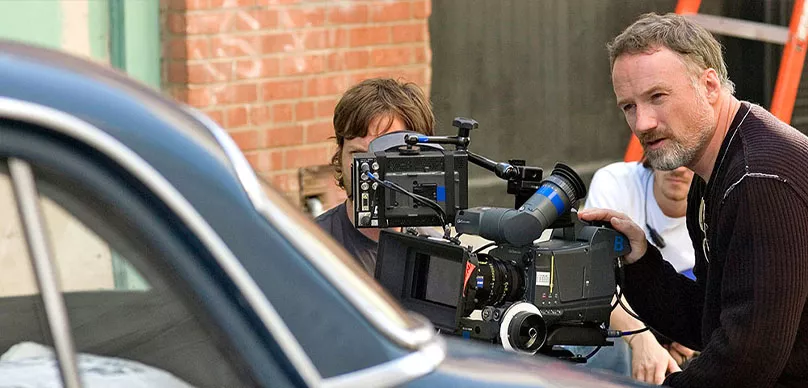
Jason also believes indie directors benefit from knowing how the machinery around them works. He doesn’t necessarily want to serve as his own cinematographer, but he knows cameras, lighting, lenses, sound, and basic grip equipment well enough that he’s not helpless when something goes wrong. That knowledge isn’t about controlling everybody else’s department. It’s about understanding what is possible and preventing the entire movie from becoming dependent on one individual. The same philosophy extends beyond production. Jason stresses the importance of putting agreements in writing, collecting footage at the end of every shooting day, and keeping multiple backups throughout post-production. Those aren’t glamorous lessons, but losing your movie because one drive dies is considerably less glamorous.
His experience also left him with a complicated view of film school. Jason attended California State University, Northridge, and valued parts of the experience—particularly writing and connecting with interesting professors—but says much of what he learned about actually making movies came from being on sets. Cameras and shot terminology can be taught. The harder lessons involve diplomacy, leadership, collaboration, creative problem-solving, and developing a unique perspective. He believes filmmakers can increasingly create their own education by listening to experienced people, volunteering on productions, studying the craft, and then putting that knowledge into practice. The objective isn’t merely learning how everyone else makes movies. It’s discovering what makes your perspective different.
That individuality carries directly into Jason’s screenwriting process. He likes outlines and understands traditional structure, but he doesn’t want structure to overpower character. He develops the smaller details—what someone wears, what they drink, their habits and idiosyncrasies—and allows those discoveries to influence the screenplay. With Seahorses, the process became even more collaborative when he rehearsed with actors and incorporated elements of their backgrounds into rewrites. Even the film’s visual language reinforced its central concept: water imagery, lighting choices, production design, performance, and the screenplay all worked together around the metaphor of the seahorse.
Perhaps the purest expression of Jason’s philosophy is Seahorses itself. He largely self-funded the film with money earned from other work because it was deeply personal to him. He says he reached a point where he didn’t even care whether anybody saw it—he needed to make it for himself. The film went on to receive festival recognition and reach audiences internationally. Jason ultimately self-distributed rather than surrendering the film’s rights for a lengthy period, but that experience revealed another uncomfortable truth: putting a movie onto a platform isn’t the finish line. Availability isn’t awareness. The filmmaker still has to generate attention and convince people that the movie deserves their time.
That’s why Jason’s journey is such a useful reminder for independent filmmakers. Learn the tools, but don’t worship them. Protect your footage. Understand the jobs around you. Build a crew you trust. Develop characters before obsessing over plot mechanics. Put resources into what the audience will actually see. And above all, make something you genuinely care about. Nobody watching the finished movie will see the exhaustion, broken equipment, arguments, budget compromises, or sleepless nights that went into creating it. As Jason beautifully observes, “They don’t see the pain and suffering… They see what we show them.” That is both the cruelty and the magic of filmmaking.