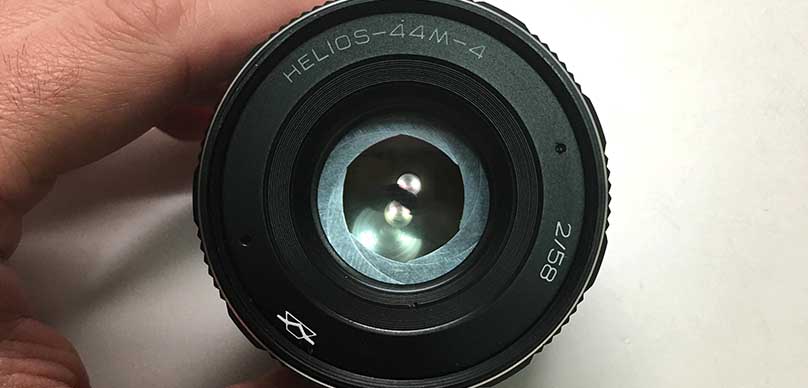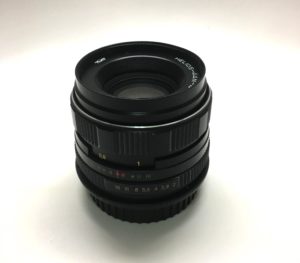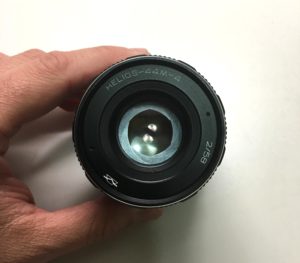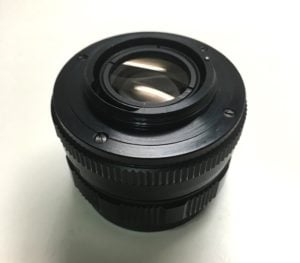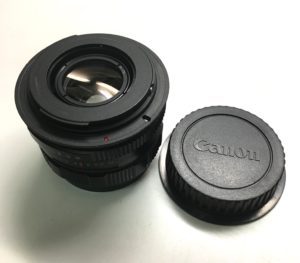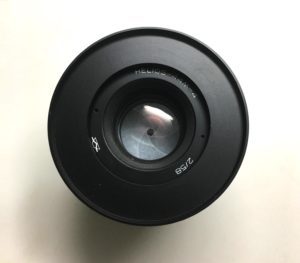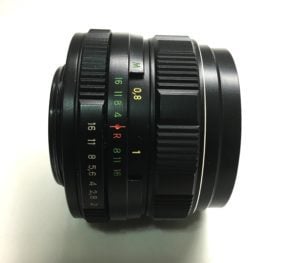
Much has been written about the infamous Russian bokeh monster, the Helios 44-2 58mm F2. Why infamous you ask? Well, the Helios is a copy of the Carl Zeiss Biotar 58mm. Back in the end of World War II, the Russians occupied East Germany. A few crafty guys went into the Zeiss factory and stole the Biotar formula.
The Helios 44-2 58mm is one of the most mass produced lenses ever made and can be acquired rather cheaply. It’s far from being a perfect lens but wow what bokeh. The Biotar formula creates a swirling bokeh that is just stunning. This is why it’s called the “Bokeh Monster“.
EXPOSURE
You really need to stop this lens down a bit. Shooting wide open get you a very dreamy image. Stopping down to f4 or lower sharpens up the lens nicely. It has 8 aperture blades.
CHARACTER
Helios 44-2 58mm is really sought after by the more experimental photographers and cinematographers. The lenses’ bokeh is unmatched and has remarkable color retention. I use it on my BMPCC and URSA Mini 4.6k and it looks amazing. It gives your footage an instant vintage look.
The sharper the camera sensor the better this lens performs. It takes the “digital bite” out of the harshest video image. It also creates stunning flares. I also use a Metabones Speedbooster on my BMPCC and it really helps to bring this lens to life. The extra stop does magic on this vintage baby.
MOUNT
The Helios 44-2 58mm was manufactured mostly in an M42 mount to be used with the Zenit camera but it was also made in a Pentax K and M39 mount as well.
FILTER
The Helios 44-2 has a 52mm filter thread. I use an inexpensive step-up ring to get it to my filter size of 77mm.
FOCUS
Minimum Focus Distance is about 20 inches.
PROS:
Super small and compact
Extremely easy to find
Inexpensive
Magical Bokeh
CONS:
Can’t shoot it wide open
Has chromatic aberration
Heavy for its size but great for cinema use
Flare Prone (this could go in the pros column as well)
No two lenses are the same
Final Thoughts
Because of the lack of “quality control” in the Helios factory you really have no idea what you are getting. If you are serious about adding one of these babies to your collection I would buy 5-10 of them (yes, they are that cheap), test them all, then you can pick the winner and sell the rest. This is how Stanley Kubrick chose his lenses.
I absolutely love this lens and you will get unique and beautiful images out of the Helios 44-2 58mm. I own the Helios 44M, which is built a bit more solid and weighs more but the optically the same as the 44-2.
Friends of the show Matthew Duclos and Ryan Avery started an amazing new website called LensFinder. Lensfinder.com is an online marketplace for photographers and cinematographers to buy, sell and learn about used, vintage and boutique lenses. We want buying and selling quality glass to be easy and affordable. Great glass helps inspire great images and we look forward to serving this incredible community of creators by offering a place to get the tools for your next great project.
An aspect ratio is simply an image’s width and height. As technology in camera advances, some standard ratios have fallen behind, giving way to exciting and new movie ratios. Good movie makers know how to make great choices in picking the aspect ratio to use to give viewers a wonderful viewing experience.
There are six basic aspect ratios made available for cameras today.
Below are the six ratio aspects:
1:1 – This is a square format ratio. This actually doesn’t cover landscape or portrait orientation. Its inherent symmetry can also be used for high formal composition. However, it seems that the non-square rectangles were much more common for taking photos, and the square was not really in use until the arrival of Rollei’s cameras in 1929. Hasselblad also followed suit by introducing their waist level SLR that also uses square format. This format is also commonly seen in smartphone apps. An example is Instagram that currently boasts of over 60 million square format images every single day.
5:4 – These are for sheet film and large format cameras, mainly as 8”x10” and 4”x5”, and this is where the well-known 8”x10” print came from.
4:3 – This aspect ratio is popularly used in videos and broadcast televisions, mainly in 640X480-pixel resolution: small compacts and cameras (that inherited prior CCD video architecture). Thomas Edison used this aspect ratio for one of his films, after then, the ratio as became a standard. People don’t really know why he chose that aspect ratio, but there have been some speculations about it. This is roughly the proportion of a ‘whole plate’ used in tintypes or Daguerreotypes before the arrival of cinema. This format is mainly 6.5”x8.5”, which is approximately 4:3. It is of worth to observe that 3:2 and 4:3 are geometrically related, because if you double or half a 4:3 aspect (in the right dimension) gives a 3:2 aspect, and doubling or halving 3:2 will give you 4:3.
3:2 – This format is the known format for 35mm film, and it’s also digital SLR standard format. Oskar Barnack made a little camera that makes use of cinema film rolls, and he decided to make use of the double frame. A double of 4:3 frame yields 4:6, which is the same thing as 3:2 when it’s turned 90 o. This is where the format for 35mm film originated, and it is currently what is in use today. Japanese camera inventors Minolta and Nikon used a 4:3 aspect format in their very first 35mm film camera, but they later switched to using a 3:2 format.
16:9 – This is the High Definition Television format, it is not used for still digital cameras, but it is used to render quality images for the cinematic view.
2.35/2.40:1 – This is a wide screen motion picture made for feature films, it is not commonly used for still images. And there are no still digital cameras that have this format. Not only is it very wide, but if you want to crop it down to 4:3 format, you will be cutting off almost half of your image.
Most recent cameras offer a variety of photo sizes in-camera, although, what they really do is to crop the bottom and top of the image. There are just a couple of cameras you’ll find that its sensor is bigger than the image circle of the lens. And this allows the diagonal view of an image to be maintained when copying it.
The early stages of filmmaking had a limitation of a 4:3 frame aspect also known as Academy ratio, until in the early 1950s when 16:9 frame aspect was developed. Subsequently, wide screen aspect ratios such as 1.85:1 and 2.35:1 followed suit. With a lot of choices to make, the aspect ratio can be utilized as a subliminal tool in Storytelling of a movie.
Ever since aspect ratios has been evolving continually, but this evolution has more to do with taste instead of technology. The most used aspect ratios for modern movies are 2.39: and 1.85:1, even though moviemakers now have a wide range of aspect ratio to choose from.
However, a lot of movie makers are never satisfied with a single aspect ratio. An example is a movie titled A Serious Man shot by Coen Brothers. This enigmatic prologue was shot in 4:3 frame aspect, but they later switched it to 1.85 for the remaining part of the movie. Also, another great movie that they used more than one aspect ratio is Oz The Great. In this movie, Sami Raimi also changed the aspect ratio at the mid-air of the movie from 4:3 frame aspect to 2.35:1 frame aspect.
When TV was becoming more popular and widespread in the 1950s, they maintained film dimensions that best suits the frame 4:3. But when the wide screen started gaining popularity, a lot of people had issues with it, because when wide screen movies were displayed on a 4:3 frame aspect TV, it did not fit. Movies like Citizen Kane were looking great, but Ben Hur did not fit and was having some big black bars at the bottom and top of the screen.
Finally, late in the 1980s, a shift in thought was in order. And after some stalling, the 16:9 frame aspect was settled upon, as it offered a sensible bargain between the different aspect ratios on offer. Continuously, TV shows got up to speed and began to deliver films to fit a 16:9 screen.
In conclusion, the way movies are portrayed on our screens means a lot. As no one wants to see a movie with an incomplete display of objects. How a movie is displayed, and its quality is one thing that captivates viewers emotions while watching the movie. Therefore, the aspect ratio of every film matters a lot.
“The film industry brings people together and so does technology – and I see them as similar platforms.”
The production rate of films all around the globe is sky-high, and new ideas are being implemented to old storylines, in order to provide a revamped version of films to people. As an actor, a director, a producer or anyone who is part of a film in the making, you need to make sure that you’re well aware of your responsibility.
A film needs a story in order to take shape – however, it is certainly not possible without a complete film crew. A film crew includes a number of different positions, being controlled by seasoned professionals and people well-versed in that certain niche.
A film crew position which most people are unfamiliar with, yet it plays a key role in the making of a successful film is a ‘Key Grip’. Here is everything you would need to know about a key grip!
Who is a Key Grip?
In the film industry, the key grip refers to a person who works with the Gaffer and the cinematographer in order to supervise all the grip crews, including lighting and rigging, to report the progress of the on-set gearing up to the Director of Photography, commonly known as the DOP. In simpler words, a key grip is a person who is in-charge of a number of different on-set activities, such as lighting and camera movement!
Responsibilities of a Key Grip:
The key grip executes the tasks demanded by the cinematographer in terms of lighting and camera movement.
The key grip is supposed to run the grip crew, which includes people like a crane operator and rigging grips.
Works with the gaffer in order to convert lighting positions into the equipment need and rigging options.
Key an eye out for any possible issue, and think of all preventive and precautionary measures to ensure the film-making runs smoothly. Moreover, the key grip is also in-charge of the safety of the crew!
Set of Skills Required:
Problem Solving Instincts:
One of the most important skills a key grip should possess is a set of problem-solving instincts. For example, if there is a lighting failure faced while shooting, the key grip should be fast to react to the situation immediately, and solve the problem – or provide an alternative to it!
Creativity:
In the film industry, regardless which role you are playing in the making of a film, creativity is a must! Moreover, if you’re someone who is in-charge of making the lead actors look good with an exceptional lighting effect or the right camera angle, you need to make sure that you’re creative enough to produce new techniques in order to achieve that.
Technical Knowledge:
As the key grip has to deal with a number of different gadgets over the set, one of the key characteristics a key grip needs to have is the right knowledge about technology. This makes the job easier and allows you to come up with innovative ideas.
Patience:
Patience is the key when it comes to playing a role of a key grip in the making of a successful film. You need to make sure you’re patient enough to work under a DOP and report every progress and the failures to your assigned cinematographer or gaffer at all times.
Strong Communication Skills:
A set of strong communication skills is also one of the most important things you need to have in order to become a successful key grip. This allows you to coordinate with your juniors, as well as your seniors effectively, and makes your job respectively easier.
Key Tools Needed in a Key Grip Job:
One of the most important tools a key grip needs to carry on the set is a C-Wrench. It makes the process of rigging much easier and helps you in carrying out certain tasks much faster than with the traditional methods. A few other tools are:
You’ll also need a measuring tape and a foot level needs to be in the bag at all times if you’re working in a film as a key grip. These tools allow you to carry out your task and do your job in an easier and effective way!
Tips to Prepare for Meetings:
Read the whole script, jot down notes and do not hesitate to highlight any issues or questions you might have regarding the script.
Make sure to watch any look references given to you by the cinematographer, or pay attention to the discussion between the director and the cinematographer.
Discuss the grip support and the camera movement with the DOP.
Make sure to talk about the lighting and the gearing up on the set with the Gaffer or the cinematographer.
If there are any extra production meetings being held aside from the daily schedule, make sure to attend them in order to stay on the same page as your other crew members.
Ask for any sort of expendables you would need and make sure to work properly on the list of tools and equipment you might need in order to carry out your task effectively.
Difference in Job Role of Key Grips:
In the United States, whoever holds the position of a key grip is responsible for lighting, camera, gearing up the state and a few more tasks. However, in a number of other countries, the key grip does not carry out certain responsibilities.
For example, in the United Kingdom, the grips are a part of the camera group exclusively, while in New Zealand and Australia, the key grip owns the grip equipment, which respectively includes tools such as dollies, cranes, track, insert trailers and camera cars!
The Bottom Line:
The film industry is growing at a neck-break speed and the number of films being produced annually is increasing in the form of heaps and bounds. As soon as the 21st Century mark hit the world, the film industry began to grow in terms of ideas and job roles, and since then, different positions have been created in order to promote employment.
Similarly, a key grip is a position in the film crew, which might not be known by most, but holds foremost significance in a project. Hence, if you’re looking to pursue a career as a key grip, make sure you understand and possess everything mentioned above!
Emmanuel Lubezki, nicknamed Chivo, is a Mexican cinematographer. He was born into a Jewish family. He chose a career in the entertainment industry just like his father, Muni Lubezki, who is a producer and an actor.
Emmanuel Lubezki studied film at Centro Universitario de Estudios Cinematograficos (CUEC), Mexico. He met Alfonso Cuaron and Alejandro Gonzalez Inarritu, who later became his collaborators. He is married to Lauren Strogoff, and they had two daughters. The family resides in Los Angeles.
In the late 1980s, Emmanuel Lubezki engaged in the production of TV series and Mexican film. In 1993, he shot “Twenty Bucks,” which was an international film. He has worked with renowned directors like Michel Mann, Joel and Ethan Coen, and Mike Nichols.
Besides his two friends, he has also collaborated with Terrence Malick.
He has produced six movies with his Mexican filmmaker friend, Alfonso Cuaron. They include Children of Men, Gravity, Great Expectations, Solo Con Tu Pareja, A Little Princess and Y Tu Mama Tambien.
The film, Children of Men, received public approval due to excellent scenes shot in it with advanced equipment and unique techniques.
He became popular for his exceptional application of continuous, uninterrupted shots and natural lighting in cinematography. His excellent skills earned him awards and praises from his audience.
He was nominated eight times at the Academy Award for the “Best Cinematography.” He became the first person to receive awards for three consecutive years in this category. He was honored for the following films: The Revenant (2015), Birdman (2014) and Gravity (2013).
Emmanuel Lubezki first award in 2013 was in the science-fiction thriller, Gravity. This Cuaron’s film set in the outer space was outstanding for it’s the technique used in merging two shots to give the impression that both scenes were acted in a single shot.
The following year, he received a second award on the Birdman, an Alejandro Gonzalez Inarritu’s movie.
The scenes in this film seem to be in an uninterrupted one shot. The Oscar award winner disclosed that the single shot look of the film made its production exciting.
The story of a movie actor who appeared on the Broadway to begin his career appeared as if it was shot in a single extended shot. The cinematographer disclosed that most of the scenes shot in the movie lasted about 10 minutes while the longest one is in the 15-minute range. The $18 million movie, was filmed using distinctive techniques.
The lighting of scenes was timed to avoid shadows. Emmanuel Lubezki commended his team for an excellent production.
In 2016, he won the third award for Inarritu’s The Revenant, his third consecutive win for the Best Cinematography. He became a record breaker as the first person to receive such honor.
This film was set in the wilderness during a cold period. Only natural lighting was used for shooting the scenes. Despite the difficulties encountered in the production of the movie, Emmanuel Lubezki did a great job.
The award winner described himself as the luckiest cinematographer worldwide for receiving the third award in the same category. His skills and techniques in giving the illusion of an extended take in the Birdman as well as the use of only natural light in The Revenant have made him famous.
Just like Cuaron remarked, Emmanuel Lubezki became a celebrity with Chivo as his trademark.
He starred in a commercial that was aired during the Academy Awards on the Mexican television. Also, people do stop him on the streets for autographs.
Emmanuel Lubezki does not like attracting people’s attention or being in front of cameras. When the beer company, Indio, contacted him to be part of their commercial, he did not accept the offer immediately.
The ad agency had to convince him to star in the lyrical 60-second piece. With three Oscars to his credit, he will overcome his uneasiness about being in the spotlight. Though he is excited about the award but he is not at ease with the attention that follows it.
Also, he admitted that some of the cinematographers nominated along with him are famous. According to him, they are pacesetters whose works he has cherished for a long time.
He disclosed that he felt uncomfortable to be recognized among the prominent artists, some of whom are his teachers. Also, he pointed out that cinematography is a combined effort as each artist works with a crew.
Emmanuel Lubezki revealed that it is not easy to get recognized at the Academy Awards. Marching to the podium to receive the gold statue has become tougher for him.
For the award on The Revenant, he has to overcome the cold in the wilderness. He recounted that being on the podium makes him nervous as he cannot recall his any of the speeches he made when he received the awards. He felt that he was not the person talking when he viewed his previous speeches.
However, the award-winning artist is not shy when it comes to shooting films. His collaborators described him as a motivator to the crew whenever he is on a shoot. Inarritu disclosed that he was very helpful during the shooting of the Revenant.
Emmanuel Lubezki sense of humor eased the difficulties they were facing in the cold wilderness.
On his part, the cinematographer described the strenuous movie shoot as “a life-changing experience.” Though the weather condition was harsh but he enjoyed the shoot.
He praised his collaborator for his zeal for filmmaking and his persistence to achieve the best despite the circumstances. Emmanuel Lubezki stated that “The Revenant” has set standards for him. The experienced has challenged him to shoot exceptional films in the future.
The brilliant cinematographer shot two other films before The Revenant. These movies are the “Last Days in the Desert” and “Knight of Cups.” He revealed that his collaboration with Rodrigo Garcia, the “Last Days in the Desert” is a virtual reality project.
The artist has shown interest in telling stories in an immersive environment. This development is innovative as the movie will be viewed in VR.
Also, he won the 2016 Lumiere Award by the Royal Photographic Society for his accomplishments in animation and cinematography. Emmanuel Lubezki also received other industry awards as well as critic awards. Also, he got several nominations as an indication of his excellent performances.
Some well-known cinematographers like Ernest R. Dickerson and Barry Sonnenfield have upgraded to directing careers. However, it seems that Emmanuel Lubezki has no passion in becoming a film director. In reply to a question about this issue, the artist stated that he would only direct if none can a story the way he will do it.
Some of his well-known works are Reality Bites, Like Water for Choco, The Birdcage, The Assassination of Richard Nixon and Sleep Hollow. The Reality Bites is a comedy by Ben Stiller. It was set in the early 90’s and was a snapshot of the culture then. “Like Water for Choco,” is an adaptation of the novel “Like Water For Chocolate.”
The movie tells a story of a young woman who lived under the dictates of her mother. The lady was forbidden to marry, but to look after her mother until her death. Tita found out that she possesses supernatural power. With his skills, the cinematographer threw more light on the emotions displayed in the film.
The Birdcage is a Mike Nichols film. This Hollywood movie displayed the collaborators’ visual ambitions. The scenes from the Miami’s South Beach to the dance floor of a club were amazing.
The unique technique applied in its production is similar to the one Emmanuel Lubezki used for the Birdman. Niels Mueller’s 2004 film, the Assassination of Richard Nixon is related U.S history. The camera captured the expressions of the lone assassin, Sam Byck.
He appears like any normal individual to his neighbors and friends. Emmanuel Lubezki emphasized on Byck’s threatening looks and carelessness
Tim Burton’s Sleepy Hollow shows landscapes with distinctive details. The movie is interesting with its Gothic aura and Halloween artifacts. The ghostly pallor painted by Emmanuel Lubezki portrayed his expertise.
The scenes on Crane’s flashback dream were fantastic. The movie was an outstanding production.
Emmanuel Lubezki excellent skills in cinematography were displayed in his productions. Consequently, he was honored for his works.
Transcription of: The ‘Revenant’ cinematographer Emmanuel Lubezki talks finding the natural light.
Speaker #1: Emmanuel Lubezki or Chivo as you know, it amazes me to think that you and Inarritu went from shooting Birdman to shooting the Revenant. He was shooting while you’re winning Oscars for Birdman, keep trying or jumping one to the next.
Speaker #2: The funny thing is that we started Revenant before Birdman. We started reading the scripts and preparing this movie, I think a year or a year and a half before we do Birdman. We started discussing on how to do it and where to do it and all of that. Of course we wanted to start in the fall and then shooting into the winter and what happened was it was already too late to prepare them and shoot that year. So the movie fell apart; and with the movie fell apart, I think Alejandro went and resurrected Birdman also. And one afternoon he called and said, “You know, I never told you about this script that I have, would you like to read it”? And he said Birdman and it was diametrically different. I was so excited to do a movie in the wild, to do a movie in the outdoors. It’s like an adventure movie, it’s something that I never done before, I always loved the idea of doing it. So when I received Birdman, it was like a shock, and a movie indoor leads, a movie that probably takes place in a stage which is we’re not going to find a theatre that means is what do we want. And I am going to have to go into a stage and it’s a movie that shows business that is probably the least interesting thing evolve for me right now. I read it and I loved the script, and one thing I did not tell you, I don’t know if you felt it in the script but it wants to be shot in one shot which you read it in the script is pretty clear but I was not sure if he was that insane. And then big surprise he wants to watch it and that moment, truly, honestly I felt I hope this movie falls apart, I don’t want. Then we had a meeting and he is just extraordinary, he talked to me about the movie and how the movie was important for him and how he related to the characters and to the environment a lot. I was incredibly happy and honored to be invited to do the movie. So we shot that film and when we’re finishing it, he called back and said, “There is a chance that Revenant will come back and what do you think”? Can we do it? Are we ready to go? And so we started almost immediately prepare Birdman.
Speaker #1: So you jump into this new project outdoors, natural lighting, most of it shot during magic hour.
Emmanuel Lubezki: That’s not true. What happens is that it sometimes does look like magic hour; it’s so late, it’s so dark when you’re shooting in the winter in northern latitude; the Sun is very low. And the place that we’re shooting we had many hours of days behind mountain because we’re surrounded by the Rockies. So there is no chance in those places. It looks like magic hour but it’s not. We truly tried to use as much light as we could because of its work so short. For any other industry it would be a normal day of shooting, for the movie industry it’s a short base. As we were preparing, as we were location scouting and so on; we knew that the days were going to be very complicated because of how short they were. But not all scenes were shot off light. We’d really truly use magic hour for very specific reasons and for some moments. And when you see it, a magic hour has very mysterious already in those other scenes only.
Speaker #1: what was the thinking behind using magic hour for specific scenes?
Emmanuel Lubezki: Different times of the day express different emotions and depending on the location; some of the location make you feel sad, some of them make you feel lonely, some of them make you joyful, and all this is obviously subjective but when Alejandro and I started to feel the same way, we at least on those consensus and he’s feeling we’ve to go for it. And because this journey, the characters are taken is very much related to the environment than to the nature and Alejandro was trying to create these atmospheres and moods that express the inner life of this character. We just have to concentrate and try to shoot in the right place at the right time depending on what he was trying to express. It sounds easy but it’s not; in the sense that you have to do a lot of prepping, 10000 miles of car travelling around the US and Canada and narrowing it down and start walking for hours and hours and then finding the places and seeing the places at different times of the day to try to figure out the points you want to shoot and what kind of feeling you’re getting from each place. You know sometimes you’re right to place; after six hours of walking and it looks like a park. When you’re working in eco-park and you wonder why I am here and it’s not until you wait, a couple of hours the place looks like primordial and unexplored and mysterious and it definitely changes with the light and with the weather and so we’ve to prep for all these condition. So when we say where we shot with natural light; it’s not that simple. Because we’ve to do a lot of homework together and be very specific about how we wanted to shoot it and what time and you’ve to be incredibly flexible to meet these. Sometimes we’ve seen these locations from noon to 4 pm it’s working wonderful and the day you arrived there’s a big snowstorm and this will be different. Sometimes we’ve to be options, sometimes you’ve to be flexible and find the scene in with the conditions that are at that moment.
Speaker #1: Then add that, add the fact that you’re doing these long, elaborate shots that are going all around the place.
Emmanuel Lubezki: So for those shots, the workable or methodologies we used to shoot the film; one was the extensive rehearsal and we probably rehearsing one for more than a month, a lot of the scenes, especially at the beginning to the middle of the movie, and during those rehearsals, when we find the land of the film and blocking and during those rehearsals we learned also what kind of gear we want to use in which lands and really beautiful stuff came out of that.
Speaker #1: I think as I watched the movie, I watch a lot of your movies you got two senses. You got the sense of wow that’s amazing shot, how do they do that but also it adds and added sense of reality to what you’re watching. I think it really helps to put you there in the action.
Emmanuel Lubezki: Thank you so much. I mean that’s what we’re trying to do. In a way when we do a long shot with no car to attain the bear attack, when you’re working in the edge of a cliff in the sense that you want to achieve these what is kind of complex, that you’ve not seen in other movie. We then do it because you’ve not seen in another movie because we feel it’s the right language for that specific scene. And then the problem is that you don’t want the audience to notice it, so when somebody says, “Oh, that shot is incredible”. You then come; you wonder if you fail because the people were at one point so aware of the technique that we use to do the shot. So it’s always a big robe but it’s very much scary. Of course the people like you’re specialist in films are going to notice, they just call the general audience just gets in there and gets even worse and goes into the journey made for those.
Speaker #1: Talk more about the shoots. I mean you’re on these locations and it’s cold, wet and harsh.
Emmanuel Lubezki: Everything was very hard but we wanted the experience of the shoot to trickle into the spirit of the movie and I think it does. Let’s say ‘Children of Men’ when the guys are stalking the gun, they are really stuck in the car; emotion you get from that is really different from that you do in the stage even though the actors are wonderful, they can act induce a layer that doesn’t feel as real as if you’re in the real location shooting. The same as Sandra stock in the light box for months and months and being lonely there, cluster for leak. I think what we said the same as the actors go all around, they have to live in the jungles for months, the movie has a level of naturalism that you don’t often see, and we did that for this movie. We knew that it’s something that has a tremendous payoff.
Speaker #1: It translates in the film, I mean you look at these amazing landscapes that you guys shot at, stuff that you never seen on film before. I mean it almost makes it worthy of trek from base camp. I noticed; I want to ask you technical thing, I noticed a lot of wide angle lenses especially even in close-ups not just in the landscapes which you’d expect.
Emmanuel Lubezki: I think it’s the same idea of getting the audiences immerse in the movie. The wide angle lenses allow you to have a lot of that and to connect the characters to the environment. Even though sometimes you’re really tired, you still feel the environment, you still feel the light changes, you still be in the wind, in the cold and the surroundings. That relationship was very much important for the movie to constantly make the audiences feel that they are looking for a clean, known and something that he lost to do is this, the elastic shots will tell them where you go from objective to subjective and even then back to objective and I think that makes the audience feel that they are plunged in this world. At least we hope so, there’s no move that says three minutes without car. I wish there’re something like that. So it’s all speculation, all hypothesis and all guide by Alejandro a homeless instinct; that’s what I love, I think he has something, it’s very hard to tell a story without dialogue and take the audience through this journey and to be able to communicate so much without feeling and taking that chance and I think achieving it is just talks about how brilliant this Mr. Alejandro really is.
Speaker #1: I mean you guys, not just the 2 of you but the films you’ve done with Alfonzo Karen and Terrance Malick, there’s really a sense of the boundaries of what you can do.
Emmanuel Lubezki: Obviously it doesn’t come from me and by any means trying to push the line or language or anything; you’re trying to do just to find the language that is right for each movie and I think they are incredible artists and they do want to find a very unique and specific language or way of talking to the audience with each film they do and I don’t think they want to keep themselves unless the film requires to use something you find in another one. But it’s finding the right language for each specific project that makes them so incredible.
Speaker #1: I want to go back and talk some more about the use natural light because I don’t think people understand how difficult that is to do in a movie especially when you’re shooting at night.
Emmanuel Lubezki: It’s very hard and it’s hard if you don’t have the support of the studio, the producers and the actors and more than anything the director. This can only happen because the directors convince that this is an elemental part of the story. The light is almost done; it’s almost like a fabric that is underneath the whole movie that contains several that gives the move. It’s like broth that contains the soup and then you’re saying it’s the most important thing; everything is also important. But it deals determining the mood, the atmosphere of our scene more than anything and so many directors and so many filmmakers use this to be able to see without giving it out. The importance that it has dramatically and Alejandro believes that light is an important element in the drama, in the creation of this world.
Speaker #1: I think I read something that you said once and the famous quotes you have, I apologize about how the more films you shot, and it’s not about how many lights are used or how few lights I can use.
Emmanuel Lubezki: I think you’re right, I think the most important thing is to think of the uses of different unique course and try to find what it is needed for that specific project and specially it has to come from what is the vision of the director, what he wants to express, what is he attempting and that collaborator is you have to get in the mind of director and try to help them translated and doing just like this.
Speaker #1: Since you have won the award for cinematography two years in a row and you can very well in this year, which would make you the only person to do that. What does that kind of recognition mean to you?
Emmanuel Lubezki: When you’re experimenting without language and experimenting with all these ideas that we just talked about, it’s very gratifying to know that your peers in a way like telling you, you’re right. The scenes we’re right and we like what you did and that senses is very gratifying, and that senses of the honor. But it’s very clear to me that we are not making movies for that reason. The movies are much bigger than that and the movies are to transport millions of people in this world. When I was growing up I never thought about arts or box office or I was going to the movies to be transported and touch [indistinct 17:55]. So that’s what I am trying to do when I make a movie.
Speaker #1: So thanks a lot and congratulation.
Emmanuel Lubezki: Thank you so much.
Birdman Interview – Alejandro G. Inarritu & Emmanuel ‘Chivo’ Lubezki
Speaker #1: Came as we were shooting because I always said that you plan for years, you made an idea and I think you can come much more sensitive and attract more ideas when you’re doing accurately, solely that thing, that concept or emotional things, when it become to that shape and exist as it own thing, it began to attract different things that you’re not expected and that was one of the thing that I knew, that it needs something that imply something what I know is one of those unconscious things that is not a rational but it’s kind of like a thought without in mind. I saw some comments in some views and some images and I began to understand something that I was feeling but I was not being able to articulate in words of these groups or something that it was attached in the most [indistinct 1:13] when I saw that, I sorted that comment was basically a way to say without say it. The state of mind of this guy; he wasn’t fired, he was inspired, he was flying as super-heroes in stars, but the most important thing for me when I discovered the Jellyfish part, that Jellyfish, that’s exactly who this guy is. He is a guy who one hour, he feels like comments on fire and very usually you feel that jellyfish and that’s his life.
Speaker #2: I just want to know this because given how much takes place inside a man made structure as first few shots were taken into nature. You know between the comment and seashore [indistinct 2:08] you’re starting at the outside and going inside.
Speaker #1: Something that Chivo and I discussed and I think that sends you and me, we got very close in concept or anything. That’s why I think you should work when you understand conceptually then you find yourself with your new explore what is that concept. We spent a lot of time on all of that to not be only radically, dictatorship, Taliban in one shot.
Speaker #3: That’s right. I mean I remember when Alejandro found this image of the comet, he could not really articulate it meant, particularly with words but definitely he could express that he finally have found this image that represent a character and the emotions of the character and so on. We’re trying to wonder how we integrate these into movie. Is it valid to suddenly cut and chop the movie if we’re trying to do this one shot and we got to the conclusion that we actually was better to have these cuts and not try to do an Olympic one shall be able to show up or anything like that. These shots also could be part of the memory of this guy, internal state also. So we didn’t want to cop orate them in the one shot but have them appear as cuts and they do appear later when he blow his nose and you think he might be dead. This might be what he’s thinking and he’s dying or something like that. I love Alejandro work there and unite all these images and it’s so funny because in marriage, a lot of people get almost upset like what is it, why is it something that is not explained [indistinct 4:30] what does the ending mean, I can’t tell you how many people approach me and say, can you explain is he dead? Is he not dead? And I just love these images that are almost poetic approach to the story telling that don’t really explain but make you feel something. They create emotions and I think that’s more important than explaining certain things. I love that piece of work.
Speaker #2: [indistinct 5:10]
Speaker #1: I think that making emotional character [indistinct 5:30] the form here of being inside or being without, I don’t say that honestly anything, that position of time and space is an inventor. So it’s an invention actually. Honestly now we’re trapped in a continuous time. So time is actually different from space of the three dimensions. Here we go up-down, left-right. Time is one dimensional, its one direction that where you get it all. We die and we can go back with you to visit 2000 years before it’s going to be one dimensional. And I think fiction related to a film it’s very hard to concept in a way to get out of a world. And only dimensional existence is time. And that’s why we love it. [Indistinct 6:37] so we’re imagining things from different reality that we can’t escape ours and in this case I think the fact that sold once in this continuous shot living with this guy breathing and not blinking, not buried and not supposed to rise. I think it has an emotional effect differently and you get the experience closer to what out real lives are. And I thought that was an interesting thing. I mean it could have been terrified, being wrong in every sense because when we are so used to be in a way comfortably taking to different place and then we understand that and that’s what makes us feel comfortable. We know that we’re not leaving, we can see water and people dying while we’re on our seats and say “that’s not real, we’re separated from fiction by that”. But in the moment you’re there I think you live things much more. I think that was something to make a movie on these and I also think it’s interesting.
Speaker #2: Are you attracted by these challenges Chivo, doing these?
Speaker #3: Honestly no, I was not; I was very worried because the tone of the movie scripts, its comedy and the rhythm of the movie in script, I was not sure if you could tell that started that way. I understood the importance of doing it, this way in terms of how to express the emotion of the character and get the audience immerse into movies. I thought it was important but I didn’t want to go through it. I knew that it was going to be incredibly hard and it takes an absolutely insane person like Alejandro to take a whole crew. [Indistinct 8:45] that’s what makes an artist an artist and that’s why I am an engineer and he is an artist and director. I would have never gone through this and many days I’d say, “Alejandro please, let’s just call it one more time, make it worthy to release” and you need somebody with the courage and strength to know where we’re going to go and to take all the crew and all the production and all the studio and all the actors that way. It’s very courageous and very irresponsible and Alejandro successfully did that.
Speaker #1: In a way I think many times when it was on solo not only technical, I think again it was in a way we forgot I think generally the cinema has been relying comfortably in a very artificial way that we ever accommodate events to make everybody understandably connected. We have to stop exploring possibilities [indistinct 10:34] he used to touch every note and he fail many time, he really. It was just an amazing discovery of a guy who has shown those musicians, he’s discovering new nodes or new harmonies but uses the same chords. And there’s a novel [indistinct 10:57] wrote in really short notes. And it was amazing; it was basically with no comments. And I wonder how the hell this guy did that. All the Latin Americans raise most of them we play a lot we do that. [Indistinct 11:21] I think we come from that cultural pulse, we play with a form that at the end become common, or the pattern become common. I think that’s something we’ve been lost.
Speaker #2: Why do you think this is lost?
Speaker #1: Because nobody is paying attention. I think everything is about the story or who they need to commodity. It’s like even such a thing, you see 99% we use when you see a review of some pretty talking what [indistinct 11:56] they don’t know even what is that, what means to do soft grades. So what I am saying is nobody talks about that. And I think everything about Cinema can be teached. I think that to make a film is easy; to make a great film is miracle. You don’t have anything to do without it. But I have to say that it has to do with the fact or things that you never do. Or things you find in a way that miracle and it has to do not with okay, everybody can understand how to make a film. It’s very easy technically but you cannot. The thing that nobody can teach you is doing things like that point of view if you put the camera here or hear and that thing changes it all. Nobody can teach you that, there’s no school.
Speaker #3: What I was going to say is also feel this industry and it has to produce a lot to keep moving and stop. It’s easier to make everything in the pattern and move it faster and do it in essential way. Again I am sorry to keep ruining that. It needs people like Alejandro to redeem industry and redeem all the stuff to go to the site and try to manufacture something like this is very hard and I am very lucky to meet people like him. Within these entire factories you can steal or try to find the language that is slightly different that takes the audience pulling to the movie in a different way or tell the story in a different way.
Speaker #2: What you’re talking about is, it’s about somebody who is not in the present and your movie is on people at the past, people at future not in the present. Where do you catch actually that kind of people?
Speaker #1: Because I think it’s very hard, I have been authoring all my life. Sometimes I have read, I’d be a liar I spent much more time in the past and future than in the present personally. I think all of us do this, we always thinking or interested in something that has to go to the next moment, when you’re in the next moment you’re thinking okay, what’s next? I think we’ve been teached like that. Like what I want to do as a kid, what I want to become when I grow adult and what I said to this film well, you think everybody knows what they’re, they’ve written the first stage short film or whatever. You are already a film maker. You don’t become a film-maker, you’re. This is the only thing that’ll exist always, this present. So you don’t become; you already are. And I have been learning that, what I think it’s very difficult thing to be present in a time or in a world we’re because we’re not teached to think like that.
Speaker #2: Chivo you told that you’re attracted to the film makers who are living in the future and past, who can’t live in the moment they are in. You must like that too?
Speaker #3: Yes, I agree with Alejandro, thinking about the past and the future is incredibly hard.
Speaker #1: I think I have to be with my age. I turned 51 and my mother told me I was 50 which probably hit me tired of approaching things. I have to say that the only way you can do films like this, you have to do control violence, you can’t use sword all the time. I think reality is defined by the fact how we know the possibly to have two opposite ideas simultaneously and oblige at the same time and we’re like that, it doesn’t mean we’re happy person or sad person. I think we’re both at the same time. That’s what really the human complexity is and eventually I have both of these in extreme condition. When I am happy, I am supper happy; when I am sad I am super sad. But I have to say that the way I approach these endless, I think in a different way to survive not the facts which are common or close to me but in a way to waste of life. The way we observe like they’re all set down, can change the fact that we’re used to these techniques sometimes. But I can change the way I approach it, I see them and I think I changed them. Not the fact, not if I can define things in the present, it’s the way I approach the film.
Speaker #3: I think there’s another thing that is what I said before Alejandro is very curious, he’s almost like a little kid. I knew this was going to happen. In a way yes, because he’s been doing something because I knock him and he’s talking about all his interests in movies that attract him not only painting, normal and travels and family and you know that he’s exploring and he’s curious and he wants to try new things. So I kind of knew he’s going to try to do something different. And also during the movie I could see it in the process even though the movie was much planned and you know we’d a stage where we rehearsed and rehearsed. Everyday he’d come with new ideas, he was exploring the music, the images, the comments and we’d plan something and at 11 pm he’s like what if the camera goes this way. So its constant exploration and I think that also takes him to different travels and journeys. It’s something like that. The digital version that you see in the first take of the movie when he is floating and the camera behinds and goes to the computer we shot that element that part well then. The first few shot of the film was the one that Emmanuel’s told you the flowers, the computer. We shot it with the actor and Emmanuel was over it, that’s the first flower [indistinct 25:25] and then we wanted to shoot that floating scene; the scary part was the silicon couldn’t float. But the scariest thing Emmanuel can you remember, it was the first thing and it was a bit before that, and he was floating and then there was a knock-knock in the door. Then the camera angle changes, there was the floor manager coming in and did a joke, bad joke, fart joke and was a very cheesy one; the one that you’ll find in classy bad comments. We than started to move and looked back to it and I said, “Oh, my god, this is very bad”. It was cheap, so we put the film in these jokes and I said let me figure out how, because everything was planned so good, so I think the camera do that, Michael opened the front door and then we went like that. It was a different move; it was a completely different move. Instead of that way is now that he used to stand up and go and sit quite far from speaker and then he go back. It was a completely different blog human state. It was terrifying for me, I stopped and I said this is also important, so I have to retrieve it like I want this stage, how I am going to install this. Okay, the sounds, so we have to record that timing for Michael to react and we have to [indistinct 27:18] so all the guys of the lights and all the frames and everything was but it was to change there’s one little camera, it’s hugely because if it’s not rehearsed nobody will do this entirely.
Speaker #3: It’s like you getting rehearsing of a light, and you then wants this 300 by arenas to go and that’d flat and you don’t like light. Again I am going back to this thing that you need somebody like Alejandro to keep the crew going because at that moment everybody panics.
Speaker #1: After the first day of shooting I am completely relieved and this is all because if I keep feeling these and doing the whole shooting it will be lost because then everything collapse, we’ll never being able. [Indistinct 28:12] honestly I was never in life under panic attack about if the film will work or not when I was watching it I understand how I did it, I see everything that could have been wrong. It’s almost like a mirror. I feel that this is not something that I am saying is prevents you. No, it really as film maker and we talk about them; all that could have been wrong, it’s almost an infinite list of things. So when I see a thing that could have been wrong I feel still panicked as he said this duty is very responsible.
The whole film vs digital debate has been raging on for decades now. I’m old school and LOVE the look of film but I also love the power and speed of shooting digital. What’s an indie filmmaker to do?
Creating a convincing “film look” out of your DSLR or digital footage can be challenging and frustrating. Ever since digital video was invented there has always been someone trying to emulate the look of film. With technology changing so fast and becoming so powerful it is easier than ever to create a believable film look with almost any camera.
How to achieve a Film Look – DSLR Filmmaking
This is a tutorial for beginning filmmakers on how to create a cinematic look with your DSLR footage for low budget filmmaking. In this video, they cover the basic camera’s settings to achieve a common style and some effective editing techniques, to begin with.
Something they did not mention is that you can use a neutral-density filter to reduce the amount of light entering the camera. This will allow you to shoot with a wide aperture in bright daylight while keeping the exposure correct.
They also mentioned that you could overlay an image with black bars to make a 2.35:1 aspect ratio, but it’s better to make the project itself the correct ratio so that films display better on ultra-widescreen displays.
You can change this in the composition settings or in the export settings in Adobe Premiere – for 1080p footage the resolution will then be 1920×810 pixels (rather than 1920×1080).
If you still want to use the template to letterbox the video you can download the template here: Letterbox Template
How To Get The Film Look With a DSLR – DSLR Cinematography Tips
How To Achieve Cinematic Film Look With Premiere Pro
In this tutorial, they show you how to achieve a cinematic film look in Adobe Premiere Pro CS6. This simple process will help you achieve that beautiful film look.
One of my favorite tools is FilmConvert, the best film stock emulator I’ve ever seen. FilmConvert enables you to add film color & grain to your video in a few simple clicks. With a range of market-leading cameras profiled, you can achieve precise, industry leading results even under the tightest deadline.
This has become the industry standard for creating a convincing film look. I’ve been using it with my post production clients for a while now and I absolutely love it.
It’s so incredibly easy. I use it in DaVinci Resolve but it’s also compatible with Adobe Premiere, Adobe After Effects, Adobe Photoshop, Final Cut Pro, Final Cut X, Motion, Scratch, AVID and comes in a Stand Alone App. Take a look at the video below and all will be explained.
I also added a bunch of tutorials below to take your film look to another level.
Here are some more capabilities from FilmConvert:
Obviously, this isn’t a replacement for shooting good old film, and certainly not a replacement for true color grading, but the fact that they are using the specific way the particular sensors render color to get closer to the final look is something I haven’t seen before at this level.
While there are plenty of film grain emulators out there, like CineGrain, r-grain, and Gorilla Grain, this program is designed to emulate the color response in a way that makes them almost indistinguishable from the real thing.
Now they are not all perfect but it’s the closest I’ve seen digital video looking like a real film stock.
Here is a more in-depth explanation of what FilmConvert is actually doing from Vincent Laforet’s blog:
Rubber Monkey, who developed the software, recorded various color charts on different stocks of film and then mapped the qualities of various HD sensors to those charts which is an incredibly important distinction that separates it, from many of the other plugins out there.
Instead of throwing a simple curve on the image to approximate the look of “film”, FilmConvert accurately shifts the values of the image based on the sensor you shot, and intelligently converts the colors that sensor captured, to the type of film stock you choose to emulate.
In other words – they know not only how your individual sensor “sees” or captures a particular color, but just as importantly how each film stock would “see” or render that same color – AND HOW THE TWO CORRESPOND!
What sets FilmConvert Apart?
If you’re wondering what else sets FilmConvert apart from other similar color preset programs, it’s details like this:
On film, grain is more or less intense depending on the color and luminosity. For example – there is less visible grain as an image approaches black, because that is where the negative is the densest, and there is more visible grain at 80% white than at pure white.
Or for instance there is more grain in the blue channel of a tungsten stock film (don’t forget that speed and white balance can’t be changed on a film camera, these setting are dependent on stock) because the blue layer of the emulsion has a higher light sensitivity (higher ISO) than the red or green layer.
FilmConvert takes all of this into account based on whatever stock you choose to emulate.
Anyone who has ever heard an episode of the IFH podcast or comes to this site knows what a HUGE fan I am of the legendary master Stanley Kubrick. His masterpiece 2001: A Space Odyssey will be studied for decades to come. Once eye-opening visual effect created for the film was the “Stargate” sequence in the film.
This effect was created in a time with no computers or visual effects as we know them today. The good folks over at Filmmaker IQ created an amazing explanation of the mysterious and forgotten camera technique used in the sequence called Slit Scan.
Check out the video below.
If you want to go deeper down the rabbit hole on this technique head over to Filmmaker IQ.
DOUGLAS TRUMBULL | Master Class | Higher Learning
Douglas Trumbull, the industry pioneer behind the special effects of 2001: A Space Odyssey, Close Encounters of the Third Kind, and Blade Runner joins post-secondary students and faculty to discuss his remarkable career in visual effects and his own directorial projects. He discusses the slit scan technique he used in 2001.
Today on the show we have veteran cinematographer Jayson Crothers. Jayson had shot two dozen independent features before he joined the NBCUniversal hit show Chicago Fire in 2013. After serving as the 2nd unit DoP for 38 episodes during seasons 2 & 3 he was asked to helm the show. Serving as the sole DoP from seasons 4 to 6, he shot 74 episodes of the series for Dick Wolf. He also did additional photography for the backdoor pilot of Chicago Med.
In 2019 Jayson photographed three features – the World War 2 true story drama Axis Sally, directed by Michael Polish, starring Al Pacino and Mitch Pileggi, the romantic comedy The Thing About Harry, directed by Peter Paige, and the hurricane action film Force of Nature, also directed by Michael Polish, starring Mel Gibson, Emile Hirsch, and Kate Bosworth.
In between these films he also shot additional photography for the Starz series P-Valley as well as 2nd Unit for the Netflix feature Malibu Rescue – The Next Wave.
In addition to his work being seen theatrically and on television, it’s also been seen across the festival circuit at SXSW, Tribeca, and Camerimage to name a few. Jayson also served as the Technical Editor for the acclaimed book on cinematography and lighting, A Shot In The Dark.
In this episode, we discuss his career, how to get the most out of low-budget cinematography, and how COVID-19 has affected things behind the camera.
Alex Ferrari 0:04
Now guys, today on the show, we have veteran cinematographer Jason Crothers. Now I want to Jason on the show, because he has been dipping now for decades not to make them sound old, but for a while. And during his time he has been lighting shows like Chicago Fire, where he was the cinematographer of 74 episodes dealing with fire on a daily basis, and has worked with huge stars like alpa Chino and Mel Gibson who stars in his new movie, force of nature, directed by friend of the show, Michael polish, and much, much more now wanted to really dig deep into how he used his low budget cinematography techniques, not only in his early years shooting those dozens of independent films, but also what he was able to bring to his bigger budget projects and how those techniques still work for him, even to this day. So without any further ado, please enjoy my conversation with Jason Crothers. I like to welcome the show Jason Crothers, man. How you doing, brother?
Jason Crothers 4:02
I'm wonderful. How are you?
Alex Ferrari 4:03
Oh, I'm, I'm living the quarantine life. My friend. Live in that quarantine life.
Jason Crothers 4:09
You,You need some shaving like I just gave up on shaving. So
Alex Ferrari 4:13
I shaved my head. I shaved my head. I gave up. I've had longer hair for about two and a half, three years and I just said I looked at my wife and she's like, why don't you just shave it off? I'm like, really? She's like, yeah, just shave it off. Like you're not gonna see a barber anytime soon. So even if you just let it grow out by the time it's grown back,
Jason Crothers 4:36
Well you should feel you should feel privileged. I've actually you know, I've been living in like gym shorts for weeks. I've actually got pants on today which is weird to put jeans on.
Alex Ferrari 4:43
I appreciate that. Well this is this is this is my formal wear. Currently here at the indie film hustle for people not why not watching this. I have a hustle t shirt and a hat. What's below.
Jason Crothers 4:58
I am wearing pants like this. Like backgrounds You Can I can I can attest to that
Alex Ferrari 5:02
I can neither confirm nor deny what's happening below the waist. Anyway, let's move on. So, Jason, um, thank you for being on the show. We've been trying to do this for a year now. Yeah, we met a while ago and, and through a good friend of ours, Austin ordell, who's my dp on my last film on the corner of ego desire, and we've been trying to get you on because you are fat, you have a fascinating story about how you became a dp. You have way a wide range of experiences from low budget to, you know, a really complicated network show that we will discuss the complexities of shooting that show and all that but before we get into it, man, how did you get into the film business?
Jason Crothers 5:48
Um, that's a really good question. Um, so I I got my start. I went to Scottsdale Community College, which is in Scottsdale, Arizona. Now, they have like a respectable program. They have like a couple of small sound stages and equipment and whatnot. When I went there, like the film room was literally a closet that the marching band department and given them were just efficient because all the equipment they had fit into a closet. Like we didn't even have movie lights until like, I think like my third semester, like we're shooting like 1k scoops that we'd stolen from the theater department and like soldered baby spuds on to so I got my start there, which is great. You know, like my first like, my first day of class. like two hours into the class they were showing me a super eight camera in our hands and like, All right, great, came up with three other students go outside and shoot something. That's kind of how I got my start. I think like a lot of people like, you know, I grew up loving movies being fascinated by movies. I've told this story before like my dad. I grew up in Alaska as a kid amongst a lot of other places that my dad was like a projectionist, part time projectionist at a theater in Alaska. So like, I remember watching Gremlins, like when it first came out, but I remember I saw Gremlins dozens of times without sound because the speaker in the projection Booth was busted. So I didn't actually see that. That was the first movie. I remember seeing and seeing it dozens of times as you know, as a little kid, and understand that like oh, this is all make believe because I'm sitting right next to the projector. So I was fascinated by movies side note didn't actually see remnant from sound until I was a junior in high school,
Alex Ferrari 7:25
and then it terrified you and then it terrified that
Jason Crothers 7:27
I was like, I was like, holy shit. These people have names and voices. I mean, there was a time I could tell you every edit of that movie by heart. I remember in high school being like this is like seeing it for the first time all over again. So I always loved movies and fascinated by them obviously didn't understand. I think like most people, you're starting off with the director of director and cinematographer. What so I was fortunate that when I started to film school, I had a teacher that recognized like, oh, you're really interested in camera and lighting. That's what you're interested in your strong suit is, and very politely was like, maybe you should consider cinematography. And then when I picked up it's I mean, it sounds kind of hokey, but like, I picked up a light meter and you know, shot my first like, real thing. And I was like, Oh, this just clicked and made sense. So after that, you have to Scottsdale I went to a move to Chicago, from Columbia College in Chicago, intern for Penn division intern on the film, Barbara, the first barbershop movie for MGM, kicked around for a while went to a phi. And I again, it's a little weird now because now there's so much information like this, you know, there's like so much information available. When I was starting out, like there's basically two online forums. And then otherwise, it was like going to the library and like stealing books in the library to learn about cinematography. And also, you know, I started an interesting time to when the industry was transitioning from film into you know, HD, which then became a full digital cinema. So I started learning on film, and by the time I got out of school, it was making a hard transition into digital so I was like attending school and learning how to enter this industry while it was in the middle of upheaval, and it's a lot of change. I yeah, I mean, I just kind of fell into like, this is something I really love to do, and I think ignorance and a lot of luck and I just kind of kept stumbling forward and finding people that can ask me to shoot things and you know, here I am, I started at 18 and I'm 41 now and people are still foolishly hiring me to shoot things so yeah, eventually someone will catch on.
Alex Ferrari 9:39
Yeah, you and I both are of similar vintages. So that's a very nice way of putting it over itself similar vintages so when you're saying that it's exactly when I grew, I mean, I'm a little bit older than you but not by much. And I was exact same thing. I started off with film, and I learned, you know, in film school, I learned online editing and Film Editing. And there was like this nonlinear computer running Windows 311 in the corner called the montage, which never worked. And then I got out into the workforce and they're like, avid is the thing, and you have to learn an avid and 24 P and all this, you know that it was just a weird thing, because a lot of stuff I learned in school was pretty much obsolete by the time I got into the workforce. So it was it all sounds very, very familiar.
Jason Crothers 10:29
But it's also weird, because like, we were learning, you know, because I was always I took a lot of editing classes today, I learned very early on, I was like, oh, a big part of cinematography is editing. Like, it doesn't matter how you light and shoot if you don't understand editing, as well. So actually, I took a lot of editing courses a lot, you know, in conjunction all the cinematography course I was taking. And for me, it was always fascinating, like, I'm learning, you know, on Monday, I'm learning and getting experienced cutting on flatbed. And on Tuesday, I'm learning how to get avid certified. So I'm like, this is such, it's such a weird time and like years of transition of like, here's how to shoot 35 millimeter. But also, here's something you know, here's the F 900. And you're like, what, what,what is it?
Alex Ferrari 11:09
No, it's funny because I learned, I learned nonlinear then online, like the CMS 3600 Grass Valley. And then I went to flatbed. And when I cut a flatbed, I look literally looked at the teacher. I'm like, this is barbaric. You mean you want me to cut with a razor blade, the Edit? And if I like it, I tape it. But if I really like it, I use glue. What is this? What are we the Flintstones like what is this? It was we should have gone the other way. In hindsight, they should have started you there and moved you up to more advanced technology. But it was it was it was
Jason Crothers 11:50
I I told us in the past, I would did a show a couple years ago and we're doing our camera loadout you know, got a camera truck. And some of the other ACS were laughing they're like, oh, ask Jason. So I had a very young member, my camera department was like, Hey, we just they won't tell me they think it's funny. what's the what's that closet for? I was like, Oh, the dark room. They're like, yeah, the dark room. I was like, No, that's what it's called the dark room. They're like, yeah, the room. It's it's all blackout. It's dark. There's no light. There's like, yeah, that's called a dark room and not explained to them. Like you're actually young enough that you've never worked with film and you don't understand what a darkroom is, as I'm explaining, like, Oh, you go in there and you'd load your film. You don't love your film. They're looking at me like I'm a crazy person. I wait, you can't see anything you've done. And no one can see what they're doing and they're doing a bike feel like this is how you used to make movie. They're looking at me like I'm insane. Yes, I'm describing like a like a godless world like some kind of Mad Max apocalyptic world of filmmaking. I'm like, like, look up until a couple years ago. That's how it was done.
Alex Ferrari 12:58
Oh, no, wait a minute. You had a dark room? That's like the lap of luxury. You didn't? Did you tell them about the bag? Because there was the there was the tent. There was like the changing tent. It was like if you if there's a changing tent, which is like the next level down from the dark room, and then if you're ghetto,it's the bag,
Jason Crothers 13:16
it's the bag. And then after that it's you lock yourself in the bathroom and taping garbage bags over the window and hoping you don't bump into the light.
Alex Ferrari 13:23
Oh, is it we usually you look back and we were like we were savages. I mean, it was it was really it was really barbaric. You know, different the process. I mean, and it's so funny cuz I mean, I shot my first commercial all my commercials were shot on 35 when I was coming up, and I did my demo reel and stuff, I shot 35 and did the transfer and I've still remember the smell the smell of film is this that if something about the smell of it just takes me back. But I remember shooting one of my first commercials. And it was I was shooting at 125 frames a second. And it was terrifying. Because you hear that film going like flying through the the mag and you're like if it's not money, you're like
Jason Crothers 14:14
Every time you turn it on, you're like that's not a fan of film rolling. That's the sound of like dollars just flying out of my pocket.
Alex Ferrari 14:20
And I was just like don't break don't break don't break don't break. Does that does that does that snap? Oh, so it was in there but you go back and we talking about it? It was it was savatree it was savatree sir it was it was absolutely sabarish always Yeah, and it was worth shooting. Doing that whole process was very more artisinal in the way it was like you felt the film and there was like you really needed to know what you were doing. You needed to know lighting you needed to know exposure need to know film stock there was a level of education that you needed to have where now you know a read or an Alexa you know you You should have down the middle somewhat, you can save it in post and like if you could, you know, and it's still not going to be great, but it's acceptable. And unfortunately, it's become more acceptable now. And now in the corona COVID-19 world. This is what we're doing right here. So is fantastically acceptable right now for network television. Obviously, it's this this was a HD camera, I'm fine. It's good enough. It's, it's, it's fine. It's, I'm sure, cinematographers they have no problem with it. And it was funny that you're saying you were an edit, you edit it too. There was always that joke is like what would happen if the DP edited a film and it would just be long crane shots, non cut, no cut long crane shots, long Dolly shots, I would just basically the whole movie would be seven shots, the whole thing.
Jason Crothers 15:47
That's why in school I learned really early on. I was like, oh, like so much a story so much as tog Rafi is it's not just shots and angles and lighting. It's how those shots are going to go together. Because the power you know, like one shot by itself is one thing. But it gave the shot you know, shot a games, a lot more power and story significance when it's juxtaposed to the shot being rejected, shot, see, instead of you're like, Oh, this one image is powerful. But these three images together create something altogether different. And I learned very quickly, I was like, oh, if you don't understand editing, not only are you kind of cutting off, you're removing some of the storytelling tools you have. But also if you don't understand editing, you're shooting this stuff, handing it to an editor, and then later on going well, this just doesn't work like well, it's not beginner's fault. You didn't give them coverage of the material that cut well together. Right? I in school, like I never want to be an editor. I've never edited professionally, but I took a lot of editing classes and spent a lot of time studying editing. So I was like, Oh, that's I mean, at the end of the day, like, you know, cinematography is one thing. The way it's presented to an audience is through editing. If you don't understand editing, I think you are, you're, you're, I think cinematography, and editing shoot very differently than those that do.
Alex Ferrari 17:06
Right? Because you're giving you know, I came up as an editor. So when I'm directing, I edit in my head on set, so I'll be like, no, we're gonna need this angle here. And I'm already thinking about editing. So same thing goes for cinematographer, if you're not getting the coverage that you need, that's going to cut well together because it might be a great looking shot. But if it doesn't come with the rest of the stuff that's useless.
Jason Crothers 17:27
Or even even even if sometimes you go like, Oh, no, we can do the scene, you know, in one shot. Because the scene before this, you know, this is how we shot it. It's like it's it's, it's both within the scene, but also the film overall, like, what's the tempo, what's the pace be and you start getting like network to studios, you're like, oh, also, you know, great this movie, you know, I know, they're gonna chop this movie down to 85 minutes, you're also shooting something going, alright, I get that, you know, I'm in love with the directors love with it. But I know it's never going to this is never going to make it to air like this is going to get chopped down. So we have to shoot things play just practically this can't play out that long. So there's also it depends very much to like, there's a world of difference in terms of I think feature in television in terms of, you're shooting for an edit. And I think features got a little more freedom or especially with television, especially network television, you're going yeah, there's a different style and tempo. And the tempo is not just the language of the show. There's also practical things driving it like you know, commercial breaks. As you're like, you've got to think about some of those things too. And those are those have, those often drive the Edit far more than story does sometimes.
Alex Ferrari 18:34
Now, you you've been you've been you've got a lot of features under your belt, and you have television, but a bunch of television episodes under your belt as well. When you go into Let's go, let's start off with the feature world. You are approaching a low budget project. I'm not sure you're doing much of that now. But when you do, do kind of low budget, how do you approach it? Because I find that, you know, sometimes, especially with cinematographers, who are used to a certain box of tools, a toolbox with certain things that they need to get to do their job, as opposed to a cinematographers like, Look, we've got a iPhone, a light and an A dream, let's make it happen. And still able to do it. So how do you approach low budget cinematography, as opposed to more network or bigger budget?
Jason Crothers 19:28
Oh, yeah. I mean, I, I'm, I'm a very big fan of the idea that everything we do is scalable. So what you do on a $5,000 short, is scalable, you know, it's the same. It's the job you do and how you do it. At the end of the edits, core doesn't really change. So whether you're doing a $5,000 short, you know, a $50,000 micro budget, a $500,000 movie or you know, you're doing you know, a $5 million movie It's the same job. It's just a matter of like, what the expectations are, what the resources are that you and the production as a whole half. before I sign on to anything, you know, I asked some practical questions about what's the budget? What's the schedule? do those things track with what the script is? And what's everybody's expectation? So that in theory, by the time I sign on, I'm like, great. I, you know, I signed on to something, go for a cigar and say, like, Oh, it's a, you know, this is a $50,000. Movie. Okay, great. I, I know, you know, the script is reasonable for the resources that we have, and what everybody's expectations are, is reasonable for those resources. And then you, you know, you ask for you fight for the resources that you need to do those things. But yeah, if you're doing, you know, if I'm doing, you know, a $5,000, short for as a favor for a friend, the tools and the resources that I'm going to ask for and expect are wildly different than the, you know, than the $5 million movie, I'm going to go do you know, the week for you the month following? I mean, not every, I can't speak for anybody else. But I don't have like, you know, oh, here's like my, you know, these are the tools that I need. And that I always need. Because every project is different. And every year, I think every project, not only should it be different, but every project just practically it, you do, what I need on a $5 million movie is not necessarily what I need for, you know, a $500,000 movie. And vice versa. So it changes and I think you need to be open to that to your look and go like great. Okay, I would love to shoot on you know, I'd love to shoot on an Alexa. We can't afford that. And I can't get a favor for what we can afford. So what can we afford? Okay, that's great. That's sufficient, you know, what's more important in the camera? or glass? Well, I'll get this camera. So you have these lenses instead? And, you know, great, we'd love to have an 18k Well, obviously, that's not going to happen, can I get an 1800 watt HDMI, oh, I can probably swing that. Like, everything becomes scalable.
Alex Ferrari 22:03
Got it. And so when you're working with because I've worked with directors and DPS, who, you know, are unique in their style. And they're unique in their approach to the filmmaking process. How do you work with a director, as far as the collaborative art because there are, there are DPS who want to imprint their way of doing things on a younger director, or more inexperienced director sometimes, as opposed to a more collaborative way of working. So how do you like to approach working with director? Because I know there's so many different kinds of directors, there's the Martin Scorsese that's gonna tell you, I want the lens here. I want a 25 here, I want a dolly in here. Can we get this light over there? And that lead over there? And then there's the other guy that goes, just make it look pretty?
Jason Crothers 22:55
Yeah. I mean, and it's, I think, you know, it's funny, I think it's, I'm 41 now, and I've been, you know, shooting features and making a living since I was like, 25, right, like, I got, I got lucky getting an early start. I think the first few years when I started. I definitely, you know, the the the arrogance of youth, I was definitely like, Oh, I think I know better. So I definitely, the first couple years I was shooting, I definitely was like, No, no, no, I think needs to be this way, we should approach it this way. Because I thought like, oh my ways the best way. And after a few years that I was like, that's dumb. That's not true. I don't know, you know, I'm moderately okay at my job. And the real joy of collaborating with people is learning from other people. And I had a real big revelation. And it was in 2007. I did this, this very small movie called leaving Barstow is this, like 35 millimeter drama that we did for, like $370,000. And the director, the front of my name, Peter page was our first time working together. And Peter had a lot of experience as an actor. And so he'd worked with a lot of directors. And he was very collaborative, but very specific, and demanding in a good way, not like in an unreasonable way. But like he had high expectations and expected everyone around him to rise to those challenges. And that was kind of a revelation for me, because I was like, Oh, this is the director that that knows, at the very least as much as I do, but really probably knows a lot more than I do. And I learned a lot from him. And if anything, the biggest thing I learned was shutting my mouth and listening. Suddenly, I was like, Oh, no, am I learning a lot, but it's putting me in a better position, understanding what he wants, and puts me in a better position to going alright, if that's what's important to you, and that's what you want. then based on that, these are my ideas of how to get there. And that was a real kind of a rebirth and I think Ever since then, I have a big problem. When I come on board and a directors like, how do you like to work, I usually kind of throw it back at them and go, I'm happy. And I'm happy to work any way that my director wants to. If my director wants to come in and shortlist, the whole movie, once a storyboard the whole movie and go through with, you know, Artemis and figure out every shot every focal length, great, let's go do it that way, if that's the way they like to work, if I get a director who's like, you know what, let's just show up on the day, and we'll do a blocking with the actors, and we'll figure it out. Great, I'm happy to roll with that to every director is different. And part of the fun part of my job is every projects like oh, I get to flex a different muscle and work a different way. Because at the end of the day, my job fundamentally is, is to support my director. So if what they need to be comfortable is, you know, somebody, they can go, Hey, I want to be really specific about camera placement focal length, great, let's do that. And I'll focus my energies on lighting, if they go back, great. All I'll take care of, you know, the blocking and the coverage and everything else. Like every director is different. And it's, it's, I think, my job Our job is cinematographers to support that, whatever it is they however they they like to work. And with that, obviously kind of its own challenges. But you know, I think that's that's how to answer that question.
Alex Ferrari 26:16
Now, you got on the show Chicago Fire? And have you shot like at least two or three episodes of that? Two, three episodes. How about I mean, what did you do at? Like you were on that show, you shot a lot of episodes,
Jason Crothers 26:34
Somewhere around there, cuz I started on the show as their second unit dp in season two, and ended up shooting, I think two episodes that season. And then season three did second unit, and they ended up shooting, like another six or seven episodes. And they took over the show season four and then did it season four, or five and six. So I probably did between 70 or 80 episodes as the main dp and then probably another 30 or 40 episodes doing second unit for it.
Alex Ferrari 27:05
So I mean, that's a fairly large network show is a large network show that is a fairly large network show and also a fairly complicated show to shoot. It is not your normal police drama, which has its own, you know, car chases and fight sequences and things but you, you you the amount of practical effects on that show mixed in with I'm assuming visual effects, and I will ask about how
Jason Crothers 27:32
That's actually incorrect. Oh, a night, about 98% of what was on that show was real.
Alex Ferrari 27:37
So then it goes back to my first statement, but the amount of practical effects to shoot with. I mean, I remember watching, you know, I've never personally shot. I don't think I've ever directed fire. I don't think I've ever shot with fire before. Because that's the thing you don't do. It's not a thing fire bad. Fire bad. You know? So insurance don't like. So the I think the most experience I had was watching backdraft and then the behind the scenes of backdraft. And I think the Universal Studios, Florida backdraft. ride with a Wasn't that amazing how they showed you how they did and stuff? So that was my limited experience of, of doing that. How, how the hell did you shoot on a television schedule? Which I'm assuming is what how much per episode? Eight days per episode. So you're shooting eight days an hour of action content, basically, explosions fire everywhere, all the time, because I was you know, it was what I've seen some episodes of it, and I saw a bunch of your work. And I'm just going this hurts like this hurts. This hurts me watching this I can't imagine. And for the actors. I mean, the actors aren't, you know, in danger. I mean, they're not but they are like there's they've got gear on there's there's real it's real fire maybe be controlled, but it's still real. Yeah. How the hell did you do? How do you do something like that man?
Jason Crothers 29:11
Oh, that's a really good question. I mean, the real answer is the success of that show is 100%. On on the crew. Yeah, like the whole practice app, like you got from the top down producers that are really supportive. When you go like, hey, these are the tools that we need. This is the time we need these are the resources we need. They they get it and you get the tools and the resources that you need. To just every department It was one of the it was one of the shows that I think the success of that show is is just by kind of dumb luck, like a perfect mixture of the right people all came together at the right time. So you've got there's no weak links on that entire production, like every department is is firing on all cylinders at all times. And so that's the only way that kind of stuff can happen because also keep in mind that the show specific to like my role to dp when I was on even now, they didn't we didn't have rotating DPS. So as you know, 22 or 23 episodes every season, it wasn't like, Oh, you know, you're doing Audrey Eve and you're doing every episode so my prep was also basically a day was like a tech scout day and
Alex Ferrari 30:24
Sure Why not?
Jason Crothers 30:25
Why not? Or, like, you know, you're in between setups on one set, you know, the director for the neck come down, it's like, oh, in between setups, like, Hey, here's the blueprint for the burn stage. And here's what we're gonna put these like 30 flame bars, can we get your eyes on this here like spotting it really quick in between other setups, like, okay, hold that thought I have to roll in this scene cut. Okay, let's move on, run back, give some notes like, the prep is very much squeezed in between other things. To do the show, really, what it comes down to is it's just a lot of trust. And everybody else like it's the production designer, was a gentleman named Craig Jackson, who was fucking brilliant. Probably shouldn't curse. Too late. Too late. And was brilliant. Yeah, and also was great at not only designing sets that just looked amazing, but we're also very shoot, like very shootable and very friendly to lighting and camera placement in fire. And he thought about, he put a lot of thought into like, what, what looked good on camera. You know, so if you come by and show me his plans for setting his building, I was like, Okay, I have no notes, like very brief notes. The effects department run by john pneumonic. Him and His whole department, same thing, like they were just great about how do we how do we create a sense of danger? But do it obviously in a safe way? How do we give people options? Very rarely do I ever hear anybody go? No, usually like we can it'll take X amount of time and you're like, Alright, how important is it but it's really just trusting everybody to be on point and showing up and going great, everybody everybody is doing your job incredibly well. So when you show up you're like great all the elements are there. You just have to not screw it up at that point. But all that stuff is any Yeah, like 98% of what you see on that show was real like the only visual effects really was you know obviously like wire removal for sure, sure. But in terms of like all the fire and explosions The only time there's ever any visual effects are either if there's a safety concern more to the point like if one of our actors is running down a hallway on that show, they're wearing like real firefighter gear like they're completely insulated are completely protected but if they're getting like a victim out like you know victims usually like you know always in my bedroom, my apartment on fire so they're wearing you know, like t shirt and pajama pants, so they don't have the same kind of protection, but they're still running down the hallway that's engulfed in fire. So the crew has got firefighter gear on and the dollar grips and everyone else is suited up except for that one day player actor he's just wearing
Alex Ferrari 33:07
The one the red shirt the red shirt as we say the red the red shirt,
Jason Crothers 33:10
That's always a stunt person but they'll you know they'll put them up with burn gel but there's also like a limit so sometimes they all right great well they're running down the hall the victim maybe instead of the fire being you know at an 11 year old dial it down like a six just on one side of the hallway that you know that day players near and then they'll just do a little embellishment to make it match the bigger size before or if like there's a lot of wind because obvious shooting Chicago especially during the winter like a lot of the bad wind would make fire and explosion go off but the wind would physically push the fire down like visual effects might embellish it a little bit. But
Alex Ferrari 33:44
but there was a practice that was a practical basis
Jason Crothers 33:46
oh nine like said it's literally any firework is is minor embellishment 98% of what you saw on that show was done in camera for real.
Alex Ferrari 33:55
So the funny thing is that Chicago Fire set is arguably the safest set to be in in Hollywood right now because it kills Coronavirus quite quickly.
Jason Crothers 34:06
I hadn't thought about that. Yeah,
Alex Ferrari 34:07
I mean the heat alone, I'm assuming the heat coming off with that show
Jason Crothers 34:11
And everywhere. Everybody we're wearing like a relic freighters and full bodysuit actually, you know maybe Chicago Fire will come back it'll just be nothing but 42 straight minutes of fires.
Alex Ferrari 34:20
I mean it's just everybody's wearing other gear all the time even when there's a love scene gears on surrounded by fire surrounded by fire at all times to make sure the virus is going you can't get dick Wolf and pitch this to him please I'm sure effects depart will hunt you down. Exactly. Kisses I've never shot fire. Really I'm curious about it. You're talking about fire bars. I'm familiar with what these things are. But you're literally just dialing fire up and down on a board essentially. And you have completely control of the fire and very different places where it is. So it looks like it's out have control, but it really isn't. And then the set itself is treated with multi anti flammable, you know, agents that even if the fire does move or something like that it doesn't catch fire right away or something along those lines.
Jason Crothers 35:12
Yeah, so the effects department, you know, a flame bar for me doesn't know is literally, you know, a two or three or four foot bar bass holes in it hooked up to propane. And they're just pumping propane into it, and you ignite it. And then so depending on the amount of propane you're releasing, you can control the size and the intensity of that fire. And then you just hide them around the set, often the sets were built, so you can put them in, you know, like into the floorboards like the floorboards are actually built. So, you know, when you look at it, it looks like it's just a normal floorboard, if you stand directly next to the wall, you realize there's like a, like a two inch gap. So you can put a flame bar in there. So it looks like the walls on fire. reality, it's just a flame bar hidden by part of the set dressing to the set were designed for these flame bars to be hidden in built into the set. And yeah, it's it's every I mean, shooting fun, it's funny shooting that show. You know, under normal circumstances, we might do 50 6070 plus setups a day, you get into fire scenes, and you get into like 10, maybe 12 setups, because suddenly everything takes 45 minutes or an hour or more depending on should you get into like a room, you're like, great, here's this room. Okay, great. So there's, for a sake of argument, say there's nine flame bars, you know, it's like a relatively small fire. So first, it clears the set effects departments already rigged up, and they're going to recheck the safety because they rigged it the night before, but they're going to recheck every single pipe every single flame bar, make sure there's no leaks, make sure it's all working, then the bring back on the set and you start doing you start setting levels for each individual flame bar. And then when you set individual levels, then you start turning them on in groups because obviously you know fire is competing for fuel, which is not just the propane, but also oxygen. So what worked individually some you start printing groups of two or three or four might change how the fires reacting, and then you see the whole room going and from there, you start determining, oh, well that fire is taking oxygen from that one. So we have to make adjustments or you start having safety concerns of this side of the room getting too hot that fire is getting too big. And everybody's you know in there, you know myself effects stunts, there's fighting a real firemen in there, the actors get involved and everyone's talking about what's happening, how it's happening, what's going to go on. What's funny is you have a shot at like one person running down the hallway. In reality, what's chasing that person is the operator. A Dolly grip spotting them affects people on set to keep an eye on fire. Real firefighters literally standing by with hoses. You got somebody you know on the controls of the propane. So if anything goes wrong at any point, anybody has a concern kill switch. Yeah, they turn everything off instantaneously. It's it's interesting for all of the like the chaos and the danger. There were so many safety nets in place, that during the five years I was on the show, nobody there's not there wasn't a single injury related anything because safety was obviously of paramount importance and there's so many safety nets in place. I remember talking to somebody once we had a day player operator whose concern I was like, totally valid and I kind of walking through it. I was like, look for something to go wrong. You'd literally have to have like seven people fail at their job. tediously in the most colossal way for anything to go wrong.
Alex Ferrari 38:37
It's it's fascinating that a show like that where the danger is that like the ultimate, I mean, it's literally really high and every shot, that mistakes could happen. And nothing happens but then yet alone on some, you know some other show or independent film or even studio film, a stunt goes wrong and someone and their moves a major accident or something like that. It's fascinating.
Jason Crothers 39:00
I think on that is different with flight to like i think you know, everyday we worked in the birthdays, you know, the ad is always had the same speech, which was usually started with I know we've done this a 1000s of times, we're going to do this again. And nobody gets complacent because the minute you get complacent and assume is when something goes wrong. So I think a big part of the safety of that show and again, the reason we're able to do those things is because nobody ever got complacent. Nobody ever cut corners. Anybody was like, Oh, it's not a big deal. It's like no, there's a there's a routine for a reason. Like we'd go through these steps every single time. Because we're not we're not doing them because we were doing them to make sure that the thing that you assume is not you know, maybe it's been that way for the 999 times we did it before and here we are in time 1000 and now there's a new variable that you just missed like we make we they made a point of going through step by step by step so that people don't get complacent cuz I think people get hurt on stunts. When you know, it's accidents, you know, it's like it's a future human. It's usually some kind of human error.
Alex Ferrari 40:06
Now this there is so much fire on set. I'm assuming there's a ventilation system that pulls all that smoke out, because I'm just a lighting standpoint. This does give off smoke. Am I wrong?
Jason Crothers 40:19
Although not, not as much smoke as you might think. I mean, actually, all this food, all the smoke on the show was was us adding artificial atmosphere. But yeah, the sets are the individual sets were vented. So after you set everything up, the groups would come in and literally, the ceiling pieces were built in such a way you could adjust ceiling pieces to vent heat, because obviously heat rises. So if you've got you know, a hallway, it's one temperature but when you've got that much fire going literally within seconds, the temperature is going to jump, you know, 100 some odd degrees within seconds, so they invent the ceiling to let heat out. And then stage is built with special ventilation as well to start trying to pull up you know, actual smoke and whatnot. Yeah, the whole set the burn save is literally the only thing to be shot. There were things that were on fire, I mean, basically a specially modified soundstage to handle all the interior burns up.
Alex Ferrari 41:13
So I have to ask, did you lose any Did you lose any lenses? Did you learn? Did you lose a camera ever?
Jason Crothers 41:19
Oh, I could eat a real testament to a real testament aeroflex we never had a single camera problem in five years. You show me the classic Alexa, like the original one.
Alex Ferrari 41:33
But it's I mean, there is still heat there. Like you're dealing It's hot. It's
Jason Crothers 41:37
A shitload of, heat there I mean, there's you but also getting a shitload of heat. But then you know, the next day you're going to go outside, you know, in Chicago in the winter with like, 25 below zero. You have both extremes, you know, where sometimes you start outside and come back in diverse states you're like, layered up for like 25 below zero and you come to the Bernie stage and like you're peeling down to like jeans and a T shirt because you're just, you know, it's like 150 degrees. We never had the closest we ever came was we did a locked off shot with the camera on a ladder like a 12 foot ladder for this high angle shot. And even I was looking at my key grip. I was like, oh man, there's a lot of fire in here that he's It's hot. Just putting the camera up there. This might be a bad idea, but we did it anyways. And the closer that happened is a little warning popped up in the camera. He was like, Oh, the camera body got really hot. We were like, oh, did we just screw up the camera. We let it cool down eventually took it down off the ladder. 30 minutes later cool down data was totally in the car was totally fine. So
Alex Ferrari 42:36
but lenses, no lenses,
Jason Crothers 42:37
no lens issues. Now we never actually like sorry, we lost I think it was in season three. We did a sequence where we flipped a firetruck. And I think we lost we lost a five we you know we put we put something like 14 or 15 cameras on it cuz you're only going to flip a firetruck once you know so we had a bunch of like five DS as crash cameras and I think lost like two lenses on five DS
Alex Ferrari 43:04
But that wasn't a crash that wasn't on a burn.
Jason Crothers 43:07
Correct? Yeah, but in a burn now we ever lost no damage any equipment, no damage any cameras or lenses?
Alex Ferrari 43:12
Now I want to ask you, I want to ask you this question because I have a lot of experience with this and I would love to hear your technique on shooting haze, or smoke in his scene is brutal how Tony Scott did it for every single movie he ever made, and made it look flawless. I have no idea or Ridley bolt and Scott brothers. They were master at the haze but Tony like you watch True Romance and like that scene between walk in and hopper and there's just this gorgeous haze with shafts of light coming in. I'm like this makes no sense. But it looks awesome. It looks amazing. So I've shot haze, multiple projects, I mean just a ton of them and so and I remember the difference between smoke and haze there's a huge difference between smoke and haze. But what is your technique if I said okay, Jason, we're gonna shoot this scene. I want a nice haze here. I want that I want the Tony Scott vibe I want Blade Runner how do you set it up prep it and shoot?
Jason Crothers 44:16
So to answer that I'd say cuz I don't think Chicago Fire is a good example because then they're like you're doing it is supposed to be simulate
Alex Ferrari 44:23
Sure Sure Sure.
Jason Crothers 44:24
Because in reality doesn't match up with interest because the reality is in a building on fire like that. The smoke is what I said that you can't see more than a couple inches in front of you. Right? We spent some time it like the the actual firefighter Academy like the the drill that they run people on and they're literally just shipping containers they'd like I said together to make like a maze. And you get in there you're like oh wait once you put the smoke and you literally you're you can see like two inches in front of you. So our fire advisors like he's like look it's not real cuz it was really be making a radio show. So you're trying to get like heavy levels of smoke to get the impression of what an interior burn would look like. But in that case, it's never about maintaining the levels it because you're you're not trying to you're not trying to do haze in terms of trying to light it like you're shooting that kind of smoke. Because now it becomes part of its ambience
Alex Ferrari 45:17
Its ambience versus practical.
Jason Crothers 45:19
Yeah. So what you're talking about it and it's funny, because like, you know, I left Chicago Fire 2018. And last year 2019 I get three movies basically back to back. And two of them were with Michael polish.
Alex Ferrari 45:34
Oh, he, you work with Michael. Yeah, he's my friend. Good friend of the show.
Jason Crothers 45:39
Yeah, I've done three movies with Michael. Oh, my good friend and one of my favorite collaborators. So I did two movies with Michael last year. And Michael loves his atmosphere. Yeah, like Michael loves atmosphere. So like a good example. The reason I bring this up is is like a better example is like Kenai did this world war two drama with with Al Pacino. I think it was last I think we should did that January through March 2019. And that had like a very kind of big classic approach. It was you know, a lot of big wide shots, and lots of hard shafts of light. And we basically add atmosphere in every single damn set for every single setup. In general, maintaining atmosphere is I use a technique of using a spot meter. So once I find a level that like, you know, I'll make I've got a technique I use where base I stand on the same spot on set, I take a reading of the same spot on the wall. And that time may end up checking that in between every setup, and that helps me maintain a certain level of consistency. Okay. Okay, yeah. The the real I think the real way to maintain that kind of level of haze and really work with it. is you need to have really candid conversations with the director like I always with the director in the ad and go, look, we can do this. I'm happy to do it. atmosphere looks great. Big Shots of light. It's all wonderful. But it is going to slow us down. slow us down because you have to maintain it seemed like shot to shot yes to take. But it's not just maintaining, its maintaining, but also, you know, it's not enough. Just like Okay, oh, it's a little thin. Let's wait, let's you know, blast them. We're in there. Like Okay, hold on everybody's wait a few minutes cuz now we have to let it settle because there's nothing worse than shooting and then like, seeing the smoke swirl.
Alex Ferrari 47:37
Oh, yeah. Yeah.
Jason Crothers 47:39
So more than anything, like there's a lot of like tricks and techniques to maintain consistency. But the real thing for me always is whenever that comes up, I'm like, great. Everybody needs to understand that we're going to work at like half the speed for the scene to maintain this consistency. Like the first movie, Michael I did. That was a big thing. And it was Yeah, we'd be set up and go great. We're going to add atmosphere. Okay, and everyone just sitting around like sitting on the dolly waiting for it to settle and going. And no, not yet. Not yet. Yeah, not that night. Okay, now roll. Okay, cut. Okay, let's add more atmosphere.
Alex Ferrari 48:15
Oh, it's brutal. It's brutal, is absurd.
Jason Crothers 48:19
I mean, unfortunate. The secret to it is time. Like if you want to do it? Well, you just you have everyone has to be understanding that you're going to have to be retouching and basically every single take, and you can't just pump it in, you have to pump it in and then let it settle and be right. And you know, when you start rushing it is when it starts looking like crap.
Alex Ferrari 48:37
The funny thing is, is that there's two on a post Sandpoint with Hayes is Hey, shots, because I've I've colored many films that had haze as well as my own projects. And there's two things one in consistencies within the cuts. At a certain point, I just let it go. Like you know what, yeah. Done. It's fine. You can't you can't find it. You can't find it. Yeah. And too, you can't really dig into the neg, the negative when you're in color. It's it's that haze that screws up the color. So like, I can't dig in the contrast. I can't wait.
Jason Crothers 49:12
It's interesting.
Alex Ferrari 49:13
Weird.
Jason Crothers 49:14
It depends on it depends on the look of the movie. It depends on
Alex Ferrari 49:19
the exposure.
Jason Crothers 49:21
Yeah. And I mean, so it's like, like the first movie with Michael like, we had like, every day it looked like the set was on fire. And we had so much Dan Hayes. But we also when we've done we've done test before him, we knew that the final grade was going to have a very heavy, a very heavy gray that added a lot of contrast. So we learned, you know, during testing, I was like, Oh, we have to pump in a shit ton of haze. Because what we're going to do in post is going to make most of the haze disappear, get all that contrast back and so on set. You know when you look at the set, you're like, This is absurd. You can't Yeah, it looks like the whole house is on fire. But once you got the grade and add all that contrast, did you go like, Oh no, this looks natural with that kind of nice, you know, the shaft light coming in. The one we did last January was interesting cuz that was also, for schedule reasons we had multiple cameras. So that became an interesting challenge of look, you know, like, if you want the wide shot with the big shots, like we can't do, you know, became or can't do this shot over here, you know, or we can run both cameras at the same time, but then we're just gonna have a very light hazy look to contest with, you know, cut to cut like, Oh, this shot doesn't quite match there.
Alex Ferrari 50:34
Yeah, it all depends, like what you're talking about makes absolutely perfect sense because you've actually given thought to the haze. And you've given thought to the entire workflow that the projects that I was working on and post a lot of times did not have that foresight. So they just there's different levels of haze I'm trying to match haze and Match Color and like if one super heavy and one super light, it was very difficult. And also the just the exposure, the camera Nana if I'm am I shooting at this a 1080 p machine to get a 4k is that a red is an Alexa, there's a lot of variables involved.
Jason Crothers 51:11
And a lot of that just comes from experience of Yeah, you can look at something Oh, oh, that totally. You know, you can look at my eye and go oh, that totally looks like the same level from the shot. I just did. Yeah, you get tired, but your eyes get tricked. And it's not until I think as a dp. When you see it all cut together. You're like, Oh, shit, this doesn't work at all. And I you know, I'm a big fan of like you, you learn your best lessons from your failures. Like, nobody really learns much from your successes. But you get spanked hard and you're like, well, that's a lesson I'm never gonna forget.
Alex Ferrari 51:39
So let's talk a little bit about COVID. And, ya know, cuz God knows, we don't there's not enough information about that. There's not enough discussion, if there's not enough discussion about COVID-19. The the world of production has come to a pretty much of a halt in the US. There are other countries that are starting to ramp back up a little bit. In Australia, I heard that you like you were saying earlier and off air that there is a production I didn't stop. And that whole process, how do you see production moving forward? In the next coming year? And what's your feeling? I know, you're no one knows. And there's no way that anyone could figure out what the hell's gonna happen. But in your opinion, how do you think we move forward?
Jason Crothers 52:28
I mean, look, I think first and foremost, there needs to be a better understanding. I again, I say this is like, I'm just a dp, you know, like, I'm not a doctor, I, I am, I am woefully unqualified to render an opinion. But I think first we need to get better understanding of, of, of the virus. So we actually we all can agree on what we're actually talking about. And I think there's so many other factors between, you know, insurance companies between it and sad and DGA. And there's so many factors that have to come together to all agree. I mean, look, if we're back at working by if I'm back on set, by the end of this year, I'm going to consider that a big victory. And I really hope both for my sake, because you know, I'm kind of bored, we don't want I love my I'm loving all this time off and hobbies and spend time My wife is wonderful, but you know, I'm a junkie for the work and I love being on set and I'm not on set. So I'm missing that. And then just the practicalities of you know, we all have to make a living. So yeah, I I hope I'm wrong. I hope I mindset, you know, August or September this year. That'd be wonderful. I will not be entirely shocked if I'm you know, I'm not back on set until next year. But I also think, I think right now anybody that says you know, oh well this is going to this is probably what's going to happen is wishful thinking because there's still so many variables that i think it's it's I think it's impossible to really make an accurate assessment because there's still too many variables.
Alex Ferrari 54:07
If history serves us correctly, when sag the DGA I IATSE all get together, they work very well together with unions and producers and should be coming we should be coming together very soon with this.
Jason Crothers 54:24
Issues like there's there's too many moving parts, people there's some there's so many moving parts and so many different people that all have to come together and agree on something.
Alex Ferrari 54:36
As you said it out loud. I'm saying 2022 I'm just thinking 2022 as you just said that out loud. It's just like In what world does the Teamsters DGA sag every other union that needs to be involved insurance companies studios Producers all come together.
Jason Crothers 55:02
You also get into like, I think moral issues too, like oh, yeah, like Yeah. Are you putting someone in risk or like a producer, a director going? Do I feel comfortable asking people to do to come back to this production? And can I create a safe environment for them? And for crew members going? Great, you know, everybody said, it's okay to do this. Do I feel safe and comfortable doing this and then weighing out like, you know, is my discomfort with it? versus like, I need to pay my rent. So I'll take that risk, like there are there 100 variables that I'll need to come together and we still don't fully understand the virus. So I think me look I'm glad that there's a lot of people talking about how do we get us back you know, how do we get production backup running? I'm glad that that everybody's talking about it, it's on everybody's mind and he's working towards it. I also, you know, hear and read all so many different different pitches and ways of approaching it. I think right now it's there's still just so many variables, I think, in my opinion, I think it's it's right now it's still too premature to really be able to say with any kind of certainty what may happen
Alex Ferrari 56:14
Well, the good news is that Hollywood is not a fearful industry and loves change and loves to adapt to change very fast very not risk averse and very fast moving with adopting change so I think we're in good shape
Jason Crothers 56:33
With that said, I think production is by their very nature are me look we work in an industry that's that's by its very nature is nomadic, like we you know, we're carnies. We're
Alex Ferrari 56:46
we're carnies. We're carnies. carnies,
Jason Crothers 56:48
we're high tech carnies.
Alex Ferrari 56:49
Absolutely
Jason Crothers 56:50
To a certain extent. I would also I can make the counter argument that we're an industry that's incredibly well equipped to try to figure out like, oh, adapt to this. Absolutely. So despite all the many hurdles, I also look and go, okay, but this is an industry that our specialty is like, Oh, these are curveballs. Okay, well, we're all paid. We're basically paid to deal with curveballs on a monthly basis. Like, that's what we're all paid to really do. So I'm wondering, I can make the argument. On the other hand, go Yeah, I'm a little I'm optimistic, because this is what our industry really, really thrives that is going, oh, here's a new problem that's never popped up before.
Alex Ferrari 57:31
How do we all collectively get together to solve it? And this is something that it's the whole industry trying to solve it? It's not like it's not, it's not like distribution, or like, oh, what are we gonna do with this streaming platformer? How are we dealing with film versus digital, or, like, it's not a pocket of the industry. It's the entire industry focused on one problem, which I really haven't seen in the history of our industry. It's never happened before where every aspect of the industry is trying to figure out the answer to one problem. Kind of like the world is trying to figure out the cure.
Jason Crothers 58:04
For this, it's interesting, it also impacts you know, it's everybody that works, you know, in the office of the production, the physical crew and everything post production and, you know, large budget studio films and independent film like every every one of our industry, YouTube, YouTubers, YouTubers, like content creators, so you suddenly have the literally the entire entertainment industry going, oh, we're literally all in the same ship together.
Alex Ferrari 58:31
Yeah, and that's never happened before. So it's unprecedented times without without question. Now, I want to ask you one question, that I'd love to hear your answer to this. What are the top five films to study for cinematography?
Jason Crothers 58:49
Oh my head Shogun you're like which? Which you which?
Alex Ferrari 58:56
You just five that come to mind today won't be on your gravestone.
Jason Crothers 58:59
Oh, oh, I wish I had a lot of time to think about that one. Um That's such a hard it's it's I don't know. Three, three. I can tell you I mean, like look, I the movie that got me into cinematography was was seven Um, so Oh, God, like I I remember seeing that movie. And literally, like staring at the screen and going I don't know what the hell's happening. But I was I was smart enough to recognize I was like, the way this movie looks like this is before I even really understood what the majority was like, the way this movie looks. It has a certain kind of texture that is every bit as important as the storytelling as the acting as the editing as the story like, the way this movie looks. is part of that movie. If you took that in the hands of a difference photographer a different approach visually, I think that movie would be completely different. That's a movie that I still go back to to this day. Sometimes I need inspiration. I'll just go back to that and go like, okay, yeah, no, that's inspiring.
Alex Ferrari 1:00:11
So can we can we geek out for a second? Because I studied serving heavily. I had one of my good friends who worked on seven. So I heard a bunch of the behind the scenes stuff that Fincher did have a lot to do with that look, with with the DP like they weren't, they weren't. Fincher is one of those directors who's just, he's on it. He's one of the most technical.
Jason Crothers 1:00:30
And it's also like, it's darious canggih. Who, by the way, if for anybody who's listening, like there's highenergy like Yo, like his hit, you had a heyday like the 90s. Yeah. But also recently, has been doing some mind blowing stuff like the lost city of z. Oh, yeah, Grant, like, both those movies are stunningly sharp. Like I watched both of them, I was like, I should just retire now. Come on.
Alex Ferrari 1:00:54
But I remember seven, because I had the laser disc, I had the Criterion Collection laser disc of it. And they actually, it was the first DVD The first laser disc that actually had the settings how to set your TV settings. The the contrast to set it so you can actually get the full experience of it. And Fincher he was doing something very unique with the negative, which was he was going below the toe, the below the toe of the black. So he was pushing it far beyond where it normally is. And I think he they added. Now they didn't add more silver to it. But I think they did.
Jason Crothers 1:01:30
They were Yeah, they were doing a silver retention process to it.
Alex Ferrari 1:01:33
They were so but the but but then the fun part about it is if you saw it in theater, there was a handful of full prints with the silver in it.
Jason Crothers 1:01:46
Yeah, there were the there were like yeah, like 50 show prints. Right. Have you had the process then to to those prints? Yeah.
Alex Ferrari 1:01:53
Yeah, it was it was just too expensive to do for all the prints, but Oh, yeah. No, he just got it to that one. So funny. Side note, I was in college, and seven comes out. And I go see it. And I'm My mind is I'm like, What did I just see? And I walk out and I for whatever reason I looked into the garbage can that was right, by the, the, the the I exit, and I see film in it. And I'm like, What is that film? And my buddy's like, do you want to take it like it's in the garbage? Why couldn't we take it? So I start pulling because we're like, Are you kidding me? For 35 millimeter. I'm like, What is 35? Like? I'm like it's like the holy grail I found right. I'm pulling it out. It's the trailer for seven. Well, it's the trailer for seven so I yank the whole thing out. I pull out the garbage is an empty get bag inside of it. I pulled that and this is back in the 90s guys it's a different time. It's a pull that out I've put it in and took it home with me. I still have it. It's in my closet right now. I still have it. It's wrapped up.
Jason Crothers 1:02:57
I'm really taking this story is like the first time I saw seven I was rooting through the trash.
Alex Ferrari 1:03:04
So I actually took I threw it in the tub to clean it from the coke and the gum that was on its side cleansed it and I put it up to the light man and it's the frickin trailer a 35 millimeter print trailer amazing seven. And it's it's it's one of my favorite. That is by club are two of my favorite films of all time. Okay, yeah, but the only the other two or three films I would throw on that list Blade Runner. Of course that's a gimme. Yeah. Blade Runner is just one of those when I first saw blade runner was just like, What is going on? lesser known one searching for Bobby Fischer. Oh, that's fantastic searching for for the subtlety of how he did it. And then I did research on it how he was bouncing light off of mirrors.
Jason Crothers 1:03:57
Yeah. Or he would do things like your little light and put it on the pin like full spot and like you just aim it at somebody's waist off camera and like let the residual light come up. And that's what he was exposing from.
Alex Ferrari 1:04:07
I mean, it's just it was he was on a completely different.
Jason Crothers 1:04:12
I would also say this is the movie that very few people have ever heard of birth.
Alex Ferrari 1:04:17
Which one I'm sorry, say that again?
Jason Crothers 1:04:19
Birth. Birth have you seen birth?
Alex Ferrari 1:04:22
No, I haven't seen birth please.
Jason Crothers 1:04:23
Oh, you're in for a treat. So it was shot by Harrison. aetas. Okay, I passed away a few years. I don't actually don't want to do anything about it. But it's, it's, uh Yeah, I don't want to say anything. Visually, it's interesting because you see it now and obviously, you know, like, one complaint I have is is you know, when they do streaming or go to blu ray a lot of times they'll they'll do some cleanup for the noise. But I saw a print. And that movie is Harrison. He was down for massive underexposure Like you get movies like the game where it's like you have the right. Look. Yeah. But his most of his work was, you know, like elephant or like last days or he did a lot of really beautiful work that was very underexposed. That movie was so dark, so dark, but he just kind of masterfully rode that like that razor thin edge of just a couple of foot candles the wrong way and there's nothing there and had just enough that it was so grainy and so murky, but intentionally done. It's traditionally you'd say it's not a well photographed movie. It's not a pretty movie. But I would argue it's some of the most beautiful like lighting and underexposure I've ever seen. Like, I still watch that movie. I'm like, I still like my brain hurts trying to wrap my head around. I'm like, I understand what he's doing. Well, I mean, I just don't understand how I could ever possibly do it myself.
Alex Ferrari 1:05:58
Well um, if you want to if you want to start going into underexpose you need to talk about the prince of darkness. I mean, Gordon Willis. So yeah, I mean, if you look at you look at Godfather Part Two, and you just like, I still remember what's his name? Oh, God, the producer, the famous producer who fought with Coppola, aka, the kid stays in the picture. And they were both doing brain farts. Yeah, but you know, I'm talking about I see his face right in my head. He saw the dailies so like, what is this if I can't see anything and that was film and you know like it's all about how it's developed how the the timing is in the in the in the lab he was on even talk about Razor's Edge cheese's it's it's it's stunning man.
Jason Crothers 1:06:42
But I think also you take you know I think all if you go back to my other classes you get things like you like the conformance Yeah, of course. Yeah. That's Yeah, people are like Apocalypse Now. Like it's funny. There are movies that nowadays are thing like the Godfather. Do you think good fight, you know, godfather Apocalypse Now Blade Runner, there's those aesthetics, it becomes such a part of modern movie, it doesn't even look impressive. But when you go back and look and go, Oh, wait until this movie. Nobody was really doing that until came up on that hadn't happened. I mean, I would argue seem like like Citizen Kane. I know. It's like a cliche, but Citizen Kane is an OK, story. That's just me.
Alex Ferrari 1:07:23
No, no, I agree with you. 100% I can't I can't But personally, I can't watch it.
Jason Crothers 1:07:27
Watch it. Like that movie. Is that movies entirely done in the visuals? Oh, yeah. And you watch the movie now and go. Oh, and also, by the way, if you watch a movie like that, and go, you know, they're doing that with like, you know, as a like, 25 like you're watching that going? that's those are cinematographers. Those are people that have a complete mastery of craft. Yours nowadays are going like, Oh, my camera can only go up to 800 ISO, how am I possibly going to light this? Like, Oh, God,
Alex Ferrari 1:07:55
There was, there is one director and then we'll stop geeking out because I'm just geeking out with you. Now at this point. There is one director that's considered probably one of the greatest non cinematographers even though he wasn't officially the cinematographers of his films. Let's see if you can guess what it is. He's a legendary director, who was not officially the cinematographer, but has given obscene amounts of credit for the lighting and the look of their films. They could apply to a lot of directors. No, but this one's like he did things that no one had ever done. He had lenses designed for himself. Oh, Kubrick. Exactly. I gave it to you that one. Yeah, I mean, you look at Barry London. I just Barry Lyndon and you just just like what was the ASE? Like how,
Jason Crothers 1:08:44
But you know, it's the same thing with like, you know, it's the same thing if you take somebody like like Ridley Scott, I think it's awful to you like there's a reason Ridley Scott has worked with a shitload of different DPS. He's movies all have a certain kind of similar sensibility. Like I think there's very few directors you go, you know what, they work with a dp by choice. But if they want to shoot it themselves, they probably could.
Alex Ferrari 1:09:08
David Fincher Michael Bay. Tony Scott, they have such unique styles that they easily could have kept just, you know, I mean, like, you look at Michael Bay's movies from bad boys, the rock Armageddon to the Transformers films. That's a Michael Bay movie.
Jason Crothers 1:09:27
Yeah, it's just it's that there's not a conversation, different DPS, but a very similar sensibility.
Alex Ferrari 1:09:32
Yeah, and really interesting to me, Tony, I mean, I mean, Tony's were I mean Days of Thunder Top Gun. I remember topcon showed up top gun was like, everyone's like, what is this like he brought, he was kind of like I know really. He was the big boy but I think Tony I got I miss Tony too. With with top gun he brought this commercial sensibility, real heavy commercial sensibility to to the art form. And then it was just a very different energy as opposed to like Ridley who did alien Of course and Blade Runner. He brought that same kind of commercial thing, but it was just different. He was a slower hand where Tony was more, a little bit more positioning actually.
Jason Crothers 1:10:15
Yeah, there's a lot more there's a kind of a frenetic energy to it versus like really, Scott's always had a much more kind of classical approach to think of like, incredibly compose incredibly well lit return. He's got his movies look amazing, but definitely have a more of a commercial vibe to them. I mean, like, you take something like man on fire. Well, that was that
Alex Ferrari 1:10:36
He was in his experimental stage. At that point. He was doing crazy stuff I love
Jason Crothers 1:10:40
But I think that's my point. It's like you look and go that still has it seemed kind of frenetic energy, but a completely different aesthetic, I think largely part too often to the DP.
Alex Ferrari 1:10:48
Right, exactly. So even his last movie unstoppable. I mean, you watch that and that that last series, I think men and black amendment black man and a man on fire was the first kind of I mean, he was playing with no Domino. I think Domino was he went crazy. And Domino. Yeah. Domino, like the DP. I remember watching the DP what they were doing, they were just shooting reversal stock. They were they were doing bleach bypass and Oh, God, it was just like, they were going crazy with that. Cross processing. Yeah, that was a cross process act double exposing it. Yeah. And he's like, okay, now open, open mag, open the mag a second, or open the open the lens to just a little bit of lights come in. I mean, and this was a student, these are studio projects. I mean, when you look at something like even unstoppable, right before he passed, it looks like a 27 year old did it? Yeah, you know, it was it was amazing. It was really, really amazing to watch. We could keep geeking out for hours, sir. But I'm gonna ask you a few questions that ask my guests. What advice would you give a filmmaker trying to break into the business today?
Jason Crothers 1:11:52
Oh, um, it's a great question. Um, I would say, I'm kind of, I'm always trying to make it very concise. And there's a term like a 20 minute diatribe. I think coming into business today, you have to have absolute certainty. That's what you want to do. I think somebody somebody gave me really good advice, which was, if you can see yourself doing anything to make a living and being happy with it, you should go do that. But if you can't see yourself doing anything else, stick with this. So I think you have to really be committed to this. Understand that, you know, making a career takes a lifetime. I think I find a lot of people especially nowadays, you know, it's like, Oh, am I film school? If I'm not, you know, making a living as a dp, you know, in five years, you know, I have I failed somehow, like, that's just not the way things work. Like, there's a reason, there's outliers are outliers for a reason, like, they're the exception, not the norm. For the other 99% of us, like it takes a long time, and a lot of work. And if anything, I'd say that maybe the best advice is, is humility. Like, you know, you're going to work hard. And you're not especially you're starting off, you're not going to be recognized, you're not going to be compensated for your work properly. Like, you're going to work really hard. And you have to learn your craft and learn to respect the process of making things. And just be respectful to people actually, I usually give the same advice, which is, it's just good life advice. Don't be a dick. Like,
Alex Ferrari 1:13:28
a great t shirt. It's a great t shirt,
Jason Crothers 1:13:30
I keep saying I'm gonna make a T shirt says Don't be a dick, because that's actually the best advice I can ever give to anybody. I'm like, look like when I'm hiring people. If I've got two people, like one person who's got an amazing resume, and is enormously talented, but isn't the best human being versus somebody who's young and eager, and it seems really cool. I'll go with the young cool. Absolutely every single time because for me, I'm like, I don't want to spend like I don't like spending 10 minutes with somebody who's unpleasant, let alone 12 hours a day for you know, four weeks or nine months. So
Alex Ferrari 1:14:04
yeah, no question. Now what is the lesson that took you the longest to learn whether in the film business or in life?
Jason Crothers 1:14:10
Oh, I'm still work in progress. I don't know. I wouldn't say necessarily the longest time to learn. But I do. I do think especially estimator ographers. It's very, I mean, look, cinematography is obviously a key component to any film, like you take a camera out of the equation, you have a radio show. So cinematography is absolutely important. In cinematographers our jobs are very, you know, I don't say this to like, you know, like, toot our own horn. But I think practically speaking cinematographers have some of the hardest jobs on set in terms of, you know, writing the line between technical and craft and also schedule and budget and a lot of politics and have a lot of influence and a lot of control over Most. Especially if you're doing a TV show, like you often are running the set more than then like a director will. And that's not for a place of ego. Let's replace it like, Alright, they're here for one episode. But you're here for 22 episodes. So you end up kind of being a guardian of the show, and helping guide a director who's like, you've been doing this for years. This is my first time here. What do you think? So I think it's very easy for cinematographers to, to get wrapped up in that, and not understand that, like, yes, photography is important. But there are a lot of aspects to every production. And I think it's important to also step back and go cool. We're all gears in a bigger machine. Now is this photographer, I might be a very big gear. I'm not the biggest gear, and I'm not the most important gear. So if anything, I think I've learned like, again, that's humility, like, yeah, I always say like, I hopefully I don't have any ego and whatever ego I have is what shows up on screen like, I want the work to speak for itself.
Alex Ferrari 1:16:04
Can real quick, Can you discuss on set politics, and the importance of understanding onset politics, which is something they don't teach you in film school? And the only thing that you got to learn the hard way?
Jason Crothers 1:16:18
Yeah. Yeah, well, we could we could do an entire episode on on politics. Because Yeah, I think film schools, the thing film schools are lacking as they teach people about art and they teach people a craft. I don't think film schools do anything about career management, not especially when it comes to cinematographers. And understand that, like, you'll look at the seminar I prefer, if I get to, if I get to do lighting, and camera and visual storytelling, like 15 or 20% of my day, that's a good day for me, because the other 80% is spent with schedule and politics personalities. Yeah, yeah, everything that has nothing to do with lighting. Cuz that's you, you're a manager, like you're, you're an artist, and a manager and a crafts, crafts person at the same time. And depending on the production, your the project you're working on, and who you're working with, that will shift sometimes throughout the day, you're like, right, right now, I'm a manager right now, I'm an artist right now. I'm just a technician. In terms of politics, I mean, look, the easiest thing is, I've learned is like, keep your mouth shut and listen. Like, you know, very few people ever get in trouble by not speaking, you know, like, be quiet, keep your mouth shut until you are either ask your opinion, or you have a strong opinion that you think has value to it. But I think another thing also is, is again, going back to Don't be a dick. Like, I think a big part of politics is just being a polite, decent human being more, you should do it because it's just the right decent, decent human thing to do. Also, you don't always know who you're talking to. And you also don't know the person you know, the person you're talking to right now, you might be working craft service five years from now, they might be, you know, producing VP of a network that has a decision about whether or not you're hired. I told the story before one of the best movies experience ever had on the set, came about from a relationship I got called by a producer went in for an interview and went Greg got offered to do the movie. And at some point during prep, I was like, Hey, I never asked how'd you get my like, how'd you get my information? And they like like, Oh, my brother and he thought their brother's name. I was like, cool. I don't I have no idea who this person is. And so I had to go back. I was like, looking through my emails. And I discovered through serious conversations, I had done this terrible short film. And this kid was like 19 at the time had been the craft service pa wasn't even the craft service person was helping the craft service person
Alex Ferrari 1:19:01
On the on the totem on the totem pole of where you are on the set
Jason Crothers 1:19:05
Right. Yeah, helping the craft service person. And apparently had told his brother was like, Oh, yeah, I did this short. Yeah, no, it seemed like a good thing. Very good. But yeah, the DP was, you know, seemed to know they were doing and they were really cool to me and, and really nice. And like flash forward, like four or five years later, it was like, Oh, this guy was like, I'm doing this movie. And I remember my brother talking about you and then up, up, and I liked your work. And you came in and I was like, I got recommended for movie to end up being a great experience for me. Because I was polite to the craft service pa like you never know, where those relationships go, you know, come and go from so in terms of politics, if you're not sure, don't say anything. And just be polite to everybody. I mean, that's actually probably the easiest advice for set politics without getting into a whole other podcast about politics.
Alex Ferrari 1:19:56
So just basically Be quiet. Listen and And be nice.
Jason Crothers 1:20:01
Yeah, I've never gotten in trouble for not speaking usually what I got in trouble because I've opened my mouth and I was like, I should have just kept thinking to myself.
Alex Ferrari 1:20:11
Jason man, where can people find you? If they're if they're looking to hire a crack crack shot dp
Jason Crothers 1:20:17
To hire crack up? I get a website. It's just my name jasoncrothers.com. I tried a especially now with COVID. I stayed pretty active on Instagram and post a bunch of stuff up there. Yeah, my website, and Instagram.
Alex Ferrari 1:20:33
Very cool. Jason. It's been a pleasure. I'm sure we could talk for another four or five hours. Just on Kubrick alone, we can have an hour per director, we discussed the loan just going through their filmographies and just geeking out your
Jason Crothers 1:20:48
Michael Mann and David Fincher.
Alex Ferrari 1:20:51
Stop it. I'm gonna start talking again. Man, it was a pleasure having you on the show, man. Thank you. So I'm so glad we finally got to do this. So thanks again and stay safe out there.
Jason Crothers 1:20:59
Likewise, my pleasure to meet you, my friend.
Alex Ferrari 1:21:01
I want to thank Jason for coming on the show and dropping those knowledge bombs on the tribe today. Thank you so much, Jason. And I want to give a big shout out to Austin Nord Dell, who was my amazing cinematographer on the corner of ego and desire. And Austin was the one that introduced both Jason and I so thank you so much, Austin. I appreciate it, brother. Now if you want to get links to anything we spoke about in this episode, head over to the show notes at indiefilmhustle.com/418. And also take advantage of our ifH Academy cyber week sale for the course light and face the art of cinematography taught by sukima des kovitch. A sc. It is an amazing cinematography course, for beginners as well as professionals. Suki goes over everything from as simple as lighting a face with a bare bulb, all the way to much more complex setups like Blade Runner setups and classic Hollywood glam and so on. So, head over to ifhacademy.com for that. Thank you so much for listening, guys. As always keep that hustle going. Keep that dream alive. Stay safe out there, and I'll talk to you soon.
Sign up to receive email updates
Enter your name and email address below and I'll send you periodic updates about the podcast.
The term “frame rate” is used to indicate the number of individual frames or images that are displayed per second in a film, television or computer game.
From the late 1920s, 24 frames per second has been the standard frame rates used for film, while 30 or 25fps is the standard used for TV.
24 frames per second was chosen not because it is the minimum or maximum frames the human brain can process, but because it is the middle ground between quality and cost (using higher frame rates would increase the size of the video and therefore the cost, while using lower frames would negatively affect the quality).
Nowadays, filmmakers are trying out shooting at higher frames per second. An example is director Peter Jackson who should The Hobbit at 48fps, and James Cameron who has revealed he will be shooting Avatar 2 at 60 frames per second.
The good folks over at Aputure created this video that goes deep into frame rates.
Although there is criticism about this new development, Cameron argues that shooting at higher frame rates enhances 3D feel and clarity. Whichever side you’re on, here are 8 times when you may consider shooting at frames different from 24fps:
1. If you are making Old fashioned films (16fps)
If you are shooting retro movies, you do not want to shoot at 24fps.This is because in those days, films were shot at 16 frames per second. So if you are trying to recreate that vintage look, 16fps should be your frame rate.
2. Classic Animations (12fps)
Back when cartoonists had to painstakingly draw every picture, animations were created in 12fps instead of 24. Nowadays, CGI makes it possible to create animations at whatever frame rate you like. Animators who want to create the classic look still shoot 12fps.
3. Action Sequences (21/22fps)
If you are shooting action Sequences, you should shoot at a slightly lower rate than 24fps. This way, the action looks more intense and fast when played at 24fps.
4. If you Want The Video Look (30fps)
Most TV broadcasts are aired at 30fps (for NTSC broadcast). This “TV look” at 30 frames per second has been adopted by filmmakers filming sitcoms, soap operas, and reality television.
5. When Shooting Commercials or Epic B-rolls (60/120/240fps)
If you are shooting for commercials or B-rolls, you may want to consider shooting at these frame rates. This is because shooting at these rates allow you to slow the footage down, which is common in commercials and B-rolls.
6. Ultra HD Films
Ever since Peter Jackson shot and released The Hobbit: An unexpected journey at 48fps giving the movie an ultra realistic film look, other filmmakers have also started shooting at higher frame rates.
7. Sports (300fps)
The frame rate for sport is much higher than 24fps. It is actually 300fps. Shooting at such a high frame rate allows the footage to be slowed down by one-tenth of its frames to fit TV broadcast frame rate of 30fps. It also allows viewers to watch the action at higher frame rates during high speed replay.
8. Science (Super High FPS)
When shooting for science, you have to shoot at super high frame rates. This is necessary so scientists can better observe things like explosions or cellular division. Scientists at NASA have a camera that can shoot at one trillion frames per second used, to study the motion of light.
So there you have situations that will require you to shoot at frame rates different from 24fps.
Check out this video by Filmmaker IQ, the history of frame rates.
Today on the show we have host, filmmaker, entrepreneur, and president of Aputure Ted Sim. Ted is the host of the Indy Mogul Podcast and Youtube Channel. He took over the reins of the legendary Indy Mogul Youtube channel last year and has really created some amazing content.
Ted Sim is a Los Angeles filmmaker, originally from Baltimore, MD. Though he has been living in California since 2009, he has traveled to over 45 different countries for work and to meet with local filmmakers from all around the world. He is an alumnus of UCLA’s Film Program and is passionate about education.
In 2014, Ted started working as President of Aputure USA. Aputure is a cinema technology company that designs and manufactures high-end lighting solutions and filmmaking equipment for digital creators. Ted and I talk shop, lighting, and making it in the film business. I love Aputure lights so much that I exclusively used them in the making on my last feature film On the Corner of Ego and Desire.
I had a ball talking shop with Ted. This episode is going to be fun. Enjoy!
Alex Ferrari 2:37
Now guys today on the show, we had Ted Sim from Indy Mogul and from Aperture Lighting. I've been wanting to get Ted on the show for quite some time. And we finally were able to coincide our schedules to make this happen. I've been a fan of Ted's and what he's doing at aperture for a long time, I actually use almost exclusively aperture lights when I was making on the corner of ego and desire. And I just love what he's doing with not only aperture, but now that he's part of the Indy Mogul family and was able to bring Indy Mogul kind of back to life on him and Griffin I was so so excited to sit down and talk shop with him and and see what's going on. Now this was recorded pre COVID-19 so that is why you will not hear anything in regards to COVID-19 was recorded a little bit before the shutdown. But I think you're going to enjoy this episode. Without any further ado, please enjoy my conversation with Ted Sim. I'd like to welcome to the show Ted Sim. The legendary Ted. How you holdin up man?
Ted Sim 3:48
Doing good man doing good. Hanging out working on a bunch of stuff wasn't without any phone podcast, man. Here we go.
Alex Ferrari 3:55
Yeah, baby. I mean, this is like I was saying earlier I think is a longtime common man. It's It's uh, you know, I've been I've been a fan of yours for a while I've been a fan of what you've been doing with aperture and now with Indy Mogul. And all the service that you're doing for the film community in general man, because we're such a small group. There's not a lot of us doing what we do as far as trying to help the community and trying to be of service and all that stuff. And we all it's so funny if we don't know each other personally, we know somebody who knows each other. And it's kind of like, it kind of goes that way. So it's it's very, it's very, but I've been wanting to get you on the show. I had Griffin on the show a while ago, which was so much fun.
Ted Sim 4:32
And it's so much fun. Is he seriously just that you think he's a nice guy when you watch the videos when you meet him or talk to him in person or online. And then you're like, Oh my gosh, he's like 10 times nicer than I ever thought he could be.
Alex Ferrari 4:44
Is he like, is he like Canadian? Nice.
Ted Sim 4:49
Really good question. I don't know how to answer that. But I will say I'm certainly nice. So however you define
Alex Ferrari 4:56
Canadian, Canadian nice is like so nice. It's like, I still remember the first time I went to Canada and the first time I ever went there and everyone was so nice. I swear I was like in a horror movie, like they're gonna kill me. This is way too nice. I don't understand
Ted Sim 5:11
Where you're coming from Los Angeles to Los Angeles. You couldn't ask for a more like, culture shock. horribly mean spirited people. community to come from?
Alex Ferrari 5:24
What do you mean sir la? What? How dare you, sir? Oh, Sandra, this is where all the friendly people are. Yeah, but they but LA is the nicest. They give you the nice efuse the nicest efuse ever. Like I've never it's an art form here. Just then they'll never you'll never hear the word. No. Never, ever. It's just we're passing. That drives me crazy. Just like you go to New York, dude, your stuff sucks. And I'm not going to do it. That's like what you hear in New York.
Ted Sim 5:56
I just I just don't I know it's true. I just don't want to admit that it's true, because I hope that it'll change someday. I'm from Baltimore originally, by the way. So I'm used to the same thing you get on the bus and the bus drivers, you know, to drop an F bomb in there and be like, Are you fucking coming on the bus and you leave in the bus? I'm like, No, you.
Alex Ferrari 6:13
Let's, let's move it along. kind of thing with the bus. All right. So before we get started, man, how did you get into the film business in the first place?
Ted Sim 6:23
That was a great question. Yes, I grew up in Baltimore. So basically, in Baltimore, if you tell people you want to make movies or working, basically like saying you want to be an astronaut, it's like, honestly, I think saying you want to be an astronaut is actually a more reasonable job, because there's the Goddard Space Center and all this stuff out there. And like there's actual NASA employees walking around. So it's not really the most plausible thing to tell people. But you know, I want to work in the film industry because I grew up and I love movies. And I think I fell into the trap that most filmmakers fall into, which is Oh, my gosh, watching movies is so fun. I wonder how much fun it must be to make a movie.
Alex Ferrari 7:05
Must be easy. It must be easy. I've seen the behind the scenes. It shouldn't be that difficult. Of course. Yeah. I mean, everyone's just having fun. You're eating snacks. So there's, there's trailers, there's sushi. There's lobster tail, I mean, yeah.
Ted Sim 7:17
So you fall for that. And, you know, you get into it, you start making movies. And since I was a kid, since like middle school, I was like trying to, you know, play with my own cameras and stuff like that. In high school, I actually got a job as a projectionist assistant, where I was actually, my grades were terrible in high school, but I would go to the local theater every day, and I'd work as the assistant over there. And eventually, I made the jump to go to film school came out to when I found out that film schools actually care about more than just your film experience, which, you know, sounds it No, it doesn't sound obvious, it was something I needed to learn. I buckled down and went to Maryland, studied my butt off and then eventually got the grades got into UCLA, did my film program there and then suffered the I think the thing that I'm sure a lot of listeners can say that they suffered from which is the post film school blues of feeling elite, and you feel like you're the best and you worked really hard to get into this program and you come out and people literally want you to like claim and shoot
Alex Ferrari 8:18
So you see you mean reality. You're talking about reality on reality TV? No, no, no, that's that's life. You mean life hitting you smacking you upside the head? And going No, no, no, you're not as cool as you think you are. Yes, we all
Ted Sim 8:38
The worst feeling in the world? Does anyone listening to this that feels like they're in that place in their life? I'm not gonna say that. It doesn't get worse than that. But I'm gonna say that that is a low point. And it's normal to be in a low point there and that's okay.
Alex Ferrari 8:52
Yeah, it isn't. It is a normal place out of I mean, out of film school. I was. I started working at Universal Studios, Florida, doing pa where I was in pa work. I was a translator for global guts, the Nickelodeon show. And then I just realized a while that's like, this sucks. This is not what I was told that I was gonna make 100 million dollar movies. This is this is you know, my last name should be Spielberg. I don't understand. To me who likes me so looking around, I can tell you who lied to you the one that you're paying that bill to every month to pay back your student loan. That's the one
Ted Sim 9:30
Your driving the hot thing now Alex in terms of you know, obviously the film school versus no film school debate. It's a hot topic, right? Yes. I gotta be honest, like when I when I first got out and for probably 10 years afterwards, I thought for sure. No film school, right because I was like the golden boy in film school to like I graduated like top of my class. I like a director spotlight all this stuff, and they came out and just no They write crickets. But I think it takes a certain amount of time to see the people around you grow up and become because I think when you first graduate, you look around, you look at your friends, and you're like, Man, I'm an idiot. And all of these people that I graduated with are idiots, like, what network are they talking about. And what you don't realize is that it's not an idiot. So it's not that you're an idiot, it's just that it takes time for everyone to grow into the thing that they become. And you know, now everyone that I looked to now is, you know, producing something, or shooting something and writing something. And it's a great feeling, because it's like seeds, right? I got to grow up into something someday. So now, I don't really know, I'm kind of torn on the homeschool thing. I do believe that if you're really motivated and dedicated, you can learn everything that you've learned in film, school plus more online, you can learn it from other people, you can learn it just by doing it. If you take that money and make a movie, you can do it. I feel the same way about business, but or a certain person out there that, you know, can't make that jump or doesn't have that self drive. I don't think it's a bad move anymore. I've flipped on that.
Alex Ferrari 11:05
But arguably, arguably speaking, though, if you don't have the drive to go to the self, educate yourself, do you think you're gonna have the drive to make it in this business? That's a really good question. That's a really good. I mean, if you're like, I don't want to like have to do work to learn. I need someone to tell me what to do. Because that's the way businesses Yeah, that's, there's going to be someone holding your hand through this entire process, especially indie film. Oh, absolutely.
Ted Sim 11:30
It's a nightmare. Right? Like, again, I'm speaking to people mostly that are in the States, right? Because, you know, you got publicly funded Arts in like Germany. Sure. And like a lot of places. Sure, that's a different thing. And I there's there's downsides to that. And there's upsides to that. But if you're doing indie film in the States, or any place that doesn't have publicly funded arts, man, it is. ain't easy.
Alex Ferrari 11:52
It ain't easy in this world. Alright, so you get out, you realize that the world sucks, and they lied to you. And now you're in this dark depressive place. Where do you go from there, sir?
Ted Sim 12:03
Okay, so I get lucky, actually. So I started. I just I just start on our operating I just I got a camera, I start shooting things that shoot every day, man, I shoot bad weddings, I see horrible commercials for people down the street. I started taking on just little gigs here and there. I find my way eventually out to a set until I started doing a kind of a spiff in terms of working in reality documentary. And this is back when I think, you know, Shark Week was I don't know if it's still as big as it was back then. But sure, it was a big. Yeah, still a big deal. I got him because originally from Baltimore, in silver spring over Maryland, discovery channels out there. So I had a couple friends that were from the Discovery Channel people and I met some people on set. I'm interested started working as the like go to guy for the Shark Week people. And I was the guy that was known as. And really this is because I was just some kid out of film school, I was known as the guy that could do it for really cheap. It would be okay, not that great. But I could get it done quickly. And for a budget that everyone else would be like hell no, we're not doing that. Eventually, the guys that I started working for were the company that would get contracted out to do Shark Week, they'd get contracted to do these kind of like big discovery gigs here and there. But, you know, just like any Freelancer or entrepreneur, company owner knows, you get reached out to from time to time with lowball gigs, right? And they used to just say no to those gigs, and they would just start throwing them to me. And I was the guy that was like, oh, you'll pay me the whole camera. Hell yeah. And shoot anything, I would work anything in matter. Yeah. Um, I did that for a while until eventually, I got I got lucky. Those group of guys actually reached out to me, after a couple years of doing videos, and I think what they were noticing is the same thing that I think everyone could say it's still happening now is that the budgets for all these projects were going down. And they felt like they needed to bring on someone that you know, was scrappy, that could do kind of a lower budget projects, but they got there often. So they actually ended up bringing me on as their c string director, which I didn't know what that was until the time but there's a director there's a B director and a C string directly. It's like legal firms right? Like when you hire like a law firm or something you go after the first person the name whose person is on the legal firm, but then they don't actually work on it they pass it to their B person that the person doesn't want to work on it the president is the person right? Well, that was me doing educational videos for McDonald's and doing you know I would do like the how to set up your car BMW videos and stuff like that.
Alex Ferrari 14:36
It paid it paid something
Ted Sim 14:38
they paid. And you know what I was I was really lucky because I think I got paid to direct really early on which is something that I think a lot of people
Alex Ferrari 14:45
Oh, that's awesome. I mean yeah, look, I would have killed to direct I was I was editing. So basically what you were doing a camera I was doing in post. So that's why my IMDb is like 100 credit long and that's not even including the idea of just post a name including commercials music videos. All this other crap that I did, and I did anything for Yeah, any if it walked in the door I did it.
Ted Sim 15:07
Were you an editor or were you like an editing assistant on scoping for a long time. And he was like, man, just glad
Alex Ferrari 15:15
No i did editing I did. I was an assistant for like a minute. And then I went off and start freelance editing commercials and music videos and things like that. Then slowly I got into feature editing. Then after that I got into color grading, after that I did online editorial, and then and then post production supervision, then VFX. So I started just adding more tools in the toolbox. Because if I couldn't get paid to edit, I could color if I'm not getting paid to color I could do post supervisor, and then package it all together.
Ted Sim 15:43
Dude, I think post is the smartest way to get it. Maybe the grass is always greener. But I legitimately believe that editing, if you want to, if you want to write or direct or any of that stuff, like let's be real, most people want to write and direct, right? If you want to do either of those things, I really think post is the way to enter because that's when you assembly, this is gonna sound like belittling a bunch of jobs that again, I'm coming from a very camera heavy cinematography world. So please, if you're hearing it from anyone, please read for me. Almost everything is like building the blocks, or someone to edit, right? They're like making a bunch of Legos. At the end of the day, someone's got to put the story together. That's the editor. So if you want to write and direct, I don't think that there's any better practice in the world than post.
Alex Ferrari 16:26
Oh, I would agree with you. 100% It helps me so when I started directing commercials and directing TV, all that kind of stuff it I can move so much quicker than anybody else. I mean, I was doing 100 110 120 setups a day. Just why and because I just knew what I needed. I didn't have to wait to like, oh, we're just gonna take that whole shot. I'm like, No, no, stop right there. I'm gonna cut there. Let's move on here. Yeah. And it just, it works. So so much better. And, and not that I'm a bit older than you. But so you know, I there, I didn't have the ability to learn editing at home, I had to do I had to drive an hour get there early work on the avid, stay late,
Ted Sim 17:06
that says I don't care, even if it was slower, even if it was harder, just learning how to assemble something. Yes. And just know and be that close to the finished product. I think it's priceless man, because everything else is just so vague and ephemeral. And you don't know what's important. Until you see it in the Edit.
Alex Ferrari 17:20
Absolutely. So then, so I wanted to ask you, man, you're obviously, you know, the first time I, you know, discovered you was through aperture. And that company, and you're the president of aperture. And for people who don't know what aperture is, it's a lighting company, a very cool lighting company. How did you get involved with that company? And and, you know, how did you jump from, you know, doing really bad wedding videos, to the president of aperture?
Ted Sim 17:49
That's a really good question. That's a really good question. So in between that, obviously, I had my stamp kind of doing the directing for that production company, which, which that was, that was good, that was fun. I would basically get asked to bid on a job. probably somewhere between 15 to 20 times a year, I would put bids in and realistically, I'd probably undergone a good year. And when I don't know what, six to seven on a bad year, I'd only win like three or four gigs out of that. And they were like pretty big gigs. I can spend my time and shoot that I can live off that for a while. At a certain point, things start to slow down. So I decided, oh, man, I need to find other work outside of just this being wrapped up this company. It's they're not giving me enough work right now. So I can't say the name of the people. But I went off and I eventually ended up becoming a channel manager for jumbo YouTube star and I'm talking like early, early YouTube.
Alex Ferrari 18:39
What year are we talking about? What years are we talking about? I don't want to say okay, okay. It's early. Look, it's only been around for like 1012 years. So it's not,
Ted Sim 18:47
You know, someone's gonna piece it together, I ended up working for a really early YouTube star. Which is why I say it too, because I wasn't really happy with a lot of the work that I was doing, but it was paying. It was regular. This is like the gold rush of YouTube. Money was coming in.
Alex Ferrari 19:04
And you could then you could still cheat. You could still cheat to get your stuff up on the on the on the front page.
Ted Sim 19:08
I actually To be honest, I wasn't doing a lot. I was basically managing the production schedule and make sure that the videos will come out on time.
Alex Ferrari 19:16
I actually had the rocket jump guys on and they told me their techniques what they did back in the day, you could just you could just do steel thing to tweak it and you were on the front page. That's why they have 9 million subscribers.
Ted Sim 19:27
Yes. Yeah. Yeah. And you know what that stuff is life changing. I still think that way about most new film technology that comes out if you're the first one to get there and break it before it is too hard to break. Do you reap the rewards on those guys? I see you working working on YouTube. So doing YouTube channel managing for a big guy out there. Eventually. I'm not happy with the work I'm doing there. I'm kind of getting this sort of I'm getting the the trickle of commercial dealings. I'm not really happy with a lot of it and I get reached out to By this person who is the he's one of my mentors, but his wife's brother reaches out to me and says, Hey, I have this gear company. We're doing really well in like Asia, and we're doing really well in Europe. But I don't really know why we're not selling anywhere else. And I want to hire someone in the states to come help out with that. My buddy Travis is my the guy that recommended me for the gig was like he says, it'd be a really good job for this. What do you think it'll pay? It's a regular gig. And I was like, fine, I will take full time regular work. I'm not really sure at the time I go, and I meet this guy. And this guy is, you know, the government found it becomes a very good friend of mine now. And he's he's amazing mentor, but I meet this guy in this warehouse. 30 miles east of Los Angeles, and I sit down, and I swear, it looks straight out of like a like a James Bond movie or something like lights, or Damn, I'm sitting in empty warehouse. There's like two chairs, and we're looking at each other. And we just talk, right? That's, to be honest, as soon as I walked in, like my first thing that I'm thinking is like, I need to get out of here. This is not a good situation like this is clearly not legitimate. Why did my mentor like recommend me for this thing, but we started talking about equipment. And, you know, this isn't that long ago, this is 2013, or something like that. And this is just after the DSLR booms happened, right? DSLR boom, happens. Everyone's shooting movies, all of a sudden, cameras are affordable. Oh, my gosh. And we talk about this thing. And the big thing that he brings up is talks about how he thinks that cameras have gotten affordable. Now, filmmaking and accessories are also going to need to get more affordable now because all of a sudden, the only people making movies are not just studios and Hollywood filmmakers is the first time that independent artists are coming in for the first time that businesses do make video. And we talked about it for a while. And at first I'm kind of I'm kind of dubious. I'm like, No, like gear is expensive, because it needs to be expensive. And like, he asked me to bring some of my gear. And I brought you know, I don't mind saying that's actually I brought I brought this red rock handle, but I like screwed up camera. Remember that handle right? Here. Remember, it was like, it was like a 300
Alex Ferrari 22:12
it's expensive as hell hell.
Ted Sim 22:14
And it used to be like the cheap option, right. And like, I was really tapped in on the gear, I was like hearing her. And so like, I did all the research, I was like, Oh my gosh, like, this shoulder rig is only 18 $100. And like, you know, he's looking at it. He's like, you know, like that's to buy candles and like some PVC like, do you really think that's worth 18 $100? Right? And you got to start thinking, don't get me wrong, I get all the people out there that say buy nice buy twice, right? Like, I'm one of those people too, right? But when you have a nice industry that all of a sudden becomes blown up. And the people that are providing for that industry aren't pricing it for a lot of people that are just pricing it for studios, like Disney comes over to you and says how much is a light? Yeah, dude. ftu your Disney 10 grand a light, right? Yeah. But the whole thing that he said was he was like, I think that there's going to be this change that's going to happen someday. I don't have a lot of experience in the film industry. But I'm looking for someone that is a shooter that understands filmmaking, that knows what the interview process looks like. And can actually just try to push this stuff, right. I didn't go to business school. I didn't do any of this. We had an off and eventually I ended up saying, Yeah, I think this is a Okay, I'll do this. And in the back of my head, I'm thinking like, okay, maybe I'll do this for like six months or something. I'll do this for six months, I'll put a notice I'll leave and you know, it's winter. summer comes around the gigs always rolling in summer, I'll just do something like that. Say yes to the job and make a Facebook page, Twitter page and make LinkedIn make does all the little things right. And it's fun to say that now because now those things are going up into something else. But make these pages and I just start posting it in the beginning, we have a $0 marketing budget. But the one thing that I think is okay, you know, what did I learn from all my days on YouTube? In fact, it wasn't even that conscious. It was just like, Oh, well, if I have this stuff, and I looked at it, and I tried it, and I was like this is good. And I don't see why people don't like it. Why don't I just start reaching out to people here and there. I start reaching out to not say that I was doing this now I probably would have reached out to you, Alex and Hollywood reached out to me, I would have reached out to derrius I would have reached out to anyone that has some kind of following online. And I just said Hey, I'll send you this thing. If you don't like it, that's fine. If you do like it, consider saying something about it. And you know now I say this and everyone's like Well, that's the most obvious influencer marketing crap ever. But you gotta remember this was a different time nobody was doing and what we found is that we were the only people that were doing that. So all of a sudden you've got all these YouTubers and online people being like, Oh my gosh, like, you're reaching out to me for this day and you want to send me like a $600 light like, that's like oh my gosh, like yes. Like, let me look at this and To be fair, the Bureau is pretty good but I think a lot of it was also that nobody was reaching out at the time nobody was taking them seriously. No one's taking please here's someone who's taking the online filmmaking community seriously. And I think even today we're still starting to see the online filmmaking get taken more seriously. It's blown up a lot. It's changed like crazy, right? Like we live in a day and era now where you know canon pays like a quarter mil to like someone like the top like crazy. Again, not not me, but like does like crazy something that was his name.
Alex Ferrari 25:29
Peter up what's his name? Peter something or other guy. And I okay, the big guys. I'd have no idea Peter cannon or something like that. Yeah.
Ted Sim 25:40
Yeah, I know that all those are huge. Now. It's, it's crazy to me, which is insane. But nobody was taking them seriously at the time. Because of that, we ended up just meeting these people talking to these people. And to be honest, it was kind of radio silence for a while. nav rolls around two months before nav actually put it on notice to quit. I say, Hey, you know, I've been here for 10 months, which is longer than I expected to be there for like maybe a month or something. Eight months, I've been there for longer than I had planned to be there for and I said, Hey, you know, I had a lot of fun. Thank you for the opportunity. I appreciate being here. I still believe in the mission stuff that you're working on. But look, I'm looking at this Facebook page, and nothing's really moving. I'm looking at see two pages, nothing's really moving. And what happens is, all of a sudden, we go to nav one year. And the craziest thing happens. We're like this tiny 10 by 10 booth back in Asia corner, right? Like all the other cheap Asian brands, and where we're there and the weirdest thing happens day one, which is everybody from the internet just shows up at our booth. Like everybody you could ever think from the internet shows up to our booth, right? Like, like, I'm like mkbhd walks by at some point. It's so busy and packed and rupees online people that all of a sudden, all these fans of the online people see these online people there. So then random people are now at our 10 by 10. It's this swarm of people I think I did something like like 60 to 70 interviews per day. Because every time I saw an interview, like three other people would see it and be like, why is this company so high? I need to go shoot a thing now.
Alex Ferrari 27:14
Dude, I got to stop you when I was doing research on you. And when I typed you in all I would see you is doing any videos like that's all the other than the 1000s of videos you've done yourself. I would just see interview after interview of NBA MVP like Dude, this guy sleep.
Ted Sim 27:30
Now, so this became but now it's like a tradition or something. Right? It's like go to na P and interview Ted, which is I think it's very flattering and great. And it's a good thing for the company to but at the time it was we were just so shocked, right? Like we had like five people there. Maybe we're like overwhelmed by people. Like I think Shaq came by at some point. Like Shaq comes to nav ever he mean you mean Shaq Shaq Johnson or the real guy? I'm absolutely joking with you, sir. Yeah, Shaq comes by and you know, they like the booth is just so busy that he ends up walking by and people come to this crazy thing where at the end you know, one of the bigger gear companies out there actually asks like, Hey, would you be interested in sitting down to talk business? And the big question all of a sudden becomes one is aperture going to remain aperture by itself as an independent thing or two. And the second question when we all sat down and talked about this was he telling you still leaving and I was like it is supposed to be my last day I was kind of just going to show up and put in my time and be out but now you're like the face of aperture? Is they love me how life works and let me just say to there's like a lot of people that work in aperture that work super hard Yeah, I get credit i get i get way more credit than I deserve on this stuff. Really admins just because yeah, I can't say this enough. Seriously, there's there's so many people here that work super hard. So I do want to be clear that for the most part people think I'm like some like black magic wizard or something. We're just making products now that's not the case. We have a team of engineers that work So
Alex Ferrari 29:15
You mean you're not the one in the back actually designing and building it from from from scratch yourself, sir. That's
Ted Sim 29:21
And even the videos have like a team of people that help us make the video me
Alex Ferrari 29:24
You don't do all those videos by yourself and edit.
Ted Sim 29:27
This is what people think they want this feeling of some person doing something. It's absolutely not true. Anyways, a sub against the epic saga that has become aperture. That's awesome. A lot of changes have happened since then the teams grown like crazy, but we're now at a point now that you know, like Disney bought a whole bunch of lights, which is crazy.
Alex Ferrari 29:49
Did you try them? dollars? Did you charge them 10,000 ?
Ted Sim 29:51
No absolutely not. In fact, they sat down they were like, well, what's the Disney price and I was like, there is no Disney price because like you gotta realize that we sell or Average Joe Schmo filmmakers, right. Like I talked to hear companies that are like, we feel bad when normal people buy our products because normal people aren't supposed to buy our products, right? Like, I would feel bad if you charge some guy down the street 10 to $14,000 for some of these lights, I'm like, This is crazy.
Alex Ferrari 30:15
Now with today's technology, not I mean, before I would get it because there was an LED technology that it actually did cost a lot to produce a professional cinema. Light, you know, and I mean, I worked at those lights, I've used those lights, they're beasts, and they last forever. We'll be right back after a word from our sponsor. And now back to the show.
Ted Sim 30:45
Yes, I think it's also that when you make them for a small quantity of people, then yeah, you can do that. Yeah, the same reason why like, you know, diving gear.
Alex Ferrari 30:54
Well, that's why an Alexa, look at it, Alexa, Alexa is $125,000. For for that's not for everybody. And, arguably, unless you're having ASC at the end of your name, it really doesn't matter as much when there's so many other options that can get you a really pretty picture that most people out there will never notice.
Ted Sim 31:15
And I've done me wrong. There are there are, you know, there are real differences between the expensive Absolutely. But if you aren't, I would urge most people to do a little more research because look, what is it when you look at the camera that shot Superman Returns? Oh, the Genesis? Yeah, it was some
Alex Ferrari 31:38
it was but it was like it was like a it was kind of almost a Frankenstein between a Sony and a Panis and a pan of vision. And it was a beast, it was a monster, I saw that camera it like the workflow was just built for 5000 post guys to work, it was just not a friendly candy. Only
Ted Sim 31:54
thing I just want to say and like this is not to castrate on people that use the super expensive stuff, because it's okay to use what you're paying for share what you're paying. But there's so many people out there that they see price equals quality. And it's just not true. A lot of the time. In fact, if I'm being honest with you, perception equals quality. So it's like, just be wary of marketing Be wary of because it does. And when I say marketing, I don't mean just like some Superbowl ad, right. Like I see this every time I watch a Superbowl ad, the first thing I think is Oh, if I buy that product, I'm paying for that Superbowl ad
Alex Ferrari 32:33
5.7 million
Ted Sim 32:35
Right, like, I can't buy it, I can't, it's really hard for me to buy a mophie cuz I'm like, Damn, mophie just bought like three Superbowl ads. I'm like, I just wanted a phone charger, I didn't want to pay for it. Likewise, I feel that way. The other type of marketing is where you stand back. And you just price things really high. And you just say we're the best. And this is the price they're paying. And that perception is something that some curse on the show. Some asshole is sitting there thinking that it's just like me at some company that's trying to market stuff and sell stuff to somebody sitting there and thinking by standing back, and by being aloof. And by pricing things Hi, this is how we'll get you to feel like it's worth more. And this is what you do to feel like it's royalty. And I have heard people say that I did in conversations about this stuff. And I just I want indie filmmakers to know, I think they already know this too. But know that one, it's not really the gear, it's the artists but to if you're going to spend the money know what you're actually spending the money. Wine purchases.
Alex Ferrari 33:44
I mean, we were talking a little bit before we got on air about my movie on the corner of ego and desire. And that movie, if you want to talk about quality versus investment, I purchased a 1080 p pocket camera, shot the entire movie on it. I blew it up to 2k and projected it at the Chinese Theater. And nobody believed that I shot it on a little camera the size of my iPhone was shot at raw, but I also knew what I could do with it and post because I have post experience I had those tools in my toolbox just like you know what you could do with certain cameras and certain lenses because that's your that's your toolbox. So I knew what I would get out of it. It's not like I just grabbed an iPhone and shot a movie. I'm like, oh, look how cool. But it's it's a perception where people were like, if I would have led with that people were like, Oh, this is gonna look like crap. And then when I saw projected for the first time I'm like, Oh my god, this is probably one of the prettiest things I've ever shot in my entire life. It was just stunning for the story. I was telling him if this is the Avengers
Ted Sim 34:43
That you know that's not going to fit right it's not it's not gonna fit. A lot of what you're paying for is you're paying for one is like intentional liability, which is that like this thing will last forever and it's built like a tank and it's never going to break too is that you're also asking for like certain ergonomic things of like I just needed to certain features that appear in any filmmaker, you might never use those features. Right? Right. Like DMX is an easy one, right? Like lighting boards and stuff like that. If you need that feature, you need that feature, and most high end shows need that feature. But if you're an indie filmmaker, you're not going to be bringing a light board onto your sets away.
Alex Ferrari 35:17
Unless, unless you're extremely pretentious. Hey, listen, let's I said that Ted didn't say that. If you're an indie filmmaker with a $10,000. Movie, you bust out a lightboard that you've got to evaluate your, your priority, sir or ma'am.
Ted Sim 35:34
There are there are plenty of plenty of talented people that can make it do unless maybe you're using different technology. But yeah, I completely agree. Yeah, I think. So now we're in this weird place where and I would say that the past two and a half years of aperture have been marked by this, right? We've been doing this for seven, eight years now. The past two and a half years in particular have been the indie community loves us. And we've kind of we really, like we came from the bottom zero. There's people that come to the top, if you're looking for the boat, we came from the bottom, we're going up. And we're now at the point that this is the first time I've ever heard this in my life that the low end is like aperture where you go in your gear is becoming too expensive and high end, which is mind blowing for me. But people from the high end are now saying, after stop playing with the kids, we like what you're doing, make it for us. And we're in this weird situation where we're in the middle and nobody's ever happy. And I will say that the high end and the low end of filmmaking they hate each other. It's
Alex Ferrari 36:36
no, there's it's it's two camps. I mean, like, Yeah, when you say you made a movie for five or 10 grand people look at you weird. They're like, how is that even humanly possible? And then in there you How dare you make cinema for that little bit of money? And then there's the high end Guys, look, I'm best friends with some ASC guys who look at what I do sometimes. And they just look at me like, I don't understand. I don't I don't understand. I don't get it. I don't why did you do this?
Ted Sim 37:03
It's, there's there's so much value in both of them. Yes. Yes. There's so much value in both of them. And they're both right. It's just what's the same either,
Alex Ferrari 37:13
But what's the name of each? Yeah, what's the end game of each? Yeah, good. Look, if you're if you if you're making $100 million movie, there's a there's a way to make that movie. If you're making a $10,000 movie. There's a movie. Yeah, that's this. That's better than I could ever say if you did just the so it is so people. But sometimes when you get the problem is and I love this, and I'm sure you've come across this. And so when you get the indie filmmaker, with the indie mentality and an indie film set, and then they get access to a high end dp who's working on a show who's got, you know, a genie budget that's, it's seen, and he can't even understand how he could do anything with less than an Alexa. And, and and what's an avenue, you know, 120 or something like that, that costs $110,000. He can't work without that tool set, because that is what he's used to doing. Where I'm used to just like, get a cool lens, get a cool camera, let's make it happen. And but I've also worked on higher end shows that the budgets, I'm not going to do that on a half a million dollar million dollar show. That's that's that appropriate for that?
Ted Sim 38:21
Yes. And that right there. What you said is what I wish I could tell everybody in terms of there's there's a high end of the low end, and for some reason they hate each other. And I wish I could just tell people on the low end, because it boils down to this, right, like the low end thinks that there's no reason to spend that much money on the high end. I know, I sounded like I was talking before to budget. Yes, you can achieve amazing results with affordable interior, you can do that. But I just want to tell the low end people, there is a really important reason for why people spend so much money on the high end. And that's because everything else costs a lot of money. That's because the details really matter. You're paying for the diminishing return, right? And you really need to pay for that. And those tools are incredible. But it costs a lot of money to really utilize them. Right, but
Alex Ferrari 39:07
you can't like you know, Chapo can't. You want Chavo to have the best paints, the best paintbrush the best canvas to do what he does, you know, or any of these high investor needs masterful tools. He knows the greatest tools, he needs the best. So I want him to have a 65 Alexa, I want him to have, you know, giant cranes that block off, you know, he's flagging off the sun. I want him to do that because that's what a master of his statute deserves to work with. And I'm not saying that he's better or worse than anybody else, but he is a master at what he does. So he you can't do what he does in the films that he does. With you know, with a $10,000 kit, it's just not but now on the other end, if you're making
Ted Sim 39:56
if I tell the high end, the low end is amazing and They can do incredible things for such little money. Please respect that.
Alex Ferrari 40:03
Exactly. And I think it's just like how that happens looking down like How dare you The bottom line is like up looking up and going. I screw you, you elite bastards.
Ted Sim 40:12
Yeah, you guys spend money frivolously you don't realize what you're spending money on. That's not true. The high end knows exactly why they're spending the money that they spent. And there's a precise reason for it.
Alex Ferrari 40:21
And it makes it it makes financial sense because the projects they're working on are by the time they're on set that conversations already be had. It's already been pre sold. They already know how much money they're gonna make. If they're spending $150 million. I promise you unless your cats you're going to make your money. shots. Oh, come on. My best. My favorite my favorite. To eat on cats. I've yet to see the movie. I'm dying to see the movie. I can't wait to see it. Because what happens once in a lifetime, you get once maybe twice in a lifetime of film my cats. Cats is the worst thing to happen to catch since dogs. Cool, good. Just the best review of that movie. Cats is the worst thing to happen to cats and dogs. I just thought that was amazing. So anyway, we've gone off track. Okay, so I'm glad we got into this talk about gear because there is this whole gear porn subculture in the in the filmmaking space. And I've talked a little bit I've had episodes about, stop it with the gear porn, it doesn't matter. I don't care what your cameras I don't care how much you spent. All I care about is the story. And I think and please let me know what you think. And you can deny, you could say you don't want to answer this. But I feel a lot of times that filmmakers use gear as an excuse not to do what they're saying they're supposed to do. Like for me, it took me 20 years to do my first feature, because I kept saying, well, I need this to make that feature film, I need this camera, I need these resources. I can't get out of bed for less than a million, I have to make this movie for a million. I just can't do so then you start using the gear you're like, Oh, well, I need to read this, or I need the Alexa or I need this lens or I need that. And it's an excuse. It's just an excuse to not have to actually get up on plate and take a swing. Would you agree on that?
Ted Sim 42:22
I completely agree to that. And let me the irony of this is, you know, run a frickin gear company. Like, are you Why
Alex Ferrari 42:31
would you want an affordable gear company, at least
Ted Sim 42:33
people can know. But let me just say people livelihood because now we're in a place that people say like aptitude is like the gold standard. For a lot of people out there, right. So let me just say our livelihood depends on people loving and liking and gear and needing gear. You don't. If you're an indie filmmaker out there, people use gear as procrastination, the same way that I see people want to try to make their own studios or buy their own studio, I'm just like the body that has nothing to do with the thing you want to make. You want to make that thing go make that thing, don't do a step a, that leads to a step B, step a that you don't like, with the chance, the off chance that it might lead to a B that you'd like to just do the B start off there start off with the thing that you want to do, just setting out to do. That being said, for the high end people right again, like seriously, though, I understand why. And I understand the results that you're better capable if you geek out about gear, and it's amazing. But for 99.9% of people out there, people just these gears are going to procrastinate. And to research something that research in the best use of our time research is research is code for procrastination most I did a ton of that got
Alex Ferrari 43:43
so much so much. That's why I knew what that red rock handle was because I did I did research on I did. I did so much research,
Ted Sim 43:53
because everyone does what they say I want to I want to work in film, and you know, they sign up for an AI. I'm just as guilty of this as anybody else. Like it's fun to research. It's fun to feel like you're learning when you're not actually learning in the fastest way possible. It feels good, right? Like, and you know, I have people that reach out to me for mobile or reach out to their aperture. And I'm sure you probably get the same thing on indie film hustle. But, you know, I want to say thank you for supporting stuff and being a part of it. But also like, dude, go, go make something if that's your goal, like, like, there's
Alex Ferrari 44:22
a two year old light that you bought from us a couple years ago. It still works. You're good.
Ted Sim 44:28
It thought works. Go go make something like big don't chase your dreams don't chase talking about your dreams. You know, I have no horse in this race. I have no horse in this race. I literally benefit from the opposite. So no, no.
Alex Ferrari 44:42
And the bottom line is that because there's as you know, I know this might sound as a shocking statement, but there are a lot of talkers in our business, who just like to talk and hear their own voice and they don't actually go out and do it. So that's why when someone comes up and says hey, I'm gonna go make something and they actually do it. It is a Revelation, it is an absolute revelation like, oh, he actually gets get something that she gets something done, as opposed to talking about it for a year. We all know that. That writer has been working on that screenplay for five years now one screenplay for five years. We all know, look, I knew a guy who directed a short film. And it lasted for years in post, five years in post, because he just kept tweaking and moving and this and that, because he never, if he let go of it, he would have nothing else. And he knew that was the only thing he was gonna like, he felt like that was the only thing he was gonna get. So there's that, that and then they use gear they use, oh, I needed to be perfect or this and that. And all of a sudden you wake up and you're 70.
Ted Sim 45:39
And let me let me just say to like, I think part of mogul is. And again, he's these kids all the time to that we talk to high end, like the best ASC filmmakers out there every week. And when we talk, they tell us, every single one of them has some story about like, Oh, we didn't really have the tool we needed. So we had to just Jerry rigged this.
Alex Ferrari 45:58
Right? Absolutely. Absolutely funny has that
Ted Sim 46:01
story. So if that story exists on the top of the top highest end production, why are you using your lack of gear as an excuse to not get something done on the lower production?
Alex Ferrari 46:12
Every dp I've ever worked with has had some sort of magic rig, magic light, that cost $5. That gives us like the coolest strobe effect or something like that. When I had I had Russell Carpenter on the show a while ago, he's amazing. Russell is amazing for everyone who doesn't know Russell as he was the DP of Titanic and the new avatars and Ant Man and stuff. And you know, everyone was and I was going to get into to True Lies and Titanic but the first question I asked him, like, so critters too. How was that? He's like, wha no one's asked ever asked me about critters to have like, Oh, yes. We're gonna get to Titanic and True Lies and Batman and all the other ones. But critters too. How did you like that? Because I want to know how you Russell Carpenter Academy Award winning as a cinematographer. Yeah, lit critters, too. And it was just such a wonderful conversation. But I put it in the show notes, because I know people are gonna go, I want to listen to that. So it was a fun, fun conversation. But it's so true cinematographers. I mean, I've gotten I've worked with so many cinematographers over the course of my career, and they will just come up with like these homemade rigs. Like I remember, I'm not certain that's a circle, like what is called like a rim, a gremlin ring, like a ring. Like, before ring lights were ring lights, you know, there was the wooden built ring light with light bulbs built in. This is like going back into the 90s for like music, video style. I
Ted Sim 47:47
still know DPS that are using like strip lights that are just like, they basically look like makeup lights, but they bring them on. And do they bring them onto big sets. And literally like a Home Depot strip of deacons
Alex Ferrari 47:57
did and deacons did that for like blades.
Ted Sim 47:59
Yeah. All the time. Absolutely. Most, your your, you know, everything goes according to plan until it doesn't right. And like your job is to when it doesn't go according to plan. So, you know, stop freaking out. Just don't have the tools you feel like you need for things to go according to plan, start moving and getting ready and preparing and practicing to just let things get out of hand and figure it out. That's the job. And
Alex Ferrari 48:26
so we could keep talking about gear for about another 45 minutes but or four or five hours, but I wanted to get into Indy Mogul man, because when I heard you, you went over to Indy Mogul. I was like, well, this this I didn't see this coming.
Ted Sim 48:40
And a lot of people saw it coming. And people are happy. Who knows? Yeah.
Alex Ferrari 48:45
So I had Griffin on the show. And I asked him like, wow, to attend get involved. Like I didn't and he's like, he's like, No, I was great. He was great. He wanted to bring him in and it just all worked out and blah, blah, blah. I'm like, you know, Griffin is and like the sweetest like Canadian sweet. Canadian sweet. He's Canadian. Sweet. You could quote me on that. He's like super Canadians. But He's so nice because but so you so how did you get involved with Indy Mogul and explain to people who have not, God forbid have not heard of any mo because it is one of the original YouTube channels, teaching filmmaking on on the platform. So tell me how you got involved and how the whole story happened?
Ted Sim 49:24
Yeah, that's a great question. Um, so basically, we we've always been been in touch with the YouTube community. We've always been in touch with the online community of filmmakers. And back when any mobile had its first little comeback, they were talking about it and I reached out and just said, Hey, big fan of the channel. I watched the channel. I honestly watched the channel, way, way back when Watson reached out just to say, hey, as a fan, if you ever need anything, just let us know. I'll send him some lights. You don't have to do anything. I don't care. As long as you know you don't do anything with it. I'll send it to you. And we started talking and as we talked, once called Justin, the original founder actually reached out and Then, do you have were thinking about bringing in another host? Do you have anybody that you think would be a good recommendation, because you know, all the online people. So I made this long list of like, all the people that I thought were great. And again, it goes through this podcast, I'm sure you probably have seen a video from probably most of those people on a long list of all the people that I think are great. And here's the reasons why. and sent it. And it's kind of radio silence, right? I didn't really get a response. But I was like, man, I was, like, kind of rude. I like putting all this time and like, you know, I was trying to support some people. And eventually, like, a couple months passed, and, you know, like, a good idea kind of stops you. It's doxy, right? Like, you can't shake it, you know, you're you're, you're eating tornados that 4:30pm in the afternoon by yourself. And the idea comes back. And the idea was really simple. It's just, you know, what would happen if I just asked and said, You know, I am a huge fan of the show, I've loved it since the very beginning, I know all the hosts. This is a point in which to that apertured been doing we've been doing wedding content forever. And you know, a lot of people like the channel, but so many people have come up to me too, and said, Can you teach things that are just lighting? Can you bring in people or experts that can show us other things and doesn't really make sense for aperture and teach like Chrome piloting, or like, script writing doesn't make sense at all. So I was thinking, it was already kind of cooking that maybe we just started like a separate channel, or maybe it'll be like a 10 cent channel or something different. I gotta be honest, a lot of the motivation for that. And the motivation of the after channel in the first place was I, the longer I was here at aperture, the longer I was offset. And you know, the film industry, man, it changes so fast. Every day it changes. It's so hard to keep up with it. And like that's why it's great to have online education and things like this podcast will keep up. But I was feeling a little bit like all the tools that people were using on set were changing. So for me at aperture, people think it's just an educational thing. But guess what, it's also educational for me because I get to go I get to invite my favorite freakin VP in the world to come out. Teach us some things about lighting, and I am always in the know, and they brought me back on the set. And, you know, it's made everything that much better with mogul. Basically, I reached out and I said, Hey, like, what do you think about this idea? You know? And I reached out, they were like, well, like, you know, this was like a part of the reason, you ask a question like, hey, do you know of anyone, we're
Alex Ferrari 52:32
Just trying to be kind, as we want to take you to the prom. It was.
Ted Sim 52:38
It was great. It ended up being like this perfect fit. And we ended up talking to Eric and Justin about it. And they've been talking about how they wanted to see the show have new life. And I think for me, one of the biggest things that I was worried about was you know, I'm not like Eric who's like a practical effects genius, right? Like, I'm not like Zach Finn rock who is like a props master who can like make you anything, you can build you frickin district nine robot out of his out of Legos and spare parts, I can't do that stuff. So for me, it was, you know, what? What can I do? You know, I really like any mogul. And just like how Griffin kind of brought this DIY kind of documentary angle, what can I bring? I started thinking about it. And I think one of the best things of being a part of aperture. And we also have, we'll have daily microphones students here too, is that we've been in touch with some of the most amazing filmmakers ever. So like, you know, we go to the ASC awards every year. We know all the people that shoot all the big features every single year. And I know all the teams that work under them, too. And I think one of the biggest things for me was I had already talked before, but hey, maybe bringing on those teams to do like an avatar video, but it's too branded, right? It doesn't make sense. So the one thing that I could bring to mogul is I can bring this network of people that I know. And I'm gonna tell you right now, too, and I say this on the show, too, but I'm not. I'm not like a set expert. I'm not a lighting technician. I'm not those people know more than me. But what I can do is I can bring someone and if you ask me a question, how do you do this thing, I can bring someone that's an expert about it. And I will happily sit there with you and learn. Because that's my job. And I need to be in the know about that stuff. So lately mobile has been a lot about bringing in we brought out like beating Papa Michael, who's the head VP of acbp, performance Ferrari ram launch here, which is Joker. So it's just it's now it's become this amazing thing where it's half me geeking out and fanboying because I'm sitting next to my favorite makers of all time. It's amazing. It's half me learning and being able to keep in the know and like when I asked questions on that show. I'm genuinely asking like, how did you do this? geeking out. Honestly. I think all the questions I asked on that show are like real questions. Now I sit there and I get to ask my favorite filmmakers. How did you do the thing that you do? And
Alex Ferrari 54:52
I feel Yeah, that's exactly that's exactly what I do and how I've learned so much doing my show is when I asked when I asked a question I really want to know, like I had when I had Russell on? I'm like, so Titanic. Yeah. James Cameron, how was that?
Ted Sim 55:07
Yeah, absolutely. And I think a lot of people look at it like it's just this like marketing thing or like a money making scheme. And like I'll say right now, like, Marvel doesn't make it, we really don't make any money. All the money that we make goes to the editors that make the show. And honestly, the editors that make the show are amazing. And I'll say the names right now 20. Austin, are just amazing. And the reason that the show is able to exist, and that I'm still able to do avature is because those guys do the heavy lifting of making the episodes happen. I come I spend some time I learn, I get to talk, I get to meet filmmakers. And then I'm out honestly, and those guys put together the show and all the episodes that people watch and enjoy. And what that does is it gives me the time and the ability to still be a part of the actor, dt team still work together and still be able to keep a company together.
Alex Ferrari 55:53
So that's amazing dude, and you've been able to accomplish in such a short amount of time, dude is pretty amazing. I mean, you, you're definitely hustling out there, man. And like, and like, like I said, hustle, hustle recognizes hustle, man. So yeah, I got an a side note, I think I told you off air. But I want to say it on air, the only light that I used on when shooting on the corner view and desire was an aperture light. And the few times we use light, because we were all natural lighting mostly was one little LED light. And we just I bounced it off walls and stuff like that. And it was great. It was wonderful. It was wonderful.
Ted Sim 56:34
Dude, you gotta you gotta you gotta let me know about like, if there's anything in terms of feedback, or features or anything like that, that you need, cuz that's, that's literally that's how we make everything now is it's just people tell us a list of stuff that goes into a little list. And then that's what the engineers work on. They just work on that list of things. That's like people. That's the thing is that most people that make stuff, they're not actually on set. And I'm not like the engineers aren't on set, you know? So let's just ask the people that are on set to tell us what the heck they want. And then we'll make that thing.
Alex Ferrari 57:06
Stop it. Stop it. That just makes way too much sense. That makes sense, right? Like, oh, that would break the easy rule. So you don't want to do that. You don't want to break the easy rule. Now, dude, what is the biggest challenge you think facing filmmakers today?
Ted Sim 57:23
That's a crazy question. Got a slanted view of this stuff to be honest. Um, do you mean in terms of
Alex Ferrari 57:40
Just as a child like as a challenge on as filmmakers as the industry in general? Because, look, there's always challenges with gear, there's always challenges was finding money. There's always fun challenges of making money with a film like where do you think you feel that the biggest challenges because before in the 80s, and 90s, it was technology was arguably one of the bigger challenges because you could just make a movie and it was sold? It's done? Did you accomplish the 35 millimeter movie you no matter good or bad again, sold? Today, technology is not really an issue anymore. Especially with good companies like aperture and Blackmagic. And some other ones that are really affordable, high quality, make things high quality, high quality, super affordable, make a movie? Absolutely, absolutely you could. But in the general in the in the whole industry. I just love to hear your perspective on where you think the larger challenge is for filmmakers moving forward.
Ted Sim 58:37
Me, let me say it was not the problem first, and I think I'm moving around on circles. If you ask anyone on the high end, what's the problem of filmmaking, they're gonna say, the low end, they're gonna say that that dude down there is taking my gig and shooting it for way less, and he's taking no money or working for free or whatever the heck, he's ruining my industry, right? And I'm sure there's someone listening that feels that way. Of course, if you look on the low end, and you ask them, you know, what's the problem facing the industry? It's, Oh, those high end people won't give me a chance, even though I'm just as good as them and just as technical as I can make something that's just as good. I've heard both of these. I'm not gonna be honest. Neither is the problem here. The Times have just changed, man. I'm sorry that, yes, don't get me wrong. I'm sure that there's someone out there, if you're on the high end of the low end person has cut and taken your gig because some company found out Hey, I can pay a third of the price and get the commercial somewhere else I get this. But you also got to realize that we live in a time where the demand for content is higher than ever than it's ever been. And because of that there's more jobs and gigs and need for video and content, whether it's online digital commercials, and I know everyone hates making an Instagram ad and in the vertical form. I know that everybody hates that right. But those are real content, jobs. Those are real video gigs. That didn't exist before. And guess what most of the people that take those jobs are more And filmmakers, right. So the problem isn't each other. And I don't think the problem is that there's less jobs in the industry, there's more jobs than ever. I think if you're an independent filmmaker, and you want to do narrative, a problem is marketing. And the problem is making a film that actually provides value to somebody. Marketing isn't the same way that it used to be if you're looking for talking about industries that have changed, oh my god, filmmaking and marketing together, and things like crazy. Yeah.
Alex Ferrari 1:00:33
We'll be right back after a word from our sponsor. And now back to the show.
Ted Sim 1:00:43
If you're a filmmaker that doesn't know how to market your movie, or yourself for that matter, or yourself, for that matter, you're dead in the water. And I think a great example of that is, you know, I think this year peanut butter Falcon came up. Yeah. We talked about talking to dp and the team amazing, so good. And they shot it for like, next to nothing, man. It didn't get into Sundance, it went to South by Southwest instead. I know a lot of people are like, yeah, of course, it went to South by Southwest. There's so many films that go to South by Southwest and don't go anywhere.
Alex Ferrari 1:01:13
Most.
Ted Sim 1:01:16
Most folks go and don't go anywhere, right. I'm sure people are like, that's not the case. The problem is that the traditional ways that I've worked for marketing, which are, you know, festival term, or there's people that will make it with festivals, but they're not as potent as they used to be. It used to be like, you get into Sundance, that was your way. And it was it was actually
Alex Ferrari 1:01:34
The ticket wasn't to get it was it was a golden It was a golden ticket. You got into Sundance, you got your movie sold, you had a career period.
Ted Sim 1:01:40
And and it was possible to get into Sundance because it wasn't this like super corporate high end Hollywood thing that it is. Now I'm not saying that it's super, super corporate. But I'm saying that, you know, a list of movie stars are now in Sundance movies, which is that's strange, right? That's strange in some degree. So you can't look at all these traditional, can't look to a PR firm, because you probably don't have the money. If you're doing an indie film. You got to look at yourself in terms of social media, and how can I promote this movie, that's why I bring up a peanut butter Falcon example. Because, dude, I saw a ridiculous number of advertisements for peanut butter. I saw a ridiculous number of advertisements for parasite that I got targeted on Facebook and on Instagram. And I know friends that got targeted those as well, like a 24 is doing an amazing job for social media marketing. And I think there's someone out there thinking, Oh, that I have to hire a social media marketing firm. No, dude, learn how to do this learn, I guarantee that you can learn this. And you can probably do this better than a lot of the the older marketing people out there that don't even have a Facebook or don't even have an Instagram or if they do they don't know how to use it. I think it's social media is kind of the computer of our generation, right? It's the thing that gives you an edge over people that have way more experience than you are able to use it to promote your movie.
Alex Ferrari 1:02:52
I mean, if you look at every industry throughout time, especially in the industrial revolution, when electricity was coming around, and the light bulb was coming around, people were like, No, no, that's too dangerous. kerosene is the future. Because there was an entire kerosene industry ran by Rockefeller who owned the oil. And he was like, No, no, I don't want you to mess with my kerosene business. Or when trains came in versus horse and buggy, or when the car came in versus horse and buggy. There's always the old, the old, the old guard does not want to let go of the power and the the money that they have. And the new guard is Oh, the new technology, the new thing is always going to win. Always, always, always. I mean, from the the record the record industry. When the mp3 showed up, they fought and fought and fought and lost. When blockbuster saw Netflix, they fought and fought and fought and lost. And you know, and it just goes industry and industry and industry. And a lot of what we're talking about the massive changes that have happened in our industry. We're talking the last basically the last 15 to 20 years. Basically since basically 2000 it's been like every year, it's like exponentially changed. I mean, when I released my first film, my first short in 2005 YouTube had just launched. Yeah, so you know, and there was streaming was like, you couldn't get like MMR YouTube's quality was horrible and all of this stuff and
Ted Sim 1:04:26
And a lot of filmmakers that blew up from those early streams. You know, it was like
Alex Ferrari 1:04:32
Casey Neistat, Casey Neistat is the nice that he was he was the first one but I have to say because I was telling you, I was gonna tell you the story of how I should have control. Yes, I want to hear this. Okay, so in 2005 when YouTube was a year old, maybe it was before pre Google and I I created a DVD for my short film broken that had like 100 visual effects shots in and we shot it on DVD x 100 a panda Sonics it was it was pimp asik with with a wide angle adapter. So we had a nice oh yeah, the screw on wide angle adapter dude Oh yeah. Oh yeah, it was nice to camera in the in the days he was like please give me something that looks like a movie, it was 24 p were you kidding me was like the first 24 p camera not that canon XL crap like real 24 P. So we had two camera setup, then we had we edited on Final Cut four, five, something like that. And we did our visual effects and shake. And we had like 100 visual effects shots in it. And I put together a three and a half hour gorilla film school on how we did it. Because in the marketplace, there was nothing about how to make an indie film. Nothing. There was just no, I mean, you you had Robert Rodriguez is 10 out of 10 minute film schools, which is great, Robert, you're making seven $8 million movies, not helping me. So I wanted to I wanted to create product that could be you know, help filmmakers, independent filmmakers, even in 2005, I started and then I'll tell you why I left in a second. So I created this and I actually put up tutorials on YouTube, which are still on YouTube, you can go back and check them. And I would have kept going. And if I would have opened up a channel and I would have kept creating more of these tutorials on how to do it. I would have owned everything I would have been viewed. But then this is where this nasty thing called the ego shows up. And the ego said no, no, no, you are a filmmaker, you are not an educator. You're not a teacher, you're a filmmaker, why would you teach? Why would you want to teach? And then I went off and stopped doing it. And then it took me 10 years to come back to 2015. And I opened up indie film hustle. During those 10 years I would Can you imagine dude, can you imagine if I would have started making Sean merge, it would i would have would have owned everyone, it would be a complete loser conversation. But they are still up there. I got like five or six of those videos that are still up there in their little tutorials and how we did stuff and there was just nothing else up there. So that's how I that that's the one of the many close calls.
Ted Sim 1:07:15
I think, you know, at the end of the day, it always comes down to whatever the heck you're working on and take it really seriously. Dude, I can say the same thing about my time adapter. I didn't expect to be here this long, dude. You just don't know. You never know. And you got to put. You got to take everything seriously that you do. And believe me, I feel the same way about like it. But the one thing about is that it's never too late. That's another excuse that people say all the time. I missed my golden window. I know people that you know, that's a lot of the reason why people don't start channels or they don't start an Instagram.
Alex Ferrari 1:07:50
It's gonna take it's gonna take too long, it's gonna take too long. And they say, look, the same thing happened with me with indie film, hustle. I started in 2015. There was other podcast going on at the time. I mean, I'm not the first indie film podcast. Yeah. But I'm the most forever too late dude. I'm the most prolific. You know, I got almost 400 episodes of justice one podcast, because I just kept pounding it. And all of a sudden, by just as daily and weekly, pounding and grinding, all of a sudden you look back and go, Oh my god, I'm almost at 400. And you get it? Yeah. And then you have to start. You have to start like I turned, I woke up one day at 41, almost 41 to 40. And I said to myself, I have not made my feature film yet. And I can't do this anymore. I'm not 25 I got to go out and make it and 30 days later, I was shooting my first feature. Yeah, that that's simple, not because of like, Oh, I need this. I need that. No, we just got to go out and do it. And if it's good or bad, irrelevant, you learn you move on, you keep going. I would rather make 10 bad movies. Then wait 10 years to make one good one.
Ted Sim 1:08:57
You know what, because I'll learn more because it takes you 10 years to make every movie to you are not in business.
Alex Ferrari 1:09:02
You're Cooper. Cooper hilleberg is the only one that can make that work.
Ted Sim 1:09:07
And even Kubrick has practiced, he practiced it, you know, and he was able to do this. I you know, it's the same thing. My brother works at Amazon, and people are listening. And they're like, Amazon has to do with filmmaking, one of the number one rules at any tech company. And the reason I had to study this too is because I run I run a tech company is you have to throw out your first draft as quickly as possible, you have to get it done as quickly as possible. That is the hardest, most painful thing in the building in the world to do is to throw out this like half baked idea, especially with art because it's like some reflection of your soul. And I'm sure that if you're listening, you probably told a lot of people. I'm a filmmaker, I'm a filmmaker. I'm a filmmaker, which is why that when you show someone a movie that's bad, and you and they watch it, they're like, oh this is bad. But this person has been telling me his entire life that this is the thing he's born to do. I get that right that is horribly painful. It is painful. painful thing in the world, it's hard to say I'm born to be an actor and then be put on a bad performance. But at the same time, you're never gonna do anything unless you just start throwing stuff out there, man. And Amazon does this tech companies do this on all the throw out, you throw out a horrible Bad idea in the beginning. And then you reiterate. And the faster you can start reiterating, the faster you can start practicing, the better the result, I would say, model is doing the same thing to when we first started, we were like, We have no idea what this is gonna look like, let's just start making stuff. And then you start to realize, what can I do long term what actually makes sense? What, what is fun, what is enjoyable, where's that balance? Everything's about?
Alex Ferrari 1:10:38
I actually talked about it in, in my book about the 10,000. We all heard about the 10,000 hours that Malcolm Gladwell said horse, but but the argument was that there was a new thing, it's not 10,000 hours to learn one skill. It's a 10,000 experiments. So you have to keep doing it and doing it and do it because you learn more from trying and failing than you do from just just training to do the one thing again, and again and again. And example is Zuckerberg says that at any one time, there's 10,000 versions of Facebook going on every day, that they're the algorithm is constantly shifting, it's changing. They're trying new things. That's why Amazon's the same way. There's like, No, I mean, to get what Amazon has done and honed in, it's taken decades of just tightening and tweaking and every inch of that screen has been thought about it 10,000 times and we're you know, to the point where now you don't even think about it like you, I forget that I could buy something locally because it's so easy to buy it on Amazon you know, and I studied tech companies a lot because of their the new Rockefellers Carnegie's the or that they are the giants, the Titans are of this time, which is the information age. And then I've tried to bring as much of that information and knowledge to the film industry because there's a subgroup.
Ted Sim 1:12:02
Yeah. And because most filmmakers Don't even think about business. And unfortunately, this is a business it is and who is spending the most money on business? And what is the most efficient work process tech companies? So how are they doing it? Because there's some method to the madness. And the method is iterate as quickly as you can just start on things out there and I think it's harder in art than in tech because tech you can be like, Hey, we have this good prototype right? Take a look at this kind of sucks, but it'll be something someday, right? Yeah, a lot easier to do that than just someone your your bad writing and your bad movie, but I don't know any way around this.
Alex Ferrari 1:12:43
You know what to say? Look, look. I love the room. I think the room is one of the greatest films of all time. And maybe not for the reasons that Tommy was so thinks it was the greatest films of all times. But I personally think the room there's always something for somebody.
Ted Sim 1:12:59
How are you approaching this? Are you talking about like you love it in a way of like, he threw something out there as quickly as possible.
Alex Ferrari 1:13:05
And no, no, no, no. If you want to have this conversation about the room, I can have this conversation about the room because I love the room. And I'm not ashamed of it. I think I'm one of many millions of people who love the room. The reason I love the room so much is one Tommy was so is our modern day Ed Wood where there is so much passion and delusion in his filmmaking process that all he sees is his art form. It's not obviously an art form that anybody else saw because he was like literally having sex with someone's belly in the middle of a sexy there's you know, and multiple other millions of things that went on in the room that you know, we were shooting. Oh my goodness, I didn't I didn't when we were shooting. So when we're shooting on the corner of ego desire at Sundance, all of my crew and all of the actors had never seen the room. So one night we're like, you know, we're breaking I'm like Okay guys, we're watching the room so we go online and we we rent it and we start watching it and you can't watch the room by yourself you have to watch it with somebody else because if not it's just weird. I can't watch the room by myself I need another filmmaker I need somebody else to like you. Did you just see what I saw banter and chat and building and I would sit there and we were watching it and you just see people going Why is there why what's Why is it the same stock footage from San Francisco? What's going on? I'd like What is he talking to a dog what is like there's so why is your pictures of spoons What is happening? Like it's so bad. That has transcended good. Like there are movies that are just bad to be bad sake. Like I saw that documentary about the worst film ever made troll two which is an amazing documentary. And then I went to watch troll true. I can't troll to his horror I like it's so bad. It's just I felt a little bit of my soul die when I saw that film but the room here is so much passion and love behind the filmmaker that did it and I know people who worked on the crew by the way. Yeah, is as crazy as he is as As delusional as Tommy was when he was making it and it's stupid as the way the filmmaking process was, was shooting it on video on HD and on film, and all the craziness that happened, the passion of his vision spills off the screen in a way that you can't like it's not manufactured. It's not it's authentic. And that's what people are reacting to in the room is the authenticity of his insanity. is what people because we've all seen bad movies. We've all seen movies that are just so bad. You're like, I can't Why is this just bad? cinema? Why did someone waste time with this? When you see the room, there's just something magical about it that you just go in this can't be like that, because he's serious. Because if he was not serious about and he was inside the joke, it wouldn't work. But he really felt like he was making this. He really felt like he was making a masterpiece. And when everyone laughed at the the premiere, he was like, Oh, I meant to make a comedy. No, you didn't. But that's okay. And and look where it got him. Like, you know, he's blown up. And he's internationally still making millions of dollars a year off of this. This little movie that is horrible. But I loved it. And you're gonna and by the way, you're gonna see a cameo from someone from the room in on the corner of ego and desire. I'll leave it at that.
Ted Sim 1:16:20
Oh my gosh. You know, I, I will I will watch the room again, at some point, and I'll be sure to remember.
Alex Ferrari 1:16:35
You have to watch it with a friend. You got to watch it with friends. If there's alcohol. If there's alcohol in play, it's even better. Even better if you can watch it at Sundance even better. This these are the other things but um, it's so it just transcends like you watch it would you watch like pan nine from outer space you just go you there's there's so much love behind it. Like there's just so much insanity in mind. Okay, did you ever see Edward the movie? Tim burns movie, Edward. I don't think I have to do okay, you're okay. Okay. Your homework assignments. Ted. You need to obviously, watching Edward. Obviously watching myself on your watch. You're obviously watching my movie. But after you watch my movie, you've got to watch and would Tim Burton's and Edward any filmmaker? Yes, will cry in that movie, because you could just see the love ambition and the love and the insanity, the insanity of him and he has to wear his angora sweaters and like, and the carnival crew of people that he brought around him, like is like one of my favorite scenes in the movie, and you'll appreciate this. It's all shot in black and white. But he comes up at the the the the costume designer comes up and like what dress Do you want her to wear? Do you want to wear the red one? Or the blue one? And then Johnny Depp was playing it would goes, it gets a dp to come over and the DPS you know, some old really old dp. He goes, which one will work better in the movie? He's like, Oh, no, I'm colorblind.
The judge is like, well, they're right what it is all right, let's move on. Like he doesn't nothing stop nothing. Like he, like one of the actors bumps into the bumps into a wall, the whole damn, set shakes. And he's like, cut perfect print. Let's move on. And everyone's like, no, no. I mean, should we do another tech why that was perfect. He was so crazy. delusional. It's like you. There's certain human beings or certain artists that could do things like that. And they're once in a generation, I feel that Tommy was so is one of those guys. He can't do it again. Like it. He can't recreate that he can't make another movie. He's tried to make him be ridiculously Ernest, Ernest D. That makes it but he can't do that anymore. Because he understands what's going on. So he it's just never gonna happen to get that movie is such a unique snapshot in time. That will live with us, arguably, forever. It's, it is fascinating.
Ted Sim 1:19:02
I can see that in that in that view of art. I can see how that is a eternal Once in a Lifetime movie.
Alex Ferrari 1:19:09
Just you can't read. I couldn't remake that if I tried. Like if I want it to go out and make a movie badly enough. Because I would know the job possible. I would know the job was to software. It's not funny. It's Rebecca Black's Friday, right. Like, Ernest to be as funny as it is. Yeah, exactly. That's what makes it where we've gone completely off topic, but this is fine. I think everyone, I think everyone's enjoyed it. All right. I mean, we could keep talking for hours, brother. But let me ask you a few questions. I asked all of my guests. What advice would you give a filmmaker wanting to break into the business today?
Ted Sim 1:19:49
Think outside the box is everything that someone, everything that's worked for someone that is 2030 years older than you. I don't Like it's gonna work for you, because the times change so quickly. And yes, every right.
Alex Ferrari 1:20:05
It's not 1991 you are not Robert Rodriguez, it's not gonna happen that way anymore. Guys, it's gonna work the same way. It works a different way,like YouTube.
Ted Sim 1:20:14
That's what I mean by the research and things that you're doing right now. And you're guaranteed people are researching, they research the way that old people made it, it's not going to be the way that you're going to make and I'm sorry, it's just not the industry is changing too much. Try something new. Do it earnestly put all your effort into it, and just see what happens. And you might be surprised.
Alex Ferrari 1:20:35
It could fall flat on its face, or you can have the room. Okay. Are those the only two options we have? I really is that. I mean, it could be really bad. Or it could be the room? it I don't know, that's really.
Ted Sim 1:20:55
Now what is a horribly hard ban. I mean, everyone listening to this knows this, but it's just like, it's tough out there man took a look.
Alex Ferrari 1:21:03
If anyone, if anyone listens to my podcast understands how I mean, I've given a lot of tough love conversations and tough love episodes, where I'm like, you know, follow your dream, but Don't be an idiot, you know. And, you know, and all my work is about trying to break down the realities of the film business while still being supportive, while still being motivated, while still trying to educate them. And like I'm not saying it's impossible. I'm saying it's going to be harder than you've ever imagined. But I'm going to show you, at least from my perspective, tools that can help you learn that path. You know,
Ted Sim 1:21:33
Yeah, like, you know, I'm one of the things that I like to think is like, if you were doing this in any other industry, would this be a waste of time? Yes. Or, like if you were if you spent five years working on a screenplay. Let's just pretend like la has this weird thing. And so he has this thing. No one's got this
Alex Ferrari 1:21:54
Coffeeshops final draft and coffee shops. Yeah, I get it. I get
Ted Sim 1:21:56
Yes, definitely. It's got this, this way of making, wasting your time seem like a normal thing to do. And you you can fall into that into that vagueness, you can fall into that that lazy river, because you'll sit in the lazy river forever. And one of the things that helps is if you're not from that city, go home and just just look around and be like, if I lived in, you know, from Baltimore, so I'll say Baltimore, I lived in Baltimore, and I spent five years working on something. How would people view me, they see you as a bomb. I'm sorry, they would view you as a bomb. But for some reason, when you're in LA, and you tell somebody working on your screenplay for five years, they're like, oh, it must be really good. Just don't let yourself fall into that. Look at it. Like you're looking at it like any other job seriously. It must be really good. But let's let's just assume like, you know, like, say you did want to work and you want to be like a lawyer or something. And you just said like, Oh, I'm just like, studying this for the bar and contract for five years. What? So you're, you're a bum? You got a treat? You got to be that cutthroat about it. You can't just say Oh, because I'm in the film industry. This is okay. It's it's, it's not okay. And I don't mean this to say this as a bummer. Because I'm sure someone's like, Man, that really bummed me out. No, I'm not trying to say that I'm just, it's easier to say things that are nice and like, everything's fine. It is harder to say things like, you need to get your you get your stuff together, because that means that we actually care. And that's the only reason why I'm saying this is because I do actually care for this poor soul out there that's lost in the LA River of screenplays and coffee shops. The horrible situation but
Alex Ferrari 1:23:38
Like I always say, anytime I jump into an Uber, I always go so how's the screenplay going? And they go, How'd you know? It's either how, how's the screenplay going? How's the screenplay going? or How was the casting call? It's one of those two. And it's, it's sad, but it's true. And I'm not trying to lose. We all have to hustle. We all got to do our things. I'm, I'm making a joke. But you know if, if anything, I've done more than enough to help the community so I can make occasional joke. It's okay.
Ted Sim 1:24:15
If you're doing it for like six months or something like that, and get your thing started. Trust me that's different.
Alex Ferrari 1:24:20
No, no, it looks like you know, the duplass brothers right? Course mark and Jay right. So the duplass brothers when they first got back from Sundance with puffy chair, they were the toast of the town. So they went on the water bottle tour, you know, the water ball to around to all the agencies and all the studios in the lounge and you got to give it a water ball. Yeah. And you just end up with everything. You say no, and you and you meet them. You meet everybody like we want to work with you want to work with you. What's your project, let's put it up. Let's get in development. And a year goes by and they go, we haven't made anything. So they decided to call up their agents and say, we're not taking any more meetings. And they're like, but that's the way this town runs. You've got to take me He's like, nope, we're gonna go make stuff. Sorry. Yeah. And it worked out okay.
Ted Sim 1:25:05
I felt all mixed up and they will call it's the, you know, when I was doing commercials all the same thing it was, it was never because you had a great meeting. It was always because they watched something that they liked and they were like, Can you make? And let's be real. It's always Can you make this again? but for us it cheaper? Yeah, for sure. Yeah. Well, you're lucky though. Like maybe we'll make it a little bit nice if you're lucky. If you're lucky.
Alex Ferrari 1:25:29
Yeah, it always comes from what you do. Once you do creates more action for sure. When you were doing commercials, didn't you love when they said, you go out and you bid a job for like, you know, puppies, there's going to be a horse in the shot and the like, but there's no horses on your reel. Dude, it's a horse. I don't need to pull a performance from the horse. Are you kidding? I mines was dialogue. I had done all non dialogue stuff I had no one's speaking because commercials you don't have to speak you know? And everyone's like, but how do you we don't know if you can direct act like can you get I'm like, Guys, this is not Godfather, man. It's like, hey, iPhone. Like it's not like it's your lines. Guys. Are you kidding me?
Ted Sim 1:26:11
It's people that are scared of looking down in front of their bosses. Right? Some some see some see some Greg's eye somewhere is like is holding on for dear life being like if I just keep working this job for 40 years, I'll be head and Korea head of creative at one of these places. But I just can't get fired in the meanwhile. So they want to recommend the safest option. Every single time
Alex Ferrari 1:26:34
Just in case,just in case you as a director screw up. I'm like, Well, everything on paper looked okay. It's not my friend
Ted Sim 1:26:40
I picked the exact guy that has lots of horror stuff on his reel. And he did the horse thing for our horse commercial I was there was no one could blame me for this decision. Truly, there was no one better, better.
Alex Ferrari 1:26:50
I mean, he is the horse guy. Like it's like, Oh, Jesus. Alright, what is the lesson that took you the longest to learn whether in the film business or in life?
Ted Sim 1:27:01
I'm still learning this lesson, but fail fast. And everyone's heard this. Everybody has heard this, you don't really understand what it means. You don't understand what it means you think fail fast means like, write it write a first draft. And then like, look at it again tomorrow. No, I mean, like, write something that's awful, and show it to a lot of people. And you gotta gotta get used to that. And I don't care what industry you're in, I don't care if you're a writer, if you're a filmmaker, if your cinematographer go shoot something horrible, and stand next to it, and be like, this is the thing that I made. It's so hard, but just do it earlier than later get used to that feeling feel comfortable in that feeling. It's something that like, I wake up every day and again, you know, these days I'm doing I'm doing more company running through stuff. So I made probably five decisions that I regret every day. And you have to go back on them and say, you know what we tried? Because you can't just do the same thing all the time. Well, those are not going to go anywhere.
Alex Ferrari 1:27:59
Right? They're very good advisor. Now, what was the biggest fear you had to overcome to make your very first film?
Ted Sim 1:28:07
Oh, man. I don't know if I'm a great person to ask this question to
Alex Ferrari 1:28:12
Because you're fearless. Are you fearless?
Ted Sim 1:28:14
No, no, I don't think that you think Well, the question would be greatest fear.
Alex Ferrari 1:28:19
The greatest fear you had to overcome to make you first fear to make your first project to shoot your first thing.
Ted Sim 1:28:25
Just looking dumb. Yeah, everyone's afraid of that. Right? It's It's scary to say this thing I'm born to do and then make something bad. It's like, well, what were you born for them? That's literally what that's
Alex Ferrari 1:28:36
You've attached your personality to your job or to your career.
Ted Sim 1:28:38
And I'm born to do look at this thing. It's mediocre. was I born for a mediocre reason? No, that's the people feel that way. And I take that myself.
Alex Ferrari 1:28:49
Just be careful. And three of your favorite films of all time.
Ted Sim 1:28:55
I hate this question. actually asked this question for team members as a joke. And we just like it because I feel like no matter what answer you give, everyone, either they either give you the or they just rail into you. I decided that my answer to this question is Ratatouille and all movies are based on the Ratatouille scale? It does the movie have a rat in it? It's a six out of 10 got the movie cooking in it. It's a seven out of 10. Okay, the rat cooks, it's a nine out of 10 and up to two zeros on this list of movies over beers. Okay, fair enough. I get a lot of movies.
Alex Ferrari 1:29:32
So where can people find you and what you're doing online?
Ted Sim 1:29:36
Yeah, absolutely. Anyone that cares about technology and gear and again, I'd say this instant fully standing by all the stuff that I say about gear research to be procrastination. For some people, it's also just their true and deep love. They really love gear. And honestly, there's a part of me that really does love the technology behind it. sponsor. aperture is probably the easiest place for that. And then any model of courses where we're just having fun hanging out, learning about filmmaking, and I'm learning along just with everybody else, bringing on people, I think a lot of the guests that we bring on our recommendations from people that watch, so Indy Mogul as well to wherever on YouTube, we have podcasts.
Alex Ferrari 1:30:16
They're cool. But thank you so much for coming on, man. I know, we could talk for at least another four or five hours, but you're a busy man. And I got things to do as well. But I do appreciate it. I would love to have you back sometime. And it was it was great, man. So thanks for being on the show, brother.
Ted Sim 1:30:29
Yeah it's fun. Thanks, I appreciate it.
Alex Ferrari 1:30:33
I want to thank Dan for coming on the show and dropping those major knowledge bombs on the indie film hustle tribe today. Thank you. So so much, Ted, for the good work you're doing over at aperture and at Indy Mogul. If you want links to anything we spoke about in this episode, head over to the show notes at indiefilmhustle.com/392. Thank you guys for listening. I want you guys to stay safe out there. It is crazy. In the world. There's a lot of things hitting us from all sorts of places. And you know, really quickly I do want to address what is going on in the streets of the us right now. What happened to George Floyd is irreprehensible and there has to be a change in how we treat each other. In not only this country, but around the world. Change has to happen and change needs to happen. And if it means taking to the streets and protesting peacefully, then so be it. If I may finish the episode with another quote by Dr. Martin Luther King. Darkness cannot drive out darkness only light can do that. Hate cannot drive out hate. Only love can do that. Stay safe out there guys. Do whatever you can to help. All the problems we have in the world today. Whether it's what's going on on the streets, whether it's Coronavirus, whether it's the economy. humming guys it is a crazy time I just hope in wish that we could just put 20 back in the oven to see if it's truly done because my God, what a hell of a year so far, and we ain't seen nothing yet. I have a feeling. So stay safe out there guys. And as always, keep that hustle going. Keep that dream alive. And I'll talk to you soon.
Sign up to receive email updates
Enter your name and email address below and I'll send you periodic updates about the podcast.
Today I welcome back returning champion award-winning cinematographer Suki Medencevic A.S.C. I brought Suki back on the show to discuss Covid-19 and what Hollywood will look like after it passes, how to approach low-budget filmmaking from the cinematography side, and his game-changing cinematography course Light and Face – The Art of Cinematography from IFH Academy.
This workshop will walk you through how to light the most important and emotional subject you could put in front of your lens, the enigmatic face on a low budget. This workshop is unique in that it will literally guide you through the entire process of making your film.
Suki attended the renowned National Film School (FAMU), Prague, Czech Republic, where he earned a Master’s Degree with Honors in cinematography. Shortly thereafter, he went to the USA looking for his big break.
Since his first feature film shoot in 1994, he has been working steadily in the film industry, making numerous features and made-for-TV films, television shows, commercials, and documentaries including American Horror Story for FX.
He was involved in several high-profile documentaries for Pixar, ILM, The Hearst Corporation, and he recently completed The History of Imagineering for Disney+.
In 2010, he became a member of the American Cinematographers Society (ASC), the world’s most prestigious cinematographers’ organization.
I can’t tell you how excited I am to bring this interview to you.
Alex Ferrari 0:00
Now guys, I want to welcome back to the show returning champion Suki Medencevic and Suki is an ASC cinematographer. He is one of the original top 10 guests I had on the show. He has episode number nine. And I've been friends with Suki over 20 years now. And I absolutely adore him and I wanted him back on the show to talk a little bit about the Coronavirus how he sees production working moving forward, what he's heard about how Hollywood is planning to reopen kwibi and how that whole world and how changing a format and how cinematographers are shooting for that platform, as well as to discuss his new course light and face the art of cinematography. Now I've taken a lot of lighting and cinematography courses over the course of my career. And I've worked with some amazing cinematographers and taken master classes and workshops with some Oscar winning cinematographers. But I got to tell you that this course lightened face is by far my favorite cinematography course I've ever ever taken. I love that so much that I begged Suki to make it part of indie film hustle Academy, and launch indie film hustle Academy with this course in place because I needed to get this information this course to the tribe. What is so wonderful about how Suki teaches this course is he takes you from the very beginning the basic how to light a human face with one open light bulb. And from there he takes you through this journey in the course that at the end of it you're lighting, Blade Runner style scenes all around the face. It is it really is a game changing course. I'm super excited to have Suki on to talk about that and everything else we're going to be discussing in the episode and at the end of the show. I'm going to show you how you can save $400 on this amazing course. But we'll get to that after the interview. So without any further ado, please enjoy my conversation with Suki. But then I'd like to welcome the show Suki Medencevic How are you my friend?
Suki Medencevic ASC 4:28
I am very good. Very good. Good to see you my friend.
Alex Ferrari 4:31
Good to see you as well. You are a returning champion, sir. You are. You are one of the first guests of the indie film hustle podcast you were episode number nine. Back in the day when I was just a fledgling, fledgling podcaster You were so kind to be on my show and I never forgot that my friend.
Suki Medencevic ASC 4:54
Wow for you my friend anytime and I'm very happy to see that how indicum hustle has grown and become The Empire
Alex Ferrari 5:03
I don't know about an empire, but it has grown a lot of there's a lot more ears now than there was when you and I first had our conversation about the art of cinematography. But I thought it was a good time to bring you back on the show, not only because you and I teamed up to bring a new course to indie film, aka indie film hustle Academy, which is lightened face the artists in photography, which we'll talk about later, but also, you know, we're recording this during quarantine. We're recording this in a very unstable, unknown known time of what's going to happen in our industry. And I definitely want to touch base on that later on in the episode as well. But let's get I want to get into But first of all, for people who don't know who you are, how did you get into the business?
Suki Medencevic ASC 5:46
Oh, wow, that's a very long story. But in short, my entrance to the business was basically as straightforward as it gets. I studied cinematography in first in film school Film Academy in Belgrade. Back in Yugoslavia, and from there, I continued my education in Prague at funnel, which is one of the world's very prestigious film schools and probably want to, I will take top schools for cinematography. So upon completing my five years of studying on cinematography, Master program of cinematography, I managed to get to the United States, first as a guest of university, so I came to UCLA is what they call a visiting scholar, spend a few years among the students, but mostly doing like seminars and workshops with students, and also learning English because when I came to United States, I really didn't speak any English. And so I felt that was very important thing. And gradually, gradually, I think, I was looking forward and trying to figure it out ways to get in the film industry. Get into university was just my kind of like, entry port of entry, but really, getting in the film business was a whole different game. And when I, when I reached the point, even though I felt I was educated and qualified to do the job, I reached the point that really, to start in a film business, the moment you get the trends, you have to really deliver 100%, this is your moment. And I had also choice in the beginning to choose either going with traditional Hollywood route from like becoming a camera assistant, and gradually make it up to be cinematographer. But in my case, I realized that would be kind of like a waste of time, because I felt that I spent enough time in a film school to get educated. So I wanted to start as a cinematographer, which is more risky, more longer route, but back then that was the way kind of like you have to wait for the opportunity because the traditional way of getting your business was still very present. Like, you know, you've always assistant and go on and on. So, so I eventually got my first film break in 1994. Yes, I did. My Yes,
Alex Ferrari 8:15
I am very familiar. I'm very familiar with that film sir.
Suki Medencevic ASC 8:18
I know and I think that's the that's the You're my biggest fan when it comes down to the movie embrace of the vampire. My first film I did with Alyssa Milano, and the Jennifer Tilly and Martin campy was low budget, vampire horror movie shot in Minnesota in I think 12 days we had, right. And that was it. That was it pretty much from there.
Alex Ferrari 8:40
And you and you launch from there.
Suki Medencevic ASC 8:42
Interesting. The interesting detail is that from the movie, from the finishing the movie embrace of the vampire from the last day, I took a taxi to the airport in in a sample and took the flight to Taiwan to Taipei to do my second feature film called in a strange city, which was as opposite as it can be from the horror film. He was like, the nice lovestory omma with very nice budget, very relaxed schedule. And that was my second feature film. But getting on that film was very unusual because year before I was in Taiwan, doing a series of lectures and seminars so I sever some connections in Taiwan, but I never thought I will be doing film there. And then year later I get invited to do the movie, which was very unusual in many many ways. We can even have a whole podcast or Bravo or meeting Skype meeting just talking about experience working in different country.
Alex Ferrari 9:53
Oh yeah.
Suki Medencevic ASC 9:54
With a with a crew with a crew that doesn't speak English and I don't speak Mandarin or or Whatever the local dialect they speak. So we still managed to make the movie Despite all these barriers, but it was a challenge I have to tell you.
Alex Ferrari 10:06
So So you've been, you know, you've been, you've been, you've gotten a lot of shrapnel over the years working in this industry. You know, you've worked, you've done a ton of movies. What is the biggest mistake that you see young filmmakers make? When they start out?
Suki Medencevic ASC 10:21
Well, things have changed now in, in the last whatever, 20 years since I've been in this business, things have changed because more and more new filmmakers and the cinematographers the accessibility and being able to get in a film business, and make the film is far, far easier than it used to be 20 years ago, now, anybody who has even iPhone or or, or, or any kind of cheap camera, can do something, and, and, and make something make whatever the narrative for me is the mistakes Well, I see some great works by very aspiring starting filmmakers and cinematographers, but I also see a lot of not so good stuff. And I think mistake would be not investing in educating yourself in the language of what you're doing. So understanding visual storytelling, I think when it comes down, just in case of cinematographers, to me is the key element. Being able to point the camera, you will for sure, get it properly exposed, you will for sure with a couple of plugins, easily manipulate the image to look kind of flashy, or maybe even interesting and capture somebody's attention. But mistake is if you think that form will overpower the content is the way that you're going to tell the story that to me is something that it's most commonly and most commonly I see it on on and I see tons of films on on Vimeo on, on all kinds of stuff. I see it on YouTube, people post in their own channels, and you know, but but very, very rarely, I would say I see clear, artistic intent behind whatever you do, even if it's a small experimental film. I mean, I do see, of course, some great short films and some experimental, new things that but to me, a majority of the content that I see on now in the social media, obviously, is something that is more designed to just grab your attention, just to grab somebody, even for a couple seconds, get the click. So you can make extra, whatever money you want to make by somebody visiting or liking your content. And, and that's the goal. I think it's not the goal to be really storyteller. And it's more like, show how many likes you have and show how many followers you have. And and so I think in general in approach and philosophy, why are you doing what you're doing? I think it's the it's the main main mistake that I see among filmmakers and cinematographers.
Alex Ferrari 13:10
Now, you I mean, when you first started out, you started out doing low budget work? And is there any tips that you can have about how you would approach lighting on a lower budget because I know that the gear is a lot cheaper than it was when you were starting out. Now you can get lighting gear, very affordably good lighting gear very affordably. But how do you approach creatively lighting a low budget project,
Suki Medencevic ASC 13:34
You know, I approach every project differently, completely differently. And again, it all starts from the script, it all starts from the story. And if regardless of budget, I've seen some big budget films done with really, really minimum lighting the minimum package because the style calls for something that is very mild, call it naturalistic, something that you want the camera to be very much participating in, in the story, not to being intrusive, not attractive, not attractive, make a make point of being present in the story. So I've seen some really big budget films made that way where you really almost have no lights, and I can just name a couple like new world is it's the one that comes to mind, which was done pretty much without any single light, maybe just like one scene was done. And The Revenant also the the one that chivo lubezki did a few years ago, he is exactly example of that. I think the whole lighting package he had was a couple light bulbs that he used for like one scene or on fire, but that's it. So you really don't need to have a huge lighting package in order to tell the story in order to make interesting visuals. You better understand what is the purpose of the visuals that you're going to use and how you want to support the story. We live in times where it is than ever to make to make interesting in which we have cameras that are now digital camera, they're so sensitive to light that you can if you really want, you can show any field without any single light, basically relying just on the practical light sources. And with very little supplemental lighting. And I think this is kind of the way the filmmaking in general is now going going in a direction that we now because of the just like technical capability of the cameras that we are using, is enabling us now to rely far more on the actual practical light sources that we use to like every light source that you have to augment it, supplement it and and create something that is motivating this time, you can just put actual whatever the light sources and and it will give you what you need to get. So to answer your really your very complex question how you approach in low budget, I think doesn't really matter if it's a low budget or a big budget, it still has to again come down to, to what it is that you're trying to accomplish. And sometimes you might need more help from the art department and set dressing to provide you with the proper type of practicals then you will need from your grip and likely department to bring you all kinds of lights and you might actually ruin the whole thing that you might be able to just capture if it's done well
Alex Ferrari 16:22
Was kind of like you know, chivo if you look at tree of life, or or The Revenant is the kind of shots that he was doing doesn't lend itself to large lighting packages, you can't just mirando around and do these long takes. It's much more complex at cost. So it would cost a lot more money to do that. Am I correct?
Suki Medencevic ASC 16:43
Yes, but there was also another approach which is kind of interesting, you even see on some pretty decent budget films and TV shows that this kind of naturalistic or realistic approach is is very common like you will get on the set and you will have a set B which is built on the stage but it's built with a real ceiling real walls and everything Of course you have flying walls if you needed to. But in general, you still like it as if you are on relocation. And there's something about about studio lighting versus location lighting, it's very difficult for a lot of cinematographers to to switch the mode that even if you're going for very much realistic look it's very difficult to switch to more than that you can actually not turn on the light just because it's there not to turn on all the lights because you have them available I think it's far more interesting not to not even think that you're on the stage they think you are on real place relocation and understand the logic of the light and then create something that looks very much believable and naturalistic in terms of how the light works with the place and let certain mistake to be present. Like if you have let's say sunlight into just like creating some hot streak on the on the on the floor somewhere that you would normally have in location you have to you have to kind of think backwards and say how can I introduce light which is more realistic and naturalistic if you're going in that direction, then making it all perfectly balanced and and controlled and putting backlights where they don't belong and and have a light coming from whatever direction that doesn't really make much sense but again, it all depends what you're going for.
Alex Ferrari 18:32
So if you were if you were going to have one light that you were going to bring with you into battle in a low budget scenario, what would that light what would be your go to light like you like if I'm gonna go shoot and again I know it depends on story. But let's talk generally
Suki Medencevic ASC 18:49
Well I think if there is one light that I will use, I will use two lights. I will I will have I will have to have to obviously do lights, but I will use one or another Sure. And one of the one of them would be would be maybe you know one by one just like one by one light panel but light by the light and there are many manufacturers they make you know the small, Rosco led the LED led led one by one why led one by one I've been so many time in situation that you know everything looks perfect. And all you need to just to get the little bit beautiful light are typically in the close up of the actor but you want to lock it without lighting whole set. Having that light just little light next to the camera will give you that very invisible yet beautiful light which will not affect anything on the scene on the set. And it will it will make people look look look nice without any kind of distracting shadows or something that doesn't make much sense. So that will be that will be my choice because these lights nowadays LED technology has gone so far that they're so powerful and also the color of these lights is now so good that you can easily blend it with Many, many other tungsten sources or anything else you're using. And of course, my choice number one would be very skypanel 60. Probably because 60 is good size. And that that type of bigger, much more versatile light source can give me far more options if I need to light you know, even wider area, I can use it as a just like panel, which is size, maybe like one by two, or I can, I can, I can put like softbox may make it like convert it and turn it into something that is even nicer and bigger and make it beautiful, like soft key light wrapping light. And so it also these lights, specially airy skypanel is designed in a way that has extreme color accuracy, so the skin tone, everything is gonna look right. But also it gives me an option to change the color temperature, easily just pressing the button. Or if I want to create the effect of let's say, I don't know, the candle or TV or, or or lightning even. It's very easy. It's designed, it's almost like pre programmed. So you can just press the button and get whatever you want.
Alex Ferrari 21:13
So can you really can you quickly talk about color accuracy with these LCDs because I know that's a big issue with buying lower quality or cheaper LEDs. And people don't really understand the difference what this era is a CRT? And like what's the rating of it? Can you explain that just a little bit.
Suki Medencevic ASC 21:29
So so the whole thing about LED lights is that I don't want to get too technical about it. But people should understand that you know, not all LEDs are created equally. Why because not everybody needs high end, super color accurate LED lights, which is matching perfectly the whatever spectrum of your regular normal tungsten source. So in the early days, maybe like, six, seven years ago or so when LED is really started, like coming to the market and exploding as everybody is now making ladies, there are so many manufacturers but when you do really very accurate tests and line them up, you will see some of them are green, some of them magenta, some of them are purple, they have very weird color shapes, which we don't see by our eye because our eyes are not so sensitive to the whole this color discrepancies. cameras in our eye very quickly adjust to white balance and we have perfect color balance very quickly. But cameras don't you tell camera, what color temperature is and camera will follow this and if you say this is 3200 and you look at something that slit and looks kind of greenish or whatever. It's going to give you a kind of very strange color rendering. So a lot of manufacturers based on the research and based on the suggestions from Academy of Motion Picture and their certificate department as well as also American Society of Cinematographers motion image Council, we have also one division which is specialized only in research and and product advising. For the LED manufacturers, they developed a system of this color rendering car color rendering index, which basically explained how accurately the color is reproduced compared to whatever the standard standard light sources but color rendering index index is not only one there is there is another way of there's another way of really analyzing good what's the difference between good and not so good LED lights is and then basically you get into individual color and then it shows how each individual part of the spectrum is reproduced in the spectrum of your LED lights. So bottom line is the bottom line is this technology is advancing constantly. And if you are going by some more recognized brands when it comes down to the LED light source, you will be probably doing well. And of course it comes with the price in LED technology definitely get what you pay for.
Alex Ferrari 24:15
Now lenses glasses as it's called on the streets. It is no matter how advanced the technology gets, no matter how beautiful how many K's you're shooting generally speaking, the glass is the glass it is the eye of the sensor in your What is your go to lens or style of lens or manufacturer of lens because I know that's a really touchy subject for a lot of cinematographers. I'm a nice guy. I'm a cook guy, a clear guy, you know, like, you know, what is the lens that you love and why?
Suki Medencevic ASC 24:54
Well, I will tell you just recently I had the opportunity to See a really amazing test of 33 lenses lens sets one of the most comprehensive and extensive lens testing done by the NEA Anwar who is wonderful friend of mine, a member of the AC and also French French society AFC so what he did I think year ago they did this amazing blind test 33 sets of lenses I don't even know that there are 33 different types of lenses but actually they are including some of them never heard of. And so what they did they photographed identical scene by changing glands basically white shot and medium title shot of the same so they did 33 takes of identical simple scene. Yeah, in the girl inside the studio, she walks to the window comes back, they talk, she walks into medium close up. But enough of the setup, it was really well done to show how the lens is handling, wide shot, high contrast flare, sharpness, skin tone, everything you can see in this very short clip that was done with every lens what we did watching this test was we had no idea what we were watching, we have no idea what lens we are looking at, we just had some kind of whatever code and while we are watching we have to give it a grade what we like do we like it we don't like it and and without knowing what we are evaluating and then we watched it three times in random order. So which is which is great way to do it so it's not like you will recognize the pattern so there is no pattern so after reviewing these three times we were given the key and say the lens ACL x y was cook s four and the lens b l for m n was I don't know Zeiss summilux or size or whatever. So it was really amazing because there was a lot of mostly members from the ASC cinematographers and it was very interesting because after the screening we all ended up sitting and having coffee and kind of comparing notes. What was shocking to me to find out that some of the lenses which we will automatically just discard is like are this just you know, these are like no they will don't even bother these are not serious lenses had some of the most highest score I can tell you CP two CP two lenses which CP two is a cheap lenses I mean they're good size made by size but still they're just like steel camera lenses modified so that it can be used in in digital cinematography. All across people love them they're not like highest highest scoring lenses but their lenses they're
Alex Ferrari 27:58
they're like solid they're solid solid.
Suki Medencevic ASC 28:01
So how solid performance CPU i mean i don't even bother deal with them. But But I could change my mind because I looked at three times on three different three different events Yeah, I gave it a very good score of course some of the lenses some of the lenses as expected did really well like cook s five oh yeah. Interestingly enough my favorite was always cook as for and I love to cook as for and caucus for scored well in my test in my brand test that proves that I like cookies for I like the look of it I like the skin tone I like the contrast sharpness all things I like about this lens kukus five scored almost perfect for me which is amazing. But the biggest surprise to me and everybody else because I was not the only one who gave it a really really high not high grade was Russian made lens which I don't even remember the name something digital evolution something I don't know I have to go back to my notes and find out what lens but that lens particularly was almost everybody's favorite. And that really that was scored among all of us probably the highest and to me there was like wow, this lens is like $50,000 or, or even more and this lenses maybe I don't know, maybe like 10,000 or less. Wow. And it did absolutely like perfectly. This is some like it's a new new lens manufacturer. I don't know the name but to me. So this is one that's what a very simple question. What's my favorite lens? You know, it all depends. It all depends. I think that's why we always test because depends on like what we want to be going for if you're going for the film that requires if it's like Romantic period piece. Well, most likely I will not go for super sharp, crisp lenses that Give me this very like
Alex Ferrari 30:01
every detail
Suki Medencevic ASC 30:02
Yeah, everything you know you might have a lens which already held a built in kind of like natural softness in it and that's why maybe I don't know maybe size would be my my size is the classic size superspeed not not the master plan will be probably go choice or maybe going with cook as for Ruby probably because overall that's my February plans and it will it will do to the job interested in that panavision Primo lenses which we always used as a benchmark as the lens that defines the quality score. Okay. Not an open mic. Not on my test but the scored kind of Okay good. Yeah, that's good. No question. It's good lens but nothing amazingly better than I don't know. Let's say a C two. C two CP two.
Alex Ferrari 30:54
Which is amazing. Like when you say that, would you say they like as ICP TIG LEDs versus a pan of vision Primo?
Suki Medencevic ASC 31:01
I know and you're looking at like I don't know maybe $100,000 piece of glass versus $2,000 so it's really it's all subjective that's really what I want to do and no there is no universal lens there is no laser can be perfect for everything. No of course you know and also choice of lenses you know, not only in terms of like, which lens handles skin tone and contrast and flair and you know,
Alex Ferrari 31:26
stuff there's it's a complex question. It's a complex question like
Suki Medencevic ASC 31:29
you know, if you look at the films like Saving Private Ryan, I mean, Janusz Kaminski asked permission to actually completely remove the anti glare in coating so he wanted to get lenses is really looking bad that it has a flaring kind of all kinds of things that we've been for decades trying to get fix now like oh, no, no, we have to now bring me back to that completely kind of roll uncorrected look because that was the only lens that worked. That style of lenses worked so well for Saving Private Ryan, but it will not work for random
Alex Ferrari 32:02
Avengers. It won't work for Avengers. Yeah. For sure. Yeah, exactly. Now do you I know a lot of it because we've we've done some work together. We I know you'd like to write down sometimes your lighting setups Do you like do you do it all the time? Like you actually just like storyboard out your where the lights are supposed to go and give it to the gaffer. What's the process for you?
Suki Medencevic ASC 32:25
Well, the process is actually practices. I would say pretty much like main main mainstream straightforward. If it's location project if it's location show Well, I normally doing the textile during first during location scout, when we talk about what the scene is gonna take place. And when I talk to the director, okay, what is the concept here? Is it more like traditionally Dolly with coverage? Or are we talking camera handheld or Steadicam and we are looking everywhere going inside outside. So depending on what we are going for, will tell me what options I have. If it's a traditionally you know, house living room, and we've all covering the living room, hallway, bedroom, whatever, I will make sure to have enough light that can give me control and it's all about control. Because on occasion, you are always in a way depends on depending on on the situation what's happening outside and very often you might be already losing daylight, but you have to continue making making it look like it was nine o'clock in the morning. So my approach always is try to be as least as possible dependent on a daylight and available light. Because it's inconsistent it changes during the day. So I want to have enough light that I can create my light that will be same from the moment we step in and the moment we are up that requires usually planning and I will tell my gaffer Okay, we will be looking this way sun is coming from this direction. So we have to block the sun or do this or maybe soften the sun and but still get my HDMI lights, put them in the right position. So we know we can maintain this consistent look. That looks perfect eight o'clock in the morning but looks really ugly. No. That's kind of how I approach it when it comes down to interior. When it comes down to the exterior. Well, it really depends. On the show I was going for this the for three seasons called stuck in the middle we've been very challenging. We have been a challenging exterior, because the set was built between two walls of studios two stages. And for the exterior part, we had the window of light that basically goes between nine depending on time of the year but let's say between 930 in the morning until three and that's it. That's the when you have a sunlight and then after three o'clock you're in a shadow and basically everything just like completely overcast so for us to control The sunlight control the daylight on this particular very challenging location was a big deal much bigger deal than anybody would anticipate. Because I had to have my light in the morning when we start to light because we cannot wait for somebody to come out. So I had to light it in the morning with a bit light, airy marks or something on the calendar to give me exactly the light when the sun comes in, that will match at 930 when sun comes up, it will match what I was doing with with my with my light and the same thing in the afternoon. So when light is gone, I can still bring my light and continue continue, I think so. Exterior presents always big challenge lighting, lighting for exterior is always very challenging requires far more manpower, far more equipment. So I think when it comes down to the exterior, it's always much better to observe really well, what works in terms of the angle, how you can take advantage of what sunlight gets, you have sunlight standing by just in case you lose it, usually a couple of big guns, instead of just completely relying on what's out there. Because then we put your you put you in a situation that you have no plan B, when it comes down to studio a whole different situation. I can tell you like for instance, on this, on this big setup we had on stuck in the middle, we had a couple stages with a set in a pre production time. I had my plan via the floor plan and even 3d model 3d diagrams done by the production designer and our department. So they told me Okay, this is what we are looking, this is the living room, this is a stairs, this is a bedroom, this is a hallway, this was a kitchen. So we had all this sets and layout. So based on set and layout, I very, very precisely with my gaffer went. And we talked about what would be the best way to create, let's say, overall ambient light inside this room. How are we going to deal with the exterior, how we want to create that, behind the windows we see we see part of the set that actually is built outside. So we have to match the exterior, on on location with our exterior basically set build on the stage. So to create all kinds of different moods, we had to have a lot of lights, a lot of lights position, never, of course. Never, it never means that I'm going to use all of them. But it like being able to turn off some lights, bring them up, bring them down, it will be I will be able to quickly program different moods, let's say morning, at eight o'clock in the morning breakfast, I knew exactly the amount of ambient amount of my my sunlight effect and I would create something that will be programmed to stop. So it takes time. But very precise planning to get every light properly placed. And programs. So when you get in production, when you really get everybody in the set, you have to be ready to go in five to seven minutes. But that's why to me having everything in place. Even if it's just standing by you never know director my trainers, oh, let's get to me this shot or blocking my change. And all of a sudden you're looking different direction. So you have to you have to be ready to react to react and respond very quickly.
Alex Ferrari 38:26
So Suki we're we're currently as of this recording living in a COVID-19 world. And you know, as of right now Hollywood is pretty much shut down. What do you see production looking like in a post Coronavirus kind of world because we really don't know, it's not going to be what it was. So what what do you think what it's going to be?
Suki Medencevic ASC 38:45
Well, that's a big question that I don't think anybody knows anybody knows the answer? Well, one thing we know for sure things will change at least for for certain foreseeable future. I would say maybe at least for a year, maybe even more because it's not only film business, it's every business. And of course everybody's concerned about, you know, the the jobs and and security and balancing jobs. And safety is well, it's a big deal. You know, economy. I understand everybody's concerned about the economy coming back. But we have to be super careful, super smart about how we're going to do this. So I know they've been a lot of proposals developed by different studios, different production entities, and they try to figure it out. What is the safest way that we can we can go back to production still do what we do, but do it differently. I know there are some proposals. I think by Lionsgate they're proposing basically that entire cast and crew will be in a way created as a kind of like a cluster and isolated for the whole duration of production. So no outside contact you basically just between place of stay and a studio or whatever you're shooting. And that's it. I don't know how this is doable. But you know, everybody's everybody's trying to come up with some kind of solution to get people on the set. I mean, yes, we can have a mask, we can have protective equipment. But how can you be on the set and have your focus puller? Well maybe focus for a kindle the remote focus, but still, you know, somebody has to push the dolly, you have to get in the closeup of the actor? I mean, how can you make them six feet, I don't know, my feeling my feeling, the way I am seeing how things are changing is we will be seeing whole new different types of content that is going to emerge, people will start doing things like q&a now talking and creating something that makes sense. I don't know if we can make everything look like everybody's now in zoom. And we can create things which are kind of like, zoom style show, but that might be one way of knowing things. People might be doing a lot of like, I'm sure like projects, which would be skeleton crew, with very small cast minimum, chromium and lighting, minimum equipment, minimum, everything and still try to get some story. I'm not sure about big productions, how they're gonna do it, like Marvel,
Alex Ferrari 41:23
like, how is Marvel gonna do anything?
Suki Medencevic ASC 41:26
Well, I think they might do it differently they might do now. I mean, I don't want to be like, thinking completely futuristic. But, you know, who knows, we might get in a situation that we can, we can have virtual sets that every be that every, every, everything would be just like visual, they already have it, they use Mandalorian Yeah, Mandalorian use it for a Star Trek. So they use this concept of virtual sets to get into stage everything's LED, get your actors and get the cameras and you're creating show, which is you can place anywhere you want. So that will be one way of doing it. But maybe next step would be while you might have actor whose performance you can just capture and do the face replacement. There is actually a very interesting film I've seen a couple of years ago, which I would highly recommend to everybody to see. Five years ago, it was made his British film, I forget the name of the director, but movies called Congress. And it is with Robin Wright, and Harry katell. As lead but the concept, the premise of the film is Robin Wright is agent actress. And her manager, Harvey cutera is trying to lock the deal that she can be basically Robin right at this age in perpetuity. So she will never age. Interesting, interesting. Interesting. So what they do is they put her in this special kind of like sphere with a motion capturing array of 1000 cameras, and take her to the whole range of emotions and capture them. And from this point on, they can apply this emotion and her expression into any character they do and, and she'd always stayed the way she was at whatever age of 14 whatever she was when the movie was made. It's very interesting, very, very interesting field because second half of the film is animated.
Alex Ferrari 43:28
Very interesting, very interesting, really
Suki Medencevic ASC 43:31
interesting. Where you see now all these characters, including Tom Cruise, and Brad Pitt, and everybody's already in that world of so I don't know if it's gonna be futuristic to the point that we don't that that all the actors will just provide the emotions and expressions and and deliver the lines and then they will be later on implemented on 3d models of some avatars. I don't know.
Alex Ferrari 43:51
It's going to be it's going to be really interesting. I know at the at the studio level. When I saw the I've been watching the behind the scenes of Mandalorian. And you're just like, this is amazing. Like I heard about it, and I saw some of it. And I heard the rumblings and god knows what James Cameron's is working on right now on avatar, which I hear the technology there is like at another completely other place that we haven't even heard of yet. So the technology for those bigger shows, I think is going to make a big difference in post Coronavirus world but for independent filmmakers, on a lower budget, it's going to be smaller crews. It's going to be you know very minimal, very like you know, kind of like what I did with my last film, you know, three two crew members and some cat and we ran through though I couldn't make that movie now because there's no Sundance Film Festival so I couldn't shoot it.
Suki Medencevic ASC 44:38
You pioneer you pioneer pioneer the concept. I don't think you're a visionary. You're a visionary. Wow, wow. People know people will really Now come back to you in 404 you can you can really consult them and advise them this is how we did it. This is how you can have one person doing five positions and still still make something so I will I will say
Alex Ferrari 44:57
I will send you the check later, sir. Well Be right back after a word from our sponsor. And now back to the show. Now, there is something new on the horizon or it's not on the horizon, it's happening happening now kwibi and kwibi is is a very unique thing. I'm not sure if it's going to how it's going to survive in the future. But it is something that's going on right now. And I was talking to you off air about how shooting a quibi show is different. Can you talk about how they capture footage on set?
Suki Medencevic ASC 45:37
Well, I have not shot quibi project, I have couple friends, they have done it. And basically, it's, it's a whole new new way of basically storytelling, I would say, which incorporates the new trends of viewing content, as well as new trends of technology that we can use. So I found, I mean, who would think that iPhone is going to become like, all your other mobile phone that you're using will become the almost main way of getting, getting your whatever content is. So they can figure it out. If he if he if you limit the amount of time. So we are not, nobody's going to spend like two hours watching watching movie on on iPhone. I mean, some people will but let's say majority will not. But if you deliver whatever you're delivering in chunks of 10 minutes or whatever, that's something anybody can do while they're waiting in line or riding on the bus or on a metro or in a car or whatever. So that's something you can use your time to watch the content. So to start, that's interesting concept that you are breaking down, even if it's a full feature length film, you break it down into chapters, first chapter, Second thing, whatever you know, and then you have if you splice it all together, you can have a film. But what is most interesting about kwibi is the option that you can change the aspect ratio. aspect ratio is the same, but it's the are you are you viewing it vertically? Or are you viewing it horizontally. So imagine the nightmare now for for anybody who has to frame something that looks equally good in a vertical as well as the horizontal horizontal? Well, it's a challenge. But obviously, they figure it out that you can, if you're shooting with a high enough resolution, let's say 6k, six skaters often is good enough to give you enough of the horizontal as well as the vertical angle. So having the same same height, as well as the width, depending how you're gonna how you're going to orient the image. And all you have to do is while you're doing it, making sure that you know the content that is in horizontal if turned around and vertical will still work for the scene. And so I think that's, that's smart. It's clever. I honestly, I haven't been really getting much into kwibi because I have I still have to catch up with what was the show Game of Thrones, right.
Alex Ferrari 48:03
And Tiger King, obviously Tiger King, but
Suki Medencevic ASC 48:05
that's not that's not. Yeah, you already you already consumed that. Yeah, I haven't behind. But you know what I'm saying? Basically, it's like, yeah, that's new technology. That's a new thing. That's new way. And I think it's just normal thing that we are now seeing, seeing attempts by you know, big companies that, that create the content content creators that are going to use what is available, and just create something that you can watch.
Alex Ferrari 48:31
And they're shooting it with basically a 6k kind of camera and then just doing it all in post.
Suki Medencevic ASC 48:36
Yeah, don't even pause but you want to do it normally when you're if you're filming, you have your frame line. So this is for iPhone 10. iPhone 11 if you turn it around, so you know, this is for Samsung know, whatever, Samsung so they have all those they have all those frames. Yes, they have a spec so you can actually control it and say, Oh, yeah, that's gonna work.
Alex Ferrari 48:54
That's insane. That must be your first and on the tiger for like the free Yes.
Suki Medencevic ASC 48:58
But you know, and I think like everything else, you'll get used to it like okay, that's that's how it is. And you know,
Alex Ferrari 49:05
but you're also one of the you're very unique Suki because you've always been very open to change you've been you embrace change, you embrace, technology changes, you embrace things that are different in the way they're doing it. You're very open minded, where I know a lot of cinematographers who fight to stay the way things are, and they, you know, and they generally don't survive. So that's a big lesson for any cinematographer listening out there that you things are changing. So right I mean, I just remember film to digital, that took a decade for people to finally say, Okay, okay, airy, okay, read, I get it. It took you you were there you saw it, you know, it was it was like 10 years, but now things are changing so fast, so quickly, that if you don't change, you're going to be left behind.
Suki Medencevic ASC 49:51
Well, that's the nature that's nature. I think that's the nature of every business sort of every industry. I mean, it's it's it's non fact that adaptability. theory is key to survival. So if you're not willing and ready to adapt to new, whatever the new conditions while you will be like you will be left behind. And you know, I don't want to sound too philosophical, but you know, it's a human nature, you know, we as humans are programmed in a way that we want to be kind of set in our, whatever the frame of mind is, what gives you, it gives you safety gives you your like, safe zone, stepping out of your safe zone, it's always risky, it's associated with something venturing into unknown, right, no tiger, the tiger, the tiger can eat you around the corner, or something so so it's just by no human nature, we are, we are programmed and coded to stay as you are, especially if you invest a lot of time perfecting something, right and creating something and coming Okay, now I know how to do this analog, by the way that doesn't count, now, we have something new? Well, you have to be able to really, at least try and be open minded about it, you might not necessarily like it, but you have to be open to maybe, who knows, maybe something, something interesting might come out of it. I mean, you think about cinematography, you know, we were shooting black and white for whatever, you know, and then the color came on? Well, there's a technical or so there are cinematographers who just they know how to do technical or they don't care about black and white or black and white who don't know how to do Technicolor and then and then you know, things change and of course the cinematography advance and then we get into a point that we are shooting with only I don't know this lenses or that lenses I'm only politician or I'm only airy, how about the other one, then you have to be able to try different things, because just gives you gives you why the field and gives you better, better understanding of of what you what you really have available for you.
Alex Ferrari 51:53
Now, can you discuss the color, the impact of color on lighting? It's something that's, you know, within either the color of the light or the the production design, and what that does emotionally what that does, and it's a good another large question.
Suki Medencevic ASC 52:12
Where do I start with? Well, in my, in my aesthetics, I would say in the way I think about images, color is extremely important because colors have very, very strong emotional impact in storytelling, we respond to colors, and it's not psychologically physiologically the certain colors evoke certain kinds of emotional response. And for us, it's been known forever. And you know, when you think about in history of art, how certain artists use certain color to convey certain emotion, I mean, if you think about Rembrandt, or Caravaggio, or Fermi, or or I mean, I don't, I don't have to go any further. But if you think about it, not to even get into abstract, abstract paintings, where the it's all about the color, it's all about how you respond to the square piece of whatever the color orange position juxtaposed against blue or pink or, I mean, thinking about just expressionism and modern art or 20th century is just perfect example about bringing colors as a pure emotional way to communicate. You don't even know what you're looking but you're emotionally responding to the color. So in the cinematography, I was fortunate to get to be trained by one of the world's well at the time, you know, he was my my pedagogue at a film school in Prague. And he was one of the ones most worlds and faced in that part of the world most renowned experts on color. Yaroslav, Kuchera, he was the one of the pioneers, at least in that part of the world how to tell story emotionally, just by using the color another great example would be Vittorio storaro. I mean, I'm a big fan of the dodo Serato and his work. And he's one of the big proponents of using course not only lighting composition and camera movement, but the color can have a far bigger impact than no matter what beautifully amazingly design shot and if you look at his some of his films, you know, like conformist going even back into his early work, like conformist or even, I would say probably the best example would be one from the heart film that he did with that which is all about color. And there is a documentary with with storaro elaborates quite a lot about philosophy and aesthetics, and psychology of the color. So, to me, the color is really, really important tool in every time I get involved in project. I always bring up the question of color, what is the color palette, how are we going to communicate, whatever the scene is about and how are we going to support this by properly using color inset in pieces in addressing In the wardrobe, and then in the lighting, because this all has to be synchronized and perfectly, perfectly matched, otherwise, using wrong light color on the wrong type of set or wardrobe can completely negate and cancel, cancel each other. So yeah, color. I mean, there are, of course, some really contemporary great films are out there, which they do think aesthetically. Using the core is a very important part of the storytelling. And so even in the classes which I teach, I always try to remind the students to think also getting one layer deeper, which is thinking about how to use the color to emphasize the emotional impact of danger.
Alex Ferrari 55:46
Yeah, the one the one big example, I could just think of off the top of my head was the matrix, the original matrix, how it uses the green teal, kind of vibe in the matrix. But when you're in the real world, it's completely naturalistic, very D saturated in color. And that's with production design and with the lighting, but it has a very powerful emotion, emotional tie to the story.
Suki Medencevic ASC 56:09
Yes, and if you look at some of the more recent films like neon demon, yeah, sure by Natasha Brier, it's all about the color really, or even john wick, I mean, that. I mean, that's, that's the psychology of color used exactly, to tell the story and support the emotion. So that's, I mean, I'm very happy to see that their directors and cinematographers very strong color sensibility, they understand how to use it and really convey the idea or their films without any color, very reduced color palette. Like if you think about Revenant for instance, like no example there's like black and white almost all it's all gray, gray beige brown against the white and that's it's the world
Alex Ferrari 56:48
and it was stunning. And it was that time period it was that time yeah if you made that very bright and very like Michael Bay super bright colors
Suki Medencevic ASC 56:56
it will it will take you it will take you out of out of the movie without so I can I can I can give you another another beautiful example. Crystal kieslowski very famous bought off the earth whose work I absolutely admire read many, many amazing films he did. He did also three colors red, blue, and white. Which even in the title of the movie, he's using specific color to communicate the emotion that this particular film is so good is presenting. And I mean, that's film I always I love especially Red. Red is my favorite house my favorite selectively coordinated coordinated use of coloring storytelling. It's just just the right it just the right there. And it works really well.
Alex Ferrari 57:39
And in for everyone out there listening, do yourself a favor watch double life of Veronique.
Suki Medencevic ASC 57:44
If you're if you get a chance. Oh, absolutely. A and also one one lesson on film called blind chance.
Alex Ferrari 57:50
Yeah, I remember that one. I remember that line,
Suki Medencevic ASC 57:53
The transsexual American remake of this film, but also, you know, the great hold on to it. arterian collection, all 10 episodes of 10 commandments, just brilliant.
Alex Ferrari 58:05
No, no,
Suki Medencevic ASC 58:05
Very low budget, but very low budget. This is talking about low budget filmmaking with amazing, amazing storytelling.
Alex Ferrari 58:12
Yeah, that was that was also amazing Krzysztof kieslowski. Amazing filmmaker to study. Now speaking of directors, how do you approach working with directors? Because I know a lot of cinematographers out there Look, I've worked as a director I've worked with good cinematographers. I've worked with bad cinematographers. And, and there's always the reason when I work with bad ones generally, for my opinion, is that they're trying to impose their, their, you know, their, their, their want their vision for the for the film, and there's no dialogue, and there's no collaboration, it's just like, it's my way or the highway kind of thing. And that's what I I have a problem with as a director. So how do you approach How do you approach working with directors? You know, this
Suki Medencevic ASC 58:57
very interesting, very interesting question. And this is the, this is a question that doesn't really have straight answer. There is really, there is really no rule. And I will work with the range of directors, which are from, you know, what, just do whatever you want. Just do whatever you want, it's fine. I'll just take care of performance and just let me know you know, and I will be fine, too. On other parts of spectrum I want 25 millimeter right here, Dolly from here, and we go and we boom up and and then and then and yeah, and I want to do it in 10 minutes. That's another extreme. So for me, I have to be able to really adapt to adapt to the new new situation and and how certain directions I find it very exciting. So it's never the same, even with the same director depending on the scene depending on what we're going for, depending on the type of challenges that we have at this point on the set. How director will be able to, to communicate and come up with a solution like, like, you know, one of the directors that I did quite a few projects, he he likes to work very fast. And I understand that he likes to work very fast even when he has a time. Because he needs to be in turbo overdrive mode mentally, psychologically, in order to get creative in order to get things going. And, and he would even get to my case, like, oh, let's go to Scotland to find a week of No, no, no, I would just want to go. So I understand that I understand where this comes from. Some people will probably go crazy and react one way or another, I don't care, like, Okay, let me switch to my turbo mode, maybe we can synchronize and still get things the way the way director wants because at the end, at the end really is as much as cinematographer contributes to the film, but it's directors now. So I'm here to serve director's vision, I'm not here to make my movie, I want to make my own movie that I'm gonna take camera and shoot whatever nature videos or some experimental films or, or just take my still camera and make my still images where I'm the one and only outer of the image and I do images the way I want. But with the director, this is a team process collaborative process. And as a cinematographer, we have to be in a position that we can adopt quickly adapt to the whole method of doing things. Television is specifically a good example. Because like, if you're on episodic television, you'll get every director every week new director. And so in a way, you have to modify and adjust to directors way of doing things. However, as a cinematographer, you also have to protect the, the the style and integrity of visual integrity of the show. So that's kind of very interesting. And, and, and a tricky position to be in. But fortunately, a lot of television directors are aware as they come in as a guest director, well, there is a style that they have to be familiar with, when it comes down to the show. So if the show is designed to be all, I don't know, handheld, and quick, whatever, they cannot say I'm gonna go now static close up, not is not gonna work, right, it will be different, it will be different, different show, you can here and there give your own personal like signature, but it will be always, you know, has to be within the whole the whole big picture. So Suki, we finally got together and put together this course called light and face the artist cinematographer for ifH Academy. And I'm super excited about the course because after being a veteran in this business for over 25 years, I took the course and I learned a lot about cinematography, things that I didn't even know. So it is a wonderful course.
Alex Ferrari 1:02:51
Can you talk a little bit about what made you want to put this specific course together?
Suki Medencevic ASC 1:02:57
Well, I've been doing seminar seminars, I've been doing seminars, and, and workshops for pretty much 20 something years, among the students and and I'm fortunate to go through really, really good proper training academically as a cinematographer. So I always felt that having a structure and a method in teaching and learning is is extremely important is the foundation for anything, not only cinematography, for anybody, in any type of, you know, art, I found out that a lot of people, and some of them quite successful, are pretty good in what they do. But they're missing that missing foundation. But there's some great musicians that I came across. And there are some amazing musicians out there. But if you ask him to play anything, just basically they will not even know what you're talking about. He would ask him to transpose the music they will not understand. So I found out that he's like, if you want to be really good musician, there is a proper method, which is learning the basic learning the scale, learning the harmonies, learning the melodies, and then putting it all together. And then once you reach the point that you really understand what is the core, what is the essence of what you do, then you are far more free to experiment and do things your own way because you know the basics, you know the rules, and then you can break breaking rule just for sake of breaking rules, I don't think necessarily is always productive or creative. Maybe occasionally breaking some rules might bring you something but then how you venture into something different. So I've been teaching cinematography for quite some time in between the projects, doing workshops, and I found out that what students and aspiring cinematographers really respond to is when we go back to basics and when I guide them from very, very basic one single light, starting from the dark. And if you have a concept, okay, this is one single light, what you can do with this one single light image in painting that you're going to paint something, and you say this is one brush, this is one color, what you can create only with these two things. And if you find out what you can do with one brush one color, meaning if you can do the same thing with one light, even if it's a light bulb, in one frame, then you can easily build upon that further, then you can get Okay, I'm going to get now two colors, three colors, more brushes, then I can create masterpiece, big, beautiful, whatever I'm going to go is same thing in the music. Once you understand how the intricacies of each instrument work, what's the difference between violins and pianos and harp and you know, then you can create Symphony, because you understand you can sit down and write and feel completely comfortable that you are what you're writing for, for the violin and for the cellos. And for the clarinet or anything, it will at the end sound really well. So this is kind of my metaphor, explaining why I wanted to do what I did. So I felt there has to be way that somebody does it kind of like the way I always want it to be, I want it to be taught that way. Starting from very, very basic, and then building a building or building up structurally, and then explaining the styles explaining the concept and then really feel comfortable about it. So that's the reason why I really created the show the series, because I felt if somebody is really watching, and applying this knowledge gradually, after each course, doing your own thing and finding out what it takes. If I take light bulb and put it here and observe and get understanding what you can do with like how you can paint and create with light, what's happened if I diffuse the light? What happened if I add maybe one more light, or maybe if I put a color here? How is this image going to be changed how you can again, at the end, it comes down to whole emotional, emotional response. So I wanted to create a course which is comprehensive, but geared towards really understanding the core and basic of cinematography, which is using light from one light adding another one changing the color changing diffusion, changing all this element which gives you ability to to modify still the same tool, which is like and what's the subject is the face? Well, why the face because if you understand how to light the face, and all the details and intricacies interaction between geography and topography of the face, and how the whole things look together, how can you just slightly changing the angle and position on the right you can completely change the appearance of the face, then you will understand what you can do with a different type of light to the set or maybe some other product, you know, like some other object and subject that you're filming. So face is what Face Face is something we photograph. Like 90% of the time in your typical film or television or anything it's all about face. It's about performance is about capturing the performance in you with the light, giving it exactly right kind of mood, the right kind of emotion to enhance what his performance is all about.
Alex Ferrari 1:08:31
Well, I'm excited to bring the the course to to everybody out there interested in cinematography, it is probably the best cinematography course I've ever taken. And I'm very proud to have it as part of the indie film hustle Academy. Now I'm gonna ask you one last question, sir. What would be it advice for an SN a young cinematographer trying to break into the business today?
Suki Medencevic ASC 1:08:56
Well, if you ask me that question. Two months ago, I will probably give a different answer. Fair enough. But in the present day, I think as a young cinematographer, what you need to do, you need to educate yourself, think about what you do as a cinematographer. Think about every image that you're doing, why you're doing why you're doing this way, not that way. And understand the light everything will change cameras will be different lenses will be maybe different. But that one thing that will never ever change is the light. Still at the end of the day, there has to be some cinematographer somebody who would either put the light on on the face or on the set or on the scene or on the subject or taking the light away and controlling it but create something that communicate. So as a cinematographer, you have to understand how to communicate visually, which means invest in educating yourself. Study, study, find out Study painting see what they did and watch the movie I think forever cinematographers you can learn a lot from just looking at the film that's been done and all kinds of amazing cinematography achievements in the last whatever and decades and I think it can be educational can be inspiring can be stimulative. And, and then when you get the opportunity to, to film, whatever it is, don't think about how big or small budget is, think about how you as a cinematographers can give you can give your best to, to support the story. And that will be probably my advice, educate yourself and and get the understanding what really cinematography is all about. And that's going to make a very, really well rounded cinematographer and never give up. educating yourself. There's some beautiful cinematography is a field that is constantly changing. So that's the best thing about it, you'll never get bored.
Alex Ferrari 1:11:00
My friend, I could talk to you for hours about cinematography, but I do appreciate you taking the time out to talk to, to me into the tribe and again, so excited to be presenting lightened face the art of cinematography. I really do appreciate you being on the show and dropping your knowledge bombs, as I like to call them. So thank you again, so much my friend. Stay safe out there. Okay.
Suki Medencevic ASC 1:11:24
Thank you, you too.
Alex Ferrari 1:11:26
I want to thank Suki so much for coming on the show and really shedding some light on the whole COVID-19 how we're going to reopen, and all the great knowledge bombs dropped on the tribe today. If you want to get links to anything we discussed in this episode, please head over to the show notes at indiefilmhustle.com/388. And in there you will find a link to a limited time offer on Suki his new course light and face the art of cinematography. We are right now in a pre launch, early adopter time period. So up until May 23, you can get his course for $197. It retails for 697. So this is a once in a lifetime chance to get this course below 200. The course will never be offered at that price ever again. So if you want to take advantage of it, head over to indiefilmhustle.com/388 for the show notes, and you can find the link there or you can go just directly to ifhacademy.com. And also check out all of our other courses that we have there to offer you as well. And like I said in yesterday's episode, I will be working diligently to bring you amazing new courses to help you guys on your filmmaking or screenwriting path. And even if you're not a cinematographer, if you're a director, you want to take this course it'll be the best two and a half hours you'll spend during this quarantine it really will give you a real great foundation to talk to your cinematographer about or even God forbid, shoot your own stuff. Thanks again for listening guys. As always keep that also going. Keep that dream alive. Stay safe, and I'll talk to you soon.
Sign up to receive email updates
Enter your name and email address below and I'll send you periodic updates about the podcast.