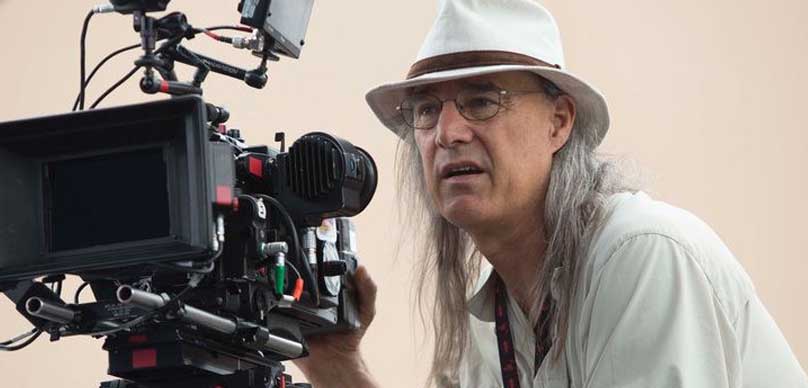
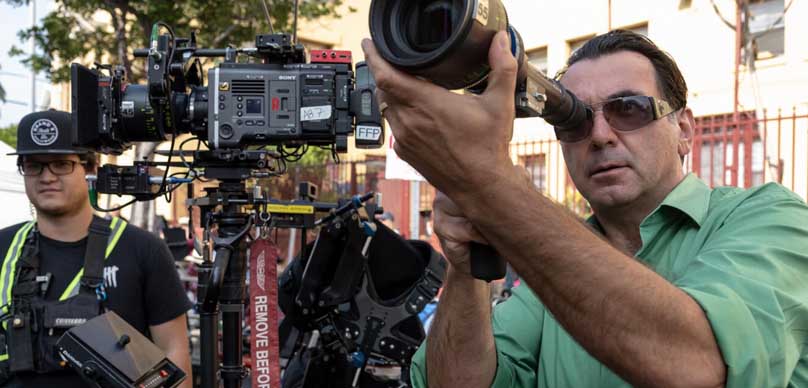
IFH 333: Inside the World of Cooke Optics with Les Zellan

Right-click here to download the MP3

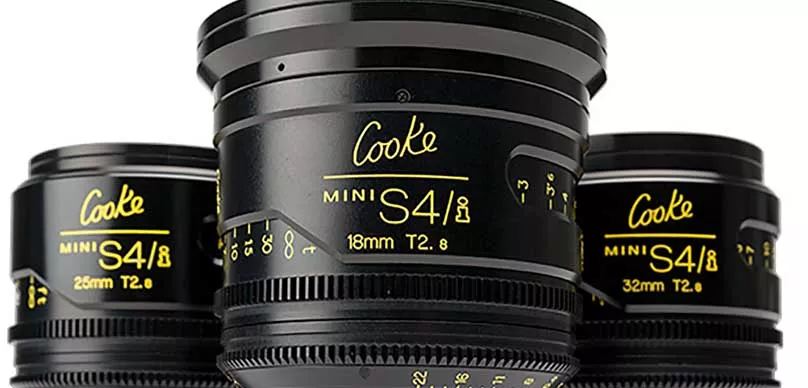
Today on the show we have the chairman of the legendary Cooke Optics empire. For over 100 years, Cooke has been at the centre of the filmmaking business. We’ve been listening to the community of which we are a part. We lead by introducing new products such as /i Technology, and we remember our success is built on a simple idea – do what the filmmaker needs.

From Cooke Optics website:

Our factory in Leicester, England has generations from the same family working side by side. That experience is un-beaten anywhere. We manufacture a full range of primes and zooms for 35mm, digital and Super 16mm photography, plus a range of large format stills lenses.

We know our customers, and they know us, as individuals. Our rental partners do their training next to the craftsman who built their lenses. There are no barriers. We meet our customers at our factory, at trade events, distributors and rental houses and of course on the set.

We’re intolerant when it comes to tolerances. We research continuously to drive innovation. Our lenses are dependable and practical in use on the set; our optics superb. The lenses are straightforward to maintain – which is why so many rental facilities carry our products. Our manufacturing and testers keep going until we get each lens within our very tight specification. We get it right, whatever it takes. At the heart of what makes Cooke special is the “Cooke Look”. The Cooke Look® is about the science of creating beautiful images for the motion picture industry.

As a result, for over a century, cinematographers have chosen Cooke lenses for a smooth roundness and dimensionality to the picture and for the velvety skin tones that flatter.

Enjoy my conversation with Les Zellan.

Alex Ferrari 2:18
Now today on the show, we have Les Zellan, who is the CEO of cook lenses. Now in this episode, we are going to go deep into lenses. That's right, we are going to go deep into the history of cook, how we got how we cook got gets its look, advice tips on how to make your images look better. And all sorts of just we're gonna geek out a bit. I'm sorry, we're gonna geek out a bit. So if you love lenses, want to know more about creating a better image for your film. This is probably a good, good interview to listen to Les is awesome. And I am a fan of cook lenses. They are legendary, because of the look that they're able to create. So without any further ado, please enjoy my conversation with Les Zellan. I'd like to welcome to the show chairman of cook optics Les Zellan. How you doing, man?

Les Zellan 3:14
Good. How are you Alex?

Alex Ferrari 3:15
I'm very good. Thank you so much for taking the time out. I know you're a very busy man and talk to the tribe today about all things cook and glass and images and all sorts of cool stuff.

Les Zellan 3:26
Well, it's one of my favorite topics. So yeah, I'm happy to be here.

Alex Ferrari 3:30
So first question, how did you get into this film business in the first place?

Les Zellan 3:36
Well, there's a good question. I'm back in my I'm actually a lighting designer for the theater. But back in 19. In between 1976 and 79 I was working for a company called color tram and doing inside engineering laying out theatres of laying out studios. And then in 79, I went to work for a company called furka which was Sony equipment rental company that was obviously a rental company in New York as their sales manager and almost a day one I was approached by somebody saying Can Can I buy a baton camera from you? And I said Well, sure. Well, I didn't know the fix was in and that that at the time I was really just struggling to get a foothold in the United States and you know area was the 800 pound gorilla in the fix was it you know you could get you you were you could you could be a dealer for at time but God help you if you sell any of them. So I lasted for co until about September and to this day the guy that ran for a call at the time can't remember if I quit or he fired me. We're our memories are pretty fuzzy place a lot of a lot of our con cameras and they really pissed them off. I start my own company in the fall of 79. To sell that time cameras, which led me Of course, the lenses need a lens on a camera. At the time, the really hot lenses were beyond your nine, five to seven, and the 12 to 120. And then cook approached me and 1981, I think is the I taught at the time was the only Super 16 Gala. And cook had, we were not the only Super 16 months really well they made two supersuit made me to 16 millimeter lenses. One was called the CBK Sydney very chemical. And there were two versions of it, a nine to 50 for regular 16 and a 10.4 to 52 for Super 16. So they approached me because they couldn't give this lens away anywhere. And I was selling out super 16 cameras. And lo and behold, it went from a product they couldn't give away to a product they couldn't make fast about. Thomas Segal, I think was the first time that I convinced to take it and took it Thomas it is up in his pre ASC days, it was a documentary guy in New York. And he had a mad camera and he took a quick, lengthy thing down Tony. He sounded like Nicaraguan and Sandinistas and all that. And Eddie came back and the footage that he had was just stunning, and everything else like. So the result of that is that then we had a line of people at the door looking to buy the sleds. And that was my beginning of relationship with cook that has endured for almost 40 years. And I I wanted to buy the company, you know, straight away, and they didn't want to sell it to me, obviously. And then 20 years later, in 1998, when cook really had fallen on hard times, it was just about well, it was virtually bankrupt and pretty much out of business. I was able to buy a Dell. And you know, as they say the rest is history. We've turned the company around, I really do. I don't think it's boasting to say the cook is now once again an industry leader in developing optics or cameras and, and the intro. Was this for the industry. And it's certainly gotten crazy with you know, a new format every week.

Alex Ferrari 7:34
Very much so. But actually the question though, so you obviously you've been in love with this company since 81, basically or right before then when you first were introduced to them. And you basically like you just held on waiting for this, this, this young lady to say fine, I'll marry you fine. It's took forever. What did you both? Yeah, what did you see? In a barely barely, you know, functioning, if not completely bankrupt company that nobody else saw?

Les Zellan 8:08
That's a really great question. And, you know, you know, like, there's an expression in real estate that buyers are liars. And what that means is they say I want this kind of house that I want that kind of neighborhood and I want this, that's the other thing. And then they walk into a house that has none of those things. And they fall in love. They say this is what this is. And that's almost what it was with me. And the first time I went to cook actually the second trip I went to cook had my wife with me and I said to her, I said to Barbara, I said you know, I want to buy this company. And I want to and that was based on I don't know anything about manufacturing, I knew nothing about glass. I mean that was it was just a emotional, instant emotional response to see how this company was set up. At the time was part of the rank organization part of rank Taylor Hopson, which was a big at the time a very big company and lots of interest, which cook was insignificant. And it was obvious from just walking through the end of the factory that cook was in and I mean we were set a little shoe box inside of a big factory that it didn't want there it was obviously a cottage industry stuck inside this big company and didn't get the attention they needed why I had an affinity for it. It's one of those great What is it? I just don't know

Alex Ferrari 9:34
but you saw something but on a business standpoint you must have looked at and said I think I can turn this around I think I can make because I mean I love Love is love but way too much credit. So literally was just love like I just want to buy this.

Les Zellan 9:50
I'm not a numbers guy. I just had a gut feeling that I could do it. Okay, fair enough. And you know It took 20 years to get control and but once we got control, we've never looked back in those days that we've gone on from barely being barely alive to now, I believe we make more lens series and lenses for the industry than anybody else.

Alex Ferrari 10:17
Now, in this in this company, if you could tell a little bit about the history of this company, this company has been around for ever.

Les Zellan 10:23
The whole story of cook would make a great movie. And if you've got anybody out listening that wants to write a script. So the company the fact the founder of the company was named William Taylor, in 1886. In the company was called Robson and he he and his brother Smithies made ones. And then just to give you an idea of how it evolved, and how small the industry was back then, Kodak started in 1989. And before George Eastman started Kodak, he took the boat over to England, and he spent some time with William Taylor to find out about lens making. So I mean, this, it's all in the whole, the whole history of the movie business is interwoven well, between all these companies, but it's a fascinating story. Anyway, cook, the cook brand, it came out in 1992 93. There was a guy that worked for a company up in New York, my company is based in Leicester, by the way, less training and there was a guy in New York named I named Dennis Taylor. And he's no relation to the, to my tailors. And he worked for a company called t cooking slots, and they made telescopes. But Dennis Taylor came up with his arrangement of glass that allowed you to get detail all the way to the edge of a photograph, without shooting through a tunnel with shooting through a wide aperture is in the 1880s 1890s to get detailed to the edge really had to shoot an F 64. You know, even if basically you had to shoot for a pinhole camera. Sure. So this was revolutionary. And in fact, most optical historians consider this invention to be one of the most important and modern lens making in photography. So that but fortunately for me that has no no real application and telescopes. So the guy is a tea cooking songs went to their friends that on Western said, you want to use this patented invention we have that of course not being stupid, they said You bet. And the deal was made other than the money that changed hands. The deal was made and anyone's using this invention would be called a cook lens. And hence from 18. The early 1890s to now cook has been in one way or another been in continuous production. We made all the chapter early Chaplin movies, the Mary ticker movies, the team's Claire's Mansky movies, we made wings, the first Academy Award winning film, in fact, with the speed pan crows that came out because the sell, sell sell in the early 20s. you'd be hard pressed from the early 20s to probably the mid 50s or 60s. To find a film that we weren't on, it was sure it was really it was just a magical time. And then, after World War Two, Frank organization took over Taylor Hobson, which cook was lucky. And we actually did very well under them for a while because you've seen those old movies with the gong man at the beginning and only hits. Well ranked Taylor house, J officer rank was a faker and he would love the movies. He filled the hole. He built Pinewood he bought rank laboratories he felt Shepard and I don't know if you've bought Taylor Hobson, because of the lenses or not but they In any case, they loved the film. Well, as time goes on, rank, Mr. Rank dies. And the whole focus at the rake organization. So turns around, and instead of manufacturing, they decide they want to be in leisure businesses. So not only was a cook suffered, but things like rank syntel century strand. All their manufacture manufacturing companies, many of which you've never heard of because they're not in the motion picture business. fell on hard times. And this was probably starting in about the late 80s. So the product you know, in our product at the time, we stopped making prime lenses this paper was in 1965 and then we started making resumes. And our resumes were, you know, not only the two cvk that I talked about earlier. But I'm sure last year if the if you guys are old enough, there was a 25 to 250 and a 20 to 100 zooms that really bought I know ingenue was out there, but we really bought zooms to the motion picture industry. But as they lost interest in, in manufacturing, they didn't make investment, so ingenue, for instance, in zone, they came out with some products that weren't that good. But then they came out with, you know, the vhr series, and then the optimal series, and they just sort of left us behind. And coke was sort of withering on the vine. For years. As I said, in 1998, I was finally able to, for the fourth product, I was able to buy the company.

Alex Ferrari 15:47
It's fascinating that you were literally able to, you know, I'm sure pennies on the dollar.

Les Zellan 15:53
I wish I wish that were true. material, I overpaid. But you know, at the end, it was good to me. Yeah. It's been a great relationship. It's allowed me to go all over the world allowed me to talk to you about cut. Yeah. I don't regret a penny that I put into it, but it was not pennies.

Alex Ferrari 16:15
Okay, but you were still able to you were still able to acquire a legacy company without question. Because I've known about cook. From the days of my film school days. I mean, cook was cook and I think it was even even I would describe went to film school in a 96. So as a couple years before you purchase the kit, so even then there was still you know, from the old buy old cinematography teachers were talking about, like the old cooks and, and all that stuff. But, but I wanted to ask you about the the infamous and yet very famous cook, look. Ah, what is the cook? The cook which is not trademarked, of course.

Les Zellan 16:59
So what is the cook look to be fair? No, we did not invent that slogan. The industry invented that slogan, and then we sort of crap.

Alex Ferrari 17:08
Yeah, fair enough. So what is a cookbook?

Les Zellan 17:12
Well, that's a great question. On our website, on the cook website, we do have the best cinematographers to write it down. And they all say more or less the same thing. But in different words, it's a warm look. It's very what I think Ed Lockman used to work round looked is, it has a really nice, gentle fall off of focus. So it gives you a very dimensional look. And frankly, that the warmness of the lens gives you makes people look up. And who genuinely who doesn't want to look at negative photographs. In fact, in the old days, like in the in the old studio days, there were stars to put in their contract that they had to be photographed.

Alex Ferrari 17:57
Because they knew that much.

Les Zellan 17:59
Yeah, well, they know what they do. They know what makes them look good. And, and, and the cookbook continues today. I mean, that ever since the speed Pancras came out in the 20s, the cookbook has been consistent. So you know, you can you look at an old pan crow relative to a new f7 or an S four or whatever, the coloration in the fall off. It's all going to be very, very similar.

Alex Ferrari 18:30
It's interesting cuz I remember watching a YouTube video of like, a tour of your of your facility, or the making of a lens, which I mean for lens geeks and oh my god, it's just like, it was like it was like porn. I mean, it was beautiful. It was such a beautiful experience. Why did you just sitting there going? Because it takes so much man

Les Zellan 18:53
Aren't you a lecturer which I've done all over the world basically using you know, PowerPoints how you build lenses and interwoven with that as cook history and movie history but it's I do it all over the world. I just came back from doing I think five lectures all over China a few weeks ago and people find it fascinating and I love doing because it's it's it's an awakening to show people here's a tool that is basically their it's their eye on the world is this the lens and they have no idea for the most part other than in Scott glass in the front and West in the back. And so metal that goes into making a lens and so I love doing it is usually people are not usually the responses right.

Alex Ferrari 19:42
Now the one thing and please correct me if I'm wrong, but each lens manufacturer has their basic kind of like Coca Cola recipe for the coating. It does the coating. Yeah, for the coating. So I mean there there is a specific kind of formula that you guys have.

Les Zellan 19:58
Let's go back one step. Because whereas the cook philosophy in line is designed to get the coatings for the chef. But our philosophy has been the same from what he Pancras to today, other manufacturers have looked at their lenses, it will be all over the map. Now most of them, and I can't take, most of them have come around to doing what we do. Now they come up with a philosophy, and whatever that is, and it's not right or wrong. It's just their philosophy. And then all their lenses from that point forward have a similar look. But if you look back at like the old Zeiss distagon for the Super speeds, the 35 was one color, the third and the 20. Now they're all different depending on who design them is they didn't have a corporate philosophy of what they're but they were Amiens so it came down to the designer birch cook. One of our big advantages is we've been consistent. And you know, one of the reasons I think the animation did the Primo ones is back in the late 80s was up until then their glass was cooked and ingenue and Zeiss and, and tokina. And, you know, you fill in the blank, they bought lenses, they panavise them, and they put it up. But that takes that puts them all over the map. One of the things that they did when they came out with the premise and say, we are now color matched Well, you know, custom color match for already, then we were color match for almost 70 years. So but now I would agree with you that most manufacturers have a certain look to their, in the design. And your to your direct question. Do we all sort of guard our coding recipe? The answer is absolutely yes. But I will tell you the coding recipe that everybody thinks in parks, the magic to the lens is a few percent of the magic. The real quick look, or the brand x look doesn't come so much from the coatings, it comes mainly from the choices of glasses that you used to build your lens with. Each glass not only has a different index of refraction, but also has a different color transmission characteristics. So by by choosing those classes carefully, you give it the personality, but coatings add just the scope, but not a lot.

Alex Ferrari 22:27
Right. And it's all and it's also about the width, the way the sand how you get this, like I mean all the all the raw materials to build everything and then the process of building it. It's

Les Zellan 22:37
it's artists. Yeah, but we here we all use the same more materials. In the old days, you know, we used to smell class right now. But right now the reality is there are two or three or four optical glass manufacturers in the world. And we all use their material. So whether it's as Iceland's our cook lens, or an ingenue lens, the material comes from the same half a dozen manufacturers around the world.

Alex Ferrari 23:05
So it's more about the processing, and actually the craftsmanship

Les Zellan 23:09
And the choices. I mean, if you look at a glass map, it's it has maybe 100 different types of glass, that each have different characteristics. So are designers knowing that they want to get the cookbook command, you know, at the end, they pick the one the class types, that will not only obviously focus the lens where we need it, but also the right color transmission, and the right contrast or everything else that we're looking for that goes into the cook worlds, so that we get the cookbook out the back,

Alex Ferrari 23:39
Which the one thing that's funny that I'm listening to and it's something that I hope everyone listening understands is that you as a company have decided that this is the kind of product that we're going to put out. So every time you buy a cook lens, you expect a certain level of quality a certain look and you're not playing around with it. You're not like oh, well let's let's do a little darker Look here. Let's make it a little sharper edge to like, no, we're cook and this is what people want from us. We're going to deliver

Les Zellan 24:09
And the reason we do that is because that's obviously what people want. They wouldn't have come back to us and said this is the cookbook and we want it I'm such a thick star I can dictate what lenses I want to be photographed if they didn't like the luck playing with the out of business years ago.

Alex Ferrari 24:26
Now the the the lens that kind of put you guys back on the map was yes for us. Right. Absolutely. So what was it like with that? Because when you guys released that took you a few years to release it after you took over the company.

Les Zellan 24:38
But when you actually released it To be fair, though, yeah. The the previous management before I came along started the development. me backtrack just a bit. So the Primo has come out in the late 80s late 80s, early 90s the non Hana vision world goes into a panic Panic. literal panic is up until then, the non panic isn't real thought panic vision was on the ropes that they were going to be dead and, you know, work or sold off for parts in the few years. creemos absolutely changed that whole calculation. And all the customers that were floating away from panelization is they realize, why should I run a payload of 25 to 250, when I can just get the real thing and cook thing from autoware Guinea or whoever, at a better price. So, the prelims come out, that whole flow away from Panamanian obviously starts to flow back they had the hot new product. So the non television world guns get everybody, everybody they went to cook. area, they go to Kenya, they go to anjanette, but you Nikon, CAD, and you can you can fill in any glass menu lens manufacturer in the world, they went to all of them. And for whatever reason. This is that 9293 for whatever reason, cook is the only one that said yes. And so we started cook, the previous management started the project. Yeah, he did it as a skunkworks project. He didn't have permission to do it from the report, they would have never given him the money to do this. But he did it because he, he told me, I met him right after he decided to do it. And he said, Well, I'm going to do this, and I can do it in a year. So don't ever find it by the time they find out about it. I'll be here. All right. And yes, I, I wasn't it's better to ask forgiveness than Yes, yes. Yes, of course, if it's, if you're asking for forgiveness in your order book just went from almost nothing to this. Forgiveness is pretty easy to get well, yeah. Even though I didn't know anything about manufacturing and optical design at the time, I know he was dreaming. This was a major project. And it dragged on and on and on and on and on. And in fact, when I took over the company in 98, it was close to being done. But it wasn't finished. I won't go into all the gory details of what happened. But how he hid the money from hacci Sterling from, but it was it was it was, it was not a pleasant thing. But that's neither here nor there. So when I got there, the several vs. fours prototype. So we very quickly turned that into production. And we got out four lenses. I can't remember the first markings fly the 1825 50. I don't remember the first one. Sure. But the match, this is a magical time in the industry. And this is when you say you're not going to the right place at the right time. So all the people that have passed and the only ones that I care about passing precise and airy, and so they passed on this so and I mean I understand they have the the the prime rather than distagon to the supersedes which even then we're 30 year old designs, areas making a new area. It's nice. We're making a ton of money on those right there. 30 years old designs, the tooling, everything's been paid off years ago, and we're still selling. And so yeah, the promos are a bit of a problem, but our stuff is still selling nobody's got anything to compete. Well, we come out with these fours. They were the first modern non piano vision lens, and the world winds up in my dorm. Why so I went from no business to three or four years worth of business almost overnight. And then the anxiety scenario went into a bit of a panic and they put up you know, you know the story about putting an infinite number of monkeys with an infinite number type parameters and sooner or later outcomes, you know, all the great works, but they did pretty much the same thing. But what is designers and I put them in a room and said don't come out until what became the bid did the mat not the master primes the Alia the zip with the ones before the it'll come to me anyway. But that gave us really, when you think about that, that took them about three years to do. That gave us a window from 98 to 2001 that we were all alone. We had the only new primes in the industry and they were just incredibly in demand, as I said went off the shelf, off the off the shelf off the charts and so All right place right time.

Alex Ferrari 30:04
We'll be right back after a word from our sponsor. And now back to the show.

Les Zellan 30:15
Yes, yes. Yes, fours are still one of our best selling products, and this year are Laettner. 21 years old. Wow. still selling, I think as far as more or less the standard of the industry.

Alex Ferrari 30:28
Now, can we discuss a little bit about vintage glass? Because there is something that we talked about, about vintage cook lenses. And what happens because a lot of people don't understand. They're like, Oh, I need a brand new lens. I'm like, well, not necessarily, you

Les Zellan 30:42
know, you know what we actually, were actually dealing with that. So So tell me, yeah, tell me, you know, a lot of people love for you to build speed paragraphs. Now. Again, let's step back a little bit. Let's think digital for being a boring and scalable format. Right. So when digital comes in, I mean, pre digital people were throwing away or, or giving away a speed pack rose. We don't we're never going to use this again. Let's get rid of it and sell it for 50 bucks.

Alex Ferrari 31:14
I know. I remember. I heard. It hurts. It hurts.

Les Zellan 31:18
So digital comes in. I mean, I think Jim janardan every morning. The revolution he started is simply amazing. Yep. I'm not crazy about digital from a personal disease does 10 backdoored film but I loved it as a manufacturer. Digital has been amazing. Amazing. For me. It's taken a small market and made it astronomically big. And it's caused people to think Wow, it's really a little boring and sterile. How can I put character the character and personality I used to get in film? How do I how do I re inject that into Digital's and of course, one of the easy ways is to use old glass. The problem with old glass is that it's glass. So like with with with the, with our old vehicles, keep in mind, the last paper we made was in 1965. So if you found one today, it's almost 5054 years old, right at the at the at best. And it was probably one made in the late 40s, early 50s. So it's a lot older. We're talking 70 year old glass 67 year old glass anyway. So that glass still makes beautiful movies, but it is a pain in the ass is every lens is a different color. The wall discolored over time. I know when they were shooting the first two seasons of the crown, the DI T the hook shot on sweeping across the DI t had a separate lookup table for each lens of Oh, yeah. So. So we looked at that. And we said, well, you know, speed pack. Okay. We are I mean, I understand I get I know why people want to use the glass. And it does have a, if you remember the old St. Pancras they were very small lenses, right. And the scores are significantly bigger while the scores are significantly bigger. So we could give you a better field performance than the pancrase. The pack row, the main difference between a pan pro at an S four is that the fall off or focus on an S four starts of that what we call the picture height area, you can imagine a frame and you put a lot of vertical lines through the frame at the axis and make a circle about that area. That round circle is where we try to keep it pretty clean. And then we let the fall off come in. And that's what I told you too much now, because that's part of the cookbook. Oh, sorry, sorry. I didn't mean that guys. I know.

Alex Ferrari 33:59
He's joking. he's joking,

Les Zellan 34:00
I can't see anything. Anyway, so joke, the difference with the difference, the reason the scores got bigger, we're not only to solve mechanical problems that people wanted better scaling and better footage scales and all this other things. But it was also to increase the class diameter and get more getting better performance in the field. The pig parkrose in the pit. So the basic difference is panthro. The focus falls off as soon as you come off the axis. So the follow starts really, you move to fix those over and you're you're already losing focus is very gradual, and very flattering. But that's the main difference between the speed panic crawl and any of modern click lenses. Except we noticed this and we and there are only a finite number of old sweet aquas or old anything out there. They're all discolored. They're all in probably desperate needed mechanical, and optical parts that don't exist anymore now, and there are some companies that are trying to fix that, but we're not one of them. So we took a look at the old St. Pancras designs and said, let's just remake these mean, we can remake them, we can do two things, you can remake them in a new housing with new glass. But keep true to the old look and feel of the fall off. And we can increase the coverage is like the 2018 and the 25. I think the 32 didn't really cover Super 35 covered, original, solid 35. So we fixed all those issues, we added the metadata there our eyes system, which is evolving into an industry standard, and we put them out as the panco classics. And they are doing phenomenally well. And we know we really got it right, we've had some very big name DPS that almost shot exclusively on parkrose of the old speed macros. And the last two features that this one particular guy did, when he tested them against his love his old St Pancras and the new classics. And that abusing the classic, I mean, it takes the headache out of you get the look, you get the feel. But you don't need a different look up people for every lens, you can get parts you can get at they're much easier for an assistant to use was there you know, there are more f4 in mechanical, but pirkko classic paypro super cheap hair growing in look.

Alex Ferrari 36:35
That's amazing. So so you actually you guys actually took the old concepts of the vintage and what made it so beautiful, and then just redid them,

Les Zellan 36:43
And redid them. And what I like to tell people is the pickle classics probably look like the speed pack row did when they took it out of the box 60 years ago. But it was a clean glass and operational, you know, so and they've been extremely popular. And again, everything I make, including us wars we've never had for 21 years, we've never had stock. We've always we build the order, and we're on backorder in varying degrees on everything we make. And we've extended the belts a new factory, not the second factory. We've gone from 36 to 130 some people and we still can't make stuff we ask them.

Alex Ferrari 37:30
Wow, that's well that's a good problem to have. That's a good problem to have. That's good. Well now. Now what is cook doing to adapt to this new generation of mega resolution cameras out there the 8k 10k 25k 50k eventually, I'm sure you've seen it exactly the way I do I get up to a gazillion. I mean, like At what point do we just our eyes just can't comprehend? Can we get off Ks in a minute.

Les Zellan 37:52
But we've already we've pretty much passed that an H once we go past HD, depending on the size of the screen. Sure if you're if you're sitting in your living room watching a movie, and letting you know, you got to I don't know 60 to 65 inch sets. Unless you're sitting like a foot away you don't get the benefit of that you HD so all these resolutions like to tell people, how can your can your old speed Pancras handle all these new resolutions? Well, people are making movies with them every day. And I like what they say. So a lot of this is just marketing hype, of course. But are we dealing with it? Sure. I mean, we every time there's a new format, it causes us to say oh shit. On the other hand, it puts a big smile on my face is that on a ship? People are gonna have to buy new, more lenses isn't this right? Right when? When the industry when and you know, red is I think red is the big culprit here as far as changing formats. But then I think the whole manufac the whole camera manufacturing industry is the culprit here. The thing that annoys me about fullframe isn't that I don't love it. I love making money to support bar s sevens and our new full frame anamorphic 's are extremely popular. And we'll chat about that in a minute. But a full frame came about in my mind, it was nothing anybody was asking. Nobody was saying Gee, super 35 just isn't good enough. We really need we really need we really need to five more pixels format so I can I can watch. I can watch a movie on my phone, you know. It just makes no sense to me. As just me personally, me as a lens manufacturer, I say old boy. A new set of lenses. So with red and now the rest of the industry pushing the rest of the manufacturing bushing for frame of course, we developed the seminar lenses, and actually had them on the market. I think before the cameras, I think that's never happened before people think that the camera manufacturers and the lens guys are talking to each other all the time. And but for the old days when arion Zeiss were together in the works, they're not anymore. That's not true. We find out about it, just like everybody else does listen to rumors in the industry, and trying to get make the right guess, well, we made the right guess on the full frame. We came up with the seven, I think two, three years ago now just just as the cameras are starting to come out, they've been extremely successful. It is basically they're taking the eswar and scaling up. It's not just scaling up in a whole brand new design. But the look and feel of it when they were done looks like a cook well, so. So we did that well. And then last year, we announced the full frame AdoramaPix. Aha, which we will start delivering in about well, we'll we'll have last year at any IBC. Now some of IBC last year, we said we will have them by nav and we will have the first four lenses at nav this year, and start delivering thereafter. And there we've taken a bit of a flyer. Well, I shouldn't say that we've got tons of orders for them. So I know we nailed it. But one of the things we did is we instead of doing a 2x squeeze like we do in traditional 35, we did a 1.8 squeeze. And there was a lot of thought and care that went into that equation. And it looks like we really nailed it. And the 1.8 book is almost indistinguishable from to from except the most trained of eyes. And it's great, it looks good. The reason we want to, if we had done two and you wanted to do a 2.4 traditional 2.4 release, you lose about 25% of the excels and full frame. If you go if you want to flow, use the full three by two full frame, you It's a 1.6 weeks. Well the problem with the 1.6 wheezes, it's not really the anamorphic it's sort of maybe could be different. Maybe it it may not. It's really uninteresting. And in my mind, the only reason to shoot anamorphic is that you want to look at. And I know there's some companies making very clean out on Mars, that looks horrible. And I just have to scratch my head when I see these and think what the hell were they thinking? You know, why would I want to go to all the trouble of shooting anamorphic? Right? When I can just you know, I can just, you know, crop my frame and get widescreen and nobody's calling out for resolution, there's plenty of resolution. So anyway, so we so one point, if we do a 2x, please, you lose too many pixels. If you want to go the whole frame, it's 1.6. And that's not interesting. 1.8. Yeah, we're right in the middle, you lose about 10% of the pixels. But it looks like I've shown it to DPS they hear most of them can't tell whether it's the two or the 1.8. And as an added benefit. If you were doing a 2x squeeze and you wanted to go to full frame, you'd be at about I don't know 3.1 ratio, which is just not a very pleasing ratio, it's but but if you go from a 1.8, squeeze, and use the whole frame, you're at a 2.7. Well, 2.7 is just under 2.76, which was ultra panic. Sure. That's a really, you know, that's a pleasing range and ultra panavision that was shot with the 1.25 squeaks. So it was a little different. But the bottom line here is when I look at my look at tests, I mean, if you want to see some test shots, you can go to the Cooke Vimeo site. And there's a bunch of tests up there. I think this is the HP I can't remember. So if you go to the Vimeo site, it's the first test on the right. And it's it has all our lenses shooting the same thing over and over again but showing you and it's pretty impressive. Everybody that sees that, and I think what's gonna happen looking at this, we've done most of our testing obviously on the Sony menace. Great, great camera, by the way. I'm looking forward to seeing the new lF minning at the Venice is a great camera and look at it at the 2.4 lines. And then you look at at 2.7. You think, why wouldn't I release in 2.7? It's just really pretty. So I think in the long run at full frame 2.7 is going to become the ratio of choice to listen, but our time.

Alex Ferrari 45:21
Now, one other question I want to ask you, and we kind of touched on it before is the whole resolution in this kind of arms race with the resolution? it? Yeah, I want to ask you, in your opinion, are we going to get to a point because I think we're getting there. If we're not there already. That it just truly does not like you can't like, you know, the red 20k. Why, like, so what's the next gen and so what's what are these camera manufacturers in your opinion going to do to get us to buy new cameras? If it's not resolution? And your opinion?

Les Zellan 45:57
Yeah, but but. And this is the problem. I mean, again, look, when digital came in, what did people rush, they rushed for old speed cameras. Frankly, the reason we decided to do anamorphic speed we I've been asked to do anamorphic for 20 years, from the day I bought the company, we jump into anamorphic until digital is again the same reason people are looking to make digital interesting nanoparticles a great way to do that. I think we've already past the point of no return. And what you're asking what people have lost sight of this really annoys me with with a large part of the industry is they're letting the technology wag the dog. You know, it used to be the story would make the decisions. And frankly, the ultimate resolution does not make a picture that anybody wants to walk it up. And in fact, usually the more resolution you have, the worse it gets to say. But that's why people are using the old lenses. They're using them. They're anamorphic they're trying to do put character into what is becoming a more more and more sterile image. So I think, you know, as they said, I think this whole arms race that is a marketing bullshit, too for a 16 1,000,000k I know I know, there are engineers out there that will argue with me, but we're not engineers. At least I'm not an engineer. And, and my customers, my ultimate customers, the filmmakers, they're not engineers, they're storytellers. And they have to pick the right tool that will sell it tell their story and I'm sorry, it's hard for me to imagine that I want to tell a any kind of drama or romantic comedy or any kind of story in 20k resolution, or even an eight it's gonna look like shit. So

Alex Ferrari 47:58
Yeah, the actors aren't aren't super happy about it cuz I was looking at some some of these images that the DP did not know what they were doing. Some of these movies are shot in these high high resolutions and you start seeing every little thing on some aging actors or actresses that just don't work.

Les Zellan 48:14
I mean you're probably you're old enough to remember when HD took over

Alex Ferrari 48:19
Of course of course I was the I was there I was there when we Sony showed up we're on the cusp of I saw I saw I was at a workshop and I saw Sony show up with the first HD cameras like and they went out and we shot like you know like flowers and bumblebees and stuff but it can you imagine from the SD world to the age just straight up 1920 by 1080

Les Zellan 48:41
Remember everybody paddock them as they had to, you know the the plots you can see the scene with the flats, you could see

Alex Ferrari 48:51
The makeup, all the cake.

Les Zellan 48:55
Okay, so we got to HD an HD is still within sort of the human vision purview for the most part, but anything beyond that unless you're putting it out on you know, 900 foot screen is a way that is a waste of time. And as I said, you know we get all this resolution so I can watch the funnel. Watch the watch the movie on my phone. So I know

Alex Ferrari 49:18
it's brutal. It's brutal.

Les Zellan 49:19
And nobody was complaining that you know, the Alexa was the most popular. Yeah, it's probably still is the most popular camera, which is basically an HD camera on steroids. Right? It's not It's not for kidding. And I've seen Alexa images projected on you know, what big big like Leicester Square in England, you know, big downtown theater screens. And you're not sitting there saying Gee, I can see the space between the pixels. I wonder. I recently had 4k resolution. So

Alex Ferrari 49:52
I shot my I shot my last film on the Blackmagic Pocket 1080 p camera the whole feature I shot on that with some nice video. vintage glass and some nice new glass and I projected as on a theater, I was like, this looks beautiful. It was fine.

Les Zellan 50:08
You know, you get the right images, the right story.

Alex Ferrari 50:11
Exactly.

Les Zellan 50:12
And it works. And right.

Alex Ferrari 50:14
If you give me $200 million, I'm not shooting it on the 1080 p camera. Give me $200 million on product. Yeah.

Les Zellan 50:21
Yeah, you may you know, you say that. But again, the story should drive the story then drive your choices, not not the techniques. The last thing you should choose to me would be okay, this is my story, blah, blah, blah. The camera and the lens combination that will give me the look I'm looking for is this. Right now people say, oh, there's a new mini lf I have to shoot my next movie on the mini lf I must have it.

Alex Ferrari 50:48
I must have the next read. I must have the next Alexa.

Les Zellan 50:51
That's, I really think they said the tails wagging the dog. And I find that really? I find that really sort of abdication of responsibility of the DPS. Yeah,

Alex Ferrari 51:05
because I remember I was talking to a few of my friends who are in the ASC. And they were telling me back in the days, like producers are telling me what to shoot on now. Like, they're like, we need to shoot on red. We need to shoot on this camera. And they're like, but I'm the DP, I'm that's my job to choose that right? Well, your digital

Les Zellan 51:21
is, unfortunately, changed all of it. Yes. It really changed the roles of a lot of people. Yeah, without question. For me, they still need

Alex Ferrari 51:36
At the end of the day, you're still you're still coming up? still coming up? aces every time? I do try. So I'm gonna ask you a few questions. Ask all of my guests. What advice would you give a filmmaker wanting to break into the business today? Wow, I'm not being a filmmaker myself. It's hard. But But you've known a couple in the in your day.

Les Zellan 51:55
I've known a few. You know, again, I go back to the old days when I started in the business. And I'm working with people like Tom Segal and Sandy sisal and, and most of the people I used to work with an icon have gone on to become ASE members. So I mean, but they all work, they all started. They all either went to film school, or they just went to a rental house. And they started by cleaning cases. And they wouldn't, you know, they would have they would literally apprentice, you know, they clean cases, they start working on the prep floor. Somebody would notice them and say, yeah, you can be the 900th assistant on my, this weekend when I'm doing something and they've worked their way up, they become a first then they become an operator, then they start making films and and along that way, which could be you know, depending on their talent could be, you know, at least years, if not many years, they would learn the craft. I think a lot of people get out of film school today and say, I'm leaving.

Alex Ferrari 52:59
Because Because I can afford to read I'm a dp all of a sudden,

Les Zellan 53:02
Yeah. So I would say and what I've seen is the most. So if you're a dp, you obviously need to know how to frame a shot. And I think, frankly, I think a lot of people like the full frame cameras, because it does it does allow you to be a little bit lazier. And digital obviously allows you to be much lazier, but full frame, you know, he didn't quite get it right. But I can pan and scan. And maybe that's the shot I should have. Is I'm still gonna release it in 35. So that's the Shall I should add. So you know, so I think it'd become people become a little bit less prepared. And I think digital did that in itself. Certainly in film, you couldn't do that you had to really know what you're all so but the real key, you know, when the real key besides having a good eye for framing is learning how to light unless the DPS is to tools or his tools or his cameras, lenses, lighting, and hopefully his talent to frame and people that know how to light could shoot super eight and make it really look good. And people that don't know how to light it looks good. It's completely by accident. So if you learn that you don't necessarily learn that in a couple of years in films. You learn that by watching you know the Masters by working on sets and watching the Masters do this every day. So I would what I would recommend to people is just find like some real get yourself in good with some really good DPS and work for them for a while and learn everything you can.

Alex Ferrari 54:51
Now what is the lesson that took you the longest to learn whether in the film business or in life?

Les Zellan 55:00
Longest to learn? Just about everything. I'm a slow learner. Yeah, that's a great question. I'm not sure I have an answer for it.

Alex Ferrari 55:15
No, no worries. No worries.

Les Zellan 55:17
I'm not I'm not gonna worry. That's one of the things I've learned. Don't worry about what you can't. You can't answer.

Alex Ferrari 55:23
Fair enough. Now, what are three of your favorite films of all time?

Les Zellan 55:26
Oh, that's unfair.

Alex Ferrari 55:28
I know. It is. Currently at this moment in time right now, three of your favorite films.

Les Zellan 55:35
Well, I gotta say, gee, it should be let's see all the phones shot on clock. Obviously.

Alex Ferrari 55:43
Yeah, you've got to be politically correct. Are you kidding me?

Les Zellan 55:47
I was one of those guys. That actually helped pull the upset off me Academy this year. I voted for the Green Book. I thought that was a great book. I thought it was I thought it was well done. I hate films that I really hate films that lecture to me or want to show me the way it should be. I thought the Green Book was just a nicely put together. Great story. Yes. And there was a message and all that but I just thought the performances

Alex Ferrari 56:19
Oh, the writing and the performances were brilliant.

Les Zellan 56:22
Yeah, my wife preferred Bohemian Rhapsody. I didn't. didn't do much for me.

Alex Ferrari 56:28
If you take the if you take the music out of that movie

Les Zellan 56:34
And then of course they should really want you know, Lady Gaga.

Alex Ferrari 56:44
Oh, stars born

Les Zellan 56:46
Stars born because that was shot. I Maddie with cook anamorphic.

Alex Ferrari 56:51
Yeah, so gorgeous. So beautiful.

Les Zellan 56:53
That should be my favorite sound. But I all time though. You know, one of my favorite films. This is really corny, but I'm an old guy. So my favorite films is also my mind is going to Jimmy Cagney in Yankee Doodle Dandy. Okay. white fluffy. I could watch that film probably 20 times and still enjoy it. Very cool. Now where where can people find more about cook and and more about you? Well, they don't need to know much about me but they can find more about cook on cook optics calm. Also, we just as of today, the US distributor for cook used to be a company called zgc which is company you see the cook America's as of today. So but you can go to cook optics.com and find out all you need to know.

Alex Ferrari 57:47
Very cool. Let's think it's been an absolute pleasure talking to you and geeking out on cook all things cooking lunches and stuff that I so I appreciate your time. I know you're busy man. Thank you so much.

Les Zellan 57:57
Thank you very much. As he said, I can only talk about cooking endlessly. You want to do this again for six or seven hours.

Alex Ferrari 58:04
I appreciate it.

Les Zellan 58:06
Thanks, Alex.

Alex Ferrari 58:08
I want to thank les so much for being on the show. Thank you for dropping knowledge bombs on knowledge bombs about lenses and all things glass. So thank you again less. If you want to get information on anything. We talked about links to cook glass and cook TV, head over to indiefilmhustle.com/333 for the show notes. And if you haven't already, please head over to filmmakingpodcast.com. subscribe and leave us a good review for the show. It really helps the show out and a lot. And if you haven't checked it out, check out my new podcast filmtrepreneur podcast where filmmakers and entrepreneurs meet. And that's at film biz podcast.com thank you so much for listening guys. That's the end of another episode of the indie film hustle podcast as always, keep that also going. Keep that dream alive. And I'll talk to you soon.

LINKS

SPONSORS

  1. Bulletproof Script Coverage – Get Your Screenplay Read by Hollywood Professionals
  2. AudibleGet a Free Filmmaking or Screenwriting Audiobook
  3. Rev.com – $1.25 Closed Captions for Indie Filmmakers – Rev ($10 Off Your First Order)
IFH 312: FBI Witness Relocation Interview with Boris “The Cinematographer” from Shooting for the Mob

Right-click here to download the MP3

Today we have a very special episode of the Indie Film Hustle Podcast. My guest is coming from an undisclosed location somewhere in Los Angeles. His code name is BORIS: The Cinematographer. We changed his voice and image for his protection. Boris was my cinematographer on the film I almost directed for the mob. I met him while prepping the infamous feature film discussed in my book Shooting for the Mob. If you want to learn more about the story of the book take a listen to this podcast. (Click Here)

Alex Ferrari, Shooting for the Mob, Shooting for the Mob book, Shooting for the Mob audiobook

Here’s a summary on the book:

A bipolar gangster, a naive, young film director, and Batman. What could go wrong? Alex Ferrari is a first-time film director who just got hired to direct a $20 million feature film, the only problem is the film is about Jimmy, an egomaniacal gangster who wants the film to be about his life in the mob.

From the backwater towns of Louisiana to the Hollywood Hills, Alex is taken on a crazy misadventure through the world of the mafia and Hollywood. Huge movie stars, billion-dollar producers, studio heads and, of course, a few gangsters, populate this unbelievable journey down the rabbit hole of chasing your dream. Would you sell your soul to the devil to make your dream come true? Alex did.

By the way, did we mention that this story is based on true events? no, seriously it is.

If you want to watch Boris’ interview check it out in its entirety below.

I asked Boris, an industry-recognized cinematographer if he would be willing to do an interview on his experience working with Jimmy the gangster, the craziness that happened all those years ago and what it was like being in the center of that filmmaking tornado with me.

Boris jumped at the chance but he asked that we change his voice to protect his identity. He doesn’t want to put himself out there at this time. Trust me you are going to love this episode.

Boris lets loose on all things Shooting for the Mob and even tells me stories I didn’t know about. If you want to know what it’s like trying to shot an indie feature film for a bi-polar, egomaniacal gangster then perk up those ears cause you are going to love this extremely entertaining episode.

Enjoy my EPIC conversation with BORIS – The Cinematographer.

Alex Ferrari 0:00
So guys, today we have a very, very, very special guest. Today, we have Boris the cinematographer. Now this is a cinematographer that worked with me on shooting for the mob in the in the movie inside the book shooting for the mob, and we've been friends for about almost 20 years now. And he is the main reason I actually got off my butt and wrote this story and told, wrote this book and decided to tell my story because of him constantly beating me up over the years to do so. And I wanted to bring Boris on the show to talk about the story from his perspective. And it is done in a very deep throat, FBI witness relocation program kind of style, so his voice will be altered. So his identity is not revealed. He does sense a little bit of worry about putting himself out there publicly right now I told him, he shouldn't unless he really really wants to, for obvious reasons. I mean, we are talking about a gangster a mobster, you know, all that kind of good stuff. I on the other hand, decided, hey, what the heck, I'm just gonna do it anyway, because I need to get this story out of me and out into the world. So that was my decision. But again, I want to have Boris on. Because his perspective and his storytelling is awesome. And this is going to be a very, very interesting episode. So if you guys have not heard, I have written a book called shooting for the mob, it is now officially available on Amazon. So please go buy it, tell people about it, share it, just go to shooting for the mob calm, it'll take you straight to Amazon. Or you could just go to indie film, hustle, calm Ford slash mob, and it'll take you there as well. And if you have read the book, I really really need you to stop what you're doing. And go leave a review on Amazon it really, really helps us out a lot. We have, believe it or not become bestsellers already on Amazon in the in certain category. So we are an Amazon best selling book, which is insane to me. And I'm humbled by it. So thank you guys so much for buying the book and continuing to buy the book and please spread the word and tell anybody and everybody about the book, I really, really appreciate it. And if you guys are in the LA area, April 25, we will be having a screening of on the corner of ego and desire at the Chinese theatre, the world famous Chinese Theatre in Hollywood, followed by a q&a for the movie. And then I'm going to be doing a talk about fear and breaking through your fears to make your first feature film and talking about this my story and what I went through with shooting for the mob and then afterwards we're gonna have q&a and then a book signing and we'll be selling books there as well. So If you want to get tickets to come out and see the tribe visit with the tribe and myself, just head over to indie film hustle.com Ford slash screening to check it out. And I promise you, it's gonna be a pretty epic evening. But this episode, this interview is fairly epic. It's nothing like I've ever done before on the show. But I want you to remember that we altered the voice for Boris to protect him. And I just didn't feel comfortable putting him out there, exposing who he is, and putting his name out there at this point in time, because I really care about Boris and I want anything that happened to him. So that is the reason why we have altered his voice. So bear with it. So it is just amazing. Really, I'm so happy to bring this to you guys. I'm like you can tell in my voice. I'm so like, giddy, because I can't wait for you guys to hear this story. So I've told you a little bit of the story. But now you're going to hear a whole bunch more about the story from behind the scenes episodes of what's going on things that were happening at the time. And I just I'm just excited to get it to you. So without any further ado, please enjoy my deep throat witness relocation program interview with Boris the cinematographer. Okay, Boris. So you've read the book. And and you were let's take it back to the beginning. You were the reason why I wrote this book, you were the one that kept hounding me for years to tell this story. And finally came to the point where I could not argue with you anymore, because you wanted me to write a screenplay originally. And I said, No, I can't write a screenplay. I don't want to write a screenplay. This is just not I'm not gonna go chase money. And then you said to me, Well, why don't you write a book. And I was like, dammit, I can write a book. And it's your fault that this has happened in the first place.

Boris 6:58
Yes, we do this. in Eastern Europe, you know where I come from, we read books. Also very important part of your education. And books are also something that stays as a document for the history for posterity. So having the book on having the book debates, it's more than just like doing your own personal soul searching or making the journey or read it experiencing everything that you went through. But think about it, this is like something that generations and generations of aspiring filmmakers or if there is any films, something in the future, they may be doing something else. But they will be finally this is a very, very interesting and inspiring abusing educational format to whatever else people will find in this book.

Alex Ferrari 7:52
Yes, it is. It was all of that. And then and then some question. So you've read the book, I want to ask you straight. Is this book true to your experience? Because you were with me on this journey for about three months out of the year that I was involved with this project? What is your feelings on the books, truth, authenticity? And did I exaggerate anything?

Boris 8:16
I don't know, comes down to exaggeration. I don't think there is any level of exaggeration in the book. I think. That's what the biggest, I think that the real value of the book is that there is really no exaggeration. It's real. It's all real and truly 100% of the truth what really happened. And that's what I think is going to be the most intriguing aspect of the book. To me, I think, was really interesting to read the book because not only that, I was part of this for all this several months we spent together on it, but learning all the background stories, learning about you or learning how you get into this morning about some of the people that I had the chance to interact during our pre production so this is all combined together. Give me hold your perspective on our experience back then.

Alex Ferrari 9:11
Right because you didn't know the whole story you only knew a parts of the story it was patchy and then you only knew the stories from your perspective. You never saw all the stuff that I went through behind the scenes A lot of it before and after you left

Boris 9:25
That's right when you are in pre-production you don't have time for to travel although we did have a lot of time later on down but but at least you know, we ended up we ended up doing I think very very interesting work with an interesting group of people really talented people and and going back and thinking about this. I really wish we made this movie because aside from all the experience that we went through, I still wish that story is told somehow about about Judy's life and everything that

Alex Ferrari 10:00
It's about the story is obviously about redemption. redemption, there's no, there's no question that the story is not about Jimmy. It's all about redemption. No, it was always from the beginning all about. Now, you actually coined that phrase, you're the one that said redemption to him. And then from that moment on, I apparently he looked up the word. And he, and he started spouting that. And you turn to me, like I just told him that yesterday.

Boris 10:27
Well, as we all know, Jimmy had the standard shoe because he's a newcomer to the world of film. So he does not understand really the the language, the lingo that we use in business and industry. So I remember, one of his favorite phrases was favored nation in the contract, because many times he would get any kind of draft of the contract. Well favored nation is a term he was normally in a contract in a legal language, basically, explaining that everybody's equal, every nation. But so for me, any any, when we had this production meeting, I still remember vividly. pep talk pep rally, and Walter wanted to hear how everybody is so excited about the project and everybody. I remember the production meeting we had, Jimmy was so eager to hear from everybody, like one of the first meetings like how great this all film is going to be. And what we think about it, and for me, well, he was kind of just like, war that came out of our, it's about redemption, because as much it was all evil in the project, he was very sensitive, not to make it obvious. So I think redemption was a perfect excuse for him to find the real catchphrase that explained, explain really the meaning of the film. So it's about redemption. silverbolt, of course,

Alex Ferrari 12:13
Very much so was all about it without question. Now, a quick question, Before we continue, we obviously have blacked out your face here and changed your voice to protect your identity. I obviously cannot protect my identity, because I'm the author and the subject of the book. Do you fear for yourself? Is that the reason why you you know, agreed to do this? I mean, is it a reason why you wanted us to block out your face and change your voice you fear for your life in any way?

Boris 12:45
Well, I don't feel for my life, to share my fear for my life. But I think it's better to not to be too public about this, at least for me, you know, maybe one day, I may say really, who Boris really is and everything, but that remains to be seen. I think what is more important that you tell the story because this is your story. And we are all just part of that wall that happened during the during the production. So I think at this point, it's still better for me to stay kind of in the shadow and have to drive to protection

Alex Ferrari 13:24
Literally in the shadows fair enough. So when one of the one of the the moments that I loved in the in the book and us when we when we met was the the espresso the cappuccino events? Can you refresh for the audience for people listening? Because people a lot of people who are watching this have already read the book, can you talk from your perspective about the cappuccino machine?

Boris 13:55
It's very important coffee is not to just adjust the drink that you get in the morning and get your day going. has more social meaning, you know, we will sit and enjoy coffee while having a meaningful conversation or just kind of having a little chat and just a warm up before we really get serious about whatever we want to do that day. So for me, having this ritual is really essential. And I still keep this ritual first thing in the morning, even at my walk here, economic opportunity machine and then gradually embark upon the day and see what's gonna happen but I never drink coffee by myself. It's kind of boring. So coffee is a social event, coffees and coffees are part of the cultural ritual. And I wanted to bring this culture into the cultural production successful.

Alex Ferrari 14:52
You actually, if I may quote you said what are we savages we will have cappuccino

Boris 14:56
That's exactly my point is to be in production. front office, coffee maker organized with a bit more sophisticated. So coffee maker call, after all, we have $20 million budgets. It has to be best, we cannot just go for some whatever, you know, folders.

Alex Ferrari 15:13
And let's talk about that $20 million budget, which we never saw in the budget kept getting dropped daily, or weekly, and rescheduled and all this kind of stuff. When you showed up to the production offices the first day, what was your thought when you were dropped off at a racetrack?

Boris 15:33
Well, from what even before I showed up on on the racetrack in our production office, I knew this is not going to be your typical normal production. As we all used, we knew there was already so many things just that just the way I was brought in, it was so out of the ordinary being hired without reading the script and was being brought because I said I liked the script to read. And that was enough for me to be hired that was that spoke the volume, they just want to be very interesting, unusual journey. So for me, the fact that I was picked up by the producer and his wife and couple other assistants and brought to some Italian restaurant in south side of the city. And, and, and immediately presented with my key rib and the gaffer as people who are already hired as a lot of things and given week, Lexus SUV to drive around to me these old signs out of something very much out of the charts. And then of course, coming to horse Truck Race truck, which I've never been in my life. It was yet another world that I had to learn experience and no API and it was quite interesting experience. But then seeing the vastness of production office. It was something that I did on Apple bigger and smaller production productions. But I've never seen anybody having production of this of this scope

Alex Ferrari 17:08
For such a, you know, an unknown.

Boris 17:11
Right. Right.

Alex Ferrari 17:12
Now, I want to I've always wanted to ask you this question. What did you think when they told you Oh, it's a first time director, and he's a young guy and all that kind of stuff? Because this was I mean, you had already been directed deep being a cinematographer for a few years. I mean, we're not few years, you probably about 10 years by that point. So you were an established cinematographer, you know, working your way up the ladder. What did you think when you saw the trailer that I shot and everything like that, in general before you even met me?

Boris 17:42
Yeah, the truth is, yes, I was by then I was I say, my career was nicely on on on steady, rising direction. And anyway, as a cinematographer, we always have to be open minded about the projects that we are working on. And, and I always find it exciting, meeting new people to work with new people. Working with the first time director, that was the first time that I work with the first time director. So for me, it was not something out of the ordinary when it comes to my approach to working with first time director. As a cinematographer requires a little bit more, I would say patience, and time. Because the COP is much as creatively, you might have some great ideas and in some ways how you see this bill is one of the cinematographer who just had to bring it out to reality and consolidate and figured out how to basically deliver the vision and sometimes if the reference have no experience, they might be dreaming big and way beyond what is really feasible and impossible. But after seeing the problem that you got shot before I came aboard, that I definitely recognize a talent that will be was like, Okay, well, that's somebody who I think I can work with and we will be able to communicate. You know, when we started working when we started our pre production and everything else, we quickly established our way of communication, as we all know, and it's really been described in the book. But the I would say the the gap that we had was just a natural gap women already identified like maybe six seven feature films and much wider projects. So I felt it's my duty to bring you up to speed and take you out any possible like expose normally first directors tends to get on. So of course, I enjoyed the fact that we could, because we had a time we could actually watch a movie.

Alex Ferrari 19:51
We watched many,

Boris 19:54
Many movies. So for me it was kind of like having the beginning of basically personal History almost built history, cinematography, personal class, just for you to be able to find referencing something. So it can be a little short. And so it's easy or if I say whatever, course, or whatever it was being able to throw around, which is also good because we know what you're talking about,

Alex Ferrari 20:23
Because it's all about redemption. Now, have you ever been on before or since a project that had well been in pre production for nine months?

Boris 20:37
That is such a rarity. Honestly, when I think about I just personally think of agreements. It's a separate Rarity, unless you're really unsure of somebody's product, it's normally the cinematographer will be part of or part of the pre production for several months. Traditionally, in typical Hollywood productions, cinematographers always brought well depends on the budget for six, maybe eight weeks, that's all you like getting into video, we do battery productions. And if you're in any larger size, well, there is a reason if you have too much pre production that's like the scope of the field. And the scope of the pre production is far bigger than having enough time to really watch movies for 40 hours every day, during cappuccinos, and Scout, endlessly, endlessly, all over the state. That's kind of luxury, which I never had,

Alex Ferrari 21:33
When we were traveling around Louisiana, looking at all those locations. I mean, we must have had, how many locations that we we look at hundreds,

Boris 21:42
I don't know I stopped, I stopped counting because I know after initial scope, and initial digital locations, we will go again revisit them. And then again, revisit them just to make sure that maybe something might change. Or maybe let's check another prison or check another strip bar. And, or another house or whatever. I don't even know how many places we started. It was kind of just like almost a baby routine. Get in the morning, get a coffee, get a breakfast, watch a movie and then get in our Lexus. The 480 SUVs with navigation lady in the truck will guide us to our design. That was Space Age technology back then. It was unbelievable what it was like to return these SUVs every week

Alex Ferrari 22:37
Because of the mileage. So can we talk about that really quickly. We actually got a product placement for move for these Lexus's from a local dealership not from Lexus, but from a local dealership. So then we could actually, you know, return it after 100 miles

Boris 22:58
Another week, or two weeks, whatever. And we would just replace the new word because the new cars otherwise.

Alex Ferrari 23:06
Needless to say, this was a period piece film, so there was no place for a 2001 Lexus.

Boris 23:15
I remember what I asked who, what I asked her to give me about it. He said don't worry, don't worry, it will be a word we're gonna put a bit of background knowledge. Nobody's gonna recognize but I don't remember even in the movie, which ends up in I think 1990 was the final scene of the film of the screenplay, at least. They had this kind of cars as you please. So I just didn't want to argue, hey, who would argue if somebody gives you I have to say this was the first and only time that I had such a car is my vehicle to drive around in production? That's like that's really like normally I see director or producer so they drive this up, not to the end. So other people on production.

Alex Ferrari 23:57
Yes, exactly the production designer, our location scouts, and our first ad who was generally on on the journey with us every time. Now, you you heard a lot of these stories of what Jimmy was doing as far as yelling and threatening people and screaming what was the one time that you heard or saw something that you that sticks with you still to this day?

Boris 24:23
Um, well, I have to admit, having driven around was always fun. Because he is definitely one of these kind of characters you see like in this movies about gangsters and mafia. I think I think he was definitely trying very hard to to impersonate either Joe Petrie or one of these guys. And I mean, these guys are always very charismatic, very talkative, for stories are predictable on every moment. You never know what's happened to them. And that's what kind of a simple mystery to each of these guys. So with a Jimmy Well, I think he liked me right away from the beginning. I think he trusted me. And that was a big deal. I think on an instinctive level he, he felt that he can, he can rely on me which is, which is fine. It's such a good place to be when you're dealing with ads like this. But his, his impulsiveness is something that was interesting to me to observe. And I've seen him a couple times in production office, I remember one occasion that he was talking to agent to the agent, one of the prospective actors, but it was actually a real I think we had somebody who was attached, attached Well, not really attached to somebody who said that he's interested in reading the script. Well, if you're in the film business, john said, somebody says, Well, I'm interested in reading the script means nothing. It has no commitment has no obligation to read it when I have time. Well, in his mind, that meant we got this guy, he's reading the script he's interested in she's gonna do the movie. And I think that was a basic, basically, like a stopping point for him to even pull the trigger in production. So that's why he brought all of us and started production, because he has a guy who is interested. And it was quite known actor that I think I happen to be in the office when the agent of that particular talent, but the movie star basically passed on possible impossible, partly because he couldn't do it because I think schedule conflict or or something was not really quite, as we say, kosher. So. So I think that's what created this rage in Jimmy and he was yelling and screaming and cursing and threatening This is gonna break this guy's kneecap next time he sees him. And he slammed the phone off great. Just like there's a whole, like, there's something if you're head of big studio, and you're doing some big movie in 40s. I think that's how they used to act. Like, probably, but not if you're someone who's never done anything. And to me there was like, okay, they just want to be very, very interesting. Of course, I called my agent right away. And that's also what's happening. She said, Well, the word is out already. That is, she said, Lowe's Canada. Nobody wants to commit to this project, no matter what associated all be here. As long as you can, but I don't think this movie ever gonna get made.

Alex Ferrari 28:09
Do you think that Jimmy was the best thing and the worst thing to try to get the movie because the door, you would have never been able to crack the door into Hollywood without Jimmy and his story. But because of Jimmy, it will never get made.

Boris 28:25
There was one thing? I think maybe when I told you that, at some point, what I realized from all this experience is that maybe subconsciously, you never want to make really, and why people don't do that. Well. It's not about money. I don't think you needed money. Well, it's about redemption. It's about you. So the process of making being acting as a producer, having people around him, making him so important of daily basis was what he needed. In his mind, as long as he can, he can live this life of importance. He is ready, but he that's what gives him really, really like like, like the film is made. Well, that's it. He doesn't have an edible, which is his one only crop. This is the story. It's great story. I think and I'll go and I'll start developing another whatever I doubt that he will be able to, even if he made the movie. So for him, it was more important to the dream of making it never making it and as we conceived this movie was ever made. And I thought it was reasonable.

Alex Ferrari 29:53
It was while it was his dream. It was our nightmare.

Boris 29:57
Well, it was a roller coaster of emotion. All right, we're for sure because you you were bested in the film, far more than that our snare just kept. So you know, kind of like, record, perhaps one of the props, we are just kind of like a supporting supporting extras were extras really like in all this in all this drama as much as much it was all really close to for me. I enjoyed every moment. I enjoy being with you I enjoy being with Jimmy and all other people that actually became friend for life, which is great, this kind of experience really bonds you but but one thing that I knew right away from the beginning, especially after that episode in his office and slamming the phone and yelling and threatening, and you're just gonna be so calm. And so for me, it was like okay, like, just just enjoy the ride. And it was a roller coaster, for sure. But if I think about anything bad that happened to me, not really. Nothing really got an actual great time. What I think about it is fantastic time we will hang out, do the things that we like to do except we will never make the movie. I think in my mind you remember I told you that in my mind after we finish all the scouts after we finish endless talks, discussions about the sea and shortlisting it and storyboarding it and everything. Basically like I feel like your scope. For me this movies that this movie I already made it just made executed in front of the lens. But I had every possible beat on worked out what kind of like where what lens, what, what movement, everything was. So as far as I'm concerned.

Alex Ferrari 31:55
Now you being there for the three months that you were you caught me at towards the tail end of my journey. out from your perspective, I wanted to ask you what you thought of me and what you witnessed in my, my day, my day to day life, then because you were pretty much the closest un. And the first ad were the closest to people to me on the production who I leaned on the most. What did what was your take on? What was that, like your impression of what I was going through and, and kind of tell the audience that?

Boris 32:30
Well, right away from the moment when we met, I realized that you are the tremendous pressure. That's why you're so so you're like a completely understand and relate where the pressure was coming from, it was obvious to me, after two minutes in production of is, it's clear, who's tightening the grip, and pressuring everything, but you have different responsibilities than anybody else in production. So obviously, for you the pressure was far greater. And then later on learning about all this background story that you had, prior to me stepping in was explains everything even more. So my take was okay, I can see. He's under pressure. How can I help? So I'm gonna be focusing mostly in creating the helping you to to, to to kind of keeping away from Genie. Ensuring Genie, and I did a couple of times I would say to me, don't worry. Otherwise, it's fine. It's okay. We'll ask anybody. Good question. Anybody? I'm sure. Okay, something like that. It'll just, you know, I can understand also for Jimmy was also he was probably he was probably reporting to some high higher authority, I don't make a true. So he had somebody to report. Somebody was giving money, obviously, we are getting our bags and being paid almost good. Cash mostly. But clearly going back to, to our connection, really, I think my main main goal was to use the pressure. And yet you're really into the world of what is important to make. This movie never gets made. I felt it would be great value for you to go through the process to prepare you at least, what's the proper way and the next time you get into the production office, how we do it this way, that way, that way, and not the other way. And I think we've made

Alex Ferrari 34:45
You basically were my film school, a second film school with with this whole project, and I was it's a film history core class and also a production class on how to actually between you and the first ad Frank They you to taught me how to make a movie, like how to actually make a feature film. And I could have done that if Jimmy wasn't around.

Boris 35:10
Yeah, well, Frank was fantastic like to have around, you have to say you have to reconsider that you're so lucky to have that knowledge and experience and also the calmness the way he was handling any situation like a really good season at work. There's nothing that can take him out of his balance. That was the greatest thing to have. Anybody else I would say he would freak out and run for his life up Frankie Frankie's who know how to do it right away. And well, for me, it was really like a kind of growth of enter, which I do nowadays, regularly with Gemma prefers. And I enjoy doing that I enjoy sharing knowledge, because I always find out. It's the two way street and working with somebody who does not have maybe that much experience. Well, the value of somebody who doesn't have much experience is a freedom. You know, as much as getting an order to getting education or learning the craft, learning what you do is great, and gives you confidence and knowledge and skill. But I've had a little bit of naivete gives you far more freedom to be unconventional. And I think for somebody who gets a little bit season, it's always good to be reminded that there is another purpose, a structured approach to do the same thing. So for me, it was like, Okay, well, I think between your freedom in doing things, and between my pragmatic, logical way of planning, because at the end, that's also what I think we can find nice balance, and I think we did exactly that.

Alex Ferrari 37:00
So basically, you were the spark to my Kirk, shoulders.

Boris 37:05
As we say, back in Eastern Europe, yes.

Alex Ferrari 37:09
What What was the worst day you saw? First of all, your worst day and my worst day that you saw, from your perspective, I'd love to if you remember anything specifically.

Boris 37:21
I think my worst day was not really necessarily my worst day, but people's worst day for everybody. Not 11. Yes. Yes, that was the day when we knew things will be different. That definitely set the tone for quite a lot of things.

Alex Ferrari 37:43
But you weren't on the production during 911. Yet you came after I came off, right. So on actual production on the actual production

Boris 37:49
Actual production, you know, there was just

Alex Ferrari 37:52
A week a week away before. Yeah, that happened a week before, it was still in the year.

Boris 37:57
But he was very much, I would say the worst. The worst always say, more like bringing Dell to reality day was the fact that when our production designer went first to Jamie's office, to ask to be released to know some other project and when to return and almost punch him for daring to ask such thing. Because obviously, we saw this as a personal betrayal. I guess in his mind wanting commitment at all. That's just how it is. So basically, I realized that he owes us we are really props were really like, like extras in the drama in the wall that he created for himself to tell the story about himself. So that was a thing like, okay, that's gonna be interesting. How do I get out of this?

Alex Ferrari 39:01
Yeah, because I think that was the moment that it dawned on you like, oh, wait a minute. I can't leave. Like I was having fun. But like, all of a sudden, like, wait a minute, I I have to figure out how to get out of here cuz you're in a different state. I mean, it would have been, you know, you just can't walk away. You know, all that kind of stuff. So it must have been, it must have been interesting for you. Because you and Frank were the only two la guys were at the time everybody else was local or so you guys were in a unique situation. You were living out of a hotel. You know, you you were making your sandwiches and bringing them in for lunch because there was no catering.

Boris 39:40
Yeah, that was that was very interesting. To me. It was very Yeah, he owes me a frank. There's the only two guys and we've been talking about okay after that, like, frequently we do. Practice like I really don't know, you know, I'm sure in There must be some kind of scenario. And we just have to find a moment that has to be perfect storm so to speak for the audience for Jimmy to be open for the idea. But seeing how he reacted on our production design his request to let him go and barely managed to get the vibe of the office to be there was a sign I was going to be using it I was thinking about it because obviously realities are not as fun as we had any we had a fun, it was fun we doing things but Okay, that's enough. Let's close this chapter. Let's move on. I have other projects lined up and careers to take care of. And I can also send out in beautiful, sweet, sweet on top top of the hotel, penthouse. I mean, it's all nice. I'm complaining it was all great, obviously did really well. Even the sandwiches I was making because like I get tired of local pools I got life. So my friend. European,

Alex Ferrari 41:02
Yes, you cut your you cut your sandwich with a knife and fork

Boris 41:07
And so that was a kind of all these elements to finally get to an idea that Christmas was coming. And that's like, that's the opportunity that's like, say for me any day, a whole year, if any opportunity can be worth it, excuse the example. It's a Christmas. And that's what I did. I went to the office, try to be as calm as I could imagine, gets to mean more than Chat Chat and chat and kind of in passing measure that you know, the Christmas is coming will be so nice if I could benefit my family. And he looked at me like what are you telling me? thinking what would happen? Would it be so nice? If I could maybe spend but but of course I'm committed to your part of this American project. And that, you know, you can count on me and you wanted me kind of like I have never ever my word committed to this. But you can count on this that the moment you leave me I'm there for you. And if you said well, if you really want to go see your family, I can understand it. You know, I'll be back when there was a moment when I had everything packed and ready. Just in case it works. I get in a car drove pick up my stuff and I was on the flight like what was ready.

Alex Ferrari 42:40
And Frank was right behind you

Boris 42:42
Frank was right behind me. So I guess Frank realize all this maybe the moment when remains soft. Because of us that same kind of like opening for him.

Alex Ferrari 42:56
I tell you though, that was I'll never forget you guys getting in the cab and driving the light. I will never, I remember we were right up front of the racetrack. And you guys got on the car and you said, you said to me, I'll be back. Don't worry, I'll be back. And I knew you were never coming back. I knew. And that was honestly the saddest day out of all the craziness that happened. That to me was the saddest day because then I knew I was alone, again, and I had no one to really protect me or guide me or, or anything to be a barrier between me and Jimmy. It was it was the saddest day of my existence on a project.

Boris 43:38
I knew that I knew that I knew this was gonna probably happen. But we didn't feel like we're leaving you hanging out there. And we really hope that our leaving the project will help with the other kind of open the door really wide. So the flood of people dropping the ship will really just happen. And then eventually, Jimmy, my disciple, put everything on hold and like you're kind of off the hook. We hoped for it because it was clear lbos especially when you realize a $20 million became 15. They became incredible thinking about it and started getting smaller and smaller. And then we realized, well, there must be some issue there. Obviously the biggest issue was Jimmy, which he will never realize.

Alex Ferrari 44:30
And what was the worst day that you saw in me. From your perspective. I'm really curious to hear that. If you remember any worse specific day.

Boris 44:41
I don't know if it was really specific day but I think there are moments you have the days coming at are usually these days of hyped up expectations for you. I know that you'd be you'd have to take a trip to meet some big actor and that multiple multiple Yes, so. So I could see that every time, you'll come back from any of these trips, meeting actors that your spirit was broken, or more, and I can see that you're realizing that the dream that you'll be dreaming for months and months and months, is further further away have ever been realized. And then I've also realized, I've been realizing that you're basically cropped, without any any way out. So to me, it's not one event, but there's been several then as especially if you have to deal with your coming back from these meetings with the actors and realizing.

Alex Ferrari 45:46
We'll be right back after a word from our sponsor. And now back to the show. Those were the those were tough times. And what was the one thing that you told me about moving to LA?

Boris 46:08
Like we could all do? Well, if you really want to if you're serious about making movies, comfortable, Hollywood,

Alex Ferrari 46:14
And what was the one thing you always told me was the biggest regret you will ever have? Is that you didn't do it earlier?

Boris 46:19
Yes, it was. A lot of people told me Yes, I remember, we had to do it right away. But it always right away. Because yes, you will have the biggest regret. If you don't do this, you will have biggest regret not doing it. If you do it later, well, you're probably not doing it earlier. But at the end of the day, I believe that things always happen where they're supposed to happen. You know, there's a, there's a there was a moment when you have to act on your instinct, or if something tells you this thing to do that you don't like it maybe too early, can be also damaging is maybe more than not doing it at all. So I think you'll do the right thing you did. You evaluated everything that you You came here, when was the right time for you to be here.

Alex Ferrari 47:12
So reviewing everything that we've gone through, you're one of my oldest and dearest friends. We went through war together, as these kind of relationships are built up on on locations on productions. They're pretty intense. Ours was probably one of the more intense ones you've ever dealt with, with another director, in this sense, looking back at it everything, what is what is the feeling that you have about the whole experience? That really kind of just rings to you, at this point, looking back with the perspective of almost 20 years back now, I mean, I can't believe we're saying 20 years, but it's almost 20 years that we did this? What's the thing that that you know, comes to your mind when you kind of look at Jimmy and the experience. And now the book, and how the story is finally going to get out there to people what's what's your feeling on it

Boris 48:15
Never fails to really amaze me, when it comes down to film industry, the range of people that this business attracts, that's really To me, it's most fascinating. And the experience, particularly its brilliance on our film world was so much different than than anything I've ever experienced before or after. But proves my point absolutely, totally to the core. And really it's a case study of the madness, the mayhem, but also the termination. And I don't think any business that quite off brings people with so much determination and also I think it's following the dream. Dream about being anything being chef being I don't know, I don't being a doctor, his dreams, but the intensity or the dream that people in the Philippines say it's exponentially higher. So no business I think other than really the cause experience what comes down to bonding. Just being a break from production. production. The level you see what Bond's people I think it's being being it's, it's really seen Best and Worst on everybody because the pressure creates environment, but you can afford you cannot cheat. We cannot lie you You are who you are. And the pressure really enables people to get to know each other, a much different level than you would normally do. And that's why everybody says, Well, that's kind of causes you when you're in a war, when you're in the trenches, you really get to know it, because you rely, you're part of the team. It's not only you, it's about everybody. So you know that if a person next to you, does not trust you, well, it could affect on everybody else and everything. So. So I think it's about the ultimate team building experience, when you're in production, that creates this unity creates a connection, especially when you come across people that are on the same wavelength, so to speak, and they're on some different level connected. That's the biggest thing that you get out of out of this.

Alex Ferrari 50:51
The one thing I mentioned this in the book, but I wanted to hear from your point of view you when you came back to LA, you would tell anybody who would listen about this story and have been for the last 20 years. Is this true?

Boris 51:06
Yes. This was the conversation that sparked the conversation I had almost 20 years. Still going, it's still they're still going going every time, you know, we hang out the pill people and everybody shares the horror stories from the set and like, oh, let me tell you my story. I'm going to drop off this. Absolutely. Nothing comes close to this one. And so far, I mean, I never heard anybody that to talk to this story. But any dinner or party conversation, because every time I mentioned GBM, what we went through and what all happens, everyone off, that's not possible, like, well, trust me. Because if I told him Yeah, it's really it's true.

Alex Ferrari 51:47
And now you actually are going to be handing out books to everybody.

Boris 51:50
I cannot wait to get the books. And that's what I told them at the party was actually there. And it's and here it is.

Alex Ferrari 51:59
Now, it's also true that anytime I would show up to one of these parties, your friends would would find me and it will come to me and go your Is it true with a Boris was just joking. Is it true? And I would have to sit there and like validate your story.

Boris 52:14
That's right. That's right. And that brings even even, like expression of confusion and disbelief on everybody level. Also, that really must be the truth. And then how is this possible for? Yeah, for sure. That's very, very, quite few things off of this?

Alex Ferrari 52:32
Oh, no, there's many, many good things that came out of this experience, obviously, a great friendship over the years. And it made me who I am today. And it's also made me the grizzled, independent filmmaker that I am now because of it. So, and it was probably one of the reasons why I wanted to launch indie film hustle, because I wanted to help others not to do the same mistakes that I did.

Boris 52:54
I think this will be perfect. For anybody who is in the film hustle world as well as anybody who is just for sheer amusement quality of the book itself. I think that's that's gonna be just amazing.

Alex Ferrari 53:09
And without question, please explain to people who are listening, because a lot of people were like, Oh, this must happen all the time, or this situation can't be this unique. You've been now close to 30 years in the film business. 20 odd years. Close it there. Let's let's round it up. round it up. You're younger man, sir. But yes, let's just throw it out there. In kindergarten, you started

Boris 53:37
With my first films. We know that we make movies in kindergarten and elementary school. And that's why we have such good cinematographers. That's the key.

Alex Ferrari 53:48
That's right. That's right. But please explain to the audience how unique and ridiculous this in that this does not happen.

Boris 54:02
Well, it's really hard to explain ridiculousness of all this experience. I mean, every detail you bring telling the story. In my case, just if I see how I get the film, it's only like, come on. If there is more than ever, there is no way. I don't want to say oh, by the way, at all, no accounting possible. So the level of ridiculousness in this whole experience, it's something that is really hard to hard to match. And that's why all the US who really lived and experienced with this, can really, truly understand how this was possible. As we went through this, as well, whatever happens to us, but I think for everybody who reads the book, I'm sure there will be people who say no, that was all No way that was all like born out of proportion. And it's okay to think that it's fine. It's fine, because for other people, there will be no point of reference in their own personal experience to say, Oh, yeah, I seen that. Maybe I didn't recognize the episodes and say, Oh, yeah, I remember also that. When we ended up scouting for a strip club in our scouting entire state to find out the best report for Pixie, I'm sure there will be people like that only I will also be the producer who hang up on the fall. Yeah. All these puzzles all these owners together, it's something that's I think, very hard to match. But it's also what I get out of this experience. is nothing ever surprises me anymore. And I've been to some productions since then. quite few. But that's okay. Let's go to like, Okay, once you have this experience, when you hit a point that is hard to make, she's like, been there, it's worse. It's nothing like in wag the dog. That's nothing. Oh, we shot the Four Horsemen of the Apocalypse, we will still do the bad. That's nothing like dusty Hoffman's character. It's nothing. So for me that kind of That's nothing. And that's great place to be like, whenever you get in production. And things are really tough. And they don't, they will be so so because I know. I've seen that I lived through. And I see worse. I live to worse.

Alex Ferrari 56:30
Now there has been already there's going to be this question after the book comes out. And it's already you know, from the few industry people that have read it before it comes out about the movie. The movie version, it is a question that's asked constantly in any of my interviews, it's constantly asked by anybody, is it this would make a great movie. Originally, your idea for me was to write a screenplay. I said, I didn't want to write the screenplay. And the book came out, I think it's much better that the book came out first, because I got the whole story out, the screenplay can't encompass the entire story. So what is your feeling of the movie? idea, first of all, getting made one day. And secondly, if the movie does go through, obviously, I'm the only director that I will allow on the project. And you are the only cinematographer that I will allow on this project. What's your feeling on first of the movie? And then us being part of the movie?

Boris 57:30
Well, here's the thing. The movie itself, I always say, this is still one of the best scripts I wrote

Alex Ferrari 57:37
The movie of the of the of Jimmy's movie.

Boris 57:42
The script itself. It was great. It was a free rated. If we made it, it could have done something about something. I think it had the potential. The story's interesting. And it's very colorful, and the characters are colorful, and setting is colorful, and it was unique. It was a unique take on it. Very, you know, yes, it is kind of like a mafia movie, but with a little bit more personal family. So I would see, I could see that I could see that what would set this game apart from anything else. All film making of that film will be something that well, you remember I kept telling you during the pre production that the worst thing that we are missing here, but we don't have surveillance cameras, broadcasting 24 hours what's happening in production, that it could have been the best film ever made about making off of the movie that was ever made. But we didn't think about it. We just joked about it. But now in hindsight, when we think about it, like wow, I wish we had the cameras. Well, it'd be so great to have cameras and get all these precious moments recorded. So if this movie ever gets made, making off the movie, I think it could be so interesting, because I remember back maybe around the same time, there was a movie called rope about crazy filmmaker, who coincidentally couple friends of mine worked on it when they told me when they told me what was experienced working on this film, which is probably as crazy as it can get. I will not either ended up seeing the room after a couple of times of studying for the screening. And it was the craziest the most ridiculous thing I've ever seen. But it became a cult following. It still has a following without screens as a whole. And then somebody heard about it. And they made movie disaster artist about making a movie about how they made the movie The role with the crazy guy who was the director, producer, everything It was successful, it was really successful. So for a lot of people who have not even seen the movie, it was just enough to see the movie about making it to make it really great film. So I feel the same way about this film that if, if we will make it one day, well, that will be fantastic to which time.

Alex Ferrari 1:00:25
But the question I get, I always tell people this, that, you know, I always use a critique Jimmy, and you did to that this movie, he was an ego maniacal maniac, because he was making a movie about his producing a movie about his own life. And I had never really seen a producer produce a film about their own life, generally speaking, it's not something that's done. But then of course, I would take it to the next level where not only would not only produce, I would direct and write a movie about my life, have me in the scene, and then you would be there next to me. So then now, how surreal and meta would it be that I would be directing a scene with you and me as the characters and then you would be there where the the actor playing you, which would obviously saw Sacha Baron Cohen,

Boris 1:01:18
This will be so unique. I don't think he's ever in history of cinema. So there is a point that we have to break new ground here it is what it is. And as far as such a bottom coin? Well, I have to think about, I have to look at the resumes and do the screen test. I've been cinematographer in this particular story is the second crucial part, it's almost as equally as important as more important than director I would disagree, but go ahead. So we have to really think about complexity of the character, and how it is possible to bring all these nuances. Bonus is very complex guys, Jesus, because we communicate his his historic background, education, his cultural heritage, aside from his artistic skill, and whole philosophy, when it comes down to telling the story visually. So our point will be as close as we can get to get the character of polish. As really true to the life

Alex Ferrari 1:02:25
I'm rethinking the whole Boris character in general, we might have to tone it down a little bit, you might just have one or two scenes there. You should make it on the poster, you should be the poster. Without without question, I think it would be it would obviously be a very unique experience. I couldn't even I can't even think about making a movie like this without you. So it just has to happen. If it has, I mean, I can't have another cinematographer do this. It has to be you. Frank is no longer with us. He has since passed. But I would have loved to have Frank on this on this project as well. But But between I mean, having you would be there would be so surreal, I think we might break the space time continuum,

Boris 1:03:19
I have a feeling the right way to do this would be to go back to the original location to the crime scene and go to the same restaurant, get back to the same production of this as we had a lot of makeup Katrina and start production there, which will also serve as a location for the movie. And it will show you and I think everybody who participated in the original movie will be great. So bring them all back into the amazing, fantastic by now. I'm sure many of them have very good successful career. So maybe a major stepping down but doesn't matter. They can still be a better than anyone. All right. So I think that would be a really wise way to do this. Question is, how would we be?

Alex Ferrari 1:04:03
That was a question. What do you think? What What do you think Jimmy is going to do when he sees it? Because this will eventually get to him.

Boris 1:04:12
Well, it's hard to predict. As we know, it is very hard to pick the type of guy he might have his own idea. And I think the biggest problem, the biggest issue people have is that he will be taken out of equation, the whole process. So he will not like that. On the other hand, in whatever capacity even just to play himself. Who knows? That might open all possibility. But it won't happen.

Alex Ferrari 1:04:43
No, it will not happen. Not on my set, sir. I'm sorry. That will not happen. We are not casting Jimmy to play Jimmy

Boris 1:04:50
But we can bring him or we can bring him as a consultant.

Alex Ferrari 1:04:54
Absolutely not. I don't want there's no consulting. There's nothing I want Jimmy to do on this film. nothing whatsoever. If anything, we might be able to give him a ticket to the premiere

Boris 1:05:07
I think we need a beef of security for anything else for the product,

Alex Ferrari 1:05:09
or that I give that I guarantee you, we're gonna have beef up. But you and I will have personal bodyguards walking around with us. But in all honesty that what do you think Jimmy will do when he when he sees this?

Boris 1:05:24
I think here's, here's the thing. He would, of course, be very happy because he is important part of the story. So for him, it will stop us really nicely. in Monterrey, immortalize him as a as a genie forever. And that's something I'm sure he would love. I think that he would not love Well, it will not be filled. If you wanted to make about himself, it's about us. It's about the process, where he's just important part, but not the key player in all story. Show modularizing Jimmy as a character in all this story structure will be something he will not be happy about call me

Alex Ferrari 1:06:05
He won't be the star but he is the main protagonist, excuse me the antagonist.

Boris 1:06:09
He is also starring currently starring Boris

Alex Ferrari 1:06:16
Okay. Boris is not fulfilling. Can I have please? And you think that he would? That would be the problem he has

Boris 1:06:37
I think to find out to make it as soon as possible and to what really reaction?

Alex Ferrari 1:06:42
Well, he didn't hear the book before the movie is made? I that's no question the book will get out before the movies. I mean, no question. Because we are recording this prior to the release of the book. You know, we haven't spoke we'll maybe we'll do another one. When we speak after the book has been released. Maybe after it gets a little press, we'll see what happens. But right now this is being this has been recorded before the book is released. So we have no idea what will happen to the book. What what what will go on, we have no idea. So this is a very interesting place to be.

Boris 1:07:15
Oh, yes, definitely interesting place to be. And I'm very happy to be in this place. People we don't know. Reports. But

Alex Ferrari 1:07:25
I think that one day will I think the real Boris will step out of the shadows one day,

Boris 1:07:29
I will probably be proud one day to bring the cue light with me and finally release the ideal voice.

Alex Ferrari 1:07:38
And one last question. Or two last questions. They kind of similar. What did you feel when you first read the book, but the whole thing from cover to cover? When you first read it? What was the first thing that came to you.

Boris 1:07:59
Rereading the book was like, because a quarter as much for you was also quoted away for me. Because I remember, we are more before that. When I made a phone call and call you and told you, Hey, I just heard Jimmy on the radio, can't believe is not still around and still doing the same thing. something needs to be done about it. And I told you when you did it, because I knew that you need to get it out of your system. That's important. There was something that was always like we will always over years. reference it make joke always crappy jobs kind of revisit the moments and but I knew that there is far more to the story than what you and I went through. And you and I joked about. So for me, finally, when I read the book, I get the whole picture, I get the whole picture like okay, that's what's about you, that was a chapter that you needed to close for your sanity for your sake of mine. And it's also I think it was a good place to go to revisit where you started and where you are right now. Can you kind of do some kind of validation of your personal existence, your personal life. So to me, that was the thing I love. I love the book very much for the beginning when I started reading a chapter about boys. That was really very, very inspirational. And for me, it was really like I don't know what you know, like, in one continuous chunk of time. That's how I think compellingly it is regardless if I was part of it, that I could relate to many characters to many events, but it's a journey that takes people the pitch reader on even if it's hopelessly fictional. I think it's it's great to be diverse in uniform porn from porn.

Alex Ferrari 1:10:02
And when you held the book in your hand, I just did that recently, I gave you a full book because you read the digital version, when you saw it with the cover and everything. What did you feel?

Boris 1:10:15
Well, you know, there's a document. And it's a real. And I hope this book is going to stay in somewhere in some archives in the Library of Congress. So whatever is going on, others want to keep his book for generations and generations. So for me, it was a, it was a real final closure. For your, for us, for anybody who was part of this, it was like, Okay, this thing is not real. And now this thing is wonderful out there. And become part of life's of many, many people out there. So now you have the real thing in your head. And that to me was like, great moment of,

Alex Ferrari 1:10:55
Boris, thank you so much for, for the inspiration to write the book for the nudging that you've been giving me for the last 20 years. Every time you give, and you tell me to do something, it takes me a little bit to get around. You told me to move to LA, it took me about six, seven years to do that. And you pushed me for 17 years or so to put to write this book, or to write to tell the story. But it finally got it done. So I want to thank you so much from the bottom of my heart to that you did that. And for everything you did while I was going through the most difficult time of my entire life.

Boris 1:11:33
Well, thank you for taking me along on the journey. And I'm very happy that I can, I can push you in the right direction. And then when you listen to me, always results in something that you appreciate. It makes me feel good to solid things are not as crazy as I might be autos received back in all countries placebo. And thank you and hope to see you again, something exciting.

Alex Ferrari 1:12:00
I truly want to thank Boris for putting himself out there and doing this interview for not only me, but for the tribe. And to kind of you know, set the record straight that this this is not. This is not just me, guys. I mean, I have proof. I have people who say that this, this is a true story. So I really, really want you guys to read this book, I really want you guys to get into it. And again, Boris, thank you. Thank you so much, my friend, you are one of my best friends in the entire world. And I truly, truly, truly appreciate everything you did for me then, and everything you've done since so thank you again, Boris. Now, if you enjoyed this episode of Boris and his interview, if you want to actually watch this interview, just go to the show notes at indie film hustle.com forward slash 312. And I have posted that interview on YouTube. And at the end, there's a video in the show notes if you actually want to see Boris, in live in action. Definitely check it out as well. There'll be links there as well for the screening, the book signing and the talk that I'll be doing on April 25 at the Chinese theatre. I'm so so excited to get this out there for you guys. And the reviews that have been coming in on Amazon and privately are amazing. And I really, really, really am humbled and thank you so so much for this if you guys have purchased the book, guys take some pictures, send them to me, I want to post them I want to put them out there if you want to do a video review, send me a video I will post it on YouTube, I will post it on Facebook, I will post it throughout all of my social media I really want to get what you guys think out there I want this to be I want this book to be not only about me and about the story but about the tribe and how it's affecting you guys and how it's hopefully bringing us together and helping you guys on your own journey. So please send me anything and everything you guys got pictures, videos, audio, whatever, I will post it I will get it out there as much as I can. So thank you guys again. So so so much for the support. I truly appreciate it. As always keep that also going. Keep that dream alive. And I'll talk to you soon.

YOUTUBE VIDEO

LINKS

  • Alex Ferrari’s Shooting for the Mob (Based on the Incredible True Story) Book- Buy It on Amazon

SPONSORS

  1. Bulletproof Script Coverage – Get Your Screenplay Read by Hollywood Professionals
  2. AudibleGet a Free Filmmaking or Screenwriting Audiobook
  3. Rev.com – $1.25 Closed Captions for Indie Filmmakers – Rev ($10 Off Your First Order)
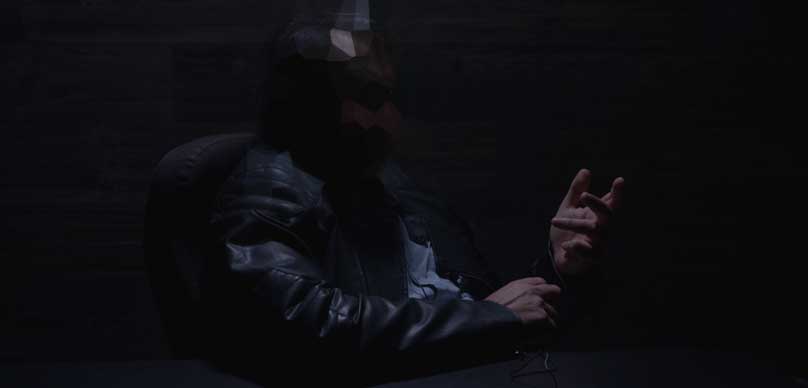
IFH 311: Making Your First Blockbuster with Paul Dudbridge

Right-click here to download the MP3

Today’s guest is Paul Dudbridge, author of Making Your First Blockbuster: Write It. Film It. Blow it Up! Paul Dudbridge is a British director, producer, cinematographer, and educator, making feature films, television, commercials, and music videos. Paul started producing at the age of 11 when he roped in his father to shoot his first short film. When the resulting footage didn’t match up to what he had seen in his head, Paul decided to go behind the camera himself, and from there the whole notion of making films; directing, scripts, shots and angles started to come about.

With over 20 years of experience in the business, Paul has numerous film and television credits to his name. His first broadcast credits include producing and directing ITV’s The Christmas Storybook, featuring legendary actor Joss Ackland, as well as directing music promos for MTV. His work as a cinematographer includes the action thriller By Any Name based on the best-selling book by Katherine John.

As a producer and director, he helmed the science-fiction series Horizon, which went on to win a number of awards at international film festivals, as well as earning Paul a Best Drama Director nomination at the Royal Television Society (WoE) awards in 2016. When not filming, Paul guest lectures at various universities and colleges around the country.

Most recently, he ran the Writing and Directing module for the Master’s course at the University of Bristol taught Cinematography at Falmouth Film School, and Advanced Cinematography workshops for BECTU, the UK’s media and entertainment trade union. 

Here’s some info on his new book: [easyazon_link identifier=”B07M7TJNB5″ locale=”US” tag=”whatisbroke-20″]Making Your First Blockbuster: Write It. Film It. Blow it Up![/easyazon_link]

Everything you need, from getting the script right, to the edit being tight, is laid out in an informal and easily digestible style. Making Your First Blockbuster covers not only all the major components but delves deep into the nuances that make the big blockbusters really deliver. The book uses examples from older and modern blockbuster movies, as well as the author’s own experiences on set to help demonstrate points clearly and make them easy to understand. Aimed at the professional filmmaker, this comprehensive new book also covers how you can shoot and utilize special and visual effects in your films as well as the techniques on how to shoot and edit action sequences safely, all whilst producing epic results on screen.

Enjoy my conversation with Paul Dudbridge.

Alex Ferrari 0:18
I'd like to welcome the show Paul Dudbridge. Brother, how you doing?

Paul Dudbridge 4:05
Hey, Alex. Awesome. Thanks for having me.

Alex Ferrari 4:07
How is the weather in the UK today? Sir? It's cold. It's very cold. Isn't unseasonably close. You guys are never cold, always sunny and very nice. Kinda like la but difference.

Paul Dudbridge 4:20
It's only January. It's got you know, they've got all the salt on the ground for stuff slipping over and stuff. So yeah, it's pretty. It's pretty cold out there.

Alex Ferrari 4:28
It's, uh, I want to I mean, it's cold here for us. We're like 40 degrees here. So I don't even know what that is Celsius because we're Americans. And that's what we do. But But for us, that's pretty cold, but I haven't seen snow since last Sundance. Oh, wow. Okay. For Well, a good year. I think so. Oh, really. So it's just cold. It's just cool. Oh, good, Lord. So thanks for being on the show. Man. I wanted to talk about a couple of books that you've written as well as your time in the business. So First off, how did you get into this crazy business?

Paul Dudbridge 5:03
Ah, well, I'm kind of got the classic story I, my dad bought a video camera when I was 11 to film sports days and holidays and all that. And my sister and a couple of mates have my report on this play in the back garden that my dad filmed it. And he kind of filmed it bless him. I don't know if he's ever gonna listen to this. But he filmed the wrong bit he filmed like the behind the scenes stuff of us preparing and not the actual stuff on stage as it were, and we and we were kind of like, I filmed it wrong, we should do another one. So we made a proper film. As you know, we kind of tried to do our own Deanna Jones. And that's where it started. And we couldn't edit everything was cut in camera. So when we stopped when we started the record button, that's the beginning of the shot when we hit the stop button, that was the end of the shot. So it was a nice discipline of what's the next shot going to be because we can't cut this. And we would even do our own music. I think we have Axel f from Beverly Hills Cop has like some theme music and stuff like that. And we had this like stereo off camera, playing the music and someone was hitting the play button while we were shooting the shot, and then they stop. And then obviously when you played it all back, the music would all be sort of stopping and starting and the law next door neighbor's lawn mower was kind of out because sometimes it was he was working. Sometimes it wasn't. And it was just his wonderful introduction to the into making films. And then from there each year, we kind of did a few different films. And then I went to college for a year we kind of I found editing equipment and and just went through there really and then eventually digital came in. But those early years are really quite good for me, I think because I've only shot on film once. But it was a real discipline. How How do you know what's your next shot, you just can't keep the camera running. How's it going especially even back in the day, when you're editing tape to tape, you had this master tape and if you made a film that was half hour long, you have to know how long your shots were. And even the only had two channels of audio. So we had one on dialogue one on music. And if we had any special effects like sound effects to pay in, we have to duplicate the the tracks across to the another tape and then bring it back in the player and copy it across again. The tapes were like fourth generation

Alex Ferrari 7:21
Nothing is more Nothing is more terrifying than being on a set with a film camera. And I was shooting a commercial. And I had to shoot out 120 frames a second. And the SAT I still remember the sound of the that the camera made. And it's just like an all you hear is dollar just dollars just cosmetic, but just cash flying out. And you're just praying that the film doesn't snap. Like, right this is this is this is what we did. But yeah, it was it was good times. It's good times. It's a good discipline. Yeah, it really is. It is an amazing discipline. I mean, I got my start in film, mostly. And shout out. That's all we had. So and then when I got into digital, it's like wonderful to let it roll and just just keep rolling. Just keep rolling, and it goes and but then when you get into posts, as I'm opposed guys just takes takes forever way cool that someone's got to find it. Oh, God, it becomes really, you gotta be a little bit more disciplined. So when I shoot now, I'm like, I don't know about you. But when I shoot, I'll cut. Yeah, I will, I won't let it keep going. Because you just kind of just run through all that crap. It's, it's, it's, it's crazy.

Paul Dudbridge 8:31
I think it also I mean, it is a good discipline to have. And I think that when I was cutting that, but I started editing, I always say to young student film directors, if you want to learn how to direct you need to know how to cut, because you need to know how the shots are going to come together. And we've all been there on sets before where you've got 10 shots to get the sun's going down, you can only get six. And you have to do the mental math in your head and go well, I could drop that shot, I could cut from that to that get around that. I could go straight that I need that shot to make the scene work, I could drop this one. And you can do that math because you know how to cut. And if you don't know how to cut, you're just gonna go, Well, I need to shoot everything, then you run over? Or you're second guessing yourself. So just just cutting, cutting, cutting because I know you know any if you're good editor, you're good director and I think that's the secret.

Alex Ferrari 9:23
No, I agree with you. I I started off as an editor. And it's helped me dramatically as a director because you just kind of know where to stop the cut. Because you're like, oh, you're kind of editing on set in your mind.

Paul Dudbridge 9:33
Oh, absolutely. Absolutely. And sometimes as a dp as well, I sometimes shoot for other directors. And if you're working for a director that knows editing, and I'd say to them you want to go again on that why and they're gonna be out of that. I'll be out of there by that I'll be on the single and they know where they're going to cut so we don't have to do the shot again. But if you're working with a slightly newer inexperienced director, they go Oh, do you think we should go again, I think we should do the wide again that two minute wide shot for another does take because they don't quite know how it's going to come together. And that's where you run over and things like that. So it's really good foundation I think anything.

Alex Ferrari 10:09
Yeah, absolutely. And before you had to, you know, find an avid system or find a flatbed to sneak in at night or in the early mornings or on weekends to practice on where now literally, you can edit on your phone. But or even, you know, get free software like resolve or Final Cut for like 200 bucks. I mean, it's ridiculous.

Paul Dudbridge 10:32
I love it. I think media first i think is free is a download,

Alex Ferrari 10:35
or they started getting they finally started giving something away for free at avid. Give me a break. Oh, no, no, don't get me started with avid please don't get me started with avid. I can't I just I just can't even with them. But anyway. What do you guys? That's a whole other episode for a whole other type. What do you guys, what do you edit on? avid? No, you're an avid and it's like, I have no problem with the tool. I have a problem with the way that companies run and they charge so much money and they just beat you down and all this and they doesn't play nicely with others. But I'm just gonna say, Would you agree with that with the visual effects and other things like that jumping? You know, yeah,

Paul Dudbridge 11:17
times the workflow isn't as smooth. I mean, obviously, if it's in Premiere, you can jump to After Effects and or resolve or Final Cut

Alex Ferrari 11:25
or something like that. But this conversation, you see, this is what happens with two directors, or to filmmakers who you know, who've been around the block a couple times, we just start chatting, it's gonna, it's gonna it's gonna derail a couple times, I'm sure. Alright, so let's talk about the first book you wrote, which is shooting better movies? How did that come to life? And what made you want to write that book?

Paul Dudbridge 11:49
Okay, well, I suppose there's two sort of strands to that question is one is how I came to write the book because about 15 years ago, I started teaching I there's a there was a television workshop here in the UK. And I started doing some sessions there teaching young students sort of between sort of 16 and 26, the beginnings of filmmaking. And off the back of that, I started doing some teaching at universities and other colleges. So I had this compilation of notes, handouts sessions, and I kind of was slowly beginning to understand how the information should be taught. Because it's okay to know it. But actually getting that across to someone that doesn't know it, and in a way that they can digest it easily is the secret. And I kind of asked over the years, I had all this information. And I thought, you know, I'm gonna write a book, I didn't know anything about publishing. I didn't know where to begin, but I thought, I'm just gonna write this thing on spec. So over about a year and a half, I just wrote this thing, and it's quite big. But at the back of the book, I wanted to have these interviews with people in the business camera systems, gaffers, directors, etc. And I knew just from big my time, professionally, I could contact people and say, Hey, would want to be interviewed for my book. But one of the things I really wanted was the Hollywood perspective. And about two years before that, I contacted a producer on Facebook called Pan dension, who was a writer producer, he went made one of the films, my favorite films growing up, which was Robin Hood, Prince of Thieves back in late 1991. I emailed pan, and just sometimes I said, Look, just to say, I love printing things. I use it in my teaching materials, because the you know, it's a good you know, it's got a bit whole end section with Robin Hood, when he's rescuing all his Merry Men at the end. And the way the director Kevin Reynolds shot, it isn't great sort of examples of orientation and things like that. Anyway, he got back to me, he was like, hey, awesome, nice to meet you. He's from the UK moved over to the states when he was younger. And that was it. And that was about two years ago. So anyway, when I came around to writing this book, I was like, You know what, I could email convention and he could be my interview for the Hollywood perspective for the back of my book. But and this is something that I tell students now when I'm talking about don't answer No, for the other person, which is I I was getting, I was scared about emailing him, because it's gonna say, No, get out of town what you're talking about. And it took me six weeks, I was thinking he's never going to reply. He's never gonna do it, even though I kind of had this contact with him. But that was two years ago. So anyway, I wasted six weeks and then one day I thought, you know what, I'm going to do it. So I came home and I emailed him and asked him if he would do the interview. I emailed him. I remember the timeline. I emailed him at two minutes past five. By 11 minutes past five, we had a date for the interview. And I wasted six weeks, right? And it took us like nine minutes, and he fought straight back. Hey, Paul. Sounds awesome. I call you Friday from LA. We're chat. Speak then. And I was like, that was a lesson for me. Forget the book. For a second, it was just a lesson in, you never know don't answer no for the other person because you know, that could be an actor you want to approach that could be a distributor that could be anything to try it anyway. So I interviewed pan, he was a lovely guy. He gave me loads of wisdom, and at the end of the interviews have, what's your plans for the books? And I said, I don't know, I might release it online, do an E book. And he said, Look, I wrote a book called riding alligator on screenwriting. You should speak to my publisher. And I was like, okay, and who's your publisher anyway, gave me the name of his publisher, which is Michael VC. And I've got nine of their books on my shelf. So I was like, Okay, anyway, about four months goes past, I finished the book, and I emailed Pentagon, like, I'm ready to email, the micro VC kind of have their details and it went from there. And then I got a phone call from Michael VC, the president of the publishing company. And he rang me to say, well, we like your book. Yeah, we'll take it.

Alex Ferrari 15:58
That's awesome. That's how the book got put in. That's, that's awesome.

Paul Dudbridge 16:03
But that was because I owe credit to pan. I mean, I've emailed him many times since for advice, and to congratulate him on staff and we've stayed in touch and he's just awesome. I owe to him.

Alex Ferrari 16:15
No, it's funny, because, you know, doing what I do now, you know, having interviews and requesting people like to come on, and some people come requests of me, but, you know, I'll go after big guests. And I'll just like, I, I've learned to just ask, yeah, you know, as long as you're providing some sort of value, and you're just not like an energy sucker, as I always call him like these people like, and he can you call up Steven Spielberg, for me? I know, you worked with them on this one movie, can you? You can't do that. But if you come from a really authentic, humble place, and just go, look, I need help, or I need this. I'm gonna say nine out of 10 times. Yeah, they if they have the time, or they'll make the time, it's pretty interesting. It's pretty interesting. So so that's how the book out into the world will let us talk a few things about our in the book, what are some common traits You see, in student films? And I have seen way too many student films in my day, including my own?

Paul Dudbridge 17:16
Well, yeah, there was a chapter at the back of the book, common traits. And I would say, I've been adding about 20. And now I would say, 19 of them, I've made myself in the mistakes I've made. And the common traits are like bad sound. You know, and even just like bad, you know, bad photography, overexposed, all that kind of stuff. And it's like, you don't need the big lighting kit, to worry, you know, to sort of solve that you could just move director foot to the left, so there are that light or whatever. And, and it's just the attention to detail a little bit like that on both those fronts. I see 239 widescreen. A lot.

Alex Ferrari 17:54
on an iPhone.

Paul Dudbridge 17:56
Yeah. And it's like, I can get that and and but you have to come out the wasp, or ratio from the point of view of the story, I think. Right. However, is I recently read an article American cinematographer, where they said back in like the early 90s, I think there was something like 75% of the films were shot 185 and 25%, were shot to 39 or something like that. And then now is the complete opposite. And you get romantic comedies shot to 39 every end. And there was a film I think, went to Sundance last year, and they literally said, We shot to 39 because we wanted to add that extra production value. Nothing to do with the story, nothing to do with any sort of narrative. It's just we did it because we people do associate it with higher production value. What was the other things like? Yeah, I mean, one thing that I did as a kid, we had shoes, we wouldn't make stories that were suitable for the age range that we were. So I had like my 16 year old schoolmates playing police detectives. Fortunately, we It was around the time when Tarantino was quite popular. Yeah, every suits, everything was swearing. Everything was after this

Alex Ferrari 19:10
blood everywhere, right?

Paul Dudbridge 19:11
Yeah, a lot of you were pointing and gun down the barrel thing. You know, it's funny now where you see I see even movies now. And I'm like, someone's left on the floor and put the gun down the barrel. And it's like, that was old heart in 91. You know what I mean? And it's like, you need to find a different way of doing that. Or, you know, holding that on the gun on the side. All that kind of stuff. So yeah, there's a few traits that you know, I was the other one, I suppose getting hung up on kit. As I speak to a lot of students and the first thing out of their mouth is we're shooting on the red. Yeah. I'm reading 4k. And you kind of go watch the story first. Because you shoot on the red if you want, but if you don't know where to put the camera, you don't get your coverage. It doesn't make any difference whatsoever. I know that somehow you're going to say, oh, you're in that league, you're quite established, you must be good if you shoot on the red and nothing against red. So it's those sorts of things that you kind of find cropping up. And, you know, I hold my hands up, I made half of those mistakes. No,

Alex Ferrari 20:17
no, no, without without question. And, I mean, I've done full podcast episodes on gear porn. And like, in the whole, like, you know, people obsessed with gear, and at the end of the day, like, I shot my latest feature, I shot on a on a pocket camera. 1080 P. Yeah. And it worked beautifully. And it looks stunning. And I didn't shoot it 239 though I could have because it was a very picturesque, you know, thing. But that's the other thing. You know, when you see it when you see a student film, or or an indie film, even, you know, when they're starting out where you see that 239 aspect ratio in there in a bedroom. There's no reason for that. Like, yeah, if you're out in the desert, or when you're in a jungle, and there's mountain ranges, and it's like this epic Vista. Yeah, I get it. I get it, but we're just shooting against the white wall.

Paul Dudbridge 21:14
Yeah, yeah. And I think it's the tail wagging the dog quite a lot there. And I think, you know, I speak to a lot of DPS and they talk about vintage glass and things like that. And, you know, you read interviews with like Roger Deakins, and he's talking about shooting on like Alexa, just on primes, just clear, brand new primes. And he said, he doesn't understand the notion of putting vintage lenses on a brand new 4k Alexa, it's like drinking champagne for a polystyrene beaker, you want to get the best image you can. And, and then if you want to do any effects in imposed or grade, and you want to do anything, you know, settle to the image you can, but you want to start with the best quality. So there's lots of, you know, points of view, and pros and cons to all of that. But getting hung up on gear is a big thing.

Alex Ferrari 22:02
I always use tangerine as a model, like, look what they did with an iPhone logo, Shaun Baker did with an iPhone and, and he just had a great story. I mean, the story was so well done and, and that the style of the film made sense. And, and he didn't lead with that. That's the other thing people don't understand. Like, no one knew that film was shot on an iPhone until the very end of the first screening where it said, oh, by the way, we shot this on an iPhone, where he could have easily led with that.

Paul Dudbridge 22:31
Yeah, but then it would have been a gimmick, wouldn't it? It would have been a Hey, look what I've done. And no one will be looking at the story.

Alex Ferrari 22:39
And it's a nice little bonus at the end, as opposed to leading with it. Which is one thing I always see filmmakers do now is like, well, I've made my movie for the cheapest. I made it for $5. I made it for. And you know what, when Robert Rodriguez did it in 91. With mariachi, I made a $7,000 feature film. That's because feature films, you could not make anything even remotely close for that budget. And by the way, I always tell people, the movie that you saw was not a $7,000 movie. That was a $1.5 million movie after they read it all the Yeah. All the sound the sound the loan was like a million because yeah, they had to reconstruct the entire soundtrack from scratch. They ADR the entire movie. But that's a whole other conversation. But but but that that kind of like I made this movie for like, you know, the cheapest thing ever. It does not hold weight anymore. I think that's another big trait that a lot of filmmakers think that they're like, Oh, I made this movie. I'm like, look how cool I am. I was able to do this. For $5. I'm like, that's great. What's the story? No one cares anymore. Would you agree?

Paul Dudbridge 23:44
Yeah, absolutely. Absolutely. And I think it's just all comes back to story story story. And, you know, what's the message and I saw I saw a film recently a film festival. And technically, I have it was I think they did shorten the Alexa. It was gorgeous. The photography was gorgeous sound, it was basically a feature that you would see in the cinema, but a short form, great composition, great grading, etc, etc. But two things while I didn't know what was going on. And second, I was so bored. And it was just it was just one of those things where I'm going, you've got the skills, you've got the talent, you've got the gear, but what story are you telling? You know, I'm not engaged. You know, what's up with that? So I think it's important to look at story first and then, you know, I think people will be I think they get adjusted to the image quite quite easily. There's a good interview in one of Michael VCs books actually called cinematographer directors where dp john seal is talking with Roger Deakins. And Roger Deakins is all about prime lenses and he hates zooms and john seals a zoo. Man, he doesn't use primes. And it used to be back in the day that zooms would have lesser quality because there's a bit more class go through. And he was saying, but after about three or four seconds of looking at that opening image, the audience goes, Okay, that's the quality. What's the story, and they won't be at the 50 to 50 minutes and they won't be going all but look at that green or look at the let the quality is not great thing that becomes the norm, it becomes the standard. So it's not about whether it zooms or primes. It's about the story because the audience will get past the image

Alex Ferrari 25:34
very quick. Without without question, people will always forgive a bad image, but they will not forgive bad sound. Oh, no. Yeah, bad sound mean Blair Witch Project looks looks horrible. You know, paranormal activity was shot on like, you know, nanny cams. You know, what the sound was? Great. Yeah, without question. Now, can you give me some tips on directing actors? Because I think filmmakers in general, actors are like, they only they only focus on the gear they only focus on on lenses and light and all lights and all that kind of stuff. And they and they, and then if you're lucky, they follow up. So focus on story. Sure, but the actor is this kind of almost mythical thing for especially for for, you know, first time filmmakers and people starting out. They're very intimidated. They speak another language. I mean, they they speak and so I'd love to hear your thoughts on it.

Paul Dudbridge 26:30
Also, well, first of all, I think, don't be frightened of it. I think it's, it's listen to them. Because I've seen a lot of a lot of directors on set talking at length to the actor on this is kind of as a kind of various layers here. One is telling them what they want. And then basically, you haven't given the actor the opportunity to present what they prepare, because you might spend 10 minutes saying, look, I want you to do this, this and this. And that was exactly what they were going to do. So you've now just killed 10 minutes. And also you haven't trusted the actor to go or this is what I've prepared. So take one should be will show me what you've got. And you've got a brilliant that shoot or tweak here and there. And intellectual chitchat as a big thing. Like, it should always be about what the behavior you want from the actor, not talking about what they had for breakfast, what the meaning of that tie is. And there's a wonderful quote that I used in my first book from a book called a sense of direction by a director called William ball. And he say to the actor, if they started getting into an intellectual discussion about what the character means by this and what that represents, just say to them, show me Show me what you mean. And that would probably stop the conversation, because there's no way of performing the actions saying the line that can demonstrate what they're saying, because it's all intellectual. There's no behavior component to that. So it all has to be about the behavior. What if there's a behavioral change behind your direction, then it's good direction. If your behavior doesn't change, then what are you talking about? and direction should be about 10 seconds long. If it's anything over 10 seconds, you've got a problem, because you need to talk at length, about something that should have been talked about in rehearsal should have been discussed on the phone before you went to sell whenever you have the chance to talk to the actor. So it's one of those things where you just need to nudge them either way. Rather than say, right, let's take this whole scene apart and the whole character apart and let's discuss, you know, you know, what's the scenes about and you're just wasting time you're wasting daylight, or film burning film? Whatever. Yeah,

Alex Ferrari 28:54
no, I had the I had the pleasure to interview Robert Forster. Right. And he was in Tarantino's Jackie Brown among a billion other things he's done in his career. He's an amazing actor. And I at the time, I was just like, Can you give me the best direction Tarantino ever gave you? And he said, the best I've worked with a lot of directors Alex in the best direction I've ever heard was from Quentin. When he said to me, he would whisper it right before the tape. We were before yell action. He goes, make me believe it. Or not, that was it. That was it. That was it. I was like, wow, that's that's a really good. I mean, you really got to trust your actor everywhere. And of course, the caliber of actors he works with, you know, when Brad Pitt and Leonardo DiCaprio are on set. He pretty much just, you know,

Paul Dudbridge 29:44
that? Yeah, I'd say I there's there was an example I had. I had an actress on our show that we did a couple of years ago. And what we had to do was she was looking at a clock that the clock is stopped and she she's wedging through these drawers in this kitchen, she looks up to see that the clock is stopped. As the actor, she saw that it stopped. And then she went back to her business. But the editor of me needed to be able to cut in on her closer to the shot of the clock. And she didn't hold that look at the clock long enough for me to cut in, she did it how she would do in real life. And for me to say, Can you look at the clock longer, suddenly would become quite statute would look up and a face would lock in place, it would be quite static, it wouldn't be flown with the character. So I said to her was just make sure that the clock is stopped. So then she looked up and she had to look at it in characters that were in the built in that into the motion of her actions of looking up, she she held the look long enough to go yes, that second hand isn't moving. Now I'll get back to my business and it was long enough. And it's an exercise in what they call not giving result direction, which is your actor just to get a result from them. So you know, and one of the things I say in in my book shooting about movies is to use action verbs because action verbs are a great tool for the actor. So you might say interrogate your daughter as to where she's been. You know why she's come home late. And it's an action verb does is a great tool because there's a connotation attached to that word. So when I say Harrogate, I think of police. And they would go, they would lock eye contact, they would be quite firm, they would be quite assertive. And what you can then do if the actor is giving it too much, and you want them to be a lesser intensity, you can say quiz your daughter about where she's been. Now quiz to me, I think of a pub quiz or a TV show where the questions are asked, which is not, there's not too much intensity to it. So then the performance is lessened without saying, talk quieter, look away at that line, etc. to be considered result direction.

Alex Ferrari 32:04
Yes. act like you're angry at your daughter for being late as opposed to that doesn't give you the same meats to play with as an actress like, interrogate?

Paul Dudbridge 32:13
Yeah, and it's about action verbs do is they give you that emotional core, you want the article and find, and they always say is that one verb and the act goes, I get it. And so so what I do when I go through a script is I might have two pages, and I'll say, what's the character doing that, for the first half of the page, they're trying to convince them to marry them or convince them to go away, then when they're not replying, or then they're not taking them up, then they sort of plead with them. So you find those two or three action verbs that might help when you're on set, and you need to direct the actor, you can just find that verb. And I and that keeps the direction short. So you're not trying to split it apart and talk at length.

Alex Ferrari 32:53
Now, this is a, this is a topic that I love always to asking directors specifically is one, how do you deal with a difficult actor, an actor who is not doing what you're doing what they want? Or if they're being disrespectful, or they're not just listening, and they're making the director look bad on set? And to how would you deal with that same situation with a crew member, like a dp who doesn't respect the director or, or art director or you know, or producer on set? That's just giving you headache? Because as first time directors Look, when I first came up, you know, I had these older crew members, you know, in I'm sure it's the same way in the UK as it is here, like, you know, seasoned guys and girls, they can smell you coming from a mile away. And actors are no no different. So they'll, they'll test you within the first five or 10 minutes. And they'll go, okay, he knows what he's doing, or Okay, she knows he knows what she's doing. How do you handle first the acting situation, and then also just with crew members, because I think that's super valuable, especially for young filmmakers coming up. Okay, first of all, I would probably say that I've had the privilege of working with a lot of good actors who aren't like that, and I'd normally and I can put it down to, if they're confident, and they know their stuff, they've got nothing to prove. So there's no ego, so therefore they don't, they're not difficult. If they're nervous about something, they're worried about that big emotional scene coming up, they don't they haven't really learned their lines, they're a little bit anxious about it, that will come out in one way or another, which is probably animosity towards you. And, and any of the good actors that I mean, good as in their performance. They're also the ones that turn up on time, carry the cases, make the coffee or whatever they you know, when they're not working, and there's a correlation there. There really is. And it's always the difficult ones. It's it's funny as those what they call the enemy of production, where there's always one person, whether it's an actor or crew member, who will derail your film unless you isolate them from a point of view. Work out who it is. And you need to pull them to one side offset and say, Is there something I can help you with what seems to be troubling you? Can we talk about? Is there anything I can do? You know, I'm sensing something but you're not happy? Can I help? And just bring it out out into the open sometimes, especially with crew members is that's the way to go. Because then they realize they've been rumbled pilling with the kindness and you're saying, hey, look, I'm letting you know that I've noticed your behavior. Hey, let's all get on what? What can I do to help you if there's something that you're not happy with? Let's talk and you've kind of they can't, in theory, then continue to be a jerk about it, because you've already pointed it out to call them out on it, call them out on it. With actors, I think it's again, I think, if we can find that thing that's troubling them, so you need to speak to them offset. And let them know that they can mention it. They're not you don't want to do it in front of the DP don't want to do it in front of another actor because they might be embarrassed or what's troubling them might be the person that's stood next to you. And just say, everything, all right, I'm sensing this thing. And again, once you've called them out, it's it's you know, you're you know, you want to make it, you're trying to make the film, the best it can be you need their help to do that. And it's just about getting them onside. And Failing that, if you know, you just want to get as much coverage as you can to try and cut it. It's a It's a sad thing. But it's one of those things where you need to say, Well, if they're not cooperating, how do we still make the scene work? And just work with them? I really do feel that I think I've had this experience. But do you feel that when actors feel that they're not safe, because it's our job to give them a safe space to play? If they feel unprotected, if they feel unsafe? Many of them will, some of them will just go introvert, but a lot of them will come out and will will create problems create havoc, because then at that point, they're in survival mode, because they're exposing themselves so much out there. That it's like, if this guy, or this girl does not have my back, I gotta take care of myself. So screw everything else. And that's when the problems start. Would you agree with that?

Paul Dudbridge 37:20
Yeah. I was just trying to think of something else. That is an example. Sorry, do just repeat that back to me again,

Alex Ferrari 37:30
that when actors are feeling that they're unsavable say, yeah,

Paul Dudbridge 37:35
yeah. Yeah, I think that's I've made that mistake before actually, where the actors very feeling very vulnerable. They've just given me the performance that I want. And what I've done is that I've, I've kind of got Oh, thank God, we've got the tape, right, let's move on. And I'm talking to the DP. But now I find the time to go up to the actor and go, that was awesome. This, that and the other you nailed it, did it? Is there another take? You want to try? You want to try a different way? Because obviously, that was the way that I asked you to do it. Is there another input? And they say, Oh, no, no, no, if you like that, that was fine. Rather, and, you know, they feel like they want to give it another go a different a different way. And there was a tip that I picked up from Spielberg actually where I was watching the extras on, Catch Me If You Can with the Caprio. And he's saying that they would do these tags the way that Spielberg wanted DiCaprio to do it. And at the end, probably just say, right, do just do another one, but go crazy. outrageous. Yep. And he would say that in the Edit nine times out of 10, they would use the outrageous take. Because there was no inhibitions, DiCaprio felt free. But it was just the fact that he had been listened to the actors need to know that they put their point of view of cross. And sometimes I've had suggestions from the actors that I want to go with. And I might make more of a thing of it to the crew that we're going with the actors suggestion, just so they go, Hey, everyone, This idea was from this actor, isn't it a great idea, we're now going to shoot it this way. And they kind of feel a little bit, hey, I've put some input in here and everyone knows it. And it's a little bit manipulative, but you are protecting them in and you're also backing them up really,

Alex Ferrari 39:23
it is so much about filmmaking is psychology, in how you produce it, how you find the money for it, how you actually shoot it, how you edit it, how you distribute it and also just the psychology of telling a story with subtext and and creating different you know, you know, things and all that kind of stuff when you're when you're doing stories. It's it's really interesting, and I think filmmakers really don't get that across they don't teach that in film school. That's psychology should be a prerequisite in any and all film schools would you agree on that?

Paul Dudbridge 39:58
It's like 50% of the SAT because You've got a psychology going on with the crew, you've got the actors with the director or the director and the execs. You've got. It's all it's all egos. Its has he or she had her input. You know, it's, I don't know, it's like, you know, it's the classic story of as well of like, the editor and the director leaving in shots that they know to be bad. overlong it's a new one, it goes up the chain to the producers in the exact Oh, yeah, they go don't like that shot, take it out. Good idea. Thank you very much, producer B, we're takeback Great example a great, you know, input, and then you take out the shot. And they everyone feels that they've been heard. And the danger comes is when you present someone with an edit, where it's in a really good place. And if they're insecure that they need to make changes, otherwise, they still haven't been heard. You're going to be damaging the movie. And then you're into a battle there. So you almost want to go, well, let's leave in that shot. That piece of information is redundant in that scene. So we'll leave that in. And then if no one picks up on it, you can take it out anyway.

Alex Ferrari 41:08
Right and that's that's a piece of advice as a as an editor for so many years, I would leave mistakes in. I would for the client, I would just leave in doing commercials or do music videos, I would leave a mistake like something so obvious. That'd be like, oh, it just it just so they have something to justify their job.

Paul Dudbridge 41:25
Yeah, yeah. You know, all credit to a producer. I think it was against bill Berkey. Sam Mendez was saying in an interview that when he showed Spielberg, American Beauty then one note from Spielberg well, who's the exact because it was the movie through DreamWorks. He said, Don't change the frame. Now caught the confidence from Spielberg. He could have said, Well, look, I wouldn't have done it this way. You want to tighten up that scene to that? But Spielberg had nothing to prove. He didn't need to show Sam Mendez how to make films. Yeah. Only night was don't change anything.

Alex Ferrari 42:00
Because he's Spielberg.

Paul Dudbridge 42:03
But also, it's like, I don't need to I don't need to show you that. I'm Spielberg. Yeah, I need to prove to you that I know my staff. And I think that's such a valuable thing. And if I if I come across crew members and producers especially, and I'm saying hey, I had nothing to add to that Skype call, I have nothing to amend. Because I think what it is, is it's in a good place right now. You know, that's, that's really good. Because then when they do have a note, you listen. And I've also like you how I'm sure we've all had the notes when somebody just say, Oh, it's a bit long. And you go Okay, well, is it long? And they go well, you know, just generally

Alex Ferrari 42:45
just cut off 10 minutes, I need you to cut off

Paul Dudbridge 42:48
a generic cattle. Here's my input, right? Because anything can be shortened. But if you said, You know what, at the end of season six, when he leaves the house, I thought, there's a couple of shots there that drags. And it's like, cool. That's that's probably a good point. Let's look at that. All right, but to say, oh, is a bit long? Or I don't know, it's just it's you kind of have to go What?

Alex Ferrari 43:10
You know, it doesn't feel right. Yeah. And it's like that. See, you know, that scene, I'm just not feeling the vibe of it. I'm not getting the emotion of it. I'm like, give me something else to work with here, man, please.

Paul Dudbridge 43:25
It's important, actually, Your feedback is a big thing. Yeah, if you've got edit, you need to find a select group of people that are filmmakers that have you they've got nothing to prove that you trust their feedback. And that they have a train die. It's really important, I think, to have a train dies a really good phrase. Because otherwise, you know, you're sending I've worked in the past, I've worked with producers that haven't produced material. And they're looking at the script. And they're saying, I think this and it's like, do you know what you haven't got enough experience to justify what you're saying? You're almost repeating something that you've heard. Christopher Nolan say you've just hearing you're just repeating something because you feel you need to give some input, but you haven't done enough to base that experience on anything. And you kind of need to I think it's important to be wary of those sorts of people and, and, and just firewall just find that group of filmmakers that no film, right. I can give you some good honest feedback. It's really important

Alex Ferrari 44:35
to the one group that I've put together and it seems to have worked for me on my features is I get a screenwriter, a cinematographer, a director, and a producer. And, and that really gives you a perspective because they'll all have an editor, excuse me and an editor. So they'll look at it from a completely different point of view each of them and really give you a good rounded you know, like the DP Be like, why did you shoot that like that you should have done this or that. I'm like, but does it work? Yes, but I would have done it this way. And then the Edit was like the editor would say something, or the screenwriter was, but it really does give you a really good well rounded feedback. So it does work that works for me, as opposed to just filmmakers are great. But when you have some, like people in their specific niches, it really does help. We'll be right back after a word from our sponsor. And now back to the show.

Paul Dudbridge 45:35
Absolutely, I think that does that. That's totally, utterly true. And also, I think it's important not to go necessarily from the opinions of those who work on the film. Oh, God, no, no, no boss, is, you know, I remember giving feedback on a movie once this is about 10 years ago. And a friend of mine, we gave some feedback. And the composer is in the room. And he walked out halfway through our feedback. And he was saying, Don't listen to the same. They're going to ruin the movie. And I was like, Yeah, but do you know the story? So when you and I say, I think I said, it's in the book where it's almost like this jigsaw puzzle 50%, you have 50% of the information because you know the story. So when you watch the movie, which is the other 50%, it makes 100%. And the story makes sense to you. I've only got 50%, which is the film, I don't have the story, I wasn't privy to the production meetings about what this means and what this person's you know, what's the meaning behind that line and what this scene is, therefore, you were so you have that information when you watch the film, and it all makes sense. But I'm view it doesn't make sense. From my point of view. I don't know why that character is doing that. The editing suggests that he saw what she was doing, when actually they didn't. And it's important to find into to find those people that are filmmakers but necessarily weren't involved in the movie, because they've seen it so many times. They story.

Alex Ferrari 47:05
I would you and also I mean, I edit my stuff, I'm assuming you do as well. But sometimes, and I've gotten a little bit more disciplined over the years is that if you're on set, and it's took you five hours to shoot a shot, and you're in the edit, and you're like, but it's not working. And somebody and I did it when I was younger, I would let things sit because I'm like, but that shot cost me 10 grand, I can't, I can't. Yeah, I can't just cut that, to get someone else's perspective, who's not involved who wasn't there, and they could look at it and just go do the shots too long when you got to cut that. But it was the crane shot that I jumped off with a steady cam and then jumped on a helicopter was great. Like, yeah, but it doesn't do anything for the story you need to move on.

Paul Dudbridge 47:51
At that time, we made a sci fi movie last year, the year before. And we had a shot. It's now a movie was a webseries. But we have a shot in there, which is an a visual effects shot that took 18 months to hertz post. The post was quite a long schedule anyway. But we're doing from start to finish it was about 18 months. And it was a plane if the plane flew over camera, and then it continued to fly. The next shot was the plane coming to view and its wing with clip the side of this building. And this glass was falling down and stuff. And then we finally got it it was and there was in the background play. For those that no visual effects. We had a crash zoom. So the the CG plane had to also be strengthened size to match the plate. Anyway, we stuck it in the edit and we went No. It just didn't work. The previous shot of the plane flying over camera was the out that was the end. And then to cut back to this plane. And it was it was painful. Because we were like yeah, but it's took 18 months. X amount of dollars. But we just kind of and then I showed it to the sound mixer, because he had seen the rough cut and the new car. And he went Oh, you've chopped the second plane shot. And I went Yeah. And I was about to go into the story of why anyway, yeah. didn't need it. And he came in straightaway and said you hated me. Yeah, that's always a painful, like VFX guys just aged about 10 years because through.

Alex Ferrari 49:23
I've gone through that with my VFX guys as well my friend, which is a great segue to your new book that just came out or is coming out really soon as of this recording coming out very soon, called making your first blockbuster. Yeah, and first of all, how that's I haven't seen that before. I haven't seen a book with that kind of title before. So I'd love to know what it's about and what inspires you to write it.

Paul Dudbridge 49:48
Okay, well basically making your first blockbuster is obviously it's is a two prong Title One is whatever your blockbuster is, so you could make in your 50 million pound movie or you could be made In your, you know, $5,000 movie or whatever it might be is your blockbuster. But basically the way I pitched it to Michael VC was I want to write the book I wish I had when I was 18. And that refers to 90 writing, producing lighting and stuff like that. But the kind of things that we were doing were making movies when I was 18. We were making action films we were trying to do explosions was running around warehouses with blank firing guns. I was doing firecrackers on the wall trying to do that stuff. And I, you know, some of it works, some of it didn't. I shot things badly. I didn't get the coverage, all of that kind of stuff. So I pitched it to Michael. And I think I really loved the email, he gave them back to me because I've said, I pitched him. And the email came back about 20 minutes later and just said, I don't like it. I love it. Let's do it. I think the lover bit was about four lines down and I was like, ah, anyway, but it was I tell the story. One of the things I tell the story in the introduction where I was when I shot this movie, I was I was 18. And I wasn't driving yet I had a friend of mine, he was driving. So I'm passing my test. And we spent the day running around this warehouse with blank firing guns. And we would like fire off these blanks. And I had this I was the in the movie because that was my back in the day when I was I think I had this pbk strapped to my chest in his gun holster running around all the rest of the all day under my jacket. And then as we finish shooting, my mate turns to me and he says, Oh, you've been driving. I've been driving around for a bit. Can I get some petrol money? And I was like, Yeah, dude, fine. Pull over to this ATM and I grab some change. So I pulled over the ATM was out of order. Of course, I had to run into the bank. So went to the bank, got some cash out, ran back to the car, which is has his engine running outside the bank. And as I get back into the car is blank firing pbk falls out of my pocket. And I've just wrapped with a loaded blank firing pistol strapped on my chest and my heart just froze. And I was like, I don't see a way out of that. I mean, I would I would I would have to say to them, Look, I we're making a film. Here's the footage. But anyway, but

Alex Ferrari 52:24
you but you were just pulling money out like legally. Yeah, you didn't rob the bank. He just walked but it didn't look good from someone looking outside. Yeah, but I mean, if the gun had fell out as I run into the bank, right? And then I kind of picked it up early, but under my jacket, CCTV would have caught. But afterwards you see this?

Paul Dudbridge 52:46
I went why. Sure. But anyway, what happened? How How to fire store and use blank firing weapons is now a chapter in the book.

Alex Ferrari 52:58
Because I don't know what happened. Did

Paul Dudbridge 53:00
anything happen? Nothing happened apart from age a few years. I a, you know, it was just one of those things. But I don't know stuff like that. And you know, I used to put firecrackers inside my Millennium Falcon Star Wars toys and trying to blow them up and how to how to make effects and how to do stuff. And so it was just all that stuff that I was trying to do as a kid that I've kind of learned how to do professionally. So I thought I would now put it into a book.

Alex Ferrari 53:27
Now. Can you give us a few tips on getting high end visual effects on a budget? Because so many so many filmmakers always are asking, Well, I'm a VFX soup as well. So I've dealt with it with in specifically in the in the indie world. So I always get this comment, they will always be this. Okay, so this shot you remember this shot in Avengers and I say stop right there. Just stop. You're making a $20,000 feature film? Yeah, stop it. Any reference you gave me to Lord of the Rings, any references give me to the matrix or Marvel? Or any Disney like 200 million. Just stop, just stop because it's not gonna happen? Because it's just like, Can we get this thing with the statue of Lipnic? No, you can't? It's no, it's No. Yeah. So how can how can filmmakers get good visual effects for a budget, especially when they're trying to you know, make a blockbuster? Well, I

Paul Dudbridge 54:31
think I really promote the idea that I think all filmmakers and directors should study and know what can be done with visual effects because first of all, it can get you out the ship a little bit. It could be something you know, painting something out, or something that you don't it's something that you think could be quite expensive might not be. But I think the first thing that I say with with people do with visual effects is is kind of look around and see how the environment works. Look at light, look at the way our eyes You know, see things look at depth, look at shading, look at hazing and just get an understanding of that. But just knowing what can be done and what can't, using sort of CG, putting small elements of CG into a live action plate, it normally looks better than, you know, the like a linebacker like a CG plate. If you're trying to do too much CG in the shot, that's when it starts to look fake, because your eyes seeing what's of, you know, all of the CG kind of computer generated stuff. Bit of misdirection, you know, it depends on what's in the shots. But if the shots on for quite a long time, the eyes got time to look around the frame. But things have moved on quite a lot. Now, there's a lot of kind of, there's a couple of companies doing pre keyed, sort of visual effects, stuff like smoke and explosions and muzzle flashes and things like that. But one of the things that me and my visual effects guy do is we're trying, the best way to make visual effects look good is to take the perfection out. So say you've got muzzle flashes, and some some shell casings flying out at the top of a gun. you animate those shell casings coming out, but maybe you see the first one. But the second one is too blurry, and it's too fast. So and then you see the third one, you only just see the second, the fourth one, etc. But what most people do is because they're putting some kind of effect shot together, they want the audience to see every step every part of it, I want to see my work. So I want you to see all four of those shells. Clearly, because I want to show off what I've done. When actually, if that was shot live, you would only see, like I said the first one, the third one may be the fourth one, the fifth one would go in the crazy direction different to the others. So you know, it could be little bits of elements to take the perfection out. And then look at color correction look at lights and darks and shadows. And another good way of doing is adding depth. Anytime I do a visual effects shot, I like to add some foreground. Because it looks like the visual effects thing that you're putting in, it could be a dinosaur, it could be an explosion, it could be anything sits better in the shot, if it's obscured in some way by something else, rather being plunked on top. So I would shoot a separate element of a side of a car or a tree or a stand or something a sign. And I could literally then place that on top of the CG shot. And it would hopefully make the CG blend a bit better.

Alex Ferrari 57:42
I would also add to that if that if you can add visual effects to a practical shot already. Meaning like if you have a gun I did. I did. One of my short films had a lot of gunplay, and I had blowback on him. So I had all the airsoft guns. Sure, so I had blowback on them to give it some reason so that practical mixed with a muzzle flash. Yeah, yeah, some lighting effects really sells it. You know, like it's it to create only fire that CG is tough. Even at the largest levels. I still remember this one shot in the rock, when I remember that car chase in the rock where the hits the the the trolley and the trot and the trolleys shoots up that CG so fake, it still drives me mad. It's even difficult at that level. But if you have some fire to extend it, would you agree? Absolutely.

Paul Dudbridge 58:42
Yeah, you're basically augmenting what's already there. Another good. Another good tip is while the same sort of adding CG into the live action rather than the live action to the CG. But also, it's never just the explosion. Like if you put a fireball in a building or something, it's the effects of that. So the side of the wall will glow. There'll be a little bit of dust that will shoot out there be a little bit rubble. But when you see an explosion on film, your eye just sees the orange fireball, when actually what makes it real is the fact that you know that that car next to it glowed a little bit orange, there's a there's a dust cloud that very softly, very faintly came towards camera. And it's those little bits where the CG element has caused some kind of effect in the shot. Whether it's a shadow or something, and it's interactive, and it joins the whole lot together.

Alex Ferrari 59:44
Yeah, like we felt like reflections are huge. Yeah. So if you have a fake, you know, a matte painting, make sure it reflects properly on on a window or in a car window or in a mirror or even on like something that's metal. Just have it that those little touches are what sell a foundational

Paul Dudbridge 1:00:02
effect. And I think that's it, it's just making that those little bits is those little elements plus taking the perfection out my my visual effects artist, we did a shot on a show where we had to film in a, in a rearview mirror of a car. And because on our on the in the UK, we are filming on the right hand side was behind the driver's seat. We couldn't do that driving. So we did it stationary. And then we had to put in the shots of what the mirror is reflecting. If you had to cut the mirror and put the ground underneath, we jumped in the back seat and filmed outside of a moving car. So the angle is the same. But when we filmed out the reverse to the back of the car, to to place in that layer of what the there was reflecting in the in the mirror, what our my visual effects guy did, he took some dirt and grime and place that over the reflected shot. So if sold it like it was a dirty car mirror. And instead of just being as crystal clear image reflecting it reflected in the car window. It was actually the image was there underneath layers of Smudge and black splotches. And, you know, no one's gonna, no one's gonna see that. But this subconsciously the eye goes, That's real because I can see some dirt.

Alex Ferrari 1:01:21
Because that's what it would look like in real life. That's how it will look like. And also back, you know, like when Jurassic Park room and when Star Wars and those kind of movies came up people who are not savvy. I mean, my wife who's not in the business will call out that's a horrible comp. Like she will say, she'll be watching, she'll be watching a big television show, or she'll be watching a movie. And she's like, that was horribly, that's a horrible greensky. Is that a greensky? That's a horrible green screen. I'm like, Wow, you've been living with me way too long. But people are much more savvy than they used to be about. And even if they don't know the terminology, like that's a bad copper, that's a bad screenplay, a green screen, they would just go Hmm, that just doesn't look right. You know, as opposed to before anything was acceptable. Yeah.

Paul Dudbridge 1:02:09
Yeah. And I think I think that's I do mentioned this in the book, actually, that I think the secret also to doing visual effects stuff. And Jurassic Park, which you mentioned did so well with this, that all of the CG was shot from ground level. Right, because that was the character's point of view, looking up at the dinosaurs. Because at that time, ILM couldn't do the camera flying around everywhere, because they couldn't do that stuff yet. He came at it from a point of view of what does Sam Neill See? What does Jeff Goldblum See, cut forward 2005 with King Kong. And you've got Kong fighting the T rex and the cameras flying up above through their legs. And it's like, the kind of the golden rule is, if the camera couldn't do that, physically, the CG camera shouldn't do. Because that's one of those things where they go, yeah, I'm being drawn out of the movie that CG, rather than that looks real, because that's what the camera would see if it was shot for real on live. Right?

Alex Ferrari 1:03:09
It's especially in something that's so practical, like, the camera goes inside of cogs nose, and then comes out like it's like, that's probably not gonna fly. That being said, What an amazing fight sequence CG. CG was awesome. Oh my god, what an amazing that movie had obscene CG. But you know, when I was doing it, you know, and it's, it's Peter Jackson with all his toys.

Paul Dudbridge 1:03:36
Back to your first question about how do you make the real? How, ask the question, how would you do this? If it was if it was live? Yeah. And if we were filming that explosion, you're filming that car, you're filming that? Even if it was a spaceship landing and hovering above whatever the you know, the roadside. If that was live, what would you do I put the camera here. It would be handheld, I would do this, I would have these people in the foreground, I'd shoot over their shoulder, etc. Right? Have that shot, write down those elements break the shot down and go right we need a background play of the road side, we need the CG ship. We need the over the shoulders of these people. So that might have to be green screen. And then you can lay the comp up, and then you can make the work. And then you know, adding those extra bits like if it's handheld that looks kind of a little bit of the moment. And like I mentioned earlier where that plane coming over we actually had a crash zoom, which caused half the problem because the CG obviously has to track that little extra spark to say this was shot live because we only just managed to grab this shot. The camera was in too close and the cameraman had to zoom out really quickly because the action was happening for real and subconsciously that comes across the cells the visual effect.

Alex Ferrari 1:04:53
Now I somewhere in in one of your books. There was a chapter title and I had to had to call you on On this because I think it would be great. What are the three secrets of filmmaking? Okay, because I would love to know.

Paul Dudbridge 1:05:09
Okay, right. Well, I hate to disappoint them nothing particularly sexy.

Alex Ferrari 1:05:13
And that's good. People always caught up with like, Oh, look at the cool Alexa with the cook lenses is like, Look, dude, just, it's that's the sexy part of the filmmaking.

Paul Dudbridge 1:05:23
Well, anytime this has come out of my teaching really, and my working in my own experiences, and working with, you know, interviewing and speaking to a lot of colleagues and things like that. So, the first thing is, is to shoot as much as you can, like, grab a camera and shoot. I know, that's a cliche, because everyone says that, but I speak to student filmmakers, they're not filming enough. They're not filming, you know, I used to, I used to shoot, you know, I used to get my camera when I was like 1314. And just plan around my bedroom. I'd filmed posters, I've done my models, I've filmed the cat, and it would just be using the kit, you know, that pan is a bit jerky. Why is the autofocus doing that? Why is the outside looking blue now. All that kind of stuff. And I would shoot and this is a good example, I say to my students, I would film my cat walking through the house and it'd be a handheld low shot. And I would spin around in front of her and all this kind of stuff. And I would know how to move the camera without necessarily looking through the eyepiece, knowing what that I was getting the shot, cut forward 20 years and the director might go Can we get a low shot of the villains feet walking in the hotel? Oh, you gotta Yeah, cuz I shot my cat 20 years ago. And it's and it's just about filming as much as you can. And, you know, if you've got this short film idea that maybe, I mean, I know Rodriguez used to say this. But you know, say your parents own a flower shop. But that's not on Sunday, make a short film 10 minutes long about a flower shop. And you have two actors. And we're going to, we're going to film it is now early January, we're going to film it end of March. So we've got three months to write the script, find the actors, I'm going to make this movie by summer, it's going to be caught and it's going to be into festivals. And it's just people aren't making enough. And I think you need to know kit, you need to know focus, you need to know what storytelling is. and shooting helps you do that. The second thing is to read god, yes. I'm obviously coming from a point of view of being an author. It's kind of like, Summa, but

Alex Ferrari 1:07:27
but not just read, but just not read film books and screenwriting books read about life, about every genre in the world.

Paul Dudbridge 1:07:34
All of that. So I make a joke why I started reading when I was 25. properly. I was reading before that, just

Alex Ferrari 1:07:41
Me too. Me too. I didn't read a whole heck of a lot till I was like maybe late 20s.

Paul Dudbridge 1:07:47
No, I didn't read in school I didn't read. But then I started reading when I was 25. And I started reading psychology books, business books, filmmaking, spelling books, which you're going to come on to all this kind of stuff. But I would read you know, I'm self taught, I didn't go to film school. So I'm completely self taught, I found a cinematography book in a bookshop here. And I picked it up. And it was a lot to do with film and a lot to do with light meters. And I didn't know any of that stuff. But then I just bought more books, editing books, directing books, writing books, you know, the classics, Rodriguez's store, you know, story, all that stuff. And just read, read read. And it's funny, when I go to colleagues houses, I've got a few cameramen that I know are in their 60s and 70s. And you go to their study and what's behind the study, wall and wall of books, cinematography books, autobiographies, you know, script writing books, there's all there. And it's all that wealth of knowledge at your fingertips and no one buys the books to read and this is just a wasted resource. So that's what I push. And then the third thing is something called Get your shit together. Okay, which is basically get your shit together covers everything about you. So that's your timekeeping says, emails, dress and appearance, areas you need to improve on and things like that, because we talked about politics before but it's like, I'm not particularly strong. You know, my, my, my writing skills is got better recently obviously with the books but you know, my spelling Isn't that great? My grammar isn't that great. So when are bought books on grammar? You know how to write you know, you don't want to write that email to the publishing company or that dp you want to work with, and you listen to spelling errors, or you spell his name wrong. I've had that before. I've had writers write to me and they spelt the room project wrong. And it doesn't, it doesn't look good. It's not professional. It's not professional and timekeeping, turning up late and there's basically no excuse for anything. I had a student once who was coming to say we're shooting this short horror film, and we're filming at nine o'clock. On a Saturday morning, and she says, I've never seen this before. It's brilliant. She turned up on time. And then I found out she drove to set the day before. Just to find out where it was. Like, that's so simple. But I've had other students that are calling me at quarter past call time, quarter past nine going, my Sat Nav, my, you know, told me down the wrong road, I was stuck in traffic. I'm not where I am, I'm trying to direct and I'm and I've got a student on the phone. I'm trying to direct her as well or him. And that should have going, I'm going to find out where it is. I'm going to get up earlier and allow for the traffic. I mean, what other things as well as like, dress and appearance how you appear on set in our camera system once we're filming in a basement, July for about four people.

Alex Ferrari 1:10:57
or seven people in there. And the kids thinks he hasn't he hadn't showered. Yep. Yep, I've had I've been there. I've been there.

Paul Dudbridge 1:11:06
It's a focus puller. I'm right next to him. And then halfway through the day he goes, I'm just going to pop outside for a five

Alex Ferrari 1:11:13
minute bar. By the way, everyone talking effect is a cigarette, a cigarette.

Paul Dudbridge 1:11:19
And then he's breathing cigarette smoke on me. Oh, you know, he's it's all this kind of thing where you're going, dude, you're not helping yourself here? What's going on?

Alex Ferrari 1:11:27
I'll never hire that person again. Is he good? He might be fantastic. But he's thinks he thinks it's a camera isn't calibrated and TP coming up for an hour. So where can people find these resources, these amazing resources out there your books?

Paul Dudbridge 1:11:48
Amazon's the best place. Okay. Yeah. And I think in the States has Barnes and Noble. But

Alex Ferrari 1:11:55
anywhere books are sold pretty much Padme. Anywhere books are sold pretty much.

Paul Dudbridge 1:11:59
Yeah. Anywhere that books are sold. And I think it's just I don't know. I mean, I didn't do it. There's no sort of great deal of money involved. I just wanted to kind of give something back. And I think one of the best things I've ever had, I had to come off a plane once I turned my phone on. And there was a student in a place good. Burlington, New Jersey, yeah, found my book in a library. And she took a picture of it. And she tagged me in it. And she said, I've got this to read for the weekend. And I was just like, Oh my God, that's, that's amazing. I don't even know where that place is. I don't even know who you are. But she's got the book. Hopefully she gets something from it. That's great. Yeah. And it was also that was the biggest reward I've ever had.

Alex Ferrari 1:12:40
That's it is it's really it's it is really rewarding when you put out work, and it reaches people that you have no idea how it got there. And with this podcast, I mean, it goes around the world, and I get emails from countries that can't even pronounce. And it's wonderful that that the work that we do, and this interview will be listened to by by 1000s of people around the world that will I just it's fascinating to me. But the first thing is you just have to do the work. Get it out there. And the universe will take care of the rest.

Paul Dudbridge 1:13:14
Yes. But when it comes back and someone says, oh, I've now learned this, yes, because a podcast. I've now just made my film here, or I've now got this released. That's that you can't put a price on that. And anyone that's not done. It can't understand that very well. They haven't had that feeling of what that means when someone say hey, you know, I was thinking like giving up but then I read your thing, or, you know, I was insecure about which direction to go in. And then I heard your podcast and so and so. And it's just like there is no you can't put a price on that.

Alex Ferrari 1:13:47
You can't and I tell you once you feel it, it's addictive as hell. Yeah. It's like once you start you're just like I want to keep I like this feeling. I'm just gonna keep going down this road. So now I'm gonna ask you a quick a few quick questions. I asked all my guests. I'm kind of like a fire a rapid fire questions. So first thing that comes into your head. What advice would you give filmmakers wanting to break into the business today? We'll shoot as much as you can. Okay. My three secrets shooting read, shoot, read and in wash yourself. hygiene, hygiene, hygiene. Can you tell me what book had the biggest impact on your life or career?

Paul Dudbridge 1:14:29
I'll tell you there was two. Okay, I'd like to have to choose ones for related and one's not what I said I started reading when I was 25. My sister bought me a book called the road a road less traveled. Yeah, it's great book. It's awesome. And it was one of those things where every single page I was like, Oh my god, that was brilliant. Oh, yes.

Alex Ferrari 1:14:49
Oh, that's so crazy. That's amazing feeling when you read a book like that you're like, this author gets me I my mind is blown.

Paul Dudbridge 1:14:56
It was and literally I could sense offer with that. Book, my brain, my approach, my thinking just shifted. I saw things differently. I was what I could see objectively, I could see other people's opinions, he was just completely opened up. And like, I couldn't believe it. And then that led me on to read more psychology books. And obviously all that infers your writing and infers your directing of actors and what makes that performance work and all that kind of stuff, because you're understanding human nature and psychology. The other book was the classic ventures in the screen trade, Goldman, Goldman's book, and I had my college, my grant, who's a better mentor to me, and he was an older student, and he's a dude, you got to read this. And I read it, and I broke the back of the spine broke everything, so I just read it all the time. But it became such a Bible for me about what you know, is acceptable, what how you can approach things, what you know, just to understand, even just from a confidence point of view, just to hear an established writer, say, I struggle with this, or that I had a problem with the scene, or I could never crack this character or something, but just tools and approaches. And that was the beginning. That was the first film but that I got, which they then went right, what else do I need to buy? Who else who was this guy that wrote the book, watch his movies, you know? And then I bought all this other stuff as well. So those are the two books.

Alex Ferrari 1:16:23
What is the lesson that took you the longest to learn whether in the film industry or in life?

Paul Dudbridge 1:16:29
Okay, the who someone is, who they are, how they behave, that writing is on the wall extremely early. Trust that inner gut says, I don't think we're going to pull for you, I don't think you're going to deliver. I don't trust you. There's something about you, I can't quite put my finger on but, and in it nine and a half times out of 10. I've been right with that. And I've second guessed it, I've dismissed it. I've put it aside. And I've said that you know, even down to I've been on set on the first day and the producer and the makeup. People a bit late, and I'm so sorry, I'm stuck in traffic and Okay, cool. And we start the day late. They are stuck in traffic. And then the second day they're late, and then the third day they're late. And then the fifth day they're late. And you see that as a pattern. And it's like was it traffic? Or was it them? So that first I think Malcolm Gladwell because I like thin slicing equals It was like that first impression you get, and just to trust that trust that gut.

Alex Ferrari 1:17:35
And a more difficult question. Three of your favorite films of all time.

Paul Dudbridge 1:17:39
Okay. It's all they're all from. They're all from my childhood, I think. So the first one that really got me into movies, I think, probably be Indiana Jones and the Last Crusade.

Alex Ferrari 1:17:53
Okay, yes. I saw that in the theater. It was so amazing.

Paul Dudbridge 1:17:59
I love the time. And I just couldn't articulate how it made me feel I look at the photos, I'd get the poster magazine. And I would look at the images and I'd be like, I can't take my eyes off these images. What is it about these images and now I look at it now and I know that it's there's a bit of diffusion. There's Amber, there's some amber backlights. It's the depth it's this is the colors is the textures, and all of that. And I remember as well, there was a little bit of the behind the scenes in the poster magazine where it say, Indiana Jones steps off of Venice harbor walks into the library. And we shot that in, in a studio in our street in London. So he goes from Venice to London, in a blink of an eye. And in my head. I was like what? How does that never that didn't How would that work though, because his costume would have to be exactly the same. Exactly. And my brain started to open up to the way that movies are made. Got it. And it was just one of those things where I'm like, I can't, you know, go past it. Back to the Future is probably another one.

Alex Ferrari 1:19:11
So good.

Paul Dudbridge 1:19:12
Because of I mean, I love the director Robert Zemeckis, but I remember watching it on like the 100th time or something. And he's racing towards the clock tower. I realized that my heart was racing. But I knew the ending.

Alex Ferrari 1:19:28
That's a good movie. That's a good movie.

Paul Dudbridge 1:19:31
So this, perhaps someone snuck in my bedroom, swap the copies over. So now they've replaced it with a version where he doesn't make it. How am I still? How am I still emotionally invested of the outcome

Alex Ferrari 1:19:44
Or crying, or crying at a scene or something like that, that you know what happened and then you know, it's coming.

Paul Dudbridge 1:19:50
Yeah. And it's like, how is that even possible? So Back to the Future was a big, you know, a big relief for me. What else is that? Well I suppose there is the classics I mean like Star Wars as well as suddenly because of you know, and then I'm going to go past the three here but there's things like Star Wars drastic Park and things like that where you kind of go wow. But I think another one for me actually was probably the Shawshank Redemption

Alex Ferrari 1:20:18
Oh, you were right. I was about to say and Shawshank.

Paul Dudbridge 1:20:22
I will tell you what, for sure saying we're talking about editing. I remember being in the cinema. Yeah, I watched it. And I looked at my watch, and there was only half an hour left. And I remember being upset.

Alex Ferrari 1:20:36
Yeah, and that's a perfect example of a movie that I've seen. I can't even tell you how many times I've seen that movie. Anytime it's on TV. I just sit there and watch it. We all know how it's gonna end. We all know what's happening. But yet, when it happens, it's just so beautiful. It's just one of those movies that is that movies is perfect of a movie, you know, up there with the Godfather or something like that. It's just like one of those films that just it's just perfection. The what what Darabont did, it's absolute perfection what he was able to accomplish? And about, by the way, where can people find you and the work that you're doing?

Paul Dudbridge 1:21:15
Okay, well, my website is pulled average.com. My Twitter handle is at Hanover pictures that spelled h a n o v e r p i c t u r e s. So yeah, that's Twitter and Instagram. I think Paul_dudbridge. But yeah, all those links should be on my website. Yeah, and the books are on Amazon. So that's where you can find my work.

Alex Ferrari 1:21:43
And Paul, I know we can talk for at least another two or three hours. comfortably, I can see that I've actually had to cut questions out because we just have such a great time talking. And there's so many great knowledge bombs that you were dropping in this episode. So I want to appreciate I want to thank you. And I appreciate you, you dropping all those knowledge bombs for the tribe today. So thanks again for your time, brother,

Paul Dudbridge 1:22:04
Alex, thanks for having me. It's been great.

Alex Ferrari 1:22:06
Thank you, Paul, for dropping those knowledge bombs on the tribe today. I truly, truly appreciate it. If you want to get Paul's book, making your first blockbuster or his second book shooting better movies, the student filmmakers guide, head over to the show notes at indiefilmhustle.com/311. And I'll have links to all of his books and his information there. And also guys, just so you know, shooting for the mob is officially out. It is out everywhere. It is out in bookstores, it is out in Amazon and Barnes and Noble and anywhere you buy books. So please, if you really really love what I do at indie film, hustle. And what we're putting together, this book is going to create so much entertainment, hopefully a little bit of inspiration. Also a little bit of a cautionary tale of what not to do when you're chasing your filmmaking dream. And I think it's going to be really, really valuable to any buddy trying to break into the business, or even anybody who's in the business, who just wants to read a heck of a good story. So check it out, shooting for the mob calm, and they'll go right to Amazon. And if you have read the book, or you have purchased the book, first of all, thank you so much for your support. I truly appreciate it, spread the word, and leave a good review on Amazon. It really, really, really helps us out a lot I am I am addicted to read reviews, I need reviews on that I need good positive reviews on Amazon and really helps us up with the rankings. And we've already become a best seller on Amazon. Thanks to you guys. So I truly am so grateful and so thankful to to all the tribe. And we're just getting started. Please spread the word about the book to anybody and everybody who will listen. I truly truly appreciate all the support guys. And that is it for another episode of the indie film hustle podcast. I appreciate you taking the listen. Hope this has been a value to you. As always, keep that hustle going. Keep that dream alive. And I'll talk to you soon.

YOUTUBE VIDEO

LINKS

  • [easyazon_link identifier=”B07M7TJNB5″ locale=”US” tag=”whatisbroke-20″]Making Your First Blockbuster: Write It. Film It. Blow it Up![/easyazon_link]
  • [easyazon_link identifier=”B074FRXDS9″ locale=”US” tag=”whatisbroke-20″]Shooting Better Movies: The Student Filmmakers’ Guide[/easyazon_link]
  • On the Corner of Ego and Desire April 25, 2019 – Chinese Theater, Hollywood
  • Paul Dudbridge – Official Site
  • Paul Dudbridge – IMDB
  • Paul Dudbridge – Twitter
  • Alex Ferrari’s Shooting for the Mob (Based on the Incredible True Story) Book- Buy It on Amazon

SPONSORS

  1. Bulletproof Script Coverage – Get Your Screenplay Read by Hollywood Professionals
  2. AudibleGet a Free Filmmaking or Screenwriting Audiobook
  3. Rev.com – $1.25 Closed Captions for Indie Filmmakers – Rev ($10 Off Your First Order)

IFH 307: How I Made $100K+ Selling Stock Footage with James Forsher

Today on the show we have the Stock Footage Yoda James Forsher. James has nearly forty years of experience in producing, writing, and directing documentaries and television commercials. Forsher’s productions, ranging from half-hour shows to feature-length documentaries, have aired on the Discovery Channel, The Movie Channel, Cinemax, A & E, and PBS.

Forsher’s productions range from this year’s hour-long show Elvis and the Girl from Vienna back to his 1977 documentary Conrad Hilton: Insight into a Giant. Forsher has also taught film and video production at the college and university level for nearly two decades directed the broadcast program at California State University, East Bay, and has taught communication courses as a Fulbright Scholar in Europe.

His new book Stock Footage + Everything Under the Sun: Using Archival Material to Make Your Good Film Great is the bible of stock footage. It is the only book that gives an overview of the use of archival footage and how it played an expanding and crucial role in documentary and TV films. Readers learn how to research images and clear the rights.

  • Part One is an overview of archival footage, reviewing exactly what constitutes archival material and how it fits within the broader history of film and TV production. It also introduces the areas of research and legal parameters to the reader.
  • Part Two examines the variety of styles of entertainment programming that use archival footage, including separate sections on network magazine formats, cable reality shows, webisodes, PBS documentaries, feature-length documentaries, and how documentaries can sway public opinion. Each Part offers interviews with experts who give a realistic idea of how they’ve used stock footage in their own work.
  • Part Three covers Visual Literacy 101, a short course on how to “read” a film. By looking at only a few seconds of footage, one can deduce some very important facts about the film. This part makes a detective out of any researcher or editor who is determined to find the most authentic setting and context for their film.
  • Part Four discusses how to use archival footage, writing a script that includes archival material, editing archival material, negotiating rights and budgeting constraints.

If you ever wanted to know how to get, use or sell stock and archival footage for your film get ready to take notes.
Enjoy my conversation with James Forsher.

Right-click here to download the MP3

Alex Ferrari 1:51
Today on the show, we have author and filmmaker, James Forsher. And he is the author of a new book called stock footage, everything under the sun, using archival material to make your good film Great. Now I've talked a little bit about stock footage in the past on the show. And it is a very powerful, powerful tool that you can put in your toolbox when making your films, your web series your content in general. And it is a lot of misinformation out there about what can you use what's fair use? What Where can you get good stock footage for an affordable price and all these kind of things and then the rights to each one and where you could do them. And also how you can generate a passive revenue stream by creating your own stock footage and selling it like our sponsor black box helps us out do so well. So there's so many things about stock footage, especially for young filmmakers and filmmakers just starting out to understand where stock footage is. And basically anybody in the film business to understand where stock footage is. And James and I go deep into what stock footage is, how can we use it, and how we can make our films better. So without any further ado, please enjoy my conversation with James Forsher. I'd like to welcome to the show, James Forsher, man, how you doing?

James Forsher 3:06
We're good.

Alex Ferrari 3:07
Thank you so much for doing the show. I really appreciate it.

James Forsher 3:10
Well, my pleasure. I'm glad to talk about all things archival material.

Alex Ferrari 3:14
Well, there is a ton I want to know about stock footage and about archival and all that kind of stuff. But before we get into it first, can you tell me a little bit about how you got into the business?

James Forsher 3:24
Um, I got in the business a couple of different ways. One is my mom was Elvis Presley Secretary from 1956 to 61. And then she awesome. Amanda Zucker, the second, who was the grandson of the founder of paramount and so they produce shows together. So I was kind of born to this whole environment, which was a plus and a minus. Because I saw the greatest things about the industry. I saw the worst things about the industry. I'm in college, they gave me a couple of interviews they had done with people that had just gone stealth and they didn't want to deal with it. And but for me, I thought as a Career Builder, if I want to get in this business, they were great. So one was an interview with Conrad Hilton. And so I finished my senior year at the University of California, Santa Cruz and aired on TV. So that was my first credit and I hadn't even graduated yet. And then the second was an interview with Zuko, who started Paramount Studios, and he kind of a life history of the film industry, actually was my first film I spent about a year year and a half kind of learning how to make a film making that and that's what introduced me to archival material.

Alex Ferrari 4:33
Very cool. Now your book is called stock footage, everything under the sun using archival material to make a good film. Great. It's a lengthy title, but a great one.

James Forsher 4:46
I didn't come up with it. The publisher gwec did I mean it really covers it, I mean, pretty much started stock footage, but there's 25 other chapters but every other type of archival material actually does go Possibly into your film or creative project?

Alex Ferrari 5:03
Well, let's talk about stock footage. Can you explain to the audience what stock footage is? in general?

James Forsher 5:08
Yeah. Anything from the very first film shot like 1893, up to something that was shot this morning, it is now in the closet, because what do you do with it? It covers everything that exists. And so when you're looking for material for a shot, and you don't have a camera, and you can't go run outside and go shoot it, you got to find it from someplace. And that falls under what we call the archival material houses, stock houses. So you're always looking for material, it's always past tense, it gets a little philosophical, but that's kind of what really is going on here.

Alex Ferrari 5:47
Now, and is there a big difference between the term archival footage because when I think archival footage, I'm thinking old black and white, you know, old school stuff, you're not thinking of things that were just shot a day ago?

James Forsher 5:58
Exactly. And that's one of the misconceptions. And one of the reasons I wrote the book, because I had produced for, you know, I mean, for almost 40 years, and I had spent 20 years teaching to, and most of my students 95%. And when I mentioned archival livestock, they would go, but that's great old stuff is public domain. And that's about as far as it went. And it's, that's like one quarter of 1% of 1% majority of it is everything else Gone with the Wind. Well, if you need a shot of flying monkeys, good place to go. And, you know, man on the moon, that's another piece of stock footage. It's all under stock footage. The broader term is archival footage, same thing, but archival material encompasses the whole wide world of existing creative stuff. Graphics, music, sound effects, still photos, newsreels.

Alex Ferrari 6:54
You know, it's massive, it's a massive amount of mass within.

James Forsher 6:58
And so the whole point of the book was a real primer introduction to this massive world in bite sized pieces. So the filmmakers could look at this and go, Oh, God, okay, I can do this. I can get this I can grab this. And suddenly, I think projects become a lot more interesting, because you can put a lot more stuff in it to tell your story.

Alex Ferrari 7:17
So you mentioned Gone with the Wind, which I think you meant Wizard of Oz, because I don't remember flying monkeys and Gone with the Wind. Oh, no. They should go with the winners and other Philby flying monkeys in you know? Yeah. So how would you? So then how would you go about, you know, calling MGM up and going, Hey, I would like to get a scene from Gone with the Wind for my dock or for my narrative feature that I want to playing in the background or something along those lines? How would you go about because I will talk a little bit about more of the standard stock footage, like go into a stock footage files and things like that. But for films I'm really curious about especially famous ones,

James Forsher 7:55
Famous films are funny little story unto themselves, because you think the studios would be happy to be able to license and make 1,000,002 million, 3 million a year. Some studios are some studios love to have a few million, some studios, oh, they can't be bothered. And they will not license it out unless you're a friend of a friend of a friend. So for example, when I got started back in the early 80s, we needed material from Warner Brothers. And I called the contact I had who was very grouchy and who knows, I don't know if I want to license you I don't want to deal with it. So I called the distributor that I was working with. And I said, Who do you know there? He says, I know the President I said can you call the president? Well, within a week, we had the footage, okay, at a rate of a third of what I could have bargained for. So part of it comes down to just calling the studio, which is all you can do and typically starts with a letter to the legal department. And the other part is if they give you a hard time copy, if you have a distributor, talk to them and find out who knows whom, because that also helps.

Alex Ferrari 8:59
And then licensing fees vary, I'm assuming

James Forsher 9:02
Yes. And let me go back to that last point. I can't stress enough to have a expert clip, licensed person do the work for you. It costs a little extra, it may cost you $502,000 for a typical job, but here's the deal. They already have the relationships in place, they already know the people. So you're buying that expertise without having to beg your distributor to do a favor. They may or may not be able to do so having a clip licensed person and I mentioned some in my book that will help you get through and get the right price because they'll be able to get you the price. They know a sphere.

Alex Ferrari 9:45
So it's a better price than what you could get probably if you just called up directly and they have no relationship with you.

James Forsher 9:51
Yeah, this is Pennywise pound foolish if you really have no money. Yeah, do it yourself and keep your fingers crossed. But if you have some money your budget, you just hire someone to do this part of the job because it really is a full time job unto itself. And these people who do it have done for years, they have relationships, relationships that go back years. And they know the prices. So they're really well worth acquiring.

Alex Ferrari 10:16
I worked on a film, excuse me in a show for Hulu. And I noticed that one of the characters had a image of john Carpenter's the thing, another thing, they live on it. And I asked the director and the producers of that, because I was working with him in post, I'm like, how did you get that? Like, you can't like how he's like, we called up the studio, and we go, Hey, we want to use an image for a T shirt. And it was fairly affordable, like extremely affordable, actually, for what they want. And they're like, yeah, we'll design it, just send us a send it over to us, and we'll approve it, and then just pay us and we're good. That's kind of how it works.

James Forsher 10:53
It can I did a discovery channel special, I needed a minute of walk the dinosaur from many years ago. Yeah, we just called it like it was Disney at the time and or whatnot. Well, that was another film. I called up the owner. And they said, Sure, you know, put it in because it's promotion. So a lot of times people are glad to give away things, let alone get money, if it falls into promoting their item, if it's available at that time.

Alex Ferrari 11:19
And it benefit you more if you're a bigger project, or to get that kind of giveaway stuff as opposed or they'll look at you and go, Oh, they have money so they can I can charge it. So it's a little double edged sword.

James Forsher 11:32
Yeah, well, they go by market. So if you sit there and say, one brother is distributing our feature length film worldwide, they'll say dollar dollar dollar. If you say we're doing a show for Hulu, they'll say half $1. And they'll know what's there and what works.

Alex Ferrari 11:50
Gotcha. Now can you give me a few examples of stock footage being used in successful projects that are like let's say feature films, because we all know Ken Burns, we all know doc documentaries, that's where archival kind of is known to be to make its bones, if you will. But for feature films, I don't I don't know any many of many examples.

James Forsher 12:10
Yeah, well, a lot of feature films use stock footage, it may simply be the scene where the actors walked into a hotel room. There's a TV on his on the television. And that comes from somewhere, you know, so that stock footage. I remember years ago, it was a film called Firestarter, I used to have our film division. And we sold them some 1920s footage we had and then just played in a television scene where she's watching television and going from channel to channel and I was one of the channels. So you know, that's

Alex Ferrari 12:44
And and you'd like to and that was footage that you owned,

James Forsher 12:46
Licensed yet. And so the the deal is what you always have to think of still images, music films, always think of the nasty lawyer will keep you honest. And this will keep making sure you do what you've got to do. You're covering your back, you're covering your back from the nasty lawyer. Also, it even goes beyond the nasty lawyer it can actually be the the trade councils of countries now the short story. years ago, I did a documentary. And we used a clip from a foreign film. And I did library Congress search, which is what everyone should do if they have they think they have a public domain piece of footage. Always request a library of congress research report to put in your errors and emissions report, which is the insurance package you get at the end of the film. And we did it aired on Discovery Channel. In the third year, the final airing, I get a call from a production company from this country or in country and they said you used our fuel illegally, and it's copyrighted, blah, blah, blah. So I said, Well, I think we have a misunderstanding. I sent him my library Congress report, which showed that I had done due diligence in the matter. I got calls every week from them demanding 1000s of dollars that they really wanted, you know, the money and we broke the law, blah, blah, blah. And he actually had the trade mission from that country call me in an edit session. I mean, it really was, wow, nasty stuff. And so finally, you know, I looked at him or told him on a phone call. You know, you I don't know if you're gonna understand this, but you can't get blood out of a turnip. And I hung up on him. I guess he talked to somebody who translated that to him, and they stopped calling. But the thing is, it was weeks worth of very nasty phone calls. And they were right. And I was writing meaning this was their film, but they hadn't properly copyrighted here. So I was able to use it. But it still didn't stop me from being, you know, harangue, I guess you call it.

Alex Ferrari 15:06
So let me ask you that because that's, that's something that's very interesting. And a lot of people kind of get lost in it. copywriting here in the US is one thing. But then there's copyrights in England, there's copyrights in France, there's copyrights all over the place. So if they want to see if a movie is made in the in an Australia, they'll copyright in Australia, but if but if they want to protect it in the US to have to have to copyright it in the US as well, correct?

James Forsher 15:33
Well, nowadays, a copyright. If you've never heard in the US, it's pretty, it's pretty much worldwide at this point. But what what happened was, for many, many years, the majority of time for the feature film history, there were two copyright conventions. It was the Berne Convention, which was Europe and Asia, whatever countries subscribed to it that the US did, US had its own copyright tribunal. And so if you come out here, yes, you would have to go and do a Berne Convention copyright and have the two copyrights. So what you'll find is there were films that were caught red in Europe, returned public domain here, like propolis. And it was a mess. And I think Finally, in the last decade or so, we signed on, and now it's a really is a worldwide convention.

Alex Ferrari 16:25
So So let me talk a little bit about stock footage, or public shaming public domain footage. Because I've had so many questions about this, like the Alfred Hitchcock collection, and Metropolis and Nosferatu and, of course, famously made a night of living dead, which is why it's on every television of every independent movie ever. Because public domain, but films like specifically like the Hitchcock collection, which they has, there's the British Hitchcock films, which is early on, like the lodger in Jamaica in and other things like that. Then they then there's the US version, from what I understand using his films, you could arguably use the British films here as public domain because they went public domain here in the States, but you cannot show it in England or anywhere that's accessible to England. Is that correct? not correct?

James Forsher 17:22
Well, it's a loaded question. And that's the book really talks about this. But in a nutshell, here's the deal. There's clear public domain, there's murky public domain, foreign films, I'd call that murky public domain, because it could have been shown here and they could have copyrighted under a different title. So they've been released overseas and one title and release. Here's another title. When it was released is a big issue. So when it was produced 75 years ago, it falls under the old copyright law, it was produced last 20 years, it pulls into the new one, the old one was 20 years with renewal. The new one is 75 years and 85 years and you know, 5000 years and you might as well consider it.

Alex Ferrari 18:15
Well never gonna see Mickey Mouse is basically never gonna see Steamboat Willie.

James Forsher 18:19
Cities are too powerful. So that's one area you really have to be careful about is is is it really public domain? Because someone says it is I always go by the Library of Congress research report. That's your backup again, think of the nasty attorney. Thank you protecting yourself from that lawsuit. And so if someone tells you it's public domain fine, but go get it for like at least like 10 or $12 per title, get it verified.

Alex Ferrari 18:50
Now if you but if you if you buy let's say one of these films from a library a stock stock House says hey, here's I got a pristine 35 millimeter print of the larger you know, which is and I can I could get it to you digitally or beta SP or Digi bait or whatever. And they tell me Hey, you know, you can play it here in the USB can't played in England. Is that something?

James Forsher 19:17
It's something but you know, think about your sales. I mean, nowadays your sales in the US are not what they were 20 years ago, right? The old days, you had video sales, you better pay cable, you had basic cable syndication, you had all these possibilities to make money now. You basically streaming thrown in and streaming and that pays bubkis. And so really the world is more your market nowadays. And so the dollars have changed. I would check to see if it is available overseas because the US is so small part of the market. I just finished a film sold all over Europe, but we couldn't make a sale here because of these rights issues and they were just too much spensive you,

Alex Ferrari 20:01
Really. So there was just footage that you used in the movie that just,

James Forsher 20:04
Yeah, well, expensive here. We're in Europe, they do it completely differently in Europe, you do a report, you turn it in, and it goes to royalty reports and pays it. We're here you have to license it directly from the music companies.

Alex Ferrari 20:20
Oh, so in other words, so yeah, basically, everybody, basically, you have all the music available to you in Europe. And it just like you just pay in the system, and the system pays them out.

James Forsher 20:30
I mean, every filmmaker in the US wishes that were that way here. But it kills it. I could not show this film. It's a good film. And I couldn't show the film The US because the license fees for the music loan, were probably three times what the most I could have gotten from a Netflix sale. Astronomical.

Alex Ferrari 20:47
Right? So if you wanted a Beatle song, or you want an Elvis song or something like that, you actually lit up the go to who owns the publishing

James Forsher 20:56
And performance right issues. And that's all us. So I did a film about Star Trek years ago in Germany, it was about three years ago. And I wanted to use the Alexander courage theme song. They started at $10,000. But yeah, he really, there's me, I don't know if you guys are chicken, but our documentaries from Netflix 10,000 is kind of not that far from the ballpark that would have barely paid for from

Alex Ferrari 21:25
Is that what is that what Netflix is paying, though?

James Forsher 21:27
Well, if you're lucky, Netflix was taking everything and now they're getting much, much, much easier.

Alex Ferrari 21:32
And then they're just being pickier with and then they're not paying a whole lot anymore.

James Forsher 21:36
Well, we never did pay that much. Remember, Netflix scale kills every cable sale, too. So you know,

Alex Ferrari 21:42
it's, it's the very last, then it's the last last thing you do.

James Forsher 21:47
So back to the book, the whole book, The reason why I wrote the book was to kind of explain all this, because as you kind of hearing, it's really

Alex Ferrari 21:55
It's murky, it's murky as heck.

James Forsher 21:57
And you got to know all the elements and know how to deal with them. And that's what I hopefully accomplished writing this thing.

Alex Ferrari 22:04
Now, where can where can filmmakers find stock footage that they're just looking for? Because now we were talking about archival footage, meaning films and things like that. But there is other kinds of archival footage. There's just stock footage in general, like if you need a aerial of New York City, you can go and find a play, you know, where do people go out and find that stuff?

James Forsher 22:24
Well, you know, I don't know how many students over the years said, let's just go to YouTube and download it. Okay. Let me explain the problem with the I'll just go to YouTube and download it.

Alex Ferrari 22:35
There's a few there's a there's a couple.

James Forsher 22:37
Yeah, I mean, it's it's it's been done. But here's the deal. Again, go back to that nasty attorney who's sitting right back yet. So you downloader from YouTube. You can letter the next week after releases. I'm I'm the nasty attorney, I represent the producer. And you took this producers YouTube copy without permission and showed. Okay, so what do you say? Well, it's public domain, and then the producer will come back and say prove it. So here's the deal. This is why you have archival footage, houses in studios, they write you a letter to license agreement, and they say we own it, or we own these rights. And we give it to you for this fee. So when that nasty attorney calls and you say, Well, I got this from Getty, or Corbis, or whoever, and I paid them two $3,000 for it. And they say they own it, you talk to them about your issues. So it's it's kind of like a legal protection. Exactly. Number two is if you do this, and if you really, you know, shot by shot, you go through it and make sure every shot you have is protected. The end of the day, if you have a film that's going to make some money, you have to have errors and omissions insurance. This is insurance where if someone actually does sue you, they will take care of it. So believe me as a producer, you want errors, omissions insurance, because when you get that nasty phone call where they actually do have some type of legal standing, you say talk to my insurance. And here's the phone number Good luck. And insurance people know how to deal with these people. And so because with insurance has done is they've gone through your script scene by scene and made sure you have protected yourself. So when the call comes they say every scene is licensed. We double checked it, you're wrong.

Alex Ferrari 24:26
So let me ask you about this lovely term called fair use. Yeah. Especially when it comes to documentary. It was I don't think you could do it for narrative but you can you can claim fair use and documentary a lot. Can you explain what fair use is and what are the limitations of fair use when dealing with archival?

James Forsher 24:47
My understanding of fair use is law permits for educational purposes. educating the public educating the audience usage of what is copyrighted material in Very short form. So you can take 10 2030 minutes of something and stick it in and say, well, it's very use, I mean, but if you use a 10 second 22nd clip within an educational environment of people or news reels, for example, TV news, oftentimes you'll see copyright images on your. Yeah, I mean, and they don't worry about because it is covered under the Fair Use protection. Where it gets murky is where Michael Moore does a film that makes $16 million and, or, or Sacha Baron Cohen. And they're saying, well, we're protected by fair use, because it's educational. So this is where you always have to think of that attorney. The attorney goes, Oh, you guys made $50 million last year on that film. And I'm sorry, this is not under fair use. This is entertainment. The success in the commercial market prove this is entertainment and not an educational mission. And there, they try to break that fair use argument. And so what you've got is the lawyers arguing, you're paying $400 an hour for the lawyers to argue the point. So what I always tell filmmakers, and I told all my students throughout the years is, well, we hope you're going to use fair use, I really hope you have a failure in your project, and it doesn't get a penny. Because you actually do make money. No matter how much you think you're protected by this various argument, you may, the commercial success of it may hurt your various protection, because they smell money, and it's worth the settlement effort. So if you've made $50 million on your feature coming after, I'll come after you. And so fairness is a really it's a great thing. And it's for public television, that's a good usage. Only for Hulu, because of the license agreement. You can even call it you know, the, the Alex Ferrari you know, new show, I'm sure you're protected. But Michael Moore, I'm sure those lawyers keep busy.

Alex Ferrari 27:06
And so that so things like because I've seen this a lot on YouTube, where they do these explanation of scenes and movies, and things like that YouTube is constantly hitting people up with copyright issues with that. But as long as you're talking over the footage and explaining it, it's part of fair use, as well, because it's because you are explaining it it is it is a a public explanation educational or just your opinion, which is a big thing and also satire, it you can get away with satire a lot too, because if you look at The Daily Show, you look at any of these late night shows, they'll bust out copyrighted footage, in the middle of you know, from a movie that has nothing to do with anything.

James Forsher 27:53
And yeah, I mean, and there, they may be trying to get away with it on that. So you also have this other issue, which deals with image rights, and exploitation of image rights. So if you show a Coca Cola image, and you sit there say, there it is, here's a Coca Cola image, and it's a worst drink ever made. And you and you sit there and you people drinking it, and throwing up whatever. And then, and it comes from a public domain, Coca Cola commercial. And then you play with it. Make sure you get a call Coca Cola attorneys saying you have tampered with our very tightly controlled image rights of Coca Cola. And so that becomes another area where you may or may not be protected. Yes, it's a fair usage of Yes, the commercial may be considered a public domain commercial that you've used, because it's older than you know, it hasn't been copyrighted or whatever. But if you're demeaning an image, you open yourself up for a potential lawsuit. Well, dirt that exploited themselves during the time they were alive, as a lawyer alive today represent even if they're dead, representing that estate of that James Dean, Marilyn Monroe, Chaplin, because they exploited the image when they were alive. Elvis Presley, that estate guarding that image of him makes 10s of millions of dollars a year off the image. And if you do anything with an image that demeans, and they say, hurts that image, you're holding yourself liable for crawling.

Alex Ferrari 29:36
So they said, that's a good example. So I've heard of, you know, people like Chaplin's estate and things like that, because there are a lot of Chaplin movies, Buster Keaton movies that are public domain. Yeah. And arguably, you could just play them in their entirety, but if you do anything else at it, because arguably public domain stuff you could do whatever you want. You know, arguably, but if you're editing in Chaplin with a porno banana so much, is this not going to work? We'll be right back after a word from our sponsor. And now back to the show.

James Forsher 30:19
Yeah, that's where the image right comes in. Right? If you do a commercial and you show, you know, what do you think of this cigarette, Charlie? And then you have a shot of Charlie Chaplin smiling and going like that lawsuit? Because you are using human to exploit a commercial product?

Alex Ferrari 30:37
And is that why Disney is so so crazily protective of Steamboat Willie? Because arguably, Steamboat Willie should have been. And for people who are listening who don't know what Steamboat Willie is, it is the first Mickey Mouse cartoon. And the first sound cartoon

James Forsher 30:54
Copyrighted both as a film and also the image right of Mickey Mouse. And so,

Alex Ferrari 31:02
But eventually, it's supposed to go into public domain eventually, with image rights me not. So So in other words, the movie itself would but you could never play it.

James Forsher 31:12
Well, once it legally falls to the public domain. You could use it in your documentary. But if you tried to use Mickey in a commercial, that's explained the image and that's where you get the problems.

Alex Ferrari 31:22
And Disney has a very large legal team. Oh, yeah. And will practice, practice, especially when it comes to their, to their copyrighted images and stuff. It's fascinating. I know. I mean, I stock footage is always it's always been an interesting thing for me, because especially public domain stuff, because you just like, oh, wow, like, you know, you could just grab a whole bunch of Hitchcock's films and and Chaplin films and Buster Keaton films and, and project them on a screen somewhere. And you can, but there is that murkiness that you talk about in the book?

James Forsher 32:00
Yeah, well, you know, you just have to know what you need. And then you have to know how to deal with it. Once you break it down into that one two step, it's not that difficult. You just have to do it. That's the problem. I mean, a lot of people just don't want to deal with it's like, I got enough headaches, just making this film. I don't want to have to sit there and deal with all these lawyers and licenses. Welcome to the adult world, this is what we do. Again, if you have the money, hire the film clip person, because to them, they don't have they don't lose sleep over it, or just been hired to do it. And they do a great job.

Alex Ferrari 32:38
So is that the reason why in every independent film ever made you see the Night of the Living Dead on television? Because it is pretty much solidly copyright free or in public domain?

James Forsher 32:53
Yeah. And, but to even tell you, okay, the more famous example, or just as being this, it's a wonderful life.

Alex Ferrari 33:01
Yeah, that was exactly.

James Forsher 33:02
So it's wonderful. I was it was a commercial failure when it was released. Liberty films folded in 20 years later, which was the length of the old copyright law. No one was around to renew it. And then this, the TV stations in the mid 70s, caught, you know, caught hold it, this may be a pretty good Christmas film. So they all started airing because it was public domain. And they all do and then. So what's so funny is Turner got wind of it, that was public domain, so they colorized it. So suddenly, there was a copyrighted version, the colorized version, and then would have my music clearance people have told me many, many years ago, guess what it's wonderful life is the black woman version is not public domain anymore, I said. And I was hired to go back and copyright all of the music that was in it separately. And if you listen to that film, it's wall to wall music, right? So they, the letter that then her client would send out was not that we own copyright to the film, but we own copyright to all the music to film and therefore we own this film, and you owe us money for arrogant

Alex Ferrari 34:17
facilities. But how do you separate the two? Like, how could you go back and and redo that and

James Forsher 34:26
go through this in the book, but here's the deal. Look at every film as the elements that go into it. So nowadays, for example, if you license a new Star Wars clip, and the studio says, okay, fine, Aleksey, we'll give it to you for 20 $25,000 a minute, which is kind of standard nowadays. 25,000 a minute. Yeah. 20 25,000 Okay, okay, well, okay, fine. I'll do it. You're not done. You've got now all the secondary clearances that go with that. Because, as filmmakers we know, we've got music That's a separate clip as sudo doesn't necessarily own that. And you have the directors clear if you've got to go to the Directors Guild and pay them money, and the Writers Guild will pay the money in every actor that appears in that scene, and with the others, or they just have to take the money and there's a set amount, the actor you have to negotiate the amount and they can say yes or no. No. Many years ago, I did a show on censorship, the movie so Peter Fonda was the host. And there was a scene in there from easy riders. If you remember the film, Easy Rider, the really famous scene in there is where jack nicholson and Dennis Hopper and Peter Fonda are around a campfire, and they're smoking dope. Yeah, super time check. Nixon smoked a joint, right. I mean, that's the that's the quintessential scene in EZ rider besides the ending. And I need it I want to use that double clip, it was it was part of the story, it was actually banned in the film, and the host of the film was in it, and was friends mostly with jack nicholson. So we call jack Nicholson's Asian, we want to use it and we're paying everyone 1000 a minute. And they come back to a note checked out. So do clip shows, quote, unquote, ELS remember that, and we couldn't use it. And I had to use a completely different scene just didn't work as well. And so you never I mean, these are the complexities you're dealing with every film is broken into the bits and pieces. That's

Alex Ferrari 36:31
insane. Yes. It makes my head hurt thinking about,

James Forsher 36:38
you know, it makes you think twice I'm doing documentaries. Because they're not there a lot of work. You don't make that much money. And you got to deal with the stuff because you don't want to be dealing with the headaches of universal or Sony calling you up and threatening to sue you or

Alex Ferrari 36:56
is it just basically at a certain point is it's just a bully thing that could they have so many resources, they can outspend you a billion to one. And they know it so they're like, Look, we're just gonna bully you until you give us some money basically.

James Forsher 37:10
Exactly. That's what isn't that what law is pretty much not gonna hire the nice attorney that doesn't want to hurt anyone's feelings. You want to hire a barracuda that's that's got really sharp teeth that can go after people because, you know, in the film business is notorious for that.

Alex Ferrari 37:29
That's, that's ridiculous. Now, there was a movie that I saw. When in my video store days that used it was a unique film, because the entire movie was made of stock footage. Yeah. And it was called atomic cafe. Oh, yeah, sure. You remember atomic cafe? Can you tell the audience a little bit about that that film? Because it's become a cult classic over the

James Forsher 37:49
years? Yeah, well, the theme was that the early 1950s, when the atomic bomb, they were trying to find useful purpose for Besides, you know, destroying cities. And so they came up with all these like, you know, you can drink it as Alexa and it'll be healthy for you. You can survive in a nuclear bomb attack by hiding under the desk. And so this filmmaker, I forget his name, filming put together a whole film of material that was just of their all entertaining, because they're also ridiculous. And he was able to craft an entire feature film out of that. But they were all basically their industrial films, educational films, or government films. It was pretty clear. When it was made, it was very little concern about music. So I'm sure he cleared whatever music was there, if any, are for a very cheap price. And so it was an affordable price. I don't know the audience today, if that were released today, movie theaters, as well, because we're so sophisticated. But yeah, it was a hit because it really was something we could laugh out.

Alex Ferrari 38:58
Right. Now. You also said something about government. Can you please let everybody know, in regards to government footage and government? Anything that the government makes is, to my knowledge, public domain, so any any NASA stuff, anything? Moon Landing, all that stuff is complete public domain? Correct? Yeah.

James Forsher 39:18
Yeah. And what you do, and I mentioned this in the book, how to do it. You assume it may or may not be public domain. And what I mean by that is, they may have music that they licensed in it. That may be copyrighted. So if you're seeing a film, and suddenly they're playing a theme song from a 1960s television show, they may have just licensed it in their producers just as much as we're producers. So that's one thing to be careful about. years ago, I did a a documentary on disasters, and I use the film, a government film about earthquake, the earthquake damage and in the film was like a minute from MGM classic San Francisco, Clark Gable, the whole destruction of San Francisco came from that film. That's not public domain. That's very copyrighted. So if I would have just pulled that out stuck that in my film, I would have gotten a call probably from MGM at some point going, excuse me, you just use a minute. And if I said, Well, I got it from this Government Bill. And they said, We don't care. Yeah, yeah, we licensed it to them 40 years ago, but the point is, you use it. So music, reuse. I mean, those are issues you just have to be aware of. But for the most part, it's much safer to use government films than any other type

Alex Ferrari 40:39
into like any of the NASA footage. Just be careful with I mean, if it's sound by just them talking is fine. But we use Yeah, if you're hearing Neil Armstrong say whatever he says. But when you have music underneath it, that's when it becomes problem. Careful. Yeah. Now there is like something like that, let's say the NASA footage. To find high quality versions of that is also like another because there's a lot of stock footage. Jimmy, you could download, go to archive.org or gov or something like that. Or tube or whatever. Yeah, exactly. in there, it's there for you to download as as a that is public domain, but to have the access to high quality now 2k versions or 4k versions, or even just plain HD versions of this stuff. That's where the stock footage houses really make their money, because I've actually reached out to companies who have let's say, a Natalie dead, let's say they're like, oh, but we have a 35 millimeter print, and it's pristine. And we've transferred it and you know, as opposed to something you could download off a YouTube, it's completely different. Is that where you have to go to find this kind of really high quality version of the stuff?

James Forsher 41:54
Yeah, yeah, yeah. Yeah. How do you get to the sources? And well, the government has, you can call the National Archives directly. If it's National Archives. NASA has its own film department. So you do a Google search, find out, you know, if it's in Houston, now, whatever, you go to them directly. If you're going to be going directly to the original source, they may be requesting things from you. So they may request What are you doing? How are you using it? That type information may or may not give it to you. Just because you found the original source doesn't mean you're going to automatically get it, they don't have to give it to you. There's someone there called a bureaucrat, and they decide, you know, this is this is worthy of us giving to them or not. If you're doing a recruitment film for the for the Moscow's because you're not going to get any FBI films from here.

Alex Ferrari 42:53
Correct. And, and years ago, I actually reached out to NASA about stuff and you can't get me there's just a massive amount of just massive amount. Yeah, but the thing, not only that, but then it's like, Okay, if you want it in beta SP it cost this much if you want it in Digi beta. This is years ago. Yeah, well,

James Forsher 43:13
here's the point for all filmmakers to remember now, we've now had about 10 plus years of high def is too high. Well, here's the thing, keep in mind, we have 120 years worth of media 10 years of it has hot is HD, over 100 years of it is not is called STL standard. And you're not going to be getting 16 nine high def, we're 99% of what's out there,

Alex Ferrari 43:50
Unless you go unless you get a 35 millimeter print,

James Forsher 43:53
And then re transferred. Alright. And yeah, at $400 an hour tell us Indian. Yeah. And a lot of this stuff is 16 millimeter, I gotta tell you, taking a 16 millimeter and blowing it up through to high def, oftentimes kind of works against you. Because all the scratches and all the things that come in the 16 prints, you're seeing those ways you didn't want to see them. So SD may actually even be a better way to go because the image is actually going to probably look possibly better. So you have to be careful about that.

Alex Ferrari 44:27
Now, how can filmmakers make money with their own stock footage? Because if I go out, I mean, I live here in Los Angeles and I go out and go to Hollywood Boulevard and have my beautiful red camera and I shoot a whole bunch of stock footage of of Hollywood Boulevard By the way, there's 1000s of that. So anybody living in Los Angeles don't do that. But if you do that, where do I go?

James Forsher 44:49
A couple of places. I mean, the most immediate are Adobe in places like Adobe and Vimeo that have their own stock footage, services built into their offerings. So if you go to Vimeo, they have it. If you go to Adobe, they've got it and you can just upload it. And if anyone takes it, you get a piece of the pie. Footage dotnet is another site to look at possibly, if you have enough stock footage, you can advertise it on footage net. For most filmmakers, the question asked is do I have something that's rare? So you know, shot of dramas Chinese or Mann's Chinese? Please, you got something that really is unique, rare, interesting, and you think some filmmakers around the world would like it, you can call it go to film footage.net look at all the big archive houses, and then contact each of them and say I'd like you to represent and see if any of you like to represent it, and you get, you know, 4050 60% or whatever of the profit if there is a sale.

Alex Ferrari 45:50
So if you live in, if you live in a unique place that there's like, obviously, Los Angeles, I mean, seriously, the shot, the city has been shot a billion times. So every corner of it is somewhere on stock footage or in a film. But if you live in Guam, and or let's say you live in Hawaii, and you saw that volcano blow up a few years. Last year,

James Forsher 46:12
right? This you footage, if you scuba dive, and you're scuba diving and getting some great HD footage. You know, that's a possibility. If your grandfather was an avid 60 millimeter camera, and shot all this stuff on 60 millimeter Can you imagine? And I got some of that stuff in my archives. It's just wonderful material. I've got a shot from the Hindenburg. I was shot as a whole movie. It's great stuff. And that stuff you can actually resell.

Alex Ferrari 46:41
That's That's because because there's no copyright on it. It's and if you own it, it's yours.

James Forsher 46:46
It's yours. So you can actually then consider the copyright.

Alex Ferrari 46:49
Now if you know do you own you own also own like a footage house as well that you license?

James Forsher 46:54
When I did my Paramount documentary back in the mid 70s. Sorry, collecting I went, you know, and then I had a friend, but 19th 1980 or so that was working in Entertainment Tonight. And he knew I had all this old footage and they keep calling me and saying oh, we need this and this and I'd sell to him. I was making all I was making more money selling to Entertainment Tonight bands making producing films. And that's what made me think I really should be doing this as well as making films. I'm enjoying films, but I'm making money selling stock footage. So I started back in the mid 70s doing that now I've got about 5000 titles in my art and my database.

Alex Ferrari 47:37
Nice. And so then people contact you if they want to access you know certain things.

James Forsher 47:42
Well, yeah, I had it for about 20 years as a business. And then I went into academia and stood up because I was doing fine just teaching. But right now it's You know, Friends calling me I need this, I need that I just send it to them. Every year I'm doing one or two films and so I don't have to worry about stock footage because they just go and see what I've gotten. Make sure I have enough for it.

Alex Ferrari 48:03
And is that a fairly high quality or is it all standard def HD?

James Forsher 48:07
Oh, I've got a 700 films. And then the rest is one inch beta and then three quarter inch films meaning and films meaning what we bought, okay, but they're like actual narrative films or reels, government, industrials, educational newsreels, cartoons. Oftentimes, they fit the themes of films I did over the years. So if I was doing films on disasters, I got lots of disasters, I've been war related films, I got lots of war related films. And I'd always get films that were public domain or considered public domain.

Alex Ferrari 48:43
So then once you so basically, as, as you're being a filmmaker, you're gathering a collection of these clips, which then you could resell later, because they become

James Forsher 48:55
more than clips, I would buy the entire films, because it's cheaper for me to buy an entire half hour hour film, license anything from anyone.

Alex Ferrari 49:02
So then when you buy, so Okay, so then so just so I'm clear, so then you would just buy the film, 30 minutes, that's a cartoon of Tom and Jerry, you buy, you know, a bunch of my series of them. That's in the public domain. But once you've got that at a high quality now it's in your archives, and now you can sell

James Forsher 49:20
and the secret is finding a buying it knowing it's in the public domain that's takes a little expertise. Got it and that's where you need to clip clip person to help you.

Alex Ferrari 49:33
Or they call you if you but you don't do that anymore. Now where can where can people buy people find your book?

James Forsher 49:42
I think everywhere at this point is Amazon Of course. It's available on the mwp.com which is the publisher Michael AC productions their site in also any bookstore can order it if they don't have it already on their shelves.

Alex Ferrari 50:00
Very cool. And God website is a website that you have.

James Forsher 50:03
Yeah, there's a website with a book called stock footage book calm. So there's some more information on that. There's also a Facebook page.

Alex Ferrari 50:12
Very cool. And I'm gonna ask you a few questions I asked all of my guests. What advice would you give a filmmaker wanting to break into the business today?

James Forsher 50:22
Well, first thing I would always advise anyone is if they're in school, look around the classmates and see where you stand compared to them. If you're looking at a class of 30, students, one to two of them will be able to get up into the next level, which is an internship that will lead to a first job. Are you as good? Are you at the top? Or are there 10 people ahead of you, if you're sitting in there, for whatever reason, you're getting a D or C, and there's a person getting an A or A minus, that's telling you one thing right away that the competition just at school is already beating. So just a warning. Second thing is, gotta get an internship, figure out what you're best at editing, shooting, getting coffee, it doesn't matter wherever your best app, because it's again, it's this crazy competitive world always has been worse than ever now. Because there's 5000 film schools, and everybody's turning out Steven Spielberg, of course. So if you're good at whatever your chances, whatever it is, you may not be as interested in it. But your chances of success are greatly increased, than if you're saying, well, I want to be a director, but you know, you have no clue how to direct. So that's number two. Number three is once you get an internship, rule of thumb with internships is you make sure that you do 110% every day, and you leave an internship with one or two people that think you are the best, you're not likely going to get a job at that place. But if you can press one or two people, and they'll let you know that you go to them at the enemy and say, you know, I'm available for work, you have anyone you could send me to, that I can get employed with. And they will then do that. And that's how you kind of break in. And once you broke it in wherever that level is, well, you know, the career change, everything changes so quickly, a year, two or three years from now, who knows? I mean, five years from now, everything maybe virtual reality films, we don't know. So I'm worried about five years from now you worry about getting that first paid job. And that's kind of the sequence I just laid out how you do it. And it's kind of what I've told you. I've had literally had several 1000 students over the last few years. And I tell them the same thing and the ones that listen to me they've got work and once a to listen to me they can they knew better. They're now probably at Walmart reading people or wherever they are, but they're not in the film industry. That's how

Alex Ferrari 52:53
I got my start. I had multiple internships, multiple multiple internships, and I got hired often. Yeah, pa jobs are, you know, running around or out here? You might be the office pa for a little bit of you. I'm sure I'll be the office,

James Forsher 53:07
You're good at it. You You didn't go into work saying I know how to do this. started, I would hire undergrads. super passionate. They always impressed me much more than hiring the grads, graduate students who really thought they knew better than me how to make a film.

Alex Ferrari 53:26
Yes, the ego? Isn't that always amazing?

James Forsher 53:30
Check it at the desk, walk in there. And let everyone think that they are the smartest people in the world. And that you really are getting a lot from them, even if you think they're an idiot.

Alex Ferrari 53:42
Isn't, isn't it? But the thing is when when those egos do walk in the door, the business will sort them out.

James Forsher 53:48
It always does. But it's very quick to tell those people that really think they know what they're doing. Because basically, all my years of running into those people, I'd say, Good luck. And let me know when you sell your personal.

Alex Ferrari 54:01
Yeah, I deal with on a daily basis, dealing with egos and people who have delusions of grandeur. I'm like, dream big, but be real. Exactly. And there has to be a balance between the two. Now, can you tell me what book had the biggest impact on your life or career?

James Forsher 54:21
I love reading. So I don't know if there's one book or types of books. I'm a believer that you've got to be a storyteller, that every film you're making at the end of the day, it's not how you're cutting it. It's the story you're telling. So the classics you know you're going back to weathering heights are gone with the winner. books that have really good story structures. I love Michael Connelly. It's a reason there's 30 micro comic books out there because this guy has a really good way of telling the story of itself. Visual, it draws you in. The same thing with the old classics in Dickens. Those were books that you actually saw the story unfold. And so that's why they were so easily taken from the book to the screen. So that's one area. I liked reading about people in the industry, how they succeeded. It's not like I was going to follow their success, but to read books by Goldman and the or whatever, how they actually went from. Nothing to building themselves up to you know, the best in their craft is really you pick up pieces that can help you. And throughout the years, I did a lot of films about Hollywood in Hollywood history, probably about 3035 any from half our features, and I interviewed a lot of people who were kind of in nowadays you consider them the early pioneers. So I interview Nat Levine that Levine remembers Latin Lee, he started Republic studios. He started mascot which became Republic. I interviewed Hal Roach and documentary about him, little rascals, Laurel and Hardy. So those people also kind of I picked up things from them how they succeeded, how they work. My mom's old boss was a guy named Colonel Parker.

Alex Ferrari 56:21
Of course, Elvis,

James Forsher 56:22
An old time I was three on Colonel Parker, which really is very interesting. When Donald Trump got elected, I went wake up, Colonel Parker now is president because Donald Trump is a exact duplicate of Colonel Parker in terms of what Colonel Parker used to call, his philosophy was snowing, he used to snow people. Snow person is a person you can't it's another word for conning people. That's what we've got as a president. This guy knows how and just like Colonel did, how to make people believe something that's not true. And but you're not sure if it's true or not true. And you get confused. Right? And so you know, having grown up with Colonel my whole life till I was in my late 20s. I knew Oh, it was snowing. And so I woke up in November 2016. And we got a snowman as President, this will be interesting.

Alex Ferrari 57:18
He's in Colonel, the colonel Parker. He is one of the main reasons you think that Elvis was as popular as he was. I mean, obviously, Elvis was Elvis. Elvis was an incredible talent. But you needed he you needed that. That gas. He was a fire, but I think Colonel Parker was the gasoline on it that make it a raging fire.

James Forsher 57:38
And he thought that himself. I mean, I've got I remember, my mom used to always tell me stories about telling Colonel Oh, Elvis, the distant Elvis said dad and Colonel said, Yeah, Trudy and, you know, all that if I hadn't taken them off of his plumbing job, and, you know, put them in front of audiences, he'd still be on his plumbing truck. Gotcha. So, you know, yeah.

Alex Ferrari 58:03
Now, what lesson took you the longest to learn, whether in the film business or in life.

James Forsher 58:09
But what I'm still learning is, is I don't know if it's a lesson or just a reality of the business of getting up. You know, after being knocked down, dusting off your self, and then going back and finding one more day. This is a business of notes. The reason it's a business that knows is very simple. It's a lot easier to say no to something. And they say, Yeah, go ahead and do it. You say, go ahead and do it. You're on the line. And so most people are very, very reticent to sit there say, Yeah, go ahead and do that. Okay, I'll help you. Where if you sit there and say, No, you don't have to deal with it, you're not going to have headaches, it's not going to be a failure. And so convincing people to join in a project. And then all the work that's involved in getting a film or television show made, requires a lot of people saying yes, which is not a natural thing in the film business. And that's probably the toughest part to me is is just going okay. What am I gonna do today to avoid what happened yesterday?

Alex Ferrari 59:17
Fair enough. And three of your favorite films of all time.

James Forsher 59:23
Oh, God. Okay. Well, Mr. Smith Goes to Washington. Okay. That's the top of my list. I show that every year when I was teaching film history, and I never cease to be amazed at what capital was able to do with that film. I know, every word of it. It's still kind of brings me in. Not so much film but filmmaker of Busby Berkeley. I, I've seen every one of his films, and I look at those dance numbers. I mean, the stories are not why you watch them. You look at those and go tell it The hell did he do that?

Alex Ferrari 1:00:02
Pretty remarkable.

James Forsher 1:00:03
Yeah, we do all these years later. It's pretty amazing.

Alex Ferrari 1:00:07
It'd be tough to do it today. Honestly, some of you did. It was amazing.

James Forsher 1:00:10
Oh, it's totally amazing. And I I got into documentaries because of an old documentary filmmaker named les blank. And less blank. was great at taking, taking a story, real life in putting it together as an entertainment piece. So not to be confused with Mel Blanc that made funny voices out of

Alex Ferrari 1:00:36
Bugs Bunny. Yes. And then where can people find your work and and stuff? You do?

James Forsher 1:00:42
Um, no clue. But if you go to a force your productions, it's a list of films I've done are some of them. And a lot of those aren't eBay. You know, I, you can buy a lot of my films for very cheap because they're, yeah, they're VHS and DVDs in whatever. So I commercially have nothing available out in the market as of today. In America, Europe, yes, but not here is what I've been producing lately. I can't afford to sell it in America.

Alex Ferrari 1:01:11
And of course, if they want to license any footage, they can contact you.

James Forsher 1:01:16
Plenty of footage from, you know, very cheap to pretty expensive.

Alex Ferrari 1:01:21
Fair enough. James, thank you so much for spending the time with me and dropping some knowledge bombs on the tribe today. I appreciate it. I want to thanks, James for coming by, and really enlightening us on what stock footage is and how we can use it to make our films better. If you want access to anything we talked about in this episode and a link to his book, which I highly, highly recommend. Head over to indiefilmhustle.com/307. And I can't tell you how many times I've used aerial shots, stock footage shots in my work over the years in editorial as well as in narrative work. So definitely check it out and see what it could do for you guys. And if you haven't already, this week, we will be releasing shooting for the mob my new book that is coming out about how I almost made a $20 million film with a mobster and how I was flown around Hollywood and basically the companion piece if you will to Rebel Without a crew, he had a very successful journey. I didn't. It's a really great companion piece to that book. And I also talk a lot about Robert in that book as well. Robert Rodriguez, the author of Rebel Without a crew. So if you want to get access to the book, please head over to indiefilmhustle.com/mob and I'll take you directly to the Amazon page. And if anybody you guys out there who have already read the book, please leave me a good review on Amazon. It really really helps things out a lot. So I truly truly appreciate it guys, as always keep that also going keep that dream alive and I'll talk to you soon.

LINKS

SPONSORS

  1. Bulletproof Script Coverage – Get Your Screenplay Read by Hollywood Professionals
  2. AudibleGet a Free Filmmaking or Screenwriting Audiobook
  3. Rev.com – $1.25 Closed Captions for Indie Filmmakers – Rev ($10 Off Your First Order)
IFH 299: Shooting American Horror Story​ with Michael Goi A.S.C

Right-click here to download the MP3

Today on the show we have the legendary and Emmy Winning cinematographer Michael Goi A.S.C.

Michael Goi has compiled over 70 narrative credits, including films for cinema and television screens such as “American Horror Story,” “Glee,” “Salem” and “The Town That Dreaded Sundown.” He has received Emmy nominations for “Glee”, “My Name Is Earl” and “American Horror Story.” He was nominated for the American Society of Cinematographers (ASC) Outstanding Achievement Award for the telefilms “The Fixer” and “Judas” and for the pilot “The New Normal” and the mini-series “American Horror Story: Asylum”. He also wrote and directed the dramatic feature film “Megan Is Missing” about the subject of internet predators, and several episodes of “American Horror Story” and other shows.

Michael Goi is a past president of the American Society of Cinematographers, serves on the Board Of Governors of the ASC, and is the editor of the 10th Edition of the ASC Manual. He was made an Honorary Member of the Indian Society Of Cinematographers (ISC) in 2010 for his efforts to increase international collaboration and communication amongst the world’s cinematography organizations.

Michael has appeared as a guest speaker at the American Film Institute, the University of Southern California, Walt Disney Animation Studios (for whom he demonstrated ice and snow lighting concepts for animators working on the film “Frozen,”), CineGear, IBC, and many other international industry events. He is a member of the National Executive Board of the International Cinematographers Guild, the Directors Guild Of America, the Academy Of Television Arts And Sciences and the Academy Of Motion Picture Arts And Sciences.

He regularly mentors students for various industry programs. An unrepentant movie buff, he has been known to spend all night in his home theater watching selections from the over 18,000 films in his collection.

We really get into the weeds on his process, shooting every kind of film and that insane movie collection he has.

Enjoy my conversation with Michael Goi A.S.C.

Alex Ferrari 0:00
We are in Episode 299 today and I have an amazing special guest today Michael Goi who is a legendary cinematographer, as well as a director. And he is the visionary behind the look of American Horror Story we go into the weeds on how he how he works, what his process is, how he shoots film, why they chose to shoot film on that show. It is easily the most stylistic beautifully shot show on TV without question. It is stunning, and in many ways revolutionary in the way that he and Ryan Murphy, the creator came together to create this. It's again, insanity, it's chaos. But it looks amazing. And we get into a lot of the details are how he is able to create such unique and vibrant looks for the show. Michael is a member of the ASC and a former three time president of the American cinematographers society, which is a big deal. He also rewrote the manual literally helped to rewrite the American cinematography manual. So Michael is definitely a guy who knows his stuff. And I also want to give a big shout out to Austin Nord, Dell, my buddy who set this entire interview up. Thank you, Austin, for making the connection. I truly, truly appreciate it. We also get into his 18,000 plus film collection that he has in his garage. And if you guys want to see the video version of this podcast, please go to the show notes. And I will have a link to that episode. And in that episode, he actually records it in his screening suite that he has with all his movies in the background. It is insane to see. So without any further ado, please enjoy my conversation with Michael Goi. I'd like to welcome the show Michael Goi. Michael, thank you so much for taking the time out to talk to the tribe today.

Michael Goi ASC 3:56
It's my pleasure.

Alex Ferrari 3:57
Thank you my friend. So before we get into it, how did you get in the film business in the first place?

Michael Goi ASC 4:04
Well, I was always shooting even as a kid I mean, I was classically the the kid who begged his parents for a used eight millimeter movie camera and I would make a millimeter and super eight films in the backyard with my friends. And by the time I got to my first year of high school when I was 14. I wanted to make professional movies so I saved up enough to get a used 16 millimeter Bullock's camera. And the film stock was so much more expensive than super eight film that I searched out mostly Mexican companies to shoot commercials for on spec on the weekends with my friends. So you know I had several television commercials on on the air and Spanish television before I graduated from high school, and I just never stopped.

Alex Ferrari 4:52
That's pretty that's pretty impressive back then, to be able to do that. How are you editing all that or do you were you editing it?

Michael Goi ASC 4:58
No, I wasn't noticing that the the owners of the companies would put it through post production through the people that they knew.

Alex Ferrari 5:06
And then how did you start from, from commercials in the Mexican market? to where you are today? How did you kind of start, you know, growing up the ladder?

Michael Goi ASC 5:15
Well, I went to the study filmmaking, a Columbia College in Chicago, and they had a very hands on film program. And what I liked about Columbia was they, they basically set you up to fail, it was really great, because they would send you out with 100 feet of film and a camera and tell you to do a dozen shots of a subject that meant something to you, knowing full well that you would probably fail in some huge way. But what it did was that it completely eliminated the fear of failure. So as I went through college, and then into my professional life, I always have this point of view that I will try anything, that nothing, nothing is off bounds. And if I felt too comfortable with something or to shore myself in terms of how to accomplish something, that was the indication to me that I was not taking enough chances and I wasn't pushing and stretching myself as an artist.

Alex Ferrari 6:12
Now you during your early career, you did a lot of feature film work, and TV, movies and things like that. And I noticed on your on your, your credits that there were a lot of horror stuff, did you is that a genre that you really feel attached to?

Michael Goi ASC 6:29
I mean, I do like horror films and and science fiction films in general, I have a special affinity for the the horror films of the 1940s, like the Val Lewton movies, or the sci fi movies of the 1950s. But horror has always been an effective vehicle for new filmmakers entering into the business, because you didn't require actors who got paid millions of millions of dollars, you know, the concept was basically the strength of a movie. And so a lot of the low budget filmmakers, the the young people who are trying to start out gravitated toward horror. And that's been true, pretty much since the beginning of filmmaking. But I have a lot of movies on on my resume of the type and other types. I mean, you know, I've probably shot more movies than that nobody has ever seen. And most people I think, you know, I think there's 50 or 60 feature films on my resume that nobody has ever seen. But, you know, I found that the more I shot, the more I learned and the more contacts you made, because this this industry is all about making connections and getting to know everybody else in the business.

Alex Ferrari 7:46
Now, when you were coming up, did you I mean, I'm assuming you didn't just, you know, come out of school and then boom, right and started doing feature film work. Did you work your way up, like traditionally through an apprenticeship or through camera in being a hammer assistant loader, all that kind of stuff?

Michael Goi ASC 8:00
Well, toward the tail end of my college education, I was actually filming feature length documentaries for PBS at the time, so I was doing a good amount of documentary work and then operating and then depayne on, on commercials. But I was more drawn to the the lighting side of the industry, I worked as an electrician, and ultimately, as a gaffer. You know, I was less drawn to the mechanics of the camera. I was a terrible first assistant camera person, I wouldn't hire me. My my interest wasn't in whether or not the shot was in focus. It was what was the lighting doing on the face of the actor at the time I was shooting so so I gravitated toward more toward the lighting side and and then worked a good amount, you know, in their field, prominently, I think for Jeff Cheshire, who's a very good friend and somebody who was a couple years ahead of me at Columbia College. And Jeff was the cinematographer that I always envisioned that I wanted to be, you know, he had a quiet control of the set, he knew exactly what he wanted, and yet he was very open and giving about people's input into the project. And I remember when I when I asked Jeff if he wanted me to rough in something for the next setup, and we were working on an industrial shoot and and I said Where do you want the lights? And Jeff said, Well, you know what looks good. Why don't you just go ahead and do what you feel like needs to be done. And it was that that kind of spirit of you know, go out there and and show me your best stuff that really stuck with me. And you know, when when I was pounding on the door of Hollywood for 10 years to try to get into television shooting. Nobody would hire me despite the fact that I think I had like 40 Features under my belt at that time, I still couldn't get hired on a television show. Jeff is the one who opened that door. And when he was doing a big show for ABC called invasion, he needed somebody to shoot additional units, you know, of large, large scenes. And he insisted to the producers that they bring me in to shoot those. And the producers were a little hesitant initially, because they were like, well, he doesn't have any credits for television. So they decided to go ahead and give me one night five scenes to shoot and, and Jeff kept insisting to them that I knew exactly the style of the show. And when I went there that night to shoot, I asked Jeff, what is the style of the show? Because I have no idea what the style of the show is. And Jeff said, well, you have a script and you know, you know what, what feels good to you just do what you feel like you should be doing. So it was exactly the same thing. He told me like 20 years earlier. And so I did that I lit those scenes the way I felt like they needed to be shocked. And the next day, they all watched the rushes. And Jeff told the producer, see, Michael knows exactly the style of the show. And they hired me for the rest of the season. And then the rest, as they say is history. Yeah, it was the jumping off point for me and television. Certainly.

Alex Ferrari 11:18
Now, that's a really great thing I'd love to kind of touch on a little bit because so many up and coming filmmakers, you know, screenwriters and also, obviously, cinematographers, they don't realize that this is not a one year plan or a two year plan, you just said that you were pounding on the doors for 10 years before someone gave you a shot, and you were working. But now where you wanted to be you wanted to kind of break into television, but yet you had 40 features behind you. And yet nobody was giving you an opportunity. But yet you were still persevere and you persevere to persevere until someone finally gave you that can you kind of just kind of really explain to the audience, how important is patience and perseverance in this business?

Michael Goi ASC 12:01
Well, and persistence, I mean, you know, it's, it's the, the a level person who is the most artistic, oftentimes is not the person who makes it. In this business, it's the B level person who will do absolutely anything, to get a job to get on set, you know, to do the best job they can in on sometimes questionable material. You know, I never made a judgement about the the things that I was working on, I was thrilled to be working, I was thrilled to be meeting other crew people. And I would bring whatever artistry that I could to the project at hand. And it's sort of the same now. I mean, people ask me, did you choose this movie? Or did you choose this television show, because you get to do artistically, this? Well, the artistry really, frankly, comes after you, you do choose the job, you know, and then you find the artists. You know, I think, you know, the bottom line for me is that this is my job. This is the thing that I've chosen to do with my life and my career, the thing that will make me money, so I can pay my mortgage and put my kids through college. And I do not have the luxury of not getting up and not going to work in the morning. So I will find the the best opportunities that I can, within the opportunities that are you know, presented to me,

Alex Ferrari 13:33
You seem to have walked into this business. And I'm sure it took time to do but without ego. Because if you show up, like you said, I don't make any judgments at the work I was doing early in my career, because I was just happy to be working. Do you find that there's so many people coming into the business now that are full of those egos, that the business will take care of by themselves? I'm not saying everybody but I've noticed that myself in my business.

Michael Goi ASC 13:58
Well, I mean, I think you know, everybody is different. But the thing is, if you're the star in college in the filmmaking class, doesn't mean that you're going to be the star in the actual industry. You know, Tommy Lee Jones, I think famously and accurately say, when he was asked, why did you do so many crappy movies in the 1970s so many exploitation films and, and Tommy said, You know, I was never a truck driver and I was never a waiter. I was always an actor. And if I was offered three crappy movies, I would do the least crappy of the three, but I was always doing my craft and I kind of felt strongly the same way. I've shot a lot of things that that I probably would never watch. But, you know, I would find something in those projects that would be exciting to me or something that I could push the limits on and see what I could make out of it. And, and, you know, it's ultimately you have to make connections with People and the best way to make connections is to actually be on the set. Because that that grip that's working on that $100,000 low budget movie with you today, tomorrow is going to go to some $50 million movie and work as a as a grip over there. And you know, you want those people to go out and say, Hey, I just worked with this tremendous, tremendous cinematographer on this no budget, movie. And and you know, that's what gets around and attitude is everything, you know, you bring your best attitude to the work, you you minimize your ego, and you do what's needed of you to be done.

Alex Ferrari 15:40
It is a very small business, isn't it?

Michael Goi ASC 15:43
It is it's a small industry.

Alex Ferrari 15:45
I mean, so many people, I it's amazing people I've run into that I've known this person or that person. And people don't realize that if you do something wrong, or you you are that you don't bring that great attitude, it will follow you. So try not to be in try to be as kind as you can while you're working.

Michael Goi ASC 16:03
Yeah, and it's, you know, a bad a bad incident or one bad reputation incident will follow you around for quite a long time. But it takes a great deal of time to build up a good reputation,

Alex Ferrari 16:17
Without question without question. Now, let's talk a little bit about American Horror Story, which is a revolutionary looking show that you had a very big part in creating the look for it. How did you how did you get involved with American Horror Story? And then how did you guys sit down with the creators? How did you sit down with the creators to kind of come up with this insane, wonderful work?

Michael Goi ASC 16:41
Well, I was alternating on the Glee for Ryan Murphy, at the time and horror story was going to make a shift because their director of photography in season one was going off to do something else. This was about mid season. And they asked me to step off of Glee and step into American Horror Story. And it was a difficult show a large show, big actors and, and it was it was it was fun, from the standpoint that I've always been the kind of person who likes to be tossed in the center of the hurricane, and then find some way to fight myself out. In Season Three and Four of American Horror Story when we were shooting in New Orleans, the nickname The crew gave me in New Orleans was the doctor and a newspaper reporter who was interviewing me asked me why did they call you the doctor and I said, because I'm the guy who fixes things in their in their perception. So you know, I like I like trying to bring the order and the reason out of out of chaotic situations. And you know, horror story had just a bigness about it that that I liked. And it was always trying to push the envelope artistically. And that's the thing that I really indebted to to Ryan Murphy and Brad Falchuk about is they gave me a tremendous amount of freedom. In any normal situation with a studio or a network. Anything you want to do that deviates from the norm, you have to pass through a number of channels to get approval of in the case of American Horror Story, I just had to text Ryan Murphy and say, I'm thinking about shooting the scene tomorrow on black and white reversal 16 millimeter film and he texts back. Great, sounds great. And that was it. So so that's show, I got to exercise my imagination and my creativity in ways that I was not able to do on a lot of other shows previous to that.

Alex Ferrari 18:50
And you have to basically had a very big toolbox, and a lot of toys to play with on that show to experiment, basically because it's a lot of experimenting in that show.

Michael Goi ASC 19:00
That's a lot of experimenting. But you know, the toolbox for me is actually fairly simple. I mean, everything I did on American Horror Story was based on silent movies, stuff that was done prior to 1929 I felt like an integral part of the show had to be just the organic nature of what it is that people are seeing. And to an out of that spraying out all of this, these this creativity and these different approaches to flashbacks and to psychotic episodes and to murder scenes and stuff like that. But you know, if I look over the the years that I worked on the show as a cinematographer and as a director, I mean the biggest influence was was silent cinema. You know, I can probably name all those movies that influenced me and in you made the decision to stay with film as opposed to trying to jump to a digital format on that show. Well, it was a it was sort of like a mutual under Standing I think between myself between Ryan Murphy and between Fox and you know I have to give a lot of credit to Fox at that time because the the big sweep was going on to to make most of television digital and and you know they had a conversation with me and asked me what do they think about American Horror Story should it be digital or film and you know and I felt like film was a an important part of the aesthetic of the show that the different ways we can manipulate film made it special in the eyes of the audience and and I told that to the fox executives and they said okay you know sounds good and and you know they stuck with that all the all the years that I was shooting the show so you know I give them credit

Alex Ferrari 20:48
And I mean and again with with shooting film is one thing but you shot like you just had black and white 16 million reversal you shot super eight, what format did you shoot? What film format did you shoot?

Michael Goi ASC 20:59
I did not get to shoot infrared. I really wanted to shoot infrared. And the other thing I did not get to shoot was sound recording film that really high contrast film that they use to make optical soundtracks Yeah, I really wanted to shoot a scene on sound recording film just to see what it would look like but you know we shot pretty much everything else we color negative color reversal. 35 millimeter 16 millimeter a you know, 16 black a white Yeah, we shot super eight and and we even shot very, we shot in 1970s vidicon to video. For the the episode. I am Anne Frank, part two, part of Anne Frank's previous life of home life, the director Alfonso Gomez Ryan and I were talking about it should feel almost like like a television soap opera. And then we decided well, why don't we make it look like a television soap opera. And so I located these three old 1970 standard def vidicon tube cameras, and we shot it with all of its artifacts and with all of its low resolution. And it was the perfect match. So that was the thing we were trying to find always the perfect visual match that enhance the the drama, and enhance the audience's feeling of what the character was going through.

Alex Ferrari 22:20
What was it like when you showed up on set that day? 397 these video cameras on everyone's like, is that for BTS? What is that?

Michael Goi ASC 22:31
Well, they the crew knew I was coming because when the cameras landed, they were like holy cow. Well, how do we even output a signal from this that we can record and so there had to be a good deal of splicing and experimenting going on. And post production was certainly involved too, because when we recorded it, it had all of these kind of like, trailing video artifacts growing sideways across the screen, and they said, Well, this, this is not going to be usable. I said this is perfect. Frankly, perfect then. And, you know, it's it's a it was it was a great experiment. And

Alex Ferrari 23:11
Let me ask you a question. What did the post guys get this stuff? Because I mean, I mean, seriously, that's not nor, like they must go wrong?

Michael Goi ASC 23:20
Well, you know, I mean, I certainly, I certainly felt like I was constantly challenging post to accept things that, frankly, in any other normal universe or with any normal people would be unacceptable. But, you know, it was it was all not about just making a flashy image or to to create something that was just, you know, just flashy for its own sake, it was about finding the most effective way to, as I said, you know, plug into the mind of the character and visually depict the world as the character sees it. So, you know, I remember there was the last episode in season two asylum is called madness ends. almost a quarter of the episode is a 16 millimeter documentary that the Lana winters, Sarah Paulson's character is making. And Ryan had said to me that he wanted that documentary to look like the geraldo rivera documentary on insane asylums from the 1970s. I said, Okay, so I went online, and I did a lot of research and I could never find a good copy of that Insane Asylum documentary. Everything I saw was multigenerational copies that were really pukey looking and excessively grainy and stuff. And then I realized, well, if I can't find anything good looking on this documentary, then probably Ryan couldn't find anything good looking. So what he has seen is what I've just seen, and that's what he's reacting to who he wants that feel. So I took a shot the whole seek By free stocks on three times less light going into the film for exposure, then I forced processed at three stops to sort of bring an imbalance but it made the flesh tones and the colors really pukey and the grain humongous. And then I asked the post production team to take all of that 16 millimeter puky footage and transfer it to three quarter inch pneumatic video cassettes, which was an industrial video format that nobody had used for, like 20 years. But But everybody had a u Matic deck hidden in the back of their editing suite somewhere. And they did a test and they called me and they said, you know, we don't think you're gonna like this. It's just way too extreme. And I said, well show me Show me the test and they showed it to me and it was really pukey extremely low resolution. There were almost no discernible skin tones and it was just the grimace. McKee ista image. On I loved it. I thought it was perfect. Before we commit to this, because you know, and justifiably, I mean, it was a big part of the episode and they showed it to Ryan and Ryan said, I love it. It's perfect.

Alex Ferrari 26:14
So you kind of talk about a few things. What would you kind of experimental things you did on American Horror Story? What was in your experience and your opinion, the most experimental thing you're like, I can't believe this got on air.

Michael Goi ASC 26:29
Oh, well, I mean, it was probably and this is experimental, but in my mind, theoretically, it seemed like it would work. Ryan had called me before the day before we shot a scene a flashback scene with Jessica Lange in a freak show. And said he wanted that footage to to look somehow like Nazi fetish porn movies from the 1930s. And, you know, so when breaking it down, you know, thinking about Okay, what would Nazi fetish porn movies from the 1930s look like? And obviously, we're seeing it through today's you know, lens, which means it would be like footage that's been found or heavily damaged or whatever. And my and my camera crew and Bryce Reed would really lead the charge on this he was my camera system, we unspooled 16 millimeter black and white reversal film on the darkroom floor, tossed it around like a salad, sprayed it with water, dried it with a hairdryer flashed it with a flashlight and then rolled it back up onto a core all this in the darkroom. And then we stuck it in a hand crank 16 millimeter camera and it looked exactly like Nazi fetish porn movies from the 1930s. You know, but that was a simple process of breaking down, okay, there probably be water damage, there would probably be shrinkage of the emotion, there would probably be all the flaring of the you know, the negative and all these things, and they contributed to two that look at. And it It looked exactly the way in dailies, it ended up on the show. And that's the beauty I think for me of shooting film is you can create an extreme look without having to set it to sit in a digital sweet for four or five hours to create it.

Alex Ferrari 28:20
Now you I'm assuming you had to do research for those 1930s German fetish porn film. I'm assuming your Google history, your Google Search History might have been rough that month.

Michael Goi ASC 28:33
Yeah, my Google Search History probably reflects a whole lot of weird things.

Alex Ferrari 28:39
Fair enough. Fair enough. Now, since you've, you've lit a lot of television, obviously no. So a lot of features. Can you tell the audience a little bit of the major difference since creatively from a cinematographers point of view?

Michael Goi ASC 28:51
Well, there for me, there's not much difference between shooting a television show and shooting a feature film. But you know, I would say one of the the few differences for me is on a feature, I know I'm never going to go back to that set, I'm never going to have a chance to another chance to to light that set in a different way and stuff like that. So there's there's a certain degree of, of, you know, you have to commit to something that's your strongest vision when when you're in there at that time, because you're never going to be able to revisit it as opposed to television. Sometimes you'll go back to the same set three times and in the same episode, but you know, that carries with it another responsibility for me is, you know, on my work on television, I never felt like the same set, especially if it's in multiple scenes in the same episode, you should always look different every time you're in it. You know, it never worked for me that if I flicked this switch, it would become the day look in there and if I flick this switch, it would become the night look. Because that's that's completely different. Regarding the fact that that character in that room feels differently, the different times that they're in there, and like I said, I feel like cinematography should reflect the internal feelings of the character and visually depict the world as the character sees it.

Alex Ferrari 30:17
We'll be right back after a word from our sponsor. And now back to the show.

Michael Goi ASC 30:28
So we, we, meaning I, my crew, headed by my gaffer Java gallon, and my operators and grips, would always be throwing away the first idea and trying to find the second third or fourth idea for shooting in a space. And, you know, it's, it's, it's a good exercise in something, you know, that I do every day. If if something comes to me, as the first idea, it comes very easily. And that's the best indication for me that I shouldn't do it. Because, you know, because it's gonna be very conventional. And I probably did it before, you know, and, you know, I'm looking to find the things that I haven't done before.

Alex Ferrari 31:14
Now, you also are extremely knowledgeable about VR. Can you talk to tell the audience a little bit about that? And what makes you so excited about VR?

Michael Goi ASC 31:23
Well, I'm excited about VR, for the same reason that a lot of people are excited about the technology, it's it's very immersive, it enables you to maneuver around within an environment that you otherwise would not have access to. And also, I think it has great storytelling potential. And I know that a lot of cinematographers, and a lot of directors were very hesitant about VR, when the technology was in its infancy stage, because they were like, well, where are the frames? Were? Where are the boundaries and the borders? Because if you don't have frames, then you're not doing compositions, you're not guiding the audience to what you want them to see? Well, I think you can, I think you can guide the audience to what you want them to see. And what's important to the story. It's just you have to approach it in a little different way. And so I think the VR has tremendous potential for a whole number of things, including narrative filmmaking, including traditional narrative filmmaking, including certainly documentaries and sports for which it's already been widely used, and geographical surveys. But I think storytelling and VR is very exciting. And, you know, we, we meaning the ASC, the ICG, the International Civil Carver's Guild, the Art Directors Guild, the visual effects society, and we're all part of a VR subcommittee to explore the the use of virtual reality and traditional narrative storytelling where the traditional jobs in narrative storytelling in terms of the crew fall into that, that technology. So I think I think it's great potential.

Alex Ferrari 33:09
Now, you you've just mentioned ASC, obviously, you're an ASC member. And you also did two terms as a as the President, as return three terms, excuse me three terms as the president, and you also helped, right, then the latest version of the ASE manual, correct? Right? What was your additions to that manual? Because I remember getting that manual in film school, which is very different than the one that's been around. What was your, what was your contribution to it?

Michael Goi ASC 33:38
Yeah, well, the the 10th edition of the manual, the one that I edited, probably has the the largest sweeping changes in the manual that have occurred in a great many years. You know, I felt like the technologies had evolved so fast in terms of digital and and there needed to be kind of a comprehensive overview of the technologies and what they actually were and what they were called. And, you know, I i've always considered myself to be the low tech voice of high tech, I don't consider myself to be a high tech person. And when they asked me to be the editor of the manual, I said, Well, I don't know that I'm the right person. And they said, Well, you know, you you can make the manual, whatever you want. And I said, Well, if I can make the manual, something that even I could understand, then I'll tackle it. So you know, there's there's probably more digital information in my version of the manual, I think, than any other version that had come before it, you know, glossary of terms and and just the methodology and how it differs from film, but I also wanted to make sure that the manual kept the foundation of film expression and film technology and, and one of them for me was Lynwood. Dunn's article on the optical printer. You know, they they asked me are my keeping the Linwood done article? And I said, Yes, absolutely I am. Because that is the foundation of motion imaging, whether you're shooting on film, or you're shooting on on video, or digital or whatever format, that article is the foundation of motion imaging, and it's important for it to remain in the manual. So it was that balance between the enormous respect I have for tech, the technologies that formed this industry and the knowledge of the technologies that are evolving and vital now, and it took a while it took me five years to get that book out. Because every time I thought I'd finished it, the technology had changed so rapidly, that I had to rethink a third of the book. And, you know, when I started the manual, digital intermediates were the exception, you really had to fight to get a digital intermediate done. And five years later, you have to fight to make a film print. So, you know, it's changed that rapidly. Sometimes Sometimes for the good and sometimes not. You know, I think sometimes we embrace the change over in technologies without adequately knowing what the longevity and the non obsolescence of the technologies we're using are.

Alex Ferrari 36:25
Now you also, I've started to direct a lot more. And recently, first of all, what do you like, about both? I mean, I know you love cinematography, what what made you start to go towards directing? And? And yeah, just what what made you start going more towards directing? And also, how do you work with cinematographers? You being a very accomplished cinematographers last director.

Michael Goi ASC 36:51
Well, I mean, directing because I've always directed to some degree throughout the course of my career, either on commercials or, you know, short films or features. No, I wrote and directed a very low budget feature, Megan is missing, before I worked on American Horror Story. And that was a $35,000 movie that we did an eight and a half days with 13 to 16 year old kids. So nice. So so it was a directing comes easily for me if it's a subject that I'm especially tuned to, and, and I believe that, you know, at the start of my really professional directing career in narrative, episodic, I think I have to attribute to Jessica Lange, because I know she was the one who went to Ryan and Fox and said, Why isn't Michael directing the show, because he understands the show better than anybody and he understands us better than anybody. And that's that, that opened the door. And, you know, starting my, you know, my directing career, my legitimate directing career on a show, like American Horror Story, where I knew all those actors and we all had tremendous respect for each other, it wasn't it was a great creative environment and, and gave me a lot of freedom. And I was still shooting the show. So I was I was cinematographer of the episodes I was directing as well. But it was, it was a great place to to kick off and then as I branched off into other shows, it was like overnight the hit the switch was flipped in the industry. And everybody started calling me to direct their shows and and I realized wait a while after 30 something years as a cinematographer, nobody's calling me to shoot anything anymore. But they're all calling for me to direct you know, which is like rich person's problems. Right. But it's, you know, and I know that a great part of that was Ryan. Ryan, you know, told Fox that you know, Michael is a director you know, he's not a shooter, he's a director and you know, he reinforced that that kind of vision to the the industry so and you know, I've enjoyed working on these various shows I enjoy working with other cinematographers they don't tell me if they're nervous shooting for me,

Alex Ferrari 39:17
I would imagine they would be

Michael Goi ASC 39:19
Well possibly but you know, I think once they realize that I'm not going to shoot in any direction of the set that looks bad and I'm not going to ask to roll when the lighting on the leading lady isn't isn't finished, you know, we get along great and because we can speak the same language because you know, I've worked with hundreds of directors and and learned as much from the not so good ones as the good ones. In terms of the amount of prep you need to do and and coming to the set. Having done your homework and knowing what the vision is, you know, we we just get along really great and we work very efficiently. So it's, it's it's all good

Alex Ferrari 40:00
Now, I wanted to ask you a question. I've always love asking cinematographers in today's world, because of all the high resolution where the 4k is the tank at, you know, obviously HD and 4k and higher. Sometimes, older actors and actresses, you know, they need a little help from you. What advice can you give young cinematographers coming up as far as like, don't use this light, please do just throw a little bit of this or this on it, I know it varies from set to set, but just any kind of generalized tips that you can give them.

Michael Goi ASC 40:33
Well, the the idea that like HD or 2k, or 4k is sharper, you know than film and therefore can make somebody look harsh, I think is is a little bit of the misunderstanding, because you know, film 35 millimeter film is actually sharper than 4k, it has more more pixels, for lack of a better word of information of color information, density, information, brightness, contrast information, then, then the, the, what he called sensor on a digital camera, but the digital camera has a finite number of pixels that it can use for to resolve an image, there's, there's not any more than what is on that particular sensor. Whereas film emotion is infinite, it will infinitely readjust itself into any number of configurations to visually depict the image in the most accurate organic way. So as a result, you know, a lot of times when you're watching an image on a digital camera, and you say, Wow, that's really sharp, what you're responding to, is the contrast that's built into that image, because it cannot resolve as much detail as the film image can. So it's just going to resolve what it can. And, you know, it can create an artificial, you know, impression of contrast or sharpness, but it doesn't actually have as much details. So what we actually want is not cameras that are lower in resolution than 4k, we don't want higher resolution cameras, we want 8k we want 10k, we want 12k because that is going to approach more of the organic natural feeling and the look that you get that people associate with film. And you know, the The irony is that it will look softer, because it is seen so much more of the detail, the gradations the yellow, in the red, you know, in the green grass, there'll be the brown, and there'll be the yellow and all those other towns in there, those will be visible, whereas with some, you know, digital formats, it is not.

Alex Ferrari 42:51
Now, how important is it's to save film as a viable shooting format moving into the future, because it's been a battle, it has been a battle to just to maintain it is an option. And a lot of this new generation coming up, you know, I've shot film, I've shot all formats of film, you've obviously done the same. A lot of these kids and younger generation just don't understand it. They're just like, well, it's slow, and it's cumbersome, and I can't see it instantly. And there's all these negatives to it. How important is it really for you to to keep them alive?

Michael Goi ASC 43:23
It is vitally important for the history of our society as well as our industry to to have film for for this simple reason. There is no such thing as a digital archival media. Yes, it does. It does not exist. You know, when you think of the history of video, and digital, and you think of the fact that there have been, I think about 100 different formats since the advent of commercial television in the 1950s. And 95% of them cannot be played anymore, because they're obsolete, or because the machinery doesn't exist, you know, but you can take a roll of film that's over 100 years old, thread it on a projector and run it. I mean, that's that's a big statement right there. And the films that are going to suffer in this wave of people shooting primarily on digital are the independent filmmakers, the student filmmakers, and the documentary filmmakers, because a lot of their movies aren't, aren't covered by protection agreements, buy storage agreements, but with major studios. So it's up to them the filmmakers to migrate their data every year and a half to two years to make sure that it doesn't inadvertently get erased. And there was a great video on YouTube A number of years ago with a guy who worked in a data migration facility where he was videotaping himself and he says Now watch what happens and he started screaming at the machine and you see All these sensors going off into the red, which means that it was developing digital data errors, which means that data could not be accessed anymore. And that's just from the sound waves of his voice screaming at the machine. So, you know, we've advanced a little more since then. But the fact of the matter is that, you know, as I say, anything that can be erased with one push of a button, I don't know that I would call archival. You know, you want to make sure that you're all the effort that you spend to create a movie can be seen by people, 50 years from now. And right now, the safest way to ensure that that will happen is to transfer it to film, even if the the thing that ends up happening 50 years from now, as you transfer it from that film, to whatever format is going on at that moment in time. But, you know, none of these none of these other formats have any longevity, that the obsolescence is really kind of astounding when you think about how many times you have to update your iPhone or your computer, programming software, you know, all these things, you know, it's you leave behind what you've created, you know, within that technology at the time that you you capture it in that technology, and then it's it's very fragile. So film is very important. And can you discuss the importance of finding mentors? Because I know I'm sure you had many mentors growing up and a lot of filmmakers they're, you know, I've met 19 year olds, like I've shot six feature films, I don't need a mentor, I already know everything.

Alex Ferrari 46:39
How important is that? Please, please tell everybody.

Michael Goi ASC 46:43
Yeah, well, nobody makes it on their own. And it's, it's, you know, they're fond of saying, well, a student doesn't know anything, until they get out into the real world. And then they start to learn stuff. Well, I disagree. I think a student knows everything, until they get out into the real world and discover that they know nothing. Because you know, a huge part of that completion of your education is how the professional industry works. And the best way to find out how the professional industry works, is to be guided through it by somebody who's in it, who has gone through the things that you will be going through. And cinematographers especially are very open to mentoring young filmmakers. I would say that, you know, almost almost all the members of GAC that I know personally, you know, have Take a deep pride in the people that they help with getting into the industry. And it's very nerve wracking, I think, for the young filmmaker, to make that contact to find people who are their heroes who they want to be mentored by, but the fact of the matter is, is that it's an essential part of what you need to do. And so you need to get over your fear and approach these people and make, you know, a contact with that leads to a relationship that leads to you getting access to information you otherwise wouldn't get. So it's huge. mentorship is huge. And the people that I've mentored over the years, and I've mentored quite a few, who are now you know, rising up to top levels in the industry, which so gratifying to me. You know, I've always felt that mentoring, the next generation is the most important thing that I will ever do. More so than anything, I would direct more so than anything I would never shoot. Because, you know, you're you're ensuring that, you know, this craft goes on.

Alex Ferrari 48:45
Now, I hear you like trains. I love trains. Where did your love for trains come from? This is not a cinematography question, but I've heard of the legend of your, your train set at home. So I'd love to talk about it.

Michael Goi ASC 48:59
Yeah, I mean, you know, I mean, we grew up not destitute, but without not a lot of money in Chicago. And so there was there was just, you know, not that much for toys and certainly not extravagant toys. And I always wanted to have my own train that I could ride on. So I used to take chalk from the school and draw railroad tracks around our apartment building, pretend I had a train. And, you know, I started planning, we have a house in Los Angeles, I started planning to build a railroad around our house, you know, to jackhammer the cement around the house and put in steel rail and, and have trains that we could actually ride around the house. And it was two years of planning. And my wife at one point said, don't you think the kids because we have two sons, they're now 11 and eight. At the time, I think they were seven and four. She said, don't you think by the time you finish this train, you know, the kids who could be sick of trains. I said, Well, it's not really for the kids. And she was like, Okay, then we should go ahead and build your train. But no, I love trains, there's something just just really romantic and just really primal about just climbing on that engine and being able to take passengers on the ride and hear the clickety clack on the track. So you know, the train ride around our house is like 45 seconds of pure bliss.

Alex Ferrari 50:21
And I'm assuming you've gone many times to the Griffith Griffith Park train.

Michael Goi ASC 50:26
Sure. And and I have a steam engine we have an electric train at the house but I have a real coal burning steam engine that I keep out in Riverside and and we've gone out to train mountain I don't know if you know about train mount I don't it's, it's it's up in in Oregon. And we take our trains up to train mountain and there's like 20, I think 23 miles of track in the same gauge as our railroad and I got lost, I took the wrong switch, and I got lost for three and a half hours. out there. It's really great. It's really beautiful.

Alex Ferrari 51:00
That's awesome. Now I'm gonna ask you a few questions, I asked all of my guests. What advice would you give a filmmaker trying to break into the business today?

Michael Goi ASC 51:15
I think the key pieces of advice I would give them is that you should embrace the fact that there will never probably be enough time, money or resources to do what you actually planned to do. Amen. You know, so you know, and I am fond of saying, they'll probably put this on my tombstone, that I created an entire career out of making enormous compromised look like an intentional style. And you know, that's exactly right. Because I couldn't do what my great idea was, instead of doing a scaled down half assed version of that idea, I would throw it away and come up with something radically different or very bold, bold to the point that people would would, could not believe that I did not plan to do that, you know, so that's, that's one thing. The other thing is that, you know, in regards to perseverance, it's it's one of the most important things to to not give up. But it's also important to to have a life

Alex Ferrari 52:26
Balance.

Michael Goi ASC 52:27
Yeah, I mean, because especially when you're young, you tend to be all consumed with the the industry and making your way in, which is a natural thing. But if all you do is is read, Hollywood Reporter instead of a book, if you know if you don't go to see you know, offbeat cinema and instead of just go to see the commercial films that you want to copy from or whatever, you you end up endlessly repeating yourself and breaking new boundaries. And so you have to constantly expose yourself basically to life. You have to go out and you know, and and have sex with a girl or a guy, you need to go out and do those kinds of things, skydive, scuba dive, whatever it is, that you find interesting in life, because you will bring those experiences and then those feelings to the films that you make. And that's those are the main things I think

Alex Ferrari 53:25
Now can you tell me what book had the biggest impact on your life or career?

Michael Goi ASC 53:31
I think probably initially the film fantasy scrapbook by Ray Harryhausen, Ray Harryhausen, it was it was essentially a photo book with some information that Ray put in there about his stop motion animation, and his career. And I got a copy of that book when I was 14 years old. And I just looked at it over and over and over again. And Ray was appearing in Chicago at a record store, and I brought it with me and I had him sign it. And then years and years and years later, I was president of the ASC and we invited Ray Harryhausen to come to the ASC clubhouse. And I brought that book with me. And I said, Ray, you signed this for me when I was 14, would you sign it again? Now that I'm president of the ASC and he opened he looked at a signature He's like, Oh my god, you were 14 and he signed the book again for me. That's amazing. Yeah, so it was very inspirational.

Alex Ferrari 54:28
Now what is the lesson that took you the longest to learn whether in the film business or in life?

Michael Goi ASC 54:39
Hmm I think maybe this applies to life as well as the film business but there's a lot of it's very difficult to get through a film shoot. And you have a lot of personalities on a film shoot and and some of those personalities You don't get along with that, well, you know, you butt heads right away. And, you know, I, I used to butt heads with people as well. But then I adopted a point of view that whoever I had the most disagreement with, I was gonna actually make my best friend. So I would take that person out to lunch, and I would get together with him. I said, Listen, I don't know what you're going through. I imagine it's a lot to me, because this is very difficult production, but I will do anything that I can to help you. You know, and in forging that kind of relationship. I feel feel like it erases all of those animosities and put you both on the same plane to try to get the best work done that you can. So I won't go through a production with an antagonistic relationship with anybody. It's it's completely out of my, my wheelhouse now, you know, it's, it's, I need to have feel like everybody is working towards the same thing.

Alex Ferrari 56:01
That is amazing advice. That's a really great piece of advice. And of course, now the most difficult question of the day, three of your favorite films of all time.

Michael Goi ASC 56:11
The graduate.

Alex Ferrari 56:12
Okay.

Michael Goi ASC 56:13
Winged to migration.

Alex Ferrari 56:15
Oh, wow, that's a great doc.

Michael Goi ASC 56:16
Because it made me feel like I knew what it was like to fly. You know, it really opened my eyes and the graduate was instrumental in my development, because I first saw it when I was eight years old by accident. You know, my parents thought they were taking me to a cartoon festival. But that was only the man named the graduate was a regular feature. We got too late there too late for the matinee. So we stayed to watch the movie and I had never seen a movie like that, that had so much darkness where the emotions you didn't know whether to laugh or cry. And it was designed to make you feel like I said, like Benjamin Braddock, the Dustin Hoffman character. So the graduates an amazing movie. And I would say, you know, number three probably vacillates a little bit over the years. But, you know, I, I really, you know, it's probably one of two very different movies. Okay. You know, what are the you know, the first one would be Richard Lester's film, the first film with the Beatles A Hard Day's Night. Because I felt like it really kind of redefined. You know, the style of the musical movie, when you look at the musical movies during that time, and I'm a huge fan of musicals. There was nothing like A Hard Day's Night, at the time that it came out. You know, it was it was really groundbreaking. And, you know, the other would be probably sunrise in the 1929 movie, because almost every major technological achievement that we tout today as being an innovation really was in sunrise in 1929, in some other form in some primitive form. And, you know, yes, it's greatly influential.

Alex Ferrari 58:04
Michael, I want to thank you for taking the time out. I know you're an extremely busy man. So thank you so much, for

Michael Goi ASC 58:11
There's my family waiting to watch a movie.

Alex Ferrari 58:14
I see that.

Michael Goi ASC 58:22
No, it was my pleasure. It's my pleasure.

Alex Ferrari 58:24
I really truly want to thank Michael Goi for coming on, and stropping major, major knowledge bombs on the tribe today. And I hope you and your family enjoyed your episode of Family Guy. You watch right after our episode. But if you want to get a link to the video podcast on IFH TV, just head over to indiefilmhustle.com/299 for the show notes, and if you haven't gone please go to indiefilmhustle.com/mob to preorder my new book shooting for the mob, an allegory of how not to follow your filmmaking dream. It's about how I almost made a $20 million movie for the mob and my crazy misadventures through Hollywood and the mafia. If you haven't heard about it already, is a heck of a story. Just head over to indiefilmhustle.com/mob to preorder on Amazon. And that's it guys for this episode. I will see you in Episode 300. It's insane. We'll talk more about that later. As always keep that also going. Keep that dream alive and I'll talk to you soon.

YOUTUBE VIDEO

LINKS

SPONSORS

  1. Bulletproof Script Coverage – Get Your Screenplay Read by Hollywood Professionals
  2. AudibleGet a Free Filmmaking or Screenwriting Audiobook
  3. Rev.com – $1.25 Closed Captions for Indie Filmmakers – Rev ($10 Off Your First Order)

IFH 284: iPhone Filmmaking & Cinematography with Jason Van Genderen

Right-click here to download the MP3

Today on the show I have iPhone filmmaking master and TEDTalk Speaker Jason Van Genderen. I’ve wanted to have Jason on the podcast for a long time. He is a true inspiration to anyone who wants to pick up a camera and tell a story. He has made an industry out of professional shooting with iPhones for corporate clients, on commercials, music videos, and short films. Here’s some more info on our guest.

No script, storyboard or crew. No exposure to focus controls. A resolution of 640 x 480 pixels and a total memory of just 160MB. That was Jason’s unexpected entry into the global filmmaking stage back in 2008.

‘Mankind is No Island’ went on to win numerous prestigious accolades at film festivals around the globe and was one of the very first exemplar films to champion a whole new emerging medium of iPhone filmmaking.

With screenings and awards from Tropfest NY, Aspen Shortsfest, Palm Springs, San Francisco Short Film Festival, Edinburgh International Film Festival right through to Sundance London, Jason’s made mobile stories that matter, becoming an unexpected voice for marginalized or emerging storytellers. It’s the very reason he proudly labels himself a Filmbreaker.

An equally passionate educator, Jason’s talks have inspired audiences from TEDx Newy to the Aspen Ideas Festival; from countless televisions, how appearances to keynote addresses at film schools and festivals. His masterclass workshops continue to inspire both beginners and seasoned professionals alike. Jason Van Genderen has also consulted and collaborated with some of the world’s largest imaging brands, from Sony and Nokia to Nikon and currently Apple Australia. This year he also commenced an on-air role presenting guest segments on Channel 7’s ‘Get Arty’ children show, and has recently consulted to 7 West Media Group on broadcast applications for smartphone technology.

When your introduction to puberty is selling pet rocks and wearing a back brace, you’d have to hope that the ability to think creatively comes naturally. For Jason, his life of creative problem solving was seeded by 20 years hard labor in the advertising & design industry… before turning his hand to short films. His reputation for quick thinking under challenging circumstances saw him carve an early niche, being a four-time winner in the 24-hour in-camera film festival The Shoot Out.

Always a custodian of content over craft, in 2008 he experimented with filming on his mobile phone, making a short with no script, storyboard, actors, narration or budget. ‘Mankind is no Island’ went on to win Tropfest NY and numerous other accolades globally, by breaking every rule in the book. His unorthodox approach to filtering story with low-tech simplicity has seen him in demand internationally as a presenter on pocket filmmaking.

There are NO MORE EXCUSES ANYMORE. You can tell your story with what’s in your pocket.

Enjoy my conversation with Jason Van Genderen!

Alex Ferrari 3:04
But today's guest is kind of a revolutionary filmmaker man. His name is Jason Van Genderen. And Jason is an iPhone filmmaking fanatic. He actually threw away and gave away or sold all of his big high end gear and he is a strictly an iPhone filmmaker, all his productions. All of his videos, he shoots strictly on iPhones and has built an insane business around it. And I'm not just talking about he's doing his own little private shorts. He does, you know, client based work shooting iPhones and people always freak out about like, why are you just showing up with an iPhone. I'm like, just trust us. We know what we're doing. He actually teaches all around Australia, in the US in Europe, about filmmaking with iPhones, and I wanted to have him on the show because I wanted to prove again to you guys that you don't need all this big heavy equipment. You don't need a red you don't need an Alexa you don't even need a big black magic camera. You just need what's in your pocket if you can afford the bigger cameras great, but you don't need it. Just so you know you can't tell compelling stories without it. And his first short film he shot on an iPhone has been played in hundreds of film festivals around the world and is 110s of 1000s of dollars in Film Festival prizes and stuff. So I he he really is an inspiration to filmmakers around the world. And I so wanted I really searched them out and I wanted him on the show. And I'm so blessed and humbled that he's on the show and he's gonna be dropping. I'm talking about some serious knowledge bombs on how do you make films with an iPhone. We talked about the gear of what you do to put around the iPhone to make it work even more like a cinematic tool. What apps he uses to Shoot 24 P and all that good stuff, audio, everything we go into a deep, and he has a great course on iPhone filmmaking that will hopefully be coming to IFH.TV very, very soon. I'm working on it, guys. But it, it is a great course as well. He's taught he's had TED talks about filmmaking with iPhones and other things in business. He's just an inspiration in general. Now, if you guys want to see this video live, and actually watch this interview, which was a great one, it's available on the indie film, hustle video podcast on IFH.TV, just go to indiefilmhustle.tv to check it out. And I'll put a link to that in the show notes as well. Without any further ado, please enjoy my conversation with Jason Van Genderen. I'd like to welcome to the show, Jason Van Genderen. Man, thank you so much for being on the show. Brother!

Jason Van Genderen 5:57
Alex, it's amazing to finally meet you, rather than just listening to through the podcast channels finally get to see you and hear your voice. One on one. It's fantastic. It's awesome, man.

Alex Ferrari 6:07
And you are and we are having this. This is like a international call. So you are in Australia, what time is it over there right now?

Jason Van Genderen 6:15
And well, it's it's almost coming up to half past 10 in the morning for me here. Oh, nice, nice, sunny morning.

Alex Ferrari 6:23
So you are in the future. So you can tell me what happens.

Jason Van Genderen 6:27
I can tell you everything that happened to me or at least half day ahead of you. Well, thanks for the time, Australia is considered to be ahead of anywhere in the world.

Alex Ferrari 6:36
Fair enough. Fair enough. So thank you again for jumping on man. And I you know, the reason why we put you on is because you have a very unique set of skills that we have not had a guest on the show before, which is iPhone filmmaking or pocket filmmaking, as you put it, so we're gonna get deep into that. But first, how did you get in to this crazy business we'd like to call the film industry?

Jason Van Genderen 7:00
Well, my my checkered background really started in the world of advertising. So I, I was working as an art director in the advertising industry for about 13 years. And got really, really tired of just making 30 seconds and 45 seconds stories. Yeah, and just thought there must be another life beyond that. So basically, I I set up my own little business production business called treehouse 17 years ago. And from there, we've gradually we started pretty much as a as a an advertising branding agency. We started working more in television and video and online. And now it's it's 100% of our business, we do a lot of branded content. So we do a lot of commercial content, we do a lot of social content for a lot of brands around the world. And in the spare time, I still make my own films and make a lot of training resources and have really, as you said before, I've have not that I've fallen in love with making things on smartphones. But smartphones really found me as a way of making content. And I was so surprised by what they could create as a tool that I started digging deeper and was just so pleasantly surprised by how deep we could take the technology and the level of what we could actually create with this new miniaturization of our cameras.

Alex Ferrari 8:25
It is I mean, it is like the latest stuff. I mean, there's they're really powerful cameras. I mean, they have some insane capabilities. That literally is incredible. It's sitting around your pocket, but a lot of people just don't know what to do with it because you are not trained anywhere. How to shoot with an iPhone, not in a film school. It's not generally in the mainstream. Everyone looks down upon it, because oh, it's just an iPhone. But Shaun Baker kind of taught us a little bit about that. With his amazing film tangerine. By the way. What did you think of tangerine? When you saw it?

Jason Van Genderen 8:59
Incredible. I watched it in flight somewhere on the way to another festival and yeah, I thought was it? I mean, he shot it on iPhone five. I think?

Alex Ferrari 9:07
It was 5s if I'm not mistaken was either four. I think I might have even been 4s, but it might have been five Yeah, cuz I own a six. I own a six. So I haven't jumped yet. So I think it was one or two back. It was a while ago. Yeah.

Jason Van Genderen 9:23
I think again, it was a trailblazing project and it was very brave, very adventurous. And again with every great story you're watching a film that sure you know it's been shot on a smartphone. Maybe that's how you come across tangerina initially to watch it but i think you know a few minutes in you are totally swept into that story. And that's the great charm of of any film, regardless of what we make it on is all about creating that incredible story. And I think that's that's the voice we need to rise to the top through this. It's not so much about what camera we're filming on. It's about enabling ourselves to tell better stories in more ways.

Alex Ferrari 9:59
No Without question, and I mean, I, when I had Shawn on the show to talk about that a while ago, and he actually told me he's like we played in Sundance, and nobody knew that we shot it on iPhone. Like after the first screening at the very end, it's at shot on an iPhone and everybody just mind blew up.

Jason Van Genderen 10:18
It was like insane. And I think that was an absolute, you know, stroke of brilliance on Sean's behalf. Because a lot of people would have had the temptation of actually saying right up front. Oh, yeah, leave lead with it. Right on. But yeah, it's incredible. The fact that he did that a set is extremely brave, but you know, very critical film. It's deserved or success. It's, it's enjoyed. And yeah, I think, wonderful, a great example of exactly what we're talking about today, which is the fact that, you know, people anywhere with a with a fantastic idea can actually realize their story in some capacity, if they just rethink the tools that they have accessible to them now already. And certainly our smartphones are a fantastic way of upscaling filmic ability.

Alex Ferrari 11:02
Yeah, without question. So. So from what I read about you, there was this like, famous moment where you literally threw away your high end video camera or film camera, it was a video camera, I guess? And just said, screw it. I'm going iPhone all the way. What was that moment? And what caused you to go down that road?

Jason Van Genderen 11:21
You're going down the rabbit hole. Now, Alex, this is a crazy story. This takes us all the way back to 2008. That was like that was like yeah, to this years, decades, really. 10 years ago, 10 years ago. That's just crazy. And I think that we you know, this is I think two years in on having cameras on smartphones right now commercial, so so I find it only just released the year before. I'm not even sure if the 2008 version of the iPhone could record video. But the camera that I had back then was a Nokia in 95, a little sliding smartphone. And I remember carrying this thing around looking at it. And and wondering whether one day we'd actually end up telling stories on our smartphones, whether we could use them as actual camera tools. So I pretty much just walked around and with a couple of friends of mine, Shane Emmett, and john Roy, his his fantastic musical composer. I just we started talking one day I said I'd love to make a film on a smartphone and see if we can actually ever get that into a film Film Festival. And of course, sitting here in Australia. Our aim was to try and get into an International Film Festival. So we, we had this concept of of you know, those magnetic poetry kits? Yeah. Rich. Yeah. Oh, about something, someone add something to it as they walk past the fridge. It's a cool little idea. So we thought what if we could do that with a smartphone film? What if we could actually walk around the city? And so we walked around Sydney with with this little Nokia, and we just filmed words on sites. So we were I guess harvesting words from shopfronts, and vans on parked on the side of the street from the sidewalk from anywhere, we could see signage and words, we'd start filming individual words, we had no concept of a script, we had no storyboard, we had no budget. And we're working with a smartphone that was back in 2000. That we ended up collecting 1200 words. I remember Bluetooth in them one at a time from the phone to my Mac.

Alex Ferrari 13:14
Yeah, there was no way to look it up backwards. Oh, yeah. It was the way to hook it up back there. That's right.

Jason Van Genderen 13:20
By way, absolutely no way. But still, yeah, we were blitzed by that science. We're like, oh, wow, you can actually wirelessly transmit this thing from a phone to a device.

Alex Ferrari 13:28
It's fairly it's fairly insane that technology is

Jason Van Genderen 13:32
It is. So we ended up with 1200 words. And we decided to try and make a film out of that. And of course, it was the complete one on one way of Do not try and make a short film this way. We had no concept of really what we were making film about. We hadn't Like I said before, no script or storyboard. So we weren't we realized, as we were capturing these words on on street signs that were very affected by homeless communities in in the city and the fact that, you know, you can walk down the street, and you can walk past 1020 homeless people a day and never look them in the eye. They kind of become part of the the furniture in the city. Right? The landscape. Yeah. And so we decided we would try and make a project that I guess a story that spoke to that and and questioned whether, you know that there was another way we could connect with with one another on that level. And so we wanted to make a film about homeless societies, in cities in urban environments. And Shane and I, we sat there looking at this list of 1200 words for three nights in a row, and trying to find something to consider something to stitch together into a narrative. And nothing really, it was just like, was like going to the dentist three times in a row. It was honestly we were sitting there just nothing was coming to us. And then we are remember one night we contacted john Roy, this composer friend of ours and we said look, we've got this idea of a film. We want to cut the things together these words, we've got some shots of these incredible homeless people we've met along the way. We want to make a story about hammer societies in an urban environment and our sense of disconnect with that. We want like a piano score, but it has to be like plinky blank. So we can cut the words on certain notes. And I'm totally from a non musical background. So when I say Blinky calm, that's pretty advanced, technical musical speak.

Alex Ferrari 15:22
Same here.

Jason Van Genderen 15:25
But I never like that. So I sent him, I sent him a page with 12 images on it from the shoot. And he went away and compose this incredible three and a half minute piece, which he almost threw away. And he found me the next day, I said, Look, I've got one little piece of music, and but I want to just fine tune it out. And I said, No, no, no, john, send it through. And he did. And Shane and I listened to it and just knew instantly it was the right piece of music for this film. And you can hear the breath in the piano strings was incredible. And the film we made was called mankind is no Ireland. We ended up being inspired by the music, the word started leaping off the page. Once we heard the music, we started finding all of those connections. We put this together, we entered it into a film festival in New York called tropfest, New York. And tropfest at that stage was Australia's biggest Short Film Festival. It attracted an annual live audience of between 80 and 100,000. People.

Alex Ferrari 16:21
I'm sorry, how much

Jason Van Genderen 16:22
80 to 100,000 for a short film festival, or Short Film Festival. This is right on a Sunday evening. On Sunday, summer's evening in Sydney,

Alex Ferrari 16:32
Is there nothing else to do in Sydney during that, like, I don't know. it's mind blowing. Sundance doesn't get like, even Sunday doesn't even get that many people. That's crazy.

Jason Van Genderen 16:44
It is like a rock concert for short for making this insane. I said I had a version in New York, and we decided to enter it into that. And that's where the whole story first started, we end up getting selected, flew across for the festival. We we played the film, we won, we won People's Choice as well, we got this film. And it just started this whole conversation rolling in a much bigger space. And we did lots of media interviews and lots of talks to other film festivals and universities and phone colleges. And yeah, it just started this love of, of actually not being confined so much by the limitations in the gear, we didn't have to tell stories and actually looking at what we did have available to us, and how we could appropriate it and appropriate the concepts that we're working on to be told with simple tools, simple, simpler camera tools.

Alex Ferrari 17:33
And that film cost you $57 if I read correctly,

Jason Van Genderen 17:37
57 Australian dollars.

Alex Ferrari 17:39
Wow. So it's not even American dollar. So while that's not even Americans

Jason Van Genderen 17:43
Will see you know, 42 or three American dollars today.

Alex Ferrari 17:47
And then how much? How much prize money

Jason Van Genderen 17:51
Today, still actually going in festivals around the world. There's 10 years on it still doing the rounds and managed to win over $33,000 in prize money.

Alex Ferrari 18:01
That's insane. Oh my god, like that's, that is that is the hustle that is the indie film hustle without question. Look, I thought I was rough. Because that my first short film, I had it running in festivals, probably like four or five years. And you're still going 10 years in that's insane is not competing anymore. But it's still

Jason Van Genderen 18:23
Getting invitations all the time to screen. And it's amazing. I just love those little projects, you work on those little experimental projects that end up surprising you as the creator as well, as well as the audience. And I think, you know, it's the, for us, it's the gift that keeps on giving. It's the film story that just keeps on traveling around the world finding new audiences. And I watch it every now and then it still teaches me a little bit about what I'm doing. It's still it still has little little gems to give. You know, it's

Alex Ferrari 18:52
Funny I was because a lot of the people I worked a lot of my collaborators have worked on with us short film they kept every time they would see that short film my favorite film come back up. They're like, isn't that horse dead? Like, didn't you kill that? Like the you've you've written that horse? As long as you can? Anything since I'm like, I'm like, No, I just I just, you know, inject them with some adrenaline pick the horse back up and just keep writing up until he keeps going. So hey, if it keeps going, why not right? I mean, if people said it, it's all good. Yeah, and then what would you do? Did you distribute that film? Did you actually put it somewhere to be watched or sold? Or is it strictly just off offline?

Jason Van Genderen 19:27
Literally just just offline on festivals? it's it's it is online at the moment on the the tropfest YouTube channel. Okay, so let's head to life. They're a tad over a million views on there. Yeah, it's, it's, it's crazy. I mean, short film in Australia is a really strong, healthy medium for for creatives coming out of colleges and film schools. It's something we really actively embrace and I feel really fortunate that you know, even a little little old Australia we can actually say we've got a film festival. draws a live audience of 80 to 100,000 a year. It's just insane. And when filmmakers come from overseas, they've never experienced anything like that they walk into this field and they see this sea of people and they think they're at some crazy concert. It's just an incredible experience.

Alex Ferrari 20:15
I mean, you're almost inspiring me to make a short film. I mean, as soon as I gotta send something over there, because I'm just I just want to experience that that sounds amazing. for filming. Like, look, there's very few venues, very few things out there. Can you know Sundance Toronto? They don't bring in 100,000 eyeballs, you know, that's, yeah, that's like YouTube numbers. You get 100,000? Yes.

Jason Van Genderen 20:40
That's it. Yeah. So if if any filmmakers want to make a trip to Australia, try and try and make it around February when tropfest screens in Australia and come and experience the festival because as a filmmaker, it's just this energy of even just being in the in the audience. Even if you don't have a film in the festival, just being in that crowd, and seeing 80 to 100,000 people react and respond at once that to something that seen a screen is just mind blowing. It gives me chills just speaking about

Alex Ferrari 21:08
Because it's nothing that no normal filmmakers don't get that. Like, you know, even the biggest blockbusters from Hollywood doesn't get that all in one. But you don't get an ad 200,000 people watching Avengers like it doesn't happen. So it's, that must be amazing. So let me ask you a few tips for making your iPhone more cinematic. Because that is because if you mean iPhones just like any other tool, you could use a poorly you use it really well.

Jason Van Genderen 21:34
Yeah, yeah. So there's probably a couple of key things. One would be you need to obviously understand the strengths and the limitations of your iPhone as a camera tool. It's got a tiny lens, it's got a tiny imaging chip. The obviously the latest versions of the iPhone have stepped up in quality again, and they're got incredible, you know, dynamic range now. So the things that I would say from the get go, you really need to focus on in accessorizing your phone with to make it a real cinematic capture tool would be. First of all, there's an app called Filmic Pro, which is the same app that Shaun Baker filmed on as well film tangerine on to it gives you a complete manual control of all the camera inputs on your iPhone. So if you can imagine the kind of controls you have on a DSLR camera, you can have those on your iPhone with Filmic Pro. So it's invaluable. It's It's It's the number one selling manual camera app around the world, I believe. And it allows you to then work with a whole host of other accessories which you can obviously then put onto your phone to expand what it can see optically what it can hear. So yeah, Filmic Pro, that'd be the first thing I tell people to do go rush out, find that out, put it on your phone and play with it. And it's pretty cheap. That's incredible, like 15 bucks profit. Yeah, probably. I think it's around 20 something here in Australia. But yeah, it's look for. Isn't it funny these days with apps we talked about, you know, paying anything for an app. And whenever I go to a film college and I say, Oh, you need to buy this app, and it's $20. And they got like, wow, that's crazy. I'm never paying $20 for an app. But you know, you're expanding the functionality of the device. Everybody wants everything for free. It's insane.

Alex Ferrari 23:19
Tell me about it. Well, I know. I completely understand what you're saying.

Jason Van Genderen 23:27
Fairly. So Philly Pro is the bedrock that's that's the thing I would start with. And of course, it's available in an android version as well. So if you're not on iPhone, if you got something else you can you can run Filmic Pro It's amazing. The other thing that that is a real game changer with iPhone, we call it iconography his

Alex Ferrari 23:45
Trademark

Jason Van Genderen 23:48
Is the ability to add accessory lenses now. So a lot of people always they've heard of, you know, lens clips like auto clip or moment lenses and things like that, which have their own sort of fastening system onto your phone. Base grip, make an incredible caged system for your iPhone or for any smartphone and have a device called a df two which has a depth of field converter and accent essentially it's a it's a barrel which attaches to the base group camera cage, which you put your phone in, and it allows you to then accessorize your iPhone with any number of different DSLR lenses or Sony lenses.

Alex Ferrari 24:25
Is it worth it? Because that's a lot of glass going through a lot of glass. So is it gonna degrade the image a bunch or is it worth it?

Jason Van Genderen 24:34
It's definitely worth it if you want to work with with no shallow depth of field, it's really at the moment the only real way we can do it until computational imaging sort of steps it up another couple of notches and we can get the effect of what we see in portrait store mode now on our phones. But you know when we can get that in video mode, then that kind of is another conversation again. But in the meantime, if you do love, you know that beautiful cinematic look of layering the focus in your vision If you need something like a depth of field converter to actually attach accessory lenses to your smartphone and look it is great. It does cut back the light input a little bit because essentially what you're telling the lens to do is to focus on a another focusing screen inside the depth of field converter. And that sounds very technical, but in the end of the day, it allows your your iPhone to be able to see through any lens pretty much you can put in front of it. And we've seen things captured we've certainly captured things ourselves here commercially, through through lenses that people would never ever guess have been attached to a phone. They just they wouldn't think it's been filmed in the smartphone.

Alex Ferrari 25:37
I mean, I think you and I are similar vintages as far as our age is concerned. So you might remember this camera Do you remember the dv x 100? a Panasonic yes was really wonderful. Wasn't that with the most beautiful camera ever? It was the first 24 feet the first 24 p camera and it had a stock lens on it was a like it was a beautiful lock lens, but then you couldn't get that depth. So you had the 35 millimeter adapter and then you could put on those things, but then you would it automatically lose like a stopper too. So you have to like yeah, totally pop so similar in that way. And I think it had like a glass didn't have like a glass. Oh, yeah, this was something. I did a movie once that because I shot my film on the DVS and I had the adapt I had a screw in adapter and that the 35 but a screw in Yeah, to get the white. Just to get the sorry, everybody were geeking out old school now. Yeah. But But I had a film that came in, it was a million dollar feature film that they shot on the DVD x. I don't know why, but they did this is back years years ago. And they never attached the adapter properly. And in the top corner, you would see the mirror like the little little circle like flickering. The whole movie, all the footage I'm like, was the first time dp but that's a whole other story for a whole other movie, podcast. But that was that was the technology we were dealing with. But the reason I brought that up is because it did drop a lot of drop stops. So I'm assuming that this is similar, that you've got to pump similar light in

Jason Van Genderen 27:09
More light. And that's that is an absolute given with with all smartphones and any small lens camera we need to smaller sensors need more light. So we need to work with more light when we're when we're shooting. Although you know, having said that the new Xs dynamic range and that is incredible. We took that out for camera test a couple of weeks ago to film festival here in Australia. just comparing the 10 to the 10 s in nighttime tests and the amount of extra latitude and exposure was insane. It's it's like 30 to 40% more light coming in in low light situations. Now are you choosing?

Alex Ferrari 27:44
Are you finding more filmmakers using this as a serious cat like a serious package? Because I don't see a lot I mean other than Shaun Baker and there's a handful of other, you know, outliers and yourself obviously. But are there Have you seen Have you run across other filmmakers who are doing serious work with iPhones?

Jason Van Genderen 28:02
We have we've actually started to see the explosion of smartphone film festivals are really taking off. Yeah, so earlier this year, I was at one in San Diego run by Susan botello amazing smartphone Film Fest went to one in Zurich, the MoMA Film Festival here in Australia with SF three smartphone flick fest. Now these these are getting big support and played at the Opera House in Sydney. I mean that's how much attention these festivals are getting. People are rocking up at the Opera House LMR building here in Australia to watch films all created on a smartphone and people are really starting to push the boundaries it's not just people picking these up and you know a weekend hack someone just having a go at the first time it's storytelling we're seeing real capable storytellers picking up their smartphones and really experimenting with the media and pushing the envelope as to what it can do as a camera tool and of course these days we can we can accessorize with any microphone we can we can put wireless microphones on smartphones and capture dialogue and distance without being connected with leads we can do all that sort of

Alex Ferrari 29:09
Yeah, I was gonna actually ask you how do you record professional sound because a lot of people will just pick up and go action and be like no, that's not gonna work very well.

Jason Van Genderen 29:19
Well we work with with all the full range of pro microphones we use any other other kind of production we can still work with with our smartphones as well or your obviously you still have the choice of recording your audio separately and sinking it in post. We generally do both. We recording to the camera as well as have backup audio too. We can never enough backups of audio. So yeah, yeah, accessory microphones are definitely out there for literally for less than $100 you can buy a really incredible quality microphone to improve the quality of the sound in your smartphone 300% and it's a no brainer. We see people actually starting to access Whereas with a couple of $100 worth of equipment, and they see the leap in quality that they're achieving, they just get the bag and they want to get more and more and more. And the amount of times I've been on red carpets at film festivals, and I pull out a little Smartphone Rig, and I'm just doing a little voxpop with someone or someone I've met that I want to ask a question to. And I get one or two questions out, and then instantly it's finished. All the producers and directors just start coming over there taking photos of the phone rig, they want to know what it is, how do you shoot with it? Where do I get it that like it still seems to be such a new conversation. But the more that people are seeing it, the more they're getting exposed to it, the more they're understanding that there's a place in their production kit for a smartphone, a broadcast smartphone kit.

Alex Ferrari 30:41
We'll be right back after a word from our sponsor. And now back to the show. Now, let me ask you because there is a stigma around shooting with an iPhone. I mean, Shaun Baker definitely broke that down a bunch. But everybody I mean, I've talked to people professionals, you know, snooty, let's call them snooty la guys, who's like, that's not a real cinema phone. I mean, that's this or that. Yeah. And you know what, you can't compete and I found I can compete with Alexa. It's just not going to period, it's never going to, but it will put the power of it of being able to tell a story in the hands of someone who can't maybe afford or get access to an Alexa. Now how do you look? Because I know a lot of people listening right now. their egos are are full right now. people listening I promise you, I promise you someone out there is going this is ridiculous. I would never I'm a I'm a serious change out already. I Exactly. Like I'm a serious cinematic cinephile. I'm a filmmaker, I don't, I don't shoot with an iPhone. That's what's in my pocket. I talk on by text on that. But what do you say to people like that? Because I mean, I'm always about like, whatever is the best tool for what you know, I shot my last film on the pocket camera. So it's just like, what's the proper tool, it's not perfect for everything, if you're going to shoot a half million dollar movie, I found might not be the right tool for it. But if you're doing short, or you're doing a smaller micro budget feature, and you could get a lot of bang for your buck. So what do you say to people like that, who have that, and I'm sure you've run into them.

Jason Van Genderen 32:18
I'm positive all the time, all the time. And they're my favorite people to convert when I go to a festival. And the I mean, some of my peers I work with in the industry here are still saying, I've got rocks in my head by right we, when I show them what's possible with with the equipment, they they quickly change their mind. And I think as you said, there is a definite stigma associated with not having a large camera in your hands when you're going to film a serious projects. But we can turn that stigma around to I think that that stigma is something that's been a bit of a stain on the industry as a whole. For a long time, a lot of people feel the day, there hasn't been room for them, there hasn't been an inclusion there because they don't have access to that red epic, or they don't have the means available to them to tool up with what's considered to be a proper cinematic camera or broadcast camera. And they've not gone into storytelling or filmmaking because of that. And I think that's a great shame. Because I've met some incredible writers, I've met some incredible producers, and want to be cinematographers that have incredible ideas that just put them on ice for three, four or five years, and they never make them because they just don't think those things are available to them. So the great joy here is actually saying we can turn that stigma around actually say that stigma is probably one of the strengths of smartphone cinematography, and that you can actually be a story teller, anywhere, anytime, with with that thing that's in your pocket. And no one's gonna question you you can be, you can be a one person production team, you can be operating very frugally. You could be in the middle of Times Square. filming this incredible shot, but nobody knows whether you're filming it just for a social feed or whether you're actually making something that's going to screen at Sundance, you're never gonna get a tap on the shoulder by the security guards or the local administration asking you for your film permits. You're never going oh, you see what I'm saying? You can really fly under the radar with with a small camera like a smartphone. And even when it's accessorize with some lenses and audio, we've never ever been kicked out of an area. We've never been stopped from filming. We've never been considered a serious crew. And that's part of what I love. We can actually travel around we can get these incredible stories, we can capture this incredible footage. And we're never hindered in our way. And it's such as an enabler for us in in in capturing story. I love it. For me, that's what I love doing. I'm a documentary filmmaker. So for me, you know being able to run around like a ninja and, and capture and create story and not be burdened by the process of the people around me or the environment that I'm filming in is a wonderful joy and it's something that's allowed me to to actually make stories I couldn't make any other way.

Alex Ferrari 34:54
Yeah, exactly. I think it was a lot like the when the DSLRs first came out. People were Making you know, like Michel Polish his film for lovers only or things like that where they literally went to Paris and shot everywhere in restaurants every because it was it was people thought they were taking pictures that technology was so new and now similar things with iPhones like no one. They're not professionals obviously, there they don't know what they're doing obviously so let's not bother them you know, I even ran across that with with the pocket, you know, like with my pocket camera people are like, what do you what do you do and I'm I'm shooting a feature Like what? Like it's, it's mind blowing, but you could sneak in with those kinds of cameras in the iPhone is the ultimate of that because everybody knows that camera. I mean, you knows that device, so you never you'll never get caught with it. And you

Jason Van Genderen 35:46
It's happened all through the chain. Sorry, I just said it's happened all through the chain of evolution in camera craft. If we look back to the very beginning with with film camera and sexual film cameras, when the digital video camera revolution came along the film industry, the film camera industry, all those traditional cinematographers did not write the digital camera setups, they, they they never thought they were gonna have a long lasting place in the industry. And of course, history tells us otherwise when you know, the first DSLR came out, I think in 2007 or eight actually film video.

Alex Ferrari 36:20
Yeah, remember the five d? came out? Yeah,

Jason Van Genderen 36:23
Yeah. You know, when that first one came out with the record capacity for video, the digital video camera market said that's not that's not a proper camera that said we can record video of course, yeah. Everybody deny that that was actually going to make any kind of inroads in our industry. And now we're sitting at that other chapter, we've got the further miniaturization of aircraft, we've got smartphones, we've got action cameras, adventure cameras. We've got all sorts with a wearable cameras coming next. Yeah, we've got so many things that are new to the industry. And of course, everyone's shooting on a DSLR, or a digital video camera or anything else is, is going that that's definitely not a serious camera history will prove that different. And again, it's not about saying, you know, smartphone cameras are going to overtake the industry. And you know, every other kind of camera is going to destroy it. Of course, it's not going to happen now. But what we do need to be aware of is the fact that, you know, for some of those productions, or some elements of your production, maybe a smartphone camera is actually going to be able to capture that scene, or tell that story better than something else. You're already having your kid.

Alex Ferrari 37:25
Yeah, and without question. No, no, absolutely. Without question. And you could sneak into places with that small camera and get shots. I do actually know of a few filmmakers in DPS, who are on network shows, who will Yeah, we'll do a little and they'll intercut. And if it's a quick little action thing or something like that, you know, it works. It really works.

Jason Van Genderen 37:50
I think the way that I a couple of weeks ago Alex, I actually was a guest at one of our major television networks here in Australia, there was 240, their executives gathered around in one of the big studios, they have one of these get togethers every three months. And they have guest speakers from all sides of the of the film and television industry coming in and address them once. Every quarter, I came in to talk to him about what smartphones are going to do what what space is there for smartphones in the broadcast television world and, and I would have thought that would have been a really hostile audience going in and speaking to all those executives and AP, network producers and series producers, and they loved it. They were they were totally on board, they loved opening their minds to what they could do. And of course, you know, we'd be having drps working on TV series coming up to us afterwards saying, you know, we've been filming with the same cameras for 20 years. And we're not allowed to upgrade our cameras because of budget. But we could afford two or three of these kids to accessorize what we're doing in our production. And so they're seeing the the opportunity for it, and there's definitely space for it in the industry. And when people start seeing some you know, in the coming years, we'll see some more feature films We'll see. definitely see a lot more documentaries coming out that have been created on smartphones. And I think that'll help really change maybe a catalyst of change for that conversation. And you know, we can buy $120 anamorphic lens to put on the front of your phone and capture a beautiful animal for picture right. Off the lens me is the whole thing. Yeah, it's and it fits in your pocket. It's inside. It's It's crazy,

Alex Ferrari 39:28
Do. I mean, do you feel like it's I mean, the iPhone revolution or the smartphone revolution is kind of similar to what happened with the DSLR like, people were like only like the first early adopters would go in and start playing and toy and making little films with it and all that kind of stuff. And now I feel that that's what's happening with iPhone technology and with smartphone technology

Jason Van Genderen 39:50
Completely completely. In fact, we've so we run a production agency here in Australia, and we earlier this year became the first production house In Australia to actually down scale our tools. So we now actually shoot all of our television commercials and all of our brand content for big brands exclusively on iPhones. We do it all on iPhones, with accessory lenses, accessory microphones, everything we produce out of our production agency is all sourced on our phone.

Alex Ferrari 40:17
Now how, how is it when you show up to set? you bust up and be like, Oh, I love it. No, no, but like other people, like other people, like what are the What is it? Other people say, I have to believe that like, you show up and there's a crew, and they're like, No, seriously, what are we shooting on?

Jason Van Genderen 40:34
Is there 20 people, there's five people and then all of a sudden it's like, Yeah, but you guys aren't serious. He just doing the social stuff. Right? And and are we actually doing the broadcast stuff today? And, look, it's amazing, because it opens many conversations, when we're filming talent, they love it, because it's a completely different way of working. And they find they're more in the mind rather than the process of the filmmaking process. So that it's a bit of liberated for talent as well. And definitely, you know, when when we're doing documentary interviews, there's nothing like putting an unassuming camera setup in front of the documentary subjects and getting them to open up, we have been able to get so many more incredibly deep conversations going through using smartphones as camera capture tools, as opposed to traditional camera setups. For people that aren't used to being in front of the camera, it is an incredible enabler. And absolutely, without a doubt we've we've made stories that wouldn't have ever made it to air. If it wasn't for the iPhone as a caption capture tool.

Alex Ferrari 41:35
Now, you said you touched on something I would love to kind of dig deep a little deeper into a talent. I mean, obviously the documentary world it You're right, because obviously documentaries you got when people open up and when they see this Alexa, or red rig, which tend to be huge sometimes. Yeah, it could be over into is especially intimidating for people who are not versed in our world. But when you you know, you're like, Okay, we're just gonna shoot this just open up, it's fine. It's Yeah, yeah, that I have to believe is a lot better on a documentary standpoint, but also just as actors, you know, there's a freedom and a speed that you can move with these rigs. You know, even with my experience with shooting with with the the small camera, I was able to move so quickly. And the actors were just like on, like, there's no going back to the trailer for an hour while we reset, know where we're going. And there's an energy to it. So what I would love to talk to you about that?

Jason Van Genderen 42:35
Yeah, totally, we find exactly the same, it's, you know, it's so much faster to do same transitions to lighting setups are simpler, everything is a lot more simpler. And so we find we have more ability to block through a scene, we have more ability to work through the dialogue, the transactions, we just we see a lot more scope, a lot more experimentation with what we're capturing, as opposed to being extremely didactic about what we're wanting to shoot. And we call it lean forward filmmaking, we think it's really this, this sense of stepping on set, and we actually have the camera in hand ready to go. And we let the camera almost show and guide for us what could be a good flow for the camera movement, what could be good coverage in the scene, it's quite different to actually sitting there. And first of all, overly pre producing, how we're going to actually capture that scene, how we're going to lens it, how we're going to load, all that sort of thing, we find that there's just this, there's almost like an organic nature to the production, which is really nice. And particularly, I think for people that are not really versed with working with larger crews that are relatively new to working with other people, I think anything you can do to help keep your your crew small, to keep your equipment tight overhead, gives you more flexibility in your shoot day. And then in your call sheet. I think all that stuff's all the positive. So it's a great way to actually really give yourself many more options and what you probably would do with it with a traditional camera setup.

Alex Ferrari 44:05
And at the end of the day, and I think this is I think we could both agree on this. It doesn't really matter what the hell you shoot on is What's the story? And that's what people get so until I mean I did I did full podcast about stop obsessing about gear no one gives a crap like they really don't. Only guys like you and me will go so what you shoot on, like, really, but people watching a film on Netflix doesn't care. They shot on my legs on red on black magic on an iPhone, it doesn't matter. But people I think and you might you know, you might love to hear what you think about it. But I think a lot of times filmmakers use that as an excuse not to actually be filmmakers because they hide behind it.

Jason Van Genderen 44:49
I totally agree. And I think you and I have both gone to the exact same networking opportunities at festivals where you step into a room of fellow creatives, filmmakers You meet one another, and it's nobody talks about the project they're working on, they say, I've just been shooting something on XYZ, right? straightaway, they're into the gear that straightaway, it's all about the box. And I'm sure if you go to a great restaurant and go and have a chat to some chefs, they're not talking about what brand knife they've been chopping vegetables and fish with that night, they're talking about something entirely different. You know, when we, when we think about, you know, incredible performance on stage, the first thing they don't credit their success with is the brand of the microphone that they're singing into, or the PA system. But somehow, in the filmmaking industry, we're still very caught up in the fact that it's all about boxes and lenses. It's marketing. It's the marketing.

Alex Ferrari 45:42
It's the marketing of the companies, though, the companies want you to continue to buy new lenses, buy new cameras, buy new everything. So it's, and again, you hear from the beginning of your career, so you get caught up in it. I've kind of let go of that. Now. I'm like, what's the right tool for the job?

Jason Van Genderen 45:58
Yeah, yeah, totally. And it's become almost like a skin, I feel it's like something you said before, like, we wrap it over. So I was like a mask. And that's we talking about the equipment and the gear seems to be an easier thing to do, then actually opening up about what we're trying to say with what we're capturing. And, and I think as soon as we can start changing those conversations, it's actually Alex the same reason why I never go on in introduce myself as a filmmaker anymore. As early this year, I now call myself a film breaker. Because I feel the way I make films is, is at odds with what the industry perception of normally is. And so I think I tend to break a lot of rules when I make my films rather than making them. So when I say I'm a filmmaker, and I step in that same environment, yeah. What's the first question you think someone asked you? When you say you're a filmmaker? What's the next thing that comes out of their mouth?

Alex Ferrari 46:46
Or what are you shooting on? Or what? What films have you made that I know? Well, there's that chance?

Jason Van Genderen 46:51
Yeah, it's not a lot. Yeah, there's probably not a lot that I've made that that most people would have seen. So yeah, you're right, you release myself as a phone breaker that introduces a conversation rather than stopping it with a period in the conversation. It's just, it's a way of enabling people to understand that there's more than one way to make a film come alive.

Alex Ferrari 47:08
I always tell people that, you know, if you give a canvas and paint and brush to Basquiat, Warhol, and Paul, you're gonna get paint on a canvas. But how you get it is up to them. And it really doesn't matter. The style you make it like I know, I've worked with filmmakers who. And I've also talked to filmmakers who are completely improv films, like I've done my last two films are fairly, you know, structures, outlines and film. And you know, and that's the first time I ever did that, before that it was more structured and storyboards, and previous, and all that kind of stuff. But there's millions of different ways to tell the story. But at the end of the day, and I think this is where filmmakers get so caught, just missed the mark. It is about what story you're trying to tell, how are you trying to impact the world in one way, shape, or form? Whatever, your what's your, what's your take on it? What is your perspective?

Jason Van Genderen 48:03
On voice? A lot of people get lost in that. Yeah, they they, they forget that really, that perfecting their craft is not about learning how to use more boxes. It's really about learning how to really define their voice and their style as a storyteller. And embracing that and let him feeling comfortable in their skin, actually owning their style of production and what they bring to the films that they want to release to market actually, I think that's, that's actually a really good point. People really need to focus more on their voice. And and what they want to say, as opposed to experimenting with, you know, 14 different types of camera setups before they feel they've made a serious film.

Alex Ferrari 48:43
Well, I think the other thing is that like, well, that movie was shot you know, this Oscar winning movie was shot on Alexa. So if I shoot a movie with Alexa, then my chances are so much better to get an Oscar. Like, isn't that the mentality? Like seriously? Oh, I have to get a read because that's what like the Avengers was shot on. So I want a $200 million budgets. I guess I have Yeah. It's it's, it's it's not a it really is not,

Jason Van Genderen 49:06
I hope we've aged if we only felt comfortable stepping out on the road and driving a car if we could have a $300,000 vehicle. I mean, we can still drive in a $2,000 bomb. But you know, it's, it's, we're still it still gets us to a to b hopefully. But it's fine to aspire towards those those other lofty cameras and setups. But the main thing is, I think what people need to think about is, if I'm a great storyteller, if I've got an idea for telling a story, what can a resource around me that'll help enable me to tell that story right, rather than give myself more excuses and delays and procrastinating about actually starting making that form?

Alex Ferrari 49:44
Absolutely. I hope today's conversation Jason has has woken a few people up has inspired a few people to pick up the thing in their pocket and go tell a story, experiment learn. I mean, there is no film development. There is no Huge amounts of media that you have to buy. And trust me, it's if you want to tell a story, there is no excuse. And that's what I that's what I hope this conversation this interview has helped a few people today. So thank you for, for dropping the knowledge bombs, I'm gonna ask a few questions that I asked all my guests. What advice would you give a filmmaker wanting to break into the business today?

Jason Van Genderen 50:26
I would say you are your projects best advocate. So never ever give up on it. If you give up on your project, if you waver if you lose the love, nobody else is going to have the love for your project like you do. So you need to be the absolute champion for your project. And never ever lose sight of that. I think I see a lot of people with an idea that soon as they start shopping it around or they start asking for opinions, they feel that it's probably a less lesser thing than what they started out with. And they park it off to the side and then they lose the love for it. I think you need to be your projects, best advocate. So never stop selling the concept of what you want to make. If you believe in it with all your heart. If you feel it's a thing you really want to make, it's your sole responsibility to the champion for it, you need to you need to pull everybody else on board and you need to fly the flag all the time.

Alex Ferrari 51:21
And I think you have to be free of the good opinion of others. In many ways.

Jason Van Genderen 51:27
Absolutely. In fact, you know, seeking the advice and opinions of people around you that aren't your friends and family is probably the other thing I would say is making sure you get some good independent reviews of your work. And and it'll hurt the first time someone comes back to you and tears it to shreds. Yeah, it's a horrible experience. But if you sit on it for two or three days and look at your work again with with that, in your mind, hopefully you can learn from the process. And certainly, that's probably how I've grown as a filmmaker and a storyteller is by exposing my work to people that I really respect that don't have a personal association with me, that feel honest enough to actually really be honest about a project want to show that to them and take on board listen to listen to their conversation with fresh ears and eyes after a few days when the pain is settled, and you can look at your work and actually learn from it and grow as a storyteller. Important.

Alex Ferrari 52:22
Absolutely. Now, can you tell me the book that had the biggest impact on your life or career?

Jason Van Genderen 52:29
The book that had the biggest impact on my life or career? I'm going to probably be a little controversial here and say it's going to be a book with no words. Okay. And I'm going to give you a book called The Arrival by Shaun tan. Okay. I don't know if you've heard of that. he's a he's a graphic novelist. Based in the western side of Australia. He won an Academy Award for an animation called The last thing I believe, two years ago. And he Yeah, this graphical novel called the the arrival is an incredible story about what it likes what it's like to feel, to walk in the shoes of being an immigrant in a new country. But it's completely taught through incredible illustrations. No words needed. It invents its own language through the book when you read it. Yeah, the arrival by Shaun tan definitely check that out. Incredible readable, great, great. It's like a storyboard incredible storyboard.

Alex Ferrari 53:28
Awesome. Now what lesson took you the longest to learn whether the film industry or in life?

Jason Van Genderen 53:36
The lesson that took me the longest to learn, would have to be to never stop making. Whether you feel your success or failure, whether you feel you're inspired or not, there is no replacement for making and keeping your tools sharp and keeping your skills sharp. And I think always staying in the game. Always going out, finding story listening, making story all the time. Always refine your skills and keep going. Don't give yourself a year off from filmmaking. You need to keep making wherever you are, whatever you're doing, you need to keep making whatever that story is that's in front of you keep making it

Alex Ferrari 54:16
And three of your favorite films of all time?

Jason Van Genderen 54:20
Three of my favorite films of all time, I'm going to keep it a documentary, because that's probably my passion.

Alex Ferrari 54:26
Okay.

Jason Van Genderen 54:28
The first one I would say would be Blackfish probably one of my all time favorite. Yeah, that's a killer whale.

Alex Ferrari 54:38
What I will kill them to kill the entire company. I mean, yeah, absolutely. I mean, we're here. I'm here in LA. So I saw I saw when it happened, like I went to SeaWorld that like with my family, yeah, girls wanted to go. I was like, I don't really want to go, let's support it, or we're gonna go once and that's it. Man. They changed everything. It was pretty remarkable that one move be knocked down a multi million dollar corporations pretty amazing.

Jason Van Genderen 55:04
Clearly and if you want inspiration as a documentary filmmaker, there is no greater inspiration than something like that. When you see the cause and effect of the film like that's incredible. The second film I would probably pick is searching for sugar man,

Alex Ferrari 55:18
Ohh what I wonder. Oh, God, I love that movie. Yeah, it was so good. Sorry. No, go ahead. Good.

Jason Van Genderen 55:26
I just large chunks of it were actually filmed on iPhone. Really? I didn't know that. Yes, I looked it up large chunks of the the recreated historical footage, I think was filmed with a eight millimeter film app on a smartphone.

Alex Ferrari 55:44
Because he was doing it sad that he passed away but I remember the filmmaker. He did it almost all by himself. Like he was Yeah, editing for like, three years and and then he got the Oscar which was just like, Oh my God when I saw

Jason Van Genderen 55:58
I mean, that is the ultimate indie film hustle searching for sugar. And this this guy made it happen. incredible story made with with really scarce resources. Yeah. Beautiful.

Alex Ferrari 56:07
What's the other one that just came out a few years ago. Is it the Walk walk the line? About Oh, what do you want to talk about? The one that the guy across the Twin Towers? Yeah, yeah. Yes. Yeah. Type rope. Yeah. Yeah. Something like that. Yeah. What an amazing documentary. I fell in love with that guy. He's crazy. I love him. Alright, I'm sorry. I'm sorry. The third one,

Jason Van Genderen 56:29
I got a third one for you. And that's a filmmaker called Brian hurt slinger. And in his documentary as my date with Drew, came out, and I remember that I've seen that movie. Yeah, when he went about making it

Alex Ferrari 56:44
When the stalker laws were a little less back then apparently. But he wanted. He wanted to make he wanted to date with Drew Barrymore. And he made a whole documentary about it.

Jason Van Genderen 56:54
In 30 days, incredible, just the ultimate challenge. How can you make a film in 30 days, he didn't even own a camera. That was an incredible thing. He and his two friends had to go and beg, borrow and steal a camera on a credit card, which I had to be able to get a refund on within 30 days, that was the Prime Minister making a film rather than using a window to make 30 days ago and find a date with Drew Barrymore. And I think Rotten Tomatoes actually called it the love it or hate it's stalker artsy. Like it was. Like I said, you probably could not make that film in 2018. But back in 2004, it was just it's one of those heartwarming, very simply made films, the aesthetics in a very pure, very basic, but super sweet story and as a documentary filmmaker, so much hope in there for filmmaking story with minimal means.

Alex Ferrari 57:41
So those are some great choices, my friend great choices. Now where can people find you in the work you do?

Jason Van Genderen 57:49
Look, probably the best place would be on Facebook to look up film breaker, film breaker, that's the page where I've been sharing most of my, my knowledge, bombs and work of late. We've got a few influences on there. Contributing basically it's a space where people who want to learn how to make films with their smartphones can be tooled up can be can be inspired. And we we set that up in March this year with an aim of finding 10,000 people around the world that had a similar mindset. And we're now up to just over 30,000. So yeah, film breaker on Facebook is definitely the place to connect, to stay in touch with what we're making. And yeah, check out our work.

Alex Ferrari 58:32
Awesome, man. Thank you, Jason, again, so much. This has been an amazing interview, amazing conversation. And I really do hope it inspires people out there in the tribe and whoever is listening to this to get out there and just go tell their story man with doesn't matter what you could you have the power in your hands.

Jason Van Genderen 58:51
Completely Alex wonderful being on the show. Thanks so much for the opportunity. And I really appreciate it.

Alex Ferrari 58:56
I want to thank Jason again for being on the show, man. Thank you for those knowledge bombs Jason. And guys, I'm telling you it is in the power of your hands. Don't let the lack of big movie gear stop you. You can make your movie you can make your short you can make your feature you can make your series with an iPhone with an Android phone. They are so so so powerful, I would have killed to have something like this when I was coming up in the business to just even practice with, let alone to take it to the next level and actually shoot professional projects with. So thanks again, Jason for the inspiration if you want to get links to Jason's work, what he's doing, as well as links to the movie tangerine and our interview with Shaun Baker, and also a link to the video podcast of this. Head over to indiefilmhustle.com/284 and if you haven't already, please head over to indiefilmhustle.tv check out what we're doing. It is amazing. The tribe is growing their daily. So thank you again so much for the support and I got such big stuff coming for you guys in the month. To come so thanks again for everything and I hope this episode was of service to you guys on your filmmaking journey. And as always keep that also going, keep that dream alive, and I'll talk to you soon.

YOUTUBE VIDEO

LINKS

SPONSORS

  1. Bulletproof Script Coverage – Get Your Screenplay Read by Hollywood Professionals
  2. AudibleGet a Free Filmmaking or Screenwriting Audiobook
  3. Rev.com – $1.25 Closed Captions for Indie Filmmakers – Rev ($10 Off Your First Order)
IFH 255: Behind the Curtain of Blackmagic Design with President Dan May

Right-click here to download the MP3

If you are an avid listener of this podcast you know how much I LOVE Blackmagic Design products. From giving away Davinci Resolve for free to releasing a 4K Pocket Camera with RAW, Blackmagic is truly in the corner of every filmmaker. Their motto is…

“Power to the people!”

I always wanted to know how and why they make such amazing products for filmmakers at such ridiculously affordable prices. Today’s guest, Dan May – President of Blackmagic Design, would be the man to ask. I go deep into the weeds on how the company works, why they make their products so accessible to so many people and why they care so much about the little guy.

Just to clarify, no I was not paid for this interview at all. I really wanted to get into the mind of one of my favorite camera and post production companies. We also talk a little bit about gear.


Enjoy this rare look behind the curtain at Blackmagic Design with Presient Dan May.

Alex Ferrari 1:50
Now today on the show I have a treat for you. We are going behind the curtain of Blackmagic Design. Anyone who's listened to this, this podcast knows how much I love Blackmagic designs, cameras, their editing systems color grading everything they have to offer just the general company culture I just love what they're doing. And no I'm not getting paid for this interview. I actually reached out to them because I wanted to bring on someone who can really show us an inside look at the company at the the corporate culture and you know what makes the company tick because the products that they're they're putting out is honestly revolutionising filmmaking and revolutionising, you know, tools for filmmakers to use to tell their stories. And I'm a big fan. And I wanted to get somebody on the show that could do that for us. And I was able to get the president of Blackmagic Design, Dan May, who I met at nav this year, and he was the most unassuming guy, he was like one of the many guys with Blackmagic Design shirts, walking around and AB I had no idea who I was talking to when I talked to him for the first time, it was absolutely crazy. Then someone told me Hey, that was the president of I'm like, what he's just out here, like mingling with the commoners. And I was really blown away. And I do call Blackmagic Design, the biggest mom and pop company I've ever seen dealt with spoken to, because they have their monster company. They're very big company. But they have a very mom and pop kind of mentality behind it. And the one thing that I really loved about talking to Dan as he came up with he said one really crucial thing. Unlike a lot of other companies in this space, they come up with a product, or they come up with a price that they have to match and then they create a product for it. As opposed to Blackmagic Design who actually creates a product because it's going to be cool, and it's going to help people it's going to take things up to another notch. And then they figure out what they're going to charge for it. And they always keep it at a price point that is accessible to everybody. And sometimes they give stuff away for free like DaVinci Resolve. So without any further ado, I want you to enjoy this rare insider's look at Blackmagic Design with President Dan May. I like to welcome to the show. Dan May, Dan, thank you so much for taking the time. I know you're a very busy man.

Dan May 4:20
No problem, Alex I'm happy to be here.

Alex Ferrari 4:22
I was I had the pleasure of meeting you at this year's na B and you were you were you were like the the prom queen or king.

Dan May 4:31
Yeah, well look, I'll take it either way we were busy, busy is good. You know, maybes for us are always exciting. We generally tend to have a number of new announcements out and this year was no different. So it was great to be there be talking to you know, folks that are using our products people that are excited about what we're doing. And you know, we were really pleased without the whole show when as a whole

Alex Ferrari 4:51
It was it was insane because I had never been to nav before when I when I drove up to the convention center. All I saw was black magic.

Dan May 4:58
Like yeah, it is It's a good place where we're at right now we, you know, obviously the company has grown massively over the last few years. And, you know, we've had, I mean, a lot of our enemies have been great shows where we've had great product announcements. And, you know, some of the standouts were the obviously the the first time we came out with DaVinci Resolve at $1,000. And, you know, when we came out with that first camera, it was like, earth shattering news was rippling through the hall. So, you know, we've had a number of just na B's, they've been really, you know, outstanding for us as a company. And, you know, we really tried to make the most of that opportunity to be there and engage with users face to face, but also, you know, it is it is really one of the few shows that globally, is kind of seeing now, it's not just those people that show up in Las Vegas, you know, there are, you know, plenty of media folks that are there, the reporting from all over the world. So we definitely try to make the most of that opportunity and, and go big, you know, go big with announcements and with our presence, and, you know, to try to help change our industry, that shows a big piece of our ability to do that.

Alex Ferrari 6:02
And you guys are definitely doing that. So I wanted to get I wanted to first ask you, how did you get into the world of black magic? Because obviously, you weren't born into it out of the womb? So how did you get into black magic?

Dan May 6:14
I was created in a lab for no. So I, you know, interesting for me, I actually my background was in music, I have a degree in music, and I'd been doing some some work, just you know, as you do after university trying to find your way in the world and, and ended up landing at another video company and transition quite smoothly into into video for a manufacturer because, you know, while audio and video are different, certainly, you know, like, hey, it's a timeline things move. This is how things edit and kind of did started working for a manufacturer there started doing just some side, you know, like, here's how you work on video project type stuff, and just had worked for a couple other manufacturers for a few years. And eventually, when Blackmagic Design decided they want to start start an office in the US. You know, I kind of got that call to say, Hey, you know, we want to we you know, we sold some product into the US I think Blackmagic was about getting on to about four years old as a company. They had essentially no full time employees in the US. And they said, Look, we want to start this office in the US. What do you think? And I was like, below Yeah, that sounds like a great, you know, a great opportunity to basically be employee number one. This is, you know, a time when we were selling decklink cards, and that was pretty much it,

Alex Ferrari 7:34
I remember those decklink cards very fine

Dan May 7:36
Yeah great card, great products. And, you know, he kind of kind of looked at the landscape and said, look, I think this is a great opportunity, kind of believed in the vision of what grant pay the CEO wanted to do. And and came on board is basically employee number one in the US. So when you're president of black magic design, Inc, in 2018, that sounds incredibly impressive. When you're when you're president of Blackmagic Design in 2000. And was that six? Yeah, it's it's less impressive. Your employee number one in the US and you kind of build from there. But, you know, it's

Alex Ferrari 8:08
Not many people knew a lot about black magic, other than some day cards.

Dan May 8:11
Yeah, exactly. In cards, what we wanted to do so so, you know, obviously, it's been a quite a transformation and, and, obviously be a part of what black magics been able to do, you know, play my role to help in the company and, and help grant with his vision, you know, it's been a, it's been a fantastic run, and, you know, 2018, some 12 years later. Yeah, if you had told me 12 years ago, this is where we'd be, you know, it sounds crazy. But these are the stories that happened when companies do, you know, figure out the kind of the, the magic, the black magic, what it is they want to do when people latch on to, you know, what we what we're all about, and the fact that we continue to kind of push the envelope, you know, that's all led to growth and success and, and, hopefully, continued growth and success as we continue to, you know, have any of these, like when we had this last April?

Alex Ferrari 9:04
So in 2006, you joined black magic, how was the digital landscape then compared to now?

Dan May 9:11
I mean, the big thing, then, well, as you know, what, what Blackmagic had had been able to kind of figure out was, you know, things like Final Cut Pro, and what, what that application was able to do was was able to really take a major crack at that kind of glass ceiling as far as the democratization of, of, you know, professional video production, right, you before before, I mean, look, dV existed on kind of what was the consumer prosumer I hate using those terms, but it was it was a way for people to have some capabilities that didn't really exist before. You know, obviously, personal computers we're getting more more faster, right, more powerful to be able to do some amount of processing a video DVD was compressed enough to where you didn't necessarily require the crazy crazy computing processing power but and that's where Final Cut kind of had gotten its, you know, almost start as a look, we know we can be this other great DVD editing software. But when you start bringing in uncompressed capture cards like Blackmagic Design hadn't hadn't developed, you know, you're talking about now being able to have this uncompressed video quality that was really limited to the Hollywood hate to say this Hollywood elite but really those you know, the had the big budgets to be able to do that professional quality and and gain the benefits of working in uncompressed video. And suddenly Final Cut became a tool that folks in Hollywood can use immediately because, hey, look, I have the same uncompressed video capabilities at this much lower price point. Now, of course, what ended up happening there was every other independent filmmaker or student filmmaker, you know, anybody else said, Well, wait a minute, for a few $1,000, I now have the ability that took hundreds of 1000s of dollars to do in that Hollywood and post production facility. So that was already on the table. That was what was changing the game. So when I, as I went outside of that piece looked at it said, Look, that's really fascinating. And, you know, I feel like I can help with some of that, you know, literally, that I know, the entire roadmap, and the opportunities that we were able to tackle as a company, as the last, you know, kind of decade plus has gone by, to help us get to where we are now.

Alex Ferrari 11:30
Yeah, I mean, I mean, I remember when Final Cut came out, and basically allowed me to open up my post facility. Because before then, avid basically was the dominant factor of of editing, and it costs hundreds of 1000s of dollars to have an editing system. So Final Cut, did open that door and did the democratize. Thank you. Yeah, that's the word that is the word that a lot, and you guys are black. It is very black magic. And you guys do that not only with software, but also with digital cameras and cinema cameras to be specific, When was the first time you guys decided to look into creating the first cinema cameras.

Dan May 12:12
So we we had, like many people that are looking around the industry, and we hadn't seen that there was a gap in kind of that camera space. And, you know, you know, we had at that point, we had already made the da Vinci acquisitions, we had already had kind of resolved cooking along, you know, we had kind of diversified our breadth of products there. And we had made these hyper decks for these video recording purposes where we were seeing that, you know, the DSLRs, had come in and shaken up a bit of the landscape as well, where you had these amazing photo cameras, that also did video, and they did video pretty well, it was compressed, and it looked good. And it suddenly put kind of professional video into a lot more people's hands, again, the democratization of having this great looking video. Now coming from the post production side of things, we also realize the trouble with that highly compressed h 264 format that you're seeing out there. And where, you know, it was just problematic, it wasn't a super high quality, it didn't give you the real time performance, you know, there's just some problems on there. And then from there, when you when you say, well, let's solve those post production problems. Well, from there, you're jumping up into 40,000 plus dollar cameras that are in that Sydney world, which are amazing cameras, you know, they obviously function at the highest level that gives you that great post production capability. They're very flexible, and they are largely unattainable by many, many most people show rental cameras, most people that can even get them at that level, but they're not cameras that are largely owned by people and certainly aren't something you're going to go out and shoot on the weekend or do student films on you know, there's, there's a big gap, big, big gap there. So, you know, we had we had said like everyone else will look someday some one of these, one of these end of the spectrum is going to, you know, make a decision to move up or down stream, right, we're gonna find DSLRs that suddenly have that workflow capability that's going to be very post friendly, or we're going to find these high end Cinema Camera manufacturers have figured out that this is how they're going to make that sub $10,000 kind of camera that gives you some functionality of their premium brand, I guess you could say and then you know, we would heard whispers of that for years, right? We'd heard people say that we're gonna have, you know, 4k for 4k or whatever. Lots of different rumors that were out there never seem to come and pass year after year kind of went by. And I remember we were sitting there and this must have been, you know, sometime in 2010. If I want to say and we were we were talking about our next version of what the hyper decks Were going to be. And, you know, these are little SSD recorders at the time, they just had some button funktionale and we talked about adding them monitor and marketing, things like that. And, you know, eventually what became what the video assist later became. And that kind of became the, but you know, if we just put a sensor on it, basically a camera, and literally a few months later sitting in Australia and having these engineers come out, and this was been, you know, December, November, December timeframe, having them walk out with this giant PCB with a lens on it, and then going, Well, this is a working camera, and we can show this in April and you go, there's no way we're going to show that in April. That's insane. Of course, this is what we do all the time. We all the time frame up these ideas, we have these brilliant engineers, and lo behold, you know, a few months later, that's the first Cinema Camera 2.5k. And it was no, it was brilliant. For what is basically our first camera, I still love the image that that camera, you know, makes And while many, many things we've done in the year since then have helped build upon that camera

Alex Ferrari 15:57
And the camera speaking of is the 2.5. Okay, yeah, and wonderful, I shot my first feature on that.

Dan May 16:04
It's, it's and again, he now you would call it an old camera by black magics standards five years old, where it is old. It is that image is still amazing, it's going to assert that 13 stops of dynamic range, if you're really just doing 2k or, or HD, you know, that is a beautiful image that creates now we've added to our kind of subset of like, Well, here's how you build a better menu system. And here's our these ergonomics may be more what people want to see. But for a first camera, it i mean that I tell you that na B It was like aftershocks had just rippled through the industry. And I remember that was an amazing moment to be a part of Blackmagic. And to say, Wow, we've really changed things. Because even if that camera sold, you know, 5000 or 50,000, or 500,000, or whatever it was going to end up doing. We had realized that at that point, we had entered a place that Blackmagic hadn't been before, that it was a very big stage that we were stepping on to and that even if you know regardless of how we did with that camera, which I would say we did well and have continued to do well with that camera, that that was going to change the way that people looked at cameras in that space forever. There was never no one was ever going to be able to say, Well, I'm gonna buy this other camera and not say, but how does it compare to what Blackmagic is doing over there. And that and that's a really cool thing to be a part of when you know, you know, when you can actively say this is a moment in time, we are helping shift this industry what we believe for the better for the users out there.

Alex Ferrari 17:30
And how much and how much was that camera? The price point was also another big thing

Dan May 17:34
$3,000 I want to say at the time there so No, it was it was it was it helped. But there's there's a lot of things that go into the thought of what we're doing right. And when you look back at that camera, it was the idea of you know, we need to be able to convince someone that using a DSLR already, why they would want this camera Look, it's using the same EF glass you probably already own, you're interested in doing better post production work anyway, this is the camera that's going to give you that more post production friendly workflow having things like pro res, having things like raw capabilities that you don't have on your DSLR if you're really serious pursuing the, you know, the cinema style of post production, heck, we're going to give you DaVinci Resolve as part of that package, because we want to pull you into the abilities that resolve offers. And kind of step up your game that way. And, and it was a great opportunity for us to help pull people over there. And then at the same point, I remember like one of those first conversations at any be talking to a cinematographer and then going, look, I'm still going to rent that other camera package for that week long BMW shoot or whatever, you know, commercial work I'm going to do. But this is the camera I can own for the other three weeks of the month, where I'm shooting my independent films while I'm working on my pet projects, you know, these are the this is the type of product that I would want to have there. So we know we left that nav, feeling like we had ticked off a lot of the boxes. Now of course you get lots of other feedback like well, you should have done this and you should have done this better than that. That's great. We want that feedback. That's what's helped us these last five years continue to refine our camera development shape the products that go every year. And you know, every year you've seen kind of new developments from Blackmagic but that's another big shift. When we started coming out with more cameras, people were like how can you make another camera 12 months 18.0

Alex Ferrari 19:23
God I know

Dan May 19:25
You kind of go look Blackmagic tends to pursue a model that's more like say your cell phone or your graphics card. You know you don't necessarily buy a new graphics card every year just because there's a new graphics card. It's more powerful. Maybe there's new features. same can be said for your phone. Now if you want to great if you've got the capability or you've got the return on investment, we would say look we hope that $3,000 camera has served you well for the last 12 months or 18 months or two years. You don't have to buy the new Ursa mini or the new Ursa Mini Pro or the new pocket, cinema 4k but you know you spent 12 12 $100 or $2,000, or $5,000, at some point, you're going to decide you want to make that step, just like you wouldn't be your cell phone. I mean, I upgrade my cell phone every year, I may upgrade it every three or four years. But that's much different for a lot of folks that will coming from that market where you buy a DSLR, and you use it for the next five years or 10 years, because maybe they haven't come out with so many quick things. Or if you were going to buy a higher end Cinema Camera, it's an investment that clearly you're going to hold on to for five years, 10 years, and maybe you would sell it and you'd get some type of return on that. Well, that's not really the Blackmagic model, the Blackmagic model is going to be we are going to price that thing as affordably as humanly possible so that we can get it out to the most people we can possibly get it to. And we're right back into the kitchen to work on something that's going to be two years down the road. You know, hopefully even better, maybe you need it. Maybe you don't. But you know, we're going to continue to have this frantic push to get engineering done. Because, you know, that's what's going to best serve our customers.

Alex Ferrari 20:59
Well, one thing I love about working with Blackmagic products is that you are the only company currently that has the full ecosystem, from camera to final deliverables, and post production and so on. You haven't done lenses yet, but I'm sure that's probably always discussed. Definitely. trepidation, it's tough. That's a tough, that's a tough one to crack. I've seen many I've seen many companies come and go in the lens game. It's a really tough, tough place to go into. But with DaVinci Resolve, you know, first of all, what made you guys go after a color grading system, which is basically the color grading system that cost $300,000 before and then now buy it and then basically give it away.

Dan May 21:46
So yeah, there's lots of I mean, look like everything in life, a lot of things come down to opportunity, right, recognizing what the opportunity is when something does come across your way. And for some of our products, we can look at say like live production switchers. And you can say that's something that was on black magics roadmap at that point in time, when the opportunity to go out and buy Ecolab, a company that didn't switchers came along. So you say great, that makes sense. Let's get it that's closer to market to do that than to continue the development that we're already working on da Vinci was probably a little different Da Vinci was our first acquisition, obviously was at a time when we were we were growing, we had we had made the ducklings we had moved in the converters and some video hubs. And we were thinking about what our future and how to diversify was going to be. And along came this opportunity for us to acquire DaVinci. And, you know, as you say, you know, the Vinci was kind of like the coke brand of our industry, you know, it was such a rarity. And when you when you walk into a post production facility, if they had color grading a suite, it usually was like the crown jewel of the facility. And you know, it was a lot of times in Hollywood was DaVinci. And, you know, it was just kind of this amazing product that was out there that was was a big standard of Hollywood, essentially. And I remember trying to explain to you know, like my mother and people that aren't part of our industry. And it was right at the time when, when Disney had bought Marvel, right? And I said, Imagine if Marvel bought Disney? It would seem weird. And I think in our industry, people were like, how did black magic this company that makes very nice widgets. And I say that lovingly, we're doing just fine selling widgets, blue products, how are they buying this company? DaVinci, which is this, you know, 25 something year old company that's building these, you know, half million dollar million dollar systems, you know, what are they doing? And that was a large leap of faith, I think for us to go in and say like, Look, this is what we could do if we do this. And you know, hear me out because it sounds crazy. You know, we could, we could continue to be a great partner to partner, all the software partners that are out there. Because obviously, we were partnered up with, you know, all the guys out there making software. But we also take a bit of control of our own destiny by doing this because we can have a software platform that we can build around that we can kind of have as a piece of a workflow that kind of fits into our vision of where we want to go as a company. And you know, what ends up happening there is you end up not necessarily being completely beholden to other partners that you may have. So again, we want to we want to have the great partnerships with all the other software platforms out there. It's incredibly important for us to make those Dec links and ultrastudio products work with those companies to make sure that our cameras have great workflows through all of their platforms, but we're also not completely beholden to, you know, like, well, if they if they were to go away, or if they were to withdraw support from us as a company, you know, we're not left out on an island and so it was it was good for us. But we also said You know, look, this is going to continue with our mission of being able to provide these incredibly powerful platforms and solutions to as many people as possible. And, you know, clearly, when you look at what we've been able to do with that over the last eight years, you know, it feels like we've advanced, we've advanced back patient along considerably well, because you might have a little pat on the back for that one.

Alex Ferrari 25:24
I know, I mean, what you guys were able to do with resolve, I mean, I was one of the I think I was one of the first guys to jump on seriously as an editor on it a few years ago, because when you guys switched it over to I think was the 12 to 12. Five, when editing became a really, or 11, even. But I think 12 is when it really kind of took off. It was really solid nonlinear editing system, when I edited my first feature on it, then I did shoot shows, and you know, Hulu shows and other big projects on it. And then I started preaching about I'm like, Guys, you don't understand this is amazing. And I started like preaching from the top of the, of the of the mountaintops of like, everybody, it's free, jump on it, and please use this, and then it's just been getting better and better. It's fascinating what you were able to do with that software. And now, I swear to God, when I, when I showed up, then a B, actually, I got the email a day or two, before I flew up to nav that then you have now added not only color, not only sound, but you added fusion

Dan May 26:27
And that and that goes back to building out that platform to be as the best platform it can be. And I think there's two important points that, you know, we always try to kind of reiterate to folks is that, you know, we want, like I said, we want to work with everybody out there, right. So if someone comes along and says, Look, I'm using this other camera, we want to say great, we've got resolved, it's a great platform for you to use. If someone comes along and says, Look, I'm married to this other software platform, that's what I use, we say no problem, you know, we've got these Dec links, or mini converters, or our camera has a great workflow, you know, part of the great Blackmagic plan has always been don't force people to use what they don't want to use, right? Don't use proprietary media don't use proprietary lens choices don't say great. Once you've gotten into our solution, you have to use all our solution, because that's not what anybody know, said nobody ever nobody, I hope, a lawyer I hope they forced me to use everything that they make, because that's just disastrous. And we've seen it be disasterous in our field, and we've seen it be disastrous in other fields. So we want to be really upfront about that, like, Look, you love your product, other product brand product, by all means if we can make that work within our ecosystem, we want to make that be the case. And if you want to stay in a black magic ecosystem, that is our goal, like you should be able to buy a camera from us use DaVinci Resolve use our IO hardware, you know, stay across that platform, use all that, you know, as much Blackmagic product as you're comfortable using with hopefully will provide a lot of incentive to do that price will be one of those other workflow capabilities will be others. But look, don't feel like we're gonna come and say like, well, you're not a true black magic person, because, you know, you decided to use that other product, like they are just tools, and we all recognize they are just tools in the look, we want to obviously do well as a business getting those tools out there. But, you know, we don't feel that forcing people to stick within an equal structure is, is going to lead to that. So, you know, that is a big piece of what we do. But, you know, how great is it to be able to go to one software application and say, Look, I brought in my Blackmagic camera files, whether they're pro res raw. And while there, I'm one person, and I've got this one tool to go, yeah, great edit color, the effects, audio, you know, basically don't have to worry about conform, where everyone pulls out. Yeah, and be done with it. Or, you know, I'm a post production company that says, Look, I can have multiple people working on the same product at the same time, same project on the same product at the same time. And I again, don't have to do the conform where again, everyone loses their hair and is up at four in the morning wondering what's going to go wrong next. Like these are great workflow benefits of being able to have that so, you know, we feel like not only did we just go out and say like, Look, we're going to take this great platform and and give it away, you know, we can actually do something that's not been done before, right? And put this all into one tool, do it well. And and and hopefully you know, the the fears are always like, Look, don't add this in and suddenly make color be terrible. Or you know, like don't try to overdo one thing. So we, you know, we've had to take it slow. Like I said, you know, 11 1212 five, every ever

Alex Ferrari 29:39
Between 14 and 15 was not that slow cuz I just updated to 14, and then all of a sudden I'm like, son of a doubt. They just got 50 literally like within a month of when I updated it

Dan May 29:52
Still in beta. So it's still exactly what you mean but goes back to what he said is like we're never going to stop or rest on our own. And do that kind of like, cool. We're done. Now let's just collect checks the next three years and just off the mighty else, you know, kind of messes with the plan, like it's always going to be about us going. Okay, that was cool. You know, we you when you go to a show like nav, like I said, that's where you get all that great feedback. This is amazing. But you know what else you could do? Oh, yeah, you're right, that would be cool. How cool would that be? If we did that? Or, you know, we still like how many of our hardware products have we gone out? And we're like, we're building all these racks. We're doing all this live production and stuff? Like why do we keep buying these other audios? Which are, you know, audio monitors that aren't made for video, either expensive and bi can't select which, you know, audio tracks I want over the SDI? Yeah, we could build that. Let's just build, like, I mean, we are, you know, grant is champion of like, the nerds in the workshop that are just going like, this is cool. And we can do it. Let's do it, you know, business model. Okay, let's figure out what that is. Okay, cool. That should work me.

Alex Ferrari 30:58
We'll be right back after a word from our sponsor. And now back to the show.

Dan May 31:09
But, you know, for us, it's about kind of always comes back to what's best for the users if we think this is a good idea, because we would want it or we're going to use it, or we think it empowers more people. And that's pretty good. Like, let's start there. Instead of, you know, how do we build a really expensive camera like built that's useless? Like there are other folks out there to do a fine job with that, you know, how to how do we sit down and say, how do we build the best $1,000 Cinema Camera, which was that first pocket camera? You know, how do you how do you do that? Like, what does it take? You know, how much can you shove into a product like that, and still make it be great at $1,000, and profit much and profitable, profitable, that's a much different approach than we built this product, how much can we charge for it, which is a very typical kind of manufacturing approach to things. So it's just a very different way. Blackmagic approach is a, you know, building products, building solutions, and hopefully helping, what we consider the most amount of users out there,

Alex Ferrari 32:09
What I find fascinating, I've told this to people a lot, since I've been, you know, working with you guys over the years is like you are the biggest mom and pop operation I've ever seen. I mean, it's just like, you have that mom and pop, beautiful, like small, you mean, like, you know, I can have access to I can get access to someone like you, you know, there is no big ivory towers, everyone's just like this small little community, but it's not it's a massive competition. It's huge.

Dan May 32:37
And, and look, to be honest, like, it's hard, like, these are hard things to do. And there's a reason why you don't see this, you know, out there often because as a company grows, you know, you get more people, you have more processes, you have more things, and the risk ends up being there, that you you kind of get diluted from your main goal. The main goal to be stuffed for bureaucrats to make things be easy is it about, you know, profitability, and how much money can you know, we're all gonna drive, you know, fancy cars and have boats and or whatever that what is the actual goals and the fact that black magics been able to maintain that goal of empowering the most users out there, that's the single focus and the, you know, the thing that drives us every day, and and the rest of it becomes a look, let's make sure that look, we obviously want to grow. And we do have to have processes, and we do have to have profit, and those are the things but that's not actually the first goal. The first goal is empowering people and then down the list becomes, okay, let's make sure that this process makes sense and is efficient, because that efficiency is going to help us keep that cost down. But that is an incredibly difficult thing to do. And, and and look, I'm glad the black magics grown, the way it's grown, I'm glad it didn't grow necessarily overnight, you know, because that obviously would be you know, like jumping into cold water, you know, just just shocking, we've been able to kind of have that organic growth, that's allowed us to stay focused on what we're doing to still have that kind of, like you said, sort of mom and pop feel, even though the company has gotten a lot bigger, because the core values of the company are still there. And that hunger to still succeed at whatever level of success you want to kind of put down there, whether it be growth or whether it be empowering people, whether it be you know, just building out a product line that we think is exciting, you know, those are the things that keep us kind of keep us going and and the other stuff is important, obviously want to keep the lights on paychecks. Yeah, that's great. That is important part of it. But you know, all those other things have to be about does that help empower more and more users out there

Alex Ferrari 34:45
Now are what are some of the films and television shows that use Blackmagic cameras because I think a lot of people don't realize that you you at the highest levels.

Dan May 34:54
Yeah, I mean, the thing that's hard with the camera stuff is that you know Mr. namedropping, but, you know, when you go into a major production company that that does Hollywood type stuff, you know, and I can think of a distinct example where we're sitting there, and they're showing us these are tests, and they are so thrilled with how the Blackmagic cameras are standing up to, you know, the very expensive cameras that they they use on on all of their productions. And they said, Look, you know, we, we do this, because, you know, we have, you know, that being who they are, you know, of course, they can afford to use whatever camera they want to use, and they'll say, look, we're gonna use, we're gonna continue to use those cameras, because we can on all of these highest level things, but you best well be sure we're taking Blackmagic cameras on every one of those shoots. Because the last thing we want to do is put that camera in a situation that you know, it shouldn't be in, whether that be in a tight corner or in a car or in a danger zone where we can use those Blackmagic cameras almost flippantly because they're almost disposable at that highest level. But at the same point, when we have, you know, smaller projects, they can be a cameras and we have other behind the scenes things, we can use them for all of that. So, you know, that's how they generally get used on the highest level. And when I use a lot the Mad Max example of, you know, of course, they used to think it was two Ari's as their primary cameras, all their headshots all the things we're doing with a beautiful press story, you can find our website about this, but they use some 30 or 40, other Blackmagic cameras, because the last thing they want to do is run all of those stunts over and over again, you know, a lot of those are, we're doing this once, let's put all the Blackmagic cameras out there because they cut so beautifully when they do if if a camera ends up getting blown up or run over, a Hollywood person is not that concerned about losing their $3,000 camera at the end of the day, right?

Alex Ferrari 36:48
That's craft services for five minutes,

Dan May 36:50
Exactly. They've they're not worried about that, at the end of the day, they have so much footage to then be able to pool, they can run that very expensive stunt once and the cameras are just a very small, small piece of that. And that's a great example of at the highest level. And why would they not want to use other beautiful, expensive cameras, they're all customed to it, they give them everything and more than they'd ever want. But they can use our cameras in ways that really give them new capabilities that they wouldn't have had before. Now, when you move back from that you start talking about television and work when you talk about commercial work when you talk about you know, that's where you start seeing all the Blackmagic cameras starting to show up as a cameras and commercial work. And you know, that's that's always exciting to be but you know, we're we're always excited is when it suddenly becomes in when you want. I remember well, gosh, it must have been 12 boy, 434 years ago now, going into a university, bringing whatever the latest new camera we had, and having the university professor talking to his group of film students and going like, well, how many people are familiar with Blackmagic cameras, and every film student puts their hand hand up? And then he says, Does anybody have a Blackmagic camera and literally half the students raise their hand because they had Pocket Cinema cameras, and they had cinema 2.5 cameras, and even the professor was blown away, because that's such a big change for that ownership of a professional camera. Right? You know, these are the things that when we look and we say like, you know, have cameras been successful? Yeah, look, I'd love to have the next Marvel movie be all shot with Blackmagic cameras. That'd be great from just again, calling up my mom and telling.

Alex Ferrari 38:25
Because she's still there, she's still not impressed with you.

Dan May 38:27
Yeah. Because really, I still will never be impressed. But, you know, for me to be able to walk into that university or that film school and say, hey, how much magic stuff do you use? And they say, Well, I own this camera. And I've been learning on resolve, and I, you know, I've been working on these other products and you go like, well, that's amazing, because that's something that, you know, again, 12 years ago, you said, that's a goal, that's a real goal for us to have, because that's going to be what helps continue to empower more people goes back to that mission statement every time and be willing to help the brand going forward. Because, you know, when those film students graduate, you know, they're going to be very comfortable with, you know, black magic as a company as a brand and, you know, relate to what we're trying to do. And that's incredibly empowering, and incredibly important to us.

Alex Ferrari 39:12
It's what you've been able to do with like, specifically resolve where you're giving it away, you're basically creating a generation of filmmakers who are going to be using your product just like Final Cut did back in the day when it first came out. Like that's what because when they were students or when they were coming up, when they moved into, you know, full blown facilities or into bigger companies. They like, Hey, why don't we set up DaVinci Resolve I did that specifically when I, I grew up and I grew up, I was an avid editor. Then I jumped the final cut. And then when I moved into a studio job, I was headed to the post production department and they're like, well, we want to get there was one old app and I'm like, well, let's set up final cuts. And I set up in like 10 final cuts for the price of one avid and they were like oh my god and i know That's exactly what's gonna happen and is happening today with resolve and then also the cameras and all the other things that you you guys do. So it is quite genius. What is he doing?

Dan May 40:10
It's a it's a, you know, we talk we talk internally short term long term. Now what are what are our plans? What our hopes? What are we tried to do when the you know, a few of us kind of think about where we're where the ship is going, you know, Grant's got both hands on the wheel. And he's swerving lefties Wurman. Right, yeah, the conversations about Okay, what's, what's the plan here? And we're obviously goal is to empower people, how do you do that? Right? You know, it sounds great, you know, we're gonna, we're gonna win, we're going to be successful. And there's the long term plan and the short term plan, the short term plan is, you know, we're going to build the next planet, we're going to have this launch, this is how we're going to package these things. This is how we're going to get out there. This is how we're going to be efficient, and all the doing that long term plans. How do you be a company in this industry that has had major, you know, strangleholds, on certain segments, by certain brands? How do you? How do you become someone that's visible at that level as some of those folks that have been around 20 3040 years as a brand? And how do you do that in a way that can be both disruptive? Because obviously, you can't just come in and be nice. But how do you do that without necessarily making everyone your enemy and and that long term plan has to be about that, look, we have to play nice with everybody, we have to be open, you know, we have to obviously have a stick, you know, if the stick is just be very affordable, or give it away or whatever, you know, like these are, these are important to being able to to differentiate. And again, hopefully creating workflow advantages. Look, we don't just build a product, because we want it to be inexpensive. You know, that's nice. But it also has to do something, you also have to do something better than what's already out there. So you know, these are the type of conversations we have. And we say, look, should we build a resolve, affordable panel, and for a long time, we didn't think that was worth doing. Because there are great panels out there that are very affordable by other manufacturers. And we said, Look, we can focus on building other things, work on cameras work on switchers, because those guys are doing a great job there. Now, a couple years down the road, you kind of go and you say, you know what, those are great panels. But one of the things about those other panels is they're great, because you can use them for any application out there. That's kind of the great part about them. The problem with that is is they don't become a resolved specific panel. So what we can do is we can create the best resolve specific panel. And that's what led to those micro and mini panels to say amazing, you know, they are amazing panels for resolve, we're not pretending that they're great panels for anything else. Those other panels do a great job of that. But here's how we can do something that a differentiates B empowers people. And c really helps fill out, you know, a piece of the overall workflow. But that's kind of how some of those processes come around. Everyone comes to nav and says, again, like the lenses is a great example, you should build lenses. Yep, that sounds great. If we could build really affordable lenses, that'd be awesome. But what are we actually going to do? That's, that's not been done there other than being affordable, like that may be enough on its own. And those are, those are the conversations that we wrestle with and say, you know, what, next, what are the next C, we're gonna say all the SS Blackmagic into havoc and, and, you know, totally change our industry. You know, it's hard, it's tough. And it's part of, you know, part of the big, the big picture that we're always trying to look at.

Alex Ferrari 43:30
So what speaking of disrupting, and the SS Blackmagic. And, and, and changing the industry. Let's talk about the new Blackmagic Pocket camera. Because I saw it, I held it, we spoke a little bit on the floor about it. I just literally finished shooting my second feature on the original pocket camera. And it was wonderful, because I love the look of that super 16 sensor. It is such a unique look that there is nothing else on the marketplace like it. So but of course the one thing that everybody always said about the pocket camera was like, Ah, it could just be 4k.

Dan May 44:10
Yeah, I mean, so this is one of those. This is again, one of those, like, you know, you get to nav and people like you know what you guys should do?

Alex Ferrari 44:18
Of course,

Dan May 44:19
First of all, let me get out my notepad real quick, because I want to jot this down, because you're the only one who's ever the only one who's coming from the pocket 4k camera. And I say that very lovingly. We want that feedback from folks. But when we would tell that very passionate individual that I always have to remind our team that like, it's great because so many people want black magic to succeed. How fortunate are we as a company that people come and they they like I love what you're doing and I can't wait for you to make more stuff and I want you to be successful. And even people that say I don't use your x product. They're like I I'm so happy with what you're doing because you're changing industry. So we are so lucky to be in the position. We're in where people are literally cheering for black magic and wanting us to be successful because of how we are helping them and helping change the industry. Back to the pocket 4k camera, we would tell that very impassioned person that came to us, we say, look, we get it, like we understand why we want it. But, you know, we had made this production camera 4k that kind of feels like about the smallest, we could build the 4k camera at that point in time. We know we're not so sure what else we can do. Or we could add to that. And of course, this is, you know, four years ago, three years ago, sure. And about two years ago, you start going, Okay, look, we could we could actually do this, like we can get it to be a bit smaller, you know, what are the other things that we could do that would improve upon this and it takes, it takes time, right? It's not like we mean is as magical as black magic is, it's not like we can just, you know, turn anything out of anything like it does actually take engineering, and resources and developments in technology to be able to do it. So, you know, when we finally kind of started going, like, Look, we worked on building smaller kind of electronics, you know, you see some of these crazy little, you know, micro converters and ultra studio minis and we had worked on building smaller products and getting compact down and dealing, how do you deal with heat dissipating heat, you know, obviously, as Blackmagic grow, we were able to add more engineers and bring more talent on the table to help with all that. So it's not just a, like, let's get back in the lab and one guy comes out like it does take time it takes those developments to get done. So we started building, what became the Pocket Cinema Camera 4k and, and you know, again, when you do have the ability to kind of sit back for four or five years, we're able to kind of say, okay, cool, like, you know, we've advanced some of our menu systems, we've advanced some of our, you know, recording capabilities. Like I said, some of the heat, things that were concerns when we had not been sure about how to make it smaller and, and even still, you know, where we're having conversations as early as I think, maybe the beginning of the year going. And this is the kind of things where, you know, like, you're probably very fortunate to be in a situation, I'm like, should we call it the pocket camera? It's, like, the biggest problems you're worried about? Right? You know, having a discussion about like, Look, you know, you know, like I said, when we started out with that original pocket camera, you know, how do you build the best $1,000 camera, and we're starting to look at this camera going like, Look, this is this is maybe not going to be $1,000 like, you know, again, we want to keep the lights up and keep all those brilliant engineers paid to build more products. Sure. 95 is gonna be a bit tough. And you know, what are we gonna charge for it, you know, we want to, you know, we want to get as many of these out there, we don't want price to ever be the reason why someone can't buy a Blackmagic product and should be 1295 should be 1495 is 1995 too much. And eventually, you know, the conversations you're having as you're getting it out the door, because the price was never really the first problem. The first problem was, well, how are we going to build this amazing product, keep it as low as we want, as far as cost can be. And eventually, that's how we got it. We eventually said, you know, resolve and come down to 295, because that's how we roll. And we said, well, we're not gonna do 995 Let's settle on 1295. And we'll give them resolve for free, which we had not given on the pocket camera. And that became a very incredibly agreeable line for us to be able to stick to so you know, it's it's insane. It's 95. That's, yeah, and look, it's always that there is their internal wrestling that goes like, yeah, should we charge 1495 for that, that wouldn't be an extra $200 it would basically go to help pay for engineering and you wonder, would we sell less? If we did? Or would we sell more at 1295? And it's you know, these are, these are the questions that we do wrestle with, but at the end of the day, it goes right back to that first mission statement, which is how we're going to help our users the most. And if we stick to that, we feel that we're more we're more right than wrong most often. So what becomes a fallback kind of for us in a lot of ways.

Alex Ferrari 48:49
I've what I find fascinating about the pocket camera is I do believe out of all the cameras that you've created and recreated the Ursa and the minis, and and so on, that have been disruptors. This product specifically, when I first saw it heard about it like this has the biggest potential to be an absolute industry disrupter, because you're basically finally giving a DSLR style camera or size of camera, but with raw capability and pro res capability, which does not exist. Yeah, at that price point is in SAM giving them a free editing software.

Dan May 49:30
They're gonna want that if they're going to be doing any type of overall workflow. And you're right, it is something that you look and you say, that is why the price is so important, because you want to make that that threshold to get this product as low as possible, right? You want to make it so that people look at it and they'll find faults because there's no perfect product out there. And they'll say, Well, I wish I had this. I have my own wishes. But at 1295 are you willing to overlook that because where else are you getting this kind of price performance In a product and then, and then like in, again, why these pricings are so important to us. Once they do that, and then hopefully they open up resolved and they see some of the benefits of the workflow. And then they think about, maybe I should get a decklink or ultrastudio product to get, you know, video out of the computer into a monitor or in if I have other things that I want to get input. And you know, and that's how someone becomes if they hadn't been familiar with the Blackmagic brand. That's how they become familiar. And they and they start looking at what we have to offer, and hopefully have that experience that says, Look, there's a lot of great things here. And I am never going to claim that any one of these products do the same thing that the 40,000 or $80,000 ones do. But there's a reason those products cost at a mountain. That's great. They shouldn't that's what they cater to, and they sell 10 or whatever. I don't know what the reason why that model exists, our model is going to exist to go out there and empower the most amount of people possible with the hope that they're going to turn around and say, Well, I got this amazing camera I got this free software let me buy some converters, let me buy some decklink card right me when we when we look at these other products and build them in and Wow, now I've got this one company that really is helping me and giving me the choices that I don't seem to be able to find elsewhere. And hey, look, Alex, it seemed to have worked out pretty well. And well as

Alex Ferrari 51:18
You guys have been doing good. So basically your products are like doorbusters on for on Black Friday, you put it

Dan May 51:26
But every but every product is it's like an L we've got you know we've got yo system will hit you with the $10,000 a year support contract like we would come from that's

Alex Ferrari 51:36
Exactly it. Every product is a doorbuster. And then so that's it's it's genius. And then how you guys are still alive and functioning as a company and these boys, it's amazing!

Dan May 51:47
That goes back to the business end of things about efficiencies like Don't, don't stuff yourself with a bunch of bureaucrats and everyone has to be really doing, you know, no one can hide it black magic, you know, you hear about these companies where it's like, well, I'm employee number 39,722. And what do you do? Well, I have coffee six hours a day, great. No one can hide a black magic because we everyone has to be efficient. All of our how we build things, how we develop, you know, how we do everything has to be super efficient. Now, sometimes that comes around where people don't understand, you know, hollywood customer comes around and says, Well, what, what's my price? And you say, it's $12.95? This, it's the same price is the film's student, it's trying to scrape together the money to buy their first professional camera. Well, you know who I am? I don't know, man, when you get on Southwest, you just decided to pay more money so that you can, you can write and then there have those things out there. But, you know, this is the this is the world of democratization. And look, you know, everyone pays Edu pricing. That's, that's that's how we're rolling a black man.

Alex Ferrari 52:49
Yeah, I've heard stories off off air, which I won't repeat names, but there have been very famous directors who just like, Don't you know who I am? Like, that's nice. That's, um, it's 1295. And then like, you just made 20 million on your last movie. Can you afford it?

Dan May 53:05
Yeah, and the problem. And the problem with the Hollywood and this is what happens with, there's a reason why the Vinci was in this situation where they were in, they were catering to Hollywood, they were building half million dollar systems, and those 10 customers and just using that number, because you know, those 10 customers would tell them what to do, they would struggle to get it done, they would sell one or two systems. And that was the business model. The problem is, no one wants to spend a million dollars anymore, or even a half million dollars anymore. And what we what the terrifying thing for those customers when we did we we didn't do it eventually, when they said you're going to screw everything up by giving it away for free or $1,000, or whatever they perceived it to be. It was a look, you have to realize, you guys are not funding the development that's needed for this application to be successful. And what's going to fund the development for those applications to be successful is all of these other users. So yes, we realize it's terrifying that we're putting professional color grading software into everybody's hands out there. But you know what, that major film is not going to go to buckos color grading company out in the middle of nowhere. They're coming to you because they trust you and your service. And you've have all of those believe that but and look, you guys want more capable colorist and more people to come to you to work workforce. And to have that workforce, that's never going to happen if there's just this elite product that no one can touch in us. But these are the things that, you know, like I said, we have to sit down and say, Look, we're going to empower users Check, check that box, you know, how are we going to make this be as efficient as possible so that we can build the user base we can have, we can't just ship 100 of these things. We got to chip 100,000 of these things to make that all work and it has to be incredibly efficient. But that's how these last 12 would fit in before even I was here. 15 years for black magic has been you know, building a business exists like that. And that's very hard to do if you're one of those companies. There's also in that South hall or other Hall, that nav and you go, Well, how is this company going to be here in 10 or 15 years, they've built business around selling, what they sell at a model that they have? How do you turn that tank down the windy road? And say, No, no, we're going to do it all over again and give it away for free. Like that kind of has to be built from the outset, or you have to have, you know, massive revolution from within. And that's obviously higher. And that's why I say, this is very hard to do. And look, someday when the black magic book gets written, you know, maybe people will appreciate it more of what what it all is. But you know, for now, we're just happy to see the success of the products out there, you know, when you again, see it may use by a Hollywood user, or when you walk into that university, and the students say, you know, we are so glad that you guys are doing what you do. You know that that's, you know, that's what makes us a great back to the lab,let's get on with building more great products.

Alex Ferrari 55:58
All right, so Dan thank you so much for being on the show, I have a few questions that I asked all my guests is going to be kind of a speed round, if you have got it. All right. What advice would you give a filmmaker wanting to break into the business today other than buying Blackmagic products?

Dan May 56:12
You know, one of the things that I realized actually doing this job and that I tell filmmakers today is, you know, the only thing that separates you from that other successful person you idolize is the fact that they've done it and you haven't yet there was a time where I thought, look, you know, someday, someone's gonna realize I'm a fraud, I have no idea what I'm doing. I you know, I don't have any of the same skills that other successful person that I idolize is, and you realize, once you kind of start breaking through that that's totally a load of crap. The only thing that actually separates you is the fact that they've gone and been able to do it. And you haven't done that yet. So obviously, it takes hard work. Obviously, it takes discipline to do. But that's it. That's it's not that they're brilliant. It's not that they've got some special formula. Sure luck's involved, there's other things that are in there, but you actually have to go and do it. So don't be discouraged by the fact that I'll never be able to be a filmmaker or an audio person or a post production engineer, whatever that dream is, it just the only thing that separates you from the person that at that level is the fact they've done it. So just go do it.

Alex Ferrari 57:17
Fantastic. Now, can you tell me what book had the biggest impact on your life or career?

Dan May 57:23
Boy book? I don't, don't just audio man like audio. But then But yeah, I had read a lot about I can't pull anyone up. But being I had come from music I had read about a lot of, you know, composers and musicians throughout history that and so even as I transferred into video, like that last bit of advice, I just remember thinking about the troubles and the tribulation news, especially, you know, when you think about musicians, in particular, the struggles of not really having a lot of money, or obviously lots of folks went through, you know, drug and alcohol abuse and the struggles, they went, one of the reasons why I decide I didn't really want to pursue that lifestyle. And that's still the same video, but you know, reading the biographies of so many people out there and the troubles, it makes you recognize that you're not, you know, you're a you're not unique, so like, you know, everyone's got their struggles, everyone's got their challenges. You know, it helps you kind of say, look, all you have to do is kind of keep going, keep reaching, and keep at it. And you'll that's the plan to be able to get there. Because if you don't, you just won't get there.

Alex Ferrari 58:26
What is the lesson that took you the longest to learn whether in the film industry, in your business or in life?

Dan May 58:31
Don't be afraid of admitting failure, because failure is a part of growth. And when you're young, you're so worried that if I do this, and I do this wrong, and I'm going to fail, and everything is going to be over? And when when you're very young, real, like if you really think that like life is over. And as you get older, you realize that that is just all part of the process. So you know, hey, that didn't work out the way I want. What can I learn from that? How can I do it better the next time and again, just get on to the next time? And three of your favorite films of all time. Oh, boy, as well. Fun. Yeah, I mean, look, you can't I cannot ever leave like an Empire Strikes Back off off the list, of course, completely. Revolutionary, you know, just change change how you saw film. You know, Godfather, probably too, is got to be up up on that list, too. But man, you know, here's a weird one. I remember being a little kid and watching ice pirates. That was such a great film, like, like, but and I think it was at that age where it was just like, Oh, you know, being the sci fi nerd that I was like, You must have watched that film, literally 3000 times because it was just, I don't know, my parents probably didn't even know that. I was watching it that many times. But I just remember being, you know, a five or seven year old kid and Jessica, zillions out yeah, totally not on the normal list of films

Alex Ferrari 59:52
A few films that remind me of but

Dan May 59:54
Probably if I watch that now I'd be like, this is terrible.

Alex Ferrari 59:57
Oh no, you can't you can't have to live in your mind. You can't have go back

Dan May 1:00:00
In my mind, as you know, just something that was very formative as what adventure meant

Alex Ferrari 1:00:06
To to add to that list of those kind of movies, ice pirate movies Time Bandits,

Dan May 1:00:10
Time Bandits, is right there.

Alex Ferrari 1:00:12
Crawl. Yes. Horrible.

Dan May 1:00:16
Terrible. But again, like I you know, there's a lot of things that I think I can look back and go like, you know, wasn't Voltron and amazing cartoon, you go back and look at it. It's not the same tropes that every one of those things have. But look at the time you go like, this is amazing. And that's part of what kind of, for me built in that sense of adventure, that sense of creativity. And you know that I mean, even if it's not something that you carry with you day to day that it is still part of what you who you feel is you. So look, sometimes you can't deny it, you just got to embrace it, and you know, work with it.

Alex Ferrari 1:00:49
And now where can people find more about more about black magic,

Dan May 1:00:53
The best place is to just go to our website, which is www.Blackmagicdesign.com.

Alex Ferrari 1:01:01
And there's a lot of stuff in that website.

Dan May 1:01:04
A lot of stuff you can dig through in there if you've got the time, patience and energy.

Alex Ferrari 1:01:08
Dan, thank you, man, you've been an absolute pleasure to talk to you and inspiration. And again, thank you for doing the good work that you're doing over black magic with, with all of those amazing people that work with you.

Dan May 1:01:18
No problem, Alex happy to speak with you anytime.

Alex Ferrari 1:01:21
I want to thank Dan Mae for taking the time out of his busy schedule, to talk to the tribe and really just give us an insight to what they're doing and how they're doing it. And I don't know about you guys, I am super excited about the Blackmagic Pocket camera 4k that's coming out in the fall. I already got pre orders for it. Because I think it's going to change filmmaking in general, I think it's going to do what the DSLR did when it came out for filmmakers. Because now you're going to be able to get a much cheaper DSLR as far as cost is concerned, but have much more capability and much more power than a lot of those DSLR cameras out there. Now, by being able to shoot RAW pro raw Apple pro res raw cinema dng files, as well as Slo Mo, with I mean, it's just has so much stuff. And for $12.95 plus a free copy of DaVinci Resolve, you can't beat it. So again, I'm always a champion of anybody that was is able to give power to the people who are able to put tools in creative people's hands, that would not be able to afford them normally. That's why I'm such a big fan of the company and what they're doing, and the whole mentality behind what they're doing. So, Dan, thank you again, so so much for being on the show. And if you want links to everything we talked about, in this episode, head over to indiefilmhustle.com/255. And in those show notes, I have a link that you can download DaVinci Resolve for free. I have a whole bunch of episodes and videos discussing why I edit strictly on DaVinci Resolve now and I do all my post production through the DaVinci Resolve package. It is insane edited two features on it. Three television shows, and it's worked like a charm. And if you haven't already, please head over to filmmaking podcast.com and leave me a good review on iTunes. It really helps out with the rankings and helps us get more and more filmmakers getting this information. So thanks again for listening guys. And as always, keep that also going keep that dream alive. And I'll talk to you soon.

YOUTUBE VIDEO

LINKS

SPONSORS

  1. Bulletproof Script Coverage – Get Your Screenplay Read by Hollywood Professionals
  2. AudibleGet a Free Filmmaking or Screenwriting Audiobook
  3. Rev.com – $1.25 Closed Captions for Indie Filmmakers – Rev ($10 Off Your First Order)

IFH 208: Cinematic Masterclass with Philip Bloom

Right-click here to download the MP3

Today on the show we have a legend in the filmmaking blogosphere, award-winning cinematographer Philip Bloom. Philip is a world-renowned filmmaker who, for the past 10 years of his 27-year career has specialized in creating incredible cinematic images no matter what the camera. He started blogging back in the early 2000s before anyone was really doing it. I personally have been following him for years.

Philip even got an opportunity to shoot for the Jedi Master himself George Lucas on the film [easyazon_link identifier=”B007YJS7G4″ locale=”US” tag=”whatisbroke-20″]Red Tails[/easyazon_link].

Here’s some more info on Philip Bloom:

Some of his most iconic work was created with Canon DSLRs. As one of the biggest evangelists for their use in productions his website became the place to go to for budding filmmakers as well as experienced ones keen to embrace the new technology. His site now regularly has over 1,000,000 visitors a month.

His use of Canon [easyazon_link keywords=”DSLRs” locale=”US” tag=”whatisbroke-20″]DSLRs[/easyazon_link] to shoot part of Lucasfilms’ last movie “Red Tails” proved a huge point to the naysayers. This technology was proved very viable in large-scale productions.

He has become very well known for his in-depth video reviews of various cameras, which have helped many people in the huge decision of buying a camera. He has worked for all the major UK broadcasters, such as the BBC, ITV, C4 and Sky, as well as countless independent production companies and many others around the world including CNN, CBS, Discovery, FOX and NBC. 

Independent projects are key to Philip and he splits his time between bigger projects and small independent ones. One of his most successful independent projects was “How To Start A Revolution” which won a BAFTA in 2012 and was also awarded prizes at several film festivals including Best Documentary at the 2011 Raindance festival. 


If you want to learn more about Philip Bloom‘s techniques and methods I’d suggest you take a look at his new online course Philip Bloom’s Cinematic Masterclass.

Here’s some info on the course:

Join filmmaker, educator, and pioneer Philip Bloom as he embarks on his most adventurous project to date. From the wind-swept coast of Ireland to the unforgiving heat of the Mojave Desert, USA, travel with Philip as he guides you through the art and science of filmmaking, and shares his most important advice for capturing the style of cinematic images that have made him one of the world’s most beloved independent filmmakers. Available in gorgeous 4K resolution, Philip Bloom’s Cinematic Masterclass is a ten-hour journey that will educate, entertain and inspire you.

As a gift to the tribe, you can watch the first lesson for FREE.

Enjoy my conversation with Philip Bloom.

Alex Ferrari 1:34
I'm back and today we have a insanely cool episode. I am talking to one of the oh geez, the original gangsters of the filmmaking blogosphere, Philip Bloom. Now if you guys don't know who Philip Bloom is Google, because he has been around since the early 2000s. He's one of the first filmmaking bloggers out there. He has a massive online Empire, if you will, he's worked with George Lucas shot, shot the movie Red Tails with him on a Canon five D when it first came out. He also travels the world as an award winning cinematographer. And over the years, I've learned a ton from his YouTube channel, his blog, and all the cool stuff that he puts out there for the filmmaking community. And I am honored and humbled that he would come on the podcast to share his experience and knowledge with the tribe. And there'll be a little surprise for you at the end of this episode, Philips got this brand new, insane course that he's got called Philip blooms cinematic master class, and I will have a link at the end of this episode where you guys can go and check it out. It is almost 10 hours long. It is definitely a master class. I have taken a bunch of it already. And I've learned a few things along the way as well. So definitely check that out. But without any further ado, please enjoy my conversation with Philip Bloom. I'd like to welcome to the show Philip Bloom. Thank you, sir so much for taking the time out to to share your knowledge with the the tribe.

Philip Bloom 3:12
Alex, thanks for having me.

Alex Ferrari 3:14
So how did you get into this crazy business?

Philip Bloom 3:18
I very a path which probably doesn't exist anymore. I it goes back to I think most times when you grow up, you don't know what to do. And I didn't know what I wanted to do. And I was watching a TV show. And it was about a guy who tried out different careers. And what episode was where he tried to be a news photographer. And I watched that this was this was like a knee sort of like mid 80s. And I thought that looks really cool. So I friend of my dad's new oppress geographer. And so I had a conversation with him about it. And I took photos and I was you know, a hobbyist. nothing particularly is better photos. But I thought that looks like a really interesting job. I didn't really know what to do. And then he said to me, I would not bother doing this because photography is on the way out because digital is coming in. And that's going to change everything. It's going to cheapen industry, you should get into TV news. That's where the future is. So when Yeah, why not. So I then sort of like made inquiries and contacts and tried to get in touch with somebody and eventually found somebody who knew somebody and I managed to go out with a news crew. I was about to get about 16 or 17 did that for a day and it was the best thing I'd ever done. It was so much fun. And this was back in the golden age of TV news in a way because where you are really looked after I think they did a I went out with like three man crew. We went out to the press conference for boxer. Then we had a three hour lunch and just Chinese restaurants really expensive Chinese restaurant all on the company. And I was like, Wow, this is amazing. This is the life that I think then they said, We may do something later, but probably not. That'll be it for the day. I'm like, this is a job. And by eventually, I, by the time I left school, I then got I managed to get my foot in the door into sky television, and to try and become a news cameraman. So that's kind of how I got in never wanted to be a filmmaker, and I want to be a filmmaker in the slightest. wanting to do something, wanted to find a job that could pay me to do something that was interesting. Because I really had no idea what I want to do growing up. And that was basically just sort of fell into it just found that I really enjoyed filming, and really enjoyed the the excitement of and boredom as well of news. And that kind of that's kind of where we're ready. And I did that for 17 years. Oh, wow. was what? for staff? And it was the best training anybody I think you can have when you want to become a storyteller? Because you get I got to learn how to use Git not particularly technically, because it was much simpler times it was one camera one lens, right? In two settings like a try. That's it. It was like, yeah, there's no settings in camera. It's turned it on. And now you you had a gain switch. There you go.

Alex Ferrari 6:26
Yes. In the white balance

Philip Bloom 6:28
Yeah, yeah, white balance, and of course, is black and white, if you find so you had to get it right. You knew you got it, right, because you didn't get a phone call later to tell you that you got it wrong. And that the way things worked back then. But it was brilliant was great training, I got to learn how to tell stories really quickly. Learn how to shoot efficiently, how to walk into a room and see the positions where I need to be, I knew how to learn how to figure out how to shots I needed to get really quickly. And then they asked then it gave me a chance to do long form stuff later on. And I was always traveling around the world. And they taught me how to edit. It was just a really brilliant experience. And, and I guess it's one of those things that when you get to I got really comfortable with it. And I could easily still be doing it now. But I realized that I had to leave to push myself further. And that was 11 years ago, in this way.

Alex Ferrari 7:19
And then you get into more filmmaking more documentary after that.

Philip Bloom 7:24
Yeah. Yeah. I mean, docu, documentaries is kind of what I was doing for the last few years of my startup anyway. Because I was one of the few cameraman, there was like 25 kehrmann that worked at the company on the news roster. And I was one of the few who edited. And so I got sent to do the interesting stories. And then it gave me the more creative stuff. And I showed a flair for doing creative stuff. And so they pushed me to more and more do that. And then so I was doing the longer form stuff, sort of like what I guess what you equate slight, 60 minutes, types you have. And that was brilliant. So that really gave me a taste for longer stuff of doing that. So that's why I went into freelancing. That's why I really wanted to still push forward with documentaries, as my main thing is still my main thing. But also try the other things which could, which you know, interested me, you know, and, and I've certainly found that trying all these different things, and still doing different types of work really helps in every aspect you're in. If you're filming narrative fiction, coming from a news documentary background is incredibly useful. Because you're, you know, you have that speed of thought. But also if you've you we can take from that fiction, though, is that aspect of planning, and, and working with others for to in a much more controlled way. And bring that into your documentary work can can have a really interesting effects. I love the way that everything that I've done in these past 11 years has really sort of jailed and work together to make everything hopefully better.

Alex Ferrari 9:03
Now you were at what point in your career did you decide, hey, I'm gonna start blogging. I'm gonna open up a YouTube show, YouTube channel, you're one of the first guys in the in the industry in the film industry at all that was kind of figuring that out. How did you start this blog and what made you want to start one?

Philip Bloom 9:23
So I think the website started initially, this is in 2006, just as a place for my showreel because nobody, because prior to this, people were just and still what at this time we're sending out DVDs,

Alex Ferrari 9:40
Sure CD ROM, or VHS,

Philip Bloom 9:42
Or VHS is and nobody the effort it takes for somebody to open it up and put it in a machine and play it. It means they're not going to watch it. And I just thought if I could just send them a link over this thing called email, the employee seems to start having these days and it's When basically it was just seemed like the most obvious way of doing things. And that's basically started it. And then about a year later, I started up the blog. And the blog was really was just a simple way of me sharing my experiences using something called 35 millimeter adapters, which is what we use before data loss as a way of tricking the smaller sensor cameras into having essentially 35 millimeter field of view and aesthetic and everything and it was really clunky. system. Yeah, remember, and the only way you could find out information about these really was by going through all of these forums, the dv x users and the DB info and stuff like that. And it was going through countless threads. And I thought, yeah, I'm just gonna just have a place where I can just share my my experience with it and see, I can hopefully help people out if they think you're going down this path, and I can see me trying out all this, all these gears, all these different adapters that I'm buying, trying to get the most filmic look at it's simply my it sounds a bit trite, but it is true, I did actually just want to give a little bit back because I was trained by such brilliant cameraman back in my news days. And I just wanted to just to have, you know, I was taught I was educated on the job and stuff like that. And I could only see the way things were going, that that wasn't happening anymore. And people were sort of floundering. So I just wanted to share my experiences. And so hopefully people could learn a little bit from what I was doing. And that's kind of really basically what it started out as just simply just me giving a little bit back.

Alex Ferrari 11:40
And then it grew and grew and grew till it's the juggernaut that it is today. And you and your YouTube, and when did you start your YouTube channel?

Philip Bloom 11:48
Um, you eager to find out? I mean, it started it a long time ago. I can't remember how long ago, but I mean, it must be about nine,

Alex Ferrari 11:58
At least like 2000 2010 2008, something like that.

Philip Bloom 12:01
Oh, well, but yeah, before then yeah, so I didn't really do much with it. It was just a place of putting up some stuff. And, and really, I have to say, I mean, Vimeo was kind of my main place, there was exposure, and then Vimeo exposure and disappeared. And maybe I used to use that as a place to put my work up to be seen because it's a clean platform. YouTube always struck me as a very noisy environment. Yep. And I've actually grown to love YouTube for what it is I've embraced it for what it is. And it took me quite a few years to understand what needs to be done with it. And I've never really embraced it in the full way that many have. Because I think to truly do that. It's a full time job. That hands on YouTube for me. So it's just, I put up stuff every now and then. But it's and i'm not i'm not a snob at all about these things. And you see this online, when you talk about these things. People say oh, no, I don't put myself on YouTube, the quality of people who watch it out, and we're near as good as quality people who watch it on Vimeo, unlike, right, so you want to pick and choose your audience where you're in the wrong business. If you want me to watch it, surely as many people watch as possible, there's no and YouTube is for me, it's now grown bigger to me than than Vimeo. I still use Vimeo, initially put my stuff up. And then when I'm happy with it, I will then put it up onto YouTube. Because as you know, you can't change the video on YouTube, you have to let it go. And it's not like I do daily vlogs or anything. It's when I put stuff up on YouTube, it's generally quite a crafted piece that I put up there. So it takes me a while to make it.

Alex Ferrari 13:46
So when you approach a film or a series, how do you approach How do you kind of like creatively go after a new job?

Philip Bloom 13:58
It is that's a tricky one. Because it really depends on the type of work there is so varied and degenerate the way that work. I'm lucky enough to be in a position now where I don't have to actually knock on doors are such the fine work. I still make new contacts and do things like that just the normal way. But I don't send my my I don't try and contact people looking for ways I get people contacting me with job offers and ideas. And if it's something that interests me, then I will, then I'll go and work with that. And it really depends on what the job is. It can be it's such a different process, you know, whether it's set, whether it's working on a documentary series, or doing a corporate or branded content, for example, I mean, all of these things have such different processes. Obviously, there's some parts of it which are of a similar, which is I think the common ground and all of it would be filming. Because on everything that I do, I'll always be filming something But other stuff I may not be editing, I may not be doing any pre production it really depends on on type of thing that I do.

Alex Ferrari 15:08
Now you should a lot on location. Do you have any tips on lighting with natural light?

Philip Bloom 15:19
Yeah, lighting, natural lighting is a wonderful thing. It's an unpredictable uncontrollable thing frequently. And so whilst working with what there is, is a nice quick way of doing things, you can't use it for everything, it's the best thing I can suggest when when you're working with available, I mean, I would always suggest having your own lights as well, to give it a try and do talking heads and interviews in a room trying to do that on just available light or natural light. Unless you've got continuous gray cloud outside or anything like that, it's just gonna be a nightmare. But it is a case of working with what's there don't fight it, embrace the light work find a location or room with a background that works with the windows what there is when you walk into a room that has lights on, turn them off, and then see what the lights like and then turn the back on again if you want. So it's a case of just don't, don't turn the camera on until you've you've figured out where the light is and how you can harness it. And I think too many people don't look at where the light is, before they choose their background first and then they go about the light the two should be hand in hand especially if you're going to be working with natural light you need to make make it work together very well.

Alex Ferrari 16:47
It's not it's in other words you kind of roll with the punches when it comes to natural light as opposed to trying to control it or manipulate it too much I mean you can control manipulate it to a certain extent but it's ever changing so it's kind of like you know wrestling a wet cat.

Philip Bloom 17:01
Yeah, it just depends on what it is you're trying to film if you're just trying to grab some shots here and there it's you know, you can work with it and we know lighting is not turning up the ISO and your camera as you know, is a completely different thing. Right horrendous thing some people actually do think that is what lighting is no, we still need to lighting so you know creates the really creates everything and I love natural light. But when I when the natural light doesn't work for me, which is can easily be you know 75% of the time, that's when you start adding lights yourself, but in the most naturalistic way possible for me, it's all about finding the position where you would like to be that looks like it's a motivated lightsource like it could be the window and that's what I could be doing I could literally just be putting up a light to add to the window light to take it over to add a little bit more to it to give a bit more sparkle casing changes. So I think that's kind of what you need to do with it and then there's lots of apps and things out there which you can use to see you know if you want to scout locations beforehand to see where the sun will be the light will be and how that will affect things. But most of the time if you're just doing things quickly you just have to work with it and just be quick is my best advice if you are going to work with natural light don't faff around and start being undecided about what to do You just have to just go with it.

Alex Ferrari 18:27
Now I know because I actually watched your your Skywalker Ranch video that you did years ago which was stunning and for any Star Wars fan that is Mecca so I watched that I found that online I was like wow and then you were shooting it with a DSLR if I'm not mistaken right

Philip Bloom 18:46
Yeah, yeah, so that was a that was an interesting time so that was back in 2009 and they contacted minutes is a fun it's a nice story because I'm a huge Star Wars fan have been up since I saw the first Star Wars 77 and they emailed me and I didn't reply so Lucasfilm emailed me and I didn't reply because I'm terrible with emails and in I have a PA now and it makes things better but now she does my work email she doesn't do my personal emails and I'm still rapid with my personal emails. But I still was still bad then and I missed it and then they called me and I did I'm rubbish with voicemails terrible with voicemails. I'll be like, you know, you have 60 new voicemail right got it. Me. But actually, the did play it back. I played one back about a day after it was left and it was producer Rick McCallum said dropped to an email last week and tried to avoid it strange that we've not heard about. from you. I think basically, anybody never nobody ignores and I wasn't ignoring I'm just rubbish.

Alex Ferrari 20:07
No one ever ignores an email from George Lucas.

Philip Bloom 20:10
I mainly call them back and apologize. And they just said that they, they want to know what this can find the marks who's about if it's any good. They have second world war movie that they're currently shooting called Red Tails. And they've got some other plans for other stuff that they just want to just don't know what the quality is like. They've got one, they messed around with it, but they're not they don't really know much about it. So could I come over to Skywalker Ranch for maybe a few days? And give them some advice? And I was like, yeah,

Alex Ferrari 20:43
Sure what actually,

Philip Bloom 20:44
I was actually I was booked on a job. Oh, yeah, I was booked on a job to do short notice. It was like, can you come out next week? I was booked for like three weeks. And so I found out the production manager at the job I was on and gave a sob story of like, you know, how important Star Wars was to my life. And then eventually got to the bit that I said, and they've asked me to come over there next week to work with them. And she said to me, why don't you tell me that the beginning 10 minutes ago? Yeah, that's fine. Understand totally, no problem. I'll let you I'll let you off the job. And yeah, so I went out there. And I shot with it around the ranch, which was I didn't have long today at all. And they just wanted to see it didn't want me to shoot any test charts or anything like that. They weren't interested in that they wanted to see what it looked like projected. So I just shot some stuff around the ranch. And I went into their, into the the main house into the screening room. And it was ahead of experience because it was McCallum there. And George Lucas is he's visiting director friend Quentin Tarantino's legendary sound designer and editor Ben Ben burrs there. So they go into this and

Alex Ferrari 22:06
What then then just Dennis Miranda show up.

Philip Bloom 22:09
He was he wasn't that I cut the stuff on my laptop in the room. And when it looks are I bit noisy bit of aliasing there bit more. Right? It's all right. God. And I didn't know they were going to screen it on the big screen. So I wanted to get in there. And I had is one of the things I would like to have seen on the big screen before anybody else saw it, just to check it. So the first time I ever saw canon five, the Mk two subjected was at that point. And it looked beautiful looks so much better than did it on the computer, through their their magical idea what amazing project that I had it looked fantastic. And they loved it. So it was a hell of an experience.

Alex Ferrari 22:50
And then then you get to work a little bit on Red Tails.

Philip Bloom 22:53
Yeah, so I did some shoots did some stuff for them up at in Sonoma a couple of weeks. And then in Prague A few months later as well. So I did about three weeks work on the on the movie. And it was that was it was crazy, because that was me with my little ID mark two. And I also had a 1d Mark four as well, that have a seven day as well, maybe a seven day cop member, I think I did had a 70 modified to PL as well as at the three cameras to switch between. And they they were shooting on Sony f 35. So big beasts, and you know, proper cinema crew. And sure it looks like it's just a monster. So you know that I would be there to get an angle they hadn't thought of because I was so nimble and able to just slot it and find things with my eye what I did. And I was able to be set up and ready within like two minutes. guys were like 45 minutes to an hour just to repo each position. Of course. That was it was it was fun. It was it's a fun drinking game watching the movie. Boy, I can't do it because I would kill myself. There's 150 shots of my film.

Alex Ferrari 24:11
Yeah, that's insane.

Philip Bloom 24:12
I know. I know every single one of the shots when it comes on. And of course they've graded it beautifully. You couldn't tell. But it's not. It's not for what people initially thought of. Oh, you must be using it for like cockpit cams and stuff like that, like, because they're not really the cockpits they're obviously it's a stage and they're on. They're on gimballed and there's a techno crane and I'm sure they're so my camera was not forgetting those really like small space type stuff. It was really just I was the small camera to find small spaces and get angles that they couldn't or hadn't thought off beforehand.

Alex Ferrari 24:48
Now you would you agree that they found you basic did they find you because of your blog? And because you work with one kind of talking about DSLRs a lot?

Philip Bloom 24:57
Yeah, I think I mean without question who It was the when the five D came along, I didn't embrace it straightaway. The Fray did reverie, of course in November 2008. And I had played with I bought the Nikon D 90 a month before that hated it. I was so excited by the concept of DSLR, I was having a large sensor to better shoot video, but the quality of the nicotine, it was so bad. And then I saw the five D Mark two and when that looks cool, but I have no Canvas, and it only shoots 30 P and I need to shoot 25 p 24. p. So that gets me but I did get to try it for the first time in May. And then realized you could you can get past that the lens limitations and also the fact that there was no manual control by using old Nikon glass with an adapter and and also found a way of converting the set up to 25 p to make it look okay. And so yeah, so I was I you know, once I did, once I figure that out, I really just loved it. And I think that's kind of you know, a lot of people saw my stuff and so I was doing and picked up from there.

Alex Ferrari 26:07
Now can you because I have I have a love hate relationship with DSLRs because I've upgraded I've graded probably about five features that were shot on the DSLR and they've never shot properly. If you shoot the DSLR properly, like you did on Red Tails. I'm sure it looks and I saw the movie. It looks great. Yeah, but most people don't know how to shoot DSLRs properly gets too grainy, like one movie I had was like in the movie in the woods at night with no light. And they're like, hey, why is there so much grain? I'm like, Guys, you know, it's you know, we have we it's not it's it just couldn't work. So What tips do you have with a shooting DSLR now that DSLR is also that you shot red cells which are much different than they are now with the ACS two that can literally look into into the darkness of of hell, and they clean but what what what kind of tips do you have when shooting DSLRs for filmmakers who want to shoot a feature or a short and try to get the most out of that camera.

Philip Bloom 27:09
It's funny that has been quite a few years now since they first came out and the yet the image quality has come on enormously. But the key the key core principles we need to stick to much the same. You need to if you're going to use it use a handheld need to have it on some some sort of rig just to stabilize a little bit because unless you have one you know one of these five axes stabilized sensors, then that's going to help you as well. But that's one of the first things is just make sure if you are going to shoot handheld Just be aware of the terrible issues we can have a rolling shutter which is a huge giveaway for DSLRs is that horrible micro vibrations that we can really see not just jello, not just like rolling shutter he said that you know that you don't wish it really looked like oh my god like somebody's wobbly much caffeine. Sure while they're holding the camera. So be careful that you know using is lens Miss stabilized lens if you haven't got that. But it's know what your camera performs best out with its ISOs. And yes, many of the cameras that you know the a seven s two, you can push your camera much higher, but you still need to expose correctly. So that's one of the things that people aren't doing right. And I do not recommend shooting vlog format on any of the DS laws with eight bit codecs, which is pretty much all of them except the GH five leave and then it's it's still a little bit challenging. It's a it's a hell of a codec, the GH five blog, it's it's, it's really hard to grade. So I would I would suggest No, no, no, no how far you can push your ISO, and then only use it for extreme purposes. It's not a replacement for lighting. It's a way of hopefully being able to film in environments that you couldn't normally film in. That's basically what their solarz were excited to me about was was apart from the size and the optics was just this just I think it was the ability to push that low light up a little bit like that. And I think when the SMS two came out of there, seven s came out initially, it wasn't the fact that I could film in moonlight. It was the fact that I could film in street light but not wide open, which is what too many people are still doing when choosing on DSLRs. That's the other tip is just because you've got an F 1.4 lens doesn't mean you should shoot at F one point for every single shot, right. It's incredibly hard to keep focus. We do have some cameras coming out now with pretty decent autofocus. But it's still not necessarily the way to go. That's a different thing. I would use that for certain things like interviews and stuff like that other than that, it's being sensible with it being sensible. So I would say the key things is going to be Don't be shooting wide open. Keep your camera stable if you can, as much as possible, don't push your ISO too far and don't fall into temptation of shooting log unless you absolutely have to proper video cameras with 10 bit codecs or shoot log fantastic. But eight bit compressed codecs, whether it's a drone, or DSLR, it's it's a nightmare. And you spend so much time in post just trying to hide all the problems, which if you hadn't done that in the first place you wouldn't be doing

Alex Ferrari 30:31
Now, one thing I really do like about your your work is that you are it's Lisa seems from your blog and from your your YouTube channel that you are not married to any one camera. You're not like, I'm only the Canon guy. I'm only a Blackmagic. I'm only a Nikon guy. I'm only an Erica, you. You use multiple cameras, depending on your job. Can you can you suggest or show people how or advice on how you could pick the right camera for the right job, which I think it's so, so important, because I think sometimes it's just trying to use a hammer to screw in a lightbulb. It's like just hammer it. There are other tools.

Philip Bloom 31:13
Yeah, I mean, that's, yeah. Back in the candidates, I was approached to be one of their ambassadors. And I said no, because I wanted to, I didn't want to be tied to any format. I had an independent voice. I didn't want to lose that. And also didn't want to lose out on the fact that I you know, other people gonna make cool cameras in their phone. I don't want to be like, Oh, no, I can't use this because I'm signed in, signed up with these guys. And so yeah, I'm, and I'm always gonna be like this because I, I'm very fickle, and I will fall in love with a camera, and then something else will come along and turn my head and go, Oh, no, use this now. And, and so yeah, I mean, when it comes to life photography, I mean cameras, Pentax and Fuji cameras. And, and so but when it comes to video, I my main video cameras or Sony, but I also have canon ones as well. And I have lots of different types of of them and and I guess I am lucky that I can be in that position of saying the right tool for the right job. And obviously, if you you've already got one camera, then you're going to be a little bit stuck and kind of that's your your camera for the job. But if it's if it's important, then I would certainly try and rent it or find somebody who's got something that would be more appropriate for your job. Because you're right, it's it's, you see people using totally the wrong cameras, when it could be something as simple as you can have a chocolate bar, so they try to use a Blackmagic Ursa mini for wedding videos and like you crazy. We try to do Yeah, but I'm sure we can shoot RAW, raw, like why you should enjoy in the first place for a wedding video. And the camera they can't put over 800 ISO and a wedding video with no control of your lighting and probably no lights. Sure, crazy itself nice and nice to write. You know, and so somebody who's Oh, I want to do you know, some visual effects and that it's all going to be green screen and stuff like that. I'm shooting on an 87x. And I'll be like, why that's the wrong camera for you for doing this. Right, you should get yourself Blackmagic submitty because that shoots raw and that shoots 10 bit progress. And that's going to be much better for you and it's still pretty cheap. And you're already in his lip. It's already late because it has to be because in a studio and green screen, so they have to worry about the fact that you can't push your ISO. Right. So I mean that you know that's that's the best thing about like the black magics is is working in lit controlled locations. They do really well with that. And then we have to push it too far. Because they're the cheapest cameras I know of that have a terrific inbuilt codec or Pro. It's gorgeous hand roll if you need it. You know having to deal with all of these nasty compressed v frame codecs all the time eight bit ones when you get committed to shoot straight pro rated like Oh, no transcoding. Oh, my this system works with it. And I can grade it, it doesn't fall apart. Wow. Fantastic. So that's kind of what you need to look at is what but if you know it's safe, you don't have to Tamar, that it's a bit harder. I mean, I interesting. I read on reading Facebook today and a dp guy I know. And he was asking about time lapse. He's got a red, epic W and he's complaining about the fact that the time lapse ability of the camera is basically lacking in that you can't do more than one frame a second and say currently long exposures right tool for the right job. This is a 70,000 whatever it is dollar camera, right? Just get a $2,000 DSLR that's going to shoot RAW, shoot long exposure, shoot everything you wanted to do the right job and doesn't doesn't tie up your 70 or 1000 Dollar camera. There's a time lapse. So

Alex Ferrari 35:03
Yeah, I think yeah, I think a lot of times filmmakers DPS, they spend 70 grand on a camera and they wanted to do everything and be perfect for everything. And a lot of times you, right, you, you have that ability in your work has shown that you could just like, you know what I yes, I have a $70,000 camera, but, you know, it's like I have a Porsche, but I'm not going to drive to the supermarket with a Porsche where I could easily either just walk or, or or drive my Prius, you know, it's just the right tool for the right job. kind of thing. Yeah.

Philip Bloom 35:33
Yeah. I suppose if you have spent 70,000, you kind of insistent on the fact that oh, my God, I'm going to get every single last pennies worth out of this camera. Right. But, you know, I said this in, in many times. And I've also got this policy now of not wanting to, I'm never going to buy a camera over $10,000 again. And I've done that like three times now. Yes, before. And now it's just, there's loads of great cameras sub 10,000. Not so much. And if you need anything more than just rent it because it's just not worth it. Because they get cheated, they get superseded so quickly these days. And it's just not really worth spending all that money, especially in a system that you could end up changing in a read requires so many bits and pieces, and maybe then you'll switch to area who knows. But it's I just think there's so many great cameras out there for for the sub that just just stick with that. Really, unless you're super rich because I bought a Sony f 35. And with allowes Last time, I bought a really expensive camera. And I loved it, it was amazing. And then the FS seven came out, and it did everything I needed it to do for documentaries without me worrying about my hugely expensive camera being potentially damaged and stuff like that. So I found that it was sitting on the shelf for like six months hadn't really been touched and the FSM was being used all the time. And so I sold it and that was when I decided this is silly I should now you know I'm not going to buy the expensive camera again. So because the FS seven did everything I needed to do it didn't shoot RAW easily. Didn't matter because I didn't need to shoot RAW right right. Yeah, the rifle

Alex Ferrari 37:17
Yeah, and I'm a huge fan of the Blackmagic I shot my feature on the 2.5k Cinema Yeah, and the pocket is arguably some of the most beautiful images come out of that little camera you know again right tool for the right job you know if I'm going to go shoot an IMAX This is not the tool for you. But if you're creating this kind of almost Super 16 style film look out of the box that that little pocket camera is amazing and the Ursa Mini is is one of the most underrated I think cameras out there because it's not as sexy as the red or the Alexa a man it has a bite Would you agree?

Philip Bloom 37:54
Yeah, I haven't shot anything properly myself with the 4.6 Ursa mini I really liked what I go with it though I had definitely had issues with as a from a documentary background with the fact the buy in is available light I will I knew I was going to come a Cropper and there are some quirks here and there which slow me down but I thought for the money the image was fantastic and I've always found it disappointing that they well they went with originally with the the Ursa which was the craziest camera Oh the

Alex Ferrari 38:27
The first one was hard

Philip Bloom 38:28
Yeah That was funny. I mean I went to a trade show Yes. And I remember the first time I picked it up I just you know in front of them that they've let me pick it up and I went holy crap anyway yeah we don't really consider this a handheld camera I like what kind of world do you live in? What is that he was he was a camera should be anything he shouldn't we consider this a tripod camera might blind me Sure studio camera is a tripod camera but this is crazy sure, but I just wish that develops the pocket camera but I wish that made no version of that because that really is the I think is my favorite camera that I like bought from them yes in size and form I had loads of issues while but what it gave you was astonishing in the package

Alex Ferrari 39:22
I wish they would do 4k like if they could do 4k in that little camera with raw in progress and handle the damn battery issue it's just

Philip Bloom 39:29
Yes

Alex Ferrari 39:30
Just do something better with the battery if the plug in a juice box or something like that now whenever the juice box it will run six seven hours but still it's like a little bit more bulky but God that little camera is good and the Micro Four Thirds opens you up to so much glass especially vintage glass that I'm a big vintage glass guy and it's it really is gorgeous It is wonderful camera.

Philip Bloom 39:53
Yeah, it's just a shame that they didn't really know they just seem to just forgot this has gotten battered and they have their micro camera setup. I call it this is not the same, it's not the same thing. It's so I don't know if then they'll ever go back to that the SMD pro looks I have never played with it it looks like a soldier many of the operational issues they had with the previous one so

Alex Ferrari 40:14
They have solved that I shot a shot a series with it and I shot with the new one and the old one. And they both work like champs but the brand new one that they just released the time code on the on the side and everything it's solved. It's a tank now it really is a tank and it's you'd like you're right if you push it a little too. It's not. I always I did a test between the Aerie Alexa and the end the Ursa Mini, and I shot them down the middle. And when you shoot them down the middle, man, yeah, it's pretty damn close. It's definitely not you can tell it's not worth spending 80 grand or whatever the Alexa cost now, comparatively, all down the mirror, you just start seeing where the Alexa is worth it. When you start pushing her. When you start pushing on the on the darks and the highlights get clipped a little bit. So if you go a little bit up or down is when you start getting but if you should have done the middle of it. best bang for your buck.

Philip Bloom 41:07
But let me ask you, though, if you were given, somebody said I'm going to swap out your Ursus for aerial axes for free. You'd go Yeah, right. Of course you would. We'll work because they're amazing. But you're right it's unless I dated people I know who own a Lexus smart bought a Lexus, our DPS who read them to the production's share first. So that's those are people who who should be buying a Lexus the rest of us should be renting them in. absolutely need them.

Alex Ferrari 41:42
Absolutely. Now, do you have any advice on how you test a new camera which I know a lot of filmmakers get their cameras and they really don't know how to push it or test it or you know, put it through the through the wringer a little bit to see if it's even worth it.

Philip Bloom 41:55
Yeah, so me It totally is totally real world. It's it taking out of other kind of other working studios as such I do work in doors and things like that, but that working studio so I want to see how it works with unpredictable lighting. I want to see how it operates as a camera is how slow is to figure out I think the last time I tested was the Canon c 200. And I kind of I actually really liked it it's a bit of a strange quirky camera in that it has a terrific inbuilt inbuilt feature called 12 bit raw internally and yet the if you can't do roll then you have to do an eight bit right 14 okay that which is so bizarre to have no middle ground I mean we all know it's a cannon protecting its other cameras issue right but it's but other than that it's actually really nice image and a really nice camera and for me I just wanted to see the things which that it was a selling point really which was the the role the autofocus and just what the eight bit codec was like so those are kind of the headline features I was looking at to see what they're like and this like when I'm getting our hands on the the ETA one from Panasonic what I want to see is what this July so is going to like what sort of noise levels Am I getting because the main selling point is that you can shoot in low light conditions by switching to different the higher native setting so want to see what that's like there's kind of I look at the headline features of the camera and go Okay, I need to see what this actually is like and then as well do the everyday the bread and butter type stuff to see how it actually works for real use because obviously you need to if it may well have a really cool feature but if it doesn't operate the camera well just generally then it's it's a bit pointless. And it takes me back to when I saw the was when the Sony A seven s came out and it was all about all about how amazing the low light was. And they released a video and it was I watched it and I was like Okay, it looks nice. It's nicely shot and it was like fishermen in Scotland or something and it was all shot high ISO and it showed you a couple of exactly what it was six

Alex Ferrari 44:19
Or something like that

Philip Bloom 44:20
Even though like nighttime it looked like daytime or something right and which was fine but because it it was like that all the way through I had no sense of any of what it was doing. And so I got the camera on loan from them just before it was released and went Alright, I'm gonna take this down down to Brighton and in south of England and then just really just see what this is like and so I did a video and I shot it where I want did I this is what it looks like to the eye which is like 100 ISO and then I shot it at 25,600 ISO which did turn it into like daylight is having this Friends having this ability to do this transition show, this is what I see. And this is what this shows. And that's I mean that's kind of a way to sell the cameras ability because he saw straight away that was like, ah, I now I get it I get what, how amazing this is because I didn't get it before because everything was just brought everything just looked okay look fine. So it's, that's kind of what I when I'm looking at cameras that's kind of I just want to see what makes this special.

Alex Ferrari 45:28
We'll be right back after a word from our sponsor. And now back to the show. Now what are three of your go to lenses? If you're on a desert island? I know it's like picking your children

Philip Bloom 45:50
That question you know religion say one actually one's easier, one's easier and always You didn't tell me what size sensor which sensor we're talking here?

Alex Ferrari 45:58
Let's say full frame.

Philip Bloom 46:00
Okay, all right, then. That's easier. So I would say a 15 millimeter is my first lens without question. Because as long as it's the relative field of view of what we see our eyes so I do love that standard field of view and I can show you pretty much everything on that. And then it gets really tricky because my favorite walk around lens is a 35 mil

Alex Ferrari 46:25
Which was brand?

Philip Bloom 46:29
And you know I don't really have any you to my focal lengths or brands?

Alex Ferrari 46:35
Brands brand brands like like Canon Nightcore

Philip Bloom 46:40
This is getting really hard. So if you you know if you want the really beautiful sharp images and the Sigma art lens is a fantastic

Alex Ferrari 46:53
Amazing

Philip Bloom 46:53
If you want, they are incredibly, but if you want some a little bit more character than sure some of the older knickers are always good for that sort of thing. Nice and cheap.

Alex Ferrari 47:07
Do you use a lot of Do you use a lot of vintage glass? Or do you ever play with it

Philip Bloom 47:11
Occasionally, occasionally, not as much as I used to. I used to these days I tend to use a lot more detailed, sharper lenses. But I still I still do you know when I'm doing any lens whacking freelancing or using my old glass and a lot more for stills I do for stills as well. But for videos, probably less so. But I don't really always a horrible question to ask because I just I love long telephoto is as well.

Alex Ferrari 47:43
Sure it's the right tool for the right job. I know it's like it's a it's a tough question. If someone asked me I have a couple of lenses that I go to all the time. But in there's a couple of fun ones that I I play with like a

Philip Bloom 47:58
Hand and got a great one that I've recently bought 70 to 300 Yes, it's not a standard constant aperture. It's not their white one. It's their their non L series one but it's new ish like last year and it's not that expensive. It's got crazy fast autofocus for doing stills. And build quality is great. It's light and the optics are great. It gives you a huge range so 70 to 300

Alex Ferrari 48:24
What's the How fast is it 35256 I think okay, so it's outdoor soccer but

Philip Bloom 48:33
Yeah, it's an outdoor lens but you know if you if you want a lens which is a you can limit me to three it's really cheap with a long big long zoom that's going to cover a big range and I still have a fast 50 mil for my primes then wide angles I love my big wide angles as well but you know my think my biggest wide angle I've got that is not fisheye is 10 mil which is ridiculous that's avoid lander

Alex Ferrari 48:56
So you haven't avoid it.

Philip Bloom 48:58
It's It's It's boy let them make amazing glass.

Alex Ferrari 49:02
They do.

Philip Bloom 49:03
Well that 10 mil is like I bring it with and I put it on and I take a couple of shots with it. I think I've shot video with it twice maybe briefly. sure if it's too wide, or it's just ridiculous. It's it's an effect lens. So my favorite actual why my favorite focal length in wide is actually around 24 2024 mil around. Yeah, I do like wider than that. But it's you know, it's you can just find myself a little bit too it'd be a little bit too wide. So 2024 is a good sort of middle ground like sigma record rate 24 mil point for that make a 20 mil as well.

Alex Ferrari 49:44
They're 18 to 35 is amazing.

Philip Bloom 49:46
There aren't lens. Yeah, if you've got for crop sensors that it at 35 is fantastic. Yeah. And I and I if you're 20 that gives you your 24 to 2474 frame equivalent, so it's a great lens

Alex Ferrari 49:59
Now If If you want to talk about why my favorite Why'd I have is the canoptek 5.7 micro four thirds, but it doesn't. It doesn't fisheye. That's impressive. It's the it's the Kubrick lens. It's what he shot is the big brother of that is the 9.8 which is for 35 that one is for 16 so I use it with a pocket and with a pocket it just it's amazing. But it doesn't fisheye so if you remember the Sheen's from the shining in the yeah that's all shot with the Coptic as well as the the right before the rape scene and Clockwork Orange that was shot with the Coptic it's one of his It was one of his go to lenses in his in the series, but it's gorgeous. It's such a gorgeous lens. So we're geeking out.

Philip Bloom 50:50
On I mean, I do love my wide angles, and Zeno bought the 10 stuff like that, but um, yeah, sort of like a 1635 zoom is always a good a good, yes. You know, it's one of the things that people ask for advice. And they say what three lenses should I buy? My advice tends to be a call first question is how much money you got? No, point giving them any advice? Because it's such a you know, it's it's an impossible question to answer. And then

Alex Ferrari 51:15
There's the end lenses and what kind of what camera? Are you going to be using it on? Or what are you going to do a shooting film or video? I mean, or photo or motion? It's Yeah, it's, it's a very big question has many multiple answers. Now, do you have any tips? Well, good.

Philip Bloom 51:29
Yeah, I just I mean, just with the five D are just in its it hasn't really changed in five days, simply, you have the three, the three zooms, you're 1635 24 7070 to 200, that covers everything. And then you have a fast prime for everything else d 51.4. And that's kind of what you need to go. But that's 1000s. You know, it's if you're shooting documentaries, you kind of want that flexibility. If you're shooting features and narrative type stuff, then you can shoot on on primes. And not is that the joy of a zoom is the speed which you need when you're shooting documentary. You don't have to worry about that, then you can you can go with cheaper, more vintage primes. So it's a massive question.

Alex Ferrari 52:12
That's a whole podcast in itself. Yeah. Now let's talk a little bit about your masterclass, you nuke a new course that you put together for m Zed? Yeah. Can you talk about what the course is about? And what students can expect in the class?

Philip Bloom 52:25
Yeah, it's, um, I would say it's pretty much my 27 years of experience and knowledge as much as possible, just distilled into the facts of what it's like nine episodes, 131 and eight main episodes, like runs like nine and a half hours or so. And it's, I just wanted initially, m Zed asked me to do something about drones. And I went, yeah, cool. I don't that's gonna be, there's no way I can possibly feel much more than, you know, a couple of hours just on that. And so then I made the mistake of suggesting What if we did it about everything, everything that I do every type of filming styles I do. And then when Yeah, cool. And so then I realized just what I was letting myself in for, because I started breaking it down twice, I should have done that before I suggested it to them. Initially, it was going to be a six hour course. And by the time I started editing, that guide is going to be a lot longer than six hours, because I knew that when I was filming it, that it was going to get bigger and bigger and bigger. Because once you start talking about a subject, you realize you need to go down a path. So when I was breaking it down in pre production, and what we needed to do and figure out which episodes, what topics we should cover. That was kind of you know, where I realized, you know, it was a very good thing to actually make discipline wise, because it did require a lot of people duction. Otherwise, it just was not going to be a practical thing to shoot because it's sure enough as it was. And so I went through the topics that I really wanted to cover. The first one is the first episode is quite dull in in respect, because it's just me in my kitchen, but it's me explaining all of the stuff you actually do need to understand before you go out and shoot, which is all the technical stuff, a little bit of history as to why we're using these cameras and some of the flaws, the problems we can have with them. So it's going through everything you needed to know squeezed into like an hour and 20 minutes and then I went out and then I realized the next episode was okay, now I've got all that stuff out of the way. And I can just focus on being creative. And then it was never really competition is one of the things that's been very natural to me. And I've always been asked how can I improve my composition? And that always, well, you can always read books and to understand how what you're looking for competition. But then you need to work then you need to experiment and then you need to watch movies and TV shows and see how they do things and see what you like and and So that's kind of why this the first episode. So the second episode was all about showing what different lenses do and showing how cool a long telephoto can be on a subject and bringing a background closer to a person and the effect it can have compared to say, a standard lens and a wide angle lens. And then showing people how to move the camera when not to move the camera showing all these toys that can distract you when to use them. I mean, it was just so much in this course. And, and I think it's one of the things that I can look at the the list of the topics, the only really explains half of what you're learning, or did not even that from just what it is. So like, people will say, oh, there's no episode on lighting. I'm like, Well, no, because lighting is in every single every episode. Same with sound she found in every episode. I didn't want to do one because it's all filmed on location. I tackle things real world, much like I've always, I always want to do my reviews. And it's like an extension of that I wanted to show Okay, so I'm gonna do this episodes about interviews. So this is how you deal with getting to location and you know, you don't have the right room, you got to work with the light. One of the issues with the lights was the problems with the sound we have here. What can our background be, and it was really trying to take things as realistically as possible. And unless you're having real problems that I had to solve during the actual shoot, and showing them how I would deal with it. So that was kind of what I was trying to get with it.

Alex Ferrari 56:34
Well, I'm excited to to watch it myself. And I will definitely put all the information in the show notes for this episode for everyone to take a look at now. I have a few few more questions if you have some time. Sure. Yeah, sure. you've traveled pretty much all over the planet at this point in your career. Do you have any travel hacks for filmmakers? In what respect in their words of traveling, packing, getting things through? Oh, I mean, like you know, getting cheaper deals or even just even be able to pack all your gear what gear to bring with don't overpack. Yeah, everything. Like there's a bunch of stuff. Any any tips at all? Because I know Yeah, in today's world traveling, yeah, traveling with a bunch of gear and keeping it safe. And you're walking around with 20,000 bucks in your backpack? You know, it's like, it's pretty rough.

Philip Bloom 57:26
It's the worst thing about my job by far is the traveling. It's not the it's not that it's the traveling bit itself. It's not being in other places. That's the coolest bit. Sure. It's the getting there is the worst bet it is. And it's the most stressful thing is packing and figuring out what you need your weight allowances in whenever I'm booked on jobs. And I need to look up flight routes and see who flies there. Because I know which airlines have the better baggage policies. You're you're lucky you live in the states and you think you have bad baggage policies that you do not. You also write even your worst baggage allowance part of the policy with an airline is amazing compared to what we have to deal with here. There's like two airlines that fly out that the UK airlines, British Airways and Virgin Atlantic who charge you per bag, everybody else charges you per kilo. Ah, so that is where things start getting crazy expensive. So I think the most I've ever spent on excess baggage, probably about three and a half 1000 pounds each way.

Alex Ferrari 58:43
Three and a half 1000 pounds.

Philip Bloom 58:45
Yeah. And that was it was a great as a job in in Japan. And the client had insisted on flying via Amsterdam with KLM KLM charge per kilo. And I told them, this is expensive, and they didn't listen to me and then they had to pay. And so you choose the airlines for reason. You it's worth if you're flying entirely in the USA. So if I fly to the US, you get like two bags. There's your minimum allowance. But if you fly anywhere else from from London, you'd get one bag. So I guess you guys have just managed to negotiate a better thing and

Alex Ferrari 59:25
We and we think it's horrible. It's absolutely atrocious.

Philip Bloom 59:28
Yeah, it's worth seeing if you can get some media accreditation because there's a number of airlines which give you better deals. Southwestern Delta, United a couple of others. There's a few of them out there which you know if you've got problem with media accreditation can save you a lot. I mean delta will also you know quite good in that they will let you I think like 50 bucks or probably change 30 bucks per bag up to 100 pounds which is crazy. Just remember that the important stuff always has to be carried with you. And we're supposed to carry out our lithium ion batteries as carry on luggage. So know your rights with the airlines, because I guarantee you, they don't know your rights. So you will they will tell you something and like, actually, no, if you look at the policy on your website, this shows you what you're allowed. And again, let me check on my and they go, and then they'll confer with somebody else. So this happens all the time. They need to understand what you are allowed and what you can't do. You know, when it comes to batteries, you got to be careful about the what hours you have on some of the drone batteries, some of the larger era batteries, you can you can take like two per person. So make sure you fly with somebody else who can help you out with that. I do check a lot of expensive stuff. You have to because of your your carry on limits. Sure. Sure. And I don't use petty cases of Pelican cases. The simple reason being is yes, they offer great protection, but they look expensive. Yep. And stealable Yep. And so my luggage looks really unfilmed gear like it's still really protected inside. It just doesn't look like if and that's I look like average luggage. And if you know if you can get the pinkest most colorful, garish looking luggage with Hello Kitty stickers on. Do it. 1000 valuables nobody's gonna steal it.

Alex Ferrari 1:01:45
That's great advice. Actually, that's awesome. Yeah,

Philip Bloom 1:01:49
I really think Petey should Pelican should make a series of I think, yeah, I you know, when I have had to fly with with the hard cases, whether it'd be like for mobi or a drone ohnaka and inspire, then I cover them with stickers, like superheroes and stuff like that really do my those hard cases got Superman stickers on everything, it just doesn't look like professional film gear anymore. Try to disguise it as much as possible. It's, it's a big old topic. And it's a difficult one. And it's and then you get because certain countries will need you if you're taking professional film gear into be to have a proper document accardi, which costs a lot of money. And you need to have everything itemized and listed. But some countries won't accept that. And you have to negotiate with them beforehand, or find out what you needed to have there. And this is why sometimes it's really nice just to go with a small DSLR style camera, and just try and not be obvious. If it's if it's difficult to get to be too or too expensive to have that then it's try and go in. But you are always going to have a risk if you are doing a paid job. And you try to try to cut corners and not get a carny and go to the tourist and not get the correct visa and you you're gay get stopped and doesn't get brought in. That's your fault. And it's just one of these things. If you're doing it for a client, you have to pass on these costs to them, explain to them okay, well, we're going here. And we need this and, and it's just one of the things flying is just absolutely horrendous. And, you know, there's really every day you know, there's always a new story about how the FAA or wherever it is are going to change what we can share data saying anything with any lithium ion battery cannot be checked. And then and then no camera can be checked. And it's kind of like no professional electronic gear can be checked online at some point soon. If this goes down this road. I don't think we'll ever be able to fly abroad with our gear anymore. We'll just have the era of the rental company is going to be there because every speaking FM a major rental outlet, every single city in every single place because we can't fly with anything. Which be terrible, terrible if that ever happens. But yeah, it's I hate it. I hate it so much. I always bring too much always bring too much. So make the best advice I say is just make a list beforehand. And just bring what you need. Maybe you know a couple of backup things as much as possible. Like I always have a second camera just in case. But but kind of the obvious stuff. Really.

Alex Ferrari 1:04:32
Okay. Batteries always bring back extra batteries. Oh god. Yeah. batteries, batteries, batteries. Now um, what advice would you give a filmmaker wanting to break into the business today?

Philip Bloom 1:04:44
Ah, I guess the first question is why do you want to as long as doing it for the right reasons and that's great. It's not you know, you never was not a business to get rich in two.

Alex Ferrari 1:04:56
Gonna say it's not rich and famous. That's not the reason why to get in?

Philip Bloom 1:05:00
Ohh no. Go and become a banker or something you want if you just want to do something creative and you because you get into because you want to be creative. So that's my best advice to start with. And it's a tricky thing, it's, it's one of the things that I think this is kind of partly why it's so good to have. This course I've done with em, Zed is it. Whilst it's not a film, school replacement, it condenses all of my knowledge into this one thing. So people watch it, they can get, you're not gonna become a filmmaker from watching this, but you're going to get a lot of knowledge from it. And hopefully use that knowledge to find your own style and voice and know how to do things a bit better. Because that's what you're going to need to do, you're going to need to be patient, which a lot of people aren't these days, or too much like, wanting stuff to happen overnight. I think my best example of this was a guy did. So I do this, I do some private tuition with people. And this guy emailed me saying he wanted to get to make a short film to be entered into next year's Cannes Film Festival. And he wants some training for that. I'm like, interesting. And so I asked him to tell me, it's a really strange way of actually wording things. And yes, I want to make,

Alex Ferrari 1:06:26
I'm gonna submit it to the Oscars. It's been submitted to the Oscars.

Philip Bloom 1:06:29
Yeah, I'd like to win an Oscar. So I'd like to do some training. I have not won an Oscar. So I'm the wrong person. That comes to me. But I said to him, so what is it? What do you want to do? What do you want to learn from say, I want to get a grounding of light, you know, things which can help me make me be able to make this film. I was so What experience do you have? None. I've never used the camera. I've never made a film. Oh, God. But I've, I've seen lots of film. Oh. So I then said, Well, I don't know how long you're expecting, trading wise for me. But

Alex Ferrari 1:07:06
You got 10 years

Philip Bloom 1:07:08
How long do you expect? What do you want for me? Exactly. And he said, maybe? How much would it cost for two hours of training?

Alex Ferrari 1:07:22
Oh, my God, you gotta be kidding.

Philip Bloom 1:07:24
I reply to everything when you know, that's not going to be enough. And then he replied, saying, well, we're about four. That's where the conversation I felt like a practical joke. But it wasn't I was being deadly serious. And it's one of the things you've got to be so patient with. And you've got to work your ass off for years. For years for years. Yeah, absolutely. It's before, you know, when I left sky, I was senior care man. And you know, I couldn't go any further at the company without going into management, leaving the camera behind. And then when I left, I didn't want to do news anymore. So I had to start completely again from the bottom. And it took me four years to start getting the work that I really wanted to do, even after being 17 years in another aspect of the business. Exactly. So it's, and now there's a huge amount of more competition than there was even 11 years ago. So it's you've got to be really patient. And you've you've got to be obviously got to have talent, you got to have the ability to sell yourself as well. And it's not something to be embarrassed about and talk about not talk about, you know, it's a business or any job, any job where you are selling yourself and your skills, its business and you have to be able to sell yourself I remember what would this guy who's such talented director, filmmaker, but wasn't doing anywhere near the work he should be because he just was a terrible salesman. So you've got to have that skill as well find good people to work with try and network as much as you can with people. I'm not sure you know, a Facebook group is not the same as open networking, whilst it can be useful. It's just there's so much noise on there. It's It's everything has become so diluted, it's much much much harder to find clear voices. Yep. Listen to. But at the end of the day, if you can make it in this as a business, then it's a career, then fantastic, because it is the mean it's the greatest thing in the world to be able to to be able to do what I would do if you weren't paying me and pay me for stuff as well. That's great. But you got to understand that most of the time that you get paid, you won't like what you're doing. You won't like the work that you're producing. Yes. Amen. And let it go and Then do stuff yourself to have that creative fulfillment. Because when you're doing a corporate for some guy, you're gonna, you're gonna look at a girl guide. And they're going to tell it, you're working for them. You're not you're not making, they're not hiring you to make a Philip bloom film, that how you make a film. They're, they're the client, you make it for them. And yeah, you've got to make it as good as you possibly can, they probably come to you because they've seen something that you've done, right? But the end of the day, you are going to find that you are not going to love what's been done with your, what you've made necessarily, or what's been done with your work. And you just have to accept that and move on. Now what, wait, they'll give everything to it, just because it is not just a crappy thing. still get everything to it. Because you can still be you can still be creative, you can still get so much out of it yourself. And when you get home, you don't feel like oh my God, what a terrible day, I had to film this worst call center ever. It was all for lighting, bla bla bla bla bla bla bla, that's fine. But if you made an effort and made it look good, then you can come home and go and pour yourself a drink and go I deserve this because I I made that look good. And you're happy. You won't come home and feel better ever.

Alex Ferrari 1:11:18
God Yes. And there are a lot of bitter filmmakers out there without question because they fall into that trap. And when I when I spoke to work with Robert Forester, and he gave a great piece of advice, which is like no matter how small the job, give yourself, give it 110% because you never know who's watching. You never know who's on set, or who will see that work and maybe hire you for another job somewhere else.

Philip Bloom 1:11:42
Even then, even that client, they may give you this really terrible job. Yep. And then they see my God, this was really bad and can't believe how good you made this. You're perfect for this, this job that we have six months in the Seychelles, right? All right, great.

Alex Ferrari 1:11:59
And that you never know. You never know. You never know what you're gonna get. Now, what's the lesson that took you the longest to learn whether in the film business or in life?

Philip Bloom 1:12:10
Oh don't kill yourself with work. Take set yourself. time where you stop. Now, my edit suite is I have a home edit suite, which is financially convenient. And obviously nice and handy. There's no commute for me when I'm editing. But that divide between work and life is really difficult. And so when I am editing apart from I mean, when I was cutting him dead serious Mind you, I had to break this most times because I was working, stupid long hours editing. But for most jobs, I kind of set myself if it's 630 to 7pm I'm like, okay, no more work up to seven. And be disciplined about it. discipline that you start time disciplined about your finish time. And make sure you give yourself time to see your your girlfriend, your boyfriend, your husband, your friends, your children. Sure, make sure you have a life. I very rarely work weekends now. Unless the shoot demands it or you know, I have to go somewhere. So I will down towards that weekend. Yeah, you still find me with a camera, you're still seeing find me flying a drone or taking photos somewhere. But that's me. That's my own time. And unless you can find yourself a girlfriend to who'd like to do it with you. Always good. Myself and Sarah loves, loves shooting and she loves all that stuff as well. So that really does help. But I think it's really important to get the work life balance, right. And it took me probably about 20 years or so to start realizing how off it was. Yes. And now I work way less than I used to write. I probably work I probably work half as much as I used to two years ago. So yeah, I earn a lot less, but I'm a lot happier.

Alex Ferrari 1:14:14
And that's really nice.

Philip Bloom 1:14:16
It is priceless. It also makes my work better. But yes, I'm happier.

Alex Ferrari 1:14:21
Yes. very diligently.

Philip Bloom 1:14:23
Yeah, I think that's probably the best thing I've learned took me a long time to learn it. I'm very stubborn. But I eventually figured out

Alex Ferrari 1:14:32
I feel you 100% I try to do exactly all those things. I don't work weekends. And I have a specific time I come in and a specific time I come out every day. And because everyone always asked how do you create so much content? How do you you know run this this, you know this big blog and do all the stuff you do and have twins and have a family and all this Mike, you got to you got to do exactly what you said. Got to be very strict with yourself. And

Philip Bloom 1:14:55
I'm impressed. I mean, you got kids. I mean I haven't got kids yet and I don't even know How I'll cope with having kids as well. Apart from I'll probably just film them a lot.

Alex Ferrari 1:15:05
Yes, they were probably the most documented children in history without question. I think they probably will. Yeah. And last question, what are three of your favorite films of all time? Oh, you know, it's an impossible question. Just today today, what do you feel like today?

Philip Bloom 1:15:20
Oh, um, I still want to go with Empire Strikes Back is in is in always in my top three? Absolutely. It was. It was. That was one of the first films I ever saw as a kid where I still remember the emotional reaction I had. Also that, and it's still watch it today. And I still feel Wow, this is incredible. I'm also a huge Alfred Hitchcock fan. Yes. And find it difficult to pick a favorite. But again, I think for the emotional impact, or maybe it's another film with a downer ending. That's vertigo. Yeah. It's just such an incredible film in every way. I think I just think of all my favorites, or have such downer endings. I don't know why I actually like happy endings. I like things to I want to I don't want to feel like like I felt at the end of seven every time I see a film.

Alex Ferrari 1:16:17
I know. Right? Yes. Like that's Fincher for you. That's Gone Girl. I'm like, holy crap. No, the worst date film of all time. Yes, they are. The worst. Is that fatal attraction and fatal your breakup

Philip Bloom 1:16:37
Fatal Attraction break up now shares your Yeah, that's not a good one as well. I guess what? And I think maybe something more recent. I don't know. But of the films that I've seen recently, what another one that had a really good emotional impact on me was Danny bill knows arrival last year.

Alex Ferrari 1:16:56
Yeah, that was actually a really interesting. That's such an interesting film to watch.

Philip Bloom 1:17:01
It's not my favorite film. Now. It was my favorite film of the year. And in I saw blade runner 2049 last week, and that's, again, incredible. Oh, yeah. He's an amazing filmmaker. But I always tend to go back to the same films I end up watching again and again, again, whether it's original Planet of the Apes. Sure. I love love my sci fi very much. And invaders. ravenloft are

Alex Ferrari 1:17:27
Of course

Philip Bloom 1:17:28
Perfect film than Raiders.

Alex Ferrari 1:17:30
Raiders is is, is perfect. It is a perfect film. And since you're a Hitchcock fan, have you seen the new documentary? 7852? No, I have not. Have you heard of it? No, I have not. I just found out. I just found out about it the other day. Well, it's on iTunes. I watched it yesterday. And it is an entire documentary about the shower scene in psycho. Wow. And they go through every shot. And they talk to everything in the impact of psycho. But they've literally break down everything about the shower scene, which is arguably the you know, 90 seconds, the most important 90 seconds in film history. Honestly, some of them yeah, I mean, what he was able to do in that shower sequence. But someone put together arguably a really good documentary shot in black and white by the way. It's gorgeous. It's on iTunes, you definitely should watch if any film geek, definitely Hitchcock fan will love it. Yeah. Anybody who has not seen psycho, what the hell are you doing? Why are you listening to us? Go watch psycho.

Philip Bloom 1:18:32
Watch this film. That is if you take the sections, which obviously date the film, which is the beginning, the anything that anything outside of just the motel is it stands up completely today. It could have been that it's just so incredible. And I just some of the it's the most innovative filmmaking you'll ever say. And we're talking

Alex Ferrari 1:18:57
1960 it's we could do a whole episode just on psycho without question. Now, where can where can people find you and your work?

Philip Bloom 1:19:14
My website is philipbloom.net. So it's P H I L I P B L O O M, and my blog is there and that is the same Philip Bloom is what I have for all of my social media, whether it's instagram, facebook, twitter,it's just

Alex Ferrari 1:19:33
My space my space geo cities No, sorry. You know, it probably is still there Mises to properly

Philip Bloom 1:19:39
I haven't really used it as such. Right. It's one of the things I do have. But yeah, so it's pretty simple to find me and I'm quite active. I'm pretty active on them. And it is a real mixture of photography, filmmaking, and personal stuff. I put some I do put personal stuff on social media. That's kind of you know, Another, it's a whole podcast is about, you know, yes, you will have a dividing line between this sort of thing. And I think it's important that to be to be to be you on social media. And that's why I always say my bio silly grumpy so depending on how I'm feeling, I will be like that. And I put some personal stuff up there and I put some perfect everything I tried to make as nice as possible. And a nice mix and I just try and make it feel as as, as me as it is, you know, like the M Zed course, it's me what you see is a very, I'm very different anything else you will ever see training wise, because it's it's very personal. And I kind of think that kind of sums me up reading and how I like to share things.

Alex Ferrari 1:20:46
Philip man, thank you so much for taking the time out. It's been an absolute joy speaking to you man. Thank you so much.

Philip Bloom 1:20:52
Thank you very much for having me. Thank you.

Alex Ferrari 1:20:54
I can't tell you what an absolute thrill and pleasure was to talk to Phil up and you know, after reading his blog for so long and and listening to him on YouTube. And I mean, if you need to know about camera gear, and and reviews about camera gear and things like that, man, I definitely check his website out, I'm gonna leave all his links in the show notes at indiefilmhustle.com/208. And as promised, link to his amazing online course, just go to indiefilmhustle.com/bloom, that's bloom, indiefilmhustle.com/bloom, like I said, it's almost 10 hours. And as a special gift to the tribe, you get to watch the first lesson for free. And he goes over so many things in this course, things I wish I would have learned or wonder what you'd known about when I first started out in the business. And you don't even have to buy the entire course, if you just want to buy modules of the course like visual storytelling, how to do interview, slow motion, Time Lapse, aerial cinematography, with drones, how to really work with story post production, or just the basics, lens whacking things like that, you can buy them per module, or you can buy the entire course, I say get the entire course. It's definitely well worth it, guys. And I wanted to take a quick second before we go to thank you all for emailing me, and, and giving me all these amazing emails and letters about how the podcast and the work that I'm doing with indie film hustle has affected your lives, it really means a lot to me. I'm really, really grateful and humbled. Every time I get an email, I try to email everybody back, I try to return everybody's letter, in one way, shape, or form. I'm only one guy so I do the best I can. But I want to just publicly say thank you again, so much. And I will keep doing this as long as I can. Because I know how much it really helps you guys out there. And please spread the word about the podcast, about the blog about the YouTube channel about everything we do at indie film, hustle. So we can help as many filmmakers, as many screenwriters, as many artists as we can, with the knowledge that I'm trying to put out into the world and the good, positive energy that I'm trying to put out into the world and helping you guys all out. So again, thank you very much. I truly truly appreciate it. And as always, keep that also going. Keep that dream alive and I'll talk to you soon.

YOUTUBE VIDEO

LINKS

SPONSORS

  1. Bulletproof Script Coverage – Get Your Screenplay Read by Hollywood Professionals
  2. AudibleGet a Free Filmmaking or Screenwriting Audiobook
  3. Rev.com – $1.25 Closed Captions for Indie Filmmakers – Rev ($10 Off Your First Order)

IFH 179: Oscar® Winner Russell Carpenter ASC – Shooting Titanic

Right-click here to download the MP3

I can’t tell you how excited I am about today’s guest. I sat down with the legendary and Oscar® Winning Cinematographer Russell Carpenter ASC. Russell has been shooting blockbusters for over 40 years and has shot films like Ant-Man,  xXx: Return of Xander Cage, Charlie’s Angels, The Negotiator, True Lies, Monster-in-Law and classic 90’s action flicks like Hard Target, The Perfect Weapon, and Death Warrant.

He won the Oscar® for his cinematography on the second highest-grossing film of all timeTitanic. We go down the rabbit hole on shooting Titanic, working with James Cameron, crazy Hollywood stories, how he approaches each project and much more. This episode is a treasure chest of behind the scenes stories and cinematic techniques from the highest levels of Hollywood.

Get ready to be entertained and have your mind blown. Enjoy my epic conversation with Russell Carpenter A.S.C.

Alex Ferrari 1:45
Guys, today is a amazing episode. I'm so excited to bring this episode to you. Today's guest is Oscar winning and legendary cinematographer Russell Carpenter. Now if you guys have been under a bridge, or under a rock somewhere for the last 30 years, Russell Carpenter is the cinematographer of not only some of the biggest movies of all time, like Marvel's Ant Man, triple AX, Charlie's Angel, the negotiator, True Lies, monster in law and some of my favorite 80s and 90s action films, hard target, which was john woos first American movie, the perfect weapon and death warrant, but the one I'm leaving out is probably his largest and biggest movie ever, actually the second highest grossing film ever. Titanic. Russell, by far is one of the sweetest and kindest souls I've ever had the pleasure of talking to. Now, Russell is not only famous for working on Titanic, but also working on just with the most amazing directors and filmmakers over the course of his career, none being probably more prolific than the legendary James Cameron. And Russell and I sit down and talk about his almost his entire career, as well as working with James Cameron, how he got the job on True Lies, which is an amazing story, and how he got the job. And then from there, how he got to Titanic. And what was it like working on the biggest movie of all time, at the time he was making it. I mean, it was a $200 million movie when nothing was even close to a $200 million movie, that to have that kind of scope and to deal with what he was dealing with on a daily basis, all the stories, all the rumors of the project going down and and it's going to be a complete catastrophe. And it was just a thing that you can't understand in today's world, what he went through, on on Titanic and the just the mere size of it all, and how he was able to handle that is a lesson for any cinematographer working not only on big movies, obviously, but even on smaller indie movies. And he just recently did an indie movie. And we talk a little bit about his process with that, how he works with directors, how he sets up his movies. I dug in really deep and he was so kind to give us almost 90 minutes to answer all the questions I had for him. He was so, so generous to do so. So get ready for an epic, epic conversation with Russell Carpenter. I like to welcome to the show Russell Carpenter, the legendary Russell Carpenter, thank you so much for being on the show. Russell.

Russell Carpenter 4:26
It is a pleasure to be here.

Alex Ferrari 4:28
Thank you so so much. And I'm so glad I ran into you to in cinna gear down in LA.

Russell Carpenter 4:33
Right.

Alex Ferrari 4:34
Amazing. It's amazing what happens when you're here in LA?

Russell Carpenter 4:38
Yeah. It's been a year is the place that you'll go constantly running into anybody you ever met.

Alex Ferrari 4:46
You right? Absolutely. Everybody in the business kind of walks in there and, and you're they're walking around like crazy. So I wanted to ask you this first start off at the very beginning when you were born. No, I'm joking. When How did you get into the film History in the first place why what made you want to become a cinematographer?

Russell Carpenter 5:06
I at first it was just play something to do with my friends I I grew up in Orange County area the deepest, darkest very republican Orange County. This was about two ice ages ago when we were when we were playing we were we were working with a super, super eight millimeter cameras, and it was just dumb things to do to keep ourselves occupied my friends. I in fact guy my sister, Maureen, who is the status of the four of us children, were raising these ugly animals. She wouldn't say that called Chuck their desert lizards are they and they look like roadkill when they're alive. Oh my god. And but there because I grew up watching things like your original King Kong over and over and over again. Because it was on the local station so much. We decided we would make a monster movie. So we tied we took one of her lizards call a chuck Wallah. And incidentally my my best friend in the world with named Chuck Waller. And so we tied strings to the lizard I mean, thread to the lizard put plastic, I mean, paper, paper wings on the lizard, and fluid endlessly back and forth in front of a landscape painting. And that was our that was our first movie called it came from the pet shop. We worked. We worked our way up from there. So I was afraid at the time eventually got out of high school dodge trap by doing AV TV, audio visual television kind of stuff. And I at that time, you know, I didn't have the money to go to USC or UCLA and I was terrified of those places. They were so vague. Right and guided by me when I I went to instead went to San Diego State state collared San Diego State College at the time became San Diego State University. And I had the supreme luck to get a job at a at a public television stations very small one. And that's where I really actually got to work with 16 millimeter film and I made every mistake in the world but at least I you know, I learned these mistakes by doing and that really gave me an opportunity to instead of just learn about it, learn about film in a classroom, learn about it by just going out there and doing it. And I stayed in. I did that for a while until I was offered a job there. I quickly discovered that I can't really I had a trouble just going every day to the same job and sitting in a little desk and I couldn't do it. So I I quit. I went to Hawaii for a while. I lived on tuna fish and peanut butter. best best served together I found out as well slept on beaches and I was I was on a beach north end of Hawaii at kalalau Valley and and one morning I woke up and there were these helicopters with 17 from the sky and they were landing on the beach around me. These guys got out wearing t shirts shorts and they had these cases and the sad pan of vision on the side you know this was out in the middle of nowhere and it turned out that they were there to film the the gosh what year was this?

Alex Ferrari 9:12
What this is not Hawaii 50

Russell Carpenter 9:15
No, it was not it was the Jessica Lange

Alex Ferrari 9:18
Oh King Kong.

Russell Carpenter 9:21
And I stayed. I watched this happen and it just kind of it was literally a sign of in the heavens and maybe I should get back and get back to California and do something and I I got a job at another public television station and after working there for a couple of years. I hooked up with a director, Tom Everhart who we were both tired of edifying people and he wanted to make a low budget or picture so he convinced this I would guess Call a an office furniture czar to to find our little movie if this fellow's life can be like the most prominent zombie in the movie, obviously, obviously, we had to have a plane crash, or the remnants of a plane crash in the in the movie, so we almost burned down somebody's backyard reading that. And then miraculously this little movie was was released not, you know, not like for like four days or something. Sure, sure. That gave me false hope. And I, I'm not far but move north of LA. And that's where the I wouldn't call it the starvation started. I think my false hope was just that false hope. And, and I, I was afraid. The My problem was I was just afraid to make phone calls, just just people. And I realized that lots of other people had had, well, at that time, we had 16 millimeter demo reels that we had to, you know, show the show to people and we would just, you know, put them in their hands and then we wait the two to three weeks it would take them to rapidly look at the real right. And it was it was a good experience for me I I just learned that not to be so afraid I was still mortified. Eventually what happened was a friend of mine that had been working with in documentaries and they moved up to LA and they were starting to do things and they would get me in on on interviews with things. And from there it was really you know, what I would call it was like a lightning fast 15 years.

Alex Ferrari 12:10
Overnight success.

Russell Carpenter 12:12
Yeah, overnight success 15 years of, you know, just waiting and waiting and waiting for the for the very next thing the cabinet. But in the meantime, what I was doing was i was i at that time again, it was like VHS tapes or beta tapes that I would watch the work of cinematographers that I really admired. And I watched these things backwards and forwards, backwards and forwards and and, and learn learn from that. That was kind of how I learned plus the little time I would have on the on the set and I was starting to do their dramatic form stop if you could call it that because it wasn't really dramatic. It was kind of schlock This is called like it was but shit. But it got me on a set. And that was the best experience. I I I could have and I just moved from zero budget to no budget to you know, you know, budget movies, and, and it was much harder to get into the union. So I just, I just kept doing this as I worked my way along.

Alex Ferrari 13:27
So yeah, so basically, you were just grinding it for 15 or 20 years until you started really getting some momentum built up for yourself.

Russell Carpenter 13:37
Yeah, and I would say I mean, to people who are who are in the same position, I just said, if there was one thing, besides learning as I went and really go into as many seminars as I could and and all that, for me, it it became just a matter of persistence and it in one way it was miserable. But waiting that in the other way I did have anything else I knew how to do so I kind of had to stick with us, you know, even when it just seemed like grimmer than grim. And so, so I But eventually, I got to the point where I said I think I can make a living at least doing the the independent films and and the other thing that happened was sometimes things would happen that were like sure seemed like sheer disaster, you know, and and they actually led to something were to a break. Like, for instance I I did four episodes, one two years before I was fired. Okay, why were you fired? Well, a couple reasons. One, I would walk you know, with it. I would walk into somebody's office, they say, oh, Russell, you know, I want to talk to you about one thing I said, you know, the the dailies, you know, the, the film, it's, it's just too bright, you've got to darken it down this, we don't want this to play as purely broad comedy. And I said, Well, I you know, I'm just thinking well I that's like the way I look at it, I don't know quite what they're talking about them. And then literally, like 10 minutes later somebody to wrestle I want to talk to you about it take me into the room, their room, and look, I looked at their TV set, and they say, this, this is this is the Wonder year, it's supposed to be brighter, your lighting mid to dark. And I mean, literally, oh my god. And I'm just saying, Oh, I don't think I'm long this this job. And also at that time, and I didn't really understand that. Well, the people ran the shows called show runners. They, they really wanted the DP to kind of tell the director what, what to do, because the directors would come in and they were at that time. TV I did like, TV traffic cops of a person who really ran the show was the showrunner and, and, and I was coming from the space of the directors, the boss, I want whoever he or she is, I'm serving that person. And that, and that did that really kind of for that show made me the wrong person for the job. So I got I got fired from that. I didn't know what to do. I was you know, I was doing in between I was doing like these odd job things for they hadn't been called man. Like it was a temporary employment agency called manpower. And that was and, and I would do jobs. Like one of the worst jobs I ever had. But it was enlightening was was I worked. I lasted half a day, I worked at this place. It was like this mom and pop, vegetable, liquid vegetable, vitamins or your plants.

Alex Ferrari 17:24
Okay,

Russell Carpenter 17:25
I sat with about 20 other people in a room. And we went by hand, we put labels on these on like, cheese guy who would walk around and tell us, yeah, no, no, this guy will go to the right, you know, or speed it up or whatever. And it was the most mindless thing you've ever done. And I asked the guy next to me, I said, How long have you been here? And he said, five years. And that was an epiphany. The epiphany was wow, you know, there are probably millions of people in the world who have jobs. And, and, and however miserable, it seems at times I at least I have a job. And at least when I'm doing it, I really love it. And it just be me. I don't know, I didn't really get me over anything, except at least have an appreciation for the, for the job, or the job. And but, uh, but what happened was I did like after that show I had was really running out of money. I took a shot I was trying to get out of doing I was doing a lot of IBM C or z level for when we get this. Something that I'd really didn't want to do was pet cemetery too. And it was, but I haven't the greatest time and the people were great. The director was great. And one of the people who was in that was Eddie Furlong. And he had just he had just not too long ago. Then Terminator two. And, and yeah, he was very young. And so but and the people who were kind of his own tech guardians said, Oh, you know, something about you get along really well with Jim Cameron.

Alex Ferrari 19:23
So. So before we get to Jim, because I have a bunch of questions about about Titanic and your relationship with Jim, I want to take you back a little bit to one of your first films and I've just dying to hear what experience was like and what lessons you learned from shooting critters to the main course. Ah, well, let's see. Because I mean, that's the thing that a lot of people only see the Oscar they only see not from you. But generally when they see someone successful in the business, they only see the end result of 2030 years of grind.

Russell Carpenter 19:59
Yeah, and I That's what I have to say is that for all of that, I mean there are there there are a few cinematographers in the business who seem to you know, like, rise out out of the depths of the ocean. I mean, full blown cinematographers right, you know, Janusz Kaminski or or chivo

Alex Ferrari 20:25
Achievement yeah chivo Orville Moser one of these guys

Russell Carpenter 20:28
Oh, oh my god they're poorly formed You know? And they're they're like 14 years old. They're shooting you know, these these master pieces and I'm and why am I still on the bunny slopes of light you know just you know, grinding it out you know, that's dirty moolah. I don't know how the world works. But I do know that if you keep putting out the energy, eventually, I mean, thing, things, things happen. And I I, I had a great time with with critters too. And I and you're just trying to, you know, even though even though you're looking at your heroes in at that time, I was looking at people like guitarist urara. And I'm shooting critters to take something from run by here, oh, that I can apply to this and add it or try to make the the light a little more interesting. And yeah, so eat each, each thing you do is somehow putting a part of your personal camera together, because we all talk about the gear and stuff like that. But the real, the real gear is the real camera is the camera inside, the one that you're putting together that you'll be putting together for your whole life is that and, and anytime you get on a set on anything, it's just, it's just an excellent opportunity to, to not only develop the vision, but to learn how to develop the vision while things are falling apart. Because in a way on film sets, they always are. Because there's usually never enough time. There's usually I wouldn't call it the daily emergency but but a lot of things just don't happen. The way you imagined they might, especially when you're starting out because people that you're working with are have usually have about the same experience level that that one what as a young cinematographer, so I would just take these, these little things that I could do and maybe I will certainly wasn't every shot, but but I would say okay, at the end of the day, I could say that I did some terrific stuff with that shot or that shot that shot and, and so it wasn't it was never a situation where, oh, I felt that I'm a good good enough to wait for a script that was not the I that ideal never happened it was I had to eat, right? gotta pay the mortgage, what I did to get experience, and I think that that was one of the best person that I know who worked in a lab, he said you just said Do everything you can do, you know, to just do every everything you can do and that turned out the the way that that worked for me, it evolved I have and I have talked to cinematographers to say, No, I I will wait until I have a script that I think is worthy of being of shooting and that work that work for them. But I the I just I picked the path that I needed to pick out of necessity

Alex Ferrari 24:17
Basically. Now you so and during that time during the time you were doing a lot of horror movies like Nightmare Before nebera on Elm Street and the legendary puppet master which was one of my favorites I love that must have been such fun shooting puppet. Well I that I only did I did. Like conditional share digital stuff.

Russell Carpenter 24:40
At that time I would do anything that I could work either nightmare and I'm sorry that I mean those those spells were actually a lot. They were really a lot of fun. And they were done in basically warehouses out in the Santa Clarita Valley. Kind of, they say way off the grid. They were at, gosh, I forget what years these is this question of bending at users. That was 89. Yeah, yeah. 89 it was, again, it was much, much harder. But let's just say the union has really changed a lot. Now. Now I see the Union as as, as much more realistic in terms of their, their educational programs. And it's not like it's, it's not kind of like life and death just to get into the union. But at that time, it was it was, it was tougher. So those of us who needed a place to paint to do something, we were we, that was what we worked on things like getting a new line, the company that did that very nicely with a relatively new company. And this, this was a place that we could work. And then we also again on I also met other other cinematographers and filmmakers who I've known forever, my, my gaffer Levine, we met in the 80s. And we've been working together ever since. That's a long, long relationship

Alex Ferrari 26:21
Now. And then you also during that time, you started getting some more action work. And and you actually worked on some of my favorite action movies of the late 80s and early 90s. Like, the classic death warrant by junk lavonda. Perfect, perfect weapon. Hard target.

Russell Carpenter 26:38
Yeah. When I when I look back on the carpenter opens where it will be right, right up there, because you never had more than three word sentences for the started to say, you know, was it was it was, yeah, it was action. It was action. Yeah. And the oven. And about as mindless as they come. But yeah, again, I work in. And that was the thing. One is one thing leading to another is the director of death ward. I just like that Derek Reagan, his father, his father was going to do with this film, a Japanese sci fi movie that had at the time. a phenomenal budget. I think it was

Alex Ferrari 27:32
55 55 million bucks. I have. I'm looking at it right now. It's a monster budget for its day. It was sold a crisis, right. It was called Total crisis.

Russell Carpenter 27:41
And, and it turned out to be an unwatchable movie. But I did good work on that film, I was really happy with what I did. And so I went back and I collected bits and pieces, I got this and that. And then I went in and I basically retime the thing myself, use as my showreel. So here I have my whatever it is, okay, let's say $55 million, show real job. And I didn't know what to do with it. But so I had that I had something to show and as you go along, you just have to because because as a cinematographer, you can be the potential cinematographer that you want to be, but you have to show people that you're, in fact, validly a real cinematographer. So that's why it's even even if something that you do is the acting is bad or worse, but somehow, you you can cobble it together, skillfully, either yourself or whether they get the help of an editor. And you use that to show people but showing people something that you've done is that's absolutely paramount. They you you have that? So, yeah. Yeah.

Alex Ferrari 29:00
Now as far as there was one movie in that time period in the early 90s, a hard target, which was a big deal back in the day because it was john woos first American film, what was it like working with john and how did that that change because I know he was used to, I mean, I think hard boiled and the killer they shot in like 250 days or something like he just sat and just shot. We'll be right back after a word from our sponsor. And now back to the show. You didn't have that on hard target. How was that? That relationship to work with on that on that movie?

Russell Carpenter 29:42
That it was amazing. When john is is one of the nicest people you could ever meet and you go How is it that this guy is making the most violent movies are just mere are they're, they're clever. They're very, but you know, there's a lot of blood flying around,

Alex Ferrari 30:08
And dogs and doves, and and dum dum stuff stuff.

Russell Carpenter 30:14
First we've got we had our obligatory job. And it it, it was I know it was hard on john, in the sense that in America, he said, and he said this to me after the film he has he says one thing I've learned is that in America celebrity is everything. So he said celebrities, and at that time, you know, john Claude London was huge. And he said, and therefore they have a, they have a lot more input, not only in how things are shot sometimes, but especially how things are cut afterwards. And, and he said that, that was probably one of the reasons we we eventually went back and did some really great films back in China was that he was not used to dealing with the political culture in, in Hollywood. And it was not used to that I mean, really being the God on the set. Not that I'm not saying that in an egotistic No, no, no, I'm saying it in the sense that vision, it's the vision, yeah, record vision. And he said, if he wanted to do a big action scene with, um, you know, amazing action, he literally have hundreds of people who would want to do this crazy ass stuff, that that would be very hard to pull off in the United States, like, given the regulations that they have here, sir. But the, but that the experience of working with him was great, but also learning, the way that he shot was very different in terms of how action is staged in the United States, in the United States, you'll take your action and your take your moments, and you'll shoot in pieces, this piece in here, and then we move this piece in, it doesn't necessarily have to be shot in an order. JOHN would arrange his shots action, as though it was a kind of putting all the springs into a fine Swiss watch. And just every little piece of action would lead to another piece and flow into it. And, and so you, instead of doing all these little pieces, says he would do, he would make it more of a ballet and in make sense as a whole. But in order to do that, and this is where it it, it falls on the cinematographer who's working with with john is that he'll want to do it with seven or eight cameras, of course. And, and how you get one how you light for that. And, and then one how you how it's almost impossible to keep the other camera but shot, but somehow you do it. And so we would do these takes and we do it once or twice, and he would have it it might it might take us them, you know, several hours to set these things up. But once it happened, you just go, oh my god, this shot took us to this camera. And he then he knows that, okay, he's going to use two thirds of a second have this shot, which is going to take us to the other angle. And that may last three seconds, which will take us to the other angle. You know, it was really amazing.

Alex Ferrari 34:07
So then basically, instead of instead of doing seven or eight different setups, you would work really hard to get everything in one setup. But you basically have done you're done the scene are done that that sequence.

Russell Carpenter 34:19
Yeah. And it's it also it's harder on the stand people in the actor, because you have to make it look like every hit connected. And but it these things had an energy though, when they were cut together. That was really great. Yeah, so I learned not not only a lot about how to shoot for multiple cameras, but I also learned something about you know,

Alex Ferrari 34:50
Staging and editing and flow. Yeah, I mean, even hard target a few I mean, you watch Hard Boiled Do you watch the killer, and then you watch our target. You can tell he's handcuffed a bit. But yes, yeah, but but you can see the whoo come out.

Russell Carpenter 35:06
Yeah, yeah. You know? Yes. And some of the signature things that he liked to do he certainly, he certainly did those but, but but then you can also I've been so here, this is a jungle I know what it is and then you go back and you look at hardware, and they have a lot. I mean, there's a lot more going on those bells. Yeah, I mean, they're, they're amazing.

Alex Ferrari 35:33
No, they're master but they're masterpieces of action. I mean,

Russell Carpenter 35:37
There Yeah, there. Yeah, you go back and look at The Birdcage seeing

Alex Ferrari 35:43
The opening of hardboiled Oh my god.

Russell Carpenter 35:45
So yeah, just oh my god, what planet did this come from? I mean, it's, they're, they're really amazing film. So. Yeah. So. So that was a great experience.

Alex Ferrari 35:57
So So you were starting to talk about how you and Mr. Cameron got together. You were saying that you met. You worked with Eddie Furlong after Terminator two. And as people said, Hey, you would work well with Jim.

Russell Carpenter 36:08
Yeah, at the time he was. Jim wanted to do a wanted to do an independent film of

Alex Ferrari 36:18
A drama. Yeah, that drama that he wanted to do a thriller or something like that he wanted to do I heard about that.

Russell Carpenter 36:23
Crowded room, this this. This is a famous film that's ever been made about the life of a person who had like 15, or six school personalities. And it's been around Hollywood for I don't know, Eon. And somehow it's never gotten made, but he wanted to do that. And so, Eddie's people and also some other people who knew me, I guess suggested to Jim, that he should meet me, I got we, there was a party at the end of at the end of pet cemetery, too. And I think he came to that we talked for a little while I like, you know, I was, I probably had the life force at the time. Like, I have a piece of wood or something, you know, just and then it was weird, because because after that, I was I was in Louisiana, in New Orleans with john Woo. Do because that, well, that film fell apart. Right? I but what I did do was I did show my $55 million sample.

Alex Ferrari 37:39
Amazing, real amazing sample real.

Russell Carpenter 37:41
Yeah. And he liked it. And but the film fell apart, because I was like, well, that's okay. So I didn't, you know, I just go back to while doing the Jiwoo film. And it's really weird. I got this phone call from his producer while I was there. And said, she said, what, when you get back to town, I want you to have lunch with Jim Cameron, he has his project we'd like to talk to you about. So and this is before the internet. So my crew and I start to get every copy of variety that we can possibly get. And I'm getting through these varieties trying to see what what he has, because in my mind, I'm thinking he's got a little documentary or he's got something something little project that he needs this.

Alex Ferrari 38:37
This is and this is the conference, this is that that's the phone call that at that point in, in, in Hollywood history. And so this point as well, you get that calls, like hey, Jim Cameron wants to meet you about a project. I'm assuming that's a really big deal.

Russell Carpenter 38:50
Well, it was a big deal. But I couldn't put my I couldn't put my I couldn't put the rustle. I knew up to that point. in the same room. Oh, and it's a it's a big feature. So I'm looking through these things. And all I can see is Oh, he's doing something with Arnold Schwarzenegger called True Life. And I go right past that. Of course. That's not what we're talking about here. That could be free.

Alex Ferrari 39:18
But you could even believe that you would be even up for that situation. Yeah, but when I got back, exactly. And when I got back and called, call this producer up there, and lunch was set up. And again, it was surreal. We were in near his house in in Malibu, and we're sitting down at Tony's two burner. Yeah, I guess that's what it was called. And he starts talking about this film and it's in my head is kind of exploding. I can't believe he's talking about this. Phil. Right. And this is this is how Jim hi Somebody, so we're you know, so he's starting to talk about the film. And he's talking about this and this. And like halfway through the conversation, he says, he starts using the word we. And it says, and then when we get to Washington are these kinds of problems, you know, and then after that, you got to go there, and we've got to be ready to do that. And I'm, and I'm sitting there, you know, like a dog. Here, I can't even understand. I'm looking at it. But I can't understand. surreal, completely surreal. It was totally surreal. And so we have lunch, and I leave, and I and I call him my agent. And I say, because by that time, I had an agent, I said, I think I was just hired to do this big picture. And he called me back two days later, and she says, Yeah, you knucklehead, you know, yes, you were hired to do fulfill. And, and then it That, that, I guess, of course, that opened the gym camera. Light. And it was very interesting, because of the pre production went really, really well. You know, and I just felt like, of course, I felt like I had a lot to prove and stuff like that. And, and then, and then we started filming and and that that went really well to was go, Oh, my God, and just never let this happen yourself. Because this is what I did. I said, Well, I don't know what because I had heard stories about other cinematographers. That worked with him, and they were good stories. I don't know. Maybe Maybe I'm the person who cracked the code? No. Let's go so well. And so all those legendary James Cameron stories, at least on True Lies didn't happen.

Russell Carpenter 42:03
They didn't have that up until about the fourth weekend. And this story I tell a lot, because it's it's it has something to do with persistence, I guess. And also something to do with the fact that, that sometimes you've got to develop a skin a tough enough skin that, you know, that he realized that it's not about you, when I went out on plenty of interviews was turned down plenty of times and you know, you're kind of in the same boat that an actor is, well, you're going to meet with a lot of rejection, and you just cannot take that personally. Just go back. Just keep doing your thing. And hoping that the next thing comes along when it eventually it will maybe not as fast as you wanted it. But there it is. But so we we were he had been watching everything on the on the web that time on the cam video. Yeah. And so now we're in a, we have a screening one night, it's the first time we're in a theater, in the gyms the screening room. Is there about 40 people in there, they're all department heads. When we're, the film starts to roll. And we're watching a scene in a scene where Arnold Schwarzenegger has just returned from his first mission met, he was up in the snow. And he he returns home and he goes over into the room where Jamie Lee Curtis is sleeping goes over, looks at himself in a mirror as he takes up his wedding, or you know, or something like that. And so that shot comes on. And it's it's a little dark, and I think I'm gonna have to have them do a reprint on this printed up a few points. And all of a sudden I look over at Jim who's sitting beside me. And he's just sitting there shaking his head. Jim, Jim, what's wrong? And now he says loud enough. So I'm sure everybody in the room says he says, I have the highest paid actor in this or any parallel universe. Let's see as I can. Tim, well, I'll just print out three points. I think everything is okay. So no, you print this scene up three points and you ruin the mood of the scene. And that loud enough for everybody to hear. So I you know, from then on, I just want to die because as he waited the wait a couple more minutes. And then he'd say something about you know, as shattered come up that was maybe a little overexposed. And you'd say Where on earth did you learn to read the light? Oh, louder. You know, and, and so on. That I endured like three more comments like this. And literally, before they turned on the lights, and you know, before the light was all the way up, I think I was out of that room. I just ran out, you know, and I, I was out, I went out to the parking lot, I called my wife and I said, Well, I, you know, I had my run with Jim Cameron, I toured, this was my last day, I guess, aliens were horrible, blah, blah, blah. And I look up and there's the first assistant director, and the, and then one of the producers and they're just smiling at me. They're laughing. Right? And I go, What? What? And and they just say, you know, he does that to everyone? And I said, No. and No, he said, just call. You know, they said, he gave me a name of a couple of other signal companies that just call him. You know, talk to them about this. I did, I talked to Mikhail Solomon and the best thing. He said, What did he use the line about? You know, where on earth? Did you learn to your baby, say, his grandmother could shoot better than this? Or, you know? And I said, Yeah, and that. I said, Okay, I know, I really have to have this credit. And I'm going to stick it out. And there were days that would go fly. And there were days that just felt like somebody hooked me up to two high voltage wires, and I was being electrocuted for the entire day, you know, until they called wrap. And that was my that. That was realize that was true lies. And that that was if there was ever a trial by fire picture that was that was it? For sure.

Alex Ferrari 46:55
I mean, you hear I mean, I mean, I studied Jim's career fairly closely in the abyss, I mean, one of the one of the craziest experiences of all time, and you hear all these stories about him and I. And you know, I actually knew some people who worked on Avatar and how he changed over time, but yet still very, very, Jim. But so I wanted to ask you about working with what has changed over time. I've heard he's, I heard and this is just again, from secondhand. I've heard he's softened a bit. He's not as like he would be back in the prior before Titanic stage. But he's still Jim. Yeah.

Russell Carpenter 47:37
About Well, when the thing about Jeremy, is whenever he gets an opportunity to work with them, or maybe somebody like him, who's coming along, is that there's a singularity of vision and almost a laser like concentration on the scene that he's doing. I mean, I've never seen anybody concentrate, like, and I've never seen anybody working harder than he does on the set. I mean, it's, it's amazing. I mean, how can somebody be that invested second after second, you know, because the rest of the rest of us mortals seem to say, Okay, I just did that. Now, I've got a chance to take a breath, maybe I'll just go over to the craft service table and do this. That doesn't seem to be Jim, to me. He is, I mean, there's, in terms of pure devotion, to what he's doing. I've never seen another person like him. And my experience, and, and that's, that's really something and he. And my sense about him is that every time he does a project, he goes out and says, There's something I don't know how to do. But it's something I've never done, you know, with True Lies, it's why I've never really shot, you know, a comedy, you know, so I'm going to do a comedy, or, you know, or Now, here's Titanic. And I'm going to make, I need to make a film that not only succeeds as an action film, but I've got to make a film that totally succeeds. As a love story, are the actions not going to mean very much. And so he he's, he said, he says, Well, I don't know how to do this film net and finish that Suzanne attitude and and, you know, he I don't think he expects everybody to be perfect, but I think I know he expects everybody we're doing the absolute best job. They can that they know how to do now. And that's that's saying a lot. And I mean, I think for the storms that come up, when they do come up, if you learn not to take them personally and know this is you This is this is gonna last another minute, and then it's back to work, then then then you have a chance of not having a nervous breakdown.

Alex Ferrari 50:11
And some people and some people just can't handle that some people take it too personally and then this business, I think is one thing I've learned over the years is, you can't take it personally, a lot of times, you just can't you got to move on.

Russell Carpenter 50:22
No, you can't take it personally. And then on the other hand, especially as a director of photography, you need to so if there's eggs on the SAT, you also need to develop the skills that you're not the main source of that. Or you're doing something to, you know, okay, we all know that things have to be done. They have to try to do them in a certain time. But you, I think I would, really starting out, I would mistake my passion. When I say, Oh, this is just passion. But you know, in some ways, I look back at him and say, Well, that wasn't passion, you were just being an asshole.

Alex Ferrari 51:08
There's that,

Russell Carpenter 51:09
Yeah, you can learn to have that passion. And this took a long time to learn, you can learn to have that passion, and also have a roaring good time, because you're doing one of the best, you're in a position of having one of the best jobs, at least I think that anybody can have.

Alex Ferrari 51:26
Now, when when working with a director, that's so hands on, like, what advice would you give? What advice would you give to a cinematographer who has a very hands on director, meaning that he's very involved with the visual look of the film and how his shooting, he might even tell you a little bit of like, I want this here, because that because a lot of times, you know, with Jim, and I talked to Mr. Cameron, he's obviously a very technical director, and he really knows a lot about what you're doing and pretty much about what everybody else

Russell Carpenter 51:56
Is doing on the set. And as as probably often quoted, it helps me he'll, he'll tell people that that he knows. And, and the whole miserable aspect of that is that is probably right.

Alex Ferrari 52:11
Correctly, when you're working with a genius, it's like a fear

Russell Carpenter 52:14
And I, I wouldn't put Jim in that category of being a genius. I do. I think he, I think, because you at one point you go, how can somebody who's so technical into a movie that's also has so much imagination, and and the way he paints and how he how, with his camera angles and the structure, the structure of his script, he sets up a totally immersive experience, you know, and that is that they have that technical side and that that, that artistic side all firing, you know, on, on all all cylinders, you know, they're they're all work. Although, you know, that doesn't happen with Jim you, you know, and I guess in my personality, makeup I, I'm a pleaser. And I do I am that person who says this is the director's vision, how can I help this director with his or her vision? board? And so you go in. So there's Jim on one end of the spectrum, who is just happy to set up and, and frame every, every camera, you know? And, you know, what, like, a titanic. It's interesting, like, as a cinematographer, I had, I had the freedom to do things the way that I thought they should be done, but if I wasn't doing what he wanted, he would definitely let me know.

Alex Ferrari 53:59
Right?

Russell Carpenter 53:59
When he would say, No, no, I want that's not it, I want this. Or, or I think the light here should be hard or something like that.

Alex Ferrari 54:09
Or he literally would get that detailed, like no, I this needs to be it's like almost like a Kubrick in that sense that has such a complete control of the vision that if he doesn't see you doing what he wants, he will push you or nudge you in the proper direction, according to his vision.

Russell Carpenter 54:26
But I also tell directors that I know don't have those chops, you know, they're wonderful people who have come from lighting or some other and especially now it's much much easier with digital light. Look, if you see something that that that for some reason doesn't work for you. Just Just tell me and I and you know, and unless it's something really good I really don't agree with that. But I'm I'm just said, Okay, well, yes, I can do this a little different. And let's see, if you enter, you know, in a second, I'll come back and say that that's right that it's it's not so much technical, it's just something, it's you. It's story driven, most people. So as a cinematographer, you go, okay, on films, there are lots of things that are the same. But I've always found every single film to be different. And a lot of that has to do with how you work with a with a director, I did a lovely film in India called parch. Very low. And the director was fantastic. We really never really, after she called me what, where she felt the heart of the story was or, or, or this particular scene. We didn't really talk about lighting, we, and she, and in this situation, I was I would suggest blocking, I would say, okay, given what I just saw, we could do it this way, this way, in this way. And because we're on a budget, I know if we do it, we'll do it this way we tell the story. And it, we just shave a couple shots off the scene. Because we're doing it more efficiently. So So as a cinematographer, you can be a service in to any kind of director that you're working with. But again, with if it's a Jim Cameron, we know that they're going to have lots of input about things that other directors may not care a bit about. It's very, very flexible, busiest that way.

Alex Ferrari 56:41
So let's talk a little bit about that little film Titanic. That is, you know, we've heard legendary stories about, you know, stories from the set, I knew a few actors on the on the set that have told me a lot of stories. I mean, at the time, it was the biggest budget film in American and filmmaking history, and Hollywood history. I mean, you basically had every toy you ever wanted as a cinematographer. on set, I'm imagining Can you can you tell me what it was like working on a film of that size? And also that magnitude, because everybody in the world was looking at that movie and looking how it would finish and how it would end?

Russell Carpenter 57:23
Or, or a lot of the work, what we'll say, Are your younger listeners who certainly are grieving that the film was such a phenomenon when it was being made. There was actually on the front of variety, I think, there was a there was an outline box with called Titanic watch, because I thought this thing was going to be just a just ghastly flop, because it was the most expensive movie at the time. And there, there were, occasionally there would be setbacks, because things were being tried that had never been tried before. Right. And also it was it was what I call a a very special movie, in that it was a hybrid movie, in the sense that a lot of its heart and soul was with the David lean epics, you know, Ryan's or Dr. Zhivago, or, you know, the, the, those big films had had a beating heart like that. And yet, it was, it was, it was using, technically, it was using some very, very old techniques. And at the same time, it had, the other foot was distinctly in the future, in terms of being done with computer, probably cutting edge at that time, you know, when, when the film was in pre production, they hadn't really worked out a really viable way to make realistic ocean water.

Alex Ferrari 59:17
We'll be right back after a word from our sponsor. And now back to the show.

Russell Carpenter 59:28
There were two, two things that I would read in the paper is because now it's good. It wasn't just the trades, it was the LA Times. One was that things were unsafe on the set. And that is not true. That week, we had sometimes safety meetings that would last up to an hour because we had an international crew. So you had to you had to do all the safety notes and in English or Mandarin In Spanish, because we were in Mexico, and then we had a lot of Hungarian stunt people. So, so but but safety was was really, really at the top of everybody's agenda. And Jim Carrey is definitely not well, you know, people are expendable kind of thing. So whatever, somebody cracks or rip breaks a leg. That wasn't, I didn't. And the other thing was, well, they're just, they're just down there every day figuring out how to throw gold bullion into the water, this thing is so expensive, you know. And that wasn't the case, either, you know, people would come down from the studios and try and figure out how to make things be less expensive, and they weren't coming up with you solutions either. In fact, in fact, the thing was, the film was so big, it was hard for anybody to get a get a handle on it. And when I came down, the first time I went down there, where it was before to Rosarito Beach. The studio had really been built, it was a work in progress. And there was an excitement about it, it was, it was like, well, this is how the Gold Rush was, you know, buildings coming up, like, you know, crazy in days, I would go, I was actually working on another movie at the time, this was happening. So I'd come down on the weekends. And, and it's like, every weekend, there's another big building just came up. And there's a there's the tanks are being built. And it was really quite a sense of excitement about it. And then but what happened was, you know, on a, on a regular film, you have a sense of where everything fits in. And here are the pieces and you can look at the film as a totality. This film was just so big. We just had to look at it. I do week, and it was you're constantly putting out one fire after another. Oh, this says it This isn't ready. You know, it's like, let me just adjust. For example, my john Buckley was my gaffer on that, that picture, he went out as a ship was being built, and he was trying to figure out what how to table something. The Titanic is basically the whole thing is a just a huge piece of scaffolding, I mean, a huge piece of scaffold on water. Yeah, well, but, but yeah, but not much of the ship was ever in, in water. I mean, that's part of the illusion that they the tank parts, most of the tank was just three feet deep, just just deep enough. So a lifeboat could be in the water. And, and you'd have like three inches of clearance at the bottom of the water. You know, it's kind of like being at Disneyland that way. And so it was easy to move the lifeboats around, and then much closer to the ship. That then the tank was dug much deeper so people could jump off the side of the ship and not land in three feet of water. They had to you know, have these 2020 feet deep there. And I mean, it was this crazy. Let's just, you know, and this this podcast would go way too long.

Alex Ferrari 1:03:33
No, no, no, please. No, we're fine. We're fine.

Russell Carpenter 1:03:35
How people figured this out, I mean, how things were scheduled. The ship itself, and a lot of the sets were basically engineered the same way. cemeteries engineer, lighting a coffin into the hole, you have cables under the, let's say you have holes into the coffin, and then the punches you unwind the winches, and the the cable or straps loosen, and they they start to take the weight of the coffin and it drops into the hole. That is the same thing that was the same thing as how that huge ship was. was dropped, right. And also we had sets that had to be dry in in her run seamless eight, say take that giant dining room with those lights in there. We shot our dry scenes and then a month or two later came back and shot the web scenes. And we were in a that dry set was actually built inside a tank. So now filled up with water. And we have to change all of the lights out because they're going to go under water and they have to stay lit because that's what happened with the lights on the Titanic. So So now you're into all kinds of logistical things. So to make it look like the water is rising, with one end of the set would be lowered on straps until the water started to creep in, and then the rest of the set would be lowered to make it look like the water was rising at a pretty fast rate. And then then you end the take, and you go back to one, but going back to one

Alex Ferrari 1:05:26
Can reset everything,

Russell Carpenter 1:05:28
Reset everything. And there were times that the set would go into the water and there's chaos happening. You've got hundreds of people and and all that all the silverware all the table claws, they start to float around, and we're talking, you know, what, 100 tables or something like that. They're floating everywhere. So resetting is not an easy thing. And that that was just kind of the story of all the amazing takes at the end of the, at the end of the movie where the ship's going down and hundreds of people are running up and down. The the ship, that was probably the last film for real when you saw 300 people running up and down now, right? Because four years later, you'd have one not even that long. You along comes Peter Jackson with Lord of the Rings, and he's got 1000s of orcs or whatever running around. And they're all they're all computer driven. And so. So Titanic was really that that movie that made the push out of out of what we call the more classic kind of filmmaking. So how about how did you shoot?

Alex Ferrari 1:06:46
Like, how do you shoot a film of that size, like just on a technical standpoint, that the mass amount, how big was your camera department?

Russell Carpenter 1:06:55
That would depend on what we were shooting, we started off with the smaller, smaller scenes. And we'd have one or two cameras. And that was when we go along that way for a while. And then when we got to the really big stuff that's well for the cinematographer. And for everybody, that's when the craziness happens is you've got Jim would say, Hey, you know what, let's go outside tonight, I want to see the whole ship. And and we're going we weren't even scheduled to do this for like three more days, we're not even sure that we can get everything up and running. Because this is going back to how when you talk about the immensity we wound up with something like 40 miles of cable inside the ship. And the ship, when you go around. When you look to the other side. All it is is it's scaffolding. scaffolding. And once I have it has what looks like a ship on it. And then only the two top decks of the ship are built along the real ship. They end with smokestacks and stuff like that. And so, again, back to my gaffer, when we're talking about the immensity of things, he says, he comes back one day and he says, well, we're going to start out with we need we need 1500 lights. And yeah, that's what I

Alex Ferrari 1:08:32
What kind of lights are we talking about? Like lights, lights, like film lights?

Russell Carpenter 1:08:37
He said, Well, I counted, we counted the portholes, we've got 750 portholes, we need, we need what we call a visible light that the camera can see, that looks like it should belong there. And then we want a we should have at least a 1k pointed out of every port home. Okay, and so so we've done we've done the portholes and we're up to 1500 lights. So he starts to put his list together. And he goes to 20/20 Century Fox. And, and john gets a little letter back a little note that it's very, it's a very nice note, but the subtext is you're insane. You don't know what you're doing. We're going to send down some people who are going to help you figure out how many lights you need. Okay, they do that. So they go up so they go out with john. This is in pre production. Yeah, what? They come back at the end of the day. guys say you don't have enough lights, you need more light. And they were right. And I have to hand it to 20th Century Fox. They found lights they went to warehouse They fed, you know, and they they refurbished a bunch of, of lights. Because at the end of the day, you have just you have those 1500 lights just for the portholes you have and a lot of them have to be sealed there has to go underwater right. And then you have all the lights and all the sets for the whole movie. And I now the number is slipping my mind but we had a phenomenal amount of lights not only decorative lights but lights that we had to use ranging from everything from the the huge lights that kind of like the ship at night to, to everything we needed to make the movie because because you can't you have to have your lights hidden clustered, because you can't just say, Oh, I need a five can move it from the stern to the bow, which is 800 feet away. You know, that's not going to work. So so it should john Buckley's credit. I mean, it was just an enormous undertaking to do this. And but the number of lights was in the 1000s of cable, the cabling for this thing which looked like I call it said like if you ever saw that movie, Brazil by Terry Gilliam it looked like a Terry Gilliam version of company in the 50s. I mean, it was a complete cluster, whatever of of cabling and how it all stayed on, I'll never know. And, and, and it was, it was a constant battle. Because Because lights, you know, they your life and they go off, you know, right?

Alex Ferrari 1:11:54
That's 1500 my mind hurts, my brain is hurting thinking about trying to keep track of a shot because there was no high end visual, I guess they could have done something visual effects but, but like you want 1500 like 700 and something portals, you're in the middle of a shot, one of the lights goes out, like,

Russell Carpenter 1:12:10
Oh, my God. And boy, we learned our lesson the first night because we I mean, we had a lot of people back there be, you know, in the scaffolding area, but it because it was the first night and I think we were shooting a couple days earlier. Like john would see some lights go out or worse, Jim would see some lights. And I said one of those lights doing that. And and you'd look over and you hadn't noticed I mean, oh my god. Yeah. And so john would say get somebody down to so and so and so and so and this is God's honest truth. So somebody would run back there. And, and eventually, you'd see the lights go on. And then about three minutes later, we'd hear you know, this is so and so I'm down here, I don't know where I am, I can't find my way out, you know, with some of these beats coming at me because I'm you know, I'm really starting to get nervous, you know, realize that we would have to play a zone system from then on and the same person, we put everything in quadrants. So like, going up, you had level you you'd have level, you know, ABC, you know, all the way to wherever it was. And then and then horizontally, you'd have a number. So every every quadrant and we'd have the same person organize this is work the same fairly small quadrate Night after night, because that is that was the only way we could do this efficiently. But it that that looking back now it seems funny, but when you're waiting when the directors Wait, it wasn't so

Alex Ferrari 1:13:55
I mean, it's it's it's honestly, it's a miracle that no one got hurt.

Unknown Speaker 1:14:00
Yeah, I think in construction, somebody's done. Oh, really? Yeah. And we did have let's see, some somebody else got hit by a car walking along the road down there. That was That wasn't on the set. Right. And, and then that we had one big night that had been rehearsed for weeks where they that at the end of the at the end of the movie that the stern of the ship goes near vertical. Yes. People start falling down. And this was a they were what they were falling down into was a bunch of stunt pads covered in green. So we could extend the the tissue make it look longer. And they had it all worked out. So the timing so one person would fall and they were when I say fall they were all on these things. These descender rig the Senator Pan rig It would slow the fall down if it's still look real, but it would, you know, they were literally falling or under control, but they had to get out of the harness and then jump out of the pad, you know, not get out of the harness but disconnect. But on the first two takes in the, in the excitement of it all. Like, some people weren't getting out of the way. So the next person down, like somebody cracked a rib. And Jim just said, Hey, we're not doing this anymore. So more people submit it's going to really get hurt. And so we came back later, and they're really significant falls. They were done by

Alex Ferrari 1:15:46
CG.

Russell Carpenter 1:15:47
CG Yeah, CG base based on a real person doing a call it that then became a CG person. Yeah,

Alex Ferrari 1:15:55
He was cutting edge, because there was nothing like that. At that point. There was nothing like that at that point.

Russell Carpenter 1:15:59
Yeah. And if you look back at it now, you know, you could Yeah, you can pick certain things apart and go, but that person is not quite Rocky. Right. That must have been Yeah,

Alex Ferrari 1:16:09
My favorite. My favorite spoof or the biggest mistake I've saw in Titanic if I could be so bold as to call something out was when Jack's running down the hall while the waters rushing behind them him rose. And you see the face that they plant they face replaced the stun people. And you can that's the the only really like blaring visual effects shot. I was like,

Russell Carpenter 1:16:32
Yeah, that that that was the one where, you know, he really tried to make that work. And I guess, you know,

Alex Ferrari 1:16:40
He pushed the technology too far.

Russell Carpenter 1:16:42
Yeah. And now crazy plate. placement is is common place. But at that time.

Alex Ferrari 1:16:51
Now there's one. There's one more question about Titanic I had. And this is a I've read an American cinematographer magazine article years ago that I think you gave about the wide shot of the ship sinking into the water that the bulbs because they were hot. The bulbs on the actual deck not like film, movie movies, lights, but actual lights. practicals would hit the water and they would pop. So then after you would reset, you would have someone go in there and have to re unscrew and screw back in new lights. Is that true? Or is that something some truth here,

Russell Carpenter 1:17:24
That timing on all of those scenes where that started out, basically looking dry and then sinking into the water timing was of the essence, because let's just take the dining room, dining room, when we shot all the dry, the dry for dry seems like dinners and stuff like that, basically normal lives. But when that same set was waiting to sink into the water, all the bulbs had to be enclosed in a glass fitting, they had to be watertight, because as soon as water hit any of these bolts, they would explode. Yeah. Also, if they just stayed on, eventually, the heat would build up inside that airtight container. And it would explode because of the heat. So what we had to do was I mean, and again, because we had so many people in the scenes, we would work and work and work and rehearse, rehearse and rehearse, get our hunger camera set up, then you would do and this is this is just common thing, especially with with sinking, you'd have to do a set search with divers joline set was nothing or and there was nobody down there who had been left behind somebody who hadn't heard the we're gonna shoot, you got it. So that would be time consuming, too. So awesome. So you're looking at another 20 minutes, just to do that. Then the real action once you call action, the real action has to happen within a minute and a half. Because as soon as you roll cameras with the lights come on you roll cameras, and then you know that about a minute and a half from now, these lights have to be underwater or they're going to explode. So that's that's the timing issue of it all is there was this kind of this one and a half or two minute drill, that thing had to happen so that the lights would go underwater but inevitably if you So let's just say let's just say 100. Lights. Okay, you got to take two, seven of those lights have gone out. So we had a team that would run in, grab those lights and then replace them with lights that were working. That part didn't take us because we were prepared for that, that it will take as long as it you know, it might have Wow.

Alex Ferrari 1:20:24
Now what? And I know you've given me so much of your time today, Russell, thank you so much. I have a few more questions if you're if your game. You're alright. What is the biggest lesson you learn from shooting Titanic? Because that is it was unlike a an experience that most cinematographers will ever have.

Russell Carpenter 1:20:43
Yes. In fact, my crew who worked with me for a long time, he said, Yeah, gee, Ross, when are we ever going to do the big movie? And

Alex Ferrari 1:20:54
Be careful what you wish for?

Russell Carpenter 1:20:55
Yeah, yeah, that's right after typing. The end of the day, the last the last day, called wrap and instead of a big movie. Yeah, people like zombies just wandered to the parking lot and got into their cars and drove away. Broke, broke, broken, broken souls, broken spirits. Yeah, yeah. That's the biggest lesson was on a on a film like that that gave you you can't be overwhelmed by trying to gobble up the whole experience all at once. If then you'd never start, you just know. For me, it was, okay, I've got the scene, I'm going to do the best I can on this scene this day. And I know I've got a group of really good people who are working on the sets that we're going to shoot, you know, a week from now or two weeks from now. Just to really just hang in there. And, and do do your very best that you can with what's in front of you. And that was the only way I got through.

Alex Ferrari 1:22:09
Yeah, cuz if you try to get right, if you try to eat the entire cake, you'll never get through, you have to take it bite by bite, slice by slice day by day. Yeah. Now, what's the biggest mistake you see young cinematographers make?

Russell Carpenter 1:22:27
Well, because because I've seen a lot of really great young cinematographers. And I don't know what, what what else is happening. I think, gosh, the only thing I think is that there were there was a value in shooting film, and that you really had to know, your stuff, what, what you can do with exposure. And the only thing that I'm hearing from the lab is that, that sometimes people shoot, thinking that they can fix everything in when they when they get into the, you know, the post production process. And they, you know, and I can't say that I've seen because I've never seen that, but the labs have, and they say, we don't, these people will know that their film could look so much better. If they really paid attention to the lighting of this actress or this actor. That and, and, and, and try to do as much of the work on the day long while you're shooting. And then also know, also, because you have a very good, then if you have a very good sense of what can be done and should be done in post, you can say, You know what? That wall over there is too bright right now. But I know it's going to take me 15 minutes to fix that now. And I can do it in 30 seconds in post, you can just in that kind of knowledge that would be a big, big help.

Alex Ferrari 1:24:07
All right. That's it. That's very, very good advice. Now, what would you do on a business standpoint? But film business standpoint? What advice would you give a cinematographer wanting to break into the business?

Russell Carpenter 1:24:21
Well, besides the thick skin and, and knowing, hey, you've got to be in this for the long run. Those are the first two things. I I there's so many things, just learning to work with people. That's such a because lots of people are really good at what they they they do, and they're not good. At the people end of it, I would I would say the cinematographer even though you just want to be an artist, the cinematographer has to be an artist of course, but a scientist enough enough to Know what the camera that he or she is working with, can do what it's capable of, you also have to be a manager because as you go along, you're going to have to start to manage how, how your, your, what your your people, your weapons are, how they're position, you know, terms of who's, who's doing what, so you're getting the most efficient use of them. And then and then a politician, a politician. And I mean, not, not the smarmy sense of every often thing. But it is a political business. When when I shoot a test with inaccurate, inaccurate part of what I'm doing there, I mean, the screencast is not only not only learning what I need to know, but really imparting to that actor or actress that I will have their best interest at heart I want to make politically, I want them to be comfortable, you know, that. set for them, it's going to be a safe place where they can do their best work. So there's that politic, political in the sense that somebody did a bonehead thing. We did a bonehead thing and instead of yelling at them know, people make mistakes. This person was trying to do their best job vile people as if the biggest issue I have is that I know somebody who's very competent, and they're just not trying that, that's a big issue for them. That, that so So anyway, there are so many things you've got to be able to do and make make our while while catastrophe is happening around you. That's the other thing. Those. So, in a nutshell, those I pay attention.

Alex Ferrari 1:26:55
Now, I'm actually the last few questions that I asked all my guests. Can you tell me what book had the biggest impact on your life or career? Oh, these are? These are heavy questions. I don't even know. An answer to right. Well, I didn't know I don't have an answer. All right, well, then we'll move on to the next question. It's okay. What is the lesson that took you the longest to learn whether in life or in the film business?

Russell Carpenter 1:27:37
In life and the film business, because it seems like whatever whatever we choose to do in life, there are there lessons that that were here, it seems to me, we have to learn. And when is say as passionate as I am, or as fast as I want to go or whatever, as good as I want the picture to look, I have to have empathy for what anybody on the set is going through. I mean, I think developing empathy that it's somebody might be at work, and they might be coming up a very, very troubled to us home life. Or, or they're working and we haven't maybe they're they're working with a with some injury that's healing or, or just that I could say something. I don't think it happens much now. But I could certainly see it happening earlier on. You say something that's meant to be a joke. And yet it cuts to the quick with somebody and and you just have to hit just trying to again have the empathy of what it's like to be another person on the set. Works. Happy having to work with me what what is that experience like? So

Alex Ferrari 1:29:02
The excellent excellent answer. And what are three of your favorite films of all time? Oh, my God, and pick anything that comes to mind? Okay,

Russell Carpenter 1:29:12
Yes, for the look of it read searching for Bobby Fischer because I love the story. I love the way it was shot. Oh god there's so many

Alex Ferrari 1:29:28
Searching searching for Bobby Fischer is such a that is like a DPS movie. Isn't it? The what he did? And the name I'm sorry, please forgive me the name. Oh, yes, Conrad Hall. What he did with like he was shooting with mirrors. And he was what he did in that movie for cinema on a cinematography standpoint is remarkable, right?

Russell Carpenter 1:29:47
Yeah. And just the guts that it took to do some of the things that he did and had but how beautiful that one look. And not and how it was shot. My camera was placed because a lot of the time That we really are putting yourself in the place of this very young, young I guess, like 11 years old chess and, and that was good. Oh god, there's so many more films and I you know, red shoes which a lot of people? Yes, Red Shoes is just I to me I thought that was a stunning, stunning film and a marvel of the Technicolor process and I probably got 100 100 more probably. Right now right here. That's what comes to mind.

Alex Ferrari 1:30:34
And last question. What was it like winning the Oscar?

Russell Carpenter 1:30:40
I have been asked that. And I think it's a shirt for me. It was really weird. I thought when I found out it's all about the dress, you know. But if my wife's dress when she was great aware, but it was at that point I was not. I think I was so serious. I didn't really allow myself to feel the joy, the kind of kick in the pants that that must be. It the end. What happened was I won the Oscar. And within eight hours later, I was in the hospital. I various night, I passed a kidney. And I didn't pass but I had a kidney stone in such agony.

Alex Ferrari 1:31:34
So you really couldn't you couldn't relish in the achievement.

Russell Carpenter 1:31:38
Yeah, yeah. So it was like, Yeah, but it's really weird. Like, right now I feel like I'm enjoying what passes for a career as a much, much more I would have been much, much more fun on the set appreciating a lot more. And, and and I have, I would say a little bit or maybe maybe a considerable about more of tranquillity. Because early on, I was just so nervous about, you know how things were going or not going in. Now I I look back and I say Yeah, well, like right now I'm going through a period where nobody seems to be calling. And now I'm going through a period where too many people have called on it, or whatever. Right? That's, I just say, I can take what's kind of on the plate with more ease than I did before.

Alex Ferrari 1:32:39
Russell, I want to thank you so much for your time and amazing stories and amazing advice. You're giving our listeners, thank you again, so much for being here.

Russell Carpenter 1:32:50
Okay, well, thank you very much.

Alex Ferrari 1:32:52
That interview does not disappoint. Russell again, is so amazing. And thank you, Russell, so much for taking the time out. I know, you're literally just got back from Bali and heading over to Vancouver and you had two days to rest. And you took an hour and a half of that time to speak to me. So thank you again. And I hope you guys got a lot out of that interview. You know, it was just such a thrill for me to sit down and talk to Russell and to pick his brain about his process and his first hand experience of working on some of the biggest movies of all time working with the biggest directors and filmmakers of our generation. So it was such a pleasure and humbling experience doing this so I hope you guys got a lot out of it. I know I did. I got really jacked up and really inspired and kind of start shooting again. But there'll be more on that later. But anyway, guys, thanks again for listening. If you want to see anything we talked about in the show, head over to our show notes at indie film hustle.com forward slash 179. This is a long one, so I'll keep it short. Keep that hustle going keep the dream alive and I'll talk to you soon.

YOUTUBE VIDEO

LINKS

SPONSORS

  1. Bulletproof Script Coverage – Get Your Screenplay Read by Hollywood Professionals
  2. AudibleGet a Free Filmmaking or Screenwriting Audiobook
  3. Rev.com – $1.25 Closed Captions for Indie Filmmakers – Rev ($10 Off Your First Order)

IFH 174: Hollywood Directing: How to Choose the Right Lens for Your Shot

Right-click here to download the MP3

In today’s episode, I wanted to give you a sneak peek of one of the best selling filmmaking courses on Udemy right now, Hollywood Film & Television Directing Masterclass with former guest and master film instructor Gil BettmanOn the show, you’ll hear a lesson on how you can AMP UP your static shots by choosing the right lenses.

Enjoy!

Alex Ferrari 4:00
So, today's show, I wanted to give you a sneak peek at the Hollywood directing masterclass course that we released with Gil Bettman. And it is a game changing course. And I wanted to give you one of the lessons for free so you guys could listen to it. Just see what kind of cool stuff Gil does. I mean, I mean, I've been directing for 20 years. And you know, when I watched this course and took this course, Gil gave me all sorts of ideas I just did not have before, and it's one of the best rated filmmaking courses on Udemy right now, and without any further ado, here is a lesson on how to amp up your static shots just by using lenses. And you know how much I love my lenses. So it's kind of a little masterclass on Lensman ship, as he calls it and enjoy it guys. I think you guys are gonna get a lot out of it

Gil Bettman 4:58
Though different lenses. lend themselves to different kinds of shots. Okay? So if we're talking about field of vision and depth of field, all right, the one with a wide angle is you've got you can see, you know, the world the entire world. Okay, so what would be a good shot to do with a wide angle lens? A BB a big shot as part of a big master okay, but but specifically what what subject you kind of want to do any a city or even if you want to do a shot in a bathroom, you want to get the entire bed. Yeah, all right. But but that's a little atypical. But, but basically with a with a wide angle lens when you're talking about if it's big, and you want to see all of it, right? Use a wide angle lens to basically it's your establishing lens, because you see all of it. And it's all in focus. So a big room or a typically a big room or a big Stadium, right. This is this is the thing about a normal room will look the true size, not with a 50 millimeter lens, but with a with a wide angle, okay, because of the field, the field of vision property, the telephotos are good for something which is like if you if you have one thing and you want to eat you want it to fill the frame, and to be that which is like the isolette you want to isolate something in a frame, like this shot of a butterfly, okay? This is a good application of a telephoto lens, right? Because you see, only this one thing because of the narrow field of vision, right. And because of the narrow depth of field, only the butterflies in focus, everything else is soft. This is the Brooklyn Bridge with a wide angle lens. And you see all the braids and much of the Manhattan skyline behind it. Okay, so if it's big, and you want to see all of it, use the wide angle lens because of the wide angle lens is the ability to show you. Great field of vision and great depth of field. Okay, that clear? Now, you're talking about applications of lenses, in terms of in terms of perspective, okay? The way that the way that perspective changes the way that things look, with a wide angle lens, it makes objects look bigger, or more bulkier, or more bulbous more round, right. I mean, a perfect example if, if you had a beautiful Greek column, if this is the Greek column, all right of the Parthenon, and I shot it with a wide angle lens at this height with a nine five lens. Okay. What would it look like? Exactly, Angeles guy, it would be it would taper to the top, taper the bomb and be fat in the middle. Is that aesthetically pleasing? No. Because it's made what what is graceful has been made bulky and bulbous. Okay, but some things look good, bulky and bulbous. What can you think of which looks big? Good. If it's big and fat and juicy. A burger is a burger is closer to it. All right, a burger looks good. big, fat and juicy. What else besides a burger food one of the piece of food? Ice cream or an apple an apple or a tomato? Right? Or a car for some rear reason. cars look nice winner big and curvy. Kind of like girls. I don't know they have biggest thing is not right but curvy. The distortion of a car. You know the lines of a car made curvy by the distortion of the wide angle lens. This this distortion here. The extreme wide angle looks good. Okay, that's the way that perspective alters the way things look. Now with telephoto. It's the opposite. Okay with the extreme telephoto extreme long lenses. You get things look looking thinner. Okay, what looks better thinner? If you're shooting a close up on your leading lady, what was he going to use 35 no 100

Alex Ferrari 9:43
I can't speak more highly about this course. I mean, it's such a great course on directing, and specifically how to move the camera how to get good action sequences, how to tell a story visually. It's just a It's a unique course because there is Not much of anything like this out on line. And it's so well put together and Gil is a, you know, just a amazing instructor. So I definitely advise you guys go out there and check it out, just head over to indie film hustle.com Ford slash directing 19 that's indie film hustle.com, forward slash directing 19. And that'll get you the course for 19 bucks. And normally, the course sells for 200. So definitely check it out, guys. And I wanted to let everybody know in the Los Angeles area that this is Meg is going to have its la premiere at Holly shorts, it's going to be the closing night feature film. And it's going to play at the Chinese theatre, the world famous Chinese Theater, I cannot tell you how excited I am and jealous and we're just so blessed and just so grateful that we're going to be playing at the Chinese Theater, a little movie that we made last year. And it's going to be la premiering there. It's It's such a big deal. So if you guys want tickets, just go to the show notes at indie film hustle.com forward slash 174. And you'll get links there with discount discount codes for tickets. And it's going to be playing August 19 at 8pm. And I'll be there the whole cast will be there. It's gonna be amazing. And we probably go out and get drinks afterwards. There'll be a lot of fun. So definitely check it out, guys. I hope I can see you guys there. I really appreciate all the support. Thank you so much. And as always keep that hustle going keep that dream alive. And I'll talk to you soon.

YOUTUBE VIDEO

LINKS

  • Buy This is Meg on iTunes
  • Hollywood Film & Television Directing Masterclass (EXCLUSIVE 90% OFF)
  • [easyazon_link identifier=”161593166X” locale=”US” tag=”whatisbroke-20″]Directing the Camera: How Professional Directors Use a Moving Camera to Energize Their Films[/easyazon_link]
  • [easyazon_link identifier=”0941188779″ locale=”US” tag=”whatisbroke-20″]First Time Director: How to Make Your Breakthrough Movie[/easyazon_link]
  • [easyazon_link identifier=”B00AOQ8MOQ” locale=”US” tag=”whatisbroke-20″]Point Break[/easyazon_link]

SPONSORS

  1. Bulletproof Script Coverage – Get Your Screenplay Read by Hollywood Professionals
  2. AudibleGet a Free Filmmaking or Screenwriting Audiobook
  3. Rev.com – $1.25 Closed Captions for Indie Filmmakers – Rev ($10 Off Your First Order)