Taika Waititi’s Micro-Budget Short Film: A Perfect Love

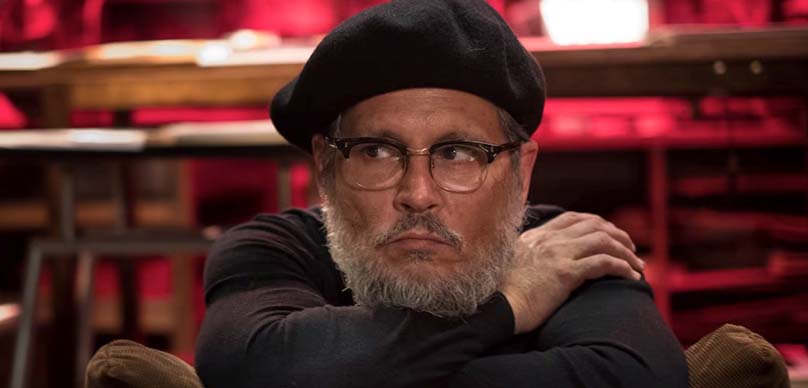
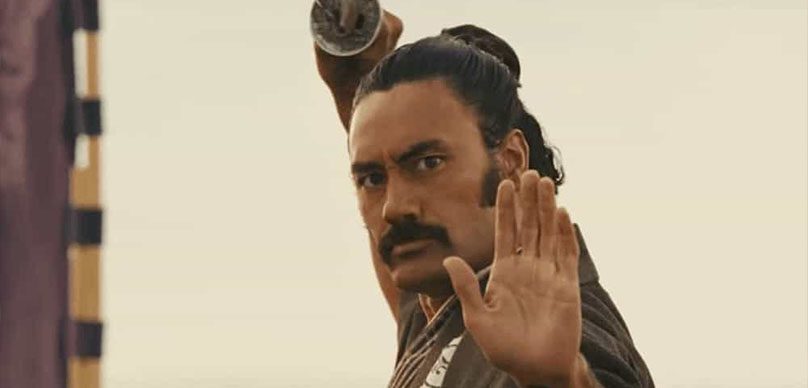
Kerry goes around Wellington nodding his head at things he finds perfect, like a fruit arrangement or makes perfect eg by tidying up, shaking his head at things that are not like rocks. Seeking a like mind, he sets up a Facebook page, furiously typing what he is after, however he really wants someone exactly like himself, and from here the film gets its edge. In an outstanding basic choice of outfit that fits the character; a pink jersey and glasses.

Taika Waititi(Thor: Love and Thunder) gives a superb performance.

Download Taika Waititi’s Screenplay Collection in PDF

SHORTCODE - SHORTS

Want to watch more short films by legendary filmmakers?

Our collection has short films by Martin Scorsese, Quentin Tarantino, the Coen Brothers, Chris Nolan, Tim Burton, Steven Spielberg & more.

IFH 596: The Art of Showrunning a Hit Amazon Show with Naren Shankar

Naren Shankar is the Executive Producer/Showrunner of the critically acclaimed television adaptation of the international best-seller science fiction novel series, The Expanse, an Amazon Prime Original Series from Alcon Television Studios.

Naren spent eight seasons as a Writer-Executive Producer and Co- Showrunner of the most-watched show in the world, CSI:Crime Scene Investigation. In 2011 he helped launch NBC’s Grimm as a Writer- Executive Producer.

Prior to CSI, Naren was an Executive Producer on the SyFy Channel cult hit series Farscape for The Jim Henson Company, and spent three seasons as a writer-producer on Showtime’s The Outer Limits.

Naren began his career as a writer and science consultant for Star Trek: The Next Generation, and he holds a PhD in Applied Physics & Electrical Engineering from Cornell University.

Naren has been honored with multiple Emmy nominations for Best Series, a WGA Award nomination for CSI’s two-hour event “Grave Danger” directed by Quentin Tarantino, and has received WGC and Saturn Awards for The Outer Limits, CSI, and Farscape. The Expanse won a Hugo Award for “Leviathan Wakes” in 2017 and was nominated in 2019 for “Abaddon’s Gate.”

Right-click here to download the MP3

Naren Shankar 0:00
If I have an idea for a character and or a moment and somebody goes, that's just doesn't make any sense this character would never do that. And if the argument is good, then change it.

Alex Ferrari 0:11
This episode is brought to you by Bulletproof Script Coverage where screenwriters go to get their scripts read by top Hollywood professionals. Learn more at covermyscreenplay.com I like to welcome the show Naren Shankar how're you doing Naren?

Naren Shankar 0:25
I'm good, man. How are you?

Alex Ferrari 0:27
I'm doing great, man. I'm doing great. Thank you so much for coming on the show. Man. I, I've I've watched many of your shows over the years, you've been you have a very unique story on how you got to where you are. And hopefully it's going to inspire some people along the way. So first question, sir. Why in God's green earth? Did you decide to go into the film business? When you have a real degree with real skills that could actually help the world?

Naren Shankar 0:53
Wait, wait, are you my parents? Oh my gosh. I you know, I did have I did have kind of a strange path into the business I, I started in when I went to university. I started as undecided pre med, medieval studies, classics, French literature, I didn't know what I wanted to do. My dad was a doctor. And so I told my parents, I was going to be pre med, I didn't really want to be a doctor. And I spent the first two years at Cornell in the College of Arts and Sciences. But in that time, I started thinking about, Oh, what happens after college and I was like, I don't think any things I really love are gonna get me any kind of job. So I had always loved math and science. I was kind of I think I'm a generalist at heart. And so I transferred into the College of Engineering and, and the College of Applied Engineering Physics. And I ended up staying all the way into the doctoral program. So I stayed at Cornell. So as I was, you know, in the midst of writing my dissertation and working in the lab, I just started going back to the things I love, which were history and literature and just started taking more and more courses in the arts college. And I literally remember the moment where I was coming out of this amazing course told by a professor guy named Walter LeFevre is amazing historian, he taught a course a two semester course in the history of American foreign policy. And we had this amazing lecture about the early republic and Aaron Burr. And like, I walked out of the I walked down the hall, and I was going back, and I could see my labs sort of on the other end, across down the street, and another quad as like, God, I just don't want to be an engineer. And I think I think what it was was, it was part of what happens when you're in the hard sciences is, you end up becoming more and more of an expert in the smaller and smaller corner of the universe. And I think that's what was happening with me, it's like I had this, you know, I was doing this thing, and it was really, you know, and it was my thing, and you're adding, you know, original research to the world, which is the whole point of a PhD program. But it just wasn't the thing, that kind of jasmine, it's like, you know, and, and I had also very early on my sophomore year, freshman year and sophomore year, I joined the Kappa Alpha Literary Society, which is a Greek letter, social fraternity, but it's also a literary society. And you do every two weeks, the the members would meet, and like we would, you know, do original writing and present it to the rest of the gang is a very nerdy geeky fraternity. It's like, really, I mean, but, but I think those are the things that really got me excited. And the friends I was around, you know, like, we loved movies intelligence. So after I finished my thesis, I had some friends out in the business, who are just who had come out to LA and we're breaking into the show business side of things. And I said, Come on, tell me screenwriter. And I was like, That sounds amazing. I'll do that. And it was super easy. It's super easy. You'll be oh, oh, Ignorance is strength. It's like, it's like, for me, it was literally because I had no concept of what how high the bar was or how difficult it is to break into the business. Had I known those things I might not have come. But I also I was I had skipped a couple of grades and I was really young. And so I started college and just turned 16 I had like my parents, you know, I told my parents, you know, just let me do this. And my parents, I think felt like oh, he'll just get it out of his system and then he'll he'll go and do something sensible because, you know, it's a good Indian kid is like doctor, lawyer, engineer, businessman. It's like that's that's those are the only things that are okay, you know,

Alex Ferrari 4:53
Screenwriter not so much.

Naren Shankar 4:54
There's no tradition of it. There's no idea of what that means. Even it's like like, you know, was gonna pay you for that.

Alex Ferrari 5:02
And so right, I can write, who's gonna pay me and so no one's gonna pay you.

Naren Shankar 5:06
Exactly, exactly. So, but they were so sweet and they were so supportive. And yeah, and I came out and and started to make this such a long story. But in my in my fraternity in Kappa Alpha, it my best friend was Ron Moore, who created Battlestar Galactica. And he at the beginning of his career, he was actually a political science major. And we had a third friend who, who was the guy who wanted to come out to LA and be in the business. And so he went out to drag Ron out there a couple of years later, after Ron decided he didn't know what to do with his life. And then a couple of years after that, run convinced me to come out and I slept on his couch for like eight weeks and, and so that was literally the chain that brought me in and, and through Ron, I got a, a spec script to Star Trek The Next Generation that brought me to the attention of the producers. And then that led to a Writers Guild internship on the program. And that really was the start of it, it led to a staff job a little while, then a little while after that.

Alex Ferrari 6:19
So that's the long story. That's obviously like a standard Standard plan that every screenwriter, only I can only imagine the conversation with your parents. I know the conversation that I had, but I didn't have a PhD in engineering.

Naren Shankar 6:39
My mom was so sweet. years later, years later, after things were going well, it's like, because I remember like, you know, I just threw, like some suitcases and stuff in my car. And I drove out of sight. My parents were like, waving it back. Years later, my mom said, As soon as your car goddess got out of sight, I burst into tears.

Alex Ferrari 6:59
I went to I have kids, I would just I would be like, Oh, my God, I can't. Because that's one of the reasons why I do on the show, like, how on God's green earth that this this engineer and physics get into, into into writing for television, it's just,

Naren Shankar 7:17
You know, there's, there's a part of it that is actually I think that's like, you know, Self knowledge is somewhat important is that, I don't think I would have been a good engineer. I mean, I certainly had aptitudes for it. But part of what what I, I had problems with is I was a little impatient, you know, I got bored doing the same thing, you know, for focused amount of time. I loved certain aspects, but I loved it. It's an incredibly creative field. And people, you know, don't they really misunderstand the hard sciences and they go, that's not you know, that's not creative, like music, or, you know, or writing, it's absolutely as creative as all of those things. It's just in a different way. But, but if you don't have the sort of, you have to be meticulous you have to be you know, there's so many factors that when I took a look at myself, I was like, I just don't think that's me. And so, maybe there was one job actually, that I came so close to getting that I absolutely would have taken, I I got a I gotta get down to the last two people at Apple Computer in in the, in the early 90s, that I was going to be the engineering software evangelist in the one of the absolute bottom terrible times darkest times in Apple history. But but they flew me out to Cupertino, I interviewed and I just didn't get the job, that job I would have taken. And now I look back I go, Oh, would have been in Silicon Valley in the 90s may not have sucked.

Alex Ferrari 8:47
If that's what they paid you in stock options backs up. And so yeah, $8 it was $8 a share something.

Naren Shankar 8:56
Anyway, so, you know, but But you know,

Alex Ferrari 9:01
Being self aware, it's very important being understanding that you're like, you know, what, I've had, I've had staff jobs twice in my career industry and been fired, probably from both. And it's just, I just am not, I work well with others, but it's not something I can't It's not me, you just have to be aware.

Naren Shankar 9:18
Yeah. It's a tough thing. And it's like, you know, being in a staff. It's so interesting, like, you get different. It's so personality driven. It's like, especially television, it's like, you know, it's like it is a I've seen playwrights who are amazing, who just can't deal with being room feature guys who are like, completely used to like going off for weeks and thinking about three lines of dialogue. It's like, they can't handle the pace. It's like, and you know, and people who are just not gregarious, because it's such a social thing. It's such a it's such a group collaboration, you know, it's like a true collaboration. If you have the right mindset, and you enjoy that it's an incredibly fun experience. That's one of the things I love about television is part of the reason I think I've been And then for so long.

Alex Ferrari 10:01
So you so you get on to Star Trek Next Generation, which is arguably one of the the pinnacle sci fi shows, arguably television shows. I mean, it was just so well written, it was so bad. It's just so well written. I mean, if you go back to those episodes now and you just like damn, and they hold up the effects and the makeup, maybe not so much. But, but this, but the writing is solid, some of those storylines. I remember watching them in high school when I was coming up, I was just like, damn, and this was really well, well written. What were some of the lessons you learn from that first job? I'm like, when you walked on the set, for the first time? What was that feeling like?

Naren Shankar 10:37
Well, it was amazing. I mean, you know, the thing was, Star Trek was an unusual show, in a lot of ways in an unusual structure. It was. It was the first show that was, you know, really the kind of open the syndication market. I mean, this is a long time ago. And so, you know, it wasn't a network show. But it was a very high profile show. It was the reboot of this thing, which had been, you know, before the word reboot existed. You know, it was this thing that was kind of Beloved, and it was, but it was its own thing, but very different from the show. It went through its own kind of struggles at the beginning. What was unique about it, I think, was as a learning experience, because what had happened on next generation was at the end of the third season, which I think that was third third season, I think, was Ron's first season on the show, the entire writing staff got fired, except for Ron and Michael Piller, who was who was the showrunner kept on on and kind of rebuilt the show and in His image in a way and just in terms of how stories were told, and, and, and when I got there. By the time Star Trek ended the last two seasons. I was like a freelance in season five, and then six and seven, I was on the show. It was it was a very young staff, it was everybody was a first timer. It was their first gig in the business. It was Ron, Ron Moore, Brandon Braga, Renee, Murray and myself. And we were the core staff, Jerry Taylor was a was our boss, supervising producer who basically ran the room with us. But it was just kind of like all first timers, we had never, you know, never had other gigs before, it was really really spirited, good. You know, we all liked each other. We're all still friends to this day. It's you know, and, and Jerry had had, you know, essentially taking the position like, look, this is a room where best idea wins. That was like, you know, Mike Nichols, like his, his mantra. And so the arguments were passionate, but it was fun. Nobody was mean to anybody. And Michael was like, he was a really good editor, he gave us great discipline on how to break a story. So as a, as a school, it was a tremendous school for learning how to how to do sort of the work of television writing. And so it was, it was great discipline, I think that all of us took, you know, into, into our careers into into the rooms that we have run ourselves and the shows that we've made. So that was kind of amazing. There was also like, there was this rigid wall between the writing staff and the production because Rick Berman was in charge of sort of, like the, that side of it. Initially, like writers weren't allowed to go to the set. They didn't want us anywhere near the cast. It was like, yeah, it was, that's, that's slowly changed over the years. And, you know, I think, you know, being fair, as, as wonderful, as many of the episodes of next generation are, and there are some terrific episodes that really hold up to this day. You know, it was, it was very much a creature of its time, I think it owes a lot of, to like television in the 80s, highly episodic Instructure you freaking out, it's a kind of hitting the reset button every week. It was also, you know, going to the people of the planet with the problem. You know, it was like, it sort of had that vibe.

Alex Ferrari 13:57
There was a red shirt, there was

Naren Shankar 13:58
Exactly that guy, you know, that guy was, you know, he was not gonna make it. And so, you know, but and it slowly loosened up. I always, you know, I think Ron has said this too, in his interviews over the years, you know, what he did with Galactica was as much a reaction to, you know, to next generation, you know, in a lot of ways, like, Deep Space Nine got much, you know, I think, much more complex and dirtier in many ways in good ways. That was always a struggle the young guys had with the bosses, because they felt like that they were like, This was Gene, you know, Gene Roddenberry's? You know, dictum, this is this is the story that we wanted to tell and how we wanted to how next generation was people were kind of perfect, and they had gotten past all of the terrible parts of human age and we were like, but that's where the fun is.

Alex Ferrari 14:47
You have no conflict. You have no no story.

Naren Shankar 14:49
That's that's, that is really the issue. And the first thing that I wrote the first script that I wrote with Ron was was the first duty which was about like, move the world. Keaton's character Wesley Crusher, like lying, you know, to protect his friends and we're like, he would never lie. And like, of course he would lie. And that was, he's a kid. Exactly, exactly. It's like, and that's how you view the world. And so, you know, those are the some extent that show was like, a bit like writing in a straight jack in some ways. In many other ways. It was a phenomenal training ground and a great way to learn the discipline of writing. And so I look back very fondly on those years. And it was a great staff. And I think it's very rare to this day, when you have so many, like all of us first timers, we've all gone on to do so many things. It doesn't always it doesn't always happen that way. And I think it was a special staff.

Alex Ferrari 15:46
And it was an anomaly, too. I mean, that was just a special place at a special time. When things like that happened. It was a wild, it was almost wild, wild west, like in like to bring in a group of first timers in a writer. That's not doesn't happen now does it?

Naren Shankar 16:02
It doesn't it doesn't. Because what happened was one was hired off of a spec script, Renee was hired off of a spec script, Brandon was an intern for the Television Academy. I was an intern through the Writers Guild. Again, no experience in the business. But part of it was also in a successful as next generation was it was also a backwater. It was like it was like, oh, Star Trek, it's just its own weird thing. I like coming off of that show. Agents wouldn't even want to read a Star Trek script. They wouldn't. It's like, Oh, can you do like a like a real show? It's like, that was kind of the attitude.

Alex Ferrari 16:35
Yeah, I do remember that. It was Yeah. It was like, Oh, that's a movie they do for the geeks. And that's before Geekdom was where the money was.

Naren Shankar 16:44
In it took it took like, I do remember, like, probably about 10 or 10 years later, or so after leaving next gen. Somebody told me Oh, they want people to come from the Star Trek school. Because they understood that, that that, you know, he's a sports metaphor. And that coaching tree was actually incredibly applicable to anything, which is what we always would say it's like, you know, in the context of a science fiction, in the context of Star Trek, we would do a legal show a murder mystery, epic drama. It's like, you know, our version of Shakespeare and war. It's like everything. It's like that science fiction was a superset of genres. It was never treated that way. And I think that the business actually became educated to it. And and now it's like, I mean, you know, here, you know,

Alex Ferrari 17:29
Here we are now. We have geek beyond geek beyond everything. No, there's no outskirts now. No, I told I told you before we started work before we started recording that you and I have a connection. So yeah, yeah. Okay. Tell me. Orlando 95.

Naren Shankar 17:46
Orlando. 95.

Alex Ferrari 17:48
SeaQuest.

Naren Shankar 17:50
Oh, my God. Yes.

Alex Ferrari 17:52
I was working downstairs, out on fortune hunter. For Fox.

Naren Shankar 17:58
Oh my god.

Alex Ferrari 18:00
Remember that? Do you remember I do remember that show I worked on I worked as a PA on an office PA on fortune hunter. And then on my side hustle. I worked on the other show that was right underneath your office, which was us, which was the sketch comedy show, syndicated show, and I was working. Yeah. So I was there during that season. I was there when I was there. In between the last season so was when Roy was his last Roy's last writers last season. And then Michael Ironside. So that's where I went to I went to Full Sail.

Naren Shankar 18:32
That's that's the that's the that is the third season of the show. That's the one year I was on. seaQuest fortune hunter was that was that Steve Aspersa show?

Alex Ferrari 18:40
No, that was Boris. Oh, God, the guy who did Swamp Thing was his big thing. He did swamp show Okay, then. Yeah. So fortune hunter he was it was fortune hunter was on for one season did 12 episodes. And then it got canceled. But it was on Fox it was I was so excited to just be working on a show that I can go on on Saturday night and just look like my name's My name is like, like, you know, and then

Naren Shankar 19:06
I never got down. I never got down to Orlando because we had no I never got down because we all the writers and posts were based in in Los Angeles right at Universal. Okay, yeah, yeah. And the bosses went down to Orlando but I never got to and I think I was supposed to but we got canceled like after after 13 or 12 episodes that season. I can't remember but yeah,

Alex Ferrari 19:30
Because I didn't know anything. I knew a couple of the guys up and I mean pas and stuff like that. But I was on the set of requests all the time and walking around and I'm crazy.

Naren Shankar 19:41
Crazy time man. It was bananas. Bananas.

Alex Ferrari 19:47
It was insane. I remember I remember working because I worked at MGM. And then I also am studios. I think for one of the shows and then they they set up at Universal and man like the kids the star or the kid star would like jump out of the tours would have to stop. And yeah, and then there's like Royce rider walking around him like, where am I? And this is our Lando I know, I know that is our that is our slight connection, sir.

Naren Shankar 20:16
God, I was sad actually, I never got to go down there because the show looked great. I mean, it had many, many, many problems on the page, but the physical production and the sets were beautiful. They were really fun.

Alex Ferrari 20:32
So the set that I worked on was right next door to the soundstage was right next door sequence and then UCC quest props all over the damn Yeah, I mean, there was just so many vehicles and stuff like that was so cool, man. But again, when you're starting out when you're starting out, like it was like the coolest thing ever. And it was the 90s

Naren Shankar 20:51
Well, it was you know, I mean, I do remember those days, like we would go down to we would go down to the bridge when it wasn't obviously in use and eat lunch down there on the enterprise. Because what was cool about the set would close up and for those days, I mean, it was like, you know, internally let the ceiling would come down. And so you can just sit on the bridge and like, you know, eat a sandwich. It's kind of cool.

Alex Ferrari 21:14
Speak to my Subway sandwich. These are the things that like you people don't like yeah, I was like eating lunch on the enterprise. Like, you know, you take those are the kinds of little things that no one really knows about. No one hears about, but that's what you're doing in the production when you're there. Oh, yeah, I used to sneak on I just sneak on the set of sequence. Yeah, of course, constantly, constantly on the weekends when nobody was there. I bring relatives in from out of town. And I would just walk in.

Naren Shankar 21:42
They have those those built in tombs for Darwin, which were for real. I mean, it's like, animatronic fishes like and it's like that is that was a beautifully designed set. It really was.

Alex Ferrari 21:53
It was it was pretty stunning. It was pretty it for its time. It was insane.

Naren Shankar 21:57
Oh, yeah, absolutely. It was insane.

Alex Ferrari 22:00
Now, so how many times so you've been working on set for for I mean, you've been working in television for many years now. Can you pinpoint one of the worst days of something going wrong? Like some crap, something the days you're losing light, something, something really bad happens? And in how did you overcome that day?

Naren Shankar 22:21
Well, the one that really kind of sticks out is I was doing a show for NBC called UC undercover. It was it was, you know, early 2000 was on for one season. So it was 2001. And so I had written it was basically about the US Marshal Service. And it had Odette Farah was the star of your Farmiga was that was kind of her first show. I mean, it's like so great look great production. Shane Salerno created it. It was his first show, as a show runner, and I was I was the number two brought in there. I had written a script about domestic terrorism, a couple of psychopathic brothers who will like

Alex Ferrari 23:10
I already I already know where you're going.

Naren Shankar 23:14
And and the script opened with a sarin gas attack at a football game in which like, you know, I had like 100 people die. And my wife, my wife would read my scripts, and she goes, That's too many. That's just ridiculous. It's like, there's no way that that could happen. So I write the script, we are in prep, and I'm in bed, and I get a call my phone rings at Shane. And he goes, tariffs just slammed into the World Trade Center. We're throwing out the script. We're shutting down to talk later. Oh. And, and, and it is it was like, that was a surreal moment. We went back to the office. Like two days later, a day later. The whole writing staff was like, why don't we do?

Alex Ferrari 24:03
Yeah. Anyone living during that time? No, you just knew.

Naren Shankar 24:07
What do we do? We're in an absolute days. We have no script. The director who was being Ken Fink, who I worked with, you know, for years on seaQuest. Phenomenal director. We had to drive him up to Vancouver because there's no planes. So he can we put them in a truck with a Teamster. And we drove them up to Vancouver, because we needed a director to prep a show, which we no longer had a script for. And there's this place in Vancouver that was called crease clinic. It was a it was an old old hospital from like the built in like the 40s or 50s. And it had become it closed down and it become like this place in Vancouver. You could turn it into anything. It could be a hospital, it could be a prison, it could be it could be whatever, you know, and so film shot. It was it was it was used for locations for a million things over the years. And so Shane goes, Okay, we're gonna we're gonna book that thing. Um, we're gonna make a prison riot episode. And we're like, okay, and so the whole staff and this show was, I just have to say was a was a messed up nightmare. It was like, it was like, every every episode was some various form of disaster, highly dysfunctional in many ways is like, it's like, you know, people quitting as I was, oh, it's one of it was a crazy experience. And I'm actually fond of che, it was like, it was a nutty experience. But this was like, the one time where everybody just pulled together because we just have to get it done. And so we broke a story. We like we, we each like, wrote an act, turned it around real fast sent the the acts one by one up to production, Ken was like, I'm cool. It's like, like, everybody just got their shit together. And the episode turned out great. It was like one of the best episodes of the show. And it was, it was a, it was a terrible, terrible moment. And I still have trouble. I've looked at that script, like once or twice, but it's hard to disconnect it from the experience of that times. And and yeah, it was, it was just that was like that. I still, the memories are very vivid. The memories are very vivid at that time.

Alex Ferrari 26:19
That's well, that's, that's a heck of a story, man. I mean, having to get a phone call Jesus, I can only imagine. Well, so. Alright, so you've been doing this again for a while. I've talked to so many so many writers at high levels in the business. One thing that always surprises me is that every single one of them deals with impostor syndrome. Is that something that you deal with still to this day? And were like, Oh, my God, they just I'm just an engineer. Why am I here? Or do I just kind of just go away as you get go through?

Naren Shankar 26:54
I can't I don't think it says we're like, you know? No, I don't. You know, I don't feel that way. I think I think there is a you know, I think what what definitely happens is, and maybe maybe impostor syndrome is a narrow way to define it. But it is like, it's like you go oh my god, I've been so successful. Do I deserve this? It's like, that's, that's, that's part of it. And that's and that that is much more a psychological thing about yourself. And if you're, if you look at yourself as a good person, or as a bad person, or whatever person or you're being too mean, or you're being intolerant, whatever it is, those are things that are very complicated. And I think that those speak to that ideas, like more like, do I deserve what I've been given? Because, because, you know, it is a look, this is a low percentage success business is there's no question about it. And I think, for me, it's like, I'm very open. And Frank about the fact that I think I just got lucky, you know, I had I had, I had the right, I had the right, I had the right friend, you know, who, who and he had the right friend. And you know, and it's just like, I kind of blundered into it. And, you know, by the way, I came out to LA like a year and a half later, I was on staff, you know, that's like, that's, that's ridiculous. Like, my wife would, you know, she was an independent producer for years, and she never quite got anything, you know, running, she seems so close. And it's like, she got you didn't pay your dues. And I like, I'm like, I kind of didn't I mean, I I suppose I could lie and say, Oh, look, I was in school for 10 years. It's like, that's not I didn't want to be a filmmaker. I didn't I didn't think that that was a thing. You know, it's like, so. So I think, to me, it's it's acknowledging the people who helped you, and, and being humble about the role that luck plays in these things, right. It's like, it's like it is you have to acknowledge that it's like, I think, I think, you know, this idea that, Oh, I'm successful, because I deserve it. It's like, well, it may be you have talents and skills, and again, but it is timing, luck, you know, being in the right place at the right time. It's like, if you're convincing yourself that you're special. It's like, I don't I don't think it's as simple as that. And so, I, you know, basically what I tried to do is acknowledge that I try to I try to be very attentive to the, to the notion that we are an apprenticeship based guild, it's like I take I take the idea of mentorship really seriously. And, you know, I like I like bringing writers into into the business giving people chances promoting from within, because those are all the things that you know, enabled me to get, you know, further. So, it's like, so I don't have impostor syndrome that way. I also feel like every single experience I have is a learning experience. It's like I and I, and I take this back to I did a lot of martial arts and I was in college and the first Time or since they came in to teach us. It's like he like, you know, plus that everybody's asking at the end of the classes like, here's like, and he said, he said, Remember how you feel this way you feel stupid, you feel like you don't know anything, you feel like you're bad. It's like he goes, keep that keep that idea. In your head. It's called fresh mind. It's like me, there's always more to learn. There's always things you don't know. And just, you know, keep that idea in the business. And it's like, then it's joyful, right? You're always learning, you're learning from other people, you're learning new skills. You don't ever have to be the person and you shouldn't be the person that says, oh, no, I know everything. I know how it absolutely has to be like, and so that's sort of how I approach it.

Alex Ferrari 30:45
And of course, you've never met anybody in Hollywood that acts that way. Of course. Never nobody, right? Yeah, no, never, never, never, never, ever.

Naren Shankar 30:56
There there's, there are There are meanings like, a couple of times, I dabbled in features that were so hilarious. Like, my first time I got to write a feature. It was like this won't even specifically give you the names. But it was like it was it was adapting a novel, which is like this thriller, sort of with a slight science fiction bent. And, and the producer had the book, the first thing he said was throw away the one science fiction thing that made the book specialist like what, and then and then he and then he proceeded to draw a graph for me about, about how the audience should feel at any moment in a thing. Because like, they got to be here. And then they got to be there. And there's like, and then you got to build up here. And I'm like, I was literally, just, there's one guy in the room. I knew I was like, I looked, I turned him and I was like, why is he talking? Like, I didn't even understand what was happening. And it's like this. I've been on staff for years at this point, like, What are you talking? It's like, so, so mechanical, and it was, I don't know, if it was like the Robert McKee thing. It was like you're saying, gotta have this here and kind of just do this here.

Alex Ferrari 31:56
And you might have read the hero's journey, and then just all of a sudden,

Naren Shankar 32:04
It's like, but it was so mechanical is like you must write a story this way. I'm like, must

Alex Ferrari 32:12
17 This happens on page 27. This happens like,

Naren Shankar 32:16
Like, why must it happen? Can we have some control over?

Alex Ferrari 32:21
We're the ones creating this. I don't know. That's, that's funny. That is funny. So you, you worked on another little show called CSI for? Small independent show just started out. You worked on that for a while? Eight years? Yeah, eight years on that. So I wanted to ask you, how do you approach because I know a lot of a lot of writers coming up? Don't know this. How did you How do you approach procedural storytelling for a procedural show like CSI, which has an overarching arc of a story for the characters, but there's a new body of the new death a new mystery every week, as opposed to like the expanse, which is much more of a narrative, you know, storytelling with a full arc without the individual, daily or weekly things? How do you approach that storytelling differently?

Naren Shankar 33:15
Well, I mean, you know, procedural, every show has its own sort of specific problem in one way or another. And with CSI, you know, the classic one, our mystery has a lot of has a lot of, you know, built in inherent structure to it. If the intention is to solve a crime, it's like, it naturally goes in a particular way. And CSI had those had those rhythms built in, right. It's like, you have to start with a crime, you have to have different theories of the crime, there has to be some resolution to the case. So in a sense, the kind of show that you're telling dictated that structure. Now, you can say that's formulaic. Yeah. I mean, to an extent but but it's also it's like, couldn't you say the same that any detective mystery novel is formulaic? Sure. Right.

Alex Ferrari 34:06
And it's and there's a crime, you got to figure it out. It's at the end of the day. That's Sherlock Holmes. Sherlock Holmes story is a Charlotte som story.

Naren Shankar 34:14
Here is a Sherlock Holmes story. Exactly. So So you have to embrace that to some extent. I mean, I was probably the most, you know, experimental, of the writers on the bosses and writers on that show, is because I was constantly looking for ways to break the format and to change things and make things because I felt that was, I felt that was something that you could do in a show, is that successful is that and I think that we were much more experimental than we needed to be, like, I think we were much more experimental than Law and Order was Law and Order was, was like a rhythm. Right? And so I tried to break those rhythms in a lot of different ways. Over the years and and but but again, you know, I could point to episodes of CSI that are like straight formula episodes of the show. that are phenomenal. You know, and I think that what I liked about that show was it was a different way to tell a mystery story. You know, I watched it first as a fan. I mean, it's like, and by the way, hilariously, I was working on a show when CSI came out, and as an anthology science fiction show and the other one of the other writers on the show goes, you just because of the way I thought or you know, like we would talk about so he does, you'd be perfect for that show for CSI and I go, I'd rather be dead than tell mystery stories. That's like, fucking hell, man. That's just a nightmare. You got to come up with a crime and you come on come up with a it's like, of course. years later, I'm on the show.

Alex Ferrari 35:45
And yeah, I mean, it is it is it is. I mean, thinking about as a writer, you just like, Man, how do you got to come up with a crime every week? And it can't just be like, Oh, someone got stabbed. It's got to be like, some crazy thing to make it interesting.

Naren Shankar 35:58
I think the way I approached it, and the thing I liked about it was, in the early years of the show, it was a very serious crime drama. It was done with incredible high style. I mean, that was that was really, you know, Jerry Bruckheimer. He wanted to look a particular way. And it was beautiful. I mean, it was like, and it was very, very striking on the technical side. And it really used, you know, like, almost like a fashion photography, sort of like a quality to it.

Alex Ferrari 36:24
And then we're in 90s, and 90s, to early 2000s. Style, Bruckheimer.

Naren Shankar 36:28
But you you look at it, it still looks beautiful, it has a look, you know, and I think the television so often didn't have a look that it was, it was so beautiful, just to watch. Right. And so that was part of its appeal. But also it was the inherent message of the show, which was, which was that, you know, expressed by by Billy Peterson character, so many times was like, you know, if you're smart, if you're methodical, if you don't let yourself get confused by lies, you know, just objectively approach the evidence and the facts in the case that you'll get to the truth. That that is a that to me, is the DNA of the show. And so it was, there's so many times when, you know, the show with this unique, unique approach told a mystery story and a crime story in a different way. Um, that's really what I what I liked about the show, as it got bigger and bigger and more successful. There was a pressure on it, I think, to become much more sensationalized, much more fetishized. I think the show in its later years, really, kind of grotesquely fetishized violence, it was, it was part of the thing that I didn't like, as I was towards the end of my time there. Because, you know, one of the, one of our consultants on the show is a criminalist, with the LA County Sheriff's Department said, you know, and that this line made it into the show, it's like she said, you know, we meet people on the worst day of their lives. It's like, you know, it's like, it's like, and, and what she was talking about was, was understanding and the psychological trauma and connection to loss that these crimes had and the show had that focus very early on, and it got further and further away from it, as the show went on, and I found that very disheartening. And, and there's like, there's, there's a, there's a beautiful episode from the second season of the show called Chaos Theory. And it's basically every act is like this girl who dies a college student dies, and, and they can't figure out what what's going on what has happened. Each act they follow Ay ay ay, ay promisingly lead to a dead end and then the next act is okay, let's look at something else. And at the end of it what they realize is it's just some crazy accident it's like she was she was trying to get a cab in the rain and she gets hit by a car knock literally into a dumpster. And and it's just a random occurrence it's just a tragedy and and Billy Peterson's character tells us to the parents and the parents go no, we refuse to accept that no way there's no way it could have been something like that. And they just leave angry and he doesn't understand he goes I thought the truth would actually make them feel better. And Martin burgers character says, you know, it's like, that's not what's happening here. You got to understand that that's a deep idea you know, and it's like it's a those are the things a show did early on that they that they did less than less of the show did less and less of later on. And so I think it kind of went away from my from I think it's true mission. But you know, it also did some great episodes later I mean, we did one of my favorites was it was an episode called killer. And it was the first episode shows like we revealed the murder at the beginning. No, you kill killed. One of the beginnings William Sadler did this part and can think directly this is a beautiful episode. It's not a it's not a who done it. It's a wide done it turned it turned it over. little bit on his head is that you develop the personality this person you understand what he did and why he did it over the course of the episode. And it's just, it's one of my favorites of the entire time. And then we did you know, we did kind of style breaking episodes as we ended up having a lot of lab technicians on the show who are great comic actors, while the Langham was Vasey. They were and they were fun. And they were being underused, they'd come on the show, because they were you know, they had but they were being under use. So I started these episodes called the lab rats episodes, which were once a season, we would turn the entire show over to the supporting characters and just do like a black comedy. And, and they became like one of my favorite things. It's like we introduced them in a season where we had like an ongoing arc about a killer who leaves perfect scale miniatures of crime scenes at crime scenes, which is probably my favorite season of the show. But the lab rats like make this incredible break in the case, like, like, in their, in their, you know, one little episode and then year by year, we would do other shows. And maybe the most fun was, was one call is I think it was called Yeah, it's called you kill me. Which is, which is the entire show is the lab rats discussing about how they would murder each other. How they would, how they would just murder people, and how they how, and it is it's just like hilarious. Like, like, you know, imaginary, dark, dark humor. And it's like, it's, I loved working in those guys that Liz VAs you and I are good friends now. And they were they were super fun. And yeah, so I you know, the show had lots of rhythms, I think. I think it became culturally more of a caricature, in some ways.

Alex Ferrari 41:56
A generation of, of women specifically really became CSI investigators, because of that show.

Naren Shankar 42:04
I mean, that's, that's one of the things I loved about it. It's like, when the show started, there were like five forensic programs around the country. And after and, you know, 10 years into it, there were like, like, 500. You know,

Alex Ferrari 42:15
I mean, it became a real thing. So the show did a lot of good. It did a lot a lot of good. For for the world. Without that. You can't say that, about many shows.

Naren Shankar 42:27
You know, I actually, I liked that. I feel like Star Trek was that way it had that it had that quality CSI was that way. I mean, especially with women, because again, I think it's like their disproportion. It was not a show in which you resolve conflicts with violence. He was writing thought, thought your way through that. And I And so many times, you know, people would come up like a mother and her 12 year old daughter's like, this is our favorite show. We watch it together. It's like, I know, I know. And I'd be like, that's got intense, but it is it is it is a you know, it's just an interesting observation is like they would always gravitate to the puzzle solving aspect of it.

Alex Ferrari 43:05
Now, obviously, you've worked in a lot of rooms over the years, there's this kind of unspoken rule or unspoken information about the politics of a, of a writers room. Can you talk a little bit about what the politics are in the writers room as far as a young writer walking into it? So they understand what's going on

Naren Shankar 43:27
Unspoken politics in the writers room? How do you how do you mean, could you elaborate on that,

Alex Ferrari 43:31
So just kind of like how you know, because I know that everyone, every every show runner runs differently, sometimes they they're in the rooms, and run the actual room, sometimes they have, you know, the second command runs the room, how to speak what not to do, don't try to you know, you when you're throwing out ideas, don't throw out the problem throughout the solution. These kind of ideas. I've picked this up just from interviewing showrunners so those kinds of those kinds of things that young writer might not understand about a writers room and listening to this will give them an idea of how they should approach being in a room not theirs. Some people are too quiet some people are too out there. You know, everyone there's I know there was one writer I had on the show that when he was your showrunner, but when he was a writer, he's like, Yeah, I just kept throwing out I solved the ideas for everything. And the showrunner is like Wow, your universe, everyone, everything gets all thrown away. So these are those little things. I just love to hear from you what your opinion is,

Naren Shankar 44:28
You know, every every room is different. Every everybody who runs a show runs room a little differently. I can only really tell you how the way I look at things and and also sort of describe what I think are the bad rooms that I've seen running. Right. Yeah, you know, I feel like there there are maybe the extremes are one in which everybody is trying to please the boss in which in which it is as, you know, step on everybody else to get your hand raised. And so you get noticed, some people run rooms that way. Some people are very absent, they let their second do something, and then they come in and they blow everything up and say, you're all stupid, and then they leave. It's like, that happens as well. It's like, I, I feel like I don't, I don't think it's really a good idea for show runners to be out of the room. It's like a lot of a lot of bad show runners, I think. They say, Well, I gotta go fix, I gotta go fix Episode Five, it's like a disaster, I gotta fix it in editing. The reason everybody hides out in editing and why it's a very bad sign, is because you don't have to deal with another person's opinion. You don't have to, you don't have to defend anything, really. Because all you said do that do that do that is pure control. And so it's a, it's a, it's a hiding out kind of a behavior. The best rooms that I have ever been in, in the way I try to conduct ours is, is, again, it's that best idea wins. Everybody has a voice, everybody gets to make a contribution, everybody needs to listen to everybody else. If an idea isn't strong enough, and it can't withstand an argument, then you need a better idea. And, and that is there's no hierarchy, everybody's voice is equal. I've taken notes from, you know, suggestions from our pas, you know, it's like, we're sitting there in the room, it doesn't matter to me, you know, it's like, my job is, is probably like a hand on the rudder, right? It's like, I have to guide it, I have to give it shape. Sometimes, if you know, if the question is, should the dress be red, or the dress be blue? If I like red, then the dress is red. That's an aesthetic, you know, that's an aesthetic decision. If I have an idea for a character and or a moment and somebody goes, that's just doesn't make any sense, this character would never do that. And if the argument is good, and change it, right is the answer. It's like, you have to be able, you have to have the courage to do that. And I think part of it, for me, it goes back to my, you know, my background in in hard science, because it's like, it's essentially peer review, right? You write a paper, you put it up, and then you sit back with your colleagues. And then you question the fundamentals of it, you question the foundation of it, is it you know, that's what that is, right. And so you have to have, I think you have to have that is like that kind of when everybody feels comfortable like that, they're going to be listened to that everybody can make a contribution. I think you get the best out of people that way. And I treat departments on the physical production side the same way. It's like these are these people are experts in what they do. It's like, I don't tell them how to make everything, I tell them what I'm looking for, but then let them go and be creative.

Alex Ferrari 47:53
You know, you don't micromanage you don't micromanage you,

Naren Shankar 47:57
There's an inevitable amount of micromanagement that happens because, because it's hierarchical, right? Everybody is responsible for a piece of it, every department is responsible for a piece of it. But the people who are responsible for the whole thing, it's basically on my shows, that's basically me, right? I am the one that that ultimately says, this is the shape of it, this is a story want to tell, this is the cut, this is the, the sound, this is the music, it's like, but you're gonna get a better thing. If everybody at every stage of that process gets to make the thing that they do really, really well. All you have to do is guide them, because you're just gonna get tremendous stuff out of people, I think that way. And that's how I prefer to do it.

Alex Ferrari 48:37
Now, is there a piece of advice you wish someone would have told you at the beginning of your career, if you can go back and tell yourself when you when you when you were sleeping on that couch? Is there something that you wish you would have known?

Naren Shankar 48:51
I, you know, I actually had the initial my formative experiences in the business were really positive ones, they really were Star Trek was a very positive place to learn good people, good stories, you know, a stable place for several years, you know, seaQuest for negative examples, you know, it's like, like, things that were very clear that you shouldn't do. You know, and but but at that point, I was I was confident enough in my own abilities, that I could understand those. The Outer Limits was my next gig, which I did for three years, the Showtime anthology show, which was a phenomenal training ground just to learn to learn almost every aspect of production because an anthology you're creating a new world, every building yet making it you know, and the range of shows you got to do were tremendous. I mean, because we did, you know, an old western and then a futuristic show that a spaceship show and then a contemporary show, and it's like it's like, all like one after another. And so the amount of The amount of learning you get for literally any kind of production problem was astonishing, you know. And so, you know, I just I think I just got lucky in that sense. I just got good experiences upfront. So I think and good mentors, you know, who were, you know, gave me a lot of opportunities, a lot of freedom.

Alex Ferrari 50:25
So no, no, how did you get involved with the expanse net? Because that's been doing that's been doing pretty well for you. Over the years. I just had Thomas on by the way, I just had Tom. He's great. He's like, Oh, my God, Thomas. Jane is just an amazing human being. He's sitting there with his pipe, clicking on the clicking on his pipe, he has skulls in the background. And I'm like, Thomas, the level of cool that you are, is just not it's natural to it's not it's not manufactured. And you can see it in expanse, too. You could see that cool. Just come right off the street. It's pretty amazing.

Naren Shankar 51:02
He was he was he was so he was such a delight to work with it. I think initially, he was, you know, he's a little guarded when you're getting to know him. And I think he was guarded about just sort of, like, attaching himself to this weird thing on the Sci Fi Channel. But, you know, he. He really I think Mark Fergus, who Mark Ferguson Hawk Osby wrote the pilot, Link Mark, he really connected with Mark, and just in sort of the love of the same kind of movies. And Tom is such a cinephile is, you know, oh, my god, like, hardcore. And then I think he started, he became, you know, he started trusting us when we were delivering on the things that we said we were going to do in a way that we were going to do and, and I think that by the end of it, he became really, he was really choked up, like, like, on his last days of, you know, leaving the show, and it was like, it was really, I think, I think he feels proud of the work that we did on the expanse.

Alex Ferrari 52:07
So how did you get involved expense,

Naren Shankar 52:08
I was like the last element I was. Because the books had been optioned by Alcon mark and Hawk had been attached to write the pilot. They, they had never done television before. So the pilot was sold to sci fi with an on air commitment. And so Alcon was a small studio done, you know, done some, you know, they did the blind side, but they'd done you know, features and, and they were getting a little bit more in that space. But they had never done television show before. And Sharon Hall, who's the president of Alcon at that time, I'd worked with her. She'd been at Sony for many years, we've done development together. And she thought I would be a good fit for this show. And so I just came in and met with with the guys and this was at the pilot stage. They just had a script, they didn't have the production wasn't up and running. And so they just needed somebody, you know, who, who could mount a show like this? And it was, I mean, I'll be to be honest. I had, I had been away from science fiction for a very long time, but 10 years almost. And I was not a fan of what, you know, the Sci Fi Channel was putting on because other than Battlestar Galactica, they had a pretty grim slate of things, and they would send me stuff I read, and I go, and so my agent sent me the script. And it's on the Sci Fi Channel, and I went, delete. And I just deleted it. The first time, I just didn't even read it. And they came back to me, like three weeks later, I said, Look, please read the script, they really want you. And this time, I scroll to the bottom, and I see that mark and Hawk had written Children of Men. And and which I loved, and I'm like, okay, all right. And I didn't know the books. And so I read the script. I was like, Are they really going to make this? It's like, because this is not like the thing that they had they this is not the kind of material that they had. They had embraced, you know, but it was a new regime. Bill McGoldrick had come in there and, and I met with the guys and we talked about the script, and I liked them, and they liked me. And then, you know, there we go,

Alex Ferrari 54:11
The rest of this industry

Naren Shankar 54:13
Six years later,

Alex Ferrari 54:15
Naren I'm going to ask you a couple questions. I asked all of my guests three questions. What advice would you give a screenwriter trying to break into the business today?

Naren Shankar 54:23
It's tough. Realistically, it's a very difficult business to break into. One of the big changes in the business from when I started was, you don't have this regular broadcast TV machine, making a zillion episodes of a show. What you have are really big productions making way fewer episodes with much tighter staff. So the abilities to get into it are actually I think tougher. It's like because the pathways have changed. It's like you don't really have a freelance writing market like you did 2530 years ago. The ways into the biz dentists are becoming a writers assistant, which is a highly coveted job becoming an executive producers assistant, which is another pathway into the business. And so aspiring writers are always trying to find that way in. That's right. Because yeah, you can write scripts, you can get agents to read them, you can get put up to staff, you know, there's always that available. But that's a numbers game too, right? Because it's like, he's just a lot of people in the business. But getting that shot at being in a room really learning. It's just tough. I mean, it's like, so the key is, right, network and try to get one of those gigs, you know, take advantage of internships and fellowships that are all, you know, they're out there at the studios. Those are all really, really good programs and the gills, you know, and, and that's really, and that's really the trick, it's like, and you know, even if it's like, even if the job is a pas job that gets you in the writers room, it's like, take it, take it, take it and learn, you'll learn something, it's learned something. And if you show people something and a desire, it's like, hopefully, if you're on the right people, they'll give you those opportunities and give you a chance to take a step up. I mean, we promoted several writers, from writers assistants and, and EPSS. On the expanse, we did that on CSI. I mean, even into editorial director, writers, like we did a lot of homegrown internal production, I mean, internal promotion. I'm a big believer in that. And I think that's the way things should work.

Alex Ferrari 56:35
I'll tell I'll tell you what I mean, I worked as I learned more as a PA working in Orlando, than I did at film school, I would skip school to just go and be on the set and learn and being and being in the office and seeing things run. I just You just learned so much more than you do at a school because you're just seeing it happen. You're picking up things that are not in books, and the teachers generally don't talk about and like those nuances of stuff that that go on, on set. You just, you know, I remember the first day as a PA, they're like, a bunch of grips like you want to intern in the grip department, or go to the grip department first in the grips did a giant pile of cable that's like 15 miles long, untangle that for me. I learned I didn't want to be a grip.

Naren Shankar 57:18
And the guys, that's hilarious. You know, and when you're on a set, people, people will talk to you, they will they they're happy to share knowledge with you, everybody really does understand this sort of like inherent apprenticeship model. But, you know, you should never be afraid to ask questions. What's the worst that can happen? It's like, Stop bothering me. We'll talk later. And it's like, but I would be like on CSI, we had this amazing experience, you know, focus puller, and his name's Gary Mueller. And he had worked for ever, like he worked in a fifth plug in the 50s and 60s for like, you know, Billy Friedkin, and it's like, he was like, a grouchy perfectionist, but like seeing everything. And whenever I had a question on CSI ago, I could give her as this where he's like, I'll go to Gary and ask him and he told me and I remember was I had this question about like, lenses and lens systems and CSI was, was really interesting, because all of the effects were almost all of them were practical in camera effects. We didn't do any any post digital stuff, really. So we experimented a lot. And I said, this is work because I don't I don't quite understand it. He goes, he goes, would you like would you like me to take you to Panama vision, and just go look at the camera, and I'll teach you like, and he arranged for visit, we went on the weekend. And he said like he said all of his years working. None of the bosses had asked him these questions. And it's like, I'm like, How the fuck do you learn this? Like, how do you learn? It's like, there's so many people who are afraid of looking stupid, because they don't know something. Right? I say, I don't know how that works all the time. Or tell me how that works. And I know a lot. I've been doing this for a long time. It's like, but you got it, you got to take those opportunities. There are people who knows so much and their knowledge is so specialized. And filmmaking is such a weird combination of pure, creative and highly technical. It's like it's an unusual thing. And so, you know, I think a lot of reasons these days that like writer showrunners like what's happening a lot of times now you see pairings like have a writer showrunner. And then a producing director. It's like, you know, because there's a whole side of post production that they don't even that they're terrified of people like to edit. But when you start talking about sound mixing when you start talking about music and talking about color and VFX they just get no you got you do that. That's fine. You show me it's like, I feel like that's like that's, you know, a little bit like a director saying we're just gonna do half a movie. You know, it's like, the right it's like all of those things are part of the experiences like I I have had friends who like I remember I was I was I came into a meeting on some show, and I'm still doing posts on the expanse and, and I said, Sorry, it's like, you know, are mixed with nine hours yesterday. And they're like, what, nine hours. And I'm like, about normal. It's like a seven or nine hour mix is what I do. And it's like, I just go to playback and then just say, you know, give them a couple of notes and then elite, I'm like, you're missing out on a lot of shit. Because you learn you learn you sound sound is half of the way you perceive the world.

Alex Ferrari 1:00:31
You could also see mistakes if it's there any mistakes being made on set you now because if you're just listening to a match, you don't see the details. But like, Man, this boot is not getting it. Oh, man. It's like it's offer. Something's happened and the sound guys not doing his job, right? You're in the mix, you're in literally in the mix, literally,

Naren Shankar 1:00:47
Literally in the mix. So you know, I feel like, you know, that is a That's the deal. It's like, just gonna learn a lot doing that.

Alex Ferrari 1:00:58
What lesson took you the longest to learn whether in the film industry or in life?

Naren Shankar 1:01:03
Okay, I'll limit it to the film industry, because there's probably many things I'm still learning. I think I personally have a tendency to, to take on projects or ideas that I probably shouldn't, because I want to prove that I can do it. And that, that that sometimes is not good. It's like, just to show somebody, oh, yeah, you think that's not adaptable? Fuck it, I'll do it. And then I'll beat my head against it forever, just to try to show somebody that it's not necessarily the best way to really do something, I would do that on shows a lot. And I think I would also I don't know, it's, there's a sort of like a Pruvit mentality, sometimes it's not healthy. And I think that maybe another aspect of that is, is I would, if something isn't working early in my career, I would force it, I would just try to ram my way through it and just just make it happen. I got good advice, saying, You know what, it's a creative thing. Maybe today isn't the day just step away from it and come back to it. It's like, you have to learn that too. It's like you have to learn when you're forcing, you have to learn when it's not being productive. And don't be afraid to just just let it take a step back and go for a walk or take a shower or go for a drive or something because your brain sometimes needs time to make connections between things. And so I'm think I'm much more comfortable doing that now than I was early in my career for sure.

Alex Ferrari 1:02:48
And last question, what are three pilots that every screenwriters who listen read, or every television writer should read? More episodes or episodes of a show?

Naren Shankar 1:03:01
It changes, I would say that changes era by era, and, you know, genre by genre, like, like, what is a? Like, what's a great, you know, if you if you like crime shows, like crimes and cop shows, like, what's a great show to watch now, you could make, you could make a lot of different, you know, you could say the sopranos if you wanted to go back aways, you could say mayor of Easton, you know, if you so it's like, it's really that's very much of a moving target. Because there are, I used to collect like pilots, I thought were really, really terrific. The problem is, they may not be so terrific. When you go back a few years. You know, you're it's like it really does change.

Alex Ferrari 1:03:47
I mean, like the Breaking Bad pilots still. You're absolutely brilliant, even though it was so many years ago when that came out, but you just read it. Well, that's, that's remarkable.

Naren Shankar 1:03:57
They can they can they do last? I mean, you know, I think Game of Thrones is a terrific pilot.

Alex Ferrari 1:04:02
And men, bad men.

Naren Shankar 1:04:03
Yeah, Mad Men is a great pilot.

Alex Ferrari 1:04:06
Yeah, Mad Men. Sopranos? I mean, David chases. I mean, it's it's the firt the first one. Yeah, there's so many. There's so many. But just,

Naren Shankar 1:04:14
I mean, I used to keep, I used to keep the X Files. I love that. I think I think what it is for pilots, for me, it's like, if you can think of pilots, first episodes of shows that were tremendous. Inevitably, there are like, one or two moments that are so striking that you always remember them. It's like, you know, you like feel

Alex Ferrari 1:04:38
Like a guy with a gun in his underwear. You know, with a mess with

Naren Shankar 1:04:44
The very first image of Breaking Bad, right? It's like, but that's but that's what I mean. It's like I think those are the pilots that stick with you. It's like even you know, independent of era or style or anything like that. I think that I think that really is what it is.

Alex Ferrari 1:04:57
Naren man. It has been such a pleasure talking to you. Thank You so much for coming on the show and sharing your sharing your knowledge and experience with with my tribe and hopefully somebody listening out there is terrified now and won't be in the business but or at least understands what they're getting into. Or you know, get a degree in engineering and applied physics.

Naren Shankar 1:05:20
You know, there are times you just what I really do go like, you know, man, really lucky and it is ridiculous that people pay me to tell stories and make cool shows for a living. It's like it is just a it is just, you know, pinch me and you know, I'll do it as long as I can because it's really fun.

Alex Ferrari 1:05:43
Man, it was a pleasure meeting you and thank you again for being on the show, brother. I appreciate you.

Naren Shankar 1:05:47
My pleasure.

LINKS

  • Naren Shankar – IMDb

SPONSORS

  1. Need Distribution for Your Film? – Check This Out!
  2. Bulletproof Script Coverage– Get Your Screenplay Read by Hollywood Professionals
  3. Enigma Elements – Cinematic Tools & Assets for Serious Filmmakers
  4. Audible – Get a Free Filmmaking or Screenwriting Audiobook

IFH 595: Marcel the Shell: From Viral YouTube Short to Hit A24 Film with Dean Fleischer-Camp

Dean Fleischer Camp is the award-winning filmmaker and New York Times-bestselling author who created viral sensation MARCEL THE SHELL WITH SHOES ON. Since appearing on Filmmaker Magazine’s 25 New Faces of Independent Film in 2011, Camp’s work has been profiled in virtually every major American media outlet. In 2018, his first feature FRAUD was released to widespread controversy and acclaim, described as a “brilliantly provocative”(Filmmaker) and “exhilarating”(Sight+Sound) “masterwork”(Documentary Magazine) that “pushes the boundaries of documentary”(Variety).

His first scripted feature, an adaptation of MARCEL THE SHELL WITH SHOES ON starring Jenny Slate, Isabella Rossellini and Rosa Salazar, is slated for a 2022 theatrical release via A24. He has directed for Comedy Central, HBO, TBS, Adult Swim and Disney Interactive. Commercial clients include Atlassian, Pop-Tarts, Clearasil, Maltesers, and many others.

Right-click here to download the MP3

Dean Fleischer-Camp 0:00
Every time someone asked me how like I made it or how I got that movie that first thing made, I tell them, here's how I made it. But don't copy my playbook because Hollywood's like a bank. And every time someone exploits an insecurity, they're going to close it up immediately. You can never do it the same way twice.

Alex Ferrari 0:18
Today's show is sponsored by Enigma Elements. As filmmakers, we're always looking for ways to level up production value of our projects, and speed up our workflow. This is why I created Enigma Elements. Your one stop shop for film grains, color grading lots vintage analog textures like VHS and CRT images, smoke fog, textures, DaVinci Resolve presets and much more. After working as an editor colorist post and VFX supervisor for almost 30 years I know what film creatives need to level up their projects, checkout enigmaelements.com and use the coupon code IFH10. To get 10% off your order. I'll be adding new elements all the time. Again, that's a enigmaelements.com. I'd like to welcome to show Dean Fleischer-Camp how you doin Dean?

Dean Fleischer-Camp 1:12
Hi, good. How you doing?

Alex Ferrari 1:14
Good man, I was so excited to have you on the show, man because I just had the pleasure of watching your new film Marcel, the show with the shoes on last week. And I told I told your PR people like I just I need to have them on I need to know how this happened. And go what in what universe do I live in that this movie gets made and put out on the theatrical release and it gets made in general but be put out by through put be put up on A24 like I need to know the story behind this this film because and I was lucky because I didn't know anything about myself prior to watching the movie. So I was I was a virgin and Marcel virgin. But as I did research for this conversation cell has been around for over a decade.

Dean Fleischer-Camp 1:56
So we're going on Yeah, yeah, yes. And he's he's an old soul. You're not wrong. That is pretty unusual for a movie like this to not just get made but get distributed. You know, it took a ton of real like blood sweat and indie film hustle. And it Yeah, I mean, it would not have gotten made it would have, we had sort of the Studio offers when those original shorts are made. And they certainly were not. You know, there had had wasn't really or the hardware wasn't really in the right place. And, and I knew that this was going to be you know, kind of a longer road of finding financing independently and then finding this family of incredible, brilliant collaborators that made the film possible.

Alex Ferrari 2:44
So before we get into the the the archaeology of how Marcel got brought into this world, first and foremost, man how and why in God's green earth did you want to get into this business?

Dean Fleischer-Camp 2:58
You know, I have always been I've always been drawn to movies. I was always a big movie buff and fan. I went to film school. i It's funny that the first thing that sort of took off for me was this internet short, because I think now people are saying like, Well, why did you decide to turn it into a movie? It's like, movies were always the point. The YouTube fame was sort of a weird, you know, happenstance. But I'm glad to happen. And I don't think that this type of film is my favorite reactions are the people that kind of are coming to it fresh because it's been so long since we've done something with the character and it's changed a lot it's grown a lot. The whole backstory is sort of different and new and and but but but I do think that it it would not have gotten made and certainly not in in the way it got made with all the creative freedom that I was given that our team was afforded. If it had not had a previously successful run as you know, YouTube shorts and children's books, I think that they're sort of you know, it's weird that we are we are sort of an adaptation of a pre existing IP because that's like everything that's in movies right now Top Gun lightyear everything is pre existing IP. And it's funny that we're technically part of that, but you know, our process and what this movie is is so completely different from

Alex Ferrari 4:19
A little different than Marvel a little different. Yeah, though. I would I would like to see Marcel in a Marvel movie. I think that was

Dean Fleischer-Camp 4:28
Cinematic universe.

Alex Ferrari 4:32
Exactly! So how you know so for everybody who doesn't know how did this character come to life? It just seems so it just like a shell with shoes on and googly eye like it's insane. And this was came, this was like 2000 10,009. Somewhere around there is when you first came up with so how did the character just come to life?

Dean Fleischer-Camp 4:53
It originally came about because the voice came first. Jenny had been doing this well tiny voice because We were sharing a hotel room for a friend's wedding with like a ton of other people to save money. And she started doing his tiny voice to joke about how sort of crushed and smashed she felt. And, and then when we got back to New York, where we're living at the time, I had completely forgotten that I agreed to make a video for my friends stand up show, like local Stand Up Show. And so, you know, my head popped off the pillow that morning, I was like, Oh my God, that's due tomorrow. And, and so I just very quickly, you know, like, asked Jenny like, hey, let's write a couple jokes for that character. You like really funny voice even doing and then I, we, we recorded it. Jenny did some improv around it kind of together ran out, like a madman collecting, you know, supplies from craft stores, basically, not knowing really what it'd be, I was just like, let's just get a bunch of supplies, and I'll figure something out. And, and I made a couple of little terrible looking like goblins that that did not pass muster, and then landed finally landed on Marcel, who I think is so like, you know, he's handsome. And he's, he's cute. And yeah, it was sort of serendipity. And then I screened it. I think I made it and screened it within 48 hours. And then obviously took off on the internet.

Alex Ferrari 6:14
It was it was stop motion animation at first, right?

Dean Fleischer-Camp 6:19
So yeah, it still is all the all the characters in the film or stop motion other than the the rare exception of the insects or CG, but everything else is stop motion.

Alex Ferrari 6:28
So yeah, I was gonna get into the album again to the technical because I was also Yeah, I'm a post guy. So I've been in post forever. And I was just like, looking at it. And I'm like, Man, is it? Man? Did they? Did they emulate it? Did they emulate stop motion to head? Did they competent? They do the stop motion? And like so we'll get into all that in a minute. Yeah, sorry. So you put up this little you made this little throwaway short? Yeah. Oh, this is cute. Let's throw it up on this new thing called YouTube.

Dean Fleischer-Camp 6:53
Yeah, it was I know, it's hard to even imagine a time when you make a short film, it doesn't immediately get posted on YouTube or Vimeo or whatever. But 2010 was like, yeah, the only reason I put it on YouTube at all, because I was in the habit, I'd made lots of videos for, you know, friends shows or whatever. And this was one of the few that I put on the internet because a sort of friend at that first screening, like, tapping on the shoulder when I was leaving is like, can you put that on line, I really want to share it with my grandmother who was at the time she had like a broken hip or wrist or something. And she was kind of laid up in bed and home down. And she thought it might cheer up. And that was the only reason I put it on YouTube. So it was designed for this audience of one but found a much larger one.

Alex Ferrari 7:36
Yeah, that's the thing that like that is that was literally the definition of viral viral film viral. Yeah, it was completely valid. It made what 32 million views on the first one, the first one you did.

Dean Fleischer-Camp 7:46
It's like more than that, because I took it down and I put it back up and you know, whatever. It's like I think it was probably it probably would be like 50 or something, which is actually Yeah, totally. Oh, yeah. Totally back down. i Yeah, I'm not even sure. I don't know what viral videos were before that, like Nyan Cat or something.

Alex Ferrari 8:03
Right, exactly. So that was like an actual viral video wasn't like something that the algorithm picked up. Like, there's no algorithm for Marcel No. It was just sharing, and sharing and sharing. And people were like, I gotta share this, oh my god, I gotta share this. So it was truly a viral situation. So when you the first reactions that you got from the you know, from that, which is still again, 2010 is still fairly, I mean, the internet's been around for a bit. YouTube's been around for about five years. I remember 2010 Very well. And what happened to you and Jenny, when that when you start seeing these numbers, you're like, What the hell's going on?

Dean Fleischer-Camp 8:41
Oh, it felt pretty crazy. I weirdly was like, I don't know, I guess I was pretty enmeshed in internet culture around 2010. But because I'd had that experience of like screening it at this, like, you know, kind of like art art hipster Brooklyn crowd and 2010. It seemed like the most like judgmental art parts, which I consider myself one. I'm not saying that. But seeing people who would normally be very judgmental about anything that you screen at, like a live comedy show, sort of just like completely melt and be like, what was that? And to see how quickly they connected with this character. I was kind of like, I think that's my go viral.

Alex Ferrari 9:18
Really, so you weren't you had an idea that it might go in, but the definition of viral is not 50 million views. I don't think you said oh, this is gonna go 40 50 million easy.

Dean Fleischer-Camp 9:29
No, no, I thought it would get passed around like, you know, like a small, you know, slightly popular Vimeo video and then we'd maybe we could, like leverage that to make a bigger project with it.

Alex Ferrari 9:41
That was the mindset already. I mean, you were the you were the hustle and filmmaker, like okay, this thing goes, we're gonna go out and get some financing. We're gonna make a feature of this damn thing.

Dean Fleischer-Camp 9:51
Oh, yeah, totally. At the time. I was editing like the I was taking the worst jobs like I wasn't aware. And so I was just like, yeah, how do I segue into director And

Alex Ferrari 10:00
Oh dude, don't you streak into the crier, bro. That was in 25 years color editing. Dude, I used to edit promos for Matlock for a television station back in West Palm Beach. All right, so I was like,

Dean Fleischer-Camp 10:17
I might have you be I one of my first jobs editing was editing a tutorial for how to do like a like, I think I think they advertised on like late night television. It was a tutorial for how to do home water births.

Alex Ferrari 10:32
Okay, so it was like in my I'm going back into my archives and see if I could one up that but man, I don't. I don't really think

Dean Fleischer-Camp 10:38
Matlog is pretty great.

Alex Ferrari 10:41
I mean, I mean it Matlog's is pretty good. Yeah, but I mean, but but, uh, waterbirth tutorial for late, man. That's a I'm gonna give it to you on that one. I think he won. I think you won.

Dean Fleischer-Camp 10:50
And it was like it was like footage from like, amateur, like people who are not, you know, professional filmmakers like filming their own home waterbirds as part of

Alex Ferrari 10:59
The home water birth wasn't lit properly. So it wasn't composite. There wasn't composition, there wasn't a techno crane rolling out.

Dean Fleischer-Camp 11:07
Not a lot of muse on scene, frankly, for my taste.

Alex Ferrari 11:13
Okay, so So the so the first video goes, and it, you know, goes viral enough. Um, of course, even then, people were especially I remember especially because I had I had a video or I had a short film that was making the rounds through Hollywood at that time. And it was doing the water bottle tour and all that stuff. So I imagined that you got calls from Hollywood and you're like, Oh, we got to make this into a movie. I want you to tell everybody because I know what happened even without even knowing what knows what happened. I know they were probably saying you know insane stuff like oh, we should take Marcel up with the rock.

Dean Fleischer-Camp 11:49
Oh, yeah, no, you're dead so well.

Alex Ferrari 11:50
So what were the pitches that you got for your character from Hollywood?

Dean Fleischer-Camp 11:54
The one that that has stuck in my mind was that someone a studio had recommended that we partner him with I forget it I'm pretty sure it was Ryan Reynolds that we partner him with Ryan prime together and as like

Alex Ferrari 12:15
I mean it's not a it's not the worst it's been a hard no it's a soft no one that but I watch it. Like there's some things you just like you should team up with the rock. I'm like, I don't know if Marcel and the rock are really right. Yeah, Matthew, Bruce Willis and him.

Dean Fleischer-Camp 12:34
Chemistry. I was like that one Detective Pikachu came out. I was like, Oh, we got pitched Detective Pikachu was

Alex Ferrari 12:44
What your IP was not nearly as big as Pikachu.

Dean Fleischer-Camp 12:47
So that's right. No, they were to go Pikachu. But yes, so we did that water bottle tour and it was just very clear like, Oh, this is they were trying to draft him on to tentpole franchise. And we were, I was always looking to make you know, more of a portrait piece about Marcel and like, really? Because I felt like there's no reason to blow up. Like blow it out. Marcel is already tiny in a blown out world. Taking him on, you know, fighting terrorists in Paris or whatever is like why, why?

Alex Ferrari 13:17
I'd watch that again. ourselves fighting terrorists.

Dean Fleischer-Camp 13:22
You're gonna see it, you're gonna be on an airplane looking through the new releases, and you're gonna see that soon.

Alex Ferrari 13:27
Is that is that Marcel with Chris Tucker? Is that was that what's going on right now?

Dean Fleischer-Camp 13:32
That would be incredible.

Alex Ferrari 13:33
Everyone, everyone listen, listen, a lot of studio execs listen to the show. So hey, we're just throwing this in. We're spinning out gold. Me and Dean are spitting out gold right now. Alright, so you had to say at least at that point, because a lot of filmmakers when they go on these waterbottle tours, if they're lucky enough to get this kind of attention. They fold. They'll go okay. Yeah, I just want to get in the game. I just want to go. But you and Jenny both said no. Where we're gonna, we're gonna make we're gonna protect myself from the savages of all.

Dean Fleischer-Camp 14:05
Yeah, it did feel like something that was like, Oh, got it. Like, because he's cute. It's sort of like, they're picturing this could be the next minions or something. And, you know, that was like, so out of my just like taste. And I think it was it also, you know, like, indie film might have been a little more the world might have been a little more robust when 12 years ago and so I think, you know, nowadays Yeah, you see a ton of directors making that jump and I don't blame them because they want to make a living and they don't want to spend another seven years you know, financing and doing it independently. So So I totally get it at the time. Yeah, I was just like, No, this character has become very dear to us. We know him incredibly well. And we know that that those little shorts have revealed like 2% of what this movie could be and and yeah, throwing them into the mix with with Chris Tucker.

Alex Ferrari 14:58
But But now Now that you've told his story, he's back on the table. I'm just throwing that out. Yeah, that's right. You've made your art piece. Now let's sell out. Let's sell out.

Dean Fleischer-Camp 15:10
Come at me Disney.

Alex Ferrari 15:12
Exactly exactly where we're willing to sell the IP to Disney anything, let us know.

Dean Fleischer-Camp 15:17
And the other difficult thing is we have held on to the IP.

Alex Ferrari 15:21
Yeah, well, we get you made. So you've made a multiple shorts of Marcel over the years, as I saw, it was like, every few years, you would make a new short, you had a children's book, children's books written about them. So this was an IP, you've you literally did kind of create an IP, which is really an indie IP, which is really

Dean Fleischer-Camp 15:40
Yeah, yeah. Yeah, totally. I think it's a really unusual opportunity that that has, that we've found ourselves situation we found ourselves in the, the the books we did ourselves, we wrote and I photographed them. And then we've worked with an illustrator like to turn them into paintings. And so it has never been the kind of thing like I get a little miffed when I see people say, you know, oh, Mercer, of course, he's a movie now. They like sold the rights to someone. It's like, No, man, it's me. It's me and Jenny. And it has been the entire time and we have met, we've held on to the rights of this character, we've never merchandised him. And we're, you know, we're beginning to try to figure out how to do that in a way that is holistic to the character and involves, you know, me overseeing all those things, but we've never really done the smart thing. So that we don't buy houses in Malibu or whatever.

Alex Ferrari 16:32
I mean, I mean, 100 man, if someone shows up with 100 million tomorrow, I mean, it's a conversation. It's a conversation. It's not a hard No, it's not a hard No. I hope that this I hope that this interview helps you along this these routes that someone that I looked, I saw I saw the indie film hustle interview, man. I'll give you 75 mil cash for the IP. I think we can make this work.

Dean Fleischer-Camp 16:54
What's your commission, man?

Alex Ferrari 16:56
That's the love brother. Just the love for Marcel. That's all I want. So okay, so the next question is Alright, so now Hollywood has is pitched you Pikachu. Yeah, and gone down that road. So you guys said, Okay, we got to get to kind of make this ourselves. So now starts the journey of finding people who are insane enough to give you money to make a movie about a talking shell? Yeah, in a house. I mean, yeah, I'm still gonna have to stop you for a second. I was literally sitting watching the movie. And I'm going, how did this get? Like? How, who? And this is before I knew about the IP and knew about the shore? Yeah, so that makes it a little bit more sense. But not much more? Not much. Yeah. So

Dean Fleischer-Camp 17:45
So there's a period after those that the water bottle tour where, you know, we're making a kid's book, maybe and, and we kind of just said no to that we walked away from those and we didn't do anything, we were just like, let's just keep our character and, you know, not get into something that we can't, we can't handle and that we're going to be not proud of. And so for, I think like three or four years, we didn't, we just didn't try to pitch it as anything bigger, but the character never went away. And Jamie and I were kind of always sort of riffing about what his world would be in jokes. And, and I started sort of taking, you know, lazy notes about whenever we'd have a really good idea that we loved about that. And then, you know, after like, four years, I felt like, oh, this actually could work is like a future film. We've sort of built out the world and done all of this. I don't know, like, imagine imagination, building. And, and maybe this actually could deserve a 90 minute like a full feature. And the first thing we did was we got in touch with lysholm who had produced Obvious Child Jenny's first kind of starring role. And also, you know, small indie and and then after, like, how do we Yeah, let's like do this together, where you've come on to produce it and to start from really from the ground up and help us find finances and find money for it. And so, you know, we put together a kind of prospectus a brief and had I had done a lot of like drawing and sort of building up the world. And, you know, we did like another one of our bottle tour where, you know, we're a little older, a little wiser, I understood, I as a filmmaker understood who I was, and, and it was even more impossible than just let us make an animated movie about talking shell. It was also I want Final Cut. And we want a lot of like a final cut. We want a lot of creative control, and we're also not going to sell you a screenplay. You are buying a really like detailed outline and a vision and a group of filmmakers that will deliver but I knew that the screenplay had to be done in tandem with recording audio. Jenny is such an incredible improviser or she's not a like, sit down and write kind of person. And we had, I forget when but we brought on Nick Paley, who's our CO writer on it. And so we were like, we're not, we don't have a finished screenplay to sell to you, you're buying this idea, this abstract, loose, imaginative story. And a process that I, to my knowledge is a is not a way that any other movie has been made before with this sort of, like, full a full stop motion character integrated into a live action world for a feature length. And, and a lot of places there, you know, one or the other of those ideas was a deal breaker. And finally, we found who turned out to just be like our champions, and I'm so grateful that we have them this, this company called Centereach, who financed the film almost entirely, they're a nonprofit out of New York or a not for profit out of New York, they had finance before you've you've heard of a lot of there, they've been a presence in anywhere for a while they finance piece of the Southern Wild, was there was like, I think their first really big one. And, and they usually they usually do small grants and finishing funds and things. But, but they also have this incredible team of in house producers, who were amazing and came on board. And so they were the place that we found a home for it and a home for, you know ourselves where we were supported creatively and financially. And they they were, you know, crucial to get to a movie like this getting made.

Alex Ferrari 22:00
Not only did you have the balls. But this whole package together, I need Final Cut, you got no script. You were you're just basically it's a wing and a prayer here, guys. And it's not like you've done 45 other feature films based on that kind of scenario.

Dean Fleischer-Camp 22:18
Yes, true.

Alex Ferrari 22:21
It is really unheard of. It's really, it's, you're an anomaly that this, how would this got made? But I think it's the power of the character that pushed it through?

Dean Fleischer-Camp 22:31
Absolutely. I don't think that we you'd be able to do that if it was just, you know, from scratch. And of course not, you have to have for someone to believe and have that much faith in something that abstract and that unique, it really requires it having had some record of success. And we were lucky that that was you know, early Internet where it was pretty democratic and pretty word of mouth. Successful. So because it had a little bit of a built in audience, I think that that allowed us to do that. By the way. I don't think I had balls. I think I think competence, sort of ignorance dressed up as ignorance is bliss.

Alex Ferrari 23:08
Doesn't everyone get final cut? I'm just gonna ask for Final Cut. Everyone doesn't have to put in a script. Right? You don't have to buy that. Right. You just just kind of roll with it. So I was I was watching the CBS Sunday Morning. That piece data? Yeah. Which was fantastic. Is it true that there was four versions of this movie made?

Dean Fleischer-Camp 23:26
Yeah, I mean, so we made the movie started four times we did the first round was the first couple years was writing the screenplay. And over the course of that we were we would record audio for a couple days to integrate the like Jenny's great improv and like fold in Isabella and some of the other characters. So we would record a couple days and then write and then recording, right. So that first two and a half, three years was just writing a screenplay. And towards the end of that we were, we were folding in storyboards. So by the very end of that process, we had made the movie in the sense that all the audio was locked, the script was locked, the story was locked, and it was fully storyboarded, Kyrsten laporan, I storyboard the entire movie. So that sort of animatic we could watch and it and it was, you know, we can show to friends and get feedback. And so that was the first time then you go into live action, and you shoot all the plates, those sort of all the live action elements, and then the and then that third step is the is the animation. I guess we made it at least three times, if not more, I'm not sure we made it four times, but something like that.

Alex Ferrari 24:31
A lot of that. And then you were also You were also in it, as well.

Dean Fleischer-Camp 24:35
Yes, yeah. Yeah.

Alex Ferrari 24:37
You're playing an older version of yourself.

Dean Fleischer-Camp 24:41
That's so funny. Yeah. I think I'm playing a I think I'm playing a maybe a young I think I'm playing who I was like maybe in college or like shortly after, like, pretty, pretty down in the dumps and depressed, kind of a depressive. I don't, I'm glad I'm not that person anymore. But I want to sort of

Alex Ferrari 24:59
I'm also glad I'm not the guy.

Dean Fleischer-Camp 25:02
Oh my god. Could you imagine?

Alex Ferrari 25:04
Could you could you imagine? Because because it's always fun to see the the the 40 year old in the in the club. It's always Yeah, right in the corner the guy with the gray, the gray in the goatee in the corner. That's exactly what I need

Dean Fleischer-Camp 25:20
Does he own this place?

Alex Ferrari 25:21
Does he own this place? Is he? Like, what is what is he doing over there? Yeah. Oh, he's dancing. Oh, is that what these calls dancing? Oh, God. Now another thing as I'm watching the movie, I'm hearing this voice and I'm going status a Bella Rossellini. No, no way. They got Isabella Rossellini in this. And as she just the character just kept talking. I'm like, That's Isabella Rosaleen. So that the intrigue my my personal intrigue on how this movie was made, how in God's green earth that you pitched this to Isabella Rossellini, and she said, Sure, I'm gonna play a grandma shell.

Dean Fleischer-Camp 26:05
I think we got super lucky we, I mean, we went through, you know, a cast. We worked with a casting director. But we really wanted Isabella and we sent her the offer, and we sent her, you know, a brief thing about Marcel and his history on the internet. And I think that she probably by herself would have been like, No, I'm Isabella Rossellini. Luckily, her I think daughter or her kids were or maybe grandkids were. Or no, I think her dad was like, no, no, we like Marcel, like Marcel is cool. You should totally do this. And so she, she agreed to do it. And I think like, obviously, I felt like she would be incredible at it, but I didn't know kind of how perfect she would be for it. Because she is, like a lot of the things that that character change once we asked her because we were able to write it around Isabella and around what you know, Nick, and I found really charming and great about her personality. And she has so much in common with the character even before we met Isabel like she literally lives on a farm and knows a ton about about farming and gardening. She has a master's in animal behavior. And, and she also is like, she's, she doesn't kind of suffer fools she doesn't. She's She's just like a very charmingly blunt and not mean but charmingly blunt person who cuts right to the quick of things. And that became obviously like a central thing about Nana County, but some some of that. Some of the B roll you can kind of hear just like the texture of her, like for example, when she's showing me her strawberry in the movie. That's literally her just showing me around her farm and me like interviewing her asking her questions about her farm.

Alex Ferrari 27:39
Really, that's how I'm gonna incorporate that in a movie. I'm gonna put that in. Yeah, it's such a fascinating process, dude. Like this is yeah. I mean, like I said, when I want to walk out of the theater, I'm like, I have to have deep I have to find out how this was made. Because it look I mean, I've been I've been hustling in the film game for Yeah, you know, close to 30 years now, with my own projects, and then with the show now that I've heard 1000s of stories, just and I've studied every anomaly known to man, from mariachi to paranormal, I mean, I've studied all of them had a chance to talk to some of these filmmakers. And I saw this, I'm like, I can't wrap my head about how this was made. And that doesn't happen often. Normally. I'm like, Oh, this is what happened, this was happened. And even with the knowledge of the shorts and the IP, it's still such an uphill battle, to try to get something like this and maintain this soul that you guys were able to maintain with the movie you didn't SKU off. You knew exactly who Marcel was. And it you know, I mean, by the way, every time he threw up, I just couldn't stop laughing. It's just gonna stop laughing. Sorry. I just I just, I just it just came into my head. I'm like, oh, yeah, car and the Carter. Yeah.

Dean Fleischer-Camp 28:51
One of my favorite parts as well. I think that it's like, you know, people have been asking me, obviously, well, what's the what was the genesis? You know, you made the character 12 years ago, it took seven years to make the movie? And the answer to the question, like, how does this movie get made in that exact, very unique way is time you you in walking away from those studio deals, you also walk away from a quick turnaround, because the the end road is going to be hard and you're you know, one of your only things that's in your corner is that you have more time than like a studio would require to spit out something or put it on their slate it's a huge advantage. But you are taking a risk that you know it just never sees the light of day or the if specially if it's an internet thing like that you miss your your moment of popularity or something. But it just felt so it just felt like the right thing to do. And I knew that I would feel like a real show that making a terrible Marcel movie with a character whose potential I knew.

Alex Ferrari 29:52
Yeah, it's remarkable. I have to ask you the question though, man. This is something that a lot of filmmakers don't don't understand. it and are dealing with as they as they're listening to this right now. How did you get through this those years? How did you get through those years of not getting the success that you want it not getting the opportunities you want it having to knock on doors and doors being closed on your face the nose and the nose and the nose? Or the yeses? But yes is with with oil to get this Yes, units, you get the strings and string. How did you get through all of those those years? Because this was over a decade of your life with this character and getting getting this thing made? How do you keep going all those years?

Dean Fleischer-Camp 30:36
I think that's something that is important. At some point, I realized you have to like I wasn't a super, I don't know, some of my like homeschool friends like graduated from film school and they were so you know, willing to just kick open the door and like give someone the elevator pitch for their screenplay and, and that works out sometimes. And as someone whose that just doesn't come naturally to I, I realized that I was at some point I made sort of a promise, I think with Nick Paley who co wrote the film that we're always going to hold each other accountable to at least get to know that actual firm No, before we give up on a project. And that is incredibly important. Because I'm, at least before this, I was super willing to you know, if someone just gave me the runaround, or they said we don't know, I don't know, let's let's come back to me in March or whatever, you know, like, I would just I would let those failures or quasi failures really get to me and I interpreted it as a message that just project you know that that was a no, but the truth is, you don't know unless you get to affirm. No. So now I think and I tell this to like anyone who wants to be an indie filmmaker, get to know, at least get to know, because probably they'll say yes, before they say no. If you you know

Alex Ferrari 31:55
So no one asked you the technical stuff. Alright, so you guys shot this?

Dean Fleischer-Camp 32:02
Wait, can I say one of the things actually real quick, going back to what you said about like, studying El Mariachi and? And those other sorts of movies that? I? Yeah. I don't remember who told me this. But I read or someone said to me, every time someone asked me how like I made it or how I got that movie, that first thing that I tell them. Here's how I made it. But don't copy my playbook because Hollywood's like a bank. And every time someone exploits an insecurity, they're going to close it up immediately. You can never do it the same way twice.

Alex Ferrari 32:37
And that's the thing I've learned over the years is that when you because I was always trying to hack my way in, I was trying to like, well, if I go down this road, right, I'll do what Kevin Smith did, or I'll do what Yeah, Joe Carnahan did or I'll do you know, and I'll just kind of go all these ways. And I realized years later after going back and looking like, oh, there was never another El Mariachi. Or that style. There was never another clerks. There was never another Brothers McMullen. There was never another paranormal activity or Blair Witch. Yeah, like, they're like, they snuck into the party. And then the bouncer came in, and shut the door and make sure nobody. Exactly. So the exact same thing with Marcel no one's ever going to walk this path. This is your path and your path alone. People can get inspiration from it. And you know, but they're like, Okay, I'm gonna go make a show. I promise you right now someone's listening, and is going, I'm gonna go make an animated short, with stop motion. And I'm gonna create a character and I'm going to and they're going to try to do this rote. And they're gonna go, Oh, it didn't work. Why did it work for them? Because it was your it was yours. This was this was gifted to you from the gods. And you're like, This is yours. Take care of it. And guided, guided through.

Dean Fleischer-Camp 33:52
I don't want to discourage anyone from going in May. Thanks.

Alex Ferrari 33:55
Absolutely. But not the exact same thing. But

Dean Fleischer-Camp 33:58
Yeah, yes, exactly. Yeah, yeah, it's true. And, you know, to some extent, I think to continue a healthy artistic practice, you can't get caught up in Why didn't this work? Or how do I, you know, how do I get to that person's level, like, you got to just the lighting and control is, is your work.

Alex Ferrari 34:15
But the thing is this, and this is something that I found so true, after years of talking to all of these great filmmakers, is every great filmmaker, every great artist, every great writer, every single one of them is true to themselves. It is their essence, coming through their work. They're not copying anybody else. They're not. They're not doing they're not you know, I'm not trying to be David Fincher, I'm not trying to be Christian. They are who they are. And that is the that is the key to success as an artist, and but that's the scariest thing to come out with a shell with a googly eye and some shoes on and say this is me and put it out on the do I mean serious? That's you guys. That was something that was so purely you. It's not like you said, You know what there was this other shell with two googly eyes. I'm gonna do one. It was something that was so personal to you. And that's what made the success of that at that character.

Dean Fleischer-Camp 35:14
Yeah, it's also a numbers game like luck. I mean, yeah, I mean, you would use the amount of luck required to by making many more things. So I mean, sure, Marcel was the first thing that really took off. But before that I was hassling it as an editor of the waterbirth videos and creating and creating shorts with my friends that, you know, they never went anywhere, though. No one's ever seen those. But it wasn't. Yeah, you got to not it's not a No, I don't wanna say it's a numbers game. But I think you just have to remain in practice. Just kind of,

Alex Ferrari 35:49
You just grind. It's the grind and the persistence of showing up. And I know, yeah, this. Look, there's so many people that make it in this business, who really aren't the most talented, but the most persistent sir.

Dean Fleischer-Camp 35:59
Yes, totally. That's those people that are kicking down doors and given executives elevator pitches when they're like 19.

Alex Ferrari 36:06
Right, exactly. But you also know people who are extremely talented, but haven't gotten the shot. So yeah, you know, it's, you wonder like, why haven't they gotten the shot, but this other guy, or this other girl got the shot and it just not as down? Like nothing against them. It's just, they just don't have the goods the same? Yeah, it's really fascinating. It's a fascinating thing. But if you can be true to yourself and be an expression of who you really are something personal to you. That's the key that you need your secret sauce, that secret sauce is what sets you apart from the crap.

Dean Fleischer-Camp 36:37
And you also won't if you're making something that's personal and true and true to your heart. Yeah, the money is if you are happy to be successful, you know, it doesn't matter so much. of your being standing true to your heart, you're expressing yourself. That's a that's a and and that's the value is sustaining. Yeah,

Alex Ferrari 36:53
Absolutely. So alright, so you guys shot it, dude, you guys shot the the shells in? You actually shot it stop motion? Yeah, yeah. And they kind of comped it, or was it all on camera?

Dean Fleischer-Camp 37:07
No. So we, I felt from the beginning, like, well, I want this to feel like a real documentary I honestly had never seen and maybe still haven't like a quote unquote, documentary that doesn't just use it as kind of a joke and make fun of its characters. And so I was like, I want to do a mockumentary about this character. And it'll be funny, but I want to treat him with dignity and tell his story with the same kind of respect that you would tell any documentary subjects story. So part of the difficulty is that it's like, okay, well, you know, it's gonna be a Veritate documentary and have that kind of intimacy. How are you going to do handheld motion with a stop motion character, and it's very, very hard, it turns out, but what we did was that we shot everything, live action without characters in it. And then Marcel, and all the animated characters are shot on the animation stage and composited into live action footage. But because like I've been describing it, like everyone knows how a Marvel movie gets made. It's like the shoot the live action. And then step two is that the the VFX artists model and composite things in the computer into the footage, instead of a VFX. Team? Not I mean, we also have to be flexible, but instead of a computer, we have a our step two as a second shoot an animated animation shoot. And because of that, the lighting on Marcel and all the movement and all and all the shadows has to match perfectly with the live action shoot, or he's not going to comp properly. Because it's a real piece of footage. Marcel is a real stop motion piece of footage. You can't alter the lighting later when you're compositing. And so that required our stop motion DP Eric Atkins being on set every day and taking the most meticulous notes on on the lighting setup so that he can recreate it on the stages down to like, okay, Marcel's standing four inches from a Coca Cola cannon that might bounce light. So like things like that, every scenario every time I looked down at his iPad on set, it just looked like scratching from like A Beautiful Mind. It's just like equations and math and like measurements and but but he did it and he has a real engineering brain for that sort of thing. And it's incredible. And when Marcel's interacting with things, shadows, like for example, when he's in the car, there's you know, are passing by trees and the shadows flickering across. And so for each one of those shadows, Eric had to take a look at the time code, we're passing a tree at this time code, and then and then automate a flag to pass by the light to sync up perfectly with when we pass by the tree. So all of that is super meticulous, incredible work by our cinematographers on the animation team. I mean, I'm sorry and the VFX team also crucial

Alex Ferrari 39:47
No, no I just in our that because I know what everything you're saying. I understand exactly what you have went through and it's insane. It's beautiful. It's a beautifully shot film. It the animation was so good that I was like Is this a CG character that they made look like stop motion because that would make the most sense. Easiest play to do something like that. But then I would see like that like man, the cut that stop motion like the tear, and they got that stuff going they're really doing a good job with that. Like, if that if that is CG like man, so I was like it was so this movie fascinates me is so multiple levels, my friend multiple, double the levels. So then I have to ask you, Why is everyone so touched by a shell with a googly eye and a small pair of shoes that what is it about this character? That everyone? I mean, I teared up in the damn movie, man. I'm like, why am I tearing up over a damn shout?

Dean Fleischer-Camp 40:40
Some funny people keep coming up to me being like, I saw your movie. I'm bald and I can be like, great. That's awesome. Yeah. But I think that what is true about why he resonates with so many people is that we all know what it's like to sort of live in a world that wasn't made for us, you know, either from childhood where you're, you know, literally you are. And then I think a lot of us, most of us grow up and we realize like, Oh, dang it. I'm still living in a world that wasn't made for me, but just for different reasons in my eyes, and, and you know, Marcel, Marcel, obviously, that's his reality. But he doesn't. He doesn't get hung up. I find him very actually, like, inspirational to me. And when you're talking about like, how do you sustain yourself over seven years, it's like, I feel sustained and inspired by that character. He doesn't he get, you know, he has these huge outsize obstacles thrown at him. He doesn't see the impossibility of that. He just sees it as like, another thing to overcome. He will overcome it. It's not personal, just like yesterday, and just like tomorrow, and he's he actually enjoys the challenge.

Alex Ferrari 41:50
Well, I mean, my my daughters haven't seen it yet. Because it hasn't come out yet. As of today. They're 10. So Oh, great. So we did get Yes. I'm like, I'm actually 25 years old with it done to me. But I actually did at the screening, get the stick on a 20. Oh, yeah. The little peel offs and stick on like, so they're in Marcel's in my, in my my girls bathroom right now, as we speak, it was like first time I hear girls, I got something for you. And they put them up into like, I don't know who this is. But they're drawn instantly. They haven't even I think I showed him the addition to the trailer. They're like, oh, I want to watch that. And I'm like, oh, yeah, and my girls are gonna ball. It's gonna be fantastic. Now, last question,

Dean Fleischer-Camp 42:37
I's so glad to hear that because Oh, sorry. Yeah, no, that.

Alex Ferrari 42:40
No, no, no, you're saying,

Dean Fleischer-Camp 42:42
I was just gonna say, I'm so glad to hear that. Because I think, you know, like, we made this movie to appeal to our own sensibilities. And it was always sort of a question. Like, we want kids it to be family friendly. And we want kids to enjoy it. But we weren't sure if it was gonna play young because it's, you know, it's not like the spectacle that, like the minions is or whatever. And so, so, but I've been really, like, really pleased to see that kids as young as like, five or six, like, really loved the movie and, and are laughing at all the same places that we are mostly,

Alex Ferrari 43:14
I mean, I mean, you just have to throw your throw up. So when you got a couple, you got a shell throwing up, sir. I mean, you've you've got them. Sorry, you've, you've hit that demographic fairly well. Last question, man. And how did A24 hated this?

Dean Fleischer-Camp 43:28
Or A24. Got involved? I'm so like, they've done such a great job of helping to, you know, bring it to audiences and hopefully get you know, make sure it's seen by the people that would want to see a movie like this. They got involved because we screened it. The Telluride, we premiered at the Telluride Film Festival last August or September. And they, they bought it after shortly after that. And it was such a beautiful coincidence that they were I think that they're trying to I don't know if they don't I think they're trying to you know, branch out and do movies that aren't just like, the typical A24 movie, whatever that is.

Alex Ferrari 44:11
Right! There is no wait.

Dean Fleischer-Camp 44:14
It's really weird. It's like people are like, Oh, it's like folk horror or dark shit. And it's unlike. I mean, Moonlight. ladybird. menari. Like, none of those are

Alex Ferrari 44:23
Everything, everything everywhere all at once. I mean, totally. Hot Dog fingers, sir. There's hot dogs. So, last question. What's next for Marcel? When's the when's the sequel?

Dean Fleischer-Camp 44:37
I don't know whenever Ryan Reynolds freeze up. I don't know. I mean, you know, hopefully the movie comes out finds an audience and there's a there's a market for a sequel, but I know for sure that like, I got so excited when we started developing his community, which was one of the last things that we sort of did because we're not in the movie for very long and now like I love those characters, but they're all Yeah, exactly. And some of them have really great, you know, voice talent attached to them. So I'd love to do something that you know features a few more of those characters. Let's see,

Alex Ferrari 45:11
Dean man, I thank you so much for coming on the show. I'm so happy that this movie exists in the world and in this universe. I appreciate it. We needed more than ever. I think now we need we need a film like this. We need to we need Marcel. We need Marcel we need some happiness. We need to connect to those kinds of characters against a brother man. I appreciate you making the movie and nothing but continued success, man. I can't wait to see if you come up with next brother.

Dean Fleischer-Camp 45:37
Thank you. This has been so fun talking to you. Thank you. Thank you for having me. It's been great. Also where can I get a hustle hat?

Alex Ferrari 45:43
At my store at I appreciate you brother. Thanks, man!

LINKS

SPONSORS

  1. Jambox.io – Royalty Free Music for Indie Films – 20% OFF (Coupon Code: HUSTLE20)
  2. Bulletproof Script Coverage– Get Your Screenplay Read by Hollywood Professionals
  3. Enigma Elements – Cinematic Tools & Assets for Serious Filmmakers
  4. Audible – Get a Free Filmmaking or Screenwriting Audiobook

Robert Rodriguez’s Micro-Budget Short Film: Bedhead

Bedhead is a 1991 short family-comedy-fantasy film directed and co-written by Robert Rodriguez.

Made while he was a student at the University of Texas at Austin, Rodriguez shot the film with his brothers and sisters as actors and with his family and friends as crew. It was entered into several competitive film festivals, where it won cash prizes that Rodriguez then used to help produce his first feature film, El Mariachi.

Rebecca, a young girl, is always picked on by her older brother, David, who “has the worst case of bedhead you’ve ever seen”.

David is a generally unruly sort. At breakfast, he eats a cockroach and makes a big mess with his cereal. After breakfast, Rebecca goes to play with one of her dolls and discovers it has been defaced by David.

Enraged, she attacks David, but then falls and hits her head. When she comes to, she discovers that she has telekinetic powers. At first she thinks of how her newfound powers could benefit humankind (including making herself the first Mexican-American as well as the first female president of the United States). But she first decides that she will take revenge on her brother and tame his bedhead.

Overwhelmed by her powers, but still unable to smooth David’s unruly hair, she drags the boy behind her bicycle, and in the process hits her head again. She wakes up in a hospital and decides that she will never abuse her powers again, but as far as David knows, she will continue to be a threat.

Download Robert Rodriguez’s Screenplay Collection in PDF

SHORTCODE - SHORTS

Want to watch more short films by legendary filmmakers?

Our collection has short films by Martin Scorsese, Quentin Tarantino, the Coen Brothers, Chris Nolan, Tim Burton, Steven Spielberg & more.


Ultimate Guide To Wes Anderson And His Directing Techniques

BOTTLE ROCKET (1994)

A few years ago, I was working as an assistant at a well-known commercial production company, and I was charged with transcribing notes from pitch calls that our directors would conduct with advertising agencies.  Do enough of those calls, and you’ll notice a recurring set of distinct references that agencies employ as a form of shorthand for an idea.  They’d make such references, like the (not-an-actual-word) word “aspirational”, so frequently and obliviously that the other commercial assistants and I developed several inside jokes about their usage.

 The most egregious offender was whenever an ad agent invoked the name of filmmaker Wes Anderson– and it was a fairly common occurrence.  The irony of swiping a high-profile independent filmmaker’s visual style to hawk juice boxes surely wasn’t lost on me, nor was it entirely unexpected.  Anderson’s style is so easily commodified because it’s so immediately identifiable — just look at any one of the countless “______ If It Were Directed By Wes Anderson” parody videos that litter the internet.

While there are many imitators, there is only one Wes Anderson, and his one-of-a-kind aesthetic has fueled one of the most distinctive and fresh filmographies in recent memory.

tumblr_inline_nldk86vixp1qafciz

The surface aesthetics of Anderson’s style are highly identifiable– camera movements that play out in flat space (only laterally or vertically), symmetrical widescreen compositions, rack zooms, twee art direction- and their ubiquity and popularity amongst the younger population has earned him scornful titles like “The Hipster Director”.  In a cinematic age characterized by the inorganic perfection of CGI, Anderson’s films stand out like bespoke artisan crafts– the product of actual human hands.

His mise-en-scene appears as a precious diorama brought to life by old-school techniques that harken back to the cinema’s early association with magic.  He electrifies his work with music from a wide variety of eclectic sources, from British Invasion rock to the scores from Indian Bollywood films (an artistic conceit that has earned him comparisons to Martin Scorsese and Quentin Tarantino).

Of course, anybody can (and often do) adopt this combination of traits and techniques, but what makes Anderson’s films particularly effective and emotionally resonant is the undercurrent of melancholy that runs beneath his stories.  Despite their breezy, fast-paced comic affectations, his stories wrestle with heavy thematic ideas: grief, abandonment, broken family dynamics, sibling rivalry, and the loss of innocence.  Anderson’s unique brand of alchemy can be imitated, but never duplicated, and his influence on the art form is simply unrivaled.

Anderson was born in Houston, Texas, on May 1st, 1969.  He was the second of three boys– Mel Jr., who would grow up to become a doctor, and Eric, who’s illustrations would become an integral component of the marketing of Wes’ films.  His father, Melver Leonard, worked in advertising and his mother, Texas Ann, was an archeologist.

As easily evidenced by viewing his work, Anderson has always had a literary flair about his worldview– a trait that was arguably passed down by his great-grandfather, Edgar Rice Borroughs, who wrote the novels “John Carter of Mars” and “Tarzan”.  His first foray into filmmaking was, like so many other brilliant directors, via shooting little shorts on his father’s Super 8 film camera that starred his brothers and other childhood friends.

As he became more serious about the idea of filmmaking as a career, he looked to the works of European cinema as well as Hal Ashby for inspiration.  In 1987, Anderson collected his high school diploma from St. John’s School (where he’d later shoot his 1998 breakout, RUSHMORE) and set off to Austin to study philosophy at The University of Texas.

It was there that he met a shaggy-haired blonde boy with a crooked nose by the name of Owen Wilson, and when Anderson wasn’t in class or working as a part-time projectionist at the local cinema, he and Wilson would excitedly daydream about all films that they’d one day shoot together.

After graduating in 1990, Anderson and Wilson decided to get serious about one particular idea, which followed a ragtag trio of aspiring thieves as they endeavored to establish their careers in crime, only to be derailed by rookie mistakes and their own incompetence.  They called this short film BOTTLE ROCKET, and in 1992, they recruited indie producer Cynthia Hargrave to help them realize their vision on a $4000 budget.

Naturally, being amateur filmmakers with no formalized education in the craft, they ran out of money after producing about eight minutes’ worth of the finished film.  Those eight minutes, however, were enough to convince people that Anderson and Wilson had some actual talent, and in short order, the pair were able to finish their film and get it programmed at one of the most prestigious film festivals in the world: Sundance.

The story of BOTTLE ROCKET concerns Dignan (Owen Wilson) and Anthony (his brother, Luke), two enterprising wannabe-crooks bumbling their way forward with only famous heist films and Hollywood movie logic to guide them.  They start out small and safe, like stealing from their own parents’ house, before determining that levelling up requires obtaining a gun and holding up a local bookstore.  BOTTLE ROCKET gives us a pair of charming, loveable characters whose eagerness and naivete is matched only by their own ineptitude.

Even at this, the earliest stage of his career, Owen’s eventual stardom is apparent.  The same goes for Luke, with his more-level-headed approach to Anthony.  The understated comedy and eclectic blend of characters goes a long way in creating a compelling film out of minimal resources, as well as establishing the types of character that Anderson would come to be known for.  An interesting facet of the short concerns Anderson’s use of dialogue that’s laden with pop culture references.

This speaks to a common film school cliche, the aping of popular storytelling trends– towards this end, Anderson is arguably aping the influence of Quentin Tarantino, who popularized the conceit with his then-recent hits RESERVOIR DOGS (1991) and PULP FICTION (1994).  This isn’t as bad as it sounds, however– it simply means that the young Anderson hadn’t yet found his own voice, and was simply experimenting with the techniques of others.  Obviously, we all know that Anderson eventually found his own unique calling card.

The precise, almost clockwork-like camera movements that define Anderson’s visual style aren’t so much on display here, but the seeds are certainly sown.  Shooting on black and white film in the 4×3 aspect ration in accordance with his budget, Anderson and his cinematographers Bert Guthrie and Barry Braverman shoot wide, covering most of the action in master shots, then punching in for strategic inserts.

The camera switches frequently between handheld and locked-down tripod shots, depending on whether movement is needed or not.  The low-budget is most apparent when what would normally be a dolly shot weaves and shakes with the imperfections of handheld movement.

Anderson and the brothers Wilson shot BOTTLE ROCKET in their native Texas, and the story’s everyday locales (back-alleys, small town main streets, run-down apartments) are a far cry from the increasingly fantastical settings in which he’d place his characters in later works.

There’s no sense of the preening control and preciousness that would mark later works like THE FANTASTIC MR. FOX (2009) and THE GRAND BUDAPEST HOTEL (2014)– instead, the rough-hewn, lo-fi nature of Anderson’s short caper (and it’s boppy 40’s-era jazz soundtrack) suggests the improvisational influence of John Cassavetes.  Thematically speaking, however, BOTTLE ROCKET exhibits signs of Anderson’s future story conceits by placing considerable focus on the sibling dynamic between the brothers Wilson as well as their offbeat interests.

BOTTLE ROCKET’s Sundance premiere garnered Anderson a significant amount of attention, as well as a coveted slot in the Sundance Institute’s Directing Labs, where he would rework the story for his feature-length debut.  Foregoing the long, agonizing stretch of trial-and-error that most aspiring filmmakers endure, Anderson’s bonafides as a true auteur are apparent from the start.

As his most low-budget (and only black and white) film to date, BOTTLE ROCKET is a whimsical glimpse into Anderson’s psyche at its most pure— unadulterated by Hollywood cynicism, and driven by an innocent love for film.


BOTTLE ROCKET (1996)

A cursory glance at director Wes Anderson’s filmography suggests an artist who sprang forth with a fully-formed aesthetic.  From his breakout film (1998’s RUSHMORE) onwards, the filmmaker’s work has retained a consistent, immediately identifiable style.  We know, however, that an artist’s voice doesn’t manifest itself in mature form overnight— it agonizes and toils itself into shape through years of trial, error, and experimentation.

 Some are lucky to undergo this very vulnerable, sometimes-humiliating process out of the public eye, achieving their breakthrough when they’re good and ready.  Others aren’t so lucky, forced into the unenviable position of displaying their artistic growing pains for all the world to see.

Anderson has had such an illustrious, celebrated career that it’s easy to forget that he was one of the unlucky ones, with his first professional work received as something of a creative disaster.  As time has passed, however, it’s become increasing clear that the problem with Anderson’s feature debut wasn’t him.  It was us, and our unwillingness to recognize the arrival of an important new voice in American cinema.

When Anderson and his co-writer/star Owen Wilson took their 1994 short film BOTTLE ROCKET to the Sundance Film Festival, they made some new friends in powerful places.  Their fresh comedic voice found an ardent fan in producer Polly Platt, who brought the short to executive producer James L. Brooks’ attention.

Brooks, who creatively shepherded the landmark television cartoon THE SIMPSONS, was taken by these charming, eccentric kids from Texas, and immediately put them to work developing BOTTLE ROCKET as a feature film.  After a short stint at the Sundance Institute Directing Lab, Anderson and the brothers Owen were lifted up out of their Texas comfort zone and flown to Los Angeles, where Brooks set them up in an office on the Columbia lot.

It was Anderson and Wilson’s first time writing a feature screenplay, and they struggled through the process for a couple years before they emerged with a shootable script.  For a couple of young, wide-eyed Texas, this alone would have been a tremendous feat— but their job was only just getting started.

The feature version of BOTTLE ROCKET follows the same basic beats as its short-form counterpart, but Anderson and Wilson have elongated the plot to give greater depth to the characters while allowing for more comedic opportunities and situations.  Luke Wilson reprises his role of Anthony, a burn-out reeling from exhaustion who’s given himself over to the schemes of his friend Dignan (Owen Wilson).

 Dignan has fallen in love with the idea of living on the lam as a wanted criminal, and has recruited Anthony to assist him in pulling of a series of small-time heists to catch the attention of his mentor, a professional crook named Mr. Henry (James Caan).

 After pulling off the successful robbery of a local bookstore in Dallas, they hit the road to begin their destinies as outlaws.  For all Dignan’s meticulous planning, however, the plot is derailed by the one thing he didn’t anticipate— Anthony falling in love with a Mexican motel maid named Inez (Lumi Cavazos).

Luke and Owen may be some of the most recognizable faces in Hollywood today, but at the time of BOTTLE ROCKET’s release, they were complete unknowns.  BOTTLE ROCKET kickstarted their careers by giving them a platform to show off their off-kilter chemistry.  Much has been written about Owen’s debut as Dignan, a relentlessly-idealistic dreamer who believes in himself and his friends to a fault.

 He steals the show from his lower-key counterparts at every turn and blesses the film with some of its most memorable moments.  His boyish energy is endlessly infectious, helping us to forget that he’s also a deluded, manipulative control freak.  As Anthony, Luke plays to his comedic strengths as the straight man, serving as the perfect foil to Dignan’s hopped-up excitement.

 Robert Musgrave plays the disgruntled getaway driver Bob Mapplethrope, going above and beyond what is required of him to become one the film’s greatest charms.  BOTTLE ROCKET was also Musgrave’s debut as an actor, but sadly his great performance here didn’t translate to a bigger acting career like it did for the Wilson brothers.

The film’s most recognizable face— veteran tough-guy actor James Caan— ironically gets the least screentime.  He plays Mr. Henry, Dignan’s mentor and a local criminal mastermind who offsets his rather-eccentric style of dress with a boisterous, wise-guy confidence.  His presence helped to raise BOTTLE ROCKET’s profile significantly, but not even Sonny Corleone himself could save the film from the magnetic pull of obscurity.

Other cast members of note include the third Wilson brother, Andrew, (yes, there’s a third one) as a cocksure bully known only as Future Man, and Kumar Pallana (in the first of a recurring series of cameos in Anderson’s work) as Kumar, the space-case safecracker who inadvertently derails the film’s climactic heist.

BOTTLE ROCKET marks the first collaboration Anderson and his regular cinematographer, Robert Yeoman.  Owing to its status as a low-budget indie, the film is easily the director’s most realistic-looking work in a career defined by its precious music-box aesthetics.  While Anderson initially wanted to shoot in the anamorphic aspect ratio (like he would do for the majority of his later features), it was ultimately decided that BOTTLE ROCKET would shoot in the Academy 1.85:1 frame– likely for budgetary reasons.

The film is supremely interesting in the context of the development of Anderson’s visual aesthetic.  There are only hints of the symmetrical precision and flat diorama-esque depth that would come to define his composition, presenting instead a somewhat unwieldy mise-en-scene with uncomfortably claustrophobic close-ups and a long sense of depth afforded by the sprawling Texas horizon.

In building up his own voice, Anderson borrows liberally from the style of established influences, like Martin Scorsese’s whip-pans, or the punchy insert shots popularized by Quentin Tarantino.  The use of these techniques, as well as the incorporation of considered and smoothly precise camera movement, would be instrumental in forming the backbone of his own style.  The cumulative effect is that of a young artist with impeccable taste fumbling his way through to the finish line—  uneven and messy, sure, but beautiful to behold.

Anderson and production designer David Wasco use a mix of outdated set dressings, props, and costumes to bestow a general feeling of timelessness on the picture.  In not calling attention to any era in particular, Anderson’s work essentially becomes its own self-contained universe outside of time, beginning in earnest with BOTTLE ROCKET’s sleepy, nondescript buildings and midcentury vehicles.

This conceit is also echoed in Anderson’s choice of music, which recklessly mixes together classic rock from bands like The Rolling Stones and The Proclaimers with other tracks spanning the gamut from punk to salsa.  This varied musical landscape is grounded with a consistently jaunty, high-energy score from composer Mark Mothersbaugh that perfectly captures the childlike, innocent tone Anderson has established here.

BOTTLE ROCKET also marks the beginning of one of Anderson’s highest-profile signatures:  sending out the audience out on an emotional high via a slow-motion closing shot set to an upbeat rock track.

While Anderson’s artistic aesthetic had yet to solidify during the production of BOTTLE ROCKET, several of its components can be seen manifesting on a thematic level.  There’s an air of mischievous innocence to the piece, with an optimistic, almost-childlike outlook towards malaise and the consequences of a life of crime.  This interesting juxtaposition creates an unexpected feeling of whimsical melancholy, a tone that Anderson has used to great effect in his later works.

More often than not, Anderson’s child characters are smarter (or at least more perceptive) than the adults– his 2012 feature MOONRISE KINGDOM is predicated almost entirely upon this conceit.  In BOTTLE ROCKET, this is evidenced by Anthony’s kid sister, who possesses an almost-supernatural ability to cleave through the bullshit politics of adulthood with staggering clarity.  The inverse is true for Dignan, whose mission to make it as a career criminal is driven by juvenile fantasies that cloud his awareness of the world outside of himself.

While he’d never admit it, he believes the world revolves around him– just like a child would.  This outlook also translates to Anderson’s treatment of the character dynamics.  Anthony and Dignan aren’t brothers (well…not in the film, anyway), but their relationship exhibits the qualities of sibling rivalry.  They bicker and argue constantly, at times even coming to physical blows, but never once do we suspect they won’t end up together in the end, for the foundation of their friendship is the kind of bond shared only by family.

Finally, Anderson’s own eccentric sartorial affectations are reflected in the costuming choices for his characters.  One of the funniest sight gags in the film is the image of these naive criminals executing a heist while clad in canary yellow jumpsuits, looking like (to paraphrase Future Man) “little bananas”.

This attention-grabbing outfit is the brainchild of Dignan, who in his off hours, has no shortage of peculiar shirts to putter around in.  Bob dresses like a member of the Reservoir Dogs who accidentally slept in and missed the robbery.  Mr. Henry is easily the most eccentric of the bunch, slipping in and out of oversized pooka shells, turtlenecks, driving caps, Japanese kimonos, and power suits with ease.  Not even Anthony– the supposed straight man– is immune to Anderson’s off-kilter sensibilities, appearing for much of the film in a candy red fleece pullover.

Again, this all circles back to the childlike outlook that Anderson imbues in his films– the characters dress in an exaggerated fashion, as if they were children dressing up in the ways they perceive adults to dress.

BOTTLE ROCKET holds valuable lessons for first-time filmmakers, not the least of whom was Anderson himself.  One of those lessons is that past performance is not a reliable indicator of future success.  After the 1994 short knighted them the wunderkinds of Sundance, they reasonably assumed that the 1996 feature would be received similarly.

To the shock of everyone– even the critics– BOTTLE ROCKET was rejected by Sundance.  This development would be disappointing enough for any film, but for a project that was developed directly inside of Sundance’s prestigious talent incubator, it must’ve been downright heartbreaking.  Adding insult to injury, the film bombed so badly at the box office that Owen reportedly almost joined the Marines because he didn’t think he had a future in the movies.

But as time has gone on, the film community has slowly caught on to what only a handful of critics initially knew: BOTTLE ROCKET is a deliriously charming little film whose spot in Anderson’s filmography is every bit as worthy as his later, more successful works.  Throughout the 90’s and 00’s, BOTTLE ROCKET slowly gained a cult following among Anderson aficionados as they traded well-worn DVD copies amongst each other.

It all culminated in 2008, twelve years after its release, when that highly respected distribution label, The Criterion Collection, inducted the film into its library– bestowing upon it a level of prestige that the film could have never possibly imagined during its failed theatrical run.  Criterion’s move enshrines BOTTLE ROCKET for what it really is– a brilliant, if flawed, debut, and the first expression of one of contemporary cinema’s most original and influential voices.


RUSHMORE (1998)

Despite the disappointing reception of 1994’s BOTTLE ROCKET, director Wes Anderson’s first feature somehow managed to gain a small following of fans inside the studio system.  They championed his efforts towards a follow-up–a feature called RUSHMORE– scripted from an idea that he had initially hashed out with co-writer Owen Wilson long before BOTTLE ROCKET came to fruition.

The project was initially set up at New Line Cinema, where it languished for quite a while before the studio decided they didn’t want to go through with it.  Undeterred, Anderson and producer Barry Mendel put the rights up on the auction block and sold it to Disney.

 Their scheme proved fruitful, and before long Anderson was back in his home state of Texas, shooting his second feature on the very same grounds that had been his actual high school.  But this wasn’t some scrappy indie production like BOTTLE ROCKET was– backed by a budget of ten million dollars and the support of well-known screen performers like Bill Murray, RUSHMORE was a real, honest-to-goodness studio picture.. and the launching pad for one of the most interesting and inspiring careers in cinema.

RUSHMORE tells the story of Max Fischer (Jason Schwartzman), an outspoken and eccentric young lad who fancies himself the head of his class at his prestigious private high school, Rushmore Academy.  In a way, he is– he’s the president or founder of just about about every social club on campus, and he regularly mounts elaborate (if highly inappropriate) stage adaptations of classic films.

However, he’s not so hot where it really counts: his grades.  Regularly threatened with academic probation, he just might actually be the lowest-performing student at the school.  His efforts to improve his grades are derailed when he falls in love with a first grade teacher named Rosemary Cross (Olivia Williams) and befriends the local steel tycoon, Henry Blume (Bill Murray).

 In a complicated bid to win her love (even after she’s already rejected him), Max convinces Blume to donate funds to build a large aquarium on the school grounds, all without the school’s knowledge or permission.  His scheme fails, and Rushmore’s headmaster Dr. Guggenheim (Brian Cox) summarily expels him from the place that has given Max his very identity.

Lost without his beloved Rushmore, Max flails in his attempts to fit in at his new public school– his eccentricities and conceited sense of self-importance making him more enemies than friends.  As he falls even deeper into despair, he alienates even the few friends he has: he incites a childish war of aggression against Blume when he discovers his affair with Miss Cross, amidst other bouts of acting out that cost him some of his closest allies.

 Through all these trials, RUSHMORE reveals itself as a heartfelt, if idiosyncratic, coming-of-age story, and sets the sets the stage for the kind of grand comeback that only Max Fischer could devise.

Besides the obvious discovery of the Wilson Brothers in BOTTLE ROCKETRUSHMORE is perhaps the earliest example of Anderson’s uncanny eye for talent.  After all, his characters are so meticulously developed that he can’t leave it to just any old actor to reliably breathe life into his creations.

This was certainly the case with Jason Schwartzman, who was only found after an exhaustive worldwide search for the perfect kid to play the precociously ambitious Max Fischer.  RUSHMORE is Schwartzman’s debut, kicking off a career that’s given us several iconic performances over the last several years.  Even while he’s gripped in the throes of puberty, Shwartzman effortlessly embodies Max’s misguided, deceitful charm.

Murray had already cultivated a long career as a beloved and respected comedic actor, and his turn here as the melancholic steel tycoon Herman Blume marked a new direction that continues to this day– characterized by quiet, inward-looking and deadpan comic performances within somewhat serious films.

 Murray’s performance as Blume– a droll Vietnam vet and disinterested businessman– was highly praised as one of RUSHMORE’s biggest strengths, beginning a close collaboration with Anderson that has run through every one of the director’s subsequent films to date.

Olivia Williams brings a balanced, sweet perspective to the film as the widowed elementary school teacher and object of Max’s affections, while Brian Cox slips effortlessly into his coke-bottle glasses for the role of Max’s arch-nemesis and cranky headmaster of Rushmore Academy, Dr. Guggenheim.  Seymour Cassel, a seasoned character actor and longtime member of indie maverick auteur John Cassavetes’ troupe of players, is an inspired choice to play Max’s dad, Bert– a sweet and jovial barber.

Amidst all these new faces, Anderson brings back a few members of his BOTTLE ROCKET cast.  Luke Wilson has a recurring cameo as Dr. Peter Flynn, a male nurse and William’s boyfriend, while Kumar Pallana lends his eccentric senile charms to the small role of Mr. Littlejeans, Rushmore’s groundskeeper.  The other Wilson brothers, Andrew and Owen, also appear briefly.

Andrew dons a sleazy mustache as the no-nonsense Coach Beck, and co-writer Owen trades in BOTTLE ROCKET’s starring role for a blink-and-you’ll-miss-it appearance as Miss Cross’ dead husband via a photograph in her room.

Anderson’s BOTTLE ROCKET cinematographer Robert Yeoman returns to lens RUSHMORE.  Shooting for the first time in the 2.35:1 anamorphic aspect ratio that he has since employed as a consistent component of his aesthetic, Anderson intended to give RUSHMORE a slightly heightened sense of reality, or a feeling resembling (in his words) “a living Roald Dahl book”.

Indeed, the film feels somewhat like a fragile diorama, achieved via an inspired mix of symmetrical compositions, flattened depth, bright primary colors and prominent intertitles rendered in both flowing calligraphy and Anderson’s preferred Futura font.  His tableaus are given motion by a considered and precise camera that only picks itself up from it sticks and dolly tracks to strategically capture brief handheld moments of chaos or imbalance.

Returning production designer David Wasco reinforces the exaggerated prep-school aesthetic by dressing the various locations with the quirky minutiae of Max’s world.  Editor David Wasco builds off his prior collaboration with Anderson in BOTTLE ROCKET, channeling the spirit of Martin Scorsese (despite the radical tonal difference) in his navigation of Anderson’s frequent whip-pans, punchy inserts, speed ramps, and numerous montages.

Mark Mothersbaugh, also a BOTTLE ROCKET alumnus, crafts RUSHMORE’s baroque electronic score, using the template of classical music to convey a quirky, ornate vibe that fits in with the film’s exaggerated depiction of academia.

The real spirit of RUSHMORE’s soundtrack, however, lies in Anderson’s usage of rollicking Brit Invasion tracks, which imbues a punk edge to the film’s buttoned-up approach.  Creation’s “Making Time” becomes an anthem of sorts, headlining an eclectic mix of classic rock tunes from the likes of The Rolling Stones and John Lennon, French love ballads, and even cues from the 1965 television special A CHARLIE BROWN CHRISTMAS (indeed, Anderson’s aesthetic tends to draw comparisons to, and borrow quite frequently from, Charles Schulz’s creations).

The film’s musical palette finishes off with the now-iconic use of Faces’ “Ooh La La”, which plays as the film draws to close.  Combined with Anderson’s characteristic slow-motion final shot, the track sends us out on an uplifting, hopeful note that’s tempered by a hint of sweet nostalgia.

If BOTTLE ROCKET established Anderson’s singular voice to the film community, then RUSHMORE does the same for his self-contained universe, whereby he examines recurring themes even while cycling through new characters, locations, and scenarios.  Anderson’s characters are, at their hearts, innocents– they believe in the best version of themselves and the world, even if their expectations don’t quite match up with reality.

They’re eccentrics and outcasts, reflected outwardly in their style of dress as well as their off-kilter interests (in RUSHMORE, Max buries his nose into books by Jacques Costeau, foreshadowing a larger fleshing out of that world in 2004’s THE LIFE AQUATIC WITH STEVE ZISSOU).  These traits also manifest in the reversal of role dynamics, where the children seem to be smarter or more cognizant of reality than the adults.

Though he’s only fifteen, Max acts much like he perceives successful adults to behave (which, ironically, isn’t very adult-like at all).  Conversely, the middle-aged Herman Blume resorts to childish antics and petty revenge in his war with Max over Miss Cross’ affections.

RUSHMORE also reinforces and perfects Anderson’s trademark balance of the comedic elements with a sobering dose of melancholy.  Heavy, mature topics like divorce, adultery, and regret hang over the otherwise sunny playgrounds of Rushmore Academy, and Anderson’s characters’ attempts to hold on to their innocent natures in spite of this reality endears them to us even more.

As in RUSHMORE, Anderson’s characters often encounter dramatic conflict along the lines of their relationship (or lack thereof) to their families.  A fundamental driving aspect of Max’s character is his relationship with his dead mother, and his actions throughout RUSHMORE can be seen as an attempt to reconstruct a new family unit for himself, with Blume and Cross as parental figures.

Blume in particular represents the ideal father figure for Max, at least as far as Max’s idealized perception of Blume as a successful, enterprising steel tycoon and not how he is in real life:  a lonely, sad sack railing against his failing marriage and his obnoxious sons.  Complicating matters is the fact that Max already has a dad, albeit one he tells other people is a brain surgeon to obscure the fact that he’s really just a “lowly” barber.

Naturally then, a major plot point of the film revolves around Max learning to accept his biological father for who he is and see value in other lifestyles he’d otherwise dismiss as beneath him.

RUSHMORE is an extremely important film in Anderson’s career, for obvious reasons.  For one, it marks the first appearance of American Empirical Pictures, Anderson’s production banner that has carried forth through all of his films to date.  RUSHMORE premiered at the Telluride film festival, whose rave reviews propelled the film further on to a warm reception at the box office, redeeming Anderson in the eyes of the studios system after the disappointment of BOTTLE ROCKET.

With the successful execution of his first studio film, Anderson proved he could deftly navigate the luxuries and the pitfalls that come with higher budgets and well-known collaborators, all while still retaining his singular voice within the final product.  And while that voice may have confounded audiences during the release of BOTTLE ROCKET two years prior, this time they had caught up with the young auteur– cheering him on to higher ground.  

RUSHMORE would go on to win Best Director and Best Supporting Male at that year’s Independent Spirit Awards, but its legacy would be truly solidified when the venerated Criterion Collection gave the film a spine number of its very own only two years later.  Anderson was now, officially, a rising force in Hollywood, and much like his precocious wunderkind Max Fischer, he was ready to show the world what he could do.


THE MAX FISCHER PLAYERS PRESENTS THE MTV MOVIE AWARDS (1999)

After the breakout success of 1998’s RUSHMORE, its eccentric characters, charming storyline, and hotshot young director earned a prominent place within the cultural conversation about that year’s notable films.  As a smaller film, it stood the risk of being overlooked in favor of larger, more popular films like OUT OF SIGHTARMAGEDDON, or THE TRUMAN SHOW.

While these films didn’t quite fit into the archetypical awards show mold, their popularity earned them recognition at the MTV Movie Awards.  In a move that exhibited genuine inspiration and foresight, the committee chose to also recognize the upstart appreciation surrounding RUSHMORE as one of the year’s best films by incorporating the film’s singularly eccentric style into the on-air promotions leading up to the awards.  

The central idea, called THE MAX FISCHER PLAYERS PRESENT THE MTV AWARDS, utilized RUSHMORE’s recurring subplot that saw Jason Schwartzman’s Max Fischer mount endearingly elaborate stage productions of popular films like SERPICO.  Wes Anderson was enlisted to reunite with Schwartzman and the rest of his RUSHMORE cast in creating a series of short spots that saw Max Fischer and company creating stage adaptations of OUT OF SIGHTTHE TRUMAN SHOW, and ARMAGEDDON.

The square 4:3 aspect ratio of the television format echoes the boxy constraints of a live stage, as does Anderson’s camera movements that flatten depth while moving in only two dimensions.  The lighting, sets, and special effects all possess the same janky, handmade quality that made their incorporation in RUSHMORE so charming.

The various tricks and props that Max and company use to evoke the big-budget look of these three films is endlessly inventive, foreshadowing and anticipating the mild fan phenomenon of “sweding” Hollywood films that was popularized by Michel Gondry’s sleeper hit BE KIND, REWIND (2008).

Anderson effortlessly recreates RUSHMORE’s iconic tone and style, right down to the whip-fast comedic timing and innocently acerbic wit.  His films often possess a diorama-esque or proscenium-like affectation to their aesthetic, as if his stories were self-aware and unfolded under the encapsulation of air quotes, and MAX FISCHER PLAYERS PRESENTS THE MTV MOVIE AWARDS is perhaps one of the most literal manifestations of that conceit.

 All in all, the spots were highly effective in promoting 1999’s Movie Awards for MTV, but they were even more effective for introducing Anderson’s unique voice to culture-literate teens and young adults: the audience that would champion Anderson to even greater heights as he built his body of work.


THE ROYAL TENENBAUMS (2001)

After the breakout success of 1998’s RUSHMORE, director Wes Anderson had established himself as a singularly unique and quirky voice in independent cinema.  With his career now on the rise, Anderson and his writing partner Owen Wilson turned their attention to what was their most ambitious project yet:  a sprawling tale about a fallen upper-class New York family that was inspired by Anderson’s parents’ divorce as much as it was inspired by Orson Welles’ THE MAGNIFICENT AMBERSONS (1942).

 Titled THE ROYAL TENENBAUMS, the project saw Anderson and Wilson reunite with their RUSHMORE producer Barry Mendel, who was able to leverage the success of their previous collaboration into bringing prestige mogul Scott Rudin onboard to help them steer the good ship American Empirical towards its next port of call:  New York City.

 THE ROYAL TENENBAUMS (2001) was Anderson’s first film shot outside of his native Texas, with the change of scenery significantly expanding Anderson’s worldview and sense of scope even as he endeavored to tell an intimate story about a family fallen on hard times.

Anderson’s New York City is rendered in a highly-stylized and fictionalized manner, capitulating to the stylistic conceits of his central characters as if they had built the city themselves.  As the title would suggest, THE ROYAL TENENBAUMS tells the story of the Tenenbaum family, a prosperous and upwardly-mobile clan living in a charming, yet stately, brownstone mansion somewhere on the Upper East Side.

 The parents are successful in their own right, but their children are regarded as outright prodigies, each one blessed with an extreme intellect and an inherent talent for their chosen activities.  But, just as the house used for shooting was actually located in working-class Harlem in real life, appearances can be deceiving, and the Tenenbaum family’s constant pursuit of excellence masks their debilitating shortcomings and failures.

 One day, patriarch Royal Tenenbaum (Gene Hackman) gathers his children together to inform them of his divorce to their mother, Etheline (Anjelica Huston).  This kicks off a long, downward spiral for the once-great Tenenbaums, with each kid in turn succumbing to the disappointments of adulthood.  Just as suddenly as he had left, Royal returns decades later to his grown children with another devastating announcement– he’s dying of cancer.

 This development brings the estranged Tenenbaum clan all back under the same roof, inadvertently creating factions and rivalries when old flames flare back up and old scores demand settling.  As the situation expands into an increasingly-comedic conflagration, the Tenenbaums will learn that for all their god-given talents, their best assets have always been each other.

The warm reception of RUSHMORE privileged Anderson with the clout to cast genuine Hollywood stars for the first time in his career, and while his selections for THE ROYAL TENENBAUMS are decidedly off-kilter and unexpected, he exhibits an exceptional eye for casting and an ability to consistently display ubiquitous and established performers in a new light.  This could be easily applied towards any of the film’s three most high-profile leads, Gene Hackman, Ben Stiller, and Gwyneth Paltrow.

 Much like Bill Murray in RUSHMORE or James Caan in BOTTLE ROCKET (1996), Hackman fills the role of the old-school showbiz veteran whose presence lends a great deal of prestige and gravitas to the picture.  Despite reports that Hackman was combative with Anderson during production, you’d never know it just by watching his performance, which he throws himself into with mischievous zeal and deceitful gusto.

Royal is something of a peacock, draping himself in loud (yet somehow tasteful) double-breasted suits and affecting a grandfatherly cad’s persona to match.  Primarily known for playing hard-nosed brutes and stubborn heartland father figures, Hackman uses the character of Royal Tenenbaum to show off a gentler, happier side of his personality, creating one of his most memorable roles in the process.

 Ben Stiller follows in Bill Murray’s footsteps as an SNL alum, turned popular comedy star, turned soulful indie stalwart.  Consider the fact that THE ROYAL TENENBAUMS was released the same year Stiller let loose his endlessly popular modeling satire ZOOLANDER, and his angry, neurotic performance here becomes all the more remarkable.

Never seen without his trademark tracksuit, Stiller’s Chas Tenenbaum has let his beef with his father turn him into an altogether different monster towards his own boys– one who burdens them with his own obsessive compulsive concerns about safety or making every moment of free time count towards their financial and physical betterment.

Stiller’s performance is unexpectedly moving, precisely because of Anderson’s inspired casting against type.  While Stiller has yet to collaborate with Anderson again, his involvement in THE ROYAL TENENBAUMS would set the stage for further dramatic forays, the most notable of which being GREENBERG (2010) and WHILE WE’RE YOUNG (2015)– both directed by Anderson’s frequent writing partner Noah Baumbach.

 When she’s working with directors like Paul Thomas Anderson or David Fincher, Gwyneth Paltrow is able to transcend her admittedly bland instincts and deliver a truly edgy performance.  This is certainly true of THE ROYAL TENENBAUMS, where she projects a deadpan, cynical persona onto the character of Margot Tenenbaum, the family’s adopted daughter and an enigmatic playwright with a nympho streak.

With the retaining of several of his BOTTLE ROCKET and RUSHMORE costars and the appearance of new faces who would go on to collaborate with Anderson again, THE ROYAL TENENBAUMS establishes the idea of the director’s close-knit company of actors– a repertory from which he draws again and again like a stage director would.

Both Wilson boys return in full force, after appearing in RUSHMORE via mere cameos (Luke) or not even at all (Owen).  Luke plays Richie Tenenbaum, a fallen tennis star who’s lovesickness for his adopted sister Margot has caused him to grow quiet, withdrawn, and depressed.  Owen Wilson plays Eli Cash, not necessarily a Tenenbaum per se, but he grew up so closely with them that he might as well be one.  Like Richie, he’s also in love with Margot, but he’s been able to achieve more success than Richie thanks to his successful career as a prestigious western novel author.

Owen turns in a hilariously bizarre performance that’s always draped in cowboy fringe and never short on charm, despite the character’s supreme narcissism and escalating cocaine habit.  With a character role noticeably diminished from his stature in RUSHMORE and crowded in amongst several other eclectic personas vying for attention, it would be easy to forgive Bill Murray’s performance for getting lost in the shuffle.

Thankfully, Murray more than holds his own as a prominent neurologist and Margot’s humorless husband, Raleigh St. Clair.  Seymour Cassel, who was plucked from the late indie auteur John Cassavete’s troupe of performers to join Anderson’s in RUSHMORE, pops up in THE ROYAL TENENBAUMS as Dusty, a kindly elevator operator in cahoots with Royal’s mischievous agenda.

Anjelica Huston puts in the first of several performances for Anderson as a noted archaeologist and the Tenenbaum matriarch, Etheline, projecting a quiet dignity and strength to counter Royal’s admittedly juvenile worldview.  The character is reportedly based on Anderson’s own mother, who was an archaeologist as well.  Kumar Pallana, in his third consecutive appearance in an Anderson film, is gifted here with a much higher-profile role than his last two outings.  He plays Pagoda, the Tenenbaum’s slightly batty, possibly dementia-riddled housekeeper who moonlights as Royal’s partner in crime.

THE ROYAL TENENBAUMS arguably boasts the largest cast of any Anderson film, possibly too large to fully cover in-depth here, but I’d be remiss if I didn’t also mention the involvement of Danny Glover and Alec Baldwin.  Glover plays Henry Sherman, the Tenenbaum’s family accountant and Etheline’s new beau.  Impeccably dressed in a bowtie and bright candy colors, Sherman is a prototypical Anderson character— a charmingly eccentric throwback to a bygone era.

Glover plays Sherman against type as a dignified intellectual plagued by insecurity and anxiety.  Alec Baldwin appears only in voice form as the Narrator, but his quiet, stately baritone fits in perfectly with Anderson’s highly-stylized take on New York’s bourgeoisie.

Anderson has one of the most highly-identifiable styles of any director, living or dead, and if RUSHMORE could be considered the establishment of said style, then THE ROYAL TENENBAUMS doubles down on its affectations and solidifies it into his signature.  Returning for his third consecutive go-round, cinematographer Robert Yeoman has become Anderson’s chief conspirator in fashioning his style.

The 35mm film image was acquired via true anamorphic lenses, which flatten depth while causing a noticeable curve distortion at the edges.  Together with his tendency to compose his frames in an almost perfectly symmetrical manner, Anderson’s preference for the anamorphic aspect ratio results in a diorama-esque affectation that’s blessed him with his own calling card while also cursing him with an easy target for parody by pop culture– this so called “twee” style is called out by critics as a manifestation of a preening aesthetist.

However, to fixate on the surface level of Anderson’s choices is to miss the point; his visual flourishes are always rooted in the story he’s telling.  Because many of his stories are ensemble-based, he employs the wider angle of view afforded by the anamorphic format as a way to put more of his characters in the frame.  Techniques like this are a major reason why his films are as rich dramatically as they are visually.

THE ROYAL TENENBAUMScinematography exhibits considerable growth on Anderson’s part, who is experimenting here both on a stylistic level as well as on a grammatical level.  Much of the film’s coverage eschews the conventional shot/reverse-shot language employed by narrative films since the dawn of the medium, opting instead to construct its individual scenes into elaborate master shots that use camera movement to change our field of view.

One particular scene from late in the movie comes to mind, where Eli meets with Margot at a bridge to come clean with each other emotionally.  Anderson dollies back and forth between lines, creating new compositions while revealing more of the scenery and playfully alerting us to the fact that they’re being spied on.  Anderson employs dollies, cranes, and Steadicam rigs to achieve this effect throughout, giving the film a distinct formalist air– which he then punctures with strategic jabs of handheld camerawork.

His camera mostly moves laterally or vertically along a two-dimensional axis, a technique that compresses depth and evokes that particularly flat diorama effect he’s infamous for.  Funnily enough, this approach ends up working to his advantage: on the few occasions in which he pierces his flat tableaus with a violent rack zoom, he manages to reclaim the rack zoom’s punk-rock origins while subverting our own expectations of his style.

THE ROYAL TENENBAUMS also sees a few other flourishes that cement his unique aesthetic, like his signature top-down perspective inserts (which are usually focused on hands or a small object), or his subtle in-camera speed ramps set to evocative rock tunes (of which this particular film boasts no less than two).

Like Yeoman, production designer David Wasco returns for his third consecutive tour of duty with Anderson, bathing the frame in a deliberate mix of bright reds, oranges, and pinks.  The result is a warm confection of a film, laced with a heavy dose of nostalgia and an autumnal melancholy.  Anderson’s films feel removed out of time, contained within their own separate universes, and Wasco’s eclectic production design contributes mightily towards that effect.

In THE ROYAL TENENBAUMS, this isn’t only reflected in the eccentric and anachronistic manner of dress typical of characters in the Anderson universe, but also in the props, vehicles, and set dressings that all read as outdated but indistinct to any particular era.  Anderson’s vision of a highly fictionalized, almost-mythic New York is reinforced by the fact that the director and his collaborators actively go out of their way to hide prominent city landmarks or any aspect of the outside world that can betray the film’s meticulously-crafted sense of timelessness.

On the post side, Anderson collaborates for the first time with editor Dylan Tichenor, perhaps better known for his recurring working relationship with director Paul Thomas Anderson.  Tichenor balances the structural formalism of Anderson’s camerawork and compositions with jump cuts and other flourishes borrowed from the French New Wave.

Anderson and Tichenor divide the film’s story into chapters, signified by intertitles rendered in Anderson’s signature Futura typeface and designed to mimic an old novel, implying that the film was adapted from this book (which, of course, doesn’t actually exist in real life).  Tichenor’s edit is given a musical lift by returning composer Mark Mothersbaugh, who’s baroque electronic score hints at the upper crust affectation of Anderson’s characters, and by Anderson’s own eclectic mix of contemporary and unpretentious needledrops.

He pulls together such disparate acts as the Rolling Stones, Nico from the Velvet Underground, John Lennon, The Ramones, and Elliott Smith, blending them together into a coherent musical landscape that perfectly captures the lively vigor and melancholic longing of his characters’ interior states.  Just like he did in RUSHMORE, Anderson also incorporates Vince Guaraldi’s iconic cues from A CHARLIE BROWN CHRISTMAS (1965), drawing further parallels between his characters and Charles Schulz’s ragtag crew of misfits.

THE ROYAL TENENBAUMS is sometimes regarded as the quintessential Anderson film, in that the storyline and style most syncs up with the thematic fascinations and character dynamics that define Anderson’s particular worldview and fundamentally inform his work.

Like the aforementioned PEANUTS character Charlie Brown, Anderson’s creations are misfits even within their own families.  This leads to strange, off-kilter relationship dynamics serving not just as a source of great comedy, but as the core backbone of Anderson’s stories.  While his larger filmography trades in this exploration of stunted growth, it’s especially true of THE ROYAL TENENBAUMS, whose characters are trapped in the same state of mind in which they felt at their prime, but refuse to acknowledge the need for growth or change.

This theme manifests in several ways, such as the innocent, childlike perspective that marks Anderson’s tone, or adult characters behaving irrationally like a child might.  He uses this tone to effectively (and affectionately) skewer the pretentious intellectual class– specifically, that worldly Europhilic flavor of which Anderson himself could be classified into.

As his career has progressed, Anderson’s body of work has been informed by this particular archetype: RUSHMORE’s privileged private school bubble hinted at it, THE ROYAL TENENBAUMS’ East Coast Literati ecosphere firmly established it, and later works like THE LIFE AQUATIC WITH STEVE ZISSOU (2004), THE DARJEELING LIMITED (2007), and THE GRAND BUDAPEST HOTEL (2014) would expand upon and perfect it .

While Anderson’s stories are admittedly marked by a fair degree of whimsy, he tempers them with serious, depressive issues like divorce, suicide, death, and regret.  THE ROYAL TENENBAUMS is all about the specter of regret and unfulfilled promise, harnessing these themes to impart Anderson’s message that true success isn’t some Rand-ian individualistic effort–  it’s a family affair.

THE ROYAL TENENBAUMS debuted in 2001 to healthy critical reception, earning Anderson his first Oscar nomination for Best Original Screenplay.  Indeed, until the 2012 release of MOONRISE KINGDOMTHE ROYAL TENENBAUMS enjoyed a distinction as his biggest success story to date.  Even today, Anderson’s third feature is still regarded as one of his strongest and most intimate works, with the combination of a larger scale, a higher budget, and more production resources affording Anderson the opportunity to present himself for the first time as a polished, mature artist who had finally found his creative groove.


THE LIFE AQUATIC WITH STEVE ZISSOU (2004)

With the the breakout success of RUSHMORE (1998) and THE ROYAL TENENBAUMS (2001), director Wes Anderson had claimed his place as one of the most prominent directors working in American independent film.  However, he was not simply content to stay there– his gaze was transfixed towards the ocean horizon, towards the endless adventures awaiting him in exotic international settings.

 The strong performance of Anderson’s previous two features had earned him the clout to develop a long-gestating passion project inspired by the adventures of famed oceanographer, explorer, and filmmaker Jacques Cousteau.  Anderson’s regular writing partner, Owen Wilson, was unavailable to help him flesh out the particulars, having made a name for himself as an in-demand Hollywood star— thanks, ironically, to Anderson’s films.

 Instead, Anderson turned to his filmmaking contemporary and personal friend Noah Baumbach, who was poised for a directorial comeback of his own with the impending release of THE SQUID AND THE WHALE (2005).  After huddling together in a secluded booth of a New York City restaurant for months on end, Anderson and Baumbach finally emerged with a script for THE LIFE AQUATIC WITH STEVE ZISSOU (2004), a classically Anderson-ian tale of deluded grandeur set on the high seas.

Producing once again under his American Emperical banner with his ROYAL TENENBAUMS team Barry Mendel and Scott Rudin, Anderson set sail for the Italian Riveria and Rome’s famed Cinecetta Studios with 50 million in his pocket, ready to make his biggest film yet.

Steve Zissou (Anderson muse Bill Murray) has cultivated a modest celebrity for himself as an adventurous oceanographer, explorer and nature documentarian.  He commands a small crew of collaborators and friends while sailing the seven seas on his trusty/rusty ship, The Belafonte.  When the curtain rises on THE LIFE AQUATIC WITH STEVE ZISSOU, our hero is premiering his latest film at the prestigious Loquasto Film Festival– but it’s an empty victory.  During filming, Zissou’s best friend Esteban (Seymour Cassel) was attacked and eaten by a gigantic jaguar shark.

 The event has thrown Zissou into a deep funk that’s forced him to reckon with his legacy and his value in a world that no longer seems interested in him.  At the film’s premiere afterparty aboard The Belafonte, a young man approaches Zissou and introduces himself as Ned Plimpton (Owen Wilson), the long-lost son Zissou never knew he had.

Ned’s joining of Team Zissou re-energizes Steve, and he assembles his crew once more to track down the jaguar shark that ate his friend and blow it out of the water, “Moby Dick” style.  Thus Steve sets out his greatest adventure– one that will test his closest relationships as well as his innermost convictions as he pushes doggedly onward to reclaim his fading glory.

THE LIFE AQUATIC WITH STEVE ZISSOU marks Bill Murray’s third consecutive collaboration with Anderson, and his first as the headliner.  Delivered firmly within the recent deadpan serio-comedic phase of his career, Murray turns in a soulful, nuanced (but no less hilarious) performance as Steve Zissou, a highly fictionalized blend of real-life explorer Jacques Costeau and Ernest Hemingway.

 This is frankly one of Murray’s best roles, nakedly exposing the aging actor as he tangles with the issue of fading luminance and irrelevancy in a world that’s left him behind– themes shared (and quite differently explored) in his other acting masterpiece of the era: Sofia Coppola’s LOST IN TRANSLATION (2003).  Murray flourishes under Anderson’s direction, giving us one of the most memorable and intimately soulful characters in recent cinematic history.

As Steve’s alleged bastard son Ned Plimpton, Owen Wilson eschews the off-kilter braggadocio of his BOTTLE ROCKET (1996) and ROYAL TENENBAUMS performances for that of a refined, southern gentleman with a pencil mustache and a sedately deferential demeanor.  Ned is a pilot for Kentucky Airlines, sharing his (alleged) father’s passion for navigating vast expanses of blue space.

 Anjelica Huston appears again for Anderson as Eleanor Zissou, Steve’s aristocratic wife whose family has become something of a reluctant benefactor to Steve’s ambitious schemes.  Cate Blanchett brings an altogether-different feminine presence to the film as Jane Winslet-Richardson, a pregnant journalist who has volunteered herself for the task of interviewing Steve for a cover story.

 Blanchett is one of the medium’s finest contemporary actresses, fiercely dedicated to her role to the extent that she performed while actually pregnant in real life.  Granted, Blanchett’s performance here is one of her stranger ones– she projects a stubbornly focused air with a weird accent and a high-pitched voice, the intent of which isn’t immediately clear.

A few other Anderson acting regulars appear in THE LIFE AQUATIC WITH STEVE ZISSOU, like Seymour Cassel in a bald cap as unwitting shark-lunch Esteban.  As Anderson’s filmography has grown, so too has his stable of repeat performers– many of whom show up for the first time here.  Willem Dafoe plays Klaus, Steve’s unofficial sidekick (and an intense little Kraut).

Dafoe is responsible for some of the film’s funniest bits, and he’s often seen in the background doing small things that most people won’t even notice until their third or fourth viewing.  The endlessly watchable Jeff Goldbum plays Alistair Hennessey, a successful marine scientist and Steve’s de facto nemesis by virtue of not only being a direct competitor, but also being Eleanor’s ex-husband.

Goldblum plays his up natural confidence and charisma to a devilishly-cartoonish degree, positioning his talents as a natural asset within Anderson’s idiosyncratic aesthetic.

While his stories may always be told from a specifically Anglo-Saxon perspective, his casts have always been fairly diverse in ethnicity.  THE LIFE AQUATIC’s international backdrop affords Anderson to expand in this arena, and while perennial favorite Kumar Pallana doesn’t make an appearance, bit part actors like Waris Ahluwria and Seu Jorge are given a significant amount of screentime to rival that of their co-stars.

Ahluwaria plays Vikram, Team Zissou’s resident cameraman who diligently (and doggedly) captures all of the group’s adventures.  As the character Pele, Brazilian musician Seu Jorge spends the entire film playing David Bowie songs in Portuguese.  Perhaps more than any other singular aspect, Jorge’s Portuguese Bowie covers nail the particularly bohemian naval feel that Anderson is after.

Finally, Anderson’s co-writer Noah Baumbach makes a small, nonspeaking cameo as Philip, the silent lackey of Michael Gambon’s foppish producer character.

Anderson’s regular cinematographer Robert Yeoman reproduces the director’s signature anamorphic style onto the 35mm film frame with consistency, rendering the thoroughly-considered, cast-packed compositions in large swaths of bold primary colors (blue, red, & yellow) and faded pastels.

Anderson’s flat, two-dimensional sense of camerawork is also present here, which isn’t as boring as it might sound.  Indeed, Anderson’s inspired mix of pans, tilts, dollies, rack zooms and crane shots lend a great deal of energy and old-fashioned character to the film.  Like he’s done in previous works, Anderson counters these formalist techniques with New Wave touches like in-camera speed ramps and limited handheld photography.

THE LIFE AQUATIC WITH STEVE ZISSOU is arguably the earliest instance in Anderson’s filmography where his unique aesthetic actually becomes cognizant of itself.  There’s a deliberate, handcrafted feel to the cinematography that swings from inspired in one moment to contrived and indulgent in the next.  The overall effect suggests a cinematographic approach that’s perhaps too charming for its own good.

A theatrical stagecraft conceit has informed Anderson’s aesthetic since RUSHMORE, and Anderson uses the occasion of THE LIFE AQUATIC WITH STEVE ZISSOU to embrace it as a major part of his approach.  It begins quite literally in the film’s opening during the festival sequence, where the 4:3 frame of Zissou’s documentary is bordered by the curtains of an actual stage proscenium.

There’s also a major setpiece that sees Zissou interrupt the story to walk the audience through the layout of his boat, The Belafonte.  We see the ship in cross-section, like those old books we all saw in elementary school.  By building only half the ship in cross-section, Anderson is able to use his lateral camera moves to create a two-dimensional exploration of the space, stringing the action along various rooms like a big live-action side scroller video game.

This vintage, lo-fi approach extends to the inspired use of stop motion animation for the various aquatic critters Team Zissou encounters.  Animation legend Henry Selick joins Anderson’s team, crafting imaginative twists on well-known oceanic lifeforms (like a paisley-patterned octopus and rainbow-colored seahorse).

Whereas other directors would simply turn to CGI, Anderson’s use of stop-motion animation falls right in line with his vintage aesthetic and sets him apart from his contemporaries.  The limited use of Selick’s iconic style of animation in THE LIFE AQUATIC WITH STEVE ZISSOU sets the stage for the full-blown exploration of the technique in his animated 2009 film FANTASTIC MR. FOX.

Anderson’s references to Jacques Costeau and the presence of ocean-faring imagery go back as early as RUSHMORE, and with THE LIFE AQUATIC WITH STEVE ZISSOU, he’s able to focus on the topic quite acutely, fleshing out his idiosyncratic obsessions into an entire imaginary world.  Towards this end, Mark Friedberg replaces Anderson’s three-time production designer David Wasco, but one would never know there was a switch judging by the design alone.

Here as in Anderson’s previous works, the characters dress in an eccentric manner.  For instance, Team Zissou alternates between slate blue wetsuits and pastel blue uniforms adorned with red caps.  Then there’s the character of Hennessey in general, a narcissistic sartorialist of the highest order.  The costumes, along with the set design and props, don’t equate themselves with any one particular time or place.

Instead, they exude a timeless feel that helps to maintain Anderson’s contained mini-universe while ensuring the graceful aging of the film itself.

Anderson’s regular composer, Mark Mothersbaugh turns in another archetypically Anderson-ian score, marked by percussive electronic synths employed in a baroque, classical fashion.  THE LIFE AQUATIC, like Anderson’s previous works, draws from a wide range of classic rock and roll music to establish its own distinctive palette.

This palette is fundamentally informed by both the spirit and the voice of David Bowie in particular, with the film using tracks like “Life on Mars” and “Queen Bitch” (in addition to the aforementioned acoustic covers sung by Seu Jorge in Portuguese).  The off-kilter swagger of Bowie’s music complements other flavors like Iggy Pop, Icelandic post-rock group Sigur Ros, and even a little Mediterranean-appropriate flamenco.

Just as the technical presentation of THE LIFE AQUATIC WITH STEVE ZISSOU sees Anderson crystallizing his aesthetic into something immediately identifiable, so too does the film’s storyline deal in quintessentially Anderson-ian thematic preoccupations.  The drama of his stories always hinges along conflicting family dynamics, and THE LIFE AQUATICexplores the unique kind of combative relationships particular only to fathers and sons.

Ned Plimpton comes to Steve Zissou in search of a father figure, and while Steve welcomes him, he keeps the young man at an emotional arm’s distance.  He wants all the fun of being a father with none of the actual responsibility.  If anything, Zissou’s general poutiness and cavalier disregard for other peoples’ feelings might actually make him the child in the relationship.  Another major theme– sibling rivalry– manifests in Steve’s right-hand man Klaus coming to blows with Ned over the attentions and good graces of their fearless leader.

Despite the warm golden sunlight of the Mediterranean and Anderson’s bright, cheery visuals, a heavy air of melancholy hangs over the proceedings as Zissou grapples with the pain of death and loss, as well as the regret and heartbreak of unfulfilled dreams.

As his biggest film up to that point, THE LIFE AQUATIC WITH STEVE ZISSOU shows a tremendous boost in confidence and skill on Anderson’s part.  However, the film did not perform as well as expected, both critically and commercially.  Even today, the film is beset by poor reviews that paint the “twee” surface aspects of the presentation as indicators of the young director becoming too aware of himself and/or losing his touch.

What the naysayers don’t account for is the long-lasting impression the film has made on pop culture– how else can one explain the reliable phenomenon of groups of friends showing up to every Halloween party clad in the Team Zissou uniform?  This is evidence of the film’s connectivity to something resonant in our shared human experience.

While Anderson himself might dismissively attribute the film’s quirkiness to a self-described “Italian phase, THE LIFE AQUATIC WITH STEVE ZISSOU’s pivot to the international stage parallels Anderson’s stepping away from his humble Texas roots to become an artistic citizen of the world.


COMMERCIALS (2004-2007)

Following the release of 2004’s THE LIFE AQUATIC WITH STEVE ZISSOU, director Wes Anderson found his particular aesthetic as a much sought-after commodity in the advertising world.  While he would remain absent from the big screen for the next three years, the rising indie star busied himself with several works for the small screen.

AMERICAN EXPRESS- MY LIFE MY CARD (2004)

American Express has a history of collaborating with prominent artists– just look at any of their spots with Martin Scorsese.  Anderson joined this tradition in 2004 when he shot “MY LIFE, MY CARD”.  The spot, which initially aired in cinemas, aims to recreate the offbeat energy and characterization of Anderson’s feature work while implying that they are really a reflection of Anderson’s own idiosyncratic reality.

 The spot features frequent Anderson collaborators both on and behind the camera, including actors Jason Schwartzman and Waris Ahluwahlia, writing partner Roman Coppola, producer Barry Mendel, and cinematographer Robert Yeoman.  The piece channels the bourgeois Europhile aesthetic that began to bloom in Anderson’s work during this period while imitating the director’s signature visuals to the point of parody.

The yellow-tinged Futura typeface, flat compositions, lateral two-dimensional camera moves, whip-pans, stuffing lots of people and business inside the frame… it’s all here.  Anderson’s stagecraft affectations are present in the context of the artifice inherent in a large-scale film shoot.  Out of all the commercials Anderson has directed in his career, “MY LIFE MY CARD” is arguably his best and most memorable.

Dasani “Hamster”

DASANI CAMPAIGN (2005)

In 2005, Anderson teamed up with water bottler Dasani for a pair of spots called “HAMSTER” and “BEAR”.  Each piece features an actor in a cheap Halloween costume version of their respective spots’ animals as they declare their love for Dasani water.  Anderson’s stagecraft sensibilities manifest in cross-sectional sets that allows Anderson to follow his subjects with lateral two-dimensional camera moves and whip pans.

AT&T “YOUR SEAMLESS WORLD” CAMPAIGN (2007)

In 2007, Anderson created a series of spots for the AT&T “YOUR SEAMLESS WORLD” campaign.  The spots focus on a variety of interesting occupations– a student, a reporter, a mom, an architect, an actor, and a salesman– and explains how their respective expertise is shaped by A&T technology.  The campaign plays as distinctly Anderson-ian thanks to the speakers travelling through a series of flat diorama-esque tableaus filled with offbeat activity.

 Anderson’s camera moves laterally through the various vignettes, but the subject’s position in the frame stays static.  The stagecraft-y, self-aware proscenium feel inherent in Anderson’s aesthetic is heavily present in this campaign, making for a playful and technically dazzling series of spots.


HOTEL CHEVALIER (2007)

After a few years away from the big screen following the lackluster performance of his 2004 feature THE LIFE AQUATIC WITH STEVE ZISSOU, director Wes Anderson returned in 2007 with two notable works: a feature film called THE DARJEELING LIMITED, and HOTEL CHEVALIER– a short narrative film written and self-financed by Anderson, intended to serve as an illuminating (but by no means necessary) prologue to his feature.

Shot entirely on location in Paris’ Hotel Raphael, HOTEL CHEVALIER features Anderson’s RUSHMORE (1998) lead Jason Schwartzman, as well as first-time collaborator Natalie Portman.

Schwartzman plays Jack Whitman, his struggling novelist character from THE DARJEELING LIMITED, in a short vignette that finds him holed up in the eponymous Hotel Chevalier.  When his cushy solitude is compromised by the sudden intrusion of his ex-lover (Portman), he battles with himself, oscillating between the resistance and the embrace of her womanly temptations.

Deprived of any exposition, the audience is forced to gauge the nature of their obviously-complicated relationship using only the character’s terse, somewhat-cliched dialogue.  The last time Schwartzman appeared in Anderson’s work, he was still an awkward, gangly kid, but in HOTEL CHEVALIER he has blossomed into an elegantly composed adult in full command of his emotions.

He may not be as verbose as Max Fischer or any other character in the director’s contained universe, but with his impeccably-groomed mustache and habit of wearing a suit with no shoes, he’s a classical Anderson-ian creation.  Portman is less so, in a very edgy performance that features the aggressive confidence of close-cropped hair and the exposed vulnerability of bruises pockmarking her body.

Waris Ahluwalia, an Anderson company regular who made his debut in THE LIFE AQUATIC ZISSOU, also makes a brief appearance here as one of the hotel’s security guards.

HOTEL CHEVALIER’s status as a self-financed piece means that Anderson has no corporate overlords to appease, so naturally he employs his signature aesthetic to its fullest.  His regular cinematographer Robert Yeoman returns, shooting the film in Anderson’s preferred anamorphic aspect ratio, which in the context of the confined hotel room location, causes the edges of the frame to warp considerably.

While the visual presentation incorporates the highest-profile aspects of Anderson’s style (lateral dolly-based camera moves, whip pans, the yellow Futura font, the top-down hand action insert,  and the slow-motion ending shot), HOTEL CHEVALIER also finds the director experimenting with subtle techniques that nonetheless leave a profound mark.

 For instance, Anderson uses several compositions as an occasion to play with the idea of negative space, subverting his audience’s expectations for balanced, symmetrical compositions by placing his subjects off-balance within the frame.  For instance, one shot depicts Jack lying in bed watching television.  The frame is composed looking straight-on towards the headboard– a very symmetrical shot.

 However, whereas we might expect him to then place Jack in the center of the bed and balance the frame, Anderson chooses to place him in the lower left corner and give the composition an unnatural amount of headroom.  This conceit could be read as the visual manifestation of Jack’s character trying to find a place for himself within the meticulously-crafted world he’s built around him.

HOTEL CHEVALIER is curious within Anderson’s filmography as it sees the filmmaker  indulging in the safety zone of his established aesthetic while also striking out from it in very bold ways.  The hallmarks of Anderson’s style– eccentric manners of dress, a deliberately staged diorama-esque affectation, and a distinct and somewhat-kitschy Europhilic sensibility– run gleefully rampant, freed from studio expectations and audience-minded producers.

 This same freedom also allows Anderson to take risks that are at odds with his established conceits, which some critics might label as child-like or precious.  Undercurrents of melancholy run throughout Anderson’s work, which he employs to subvert the “twee” aspects of his style with a profound emotional resonance.

 In that regard, the tragic subtext of HOTEL CHEVALIER is especially biting– he uses the complicated sexual mechanics of a broken relationship as well as the inherent vulnerability of nudity to explore ideas about regret, abuse, and missed opportunity.  In this light, HOTEL CHEVALIER is arguably the most mature story Anderson has ever tackled.

Anderson reportedly found the experience of shooting HOTEL CHEVALIER to be invigorating.  He likened the project to shooting a student film, alluding to that all-too-rare kind of filmmaking where the set becomes an incubator of creativity and expression rather than a factory producing a product for commercial consumption.

HOTEL CHEVALIER premiered at the Venice Film Festival alongside THE DARJEELING LIMITED.  When the feature was released in cinemas, however, HOTEL CHEVALIER did not accompany it.  Instead, the short was distributed for free on iTunes (the conspicious shot of an iPod in the film suggests that Apple might have been involved from the project’s inception). Ironically, the short was much better received than THE DARJEELING LIMITED.

By this point in Anderson’s career, there was a growing consensus that Anderson’s style was beginning to wear off its welcome and, as evidenced by HOTEL CHEVALIER, was better served in smaller, concentrated doses.  As a prologue to THE DARJEELING LIMITEDHOTEL CHEVALIER is effective enough, but on its own, the short is a compelling foray into the complicated world of sexual relationships, as informed by Anderson’s own growing perspective as an international artist with a serious case of wanderlust.


THE DARJEELING LIMITED (2007)

The cultural hallmarks of India and its people have always been woven into the fabric of director Wes Anderson’s aesthetic.  Chief among Anderson’s earliest influences were the films of iconic Indian director Satyajit Ray, and actors like Kumar Pallana and Waris Ahluwalia are prominently featured throughout the young auteur’s feature work.  In the mid-2000’s, Anderson was caught in the grips of a creative wanderlust, setting his stories in exotic lands and far-flung seas.

 Whereas 2004’s THE LIFE AQUATIC WITH STEVE ZISSOU was inspired by the numerous Jacques Cousteau documentaries Anderson had grown up on, the idea for his fifth American Empirical production would be informed by his fascination with Satyajit Ray’s work as well as Louis Malle’s documentaries about India.

 After one of Anderson’s influences– Martin Scorsese– screened Jean Renoir’s THE RIVER (1951) for him, his desire to travel to India and set a film there was cemented.

From Owen Wilson to Noah Baumbach, Anderson has always chose interesting and inspired writing collaborators for his projects, and for this new endeavor, he enlisted the help of his RUSHMORE (1998) star Jason Schwartzman and fellow filmmaker Roman Coppola (son of Francis Ford).

They travelled all over India by rail, taking in the culture and customs of the countryside as they hammered out the script for what would become THE DARJEELING LIMITED (2007)– arguably the most divisive film amongst the director’s loyal following, but also just maybe his most heartfelt and insightful.

THE DARJEELING LIMITED was produced by Anderson, Roman Coppola, Lydia Dean Pilcher, and prestige-film super-producer Scott Rudin– a pedigree that gave Anderson and company the money and resources to shoot entirely on location in India.  The story concerns the Whitman brothers, a trio of malcontent adults each caught in the grips of their own stunted neuroses, as they rendezvous in India under the auspices of “a spiritual journey”.

This journey– really more of a meticulously over-planned itinerary of stops– occurs along the track laid out before the titular Darjeeling Limited, a rickety passenger train steeped in a kind of old-world romantic glamor.  As they soak in the warm beauty of their surroundings and encounter various urban and tribal dwellers, their cramped living quarters on the train amplify each brother’s particular idiosyncrasies and reveal the underlying psychological reasons for their strained relations.

 When their squabbling gets them kicked off the train entirely, they set out to find their mother, who is preaching Christianity at a convent up in the Himalayas.  Their ensuing journey causes each brother to reckon with his own internal demons, and finally allows closure on the disconnect that’s been driving them apart for so long.

THE DARJEELING LIMITED is a pared-down film in every sense of the word, especially in regards to the cast.  Instead of the sprawling ensemble of eccentric characters that defined THE ROYAL TENENBAUMS (2001) and THE LIFE AQUATIC WITH STEVE ZISSOU, Anderson downsizes to three leads and a small scattering of supporting cameos.

 For two of the three brothers, he reaches all the way back to his earliest work and casts his old college roommate and BOTTLE ROCKET (1996) star Owen Wilson, and his RUSHMORE lead Jason Schwartzman.  Wilson plays Francis, the eldest Whitman brother, who’s tendency to be proactive and make plans on behalf of his brothers has grown into an overbearing bossiness (that ironically plays like a mellower, grown-up version of Dignan from BOTTLE ROCKET).

At the start of the film, Francis is still recovering from a motorcycle accident that he eventually reveals was a suicide attempt (a freaky story development considering Wilson’s real-life suicide attempt around that time), and as such, Wilson spends the entirety of his screen time hobbling around in bandages and braces like a mummy.  Schwartzman plays the youngest brother, Jack.  Jack is an aspiring novelist who writes thinly-veiled fictional accounts of the people in his life.

 Schwartzman is playing the same character we saw in Anderson’s previous short, HOTEL CHEVALIER (2007), and THE DARJEELING LIMITED expands the character into a brooding young man who takes himself way too seriously.  Anderson company newcomer Adrien Brody is caught in the middle as the third Whitman brother, Peter.  Peter is somewhat of an emotional drifter, losing himself in a reverie brought about by painkiller abuse and his dead father’s early possessions.

 He’s about to be a father himself, and his whole reason for coming to India was to come to terms with that fact while escaping some of the pressure of his impending life change.  Brody turns in a natural, nuanced performance that grounds Wilson and Schwartzman’s particular eccentricities.  Despite none of the three men looking anything like each other, their natural chemistry together is entirely convincing as a trio of brothers with a long, complicated history.

Even though he’s in an exotic, unfamiliar land, Anderson surrounds himself with friendly faces from his stock company of performers.  Anjelica Huston puts in her third consecutive appearance in an Anderson film as Patricia Whitman, the boys’ mother.  Patricia is an interesting character who has achieved the spiritual enlightenment that her sons seek, imparting her wisdom in an unadorned, no-nonsense syntax.  Bill Murray makes a small cameo as a businessman who rushes to make his train.

The fact that Murray flew all the way out to India for what probably amounted to one day of shooting speaks volumes about their creative relationship, not to mention their their mutual love and appreciation for each other.  Waris Ahluwalia and Kumar Pallana also appear in bit roles, Ahluwalia as the stern, humorless Chief Steward aboard the Darjeeling and Pallana as a nonspeaking passenger.

Of all of Anderson’s regular technical collaborators, only cinematographer Robert Yeoman and production designer Mark Friedberg lend their talents to THE DARJEELING LIMITED.  Having shot all four of Anderson’s previous features, Yeoman is well-versed in the director’s signature aesthetic and is able to faithfully replicate it here, despite the streamlined production circumstances.

Shooting on 35mm film in the anamorphic aspect ratio, Anderson and Yeoman capture the panoramic Indian vistas with much more handheld camerawork than the director has previously employed.  This is due to the filmmakers having far less control over their locales than ever before– indeed, the entire production of THE DARJEELING LIMITED was something of a run and gun operation.  Most of the “classical” Anderson-ian stylistic flourishes can be found in the train sequences, where he could exert the most amount of control.

The train itself was bought especially for the production and renovated by Friedberg to better reflect Anderson’s particular tastes as well as his own perception of Indian culture.  This approach allows for an image that trades in bold swaths of yellow, blue, green, and red– accurately capturing the vibrant pops of color that dot the dusty Indian landscape.  These sequences also allow Anderson to employ lateral camera-movement to convey the diorama/proscenium effect he’s so well-known for.

Outside of the train, Anderson peppers other signature techniques like rack zooms and whip-pans wherever he can in a bid to render his scenes in as few individual shots as possible.  While other aspects of Anderson’s style– slow-motion ending shots, symmetrical compositions, and top-down hand inserts, etc.– are just as present as they’ve ever been, THE DARJEELING LIMITED also sees Anderson toning down lesser conceits, such as otherwise eccentrically-dressed characters making do with simple suits in limited shades of gray.

Whereas Anderson’s usual tendency to arrange his tableaus in compartmentalized, dollhouse-like configurations runs the risk of sucking the spontaneity or immediacy from a scene, THE DARJEELING LIMITED’s embrace of verité cinematography results in one of the most lively and vibrant mise-en-scenes in the director’s career.

Mark Mothersbaugh, the composer of Anderson’s previous four features, does not return to provide THE DARJEELING LIMITED’s musical soundtrack.  Anderson foregoes an original score entirely, opting for a mix of carefully-selected tunes that reflect both the Indian setting as well as his own eclectic tastes.

Most of the film’s music is sourced from notable Indian films from directors like Satyajit Ray and James Ivory, giving the film an authentic sense of place and character that most modern composers would strain to emulate.

Like Martin Scorsese before him, Anderson unifies his body of work with the incorporation of classic rock from the likes of The Kinks and The Rolling Stones, the latter of whom’s track, “Play With Fire”, is used to particularly resonant effect during the scene in which the Whitman boys achieve their own version of spiritual enlightenment by just shutting up for once and reading each other’s eyes.

Curiously, Anderson indulges in his own personal Francophile affectations by including Joe Dassin’s “Aux Champs Élysées” and the distinctly-Parisian “Where Do You Go To My Lovely” by Peter Sarstedt (which was also used prominently in the film’s companion short, HOTEL CHEVALIER).  On its face, one would think the juxtaposition of French music against an Indian setting would be incongruous, but Anderson’s inspired pairing actually comes across quite naturally.

THE DARJEELING LIMITED may be set within a culture that’s radically different than anything Anderson has ever explored, but the director’s thematic fascinations apply just as well in India as they do in Texas, New York, or Port Au-Patois.  Sibling rivalry, a theme that obliquely courses through all of Anderson’s films, rotates front and center here in a narrative that hinges on the brothers’ somewhat antagonistic relationships to each other.

The Whitman boys may be grown adults, but their constant bickering and squabbling lets us know that they still have a lot more growing to do.  Anderson’s uniquely bittersweet approach to heavy story elements like suicide, regret, and the fear of change gives the film an emotionally-resonant charge that contrasts with the bright, airy visuals.

One of the more striking moments of the film concerns the aforementioned silent spiritual enlightenment sequence.  Set to The Rolling Stones’ “Play With Fire”, Anderson’s camera gently pans across the faces of the Whitman brothers and their mother before transitioning to a train, where several vignettes have been set up in the various compartments.

We dolly laterally alongside the different compartments, each one containing a previously-seen character experiencing a moment of solitude and reflection.  Anderson’s logic becomes more dreamlike as each compartment passes by, with the tableaus resembling decidedly non-train settings like an airplane, or a French hotel room, or the dense Indian jungle…. complete with an animatronic tiger.

This sequence, while admittedly a little baffling from a literalist perspective, is indicative of Anderson’s growing confidence in the magical capabilities of cinema and establishes a firm foundation that he’d build upon in the fanciful, highly-exaggerated reality of his subsequent features.

THE DARJEELING LIMITED premiered at the Venice Film Festival, where it won the Little Golden Lion award.  When the film made its stateside debut, it was met with mixed reviews.  Most were generally favorable, riding on the critics’ established goodwill for Anderson as an artist.  Amongst Anderson’s cultish following, however, THE DARJEELING LIMITED is perhaps his least-loved– for all sorts of reasons, both trivial and integral.

To focus on the film’s shortcomings, however, is to miss the point.  For a director so notorious for exerting an unrivaled amount of control over his images, THE DARJEELING LIMITED is an important film in Anderson’s filmography precisely because he makes the conscious decision to cede that same control to the wild unpredictabilities of a foreign land and culture.

The film is a product of a director in transition:  his wanderlust phase was coming to an end, and there was a need to return home and retool his aesthetic because of diminishing returns.  Despite its popular perception as an albatross hanging over Anderson’s work, THE DARJEELING LIMITED is an earnestly genuine and optimistic exploration of spirituality and rebirth.  In a way, the film served as an artistic cleansing for Anderson himself, in that the production process renewed his energies and recommitted his spirit to making great work.


SOFTBANK COMMERCIAL (2008)

There’s a curious phenomenon within the international world of commercials whereby hyper-famous American celebrities appear in spots that only air in foreign markets.  Sofia Coppola’s 2003 film LOST IN TRANSLATION shed a little light on this phenomenon, basing a major plot point on Bill Murray travelling to Tokyo to pose for a series of whiskey advertisements.

 The appeal of doing foreign spots is understandable– celebrities get a huge payday for a small amount of work, they get to travel to exotic locales, and, perhaps best of all, nobody they know will ever see it!  One of the best instances of this real-life phenomenon is a campaign that Japanese telecommunications giant Softbank created in 2008.  I use the word “campaign” loosely, as I’m really only aware of two spots within this idea, and even then the only connecting tissue between them is the presence of Brad Pitt.

 David Fincher directed one spot, while Wes Anderson directed the spot embedded above.  The general idea behind these two spots seems to be a bizarro, highly-exaggerated rendition of what Japanese culture perceives these two auteurs’ visual styles to be.

Anderson’s spot pays homage to the films of Jacques Tati, and features Brad Pitt bouncing around a series of vignettes outside of a small French town.  The piece is executed in one continuous shot, with the camera whip-panning and dollying around to unveil each successive tableau.  This approach is consistent with Anderson’s history of using camera movement instead of editing to change perspectives within his scenes.

His tendency to create eccentrically-dressed characters is evidenced in Brad Pitt’s canary-yellow outfit.  Anderson’s Europhilic affectations are present in the trappings of a rustic French village while the timeless quality of his work is reflected in the various props, costumes and vehicles that belong to no specific era in particular.


FANTASTIC MR. FOX (2009)

Over ten years and five features into his career, there was a growing sense that director Wes Anderson’s preening, overly-meticulous aesthetic was growing stale.  Since the career high of 2001’s THE ROYAL TENENBAUMS, his subsequent work was greeted with diminishing returns.  An aesthetic re-invention was needed, and curiously, Anderson did just that by actually doubling down on his signature style.

 American Empirical’s sixth production, FANTASTIC MR. FOX (2009), takes Anderson’s best-known stylistic tropes and amplifies them to a cartoonish degree, but the difference here is that the film actually is a cartoon.  Sourced from the Roald Dahl book of the same name that Anderson had loved since childhood, FANTASTIC MR. FOX presented several new challenges for the director as not just his first work adapted from the mind of someone else, but also his first fully-animated effort and his first true work in the family genre.

 He had limited experience with the art form, having incorporated animation legend Henry Selick’s stop-motion creations as part of THE LIFE AQUATIC WITH STEVE ZISSOU (2004).  As a direct result of that collaboration, Selick and Anderson ventured forth with the development of FANTASTIC MR. FOX shortly afterwards.  Selick eventually left to make CORALINE (2009), but Anderson soldiered forward with his stop-motion vision.

FANTASTIC MR. FOX takes place in an idyllic rendition of the English countryside, modeled after the grounds on which Roald Dahl’s estate sat.  Having given up a life of stealing chickens in favor of settling down and raising a family, Mr. Fox (George Clooney) has suddenly found himself at a crossroads in life.  He’s now the same age that he was when his father died, and he’s suddenly sick and tired of living underground in a cave like all the other foxes.

Against the warning of everyone from his wife (Meryl Streep) to his attorney (Bill Murray), Fox purchases a tree on a hill and hollows out a home for himself and his kin.  From his towering tree, Fox has a clear vantage point of the surrounding rolling hills– including the farms of Boggis, Bunce, and Bean (and all the tempting livestock and food to be found there).  It isn’t long until Fox is tempted back into his old bandit ways, but what begins as “one last job” blows out of proportion and alerts the triad of malicious farmers to Fox’s schemes.

 Intent on revenge, Boggis, Bunce, and Bean descond on Fox’s tree/home and try to ferret him out with bullets and digging machines.  Fox and his family dig deeper underground to escape, but the farmers only escalate their pursuit, managing to displace the entire animal community in the process.

 Fox and friends take refuge in an expansive network of underground tunnels and caves, but the looming threat of total annihilation seems inevitable.  Realizing his culpability in this mess, Fox takes it upon himself to recruit the particular strengths of his varied animal friends and eliminate the threat of Boggis, Bunce, and Bean once and for all.

FANTASTIC MR. FOX finds many members of Anderson’s core group of performers making an appearance, but the film really belongs to George Clooney in the titular role. Let’s be honest– the role of a sly, debonair fox presents no real challenge to Clooney from an acting standpoint, but it’s this very same comfort that makes his casting so ideal and his performance so endlessly charismatic.

 This sense of pitch-perfect casting extends to Meryl Streep’s performance as his wife, the quietly resilient Mrs. Fox.  Clooney and Streep’s involvement represents a new apex in Anderson’s caliber of collaborators, having ascended to the rarefied air of the Hollywood’s prestigious A-list.

Of course, all this talk of Hollywood royalty is not to discount the contributions of Anderson’s supporting cast, the grand majority of which is made up of his close friends and creative partners.  Bill Murray does the impossible in stealing the show out from under Clooney as Badger, Fox’s brusque and combative attorney.  Anderson’s RUSHMORE (1998) and THE DARJEELING LIMITED (2007) star Jason Schwartzman brilliantly depicts the frustrated awkwardness of Fox’s cub, Ash.

 THE LIFE AQUATIC WITH STEVE ZISSOU’s Michael Gambon and Willem Dafoe appear as the heavies Franklin Bean and Rat, respectively: one’s a relentlessly vindictive cider farmer while the other is a West Side Story-style greaser trapped in the body of a backwater rat.  Anderson’s frequent collaborator Owen Wilson briefly pops up to explain the intricacies of whack-bat as Coach Skip.

 Wallace Wolodarsky, who played a personal assistant plagued by alopecia in THE DARJEELING LIMITED, plays Fox’s partner-in-crime, Kylie.  Kylie is an anxious possum who’s loopy physicality recalls that of the actor Kumar Pallana, who a,so routinely appeared in Anderson’s previous works.  Still other Anderson alumni like Adrien Brody and Brian Cox show up in near-unrecognizable voice cameos, while Anderson himself makes his first appearance in his own films as a weasel who specializes in real estate.

The result is a highly eclectic and diverse cast that breathes wonderful life into Dahl’s literary creations while staying true to Anderson’s signature character archetypes and behaviors.

Anderson’s use of old-school filmmaking techniques have helped to make his name as an auteur, and FANTASTIC MR. FOXbrilliantly applies his particular brand of handcrafted artistry to a genre overstuffed with flashy computer-generated imagery.  Whereas the increasingly-miniaturist “proscenium” aesthetic Anderson had been pursuing with previous works was met with derision, the natural endpoint of said pursuit (the literal creation of actual dioramas) in FANTASTIC MR. FOX, was widely (and ironically) embraced.

The handmade, miniaturized feel of the stop-motion puppets is imbued with a tangible sense of life by Animation Director Mark Gustafson and his team (who replaced Selick after his departure), and shot at twelve frames a second (rather than the standard 24) so as to call our attention to the animation techniques themselves.

But just as much as FANTASTIC MR. FOX is a celebration of obsolete filmmaking practices, so too is it a product of newer technology.  FANTASTIC MR. FOX was shot frame by frame using a Nikon DSLR camera, marking the first time (within the feature world at least) that Anderson has worked with digital.

Owing to the highly specific skill set required of animation filmmakers, Anderson has to forego collaborations with his usual crew in favor of a creative partnership with craftsmen like Director of Photography Tristan Oliver and Production Designer Nelson Lowry.  Indeed, the only major technical collaborator to return is THE DARJEELING LIMITED’s editor Andrew Weisblum, but even then his chief purpose is to oversee the cut by main editors Ralph Foster and Stephen Perkins.

Despite these radical changes in collaborators and format, Anderson’s signature visual aesthetic manages to lose nothing in the translation.  FANTASTIC MR. FOX echoes THE ROYAL TENENBAUMS in its use of an autumnal color palette comprised of rich oranges, yellows, and browns.  The two-dimensional nature of animation is perfectly suited towards Anderson’s flat, symmetrical compositions and lateral camera movements.

FANTASTIC MR. FOX is Anderson’s first feature since BOTTLE ROCKET to not be presented in the 2.35:1 anamorphic aspect ratio, but even working within the narrower dimensions of the 1.85:1 Academy frame, he finds multiple opportunities to indulge in packing his compositions with as many members of his ensemble as he can.

Lowry ably replicates the usual hallmarks of Anderson’s production design– a miniaturized, almost-fetishized depiction of objects, timeless set dressing and props (see the usage of an anachronistic portable radio), and an eccentric, yet highly personal, sense of sartorial style.  For instance, Mr. Fox’s iconic brown double-breasted corduroy suit is modeled after the one Anderson regularly wears in real life.

Anderson’s approach to the sound design and music of FANTASTIC MR. FOX is just as inspired as his visual ideas.  For starters, Anderson eschewed the conventional practice of obtaining clean voice recordings in highly-controlled studio booths.  Instead, he took his cast out to a friend’s rustic farm in the Connecticut countryside and captured their vocal performances out in the field.

As such, there is a richly organic quality to the acoustics that supersedes anything that a digital reverb processor can emulate.  The organic, natural approach extends to the film’s music, replacing the gilded electronic scores of the director’s previous films with a blend of live orchestral instruments.

Alexandre Desplat seems to have succeeded Mark Mothersbaugh’s long reign as Anderson’s composer of choice, beginning here in FANTASTIC MR. FOX with a pastoral conceit that incorporates banjos, jazz flutes, whistles, mandolins, a marching band, and even an English boy’s choir.

Desplat also receives a little help from folk artist Jarvis Cocker, who is also given the role of Petey to play within the actual film.  The score perfectly captures the rural agricultural setting and character of Anderson’s vision.

Anderson’s films usually contain an eclectic mix of classic pop and rock-and-roll needledrops, with each work tending to highlight a particular sub-genre within either category.  RUSHMORE was informed by the rebellious chords of the British Invasion.  THE ROYAL TENENBAUMS used Nico of the Velvet Underground to channel the Warhol-ian spirit of avant-garde art pop.  THE LIFE AQUATIC WITH STEVE ZISSOU strutted around in the glam rock styling of David Bowie.

THE DARJEELING LIMITED used the proto-punk English ballads of The Kinks to emotionally resonant effect.  WithFANTASTIC MR. FOX, Anderson zeroes in on the subgenre of surf rock, utilizing several cues from The Beach Boys in addition to Bobby Fuller Four’s “Let Her Dance” and The Rolling Stones’ “Street-Fighting Man”.  Another notable inclusion is The Wellingtons’ “Ballad of Davy Crockett”, a jaunty little piece that evokes the boyish eagerness for adventure that’s present throughout all of Anderson’s films.

Despite the childlike innocent tone that marks his work, Anderson never feels like he’s patronizing his audience or insulting their intelligence.  Even in the context of a family film such as FANTASTIC MR. FOX, he readily acknowledges the unsavory realities and the sobering tragedies of real life.  This results in a distinct impression of melancholy that plagues every Anderson protagonist in various fashion.

Recurring themes like sibling rivalry and familial dysfunction are present in Ash’s envious squabbles with his athletically-gifted cousin Kristofferson, as well as Mr. Fox’s strained relationship with his wife and son.  The pitfalls of vanity is a major theme role in the film, with Mr. Fox’s preening lifestyle and high opinion of himself eventually leading to the placement of his family in dire jeopardy.

Works like RUSHMORE, THE ROYAL TENENBAUMS, and THE LIFE AQUATIC WITH STEVE ZISSOU also hang important plot points upon their protagonist’s ability to perceive their own vanity and grow away from it.  FANTASTIC MR. FOX also deals with perhaps the gravest themes in all of Anderson’s filmography– genocide and displacement.

Boggis, Bunce, and Bean’s scorched-earth approach to dispatching Mr. Fox affects the entire animal community, turning them into refugees as they burrow deeper underground to escape the violent devastation of their homes.  It’s not often that a family film addresses the imminent terror of total annihilation, but Anderson’s considered tonal balance keeps things light and fun without being frivolous.

After the disappointing reception of THE LIFE AQUATIC WITH STEVE ZISSOU and THE DARJEELING LIMITEDFANTASTIC MR. FOX counted as a big win for Anderson right when he needed it.  While it underperformed in the conventionally-lucrative animation market, the film was praised by critics as a return to form and a creative re-energizing of Anderson’s sensibilities.

Come awards season, it was nominated for two Oscars in the Best Animated Feature and Best Original Score categories.  More importantly, perhaps, the film brought handmade, classic stop-motion techniques back into a conversation increasingly dominated by pixels and render farms.  By applying his singular aesthetic to the world of animation, Anderson had buoyed his flagging artistic profile and discovered a reinvigorated creativity that would fuel a second run of highly-acclaimed, legacy-defining work.


STELLA ARTOIS “LE APARTOMATIC” COMMERCIAL (2010)

Director Wes Anderson’s signature visual style has proven to be a hot commodity in the world of advertising.  As such, he’s built up a solid side-career directing commercials and advertisements for lifestyle brands like American Express, Ikea, and Dasani– all of which have eagerly embraced his idiosyncratic aesthetic.  In 2010, premium suds brewer Stella Artois added themselves to Anderson’s distinguished list of commercial collaborators by employing his services for a spot called “LE APARTOMATIC”.

 The piece tells the story of a young bachelor taking his pretty date back to his extravagant pad, which has been built with a wide variety of gadgets and mutating furniture so impressive that she quite literally becomes lost in it.  That’s no matter, however, because one of the gadgets has dispensed the perfect chalice of Stella Artois– and that’s all the young bachelor REALLY wants.  

“LE APARTOMATIC” is one of the rare projects in which Anderson collaborates with a co-director (his THE DARJEELING LIMITED (2007) writer, Roman Coppola), but his individual stamp ends up dominating every aspect.  Anderson’s signature is immediately identifiable from the first shot– the requisite symmetrical, flat compositions, considered dolly movements, top-down insert shots featuring hands are all present and accounted for.

 The French architecture of the picturesque apartment building seen outside the window speaks to Anderson’s Europhilic affectations, while the handcrafted sense of stagecraft in the form of transforming furniture, complicated machinery, knobs, and dials implies a theatrical proscenium encapsulating our perspective.

All in all, “LE APARTOMATIC” is a bright, breezy, and memorable spot that finds Anderson operating at the height of his commercial powers.  In a way, it as much an advertisement for Anderson the artist as it is for delicious beer.


MOONRISE KINGDOM (2012)

After the reinvigorating creative (if not financial) success of 2009’s FANTASTIC MR. FOX, director Wes Anderson embarked on a new live action script with Roman Coppola, who during the writing of 2007’S THE DARJEELING LIMITED had helped Anderson tamp down the escalating scope of his earlier narratives while honing in on the essence of the stories themselves.

 This pared-down approach valued simple, concise, and emotionally resonant stories over the increasingly-complicated and meandering plotting of earlier films like THE ROYAL TENENBAUMS (2001) and THE LIFE AQUATIC WITH STEVE ZISSOU (2004).  After a series of live action features set in romanticized, exotic international locales, Anderson cast his gaze back stateside to explore the uniquely American culture of boy scouts.

 Anderson had made his career by exploring the inner lives of eccentric characters oblivious to the worlds outside their insular bubbles, so it’s something of a wonder that it would take seven features before he told a story set within the institution of scout-hood.  After all, with their crisply-starched uniforms, fetishization of craftsmanship, and boyish eagerness for adventure, the archetypical boy scout troop is perfectly suited to Anderson’s particular aesthetic.

 This inspired melding of artist and subject matter resulted in MOONRISE KINGDOM (2012), a triumphant restoration of Anderson’s original promise that would go on to become one of the director’s most beloved films.

Sometimes, in order to move forward, we must move back– and in that sense, MOONRISE KINGDOM finds Anderson and his production team (producers Jeremy Dawson, Steven Rales and Scott Rudin) going back to basics.  In accordance with the conceits of a simpler story with smaller stakes, Anderson was given a budget of 16 million dollars to work with– his smallest since the scrappy days of BOTTLE ROCKET (1996).

 The film takes place in the summer of 1965 on the fictional island of New Penzance, a sleepy seaside community off of the Massachusetts coast.  A young boy named Sam (Jared Gilman) and a young girl named Suzy (Kara Hayward) are two star-crossed lovers who just want to escape from the stifling rule of their parents (or in Sam’s case, his boy scout troop) and be together.

 After concocting a convoluted escape plan via a series of exchanged love letters, Sam and Suzy fly their respective coops and meet up to begin their new, independent life together.  Their concerned parents, who themselves are beset by adult romantic troubles far removed from the uncomplicated idylls of their kids’ puppy love, organize an island-wide search party.  Both parties’ efforts are given sincere urgency when they learn that a massive hurricane is headed their way– a storm of historic proportions that threatens to change their insulated way of life forever.

MOONRISE KINGDOM represents a major shift for Anderson in terms of his cast, eschewing most of his regular troupe of stock players save for two or three.  For instance, it’s the first film of Anderson’s films in which his earliest core collaborator, Owen Wilson, was absent entirely in the making of it.  It’s a testament to Anderson’s ease with talent that his cast of mostly-new faces feel like they’ve always been a part of the director’s eccentric stable.

Bruce Willis explores an unexpected facet of his tough-guy cop persona as Captain Sharp, the sleepy island’s sole lawman.  Leaning into his advanced years with a wisp of greying hair and coke-bottle glasses, Willis delivers a soulful, nuanced performance that’s rich with an unspoken history of regret and disappointment.  Edward Norton is an inspired choice as Scout Master Ward, the khaki scouts’ doggedly determined leader, barnstorming around Anderson’s carefully staged tableaus with a restrained sensitivity and hilarious lack of self-awareness.

Frances McDormand, who has consistently delivered brilliant performances for directors Joel and Ethan Coen, does the same for Anderson as Mrs. Bishop, mother to our main female protagonist, Suzy, and a pragmatic lawyer whose unhappiness has driven her into Captain Sharp’s arms.  Tilda Swinton is admittedly a very unique looking woman that, while stunningly beautiful, arguably falls outside the mass media’s conventional ideals of feminine beauty– so the opportunity for her to indulge in conventional femininity is a rare one indeed.

 Her character, simply named Social Services, is a meticulously-coiffed government hack who ends up becoming something of the film’s de facto antagonist.

Bob Balaban routinely breaks the fourth wall as MOONRISE KINGDOM’s Narrator, a collegiate, Hemingway-esque presence that lends the film an appropriate degree of nautical New England authenticity.  Considering his early work as a young Martin Scorsese’s cinematic muse, it was only a matter of time until Anderson (who early in his own career had been called “the next Scorsese”) enlisted the efforts of esteemed character actor Harvey Keitel, who appears briefly here in the role of Commander Pierce, the gruff head honcho at Fort Lebanon.

Of course, no discussion of MOONRISE KINGDOM’s cast would be replete without the mention of its two leads, Jared Gilman and Kara Hayward.  Both made their film debut here, with their endless supply of quirky charm making up for their lack of experience.  Hayward channels THE ROYAL TENENBAUMS’ Margot Tenenbaum with her thick eyeliner and deadpan, artistic attitude.

Gilman plays Sam, an orphan and a precocious young khaki scout who brings to mind a younger, more bookish version of RUSHMORE’s Max Fischer.

Speaking of Max Fischer, Jason Schwartzman is one of three familiar faces in MOONRISE KINGDOM.  He plays Cousin Ben, an aloof wiseass in sunglasses who serves in the senior leadership at Fort Lebanon.  Anderson’s brother, Eric Chase Anderson, appears in a brief cameo as Keitel’s assistant.  Finally, Bill Murray puts in his requisite appearance as Mr. Bishop, Suzy’s father.

Murray’s role here is his largest since THE LIFE AQUATIC WITH STEVE ZISSOU, effortlessly channeling that particular flavor of Connecticut/New England WASP with his loud pants and a weary sense of privileged entitlement.  Much like the other characters he plays in Anderson’s films, the character of Mr. BIshop is a sad sack who is well aware his wife has made him a cuckold, but lacks the anger or passion to do anything about it.

The fact that many of Anderson’s newer collaborators– Tilda Swinton, Edward Norton, and Harvey Keitel– would return for his 2014 feature THE GRAND BUDAPEST HOTEL (in even smaller roles) speaks volumes about the immense enjoyment Anderson’s casts get out of working with him.

Purportedly, many members of the cast like Norton and Schwartzman actually moved in to the mansion Anderson and his technical collaborators had rented for themselves during the production of MOONRISE KINGDOM– forsaking the creature comforts of luxury hotels entirely.  Anderson has a reputation for treating his collaborators like family, evidenced in the return of key craftspeople like cinematographer Robert Yeoman and editor Andrew Weisblum.

The production’s back-to-basics approach is reflected in the lo-fi nature of the film’s cinematography.  In a bid to evoke the soft nostalgia of a bygone era, MOONRISE KINGDOM was shot on Super 16mm film.  This meant that, by virtue of his acquisition format, the film would be Anderson’s first live action film since BOTTLE ROCKET to choose the 1.85:1 Academy aspect ratio over the wider anamorphic frame.

This decision has a chain-reaction effect on subsequent decisions down the line, from framing, to blocking, to the movement of the camera.  While his compositions are still characteristically flat, Anderson’s frames are not as symmetrical and balanced as they are in previous works.  The framing is a lot closer, utilizing conventional over-the-shoulder compositions in dialogue scenes.

While there’s the expected, ubiquitous employment of lateral dolly moves, whip-pans, slow-motion ensemble moments, and carefully curated top-down hand inserts, Anderson also builds upon his embrace of chaotic naturalism in THE DARJEELING LIMITED with a fair amount of handheld camerawork and long shots that dwell on natural environments.

The incorporation of split-screen techniques during phone conversations, when combined with Anderson’s uncharacteristic use of the Academy aspect ratio, speaks to a burgeoning desire to experiment with the size and shape of his frame– a desire he’d go on to explore brilliantly in THE GRAND BUDAPEST HOTEL.

Anderson’s films have always had a timeless sense about them, due in large part to the presence of anachronistic set dressings, props, costumes, and the like.  Even with MOONRISE KINGDOM– a period film strictly set in 1965– production designer Adam Stockhausen manages to convey a world that belongs to any decade, yet no decade in particular.  The film is awash in muted, worn yellows, oranges, greens, and pinks, evoking the autumnal earthiness of the story’s setting.

The color blue is used sparingly, save for night sequences that take on a moody cobalt hue.  True to Anderson form, the various sets are designed to have a distinct, expressionistic dollhouse quality to them– almost like somebody’s memory of a space rather than an accurate recreation of it.  This goes double during the film’s climactic rescue sequence atop the church during a hurricane.

Anderson pares down his color palette to blacks, whites, and the aforementioned cobalt blue, while the church set itself is reduced to a minimalistic abstraction resembling the Gothic spires of German Expressionism.  The overall effect resembles an old silent film, an impression that surely isn’t accidental on Anderson’s part.

The pacing of Anderson’s films have always been jaunty and tight, and part of MOONRISE KINGDOM’s charm is how quickly Andrew Weisblum’s edit moves the story along, trimming excess fat while never sacrificing an endearing character moment.  The edit itself is notable in that there’s considerably more cutting within the individual scenes, whereas Anderson’s previous works tended to favor longer scenes that moved the camera instead of simply cutting to a new angle.

Whether it’s a practical decision made by budgetary concerns or a directorial choice on Anderson’s part, the development is certainly hard to ignore.  The film’s swift pace is complemented by returning composer Alexandre Desplat’s score, which reflects the quasi-militaristic world of boy scouts with a marching staccato of bugles and snare drums set against a lushly eclectic mix of orchestral instruments, bells, a boys’ choir, and even a musical saw.

Anderson subverts his own habit of incorporating rock cues here by pairing the soulful crooning ballads of country star Hank Williams and the avante-garde midcentury French pop of Francoise Hardy.  Despite stemming from cultures that were continents apart, their pairing in the context of MOONRISE KINGDOM is unexpectedly complementary.

Williams’ sad cowboy songs reflect the regret that the adult characters feel over how their lives have turned out– a regret that they mistakenly thought would be left behind with the rest of the world when they started their new lives in the isolated island community of New Penzance.  Hardy’s lusty art rock echoes the exotic unpredictability of first love, which Sam and Suzy spend the film eagerly fumbling through.

The film’s true guiding light, as far as music is concerned, is English composer Benjamin Britten, whose deconstructed operas and classical works captivated the imagination of a prepubescent Anderson, and directly inspired the tone of MOONRISE KINGDOM.  The character of Britten’s compositions evokes a bygone collective innocence that is tantamount to the success of Anderson’s vision, which he arguably might not have achieved without it.

While Anderson’s visual aesthetic is evolving outward to assimilate increasingly diverse influences, his recurring thematic and narrative tropes seem to be condensing inward, crystallizing into a deliriously charming, if predictable, confection.  His tendency to compose his scenes as a miniaturized diorama encapsulated by an implied proscenium is more present than ever, as does the presence of the tricks of the stagecraft trade (in the form of plays, auditoriums, masks, costumes, etc).

There’s an element of theatricality to the characters’ “normal” costumes as well, with an emphasis on the eccentric manners of dress that characterize the isolated denizens of New Penzance.  Uniforms are also a significant aspect of Anderson’s sartorial fascinations, stretching all the way back to BOTTLE ROCKET with Dignan’s insistence on his heist crew wearing matching canary yellow jumpsuits.

In MOONRISE KINGDOM, the ubiquitousness of the khaki scout uniforms is the obvious embodiment of this conceit, but smaller examples like Captain Sharp’s stark, pressed policeman’s uniform further tie the characters’ sartorial sensibilities to their identities.

Finally, Anderson’s work is fundamentally informed by the melancholic innocence of Charles Schulz’s PEANUTS comics, and the director even goes so far as to homage his influences by naming one of the film’s dogs Snoopy.  The characters of both properties revolve around the idea of children possessing the cognizance and self-awareness of adults, oftentimes coming across as more mature and insightful than their older brethren.

In MOONRISE KINGDOM, indeed it seems that the only sane people on the island are the lovestruck kids at the center of it.  The melancholic bent that gives Anderson’s films their resonant emotional heft continues with MOONRISE KINGDOM, touching on the psychological ravages of adultery, regret, and absentee parents.

Unfaithful spouses run rampant through Anderson’s work, but the bittersweet affair between Captain Sharp and Mrs. Bishop (and its defeating effect on Mr. Bishop) is especially touching– an effect no doubt stemming from Anderson’s own experiences with the complicated virtues of love as he’s grown older (the film is dedicated to his girlfriend, Juman Malouf).

Besides his outspoken qualities, plucky young Sam has another connection to RUSHMORE’s Max Fischer in that he has grown up without the benefit of two parents in a conventional nuclear family scenario.  While Max was raised by his father, Sam is unlucky enough to be an outright orphan. having lost both his parents earlier in life.  The open acknowledgment of the more-tragic aspects of life grounds the confectionary whimsy of Anderson’s work, bringing balance by adding sour to the sweet and giving MOONRISE KINGDOM’s nostalgic, wistful tone a profound emotional heft. 

MOONRISE KINGDOM opened the Cannes Film Festival, where its warm reception fueled positive buzz that (despite its limited release) translated into healthy box office and vociferous approval from critics.  The capstone to the film’s success would be Anderson and Coppola’s Oscar nomination for Best Original Screenplay, restoring the director’s reputation as the darling of film critics and aficionados worldwide.

Like THE LIFE AQUATIC WITH STEVE ZISSOU before it, MOONRISE KINGDOM even had an unexpected effect on pop culture with the adoption of Sam and Suzy’s iconic appearance as a couples’ Halloween costume stalwart.  FANTASTIC MR. FOX had hinted at the beginning of a second phase of Anderson’s career, but MOONRISE KINGDOM confirmed it– having learned from his failures, the creatively re-inspired Anderson had entered a new act marked by a desire to experiment visually while staying true to his sensibilities.


COUSIN BEN TROOP SCREENING (2012)

The year 2012 marked director Wes Anderson’s grand return to live-action filmmaking in the form of MOONRISE KINGDOM.  As part of the film’s promotion, Anderson enlisted the services of his frequent collaborator Jason Schwartzman for a Funny or Die sketch called COUSIN BEN TROOP SCREENING.

A short piece similar in style and function to his MAX FISCHER PLAYERS PRESENTS THE MTV MOVIE AWARDS series of promo sketches from 1998, COUSIN BEN TROOP SCREENING finds Schwartzman reprising his role of Cousin Ben, a fast-talking hustler of a scout leader.  The piece also features some of MOONRISE KINGDOM’s khaki scouts playing their characters once again as they shuffle into a makeshift tent to take in a screening of the film.

Befitting its status as a short comedy video for Funny or Die, COUSIN BEN TROOP SCREENING appears to have been shot digitally— but that’s just about the only deviation from Anderson’s signature aesthetic.  Indeed, Anderson indulges in his own stylistic affectations to a degree bordering on parody.  His flat sense of depth is flatter, his symmetrical compositions are even more precisely calibrated, and the implied presence of an external proscenium bottles the action up inside a meticulously-staged diorama.

It’s interesting to see the whimsical, lushly-realized universe of MOONRISE KINGDOM in the guise of a low-budget internet short, as the crisp sheen of digital seems to diminish some of the charm of Anderson’s idiosyncratic designs.  While COUSIN BEN TROOP SCREENING doesn’t offer much in the way of growth for Anderson, it serves as an inspired and unconventional form of promotion for its larger parent project.


COMMERCIALS (2012)

In addition to the release of his feature MOONRISE KINGDOM and its short companion piece COUSIN BEN TROOP SCREENING, director Wes Anderson’s already-busy 2012 was made even busier with a trio of new commercial works.  Anderson’s unique artistic style had been employed in service to various lifestyle and luxury brands before, and now he was expanding into the automotive and telecommunications realm.

HYUNDAI SPOTS

Anderson directed two spots for Hyundai, each one employing a particular facet of his aesthetic.  “MODERN LIFE” features a domestically chaotic scene of a cook preparing dinner for his family, rendered in flat, centered compositions that employ lateral camera movements to change our perspective while keeping energy up.  While there’s certainly a stagecraft-y, cross-section sensibility to this spot, “TALK TO MY CAR” tackles this aspect of Anderson’s creative outlook more directly.

 “TALK TO MY CAR” combines a handcrafted appraoch to production design with old-fashioned rear projection techniques to realize the concept of a family driving their Hyundai through various times and story genres.  The midcentury “mod” color palette Anderson employs here is somewhat reminiscent of the sartorial palette of Suzy, MOONRISE KINGDOM’s pint-sized female protagonist.

SONY XPERIA: “MADE OF IMAGINATION”

Anderson’s third spot during this period was for Sony Xperia, and it saw the director reunited with his stop-motion animation collaborators from 2009’s FANTASTIC MR. FOX.  Titled “MADE OF IMAGINATION”, the spot features whimsically handcrafted and animated robots careening around busy cross-sectioned vignettes.

Besides replicating Anderson’s trademark diorama-style compositions and signature camera movements, “MADE OF IMAGINATION” speaks to Anderson’s tendency to imbue his work with a childlike perspective, as evidenced here by casting a young boy as the spot’s narrator.


PRADA SHORTS (2013)

Most well-known feature directors who dabble in commercial work create spots for a wide, seemingly-random variety of brands and products.  Either a given brand wants that director specifically, or the director just happened to turn in the best bid.  Others, like director Wes Anderson, tend to specialize within a particular niche.  Anderson’s niche seems to be luxury goods and lifestyle brands– Stella Artois, American Express, Softbank, etc.

 Hot off the success of his feature MOONRISE KINGDOM (2012), Anderson was approached by luxury fashion giant Prada to bring his unique vision to their marketing efforts.  Instead of the traditional television advertisement, however, Anderson created a pair of short works that would help fuel the rise of a wild new frontier in the marketing field: branded content. 

CANDY (2013)

The first piece, CANDY, tells a single distinct story over the course of three short episodes.  Like most fashion films, the story is exceedingly scant in favor of the aesthetics.  Anderson created the piece with his THE DARJEELING LIMITED (2007) co-writer Roman Coppola, and cast emerging French starlet Lea Seydoux as the titular Candy: an attractive, stylish blonde who finds herself thrust between two squabbling brothers as they compete for her attention.

Presented entirely in French with English subtitles, CANDY allows Anderson to indulge in the Europhilic affectations that strings his body of work together– right down to the use of French art rock over the soundtrack.  Pretty much all of Anderson’s technical hallmarks are present: whip-pans, lateral dolly movements, centered and balanced compositions, and a timeless, eclectic approach to production design.  The rivalry between the two brothers is a vintage Anderson-ian theme, with the off-kilter family dynamic serving as the engine that drives the story.

CASTELLO CAVALCANTI (2013)


Anderson’s other Prada work made during this period is CASTELLO CAVALCANTI, and befitting the “branded content” label, it presents itself much more as a short film than any sort of ad.  The fact that Anderson chooses to present the piece as an American Empirical production further confirms his narrative intentions.  The piece is the Italian cousin to Anderson’s other European short, the France-set HOTEL CHEVALIER (2007).

Both works star frequent performer Jason Schwartzman, with CASTELLO CAVALCANTI casting him as a worldly, adventurous young American racer who encounters his Italian ancestors after accidentally crashing his race-car within the confines of the village his family came from.

Shot by veteran cinematographer Darius Khondji with anamorphic lenses in the 2.35:1 aspect ratio, CASTELLO CAVALCANTI sees something of a return to classical form for Anderson after a series of works that experimented with the preening, miniaturized nature of his style.  The compositions are expectedly flat, with Anderson’s subject slugged front and center into the frame.

The use of whip-pans and lateral, two-dimensional camera movements conveys the director’s signature sense of cross-sectioned tableaus, while a red and yellow checker pattern becomes a recurring visual motif that evokes an international sense of graphic design consistent with his fascination for European art and culture.  There’s a heavy layer of Old World charm to CASTELLO CAVALCANTI, thanks to its 1950’s period setting and the vintage set dressings, costumes, and vehicles that go with it.

Like Prada’s CANDYCASTELLO CAVALCANTI tells only the barest sketch of a story.  As branded content, its focus is instead placed on the romanticized visuals and subtle placement of Prada branding.  That being said, CASTELLO CAVALCANTI is a confident, solid effort from Anderson, and out of all of the director’s short-form works, his vision here would undoubtedly make for an excellent, full-fledged feature film.


THE GRAND BUDAPEST HOTEL (2014)

Many filmmakers often go back to basics in the wake of disappointment or failure– it’s a way to reconnect with our roots and recommit to the convictions that led us to pursue a career in film in the first place.  In other words, it’s a renewal of vows after being led astray by indifference, indulgence, or complacency.  More often than not, these downscaled efforts reinvigorate their filmmaker’s careers and allow them to better realize their vision in larger subsequent works.

This strategy worked wonders for director Wes Anderson, who came back from a protracted slump with his lo-fi masterpiece MOONRISE KINGDOM (2012).  Anderson has always had a consistently identifiable and original filmmaking style– a style that has blossomed and evolved as the second act of his career unfolds.

 Anderson’s creative renaissance translated to the commercial and critical success of MOONRISE KINGDOM, which he was then able to parlay into his grandest caper yet– a sprawling, confectionary portrait of a bygone gilded age called THE GRAND BUDAPEST HOTEL (2014).

Whereas his previous features were written with a co-writer (usually Owen Wilson, Noah Baumbach, or Roman Coppola), Anderson alone sculpted his screenplay for THE GRAND BUDAPEST HOTEL, drawing inspiration from a story co-written by Hugo Guinness and the writings of author Stefan Zweig.

 Assumedly, it probably didn’t take long for Anderson’s regular producing partners Scott Rudin, Jeremy Dawson and Steven Rales to hop on board the good ship American Empirical for another promising adventure of international intrigue and heroic derring-do.  For whatever troubles Anderson and his team encountered in mounting the picture, their faith was rewarded when THE GRAND BUDAPEST HOTEL was anointed as the biggest artistic and commercial success of the filmmaker’s career.

THE GRAND BUDAPEST HOTEL takes place in the fictional country of Zubrowka, vaguely located somewhere in the mountains of central Europe.  A small town in Germany played the part, with the production converting an abandoned, derelict department store into the gilded, soaring lobby and hallways of the titular hotel.

 Anderson’s epic caper unfolds across several distinct time periods within the 20th century, each nestled inside of the other like a cinematic Russian nesting doll.  As is to be expected in a film about luxury and indulgence, THE GRAND BUDAPEST HOTEL boasts no less than three narrative framing devices.  We begin in present day, where a young girl has made a pilgrimage to a sleepy, wintry cemetery while clutching a hardcover copy of a novel titled “The Grand Budapest Hotel”.

She finds the memorial belonging to the book’s author (unnamed in the film) and sits down to read under the watchful eye of the statue commissioned in his likeness.  We then flash back to 1985, where the Author (Tom Wilkinson) is filming himself as he sets up some of the political and social context surrounding the main story.  This triggers another flashback to the year 1965, where we finally see the Grand Budapest Hotel, but as it was shortly before its demolition: a dilapidated, neglected ruin with hideous midcentury decor.

 The Author (now played by Jude Law) is a guest at the hotel… maybe the only guest.  While hanging around the lobby, he becomes fascinated by the quiet presence of the hotel’s distinguished, elderly owner– allegedly the richest man in Zubrowka, Mr. Moustafa (F. Murray Abraham).  A chance encounter in the hotel’s spa leads to a dinner invitation, where Mr. Moustafa regales the Author with how he came to own the property.

This prompts yet another flashback to 1932, the time in which the film’s main narrative is set.  The Grand Budapest Hotel is living out its opulent heyday, a golden age brought about in part by the impeccable leadership of the hotel’s concierge, M. Gustave (Ralph Fiennes).  Considered one of the best concierges in the field, he takes a young man named Zero (Tony Revolori) under his wing as his apprentice, helping him to ensure the orderliness of the hotel while he romances the many wealthy, elderly female guests.

When one of his favorites, Tilda Swinton’s Madame D, abruptly dies from suspected poisoning by an unknown agent, Gustave is bequeathed one of her most prized possessions– an invaluable masterpiece of Renaissance art titled “Boy With Apple”.  Gustave and Zero are thrust into the middle of the competing factions seeking Madame D’s fortune, and it’s not long before our heroes are conveniently framed for her murder.

After breaking out of prison, Gustave and Zero hatch a scheme to clear their names and take back the leadership of their beloved hotel, even as the encroaching shadow of a second world war threatens to change their way of life forever.

Anderson’s films are remarkably notorious for procuring well-known, well-respected actors and coaxing them into showing audiences a side of themselves they’ve never shown before.  THE GRAND BUDAPEST HOTEL carries on this tradition in grand fashion, boasting what is easily the largest cast ever assembled for an Anderson film.

His ensemble is comprised of many faces both old and new, and can be divided into several groups pertaining to their respective time periods.  The fact that he was able to gather so many marquee names under one roof (even for the bit parts) is a testament to the substantial respect and affection that Anderson has been able to garner for both himself and his idiosyncratic vision.

The 1932 storyline claims the lion’s share of Anderson’s cast, headlined by Ralph Fiennes’ deliriously entertaining performance as M. Gustave, the mannered and elegant concierge of the Grand Budapest.  He’s the personification of Victorian-era ideals regarding civilized manner and discretion, but Fiennes subverts his own stuffy image with a rascal’s womanizing streak.

Fresh-faced Tony Revolori makes his film debut as Zero, the wide-eyed lobby boy and anxious apprentice to Gustave.  Like many of Anderson’s prepubescent heroes, Zero is an orphan, having been deprived of parents at an early age when soldiers raided his hometown.

MOONRISE KINGDOM’s Tilda Swinton is almost unrecognizable under heavy makeup as Gustave’s wealthy and decrepitly elderly paramour, Madame D.  THE DARJEELING LIMITED’s Adrien Brody delivers a deliciously vindictive brand of old-school, black-suited villainry as Madame D’s son, Dmitri.  The film serves as something of a mini reunion for THE LIFE AQUATIC WITH STEVE ZISSOU’s Willem Dafoe and Jeff Goldblum, who play Jopling and Deputy Kovacs, respectively.

Jopling is a skeletal, murderous brute under Dmitir’s employ, while Kovacs’ occupation as an attorney requires him to string along an avalanche of complex multi-syllabic words (which, of course, the verbosely eloquent Goldblum delivers effortlessly).

A host of other inspired casting choices rounds out the 1932 storyline’s supporting cast.  Edward Norton, who previously appeared in Anderson’s MOONRISE KINGDOM, plays an altogether different kind of antagonist from Madame D’s brood– the distinguished, gentlemanly military officer Henckels, whose pursuit of Gustave is complicated by his own personal fondness for the man.

Previous Bond villain Mathieu Almaric plays Serge X, the scheming servant for Madame D, while future Bond girl Lea Seydoux plays Madame D’s French maid, Clotilde.  Irish actress Saoirse Ronan is a natural fit as Zero’s love interest Agatha, a sweet-natured baker with a birthmark on her face in the shape of Mexico.  Veteran tough-guy actor Harvey Keitel turns in his second consecutive performance under Anderson’s direction as Ludwig– a bald inmate covered in tattoos who helps Gustave break out of jail.

One of the film’s more inspired details is Gustave’s membership in a secretive cabal called The Society of the Crossed Keys, comprised of other in-the-know, overachieving hotel concierges just like him.  While the appearances of these other concierges are fleeting, Anderson populates their ranks with some of his most-trusted stock players– Bob Balaban (who played the Narrator in MOONRISE KINGDOM), Wallace Wolodarsky (the assistant with alopecia in THE DARJEELING LIMITED), and Waris Ahluwalia (the camera-man in THE LIFE AQUATIC WITH STEVE ZISSOU, among various parts in other works).

The biggest of these concierge roles is reserved for Anderson stalwart Bill Murray, who’s comedic talents are criminally underused as the fabulously-mustached concierge M. Ivan.  Finally, longtime collaborator Owen Wilson appears briefly as M. Chuck, the temporary concierge of the The Grand Budapest when it comes under the militaristic rule of the ZZ.

The 1965 portion of the film has a very different vibe, which necessitates the casting of very different performers.  Jason Schwartzman is the only familiar Anderson face here, playing the Grand Budapest’s slacker concierge, M. Jean.  Schwartzman’s M. Jean is cavalier and aloof, always with a cigarette tucked between his lips.  He’s the personification of the sweeping change in society brought about by WW2 and the ensuing decades.

Gone are the gilded, stately parlors and the unfailing hospitality of their stewards– replaced with brutalistic, function-over-form remodels and snobby, self-interested skeleton crews.  As Mr. Moustapha (the older version of Zero), F. Murray Abraham may not resemble his 1932 counterpart Tony Revolori, but it only serves to convey the chasms of distance between the boy he was then and the seasoned older man he’s become.

Jude Law is bookish and attentive as the Young Writer, the conduit through which Anderson channels his framing device.  Tom Wilkinson is convincing as Law’s character twenty years on, having grown more professorial and curmudgeonly as he’s aged.

THE GRAND BUDAPEST HOTEL resembles something of a decadent pastry or confection– indeed, many critics have likened the film to a giant layer cake.  What this means in the context of Anderson’s visual development of a filmmaker is that he’s returned to an aesthetic that favors the control of artifice, having previously ceded ground to the unpredictability of MOONRISE KINGDOM’s naturalistic approach.

That’s not to suggest that Anderson has failed to innovate; in fact, the exact opposite is true.  THE GRAND BUDAPEST HOTEL finds Anderson radically experimenting with his visual style.  The most superliminal aspect of this is his inspired use of different aspect ratios to convey different time periods.  To my knowledge, this has never been done before with a somewhat-mainstream Hollywood film.

While Christopher Nolan might have tested the waters of switching aspect ratios mid-film by mixing 35mm and IMAX footage in his DARK KNIGHT TRILOGY, Anderson’s approach is groundbreaking in that it seems to be the first time that aspect ratio has been deployed as part of the storytelling tool itself.  Each time period gets its own aspect ratio: the modern-day and 1985 scenes are presented in the standard 1.85:1 Academy ratio, whereas the 1965 scenes utilize Anderson’s signature 2.35:1 anamorphic frame.

The bulk of the film– the 1932 storyline– is shot in the 1.37:1 square aspect ratio, harkening back to classic old films from the period.  Anderson’s tendency to create relatively flat compositions doesn’t work quite as well in 1.37:1 as it does in the wider aspect ratios, so he compensates by instead creating compositions that emphasize depth along the Z axis.

Longtime Anderson cinematographer Robert Yeoman once again lends his expert hand (and eye) to the proceedings, capturing the film’s candy-coated palette in brilliant swathes of purple, pink, peach, red, orange, and blue.  Curiously, one scene set on a train towards the end of the 1930’s timeline is presented in black and white– a decision that’s never fully explained, but is perhaps meant to convey the end of an era while foreshadowing that particular scene’s bleak ending.

Despite all of Anderson’s experimentation and innovation, fans of his classical style can rest easy: there’s no short supply of lateral dolly and crane-based camera movements, whip-pans, top-down hand inserts, rack zooms, and compositions that cram his ensemble into a singular setup.

In bringing a fictional country and a bygone era back to life, Anderson’s regular production designer Adam Stockhausen certainly has his work cut out for him.  He fills Anderson’s blank canvas with layer upon layer of opulent costumes, sets, props, and conspicuous miscellanea meant to give a tangible sense of history and vibrancy to the fictional culture of Zubrowka.

There’s a timeless, central European feeling to every single scene, despite the various (yet distinct) time settings.  A magical, miniaturist quality pervades THE GRAND BUDAPEST HOTEL, due in part to the usage of matte paintings and miniatures in long shots meant to convey the picturesque Zubrowkian mountaintops and countryside.

These expressionistic landscapes often dwarf the silhouetted outlines of the characters, recalling both a similar technique Anderson employed in FANTASTIC MR. FOX (2009) and the climax of MOONRISE KINGDOM, as well as the inspirations from which it draws:  silent film and Chinese shadow plays.

Understandably, THE GRAND BUDAPEST HOTEL has a lot of story to tell, and thanks to an elegantly choppy and breathlessly-paced edit by Anderson company newcomer Barney Pilling, that story miraculously manages to cross the finish line in under two hours without ever feeling rushed or unnecessarily condensed.

Part of that effect can be attributed to returning composer Alexandre Desplat’s whimsically jaunty score, which brews a mix of pianos, exotic strings, brass, woodwinds, organs, imperious marches, and even a male choir to create a lush, orchestral score full of European intrigue.  And to show how dedicated he is to recreating an immersive sense of period, Anderson foregoes his tendency to include modern rock and pop needledrops entirely, save for a few Germanic folk songs where appropriate.

The setting of Anderson’s various stories has followed a linear evolution from exaggerated versions of real places to entirely fictional locales that never existed to begin with.  This evolution has enabled Anderson to establish truly insular sandboxes for his characters to play in.  This means that from BOTTLE ROCKET (1996) onward, his work has gradually taken on a cartoonish artificiality.

The stop-motion animated FANTASTIC MR. FOX is obviously an actual cartoon, but out of all his live-action works, THE GRAND BUDAPEST HOTEL is easily Anderson’s most fanciful and least realistic-looking film to date.  This isn’t a bad thing– in an age where our mainstream Hollywood films are more CGI-animated than not, it’s refreshing to see obsolete technologies coming back to lend a handmade, organic touch.

This theatricality is a consistent force in Anderson’s work, containing his characters and actions within the bounds of a proscenium-like frame like an elaborately-staged diorama.  It also manifests in the eccentric sartorial style of his characters and their affectations for uniform.

Several other thematic fascinations have grown more pronounced as Anderson has developed, like the international, mostly-European flavor that has been steadily overtaking the tone of his work (and Anderson himself) and has reached its logical saturation point here.  The depths of his characters’ melancholy has also increased in proportion to his films’ rising stakes.

In THE GRAND BUDAPEST HOTEL, nothing less than world peace is on the line when a fictionalized version of World War 2 descends on the sleepy burg of Zubrowka.  Don’t let the candy coating fool you– this film has quite the nasty streak when it comes to the malicious actions of its characters.  Fingers are severed, guards are stabbed, lawyers are murdered, cats are heaved out of windows, firefights erupt in tranquil atriums, and the ideological conflicts of war make refugees and orphans out of unsuspecting Zubrowkians like Zero.

Anderson counterbalances this with a gentler kind of melancholy, personified in the hotel itself– a bittersweet nostalgia over the glory days of old, and the aching regret we feel over our ultimate powerlessness against the ravages of time.  Given a long enough time period, even our most stalwart and gilded monuments to our leisure class overlords will crumble away into neglect and ruin.

Despite Anderson’s changing ideals and maturation as an artist, his boyish eagerness for a rollicking caper has been an unflagging, defining characteristic of his work.  His adherence to this integral part of his identity has served him well in his career, no more so than with the release of THE GRAND BUDAPEST HOTEL.

A Silver Bear win in Berlin was the opening salvo of a take-no-prisoners awards campaign that resulted in a tie with Alejandro Gonzalez Inarittu’s BIRDMAN: OR (THE UNEXPECTED VIRTUE OF IGNORANCE) for the most nominations at the 2015 Academy Awards.

Anderson’s films had been nominated for Oscars before, but THE GRAND BUDAPEST HOTEL would be the first to actually win, taking home the coveted gold statue for its production design, makeup, original score, and costumes.  For Anderson personally, Oscar nominations for Best Picture and Best Director would set a new high watermark in his artistic growth and enshrine a gold capstone atop his career’s second act.

In a way, THE GRAND BUDAPEST HOTEL is somewhat akin to the “ultimate” Wes Anderson film (and not just because it’s the most critically and commercially successful film he’s ever made) – the epic stakes, the masterful control of style and tone, and the veritable rogue’s gallery of recurring Anderson-ian cast members all add up to one of the most thoroughly enjoyable and fulfilling works from one the medium’s most inimitably original voices.


HOW TO MAKE COURTESAN AU CHOCOLAT (2014)

Just like he had made the short sketch COUSIN BEN TROOP SCREENING (2012) as a promotional companion piece to his feature MOONRISE KINGDOM, director Wes Anderson followed the release of his 2014 film THE GRAND BUDAPEST HOTEL with a short tie-in distributed via the Internet.  Titled HOW TO MAKE COURTESAN AU CHOCOLAT, the short is a relatively simple recipe video that teaches the audience to make the fanciful eponymous pastry that’s prominently featured in the feature.  

Anderson splices in relevant shots from THE GRAND BUDAPEST HOTEL to supplement his characteristically-framed bird’s eye perspective of hands making the dish.  Judging by the quality of the new footage, it appears that Anderson shot the baking sequences digitally.  The match between video and film isn’t perfect, but Anderson closes the gap with characteristic flourishes like jump cuts, eccentric title treatments and a baroque music track reminiscent of Alexandre Desplat’s score for THE GRAND BUDAPEST HOTEL.

 All in all, HOW TO MAKE COURTESAN AU CHOCOLAT is a brief, enjoyable piece of promotion that not only takes the audience deeper into the world of THE GRAND BUDAPEST HOTEL, but encourages them to become an active participant in it.


STELLA ARTOIS GIVE BEAUTIFULLY COMMERCIAL (2014)

Throughout his high-flying feature career, director Wes Anderson has supplemented his major works with regular forays into advertising.  His specialty is premium luxury and lifestyle brands with an international flavor, a niche that’s somewhat reflective of his own tastes as an artist.  In 2014, while he was still basking in the glow of THE GRAND BUDAPEST HOTEL’s success, Anderson took on his second assignment for Belgian beer brewer Stella Artois– a holiday-themed spot called “GIVE BEAUTIFULLY”.  

Not many people are clued into the fact that Anderson directed this spot, given that his signature style is downplayed considerably here in favor of a naturalistic look and a neutral, muted color palette.  Still, a few shots are dead giveaways as to the identity of its maker: flat compositions, whip-pans, lateral dolly movements, and a 2.35:1 aspect ratio.

 Stella Artois’ heritage as a Belgian brand allows Anderson to effortlessly indulge in his fascinations with European architecture and culture.  It’s a curious spot in Anderson’s canon, if only because he deliberately obscures the visual style that most marketers tend to seek him out specifically for.

As of this writing, “GIVE BEAUTIFULLY” is the most recent complete work of Anderson’s as a director.  In his 46 years of life and two decades as a filmmaker, he’s created a career for himself that many directors twice his age would envy– and he’s not even halfway done yet.  While his signature, miniaturist aesthetic is certainly divisive, it’s hard to argue against the notion that his is one of the most auspiciously original voices in recent cinematic history.

His aesthetic and thematic fascinations may undergone a subtle evolution through his own trials and tribulations, but he’s never strayed from the artistic principles upon which he established himself.  In an age dominated by generic blockbuster fare and stale mega-franchises, Anderson has managed to succeed by making HIMSELF the brand, and in the process, has blessed burgeoning indie filmmakers with a roadmap for achieving prosperity and perseverance on their own terms.


ISLE OF DOGS (2018)

It’s dangerous to be a dog in a Wes Anderson film.  Whether it’s being caught between a brick wall and the receiving end of a speeding convertible as in THE ROYAL TENENBAUMS (2001) or speared through with a boy scout’s arrow as in MOONRISE KINGDOM (2012), man’s best friend repeatedly endures abuse or meets his untimely, inglorious end in some manner.

One could be forgiven for thinking that Anderson simply hates dogs— enough so that he’s continually willing to risk that singular, unspoken cardinal rule of filmed entertainment: you can hurt, maim, or kill as many people as you want, but don’t you dare touch the dog.  The premise of his 2018 feature, ISLE OF DOGS, would appear to be a culmination of his anti-dog crusade: an opportunity to banish the entirety of the canine species to an inhospitable island of literal garbage and jump-start their de-evolution back to feral scavengers.

What ultimately emerges, however, is a grand revelation of Anderson’s fundamental love for these creatures, and a tribute to their defining qualities: unflappable loyalty, peerless integrity, and a ceaseless optimism about the world that rivals the innocence of a child.

An aesthetic style as preeningly delicate and meticulously composed as Anderson’s lends itself quite naturally to the world of stop-motion animation, so it’s a bit of a wonder that his ninth feature film would only be his second animated effort (2009’s FANTASTIC MR. FOX being his first).

First inspired by a road sign he saw in England while making that film (1), ISLE OF DOGS builds on the idiosyncratic Rankin/Bass-influenced charm of Anderson’s earlier effort by weaving in his profound affection for the cinema of legendary Japanese director Akira Kurosawa (2).  Kurosawa’s stoic, formal aesthetic has been a cornerstone of Anderson’s own artistry since the beginning, but the fictional Japanese setting of ISLE OF DOGS allows such foundations to assert themselves more overtly.

That Anderson wrote the script from an original idea, and not an adaptation of a beloved Roald Dahl novel, allows him to further invoke Kurosawa’s spirit as he spices up a simplistic story about a boy searching for his beloved dog with fantastical landscapes, mutant castaways and even killer robots.  The end result is a playful distillation of Anderson’s artistic and narrative conceits, exaggerated to an appropriately cartoonish degree.

000isle_of_dogs_00239b_v2_flat

ISLE OF DOGS is set twenty years into the future, in the fictional Japanese megalopolis called Megasaki City.  Mayor Kobayashi, the latest ruler in a long dynastic line of cat lovers, governs the population with an iron fist that makes his public embrace of opposition expression a half-hearted one at best.  Following the outbreak of a massive dog flu that threatened to sicken the city, Mayor Kobayashi enacted a massive effort to round up every single canine and ship them off to nearby Trash Island, an abandoned heap of garbage and ruins.

  Anderson’s story begins in earnest when the Mayor’s nephew and ward, plucky 12 year-old Atari (Koyo Rankin), steals a beat-up puddle jumper to fly to the island and retrieve his beloved companion Spots (voiced with a pragmatic stoicism by Liev Schrieber).  He ends up just barely surviving a crash landing, and is rescued by a pack of self-described alpha dogs who, as former pets, are having a bit of difficulty adapting to the scavenger lifestyle.

A handful of Anderson’s frequent collaborators lend their voices to this group: Edward Norton plays Rex, a pooch whose free-thinking nature often gets him into trouble; MOONRISE KINGDGOM’s Bob Balaban is King; Jeff Goldblum plays Duke; longtime company player Bill Murray plays Boss, a droll bulldog further distinguished by his little baseball sweater.

The pack is always bickering, as might be expected of a group of dogs accustomed to being the kings of their own domain, but they quickly fall in line behind the lone stray: the gruff Chief, voiced by Anderson company newcomer Bryan Cranston.  As the group escorts Atari across Trash Island on his heroic quest, we come to realize that it is perhaps Chief who is ISLE OF DOGS’ main protagonist— he undergoes the fullest character arc as a stray who ultimately finds a home, family, and even love (in the form of a sassy show dog voiced by Scarlett Johansson).

Anderson finds several opportunities along the way to pepper in contributions from other members of his actor repertory like F. Murray Abraham (as Jupiter, a sage elder type), Tilda Swinton (as Oracle, a space-y pug believed to have magical powers simply because she understands television), Kara Heyward (as Peppermint, Chief’s mate and the mutilated subject of horrific genetic experimentation), Harvey Keitel (as Gondo, the mangy, decomposing leader of a rival pack of rumored cannibals), and even Anjelica Huston (humorously credited as “Mute Poodle”).

This already-expansive story finds yet even more room for several human characters— there’s fairly substantial roles for actresses like Frances McDormand (playing Kobayashi’s interpreter) and Greta Gerwig (as Tracy Walker, an American exchange student with a frizzy blonde Afro whose political activism gets herself into serious trouble), in addition to very minor bit parts nevertheless credited to notable actors (Yoko Ono, Ken Watanabe and Courtney B. Vance as a scientist’s assistant, a head surgeon, and a narrator marking the passage of time, respectively)— a testament to Anderson’s magnetic draw as a filmmaker.

ISLE OF DOGS, which was photographed in England, boasts much of the same animation crew behind FANTASTIC MR. FOX— if only because there aren’t many animators still working in the stop-motion style.  The format lends itself quite effortlessly towards Anderson’s desire to control every aspect of his frame and the implied world contained therein, further heightening the impression of a theatrical “proscenium” or a two-dimensional diorama that shapes his aesthetic.

Anderson’s camera movement echoes this conceit, favoring lateral moves across the x or y-axis not unlike a side-scrolling video game. While Anderson frequently employs the services of cinematographer Robert Yeoman for his live-action work, FANTASTIC MR. FOX’s Tristan Oliver has emerged as Anderson’s DP of record for his animated endeavors, helping his director harness the particular strengths of a Canon still camera towards his vision.

Thanks to the larger resolution capabilities of the stills function in DSLR technology, ISLE OF DOGS was photographed in 5k, and then downscaled in editing to a 2K resolution video file in Anderson’s preferred 2.35:1 aspect ratio.  Anderson and Oliver further build on their experience from FANTASTIC MR FOX with increasingly sophisticated storytelling techniques like canted angles and split-screen sequences.

In an inspired touch, any action that’s presented within a television monitor or screen of some kind is rendered in a two-dimensional anime-style cel aesthetic, which reinforces the film’s loving homage to Japanese pop culture while diversifying the animation techniques on display.  Returning production designer Adam Stockhausen collaborates with Paul Harrod to realize Anderson’s vision of a vibrant and tactile Megasaki City, creating a stark visual contrast from Trash Island’s brown/grey/rust color palette with saturated swaths of red, yellow, purple and green.

Anderson also re-enlists composer Alexandre Desplat, whose original score uses the driving rhythms of taiko drums, whistling, and bass-y male chorals to playfully flirt with the line between an authentic Japanese character and cartoonish kitsch. Of course, this wouldn’t be a true Anderson picture without a deep-cut needledrop or two, and ISLE OF DOGS definitely delivers in his recurring use of the theme song from Akira Kurosawa’s SEVEN SAMURAI as well as an admittedly-twee, lo-fi folk track from the West Coast Pop Art Experimental Band titled “I Won’t Hurt You”.

Throughout his career, Anderson has pursued a certain timeless quality in his work, gradually detaching from reality in favor of miniaturized, self-contained worlds better calibrated to his exacting specifications.  Eccentric characters reacting to realistic environments, such as the type to populate BOTTLE ROCKET (1996) and THE DARJEELING LIMITED (2007) have given way to larger-than-life protagonists inhabiting the painstakingly-realized snowglobes seen in MOONRISE KINGDOM (2012) and THE GRAND BUDAPEST HOTEL (2014).

The insularity of these self-contained worlds is further reinforced by their inhabitants’ strict social bubbles— in addition to the highly-regimented class divisions of Japanese society seen in the film, ISLE OF DOGS further divides the already-isolated dog population into distinct groups like the central pack of alpha dogs, or the so-called “cannibal” dogs who are exiled twice over.

Anderson’s fascination with the marriage between social standing and identity explains the international (and predominantly-Continental) flavor of his aesthetic; even films like BOTTLE ROCKET, RUSHMORE and THE ROYAL TENENBAUMS — all set in America, the nation whose founding principles supposedly divorce the concept of social class from the ability to determine one’s identity — find their protagonists’ struggling with the mismatch between where they come from and who they want to be.

Towards this end, uniforms become an important signifier in Anderson’s work, and ISLE OF DOGS continues the tradition by decking 12 year-old Atari in a silver flight suit to signify the heroic, adventurous nature of his quest.

The recurring themes of language and literacy provide a similar conduit, whereby his characters are notably more articulate or verbose than the general population.  Like a crisp pair of monogrammed pajamas, “speaking well” is an affectation that Anderson’s characters use to project their class or social status (or, in the case of RUSHMORE’s Max Fischer, their aspirations for upward mobility).

ISLE OF DOGS frames this idea through the prism of translation, opting to fully embrace its international underpinnings by featuring characters who speak in their native tongue.  Lines delivered in Japanese are presented without subtitles— a risky prospect in a climate where most moviegoers avoid foreign films on the whole, but one that also allows characters like McDormand’s Interpreter Nelson to editorialize during the process of translation.

It’s also a major source of the film’s comedy, with the English-speaking dogs often forced to guess at Atari’s Japanese commands. Anderson deftly balances this levity with the film’s more-somber aspects, arriving at the latest iteration of the unique tone he’s spent his entire career cultivating— a mood that’s childlike in its innocent eagerness for swashbuckling adventure, and yet, distinctively adult, laden with pangs of melancholic nostalgia, profound regret, and frequent reminders of both life’s fleeting fragility and the cosmos’ cold indifference.

Tragedy is always lurking behind the chipper smiles of his protagonists; with the exception of Chief, the central pack of alpha dogs in the film all come from assumably-loving homes only to be abandoned and exiled onto a tetanus-riddled wasteland. Family — or more accurately, the lack thereof — becomes a chief motivating factor behind Atari’s quest, with his having been raised under the icy guardianship of his uncle and the watchful eye of his beloved Spots positioning him as the latest figure in a long stretch of literal or figurative orphans throughout Anderson’s work.

That the director’s carefully-cultivated Dickensian flair is so visible through the heavy veneer of Japanese iconography & kitsch is evidence of the complete command of craft and voice that sets him apart from his many imitators.

Anderson is hardly regarded as a controversial filmmaker, but even he is not immune from the wrath of today’s pervasive “cancel culture”.  With its Japanese backdrop — which Anderson posits as an affectionate homage — ISLE OF DOGS nevertheless invites unwanted attention from critics (professional and armchair alike) who would decry his cultural “tourism” or appropriation (3), or highlight his inclusion of Tracy’s character as a “white savior” trope.

Such attacks recall the reception to Sofia Coppola’s Tokyo-set LOST IN TRANSLATION (2003), in which certain audiences were too repulsed by its undeniable Anglo-Saxon gaze to see the sublime, delicate beauty underneath.  This sort of outcry tends to accompany Western films set in Eastern cultures— after all, nobody lifted a finger when Anderson sailed the Mediterranean for THE LIFE AQUATIC WITH STEVE ZISSOU (2004), or barnstormed across the fictional Eastern European / Caucasus landscape of THE GRAND BUDAPEST HOTEL.

There may have been some fuss over his vision of three white men traversing India in THE DARJEELING LIMITED, but certainly not to the degree that ISLE OF DOGS is criticized.  One gets the sense that it’s the film’s nature as an animated work that amplifies such accusations— admittedly, the inherently-artificial nature of anything within the camera’s frame imbues the picture with an inescapable cartoonish quality, flattening and exaggerating the mise-en-scene by necessity.

Of course, ISLE OF DOGS isn’t an authentic reflection of Japanese culture; nor did it ever set out to be.  A Japanese director undoubtedly would have brought more nuance and subtlety to the proceedings, but the fact remains that Anderson — through sheer force of creative will, professional clout and affection for Japanese culture — is the one who brought ISLE OF DOGS forth into the world.  Regardless of one’s take on the finished product, it’s simply a bad-faith argument to claim that his intentions were anything other than benevolent.

While an atmosphere of controversy noticeably enveloped ISLE OF DOGS, it would nonetheless prove to be a thin one— easily penetrated by a bombardment of positive reviews and audience appreciation.  It was a crowd favorite on the festival circuit, where it was programmed as the closing night film at South By Southwest and was awarded the prestigious Silver Bear at Berlin.

High-profile Oscar nominations in the Best Animated Picture and Best Score categories would follow, as would a rather-modest worldwide box office haul of $65 million. Its financial performance may be on the anemic side, especially in a franchise-dominated theatrical climate where animated films enjoy higher profiles by virtue of their relative scarcity, but Anderson’s popularity as a filmmaker no doubt bolstered the film’s earning potential.

ISLE OF DOGS’ lo-fi, organic qualities provide a warm antidote to the clinical computer-generated precision of modern animated films, and it will surely age far better.  Its warm reception ensures Anderson’s return to the animation medium in the future, and opens a pathway for the celebrated filmmaker to carve out new avenues within an inimitable career.


Author Cameron Beyl is the creator of The Directors Series and an award-winning filmmaker of narrative features, shorts, and music videos.  His work has screened at numerous film festivals and museums, in addition to being featured on tastemaking online media platforms like Vice Creators Project, Slate, Popular Mechanics and Indiewire. To see more of Cameron’s work – go to directorsseries.net.

THE DIRECTORS SERIES is an educational collection of video and text essays by filmmaker Cameron Beyl exploring the works of contemporary and classic film directors. ——>Watch the Directors Series Here <———

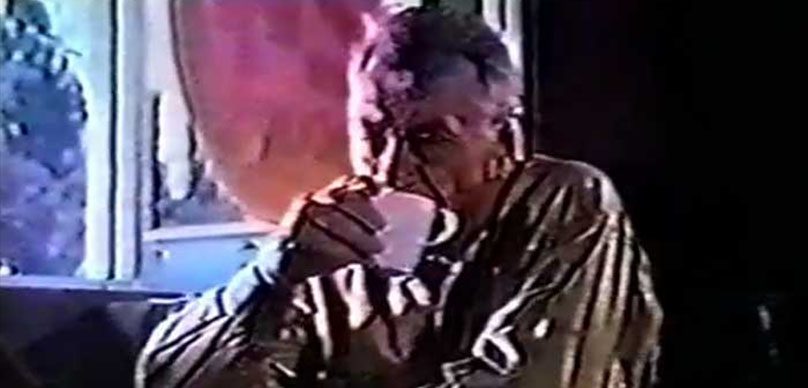
 

Guy Ritchie’s Micro-Budget Short Film: The Hard Case

The Hard Case is a 1995 British short film directed and written by Guy Ritchie and featured Darren Spencer as The player and Benedick Bates as a player and Wale Ojo as the gambler. A twenty-minute film, it precedes Ritchie’s better known Lock, Stock and Two Smoking Barrels.

Trudie Styler saw The Hard Case and invested money into Lock, Stock and Two Smoking Barrels (her husband Sting would play a role in this feature film).

Download Guy Ritchie’s Screenplay Collection in PDF

SHORTCODE - SHORTS

Want to watch more short films by legendary filmmakers?

Our collection has short films by Martin Scorsese, Quentin Tarantino, the Coen Brothers, Chris Nolan, Tim Burton, Steven Spielberg & more.

IFH 594: From Micro-Budget to World-Wide Distribution with Shane Stanley

At sixteen years old, Shane Stanley had already received his first Emmy Award for his work on Desperate Passage (1987) which starred Michael Landon. Over the next few years he learned filmmaking under his father Lee Stanley on what became known as The Desperate Passage Series (1988 to 1995) starring Sharon Gless, Edward James Olmos, Marlo Thomas and Louis Gossett Jr..

The self-produced series earned a total of thirty-three Emmy nominations, (winning thirteen) as well as numerous Christopher Awards and CINE Golden Eagles. In 1994, the Stanleys feature film, Street Pirates (1994) was a two-time winner of the CINE Golden Eagle Award for best feature documentary and film editing.

In 2001, Shane launched Visual Arts Entertainment, his own production company, most notably credited with Gridiron Gang (2006) starring Dwayne Johnson & Xzibit as well as the critically acclaimed independent film, A Sight for Sore Eyes (2004) with Academy Award nominee, Gary Busey.

The film, (produced for under $10,000) marked Shane’s directorial debut and went on to win the Gold Special Jury Award at Worldfest Houston, Best Dramatic Short Film at the International Family Film Festival, a Telly Award for Outstanding Achievement in Film and Television as well as two Aurora Awards for writing & directing. The film was also invited to Cannes to compete in the annual international film festival.

His new film is Double Threat.

After skimming money from the mob, a, well-trained fighter, Natasha (Danielle C. Ryan), finds herself on the run with a kind, naïve accountant, Jimmy (Matthew Lawrence) whose life is about to get more thrilling than he could ever imagine.

Right-click here to download the MP3

Shane Stanley 0:00
Let's put story aside everybody freaks out and says, Oh my God, it's all about the script. Yeah, the story is important. But let's talk about the look and production value of film. For me there's there's five elements, and no specific order. Your cinematographer got to know his craft, you you have to get actors that are that I hate to keep using the term no their craft.

Alex Ferrari 0:21
Today's show is sponsored by Enigma Elements. As filmmakers, we're always looking for ways to level up production value of our projects, and speed up our workflow. This is why I created Enigma Elements. Your one stop shop for film grains, color grading lots vintage analog textures like VHS and CRT images, smoke fog, textures, DaVinci Resolve presets, and much more. After working as an editor colorist post and VFX supervisor for almost 30 years I know what film creatives need to level up their projects, check out enigmaelements.com and use the coupon code IFH10. To get 10% off your order. I'll be adding new elements all the time. Again, that's enigmaelements.com. I'd like to welcome back to the show returning champion Shane Stanley, how're you doing?

Shane Stanley 1:17
I am doing great, Alex. Thanks for having me, man. It's great to see you.

Alex Ferrari 1:20
Thanks for coming back on the show. Brother, I I appreciate you coming back. And you and I have been working together for a little while we've got a couple of courses up on IFH Academy, we got your book about what they don't teach you at film school up on IFH books. And maybe in the next few weeks, we're going to be releasing a few chapters of that book for free so everyone can get to get a taste of your genius. And what's inside and what's inside that book that will hopefully save a lot of filmmakers lives. But today we're here to hear that one right there. What what? Exactly. So but so today, we're here to talk about your new film double threat. But I just want to get into the weeds a little bit about filmmaking and about where we're, how you put this thing together, the realities of what's going on from financing to distribution and so on. So, but first man, can you tell us a little bit about yourself, the people who did not listen to your first interview with me?

Shane Stanley 2:18
Well, absolutely. You know, I grew up in the industry. I actually became a working actor at nine months old. My father was a working actor. We were at a barbecue and there was a guy kind of looking at me from across the backyard. My dad's very protected. She just walked right up to the guy goes, I don't like the way you're looking at my kid. What's your jam? And he said, Oh, no, no, I'm a commercial director. I'm doing a new campaign for century 21. It's this new real estate company and I need a baby and your kids been sitting there quiet and perked up and well behaved and we can't find a kid that doesn't scream. So luxury started to kick this working kid baby actor till I was you know, fourth, fifth sixth grade. But during that time, my father got out of acting and became a working documentary and educational filmmaker. So he had the flatbeds the movie olas, the splicers and 16 millimeter cameras and so from very young age, I started playing around on those cameras and the splicers and movies. And he just started working and working and working. And he was doing everything at such a low budget, he was literally pulling on me to work in the camera department, the editing department. So I grew up in and around the business that way. And as I got older, around the time, I was in high school, he finally got his big break. And it was on a film that that, you know, he did with Michael Landon that I was very, very much a part of. And that changed our lives. And we started making this, you know, a television series of movie of the weeks for about nine years, which spawned into Gridiron Gang, which was a remake of one of our Mo W documentaries. And I started going down the path of working in a television network and studio system. And I just I didn't like development. I didn't like meetings, I didn't like talking about movies getting made. I wanted to make movies. And when I probably about 1213 years ago, after my 1500 meeting at one of the networks, the head of the network called me into his office and said, Let's talk and we put our feet up on his coffee table. We poured us a glass of scotch and he said it's obvious you're unhappy with this process. You're a filmmaker, get out of here, go make movies. And so I I got $500 together and made a pilot for you know a 45 minute pilot which did more for my career as a filmmaker than any of my resume previously. And I've been on that path ever since and it's been it's been quite a ride.

Alex Ferrari 4:48
It's been it has been served without question. You have made a bunch of independent films over the years and I know that you know a couple of things that you should avoid To in regards to making independent film like, what are a few things that make your independent film look cheap? Look low budget because you make high quality high looking budget films at low budgets. But I I've seen them to men. I even worked on a few of them. When I was coming up as a colorist and an editor, where you look at the stuff you're like, Dude, why did you just God? Why did you shoot against the white wall? Why?

Shane Stanley 5:28
Why did you get your aunt to play a big role in your movie? Yeah, me, you know, look, let's put story aside, everybody freaks out and says, Oh, my God, it's all about the script. Yeah, the story is important. But let's talk about the look and production value of film. For me, there's there's five elements, and no specific order. Your cinematographer got to know his craft, you you have to get actors that are that I hate to keep using the term no their craft. And a lot of new filmmakers say well, I don't know any working actors. That's okay. Go to local acting classes, call colleges. There are a lot of actors amongst us that we don't think about. But most the time they're calling their friends, their girlfriends, their aunt, their mom, their dad, their neighbor to star in their movies, and it just sinks the ship. And there's no reason you can't be working with talent. I think that the thing is so important is location. So many people just shoot in their backyard or garage their house. People want to experience new things. And for me, everything is about location and making something look big. Another element is the editing. I think that's absolutely key. An editor can can sink or swim the film in a heartbeat. And the other one is sound production sound. I've been fortunate on my last nine films to work with a guy that to ADR one line with the exception of we did a scene in a car. And we had to, we knew we weren't going to get it because of where we were driving and the organic nature I wanted to shot in and we shot it with the camera trays and the sound and said just go get this a scratch. We'll we'll get him in the trailer doing it later. And that's I you have to have a great sound man, a good editor, a good cinematographer, good actors in good locations. I think if you have those five things, you have already stepped your game so far up, that you're going to you're going to separate yourself, you know, it's I will say it's separates the sheep from the goats.

Alex Ferrari 7:30
Yeah, and I think the other other thing I would add to that is to just when you frame things, just frame it with a little bit of scope a little bit of, of depth in a shot. So like so many times I see shots where, oh, god, look, they shot a two people talking against a white wall. There's nothing interesting in that at all, shouldn't no window, at least

Shane Stanley 7:49
Look out the window, go outside, you know, go go to a, you know, a set of tracks houses on a day, they're not doing the trash, you know, and you know, put a long lens on that thing and just get some depth and some open, you know, and just that's just it is most of the student films or indie films that I look at. And I know you and I have talked about this, they shoot it up against a white wall, or they shoot it in a garage or a bedroom. And these things could just be taken outside or put into some new area. And our job is storytellers is to take an audience to either a place they've never been a place they are afraid to go a place that they want to go or something they didn't know exist. And I think every time you set something up, you need to think that way.

Alex Ferrari 8:30
Yeah, no question. And I'd love to because in your new movie, double threat, there's a scene that, you know, you're talking about people wanting to be taken to a new place, things you haven't seen before. I haven't seen a woman on horseback with a bow and arrow chasing down a car. Ever that I can remember that double exactly didn't look like a startup. So we'll get into how you shot that in a little bit. But that was just like something you're just like, hey, something I don't see every day. That's, that's interesting. So adding little elements like that if something you just like I've never seen that before, adds a tremendous amount of value to your project.

Shane Stanley 9:14
It's gotten a lot of mileage and also, you know, Danielle C. Ryan, is the actor you're referring to Danielle had one mandate, and she produced the film with me as no stunt doubles. I can do anything that you need me to do. And you know, there's a three and a half minute fight scene in that film, not one double She rehearsed it would talk to him and the other guys for one day on her day off. They showed up we knocked it out. And you know, that was the thing you know, we shot that film the heart of the pandemic, we filled it November, December of 2020. And we lost nine locations going back to locations. We had nine locations committed to the film that one after another dropped out during production. And we had a friend with a film ranch who just said dude, here are the keys, lock yourselves up on the hill and go do what you got to do. And so we were very limited. I had that I had a warehouse, I had a hotdog stand. And we had my cousin's cabin and big bear. Those were the only locations we had. And I would love to shot that film all over the world, but we couldn't because of COVID. So taking what we were talking about a second ago was, yeah, is how do we make this interesting? Let's put a girl on horseback shooting a bow and arrow hitting a moving target, which she actually did. Let's get car chases. Let's have fun with this. Let's do a let's go to the airport and steal a plane and have Matthew Lord started up and take off. I mean, we had no stunt doubles in this film. And that was kind of our hook.

Alex Ferrari 10:35
That's awesome. That's awesome. Now, in another interview, I heard you talk about the 11 minute rule that filmmakers and screenwriters should follow what is the 11 Minute Rule?

Shane Stanley 10:44
I will, I will tell you something funny, I got a lot of heat for that I was doing an interview. And before we started, you know, I just said, casually, I said, thanks. There's an 11 minute rule. And I learned this from sales agents that you know, when you make as storytellers the muscle or Spielberg, or you know, Christopher Nolan, what they're going to sit for two hours before you get to the point, I've learned when you're making an indie film, especially in the climate of streaming and 300,000 channels at your fingertips, you better let your audience know what's going on. Within. I've heard from sales agents and distributors, they've been beating in my head for the last six or seven years, you've got 11 minutes to get to the point are there we're out there, they're gonna you're gonna lose them. And I mentioned this on another interview, and I got crucified for saying that. And of course, it was people that have never made a movie before who've never sold a film. And I learned it by having movies that we're building and developing characters, with sales agents, saying you've got to take three or four minutes out of your movie, you've got to get to it by 1011 minutes, dude, if you don't, we're not going to get a sale. So you know, everybody likes to develop backstory and character and you know, all the you know, all the aficionados out there that have their rules that they believe they need to follow. They crucified me, which is fine, everybody's entitled to an opinion. But what was really funny is I am actually a work for hire as a director on a studio film right now that starts in August, I was hired by Studio to direct a film. And what was so funny is we have our first meeting, and they wanted me to read the script. And they never saw the interview. They don't care about any of the stuff I do outside of what they need me for. And one of the executives actually said to me, there is an 11 minute rule that we need to follow this script doesn't do it, it gets into about 13 or 14 minutes, where we finally know what the hell's going on. We need you to as a director, to do a director polish and get us to this 11 minute plan. And I said to him, I said, Well, where did you hear about this rule? And they said, it's just a rule follow it. I've never heard the term 11 minute rule. And I'm not saying I coined the phrase like Richard Kirino. Like that wonderful comedian that said, he coined the lunch from hell or something from hell, but I had never heard the term I was brought up in the interview. But I have found it, especially in the independent world, when you're hustling, and you're trying to sell your stuff. If your audience doesn't know what the hell's going on, and what the journey is going to be, of course, surprises down the road are good, but they don't know what the whole setup is and who the players are by 1011 minutes, man. Good luck. Good luck.

Alex Ferrari 13:16
No, and that's the thing. And this is the difference where a lot of filmmakers don't understand that in the 80s 90s, even the early 2000s, people would go to a theater, they sit down, or in the 80s and 90s they would rent a movie, they've paid for it. They're gonna watch it. You got a hot, you're hooked. But in today's world, you're flipping, flipping, flipping, flipping, flipping and there is 10s of millions of pieces of content for you to consume and movies and ELA and television and entertainment for you to watch that. I'd argue it's like much faster than 11 minutes because it is for me, I I will sit there and I'll start watching something and man, like we were watching the show. What was it I forgot the name of the show, but it was supposedly a really good show. And it was like a new HBO show. I'm not gonna name the show. But we were watching this new HBO show. And it was like a drama and we're just sitting there going, I'm like, what is so slow. My wife and I just like eight minutes in we're like, I can great cast, same cast, great writers. I just it just took too long for me to get into it. I was just like, if this is the pace of the show, then I'm not going to be able to keep going with it. So I just started watching mayor of Kingston

Shane Stanley 14:28
How do you do it?

Alex Ferrari 14:30
I I'm in the middle of it right now.

Shane Stanley 14:31
I first heard that I saw the whole I saw the tama Jeremy Renner show.

Alex Ferrari 14:37
Yeah, Taylor Terrell shared It's so terrible.

Shane Stanley 14:39
She loved it. It's got you know, look, you can pick apart any series Wouldn't we all love to be hit and Taylor's got it going on right now. I'll tell you something. That the last two episodes it's a two part episode. I'm a cutter at heart. I'm an editor at heart is the best cutting. There's a scene in the prison yard. I'm not going to ruin it for you. It's the best Editing I've ever seen on television and it's comparable. I thought I always thought bravehearts battle scenes were the best cut I'd ever seen because it's comparable to the Braveheart stuff. I was just I rewatched the episodes just for the cutting it was I love the show and I hope so.

Alex Ferrari 15:16
So yeah, I think they're definitely bringing it back. But Mayor Kingston is for everybody not listening is a show by Taylor Sheridan, who is right now the most. The busiest human being in Hollywood has I think 11 shows in the pipeline

Shane Stanley 15:32
Yellowstone.

Alex Ferrari 15:33
1932 and then there's like four or five other ones that are just the one with Sylvester Stallone is coming up. Like everybody in the in the country in the world wants to work with him. So he's got like, I think literally, I'm not exaggerating, but a lot and shows running. What's really cool.

Shane Stanley 15:47
What's really cool if I can interject is Donald aviary who co starts and CO stars in double threat the film that we're talking about. She was in 1883. And they they loved her so much. She is going to be in Yellowstone. This year. She's I mean, the whole season. I mean, how cool is that? I'm so proud of her. Well, yeah. I'm allowed to say that because they that news broke two days ago. So I'm proud of her.

Alex Ferrari 16:11
But the reason why I bring that show up is because the first pilot I'm sitting there watching the pilot of that first episode, I'm just going to so tight. It's so in I'm so I'm so in. And then there's a twist in this in the pilot, which we won't tell you about. And you should like what that done. You're hooked for the series because of what they did in the past one of the best pilots I've seen in a while and a wine

Shane Stanley 16:34
And Taylor is so good at those. I'll tell you going back to what you said a second ago that is so key when we were making movies and up until probably 10 years ago. You got them in the theater, they were hooked. They weren't going anywhere. They paid for the DVD of the VHS, they weren't going anywhere. Now, the problem is is the distractions, the phone, so even if they're streaming your show, this is going off, they've got a tablet, they got a kid crying, there's, it's so you have to make your show look like they can't blink. And that's that was the point of the whole 11 minute rule is and I'd learned it the hard way because when we did break even look, love it or hate it, that film had more potholes in it than than a poorly paved road. But the problem was we took 20 minutes out, which left those holes so we could make our deals. That was the problem. And that 11 minute rule. That was what everybody said is you take 21 minutes to get to the damn point. We don't know what the kids are doing until 17 minutes. And once we hit that 11 minute point, everything changed. I thought the movie suffered greatly for it in plots and story and that's unfortunate, but it made the deals when you talk about business and and that was where that was coming from.

Alex Ferrari 17:49
You know what, and then we'll get off the Taylor train for a second because I just I just such a fan of Taylor's Oh, he's so he's so must see TV for my wife and I when the new season of Yellowstone is up. My kids know. Are you guys see it's Yellowstone night? Okay, we won't we won't knock on the door. Because if they knock on the door while Yellowstone is on, they know they're gonna get it. So anytime they walk in, but like so, yes. And now we're like, it's mayor. Kingstown No, no, no, no, I'm not gonna want to hear anything for an hour. Go away. Go away. The house is on fire. There's a fire extinguisher under the under the sink, just deal with it. But that's Taylor. That's the kind of writing that that Taylor does the kind of filmmaking he does, but the shows. And that is he is the He is a writer and a creator for this moment in time. And probably the best. He's probably arguably one of the best writers in television right now, arguably also means a carrier of Jesus Christ. Oh, Jimmy just occurred to me all his movies where I mean hell or high water you just like, oh, you know, and I was watching an interview about him the other day. I think it was a CBS or something like that. And they were he's like, Yeah, after 20 years of, you know, being number 11 on the call sheet. Someone said you should write and the first thing you wrote was the pilot of mayor, Mayor of Kingston. And then after he wrote it, he goes to him and I wish I would have been doing this 15 years ago. He was just never wrote before that. And he never He just and then he just kept going. And he kept and he said which is the best? He's like, I do movies because to support my horse habit.

Shane Stanley 19:30
Yes. That's I think why he and Don hit it off so well is because you know, she she lives on like this huge ranch. And she is she is all about the horses. And I remember when we were working together on double threat, she was like, I really want to do a film with you with horses. Maybe a Western we should do that. And it's like, okay, and then we wrap double threat and Scott 1883 And she goes off. I found my filmmaker who's got the horses Shane.

Alex Ferrari 19:56
Thanks anyway, Shane I'm good!

Shane Stanley 19:59
I can't Can I like Woody Harrelson and indecent proposal? It's like he's got the big yacht. I can't compete. I can't compete with just some old vintage guitars. That's it.

Alex Ferrari 20:13
And you know that he's doing so Taylor's doing so well that he bought he's a co owner now of the four sixes ranch.

Shane Stanley 20:19
I didn't know that.

Alex Ferrari 20:20
Oh yeah, he bought he bought the inferior one of the four sixes Ranch is the largest ranch in America. I think it's it's 275 miles.

Shane Stanley 20:32
Yeah, it's it's i

Alex Ferrari 20:34
275 square miles or some something insane. He owns and he owns he's a part owner of it now. 200 million or something like that? Something crazy.

Shane Stanley 20:47
Let's be nice. I'm just, I'm just trying to put gas into cars.

Alex Ferrari 20:50
Hence why I moved why I moved to Austin sir.

Shane Stanley 20:55
Man, smart man.

Alex Ferrari 20:58
Now another thing I wanted to ask you about man is titles. The title of your movie and how important the title of your movie is. And a lot of filmmakers think about it as a creative choice. And it is. But a movie like one of the greatest movies ever made. Worst title ever for a film? What movie? Is it? Greatest Movie Ever one of the greatest movie ever made in the 90s worst title in the history of cinema?

Shane Stanley 21:24
Well, I know I know. It was a well for me. It was the best selling book was Shawshank Redemption

Alex Ferrari 21:30
It's a horrible, horrible.

Shane Stanley 21:33
Funny story about that movie. Not many people know but go for it. When we first started doing Gridiron Gang we got that film got acquired by Sony in 92-93. So we spent a lot of years at the studio and without naming names. You know, when you're in the studio system, they'll they'll invite you to screenings premieres and little private showings and I'll never forget being invited to a private showing of a film that the head of production at Sony called and said, We want you guys you and your dad and mom to come to see this film. So we went and it was it was Shawshank Redemption. And it was brilliant. It was like I did the lights came up. I turned to the gentleman who invited us and I says one of the best films I've ever seen. He said, we're not that excited about it. We don't know. He said, we're kind of nervous about it. We it's a little picture we may. And I just I didn't know it was based on a Stephen King movie, because I actually saw it without credits. That's the way I saw it. And I just said to him, I said, my only suggestion is changed the title. And everybody looked at me like I just took a turn on the corner of the room. And they were like, you realize that's a Stephen King novel. And I was like, Oh, I just don't think

Alex Ferrari 22:43
It's not a novel. It was a short story. It was a novella. It's a short story. It's a novella. So wasn't like it, you could change the damn title. And it wasn't actually the name of the title of the

Shane Stanley 22:57
paper saw the title and now I think everybody's it's ingrained in our head. But yeah, but now it's in Shawshank Redemption.

Alex Ferrari 23:05
It was horrible, horrible. So can you talk about the importance of titles in the marketing and selling of your film?

Shane Stanley 23:13
I can I the first time I ever got introduced to the importance of a title, I was fortunate enough. When I was I was running Charlie Sheen's production company from 90 I think it was 96 to 99. And we were doing a lot of projects back then. And we got involved with Avi Lerner who's you know, obviously become one of the most prolific independent filmmakers of, you know, content in the world. And we were doing a film, and the title was The sparrow prophecies. So it was kind of this really cool psychological thriller, and they greenlit the film. And it changed but Avi said to me in a meeting, I'll never forget it. We didn't have he called me said we need to have a meeting. We didn't have Skype, we didn't email we drove to Arby's office. He said, we're having a roundtable meeting about the title. And he said, the title stocks, I don't understand it. But most importantly, it does not translate foreign. He said, On a good day, 18% of our money will come from domestic, it's all about foreign and I never forgot that. So I was literally in the bathroom. I grabbed and all that I was getting ready to go to the meeting and I was looking at an old issue of metal edge magazine and the drummer for poison. They're friends of mine. Yes. Ricky rocket was wearing a shirt that said no code of conduct. So I went to the meeting about two hours later, I'm sitting there and obvious screaming about how horrible the title is. And I finally said, What about no code of conduct and everybody stopped? He wrote it down. He made a phone call. He hung up. He said, That is brilliant. He said, You're good at titles. You're a crappy writer, but you're good at titles. I said to him later was we became friendly. He said, you know, and this was in the home video days, but I tell people this now, he said when people go to Blockbuster or Hollywood Video, they start new releases. They're in alphabetical order. You have to think about by the time they get to M they've made their selection. He said, so always try to think of, of titles before M, but good to word titles that have translation globally. So for me, I realized and making movies especially in the last few years, you know, we have, we have titles like breakeven, we have titles like nitrate, we have titles like double threat, you know, things like that. And, and for me, it's about let's get a catchy title that we say on a daily basis or a regular like when we hear it it's a familiar term. And for me, it's it's it's really important to catch people's eye that know nothing about you as a filmmaker, they may not know your actors or what your films about, or you don't have the publicity money to make it a household name. How can you do that, and that's all the studio system was doing and repeat sequels, prequels and remakes was let's get rebrand what people know. So as an indie filmmaker, I think it's important to come up with really cool titles that people are familiar with subconsciously, that will help just do a little bit of a built in branding for your film. And that's that's what that comes from. But as it is, I can't work on a film until I have a cool title. I just I never could. It's

Alex Ferrari 26:06
So I actually, when I was working in coming up doing deliveries for film for films, I was working with the distributor, and there was a title of a movie. And let's say it was called by train. Alright, let's for lack of what it's called by drinks. He goes That's to can't make that work. Yeah, we need to be in the top of the catalog. Yeah, so for him, he was looking at it from AFM standpoint, from the American Film Market standpoint, where distributors and buyers are looking at the catalog and it starts at a so he renamed the movie A Night Train

Shane Stanley 26:42
Smart. Because they're not gonna make it NightRain comma A and the catalogs to be able to train at night train.

Alex Ferrari 26:48
So I'm using that as a really horrible example. But it's exactly what he did. He just took it and just made a just throw an a in front of it, and you're just like, but that doesn't sound that great. And he's like, it's gonna sell. So there's, and this is the thing, man. And I know, I know, you and I both kind of fall in the same in the same boat in this regards to art versus commerce. We're filmmakers, we're creatives, we want to tell a cool story, we want to be doing what we'd love to do. But then you got to make money in order to keep this train going, no pun intended. You got to keep this thing going. So there are going to be sacrifices at this level. When you're at the studio level and you get to develop or if you're in the art world, our art film level where you don't care. Like I made a movie called on the corner of ego and desire. A it's not something I AFM was not my strength, not my point. It wasn't like buyers are gonna buy this, I made the movie for three, three grand, and it was fun. It was just for fun. And I was gonna sell it to my audience and I made money with it. And we're all said and done. But it was an art piece. It was an art piece. So there's art films. And then there is a studio world where rules are completely different. They're completely skewed, whatever they want. But in the in the, you know, the grinding indie world in the trenches, if you will, you've got to balance art and commerce. And you just said that you kind of cut out 20 minutes of your movie, or else you wouldn't have gotten deals that you could have stuck to your guns as an artist and said, You know what, this is my vision. I'm not moving forward. And that movie wouldn't have made money you would have been able to make the next one is that first.

Shane Stanley 28:25
And that's just it. I say in my book, I remind people you know, I look at every film we make as a gift. Every opportunity we have I look I compare it to a trip to the moon and how many people have been to the moon twice. I don't think many. And I just say look, if you just want to make a movie, go make the movie you want to make but if you want to have a career as a filmmaker, there are sacrifices and things that you have to change to get there. I mean, I've had films that that people said are brilliant. They've won you know 100 awards and really prestigious festivals premiered at Cannes and then the buyer who buys it at Cannes says great we need to take out five minutes we need to do this we need to switch this we don't like this actor we want you to reshoot that and but that's what got me here I am 50 plus years old now and I am making a couple of films a year and I'm very pleased to say pretty much my way because I've learned how to play the game and it just comes from going back to what you said about Title real quick. The original title tonight train was actually blowing smoke because it's a film about speed it's about you know car racing and motorcycles and all this launch

Alex Ferrari 29:33
Smoke i right away I thought of I thought it was a weird movie.

Shane Stanley 29:37
There Okay, so it first was a week then there was blowing smoke up your ass and then I literally said as a joke I said well the the treatment title was Night Train and everybody's like well that's your title Night Train. The truck is actually your third star in the movie. That's the brand that's plus you got the Guns and Roses song that was real familiar of popular so it's again it goes back to that subtle branding. So we Yeah, we scrapped blowing smoke even though that was the working title. But it was always meant to be nitrate.

Alex Ferrari 30:06
Yeah, exactly. Now I want to ask how did you get double threat off the ground? You know, and especially, how did you get, you know, how did you just? I mean, obviously, you came up with the idea you you wrote it correct? No, no CJ

Shane Stanley 30:18
Weezy a story. So, we were in September of 2020. We had all been on lockdown for six, seven months, I was sitting in my home office. And I literally said, Okay, it's September, coming into the fourth quarter, we can look in the rearview mirror and say 2020 kicked our ass and walked us down. Or we can we can turn around and make it our pitch. I said, I am not going down without a fight. A friend of mine called me it was one of my dearest friends in the world. He said, Hey, I got 50 grand burning a hole in my pocket. Can you do something with it? And I said, Sure. So I called up CJ. And I said, I got a friend who just committed 50 grand, I know it's nothing. I got the cameras for free. I know I can get the locations for free. The actors will just put it under an experimental deal. We'll get a decent actor, somebody will come out play with us, we'll get a crew of eight. Let's just go do it. So we talked to Danielle and her manager at the time, Kurt and we all agreed to go make this movie. CJ had a script in six days. And on the sixth day of Christmas, my true love called me and said yeah, my wife said no, you're not going to 50 grand. So it was like, oh, okay, so I actually was having lunch the next day with one of my dearest friends in the world. And it was when they were starting to let people in restaurants if they were outside on streets, and we sat down and he just said, you know, I told you I'd never get involved in your industry is a very successful man and his own business. He said, I'm concerned about you and your friends. You haven't been out of the house in seven months. He said, What is the cheapest you can make a movie for like bare bones with the COVID protocols. I don't want you to get shut down. So I came back to him later that day and said I broken down what we were going to do. Here's what COVID is going to cost. Let's put a little pad in there. Let's do it. Right let's do it through sag. Let's do it. Hey, everybody, here's the number and he said I want you to get out of the house and go make a movie and within two months from concept to that's a wrap. Wow.

Alex Ferrari 32:18
Yeah, that's an insane turnaround for a movie.

Shane Stanley 32:23
Now the best part of the story is not. I had two assistant editors on the film who sadly lost parents, grandparents and brothers and sisters to COVID So I had I had all the 4k or 5k footage sitting. I couldn't find anybody because Hollywood had started to open and we had no money going in. It took me six months to get the picture transcoded song dailies proxies and cut because everybody was back to work and making good money and we didn't have post money going in. And I literally had to ship a hard drive a 24 terabyte hard drive to Cairo, Egypt. There was a gentleman God loves them. He he heard we were in need he reached out and said I am stuck in Egypt I flew here before the pandemic with my wife we cannot leave we're on lockdown. If you trust me I will deliver what you need. And I literally FedEx to Cairo. A 24 terabyte hard drive and a month later he sent it back with everything done. And we were able to

Alex Ferrari 33:28
Affordably I'm assuming.

Shane Stanley 33:57
He did it for like lunch, a screen credit and the new friend. I mean the guy I couldn't have done it without him. Couldn't have done we had no money. We put it all into the shoot and COVID 40 grand went to COVID on that film. We've tested over 400 times not one positive. We had a couple of COVID officers and all the the PP II stuff you needed. I mean, it was it was unbelievable. What went to COVID like a huge chunk of the movie went to COVID. Wow, that's so we posted it for nothing. I mean, my DP Joelle Logan colored it because he wanted to color a film. He said, I'd like to try coloring the film. And I said, Well, I have no money here.

Alex Ferrari 34:36
And when you're when you're working with this budget level, you got to do what you got to do to make it happen.

Shane Stanley 34:41
And it was it was it was a fraction of what we had been used to so and then you add COVID on top of it. And then the fact that when we were in post everybody was back to work. I was calling people that were friends of friends that were looking for work the week before and destitute living in a box. And as we all know, Hollywood went crazy and So, I would call people in like colorist that would say, Yeah, I'll do it for like five and they were like, Dude, you can't even afford me on backed up for six months don't even bother me. I couldn't get anybody to do it.

Alex Ferrari 35:10
Yeah, exactly, exactly. And I was getting calls left and right to color and I just like, I'm retired. I'm retired. I'm a podcaster. Sir, I don't, I don't color. And I'm joking.

Shane Stanley 35:24
I actually had a friend Chris Rosner, who's one of my dearest friends. I love Chris using an incredible cinematography teacher at LSCC. Chris has a very good colorist. And he had been on lockdown. So he had actually offered when we went into this, he goes, if you're getting a jam and needed color, let me know I'll color it for you for lunch. And you know, a couple of favors. And I said, Great. But the problem was, it took us four and a half months to get it transcoded and synced. So by the time I got the film back, and Frank Reynolds and I started cutting the film, Chris was already back teaching, working full time again. So I lost that window. And that was like starting and thank God it's like he said, he color it.

Alex Ferrari 36:02
It's it's pretty, it's, it's, it's the same thing we do. I don't even know why we do it. Honestly, it's just it's insanity.

Shane Stanley 36:09
I questioned it every time.

Alex Ferrari 36:11
Now, you obviously been able to raise money from investors over the years to get your movies and projects off the ground? What are a few reasons why investors want to invest in our in our industry and your project? Specifically? What are a few things that we can kind of know on how to, you know, angle our pitches or you know, just angle what we're trying to do with them?

Shane Stanley 36:33
You know, that's a great question. And I have found, you know, I think for filmmakers, for many years, it was getting rich people that wanted to rub elbows with celebrities, those days are over. It's about relationships, and people don't like hearing this, especially the young ones coming up who are of that instant satisfaction, get it when you want it age of picking up the phone and ordering something from Amazon and having it or being able to text somebody you can't reach. And I talk about it in my book, Alex, the key thing is relationships, the people that have invested in me over the years, with the exception of one, maybe two times in 30 years were people that I had known for decades, most in which said never never talked to me about investing in film, I will never do it. It's in everybody wants to hear it's going to a cocktail party and meeting a rich guy who wants to rub elbows with as they stay in the player with Whoopi Goldberg and make you know, write a check. And that's not how it works. It's it's, it's about building trust, they they want to know that they can trust you, you have to treat their money like it's your own. For me, many times it was working for these people in side hustle jobs or they had a need and they needed something handled professionally, that they didn't know who to call on. So they called on me and said I need something done for my business, nobody's available. So it would turn into me doing a three month job for them. That they look back and said, This guy didn't fail me. He did what nobody else could do. And he delivered and I this is how he's conducting himself and his business. I want him. And that's what he came from me and and with the exception of running into two or three people in the course of 30 years that said, hey, I want to be in the business. I like what you do, here's a check. It's been about deep seated long lasting friendships that were never built on. Maybe one day, they'll write a check for a movie. And that I think is the hardest thing to translate to people. You'll always meet people that say I know somebody that may be interested or I'm a hedge fund manager I know people or my favorite is is you know, I have clients that are deep, deep pockets, and they're interested in getting in the industry and you know, put a proposal together. I think pitch decks and I talk about this a lot. I think pitch decks have to be reality checks for a lot of people pitch decks, especially for filmmakers who haven't done it. They, they, they they put these figures together that are so lethargic. I mean it's like Greek mythology, how they put you know, maybe back in the old heyday of blockbuster and Hollywood Video, these things may have worked. But it's a new day and age the emojis are tiny if you get them at all. I always remind the filmmakers you've got 54 territories and over 170 countries that potentially to buy your film quit making movies for Instagram red carpet moments and think globally not vocally when it comes to building saying that hey, stop putting Ben Affleck and you know Galaga doe in your pitch deck it's not going to happen and you know and all you're doing is I talked about is all you're doing is disappointing your potential investor Why would you go in with these names to try to lower them and then before you've even started shooting the movie Hey, you got some B rate actor that nobody knows no disrespect to them but it sure doesn't add up to Galka doe and Ben Affleck so your investor is going to look at that and go Well why did you present this and you're ending up with that.

Alex Ferrari 39:50
And let's not even talk about projections and you know busting out Blair Witch Project and paranormal activity.

Shane Stanley 39:55
Oh and Slingblade and Napoleon Dynamite and El Mariachi Oh my god, I always tell people look at lovely and amazing once these little films that were made for a half a million dollars that made back Florence, once it's a great one. Yeah, once it's a great example. And I told me, it's like, Look, if I'd like to think that us filmmakers are smart enough to be creative beings and should have some business sense. And what frustrates me as I see them, look, if if you're a potential investor, and somebody came to you and said, Dude, I need 100 grand, we can build buy this house and flip it in six months and make it 30 million bucks, are you gonna give that guy 100 grand? Probably not. But if the guy came to you and said, I need 100 grand, it's going to take us 10 months to remodel. And probably in the next two to three years, we can sell that house for 250 to 300 grand, is that something you'd be interested in? You may actually listen to him. And that's what filmmakers forget. And remember, when you're going to somebody with a lot of money, or the potential to finance your dream, chances are they're smarter than you are. And they have people in their camp that earn a living protecting them from people like us. And you have to lay it out. It's like, you know, I learned at a very young age, don't don't be us and build this pitcher of total fantasy. Go in with the mindset as you're going to get a base hit an occasional double, if you ever get a Grand Slam hallelujah. But that can't be what you're selling, because it's lightning in a bottle.

Alex Ferrari 41:17
Oh, yeah. I mean, if you're always if you're if you only look at the home runs, and not the not the bunts and the singles, and that's where most of it and that's most filmmakers, do they look at the best case scenario, they never look at the worst case scenario, or the Gen, like it's one out of 1001 out of 10,000. You know, do that kind of big kind of money that blows out the onces and the and the me paranormal activities once a once a decade, you know,

Shane Stanley 41:47
Yeah, but how many millions of Paramount put into that movie Seven?

Alex Ferrari 41:51
Yeah, and I know and I know the guys who I mean, who worked on that, you know,

Shane Stanley 41:55
People of Paramount who acquired it.

Alex Ferrari 41:57
Right, exactly. So we know I knew the stories behind it like oh, yeah, they pumped a ton of cash into this. It wasn't like It's like mariachi like, oh, yeah, it was a $7,000 movie. They made 3 million at the box office like Yeah, well, you know, they did spend a little bit of money remastering it they put a lot of money into marketing. I don't know either. But that's that. That's not that doesn't serve the narrative. It doesn't show in there.

Shane Stanley 42:20
No, it does. And I think the days of those sling blades and Napoleon Dynamite because there were the Miramax is in the Hollywood videos and blockbuster outlets that these little gems found found life and they flourished it

Alex Ferrari 42:35
Man I can't even think we haven't had anything like that happen. Like a movie out of nowhere with no stars

Shane Stanley 42:43
We all know where not not the deal was already done. Let's send it to Sundance a roll announcer like literally

Alex Ferrari 42:50
No where no no talent in the in the movie or like barely any no bankable stars. No nothing like a Napoleon Dynamite style like that goes off and makes $50 million. Or Brothers McMullen. Yeah, that went away. $30 million. With no but like literally nobody.

Shane Stanley 43:09
It was amazing project practically.

Alex Ferrari 43:11
Yeah, just put that thing together. Those I don't know if that's even possible today in that in the way it was then because the marketplace was different. There was a marketplace for indie films. And that's the big thing that a lot of people don't understand is there was in the 90s an infrastructure being built for independent films. The DVD market was huge. There were still Hollywood videos and blockbusters are running around. You know, Rick, when he was on the show, Rick Linkletter when he was talking about slacker he's like, the reason why slacker found the spot made money is because there was an infrastructure starting to be built in the early 90s. There were indie movies in the 80s. There was really, you know, great art, you know, independent filmmakers that make great films in the 80s. And in the 70s. But there wasn't the infrastructure to make money with them. The Easy Rider was like the, you know, and it's not Jack frickin Nicholson and Dennis Hopper, and yeah, of course, back then. And that was considered indie. But there were still independent filmmakers making movies back then, but there wasn't the infrastructure. So in the 90s, there was this groundswell of of places you could put movies and actually make money arthouse theaters, every studio had an indie arm Paramount advantage, you know, Fox 2000 All of those all of those things. Were around for that and that's where that's all kind of gone away. There's only a handful of those left Fox Fox Searchlight or excuse me just search like films now. And, and Sony picture classics, and now they're not doing Indies. They're doing big budget. You know, with big stars. Yeah, like under 10 million stars under 10 million. That's that's that's

Shane Stanley 44:58
A totally different animal and we don't Have you know, it's funny because I have a lot of friends in the music industry. And when Napster and file sharing became really big, I remember I went to a friend's house who had had a record release party. And he played some of the songs that he had on his record, and I and he'd had a lot of success. And I remember saying, dude, this is this is huge. And he said to me, said, Let me tell you something, he said, music is free. He said, Now music is free, we don't make our money on music, we make money on touring. And he said, I'm worried about your industry, because you guys don't tour. And I thought that was interesting. And as I look, now, we're kind of so many of us are giving our movies to streaming platforms for nothing. And we don't have an after party to keep people excited, like an artist can go out, they can do an album in their home studio may cost them a few grand, and they put it out and to get a few singles on it that circulate on iTunes or YouTube. But they're giving that out. And we're all sharing the links to it to friends. So they're really not getting a lot of money on it. But they can go out and tour and make 50 6080 100 grand a night for three or four months. That's their follow up. What do we have? And I don't I don't know the answer to that. But it's something to think about.

Alex Ferrari 46:09
Well, I do have the answers in my book, Rise of the filter producer, where you create multiple revenue streams and product lines based on your movie. Now, it doesn't work for every kind of movie, every kind of story. But if you design it around that it is a possibility. And there are examples of filmmakers giving the movie away as a loss leader, to bring them into their funnels to make money other ways. And I feel that, honestly, I feel that that's really the future of independent filmmaking, I do truly believe it.

Shane Stanley 46:39
And you are a trailblazer with that. And I've always been really good at marketing and building a brand. When you're when you're, you don't have the brands such as you know, ifH academy or whatever you can build, it's in, you're just you're going from film to film to film to film, it's often difficult.

Alex Ferrari 46:59
It's a different way of looking at film. So like I can't I don't think that you know, you're not going to be selling double threat T shirts. Generally speaking, it's not that kind of Hold on. Wait a minute, wait a minute. I'm sorry, you are going to be selling double. Bacon COVID. Our pitch again.

Shane Stanley 47:19
I'm not selling that was designed it and current.

Alex Ferrari 47:26
Amazing. That's amazing. But generally, generally speaking, like not every movie is is set up for a film entrepreneur model. But as a filmmaker, you're gonna go okay, how can I build a sustainable business? If I like a certain genre? Can I kind of build a brand around horror movies? Like Blum like Blumhouse? Can you build a brand around action movies? And like really branded so people know that? Is it possible? Yeah, it's I'm not saying it's easy. But it's,

Shane Stanley 47:52
I mean, for us, it's kind of taking the Hal Needham approach of the 70s and early 80s of that. Cannonball, run them and flipping it, where we're putting the women in the driver's seat, and the guys are riding shotgun. And that's kind of what we've been doing these last three or four years. And it's been really exciting. It's like, but you're right. It's like we had breakeven during the pandemic shot, double threat. I've already shot Night Train, prepping another film, but here I am promoting double threat, but I'm already thinking about NightRain and how we're gonna market that. I mean, it's it's constant. And so it worked together a little bit, but

Alex Ferrari 48:22
Yeah, no, I don't know. I have to ask you on the casting side. Yeah. Double threat. I mean, has a great cast. You know, Matt Lawrence, and I worked with him before he's all the Warrens.

Shane Stanley 48:33
Boys are great. I love them. I'm gonna be with him Friday. I love

Alex Ferrari 48:36
Tom, please tell Matt. I said hi, Austin. Austin, and I say hi. I did. I did a little work with him a little while ago, but But generally speaking, nobody in your movie is this giant, bankable star. So yeah, so they're not like, you know that bringing huge money in but they're good actors. And that's great. So how did you get this is the movie itself, the genre and the trailer and what you've put together is that the star that helped sell the film

Shane Stanley 49:07
You know what it was it it basically was the fact that we've got this lovely girl, Daniel, see Ryan, who's five foot two soaking wet with a full moon. And he does all our own stunts. And she's actually a really good actress. She's actually the star and I train. And we, you know, that film was so different. And we got really blessed with Donald Iberia and Matthew Lawrence and Kevin joy. You know, it was it was somebody that one of the producers found and had known and he was great. But yeah, it was, it was like, Look, we know what we're dealing with. I mean, before we had cast, some of the people that we did, we were making calls to some really respectable, bankable quote unquote, names. And we didn't even get past the hi how you doing? We're doing a film and they said, dude, call us back when COVID is over, because if they were bankable and they had that kind of scratch, it didn't need to work. They weren't coming to the house. And notice respect to who we did get to They've all had tremendous careers and are doing very well. But what was really cool is Donald aviary had called her agent three days before we called her. And she said, I know there are some crazy some bitches out there that are Mavericks that are dumb under nose to locking themselves in the house anymore. Finally, somebody respectable he's making a movie. So when we called Don's agent, and she said, Oh, my God, Don just called me two days ago saying find something. And the problem is, is there aren't many people out there making movies. So we got really lucky, similar with Matthew Lawrence, Matthew had been tired of being locked up for six, seven months as a filmmaker and producer at heart. And he was all about getting out in making art. And so we got really fortunate I wouldn't trade one actor in that film for anybody in the world. I couldn't be more proud of that cast. But for us, you know, for me, and I, it's look, when you're working in indie film, you're not going to go get the A listers, you know, I'll never forget when I was doing my film at Sony, when we when we were simmering down, they said, Hey, anything you get attached with Vince Vaughn, you have a go picture. And that tells you the power that an actor may have and a Taurus? Well, when you're making films for half a million dollars, you don't get those kinds of actors. So what I always tried to do what I talked about it in the book extensively is get actors that people are familiar with the they may not be riding the biggest wave today. But at one point in their career, they were or think globally again, it's like I know Matthew Lorenz has done Mrs. Doubtfire has done Boy Meets World, I look at somebody like Donald aviary, who is in you know, House of Cards, and all our house allies forgive me and heroes, these shows are being syndicated in 100 countries right now. So just because we may not recognize the name or face immediately doesn't mean globally to learn on TV three or four times a day, and they're still stars. And that's how I cast my vote.

Alex Ferrari 51:56
Yeah, and that's, that's a really smart way of going about it. Because they might not look like oh, that's doesn't look like somebody I know. Or doesn't that. But what does she know what she a big star in a movie in a show for eight seasons? Or did they do some other big studio movies at one point in their name is still people recognize or see their face, and they recognize it? If the budget level is it depends on the budget level. So you know, if your budget level starting to go to three, four, or five, 6 million, you have to get bankable names to be responsible to the investors is if you're if

Shane Stanley 52:31
You're making a $5 million film, you better allocate $2 million large to one or two stars to justify what you're spending. You have to weigh it trust me. I have this discussion with buyers, distributors and other filmmakers. I got a lot of friends with a lot of $5 million movies they can't even get looked at because they miss Casta. And, Garrett,

Alex Ferrari 52:53
I'll tell you there was a movie I worked on years ago. I did. I did all the posts on it, finished it up had no stars in it. They went out to the marketplace. Everyone said sorry. You had nobody in it. It's I know it's a sci fi action thing. Don't care. Went back. He raised another 5060 grand 100 grand something like that. Got two stars. I think he got like one of the guys from Stargate. The show Star Gate is a sci fi thing. And he got Michael Madsen for a day each shot him out, re edited the movie reasserted the new scenes. i He came back to me like eight months later, he's like, Hey, can we can we can we redo the movie? I'm like, what would you do with it? Oh, okay. We did that. He packaged it, put them on the cover, went back to the marketplace. And they said,

Shane Stanley 53:41
We'll take I will tell you I had a friend years ago who did a film. He spent 500,000 of his own money on it shot it and 35 millimeter couldn't get it looked at it was just it was his friends and locals in another state. And he brought it to California and it wasn't a bad film. It just didn't have anybody in it. And it was the exact same story. Somebody said if you can put a star or two in a scene and reshoot a scene or two, you may you may get some more I know to date this film has generated over $4 million for him because he just went out and got he literally went into a studio and shot one actor replaced an actor from another scene with with an unknown actor paid them you know, probably 1520 grand for the day that anyone got another cameo for a guy to play in arresting officer to date, that film was made over $4 million for him. And this was a film that nobody looked at for 18 months. It was just like, Dude, I don't even need to see it. Nobody wanted it.

Alex Ferrari 54:35
And that's the importance of a bankable bankable name. So and again, it's not and I've said this so many times on the show and I think I have to say it again for people to understand. It's not out of reach for the shoot somebody out on a day. 1510 five grand a day. 10 grand a day. 20 grand a day. For an eight or 10 hour day is You're gonna get that money back tenfold if you're smart. And it's so important and filmmakers just don't think they can one day don't have the confidence to think that they can get it done. Yeah, but I've just seen it. I'm working with people right now some clients that are doing it currently. And they're going out to the talent. They're like, here's how much I'd have. Okay, let's do this. Let's do that. Great. I need you for five hours. Five hours to shoot out scenes for this movie. Can you do it? And I worked on a movie that had Sonic, Sean Patrick Flanery from boondocks and young Indiana Jones and a million other things, right? So they do so brilliant, they shot him out one day, because that's the whole movie. He's in the entire movie. He's not just in one scene, they now pepper them throughout the movie, she's in like six or seven scenes, but they're all in the same place. So in other words, he's the cop that they come back to like to meet with and they always meet at the parking garage. So they just shot the parking garage. Church changed your shirt, spreadsheet header and, and he dropped off two men and he was just on he's on the cover. So and they shot him off for a day. And then you've got now you've got a marketable movie. And that's the that's the way filmmakers need to think especially in a commerce based film, art house, different conversation.

Shane Stanley 56:24
And you know what, let me let me cap that by saying I have a somebody that was brought to my life a couple of years ago who shot a film with three a list, well known stars, and couldn't get anybody to look at the film. And it was content. It was content. And that was heartbreaking. Because this guy actually spent a million and a half dollars. So what was the content? What was wrong with the content? Well, there's, you know, there's two rules in a movie, don't kill a kid and don't kick a dog anymore, right? And he killed the kid and killed the dog. Yeah, well, they killed the kid and kick the dog. And in that way, it's like, dude, and but it was also involving sexual assault to a child that's like,

Alex Ferrari 57:03
No, no, no, no,

Shane Stanley 57:05
What do you fuck. But these actors who have, like, two of the actors generated over 3 billion in the box office on their work, and they agreed to do this, and you wasted this bullet. And they they can't even get looked at because it's, it's based on a true story that everybody knows. And they're like, yeah, no, we didn't touch on that.

Alex Ferrari 57:28
So I might as well throw some religion and politics in there as well. Oh, let's talk about religion and politics while we're at it. I mean, it's oh my god, that's so heartbreaking. But that, but that's the kind of stuff that happens all the time.

Shane Stanley 57:47
Yep. Okay, we got the cast. We missed. We missed the content. Hey, we got the content. We didn't get cast. I just think it's indie rats. We have to we have to think again, you say it so brilliantly is commerce, business and art and how do you find that and it's, it's, it's about you know, I remember I had a film that that had the greenlight before the Oh, seven crash, which thank God it didn't happen because it was it would have been miscast. We had a lot of ageless actors getting it one of the big agencies was packaging it, and they had some serious cats want to get on board. And I was adamant about the lead being an unknown. I was adamant about it because of her meager world in the script. I didn't want somebody looking at like Jennifer Aniston and the good girl going out she makes a million dollars in episode is you know, when you're watching this girl who works in a mini mart who supposedly broke but it's it's headline news everywhere that the stars of friends are making a million dollars an episode. I didn't want that. I didn't want that to taint it. So I was adamant about an unknown. And I remember a head of a studio brought me into his office. And he said, You're you're digging a grave, you have a film that you have everybody clamoring to do that is bankable and respectable yet you want to hang it on and know you're never gonna get this movie pass go. And he was right. He was right.

Alex Ferrari 59:02
So let me ask you then how did you get distribution for this? How, what is the distribution? How were you all for double threat?

Shane Stanley 59:09
Yeah, it was really, you know, look, it was really simple. We knew we knew domestically that we would be looking at a VOD situation. We didn't we didn't have our own farts on this one. We didn't, you know, have any delusions of grandeur. It was this fun little dirt movie we made with our friends and kicked ass and took no prisoners and it is what it is. And so it was one of those things were it was about partnering with somebody who captured the vision. We wanted a woman run company to be behind the film because we are women driven in our storytelling. And VMI is got a wonderful group that runs that company and they happen to be some wonderful, lovely ladies and they saw it and they just fell in love with it. They just loved the idea of a woman out there kicking ass, riding the horse bareback and shooting somebody with a bow and arrow. You know having the fight seems that she does. And it just was one of those things, Alex, where, for us a lot of times, it's not about the dollars up front, it's about what is the passion and commitment, somebody's going to have to put the product out. That was most important. And fortunately for us, you know, the film is new. So went to can piggyback and with night training, and we're starting to sell up the globe now, which is really exciting because it is a fun action comedy without slapstick comedy that sometimes doesn't translate foreign. It's physical comedy. And you can always do well with that. So it's got the combination of some some fun action sacks, horses, fights, airplanes, and some love and you know, road road type movie. So we're starting to see that it's translating very well across the globe.

Alex Ferrari 1:00:48
And you're you've already started selling out different territories.

Shane Stanley 1:00:50
Oh, I think we got 1213 territories since camp. That's amazing, man. And it's been Yeah, it's really some really good timing, you know, talk about Germany, China, or not necessarily. Germany, China, Japan, South Korea, Germany, you know, South America. I mean, it's like I looked at something that came out yesterday, I was like, God, dang. Seems like starting to move. This is exciting. So the UK. Yeah. And that's just based on us just going out there with a cool trailer and some fun art. Unfortunately, and I'll address it, you know, we came out a week after two weeks after the tragedy in OB. And that was a big problem, because we had already started putting out the the artwork. And that was something that we all, you know, realize that that's something that in hindsight, we wish we would have not, you know, you don't know what you don't know going in. But you know, having your star with an AR 15 on the poster, a week after that tragedy is not the best marketing tool. But the horse was already out of the barn with nothing we ended up.

Alex Ferrari 1:01:48
Yeah. And that's the thing to us. Like, there's just elements and there's variables of in filmmaking that you just don't know, that could be good or bad. Something like what you just said, obviously, is a negative light. But then all of a sudden, your star gets picked up, and is going to be the new Marvel movie. And then all of a sudden, you're like, oh, wait a minute. Now this property is worth a whole lot more because our star is going to be on a big show or a big, so you just these are variables you just can't plan for. So you kind of have to roll with it and see, unfortunately,

Shane Stanley 1:02:20
Unfortunately, there's the gunplay in the movie is minimal and it's all justified good guys versus bad guys. It's not anything like oh, no, no, but you can't force it.

Alex Ferrari 1:02:31
What was Stranger Things? Stranger Things right. Remember stranger things right? The new stranger openings, the opening sequence they like literally put a thing out like, hey, this might be a problem. The opening up of Obi Wan Kenobi, same thing you think like this might, you know, they've made those they made those shows we years like a year ago,

Shane Stanley 1:02:54
Like a double threat in November December was done seven months ago. Exactly. Oh, we knew it was coming out in June of 2022. I've made two movies since that it was like out of sight out of mind.

Alex Ferrari 1:03:10
Yeah, it is what it is. So you just have to kind of you know, roll with the roll with the punches. And that says, I want you to discuss something for me. Can you please debunk the myth of streamers? And the that there's so much money to be made by independent buying Netflix is buying movies from independent filmmakers left and right. They're writing checks like they are writing checks, not to us, but not

Shane Stanley 1:03:36
Why I will give you two examples. I have a friend who is a very, very respected filmmaker that made an independent film for $800,000. They made back when Netflix was spending, they made a deal with Netflix for 250 grand once it went on Netflix, nobody will. Nobody else would look at it, because Oh, you're on Netflix by so it made an $850,000 movie made back to 50. But Netflix pays, I think over the course of two years, they pay it in quarterly installments Plus, you've got your 20% sales commission fee, so and their deliverables which are going to cost you more because you're not in a standard deliverable. So you may see out of that 250, they may see $175,000 over the course of two years. And then I have a friend, I gotta be careful how I talk about this, you get a number one show on Netflix, during the pandemic days, he's made nothing and is pitching on a regular basis to them and other streamers to hopefully get another movie made. And he had a number one number one hit on Netflix during the pandemic and he's like, Dude, it barely covered the cost of deliverables.

Alex Ferrari 1:04:46
And that's, that's and that's the thing, and that's the thing. I want people to hear it because everyone's like, Oh, you gotta get on Netflix. You gotta get into. We don't look I got on my first one got on Hulu, which is insanity. How am I five, five As the dollar movie got picked up by Hulu, that's right. It was a bit it was a different time.

Shane Stanley 1:05:04
It was it was probably six, seven years ago when Hulu was it was

Alex Ferrari 1:05:08
It was 20 2017. But it was 2017. So it's 2017. And, you know, and I also sold it to China. So their cats how old that is. So because China was buying at that point,

Shane Stanley 1:05:22
That doors closed, doors closed right now.

Alex Ferrari 1:05:26
But that was that door was open, and I made good money on both of those. Both of those sales, it was great. But it's not what by the way, if I didn't make a $5,000 movie, that Hulu deal wouldn't really made a whole lot of sense. But because I made a $5,000 movie, it was like, of course,

Shane Stanley 1:05:44
He's learned a lot in the process, which is what we talked about earlier, my background of doing that $500.45 minute pilot that did more for my career than anything than anything that I've done. And you're right. And that's the thing is I always it's like so funny when I talk to people, whether they're people not in the business, or people coming in making a deal with Netflix, doing Netflix, it's like, no,

Alex Ferrari 1:06:06
No, but that's, that's but that's a little secret for everybody who's not in the know. Yeah, everyone thinks that like, Oh, you gotta be on the major streams, Amazon's not buying anything. And if you get on HBO, Max, you are you've got to have some major star power. And I've spoken to filmmakers who have their films bought. But then I'm like, oh, but you have this guy who was in a Marvel movie? Who's the lead in a Marvel movie? Yeah, who's who's about to explode in their movie? That's probably one of the reasons. And it also covered a bunch of other boxes that they wanted to check off.

Shane Stanley 1:06:37
Yeah, yeah, I get that. And, and again, it goes back to how you package market and cast and content and what you're putting together as we talked about before, but I the streaming world, especially in North America is very tough is that's why I always tell filmmakers think about your casting, Think global, and realize you're making a movie for 54 territories in 100. And something countries that potentially can buy because, you know, the I think the average is what 18 to 22% of the films revenue comes from North America. But when you're an indie rad, it could be as little as four to 6%. And that's something to remember. And that means that there still are parts of the world that are buying brick and mortar, video, DVD, Blu Ray, it's still out there. And there are small theaters around the country are forgiving other country around the world that will gladly put your movies in there. It doesn't, it does exist. It's just it's not here. And it's not sexy. You know, again, it's my saying earlier is stop making your movies for Instagram likes. It's not it's not all about the bullshit red carpet that you've put up on the side of receipt of Boulevard, that's duct tape by your buddy to try to get people. That's not why we're making movies, it's a business Think global, get your head out of the San Fernando Valley and West LA and start thinking about the world. And that's what I try to impress upon young filmmakers.

Alex Ferrari 1:07:55
Yeah, and I understand exactly what you're talking about. Because I lived in LA for 13 years. So I know exactly what you're talking about. But a lot of filmmakers who even if they're not in LA, they think that that's making it in their journey. Like you got to look at God. I mean, you just walk around AFM and you can see who are the real filmmakers who are making money. Yeah, I don't care if the movies are good or not. That's not a that's not the question here. That's, that's how you make money. Are you making money? Are you making money and then you as a filmmaker, whoever's listening out there, you have to ask yourself the question, what kind of films do you want to make? Do you want to make films? That is a personal piece of backyard, a backyard film, if you will, that's personal to you do that and make it for as cheap as possible, and understand his art. And hopefully, you can make maybe some money back maybe somewhere, go on the festival church, see what happens. You're rolling the dice of that. But that's not a business. That's hard. That's hard.

Shane Stanley 1:08:51
And it's my brother is my brother reminds you want to be an artist go paint in the Park on Saturday. That's his motto.

Alex Ferrari 1:08:58
Exactly. Exactly, exactly. But if you want to make a business and you want to do what you love to do, and do it consistently for a decade or two, you have to think of commerce, you have to think of the business if you don't, you're not stacking to make it man. And that, you know, that's one of the reasons why most people don't even build careers in this business because they have delusions of grandeur, delusions of what they think is supposed to happen, but they don't look at the reality of what is as opposed to what they want it to be.

Shane Stanley 1:09:29
And here's another thing that I really try to remind a lot of up and comers about is this world we're living in now. You know, everybody talks about how why is time going so fast. Well, it's simple. It's because we can't keep up with the news by the time something it's like tragedy. Look at this shooting in Buffalo. By the time the dust settled on that there was another one at a church here in Anaheim. Then there was the big school shooting. There's there was five that following week. My point is think about how fast the news we move from from thing to thing to thing. It's worse than film When your buddy is putting up a trailer of their movie, their buddies are already looking at five other trailers. And by the time you've sent it out once it's already buried, and it's really hard to get the traction you you really, the traction is not something that we have anymore. It used to be, you know, back and up until five years ago, you put a trailer on Facebook or YouTube man, that thing got tons of hits, people were emailing you about it for weeks or months, you get you get, you know, two or 300, maybe 1000 likes and a couple of days they can't see the movie. They're just buried with everything else. They come home and it's like, Oh, honey, the boys is back on or Stranger Things is back on or, you know, you guys found a new Taylor Sheridan film or something. It's like you indie filmmakers, you can't keep up with the machine that is spoon feeding the world with 10s of millions of dollars on PNa. So you have to think globally and where's your film going to stick?

Alex Ferrari 1:10:55
Right, exactly. And then get back to the film entrepreneur method is focusing on a niche. How is it that it helps with cutting through the noise? If you can, if you can attach to an emotional niche that you're into, then you have a much better fighting chance because they're, you know, they're I don't know how many surf movies they're made every day. But or how many skateboarding movies are made every day? It's not a huge genre. But it's a huge market. And there's a lot of people who are looking for those. You know, I remember when gleaming the cube came out, remember gleaming the back into the 80s? Late 80s I think it was 89 which was Christian Slater, or RAD with the BMX bike movie that just got released.

Shane Stanley 1:11:40
Winner takes all for motocross in the 80s. That's a film that's unwatchable.

Alex Ferrari 1:11:45
Right, exactly. But those movies focused on a niche audience and everybody was like, oh my god, did you see gleaming the cube, it's a skateboarding movie. Or that you can you can make noise with an independent film with no budget and even no marketing money. In a niche, you have a chance you have a fighting chance to cut through the noise.

Shane Stanley 1:12:05
Well, especially in a niche like you're talking about, like imagine getting on all the Facebook skateboarding BMX Facebook groups. Yeah. I mean, like, I'm a big motocross guy. You know, I was my life for 3040 years. And that's like, I belong to these, these little pages on Facebook. And there's like 300,000 members. Oh, and then that's one of 12 that I'm a member of, and then you go on, there's 20,000 here. 100,000 there. Can you imagine if you did a little niche movie for a skateboarder BMX, and that group got behind it, what damage you could do? You got to think that's Burly. I mean, that's how you have to think. But that's happened.

Alex Ferrari 1:12:39
I've used multiple examples of that in my book, because it's exactly how you do it. It's the only it's the only weapon we have as independent filmmakers to really compete against the big boys. Because, like I use the I use the example all the time, there was a documentary about vegan athletes that I I saw, the one was Schwarzenegger and yeah, it was game changers game changers, right. And I was dying to see it. And no matter what was around any big Hollywood movie, any billions of dollars that they spent in advertising, I'm like, yeah, yeah, yeah, that's nice. I want to see this, it cuts through all the marketing, I'll get to your billion, I'll get to the next of Japan to film this film. This is the first on my list, because I had an emotional attachment to see that I wanted to see that. So if you can do that, as a filmmaker, it's it's a lot easier. Yeah, that's smart. Now, I'm gonna ask you a few questions, sir. I asked all of my guests. Oh, what advice would you give a filmmaker trying to break into the business today?

Shane Stanley 1:13:42
My advice to filmmakers trying to break into the business today is, first, make nurture harvest relationships. Whether you're meeting a sound guy on a shoot, or you're meeting a hair and makeup girl on a shoot, my film family runs longer than 2530 years with a lot of us. And those are because of relationships that were made. And I say that or my hair and makeup team or my sound guy writing the checks to finance my movies. No, but they've got my back and I couldn't do it without them. So I think the most important thing is besides shooting and screwing a lot of things up and making yourself better. Relationships me are always number one.

Alex Ferrari 1:14:22
What did you learn from your biggest failure?

Shane Stanley 1:14:26
What I learned from my biggest failure was, you have to keep up with the times I think our biggest financial failure was the film that never got out of the gate when everybody was going to high def in video listening to certain decision makers that were adamant about shooting on film. It raised the price of the film $4,000 more than it should have been, which put us more in the hole and it was that's what I learned is that you were never going to crawl away out and that was kind of a thing and Boogie Nights if you remember with Yeah, Yeah, yeah okay man videotape and I've known a lot of distributors over the years that were always behind the ball when it went from going from film to video video to DDP DVD to blu ray. And that was the one thing I learned is this really good film never saw the light of day because it was just buried in financial whoa because they just they made and I was part of the above the line decisions on that and I should have fought harder.

Alex Ferrari 1:15:23
What is the lesson that took you the longest to learn whether in the film industry or in life?

Shane Stanley 1:15:28
If you want loyalty, get a dog through when you're when you're when you're hot, you're hot, and you're not, you know, your phone doesn't ring and the people that you would consider, you know, your brothers in arms or your your, you know, the people in the foxhole. It's loyalty in this industry. I don't think it's very, very, very rare. And it's tough. It's tough. Yeah. So I mean, that's that's just as you know, I get attached to people a little more than I should emotionally because I believe I find somebody of like mind and and then again, I go back to you want loyalty. Get a dog. You,

Alex Ferrari 1:16:07
Sir, are a nice guy who has been beaten up by the business. I have shrapnel along the way. I'm assuming 30 years ago, you were much nicer and less cynical than you are now.

Shane Stanley 1:16:19
I don't know. I mean, I was definitely less cynical Sure.

Alex Ferrari 1:16:24
Stars, the stars were still in the eye. The sparkle was still in the eye.

Shane Stanley 1:16:28
I was still youthful exuberance and excitement. Like the late great Dickie Fox, I clap my hands and I say it's gonna be a great day. Okay, here we go again.

Alex Ferrari 1:16:40
And three of your favorite films of all time.

Shane Stanley 1:16:43
The films that impacted my life the most sideways, I love that film, but But growing up in Jerry Maguire, but growing up, it was the Black Stallion, it was cherries. And it was On Golden Pond. Those were films that my father showed me when I was about eight or nine years old that made me fall in love with the idea of filmmaking. And there you go, like they still play to that.

Alex Ferrari 1:17:09
And where can people find double threat and find out more about you and what you're doing, sir?

Shane Stanley 1:17:15
Oh, bless you. Well, double threat is available on Amazon Prime. But it's just like 15 or 20 different platforms. And I'm sorry to say I don't know off the top my tongue. They're easy to find. It's on Xbox. It's on. You know, Google Play.

Alex Ferrari 1:17:28
Just hit double threat in Google

Shane Stanley 1:17:29
Starring Danielle C. Ryan, Dawn Olivieri, Matthew Lawrence directed by yours truly, you'll find it. Yeah, you can go to what you don't learn in film. school.com That's the website for my book, which has a lot of information if you if you care and you want to go to my website, it's Shanestanley.net It'll take you wherever you need to go. And that's it. That's how you find me and that's what I'm up to.

Alex Ferrari 1:17:53
And if you guys want to check out his book on audio book, yes, always you can always head over to indiefilmhustle.com and and do a search there for it and or go to audible and it's on Audible. Right and it's it's a best seller people love it and it's good and of course if you want to check out Rise of the film trip earner it's not too far either. Check those two good double book if you get both those books, you're gonna be in good shape, sir.

Shane Stanley 1:18:20
You're gonna be in great shape. You're gonna be in great shape.

Alex Ferrari 1:18:23
You get both those books. Those are going to be that to film school right in itself, sir. Thanks so much for coming on the show. But it's always good talking to you, man and continued success. And keep keep that hustle going brother.

Shane Stanley 1:18:35
Hey, Alex. Thanks for having me. Thanks, everybody for checking out and just just keep filming just keep filming guys. It'll it'll eventually you'll find your way you'll find your voice. Just keep doing what you do. You'll get there.

LINKS

SPONSORS

  1. Need Distribution for Your Film? – Check This Out!
  2. Bulletproof Script Coverage– Get Your Screenplay Read by Hollywood Professionals
  3. Enigma Elements – Cinematic Tools & Assets for Serious Filmmakers
  4. Audible – Get a Free Filmmaking or Screenwriting Audiobook

IFH 593: The Way of the Creative Filmmaker with Jocelyn Jones

Jocelyn Jones was raised in an artist’s community on the Hudson River just 30 minutes north of Manhattan. This idyllic hamlet is home to some of the most influential artists of our time and it was here that her interest in art, artists and their process began.

She is the daughter of Henry Jones, a character actor whose credits include some 40 films and over 300 televisions shows. Mr. Jones started out as a Broadway actor, most known for “The Bad Seed”, “Advise And Consent” and his Tony Award-winning performance in “Sunrise at Campobello”. Ms. Jones began her career at the age of 12, appearing alongside her father and E.G. Marshall in an episode of “The Defenders.” Her work in motion pictures includes Clint Eastwood, “The Enforcer” “The Other Side of the Mountain” with Beau Bridges, Al Pacino’s “Serpico” as well as starring in the cult classics “Tourist Trap” and “The Great Texas Dynamite Chase.”

Ms. Jones has appeared on stage in both New York and Los Angeles, most notably at The Mark Taper Forum, playing Greta Garbo in the world premiere of Christopher Hampton’s “Tales From Hollywood.” She has also appeared with Joe Stern’s Matrix Theatre Company, where she played the delightfully insane Violet in George M. Cohan’s farce “The Tavern” and as Constance Wicksteed, a spinster with a passion for large breasts, in Alan Bennett’s farce “Habeas Corpus”. She received critical acclaim for her role as Lucy Brown in Ron Sossi’s groundbreaking production of “The Three Penny Opera”, which famously utilized all three theaters of The Odyssey Theatre Complex for that same production.

An in demand acting teacher for over 25 year, Ms. Jones has shepherded hundreds of actors from novice to starring careers and currently works with over a hundred hand picked actors, directors and writers at The Jocelyn Jones Acting Studio.

Known as a “secret weapon” to some of the biggest stars in the industry, she has served as a confidential Creative Consultant, working on some of the highest-grossing pictures of all time. From advising artists on which projects to choose, to working with writing teams, to develop current and future projects, Ms. Jones’ consultant work has been considered an invaluable asset to many.

As a script doctor, she has served in every capacity, from page-one rewrites to final polishes- confidentially contributing to blockbuster films and television series alike. Her production company, Mind’s Eye Pictures, is dedicated to producing her own original content.

Her new book is Artist: Awakening the Spirit Within.

Jocelyn Jones is one of Hollywood’s most prized secret weapons. A legendary acting teacher, coach, and artistic advisor to the stars, she has served as a confidential Creative Consultant on some of the highest-grossing pictures of all time.

Now, she shares her personal journey—and the secrets behind her unique methodology—in Artist: Awakening the Spirit Within.

How do you tap into the power of creation? A great teacher doesn’t just tell you; they show you! With forthright vulnerability, Jones shares the memories and lessons that shaped her, both spiritually and as a world-class teacher—proving beyond question that the same creative process she offers actors can help you discover andmanifest a life in coherence with your own heart.

Whether you’re an actor looking to elevate your craft or a fellow human traveler pursuing your dreams, Artist shows you step by step how to awaken to your higher self and move confidently into the life you were born to live.

Right-click here to download the MP3

Jocelyn Jones 0:00
Do the interview did with it burns, and you know, look at his love. Look at the size of his passion. And then look at the size of you responding to his passion and talking about these, or you worked on this kind of camera or you worked in this, you know the level of enthusiasm. If you had you know, one of those Geiger counters, it was just charts that is beyond ego.

Alex Ferrari 0:29
Today's show is sponsored by Enigma Elements. As filmmakers, we're always looking for ways to level up production value of our projects, and speed up our workflow. This is why I created Enigma Elements. Your one stop shop for film grains, color grading lots vintage analog textures like VHS and CRT images, smoke fog, textures, DaVinci Resolve presets and much more. After working as an editor colorist post and VFX supervisor for almost 30 years, I know what film creatives need to level up their projects, check out enigmaelements.com and use the coupon code IFH10. To get 10% off your order. I'll be adding new elements all the time. Again, that's enigmaelements.com. I like to welcome to the show Jocelyn Jones how you doing Jocelyn?

Jocelyn Jones 1:22
I'm very good. Thank you. It's lovely.

Alex Ferrari 1:25
Thank you so much for coming on the show. I am. I'm excited to talk to you. I think I think we're gonna have a conversation that's hopefully going to help some some filmmakers and screenwriters and anybody in the business who wants to be creative and be an artist. And I think it's something that a lot of things that you talk about in your book, your new book, artists awaken the spirit within is that it's things that aren't talked about publicly very often about mental health, about negative talk about self talk about beating yourself up all these kinds of things. But before we get into all of that, how did you get into this insane, insane business?

Jocelyn Jones 2:02
Well, you know, I was a little bit born into it. I was raised on the Hudson River, in an artist's community. And so I was raised with extraordinary artists, my dad was an actor. So the first wave of artists at the dinner table were actors, and they are a breed unto themselves. And then my mother remarried. And the next way my stepfather wrote for The New Yorker, and the next wave of artists at the table were painters, and this was in the 60s. So you just go to the top of that food chain, you know, drop a lot of names. But they were these extraordinary painters. And then, you know, there were dancers at the top of the field. I mean, everybody was at the top of their field. And I was young, and I was impressionable, and I was studying them. And I was very interested in, you know, when they were happy, we're going to talk about happy because I happen to watch you flip the script and be interviewed by your friend CB bato, and talk about happiness. And I was like, yes, you're on to something there. Um, anyway, and so I was very interested in when they were happy, they were working. And when they weren't working, it wasn't just actors who weren't actors go out of work, you know, they should really check into a hotel, because they're very difficult to be around, they get so concerned that they'll never work again. But it was also painters. And it was, so it was anyone who like they're in the creative process, and they are lit from within. And because these guys were at the top of their field, they were lit with inspiration, it was something beyond themselves, which is kind of what the book is trying to hook people up to anybody up to. But anyway, so there were all these actors, and then I left home at a very early age because I lived right outside Manhattan, and if you live near Manhattan, or breath away, you're like, I'm in the city by by gotta go. And, you know, when I was younger, we moved to Manhattan, we still couldn't afford Manhattan, even you know, 60s and 70s, when it was not the same city as it is now. So we would live five girls and an apartment and you know, work when I don't know how many Second Avenue bars and wait tables and go on auditions and all of that. And at that time, I was really young. And I was discovered by Eileen Ford, who was a very big Marvel agent at the time. And she saw something in me and she sent me out for test shots I recall, which were you know, photographers who were trying to get laid, but they also wanted, you know, pictures and tree models and upcoming models, whatever they would take your picture It was during blow up. So I don't remember that. But you know, they were all it was pretty wild time. And I would bring these pictures back to Eileen Ford. And she looked at them and said, Oh, God, Johnson. No, these are terrible. You look so sad. Nobody calls me up and says, I want the sad girl. Okay, that's that. So she said, you have to do something. And so I started creating characters to be in front of a camera because I was really had a hard time with the black box, you know? And so the she I brought those pictures. She said, Oh, you're an actor? And I said, No, no, no, no, my dad's an actor, one of those in the families or not. And she started sending me out on audition. So she sent me out of my first audition was for a heroin addict for Mayor Lindsay's drug campaign. And they were very real. They look like documentaries. And it won an award, I played the size perfect for the sidebar. It was about to say perfect. Yeah, good for the sacral. So, you know, that was that that was the start of my journey toward acting. And I did a number of independent films. But in my, you know, I never loved acting. I mean, I love acting. I love the part of acting, and building life from nothing. I love that I understood structure. But I never you know, you, you talked about how, you know, you found the podcast, it took you a while, but something that you'd found home, it was like a call and suddenly you happy, right? I was not happy as an actor, I I am very private person. I didn't like having to audition. I like control in my life than putting my art in front of somebody and having them say, yeah, like, No, I don't, you know, I from New York, I have a little you know.

But more than that all of this study of artists had settled in the, and I had a certain kind of leadership growing up that came from other things. And I thought teaching, you know, I got pregnant, I have a baby and being a mother and being a teacher sort of went together. And you know, when you do that thing you're meant to do, you put one step on that path. And things just start flowing really well, which is part of knowing Oh, I'm on the right path. So you know, really, I was a teacher for three years. And teaching led to you know, I worked with a lot of film stars on films in private coaching, and that led to Script doctoring. And all of that was very, you know, confidential under nondisclosure agreements, but a lot of fun, very interesting work. And then all of that led to one day deciding, I think it's time to do to leave something of my own, because my whole life has been helping artists. And I love that and it's right. But at some point, you have to look at yourself and say, am I avoiding, you know, my own voice. And so, you know, my mom died. That's a whole evolution in a person's life. Everything stopped. So I could say goodbye, and then handle her affairs. And that's when I started writing the book. And, you know, Alex, I didn't want to write another acting book. There's a lot of acting books.

Alex Ferrari 8:45
There's a couple, there's a couple.

Jocelyn Jones 8:48
I started, you know, I don't know whether this is part of me hustle. But you know, I'm quite spiritual. And so part of what I had spotted with these artists was a kind of a spiritual connection. Call it inspiration, call it the muse, call it spirit, call it whatever. But it's something beyond ego. It's something beyond personality. It's something in the ethos that great artists seem to tap into.

Alex Ferrari 9:21
And it's so funny you say that because, you know, as you know, on the show, I've had the pleasure of talking to some amazing guests and some very high performing. You know, Oscar winners, Emmy winners, Tony winners, really high performing artists. And I always love asking that question. I always ask the question, Where does it come from for you? And the bigger the star, the bigger the artist, the more humble they are about their craft. It's so funny because I've met people who are so boastful about what they do, and you can tell that they'll burn out Soon enough, and they won't have any major legacy left behind. But the bigger the Oscar winner, the more humble they are up because they are aware that in many ways, it's not them. It's coming through them. But it's not them. It's coming through their filter, if you will. So in many ways, and not to get too woowoo. But like I'm talking, I'm going to drop a name. Because I think it's important to the conversation when I was speaking to Eric Roth, who's obviously the Oscar winning writer Forrest Gump. And he just wrote doing, he's doing okay for himself. Eric, I asked him specifically ago, how did you? Do you ever just sit down and write. And when you're done writing, you look at it and go, who wrote that? Like, it's not even you can't even recognize it as your own. It just kind of flew through you. He's like, yes. And I searched for that almost all the time. But I don't always get it. But when I'm able to tap in, it just flows through you. And it's a magical thing. And I think any I mean, as I as I've written my books, there's moments where I've written entire chapters. And then I go back to read, and I'm like, who wrote this, like, it's almost like you're channeling something, as a great artist. And that goes for acting, writing, directing, it's being in the flow. Athletes talk about it all the time, it's being in that moment where you don't think it just is, and it just kind of goes through you. And you already understand the craft enough, that that's not a problem. Like, if you're going to write you have to understand English, you have to understand basic grammar. But once those basic foundations are laid out, everything else is fairly magical. And that I always find that's so interesting that they are all humbled that the biggest ones are the most humble about their process. And in this is 100% of the time I've asked this question. I don't care who it is. Everyone has impostor syndrome. It's fascinating to me. Yeah. Yeah. Everyone. I mean, again, I'll talk back, go to Eric Ross interview. He's like, Oh, yeah, absolutely. Like you're, you're Eric Croft, you've won Oscars. You've worked on the biggest movies with the biggest director? I mean, and he's like, Yeah, but I still, I still feel like at any moment, someone's gonna walk in the door and go, What are you doing here? You're not supposed to be here. So that's an artist thing. I think I think most artists in general do that. Do you agree?

Jocelyn Jones 12:36
Well, yes. I mean, I think there's an interesting explanation for it. First of all, I think intention is is such a really important thing. So when you're talking about what you just said, was so beautiful. When you're really talking about structure, you're talking about technique, which builds structure, right. And when you when an artist and those grapes, and I've worked with a number of those huge, huge stars, which I'm just facilitating them to this space of inspiration. Because the more structure you have, the more you can trust yourself. It's like building a house, and actor, built a life, built a life out of nothing. So you think of those building house, you have to put the structures together so you can live in it. So people are always talking about living in the moment, while living in the moment most actors think of as improvisational. But it's not just improvisational, you have to build the house, you know, the moment so you are building moments. And then because of the structure of those moments, you trust them. And you can fly from one moment to the next which book I like into rock hopping. I don't know if you ever spent time with country, but he knows big wonderful streams with big rocks in them, they have a lot in the in the woods and had to move around. And my favorite thing to do was leap from one rock to another. So I spent years honing this concept from my students, which I still think is a little mad, but about how those rocks are like the structure and you can only have the freedom of the lead. Because you built the rock you've created the rocks and what are those rocks come out and then we go into technique and such. So it is the intention to have that connection to the muse to something beyond yourself. So then we have ego spirit. Now we got to have ego we can't be that's the whole point is like, I'm going to be separate from you. I'm gonna have this ego you're gonna have that ego. We're energetic beings in bodies and how we identify we identify with ego, but we're really something much much, much bigger than ego, but we have no education. as to how to connect to that at all. So these great artists of inspiration, recognize that they are beyond ego, you have the actor who's all ego, it's all about being, you know, admired. And then you have the actor who sometimes accidentally trips into this space where they've entered a character, and they've created this life before your very eyes and really entered really gone in there. And they are living in those moments from the structure, they felt they're living in those moments. And they realized they are bigger. They're bigger than the personality. So then when somebody comes along and says, Oh, you, Alex, you're so great. They feel like an impostor, because I'm not that great explanation.

Alex Ferrari 15:51
It's it's really, it's really interesting, because that's a fantastic explanation of impostor syndrome, because you're absolutely right. And if you've noticed, you know, with some actors over the course of their careers, you know, the greats like a Meryl Streep can just walk in and walk out and tap into that at will, Steven Spielberg, as a director can tap into it, the great directors are great writers are great artists, they just tap in effort, almost effortlessly, at least it seems effortlessly from our point of view. And then there's, I love the way you say they trip into. So sometimes you see actors who trip into a performance, and they, they just connect with that character, but they're never able to get back to that place in their career, where they might even go all the way and win an Oscar, or get a lot of accolades, but it's whatever stops them from getting back there, whether it's ego, whether it's outside sources, but it's it happens in all all aspects of the business from directors, some directors make the most amazing film ever, you know, one of the most, and then they can't get back there. You know, and, and writers, writers as well, novelist and writers?

Jocelyn Jones 16:58
Well, you know, a lot of that's a lot of what the book is about. It's about it's about its intention, you have to intend it. So you have to kind of recognize this is what Spielberg and you know, Meryl Streep, and all these greats that you mentioned been like going to the painters, and Michelangelo, you know, they've recognized some sort of technique for themselves and what works for you doesn't work for me, it doesn't work for him doesn't, you have to give artists a lot of different colors of techniques and realize that each one is going to respond differently and make their own toolkit. But once you have that technique, you have to intend I want I intend to go beyond myself. And if once you've had that experience, two things happen. You either intend to have that experience again and chase what it was what combination that I put together that helped me do that, or you get lost in your own drums. So now I'm going to go to a really kind of woohoo word, which is vibration. You know, when you're around enthusiastic people, you're like, hey, you know, we respond to we are energetic beings and bodies and we respond to vibration, no matter how well you want to get about it. That's the deal. And so we want to be around the reason that audiences love actors is because they're looking at you know, and they go that guy's creating life when they do it right. In your in the theater. The audience releases from your own life and enters this parallel universes parallel story. And then when they come back to their seats and they walk out a theater, they go cheeses effect I can create that much life out of thin air. Maybe I could do a little better with my own. They are inspired to take control of their own life in some way. They recognize.

Alex Ferrari 19:05
Isn't it fascinating because I've I've had the pleasure of being in the room with some of the biggest movie stars in the world. And when you're in the room with them, you understand why they're movie stars. There's just something about their energy in the room and I've I've met in I won't name drop but I have met some and I walk in and just and just being around them you just go oh, oh I get it. I truly I truly get it. And in you know when you want and talking about the woowoo aspect of you know energy and vibrations of people and stuff. All you have to do is and I know everybody listening has gone through this. You've met somebody in your life. That after you got done talking to them, you wanted to take a shower because you feel slimy dirty could be a salesman, it could be customer a sales rep it could be it could be a teacher It could be anybody you know another just you just Feel? Oh, yeah. So whether you believe in the woowoo energy or not, I think everyone's had that experience at one point in life, and you just met somebody who just, oh, I just don't want to be around that person. And then vice versa. You meet somebody, you're like, Oh, my God, I, there's just so much fun to be around, there's so much energy around them. And it's, there's something about that conversation. There's no question about it, whether again, you want to get into the woowoo aspect of it or not. But I think everybody listening can agree that they've had that conversation. And if you ever do anyone listening ever does get to sit in a room and have a meaningful conversation. And even through my show, having conversations over zoom, you can sense why they are who they are some of these directors, some of these filmmakers, I've had the pleasure of talking to you, you just go wow, okay, I get it. I get it. You know, and I've had the pleasure. From the $5,000 first time filmmaker made this feature to Oscar winners, and everyone in between, you can sense where they're coming from. It's really interesting. One thing in your book I wanted to talk to you about is the stories that we tell ourselves, and as artists, you know, being an artist, and it took me a long time to admit I was an artist, by the way. That's another problem. A lot of times like, I'm not an artist, that's very pompous of you to say you're an artist, no, you got to admit who you are. And once you admit that you are an artist. I think artists, specifically artists have a special level of storytelling that they tell themselves because they are, especially people in the film industry and storytellers. Because we're so good at it. We're really good at beating ourselves up with these negative stories about what we're capable of doing, where we're going What's up and, and beating yourself up when you don't get the part or don't get the job or don't get the financing. And it's the stories we constantly tell ourselves, can you dig in a little bit about why we do it and what we can do to kind of rewrite that story to help us move forward on our path?

Jocelyn Jones 22:02
Oh, great question. Great question. Well, the way we do it is pretty, pretty obvious. And when I say it, I don't know if people will get it or won't get it. But we like sensation, you know, as people like strong sensations. So you know, you have drama, Queens, we call them drama queens. People who stir negative emotion, it's like an addiction. They're addicted to it. Why? Because of the sensations. Why do people take drugs because of sensations, we like sensations. So if you go, you know, just gonna keep doing it. And we'll keep bringing you back. But if you go to this aspect, that we are actually spiritual beings, of course, we like sensations. That's why we're here. We're here to experiences. Otherwise, we're out, you know, we're all spirit, we have no body, we have no tactile thing. So we're here for experience. And I think we're evolving and ascending, even perhaps. And so we're going from just any old sensations to, hey, wait a minute, maybe I can control this a little better. So some of the enthusiastic people you meet, they just seem naturally enthusiastic. They were well loved as kids, or they just most of the time, they were well loved as kids. And so they're settled in and they're confident and they're able to have just a more positive outlook on life and have more fun, and we enjoy them. And so it propels itself. But you can intend decide that you want more of that you can most of the people who are listening to your show right now, my guess is they're of an age where they have already let go of certain brands because they go, I want to take your power after I'm with that person. I can't do it anymore, man. You know, they never asked you about yourself. They're all complaint and the thing and most of it, you've heard a lot.

Alex Ferrari 24:07
It's energy suckers, energy suckers.

Jocelyn Jones 24:08
Yeah, their energy suckers, but we can we can also like not judging them and just say, okay, cool. You want to go but I'm not entering that. I'm not doing that. Because it's going to happen naturally in your life. I've discovered that most if you get my age, then the older people, you start losing your mom, you start losing your dad, you start recognizing the older people get, they will do this, they will kick up a lot of dust and a lot of negativity, because it makes them feel alive. You know, my mother could get apoplectic about butter. It was like this make no money here. You know, can we just go to it's very dramatic. And it was I would just so you know, I'm training myself. I'm training myself meditation. training myself in certain ways, and the biggest one is to observe people without judgment and to just look at what's going on. And then you kind of expand and you go, Okay, well, this person is doing this thing, and it has nothing to do with me. And I actually be kind of come have some compassion, understanding work, because I've done the same thing. We've all done everything. We've done all those things. So did that answer it?

Alex Ferrari 25:30
It does. It's fascinating, because, you know, we all look in our business, we run into very unique characters, to say the least. And I've had some of the most toxic human beings I've ever met in my life I've met in this business. And some of the most beautiful people I've ever met in my life, I've admitted this business, and everyone in between. And I've gotten to a place in my, my elder years, as I called, I have a little gray, I have a little gray, I'm not I'm not a kid anymore. But. But in my years walking the earth, I've realized that the more times when someone is blowing up on you, or something like that, nine out of 10 times, it has nothing to do with you. When you have a business partner or producer on a project that is egocentric, or wants control, or wants this or that or wants tension, or this has nothing to do with you. You know, it's unfortunate because you're involved with them in a project that is both of yours. So you have to figure out how to maneuver that world. But it nine out of 10 times, it's not about you. And I've gotten to the place where I feel most empathetic for people when they are acting that way. I'm like what happened to them that they feel that they need to act that way? Because that doesn't just come up like that. There's some if you start looking back, there's some deep seated stuff in there when their children are in this business, like this business can chew people up and spit them out all day, every day. It could destroy the lives it has. I mean, if you go down to Hollywood Boulevard, it's literally shattered with souls of Broken Dreams down there. It is. So it's it's not I think was David Chappelle. I was watching David Chappelle the other day. And he said, I think it was in the Actors Studio interview with Lipton, and he's like, there are no weak people in this business. If they're sitting on this stage with you, they are not weak people. It takes a special level of strength to make it in this industry at whatever level that is, and it doesn't have to be Oscar winning. It could just be making a living. He goes, there are no weak people in this business that that sustain themselves. And I thought that was such an interesting and profound comment, because you don't think of it that way. But it's absolutely true. You know it and I know it. If you're if you've made it in this business in any way you can, if you're making a living in this industry, you're not weak.

Jocelyn Jones 28:03
Yeah, yeah. Well, it goes back to story, which that was the part of the question we didn't quite answer is what's with the stories that we hold on to, you know, the stories are there to, you know, to stimulate all this negative emotion to have these experiences. But the stories are also hurt trapped pieces of self, you know, we're trained, you hurt my feelings, particularly if you're from New York, it's like, I don't care. As well, I learned that very early, but you do care. And that and artists care more than anybody. They're highly highly sensitive. We'll get into that, because my definition of artists are out there, they're more sensitive, and so they can pull this stuff out of the air. But in that sensitivity, they push a lot of things down and then people have experiences that are also horrific, and they push those things, they overcome them. But there are pieces of lost soul lost parts of themselves, that they've shoved down underneath. So people do therapy, why to let some of that out. And you know, this shaman call it soul soul retrieval, where you just create a space for a person to say out This hurt, this is what happened. Here are the tears I didn't cry, you know, and, and in so doing when you just can listen to a person, which is very rare in this day and age, people haven't been taught how to listen, you just listen to a paper person and intend to create this space for that part of themselves to be released, so to speak, you know, you create a home space and to grow and understand that, you know, you're more than yourself. When you're writing your book, Alex and it's that fluid, it's you and you, it's you and your higher self that connection. Wow, you know, I have trouble. I don't like to call this my evil. You know, I call it the book. Because it's a little weird. Just my book. You know, it's like, I feel like we just had a wonderful movie with the fish that in the seagull one's mine, mine

Alex Ferrari 30:58
Finding Nemo.

Jocelyn Jones 30:59
Yeah. Finding Nemo mine mine my book. It's not these are, you know, you want to help? That's a branding thing. You know, CB was asking, what is your brand? What is your brand? You went on two minutes, I loved it. About I was one of the two people I didn't know, I was one of many people listening? Because that's what we all want to do. We will we all want to contribute in our way, you know?

Alex Ferrari 31:23
Well, that's the that's I feel that's the goal of life is to find out what that that thing that you were put here to do, and then do it. And we're so afraid of walking that path, especially as artists, we're afraid of walking that path. Because, you know, there's been such a abuse of the artist over the course of millennia, that you know, the whole starving artists mythology, and that you have to struggle to be a good artist, and you have to be broke. And, and all of these kinds of the stories that are been told over the years. And I had I had an author on years ago, who said real artists don't starve. And it was and he was, he'd go back to like Michelangelo was extremely wealthy. And in DaVinci was extremely like these were wealthy artists of their time. So it's kind of like a myth about that you have to be a starving artist, and so on and so forth. But we as artists do, do truly have trouble walking that path. Like I told you earlier today, like earlier in this conversation, I took me a while to figure out that I was an artist, even though I was working in the business, I'm like, no, no, I'm just director, I don't have an artist, you know, because I didn't want to admit that to myself, because there was a lot of stories associated with being an artist. So once you accept that you are an artist, and you want to express yourself in a another big problem I've seen in the business, and it's something I struggled with for a long time is that so many artists believe that if they do not reach the highest pinnacle of their craft, they have failed. And that is such a horrible story to tell yourself, like, I didn't direct my first feature until I was 40. Not because I didn't have the skill set, or the ability to do so is because it had to be Reservoir Dogs. It had to be Pulp Fiction, it had to be clerks, it had to be Ilmari, it had to be a movie that exploded. And you know, I've arrived, kind of, and I think every filmmaker goes through that that you have if you haven't won an Oscar, he really hadn't made it. And it took me years to realize that oh, no, no, are you making a living? What's the definition of success in your and that's you have to define that for yourself. And those are those moments in your career where you let's say win an Oscar winning an award or work with a certain actor or work with a certain level of budget or so on and so forth. They're great, but they're fleeting. They're you win the Oscar, and then what? And now you got your back, you're back to it Monday morning. You know, so it's about that journey and about really defining what success is for you as an artist. And that could be used the analogy, if you're living in Kansas, making $50,000 a year and that's puts food on your table pays your mortgage and support your family as a filmmaker. I hate to tell you, you are a raving success rate because you're at the top top echelon of filmmakers. Yeah.

Jocelyn Jones 34:22
Well, let's define artists because, you know, that's everybody. So we're very exclusive about what as an artist, were so exclusive about what as an artist that you didn't want to admit that you were an artist, right? You know, well, I don't know that's an artist but not you said it beautifully. The stories we tell ourselves, but what is an artist? An artist is a guy who wins the Academy Awards. I don't think so. So, you know, in my teaching, I was always like, I looked for definitions, and I love dictionaries, and I looked in a lot of depth, you know, looking for this quintessential definition of artists, and I couldn't come up with it. So I came up with my own which is Basically an artist, you have to discover an artist, it's the expression of your own discovery. So the artist, if he doesn't discover something, he's going to express something that somebody else already discovered. So as to have happened to you, there has to have been an aha moment. You know, if you talk to painters, painters are fantastic, because they look at things differently. They don't look at the tree, they look at the space in between the branches, they look at the space, they look at the negative space, you know, so you have to have discovery, before you can express something or it's going to be you know, what is it called, when it's a copy, there's a wonderful word for that came from, yeah, not a representational, but there, you know, it's gonna be a clone of SO and there's nothing wrong with that we kind of have to imitate things for a while before we get on our own feet. But you want to intend discovery. So all technique and my techniques, usually in the form of questions, you know, where am I? What do I want all those questions, but there's a way to get in there a little deeper. You're Wait, you're asking the same question. And most people stop at the intellectual clever answer. Because they think, Oh, that'll look good. So they're operating from their ego, right? That'll look good, that'll sound good. that'll sell, you know, that'll be this.

Alex Ferrari 36:31
So you're telling me that there's ego in the film industry. Stop it,

Jocelyn Jones 36:40
That we really admire, you're not going to get rid of ego, we love our personalities, we spend our whole lives on them. But there's something beyond that. So even like I saw the, the, the interview did with Ed burns, and you know, look at his love, look at the size of his passion. And then look at the size of you responding to his passion. And talking about these, or you weren't in this kind of camera, or you weren't in the in this, you know, the the level of enthusiasm if you had, you know, one of those Geiger counters, it was just charts, that is beyond ego, you have elevated into joy, joy and creativity go hand in hand. So what is an artist, okay, an artist is someone who's discovered something and has the desire to express it, period. Now, and I, there's art in everyone, this is not popular, because we want to have the artists club. Here's the deal. We're not a club, you're in a body, you're creating a life you got here on the planet, however you got here, you got here on the planet, and now you're running a life. And that life is either happening to you, you know, you're just going with the flow of what's coming in. Or you are beginning to get the reins of your own life and say, you know, I'd like it to go like this. If you look at that interview with Ed burns, he has a lot of I'd like it to go like this that's out ahead of yourself that is creating it yourself. That is a story of you know, the big woohoo word is manifestation. But that's a real deal. And you manifest the best at the highest vibrations, joy, enthusiasm, joy and creativity. And the guy who's not running his life is the guy who's taking hits, you know, right, left and center life is happening. It sucks. It's terrible. I hate it, I guess. But I'm so emotional. I hate you all. That's life happening.

Alex Ferrari 38:50
It's fascinating that I agree with everything you've said. But one thing I would add to the artist aspect is that that definition of being an artist is the courage to walk the path. And that is something that we as artists don't have, you might identify as an artist. But to walk the path of the artist is difficult to it took me a long time I did everything else around myself. I was in the I was editing, I was doing other things, but not walking the path that I wanted to walk, which was being a director being a filmmaker, but I surrounded myself and was working in the in the orbit of others following their path. And I was helping them bring their art to life. And I thought that that was enough for many years for me, until I realized I was so unhappy doing that it was so scary. So it's finding the courage to walk the path and I'll go back to what you said earlier, that being an artist I think every soul on the planet is an artist because they are creating their own lives. Now I know that might be woowoo and a lot of people like oh what happens with life happens To you, and all that kind of stuff, I get all of that, look, we've all gone through stuff. But we I do truly believe that we create what we want in our life, you know, and it's all about, it's just like Henry Ford says, If you believe you can, or you can't, you're right. And it's you know it regardless. And then we're not talking about the secret here or anything like that. But whatever you believe you achieve it, it's if you're out of ego, if you're out of ego, and that is something that it's so interesting, because again, having the pleasure of talking to all these people, I ask these questions have them and, and I love listening to people's stories about how they made it in the business and how, and it's so random. Yeah, it's so random. Not one story is like another. I had an I'll drop her name, Eva Longoria on the show a few a few a few months ago. And her story was the most ridiculous story to get into the business I've ever heard in my life. She got walked got into a beauty contest, which she didn't want to do. But the first prize was books for school. So she just got in, she won it. She got the books, but because she wanted, she had to go to like the state competition. And by the way, all her all her life, she was called left Ada, which means the ugly one, her her mother, that was her nickname, The ugly one. So she was considering her own story in her own mind that she was the ugly one in the family. And the parents like don't do the beauty. Obviously, that was a fluke don't do. So she goes to the State wins, this wins the state finals. And then the winner the winning prize for that trip to LA. So she gets to LA and she goes, Hey, I like it here. I'm going to sit knows nobody. I'm going to stay. I'm going to try to be an actor. I think that'd be kind of fun. Literally, that's it. And then she got an apartment, got some roommates hustled it out for a handful years. And then one day at the end of like a 10 or 15 audition day, she goes in for Desperate Housewives. She's so pissed off. She's so everything. She's like, Whatever, I'm not gonna get this part anyway. And because of that attitude, she gets the part and her life changes. There's no logic to that. But she did have intention. And she didn't. And

Jocelyn Jones 42:24
Very high vibration of very high. You know, when you say you meet these movie stars, and there's something going I mean, it is true you meet different people that it's like this one's been around longer. This one maybe it's brand new, I don't know how many lifetimes here. People are different. People are different. And those people have a they're like you are you feel it. You feel struck by I mean, you know, it's science, we have a vibration extends about eight feet, there's a, I don't know, four feet, eight feet beyond our bodies, right? And those people even more so you know even what kind of room and you go like phone what's happening there. And it's also different. That's tricky for them having worked very intimately with movie stars, who have not trained because generally they come on the scene in a very young age, they don't train now everybody's powdering their nose and blowing air up their ass. And they get a little lost. And one of the reasons I was successful is because I really because of all those people at the dining room table, I really don't care who you are, I think in mind, I only swoon over one guy ever, which was Cary Grant. I mean, come on, you know, Grant, Cary Grant are like, Oh, well, what? But these other guys, you know, they're lost. And they're getting powder puffs. They have this big energy, but they get sucked up into their own ego because everybody's treating them in, in, you know,

Alex Ferrari 44:05
And you see it again and again. You see these stories of artists and every level director writer, they just kind of fist they burn out. A lot of times, they'll just, they're like a star, they'll burn out. I mean, I mean, a great example of it was Lindsay Lohan, who was such an amazing actress. You're such an amazing actress and to see what happened to her over the course of her career was tragic to watch. But I mean, you see some of her early work and you're just like, she is a powerhouse like she could have oh my god, the things that she could have done. Tom Sizemore. Yeah, another one who worked with every Spielberg Scorsese camera like every big director in the world, and he was an amazing actor, burned out.

Jocelyn Jones 44:56
What happened? What was the burnout, the burnout was by Lost in ego?

Alex Ferrari 45:02
Well, yeah, but that's what we that's what that's the main problem that we have as artists is I think as human beings we have to get, get a hold of our egos. We all have it, you know, and it's very, I always say that we have an MMA fighter on our shoulder. And he's quiet, they're waiting for the moment of weakness. And that's when they just pound you because you just like, you're like, I got you under control. I got you under control, I got you under control. And some someone goes, Hey, you look really good today. I think you could be the next this or that you're like, Huh, what, boom, there it comes. Just comes and knocks you out? There it is. I gotcha now, so it just waits there, it waits

Jocelyn Jones 45:40
To tell my students that, you know, they talk about their talent, which I you know, always kind of flipped my stomach a little bit. Well, you know, my challenges and my talent. And now, I'm going to tell you something very unpopular here. I don't believe you are your talent. I don't believe the actor's talent is the actor's talent. I believe that artists are the most sensitive people on the planet. And that level of sensitivity allows them to connect with our higher selves, allows them to connect with us, allows them to connect inspiration allows them to connect to the ethos and things floating around that need to be expressed on the planet right now, without acknowledging that when you do have a kind of inspiration taking on Lindsay Lohan and you don't acknowledge that, and you take it all to yourself and say me, it's me, it's me. Not good. It's like you're not acknowledging a very high conversation and a part of you knows that, and a part of you will begin to destroy yourself, because you are letting go of the most important that you were given, which is that connection.

Alex Ferrari 46:53
That connection. It's so funny. I have a great story. I don't know who told me this story, but it was a Michael Jackson story. And that Michael, I think it was either Michael or no was a prince story, excuse me. It's a prince story. And Prince called up his, you know, he he obviously famously has recorded 6000 songs that never got released, we will have a new prince album every year into the year 3000. That's how many songs are in his vault he was the level of genius is beyond what he was able. And I had the pleasure of working with some people who were very close to him. And I heard all these amazing stories. But one story always stuck out in my head was he would just call you at three o'clock in the morning. As a singer, a backup singer go, Hey, meet me at the studio. I have a song to record. And like But Prince can this wait till six or eight in the morning? It's three o'clock in the morning. He was like, No, we have to do it now. Because if I don't record it, it's gonna go to Michael Jackson.

Jocelyn Jones 47:53
Yeah. I know the story on several fronts. Hey, talk about?

Alex Ferrari 48:01
Yeah, he's like if Spielberg does it to Spielberg has said this publicly in interviews. He's like, when I get an idea for a movie, I understand that if I don't act on it, it will go to someone else within a month or two. And he's like, it's never failed, that when I've let go of an idea, three months later, I'm reading about that idea in the trades. And I've told nobody about it

Jocelyn Jones 48:26
Yes, it's in the air. It's in the ethos. My favorite of those stories is about a poet, a woman poet. And I can't remember her name, because that's my age. And she's she lived in the Midwest. And so she's out in the field, in her gardens in her fields. And she feels this poem coming on, like a storm would roll in this. And she knows it. And she knows that feeling. And so she takes off toward the house. And she's tracking for the house running running to chase because she knows if she doesn't get back to the house and she doesn't get a piece of paper and she doesn't get a piece of paper pencil that coin is going to go right by her and onto that another poet. And so she gets home and she gets her message, she grabs a paper to grabs a pencil, and she starts writing and she said she grabbed it by the tail and hold it in oh my god, out backwards. And then she had to reverse the poem.

Alex Ferrari 49:25
Wow, this

Jocelyn Jones 49:28
Ethos that's you know, and so let's talk about how because this is what I wanted to do in the book, how do you optimize that? How do you make your chance of being able to be in that space? And so here's all the technique and the questions and you have to have that as an actor because to teach you someone to know that they know how to go about it and so that that way, you know they don't do a great big movie of it's fantastic and then they have to reinvent the wheel every time so you have to give them some you No structure, so they know that they know. But how do you get to that place where you can intend and experience that opening more that inspiration more that flow. So you know, as a writer, my nose writer will probably do certain things every time we go to right. And those things kind of set up a certain thing. And then we hope that flow comes in and we start, right? Well, I guarantee you, when you look at those things that you are doing, you are in the present moment, you are not thinking or you are intending to get away from those thoughts about all of that stuff. So you can be here now in the moment. So in the book, I talk about this stuff that's been around forever. Meditation is not woohoo, it's just a really simple way to just settle in, we have so much noise going on, between, you know, I mean, come on with the television, and the media and the screens and the phones and everything, there's so much noise, and everyone wants our attention. And we don't even know what the truth is anymore. So my whole book was about, there is only one truth. And that truth is your truth. That's a connection to yourself, you have the perfect barometer for knowing what's true, if you can only connect to I call it your heart, you call it abuse, you can call it your soul, you can call it just that space, being in the present moment, it's all the same thing. You can get there from many different kinds of meditation, from meditating to sports, to you know, people talk about all kinds of different meditations for themselves. You can get there, I teach actors system, greatest exercise in the world, it's great for the planet. Just to observe life without judgment, use your intention to just observe what's in front of you, without judging. And then when you judge it, just like meditation, you're judging it. So then you become aware that you're judging, and that flexes a muscle. It's like going to the gym, you know, nature, you know, you can stay away from the ocean and think too much, you know, because that thing's going to come in and go, Hello,

Alex Ferrari 52:25
You know that, you know, that wave is fat, I could tell that wave. That wave, that wave is ugly, it didn't crest the right way. You never do that. You never go looking at a tree and go, Wow, that tree was ugly. Ugly tree. Like I have actually done that once or twice. But the tree was pretty gnarly looking. It came out of a Tim Burton movie. But um, but but but generally speaking it when you're in nature, you don't judge a bird. Or, you know, you generally don't judge that you just it is what it is. And, you know, in my, in my work, I've realized that things don't have a negative or positive charge. We are the ones who apply the negative charge or positive charge to it. And I love using the example of a fender bender. When you get into a fender bender, the person who you're driving everyone's safe, but you're getting a fender bender, you're like, oh my god, this is gonna cost me like $1,000 to get this repaired. So for you, this has been an absolutely negative experience. You take it to the mechanic and the mechanic in the body shop and the like, this is fantastic. I got more work. So the exact same event. Yeah, two different perspectives. So when you're looking at life and looking at certain things that happened to you, especially on your artistic journey, it is what it is. You can't it's not personal. It's not like you know, oh, I didn't get the fight and financing fell through. It is it is what it is. You being depressed about it or angry about it doesn't help you doesn't help the situation. If there's something you can learn from it, learn from it, grab those, those new those new lessons and move on, and to keep going but but sticking and hold. And this is something we do. I like so I did as an artist, you hold on to like I didn't get into that film festival. I didn't get that agent. I didn't get that actor attached to the project. And it just throws you for a loop and you start telling yourself these stories is that you they don't want to work with me. I'm a fraud.

Jocelyn Jones 54:29
This it's all in your head. Because trust. There is the possibility when you get into the fender bender and the guy's like hat because he has more work and you're pissed off because you've spent, you know, $1,000 however, there's also the added element of by the way you were about to cross 96th street and there was a huge accident right in the middle of 96th Street that you would have been directly hit or Oh you didn't get that Hopefully, but then if you've gotten that movie, you wouldn't have met your wife, or, you know, there is this beautiful thing of trusting. Because this is part of creating your own life, I'm in exactly the right place to learn that next thing that I have to learn to get to this goal that I'm trying to get to. And that element is trust.

Alex Ferrari 55:26
You know, it is so funny because I have written about this before where I was, I got into the top 25 of a show called Project Greenlight. Project One, green light, the old green light. Yes, Project man I was in second season, I'm in the first 30 seconds of the show. And they just use a clip of me, but I made it to the top 25 That year, I almost made it and I had like, I went through this far as you could get until they chose the top 10 or whatever it was, and I didn't make it. And I was devastated. absolutely devastated. Because you're like, Oh, my God, this was such a great opportunity, I missed my shot to be on this amazing show. And every filmmaker that made it out of that show didn't do anything. And it pretty much torpedoed their careers. Then I did another one called on the lot, which was Steven Spielberg show, which was about directors, it was on NBC for a season, I got flown out, I was right at the tip end again, didn't get in, devastated me who the guys who made it through that show, destroy their careers never got to do anything else again. So I was so just grateful that I didn't get on the shows. But that's only in hindsight. That because at the moment you feel like it's the worst thing that could ever have happened to you. But most of the time, and this is just me talking about my own experience. Most of the times when bad things happen in, in life to you, generally speaking, and this is again, my my personal experience. When you go looking back, you can see the dots are how you connected the dots. What happened because of this, what happened because of that. I'll tell you one other story. When I was coming up when I was coming up I did, I spent about $50,000 to for my directors reel shattered on 35 millimeter because there was no digital yet. That's how old I am. So I shot the whole thing, my whole commercial demo reel, and the the the DPS that I hired, and I use the word DPS because it was two of them on one show. How many times have you seen that ever happened and in the business, but I didn't know any better. And they were horrible. And I shot like a $50,000 commercial, it looked horrible. It was it was bad. And I wasn't having to play some money to get more money. So I was like, oh my god, I guess I'm gonna have to deal with this. Well, so happens that in the lab, the lab broke down and burned all of that film. It just just, it sat in the it sat in the in the in the chemicals and burned, it broke down just on my commercial. And only like a few things sort of like like, like a quarter of real survived. And I was like, This is the worst thing that's ever happened to me. I've lost $15,000 I went back reshot the whole thing with a real DP. It came out beautiful got me work as a director and I moved forward. It was kind of like the universe was saying, we don't want this out there. We need to burn this because this is not going to be good for you and your career, we need to get rid of this. It's going to be a little painful right now. But in the long run, it's the best thing that could have happened to you. So these are the kinds of stories you again, as you get older, you start looking back at your life and you just start going, hmm, that girl that dumped me probably the best thing that happened to me, that girl that that girl that I didn't get to go out with probably the best thing that you know, because then you hear other stories of like, oh, yeah, she turned into a cycle with one of your friends. You're like, Oh, God, thank God, I dodged that bullet. These kinds of things, you start seeing these things. And you just start realizing, oh, there's something, there's something and this is me getting a little woowoo I believe the universe is that good universe, I believe the universe is here to kind of guide you in the direction that you are supposed to go on. Because I've just seen it so many times. Like if you would have told me 20 years ago, you're going to be a podcast or talking to some of the greatest filmmakers of all time. I'll be going first of all, what's a podcast? Secondly, out of your mind, you're out of your mind. And look where I am today. And then all and it's so funny, and I've said this on the show before. It's fascinating that for so many years, all I would have done was the kill that speak to people like yourself to people that earn my show, to have that kind of connection to people that quote unquote, helped me make it in the business let's say and then without Trying. Now they're calling me. And the funny thing is that I have a fairly decent Rolodex. And yet I don't ever call anybody,

Them for my projects or anything, because it's just not something I want to do. It's not the kind of relationships I'm building with them. If it's organic, it's different. But it's not like when I was like the desperate filmmaker, I would have like, called up. Hey, Ken, can you can you connect with your agent? It's so fascinating to me is that that's the reality that I'm in right now. And, you know, and people listening to the show who've been with me for seven years can see the transition from my very first episode, to where I am today and what we're doing. But anyway, we've gone off tangent A little bit here.

Jocelyn Jones 1:00:44
And not really, because I love the way you say, that's not something I wanted to, because in some way, or in you, that's what you wanted. This is a really important thing. The first indicator, you know, my dad asked me when I was like, literally just an acting out terrible teenager, my dad asked me this question. He said, you know, jossey, if you could have anything in the world, barring all obstacles, what would that be? And at the time, I said, Well, I don't want to go to boarding school, I want to live with you at the beach, and, you know, go to public school. And, you know, we could, I couldn't do that. At the time, because he was an actor, and he was on location. He was terrified of me, I, you know, he was he was a single parent, and my mother had sent me to live with him at 13 and said, you take her, she fears me. So he said, You got to go to boarding school. But then I got kicked out of boarding school. So I got what I wanted. Not in the best way. But we get what we want. So the tree careful. Be careful. The trick is to listen to what is that to be able to ask yourself, somewhere along the line to get to this podcast, you had asked yourself and you'd answered the question, and you'd move toward that podcast and you discover that, hey, this thing makes me really happy. More than oil and vinegar is the podcast, I'm really you know, and I can contribute here. And this is a real purpose, we get what we want. So the trick is to like, ask that question, wait for an answer that moves in you, not an intellectual one, but one that's exciting to you. And then you know, move toward that with actions every day and trust, you know, and that's what actors do. That's why I could take all the lessons that I gave actors, and plug them into people and say, Look, you can have a more artistic life, you can have a more joyous life, you can have more control over your life, using the same techniques that actors use to create a life people use those techniques to create your life.

Alex Ferrari 1:02:50
It's so fascinating, because so many, you know, talking to so many different filmmakers over the years and analyzing my own career, there's moments that you are creating a project, let's say, because you believe that that's what the market wants, whether that's going to take you to the next level or you are trying to intellectualize the craft. Not one successful filmmaker, or writer, in my experience on the show has ever done anything substantial, when they chase the market, or when they're trying to intellectualize their craft. When they do something that is meaningful to them, and is truly coming from inside of them. It's something that needs to come out of them. That is the key to success, but to have the courage to do it. And that's what these great artists do is they have the courage to go out there and fail. They have the courage to go out there and make whatever they want to make. And that might be ahead of their time. Every single Stanley Kubrick film did not hit their audience when it came out. It took generally it's about 10 years later, every one of his films about 10 years later, is when they really go back and go, Holy crap. That's the definitive film in that genre. Yeah. And to have the bravery to do that again, and again and again. And, you know, it's funny, because if you if you study Spielberg's career, and I love I mean, who doesn't love Steven, but he had such a run in the 70s, from Jaws to close encounters, and then he's like, I can do that. And then you could see where it went wrong for a second. 1941 if you remember 1941

Jocelyn Jones 1:04:40
I do I liked 1940 Well, I know but and I enjoyed it as well.

Alex Ferrari 1:04:45
But it wasn't it wasn't something that was obviously one of the biggest failures of his career. And he does not talk about what he learned a lot from that. I mean, don't get me Don't feel too bad. He did Raiders right afterwards. So he's okay. but it was something that went astray. Something went off. And I think and I think he said somewhere in an interview once. At that point, he felt that he could do almost no wrong because at that point, there's so many people's like, You are the greatest, you are the best thing since sliced bread at a point and he's like, Hey, I can't do anything I'm going to. I'm going to do my Doctor Strange. Dr. Strangelove. That's what it was. It was his Dr. Strangelove. You wanted to do Dr. Strangelove,

Jocelyn Jones 1:05:23
Do that movie. You know, it's always the question is did you make a movie you wanted to make? I mean, I've asked more filmmakers. Sometimes they say yes. And it was a fit, you know, and it makes them go. Yeah, it was. But I wanted to internalize that go and actually not really go back to courage because there's a wonderful definition for courage, which is, you know, what is courage? How do you get create, so you think you kind of like to have to get courage up, you know, it's like, Okay, I'm gonna get the courage, there's even an expression, when I get the courage to do this thing, you don't get courage. You actually, if you think of a doorway, if you think of a threshold, you walk through the threshold, and courage shakes your hand on halfway through and pulls you in, you know, you have to, you have to move toward it. So I'm, you know, because of 30 years of teaching, I believe, like this one has courage, just one doesn't have courage. You have you. Certainly, I'm not successful with all of them, there are certain ingredients that you can't teach. You can inspire courage, though, you can inspire it, sometimes somebody's just waiting for that one person to kind of make it go click in their head, and now move toward it. It's a tricky one, courage, your

Alex Ferrari 1:06:35
Courage, and then also just dealing with fear, and dealing, I mean, I think fear in general, as, as people walking the planet, we all deal with fear and having, it stops us, it stops us from moving forward, it stops us in directions that we need to go to. And I'm talking about fears of a tiger, that's fine. Fear of a bear in the room. Definitely good. I'm talking about I'm talking about that other fear, that stops you from going down the road to write that script to make that movie to go to that audition to whatever that paint that painting, whatever that fear is of ridicule, fear of not being accepted, fear of your family, not accepting you or your peers, not accepting you, all of that kind of fear. When you can break through that. That's when that's when the breakthroughs happen. And Tony the longtime

Jocelyn Jones 1:07:26
Alex, but channel it, you know, great actors talk about, you know, they're great actors, and they talk about I thought I was gonna throw up I mean, opening nights are Yeah. But in what happens is you kind of collected and channel it. So when you teach young people about fear, or sometimes as you said, I've had seven year old people come and say, I want to be an actor, which is wonderful, that's awesome, and created acting careers for them. But when you tell them, these fears are absolutely natural, you know, those fears. Now, what you want to do is accept them and channel them into the work. They're just your talent looking for an avenue, because once you step out on stage, you're fine. Once the camera rolls, you got some place to go with it.

Alex Ferrari 1:08:15
There's this great story of Peter Fonda, who would go on on stage every night and right before every performance, he would throw up in the corner, every performance and he's Peter Fonda. So if Peter Fonda has issues, and is nervous before performance, yeah, that's a natural part of life. That's a part of being the artist. I remember having a panic attack on my first day directing my first short film, that I was arguably one of the bigger things I've done at that moment in my career. And it was, and I literally had a panic attack. I was like, it got into my own head. And I went to I'm like, I didn't do it on set, thank God. I said, Hey, guys, I gotta go to the bathroom, went out for about 10 or 15 minutes while they set up a shot and had my own panic attack quietly in the bathroom, quiet and started breathing, started meditating and I didn't even know what meditating was. I was like, I'm just gonna do whatever I've seen on a movie, close my eyes and started deep breathing and then slowly calm myself to the point where I got back out on on set because it was just so overwhelming as a director. A SEC can be a very overwhelming place for an actor, a sec can be a very overwhelming place. And having to deal with that kind of pressure. It's takes a special set of skills, experience and person to do that's what I've seen. Directors make one and they're done because they're like, I can't go through that again. Or an actor who goes through. I can't do that again. It's it's a special like I love being on set. I love it. I absolutely love being on set I love working with other people. I love all the the insanity that goes along with it and trying to figure out the day and figure out the performance and creating its art at the highest level I feel because there's a your company Finding with so many other great artists to come together to make one piece of art. It is, is one of my favorite places to be. But I can see where people just don't have it. They just don't have that thing. That and like you said, it worked itself out. If it's about how bad do you want it? Is this for you? And maybe you just have to test it to see, look, I had to open up an olive oil vinegar store and go down that path for three years to figure out you know, what? Retail? Not for me?

Jocelyn Jones 1:10:32
Wow, I mean, you do and and all of it adds up. It all adds up. But you are right. The filmmaking industry is very, very special. That you know, my husband was the director and director a lot of episodic, our long episode, and dramas. And then he taught at USC, and he was from USC. And he taught at USC. And he just the greatest thing about USC is you have to do everything those young filmmakers, oh, but except they have brilliant equipment. But they're all little gorilla filmmakers, and you put them in pods of three and five, and you have to do the sound and you have to be the cameraman, you may not think you want to do that thing at all. And then suddenly, you realize, I mean, one of his best friends from film school ended up being an Academy Award winning sound man, he thought they all think they want to be directors. But then when we're differently, everybody wants to be a director, everybody wants to be an actor. But he brought that it was wonderful syllabus that he brought to our acting studio. And we had actors, you know, making these films to discover what it's like. And we made directors, you know, out of the 30 actors who took that film course, maybe five of them are now professionally directing. So you have to be exposed to this, that you know everything because, you know, so you might want to costume or you might want to be the cinematographer. If you've never picked up a camera? How are you going to know? And we won't go into you know, education? Because I'd really you know that it's true with all education. What if we just talked to little kids and said, What is it that you think you want to do? Well, let's try that out. And what you know, the big question, if you can have anything wanted barring obstacles, what would that be? What do you think?

Alex Ferrari 1:12:22
I mean, I wanted to be an astronaut, but that's fine. I wanted to be an astronaut probably wouldn't have worked out really well for me. But, you know, that kind of made its way it worked? Why are you flying? I'm not particularly good in math, I don't have that kind of mind, I'd be a very creative astronaut. Wouldn't have been an astronaut to say the least. But yeah, you're right, you have to be exposed to some things. And just think and also, and this is a very difficult thing for some people to hear. Let's say you've had a dream of doing something, and you've had it since you were a child. And you go down the path, and it doesn't work out exactly the way you want. Because it nothing ever works out exactly the way you want it because that's just life and you real and then to come to grips with like, you know, maybe, maybe this is not what I want. Maybe it's I want to be a sound guy, or a girl. And maybe I want to do that maybe what I really want us to write, maybe that's where I find. But for the last 10 years of my career, all I wanted to do is direct but that's not working out the way I want it to work out maybe I really enjoy the writing process. Maybe I should be that's a difficult crossroads for artists to be cool.

Jocelyn Jones 1:13:37
But if you accept the fact that you're better at what you do, because of what you did, oh, so you may have wanted that thing and you did all that extra stuff and you learned all that stuff. But then you came to this thing and if you just come to this thing you wouldn't be just

Alex Ferrari 1:13:55
I wouldn't have a show today unless I would have gone to the 25 years plus of of shrapnel that I've gone through in this business. And you know, I direct when I want to direct I make my movies when I want to make my movies but I'm so happy doing what I'm doing. Everyone's like when you're going to make another movie like when I'm ready. What I'm good when I'm ready to do it, and I'll do it and you know, I like writing books now. I like doing this I like building companies. These are things that make me happy and I'm helping people so like, I It's okay, I have never given up on my directing. I think it's always going to be something I want to do because I love its addiction. It's a beautiful illness as I call it. Because we can't get rid of it. It's an it's an illness.

Jocelyn Jones 1:14:39
But then you go back to what is the definition of success. It can't just be the Academy Award. It's too small. So it's in that exclusivity that ego that says you are not if you haven't she's better than he is because she had a series for seven years and he's just starting out. It's just can't be that way That's not success, success. But the girl who has the series for seven years isn't nearly as happy as this guy who just booked his first, you know, five lines on a show. And he's like, I set out to do it. And I did it. And I'm 70 years old, and I'm acting for the first time in my life. You know, it's really about how are you doing day to day? Well, up in the morning, do you? Are you making as many grown choices, I'm living where I want to live, I'm seeing who I want to see I'm married to I want to marry two of my kids are doing great. You know, this are the components of successful life. And all of those are under our control.

Alex Ferrari 1:15:44
Yeah, absolutely. Without question, now, can you tell me where people can find your amazing book, the artists awaken the spirit within.

Jocelyn Jones 1:15:51
You can find it on Amazon, or any place that books are sold. Also have a website Johson Jones studio.com. And we are coming out with a 15 part documentary series on a masterclass that we shot with three cameras, that is amazing, that has actors who've studied with me for 2025 years, and brand new people, because that's what I like to do. And they are extraordinary. I've never seen anything like this when we went in with three cameras and shot an acting class. And, you know, we did that in eight weeks. And it's really quite beautiful. If I do say so myself, I didn't know what we were doing. I just thought, Well, why don't we and you know, just like all filmmaking, I thought, you know, your director, miles, my husband, and we did this film class, let's put some cameras in these people's hands and wear it out and figure it out. And now we've been editing it for three years, and discovered, oh, this is really a celebration of actors and acting.

Alex Ferrari 1:17:01
That's amazing. I'm gonna ask you, I'm gonna ask you a few questions. I asked all my guests. What advice would you give a, I would normally ask a filmmaker, screenwriter, but artists trying to break into the business?

Jocelyn Jones 1:17:12
An artist trying to begging the business, I would really find a way to get in conversation with yourself, I would find your own autonomy. I would take counsel from one person and one person only, particularly as an artist, and that is yourself. And so meditation can help doing that. Just taking in nature because nature will stop your thinking a little bit because she's just you know, you go look at this, and create that space. To ask yourself these questions. What do I want and believe that you can have them but they have to come from you. Nobody can tell you.

Alex Ferrari 1:17:52
What is the lesson that took you the longest to learn whether in the film industry or in life?

Jocelyn Jones 1:17:57
I judgment Judgment. I came from a very, very that's a great question. Ah, maybe emotional. I came from a very judgmental family. And then very proud of an artists are very judgmental. proud of the fact that I practice that every day in every conversation, just creating space for that other person to be to listen to them and let them be who they are.

Alex Ferrari 1:18:26
And three of your favorite films of all time.

Jocelyn Jones 1:18:29
Well, it's interesting, because you've said you mentioned Spielberg and my favorite Spielberg film is Empire the sun. So beautiful. What that film just knocks me out. And then you know, for some reason, I mean, there's so many but for some reason, I'd have to say To Kill a Mockingbird because that as a child is one of the first films I just entered into a world and didn't come out of forever. And third one, God gone completely. Oh Truffaut. Oh, you know what, it is merely the film. I think it's a loose word. The couple doesn't meet each other. He has a life and she has a life and see them in the restaurant and they pass each other tickets Happy New Year, Happy New Year. And anyway, at the end of the film, they get on the airplane, you go oh my god, they're finally going to meet and you see their luggage go up that you know this dome I'm talking about.

Alex Ferrari 1:19:24
I'm familiar with it. Yes. Yeah, I forgot the name of it. But yes, beautiful. Beautiful.

Jocelyn Jones 1:19:30
I would say that my third alternative.

Alex Ferrari 1:19:33
Jocelyn, it has been an absolute pleasure talking to you. Thank you so much for for coming on the show in writing this book. And hopefully this episode has helped some filmmakers, some screenwriters, some artists out there, look inside themselves to figure out what they need to do to truly be an artist to truly make a living in this business and connect them to their to their true purpose of what they're trying to do here on Earth. So I truly appreciate you my dear, thank you so much.

Jocelyn Jones 1:19:59
Thank you, Alex. So it's been a tremendous honor to be on here. I love your show and I thought, wow, he's interested in this book. I love that. So, always a pleasure to listen to you and even more pleasure.

LINKS

SPONSORS

  1. Jambox.io – Royalty Free Music for Indie Films – 20% OFF (Coupon Code: HUSTLE20)
  2. Bulletproof Script Coverage– Get Your Screenplay Read by Hollywood Professionals
  3. Enigma Elements – Cinematic Tools & Assets for Serious Filmmakers
  4. Audible – Get a Free Filmmaking or Screenwriting Audiobook

Ultimate Guide to Darren Aronofsky and His Directing Techniques

Darren Aronofsky

STUDENT FILMS (1991-1994)

Few filmographies are as uncompromisingly independent and fiercely original as director Darren Aronofsky’s.  From his scrappy lo-fi debut in 1998 with PI, to the release of his revisionist biblical epic NOAH in 2014, each of Aronofsky’s feature films convey an artist with an insatiable intellectual curiosity and a deeply-sympathetic view towards the terrors of the human experience.

His strength of vision is both his greatest asset and his greatest liability– for instance, the unconventional spirituality that shaped the unforgettable images of 2006’s THE FOUNTAIN is also what caused mainstream audiences to stay clear for fear of having their fragile horizons broadened.

His willingness to court controversy might have held him back from bigger directing opportunities (he was once attached to direct a Batman film in the early 2000’s, only for his profoundly revisionist take to get canned in favor of Christopher Nolan’s famously “dark and gritty reboot), but it has nevertheless allowed him to accumulate a cultish fanbase just the same.

To some, the study of his career might be read as a cautionary tale; to others, a thorough deconstruction of one of the most vital voices in contemporary independent cinema.

Aronofsky was born February 12, 1969 in Brooklyn, to Charlotte and Abraham Aronofsky.  Both parents were public school teachers who no doubt influenced his intellectual curiosity from an early age.

Growing up in Brooklyn’s Manhattan Beach neighborhood, Aronofsky was continually exposed to a mix of Italian and Russian & Orthodox Jewish cultures– the future director himself was raised in the cultural aspects of his Jewish heritage, although the religious and spiritual aspects were not as emphasized.

Aronofsky’s early hunger for intellectual enlightenment soon led him beyond the confines of Brooklyn, supplementing his education at Edward R. Murrow High School with brief stints at the The School For Field Studies in locations as far away as Alaska and even Kenya.

His studies in Africa proved particularly influential, an experience Aronofsky cites as paradigm-changing and that led him to further journey on through Europe and the Middle East with nothing more than a backpack.

SUPERMARKET SWEEP (1991)

Aronofsky’s voracious appetite for knowledge eventually led to his enrollment at Harvard University in 1987, where he majored in social anthropology.  It was here that he met an animation student named Dan Schrecker and aspiring actor Sean Gullette, who would later go on to star in his debut feature, PI (3).

Aronofsky credits these two with stoking his dormant interest in filmmaking, leading to his eventual formalized studies in the craft (4).  In studying the history of the medium, he founds himself particularly enamored of the work of Akira Kurosawa and Roman Polanski, amongst others.

These studies would culminate in his senior thesis film, SUPERMARKET SWEEP (1991).  Unfortunately, there isn’t a lot of information to be found about the film, let alone a viewable copy, but it featured Gullette in a leading role and went on to become a finalist at the National Student Academy Awards.

This experience no doubt proved highly influential for Aronofsky, solidifying his desire to pursue filmmaking as a career.

FORTUNE COOKIE (1991)

After Aronofsky’s graduation from Harvard in 1991, he moved to Los Angeles to obtain his MFA in directing from the prestigious American Film Institute.  The two-year program resulted in the creation of two short films, the first of which is 1991’s FORTUNE COOKIE— an absurdist comedy inspired by the Hubert Selby Jr story of the same name.

Thankfully, an old VHS dub of the film has been made available in its entirety online, giving us our earliest glimpse at Aronofsky’s artistic development.  Written by Aronofsky and produced by Jody Teora, FORTUNE COOKIE concerns a middle-aged salesman who comes to believe his recent string of successes are the result of the good luck contained with an old fortune cookie he keeps in his pocket.

The short follows his highs and lows, forcing him to contend with the pushy aggressions of a rival salesman intent on figuring out his secrets, and a strange pervert who follows him around and makes unwanted romantic overtures from the cabin of his gigantic Cadillac.

Aronofsky’s broadly humorous approach strikes a curious tone, exemplified by literal fart jokes and purposely weird performances that would be almost Lynchian if they weren’t so over the top.  To his credit, Aronofsky casts the film entirely with middle-aged actors or older– a notable aspect in the world of student filmmaking, where the casts are typically comprised of the director’s friends or fellow students.

A distinct, albeit half-hearted, midcentury aesthetic defines the production design, with the characters dressed in baggy suits from the 1950’s and affecting a rapid-fire Transatlantic vernacular to match.  Aronofsky even sprinkles a vintage car or two in the background, but beyond that he makes no effort to hide the trappings of contemporary life.

Nevertheless, a degree of deliberate design choice evidences itself in the locations, which juxtapose sleepy, pastel-colored suburban environs with crumbling, graffiti-riddled industrial areas (perhaps as a comment on the breakdown of the American Dream myth, or something similarly heavy-handed in an appropriately film-school way).

Working with credited director of photography Usa Stoll, Aronofsky captures FORTUNE COOKIE in the square frame of analog video, which no doubt was less of an artistic choice than it was a mandate from his first-year directing professor at AFI.

His approach to coverage mostly eschews conventional over-the-shoulder compositions and reverse shots, in favor of having his actors continually break the 4th wall by addressing the camera directly.  A recurring visual motif finds Aronofsky framing his protagonist in a wide, flat composition and moving from one side of the frame to the other.

He repeats the action with the same framing in the subsequent shot, albeit a few yards down the street.  Most filmmakers would cover this same action as a continued dolly shot, but Aronofsky chops it up and fragments the line of movement as another way to convey that his protagonist is moving in circles without actually going anywhere.

The effect is like watching an old-school side-scrolling video game that doesn’t actually scroll when the hero reaches the edge of the screen.  A soundtrack comprised primarily of street performance-style percussion only vaguely foreshadows the urban character of Aronofsky’s future work, but a series of activity-based insert shots (presented in extreme closeup up and edited together in rapid-fire succession to a soundtrack of exaggerated audio effects) immediately call to mind the signature stylistic technique he’d perfect in PI and its follow-up, REQUIEM FOR A DREAM (2000).

PROTOZOA (1993)

While his next student short from this period is also unreleased and only available for AFI student viewing in the school’s media library, Aronofsky’s 1993 short PROTOZOA nevertheless serves two vital contributions to his development as a filmmaker– one being that its successful completion meant receiving his and the other being his first collaboration with cinematographer Matthew Libatique, who would go on to become a key creative partner in Aronofsky’s professional work.

The short, which apparently stars a young Lucy Liu, is reported by those who’ve seen it to be about a trio of slackers just drifting aimlessly through life– akin to human amoebas.

Several key aspects of Aronofsky’s directorial signature apparently emerge here, like his quick-cut insert shots and intellectual approach to religion.  PROTOZOA’s title itself would prove influential in Aronosky’s development, becoming the name of the production company in which he’d later produce his features under.

NO TIME (1994)

Aronofsky’s fourth short from this era– 1994’s NO TIME — appears to have been made after his graduation from AFI, and adopts the brazen Generation X attitude that marked pop culture in the 90’s.  At first glance, the film appears to be a slacker riff on improv comedy shows, anchored by a quartet of young actors playing various characters across several vignettes.

Shot by Matthew Libatique on color 16mm film, NO TIME resembles the style of FORTUNE COOKIE with its super-broad humor and moronic fart jokes that seem at odds with the darkly cerebral character of Aronofsky’s future professional work.

The visual style plays fast and loose with the rules of composition, frequently opting for close-ups that are almost claustrophobic in their nature.  It’s unclear exactly what Aronofsky was trying to achieve with NO TIME, unless he was trying to get this particular style of filmmaking out of his system early on.

Any director’s student films have a strong chance of bearing no resemblance to their professional counterparts.  After all, that’s the nature of film school– to experiment, to feel out, to play in the pursuit of establishing one’s particular voice.

Aronofsky’s professional style is so distinct and singularly his, however, that this quartet of early shorts really does leave one surprised as to how little they predict the unique artistic voice we’ve since come to cherish and anticipate.

Nevertheless, these first efforts constitute a crucial training ground for Aronofsky, and their creation within the confines of the formalized film education system provides him with vital resources and collaborators that would carry him towards professional success in the long-term.

In the short-term, these same resources would give him the confidence necessary to take that first step: the creation of a feature-length effort that would establish his voice as that of an uncompromising indie maverick.


PI (1998)

At its heart, the filmography of director Darren Aronofsky is concerned primarily with the conflict between faith and reason.

His stories find his protagonists as otherwise reasonable people laboring under some kind of delusion– a washed-up wrestler believes he’s on the verge of a comeback; a ballet dancer thinks she’s transforming into an animal; an intellectual pursues his late soulmate across time and space.

This line can be traced all the way back to his feature-length debut: the paranoid mathematics thriller, PI (1998).  One of the scrappiest debuts in recent memory, PI stages itself as a frenzied showdown between faith and reason in which a reclusive mathematician employs numerology in a bid to predict the stock market, only to unwittingly entangle himself with a cabal of hasidic Jews intent on decoding the true name of God.

As any proper debut feature should, Aronofsky’s script draws heavily from personal experience.  Set in his native New York City, the story finds inspiration in Aronofsky’s Jewish upbringing, which de-emphasized the religious aspects in favor of its cultural experience.

As a result, Aronofsky was raised to embrace his faith at arm’s length, always regarding it with a critical eye while never discounting its importance as an emotional motivating force.

PI reflects this rather literally as it charts the plight of its protagonist, the brilliant recluse Maximillian Cohen.  Portrayed by SUPERMARKET SWEEP’s Sean Gullette, Max suffers from debilitating cluster headaches, which prompts him to shut himself off from the outside world and sit before his homemade computer named Euclid as it spits out a random sequence of numbers he hopes will bring him riches on the stock market.

On the rare occasion he ventures outside his Hell’s Kitchen apartment, he tends to visit a retired Columbia professor and mentor figure named Sol Robeson.  A crucial bridge between Max’s logic-based perspective and the fanciful designs of the hasidic Jews, Sol is played by seasoned character actor Mark Margolis, easily the most recognizable face in the film.

When Max’s computer spits out a 216-digit number that he initially dismisses as nonsense, Sol is uniquely suited to convey the number’s spiritual significance, thus setting up Max’s increasingly perilous association with a pushy hasidic Jew named Lenny Meyer (played by Ben Shenkman), who sees Max’s mysterious number as the answer to a longtime mystery involving the true name of God that, when uttered aloud, will bring about the messianic age.

Aronofsky’s approach to PI’s distinct visual aesthetic is unavoidably shaped by its relatively paltry $68,000 production budget, but by no means is it limited by it.  In an era where shooting on video was becoming increasingly accepted, Aronofsky’s choice to shoot on film is a notable and vital one.

Working once again with his film school cinematographer Matthew Libatique, Aronofsky positions PI as not just a story told from Max’s perspective, but as a subjective experience totally contained within the confines of his mind.  Gullette’s noir-style voiceover plays a substantial role in this regard, but it is Aronofsky and Libatique’s extremely gritty and abrasive cinematography that can claim most of the responsibility.

PI’s radical high-contrast look stems from its acquisition onto black and white 16mm reversal stock, which foregoes the negative process by producing a positive print right out of the gate.

The savings in processing time are offset by a decreased latitude and an exaggerated grain structure, which in Libatique and Aronofsky’s hands results in a rough 1.66:1 image that resembles the earliest days of photography.  They push this conceit even further via harsh lighting setups and claustrophobically-tight compositions.

The camerawork reveals PI’s shoestring-budget origins, foregoing luxurious tracking shots in favor of simple locked-off setups and jittery handheld movements.

Several of Aronofsky’s technical signatures make their feature debut in PI, like rapid-fire activity inserts that portray a physical action like shutting a door or popping pills in a hyper-exaggerated manner, or a disruptive camera technique that has since become known as Snorricam, whereby the camera is rigged to the actor’s body with the lens pointing towards him, selfie-style.

This results in an effectively unsettling composition that anchors the actor firmly in the center of the frame while the background whirls and spins around behind him.

Aronofsky’s technical approach is even more impressive when considering that the entire film was shot guerrilla-style, having never secured any permits for their various locations.

PI also marks the first collaboration between the burgeoning director and his longtime composer, Clint Mansell, whose breakbeat electro-grunge score relentlessly pushes the action forward while becoming the musical equivalent of a drill corkscrewing its way into your head.

PI establishes several concepts and ideas that have since become key artistic signatures of Aronofsky’s.  Beyond the aforementioned religious themes that deal specifically with the director’s native Judaism, PI shares his profound intellectual curiosity– exemplified by Max’s efforts to find mathematical patterns in the flow of life around him, as if to “decode” the ways of nature itself.

The film takes great pains to point out how concepts like the Fibonacci Spiral and the Golden Mean recur naturally across a wide of biological phenomena, giving a semblance of mechanical order to the relative chaos of evolution.

The terror of the human experience is another major theme that courses through Aronofsky’s work, whether it’s the theatrical horror of films like REQUIEM FOR A DREAM (2000) and BLACK SWAN (2010), or the lower-key existential fear of oblivion and obscurity in films like THE FOUNTAIN (2006) and THE WRESTLER (2008).

PI establishes this artistic conceit via the perils of genius, whereby Max’s staggering degree of intelligence is both a blessing and a curse.  His mental powers endow him with an almost supernatural talent with mathematics, but they come at the price of his chronic, crippling headaches.

Aronofsky seems to ask: “how smart is too smart?”, as Max becomes so consumed by his need to decode the meaning behind the mysterious number sequence that he feels the need to literally drill into his brain as a means to make it all stop.

This idea of knowledge as a curse dovetails obliquely, but rather nicely, with Aronofsky’s exploration on religion, as it was Eve’s eating from the Tree of Knowledge of Good and Evil that cast her and Adam from the Garden.

Aronofsky further peppers PI with little artistic quirks, like having the actor from his student short FORTUNE COOKIE reprise his creepy pervert character in a scene on the subway, or having Max take a trip out to Coney Island– the primary setting of his next film, REQUIEM FOR A DREAM.

tumblr_mdfri2amqf1rovfcgo1_500

Considering its origins as a scrappy shoestring indie with an unproven director, no recognizable talent and an admittedly abrasive visual aesthetic, it’s fair to say that PI’s creators probably didn’t fully anticipate the degree of success their film would go on to achieve.

PI debuted at the 1998 Sundance Film Festival, where its buzz as one of the most talked-about films that year propelled Aronofsky to his first major career award: the festival’s prestigious Directing Award.  Artisan Entertainment acquired PI at the festival for $1 million, its investment paying off when the film went on to gross $3 million in its theatrical release.

The film world responded positively to Aronofsky’s arrival, awarding him the Independent Spirit Award for Best Screenplay, and eventually giving PI the distinction of being the first feature film available for download on the internet (1).

Through sheer labor and fortitude, Aronofsky had kicked off his career in earnest, with PI establishing him as a maverick visionary poised to take the indie film world by storm.


CLINT MANSELL MUSIC VIDEO: PI R SQUARED (1998)

As part of the promotional campaign of PI’s release in 1998, director Darren Aronofsky highlighted the work of his composer, Clint Mansell, with a music video for the score’s de facto theme.

Titled “PI R SQUARED”, the piece takes a fairly basic approach that only seems complicated thanks to rapid-fire, subliminally-appealing cuts synchronized with Mansell’s frenetic breakbeat sound.

Aronofsky intercuts skin-crawling stock footage of ants with footage from the film itself– specifically, the sequences in which Sean Gullette runs around the city in a paranoid frenzy.

Combined with flashes of mathematical images like Fibonacci Spirals and complicated formulas, Aronofsky creates an overall feeling much akin to the experience of its feature-length counterpart. “PI R SQUARED” is a fairly minor piece, perhaps more of a marketing after-thought than a true-blue music video, but it nevertheless establishes the foundation for the advertising work that he would pursue later on in his career.


REQUIEM FOR A DREAM (2000)

2000’s REQUIEM FOR A DREAM is often cited as the de facto film that “you must see, but never want to watch again”– it’s a gut-wrenching, nauseating, and nightmarish experience that aims to convey the inescapable horrors of addiction.

My first experience with the film was a memorable one– I was in high school, and one day a group of us gathered together in my friend’s basement to watch the film.  For two hours, we were glued to the TV screen, its lurid blue glow being the only light source in the room.

We were too morbidly curious and profoundly horrified to turn away, and by the time the movie was over, we immediately burst outside into the bright spring sunshine and ran around like idiots given a second chance at life.

It’s nearly impossible to achieve such a visceral film experience in the comforts of your own home, but REQUIEM FOR A DREAM delivered that and so much more, besting any of Nancy Reagan’s efforts to keep kids off drugs with a harrowing and uncompromising audiovisual experience.

For me, and for much of the film world, this was the first impression that director Darren Aronofsky left on pop culture.  He had broken out into the indie scene in a big way with 1998’s PI, but he was still an unknown quantity in the eyes of the larger cinematic community.

That all changed with the release of REQUIEM FOR A DREAM, still considered to be one of the most controversial films of all time almost two decades after its release.

Aronofsky’s association with the project reaches all the way back to film school, beginning with his making of the short student film, FORTUNE COOKIE, in 1991– an adaptation of author Hubert Selby Jr.’s short story of the same name.

Selby was an influential force in Aronofsky’s artistic development, leading the burgeoning young filmmaker to purchase his 1978 novel, “Requiem For A Dream”, shortly after finishing school.

By the time he was cutting PI in 1998, Aronofsky had barely cracked Selby’s book open, so he lent it to his producing partner Eric Watson to read during an upcoming trip. As Aronofsky notes in his director’s commentary for the film, Watson would immediately approach him upon his return with an urgent desire to adapt Selby’s book for the screen.

REQUIEM FOR A DREAM is, at its most basic level, an anti-drug film– but that’s not exactly where Aronofsky’s interest lies.  Instead, his approach is informed by a simple question with profound implications: “what is a drug?”.

Far from simply being a story about narcotics, Aronofsky uses the framework of Selby’s story to dissect the inherently-addictive nature of our pleasure centers.

This inquiry drives the creation of a rich tapestry of characters, all addicts in their own ways, clustered together in Aronofsky’s native Brooklyn in an ambiguously contemporaneous setting– it could be today, or yesterday, or 1973.

REQUIEM FOR A DREAM marks Aronofsky’s first time working with well-known talent, establishing his artistic reputation for driving his cast to deliver career-best performances.  Jared Leto, Ellen Burstyn, Jennifer Connelly and Marlon Wayans headline the film, each giving the entirety of themselves over to their roles.

Leto plays Harry Goldfarb, a scrawny, strung-out heroin junkie whose addiction compels him to continually steal his mother’s TV set and sell it at a pawn shop so he can score his next fix.

Bursty would take home an Independent Spirit Award for her performance as Harry’s mother, Sara Goldfarb– a frail and delusional recluse whose drug is the euphoria of adoration, causing her to go to dramatic lengths to lose weight for what she thinks will be an upcoming appearance on a television program hosted by Christopher McDonald’s flashy oil salesman, Tappy Tibbons.

Connelly plays Harry’s girlfriend, Marion Silver, an aspiring dress designer with a dark and moody temperament.  Wayans eschews his screwball comedic persona for a rare serious turn as Harry’s best friend, Tyrone Love– an up-and-coming drug dealer who isn’t as street-smart as he thinks he is.

Aronofsky structures the cascading rhythms of these characters’ arcs as something of a symphony, evoking the musical nature of the film’s title as he divides the action into four distinct movements (spring, summer, fall, & winter) that gradually build in intensity towards a shocking and deliriously-intense catharsis.

Aronofsky retains several prior collaborators from PI and his student work, including Sean Gullette and Mark Margolis, who cameo as an unnervingly pompous yuppie and a lazy pawn shop dealer, respectively.

Stanley B. Herman also makes his requisite appearance as a variation on the creepy pervert he’s played since FORTUNE COOKIE, unwittingly giving the film one of its oft-quoted lines in his lecherous “ass-to-ass” chant during a nightmarish sex party sequence.

Technical collaborators like cinematographer Matthew Libatique and composer Clint Mansell also return to lend their talents in service to Aronofsky’s vision.  REQUIEM FOR A DREAM presents old-fashioned 1.85:1 35mm film in radical new ways, pairing his picture with a hyper-aggressive sound mix to completely assault the senses.

A muted, naturalistic color palette complements a distinctly gritty texture while evoking the ramshackle grime of Coney Island with buzzing fluorescents and unforgiving sunlight.  Indeed, REQUIEM FOR A DREAM is a decidedly ugly film, but one that’s nevertheless so richly-realized and surreal we can’t help but be drawn in.

Aronofsky and Libatique employ a variety of classical dolly, handheld and Steadicam movements in addition to expressionistic techniques like distorted lenses, spiraling overheads, extreme undercranking, and Aronofsky’s signature actor-anchored “Snorricam” shot, all of which editor Jay Rabinowitz chops up into a delirious split-screen brew that simulates the experience of an increasingly-bad trip.

Mansell’s score would prove instantly iconic upon the film’s release, imprinting itself into the collective pop culture psyche with its dark techno baseline and an intense string theme performed by Kronos Quartet.

Indeed, the score was a breakout piece of work for both Mansell and Kronos Quartet, helping to ensure the film’s longevity with a theme that has since been used and repurposed many times over, perhaps most famously as a battle theme for the trailer of Peter Jackson’s second installment of his LORD OF THE RINGS trilogy, THE TWO TOWERS (2002).

PI may have been Aronofsky’s breakout, but REQUIEM FOR A DREAM is the film that cemented his artistic aesthetic in the eyes of the public, establishing his technical and thematic signatures.

Having grown up around Coney Island and greater Brooklyn, the world of REQUIEM FOR A DREAM is one that the director knows intimately and completely.

His familiarity imparts the film with an unforgettable sense of place, helping his audience to understand the context of the world that his characters wish to escape via their various addictions.  REQUIEM FOR A DREAM also represents the perfection of a technique he had been experimenting with since his earliest student work: rapid-fire inserts that depict distinct activities in extreme close-up.

Referring to these mini sequences as “hip hop montages”, Aronofsky employs this technique throughout the film as something akin to a punctuation mark preceding some of the film’s most bizarrely surreal images.

The audience is able to experience the same kind of rush his characters feel as they shoot up or pop pills– but just as we get to share in their loopy delight, we also must endure their pain and suffering as their addictions increasingly take hold.

REQUIEM FOR A DREAM is nothing if not a cautionary tale about the perils of addiction, a key pillar in Aronofsky’s career-long exploration of the dark side of the human experience.

Aronofsky shows how our ability to subvert our own biological chemistry and willfully manipulate our perception of reality comes at a high price– the more we give ourselves over to narcotically-induced euphoria, the more we lose of our authentic selves.

Addiction slowly saps of us our humanity, dimming the bright light of our individuality until eventually the light goes out.  Aronofsky’s inherent understanding of the human condition allows him to depict addiction for the waking nightmare it truly is, exposing drug culture’s sexy and appealing aspects as ultimately hollow and elusive.

Nearly twenty years after its premiere out of competition at the Cannes Film Festival, REQUIEM FOR A DREAM has steadfastly maintained its reputation as one of the most controversial films ever made.

The controversy began before its theatrical release, with the MPAA refusing to rate the film any lower than NC-17 due to, of all things, its sexual content.  To his credit, Aronofsky courageously refused to cut the film– after all, the shocking nature of its content was integral to the conveyance of the core message.

An NC-17 rating would mean that commercials couldn’t air on TV and prints ads couldn’t appear in newspapers, virtually guaranteeing a box office catastrophe.

In the end, Aronofsky chose to release the film unrated.  This move would allow him to distribute the film without edits or censorship, but it also meant that no mainstream theater chain would show the film either.

Thankfully, Aronofsky was able to leverage his indie cred and the film’s public controversy into a respectable run in arthouse theaters.

The film’s cult status was cemented with its successful performance in the home video market, with many no doubt adding the DVD to their collection as a must-own work of cinema that they’ll knowingly never take down from the shelf.

More important than REQUIEM FOR A DREAM’s profit margins, its warm critical reception reinforced the power of Aronofsky’s unique voice in cinema.  He had delivered on PI’s artistic promise with an unforgettable powerhouse of a film that served as the culmination of his early directorial output.

In closing this first chapter out on such a strong note, Aronofsky would begin a new one well-poised to meet the greater challenges of a higher artistic plane.


THE FOUNTAIN (2006)

Entering one’s thirties can be a loaded rite of passage– the telltale signs of aging like grey hairs, chronic pain from old injuries, and a slowdown of metabolism usually rear their ugly heads for the first time.  It’s a time when many start to grapple with their future and the realism of their prospects and dreams.

Thoughts about one’s own mortality can move from the realm of the impossible to the all-too tangible, but most don’t have to deal with the spectre of death directly.

In the early 2000’s, director Darren Aronofsky was entering this particular life juncture for himself, and found himself confronting death when his parents were diagnosed with cancer.

While they eventually overcame their illnesses, the process left the young filmmaker trying to make sense of it all– caught between the worlds of faith and reason, his intellectual rationality couldn’t reconcile itself with the staggering unknowability of oblivion.  Words simply failed him; thankfully, pictures did not.

All this internal turmoil caused Aronofsky to turn to his old Harvard roommate, Ari Handel, in an effort to develop a story that properly expressed his sentiments about the great beyond.  Their efforts would result in Aronofsky’s third feature film: THE FOUNTAIN (2006).

An ambitious and overwhelmingly unique meditation on death, eternity, and undying love, THE FOUNTAIN is a pivotal work in Aronofsky’s canon.  It was received upon its release as an artistic misfire, but it’s clear now that THE FOUNTAIN was simply ahead of its time.

Pop culture during the 2000’s was defined by its materialistic flash and taste for gaudy excess, so in hindsight it’s perhaps understandable that audiences decked out in Tom Hardy tattoo shirts and pink sweatpants with “Juicy” on the butt were not exactly ready for the psycho-spiritual brew Aronofosky had concocted.

The success of PI (1998) and REQUIEM FOR A DREAM (2000) gave Warner Brothers the confidence to finance Aronofsky’s vision, setting him and his producing partner Eric Watson up with an exponential increase in budgetary resources to the tune of $75 million.

Complete with epic battle scenes, gigantic set builds and an all-star lead couple in Brad Pitt and Cate Blanchett, THE FOUNTAIN was shaping up to become Aronofsky’s first big Hollywood film.  The lifelong New Yorker even relocated to Australia to settle in for a long, arduous shoot.

Inevitably, the studio got buyer’s remorse, and when Pitt departed the project because Aronofsky wouldn’t accommodate his rewrite requests, they seized on the opportunity to shut a massively risky project down and cut their losses.

Despite all this, the project wasn’t completely dead in the water– Warner Brothers, to their credit, still believed in Aronofsky’s vision enough to leave the door open to a revival should he bring the costs down.  The wounded director retreated to his writing while re-immersing himself in his roots in the independent sector, trimming away unwieldy battle scenes to better hone in on THE FOUNTAIN’s key themes and ideas.

In doing so, Aronofsky was able to shave his budget down to $35 million.  By 2004, Aronofsky was off to Montreal, Canada with his second greenlight and a renewed conviction in his vision.

the_fountain_1-620x349

THE FOUNTAIN’s story arranges itself as a triptych, depicting a man named Tomas and his quest across time and space to conquer death and live forever with his beloved, Isabel.

Aronofsky sets the action in three distinct time periods– the 16th century, 2005, and sometime in the distant 2500’s– with the action and story beats arranged so that they repeat, overlap, and cascade upon in each other in such a way that suggests a circular temporal structure of reincarnation rather than a linear, forward-pushing timeline.

In the 16th century, Tomas is a Spanish conquistador who has traveled to the jungles of South America in a bid to find the Fountain of Youth and win the hand of his beloved Queen Isabel.  In contemporary 2005, he is a driven neuroscientist desperately searching for the elusive cure to brain cancer before it claims his terminally-ill wife.

In the 2500’s, he is a meditative zen astronaut, traveling through the cosmos in his bubble spaceship towards the dying star, Xibalba.

Known primarily at the time for his fierce portrayal as Wolverine in the X-MEN films, Hugh Jackman proves a revelation as the three distinct incarnations of Tomas– each more grief-addled and tortured than the last.  Rachel Weisz handles the luminescent complexity of Isabel’s three forms so effortlessly that it’s hard to imagine Aronofsky initially didn’t want her in the part; she was his girlfriend at the time, and was sensitive to the potential accusations of favoritism that her casting might imply– until Jackman was able to overcome his resistance and sway him.

Weisz ties her three roles as a Queen, a wife, and an ethereal angel together with a wide-eyed wonder at the prospect of confronting oblivion– she’s unafraid of the Great Beyond, seeing death not as an end, but as an empowering transformation that will enable her to discover the wider universe beyond our perception.

Indeed, her musing that “death is the road to awe” handily sums up THE FOUNTAIN’s fundamental message, giving the film the necessary conviction to uphold its distinct tone.

Through these two souls and their various incarnations, Aronofsky fashions a profound narrative that resonates at the innermost levels of the collective human experience, drawing inspiration from a wide range of resources like Renaissance art, Western religion, and Eastern philosophy and meshing it together into something that feels at once both impossibly familiar and jaw-droppingly alien.

By this point in his career, Aronofsky had cemented his core group of collaborators, both in front of and behind the camera.

This includes talent like Ellen Burstyn and Mark Margolis– Burstyn following her highly-praised turn in REQUIEM FOR A DREAM with her appearance here as modern-day Tomas’ compassionate and maternal boss, Dr. Lillian Guzetti, and Margolis as Fr. Avila, a Franciscan priest accompanying 16th-century Tomas to the Mayan jungles.

Behind the camera, cinematographer Matthew Libatique, production designer James Chinlund, editor Jay Rabinowitz, and composer Clint Mansell also return– their individual efforts coming together in sublime harmony.

Celluloid film is already prized for its organic nature (especially in relation to the clinical, sometimes-lifeless sheen of digital cinematography), but THE FOUNTAIN finds Aronofsky and Libatique imprinting the 1.85:1 35mm film image with an unusually-tangible degree of organic texture.

Extreme closeups reveal the fleeting effervescence of life itself via the fine hairs on skin and rough tree bark.  Indeed, Aronofsky and Libatique shed the gritty, grimy lo-fi texture of their previous collaborations for a timeless aesthetic that looks at the specter of death with a romantic eye, painting it as an unknowable force of impermanent beauty.

An evocative black/gold color palette unifies THE FOUNTAIN’s three eras, complemented by limited splashes of green and red.  A “starlight” motif drives the film’s approach to lighting, illuminating Chinlund’s sets in bright wells of concentrated spotlights or the warm, ambient glow of candles while puncturing the surrounding darkness with pinpoints of distant luminescence.

If Aronofsky harnessed the spirit of John Cassavetes with his rough-hewn approach to PI and REQUIEM FOR A DREAM, then THE FOUNTAIN channels the ghost of Stanley Kubrick with its plentiful one-point perspective compositions, abundance of overhead angles, and classical/formalist camerawork.

Rabinowitz brilliantly weaves the film’s three epochs together into a cosmic whole, employing classic techniques like match-cutting on action or similar shapes.

Naturally, a story like THE FOUNTAIN requires a substantial degree of visual effects, but Aronofksy’s roots as a scrappy microbudget filmmaker enable him to pull off his vision while both keeping costs down and ensuring his images’ technical integrity against the always-evolving nature of digital wizardry.

Aronofsky endeavors to capture as much of the film as practically as he can, utilizing only basic CGI techniques like compositing and rotoscoping.

THE FOUNTAIN’s most inspired touch in this regard is arguably its technique for realizing the vast backdrop of a dying nebula in space. To achieve this, Aronofsky employed macrophotography of various chemical reactions inside water– a process that reads as organic and entirely believable thanks to space and water’s shared physics.

In adopting this approach, Aronofsky was able to create realistic and astonishing visual backdrops for a fraction of the cost it would take for a computer to do the same.  Like Rabinowitz’s edit, Mansell’s already-iconic score unifies the disparate elements of THE FOUNTAIN into a singular entity, using romantic and intensely epic string arrangements played once more by Kronos Quartet as well as Scottish post-rock band, Mogwai.

As vastly different a film as it is to previous works like PI or REQUIEM FOR A DREAMTHE FOUNTAIN is nonetheless an inherently authentic portrait of Aronofsky’s distinct artistic character.

His intellectual, academically-minded and atheistic upbringing within a predominantly Jewish neighborhood and culture forms his lifelong search for the middle ground between faith and reason.

Despite opening with a verse from the Old Testament, the film takes great pains to ensure its narrative and thematic conceits can’t fit into a tidy box labeled for one particular religion– indeed, Aronofsky’s vision of Eternity marries the core spiritual tenets of Western and Eastern religions while also folding in elements of Kabbalah mysticism, Mayan creation myths and contemporary neuroscience into a singular cosmic experience.

In doing so, Aronofsky is able to capture the awe of oblivion, the afterlife, and creation itself without religious imposition.  Indeed, THE FOUNTAIN is the kind of film that a Christian, Muslim, or Agnostic alike could find profound spiritual resonance in.

Just as REQUIEM FOR A DREAM explored the dark side of the human experience through addiction, THE FOUNTAIN dissects ideas like death, grief, and religious fanaticism (seen best in a sequence set during the Spanish Inquisition).

Whereas his previous film’s depiction of chemical dependency made for an appropriately harrowing and dour viewing experience, THE FOUNTAIN’s treatment of its darkly existential themes is meant to inspire awe at the beauty of creation’s impermanence.

Death is a powerful force that we all must succumb to one day, but THE FOUNTAIN posits that Love is even stronger; death can be conquered– not by living forever, but by letting our divine capacity for love resonate through the ages.

THE FOUNTAIN premiered at the 2006 Venice Film Festival, generating a strong base of acclaim before its theatrical release.  Its domestic run, however, did not meet expectations– mixed critical reviews and poor audience attendance left THE FOUNTAIN unable to recoup half its production costs.

Critics admired the earnestness of Aronofsky’s ambition even as they dragged him for the film’s perceived failures, belittling his vision as a hodgepodge of religious gobbledygook that, while pretty to look at, made little to no narrative sense.

Time has revealed those sentiments to be shortsighted at best (and foolish at worst), as Aronofsky’s ambitious “failure” has only grown in esteem in the decade since its release.  Like a slow-blooming flower, THE FOUNTAIN’s multitudes of nuance and spiritual insight steadily unfold over time– each subsequent viewing drawing us deeper into Aronofsky’s vision, yielding ever-more elusive emotional truths.

These are the kind of ideas we expect to see from filmmakers nearing the end of their lives, not one barely into his thirties.  Remembering this, the spiritual profundity of THE FOUNTAIN becomes even more impressive.

Whenever “Best Of” film lists are compiled for the 2000’s (or the 21st century for that matter), THE FOUNTAIN almost always manages to achieve a respectable slot– even ticking upwards in rank every couple years as its ideas prove ever more timeless.

It may be one of the most misunderstood films of its decade, but THE FOUNTAIN is also one of its best.  For Aronofsky, it may not quite fully embody his aspirations as a cinematic masterpiece, but it is certainly a work that will stand the test of time– marking his transition from an upstart maverick to a mature artist in full command of his abilities.


THE WRESTLER (2008)

Everyone loves a good comeback story.  As long as cinema has been around, it seems, this particular narrative archetype has persisted.

It can happen either in front of or behind the camera, sometimes simultaneously– especially simultaneously, considering the trope’s usefulness as a tool for washed-up actors or tired directors to revive a flagging career.

In 2008, the latest comeback story to enrapture audiences was told by actor Mickey Rourke, who had finally delivered on the early promise of a career many had written off as a series of missteps and squandered opportunities by starring in director Darren Aronofsky’s fourth feature film, THE WRESTLER.

Rourke made himself particularly visible during the film’s promotional campaign, availing himself of countless media interviews and appearing at local screenings in LA (I managed to catch one of these appearances myself, at the Aero Theatre in Santa Monica just prior to its official release).

Indeed, the pairing of THE WRESTLER and Rourke was lightning in a bottle– a divine alchemy between actor and subject matter.  What often gets lost in this narrative, however, is Aronofsky’s role in the proceedings, and how THE WRESTLER serves as something of his own comeback story.

The sudden surge of career momentum that enabled Aronofsky to make 2006’s THE FOUNTAIN slowed just as abruptly in the wake of that film’s disappointing performance.

Having experienced his first major career setback by faltering under the scale of a mid-budget studio film, Aronofsky must have felt a return to the independent sector in which he had made his name was the appropriate move.

Indeed, a total artistic reboot seemed necessary in order to reclaim his forward momentum.  He found this fresh start in Robert D. Siegel’s screenplay about an aging wrestler attempting a comeback– a story he was strongly compelled to realize on-screen despite it not stemming from his own thoughts like all of his previous work.

Partnering with a new producer in the form of Scott Franklin, Aronofsky set up a bare-bones– yet ambitious– production that shot around the New Jersey area for thirty-five days.

The scrappy nature of the shoot didn’t provide Aronofsky with very much in the way of resources, but it did give the director the opportunity to reconnect with his independent roots and re-establish his artistic relevancy, all while making one of the most acclaimed films of his career.

file_532086_aronofskylead

The eponymous wrestler of the film’s title is Randy “The Ram” Robinson, a washed-up champion fighter far removed from his 1980’s heyday.

He’s got little to show for his prior success– he lives in a trailer park in rural New Jersey, his chest bears the scar of a major heart operation, and he’s estranged from his grown daughter, Stephanie (Evan Rachel Wood).  He’s still wrestling, albeit in the ramshackle regional arenas he used to dominate on his way up to the pros.

Rourke is nothing short of a revelation here, delivering a performance full of heartbreak and regret that reveals untold depths about both the character and the man playing him.

It’s hard to imagine the fact that Nicolas Cage was originally attached to star in the role (1), as it belongs so fully to Rourke– indeed, no other actor would likely have brought the kind of dedication Rourke does, like physically cutting himself to draw blood during a match just like a real wrestler might do.

Funnily enough, even Rourke apparently needed some convincing at the beginning.  He reportedly didn’t think very highly of Siegel’s script, but his desire to work with Aronofsky pushed him through his initial wariness.

Aronofsky even let Rourke rewrite all his lines (10)– a seemingly simple gesture that nonetheless shows the director’s growth of artistic confidence in his collaborators, considering how his first iteration of THE FOUNTAIN had collapsed partially because he refused to accommodate Brad Pitt’s request to make changes to the script.

As Randy mounts one last shot at glory in the form of a rematch with his former nemesis The Ayatollah, Rourke repeatedly shows the audience that this was the role he was born to play.

Rourke’s own career had followed a similar trajectory, and all the bad choices he made have led up to this singular moment that requires everything of him.  Clearly, the power from Rourke’s performance lies in its nature as an emotional and artistic catharsis for the actor himself– it is, simply, art imitating life.

Life would imitate art after the fact, with Rourke’s valiant efforts ultimately coming up short.  Despite universal praise from critics that positioned him as a lock for the Best Actor Oscar, Rourke would only make it as far as the nominee pool, losing the golden statue to Sean Penn’s similarly transformative performance in Gus Van Sant’s MILK (2008).

However, this development only matters if one sees the Oscars as the be-all end-all of a film’s artistic worth; the fact remains that Rourke delivers the performance of his lifetime, and the art form of cinema as a whole is made richer by his dedication and sacrifice.

Befitting its framing as an indie character study, THE WRESTLER surrounds Rourke with a limited set of supporting characters, most of them female to better differentiate Randy’s cartoonishly macho fantasy world from reality.

There aren’t too many people that Randy can relate to, but he finds something of a spiritual counterpart in a middle-aged stripper named Cassie.

Played by Marisa Tomei in an Oscar-nominated performance, Cassie also pays the bills by offering up her body to the entertainment of the crowd, her vessel having become more of a liability than an asset as she’s aged.  Like Randy, she too wears a mask when she’s working, hiding her real self away from her audience.

This includes Randy, who spends a great deal of time and energy attempting to make the transition from customer to friend, gradually coaxing the real Cassie out by the end.

Evan Rachel Wood excels as Randy’s estranged daughter, Stephanie, delivering a vindictive, bitter performance as a damaged college student who wants little to do with the father who is only now beginning to show interest in her.

Aronofsky fills out the remainder of THE WRESTLER’s cast with authentic performances by real wrestlers and other New Jersey locals, injecting a visceral realism to the proceedings while further differentiating the everyday from the garish theatricality that Randy deals in.  Finally, character actor Mark Margolis continues his streak of appearing in every one of Aronofsky’s features by making a cameo as Lenny, the cranky landlord of Randy’s RV park.

The visual aesthetic of THE WRESTLER differs so wildly from Aronofsky’s previous work that it functions as a complete artistic reset, switching out all of his key collaborators (save for returning composer Clint Mansell) in favor of new blood and fresh ideas.

He starts with the cinematography, eschewing a fourth consecutive collaboration with his regular DP, Matthew Libatique, in exchange for the services of Maryse Alberti– a french cinematographer renowned for her cinema-verite  documentaries.

Aronofsky and Alberti shoot THE WRESTLER on gritty Super 16mm film in the 2.35:1 aspect ratio, presenting a dreary, autumnal color palette punctuated with bursts of garish color via the wrestlers’ various costumes and the countless fountains of spurting blood.

Indeed, the grainy, organic texture of Super 16mm aptly captures the literal and thematic sheen of blood & sweat, further reinforcing the raw physicality on display.  Far from the sculpted theatricality and stagework of THE FOUNTAIN, THE WRESTLER harnesses the natural light found in its real-world locations, empowering the filmmakers with a nimble mobility.

Indeed, when it comes to Aronofsky’s camerawork, “mobile” is the operating word: inspired by the work of the Dardenne Brothers, his camera evokes sensations of searching or restlessness as it fluidly follows the actors around real locations.

There’s a degree of detached observationalism at play, albeit one that gradually diminishes itself in favor of a quiet empathy and compassion as the story unfolds.

While the cinematography strives for visceral realism, editor Andrew Weisblum adopts a tempered expressionism, utilizing jump cuts as visual ellipsis that compress time across one long, continuous action.

Another memorable moment finds the sounds of an audience cheering in anticipation of a big wrestling match juxtaposed with a tracking shot of Randy making his way from the bowels of a grocery store to the deli counter– to him, it’s just another performance, but the striking mismatch between sound and picture brilliantly underscores just how far Randy has strayed from his element.

While Clint Mansell returns to Aronofsky’s fold, his score (consisting of a spare guitar riff played by none other than iconic guitarist Slash) is downplayed in favor of a suite of needledrops that perfectly embody Randy’s mindset and 80’s heyday.

Classic 80’s hair bands like Quiet Riot and Guns & Roses make appearances on the soundtrack– a development that normally would gobble up the majority of Aronofsky’s budget and leave little left over for the film itself.

It’s a testament to Aronofsky’s credibility, as well as Rourke’s moving performance and THE WRESTLER’s resonant storyline, that many tracks were donated for free– including extremely iconic radio hits like Guns & Roses’ “Sweet Child Of Mine” (2).

Bruce Springsteen even got in on the fun, finding himself so inspired by an early cut of the film that he composed a new original song named for the film that would go on to be incorporated into THE WRESTLER’s end credits and even win a Golden Globe.

Despite its significant departures from Aronofsky’s established aesthetic and prior narratives, THE WRESTLER is undoubtedly preoccupied with the key themes that drive his artistic identity.

The New Jersey setting allows Aronofsky to ground his efforts in a sort of “home base”, harnessing the experiences and observations he’d cultivated during his formative years in the larger New York/NJ area.

The dark side of the human experience, previously explored to such chilling effect in all of his prior features, again finds Aronofsky dissecting another particular aspect thereof– specifically, pain, aging, and the distinct horror of having your body fail you.

Aronofsky goes to great lengths to show the extreme wear and tear Randy has accumulated throughout a lifetime of gruesome physical performance.  A large scar runs down his chest, leftover from a drastic heart bypass surgery.

His joints are creaky, his energy is low, and he needs a chemical cocktail of performance-enhancing drugs in order to function at the most basic of levels.

One of the film’s key generators of suspense is Randy’s battle against his own heart, which threatens to give out entirely if he exerts himself too much.  Naturally, this stands as a major obstacle to Randy’s attempt at a comeback, but what choice does he have when all he really has left to live for is the roar of an approving crowd?

Being of the advanced age that he is, Randy walks that fine line between delusion and conviction– he’s too old, too washed-up to recapture the glory days of his youth, the haters might say.  Every sign points towards retirement, but Randy truly believes he can be become a champion once more.

This aspect of THE WRESTLER’s story serves as a great example of the internal battle between faith and logic that marks Aronofsky’s work– albeit one that flips the script from previous iterations.

As seen in Max in PI or Thomas in THE FOUNTAIN, an Aronofsky protagonist is often a rational, intelligent person challenged by the presence of the unknown or the inexplicable.

Randy The Ram, however, is stuffed to the brim with faith in himself and his abilities, despite the cynical dismissal of the outside world who see him as a broken-down sack of hamburger meat.

While the screenplay did not originate with Aronofsky himself, it’s easy to see why he was drawn to it, and the act of approaching his signature themes from the perspective of someone else’s expression makes for one of the most nuanced and resonant works in his celebrated filmography.

As mentioned before, THE WRESTLER kicked off a wave of resurgent momentum for Aronofsky’s career after the disappointing reception of THE FOUNTAIN.  The film premiered at the prestigious Venice Film Festival, taking home the Golden Lion in the process.

It went on to Toronto, where Fox Searchlight snapped up the distribution rights for $4 million.  Given a limited release in December of 2009 before going wide in January, the film debuted to almost-universally positive reviews and healthy box office driven by a savvy marketing campaign that created a meta-narrative around Rourke’s own comeback story.

Rourke even made a guest appearance on WrestleMania XXV with a fake storyline that paralleled his character in the film (3).  Critics honored Rourke’s courageous performance with the aforementioned Oscar nomination, as well as bonafide wins at the BAFTA’s, the Golden Globes, and the Independent Spirit Awards.

As for Aronofsky, THE WRESTLER is evidence of his graduation to a mature filmmaker with refined (yet still iconoclastic) tastes.  Nearly a decade on from its release, THE WRESTLER is fondly remembered as one of his very best works, re-establishing his pre-eminence in the indie sector while setting the stage for even bigger victories to come.


BLACK SWAN (2010)

The lo-fi independent production of 2008’s THE WRESTLER served to unleash director Darren Aronofsky’s ferocious creative energy, reconnecting him with the iconoclastic spirit that kickstarted his career.  He knew that he couldn’t afford to bask in the glow of his artistic redemption– he had to strike again, and soon.

Leveraging his newfound creative momentum into another hit was a task easier said than done, but thankfully he already had a project in the pipeline.

Back during the production of 2000’s REQUIEM FOR A DREAM, Aronofsky received a script by Andres Heinz titled “The Understudy”, about off-Broadway actors in New York contending with the haunting appearance of their doubles.

He liked the general idea, but thought it might be more compelling if set within the world of ballet, being an insular subculture that is rarely depicted onscreen.

He commissioned Mark Heyman and John McLaughlin to craft a rewrite with this change in mind, resulting in what would become a nightmarish foray into psychological horror titled BLACK SWAN.  The project had spent the ensuing the eight years in development hell, finding a brief home at Universal before decamping back to the independent realm.

Despite the heat he’d generated with the success of THE WRESTLER, Aronofsky was turned down by every studio in town– even with a proposed production budget of $13 million, he found he couldn’t entice studios to bite on such an experimental genre picture, even with major stars attached.

Indeed, the indie iconoclast was confronting Hollywood’s New Normal: a post-Recession aversion to risk and a distaste for the cultural cache of The Auteur in favor of candy-hued “Content” desperately licensing any kind of pre-existing intellectual property that might draw an audience.

Thankfully, Aronofsky’s street cred in the indie world was strong enough to secure the funds he needed, enabling him to make what would come to be his most successful film to date.

Following in the grandiose footsteps of horror icons like Roman Polanski and David Cronenberg, BLACK SWAN tells a cautionary tale about the dangers inherent in the pursuit of artistic perfection.

Natalie Portman stars as Nina Sayers, an ambitious ballerina plucked from obscurity to headline her dance company’s new production of Swan Lake.

Portman, who Aronofsky had attached to play the part as early as 2000, fully immerses herself into the role, going so far as to drop twenty pounds and spend countless months in dance training prior to the shoot.

Her long-term loyalty to Aronofsky’s vision would prove fruitful, propelling her through a career-best performance that would ultimately earn her the Academy Award.  She’s imprisoned in a childlike inner state, held there by her strict, overbearing mother Erica.

Played by seasoned character actress Barbara Hershey, Erica is a former dancer herself– albeit a failed one who projects her own ambitions onto her daughter and pushes her to be the prima ballerina she never was, all while denying Nina her agency and sexuality as a grown woman.

This arrested development proves a problem when Nina’s director, Thomas Leroy (iconic French actor Vincent Cassel) handpicks her to play the lead in his production of Swan Lake– a role that requires the successful projection of duality in the twin forms of the White Swan and the Black Swan.

Coaxing Nina’s dark side out from deep within proves a formidable task for the intense, narcissistic director, compelling him to employ psychological and sexual manipulation with surgical precision.

The ploy works, although a little too well– a monster awakens inside Nina, making itself known via nightmarish episodes of doppelgänger sightings and body horror that question her grip on reality.

This insatiable beast feeds off the dark energy of those around her, thriving off her sexual relationship with Mila Kunis’ Lily, a mysterious new dancer in the company, as well as the bitter despair of Winona Ryder’s Beth Macintyre, who had previously been Leroy’s star dancer before she was unceremoniously replaced by the younger and more-virginal Nina.

As Nina descends into her nightmare of perfection, Aronofsky embraces the conventions of the psychological horror genre even as he plays them against the everyday objectivity implied by the film’s documentary-style cinematography.

He deftly incorporates spooky subtleties and blatant jump scares alike, all the while dragging the audience deeper into Nina’s subjective perspective and making her eventual transformation into the titular Black Swan a viscerally plausible experience.

After the total collaborative reset of THE WRESTLER, Aronofsky brings back some of his key creative partners from films past in a bid to connect his new aesthetic to his artistic roots.

This includes recurring performers like Mark Margolis and Stanley B. Herman making respective cameos as an extra in the gala sequence and, naturally, a creepy pervert on the subway.  It also includes technical craftsmen like cinematographer Matthew Libatique, editor Andrew Weisblum, and composer Clint Mansell.

If its thematic similarities weren’t enough to position BLACK SWAN as a companion piece to THE WRESTLER, then the cinema-verite style of cinematography shared between them certainly picks up the slack.

Libatique adopts the handheld Super 16mm film aesthetic that Maryse Alberti developed for THE WRESTLER, giving the 2.35:1 frame a gritty, organic texture that stands in stark contrast to the film’s cosmopolitan setting and elegant subject matter.

The handheld camerawork gives BLACK SWAN an appropriate fleet-footed energy, allowing Aronofsky to quite literally dance with his actors.  Libatique’s approach differs from Alberti’s in its embrace of the horror genre, mixing the theatrical lighting of Nina’s professional world with the dim, natural glow of her personal one.

Framing favors tight, almost-claustrophobic closeups and compositions that allow Aronofsky to play with the literary idea of “The Double” by highlighting a reflective element in almost every shot.

Libatique’s efforts work in concert with new production designer Therese DePrez, who cultivates a color palette of black and white tones supplemented by secondary splashes of pale green and pink.

Mansell’s contribution is much more notable here than his spare work on THE WRESTLER, reworking excerpts of Tchaikovsky’s Swan Lake into a mysterious, brooding score underscored by a throbbing guitar that musically echoes the beast lurking beneath Nina’s refined exterior.

Like THE WRESTLER before it, BLACK SWAN’s narrative hinges on several of Aronofsky’s signature thematic preoccupations despite not authoring the script himself.

The film’s format as a psychological horror enables Aronofsky to plumb more of the pitch-black depths of the human experience– in particular, disease, body horror, and the idea of passion as a negative quality.

Some of BLACK SWAN’s most iconic moments stem from Nina’s body coming under siege from a bird-like presence within, like pitch-black feathers poking out from under the skin of her shoulder, or her knees forcefully cracking backwards into a horrific avian posture.

Coupled with terrifying hallucinations and sightings of her doppelgänger, these developments ultimately lead up to Nina’s total transformation into the titular animal– but did she really turn into a bird in full view of an adoring audience, or was it all in her mind?

Aronofsky deftly walks the fine line between the real and the imagined, further underscoring Nina’s conflict between belief and logic.  Logic would dictate that humans can’t simply transform into another animal; it’s safe to say that’s an objective truth (extreme body modifications notwithstanding).

However, by aligning the audience’s perspective with Nina’s subjective point of view, Aronofsky does away with the pesky hurdle of an objective truth and establishes a scenario where all things are possible.

The tug of war between faith and logic is the backbone of any good psychological thriller, and it’s directly because of Aronofsky’s exploration of this conflict in his prior films that makes BLACK SWAN so effective as an entry in the genre.

Whereas the exploration of faith in prior films like PI or THE FOUNTAIN used the prism of religion, BLACK SWAN is inherently about faith in oneself and how it clashes against expectations and discipline.

Few art forms are as rooted in the necessity of discipline as ballet– indeed, nearly every aspect of Nina’s waking life is dominated in some form by her vocation.  When she isn’t practicing in an insular studio sealed away from the bustle of the city, she hangs around her dingy apartment and practices some more.

She has no love life to speak of, and routinely denies herself small indulgences like the occasional slice of cake.  To successfully play the Black Swan, she has to learn to let go of her discipline and give in to a raw, animalistic drive.

The framework of the psychological thriller genre might imply that BLACK SWAN’s descent into madness is a cautionary tale about the dangers of losing one’s self to unchecked id, but in Aronofsky’s hands, the message instead seems to be that all the discipline in the world is for naught without the foundation of passion and inspiration.

Reams of critical thought have already been expounded about the idea that BLACK SWAN and THE WRESTLER are companion pieces, each working in complement to each other within a distinct chapter of Aronofsky’s artistic growth.

Indeed, their respective narratives frameworks bear many similarities as they each track a protagonist pursuing a career of demanding physical performance at the expense of a “normal life”.

When viewed together, it becomes immediately evident that the refined and cosmopolitan femininity of BLACK SWAN contrasts tidily with THE WRESTLER’s blue-collar, broken-down machismo.

The two films seem to inform and shape each other, despite being made separately– an observation that no doubt stems from the lingering vestige of Aronofsky’s original idea years back, which would have detailed a love story between an aging wrestler and a young ballerina before he decided it was better to split them up into their own respective films.

United in their shared aesthetic and thematic conceits, BLACK SWAN and THE WRESTLER are also tied together by their shared success– a one-two punch that represents the pinnacle of Aronofsky’s career as well as his artistry (so far).

After debuting as the Opening Night film of the 2010 Venice Film Festival, BLACK SWAN opened to warm critical reception.

A modest degree of success was to be expected given its genre trappings as a psychological horror, but the rave reviews from critics helped BLACK SWAN to find the kind of mature, artistically-discerning audience it might not have had otherwise.

Aronofsky’s crossover hit eventually joined the ranks of other classics like William Friedkin’s THE EXORCIST (1973) and Jonathan Demme’s SILENCE OF THE LAMBS (1991) as one of the few overt horror films to be honored by the Academy, earning nominations for Portman’s performance, Andrew Weisblum’s editing, Libatique’s cinematography, and even Best Picture.

Aronofsky himself would score his first Oscar nomination for his direction, thus formalizing the growing notion that BLACK SWAN was a truly special film in his body of work– the perfect alchemy of subject matter and his particular artistic strengths.

Portman may have been the only one to walk away with a gold statue that night, but the filmmakers could rest assured that their passion project had been formally canonized as one of the classics of 21st-century cinema.  Seven years on, BLACK SWAN has lost none of its darkly-elegant edge, with each passing year adding more fortification to the idea that Aronofsky had achieved an artistic perfection all his own.


MUSIC VIDEOS & COMMERCIALS (2011-2012)

Riding high off the success of 2010’s BLACK SWAN, director Darren Aronofsky turned his attention to a long-gestating passion project that aimed to reimagine the classic biblical story of Noah’s arc.

The logistical challenges of mounting such an ambitious project naturally made for a slower pace in development and pre-production, so Aronofsky filled his spare time (and bank account) with a series of music videos and commercials that would broaden his aesthetic portfolio.

METALLICA & LOU REED: “THE VIEW” (2011)

Aronofsky’s first music video in over a decade would be for a collaboration between Metallica and The Velvet Underground’s Lou Reed called “THE VIEW”.

His last music video was for Clint Mansell’s “PI R SQUARED”, and was comprised of grainy black & white footage lifted directly from his feature debut; “THE VIEW” brings back that particular aesthetic, opting for an extremely high contrast, monochromatic look.

Perhaps inspired by Lou Reed’s fire & brimstone vocals (spoken plainly like a poet prophet rather than singing), Aronofsky also incorporates expressionistic flourishes like lens flares and unstable double exposures that complement the over-aggressive macho posturing on Metallica’s part.

THE METH PROJECT CAMPAIGN (2011)

Anti-drug commercials have always been hailed for their willingness to shock and horrify.  Easily the highlight of Aronofsky’s short-form work during this period, he collaborates with The Meth Project for a series of four spots that recapture the graphic shock and visceral horror of 2000’s REQUIEM FOR A DREAM.

Through the four vignettes– individually titled “DEEP END”, “ER”, “DESPERATE” and “LOSING CONTROL”— Aronofsky drops us right into a vivid scenario involving someone caught in the grips of a severe meth addiction.

We see a girl slashing her wrists, another girl overdosing, a young man tearing his little brother’s room apart in search of cash, and a boy reluctantly prostituting himself out to an older man.

Each vignette starts out with an extreme close-up of the subject’s face, awash in bright light and looking to the camera while an inner monologue plays.

The effect is almost tranquil– that is, until Aronofsky dials the exposure back and ramps the film speed to real-time, pulling back with his handheld camera to reveal the horrific chaos unfolding around them.  The ads made quite the splash when they debuted in November of 2011, generating waves of chatter about the campaign’s effectiveness as well as the excellence of Aronofsky’s craftwork.

YVES SAINT-LAURENT: “LA NUIT DE L’HOMME” (2011)

Aronofsky closed out 2011 with a case of artistic whiplash, veering from the graphic grittiness of the Meth Project campaign to the glossy elegance of a perfume commercial for Yves Saint-Laurent.

The spot, titled “LA NUIT DE L’HOMME”, features his BLACK SWAN co-star Vincent Cassel as a black-suited lothario effortlessly seducing a trio of beautiful young women across the city.  Each of the three locales gets it own color code, helping us to differentiate Cassel’s location via strong swaths of orange, blue and red.

Aronofsky creates a moody, cinematic look that juxtaposes baroque elegance with the crisp lines of modernity.  The piece is also notable for its contributions by several of Aronofsky’s frequent collaborators, including producer Scott Franklin, editor Andrew Weisblum, writers Mark Heyman and Ari Handel, and composer Clint Mansell.

KOHLS: “JENNIFER LOPEZ” (2012)

A 2012 commercial promoting pop icon Jennifer Lopez’s partnership with Kohls doesn’t particularly seem like it would appeal to an artist of discerning taste like Aronofsky.

Indeed, the bright, bubbly spot bears no evidence of his signature, maybe save for the string lights in the background that evoke the lighting aesthetic of 2006’s THE FOUNTAIN… but even then, that’s a stretch.

Aronofsky stages the piece as a single shot, strung together from multiple takes as Lopez dances and sings to the camera and undergoes several wardrobe changes.  It’s an admittedly slick piece of work, with Aronofsky’s relative anonymity behind the camera affording him the opportunity to play around with complicated technical ideas.

One could easily imagine Aronofsky taking the job just for the payday (especially while he was laboring to get an ambitious and risky passion project off the ground), but that line of thought does a disservice to the man’s natural curiosity towards his craft, which manifests through an eagerness to experiment with technique.

“JENNIFER LOPEZ” isn’t exactly memorable as a piece of advertising, but it is effective as a cohesive marriage of concept and execution.

When viewed together in the context of his larger body of work, these short-form pieces don’t evidence a substantial amount of artistic growth on Aronofsky’s part– indeed, pieces like “THE VIEW” and The Meth Project campaign find him returning to extremely familiar ground.

That being said, this period does show Aronofsky turning away from the inward-looking nature of his artistic approach and engaging with pop culture on a level that’s appropriate for an American filmmaker of his pedigree.

A longtime outsider and iconoclast dwelling on the independent fringe of Hollywood, Aronofsky’s brush with prestige in the wake of THE WRESTLER and BLACK SWAN’s twin successes meant he was now on the inside of the machine– a commodity that could be exploited for the material gain of others.  The challenge would now be maintaining that ferocious independence in the face of mainstream expectations and pressure.


NOAH (2014)

The biblical epic has always been a time-honored staple of American cinema, with some of the earliest films ever made drawing inspiration from the timeless stories contained within the “good book”.

In the latter decades of cinema’s existence, these biblical films tend to be marked by a high-profile controversy over their artistic interpretations– films like Martin Scorsese’s THE LAST TEMPTATION OF CHRIST (1988) or Mel Gibson’s THE PASSION OF THE CHRIST (2004) have caused no shortage of consternation over their depictions of Jesus and the events of The Gospel.

These stories dare to humanize their iconic protagonists, which naturally tends to generate vocal backlash from the people and organizations tasked with preserving their sanctity.

The latest revisionist take to rankle the faithful is director Darren Aronofsky’s NOAH (2014), which seeks to expand upon the Old Testament’s classic, yet all-too-brief, fable of Noah and The Ark.  Aronofsky had been interested in the story since the seventh grade, when he won a writing contest with his entry on the subject (1).

After making his debut feature, PI (1998), Aronofsky partnered with his co-writer and former college roommate Ari Handel to write a screenplay exploring his unique take on the Noah story (1)– the crafting of which would ultimately take several years.

Despite the success of his recent efforts, THE WRESTLER (2008) and BLACK SWAN (2011), Aronofsky found it difficult to convince studios to buy into his $125 million passion project.

It was the age of “Intellectual Property” in mainstream studio filmmaking, and the world-famous story of Noah and his Ark somehow couldn’t quite cut the mustard.

To prove that indeed there was a modern audience for his revisionist take, Aronofsky rather cunningly commissioned the production of a NOAH comic book in 2011, and used the project’s resulting fanbase to quantify the worth of his “IP”– in other words, he went out and built the necessary audience himself.

Armed with Paramount’s financing and the collective resources of super-producers Arnon Milchan and Mary Parent, Aronofsky and his producing partner Scott Franklin soon found themselves embarking on the director’s most ambitious– and successful– film yet.

We’re all familiar with the biblical story of Noah and The Ark, but we’ve never seen it quite like this.  Ten generations on from Adam & Eve, humanity has split into two distinct clans– the barbaric descendants of Cain and the virtuous descendants of Seth, headed by patriarch Methusaleh (Anthony Hopkins) and embodied in Russell Crowe’s Noah.

Aronofsky seeks to deepen the sketch of a character that’s typically portrayed in The Bible, casting Noah instead as a reluctant man of faith with a horde of psychological demons tormenting him on the inside.

When he begins having nightmarish visions of a world destroyed by a deluge of water, Noah seeks guidance from his grandfather, Methusaleh.

Hopkins injects the role with an immediate gravitas befitting his career reputation, believably projecting the grizzled, magical aura of a man who is reported to be many hundreds of years old and is the last living person to have met Adam.

Methuselah advises Noah that a great flood is coming– a means for an unhappy Creator to purge the Earth of his unsatisfactory creations and start life anew.  What’s more, The Creator has tasked Noah with building a large ark in which to shelter two of every animal and his small family so that they can start over when the waters recede.

Despite his internal doubts and misgivings, Noah begins preparing for the Great Flood, constructing a massive arc with the help of several Golems– fallen angels whom God had transformed into hulking rock monsters when they came down to Earth to help humanity.

The first half of Noah is rather fantastical, adopting a LORD OF THE RINGS template in its approach to mankind’s origins– complete with a massive CGI-laden battle as Noah defends his ark from an offensive led by Ray Winstone’s Tubal-Cain, the brutal and vindictive figurehead of the Cain lineage.

The second half is where the film gets really interesting, when Aronofsky treats Noah’s riding out of the flood in the ark as a simmering psychological chamber drama.  Racked by a profound survivor’s guilt, Noah spirals even deeper into his obsession with fulfilling The Creator’s wishes.

His wife Naameh — played by Jennifer Connelly in her second collaboration with Aronofsky after REQUIEM FOR A DREAM (2000) — becomes the voice of reason, imploring Noah to come back from the brink.  He also must contend with a rebellion from his two sons, Ham & Shem.

Played by Logan Lerman and Douglas Booth, respectively, his two sons each have their own reason for turning on their father: Ham seeks revenge for the girl Noah allowed to be killed by her own people, and Shem seeks to protect his pregnant wife, Ila (Emma Watson), from Noah’s crazed crusade to extinguish humanity once and for all.

While all of this is happening, Tubal-Cain is stowed away in the bowels of the ark, laying in wait to wrestle control from Noah and re-establish his evil leadership.

NOAH affords Aronofsky the opportunity to work with an all-star cast, which even extends to the voice-only roles, with Nick Nolte and regular collaborator Mark Margolis providing the voices for two of the golems.  Behind the camera, Aronofsky’s core group of technical collaborators also return.

Cinematographer Matthew Libatique injects NOAH with the epic feel of a big-budget Hollywood film, replete with an orgy of CGI creatures and epic battles that marks the film as one of the most technically-challenging for both Aronofsky as well as his computer effects team.

Combining a mix of 35mm film and digital Arri Alexa footage onto a 1.85:1 canvas, Libatique and Aronofsky render their range of dynamic compositions in drab earth tones.

Handheld close-ups complement an otherwise formal approach, with Aronofsky making a recurring visual motif out of a particular aerial/crane move that drifts up and away from his subject.

Indeed, he often strings this same movement across multiple successive shots, achieving a hypnotic effect that also showcases the volcanic grandeur of his Icelandic locales and production designer Mark Friedberg’s cavernous Ark sets.

Returning editor Andrew Weisblum faces a greater challenge than usual, with Aronofsky tasking him with the execution of a recurring motif that sees epoch-spanning timelapses rendered in a unique, rapid-fire snapshot style.

Clint Mansell expectedly provides NOAH’s original score, which once again commissions the talents of Kronos Quartet and possesses a swelling, romantic flair reminiscent of biblical epics of yore as well as  Aronofsky’s own 2006 feature, THE FOUNTAIN.

NOAH deals heavily in the themes and ideas that Aronofsky has spent his career exploring, the most prominent of which being the interior struggle between faith and reason.

This conflict is no doubt what initially attracted Aronofsky to a revisionist take on Noah’s Ark, as it would enable him to apply a cerebral approach to religious ideas– an approach that previously had made films like PI and THE FOUNTAIN so intellectually resonant.

A significant portion of the classic Noah’s Ark story finds Noah grappling with doubt from both within and from those around him regarding his outlandish visions of the end of the world.

NOAH takes this template and runs with it, applying a compelling (and borderline-psychopathic) twist that extrapolates Noah’s desires for the end of humanity to the point that he’s willing to murder a newborn infant.  He labors against all sound logic and reasoning, filled with righteous conviction that he is fulfilling The Creator’s divine plan.

Additionally, Aronofsky obliquely explores this theme during a montage that incorporates the aforementioned propulsive snapshot-style timelapse technique to detail the origins of the universe and mankind.

Noah recounts to his family the biblical story of creation found in the Book Of Genesis, but the images onscreen detail The Big Bang, the cosmic formation of the stars and planets, the beginnings of life on Earth, and mankind’s slow evolution from apes.

Aronofsky then goes a step further, with Noah explaining the generations of violence between the tribes of Cain and Seth while rendering this conflict on-screen via rapid-fire silhouettes of figures engaged in combat throughout history– including the recognizable forms of Roman centurions, Napoleonic troopers, WW2 fighters and modern-day soldiers.

It’s a stunning sequence that finds Aronofsky achieving something of a harmony between faith and logic by applying a figurative interpretation of the Bible that seeks to connect ancient ideas to immediate contemporary concerns.

For whatever reason, however, Aronofsky temporarily ignores this scientific approach in his portrayal of Adam & Eve in The Garden of Eden, rendering them less as flesh & blood human forms and more as ethereal alien-types with a golden glow.

filmz.ru

The dark side of the human experience is another theme that courses through the entirety of Aronofsky’s filmography, and the story of NOAH provides an opportunity to explore its very origins– murder, temptation, and the idea of Man’s Original Sin that led to his casting out from The Garden.

More specifically, Aronofsky explores sin as a stain that runs down through the generations, marking an entire line of people with a predetermined fate.  If The Creator made mankind in his image as a perfect being, then the introduction of sin marks the point at which we became imperfect.

Sin is what separates God from his creations, and the protagonists of Aronofsky’s films are often found attempting to close that gap with logic while struggling to overcome their imperfections– PI’s Max Cohen labors to find the true name of God via mathematics; REQUIEM FOR A DREAM’s scraggly group of heroic addicts used narcotics to seek enlightenment and euphoria; THE FOUNTAIN’s Tomas believes science is the key to immortality; THE WRESTLER’s Randy The Ram puts his body through the thresher for the worship of his fans; BLACK SWAN’s Nina Sayers works towards godliness in her mastery over her body.

NOAH continues this tradition by having its protagonist actually commune with his creator, risking the very future of humanity so that he can purge it of sin and start anew.

In both idea and execution, NOAH is most similar to THE FOUNTAIN— both are ambitious, big-budget indies about the cycle of death & rebirth as well as a direct reckoning between faith and reason.

By making NOAH in the first place, Aronofsky was flirting with the kind of disappointing reception and aura of “failure” that THE FOUNTAIN initially met with upon release.

Indeed, NOAH posed an even bigger risk, considering the significant creative liberties that Aronofsky took in adapting a section from what is easily the most scrutinized and sacred work of literature in human history.

On top of the inevitable religious controversy, NOAH faced criticism for its perceived white-washing, perpetuating the long cinematic tradition of casting all-white actors in roles that, historically-speaking, would have most definitely not been Caucasian.

The controversy might have even been of a higher profile, had Ridley Scott not stolen that particular spotlight with his release of EXODUS: GODS & KINGS that same year– a much more egregious display of white-washing considering his Caucasian leads were portraying ancient Egyptians.

Despite these controversies, NOAH outperformed expectations, earning mostly positive reviews and posting big numbers at the box office.

When all was said and done, NOAH had emerged as Aronofsky’s highest-grossing film to date, vanquishing any anxiety that it might be another disappointment like THE FOUNTAIN.  With NOAH’s success, Aronofsky proved he could handle big-budget epics with the deft, assured touch that marked his indie thrillers.

He had seemingly found his groove, and was now poised to consistently deliver more of contemporary cinema’s most visceral and strikingly original creations.


COMMERCIALS (2016-2018)

Following the success of his 2014 feature, NOAH, director Darren Aronofsky once again turned to the commercial world to sustain himself as he prepped his next big effort.

This chapter of his career finds Aronofsky bringing his iconoclastic vision to powerhouse establishment outlets like The New York Times and high profile fashion brands like Hugo Boss while dialing down the individuality of his artistic aesthetic to better accommodate the commercial interests of his employers.

HUGO BOSS: POWER OF BOSS (2016)

Aronofsky’s prior work for Yves Saint-Laurent established the director as a sought-after talent in fashion marketing.  In 2016, Hugo Boss enlisted him for “POWER OF BOSS”, a spot for their new men’s fragrance.

Starring the emerging actor Theo James, the spot exudes high-glamor and a slick, cosmopolitan vibe.  The Weeknd’s darkly seductive single “High For This” throbs over sensual closeups of bodies in motion– hands caressing bare skin, lips brushing together, and so on.

The spot contains a brief allusion to BLACK SWAN, in that Aronofsky uses mirrors and windows as a framing device to suggest the idea of “the double”, often with the subject being reflected twice-over in the glass prism.

While it’s still a relatively anonymous spot, “POWER OF BOSS” further evidences Aronofsky’s ability to capture glossy, slick images in addition to the gritty, visceral visuals usually associated with his repertoire.

NEW YORK TIMES: THE TRUTH IS HARD (2017)

In 2017, Aronofsky was hired to direct a quartet of spots for the New York Times, celebrating the role that their photojournalists play in bringing the immediacy of the news home to their readers.

Only three of the four appear to be available for public view, with Aronofsky adopting the same style of execution for each: a series of rapid-fire snapshots punctuate stretches of black while the photographer delivers a voiceover monologue (filtered to sound like a telephone call) about his or her experience in the field.

At the end of each spot, Aronofsky settles on a singular image in particular, showing how it becomes the key image for the news article it accompanies.  Aronofsky proves the right choice as the helmer of the spot, bringing his unique insights into the dark side of the human experience in the exploration of images featuring war & disease.

As of this writing, these pair of commercials represent Aronofsky’s most recently-released works, although he’s set to release his seventh feature film MOTHER! next month.  A psychological horror starring Jennifer Lawrence, MOTHER! promises to chart territory similar to BLACK SWAN.

If early buzz is any indication, Aronofsky is set for yet another hit in a string of well-received genre pictures that have embodied his operational prime.


MOTHER! (2017)

One of the lesser-talked about aspects of pursuing a career in filmmaking is the loss of that visceral or “magic” sensation that made us fall in love with the medium in the first place.

The ability to passively sit back and let ourselves get swept up in the story becomes hampered by an active deconstruction of narrative logic, performance, or mise-en-scene. Emotion & empathy takes a back seat to intellectual scrutiny, robbing us of the thrills or exhilaration that the filmmaker worked so hard for us experience.

Once in a while, however, a film comes along out of nowhere and lands with such increasingly-rare impact that we surrender the entirety of our senses to its power.

Despite marketing materials that heavily emphasized its supposedly-batshit narrative, I was not expecting such an outcome when I sat down to a screening of Darren Aronofsky’s 2017 feature MOTHER!— sure enough, however, I was so shaken by the film that I had to wander outside in a daze for nearly an hour.

I needed time to process what I’d just seen, but I knew I had loved every minute… and that most audiences would loathe it.

Aronofsky, of course, is no stranger to dramatically polarized reactions to his work— the foundation of his artistry is built upon it.  Ever since the protagonist put a power drill to his head in his debut feature PI (1998), Aronofsky has sought to elicit visceral exhortations of shock and disgust from viewers.

The difference, however, between Aronofsky’s gruesome predilections and the torture porn titillation of, say, the SAW franchise, is the intimidating intelligence that drives it.  The phrase “tortured artist” doesn’t seem particularly apt to describe Aronofsky; he typically comes across as a soft-spoken, buttoned-up intellectual in interviews.

Nevertheless, MOTHER! — easily the most ambitious marriage of his cerebral narrative approach and gut-wrenching visual flourishes — was born from a place of deep sadness and anguish on Aronofsky’s part (2).

Following the success of 2014’s NOAH, he reportedly turned his attentions towards a project that would be a first in his filmography: a film for children (3).  As it turns out, it’s a bit difficult to write for children when their future isn’t as rosy as their cheeks.

Indeed, how could anyone, when the world is on fire, fascist authoritarianism is on the rise, and family dinners are spent blankly staring into the glow of smartphones?  Aronofsky’s existential despair had built up like water against a dam, and the only way to relieve the pressure was to express it in the form of art.

Thus, MOTHER! was born, its first draft screenplay feverishly dashed out over the course of five mad days (whereas Aronofsky’s normal gestation period is measured in years (1)).

Like his script, Aronofsky’s latest Protozoa production came together exceedingly quickly, shepherded by his longtime producing partners Scott Franklin and Ari Handel over the course of a few months while Aronofsky conducted extensive rehearsals with his cast in a Brooklyn warehouse.

This gonzo strain of frenzied focus would carry on through to the shoot in Montreal and, ultimately, the finished product— itself a flaming phoenix of cinematic anarchy encompassing nothing less than the whole of human civilization.

mother!

The “plot” of MOTHER! is hard to describe, if only because it doesn’t operate on a straightforward narrative level.  Every character and event is suffused with allegorical meaning, rooted in the self-contained setting of an isolated farmhouse that seemingly exists outside of both time and space.

Jennifer Lawrence anchors the film as the eponymous “Mother”, a woman who has given the entirety of herself over to her husband, played by Javier Bardem and identified only as “Him”.  He is a poet, albeit a tortured one that suffers from a severe case of writer’s block.

Mother seems to exist only for Him, with no exterior or interior life of her own beyond fixing up their farmhouse and catering to his creative needs.  Their fragile harmony begins to fray when a Man (Ed Harris) arrives unexpectedly, seeking a place to stay the night while he passes through.

In letting Man in, however, Mother and Him unwittingly invite a cascading series of unimaginable, increasingly chaotic events that will come to include a funeral, a birth, and a fiery reckoning.

Aronofsky’s biblical and anthropological allusions aren’t exactly difficult to draw out, but the tidiness of their allegorical significance nevertheless resists close scrutiny.

In other words, Aronofsky gives us just enough detail to track the roles his characters play in the larger ur-narrative while leaving plenty of room for a variety of personal interpretations.

My own read of the film first requires further discussion of its technical construction and other thematic conceits, but there’s still plenty to remark about on the surface level of MOTHER!’s story, especially as it pertains to the performances.

If MOTHER! can be called a star vehicle for Lawrence, then it can also be said that Aronofsky never deviates from a cockpit view.  Everything orbits around Lawrence and her tour-de-force performance— she is the Earth (or “Gaia”, as Aronofsky himself describes her), and all the other cast members are satellites circling past her periphery.

The fact that Lawrence goes barefoot throughout the entirety of the movie so as to emphasize her organic connection to the farmhouse (1) points to the rich level of detail and commitment that she gives to a character who, at least on paper, serves as a relatively-blank cypher for the audience to experience the film through.

A nurturer by nature, Mother is endlessly giving of herself, wanting nothing in return except for the love of her husband, Him.

Despite his personal malaise over his lack of productivity, he is ultimately an exceedingly warm and attentive man who is able to return her love in full and still have some left over for his increasingly-needy houseguests.

Indeed, he is accommodating to a fault, welcoming of strangers with open, trusting arms because he can’t help but revel in their praise for his writing. By turning his gaze away from Mother, he inadvertently puts her through all nine circles of Hell until she has nothing left to give him… and even then, he still requires more of her.

Despite their significant gap in age, Bardem’s casting complements Lawrence’s rather well, balancing her character’s youthful naïveté with a seasoned, almost-otherworldly gravitas.

Ed Harris and Michelle Pfeiffer, as Man and Woman respectively, are the disharmonious yin to Mother and Him’s yang.  Their presence illuminates the unbridgeable gap between their host’s characters and proceeds to widen that chasm even further.

Identifying himself as a surgeon and teacher when he unexpectedly arrives in the middle of the night, Man proves himself a toxic presence in the house— it’s not enough that he’s simply intrusive, he also brings sickness into Mother and Him’s lives.

He’s constantly sneaking cigarettes, despite an alarmingly severe cough that speaks magnitudes about how little time he has left on this Earth. Woman proves equally abrasive, also arriving unexpectedly a day later and quickly overtaking Mother’s energies with her icy sexual aggressiveness and high-grade alcoholism.

Real-life brothers Brian and Domhnall Gleason play their two adult sons, the former a slimy misogynist and the latter a wiry, spoiled twerp who arrives in a red-hot rage over learning he’s been cheated out of his inheritance.

It’s at this point that MOTHER!’s cast loses control of its contained chamber-drama nature, with strangers multiplying at an alarming rate until the house is absolutely stuffed.  Most are nameless extras, but Aronofksy notably casts Kristin Wiig against-type as Him’s corporate-y publisher, credited only as “Herald”.

Indeed, a quick glance at IMDB’s cast listing for MOTHER! further shades out the biblical/mythical connotations of his allegorical ambitions, featuring bit-part characters named Cupbearer, Fool, Whisperer, Penitent and Devourer, among so many others.

Aronofsky’s technical execution reinforces his vision of MOTHER! as a 2-hour stress attack.  Once again working his trusted director of photography Matthew Libatique, Aronofsky returns to the 2.35:1 16mm film format that lent so much visceral grit and organic weight to previous films like THE WRESTLER (2008) and BLACK SWAN (2010).

These films, and now MOTHER!, etch into stone the idea that Aronofsky is not cut out to be a studio filmmaker; he thrives in the indie environment, where a smaller production footprint affords him plenty of nimbleness and his affections for lo-fi filmmaking formats and techniques are appreciated.

The 16mm gauge in particular has come to serve as something of a calling card for Aronofsky, with its amplified grain texture allowing his work to stand out amongst the hordes of slick, yet inescapably sterile, digital content that populates our screens today.

Its deployment in MOTHER! echoes the earthiness of the story while capturing an ethereal aura in the imperfection of its chemistry.  A lot of ink has been spilled about digital‘s increasing ability to match the quality of film to the point that, to the average observer, there is no discernible difference.

However, the fact remains that film is a chemical process whereas digital is an electronic one; one could shoot the exact same composition using the exact same lens and lighting setup, but the two resulting images will always be fundamentally different.

Aronofsky and Libatique understand this, using the increasingly-minute quality of celluloid’s distinguishing aspects as a storytelling tool— the volatile, unreplicable alchemy of exposing grain crystals to light (as opposed to capturing light onto an electronic sensor) imbues the light itself with life; a palpable, fleeting luminosity that underscores MOTHER!’s very existence.

As such, the quality of light on display throughout MOTHER! takes on an ethereal beauty: dim, cool daylight and the warm, sensual amber of incandescent practicals come nightfall.  This is, of course, before Hell itself arrives at Mother’s doorstep and bombards the farmhouse with a fusillade of garish fluorescents, ash-choked moonlight, and searing fire.

MOTHER! succeeds at generating an intensely claustrophobic atmosphere through a series of complementary artistic decisions passed along through the entirety of the production pipeline.  The film is shot almost exclusively handheld, immediately creating a present-tense realism and a restless energy.

To better unify the film’s perspective to that of his protagonist, Aronofsky and Libatique limit their coverage to 3 basic setups— the first being a closeup composition that is always tracking Mother’s facial performance as she moves throughout the farmhouse, the second being corresponding over-the-shoulder angles that aim to establish her spatial relationship to the events she’s witnessing, and the third being direct POV shots through her eyes.

The result is an effect akin to hyper tunnel vision, propelling Mother and the audience through a narrow space while intensifying the surrounding chaos.

Philip Messina’s production design further evokes the growing claustrophobia in his vision of the farmhouse itself, which incorporates a recurring octagonal motif both in its structure as well as various decorational elements.

An exercise in the marriage of interesting aesthetic design and thematic underscoring, the heavy usage of the octagon shape is quite appropriate to Aronofsky’s narrative.

The shape was employed by many ancient civilizations, who associated the number eight with the idea of “rebirth” or “renewal”, further entangling the relationship between the earthly and the divine in its merging of the square and the circle.

MOTHER!’s allegorical conceits deal heavily in the language of rebirth, suggesting an infinitely-repeating cycle of creation & destruction that echoes scientific theories about the perpetual expanding & contracting of the universe.

On a visceral level, the farmhouse’s octagonal shape serves to muddle the audience’s bearings, constantly subverting Aronofsky’s deliberate use of extended tracking shots that follow Mother through various rooms.

It’s a rather inspired idea, using the visual language & continuity of motion typically employed to establish spatial orientation, but within a form factor that actively obscures our sense of geography.

We always know what room Mother is in on an intellectual level, but we can never quite discern where she is in relation to the rest of the house— the corners always seem to be closing in on themselves… and by extension, us.

That Messina renders the farmhouse interiors in various neutral shades (similarly echoed in the clothes worn by the characters) results in an abstractified, relatively-colorless environment that boosts the narrative’s metaphorical, “outside of time” qualities.

In the absence of color within the frame itself, Aronofsky uses the remaining tools in his arsenal to give MOTHER! its tactile depth and contrast.  This includes aforementioned elements like lighting and a neutral color palette, but also post-production tools like visual effects, editing, and sound design.

The VFX work goes a long way towards establishing the farmhouse itself as a living, breathing entity that Mother is intimately connected to— she’s able to sense a delicate heartbeat behind the drywall and plaster, and can glimpse fleeting, skeletal visions of charred woodwork that pulse throughout the house like heavy breaths.

There’s also an arresting image of a lightbulb pooling with blood until it explodes and sends plasma splattering everywhere.

Returning editor Andrew Weisblum adopts a swift pace that builds exponentially in tandem with a hyper-aggressive sound mix, resulting in an effect that’s not unlike being caught within the whirlpool of a flushing toilet… spinning faster and faster as we circle the drain.

Notably, MOTHER! features no music whatsoever until Patti Smith covers “The End Of The World” over the end titles.  An original score by the late Johan Johansson was planned, and even produced, but nixed as early as the rough cut stage (4) when he and Aronofksy came to the conclusion that the film worked better without music.

Their decision — an admirable display of creative restraint — proves to be the right one; there’s something infinitely more disturbing about MOTHER!’s spiral descent into madness without the accompaniment of bombastic music cues constantly reminding us that we’re watching a movie.

The absence of score allows us to better witness the narrative from Mother’s viewpoint while denying the sense of safety and remove that stems from theatrical artifice.

If the entirety of Aronofsky’s feature output can be boiled down to a singular, unifying thematic idea, then it stands to reason said theme is the collision of logic and faith.

From PI’s besieged mathematician to NOAH’s eponymous biblical hero, the arc of each Aronofsky protagonist passes through this prism, giving the director an avenue to approach religion and belief from an intellectual standpoint.

Having been raised, as he describes, in a non-practicing, “culturally” Jewish household, Aronofsky uses his art to exhibit his primarily-anthropological interest in religion and its influence on human behavior.

As previously mentioned, MOTHER! stands as the arguable apex of this career-long excavation, its allegorical storytelling approach being the reason for its very existence.

In crafting a story about a woman under siege by recurrent tidal waves of hostile humanity within her own home, Aronofsky expresses a cinematic lament over our apparent powerlessness to curb runaway climate change in the face of self-enriching presidential administrations and pollution-friendly corporations, all the while tying in the grand sweep of civilized history to demonstrate how our self-destructive tendencies are dyed in the wool.

In other words, our ability and apparent willingness to eradicate ourselves is a feature of the species— not a bug.

As mentioned before, MOTHER!’s narrative isn’t meant to be taken at face value, instead assigning allegorical correlation with both religious and world history to make a larger statement on the human condition and our failure to be responsible stewards of the Earth (spoilers below).

As the personification of the Earth itself, Mother is endlessly giving of herself, inviting her husband and houseguests to take advantage of her generosity until she has nothing left to give.

The events of the film put her under significant duress, manifest at several junctures in the form of increasingly-violent tremors that push Mother to the floor.  These moments resemble earthquakes, illustrating the raw destructive power that lurks underneath.

Bardem’s character stands in for God, his profession as a poet/writer alluding to The Almighty’s unfettered creativity. The arrival of Man’s character signifies Adam, an already-compromised creation whose sickness alludes to the frailty of human life.

It’s no coincidence that the night after Mother accidentally catches a glimpse of a vicious scar over Man’s rib, Woman arrives on her doorstep.  Him’s office can be read as the Garden of Eden, his treasured crystal artifact becoming an object of obsessive temptation for Man and Woman not unlike the apple from the Tree of Knowledge.

We later learn this crystal is forged from the charred remains of the previous Mother’s heart, underscoring that her love and generosity is a precious gift that’s easily destroyed.

The hot-blooded murder of Man’s son by his other son is an obvious reference to the biblical story of Cain & Abel, while the boy’s subsequent funeral, attended by an increasingly-populous and out-of-control congregation, represents both humanity’s growing numbers and its wanton sinfulness.

The first half of the film culminates when some particularly-careless “mourners” accidentally rip Mother’s unbraced sink away from the wall and unleash a torrent of water that clears out the house; this can be read as an allegory for the Great Flood in the Old Testament, in which God drowned out his compromised creations and wiped the slate clean.

The ensuing argument between Mother and Him leads to their making up via making love, and Mother wakes up the following morning with the supernatural realization that she’s already pregnant.

Overcome with love and a regained appreciation for life, Him is struck by a lightning bolt of inspiration and immediately scribbles out the first new poem he’s written in years— a New Testament, if you will… the beginning of a new covenant with humanity based on compassion and forgiveness rather than tempestuous wrath.

The resulting text single-handedly resurrects his career, drawing in a growing tide of admirers whose lives he touched with the beauty of his words. This second half of the film is where the narrative really plays into the thematic throughline of Aronofsky’s work: his anthropological fascination with the bleakest, darkest aspects of the human experience.

Mother’s grip on the situation quickly spirals out of control as people keep coming— an endless wave of increasingly-frenzied fanatics who erupt into fistfights with each other and steal Mother and Him’s belongings as if they were precious artifacts to be hoarded.

In selfishly ransacking a farmhouse they’ve come to regard as a holy temple to their creator poet, they suggest the compounding dangers of rampant overpopulation and religious fanaticism.

Before Mother can kick each trespasser out of her house, the crowd has seemingly merged into a singular glob of chaos— a parasite or disease that is quickly devouring the Earth.

Aronofsky takes an evident truth — that it’s in our nature to destroy beautiful things — and maps it out over a harrowing, mind-melting escalation that sees each room in the house become a diorama for the horrors of the 20th century: famine, concentration camps, human trafficking, brutal riots, war, and terrorism.

By refusing to deviate from Mother’s viewpoint, Aronofsky expertly orchestrates a sense of overwhelming chaos and incomprehensible panic, evoking the deep existential horror that comes from both the loss of control and the absence of logic.

MOTHER!’s steep nosedive into the bowels of hell culminates in the birth of a baby boy, heralded as something of a Messiah by the frenzied masses below.

In what is easily the most disturbing, gut-churning moment in a film already stuffed with images of sudden blunt-force trauma, exploding jawlines, and even a blood-squirting toilet creature, Aronofsky easily outdoes the body horror of previous films like REQUIEM FOR A DREAM (2000) or BLACK SWAN by showing the crowd seize the newborn and feverishly rip it apart into bite-sized chunks.

This is a horrifically-literal echo of Communion, the sacrament celebrated by Catholics at every mass with the consumption of bread that’s regarded as “the body of Christ”.

That Him is all too ready to forgive the crowd for this unspeakable act reminds us of the Christian God’s compassion, knowingly sending his only son to slaughter so that humanity could be saved.

Mother, however, does not share Him’s compassion— the loss of her baby sends her into a murderous rage, culminating in her burning the whole house down on top of everyone (likely an allusion to runaway global warming, the inescapable terminus of humanity’s total domination over the planet).

While Aronofsky presents the majority of MOTHER! through a Western perspective, his final reveal draws from Eastern thought— specifically, the idea of reincarnation.

Evoking THE FOUNTAIN’s ruminations on the endless cycle of death & rebirth, MOTHER! ends with Him digging Mother’s heart from her charred body and forging it into a new incarnation of the precious crystal he keeps on display in his study.

As a new day dawns, the house builds itself back up from the ashes, and a new Mother (played by a different actress with a fleeting resemblance to Lawrence) wakes up in her bed just as she did at the beginning of the film.

With this final beat, Aronofksy alludes to the theoretical reincarnation of the universe itself: a continual expansion and contraction of the cosmos that provides a rather-tidy answer to the question of what preceded The Big Bang.

All of this is extremely heady stuff, to be sure, and poses quite the challenge in connecting with an audience that mostly regard movies as an opportunity to switch off their brains for two hours.

As it turns out, said audiences — especially those of the American variety — really weren’t up for an evening of sensory overload and confrontational anthropology.  MOTHER! earned itself an exceedingly rare “F” CinemaScore, reflecting the general repulsion manifest in its relatively-meager  worldwide gross of $44M over its $30M budget.

The film’s critical reception, however, tells a much different story: after premiering at the prestigious Venice Film Festival, jurors nominated MOTHER! for their highest honor, the Golden Lion.  Several prominent critics from Rolling Stone, The Chicago Tribune, and The Guardian subsequently issued rave reviews, applauding its allegorical audacity.

This isn’t to say that other reviews weren’t negative — indeed, there were plenty of critics who were all too eager to file scathing notices. If anything, MOTHER!’s polarized reception speaks to the success of Aronofsky’s efforts.

The repulsion is the point; when confronted with a visceral portrait of humanity’s capacity for (and long history of) atrocity, we should be disgusted and horrified.

Our collective desire to be & do better is the only way to break the cycle of chaos and bloodshed that will ultimately end in the boiling annihilation of the only home we’ve ever known.  Despite its perceived “failure” as a commercial product, MOTHER! succeeds in hammering its message home, and in so doing, confirms Aronofsky’s legacy as a creator of transgressive & fearlessly independent cinema.


Author Cameron Beyl is the creator of The Directors Series and an award-winning filmmaker of narrative features, shorts, and music videos.  His work has screened at numerous film festivals and museums, in addition to being featured on tastemaking online media platforms like Vice Creators Project, Slate, Popular Mechanics and Indiewire. To see more of Cameron’s work – go to directorsseries.net.

THE DIRECTORS SERIES is an educational collection of video and text essays by filmmaker Cameron Beyl exploring the works of contemporary and classic film directors. ——>Watch the Directors Series Here <———
Coen Brother’s Blood Simple Investor Pitch Trailer

blood simple pitch trailer, coen brothers

We all have to start somewhere and the Coen Brothers are no different. When they were struggling filmmakers trying to get their first feature Blood Simple off the ground they had an idea, why don’t we shoot a pitch trailer to show investors what we can do.

The Blood Simple pitch trailer starred unknown actor Bruce Campbell. Joel Coen discusses the trailer’s origins on the Criterion Collection’s 4K Restoration of Blood Simple.

“Sam Raimi taught us that if you call on the phone and ask people to invest in a movie they’ll tell you to go hell. But if you tell them ‘I have a piece of film to show you,’ then some of the would let you come into their living room and set up your little projector and show it to them.”

I had the pleasure of speaking to director and cinematographer Barry Sonnenfeld who lite and shot the trailer.

SHORTCODE - SHORTS

Want to watch more short films by legendary filmmakers?

Our collection has short films by Martin Scorsese, Quentin Tarantino, the Coen Brothers, Chris Nolan, Tim Burton, Steven Spielberg & more.