IFH 814: Why Your Script Still Isn’t Getting Read; And What to Do About It with Whitney Davis

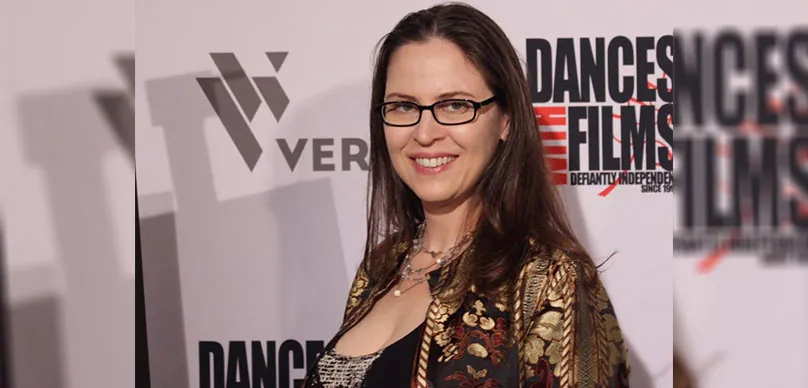
In a world where stories are the heartbeat of cinema, it’s a rare gift to hear from someone who not only understands the creative pulse of screenwriting, but also the business savvy required to get scripts into the right hands. In this candid and energizing episode, we welcome Whitney Davis, a literary manager and script consultant who’s carved out a unique path helping screenwriters navigate the often bewildering landscape of Hollywood. Her journey began in the most unexpected of places—pitching a book idea at a party while balancing motherhood—only to be discovered by a top TV lit agent who instantly saw the project’s potential as a television series.

What makes Whitney’s story so compelling is that she didn’t come to Los Angeles to break into the industry. It found her. Through a string of bold choices, lucky timing, and her fearless willingness to step into the unknown, she found herself developing a TV show and entering the high-stakes world of studio pitching. But when the writers’ strike hit and priorities shifted, she pivoted into script consulting. From there, one natural step led to another—and she began managing writers. For those of us in the filmmaking space, her story is a reminder that sometimes the career finds you when you’re already busy creating.

Throughout the episode, Whitney shares priceless insights into what truly makes a screenwriter stand out in today’s hyper-competitive industry. She isn’t interested in flashy gimmicks or name-dropping references to Tarantino or Nolan. Instead, she wants to see writers who know how to communicate authentically—people who can hold a conversation, who’ve honed their voice, and who understand the rhythm of story. “You don’t need a perfect pitch,” she says, “you need a great story, told like you’re chatting with a friend.” It’s advice filmmakers and writers alike would do well to remember.

Whitney dives deep into the art of the pitch and demystifies the often confusing world of representation. She breaks down the differences between agents and managers, noting that managers, especially, are essential early in a filmmaker’s or writer’s career. Managers help shape ideas, coach development, and create momentum. “It’s like a marriage,” she says. “If I’m going to rep you, I have to believe in your voice and know how to position your work.” That’s not just smart—it’s strategy.

She also highlights what turns her off: poor grammar in query letters, sloppy communication, impatience, and a lack of professionalism. For filmmakers and writers seeking representation, she urges a meticulous approach. Do your homework on the people you’re querying. Be respectful of their time. And never, ever spam them with mass emails. Whitney emphasizes that great writing isn’t enough. Being a great collaborator is just as important. “You’re not just pitching your story,” she explains. “You’re pitching yourself as someone worth working with.”

Her approach is refreshingly grounded and actionable. If you’re not in Los Angeles, she recommends saving up for a trip to attend top-tier events like the Great American PitchFest or Austin Film Festival. Better yet, build relationships online—Twitter, she says, has become a powerful hub for connecting with reps, writers, and producers. She encourages filmmakers to take advantage of contests, consulting services, and peer feedback as a way to sharpen their craft and increase visibility.

Perhaps the most refreshing aspect of Whitney’s perspective is her deep passion for helping storytellers rise. Whether she’s managing a writer or consulting on a script, she brings an energy that feels rare in an industry often marked by cynicism. Her goal isn’t just to sell projects—it’s to help people grow into the kind of creatives who can sustain careers. “Write because you love it,” she says. “The money and opportunities will come if you stay focused and keep showing up.”

This episode is a must-listen for any filmmaker who’s ever wondered what it really takes to get to the next level—not through shortcuts or formulas, but through clarity, consistency, and a strong creative voice. Whether you’re a writer, director, or producer, the lessons shared by Whitney Davis are a blueprint for building a career rooted in purpose and professionalism.

Please enjoy my conversation with Whitney Davis.

Right-click here to download the MP3

Read more

IFH 813: Building Films from Scratch: Mastering Microbudget Movie-Making with Evan Kidd

Sometimes, the stars align not because you begged them to, but because you stopped waiting and just started filming. On today’s episode, we welcome the ever-resourceful Evan Kidd, an indie filmmaker whose down-to-earth creativity and fearless storytelling light a fire under any aspiring artist. Evan is the embodiment of what happens when resourcefulness meets soul.

Evan Kidd is a passionate filmmaker and storyteller whose work celebrates creative independence, community-driven production, and the power of authentic narratives told with whatever tools are available.

We tend to think that making a film requires a king’s ransom, but Evan dances with the spirit of what he calls “resource-based filmmaking.” No castles, no Hollywood gates, just a camera, a tight crew of true believers, and a story worth telling. The idea isn’t new. In fact, Evan draws inspiration from the likes of Robert Rodriguez and Richard Linklater, turning his attention to what he can do, rather than what he can’t. He reminds us that “You are as made as your team is made,” and that filmmaking, at its core, is more jazz than symphony—fluid, improvised, and unshakably soulful.

In this profound conversation, we have Evan Kidd, breaking down his approach to his feature film Son of Clowns—a micro-budget, soul-driven project shot in just ten days across the vibrant but cooperative cities of North Carolina. His production wasn’t built on money; it was built on trust. Locations weren’t bought, they were earned. Crews didn’t show up for the paycheck; they showed up for the mission. Evan didn’t simply direct a film—he directed a movement of belief. “Your team is your backbone,” he says, “and if they care about the story, they’ll carry it with you.”

The Zen of Evan’s filmmaking lies not in perfection but in adaptability. He shares how the most cinematic moment in Son of Clowns—a thundercloud punctuating a tense character scene—was a complete accident. And yet, it worked beautifully. Like the late afternoon rain on a summer’s day, it arrived uninvited but brought its own kind of grace. Filmmaking in the wild, he says, gives your work an authenticity no soundstage can replicate.

But beneath his technical prowess and planning lies a deeper wisdom: ego has no place on an indie set. “Check that shit at the door,” Evan warns with the calm certainty of someone who’s seen both chaos and clarity. A great film is not made in isolation but in communion—with your crew, with your environment, and most importantly, with yourself. He believes in leadership through humility, and his sets are a masterclass in creating space for others to shine.

Much of Evan’s strength comes from his refusal to let fear define the boundaries of his creativity. He speaks candidly about the paralysis of perfectionism and the myth of needing approval before doing your work. In a world that often rewards noise over substance, Evan is quietly building a legacy from the ground up—one rooted in sincerity, resilience, and unshakable love for the craft. As he puts it, “At the very least, if you try, you can say you tried. But if you don’t, that thought will haunt you.”

The truth is, most artists don’t need permission to begin. They just need to start. And Evan’s journey reminds us that the tools for transformation are often already in our hands—be it a borrowed camera, a loyal friend with time to spare, or a stormcloud rolling in at just the right moment.

Right-click here to download the MP3

Read more

IFH 812: How Tremors turned into a Masterclass in Storytelling with S.S Wilson

There is a moment in every filmmaker’s life when the unseen becomes the spark—when what lies beneath the surface, figuratively or literally, begins to whisper its potential. On today’s episode, we welcome S.S. Wilson, a masterful screenwriter, director, and creative mind whose work reminds us that cinematic magic can erupt even from the dustiest corners of low-budget constraint. Whether you’ve laughed with Short Circuit or felt the rumble of Tremors, Wilson’s journey is one that stirs the creative soul.

S.S. Wilson is best known for co-creating the Tremors franchise and co-writing Short Circuit, yet his deeper legacy lives in how he approaches story: with reverence, structure, and devotion to the craft. In this wide-ranging conversation, he invites filmmakers to witness what it truly means to build a story from the inside out. He and his longtime writing partner Brent Maddock don’t chase ideas—they architect them. Their gospel? Outline everything. “We’re not comfortable until we know where it’s going,” Wilson shares. In a landscape where many chase spontaneity, Wilson reminds us that clarity of vision is a kind of sacred pre-production.

The Tremors films weren’t simply genre flicks—they were blueprints in filmmaking ingenuity. When the budget says no, the imagination must say yes. That’s why the monsters are underground for most of the film—not just to build suspense, but to bypass costly visual effects. “We knew sound was going to be critical,” Wilson says. “That’s part of why we picked underground monsters. You don’t have to see them… you have to feel them.” For filmmakers working with tight budgets, this is gold: design limitations into the concept itself. Make the unseen the story.

There’s a brilliant moment in the original Tremors where the creature is revealed incrementally—first a worm-like tendril, later the entire beast. That’s not just good horror. That’s good storytelling. Wilson orchestrates expectation like a symphony, pulling the audience forward with curiosity. And the characters—real people in an unreal situation—ground the entire thing. “Even the monsters follow rules,” he says. “We never change the rules just for a scare.” For any director or writer, that’s a North Star: consistency builds trust with the viewer. Break that, and the spell collapses.

Wilson and his team learned early that writers are often shut out of the process once the script is delivered. They decided they’d had enough of that. By pushing to become producers, they ensured the vision remained intact all the way to the screen. This wasn’t ego. It was stewardship. They built not just a film but an ecosystem of logic and love. No lazy tropes. No studio-fueled chaos. Just character, creativity, and continuity—from the first Graboid to the final Ass Blaster.

Today, Wilson writes novels, but his advice for filmmakers remains elemental. Don’t fall in love with your first idea. Don’t polish the same project endlessly. Make things. Learn from what you admire. And let go. “Write something. Get it done. Say goodbye to it. Write something else,” he advises. This isn’t just writing advice—it’s directing advice. Editing advice. Producing advice. Finish the scene. Finish the film. Then move on. What’s next will only reveal itself when you’ve cleared the space for it to arrive.

Right-click here to download the MP3

Read more

IFH 811: How Pixar’s Story Secrets Can Transform Your Filmmaking Process with Brit Cruise

Every once in a while, a conversation comes along that doesn’t just fill your mind—it redirects your thinking. On today’s episode, we welcome Brit Cruise, who lives at the intersection of creativity, logic, and education. Imagine a man who once edited videos as a child using two VCRs and a mic cable snaked across the room, only to grow into the visionary behind some of the most innovative educational content on the internet. This is the same curious mind now crafting immersive storytelling lessons with Pixar’s brightest.

Brit’s journey is rooted not in traditional metrics of success but in a profound sense of wonder. As a child, he was captivated not just by film, but by explanation—the act of making sense. Bill Nye was an early influence, and from a young age, Brit began creating explanatory videos as school projects, blazing his own path in the educational wilderness. This early spark matured into something far more potent: a mission to fuse storytelling, science, and learning into a format that ignites curiosity.

In our conversation, Brit paints a picture of how he works not by the clock, but by the rhythm of deep focus. He avoids context switching—the modern-day thief of presence—and instead breaks his day into two sacred creative chunks. “Any tool will work if you’re motivated,” he says, offering the kind of clarity that silences excuses. He writes by riverside with pen and paper, not for the words, but to build memory through movement—doodling, drawing, letting the subconscious flow through ink.

What unfolds in “Pixar in a Box” is a revelation: math and science are not isolated disciplines but threads woven into the very art of storytelling. A lesson on water simulation becomes a gateway into Newton’s equations. Hair animation unfolds through Hooke’s Law. But most exciting of all is the upcoming curriculum on the art of storytelling. Its goal? To guide learners from a blank page to a fully storyboarded short. “You should be creating as you’re learning,” Brit says—a philosophy that embodies the entire spirit of his work.

But it hasn’t been easy. Producing these lessons demanded reconciling two very different worlds: Pixar’s demand for polished, high-production visuals, and Khan Academy’s ethos of clarity over gloss. The solution? Build interactive tools so good they can serve both as educational activities and video visuals. A single solution, elegantly layered. This, Brit calls creative problem solving: “the ability to deal with unknowns.”

Indeed, Brit redefines creativity as the willingness to traverse uncertainty. While others might cling to a fragile first idea, fearing the cascading edits that come with change, he sees iteration as joy, not loss. “It’s like solving a puzzle,” he muses. “Rearranging the pieces again and again, enjoying how they might fit together differently each time.” He embodies a sacred kind of playfulness—the kind where depth and discipline are not at odds with wonder.

When asked what he hopes people take away from Pixar in a Box, he reflects not on the information, but on the people. Each lesson is led by someone who actually works at Pixar. Their “Getting to Know” videos reveal humble beginnings, curious paths, and the real human stories behind the animation magic. It’s about building models—not just mental, but personal—of who we might become if we simply followed the thread of our fascination.

Right-click here to download the MP3

Read more

IFH 810: The No-Excuses Filmmaking Philosophy of Len Kabasinski

It began, as it often does, in the hushed corridors of childhood imagination—monsters lumbering across the television screen while the rest of the world slept. In the quiet glow of late-night horror flicks, a young soul discovered the strange alchemy of cinema. On today’s episode, we welcome Len Kabasinski, a martial artist turned indie filmmaker whose films blend blood, bone, and the spirit of doing-it-yourself with gritty determination. Len is a B-movie legend, crafting low-budget action-horror films with the vigor of a man who knows that creativity isn’t about permission—it’s about pursuit.

From his first plunge into filmmaking with Swamp Zombies, Len Kabasinski knew that making a film wasn’t just about pointing a camera. It was an act of becoming—writer, director, producer, marketer, even actor. And unlike the dreamers who never make it past the couch, he threw himself headlong into the flames. Armed with a Canon GL2 and the reckless enthusiasm of someone too committed to quit, he crafted his debut. “I’m not interested in just being called a filmmaker,” he said. “I am one. This is what I do.”

It wasn’t about waiting for a golden invitation. For Len, filmmaking came with duct tape, missed calls, and wrestlers-turned-actors like Dan Severn battling zombies in the woods of Pennsylvania. He’s not coy about the chaos: missed actors, last-minute rewrites, and reshoots in the backyards of MMA legends. But like any warrior worth his salt, Len learned to fight with what he had. His method became a rhythm—build the team, shoot in blocks, rely on the extras, trust the plan. Not a single project escaped without scars, but none were left unfinished.

Perhaps the most telling truth came when he spoke of being creatively alive. For some, making movies is a resume; for Len, it’s oxygen. “It’s like sharks,” he said. “They swim forward all the time, and if not, they die.” This hunger kept him moving through Curse of the Wolf, Fist of the Vampire, and the revenge-fueled biker saga Hellcat’s Revenge. Each film grew leaner, sharper, more deliberate. Locations condensed. Casts were refined. Extras became the lifeblood of the visual world. If it couldn’t be controlled, it was reimagined. That was the ethic.

And then came the recognition—not from red carpets, but from cult fans, late-night screenings, and the digital frontier. As he prepared for the martial arts epic Challenge of the Five Gauntlets, it was clear that Len was done chasing approval. People were watching now not for gimmicks, but for him. “I don’t have to worry about trying to draw them in with something else,” he said, echoing a quiet triumph only an artist forged in fire can know.

Len Kabasinski isn’t interested in nostalgia, though he pays homage to the B-movie gods that birthed him. What he offers is grit and grace at the intersection of martial arts, micro-budget cinema, and unwavering drive. Even now, as Swamp Zombies 2 looms with its blend of Running Man mayhem and undead madness, you can feel the energy of a man who never stopped moving. He’s not here to prove anything. He’s just here—still making, still dreaming, still Len.

“If you’re not 1,000,000% in, it’s a no.” – Len Kabasinski

Right-click here to download the MP3

Read more

IFH 809: No Budget, All Hustle: The Filmmaking Grind of Staci Layne Wilson

There’s a peculiar thrill in watching a life unfold like a vintage film reel, colored with grit, glamour, and the groan of old rock records spinning in a smoky LA loft. On today’s episode, we welcome the multifaceted Staci Layne Wilson, a writer, filmmaker, and daughter of two celebrity parents whose life reads like a gothic Hollywood novella.

Staci Layne Wilson is an award-winning filmmaker, entertainment journalist, and author of the bestselling memoir So L.A.: A Hollywood Memoir, whose life experiences swirl together like a psychedelic dream on celluloid.

Born in Los Angeles and still a proud inhabitant, Staci’s story is a rare alchemy of nature and nurture. Her father, Don Wilson of the legendary instrumental band The Ventures, and her mother, a former pin-up model, gave her both the genes and the stage for a life draped in creative expression. Yet, as she shares, it wasn’t a direct shot into filmmaking. In fact, it was horseback riding—not film reels—that captivated her childhood heart. “Horses were my best friends,” she recalls, describing the grounding experience of caring for animals in a city defined by illusion. It’s in this juxtaposition—hoofbeats against Hollywood glitz—that her authentic voice begins to emerge.

Her path into film was, as with many worthwhile things, a beautiful accident. A writer of horror novels, she was tapped by film publications to review movies, eventually shifting from reviewing to making them. Her first film—an Edgar Allan Poe-inspired short—emerged from this new cinematic hunger, and she was hooked. There’s an almost Taoist rhythm to how she describes this evolution, not as ambition but as an organic unfolding: “It wasn’t something I woke up and decided to do. It just seemed like a natural evolution.”

Working with a tight network of artists she knew from her journalism days, she crafted films with minimal budgets but maximum creativity. Shot in five days, her features are pulpy, energetic, and unapologetically raw. She calls it a “Roger Corman style” of filmmaking—a nod to the late-night, grindhouse roots of LA’s indie scene. But beneath the kitsch and blood-splatter lies a real artistry. “To me, style in cinema speaks volumes,” she says, and it’s clear that for her, visual storytelling is a sacred language.

Her latest short, Psychotherapy, co-created with actress Brooke Lewis, dives into the psychological thriller realm with all the visual flair of De Palma’s Dressed to Kill. It’s won awards and caught fire on the festival circuit. But filmmaking is just one of her many brushes. Her memoir, So L.A., is an irreverent, heartfelt recollection of growing up amidst rock stars, alcoholic monkeys (yes, really), and the occasional trip to the Playboy Mansion. Staci writes about her parents with compassion and candor, peeling back the layers of celebrity mythos to reveal flawed, fascinating humans. “They don’t care who your parents are,” she says, speaking of horses—but the same seems true of her worldview. Fame is incidental. Truth is what matters.

As we sip from the many cups Staci offers—journalism, directing, memoir-writing—we begin to see a life lived not for the applause, but for the art. Whether she’s reminiscing about fake IDs at the Rainbow Bar and Grill or planning her next big swing: a long-overdue documentary on The Ventures, her father’s iconic band—she’s driven by curiosity, creativity, and, above all, confidence.

Right-click here to download the MP3

Read more

IFH 808: Behind the Screams: How Shae Smolik Brought The Hatred to Life!

Sometimes, a fresh face on screen carries with it the presence of a seasoned soul. On today’s episode, we welcome Shae Smolik, a young actress whose journey from Iowa’s quiet plains to the charged energy of a Los Angeles soundstage is not just a tale of ambition—it’s a study in raw talent meeting unwavering intention.

Shae Smolik, a ten-year-old performer with a natural grasp of storytelling through character, began her acting path with local modeling gigs in Iowa, gradually stepping into commercial work, then television, and ultimately landing the lead in a feature-length horror film. Her ascent wasn’t mapped out by Hollywood handlers but by an innate pull toward performance and a supportive network that recognized her gift. “I just come up with something right on the spot,” she said, explaining her approach to auditions. In an industry often bloated with over-rehearsed reads, her spontaneity feels like a directorial dream.

For filmmakers, Shae’s trajectory offers something valuable: a reminder that casting is not just about experience—it’s about presence. When she walked into the audition for The Hatred, she didn’t bring years of résumé padding; she brought soul. Reading the script, she said, “I need to book this… it’s just awesome. I’m the lead role.” That kind of conviction, when paired with emotional flexibility, is what elevates a performance beyond the page. And that’s exactly what she delivered on set.

In discussing the production of The Hatred, Shae recalled how overwhelming it was to see the rig—big cameras, lights, and a bustling crew—all for the first time. But that awe quickly turned into fuel. Her performance in the now-viral trailer (which clocked over 15 million views) is a masterclass in micro-expressions and atmospheric tension. “I was actually kind of scared,” she admitted about filming a pivotal bed scene. “But then you remember, the scary monster is your friend. He’s talking about his kids off-camera.”

That line, while endearing, is also a potent reminder of the strange alchemy we engage in as filmmakers. We invite children to confront shadows under stage lights, to summon emotion on cue, to find play in peril. And Shae Smolik does it with grace. She doesn’t treat set life as a mechanical job but as an immersive playground: “It’s not just being on set. It’s having fun.” The best directors know—that joy is often the most honest performance note.

Emotionally, she’s ahead of her years. “Getting emotional is something I’m really good at,” she shared, referring to the tear-stained moments she’s learned to summon with ease. Her coaches in L.A. helped hone this ability, but what can’t be taught is her refusal to fear mistakes. “If I mess up, it’s not the end of the world… there’s always another audition.” For creatives, that’s a mantra worth adopting in every failed take, scrapped scene, or hard note in post.

In one particularly haunting moment from The Hatred, Shae yells “No!” as her character watches a caretaker get dragged away. “It’s really emotional because she probably isn’t going to make it out alive,” she reflected. Whether you’re directing, scoring, or cutting that scene, you know it only lands if the performance does. And Shae lands it.

Right-click here to download the MP3

Read more

IFH 807: Making Your Own Damn Movies: Inside Dave Campfield’s Troma-Fueled Filmmaking Path

When two Daves walk into a podcast, you don’t expect to stumble upon a meditation on art, failure, persistence, and horror-comedy. But that’s exactly what happened in this electric and delightfully unfiltered conversation with Dave Campfield, a filmmaker, actor, and host of the Troma Now Podcast, best known for his work in the cult Caesar and Otto comedy-horror film series.

Dave Campfield is a fiercely independent filmmaker whose journey from a now-defunct film college in New Mexico to directing his own cult horror satires has been a long and winding road paved with hustle, humor, and horror.

We start in the sand-colored surrealism of Santa Fe, where adobe buildings and the ghost of City Slickers set the stage for Dave’s early filmmaking dreams. In the land of tumbleweeds and tumble-down gym studios turned sound stages, Dave cut his teeth not just on film but on the art of adaptation. The college no longer exists, but the memories—like chalk lines under studio lights—remain vivid in his story. “It was like going to school on Tatooine,” he says, laughing, but behind that joke is a bittersweet nod to the ephemeral.

From there, Dave walks us through the illusion of success—early meetings with Universal and New Line Cinema where hopes were dangled like carrots in front of eager young dreamers. The industry, he quickly learned, speaks its own coded language: familiarity, marketability, and sometimes, plain deception. One mentor told him to “say you’re young, from the streets, and have a dark comedy,” regardless of truth. Dave gave it a shot but came away with the haunting realization that “they were intrigued enough to keep me on leash, but not enough to make it happen.”

That experience seeded his first real film, “Dark Chamber,” a mystery-horror project which deliberately bucked slasher formulas. It took five years to make—five years of blood, sweat, and overdrafts. And yet, when the studios responded with, “We wanted something more familiar,” Dave knew he was swimming upstream. Still, he sold the film to a small distributor, endured its repackaging as something it wasn’t, and got it onto Netflix. A win—just not the one he envisioned.

But here’s the heart of it all: Dave didn’t stop. He pivoted, not with bitterness, but with evolution. “I decided I wasn’t going to be one of those people waiting for opportunity. You had to make it happen on your own.” And so, he leaned into comedy horror—a genre he describes as “Abbott and Costello meet Frankenstein, but for the splatter generation.” Thus, Caesar and Otto were born: two absurdly lovable doofuses bumbling their way through massacres, monsters, and paranormal mayhem.

One of Dave’s secret weapons is loyalty to what’s real. Whether recounting how Lloyd Kaufman forgot him (then remembered) or editing commercials for the Philadelphia Pet Expo, he keeps a kind of grounded magic about his craft. He shares a deeply personal new project, “Awaken the Reaper,” born from a decade of introspection and struggle, calling it “the most personal thing I’ve ever written.” He says, “It’s about being stuck—feeling like every day you’re not moving forward—and finally getting out of your own way.”

All along, Dave’s been quietly building a reputation for casting future stars before they break—Trey Byers (Empire), Peter Scanavino (Law & Order)—and hosting a podcast that thrives not just because of brand synergy with Troma, but because he genuinely knows how to talk to people. “They’ve never rejected an episode,” he remarks. “I tease Troma a lot, and they’re always game. It’s a beautiful collaboration.”

The conversation wraps not with grandiosity, but a recognition that even the smallest cult followings can keep a creator going. “My fanbase is small, but intense,” Dave says with pride. “I can rattle them off on two hands.” Maybe that’s enough. Maybe that’s everything.

Right-click here to download the MP3

Read more

IFH 806: Shooting Sharks in Your Living Room: The Art of DIY Filmmaking with Ron Bonk

Somewhere in the back alleys of the American dream, between the flicker of VHS static and the roar of midnight creature features, there exists a filmmaker with a toothy vision. On today’s episode, we welcome Ron Bonk, a self-taught indie film warrior who carved his way out of the antiquing business and into the bleeding heart of low-budget cinema.

Ron Bonk is a filmmaker and founder of SRS Cinema, best known for his cult horror-comedy “House Shark,” a film that quite literally brings the predator home.

In this raw and unfiltered conversation, we dive through the celluloid splinters of Ron’s journey, from borrowing camcorders at community college to orchestrating gore-laced dreamscapes in his own home. With the candor of a man who’s fought a hundred cinematic battles and still wakes up smiling, Ron recounts the moment he knew filmmaking wasn’t just a hobby—it was his spiritual vocation. He speaks of camcorders as if they were holy relics, and each low-budget shoot like a shamanic rite of passage. “I had to wear all the hats,” he admits, recalling 18-hour days of lighting, directing, and sometimes even serving the food. There’s a beautiful madness to that kind of devotion.

But what separates Ron from the common herd of content creators is his monk-like surrender to the calling. This is a man who would rather tell the story in his bones than chase distribution deals. When others sold out to weekend wedding shoots and corporate gigs, Ron stayed the course, even launching his own distribution company just to make sure his movies—and others like them—had a place to live. His filmmaking compass always pointed toward the misfit, the grotesque, the beautiful weird. “The idea was: how can I make something that’s mine, and still feed my kids?” he says, with a smile you can almost hear.

And then came “House Shark.” Born not in a boardroom or a script lab, but from the sound of ice cracking on his roof during a harsh Syracuse winter. Where some might see inconvenience, Ron saw inspiration. “Shark in a house,” he thought. And just like that, the impossible was made possible. The film is more than just a hilarious genre-bending monster romp—it’s a testament to what happens when you embrace your constraints and alchemize them into pure creative gold. He shot most of it in his own home, because he could control the space, the light, the chaos. The film became a sandbox of invention, a love letter to every filmmaker who ever asked, “What if?”

Ron’s journey also offers a cautionary tale cloaked in encouragement. He warns of the seductive pull of “safe” creative paths—weddings, commercials, and gigs that pay the rent but starve the soul. Yet he understands the temptation. “It’s easier said than done,” he acknowledges, “but you’ll blink and ten years have passed, and that movie you wanted to make is still sitting in your drawer.”

Throughout it all, there’s a recurring motif: the indie filmmaker as a sacred trickster. Whether telling the cops he’s shooting a student film or designing perks for an Indiegogo campaign that just barely breaks even, Ron adapts, survives, evolves. He speaks not just for himself, but for a whole tribe of underdog storytellers chasing celluloid ghosts across their living room floors.

Right-click here to download the MP3

Read more

IFH 805: Why Your Film Isn’t Getting Made (And What to Do About It) with Ron Newcomb

When the moon is high and the muse is low, we often find ourselves in deep conversation with our own souls, asking, “Why do I do this?” And on today’s episode, we welcome the steadfast and visionary Ron Newcomb, a former Marine and police officer who has traded in his uniform for a camera, answering that very question not just with thought—but with action.

Many walk the tightrope between dreams and reality. But Ron doesn’t walk it; he builds it. With a full-time job, family responsibilities, and the unrelenting buzz of daily life, filmmaking becomes more than a pursuit—it becomes a pilgrimage. In our conversation, Ron unveils the raw truth behind being a modern-day storyteller, caught between the 9-to-5 grind and the eternal call of the creative. His journey is not just about making films; it’s about making space in a crowded world to remember who we really are when the credits roll.

You see, filmmaking, as Ron wisely puts it, “isn’t a want—it’s a calling.” It’s not about lighting up a screen; it’s about lighting a fire. There is a reverence in his approach, a kind of worship in the way he speaks of independent cinema. He isn’t interested in chasing fame or fortune but in answering that whispering voice within that says, “Tell this story. It matters.” In an age where distractions are currency, Ron is cashing in for clarity. He’s figured out that doing the work is the real prayer.

As a self-proclaimed “storyteller,” Ron lays out three sacred paths for the indie filmmaker: seeking a manager to break through studio gates, finding a producing partner to align energies with, or rallying investors to go it alone. “I’m going to bang the drum on all three,” he says. That’s not just a plan—it’s a mantra. And true to that vow, he’s organizing a bold, DC-based pitch event to connect filmmakers with gatekeepers. It’s a beautiful paradox—waiting for no one while creating opportunities for everyone.

We explored how the daily discipline—rising at six, family dinners, late-night writing—becomes the framework for resilience. This isn’t just about making movies; it’s about making meaning. Ron explains, “Contentment is found in the process, not the end result.” How very Zen. Each film, each failed Kickstarter, each late-night script rewrite is not a detour—it is the path. As he puts it, “You should feel filmmaking breathe within you.” And if it doesn’t? It may be time to let go.

Ron also speaks with reverence for collaboration, knowing that the alchemy of filmmaking lies not in the lone genius, but in the orchestra of souls rowing in rhythm. He is generous in spirit and grounded in grit, reminding us that the true power isn’t just in raising capital or climbing a ladder—it’s in raising each other. “If we all just left ego aside for a moment, I believe that all of us could get what we wanted.” There’s more than wisdom in that; there’s a way forward.

Right-click here to download the MP3

Read more