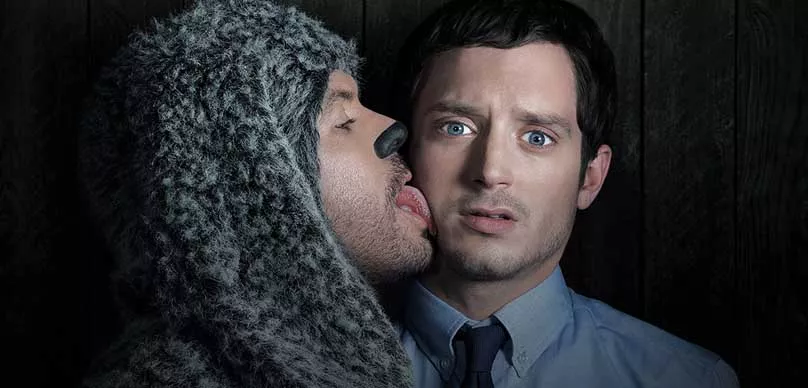
IFH 701: Writing for TV/Streaming Platforms in Today’s World with Michael Jamin

Right-click here to download the MP3

Alex Ferrari 2:04
I'd like to welcome the show Michael Jamin man, how you doing?

Michael Jamin 3:27
Good. Thank you for having me.

Alex Ferrari 3:28
Oh, thank you, man. We're just trying to survive the the COVID onslaughts right now in our industry.

Michael Jamin 3:34
Yeah, here. Yeah, it's not easy out there.

Alex Ferrari 3:37
Yeah, it's not easy. And unfortunately, I don't foresee it getting any better anytime in the near future.

Michael Jamin 3:43
I don't even know how they thought it was gonna get better. Like how do you put people on a set together? Like I like they're all gonna be wearing masks on camera? How does that kind of work? So I don't know.

Alex Ferrari 3:51
We'll talk about we'll talk about like, specifically TV cuz at least features you might be able to get outside a lot. And maybe you can make some stuff work on location, but or you just shoot in New Zealand, which is obviously COVID free.

Michael Jamin 4:03
But they don't want us

Alex Ferrari 4:04
there. And no, nobody wants us anywhere. Else, right. Oh, that's another podcast for another time. So before we get started, how did you get into the business?

Michael Jamin 4:18
Well, right at you know, in high school, that's why I wanted to be comedy, right? I saw tears on TV. I was like, that's what I want to do with my life like that now. And then I went to college and two weeks after grad college, I got into my car, drove to LA and didn't know anyone. And I was like, Well, I'm not going to leave until I make it. So I struggled a couple years. I was a PA for a couple years. I wrote on some horrible projects. But then I finally broke in with my partner. And we got a job as a staff writer on a show called just shoot me. And then we've been working ever since.

Alex Ferrari 4:50
That's actually a I remember that show. That was a pretty popular show back in the day. It was a big show. Yeah. And that was your first gig in the writing room. Yeah,

Michael Jamin 4:59
yeah. staff writer you All staff, right?

Alex Ferrari 5:00
How did okay, so Okay, let's let's let's dissect that for a second. How did you get that first paid? Like, how did you get that gig because it's not easy to become a staff writer, even though even at that time, it was still fairly competitive, not as competitive as it is now. But now I'm still fairly competitive. So how did you get in? How, like, did you use the sample? How did it work?

Michael Jamin 5:19
To be honest, my first job before that I was I was at an assistant for executive producers, and they were running a TV show. So I was answering their phones. And then they gave us a screen my partner, a script, and they were running a show called Lois and Clark Superman, of course, right. So that was my first professional script they gave us they say, Okay, well, what you pitch and we pitch to a couple ideas, and they love one. And that wouldn't became like a big, I wonder, you know, for Lewis and Clark. So with that, we were kind of able to solicitations. And then we found an agent and my together my partner, we must have written probably eight or 10 spec scripts together. And the first one we wrote was a friend's but a spec script. And then we kept on writings, we didn't get any more work. But ironically, that script got into the hands of Steve Levitt hands assistant when he was staffing for just shoot me, the first script. That was the one that got us work, even though we had written eight others after that.

Alex Ferrari 6:14
So it was your very first script, which they always say is the garbage script. That's the one yes, no, we're told we're gonna look, it's just it's a sacrificial lamb in your example, exactly.

Michael Jamin 6:24
The agent was like, and not that good. You know, whatever. That's the kind of work. You know, she's no longer our agent anymore.

Alex Ferrari 6:31
Obviously, obviously, I'll talk about agents in a little bit, which I know I'm sure you have a lot to say. So, so you Right, so that was my big question. A lot of I always talk to screenwriters, and they always want to write like an original, if they want to get into television, or now television slash streaming, which is basically the same thing at this point, right? They always like I want to do I want to, like write an original or I want to write a pilot. And that's going to be my writing sample. Right? do you suggest writing sample scripts of existing popular shows? Just as a writing sample, or to go in with a fresh idea?

Michael Jamin 7:07
You know what? That's a really good question. Like back when I broken, it was easier because there's four networks, and everyone knew the big shows by Seinfeld friends, like everyone watched those shows. Now, what's the one show that everyone's watching? There really aren't that for sitcoms, just really,

Alex Ferrari 7:21
it's just Tiger Kane, obviously. But other than that,

Michael Jamin 7:24
like, last year, there was big bang theory. But that's no longer you know, on the air, so ever. Maybe Barry's the big hit. But that's still that's not like, it's a great show. Everyone's watching it. Not

Alex Ferrari 7:35
everyone was I mean, Big Bang was probably it was the big bang was kind of like the last run of that of those kind of models, friends or cheers or signs out there. That was the last one. Is there one going Modern Family just left? Exactly. So there really, there really isn't.

Michael Jamin 7:55
So that's why people are writing original stuff. But the problem was the originals. Like, that's a whole different skill set, creating characters in a world and a fresh, original pilot. Like, if when I'm hiring a show, I don't need to know if you can do that. I need to know if you can write for existing characters. I don't need to know if you can create your own. That's not the job requirement. And so I think it's a lot harder for people trying to break in now because they have to show original work. Just because no one's no one's watching those other shows. You can't really spec those other shows. So the bar is a little unfair. That's why Yeah, it's a it's a little unfair for people breaking in.

Alex Ferrari 8:30
So would you. So if I want to get a job on Stranger Things, or on or on a, you know, on any of the like, it's a Netflix streaming sitcom, one day at a time. Let's say you guys come to mind. Do you write a spec? script for that show? No,

Michael Jamin 8:49
no, because you'll never do it as well. And whoever reads it was like, that's not that's, that doesn't count. That's not how it works. They'll be like, that's not No, you didn't catch the voice. And you never will. The best way not to get hired on a show is to spec that show. Like I remember even when I was on just shoot me reading specs for just shoot me don't that's not No, no, no. And, you know, because everyone is writing like Nina, like a giant horn like Nina's not a horse. But I can see why you're watching that show why you think that but for us on the inside, there's a there's a very fine line that we play on how we create, you know, right for those characters. So you're never gonna get it as an outsider. If you want to get a job on one day at a time, don't submit a one day and time

Alex Ferrari 9:29
spec. So you always do something, another show popular in that same kind of genre.

Michael Jamin 9:35
Exactly the same tone right?

Alex Ferrari 9:37
Right now. Now, how do you when you're in a writers room because you've been a showrunner and you've been a staff writer? Yeah. You're when you're in the writers room, which we'll talk about the future of writers rooms is a general state. But when you're working, when you're working in a writers room, what is that dynamic of a sitcom you know, a fully functioning you No hitting on all cylinders, kind of writers room in a comedy world.

Michael Jamin 10:04
I've been I've been I've been in some great writing room and some ones that are not that great. It all kind of depends. The tone of the show is is dependent on the showrunner, what kind of are they? collaborative? Are they kind of jerks? You know, there, you got all sorts, obviously, job of a staff writer, I think, I think many people make this mistake, they think that your job is to make the best show possible, which is not what your job is your job as a staff writer, and then any level that can be the bottom staff writer to go all the way to coexist. Your job is to make the best version of the show that the CO showrunner wants to make. And there's a big difference. So you could there's no point arguing with the showrunner about what what's going to be good or bad? That's up for him or her to decide. It's your job to please them. You know how you don't shouldn't argue and say no, I think America like this, that's not for you to say nothing, you know, you just do what your boss give your boss what your boss wants.

Alex Ferrari 10:58
So it's a very much of a hierarchy, system and television, much more than amateurs? Oh, yeah. Yeah,

Michael Jamin 11:05
yeah. And also, you know, as the higher up you go, the more responsibility, the more you're expected to contribute. So staff writer doesn't isn't expected to do the same amount of work as a co executive producer. And so sometimes they think, well, that person is talking X amount of time, I need to talk x as much, but you don't, you have to talk their pay, they're getting paid a lot more than you. So you don't have to do as much. So you don't need to fight with them. You know?

Alex Ferrari 11:30
So when you do, that's the one thing I always see 1000s of CO executives and executives and producers and all these credits when I see my shows, can you explain what these are? Because I mean, yes, it's it just because it's, it gets stupid sometimes, like literally, I would watch a show, and there's 10 or 15. co executives and then executive producers, and then the Creator. And it's like, there's just so many can you explain why that is? Right.

Michael Jamin 11:57
So you have the showrunner. That's the boss, the head writer, that person's usually the executive producer. But from starting from the bottom, you have the staff, the writing staff, the lowest one writer is a staff writer. And then you get then you get to story editor, executive story editor, got to co producer, producer, supervising producer, co executive producer, these are the CO executives maybe like the number two, the second in command when the executive producers out of the room. And then you have other executive producers, who might be a manager, they might be talent might have a credit, you might have executive producer who created who sold the book that it's based on. So there's a lot of people who are non writing executive producers that might get a current credit, but they're not writers. Is that and also some network executives might be in that world. Some Yeah. studi Yeah, absolutely.

Alex Ferrari 12:47
How do you deal with hidden executives that come in and just

Michael Jamin 12:54
smile, and you smile

Alex Ferrari 12:55
a lot into a heart and just say, No, I'm not gonna go do that behind closed doors.

Michael Jamin 13:00
Sometimes you get great advice and great notes. And sometimes you don't. But that's part of the you know, when you work as a writer, and you're getting paid part of the job is to like, Listen up, you know, you got to take your ego out of the game, and you have to play ball, you have to be nice and polite. If you fight everybody, you know, you can you want to use them as allies. So you want to work with them. And if you can give them a note, you give them a note, and you give them take their No,

Alex Ferrari 13:24
no. Can you talk a little bit about the politics inside of television writing? world? It just what television show in general? There's politics involved. There's politics and everything. Yeah, I think it's something that's not really spoken about. So like, a lot of the stuff you've just said, are invaluable. little tips like, you don't tell the executive, the the showrunner or the CO executive like, No, I think the character would do this if you're a staff writer. But that's not kind of the hierarchy, I think you'll get you'll get, you'll get, you'll get axed fairly if you have no time. Really, yeah, it's ego, and you're not gonna win that battle? Well, it's I think it's because

Michael Jamin 14:02
staffers want to prove they, they want to prove their job, they want to prove that they can contribute. And the easiest way for them to prove that they contribute is by shitting, on your idea, that that's what they think. And so it's much harder to come up with a good idea, it's very hard to come up with an idea that we're going to that you're going to use, it's much easier to say why your idea is terrible, or why it's not going to work. And they think that part of the creative process, but it really isn't. In the rooms, there's an expression, it's pitch, don't pitch. So if you have a problem, don't come up with a problem, come up with a solution. And then everyone will love you, but don't point out problems unless you have a solution.

Alex Ferrari 14:38
So a lot of times, you'll hear writers do exactly that. They're like, Oh, there's this and this and this Well, well, how do you fix it? I don't know. Yes,

Michael Jamin 14:49
I didn't know what I was doing. So I was like, well, I might as well just tell you what, I think you're doing something wrong, as opposed to me being positive. So we're all guilty of that as I see it all the time with with staff writers. I always All the time.

Alex Ferrari 15:00
Now as far as the politics are involved, the hierarchy is that the showrunner is the absolute boss. Yeah, yeah. Other than the studio maybe above him. That's

Michael Jamin 15:12
right. The showrunner is never really the boss the shit, you know, cuz there's always someone telling you what you're doing wrong. It could be the studio could be the star network. So even when you're the boss you're never the boss.

Alex Ferrari 15:22
So it also depends on what where you are in the in the the lifespan of that show for season. Everyone's kind of hanging out. We're all trying to figure out we're gonna get picked up for the next season.

Michael Jamin 15:34
Yeah, everyone's operating out of fear. Especially.

Alex Ferrari 15:37
Exactly. So when you when a series is been around for four or five seasons, let's say then the power shift could be different. It could be the showrunner. It could be the star, that's now become a star. And now they start they start throwing their weight around a little bit more. And they're like, you know what, I have an idea. Yeah. And I think we should go I think we should make this character do this now and the entire the entire writers room goes. That's a horrible idea. And then the show runners like, if I don't appease the the star, this is going to be a problem. But if I do a pizza star, the whole show is gonna go downhill. So yeah, am I am I speaking?

Michael Jamin 16:16
At definitely happens. Definitely happens. Yeah.

Alex Ferrari 16:20
What's your How do you? So as a showrunner, I have to ask you. How do you deal with that? Like, how do you deal with like, these kind of influences coming in from all over? And it's your job to keep the boat on on the path that you feel is the right path. I know this is this is just landmines everywhere.

Michael Jamin 16:38
Yeah. It's definitely hard. But you know, I've had my partner and I've had some easy experiences met. We ran a show called Marin starring Mark Marin. And he was in the writers from the whole time. So because he's one of the writers. And so we didn't have there was never a power struggle, because he was in there the whole time. And if he had a problem with something's Okay, here, let's figure it out together. I think it becomes trickier when the star is not in the writers room. When you put them in the writers room. You say, okay, we're going to work this out. We're going to figure this out. And then they go, Oh, I'm gonna be here all night. And then suddenly, suddenly, they play ball. But if you start is not in the writers room, and they go, okay, you're gonna be here all night. I'm going home. And that's when things get ugly.

Alex Ferrari 17:16
Yeah. fix it. And I'll see you in the morning.

Michael Jamin 17:18
Yeah, yeah. But we've had variances. So yeah.

Alex Ferrari 17:22
And it goes, I was sure. I'm assuming you have horror stories. And you have stories that are fantastic. And you're like, Oh, that's just a pleasure to work. Like Marin. I'm assuming he's, I've heard great things about him. And he's Yeah,

Michael Jamin 17:33
he's really he was always game like, you pitch something to him and be crazy going. Okay, I'll do that. And you like, really? Cuz he was just game. So he's very open. Yeah. So

Alex Ferrari 17:43
So let's talk a little bit about COVID. Right now, because we're, as we're recording this, we're in the middle of COVID. It's, we're arguably still in the first wave of this thing. I remember a month ago, or a month and a half ago, hollywood was reopening. It was going to be new guidelines. And as I was, and I was, as they were announcing all this in the unions were signing off on stuff and all of this, I'm just going to myself, this is you guys are insane. I know everybody wants to go back.

Michael Jamin 18:11
Right? The insurance would never saw you, they would never sign off on it. So it doesn't matter.

Alex Ferrari 18:17
Right. I was gonna say that, like if someone gets sick on your set, and then someone God forbid dies because of it. Yeah, you're liable as a production. So unless you've got some coverage, you are leaving yourself wide open. And then of course, there's the I think there were some productions that were wanting the actors and in this in the crew to sign off waivers going if you get COVID it's on you. Yeah, right, man. And I think I think sag said, No, no, no, no, we're not.

Michael Jamin 18:49
We're taking out a few animated projects, just because that seems to be the only thing that's safe right

Alex Ferrari 18:54
now. Right and so Okay, so with COVID How is I you know, writer room writers rooms are still going right now. But in the zoom style process, because a lot of the late night shows are still going from home. Yeah. And they have writers rooms, and I was watching an interview with Trevor Noah, and they're like, yeah, the first couple weeks we're just like, on top of each other who's muted who's not muted? Who's, who's talking who's not. But But then we just got into it. Have you had any experience with

Michael Jamin 19:24
Oh, I was on the last show. I was on DICOM AF D. And that's a live action show. But it hasn't come back for I'm sure it will but it hasn't come back yet for the third season. So I don't know what the plan if they are going to pick it up to the third seat. I think they are but I'm not sure when because when can they choose it? So I don't know what the what the network's plan is on that so we haven't I haven't been in a virtual writers room yet.

Alex Ferrari 19:47
How do you how do you feel it's gonna work in your from your

Michael Jamin 19:51
I think I think for it to work. It has to be a small room. I think you can't have the same number of writers as you used to because everyone's talking over each other. You know, it

Alex Ferrari 20:00
What is what is the standard register in the common?

Michael Jamin 20:03
It's getting smaller now, because especially if you go to cable and the budgets get smaller, maybe eight writers, but I'm married first season we there was just four, but four of us, there's four of us. Yeah.

Alex Ferrari 20:15
And Mark was one of them. Now that's actually a pretty

Michael Jamin 20:18
tight that's me. That's true, because you have to do 13 episodes. And then that means everyone has to write a time, and you only have like, 10 weeks of pre production. It was really, it was a it was, you know, it was stressful. We had, you know, bang that thing out.

Alex Ferrari 20:32
So that's a great, that's a good segue to the next question. You You obviously started in the traditional television world, when there was only four major networks. Yeah. And now 1000 networks with 20,000 shows. But yes, have started to drop, drop, drop, drop drop dramatically, because that's the nature of the beast. And you've worked on both sides. And you've worked on cable shows, you've worked on streaming shows, how do you adjust? Because the budgets, the budgets keep going down and down? Right?

Michael Jamin 21:08
When we did Marin, that was the first show my part of my rant, and I remember the put the budget, and that was about a third of what a network show was. And so a network show you might shoot in five days. Marin, we had a shooting two and a half days, each episode two and a half days. And I remember getting a tour. They put us up in some kind of dumpy building in Glendale, some kind of low rent a production office, and the woman was giving me a tour of the Office of the room from the studios give me a tour of the office. And because I shouldn't tell you this, but we're all laughing at you in the office. And I'm like, yeah, you shouldn't. Why are you laughing? Because Because your budgets so low, we don't think you can make it. And I was like, This is not what I needed to hear on my first day as a showrunner. And I said, Well, do we get to have a whiteboard? I meant it. I like, do we have a whiteboard? And she goes, we have a supply room full of whiteboards. You can have as many whiteboards as you want. I was like, Oh, no, we'll figure it out. And that's no problem. You just write to what you can do. So that means when you have when you write a scene, you don't write a scene in an amusement park, you write a scene in someone's backyard, you know, you just make a small and you just change the way you write. It's and, and and when you watch the show, sometimes scenes were poorly lit. Sometimes the coverage was a little lacking. But no one the critics never said that. The critics never said the scene was dark. The critics never said, Oh, why is it Granville street? You know, they were like, Hey, this is great. The writing, they comment on the writing and the acting. And so no one said, you know, they were kind because no one watching a show for the lighting. You're not gonna watch a show on

Alex Ferrari 22:30
not specifically in the comedy comedy,

Michael Jamin 22:33
you're not gonna see what a wallet show you if it's no good, you're gonna turn it off. You

Alex Ferrari 22:37
know, right. That's the that's icing. It's not that it's not the foundation. It's not that the main meat of the cake, if you will. Now, there was another thing I wanted to ask you about the the world of the Seinfeld, the friends, the cheers, residuals of those shows, are are legendary. I mean that the friends cast still makes I'm sure the writing staff still makes obscene amounts, like you get one show. And it's a hit for eight or 10 seasons, you're good. You don't have to work anymore.

Michael Jamin 23:10
Well, not so much for writer for writer you used to get half every time it airs, you got half half of what you half and half and half and then it gets it's you know, it's a it's a you know, calculus, it's a limit you there's an excellent, you reach a cap. And you'll never make more than that because it gets half half in half. And then I have to go into like Netflix and they just give you a one time fee. Right? And they bought out and you don't really get residuals you got like a one time check.

Alex Ferrari 23:33
Right? So that that changes the whole conversation because the days of a modern family, the days of a friend, but even Modern Family that just finished this this year. Those were those residual packages that the studios are just trying to go away from that because they're like, Well, wait a minute, Netflix isn't doing so why do we have to do it now? Even Disney's like, yeah, we're gonna give you like two runs of residuals. And that's pretty much it, guys. And that's everybody's staff and everything. So that really changes the game for not only actors, but for show runners for creators, these these really fat packages that they would get the back end aren't going away. That's it? Yeah. Yeah. What's your feeling on that? How does that change the way you think about your career moving forward? And specifically, because you obviously started back in the day, when those packages were still around. And they are still around to a certain extent in the network world? Yeah, for some people, but how does that change the triadic trajectory of a writer's career? Because before you kind of like we're looking forward to those that mailbox money.

Michael Jamin 24:40
Yeah, it's it makes it a lot harder, to be honest, as a middle class writer, as he's kind of squeezes you out, because people were used to rely on those residuals and now they're just they're not there anymore. And the network, the orders are shorter and shorter. So in the past, I was on just shooting you do 24 episodes a year and you get paid per episode. Now you'll be on a cable show, you'll do maybe eight or 10 episodes a season. Then you got to find another job. You have to somehow you know, it's

Alex Ferrari 25:03
another job. Yeah. Yeah.

Michael Jamin 25:05
So it's definitely, it's squeezing out. It's gonna squeeze out writers. It's gonna squeeze out people who just can't afford to do it. You know, it's not good.

Alex Ferrari 25:14
It's it, but it's the it's the nature of the business the way streaming has changed everything.

Michael Jamin 25:19
Yeah, yeah. So you can pitch about it, or you got to just, you know, accept it and adopt without making something out.

Alex Ferrari 25:25
I mean, it's people like Shonda Rhimes, and Ryan Murphy, those guys are getting such upfront massive.

Michael Jamin 25:30
You don't need to worry about them.

Alex Ferrari 25:31
They're doing okay. They're okay. They were they were fine before. Yeah, Alex gave Shonda Rhimes $100 million.

Michael Jamin 25:41
Everyone else,

Alex Ferrari 25:42
but I wanted to kind of bring that up because I want there to be a realistic idea of what an actual television writer is going to be doing in the in the from now moving forward. There is everyone's like, Oh, it's the Golden Age, there's so much opportunity. Absolutely, there is a lot of shows, there's more shows. But the money is much less,

Michael Jamin 26:03
I spend as much time either looking for work or developing work, creating my own shows with my partner than I do actually writing working on a show. I mean, you know, the balance has shifted.

Alex Ferrari 26:14
So you know, it's much more much but you're also in a position to have you have track records, you have a reputation that you can walk in with a brand new show and kind of end up being a showrunner and all that stuff. So if you're in a very unique scenario that that makes, that makes all the sense in the world, you shouldn't be going after staff writing jobs at this point. Yeah. All right. You should be doing other things and packaging it out. But moving for like, can you Is there a standard is that what's the writer guild guild minimum now for? Like a staff writer on a comedy show on streaming?

Michael Jamin 26:44
I don't know. I don't know. offhand. I might be a few 1000 a week. I don't know if it's different for moms.

Alex Ferrari 26:50
Yeah, no, it's not. It's anywhere between a few 1000 to low five figures or not. It's not going to get to

Michael Jamin 26:57
that writers get paid per week, whereas other writers hierarchy paid per episode.

Alex Ferrari 27:01
Oh, there's just the straight up staff writer, and they're just there for the duration of bottom level. And

Michael Jamin 27:06
that's a weekly minimum salary. And I don't know, because I don't really know what it is, like two or three.

Alex Ferrari 27:11
I don't know something. Random. Yeah. So it's, it's Monday, but in LA?

Michael Jamin 27:16
Yeah. Yeah. Always for sure. I mean, when I was an assistant in La 25 years ago, I was an assistant. I was making dirt money, but I had enough money to make it Have I get my own studio apartment. But now forget, it wasn't

Alex Ferrari 27:29
where was that studio apartment?

Michael Jamin 27:30
That was in, in the Fairfax district in West Hollywood. So I couldn't get that out? No, no, I had a one bedroom for 650 a month now. Now, it's probably like 2000 a month, that same building an army. So

Alex Ferrari 27:48
all right, so you're gonna write a pilot? Well, first of all, before you that, can you explain what a show Bible is?

Michael Jamin 27:55
Yeah, and I don't really, I guess it. We don't do that. I don't do that. On my level. It's basically you're telling people when you sell the show, here's the pilot. But also, here's the show. And here's the run of the show. Here's what we think a season two and season three is going to be and I understand they kind of want that now for free for a lot of streaming shows, they want them to be serialized because people are because people are binge watching. So as opposed to like Modern Family, you can watch any episode out of water, and it's just as enjoyable. But now I want it to be serialized. So this one, because next one, that way, you can't stop watching. And so in that sense, they really kind of want a Bible they want. They want to know what the three our three season arc is, which, especially for a young writer, a new writer, I don't know how they're expected to know how to do that. For me. It's not it's not as hard but for new writers like

Alex Ferrari 28:43
Jay Yeah, you know, but also, I

Michael Jamin 28:45
find that limiting because when you as you work on the show, you discover the relationships at work and the dynamics and whatever you think the plan is, you throw it all out, because you go, Oh, this is working. Let's go with that. So the whole idea of Bible Smith find a little strange, but that's kind of what people want. So if you if you are,

Alex Ferrari 29:05
if you're writing a pilot for a new show, and you really are behind this pile, and you think this is this is good, or you have two or three of these pilots, should you attach Bibles to that, at this point, US New York,

Michael Jamin 29:15
or a young writer,

Alex Ferrari 29:16
a young writer,

Michael Jamin 29:18
I feel like for a young writer, their job is to write a good pilot script, because if it's good, they're going to get teamed up. They need to get teamed up with a showrunner like me to sell it anyway.

Alex Ferrari 29:27
And that's something that most writers don't understand, especially young writers that like if you even if you've got the next Breaking Bad, they're not gonna let you run the show.

Michael Jamin 29:35
No, no, and you're not going to even sell it without some other piece of the top piece of the package. Whether it's a showrunner or a piece of talent director, something else has to be part of the equation or you're not going to sell it. So do you if you have an idea for a script? Do you need to read a whole Bible? I don't think so. Your first the first challenge is to write the it's read a good script and then team up with the short run and the short run will help guide you

Alex Ferrari 30:00
Will that writer as a creator of the show, will they still have it? Let's say, let's say I write a pilot and and I attach you to it and you're like, I love this. Let's do it. You're the Creator, Alex, we're gonna take this over to Netflix, I got my boy Bob over there, he's gonna get us in there and you get a deal. Will I as, as the creator of it still have? Not creative control? Because that's not I'm not that delusional. But what what what can we what can a writer in my position expect to as far as creatively, and financially work in that world?

Michael Jamin 30:35
He creatively you would be hopefully attached to the project.

Alex Ferrari 30:40
Hopefully,

Michael Jamin 30:41
yeah. You know, if you make too much of it, if you make too much of extinct kick out, I okay. So, I worked. Uh, this is the year or two ago, someone brought us a producer brought us a talent. There's a writer who had a show, she created something on YouTube that had some episodes in there, like short little episodes, like five or 10 minutes, and some of them are quite good. And some of them were in. And so the plan was to attach her, they wanted to catch us to be sure when his first show we'd like the basic premise and the characters. And then she got a little greedy. And, and she wanted more and more and more. And we were waiting for the and I kept, you know, I was like, I don't need to deal with this. I'm, I'm part charge of that negotiation, you producers Miss studios are, they can leave me out of this. And then suddenly, the deal just went away. It just went, she became too much of a pain in the ass, and it went away. So you know, you got to understand your first first opportunity, you're going to get screwed. I got screwed on my first opportunity ever, but everyone does. You have to accept that you don't have leverage. So play ball, accept the fact that you know, hey, hoping to go I'm here along for the ride. I'm here to help. And I'm not here to make waves. And then in your second project, that's when you start making some money.

Alex Ferrari 31:56
So Larry, David's not gonna get screwed on his next project?

Michael Jamin 31:59
No, no, Larry, Dave is he's again, he's okay. It's it's no, he's fine. If someone was no credit needs to just Hey, you know, just not going along for the ride. And just and yeah,

Alex Ferrari 32:13
it just go. Yes, yes. I just want to credit I want to get paid a little bit. And this let's move on. And if you if you can, can you? Can you please express this is the biggest piece of advice I give anybody who asked me about being a writer, being a filmmaker being getting into the business, the number one piece of advice I gave is like, Just don't be a dick. Oh, oh,

Michael Jamin 32:34
I see it all the time. And I see it I think you're exactly right. Because you know, people, okay, assistance when you're talking to an assistant on a, an agency or whatever, they're not going to be assistant for a long time, they're gonna rise up to agents in a year or two. And same thing with anybody in any position a PA, you don't abuse them, you just be nice to them, just because you want to be nice, but also because they are going to be in power at one point. So don't be a dick to anybody.

Alex Ferrari 32:59
That's crazy. You never underestimate the power of just being able to sit and wait specifically for TV writers to sit in a room for eight to 10 hours if not longer with somebody and enjoy their company that is honestly sometimes more valuable than a super talented writer who's just a pain in the ass to work with.

Michael Jamin 33:18
I saw I worked on one show, we had a pain in the ass writer and he never came back for season two.

Alex Ferrari 33:22
So and then have you and have you worked with, you know, arguably writers who you knew the other guy might have been a better writer, but he was just such a pain in the ass or like,

Michael Jamin 33:30
not worth it.

Alex Ferrari 33:32
It's it's just not it's not worth it right talent.

Michael Jamin 33:34
You can find somebody else who, who's just as good and not a pain in the ass. There's a lot of competition out there.

Alex Ferrari 33:39
Right? You know? Yeah. And a lot of times they think that the last coconut desert as they say,

Michael Jamin 33:43
Yes, yeah.

Alex Ferrari 33:45
Right. Now, what advice would you give a writer or a young writer or writer who's just starting out? How do they get attention from a manager or an agent? And when is it appropriate to even approach them, but I think that's a very specific thing. That's

Michael Jamin 34:01
when I'm staffing for a show, I got to read a ton of scripts. And these are from writers who are young writers, but they have representation. Like I also wouldn't have gotten a script. And I'm telling you 95% of the scripts are just no good. And these are people who have representation. And I think what you're asking is actually the wrong question. I think the right question to ask is, how can I make sure my script is good? Or great? because no one's looking for mediocre writers? You know, if you're mediocre, right, there's, I don't know, unless maybe they want a good writer or a great writer. And so the question is, how can I make my script good or great, as opposed to how can I find a manager or an agent? Because once you have managed read it, so what that doesn't mean anything? You get to tell your mom, look, I got a manager and your mom's like, oh, maybe it's gonna work out. But it doesn't mean your table, you know, the money doesn't go in your pocket with a manager, you need to have a job.

Alex Ferrari 34:49
Right. And that's, that's kind of why I asked the question because there's this myth out there that people especially people who are not been in the industry for a long time that they think that once they get the agent in the manager all their dreams will come true the agents gonna start getting them in all those rooms and the money's just gonna start flowing in because they're gonna hustle for

Michael Jamin 35:05
you know, they're not. They Their job is to feel the offers. They basically if they if an agent has 10 writers, and they submit all 10 writers for this one job opening, they don't care who gets it as long as one of them gets it, they're happy. Like, you know that they're why they don't care who and so they're not gonna fight for you. Maybe they'll submit you, but they're gonna fight for the one who is who he gets the job easier.

Alex Ferrari 35:29
Now, what is the biggest mistake you see screenwriters make? And with television pilots, or television writing in general,

Michael Jamin 35:38
the single bit? Well, one of them is just not starting the story soon enough. And and that's just basic understanding how how to write a screenplay. And so if I am reading a script, and I, the story hasn't started by page five, if I'm not engaged, forget it. Goodbye. I pick up another one. Now that seems unfair, but I got a stack of scripts up to the roof. Why would I? Like maybe it'll get good at the end. But who cares? Like I'm not I'll just read the next one. Next one will get read good earlier, hopefully be you know, start the story sooner. And I think that's it may seem cruel, but it's actually fair, you and I do the same thing. If we're watching a TV show, and it's no good. After five minutes, we don't say well, let's give it another 30 minutes,

Alex Ferrari 36:16
we change the channel. Right? So exactly like right now my wife and I are We're in COVID land. So we're going through shows yet like we should that show that you've always wanted to watch you've had on your list. We're now starting to get to them. And then when we get to them, like we'll give them an episode, maybe two. And then it's finds out not not it's no,

Michael Jamin 36:38
but it's gonna get good later. I don't care. I don't care. Like,

Alex Ferrari 36:42
I know a lot of people listening will probably freak out. But like, I have never watched Game of Thrones. So I watched one or two episodes. My wife both watched it. And we were just like, I'm sure it's gonna get really good. Interesting, but I I don't have the time. And if my wife's not into it, right? It's just hard, man. I can't I can't take on Game of Thrones without the support of my wife because we only have so much TV. We can watch. We generally don't watch it separately. We generally watch it together. So I just I couldn't get into it. I'm sure one day maybe I will. But you know I love okay. I know. I know. A lot of people do a lot of people love it. Like, I'm a huge Breaking Bad fan. Like the best fiver I mean, it's the best show ever been selling some genius. And, you know, I remember I remember walking dead when it first came out. I'm not my wife got into the zombie show. Like it was insane. But then I after season six, I just like

Michael Jamin 37:43
yeah,

Alex Ferrari 37:45
I can't. But um, but at a certain point, you either lose people or you gain people and a show like in the comedy world like, like friends, I still think is probably as brilliant as Seinfeld. To a certain you know, Seinfeld. In France, both of them Cheers. is where I was watching. I went to my mom's house last year to visit and I was watching Golden.

Michael Jamin 38:11
Golden was great, man. What's a great shot.

Alex Ferrari 38:13
What a great show. Yeah, and like I haven't seen gold. I remember watching Golden Girls forever. And I was watching it and I'm just sitting there going. Hiding is so good.

Michael Jamin 38:27
Who ran modern Emily crystal I ran Modern Family. And then he also you know, he ran Frasier before then we in between we worked for them on a show called out of practice that he created. And he's a just a brilliant writer. But I think his very first credit was was Golden Girls. Yeah,

Alex Ferrari 38:41
that's it's it's amazing to go back and watch some of those some of those early shows.

Michael Jamin 38:47
By the way, who now they would never make it because who's gonna sit down and watch five or four, you know, senior citizens? Who cares? It's funny, it's great. The cat, but they don't make those. They will make that show now because that what's the entry point? You'd have to be 25 year olds or whatever.

Alex Ferrari 39:03
You know, the funny thing is to that Blanche. Who was the that character Blanche? She was like 53 in the show. Yeah, Jennifer Lopez is 50 like two. Is that right? Wow. I saw that online somewhere. I was like, This is 50. This is 53 in 1985. Yeah, and this is 52 in 2020. And you're just like Jennifer Aniston's in her. Yeah, in her late 40s, early 50s. Salma Hayek is in and you look at these women like amazing but JLo is a freak of nature. She She obviously drinks the blood of infants who can blame? I mean, Jesus. So those are the deaths. The biggest mistake any advice you would give screenwriters who are trying to break into television or into when I say television, I mean includes streaming that's that's a given. Yeah. So tell. I'm trying to get a job right now. Television. Honestly, I,

Michael Jamin 40:02
I really think it's more important to focus on your craft and get your craft to a place where it's the writing is really good. As opposed to, you know, that will you make Hollywood come to you as opposed to, you know me coming Hollywood, but also with YouTube. And in Facebook, it's so much easier to put your own content up and make something splashy that people come to you. There's a comedian out Sarah Cooper, she she just hit it a couple of weeks ago by doing these Donald Trump impersonation where she just mows, she takes a speech and she nails, you know, to lip syncs to his speech, but she adds her funny expressions, and she became a hit. And now Hollywood came here, she just got signed with by way, Morris never because of that, because she was putting up her own content. And people were discovering great content. So it sounds like she was banging on doors. I think she was earlier before that. And when they weren't opening, and now she did it herself. And now Hollywood comes to her. And that's the difference between now and when just shoot me started. Like you can create your own content, and you have an avenue and distribution outlet to put those things out there. And comedy specifically doesn't have to be so high. I mean, it just has to be funny. Yeah, it doesn't have to be well produced. No, you don't need to spend a ton of money, you have your phone, you can edit on your phone with an app for $5. And you know, it's a little harder now with COVID. But whatever do a puppet show? I don't know, put up your content. And that's good. You know,

Alex Ferrari 41:24
do you suggest that writers create it because there's a lot of these amazon prime series that are out there? Like they they're just self produced? And they have like eight episodes, and I've seen these running and they're funny and stuff. Do you recommend writers? Does that have more cachet with you? That they have something produced that they produce themselves that you can send you an episode of that they see their writing? Or is it better the old fashioned way, but

Michael Jamin 41:50
it's not so much they should send me an episode, I should discover an episode. It should be so big people say Hey, have you seen this? Have you heard of this? So again, it's not about knocking on doors. Hey, Michael, we watch my stupid episode. It's the pound, you know, make something great. And focus on the writing. And then you'll be you know, you'll be sought after.

Alex Ferrari 42:10
Now I'm going to ask you a few questions to ask all of my guests. What are three pilots that all TV writers should?

Michael Jamin 42:20
Oh, wow. That's, you know, I read so many. I'll go back and I'll go back and reread pilots just to see how they do when I'm working on something else. So the Frasier pilot was terrific. The taxi pilot was as an interesting pilot, because it doesn't really have the show. But but there's a way there's so many. And they're probably all online, the more you read, the better, honestly, but yeah, Frasier was friends. And it was very good. But like the Seinfeld pilot is not what Seinfeld became right? You know? Right, right. Yeah. So you can see some ones like that's not the show. So but it goes, but you should read as many as you can just for story structure. Look, where are the act breaks? How are the characters introduced, where the the accurate moments are? Probably the most important thing to look at what kind of accuracy we talked, and what's the world? What's the main? What's the main relationship, we're going to be following this pilot?

Alex Ferrari 43:13
Now what is the lesson that took you the longest to learn whether in the film business or in life?

Michael Jamin 43:17
It took me while learning how to break a story properly, that took years and years. And I remember, the first couple years of my career, I was like, this is a magic trick. I don't know how these guys are doing it. You'd pitch something. And in one of the writers room, no, that's not that's not an act like that goes here admit acting, but I didn't know this. I mean, it really was. That took me a long time to learn. And eventually, when became a shorter myself, you have to learn fast. So that's invaluable knowing how to break a story.

Alex Ferrari 43:44
So can you explain what breaking the story is that kind of definition of it?

Michael Jamin 43:49
So when you have an idea, you have an idea for an episode? And then the first question is, well, is this is this enough weight to carry an episode? Or is this just a scene? Just a funny, this is a line? And I think a lot of people a lot of people struggle with that I got a million ideas. I'm like, wasn't them I know you have in mind is I have a million ideas to half of them are shit. So how do we identify what are the good ones from the bad ones? Then once you have a good one, you figure, okay, I know what this the main dynamic is. But how do I break it into three acts? So that I'm talking about what's my first act break my second act break? What happens in the middle of Act Two, what, what are they? And so that's called breaking a story. And then you're, you're just doing them out on a whiteboard, you're just putting the, the bare bones of what the story is. And then from there, you make an outline, and then you write a first draft. So it's all done in stages. Now what what did you learn from your biggest failure? I remember, it was my biggest failure, but I never My first job was I was shorting Marin. And we wrote all the scenes writer, write a scene in the scene. My partner wrote this episode. And then in the writers room, we rewrote it with everybody that's common. The route is all work together. Mark was there, and we rewrote the scene. And then Went to shoot it. And Mark, we did a we did a rehearsal. And then suddenly Mark kind of flew, like flew off the handlebars. And he got really mad at me because I don't know what the hell I'm just be playing in this scene. And I was like, oh, and and I look at the scene and I'm reading it real fast like I gotta fix it. I got two seconds to do a quick rewrite of the scene. While all the camera people are waiting, we have a we have to move, we have to get off this because we have to shoot real fast. We don't have a luxury. And I'm reading the scene. I'm like, Oh, my God, Mark is right. I don't know what his character wants. No wonder he's getting mad at me. And we had one line, we fixed it with one line. And with that one line was basically saying what Mark wanted in the scene. And with that he was able to dial into the scene. And that kind of saved the debt. He was Okay, I got it now. But that's so important is knowing what each character wants in every scene. At some point during the rewrite. That line got cut, and I wasn't paying attention and got cut. And that's what ruined that scene at one line.

Alex Ferrari 45:57
That's the job of a showrunner to catch that. Yeah,

Michael Jamin 45:59
yeah, well, I've Well, all the talent is yelling at you and all the grip staring by laughing. That's the job.

Alex Ferrari 46:07
Obviously, the writer is the most respected part of the entire filmmaking process. Is that

Michael Jamin 46:11
Absolutely not. Because you know, you'd never tell the DP You know what, I think you need to switch lens, I think you should put an ND filter, you would never tell a dp that, but you have no problem telling the writer but I think this one could be that I see I hear that all the time.

Alex Ferrari 46:26
You know, it's because because unlike the DP, there's a extreme amount of technical knowledge on the surface, as well as nuance in the background. With writing. We're like, well, I write I've been writing since I was in first grade. I

Michael Jamin 46:40
know the pencil I can tell you what to do.

Alex Ferrari 46:42
That's, yeah, that's the difference. That's a huge difference. Um, and what do you up to now what's, what do you do during the COVID? world? I, about a year ago, I

Michael Jamin 46:51
decided I was going to write a collection of a personal essays, I was going to see what that would be like, like David Sedaris, I love these genius that I love. So I've been doing that on my website, Michael Jackson calm, and I kind of published one every month. And then that's been such a great journey, just discovering how to write a different form, different format, and I'll see you I'll seek out publisher, and in about six months or something like that. And then in the meantime, honestly, when this pandemic hit, I was like, I'm gonna be in my garage, I think, I don't see an end to this. You know, this is not three weeks, this is a year and a half. So I have a friend who kept hounding me, is he a PA and a show I work on? And he's like, you got to put together a course. And the guy who's got the time to do a screenwriting course, he goes, No, no, I'll be I'll build this site. I'm like, I don't have the time. Well, suddenly, I had the time. So I, I took me about five months to build this thing. But I was like, okay, so I built an online screenwriting course, and anyone who's listening in your audience, if you want to sign up, you'll get a it's still in beta. So you'll get a 10% discount, and you'll be in beta and you can get feedback. And so that link, is if you go to Michael Jackson comm slash hustle. So Michael jackson.com slash hustle, because it's your podcast. So we'll get it we'll get a discount at checkout, and get 10% discount, and then they'll also be in the beta. So it's lower pricing. So

Alex Ferrari 48:12
if they're interested, you can go to that. And that teaches you everything you need to know about being a TV writer,

Michael Jamin 48:17
that yeah, it's called the showrunners guide to TV writing. And it's basically everything that I wish I had known years ago. I mean, it's everything I've learned over the years from all the great writers I've worked on there. It's like, this is the class I wish I had so

Alex Ferrari 48:29
and where can people find you and your work? And

Michael Jamin 48:34
yeah, so if you go also at Michael jackson.com, you can see whatever I'm working on, and you can read my essay, you can see some of the videos, some of the guy make videos and stuff like that. Go check it out and sign up for my newsletter. I'll send you a new story every month. Are you being tied short whenever you want.

Alex Ferrari 48:51
Michael, man, thank you so much for being on the show. It's been an education to say yeah, he's so I really do appreciate it.

Michael Jamin 48:56
And also, Michael Jamin writer on Facebook, if they want to find follow me there, too. We'll put it.

Alex Ferrari 49:03
We'll put it on the show notes. Michael, thanks again and stay safe out there, man.

Michael Jamin 49:07
Hey, thank you so much. What a pleasure!

LINKS

SPONSORS

  1. Bulletproof Script Coverage – Get Your Screenplay Read by Hollywood Professionals
  2. AudibleGet a Free Filmmaking or Screenwriting Audiobook
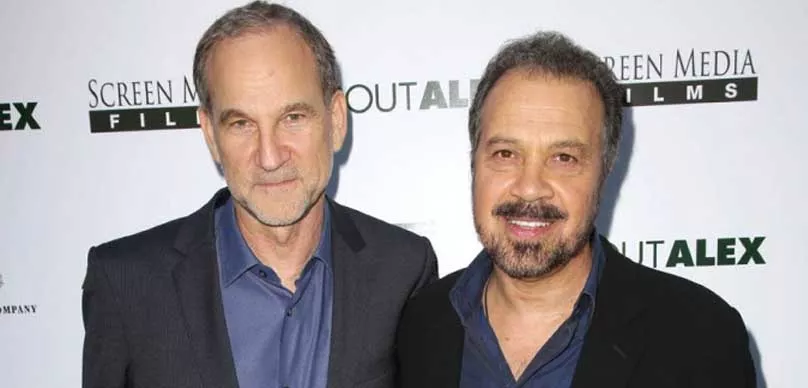
IFH 700: How to Be a Screenwriter in Hollywood with Marshall Herskovitz

Right-click here to download the MP3

Alex Ferrari 0:05
I like to welcome to the show, Marshall herskovits How you doing Marshall?

Marshall Herskovitz 0:10
I am. Well, how are you?

Alex Ferrari 0:12
I'm doing well, my friend. Thank you so much for doing the show. I'm a fan of of many of your films, including the films that you've just written and produced, but directed as well. And we'll get into that in the future. But I, I heard nothing but good things from you from Ed, who was on the show as well. Edward Zwick, and, and I said, Well, I kind of get Marshall on the show, too. I can't just talk to Ed, I want to talk to Marshall as well. It's so thank you so much for doing this. I appreciate it.

Marshall Herskovitz 0:40
Well, I'm happy to do it. And just know if I say anything that Ed said. Yes. stole it from me.

Alex Ferrari 0:47
Fair. Fair enough. Fair enough. Okay, give me one second. Hold on a second. technology's acting up. So give me one second. You're

Marshall Herskovitz 1:00
just like your room there.

Alex Ferrari 1:03
Thank you. I worked hard on it. I give my wife the excuse that it's for business. That's how, and I always tell. I always tell people that the Yoda was a is a pre pre wife purchase is definitely a pre wife purchase. To say the least because it's a hard it's I have kids now. And it would be it'd be it. I can't have that conversation. I know the kids need money for school, but I need a life size Yoda. I get it. Alright, so. So before we get started, Marshall, how did you get into business?

Marshall Herskovitz 1:50
Well, you know, it's funny. I went to Brandeis back in the early 70s, which dates me severely. And I majored in English. In fact, I majored in Old English, I was very interested in medieval England. I was a Tolkien freak, and just loved sort of Beowulf and that whole kind of, you know, early medieval, epic poetry sort of thing. And at the same time, at that moment, for some reason, I can't explain. There was a huge interest in old movies. Like when I was living in Boston, there were two different revival movie theaters in Cambridge. And then on campus, one night a week, there was an old movie shown. So basically, I was watching three old movies a week. And when I look back on it, I realized that the real education I got in college was in movies. I just didn't know it at the time. And I fell in love with movies, I fell in love with classic movies. And by the time I was a senior in college, I wanted to be a filmmaker. And, and the odd thing is, all I wanted to do was make medieval epics. That's that was my goal, go to Hollywood and make medieval epics. And here I am, 40 years later, and I haven't made one. But, you know, there's still hope, at any rate, that is what propelled me into the film business. I graduated, I made a short film, which was not a medieval epic, it was a very intimate, you know, drama. And I, I came out to Hollywood, thinking that that would be my ticket to fame and success. And I literally could not get one person to even look at it. It was that was the most disheartening. And in those days, all you had was the Yellow Pages, I went through the Yellow Pages for all production companies, and called every single one in Los Angeles, and no one would look at it. So after about six months of floundering, I heard about this amazing film school called American Film Institute. And I thought, well, maybe I should do that instead. And so that's, that's where I went. That's where I met ad on the first day. And, and really, that gave me my start, really, and you guys just just, you know, school, school chumps who got together and then and just

Alex Ferrari 4:05
stuck together for the last 40 years working on projects together. That's amazing. That's

Marshall Herskovitz 4:09
right. That's right. We're the longest living partnership in Hollywood right now.

Alex Ferrari 4:13
Really? That's actually saying a lot actually.

Marshall Herskovitz 4:16
Yeah, actually is no, I told me I'm very proud of and, and I know he is, too, and we have worked independently all along, but nevertheless, our preferences to do things together.

Alex Ferrari 4:29
Yeah, absolutely. I, I had a similar education when I but I didn't, I had a video store. I worked at a video store for a while. So I did the same thing. I'd watched three movies a night, you know, high school, so there's nothing else to do homework. So I would just, I would just take home movies and just watch and watch and I got such an education. And that was before I even wanted to become a director at the end. I was like, I guess I guess I kind of want to be a director kind of similar to you. So you wanted to make Excalibur but never did

Marshall Herskovitz 4:55
is what you say that's correct. Yes, yes,

Alex Ferrari 4:58
but there's still hope. There's Till hope,

Marshall Herskovitz 5:00
I finally after 30 years got to write a screenplay of the story of 1066, the Norman Conquest of England, which was something I had desperately wanted to do. And, you know, I still have hope that we'll make that as a movie. But you know, it's not exactly a moment now in the history of the film business when you can make big films like that. So

Alex Ferrari 5:21
we'll see. I mean, you put a cape on the main character, I think you have a better shot.

Marshall Herskovitz 5:28
I know that's the world, you know, with superpowers could these various people have? It's?

Alex Ferrari 5:33
No, is that is that is that a serious conversation that someone actually have a conversation with you about that?

Marshall Herskovitz 5:39
Not about that, but about something as ridiculous. Something I don't even want to go into. It just, it was a thing about Vietnam. And someone suggested that maybe if they had different superpowers, people might be more willing to look at a story about the Vietnam War. upsetting

Alex Ferrari 6:01
It was kind of it's kind of like when when they went in and pitched James Cameron Titanic to, you know, Jack's back like that a certain point, you just got to go. It's enough. It's enough. Now I have I have to ask, I was looking through your filmography. And I have to ask, what was it like work writing for chips. I mean, I'm a 70s. Kid. So I have to go right there, I went straight to it. I went straight to chips because I had the By the way, I had the pleasure of directing Erik Estrada, and some commercials years ago, and the stories Oh, my God, the stories he told about what happened in the 70s. People just don't understand what the 70s

Marshall Herskovitz 6:39
I understand. By the way, I never went near that set. So I have no stories to tell about the production of it. All I can say is that that was the low point of my career. I wish when I got out of film school, right, I spent about three or four years trying to be a freelance writer in episodic television, which is, by the way, doesn't really exist anymore. They don't really have people to make a career as freelance writers and television anymore. And, at one point, chips was the only job I could get. And I read one of their scripts. And it was like it was written in another language, I just had no idea how to do this thing. There was no connection there. Once he went to the next dialog didn't make sense, I literally was completely lost. And I came up with it with a sweet idea, actually, about an old Native American who thought his grandson was losing, you know, was not knowing enough about the old way. So he was raising his grandson in Griffith Park, away from people, you know, hidden away. Nice. And they bought it, they liked that do and it was Michael ansara, who played him, of course, because in those days, Michael and Sarah play Native Americans. And so it didn't turn out so bad. But for me, it was a very humiliating experience, because I had no idea. I just was not the type of thing I knew how to write. And in fact, that was part of what catalyzed, I think, the most, one of the most important moments in my career, which was a decision I made after three or four years of doing that, that I just was going to stop. In other words, I sat down and wrote a screenplay as a spec thing. And I wrote out the work the story together together. And then I wrote the screenplay. And I said to my wife, I said, you know, either this is going to work, or I'm leaving the business because I just cannot go on doing what I feel to be a bad job, doing other people's voices, meaning the voices of shows, you know, and and. And so that willingness, I think, to take that chance, and to say, I'm either going to make it on my terms, or I'm going to walk away. What's what turned everything around. And the interesting thing is that that screenplay that I wrote, had never been made. It was almost made three times. But it did change everything for me, because people were able to see my voice and I got work from it. And the work I got from it was what then gave me my career. So the willingness to bet on myself, was a scary thing at age 26, or 27. But that was that was what made it happen.

Alex Ferrari 9:31
I mean, that's pretty enlightened for a 26 or 27 year old, to be honest with us, God knows I was in much worse shape than you were at 26 or 27. I was lost. I was in the darkest pit of my time. That's a whole other story for another podcast. But um, but in most, most 20 year olds don't have that kind of reflection or that honesty, that kind of bravery. to just go, you know, I'm gonna make it on my end, and people listening. It's a very different industry than it was when you were doing this. It was less competition that it wasn't cool to be a screenwriter or director. It wasn't. Nobody even knew what that was to just knew that movies were made.

Marshall Herskovitz 10:08
Yeah, I know, it's true. I mean, it was hard to break in it, by the way, there were trade offs, because there was much fewer product. You know, there were three television networks in those days instead of 200. You know, it's easier to get a job today, but harder to have your own voice today. You know, I think you could have a voice in those days. And, and, and I felt that I had one. And it was something that I that I felt I needed to listen to. So you know, look, the one thing has always been true, which is to make it in this business, you have to be driven, you have to be, you have to need to do what I remember, when I was still in Boston, talking to some person who had been to Hollywood, you know, saying, you know, how do I do this? And, you know, do I have a chance of making it? And this person said to me, basically, if there's anything else you can do, you'll end up doing it? If there's nothing else you can do, then maybe we'll have a chance.

Alex Ferrari 11:15
I don't listen, I don't know if it happened to you. But I mean, I've gone through this, I mean, I've got a lot of shrapnel, I'm sure as you do in this battle of these years working in this business. And there was times I wanted to leave, I'd like I just I can't take it anymore. I want to quit. It's I'm like I and then the voice in the back of your head, like what else you're gonna do? What are you going to go and get real job? What does he get it like it's at a certain point you just like, and that happened to you multiple times? And how did you break through that? Because it's still happening?

Marshall Herskovitz 11:53
I have to say about that, I have to say about that. First of all, I had an inherent belief in what they now call the hero's journey before he had any idea of what a hero's journey was, it's so deeply embedded in our culture, that I believe that everything was a test. And, you know, they're going to throw the shit at you to try to get you to quit, and therefore you just have to try harder. Why I thought that I don't know, no one told me that. That was just my belief. And so my belief was Okay, I get it. Oh, now, six bad things have happened. And I want to leave. Okay, this is the moment when you have to dig down and say, No, I'm not going to leave. I don't know why I believe that. I'm grateful that I did. Because I think it got me through. But the other thing is, it took me many years to realize this something somebody Ed and I talk about a lot. There's a cycle in this business and probably other businesses, but I think it's more of this business, because it's so speculative. The cycle goes like this, you are nobody, you have nothing to lose, you do something bold, you do something original. people notice it, you get attention, you they start to build you up, you start to make money, people start to believe in you, you start to think that you know what you're doing. And in thinking that you know what you're doing, you become cautious, and, and maybe arrogant. And then you make a stupid mistake, and you come tumbling down and are completely humbled by the business. And in the midst of your despair, you have nothing to lose, and you could start being original again. And I could chart five times in our career, when that sort of thing has happened where in some way, you know how they say in Southern California, fire is a natural part of the lifecycle of this environment and it you need to have fires. Well, failure is a natural part of the lifecycle of a career. You have to have failure, you have to fail at things. That's the only way you learn. That's the only way you you grow and become better. And I think people are so afraid of failure, that they become mediocre to avoid it. And the business now allows for that, you know, you know, we always talk about how people fail upwards, which means they're mediocre and they don't make a huge mistake. So they sort of keep sort of moving up. I'm not a believer in that. I'm a believer in you take the chance and then you take what happens

Alex Ferrari 14:32
you know like I mean there's a filmmaker out right now who's you know, taking swings at the bat that I'm so regardless if you'd like the movies or not but someone like Chris Nolan who oh my god is taking massive swings at the Bat believable. Yeah, unbelievable swings at bat and I'm so glad there's guys like him and Fincher and these kind of guys that just go up there and just take massive because there's there's you could take Creative choices are creative challenges and do things that are original at a lower budget. But when you get up to the 150 to $100 million, and you do something like inception, or 10.

Marshall Herskovitz 15:10
I know

Alex Ferrari 15:11
that's, that's a that's a risk. Because imagine if that really badly, you could put in direct to jail. And that's the thing.

Marshall Herskovitz 15:20
I understand. And I have enormous respect. And as you say, it's like I couldn't even follow Tennant. You know, I'll be honest, I couldn't follow it. I want to watch it again. Watch it backwards, you know. And then he makes Dunkirk, which is like, sublime. Do you know what I mean? And it doesn't matter, because he's an incredible filmmaker, who has a vision, who has the resources, the wherewithal and the courage to follow that vision. And, and and you're right, we need people like that. We need a business that will still support people like that. And if there's one big difference between today and 3040 years ago, it's that there were more people in positions of power, who were willing to trust filmmakers back then. That's just a fact.

Alex Ferrari 16:08
I mean, look, we wouldn't have Star Wars. Without Alan Ladd I mean, Alan lamb took a risk on a filmmaker who made THX 1138, which was a horrible bomb. He's like, Hey, you know what? I think let's give him like 9 million sure you can have the merchandising rights. I'm sure that that will work out fine for everybody.

Marshall Herskovitz 16:28
You know, one of the most famous stories in Hollywood merchandising story was amazing. Well, because

Alex Ferrari 16:34
all contracts were rewritten after that. I mean, it would have for that

Marshall Herskovitz 16:37
totally.

Alex Ferrari 16:39
Because like there's no money in lunchboxes and our action figures. What is that to a sci fi movie at? You're taking kid? It's, it's absolutely remarkable. I always talk I always talk about the the punch that everybody gets in this in this business. No matter how big you are, no matter how accomplished minor were what stage in life you are. punches continues to come all the time. And as you get older, as you get older, you learn how to duck, a bit. Like when you're younger, you learn how to take it, you learn how to take the punch and keep going like you were saying like, okay, they threw six or seven things at me. Screw you, I'm still going. That's the taking of the punches. But some people get that first punch and their outfit out of the game. They're cold cocked. Yeah, as you get older, sometimes you could duck sometimes you can weave, sometimes it gets getting off you and sometimes it just misses you all together. But that's that's age. That's experience.

Marshall Herskovitz 17:35
Well, can I tell you, I don't think Ed and I have ever learned how to duck or we've, I think we got one of the worst punches of our career this just this past year in 2020. And we were just destroyed by it just destroyed. And I'll even say what it is we we thought we were doing a reboot of 30 something. Yeah, I had a great idea. It basically, it wasn't a redo. It was basically saying it's another generation, all of their children are now in their 30s. And it's going to be as much about their children as it is about the original cast members. And we wrote seven scripts, and we thought it was going to go and we had our our whole heart and soul in this thing. And ABC decided not to do it. And we were just like, we were undone. So here we were, you know, there was no ducking, there was no weaving that was a straight punch right to the face. Yeah. And, you know, and, and the, you know, the thing about the business, if you're a creative person, meaning if you when I say creative person, we're all creative people, what I need is if you make your living by creating things, either as a producer, director, writer, that sort of thing. This is gonna happen over and over and over again, you have to be willing to endure that kind of rejection, which is not the same as failure failure is once you've made it, and people shit on it, you know, rejection is before you get to make it, and people don't take it seriously, or they don't think it's good enough, or they decide they don't want to do it for whatever reason, you know, and and, you know, the point is, it takes just as much work we have, we put months and months and months of work into that, even though we hadn't shot you know, anything. And it was it was awful. But that's why that's that's the that's the job if you can't handle that you

Alex Ferrari 19:39
can't do this job. And that's the thing that I want people listening to understand because a lot of people think, you know, someone like you and Ed, you know, all all doors are wide open. They just, you know, how much do you need? Marshal? How much do you need and because of your track record, I mean, you guys have an remarkable track record individually and as a team remarkable track records as writers producers and directors. And yet and I've said this so many times I look, I always use the example of Spielberg, but I'm going to use you guys as an example. But like Spielberg couldn't get Lincoln gonna get Lincoln, you know, finance, you have to go. So Scorsese couldn't get silenced finance for 20 years ago. And to do icon Yeah, they're too iconic. And yet, Graham, I

Marshall Herskovitz 20:17
don't read my go, Oh, they should be able to do it. Also, I know it would be

Alex Ferrari 20:21
impossible, right. And you know what I've said that story to other people like yourself, and they're like, you know what, I'm not crying for Steve. I'm not crying for Marty, either. But I understand your point. But there's people at every stage of their career at every stage, no matter what they've done Oscars, no Oscars, big box office hits non big opposite, you still is still a struggle. It's still a struggle,

Marshall Herskovitz 20:45
constant struggle constant.

Alex Ferrari 20:47
And that's what I want people listening to understand that, like, there is no magical place that you'll get to in this career. We're just doors, doors will be wide open all the time. It might happen once or twice. Yeah, after big hit after a big hit. You're that you're the toast of the town. You're the belle of the ball. What would you like, and that's when you stick in that that project that you've been wanting to get done for the last 20 years? Like a medieval Excalibur reboot?

Marshall Herskovitz 21:11
There you go. Correct.

Alex Ferrari 21:15
Now, when you brought up 30 something, how did you guys you and had come up with that? Because I mean, I remember when I was growing up, I mean, I wasn't in my 30s then but I do remember 30 something was a he was a monster hit it was a monster hit for ABC. When it came out? How did you? How did you guys come up with that whole that whole thing?

Marshall Herskovitz 21:33
Oh, there's a funny story behind it, you know, we Oh, my God, you know, I'm trying to figure out how far to back this up. But But essentially, out because we had done this TV movie called special bulletin, which I can talk about later, which made a big splash in the 80s. It was about nuclear proliferation and nuclear bombs and all of that, it kind of put us on the map. And we were offered a television deal at MGM television, right. And of course, we didn't want to do television, we want to do movies. We thought television was you know, shit. And so we took this deal at MGM television, explicitly for the purpose of the fact that I wanted to put a second story on my little tiny house in Santa Monica. And it would pay me just enough money to do that. And the idea was to try to get out of doing anything they wanted us to do, because they were going to pay us a guarantee. But we didn't have to do anything, you know, we were only obliged to try to sell the television series. That's That's it, just try to sell the television series. So the moment came, where we were going to have the pitch meetings at the network's. And, you know, we had come up with ideas for series and I turned to Ed, and I said, you know, these are all terrible ideas. What if we sell one of these? It's like, we would have to make this this is awful, you know, I and so, and this is not a joke. We sat down, we said, okay, what we need is an idea for a series that has no chance of going. But if it goes, we wouldn't mind doing. So we said, What would that look like? And I sat there and I thought well, you know, what's interesting is that on television at this moment, we're talking about now 1986 there is nothing that represents the baby boom generation except Saturday Night Live. And show called Kate nalli.

Alex Ferrari 23:27
Yeah, remember kitten alley? Yeah.

Marshall Herskovitz 23:28
Yeah. And that was it. Everything else would had nothing to do with baby boomers. And I said to add, you know, look, we know all these people in this moment in their lives, they're having babies are messy with their careers, you know, this person is afraid to settle down. And it's very interesting, because ed is normally so open to everything looked at me with this look, he gets, you know, we have the same. It's like, he gets this look, that looks like a grimace. And I go, why are you tilt down on this already? And he goes, I'm not down on it. It's just my face. I'm not making a face, you know, they right? He gave me that face. And he was he was just completely, you know, didn't buy this. And in those days, of course, we had this stupid little office at MGM and and at one in the afternoon, we could just go home because we didn't have anything we had to do. So we went back to his house, and his wife Liberty was there. And I tell her this idea I have Why don't we just talk about people we know know, Ed's will point was, but there are no cops in it. They're no lawyers, no doctors, how you going to sell a television series that doesn't have any of the franchises. And I said what do we care about that? Their story and and God bless her Liberty went, Oh my god, I love that idea. And she started just listing all the people she knew and all the dilemmas in her life. And because ed is added he loves liberty. Somehow when she said it, it made sense to him when I said it didn't make sense to him. So literally by the end of that afternoon, we had sketched out this seven characters. You know, by the next day, we had written this sort of manifesto of the series, we went in the day after that to ABC. And of course, who are the executives in the room, they're all in their 30s. One is pregnant, they were exactly the demographic for the show. And we basically sold it in the room to them. And, and, you know, it was the whole thing was kind of charmed. And the irony was, we didn't want to do it. We did not want to do it. You know, it's sort of, that's when Ed started quoting that great john lennon line of you know, life is what happens while you're busy making other plans, because at every step along the way, you know, alright, so we wrote the pilot. And people loved the pilot, they said, Go make the pilot. And then I directed the pilot, which is the first thing I directed, and they loved the pilot. And then, in those days, they had what was called selling season in New York City, in May, where they would, you know, show everything to the advertisers and decide what they were going to pick up. It's what now it's called, whatever the sweeps, like sweep, sweep, not the sweeps, you know, the the, the TCPA is whatever they're called, up front, basically. But in those days, there were no cell phones. So you were ordered to go to New York and sit in your hotel room for five days and be within range of your telephone in the hotel room, because you might get a call that your show was picked up. So we sat there like idiots for for four days in New York on the on the fourth day, we get a call from the head of the studio. And that's a whole other story. David Gerber, who was one of the greats is such a character. Every second word was it was a curse word. And he says, and he had this, he said, they love this package. Oh, that's great. But you got to change the name. They don't 30 something, make no sense. But you got to change the name, they want to use grownups. And we go grownups. That's a terrible idea. He goes, Well, they don't know if they can get it because she'll swiper older, but they want to use grownups. And we go, Well, we hate the idea. We don't want to use grown up, we want it to be 30 something. So he hangs up. Okay, so we thought it was over, you know. And then of course, the next day at noon, he calls he goes, they're picking up the show.

Alex Ferrari 27:21
So you're actively trying to sabotage, sabotage.

Marshall Herskovitz 27:25
And not only that, I'll go further. We hang up the phone, and he's like, you guys are amazing. They're like, you could hear cheering behind that they picked up the show. We hang up the phone, and we look at each other. And the thing is, Ed, and I have this shorthand with each other. We don't speak very often, you know, in sometimes these situations, we just looked at each other. And we listed, you know, shook our heads, and went for a walk up madison avenue for about an hour, thinking that our lives had just been completely derailed. And now we were doing a television series instead of being movie makers. And in those days, remember, TV was the great wasteland in those days,

Alex Ferrari 28:03
right? It was about to say that it's not the thing like now TVs have no place to be.

Marshall Herskovitz 28:08
Yes, no, we were sellouts. It's like what are we doing with our lives? It's so and I say that in the full knowledge of how stupid we were at that moment. And I delight in our stupidity at that moment. But that's where we were, we thought, Oh, fuck, we sold a television series.

Alex Ferrari 28:25
I guess we're gonna have to go do it now. And that's the thing. That's the one thing I've I've heard this from multiple people in the business. If you want to get rich, you work in television, if you want to be an artist, you go to movies, because because there's a lot more money to be made, at least there was back, you know, when the residual there was much more money to be made in television than there was in syndication and all of that kind of stuff. As opposed to a movie. It's just a one. So it's like,

Marshall Herskovitz 28:54
That's right. That's right. Yeah, nowadays. You're one of those few people, you know, who, you know, the few directors who can make $10 million, a movie or they can make 20. But they're very rare. Very rare, and especially in today's world. I mean, look, the last few movies Ed and I have made literally, we ended up losing money on them. You know, we made a woman movie called woman walks ahead, we ended up not only giving up our fees, but each of us paying $25,000 you know, in the post process, and so we lost money on that film, when you know, so that's, you know, basically the movie business now consists of 90% indie films where nobody makes money and 10% these big studio productions that are $200 million productions, and that's a very small club that makes those movies

Alex Ferrari 29:45
right in you're absolutely right. And I mean, movies, some of the movies that you guys got made, like, glory, I can't see glory getting made in today's world. Sure, you know, legends of the fall. I mean, Even even if even if you still had Brad Pitt and and Anthony Hopkins in it, I'd still be a tough sell as a studio movie, it might be more as a mini major kind of scenario,

Marshall Herskovitz 30:12
we have a follow up to legends of all i don't mean a sequel, I mean a, a piece that said in 1905, not the same characters or anything like that, but it has a lot of the feel of Legends of the fall. We can't get anybody to even consider making that movie because they're, it's just a different world. Now.

Alex Ferrari 30:32
That's all again, super if you put a cape on them. I'm Jeff, hey, I'm nobody. I'm just saying it might be a lot. I'm just trying to help. I'm just trying to help Marshall. So, so obviously, you and Ed have been, you know, you've obviously been great friends since since the AMI days. What is the writing process? Like? What is the process? How do you guys actually do the writing? Like I always love to hear really good questions. Yeah, I love it.

Marshall Herskovitz 31:01
You know, what's funny is that when we started, I did the writing, we would do the stories together. And then I would do the writing. And when I was supposed to write the pilot of 30, something I was seriously blocked. I mean, I was so blocked, that after three weeks, I had written one act. And, you know, he and God bless him. He he came in one day we were, we had these little offices, like I said, at MGM, and he sat down next to me. And he just took the keyboard. And from that moment, we started writing together. We never said a word about it. We never had, we never discussed what the terms were how we would do it, we just started doing it. And it was all Him, He saved me a demo, he literally saved me. And I think over the years, what we've worked out is we just hand off, in other words, some period of time I have the keyboard some period of time, he has the keyboard. And by the way, this works just as well. Over zoom, actually, we use a thing called goto meeting, but it's the same thing. But you can at least look at the document while you're doing it. Or in person. And one person is looking at a monitor and the other person has the keyboard. And basically, the person with the keyboard is kind of the captain of the ship at that moment, the other person talks and yells and says no do this. And but the person or the keyboard says no, I'm doing it this way. You know, unless we scream too much, then you know, but basically, we we listen to each other. Um, we, you know, it's funny, when when Ed and I started out, he had a very specific set of skills, and I had a different set of skills. And over the years, we've learned each other's skills, but he's still better at what he started out at. And I'm still better at what I started out at. And that's part of I think, what makes us such a good team. And, and that differences that Ed has the greatest story sense of anyone I've ever met in my wife. I mean, I used to say, you could drop ed in any story. And in five minutes, he can tell you where it came from and where it's going, it'll his his ability to, understand the schema of what has to happen, what happened before where it has to go, where the other people fit into it is astonishing. And his speed at it's like speed chess, watching him work, sort of structuring a story. When I met him, he didn't really have much skill at sort of depicting how people actually speak or what happens, you know, between people in a scene, and that was my strength. I hadn't a clue what a story was no clue at all. But I could write a scene, I could, you know, get into the nuances of how people behave with each other, and why sometimes people say what they feel or don't say, what they feel and why they sometimes don't talk and why and other times, they can't stop speaking. Um, and so, you know, we quickly learned to respect the other skill. And so if I'm writing a scene, and he would say, why are you doing that back and forth? So many times, I would say just shut up. It's gonna work, you know? And then he would see that it would work because it would all go boom, boom, boom, just like that, you know, two people why? I don't know, we actually know. But you said that, that other people talking over each other. That was something I understood. Whereas he would say, this scene makes no sense. It doesn't fit into what you're doing, I would learn to understand that he's right when he says that. So. So we each apply our skills as it's going along. But there's a certain level of trust you have to have. I mean, I couldn't do this with anybody else. Because basically, you're like, you're you're just saying any stupid thing that comes to your mind. And what we've come to realize, by the way, and I think this is really important to understand is we've come to understand that if there's a moment where you hesitate because you think Your idea is dumb or embarrassing or revealing in some way. That's the moment where the other person has to say, what is that your thing? You're thinking right now? What is that thing? Stop right now tell me what you're thinking right now. Because whatever that thing is, that's going to be great. The thing you fear is going to be bad is going to be the good idea. And so we expect that in each other. And it's a vulnerability, that it's a sort of a mutual vulnerability, where you know that the things that are the truest are the hardest to say, and therefore you're, you're not going to want to say them. And by the way, corollary to that is that we both hate writers rooms. I mean, I, you know, I know we are far outside the mainstream, but I think writers rooms are terrible places for just that reason. Because the best ideas can't be said in front of eight people. It's too revealing to say it in front of eight people. And so when we do our shows, we don't have writers rooms. I mean, we bring everybody in, and we will sort of talk about the season in general. But then when we're working out each episode, we bring that writer in and we we we get we we work out the outline for that episode with that writer and let that writer going right in. And that works out much more efficiently. And with a much better product, we feel for that very reason. Because people then are less afraid to say what they're really thinking.

Alex Ferrari 36:25
Now, you talking a little bit about fear, and breaking kind of because there's this whole town is run by fear. Let's just be honest. Everyone in the entire town is run by fear. This entire industry is run by fear. And it's getting worse and worse and worse as the years have gone by even in my short tenure in this business.

Marshall Herskovitz 36:46
I've seen the corporate America is run by fear. And now the movie business is corporate America. Exactly.

Alex Ferrari 36:52
So you always so did you ever write a loan before at or did you guys just start and just that's

Marshall Herskovitz 36:58
not always I wrote alone? I but we both wrote alone? I wrote a bunch of things alone before. Yes. Okay.

Alex Ferrari 37:04
Okay. So my question to you is, when you decided to say to yourself, I want to be a screenwriter. And you sat down and you saw a blank page, because I'm assuming there wasn't a screen at that point, it might have been more likely might have been a page or a screen. And up to you,

Marshall Herskovitz 37:18
though, it was a page, it was a bit.

Alex Ferrari 37:20
So when you looked at that blank page? Yeah. What did you say to yourself to break through the fear of actually starting to write because it is the most terrifying thing for a writer to see a blinking cursor, or a blank white page, it is a terrifying place to start.

Marshall Herskovitz 37:34
It's the most terrifying thing. It's the thing. And by the way, I would say did me and for 20 years, I mean, I think why was I blocked when I was writing 30 something because I have that fear you're talking about? I just, I couldn't break through that fear. I think, look, I'm a I'm a big proponent of psychotherapy. And I think psychotherapy in particular, when it comes to work, when it comes to the creative process is incredibly valuable. Because each of us has a voice inside our heads. That is self loading. Then you just wrote us a piece of shit. And it instantly goes into we'll tell you exactly. We humiliated you will be when people read that horrible thing you just wrote, and it's paralyzing. That kind of fear is paralyzing. That's shame. It's really shame is what we're talking about. Writing is so filled with shame, because you are exposing yourself. And you're exposing yourself to the worst kind of criticism, shaming criticism, how could you have thought that? How could you write that you bore me, you know, you're uninteresting, you're bad, all of those things. So you have to develop the ability in yourself the compassion in yourself, to say, I'm going to write this anyway, even though I might be shamed. You know the words it's about letting the shame wash over you and realize you survive on the other side. Now, Ed's wick, who is less afflicted by shame than I am, although he certainly is afflicted by it, for sure. But he's, I think we're able to cut through that his invoice is right at bad. In other words, go right for the shame. Just write it bad. Because it won't be that bad anyway. But the point is, except that it's going to be bad and write it anyway. Because you can always rewrite, rewriting is much easier than writing. I think, once I learned that, once I learned, I could try a scene. And if it's bad, it's going to take me 30 minutes to rewrite it anyway, what's the difference? It was very freeing. And so it's much easier for me to write now than it was 30 years ago because I was so consumed with shame and fear of shame at that time, so I feel for every writer, this is our lot in life issue is to face that shame. Every single day, but it's to understand that it's shame. That's what you're afraid of, is shame

Alex Ferrari 40:06
at the I've said this on other episodes about this, and it's something that I've, I think all creatives go through, but I think we, we, we go through it a little bit more as filmmakers and screenwriters is, the ego is a very dangerous, dangerous thing inside of ourselves. And that that voice that you're talking about, I always use the analogy is, if you go out and you have a big meal, and it's you're stuffed, and then the dessert tray comes, that voice in the back of your head goes, go ahead, have the cheese cake, you just work out tomorrow, it'll be fine, then you get the cheesecake. And then later that evening, when you're at home and you're undressing in front of the mirror, that same voice goes you fat pig, hi, could you have eaten that damn cheesecake. And that is, and that is the voice. And this is similar voice to the shame voice that you're talking about. You can have voices the one that got you to write, but then the other one, but it's also going to shame you it's it's it's horrible thing that we have to deal with,

Marshall Herskovitz 41:04
as human beings, as human beings. And by the way, I see it as two different voices. Okay, I see, we all have parts. And that's what I believe we all have parts. And there's one part that's a shaming part. And there's another part that has the appetite and the desire and wants to be a big deal or be creative, or be famous or be rich or any number of things. We have different parts, you know, and the problem is at any given moment, one part is Ascendant and the other part is pushed down. So yes, you look at that cheesecake, and the part that says, Oh, I can do this takes over. And then the next morning, the shamer says, You idiot, why did you do that, you know, and, and it's learning how to live with them, and, and sort of figure out some middle ground between all these voices. And also, I believe, very strongly at this point in my life, in the idea of compassion for yourself, I think that's the thing I did not have, for many, many, many years, I had no compassion for myself. And I, you know, I think most people would have described me as a very compassionate person toward other people. It was something that was very important to me, I had no compassion for myself. And that was very hard won and hard fought. And it's changed my life to be at a point where I do have some compassion for, you know, why I became that way why I'm so susceptible to shame. And here's the problem. People don't go to Hollywood, we go into this business, if they're all right up here.

Alex Ferrari 42:38
I've said that 1000 times

Marshall Herskovitz 42:40
1000 times some hole to fill, you know, you've got some deficit that you're trying to get over from your childhood, if you're out, you're trying to do this, instead of going into the family business in Pittsburgh or, or becoming, you know, what I mean? Honestly, they're, they're, we are propelled by by darkness, you know, in many ways to do this. And that, that's a part of our makeup that were damaged in some way. I believe that and and I have a lot of compassion for that, you know, other people and in myself, and as you know, I like the percentage of damaged people in the film is this must be higher than than other, per capita,

Alex Ferrari 43:21
or industry, per capita.

Marshall Herskovitz 43:25
I mean, patiently, you're surrounded by crazy people of one kind or another. This is one of the few, this is one of the few industries that rewards you if your bipolar rewards you if you have ADD, you know, rewards improve things that would normally harm you in other businesses. So, you know, look, we we are that thing about the tilted the country and all the nuts and bolts, all the nuts went to California, there's some truth to that, you know, because, because there was an ache that brought us out here to try to achieve something and you have to understand that that ache, that's never you're never going to find a source of that in success, you're going to find a source of that in healing yourself.

Alex Ferrari 44:08
Yeah. And I would agree with you. And I think that's something that a lot of writers go through is that that self compassion, and I mean, in my early years, and even into my mid to late 30s, I was brutal to myself, brutal, I just would just pound myself and beat so hard and literally just tear myself apart, where I was more compassionate to people outside of me. And it took my wife to be pointed out to me she's just like, you've got to stop Do you can't beat yourself up about that. Till Finally I I finally get into the place where I'm like, I gotta I gotta give myself a bit of a break, man, because it's, I'm only hurting. You're only hurting yourself. You're hurting your chances only makes it worse. The only makes it worse. It's tough enough, and it's tough enough. Yeah, it's really true. Now you you have gone through a lot of ups. You've got you've gone through a lot of ups and downs in this business, you've been at the highest of highs, and I'm sure you've been at the lowest lows. How do you handle? How does the the psyche, the ego handle, you know, being at, you know, the Oscars, you know, with a project or and then having 30 something, your new 30 something completely just get punched in the face? How do you deal with that at different stages of your life? What's your advice for that?

Marshall Herskovitz 45:27
Well, I think, you know, it's it's along the lines of what we've been talking about, which is, is understanding that, that you're free. There's a, there was a wonderful book 20 years ago called iron john by Robert Bly about what it is to be a man. And a lot of people made fun of that book, because there were all these men's group that respond from it, which were kind of silly, but the book itself is filled with incredible wisdom. And that book helped me understand the idea that, you know, that that failure is part of the lifecycle, and that no man can really avoid failure forever. And that, you know, you have to embrace failure. And so I think understanding that as a big, big help, but it's Look, these blows are just, you know, I had a terrible thing happened 1314 years ago, where I had a startup called quarter life, that was a, that was a social network, and also show an online show. And the online show was successful for a while, but the social network failed, because at that time, the whole point of our social network was it Facebook was only open to college students. And we thought, Well, what happens when you get out of college? You know, and of course, right, when we were developing our website, Facebook just opened itself up to everybody. So our entire financial model went away. And I lost a huge amount of money in this, this was a huge humiliation for me, and not just humiliation, it was destructive. And it was horrible. And I had to say, you know, what, I took a chance, this is something I believed in, and I took a chance and it didn't work, and I gotta move on, you know, and so, that took a while, but you pick yourself up. If you if you still have that fire inside to do something, then you have to listen to that and and say, there are more challenges ahead. So that's all you can do you live with the shame of that and you you move on.

Alex Ferrari 47:36
I mean, look, Katzenberg, you know, put out to put out kwibi. And yeah, he took a swing, he took a very billion multi billion dollar Swing, swing, and you know what, and he he was he was chatting, he was taking a chance and he's like, you know what, I think this is where it's going. I have a pretty decent track record. I think this is what's going and on paper it seemed like a solid investment. But unfortunately, it didn't go up but you know what, I give them nothing but props for taking the swing. You got to gotta have people like that. If not, you know, if it wasn't, you know, for SpaceX or Ilan Musk, or or Ford or Edison, or jobs, or any of these guys who took those big swings in every aspect. We wouldn't be where we are today. So Oh, boy, that's that bravery. And I think as a creative as a screenwriter. Sometimes you got to take that that swing as well.

Marshall Herskovitz 48:26
Absolutely. I I've lived that way I believe in that. And I and I'm willing to take my lumps because I believe in that because you will because you're going to take lumps if that's the way you're going to live.

Alex Ferrari 48:39
Again. No question. Now I wanted to I wanted to take you to your first your first directorial debut jack the bear with Danny DeVito. I love that movie. It was it came out during my my window, my window in the video store. my years at the video store came out so I remember recommending it. I remember the Bach the VHS box on the stage. Like, like I tell a lot of my guests 87 and 94 I'll beat anybody in Tripoli will pursue one movie serviette because that's the time I saw everything that came out. When you when you did that film, which was a wonderful film. You didn't write it you directed if I'm not mistaken.

Marshall Herskovitz 49:16
It was written by Steve Zaillian

Alex Ferrari 49:17
right, not about he's he's okay. He's done. Okay. He's done okay for himself. Um, what was the biggest lesson you learned directing that film? Because I'm assuming I know you direct to some episodic at that point. But

Marshall Herskovitz 49:29
yeah, you

Alex Ferrari 49:30
were you were you were you were at the game. You were at the at the Big Show?

Marshall Herskovitz 49:35
Well, I learned a lot of lessons from directing that film and most of them were negative lessons. Um, it was a very difficult film very, very difficult. There were a lot of problems attendant on that film. And, And truth be known. In retrospect, I think I should have withdrawn and not made it actually. And that's a hard thing to say. Yeah. But, you know, without going too deeply into it, here's here's the issue. I think that although I think Steve Zaillian is one of the greatest writers of our, of our industry, that script has structural problems when I got to the project, by page 60, you did not know what that story was about. And and I don't think a movie can sustain that. And so I, I wanted to make some serious structural changes in the first half of the movie. And Danny DeVito, who at that moment was very ascendant in his career. He was actually prepping hoffa, which was his going to be his big

Alex Ferrari 50:43
directorial,

Marshall Herskovitz 50:45
big, big directorial project. You know, he had script approval, and Dan and, and Danny love the script as it was. And so they would not allow me to make any changes in the script. And I knew that it didn't work. It was a wonderful script, from page to page, in the scenes, the dialogue, you know, was wonderful, but structurally, it was very problematic. And, and so, I remember, it's very interesting. Danny and I had an interesting relationship, you know, in pre production. We argued a lot about the script. And, uh, and he is he, he's a very smart guy, Dan, and he got, he saw what my fear was, and he and he went right to it one day, he said to me, he said, Look, you're the director of this movie. And when we're shooting this movie, you tell me to stand here, I stand here, you tell me to laugh. I laugh. But right now we're talking about the script. And, and that's what's important. And, and he understood that I, as a first time director, I had anxiety that I was working with this big star, you know, and he was true to his word, you know, as an actor, he was great to work with and, and, and cooperative and, and collaborative. You know, the issues were about the script. And we went ahead and shot the movie, we had a lot of issues in the shooting, because the the, the, the schedule was too short. And I knew it, and the people in production knew it. But the studio didn't want to spend more money on it, because it was a soft kind of movie. And so we went behind schedule, as I knew we would, and got into big fights about that. But the big problem came in editing, the problem came in editing, because when we put it together, sure enough, the beginning part didn't work, as I had told them, it would not work, because, you know, it just it was it needed to be sort of condensed into something that you understood where you were going. And so they wanted to fire my editor. I said, You're not firing this editor. This is a guy Steve Rosenbloom, who we've worked with, both at and I've worked with since film school, who I think is the most brilliant editor in Hollywood. And, and, you know, I put my body in front of him, they actually brought in a second editor in addition to Him, who finally gave up saying, I don't know what to do with this. And, you know, we spent a year just editing that film. That's unheard of less than three months editing a film, three, four months, tops, editing a film, you know, a year just editing. And finally came up with something I suggested two days of reshoots to help knit some things together. And they gave me the two days of reshoots, and we were able to sort of create, you know, sort of knit together the story in such a way that that beginning part worked. And so, you know, it was a difficult painful process it you know, as a first movie, to have to do battle with the studio head to do battle with your star and all of that. It was it was, it was tough. It was tough. And then it came out and of course, did no business at all. And, you know, and critics, here's an interesting thing that I that you know, it you know, we talked about you you never see the bullet that hits you.

We, we knew the problems were in the first half of the movie. Once we got through the first half of the movie, it worked like a top. Okay. And so I'm sitting there with my editor Steve, in a in the first preview, and the audience is laughing and they're into it and we get to halfway through the movie and they're clearly loving the movie. And we're like high fiving like we solve this and then you get to that last part of the movie where it turns dark right and you know the the neighbor Norman you know, attacks the boy and oh, That you could feel the energy in the audience change immediately. And we realized, oh my god, people don't like this at all. And what I realized is that when you have a tone change in a movie, late in the movie, people don't like it doesn't mean it's not good. It means they don't like it. There's a difference, in other words, that they thought it was one kind of movie, and then it became a different kind of movie. Now, when you look at the movie, I put in 100 warnings, what's coming? Some of them, I think, very overt, of like, watch out, watch out, watch out monsters are real monsters that are real. But people don't listen to that. Do you know what I mean? They were taken by surprise. And they thought it became a different kind of movie at the end. And that was, you know, critics hated that. And, and it did no business. And so, you know, I look, I look at the movie. And to me, it still works as intended. And I think those warnings are there, and they work. But for audiences, it didn't work. So, you know, I learned also that you have to think, like an audience member,

Alex Ferrari 56:12
you can't

Marshall Herskovitz 56:12
just think, as a filmmaker. And now when I am writing, and when I'm directing, and when I'm editing, what I'm doing is on the audience, I'm not just the Creator, I'm the person. I'm looking through both sides of the telescope. And I'm saying what is my experience as an audience right now? And is it what I expect? Am I disturbed by it? I'm disturbed in a good way in a bad way. Am I taken out of the movie? I think about that much more seriously than I did before that process. So I think there were lots of lessons from that movie.

Alex Ferrari 56:51
So I love I love the concept of the tone changes because that is something that's a very dangerous thing to do in a film is to change the tone because you'll lose your audience. And the the, the one film that always stuck with my head is a Tarantino film, which he wrote but didn't direct which is called From Dusk Till Dawn, which was the first half of the movie is basically a kidnapping heist film right? Out of nowhere, vampires show up. And then the, and then it turns into vapor. And the tone shift just jars so jarring. There's nothing before that tells you. Hey, there's some vampires coming out even a poster on the wall. Nothing. Nothing. So that's something that writers listening really careful with that tone change because it can really just throw you off.

Marshall Herskovitz 57:38
Yes. Yeah, absolutely. Absolutely. Yeah. It's it's just one of those things. It's the difference between movie reality and real reality and real reality. Shit happens. You know, all of a sudden, you have a car accident and your life just changed.

Alex Ferrari 57:52
Tone shift, but tone shifted. Yeah.

Marshall Herskovitz 57:54
But but in movie reality, there has to be some unity of of not just tone of character of Overwatch thing. So that's what's what people expect.

Alex Ferrari 58:04
Yeah, like, you can't have Darth Vader all of a sudden be the nice guy at the end. Like, it's that that doesn't but but yeah, I've seen that happen in bad movies with characters that just, yeah, they weren't the guy. They weren't the kind of character that would kick the dog. But then halfway after halfway through the movie, they kick the dog. You're like, wait a minute, I know, No, you can't. You can't take me down a road. And then Sucker Punch me like that.

Marshall Herskovitz 58:28
It's Yeah, yes.

Alex Ferrari 58:30
It's very, very tough. Now, another project you were involved in as a producer, which I would love to hear any, any stories behind the scenes or how you even got involved with it with traffic? I mean, that that is such a I mean, obviously, it's at this point in legendary film, I remember when it came out. It's, it's bizarre Berg, who's, you know, brilliant, and so on. But, yeah, it was a risky film, like the way he shot it the way you constructed the storylines. How did you how did you get involved the movie? And how did that go?

Marshall Herskovitz 59:00
Well, first of all, that was mostly Ed. I mean, Ed wanted to do a story about the war on drugs. And, you know, I, I think, I think my participation in that was more supportive than than most of the things especially because, you know, we didn't write it. We didn't direct it. I mean, Ed was going to direct it. But when he found out that Soderbergh was doing something very similar and had the rights to the traffic miniseries, you know, he called Steven I'm sure he had told the story that he called.

Alex Ferrari 59:32
He didn't he didn't tell us Oh,

Marshall Herskovitz 59:34
it's very, very interesting, because he was kind of stuck and on, on how to make it work. And he called Steven and said, Listen, we don't know each other. I know you're doing this thing. We're doing the same thing. Let's not try to do two things. Let's work together. Would you be open to that? And Soderbergh just said, done. That was it. That was the whole conversation. You know, so from that moment on, you know, yeah, he was gonna direct it, we were gonna produce it. And he kind of, you know, got it together in such a way that the script worked and went and did it. And look, we had no interest in telling Soderbergh what to do. I mean, he was, he's amazing, you know, and, and we learned a lot from him. He has such a different style from us. And I just wanted to see how he worked. And I'll tell you an interesting thing that happened. You know, it's basically three or four different movies. I mean, the casts in their stories almost never saw each other. Okay. And yet, there's this incredible consistency of performance throughout the film. And I remember I was doing a panel when the film came out with with two of the actors. And one of the questions was, how did Sodor How does Soderbergh work with the actors? And they each said, Soderbergh never said a word to me. He never gave me any direction. He just I was so shocked, because you know, I spent a little time on the set, but not enough to really like, you know, first of all, Soderbergh was the operator.

Alex Ferrari 1:01:20
Yeah, he's he's the DP Yeah.

Marshall Herskovitz 1:01:22
And so you know, you're he's right there with the actors, you're back with the monitors. I didn't really know if he was talking to them or not, you know, so. But I was shocked that he, they said, literally, he didn't talk to us. And I, and it's funny, Ed has a theory that, that, you know, that a lot of directing is osmosis in the sense that your bio rhythms as a director, get transmitted to the actors? And you know, and and so you have to be very careful what your biorhythms are, because it's going to affect their performances. And what I realized at that moment was that Soderbergh if you know, him, he's very taciturn. He, he's not that expressive as a person, which I think puts a lot of people on edge and makes him seem very serious. He's actually not that serious. He's very funny guy, but he seems very serious. And but I think actors, when they're around Steven, they know they can't fuck around. They know they have to show up. And there's something about his, that that fear of being judged, because he's not judgmental. I'm not saying that. But when somebody is not expressive, or reactive, you put it in, you put out that thing, right? You know what I mean? Right, right. So I think having this guy six feet away from you holding the camera, and sort of in the scene with you had the same effect on every actor, which brought out sort of their A game, their most grown up self, you know, and, um, it's an amazing effect, that, that, you know, in some alchemical way, he got these consistent performances from everyone because of who he is. And that was a very interesting lesson for me.

Alex Ferrari 1:03:18
I mean, because the cast was I mean, the cast was remarkable and so many different styles of actor and actor

Marshall Herskovitz 1:03:26
yeah and performance are wonderful and they're so every single one of them is so internal and so available when I say internal it means I can see into they're actually not internal they are they are their windows of into their thinking process is so open, you know, and Benito Del Toro is, is sublime, just sublime. In the movie. It's like, just watching the dailies you're going this guy, I it's like, you can't even imagine. You can't even call it acting. It's something else. It's some it's some. He's some possession, possession, possession, whatever it is, you know, um, and Michael Douglas and all of them and Don Cheadle. They were all Catherine's place. Yes. All over some place that was so remarkable. And, you know, that's Soderbergh's gifts that he creates that that world on the set that allows these actors to to inhabit that place in themselves.

Alex Ferrari 1:04:27
Is that the is that the first app? Please remind me because I mean, I'm not I'm not that keen on Soderbergh's history, but was that the first time was the big hit cuz I know Erin Brockovich, and obviously the documentary was the same year.

Marshall Herskovitz 1:04:43
He was nominated. He's one of the first he's one of the only directors should be nominated against himself as a director cheese or an Oscar. He was up for two Oscars as director that year. And, and

Alex Ferrari 1:04:56
and Best Picture two,

Marshall Herskovitz 1:04:57
I think right black Best Picture. Yes, yes. He wants to traffic. He wants to record. You want director for traffic. And I remember telling him on the phone I said you just have to beat that asshole Steve Soderbergh?

Alex Ferrari 1:05:10
I mean, he's everywhere. This guy, this guy is everywhere. I mean, he left.

Marshall Herskovitz 1:05:15
And by the way, when we were at the Oscars, it's just so terrible. You know, you're, we're in the second row. And you can see into the wings at the, in the in the auditorium. Right. So Michael Douglas comes out to give our best picture. And you could see that first of all, they had three Oscars for best picture, and we had three producers. And then as he opened the envelope, I can see that the film is one word. I couldn't read it, but I could see it's one word. And so I hit head, and I whispered, we won. And he goes, and the winner is Gladiator, which was one word and had three Oscars. You know, it was, it was one of those great, horrible moments where we thought we won, but we didn't. But you know, so what?

Alex Ferrari 1:06:05
Yeah, it was all No, I made it. Overall. It you guys did. Okay.

Marshall Herskovitz 1:06:14
You know, just don't get ahead of yourself more. Yeah.

Alex Ferrari 1:06:18
And honestly, talking about you know, guys who swing take swings at the plate. I mean, Jesus Sonnenberg I mean, he's not making use of his iPhones. IV is

Marshall Herskovitz 1:06:30
really absolutely remarkable. So much respect for him.

Alex Ferrari 1:06:33
I have to I have to ask, when you start writing? Do you add, start outlining first? Do you start with character? First, you start with plot first? How do you how do you start that process?

Marshall Herskovitz 1:06:44
It's a good question. What we have learned over the years, is not to try to structure anything at first, including the conversation. In other words, so much of what we do when we're starting something is just talk, talk about how we feel about it talk what what is it what ideas come to mind, how do we see the characters but not not in any organized way, we will just go from history to things we've read to what this reminds us of this is like my aunt Marcy, this is whatever, you know, that, that we just kind of inhabit that space. And that could go on for a week, you know, we're more where you're just kind of living in it. And, you know, it's like somebody wants said, you know, if you are want to make a sculpture of an elephant, just cut away everything that doesn't look like an elephant. Yeah, you know, that in some way the thing exists there. And you have to just pull it out that in some way, that's true. It's just harder when it's something like this, that's a story. But we still believe that in some way, it exists. And we have to find it. And that means being open to the most gossamer foggy notions that might be true and be willing to change and follow something down a line. And so it's the willingness to be unguarded and unguided in that beginning part that allows you to really start to have a sense of what the thing is, and then, you know, then we talk about the characters a lot. And I think we get to structure at the at, that's the last thing, you know, there may be some things we know we want to happen. Or we know we want the person to be this kind of person. And so that's going to dictate certain things are going to happen. But but to actually structure the story. That's the last piece of the puzzle for us before we start writing.

Alex Ferrari 1:08:40
Now, there was a movie you did that was in your filmography, that kind of like one thing, like that old song, like something in this thing doesn't belong, which was jack, jack Reacher, which is, I think the only sequel you ever did, right? And it's, you know, it's a, it's a, you know, Tom Cruise vehicle. It's an action movie. Obviously, there's a lot of action and a lot of like, Last Samurai and other things you've done, right? But this was different. How did you guys approach this? And I mean, when I spoke to Ed a little bit about it, he's like, I've never done it before. So I kind of just wanted to try it and see if I could do it. How did you guys approach the writing process of that?

Marshall Herskovitz 1:09:16
Well, I think, you know, first of all, I mean, I'll talk about this I I tend to not want to talk about anything that pertains to other people what other people said or did and so I'm going to be a little bit circumspect, just out of respect. Sure, those people. But basically, the idea behind that film was to take one of the novels where Reacher is in relationship to someone, because usually he's not that much in relationship, because they wanted to humanize him a little bit. And so they picked that novel. And so our mandate was to and I think why they used us was because they wanted the relationships they wanted that sense of connection between him and the woman and the girl. And that's what we wrote. And that's what Ed shot. And they loved it. And I remember Tom, who we love working with, by the way, we're going to movies with Tom. And he's a great guy to work with. So he's, that's a whole other subject.

Alex Ferrari 1:10:22
No, I mean, I've heard john

Marshall Herskovitz 1:10:24
out. I'm happy to get into but he is. He's, you know, who was it? Who said, Tom shows up on the set each day and basically says, How can I make your dreams come true? I mean, that's how he looks at movies, he's full of gratitude, and wants them to be great. And it's so it's a great experience. So at any rate, we made the film, Tom looked at the film, he turned to Ed, and he said, this fucking film made me cry, none of my films make me cry. You know, thank you, then we test the film. And women love it. And young men go too soft. In other words, the idea didn't work for the intended audience of the movie. Now, have I said too much? Maybe? I don't know. But what the hell, it's past history. So we, you know, we did some work on it didn't take that much. We did some work. We we did some things together, we shot a little bit more action, we just kind of toughen it up a little bit. And that's something I believe in I look, I believe in the post production process very strongly, maybe because of my experience with jack the bear, but maybe also even from television, that you can surgically change something and make it into something that works better. And and we've done that a lot. And so that's what we that's what we did with that. And, um, you know, I think it's, it's, you know, it sounds some audience, it's just, it was each of these things looks to me, it's a miracle movie ever gets made. Amen. Is it good? No, I don't I look at that. And I go, Okay, I'm proud of it. We, you know, we did what we were supposed to do, and and then we did what we could do, and a lot of people liked it. So you know, if it's not the most popular movie of all time, we can survive, you know,

Alex Ferrari 1:12:27
and, and I've spoken to multiple people who've worked with Tom and they say, I've never heard of a negative word come everyone's always like, he is the utmost professional,

Marshall Herskovitz 1:12:38
he shows up, he just is can I tell you, when we when we did Last Samurai with Tom, and we went to New Zealand. After we'd been there a week, it was an article in the local paper saying that everyone on the crew had to sign a affidavit that they would not speak to Tom and they would not look Tom directly in the eye. And not only was that not true, but the opposite was true, which is of all the people I've worked with, he's probably the most polite to fashion on the crew. If someone says hi to him, he will actually stop and say hi, how are you and talk to them? You know, he's incredibly available to people. And I suddenly realized, maybe that's never been true. Maybe there's never been an agreement where you're not supposed to look at the star. You know, we could we all think that that's like something that that people have and I thought maybe it doesn't exist because it certainly wasn't true with him.

Alex Ferrari 1:13:39
I mean, I'm assuming you don't want to be in an actor's eyeline. But that's just being professional.

Marshall Herskovitz 1:13:43
That's different. Yeah, different. That's just a that's just a matter of, and in fact, that that's just understood on the set. And anyone who is in the eyeline, we usually tell them to get out because it's just not nice to them. You know, that's different. It's called

Alex Ferrari 1:13:56
being it's called being professional bf. I've heard all the, I only want green m&ms. In my in my trailer, I heard that actually, I actually heard that the origin story of that, which was really the origin story, too. I can't actually say I'll tell you off there. Because there's it's a little it's a little saucy. But heard the story of that one. But yeah, you hear all these stories and look, you know, talking to a lot of a lot of people like yourself and professionals in the business when they work with these big actors. The amount of attention and and you know, that gets thrown on someone like a Tom Cruise or Will Smith the rock under these giant movie stars. A lot of times it sells papers. It's sensationalism. And a lot of times they want to tear tear them down. A lot of times. It's just a

Marshall Herskovitz 1:14:48
weird thing that with Tom. And by the way, the thing that always hurts so bad for me, was that thing about him jumping on the couch for show It's like, that's Tom every day, almost the most enthusiastic person I've ever met. It's like when we did the final battle of Last Samurai, and I came up with a set that day. And we have 500 men on each side, and he's in the full Japanese armor. And we've got seven cameras up on towers. And Tom comes over me and he grabs me by the chest, and he screams at me. This is fucking great. It's just fucking great. That's Tom. He does love the guy. He's the most enthusiastic person in the world. Why would you make fun of him for jumping on a couch? It's like,

Alex Ferrari 1:15:37
God bless him. They always wanted they always want to tear down and that's the thing. Look someone like Tom and then we'll stop talking about time because I could talk about Tom forever. I've been a fan of his since since the beginning, since all the right thing all the right moves. There is a charisma that these these these stars have, there's an energy that they project on the screen. There is a reason why Tom Cruise has been a movie star for 30 plus years. There's not a lot of movie stars. who have been who are still

Marshall Herskovitz 1:16:06
movies. Exactly, exactly.

Alex Ferrari 1:16:10
movie star, he's still the biggest movie star in the world. He really he green lights a picture today, just like he did in 1990 after he did Rain Man, or Top Gun or any of these things. So there's a reason there's a reason for that. Yep. And you gotta kind of respect that about him. Yeah, look, we all have. And we all have bad days. And of course, when you have a bad day, and you're Tom Cruise, it's news. When you and I are having a bad day.

Marshall Herskovitz 1:16:38
nobody hears about it. No one cares about it.

Alex Ferrari 1:16:41
Now I'm going to ask you a few questions. I asked all of my guests Marshall. What are three screenplays every screenwriter should read?

Marshall Herskovitz 1:16:49
Oh my gosh, that's such a good one. Um, Butch Cassidy and the Sundance Kid

Alex Ferrari 1:16:54
comes up very often.

Marshall Herskovitz 1:16:56
Yeah. Um, Chinatown for sure. And I would say Annie Hall, probably. Because I'm Annie Hall. It's funny, because everyone's talking about this right now. And it's been a, it's been a very particularly difficult experience for me, because Woody, first of all, Ed has known woody since Ed was 23 years old. And in relationship with him, and he's not just a hero of ours, you know, creatively, he was such a touchstone for us. And, and, you know, it's just been a very painful, painful experience. And, and the only way I can live with it is to understand that many of the artists that we revere turned out to be monsters. Picasso was a monster, Wagner was a monster, a lot of people, you know, and, you know, artists art, and I cannot take away the fact that, you know, of, you know, Annie Hall is probably my second favorite movie of all time. And that's just will continue to be a fact because he packed so much about what it means to be a human being and what it means to be in relationship into that movie. It's, it's amazing, and you can't take that away from him.

Alex Ferrari 1:18:18
So I mean, how do you in that's a conversation about being able to separate the artist with the art. And, you know, his van, you know, his van Gogh? Do I appreciate Van Gogh differently? Because the way he lived his life? Yeah. I don't know. And that's a that's a much deeper question and a more controversial conversation to have. But at the end of the day, you know, any halls any hall?

Marshall Herskovitz 1:18:46
Yeah.

Alex Ferrari 1:18:47
It was any hall for a long, long time. You know, tomorrow morning, tomorrow morning, Francis Ford Coppola could go out and murder 30 people. But, but the Godfather

Marshall Herskovitz 1:18:58
made the Godfather, but the Godfather

Alex Ferrari 1:19:00
and the Godfather two and the Apocalypse Now and Dracula and all of these classics. It's, it's still the Godfather. Right? By

Marshall Herskovitz 1:19:07
the way. I think I should add a screenplay to that. Yes. Which is it's a wonderful life. You know, we named our company Bedford Falls FPL. And it's a wonderful life. Because for me, it's far and away the best movie ever made. But it's really the best movie ever made. Because it's the best screenplay. It because it shows what you can accomplish in storytelling, that this is a man that I think I once counted. I think there are nine different stories in that movie that are then turned around in the period when he comes back and he never existed where you instantly understand what has happened to those people because he didn't have an effect on them. And if you think it's easy to create nine stories, and in one second understand the effect this guy's had on people's lives because he didn't exist. It's an remarkable piece of work, and also filled with things that add an icon gifts to the audience, which is something I think I learned from George Lucas from from Star Wars, you know, that just thinks to delight you. In other words, when you look at It's a Wonderful Life, the fact that the squirrel crawls up uncle Billy's shoulder that they have a crow in the office and, and the little bits that they play and and, and that, that and he says at the end, I've been saving this money for a divorce in case I ever get a husband. It's like, there's so many great things in that film that are all in the screenplay, you know, and and, you know, as somebody said, you can have a shitty movie from a good screenplay, but you can never have a great movie from a bad screenplay. And that that's, that's the truth. It all starts with the screenplay.

Alex Ferrari 1:20:47
Now, what advice would you give a screenwriter wanting to break into the business today?

Marshall Herskovitz 1:20:51
That's simple. I've given this advice a lot. I have a theory about this. I believe there are 1000s of undiscovered great actors. There are hundreds of undiscovered great directors. And there are no undiscovered great writers. Because if you can write you know, people will see it right away.

Alex Ferrari 1:21:13
And you're absolutely.

Marshall Herskovitz 1:21:15
And you can get people to read your stuff, you can get assistance. I'm a big believer in assistance, I think, you know, assistants run this town. And if you can get on the phone and get an assistant to read a script, because by the way, every one of those assistance is ambitious and wants to move up. And their capital is finding people especially like if they work for a producer, or they work for an agent, that sort of thing. And the thing is, if you can write, and I'm not saying this isn't, this isn't really about talent, per se, it's about whether your writing fits with the movie business. If you're writing fits with the movie business, people will see it, they will, they will recognize it and there will be an energy coming toward you. And what I usually tell people is that this is very Darwinian, and it's a sad, but true fact of life. Be willing to write three spec scripts. If by the third spec script, you don't feel that energy coming towards you, then you should probably do something else, because you're missing something. Now, maybe you can learn it from one to the next and see what you did wrong. But if after three, you haven't learned it, just it's not going to happen. Because you because because it's electric. When when people like what you've done, it's electric, that energy that comes toward you from people, because there's such a desire for good material. So I just tell people, look, it's the simplest way to break in you just right? It's not the easiest way. There is no easy way. But it's the simplest way. You don't need money. Yeah, you have to live. But I mean, you don't need equipment, you don't need to hire people, you don't need people to like you, you just have to write which is hard enough.

Alex Ferrari 1:22:57
It's one of the toughest things any artists could ever do is to write a good, solid story. And I've said this a million times as well, in the show, I feel that screenwriting is probably the toughest form of writing maybe next to a haiku that you can that you can do because of the condensed and the way it works. A novel is so much easier. And I've written and I've written, I've written, you know, books, and I just oh my god, when I when I've written scripts, and I've written books, when I started writing the book, I was like, Oh my god, I'm free. I could just write whatever I wanted. Right? I don't have to worry about it. And you just go Where is the screenplay? You're like, what is the mean in this in this description? is do I need the Can I do a B there? Can I do a to like it's,

Marshall Herskovitz 1:23:42
it's by the way rudall show true. Show true. We just go through and take out words, right like why do you need a complete sentence there? You know what you know? Um, yeah, that's why it helps to read the Great's because you realize how little they actually have people say, you know, and, and also the greats who have people talk over each other and and create a kind of a kind of real interaction between people that you could just see on the page. Yeah, and

Alex Ferrari 1:24:15
I've seen descriptions by some of those greats like the Shane Black's Aaron Sorkin's, you know, those guys, that you look at, in depth descriptions, like one word sentences, like,

Marshall Herskovitz 1:24:24
just that, just because you want the script, you want the reading of the screenplay, to feel like you're watching the movie. So if you're going to spend a page describing the scene, you know that you don't have a minute of the movie to do that. You're gonna see that in one second. You know, so that's a really tricky thing. How do you convey a lot of information in a very short number of words.

Alex Ferrari 1:24:46
As you said earlier, this is our lot in life. This is our lot in life. This is why we get paid the big bucks. This is why we get paid the big bucks if you're able to

Marshall Herskovitz 1:24:56
do that. If you can do it, you can do it. Well, now you get the medium About a million bucks,

Alex Ferrari 1:25:01
media bucks, no residuals. Media bucks buy out. That's it. Now what is the lesson that took you the longest to learn whether in the film business or in life?

Marshall Herskovitz 1:25:14
Oh boy. Um, well, I'm gonna tell you something that I don't usually talk about out loud. having to do with why I don't direct anymore. And when I direct, I'll direct an episode, but I don't direct movies anymore. Um, I suffer from an anxiety disorder. And it took me many years to admit that I've obviously affected my life a great deal. But all I ever wanted to be was a film director, I only became a writer so that I could direct films. You know, and I'm, after I made two films, because the second one was dangerous beauty, which is actually my favorite. And something I really loves Beautiful, beautiful film, I love that film and, and it still has a life today, people even though it didn't do well, when it came out, people still watch it. I realized that I paid too high a price directing a movie, that it's just too hard for me to get up every single day for 75 days. And go out there and function for 16 1718 hours a day at your top. I'm the kind of person that needs a lot of time to process, what's going on, that's how my anxiety, that's how I deal with my anxiety is that I need downtime. And you don't have that you're suppressing it constantly. And you know, you basically have to work all that time to be able to just fall into bed, fall asleep, immediately, get your six to seven hours of sleep, get up and immediately just perform at your best every single day for however many days of that schedule, and I it killed me, it just killed me. And I realized it was a very painful realization that the here's this thing that I had wanted so much my whole life was to be a director. And part of that was ego, let's face it, you know, and part of it was creative, that it just made me miserable. You know, it just wasn't worth doing if it made me miserable. And so I said, I'm gonna stop. And that was very painful. And, and by the way, still is because it affected my career. In fact, in how much money I made affected, you know, how people saw me. I think a lot of people didn't understand that it was my choice that I stopped, right? Because the movie didn't do well. So they thought maybe I couldn't get a job after that, actually, I was offered jobs, it was my choice to stop, because it hurt too much. And so you know, I think that was, I think coming to accept that you are who you are, you have your strengths, and you have your weaknesses, and they are all connected, you can't have one without the other, you know, my sensibility, my sensitivity, my ability to see and to help people feel it's very connected to my anxiety, you know, it's all it's all part of the same thing. So I think, again, it has to do with compassion for yourself that, that I realized, I just can't keep breaking myself on this rock, just to prove something that I don't need to prove for myself, you know, so I've had a very good time since then, as a writer and a producer and directing occasionally when it's only a few days, you know, to an episode or, or something like that. But it's very painful at the time.

Alex Ferrari 1:28:29
I first of all, I appreciate you sharing that because I think that's something that the audience needs to understand, first of all, to be being honest with yourself and who you are, is self realization. Huge, huge thing in our in our business, but as a human being in general. And the there's always this kind of myth of what a director does. And after I've talked to so many, so many, like, you know, I mean, I feel that I think I think it kind of started with, with Spielberg. But then I think Tarantino put fire on that with that, which is called like the rock and roll director was like, it was cool and hip to be a director when, like in the 70s in the 60s and 50s. No one knew who made these things. Really. I mean, Hitchcock probably, but that's it. But the reality of what it takes to be a director like I stopped directing commercials, because I just couldn't it suck my soul. Like I'm like, I don't want to sell a product. This is not what I do it paid well. But I just said you know what, I it's not me. I got a I got I'll just pull back I'll I'll go into post production. I'll open up a post house and I'll produce and I'll do my short films and I'll write and I'll do other things. But it was a decision that I made for myself but it was it's all about that self realization. So people who have the dream screenwriters listening now, they think I'm going to write and direct my friend like listen, it's it's a chore and I've also talked to so many directors on the show that they they've told me when I go to direct the movie, I got it. I go into training. physical training because it is

Marshall Herskovitz 1:30:02
brutal on the body route. It's brutal. It's brutal. Yeah. Brutal it. Yes.

Alex Ferrari 1:30:08
Yeah. And then and then mentally, it's your psyche. And, and that's a bet that's best case scenario without a star that's giving you problems without studio executives trying to sneak in other people trying to, you know, cut your knees out underneath you because it's their agenda. There's so many other politics. And, and that's one thing I never actually asked you about. This is kind of a side note. Can you please talk a little bit about the politics of being a director? Yeah, politics behind the scenes because so many screenwriters, so many filmmakers don't understand that. I mean, an agent told me once when I'm looking for a director, I'm looking for three people, I'm looking for an artist, a politician, and a business person. Because that's what I'm in the greats, all the greats have those three, have those three? Yeah. What? Can you explain just a little bit about your, your experience with the politics, you did another with jack, the bear? But any any any tips on how to deal with that?

Marshall Herskovitz 1:31:04
Well, I think it's, you know, every situation is different. And by the way, I think the business has changed a lot. I think that when we came up, it was understood and expected that as a director, or producer, you could be very difficult and take stands. And and, you know, and and go in the face of studio executives, and when now if you do that, that mostly fire you. So you know, unless you're Nolan, you know, you don't get to do that anymore. So you have to sort of you have to be more political today than you were then. But I think, nevertheless. Okay, I'll tell you a little story. I don't know if we're getting going over time or not. There was a wonderful book called Shogun in the seven about medium exam. Yeah. Okay. And there's a scene in that book, where one of the Japanese warlords had captured the English soldiers, and he was boiling one of them alive in a big VAT. And he was having his people sort of gauge the temperature of the boiling, so that the screams of the man would be just the right pitch for him. That would be like poetry for him. It was very brutal, and horrible and sadistic, and at the same time, spiritual in a way, you know, that, that he would do this, okay. And he's name was Yabu. That was the that was the name of that character. And I remember saying to Ed, that when you're budgeting a movie, and you're in pre production, the studio will grind you and grind you and grind you down. Until the pitch of your screams change. This is not a joke. I realize this is true, okay. They, either consciously or unconsciously, they depend upon the director to actually protect the movie, because at first you're getting, I'm not gonna cut that thing out. But there's a moment when you become desperate, and you feel like they're destroying the movie. That was the moment when they would relent, because they were actually depending on you to know what the movie really needed and not. And so when your screams change, that's when they would say, okay, that's the budget. Now, that was the old days. Now, they decide beforehand, by a mathematical model, what the budget is going to be, and they don't care what your screams are, and they won't make the movie. They just won't make it. It's like, they'll you know, they'll just, they'll just say, forget it, if it costs too much, you know. So it's a very different world now. And you have to decide, can I make the movie I want to make without help from these people, they say where your partner in those days, they might have been mean about it, but they were still your partner. They just don't want it a great movie. Now. It's different now. It's pretty much mathematical. It's the best. Yeah. And because we can get our money back, and you don't have that sense of that these were cowboys in the old days, who would take chances on things they believed in? You know, you don't have that now. I mean, it's rare. You occasionally have it, but it's rare. And we can you imagine taxi driver today?

Alex Ferrari 1:34:19
I mean, we had to put a superhero in it. And that was Joker. Yeah, there you go. That's the only way taxi driver would get made in today's world. I heard Guillermo del Toro say this once. And I think it's so an amazing analogy for working in Hollywood. He said, in Hollywood, you're going to eat a shit sandwich. Now, you can change the bread. You could put some avocado on it. You could put some really nice Grey Poupon. But at the end of the day, you're eating some shit.

Marshall Herskovitz 1:34:50
By the way, we have our own version of that, which we have which we believe to be absolutely true. It's based on an old sexist joke, where a man is hitting A woman at a cocktail party. And he says to her, if I paid you a million dollars, would you sleep with me? And a woman says, Well, actually, if you actually paid me a million dollars, yeah, I probably would sleep with you. And he says, Well, if I paid you $5, would you sleep with me? And she says, What do you think I am a prostitute? And he says, Well, we've already established what you are. We're just negotiating the price. a horrible sexist joke.

Alex Ferrari 1:35:23
It is it is.

Marshall Herskovitz 1:35:24
But but but the point is, that applies to filmmaking, right? Which is, and it's not about money, it's not about sex, it's about quality, that in the end, you're going to compromise the quality of your film, you're going to compromise, it's not going to be as good as you want it to be. And the question is, negotiating the price, how high quality can you get before you have to compromise? It's that simple. And each film establishes that sort of going into it, you know, based on how much money you have, how many sets you have, who the actors are, you kind of get, like how good that movie can be. And you fight that every step along the way for the highest price of quality that you can fight for before you give in. But every day you give in every single day you give in and and you have to understand that you give in it every day. You're just basically losing at the highest level you possibly can. That's unfortunately the truth. But if you keep it there, then you have a good movie, you know,

Alex Ferrari 1:36:32
and it's about and and the filmmakers that get those masterpieces done. It's about the battles that you can wage. And when I mean Coppola was I mean, look, we had to go through with godfather Apocalypse Now Jesus Christ.

Marshall Herskovitz 1:36:47
Oh my god.

Alex Ferrari 1:36:49
I mean, she's his apocalypse is out.

Marshall Herskovitz 1:36:51
I mean, God for that documentary, so we know what he went through.

Alex Ferrari 1:36:54
Oh, that's by anyone listening prerequisite. You need to watch hours of darkness, the documentary, apocalypse that

Marshall Herskovitz 1:37:00
was such him on the phone saying, You mean I paid Brando a million dollars of my own money. And he's now not going to show up when you see him in his kitchen.

Alex Ferrari 1:37:12
Yeah, you go, oh

Marshall Herskovitz 1:37:14
my god. It's like, I never want to do this. As long as I live. I never want to be in a position

Alex Ferrari 1:37:20
where when my or my machine punches the mirror out. And he's like, he's about to he's drunk. And he's about to go after Frances mother while they're shooting. Yes.

Marshall Herskovitz 1:37:31
Keep it in the movie.

Alex Ferrari 1:37:34
His hands all bloodied out is that Oh, yeah, totally. I mean, it's it's it's insane. But it is about when riders it's tougher because you have less power. But as a writer, producer or writer, producer director.

Marshall Herskovitz 1:37:48
Yeah. Yeah.

Alex Ferrari 1:37:49
It's about fight. And and look, I'll say this man, you and Ed have have fought some good fights, because you guys have put out some amazing quality work over the years. Some of my favorite films. I mean, Last Samurai blood, I mean, Blood Diamond and other just everything that both you guys work together and separately together on it is you fight I mean, look, you can't get Last Samurai to where it was, without fighting a couple battles.

Marshall Herskovitz 1:38:19
Creative. Oh, we fought many, many battles. Listen, I feel very lucky, Ed feels very lucky because we spent our entire careers making only what we were passionate about. So very few people get to do that. Very few. And, and we are so grateful about that. And, you know, whether that was a combination of we're, you know, difficult or, or, or, or ferocious or, or people liked us or whatever it was, you know, to be given that gift to make movies and TV shows that you really love and care about and that you're not pushed into making is a great gift. And and and always be grateful for that. Marshall,

Alex Ferrari 1:39:06
Thank you so much for your time and your and your just transparency and your raw, brutal honesty, which is what, what what I'm all about and what this show is all about hope. I hope it scared and terrified people in a way that if it's not, if you're scared and terrified and you don't think you should do this don't. But if this is but if this is embolden you to like you know what, I can take that I can take that hit and I can keep going forward, then this is for you. But I'm so glad that you helped us with that. So thank you so much, Marshall.

Marshall Herskovitz 1:39:36
Well, thank you. I really appreciate it.

LINKS

SPONSORS

  1. Bulletproof Script Coverage – Get Your Screenplay Read by Hollywood Professionals
  2. AudibleGet a Free Filmmaking or Screenwriting Audiobook
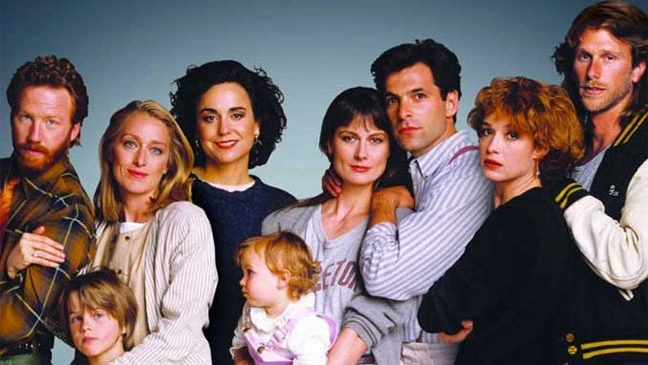
IFH 699: Writing for Spielberg & Creating the Cult Classic Tremors with S.S. Wilson

Right-click here to download the MP3

Alex Ferrari 1:34
Enjoy today's episode with guest host Dave Bullis.

Dave Bullis 1:39
Hey, Steve, thanks a lot for coming on the show, sir.

S.S Wilson 1:41
You're welcome. You're welcome.

Dave Bullis 1:44
So you know, Steve, just to get started, I wanted to ask, what got you went to the film industry? Was it? No. Did you like films growing up? Or is it just sort of one of those things where one day you found yourself, you know, sort of writing screenplays or on set somewhere? Well, as it tends to happen, right,

S.S Wilson 2:01
My story is a little different. I did love films, I was a huge film buff as a kid. And my dad supported that in the early on when I was I don't know, 10 or 11, he bought a eight millimeter camera. And I was one of those kids who made movies in the backyard and tried to do special effects with gunpowder and gasoline, which he also supported, interestingly enough. And then my dad, then, when I went off to college, actually changed my life. I went off to college and said, I don't know what I should do. I guess I'll be a psychologist, like my dad. That's what he was. And he came up after I'd been there a week or so he said, What are your courses? And I said, I was what I signed up for? And he said, Wow, this makes no sense. You've been making movies in the backyard for 10 years, that's going anywhere to my advisors. And he said, Do you have anything like film or movies or television and he changed my whole course schedule? This is absolutely true. And I had never thought about actually trying to do it for a living, even though I've been making movies for years and years doing stop motion animation. And then I never looked back I went Oh, well. Yeah, cuz then, you know, then there were people in the departments. We didn't have much of a film program at Penn State all those years ago. Like, tell it one television course and like to film courses, and you had to borrow cameras from the local PBS station, what not? But yeah, but that's how it happened. And then then I got drafted. Then I went to USC, film, graduate school. And, and there met a lot of the people that I still work with. And even though it took almost 10 years from graduating USC to actually break in and make short circuit, we were working in the film business making short films and little short animated things and films for schools and libraries, TV commercials and whatnot.

Dave Bullis 3:55
You know, it's funny, Steve, that your your dad was able to change your whole curriculum, because, you know, I actually used to work at a college and grades and all that stuff was so secretive. They actually fired a professor one time because he told a student's father when he got in the class as a as a final grade, before the kid with the kid did, and they actually just fire the professor on the spot because of it. Wow. Yeah. It's just that just it's funny, though. You know, it's funny how college has changed so much. But but, you know, you went to Penn State. And, you know, I've actually, you know, been up there. I actually attended a Penn State football game. I didn't go there for college. But you know, I've been there once

S.S Wilson 4:35
Dandilions.

Dave Bullis 4:37
Small world, right? Because you're out in LA now, right?

S.S Wilson 4:40
I'm actually I live in Arizona.

Dave Bullis 4:43
Oh, okay. You know, I actually have a few friends out there

S.S Wilson 4:46
I go to LA when as needed.

Dave Bullis 4:50
I see these, you know, just to ask this Penn State ever asked you to come back to me talk about screenwriting or directing or anything.

S.S Wilson 4:56
I've been bad i It's funny. Ironic timing. You know, occasionally send me alumni stuff. I've never let them even know what I do, I should do that. But no, they haven't, they haven't tracked me down, they have no idea, you know who I am or wearing, I was kind of an invisible student geeky guy, and I just went through and left.

Dave Bullis 5:19
I thought we did have some kind of alumni, you know, sort of Headhunter who kind of kept track of all this stuff.

S.S Wilson 5:26
You know, but I have, I've never responded to any of it. So I actually have it on my desk as we speak. So I should let them know, they probably would like to know.

Dave Bullis 5:36
Well, then you could just sit on this podcast instead, go back to this podcast, I'm talking to Dave. So you brought up short circuit, by the way, I watched that movie religiously as a kid, by the way. So I want to ask you know, about your whole writing style. I'm actually always fascinated by people's writing styles and their approach to their own art. So I wanted to ask you, Steve, how do you approach writing? You know, do you subscribe to any sort of methods? Do you do very long treatments first, or you just sort of jump right into writing?

S.S Wilson 6:08
Brent and I who have written practically everything together, at least certainly everything has been made. And we've been working since the days at USC, both in the short films, and then we wrote short circuit, which was our big break, we have a very, our approach is, is outline outline outline, we don't normally write a treatment for tremors we did only because we were trying to sell it and we couldn't sell it as a pitch for because when we couldn't, and that didn't have the treatment didn't sell either, by the way. But let me go back. So we outline in great detail. We are not comfortable until we know where the story is going. And we're very story oriented. Some people can start, you know, sort of with a character, they'll just say, oh, there's this character. And he's a drug addict. And he's got these problems. And I'm just going to think about what he does, because he's a drug addict. We can't do that. We got to know where we're going. So and we can't really get excited about something until we know we're doing even if it's a rewrite, which you know, you get offered quite a bit in Hollywood is pretty much all Hollywood does anymore. Even if it's a rewrite, we will sit down before we even say yes to a job, we'll say, Okay, we got to go through this movie, figuring out what we would change. Or maybe they're telling us what they want change. We got to be sure that we can make that work. And we got to know where it's going. Because your ending is, is so important in a movie, in our opinion. In fact, somebody well known, maybe one of the Zucker brothers said, your ending is 50% of your movie, somebody said that, we kind of believe that. So we got to know where we're going, what what the surprises are, where the twists and turns are. So long answer to that question is we outline like crazy. In fact, we used to drive studios crazy back in the day early on, when we were getting started. You used to get 12 Weeks was a normal time to write a script. And we would outline for eight. And they'd be calling us. So you're writing or you're writing well, now we're still outlining, like, Are you out of your mind? But then we would write it in, you know, four weeks because it was done.

Dave Bullis 8:19
So, you know, you mentioned tremors when you finally started outlining, you know, did was there ever sort of an impetus for that movie where you said, You know what, this is where we want to take it. So you know, you know what I mean? So we already know, you know what the monster is going to be? And we sort of know where the location is going to be. It's going to be imperfection. Is did that was that a part of it? Or did that sort of come in during the outlining phase?

S.S Wilson 8:42
Well, there again, we outlined it in great detail, worked on it with Ron Underwood, because the goal with tremors was to become producers. We were frustrated that everything we had written up till then we just covered naive that we writers that we were that writers aren't really welcome on this. Once you're done with this grip, they don't want to hear from you again. And we would go to movies and that we had written and go away. That's that's not what I would have done. And our agent told us look you guys want to produce then you want control. And to get that you're going to have to control the material from the get go. You can't be rewriting the studio's material, blah, blah, blah. So she said what do you have in your portfolio and your piles of notes. And we came up with, we came out of our piles of notes with we got this underground monster idea. And she said that's kind of cool. I've never heard of that before. And so first we sat down with Ron and we outlined the whole story figured out who the characters were where it was gonna go and then we pitched it all over town couldn't sell it. And then she said well that's maybe you should write A treatment room very detailed like 25 Page treatment did not sell send it to everybody. Socially Well, I guess you're gonna have to write it on spec. So in between, you know the regular Hollywood movies we were Writing. We were writing tremors on spec.

Alex Ferrari 10:03
We'll be right back after a word from our sponsor. And now back to the show.

S.S Wilson 10:13
And then took that over to us a huge, our agent was a huge part of getting this done. She was central we call her the mother of tremors. This is Nancy Roberts, later our partner in stampede entertainment. She hand picked, you know who this grip was gonna she did what an agent really is supposed to do. She handpicked to the script. If she knew the studio people, she told us in advance what they were going to say. You know, there were there were situations where, because of her relationships, there were certain times if she had a spec script, she couldn't not show it to certain people, because then they would be mad that they were shut out of the process. So she said, Okay, this is going to be weird. I have to send this to Disney. They are going to say we we hate this because it's got so much dust in it. They had dust and we're like what? Sure enough. That's exactly what came back. And all of this was a purse off the record, you know, under the wire. But I actually got off the phone. I think I was there at some point. No, no, she was on the phone to somebody Disney and they were passing in a very polite way. The world is not right for us at this time. And she said, come on. Eisner doesn't like dust. He was on the other end. But that's all really true. And then she hand picked Jim Jack's wonderful, wonderful executive classic old school executive. Who, who at Universal, who loved movies, loved all kinds of movies knew exactly what tremors was he saw exactly it's be movie monster movie routes. And she knew that Jim would get it and he would fight for it at Universal which is exactly what happened. And then she enlisted Galen hurt she was on a rock Galen hurtin because Gail and looked at our buddy wrongs, short movies, which is all he had, at the time, he had not done a feature when we did tremors. And the studio was like, wow, we're gonna hand off this movie to a guy who's only directed films for schools and libraries. And Gail looked at the movies upon as a filmmaker, don't worry about it. And then she shepherded us, especially at the beginning. Made sure we weren't going off the rails some way to get her in trouble as she was executive producer. She saw the dailies and said good is gonna work.

Dave Bullis 12:34
Yeah, you know, I really like tremors. I'm gonna say why Steve? Because, you know, first, it just seems everything happens naturally. You know what I mean? It's, you know, and I again, when you said you were you started with characters, you know, when you were working with the idea is because, you know, all those characters seem like they they're real people who live in that world. And they all seem, you know, and when they you know, when some of them finally die, for anyone listening, I'm not who hasn't seen it yet. I'm not going to spoil it. But when it was when they finally die, you know, you actually say, oh, my gosh, you know, there isn't a ton of guys, you know, that are just getting mauled, these are all the characters right here. So when they finally die, when not when some of them die. They go, Oh, my gosh, you know, that actually is impactful in the story. Thank you. So s escalating circumstances, you know what I mean? It's very easy to hear. Oh, well, my you know, you're very welcome. And, you know, and because when, when you see the world for the first time, you think that's the monster and then it becomes bigger, and you're always escalating that further and further and further. And it's always, you know, they they find a solution, the problem escalates, they find a solution to the problem escalates. I mean, that's just, it's phenomenal. And I don't know if you know who Red Letter Media is, but they actually are a popular online review group. And they actually gave it a you know, they actually have this one segment where they talk about movies they like, and they actually review tremors, and they they said, it's one of their favorite movies so great.

S.S Wilson 13:55
As always, to hear all of the things we're saying we worked very hard on, they were all very important to us. We my partner is not a big movie, monster fan. I saw them all up until the mid 70s Or so I saw everything. And I knew all the cliches we hang with. My partner is just all about character. And again, in both of us, it was very important that yes, the characters matter that they they seem that the plot things that happen seem to come naturally out of the situation. And end even though the monsters are consistent in what they do, you know, they don't change the rules. They don't suddenly become indestructible or anything like that.

Dave Bullis 14:39
And one other comment I want to give you too is the way that you constructed this was sound. Because you only mean like in the beginning when Earl and I forget Kevin Bacon's character. Oh, yeah. Oh, yeah. About Earl Val when they're looking for, you know, the doctor. There's, you know, they're not yelling his name. They're just sort of walking around and you can really, you know, they're hearing the planks walk, you hear the bucket kick, and you're you know, and then you know, Val says, We know, where's that music coming from? You know what I mean? And you know, and it just, it always asks for that sound. And then when you have Chang's drugstore, you have that, that that refrigerator that's always makes that noise. And then that causes, you know, further conflict. I mean, that's really, really good writing and using that audio for filmmaking.

S.S Wilson 15:24
Oh, yeah, sound was, well, we knew sound was gonna be critical. We were a low budget movie. And we that's why we, that's part of the reason we picked underground monster. That was one of the ideas that we decided to develop. We thought, oh, hell and underground, most of the time, we'll never see them. Heaven knows we had endless problems, even even though we in theory weren't seeing them. But we knew that sound was going to be critical. We had great sound people. And it was, you know, years ago, people have asked me, you know, what, what is the bass sound of a Graboid? I'm sadly I don't know. And I have lost track of the people who invented that sound.

Dave Bullis 16:01
You know, because for everyone that's seen the movie, you know, that that sound that they make, you know, and it's, you know, it just all ties in very well together and everyone I'm gonna link to tremors in the show notes to buy off Amazon or BestBuy? Because it's right. It's totally recommended watching. I remember seeing tremors years ago, Steve, and it just blew me away. But But see, and I didn't know what I was watching. Because I know now, you know, I've studied filmmakers, I've studied this when I go back. Now I can I can sort of go through with a surgeon's scalpel. And I can pick out all this stuff. Oh, this is why I found this so fascinating. You know what I mean? And this is why I found it so entertaining. And then I get to talk to the guy who wrote it and made it so. So now you could tell me how wrong I am. No, I'm just kidding. But no, no, it's just, you know, it's just it's a phenomenal film. And that's why I'm so glad you know that, you know, I got to see the franchise, you know, the me like tremors two times three. You know, I know you guys you did for as well. And you also did the TV series. And it was always great to see you know, this sort of franchise expand. And you know, because, you know, I always talk to you know, my friends I always say, you know, some franchises, you know, they they sort of go this way some go that way. You know, I mean, finally 13th Nightmare on Elm Street, but tremors always sort of kept it in perfection one way or another because it was always you know what I mean? There was always a sort of reason why that, you know, you know, like like tremors three, when it's called back to perfection, right. And that's where Melvin's creating that whole town. Right? And that leads into a whole TV series, but it's just stuff like that, you know what I mean? That's it's all comes organically

S.S Wilson 17:37
Yeah, it was very important to us to make the world consistent. And it wasn't easy. You know, we never expected even to do tremors to that came along years later. Only because of the success of VHS you know, tremors one was not a huge hit. I mean, you know, kind of big and review, viewed it as a flop and he absolutely disowned it for many, many years. And it wasn't a flop per se but it but it did not do nearly what the studio hoped it would do. And, and they were disappointed. And so we were floored. And we got this call from video department who said hey, what about tremors too? What about it? They said we want it? What? So and we all had to sit down because we were busy doing all kinds of other stuff at that point in our careers. And God, can we come up with a tremors too. And then you know, then we said, Well, alright, we cliche is there's a queen Graboid. And we all went okay, no way we're doing a queen grip. We're not going to do it. And what do we do instead of that? Then finally, I guess. I'm gonna say it was me. I think it was me. I was driving along in the desert as I often am. And I said, I wonder if they just turned into something small. How weird would that be? And then we ran with that idea.

Dave Bullis 18:50
Yeah, and I remember seeing that too, because that's when they were actually walking on land. I forget the name that that in the movie that that the character is given to a Shriekers That's right. Yeah. And then because it's the third that they're called as plasters. Right?

S.S Wilson 19:04
Well, that's the third incarnation that gave us that told us where to go with the third one we thought okay, well, they'll change into a third form. And then at the time again, it was really important to us to keep the characters consistent the rules consistent other than but but still come up with surprises. You still can't You can't just do the same thing over and over. So that's how we came up with the S blasters. And I in fact, the effects guys, Tom Woodruff and Alec Gillis of amalgamated dynamics are the ones who came up with as plasters because they were were just as invested in we were in protecting their monsters and making them consistent. And they have a wonderful design approach. It's very real world based in volumes and volumes of books about animals and creatures and skin textures. And they literally came in one day said, Hey, are you aware of the bombardier beetle? And we're like, No, we're not. They said that's a beetle that mixes chemicals in its butt and makes us sound like a firecracker.

Alex Ferrari 20:00
We'll be right back after a word from our sponsor. And now back to the show.

S.S Wilson 20:10
That's a real thing. Absolutely. We think that's what asked blasters should do it. We're like, we're totally on board with that. Something else I was gonna say Oh, yes. And then we got thrown occurred by Universal because they said okay tremors through definitely be the last one. There will definitely not be anymore we understand our market perfectly. And we know exactly how the DVD world works. And this is it. So we said okay, we'll wrap it up. That will be that's cool. We'll say that this was the last form that creatures take boom, the end goodbye perfection. And almost immediately was, well, we we did really much better than we thought we must have tremors for

Dave Bullis 20:52
Yeah, cuz I, you know, I actually sold tremors for. And I actually was kind of shocked because I thought, because I was like, Oh, well, I didn't know they made another one. And you know what? This is funny. Steve here, you know, as you can kind of tell I'm a movie buff. I didn't even know you did a TV series. I actually didn't know you did a TV series until last year?

S.S Wilson 21:11
Well, it's easy to do. I mean, there's so much material now. That's stuff that I don't know. I mean, the stuff that's being you know, I'm probably not even up on half of Netflix's shows and all this stuff. But anyway, I don't blame you.

Dave Bullis 21:25
Because, you know, I'm such a movie head. And I'm always, you know, looking for different stuff. And I said they did a terminus TV series before I said, Wow, I didn't notice that. So I actually I actually bought it offline. And I actually went through and I was like, oh, okay, so it sets up. It's, you know, it's three in the TV series. And then four is a prequel. Yeah. You know, I have to ask, you know, when you make these travel movies, Michael Gross. Seems like the coolest guy in the world. Is he? Is he the coolest guy in the world? Because I mean, he just seems like he would just be an awesome guy to hang out with.

S.S Wilson 21:57
Yes, he's just a wonderful, funny intellectual, not full of himself. actor. He's very. He's great on the set, you know, at understanding, you know, who has the scene, you know, he's not trying to steal other people's lines or anything. He's an actor's actor and and he's so he's become, you know, he became Bert. He took over Burke, you know, from us. And, and he would always on tremors, two and three and four, even though he wasn't playing Burt. He would, he would always come to the set with little pencil, delicately penciled lines in the script, and then he wouldn't sit down and then we'd sit down with us before we went he said, Okay, I got this idea for a change here and change here. And then we can go back and forth. It was well if you say that, then we won't know this. So you're right. Nevermind, nevermind. But a lot of times, you know, especially with a bird character, he's he defends the character. And any any loves it. I thought at some point, I thought he was gonna get tired of it. But I always like to tell this quick story of, you know, he was a huge television star when he did tremors one, he had just finished years and years on family ties, playing a guy who could not be more different from Bert. And they asked us to read him because he was a big television star. And they felt like that would help the movie. And we went read the Father on family ties. Okay, we'll do it because they want us to do it. Like blew us away. You know, he came in, because he's an actor. And he completely just ran tells us that he was actually jumping up on his desk at one point being showing how afraid he was of the monster underground. Anyway, then, some years later, Michael told me the story of walking down the street in New York and getting that look that fans get when they start to recognize you. And the guy who was walking toward him and he sees the look, he knows the fans gonna say it. And then the fan says you're that crazy gun guy. And Michael said, Yes, I finally escaped family ties.

Dave Bullis 24:07
I thought you're gonna say oh, yeah, I was the dental family ties, guy. Yeah, you know, it's funny because I introduced a friend of mine to tremors. And he actually goes, Wait a minute, that's a dad from family. And I said, Yes, he's with the Heaton family. And I'm sorry, Keaton. And I said, Yeah, you know, and he goes, Wow, he goes, this is a different role for him. And I said, Yeah, and I said he fits it like a glove. Because one of my favorite shots of the whole movie is where Reba McIntyre and Michael Gross are in their underground bunker, and the wall starts to shake, and they see the Graboid come through, and they start to fire those rifles, those bolt action rifles, and they're out of ammo very quickly, and the camera just pans over to the wall of guns. They literally just are pulling guns off the wall. And I mean, it's it's so again, oh, Organic characters, and that fits so well because I would actually be disappointed Steve, if they did not have a wall of guns.

S.S Wilson 25:06
Oh, that was a key moment in the movie. And it was great at the premieres. And at the test screenings, you know, the audience would, they would laugh through the next all the way through the next scene.

Dave Bullis 25:20
And, you know, it was, you know, a phenomenon tremors is definitely one of my favorite movies. And I think, you know, when I, when I go back to, you know, writing, writing my own stuff, you know, I always like to dissect movies, and I've, well, I've watched, you know, and I like to dissect movies that I've really liked. And, you know, and now because this podcasts get to talk to people who've written great stuff that I like, so you know, it's just, it's, you know, it's just great being able to talk to you, Steve, and, you know, finding out these little entrance anxious cities. I think I just butchered that word, by the way. But, but, but you know, and I want to ask you, though, Steve, you have such a great career, you know, you did short circuit Batteries not included, short circuit to tremors as we all just talked about. I did go, Stan, you know, is there any sort of writing advice you could give to anyone listening? Who's writing a screenplay right now?

S.S Wilson 26:07
Well, if you like our style, and that's step number one, if you liked the movies, we've done, then do what you're doing. First of all, analyze the Stuff You Like, that's a lot of, you know, pros, if we'll call ourselves that, would say that, because you won't be copying the stuff that you like, you'll be learning from it. You know, you obviously understand setups and payoffs, for example, it's a big thing for me in print. setting something up early in the movie having a payoff later in surprising way. Those are hard to do. It's hard to do those correctly. And without cheating. And a lot of times you see movies cheap. I feel a little at odds with kind of the current moviemaking steam giving anybody advice, because film after film, that has no plot and makes no sense is wildly successful. And I've begun to wonder, you know, I rail at this and I go, Oh, my day and blah, blah, blah. And yet, you know, at this is three years now I've been seeing this, I've started to think, well, the audience has really changed the I think the younger audience maybe does not care as much about what I think is important in storytelling. And they truly do enjoy these movies. You know, part of me says, well, they don't really enjoy them. It's just that's the only that's the only thing they you know, that's the only thing on this weekend. So they go I'm less than less sure of that. But anyway, I would say analyze the stuff you like, whatever it is, you know, if it's ordinary people analyze that. And, and write a lot, by the way, you'll hear this too from other people. Don't get hung up on your one script. Brett and I did this early on, we would write a script and go over and over and over and over. And then we looked at one of those early scripts. This is like four or five scripts before short circuit, you know? Well, it wasn't very good. And none of the versions we did prepare just wasn't very good. You got to you got to move on. Right, something, get it done. Say goodbye to it. Right, something else. If you're if you're a writer, you have plenty of ideas. And the worst worst case is you find out well maybe I don't like it. You know, you do four or five scripts. I don't like this, that's fine, too. But right a lot. Don't get hung up on one thing and you don't beat it to death. You know, push yourself to, to a degree you look outside your comfort zone. Although I do think that, you know, if you like emotional. What's the Julianne Moore pictures you just did? Where she was a lady with Alzheimer's? I can't think of I'm I can't remember the name of it. That's a very emotional picture that I would never try to run. Right. But maybe, you know, other people would they would say that's exactly the kind of movie I wanted to study those. And write a lot. I already said what I'm gonna say.

Dave Bullis 29:07
You know, that's great advice. You know, Steve, I, you know, just going through and analyzing your movies that you like, and why you like those. And like, for instance, I had Victor Miller on here. And Victor Miller wrote Friday the 13th part one, by the way, which also starred Kevin Bacon, by the way. Wow. Yes. Yes. Small world, right. So, you know, and we were talking about, you know, how do you, you know, how do you break it down? And Victor said, listen, he goes, I've been doing this for 30 years now, whatever. He said, I'm still always looking for different ways of writing and telling a story. He goes so. And he said to me that, you know, he's always looking for a different method, something to sort of crack the story, or another way to write.

Alex Ferrari 29:51
We'll be right back after a word from our sponsor. And now, back to the show.

Dave Bullis 30:00
And, you know, it's just, it's just very reassuring and uninsured at the same time to hear veterans like you and him. You know, just talk about screenwriting and always say, you know, that even with hits because tremor, you mean because again you have you've had tremors, you've had, you know, short circuit and you know even and he's, you know had Friday 13th part one, he's had a few Emmy award winning pieces. And it's still it's again, it's reassuring, and it's it's a little worrisome to hear that, you know, there's always they still don't have it all figured out. Oh, you I mean, oh, we even have to these hits

S.S Wilson 30:32
Every script. Yes, every script has its own life, that it takes on its own problems that it throws at you and you suddenly find yourself going. Why did I even like this idea? I feel so trapped now. And, you know, sometimes you're beating your head against the wall. But but you know, that's that's the great thing. It is a creative process. That yeah, they do. They do. Each one is different with Brett and I are doing one right now. As a matter of fact, that is that is very different than anything we've ever done. Ron challenged us. He said, You know what I would really like to do another low budget movie. Ron has begun television right now he's directed every TV show you've ever heard of. And he goes from show to show to show and he said you know, it'd be fun to do another low budget movie like we did tremors Why don't you guys write a sci fi movie with no special effects? And we went really wrong. And then we thought about we sat down. And so we actually have come up with an idea. We're about I don't know, halfway through the process. Now our anguishing process. It was really hard. I mean, we just you know, because we just, we just had to throw out idea after idea after idea until we came up with this idea. And I don't want to talk about but anyway, yes. Good. Good note. Yes. Good. Writers are always questioning what they're doing. And always, a lot of times, I think, calendaring quietly in their dark corners.

Dave Bullis 31:50
And you know, I'm not even a professional writer yet, Steven, but I often feel that way. View, I always feel like what the hell did I start? Yeah. But it's funny, I actually pitched an idea one time, and the producer hated it. Right? And he came back to me later on, and he goes, you know, what, go back. And this is late months later, and he was already working on something else. But he goes, you know, what, I was driving down the doubt down this, this interstate, and he goes, you know, and all of a sudden, they couldn't stop thinking about your script idea. And I started laughing to myself, and he goes, you know, is a lot better than I thought it was, like I said, see? It's always those rose colored glasses,

S.S Wilson 32:28
A rare producer. That's great.

Dave Bullis 32:30
Yeah. But but you know, Steve, you know, we've been talking for about 30 minutes now. And I just want to ask you, in closing, is there anything that you know, we we didn't get a chance to discuss that you wanted to? Or is there any sort of thing you want to say, sort of put a period in this whole conversation? Oh,

S.S Wilson 32:50
I'm writing novels. Now. I'd like to mention that to plug them. Among the other things I'm trying to do. But but as far as was anything else? Advice wise? I would say nothing springs to mind. I'm much better the questions.

Dave Bullis 33:14
We'll find you out online.

S.S Wilson 33:16
Oh, well, stampede. Entertainment maintains a website. No, and we always have hopes that we will sell something of our own and ramp up into production. Stampede belief in entertainment.com. And then I'm on Facebook, of course, as SS Wilson. And then the books are available at Amazon Tucker's monster Friday's free cats.

Dave Bullis 33:43
And I will link to all that in the show notes. Everyone. My pleasure.

S.S Wilson 33:47
Impressive list of podcasts by the way, there's like 150 of them or something.

Dave Bullis 33:55
Yeah, like 127 or eight? Now..

S.S Wilson 33:57
I overstated a little bit, but I was quite impressed. I went to your site. And I listened to a few things, of course, before I agreed to do this. And so I was impressed with your, with your polished approach.

Dave Bullis 34:09
Well, thank you. I've actually been proud of that. Because I had somebody, I won't say who but they came on and they said, Dave, thank you for not being that guy. And I said, What do you mean, they said, you know, they said, like, there's so many people have podcasts now. And they said, you know, there's sort of like in their mom's basement and they they get people on the podcast, and they can just like sort of like, be malicious. You know what I mean? And it's just like, Oh, so you made a movie? And I'm like, No, I would never be that guy. I hate people like because I actually Steve real quick. I was on a podcast with a friend of mine. And he asked me to be on his podcast. So I went to his house, which by the way, we went to his mom's basement to record this. And then he started going like, Oh, so you made a TV pilot and pitched it to NBC. Hmm. And I said, Yeah, what is that is that bad? And he's like, Well, I didn't do it. This is the podcast, by the way, and he's like, who couldn't remove me to watch a clip? I said, Oh, I said, Yeah, I was like, and, and honestly, Steve, I'm pretty good at thinking on my feet. So what I did was I started, you know, I was like, if I started insulting you right now, dude. I said, believe me, I said you would cut this all out. And then finally he started to like, ease up a little bit after we exchanged a little words, but But yeah, I never would would it would bring somebody on just to insult them. And I thank God that I've never had one bad podcast. I've never had anybody had bad feelings. Everything's always been great. So I'm proud of that

S.S Wilson 35:32
Good well, you should be that's that's good to hear. I'm forewarned. I haven't had that experience.

Dave Bullis 35:39
So I can put you Yeah, give you that warning. I'll be like the harbinger of hair of heart. You know what I mean? Like always warning you about things that are coming, kind of like old Fred and tremors. But he was he didn't tell them he just he's put his dead body showed them. Steve, I want to say thank you very much for coming on the podcast, sir. And please stay in touch with me anything. Let me My pleasure.

S.S Wilson 35:58
Thank you.

LINKS

  • S.S Wilson – IMDB

SPONSORS

  1. Bulletproof Script Coverage – Get Your Screenplay Read by Hollywood Professionals
  2. AudibleGet a Free Filmmaking or Screenwriting Audiobook
IFH 698: Writing the 90 Day Screenplay with Alan Watt

Right-click here to download the MP3

Alex Ferrari 0:32
I like to welcome the show Alan watt, man, thank you so much for being on the show, bro.

Alan Watts 3:53
Thanks for having me. Yeah, man, we're,

Alex Ferrari 3:55
we're hanging hanging in there in the quarantine, aren't we?

Alan Watts 3:59
Sure. Yeah. Four weeks in? Yeah, gone forever. Yeah, I

Alex Ferrari 4:04
don't know when it's gonna stop. But but at least you know, for writers they have now they have no excuses. They're locked in and they have to write.

Alan Watts 4:13
You know, in theory, that's true. And yeah, I talked to my writers and they're also freaked out. You know, we got to remember, we're also artists. And we're freaked out. We got to factor that in and know that that it's challenging. I get so many writers say I've got all day to write and I'm still struggling. So I think it's important to get your writing done before you watch the news.

Alex Ferrari 4:36
Without without question, so less Tiger King and more. Final Draft.

Alan Watts 4:44
That's right, yeah. Get up, take a leak, start writing. And then check your emails, watch the news, but get the writing done first, because that's when you're fresh. That's when your imagination is firing.

Alex Ferrari 4:57
Yes, absolutely. So before we get started, how did you Get your start in the business.

Alan Watts 5:03
Well, I started as a stand up comic in, in Canada. And I did comedy for a long time. And I moved to New York. And then some managers brought me out to Los Angeles many years ago. And, and then i i So standard was going well and and I wrote a novel, and it got to auction for a ridiculous amount of money and I didn't have to go on the road anymore. So I just focused my I'd always been writing screenplays. But that's when I really focus more on on novels and screenplays and, and then I started when I wasn't I wasn't going on the road anymore. I started la writers lab about 19 years ago,

Alex Ferrari 5:48
now. Wow. So it's been it's been around for within around for a minute.

Alan Watts 5:52
I started Yeah, I started teaching I my first. My first class was, somebody asked me to teach a screenwriting summer screenwriting class at UCLA in 98. And, and I loved it. I just loved it. And I started and I was always giving notes to to all my screenwriter friends. And then I just kind of opened the doors on La writers lab in a really small way in about 19 years ago.

Alex Ferrari 6:20
Very cool. And I and you wrote a book a really good best selling book called the 90 day screenplay. So I have to ask you the question, how do you how do you write an idea? Yes.

Alan Watts 6:30
Well, yeah, let's get into that. Yeah, I've got I wrote a by wrote the 90 day novel, and I need a screenplay, the 90 day rewrite. And, and, and so yeah, let's talk about it the 90 day screenplay is, is a process of writing a, a, it basically, the first month is outlining your screenplay. So we spend a full month allowing the outline to emerge. And then we spend the second month writing the first draft. And then we spend the last five or so weeks polishing, polishing first draft. Three sections.

Alex Ferrari 7:11
So that's the basic there. So let's break it. Let's get into the first part, the outline. I know a lot of a lot of filmmaker, a lot of filmmakers and a lot of screenwriters, they tend, I've heard this, this complaint, this objection is like I don't outline I just let the thing free flow, man, I'm an artist, I, I just gotta see, when inspiration hits me, I just kind of see where the story takes me, and where the characters are talking to me and all that stuff. And it to a certain extent, I get that. But I've always been an outliner. I love to hear your point of view on on the outline the importance of it, and why you believe it to be such an integral part of this process.

Alan Watts 7:48
Okay, I understand why people say that. And it's because screenwriting is so often taught by story analysts, or really screenwriters themselves, and so it's taught so so a lot of artists rightfully hear outlining or story structure as some kind of a formula. And it's not story structure is the DNA of your protagonist transformation. And so, what I'm teaching is a process of marrying the wildness of your imagination, to the rigor of story structure, but you have to be doing both concurrently. Okay. And so, oftentimes, story structure is taught as this formula. And so understandably, an artist is going to recoil at that idea. But there's a process of outlining that allows the wildness of your imagination to, to run free, so you're not you're not outlining isn't figure it's not a it's not a right, it's not a left brain process. You're not figuring out your story, like it's a math problem. That's not outlining. I don't know what that is. But that's, that's a guaranteed way to get stuck. Einstein says you can't solve a problem to the same level of consciousness that created the problem. In other words, he's talking about let me back up, the purpose of story is to reveal a transformation. And so what, so we can't figure our way out to a transformation, which is what Einstein is saying, Can't figure your way out to the solution to a problem. Every protagonist begins with a dramatic problem. They get this problem that that they think needs to be solved, but what they're going to discover over the course of the story, is that what they're actually struggling with is not a problem. For example, Jimmy Stewart wants to leave Bedford Falls, so you can have a wonderful life. He thinks his problem is how do I get out of bed for fault? What he discovers is he doesn't have a problem. He never had to leave Bedford Falls. What he discovers it, he's got a dilemma. And his dilemma is that as long as I believe that a wonderful Life lives outside of Bedford Falls, I'll forever be in bondage to my limited idea, as Einstein says of my problem. Does that make sense? It makes perfect sense. Okay. And so the reason, it's, you know, I want to ask people out there, have you ever written a screenplay that you did an outline? And you felt like it did everything that you wanted it to do? I think the answer is usually no. And I think also, sometimes we hear about those screenwriters that claim not to outline and we think, Well, Charlie Kaufman says he doesn't outline Woody Allen says he doesn't outline. But the truth is, these guys have been writing for years, and they have mastered their craft. And so they, um, while they may not be writing their outline down, I've talked to a number of writers about this, who are really successful. And they go, Well, I used to outline and but now outlining is second nature, or I have the outline in my head, but I don't write it down. So they don't call it outlining. But I think it's a real misnomer to suggest, especially to novice screenwriters that not outlining is going to give you a really satisfying story where the whole becomes greater than the sum of its parts, it's just not going to happen. But what's also not going to happen is if you go to some screenwriting class, where you're being taught by a story analyst who's teaching you some kind of formula, and and you're expected to adapt to their formula, that's not gonna work, either. And so what you've got to do is you got to find a process of marrying the wildness of your imagination, to the rigorous story structure. And that's what I'm teaching in the 90 days screenplay,

Alex Ferrari 11:49
is it so it's, it's the equivalent of me going, I'm going to go build a house. But I don't want a blueprint right now. I'm just going to start throwing up walls. And I could only see the four walls that I've put up right now. But I don't see it as a whole of the house that I'm trying to build. But if I would, but if I had that blueprint, the architectural blueprints, I'm like, Okay, I could put this house here. And I can decorate those walls wherever I want. I can put the window wherever I want. I can put the door wherever I want. But you still need to know where it's all going and how it's all going to work together to form the final house. That makes sense.

Alan Watts 12:20
Well, here's, here's the problem with that analogy. The problem with that analogy is it's it suggests that a screenplay is a house, but it's not a screenplay, the character, the protagonist, and the House are inextricably linked. So character is structure. And that's why people people hear that house analogy. I've heard it before. And they go, yeah, yeah. But so I don't know how to build the house. You're not supposed to know how to build the house. Einstein again says you can't solve the problem at the same level of consciousness of the creator of the room. So let me explain a little bit about what I'm teaching is that all these store all these books and story structure talking about the dramatic problem, but the truth is that your protagonist doesn't have a problem. They have a dilemma, and there's a difference. problems are solved. They're intellectual. Okay, they're intellectual. You can't solve the problem. At the same level of consciousness, the creative dilemmas are resolved through a shift in perception. What your protagonist has is a dilemma, not a problem. Jimmy Stewart and it's a wonderful life has a dilemma. The dilemma is there are two ingredients to a dilemma a powerful desire, I want to leave Bedford Falls and a false belief. A leaving Bedford Falls is what will give me a wonderful luck. Okay, two ingredients to a dilemma, a powerful desire and a false belief. When you understand when you when you connect to your protagonists dilemma, you're connecting to the source of your story. Okay, everything. What we really care about in your story is your theme. The plot is the vehicle that carries the theme. Okay, and so your theme is explored through this dilemma. I always say you know, you've got a story when what your protagonist wants is impossible to achieve based on their current approach or their current identity. Okay, Jimmy Stewart has to die to his old identity in order to be reborn. Okay, in other words, you can't have a transformation without their first being a surrender a dark night of the soul at the end of the second act. So,

Alex Ferrari 14:37
okay, okay. All right. So then, so you're talking about as you just said, Acts, there's a lot of miscommunication about what an actual story is the the three act structure, the five act structure, the seven extraction, there's so many different kinds of structures. Can you can you discuss some I mean, obviously, we all know the three act structure is like the big the one that Is but can you talk a little bit about those? Because I know that's confusing to a lot of people? Yes.

Alan Watts 15:03
Okay, well, when I hear five acts structure I'm hearing, I'm hearing like a one hour TV. And they break, they break it up into a teaser, typically in four acts or a teaser, and five acts. But those acts are those acts are, they've been designed for in order to have television commercials. So those are those aren't story acts, those are just acts that were created by studio executives so that they could sell advertising space. The three act structure is for feature films. And it's also it's for a story and and I, you know, the big thing you hear now, you you hear some of these, these, these these writers who sort of want to be progressive or, and then they talk about how this three act structure is, is sort of dead, or that the three act structure is only one kind of structure, however, and I my radar has been on this for years, they never tell you the other structures. Now I've ever heard them. There's other there's other structs there's there's three act structure is old, it's it's only for novices. I've heard so many of these, these writing gurus talk about this, but I have never heard them in a really sort of granular way about the other structures, because I'm dying to hear what they are.

Alex Ferrari 16:32
Well, so yes. Well, real quickly want to

Alan Watts 16:36
Okay, good. Well, the three act structure is is not a formula. And so when I hear people, when I hear the story, and I was talking about the three structures, not not the only other structure, they're not understanding that the three act structure can be distilled to three words, desire, surrender, transformation. That's the three act structure. Okay? Your protagonist wants something, the stakes are life and death. If I don't get blank, my life will be unimaginable. By the end of Act Two, your protagonist surrenders the meaning they made out of their goal, okay, the meaning they made out of their goal, not their goal, and they let go, and in letting go they reframe the relationship to their goal. And they accept the reality of their situation as opposed to the appearance of their situation. And that allows them in a third act to pursue what they need, as opposed to what they want. And that leads to a battle scene, which is an oftentimes an internal battle that may manifest itself externally. But it's a battle scene where they make a difficult choice between what they want and what they need. And that leads to the new equilibrium. You give me any screenplay that works, and I will show you that structure.

Alex Ferrari 17:49
What the So when you hear some of these Greek, the, you know, the old Greek plays and things like that, that force for x or 5x, or things like that, how is that different? And I mean, I've heard someone talk about Raiders of the Lost Ark having five acts as opposed to a three act.

Alan Watts 18:06
Okay, but what I'm talking about is the DNA I'm sure. So they can be broken up into four acts by Shakespeare a lot of his plays were five acts. But Romeo and Juliet, if you break it down, it's it's it's not typically it's not a three act play. But the story comes is is the most traditional three act structure. You know, Romeo, the inciting incident is Romeo su sees Juliet through the window. The opposing argument is Romeo discovers that Juliet is the enemy is his father's father, an enemy of his, of his, any of his of his father, the end of Act One, Romeo makes a decision that he can't go back on to profess his love to Juliet. And, but he's reluctant because he's afraid that her father will kill him. Okay. And then the dark night of the soul is that Romeo realizes that it's impossible to have Juliet based on his current approach. Okay. And so that leads to him accepting the reality of a situation which is that they are Doom lovers. That leads to the difficult choice where he, uh, you know, takes the care remember where the poison is? Remember the poison.

Alex Ferrari 19:27
I don't remember the name of the poison, but he took poison, he drinks the

Alan Watts 19:31
blanking on it, but he makes the difficult choice. He too, I want to I want to be with my love for eternity. And so he he kills himself.

Alex Ferrari 19:42
I mean, spoiler alert. I mean, come on.

Alan Watts 19:47
It's like it's, this is this is where people get into, they misunderstand the semantics, and they confuse they confuse the way a A script has been broken up into pieces with the DNA of the protagonist journey. So don't Yes, you can break, you can easily break up any screenplay into four parts, because Act Two is typically twice as long as act one and act three, you can call your screenplay for x, it's not going to change a word of your screenplay to call it for x, you break it up into 5x If you want. Got it,

Alex Ferrari 20:28
it's semantics. At the end of the day, it's still three points.

Alan Watts 20:33
If if, if one doesn't master a story structure, it's three act structure. If you don't master that, if you don't, then then you're really going to struggle with with writing a, you know, writing a compelling screenplay.

Alex Ferrari 20:51
So let's talk a little bit about character. Because character is something that when we see a bad when we see a bad guy, it's like, we don't know a good one, too. We see it and we don't know a bad one till we see it. It's hard to explain but, but like, you know, you watch some of these amazing characters like an Indiana Jones like, a Luke Skywalker like Darth Vader as a as a protagonist, or an antagonist. And you see these guys, but when you see some of these bad movies, you just like, oh, god, that's so blah. This guy has like, No, this or this girl has no that is like, what makes, in your opinion, a really good character, and how can we any tips on writing a more compelling character?

Alan Watts 21:33
Okay, first of all, we got to let go of this idea that character has to be likable, the character has to want something really bad. And that's going to make us care about them. If we understand the circumstance that they're in, there will be a we're gonna care about them. My first novel Diamond Dogs, the main character, the protagonist, accidentally killed somebody on the highway in the opening chapter in the second chapter. And I'm told people really care about him. It was a best seller, it's we're making it into a movie. Um, but the point is that the character isn't necessarily likable. But we understand his relationship with his father, we understand the circumstances that led him to this accident. And so hopefully, we care about him. So so what I want to say is, you've got to have a protagonist that wants something, the stakes have to be life and death. I don't mean literally life and death. I mean, I mean, if Jan Brady doesn't get a date with tad Hamilton, she will absolutely die. I have to get this or my life will be unimaginable. That's life and death. The character wants something, the stakes are high. And then at some point, the protagonist is going to let me let me walk you through, just like the really primitive, necessary stages in every protagonist journey, okay. And every three extra is that your protagonist is going to have there's going to be an inciting incident. Okay, something happens that sets the story in emotion. It's the moment where the audience collectively goes, Oh, this is what the story's about. Romeo sees Juliet through the window. Oh, this is what the story's about. And then, and then there's got to be a decision at the end of the first act. That decision needs to be coupled with reluctance. Why? Because the reluctance keeps us connected to the protagonist dilemma. Okay, dilemma is tension dilemma feels like I'm being pulled in two different directions at the same time. You can feel it, it's an experience. And so our protagonist makes it just the reluctance doesn't mean indifference. It doesn't mean I don't really want to do this. Well, the reluctance means that we understand what it will mean, if they don't do it. Okay. I've got to do this. In other words, you know, it Luke Skywalker. He gets on, you know, the the ship, but he looks back and there's his farm burning and his aunt and uncle are dying, okay. He's reluctant to leave. But he, what does he want? He wants to go and be a star fighter, right? So he's not reluctant to be a star fighter. He's reluctant to say goodbye to the status quo his whole life. Don't fuse reluctance within difference, otherwise, it's going to kill the aliveness of your screenplay. The next major really big point is the midpoint. A lot of screenwriters, I hear this word it drives me nuts because it's an intellectual word. They call it the reversal. If you try and figure out I can't figure out a reversal in the middle of in the middle of my story, but but think in terms of experiences. I teach story structure as an experiential model. A lot of teachers teach it as a conceptual model. But if you think in terms of experience, you're going to you're going to realize the character suggests plot. So your characters experience is going to lead to an event happening. So think in terms of the experience of temptation. In the middle of your screenplay, your protagonist is going to experience temptation. You know, gosh, I made some notes, and I gonna do this today. So I'm reverting back to some of the old. Uh, you know, in Rocky, everybody's seen the movie, Rocky. Rocky is offered to fight the heavyweight champion of the world. What does he that's the midpoint of the movie? Yeah, it

Alex Ferrari 25:38
is actually, right. Yeah. It's seven minutes. No, no, I'm good. No,

Alan Watts 25:45
he says, No. And Jurgen says, this is the chance of a lifetime. Don't pass it by, and then we cut to him on the screen with Apollo Creed. Then he says, yes. If he doesn't say no, there's no context for the Yes. It's a Wonderful Life. Jimmy Stewart has offered to work for Mr. Potter. Okay, if you're writing a screenplay, and you're, I always say our idea of our screenplay is never the whole story. It's not that it's incorrect. It's that it's incomplete. If you are writing your idea of a guy trying to leave Bedford Falls, it might never occur to you to have the devil Mr. Potter offer him a job. But what's happened is that he's become so successful with the savings and loan, that the devil does offer a job. So in other words, if you think in terms of your protagonist experiencing temptation, it might occur to you oh, what would what would tempt him? What if? What if the devil offered him a job. So this is this way of working is a way of moving you beyond your limited idea of your screenplay, and stretching your imagination, story structure. If you explore it as a as a, an experiential model, you're going to start to invest yourself into it, you're gonna have some skin in the game, you're not just going to be trying to figure it out from your prefrontal cortex.

Alex Ferrari 27:04
So with a protagonist, generally speaking, everything that you've said makes absolute sense that there's a transformation from the beginning to the end. But there's two characters that I that one specific kind of story that doesn't kind of fit the transformation because the main character doesn't change, which is the detective story, the detective story, or like the original James Bond stories, where James Bond is absolutely no transformation whatsoever, but everybody around him transforms and same thing for the detective story. How can you how does that work with the detective story?

Alan Watts 27:35
Okay, good. I'm glad you brought that up. So So in cautionary tales, for example, as in a cautionary tale, the transformation can be for the audience. So So in other words, the purpose of story is to reveal a transformation. The transformation doesn't necessarily have to be for the hero in a cautionary tale. It's not in a cautionary tale. They're led to this difficult choice between what they want and what they need, and they choose what they want. Okay, as Judas lays dying, he still sees the error of his ways. Okay, and so in, you know, think about, I'm remembering, I don't know why but Carlitos way, it's like, he dies at the, you know, as he's getting on the train, he's trying to get away, and he realizes it was too late. I was I was, you know, I got I got hung up with my ego. And so don't confuse transformation. With a happy ending. It's not necessarily transformation is simply is simply a shift in perception. It's seeing the situation in a new way. And so you think about Goodfellas you know, the transformation is, is when we realize that oh, look, crime doesn't pay in the theme always comes full circle. So, so it doesn't mean that it's always happy ending.

Alex Ferrari 29:00
Yeah, so like, if you look at like Sherlock Holmes, you know, like Sir Arthur Conan Doyle stories. I mean, there's they're so wonderfully written and Sherlock is obviously one of the greatest characters ever developed, or constructed. But Sherlock from the beginning of from any of his stories. He's T Sherlock. He rarely ever does change, and specifically James Bond, those early Sean Connery's and Roger Moore, they chat he was just the womanizing guy who does this. The only time that changes when Daniel Craig showed up, and that's when you gave, I felt that they gave such depth to him and then James Bond actually transformed and that's what made Cassina raw right out such an amazing Bond film. But those early there's only movies worked and they are those always move for what they were. So what would you like how would you say the transformation was in a Sherlock Holmes story or James Bond? Sorry,

Alan Watts 29:53
so and I haven't read Sherlock Holmes in years. What's his sidekicks name?

Alex Ferrari 29:59
A Holmes. Sherlock Holmes and Watson Watson Watson,

Alan Watts 30:03
Watson.

Alex Ferrari 30:06
We'll be right back after a word from our sponsor. And now back to the show.

Alan Watts 30:16
Okay, so So it's possible that Watson is the protagonist. In other words, Watson. In other words, Watson is he's not the protagonist, let me take that back. But Watson is the lens through which the audience sees the story. And so So, so Watson can be the one who has the transformation is that he can be the one who's sort of watching his shirt homes with admiration, perhaps confusion, of judgment, and then, by the end of the story, understand something because Sherlock Holmes is sort of the embodiment of wisdom. He's not going to change, he doesn't need to change because he's already like the god figure, right? But what needs to change is that we need to change we need to understand our impatience, our judgment, our leaping to assumptions, and that's the thing that gets changed. So so so Watson, is the lens through which we become transformed.

Alex Ferrari 31:27
Excellent, that was a great, great explanation of that. I've never actually I've posed that I've posed that question to many of my guests and you're the first one to kind of really lay it out in a very distinct way I'd never thought about Watson because he does Watson does change Watson is always the one that he's the emotional one he's the one that starts one way and ends another one but Sherlock never he's he's essentially the God he you know, he's Zeus. He is Superman. He does not change

Alan Watts 31:53
change in the you know, like the the archetype of the of God the you know, the mystery of the the the car the comic the low they

Alex Ferrari 32:07
don't change. Oh, yeah, no, they I was thinking Loki mischief but no, no, I know. You said the comic. Yeah.

Alan Watts 32:14
You know, the Trickster one for Forrest Gump. Oh, God, he did. Forrest Gump doesn't change. He's already he's already got the Wisdom. You know what change we are transformed as a result of understanding is his total acceptance of the world His compassion, his his love his open heart. We that's what we're aspiring to become. He's already there from the beginning.

Alex Ferrari 32:46
Yeah, Rain Man, it would be rain man would be the same way. Dustin Hoffman? Absolutely doesn't change but Tom Cruise does. And we as the audience look at it through Tom Cruise's eyes.

Alan Watts 32:56
Right. And Tom Cruise is the protagonist in that story. He's the one that that typically the protagonist is one that has the biggest change. Um, but that's why that's why I'm I'm wondering and I haven't read Sherlock Holmes since I was like 14 years old. Seeing the Robert Downey movies. Um, but the the a lot of a lot of times, there's the story where the main character isn't necessarily the protagonist, you know, think about Great Gatsby, where the story is told through the lens of Nick Caraway. Well, Nick, careful, you know, Gatsby, you know, dies in the end, but Gatsby doesn't really he doesn't he, it's a tragic story. But we're, we are changed through through the narrator's eyes, you know, we're, we're seeing the story through next eyes. And so sometimes there's, there's, there's some movies where it appears that the, the, the where we, it, you know, like ordinary people, the main character, could it could be argued that the main character is the Timothy Hutton character. But the protagonist is probably the Donald Sutherland character. He's the one that had whose eyes become opened by the end of the story. He's the one who says to his wife, I don't know we've been playing it in this marriage for 20 years. And then she leaves. Donald Sutherland is you can hang the structure on Donald Sutherlands Ark, desire to I want to bring my family together. And and he can't the more he tries to bring them together, the more Timothy and Mary Tyler Moore, become polarized leads to a dark night of the soul where he's sitting in the garage in his car. And he says to his wife, he starts to question his wife what the hell happened? The day we buried our son, All you cared about was the shirt I was wearing this shoes. And what's the matter, she freaks out on him and the lights start to go on. And he starts to realize that, that what he's wanted is to have a happy family. But he's failed to consider that he's a member of the family. And so that's when he starts to realize that until I consider myself I'm never going to have a happy family. I'm just going to be trying to control all the external forces.

Alex Ferrari 35:25
So in Shawshank which I consider one of the one of my favorite films of all time. Love it. You know, a lot of people think Andy do frames the main character, I argue that red is the main character. That's because Andy does does change, but he is who he is. i This is my own personal and I've talked about Shawshank at nauseum on the show, because it's one of my favorite scripts of all time. But yeah, and he does change because he's definitely different than when he walks in than he is when he walks out. But I don't know why I feel that his essence stays the same throughout the piece, but read read is the one that has this, I feel even more dramatic change. From his point of view from he was already there. He was he was a veteran when he when Andy walked in, and where he walks out at the end. I don't know, I'd love to hear your opinion on that.

Alan Watts 36:20
Well, you know, here's the thing is I don't, I don't, um, it's it takes, it takes me a while to sort of thoughtfully break down a script and analyze it. So I don't like to give sort of quick off the cuff. And I haven't done that with Shashank. And, and the way I work is it's, it's a, there's craft, but it's also it's instinctual. And so in other words, that what I'd rather address with this question, rather than sort of, do I think Andy or read is the protagonist? Is, is I love that you're bringing up this question? Because what we need to talk about with screenwriting, is the holistic approach to screenwriting. That, that, um, that, that I love, when we look at a script by Guy and go, You know what, it's possible that red is, so let's, let's, let's, let's break down this script. And let's see if we can hang it on, on, on red arc, what is the inciting incident? You know, why is this day like any? And, you know, I would I would submit that you might be right about that. The day that Andy comes into the prison, you know, you do we do have red narrating it and, and and that is the day unlike any other Okay, inciting incident. That's right around page 10 of that script, I think, why is this, like any other is the day that Andy comes into our lives, and forces us to start to find the beauty within and he's the one that plays the opera music, but read is the one who is allowing himself to be transformed by this external force. You've got you've got a great antagonist in that that old man on the ward and is so no, no, the old man who the little little guy who ends up getting out? Oh, yeah.

Alex Ferrari 38:24
Yeah, forgot it. Yeah, with a bird with a bird with a crow. I forgot his name.

Alan Watts 38:28
In other words, in other words, here's here's, I think, I think, personally, a more valuable conversation for what your free your question is, is I want to talk about how all of the characters in your screenplay, want the same thing at nature. Okay, they all want the same thing at nature. In other words, they all want freedom, right? And what does anyone they don't want to be free. But notice how all the characters constellated around this dilemma. Okay, another dilemma is a powerful desire, I want to be free freedom, and a false belief. And everybody's false belief is different. And that's what makes that so think about all the characters in Shawshank as archetypes. Okay, primal forces of this dramatic question. How can I be free? What we do get a guy who leaves the prison and then hangs himself? Because he's got a misperception of freedom. His idea of freedom is the familiar. I want I want things the way they are, he can't accept change. Okay, Andy is a guy who accepts change. This is what makes him so powerful is that he spends 20 years chipping away at a hole in his cell and putting a poster over it. Okay, and so he he is that's why the ending is so moving. Because it's the you know, the the filmmaker flips it, and we begin to understand what the movie has been about the whole time. Okay, that freedom comes from within, but we thought that freedom meant Escape the beginning of the story. So the story is isn't about will plot is will Andy escape or will read get out? Or Will anybody get out? But theme is about how do we reframe our relationship to freedom. Freedom of the beginning means escape. By the end of the story. Freedom means I must find it within Morgan Freeman says, You know what? I know you're never letting me out. Fine, but I'm not gonna I'm not gonna kiss your ass anymore. He finds freedom within. Hmm,

Alex Ferrari 40:31
yeah. And we could talk about Shawshank for another three hours. So let me ask you this. So the, how would you tackle because then the third part of your of your process? How do you tackle the dreaded rewrite? Because the rewrite is something that really does. It's where a lot of a lot of writers myself included get stuck. Because then you start nitpicking you start losing scope, you start getting into the weeds, all this kind of stuff. And what's your process on the rewrite? How do you approach it?

Alan Watts 41:07
Okay, well, I I'm going to answer that one second of the one, I want to back up for a second because I can't do the rewrite, unless I've done the first draft. Remember, I talked about earlier marrying the wildness of our imagination to the rigor of story structure. In other words, what I, you know, I want, I want my first draft to Oh, and I can't do that until I've, I've done an outline where I've because because the way I outline, the way I teach outline is very different than everybody else. Okay, the outline, I would say that everything that you imagined belongs in your story, if you can distill it to its nature, okay, so I don't want I, I, I really encourage, um, we've got to understand that human beings are contradictory creatures, we want adventure. But we also want security. We want love and connection, but we also want our individuality. And so what happens sometimes I see this all the time, particularly with screenwriters is that in wanting to be a good screenwriter, we start to employ logic and logic kills the aliveness of your story. There's nothing logical about Jimmy Stewart considering taking a job with Mr. Potter. Okay, you know, there's, there's, there's nothing logical about a guy who's wanting to be free his whole life. He gets out in the first day, he checks into a motel and hangs himself. Nothing logical about that. But there's something so true about it. And there's something primal about it. And so what the so in the first month of the 90 day screenplay, I keep bringing writers back to the primal, what is your protagonists want? What are the characters want? What do they all want? That is the same, that's primal. Okay, it's not intellectual. But it's, I want to be free. I want connection I want meaning I want purpose. I want justice, I want revenge. It's primal, the set, okay. And so once you get that, that outline where you feel like there is a primal drive, through your, for your protagonist through the story, you write your first draft, and you write it really, really messy. And you surprise yourself with all the crazy places these characters seem to go. That make no sense. Now you've got a rod document to work with in the rewrite. In the rewrite, the first thing we do, is we do a new outline. Okay, and so the new outline, you ask yourself two questions. First question is, Have I said everything I set out to say, and this is where you do an inventory, you go, alright. There's actually scenes that feel like they're missing or there's a there's stuff that I felt like I pulled back, I want to I want to just do now I just want to vomit this onto onto onto a random page. What is all the stuff that I that? I said, I'd say sometimes you've said it all. And the second question is, Have I said it in the most effective way? That question leads you to do a new outline, but the new outline is not a regurgitation of your first draft. And that's where a lot of people think, Oh, I've got it, I got to just tighten up the first draft. No, you need to be willing to pretend that the first draft doesn't exist. And you do a new outline, because now you, once you've written the first draft, you understand your characters in a way you could never have understood them otherwise, because you've gotten them to the end of your screenplay. So you got to get the first draft down fast. Don't rewrite half a screenplay you got once you get to the end, you're going to understand them. And then you're going to go back and do a new outline pretending you didn't write a first draft. And you're gonna start to ask yourself, now that I know more about this story than I ever did before. Let me pretend I didn't write it. And let me start to explore the most effective way to Tell the story. Let me let me, let me look at you know, when I, when I wrote the first draft, I thought I had two or three inciting incidents, let me start to explore what might be the inciting incident. Oh, I'm starting to see that it's When Morgan Freeman sees Andy do frame come in to the prison for the first time. Wow, I thought that ending was my protagonist, it might actually be read, I had no idea but because I'm holding it loosely and pretending I didn't write the screenplay, I'm actually open to that to considering that. And now my story story starts to take on a new shape. Because I'm not trying to make it conform to my idea of my first draft.

Alex Ferrari 45:39
That's, that's brilliant. I love that approach. I really do love that approach. On the rewrite, it's very, very cool. I mean, I thought look, I've talked to, I've talked to a lot of people about the craft. So I always love bringing new new guests on, because with different approaches, because you never know, when you're going to get the nugget that is going to gonna hit you personally, the right way you might be hearing from this guru, or that screenwriter or this process or that, that, you know, structure or whatever. And there's always that one thing. So the that's probably one of the better ways to rewrite I've ever heard on the show period. So it's very, very cool. Now, how do you deal with writer's block? That's a question I ask all the time. Because writer's block is this rough

Alan Watts 46:25
writer's block, okay, let me get to that I just want to address you just use the word guru. And some of my students want to call me their guru. And it is a request. But I want to say something, I want to say something to the screenwriters out there, because you got a lot of screenwriters watching this is that I see this all the time. And, and it costs writers years of really great dedicated work is the you are your own guru. And that, that I see writers all the time, they write a really great messy first draft. And then they give it to a friend, or a guru or whoever. And, and, and they get feedback on it. And the problem is that the feedback give you like, the primitive example would be, I really liked seeing three and four, but I don't like seeing two and nine. And so I I'm being you know, sort of facetious, but they get rid of seeing two and nine. And, and and you start to it's really subtle, but screenwriters writers tend to we want to write something that's really wonderful. And that works. And what happens is we start to abdicate authority over the thing that excited us at the beginning. You can do that at your peril. That thing that excites you that you might not yet be able to articulate is the thing that you've got to hold on to. And so you've got to be able to disseminate the notes that are valuable to the notes that are I especially with careers, other screenwriters always want to tell you how they would write your screenplay. That's fucking useless. Because it's not their screenplay. What if you don't have a stream? If you don't have somebody giving you notes? That is endlessly curious about what you're trying to express? They there they can be their help can be really counterproductive,

Alex Ferrari 48:26
damaging Yeah, without question damage. So how do you how do you deal with writer's block?

Alan Watts 48:36
I think writer's block is an absence of information. And so the way the This is why the first month of the 90 day screenplay is, I always tell writers that that we're not outlining for the first week, by the way, all we do is we imagine the world of the story. Okay, now, this is what three year olds, I got a seven year old. So you could you go to eight year old. This is what they do all day long. They just you tell me a story. They don't get writer's block. They just tell you a story. It might not make any sense to us. But there is there's a there's sort of like a super logic to it. You know, when they tell you a story that there's like, my son does it all day long. He tells me stories. And and and so what we need to do is, is writer's block is where we come to a place when we think we're supposed to know something, and then we start beating ourselves up for not knowing what we shouldn't be. We're not yet supposed to know. And so there's a process of going from the general to the specific, the most general is what's the thing that excites me. Oh, this is this is a story about a boy who meets a girl. Okay, I wonder how old they are. And I start to ask myself question, how old are they? Where do they live? What do they do for a living? Why? Are they attracted to each other? Um, what are their relationships with their family members? What's the what's the obstacle standing in the way of their love? And, and and that that's going to lead to every every question begets 50 more questions. That's what I call imagining the world of the story. I also give my students six writing exercises every day. These writing exercises are designed to connect to the primal forces in your characters. When you start to do that, by the end of 28 days, you've you know so much about these characters, and, and you are experiencing them in relationship to each other. But you're not trying to plant or graft a, a, an a plot on top of these people. Character and plot are inextricably linked. A plot it's only a character lives inside of a plot. You know, what makes screenplay so powerful is that nobody other than Andy do frame could have done what Andy did. His his his actions are in extract the plot that happens is inextricably linked to the character to who the character is.

Alex Ferrari 51:16
Right? Yeah, you can't make it. Yeah, of course, you can't throw Indiana Jones in a James Bond movie. You know, there you go. Which would which by the way, I would watch that movie, it'd be very interesting to watch. And I would like to throw in the I'd love to throw James Bond in an Indiana Jones movie. That would be that would be a very interesting movie. But generally speaking, in the is the catalyst for the adventures he goes on. Because you can't you know, it's time it's plays. It's who that character is. You can't you can't write. You can't write a Shawshank with Indiana Jones. Like, again, an interesting idea. But that's not who the core of that of that character is. Make sense.

Alan Watts 51:54
Exactly, exactly. And I think that on on some level, there, there is an I really think that it's a product of the way screenwriting is taught. It's just, it's so often taught by academics. And it's, you can't, just because you can deconstruct a masterpiece, doesn't mean you know, for your student, doesn't mean now the student ought to be able to write a masterpiece because they've seen that deconstruction, deconstruction is valuable. But I think what's more valuable, is understanding process. Because deconstructing somebody is going, here's the result. Here's the thing that was created, but it doesn't explore the process that created it.

Alex Ferrari 52:43
Fair enough. Now, I'm going to ask you a few quick questions I asked. All of my guests are. What are three screenplays that every screenwriter should

Alan Watts 52:51
read? Oh, man, that's Boy, that's a that's a great question three that everybody should read. Yeah. Well, a

Alex Ferrari 53:03
political change tomorrow. But but for for Right, yeah.

Alan Watts 53:06
Well, I want to just be a little bit. Here's the thing too, is, is that what you want to do is you want to if you write in a particular genre, you want to become a master of your genre. And so I just want to say that, that I don't want to I don't want to, again, I don't want to be like the guru. You should read these three screenplays. But what I would say is that if you write if you write romantic comedies, you might want to study When Harry Met Sally, if you write a you know, dramas, you might want to, you know, study, ordinary people or the Godfather, or Cuckoo's Nest, um, you know, so it's sort of like kind of the question you're asking me is, sir, right, you know, all right. I'm just gonna tell you that this three screenplays that I would recommend you read our Paddy Chayefsky keys network. Um, and then I would say that that was original screenplay, I would say, it's the same year within a year or two is cuckoos. Now, One Flew Over the Cuckoo's Nest, because that's a brilliant adaptation of a novel. And, and if you read that novel, and you read that screenplay, you'll you'll you'll see. You'll you'll see that these are two completely different animals. And it's a it's a great way of understanding how a screenwriter needs to think in order to tell a story visually, and, and then Tootsie I would say Tootsie because I think Tootsie is a masterpiece. It's the it's got it's got like five it's got five subplots that are so brilliantly interwoven. that, you know, when I read that screenplay, I, my jaw drops that that that I think it was Alvin Sargent that wrote that, and it's such a masterpiece. So I guess those would be my let him remember what I said.

Alex Ferrari 55:16
Now what? What advice would you give a screenwriter trying to break into the business today?

Alan Watts 55:22
Well, I would say that there's two businesses. There's Hollywood and then there's independent film. And so which is we talking about?

Alex Ferrari 55:28
Let's do independent film because Hollywood. It's interesting.

Alan Watts 55:33
Okay, yeah. Because because Hollywood is a completely different thing. And the thing is that if you break into indie film, and you really make your masterpiece, which is going to be very different than a studio picture, the irony is that the studio is going to want to hire you. You look at the great, like Ryan Johnson and Jeff, what's his name? Now that made mud and

Alex Ferrari 55:58
oh, yeah, that Yeah, well, yeah. What's his name to Kugler rank roller?

Alan Watts 56:05
Cool, brilliant, so many brilliant filmmakers who really pursued their vision. And, and then, of course, the studio, I mean, Spielberg's perfect example, for the studios come calling so so I love it. Let's talk about how do you break into indie film? Um, read the Duplass brothers book? Yeah, it's like, bro,

Alex Ferrari 56:31
it's great book.

Alan Watts 56:33
Oh, my God, it is so inspiring. Those guys are so brilliant. And and I can't give any better advice than what the Duplass brothers gave, which was they made it they basically make a movie on your I'm totally paraphrasing, but basically make a movie on your iPhone. Yeah, for three days, make a short film on your iPhone, and then make another one and it's going to suck. But you're going to start to find I think they call it the huge you Yeah, it's you're going to start to find your voice. You're in your passion. And and and then make make another one. And then and then make a feature for 1000 or $3,000. And, and keep it Yeah, I look at Joe Swanberg Mm hmm. The guy's brother keeps turning them out prolific and every, it just starts to improve. And so I guess that would be that would be my thing is don't wait for anybody. I just I just shot a I just I just directed a music video right before this. This thing and we did it for Brexit we, the artists, brilliant singer Abbey, Abbey Lyons. She did a she did a Kickstarter campaign raise the money and we went and shot it. And I'm thrilled with the way it turned out. But we didn't, you know, we didn't wait for a bunch of money to show up. So we could make a, you know, really perfect, but it looks it looks great. We had a great crew. But it didn't cost a lot of money.

Alex Ferrari 57:59
Good. Good. Now, can you tell us where people can find you and your work and tell us about the later the LA writers lab.

Alan Watts 58:08
So you can go to LA writers lab.com. And that's that's my website. And I'm teaching the 90 day screenplay June 10. And it's a donation based workshop. And I make a donation based so that everybody can if there's a minimum donation of 250 for a three month workshop, suggested donation is I think it says 650, something like that. But I do that because I want I want to make great instruction affordable for anybody who wants it. And yeah, that's it. I teach a bunch of workshops that teach you the 90 day novel, I teach rewrite workshops, the rewrite workshops are all completely full with a waiting list. But if you're interested, you can always get on the waiting list. And and I teach benefit workshops every month that are a minimum of $5 to join I donate the money to different charities each month. But I their craft workshops. So I'll teach a I've got one coming up. end of May. It's on my website and it's called unlock the story within. And basically it's everything we've been talking about. It's it's it's connecting to the story that lives within you, so that you're able to it's a great workshop to take before the 90 day screenplay. So that you begin to understand the DNA of the story that wants to be told. You know, rather than going oh, this is a story about Andy to frame I got I gotta make it my protagonist and they start to read these books and figure out some conceptual way to get them to a transformation, only to discover that the transformation belongs to read. You know, I just love that you gave that example.

Alex Ferrari 59:49
Alan, thank you so much for being on the show man. It's been an absolute pleasure talking to you and sharing your method and your ways and your use you with With with our audience massive thanks again for being and please stay safe out there. It's, it's rough.

Alan Watts 1:00:07
Thanks for having me.

IFH 697: Building a Filmmaking Brand on Youtube with Darious Britt

Right-click here to download the MP3

Alex Ferrari 0:16
Enjoy today's episode with guest host, Jason Buff.

Jason Buff 0:45
Today we're talking with Darious Britt aka D4Darious. Now Darius is one of these guys who has just taken over on YouTube and has a filmmaking channels that is really, really amazing tons of information. And one of the things we're going to be talking about in this episode is the concept of personal brand and branding yourself on YouTube and Facebook and the concept you know, it's not a new concept. Any anybody who knows Steven Spielberg, Martin Scorsese, Stanley Kubrick, all of these names that are always coming up in filmmaking classes. And whenever you're talking about filmmaking, you're always like, Oh, well, Kubrick and Hitchcock, and these guys, those people have a brand. And I know that it's not a popular way to think about it in the same way that you would say, Okay, well, Starbucks is a brand and Nike is a brand. But there's a difference between branding and marketing. And branding is really when your name has all these things represented with it, okay? When you think about Steven Spielberg, you think about certain things. When you think about Eli Roth, when you think about Stanley Kubrick, when you think about Hitchcock, they all represent something and their names would be at the very top of the posters. And there's a reason for that. And there's a reason why Spielberg's name is at the top of transformers, posters, and back to the future, and all these other things. Because that name means something when you say Spielberg, it means something to people. So what we need to do as filmmakers, is to pay attention to the connection we have with our audience, and to start making a personal connection with our fans and the people who you want your film to be for. And there's tons of people that have never done, they don't understand this concept. But the people that are really out there, the people that you remember, are the ones who make sure that their name is always front and center. And they're, you know, their image is out there. And people know who they are. They do interviews they do behind the scenes, and they get in front of the camera. I remember one of the first things the first time I ever thought about who the filmmakers were, we're seeing like Raiders of the Lost Art documentaries on PBS. And you would see Steven Spielberg doing interview after interview after interview and talking about filmmaking and talking about that, you know, he was out there before most of these people I think one of the first people to do it was probably like Hitchcock used to do you know, all the kinds of behind the scenes stuff. And Disney was also out there and they branded themselves and they created a connection with their audience. And if you really want to kind of go to the next level with your filmmaking, instead of focusing completely on your film, try to focus on building your own personal connection with your audience. Alright, here's my interview with Darius sprit quickly like to find out is, you know, when filmmaking kind of inspired you when you were you know, what, what films inspired you What was the thing that kind of made you want to get into filmmaking?

Darious Britt 0:45
That's kind of a strange story for me, but maybe not so strange. And maybe there's other stories that are better. But originally, I wanted to be a comic book artist for the longest time, and it just wasn't in the cards for me to be a good illustrator. I found out the hard way that I think to be competent, you need to have a certain level of photographic memory. So and I didn't have that. So long story short, at the age of 23. I realized I would never be able to achieve what I wanted in that medium. But I still had the itch to tell stories. So then I started looking elsewhere and thought of filmmaking. I was considering doing novel writing, but I'm not a writer like that so

Jason Buff 5:16
Can you draw though?

Darious Britt 5:18
No well after.

Jason Buff 5:20
I mean, literally, it usually it usually helps to be able to, you know, just draw,

Darious Britt 5:24
I put the pencil down. I thought I would regret it for so long because it was such a huge part of me. But as soon as I found filmmaking, I never looked back. I don't even really miss drawing at all. So what what that tells me is I really just needed to find the right medium to express is what it was. And I thought it was drawing and it wasn't that but we've always been kind of artistic. Yeah, I always had stories in my head. I think I mainly was attracted to illustration because of the control you there weren't as many factors that could ruin an idea you just had mainly a writer and an illustrator was filmmaking. You have so many moving pieces and parts so that's what attracted me to that. But But yeah, I found filmmaking in a film called possession was Sam Neill was the one that really launched me off into it. It's it's a transgressive film, but I think showed me It showed me something I had not seen before at that time. And that's what kind of woke me up to the possibilities of the median, generally with transgressive films, you can find a lots of they push the boundaries on, I guess, violence, and I don't know the best way to describe it, I'd have to Google it and give you the definition. So I don't misrepresent transgressive film, they're kind of the touchy or films, you could say Gaspar no makes a lot of transgressive films, they really push the boundaries on what's considered acceptable or what you can show in a film.

Jason Buff 6:47
Um, so what is your background where tell us a little bit about where you're, you know, I want to get into your YouTube channel, but how did you end up you know, what, what's Yeah, well, what's your a little bit of your biography, so we just kind of know a little bit about you.

Darious Britt 6:57
I can give you the abridged version of that when I was in the Air Force for four years as a jet mechanic got out, went to the University of Arizona for film, and while I was going to the university, I was writing a feature length script. As soon as I got out of film school a month out, I shot that feature length film called on sound fast forward a year later, test screenings later, reshoots later, a year and a half on the festival circuit later, and I am where I am right now. But I think the departure point between what really kind of pushed me on to the online space was when I was doing the festival circuit for my senior thesis film, seafood tester. In order to graduate you had to make a senior thesis film, I was doing the festival circuit in tandem with producing unsound, so I was shooting on sound while I was submitting seafood tester. And I started realizing that maybe the festivals weren't what I thought they were in terms of getting yourself out there, you know, all the Cinderella stories we hear with you know, Kevin Smith, Tarantino, the usual list. So I started realizing based off the reception of the short film, seafood tester that maybe my expectations were a little too high with regard to the marketing power and you know, getting into top tier festivals in particular. And sure enough, when I started touring on sound, I was right, like, you know, you got rejected from Sundance, it's the usual like, oh, man, I thought I would get in. So I started looking elsewhere. Right after the tail end of my short film seafood test, I started looking online for other ways to build a sense of community around my work, connect with other filmmakers connect with an audience. And then that's when I found YouTube. I started looking up other YouTubers. And I was like, You mean to tell me there's more than just people doing cat videos and like, they're garnering these huge, massive audiences? What? Like, why didn't anybody tell me I the word YouTube must have popped out of somebody's mouth, maybe one time in my entirety of film school. And it was like, oh, yeah, you can just throw your film on YouTube. That was it. Like there was no talk about the the entire world, the brand ability, what people are doing online, there was no talk about that at all. So yeah, it was a huge, huge departure for me. And as soon as I saw that, I was hooked. What years were you in film school?

Jason Buff 9:16
I graduated in 2012. And I so yeah, they should have been probably, you know, talking about that. I'm always amazed at how little people understand about getting online and putting your film online connecting with an audience just kind of it's the way things have kind of moved you know,

Darious Britt 9:31
You if you're not online as a creative you don't exist pretty much in my opinion, you don't exist, because it's so tough to reach it levels. The playing field is what it does. If you understand how to leverage micro content to to get yourself found and to build community to reach audiences, then you're stuck doing the old method, which is print media or PR, you know, and that all costs money, like uh, yeah.

Alex Ferrari 9:56
We'll be right back after a word from our sponsor. And now back to the show.

Darious Britt 10:05
So in my opinion, you really need to be online and not just be online, you need to understand how to use the tools to engage audiences and connect. So while I was on YouTube, I learned that a lot of it the hard way, the first six months, I was on YouTube, I was I was splashing around, I wasn't really I was treading water for the first six months, because I didn't understand how to create content that pulls audiences towards you, I was pushing myself on to people. So well, how do you mean pushing yourself on the beach? Well, for instance, certain things are going to get views and certain things are not. So if you make content tailored towards what people are looking for, you will be found, if you make content that no one is looking for, it's going to be a lot, it's going to be a lot tougher for you to get found. So in my case, I was making vlogs about my adventures on the film festival circuit and getting distribution. Now that seems like that would be a heavy hitting topic only you have to remember a large portion of the audience on YouTube is still fairly young, it's changing. Lots of older people are jumping into the pool now, but it's still fairly young. So I was making vlogs about things that most people aren't even on that level. Most people are on the how do I make a short film level? How do I like what is three point lighting, so I was not getting any kind of traction. So I needed to push myself. So for instance, I would go to I wouldn't recommend doing this anymore. But when I was starting, you know, I was very aggressive. So I'd go to a bigger YouTubers page, bigger filmmaking channels page, see one of their videos, and then I'll go down the comment section and personally message every person who commented on their video, hey, how you doing and I basically pitch myself started a new YouTube channel, I'm a filmmaker hitting the film festival circuit with the first feature length film, you can follow us to learn about the distribution process, what it's like to submit to film festivals, and I pitched the value of my channel to them. And that worked. It worked very well. I was getting like maybe 20 subscribers a day doing that. But at the same time, it was extremely time consuming, because I'm pushing myself onto people. So my, my amount of growth is limited to the number of people I directly contact. And I didn't just do that on YouTube, I did it on Facebook. So I joined like four or 500 filmmaking Facebook groups across the world that would look up every city and join find the Facebook group and join it. And then I would advertise my films or my vlogs. Whenever I had went out, I did it on Google Plus. And I was doing it so much that I started getting all kinds of problems on all the platforms like YouTube took my comments away for a year. Because I was like 300 messages spin like strict two hours, boom, just messaging, because I really wanted it, you know, so but then I began to realize, and I know, I'm kind of just going off here. So you can No, no, this is great. I began to realize that the the amount of time I was spending reaching people could be better spent generating more content. And I also realized that these bigger YouTubers, they're not doing what I'm doing in order to get where they got, they're growing organically. They're not having to personally message people. So then I reevaluated my content strategy and I started really studying their channels before I would see them and then okay making filmmaking stuff. Cool. I can do that. But I wasn't really seeing what they were doing. So then I started kind of reverse engineering their channels. Okay, well, what's what are the videos that are hitting the hardest on their channel? Oh, how to do this, how to do that how to do this. And then I'd start looking up search fields and see, okay, well, there's this one guy who only has 35 subscribers yet, he has a video on three point lighting that has 5000 views. So if this guy who has 35 subscribers, nobody knows who he is yet this one video has a ton of views that tells me that if you make a video on a topic like that you're guaranteed to give us anyway, just because people are looking for that. In the video, of course the guy made was not very good. So that tells me even more, it's like, okay, so instead of pushing myself on people, I need to I need to generate content that people are looking for. And sure enough, the first video I did using that strategy, the first video I did for you know, I think it was how to how to make a short film. That video in one day, got more views and did better than all my other videos did in a week without me even marketing it without me even pushing it just like boom, I was like, Oh, that was it, Darius prettier. So today we're covering five things that you can do to improve your filmmaking skills. So these aren't in any particular order. But number one will be taking acting classes. This is going to give you a sense of the acting process. And you're going to learn about the acting lingo. And these two tools are going to make you a much better communicator when it comes to talking with your actors and getting what you need out of them. Oftentimes, you're asking things for your actors, but you don't really know what it's like to be on the other side of the camera and what you're actually asking them so by being on the other side of the camera and performing yourself you'll thus know what it's like to be an actor and you'll this understand their predicament a little bit better, and it's gonna make you again, a much better communicator. This is a great way to meet new talent you'll meet and work with new actors that you might work with in the future and you guys will already have a working relationship and kind of understand how each other works. And number two watch Inside the Actors Studio The episodes aren't very long and it is a great resource to learn about acting, you can pretty much find all the episodes online for free and if you watched one video every day for a month, you would learn so much about acting I promise you if you're not comfortable directing actors now if you watch Inside the Actor's Studio every day one episode for a month by the end of that month, you feel like you can direct anybody and number three, watch your favorite films with the sound off by doing this this allows you to focus on just the visuals you'll be surprised at how much more you pick up with the sound off and you just watching the visuals everything feels different. Watch how they move the camera. How does it affect the narrative? How does it make you feel as an audience member? How does it affect the pacing of the story, watch five of your favorite films with the sound off at least twice and just really study the camera movements and I guarantee you you will learn a lot and number four shoot as often as possible. If you want to get better at directing actors. The best way to get better at directing actors is to direct actors grab a couple friends script out a scene and shoot it. Don't worry about lighting it don't worry about making it look pretty just focus on working with actors don't dump any resources into the scene studies just shoot them for free. You don't have to upload them anywhere. You just shoot it, work with the actors cut it up, learn your lessons, and then delete it if you want. You want to get better at working on your visual effects or foreign VFX test. Just practice, practice, practice. Stay prolific, stay busy, stay at it. And number five, watch a lot of movies. And I don't mean watch a lot of movies. I mean, watch a lot of movies, watch movies until you're sick of watching them and then watch some more on the face of it. It seems easy. But you'll be surprised at how quick because you get sick of watching movies after a certain point. The more you watch, the more familiar you'll be with storytelling. The more you'll see certain trends and cliches you'll see things done well things done not so well. But you'll have all of this experience to reflect on when you're making your own movies, thus making you a better filmmaker. And if you have any time after that actually break down the movies that you watch as in watch them repeatedly study the ones that you found were good, break them down and figure out why they're so good and study the ones that are bad, break them down and figure out why they're so bad. It's no coincidence that usually the best filmmakers tend to be cinephiles as in you know, Tarantino, Martin Scorsese, Steven Spielberg, they've seen so many movies that they have such an archival knowledge of films that they can't help but make better movies. So the moral of the story watch a crap ton of movies until you vomit and then watch more. And so I still didn't learn my lesson, though. So I did both. I was like, Okay, well, if I can make videos that people are finding organically and I still push, I could get double the double whammy, you know, and I did that for a little while. But then it just became very counterproductive, because I was getting more growth organically than I was pushing myself. And I was still getting messages from Facebook saying you're misusing the platform and all Yatta. So I just stopped. I'm telling like, they were shutting down on me, man. They were shutting down. So then I stopped doing all that stuff all together and just relied on making good content that people are looking for. And then you know, it's just kind of been history ever since now, it's like not worth my time to even really push any of my stuff out there. I just, I just create it. And you know, there's something to be said about when you take the time to understand the mechanics of search ability, and what people are looking for it can really, really make all of the difference. And I feel like that parallels a lot of what Hollywood is doing too. So now I'm not so upset about everybody, you know, groans about genre pictures, and you know, them exploiting licenses that are already huge brands, I completely understand why they do what they do. Because even on the online space, you're still beholding to supply and demand or you're not supplying demand, you still be holding to what people are looking for. Because I can make the best film on the planet, I can make the best video on the planet on YouTube. But if it's not, if it's not in that stream of what people are looking for, it's not going to get found, and it's not going to get shared as much but there are strategies to straddle the fence but just in my journey online, I definitely understand the importance of creating content that's essentially marketable and sellable. So

Jason Buff 19:06
So yeah, is there is there a way to do like a mailing list and stuff like that? Or is it just purely like getting subscribers? I do have a mailing list.

Darious Britt 19:14
I haven't put as much emphasis on that mailing list. I'm gonna be putting more on it when I release on sound but right now it's mainly using all the fish nets to you know, I've got the YouTube and then Instagram, Facebook, Twitter, Snapchat, those are my main main ways to communication at the moment. Tell me about

Jason Buff 19:33
Snapchat. I keep hearing about that. I know nothing about Snapchat, how is that a way to connect with people?

Darious Britt 19:39
First off, I think before I jump into the platforms, I think what's worth mentioning is the strategy behind them first because then you better understand their use. The way that I've used social media is, I am I am after building a strong brand. I don't just want people to know my name.

Alex Ferrari 20:00
We'll right back after a word from our sponsor. And now back to the show.

Darious Britt 20:09
I want to pull them in close to me, I want to build a relational connection with them. I want them to connect to me as a creative for me as a creative, not just my body of work. That's what I'm after. Basically, I would like to call following you know, I don't just want people who are like, oh, yeah, saw one film by that guy. I want you to be Oh, Darius. Yeah, I know him. That's what I'm after. I want that relational connection. And I think platforms like YouTube, or particular, YouTube is like the best for that extremely powerful, because you can engage your audience, you know, not only can you release the film, but you can answer the comments. So you can you can build that connection with people. And I think when you view the other social media platforms in that light, where it's about connecting, it's not about hey, it's not about it's not so much about self publicizing as it is connecting. And I think one of the biggest mistakes people I see people doing is all they do is push what they're doing on these platforms, they're not giving any kind of value, they're just pushing, hey, look at my short film, look at my feature film, you can buy it here, you can buy it there look at look at look at look, and they're not sharing anything they're not, they're not thinking of what can I give to someone else to make what they're doing better to empower them. So it's basically the givers gain principle, you need to give value to them, give them a reason to want to follow you, it can't just be about you, you know, you've got to, you've got to kind of empower others and give to others. So what I do on the other social media platforms is it's a way for me to connect to them off of just YouTube, and give different types of content to you know, share quotes, inspirational, things, I found inspirational. You know, literally any, anything that I think they would find valuable. That's what I do on those other platforms. And I do it on a consistent basis, because it's just like marketing, it's about impressions. You can't build a relationship with someone off of seeing them one time, like how well can you get to know a girl off of one date? Not very well, like you need to see them repeatedly. You know, it's about the number of times that you make contact with them. That's how you build a relationship with your audience. So even though, you know, take Instagram, for instance, even though yes, you you take a picture, you have a little caption, you know, they scroll through, they see a little picture and they like it, right. And that may seem like a very small thing. But when you multiply that over, say three months, if somebody has been following you on Instagram that really builds a connection there, especially if the content that you're sharing on Instagram is something they can find valuable or entertaining. So it's those impressions, that repeated contact that builds that trust that builds that relational connection. So now you're not just hobo filmmaker, but now you're Jason buff, you know, oh, yeah, I know him. I follow him on Instagram. Well, I like his pictures. Oh, he told me this one quote that I you know, I remember, you know, like, it's it. That's, that's the whole game givers game, building a connection, working on fostering that sense of community. That's the whole that's the whole point of those social media networks. I mean, outside of that you're wasting your time, really, In my opinion.

Jason Buff 23:19
Yeah, I totally agree with you. I mean, that one of the biggest things that I see are biggest mistakes I see is so many people just putting pure stuff like all about me, you know, look at my stuff. Can you can you do me this favor? Can you like my this or like my that, you know, and it really is true, what you're saying, you know, that you the thing it shouldn't be about giving to people, and that's what's going to attract you, that's what's gonna make people like your page or, you know, subscribe to you is that you're giving them what they want to have

Darious Britt 23:46
Exactly. It's about I think, you know, it's not, it's not unlike the older forms of marketing, you know, where it's like, Hey, I've got this PDF, you know, I'll give you a free ebook or whatever. If you join my mailing list. It's the same thing, just different and it's a little more engaging, like, you're still giving people things for free. And in return, they know your name. So it's givers gain, like when you boil it all down in order to survive in this climate now where everybody can do anything. As an artist, you have to have a brand, you have to have a strong brand, you know, you have to have brand awareness. And the best way to get that now is either you're creating content that has a massive following, like Scott McMullen, put it with the classic marketing. It's like if you want to be a leader jump in front of a parade, you know, you're either connecting to something that is already huge. You know, you're connecting into the zeitgeist or you're connecting into Star Wars or a brand that already has a huge following that is ravenous for content. You're either connecting into that or you're giving people what they're looking for in terms of empowerment, you know, people trying to learn filmmaking well. If you're the guy who shows them guess what? They know you. Oh, I feel On this video, oh, he's got a whole series, you know, like, now they know you. And even though that takes a lot of work to do that, I think the rewards are numerous. Like, they're, it's amazing. It's like once you start rolling this snowball, it starts rolling itself after a while. But that's not to say every artist needs to make How to videos, I'm just saying, as an artist, as an artist, you need to find a way to give value to people on a consistent basis, you can't just crank out a movie and then disappear for a while you need to find a platform, and you need to find a constant content strategy where you can leverage micro content, whether it's blogging, whether whatever, but you need to have something else where you can build your brand, while you're making your masterpieces, you know, because if you just wait till you make a movie, and then you collect emails, and you disappear for a while, we'll keep that three years that you're away, you're not growing, you're not building your brand, you're gone, you're off the grid, whereas the person like me, who's still creating micro content, still hitting the search engines with the content strategy, still still planting the seeds, you know, all the time? Well, the next time I make a movie, you know, it's gonna be that much easier, you know, so and that, that's another big thing, I think is artists just want to make what they want to make. But they they need to realize you're not just an artist, you're an entrepreneur, now, you can't just make your art you need to find a way to market yourself, you need to find a way to brand yourself. So yeah.

Jason Buff 26:28
That's great. I like I like that you quoted Scott, because he's a good friend of mine. What most filmmakers don't really understand this aspect of the filmmaking world, you know, marketing and, and a lot of the stuff that you just said, What was your kind of what brought you into that world? Did you like read any books that influenced you? Or was there was there something that like, got you into the marketing side of filmmaking,

Darious Britt 26:51
To be completely honest with you, desperation is what plunged me, because I have this huge movie that I have literally charged up all my credit cards for pulled out loans for I went into debt to make this film. And now when I'm on the first circuit, you know, and my expectations, were not what I set out to do, because I was still going off the old model that I learned in film school, you know, make a film, get on the First Circuit, you'll meet producers, you'll meet all this stuff, they'll help you make your next film and made a distributor to sell it. And the reality is, that's not what's happening out there. That is not what's happening. So you know, I got this golden egg on my back that I spent a lot of money on. And I can't just say, Oh, well, that didn't work out. So let me just go get it, you know, flip burgers, like that's not an option. At this point. I'm not paying this debt off for the next 2030 years, like so what really got me into it wasn't a book because I kind of found out about Gary Vaynerchuk, after I had already kind of codified my way of doing things. But it was just studying other YouTubers to be honest with you studying what works for them. And usually what works is giving content that people are looking for in engagement, the two biggest things because if you give people content, but you're not engaging them, you're not building a community that will evangelize what you do, you know, like building that relational connection. That's the second step. But that's kind of where I saw most of the patterns. It's like, okay, these videos did well. And not only that, this is what they're doing on their social media platforms. Oh, I can see why that works. Because I liked it when you know, when I go, Oh, that's cool. This is a cool, cool oh, this is you know, so then once you start thinking of it in those terms, then the ideas, everything makes sense, when you think of it as givers gain, you know, the more I give, give, give, give, at the end of the day, it all comes back to you, you know, people know you now, you don't have to work as hard for people to take interest in what you're doing. So, um, I think once I got that concept, everything else just kind of fell into place. Right? It's like duping somebody into being curious. It's literally about making a connection, a personal connection as personal as you can get it. I used to accept a lot of friends on my personal fan, Facebook page for a while I had to stop doing that though. I was trying it was all about how to bring people closer to you as a as a creative, but as a person to you know, like, yeah, if you asked me a question, I'll answer it. If you tweet me, I'll try my best to tweet back all my Facebook messages I answer and it gets tough because I'm getting comments and questions from all these platforms, Instagram, people, pm and you DMing you so it is definitely tough to do. And if you go through most of my YouTube videos, you'll see I answer a ton of comments. And a lot of YouTubers, some of them when they get bigger, they don't answer comments, you know, and it's like you're missing a huge component to branding right there. That's an opportunity to make someone who could have been just a passive viewer to make them that much more engaged. Like how would you feel if you tweeted Tom Cruise right now and he tweeted you back.

Alex Ferrari 29:57
We'll be right back after a word from our sponsor. And now back to the show.

Darious Britt 30:06
Or like, Who do you look up to? I'm sure there are a lot of people in the community that you will actually you probably get a hold of anybody that you are in the stratosphere, you know, like, yeah, Smith or something like that. Right? Yeah. Yeah.

Jason Buff 30:22
I mean, for me, like if I, if I ever talked to somebody like Spielberg, or you know, Scorsese, or those guys that would just like, you know, be the end for me.

Darious Britt 30:31
It's like, if you were to tweet Scorsese, and he tweeted you back, and then he even put the sign so that, you know, it was actually him and not his, you know, social media manager. Right? Like, what would that do to you be like, oh, man, well, he now you're not. It's like, that does something to people. That's like, wow, like he took the time to tweet me back. Now, obviously, somebody on his level that would, he couldn't do that all the time. But you get the idea, though, it's like, that kind of opens up another door, where you're not just this guy on this pillar off in the mountain somewhere and making masterpieces and poop and rainbows and unicorns. But now you're an actual person. Now, you know, like, I've actually contacted you, and you responded like that, in my that's what it's all about, in my opinion, you know, it's not just the word. It's the connection. So a flop, they still support what you because they support you as a creative like, oh, that last movie you did that wasn't the strongest. But I thought about, you know, like, feeling that last one. But if you've got a connection that goes beyond just your work, it's way easier to rebound from that, because they're looking at you as a person and not just oh, yeah, all you do is shell out products. You know, like

Jason Buff 31:43
Has, has YouTube changed, since you got involved with it, it always,

Darious Britt 31:46
It's always changing some ways for the better. I think, when I first got onto the platform, it was fairly turbulent for a lot of the older YouTubers who've been on the platform for a while not older, and age is older. And you know, that status, right? I'm used to the way YouTube has changed. I was around when they did the whole merger and the comments and everything got all wonky. And they tried to make everybody go through Google Plus to do anything on YouTube. So I was there right when they were doing all of that. So I think it has changed. But the mechanics of search ability and getting yourself found and generating an audience is the same. And I don't think that's going to change even though there are a lot of fish in this in the sea. Now, there are a lot of people doing some amazing things on YouTube. It's more than just cat videos, obviously, you've got short films that are rivaling the quality of Hollywood, you know, literally, but I think that there's still tons of room for people to get out there and cultivate an audience. Because to be honest, even though it seems like oh, man, there's so many people doing it. Now the once the secret's out, it's over. That's not necessarily the case. Because everybody when I joined, everybody was saying, oh, yeah, you know, YouTube, it's so saturated. Now, there's almost no point in jumping in because now you're competing against this person or that person, this person. But what I've found is yes, it is very saturated. But just like in the filmmaking community, where there are a, there's a glut of content, but not all of it is well thought out and executed. It's the same thing on YouTube, there is a glut of people starting up new channels, but there are so many people who are not really executing it, right, you know, they're not consistent. They're not they don't have a content, there's a lot of basics that are not being done that for someone who's really taking it seriously, and really studying the platform, they'll do fine. You know, even if you struggle for a little bit, but you're going to learn and you're going to figure it out and you'll do fine. You will get an audience your rate that you know, everybody is different. It depends on what you're doing. If you're doing basket weaving, then yeah, it's gonna be a very slow jog for you, you know, but but in small niche markets, you don't need to be a big fish as well. So that's the other caveat. I have a friend in the aquarium community on YouTube. I've learned a lot from him. He only had up to 10,000 subscribers, but he was a huge fish in the aquarium community. I mean, he sponsors, he was getting flown out places. Oh, yeah, he was killing it. He was killing it. So So for people who take the time to really learn how to present themselves online, and how to build a connection and understand branding, understand concepts like givers gain, there's plenty of room to jump in. The water's fine.

Jason Buff 34:26
You know, what I find interesting is that there have been a lot of videos that I really liked about topics, filmmaking topics that you know, I wanted to know more about, like something very few people go into is are things like budgets and funding and, and I actually found a couple of videos that I liked, and I was watching and I was like, oh, man, this is a great series, and then all of a sudden, they just stopped and it was like they quit putting up videos or I guess maybe they decided that it wasn't like working out the way they wanted it to. And it seems like so many people and it's the same thing with podcasting. A lot of people just give up like right before they kind of break acre they start getting followers, do you see that a lot?

Darious Britt 35:02
You know, the harsh reality of it is you do what you got to do until you can do what you want to do. And that applies to that very, very much applies to the online space. Because basically, I could have been the guy that you saw who made that budgeting video. And then he stopped had I not delved into the platform. Basically, if I just gave up, that would have been me too. Because when I first started, I was very aggressive. But I was also treading water to a large extent the growth was not organic. And that guy who you saw, I assume he probably made videos, but he wasn't doing what I was doing on other platforms. So his growth was probably twice as frustrating. It's like, Man, I'm in this great value, but it's like, man, it's like snails, you hear crickets, you know, I give maybe a view every other day, like what's going on, you know, the problem then becomes, you got two choices, you know, there's a fork in that road, you can either keep doing what you're doing and say, Okay, well, I'm gonna produce the content I want to make, and I just have to change my expectations. So I know that this isn't a heavy hitting topic as a Star Wars fan film, but I get gratification out of doing it. And if 200 people see it, I'm happy with that. Or you can say, well, if I change my content strategy, I can still do what I want to do, I just may have to take a roundabout way of doing it. So for that guy, I would say yes, if you're making film, you know videos about budgeting, you can still do that. But maybe what you should do is mix up your strategy so that you can incorporate videos that people are searching for first, and then do the budget videos once you've tapped into the stream, because now you've got a few billboard videos out there that gets you found. And then once they find you, then they find something else that they didn't even know that they want it. Because they wouldn't have been looking at up in the first place. If they don't even know what's out there one, and then there's a lot of people who aren't even necessarily at that level yet where they would be looking at up. But when they find your channel off of something they are looking for, then they can, you know, kind of be directed into other areas that they weren't looking for, you know, so for that guy, that's what I would say. And actually, for a lot of people, that's what I would say you have to sometimes you have to do the things you have to do in order to do the things you want to do. Like there's always there's always that every job is like that every job has that even filmmaking, I think, you know, there's what you want to do straight up. And then there's the things you need to do to make it sustainable. You know, and as as creatives we all want to grow, that's all part of our plan. We don't just want to make stuff we want to grow as well. We want people to see what we make. So when you realize and you be when you're honest with yourself, and you're like, yes, I want to do this, but I also want viewership, then you need to change your strategy to incorporate content that is going to bring you that viewership as well as the content that you just want to make.

Jason Buff 37:55
How about in terms just in terms of monetizing YouTube? Is there do you recommend that at all, it seems like you have to have like a billion views before you ever even like make anything from that.

Darious Britt 38:06
It's true. Like, generally speaking, if you get around a million views, that roughly translates to about $2,000. So for somebody who's making about two grand a month, they gotta be pulling in, you know, over a million views a month. But I have found that YouTube is a lot like filmmaking, and that in order to monetize what you do, it's much smarter to use your channel as a, an advertisement for something else that you sell directly, which is, you know, that's something I'm still working on. I've been in a brand building phase for so long, but I'm starting to branch off into monetizing more like all my videos are monetized and I do make some I can't really disclose what it is, but it's not nothing to write home about. Me, like I already do, the million views is roughly what that equates to. And right now I'm only getting I think 50,000 views not, you know, to look at my metrics here, let me pull it up about the views that I get per month. So you can probably do the math, I think, you know, again, you're falling into the creative entrepreneurship, if you just like filmmaking, if you look at if you look at YouTube, just like filmmaking, it there's a direct parallel filmmakers, you make the film, you do the creative side, and then you go and you look for somebody to hand the keys to, hey, I got the car, here's the keys, you know, take it, gas it up, get it polished, do everything, get it, make it nice, get it found, take it to a car show, that's exactly what the old model of filmmaking was. Whereas the new model now that's cropping up, which is Creative Entrepreneurship, you make the movie but you also handle how to monetize it, which goes beyond just selling the movie you get into exploiting the license, you know, like shirts or other additional merchandise or video downloads of things that orbit around your film but aren't exactly your film. I

Alex Ferrari 40:01
We'll be right back after a word from our sponsor. And now back to the show.

Darious Britt 40:10
Or consulting or offering packages where you know, for $1,000, you can, you know, talk to the cast, and you know, those are things that you can monetize far easier. And it will take you way further than literally just selling your film, or worse yet, handing the keys over to a distributor who's probably, I mean, there's so many pitfalls with that I'm sure you've kind of talked about that one in depth. Well, YouTube is the same way. If you literally make videos and you try to just live off of AdSense. You need to really be pulling in serious volume to make that model work for you. And most people don't reach that level. But if you take a creative entrepreneurship approach where you do not rely on just being the creative and letting a company make change off what you're doing, but you say, how can I monetize what I'm doing on my own? What can I sell, you know, whether it be an e book or whatever, what can I generate, where I can sell directly to my audience that I've cultivated, that'll take you way further, and it like, it's a direct parallel, that I've seen anyway, it's like, wow, man, it's just like YouTube, a lot of the YouTube channels, I follow that talk about the game of YouTube and the craft of it and understanding the industry and how to monetize how to make a living off of it. On platform as well as off platform, it's the exact same thing. They're all talking about ways to generate passive income and revenue. By doing something to sell to your audience, at different price points, the exact same thing. Some of them, I mean, some of them are making a killing, like six figures, and they're not huge YouTube names at all. And then there are some YouTubers who are you know, they have crazy viewership. But you'd be surprised that what they're actually making, they're still living home with mom and dad, you know, what I mean? Like, so it's all the way you look at it. Like, if you take an entrepreneurial approach, you can make a lot of money. But if you just want to be a creative, and you want to hand the keys to somebody else, then you're always going to be stuck. Wondering why man, it's like, I can't seem to make anything. It's like everybody else makes money. But me, you know, it's the exact same thing. You know, you got to take control of that.

Jason Buff 42:23
Does Google Plus have any is that kind of died out? Or is that like, even a factor anymore?

Darious Britt 42:31
I think Google has backed off of pushing that on to everyone. So it's not as it's not as big of a thing as when they tried to force it down, everybody. It's still around. But I honestly, personally, I don't put a lot of juice into Google. In terms of, you know how I mark it, right? Let's put it this way. When I release a video, I put it everywhere. I don't think about Google Plus. You know, and I used to go to the groups and Google Plus and all of that. But I just noticed I wasn't getting very much bite there at all. And they have a lot of, you know, I'm not gonna say it's not worth anyone's time just saying to me, in my experience, I haven't gotten as much mileage out of it as I would have expected or liked. You know, and then you have these other platforms that are, you know, chillin, essentially. So I just didn't find it worth worth it to me to maybe later on when they you know, get the ducks in a row. You know, I'll go back to it. Yeah. But right now, it's, it's not there yet. To me. And even I consider doing Google Hangouts as a way to connect with fans more, but I think that's probably sooner do Periscope, to be honest with you. So

Jason Buff 43:52
It'd be done much with Periscope.

Darious Britt 43:54
I haven't yet. I've been looking into it. I just got I just got on to Snapchat game. Like, you know, I was like, getting a Snapchat. I mean, it's the biggest platform out there right now.

Jason Buff 44:05
I don't even I don't even I mean, this is sad, but I don't even know what it is. Thanks. What is it?

Darious Britt 44:10
And they were like, No, we're good. We're good on that. So it's a if you think of Snapchat as so basically, you you can take pictures and video, but it has a shelf life, it only lasts for like 24 hours. So it's kind of the anti Instagram, Facebook, Twitter in that everything is effervescent. So what ends up happening is you can make these things called stories where I say if you take 24 pictures throughout your day, right now, each one of those 24 pictures will kind of get put together and you can watch it like a story and you can put little texts over it. And the interface is such that it's a very ragtag, you know, it's not polished like Facebook or Instagram. It's very kind of messy. So the type of content that people put on there is is also messy, like I find, like, certain things you'd put on Instagram or like well composed pictures. What you'd put on Snapchat, are pretty much all the pictures that you wouldn't put on Instagram. Because it's just like, oh, literally, this is what I'm doing right now, boom, snap it out, do a little text, boom, it's out there. It's not, it's not gonna last longer than 24 hours. So it allows you to just generate content without the pressure of trying to make it anything because it's literally just about the moment. And I think that's why it's so powerful. And it's hard to understand until you're actually in it because for me, I didn't get it either. I was like, I don't understand. I just don't get it. Like, why would I want to put stock into something where it only lasts 24 hours. So you just have this naked profile up there unless you put something up. But outside of that, it's just it's nothing like, I don't get it. But once I got into I was like, Oh, wow, this is the greatest thing ever. It's like, I can literally just take pictures of anything. I'm in the moment. And it's, I don't have to be held to some kind of quality check, you know, filmmaker, what's up with that picture? It's not about that at all. It's literally just about connecting in the moment.

Jason Buff 46:12
And is it anything like Vine at all?

Darious Britt 46:15
Vine is vine is different. I put vine more in the YouTube category. Where you've got you know, you I don't have a Vine account. I think buying works way better with humor? Which Yeah,

Jason Buff 46:28
You don't see a lot of people doing like bummer vines.

Darious Britt 46:32
Or like, maybe some people do, infotainment. But I've seen everybody who's flourishing on Vine. It's all humor based. So I haven't had a particular reason to migrate to bind for that reason. Mine's more infotainment. So it's like, I'll pass on the vine.

Jason Buff 46:48
It's kind of hard to teach a class and whatever it is like, what five seconds?

Darious Britt 46:52
Oh, yeah. I think that the thing I would tell any, any filmmaker now, or any creative really, to be honest with you, any creative is to my platform is YouTube. But you know, it doesn't have to be YouTube, it can be blogging, but I would tell anyone, your biggest challenge right now isn't your movie, or your painting, your biggest challenge is marketing and branding. Like ever since I got out of film school, what I learned the most, the Hard Knocks school I learned was marketing. That was the mammoth that I feel like I spent all of my time doing. I mean, if I could equate the amount of time I spend with my film versus YouTube. Now, it's like the polar opposite, I spend way more time studying the platform of YouTube. So I would tell any filmmaker, your film was great. You know, maybe you're writing a script right now, that's awesome. But what you should really be doing while you're in film school, is starting up a YouTube account, or a blog, and studying more important than starting that account up studying other successful bloggers and YouTubers, and really breaking down why they are where they are looking at their my YouTube stories and their growth, studying the numbers. Learning the platform, because it takes time to learn the platform, like I can give you five tips on how to grow your channel, but that's not gonna get you anywhere, unless you invest the time to really figure out how it works for you and what you're trying to do on it. You see what I'm saying? So I would tell anybody, like get online and start building your audience now right now, so that by the time you need that audience, they're there. Like, I know, a 17 year old you he might be 18 right now. 80,080? Actually, I think he's at 88,000. He hasn't even been to film school yet. He when he started, he was 15. You know, but so and he, what he's doing is he's learning filmmaking as, as he learns it, because obviously, I mean, he's a young, he's a young chap, you know, so it doesn't get a feature. He hasn't he made a short Yeah, I think he you know, he pretty much made his, you know, childhood, you know, videos, but nothing put together yet, you know, so but what he's doing is he's just taking what he's learning. And he's just repackaging it and making compelling online videos, sharing what he's learning. And you're like, well, he's only 18. How much would you know? Okay, well, yes, he's 18. He doesn't know that much. But think of how many people are out there who are interested in filmmaking who don't know what he knows. They're all going to follow him. So, yeah, you can know 10 times what he does, but you're not online. You're not. You're not leveraging that content right now. He is, you know, and there's a couple of things I've seen where, you know, he may have tripped up on certain facts or whatever, but it's like, doesn't matter. Doesn't matter like he can later when he learns later. Right? But he'll be twice as big by the time he learned, you know, it's like it's all about being out there and doing it.

Alex Ferrari 50:01
We'll be right back after a word from our sponsor. And now back to the show.

Darious Britt 50:10
And the difference with him is even though he doesn't know it all, but he started young enough where he was learning the platform, he was learning what makes a compelling video how to keep it short and sweet. He was learning seeing what other YouTubers were doing. So he just got better and better and better and better. And that's, I mean, you can't get better if you're not doing it, right. So that's what I would tell anybody right now you need to start now not only for your craftsmanship, but also just learning these platforms. So you know, so it'll be there, you know, the audience will be there. And not to mention, there is so much power in knowing the mechanics of branding and marketing and how to build a community, yourself. So you can build it into a part of a lifestyle, like what I'm doing is a lifestyle. This is not just okay, I got a I got a movie coming out. So I need to like build a channel, I need to do this to get some followers know, after this movie is done, I will still be doing it while I'm writing the next movie, I will still be doing it. When I'm shooting the next movie, I will still be it's a lifestyle. So in the sooner you indoctrinate yourself into that concept and realize the power of it. And you learn how to work economically in that space, hey, when I do this, I cut 30 minutes off my production time, hey, when I do this, I cut this much time and I streamline my process. And now I know how to use Twitter. And I know how to, you know kind of log my tweets and all ahead of time. So when I need to tweet something, I have a log of it. I'm not sitting there searching the web looking for tweetable stuff, you know. So when you learn how to economize your time and become effective. The sky is the limit. It's literally the limit. I mean, it's a well oiled machine. Because you're you're always marketing at that point, you're always marketing, you're always building your brand at that point. Right. So So I would tell them, you know, learn as soon as you can start doing it now, right now, because there's a 15 year old. You started 15,

Jason Buff 52:07
He's coming for you.

Darious Britt 52:09
For he's 21. He's going to be good. Like way good. They'll probably be 700,000 maybe close to a million subscribers, maybe more. By the time he's 21 he probably would not have even shot a feature yet. He doesn't really need to go to film school or anything. He people need festivals like, like, yeah, so it's like, there's no reason why you know, you don't have to be the guru, you don't have to be an authority in what you are, you can be somebody learning, all you need to know is just how to create good content, as you're learning it. And you can be honest with people, he's completely honest, I'm just learning as I'm gone, I'm sharing it and you don't have to, you don't have to put on a front, like, you know, everything people will see right through that, you know, they'll see right through that. But the idea is if you're the ones sharing the knowledge, even if you're just learning it, but if you're the one doing it, they'll follow you. Right. So

Jason Buff 53:08
Yeah, that's definitely I mean, you've talked about so many important topics just in that, you know, last thing. You know, it is important that, you know, people choose who they want to learn from. So they're going to come back to you over and over again, it's like, there might be a million different videos about what cameras to choose, but they want to learn from that person. They want to see what their perspective is because they kind of develop that relationship. And that's, that's a huge thing, you know, so it's not even about being the biggest expert. You know, it's about saying, Oh, well, I'm just like you and I can, you know, this is what I've found, you know, I've done some investigation or whatever. And these are the things that I like, and this is what I've learned, you know, Oh, yeah.

Darious Britt 53:49
And then building that, that second component, you know, working on that relational connection as well. Because all of those numbers, they're people. It's not some, you know, click by pool, you know, what I mean? It's like, if you want somebody to invest in you as a creative and, and you want them to care about what you're doing well, how about you care about them first? Yeah. You know, like, when they comment, how about you respond to the comp, you know, it's like, it seems so simple. It really seems so simple, but yet people don't get it. You know, even with Twitter, you know, you make your twitter you make your tweet, and then a whole bunch of people tweet you back, but then you don't tweet them back. You know, it's like, their people, man, you know, like, you can either be that God off in the pillars, you know, pooping rainbows. Or you can be a real person that they will seek out not only on a creative level, but on a personal level. They're like, Oh, man, oh, he's got a product. Okay. Oh, yeah. Already, before you even announced get it all out of your mouth. I was out I was already pulling my wallet out because it's like a tweet I've answered. You've answered tweets you answered. You've given me so much. Yeah. I mean, like, that's the least I could do. Yeah. Not to mention people tend to evangelize you when you make yourself available. I mean, I've had people follow me just because I commented back on YouTube, I can't tell you how many times you were like, Oh my God, you commented me. Subscribe. I can't with you actually commented back like, wow, I have a lot of people that go through my comments and see that I actually make an effort to comment back and then they're like, Wow, this is really cool. Like, you not only make good content, but like, you took the time to actually comment back like, simple things like that. But again, if you look at it as a givers gain model, that makes sense, right? Like, why wouldn't I comment back or at least make an honest effort as much as I could to do so? I'm sure if I get bigger, you know, that'll be harder and harder, but people will see the effort, though, you know, so Right.

Jason Buff 55:53
You know, what's really funny, though, is like we just finished our masterclass on film sales. And the thing that I see is that the newer generation has completely screwed up everything for all these, you know, film events, and film markets and stuff like that, because they're starting to shift and follow what you guys are doing, you know, and follow what the new generation is doing. And they look now for people to have YouTube channels and Facebook followers. I mean, I was talking to one guy the other day, who, you know, was telling me that they won't even look at a film unless it has a Facebook following of like, 20,000 people, you know, and it's become kind of backwards, engineered, so that, you know, all these people that were at one point in charge of doing, you know, putting DVDs into stores and putting stuff on video on demand, and all this other stuff, are now looking at this generation of YouTubers and people who are, you know, have their own audience that connects directly to them. And they're starting to follow them, you know?

Darious Britt 57:03
Yeah, the funny thing about that is, I still think they're behind the curve ball, because so like, for instance, they say, well, we'll look at a film lesson, got a Facebook, follow on with 20,000 or whatever, right? You you learn very quickly when you start making accounts for things, and I learned this real quick, like, okay, so I'm building my brand as a creative, but I also have unsound, which in itself is it's a film and it's, it's a brand, it's offering an experience, you know what I mean? Um, so I had a Facebook account for that, too. And then I got a Twitter account from myself. And then I got a Twitter account for unsound too. And if I do five other movies am I going to have Twitter accounts for five other movies and Facebook accounts for five other movies, like you already see where it's going. Like, in order to be effective in the social media space, you need to streamline your efforts. So if you build one moniker or one name, and you put everything underneath that name, for instance, Paul makes movies, Paul Osbourne, all of his social media is all under one name Facebook call makes movies. So whatever movie he's doing, you can go to one place and figure out what he's up to. Right, but if you've got five other accounts, like it's tough, you're juggling all the time and not to mention if you do a huge marketing effort behind one account, push a lot of people that ad account, say you get, you know, 5000 likes on that movie, right? But then when you do another movie, it's like you got to go to that account and like entice people to go to this other movies account now you see what I'm saying? It's just it's so messy. Whereas if you just like for me how I handle all my stuff, it's all under D for Darius the moniker D for Darius. You know just cut all the other stuff out my Facebook is Darius J brick, but I can't really change that if I could have changed that to D for Darius A while ago I would have but everything else is all D for Darius. So it's like if you want to know what movie I'm up to or what I'm doing on YouTube, you can go to one place on Facebook and find that out. I don't have to be pulling people from account to account to account to do that. So if a distributor is coming and looking at me and they're saying well how many people's following your movie account? Well, there is no movie account for that like this is all under a brand right now. You know like right now on sound on Facebook has I could tell you the the likes on it and I stopped pushing on sound on Facebook a long time ago once I started realizing just how how wasteful that kind of is. It has 570 likes on Facebook right now for the movie on sound. But D for Darius or Darius J Britt, which I do a lot of unfound updates on, you know, all my vlogs that I release on Darius Britt. I have 5343 Facebook likes, right? But that's under me as a brand. So that's not going to change. You see I'm saying like whatever movie I'm working on. I'm still doing that movie.

Alex Ferrari 59:59
We'll be right Get back after a word from our sponsor. And now back to the show.

Darious Britt 1:00:08
So I don't have to play that game. Right? Well, I think and I think they'll eventually catch on to that too. The problem is a lot of filmmakers. There's a lot of people that make the film and and they get burned so bad, they don't get another shot. So it's not like you have a lot of people who get to learn that lesson, I guess you could say,

Jason Buff 1:00:27
Sounds very similar to, you know, it's kind of what John John Carpenter did, because of John Carpenter's films are called John Carpenters, you know, whether it's the thing or Halloween or whatever. And then Tyler Perry does that to you know, people who always put their name with the film, you know, so you, you just consider it kind of, like, it's another one of this guy's movies. So that I think that's kind of similar in a way to what you're saying now?

Darious Britt 1:00:53
Oh, it's, it's, I would say, and some people may not agree with me, and that's okay. But to me, what is way more important than any work that you do is your name, way more important? Because your, your movie make be great tomorrow, and then the movie after that may suck. And then the movie after that may be okay. And then movie after that may be great. But if you have a strong name, if you have a branded name, where people know you and they seek your workout, your shelf life is going to be twice as long as somebody who's making masterpieces, and then they fall off the map. But nobody really knows them. You'll go twice as far. Because at least people know you. You should I'm saying so. John, I would totally do that, you know, I put the name first, even if it's a social awareness film, but I'm an artist and I have to survive. I mean, at the end of the day, you got to take care of you. If you're not if you can't pay your bills, and you can't do any what good is it to make all these movies if you can't sustainably do it? You know, you still have to turn to a crowd and crowd fund at some point. You know, maybe, you know, I mean, that's not, I'm sure, eventually you can go beyond that. And most people can grow beyond that. But for a lot of us, that's the phase you have to go through, you know, capitalize your projects by turning to your crowd, but there's got to be a crowd there. So, you know,

Jason Buff 1:02:21
Well, can we talk about that for just a little bit? Can you give your perspective on the crowdfunding game as it is?

Darious Britt 1:02:30
Same thing, it's pretty much the same thing, you have to have a crowd to turn to and you need to be if you live the marketing lifestyle, and you learn to make cultivating an audience a part of your creative process. So whatever project you're doing, you're blogging about it, you're giving how to tips or you're creating, you know, maybe you don't want to do any how to stuff or any you know, here's a life of a person stuff, maybe you just want to make entertainment, but you also need to, to make that effective. Whatever you choose to do, it needs to be effective. But if you spend the time to make that a part of your lifestyle, so that you were always building an audience, then when you do need to crowdfund they're already there. So basically, all of these things, they all orbited around the same planet, the filmmaker needs to change their approach of what they do they need to embrace being a creative entrepreneur, not just a creative when you live the marketing lifestyle. That's entrepreneurial right there. That's not put it this way. Did we learn that in film school? No. Did it add social media accounts? I'd be lucky if my teacher said Twitter once. So when you embrace the fact that you know marketing is a large part of what you're doing, and if you make it a part of your lifestyle, guess what, it's a lot cheaper. If you make it a part of your lifestyle, because it's about that jog, it's about nipping away at it piece by piece by piece by piece by piece, but at an affordable way, because what I mean it doesn't cost me much to generate my content online. And that's what got me all my followers is that I mean, most of the videos are all free. It's just me doing my thing in a room talking with a camera that was free. And that's gotten me to pretty much 60,000 subscribers, but my film that I had dumped a ton of money into, man, it's like moving a rock uphill had had it not been for YouTube, honestly, I don't know. I wouldn't be in a very different situation right now had it not been for YouTube and just really taking the bull by the horns on just building a connection with people and putting that first. Again, putting your name first, not your creative work. So if I will, if I was all about my creative work first, guess what I wouldn't be doing I wouldn't be making how to tips on how to do lighting or how to do sound or how to talk to actors. I wouldn't be doing that. You because it's all about the work, that's not my movie, you see, I'm saying it would all be wrapped around my movie. But since I'm putting my name first, that opens me up to do a million other things. I can talk about stuff that has nothing to do with my movie, because it's about my name, you see, I'm saying like filmmaking, screenwriting, social media, I can get into all kinds of other avenues, because it's about building the name. And once you build your name up, anything you're associated with, gets brought up to, it's like, it's like a tent pole, you know, like, you need the tent. Before you can hold anything else up, you gotta be up there, too. So, um, so yeah, if you, if you live that lifestyle, and you take it bit by bit, you make it a part of your process, then when you need to self distribute, or when you need to do a crowdfunding campaign, or when you need to do a push for, you know, building up certain numbers, a certain stats on different accounts. It's all there for you, because you've been working at it the whole time. So whereas, you know, if you don't do that, then you're stuck doing the old way, which is throw a lot of money at it. No, let's do a run a whole bunch of Facebook ads, or YouTube ads, which are horribly ineffective, oh, never probably spend money. You're pretty much you're hurting yourself by doing YouTube bags actually. Same. Same with Facebook ads to a certain extent, depending on what you're trying to market, you could definitely hurt your numbers. Like I'm probably never run Facebook ads to increase likes on any of my film stuff, because you end up with a lot of basically, glorified click farm situations, which hurt the algorithm in that in the metrics. So they're like, Okay, well, the more likes you get, because pretty much paid for him. But then you're not getting engagement on any of your posts. So Facebook's Like, Oh, well, this guy's content is not doing so hot, so we're not going to put them out there. So that ends up hurting you. So. So yeah, I'm in the online space. Like, it's really about making that micro content work and getting yourself out there. And it's way cheaper. And as filmmakers, guess what we don't have a lot of, we don't have a lot of money. Right, or at least we don't have, we don't have that. So. So it behooves you to learn how to do it for free, and for cheap, which is basically building it slowly, but surely, but consistently, is the big thing. And also whatever medium you choose, you need to pick you need to do it sustainably. This is another big mistake I see a lot of people make. So Joe Blow wants to start a YouTube channel. And he wants it to be based on short films. So he wants to crank out a short film every month, or every couple of weeks, or every week, with skits or whatever. You know how tough it is to work other people's schedules out and get everybody in the same room or in the same location to shoot anything, not to mention how long it takes to do after effects stuff. If you're going to do that. It's it's such a resource intensive thing to make short films that it's an it's an it's not a good idea to base your channel on that. Because the second schedules fall through and now all man were well this shirt was supposed to be done. But like we're running three weeks behind, well, guess what, you're not consistent now. So when people check in on you stuffs not coming out. They're not following you. You know, you can't keep that constant contact going. Not to mention that's, that's resource intensive. So you're always spending money to do it. And you're always orchestrating schedules to do it. That's exhausting. That's not sustainable. You know, where's if you you need to build a model that is sustainable for you. So for me, there's a reason why when you go on my YouTube channel, most of the videos that I'm making, I'm talking Yeah, I could go out and shoot short films if I wanted to. But guess what, I got jobs. I gotta make money. I got other gigs. You know what I mean? That's like, that's not sustainable for me. Now, maybe later on down the road, once I'm able to parlay everything into a solid effort, and I'm making enough money to should do just this, then sure. Yeah, maybe I'll crank out more short films more often, in between features or whatever. But right now, real life, real life takes precedence. So yeah. So I built the model for my channel around reducing as much dependence on other factors as possible. So I don't need to go get actors. I just need me. I just write my script out. You know, me in a room and a camera. That's it. So if I'm running behind, well, I only only get three factors, right? I mean, unless my brain is cooked, and I can't write a script. I mean, more than likely, I can write a script, but there are less points of failure for me so I can stay consistent because it's sustainable. And I would say that for anybody who's trying to get a content strategy for leveraging micro content, you need to think about sustainability. Too many people try to do too much, and then they can't keep the effort.

Alex Ferrari 1:09:55
We'll be right back after a word from our sponsor. And now back to the show.

Darious Britt 1:10:06
So yeah, and I still am looking for ways to make it even more streamlined all the time, like, what else? What other format can I use to make it even simpler for me, because, you know, I get little hiccup moments where I have a lot of other gigs going on. And it's hard to find time to get in the YouTube space and do it, you know, and I've been fortunate enough where I can stay on top of it, for the most part, I mean, I stay on top of it pretty, pretty thoroughly, but, but had I not been thinking of that ahead of time, I could have really, you know, mess myself up, because the thing you don't want to do is place an expectation in your audience's mind, have a certain level of video, and then go below that. saying, like, if I prime you for Hollywood, After Effects videos, or whatever, and then I can't do that. So then I start releasing these talk to talk to the camera videos, they're gonna be like, WTF man, like, get back to, you know, the shorts, like, this is not why I subscribe, you know, I was looking for this, you know. So that's, that's what you don't want to do. You'd rather it's way better to be in a situation where you prime them to expect something a little more streamline and sustainable for you. And then when you do do the bigger projects, then it's a bonus, then Oh, cool. We're getting to see this. And then you said it's a bonus. It only adds to you then. So yeah, that that that's a huge one. I was talking to someone the other day, they wanted to do a YouTube channel. And, you know, they started off trying to do this big production, raise all this money and shoot 14 episodes, it was like $300,000, or whatever. And I was like, Alright, look. First off, like, consistency should be number one, you need to find a way to do what you're doing consistently to, you need to cut all these other resources out and streamline it because you're going to be beholding to all of these other factors. And if you can't keep that up, guess what else goes down the toilet, your online presence, you don't want to set people up to expect something that you can't sustainably carry through on. So now that's gone. But if you set it up where all you all you need is you and a camera. You're good. So even if other things fall through, well, you can still just hop in front of that camera and crank out content. You know, I mean, I can do this till the cows come home. So So beauty like tip, like there is no shelf life for that for me. I can't age out of this. I can pivot, you know, but I'm not going to age out of this. So 20 years from now, I can still do this. I don't need to go to a producer, or I don't need to find money to do what I'm doing. And that's the beauty of it. Like, I don't know, I'm just really excited about I think, to be honest like that. That's the writing on the wall. And it's not even new. It's here. It's here right now YouTubers are doing it right now. It's just you're not hearing about all the successes they're having because they don't need to rely on print media to get the word out. They're selling movies right now. They're making money right now making feature films and selling them directly to their audience and making money and placing on iTunes right now. But when that can about that. Because we know what the people that

Jason Buff 1:13:24
Who are the people like when you say that? Who do you have in mind with like,

Darious Britt 1:13:29
Hannah Hart, Grace Helbig they did a collaboration shot a movie released. They're YouTubers monetizing short films, believe it or not. Video packages being monetized. There's a couple of movies, I can't remember the other. There's like two other movies that were a feature film that they made and just sold directly to their audience. And they're doing fine. And that and here's the other kicker about it. So the problem with the old model of marketing is it costs money, right? And you know what, outside of the money, if you don't have the money, you're done. But when you have a blog or a YouTube channel, you can point your audience in the direction of the products you make in perpetuity. When I release in sound, and I'm selling, you know, DVDs, blu rays, or whatever, I can continually point people to that movie, five years from now, as I get bigger, I can still point I can still mention it because I have the eyeballs. I don't have to go through anybody else to get the eyeballs. You see what I'm saying? So and more people are still going to find me. So even if I don't make that house, nut back or whatever, right off the top, eventually you're going to make it back because you're still generating eyeballs. So you know, 10 years from now I can still be selling that movie. You know what I'm saying? Like? Yeah, where's the old model? It's like, you know, once you're out of money, it's like oh, man, okay, well, I'm Then it's time to just move on to something else. And once you don't, and on top of that, you have no other way of reaching your fans or audience for that matter. So it's like you move on to another project. And that's it, you have no way of still selling your old project, because you have no micro content strategy to reach people. It's just your projects. And that's it and your new project. You can't sell your old project with your new project. Hopefully, you know, maybe you make a big splash and people Google you. And they're like, Oh, well, let me check his old movie out, let me try that. But most of the time, I mean, that's not I mean, that's not something you want to rely on, you want to have a way to push that, you know, you'll get 10 times further, if you can literally say, Hey, by the way, you can check this out, here's a t shirt, you know, you want to be able to tell them directly. And if you have a micro content strategy, where you can build your audience and your community, that power comes with it. You can point people anywhere, you know, or if you're doing consulting, same thing you can point out, right? Hey, by the way, if you're looking for certain, like you can sell, you can sell when you have a micro content strategy, when you have a branding strategy, so when you have followers. So yeah, that's another that's another huge thing. So, you know, when you build a body of work, I feel like if you have a branding strategy and a marketing strategy, and you have a micro content, clothing line to hang all of your projects on if you have a backbone of a you know, basically a brand with a strong solid content strategy that's sustainable. Man, it's like, just thinking about the possibilities. So it just boggled my mind. It's like, like, as a creative, that's so much power. That is a lot of power, man. I mean, it's like, you can pretty much become your own little studio. People are doing product placement deals, getting money for short films from companies. That's a studio right there. You know, go go down the street to a mom and pop show. Hey, if you give me this much money, I'll feature your chips. And this your film will take care of you. You know what I mean? I can I can guarantee you this many views. You can look at my numbers. I'm not selling you want to wish I got stats, baby. That's a studio right there. Yeah. People I mean, people like numbers. You know, they love numbers, they breed they find you when you have numbers believe they reach out because they're like, oh, man, it's some smelling good over here, man. Let's talk. We don't get to coach him through nothing. You know, it's like, we can see he's got it going on. Or she or she whoever, like we can see it. We don't have to guess nothing. You know, they don't mind throwing a little money your way when it seems like you know how to generate it without the money on top of that. So. Um, so yeah, like that. That's not a far off. Prospect either, you know, becoming your own little studio and working product placement, especially with a strong brand. You know, I mean, it everything is easier with a brand. Basically, everything. In my opinion, everything is easier with a brand. So artists need to really be focusing on. And I know some of them, they hate the term brand, you know, oh my god, as is my, okay. Build your name. You want to sell a painting? Make sure people know your name. If you want to look at it that way, you know, but everything is easier when you have a name.

Jason Buff 1:18:39
I think when you tell people about branding, their first thought is like kind of used car salesman. And then you you say, you know, Salvador Dali is a brand. Ernest Hemingway is a brand. It's like you, you think about them in that or Steven Spielberg or whoever, you know, those are all, you know, brands.

Darious Britt 1:18:59
Yeah, their personal brands created other brands. Exactly. And there's a I think people get marketing and branding. confused too. So there's, there's sort of a difference between marketing and branding. So branding is an umbrella, it includes a lot of stuff, branding you can do when you don't have something to sell, whereas marketing you have to have something to sell. I think the easiest way to look at it is when you market something, you're selling something, you know, whether it's discounts or whatever, whatever you need to do to get somebody to buy something that's marketing, but branding happens before you have something to sell. It happens while you're selling it. And branding is what's left over after you sold it. So if that used car salesman, you go and you buy a car, but the car is a lemon. Well guess what? His brand is going down the toilet, because I'm not gonna buy a car from him again. His marketing worked but his branding did not. He said I'm saying so what's left over after I bought it is a bad taste in my mouth and a lemon car. I don't want nothing to do with that guy. No.

Alex Ferrari 1:20:01
We'll be right back after a word from our sponsor. And now back to the show.

Darious Britt 1:20:10
But if he but then he could salvage his brand, though, after he sold me that car. So if I were to contact him say, yeah, the car is a lemon, he screwed me over. But then he's like, Okay, well, you know what I'll do? I'll do this, I'll do that I'm sorry to hear that will take care of you. Well, guess what, Nautilus brands a lot stronger, he made a mistake, but he rectified it. So now now my rapport with him is good. He didn't make any additional money off me now. Right? He didn't sell me anything else beyond that. So that move he made after he already made his cash. That was a branding move. The way his relationship with me is, that's branding. So now I can go and evangelize his name. Because like, Man, I bought a car, I thought I was done. I told him and he fixed it, he took care of me. Now his brand is strong, you know. So with artists, I think they really need to embrace the fact that when you talk branding, that is a lifestyle, that should always be going on. Because you can be building your brand, even when you have nothing to sell. Like what I'm doing on YouTube, I'm building my brand, but I'm not selling anything. Well, if anything, I'm just selling myself, I guess and sharing information. But I'm not like pushing anything to an audience for a transaction. But that is branding. You see what I'm saying? That's not your marketing yourself yet. But that's branding. I'm giving them an experience, I'm giving them value. And it's not related to selling anything. But when I have the movie to push or whatever, and now we're getting into like pretty much straightforward marketing. So I think when people kind of realize there's a distinction there. And branding can be very personal. When you build your personal brand, that can be a very personal thing. It doesn't have to be like, Oh, I always have to like push my products on them. No, that's marketing. If you look at branding, it can be just sharing a tweet that has nothing to do with anything, you know, just hey, maybe this will pick your day. That's branding, when I scroll through my Twitter feed. And Paul makes movies talks about when he went to Italy with his son, and they did this. That's branding, even though he's being relational. And he's just talking about what he's doing in life. But that's branding, because now I get to know Paul a little bit better, right? He's not selling me anything. But that is a branding move there. He's giving me a certain expectation of a certain experience from him. I can expect movies, but I can also expect them to just be a human being, you know, a guy will get a bear with Right. So. Um, so yeah, I think I hope that makes sense. That wasn't confusing the way I explained it.

Jason Buff 1:22:42
I hope that well, it's I mean, it's a complete confusing topic, you know, so I think you're, you're only helping, you know, make it more clear. But I mean, when you think about the brands that, you know, you know, typically we think of, I think logos and you know, like Nike and Starbucks, and all these other brands that are all around us. But if you if you dig a little bit deeper, it's like, what do those things, you know, the Nike swoosh doesn't mean anything, but we associate it with a lot of things, you know, and that's the branding is like the connection we have with certain things. And it can be anything, you know,

Darious Britt 1:23:15
Yeah, it's almost like a theme in a movie, too. If you think about it, like a movie can be, you know, the plotting and everything that you see, but the theme is more about what the movie represents. And that's more universal. And when you talk about a brand, that's a lot to do with a brand is what is the universal thing that you represent, and me as a YouTuber, and as a filmmaker, I represent empowerment, I want to empower other filmmakers. And I also want to show them that you can do it too. And also, as an African American filmmaker, I want to show other minorities, hey, you can do it too. I want to be an inspiration for YouTube. Now, even though I'm not saying that directly in every one of my videos, but the value that I'm giving makes that obvious. So you can say that's a theme for my content strategy. Even though when you look at my content, I'm not saying any of it, but the theme is there I represent, you can do it too. We can all do it too fresh out of film school dropped a lot of money on a movie here I am. Like, let's do this together, you know, but, um, so, but it's clear what I represent, right now. You know? And that's the same for any other creative out there is I think that's also getting in terms of like, basically what value are you offering people? It's kind of that question, you know, when you're talking about your brand, it's or your branding strategy. It's not just reaching out to people, but it's like reaching out for what what are you giving them? Why should they follow you? What experience are you giving them? You know, are you just going to retweet a million other people's tweet To not generate any content of your own? Or are you going to generate your own content that they can't find anywhere else? And what is that content? What's the message behind it? There are some people out there that they have a, you know, they've got a brand, but it's a very negative brand. Like there's somebody, all they do is rant on YouTube. But guess what, they bring back a lot of negativity, too. So it's like, branding is not just building your name, but for what, for who? What's the value? What's the experience you're giving? What's your reputation? You know, Apple is Apple's kind of associated with quality. Whereas, you know, like a used car salesman, who is a schmuck while his reputation is going to be Hills sell you anything to get your money, he'll sell, you know, snow to an Eskimo, he's just after the after the money, you know, well, okay, well, that's his value. That's what he's offering me. I don't want anything to do with that, though. But

Jason Buff 1:25:51
You know, what's funny to me is like, all these different YouTube channels that have sprung up that are people, like, for example, it'll be a guy just watching a trailer. And that's the whole thing. And experiencing that, and how we've kind of changed as a culture that that's like, people are connecting to things by watching other people experience, something like that, you know, and now you've seen all these other people start having videos of people just watching like the Star Wars, you know, trailer and stuff like that.

Darious Britt 1:26:23
So there's a huge value in there, now you get kind of into the X Factor of YouTube, which I think is pretty much the X Factor of anything. And that's if somebody has a watch ability to them. When you talk about YouTube, you're talking about a platform that was literally founded on a guy who could turn his camera on when he goes to the grocery store, and just talks about whatever he's doing. It was founded on amateur vlogging, pretty much, hey, here's a platform where you could just make a video and upload it about what I don't know. I mean, but you can do it. So you have a whole sea of people who are just like, okay, cool, I'll just turn this camera on and just do whatever I feel like doing. So the relational connection that people make is very much, Hey, I like you. You're cool to watch. I just like listening to you talk about stuff. You know, it's just that X factor, are you watchable? Are you somebody who I could just spend five minutes, watch talk about nothing, you know, or what bothers you, or what annoyed you today on your way to this store, you know, like, so when you see examples like that with people watch trailers and all that for every one person, you see, who can pull that off, there are 1000s of people who could not pull that off. So

Jason Buff 1:27:39
I always feel bad when there's like, the guy who's got you know, who's doing the same thing is the guy in the video above them. And the one guy has like, a million views, and the other guy's got like three views. And I'm like, oh, you know, I'll do your video, you know,

Darious Britt 1:27:51
There's some other writing on the wall that you, you don't see too. And that's the guy who pulls all those views, who seems to be doing very easy things. But most of the time, these YouTubers who are raking in the big numbers and all that they are combing and studying the platform. So if you look at their channel, and you try to do what they're doing, you see the writing on the wall, like, oh, wow, like what they're doing his very smart, like they're not make, they're not just cranking videos, there's a strategy there. You know, some of these YouTubers, especially the fashion, you know, industry, ones in the movie, like they have a timetable, you know, they have to be the first person to put out a review or whatever on it before anybody else does. They gotta be able to crank it out. And it's got to be quality. And like, there's a lot of stress there. Whereas people who don't understand how the platform works, they might just be like, oh, this person just made a makeup review on this thing. So I could just do that. And they see the upload date. And it's just some arbitrary upload date. They don't know that, well, that makeup thing was released two days ago, or a day ago, and then their video came out the next day. That's what you don't see. So they raked in on all of those views, because they were the first person to be talking about it. The second people were looking for it. So there's things like that, that, you know, if you're not looking for how the platform works in studying it, you're not going to see that so do you it's like, oh, they can just talk about nothing. And look at all the views they got. Yeah, you're not seeing the strategy. You're not seeing the knowledge of you know, understanding how to make these things work for you it so you see what I'm saying? Like there's more to it than just cranking out things you know, right? It's the same thing for the filmmaking tips thing like I learned the hard way. You need to build a foundation of entry level videos for people to access you then you can branch off into the more complex complicated topics. Once you have the entry level foundation made and lead first so then they can find you and then you can lead them off into other places they did not even know they want Ready to go, but can't do that if they can't find you.

Alex Ferrari 1:30:04
We'll be right back after a word from our sponsor. And now back to the show.

Darious Britt 1:30:14
So, you know, there's a lot of things like that that need to be understood and again harkens back to that conversation with the filmmaker, it's like, Hey, if you're in film school, what you need to be spending a lot of your time on is learning how to be an effective blogger, you know, or learn how to be an effective YouTuber, you need to spend a lot of time on that, because it's very empowering. And in terms of, you know, marketing and branding, like there's nothing more powerful than that right now, to be honest with you, this short of just having billions of dollars to just plaster your name everywhere. Maybe Maybe that's more powerful. I don't know. But

Jason Buff 1:30:53
That's the old school way.

Darious Britt 1:30:54
Yeah, in terms of not having any money, which is everybody's problem. You know what I mean? Like that, that needs to be first and foremost, because then all your little short films, you make all the little projects you do, you can be building your audience the whole time. Going asleep, I go to sleep, I wake up, I got 50 more subscribers. Like, once you get that machine working for you, it's like interest on money. You know, like, once you get that money put away and you've built it up, and you get that snowball rolling, then after a while it rolls itself almost, it just gets bigger and bigger and bigger. And it's the same thing for having an online presence, you got to build up a content catalog, you got to build up your name, you got to build up your strategy, you got to build up your own workflow, so that you can be efficient at it and make it easier on yourself. But that's something you got to work at, you know, and get better at, there is no press a button, I just got to make this one video and it goes viral. Don't even get me started on viral.

Jason Buff 1:31:56
Kind of want to get I want to get you a little started on viral. So just give me Tell me what you think

Darious Britt 1:32:00
Viral is not a strategy you can build, you can't build a model around viral. You know, now you can build a model around solid content and understanding how to get yourself found and then should a semi viral video come out of that great, but you can't plan on viral and there's way too many people who just think they have a viral web series concept or a viral video idea or whatever, and she's going to get them out there. That's erroneous as all hell. And another big thing about it is yeah, if you did have a viral video, awesome, but guess what people don't subscribe to viral, they subscribe to a catalogue of content. So if you had one viral video, and two other videos that got like 12 views, they're not going to subscribe to you. They're going to be like this one thing. You may it was great. But then all the other stuff in our past, there's nothing else to watch. There's no reason to subscribe. I already saw what he had to offer. That's it. But if you have a semi viral video or a viral video, if you just get, you know, out of this world lucky later on, but you have a catalogue of content to hook them where they saw that one video and then they go down the rabbit hole and you got like 40 other videos and they just get lost watching you for like two days. That that's a strategy. So viral viral is not a strategy. And I see way too many people trying to bank bank on viral like, I can't make a living off viral even if you're relying on AdSense or something like you can't, you can't make a living off of viral you know, nor can you reproduce it. That's like saying every film I make is gonna get into Sundance. I mean, how unpredictable like, you know, I can't bank on sun, oh, I'm gonna make this movie and it's going to get into Sundance and guess how many people's dreams have been crushed? operating on that model, right? Not to mention trying to reproduce that it's just unrealistic. completely unrealistic. Yeah. And that's a very direct that's a direct parallel. That's like trying to just want to move again to Sundance okay. Right, like you honestly have a better chance of winning the lottery than getting into Sundance if you have no names you pretty much have a better chance of winning the lottery. When you when you really look at the numbers I did a video just breaking down like the numbers and what you're actually competing with it's I don't know how I I honestly don't know how I even considered that yeah

Jason Buff 1:34:32
Yeah, I don't even look at that as like a possibility you know when I'm when I'm going through like the marketing plan for a film. It's just so completely remote especially now you know?

Darious Britt 1:34:45
Yeah, well, there's way more to it than there's way more to it than a Sundance is a marketplace those times your fest their marketplaces with brands to protect so everybody moans about oh, they cover Paris Hilton when she walked down the street. Bye Yeah, there's this little film plan there. They didn't get no press. Okay, but they need buzz, period. That's what it's about like, was launched his careers, not films. You need a good film to get the buzz. Yes. But there are a lot of great films that don't get buzz. So they're not they're not mutually you know, synonymous and there are bad films that get buzz and careers get launched. So it's the buzz that launches you Tarantino. What launched him was the buzz. Yes, he's very talented, but Reservoir Dogs and like that could have came out and not garnered the talk that it had. You see what I'm saying? Like, it's, it's the buzz and the people talking that gets you watched? You know? Yeah, I'm not discrediting a good movie, you have you guess make the best movie you can like, but it's not the movie that's gonna get you there. Like there are droves of great films out there right now, that did not get buzz. But you'd be like, Man, this is a really good film, like, how come like what happened? Like they played Sundance, but then they just fell off the map like nothing happened? Yeah, well, because they didn't get any bus. Like,

Jason Buff 1:36:17
You see that a lot. I've actually talked with some filmmakers. And they, you know, I watched their films, and I was like, wow, you know, this was really good. I don't know why. Why didn't I ever hear about it? You know, I just happen to click on it on Netflix or something. And I got in touch with them to do interviews, and I'm like, wow, you know, I'm surprised that this isn't on like everybody's top 10 list for last year, because this was an amazing movie. And they just like, the marketing just never kicked it. I guess what happens with a lot of these films is they, you know, they sell them to, in the first place, a lot of these films aren't made by the director, they're made by a producer and a production company, and they don't, you know, they don't really have anything to do with it. But, you know, it just amazes me how, you know, these movies just like disappear. And there's all these horrible movies that are like, well, you know, marketed and people know about them and everything. And just like, you know, hundreds of movies go under the map all you know, every single year.

Darious Britt 1:37:16
It's about that it's about that buzz, man. It's important. And that kind of goes back to that big question of what, nowadays in order to survive and to thrive as a creative, you can't just be a creative anymore. You have to be a creative entrepreneur to thrive. Yes, there will be those rare cases where some people punch through using the old model, yeah, that'll always be around. But guess what, you cannot rely on that. Or else you'll just end up in the sea of people who are not making it and not thriving. For every one person who makes it during using the old model three is like, hundreds of 1000s of people who didn't get anywhere trying to do that. So you can't bank on that. But what you can bank on, is taking the keys to the car and driving yourself around. You know, like, you can bank on building up your foundation of knowledge on how to market yourself, how to brand yourself how to use micro content, how to leverage micro content online to get yourself bound, you can bank on that. As much time as you spend learning that it will repay you back in spades. I mean, it's not that hard to it's really not that hard to figure out. I'm not gonna sit here and tell you like, oh, yeah, it took me so many years to do this. And oh, man, yeah, really cracked out when Good luck finding it. Because I found it. I'm not sharing it. No, I'll share everything. Because it's, it's not that hard to, to figure it out. The hard part is doing it and being consistent. You know, but once you see the rewards, that's even easy. You're like, oh, man, like, Man, I want to do this more. You know what I mean? Like, wow, like I'm reaching people who I've never met before, but, but you can bank on that, that's a skill set that you can bank on. You know, and once you have that skill set, it's only a matter of time before you punch through only a matter of time, even if it's a slow start. You know, like my first first year on YouTube, it took a year to get 5000 And then the next year, my second year mark, I was at 50. But like once you roll that snowman, you know, once you roll that snowball, and get it working for you, and you get better at it too. You're always learning, you know, that you can bank on. You can bet the farm on that because even if it takes you a while to find out what works for you specifically, you know, because not everybody's different. Everybody's gonna have their own model and things they like to do and not like to do and there's a lot of experimentation with it, too. You know, I'm always experimenting on my platforms you're gonna hate. I haven't tried this tweet out or I haven't tried this or maybe if I read these quotes at this, you know, you're always experimenting but you get Better edit, the more that you do it.

Alex Ferrari 1:40:03
We'll be right back after a word from our sponsor. And now back to the show.

Darious Britt 1:40:12
But, you know, once you do it, it's so empowering because you don't have to rely on anybody else man. And time is on your side at that point, because as time goes on, you're only gonna get bigger and bigger and bigger and bigger. Whereas with the old model, time is against you. As soon as you're hot, you got to have something else going on, or else you fall off the mat. Or if you're away for too long, you fall off the mat. Time is working against you, they're because they're you're not prolific, you know, you come out for a little while this big project, and then you go away, so you got to come out real soon, or else you call down and people forget about you. But when you live the marketing lifestyle, and you understand how to leverage micro content, and you spend time doing that, and you build that foundation for yourself, and for your creative efforts. Time is on your side, then because as time goes, you're only going to be making more content, you're staying prolific, even if it's not these big projects back to back or whatever. But the micro projects are going to get you just as far if not further, because there's a strategy behind it, remember is like, Okay, if I make this here, and I know that I can get this traffic, I make this I can get this track, you're planting seeds all the time. So time is on your side, you know, you're only going to get bigger and bigger and bigger. So So yeah, that's way more bankable. And that's something is free. Yeah. That's the other part. It's free, you know. So yeah.

Jason Buff 1:41:46
Let me let me ask you, you know, we're coming up on an hour and 40. So I want to respect your time, even though I probably haven't. What is your current like, knowing what you know now? What is the current status of unsound? What are you doing with that now,

Darious Britt 1:42:06
I'm still figuring out the best way to release it right now. And it's been this way for a while. I, I am more inclined to release it for free on YouTube on my channel where it's under my control. And I can use it as a branding effort to build and foster more community for filmmaking. Because to be honest, if I were to throw up a paywall, yeah, I'd probably make some cash, you know, but I don't think I would recoup everything we spent on it. And I think it would be a horrible oversight in terms of branding, because remember, your name is way more important than your creative works. What I do now has got to foster and lay the groundwork for the next projects and the next projects. So if releasing something for free, it's gonna put me in a way better position later on down the line. I'm way more apt to do that, because it's doing free stuff that's got me where I am right now. So that's not to say, I'm not gonna monetize themselves. I am. But right now, the strategy is to release it on YouTube for free, do a huge campaign behind it. And I will probably do Facebook ads on that, because I'm not trying to ask people to like the page, I'm just trying to guide them to see the movie for free. And I'll probably get a hold of every mental health community, across America over other countries spend a lot of time pushing it literally because I can push it for free. I can't push it if there's a paywall in the way that I want to push it, you know, and try to get a huge grassroots movement behind it and collect that viewership. And we're still going to sell like blu rays and maybe other ancillary products, I'm still going to probably set other price points, you know, maybe you can talk to the filmmakers for this amount of money or whatever, you know, because you do need to cover those bases. But if I get A a huge viewership with no paywall, the conversion is still the same. I'm still getting the one to 3% conversion as far as transactions are concerned. So if I get 10 million people to see unsound over the course of three, three years, that 1.2% conversion is still there. Whereas if I got the paywall up, he said, I'm saying, and I'm only able to really reach so many people, because I've got that paywall up and I'm only getting I'd rather get one to 2% of you know, transactions off four or 5 million impressions of seeing a free movie and getting hooked up for one seeing a free free movie. That's good. You know what I mean? Right? I would rather bank on that than throwing up a paywall and only getting like, you know, like 700 transactions. Yeah, you know, and plus in terms of of branding and building your name and community and all of that I can go way further if it's free because I can engage my audience. You know, I can answer comments, I can do all of that. Build that personal connection with them that relational connection with them, I can do that if it's free. I can't do that with paywalls as well. And plus, if you were to see it you like it, guess what you could do? You could just email your brother link boom, Hey, I saw this movie. It's great. It's about what we go through our man you got to see this boom, now he can see it in Texas. Everybody can see it all at the same time. You know, so it's just there's way more way more flexibility way more power and in the conversion rate still say not to mention if I throw the paywall up, right and then you know, people get it, guess what's gonna happen anyway, torrents it's gonna happen anyway. It's a thing. Like, you can't fight it like it's going to happen. People will tell me now they're like, Oh, I saw the trailer, I'll be honest, I looked and tried to see if I can find a torrent. Like, there's no way. There's no way to you, I can't tell you how to people. So yeah, I'll be honest, I looked for a term couldn't find it when to come out, you know. So it's like, for free anyway, man, they're gonna kill it anyway. So I would rather make the play to build the connection with them so that if they buy into me as a creative, they'll want to give just to support me at that point. That's kind of like falling into the Louie CK model. Now, it's like, people want to support good work, and people that they are vested in. So if I spend more time working on that relationship with my audience, as opposed to the transactional benefit of them, then the transactional will come anyways. Because people will donate just because they want to support you at that point, you know what I mean? So, so to me, that's a much better play. And of course, I have the advantage that I kind of built what I've built so far, so it gives me that option. But even if I hadn't done that, looking long term, having it up there for free, is still going to be way, because it's still gonna garner more views and views beget more views, right? It's like, the more views it gets, the more views it's like, it will become, you know, it will get its own place where, where people will know about, I'll just put it that way. And it's very niche to with the mental health community. And I know that we hit that pretty hard. I mean, blood, sweat, and tears to make sure we crossed every T and dotted every i. So I made sure that it's good. You know, I know that it's good, right. So now it's just about getting it to where it needs to be getting it to the audience that it serves. And I want it to be a, I want it to become a bedrock of the mental health community. And if I release it for free, I can do that, where it's like, we can show it everywhere, they'll still want to buy a DVD or Blu Ray just to own it and have a quality version of it. Like the communities would still buy it when you're talking to organizations and stuff, they'd still want to buy it. You know, so I don't think I'm sacrificing. You know, my stake as as far as sustainability, if anything, I'm bolstering it because it's a long term play that we're making. It's not the short term. And also, we're selling other things at other price points, probably when we do it. So do you

Jason Buff 1:48:26
And stuff like that?

Darious Britt 1:48:27
Oh, yeah, probably behind the scenes, where are they now all that stuff. And then the other things that I'm going to be advertising within are myself as a brand, you know, like, by then I'm probably gonna have the consulting up. So that's something else kind of like what Scott was talking about, where we have to change the way we view our films. And this is not the first time I've heard about it from a number of other people, some in the music community to or they were saying, you know, the smart people, they make music to sell stuff. They don't make music to make music, they make music to generate business. Because with the business, they can afford to make more music. And it's the same with filmmaking, it's like, if you look at your films, as a way to generate business, then you can afford to make more films, you can be sustainable, but if you don't think of it in those terms, you don't think of it as an entrepreneurial venture, where you need to make income, then you're not gonna make any income on I mean, it's like that's it. I mean, it was a spin a good run, guys, you know, that fun, will be paying this debt back for the next year. I mean, like if you're not thinking of how to monetize what you're doing, or at least how to build a better position in terms of branding, where you can at least monetize your brand, because even after unsound is out and you know, we're still monetizing what we can for that because it will be monetized even though we're releasing it for free. It will be more on it ties though.

Alex Ferrari 1:50:02
We'll be right back after a word from our sponsor. And now back to the show.

Darious Britt 1:50:11
Just not the initial free seeing of it, but I can monetize myself as a creative because if it does well, and I'm saying I am offering script consultation for feature film scripts, I've already vetted myself online as far as understanding that stuff, you know what I mean, but to have a body of work that supports that I know what I'm talking about, aside from the vlogs, with film festivals, people would pay for that. So because of that I can monetize other things that are not directly the movie to you said I'm saying. So I think as artists, we need to realize that I mean, Hollywood's doing it, it's no secret that they're selling all that it's not a secret, like, yeah, the movies at that level there. Yes, their movies make money, but they make 10 times more on everything else, and all the licenses and merchandise, that's where they really make the money. You know, so yeah, as creators, I think we've really got to start looking at it in those terms. selling ebooks, anything like but, like, seriously, like, you can make a lot of money. If you if you think outside the box in view your film as a way to open the door to the store. You know, like your film is not the store it it opens the door to the store, like you've got to have other stuff to sell, you know, or else it's just not sustainable. I mean, once you sell the film, and that's all you're selling well after that's done selling, I mean, that's it, you got no other transactional power, there's nothing else you're offering. But if you've got other things at other price points, and you have a brand and you're monetizing that brand, and you're you know, now that's sustainable. Now you've got some transactional power, you've got volume. Now, you know, there's other things that you're moving aside from just the film. So

Jason Buff 1:52:05
Yeah, that's one of the really amazing things I got out of Scott, we did an interview for the masterclass we did. And, you know, Scott and I were talking and he's, he's got a really good presentation on marketing and film marketing. And there was a point in the conversation where he just kind of blew my mind. And it was one of these TED Talk moments. And the basic idea was, you know, he was talking about how a cup of coffee costs like, you know, four bucks, and people have the expert, and you know, how much money went into creating a cup of coffee, you know, probably a couple cents, or like a shoe or something, you know, and then you look at a movie, and you'd have the same price point expectation of what a movie is supposed to cost. And now it's gotten to the point where Oh, movie costs about four bucks, maybe more or less, whatever, nine bucks, and how much money went into making that movie. And we're talking 1000s and 1000s, maybe millions of dollars, and he kind of talked about the concept of saying stop thinking about the movie as the end product and start thinking of it as a advertisement for a product that costs $100. Oh, yeah. So look into the film is like the film isn't the end product. The film is basically whether it's a what, there's something that the film, there's, there's something beyond the film that you're selling. I guess Star Wars is the best example of that. It's like, you've got 100 different products that are being sold based on the characters in the movies and everything you know, and Star Wars makes so much more, you know, billions of dollars off of the toys and everything. And there's just different levels of that.

Darious Britt 1:53:44
Yeah, that's very true. And also, also that cup of coffee, you know, that coffee shop, they can keep selling that cup of coffee for now until the cows come home. But a film has has a shelf life like that. Yes, there will always be a bottom line figure, you know, so like after the theatrical after everything's all done after the hype assault died away, and then maybe four or five years past that, yes, there's still if you're lucky, still going to be on an independent level anyway, there's still going to be some kind of like, base number of transactions that you can bank on, you know, if even though it'll be small, but with coffee at a coffee shop, they can still keep that volume of transactions going indefinitely because they, they're generating a product that doesn't have a shelf life. You know, there is no one cup of coffee that's popular now. And then, three years from now, no one ever wants that coffee again. You know what I mean? It's like, yeah, oh, I had that coffee. Already seen it, you know, that doesn't exist for coffee, like shelf life for that like coffee. I had that yesterday. Yeah. It was definitely a shelf life before. It's like okay, what's your next film? You know what I mean? Like, I've seen that one already. I don't need to see that same film 100 times. So so that's another aspect of it too. Which I think one the doors to the store are open. You need to have a lot of other stuff to sell them on. monetize as much as you can. So that way when that shelf life fades, you've gotten enough out of it to keep what you're doing sustainable and move on to the next project. Not to mention, if you're thinking about branding, which, as a creative, everybody should be thinking about, you can monetize your brand. It doesn't always have to be the film, you know what I mean? Like, there's a lot of people I know, they make money, just doing guest talks, doing tourism, guest talks, you know, writing eBooks about themselves consulting, and those are mainly craft related. But I think, you know, if you build a strong enough brand, you can monetize public appearances. I mean, just look at reality TV stars, man they're getting, they make money, just show up to clubs, and they will show up to the club. I mean, that's a different space, that's a different social space, but they're monetizing their brands in other ways. You know, it's like, once you in that, I think that's another reason why it's important to build your brand too, because that is something you can monetize as well. So when you're in between movies, and you're still, you know, getting what you can on the last movie, in terms of billing and sustainability, there's something else you can be monetizing on your way into the next one. So but you can't do that, if you're not thinking in those terms. And you're just thinking of, okay, I have this one product, gotta sell this product. You know, let me make 100 Facebook posts on this product, you know, all my friends and family, like everybody come out, and let me tell all your friends and it's like, okay, you know, but once that's done, man, you're back to square one.

Jason Buff 1:56:25
So what would you do? If you like looking back at unsound What? Are there any mistakes that you feel like you made? Or is there? I mean, aside from thinking about Sundance, and things like that, are there any big kind of lessons that came from that? What was your first feature? Right? Yeah. Were there any kind of lessons that you learned that you would maybe not do on the second film,

Darious Britt 1:56:45
in terms of like craft and storytelling? I think I learned so much making on sound that I wouldn't be where I am today, had it not been for that. So I don't think there are mistakes I wouldn't have made. But if you're talking like that, I mean, didn't you learn from Yeah, of the business side of it?

Jason Buff 1:57:02
Yeah. I mean, whatever.

Darious Britt 1:57:03
I think going into the next film, I'm more prone to look at the marketing side of it, and what I could sell in terms of ancillary first, before going into the film, and if I can do product placement or something, I'm going to look at the business of what I can generate with the film first, and I'm not going to I'm probably not going to do with drama, genre or drama. Next, I'm going to do something that is easier to sell even on the online space. I feel like genre films do better. But again, that's looking at the business first, you know, and once I kind of work that foundation out and that strategy out, then I let the creative guy out and say, Okay, here's your framework, let's make something out of that. So that way, when you do all the creative stuff, and that's over and you made the movie, and it's done well, now, the business side of it has already been worked out, you already had a strategy for that, you know, and hopefully you've been marketing and making micro content along the way. So you're still building your audience, I plan to keep doing that as well. But yeah, like, for instance, to give you an example, like I've had an idea where have a character, I'm not given the bare bones of the story or anything, just the marketing side of it. But I would pay attention to what the character is wearing, and see if there's a thing I can work out where I can get custom glasses made, or something that the character wears. So that way, if it hits, that's something I can monetize.

Jason Buff 1:58:26
That's, that's really interesting. I never thought about that.

Darious Britt 1:58:29
That's all they do with all the other movie. That's all they do, you know, like, get a jacket, something emblematic that when you see it, oh, I know what that's from so that you can monetize that I pay way more attention to what the characters are wearing locations, even if I can get a location that I can control, then, you know, I've had thoughts of like, Okay, what if I could set it up where I could, if it's a property or something, keep that property and set it up almost like a museum. So people can if you're in town, you can drop by the location, this movie was filmed in, you know, like, that's a little further down the road, because that takes some capital to secure. But, I mean, these are things that's like, the ideas don't come unless you're thinking of how can I say, What can I sell, I need to build my ideas around things I can sell, you know, I probably keep a lot of track of like the production and how it went. So I can make an e book about it day by day, make a diary eBook about it. Make a ton of behind the scenes content, so I can sell it in packages, probably do a tour and just rent the theaters outright. If I'm at that level, just do the tour and rent it outright. Don't even worry about going through anybody else's anything because we'd have enough of a poll on social media to probably want that and then do a touring model kind of like what bands do because they make all the money on T shirts and stuff anyway, just bring ton of merch you know in charge, like the ticket prices on the heads will have to be a lot more because we're buying it out right.

Alex Ferrari 1:59:58
We'll be right back after a word from our sponsor. And now back to the show.

Darious Britt 2:00:07
But if you're, if you're doing a tour, and you are showing the film, and you have somewhat of a brand already, people would pay money to see you in person, you know what I mean? Like, you can make an event out of it, it's like, no, you're not just going to a theater, we're going because he's there. And the cast is there, you know, set up red carpet deals and pictures and have a whole Instagram session where you can take pictures with us. But again, I'm gonna, I'm in a little bit of a different boat, because I've gotten a little snowball already. And by the time I even get to that point, it's going to be a lot bigger. But I don't see why any, anybody else can do what I'm doing. I'm not doing anything special. But that's what I would be looking at how can I monetize everything else but the movie like, because literally, like you got it? What else can you sell, other than the movie, the movie is great, but I mean, you know, your, you'll never make everything back off that price point, you know. And on top of that, if you do hit, and you do get that little phenomenon, you know, the semi viral whatever, whatever, man, if you had your ducks in a row to monetize that look out, like, because then that is the hugely now you've got steam, you got marketing, because if you've been branding yourself and doing all that, so now you got numbers, because you know, the numbers go up, when you get something that hits and you got money in your pocket, you know, it's like you got you got options now. Whereas if all you're thinking about is a movie, and you know, I mean, I don't know, it's just very confining. On top of that, you're not even thinking about your personal branding, you know, and building your own name up and micro content. So it's like, without if you took the personal branding off the table, as far as your online presence and micro content, and you took the entrepreneurial, you know, you need to sell things at different price points other than the movie, and literally all you had was the movie, you're dead in the water, completely dead in the water. There is no sustainability in just a movie, just like the music industry. There's no sustainability and just making songs, the only difference with them is they can tour like they have a tour model. There's a whole community built around that where it's somewhat sustainable, where people can bring you to their city, because they've heard about you that that doesn't exist in film there. There is no culture built around the film circuit. It's literally you going out and doing everything. But with touring, you got promoters and all of that, who are like, Hey, can we make this much money, I'll split this with you. But they it's in their benefit to have their ear to the street to see who's doing well on circuit because then they can bring them into town that doesn't exist in film. So you know, so they have a little bit of a leg up there. Because they can just monetize their personal performance, which they do all the time, you know, especially when they get higher up there and they charge 10 grand for a show here five grand, whatever, you know, but you build your way up, but you can't bootleg of a live show. Like,

Jason Buff 2:02:45
Yeah, and you see that more lately because music has become so much cheaper and people aren't buying, you know, CDs like they used to. It's like people really they have to tour that's the main way they're making money now.

Darious Britt 2:02:56
Yeah, exactly. So yeah, that's what I would be, you know, going into the next projects, you know, what I would be mainly thinking about is thinking more of a store model, the film only opens the doors to the store, you got to have stuff on the shelf to sell, you got nothing else to sell, you're dead in the water, you know, and just thinking of it in terms of creating an experience for your audience to like, sometimes I think people there's this bad connotation that comes with artists making money, you know, which I really don't, I really don't appreciate it because it's like, oh, you're an artist, but you're thinking about making money first. Okay. Yes, I am. Yes, I am. Like, surgeons can afford not to think about that because they just make enough money inherently in what they do artists. Unless you're thinking about sustainability, you're not going to make a dime. And guess what if you can't pay your bills? You can't afford to be an artist. Everything costs money. I can't tell I can't tell the electric man Well, I didn't sell on today. So can we just hold off on that bill till next month? No. You know, you need you need a camera to go shoot to be a filmmaker. Well, canons getting paid. You got to submit the film festivals to get the film screen film festivals are getting paid you got it you need screenwriting software. So you go by final draft final draft is get everybody else is getting paid but you

Jason Buff 2:04:15
Yeah, you know it's strange that kind of like cuz I've been around that mentality. But filmmaking is so based on money. You know, there's so much out oh, you know, even talking about like box office, you don't have anything any other industry where you know exactly how much movies are making, you know, and there's so much emphasis on Oh, well, it costs this many million to make and it made this many million and, and yet indie filmmakers kind of consider it kind of uncool to like talk about, oh, well, I'm trying to make a profit off of my film or whatever. You know,

Darious Britt 2:04:48
The ones who think it's uncool are the ones who don't get to keep doing it. Because if you don't want to think about it, man, you're not going to make it. You know, worse yet, if you hand the car keys to somebody else, guess what they're thinking about their thinking about how to monetize. And that's why usually when you do it, you don't see a dime, it goes to them first. And now you get into all the ethical stuff to you know, but it's like, you know, if you're not thinking about how to make money with what you're doing, you're not going to make money. And this is not just true of films, this is true across the board is true with music is true with painting and fine art is true with YouTube, there's a sea of YouTubers. I mean, there are only so many people on YouTube who get the volume to live off of AdSense and live well. Off of AdSense. There aren't that. I mean, that's, that's not a very big pool. Now, if AdSense is only a small piece of the bigger engine, and yeah, it's a substantial amount if, if it's a part of another way of making income, sure. But most of the people who build a business model around their YouTube, they do well, they do just fine. Because they're, they're generating business with their videos. The videos are only opening the door to the store. So they do fine. It's all the people who are like, Oh, I'm not making enough views to make money on youtube sucks. This is I'm making Why should Google make well, they're making money, they're doing this to make money. You know, if you're in it just to be creative, and you're not thinking about how to monetize your own stuff, that's your fault. I mean, like, no, that's on you. I mean, there's a ton of ways to monetize what you're doing, you're just choosing not to look at them. So yeah, I think that's, that's a harsh lesson kind of, too, you know, like, you really got to think about how to, to do what you're doing. And you got to think long term like, because let's face it, man, like life happens. Emergencies happen, you know, cars break down, laptops die. If you don't have if you're not generating income man, like, that's where it stops. Yes, stops right there.

Jason Buff 2:07:09
Yeah, I think it's, you know, but the next generation, it's funny, because my, you know, I have a seven year old son, and he doesn't care about TV, and doesn't care about movies, what he cares about is YouTube. And he sits there all day, well, not all day, I'm not a terrible parent. But he watched his, like, Minecraft videos, and it's just these guys, you know, sitting there playing Minecraft all day. And, you know, they have like, three or 4 million views. And that's the new generation, you know, that's, that's what he's going to grow up with, he's going to tell his son, you know, that's what we used to do when we were kids is we would sit there and watch YouTube videos all the time. So, you know, a lot of us that are the older generation are just rushing to try and figure out kind of how things are working now, you know, because I think that happens with every generation is just, you know, something, you know, for the generation in front of mine, they didn't know what the internet was. And then people started using it and doing things with it. They never even thought of, you know,

Darious Britt 2:08:06
I think this is a this is a change that needed, like the whole landscape is changing. But I think it's for the better. There's a ton of growing pains, but I think the old system was broken anyway. Like, it wasn't. It wasn't the business wasn't structured in a way where it was democratized, like it was very much based on appeasing someone who had money and resources and connections. You know, like the classic Hollywood, it's like, in order to be a star, they had to just like you and pick you. You had no control over getting yourself out there anything and they molded you into what you wanted. You know, back in the old days, when Marilyn Monroe and all them, you were just a puppet. So if fame and fortune came to you, well, you literally were just lucky, literally, you know, and then, you know, when you migrate into just the 90s You know, like it was becoming democratized. But there was still a lot of aspects of it, that were locked away like communication, you in order to get publicity, you have to pay and use the PR machine. And if you don't have that money, you can't play that game. There was no way to efficiently spread word about anything economically on a level that we can all do. Because let's face it, most people don't have trust funds and we don't have money sitting in the bank. We don't have rich parents. We don't you know, we don't have that. So and not to mention the distribution avenues were locked away as well, you know, like, so basically, you had to go through gatekeepers for everything, even though you could if you had money, you could make a film, you know, but there was still so many gatekeepers, but now we're at a time where because of technology and prosumer tech, you can do anything. Literally, you can self distribute. You can self publicize, you can monetize

Alex Ferrari 2:09:59
We'll be right back. After a word from our sponsor. And now back to the show.

Darious Britt 2:10:08
You can generate your own content. And it's all at a killer price point. I mean, you can get aerial shots they couldn't even dream of in the 60s. You know, like, the barrier to production is as low as it's ever been. And it's only getting lower. You see what I'm saying? So it's like, you can literally do everything you can become your own studio, for crying out loud. All that is, is connection based, you know, and if you build a rapport with companies, because YouTubers are essentially doing that now, with all the product placement and all the sponsorships that they're doing, that's essentially the same thing, you know, so. So we've entered into this age where you can do it, but I think the problem is, the mindset of the creative has not changed over yet. So all the tools are there, for someone to really do their own thing. And you don't have to be in LA or New York or any of those places to do it anymore. You could do it. I mean, I'm in. I'm in Tucson, man. Right? Yeah, you can be anywhere. And like, a huge part of my fan base is from India. I have a lot of Indian fans. Oh, yeah. Oh, yeah. A lot of the comments, and most of the comments are from India. So like, you know what I mean, like, but you can be everywhere in anywhere, like you can set like, Everything is there for you to do your own thing you can eat, the whole machine is there. You just have to pick up the tools and learn how to turn it on. But people don't see that they're still relying on finding somebody who's going to make it all happen for them. And they don't realize that. Yes, you have to wear a lot more hats. Yes, you'd have to learn more skill sets. But there is way more power in that you can become a powerhouse and not really need to rely on anybody. So but the mindset, the general mindset hasn't changed. And I think it's changing. There's a lot of thought leaders like Scott, I consider myself talking that but I'm not a thought leader on that. Because my channel is more geared towards giving tips on people for how to do this filmmaking thing. You know, I haven't touched the marketing side, like Sherry candor, and you know, some of those other heads, you know, like, where they're really frontline it, you know, but I think the more the thought leaders come up, and the more successes we see coming out of that, I think people will eventually realize, hey, I want to do it, this person is doing Hey, with their sound that what they're saying that that actually makes sense. Like, eventually, that's going to change over and when that happens, pretty much all of the old structures are all going to come crumbling, they're already falling, but I've done pretty much it'll be Rubble, because people are gonna be like, Why do we need you? Yeah, like we build our own audiences just to go to you and you monetize them, and you get first money? And then screw me. Yeah, I don't need you. I know how to build them on my own. I'm just gonna sell direct off my website before I go through you. You know, you're doing nothing but throwing 30 page documents at me and robbing me? Yep. You're playing middleman. You're not doing anything. Oh, in their editorials for not spending any of their own money for marketing. So it's like, I mean, literally, what are you doing? Nothing. You're literally doing nothing. So yeah, and I don't mean to take like a negative, you know, viewpoint away, I don't really want to be negative about it. You know what I mean? But I just think what comes with the democratization of communication, and of tech, because those are the two biggest things that have opened the doors for everything. I could not do what I'm doing right now and build a following had it not been for YouTube and Twitter and Facebook had not been for my ability to self publicize, I wouldn't be here. So I couldn't do this pretty much in the 90s this would not have been an option. Yep. And when I do self distribute, I wouldn't be able to do that in the 90s. Like all of the things that I'm about to do. We're not here Not that long ago. So I'm so the tools are there. We just need to change. We just need to change our outlook, our or our view and we need to embrace being creative entrepreneurs now. And not just creatives. I don't think it ever worked for anybody to be honest with you. There were just a lot of people who got lucky. But, you know, when I see when I see I've gotten into a couple of meeting rooms. Since all of this and you know what I what I honestly see is, you know, some of the people we look up to and we're like, wow, yeah, you made it. If you sit down and you talk with them, you realize the perception of success makes it seem like they made it but they are still begging and pleading for money for the next project all the time. Yeah. All the time Spike Lee does it all the time? It's like pleading and all that and, and they don't have direct connections with their audience. Yes, their name could command funds. Yes, that is true. They did a crowdfunding, whatever. But had they been building their brand on the new models now, they would be 10 times as big and 10 times as influential as they are. Because they would have had all of that time to build strong connections with their fans, not just the guy on a pillar pooping, rainbows and unicorns, you know, they would be 10 times stronger. And plus, they haven't embraced the models of self distribution to the extent that they have, they're still relying on the machine. They don't know how to do anything else outside of that. So I don't really want to be a part of that model anymore. I thought I did, until I saw it, you know, and gotten a couple of rooms. I'm like, Man, I don't want to be a part of that at all.

Jason Buff 2:16:10
Like, what what did you see in those rooms that, that you didn't like,

Darious Britt 2:16:14
It's just a lot of a lot of fear based decisions, there's a lot of bottlenecks, you got to go through, you know, if I come to you with, Okay, I gotta come to you with five ideas, I pitch five ideas, maybe you like one of them. But then you got to take that idea and go to a studio or many major, whatever, and you got to pitch to them. I mean, how many points of failure is at all just that alone? How many points of failure is that, so I'm sitting here spending all my time generating ideas for you, so that you can go to them, you know, because they can give the funds and you got everything else the distribution or whatever, you know, or you got deals with them. But like, by the time we get an idea that everybody likes, man that can be yours. It's no wonder you hear stories of people going to all these meeting rooms, and then it's like, well, nothing ever came out. So I just went and made my own film again, because like, there's too many cooks in that kitchen, man. You know, like, I would rather focus all my efforts on making one idea, think about all the marketing. I mean, I understand what people want to see just off YouTube half the time, you know what I mean? So I'd rather do that. invest my time, raise my own money, make it at a super cheap price point as far as investment is concerned. And then just do the whole bowl all the way down the line and build up my own brand, then to spend two years talking these ideas to the middleman of the middleman of the middleman in the studio gets it you know, say they like one idea. But how many films have fallen apart in the pre process of casting or if no name gets attached? It doesn't go anywhere. Or if a name gets attached, but then nobody. The funding doesn't go all the way through or if the executives get fired and new executives come in, and then they scrap all the old projects and new your project was one of the Oh, like there's so many points of failure is ridiculous. It is ridiculous. Or the green like it's it all the way greenlit. But then they pull the plug at the last minute because they just decided, Oh, wait, we found out another studio is making a movie just like this one. And they're further along, you know it, it's just just too much. Too many points of failure. Way too many points of failure. And I'm not going to spend all my creative juice and energy knocking on that door when I can spend half that energy just making YouTube videos and connecting with people building relationships, building virtual relationships, you know, building my brand, and do my own thing. And I don't need you sell direct. I don't need to have billboards all over the place. I got a direct connection to them. I put out a video, they see it. I tweet, they see it. Yeah, I may not be getting those super impressive million box office numbers now or whatever. Or maybe not for a while, but I don't need it as long as it's sustainable. Like it Yeah, that's the name of the game is sustainability, right? So I don't need to be the next frickin you know, Inception. But I may be small, I may be off the radar, but I got a well oiled machine that's only getting bigger and it's sustainable, and I can afford to do what I'm doing. So I'm only gonna get bigger and bigger and bigger. And if you ever do reach that status, I don't think an indie can ever reach like Hollywood Hollywood status because they you know, they got I mean, that's like big money they're messing with. But if you can reach an indie cult status where which I think is more than attainable, where your viewership your fan base is very loyal. And you're a well oiled machine, you know, selling all your own stuff. I mean, I I would take that over directing the next frickin blockbuster any day, any day. Because I do what the hell I want to do.

Jason Buff 2:19:48
The really important thing that you're saying, you know, is that people need to start right now making making a connection with an audience and, you know, empower themselves instead of just waiting for stuff to happen.

Alex Ferrari 2:20:01
We'll be right back after a word from our sponsor. And now back to the show.

Darious Britt 2:20:10
Yeah, well, marketing is the biggest, the biggest thing, because you can do everything else. And the price points are low enough where it's manageable, right. But the only thing that everybody has a problem with is marketing. That's the biggest problem everyone has, literally. So if you place most of your effort in that, and start working that machine and getting it refined, well, once you tackle that animal, everything else is your oyster. Like, there is no other bigger problem than that. You can raise money easier, you can capitalize your products, with crowd funding, you can find investors easier. People who are willing to listen to you, you can do product placement deals, you can talk to companies, you can get sponsorships, you can get donations for clay, like all kinds of stuff. Everything else is easier once you get that brand down. Whereas before it was money, and it was connections, but now that's not the case. It's marketing. Because the money connections, that stuff comes when you get that name down, but you need to get that name down. Yeah, you know, so that's the biggest that and then you know, understanding that you need to take the entrepreneurial spirit. If you want to make money and make this sustainable, well, you need to think about it, you can't let somebody else think about that for you, because they're probably going to screw you. So you need to think about it and, and take the bull by the horns. And you should be should be alright. And I think you know, it's going to take a certain type of person to do all of that. So I think because it's more intensive now, and we have to do more, that kind of narrows down the character type. You know, the person who inherently has the qualities to be into all of that. Because let's face it, if you hate marketing, and you're a recluse, and you got your hair covering your face half the time and you know what I mean? It's gonna be real tough for you to get yourself out there, you know, so, whereas me I'm fortunate enough where I direct right and I but I enjoy acting too. And I enjoy just talking. I'm an extrovert. So that's helped me a lot in the online space. Because that comes easy for me. Right? So I can

Jason Buff 2:22:22
Yeah, that's that's my that's why I do a podcast because I hate being on camera. So you know, I struggle with that. I've done a couple of videos talking about screenwriting. You know, I was like, Oh, I'm gonna start a series. And it was like, I did one. I just felt so uncomfortable being on camera. That was okay, podcast.

Darious Britt 2:22:37
Yeah. And I've seen people pull it off without doing my approach. Like every frame of painting. He's a prime example. You never see his face. Nobody knows his name. Well, I know. Then I was named Tony, Tony Yang. Last name, but but he's, to me an example of somebody who's the anti D for Darius, as far as our models of doing it are completely different. You know, like, very, his voice is very calming.

Jason Buff 2:22:59
He just his videos are incredible, though, too. They're

Darious Britt 2:23:01
Yeah, right on point. So you don't have to, you don't have to be me to do it. You know what I mean? It's like, that type of person who you're like, Well, I don't really want to be, you know, on people's face. I don't want to do that. Yeah, there's a lot of ways to skin a cat. But the end of the day, you need to be skinning the cat. Sounds got to get skin, you know, like, whatever way you figure out to do it, just make it happen. But again, like it takes time for people to figure out what works for them. I think that's the big point. If you don't get in there and start swimming, nothing's gonna happen. The thing about YouTube is it evolves to as a platform. So yeah, it's just like film, sometimes things are in and then things kind of fade. It's the same on the online space. At first, when YouTube was a little younger, unboxings were popular. Like that was the thing to do is review everything on box. Now, that has faded. So there was a point when people built whole channels on that, and those channels are still around, because they built when it was fresh. So people still look to them for the newest, latest, greatest stuff. But for all the people who were late to that game, trying to do the unboxing. And then like they just weren't the killing numbers and like, man, you know, like, the people who are first to do it, and then the people just beneath them, they're fine. But all the people who saw and looked up to them and then they all tried to jump in there and do it too. They're the ones who just didn't get anywhere and end up washing out because it's like, what everybody's already getting their fix on all the big unboxers they're already getting the fix on them. You know, and not to mention, I think the platform as a whole just kind of moved away from that as it matured, you know, because that was still very much a vlogger type thing. Oh look, I just got this thing I'm when the camera is what it does isn't isn't it? But as people go on to YouTube for more and more things, and it's becoming more of a staple in our culture pretty much as a staple. But as that process happens The expectation of what to look for on there changes as well. Now everybody knows there's not just cat videos on YouTube. Now everybody knows, like, hey, my kid watches it all day. And they watch this guy and that guy and this guy and that guy. And yeah, I will list off like five celebrities, I know if they don't know them. And they tell me five celebrities, I've never heard of, like, we're in two different worlds almost like it's, it's a whole nother ecosystem. You know, before I got into YouTube, I couldn't tell you anybody's name. And then as soon as I got in, I was like, Holy crap, how did I not know about these people? Yeah, you know, so. But you know, and as the content value quality changes, like, like Freddie, Freddie Wong, and them, you know, they were doing just cheap, special effects videos, when they first started out, you know, and they got a ton of subscribers, because they were just having fun. And the platform was young, then. So the expectation of all this high quality stuff wasn't there. And then as the platform got older, they got better. And now they start being the front least for all this high quality stuff, but they've also raised the bar on the expectation as well. So I think it's the same for the unboxing stuff is like as the platform grew, and as the people who became known for doing unboxings, their channels grew and they became more put together and sponsors and all this stuff, while the expectation of what to see out of that change, too. So if you're going to try and compete with them, man, like, you got to really have some kind of other angle because there's no other craftsmanship aside from talking about what you like about it, that's gonna set you apart from them. And they're already killing that make his rifle off stuff you probably don't even know about, because they did talk to the manufacturers. So so that's a hard thing to stand out in. Whereas with mine, it's like, yeah, there's a lot of people giving filmmaking tips, but in the market is somewhat saturated, but there's a lot of room for, you know, story, there's, there's a lot of things that have not been talked about yet still are, and there are not so many people doing it that like there's still a ton of room in that space, the niche is not exploited fully yet. And it's the same for a lot of other niches too. So. So yeah, that the review the review video stuff, all that is to say, I'll probably never do that. Just for to I'm not into that, like maybe I would do it on a blog, you know, if I got it in a blog, and I talk about it, but just creatively and technically, I'm not into that, you know, I'm not really into all the tech stuff to be honest with you. I'm not into that. I don't want to talk about the RED camera, and I want to talk about you know, the specs of the new freakin Blackmagic What are like, if you look at my video, some of the like the truth about filmmaking, man, I shot that on GoPros and 60. D, like, I'm just into getting the content out there and the story out there, I could care less what camera it was shot on. Like that I don't that doesn't give me but story gives me you know, let's see breakdowns and stuff. Because I'm into that like learning how to take movies apart and understand why they were I'm into that. I'll talk about that all day long. But you know, if you set a RED camera in front of me and started Hey, tell me about the specs. I was just talking about specs. Like I'm not into that man. Unless I'm shooting with it, I ain't really into it. Then doesn't do nothing, you know,

Jason Buff 2:28:08
I mean, yeah, and there's a lot of camera or gear porn out there that people are already getting into. That's actually something you know, maybe we can do another podcast episode and talk about screenwriting, because that's kind of my main thing is talking about structure and story. And although, you know, one of the things that I really love about your channel is that you also talk about things like, and I don't want to go into this too much, because I want to kind of wrap it up. But I haven't really seen that many people talking about brainstorming and Creek coming up, how do you come up with creative ideas and how you do a lot of the things that most people don't really talk about that much. And, you know, that's kind of what I'm in, you know, I write a lot. And one of the main things that I do is I have to figure out how to kind of jumpstart my creative mind, you know, I have to put myself in situations and do things. And I had never seen anybody dedicated video to how to get your creative thoughts out there, how to, you know, what you do? And a lot of the things you mentioned are things that I do, I kind of thought I had invented. Because like, oh, you mentioned that on your video. But like that, you know, and I was talking to rob Edwards, who, you know, is that one of the screenwriters for Disney, and we were talking about that, and that that's actually my last episode was talking to him. And he was talking about all these things that he does to kind of jumpstart his creative mind, you know, in terms of he wrote The Princess and the Frog and Treasure Planet. And, you know, he said that like watching other movies and getting the when you were saying I watch a movie and I say, you know, you say to yourself, oh, well, if I was making this, I would have done it like that. And that's how you generate creative ideas. That's exactly one of the things we were kind of talking about, you know, and I think that's really important, especially for writer directors to understand is that whole creative aspect of things,

Darious Britt 2:29:55
Especially with creativity. It's like you have to you can't create some thing from nothing.

Alex Ferrari 2:30:02
We'll be right back after a word from our sponsor. And now back to the show.

Darious Britt 2:30:11
Like you have to have the raw materials. That's the reason as one of the big reasons why I think people will reach these creative droughts in their careers, especially writers when they're stuck in the writers room for so long work, work, work, work, work, and you stop living and experiencing? Well, when they write all of their experiences into their work, and then they run out of those experiences, you got nothing else. I mean, you can't write about being a writer, you know what I mean? I mean, you can, but I mean, you know, it's like, you have to keep living. And you'd have to keep ingesting raw material and other creative works. That all falls under raw material, because it goes into your brain. And it does that little magic, where you just kind of ponder on things. And oh, I like this, and I don't like that. And I like this and you Frankenstein concepts together, and you just start piecemealing. And then you poop out, you know, a masterpiece. But you there is no masterpiece that is not Frankenstein, from pieces of life experience or other creative works, that you're inspired by are taking the meat from this other idea and leaving the bone that you thought didn't work. He's like, Oh, I can do that concept better. This is what I would do, you know, like, but you still have to ingest that work to do what your version would be. Either way, you're still consuming. Yeah, I think that's a large part of it. Even when I make YouTube videos, I do the same process. Same exact process, I see what other people talking about on the subject. I don't really agree with that. I agree with this. I like the way that we're in it that I want to be the word of this, read a couple of articles on it. Think about my experiences on it, sprinkle in that, you know, or wrap it in a nice engaging package, add a little humor, sprinkle humor in there, boom, you got a video, you know, but I'm not just like sitting here in a vacuum. Right? You know, when I come out with a video, I like put my feelers out, and I see what's out, you know, so when I talk about YouTube, same thing, when I make a video about YouTube, same thing, you know, it's like, I bounce what I feel about a topic and what other people feel about it, and it just gets the juices going, you know. And I find it's just easier to create when you allow that as a part of the process as opposed to fighting it. You know, if I'm starting to get antsy and I start wandering off into Facebook, well, I'll direct that into just looking up something related to what I'm doing. So that way I'm still ingesting, but yeah. All right, man. Well,

Jason Buff 2:32:16
I you know, I've taken up a lot of your time today. And I'm hoping that maybe we can go back and talk about the more you know, this has been primarily marketing maybe at some point we can talk about the more creative aspects of filmmaking, but I really appreciate you coming on the show, man.

Darious Britt 2:32:30
Thanks for Thanks for reaching out. You have to let me know when you set it on iTunes. Get the word out about it.

Jason Buff 2:32:35
All right, that's gonna do it for today. I want to thank my guests Darious Britt, aka D4Darious. You can find them on YouTube just put in D4Darious when you go to YouTube, and you should find them. Thanks for listening to us and we'll see you on the next show.

LINKS

SPONSORS

  1. Bulletproof Script Coverage – Get Your Screenplay Read by Hollywood Professionals
  2. AudibleGet a Free Filmmaking or Screenwriting Audiobook
IFH 696: How I Wrote Birdman with Oscar® Winner Alexander Dinelaris

Right-click here to download the MP3

Alexander Dinelaris 0:00
The road is the road, you know, and I think people get discouraged. They'll be like, Oh, you do things you submitted. Yeah. But you know, agents aren't reading your shit. And you're not sending them straight to a studio. Like it seems impossible. But it is, like you said about doing the work by having friends read about opening up your circles to people who are more in the business, and your talent, hopefully will naturally float you up, you know, toward the top.

Alex Ferrari 0:28
I'd like to welcome to the show, Alexander Dinelaris. How you doing, Alex?

Alexander Dinelaris 0:31
I'm doing well. How are you?

Alex Ferrari 0:32
I'm doing great, my friend. Well, first off great name. I'd like to first name it. It works.

Alexander Dinelaris 0:40
I think it means leader of men. If you look at that. That's what my mother used to tell me. Yeah.

Alex Ferrari 0:46
Of course, your mother would tell you that. You're Latino. And that's what my mother would tell me as well.

Alexander Dinelaris 0:50
That's right. That's right. I tell you, it's a really funny thing right out. So you know, my relationship with my dear friend and my director, I found that it calls me never calls me it always calls me to kaiyo namesake, right. And then I was producing films with two directors that are now developing films to talk about later. Anyway. One of them is Allah, her name was Alex from Chicago. Right now I'm doing a Colombian. I'm producing this Colombian artists film her name is Alessandra and her directors I found that are like here. So every time we're on the call, you're like which Alex three Alex to seven. Alex is we have no idea who's

Alex Ferrari 1:28
Growing up. I couldn't meet one, Alex. But now they're everywhere. I know. They weren't as popular back then. But listen, man, thank you so much for coming on the show. I've been a fan of of your work and what you've been doing outside of obviously, Birdman and other things you've done as well. But my first question to you, sir, is how and why did you want to get into this insane insanity that is the film industry.

Alexander Dinelaris 1:51
I mean, I sort of backed into it a little bit. I grew up in this tiny little town called East Rockaway, Long Island. And I had a movie theater across the street from me one of the big old movie, there's called the criterion. And it was one of those ones back because I'm, I'm a mold now. So I'm talking about like late 70s. And it was one movie theater, big curtain balcony. They played one movie if it was good, they played it for six months if people were coming like it never changed. And my house wasn't the greatest place for me to hang out in. So I used to sneak across the street and just sneak in the movie theater and watch movies all day. And that's when I fell in love with movies. So I was like 10 years old and I was watching movies like Kramer vs Kramer and you know great Santini and justice for all these are all my favorite movie, rocky two and stuff like that. But I was watching anything that was there. So then in high school, I fell in love with theater. And for one second I was going to be a theater actor. And then one second later, I knew I wanted to direct theater so that I studied theater. And I had a weird life man like I had a weird life. I didn't I had some tough times and but I found myself in a little University in North Miami called Barry University.

Alex Ferrari 3:09
No bear very well, you know, Barry, there you go. Very well.

Alexander Dinelaris 3:12
I was a berry for two years. And then I came back to New York because again, I was a total mess. But I was studying theater and I was in the restaurant business because I had to make a living. And one day I wrote a script for a friend and somebody saw it and and liked it. Next thing I knew people wanted me to write instead of do anything else. And it was easier to do when I was working in the restaurant business because you get home at two in the morning right? You couldn't get home at two in the morning and direct anything you know what I mean? I couldn't afford the time off and then my scripts just got a Danny Aiello is actually my fairy godfather. I know if you know Danny recipes, Danny, the unbelievable actor from do the right thing and Moonstruck and Danny got a play of mine and fell in love with it and said, Who the hell are you? I need to work with you. And we did a bunch of readings and he was like my fairy godfather. And then he got me to Johnny Blanco, who's a very famous manager who handled like Lauren Bacall on Peter O'Toole. And he asked Yeah, I mean, more like Anthony Quinn Paul Schrader now, I mean, just amazing. And Johnny, because I was doing a play with Danny who represented said, Do you want to manage? I was like you he said, Yeah, I said, you're the only person I would be the only person on your client list that I didn't know. And he said, nonetheless, I think you're gonna be good. And he signed me. Got me to CAA. CAA got me out of the camera. I like how they're doing I did beautiful together the first Bardem movie I wrote a few more drafts of that before I ease out and then we got back on Birdman and the rest is history for films and then the rest of my film stuff but I've done plays and Broadway and stuff as well. That's how I got there.

Alex Ferrari 4:52
That's how you got there met so it's it's interesting because so many so many people listening right now are still you know, working in the restaurant business, trying to get their skin reps made. But you were also in New York at the time, right? So it was a little different kind of like I always tell people, if you want to get hit by a car, you gotta go where the traffic is. That's fair enough. Yeah. And New York and LA are kind of those two places. Would you agree?

Alexander Dinelaris 5:15
I would agree. I mean, eventually have to find your way there. Because if you're going to creep up into a writers room, or if you're, you know, you could write scripts from anywhere and submit them and but yeah, better that you're mingling meaning somebody sees your stuff, of course, your your your analogies, right.

Alex Ferrari 5:32
Yeah. And it's interesting that it's this this business in general, there's Oh, you always need to have like a Donnie Brasco style person, not an Italian but I'm saying a person who vouches for you to give you some sort of credibility to open a door like Daniela was your was your very God, Father, essentially, he was the one that and when people said, Oh, if Danny's looking at him, he must be so he's just one person to open that creek that door open. And then your town will do what you're telling.

Alexander Dinelaris 6:02
That's an interesting point. Because those those people that you say that might be listening, all of you out there that might be listening that are that are trying to get there. So we're in the restaurant business, which I've been for 24 years, by the way, I wasn't as successful writers as almost 40. So but there's also so we don't jump straight to Danny Aiello because you could be listening to this going like, Yo, how the hell do I meet Danny yellow, that's the problem. But that's not how it happens either. Right? How that happened was I wrote a play. I did that play in a staged reading. Somebody in the reading was a friend of my friend who was an agent, like commercial agent, a guy named Doug Keston. From paradigm, amazing commercial agent, amazing guy goes to the he loved to play. And at the time, the actor that I had in the part was going out, but he loved the play so much is like, Can I help you? You know, find somebody I was like, Oh, my God, that meant at the time, by the way, I'm living in a eight foot by five foot room and Brooklyn eating Chinese food for five days, you know, I mean, like, terrible. And he calls me up a few days later and says, How would you feel about Danny Aiello? I'm like, What are you crazy? Like? Like, right, like, well, let's get it to him. And there's a funny story of about I won't go into it. But my point was, it wasn't just Oh, hi. Here's that Danny Aiello.

Alex Ferrari 7:15
Of course, no, there's always

Alexander Dinelaris 7:17
A little reading of a play in a little place with a bunch of friends. Somebody was there. He said, I liked it. So it's not just, you know, it's about how you build relationships, how you network and this gets back to your go into traffic is, the more people you know, if you're doing good work, somebody notices, tell somebody else. And then you get to Daniella, which gets you through the fence to whatever happens next. So there is a, you know what I mean?

Alex Ferrari 7:39
Yes, absolutely. I agree with you. 110%. The point is that, yeah, you have to just do work because you didn't write. You didn't write that first script, thinking that you were gonna get someone like to Daniella to open a door for you. You were just doing the work. But I have to ask you, man, and this is something I think a lot of people listening would identify with. How did you keep going until you meet all those years? You said 24 years in the restaurant business? What kept you going following the dream of being a writer and a director?

Alexander Dinelaris 8:07
I mean, but I was I, I let it die. It was never a writer. It was always I just wanted to direct theater. You know, I never thought I would be a writer. I didn't plan on it. So I let it die. I was very dysfunctional. I grew up in a house that was no good. I was drinking too much booze. When I was too young. I lived on the street for a couple of months in New York City. Like it was a mess, man, I I couldn't have my lights on. You know, it was bad. But I always loved it. Right? I love theater, I loved stories, I love film, always. And then I got into the restaurant business what happens you sort of get numb because when you have enough to pay your bills, and it just gets you enough, then you've you're so depressed that you're not doing what you love to do that you finish work at the restaurant at one and then you drink your face off till four you know and then you rinse and repeat for about what turns into two days to 10 years, you know, and I did everything there was to do in a restaurant from washing dishes and peeling shrimp to owning one. Which you know, general managing all that stuff but one day I just quit it 2000 Or something I just quit it and ran to Florida and but then I said I'm gonna try it so I wrote the plays and then it worked. So I I didn't keep the dream alive in the middle. I just envied the dream and it was really depressing time for me. And still to this day when I'm you know, I swear to God like this is my house. This is my office is my man cave down here because they have a drum set back there.

Alex Ferrari 9:44
So yeah, I was gonna say there's a very loving drum. Yeah

Alexander Dinelaris 9:49
All my Yankees baseball's are there

Alex Ferrari 9:51
Is that a golden glow back there? Yeah, I think that yeah, of course.

Alexander Dinelaris 9:56
And there's no night there's no night that I don't or morning that Don't wake up and come down here and go, What the hell happened? Like I, I wake up every day like, I mean it, like super grateful like, like that. But it's crazy, you know how I got from there to here and that for anybody listening like that, like there is a road it just takes the road is the road, you know, and I think people get discouraged. Oh you do things you submit it Yeah, but you know agents aren't reading your shit and you're not sending them straight to a studio like it seems impossible but it is, like you said about doing the work by having friends read about opening up your circles to people who are more in their business and your talent hopefully will naturally float you up, you know, toward the top. If you if you network enough and give your stuff enough and have good soul and help other people and, you know, I believe that I'm living proof of the luckiest son of a bitch in the world.

Alex Ferrari 10:54
Yeah, it's it's a beautiful, I love what you're saying. It's actually really beautiful because it's there's so much hardship trying to get into this business. It is it is absolutely brutal. Arguably the most difficult business in the world to crack into really, it's easy as you can be a brain surgeon faster. Honestly.

Alexander Dinelaris 11:12
Yeah. Or more directly. That's true. Absolutely. Yeah.

Alex Ferrari 11:15
There's no quit because there is no path. And I love when you said the path is the path. The journey is the journey. And it's different for every single person. No one else is going to write a play who then a friend sees it then UN agencies and then it gets to a Danielle yellow caliber actor who then opens the door for you. They get nobody's going to that. And my biggest mistake growing you know, coming up in the business is I just started seeing everybody else's I was like, oh, that's how Robert Rodriguez did it. Well, maybe that's what I should do. Or that's how Kevin Smith did because that came up in the 90s so it's like yeah, and then ever works.

Alexander Dinelaris 11:46
Yeah, stories about him given blood and raising the money for like,

Alex Ferrari 11:50
Direct filmmakers. I've talked to him like yeah, gave blood to and I'm like, How'd that work out for you? Bro? I'm still hustling man. I'm like, that was his God. That's his path. So you got to find that path for yourself, I think is a big thing. So you finally get to see a you get to to meet Mohandro. But yeah, but at the time, but when you met Alejandro was that 100 other 100 yet, or was he just coming up?

Alexander Dinelaris 12:17
He had just finished No, he had just won the Golden Globe for and was nominated for the Oscars for Babel.

Alex Ferrari 12:24
Oh, that's right. The Babel he did that do that also, he was already on the hunter. He was already on the cattle.

Alexander Dinelaris 12:28
He did his first three movies with a an unbelievably talented writer named Giamatti. Yaga. Who did modeste back at us 21 grams and battle. Right and then those guys parted ways. And he was looking for another writer and this agent in New York from CAA who Johnny, Danny and by introducing me to Johnny Johnny submitted my stuff to CAA. At CAA there was a theater agent named Olivier Sultan, who's still my agent, one of my best friends. And Olivia fell in love with my play still life and crazy. Because Alejandra I think we've just moved from paradigm to CAA I believe, and he was looking at any parted ways with with Guillermo. And he was looking for writers and CAA since he was a new client and he was you know, just on babbling, he's, you know, up and coming as one of the biggest directors and they sent them a pile of scripts and the way Alejandro told me story was like he read through a million scripts and called CAA was like it's not working, I can't find it. Went through the bottom of his pile. And there was my play. Not it's not a movie script with my play still life and he read it. And they called up, you know, his people at CAA and said, Who the hell is that guy? I need to talk to that guy. And they call me in New York City I'll never forget I was in my sweatpants, eating a TV dinner of a trade with my wife watching the Yankees play Toronto Blue Jays, I'll never forget it. And I got a phone call. It's like, is this Alexandre? And I said, Yeah, this is Alexandra Gonzalez. I read your play. Still Life is full of blood. I want to drink your blood. That was literally the first thing that mother ever said to me, ever. That's what he said. And my wife was fooling because she thought he was so gorgeous. She was like, Oh my God. And I'm like, what is happening right now? He's like, can you come to LA tomorrow? I got on a damn plane. That was a Tuesday night. I got on a plane the next day. And the next night he and I were having dinner, discussing what would become the film Beautiful. Two days later, he called me agents. And he's like, I want Alex. He's my writer. And I joined him in Spain and we wrote beautiful, do crazy,

Alex Ferrari 14:29
That's insane. This. These are the kinds of stories that are heard about in the, in the in the back alleys of Hollywood. This is what happened. This is you. It can happen for you too, though. And they'll say these kinds of stories. But that's such an that literally, the universe was guiding you. There's just no question.

Alexander Dinelaris 14:49
There's no other explanation. There's no it makes no sense. It may get a pile of scraps from all these. Imagine the famous writers that were in Ohio. Oh shut up. Play at the bottom, by the way from New York. Yeah, I remember somebody said to me, I forget who it was, but I'm there recalling the stories like, like the Ito like I forget who it was somebody high up it's yeah, one of the you know owner Kevin or Brian or something. And he was like, you know, Alex, I found my writer Alex, they were like, oh my god, that's amazing. Why didn't we think of it as a perfect, you know, marriage. And then they called New York and like who the hell is Alex? And they're like, Oh, he's a playwright. Olivia has like getting on the phone. He needs to get on a plane. And I was like, that's, that's how that's how that went. And did you ever?

Alex Ferrari 15:36
Did you ever see the movie? The big picture with Kevin Bacon? Yeah, it was pets kinda it has a little bit of that vibe to who is who's this guy? Yeah, highest guy.

Alexander Dinelaris 15:50
Nobody knew me. I was brand new.

Alex Ferrari 15:52
So So you fly out? Do you fly out of Spain to meet all the hunters? So

Alexander Dinelaris 15:56
I flew from New York to LA.

Alex Ferrari 15:58
Okay. Oh to LA and then when you start to work with with Alejandro as a collaboration? Well, first of all, when you went to meet him that night, dude, what is that? Like, bro? How do you

Alexander Dinelaris 16:09
I can't even tell you the joy of it. Like I'm, I'm a schmuck. I'm not making any money. But I get out there he picks me up for dinner in his car. We go to this Italian restaurant that we still go to now it's a little outdoor place like not doesn't look super fancy. But it's really good. The food's great. He loves it. And they're letting him smoke out on the patio, which in LA, you can imagine. Oh, good. But we're we immediately hit it off. Right? So we're like three bottles of wine in. And I like that. I don't know if you remember the movie beautiful. But I like I'm, like, gets up from the table. And he's like, No. And then we're on the water. I'm gonna see you look up dead body floating like eyes, look at your dead body. And there's everybody eating right around us in the restaurant. But he gets so passionate. And he just starts doing this that not everybody. I know, all of a sudden, like a graveyard in the water. And I was just I loved every minute. But you could just picture the people nearby going.

La la la is just added we yeah, we fell in love on our first day. Oh, that's amazing.

Alex Ferrari 17:12
And so let me ask you working with someone like Alexander, who's obviously a genius. He's an absolute genius. What are some of the lessons you learned as a writer working with him specifically on that first project? And then we'll get to Birdman.

Alexander Dinelaris 17:25
Well, the first project was amazing, because here I am in this world with that I go to I go to Spain to Barcelona where that movie takes place. And it's about street people. African immigrants who sell the purses and the videotapes, like a big part of the story. And the story is how the out of out of them has two kids and he's dying. And he has no place to leave them. His wife is sort of bipolar, and he doesn't have family and he doesn't have money. And this whole very, so sad. What do I do with this? What do I do with these kids? Um, so we went to Barcelona for a week or two, we did the research, we interviewed, we went through the little apartments of these people and how hard they work and how tough they live, it was really, and then saw sites and you know, you sort of got what we what we needed. And then he said, make it your own, you know, now make it your own. And I went back, I moved to Barcelona for about a month. My wife was my best partner, my wife Nyla. And she was like, just go because I wanted to be there were so about the streets of Barcelona. So I lived there. And I just typed it out. And I handed it to all Hondo and he said to me, like, this is not what I wanted. And I was like, I thought it was kidding at first. And he was like noticed. In all sudden, he sounded sad. And I was like, oh shit. Like, he means this. And we did all the work together. We talked about like I didn't. And he said, I'm gonna go to Mexico and write a few scenes, and then I'll send them to you, you'll see more of the tone. And I was like, oh my god, it's free. And I remember sitting on a couch, I gotta admit, I was I was crying. Like I wanted to be I wouldn't be to my wife was just, you know, I was just so sad. Not only because it was Alejandra, but because like, I felt so strongly about what I had done. No, no the story. Then he sent me some scenes. And I realized, oh, no, I'm not. I liked him. We liked each other so much. And I'm like, I can't write that story. So I talked to Nyla. I talked to my agents. And then finally one night, I got on the phone with Alejandro and I was like, brother, I can't write this. You're a genius. And this movie is going to be amazing. But I'm not your guy. And I'll make it worse because I don't believe that. That isn't my understanding. And I'm too close after a month with these people that I I wrote. But you can use everything I wrote. And I'm sorry. He's like, Well, you know, get him on. I used to hammer it out. And I'm like, yeah, if I thought we were close, but we're not close, and I'm just going to hurt your movie. And it was funny because I love comedy was the only guy that understood that Like I remember the night I think Hillary counted the same way we both were really sad about it. We were like, we knew it was strictly about the work. And he respected that. And I respected him so much. And I and that was it. And I didn't talk to him again until he was going to do the premiere, which I have not a premiere screening at the Seoul house in New York. And he invited me and I was so nervous. I brought my friend Olivier my agent just to hold his leg because I was so nervous, and everybody was there, like Julian's neighbor was there and I had for fun. So is there and I watched the movie and a lot of the stuff for the father and the kid stuff was still had my stuff and spirit in it. And, and so that relieves me a little bit. And then the other stuff was the other stuff. And he was so nice about it. And we have lunch the next day. And he said, What did you think? I was like, What am I supposed to say? I was like, it's a beautiful movie, I still stand where I stood before. I think when its focus is on this thing. It's, I feel more of that. When it doesn't, I sort of don't but and you know, like my reps and people stop talking me for a little while because they thought, here's this. Here's this new guy. And he's vein crazy, difficult. And I was none of those things. But they didn't know that Allah Hamiltonian knew that. And sorry to make the story longer than it should. But so I resigned from the film. I'm the first name on special credits. I remember sitting with my friend Brad, Fryman watching a clip of have you had on the Oscars that year. And I stand on my buddy Brad, who was an actor who's standing right next to me, I'll never forget. And they were showing the clip of how he ended because he was nominated for Best Actor for that. And I said, look at that, Brad, I said, that's the closest I'm ever gonna get to an academy award right there. Like that thing. And Brian was like, get a whiskey like, I was I was buying. Yeah. And then so my agents, you know, were not pleased, and understandably, but they didn't hear the whole story. And then I went to, I used to write in Puerto Rico. I used to write on the West Coast and Isabella whenever I went to go, right. And I was working on a musical of the bodyguard of all things, the Lawrence Kasdan movie, and I was doing a Musical for England. And I got there and I got a call from Alejandro and he said that, he said, I have an idea. It's a comedy dark comedy in one take. And I want you to write it with me. And I said, Man, nothing would make me happier. We have unfinished business and I would love that and he said, Do you mind because the guy who the guys who replaced me were Nico and Armando on beautiful. They're the ones are credited with Alejandro. He's like, do you mind if I bring this guy Nico in with me? And I was like, Miss mother. Yeah, sure. What am I saying? No. But, you know, then I got a call from my agent who was like, Hey, I heard you.

Alex Ferrari 22:51
And I was like, of course, of course. Understand the body pow.

Alexander Dinelaris 22:57
I heard Yeah. All right. You had a kid two years ago. But like I said, I understand it. I really do. So then we flew to New York. I met Nico and it took Nico and I one day to become brothers. And then Nico, and I were writing Birdman. And then Armando came in was do album story. And Alejandro, you know, had the idea. And that's how that happened. In the craziest way. We ended up working on Birdman. And that's how that story went. So I guess I risked everything I didn't mean to I still I don't know if I went back in time. Now I, I probably wouldn't have done it again. And my wife was a champ for standing by my side as well as my age and Olivia. Because you imagine how crazy that sounds?

Alex Ferrari 23:43
Well, you know, I mean, you mad? I read brother, that is a hell of a story. Because you just you get your shot with arguably, you know, one of the greatest directors of his time of his generation. And everyone knew he was going in that direction. Without question, and you decide to have in Hollywood integrity. As I put it out in quotes, integrity for the story, like it sounds insane. This is Hollywood talking this Hollywood thing. Agents looked at it but on the hunt, understood where you were going with it respected and respected it because you're right, because a Hollywood director that would have a Hollywood writer who might have not had the same sensibility as you would have been like, this is my shot. I'm gonna hammer it out with him. And it might have made the film worse, but you outed up you said this is not gonna

Alexander Dinelaris 24:36
I probably should have. But I did. I just respected him so much. And I was like, I'm not going to get in the way of this genius. Like I'm going to write that badly. I'm going to write that badly. And this is my first shot and and, you know, like I said, I don't I don't know if I do the same thing again. today. I'd like to think I would. I was making no money at the time when I quit, you know, is making I two plays off Broadway in New York, which pays you all about 25 $30,000 In total, in some of the biggest off Broadway theaters in New York, by the way, and they still, you know, there's no money in it. And, you know, my wife was making all the money at that time. She calls me her startup now to this day. Oh, that's a great I love that. Yeah, she does. But she stood by me. But yeah, Alejandro knew what I was saying. And I was saying, I'm not gonna get in the way of your vision of this of this film. And nobody else got it. But he got it and then came right back to me. And now we've done four together. We're still doing stuff together. We're brothers. I love him. So it just worked out.

Alex Ferrari 25:41
Man. It definitely worked out the way it's supposed to work out for you. And it's the thing that's great about it is looking in from the inside out from outside in. It's insanity, but from the inside out, it makes all the sense in the world. It looking back. Yes, looking back, looking back at when you're in it not so much. Now, I have to tell you about Birdman. I was that year I, I I heard about Birdman. And obviously, look, it looked really interesting. And I was a fan of Alexandria. And I watched it and I'll never forget my first impression of of Birdman. I turned to my wife and I said, Oh my God, that's what a director is. I haven't seen a director direct, really direct and have such a clear vision and such a long time. And and that that's not a slight on any of the director, just his vision was so vivid for that film. And it just was like he took you by the nose and carried you through the entire movie, and the performances and the one shot and I'm like, What is going on when you're writing that with him? It's an insane story. Yeah. Everything is a little bit like it's insane. The characters are all over the place. Meaning that like there's so many different things going on in that story. How did you keep it all? That's I guess that's why you need it for three to four writers on it. What kind of keep it all in check with Tell me.

Alexander Dinelaris 27:07
Alejandro has strong vision of what it was. Yeah, he had a very strong vision. And Armando is a director as well and a very good one at that. They tend to be story guys. I mean, Alejandro is generating a story. And Nico and I are the sort of writing dyes like how do we make that? How do we put that into, you know, exterior, St. James Theatre in New York City. I think like I said, Nikko and I had became inseparable and we were finishing each other's thoughts and we're two very different kinds of writers like I don't know if you shot Nico has a really quirky great film called John and the whole that was caught it was in the stupid right in the pandemic but he's Nico is a an absurdist at heart. He's a an abstractionist. And I'm a dialogue, action conflict. And together it was that's what Birdman is right? Either you have Michael Keaton and Emma Stone and you're not important, blah, blah, blah, get used to it. Or you have him eating bologna going, Oh, no, no, this play is chasing me around with a tiny arrow hit me and balls are Birdman flying. And that's the guy and the two of us just love each other's styles, even though we don't write in each other's styles. So we would laugh, you know? So we think Speaking for myself, I mean, I know Alejandro, I'm gonna, you know, I'll tell you a million ways why all 100 is a genius. But speaking for myself in this particular style, played right into my strength as a playwright. Right, of course. Yeah. dialogue scenes, clever, keeps moving. It's not elliptical. it for me, it was like going home, you know, to my plays. And I love that. So I focused on that. Nikko focus on the more esoteric, and Alejandro is a master of both. He's a master of the 5050 and two people in a room going at each other. And he's a master of the visual epic sweep move. But I think the best thing I can say about my partner Alejandro is that his guts, just don't lie to him. He knows in a way like when he and Chivo the RDP, course on him and Chivo are standing there and working it out. You just sit back and I don't know what to say. You you you just sit with your mouth shut and watch. It's a stunning thing to see happen. Their instincts are so pure and have adrenaline in them by all by themselves and that's what for me the best Birdman Birdman to you was what Goodfellas was to me when I saw it. Oh, you just pull yanked you into this world. And then you're in this world and you just don't get out of it. It's just strap in and go and I feel like Alejandro outside of the right I'm just talking about his direction. Did that like Birdman? Whether you like it or love and people love it and people hate it. Like I get both? I really do. But for the people who love it, I think it feels like that you got pulled into this ride and it's dark and it moves and you just don't know what's happening. It doesn't feel familiar in a way which is you know, really lovely. I think.

Alex Ferrari 30:34
And think I'm rare and rare these days.

Alexander Dinelaris 30:36
And rare. Yeah, I felt that last year about that about everything everywhere, which wasn't my favorite film, but I certainly loved it. But it felt like oh shit. Yes. Right. To rocks or boulders are speaking to each other. That's perfection like this.

Alex Ferrari 30:49
Are those hot dog hands?

Alexander Dinelaris 30:52
Why we're like get to the Lego we're good.

Alex Ferrari 30:56
No, no, that's Don't even get me started me to have the boys on the Daniels on before they were the Daniels and and just hearing the story of how that I'm like, You guys are insane. It's insane. It's at the moment, that movie since it was so wonderful. It was such a wonderful film as well. In you know, speaking of Chivo I mean, Chivo had a run their three three Oscars in a row, grab and Hunter had revenue. Yeah, not not not a bad run. And then other hundra had back to back. Oscars for Best Director, which I don't know if that has that happened before

Alexander Dinelaris 31:27
It has I think once or twice before I remember

Alex Ferrari 31:30
It's rare. It's a rarity. It's definitely not something that happens often working, when you're saying this, this thing and you're watching Chivo and, and 100 working on set, and they just know that they trust their gut. It sounds to me like they're just that thing that we all all the creatives all of us creatives do when we try to connect to the ether to connect to the source of whatever creativity is, it seems that they have a very strong connection to it. And they trust them implicitly implicitly, like they just because a lot of times as a writer or as a director, you second guess you kind of like oh, maybe maybe not. It sounds like these guys are like people. It's like watching the Beatles writing a song and those documentaries just like just to firing on all cylinders.

Alexander Dinelaris 32:15
Yes. That's that's I've been in the room. I mean, I've been privileged to be in the room. It's crazy. And I I think I want to be clear, because I you know, I know. And I've been friendly with with, you know, Alexandra Alfonso, Guillermo del Toro, GMO. I'll say this, if the world still around in 50 years, there are going to be full chapters in film books about that. These three guys. Oh, I've seen that period of time. And they make very different movies. But they all come from the same place. This one though, they're gonna call Mexican, Mexican cinema of the arts. Is this. Passionate? Like, it's not the genius of Paul Thomas Anderson, or the genius of the Cohens, which are massive geniuses. But the difference in style with the Mexicans, for me, is this lead by the gut. balls out the mistakes are part of the, you know, like I watched Todd's want to be that with Kate tar? No, yeah, it's it's perfection. It's I don't mean the story. I just mean, it's constructed in a way that's so perfect. And it's super wonderful. Our guys aren't like that. They're even when it's choreographed to an inch of its life, the mistakes are part of the joy of it, the the car chase famous car, Chase and city of men. You know, give everyone a sequence and Pan's Labyrinth that keeps cutting back and forth. Like, they just do things. And it's the totality of their instinct. That is what's right, not the perfection of what they're doing. Their stuff is pretty unbelievable. But you know what I mean? And I think that's what that's what this moment and those guys have in common this instinct like you said, this, this, this barometer that just, it just takes them the right way and or takes them somewhere.

Alex Ferrari 34:30
Right! I mean, you look at get on or you get off. Yeah, look again, most stuff. I mean, it's so yermo like there's just no, there's no one else on planet who can make a film now. Like and those are the best kind of filmmakers are you can't see anyone else making the avatar. Regardless, you can't see you can't see anyone else making et. Like you just can't see that. It's not possible. It's the DNA is so mixed. In that, you know, don't make it like, like, Spielberg couldn't make a Goodfellas. But it's not going to be Marty's Goodfellas. No, you know, and Marty could have made jaws. Right? It's just not going to be the same. That's right. I'm working with Alejandro now on so many projects, what is like the biggest lesson you've learned as a writer working with him?

Alexander Dinelaris 35:23
He has a, he has a bullshit meter, where you can write something really, really great. You know, and, you know, writers, we usually hate 90% of what we write, but you'll find something say, oh, that's, that's really great. And he's like, yeah, it's, it's really good. Really good. I'm not going to use it. Because I can do that whole thing you just did. If I just do this, the cameras go there. But it's great. Nice idea. What else do we have in here? Like? I just spent three weeks like what are you talking about? And then you're watching you're like, yep, yep. He was like, they have an amazing way to get past. Alessandra is an amazing, it's again, it's his truth meter. He just he just knows if it feels, you know, right or wrong, or whether it's an image or a line, he just, he has a knack. You know what? He comes from music. Like I like him. It was very much from music. I think he was when I was in the restaurant business. I think he was a DJ. But music means a lot to him. And that's how he I think that's his paradigm. He sees everything as this sort of rhythm and music and whether it's time for a dissonant note or harmony, Hill Hill Hill, no sort of injury. But that's that's what it feels like. And he's taught me to lean more on like, stop being so polished and stop saying everything. Say let's get down to the center of it. And he's made me better. I mean, he made me better instantly with with Birdman and even seen some beautiful. You know that that survived? He just makes me better.

Alex Ferrari 37:05
Now, I always like asking this question from people who've won Oscars. What was it like being in the center of the storm? That was Birdman, the whole pomp and circumstance, you're going to award shopto award show and everyone's You're the best, you're the greatest. This destroys most, most people it does in Hollywood, we've seen it 1000 times. How did you deal with being in the middle of this whole hurricane? Essentially, it's the Eye of the Storm essentially.

Alexander Dinelaris 37:35
Well, I think I think the greatest thing about being a screenwriter is that nobody knows who you are. You have to tell somebody, I was funny. I was at a funeral of my great aunt. She was like 100, and something years old. God bless her. And I was on somebody I hadn't seen in 20 years. My Armenian side of the family came up to me at the funeral was like, Oh my God, you're famous. I said I'm not famous. Like you're famous. We saw you on the Oscar. I'm nothing I'm nothing. I said what's your favorite movie that you ever saw on your whole life? And she said Shawshank Redemption, I said who wrote it I said What's your second favorite movie? Casablanca I was like who wrote it? Like nobody not like only movie people you know? Screenwriters. You get your under the radar plus there was me Nico Armando. Like we were all sneaking on the Alejandro you know, everybody's looking for him as the director as the offshore naturally. So it wasn't that crazy we we had the joy of being able to be part of it and still be able to enjoy it with our wives and like we had a ball of the Golden Globes we were getting drunk at the table we had a we had a ball the whole time we just had a ball because it wasn't it wasn't real it you know, we weren't under any pressure at all right? So it was fine like i i was there I'll show you I don't know if I can go get it for you but it's the start know if you if you go if you go to whatever YouTube wherever you watch the shisha you know Birdman winning Best Picture, whatever. We had one screenplay. Amazing. Alejandro had one director Chivo one. We were hoping Michael would win I am. So that's, that's. Yeah. But so we had done our thing. And then Best Picture. So Best Picture, you win and everybody goes up on stage. So now we're up there with Mr. Ed Norton. And you know, all of it. I'm like, nobody's looking at me like Arnon milchan Jim's constable the great producer. And I'm standing up there and like well, literally nobody at home or in this theater is looking at me. So you can see it in the YouTube video. I reach into my pocket and I take out my phone and I just go like I don't aim I just go like this. And I you know turn that camera really fat one click. I put it right back in my pocket. I'm like, I probably got you know somebody His feet, but I had to try it. Well, the picture that came out iPhone was this why?

Alex Ferrari 40:09
Oh my god that everyone who's listening you got to go onto YouTube and look at this. Well that is amazing.

Alexander Dinelaris 40:18
Holding the Oscar and the god light that's coming right down on it. And there's like Jared Leto and Clint Eastwood and my wife is out here in front of Harvey Weinstein and Anna Wintour in the red dress. Love word when I got that,

Alex Ferrari 40:31
Did you give that to I'm assuming you gave that to Alejandro

Alexander Dinelaris 40:33
I didn't give it to anybody. He asked me for it. I was like, Nope, that's my you want to visit that come to my house. But it was a wonderful moment. An example of like, I was just enjoying it. I was just, and there's. Yeah, it's so amazing. I would show you some other stuff. If this was a if we were on the video because there's a video of my friends who are all gathered in New York City in a basement 50 of my best friends. Yeah, and when we win, that's the only thing that ever made me cry that year. Was they sent me that that night at four in the morning, whatever. Oh, there's a video of them nervous. And then Eddie Murphy says Birdman. And they, overall, I mean, erupt and cry and laugh and they had one and made me so emotional. It's still one of my favorite moments.

Alex Ferrari 41:21
Oh, my God. Brother. That's it's it's fun. It was. It's fun. Now after you win the Oscar, then of course, everybody in town. You're one of the you're an Oscar winner. Now you're Yeah, you're an Oscar winning screenwriter, everybody, how does the town treat you different? Did it to you differently? Did it treat you the same? I mean, you're already You're not a kid. So you're I think you can handle whatever comes your way a bit better than if you were 20 and gotten that. Yeah.

Alexander Dinelaris 41:47
And I also lived through you know, not so great time. So I'm, like I said I I'm generally grateful. Um, yeah, things change, you know, the jobs become different. You make your agents job easier. Because they can go out and say, you know, it wasn't there were four of us credited on the film, so you know, but yeah, offer started cutting differently. And then once I got on zooms with people, they understood who I are or in person means they understood who I was, then it definitely created more work, obviously a little bit more money. And I don't have to pitch stuff as much anymore. I can if it's personal, but the biggest advantage is people come to you and say, Hey, how about this and you know, I tend to want to work with with like, young not young, but new filmmakers makes me happy like I just did Carmen which is out now with Benjamin VPN. That was his first feature he has an amazing I'm doing with resident there with Rene I'm doing the Puerto Rico film. Because I love the still searching for it. And then occasionally I'll do the you know, film Alejandro talking about doing something else now, but I'll do the other ones as well. But I get a now it's more I get to a little more ability to choose what I want to do and not have to hustle as it were. You know, as much as I used to thank God because I'm 55 So I don't know that the energy for it,

Alex Ferrari 43:18
Bro. You're telling me about a man. It's getting tough out here to hustle, keep keep that hustle, go. When when you wake up and you hear things popping and creaking Are you like Oh, hell

Alexander Dinelaris 43:30
Wake up to the bathroom.

Alex Ferrari 43:33
So this so the startup paid off for your wife essentially.

Alexander Dinelaris 43:36
Yeah, yeah, she's smart. She's a smart one.

Alex Ferrari 43:41
Yeah, my my wife was it my wife calls me the not an investment but not an endowment but a some sort of financial instrument that pays off years later. Yeah. Yeah, exactly. It's just like, oh, it's finally starting to pay off. It's like it's all taken. Like yeah, it's a long term investment. This one this was Yeah.

Alexander Dinelaris 44:02
That's your to do. I'm 48 or 48 48

Alex Ferrari 44:09
And you and I walked over the same dead body, sir. Okay, so and our hunter was shooting them and like and then so you worked also as a co producer on the Revenant which is again another man he was just nailing these two things back to back. Yeah, back. I was just like, what is what is this man on? And can I get some? Like it was remarkable. You work as a co producer. I'm assuming you helped a little bit on the back end with the writing or polishing or

Alexander Dinelaris 44:42
I help with the story a little bit and we helped we advised on on that sort of thing and we're close to him when he when he needed us during that period. Would you want that? Nico went to set I was in New York. I was working on my musical and I was working with get them on something at the time. So I didn't get to go. But Nico went. And it was crazy all the stories and I would get the phone calls. But that's just another example of those two. Mainly, I don't think I'll ever do that. That. I mean, he just did Bardot, which was insane. But, like Revenant was like three hours of light. They're using all natural light. It's four degrees, they want to know they gotta go to Patagonia. Leo's going, you know, mething is way like a madman, like, he wanted to live at all like, he ate it up and live that I mean, I'm so glad he won for that. Because

Alex Ferrari 45:36
If he was he literally was going to kill himself until they gave him an Oscar for God's sakes, someone

Alexander Dinelaris 45:42
Tries to kill himself in revenue. I mean, he might as well as it was in the freezing water is eaten buffalo liver, like the guy's a maniac, an incredible actor, and I'm so glad they they rewarded him. But that was everybody just, you know, whatever, risking life and limb to to make a film. And I think you can see it in the in the imagery. I think you can see it in the film.

Alex Ferrari 46:03
I mean, the the the when I heard the stories coming out from the set, and I had a few friends of mine who worked here and I would hear stories. I'm like, This can't be like three hours of natural light. I mean, I know it's Chivo. And I mean, achiever I trust I but she's like, it's crazy. It's crazy. What's the craziest story that you could share publicly that you heard? We'll talk about the nonpublic hard

Alexander Dinelaris 46:29
The hard, right. Yeah. And the hard part is what we can say publicly.

Alex Ferrari 46:36
Because I, what I heard is that the he there was a ringing of a bell or something like that, or a siren once a day, to remind everybody what they were, why they were doing. Let's say we're doing something like that.

Alexander Dinelaris 46:48
It's Alejandroism of I don't know, trying to think of what because there's a lot of really good stories. I don't know if I'm allowed to say it. So. i Yeah, I'm not I'm gonna refrain from that question.

Alex Ferrari 47:01
Okay, well, after it's fine. You could tell it to me offline, but I'm telling you, I'm just started. Sure. It's, yeah, I'm gonna start a show one day and just record the things I get. The best stories ever, man,

Alexander Dinelaris 47:16
Gonna be the end of the year.

Alex Ferrari 47:18
No, no, I'll do that when I'm on like 90 And everyone's dead already.

Alexander Dinelaris 47:21
Yeah, very good.

Alex Ferrari 47:24
No, no, no, of course, of course.

Alexander Dinelaris 47:26
There were a lot of crazy stories. And a lot of it had to do with, you know, jumping into ice cold rivers, people thermal doctors on set. Like how hard they how hard they pressed. There's all you all you have to think about is if we talked about that window of light, if anybody here has ever listening has ever made a film. And you think about how much a setup is and what it takes. And if you think about that sort of opening sequence of The Revenant, even in cuts, that that battle scene, even if you contemplate it in cuts, and try to understand how that was all orchestrated within within windows of time, that would provide light it, it would seem insurmountable. Like how they did it? I'm still not. I have no idea.

Alex Ferrari 48:14
It's it's Yeah, it is. It is a masterpiece, to say the least. Now you have also been directing as well, you've directed features you've directed. Did you have a direct use direct to the future already?

Alexander Dinelaris 48:27
Right. I haven't directed my full insurance. I directed a long short about 35 minutes called in this time, based on a play I wrote. I'm set up to direct to direct my first feature, which is actually the adaptation of the play. I told you all 100 Read to find me in the first place, which is a play called still life. Yeah. We're just trying to tie up the actors. I have the just the genius DP, Luca Bigazzi who did like I've never lets on Young Pope. I mean, he's, he's a monster. And he read it and loved it. And has has told me he wants to do it. I have a really great production designer David Rockwell here in New York, who designs all of New York. It's a very New York piece. And we're just trying to sew up the actors. We have the financing, and God willing, I'll be able to announce something soon. And hopefully, next year, we'll finally we'll finally shoot it.

Alex Ferrari 49:25
Now, from the experience you have had on set as a director, there's always a day that we all feel like the entire world coming crashing down around us. I'm assuming that was every second up revenue. But yeah, yeah. What was that day for you? And how did you overcome it?

Alexander Dinelaris 49:42
I think that was that was my first day. I had some, I had three excellent actors. We had a scene that was in a bar with two terrific actors, an intimate scene. dialogue heavy, hard and I had a DP, who was excellent. Who His name is Barry Markowitz? I'll say it. He's great. He shot Crazy Heart shot. Shot the apostle. Yes. Oh yeah. And he did this job for me for like, you know, $8 in a sandwich. Because he liked the script. And he wanted to work together. He was he's a great guy. But he's big personality. And he was on set. And then I had these producers that were wandering around on set, and I just didn't have control of it. And it was my first day on a, on any sort of feature short or long, short film, but it was my first day, and I didn't know how to stand up and how to take control. And things just spiraled one by one. People started in a vacuum. In my absence, they started making decisions that were contradictory. And I was, you know, it was a whole thing. And we got through it, and we got a good, we got good takes out of it, thank God. But the next day, you know, I thought long and hard about it that night. And the next morning, I got the whole set together. I said, Whatever went wrong yesterday is all on me. But it's not happening again. And this is how it's gonna go. And they responded, my whole crew was amazing. And they were, I think they were grateful to hear it. So it really is a lesson for me. Because when I'm directing theater, I'm entirely comfortable. But I think my self doubt about, you know, I'm not going to talk to you. I don't understand the full ramification of a lens choice, like I understand the basics, but I don't understand the full ramifications of it. And I felt like since I didn't I wanted to do defer, but then when you defer too much, it falls down around you. So I learned right away that you just want to be specific about look, this should feel claustrophobic. This should feel like you can't escape the cage of this table. And then your cinematographer says, Ah, okay, in that case, we're going to use this and we're going to and all sudden, they're lighting and they're like now now now we have so it's really even if you don't know the specifics, as long as you know, the action of the scene, the feeling of the scene what you want from it, and you and you and you have good people and you explain that you find things get better but my first day felt like a landslide getting away from me and I was a horrible helpless feeling. Thank God

Alex Ferrari 52:27
What is it is it is It's brutal. My friend is trying to make your day.

Alexander Dinelaris 52:33
Yeah.

Alex Ferrari 52:34
That that that that dragon is just coming after you every second that comes down lights going down? Yeah. Oh, t you got it. Oh, no, I can't go into it. We can't afford it. No, no, no, no, no, it's yeah, it's brutal, man. Now I have to ask you because I am of Cuban descent, sir. Yes. and a half to ask you what it was like, working with the legendary glorious glory. I mean, I mean, Gloria and Emilio. I grew up in Miami. I remember when Miami Sound Machine hit. Dude, it was a phenomenon. In the 8586.

Alexander Dinelaris 53:10
I tried to explain to people my youngest

Alex Ferrari 53:12
It was just a phenomenon. Yeah, and funny. Funny side note, my first job in Miami as an editor was for the director of all of those early music videos. Oh, really? Rhythms gonna get you get on your feet? I'm not sure if he did. The very I don't think he did. Dr. Bonga. If he didn't document, I don't think he did Ganga, but. But he was there. So he you know, and everybody who works that Kenneth Arrow, Arrow, Arrow, Arrow. Anyway, so I was growing up, man, like when conga hit like it was a phenomenon. It was absolute phenomenon

Alexander Dinelaris 53:54
Every every wedding and Bar Mitzvah in the countries still. It was that was a little crazy for me. Um, alright. So by the way, for the record, you're talking about the Broadway musical I wrote on your feet for them about their life story. And now you'll be happy to know that we're working on the film version now. So that should be really fun. It was amazing. I met them. My friend Nick scan dahlias, who's a producer for the needle and organization on Broadway had seen the scene a reading of the bodyguard that I'd written the other musical for the West End. And I guess, you know, he knew I was Latino or half Latino. And he saw that I had done like what they call jukebox musical with Whitney's music. He said, we come down to Miami and I said, I don't think I'm gonna, you know, I was busy and like, I don't think I'd be able to do it. And so just come down and talk to them. So they need to know what it's what it be like. And I went down I talked to them. And for me, it was something else too. Like, you know, I grew up like, I have a very, I mean, yes. I have a funny story about GLORIA But at all. I can tell that when we've talked about that, sorry, first of all, I love them and they're like family to me like, I love them. Amigo, the whole family Emily and naive as well. So I met her and I'm gonna do and they were talking about I said, Well, if it was me, I would tell the writer who's going to do this. And I would say this, because I did all the research, I read their books, they sent me all the DVDs, I did the bio like, and I said, Oh, and if it was me, I would tell the writer and somehow I got to the end of it. And Gloria is like you keep saying, You're gonna tell the writer, but she's like, I want you to be the writer. And I was like, Gloria, I told Nick, I'm just not sure I was doing Revenant is helping with revenue. And at the time, I was doing some things. I was like, I'm just not. And she's like, well, blah, blah. And by the time we're done, we're in the parking lot. And Gloria is, you know, she's not a very, she's not giant, in a in a height. manner. She's giant in other ways. In other ways in almost every other way. Her heart is giant, and our personality is giant, and her talent is giant, but she's short. And I remember her in the parking lot from their offices in Miami looking up at me. And she's like, your mother's Mark Cuban, right. I was like, yeah, she just looked at me. She didn't. Don't disappoint her. And I was like, going, yo, what do I do now? I like once I got to the airport. I call my agent. I said, I think I'm doing the the Stefan musical and he was like, really? I was like, I think I'm doing it because the minute I told my mother, I would have been done.

Alex Ferrari 56:36
No, no, that that was a very mafioso style. When

Alexander Dinelaris 56:39
She went for me she went for and thank God she did because it turned out to be one of my favorite experiences. We're still friends to this day. She's a beautiful human being. The story I tell which is slightly embarrassing. Oh god, is that I went to her. She's at her house. She has this place she calls the lair. And she

Alex Ferrari 56:59
The one on the one on Star Island. Is this she used to live in?

Alexander Dinelaris 57:01
Yeah. So a side house and has this loft. And that's where all computers and stuff isn't. She was doing this, like vlog this sort of. And she invited me to be on to talk about on your feet. So I went we didn't know each other that well then. And we were just talking and she was like, Oh, we're talking about the musical and doing research. And she's like, No, it's like this video. Which videos did she show me?

Alex Ferrari 57:25
Like a music video that she did?

Alexander Dinelaris 57:26
A music video. It was one of the later ones little ballad but she's in the white shirt with black, you know, with the tight. You had I don't know what I was thinking because I'm 50 right here. But I looked at I was like, oh my god, I had the biggest crush on you. As if I just remembered and then I realized, oh shit, I'm sitting with Gloria Steinem. I don't want to sound like a creep. Like,

Alex Ferrari 57:49
You didn't say that out loud. You just

Alexander Dinelaris 57:51
I said it out loud with my mouth hole. And I immediately must have turned like, brick red. And I was like, I don't mean that in the best. She's like, darling, I will take it anywhere. I could get it. Like I was like, Oh my god. It came right out of my mouth. I was looking at her going, Oh, I remember being like, really attracted to you. Yeah, in my teenage years being really attracted to you.

Alex Ferrari 58:14
You and me both brother though. It's just, there's nothing. There's no shame. There's

Alexander Dinelaris 58:19
Still gorgeous. Now. She's gorgeous. No kidding. We had a ball and got did my mother ever win it all right, because she got to go to the premiere. She I think my mother has seen that show more than me and Gloria I think it's possible. Like my mother has seen that show. Like, it goes to Miami. She sees it too. And they're playing a little little tiny theater up in Jupiter. She wants to go

Alex Ferrari 58:41
Listen, bro, listen, I was listen, I was when I was coming up in Miami. I was an editor and I was editing basic commercials and music videos and things every all the big stuff that was going on down in Miami. And I got to work with I did a lot of stuff for Univision and Telemundo and that kind of stuff too. And I did. I did one with cheat with Don Francisco. I did a commercial with Don Francisco from South Elgin. Bro, if I tell you when I told my parents that I had met somebody I haven't met Don Francisco. I'm editing a commercial with don't know, the entire Cuban family knew that like oh my god, Alex is famous. College is people in Havana knew that. Yeah.

Alexander Dinelaris 59:27
Yeah. Yeah, you can imagine when I brought my family back to you.

Alex Ferrari 59:32
Can you imagine that? Oh my god, that must have been

Alexander Dinelaris 59:36
She's the sweetest like, I can't even explain. I can't even explain it. She's so loving. She's such a good person. It didn't matter who you brought. Because when we were on Broadway that in the marquis theatre there was this little this very funny. There's this little room they put aside to that a little bar and Amelia would just be making, you know, rum and cokes for me and him and like we all like there was a party in that room. Oh, Um, that room that Gloria called the g spot, by the way. That was her name. That was her name for that thing. She's, uh, you know, mostly most men can't find it. So we'll be here on our own. Wow, glorious joke. It was very funny. But we used to stay there. And it didn't matter. Like one time, I had this lady who took care of our kids and she was Caribbean. Lady Doris, and she was just a ginormous Gloria fan. And I was like, I got it. So I brought it. And Gloria has a room full of important people. But she spends 15 minutes of a 30 minute or 20 minute intermission talking to these two, and I'm like this lady. That's how good this lady and they mean, they're just the most approachable, lovely human beings ever want to meet.

Alex Ferrari 1:00:52
My father was telling me like he used to see Gloria and Emilio like, at like malls, trying to get their like playing music before they like Right. Just trying to get themselves up off the ground. Yeah, like yeah, oh, yeah, we know, we've seen we saw them coming up, and then that's when conga hit and

Alexander Dinelaris 1:01:08
They were playing weddings and Bar Mitzvahs in Miami. While they were selling out arenas in South America. It was crazy.

Alex Ferrari 1:01:16
The story because it because they weren't famous here yet.

Alexander Dinelaris 1:01:20
Yeah, you got to see that you got to see the either the show when it comes by or the or I'll take the next time. It's there. It comes around all the time. Oh, my

Alex Ferrari 1:01:27
God. Oh, God. Oh, my God. Are you kidding me? So I'm going to ask you a few questions asked all my guests, my friend. Yeah. What advice would you have for a screenwriter trying to break into the business today?

Alexander Dinelaris 1:01:41
Try to make it worthwhile and not cliched. I think don't, don't try to write for somebody else. Because most people out there are doing that. So if you write with your own personality, like your talent is your talent. Nobody knows how talent you are aren't. Nobody knows, people will make choices on what they think your work is, but they just don't know. So the one thing I say is original voices tend to find their way through the one advantage a screenwriter has that other disciplines of the arts don't have is if you write original good scripts, solidly structured, good characters, solid dialogue, if you write that you're gonna work. If you get anywhere near a door and get through it, you're going to work as opposed to an actor, you're like, Well, you have that mole on your face, you're five, seven, I need 511 you're, you know, writers, it's like, substance wins more than anything else. So be yourself as much as you can. Because the minute you try to write like what you think they want to hear, you have 70 other writers out of 80 doing the same thing. And nobody, you'll never, you can't stand out. And it won't matter because it's that's not your talent, that's you imitating somebody else's talent. So I would say try to be true to yourself, hear your voice. Don't fake it. And don't manipulate your characters. Like don't be objective to them. When when you're writing a scene that was a big thing for me. Well, it is put yourself in their place. Don't. Don't say he says to her, she says to him, don't look at it from out here. Take his point of view, hear her feel what you feel right that take her point of view, feel what you feel, you have to be a little bit of a method actor about it when you're writing scenes and dialogue. And then of course, you know, as much of Aristotle as you can digest is amazing action, conflict, reverse and, you know, surprising inevitability, those things are crucial. And you'd be shocked how many times you don't see them in a scene. When you ask a writer well, who wants what from whom, and who has the action in the scene and they Well, and you're like, well, that's why it's not popping right there. So that's my best advice. Really, I think

Alex Ferrari 1:03:56
If you had a chance to go into a time machine and go back in time, and talk to that little guy at the beginning of your life, what advice would you give him?

Alexander Dinelaris 1:04:04
So I mean, hold on. Hold on, it's, I know how bad it is. I know you can't believe it. But this crazy thing is going to happen if you just keep holding on and and I would have said that to myself as a little kid. And I would have said that to myself as a teenager. And I would have said to myself at age 24 Like when it was dark, just you just just hang on and keep believing and keep being good to people and keep it try to be good to yourself. That's what I would have told them.

Alex Ferrari 1:04:37
And obviously don't walk off a beautiful.

Alexander Dinelaris 1:04:41
Please don't walk off a set with a famous director on your first film and Hollywood pompous idiot. I would have said that to

Alex Ferrari 1:04:49
What is the lesson that took you the longest to learn whether in the film industry or in life?

Alexander Dinelaris 1:04:54
In life, I'm still learning it, which is to forgive myself. You're super hard on myself, my inner monologue is horrifying. Um, I'm trying to fix that, you know, every day I have two little kids now I have an 11 and a 12 and a nine, a Molly and Elena. But I'm, I've been terrible to myself. And I need to I need to not be in the industry. It was be passionate. inspire people don't impress them. Right? Sometimes we try to impress somebody, but you don't want to impress them. Like when I talk about somebody asked me about a film, I say, Well, I would do it this way. I speak the same way. I'm speaking to you. Now. I'm like, I will hear I'm gonna like Alejandro, maybe that's why we got along, because that's how I describe scripts. So inspire people don't don't try to impress them. And then finally, I do have to say it. Those simple Aristotelian principles have carried me so far. The idea of surprising the inevitable conclusions to beat scenes, entire films. Holy shit, I can't believe that happened. Of course that happened, right? That if I was paying attention, I would have known and you think about your favorite sort of narratives, narrative films, and you're going to find that Pan's Labyrinth right? Holy shit, I can't believe she's down. Oh, of course, I wasn't, you know, everything. Usual Suspects the godfather to Birdman when he, of course, holy shit. Of course, if you were paying attention, I would, you would have seen it. That rule carries you a long way. If you can write cleverly into it. The thing I told you about manipulating your scenes about being outside them when they talk, that's a big deal. And an action complex. So I don't think it's one of the behind the, I'm not going to get up again. But there's this is all navy blue, because there's a movie screen in here. But behind the Oscar and it's a navy blue cover is my poetics, my Aristotle's poetics. I keep it right behind the Oscar to remind myself that that thing has nothing to that's nothing but luck and the grace of God and a gift for my family. But what's behind that was what got me a chance at that lottery was that book that's behind it, and it meant it's changed. It changed my life. And I didn't start as a writer I I became one and that was it.

Alex Ferrari 1:07:31
And the hardest question of all my friend three of your favorite films of all time?

Alexander Dinelaris 1:07:35
Oh, God. Today, today, no, they haven't changed in a long time. Okay. Amadeus forms, Amadeus Goodfellas. Which I don't I just remember seeing three times the first day it opened, then I didn't know what the hell was going on. And then it gets a little harder. Godfather is ridiculous. But I love you know, love Moonstruck love just makes my heart explode with envy for John, the writer,

Alex Ferrari 1:08:13
Nick Cage.

Alexander Dinelaris 1:08:20
The other thing for writers out there as well is is don't not get your stuff out there even when like I'm a mentor in the Writers Guild program. And I'm producing a film right now in New Mexico from a Colombian queer identifying writer director named Alessandra la Carozza. She was my, one of my interesting in the Writers Guild mentors program. I was a mentor. She wasn't my mentee, but she was in the program. And I told them in a group, there was about 20 of them, and I told them, I have a development company. So if you have a script that you're proud of, and you want to send it to me, send it to me, just make sure that it's your last draft, not your first for now, make sure that there's no typos. Like don't do any. Don't send me anything that tells me you were careless. But if you send it, it'll get read. And out of about 15 or 20 of them.

Alex Ferrari 1:09:08
She was the only one

Alexander Dinelaris 1:09:10
Either one or two. That sent it. Well, it turns out she's gonna have a story like my story because right now, they're in pre production in New Mexico. President is starring in her film. Leslie grace is starring in her film. She's directing it, it's a little budget, it's gonna be about 2 million, but it came because she had the balls to to have the script, be proud of it. And then I read it. I was like, I love the script. I showed it to a bunch of people. They love the script, and now we're producing her first feature. That's an awesome, great, so be brave, you know, and don't Don't be cynical, like, be brave. And yeah, you said it before. Surround yourself with other artists. Surround yourself with people. The more people the more you have a chance to climb weird stairways.

Alex Ferrari 1:09:58
Alex, thank you so much for coming on the show. It has been such an honor and privilege and and just hilarious talking to you my friend and I feel like I didn't get myself in trouble. No, I you know those are the best interviews when I when I hear the guests Oh God, I hope I didn't say something I shouldn't have said. That's always the best conversations. Yeah, yeah, that's okay. You want the asker ready? It's fine. I can retire. You're gonna be there. You did. You're good. All you gotta do is take when you rent is due to show them the Oscar and they they don't even charge you. It's the way it works right.

Alexander Dinelaris 1:10:31
Beat him with it. It's really kill them, bury them.

Alex Ferrari 1:10:35
Thank you. Thank you for not only being on the show, brother for being an inspiration to so many writers out there, my friend. I appreciate you man.

Alexander Dinelaris 1:10:41
All right, brother. Thank you.

LINKS

SPONSORS

  1. Bulletproof Script Coverage – Get Your Screenplay Read by Hollywood Professionals
  2. AudibleGet a Free Filmmaking or Screenwriting Audiobook
Film Production Books You Need to Read – Top 11 List 2023

1) Rise of the Filmtrepreneur: How to Turn Your Independent Film into a Profitable Business

It’s harder today than ever before for independent filmmakers to make money with their films. From predatory film distributors ripping them off to huckster film aggregators who prey upon them, the odds are stacked against the indie filmmaker. The old distribution model for making money with indie film is broken and there needs to be a change. The future of independent filmmaking is the entrepreneurial filmmaker or the Filmtrepreneur.

In Rise of the Filmtrepreneur author and filmmaker Alex Ferrari breaks down how to actually make money with independent film projects and shows filmmakers how to turn their indie films into profitable businesses. This is not all theory, Alex uses multiple real-world case studies to illustrate each part of his method. This book shows you the step by step way to turn your filmmaking passion into a profitable career. If you are making a feature film, series or any kind of video content, The Filmtrepreneur Method will set you up for success. (FREE AUDIO BOOK VERSIONS HERE)

2) Indie Film Production: The Craft of Low Budget Filmmaking

Indie Film Production explains the simple, basic, clear cut role of the independent film producer. Raising funds to do your dream project, producing award-winning films with a low budget, putting name actors on your indie film-it’s all doable, and this book guides you through the entire process of being a successful producer with bonus tips on how to effortlessly maneuver through the sphere of social media marketing and fundraising tactics. One of the best film production books I’ve read. Also check out: Suzanne Lyon’s Film Producing – Podcast Interview

3) The Reel Truth: Everything You Didn’t Know You Need to Know About Making an Independent Film

The Reel Truth details the pitfalls, snares, and roadblocks that aspiring filmmakers encounter. Reed Martin interviewed more than one hundred luminaries from the independent film world to discuss the near misses that almost derailed their first and second films and identify the close shaves that could have cut their careers short. Other books may tell you the best way to make your independent film or online short, but no other book describes so candidly how to spot and avoid such issues and obstacles as equipment problems, shooting-day snafus, and dozens of other commonly made missteps, including the top fifty mistakes every filmmaker makes. (FREE AUDIO BOOK VERSIONS HERE)

4) So You Want to Be a Producer

Few jobs in Hollywood are as shrouded in mystery as the role of the producer. What goes into film producing, how does one get started, and what on earth does one actually do? In So You Want to Be a Producer Lawrence Turman, the producer of more than forty films, including The GraduateThe River WildShort Circuit, and American History X, and Endowed Chair of the famed Peter Stark Producing Program at the University of Southern California, answers these questions and many more. (FREE AUDIO BOOK VERSIONS HERE)

5) Produce Your Own Damn Movie by Lloyd Kaufman

When it comes to producing, no one speaks with more authority than Lloyd Kaufman, founder of the longest-running independent film studio, Troma Entertainment. He reveals the best ways to seek out investors, scout locations, hire the film crew and cast talent, navigate legalities, and stay within your budget. One of the most entertaining film production books out there.

Also check out: Lloyd Kaufman’s Interview Podcast

6) Independent Film Producing: How to Produce a Low-Budget Feature Film

The number of independent films produced each year has almost doubled in the past decade, yet only a fraction will succeed. If, like many filmmakers, you have no industry connections, little to no experience, and a low or ultra-low budget, this outsider’s guide will teach you what you need to know to produce a standout, high-quality film and get it into the right hands. Written by an entertainment lawyer and experienced director and producer, this handbook covers all the most essential business, legal, and practical aspects of indie film production. One of the best film production books on the market. (FREE AUDIO BOOK VERSIONS HERE)


7) The Producer’s Business Handbook: The Roadmap for the Balanced Film Producer

With The Producer’s Business Handbook as a film production guide, you’ll learn to create the relationships that the most successful producers have with the various participants in the motion picture industry-this guide provides a global view of how producers direct their relationships with domestic and foreign studios, agencies, attorneys, talent, completion guarantors, banks, and private investors. You’ll also become familiar with the team roles needed to operate these companies and learn how to attach and direct them. For those outside the US, also included is information on how to produce successful films without government funding. (FREE AUDIO BOOK VERSIONS HERE)

8) Producing for Profit: A Practical Guide to Making Independent and Studio Films

In Producing for Profit: A Practical Guide to Making Independent and Studio Films, Andrew Stevens provides real-world examples and his own proven techniques for success that can turn passion into profit. Far more than just theory, the book outlines practical applications that filmmakers of all levels can use to succeed in today’s ever-changing marketplace. Readers will learn how to develop screenplays that are commercial, and how to negotiate, finance, cast, produce, sell, distribute, and market a film that will make a profit. (FREE AUDIO BOOK VERSIONS HERE)

9) The Declaration of Independent Filmmaking by Michael Polish

Less than a decade since they began working in the movies, Mark and Michael Polish have established themselves as critically acclaimed, award-winning independent filmmakers. Their innovative approach to art direction, use of digital photography, and ability to attract stellar talent to their modestly budgeted films sprang from necessity; now these aesthetics have become admired trademarks of their work.  Also check out: Michael Polish’s Podcast Interview

10) The Complete Film Production Handbook

This book is for working film/TV professionals and students alike. If you’re a line producer, production manager, production supervisor, assistant director or production coordinator–the book has everything you’ll need (including all the forms, contracts, releases and checklists) to set up and run a production–from finding a production office to turning over delivery elements. Even if you know what you’re doing, you will be thrilled to find everything you need in one place. If you’re not already working in film production, but think you’d like to be, read the book — and then decide. One of the best film production books out there.

11) Producer to Producer: A Step-By-Step Guide to Low Budgets Independent Film Production

Maureen Ryan’s Producer to Producer is a clear, concise, and complete guide to independent film production, full of excellent practical advice for both newcomers and experienced producers. I have produced ten independent features, and have often been asked to recommend a book to teach people about what I do. This book will now be my immediate first choice. So many how-to guides to producing get far more details wrong than right– Producer to Producer is as accurate a guide to the current independent producing process as I have seen to date. (FREE AUDIO BOOK VERSIONS HERE)

Spoiler

Why Most Indie Films DON’T Make Money

Well guys, today, I’m going to do an episode that I’ve been wanting to do for quite some time, it is going to be one of my truth bomb episodes, one of these episodes that are going to hit you like a ton of bricks, if you’re not ready for it, it is going to be a cold bucket of water over your head, and it might rock your core beliefs about what making film is how to make money with film, and where we are in the film business currently.

So I need you to prepare yourself because I, you know, I came up with this idea weeks ago, because I’m so frustrated at all the diss the crap that’s going on in our business, and all of this kind of mindsets that are crippling independent filmmakers, in the current marketplace that we’re in, in the marketplace that’s coming down the line. And there’s been so much misinformation, so much kind of dogma that is wrapped around in the mind of a lot of independent filmmakers that and this is the main reason that they don’t make money with their films.

And I wanted to put an episode to explain to independent filmmakers Why you are not making money with your films. And this is from 20 odd years of experience. And also talking to hundreds, if not 1000s, of filmmakers on a daily, weekly, monthly and yearly basis doing indie film hustle. And I want this episode to be kind of a beacon of hope for filmmakers moving forward.

Because knowledge is power. That is the only weapon we have in the fight to get our art. And to make a business out of our art out of our filmmaking knowledge is the only weapon we have to defeat predatory film distributors and people out there who are just waiting in the wings to take advantage of your love for what you do. And I’m tired of these people of these companies taking advantage of you, and taking advantage of filmmakers. And it needs to stop and it is my job to inform you and to give you the knowledge you need to defend yourself and to best position yourself to actually make money with your films today, tomorrow and into the future.

So the main reason that filmmakers do not make money with their independent films is that they do not think of the person they are making the film for. They do not think of the audience that they are making their film for. You see back in the 70s 80s 90s, even the early 2000s. You could be a filmmaker who just came up with a cool idea and like you know what, I’m just going to go make a movie. I’m just going to go make a movie and I’ll find an audience or the audience will find the movie. That’s that was that was just the way things happened in the 90s specifically in the in the golden age of independent film that happened on a daily basis and those mythical stories like mariachi like clerks, like slacker, she’s got to have it.

So many of these films, that and filmmakers that came out in that time. They made these films and really didn’t think too much further about how they were going to sell it, what audience was going to be for and how are they going to make money with it. It wasn’t in their battle plan and the industry at that time really paid for that they they rewarded that kind of filmmaking, those days are over.

I want you to understand what I am saying. We are not in the 90s anymore. We are not in the early 2000s anymore. If you do not understand the person or audience that you’re making a film for. You are dead in the water.

I want that to sink in very, very clearly. If you do not understand the market that you’re making your film for. You won’t make money. I talk to filmmakers all the time, who are taking hundreds of 1000s of dollars and putting them behind a movie that never has a chance to make money. In today’s marketplace, there’s these myths running around that I keep hearing about that I keep seeing and filmmakers keep parroting back to me. Netflix is there’s a lack of content. So Netflix and Hulu are paying a lot more. No, they’re not.

Netflix from what I hear from multiple sources is they’re very, very not buying a lot of independent stuff, for sure. That’s a rarity. But even if they do buy some independent stuff, they’re not even paying until the end of the agreement before you would be able to, to make a two year deal with Netflix. And they would pay you on a quarterly basis during the process of the the agreement. Now I’m hearing that it starts at the end of the agreement. So if you make a deal with Netflix, for two years, you won’t start getting paid to the end of the two years.

How is that a sustainable business for filmmakers? How can you give an exclusive right to your half a million dollar film to someone like Netflix or Hulu? and not get paid for two years? What? What what business runs like that? That’s insanity. So I want to take that myth. And believe me, trust me, if there’s someone at Netflix, listening, please reach out and set me straight.

Tell me that, that that’s not the way you’re doing business right now. Or that Hulu or any of these platforms, please reach out, give me the information so I can give that information to filmmakers to producers out there. So this this lack of information that’s flying around this, this kind of all these myths, and false news or false information out there needs to be squashed.

Okay, so here is a truth that you need to understand if you’re making a film in today’s world. If you started your filmmaking process on the film that you’re currently on, or on the project, you’re currently on, let’s say six to 12 months ago. I hate to tell you, but the markets not the same. And you cannot approach the market in the same way. Okay, yes, I know COVID is out there. Yes, I know that the theaters are closed down, the theatrical component is pretty much gone at the moment of this recording. And eventually, we’ll probably come back in one way shape or form, I do not believe that it will come back as strong or stronger than it was before.

I think it will definitely be weakened, and will be weakened for many decades to come as things will continue to change. But regardless of the COVID pandemic, if you would have made a movie 12 months ago, started making a movie 12 months ago, and now you’re ready for the marketplace today. The marketplace would have changed already. Without COVID. That has been happening year after year after year. As I as I have gone to different film markets. As I’ve talked to different producers.

The marketplace is changing so rapidly, that when you start the process of making a movie, by the time you’re ready to sell it, the game has changed already, the rules have changed already. So this episode, what I’m trying to tell you in this episode, is to hopefully best position yourself to adjust and pivot to an ever changing marketplace. Because filmmakers walk into the filmmaking process, thinking that the rules of the game or the game itself is the same game that’s been played for years, if not decades.

They’re walking in thinking that it’s 1990, that it’s 2000. That is even 2010. And that is not the reality of the world we live in.
So that’s truth number one, that this marketplace is changing now, literally monthly, because of the COVID acceleration of what I’ve been yelling about from the top of the hill for years, that this entire side of the business, the film distribution side of the business is burning, Rome is burning, and it will come crashing down and something hopefully better will grow up out of it.

Now truth number two is that you have to keep your budgets as low as humanly possible when you’re creating an independent film, while maintaining the production value that will allow you to have a fighting chance in the marketplace. If you do not have any Major stars, bankable stars in your project, you cannot go over $100,000 you should not go over $100,000 because the marketplace cannot sustain that. That is the reality of what I am seeing.

And what I’ve been hearing from professionals in the distribution side of the business, as well as my own experience, talking to multiple hundreds of filmmakers on a daily basis, finding out what they’re actually making with their films. In the indie film marketplace. There is too much content out there competing for eyeballs competing for attention. Independent Film is low on the priority list of most consumers. I’m sorry, but it is the truth. When you have television shows that are spending five to $7 million per episode. What do you think the independent film has?

Where do you think they rank in the hierarchy of the wants or needs of consumer to even pay attention to you as an independent filmmaker, or independent film. This is extremely just brutal honesty, guys, because I want you to succeed. I’m not saying that there is no market for independent film, of course there is. But you have to be smart and position your films and your projects in the best way possible to have a fighting chance, not a guarantee a fighting chance to make your money back and profitable. So you can build a Oh my god, career or business out of what you do. Now, for every $10,000 you go up above $100,000 budget, your skill set has to be that much better.

Your project has to be better positioned to generate those extra 10, Grand 20, Grand 30 Grand 50 Grand 100 grand if you have a three to $500,000 movie, in a genre that is let’s say outside of whore action, specific niches, genre, things like that, let’s say it’s a drama, with no stars in it, I hate to tell you. And when I say stars, I’m talking about bankable stars. thing, these these are the kind of actors that mean something to the bottom line, because people will recognize it on their, in their in their feeds, if you will. So if you have a $500,000 budget film, you’ve got to execute so much more perfectly than you would with $100,000 film. Because at a $500,000 film budget, and you have no stars, and really have no social media following no audience, no anything. You’re never going to make your money back. You’re going to have to figure out ways to either execute that plan, whatever that plan is, hopefully you have a plan at that budget range. Or you’re just going to lose money and your investors are going to lose their money, period, Period. End of story. So I hear so many stories of filmmakers who’ve been able to grab or get investors to invest on a $300,000 $500,000 700 house $1,000 movie with no bankable stars, and no audience and no plan of attack. And their only distribution plan is one when Sundance and to sell it to a film distributor.

I hate to tell you another harsh truth. Film distributors no matter what the size are currently not buying or not giving you giant minimum guarantees meaning that if you have a $500,000 movie, they’re generally speaking, are not film distributors out there who will give you $500,000 for the rights of that film. It’s extremely rare and it’s only in the top 1% of 1% of 1%. that that happens to end those films have bankable stars in it. It’s not because they want Sundance and they have no stars in it. Those days are gone pretty much. It’s because they have some sort of bankable star in it. I know Palm Springs sold at Sundance’s last year for I forgot the record number but it’s you know over $10 million easily but they had Adam Sandburg in it, and a couple other stars in it. And it was sold to Hulu, and it’s done extremely well for that company.

If your film doesn’t have those kind of caliber stars in it, chances of you making your money back is very nil. The stories that I hear and I hear a lot of stories from different filmmakers around the world, with budgets that have half a million dollars or above $300,000 and above, that are making their money back that do not have bankable stars, or do not have a major plan of attack, meaning an audience of film trip earner business model where they can generate revenue outside of their money out of their movie is miniscule. I’m telling you, from what I my experience, and what I end seeing and hearing for the past five years, does it happen once in a blue moon.

But when it does happen, it has one of a few elements. bankable stars, hit some sort of Zeitgeist in the marketplace, meaning it was extremely timely. Or they had huge audiences that could drive traffic to sales. If you don’t have any of those three elements, and you make a movie that’s over $100,000, the chances of you making your money back is the same chances you have at winning at a slot machine. in Vegas.

I don’t mean to get you upset. I don’t mean to break your spirit, I want you to understand the truth of what the marketplace is going through right now. This conversation would be different in 1997, it would be different in 2007. Hell, it would be different in 2017. I sold my movie to Hulu, my first movie this is made to Hulu in 2017. There is no chance in hell that today, three years and change later that my film would be licensed by Hulu. Because the game has changed again. And the rules have changed again. I want you guys to be prepared, I want you to be armed with this information that this not this knowledge. So you have a better chance of actually making money with your film. And anybody out there right now listening going,

Oh, but I’m an artist, thinking about money is such a god, I don’t want to think about money. I’m a film director, I’m a filmmaker, I just want to tell my story. Great, fantastic. If you make your film for five or $10,000, do whatever the hell you want. But if you’re taking investors on, it’s your responsibility to recoup your money and to make a profit. If you’re spending 50 100 200 $300,000 of money that you don’t have, it is your responsibility to make that money back. If not, you won’t make more art. You won’t make more movies. Are you understanding what I’m saying?

I want you to build a career doing what you love. But if you keep with this mindset, that things have not changed, or I don’t care about money, or you know, thinking about money is the icky, you won’t make it I see the carcasses of broken filmmaking dreams, in in Hollywood on a daily basis. And it’s my job to try to stop the carnage as much as humanly possible. Now, here is another truth about the film distribution marketplace right now.

T VOD is dead. transactional video on demand is dead for independent filmmakers. Unless you can drive traffic to the transactional portals or platforms, or if you have major, bankable stars, and even with major bankable stars, and I’m talking major at that point, but even bankable stars, you’re going to not make as much money as the studios are making or that you could make elsewhere in the ecosystem of video on demand.

I want the myth of putting your movie up on iTunes and Google Play and Amazon transactional and all of those those great transactions which basically those are the three transactions that make any money at all those days are gone. I’ve had guests on my show that made millions of dollars and transactional. But one of two things happen. It was either in ninth in 2011, when it was launched, and they had a big star with a big following. In it, or two, they had a huge audience that they could tap into to generate those sales.

In today’s marketplace transactional video on demand is dead, do not spend money, paying a film aggregator to put your movie up on iTunes, because of vanity, because of your ego to say that your movies up on iTunes, unless you can drive traffic to the transactional video on demand platform, you will not make money, we’re talking about $15 $20 $50, which is good per movie, on an iTunes.

I’m talking to distributors, I’m talking to people in the business, I understand and know the numbers the reality of these numbers that are not being made public. So I’m trying to make it public transactional video on demand is dead for independent filmmakers, unless you have a bankable star, or you can drive traffic to the rental or purchase of your film.

And even then, that is not an endless stream of money. That might be good for 30 days, 60 days, 90 days, but then it’s going to wean off. Okay, so please stop wasting money with aggregators, putting your movie up on these platforms unless you have a plan to generate money because it costs 1000 bucks to put your movie up on iTunes. And it puts cost like 5000 bucks to put them up on all the transactional platforms, which means nothing. Having your movie up on Fandango means nothing. Having a movie up on PlayStation, or Xbox means nothing.

Unless you can drive traffic back to a traffic of an audience that is willing to pay for your film, that they are emotionally attached to your film. I have another very rough truth coming. Prepare yourself, wherever you’re sitting down, prepare yourself because this one’s going to be a gut punch. Amazon does not want your independent film. Amazon is actively trying to purge independent film from their platform. And if you don’t believe me, they’re paying a penny per hour streamed. They’re not actively trying to gain your business or to gain your content.

They don’t want mediocre content, low quality content. So they’re quietly passive, aggressively even purging and keeping you out of their platform. Why? Because when Amazon opened up amazon video direct and allowed anybody they’re the only platform that does this allows anybody to upload their films onto their marketplace, guess what, their marketplace got full of a lot of crap. And customers are complaining because in order to scale, in order to get to the one good movie, they got a scan through 20 other thumbnails of just absolute garbage. So Amazon started saying, okay, we don’t need this much content anymore, because we got a lot of great content.

So not only are they just really not paying a lot anymore, and I’m going to talk a little bit about why they’re not paying it. But they’re actually even just throwing things away. They’re just throwing films away, meaning they’ll deleting it if it doesn’t meet their criteria. And their criteria generally is that you have to have some sort of engagement with their customers, there’s certain criterias that you have to hit in order to to get a higher rate. So let’s say you have a 50% you might get four or five cents, you in order to get the the magical 11 to 12 cents, you’ve got to be at the like studio level engagement to get 12 cents 12 cents for our viewing, so you’re essentially being paid 18 cents for someone to watch your movie, at the best case scenario if you’re doing a 90 minute movie. And that’s the best case scenario. Do you understand how the stack that the chips are stacked against us?

Don’t Do you understand that you really need to and you really need to get what I’m saying to you guys right now. So a lot of people are like oh, I’ll just put it up on Amazon. So now you know Amazon doesn’t care about you. They don’t want you unless you have stars, bankable stars, high high quality product that is engaging with their audience. Because you have you can have an A fantastic film, beautifully produced. That cost you a million dollars if the audience is not engaging with it. If you don’t understand how to drive traffic to your Amazon page, you will get purged.

Or you will make nothing on that platform. And now my last piece of raw truth in this episode, and this is my favorite topic, as many of you guys know, predatory film distributors. In the age of COVID, they are getting more and more desperate, their deals are becoming more and more predatory. I actually saw a deal on the table, where this filmmaker was going to give I think, 40% away of their of the rights to their film, have like, I don’t know, like $150,000 marketing cap in the agreement. And you know, what the length of term was, in perpetuity means forever means that that company would own this movie, not for 510 25 years, like other predatory film distributed. No, no, no, no, no, we’re going to the next level, we’re just gonna say Screw it, we own it forever. These are the deals that are happening right now. What’s going on right now, in the film business.

And guess what? I hate to tell you another truth. But we ain’t seen nothing yet. The economy has not hit bottom yet. Our business has not hit bottom yet. I’m estimating and I was talking to another distributor the other day about this. We feel that 50% or more of distributors that are currently doing business right now will go out of business probably within the next 12 to 24 months, either go out of business, or get eaten up by other companies, because their business models cannot sustain what they’re doing. And they’re going to become more and more predatory, they’re going to become more difficult to get ahold of, they’re going to get more difficult for you to actually get a check from them. And I hate to tell you, when a film distributor goes down, the films that they represent, unless you’ve got good agreements, and clauses, your films go down with them. I’m not trying to create a panic, I’m not trying to say that all distributors that you’re working with are going to have this that’s not true. I’m not saying that.

I’m saying, which is a fact that if a film distributor goes bankrupt, which has happened many times, don’t even get me started on the stripper goes under the filmmakers attached are represented by that company goes under with them all the money that is owed to them goes with them. Generally the way any bankruptcy works with any sort of company. So you need to understand that in the next couple years, we’re going to be going through a very interesting and potentially dangerous time to be filmmakers, unless you position yourselves in an intelligent way.

Okay, I hope that this episode has woken you up a bit. I hope that this episode has made you start thinking about what you want to do. Because I want this episode to empower you. I want this episode to give you the strength and the courage to go out and make the film or series or project you want to make. But I want you to be able to make money with it. I want you to be able to create a sustainable career doing it. And if you are not informed about what is going on in our industry, and what is going on in the film distribution side specifically, of our business, you won’t make it and I’m tired of seeing filmmakers get eaten up and spit out by film distributed by the predatory film distributors by our industry in general, because they’re fed this fake myth of everything I’ve talked about in this episode, all these myths, all this fake news, if you will fake information, false information. Because you know why? Because it’s in the best interest for predatory film distributors to perpetuate these myths.

Why? Because if you’re a desperate filmmaker with a half a million dollar budget film with no stars, there’s value in that project. there is value to a predatory film distributor or a film distributor in general. By no fault of theirs. You are desperate and they’ll take advantage of you Not all some will? I argue a lot of them will. Because they’ll be able to make some money with that film. Will you ever see any of that money? I don’t know, maybe all depends on the deal. All depends on the agreement. So I hope that this episode wakes you up. I hope this episode empowers you to go out and make your film, but to think differently about what projects you’re going to make, how you’re going to make him, Who am I making this film.

What audience Am I making this film for? Because if you don’t have that answer, you are dead in the water, you will not make it. And if you can’t make it, that means your voice as a filmmaker is silenced. And I don’t want that. I want as many voices regardless of what they’re saying, to have the opportunity to say it in the marketplace in the world. I want filmmakers to be able to have that. But the system the way it’s set up, it’s not built for that. It’s built on the theory that there’s an endless and never ending ending endless stream of films, and filmmakers and projects coming in. And I hope that this episode finds as many filmmakers out there as possible.

So you can better prepare yourself for the indie filmmaking market place to be able to make money with your film, and to build a career around what you love to do. I hope this episode was helpful to you guys. I really do if you want to get or listen to other episodes in regards to a lot of the stuff I’ve talked about in here with interviews with some other perfect film distribution professionals, ex distributors, current distributors, consultants, as well as filmmakers who have experienced dealing in this world. Head over to the show notes at indie film, hustle, calm, forward slash 410 anything else com forward slash forward slash 410. And I will have links to old episodes there where hopefully you can continue your education in this space in what we are trying to do at indie film hustle at bulletproof screenwriting at some entrepreneur.

I want you to be empowered to make more movies. I want you to be empowered to build a career in our business. But you need to be informed with knowledge. Knowledge is key. It is the only weapon and it’s the most important weapon in your fight. To get your voice heard your movie out there and money in your pocket. Thank you for listening guys. I hope this episode was of value to you.

As always, keep that hustle going.
Keep that dream alive. Stay safe out there. And I’ll talk to you soon.

IFH 695: Writing Screenplays that Actually Sell with Lucy V. Hay

IFH 694: Screenwriting for Schwarzenegger & Stallone with Miles Chapman

Right-click here to download the MP3

Alex Ferrari 0:19
I like to welcome to the show Miles Chapman, man. How you doing Miles?

Miles Chapman 3:40
I'm good man. Thanks for having me.

Alex Ferrari 3:42
Oh, thank you for coming on the show. Man I am I'm excited to talk to you about all sorts of things that happened in your career. But before we get into all of that, how did you get into the business in the first place?

Miles Chapman 3:54
All right, well, I was a I came by way the theater. Okay, I had gone to grad school as an actor of all things and met my wife there and moved to New York afterwards was kicking around and had always I had been an English major in college before getting an acting and it always been interested in in stories. Long story short, we had a theatre company in New York that was good. I wrote I wrote a play and realized that the writing of it was so much more fun to me than the acting of it, I realized it wasn't writing parts for myself. And then my wife who was still an actor, she started testing for pilots out here. I was writing more plays than anything else that I would transition into being a trying to be a TV writer and then got a got hooked up with a manager on the film side. Now this is a while ago, so back then you could still do movies or tv nowadays managers, you know, kind of have to do both. And that was kind of how I got started. just knew I wanted to tell stories knew I wanted to write and after having read and written a couple plays just felt like I wanted to be a little more I don't know. expand my horizons a little bit.

Alex Ferrari 5:05
Now, when how well first of all, when did you when you get your manager? How many screenplays had you had written prior to getting that manager?

Miles Chapman 5:14
Right So, first manager I had who's not what was not home with now, I was through a connection. It's a funny story. Um, my wife who had been testing for pilots out here in LA and flew home one time with a fella in a wheelchair. She got to talking to him, he was a writer. He had some connections in LA so when I flew out to try to meet some people, he had very kindly taken a few I've written I think I had written a west wing and a Buffy the Vampire Slayer spec so it tells you Yes. And it was back when you wrote TV specs. I hear now that it kind of fluctuates sometimes. Sometimes specs are in sometimes original scripts are in. So he had passed those along. Also, you know, friend of a friend. My wife had taught acting in Georgia with Tony Shalhoub, sister Tony Shalhoub, the cheerful

Alex Ferrari 6:05
monk.

Miles Chapman 6:06
Yes. And so my wife shot a little movie in New York that Tony was the star of Tony found her in her dressing room chair instead of you, Erica, Erica Yoder. And anyway, Tony had passed a few of my things along to so that kind of all happened one week out here in LA, I was still living in New York and I, I ended up meeting the fella in the wheelchairs manager. And that became my first manager experience.

Alex Ferrari 6:34
That is such an LA story.

Miles Chapman 6:38
You know, my wife, my wife is the most social person in the world. She saw him zipping around the gate, and then ended up sitting right next to him on the airplane, they got to talking. He's a lovely guy, and was nice enough to pass along my material. So you know, it. It worked out. I wasn't when I was with the manager of just a couple years and I to answer your question. I had never, I had never finished a film script before,

Alex Ferrari 7:03
really, really

Miles Chapman 7:04
written these two TV pilots for us. And I'd written a couple plays, none of which had gone to Broadway.

Alex Ferrari 7:13
And it was so not Hamilton, it wasn't the not so much. wasn't anything like so but also but to for the audience to understand that. That would not happen more than likely today. In today's marketplace that you would just pick up with two pilots. Unless the pilots were written like, you know, it was Tarantino and Aaron Sorkin had a kid.

Miles Chapman 7:34
Yeah, yeah. I think so much of that era. 2000 or so was about potential. I think I think managers back then were still looking for agents as well. Potential who, who seems like they can write it seems like they have a commercial sensibility, whatever they're looking for. That appears to happen less so today. That it today It seems more like and again, I should preface this by saying like, you know, we all have our own experiences, what I say I'm sure you've had, you know, you've had 1000s of screenwriters come on and talk but in my experience, you know, if you don't have a piece that somebody feels like they can do something with actively, they're probably not going to sign yet. I don't know what your experience has been. But it's my reading of the market today.

Alex Ferrari 8:21
Yeah. And it's and it could be Yeah, I've seen people get like a sign based off of potential there is still a little bit of potential, not as much just a couple of pilots but like if they have a screenplay, or a pilot that's really powerful or more like a screenplay that has it's a good writing sample, and just go Alright, this guy has or This girl has potential, they might sign it or they might I've heard of heard of managers and agents also just like putting them on the shelf and like stewing them is a term like let's let's let's nurture them. Let's see where they come let's keep writing carpet pocketing.

Miles Chapman 9:01
That was a famous

Alex Ferrari 9:02
Yeah, it was kind of like a hip pocket. Yeah, like I'm hip pocketed at a hurt. I've heard a I've heard filmmakers and screenwriters say I'm hip pocketed by an agent in CAA. I'm like, that means nothing. Right.

Miles Chapman 9:15
It was one of the and I think really in thinking back Alex, those guys probably were hip pocketing May the guys I first got with because we weren't we I had an original idea for a script and we worked on it together. And you know, it didn't really get any better. And so we agreed to kind of part ways after about a year, year and a half. And, and it was right after that. I went off and as I say I went off and kind of learned how to write a movie. I think I had some arrogance like a lot of people coming out to LA I've seen a lot of movies. I must know how to write one.

Alex Ferrari 9:45
It's It's It's the only business I know of you never go and go look at that cake in the bakery. That, oh, I just heard a symphony. I can write that. like no other. I Oh, look at that building. I can build that. No but screenwriting specifically, even worse, it's worse than filmmaking.

Miles Chapman 10:05
It's tricky. No, my wife who acted for a while she doesn't anymore. But you know, she did a pretty high budget short film, where they fell in directing it. You know, who was awesome. He was a former editor, he had a great crew, he had everything. You know, the one thing they hadn't hammered out, as well as everything else was the script. And, you know, it sounds like you're to your point like that, that sometimes is like, well, if I can see it, I've got these great visuals in my mind. And that doesn't always lead to great filmmaking.

Alex Ferrari 10:38
A lot of times in my experience, filmmakers a lot of times get so caught up in the the the romantic, the romantic image of Kubrick, or Nolan or Fincher or Spielberg, or Scorsese and the, and the shots, but the thing that they don't understand this, those are all masters of the craft. And understand story, first and foremost, before they got all these cool, technical aspects of it. I mean, Kubrick is an amazing example of that, you know,

Miles Chapman 11:09
in a weird way, like, so I left that manager and then kind of learned how to write a movie, I kind of said, okay, maybe I should take this a little more seriously. Not that I thought that I wasn't I moved out here and everything. But sure. And then, and then I wrote a script or two. And then actually, that got read by the manager, who is still my manager today. And so this is back in 2004, maybe. And that one, but they were cool. They wanted to work with me on it and see where we landed rather than it is made at least back then there was a lot of this Oh, sign with us. And we'll give you our notes. Yes. Isn't

Alex Ferrari 11:46
that happened today?

Miles Chapman 11:49
Think do the manager thing was a lot newer back then there were a lot of people trying to kind of carve their niches managers. And therefore they wanted they wanted volume, I guess,

Alex Ferrari 12:01
and potential potential because they wanted to get as many kernels of corn in the in the pan to see which one pops?

Miles Chapman 12:08
Yeah, fair enough. Fair enough. But that that's kind of how, and then through working with them, we worked well together. They then submitted that script to some agencies. And that's how I got my first agent. And and I always just want you to I always, anytime someone comes on who has, you know, credits and experience and are obviously professional writers,

Alex Ferrari 12:30
I want you to just please lay this without an agent is only interested in people that they can make money with. And an agent is not a guaranteed check is not a guarantee that they're getting a worker.

Miles Chapman 12:44
Yeah, yeah, that first thing you said? Yeah, I have this conversation all the time when people are like, do you like your agent? Well, then there's a second question is that are you making your agent money like that, that, you know, you probably don't like your agent, if you're not making and they're not really calling you a lot if you're not making them money, that's that's the

Alex Ferrari 13:06
business transaction.

Miles Chapman 13:08
Yeah, everyone who loves their agent, it's because things have worked out.

Alex Ferrari 13:12
Either they've made a tremendous amount of money for them in the past, and that kind of goodwill carries you over. But that does wear out to even these big movie stars that were once making 10 or 15 million when their star starts to dim. You see them change to new agencies,

Miles Chapman 13:26
I've been with through for three or four agents over my career I have liked as people like them all. And, you know, someday they the relationship is based on what's happening in the workplace, you know, if they usually when you sign up, if you're a fortunate you get a kind of a honeymoon period. And if you don't convert for whatever reason, that kind of dissipates because, you know, especially at the bigger agencies, they just got way too many other clients to to try to serve.

Alex Ferrari 14:01
It's whichever horses making the money. It's, it's as brutal as that is one horse is making the money.

Miles Chapman 14:07
So good to point that out, though, because the romanticized notion of the agent. I think creating I'm a big one on not wasting energy and emotional energy. Specifically, what we do takes a lot of time, it takes a lot of banging your head against the wall. And I'm not good when I'm in chaos. Some writers are some creative people are I'm good when I'm locked in. And spending energy worrying about why my agent hasn't called me in 14 hours. You know, I'm watching the clock called him yesterday at noon. Why haven't I heard about it? It's just not something that I do anymore. And, and some of it is having enough experience to recognize that if I do my thing, right, hopefully, they will be calling me. Okay, man, you never know. But But and I can't expect them. If I'm not getting calls. I need to write a new thing. You know, like sit around and badger them over the over Escape Plan, which came out now seven years ago, is used, like there's no, there's no, you know, unless you want to just get frustrated and say bad things about the industry, which is what that leads?

Alex Ferrari 15:14
Well, yeah. And also to, for writers, you know, we we look for any excuse not to write. So we're like, Well, you know what I'm not gonna write today because I'm gonna be pissed off at my age and and I'm gonna, and that's an Am I am I right? We look for reasons like tomorrow Oh, but I'm gonna I have something else to focus myself on and it's you if you're doing your job just right, just right you shouldn't be waiting for someone to call you you should be writing and constantly creating product or potential product that can get you to the next level. And if you'd like you said it was such a great comment. If you're doing your job, right, they will call you

Miles Chapman 15:54
think so? I think so. Like and and, you know, we I think we've all had friends, I probably done it myself who, you know, you say Oh, so and so loved my script. Okay, that's all great that in a free bowl of soup gets you a free bowl of soup. So if your script is being loved 10 times, but you've not gotten a job, you've not sold it you're not you start. It's a look in the mirror moment. I'm a big, big one on those two, like, how can I I can't fix somebody had ca or somebody had, you know, imagine or I can only take care of myself. And if I'm not getting the results I want maybe that script that I thought was so great. Maybe it's a lot easier to say we love it, then they sit down and give notes that are really helpful. That's another thing I've found to be true that I do think people have the best intentions in terms of saying stuff. But if you say you're lukewarm on something, you have to explain why. And it takes time, especially to give giving good notes is think is one of the hardest, most time consuming things to do. And, you know, some people just don't want to spend that time on a script script they thought was an so they say it was great. It was great. But you know, we'll see what we can do with it.

Alex Ferrari 17:05
So do you do you also, I mean, in LA specifically, you can be loved to death. Like, there's so much love, everyone's loving your script. Everyone's you're the next hot thing. I'm like, Yeah, but the checks aren't coming in, the jobs aren't coming in. I've never and I've said this 1000 times, this is the town that gives you the best FAQs I have ever seen. anywhere in the world. There's it's an art form here. They will never straight up tell you. This story sucks. Your writing sucks. You shouldn't be in the business. I will never hear that from a major agency or I mean, just because you just don't the reason why they don't do is because you don't know. You know? I think that's

Miles Chapman 17:47
right. You know, you never know if that thing with the dread tweak or the right twist or the right rewrite.

Alex Ferrari 17:53
or five years down the line. He writes Titanic.

Miles Chapman 17:57
You don't want to be the guy who said or the woman who said, Man, you suck, you should leave to go back to Iowa or go back to Philly or go back to, you know, Massachusetts, wherever you came from. Like Yeah, no, I agree. I agree. And and I do think it's it's, it's so hard to figure out. The other thing, another great, I'm gonna give your audience a lot of ways to waste your time and energy. Fantastic ways I used to waste energy. I'm like, Well, wait a minute. I saw that movie. That movie was written by person x. And that movie wasn't that good. But then person x got to write another movie. And that movie wasn't that good either. Why is person x so much further along than I couldn't be a bigger, more natural but bigger waste of time? Like Yeah, because as you know, the things that go on behind the scenes and what goes well, what ends up on the movie screen sometimes has very little to do with what that writer actually wrote in that first draft that got everybody excited and got every attachments popping and got the studio buzzing by the time that thing ends up being filmed. It can be sometimes it can be a lot better, but sometimes it can be a lot worse. Like it's such a The thing that I always call it the castle wall like the writer starts out outside the castle wall in the studio and the green light is on the other side of the castle wall. And everything we're doing is to try to get through that cap over that castle wall and it feels like it is the hardest thing that's ever been done in the writing world right? How have you ever get over it whether with studio executive they attach a big star then it's like it seems like everything speeds up it's all about just getting that movie made and the care and the time that maybe happen outside the castle wall now you've got to go movie it gets a little crazy it gets a little so many moving parts so much money

Alex Ferrari 19:50
yeah, especially when you get you know director egos involved producer egos involved actors egos involved. I mean if you read if you read Shane Black's his last boyfriend out. And you watch last Boy Scout. It's just, you know, completely different. just completely different. The script, his script is amazing. And the movies not bad. I enjoyed it because it was Tony Scott and all that good stuff. But it was so much better on the page. Yeah. And on the opposite side, you read the original pretty a woman. And you read the film version of it, which then Garry Marshall, Garry Marshall did. You know, I knew a producer who worked on that. And he told me the whole story. And it was just brilliant. Because the this is such a screenwriter thing to do. He wrote this gritty ending to Pretty Woman it was I think the movie was called 1000 bucks or 3000 bucks or something like that, if you remember, right. Yeah. And then at the end, Richard Gere's character literally throws Julia Roberts out into the street and just throws the money at her and drives off in the limo. And that was pretty woman, a Gary, Gary Marshall came in and did the master work that he did. And then after the first screening the screenwriters like, that's not my vision. That's not what I wrote. When I made $200 million. He's like, I did that. That was me.

Miles Chapman 21:11
And that's, you know, it's funny, I think, right here, you know, you sit, you sit in your bunker, if you write by yourself, and don't have a writing partner, sit in your bunker by yourself. It's a kind of insanity while you're doing it. And, and so sometimes you have very legitimate things that people screw up or change screw up means. That's, that's an that's an interpretation word. It's changed. And you feel in your soul as an artist that that was the wrong choice. But other times, I call it scar tissue. We have banged our heads against it for so long, that any sort of change on it feels wrong to us, but it's not like it's better or worse, it's just different and different. Feels very weird when you've spent six months to a year, you know, wrestling with something, and and so I always try to be I try to remember that film at the end of the day. It's a collaborative thing. It's a collaborative art form it you know, and if you take the money to shut up, that's my honor. Unless you're giving it back, I don't think anybody wants to hear about it.

Alex Ferrari 22:16
I may have to take that quote from you. If you take the money Shut up.

Miles Chapman 22:23
Unless you're giving it back unless you're ready to give it back. I don't think anybody really wants to hear about what studio did what to your script. And isn't that the other thing? I mean,

Alex Ferrari 22:31
you could pull up James Cameron and just not get paid for Titanic and just give all his money back and just so you have creative control and then it works out at the end.

Miles Chapman 22:37
Yeah, and you know what I am let's be clear. If you've written your Opus, your film that it but just don't sell it, you know, like, if you if you want to control it, don't sell it. Like it seems very. Yeah, that that's Words To Live By, right?

Alex Ferrari 22:57
Yes, absolutely. Now, your first gig, sir, if I may. If I may be correct. Your first gig was Roadhouse. Two. Is

Miles Chapman 23:05
that correct? That. That is That was my first job.

Alex Ferrari 23:08
So I have to ask because Roadhouse is it's a masterpiece. It's a masterpiece of 80s action. I mean, there's just no question about it as on my probably the top 10 if not top 15 of 80s action movies. And that's high praise because 80s action is pretty, pretty high competition in the 80s for action films. And, and Patrick and everything. So they come to you and go, do you want to write Roadhouse too, and I'm sure you go is Patrick in it? And he's like, No.

Miles Chapman 23:39
Well, first, so

Alex Ferrari 23:41
tell me at the start. I'll tell you.

Miles Chapman 23:42
Yeah. Um, so Roadhouse somehow gotten locked up, I guess was MGM D original Roadhouse. I can't remember

Alex Ferrari 23:51
it was Yeah. Was this was a silver Yeah, silver produced it.

Miles Chapman 23:54
Yeah, but and somehow Sony had gotten control of it. And Sony was very hot back then. In the mid 2000s, on doing direct to video sequels, binding, binding. And here's the thing that I'm sure you understand. And that I will I will crow to the cows come home, okay. It's happened to me a number of times now. Everybody had in these processes. I do believe everybody had good intentions to try to make a decent movie, okay. But when budget is not made clear to the writer, and shooting schedule, it's Pim, it's pivotal people like this disconnect between producer and studio, saying, we're gonna we're not going to be a huge budget. That means one thing. That's but that's not a 17 day shoot, like, you know, 17 no action movie should really be shot in 17 days unless it's like one location, right, you know, anything that and so they came to me and I was trying to get the job. So I love my drought. I don't know where it if I even still have in my original draft of Roadhouse to, um, it was supposed to be Swayze in it, doing kind of an Obi Wan Kenobi in the bouncer world kind of thing like teaching a younger character to sort of take the mantle. Now, if I was a little more savvy back then I would have known that there was no way he was going to do this thing like it was in the budget wasn't there? You know what the budget wasn't there. Any any established movie star like him would see how long you shooting this for? and be like, no, it's not a theatrical

Alex Ferrari 25:28
in a way. Yeah.

Miles Chapman 25:30
I mean, but they always say if it's good, we'll go theatrical. But

Alex Ferrari 25:36
that in a cup of soup gets you a cup of soup.

Miles Chapman 25:38
Yeah, yeah, maybe maybe they don't say it anymore. But, um, so but but it's still I wrote what I thought was a great I love the first one. I'd seen the first 120 times. Oh, really, you know, and can I can I drop obscenities on this?

Alex Ferrari 25:55
If we allow one per episode, so go for it. Now. Go ahead.

Miles Chapman 25:59
If I'm quoting, maybe the greatest line in Roadhouse. I say, go for it. You know, Jimmy across the river to Swayze I used to fuck guys like you in prison. It's one of the great moments. I remember the first time I saw that, like, oh, it is so good. Anyway, so I tried to write a real worthy sequel to and through the production process. Like with a lot of things where the budget isn't, you know, the first budget of the first one was huge. Like it was a big budget. It was a you know,

Alex Ferrari 26:34
Joel Silver production, right?

Miles Chapman 26:36
Yeah. And the corners get knocked off. I think that's a fair way to say it. Like, yeah, they're just certain things that happened. And so I was happy to have had the job. It was amazing. While I was working on it, to be able to tell people in parties that I was actually writing the sequel Roadhouse. I had a guy at one party tell him that movies when he realized he was gay, you know, those things like, you know, a seven, awesome, watching Patrick Swayze do Tai Chi in his sweatpants, you know, that turned to got it. Right, right. So it was a cool first experience, you know, the finished product is well, it was a it was a little bit of a mess.

Alex Ferrari 27:18
But again, that's that's that's the the hazard of all screenwriters, even the biggest screenwriters on the planet they unless they are producers or unless they're directing or unless they have you know, their their Sorkin scripts that wasn't what's working on it. There's, you know, Tarantino is probably different because he directs everything but Shane, black,

Miles Chapman 27:38
all these guys, if I can say anything to producers out there listening or one of the producers or is it is I don't understand this, this is something we're still after my 15 years in the business, I still don't get it. That step where they could have come to me and said, our budget is exactly this. We have three action scenes in it. We have let's go through it. I could have written that movie would have been 20 times better. And same budget same, because we would have problem solved based on what they had. Instead, they tried to take what I had written and in pre production, which was not very long, kind of just jamming Oh. And and that's a really, that's a really hard thing to do for a dedicated writer who's there to only do that, let alone the line producer and the director who are trying to, you know, figure out 5000 other things every day. So

Alex Ferrari 28:29
and also, I remember that time period in Hollywood when DVD market was just exploding that they were just trying to shove as much product into the marketplace and honestly, they were just using the Roadhouse as Roadhouse was the star Roadhouse was the star.

Miles Chapman 28:46
I think they could have, they could have carried on a few more roadhouses if there, there wasn't a lot of you know, I think when you do something like that, you need to have somebody who's at least looking out for the fans of the original little bit, throwing, like, you know, we wanted to bring back Jeff Healey the blind there. But they wanted to use a band from Sony record, you know, like they weren't, you know, and I get the commercial crossover. But you know, when the fans have that first one, if you throw in little bones, they appreciate it. Fans are great. Fans of these movies, know them by heart. And they appreciate when you said, Hey, the fan base is rabid about sways his car that he drove and that are these, you know, I had a guy come from direct tv in my house work and asked me what I did was working on it. And he's like, Oh, you got to put that car and I forget what kind of was but he's like, Oh, yeah, that car has to be in the sequel. Like, you know, it wouldn't have killed anybody to put, you know, I have because it turned out to be it was like Swayze his nephew. That's who the character was in the sequel, right jab, his nephew sort of driving, you know, anyway, I

Alex Ferrari 29:48
think there were subtle things that could have been done to it. So improve that film, it wouldn't have cost much more.

Miles Chapman 29:53
And oh talk though, was somebody because who knows? Who knows if there are any executives on it? Who even knew the first one You know, there's a lot of turnover there's a the game plan was like you said to get a lot of product out there, recognizable quick hitter Oh Roadhouse to I'll give that a try. Right You know, I'm trying to build word of mouth they're trying to take advantage of the marketplace and that marketplace really exist back then. But you got it. I mean, it did but now like it does now, I mean, it's part of every, you know, pitch conversate or do movie kinda is their IP.

Alex Ferrari 30:27
So let's talk about escape plan. Now, when I first saw escape plan, the trailer I was like, Oh my god, finally, this is happening. Why did it take so long? And I first I need to know how it came into being. I have so many questions, but my first The one thing I don't know if you wrote this or not, but which I think is funny. Now, you hit like a vegetarian. I did write that. I am a vegan sir. I take tremendous a fencer to the line. I've every time someone is talking to me about being a vegan, they'll use that meme of Arnold like you it's like a V neck adventure daddy and with Arnold, but now he's a vegan. So that's

Miles Chapman 31:17
that that line actually came at a really lovely moment. That fight scene wasn't originally the script went through so many incarnations as you can imagine. That line the Arnold and sly, but I thought there should be a fight scene between the two characters. Yeah. And I happen to be I was on set for a little while. And I was Arnold was not there that day. And I actually had the chance to kind of block the fight scene standing in for Arnold with Sly and the director. It's a great, great honor. I'm actually from Philly. He was one so the whole thing was really cool for me. And, and they there had been a scene that actually ended up getting cut out of the movie of them in the dining hall. Arnold tries to give I think he tried to give some steak or something to Stallone and Stallone and Breslin stones character says I'm a vegetarian. Now whether he really was or not, he didn't want that steak. And so in the fight it was when slight hits on on the stomach, we're marking it out. He says, what, what would you say here? And I was like, maybe, you know, cuz they'd come up with the scene. Maybe you hit like a vegetarian. So that was kind of how

Alex Ferrari 32:28
such a great, great, great light. All right, so how did it go? Like, how did you get the gig is original Was it an original idea

Miles Chapman 32:37
was it was a spec I wrote called the tomb back in the late 2000s. And it went through it got picked up by summit after a crazy you know, you got with us. Back then there was a pretty specific way you went wide with a spec, you know, you went out to like, you know, tons of producers on Monday, or on Tuesday, hopefully, every you know, you're trying to get a good producer who has a deal with a big studio, you want to go into all the studios with good producers. And we had a pretty good producer day and we went into everywhere and there was lots of excitement. And we didn't we didn't get bought in that first week. And it was you know, it was one of those learning experiences really don't get too high. Don't get too low because it really looked like we were going to and we did anyway summit. I'm going to do a shout out to a producer named Robbie Brenner who became a real champion of that script and wouldn't let it go away which as you know, after a spec kind of goes out and has its it can it's like it never happened if you don't get a bite and she did not let it go away. Got it. summit eventually picked it up. And I think I can't remember if it was before Twilight after Twilight, you know, because I've seen so much for Twilight is so mad after Twilight were two totally different companies. And so there were always two row two roles like the Arnold and the sly role. And there was always Breslin was always kind of that character. But the Arnold character went through all sorts of changes. And, you know, when when I think when Arnold signed on, the character was a like a Portuguese poet philosopher. It may be like, Dante and Shakespeare and and so that, you know, but I don't really like the idea of that challenge. And and so we it almost happened once with a director named Jeff wadlow. It almost happened with Antoine Fuqua and Bruce Willis. And then it finally landed with Sly and he liked it, and the Emmett furla guys came on board and they were great. And, and then Michael hafstrom, came on as a director, and then at that point, they were trying to get the other character. And I think if I remember right Right. There had been a flirtation with Arnold when Anton fubo and Bruce Willis we're gonna do it. I feel like we had a big meeting at summit was scones in the middle of the table. You know, it's an important meeting, if scones when and they were like 19 people to table and I I remember doing the good writer thing I said no, I sat there but then Arnold didn't do it then but then like a year later, or Antwan and moved on, Bruce had moved on. He did decide to come on. We had a lovely meeting with him and his house, man, the director.

Alex Ferrari 35:37
And hold on, stop for a second because I love these stories. I love these. I love these Hollywood stories, because I've been involved with some of them. And they're epic. You, You you you go to a movie stars house.

Miles Chapman 35:52
Well, so let me see. Let me set it up a little bit. Yeah. I remember we weren't sure I remember emailing the one of the producers and saying Okay, so this is is this a Arnold's is in and we're talking about how we're going to rewrite his character meeting? Or is this a we need to convince Arnold to be in the movie meeting? And I got a one word answer both exclamation point.

Alex Ferrari 36:12
Fantastic. Fantastic.

Miles Chapman 36:13
I think I still have that email, because I forwarded it to the director and, you know, He's, uh, I don't know if you know, Michael house Don't be directed. 14. Oh, I forget the name of it. It's a great. It was a Joel Silver based on a Stephen King book with john Cusack. Oh, no.

Alex Ferrari 36:31
Yay. I know Tony's talking about Yeah, that's a great movie.

Miles Chapman 36:34
Yeah, he's super guy. Really, really great. Um, so we go over there. And so anyway, that that was sort of the preface to it, we don't really know exactly why we're going over there.

Alex Ferrari 36:42
So you're gonna see you're going over to Arnold's house, you drive up to this,

Miles Chapman 36:46
man, you know, you got to check one and you roll up. Now. Also, it was doubly amazing, because not only had he been the biggest movie star in the world, but he's the former governor of California. So there's this secret service. There's security, there's, there's, and you know, he was married to a candidate. So that's also in that, you know, so it was really incredible. Like, honestly, when you think about, and he was great, like, super down to earth? We had a lovely chat. And I you know, I think I guess it helped getting him to do it. Because he he, he signed on and and and

Alex Ferrari 37:22
so, do you geek out? Do you like when you walk in and you see him for the first time? I mean, you your 15 year old self is probably going yeah, of course, oh my god, the only thing

Miles Chapman 37:32
that always strikes me is that, in reality, it's funny. You're never as big as you think they're going to be because you're used to seeing them in a movie script, right? A human big hands, you know, but very quickly put us at ease, you know, and, and you know, and then we were chatting, he liked the script, it probably couldn't play it the way it was written, you know, what, what, what some ideas we might have about what we would tweak it and his ideas. And, you know, it was a good back and forth. And my classroom showed him his lookbook about, you know, how he saw the movie and how he imagined it, and blah, blah, blah, so, but it did go through a lot of a lot of rewrites all through this all through that, like, and, and you know, it's funny, and this is another thing for the listener out there. Um, my wife, God bless her was very protective of me, would always get outraged whenever I would tell her about changes that were being done or being met and, and I kept saying, you know, what, I want to be a part of this movie, one. And two. You know, a lot of people involved here have made an awful lot of money at the box office. I have made $0 at the box office. So

Alex Ferrari 38:44
listen,

Miles Chapman 38:45
you try on I you know, you just want to mitigate. Like I said before, some of these need, I'm not knee jerk, but some of these things that you think you're certain because maybe they're not the Batman, you know, I had a reason for why I did everything. But that doesn't necessarily mean it can't be done another way or it can't be done, you know. And then of course, when it got to physically shooting in where the locations where they shot it in New Orleans, and you know, we have to we have to do some tweaking on the script for just the locations they had and I was happy that I could be a part of that. It was actually the whole thing was a really interesting incredible learning experience.

Alex Ferrari 39:22
And when so you're working with sly which obviously is a hero of yours as well so coming from Philly in such a huge fan arguably slice one of the the best in my opinion and people could crap on him all he wants because he's popular, but he's he created two of the most major characters and franchises in movie history himself, Rocky and Rambo, and he's also done The Expendables and he's also done this other like and continues to keep building these things. So when you have an awesome he's an Oscar in Mt. They win the Oscar

Miles Chapman 39:55
for the screenplay Rocky,

Alex Ferrari 39:58
right. So so you have an Oscar. Winning screenwriter and a legend. How is it working with him as a screener? Because

Miles Chapman 40:04
he obviously knows story he obviously knows character. And to be fair, he, you know, I don't know how he works with, you know, writers have a have a higher level than myself. Because let's not be silly, you know, like that matters. Um, but it's pretty much his show. Like he he'll he'll rewrite, he'll he'll rewrite scenes for the dialogue, he'll change stuff. I think he brought a writer in to help at some point, you know, like that

Alex Ferrari 40:33
Polish things up? Sure. Yeah, that happens, everything that happens with almost anybody. And

Miles Chapman 40:38
so it really wasn't a conversation for most of it. It you know, it's like, the things that he wanted to get done. You know, I could always shoot my suggestions, ideas, you know, not directly to him, but through through the studio or through the, you know, through the great terms with the director. So that was there. But yeah, you know, he is going to trust his gut. And he's going to go with what's worked for him. And fair enough.

Alex Ferrari 41:04
But so but you've also now worked on the last the next two as well. So, yeah, so obviously, he liked you enough. Yeah. And it was,

Miles Chapman 41:16
there was a world. It wasn't always an interesting tension in the original state plan for me. And I don't know if he liked it or not. But I always thought the fact that the character was such an you know, and a lot of ways an intellectual character. You know, he's a engineer. He's a security guy, he sees the angles of everything inside the prison with Stallone's energy and Stallone's persona, which is a little bit opposite that but he has this primal emotional force that I really loved. And I think I think one of the reasons the movies interesting is because of that, that that it's an interesting because the only thing about slides and unbelievably smart, bright and cute, incredibly successful businessman and credit, like you know. So that element of him, I think really like engineer the. And so I think in terms of world building, they thought I'd be a good way to go and the sequels the sequels suffered a great deal, Alex from what I was talking about before budget versus script. That was another thing and again, why I have it's one of my big pet peeves now, like, all three Roadhouse, too, and the two sequels to escape plan would have been. I can't give a percentage but noticeably improved if they just told you the budget, or if I had been told and what within that budget, what does that mean? Like? What are we allowed? What can we do? I love it. I love when producers say don't limit yourself, okay, fine. But I've got I've got three weeks to write this draft, which is what I had on the sequels. I'm not exactly an ideal situation there either. You mean, you wrote the full script in three weeks? Yeah. And we did some rewrites after that. But they needed the first drafts is really alone. And, and again, I would let anybody read my original drafts on those two scripts. They were they were thought out there. They're probably the first one went through such a baking period that it's, it's stronger than the other two. But I certainly but the shooting schedule, the budget, all these things really, really made it hard on the final movie. So you know, and to slice credit, again, he appreciates writers, that doesn't mean he's going to just keep everything you write. But he understands that writings are he understands that he's done a lot of it himself. And so you know, but it's pretty much though, you know, I do my thing, give it to them, and then they do what they need to do with it.

Alex Ferrari 43:46
Because he's, he's the 800 pound gorilla. Yeah,

Miles Chapman 43:49
I'm the first one. I did come down to the set while they were shooting to solve some problems. But on the sequels, no, it was you know, it was that was often running and you know, they had to make a lot of decisions based on practical boots on the ground. Fair

Alex Ferrari 44:05
enough. Now, what's the biggest lesson you learned working on the Escape Plan franchise?

Miles Chapman 44:11
It was that one of have tried to find out as much as you can about what what what their capabilities are to really shoot what you're writing. action movies are expensive. I like to do it. There's a reason why so many of those, which I'm sure you saw a lot of them back at the video store. So many straight to video action movies have shootouts in a warehouse at night. There's a lot of reasons for one of them is that they're cheap. You got a big space Yeah, cap guns. Everybody shoots at each other in Roadhouse to two or three action scenes that were really carved out that I really carved Am I really worked on got turned into just flat, you know, people standing there shooting at each other scenes because again, you know, like I was like to talk about Casino Royale the first day or so. The opening action scene and the action scene at the airport with the truck probably took one to shoot as the entire movie of Roadhouse to,

Alex Ferrari 45:07
oh, easily. Yeah,

Miles Chapman 45:09
those scenes are so scripted, and they're so written, and there's character in them. And there's so many pieces to them. And, you know, and so as a screenwriter, you want to write those you want to really show off you want to, but if your budget it couldn't afford to do one of those scenes, let alone a whole movie. You've got to try to figure that out. Otherwise, things are just gonna suffer by so do.

Alex Ferrari 45:31
So that's Let me ask you a question, then. Would you recommend a screenwriter writing a script today? If it's a spec script? Should you let your imagination roll wild? Or should you work with in a budget?

Miles Chapman 45:43
I think I think if you're writing a spec, it's your original idea. Go for it. And to be clear, I'm not I'm not a believer in curtailing a writer's imagination. I mean, that's where all the good stuff comes from. What I'm talking about is very specifically when you've got to go movie, and you know, the money is going to be there for it. And back into it. Yeah. And you're and and, and so they know, they know, it's not, you know, when you write a spec, if you write a big globe hopping spy movie, you don't know that, you know, Will Smith and Brad Pitt aren't going to sign on and you're gonna, and you could very well get a $200 million budget, you don't know that. If that's the kind of movie you want to write. Man, go for it. I love those movies. But if you're, if you're being hired to write the sequel to escape plan, and you know, it's getting released, and you know, it's greenlit, you know, it's gonna be shooting in April and it's December. Try to get as much information as you can on what are the resources, what do they really have to shoot with? Because otherwise you're gonna write a script that not it's not gonna fit in the box. And, and, and they'll suffer,

Alex Ferrari 46:45
suffer and have to be

Miles Chapman 46:47
Frankenstein at the last minute. And very few good things come about when that happens,

Alex Ferrari 46:51
right? Because you can write it as $100 million movie, but if you only got 20,

Miles Chapman 46:56
exactly, but you know, get your spec. You know, you can always Hey, if somebody wants to do it for less money, and you can rewrite it, and that's great. And yeah, that's awesome.

Alex Ferrari 47:03
These are, these are good problems to have.

Miles Chapman 47:06
Right? But but so that's definitely one. every movie is so different than I've worked on. The other thing is to try not to get to be open and the notes process. I know it's hard.

Alex Ferrari 47:23
How do you deal with that? How do you deal with those? Because that is something that professionals understand it. Yeah, but newbies get so precious about it. It's, it's

Miles Chapman 47:32
first thing you got to remember is that unless you've written a really, really unique Charlie Kaufman,

Alex Ferrari 47:43
in my mind,

Miles Chapman 47:45
where where the tone and the voice of this thing is so particular to the thing, you know, if you wrote the tune, which is what I wrote, which is a, you know, hopefully a high end thriller, but it's still a prison break movie at the end of the day, right? Everybody reading in is going to bring their history with Prison Break movies, you know, what actor do they see playing Breslin, what, you know, how do we should go this way? Should it be a little grittier? Like, you know, happy on or should it be a little more Tango in cash? Like should it you know, like, there. So you as a writer, you can think okay, my scripts perfect or I know or I can defend every decision I made. Let's put it that way. But let's suppose you know, you're

Alex Ferrari 48:30
being Jim being john malkovich.

Miles Chapman 48:33
Right. I mean, the outward you know, the eternal spot to Eternal Sunshine of the Spotless Mind was one of my favorite movies of all time. Um, uh, you kind of get what that movie is when you read it and you're not thinking Oh, man, maybe we have a few more. Maybe we hated it. You know, we hate the character. You know, like, however a genre movie Romantic Comedy, Action Adventure. I mean, a perfect example. Alex is the born versus bond dynamic correct. with Matt Damon rolled along the net firstborn movie, you know, the Bond movies still felt a certain way. They were a little heightened. Almost like the way that fast and furious has gone from gritty Point Break at the beginning to you know, circus chart

Alex Ferrari 49:17
likes. It's James Bond meets circus. Olay

Miles Chapman 49:20
right? But if you let's say you wrote a movie about an IT, you know, international global group of car thieves avoiding the police. Well, you could go in the direction of the first one totally. Or you could go in the direction of assuming you don't have a car turning into a rocket ship in the script, but but So my point is, is that going back to the idea of nodes, a lot of people are gonna have a lot of things to say it's a good thing if like universal comes to you and says, Hey, we loved your script. But we will we see it as being like Hobson Shaw. Not that, you know, or rather they don't give you the option. They they buy it and you're thinking I'm amazing universal just spent You know, whatever, six, seven figures on my script, and then you're like a notes call, what do you mean a notes call, I'm perfect. I can't even tell you, the amount of friends I've known who have sold movies for a lot of money, only to then give me really pummeled by the notes calls, like, and then the movie floats off into oblivion. So a studio pays a ridiculous amount of money for it, and wants to change it. And, you know, but but as the writer, you got to try to figure out how to make that work like that, that, you know, you can't tell universal, you know, unless, again, you don't want to take their money, or get taken off the project or your two options. Because you can say, after you've taken the sale, hey, I don't want to know not doing that. And I can say Good for you.

Alex Ferrari 50:49
That's not how that works out for you.

Miles Chapman 50:50
But by now we respect your integrity, and then they'll move on. And you'll never call you again. I can't you know, I don't I can't speak to that. My my notion is, you know, and again, like I said, I'm sure there are plenty of writers out there who've stuck to their guns on some notes, and it's worked out and they, you know, like, Don't Don't misunderstand me, I just feel like however you work with the notes, write, figuring out a way yourself to work with the notes is important like that, that, that there are a process and for every you know, I've been maybe I've been lucky to I feel like in general, I've worked with on things where there were going to be two and three drafts, I've had good notes, calls, and I feel people, people coming from a place of trying to make the movie better. We may not agree, but not a kind of callous. Oh, there was a character like this and this other movie. So let's put a character like this and in your movie, you know.

Alex Ferrari 51:44
And that's the thing. I just want to kind of spotlight this for a second. screenwriters don't understand a lot of times because they're just they're just focused on the writing, that there's so many politics that go on after the film is greenlit, there's so many moving parts, as you said, something as simple as, Oh, the executive or the EP, the executive producer, his girlfriend's in the movie, and we need to add that character, as cliche as that is,

Miles Chapman 52:12
I have done there, Alex.

Alex Ferrari 52:15
I mean, and you have to write that character in and I'm like, Oh, you know, and then the best is when that actress or actor, depending on the situation comes to you and goes, and they they're like, you know, a kid and never done anything. And they go, I saw this movie the other day on Cinemax. And I love this character. And can we do something like that? And you're just going? Oh, my God. Yeah, sure. And like, but that's the that's the reality of being a screenwriter. I mean, we all again, it's the same kind of romanticism as Kubrick in the screenwriting world, it there's a romanticism in Sorkin or Shane Black, or Tarantino that you know, that they just have complete control and they could do whatever they want. Like, even even guys like Shane Black, still have,

Miles Chapman 53:04
you know, you know, it's an incredible point. And I think the thing to always remind everybody is how much money it takes to make a movie. I mean, think about this low budget movies are like five to $10 million. million, like, that's become chump change in the movie business. Think about that, like, so when you've got when you start getting into, you know, a million set. Oh, forget it. There are a lot of people with a lot riding on it. And so that and that's going to create things that's gonna create personalities, it's going to create tension, it's going to create needs, it's going to create a lot, and, you know, just be kind of ready for that. Try to have fun with it.

Alex Ferrari 53:46
I mean, if we're lucky, if you're lucky enough to get there. Yeah, you know, I,

Miles Chapman 53:51
I got it. I love popcorn movies, the James Cameron aliens to the original Terminator. They were the movies I grew up on. Those are the movies I wanted to write. And so I always try to have fun, like the point of the movie is to be fun. We're not healing. Sadly, we're not healing the Coronavirus here. You know, we're not we're not curing cancer, we are delivering hopefully, smart, cool, fun entertainment, you know, the smart sometimes wavers

Alex Ferrari 54:24
depending on the day.

Miles Chapman 54:27
And so, you know, instead of, but it is, it's a trigger point. It's a dream job. I've never stopped loving it as a kid from the suburbs of Philadelphia, who had no connection to this business and know, like, it's just been, you know, and it's, you know, and it's super fun. I mean, how many people have a job where they can tell these fun stories or talk about these ridiculous things that

Alex Ferrari 54:51
you know, I make a living now with that. It's great. It's, you know, as you know, You know, all of my, all of my podcasts, all my shows, I try to be as realistic as humanly possible. And try to be brutally honest, because I would much rather you hear it on a show of mine, than when you're sitting across from a producer, or a director or an actor, and you get sideswiped by many of the things that we've just discussed right now that they would have never, ever thought of, if they're ever blessed to be in that scenario.

Miles Chapman 55:26
Yeah, I mean, perfect example was, like, you know, with, you know, for years, I tried to get the tomb go and like, it was so close, it was so close. Oh, yeah. And then Stallone came aboard, and it really started happening, and there was a director, but then, you know, instead of instead of, you have this amazing thing, feeling which is deserved, and true, but then right after it is the Well, now you've got one of the major superstars in the world on it, and it's going to be his movie, you know, and however that goes is how it's gonna go. And you may be a part of it, you may not be,

Alex Ferrari 56:02
you know, just be grateful, just be grateful you're on the ride.

Miles Chapman 56:04
Right. And, and, and again, every sick, sir, to the Sixth Circuit, I'm sorry, every circumstance is different, different, you know, one of the fun things and tough things about the movie business as it is very personality driven how people interact, is, you know, there aren't, you know, in, in big corporations, you know, there's HR, and there's a way of behaving, and some people go but but in the movies, you know, companies are, you know, very much they take on the form of like the principal, who who's the who's the person and so, you know, you get a lot of different personalities, obviously, you get a lot of different visions, different ideas, different paces different. So it just, you know, it behooves a writer to stay, you know, thankful for getting to that place and just stay open, try to stay open, try to have fun with it, try to do the best work, you can, under circumstances sometimes that are moving in a different direction.

Alex Ferrari 56:58
Like and your story reminds me of quitting, quitting when he when he sold Natural Born Killers to Oliver Stone. If you've ever read Tarantino's version of Natural Born Killers, it's it's not even it's not even the same ballpark other than the character names. Stone who's arguably the 800 pound gorilla in that situation at that time, completely rewrote it and had a different vision for a script. But you know, he can no control at the time. You know, it happens. It happens to every every major screenwriter. It has had has had, it has happened to everyone.

Miles Chapman 57:40
And and you know, I don't know what why that story made me think of just it's a little bit like the classic William Goldman quote, like, nobody really knows anything. Right? Which is been around so long, because it is so true. I mean, whether it's you know, the common joke is like if the script of Chinatown got submitted today, as a spec, it would get ripped to shreds. Yeah. Right. Yeah. You know, the opening of Inglorious Basterds, which is one of my favorite movies is like 25 minutes. No bastard show up yet? No, no, it doesn't. But it's incredible movie and credit. So you know, this. There, there's so there's such, the road is so unpredictable. And just when you think everything we're saying is true, the exact opposite will happen. And you just you just can't. And that's why I feel like another thing I've learned all these years is like when I was young and out here, and I was like, because I had been an actor for a while too. And I so I knew what it took to not make it as an actor. I already had that.

Alex Ferrari 58:40
So you had shrapnel.

Miles Chapman 58:42
I had this somewhat naive idea that well, people when they give up acting or writing or directing or their dreams, you know, it's because they don't have what it takes. That was my young person.

Alex Ferrari 58:53
Mm hmm.

Miles Chapman 58:53
And as I got older, I realized that that was that's partially true. But the thing that thing that they don't have isn't, isn't wasn't the thing I thought it was. I was thinking back then it was the talent. What it really is, is the personality type to survive. The the downs, absolutely. Like after, when I heard, you know, escape plan was gonna get made. I'm like, I will never had a I will never have a down year again, as a writer. The very next year, I had a down year as a writer. I mean, you know, like, this notion, like I remember an actor friend of mine, he's like, he got cast in a Broadway play. And he's like, I've arrived and did the play for eight months, and then didn't get work for another year, like, you know, like, so it's the personality type. And I get it. My brother is a fantastic writer would never in 1000 years be able to live check to check like I used to before, you know, I got lucky. Yeah, you know, and so that, that's the thing that when you don't have what it takes, it's you don't have the personality that can sort of live with the ebbs and flows of the arrows, the craziness, the the the unpredictability, the, you know, you're up one down, you're up, you're up one day,

Alex Ferrari 1:00:12
you're hot one day, and not do nothing the next kid

Miles Chapman 1:00:18
again, so maybe you don't that's another thing I've learned Try not to buy into that. That that idea, although there's truth to it, I mean, honestly, when I've been busiest it's been right after like I did a rewrite of a script years ago that Denzel get this isn't washed it never attached to, but he was circling it. He was

Alex Ferrari 1:00:38
God, certainly

Miles Chapman 1:00:41
two or three jobs from that. Manager being I think that's what it was because my writing samples didn't change. You know, I didn't. It's not like I just popped off a couple new scripts overnight. Because you were attached to that potential.

Alex Ferrari 1:00:56
It's just insane. Our business is ridiculous. It's insane. It's ludicrous. But we're in love with it. And what are you gonna do? I can't quit. I can't quit

Miles Chapman 1:01:06
the crazy. And if it suits you, you know, and if it suits your personality, if you're okay with the ride, as it were. It's great.

Alex Ferrari 1:01:14
You know, and it's a long ride.

Miles Chapman 1:01:15
There's nothing like it. It's a you know, every day I'm a phone call can change your whole perspective. But also every day, you cannot get a phone call. But sometimes, more likely,

Alex Ferrari 1:01:28
and much more likely. And the thing is that sometimes people wait 20 years for that phone call, and it never comes completely. Yeah. as brutal as that statement is. Unfortunately, it's the truth. And look, I'm still waiting for Kevin Fahey to give me a call. And if Kevin, if you're listening, I'll take the meeting. I'm I'm a fan, sir. And I can do something for you. So I've said that 1000 times on my show one day, Kevin will call me. But until then I'm working on other things and not waiting by the phone for him to come.

Miles Chapman 1:02:01
Yeah,

Alex Ferrari 1:02:02
so I'm going to ask you a few questions. I asked all my guests. What are three screenplays every screenwriter should read?

Miles Chapman 1:02:11
Wow. That's tricky. I'm pausing because we've just talked about how some done the screenplay. And the movie don't necessarily

Alex Ferrari 1:02:24
just a screenplay, regardless of how the movie came out. Just like the craft. Like I said, like last Boy Scout, or long kiss goodnight on Shane Black. Those scripts are amazing compared with the film's

Miles Chapman 1:02:35
Okay, so there was a movie. You know, there were writer director George nolfi. I don't he George, the Adjustment Bureau.

Alex Ferrari 1:02:44
He joins Yes, yes, yes, yes. Yes. Yes. I love that.

Miles Chapman 1:02:47
Yeah. Do you mean published and produced screenplays? Because this this one I'm going to?

Alex Ferrari 1:02:53
Yeah. Anything that's been published in produce? Yeah. All right. Because the one is one of my favorites is one of George's that never got made. because too many people. There's so many. There's so many of those scripts flying around. I've read some of them. I'm like, how is this not an Oscar winning film? Like I don't understand it? Yeah,

Miles Chapman 1:03:09
that's a good question. Let me think. See, I always go back and read. Okay, I say this because of the opening 15 pages screen by Kevin Williamson. So did you want to, we were talking about this with my son the other day, I have a 13 year old son and that. I remember reading that and the rest of the movie is really good. That opening is just it wrong. foots you over and over again. And really, and it reads like a little mini play as it rolled that great screenshot. That's one I've read the for what you can do with an epic scope. I'd read The Dark Knight

Alex Ferrari 1:04:08
almost anything, Nolan.

Miles Chapman 1:04:09
Yeah, yeah. It's funny, though. Um, I knew a bunch of executives who read momento before it got and they passed on it because they couldn't get through it. I couldn't. That it's such a it's such a clear piece of film. It's one of my favorite movies. Sure. Alright, so the first sort of first sort of scope epic, you know, grounded storytelling. The Dark Knight is kind of kind of one of my one of my favorites to read. Um,

Alex Ferrari 1:04:37
Chinatown. Chinatown is not bad. Can't go wrong with Chinatown.

Miles Chapman 1:04:39
But I just figured that a lot of people say that, like everyone's gonna read Chinatown, right. Everyone's gonna probably read that. I'm trying to think of some things that um, and I mean, it's one of my favorite. I'll throw out the Eternal Sunshine as well as mine. Because again, coffee, what you can what you can do with character and imagination. Like you're wearing Not tethered. I mean that's it that is about as emotionally realistic movies you will ever see. And yet it has nothing to do with reality. Like you know, another one Royal Tenenbaums the way I understand movie that is about it's fine on a movie about family as you'll ever see. And yet it doesn't really doesn't look like anybody's it's, it's a fantasy as Wes Anderson it, and yet emotionally, it is what we all go through with our dysfunctional families. And that's the beauty. I much prefer those to a movie that looks and smells like a real family movie. But doesn't get deep, like those two do, like doesn't really get.

Alex Ferrari 1:05:40
Alright, so we'll go with those. All right. And then, uh, what is what advice would you give a screenwriter wanting to break into the business today?

Miles Chapman 1:05:49
With the asterisks that I broke in 17 years ago, yes, I'm not living. do good work, do good work. Put your nose down and do good work you can be proud of stop worrying about how our movies are in. I've had that conversation so many times a friend of mine, I'll be like, hey, a bunch of horror movies just sold or this movie was number one at the box officer. And I'm like, do you love horror movies? Because there's 40,000 writers in LA who love horror movies. They're all writing one right now. And it will be better than your horror movie because you don't love horror movies. So do good work. Write what you love. Not necessarily what you know. People say write what you know. I'm a big imagination guy wrote what you love?

Alex Ferrari 1:06:33
And what is the lesson that took you the longest to learn whether in the film business or in life?

Miles Chapman 1:06:41
I'm still learning it. And that would be I've talked a lot about collaboration and when to put my foot down and really stick out for myself. Like really, really are the Matt. I definitely had a fear when I first got into the business about getting replaced getting fired, getting you know, all those things that no, you can Yeah, yeah. And, and so I'm still trying to manage that. So that because there are there are times where you're being you're being paid for your professional skills, in your opinion. And if somebody really wants it, or is pushing on it, you're being paid to give it so that goes a little bit counter to some of the things we were talking about. Right. But there there is a time and a place, you know, recognizing that, that at the end of the day, your name is on the script at the end of the day, if you're lucky. Or your names out as the director of the movie and so that you know, so So yes, realizing what what battles to really go hard for. Oh, very cool. Yeah, still still figuring that one out.

Alex Ferrari 1:07:50
Miles has been an absolute pleasure meeting you, man and having you on the show. great stories. I'm sure there's tons more that you could tell about your your misadventures in Hollyweird, but I appreciate you coming on and, and dropping the knowledge bombs on the tribe brother, I appreciate that man.

Miles Chapman 1:08:07
My pleasure was super fun interview and I'm happy to come on anytime you want me. So thank you.

LINKS

SPONSORS

  1. Bulletproof Script Coverage – Get Your Screenplay Read by Hollywood Professionals
  2. AudibleGet a Free Filmmaking or Screenwriting Audiobook

IFH 693: Inside Writing the Oscar Nominated Mad Max: Fury Road with Brendan McCartney

Right-click here to download the MP3

Alex Ferrari 0:05
Hey guys, so I wanted to let you know what we're going to be doing now on the show. Moving forward for a little while, I wanted to kind of bring in some amazing episodes from the indie film hustle podcast network with guest hosts. And you might recognize some of these guests hopes we'll have Dave Bullis, Jason Buff, and Scott McMahon guest hosting some of these episodes every week. Now we're going to be doing still our regular episodes on once a week. And then we're going to be doing these guests episodes, the second part of the week, and that way we can get you guys more amazing content, and help you move forward on your filmmaking or screenwriting journey. So sit back, relax. Enjoy today's episode with guest host, Jason buff.

Jason Buff 2:29
Hello, and welcome! I'm your host Jason Buff. We're talking with Mad Max Fury Road co writer, Brendan McCartney. I'm extremely excited about talking with Brendon. Mad Max Fury Road just blew my socks off. I can't believe that George Miller has gone back and made another Mad Max movie. For any of you that know the story about George Miller in the background of the Mad Max Movies. You got to be excited to know that this movie is out there now. I've seen it once. I can't wait to go see it again. But anyway, you know, so Brennan, and I talk a little bit about his background in comics. But then we get straight into talking about working with George Miller on Fury Road. So here we go. The first thing I was hoping we could talk about because most of our listeners are, you know, have a film background but don't necessarily have a comic background. So I was wondering if you could talk about your background in comics and kind of what got you into doing comics in the first place?

Brendan McCartney 3:28
Okay. Well, I read comics when I was a kid. I was I'm English and in the UK we used to get American comics imported into certain news agents. And I would pick off spinner racks, things like original things like the Steve Ditko Spider Man Ron Jack Kirby's fantastic for Ron, and some of the DC Comics, the Silver Age ones like the Infantino flash, deal, Gil kings, Green Lantern, and Adam. So that was my choice when I was raised on British comics, but gradually moved over to the American comics and shout out Pharmacol who were in the UK. And that led to a lifelong interest in the comic book medium and a desire to develop it turn into something akin to what music occupies in culture or uses, that we could grow this medium up and do substantial work in the comic book field. I always had that intention, I always felt it was possible to become if you like, the Beatles of comics, as opposed to, you know, to turn comics into something much more exciting socially. And I was part of the 80s. UK what's known as the British Invasion, which led by Alan Moore. People like Neil Gaiman. Later Grant Morrison, John Wagner writer Charles straight, was part of that original movement. And I worked with a writer called Peter Milligan who went on to become a big name writer in comics, and worked for about 15 years in Kent. Max before leaving to get into computer animation.

Jason Buff 5:04
Did you always did you start out doing things? subjects that were more kind of surreal or did you start out doing more like traditional comics.

Brendan McCartney 5:15
But when I was a young kid about 10, I was drawing learned superhero comics, the tumor was one of mine, you may never have heard of them. And worthy exactly, because it was drawn in the back of my school book. But as I went to art college and studied painting and surrealism and data is and all the opened and expanded my understanding of visual arts, storytelling, all sorts of stuff I did a painting and film degree so that a strong interest in film as well. So when I started to actually produce my material comics from from my new team zero then the aspirations had grown past superheroes. And I was interested in surrealism and the sort of, at the time when I came of age, punk rock was happening. So that infused by art with a with a ton of edgier graphic sensibility. Much of it inspired by a non comic artist called Design he did the Sex Pistols, posters, I just mean momentarily. He did all the famous Sex Pistols. Jamie something. Anyway, he was a big influence on me with that very hard edged, photocopied cut up style. And I took that kind of style. And just just at the same time in the marketplace, a rising up was it British comic, or 2000 ad, which featured Judge Dredd, which seemed to kind of everybody who ever became anybody in British comics worked on that comic, a certain period of time. I certainly it is.

Jason Buff 6:55
Now, 2000 ad was that? Did they have different topics that were in the same magazine? Or what what what exactly

Brendan McCartney 7:01
What you in America would call an anthology we just have our British comics come out that way, they always come out with about six different stories contained in them. And you follow the story every week, and they come every week, rather than every month. So it's a different format. But that way you got a wide variety of stuff just read was by far the best thing and everybody wanted to work on that character. He became a phenomenon and was part of that revolutionary fervor that grip comics in the 80s is leading to you know, the more kind of radical stuff from people like Howard shaken in America runner, last bras, Fernandez you know, all that stuff. Dave Stevens even that is rocketeer. That was quite a substantial piece. That kind of whole period where the felt like the British had taken over everything in the comic industry, with a harder, more cynical, darker tone. But it was good side, very exciting time. But it came to an end for all kinds of movements, too.

Jason Buff 8:05
Now, I want to fast forward a little bit. And since we're primarily talking filmmaking, I was hoping that we could walk through kind of your backstory with starting with Madmax, too, and then kind of, you know, obviously going through the entire story of working with the film. So can you describe you said you were in Australia when you first saw the first, the second Madmax film

Brendan McCartney 8:28
I was doing what is now called a gap here where I finished university and I had saved up a few dollars in the days and you didn't have to pay monstrous university fees. And I decided to go on a trip around the world. So I basically took to the hippie trailers known, which was, I went through Egypt, through India, through Nepal, into Indonesia, down to Australia, and then across through Hawaii into Los Angeles and back to London. So it's quite an interesting trip took over a year. And what I got for Australia, you're allowed to work there as a as a because it's part of the UK Commonwealth. And so I got a job my very first job in animation with Hanna Barbera doing something like a Yogi Bear specialism is pretty horrific. You know, that just let me stay in Australia replenish the wallet. And while I was there, they became interested in surfing, which then wasn't really much of a thing. I'm going back for two years and it wasn't the thing it's become now. It was very underground. Just kind of a few coastal towns. We'd have some sort of surfer pothead type people. And then I was surfing and also at the same time Mad Max two came out I see magnets one. In those days you saw films in what are known as midnight specials, which is double bill screenings of our rated movies, usually in porn theaters that were being commandeered for the evening to show the film. I'm so mad max one on a double bill with cars. I hate Paris, which is a great double bill and it kind of alerted me to some old PlayStation films. As you know, there seems to be something strange about Australian car movies.

Alex Ferrari 10:15
We'll be right back after a word from our sponsor. And now back to the show.

Brendan McCartney 10:25
But also, those are the two seminal directors of the Hollywood revolutionary new wave, which are the Australian new wave, which will Peter Weir and George Miller. So when I saw Mad Max, who would just come out when I was in Australia would want to see it. And I was absolutely blown away. It was kind of like one of those fundamental moments where your psyche is rearranged by a piece of art and you have to realize that you have it somehow it's going to have this sort of enormous effects upon you. With the surfing and the Mad Max film, I concocted a comic strip with Peter Milligan writer called freak wave, which was basically made Mexico surfing on my way back to into LA the first time in LA, I decided to try and pitch it as a movie did not the hell I was doing, you know, just sort of ridiculous really. But in the end, I managed to sell it as a comic rather than a form. And that led to a career in American comics. And then, this comic strip freak wave, which was this bad Mexico surfing thing, then led on to our own binge of my own comic called Strange Days, which was produced with Peter Milligan and Brett humans, and featured frequencies in a more mutated form. I've been influenced strongly by Tsar Das, John Baum and sci fi film, clothing heads. The frequent strip that started off as a Mad Max go surfing type strip. So Waterworld evolved into more of a psychedelic Alice in Wonderland type of psychedelic version of magnetics. And so that was my interest in Mad Max, while I was in Australia to try and meet Max David is now next to everybody, the writers or producers, everybody except George Miller, who was more elusive, so I never met him. I was just a young guy, you know, he's 20. He just hanging around the offices of George Miller's production company, saying I could meet and behold, you know, sort of about 20 years, almost 15 years later, I ended up in the offices of George Miller writing theory wrote with him. So that was quite a strange twist of fate.

Jason Buff 12:32
Yeah, well, can we, I want to rewind just a little bit to to that first experience with Mad Max to can you talk a little bit about what you feel like you connected with specifically with that movie? And what what really kind of like, hit you? Yeah, I mean, did you know when you were watching it, that it was kind of like going to be that all, you know, life altering to?

Brendan McCartney 12:52
It was yeah, it was. The thing about, obviously, in the air at that time, you just had the massive Punk Revolution happening with the Sex Pistols and the redefinition of music and culture by punk. It's very widespread and quite a deep turn around all upset all the 60s icons and all that stuff were displaced by this new car or energy. And Mad Max to the first had Max sort of had that feeling that as well but Mad Max to because of the costuming and the more of a look, really captured that energy. And I felt for me Mad Max two was the most immersive film experience I'd ever had up to that point in that as soon as the film started, and you cut through the early montage into Mel Gibson and waves and all that stuff. You were right in the middle of his action. And I was just absolutely taken with it. The shocking brilliance of the costume designs, how good Mel Gibson was I was just absolutely in that movie. From the moment it started right to the end when your big tanker collapses, and he stands there holding the sands running through his hand with a crooked grin on his face. From that whole that whole story and how it arcs and move through the plots and stuff like that. I was absolutely captivated. And when I walked out the cinema I was so bamboozled by what I just seen, I just turned around and bought a ticket and went back in again, to watch it again. In the vain hope that I could somehow figure out what they done, how they produce this amazing work. But it took me about I saw it about probably in the first month, I probably thought about 20 times. And in those days, you just had to buy a ticket and see at the cinema because we didn't have video recorders or anything. So you know, but after about the sixth or seventh viewing, I could start to actually watch the film as to how it was being made. But it because it took that long to not get sucked into the narrative all the time. So it was became a very important film to me and from the film I studied the most funny thing about 100 times you know, just that also revisited It's been a lot when we were doing Fury Road but so I feel you know there was something you know George captured lightning in a bottle in that film and I think it's you know I think most people consider it the best of the Mad Max trilogy

Jason Buff 19:21
So moving on you tried over the years you created freak wave and you you were trying to get in touch with George Miller and you finally got in touch with him. Can you describe a little bit that first meeting with him and kind of what you learned and what that kind of maybe? Maybe how he was different than what you were expecting or just what that was like.

Brendan McCartney 19:41
Right! Well as a as a body stage I'm a lifelong Madmax fan. I'm I've been disappointed by Thunderdome, although from the demo had loads of great stuff and that somehow didn't quite gel. And because they decided strategically to do it as a family friendly film. It meant that stuff like the Thunderdome, which is a phenomenally great idea has become sort of watered down with it. And if that had been an R rated Mad Max Thunderdome probably could have been the best of them. But that's the way he chose to go. So

Alex Ferrari 20:16
We'll be right back after a word from our sponsor. And now back to the show.

Brendan McCartney 20:26
I mean, I had all those feelings and insights about the Mad Max trilogy. And so what happened is that I was working on a TV series, which was the world's first computer animated long form pre Pixar and DreamWorks stuff called reboot. And reboot was a CGI TV series and fading candidate. In this store in this in the TV series, we feature different pastiches we might do, we did one based on Michael Jackson's Thriller. We did another one based on the James Bond, Connery films. So we did one, as a pastiche of Mad Max, two road warriors. And I actually sent a VHS of the episode to George Miller, just saying that little card on it saying whatever happened to Mad Max question. And so this past feature Road Warrior, which was really quite funny and clever, George saw at that time, computer animation wasn't widely known and understood. Lots of people say, what is this and so it's called CGI animation. So your number three, Pixar. And so he, they were interested in finding out more about the computer animation really. So I went down to Hollywood, to have a meeting with them, which I thought would last about half an hour. Because they were thinking about doing a Madmax TV series along the lines of Xena and Hercules this is going back nearly 20 years now, pre Netflix. So they were looking to think could we make vehicles or environments for a TV series with a possible Madmax TV series wouldn't have been wouldn't have had Mel Gibson and it would have just been a Warner Brothers zener type TV series. And so we just sort of talked to you know, and I talked about, probably George was talking about Mad Max and stuff, but but we had a very good intense, honest conversation about Mad Max, why it was great, and what worked and what didn't work in the trilogy.

Jason Buff 22:22
And you're a fan of the third one?

Brendan McCartney 22:25
Well, I think there's loads of great stuff in the third one, it just didn't quite work. I think the first half is very good and very credible as an maxeon. Second half of the kids, I think the kids are the biggest mistake on the third one that he instead of, instead of treating them with a rigorousness of something like Lord of the Flies, where we look at a child society, he just kind of went cute on, you know, so I think once you go to, I feel like you forget it dramatically. Anyway. So that means you're just in India, children for about three hours or something and saying, you know, rather than than, we just kind of clicked and hit it off. And before I left, I pitched him an idea for Mad Max for which is clearly mental and very silly, but it had some elements in it, that were later going to turn off in Fury Road. So I left and you know, we said, you know, we'll come back. And again, at some point, there might be something. In the meantime, George has now started to because I've been talking so much about the Mad Max films, and I guess it'd been dormant and he probably been thinking about it too. He started to mull over ideas for a fourth Mad Max film. And I think the TV series faded away. And he just focused now then on the Mad Max film. So I got a phone call three or four months later after that meeting, saying, George has got an interesting new idea for my maximum, would you like to go into Sydney and maybe knock it around with him and primarily the thought of me as just, you know, he was going to hire another writer, and I was going to design it. As we went along. You know, I bought it and I design it and fill it out as we sort of discussed the narrative. And as as, so when I went over to Australia, to Sydney to work with George. In the end, he just said to me, he liked my view. So much said Listen, do you want to write the film with me? I said, I'd love to write the film. But you've got to bear in mind. I've never written a Hollywood feature film before. And he said, Well, don't worry, I have been often nominated for Dave and stuff like that. So you know, didn't add Lorenzo's Oil. So so we just said about it. And he kind of adopted his way of working I think to me, because because I could write and draw as we went along. We use the thing called a whiteboard with an electron. It's an electoral board. It's called it's basically a giant whiteboard, which you can which runs, you know, which you can print out what you draw on the whiteboard. So what we would do is, every day we would write a little scene and I draw, you know, little thumbnail storyboards of the camera angles with f7 new vehicles and If he came to appeared in the theory right films, say where the buzzards appear. Now I can remember when we worked with got the film to that point, we felt like we need a new tribe. The audience is now getting used to those and we've got to just hit them with something they haven't seen before. And then the thing, okay, and then gradually, the puzzles evolved from an idea of looking at lizards in the Australian backup in outback thorny back lizards are covered in spikes. And also Peter with cars. I hate Paris, that spiky Volkswagen, you know, that sort of thought? Well, there's a look here and then once once I added bustles, they could go out there quick little cars and get right in and they can take the wheels out on a big truck in a few seconds because of their bustles. Again, they go in and out fast. They're a bit like we wanted to do a vehicular equivalent of communities or hyenas something scavenging, badly feeding of being scavengers come in an outfit quick, let somebody else on this do the kill and then take the booty in. So that would be an example of so have a buzzard. So appeared in the movie would be an example of how me and George will work together on the film, we rotate the firm chronologically and really felt every moment as he went along. And so when we get to the next minute, we're acutely aware of where's the audience? How savvy are the audience about what's just being shown, they're gonna, you know, they probably have now absorbed everything we've got delivered something brand new to him at this point in the film, and that escalates the film. So that we were very aware of, you know, just George's great gift is he knows where the audiences all the time, that's a fantastic thing that I learned from him. Always know where the audience is in relation to where you are in the film.

Jason Buff 26:48
Now, when you say what the audience is, you mean, how much they know about what's going on?

Brendan McCartney 26:52
But where are they emotionally? Where are they, at some point that you're showing them something? What are they feeling you because you have to orchestrate the emotional responsibilities? That's in a sense, ultimately, what film is.

Jason Buff 27:05
So what was the origin of I mean, what did he have ready when you started working on it? Was there already a basic story?

Brendan McCartney 27:11
Yeah, George had, George had just almost like a one line, one sentence storyline about you know, there's a citadel run by a warlord, he's got five. He's got a bunch of girls. And then there weren't five at the time. And his favorite warrior woman, takes his sneaks these women out on a supply run and takes it and then takes off with them, to take them to her own ancestral home called the green place for many mothers. And in taking them there, she incites an armada, to follow her with Mad Max strapped to the front of one of the hot rods, and also the Mad Max, who's a man who is probably insane through isolation, that doesn't want to be involved against his instincts for survival becomes involved. And by the finale of the film, we see that he has actually formed an attachment and expresses love to this warrior woman who probably feels the same way about him. And so you have this quite interesting story structure where you've got you've got two disparate arcs that join together and actually come together right at the end of Act Two were the reverse the return decision to return as well, rather than, rather than running away from where, you know, your oppression is, and all the rest of it to find somewhere where the grass is greener, and then they find there is no such place, there is only the place they are in. And you have to change that rather than leaving it. That's the common less than we wanted to say, you know, in terms of the subtext of the film. And so at the point when He then turns around with her and takes control, when he said, it's his idea to go back to the Citadel, when she has led them on this issue like wild goose chase to green place that doesn't exist anymore. It becomes an actor's mission. If you like all of them, it shouldn't. But he's fully joined in and is fully engaged above our writing board. All the time, we had a phrase that said engaged to heal, meaning that smacks of a journey.

Jason Buff 29:33
Now, can you talk a little bit about how you work with your creative process? I mean, do you would you guys sit in a room and just throw ideas out? Or would you go away and start kind of brainstorming on your own and then come back and then start talking about what you would come up with? And can you just talk a little bit about how you how you work creatively?

Brendan McCartney 29:55
Yeah. All right. Well, I'll talk about how we worked on Mad Max Fury Road because I work on my own. If I'm drawing a graphic novel working and going one way very quiet, insular process in my life, I need to be able to be very quiet so I can travel imaginatively in my own mind to draw my graphic novels if they're a fantasy base, which they usually are. But for Mad Max, it was very much something that if you like it was like two men in the Thunderdome. There was me there was in itself and there was George and basically the two of us are in this in his studio called the Mad Max room in the room designated where we fixed stuff up on the walls and greater didn't came covered in storyboards to the point where the whole place was completely. By the end of the movie, we had the storyboard engraved for us, we only had about 3000 storyboards up on the wall.

Alex Ferrari 30:50
We'll be right back after a word from our sponsor. And now back to the show.

Brendan McCartney 31:00
And so really, what we're doing is we're coming to work every morning. I mean, I'd run into work every morning sometimes, because it was so exciting to find out what the hell's gonna happen next in the story. And we didn't know, you know, so we had a rough, there was a very different ending to Fury Road that we were working towards which in the end, they just walked in one day said, You know what, they've got to go back. And then we thought, well hang on a minute, and we had a big hoo ha, about that. And gradually, you know, the reasons for going back overpower the reasons for continuing to go out into the wasteland. So that was a big turn around. But generally, you know, I think about the we had a very powerful, strong, you know, creative game of tennis going on myself, and George. So if I come in, you know, part of the thing was to come in with a great idea and say, right, this is what happens next, and you go, brilliant. And then that happens. So you'd kind of have a brainstorming, you know it in one, it knew about one and gradually, the idea would cannon up was it to become what it was, you know, sometimes they would go nowhere, and you would come up with characters. That didn't work, or were superfluous, or too many characters. So we had to shave them down a bit. But really, the first year was asked to create the whole storyline, figuring it all out, I'm drawing all designs, I did the first pass on the entire movie in that first year. And by the end of it, we had a kind of a document, which was kind of it was like, a mixture of a script, and a manifesto, and a design journal. And that's a form that we started to storyboard the film for the next year with Peter pound and Mark Sexton, these great Australian artists. And so that became then the team and with the storyboarding, George could then become much more specific about cameras and directing. And really, he's George pointed out in other interviews, he can't really script action. You know, it's very difficult to script actually, in a way, it's much better to actually define through storyboarding, where cameras are, where people are located on vehicles. And it just makes the process so much easier, because you know, where everybody is and what they're doing. And you also then start to realize how much design plays a part in the story, like you have to, because of certain things you want to happen in the script, you then is that then then alters the design, say of the vehicles like for example, when we came up with the idea of the sons of sticks, because Beagle answers with explosives on the end of them that they throw things to blow them up. That meant that the design of the vehicles had to change when we came up with them a bit late, you know, we came up, we did come up on the beginning, we found them later and then retrospectively changed the designs of the vehicles. So but all the funds or sticks would sit properly in the vehicles, you know. So I'm just saying that there was a constant interaction between design storyboard, text, dialogue, all that stuff was just just a one giant feedback loop.

Jason Buff 34:04
Right. Is there anything that you specifically learned from working with George Miller?

Brendan McCartney 34:10
Oh, yeah. I mean, I've never written a Hollywood feature film before. So I got to understand the arc of a Hollywood film and how you know how long you know, just roughly the work that goes into it, how, how much stuff needs to be in a film to keep you interested all the way through? I particularly learned about things like George's theory of the wave in a film, which is he says, You can't you said certain, I mean, he didn't say this. This is just me observing certain directors who aren't. If you take a director like timber, for example, he's very interesting director now and then his films work very well. Sometimes they don't. And there's a sort of site, which in Burton, I feel that he has a problem constructing a narrative through an entire movie, that the narrative doesn't right isn't for men crescendo and, and in the way that it shows through a feature film, that sometimes the ways that you're following up, the story collapses, and then he's got to crank it back up again through special effects or music and get you back up into the place he wants you to be. So I've become quite aware of, of films that run out of steam sitting in the second act, that kind of stuff. So you're just seeing was that you have to make the first act so strong, that it propels you with all the drama through the long arc of the second act of the movie. So and then, you know, you have to end down on a very strong note. And also his thing of how you leave the movie is, you know, when you're walking out the movie, the feeling you have in you, as you leave the movie is really important as well, how strong is an amateur resonance. A lot of that kind of stuff I learned from Georgia I wasn't that aware of it was kind of vaguely aware of it. But I hadn't articulated before. About camera placings about pure action, I happen to think when George Miller does car action, I feel that he's at his most pure as a director, that's why I love them the most, you know, like, I mean, I like I appreciate baby, which is superb, I appreciate Happy Feet and northerns as well, etcetera. But to me, the sheer poetry of George Miller doing the vehicular destruction, there's something about that it's bit like Jackson Pollock doing his drip paintings or doing the eights writing Easter 1916 or something, you know, there's something about George Miller doing vehicular destruction that rises to the level of art, I don't know why that is. But the first time I saw Fury Road finally finished at the premiere the other night. I felt like this is actually like more of a work of art. You know, as a, as an example of an art form. This is really good. You know, like in terms of the cinematography, the action, the structure, it felt very accomplished to me like, like it, like a great painting or something or a piece of great music. I felt like Georgia to achieve that in theory road. I will just point out a personal hype high point in my life was actually going to the premiere of Mad Max Fury Road down in Hollywood Boulevard, last week, a few days ago, and I sat down, you know, in a nice chair to watch theory road and who sat down behind me, Mel Gibson and George Miller, directly behind me. And we watched the film together. And at the end of the film, you know, I turned around and George put his hand down. So thanks for that. That was fantastic. And Mel said, Good job. So I got my hand shaken by Mel Gibson and George Miller, which was yeah, it was a great, it's somebody who absolutely loved the road warrior and for whom it was a life changing film. George Miller and Mel Gibson are the sort of Martin Scorsese and De Niro of Australian film. You know, they're, they're a very deep combo, you know, the Lennon McCartney, Simon Garfunkel, they're one of those very is very powerful to watch a film, you know, that I've had a hand in making with those guys together. And so it's a great moment.

Jason Buff 38:26
Now, was there a difference in the was there anything that surprised you when you saw the premiere? Like about the story or anything?

Brendan McCartney 38:32
Yeah, well, I personally, I purposely kept away from looking at any other versions of the film, like, you know, screenings and fat, you know, all that sort of, I didn't want to say I just want to see George's final version, as want to see what George Miller does to Mad Max Fury Road, you know, that's what I wanted to see. I didn't want to see the previous versions, you know, where this season's been disseminated or that scene have been caught or didn't have the narrative or whatever. I just wanted to send the final thing. And it was different. Yeah, there's, I mean, it's, it's about 85% What I wrote with George, you know, and it's exactly the same story and everything happens the same way. Some of the dialogue is different. And, you know, honestly, I would take issue with some of the dialogue and that's, that's, that's, you know, that's me as a writer sort of thinking No, I don't think that works or I wouldn't have done that there. And there's other bits where I where I looked at stuff with George which he changed and he made it better so you know, it's all swings and roundabouts realism

Jason Buff 39:32
Yeah, I always you wonder what it would have been like with Mel Gibson and it to you know,

Brendan McCartney 39:36
Yeah, well, I wrote I mean, why wrote and was involved in was the Mel Gibson version. We're in the fourth Mel Gibson film in the mag mag series. So that's why I was interested in I actually wanted I was an advocate for Mel Gibson, probably long after everybody else was because I thought I think it's interesting that you've got this guy when he was really young in the first Mad Max film. And if you do Mad Max for you've got him on cost of going into mature age.

Alex Ferrari 40:04
We'll be right back after a word from our sponsor. And now back to the show.

Brendan McCartney 40:14
And then really come back to him in another 20 years when it's like melt, you know, to make make some videos on, these are crazy Oh, I think I think that would have been an amazing arc of that, you know, of an actor and a film series that nobody had ever done before. Anyway, in the end, because of because of reality of filmmaking, and how long it took to get milk faded out of it. It did go to Heath Ledger apartment, and George was telling me the other day, and and once he passed away it, you know, George was looking for that slightly similar kind of animal spirits that you found into some hearty. But if you look at if you go to the website, which features my original concept art for Mad Max Fury Road, it's called up to brendan.com. They are tbrendan.com, Art brendan.com. If you go to that, you'll see production art, which shows Mel Gibson and certain sequences and stuff. So you know, you'll get a feeling of what it could have been like.

Jason Buff 41:27
Now, are you going to be involved with the future films? Or is that something that's kind of on the horizon?

Brendan McCartney 41:34
I don't know. And, you know, I mean, let's see how, let's see what he does at the box office. And if there are any future films, you know, I mean, so that's, you know, there's a long way to go, we took 18 years to get this film made. So if there is another one, if there is another one, or two, that they won't take too long to think about. But I'm very, you know much about when I, when I entered into the relationship with George in order to produce the theory row, script and designs, we always had an agreement, a handshake agreement that if this was an absolutely stunningly brilliant, we shouldn't, we should not disappoint Madmax people by putting out a lackluster reboot. And so thankfully, Fury Road, I feel everybody feels it's par for tests, and it's probably as good as Max to, I don't think it's better, but it's certainly as good as the best in this area. So that's, that's pretty much when we were when we were actually writing and working in the early days of Fury Road. I mean, I took it upon myself to look like we both did everything that we could like things like bullet and you know, Fast and Furious just for the competition. See, what what do we have to be out there. And quite frankly, in the end, the only competition we had was Mad Max to really nothing has filled beaten Mad Max to in terms of sheer thrill power. And so that became the thing that we had to beat. But that was the thing that we had to at least equal or surpass Mad Max to in the new one. So I think having proved that with Fury Road that George can, you know, kick ass on the vehicular destruction, thrill side of life? Well, you know, you might find the next Mad Max, if one is made, you know, I don't believe I'd be quite, I think people would be bored by a rerun of Fury Road with just loads and loads of just cars smashing into each other. You can't do that again, you know, you've got to. So really, I feel that the sequels of Fury Road. You know, it's gonna hinge upon a great idea, there's got to be a core concept that, you know, that is compelling enough, just as this one had a guy who's breeding wives, because he's breeding with women to try and perpetuate his own Dynasty, which is what it kind of became in Fury Road, as the core idea around which the whole story revolves. You need something very strong and compelling, in a simple and a core idea, which motivates an entire story. So that's, you know, sometimes that can be easier said than done. Maybe George has got the idea. I don't know. But you know, that's the thing I'd be looking for those two is, again, don't make Mad Max sequels. just for the hell of it. You know, just make make one if you've got one to make. George has an integrity around the Mad Max franchise that he's not going to. You're not going to dilute it and just turn it into you know, some you have to just yet another Terminator sequel that you usually sort of hone in on.

Jason Buff 44:51
Now, what are you working on now in terms of your own projects?

Brendan McCartney 44:56
Well, at the moment on I'm in the top tail end in the final sort of few episodes of a graphic novel comic book series called Dream gang, which can be best described as the X Men meets inception, although it's a lot more David Lynch than that. But basically, it's about a group of psychics who project themselves into dream worlds and uncover a kind of skill conspiracy to destroy the higher functions of the human race. So that we stop having dreams and visions and musician stops making songs and writing poetry. My libertine doesn't say I have a dream and because all that's gone, we've removed all that we just become kind of akin to cattle consuming cattle. Anyway, that's the sort of conspiracy that these these psychics find when they're wandering around in people's dreams. And they have to kind of pull themselves together and do something about it and somehow defeat this could spirits, this dark conspiracy. So that's what I'm working on at the moment. And I'm when I get back to my home, I call the starting work in a couple of days again, on get and bring it thing. I've also written a couple of new feature films. And that's why I'm here in Hollywood just doing some meetings and seeing capitalizing on the bugs from Mad Max.

Jason Buff 46:20
Are you more comfortable now with like writing actual screenplays and things like that?

Brendan McCartney 46:27
I like working with somebody I've collaborated with, I enjoy working with somebody. So I'm one of those guys that sort of, you know that you know, you think there's a cliched Hollywood writing partner, one guy sits at the typewriter, the other guy walks around, punching the air and coming up with crazy shit. Well, I'm sort of those type of relationships suit me the best, you know, where I have a person, you know, the kind of collaborators that can kind of give it structure and, you know, it knows that the traditional structures of screenwriting, and then I can then take take it, and collaborate and bounce ideas with them. And hopefully between two of us come up with something better than we would on our own.

Jason Buff 47:13
What Brendan, I appreciate it. I know you've got to run so I'll let you go. But I really appreciate your time. And best of luck in the future. And congratulations with the success of Mad Max Fury Road.

Brendan McCartney 47:24
That's it. You've seen it?

Jason Buff 47:25
Yeah. Yeah, I saw it. And I was absolutely blown away.

Brendan McCartney 47:28
Yeah. And do you did you know the original trilogy?

Jason Buff 47:32
Yeah, I mean, bad backs to is one of my all time favorites and the original Madmax you know, those are two of my favorite movies.

Brendan McCartney 47:39
And how do you how do you feel some of them sat with the original trilogy?

Jason Buff 47:44
I was never, you know, my memory of Thunderdome was always seeing the Tina Turner video. That was on like our TV, like over and over and over. Yeah, yeah. And I remember seeing that. And I don't think I ever even saw it in the theater when I saw Matt, when I saw Mad Max to or the road warrior. You know, I saw it on TV. And so I would watch it on a VHS tape. And I you know, I recorded it. And it was kind of edited down. So it was like it cut out a lot of the scenes and everything. But I would watch it in slow motion the first scene where where's this chasing after him? I would watch all that in slow motion to see how they you know, and I wanted to be a filmmaker. Yeah, since I was a little kid, I was like, that was my movie, you know?

Brendan McCartney 48:27
And how did you feel that Fury Road? How does it compare to the trilogy? Do you think does it fit into the canon?

Jason Buff 48:35
Well, the thing that I was excited about, because when I first saw the preview, I didn't know it was even something that they were making, you know, because when I would go see, like I saw Babe and I saw all these other movies, and I would see George Miller's name attached. And I was like, Is that the same is that road warrior George Miller. Alright, and so I didn't really know he was even making it. And then all of a sudden, one day I see the preview for Fury Road. And I see that it's involving a truck. Yeah, the trailer, and you know, it's got the truck and it's got everybody chasing after it. And I was like, wow, this is going to be like taking the second half of the road warrior. And that's going to kind of be the framework for the entire movie. Exactly. So I was you know, I really kind of couldn't wait, it was one of the I mean, a lot of people are excited about Star Wars I was just like, you know, counting down the days to watch Fury Road you know, I

Brendan McCartney 49:26
I was absolutely yeah, yeah. Yeah.

Jason Buff 49:29
So I mean there were the only thing that I was was maybe different was just Tom Hardy playing the character of man.

Brendan McCartney 49:38
That's the big thing to get. Right. And you know, there's some did a good job and, you know, I think overall the film most people are pretty pleased.

Jason Buff 49:49
Yeah, and for me, you know, I really love you know, I had previously like a week or so before going to see the Avengers. And I can't tell you how They're up I am with just digital effects. And

Brendan McCartney 50:05
I left after about an hour and a half. But couldn't I just be so bored? Yeah.

Alex Ferrari 50:11
We'll be right back after a word from our sponsor. And now back to the show.

Jason Buff 50:21
So I was just thrilled. And especially, I mean, I've been glued to like YouTube looking at all the behind the scenes footage and how they were able to put everything together. And I think there's going to be, there's really a vote going on to all this CGI. And I think you see it in the new Star Wars movie, too, that people are like they want to see people in danger. Yeah, they want to really see a movie being made instead of just everything done the computer. Yeah,

Brendan McCartney 50:44
I think Mad Max Fury Road is going to have a big influence on moviemaking from now on. It's going to change the gear a bit as you write about just all that very unbelievable CGI.

LINKS

SPONSORS

  1. Bulletproof Script Coverage – Get Your Screenplay Read by Hollywood Professionals
  2. AudibleGet a Free Filmmaking or Screenwriting Audiobook