IFH 622: The REAL State of Indie Film with Alrik Bursell

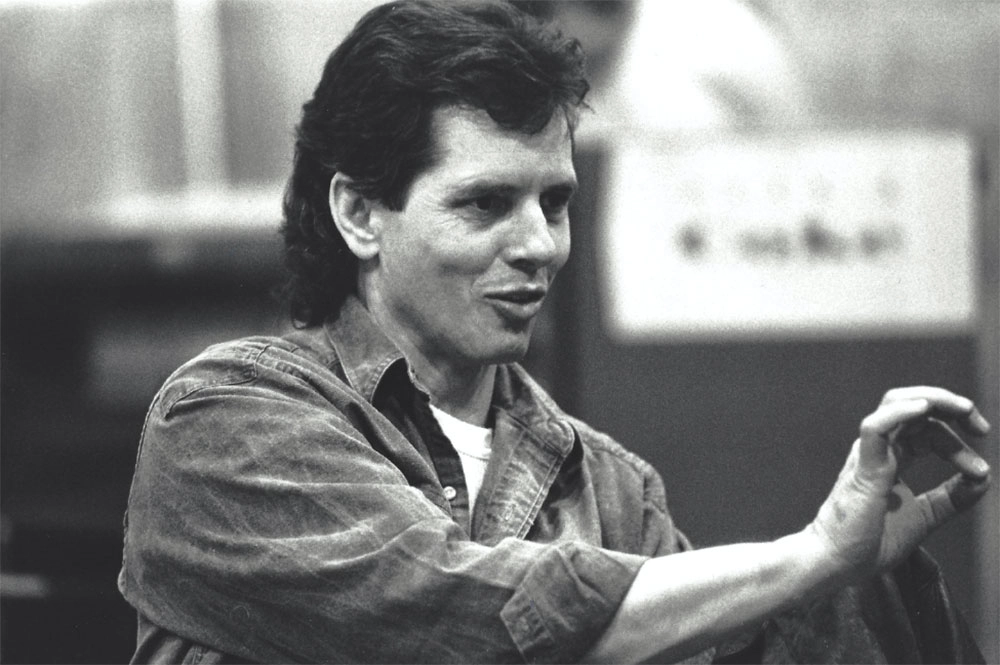
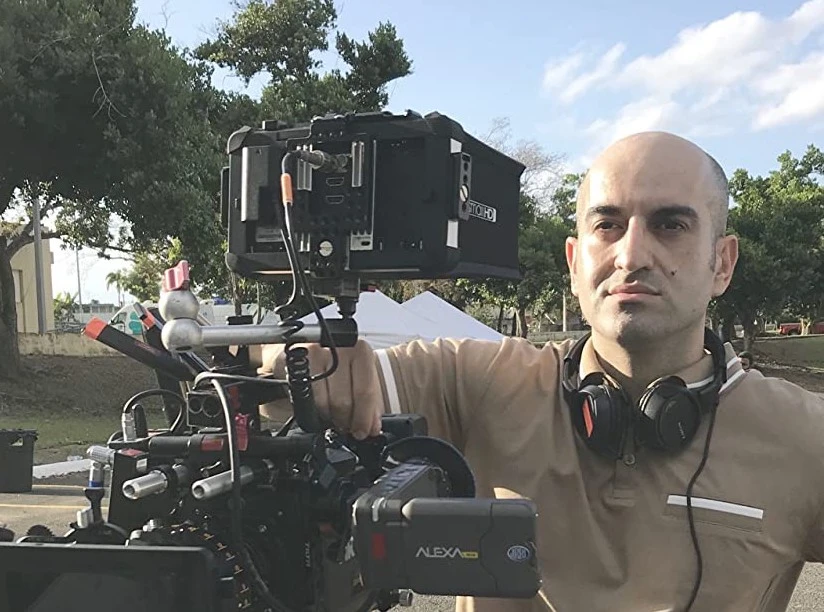
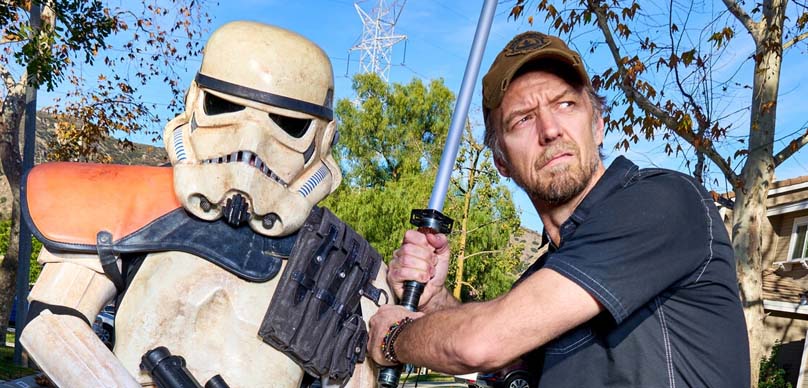
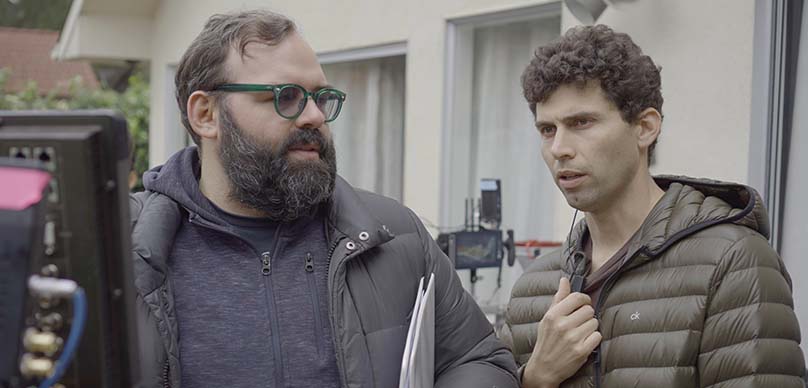
Alrik Bursell is a filmmaker, producer, cinematographer, editor and director. His been working in video production for over 10 years and worked on everything from feature films, to broadcast commercials to DVD instructional videos, if those even exist any more.
Alrik’s first feature film The Alternate was shot in the winter of 2019, did it’s film festival run playing over 20 film festivals and winning 15 awards worldwide, and have secured worldwide distribution for the film, which is coming out in the USA/Canada in September 2022.

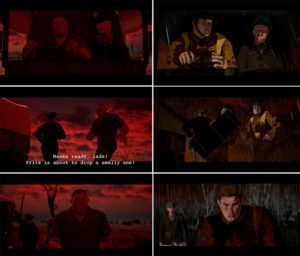
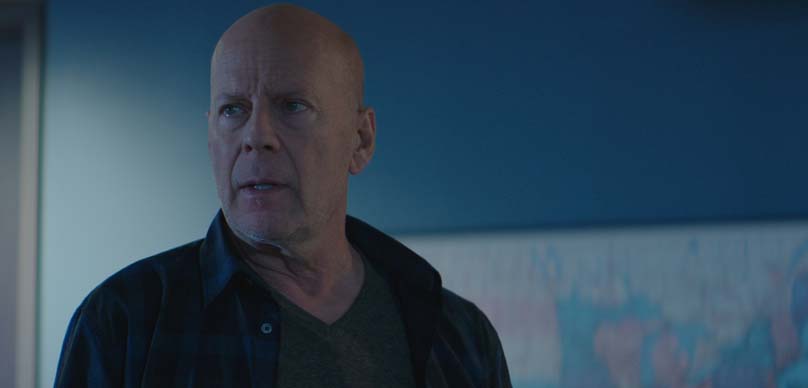
The Alternate follows Jake, a videographer who discovers a portal to another dimension in which he has everything he has always wanted: the perfect version of his wife Kris, the filmmaking career of his dreams, and the daughter he never had.

Jake quickly starts traveling back and forth between these two worlds – spying on his other self, falling in love with the alternate Kris, and getting to know his daughter. Jake soon sees that his alternate is not as perfect as he seems and decides to change places with the alternate Jake and take the good life for himself.

Please enjoy my conversation with Alrik Bursell.

Alrik Bursell 0:00
As a filmmaker, you should just be aware of what you're up against and that like, these fantastical fantasy outcomes are like so so unlikely that they should not at all be embedded in your your your hopes and dreams for the success of your movie.

Alex Ferrari 0:17
This episode is brought to you by the Best Selling Book Rise of the Filmtrepreneur how to turn your independent film into a money making business. Learn more at filmbizbook.com I'd like to welcome back to the show returning champion. Alrik Bursell, How you doing Alrik?

Alrik Bursell 0:34
Doing good! Thanks for having me, Alex. I'm like so stoked to be back, man.

Alex Ferrari 0:38
Yeah, man. Thanks for coming back on the show. Man. I'm excited to talk about your new film The alternate, which is I know a long gestating project. I think

Alrik Bursell 0:50
The last time I was on the show, I was like in crowdfunding, like super sweaty, super nervous, just like please help me make people.

Alex Ferrari 1:00
Please help me please. Oh, sir. Can I have another cup of porridge?

Alrik Bursell 1:04
It happened though. So thank you, everyone.

Alex Ferrari 1:08
So now I wanted to have you on the show. Not to only talk about your new film, but I think it's a great opportunity to talk about the state of independent film, because it changes so rapidly so often in our business. I mean, yeah, God, I mean, it's from from basically from the 90s on it's been so 80s on basically, but the 90s on, it's really just changed so much. And it seems to be changing faster and faster. Every every month, there's something new showing up some new service coming up some new way to make money some way some new way, we're getting screwed by somebody, or some company or something. So there's always something so I'd love to hear your opinion on from your point of view. And from you know, obviously you do the interviews on Making movies is hard. And with Liz and and you guys are kind of on the pulse as well as I am on what's happening in the indie world. So in your opinion, what do you think? Where do you think the state of independent film is, sir?

Alrik Bursell 2:05
Well, I guess let's like try to define it a little bit better. Like do you mean, like indie film with like anybody? Like including, like known well known filmmakers? Like, you know, the Darren Aronofsky is of the world and people who are like making indie film, quote, unquote, on their own, but like you have budgets and things are you talking about, like the little, you know, people I'm talking about?

Alex Ferrari 2:29
Let's just put it this way. How many Darren Aronofsky is are listening to us right now? All right. So that so I don't Sure.

Alrik Bursell 2:37
It just frustrates me because like, you look at fucking indie wire or whatever, or some of these places, and they're like, indie film, and then they just start quoting all these like 5 million $10 million movies. And you're like, that's not really what indie film is, like, indie film to me is like million or under, you know, and people who are just scraping their budgets together, like don't don't necessarily have any massive talent, no one would know who they are. You know, like, that's kind of where I see like, indie film, it's like, the movies that like, you know, XYZ is picking up, you know, and like, you know, companies like that, like the smaller and

Alex Ferrari 3:11
A24, you know, the A24's of the world.

Alrik Bursell 3:13
Yeah, barely all the A24's is like, if you get to A24 toilet you kinda already.

Alex Ferrari 3:19
I mean, I'm seeing I'm seeing a bunch of the A24 films lately, and there's some that I have no idea other than the director who the hell they are. So there are those, but then there's the of course, they're everything everywhere all at once. Crowd as well. But yeah, but no.

Alrik Bursell 3:34
Yeah. But that's movies and stuff. saphenous is like, you know, booksmart Yeah, etc. It's like, you know, come on. I mean, like, I feel like A24. Like, maybe they are picking up some stuff that's like, you know, from these unknown, like struggling filmmakers, but I think for the most part, like if you get on their radar, it's like, you've kind of ascended to like another scope, then, you know, the majority of indie filmmakers?

Alex Ferrari 3:57
Yeah, exactly. Yeah,

Alrik Bursell 3:59
I should say.

Alex Ferrari 3:59
So no, I think so. To answer your question. I do think that like the the whale and the, you know, Darren Aronofsky is film that's coming out and a bunch of other films that you know, everything everywhere all at once is, quote, unquote, an indie film. And I would say it is because I talked to the boys. And it was it wasn't a $500 million movie though. Or it was basically the craft service budget of Dr. Strange. And they both match the multiverse in a very different way. So I think the state of independent film I think the artistic state, at that level is going strong. There's still a place for it. It's harder now I think to even be seen than it was five years ago, 10 years ago. But I'm talking more about the state of independence. What like, like the alternate like that kind of film?

Alrik Bursell 4:47
Well, yeah, I mean, I felt like you know, the what I'm seeing is, you know, you really Yeah, shoot your ass off to make your movie. You know, and then like, if you're lucky you get into like some some really great film festivals, you know? And then if you're a spike will the 1% you get into like, you know, South by Southwest, or these game changing film festivals that like, you know, agents and managers are suddenly paying attention to you, and you're getting those kinds of offers, and then your career is like, whatever, you know, but that's like such a small percentage of filmmakers, it's like, yeah, like, like, literally the 1%, you know, and then everyone else, it's like, you're basically get get you get into this film festivals, you're trying to get the best absolute distribution deal you possibly can. And then, you know, you get pumped out into until the digital marketplace, most likely, maybe you get on the streamer, maybe you'll get on the stream, or eventually later down the line in your in the life of your movie, but it's kind of like you're just out in the ether. And that's sort of up to you to do the promotion, and to get people to watch your movie. And then in that case, when you go with a distributor, is you gotta like split the profits and everything. But I think, you know, with going with a distributor, you get like, a lot of other bonuses, you know, like,

Alex Ferrari 5:58
Yeah, like not getting paid, like not getting paid. And, and no rewards, like access to a good depends, depends depends on,

Alrik Bursell 6:05
You could probably hire the same PR team, that your distributors hiring, you know, whatever, and do it on your own, and pay that money upfront, but like having that kind of support in the infrastructure can be helpful, like, we did get a lot of access, you know, to different outlets through them. And our, you know, our trailer ended up picking up like, you know, 160,000 plus hits, you know, on YouTube, kind of through, like, the work that that team did have, like, you know, hitting up all these different channels, and like getting the word out on the movie. So I think like, to some extent, like unless you want to be like, you know, managing a PR firm yourself, and then paying that cost up front, which is like, you know, you already spent all this money making the movie, like, do you really have another $5,000 to pay a PR team out of your own pocket, you know, when when you're going to distribute, maybe maybe you do, you know, if you want to do self distribution, but I basically feel like, I guess the state of what I'm saying is that, you know, even at the highest, like, even I had, like a level of success that is like, it's like really exciting and acceptable, we're kind of all on the same playing field still, you know, and like, it's like, kind of up to the filmmaker to to get the word out and their movie, and to, you know, have it, you know, recoup its investment hopefully. And then if not, like, you know, at least get you on to your next project. So I feel like that's sort of what the first feature I really feel like is useful for is like, you know, using that as like, you know, what your short film used to be like, your mom used to be your calling card. Now, I feel like your first feature is your calling card, getting those reviews, like you know, on Rotten Tomatoes, and like getting a rotten tomatoes rating, or, you know, at least just getting some positive reviews from some sort of critic, it's like, that's all ammunition you can use to make your next movie, like when you're approaching investors and protein production companies, you can point to your, your successes, and then that can be like, Okay, well here, let Now trust me to you know, take a little bit more money and go make my next movie, you know,

Alex Ferrari 8:00
So is the is the first feature, in your opinion, a loss leader? Or is there is there so

Alrik Bursell 8:07
I mean, I mean, I feel like there is like some potential but I think especially as a filmmaker, like you're definitely not expecting to get any any kind of payment on the first feature, you know, if you're lucky to get your investors money back, but like you as yourself, like, you're not gonna get any kind of pain.

Alex Ferrari 8:23
But isn't that but isn't that I mean, look, you know, I know we look at things from the artistic filmmaker and sanity Kearney world that we live in, it is insane, right? Here's the delusion that we have ingrained in us at a DNA level to be even in this business. But on a business standpoint, you look at it and like, it makes our business is so insane, that you spotted spend $100,000 on on a product and have no idea truly how to make that money back. Or, or million dollar hopeful hopefully, if you're at the million dollar stage, you've got a few things in place to guarantee it.

Alrik Bursell 9:05
But it seems like a lot of people even at the million dollar range are kind of in the same boat as $100,000 range. It's like I think when you get to the for the presale deal and you're like making a deal with a distributor, you're before you make the movie, and they're given you an MG before you even you know, go out and shoot anything. I think that's kind of where, like, it actually makes a little bit more sense business wise, where you're like, not just like, you know, hemorrhaging money into a project. But, you know, getting those deals isn't easy, you know, and passable set up and everything. I mean, I've seen it done a lot, you know, and like have people on the show and like talk to other people who like this is what they do. But it's it's definitely not like as easy as it sounds, you know, it's pretty hard to get that kind of, you know, that magic little deal to happen.

Alex Ferrari 9:50
Right! Exactly. And it is all those kinds of deals are all star based. They're not. They're not they're not artistic based. They're not like oh you

Alrik Bursell 9:58
It almost doesn't even matter.

Alex Ferrari 9:59
If it means, obviously because we've seen a lot of Nick Cage movies Bruce Willis movie,

Alrik Bursell 10:06
It just has to be like in the right genre. It has to have like the right no member of thrills it has to feature the star enough. And it's like it's got to hit some some beats. But besides that, like, yeah, it can be whatever.

Alex Ferrari 10:17
Yeah. And it's, I mean, I mean, I'm going to AFM this year. Are you going to him this year?

Alrik Bursell 10:23
Going to be out there, though, with multibillionaire. So if anyone's looking for cyber filler and international market. Yeah, we'll be out there on the booth, you know.

Alex Ferrari 10:36
So, you know, Bob, I'm going to be out there at AFM this year. And, and every time I go to AFM, it's just it's a it's an absolute education for people to go out there. Because yeah, even if they have no movie just to walk around to see how movies are sold. It is you have been there, right?

Alrik Bursell 10:52
Yeah, I went once and I tried, I was foolish enough to think that I could try to raise money for the alternate before it was made at AFM. And I did like 20 pitches to all these different companies and everything. And they told me all told me the same thing. It's like, oh, well, either if you have the budget, or you have the cast, or cast and half the budget, then we can talk. But if you don't have at least half the budget, or cast, or cast, you know, then we're not we don't care.

Alex Ferrari 11:18
There's not even a conversation. It's not even a conversation.

Alrik Bursell 11:21
And at that point, it's like, well, if I had cast in money, why would I even need you? I would just make

Alex Ferrari 11:26
Exactly, exactly. But you know, I was talking to a client the other day, who made a movie at the sub $100,000 range. And they they made them and they came to me and they're like, What do you think? And I'm like, You're not gonna make a dime. And then they're like, Well, what do I do and like, recast one of the spot one of your parts with a name actor, go out and get somebody for a day for like 10 or 10, or 15, grand, and Shoot it, shoot them out in a day, pepper them out for the entire movie, make sure there's enough of him in the movie or her in the movie. And now you've got someone on the thumbnail. And now you've got an opportunity to maybe make your money back. But without that person, you're you're dead in the water. And I just know, it's not a made. It's an absolute fact, because of the

Alrik Bursell 12:19
Oh, the kind of movie. Okay,

Alex Ferrari 12:21
That's the thing. It depends on the genre. So the genre of the film was not action. It wasn't, it wasn't one of those jobs. And it wasn't like, our house backyard film. So it wasn't like, it didn't, it didn't have a place to be. So I'm like, Dude, the only way you're gonna even try even remotely have a shot is getting a face on on the thumbnail. And he's exactly what he did. We worked and got a name actor, we worked with a distributor. And we went to the distributor and said, Hey, give me a list of 10 people who you would be interested in this bill, if they were in it. We went through the list and we just started knocking them off and making offers until finally one said yes. And we got him shot him out in the day peppered him throughout the entire movie. He's like, Oh, my God, the movie so much better. I'm like, yes, because you've got a real, like an actor who has real credits, who's a real professionals been doing this for years. And now we're going to go into the marketplace, but there's a fighting chance at that it's sub 100,000. It's sub 100,000. So that's it's a good, it's a good kind of place to be as a filmmaker is a sub 100,000. Because you start going to 5300 every every 10 grand that you go up, you better just know your shit better.

Alrik Bursell 13:34
Yeah, no, it's totally like keeping keeping your costs low. It definitely helps the chance of recruitment for sure. You know, and I think like, if you're self distributing, like if you can make $50,000 That's, you know, a genre film, you know, like an Action, Thriller, Horror, sci fi, whatever. I think the chances of recouping on 50k You know, especially if you're cutting out all the middle people is really high. But you know, then you have to ask yourself, like, what do you want to do with your life? Like, do you want to be you know, promoting a movie and selling a movie for like, two years? Like, it's kind of, you know, some people are really into that. And some people like me, like, don't really want to be like I can, I can spend, you know, like, a couple of months promoting a movie, but like, I can't do it for a year. That's just too much.

Alex Ferrari 14:18
Right! And that's the end. That's another that's another thing that's really interesting, because before you know, when you go to film school, they teach you how to make, you know, $100 million movie. And that's what they teach you to that like, and they tell you, you could do this, you could be the next Chris Nolan. And that's fine. And you might be but chances are, you're not going to be because there's only so many Chris Nolan's in the world. But I think that before there was a problem getting into the business because things are so expensive to make movies were expensive to make good high quality was expensive to make. But now that the bed the barrier to entry is so minimal. You could make I mean, I made my last two features for sub 10,000 and got one of them I got one of them on Hulu, the other one was sold and both of them were sold internationally, and I made my money back fairly quickly. But yeah, but the

Alrik Bursell 15:02
10,000 or less, that's, you know, you know, I mean, you got a chance,

Alex Ferrari 15:08
You gotta, you have a much better chance with with, you know, one had more faces in it than the other one didn't the other one had no stars in it. But it was basically experiments for me, it was just kind of like, let's see what happens. And I was expressing myself as an artist and all that kind of good stuff. But I think the problem we have now it's not that we can't make a movie, it's we can't get our movie seen. So if the filmmaker moving forward doesn't have some plan in place to get the movie in front of eyeballs to get into. And that's why I wrote my book about, you know, finding a niche, focusing on that niche and trying to build product or build films for that niche to get in front of that audience. Either you do it yourself, which I agree with you not everybody's got that, that thing in them that they can sell. So I get that, but they need to have something in place, whether that be working with a PR firm, having a producer who's really good partner with someone who's really good at it. And I think the end is that maybe have a distributor and distributors that I know. And in my experience, they're trying to figure shit out to

Alrik Bursell 16:09
No that and they're kind of in the same boat as we are, you know,

Alex Ferrari 16:14
They don't know what to do either. And they're trying to figure it all out. And I mean, I went to meetings at AFM during the whole distributor debacle, when that went down. And I got on my Yeah, and when I broke that story, I you know, my face was all over the place. So all these distributors were bringing me in to like, try to, you know, whoo, my apparent like two or 3000 filmmakers, I pulled together in a Facebook group that were pissed off a distributor. And they're like, Oh, give us those films. And I'm like, okay, yeah, I'll take the meeting. And I would ask them, and they would just tell me their shtick. And I'm like, let me ask you, what do you do this, he doesn't have any idea how you're going to make money back on these films, he does not. Now we just throw as many, we throw as much shit against the wall as we can, and something usually sticks. And that was really eye opening to me when they said that, because it's just before there was a plan that before there was like, you went to a distributor, they had this, this, this, this, this, this, this, I can go through this, I get money from this than this. And that still does exist at the 5 million and above the Nic Cage films, the, you know, 20 million and below that kind of genre stuff that still exists. But for the 100,000 and below 500,000, or below million and below, unless there's talent involved. It's it's very, very difficult for them to try to find a place in the marketplace. And then also, for when your movie is done. There's about 3000 other films sitting waiting to come in. So yeah, they don't spend as much time on your films. Is that Is that a fair statement?

Alrik Bursell 17:44
I think so. Yeah. I mean, like, when I was talking to my distributor for the alternate, like, you know, he definitely had a little bit more care into his thoughts about it, you know, like, he was like, you know, this, this is similar to a movie that we had a few years ago, we did really well with it, we think that this has a lot of potential to do the same kind of business, you know, and, you know, he kind of like went in it with that way, and that they were very strategic, or the way they were creating the art, I loved my art that I made, I thought it was beautiful. I have it on my, you know, framed poster over there. But like, you know, they're like, all the distributors like my, my international in the US were like, this is just not gonna work, you know, this just is not going to sell. And so then they made one and then like, suddenly that that's the one that everyone likes, it's their own the trailer, that distributor made the US distributor, then international distributors using that same poster, and I guess they're having a lot more success with it. But that poster, so it's just really interesting, the way it all works, and the whole the way the whole business works, and like what is eye catching? What makes people click, you know, and the theories behind it. But again, in the end, like you said, no one really knows. We won't know if it worked until we see the first quarter numbers,

Alex Ferrari 18:50
I'd argue second or third quarter numbers. Because it's, you know, AFM is coming up, and then hopefully, Ken will come up after that. And those would be the two big markets that they go to sell your film at. But it's, you just don't know. And that's the other thing you said very, you said something that's really important for people listening to understand, won't the poster that made them click? That is something that needs to be in the head of filmmakers because there's still this magical dreamlike thing with theatrical and yeah, all that and that's wonderful. And we all you know, many of us grew up with the theatrical experience and I want my movie in a movie everything every filmmaker wants their movie in a theater, because it's it's the ultimate experience of it. But unfortunately, unless you're Chris Nolan, you don't have the juice to do that all the time. So you're gonna live on a thumbnail? Yeah, and

Alrik Bursell 19:53
That is not even the best assignment the best thing for your movie, you know, exactly. Make a movie under a million dollars like you probably don't want To put the movie into theaters, because you're just gonna lose all this money paying for that and like the, the, like the the last you're gonna get from the from the theater owners or whatever. And then, you know, in the end, it's like you're taking taking away juice, as you'd like to say from the, you know, the online sales, because that's where you're really gonna get your money. But if it's like split between theatrical, and you know, the online, like, then you're not going to make as much money online. And, you know, like, that's where your real money I think is going to come in. So I feel like the theatrical is like a really beautiful thing. And if the distributor wants to do it, and they can make it work or whatever, like totally great, like, let's do it, but like, you know, I wouldn't push it filmmaker, I would let the people know what makes money and what doesn't make money, make those decisions, you know, if they think that the actual runs good for your movie, and you're actually gonna see some, some extra revenue from it, then great, but I just don't think that's 90% of, you know, movies at this budget level, you know,

Alex Ferrari 20:56
And isn't it interesting though, that you know, in the 80s, in the 90s, our films had a, a movie, you would be able to either buy it for 20 bucks on DVD, or VHS, or you would get someone would have bought it and other people rent it. Then when TVOD showed up, iTunes showed up, then you got 399 for your movie and 999 for your movie, that was your value of your movie per customer is that before obviously before that theatrical, you know, there was a ticket sale, and you would get a split of the ticket sales. And that was the value of your movie, where in today's world, the Netflix thing, the Netflix effect, and the Amazon Prime effect has now brought our our product down to less than a penny for review. And that's what the value in the marketplace is for our films without a major star or something that loves, like, brings it up or niche or, you know, word of mouth or festival that maybe gives it some sort of juice. But what do you think of that?

Alrik Bursell 21:59
I think that's why behooves you to keep your movie on for sale or rent or as long as possible and like not go to prime not go to these other, you know, avenues until you've really exhausted your sales, through rentals. And in, you know, digital sales, you know, or if you have a DVD or your DVD sales, you know, but I feel like a lot of people I see this even with people who are doing self distribution, they just want the movie to be out so people can see it. So they can like say, Oh, just click on Prime video, just click so they just upload the prime and they get it out quickly. And it's like, oh, no, no, no, if you made a movie for even $1,000 Like, don't just put it on prime, like make your friends and family or your network, rent it or buy it. And then suddenly, you're gonna get that $1,000 back, you know, but if you just put on an app, like you said, you're never gonna get not even $1,000. So you're never gonna get $1,000 back on Amazon Prime. I mean, maybe after like five years.

Alex Ferrari 22:53
Not even not even. I mean, it's literally it's literally they're trying to get fractions of a penny now, like they gotten down to a penny. And they're figuring out and in fractions of a penny for for certain for certain films. But the place that I've seen and I've I've been talking about for a while now is a VOD, a VOD seems to be the place where there is money still to be made. And even more so the next level of a VOD in something that people the filmmakers are really like, their egos get really twisted into not because of this is YouTube. If you can get on these YouTube movie channels that have 1,000,002 million, 5 million subscribers, and get a piece of that ad revenue, which is do YouTube as a VOD, you know, it's not just to be included in and freebie these are. These are real places. I see the numbers from from distributors. And I'm like, wow, this is the Avon is the place where I still make the most money off of my movies. And I think it's kind of where we're the it's the hopefully the place where we can make the most money because at that point is like someone clicks. And if your movie is good enough, and keeps them playing and watching, you're gonna get ad revenue. So it really is about how good your movie is. Have you heard the same thing and your world? Pretty much?

Alrik Bursell 24:16
Yeah, I feel like a VOD is becoming like a real crown jewel for returns for films at our level, you know, and some people even recommend, like just go straight to a bar and like don't even spend time on you know, the rental and the sales but like I feel like you know, for certain movies or just I guess certain distributors like they still feel that that's a role, you know, great place to make, you know, a big chunk of revenue. So they still want the six months or whatever a year, however long it is like doing you know those sales and then go to Avon afterwards.

Alex Ferrari 24:48
You know, it's really interesting with the whole TiVo thing, because everybody I talked to everybody I talked to you. Nobody makes money on TV unless you can drive traffic unless you can drive traffic and most distributors don't understand how to drive traffic, sit to hold it for six months. And T VOD is I feel I mean, unless the numbers are coming in, you're like, oh shit. But T VOD is just because it's up on iTunes and up on Amazon Prime Amazon to purchase or rent unless you can.

Alrik Bursell 25:17
Although Yeah, this is in YouTube and whatnot.

Alex Ferrari 25:19
Fandango. We know that stuff. You get five cents from Fandango. And you'd be amazed. But it's I talked to so many distributors now who are just like, I just want to go to Avon in the filmmakers are freaking out. And they go, they just don't understand that that's where the money is. And if you could drive all the traffic from the beginning to a VOD, you'll make more money than you will letting it sit on T VOD, because, unless you can drive traffic look, I had I had a success story of entrepreneurs successful Mark Toya who made a million dollar robot, you know, action movie in this, which sounds horrible in the in the jungle?

Alrik Bursell 25:57
To me, I love rice kinds of movies.

Alex Ferrari 25:59
What that movie, but the reason why that works is because the visual effects were on par with anything that the Marvel did Marvel Studios has ever put out. It's so good. I can't express to you how good it is. So he's gotta hear it. He had a over a million dollar deal with a distributor. And he just looked at the contract. He's like, I'm never gonna get my money. upfront, by the way, it was it was a million something upfront. And he's like, I'm never gonna make my money with the way this contracts laid out. Screw it. I'm just going to self distribute. And he self distributed the whole thing. And he's made I think it's six, six or $7 million. At this point. He made all his money. He made all the money back of the budget in three months on T VOD. But he ran Facebook ads. He ran YouTube ads here and just he was that PR firm that you're talking about? Right? Because he comes from a commercial background and he enjoyed it. And it worked fine for him. But it is possible in today's world, and he's still making money still making money. He's like, Yeah, I'm going to release another one. I'm going to I'm going to put another TV ad campaign out and I'm just and he's still got while is it? I don't think he's gone. I don't think he's gone to a VOD yet. I think he's he might have gone to it. Yeah, he did go to Avon prime. Yeah, he did to prime. And he put he's like Alex, I was making. I think he said like 30,000 a month on a VOD. And he was a billion minutes stream. And he's like, this is ridiculous. Why am I getting such little money? For so much? Amazon is getting so it's just like, but this world that we live in? It's crazy. Yeah.

Alrik Bursell 27:34
I wonder if he because I was on Prime right. Getting that which one of the one where it's like, you know, he was getting billions of images viewed and then getting 30,000 hours back. That was Amazon Prime.

Alex Ferrari 27:44
Yeah. But then he took by the way, he took it off Amazon Prime. He's like, screw this. And I'll just he's done. So he won't he's not doing any AVOD anymore. Right now. He might go into the two b's.

Alrik Bursell 27:54
I was wondering like what is to retail? It must be way better than that. You know, like if he was getting an early minutes viewed on TV, he probably getting lots and lots of money back?

Alex Ferrari 28:02
I'm not sure. And I have to remember. I'm not sure if he's on TV already. He hasn't been on TV yet. But that film will be top 10. On TV. It was called monsters of man. Okay, how to look at Monster monsters of man. Yeah, I have two interviews with them. The first one was us discussing him going on this adventure to do a million dollar self distribution experiment because he didn't give a care. He didn't care about the money. And he's like, Screw it. I don't care. And then two and a half years later, he comes back and he's like, Yeah, made about six $7 million at this. And I'm still going. Thank you. Thank you for your book, Alex. I'm like, Oh, Jesus. All right. So. So there is that was a wonderful case. That's a lot. That's like a turn. But it is a huge return. But he even told me he's like, I go he's gonna be a sequel. Because probably not because this is not a real business. He because he comes from the commercial world. So he's been doing commercials for 30 years. And he goes, That's yeah, he goes, Alex, I make more money on my stock footage than I do doing this stuff. Because it's that's a real business. And I was like, wow, and he's a businessman, and he's, you know, owns real estate and other things like that. So it's really interesting to see. And he and by the way he's been offered. He's been talking to all the big I mean, he won't say who but we all know, there's probably a superhero company or two that's talked to him already. And he's, and he's because what he was able to do, he was top I think when he went on to on iTunes, he was like number two. I think I think endgame was the only thing ahead of him. Like he just he just and people were like, Who the hell is this guy? Where did he come from? Why is this look so good? He did this for how much shadow Shadow Ball on reds. He's like had three or four reds with them and shattered all up in the jungles of the Philippines and stuff like that. Never never built a set, never built a set everything location.

Alrik Bursell 29:53
Wow. Wow, amazing.

Alex Ferrari 29:55
These are all great. These are great stories. But that's an anomaly. You're talking about it. Yeah,

Alrik Bursell 30:01
I mean, it kind of brings me to like, my overall point about independent filmmaking is like you're not, you're not really doing it for the money, right? You're doing it because you want to make movies. And because you have stories to tell, and you this is, this is the thing that you want to do with your life. And I don't think you even think you're doing it to like, necessarily start this career, that's going to be your main thing forever. I mean, we all hope that's what it ends up being. And we all hope that we get to that level. But I think if you're going out to make an independent film, like you should be just thinking about it as like, you're creating this piece of art that you need to create, because you are an artist, and you're a filmmaker, and you have the story that you have to tell and share with the world and that you want people to see. But like putting any more weight behind this than that, I think you're just gonna be let down. Because like, if you're, if you're going into it, like trying to make a bunch of money, or even getting a return on your investment, or, you know, getting an agent or a manager or starting your career, or you're gonna like start directing television, or I'm gonna get offers from Marvel or whatever, like all those kinds of things, like, you know, that's all pipe dream stuff. And I think like if you go into making your movie with those sort of pipe dreams, and that's like your expectation, there's nowhere that you can go but down, like, you're only going to be let down from experience. But if you go into it thinking like I have this movie I want to make, I'm really excited about it, I love the story. Like I really want to get this out to show people I want my movie to, you know, hopefully inspire someone else to make their movie or like, inspire them to think about like characters or my story, or whatever it is, if you go into it with that, like, you're more than likely going to enjoy the experience, because you're probably going to hear from at least one or two people who connected with your movie once you finally finish it and release it, you know. And so I think those are the kinds of reasons we should be going into making a movie like we should be focusing on the art itself, like not the outcomes of the art, which are completely out of our control. You know,

Alex Ferrari 31:51
That's what I do with my first two movies, I did the exact same thing. I finally because most of my career, I was under that delusion, of like this short film is going to blow me up or this thing is the thing that's going to take me to

Alrik Bursell 32:04
Have that right,

Alex Ferrari 32:05
Right. Right. So then I finally just I went, I'm like, I'm just gonna go make a movie. 3030 days later, I was shooting my movie after the moment, I said, I'm gonna go make a movie. And then that's the one that gets sold to Hulu. And that's the one that gets sold internationally. And then I shoot that other one at Sundance for four days. And, you know, and just go and just make a movie. I'm like, I don't know what's gonna happen with it. I as I was flying home, I was like, I don't know if I have a movie. Like, I didn't have time to see if I shot all the footage I needed. I don't know, I think I did. You know, things like that. So it's kind of like this. I when I let go of the outcome, man became much easier, much more fun to make movies. But let me ask you this, then why, and I know you've met a lot of filmmakers. And I know you are one as well as I, why is there so much delusion? In this profession? I mean, Cookie makers don't have this delusion, like I'm gonna make the greatest cookie ever. Generally doesn't. It doesn't work in other architects like, I don't want to make the biggest figures ever think of Frank Lloyd who? I'm the one like you don't say I'm sure they don't those people.

Alrik Bursell 33:10
Architects maybe a little bit closer that cookie makers but

Alex Ferrari 33:14
But but generally speaking, it's not. It's not that the infestation in the entire populace of that, that that group of artists is not as delusional as filmmakers and screenwriters for that matter, because what is it about this art form? Painters aren't that musicians? Maybe? But again, there's no, there's not that it's just I find such a delusion in what we do with so many people. So why do you think that?

Alrik Bursell 33:44
I can, I feel like it's embedded in the art form in a lot of ways. You know, like, if you look at, like, just think of like, the classic phrase, like, I'm gonna make you a star kid, you know, it's like, this has been going on since the beginning of cinema, like this whole idea that like, you can be a star on the stage of the screen, you know, and so I think you're going into making your movie, it's kind of natural to think like, yes, like, I could be the next Robert Rodriguez. Like, he did it. He scrapped his movie together as $7,000 or whatever. And like, now, he's a big star, like, I could be like Robert Rodriguez or Quentin Tarantino, or, like, you know, all these, like, complete, like, outliers in the industry. And it's like, you just, you know, you fall in love with these movies in with these artists, and then you kind of like, you know, start to see, like, Oh, I could be like that, like, that could be me, you know, you sort of see your idea of your movie and your art getting to that level. And so I think it's just sort of a natural progression. But I think, you know, it's obviously completely misguided. And I think it's into some way it's almost sold to us, you know, like, like, oh, well, what are the filmmakers by the Hollywood selves behind Hollywood? It's like this, like really enticing, like, yeah, come out to Hollywood and make your fortune, you know, it's like, you know, it's like this whole like, sort of thing and I think You know, you gotta look at and like maybe back, you know, in the 80s in the 90s, like it was much more likely that that could work out for you in that way.

Alex Ferrari 35:08
But less competition, less competition different marketplace. Absolutely. I know every month marketplace Yeah, every every in the 90s. Every month there was a Richard Linklater, a Spike Lee, John Singleton, Robert Rodriguez Tarantino and Kevin Smith. I mean, I could just keep the list keeps going on and on. Of every almost every month, it was one of these magical stories, Napoleon Dynamite, Joe Carnahan. I mean, it was just constant in the 90s

Alrik Bursell 35:32
More lucrative back then to like, AHS marketplace, you know, D Mark, in the marketplace, like, I think those two kind of lead into each other. And like, it was a way that people could, you could make a movie for zero money, and you could make a big profit, you know, like, and, obviously, movies cost a lot more back then. So it couldn't be zero. But like, you could make a movie for like, whatever, half a million dollars, a million dollars or something. And then like, you know, get a big profit back. But, but yeah, it's just not the same anymore. Like, you know, like, like, it's like the whole Napster effect of everything. It's affected films, it's affected everything, you know, all art form is suffering for it. And I think like now, you basically, you can't get that big of return on a movie so easily. It's like it's much, much more difficult. And I think going into it, like, as a filmmaker, you should just be aware of what you're up against. And that like, these fantastical fantasy outcomes are like so so unlikely that they should not at all be embedded in your your, your hopes and dreams for the success of your movie. Like you should definitely try to like, like, it's good to have dreams. It's good to have fantasies, but it's good to separate rate them from the art you're creating. Because like you don't want it to be entangled, because then you're just going to think that your art sucks if you're not famous after you make it.

Alex Ferrari 36:51
Right. And then you go into a depression, and then you just figuring it out, and all this kind of stuff. But isn't it fascinating that I know a lot of people listening to us right now are saying that's for everybody else. That's not going to be me. Yeah. Am I wrong? Am I wrong? Am I wrong? How many people listening right now have that thought in their head? Like, that's for other people? That doesn't? That's not me. And

Alrik Bursell 37:15
The other one that's different.

Alex Ferrari 37:17
But dude, I'd say the same thing. You said the same thing. We all we all go through this process. And only after years of being battle hardened by the business. And by the way, all of those stories that we're talking about the Roberts and the and the Clintons and the Kevin Smith's and all of that stuff. I've had a lot of those guys on the show. And I've talked to them about their struggles at the beginning. And they knew it was real for them at the beginning to hear they had success. But there was no guarantee for that success. And by the way, the one common The one common thing that I've gotten from all of those kind of like those 90s filmmakers I've had a pleasure of talking to is none of them had an outcome that they had in mind. None of them none of Robert wanted to go to the straight video market. That was a that's all he cared about.

Alrik Bursell 38:08
Business he saw that business opportunity. Yeah,

Alex Ferrari 38:11
Right that was it. He wasn't expecting to get signed by Sony and and get it and he didn't even want a mariachi to be released. He's like, no, no, no, no, that was just I was gonna go straight to video. I didn't know that's not my first movie. He was freaking out about it. And like it's something like what Ed Burns did with Brothers McMullen where he was working as a PA at E.T. Entertainment Tonight. And they had Robert Redford showed up to do press for quiz show. And in the elevator as the doors are closing, Edward comes in hands him a VHS copy of brothers like Bolton's rough night. Here. This is my movie, Robert, please take a look at it. Three months later gets a call from Sundance. Yeah, Robert gave us a VHS how's that movie coming along? It's an almost done how can you plan that? That's what that was. Then saying like you hear these kinds of stories, you're just like, but that's the stuff that feeds the delusion. I think it just it's we all like how many people listening right now have put together a business plan? Probably not a lot but the people who have put together a business plan to raise money are using these as references of how movies are made. Blair Witch Project. Paranormal Activity, Napoleon Dynamite. Like did you think that

Alrik Bursell 39:27
You're gonna take the outliers off your

Alex Ferrari 39:32
You can't do it but that's every time I've read a business proposal. If it's a horror movie, absolutely. Blair Witch and, and paranormal activity are they and saw and saw

Alrik Bursell 39:41
Yeah, you got to take those out. You got to like look at the movies that are like, you know, not the ones that you know, completely exceeded expectations and blew up and were special movies of the moment or whatever, you know, like, like looking at like I don't know, like when I when I was making my deck for the altar and I looked at this movie called Spring I don't know if you've seen spring but um It's like a sci fi thriller that was made for, you know, right around the same budget as my movie. It did get to Sunday. And that Sunday in South by Southwest, I believe and you know, it did really well, I think was an XYZ movie. But like, those are the kinds of movies I was looking at, like ones that were made around for the same budget as mine, you know, didn't have stars, like, mine was gonna have stars and like, try to find those movies that look like your movie. But like, don't put a movie in there that doesn't look like your movie, because then you're instantly gonna do you know displeased and in mislead even your investors to, you know, thinking that, you know, you're gonna get something that you you can never deliver, you know,

Alex Ferrari 40:37
Now let's talk about your new movie, the alternate how, how long did this film get? Just was just getting started, get made?

Alrik Bursell 40:45
Well, so yeah, I wrote the first draft and like, I believe it was March of 2014. So what's that, like, over eight years, until like, this,

Alex Ferrari 40:55
This is insanity. This is the insanity that we live in. As artists,

Alrik Bursell 40:58
It takes a long time takes a long time. I mean, you know, and I went to AFM to try to sell it or to raise money for it in 2017. And so basically, from 2017, till we shot in 20, the end of 2019. That was like when I was like, actively working on it, and like trying to get it made, you know, I mean, I was still working out that whole other time. But it was more like just trying to figure things out. And, you know, rewriting and rewriting and rewriting and, you know, failing at raising money over and over again. But then 2017 is when I raised my first amount of money, and then like, met my producer, you know, raise more money, and then eventually, you know, got it made a couple of years later. So yeah, it's been a while. It's been a while.

Alex Ferrari 41:40
It's been it's been a while, right? I always love asking this question of filmmakers. What was the, you know, as a director, there's always that day that the entire world comes crashing down around you. And that's generally everyday but what was the worst one on this day? What was the worst like moment in the production? And how did you overcome it?

Alrik Bursell 42:00
Yeah, I think it was the second day maybe of the shoot. And we were setting up the basement office set up for Jake, he's got this, you know, really cruddy office that he does his editing. And he's a filmmaker, sort of, like autobiographical in some way.

Alex Ferrari 42:15
I was, I was about to say, I was about to say,

Alrik Bursell 42:18
He's got a big beard, you know, come on, like, whatever. So, yeah, it was, I was in charge of the office, because I was I had all I was using my own computers, as Jake's computers in the office scene. So I was the one who was, you know, entrusted to, you know, make sure the computers were working and make sure that everything on the screen that needed to be, you know, on the screen was on the screen, and I was having all these issues, just trying to get set up, we were like, way behind, like, three hours behind on the second day in the office. And I had to like go and like, at lunch, I had to, like buy a hard drive, and like go pay like, like, get some money to pay somebody, like because I'm a producer too. So I had to like go to the bank get like a large amount of money. And like buy a hard drive. And like get back that was like during lunch and then get back and a half hour, 45 minutes or whatever to like, you know, direct and then somehow eat at some point. And I was just so upset man, oh, my God, and I recorded audio logs while I was making the movie. So like on on my podcast making movies, it's hard, you can actually hear the log of me like on my lunch break, like talking into the phone and just like freaking out about how everything is going wrong. And how we ever came in, I think I got back to the set after after getting those things. I just talked to my DP, I talked to my production designer. And we're just like, look, we're just going to do, we're just gonna, these are the scenes that we're going to be able to do today. This is what we're going to do, we're going to revise a schedule, I talked to my ad, obviously, and we just like, sort of broke down how you're going to solve it we got through the day. I don't think we went over if we did wasn't much. And then you know, we kind of had had to replan the rest of the week to make it work. And I think that was when we added another day to production because we were supposed to be out of the office in three days. And I think we ended up shooting in the office seating for four because we just had too much we had to do in there. But yeah, I think the way I overcame it was just like having these conversations with my team. Breathing slowing down, and then just you know, looking at the schedule, and then just like going, just checking off things that we don't have time to do moving them to another day and and making the movie man and you know, it ended up working out.

Alex Ferrari 44:24
Now, going with the theme of what the alternate is about which is kind of like alternate universes in the multiverse and that kind of thing. What would you if you had an opportunity to go back and talk to your younger self? And just for one thing, you could tell him and go okay, dude, this is going to be the trip about your filmmaking career. What is that one thing you wish you would have known at the beginning of your career that was really difficult for you to learn along the way?

Alrik Bursell 44:57
That you really just like you don't need anything Special, like, you don't need any, like special person or special chip or is this, there's nothing that you can learn, that's going to open up the doors and like, you know, make you able to make your movie, like, you just have to make your movie, you know, and I think like, once I made the feature, it was sort of like, this is just like making a short, but like, you know, 100 times harder, you know, it's just like, you know, and it's not like, you know, shorts, 10 minutes in the movies, 100 minutes, it's not like 10 times, it's literally 100 times harder to make a feature. But I think if I just had known that, you just have to do it yourself. And the same thing that I did to make my short is the same, it's the same exact process I'd have to do to make my feature, but I just knew that and I knew that I didn't need any special, you know, sign of approval or, you know, manager or agent or big production company or like big check from an investor or whatever if I if I knew that it wasn't about that and it was just about doing the same thing I've been doing. I think I might have been able to make the feature a little bit sooner if I had that kind of that kind of knowledge and confirmation that it's just like you just need to do it you know?

Alex Ferrari 46:08
Amen brother preach baby preach. I think so many of us always wait for permission to thy permission for somebody Yeah, from somebody didn't make it and I think I got caught up in that same thing. That's why I was like, I was waiting for permission for 40 years. And I just said screw it. I'm just gonna go make my movie the way I want to go make it I'm just gonna grab a camera and grab some friends and make a movie. And employ worked out. You know, thank God it worked out. But yeah, we are. I think that's also built into the system is like, Hey, you could be a star kid. But you need my permission first. Exactly. And that's kind of in the in the DNA of us as well. We're now we're trying to just like, No, you can go and do it yourself. And you can get out.

Alrik Bursell 46:52
There's nothing stopping you. You know, like, no matter who you are, where you are, like, you have the ability to go make your movie, you just need to buckle down and do it. You know,

Alex Ferrari 47:01
And to be smart and to be smart about it. Don't go and make a you know, 100 100,000 or $500,000 period drama piece with no stars in it. Expect to make your money back.

Alrik Bursell 47:12
Please don't do that. Movie. I mean, I just haven't I love genre movies. And that's all I make, you know. So like, that's what I do. But yeah, I'd say like, for your first feature, if you make it a genre movie, you're gonna have way better chance at success. And if you go with any other genre like John drama or even comedy comedies are hard, man, you know,

Alex Ferrari 47:32
Comedies and dramas are are just, we just walk around AFM and tell me how many comedies and dramas not family films, not faith

Alrik Bursell 47:44
Flintstones. Flintstones based on family

Alex Ferrari 47:47
Different different conversation. Why? Because you're focused on a niche, you know, throw Dean Cain in and have a puppy save Christmas, and you've got a movie that's going to sell.

Alrik Bursell 48:00
You gotta made man.

Alex Ferrari 48:01
I mean, is it the dog that saves Christmas movie? I've said it so many times on the show. Make a dog the same as Christmas movie? You'll sell it?

Alrik Bursell 48:08
Yeah, no kidding. I feel like I haven't a couple of filmmakers on who do faith based and family films. And yeah, they're doing good. Just to say that I don't really good.

Alex Ferrari 48:18
They do? Well, because it's an it's an audience that not a lot of filmmakers focus on and they need content. That's one area that doesn't have a lot of content. Family Films, believe it or not, not a lot of content, even romance, like romantic comedies. Hallmark has that kind of covered. But um, yeah, it's just tough, man. It is tough. So the Go twos are always action thrillers, and sci fi. And on a lesser extent, horror, obviously. But there's so much yeah, it's whole it because it's so easy to do a horror movie like that's, I mean, in the sense of production, not making a good horror movie, but just in the sense of production. Anybody can go get a monster mask, go in the forest kill a bunch of teenagers and then you got a horror movie, or scary movie in the house or something like that. And believe me, I've seen that movie too many times. Yes.

Alrik Bursell 49:13
Rather, the thing that's so funny is is a really good version of that movie that everybody's gonna want to watch a billion times, but there's also like, 1000 bad versions.

Alex Ferrari 49:25
Exact look, there's jaws and there's Sharknado and I don't know how many times I'm gonna watch Sharknado I've never seen it. I think I've seen clips of it.

Alrik Bursell 49:35
But just think of the money man Sharknado Boy, that was a success, but on success,

Alex Ferrari 49:41
But it was in by the way launched an entire genre of like, you know, the alligator you hurricane and like, you know, Velociraptor preacher or whatever that movie was and they just, they just started combining crazy things after Sharknado but when you hear Sharknado you're like, Oh, yeah. understand what that means. Yeah, it's just yeah, I get it. Tornadoes with sharks. Yeah, got it. Got it done. Done. But if you're gonna watch a killer shark movie, which is the one you're gonna watch again and again, it's jobs. Yeah. No Holds still holds to this day. Even with the fake shark. It's still wonder,

Alrik Bursell 50:14
I wonder what our children will be saying about jobs in 1020 years. If they'll be like, yeah, JAWS is so fantastic or Jaws is gonna die out with our generation.

Alex Ferrari 50:23
I don't. I don't, man. Jaws is a masterpiece in the sense that it's just, I think, because we don't see the shark so often. And because that's the reason if we saw a lot of shark, he would have it'd be dated. Yeah, but that's one of those movies that you like it was in the 70s There's a handful of 70s films that hold there's a lot but there's, but like the ones that stick out, like in the especially in this genre range. There's not a lot of genre. 70s films, there's great dramas, there's, you know, but like genre, JAWS obviously Star Wars movie like Rocky. Yeah, rocky holes.

Alrik Bursell 51:05
It's so good. So good. Yeah, these are the requirements. And these are like my favorite movies. Like, we I mean, alien.

Alex Ferrari 51:14
Alien is, I mean, alien is alien. I mean, but But again, it was, it was done at such a high level at that time. So Jaws is is a masterpiece. It is an absolute masterpiece, and in horror, and in thriller. And what Steven was able to do in that film is will never be redone. It's just you think about like,

Alrik Bursell 51:33
What he went through to get made and like how many days they shot and like the whole month, the whole shark thing? And it's like, it's crazy, man. It's crazy. No, it

Alex Ferrari 51:43
was it was insane. Insane. One day, I'll have Steven on the show. And I'll ask

Alrik Bursell 51:47
Please, can I can I sit in the corner when you have Steven on the show and listen in I would love.

Alex Ferrari 51:53
I'm sure everybody's gonna want to. I'm gonna want to sit in the corner. One day. So this is where I'm gonna ask you a few questions. Ask all my guests. What advice would you give a filmmaker trying to break into the business today?

Alrik Bursell 52:11
Yeah, just just make your movie. And if it's a short, if you haven't made a short yet make make a couple of shorts. If you've made a couple of shorts and you want to make a feature, go make a feature. Even if your heart is telling you I need to make a feature. I haven't never made anything before in my life. Make the feature just go out and make whatever you your heart is learn you know make because that's what's going to be good. And then that's what you'll learn from

Alex Ferrari 52:35
What is the lesson that took you the longest to learn whether in the film industry or in life?

Alrik Bursell 52:41
Yeah, I think that like, you know, you basically you don't need permission. You know, like we were talking about before that you just need to go do do it with your team, create your network, create your family to go help you make your movies because like you're not going to be able to do it on your own. So find those those those collaborators and stick with them because they make all the difference.

Alex Ferrari 53:01
And three of your favorite films of all time.

Alrik Bursell 53:04
Good fellas. Alien Terminator.

Alex Ferrari 53:08
Solid, solid lists or solid solid list. I throw Alien and Aliens in there both because yeah, extra pieces.

Alrik Bursell 53:16
I was gonna say Alien and Aliens. I was like, That's too late. I gotta throw another one in there that I love to it's a terminator. First Terminator.

Alex Ferrari 53:24
Yeah, and Terminator two is also another masterpiece as well. But and where can people see the alternate and and also to find out what you're doing and the good work that you're doing.

Alrik Bursell 53:35
So if you go to my website, www.alrikbursell.com You can find links to the alternate and all the places and everything. It's, it's on Amazon, it's on Apple TV, iTunes, it's on Vudu. Pretty much any place that you can rent and buy a digital movie, you'll be able to find the alternate so go look for it and you know, buy it rent it and rate it, rate it wherever you can, you know, Rotten Tomatoes, you know, whatever IMDb letterbox or any of the places ratings would be great and be honest that you know and love good one. But you know, I want your honesty too.

Alex Ferrari 54:10
No honestly, just only good ones, please. I don't care about honestly.

Alrik Bursell 54:16
Oh, yeah. And I also have a podcast called Making Moves as hard. You can find us at making movies as hard.com we are only released one episode a week. I'm like Alex who can manage to release like 1000 episodes every week. But yeah, if you if you love these kinds of podcasts, you might like ours too.

Alex Ferrari 54:33
It's very I highly recommend their podcasts it is I've been I've been a guest on it a few I think a couple times if I'm not mistaken. Yeah, twice. I'm we're do we're due for another one soon. I think we're gonna might be doing one.

Alrik Bursell 54:46
We might be doing something very special. We can't announce it yet.

Alex Ferrari 54:48
I can't say anything. Maybe something's happening maybe. But, but listen, I mean, thank you so much for coming on the show and in talking shop with me and congrats. After this epic long, almost 10 years, almost like what eight years

Alrik Bursell 55:05
Almost nine years, nine now

Alex Ferrari 55:08
Almost nine years getting this me you finally you finally gave birth to this baby indeed yours. But Congratulations, brother and thank you for all the hard work you do and helping filmmakers out there as well my friend.

Alrik Bursell 55:22
Thanks, Alex. Thanks to you too. And yeah, I love your show and I love all the things you do and yeah, keep it going, man because if you're not around, I don't know what we would do.

LINKS

SPONSORS

  1. Need Distribution for Your Film? – Check This Out!
  2. Bulletproof Script Coverage– Get Your Screenplay Read by Hollywood Professionals
  3. Audible – Get a Free Filmmaking or Screenwriting Audiobook
IFH 621: The Art of Directing Horror Comedies with Damon Thomas

Damon Thomas is well known for making documentaries. He’s documentaries includes Pulp Fiction, Reservoir Dogs and David Beckham: A Footballer’s Story. He also directed the hit shows Killing Eve (2018), Beethoven (2005) and Dracula (2020).

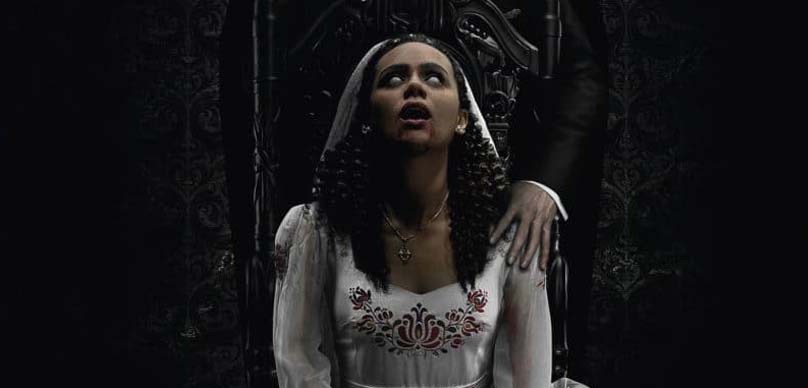
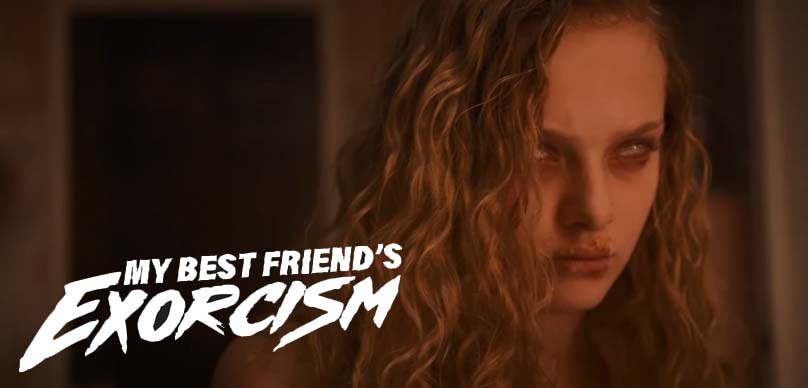
His latest film “My Best Friend’s Exorcism” is a 2022 American supernatural comedy horror film from a screenplay by Jenna Lamia, based on the 2016 novel of the same name by Grady Hendrix. In 1988 best friends Abby and Gretchen navigate boys, pop culture and a paranormal force clinging to Gretchen. With help from a mall exorcist, Abby is determined to compel the demon back to the pits of hell — if it doesn’t kill Gretchen first.

The film stars Elsie Fisher, Amiah Miller, Cathy Ang and Rachel Ogechi Kanu. The film was released on Prime Video on September 30, 2022.

Enjoy my conversation with Damon Thomas.

Right-click here to download the MP3

Damon Thomas 0:00
It's not It's that thing again. I'm not overreaching. Does this feel right? It's just sitting right? You know, you have to constantly be your own worst critic guy, or is this crap?

Alex Ferrari 0:10
This episode is brought to you by the Best Selling Book Rise of the Filmtrepreneur how to turn your independent film into a money making business. Learn more at filmbizbook.com. I'd like to welcome to the show, Damon Thomas. How you doing Damon?

Damon Thomas 0:26
Great, great bit tired. We had the screening last night the premiere, it was like 300 people at the Art fest. So it was a big night. Live Reactions like talking about it was a great night. I'm really pleased to be here.

Alex Ferrari 0:40
Great, my friend. Congratulations on your new film my best friend's actress exorcism, which is as insane as it sounds. Right. It's one of those titles like Sharknado like you know what you're gonna get?

Damon Thomas 0:56
I 100% agree with it. Like, as soon as I got sent that in my inbox, like in 2019. And it was like my best friend's exorcism. I thought this brilliant or, you know, you just can't wait to read it. And every moment since I got signed up to do it, where people say to me, Hey, what you're up to and I go, I'm doing my best friend's exorcism. People always smile. It's just, I mean, they go wow, really? And they go Yeah. I said, Well, you know, what is about

Alex Ferrari 1:26
It's about my best friend's exorcism. I mean, it's, it's, it's perfect. I mean, it's like jaw is like, you know what you're gonna get?

Damon Thomas 1:34
Wait. And yeah, so then you say is certainly at is great.

Alex Ferrari 1:42
You had me at hello. Hello. That's the brilliant part about it, too, as I was watching him just going. I love the 80s. I mean, everyone's doing 80s stuff now and Stranger Things is brought it back and made it cool. But for my generation, and I'm assuming yours as well, the 80s You know, is awesome.

Damon Thomas 2:03
So my first question is simpler times, right?

Alex Ferrari 2:06
Oh my gosh, can you America, simpler times when there was no Internet, there was no social media. I mean, there was you barely had remote controls on the television.

Damon Thomas 2:14
Right? I mean, I mean, when you think about you had to if you are going to meet someone you phoned, and if you had a dial up phone, you would

Alex Ferrari 2:24
Tatatatatata

Damon Thomas 2:24
He would slip on like the seven digit you go put the phone down, go start that whole thing again. And then you call your friend and say like, I meet you there, put the phone down, you go to that place. And if they weren't there, you were like, where are they? And then you'd have to find a phone box, call their house and go, do you know where they are? And they go where they left? 20 minutes?

Alex Ferrari 2:45
No, no, it's like yours last.

Damon Thomas 2:51
Oh, so you know, slight sort of off topic. But the feeling of boredom was something to behold back in the 80s. You know, what, if you have nothing to do, there wasn't that instant, kind of like dopamine hit off something new from you're like, oh, let's go down a rabbit hole down the internet now. And you would just use a stare and feel so bored. It was untrue. It was like a sort of sport. It was like, profound, bored.

Alex Ferrari 3:19
On you had three channels. And if nothing was on that you liked. You were pretty much done. Until you had a friend who had cable. Yeah, then you would go over and maybe get three more channels. And then you'd be if there's nothing there. You have to go outside and actually interact with other human beings. Scary territory.

Damon Thomas 3:35
Exactly. Or you had to like think of something to do didn't you had to go read a book? I get ya read. I mean, God read a book. I mean, wow. Anyway, yeah,

Alex Ferrari 3:47
it's just a bunch of now we just sound like two old farts talk

Damon Thomas 3:52
Said it

Alex Ferrari 3:54
Just two old farts talking about the old. Exactly, exactly. So my first question, sir, is how and why did you want to get into this insanity? That is the film business?

Damon Thomas 4:07
Oh, yeah. For me, it started when I watched Blade Runner in the cinema. Now, I just went, I need to be in that somewhere I need to be in that. I mean, even back then there was so little information about what that was working in the film industry. There was like we used to have this program that was just called film or whatever the year it was that Barry Norman used to present it was going to film 1985 or database two. And then you would just watch that and that was the only information and occasion you'd have an answer documentary. And that was nothing else. And then you might look up films in in encyclopedias, and now,

Alex Ferrari 4:46
We're dating ourselves so badly.

Damon Thomas 4:52
But the funny thing is my daughter that who's like 15 or takes me it was really interesting in that movie, they were like broke the fourth wall and you No, she's got her whole sorts of like terms of reference about filmmaking and everything is so amazing that you kind of got I just feeling we were just in the darkness in the wilderness. And so, so that I kind of got into documentaries. And then I kind of came, you know, I took me a long while to sort of find my roots into drama and started directing drama. But then, of course, I just always wanted to make the movie,

Alex Ferrari 5:29
Isn't it? Isn't it interesting, though, that I have kids as well, and they are, but you know, much more educated then. Because it's just so much more information about everything. Yeah. I mean, the you would get the occasional Star Wars making up or the Indiana Jones making and that was pretty much it. I mean, you didn't see anything else until in the later 80s. When, you know, then it started to become a little bit better than nine DVD commentaries and laser discs. Now really old commentaries on the laser, the criteria, laser distance, stuff like that,

Damon Thomas 5:58
Didn't you want it to hear like how he did stuff you? It was like, you know, behind the curtain, the The Wizard of Oz, it's like, how are they doing this stuff? How is it being made? How'd you do this? And whereas now they were, you can just go on YouTube and go, like, how do you do that, I'll just put it in, you know, and I'll find someone telling me how it's done. Or if someone would have made a film about it, it's, that is sort of great, because it opens it up to everybody in a way.

Alex Ferrari 6:24
But then then the bad thing is it opens it up to everybody. So now before you didn't have as much competition, like I always tell people like in the 80s, if you finished a film on 35, it was sold. Like you just good, bad. I mean, Toxic Avenger got theatrical release, like, it doesn't really matter. But now everybody's making a movie. And now it's about getting seen and all of that kind of stuff. But you were saying about your daughter knowing had the reference from references about that. The generation that's, that's now it is so educated in story. It is so difficult for the for us as filmmakers and storytellers. Because make something that's interesting that doesn't hasn't been done before. And every year that goes by, it's getting harder, and harder and harder to because, you know, things that worked in the 70s and 80s. Just don't they can't work and like I was showing, I think it was some kids were watching Rocky the other day, Rocky, Rocky, and they're like, because every because they've just seen every buddy rip off rocky. Yeah, for the last 4050 years. So it doesn't have the same umph to it as it used to. So it's how do you as a storyteller, kind of kind of deal with that? Because it is something very, very difficult things that Hitchcock never had to deal with weed.

Damon Thomas 7:47
I mean, I suppose every genre has tropes. So and the you know, the horror genre is a very broad church from slasher movies, to psychological horror, to sci fi horror, you know, to alien aliens knows amazing movies to kind of comedy horror. And so you either the, The Exorcist is sort of like the benchmark of like the hand. So Handbook of cartoons, you know, do you? Are you going to do the vault net? Are you going to do the, you know, are you going to do and, and how are you going to do it? And it's sort of interesting, because you're always going to disappoint someone, you're always going to someone's gonna go up. I wasn't scary. But the thing about it is I did it, what want the film to have this sort of tone that felt like an 80s movie. And then it kind of went into a completely new realm of like, oh, wait, you know, where did that come from? I wanted to stay within the same thing. So the exorcism for me was a great, I thought, can we pull off this thing where it's kind of scary and quite disturbing, but then it's funny. It's like, relieved by this real character of Christian lemma. And the thing is, because once you he's sort of desperate, but and, you know, when I when I first met Chris, we were talking about it rehearsing. I said, he's sort of a loser, but he's kind of a bit cocky. But he cocky or cocky loser? Yeah. And he does want this. He does want it really bad. So that when the demon shows himself and he just goes like, yes. Even a high five, she's totally chocolate sized. And for me, and it was great watching it last night, because people really enjoyed that moment, and really enjoyed Christian lemon. And I think actually, it's it showed me that there's kind of quite a nice group dynamic when you think you could really watch this movie with a group of friends. Oh, yeah. It's not like I don't think it's a sort of, well, you know, people will watch obviously watch your mobile device devices all the time, but it actually made me really think about that group experience of watching movies. You know, I went to the cinema As I see Thor and my son, you know, a week ago and now it's it is great being in the cinema, isn't it? There's something that is said. That's why I thought last night I thought it actually really helps when everyone's going through because like when, when the when there is she burns him address them. They all cheered last night. It was fantastic. Thank you not expecting it.

Alex Ferrari 10:27
But it's primal, theatrical experiences. It's a primal experience. And we're all around the fire. Yeah, it's a primal thing and group experiences of a story, where, you know, the core of all stories is basically to teach us not to be eaten by the tiger down the street. Yeah, you know, around around the corner. That was the point of stories around the campfire as they were, and then they evolved into morals and lessons and things. And now it's entertainment. Because we get a lot of the meat and potatoes from other other kinds of media. But it is, yeah, you're absolutely right, without question now.

Damon Thomas 10:58
But just also just to pick up on that point is, I think that even if you have never made a movie TV, and you know, but you've people sort of absorbed so much about, you sort of watch something you go, they're gonna get together, he's gonna die. He won't, you know, you just feel it right? If you feel that, you know it, because you know how these things work, you sort of said that when you get like, you know, say a series of severance or station 11, you're on TV, you let you go, I've got no idea where this is going. And they feel quite refreshing. And I wanted to do some things where you sort of felt I thought, it'd be funny if this felt like a movie that somebody thought they hadn't seen from the 80s. So have a bit of an 80s vibe. And but also, if you had an exorcist, it was just so unlike any excess, you've seen before, and, and to really get to make him so we I really set him up so that when he comes to the exorcism, you really enjoyed him. So that was the high fives that he's always doing. Up top, you know that stuff. But you know, he's cheesy, but you know, there were weightlifting, Christian evangelist, if you put it on YouTube, you can see these guys pumping iron for Jesus, and they exist that they were real, they were real people. So it's not far fetched. And he is a real person, he is like, totally believes that, you know, his purity. I mean, I even realized that he can't remember Gretchen's name. Yeah, it comes out in the middle of it. It goes, You know what, such a, it's so true. Because it's all about him.

Alex Ferrari 12:42
Obviously, obviously, you know, it's, it's brilliant. And you're right, it's so because we've just seen it so much. And we've seen it and we've seen it done well. And we've seen it some bad, you know, so like, if you're gonna see a shark, if you're gonna see a shark movie, and you've seen Jaws, it's gonna be tough for you to figure out a new way to do a sharp move, because it was done pretty much unanimously. The first exam the DHS is, it's the same thing. It's flawless.

Damon Thomas 13:10
I know some people then get disappointed if you don't do the things that have been done before. Because you're like, Well, what happened to that? Where's that? You know, and they go, but you're like, you were saying, how do you do different you're trying to find ways to either, like, reinvent the wheel, if it's already been filmed and done, like 1000 times. So you are, you're in kind of familiar territory, but you know, I did want to Yeah, as best as I best cuts just get that tone. Right. And, you know, if people you know, you can only do what you can do, you know, there's always

Alex Ferrari 13:44
Yeah, yeah, it Listen, it's we're in, we're in the world of everyone has an opinion. And everyone can express that opinion on Rotten Tomatoes, or on you know, mats and things like that, and social media. But at the end of the day, as a filmmaker, you just got to do what you got to do. One thing I love about about the movie is that you are able to balance humor and horror, which is not easy. It is not easy to do that as a filmmaker, as a storyteller, because I've seen really bad because if the balance is off, I've seen bad horror comedies, where if the balance is off, you know, like Evil Dead to an Army of Darkness. Like they'll those movies. You know what, Sam? Sam general, could do no harm. No wrong in my eyes. But yeah, but he's able to balance that and you were able to balance the horror and the comedy beautifully in this film. Oh, because it's not it's not easy. It's not easy.

Damon Thomas 14:35
Yeah, I mean, I think it comes from truce, I think. If your characters feel like the real article, even if they are heightened, I mean, we all we all know people that feel quite heightened type. So you're gonna meet people who are strong flavors, and they're real people. And Christian lemon is a strong flavor. And yeah, but as long as he's being truthful to that character in that sort of set of circumstances. And it's sort of balanced with, you know, Abby's kind of like sheer like, Oh my God. You know, it was one of the things I put in because he just sort of say actually is an exorcism. And it originally she, she went, Well, how do I do that? I just sort of I kind of said she would really go, well, it's not a normal thing. You know, generally, it's been fun but because it's an exorcism movie doesn't mean that everyone knows that, you know, an exorcism is something that is actually real. So so he talks about really patulous way, but he gets the job as an excellence as demon inside it, these these really patronizing to her. And I thought that's exactly what he would say, like, are you stupid?

Alex Ferrari 15:52
Come on, of course, it's just the team. Yeah.

Damon Thomas 15:55
So to your point is that if you have, it's like in killing Eve, I did a scene where Eve kills a guy with an axe, like being spurred on by Villanelle. But that's that scene is quite funny. Because the axe gets stuck in his back and says she can't pull it out. And so she's being shouted that, like, hits him again. She's saying I can't have access. And the guys go, Ah, it sounds kind of really disturbing. But it's funny because I think those things can sit right next to each other like, because the Coen brothers do it all the time. They kind of, you know, they put like, weight. And I think that it's it's a bit like when you go to a funeral that they're you feel like sometimes doing the other thing that you're not meant to like laughing, because it's the relief intention that you need, because of the emotional expectation. You're

Alex Ferrari 16:50
I'm sorry, I don't mean to trump your budget. Do you when you sell a funeral? Do you? I don't know if you saw this online somewhere, but some guy died. Okay, he died. And at his funeral, he put a speaker he had his family put a speaker inside of the inside of the casket. And as their as their this is part of his wishes, as it's being laid down. Like, hey, hey, no, no, no, no, no, I'm alive. I'm alive. And he's hitting and knocking and, and it's and people are pissing themselves. I mean, everyone's crying. But then everyone starts laughing because they know it's, what'd he do? I'm like, Oh, my God, that is so brilliant.

Damon Thomas 17:29
He's brilliant. He's fantastic. Isn't it as well for planning?

Alex Ferrari 17:34
That's, yeah, he I think he was sick and he was gonna die. I'm gonna do this. I'm going to do this, right. And my favorite tombstone ever is like I told you, I was ill.

Damon Thomas 17:44
That's brilliant. Very, very good.

Alex Ferrari 17:47
Now. So when you started your career, Damon, I'm assuming that the second you said, I'm going to be a director, that the trucks of money came in, all the doors came wide open and said, whatever you want to do, all you have is time and money.

Damon Thomas 18:01
Oh, my God, if only Yeah, I know. I've had it's a long journey. I did a degree at physics and I, of course,

Alex Ferrari 18:10
Prerequisite to be a filmmaker. Yeah,

Damon Thomas 18:13
I mean, I just got a job in, you know, I got a job in BBC News. And then I gave her up to go and work on an arts program and then gradually just did more and more documentaries that did drama documentaries with about Beethoven and other things. And then I got, yeah, just got a break. You know, someone actually approached me to do a drama documentary. And I said, why don't we just do a drama, and it was set in the Antarctic, and we had like 120,000 pounds. To make it said that I were filmed inside and out as an ice fridge. It was all set on one of Scott's Antarctic missions. So that said that their breath was all sort of

Alex Ferrari 18:54
Because there's no budget for VFX no budget for VFX.

Damon Thomas 18:57
Yeah. And we went we snowed up a studio. That was tiny. And yeah, it was. Yeah. So it started back then in 2006. So yeah, it's been a long road. You know, there's been a lot of us a lot of Miles.

Alex Ferrari 19:11
Miles on the tires, as they say. Yeah. So the question is, though, because a lot of filmmakers listening are going through these stages. And again, even in Oh, six. It was a different world than we are today. Like, you know, it's so much more difficult to get in now than it was in the early 2000s. How did you keep going? Is there any advice you can give to filmmakers? Right?

Damon Thomas 19:35
I mean, obviously, back then, it was a bit like if you wanted to make a record, you know, you you'd like you could you just couldn't afford to go into a recording studio, so they seemed very out touch beyond reach. I think the good thing about today is you can make a movie on your iPhone. And I think the thing what you learn by just doing it is sort of you know, How'd you make something that just kind of engages people? You know, and I think that that's the thing, if just start making stuff, even if it's you, you know, you and a friend do something about your life, suddenly, there's kind of like, you could be filming your own house when your garden or down the park or things that you kept. So they don't need huge production. So it sets something contemporary, and just start sort of just putting something together. Because the thing is, that's what people judge you about. They kind of look at you and see how do you well voice every last story? Can you do something funny? Can you make something? And, you know, it's amazing how you can engage people with something very small. It's like, Don't overreach. That's always the thing about filmmaking is, you know, don't just spend all your money on one shot and the rest of the film feels like it's no money.

Alex Ferrari 20:50
But Kubrick and Scorsese did it. Why can't I?

Damon Thomas 20:54
But, you know, I was reading gonna take because I love the shining.

Alex Ferrari 20:58
My favorite, one of my favorites,

Damon Thomas 21:00
Right! It's such an amazing film. And, you know, Jack Nicklaus axed 60 doors to get his Johnny. That's three. mean,

Alex Ferrari 21:14
I mean, you imagine, can you imagine taking one of the biggest movie stars in the world today? And you're not Stanley Kubrick and going, Yeah, or David Fincher at this point. And yeah, and just 66

Damon Thomas 21:29
Number 14. I like exhausted, like, axing costs,

Alex Ferrari 21:33
I think. I think I'm sorry, but I think Fincher on social network. When when I think Andrew Garfield had to smash the the, the laptop. Yeah. And they did like 40 of them had he had literally 40 laptops sitting down, because he knew it was good it because that's David Fincher.

Damon Thomas 21:54
Yeah, I mean, yeah, it's weird. We don't all have that. I mean, you know, his tutor, you could say he's right, because he turns out brilliant film, right? It his process network is, you know, that shining is a masterpiece. And they change, they change filmmaking daily, they change sorts of that, you know, when I, when I was doing killing Eve that I was quite influenced by, you know, Jack Torrance when he's sitting there, and the whole dance is going on behind it this whole I know, it's so like, at the edge of the world sort of madness. And so when I do killing him, I suggested that we do this, this kind of like afternoon tea dance. So you go into this environment and villain I was waiting there. And this is old fashioned music playing all these people just dancing. And it's like the edge of time. And I just, you get really influenced by, you know, but sorry, I was sort of digressing. I mean, in terms of filmmaking, you just have to do if the more you do, the more you sort of learn, because you sort of realize no sound is quite important, a good sound, you know, and it gets forgotten, you know, sound cooked, you know, to get great sound that you can actually use it because a lot of times we have to do re recording a lot of dialogue was it's like planes and all sorts of fridges on in the background. And, you know, someone just decides to sort of, you go to the quietest place in the world. And on that day, there's a guy getting his tree cut out. And there's like, you go over, you get like, people come over, go, can you not cut your trees? And he goes, No, I've paid for it. You know, you're like, oh, my gosh. But you know, it's all those. And you learn how I mean, you know, working as I started as a trainee news additive, you start realizing, Oh, you can cut that picture that picture, they sort of come together. Oh, yeah. How do you cut those? Oh, we actually need a cutaway on that, again, a detail shot because it's how it helps me tell that story. And you realize that sort of objects. If you see objects in someone's room, you can actually tell exactly who they are very quickly. And so art direction and all the bits you need, it's like a messy desk. It's interesting how some people do a messy desk, but it's sort of looks like a sort of presentation. It looks messy desks actually have smears on them and bits of crumbs. And it's all that kind of thing that you start to you become, you know, over the you just become super observant about things in a kind of really all the time, things that you sort of that make all the difference. Now, you may be watching it as a kind of year ago, like it doesn't feel right doesn't feel like a real thing. But you can't put your finger on why it doesn't feel real. It's a bit like doorframes. In a real house, they tend to have quite a lot of scuffs lower down. Because all the things have gone through them over time. If they look pristine, it looks like a new build. You know, it's sort of it's all those details that you start to get quite attuned to as a director when you start doing stuff. But you know, story is key, you know, what's the story? And is it engaging? It's sort of like you can dress things up with you can spend millions on effects, but they don't engage you about the human condition, then you ended up going, I don't care. You know, if you're going to see a film that was 100 million dollars, you saw that. Because we've seen everything go away.

Alex Ferrari 25:18
I mean, if Jurassic Park was just a bunch of dinosaurs walking around and be like, it'd be a documentary, you needed a story you needed to connect to those characters, you needed the magic that Spielberg brings in. Do you know On a sidenote, since you such as a Kubrick fan, do you know I'm sure you do though this but he, I think it was four Eyes Wide Shut, right. Had his assistant runner up for a year run around? Oh, no, not theaters? No, no, the the side tables of couples in a bed, and he just go into people's houses. It is take hundreds, hundreds of pictures of just how people kept the side tables at night. And he just used them as reference to build out his side tables for

Damon Thomas 26:05
And us who are things that

Alex Ferrari 26:09
You just get a bit but you're talking about someone who spent seven years prepping that movie. And it was great that he did but it was horrible that he did because we didn't get more Stanley Kubrick films, I wouldn't die. I would love to see what Stanley would do with today's technology. Can you imagine? Imagine?

Damon Thomas 26:25
I mean, you know, 2000 a while it's just it's so clever. And so, so interesting, you know, there was sort of being made in the late 60s. And it's kind of amazing, you sort of they are different times. And he was a particular, you know, very particular director. You know, I'm I'm also a big fan of like, really, Scott, you know, I think people people are still trying to make alien and Blade Runner. Yeah, they're still trying to make the air those are the benchmarks in the way that, you know, it's, you know, that sort of dirty future, like rain soaks, sort of the clash of kind of, like different cultures around the world, you know, that whole feeling? I, you know, it's it. Of course, they were, they were slightly you can feel it from the effects point of view, but they there's so the characters are so great. And they're stylization, mixed together, that kind of, you know, realization of is, you know, they had such an impact on me. And, yeah, it's why these, you know, you can still go back to this, but that's what I think about how many films you actually revisit, and we watch Apocalypse Now, you know, blew my mind when I watched it, I can still rewatch that film every single time because it's, you still see something new in it, and you just think it's so incredible. And, you know, and the conversation, you know, another amazing, amazing film, but also great, you know, surveillance, you know, I like I really liked that movie, the lives of others, which is another surveillance movie, you know, another brilliant film, because they're all about the human condition, but they just tell great stories really well told. And I think that that's what you're always trying to do. Whether we succeed.

Alex Ferrari 28:22
It's not easy. This is not easy, telling a good movie telling a good story. I mean, if you're a good storyteller, and even the best storytellers that we have in the film industry, they don't get it every time. There's very few that have impeccable photography, it's something else times,

Damon Thomas 28:39
Essentially. And the thing is, you know, nobody sets out to make a big pile of crap. You know, you've never noticed that says, you know, this year.

Alex Ferrari 28:48
I'm gonna, I'm gonna call me cat, I'm gonna make cat let's go make cat

Damon Thomas 28:52
40 million and then move on with me. Good. I read. It's just like, everyone he knows. It's it kind of, you know, it's a lot of people's lives, you know, spent dedicated to doing something. And that's why, of course, you know, I think it just takes a huge I think the thing about it is just not it's that thing. Again, I'm not overreaching? Does it feel right? It's just sitting right? You know, you have to constantly be your own worst critic guy, or is this crap? What is this, you know, you have to, and also you have to be able to work with people that you trust their opinion, so that when they go, that's why, you know, Robert Evans was such a great producer, because he was able to tell us some trouble if you become, you know, a celebrated director. You know, can you take criticism, because someone's hate give you a no go is any good, you know, and you go, right, actually, I think that's, and that's what I think sometimes does happen. I mean, look, you know, if if someone you know, you can make one shining in your life, you'd be happy with it.

Alex Ferrari 30:00
Oh my god. I wouldn't take any almost any movie out of out of Stanley's filmography and go. I'll take that one. You know, I'll take it all.

Damon Thomas 30:14
I mean, if and that's why these guys are amazing. And you just keep kind of going back on thing. Yeah, there's, there's no and that's why I kind of judge the film when I rewatch it. Right. It's it's like really disturbing. I don't want to rewatch it was definitely disturbing. But you know, it's funny how you can, if Jaws is on the show, watch a bit of Jaws, you know, when you just see it on a streaming platform you go, I'm gonna watch that tonight. We'll get back to it. Right you and kind of we, you know, because also these actors that are in there, you know, Dreyfus is so, so good, aren't they? There's such, the way that they inhabit those characters is,

Alex Ferrari 30:52
Is, is remarkable. Now, let me ask you, you know, as directors we there's always that day on set that we feel the entire world is coming down crashing around us. Generally, it's every day, that's everyday generally. But there's always the one

Damon Thomas 31:05
Offs in device device slowly.

Alex Ferrari 31:09
So so there's that one day, that's really bad. And you know, camera doesn't work last the location that guys cut into tree next door? What Yeah, what was that day for you on my best friend's exorcism? And how did you overcome it?

Damon Thomas 31:23
Ah, gosh, let me I'm trying to think of those days. Mistake 10. If we had like, a true chakra of a day on that, that's good. Yeah. Because the thing about it is doing it so long that you literally, it's like this sort of thing. When it comes, you just, you just let it, you sort of have to absorb it. And like I say filmmaking is like the same, but always different. Because of the actors and the team that you have. There's always that combination. And there's always something that will just go wrong. And you just have to, I think doing documentaries for years that allowed me to sort of pivot in a way of just going because I used to always turn up places like I've never been before. And they meet people film them, and they're going to film some shots. And you were just making up on literally, if you didn't get to Reki, because you couldn't sort of fly to America and meet the guy and go home again and go back and do you would just go and film them. And so you sort of so it's kind of like taught me that don't get too rigid. Apart from like, action sequences when you have to really plan on storyboards, and then pickoff shots, which takes a very, very long time. It's why like bond has like the main unit, and then it has the the action unit. They're running for like six months next to each other because of this so many shots. But I think that sort of doing documentary for so long. I just kind of if things sort of go wrong, I can just go well, let's try and do something else. It doesn't. For me, I kind of go, you know, and things just happen all the time, you know. And the classic one is you've got a driving sequence and you just go to the right just drive the car of them they go, I don't drive.

Alex Ferrari 33:22
I had fun on your headshot. But on your headshot, you say you ride horses, you play the guitar and you drive. That's when your special skills.

Damon Thomas 33:30
I always remember one guy said no, I spent the money on of dance lessons. I was you know, I literally just drive the car over here. It was like a really small oversight. And so we had to put him in the seat behind in the backseat and fill in such a way and just mine the steering wheel, but someone just drove in front of him but we got away with just that. It's just you just choose the camera angle. And just see just like that you just kind of go like, course no one's asked him if he arrives.

Alex Ferrari 34:04
But it's basically directing his compromise in so many ways. It's constantly compromising and pivoting and shifting. Because I don't know about you, I love to walk on set with and scare the hell out of my ad with like 150 shots on my shot list every day. And they're like, You are Yeah, we have eight hours. And I'm like I they're there in case things go well, I know I'm gonna shoot 20 of them. But

Damon Thomas 34:31
Exactly. And I think that is a sort of career of patience of just, I mean when you think about it as you're now it's that most of the day is spent lighting. Lighting is you know, lighting is key and makes everything look great. And you just so you know your block, size of your shots. You sit and then you start lighting. I mean They just spent a lot of time, right? And so it's like riding that wave of, oh, you know, waiting for last. But that's not the denigrating the director of photography, it's just like that is the life isn't it? So life off just kind of finding that in

Alex Ferrari 35:15
That it is then that inner Zen of place, you're like, Okay, we're ready, okay, three to how many two hours to 90 minutes, but it's gonna be two hours.

Damon Thomas 35:24
I mean, I'm the other interesting thing, I think, is that people who don't work in the industry often say, you know, when you work with actors, they go the other direction, they just do what you say, you can go. It doesn't quite work that way. Doesn't you know, that's not how it works. And they just don't understand that it's a very inexact. Science is really unique and special. And it's such a exposing amazing thing, that it's not just about you that you do that over there. It's not that it's a kind of proper creative relationship that you sort of embark on.

Alex Ferrari 36:01
Isn't it interesting that when when normies I call them normies people outside of the Carnival business that is our world, come on set. And they've only seen like, behind the scenes. Everything's edited. So like on set seems like it's, you're going fast. And they're sitting there like three hours later, they're sitting in the chair with with the headphones on for sound, and they're like, this is boring is crap. And like, is it like, on a mark on a Marvel movie? They'll spend, what, eight hours lighting for one shot? Yeah, because that's they have all the money.

Damon Thomas 36:37
In Bad Boy, just shoot two shots in a day. And just spend the whole morning just rehearsing, rehearsing a big shot that has a lot of moving parts. And that's what you do, you have to, if you're gonna shoot a shot, you got to shoot it well, or don't shoot it. This is the crazy thing sometimes about shooting is, don't shoot. That's another thing. That's another thing. I'd always say don't shoot. I'll say crap. But you know, don't shoot rubbish and shoots stuff. Because you're always going to look at later Oh, why didn't I just I knew, you know, I knew I

Alex Ferrari 37:14
I know.

Damon Thomas 37:17
And the thing about it is that's what you have to do as a director you have to go. It's not right, we need to, you know, it doesn't feel right. That's sometimes you set for a shot, and you have to have the competence. And it might have taken quite a long time to put the camera out there and the rigging or the guys the grips. And then you start looking at it. It's not right, we just actually need to be over here. And you have to have the confidence go strip it all out and have people around you that kind of out. Yes, you're making it. Yeah, we see it. And also don't get sort of that it also meant that you're doing something wrong sometimes like this, actually, you know.

Alex Ferrari 37:53
But that takes time to build up. Because when you're when you're first onset, you just don't want to look like you don't know what you're doing, of course, but as you get older and you've got more more shrapnel in you, you just go, guys, I made a mistake. Let's let's go over here. This is just not working. Let's say yeah, it's gonna take two hours. I'm sorry. Let's go.

Damon Thomas 38:12
Yeah. And you you're, you'll never regret it. Because you're, as you know, or just the footage that you get will be like you think thank God, thank God because you might as well choose something great. That took twice as long. I mean, it depends about obviously jeopardizing a location whenever you have to. That's why it's a sort of system of moving parts. You're always going, oh my god, can we, you know, we're only in here for one day, like the interior of the weird house, you know, there where it happens was actually there like the upstairs corridor. And this other building is sort of outside You'd never believe that we were that was the inside of the house. But we got real freedom to like smash it up inside. But we have such limited time in that.

Alex Ferrari 38:57
But is it but isn't it true, though, that you have to sit once in the edit room and go Why didn't I move the camera? Why did I accept that shot when I knew somebody was telling me? No, you've got to but you didn't have the balls or the confidence to change? Or? Yeah, you're in the edit and you're edit and you're in the edit room and you're like God I need either a guy God I gotta get saved somehow with this. Yeah, these are lessons you learn along the way and then eventually you just like I know I'll get the shots that I need. I gotta shoot that they ashtray why cuz I need a frickin cutaway?

Damon Thomas 39:35
Yeah. And it's just, yeah, yeah. That you have to rely on people around. You just have to rely a lot. But yeah, you. You sort of over the years, you're ill so you sort of see the problems coming. I think that's what happens. That's what I sort of say you sort of go, I know that we do this. That's not going to work probably because you've so been there like 10 times for sure. Thank you Get those of that and that kind of that. And that's why experience hadn't counts for a lot of question. I especially when you when you move and do different genres, occasionally you sort of come over here, you sort of think, well, I've done a shot like that I did a shot with someone underwater, I did that crash, I did someone leading over, you know, they just did it by putting your green spirit. And it's also knowing sometimes people can't, like, I just, I just did a thing about the Black Panthers in the early 70s. And we just needed someone that was on our Holland, I just saw sort of shape and a park with a pathway. I thought I'd be great. As soon as you put the car here, just put a green screen around, and everyone's sort of going, like, are you mad, you know, but we did it. Because I just knew it would work the shape. And I guess it felt like sort of lookout point that you could put a car on the head, you know, you just use like we did sort of, we had had to recreate the Mexican border. And we literally did it in like an Ikea car park. So you go on the tape record, you go. And it's just as concrete. And it was literally going I don't get it, I just don't see it. And you have to say, well, we put the all the crosses here, put the fence there, all the trucks here, we've put a lot of blocking load of big trucks on that size. And then it just sort of it's sort of you have to visualize it. I think that that becomes a thing as well that you start to visualize things within spaces. And I think that that is another thing you start to see. Because you start thinking, I do think and it's not all it depends what your life is directly about you. But I liked photography. So I liked it. Yeah, so you sort of like I like photographing, you know, you get quite into composition. And it's a bit like taking photos that people just, you know, when you think about it, like you always take a photo as sort of a shoulder highlight this is where you sort of get on the floor and you're like, oh, let's do that, you know, you're gonna lay on the floor, you're never gonna put the camera down there. But you have to start thinking about that when you start shooting as directors, you sort of think Well, where can the camera? Uh, how does it make me feel about what I'm looking at putting the camera in different positions, and that's another thing you start freeing ourselves up, about not just going here we are. But sometimes the symptoms sometimes the simplest things are just just as effective. That's the other thing. They just aren't just making things really flashy because in the end is the performance and the writing that are going to set it off.

Alex Ferrari 42:40
I mean you could look at some John Ford shots and you're just like well that's a masterpiece and they just have to just lock the camera off.

Damon Thomas 42:45
Yeah, and you know just lock it off look at just you know Yeah, and you know, that's a lot to do with location is that again just sort of going we've got to go all the way to this remote place will do that shot

Alex Ferrari 43:01
No no no IKEA IKEA and a green screen you got Lawrence of Arabia What are you talking about? If he would have had IKEA green screen we wouldn't even desert that's crazy.

Damon Thomas 43:17
He wouldn't be on Santa so much.

Alex Ferrari 43:19
It's so my last question to you sir is if you were able to go back in time and talk to your younger self is there one piece of advice you would give? Give him one piece of advice about your filmmaking journey like dude, you know, you really need to look out for this

Damon Thomas 43:34
I think is to do as much of it as you can sort of don't kind of just be waiting for the one moment that you feel is coming at a certain point in time just start shooting things just make a small film even when it's like you know drama set in your own house with your family you know, if you're just think of a story and also if it comes from you your own experience then it will be true Won't it so that if you if something has happened to you do you could do it and you'll be surprised at who can act sometimes as well you know you're and then by shooting sub two and keep it very small because do some of your very limited and just see if we can make narrative lasts for like two minutes or three minutes and put some music right then yeah, I think I think I obviously but then there was a source of it. We didn't have for you this technology whereas now you could just do it and I think that in a way we have too many tools. You know and

Alex Ferrari 44:38
And not enough story

Damon Thomas 44:40
Is true, though, isn't it? And so so kind of you you know what's the everything everywhere all at once that movie? Yeah.

Alex Ferrari 44:48
Great.

Damon Thomas 44:49
Ah, what amazing what an amazing kind of, but also very, very interesting about the human condition. Isn't it's all about what people beaten to each other. And what it's it's, I mean, people with Frankfurter fingers. I mean, it's

Alex Ferrari 45:08
When I had them on the show. I'm like, Dude hotdog fingers, guys seriously? And they're like, Yeah, we were we were high. So I said something. Because like, this is insane guys, this

Damon Thomas 45:22
That's what I love about that film is like, it's like we learn to express ourselves with our feet. And I think Jamie Jamie Lee Curtis is there and then this little foot just cut this out to her face. And so that's, I just thought, I think it's, it's not but it's true to them. It's very true. It's perfect as perfect. I thought that's really clever. And it's just funny, very funny and touching. And those guys go,

Alex Ferrari 45:49
Damon, I can keep talking to you for about another five, six hours about geeking out over. I mean, we could just start talking about Kubrick for an hour alone. There's can people where can people see your new film My best friend's exorcism?

Damon Thomas 46:00
It's on Amazon Prime video now. It's it's released today the 30th of September and yeah, so

Alex Ferrari 46:08
Perfect Halloween film. Perfect Halloween.

Damon Thomas 46:10
Yeah, well watch it. We're friends. Yes. Like my first ad Steve Hall. Fantastic guy. He's doing a party tonight. They're re re enacting one of the lemon brands steeds tonight with his friends. I just Yeah, fantastic. Yeah. Watch it with a group.

Alex Ferrari 46:30
My friend. Congratulations on the film and continued success with with I can't wait to see your next films coming out my friend. So I appreciate you my friend. Thank you again.

Damon Thomas 46:39
Thank you Alex. Thank you!

LINKS

SPONSORS

  1. Jambox.io – Royalty Free Music for Indie Films – 20% OFF (Coupon Code: HUSTLE20)
  2. Need Distribution for Your Film? – Check This Out!
  3. Bulletproof Script Coverage– Get Your Screenplay Read by Hollywood Professionals
  4. Audible – Get a Free Filmmaking or Screenwriting Audiobook
IFH 618: How I Adapted a Best Selling Novel and Made My Film with Aitch Alberto

Aitch Alberto is a writer/director born and raised in Miami, Florida. She is a Sundance Episodic Lab fellow, recipient of a Skowhegan Artist Residency, a Yaddo fellowship, a Latino Screenwriting Project Fellowship, and an alumnus of the Outfest Screenwriting Lab. Aitch has written on DUSTER, a 1970s-set crime drama series from J.J. Abrams and LaToya Morgan for HBO Max and WBTV.

She also served as a writer on AppleTV+’s BAFTA and Film Independent Nominated anthology series LITTLE AMERICA from Alan Yang, Kumail Nanjiani, and Emily V. Gordon. Most recently, Aitch has adapted and directed the award-winning young adult novel ARISTOTLE AND DANTE DISCOVER THE SECRETS OF THE UNIVERSE with Lin-Manuel Miranda and Eugenio Debrez producing, from Limelight.

Aristotle and Dante Discover the Secrets of the Universe is a 2022 coming-of-age romantic film that is an adaptation of the 2012 novel of the same name by Benjamin Alire Sáenz. Aristotle and Dante had it premiere at the 47th Toronto Film Festival on September 9, 2022.

She has been included on The Black List’s inaugural Latinx List, as well as the Tracking Board’s Hit List and Young & Hungry List, and NALIP’s list of “Latinx Directors You Should Know”. Aitch has most recently been featured on Variety’s 10 Directors To Watch for 2022 and Indiewire’s 22 Rising Female Filmmakers to watch in 2022.

Enjoy my conversation with Aitch Alberto.

Aitch Alberto 0:00
Like, how do you go through the journey of trying to be who your parents want you to be? And who your soul calls you to be? And how is their trauma affecting your sort of the way you navigate the world? Right. So it was, I think the subtlety was necessary and sort of like presenting that in a in a naturalistic way that slowly like evolves.

Alex Ferrari 0:20
This episode is brought to you by Bulletproof Script Coverage, Where screenwriters go to get their scripts read by Top Hollywood Professionals. Learn more at covermyscreenplay.com I'd like to welcome to the show Aitch Alberto. How you doin Aitch?

Aitch Alberto 0:36
Hi, how are you?

Alex Ferrari 0:38
I'm good. We were having a good laugh before we got started because it's not there's few of us Cuban filmmakers. In the business. There's there's there are Cuban filmmakers without question. But every time I every time I find another Cuban filmmaker, I get very excited. And we start talking and we started like, Adela and it didn't of course, you're from Miami and

Aitch Alberto 1:01
The lalalalala No, I mean, I love it. It is like a rarity. We are out here and we are doing the thing but there's not many of us. So especially like a Cuban from Miami because there's Cubans everywhere, but like a que cippic And being from Miami is very specific to

Alex Ferrari 1:22
I think filmmakers from Miami is like a whole other conversation. It's

Aitch Alberto 1:26
I heard your name from like, years down the line. And I refuse to age myself. But like, you were in the like the sphere of like Dave Rodriguez and like Caroline

Alex Ferrari 1:36
Ohh stop it. Stop it. Why are you going back that far?

Aitch Alberto 1:40
Yes, I know. But like Dave directed my first short Oh, no, no. Yeah,

Alex Ferrari 1:46
You were in that short.

Aitch Alberto 1:48
It was. Yeah. And I also wrote that story. Oh, my God, what do you rest in peace?

Alex Ferrari 1:55
May David. I did I did push for him. I was I did all I did push for him. And then during that, that was when I released my first short film Broken back in the day,

Aitch Alberto 2:05
I've seen broken back into the movie, because I he did push and then like, while push was in post, he fit in my short. And I found him off like Craigslist. I had written the script, it was all like shift left on like a Word doc. I was really young. And it was a really beautiful experience. But I remember your name from then, because I have a sick memory.

Alex Ferrari 2:29
That is, so this would be this the first lesson that will teach in this conversation. It is a small, small world.

Aitch Alberto 2:37
Absolutely. Even smaller industry. I say that. LA's like the biggest, smallest town in the world.

Alex Ferrari 2:45
I mean, that you're like, Oh, my God, I can't believe like I just You took me way back. This is good talking about early 2000s When you don't need a date. I'm sorry. I'm sorry. Sorry. I mean, last year, but so. So my first question to you, ah, is how did you get into and why did you want to get into this business?

Aitch Alberto 3:09
That's a very loaded question. I have a very interesting upbringing, being from Miami. And growing up when I grew up, my father was in the drug trade. And was a fugitive for a really long time. And I it was eight years and we lived on the run with him. And movies were always my state. So it was like the thing that brought me comfort and like I never asked for toys. I wasn't like big on anything else. I was obsessed with movies. I just didn't know that you could have a career on all facets and all sides of the film industry. So I acted for a really, really long time.

Alex Ferrari 3:47
Wow, that's so when is the movie coming out of when you were on the run? I mean, there's a movie there. I have to believe

Aitch Alberto 3:54
It's a TV show. And we are yes, it's somewhere that it's being developed right now. And it's written and it's like the thing that it's probably the most honest piece of writing that I ever did. It heals me in so many ways. It was archaic. It like sent me on my journey of my transition. It was it just like unlocked so much to revisit, like a version of myself that always existed, but sort of like life happens and you don't know how to sort of embrace that and be everything that you could be. But that scripts got me to the Sundance episodic lab, it got me my first TV writing job, my second TV writing job and sort of like helped me get me where I am right now to be able to make the film that we're about to talk about.

Alex Ferrari 4:35
That's That's amazing. That's I mean, well, I'm looking forward to seeing that series because I mean, being from Miami. I just I did just see Cocaine Cowboys again. That's just

Aitch Alberto 4:44
So it's very that it's like that was my life.

Alex Ferrari 4:47
So and you were on the run with him with Japan. Yeah,

Aitch Alberto 4:50
I mean, for the year it was a very like interesting experience. And I thought it was completely normal until you like grow up and you're like, Wait, you didn't have that experience.

Alex Ferrari 5:00
Do you mean you weren't running away from the cops and the FBI? And

Aitch Alberto 5:03
It's also a deep trauma, which, you know, thank God right there.

Alex Ferrari 5:07
Right! I can only imagine I can only imagine. Well, that's. So that's that makes sense, I guess. So in other words, movies were your refuge. And you were able to kind of go in into that world and very cinema para DCLs.

Aitch Alberto 5:22
I love that film. It's such a great film,

Alex Ferrari 5:25
Just to kind of escape into movies, I always used to say that movie theaters were like a church. For me, I would go into it. And by myself, I would just go to a movie and just in the middle of Tuesday at one o'clock or something, and just sit there and watch a movie and, and by the time I was done watching that movie, my life has been better for whatever reason, I would have forgotten the problems I was dealing with,

Aitch Alberto 5:46
So one thing that I like Miss during the pandemic, as a writer, it's, I'm great at isolating and like quarantine didn't scare me. But I missed the escape of going to a theater in the middle of the day. And it was always one of my favorite things. My grandmother would take me when I was really young. And she would like skip movies with me and like, she fall asleep and all of them but like she was my like Road Dog and going to see all these movies that I did often see movies that I shouldn't have been seeing at the age that I was like Leaving Las Vegas I saw when I was 10 years old. I went home and wrote my first script online paper.

Alex Ferrari 6:28
That's that is amazing. Wow. I mean, I saw Beverly Hills Cop when I was like seven or eight and I thought that was a little rough. But Leaving Las Vegas it's it's rough for an adult, let alone a 10 year old for God's sakes

Aitch Alberto 6:41
When you're on the run and you're slightly traumatized and growing up faster than you need to.

Alex Ferrari 6:47
I mean, what love Leaving Las Vegas what a drunk killing himself. That's fine. Sorry for spoiler alert, if you haven't seen it, it's on you guys. Sorry. So, um, so you mentioned that you got into Sundance, how was that experience because I've spoken to many people who've gone through that lab and through that process, and I'd love to just kind of get the inside feeling of what it was like being in there and going through that process.

Aitch Alberto 7:10
I loved it. It was one of the most nurturing experiences that I've had as a writer and a filmmaker thus far in my career. And it just like, I was introduced to so many people, it was affirming in so many ways. It was such a goal of mine to like, be validated by Sundance, because I didn't go to film school. I don't have any formal training. Like I taught myself by reading scripts and watching movies at the same time. So like, but I knew that I knew what I was doing, right? Because I loved it so much. And like I worked so hard at it, that like having that validation through that program was really invaluable. And there I met like Lee Eisenberg, who gave me my first writing job on Middle America, season two, and Latoya Morgan, who I just wrote on a show with her for HBO Max called duster, which is also created by JJ Abrams as well.

Alex Ferrari 8:02
That's, that's, that's not a bad that's not bad. Since it's not bad. It's not bad if you could get if it's a good work if you can get it.

Aitch Alberto 8:10
And I think that like who I am, what my perspective is, there's room for me now. So I think a lot of like hard work and timing is what worked in my favor.

Alex Ferrari 8:23
So timing, timing is big with everything, especially in the film industry. Like you know, when I when I talked to some of these guys who were coming up in the 90s, who are the legendary the Robert Rodriguez is and the Richard Linklater and these kinds of people. You know, you know, Rick was the first one to tell me, he's like, I mean, slacker wouldn't make it today. Like, there's just no place for a movie like that today. It'd be difficult. It'd be an art movie. It'd be a back it was he calls him backyard movies. And he was like, that's literally his backyard. Austin was his backyard back then. And, and then I watched it recently, and now that I'm living in Austin, shaped a bit. The city has changed just slightly since then.

Aitch Alberto 9:02
But my lead actor in my film is from Austin and I went to visit I've been a couple of times and absolutely love it. So good for you, Miami.

Alex Ferrari 9:11
Yes, absolutely. No, it's wonderful here. We absolutely love it here. Now, you also directed and wrote a lot of short films I saw on your filmography. What was that? How did that help you develop as a filmmaker because a lot of people like as shorts you shouldn't do it. This or That? How did it work for you and your path?

Aitch Alberto 9:30
Well, I had the foundation of acting, which I think was also invaluable to you know, not only directing actors but understanding story in a way that was very specific. But the shorts were sort of my like, I could do this it was giving myself permission and not waiting for permission from anybody to, to just boots on the ground do it and like I didn't know what I was doing. But I knew that the only way I was going to learn and get better was actually like making something. So that's how that happened. And then it really He became you often when you're in those positions you think you need to like, scale up or have like the ambitions of working or collaborating with people that are further ahead in your career. But what I found to be most useful is that I was collaborating with people that were right next to me that were my contemporaries that have come up with me. So we were learning in so many ways together, luckily, like those films got seen at film festivals and stuff, but like, had they not? That would have been okay too. Because like, I again, not going to film school. That was my film school.

Alex Ferrari 10:31
And like, like Robert Rodriguez, he had 25 I think shorts that no one ever saw before he made mariachi

Aitch Alberto 10:38
Crazy. I wasn't about to make 25

Alex Ferrari 10:42
But you did a lot though. Yeah. I mean, you did what? Like 10 or 12, at least

Aitch Alberto 10:46
In variations. Yeah, yeah.

Alex Ferrari 10:49
But it was an experience even just being on a set, especially when you're coming up is just go much

Aitch Alberto 10:55
100% So that I'm I'm grateful for those experiences, and I think everybody should make it short.

Alex Ferrari 11:01
Absolutely. I mean, I started my career off with shorts and it's it's done it did well for me without question. Now your first film, Harry Kerry, how rock carry are heavy carry IT'S HARD CARRY Hard Carry? Yeah, I was watching it and

Aitch Alberto 11:16
I'm like cringing because it's like one of those buildings that I like, I can't believe that in the world. Sorry. Yeah, like that.

Alex Ferrari 11:22
Listen, no, listen, look, I look at the thing that I like about it. It has a very mumble core vibe to it. It's very Duplass Swanberg, Lynn Shelton kind of vibe to it. So how did it come about? And how and how did you even get that film off the ground? Because it's it's shot, very naturalistic. It looks like it's available lighting. But there's a really great story behind it. And it's, you could see the image you could start seeing through through the cracks, like oh, oh, I see.

Aitch Alberto 11:54
Yeah, there's a point somewhere in there. I call that film an experiment. It premiered at the New Orleans Film Festival and we're seeing distribution through breaking glass. grippy to me that it even saw the light of day, obviously, that's like, in hindsight, I thought I was like groundbreaking Well, obviously,

Alex Ferrari 12:15
No, no, no, this is Hollywood, Hollywood. Now see my genius.

Aitch Alberto 12:19
Like, this is it, I'm doing it on my own. That was I wanted to make a dog one film, like a large dog 1090 95 movie, which is impossible to make, especially like now. So it was an idea that I had. And I just had an outline. And I found really good actors, often friends that were game to play at a camera and a boom mic. And we were out on the road. And just we shot that in two days for like, $2,000.

Alex Ferrari 12:49
Amazing, amazing. And that was that wasn't that far. That wasn't that long ago was like because the mumble core movement and I use the mumble Chroma piano with dogs, obviously dog many fathers, but the mumblecore movement was in the early 2000s. And this film was within like, within seven or eight years ago, if I'm not mistaken.

Aitch Alberto 13:09
I don't even remember

Alex Ferrari 13:12
25th I mean, at least that's why I thought the 2012

Aitch Alberto 13:14
Yeah, that sounds right.

Alex Ferrari 13:16
2015. Exactly. So it wasn't like it was that far back ago. And you were doing that kind of filmmaking. Look, my my first film was mumblecore ask, which I did the exact same thing on my first these last two features I did were completely outlined shot like it one was eight days. One was four days. You just roll and you're like, let's see what happens. You make it?

Aitch Alberto 13:38
Yeah, you just do it. And it's like at the end of the day, it's playing right. And so it's probably one of those films that I could have kept for myself.

Alex Ferrari 13:46
But you distributed worldwide.

Aitch Alberto 13:50
I mean, it was

Alex Ferrari 13:52
Did you do? What did you do? Well, by the way on it? I mean, I mean it cost $2,000 So did you make any money on it?

Aitch Alberto 13:58
I mean money on it. Look at your success.

Alex Ferrari 14:02
You're successful, you're successful filmmaker.

Aitch Alberto 14:05
With it. This is the beginning and it was like huge in Germany. It had like a theatrical screening and everything in Germany. It was like you

Alex Ferrari 14:12
Can you can't walk the streets in Germany, Kenya. Oh,

Aitch Alberto 14:15
I mean, I've changed genders since so maybe I'll get away. Um, but like that. It's interesting because the DVD of the German version of the movie is very graphic. So I think that has a lot to do with why it was a success. I'm telling you way too much. The Cuban from Miami thing really works for you.

Alex Ferrari 14:36
I've done I've done a few of these. So on that film, though, I have to ask you, since it was your first film, and it was an experiment, what was the biggest lesson you learned in that entire process?

Aitch Alberto 14:47
That you need a crew?

Alex Ferrari 14:49
You need money, a crew and a script.

Aitch Alberto 14:52
Money you'll never have enough money but you definitely need a crew and people that are really good at their job because they they make you look good.

Alex Ferrari 15:02
That's very, very true without question. Now, you mentioned that you're working on that on the show duster. With JJ. I mean, I'm assuming you've met JJ. And are you working with Jim? Like, what's it like working with someone like JJ? Because he's such a, I mean, he's such a legend in our business. And he's been doing it at a high level for so long and doing television. I mean, I mean, I could just list off the shows. I've watched the video. So in the television space, what's it like working on a JJ Abrams creative show?

Aitch Alberto 15:35
JJ Abrams is a legend as a human as well, I, we work together often he was in the room. Often he before we went into production, we had like an hour long conversation about the film as well. He's, I consider him like a mentor, in so many ways, a very short amount of time. But what I learned the most from him, was his kindness. He's so capable of listening and being present and actually caring, despite his creative genius. And that, to me, was something that I hope to emulate as my career goes on. And if it ever comes here with JJ is just the fact that he is so successful. And he's worked on such strong and like popular IPs, and was able to maintain this humanity. That to me was very impressive. And I mean, like, he's all over the place. And he's doing too, too much. But it's also like, what fuels him? Brian, I was just in awe of him. From like a real, I also wasn't impressed by him. And that's why we became friends.

Alex Ferrari 16:39
Right! You didn't You didn't geek out, but you are internally impressed by him. But you weren't like, Oh my God. It's JJ. Like you weren't completely fan. You know, fan girl.

Aitch Alberto 16:48
I think like, I was like, if he's a regular dude, who is really good at what he does, and has a real passion for it. Like, I think that's how everybody should approach these people. You know what I mean? Like, I could be JJ, you could be JJ. Like anybody could be JJ. It just takes like a certain level of tenacity, and perseverance, and passion to sort of, like want that.

Alex Ferrari 17:10
Right. Without question. I mean, it's I saw him coming up. And he started off in television, and he wanted to do features and, and he loves Spielberg. And then he get to work with Steven on things. And, you know, he's, and then he gets to do Star Wars. And you know, he's, he's done. Okay, he's done. Okay, he's done. Okay.

Aitch Alberto 17:27
I really, like I really fuck with JJ in a real way. So and

Alex Ferrari 17:30
And that Ted, that TED talk he did with the box. I don't know if I've ever seen Oh, you have to watch that. It's a TED talk he did about a box. It's just like creative muse in so many ways. It's a box that he was given as a child, and he's never opened it. And it's like this. And it's like, what's inside, it's like this magic box. And it's fascinating. It's like a 10 minute Converse them to lecture he does about creativity, but he uses the box, and he brought the box out, and everything is great.

Aitch Alberto 18:02
So I was a lot of that on a daily basis. And he talks about all these toys and like, you know, a listening device when he was a kid. And it's just like, super ate. Every time he talked like, I would have visions of that film, because it was so autobiographical, and so real to his experience, that I was, it's really sweet.

Alex Ferrari 18:21
He's you can you can see the tenderness and the humanity in his work, just like you, just like you see it in Spielberg's work. Like you can see it in et you can see it in Schindler's List, you can see the humanity that comes through their work, and it's something you can't fake.

Aitch Alberto 18:38
No, you can't. And that was something that was really important to me to also implement in making this film. Because I think it was like a redefinition of Latino, Latina, Latin a Latin neck stories, I just want to make sure everybody is included. Right? Yeah. But yeah, like, it's that was, it's a redefining of that, because so often, like our films about our experience, or are violent, or just stereotypical and playing into tropes, and even about the queer experience, as well. So I wanted to make something that felt all American and accessible to everyone. This was just at least from my experience, like the duality of being like, growing up Cuban, but also being American was something that really inspired me because it's like, you feel both, but you are one, right. So and that's some, it was risky for people to sort of understand what I was trying to do, because I don't think they have any, like sort of relatable movies or comps that have done that before because it's just so about the immigrant experience, or about this, just one narrative. And so like, I'm hoping that this unlocks an understanding to that which is rooted in humanity and compassion,

Alex Ferrari 19:51
Without questions. So we're talking about your new film, Aristotle, and Dante Discover the Secrets of the Universe, which is

Aitch Alberto 19:58
I've done this before, too. Did you see Hi, segway for you.

Alex Ferrari 20:02
Did you see Did you see how that worked? It was very, it's very professional. It's very, they're very slick, have you? No, no, of course. And then I just watched it. And it's beautifully done. It is hypnotic in certain scenes. It's extremely touching. And there's a humanity that we're talking about in it. And, I mean, the cast is finished and henio and, and Yvonne and everybody else the leads. So beautifully done. But it's done with such a subtle hand, is what I noticed in your in your work in this film, because it's not heavy handed. And it's not preachy. It's human in it. Does that make sense?

Aitch Alberto 20:42
Yes, that's exactly I'm just letting you talk. Because that's exactly what I want someone to say about the film. Right? Like, sure. It's about this, like kids coming of age who's like grappling with his identity and his sexuality and all of these things. But it's so much more than that, right? It's like, how does your family and your experience and your circumstances influenced that experience? Right? Like, how do you go through the journey of trying to be who your parents want you to be? And who your soul calls you to be? And how is their trauma affecting your sort of the way you navigate the world? Right. So it was, I think the subtlety was necessary and sort of like presenting that in a in a naturalistic way that's slowly like evolved throughout it.

Alex Ferrari 21:26
Yeah, it was beautifully done. And I have to give you props for working with a new young and upcoming unknown producer by the name of Lin Manuel Miranda. I've never heard of him. Is I've never anything cool. Doing anything good.

Aitch Alberto 21:38
No, I mean, like he begged me to. So it was a Yeah, I can't get rid of him. Now.

Alex Ferrari 21:46
Bow is like he's on my he's text. He's blown up my phone on a daily basis, like, hey, what do you think Hamilton to? Should I do it?

Aitch Alberto 21:54
We zoomed yesterday. No, I think yo, like he is a force. And he had done I read the book in 2014. I read it in one sitting on locked something inside of me that as a storyteller that I really wanted to tell. And it became my life's work. I didn't know that this book was like a thing. And kids have tattoos. And it was like sold in all these languages. So I had before I found that out, I had a producer friend find out if the rights were available. They were I couldn't believe they were because it was so undeniably great. But it's sometimes when you find those things, it's because they're undeniably great for you. So I was this is serendipitous, I'm going to keep riding this wave. So I wrote the script on spec. Couple of I sat on it for a couple of months. And then I wrote to the author, because there wasn't enough traction for me like the traditional route. So it was like, Yo, I did this thing can I like, come visit El Paso and meet you. So I spent four days there, we became really great friends. And at the end of that, he said, These boys were mine. And now I give them to you. And I was like, crying and like, we were both crying. I was like, fuck, what do I do now? Like, like, now I have this thing that's obviously valuable, and like people love it. How do I make it happen? And so I knew that's where I discovered that Lynn had done the audiobook to REM Dante. And I was like, We need to get him involved in some capacity. I met a producer through a film festival, who helped me develop the script. So that took about a year and then 20 End of 2017 We sent the script to Lynn didn't hear anything back through managers, agents. And that was like, my whole career and anything that I've done has happened because I've made it happen. So I was like, it was New Year's Day 2018 And I was like, hey, Lynn read my script. I tweeted at him no 20 minutes later he replied. And then three months later he was in LA and agreed to produce it I just knew the relationship to the property there like I knew

Alex Ferrari 24:12
I just had to get to him you had to get

Aitch Alberto 24:15
I had and now I can get rid of up no I don't want

Alex Ferrari 24:19
Now what the yappity Yap all the time it's

Aitch Alberto 24:21
A great ideas and the great notes and ya know, it's been really cool and he's been it's not just like someone throwing their name on it like he's been a part of the process since then. In like a real way. He I met Yvonne a pitch and we really connected but he like, she's so wonderful. She, of course. You've interviewed her before.

Alex Ferrari 24:42
Yeah, I don't know. If it's fantastic.

Aitch Alberto 24:46
I was like, Oh, I get why you're such a star and you're unstoppable.

Alex Ferrari 24:52
So no, no without question. And with Eva specifically. Like when you get to meet these people, sometimes you meet them only on zoom but sometimes You get to meet them in person. And you go, okay, I get it. I truly get what everybody sees. And these people, and even I can't wait to see flaming Cheetos.

Aitch Alberto 25:10
That's why I pitched on that. That's where we met. And it's really good. I've seen like snippets of it that she showed me on set. I'm really excited. And I think people are gonna love it.

Alex Ferrari 25:23
And I can't wait for that movie as well. And it's so it's really interesting what you're working with Lynn? And was there any big lesson you learned from him and his process? And the notes in the storytelling? How we approach a story, or producing what did you learn?

Aitch Alberto 25:39
We, I learned so much. And it's hard to distill that because it's like, pieces of information, right. But when we finished because we were editing while we were in production, and I hadn't stepped away from the film at all. And I was literally killing myself to like, get it done for what was supposed to be a festival premiere back then. And he got on the phone with me and just told me you need to step away from the movie. And he was in, post for Tick Tick Boom, at the same time. So he was going through like the same first minute filmmaker vibes that I was going through. And that really hit me once he said that, and that's what I did, I stepped away from the movie. And then we went back into posts and everything started to like, unlock them. So it was invaluable advice.

Alex Ferrari 26:34
It is something that for people listening should really understand is that sometimes as artists, we get a little too close to the project. Yeah. And we're inside the book, and you can't read the book, when you're inside the book, you got to pull back and give time to do now,

Aitch Alberto 26:47
It was seven years, it was a seven year journey from finding the book to like getting to production. So I was entrenched in it. And I just like, I will die without this, you know, but it's like he gave me perspective on that. And I just, I was able to come back to it with fresh eyes with an open heart, because it was like production editing, like, all at the same time. And so the experience of production, the experience of editing something is completely different. And if you're not stepping away to sort of separate those things, you're a, you're not doing your best work.

Alex Ferrari 27:21
Yeah, without question. Now, let me ask you, do you when you're on set? And you know, did you have it? Well, first of all, did you have any problems with the whole first time director even though you didn't make a feature? But you're this is a big jump up from that first two day experiment? With, you know, major actors, I'm assuming the budget was, you know, more than what you did in the first movie? Sure. So did you run into a lot of ocean energy as a first time filmmaker? I don't know if we try. Like, I don't know, what did you think?

Aitch Alberto 27:54
Before what because we there was the other directors attached to, you know, make this before we got to the point, but I always knew, I always knew was my story to tell. So whenever those things would turn out all those false starts happened. I was just like, yeah, because it's supposed to be mine. Through that process, my profile sort of started elevating through the JJs of the world, and lens validation and all of that. So no, I wish there was a bit more trust in me when it was time to go to set. And I also had a very clear vision of what I wanted. So I didn't second guess myself too much. But what I did want to do is find partners and collaborators that were more experienced than me, and were better at what I do. And that was my director of photography, my production designer, my caught all, all the people around me that showed up was so much love is something that I will never forget. And I hoped to have on every film. And that was the same thing with the actors. I think people really believed in the story, they believed in me, and they showed up with that with such a willingness. And, you know, I've been told that I ran a firm, but warm set, which to me is like a big compliment, because we didn't have a lot of time. But like a lot of the work was done in pre production where everybody knew what we were doing. And I'm always super open to hearing someone's idea in the hopes that it elevates what my thought was. And that's what happened throughout this process.

Alex Ferrari 29:31
Did you by any? I know a lot of times when we were, you know, young directors or starting out directors, we get pushback from other people on set, let's say, you know, a grip or, or a DP or anything like that the politics of the set, and I had it you know, I had it meant when I started out like people were like, What do you know, kid? You know, I'm gonna shoot it my way. Did you I imagine you didn't have that because you had so many heavy hitters behind you, supporting you, but did anything Did you have to deal with anything

Aitch Alberto 30:04
You want to all the gossip all the gossip?

Alex Ferrari 30:06
The reason I'm asking you the reason I'm asking you is this and it doesn't have to be on this project on any project, because filmmakers don't know that that's going to happen on a set. And they're not prepared for it, it could destroy a shoot. So I always ask that question of, of every, almost every director, I talked to you, I asked that question, especially when they're starting out, because it's something that is not taught in film school, and it's not really talked about too much. So without giving names, I don't want to call anybody out. But just if you how did you deal with it? If it did happen to you?

Aitch Alberto 30:33
It did happen. It did happen. It did happen from departments that I didn't think it would happen from? And I think it's it's twofold, right? It's not just because I'm a first time director, it was because I was also a woman on a set. And to top that off, I was a trans woman on a set. So I think a lot of men have often gotten away with certain behavior on sets that are rooted sodomy. So there was a dismissive sort of tone, where questions were being asked, and I was asking for things. And they were directed to say, like, my director of photography, who was male, and it was like, I think it took a certain level level of assertiveness. And being from where I'm from, I definitely have. So there was a need for that. And it wasn't something that I needed it or wanted to access or have to, like, move with. But it was there. And I'm happy it was there. Because I wasn't gonna let anybody sort of like walk all over me or walk all over my dream. And I also have, and had the most amazing producer by my side, who just had my back in a real way and was with me every day on set right next to me, and that her name is Valerie Stadler, and she was boots on the ground. And she was with me from the very beginning. After I felt so her partnership, and her having my back throughout, it was just, it was very much necessary because I was able to focus on the work while she dealt with some, you know, drugs?

Alex Ferrari 32:15
Yeah, no. And again, this is these kinds of conversations are important to have in a public forum, because it really does help other filmmakers coming up. I know, just just, they just don't know, it's coming, I had to deal with it. Being the young guy, the young Latino kid, on a set where I might have been the only Latino on the set. And, you know, I had, I had a first ad just a first ad, giving me crap. And I'm like, It's my production company, I hired you, hey, I'm personally writing your check, get on board or get the hell off my set. These are the kinds of things that they're not taught, not talked about.

Aitch Alberto 32:53
So yeah, that department was one of them. And you landed on one of the most amazing human beings that I've gotten the pleasure to work with, his name is montanhas. And he will be with me on every picture. And it was the first time in the last week of shooting, that I was able to walk away from set and know that everything was being taken care of like walk and sit down and do my job. And that I didn't have to sort of like be aware of every aspect of it. Because the person that was supposed to like, ride with me wasn't doing their job. And that often leads to like people seeing your difficult or but it's, it's not that I'm like I I pride myself on being a really good collaborator, and a really good listener, because I think that's what me, Director, but sometimes you do have to put your foot down. And it's like, you do have to assert what your role is in those situations. And that is definitely one of them.

Alex Ferrari 33:56
Listen, when you're coming up, it happens for everybody, every gender, everything. It just happens when Ridley Scott walks on a set, this doesn't happen now. Now, now,

Aitch Alberto 34:07
But I think like for now, because he's earned his respect. And like that's, and I've heard story from other directors. My DP like walked all over me and like, they're, I'm disappointed. I was convinced to do this, my this did this. And it's just like, No, if I'm going to make a mistake, and there's going to be a horrible review, I want it to be my fault. Do you know what I mean? And not be like, I knew that my instinct was this, you know, and that's also something that I like, I advise people who are listening is follow your instinct. They are always right.

Alex Ferrari 34:36
Yeah. And I did the exact same thing. I had DPS walk all over me and convinced me to do things and then I'm in post, I'm going, why didn't I get the shot that I wanted? Why didn't I fight harder? And these are just things that as directors we have to go through. And I think every I think every director goes through that as a one way Scorsese Spielberg all the greats all the Masters they all went through it at one point or another in their careers because it's it's part of the of the process. So becoming,

Aitch Alberto 35:00
I will say production was magic. And if I could have lived in production for the entire time I would have done it

Alex Ferrari 35:08
I was going to ask you about production. It's generally speaking, there's always a day that the entire world's coming down crashing around us as a director, the camera breaks, we lose a location, an accurate doesn't come out of whatever. Was there a day like that? And what was that? And how did you overcome it on any of your projects, by the way, doesn't have to be this one.

Aitch Alberto 35:29
I think every day was like that on this project, because there was such a timing around it. And like I've been told not to say it was but it was not enough time. And it was it made it really hard to sort of like not have room for those situations. But again, everybody really showed up, showed up in a real way passionate, they were so invested in the story. It was it was really lovely to see but yeah, there was always fires to put out and I equate or I give the credit to my producer Val for like putting those out before they really got to me.

Alex Ferrari 36:09
You hear about the the damage later, but you're like the fires that hit me.

Aitch Alberto 36:13
That almost happened on a daily basis. And a lot of those fires there, for example. They're the truck. There's a truck in the movie, which is the like quintessential textbook. Yeah. It's supposed to be this fire red truck, I was pushed into getting this other truck off Craigslist, that I knew was the wrong color. And they're like, it's just the photo. It's just the photo. I'm like, It's not the truck that's there. Um, right. And so like everybody's scrambling to now paint this truck, the right color, and distress it. They painted the same color it was but distressed. This I don't know, while it's happening. It's day one, I get to set. And my production designer is literally painting and distressing. The the truck that I wanted and I would have never known because it was perfect. It's exactly what I had envisioned. But the rigamarole before then, and they wrapped it there was like three steps that should have just been one. It was so funny, but also scary.

Alex Ferrari 37:17
And it's stressful.

Aitch Alberto 37:20
This is why I thought it was like It looks great. And they're like I'm so happy you think so because this in this

Alex Ferrari 37:26
This is day one. This is day one

Aitch Alberto 37:28
Literally we haven't even like shut up. Shut up. Like yes, we hadn't started yet.

Alex Ferrari 37:34
That's That's it. These are the kinds of stories of things I just love bringing out because man even if it's you know you think a lot of filmmakers coming up will look at your story and look at your movie and they're like oh it's got you know Eva and and him yo and Lin Manuel's producing it must you must have had caviar every day and sushi and and just limo brought you like that's not the reality on these shows. It's it's indie filmmaking, no question

Aitch Alberto 38:01
Dawns in Pomona and I stayed in Pomona, like a Motel Six the entire time. Because I'm notoriously late to things that's like my pandemic trauma. So it's like, there's no way I could be late to set so I like had to stay close. Um, but yeah, there was. We lost an actor the day before shooting the horse. It was all it was all the classic stuff.

Alex Ferrari 38:24
You know, it it happens it does happen

Aitch Alberto 38:27
during COVID to like Adam and Jed, we just we had to stop production for we went dark for two days because my lead actor got sick. Meanwhile, I was sick the entire time he was but I was like, I can't be the reason that we shut down. So it was like barreling through and I remember getting set. He's like massive fever. He's really young. This is big, first major role. And he's like, Ah, I can't, I can't do it. And it was like, done. Val got on it. We luckily shut down. We didn't spend too much money in doing that. And we were back up and running again. But everybody was really scared that it was COVID because that would have like, ruined everything. But it was just some sort of flu.

Alex Ferrari 39:11
Oh, that's a whole other level of crap that we have to deal with to make movies in today's world. It's It's insane. Now you your film is going to premiere at TIFF, the Toronto Film Festival. I always love asking this question. What was it like getting the phone call?

Aitch Alberto 39:31
It's it's really emotional. It's like every emotional moment because it was postproduction was so hard. We had been invited to another film festival where we pulled the movie. And so it was a lot of it was painful. As an artist it was a painful sort of decision to make and have to make, but knowing it was the best thing for me in the film. So when this one came, that's also like such a reputable Film Festival that I haven't been to and I'm so excited to be included. It was just it was an exhale, it was like I had been waiting seven years to exhale. And it hadn't happened. Because it felt really real for the first time.

Alex Ferrari 40:10
It's a beautiful fest. I've been there, I was there once. And it's a beautiful festival. And Toronto is a great, great city. It's not Sundance, like Sundance is a whole other experience. Because I love Sundance, but it's different. And it's beautiful. And it's such a they love their filmmakers, they really, really do. And it's one of the, arguably the top five, if not the top three, one of the top three festivals in the world. So it's, you know, when you're coming up as a filmmaker, you have to imagine that you'd have the same dreams that all of us do, is like I want to get into Sundance, I want to get into Toronto, I want to, I want people to look at my work and tell me that I've done a good job, you want to feel that as, as a creative as an artist, and to be accepted into a festival like Toronto, is just monumental, especially at the beginning of your career. You just like, Oh, my God, like I just I, and it doesn't seem like and you've been in being so young, obviously. But you've been you've done a few things in your life that I feel that you it's not going to go to your head, it's not going to be like I'm the great that was in the first movie, like my genius Hollywood come and get

Aitch Alberto 41:22
I mean, that's something that I reflect on. Often, it's like, there was so much desperation and sort of anxiety when I was younger, of having that break. That never came. And I think I think he was, I think it was for many reasons, I think like I had to like unlock something in me to sort of like be ready to exist in the world authentically, and allow good things to happen to me. And once I did that that happened. And I think that that's true for this as well. It's just like, I'm happy, it didn't happen when it was supposed to happen in my head and that it's happening now. Because I'm far more present for it. I'm aware when I'm not. And I bring myself back to it because it is it's like a dream for so many people and I'm living it. And I just really want to enjoy it and have fun with it as much as I can

Alex Ferrari 42:10
Enjoy it because it goes quick. exam was really quick. So enjoy every second of it. Now I have to also ask you the question, you got to work with an henio and Eva. And this is your first big movie and you're working with these veteran actors, some of them legendary actors. How did you approach collaborating with them? You know, I mean, because they're both forces of nature. Both of those specifically, are they? They are forces of nature.

Aitch Alberto 42:39
Alone as well who yes, it mom like I'm all three of them. And Kevin Alejandra as well, all four of them are have such great careers on television and film. It's an interesting question, because it felt so seamless to work with these people. And I joked that the Latinx mafia had to show up in order for this movie to get made. Because we live Huck is going to finance and film about like two brown boys directed by a trans woman. But it was them who again validated my script, it was Lynn, who Haniel and Eva are stepping up and being like, this story is important. And I want to be a part of it. So that validation sort of came in at the beginning of the process. And then working with them was just like a very natural unfolding. And especially with a cameo who was like, so nervous to step into this role, because it was so different from how people know him. And he was so game and trusted me so much. And it was a lot of conversation and a lot of like, just, you know, support and being him being there for him to make choices. That felt scary, but we're right. And it's just like, I think his performance in the film is a revelation and something I'm most proud of.

Alex Ferrari 43:56
Yeah, is I mean and white hair. He looked amazing.

Aitch Alberto 44:00
And that was that was all him up the hair like he was so committed, and so impassioned. And you see it on screen. And like that some Yeah, I am reflecting back and smiling because it was so lovely. And Eva was just a lot of these people were just the roles. They were who people that I wrote with in mine, Eva specifically. So she just stepped into it. Because that's her. She's motherly and she's nurturing and she's like, incredible that it was just like, easy to sort of like hold their hand and guide them through the problem. They're also veterans.

Alex Ferrari 44:36
Yeah. Isn't it nice working with real actors? Yeah, professional, like

Aitch Alberto 44:42
Veronica Falcone as well, and Kevin as well. They're like actors from the theater and they like do the work in the preparation. I've met with both of them and I knew it was them and I didn't want to see anybody else. And it was just like, it's a thing. It's following your instincts and I'm really proud of those decisions.

Alex Ferrari 44:59
You Yeah, because I mean, coming up with you work with non actors or actors who are just starting out, and there's egos and there's this and that. And then the moment I got to work with, unlike an Oscar nominated actor I had to work with and he walked on set, and I was like, Oh, so this is what it's really like

Aitch Alberto 45:17
And everyone's also on their best game, like, everybody's just like, shit, like real.

Alex Ferrari 45:25
Rather, when I make you messing around anymore, these are real actors, we gotta

Aitch Alberto 45:28
Real actors, this people are gonna see this and that there is an energy shift, you know, but those, those two people that are like super massively famous, don't carry that around with them. So that also made it easier.

Alex Ferrari 45:41
Fantastic. Now, I'm going to ask you a few questions. I ask all of my guests. What advice would you give a filmmaker trying to break into the business today?

Aitch Alberto 45:50
Don't wait for permission and delusional confidence.

Alex Ferrari 45:55
I'd love that answer. Delusional confidence.

Aitch Alberto 45:58
Yeah, no one's gonna tell you, you're great. And it's often going to feel like you're not great. So you have to delusionally tell yourself, you're the best. And your voice matters. And it needs to be heard. And that's like, even if you like, shoot for the stars, and like, you land somewhere in the middle. It's worth it.

Alex Ferrari 46:16
Now, what did you learn from your biggest failure?

Aitch Alberto 46:21
I have failures every day. But my biggest failure was not being true to myself. Because in order to be true to who you are, you unlock great or, and like, once you that that's where like the real sort of, you know, your your alignment, and your ability to welcome abundance SNESs and, and have your mind sort of unencumbered by the thought of failure is where like the real magic starts to happen.

Alex Ferrari 46:51
Well, I mean, the delusional confidence of tweeting Lin Manuel, is is genius. It's just a brilliant story. By the way, I think it's I haven't heard that one before, though, to be honest with you how people always like, ask me, how did you get Oliver Stone on your show? I go, I tweeted him. 10 hours later, he's like, I'll be on your show in two days. I'm like, Okay. And it just

Aitch Alberto 47:15
Kept forgetting that right. Like, I want to be able to like as I progressed to give that back to somebody and like even people who are my assistants and stuff, I make sure that I'm bringing a way to like, elevate, you know, I don't want to forever Asst.

Alex Ferrari 47:28
Now, what is the lesson that took you the longest to learn whether in the film industry or in life?

Aitch Alberto 47:35
It's the same one that we've just spoken about. It's just like, the truth of who you are, is so essential to happiness, and existing in a way I was, I tried to make it for so long. And again, it was like this energetic thing of like, desperation. And people feel that they don't necessarily want to be around that. But once I transitioned, I was able to, I had walked through the thing that was scariest for me since the day I was born. Nothing was ever going to be as scary as that. So it was just like, I'm here, like, I'm in this room, because you think my writing is good, because you've seen my work. Like, I've let you know, like, that's the most I can offer you like, everything else is just like, I don't need you. You know,

Alex Ferrari 48:22
It's kind of like I always tell people, when I was coming up, it was like, I had a cologne called depression, the not not depression, but desperation and desperation, depression, and desperation by Calvin Klein. It was it was like, Jakar, it's stuck. It's, it's, and I used to, like, I'd be on a set and you'd like run up to the producer, like, Hey, I've got this idea. Hey, can you help me? Like it's this kind of like, Help me, help me? Help me, help me help me? And you're like, No, build a relationship be awesome. How can I help you? Is there anything I can do for you? And that's what people connect to much more than I need you to help me. I know, you don't know who I am. But you're famous and big. And you have connections? Generally, people call me all the time. Like, can you connect me to this guest that you had? No,

Aitch Alberto 49:12
No, it doesn't work like that. It just doesn't work like that. And I know that's hard to hear. Because you think we often mystify the film industry as this like thing that's like away from us. And in order to access it, you, you need to go through all these steps, right? Because that's what feels right. But everybody's journey is different. There's nothing everybody's a human, and everybody's showing up and trying the best that they can, if you approach it like that, and exist as a human of people just I'm looking for great collaborators, and everybody usually is right. So if you're like approaching it with that sort of energy, you're going to, you're gonna see the fruits of your labor sort of like come to you a lot easier than if you're just chasing it.

Alex Ferrari 49:54
When you sit back and wait for things, and uh huh, I know it's hard for people listening But it's something I've learned in my older age. I don't like to date myself. But we don't talk about older young, we don't talk about older, but the gray, I actually dye my hair gray on my beard. But the thing I've learned is that when I was chasing and wanting and going after, there is a level of that you need to be able to get up in the morning and hustle. I mean, the whole brand of like do is hustle. But you also have to be ready to receive when it's time is right.

Aitch Alberto 50:33
I love that. And it's trust and surrender. That's my motto. Trust and surrender, trust and surrender, you're doing the work as long as you're showing up, you're writing as long as you're like always looking for ideas and not waiting for it to happen. There's a difference between that hustle versus the chase of it.

Alex Ferrari 50:48
Right! You read a book that touched you, you wrote a spec script, you reached out to the author tackling connected to that author and then after that, then the journey started.

Aitch Alberto 51:00
Yes, that's it. And I mean, that's like distilled in that right so it's just like there was inspired action, but I was not I would there was a sureness to this project that like I just knew was mine. And also like a piece of like advice that I've recently discovered is that there's no arrival that anything you often think when I get into this write writers room everything's gonna like fix itself when I like make this movie like No, like the work keeps going. You want more after that you aspire for bigger because you were able to accomplish and if you just like take it as it comes. It's very freeing in a way that allows the desperation to take a backseat

Alex Ferrari 51:40
Without question And my last question my dear three of your favorite films of all time.

Aitch Alberto 51:49
The professional oh my god, so good. Leon I have a tattoo.

Alex Ferrari 51:53
Oh my god, you Oh, okay. First of all, we refer to it as Leon because that's the proper the on the professional. Well, yeah, I saw it in the theater. When a yo buddy a little bit. I saw it in the theater walked in. And I just like this this French director like lupus. Who the hell's that? And I walked in I was like, oh my god, it's one of the most beautiful films ever made in my opinion.

Aitch Alberto 52:17
Beautiful it's such a tender relationship and onscreen duel. It's soft, like in a way that I don't know I I saw myself in it. I love Paper Moon beautiful. It's such a beautiful film again. It's like father daughter relationship. And I'm I love Badlands as well.

Alex Ferrari 52:39
Oh my god. Yes. Yes,

Aitch Alberto 52:43
Badlands, Virgin Suicides and stand by me were three inspirations for this film.

Alex Ferrari 52:48
I could see that I really truly could see that the influences of that in the film without question. Listen, thank you for being on the show. And congratulations on your success. Congratulations on getting into tiff with this amazing film. And I look forward to seeing what else you come up with. You know as Cubans a Cuban filmmakers, we got to keep keep it going. We got to keep present. We got to represent so I appreciate you.

Aitch Alberto 53:11
Thank you I appreciate to a bunch of us are about a bunch of Cubans from the 305 or descending on Toronto. So I'm very excited. Thank you for making this fun.

IFH 617: The Story of the Most INSANE Film Ever Released! with Sacha Gervasi

This is one of the most insane stories I’ve ever had on the show, and I have a small part in making it happen. In 2008, Sacha Gervasi made his documentary directorial debut and executive produced Anvil! The Story of Anvil

Anvil! The Story of Anvil is a 2008 Canadian rockumentary film about the Canadian heavy metal band Anvil. The film is directed by screenwriter Sacha Gervasi, in his directorial debut, and features interviews with other musicians who have been influenced by the band, including Slash, Tom Araya, Lemmy, Scott Ian, and Lars Ulrich.

The amazing documentary premiered at the 2008 Sundance Film Festival about a heavy metal band that never gave up on their dreams of being a successful band. Anvil was established in 1978 and became one of the most influential yet commercially unsuccessful acts with thirteen albums. The documentary ranks at 98% on Rotten Tomatoes.

I was invite to a screening at Sacha’s house to watch Anvil in 35mm. After the film I told Sacha you should rerelease it to the world because the planet needs this film right now. Well he did just that and man did he ever.

Anvil! The Story of Anvil! LA Premiere & Live Anvil show hosted by Steve-O!

The World premiere of the new Anvil! The Story of Anvil! film restoration in LA at The Saban on September 22nd followed by a LIVE performance from ANVIL with special guests and host Steve-O!

For FREE Tickets click here and send a video testimonial on how IFH or BPS has changed your filmmaking journey: [email protected]

Enjoy my entertaining conversation with Sacha Gervasi.

Right-click here to download the MP3

Sacha Gervasi 0:00
I've had this experience you probably had something similar, you know and it's that sense of connection of not being completely isolated and alone, which I think was certainly I seek You know, that's why you you get into film is because, you know the first time for example, I saw Advil play at sunset and sunset at Sundance, you know, we will enter no one really had seen the film, apart from Sundance Sundance programmers.

Alex Ferrari 0:24
This episode is brought to you by the Best Selling Book, Rise of the Filmtrepreneur how to turn your independent film into a money making business. Learn more at filmbizbook.com I'd like to welcome back to the show, returning champion Sacha Gervasi.

Sacha Gervasi 0:42
I have no idea what's going on this morning, Alex, but we've just been talking for 10 minutes. We're just laughing. So hopefully people will forgive us. But just being somewhat ridiculous in without question.

Alex Ferrari 0:51
This conversation is going to be somewhat ridiculous that I can promise you.

Sacha Gervasi 0:56
What's new Alex?

Alex Ferrari 0:59
So my friends, so for people who don't I mean, you can come on a while ago on an indie film hustle and on bulletproof screenwriting. And we talked about your you know, your career writing the terminal and writing directing. I dinner with aurvey And Hitchcock and many other films. But we're here today to talk about, honestly, what you will be remembered for. Let's just Let's just put it out there. I mean, on your gravestone.

Sacha Gervasi 1:23
I'm hoping if I die on this podcast so that

Alex Ferrari 1:27
I mean, that's going to boost the ratings. I'll give you that.

Sacha Gervasi 1:29
That'd be good for you. No, there is no doubt that anvil. Yeah, anvil will be on my tombstone with I told you I was ill.

Alex Ferrari 1:43
That's fantast I told you I was ill. No. So tell everybody the story of anvil because when we first spoke, you had such a so many other highlights of your career that I wanted to kind of dig into that I didn't realize there was like an eight foot poster behind you as we were speaking of the story of anvil, and I think

Sacha Gervasi 2:05
As we've been carrying out this release, people just want to talk wherever it's like. You know, I'm working on the crown right now. No one's interested. They want to focus on anvil and lips and Rob and, you know, there's the story is very simple. I was a fan of this band anvil at 15. I met them at the marquee in London. I showed them around London, and they invited me to come on tour with them as a drum roadie, and so I was a 15 16 year old kid running around doing a Canadian hockey arena tour in like the summer of 1985. And that was the time of sort of Live Aid. And so I was, you know, there set up Rob Reiner's drums at metal aid in Albany, New York, not quite as glamorous, but it was pretty funny. Notable for the fact that the lead guitar player of the scorpions came into the dressing room and said, Who is Africa, he thought it was a benefit show for a person called Africa and someone had to point out actually, MIT says it's a continent. Anyway, so you know, this was the kind of shit that was that was going on regularly. And I was just around for this all this kind of like 80s metal stuff, but I was a kid you know, and I was so in love with anvil and particularly the drummer Rob Reiner. His real name is Rob Reiner people think that that's one of the reasons that movies Spinal Tap is the director of spinal tap and the drummer band will have the same name. But the reality is that's really his name. And so this it began this journey for me that obviously continues now you know, 45 You know, 50 years later or whatever it is. And it's just extraordinary with the film is about to come out again into theaters nationwide, which which we're gonna get into that story.

Alex Ferrari 3:42
So that's the basis of the story so it's so for everybody listening anvil is this amazing story of how not to follow I'm not how how to follow your dreams, but also how not to follow your dreams and never give up because there has to be a persistence and since this is a you know, podcast about, you know, artists and filmmakers and things like that, you know, being an artist is not easy. Being a creative is not easy in any field you get into this film is one of those films that touches your heart for anybody who's ever tried to do something and have been told no 1000 times. And but they should have stopped.

Sacha Gervasi 4:21
Yeah, well, years ago. I mean, this is about two guys who when they were 14, they made a pact to rock together for air ever. Here we are more than 50 years later in the bands still doing it and they haven't sold millions of records and, you know, played Wembley and done all this stuff that one associates with a successful rock band, but what they have done is recorded 19 albums kept on and kept working. given up their day jobs, their full time gig is being an anvil. And it is, as you said about persistence. It's this extraordinary story about what happens when you refuse to give up on your dreams. You know, you just refuse you're like I don't care, I'm not getting the results, I'm not getting the money, but I'm just going to keep doing it. And somehow, if you just hang on, you know, some young fan from 30 years ago comes into your life and makes a movie about the struggle. And that movie in itself, you know, has completely propelled the band as well has really helped the band. Because people have identified with, as you said, what it means to be an artist, what it really means to be an artist for most artists, right? It's, it's, it's very, very hard. And so I think this was sort of one of the movies, the intention of that movie was for people to really appreciate the kind of not just the dedication and commitment of not having the money and the success and the fame and all that stuff. But what what it's about for them, but also the dedication and the support required from their families. A big part of the movies, in the wives is talking to the sister who plays a big role in the film is, is what is the impact? What is the cost of refusing to give up your dreams, that's what the film was essentially about. And I think in a strange way, it's resonated, because for most artists, this is some version of their life, you know, in other words, it's really hard, maybe you have a moment of great success, maybe it passes, maybe you have another one. But you know, for most artists, they do it because they love doing the thing. It's, and they do it for reasons of passion, and because they have to because that's who they are. And, you know, sometimes you get the fame and the money, you know, sometimes you get it briefly, in the case of Advil, you know, but the point being that everyone can relate to this film and I think the really shocking thing to me because it's so you know, agile is not you know, heavy metal music is not something that most people listen to, it's certainly not in the mainstream anymore. And and it's sort of the film seems to have resonated beyond the heavy metal and rock community to any creative artists. So we've over the years, I've had letters from long distance cyclists and Potter's and, you know, our friend Rich role is one of the biggest advocates of the film, just people who really just recognize that universal story of of struggling to do something you believe in, and it not working, and being so committed and so passionate about it that you just don't don't care, you don't you just go like, Screw it. I'm just going to keep going. And I think that's a it's about the human spirit and film, ultimately. And it comes served up in a really quite unexpected package with lips. And Rob, you know, and at the beginning of the movie, you're kind of laughing at them going, Oh, my God, these Canadian headbangers. They're just so weird and crazy. And but by the end, I think, you know, the movie works for you, you feel a sense of empathy and compassion, and you feel a sense of admiration. Because these guys are really doing it for the real reasons. They're not doing it. Oh, yeah. You know, and I, and, and ironically, of course, that this story, which is essentially about giving, not giving up and about, in one sense, failure, some might say, but it has a happy ending, and that happy ending continues because they've been rewarded somehow, you know, it's just been it's been, you can ask me anything. Yeah,

Alex Ferrari 8:06
I mean, it's really fascinating, because that's what I was, when I when I saw the film, for the first time, in this in the most ideal way, you can watch that film, at your house, in your screening room on a 35 millimeter print for the first time. And you're telling us stories about what happened on you know, on the set, and things like that after the movie, that was the first time I got to see it. And I was crying at the end, I was tear, I was literally tearing up because it connected with me at a at a really almost spiritual level. Because of like, because all of us have gone through that struggle of trying to make it. So two questions. One, how did you deal with your own rejections coming up in the business? Because I know, the road wasn't paved with gold for you, as it isn't for most artists who've made any sort of significant career, you know, made a career of themselves. And to after that, can you tell the story of how anvil was birthed the original phone call, like why you even got the idea to do anvil in the first place. And, like, that whole story is fascinating. But first, first, you know, how do you deal with and then I'm assuming you still get notes, we all still get? No.

Sacha Gervasi 9:21
Here's the reality man, you can have to have some success and have made films that have been popular or work with, you know, incredible people or whatever, you know, you're still gonna get failure or rejection. That's the thing people don't realize, I think people on the outside of the business thing, you know, once I get my first movie made or sell my first script, you know, frankly, that's, that's just making it to the battlefield. That's where the battle begins. It's an absolute miracle. It's a great thing to sell a script and to you know, have a movie made but you know, it's there's so many, just the war continues, the pitfalls, the potholes, the unexpected. Ups and downs, the kind of Someone in route decides to market the movie wrong or release it on the wrong date. Or, you know, the act is not right. Or you know what I mean? Like the most brilliant spec script in the world that, you know, if it's cast wrong and made wrong, it doesn't work as a movie. You know, it's like, there's so many things that need to go right. So you continue to encounter those. I think in my own experience, you continue to kind of that all the time, you know, so but the thing is that I think when you have sort of have pulled off a few things, you get some sense of confidence that even if you get a rejection, or it doesn't work out, you're like, Okay, we'll figure out another way. You just have a you have the faith that perhaps you don't have, if you haven't had anything go right, you know what I mean? Like, if you've had some things go right, then you're like, Okay, so, there will be

Alex Ferrari 10:44
And then your your origin story of how you got the terminal event, essentially, you got the terminal, how it was based, purely on a short film, a short film script.

Sacha Gervasi 10:58
Well, you mean Herve, Herve

Alex Ferrari 11:01
Yeah, but that whole story is, but before you tell the story, the thing I love about that is that you wrote down something that was so authentic to you, you put it all out on the table there. And even the power of that little short clip is what kind of launched your career.

Sacha Gervasi 11:20
I mean, I have been a journalist, and I really did not like the very cynical 90s sort of newspaper culture in Britain, which I mean, still, to a degree, it continues today. But it was extremely cynical. And you could just see a whole bunch of kind of, you know, people who found it much easier to sit on the sidelines being kind of shitty to other people and judging than actually, you know, have the balls to take any kind of risk on their own. And I just was part of that culture. I was a young kid, I was sent on assignment. And I was sent to interview have a villa shares, who at the time was a faded star, but had been the star of one of the biggest shows on American TV, and in fact, around the world in the early 80s, called Fantasy Island. And so I was sent on this, you know, interview, which was kind of like, a side dish to the much more important things I was supposedly doing in LA, this was like, go and make fun of a dwarf and come back. And, you know, there's that kind of thing. And I went in, frankly, filled with kind of judgment, I'd already written the story before I'd got there. And it was just like, take a few photos, you know, hahaha Habibollah shares. And, you know, there's actually a vulture article about the real story she could about my dinner with Harvey, is it real, you can look it up on voxer.com, which tells my first person narrative of what that experience was like. And then obviously, it was adapted to a film. And the first time I met him, he actually pulled a knife on me.

Alex Ferrari 12:39
As one does

Sacha Gervasi 12:40
As one does, because I'd written the story and I was rushing to get somewhere else. And it's all in the film, you'll see. And he kind of said, you know, you're, you're basically you're pathetic, you're not a reporter, you're not interested in the truth, you're just interested in trotting out the same old stereotypes, and kind of screw you. So pull this knife to kind of like, get my attention. And you know what he was right. In the end, I spent three nights within three days, three nights, I can't remember over five days between all my other interviews. And at the end, you know, I just had a such a completely different idea about who this person was versus who I'd thought they were. And I looked at them as you know, a three foot 10 kind of French dwarf with this funny voice. Hello, how are you? You know what's up. And I just thought it was just surreal being with him. But when I got to know who that person actually was, as a human being what had gone on with his parents, how, you know, he'd been such an extraordinary artist, the youngest ever painter to have his work hung in the Museum of Paris, as an 18 year old, you know, he was just a he was very well educated, extremely sharp, urbane, Cosmopolitan, very funny, and also completely screwed up by the multiple rejections that are, you know, happened throughout his life and the primal rejection at a certain point of his mother. And, and I just felt such empathy for him. I was like, I really love this. But at the end, you know, so we really connected and he opened my eyes to my own kind of cynicism and judgment, which, which was really, I needed. And so at the end, when we saw each other and universal share it in the scene is actually in the movie, and we shot it in the place where it happened. You know, he leant down and his eyes were filled with this incredibly tragic defiance and tears. And he was, and he said, Tell them I regret nothing. You know, it's actually in the movie, and Peter Dinklage does that scene so beautifully. And it was this thing of I had his story. And when I went back to the newspaper that no one was really interested in that story. They were interested in, you know, all the other stuff. But what was really sad was five minutes after I left him in that lobby, I got a call from Kathy, his girlfriend who in the movie is played by Maria Menounos and just say that Herbie had committed suicide that morning. And so I had this 11 or 12 recorded hours of interview with this kind of face. Did Forgotten Star who people thought was a joke and I just thought, you know what I'm I'm, I'm gonna do something where I'm going to try and honor this person and I wrote this piece. And I went into the newspaper. And literally, they said, and the line is in the film, one of the editors said, Well, Jeff Aziz top two midget, where do we send him next? And they all started laughing. And I was just like, I get it. But actually, you have no idea who this person is read this article, and they will, and they cut it down. And they just basically watered it down. And I realized that I had to tell this guy's story. I mean, basically five days before he died, I promised him that I would tell the story one way or another. And so I wrote my first script was a short screenplay called my dinner with Herve, which was about this unexpected encounter with this sort of, quote unquote, joke celebrity, as they called him in the office. And you know, that script was written from a place of the magazines kind of ruined, you know, cut it down, and it just didn't feel right. And I just have to tell his story, so that it took me 25 years to make the film, which I did, eventually, with Peter Dinklage starring as Herve and Jamie Dornan in an amazing breakthrough performance, actually, which led to Belfast, and Andy Garcia and Harriet Walter. And so I mean, it was a data strip. And of course, so you know, it was an extraordinary epic journey to get it made. But it was that story, that fairly full page short script was the one that eventually ended up finding Spielberg found it and hired me to do the terminal with Tom Hanks. After that, so it was, yeah, it was an incredibly important moment in my life to just and it was all about just standing up and going, I'm going to tell the story properly in a way that is more personal and, and talk about how much this experience in this person actually affected me. And so that was my dinner with Harvey so yeah, it was the purity of it was the, the just the refusal to just kowtow to the prevailing culture of kind of cynicism, and frankly, and stupidity. And, and, you know, just people want to put, you know, like, all the time, and we go through life, you know, life is fast, there's so much going on, we have to put people in a pigeonhole or put a situation there's so much judge, and, and so the point is, like, what if I just removed my judgment? What if I didn't have such a strong opinion about everything? You know, people use that in a way as a defense when they don't want to have to deal with something that's uncomfortable or unpleasant, which is fine. But that but that so I kind of it was how everything began, for me, it was that short script, and it was coming from a place of I have to tell the story.

Alex Ferrari 17:39
And, and the thing that's fascinating about that store, and it's such a great example of what I've talked about all the time, people always ask me, how do you make it? How do you make it? What do you know, you've talked to so many, you know, screenwriters and filmmakers who've made it like, what's the secret? And I'm like, the secret is you. It's your secret sauce. It's the thing that nobody else on the planet has other than you. And if you're brave enough to show it, that's what brings success. And in your example, there is literally no one else on the planet that could tell that story.

Sacha Gervasi 18:11
Yeah, I have to I think everything you say is exactly correct. It's like, what is the thing that's singular or unique to you the experience you've had maybe in a family maybe in a work situation, maybe as an artist, whatever it is, what is that story whose perspective only you are able to provide and tell and explore and that's apps there was no one else who could have told that story. And the frankly, I didn't we'd have a an anvil the story of anvil are two examples of extremely personal stories and actually both end both movies end with a photo of me and the subject is because, you know, I think part of doing these movies is is not to be successful, whatever that even means it's to make sense of your own life. You say why? What was all that about? You know, anvil is partially I was 15 Your fat fan who kind of ran away from home and joined the circus or went on the road with a heavy metal band, which my mother was not happy about, obviously. And it was like What was all that about? In that case? It was the music it was escape. It was growing up it was being becoming an individual. It was kind of going screw you you know, it was like the normal teenage stuff. And with Herve it was about something putting something right in myself. Forget the culture of the newspapers, it was like, oh, okay, so I was putting him in a pigeonhole and rushing to judge them being cynical. You know, I don't want to be like that. I don't want to be a cynical person who's not open to other people just because he happened to be three foot 10 Anyway, so my point is that you are sometimes you do a project, you write a script, you make a movie, you only realize after you've made it, why you did it. And so but you just have to follow that instinct and as you say, do the thing that only you specifically can do and I chose to photograph films as I call them because they ended that photo one of me at the lips of anvil would have been Herve, there's a third one coming in, which will be there'll be there'll be three films, eventually, after I do this other film, but those are the personal films, man. And those are the ones that resonate mostly with me. And I think also with other people, you know, so that's just my own impression, but, you know, you've got it, and I do them because I love I have something to express, I think it's important that I think other people are going to recognize we've all been cynical, we've all been wild and carefree and young and wanting to kind of go out into the world, which was the end of it, you know, we will, it's like that those universal things are, are the reason I do stuff because I want to connect with other people. Because I want to say, you know, I've had this experience, you probably had something similar, you know, and it's that sense of connection of not being completely isolated and alone, which I think certainly I seek, you know, that's why you get into film is because, you know, the first time for example, I saw Advil play at sunset and sunset, at Sundance, you know, we were in a, no one really had seen the film, apart from Sundance Sundance programmers. And they seem to like it. But you know, you never know until you put it in front of an audience. And we, you know, we premiered it in the library, and that sense of the response afterwards, and when lips and Rob came out, and there was incredible, you know, overwhelming applause for them and just a momentous reaction to the, to the film. You know, it's like, Oh, okay. Okay. So all of that the years of work and financing this movie myself and going through all the, the ups and downs of trying to pull the film together, it was all worth it. Someone heard you someone related, it meant something to someone. And I think I told this story to you, I don't know if I did. But after the premiere vandal, like 660, people came out of the library and adults sitting with a little van selling T shirts and CDs in the snow. And like 600 people were like, lining up to it. And there was this really nice, old lady, elderly lady, and she went up to anvil and she was posing for photos and, and she bought three copies of their CD. This is 13. And as she was leaving, I went up to her with my producer, Rebecca. And I said, Excuse me, madam. Just out of interest. Why did you buy three anvil CDs? I mean, it doesn't seem like you're a heavy metal fan. You know, she hauled them up, and she said, I will never listen to these, but I just want to help. 70 something year old, you know, school teacher in Park City, she was a school teacher who went to her local film festival, Sundance. And, and that's when we knew we had something that's when we knew, Okay, this movie is reaching people just as human beings, you know, and that's what you can't buy that kind of sense of excitement and relief and satisfaction, where the story you're trying to tell the themes in the story resonate with people, you know, who you would never expect them to resonate with. That's a beautiful thing, because then me and that lady are connected, and we probably have nothing else in common. But somehow this movie created a connection. So I know it sounds hippy, like but you know, I like I like that. Of course, to reach people, you know?

Alex Ferrari 23:17
Yeah, it's not it's not hippie at all. I mean, look, the thing that's so beautiful about anvil is that even if you just watch the trailer, there's a level of that these guys are pathetic, that you're like, This is never going to happen. Like you guys should stop their families like they should stop it's over. It was over years ago. They had their moment. They're in the movie, they're like 50 something at that point,

Sacha Gervasi 23:41
But just so you know, the guys now lips is 66.

Alex Ferrari 23:47
Right and rockin.

Sacha Gervasi 23:49
They still going and he'll go until he dies

Alex Ferrari 23:52
Till he dies on stage until it just there's no question. But that's the thing that's so beautiful about this because as a director, and as a as a storyteller, you brought us in, and really showed us the life of a failed artist of two failed artists who won't let go. Even though everything around them is saying you're just not it's not gonna work, man. It's not going to happen for you. Yeah. And that's so difficult because I think every artist at one point or another comes to that come to Jesus moment. Yeah, of course, where you look in the mirror and you go, am I good enough to make a go with this? And then if the answer is no, they either get out and go get a real job, or they go, I'm gonna give it five years I'm gonna give it and if it doesn't work, these guys gave it 20 odd 30 years and they still would like

Sacha Gervasi 24:52
What I think is beautiful is like, if you're willing to really commit if you're really, really willing to never give up that's what It looks like and but if you never give up, it allows for the possibility of some kind of miracle to happen some way. And this movie was what happened to those guys. I didn't know what I was doing when I was making it. I think they have less clue. But you know, and when it came out the first time, you know, I remember standing AC DC up past anvil to open some of their stadium shows. And I remember standing on the stage and giant stadium, and 50,000 people were screaming anvil and lamb, you know, and you could never predicted that, you know? And so it's just magic happens, you know, when it's over

Alex Ferrari 25:39
So that so that's so let's talk about that magic because you literally I mean, so everyone understands. A 15 year old roadie goes off the Hollywood makes makes a go of it. He's doing all right hanging out with Steven and Tom and, you know, and do it. And he's got he's building a career for himself. And then he goes, You know what, I'm wondering whatever happened to anvil? Yeah, that's, please pick up the story from there. Because the making

Sacha Gervasi 26:11
I've had my first we've made the Steven Spielberg and Tom Hanks, or, you know, there's obviously, you know, good, amazing,

Alex Ferrari 26:18
if you could get that kind of work. It's fantastic. And that was amazing.

Sacha Gervasi 26:21
No, and Tom and Steven were fantastic and hit, you know, they were taking some young kid from London and, you know, giving them a chance to make a movie with them, which was, you know, seemed extremely rare and exceptional. I'll never forget that because it created my career. And it gave me choices and options to go off and do things. And, you know, what an amazing gift. And I, you know, I remember stepping onto the set of the terminal for the first time. And I was just like, because I've made a little movie at Warner Brothers called the big TVs, which was my first film. And remember, waterparks, the producer took me onto the set of terminal and he was holding my eyes. And he like said, okay, and I opened and I just and I looked and I it was like a fully functioning airport. And it was like, you know, the set of the terminal had cost $16 million dollars, I think at the time was like four times the budget of the my entire first movie, I was just like, you know, this was me sitting in a room, you know, trying to get some story together, based on this true story of Alfred mosseri at Paris airport, and shoulder ball. And it was magic, you know, when you realize that it's so hard to be a writer, it's so hard to be creative. But if you just hang out long enough, and you keep going then you know, and hundreds of people ended up going to work, you know, that's a good feeling to feel like your creativity has employed a lot of people when you're on a set, and you think this came from me sitting there on my own, you know, so that was a lovely two. And it was a great experience for me. And Hanks was extraordinary. And I love topics. So and Steven too. They weren't they were and remain Wonderful. So you know, and then I had choices about what I wanted to do. And ironically, from that situation, I really thought you know, I want to be a director, you know, and no one was gonna give me a job to direct. But that was going on in my mind. And then also going on my mind was, here I am I've made a movie with Spielberg and Hanks, you know, making a living doing sort of sitting in some Malibu beach house or whatever, you know. And I was just thinking about life. And then I was like God, whatever happened to handle, but went online. And I discovered, you know, that band who I'd been on the road with, and I've known so well over those sort of night from 1982. I first met them to about 86. For those four or five years, I'd really known them very well and been out on three tours and you know, so I looked them up and I discovered that they were still going and that they done like 10 albums I'd never heard of and they were playing a pub in Quebec. And they're all these photos from their last show at this pub. And anyway, I wrote to the website, and I said, you know, dear website manager for anvil, I'm an old friend. But anyway, an hour later, I got an email back directly from lips. There wasn't a website manager. I mean, this website did not need to manage. And the email was like teabag, which is my animal name. We thought you died or became a lawyer. And I was like, well, both sort of happened. I went to law school and nearly died for another reason. But let's, so he flew out to LA lips, and I picked him up at LAX. I got him a ticket to come the following weekend. And he was like, Hey, man, how you doing? And it was like as he is in the movie, it was like so filled with enthusiasm. And he's like, Yeah, we're doing the songs for this new record. And I mean, he was wearing the same scorpions t shirt that I had last seen him in 24 years before he was literally won't say it was an exaggeration.

Alex Ferrari 29:33
It's not an exaggeration.

Sacha Gervasi 29:36
It was like nothing had changed. I was like what the, what is going on? I took him to my my good friend, Steve Steve Zaillian, the screenwriter, who would actually been the one that introduced me to Steven Spielberg and began my career. So I took lips this crazy Canadian head back over to my friend Steve's place and, you know, lips I remember, I was making coffee with Steve and looking through the window. his kind of kitchen out into the garden just by the ocean and lips was there with Steve's wife, Elizabeth. And he was saying, Yeah, we can do this record and you know, this is anvil and she was like looking at slightly frightened. But you know, he was so enthusiastic and sweet. And Steve said, you know, tell me who this guy is that you brought to my house. I told him the story. I was at Brody. And you know, he said, My God, and these guys are still going for it. And I'm like, yes, they're still going for it. He said, You know, he's a very interesting character. Maybe, maybe there's a film there. And I was like, yeah, what are you talking about? So anyway, that germinated that idea, where Steve just thought he noticed there was something about this guy, and about the themes of this story about never giving up when basically you should have as he said, it was it was it was just something something like that happened. And it took me a couple of months, and I went to the Toronto Film Festival. And I was with Rebecca Yelder, my producer who came in to produce the movie who had done Motorcycle Diaries and The Kite Runner. And you know, she'd also been a programmer at Sundance, brilliant, brilliant producer. She was the head of film that I think I can't remember. But so she went to me anvil with me. She said, Well, I don't I hate heavy metal. But let me meet these guys. Let's just see what happens. So she was like, they're incredible. She just thought they were so larger than life, such extraordinary characters. And we, she took us to this restaurant, and then lips started crying when he got the menu records like, are you okay? And lips was like, Yeah, well, I delivered fish to this restaurant for nine years. And this is the first time I've ever had a meal upstairs. And Rebecca was like, Oh my god. So she was like, okay, okay, I got it. Okay. Okay. And so that began the adventure of, okay, let's just go make this movie. We'll put a crew together. I put an amazing crew. I had Chris Sue's as the DP. I have Matt Dennis. I had incredible editors, Jeff Renfro and Andrew decla, who really became my creative partner is absolutely brilliant. He also cut Palm Springs, by the way, like a brilliant, he came in, did a fantastic job. And we just made this movie at my kitchen table. And we for two years, we traveled around the world. And, you know, no one was going to give me the money to I remember going to my agents at the time. And they were like, so you don't want to do that Jim Carrey rewrite, you want to do a self financed documentary about an unknown Heavy Metal, Canadian heavy metal band? And I was like, yeah. And they're like, Okay, I was, but they didn't get it. You know, the so important that if you have an artistic instinct, expect that no one is going to support it. Expect that everyone's going to think you're crazy. But I kind of knew in myself, I had to make the movie. And it was a huge risk. There was no one I wasn't there's no way I can go into a room in Hollywood and pitch that story. No one's going to. Yeah, because I didn't even know it. Was there an ending? What is it? You know, it's like, I think one of my favorite movies of all time. If I was to go and pitch in a room, it's to unemployed actors go to Wales for the weekend. That's with nail and I it's one of the greatest British films ever made. Right? It doesn't. It's, it's who those people are, in those circumstances, that comedy is the pathos, it's, you know, that the story of male bonding, it's a story of ultimately success and failure in a certain kind of way, once one, one moves on the other is stuck, you know? So it's just all about the specifics of what that is. And there was no way so I had to finance the movie myself. So I did. And I got these rewrite jobs. And I was just like, for the two years just editing at my house and trying to put it together. And then even when we went to Sundance, right, you know, it was 2008 was the bottom of the documentary market was basically the bottom of the market was a bad time, as everyone remembers 2008 to be people love the movie, no one wanted to buy it. So we had one offer from the UK, they were absolutely mad for it as they still are, to this day. This crazy company called the works, they and they offered us they bought the movie for the UK for a big enough sum that we were able to kind of get some of the money back. And then I you know, I got offered this big DVD deal for the states. And I was like, I'm not going to do it. Man. I've seen this movie play now at Sundance or hot dogs, all these festivals and the audience loves it. I've got to get it in front of them somehow. So in the end, I was like, I had this brilliant guy called Richard Abramovitz who's actually also involved in the rerelease, Abram Abram aroma, and sort of put it together. And we released I just took out a mortgage on my house, too, which is, by the way insane, and I would absolutely advise not to do this no one else to do this because it was completely mad because me and the band were at the same thing, you know, that we were all on the edge. I had this everything I've ever earned was in this movie, ever. Because I was that crazy about it. But it wasn't just delusion. It was like I'd seen the movie play. And I knew how audiences reacted. So I was just kind of trusting that I just like somehow, someway, we've got to get it to the audience. So we released the movie into 10 cities. is, and it's, you know, it's in the last 13 years since it's released. It's just gone on and on to the point where Alex and you're right at the epicenter of this, the movies being released into theaters again. So on September 27, of 2022, which is two, three weeks from now, the movie goes out into 250 in theaters, which is six times the size of the original release.

Alex Ferrari 35:27
I'm laughing, because it's insanity, it's insane.

Sacha Gervasi 35:32
I mean, it's, it's just crazy.

Alex Ferrari 35:35
Okay, alright, so before we get to the release, which mean, like, ridicu, which is ridiculous. Alright, so that's, that's another story so much, because it really does truly show. And you both were basically at the same place. Yeah, you had some success. But you were putting it all on the line, you're like turning

Sacha Gervasi 35:56
Everything on the line. And that's another thing is that, if you want to progress in life, I think in general, and you'll know this too, you know, you've got to take some risks. And you've got to know what that risk is, and what moment to take that risk, right? And it was like, I put everything on 20 to black. And if it hadn't come up, I don't know where I'd be. Because, honestly, you know, I, I just knew I just had this instinct. I just knew I just had to trust what I saw with my own eyes and ears with the audiences who were responding. And you when you came to that first screening, I mean, what did you think the response was from the audience?

Alex Ferrari 36:32
I mean, it was it was insane. Everybody, like most of the people there hadn't seen it. Yeah. And everybody was, you know, crying and laughing. And, you know, when you first watched that movie, the first part, you're just like, you're just kind of laughing. You're like, these guys. These guys are like they act clownish. They're, they're doing their, their kind of ridiculous, if not fully ridiculous. But then as the movie progresses, you start to connect with them at a deeper level. So at first, there's the spectacle, the oh, look, ha ha, ha, look at these losers. They're not going anywhere. But then when you when you start going in the arc of the hero's journey, if you will, that arc, you start going like but they're not stopping. This is not funny anymore. Because they because they're serious. They're not morons, they're not idiots. They're not people who they're just passionate, might be misplaced passion. But passion nevertheless.

Sacha Gervasi 37:39
Well, you're exactly that's exactly the journey of the movie. And I explained this to the band. At the beginning, I said, look for this movie to work, you know, I'm gonna be I'm gonna have to be 100% honest with you. And you're gonna have to trust me a bit. But the reality is, I'm going to encourage the audience to laugh at you at the beginning. Yes, number one, you're fucking hilarious. Let's, let's just face that. Number two, I think the audience will go from a place of laughing at you to recognizing underneath the passion and the perseverance that you were talking about. By the end, they're going to really admire you. And I said, to make that journey in a tonally, it's so complex from step to step. Because this is literally a movie that has a guy playing a red flying V with a dildo in a bondage harness, right? That's Yes. And also, the Holocaust is in the movie, because Rob Reiner is the survivor is the son of a survivor of Auschwitz. So when you've got such crazy extremity in the film, you have to build that tunnel journey little by little, and I explained that to them. And I think they really appreciated it. Because after that, they really trusted me because, and I said to them, if there's anything in the film that you really, really objective, I'll take it out. I'm not going to, I don't want to put you in a situation where you feel uncomfortable. And it was because I'd been their fan and their roadie that they knew that and they knew I was telling the truth that they trusted me. And I think that's a big thing. The reason the movie works is it's so intimate, because it's about me with my friends in the most sort of intimate, private moments that go on behind the scenes, as it turns out with many bands. And actually, when Metallica saw the the movie, last called me up, and said, and he's in the movie La Zurich, and he said, you know, me and the boys watched anvil on the jet drinking champagne, and we were all in tears, because that could have been us. And, you know, it's a very truthful, intimate film.

Alex Ferrari 39:33
It's in, by the way, what Laura says is absolutely true, because it's not that they didn't have the talent to do what they're doing is that the chips fall where they fall for certain people in certain groups. And sometimes there's that one thing that happens, that they're like, Oh, you opened up for this one band and that one person was in this in the audience that then booked you out of? It just goes up. There's so much luck. That's involve.

Sacha Gervasi 40:00
And I think any artist knows that if they're successful, they have some luck. It's about so many things. But you can't have the luck if you don't persevere if you don't keep Absolutely. But that said, you know, we all know this. I mean, look around at the world right now, Life is not fair. And life makes no sense. Why is it we have, you know, a war in the Ukraine, you know, why is it that people who have pandemic, yeah, pandemic impacted by the energy crisis, so desperately unfair? Why is it that, you know, the lower income households are having to pay more, you know, that just the world is so unfair. So you have to factor in the fact that so many factors are involved in why someone has a successful artistic career and why someone doesn't, and that you can't control all the elements, and you just have to do your best and give everything you can. But one thing I do know is that if you don't give up something, there's a possibility that something happens. And that's exactly what happens at the end of the anvil movie. So it's important. It's like, if you're doing everything you can, you're doing everything you can, but just trust the universe, that if you're doing the right thing for the right reason, somehow, someway, you get rewarded somehow.

Alex Ferrari 41:14
And people always ask me to and this is just I'll throw my journey in here for a second is that when I started podcasting in 2015, I just showed up every day. And I did two episodes a week like nobody else. And there was no mommy there was no nothing. It was just kind of like, I'm just going to show up and pound the stone pound the stone, cut wood carry water, pound the stone cut wood carry water. That's all I did. And then people like we're like, oh, well, you know, you got Oliver Stone. Oliver Stone was episode 425. Yeah, exactly. I'm just just so you understand, like, Yeah, before then I was like, and then after Oliver showed up, then a lot of doors opened up. And then people like yourself and other guests started coming up. And then it became what it's become now. But that was episode 425 425 other episodes without any major Oscar winners or you know, any, any major, you know, people other than filmmakers just grinding it in and out.

Sacha Gervasi 42:16
But you know, it's like the same example. In my case, you know, with the terminal. It wasn't the first screenplay I ever wrote, it was probably 30th. And it all came down to when I was at, or the 25th or whatever. It all came down to when I was at film school, I could not finish the script. At the end of my first year at UCLA at the MFA screenwriting program, the head of the program came to me and he said, Look, you got to finish the script. And I was like, I can't it's not good enough, though. He said, if you don't finish this script, I'm sorry. But I'm going to have to ask you to consider leaving the program because that's what we're here to do. And I was like, but it's going to be terrible, it's horrible. And he said, it doesn't matter. You just have to finish it. And so I finished this script. And it was indeed, absolutely unreasonably awful, was terrible. But, you know, he congratulated me said, You finished it. And he said, You've got to allow yourself to be bad before you even have the possibility of being good. So many of us are like, I've got this idea. And I've got to protect myself legally. Because this first idea I've had is good, you know, it's not doesn't, it's a process, it's like, you've got to write a lot of scripts before you start to get the hang of it. It's like riding a bike, you don't just get on it. And you're, you know, you win the Tour de France, you know, you've got to get on and work and be in a process, you've got to go to the gym, you've got to write some terrible scripts, you've got to have some heartache, you've got to not be able to finish the script, you've got, you know, those is such a part of earning that success, you know, is failure is such a critical component, I think. You have to be able to embrace it, to learn from it, to be willing to go through the experience of what it feels like to be a failure. I've done that a lot. And I will do it again. That's just life. And I think, you know, people just imagine, I remember at film school at UCLA, it was all gonna get an agent, like getting an agent was like this magical solution. It's irrelevant. You know, someone said to me, there's a reason why you're 90%. And they're 10%. It's just a connected little piece of connector, a sort of connective tissue that helps you get into the industry or whatever, but it's the script. It's not work, it's the thing you're doing, that is going to get you the agent, the agent doesn't have any power to make a screenplay well written, or to make a story well told, you know, they've just servants of, of the business, right? So I just think it's interesting. It's important for people to bear in mind that it's a long journey to get anywhere at anything, whether it's screenwriting or violin or become or doing pottery or being a heavy metal band, or being in a heavy metal band or designing maps or you know, whatever it is that you do, you know, the people who are good at it, did not get good at it by snapping their fingers. It's a real commitment

Alex Ferrari 44:59
For people listening to like, oh, because now we're in a different generation now a different time in history where YouTubers and everybody wants to be famous, and everybody wants to do this. And then everyone looks at someone like Mr. beast who has 100 million subscribers. And he said he's like the first 10 years. Yeah, the first 10 years. I barely made it. Yeah, totally. Because it's takes a long time. So, and that's what that's what film schools don't want to teach you. They don't want us they don't want that. Who's gonna buy that product? Hey, we're gonna teach you something that's gonna take you about 10 years to make a living at it. Like it's horrible marketing. Without question, okay, so,

Sacha Gervasi 45:39
Yes, but anyway, so now you want to go to the present moment, Alex.

Alex Ferrari 45:42
So let's go. So let's go to the president of anvil so I go over, I'm gonna tell him I'm gonna tell you the story from

Sacha Gervasi 45:50
Remind me of the madness that ensued I'm having oatmeal please forgive me.

Alex Ferrari 45:54
So we are. So I go over see the movie for the first time. And the audience is fantastic in the in your screening room, which is a whole other your screening room as it was in Once Upon a Time in Hollywood. It's Al Pacino screening room. And once upon a time in Hollywood.

Sacha Gervasi 46:12
Quentin Tarantino came to the house, he said, I need to use this room for my movie. My wife was like, Absolutely not. I'm not we make movies. We're not having a film crew. Anyway, this out anyway. So I made this deal with Quentin, which is like if you if we let you use this room, because it's a real 35 room that he wanted. I need a 35 print of Once Upon a Time America, or Holloway was at a time in Hollywood. And he gave me one he was amazing.

Alex Ferrari 46:39
And I remember the day you got it, you called me up and like, do you want to come see,

Sacha Gervasi 46:43
You want to come see. And it can only be shown in that room. And you know, it's like the but but the point being that he was so cool about it. And I was like, Okay, if he wants this room, then I want I want to print the finished movie. And he was he was amazing about it. But when it came to getting the print, this is a side story. There so kind of, you know, these, these prints are like gold, you know, like we keep it in a vault because you have to keep it under, you know, under security. And you know, all the paperwork will so many people and Mike Rothman Tom Rothman, head of Sony had to like approve, this print was given and Roth was like, is why is this guy getting? We agree. That's the only way I got the print. But it was like, it was like getting something out of Fort Knox. It was unbelievable.

Alex Ferrari 47:28
I didn't know it was that big of a deal. But I guess it doesn't make sense.

Sacha Gervasi 47:31
Yeah, like made so few of them. And they struck a print and they gave me this print. And anyway, so thank you, Quentin, if you happen to be listening. So

Alex Ferrari 47:40
So anyway, so we gotta go see that movie. And by the way, for people when I'm in the room, there's a bunch of very cool looking older gentlemen in the room. Like, older gentleman, that should not look as cool as they looked.

Sacha Gervasi 47:56
Like who were they

Alex Ferrari 47:58
Walking in there and you're like, oh, that's Culture Club. Oh, yeah. It's no boy, George. Boy, George. Wasn't that with you? But But it was called your club? Oh, yeah. He works for Rod Stewart. And I'm like, this makes more sense.

Sacha Gervasi 48:09
David Palmer, the drummer of Rod Stewart. And we had Jim James, who was the lead singer of my morning jacket and all these kind of Muses wanted to see the movie,

Alex Ferrari 48:16
Right! So we see it then. And then like a few weeks later, you call me up like, Hey, we're having another screening of anvil. Do you want to come over? I'm like, Well, yeah, I mean, I mean, I got to see anvil. Again, I'd have no problem. So let's go back over. And we watched the movie, again, with a new audience inside the inside the screening room. And then at the end of the screening room, I pulled you aside, and I said, you know, I want you to come back on the show just to talk about anvil, because I feel it's a movie that needs to be talked about in today's world, because it's such a great message. And I think so many people need to hear the message of anvil. And I go, Oh, by the way, I'm working with this distribution company who's a friend of mine, and we're trying to put some stuff together, would you be interested in re releasing this? And that's how the conversations, that was the germ of the idea, and then you went off and you're like, a 15 year old? Yeah, we'll do like a 15 year release party, like we'll do, you know, we'll do a small thing, and this and that, and then we and then that's how the whole idea started. And then and then that rep that that, that that germ of an idea revved up very quickly, here.

Sacha Gervasi 49:21
And now. And then in the end. I mean, it was just crazy. And I mean, the whole thing, the screenings began, really, with my godson, Rio, who's 17 and his mother produced Rebecca produced the movie. And so Rebecca, and I had made this film and Rio was, you know, 678 years old. So last summer, he said to me, Look, because I'm his godfather. He said, I'd love to see that movie you and mom made, you know, all those years ago because I was a kid. So I said, sure. I'll show it. I invited him. And he brought all these friends from high school. Yeah, and this whole thing began because he brought all these kids to see this movie, none of them had heard of, obviously, apart from Rio, and they went nuts for the film. And we were like, what is going on. This is like a 13 year old documentary. And these kids have never heard of it. And they're vibing with it. And it was post COVID. And it was just landing the story about two best friends never giving up on a dream. It just really resonated with them. So that's where you and I started talking. And then I started talking with these guys that utopia. And it was astonishing. You know, that this screening that began, let me show my god godson, this movie that I made with his mum, that ended with offers from two separate distributors to bring it back out.

Alex Ferrari 50:38
To restore the film to bring it back out. And the thing that's so fascinating to me, and we keep joking about this, because utopia is run by a friend of the show, Rob. Yeah, Rob, who was on the show before. And I keep telling you, every time I talk to him, like, Rob knows this movie was released 1513 years ago, like he, he understands this movie.

Sacha Gervasi 51:02
Well, this is the thing because they've, they've really gone for it. And we have two large billboards on Sunset. And so sorry, this movie was released before but the great thing is they're acting like it hasn't been because they want to get, they've never even heard of this film, a lot of them. So now they've just gone through it. And it's, as I said, Richard Abramovitz, who released the movie, the first time around, Utopia has brought him in. And it goes to I think the current count is like 2 15 or 17 screams at the end of this month. I mean, it's, I mean, yeah. And so we're doing this big event la on the 22nd, at the sebamed Theatre, where we're showing the restored movie on a giant screen in front of 1200 people. And then the band is going to come out and play at the end. And we have Scott Ian from anthrax, and many other luminaries coming out to jam with them. It's gonna be complete madness. And then New York next Tuesday. We've we've, you know, we've sold out the angelica with Peter Dinklage as the host. And you know, it's crazy. It's all happening again, around this movie, that it's just a weird, it's got this magical energy this film, you know, and

Alex Ferrari 52:15
This is unprecedented

Sacha Gervasi 52:16
This has ever been like, it's never been done. Yeah, trickle rerelease of a documentary from I think because since anvil came out, you've had all these incredible movies like searching for sugar man and Ami and 20 feet from stardom. In fact, one of the things that happened with anvil was, you know, it didn't get long listed for an Academy Award. Due to the voting machine, they changed the voting rules actually in the academy in the in the doc branch, as regards music documentaries because of anger, because so many people were upset that it didn't get it got some amazing recognition. But as a result, when searching for sugar man won the Academy Award, you know, two years or three years after anvil came out, Simon Chu and the producer who's a good friend called me up and said thank you to anvil because he had the rules not changed, we never would have been in the situation to even win it in the first place. So Apple came ahead of this sort of the AMI sugar man 20 feet from stardom. Thing, and it was considered, I guess, you know, reasonably influential. So I think that it's one of those movies, which changed the paradigm a little and so I think that's one of the other reasons why it's being re released again, because it was sort of before all this kind of this recent kind of rise of documentaries, particularly particularly music documentaries.

Alex Ferrari 53:29
I'm fascinated to see how it does. I am absolutely fascinated to see to the numbers are going to be wouldn't it be crazy if this like starts to turn into something? Like?

Sacha Gervasi 53:40
I mean, as far as I'm concerned, it already has,

Alex Ferrari 53:43
You won no you've won Sacha

Sacha Gervasi 53:46
I mean, you know, I'm, it can't wait, I'm going to the Grove to do a q&a in LA, which is a pretty big theater. And we're you know, we're a premiere is twice the size of the original premiere. So I can't even we had an amazing premiere at the Egyptian. Yeah, we did that. But this place is with the band too. And it's twice the size. So

Alex Ferrari 54:08
And there's going to be there's going to be a few fans that. And that's the thing that's too is like you have fans of this film, like some of the biggest movie stars in the world, some of the biggest rock bands in the world. They're huge Star fans.

Sacha Gervasi 54:20
I mean, they relate to it. I mean, I was an artist as I was at a screening in London. It's really interesting. I was a screening in London a year and a half ago and it was like Julian Anderson from the X Files, you know, obviously many other things. Margot Robbie, Olivia Coleman. Boy, George, I mean, Lulu is a famous singer from the 60s in England who's brilliant to sew with love. They all went nuts for this movie. So I don't really know how to explain it if there's just something about it where people recognize something.

Alex Ferrari 54:53
So so I have to ask you, Robin and Lipson Rob, who are the two the two stars of this I have this opus what what did they think about this? Because I was there I did live. There was lips that popped on one of our original zoom meetings. We got I got to see lips. When you call them back up and go, Hey boys, we're doing a massive release of anvil theatrically around around America,

Sacha Gervasi 55:23
Around the world, by the way, Britain is bringing it back to altitude who released searching for Sugarman? Actually, I'll be releasing into theaters in the UK. It's we've just done a deal with Australia. It's going back around the world again, in this new restored version.

Alex Ferrari 55:37
What did they say when you call them about this?

Sacha Gervasi 55:39
They were just like, What the fuck are you talking about? I'm like, I don't really know.

Alex Ferrari 55:44
Like, this is the end. We had our run through. We're good. Thank you.

Sacha Gervasi 55:48
Correct! Yeah, exactly. I didn't think it took them quite some time to believe it. until we, until actually recently and this is another thing going on right now. They started talking in the UK about anvil the film of the band playing the Royal Albert Hall together. Wow. So that I think that was what really went lips was like, oh, oh, we're gonna maybe do the Royal Albert Hall. Okay. He started freaking out about that. I think it was just a bit like, it's very unusual. But it's like, it's like Top Gun. You know, I mean, Top Gun Maverick. Over the years of Top Gun. I mean, this is obviously not on the same scale. I'm not that deluded.

Alex Ferrari 56:30
But imagine,

Sacha Gervasi 56:34
I want to talk about Maverick and animal story Rambo double bill, the feelgood hits of the but the point being that over the years, like everyone loves Top Gun. And so I think what's happened with anvil is that people have found the film over the obviously, point 1% of the scale of Top Gun, but there is a fondness and a love for that film, which is seems to have grown. And so it's exciting because you just never know what's going to happen. Like, I would never have predicted that 13 years after the original release, there'd be a release, you know, four or five to five times that size. And the band is still here. They're still doing it. They've done six albums. Since you know it's

Alex Ferrari 57:13
And look at and look at all of the elements the universe put together for this to happen. You I invited you on a podcast.

Sacha Gervasi 57:22
That's right.

Alex Ferrari 57:22
We became friends. Yeah, we then I go to a screening. We talk. The kids had to come and you saw that reaction. We have this. There's so many parts that had to fall into place for this to be released. And then you have utopia, who's insane. And I still say they're insane. I wish them all the best. But they're absolutely you just showed me pictures of of the billboards.

Sacha Gervasi 57:52
Yeah, yeah, no building a building covered in anvil. And then we have above Gil Turner's on Sunset for those who don't know, LA, I mean, it's like one of the prime spots at the intersection of sunset and bahini. For the entire month, we have an annual billboard standing alone, every and he's like, calling up but they're laughing because they're like, like, it's making people laugh. I love that. But it's just we are the underdog story. Like you've got the anvil billboard. And then you've got like, you know, you forget season two, or, you know, Lord of the Rings, the power of the ring sequel or whatever. I mean, just people are laughing is because it's ridiculous. But that's sort of part of what Advil is, is the absurdity, the the, you know, The Little Engine That Could madness that this film was always had. And so I kind of love the fact that Robert and, and Utopia acting as if it hasn't been released before.

Alex Ferrari 58:42
God bless America, God bless. And we and you've been kind enough to give two free tickets to the big premiere in LA, it's gonna be the big premiere in LA, which I'm going to if you guys are interested in I'm gonna be there. I'm flying out from Austin to dope, just specifically to go see him again, and to hang with you guys. But we're gonna

Sacha Gervasi 59:07
Alex will be you and me and the ticket winners in the 1500s or 1200 seat auditorium, with anvil. The great thing is, they'll be a show of their lives. If there's four of us, it won't matter. They'll play a stadium

Alex Ferrari 59:20
in that as the movie has showed, because we saw some of those with like, all in the pub in the tree if you if you guys just watched the trailer in the show notes, you just see like they're in a pub. And there's just like the one dude in a chair, like right next to rob because it's such a small venue that Rob is like literally bumping into the guy in the chair.

Sacha Gervasi 59:41
I mean,

Alex Ferrari 59:43
But they're going hard,

Sacha Gervasi 59:44
They're going hard,. Because that's the point is that doesn't matter if there's one person or a million people in the audience, they go for it, they still get the same.

Alex Ferrari 59:51
And the lessons that this film can teach all of us as filmmakers and screenwriters as artists as people in general of what we're trying to do in life. It's so valuable. That's what I saw in the film. That's why I brought that idea up to you. And like, we got to get this out, as are people to know about this story. Because God, it's just such a, it's just such a ridiculous, wonderful, touching, insane story that will uplift and make you laugh. It'll make you cry. I mean, it's Tapcon. Let's just call it it's Top Gun Maverick.

Sacha Gervasi 1:00:24
I'll send you I actually got Alex, I'm gonna send this to you. I actually got a mic when when I was on the road with anvil at the time, right? I actually took a break in one of the tours in 86 to go to a family Bar Mitzvah. And so there's this film that my cousin on Earth, which has been digitized, which is, I really want to send you because I wish you would do if your notes. But usually, if I can find it, hold on, I'll find my guys

Alex Ferrari 1:00:52
Send it to me. I'll put I'll put it on the

Sacha Gervasi 1:00:54
Complete madness, dude. It's just a hole. Hold on one second. But anyway, so I'm feeling like really quite encouraged by the response so far. And, you know, who knows, whatever happens, it's great gravy, you know? I mean, it's just like, does it matter?

Alex Ferrari 1:01:10
It doesn't matter. But the thing is, look, I'm just happy to be a very, very small part. You had a big part of it, dude. I'm just glad to be any part of this release. And that, I mean, my God, I hope it can make 1% of 1% of what Top Gun did

Sacha Gervasi 1:01:29
I show you? So I show you this thing. So my cousin, when I was cool with anvil shot this video in 1986. And it's gonna go on to tick tock, I'm just gonna play this in your screen Hold on. If you don't buy the new album,

Alex Ferrari 1:01:48
Holy cow, is that who I think it is?

Sacha Gervasi 1:01:52
It's me. So I'm gonna send this to you.

Alex Ferrari 1:01:55
I'll put it up, I'll post it on social media, that's gonna be great.

Sacha Gervasi 1:01:59
I was like 17, or 16, or whatever. So I'm gonna send this to Alex. And it's one of the Tiktok things we're doing. Again, it's all being marketed in a completely different way. Right?

Alex Ferrari 1:02:10
This is this is a case that, listen, if it makes a billion dollars, hell, if it makes $100 million. Next $100, you're going to come back on the show, I need you to come back on the show. And we have to talk about what happened after that easily ever ending story.

Sacha Gervasi 1:02:29
Even if it makes enough money for you and I to have dinner at soup plantation, I'll be thrilled. You can have anything on the left side of the menu. I have a coupon it's going to be great.

Alex Ferrari 1:02:39
So man, so I'm going to ask you a few questions. I ask all my guests because I think it for this episode, I think it really makes sense. What is what advice would you give a filmmaker or screenwriter or anybody trying to follow their dreams trying to get to where they want to go,

Sacha Gervasi 1:02:56
I think the thing to do for me is to try and find a way to filter out other people's opinions. Because a parent will have an opinion or a friend or that will never work. You know, people can throw kind of wet blankets on what may be great ideas. So I think it's just being quite determined to just be true to what you know to be true. Like I said, you know, with the anvil, everyone was like, this will never work. Literally people would say this will never work itself. Finance, you're being crazy, who's gonna watch this movie, you know, and here we are 13 years later with the second release of the film. So it's just you got to trust your own instinct. Just know what you know, and and expect that other people will not support it, or frankly, even understand it, because only you know what you need to do. So that's, I think one big aspect of it. Because there's no trick, there's no secret, it all comes down to the movie or the script, it all comes down to the quality of the work. And that comes from your own authenticity with yourself. You know your own kind of like, okay, this makes me laugh or this makes me cry, or I feel something around the story. Just trust your own feelings around your story. I mean, I knew with anvil, you know, I just knew there was something good about it. Like you can't tell me that it's not commercial. You can't tell me you may be right. I don't give a shit what you're saying. What I'm focused on is I know this is there's something special here. And just you know, and don't doubt your instinct. So that's the thing I would say is do not doubt your own private instinct about what it is.

Alex Ferrari 1:04:26
Now, what did you learn from your biggest failure?

Sacha Gervasi 1:04:29
I've learned not to make a movie if the circumstance is not right. I was forced into making a movie or forced. I chose to make a movie where I knew it was super risky for various different reasons because of the producers and finances that were involved. And I loved the material and I was just like, Okay, I'm gonna go make this movie and screw it and everything will be okay. If you know at the beginning of a process. If you see red flags, and you ignore them, which I did. Ignore that You're parallel because things only ever get worse. And the other thing was like with with a crew member on a movie, it's like I knew I had a problem with a particular crew member, I didn't fire them, because I thought, Oh, this will be too much, you know, I really regretted that decision. As Alexander Payne always says, you know, fire quick fire early, you know, as soon as you see a problem, that problem is not going to go away, it will magnify and amplify. So, I guess my piece of advice is, do not ignore red flags. And, and also, you know, having failures, though is is how you learn the lessons, you learn the lessons through having the faith. So even if you do have a failure, it's okay. It's all about, you know, the old thing is, like, if you've got, if you get knocked down six times, the most important thing is you get up the seventh time, it doesn't really matter, you know, you've just got to keep getting up. So that that sort of refusal to refusal to give in, you got to train yourself, because often you're going to be on your own, you know, I mean, I look at you mentioned Oliver Stone, I mean, the stuff that that man has been through his films made the determination, the kind of hard core stuff full force, like people telling him like, this is a crazy movie, and you're anti American, and but you know, but he knew that he knew what he needed to do. And he just did it. And there's a certain relentlessness that I think is required, like, just don't get caught up in other people's opinions, because everyone is not going to see what you see. And everyone's not necessarily going to believe in you. So I'm quite sensitive person, I think most creative artists are, but you've got to have a sensitive side, where as it regards the work, but you've got to develop this warrior side. And I needed to develop that. And thankfully, I have had failures. And that helped me to develop those things, to be able to look failure in the face and go, Okay, I'm gonna avoid that now. So I'm not going to avoid that red, red flag. So when a crew members doing this kind of shit early, get rid of them, just deal with it, just pull the band aid now, and deal with the pain, don't put off dealing with situations, that was a big lesson that I needed to learn. And I learned it, but I learned it the hard way. And I think most people will learn their lessons the hard way. Right? You know, it's, it's very, what is it? Like, what is that great thing. The wise man learns, what is it a wise man learns mistakes from others, a genius lens them from himself or something I can't remember, but whatever it is, right, it's like, you have to earn it yourself, you know, all the wisdoms out there. And we know all the facts we need to know, but you got to, you know, Track down your road on your own and just learn and, you know, being a creative artist or filmmaker, you know, it's, it's a wonderful business, it's also a lonely business, you got to realize that, and, you know, family members of people that are just not necessarily going to understand, and you have to be cool with that. But anyway, it is what it is, it's also the most wonderful thing in the world, where if you do get through the battlefield, and you do make a film, and you do feel good about it, and you sit in an audience, you know, with people and you watch people listen and hear and respond to the ideas that you were trying to put into that movie, there, it's just so beautiful, because you feel connected with complete strangers. You know, it's it's extraordinary, you know, it's like, I was able to get an amazing print of ET, and play it, you know, and I got this fantastic print, and I was playing it, you know, at my house with some filmmaker friends. And, you know, we were all in tears at the end, you know, it's like, the ability that Spielberg has to reach people's hearts, you know, when he's working at his best, which is quite often to be able to reach people's hearts and, and connect everyone around this notion, in that case of sort of family and home and, you know, that's a powerful spiritual skill, to possess and to be able to deploy to bring people closer together. That's the whole idea of for me the stories and films is to bring people closer together.

Alex Ferrari 1:09:02
I have to ask you, did Steven ever see anvil?

Sacha Gervasi 1:09:06
I think he has. I didn't I actually have to invite him to the premiere, I think. But I know that lots of people, I mean, some incredible people already coming from quite famous actors, actually. But yes, I think he may have I think

Alex Ferrari 1:09:24
From what I understand from us is talking to so many people who've worked with him. He's that kind of guy. He will ask

Sacha Gervasi 1:09:31
He has everything Yeah,

Alex Ferrari 1:09:32
Everything and you know, write you a little note. It'll go

Sacha Gervasi 1:09:35
I got from, actually from Tom Hanks. I got one incredible note about anvil. So

Alex Ferrari 1:09:39
Did you? That's amazing. And last question, sir. three of your favorite films of all time.

Sacha Gervasi 1:09:46
Oh my god. Okay, sweet smell of success. Alexander mackendrick. 1957 James Wong how brilliant photography, but Lancaster Tony Curtis. Ben Hecht Clifford Odette screenplay unbel believable the greatest of the New York movies there's something so raw and visceral and Burt Lancaster was JJ Hunsaker is one of the great onscreen performances opposite Tony Curtis. And I love that movie. It's about power and moral corruption and desperation. And you know, New York and this is just such a great film. So I'd recommend that with Neyland I, you know, recommended before which is my great Bruce Robinson, you know, who was Academy Award nominated for killing fields, Written Directed with with Matt and I absolutely brilliant writer, brilliant filmmaker. I love that. And Chinatown. Which is one of my favorite films of all time, extraordinary. Robert Towne script Polanski at his best Nicholson at his best, just a brilliant film in a you can go back. And those are movies that you can go back and watch multiple times. And each time you watch it, you discover something new, or have a different experience, or you see it through the prism of whatever is going on in your life at that moment. That those are the great films are the ones that you can watch when you're 1020 3050. And they still work. And there's still something interesting, new and exciting about them. And those are the classic films. So those are like off the top of my head. Sweet Smell with nail and Chinatown are probably three of my favorite films. Also, I have to say I love remains to the day. And it's a beautiful memory. Yeah, most of which actually was written by Harold Pinter though he refused to take credit for the screenplay. Emma Thompson at her best Hopkins, I think in his best performance, and James IRA is the best Merchant Ivory film to me. So I would recommend people watch Remains of the Day. It's just the script is structured in such a truly extraordinary, simple, brilliant and effective way. It's such an emotional film because it's about unfulfilled yearning. Yearning is one of I think one of the most powerful human emotions. For me, it's like, particularly when it's unfulfilled in the case of a man, Stephens played by Hopkins who cannot express himself, he cannot say, I love you. And there's something there's such pathos in that and power because love is there. If only you'll have the courage to reach out and grab it. You know, I love that film. So that's one of my favorites. I have a printer that I actually have two principal remains of the day which I watch pretty regularly.

Alex Ferrari 1:12:16
And that is also a theme of anvil. Are you brave enough to go out and grab what you want in life and and if they don't give it to you right away? Are you willing to spend the next 30 years working in dive bars trying to figure it out until that 15 year old roadie calls you up who made it in Hollywood and said, Hey, you want to make a documentary? And then 15 years later, call him up?

Hey, we're gonna re release.

Sacha Gervasi 1:12:40
I would also urge anyone who's interested in the anvil story to look at one of the album's they did since the movie, the album is called anvil is anvil and Rob Reiner, the drummer who's also a painter, as you'll see in the film, he actually do drew an oil painting of an anvil, staring at itself in a mirror. And the album's called anvil is anvil I, when I saw this cover, I called up Rob Reiner said, Dude, how flipping high, were you? And he said, pretty high. He said, Don't you think it's great? And I said, Actually, I do. It doesn't get any deeper than that.

Alex Ferrari 1:13:11
By the way, you if you guys get a chance, the album covers for that 19 albums that they've done. But really art piece

Sacha Gervasi 1:13:21
Anvil and all the titles are, you know, sort of the illiterate metal on metal forged in fire strength of steel, pound for pound, you know, whatever is madness, go go and Seattle. But most importantly, can I can I can I suggest that if people want to see the movie, they should see the restored movie on the big screen. There's an interview afterwards and some bonus footage. And it's nationwide, September the 27th. Go to anvil the film.com to get tickets. And you'll see it's across the country and Canada. And I really hope that people go and see it and take their friends because I think what you will have is a really good time.

Alex Ferrari 1:13:57
There's no There's no and I don't even like it I don't even like heavy metal and I love this film without without question.

Sacha Gervasi 1:14:05
And it's also like Helen Mirren loves this movie. It's one of our favorite movies.

Alex Ferrari 1:14:09
Of course it is.

Sacha Gervasi 1:14:11
You know she's in the rock and roll I really the reason I got the job directing Tony Hopkins in the Hitchcock was because he loved to handle He and three times he loves and I think it just reaches you so check it out. We really hate the movie you write to Alex he'll send him I will give you a money back guarantee. If you really hate this movie, that's what you deserve to have your money back. I will send

Alex Ferrari 1:14:42
I appreciate I appreciate that. And I'll put put information about the giveaway for those two free tickets for the la premiere. On what date is it again September 22.

Sacha Gervasi 1:14:53
And then nationwide in theaters the 27. Five days later,

Alex Ferrari 1:14:56
My friend it is a joy having you on the show. You're all He's Welcome back whenever you want. It's just such a wonderful, I'm so glad that we're able to put this out into the world.

Sacha Gervasi 1:15:06
Thank you, I should say for your audience. Thank you Alex Ferrari because you were like the little seed that planted the whole idea. When you said you should bring this out into theaters again. I was like, What the hell are you talking about?

Alex Ferrari 1:15:18
Are you high Alex?

Sacha Gervasi 1:15:21
You suggested it man, so

Alex Ferrari 1:15:23
It's all my fault. So if it's if it's if it wins, it's my fault if it's a lose.

Sacha Gervasi 1:15:28
By the way, if you don't like the movie right to Alex, he'll give you your money back.

Alex Ferrari 1:15:34
So we're breaking up this is a very bad connection now all of a sudden Sasha, my friend it is a pleasure as always good luck to you and please come back and let us know how it goes.

Sacha Gervasi 1:15:43
I will let you know I'll see you the premiere just be me you and anvil in a giant auditorium, but we'll have the time of our lives.

Alex Ferrari 1:15:50
A pleasure, brother.

Sacha Gervasi 1:15:51
Okay, see you soon guys.

IFH 616: Becoming a Jack of All Trades Writer/Director with Greg Mottola

After earning an MFA in film at Columbia University, he began his career as the writer & director of the independent film The Daytripperswhich would earn him a Golden Camera nomination at the Cannes Film Festival for best first feature film. He then went on to direct the Judd Apatow-produced hit comedy Superbad, and then followed it up with critically praised Adventureland, which he also wrote and received an Independent Spirit Award nomination for Best Screenplay. The film starred an ensemble cast who would go on to become some of today’s most sought-after actors, including Kristen Stewart, Jess Eisenberg, Bill Hader, Ryan Reynolds, and Kristen Wiig.

Other film projects include Paul, starring Simon Pegg and Nick Frost, Clear History, starring Larry David, and Keeping Up With The Joneses, starring Jon Hamm, Zach Galifianakis, and Isla Fisher.

For television, Mottola directed the pilot of FX’s DAVE and is an executive producer on the show. He also directed the pilot of HBO’s The Newsroom, which earned him a DGA Award nomination.  His other TV directorial credits include episodes of the The ComebackArrested DevelopmentUndeclared, and The Dangerous Book For Boys.

His new film is Confess, Fletch.

In this delightful comedy romp, Jon Hamm stars as the roguishly charming and endlessly troublesome Fletch, who becomes the prime suspect in a murder case while searching for a stolen art collection. The only way to prove his innocence? Find out which of the long list of suspects is the culprit – from the eccentric art dealer and a missing playboy to a crazy neighbor and Fletch’s Italian girlfriend. Crime, in fact, has never been this disorganized.

Starring: Jon Hamm, Roy Wood Jr., Annie Mumolo, Ayden Mayeri, Lorenzo Izzo, Kyle MacLachlan, Marcia Gay Harden, John Slattery

Please enjoy my conversation with Greg Mottola.

Greg Mottola 0:00
It can take a really long time to make a movie if that allows you to get all the coverage you want. You just have to have people in the movie who love you enough.

Alex Ferrari 0:07
This episode is brought to you by the Best Selling Book Rise of the Filmtrepreneur how to turn your independent film into a money making business. Learn more at filmbizbook.com. I'd like to welcome to the show Greg Mottola. How you doin Greg?

Greg Mottola 0:22
I'm very good. Nice to meet you, Alex.

Alex Ferrari 0:24
A pleasure to meet you as well, my friend. Thank you so much for coming on the show. Man. I like I was telling you earlier I've been a big fan of yours for quite some time. Back from the days of day trippers all the way through Superbad and keeping up with the Joneses and Paul, which was a genius, electric lovely, fun, fun film and your new film, confess Fletch, which I had the the pleasure of seeing early and fantastic. And we'll talk all about that. But my very first question to you, sir, why in God's green earth did you want to get into this business? And how did you get into this business?

Greg Mottola 0:56
You know, like, like, all of us grew up loving movies. I had a pretty sheltered childhood on Long Island, you know, middle class, not my parents weren't like foreign film goers. But I would discover things my dad loved older movies. So he pointed me in the direction of things to watch Saturday afternoon, black and white films, on channel 11, and stuff like that. And so I already started to get a love of old films and, and would see everything that came out and had some teachers in high school turned me on to like, you know, one teacher showed us Citizen Kane and, and that kind of blew my mind. And, and then I went to art school, I drew a lot. I, you know, like many kids read comic books I taught, I drew pretty well. And I did a lot of other kind of art stuff in high school. And I thought, you know, this skill, let's see if it'll take me somewhere. I got to art school and realized I don't want to be an artist. This is way too hard. There's no money in it. Fine Art is is I have respect for it. But I don't, I don't, I don't see myself as a great painter. But I was a painting major at Carnegie Mellon University. And at the same time going to every single movie they showed on campus, like the first time I saw Clockwork Orange was on campus at Carnegie Mellon. And, you know, I'd go to once again go to everything, so a lot of foreign films for the first time. So my first Fellini film, my first Bergman film, first Corolla, and and I was like, this is the best possible thing a human being can make as a movie. And I really wanted to do at the end, and I really wanted to learn to be a writer. school didn't have any film classes, they had a video class that was that was a conceptual art class, I once made the mistake of showing my teacher a short film I had made and he gave me a C for the semester, because Because narrative movies were the devil to him. You know, just wanted it all to be non nonlinear art. So I found a space called Pittsburgh filmmakers, which is a little was a little group of basically, documentary filmmakers and experimental filmmakers. And they would teach you how to film a stick of bollocks in your hand and say, Go shoot it, cut it on this little thing that you just your hand rolled the reels, not even a Steenbeck not even a machine. And then you're going to you're going to cut the negative and get it printed in a lab in Pittsburgh. And I made I started making short films, which were not great, but exciting to me, because because, you know, I was seeing how lenses worked. And I was loading cameras, and I was cutting negative and one of my teachers, Tony Booba, great documentary filmmaker, kind of in the style of the Maysles brothers, he he would make these kind of personality movies about funny people, weirdos who lived in his town, which is called Braddock, which was a big steel mill town where that was very economically depressed because the mills were all closing and he would make these sort of social commentary, short documentaries, focusing on on big, big personalities in his area, and they were great. And Tony's brother was George Romero's editor. Tony got me a job working for two weeks in the art department of Day of the Dead. The third Romero zombie film, I was making zombie vomit out of glue, Elmers glue, paint and Rice Krispies and whipping it against a wall with a rag as one does to simulate. And I don't know if you've ever seen Day of the Dead.

Alex Ferrari 4:58
Oh, it's yeah, it's a fantastic film.

Greg Mottola 5:00
It's great. It's great. And so yeah, but we were as I was putting out a vomited, Bubs like little cell. And then I was helping with the r&d of the there's the shock moment where all the zombie hands come through a cinderblock wall. Yeah, I was there when they were trying to figure out how do you score Styrofoam, make it look like cinderblock. Like you know, all the little experiments and so they'd say, Okay, go over there and score 400 pieces of Styrofoam that was you know, because I was unpaid intern.

Alex Ferrari 5:27
So what was that? Let me ask you, though. What was it like working on the set with George Romero? I mean, at that point in your career, he must have essentially been almost godlike to you as a hero.

Greg Mottola 5:37
Yeah, yeah. I mean, I, he. This was probably the year after creep show. Certainly, it seemed on I mean, night, living dead Dawn of the Dead bunch of times. I loved his movie, Martin. I tracked that down and we saw it at a theater. Somehow in Pittsburgh, maybe there was a great rep theatre near my college. I remember seeing doing that. And when it opened, it was very exciting. Even though people kind of trashed it. I was like, I don't know, this is sort of awesome and terrible, same time. And, and so so yeah, I you know, I was too shy to talk to him. I didn't, I wasn't a precocious. And still I'm not a terribly precocious person. So I just watched him and I watched him and Tom Savini talk a lot. And, and was just excited to see how they were going around making decisions. I was my work, my work there, whatever it was, was done before they started shooting. So I just got to see them prepping. It was there shooting in this cave, deep in a cave, we'd have to take golf carts and their bats flying all over the place. It was, I was so happy. To me. It was like I was missing all my classes and getting more C's and I was on a movie set. And you know, and I have a great affection for independent filmmakers. Here's a guy who worked and lived in Pittsburgh, Pennsylvania, making movies his whole life. Not exactly. Beverly Hills or, or Universal Studios. And the only other time I was on a movie set, I got a day as an extra and gung ho, the Ron Howard the Ron Howard.

Alex Ferrari 7:21
Yeah, I love that movie back in the day is great.

Greg Mottola 7:25
Yeah, I watched it not that long ago. It holds up really well. It's it's, I thought like it's this I kind of like it is yeah, it's great. And so, so you know, I and then I was making, I was taking the video equipment from a video class and shooting short films and they just wised up and stopped showing them to my teacher. I just made them for my own learning purposes. But the minute I finished film, school, I mean, art school, I I went straight to Columbia University for film school, I thought okay, now I need to, there's a lot of skills they need to learn. Now, during straight to grad school,

Alex Ferrari 8:04
Now so during that time, if I'm not mistaken, you were starting to come up in the 90s where it's, you know, I look at it as the kind of golden age of independent film as we know it. The Sundance movement is many have coined it because from basically from 89 to early 2000s. I mean, Sundance was just popping out. Amazing film after amazing filmmaker after amazing filmmaker, as a filmmaker, what did that impact that because I know daytrippers came out in 96. So you were kind of like in the middle of that Renaissance, you know, but you know, Robert had already come out. I think you came out at around the same time as Ed Burns did with Brothers McMullen. Yeah, that around that time as well. So this was just like, I anytime I haven't any, any of you guys on the show that we came up in the 90s. I always say it didn't feel like that every month. There was a new Kevin Smith's story, or Robert Rodriguez story or Spike Lee's story or Rick Linkletter story isn't wasn't at a crazy time for filmmakers.

Greg Mottola 9:01
Yeah, it was kind of amazing. I mean, I graduated from film school I had no I had no real connections to the business. I wrote a script. I thought it was pretty good. Campbell Scott read it. I had a mutual friend and he wanted to do it, but we couldn't raise the money. It was a little too expensive as a first movie. So I sat down and wrote daytrippers in about a month because I just wrote it thinking okay, I could set a scene in an apartment and get someone's apartment for free. I can set the scene on the streets and get permits and like anything that could be free. We shot on my parents house, we shot you know, everything was a favor. And during that time, I'd also met Steven Soderbergh. I met Steven right before sex lives came out. I made a student film that was kind of making like the student film rounds. Someone showed it to Steven. We met I went on one of my first trips to LA I went to meet Steve and he was prepping or starting, I think to prep Kafka. But sex lives had been like a Sundance. This phenomenon and there was a big article about him in Rolling Stone but it hadn't opened yet. And so, you know, we got along really great and Steven and I stayed friends and a couple years later when I wrote daytrippers, I showed it to him and he said, let me help you make this he put in some money he got some friends to put in some money, you know, we shot it, we got it in the can for like $60,000 but it you know, Steven called in favors he got Kodak to give us a huge discount on film stock and, and and, you know, I the same time was meeting people like HAL Hartley, one of my best friends from Colombia, she was dating Rick Linklater, I was hanging out with him. So I was meeting all these people I met. I met no Abom back. Yeah, it was it was, it was a great time. I mean, they're like, people were just saying, fuck it, we're gonna go around the system and make our ship for very little money. And yeah, well, like when daytrippers came out. It played in our houses, there were a handful of prints that would travel around the country, and it took, you know, months for it to get to every city. But to me, that was a dream come true, because it got to every little art house theater in America. And we were able to sell at some other countries and pay back everyone who worked on it. And it's my first paycheck ever as a filmmaker. And yeah, it really felt like a time like I remember, you know, going to a bar with some of those people and like, no, or how and just like, complaining about Hollywood and saying fuck those people, and they're slick movies and, and they don't have any soul. And we can pretend to be rebels and yeah, artists, they don't get it. And you know, and Soderbergh and I have stayed friends this whole time. In fact, I just worked on he did a bunch of short, humorous black comedy shorts that I was like quasi producer, you know, essentially just a friend helping out on that were shot like you would shoot a student film, even Steven, you know, has wounds. He's, he's, he can do every job. And he was shooting these on iPhones and, and he certainly didn't need my help. It was really fun to be there and watch him work and, and I helped, you know, bring some actors into it. I like got Michael Cera to be in it. And Liev Schreiber and you know, it felt very, very full circle. That, you know, we're still here and we're still there. We're still doing it. But the 90s were, it was it was it was it was a unique, Kathy, I kind of feel like I knew everyone because there's so many of them were in New York, Mary Heron was a friend, Nicole Harlow center I went to film school with she and I are still friends. It was it was cool. It was I mean, it's, you know, because of technology. It's become easier to make movies on a low budget and have them look good. Look professional because of digital technology in both shooting and post production. But and there's a lot of great stuff. And you know, it was very heartwarming to me to hear from sort of the next generation of indie filmmakers the what were they called? The mobile mumblecore Yeah, they do philosophy. Yeah, like Mark Duplass told me so like daytrippers was a was a big inspiration to him, because he's like, Oh, you can make a film for nothing. And it's okay, if it looks like it was made for nothing. I think that's a compliment. But it was true. It was absolutely true. And, you know, I

I, at that point had absorbed many different genres of film and whether it's low budget American films from the Corman years or in like films from Europe that were made on a shoestring and and I still believe and I still, I still feel half indie and everything I do. Maybe that's because I have a really hard time getting enough of a budget for anything, but I've been very lucky. I've been very, very lucky. I I've no complaints.

Alex Ferrari 14:31
No, it's really interesting. When you brought up Steven because I knew that Stephen worked on day trippers, and he's been quietly behind the scenes, helping filmmakers make their movies open doors. It wasn't at him that help Nolan get on inside. Yeah, without without without Soderbergh like going. I always call it the Donnie Brasco effect. He's a good fellow and he's alright. And it's kind of someone shouting about you. And he, he does that a lot. Very quiet. Yeah. Spielberg does it too and he does it as Well, I've heard so many filmmakers and screenwriters who've come on the show who just like, yes, even opened this door for me. And so it's really fascinating to see these kind of guys do that.

Greg Mottola 15:10
He's very, it's very unselfish. And it's, it's, I mean, it's totally authentic. He just, he, if he thinks, you know, your hearts in the right place, and you could do something interesting, he wants to help you, and He will, and now he's the greatest guy. I also had an interesting, this is a daytripper story, which, which is sort of another corner of the filmmaking business, which is that two days before we're gonna start shooting the film, I got a call in my shitty little tenement apartment on Thompson street. So from James L. Brooks, who I'd never met, and don't have, we had my number. It turns out, I had given us a copy of my script to a friend who had a friend at the New Yorker who was good friends with James L. Brooks. And James likes to you know, he likes he told his friend at The New Yorker, have you ever read a script you think is interesting, you hear about a young filmmaker, I want to, you know, I want to know who's out there. I want to try and help people. So somehow, my script for daytrippers got into got onto James Brooks, his desk and, and, and months had passed. And unbeknownst to him, I was about to make it on a shoestring. And he called me up and said, I really love the script. What's going on with it? I'd like to help you make it and I said, Well, we're shooting in two days. And he said, what's the budget? And I say, Well, we have $60,000 It was like a long silence who's like, No, I said, What's the budget?

Alex Ferrari 16:40
Craft services for the first week.

Greg Mottola 16:42
Yeah, exactly. And so and so I told him how we were making in who was in and he said, Well, you know, obviously, I don't want to stop you. If I were to get involved, I do have some notes. And I would do it on a different scale and and it would be a different kind of cast and I don't want to screw you up, just know that I like this enough that I would help you make it if you wanted to make it a bigger budget. And, and I was credibly flattered. I think that guy is great. And, and I slept on it the next day I called the bank. So I just, you know, I feel like I have to follow through. You know, all these people are ready to go. And as tempting as it is, I'm gonna go ahead and make it and and being a huge man. She said, Well, you know, $60,000 is a little ridiculous. I'm just gonna send you a check for $10,000 Just make me a silent partner, whatever other investors are getting, give me you know, the same proportionate amount. And the day we started shooting, I got a DHL package that had a check for $10,000 from James L. Brooks. I mean, not knowing me whatsoever. Just never done anything before except for a student film. Just based on the script, that guy sent me your 10,000 bucks. Which, which, when, when you're working on $60,000, that's huge. That's a huge addition to your budget. And yeah, it was 95, the end of 94 when we were starting shooting, and you know, that's, that was a big deal. And I'm forever grateful. And I've, you know, since hung out with him a bit, and we tried to make a movie together. It didn't all come together. But you know, I will, I will always love that man. And, you know, it's like people say to me, young people say how do you get started? And I say, get really lucky, and hope that people like Steve. James Brooks, take pity on you. I don't know what to tell you. I got super fucking lucky.

Alex Ferrari 18:46
It's my favorite. I asked that question all the time on the show. And I heard Quinton once, say, at a panel somewhere, I think at ComiCon. I heard him years ago, years ago for like 15 years ago. And some kids like how do you make it into the film business? He's like, right, Reservoir Dogs. He goes, I don't know any other way to break into the business. Right? Reservoir Dogs, direct Reservoir Dogs. That's how I did it.

Greg Mottola 19:13
Yeah, I mean, you know, daytrippers got my foot in the door. And almost, I almost got a second film made that was set up at Sony. That was real labor of love. And unfortunately, even we were in greenlit, we were in pre production, and the studio got cold feet and thought it was a little too indie a little too depressing. And I was like, yeah, it's depressing. That's what I did. They put it in turnaround, so that one didn't get made. And then eventually, I said, Well, let's go to LA and direct a lot of TV and then once again, I was super lucky. But yeah, I mean, what I tell the one thing I try to tell other, like when I go to Columbia film or something and speak with students there is there are different ways to skin a cat. The way I chose was get a real The great cast of actors who are working professional actors who are taking, we're taking, you know, shity shity, sag special low budget salary. And don't use that much of their time, shoot it as fast as possible. That was that was how I did it. I shot daytrippers in about 15 days, and, and was thus able to get people like Stanley Tucci and Campbell Scott and Parker Posey, and, and, and Mira, and, and, you know, I couldn't ask them to do that for, you know, meet me every weekend for the next seven months, and we'll make this film. But you can't ask your friends to meet you every weekend for the next seven months. And if you've got some really charismatic, interesting people, you know, who are patient, and who will say, okay, when you call me and say the lights really good. Let's go shoot the scene. Now it's gonna look really pretty. Or, you know, I got this location for the next two hours, come meet me. You know, that is a way to do it. I mean, you can take a really long time to make a movie, if that allows you to get all the coverage you want. You just have to have people in the movie who love you enough to put up with your bullshit.

Alex Ferrari 21:14
Which, which, yeah, I mean, look, it's an insanity. What we do is a general statement, and the independent filmmaker as a creature is one of the most insane of the bunch, without question because, I mean, unlike you, at this point in your career, you have success in your career, you've built a career for yourself. And when you're starting a project, there's, you know, there's risk and things like that. But when you're starting out, you're doing the work without ever knowing if it's gonna pay off, and so many filmmakers in today's world, because there's so many. I mean, when you were coming up in the 90s, it costs still cost money to make a movie, even $60,000. If there still needed to be a technical amount of knowledge to make it look presentable, you shooting film, you needed a real DP. Now everybody in their mother can make a feature film look good. But now who can know how you're going to get seen?

Greg Mottola 22:06
Yeah, exactly. Yeah, exactly. I mean, there's, you know, as we all know, there, it's hard to get on a screen and in great indie films do get on screens. Even more, so we can get to this later then sort of mid tier entertainments, like confess flash, actually, I have a very hard time getting on screen, because because Hollywood puts most of those kinds of movies straight to streaming. But even for an indie film to get on streaming, you know, it's, it's you have to you kind of have to hit that home run and make something like Coda or, or everything everywhere, all at once, something that's going to, that's really going to land with an audience, but someone will get behind it in some way. And there are there are, thank God still art house theaters, places that will show that are dedicated to showing new new foreign films and new American Indies. But yeah, because a lot of people can make a film. There are a lot of films.

Alex Ferrari 23:19
It's a gluttony in the marketplace. Without question, there's just so many. I mean, I think Sundance got 40 or 50,080 1000s of submissions last year or something. Oh, my God, like something insane. And there's like 125 films, including shorts, picked. So like the, the level of you even, you know, that wasn't the case when you guys were in the 90s. There were there were still a lot, but it wasn't the competition wasn't as fierce. And I always I always love asking this question of, you know, guys, and filmmakers of that time, because like, Do you like it? When I had burns on the show? I go, Ed, do you think brothers with Mala would make it today? And he's like, Absolutely not. would have would have been lost in I had no stars in and nobody you know, so I'll ask you the same question. Do you think day trippers if it showed up today, I mean, with this cast, obviously, because now there are big stars but generally speaking, what do you think the chances of it actually finding an audience's today?

Greg Mottola 24:15
Hey, look, we got rejected from Sundance back then. So we wouldn't even Yeah, that was I took some pride in that. That was the year they rejected us and swingers so it's like, okay, well, you're in good company rejected by another with another good movie. Yeah, no, I think absolutely not. It would be it you know, it was so modest. The, you know, it's comedic. Comedy is less serious.

Alex Ferrari 24:44
It's not real filmmaking. Comedy. Yeah. Right.

Greg Mottola 24:47
Yeah. Even though like in the history of American film, if you if you went through the list of what people actually remember so many of them are comedies, or silent movies. You remember, like 90% of them are comedies?

Alex Ferrari 25:03
Because it was easy to translate back then. Yeah, Chaplin, and Keaton and all those guys. Yeah.

Greg Mottola 25:08
But still not to get on the comedy versus drama. Thanks to them both. It's yeah, I think it would be I don't, I have no idea how I could one could break through. I mean, I mean, there's a lot of movies with political conscience consciousness that, I think is great. But I'm sure now there's tons of them too. I mean, you know, it's, it's, it's, it's gonna be, it's gonna be really hard for people coming up to figure out how to get their foot in the door. I, you know, I was very stubborn at the beginning, I thought I was just going to write and direct my own stuff. I'm going to be an auteur. And then, and then I started after my second film didn't get made, I started to try and write a third one and had writer's block. And I've ever, you know, slight propensity towards depression and writing became basically napping. And I was in New York, and running out of money quickly and thinking shit, I'm gonna have to go back to the job I hated that paid my way through film school. And then I got a call from Judd Apatow, who said, Do you want to come to LA and do undeclared? And I think before I hung up the phone, I was in his office. He's like, I didn't, I didn't offer you the job yet. I just saw

Alex Ferrari 26:32
Like a smoke outline of you was in the front like a cartoon. Like yeah, exactly. So you saw it. So is that how you got involved in Superbad?

Greg Mottola 26:42
Yes, I went doing undeclared. Which was a weird process only in that it was only in one season, but it was done in three different groupings. Because they'd say, okay, you can we'll let you do seven. And then they start to air and it's like, okay, people seem to like it enough. We'll let you do a couple more. And then they let's do a couple more, and then they canceled it. So I was back and forth. But I did like five or six of those. So I was around Judd, and you know, it was a great writing staff. It was Rodney Rothman, Nick Stoller, Jenny Connor, all these people. Jake Kasdan was one of the directors, I became friends with all these people. It was like a really fun group. And of course, Rogen and and so, one day toward the end of the final batch of undeclared. I was told there's gonna be a reading of Seth's script that he wrote with his buddy Evan, of Superbad that they were trying to get made with Seth and Jason steagle is the needs. And it was pretty much the funniest script I've ever heard. And it had a great authenticity to it. Because, you know, Seth and Evan Goldberg were writing about their lives. They started a version of this when they were kids. They wrote The only joke that survived the kid version was the name Nick lovin, which only I think a 13 year old could think of. I mean, nothing, you could never top it. And so So and but it was amazing. And it at the end of it just said, Would you consider directing it if we can get it set up? And I was like, Fuck, yeah. I you know, even even I was still a bit of a recovering snob, and I thought, well, teen movies. I was like, Fuck, yeah. What am I an idiot?

Alex Ferrari 28:33
I mean, Orson Welles never did a teen movie, how?

Greg Mottola 28:38
Exactly. I remembered, you know, Bergman, and Fellini did teen movie, so that's okay.

Alex Ferrari 28:46
You know what's interesting? When I was moving to LA from Florida, I was 2007 2008. And I remember the marketing blitz for that movie, which was arguably at the time one of the most brilliant marketing pushes for a small film. It wasn't a massive tentpole stretch. It became a tentpole film afterwards, but it was just I mean, I was I was I was taking meetings, I was doing the water bottle tour on some of my projects around town. And we were like, people were like, Yeah, we need something like super bad before it even came out before it even came out. They were like, Yeah, we need something like a super bad thing. Like that's lightning in a bottle. I was like, What the hell is like when it's super bad. I saw the trailer like that looks freaking hilarious. And then it came out and it exploded. I mean, in a massive way even culturally in the zeitgeist MC Levin is still MC Levin like I know

Greg Mottola 29:41
I still see kids with the McClellan ID T shirt.

Alex Ferrari 29:46
It's it's, it's it was insane. So I have to ask you, like you were the kind of thrust into you know, being the belle of the ball in Hollywood for a moment. There's always that moment that if you're lucky, you have a big hit, and then everybody wants to work with you. What was that kind of hurricane? That MC lovin super bad hurricane like being in the center of it?

Greg Mottola 30:06
Well, you know, I, the first time we screened it, we did a test screening. And it went incredibly well. And I was sitting with Bill Hader and build nudged me and sort of look at the girls behind us. And they were like holding each other and crying at the end of the film. I was like, Wait, I didn't expect that. But, but I didn't like when I first heard it, I thought the way in to this movie is that is the ending, which is that hovering behind everything is the fact that they're gonna get separated soon. And that's going to be the first big test of them. The first big loss in their lives like this, this is the scariest thing that's ever happened to them is losing this, this best friend who helps you go through adolescence not knowing anything really about women and how to get how to score. Talk to a girl. And the fact that they're both really scared that underneath it all they're really scared that like even though Jonah Hill's character says the most horrible things, Jonah intuitively got it, he's the only actor who came in and play that character, as you could tell under the bluster was terror. And that made it acceptable that he said such terrible things because he's, he's not toxic masculinity. He's living in a world of toxic masculinity. And he's trying to survive it. And he's trying to, he's trying it on because that's what he thinks you're supposed to do. And what he learns over the course of the movie is that's not him. And that's not how it works. If you want any if we want a woman to respect you, and get to actually know her, and then that's okay, that's what everything's leading up to. So we have to just keep that simmering underneath the movie. So anyway, I thought, you know, that'll give it a humanity. That'll make it feel real. Plus, we get this great luck of that nobody was making our rated teen movies anymore. Right? Yeah, it was, like PG 13. Kind of glossy, you know, fine movies, but they they they didn't have that. That chaotic, irreverent, but it was really on your nose and adults thing.

Alex Ferrari 32:23
Yeah, it was it was the it was, I think that was the overcorrection of the 80s of the revenge of the nerds and the poor keys. And, you know, and all of those kinds of, you know, classic teen movies that were all hard ours, I mean, hard, hard hours in the 80s. But then it was they overcorrected. And then like, hey, it's been a while. And then America American Pie was probably one of the I think it wasn't that that wasn't 90s. Wasn't that the American Pie? Yeah. Yeah. But had been a while since American Pie when Superbad showed up. Yeah, exactly.

Greg Mottola 32:52
And in fact, when I went to that reading, it took three years for Judd to get the film greenlit. I mean, everyone was saying, we don't want to do an R rated comedy. Yeah, the script is good, but R rated comedies. Like why would we make a movie with the people with the audience? It's for can't come see it? And it's like, of course, they're gonna come see it, they're gonna find a way into the theater. I mean, I wasn't 17 When I saw Animal House, but I thought so so anyway, so the film, you know, we knew that people liked it. We showed it at Comic Con, which was like a rock concert, vibe. It was amazing. And so it's like, I can't believe like how well, but still, no one knows these actors really, will this translate in a bigger way, but Sony was selling the hell out of it, they were doing a great job. And the first day when I got a call, saying, we these are the projected numbers for the weekend, and it was like late August, mid, late August, and it was a time when like, it was like a dumping ground for moving. There's not considered a time you're going to open a movie that's going to open it millions of dollars, whatever, whatever was considered good back in that year, I forget. But anyway, we opened at a number that was considered very good. That times, especially for an August movie, and and it was so bizarre. I mean, I'd go on the street, and I'd hear people talking about it. I hear people talking about on the subway. And and it was, it was crazy. I mean, it was it. I you know, I have to be honest, it was super fun to be attached to something like that. And I loved everyone involved. I loved, you know, all the people who made it with me. And it was great to share that with this group of people that I had such affection for some of whom I know, you know, Judd and Sapphira, already known for quite a while, and I'd work with Michael Cera on Arrested Development. And yeah, it was a thrill. I have to say it's a thrill. At the time, I thought I may never experienced this thrill again and that All, that's remains true. But that's fine. That's fine.

Alex Ferrari 35:06
It was literally lightning in a bottle. I mean, look, I mean, those are skis hit the matrix, you know, you know, they'd never really hit the matrix again. You know, it's like, it's okay. You know, and you still, you still have a fantastic career. But you're right. There are those moments in time that you're, I've, again, when I've spoken to some other directors have had these kinds of kind of just rocket launchers. A lot of them said, Man, I wish I would have enjoyed it more. I didn't know that this was not this, this situation was really Right Place Right Time. Right, right film. And it will never be like this again, even if it may be I have another hit later on. It's never going to be the first one. It's never going to be this again.

Greg Mottola 35:51
I think I think I had some sense of telling myself you better appreciate this. I mean, this may may be the stupidest person alive. But shortly after Superbad came out, Judd asked me if I wanted to possibly direct bridesmaids, and I was trying to get Adventure Land set up. And because I am an indie at heart, I decided to pursue Adventure Land and pursue one of the other most loved successful comedies of all time.

Alex Ferrari 36:26
I've never heard of that, sir what movies that I've never heard.

Greg Mottola 36:29
And and, you know, on paper, everything about bridesmaid sounded fantastic and and, and I loved Kristen Wiig, and I ended up begging her to be an Adventure Land and you know, so I I may be frittered away a chance to build on a kind of more mainstream success. But I am I am a half indie guy. I really am. I mean, I don't Yeah, I don't regret making Adventure Land, you know, wasn't big box office movie, but I have to say like, it's for certain people. Like, I have more people come up to me and talk to me about that movie than Superbad, possibly because they think Judd Apatow Patrick Superbad. Now. Although I do remember one review of adventure that was really cruel, it said, Well, this proves that it was Judd Apatow was hand that needs Superbad as fun oh, oh, dude, it's a different movie.

Alex Ferrari 37:27
A movie? Oh, come on. And you still remember it? And you still remember it?

Greg Mottola 37:33
Oh, yeah. I don't remember any of the good reviews.

Alex Ferrari 37:35
I was gonna say there must have been 10s of 1000s of good reviews.

Greg Mottola 37:39
Very well reviewed. Yes.

Alex Ferrari 37:40
There's the one that you like, son of a bitch. That dude.

Greg Mottola 37:44
The thing of thing about indie filmmaking and making something personal that you know, some people are, it's just not going to be for them is that it's that feeling of like seeing a movie and saying, I know this is for me. And it's not for everyone, but it is really speaks to me. Right? And that's, you know, that's another kind of very satisfying thing to pursue. There are certain Fellini films that I love, and I know like, a lot of people are gonna get bored and a Fellini movie, but a movie like nights of Cabiria moves me in a way that I will never get from a certain kind of mainstream movie. It's just, it's a different experience. And I want to, I always want to try to be able to do both. And I thought, that'd be cool to get to do both. So So you know, yeah. So I, I've gone back and forth. Now, of course, I'm one of those people out there clamoring to get an indie filmmaker. So I wrote a script that I've been working on for years in between projects that I love, and I feel it's the best thing I've ever written. I've only shown it to a few possible financiers. And the basic line is like, well, this is more drama than comedy. And unless you come back with some really huge stars, I don't I don't see you getting as financed.

Alex Ferrari 38:56
You know it I want and I want to just hold on that for a second because so many people listening to this show think that, Oh, it's great Matala. You know, he's had he made these big hits, and he's had a great career and he's worked so much. He can get anything done. The more I talk to people on the show, the more I understood long time ago, that it doesn't matter who you are. Even Spielberg couldn't get Lincoln financed. Yeah, I mean, it's a struggle all the time. Almost all

Greg Mottola 39:29
Yeah, I mean, I'm basically like, I do want to do another indie soonish. And I'm thinking if I can't do this one the way I see it, because I don't want to do it the wrong way. It's a movie that does require it would be like an eight to $12 million film. I don't see a version of it. That's $3 million. But I could write something that I could do for $3 million dollars. I mean, the call Hall of center, wonderful filmmaker, wonderful writer and she designs her movies that that could be made for a number that that's that works in the marketplace and people's minds and she That's very true that way. And she keeps making really great movies. And so maybe I need to think about that, as I'm trying to attach the right cast to the one that's a little more expensive, and see if somebody, you know, find the right or the right or maybe the right moment in my career where I can cash in, uh, you know, it helped me get eventually made because Superbad was about to come out. And there's enough buzz about it, that I eventually got set up before Superbad even came out. But it was, you know, I got a lot of passes. And and a lot of people telling me, yeah, well, we'd like the funny side characters, but who, you know, the central story is just kind of like a love story.

Alex Ferrari 40:42
How, this is another thing that so many filmmakers and screenwriters have to deal with on a daily basis. And I think people in general in the creative industry, is, how do you deal with the nose? Because this business is all about knows and no, and the doors closing on you? All the time? So especially when you're coming up? How do you keep going, what is that thing that keeps driving you to keep going, when everyone's just telling you no kid, you're not, it's not going to happen.

Greg Mottola 41:08
You just die inside, and then you're fine.

Alex Ferrari 41:12
I yours years.

Greg Mottola 41:17
You know, it's still it's still a struggle to this day, but you just take the attitude of, it's a real waste of time, too, to lick your wounds for too long, I feel sorry for yourself. And I made that mistake, when my second film almost got made, and didn't I spent years trying to set it up elsewhere. And, and it I couldn't, and it was just it was, you know, the writing was kind of on the wall that it wasn't the right time to try and get that movie made. Ironically, people have come to me and tried to make that script, but there is a legal problem with someone who I was in business with at the time that I've never been able to solve. And that person has never let me free. So ironically, I could have made that movie, but I can't. But you know, that attitude of like, put it in a drawer, maybe the day will come is actually not impossible. And, and just, you know, fuck it. If I'm doing a pass on this grip, because it's a New York City story, I was going to go out with it a little bit wider to try and finance it, then the pandemic hit New York City changed a lot. And I thought, it's not going to seem viable to people. The way New York City is now during the pandemic now that New York City's pandemic is never going to end it appears but it's more itself. I'm doing a rewrite kind of address New York City at this very moment. It's a real sort of, you know, Hannah and Her Sisters multi character in this case, it's three stories that are being told simultaneously that are all connected. But it's kind of like three main characters and you're following them and an inter cuts between their stories. And it's ambitious, and it's it's, it's, uh, you know, I'll, I'll do my Polish, I'll send it around. I'll try and attach a few more actors. And if and if it seems like it's not the right time, I'll put it down and do something else. I won't. I won't waste time in this

Alex Ferrari 43:25
Seems like a film that would have been financed easily in the 90s. Because those are the kinds of movies that were being made and

Greg Mottola 43:30
Yeah, yeah. Exactly. God dammit.

Alex Ferrari 43:35
It was a big super battle chi teen damn comedy. So I always always like to ask this about of directors because we all you know, when we're on set, there's a day that the entire world's coming crashing down around us. You've lost your camera, you lost your actor, you lost your location, the sun's going down. You can't make your day. What was that moment for you on any of your projects, including the new one, we're going to talk about to talk about fledge that you felt that the entire thing was coming crashing down around you, and how did you overcome it? And yes, I know every day is like that, but there's that one day that is just like, I don't know if I'm gonna make it.

Greg Mottola 44:15
Well, for me, luckily, it was the very first day of my very first movie, we loaded out all of our equipment in our production office on daytrippers in New York City. Took our super 16 camera we at one and our small package of lights in a truck to a location on Long Island where we're going to shoot the first set of scenes with hope Davison Stanley Tucci, and I get to the location, we start to rehearse and my ad who's one of my good friends from film schools named Brian Lindstrom. He's talking sort of nervously or worry has a word expression on his face and I'm I'm sensing this behind me and I'm thinking what the hell could be happening. And he's like, just just keep rehearsing, doing a deal. And so finally, we work out the first scene, now we're ready to set up the camera, he said, If here's the camera has been stolen, and we trace it back to the loading of the truck in New York the day before, it somehow got taken off the sidewalk or something, and nobody noticed. And that's, you know, low budget film, and a lot of people working on the film, were first timers. And, and, you know, mistakes happen. So, you know, we don't have the budget to really absorb this problem. To come back and pay for locate this is one of the few locations we're paying for. And we had all these things locked down for the next few days, which, you know, going to lose actors, because they had lives and careers. So they scrambled and found another camera in Manhattan by the time they got it to set we had about two hours. And I shot, like three scenes and two hours

Alex Ferrari 46:16
I'm assuming and a lot of oners,

Greg Mottola 46:18
A lot of oners or a lot of one one takes and and you know, like various you know, man, what's the you make plans and God laughs at them. Like a lot of my my shot was went out the window and and you know, we shot in and we got something and it works. Okay. And we put it in the movie. You know, I remember the next day we're shooting in my parents house on Long Island in this town called Dix hills. And a bunch of us slept on the floor of my parent's den. Because we didn't have hotel rooms. And people didn't feel like doing the drive back and forth all crashed and sleeping bags on the floor. And I remember waking up surrounded by other crew members, thinking this is it. I'm done. I'll never you know that whatever we got yesterday had to be terrible. I can't do this. I don't know what I'm doing. I've never been to film before. This, I just felt a complete crisis. And then people started to show up, we started to set up and I'm like, I'm is there Can I run? I know the neighborhood. Well, I grew up here. I know. I know hiding spots. And you know, and then yeah, then I add mirror looking and be like, Well, where do you want me to stand where you want me to do and I'm like, Buck and mirror will kill me if I try to run she's going to Tufts. So I was like, Okay, I have to pretend I know what I'm doing. And I don't I'm not freaking out. And and luckily because I'm I'm an introvert and pretty poker faced I could I most of my anxiety goes straight to ulcers so I I think my way through it, and and then watching them act started to get exciting. And the actors would have suggestions that were making the scene better and started to get more and more exciting. And, and I started you know, Okay, should I freak out and say like, my parents are here do they realize I have hired two actors to play them? That's, that's a little weird. But my mom made a big tray of baked ziti for us to eat. And obviously, and and I started to really enjoy it and I realized I like being on set it's terrifying. And it's you feel so alive and I love actors. And I am so grateful to anyone on the crew that they're willing to help me make something I got over it pretty quickly. I'm always I always get a little anxious right at the end of prep before shooting. It creeps back in this feeling of oh fuck What if I fuck this up? Or there's so much to think about there's so many variables can you control them so I'm gonna steal my goddamn camera again.

Alex Ferrari 49:07
You still wake up in a cold sweat over that even on the

Greg Mottola 49:10
I'm still trying to crack that case? I'm still investigating in my spare time. Who the hell in that camera call and the cold case?

Alex Ferrari 49:18
And that cameras worth what 15 $15 Now $20

Greg Mottola 49:21
Exactly. The bastard only got that on eBay.

Alex Ferrari 49:26
Listen, I tell you what I mean I have to had a full blown panic attack on my first shoot day. Like I had a full blown panic attack. Like I had to you should. I literally was the biggest thing was shooting an action sequence for the short film I was doing. And I go guys, can you give me five I gotta go to the restroom. I went to the bathroom and I literally had a full blown panic attack for 1015 minutes, had to like meditate. And I didn't even meditate at the time. I was just like, I just need to calm myself like water on the face and then just like okay, there's like 20 people out there and we've got an action sequence to shoot and I just No He went out and did it. But it's it's something that they don't teach you in film school. They don't talk about this in film school. But this is the reality of what it's like being a director on set at any level, whether it's on a $200 million movie or a $60,000 movie like daytrippers, like you know, shit happens to your camera getting stolen on day one is a pretty rough.

Greg Mottola 50:18
Yeah, and that's

Alex Ferrari 50:22
But, but I'm flush you didn't have that problem. No one stole a camera, Fletch?

Greg Mottola 50:25
No one stolen camera we yeah, we've managed to hold on to all of our equipment.

Alex Ferrari 50:32
Tell me, tell me about so let's go into this new film, confess flach which is, you know, for a for a certain demographic of my audience who is has a little gray in their beard like I do. will remember the original Fletch, which is a legendary movie series by the the great Chevy Chase. And when I was when I was pitched this for you to come on the show was like, Oh, they made a movie called Fletch. Did they know that there was like I couldn't. Because it was like it was Jon Hamm starring in it. And I was like, and I was watching that. I was watching Jerry Taylor. I was like, man, and then I saw the logo. I was like, Oh, it is flat. Okay, they're remaking it. Okay, fine. Okay, because it was just so different because it didn't feel like the original. It didn't have the kookiness of the original. It's a completely different approach to it, which is wonderful. And I did get to see and I loved it. So tell me how you got involved with Fletch and how you approached dealing with a movie that for a certain generation has a shadow over which is chevy chase this kind of shadow over it.

Greg Mottola 51:32
In fact that the second movie I was going to direct the got set up at Sony was gonna start with John CUSEC. Steve's on and Chevy Chase, and I met with Chevy a bunch of times, and he did table read. And I was so excited. I was I've always been a huge fan and I grew up you know, watching SNL from the first season, I was Braden, eight or nine years old. And, and that was when it fell apart. One of the things I was most sad about is not getting a chance to work with Chevy. So cut too many years later, Jon Hamm, who I'd worked with twice before, and has a friend now. We were hanging out, he said, What did you think of doing a Flash movie, Miramax owns all the books except the first one. And then he told me when he saw the first movie, he loved it and then discovered there were books and read them and saw that the books have a slightly different tone in the movie that Chevy brought his own style of comedy and really influenced the Flash movie. And that there was another way to go with it. And he loved it. He claims he was so broke. As a teenager, he stole the books from Rome, a Walden books store, the various fudge books that are published and thanks. So I think they're probably not I think they're out of business. So they're not going to come after him. We should be okay. Okay. So so I had always heard the books are great. And I love detective stories, but I'd never gotten around to them. So I went off. And I love the first movie, for sure. And really enjoyed the second one. So I went off and read a bunch of them. The one John was thinking would make the most sense, was confessed flach. That book starts with him already having retired from being an investigative reporter, but he can't keep out of the business of investigating mysteries. And it gets sucked into not one, but two. And I thought it was fantastic. And I also saw where you could go a different way with it. And I felt as much as I love Chevy. I felt like I'd seen a lot of sort of 80s Reboot nostalgia fest movies that some are great, some are less great. And I just thought that doesn't interest me as much as a filmmaker. It's you know, I did the movie, Paul, which has an enormous amount of paying homage to Spielberg and Lucas and 80s science fiction, fantasy movies, and I love doing it. And that was really fun. That was baked into it. And that was, to me, that made sense. But in this case, I thought, you know, there's a new generation, I think that might not know this character, and they're between TV and movies, there have been 15, Philip Marlowe's, the famous Raymond Chandler detective character was played by Humphrey Bogart and Elliott Gould, and James Garner, and a whole lot of people. And I thought, you know, people have tried to revive it, and I can understand why it's been hard and it's in the shadow of Chevy's performance, which is unique. He's a unique, brilliant comic of our time. I thought the only way to go really is to go a different way because trying to impersonate Chevy, I thought would be a disaster and John didn't want to do that either. So um,

Before I was involved, this ReadySet borrow was working on an adaptation and and I'd read some of his outlines and we consulted he was letting me read pages and My gut feeling was like this is very funny. It's really funny stuff. It feels a little too much like a Chevy version. But I wanted to let ZEV finish his script. And he turned it in and John first words were like this is a great movie for chevy chase but not for me. And so I said let me take a crack at it and I went back to the book Zedd hadn't used as much of the book as I ended up using I went took more characters from the book, we're translating it from 70s to 2020s. So I had to kind of find 2020 is equivalent to some of these characters. But I really I took more stuff from the book I underlined lines I really liked from the book and put them in the script and and thought this is a comedy of manners this is this is you know, this character flechas has a lot of bait in his DNA is baked in a lot of similarities to what Chevy does. But in the books he doesn't have disguises and funny names and isn't quite doesn't quite. And one things I love about the Chevy movies is he just comes into a room and just confuses everybody with this deadpan acting absurd like almost like the Marx Brothers just complete a completely absurd no one knows what's going on. Right? And in that movie, everyone's kind of a straight man to Chevy and I thought, well, there's funny interesting characters. Maybe if we cast this right, we can let them be funny too, and not just be reacting to John. Let him interact and something I felt in this series of flesh books is Fletcher's a character likes weirdos and loners and outsiders, people who are authentic and he hates phonies. So he any any talks with people will lie to anyone anytime, but he has sort of a good heart he does. He does wrong things to make the world a little more, right. He doesn't believe in the cops and the justice system getting there. He does it his own way. And I thought well, that's great. And I think John is being both a comedic and dramatic actor he could really kill this and I saw the style little maybe a little more old fashioned dialogue driven talky comedy, less slapstick, and broad more behavioral comedy with hopefully, you know, still a bunch of good lines and I stole a bunch of ZEVs really good lines in his script. And I took a lot from the book. And and this being a genre hadn't quite worked in there wasn't like a semi autobiographical thing. I did what I've watched people like Judd do which is get some of your really smart comedy friends to read it and pitch you some some ideas which really helped me unlock some things that I could write to. Bill Hader gave us great ideas. John's really good friends with Robert Carlock 30 Rock he gave us great ideas he gave the script to Neil Gaiman, who Shawn knows from Good Omens Neil Gaiman loves the flesh books and, and I was so thrilled because he liked the script. And he gave me he gave me a cup of like two notes that I absolutely did the made things much better. So, you know, I thought, Well, why not take advantage of all these great people? I know that's something take advantage of the great cast that I think we can get. And that's where we began

Alex Ferrari 58:21
I mean, look, if you've got to deal game and on top I mean, if you're gonna Yeah, I mean, I'll take advantage of that. You know, what kind of idiot we're not. Shit. That's, that's amazing. Like, yeah, Neil, do you what do you think so yeah, here's a couple notes. Like, sure. It's great if you could get that access. But that's me. That's, that's remarkable. No, it was a really fun movie. And the way you approached it was really an A John's performance is I've been a fan of John's. One of my favorite things John ever did was the SNL sketch with Michael Buble. A Hammond bubbly, one of the I mean, my wife and I watched that, like every every, like six months, like you remember it, let's, let's bring that back. It's just his performance. It's a John is such a great great, great comedic actor. And he has such great timing. Um, he's a fantastic dramatic actor, but in this movie gets to play both really, really, really well.

Greg Mottola 59:13
Well, that's what I was excited about for to get to put John in the middle of you know, these weirdos and let him do both and let him Yeah, and let him really lean into his timing and, and, you know, ya have a real sustained comedic performance with be a very specific guy who's unconventional who looks you know, like there's a lot of sending up rich people in the movie and he looks like he could walk into a yacht club or a really upscale art dealers gallery or rich person's apartment or whatever, and, and they all let him in and they'd all open up to him. They think he's one of them. And I really believe Fletch has a different value system and all these people, he just happens to look like, you know, handsome loss. And so and so he can, he can go around taking advantage of that to to get the information he wants and to trick people. And so I thought he's kind of perfect. If you go back to the character from Book Three, he is a character in the book is younger than than John is so but what kind of worked about confess Fletcher's? He's a retired investigative reporter. So that made some sense that he's, he's been away from this world, and he's kind of getting sucked back into a version of it. And you know, some people have reacted to like, you can't make Fletch with someone who wasn't like Chevy Chase. And I think I think I can see that. That's what that's what they want. They want, you know, they want more movies with Chevy doing the part

Alex Ferrari 1:00:51
98 Chevy from 1980 Something which he is now and I

Greg Mottola 1:00:55
And then I would have loved that too. I wish I wish they had I mean, maybe they made a mistake by making the second movie not based on one of the books, maybe they should have tried to stay a little more faithful to the books, who knows. It's not for me to decide. But But I would have loved to have seen Chevy do all the books. But at the same time, you know, the long goodbye by Raymond Chandler has been adapted probably three or four times.

Alex Ferrari 1:01:21
Stars but for God's sakes, yeah,

Greg Mottola 1:01:24
I thought I thought you know, for people some people say this is sacred, you cannot touch it was like now you know, it's it's an adaptation. You know, if it doesn't float your boat, you have to watch. Exactly.

Alex Ferrari 1:01:36
Like I was I was there at the premiere of Footloose when they made the remake with Craig Brewer, who made the remake of it. And you know, the remake was the remake was fine, but it's not the it's not the Kevin Bacon one. It's just, it's never gonna be the Kevin Bacon. It's a moment in time. Just like Fletch in the 80s was a moment in time that can never be reproduced no matter what you tried to do now?

Greg Mottola 1:01:57
Yeah, exactly. So that's why I thought we'll use a different book. And we'll have a different tone. And we'll you know, we never really talked much about making it a period piece, that's probably wouldn't have been too expensive. Anyway, we had to, you know, part of the way we broke the flesh curse was that we were willing to work really fast and work but within, you know, felt a little more like do daytrippers than I expected. But that's the kind of the way the world now is like, certain they give a billion dollars to Lord of the Rings, and then the rest of us have to have to work on the catering budget from Lord of the Rings.

Alex Ferrari 1:02:36
I mean, but if you were to put a John in a cape, I mean, you would have gotten at least another 50 million.

Greg Mottola 1:02:42
Yeah, yeah. If you can we make Fletch

Alex Ferrari 1:02:45
I can imagine in the studio, get flush superpowers, can we? Can he be like a mutant that dissolves Croc?

Greg Mottola 1:02:54
Yeah, just you know, people who love the books won't have a problem with that.

Alex Ferrari 1:03:00
Which is millions of people. Now when is it coming out? And when people can where can people see it?

Greg Mottola 1:03:05
It's what's getting kind of this hybrid really is because we live in a brave new world where where, you know, the pandemic screwed with movie distribution. And this kind of medium mesh comedy is adult skewing to a bit. I mean, it doesn't really, you know, it's not a lot of pop culture references and and, and dirty shit like and super bad. I apologize. They can't do it every time. And and so you know, it's not perceived as necessarily a big theatrical moneymaker, which I get, especially as moment time is everything all bets are off. People are scrambling trying to figure out what are movies now. Anyway. So we're getting this limited released in theaters starting this Friday the 16th It'll be in about 450 theaters around the country in the main major markets. You know, it's not getting a Top Gun level promotion. But I didn't expect it to I'm actually quite honestly, I always thought this will go straight to streaming in this moment in time, the kind of size of movie it is and the style of it being not super broad. And how many movies how many comedies have even been on screens lately? It's I feel a lot.

Alex Ferrari 1:04:27
I can't fit in the theater system right now.

Greg Mottola 1:04:31
Come from studios.

Alex Ferrari 1:04:34
No, no, not not in a big not big releases. No.

Greg Mottola 1:04:38
I mean, like you know, these big Yeah, all these you know, like, Kevin Hart. Movies go to netflix. I mean, he was he suffered any BS Yeah, yeah, definitely tons of movie. He's his movies made tons of money in the box office and now they're all going to Netflix and

Alex Ferrari 1:04:54
I mean, the rock is going to Netflix for God's sakes. I mean, yeah, black Adam coming out soon, but But yeah, I mean, when you got someone like one of the biggest movie stars in the world going straight to streaming whatnot going straight it started in streaming. But yeah, I mean, could read notice could read notice if it was released? Because that's an action comedy. Could that have made a couple 100 million dollars in the box office?

Greg Mottola 1:05:15
Yeah. You think, but you know, but the pandemic changed things and yeah, and and, and you know, people are strapped for money and I get it. But so I'm glad that it's getting kind of theatrical, I see it as kind of an indie release. It's sort of like getting the thing that's, that has changed. But it's interesting is that even maybe a year ago or two years ago, the major chains, AMC Regal, so forth, would not take a movie that's also opening on demand the same day, and we are opening on demand the same day. And they're, the major chains are willing to show Fletch, so so

Alex Ferrari 1:05:57
They don't have a choice. Now,

Greg Mottola 1:05:58
I mean, they're negotiating. Exactly the you know, the whole, like, we won't take anything with less than a 90 day window has all gone away. And, and which is good for me, because now some people can see it in a theater. And I think, I think you know, because a lot of the jokes are not pointed out, they're a little more dry, or just happened without, without elbowing the audience in the ribs. I think it I've seen it with, with an audience a few times. And it, it plays nicely. I think people actually laugh and focus in a slightly different way. But I'll be happy if you watch it on any form. If you watch it on your Apple Watch, I'll be grateful. And then I was just gonna say, at the end of October, it's going to be it's going to move to showtime.

Alex Ferrari 1:06:47
Okay, so perfect, perfect. I tell everybody, they have to go watch it. It's a really, really fun film, whether you like the Chevy one or not. It's just a good film stand alone. It's, it's a really nice approach to that material without question. Now, I do have to ask you one question, because you worked on one of my favorite shows of the last, you know, 1015 years. newsroom is it was a masterpiece of television. It's one of those it's up there for me up there with the sopranos and Breaking Bad. It's just such a well written show and such a well done show. And you were obviously a co executive producer on it. You worked with Aaron, I just have to ask you, what was it? What did you how did you approach working with Aaron Sorkin and how was that collaboration on the newsroom?

Greg Mottola 1:07:32
Well, it's I mean, yeah, Aaron's brilliant, there's no question of that. And I, you know, for better or worse, I thought, well, let's up approach the pilot slightly differently than his other shows, which are very sort of classical, beautifully directed often by Tommy Shlomi, who's a fantastic director. But I thought I don't want to ape his style. What if we give it a slightly edgier more? You know? All green grass handhelds? Yeah. So dirty or five? Or you know, and I actually ended up getting I've terrible memory the DP who shoots who shot like United?

Alex Ferrari 1:08:23
Oh, yeah. 93 93 Paul's Paul's DP?

Greg Mottola 1:08:27
Yeah, and I can't believe I'm forgetting space and just my terrible I'm getting old. Great guy, great DP who operates himself shoots off Ken loach's movies. And, and we shot everything with three cameras going at all times. I kind of wanted to shoot 35 HPSI Well, that'll, you know, get a little expensive and the cameras are heavy. What about 16? So we shot the pilot on 16 then moved over to digital. And, you know, 16 has its drawbacks, because it is it is Granier and maybe maybe a bit too grainy, but I feel like it was an interesting experiment for the pilot. And the cool thing about pilots is you can change a lot in episode two and people tend not to notice. Like all the offices we built this amazing set for for the pilot which was like the bullpen and the and the control room and the little stage where he does his broadcasts will roll McAvoy sets and it was all live and wired. You could have one camera in the control room with Emily Mortimer another camera with Jeff Daniels and me shooting live. And it was fantastic. It was so much fun and it was exciting. And I think it gave it a it gave it a very special feel. But they didn't want to spend all the money to then build all the offices so we shot on location for the offices and of course they all changed in the second episode. No one's ever no one's ever asked about it. And I'm sure I wouldn't have noticed if I was the fear. So so? Yeah, so we took that approach but with with Aaron's writing, actors need to be fully prepared. The way every scene would start was Aaron would come down to set. We just read it sitting in chairs, and the actors would read it. And Aaron would give notes on performance and and lions and sometimes on punctuation. Aaron's the kind of guy who says, like, No, that's a double dash. You need to clip it at the end, or you need to cut her off exactly at the beginning of this syllable. I mean, here's a musical imposes it in his head. And he wants to he wants it to be acted the way he heard it. Because it's not like he wrote it and said, this is perfect. No, he wrote it and rewrote it and rewrote it and rewrote it until the music sounded right to him. So there is there is a real mastery to how he's writing. And some of the actors are used to that some of the actors are in love theater, people are used to it. And so the actors like what the hell and then once they start to do it, they see why he wants it that way. And so often, we would start shooting the scene and slowly speed it up. As we go along. We get the beats down. So the psychology and the behavior all felt right. The moments all felt right. And then I'd say, Okay, now do it a little bit faster, and a little bit faster. So then it starts to feel like an Sorkin which is that incredibly bright people. Yeah, who with, with neurons firing way faster than mine do. And, and, and it's great. It's great. And he's also a lover of, you know, I watched, I watched His Girl Friday a bunch of times before starting because because I was saying this to someone the other day, those are Hollywood movies. The scripts are like 150 pages, because people talk so fucking fast. And that's the way that's the way Aaron writes. And it's so pleasurable when you've got great actors doing it. And that cast cast was amazing.

Alex Ferrari 1:12:10
Oh, my God. And Jeff, I mean, Jeff, well, that whole opening monologue on on about America. Oh, my God. I mean, I've seen that on YouTube. 1000 times of like, you know, how America is not great and all that stuff. But the way he did it was so loving, so beautiful, so truthful, so raw, and it's just like, the cadence of a Sorkin script. And it's like, you're right. There's people firing on all cylinders, like everybody is. So like, even the intern in the scene, is smart as a whip and had some amazing luck. That's just the case. So that's a simple that's a circuit with kind of like a Tarantino script. Like Tarantino has his own air vibe of that. And yeah, people don't talk like that. Human beings don't talk like that. But that's what's beautiful about watching. And listening to that.

Greg Mottola 1:12:56
Yeah, that's his. That's his. That's his style. That's his artistic choice. And it comes from theater. And he tends to write scenes that have movements in them. You know, some writers write for the visual medium that something happens and butts up against something else in another scene and butts up against something else and the story unfolds. Aaron writes, like a playwright, and he writes things that happen and unfold in front of the audience. And I think it's totally valid and quite exciting when it's done by a master. Because it is a different experience, watching things change, watching the actors, attitudes change, watching watching them affect each other, in real time in the scene, as opposed to seeing the change happening over a series of you know, over the course of an episode. You're seeing the drama happening in front of you, which sometimes I think people forget is a tool of storytelling. Because they you know, look, I'd love things being cinematic. But there there are a lot of ways to do it. And his way is a really interesting one. Endlessly watchable Thank you.

Alex Ferrari 1:14:11
Thank you for making helping make that show what it is, man. I like literally just love, love love. So sad. When that didn't come back. I wanted more and more

Greg Mottola 1:14:18
I was there's five seconds where they thought they really would revive it in the Trump age. And I think probably the end of the day, they were just like, what, how, how would you even take this on?

Alex Ferrari 1:14:28
Oh, like, I mean, how can you make it? Yeah, you can't like Yeah, I can't even go down that road. No, Greg, I just have a couple questions. Ask all my guests really kind of rapid fire questions. What is the lesson that took you the longest to learn whether in the film industry or in life?

Greg Mottola 1:14:43
Um, listen to me the longest learn was probably that I shouldn't have touched on this earlier. I insist that I have to be an auteur who writes and directs is on movies. I really thought it was still had cheating to direct other people's words. Uh, that it had to be personal because those are the films that affected me the most. And I realized I'm a slow writer, I'm sometimes a neurotic not terribly confident writer. You know, I have to I have to be doing it for a while to get back into it and believe I can do it. And I also like being on set I really love being on set and in Soderbergh is when the first people said to me, like, it's okay, if you direct someone else's screen screenplay. It's it's fine it's like those take really long time to write spend more time on a set and you'll get better and better at making movies and TV and and it was great advice and and I was so lucky that when I moved to LA I got to work on on declared Arrested Development the comeback? I mean, I worked on only fucking kick ass shows. So so like, you know it with great writing. And then and then later the newsroom and got to work with Simon Pegg and Nick Frost who I absolutely adore. So, yeah, so but then I thought you know, I have done more writing in the last decade. Some things that haven't gotten made in addition to my little indie film, but you know, I take the attitude like I said earlier the lesson is, is it's okay I'm gonna I'm gonna direct everything that I write everything I drag that's okay. And and I'm much happier for it and it's okay to take time to write and and wait till it's ready and but not waste time feeling you know feeling sorry for myself if things fall apart.

Alex Ferrari 1:16:41
And last question, sir, three of your favorite films of all time.

Greg Mottola 1:16:48
This is fun. You know, it's hard not to pick movies that are giant classics. I know like if I were to be honest 2001 is one of my favorite films of all time. To me it it takes the spectacle movie and turns it into something completely different in our house. Yeah into it it takes a spectacle movie in terms of our house film and yet stills also like a cat and mouse thriller for the whole house section. And is brilliant and gives you so much to to think about and and wonder about, no matter how many times I see it. And when my parents took me to see it when I was nine they fell asleep. And it stuck in my head like a crazy dream for my entire life. So there's that the movie I'd probably if the world was exploding and I was told I can save one movie would probably be eight and a half. I love Fellini deeply. And I love everything about that movie. That movie to me is the most entertaining. Exploration of self that I've ever seen. And, and I love every detail in it. I love how it's shot. I love the music. I love the performances. I just it's another film I can watch a million times now picking a third. It's gonna be a little tricky. Um There was a time where I might have picked a Woody Allen movie, but I'm not going to touch that right now. I mean, to be honest, I can't I can't lie about my experience when I saw those movies. I know what I felt.

Alex Ferrari 1:18:42
Hey, look, all I gotta say is I had someone say the other day is like, can I say any Hall make any halls a great movie? I'm sorry. It's a great movie. It's you know, it's, it's really good. But I understand where you're coming from.

Greg Mottola 1:18:56
I would probably say I probably say Goodfellas. Goodfellas is, you know, being a New Yorker, being I'm half Italian American being a lifelong Scorsese, lover. Of course fascinated with that world, and just the explosion of cinema that movie is but everything is there for a reason. There's there's just it's not it's you know, endlessly inventive. cinematically, but it's not somehow it's not. It doesn't feel show offI it doesn't feel like hey, look at me I can do this. This looks this is cool. It's like it is cool. But it's better than just being cool. It's fucking telling the story and and in immersing you in the emotions, and expressing everything about that world. What's exciting and dangerous and compelling, and just horrifying and awful and vicious and inhuman about that world.

Alex Ferrari 1:20:06
You know that in so many filmmakers, especially when we're starting out, we all want to do the Scorsese shots. We don't want to do the Kubrick shots we don't want to. Yeah, we all want those like, you know, long crane shots, the whiners that this kind of stuff, right? Yeah, but even in Goodfellas, the wonder that everybody wants to try to do which is that bat that going through the kitchen, Steadicam shot, it's not there to show off, it's literally there to tell the story. And is truly don't under like, as a director looking at that scene. I'm like, how do you tell that story without the one? Or like, how do you tell that bit of information about Henry Hill without that one? And I wonder is so economical? In has all this so beautifully done?

Greg Mottola 1:20:47
Yeah, you could tell it in shots, you could break it up into shots, and you can you can show his walking through all those places. But it wouldn't have the emotion of the passing through the kitchen and all the other life going on and ending up at that table on the table being plopped down in front of them. And ending on fucking any young men.

Alex Ferrari 1:21:11
What do you do again, how it construction.

Greg Mottola 1:21:15
I mean, ya know, and it's, it's, and it is, it is incredible mastery of the form. But it isn't just there to show look on the master, it's there because that is the best way to tell that, that that part of the story, and it's yeah, it's amazing. And I can watch that movie. Again and again and again and again. And again, come away from a second boy on mediocre computer.

Alex Ferrari 1:21:40
And how and by the way, and this is the last thing I want to say how many of us growing up look at the masters the Kubrick's the Scorsese's The, the wells, the you know, all Spielberg's, and you look at their films, and you're like, I can't get out of bed because it's just an insane filmmaker. Like, I'll never be Kubrick. I can't get out of why should I even try? It's kind of like, I'll never paint I'll never be Picasso. Of course not. There's only a handful of those masters in the world. But you can do something. I hate to say look, Kubrick would have made an interesting super bad, but but probably not as good as your super bad in my opinion, though, would have been a very into Scorsese could have done an interesting, super bad, no question. But also in I think, as Denzel Washington says, like, you know what scores it's Spielberg could have been an interesting Goodfellas. And Marty could have made an interesting Schindler's List. No question. But those films were built for those filmmakers from their perspective. Yeah. Life. And, and, you know, everyone has that, that that path they walk and that everyone's going to be did actually there's going to be no one that's going to be a Nolan. There's no one that's going to be a Fincher or Soderbergh or Spielberg because they've already taken that mantle. Yeah.

Greg Mottola 1:22:53
Well, there's a great Albert Brooks story. He became friendly with Kubrick because Kubrick really liked comedy. He loved Woody Allen. He loved Albert. Yes. And he talked to strain he, yeah. And he wrote, he became like a kind of a phone friend with Albert Brooks. And at one point, he Albert Brooks was writing last in America. And Kubrick said, let me read it. I'll give you some notes. And so he's like, Oh, my God, Stanley Kubrick is going to read my fucking script. This is amazing. And then the notes came back. He's like, they were terrible. It was really cool. Still, it's like, but they weren't funny. It's like Stanley Kubrick's lost in America would be very, very different. And Albert Brooks, I think, is brilliant. And he's one of my favorite comedy filmmakers of all time. But yeah, it's like, yeah, to your point. Yeah, you just have to try to be the best version of yourself. I, I try to approach them and say like, Well, what do I think I could do here that the other guy wouldn't do? That might actually be good. So that's how I go in.

Alex Ferrari 1:23:51
Greg, man, it has been an absolute pleasure talking to you, my friend. Thank you so much for being here.

Greg Mottola 1:23:56
Alex. This was much fun, man.

Alex Ferrari 1:23:58
Thank you for all the years of amazing entertainment and and continue to do what you do and continue doing what you do, sir, even though you're mediocre, as you said, but no, seriously, my friend, thank you so much for coming on the show. I appreciate you, man.

Greg Mottola 1:24:12
Thank you. Thank you so much, Alex. I hope to do it again some day.

Unreal Engine: How I Made a 10-Minute Animated Short with Virtually No Budget

On June 1st, 2020, freshly unemployed due to the sudden widespread closure of just about every movie and TV production in the world – I’m a film visualisation (previs and postvis) supervisor, more about that shortly – I decided to use my newfound abundance of time and finally take the plunge into Unreal Engine and use it to try to make a little film. 

Nothing too ambitious. Three minutes, a couple of characters, no dialogue, one set. Keep it simple, you know the way.

Two years later I finished it. It was ten minutes long with five speaking characters and three settings. 

This is the story of how I made PRAZINBURK RIDGE

Writing

I’ll be honest, I fancy myself as a writer. Always did. My brother’s one, so it might run in the family. I’ve been writing screenplays for well over a decade, I’ve had a couple of 8s on The Black List and a couple of decent competition results, and an expired option on a script.

So, on June 1st 2020, having resolved to make a film, I was exploring in my head the potential settings and scenarios that would suit a film in Unreal. I would need a setting for which there would be plenty of assets (3D models, essentially) available online – a setting that would be familiar territory for a computer game, since I was going to be using a game engine.

Sci-fi’s the obvious one, another is Fantasy. There’s countless assets like this available, and you can make it up as you go along, not worrying about things being correct to a particular period – which is handy when you’re on a budget.

But I had no story for a sci-fi film, I’d just be making something up for the sake of it – which  I’m not above, don’t get me wrong. I just wanted to make something. But I didn’t have a story at all yet, so unless anything else came to mind, I figured I’d just do a short sci-fi action piece.

A war film, on the other hand… now there was an interesting idea. Not only was 1917 very fresh in my head (and on my resumé, as I was postvis supervisor on it for a little while), but there would be lots of assets on the Marketplace as it’s well-worn ground for games.

By chance, my aforementioned brother, Steve, had just written his second book that was soon to be published – a biography of Douglas Clark, a British rugby star who enlisted in World War I and ended up getting a Military Medal for bravery. I’d proof-read the book for him and remembered a couple of very exciting war sequences. I had a quick chat with him to get the nod of approval and then dug out my dog-eared A4 print of his first draft, scouring it for something that would make a good short film. And there it was, right in the middle of his book – the incident at Prazinburk Ridge, Duggy Clark’s last battle, in 1917.

Suddenly, I didn’t just have a film I could make, I had a film I knew I should make.

Previs

This can’t be a guide on how to do exactly what I did – we’d be here a long time, and I probably didn’t do it all correctly anyway. (There’s lots of guides on learn.unrealengine.com for those looking to get a taste for how it all works. I can’t promise it’s an easy thing to do if you’ve no background in 3D graphics but I can promise you that it is by far the easiest of all 3D graphics programs to get into from scratch.)

No, I want to talk more broadly about creative choices that would apply for someone making a film in any medium, and how the process of making this film fundamentally changed my life.

On early script pages you can see dialogue changes, thumbnail sketches, shot numbers, camera positions being planned…

Outside of loose thumbnails sketched on the script pages, I didn’t want to storyboard anything. I just wanted to get in there and start making shots and sequences, that’s the part of my job as a previs supervisor I love the most. 

Before we go further, you may be asking, “what’s previs?”

Good question. Previs is a part of film pre-production where we basically animate and plan action sequences ahead of time, trying to nail the sequence before a penny is spent on the shoot (which gets very expensive very quickly). Here’s my reel from my 11-month stint on JURASSIC WORLD: FALLEN KINGDOM to demonstrate.

The raptor on the roof shot is still my favourite thing I’ve ever done in previs…

So anyway, I downloaded Unreal Engine, and got to work. Now, given my background (I made my first computer animation when I was 11, I’ve got a degree in Visualisation, 15 years in CGI, including 5 years as an animator and the last 5 in previs), Unreal came fairly naturally to me, and after a week or two I’d got some temp characters, a rough level, a drivable WW1 truck, and had a pretty exciting sequence coming together…

I should point out that I’ve been using Maya for 15 years and I can’t make something like this, this quickly, in Maya. That’s the power of Unreal. I’d barely started using it.

It’s worth noting that this footage, while still looking better than anything I can do in Maya, still doesn’t look as good as I wanted it to. In my head, this film should look like an almost-photoreal video game cinematic. I wanted it to look like Battlefield One, but already I knew that was unattainable by myself. I’d need help. 

So I applied for a MegaGrant, which is money Epic (who make UE) give out to select creators and developers, including filmmakers, who are pushing the envelope in the engine. This would pay me for some of my time, bridging the gap in finances until the pandemic ended, and would give me a budget to hire some additional help to raise the quality. And in my naïve optimism, I assumed I’d get it. They said a decision would take 3 months. And so I got on with making previs for the entire film in the meantime.

The first edit in Adobe Premiere, July 3rd, 2020.

The first version didn’t take long, a few weeks, and I screened it for my parents and then-fiancée (now wife) once lockdown ended. They entertained it gamely, but it was a dull old affair in the first half, full of expository dialogue and with an overall lack of energy. To be fair to myself, the second half was largely the same as it is now, just without any polish. 

I also showed it to a fellow previs supervisor, who said he got ‘lost’ in the first half, so I knew there was an issue there.

In my head it was obvious – the truck is here, the ammo dump is there, and the lads are moving munitions between the two. But I was learning a valuable lesson, that even when you’re working alone, filmmaking must be a collaborative effort to some degree! Somebody needs to be able to see the work at its infant stages and say, “I don’t get that bit.” 

And that’s the beauty of previs. More than storyboards, where everything is static, being able to see the action play through, even rough and ugly, can really help shape decisions. I re-worked this section a few times over to make sure the story and action were crystal clear.

Another friend (a film editor) saw it and was very enthusiastic about the parts where it transitions to the rugby pitch. In this early version, the film started at the artillery battery, with the “we need more ammo!” line, and the first time we were on the pitch was after Duggy gets hit by shrapnel. My friend suggested this would carry more weight if we knew Duggy was previously a rugby star, and maybe it was worth adding a scene earlier to give the audience that information.

I loved the idea, and went about crafting a new opening with Duggy in his war uniform, saying a silent goodbye to the hallowed sports ground. But the thing that was still missing at this stage was the speech that Duggy recalls. That idea hadn’t come to me yet.

Dressed in his war uniform, Duggy says goodbye to Fartown, the rugby pitch where he played for Huddersfield…

The summer was coming to an end, TV and film productions were starting back up. My free time working on this was almost over. I’d bashed the previs into a pretty decent shape, there was a good film in there, it just needed lifting from its primordial state into something altogether more polished. And to do that, I still needed help, and a budget.

And then I got an e-mail from Epic’s MegaGrants team – they hadn’t made a decision and needed more time. They didn’t specify how long.

With work about to start back up, I decided I’d have to put the project down for a while. But I needed something to show for three months of work, so I edited together a quick trailer. Then I dressed up the shots that were in the trailer – I only picked shots that didn’t show character faces much, as they were all still intended to be temporary. I gave the characters stand-in outfits that would pass for World War I uniforms to the untrained eye, and I added rain, effects and other eye candy.

I went back to work, and in doing so I was able to ask my VFX supervisor to take a look at the whole film – the previs for it anyway. “It’s really great,” he said. “Just get it voice-overed and put it out.”

That suggestion rattled around my brain as the following year rolled on. If only it was that simple! I wanted it to look better… like a Battlefield One cinematic!

Research

Autumn 2020 was getting close, and with it came a brief window to travel. My brothers-in-law (the husbands of my wife’s two sisters) were planning a trip to Ypres, near Passchendaele, it turned out, to look at war sites. I had no idea they were war history buffs.

I hadn’t been such a buff, when all this started. There seemed to be something altogether morbid about it, and I’m a pacifist, as was Duggy – I’d always thought an interest in war suggested an interest in going to war.

At the behest of a friend, I listened to Dan Carlin’s Hardcore History series about WW1, and was completely enthralled. I consumed any WW1 movies I could find, and picked up books about it. Pretty soon that also expanded to WW2 as well.

In Ypres, we stood at the Menin Gate while the Last Post was played each night. We looked at graves of our fellow Irish, Scottish and Yorkshire men (as we are each in turn) who never went home. We walked through craters and old trenches that still remain, and looked at rusting shell cases that still lay on the ground, over a hundred years after they fell there. It was very moving.

And, doing some detective work, I found Prazinburk Ridge, (Frezenberg Ridge, actually – the name was miscommunicated by the British soldiers and recorded incorrectly in Duggy’s diary) and the site of Duggy’s last stand.   

I learned new things that affected the film in some ways. For example, the shot of a German soldier in his trench spotting Duggy’s truck through binoculars, I soon realised, was impossible – he would have been in a spotting balloon, high above the battlefield. Gas masks weren’t as I’d imagined. They had a satchel associated with them, and a pipe that fed into it.

A German spotting balloon. I bought this 3D model from Turbosquid. I hoped to rig it and simulate its ropes shaking in the wind and the rain, but ran out of time so it remained a static object.

In my spare time, here and there, I added these bits and pieces to the film. That’s actually pretty common in previs – as other departments do their work, things are re-designed, and we feed the updates into our work, and adjust as we go to accommodate them.

I’d also had the idea about the stirring rugby speech – a real speech that was given to Duggy’s British rugby team before a big game – to the opening scenes, and have him recall it later. I updated the script and felt that this new addition would really make the film sing.

But as time wore on, with no sign of any budget, I began to think that the film would never be finished. I stopped even the sporadic work I had been doing on it and left the project where it was, like an empty shell on a battlefield long after the war has ended, left to rust.  

I made other, less ambitious projects, in Unreal. I worked on more films as a previs supervisor, wrote more scripts, and Prazinburk Ridge slipped from my mind, another unfinished project destined to go on the pile.

Just before Christmas 2021, I got the inevitable email from Epic to inform me that my application for funding was being turned down. By this point I had lost all hope anyway, and my finances had recovered from loss of work during the pandemic. It was the last nail in the coffin for Prazinburk. 

That was that, then.

Polish

By Spring 2022, I was frustrated. After all these years of trying, I still hadn’t been able to complete a proper short film. I found myself in the same place I was back in June 2020 – trying to think of a project I could make in Unreal that would constitute a proper short film. Something that could get into festivals. Like Prazinburk Ridge could have, if it could only be finished.

Then I saw the trailer for Richard Linklater’s latest film, Apollo 101⁄2, which is actually rotoscoped, not animated, for the most part. But the effect is the same – it looks like a type of traditional animation. And a thought hit me –

Unreal can do that.

In CG terms, the process is called cel-shading. I’ve never been a huge fan of it, but Unreal can do it, and then it wouldn’t matter that half of my assets, including my characters, aren’t up to the standard of game cinematics. Everything would be cel-shaded, like a great equaliser. And if I did the film on “2s” (an old animation term meaning each frame is repeated twice, so there’s 12 drawings per second and not 24) then my motion-captured animation would be much easier to edit.

Applying cel-shading to everything seemed a bit overkill, though. There was already a slightly stylised feel to the project, the sky seemed painterly, in a way. Maybe I could lean into that. I applied a kuwahara filter to everything, which gave it that nice painterly look, and then I applied cel-shading to only specific things in each shot, exactly like in a classic cartoon where everything that moves is animated on a cel, placed upon a painted background.

Shot comparisons between first pass of previs (left) and finished film (right).

It worked. It even looked quite… nice.

I set myself a deadline. My wedding was approaching in July, and it would be great to have the film done and dusted by then.

Every spare moment I had, I spent on the film now. I got the train to Yorkshire to record a voice-over artist I wanted, and on the journey I edited audio from another actor I recorded over Zoom. I enlisted my old bandmate, Mike Payne, to compose an original score. While on my stag (bachelor party) weekend I took my laptop and worked, only stopping to party when it was appropriate. Assets I needed previously that I couldn’t find had become available to buy, including a crowd system for my rugby stadium, and a nicely accurate WW1 uniform. I ingested them hungrily, and let them proliferate through the shots. I threw out parts of the latest script that were going to take too long, including another return to the rugby ground right at the end of the film. I decided against spending time doing things that weren’t going to add to the story, like simulating the truck blowing apart at the end.

On the morning of the day I’d set as a release date, I was still tweaking shots where I could.

After the wedding, on holiday in Spain, I got my first festival decision. The film was selected for the Wigan & Leigh Film Festival, not far from where Duggy was born in Cumberland. I was over the moon.

In the end, the extra gestation time, and lack of budget, helped the film. If Epic had given me the grant in 2020, the film wouldn’t have been as good. If they’d given it to me in 2021, it wouldn’t have covered everything it needed to, as the project had grown in scope so much, so it would have probably looked like a second-rate game cinematic, and not something unique – which it is now, I think.

But mostly, that extra 18 months gave me the time to mature as a filmmaker, as both a writer and director. And it gave me the experience and knowledge in Unreal to actually execute a vision. 

The moral of the story, I guess, is that everyone gets told “no” when they’re starting out. But, think about what Duggy would do: “It’s my truck, sir,” he says in the film. “I’ll bring it back.”

Go do it anyway.

Written by Martin Bell
Official Site: yescommissioner.com


IFH 614: Kubrick, Nolan & Spielberg: The Power of Staging with Mark W. Travis

Mark W. Travis acclaimed as “the director’s director”, Mark W. Travis is regarded by many Hollywood and International professionals as one of the world’s leading authorities in the art and craft of film directing. Drawing from his impressive background in design, writing, acting, and his wide range of experience directing theater, film and television, Mark is able to bring new insights and exceptional clarity to the complex task of directing the feature film.

Mark W. Travis earned a B.A. degree in Theatre at Antioch College and did his graduate training in Directing in the MFA program at the Yale School of Drama. Mark is a creative consultant to film directors Mark Rydell, George Tillman, Cyrus Nowrasteh and many other notable writers and directors.

Mark’s television directing credits include The Facts of Life, Family Ties, Capitol and the Emmy Award-winning PBS dramatic special, Blind Tom: The Thomas Bethune Story. In 1998 he directed the pilot for LifeStories.

In 1990 he completed his first film, Going Under, for Warner Bros., starring Bill Pullman and Ned Beatty. In 2001 he wrote and directed The Baritones (parody of The Sopranos) as well as the short documentary, Earlet. In 2006 he co-directed the documentary, Ancient Light.

Mark’s unique approach to working with actors and characters (The Travis Technique) has gained the attention of directors, writers and actors worldwide and is becoming a standard approach for stimulating powerful performances.

Since 1992 Mark has been sharing his techniques on writing, acting and directing worldwide.

  • USA: The Directors Guild, American Film Institute, Pixar Animations Studios, UCLA Extension, Taos Talking Pictures Film Festival, Denver Film Festival, Hollywood Actor’s Workshop, Hollywood Film Institute.
  • JAPAN: Film & Media Lab and Vantan Film School.
  • GERMANY: UW Filmseminares, ActionConcept, IFS, and HFF, the Munich Film School.
  • POLAND: The Film Farm in Kotla.
  • ENGLAND: Raindance, Paradigm Film Productions, Hurtwood House, Metropolitan Film School, National Film and Television School, London Film School, Lionhead Studios, London Film Academy.
  • FRANCE: The Cannes Film Festival,
  • NETHERLANDS: The Maurits Binger Institute.
  • UKRAINE: HSU in Kiev, OIFF in Odessa;
  • RUSSIA: International Film Actors Workshop,
  • IRELAND: FAS Screen Training Ireland,
  • NORWAY: The Norwegian Film School,
  • DENMARK: The National Film School ofDenmark,
  • SPAIN: afilm International Film Workshops,
  • CZECH REPUBLIC: FAMU Academy of Film and Television.

Mark has served as a Creative Consultant on several feature films including: Here’s Herbie; Notorious; Not Forgotten; The Stoning of Soraya M,; Black Irish; Men of Honor; Barbershop; Barbershop 2; The Day Reagan Was Shot; Norma Jean, Jack and Me and television episodes of: Lois and Clark; The Pretender; Picket Fences, 90210, Melrose Place; Strong Medicine; NYPD Blue; The Practice and Ally MacBeal.

Mark is the author of the Number-One Best Seller (L.A. Times), THE DIRECTOR’S JOURNEY: the Creative Collaboration between Directors, Writers and Actors. His second book on directing, DIRECTING FEATURE FILMS (published in April of 2002) is currently used as required text in film schools worldwide. His next book, THE FILM DIRECTOR’S BAG OF TRICKS will be published in September 2011.

Please enjoy my conversation with Mark Travis.

Mark Travis 0:00
But if I staged her to a point of comfort and I asked for discomfort now she's getting mixed messages. And quite honestly, Alex, the actress may not know that she's getting mixed messages. She just knows she has to do one thing at that moment. She's feeling comfortable. I'm asking for discomfort. She's gonna have to do something you don't want. She's gonna have to act.

Alex Ferrari 0:23
This episode is brought to you by the Best Selling Book Rise of the Filmtrepreneur how to turn your independent film into a money making business. Learn more at filmbizbook.com. I like to welcome back to the show returning champion Mark Travis.

Mark Travis 0:40
I'm totally great. I didn't expect returning champion.

Alex Ferrari 0:45
You were in episode 154. Very well, a variable received episode over the years how to direct the character not the actor, which was your The Travis Technique and all that stuff. And it was a fantastic conversation. We it's almost two hours if I remember. It was a long conversation about that. And because it was just a unique way of a director approaching raft, it was just completely different. But it's been a while you're you're due back, sir. You're you're you're late, you should have been back years ago. But but in this episode, we're really going to focus on another area that you're really trying to change the game and as well as staging. So before we get into staging, can you tell everybody a little bit about yourself, where you come from how you got into the business?

Mark Travis 1:37
Yeah, first of all, I'm a director, writer, actor, and all that in this business, how I got into this business, which is really important. And anything we're discussing is, I came into this world through theater. And it was when I was in college, I discovered theater and something clicked. And I started working a lot in theater, and studying theater. And I went to Yale Drama School to study as a director in the MFA program. And that's how I got into this business. And then somehow, I ended up in Los Angeles and started studying film. The reason I mentioned the theater part is because my career has done a very, all by itself, an interesting shift, which I was not expecting many years ago, I was directing, I was directing television, I directed my first feature film, which did not do well. And there was for a major studio known as Warner Brothers. And we could talk about that and why not to do what I did. But then if you know, we're your first film with a major studio, if it doesn't do well, boy, you you have a big albatross on your back anyway. That but that led me to where I am now into teaching, ironically. And what I discovered is everything I've learned everything I know all the skills I've acquired. My teaching, has done two things. First of all, it has given me a whole nother projected in terms of the work I'm doing, teaching, consulting, coaching, and all that. But the important thing about teaching anything, but especially a craft like filmmaking, is you'll get questions like, Why did you do it this way? Or how do you do this? Or why do you do that? And you have to come up with an answer. Now the thing is, most of what we do as directors, or so much of what we do is by instinct, intuition. I'm gonna put the camera here, I'm gonna direct it this way. No, I want it on this location. But if someone asks you a why, to explain to me why you're making that choice in terms of your film, you really have to think about what you have to do as a teacher is look at what you're doing, and try to understand what you're doing, and then be able to explain it to somebody else in such a way that they can understand not necessarily that they have to do that, but they can understand why you're making those choices. So in terms of the staging, which we'll talk about today, staging and terms of storytelling is a very, very important aspect of it, whether it's theatre or film, but we'll talk about theater for a second here or more. In theater, it's all you've got. You've got the play, you've got the cast, you've got the set, you've got the lights, you've got all that staging is your most powerful tool and you have to stage the place somehow. You have to do something, what you don't have a lot of things you don't have in theater. You don't have a camera, you don't have multiple takes. You don't have editing, you don't have all those tools that we have and rely heavily on in filmmaking. So staging has to work and you have to learn in theater, which I did and still I still direct theater. How can I focus The audience the way I want them to be, how can I highlight something? How can I stimulate the actors? How can I use this tool, I have to use this tool, the stage to make the play work. So that's suicide when I started teaching, film directing. And once again, we're looking at a scene and many times, I'd look at a scene that a student would bring in, and I'd say, Okay, this is good. But you know, the staging is off. Let me show you something. And I would show them something, they say, How did you do that? Suddenly, the scene would change. Now I have to figure out why. After years of directing why I'm making that choice, and how does it come to me. So this is a serious part of my work now, in my work now to, which we haven't discussed yet, Alex, but I will happy to is, I am trying to be very clearly in these coming years, I focus on a couple of things, one, understand what I do and why I do it, and how it works and why it works. And the other is, and that's why I'm doing podcasts, and a lot of online teaching, is to record all of it. So it's there. It's a legacy project. So I can say, I have recorded this, I've stopped writing books, because I can't write a book well enough, that you can see what I'm doing. But I can record something, I can record a video I can. And so now a lot of my teaching, I'm using a lot of video and a lot of film clips. So you can actually see the process and see the change, you have to see it, you can't just read about it. So that's where I am now. And I'm doing a lot of online seminars, workshops. I'm in the middle of one now, which is on staging, ironically, and which we'll finish up next week. I'm doing those in order for me to continue to do this exploration, and then share all the ideas with other filmmakers around the world.

Alex Ferrari 7:02
Fantastic. I've always been fascinated with your teaching technique and what you've been doing. But since you brought it up, I need to go back and ask your first feature or a feature that you did with Warner's going under? I'm not mistaken.

Mark Travis 7:19
And that's what it did.

Alex Ferrari 7:21
Went straight down to the bottom. But I mean, the cast I mean, you had Bill Pullman, you had net, and a bunch of other cast cast the character.

Mark Travis 7:33
Roddy McDowell doing an impression of Mr. Rogers in the film. I bet no, I had some amazing actors.

Alex Ferrari 7:43
So with so when you when you went through that process, and this I always love it, I love digging into these kind of conversations in the stories, because filmmakers don't understand. And yeah, it was the 90s. And it's a different world than it was today and things like that. But a lot of the core lessons are still there. So right when they're you made your movie didn't do well. The town threw you into directors jail, basically, if that's that's generally what happens, right?

Mark Travis 8:09
Especially, what happens is the budget of this, by the way, it was wrong. 9 million, which to them was pocket change.

Alex Ferrari 8:17
So that's like an equivalent of maybe a 50 or $60 million studio movie today. Not dollar wise, but scope wise of what you

Mark Travis 8:26
Scope wise. Yes. And it's one of those a little bit about that we we myself and the two writers. We're seeking to make it for 3 million independently. And Warner Brothers got interested in as a lot of that's a long story, which has something to do with Bronx Tale of why they were interested because I create A Bronx Tale anyway. And so they wanted to talk to me, but as soon as the student they took it over as a independent project that they were just going to do a negative pickup on. And then they decided they Warner Brothers decided to produce it. They said no, no, it's not going to be a negative. And that's when it went from 3 million suddenly to 9 million. And getting back to what you're talking about. Did anything change? No, it just got more expensive. And all the vendors that we had already lined up to work on this project. Suddenly their prices went up when it said Warner Brothers shot and I got I got more money, but I can't do anymore. I can't do more with it. But I got more money to spend but but that's it. So so what happened was it exploded financially. And it also exploded in terms of studio control.

Alex Ferrari 9:46
And that's it. Yeah, the studio at the same time. Start to crawl up your butt.

Mark Travis 9:50
Yep, absolutely. And there were a lot of other stories If you want to talk about them later. I can. It's a long painful, beautiful but painful story. Yeah.

Alex Ferrari 9:59
So Yeah, and it's just a classic tale of what happens in the studio system. Unless you're a big hitter, and you can, you're the 800 pound gorilla. Or you can walk around with Scott and do whatever the hell you want a different conversation when it's your first time out, and you got to chat.

Mark Travis 10:17
Now one little thing, I'll make this short. Bob Daley, who is head of Warner Brothers at the time, and when the film was finished, and he wanted to meet with me, and we had a very nice meeting. And I'm not going to get into all of this right now. But the internal politics of a major studio, once they are producing your film, you're, you're part of that. And you're part of, and you get into the competition between executives between them that it's like the world's most dysfunctional family. And all Bob Daley could say to me afterwards, he says, I'm sorry, Mark, you're just at the wrong place at the wrong time. Had nothing to do with the film, the quality of the film it had to do with the internal politics that was going on the wars that were going on.

Alex Ferrari 11:04
And I can only imagine what's going on at Warner Brothers again with that girl, they just shelled the 100 million dollar finished film.

Mark Travis 11:14
I know. Extraordinary. That Yeah.

Alex Ferrari 11:17
I mean, they'll dump it on HBO Max. I mean, how bad they've released Catwoman like what? How bad is bad girl that they just so you know, the politics? You know, how many people lost their jobs during that, that there's so much stuff going on?

Mark Travis 11:34
It's the walls effect if they really if they released it now, even just streaming? Do you know how many people would want to see Oh, my God, how bad is this really?

Alex Ferrari 11:44
Was like cats. I mean, cats was so bad. Yeah, that it's the worst thing to happen to cats and dogs. But my favorite line, your favorite. That's great. I'm right. That was good. It was a Twitter review. I was like, oh my god, that is amazing. I stopped 20 minutes in I couldn't I just couldn't go any farther. And that would be so so bad. But I got to start to watch it. And the only reason I wanted to watch it was how bad is this? Yeah.

Mark Travis 12:13
And you found out? And that's good. So it was what you expected or worse anyway, but that's

Alex Ferrari 12:20
And that's the thing too, with bad girl is that you're right. If there's a reason why it's not being released, and it's politics, Internal. Internal politics is the only reason why it's not getting released. Because there's value there. Even if it's a bet look, Warner Brothers puts out bad movies. They've put out a ton of bad movies in the in the history of Warner Brothers. Yeah, what made this one so special of how bad is it? It's insane. But anyway, that just wanted to kind of go go wander with you again, take you back to the some of the worst times of your life and really relive them, sir.

Mark Travis 12:52
Yes, thank you. Thank you. So it got so bad I ended up in the hospital. So there.

Alex Ferrari 13:00
I know many directors. I've had panic attacks on set. Oh, it's it's not it's not a fun. It's not an easy job. Now, there's a question I wanted to ask you. You've talked about the four languages of cinema, what are the four languages of cinema?

Mark Travis 13:15
Four languages. Well, first of all, there is the visual language, which we which is a whole nother subject, which is huge, because it's a visual medium. So is that visual, and when I say language is that we you as the filmmaker are actually communicating with your audience through these four languages. So what one is the visual however you shoot it, the looks, the production design, the aesthetics, the CGI, whatever it is, there's that visual language. The second language is very clearly the dialogue which is a language that's usually in English, whatever, but that dialogue and how in the script and how in the final film, you're using dialogue, how dialogue is communicating with the audience, and all four languages are communicating the the audience simultaneously. The third language is sound, aside from dialogue, but a sound sound effects music, and however you're using the element of audio and sound to tell your story. Now, the fourth one, which I've never heard anybody else talk about this, but this is this is me, this is my way look at the fourth one is staging. Because and this is why staging, I talked about the Power of Staging staging is way more powerful than most people really understand. Because of some very basic things now staging just to define it or blocking whatever you want to call it. Blocking is more of a theater term staging is more of a film term doesn't matter. It's pretty much the same thing. I'm telling Talking about the movement of the characters in the space and the environment that are in, I'm talking about characters in relationship moving in relationship to each other. I'm talking about relationship to the room or the space, and even very specifically, very powerfully, a character's movement in relationship to him or herself, which is very simply body language body line. Now, all of these movements, communicate with the audience. If you have two people talking to each other, for instance, like this, and one turns away from the other, that staging, because we look at that, and we go, oh, what's going on? Something's going on. So even the most minut things, even if you get into really micro staging, it can be a look, a look at that character. Now, maybe this is choice of this look, from one character to another was made in post production, but that staging is communication, it is a language. Now there are two things about staging that are really essential, and from my perspective, and my experience is I can take two actors in a room, say in an office, and they're doing a scene, they say it's an interview scene, and someone's interviewing for a job or something like that. And I know that with these two people, I have two people. And I have a space, which is just an office, there's nothing really extraordinary about the office, it's fine, it belongs to one guy, and not to the young woman will say it's the boss and the young woman. But I know as I move these two, I just want to talk about the actors. Now forget the characters for a moment. Where I start the scene, if I start that office interview with the boss sitting behind his desk, and she walks in, and I walk and I stage it I say walk in, I walk her into a space, where she is not near any furniture, she has no support as I stopped there. I just know that move will affect her the actress emotionally, she will feel unsupported, she'll feel insecure something. If I walk her in and have her sit on a chair in front of his desk, she'll have another emotional experience automatically. Now, the wonderful thing about actors really good actors is they will allow themselves to be open to whatever the staging is doing to them. So I can stage these two actors in a way to trigger emotions in both actors.

If I start out the scene, she's going to walk in, but he's at the window looking out of the window, she's going to have a different emotional reaction when she sees him. And he'll feel differently, I can put him in positions of power, I can put him in positions where he'll lose power, all of that. So in other words, staging, when you're staging actors. Remember, it's not just about the way it looks on the set, or the way it looks on camera. And for the moment, I would say, forget the cameras for a moment, you got to make it work organically with these actors. That's when you're staging remember that you are triggering, no matter what you do, anything you do, it's triggering an emotion within the actor. And what you want to do is triggered the emotion that the actor needs for the character. If if you say to that young woman coming in for the interview, if you bring her in and sit her down in a chair in a nice chair in front of the office, and you say to her, how do you feel she says, Great, this is good. Now she's comfortable. And then you say to her, Okay, let's do the same. Remember, you're really uncomfortable. While you now you're at cross purposes, your staging has said, Be comfortable. Your direction has said be uncomfortable. It's better to put her in a place where she's uncomfortable.

And in fact, when I'm staging something, if I'm staging this young woman, I say I come in here, just stand here. How do you feel what standing here away from all this furniture and this sort of no man zone, and she's, this doesn't feel good, I'll say good. And many times the actual go Got it. Got it. In other words, they understand this is an important part of staging. I can communicate with an actor what I want from the actor, just by the way, I staged them. But if I staged her to a point of comfort, and I asked for discomfort, now she's getting mixed messages. And quite honestly, Alex, the actress may not know that she's getting mixed messages. She just knows she has to do one thing at that moment. She's feeling comfortable. I'm asking her discomfort. She's going to have to do something you don't want. She's going to have to act. She's gonna have to, she's gonna have to pretend to be uncomfortable, find discomfort, go through a sense memory, whatever she's going to have to do. I'm trying to avoid that kind of acting, which you know from my run During the view about work directing the the character rather than the actor, that I don't want her to act. The what's really clear to me about characters and emotional states is that all of us are characters in our lives. And you and I are Alex right now, whatever with whatever's going on. And what we deal with as we go through our lives is we get hit by a lot of stimuli, we get hit by thoughts, we get hit by what we see what we hear what we taste, and we go, and we have emotional reactions, we see somebody that we didn't want to see and hope never to see you again. And suddenly we're upset or angry or afraid. In other words, all this stimuli comes. And this also stimuli from within us our thoughts, our patterns. So we go through life having a emotional reactions to our daily existence. And what we do is we deal with those emotional reactions as best as we can. When you see that person, then suddenly, you know, it's all It feels very romantic, you go, Oh, my God, she's so gorgeous, you try to deal with that the best that you may be, you try to hold on to that. That's what we do, we do not go through life very important, trying to stimulate emotional reactions. So when you say to the actress who's very comfortable, I want you to be uncomfortable. Remember, you're very uncomfortable. Now she's gonna have to stimulate something that she's genuinely not feeling at all. So there's this huge disconnect. So staging is a way not only of communicating to the actors what you want, but it's also triggering those emotions inside the actress. Now, as you do that, again, forget the cameras for a moment, as you do that, and you watch it, or anybody watches it. Now we're back to theater for a bit a little bit, as the audience watches that the audience by projection will respond as well. She comes into the office, she's standing in a very uncomfortable place, she's feeling uncomfortable, but the audience goes, Oh, my God, that's so uncomfortable with that. In other words, the audience is now help you are helping the audience help you connect with what's really going on. So you're actually through the staging, not only communicating with the actors, and then the characters, you're also communicating with the audience. Your staging is telling the audience exactly what's happening inside the characters. So it's a very powerful, that's why it becomes a language. It's a language between you and the actor, the character and the audience. Staging is a language.

Alex Ferrari 22:39
So what happens when an actor decides to go his or her own way in a scene where there's like an improv or they seem to want to go somewhere else? And it's not exactly what you either discussed, or, you know, it's a little bit more fluid, they want to act a little bit more fluid and not hit marks and do turns and they just want to be more in the moment. And, and there are actors, obviously, who love to be in the moment. And we'd love that. Well, how do you in this scenario? How would you deal with that?

Mark Travis 23:09
Well, it gets very tricky. I mean, you have to as an individual director, I'm talking to you, Alex, but anybody who's listening you as a director have to decide for yourself with that project, who will say you know, project by project this can change how you want to handle that how strict you want to be in terms of that kind of movement, and even in dialogue. Are you going to if they want to improvise movements, are they also improvising dialogue? how loose you want this project to be, or this scene how you wanted to, then I've done some projects where scenes are heavily, heavily improvised, but that's just that one scene in the movie. Because I felt with that scene, this is how I'm going to find something even better. So you have to decide. But getting back to what you're saying, the actor says no, no, no, don't tell me where to go. Don't tell me what to do. I'll figure it out. Two things and I'll tell you a quick story about the Actors Studio, something that happened there. The one thing we all of us human beings by instinct, will do we go through life doing tooth very simple things. We go through life seeking comfort, and avoiding conflict. So as an actor coming into a scene by instinct of that being that person this has nothing to do with actors and has to do with that he or she is a human being will seek comfort. They will go to a place on the set of the stage or in relationship to the other actors that feels good. And it will most often feel good to the actor has nothing to do with a character. So they will seek comfort and they will avoid conflict. Now we're telling stories. And as you know, as a writer and director, what are more So my stories are about discomfort and conflict. That's it. If you don't have discomfort and conflict, what do you have? You have a boring story, and you'd have. So all of us by instinct will do that. So you gotta, you gotta be aware of that my job when I'm staging, and I will tell the actors as when I'm staging a scene, I said, Listen, my job as the director is to get your character into trouble. Your job as the actor through the character is to try to figure out how to get out. That's it. In other words, I am going to create the conflict, I'm going to create the problems that the character is experiencing you through the character try to do is try to work now that gets us back, closer to what real life is like, we go through life, we have a problem, we try to work our way I want to duplicate or represent as closely as I can authentic behavior, not planned behavior, not planned emotions, not planned line readings and things like that. I want to create an environment where the actor as the character is, is working on instinct as the character. And one way to do that, literally. And I could show this is to take away from the character, the opportunity to just go wherever he wants. And people say, well, there isn't that kind of controlling? Absolutely, it is. But I'll tell you something else. It's very controlling in this business, somebody wrote a lot of words that says, This is what the character says, now there's control right there. This, this is part of part of what we're doing. We got these lines. And now if you want to get into the technical part, yeah, you got a camera here, you got lights there, you can't just go anywhere, because you go to that corner, there's no light there. You know, it's, the whole process is major control. But what I'm aiming for is that kind of major control, you got the dialogue, and you got the staging.

And But within that, which goes back to the interrogation process, total, a total emotional freedom, I'm not going to tell the actor or require the actor respond emotionally in any, any way at any time. I want it to be on instinct at that moment, under the pressures of all of this control. So that's, that's the dynamic I want to set up. But to go one step further with your question, if you want to go into this, or you have let me go back to what you said the other this actor said, No, don't tell me where to go. Don't tell me what to do. You know, give the give the actor a break, say, Okay, let me see it. Let me see what you're gonna do. Let me see, you may be surprised you make a hole, that's, that's actually a little bit better than what I had. Let's but then you got to lock it down a little bit. You can't say every take, it's gonna be all over the place, you can't do that. So you got you got to give the actor the benefit of the doubt that they may have something or you may end up which often is the case of a combination between what you were thinking and what the actor was thinking. And you find that middle ground, which is actually a richer collaboration combination of the two.

Alex Ferrari 28:14
My from my experience, I found that if you hire the right actors, they generally know the character much better than you do. They've done a lot more homework on the specific character, and given the character backstory, and all sorts of things. So they might do a little bit of business, that really adds a lot of value. And they might just do a movement or maybe just crossing the arms or crossing the legs or turning the bar and doing so adds so much to the scene that you might have not seen coming. So I would love to collaborate with the actors. But you're right, at a certain point, there has to be okay, is this what we're doing? We gotta lock that down. Okay, great. In this scene, let's talk about the scene. And maybe and we'll talk about rehearsals in a little bit. But maybe in rehearsals, a lot of this was kind of worked out as well. In in that process. But my next question is, how does staging reveal subtext? Staging has a unique ability to do that?

Mark Travis 29:10
Yes, yeah. Yes, it does. I'm gonna go back to the thing I talked about before two people talking to one turns. One turns away from these two people talk and listen, I'll have him turn towards the camera. This one turns towards the camera. So let's say these are two men talking to each other and their brothers. We know that they're brothers and they're discussing what to do about that. And this one says, I think we should put them in a home. So at this point, we should have to put them in a retirement home. And this one just turns and says nothing. I just want to ask you, Alex, what does that mean?

Alex Ferrari 29:50
Oh, it can mean a bunch of different things.

Mark Travis 29:53
Now we're gonna subtext. Now we're into subtext.

Alex Ferrari 29:55
Yeah. Just something as simple as a turn a turn. Yeah.

Mark Travis 29:59
And that's subtext, I'm not, I'm not saying what it means what I'm what I'm doing is I'm creating an opportunity for you, the viewer to start to project in what you think it means, even though the person sitting next to you might think you'd be thinking something different doesn't matter, I want to trigger the subtext to open up that subtextual zone for the audience member to fill it in, which is an important part of storytelling or filmmaking, where we are triggering the audience to participate in the telling of the story, not just watch. And I think the most engaging films that any of us have ever seen are the ones that ended for you or for me, individually, where we have been able to participate a lot. It has triggered our motion has triggered our projections as we feel like we have participated somehow in the telling of that story.

Alex Ferrari 30:54
And yet without question, without question, and one other thing about the staging process, if an actor has quirks or something that is very specific to them, should you include those in the staging? How would you include those in the staging

Mark Travis 31:10
The quirks like what I mean. No, no, let me let me ask you more specifically, are you talking to the actor himself? has these quirks are the actor is? Or is the Okay, the other part of it? My question was, what is this quirks he's developed for the character? Both? Both?

Alex Ferrari 31:27
It could be both it could be something that he literally, or she literally as in as a part of them, or they developed the lamp, the shake, whatever, you know, the handshake, whatever it is that they've developed? How do you incorporate that in the staging is incorporated a station?

Mark Travis 31:46
Yeah, my first question would be you said a limp or soft or something like that. My first question would be for that character, let's say something that's creative, not something that the actor has. How is that helping? The story? How is that helping flesh out the character? Why is how is that affecting the character? How is important that to the character we're trying to render? That's really a conversation between you and the actor. So you Okay, you've got this limp. That's interesting. Here's what I think is going to you know, it's a you do have the final decision. But even you know, you have to have that conversation with the actor, what is your thinking here, it's not in the script. Could be an interesting idea. I don't want something in there, that's going to create a black hole for the audience. They go, I don't get it. What why the limp is not going to be brought up in the script. Because, you know, it's just something that's there. And if you can make it somehow elemental to the character, you can make it make it somehow that it becomes an interesting part of the character. That then it's fascinating. It's not like the usual suspects where Kevin Spacey has that you know, straight and that he shakes it off at the end. That's that's a whole

Alex Ferrari 33:04
Yeah, but you look at Dustin Hoffman in Rain, man. I mean, his whole movement is erratic, because that's his character. So he's, he's doing his thing he's walking. Yep, he's artistic. So that will affect staging like, how? So that's why that was kind of like the question.

Mark Travis 33:22
And then with somebody I mean, the Rain Man thing is a good example. Your question whether if you have this one character who has this erratic behavior, you as the director to think, Okay, how to deal with the other characters respond to this? Are they aware of this? Does it bother them? Is it you know, now in rain man who was a big thing between Tom Cruise and Dustin Hoffman, those two characters, as brothers, you know, because he's dealing with this autistic brother, et cetera, et cetera, et cetera. So it can't be just a quirk for the sake of isn't that an interesting quirk, because that won't be an interesting quirk if it becomes a significant part of it. Now, the other part of what you're asking is if the actor himself has this quirk and a lot of actors have quirks which we've seen over and over and over again. And the if it's a quirk that we're very accustomed to me for some reason, I'm thinking of Owen Wilson and facial expressions and, you know, things like that we've seen a million times he's a great person to imitate, I guess, you know, say, do I want that? Do I want that or with a skilled actor? Do I want to eliminate that? Do I want to have him shift into a character who does not have the quirks he has?

Alex Ferrari 34:45
Like I was thinking of someone like Daniel Day Lewis in There will be blood movements are so kind of through the wall kind of movements. He's very powerful. He's very imposing with his movements. You know, and when he walks in a room, she just walks very differently than he did in Lincoln. Let's say. It's extremely difficult, right? So as a director, you're looking at them like, okay, so he's bringing this energy. And if it's Daniel Day, obviously, this is a different conversation. You go, Mr. Lewis, how, how are you going to walk into scene? Let's figure this out how we work. But if but if you have an actor that is bringing that kind of energy to the scene, which is is part of the character, that was the kind of question like, how do we work it and there might be that erratic pneus around it and the Rain Man and Tom Cruise situation is they're both very opposite ones very erratic. And Tom Cruise generally is stoic, you know, controlled everything. The only thing that's knocks him off kilter is Raman Raman is the one who does not come off kilter and things like right, so it was just it was just an interesting, just curious to see how we approach it. I think we answered the question.

Mark Travis 35:59
Yeah, but let me go back to it. There will be blood in Daniel Day Lewis. And you're right. I mean, Daniel Day Lewis has a whole conversation by this by itself, but an actor who is taking on a behavior or physical behavior like that, because they feel like, first of all, that probably empowers them to get into the, you know, you don't want to just take it away. And I think for There will be blood that it was very appropriate for this character who basically was bulldozing his way through life and through everybody else, and didn't care. So it sort of represented that. But think about this as the director, you have to think about this character. Again, the same character, there will be blood. Is that the way he always moves? Or do we see a moment when it drops away? A private moment? Can we see? In other words, what can you do in relationship to this moment moment, see a moment where he is vulnerable, and he is alone. And he is private, that we can see what I call the window of true nature, that window of true nature of a character's Who is he really is this a facade that he has developed? Maybe over the years, in the end, he will always behave that way. But it'd be beautiful for a moment to see that when it falls away, when it doesn't serve him.

Alex Ferrari 37:19
The man the armor is off, the mask is off, and it's off.

Mark Travis 37:24
And then it becomes even more chilling, because we've seen something privately that Paul Daniel and all the other characters in that movie have never seen and we, the audience get to see that.

Alex Ferrari 37:36
Yeah, I mean, you look at some a character like Hannibal Lecter, and Sansa lambs. I mean, Jesus, we're talking about two different energies. I know he's, he shows the facade. But then his true nature comes out when he's literally eating a guard. Later on, but we see him as this beautifully, poised, elegant, speak, listen to your music. But the moment he has an opportunity, the true nature comes up. And that's what drives that's really the one of the most chilling parts about that, about that character is that he puts on one face, and we fall in love with a cannibal until you see him eat, act erratically as a violent person.

Mark Travis 38:24
It's interesting that in the course that I'm doing now the staging course last week, speaking of Anthony Hopkins, last week, we were looking at the father, I don't know if you've seen the Father.

I've heard of it. I haven't seen it. I highly recommend it

It's a man who's dealing with dementia. Yes, I'll give you a and his daughter is trying to bring in a caretaker to take care of him. So basically, so she can leave town. That's simple. And she has brought in a potential caretaker and he knows exactly what she's doing and doesn't want it. And he meets the caretaker. And he's excellent. And he's charming. And he's delightful, you know, and basically showing I don't need any help. He goes off for a moment to get his watch. Now he's alone. He's coming back. And there's one moment Alex, where he's coming back to talk to the caretaker and his daughter again, and he stops in the hallway. And he just stops. And all he does is stop. And you see oh my god. That's a moment. So what I call an empty moment, a moment that you could put project anything you want into it was Is it fear? Is it Indecision is no what is going on? And then a moment later, bam, he's back in the room and He's entertaining. Now that little moment is a moment of true nature. What's really going on with that character? And it's all done through staging. It's not in the dialogue. It's not, it's not probably in the script. I have the script. It doesn't say that he does that in the script. It says he can comes back with the watch. But there's that moment which he may, quite honestly, clearly at the Hopkins may have just done on his own comes back and he stops just thinking, thinking, and maybe he's thinking about how am I going to handle this problem? Maybe he's thinking I'm in trouble. Maybe Maybe he's got where he was a second maybe? Yes, exactly. All that all those maybes which we go, are I go? What's going on? Are you okay? Are you okay? Then he comes back in and he seems fine, but there's the cover the mask we were talking about, and there's the cover. So all done through staging, staging, is that powerful?

Alex Ferrari 40:43
Now, what is micro staging you said that earlier Can you talk a little bit about micro staging

Mark Travis 40:48
Yeah, well, you're doing it right now that was that was That was lovely.

Alex Ferrari 40:58
That was that was that Doc thing acting sir. That was acting. Anyone, you should watch the video guys to see my performance I just put on there with micro staging.

Mark Travis 41:08
Okay, this mic, these are my terms, micro staging and macro staging macro staging for a moment is walk over to the to the desk, sit down those those pretty much those big moves, you know, and even in an action adventure action thing, you know, this I mean, a fight sequences, all macro macro, macro. Micro staging can be this simple. Two people sitting at a table. This is why say you're doing it now. And one person is talking to the say it's a at a restaurant, a cafe, as a man and woman, woman is talking to the man about something doesn't matter what it is right now. And the man is I'll give you two scenarios to staging. So both of them micro, the man is just sitting there listening and nodding. Or the man is looking down at his fork and moving it. Now those two are totally different. Totally to add some micro, the tiniest little movement, or two, take it one step further. The man is listening to her right. And she's talking about people, we don't know who they are. And she she mentioned George. And on George, he looks down at the fork and picks it up. What does that say? That's microstate G. He has actually changed his behavior, that little shift there. Again, it opens it opens up that space that we go something about George, what is it about Jeff? She mentioned George, he shifted. If I just said to him as as an actor. You know, when she says George, just look down to the fork and pick it up and go, Okay. Easy to do. Very easy to do. Anybody can do it. You don't have to be a trained actor to do that. But that we see a shift in the character. And they can easily be something just in terms of eye movement. And a lot of very skilled actors. You watch them if you watch Anthony Hopkins, or you watch Meryl Streep or Daniel Day Lewis, or some of these people, Olivia Coleman, you watch them you can you watch for those little things that they're doing sometimes, maybe by plan, often, just by instinct, because there's so into the character, these tiny little, you want to make sure you capture that. And those are micro stages. Those are the micro staging. More than the macro stages are the ones that allow us in deep inside the character.

Alex Ferrari 43:36
That's it also reveals subtext when you do that. Absolutely, absolutely. So like the example of George with the fork. It's something simple, so simple, so small, but it says volumes. So if you're talking to me and I start yawning, that could either mean I'm just tired, or I'm bored, or I don't want to be here. And then you can insert what you want there. And it's just in the eye movements and things like that a look is worth 1000 words, and just God

Mark Travis 44:12
Give me another example, husband and wife in the kitchen. This isn't a real Sam just making it up husband and wife in the kitchen. He's sitting at the kitchen table, maybe some papers and stuff. Whatever he's doing there. That's his independent activity he's got and they're talking, he's talking about his work. And she's at the sink with her back to him washing dishes, very simple. And he's talking about work and she's washing the dishes and washing the dishes. And he mentions his boss and a client. And then he mentioned his secretary Cheryl, on the word Cheryl, she stops washing and he keeps talking. And maybe a moment later she starts washing again or she puts the plate down That's micro staging. That's some text. And he's not looking at her, she's not looking at him. But it's a little piece of behavior we expect. When someone's doing an activity like washing the dishes, they'll just keep washing the dishes until they're done. Those independent activities is such a powerful territory for staging, that you can make a slight adjustment in it. That is powerful. This one that I just explained, I was in teaching in Munich, I remember this and some actors were sitting at a table, were asking me about exactly what you're asking me about. So I had the two actors, doing some I gave one of them an independent activity, whatever she was doing, and the other one had to improvise a monologue. But she had to get the name like, I'll use Georgia George in it. And I asked the first one, I said, when do you hear the word, George? Now, these are two actors hear the word George's, you're going to stop that activity. Right? And hold and freeze until I release you. And I say, and I say action again. So they did. So this is totally improvised. So these two actors when I said the one said, George, and the other one stopped, I could see her the one who stopped started shaking, just shaking. And then I said, action. And she went back to and then two seconds later, she jumped out to see what Oh, my God, I said, what happened? She was I don't know. She says that was so powerful. In other words, that staging to her, she knew what she was going to do. But she had no idea how it was going to impact her. And the other one had a similar thing that she said, Georgia, she saw this react, so they emote, they the two actors responded emotionally to it. And that's how powerful it is.

Alex Ferrari 46:48
And if you can capture it on camera, then, yeah, you got money.

Mark Travis 46:52
Yeah, and the great thing, like what we're talking about independent activities, and some of those Microsoft, they can do it again and again and again and again, take up to take up to take exactly the same thing. And being skilled actors, they will allow the impact to happen every time just allow it. It could easily not have it happened. But you don't want to stop it from that you want it to happen. You want that, because that's part of what you're doing. That's part of the character and part of the moment. So it'll always work.

Alex Ferrari 47:22
So now let's say you're in rehearsals, and your staging and rehearsals, the actors are working worked out these micro stages worked at the macro stages. And we you know, we kind of had an idea of what the scenes going to be like, then we go on the day to location, and the location dropped out, we got this other new location that's completely different than what you've done. You've got five minutes, 10 minutes to restage this, what do you do?

Mark Travis 47:49
First of all, I'm in the initial rehearsal use stage at for one location. And but what you actually hopefully if it was staged, well, you did explore and you found the essence of the scene, and how the staging was helping you get to the essence of that scenes, and what's really going on between those characters. Now, the staging is helping you do that. That's what you have to rely on as the essence of what you achieved. Now, you now you look at the new location, and you say, okay, actors, we have to change the staging, but we're staying with what we achieved. Aha, the relationship between the two of you that sense of betrayal or the surprise of this moment, but we're gonna have to restage it very quickly, still going for what we had, but in a new location. So it's not do the same staging. Its render the the essence of the scene in a slightly different way, but still getting what the scene is really about what the, the arc of the scene is, what the transformation in the scene is, what the shift in the relationship is the cuecore moment of the scene, you're still getting all that you just have to do it a different way. And that's why I recommend to directors when you sit me down even before rehearsal, figure out how you want to stage the scene, the three different ways, three different ways in the same location, you have this location, it's the kitchen or whatever, three different ways. Doing it three, two, and a three dramatically different ways. I mean, and for instance, you can stage it in a way that okay, this is going to take a long time to shoot because there's a lot of movement, but boy, I like it good. Staging, again, when there's no movement, very little movement, where you're relying on micro staging more than macro staging. So if you get there and you only got two hours to shoot the scene, okay, I'm going to shift, I have to shift to something that's simpler. Or, as you've mentioned before, the actor comes up with an idea if you have three different ways of doing it. They're going to come within one of those, you have all these options you can go to and if you've done it in three different ways, they all seem like they kind of work for you You have been hitting on the essence of the scene, what's really going on the scene. The staging is not the scene, the staging reveals the scene. So, so if you've done three with different ways it can be revealed. And you may get on the set and do the one you like the most and go, Gee, I don't know, Wait, man, I got another idea, you may just shift because you're going I know, this is not working, as well as I thought it was going to. Hopefully, because of my background in theatre, I'm really advocating this, hopefully, you've had rehearsal time with the actors. And I don't mean rehearsal on the set, because that's really not rehearsal time. That's just that's you eating up production time, is very expensive rehearsal time, you're very, you should not be rehearsing on the set, you should be reviewing what you did or clarifying what you're going to do. And that's it not exploring, oh, how am I gonna stage this scene? I need to do do that earlier.

Alex Ferrari 50:57
No. And the thing that I love about this technique is that you you basically are able to adjust on the fly to whatever scenario comes from because you have multiple angles multiple ways to cover the motorways to stage the scene, right, but they all reveal the essence of the scene in different ways. And if you can get the essence, then you could put it in a box, or you could put it in a very complicated location is still going to reveal the same thing. There might be the chess pieces will be moved a little bit. But the essence

Mark Travis 51:32
Exactly, yes, that that's you. That's what you have to capture the essence of the scene.

Alex Ferrari 51:38
Now you've talked about in the past inner dialogue? Can you talk a bit about inner dialogue? And how does that work? Or help non verbal scenes and scenes? That is literally just two people looking at each other or very Hitchcockian in that way. So what is inner dialogue? And how can that be used?

Mark Travis 51:56
Well, inner inner dialogue is first of all, it is very important, because it is exactly what it sounds like. It's inner. And it is a dialogue. It's not, we don't usually just have thoughts, we usually have a dialogue. You know, I think I'll do it. No, that's not a good idea. That's a dialogue, you got two voices going on. Or you're looking at another character and another person you go, I wonder what he's what he's what he's gonna do. No, I don't think he's gonna do that. That's actually you're having a dialogue with yourself. So it is a dialogue. It's not just thoughts. These inner dialogues are crucial, because, number one, we as human beings have them all the time, we're doing it every every day, even, you know, moments before I met with you for this podcast, I'm going through my MO, I'm here alone at the moment. And I'm, I'm having a dialogue. It's preparation is I mean, it's what we do this all the time. So if we do this all the time, we have to assume I have to assume characters, all our characters are doing this. The thing is, it's not written in the script, what they're thinking, if you want if the writer wanted to write that they'd write a novel, this is not a novel, this is a screenplay, all we have is the spoken dialogue. The other aspect of this, which we talked about, I think last time in 2017, is, in our minds, all of us, we have what I call the committee, which is all the voices, the voices that talk to us, we talk to them, we work things out, they tell us what to do. Some of these voices represent people we know mom and dad and neighbors or whatever. So this is committee going on. And in our mind of discussing things. That committee is really crucial. And now we're getting back to the interrogation process, which we won't go into. But think about it that every character has a committee, every character is rich in thoughts process going on all the time. So if you have that scene that you're talking about, where it's just two people sitting there, let's say it's in a bus station, and the two people are sitting there across from each other, and they're both strangers, I will say, but they're going to meet eventually, but they're just staring at each other. And that's that's the scene, they're just looking at each other. Well, there's got to be a world going on. Inside each other. There's going to be a major dialogue, major conversation inside each of them. And two things. What I do with working with actors, is many times and in fact, I did a film where you can see this how this works. Many times I will have them before the scene just before before we're shooting, verbalize what's going on out loud. Two of them at the same time. They're not really talking to each other, but the two of them just verbalize verbalize, verbalize verbally. They're saying what they're saying. And then they're just waiting to hear Action. Action and what happens on action is the verbalizing stops. But the thoughts keep going. In other words, I actually activate improvise and activate the inner dialogue. So it isn't like, oh, what should I be thinking about? I'm having them say it. And it's very powerful, they are saying it to the other person, because the other person is in the room. But they're not saying it. That's not a dialogue between the other person. So they're exposing it. And the powerful thing about this way of working is those two guys sitting across from each other in the bus stop. They hear what the other person is thinking, now they have a cent now there. And people say, Oh, they shouldn't be hearing what they're thinking is Oh, yeah, they should, because what they're hearing is what they're thinking that the other person is thinking. I mean, I've got to connect these two people somehow. So that inner dialogue is a very, very powerful, very, very powerful tool.

Alex Ferrari 55:45
And it's really interesting, too, sometimes you can give two actors two different motivations, without telling each other what that motivation is, which can be opposed to each other's, you know, going out the scene. And that makes the best scenes ever, because one actor is like, you know, I use the direction once he's like, I need you to when you're yelling at this person, pretend you're trying to communicate to somebody in the other room. And it's in that kind of gives you a level of where I want the volume to be without you going nuts, things like that these little little techniques that you can use along the way. Really help now, how can you create tension with staging?

Mark Travis 56:27
That almost does it all the time. One thing to think about. It's a good question. Staging, this is something I discovered years ago, it suddenly occurred to me, when I was teaching, I would talk about obstacles, character obstacles, and I would say, okay, there are obstacles that come in three categories, other people are obstacles, okay. The environment can be an obstacle, you know, either the physical environment or the social environment, attitudes of whatever, so the society. And the third area is obstacles within yourself, you know, internal obstacles. So those are the categories of obstacles. And as I was teaching, I realized those three categories are the same categories as staging your staging people in relationship to each other, staging people in relationship to the environment and in relationship to themselves, whether it's the body language, or how they want to be seen, or how they are seeing. So. So that's, there's a very strong link between staging and obstacles. And I realized that what I'm doing with staging is I am creating obstacles constantly, constantly, if an actor sits down, so I'm gonna sit in this chair, and I say, okay, sit there, do me a favor, slide forward on the chair, they'll slide but not a little bit further, a little bit. He says, I'm right near the edge, I said, good. I just created an obstacle. He says, This feels uncomfortable, I say, good. And he realizes I have created now this is just an body language. You know, he's, first of all, it looks great, because it looks like he is uncomfortable. I don't know why the character is sitting that way. But he is not comfortable within himself. And this has created an obstacle within the character. And it will actually trigger something in the other character when he sees him sitting there, because the other actor as as the character will also read that behavior, right. And now we're creating now I'm creating tension, I'm creating tension within the body, I can create tension between two listed this has to do with the turning faces or something like that, between two characters, what happens if I have this character move away from him? Now I'm going to create while he's in the middle of that speech, that you know, this one is playing this big speech, and this one starts to move I go, that's that's going to create tension. Or in the environment. Let's say we're in the office of the boss or something like that. And the young woman applying for the job walks behind the boss's desk. While there's a problem. You know, it's not where she's supposed to. We know that when we see the room, we know what the territory is, we know it's his space. And maybe he's gone off to the side of buying a piece of paper or something. And she walked behind. Now I've created tension and not only creating tension between the characters, and creating tension with the audience, the audience, oh, that's dangerous, what's going to happen and I want that the audience to feel that and it has nothing to do with the dialogue. Hopefully, it's all supporting the dialogue supporting the essence of the scene, but through the staging, I'm creating emotional responses in the actors, the characters and the audience. By creating tension and then relieving it when I want to. So you go Ah, okay, now what now we're fine.

Alex Ferrari 59:51
Which by the way, is an art because there are movies that soaps, some some of these more testosterone ridden movie is sometimes don't let go of the tension. They just hold you and hold you. Where becomes very unpleasant for the, for the, for the audience I've had that experience handful of times in watching a movie that the director just wanted to keep it cranking and cranky. Like, no, you got to release the valve. You've got to release the valve a little a little bit. Even it's released the valve.

Mark Travis 1:00:24
Oh, yeah, absolutely. He was a matt he was he was a master of it.

Alex Ferrari 1:00:29
Which speaking of Hitchcock, how do you then create fear with staging you know, intimidation, power, that kind of thing. Kind of like I'm the first scene that comes into my head is the Godfather, where he's in that room, stroking a cat with amazing, which, after watching the offer, which I tell everybody, they should watch the offer, that maybe the TV series about the making up the Godfather, cat. That wasn't masterful direction. He was just a cat that happened to be a series.

Mark Travis 1:01:03
There was a stray cat on the set. That's what I heard that Coppola picked it up and gave it to Brando.

Alex Ferrari 1:01:11
In the show. Brandon's picked it up.

Mark Travis 1:01:13
So he doesn't Yeah, it doesn't matter. But it was like this. And it was a great cat. It was a great cat,

Alex Ferrari 1:01:20
Just chilled and relaxed. He wasn't like, Well, yeah. Because you know, you don't want to include animals into a scenario where you don't have to. But that scene is indicative of power. And there's also lighting and presence. But how can you analyze that scene a little bit in the blocking of it as an example? Or pick another scene if you'd like?

Mark Travis 1:01:39
Yeah, no, no, that's a good scene. But your question was on fear,

Alex Ferrari 1:01:43
Will fear power and intimidation? I mean, he has all of those in that scene.

Mark Travis 1:01:47
Right? Right. And how do you create it?

Alex Ferrari 1:01:52
With stagging

Mark Travis 1:01:54
Well, one thing is, which is part of a staging that is created there is in the silences. You have you have the man across it, you know, my daughter, she was she was raped, I think and I need you know, I need justice. I need justice. And then there's a long silence. And we go Oh, shit. You know, in other words, by with silences, and then the cat helped with that too, because it's a gentleness against something. And, and also in the editing of that scene. It's a long time before we see Brando. We see his hand, we see him from the back. So long, you know, we withhold that for a long time. But this this, the silence is really moment. The even in that scene, he says, you know, you come to me for this help. But when's the last time you showed me respect? Now that's just great writing. Oh, you know, I say this, this is not going to go well. And I think there's something beautiful about that scene. Because at the end of the scene, he says he does say, I will help you, and you owe me because someday I will come someday I will come to you. Maybe never but someday I might. Actually he does in the story. But he's he. But the fear is going to work in the scene as much as you can away from that ending go in the opposite direction. So even in the staging, when Brando finally gets up, and he walks around his desk towards the guy. Now what's going to happen? There's also in the staging of that scene, but because I think Robert Duvall and James Caan are in that scene. And there's early on in the scene, that scene, I think, is a shot. It's a great shot or a divan. Devall is in the foreground, I think it's divots in the foreground, and we can see Brando, the godfather in the background. I think it might be at the moment. I may be wrong about this, but it might be the moment that I think it is that Brando is getting up. Right. He releases the cat and he starts to get up. Well, James Caan and Robert Duvall respond immediately they start to rise, and you go, Whoa, there's power. You know, they rise because they don't know what he's gonna do. But it's like, the boss is Wolverine ready? I I'm ready, and and where they're moving around, they're not going anyplace specific, but they're sort of positioning themselves to be ready. So it creates a tension in the whole room, which the guy asking for the favor. It's got to feel like everybody's moving. Is this good? Or is this bad? And that's what you want to create that fear and create that tension.

Alex Ferrari 1:04:53
And that staging is so powerful because you're absolutely right. Nobody knows who the Godfather is. This is the Now we all do because it's a legendary film. But when that in 72, when people were watching it, nobody knew really what this meant. So just that that staging of he stands, the other two stands, it says volumes about the power that this man wields. In addition to everything else that's going on the scene with the, with the cat, and the lighting and the performance in the dialogue. It all works. But that staging just adds this this gravitas to this man, even more so than he already had nothing mentioned. It's Brando, they already brought us

Mark Travis 1:05:35
Yeah. And also Alex, you're bringing up a great point. And I'm going to refer to Butch Cassidy, who's in a similar way, that that scene with brand, you know, we got the Godfather, we got Brando playing the guy I'm going back to before it's released. And there were a lot of people didn't want Brando, but forget about that. But you you are the director telling the story. And you're going to introduce this main character. And your what do you want? What do you need to establish besides the story, your main thing is you need to establish this guy that we know by the end of the scene, we know who he is. This is your introduction to the audience of who this guy is. And it's actually beautifully done, because it's, in a way in terms of the whole story. It's a relatively insignificant scene. But it's very significant in terms of the introduction, so you've got to pull that off. The reason I said which Cassidy, William Goldman, when they were about to the writer, not the director, William Goldman, when they were tested it and they had Paul Newman, who is that time as a major star. And they were talking about Robert Redford, which is basically unknown news.

Alex Ferrari 1:06:51
Basically, it was coming up. He was, it was coming up,

Mark Travis 1:06:53
But but he wasn't at the level of Newman, neither one. And a lot of people said, No, you gotta get someone who's at the level of Newman. So William Goldman knew he had to write a scene, which he did, where he can establish Sundance Kid, or Robert Redford at the same level, and Rob respect as Newman and one scene at the beginning of the film. So from then on, they are equal. And that's the scene where Sundance Kid is playing cards, and he has accused someone else of cheating, or someone accused him of cheese. And Newman comes in and says, Come on, we gotta go. We gotta go. He says, No, he has to apologize. First. What he has to apologize why he accused me of cheating. He has to apologize. Come on, we gotta go. We gotta go. And then in that scene, the way it's written, Newman says, Butch Cassidy says, Sundance Come on, and suddenly the room changes. People. Sundance, your Sundance. Because yeah, he's got to apologize. No, I'm not going to apologize. I caught up on Sundays, and someone says, Whom? Are you really that good with? Which means with a gun? Are you really that good? In other words, the now we're hearing about the legends about this. And this is a famous scene, and maybe by this time, Sundance is standing up. And they I don't know, someone says, Can you shoot that would have that bottle over there. Right. And he's just standing it says, just stay there. And he shoots and he misses. Right? And they go, okay, he's not that good. Then Sundance says a key lysis. Can I move? Make a what? Can I move? Oh, yeah. So we start to move it. He's actually starts moving a lot and shooting, and that bottle goes first. And then he says, I'm better when I'm moving. Did you go hold? That whole scene was so the wit. So we go, Who the hell is this guy's amazing. Bring him up to the level of Paul Newman. So when they walk out of that scene, they're at the same level. So it's the same thing is with the godfather. How can we create a scene and create a moment to bring that recognition of a character to a certain level before we launch into the full movie,

Alex Ferrari 1:09:15
And as you were saying that the character that came into my head was Val Kilmer is Doc Holliday and tombstone similar in a similar way, if you don't know who Doc Holliday is everyone's when you hear the rumblings from others. How fast Yes, and he's a he's a lung nerd. And he's got a fairly something called they call them a lung and I'm not sure if that's appropriate or not, but he has that was that they called him in the movie and, and how he drinks all day and even with all that stuff, he still better than anybody else in there. Yeah, that's pretty remarkable. And the other character, which I haven't seen in recent years, anyone do this. John Wick, my God. I mean, The way they set that character up is so beautiful because for the first part of the movie, you don't know what John Wick is capable of doing right at all at all. And then only by the other characters, looks, micro stagings, all these kinds of things. Like when when he opens up the door this is after he already showed a little bit of what he could do. When the cop opens the door. He's like, we heard a couple shots. You're working again, John. It's just so brilliant. But then like the biggest, baddest, you know, criminals. Just hearing his voice is like, hearing the Boogeyman. You know, like it's over, you're done. Now, the boogeyman is coming to get you. Death is coming. It's so fascinating. And it's such a brilliant look at they're holding it off to like, Episode 1/4. The fourth one's coming out. And I think they can sign for four and five. If they're brilliant films. But that's that's a really beautiful case of how the outside characters and environments really set up the the main character.

Mark Travis 1:11:05
Yeah, this another similar situation, which I love to share with you, which has to do with as good as it gets. Oh, Jack Nichols. Yes, Jack Nicholson. And that horrible character, he has to play the horrible human being which almost everybody in the film calls him a horrible human being. But I have two friends of mine. We're working on John Bailey, the cinematographer. And Richard marks the editor. And what I heard is that they had finished the film and they had the first cut or whatever, and they did previews. And everybody hated the film for two main reasons. One, one reason they didn't understand what was wrong with this guy why he was they didn't understand his illness

Alex Ferrari 1:11:46
Didn't show like, they didn't explain it.

Mark Travis 1:11:50
I'll tell you what they did. Okay, they didn't understand his illness. Let's put it that way. Is OCD at all. And the whole idea of any him falling in love or anybody falling in love with him? Forget it, forget it. So the whole it was a disaster. So they went out and shot two more scenes. The one scene in terms of what you're talking about the OCD, the scene of him washing his hands with the Neutrogena soap and throwing the soap things away. And remember, he walks down the hall goes in there and that was not originally they had to show him the OCD, right a big Guinea so you go, okay, he's got a problem. He's got a problem. So they've shot that scene. And the reason it's shot the way it was shot, which John the cinematographer, explained to me says we only had that wall. That's the only wall we know because you're going back to do a reshoot. You don't want to put the whole apartment back together again. The other thing that they shot in terms of him falling in love, which was not in the original was him walking the dog and the dog jumping over the cracks. Okay, the dog jumping over the cracks, which actually became the poster the scene, and then him lifting up the dogs. He still has the little plastic gloves and holding the dog and going oh, yeah, now, but a key thing about that scene was a shot to two women who are out in the park wherever he is seeing him and going, Oh, isn't that sweet? That tells the audience what to think about Jack Nicholson he is capable of being soft and loving and caring. It's told through and told through to other characters that we don't even know who they are.

Alex Ferrari 1:13:39
It will steal the old trope if you want to show a villain have them kick the dog, if you want them to be if you want them to be loved to have them be next to an animal or man next to a dog. It's as simple as that it says everything you need to know about the character. And what I think I loved about that is that he did not like the dog. And it took a minute for him to figure out that he really did love him to the point where he when the dog had to go. He was like, I could come by and see him right. Like, completely dreadful. Gotcha. Brilliant, brilliant, brilliant. Oh my god.

Mark Travis 1:14:13
I love the moment when he's trying to get Greg. He trying to get the dog and Greg Kinnear to reconnect the dog and he's pointed the dog don't talk to him. Go look at him and don't come to me.

Alex Ferrari 1:14:28
That's the big, he likes to bake. You'd like some bacon. It's not me. Right? It's such a tour de force. I mean, James L. Brooks is an absolute master. I mean, but look at that. And for people listening someone like James L Brooks didn't see that. He shot the whole movie. It happens all the time. And then they didn't like it. So like you had to add a couple things to make him likable.

Mark Travis 1:14:55
And I think you know it's it's a great post production story and there are many like that. So as you know, many like, but the first thing is recognizing, okay, it's not working, what's missing? What's missing? What's missing? And how can we get it in? How can how can we what can we what can we do to take care of the element that's missing or the clarify the element? That's confusing? Because that's part that's part of your job. As a director, you're going to have to do that. This is why Woody Allen now I don't know if he still does this. But years ago, because I had several friends of mine who were in Woody Allen films. First of all, he doesn't rehearse. And he doesn't think he's a good director of actors at all. He says, I don't I don't know how to work with actors, but I do know how to cast but that he his budget, I think 25% of his budget was saved. For reshoots. He would shoot the whole movie, go into post production, put it together. And then he's got this chunk of money for reshoots. Now, that was his process. That's an expensive process. But that's what worked at once he could see the movie and see how was working, which is actually a luxury to go back. So I'm gonna have to reshoot some stuff to make it work. That's a way to do it.

Alex Ferrari 1:16:12
And I mean, he the reason why people always asked you know about Woody and you know, his, I mean, he did a movie a year for 40 years. 30 years. I'm like, No, it's it's it's on her record, but he keeps his budget so low, that he has complete freedom, and then cast the biggest movie stars in the world who come to work for him for scale. It's good work if you could get it, sir.

Mark Travis 1:16:38
Should we all be so lucky?

Alex Ferrari 1:16:42
He's Kubrick, bow Kubrick Kelly did movie every five, seven years, he didn't want every single. Now, Mark, I'm gonna ask you a few questions. Ask all my guests. What advice would you give a filmmaker trying to break into the business today?

Mark Travis 1:16:59
Well, there were two things. One is because your question is trying to break into the business. That's a fact I would say talk to Alex, my friend.

Alex Ferrari 1:17:10
Because a few podcasts that cover that topic.

Mark Travis 1:17:13
As a few I'm sure there are. I mean, the whole thing of breaking into the business, getting into this world of filmmaking, getting into the system, the industry, the machine, whether it's at a studio level, or low budget, no budget level. It all has its challenges financially, artistically and all that it's huge. And I would say you know, keep your expectations low. Make a film that you know, you can make. In other words, don't, don't, don't push yourself. Make that film make that short film about two people in a restaurant or whatever it is. And it's a short make something that you know, you can control that can show what you're capable of doing what you are capable, that you are capable of working with these actors. You're capable of getting these performances if you wrote it that you are you are you you know how to write a screenplay. When I say keep your expectations low, which means keep your budget low, so that you're not pushing yourself to try to achieve something that is not within your budget. It's not within your timeframe. It's not within your skill set. It's in your imagination. I got that keep it simple. Keep it some some of the best films I've seen. Are I've seen some great I'm sure you I know you have a five or eight minutes long. And there are a downing power fifth. There's a short film I don't know if you've seen it. Alex called the nail nursing a couple sitting in the living room in the whole scene. They don't move they just sit he she's on the couch. She's on the chair near the couch. And she's we hear her talking about you know, she's she's suffering from these pains, like headache payments and all of that. And we see her from the back we see him he's not in on and suddenly she turns her head and we see a nail protruding out of her forehead. Okay, a nail. No blood just now. And he goes I think it must have something to do with the neck. No, no, it's not the nail. It's not the myth that's and I go and there's a hole in it but it gets into what this story is really dealing with is men and women and how they deal with problems that she keeps denying what he thinks he sees and he keeps trying to help it's really about male female relationships. But it's all about the nail

Alex Ferrari 1:19:41
It's not the nail but the nails in your head. It's not the nail it's not it's not the nail

Mark Travis 1:19:45
Forget the nail you keep bringing up the nail I'd stop and I got an it's a I'm sure you can find it on YouTube. It's a brilliant now, whoever made this. It's a brilliant short movie. There's another one which I can't remember name of which I love, which is outdoors and a guy seems to fall out of the sky, he just falls and then all this sound equipment falls down near him, which he picks up and he starts off towards a park. And we go over to the park and we see in the park that people are there and an accident happens and someone gets badly hurt really badly hurt. And this guy sees it he just blows he goes over sets up all his sound equipment sets up with a with a knob with with a on a turntable,

Alex Ferrari 1:20:39
The DJ on the DJ, or that kind of sound equipment do

Mark Travis 1:20:43
DJ equipment is it sets that all up? Yeah, starts playing, you know, starts playing it. And then he starts playing it backwards. And as he plays it backwards. The scene we saw reverses itself and he runs it backwards to before the accident. And then he makes a couple of adjustments and then he lets it run forward again and the scene changes. And then there's another accident he goes up and runs it backwards. Now what he does, and finally he gets it so it everything is fine. Nobody's got hurt. He's He's changed the course of events, packs up all his stuff. Then he sees a little girl down there holding her doll which got mashed during the last thing. And he goes, Oh God, it puts the stuff back together again, and cleans it up. So her doll was not damaged. There's no dialogue in the whole thing. It's brilliant. Brilliant. It's brilliant. No, there's someone's showing here's what I can do.

Alex Ferrari 1:21:41
It's brilliant. So brilliant. Brilliant.

Mark Travis 1:21:42
So I you know my videos, you know follow your passion. Now you're just your passion is filmmaking. Follow your passion of what you want to talk about what you want to explore. Like the nail I want to explore the male female relationship in a unique way. Do it. Keep it simple. Keep it simple.

Alex Ferrari 1:21:59
Now, what are three of your favorite films of all time?

Mark Travis 1:22:02
What's that three favorite film

Alex Ferrari 1:22:03
Favorite films of all time right now.

Mark Travis 1:22:06
A lot a lot of you know, I'm probably like you a lot of it depends on what I've seen recently. You know? I mean, the father, which I mentioned to you is a stunning film. And he got nominated for one no, you want one? Yeah, he won. He won. He went for the performance. But aside from that, it's a man suffering dementia but the film is made in such a way that I defy you Alex or anybody else to be able to figure out what is actually going on during the film. And but it's made so that as Besides watching a man suffering with his world changing and shifting and being and being illogical and and confusing the film this is very dangerous as also to the audience illogical and at times confusing, so that we the audience of feeling with our relationship with the film is his relationship with the world brilliantly done talking about the power and it's everything and it is so simple, the editing the you know, the performances the staging is all very sort of solid and simple. But it's to the point that the set keeps changing because it kept the set keeps changing what you won't notice probably won't even notice the first time but it's changed because to Anthony Hopkins character it's the world is shifting. So it's a brilliant film using cinematic storytelling in a whole different way. The Godfather, of course,

Alex Ferrari 1:23:43
That is one or two you could put one or two in there together that's fine. Because everyone always goes one or two like put one or two to get one movie so you'd have another one or both excellent.

Mark Travis 1:23:55
Yeah, they both exit this Shawshank Redemption that Shakespeare in Love that he talks to you we could go through genres and things get out get out which is a stunning it's just you know

Alex Ferrari 1:24:06
So many yeah,

Mark Travis 1:24:07
There's so many go on and on and on and on and on.

Alex Ferrari 1:24:09
Well my mind number one is Shawshank and everybody here listening on the show knows that I talk about Shawshank ad nauseam on this on this show over the years and I've talked to story experts I'm like let's break down Shawshank why is this there and what's the the deeper levels of and why is this? Why is it popular? Why was it the worst title ever for a movie? So that's right now where can people find out more about you and the work you're doing?

Mark Travis 1:24:39
Okay, the easiest way to get in touch with me which is very simple. My name is Mark W Travis but w middle initial. Don't forget that [email protected]. That's it. You write to me I'm talking to you all you're listening. You can write to me to Alex but you have already done that. That's that's how you can get in touch. with me, and I invite your listeners to get any of them to get in touch with me Do me a couple of favors. First, you get in touch with me write me an email, mentioned this podcast mentioned, so that I know and I can let Alex know, whatever, it's nice to know where you came from, or how you got here. If you get in touch with me, I have some gifts for you, I have a couple of videos that I will be happy to share with you. One is called Three mistakes directors make when working with actors. And the other one is called The Power of Staging. So the power of stages is a longer video of talking about and showing you exactly what we're talking about today. The other one is working with actors three mistakes, I can share that with you. And for release, this is a dangerous thing, but I'm going to do it for really serious if, if you're really serious about a directing career really serious. And Alex, you know what I mean, about serious versus whatever, I want to be famous. I want to be famous, really, if you're really serious, and you can convince me, then I'm going to offer your free half hour consultation with me where I share with you all the things I do, how I can help you how I can support you. And wherever you are in your career, wherever you want to go. Whether you're just beginning or whether you're working professionally and you're running into challenges with working with actors or working with scripts or something. Just write to me simple. write me an email,

Alex Ferrari 1:26:33
And you do have a website, don't you sir?

Mark Travis 1:26:34
I do have a website. My company is called Travis International Film Institute. The acronym is TIFITravis International Film Institute. The website is so easy to tifi.us.not com. .us. You go there, then the website. And you can see on there there's a film on there that you can watch, which I'm going to send you tonight. I don't know if I sent you the latest and insanity called rehearsal scene 22 Where I documentary you shall see how I work with actors using the interrogation process, which is what we talked about last time as it's all been documented. But that's on the website. You can see that

Alex Ferrari 1:27:23
Mark, it has been a pleasure talking to you sir, let's let's not wait five years to the next time, sir. Your wealth, your wealth of information and hopefully this conversation has helped a few people with staging and some other other things in their career. So I appreciate you, sir. Thank you again.

Mark Travis 1:27:41
Thank you. I appreciate the opportunity. It's good to see you.

IFH 613: Directing Bruce Willis’ Last Film with Matt Eskandari

Matt Eskandari immigrated to the United States as a child with his family, following the Iranian revolution. He is an alumnus of the University of Southern California, and would direct several award-winning shorts; including “The Taking” (Screamfest Award for Best Student Short). The film propelled him to nationwide exposure when he was chosen by Steven Spielberg and Mark Burnett; from a pool of 12,000 candidates, to participate in the Fox filmmaker competition ‘On the Lot.’

Matt would go on to make his feature directorial debut with the psychological thriller “Victim.” The controversial work was distributed by Ifc Films for theatrical release and hailed by Ain’t it Cool News as, “a thinking man’s Saw” and “both original and disturbing.” Eskandari’s next feature, “The Gauntlet,” starring international stars Bai Ling and Dustin Nguyen was produced and shot entirely in China. It was one of the first China/US co-productions recognized by the Beijing Film Bureau and after a successful worldwide festival run was distributed as “Game of Assassins” by Lionsgate Studios

Matt’s third feature, the self-contained swimming pool thriller “12 Feet Deep,” starring Tobin Bell and Alexandra Park was praised by critics as, “a tensely directed hidden gem that will leave you struggling to breathe,” and has gone on to become the single top selling title for MarVista – having amassed a record 40 million trailer views in its first months release.

Inspired by true events, sisters Bree and Jonna get trapped beneath the fiberglass cover of an Olympic sized public pool after it closes for the holiday weekend. They find themselves at the mercy of the night janitor, Clara, who sees the trapped sisters as an opportunity to solve a few problems of her own.

Coming from a unique cultural perspective and honing his directorial craft in genre films, Eskandari is ready to use his distinct voice to embark into a further exploration of human nature and delve into the relevant fears and themes of our modern day world.

His latest film is “Wire Room” and has been said that this will be Bruce Willis’ last film before his retirement.

Action legend Bruce Willis comes out with guns blazing as Shane Mueller, a Homeland Security agent who runs the Wire Room, a high-tech command center surveilling the most dangerous criminals. New recruit Justin Rosa (Kevin Dillon, “Entourage”) must monitor arms-smuggling cartel member Eddie Flynn — and keep him alive at all costs. When a SWAT team descends on Flynn’s home, Rosa breaks protocol and contacts the gangster directly to save his life. As gunmen break into the Wire Room and chaos erupts, Mueller and Rosa make a final, desperate stand against the corrupt agents and officials who seek to destroy evidence and kill them both.

Enjoy my conversation with Matt Eskandari.

Right-click here to download the MP3

Matt Eskandari 0:00
One thing that I would tell him is, success is not a straight path. There's going to be ups and downs. It's going to be a journey. Enjoy the journey. Enjoy every step that you're on. Enjoy every film that you're making that show every little actor and collaboration and moment that you're working on.

Alex Ferrari 0:19
This episode is brought to you by the Best Selling Book, Rise of the Filmtrepreneur. How to turn your independent film into a money making business. Learn more at filmbizbook.com. I'd like to welcome the show Matt Eskandari. How you doing, Matt?

Matt Eskandari 0:33
It's a pleasure, man. Thanks for having me on. I'm a big fan of yours. And indeed, Fonasa. So look forward chatting.

Alex Ferrari 0:38
I appreciate that, man. Thank you so much, brother. It's really interesting. When I was doing my research on you, you and I have a have a connection, sir. Oh, really? We do an early old

Matt Eskandari 0:49
Date a girl ex girlfriend or something?

Alex Ferrari 0:52
Nothing. Nothing that scandalous, sir. But you and I had a we're involved with a little show called on the lot.

Matt Eskandari 1:00
Oh, you're on that.

Alex Ferrari 1:02
I wasn't on it. But I was almost on it. I went to the last edge. And apparently I wasn't scandalous enough to get on the show.

Matt Eskandari 1:15
You didn't sleep your way in like I didn't.

Alex Ferrari 1:16
I mean, I just need my way in. But I saw that up. I'm like, Oh, he was in the first two episodes. Oh, man. That's, that's crazy. That's awesome. So I want to talk to you about your experience on on the lot and a little bit because I've never spoken to anybody else. A really valid that's been on it. I've talked to I was almost on Project Greenlight. So it's actually in the first episode of season two of Project Greenlight, but I didn't make it on the full show. And same thing happened with on the on the on the lot. I flew out they did the interview. It was I mean, I was I was this close, that's fine. So and you're one of the few people who I know who are working.

Matt Eskandari 1:54
Right, exactly what happened together one of the thing I didn't get to deal with Spielberg or something like,

Alex Ferrari 2:01
Dude, that's the thing that all those shows most of the directors, not all, but most of the directors became upset, just they fell into obscurity. And I feel like there was a backlash against those directors in the business. And and before we just have to ask that question. What was your vibe after you were on that show? Since you didn't go too far. And you went to a couple, a couple

Matt Eskandari 2:21
other shows on a few episodes, and it's gonna make it too far. But, you know, I had to stay there the whole time while they were doing it, but because they didn't want us to reveal what was happening. But I was really young. This was like, right out of film school. So I was 24 I was really young. And, you know, didn't supergreen I'd never directed a feature before I just had short phones on under my, under my belt. And it was an interesting experience. It was definitely, you know, it being there. I realized it was kind of disheartening the first few weeks because you realize they weren't actually looking for the best filmmaker, they were looking for the most drama or whatever. And I was like, like, why are you guys wasting everybody's time here to make it like, I get you want to make an entertaining show. But you know, this should all just like, this should be like American Idol. You're trying to find the best singer, the best director, the best filmmaker, like why are we why are we here? If it's just if it's just to create, like, interesting drama or backstories of characters, and somebody was just kind of disheartening. But, you know, I did meet some people on that, that didn't make it to win either. And I stayed in touch with some of them, like I had them as Facebook friends for a while. And it was, for me, the the positive that I was able to take away from it was it was sort of a stamp of approval for myself from my own sort of ego at the time to be like, Okay, I'm, I'm not completely incompetent, if I've been able to make it on this thing. And, you know, I might know, a thing or two about making films if I made it this far. So maybe I should keep going and not give up on the dream. You know what I mean? So I think that was a huge positive for me to come out of it knowing that okay, this was like a nice kick in the butt. Let me keep going and see how far I can get.

Alex Ferrari 4:04
That's awesome. Because I mean, it was I thought I was I was so devastated when I didn't make it like I flew myself out to Atlanta to take a pic the interview. It was all Dude, it was. And then afterwards after I watched the show, I'm like,

Matt Eskandari 4:19
oh, dodged the bullet. Yeah, that's that's fine. Filmmakers on there, too, like Michael Bay, and

Alex Ferrari 4:29
Oh, no. Yeah. I mean, it was serious. They had some serious but there's the guy who made survivor so you could I mean, what are you going to expect? And by the way, the only reason I submitted it was because Spielberg was on it. He was the one that could be the only reason I haven't submitted to it. But funny side note, Hi, Chris. More on the show. Years later, like I had him earlier this year. first words out of my mouth. Roger Greenlight, man, why don't I get into second season, bro? Like so the first question I ask. And he's like, Man, I don't know what happened. But

Matt Eskandari 5:03
Back in the day, it was the first season or something. I mean, I didn't get that.

Alex Ferrari 5:08
It brought me perhaps a green light though that was that was entertaining as hell. And you could after the first season, you was like, come on. Why? Why did they get this guy million dollars? I mean, the shooting sound underneath a train, like?

Matt Eskandari 5:23
Like, at least that was a real filmmaking show.

Alex Ferrari 5:26
I guess it was something. Yeah. Is that is that American Idol? At least it was a real show. Right? But anyway, but I just wanted to touch on that, because it's brothers in arms. Reality Show brother in arms. So so after that experience, man, how did you kind of get into the business? How did you start? Start building your career?

Matt Eskandari 5:47
You know, looking back, it was definitely it was a process, right? I mean, after after not making very far on that show. I just continued on the path that I was doing, which was writing scripts, shooting shorts, trying to build connections, getting my name out there as much as possible. And this was it was this is a different time, obviously. So there was a, you know, the industry was different that filmed it independent filmmaking scene was a little bit different back then. But the 2000 10s are around then. But basically, I was able to get financing for a feature film. It was like a horror film called victim. And we shot it in 20 days was independent was shot on 35 millimeter, which is crazy to think of now, a double be shot on 35 millimeter, we only raised like, 700 grand, but we certainly raised 700 grand, this was back when there was a DVD market. So you know, you could guarantee that they would make their money back if it was a genre movie, and this and that. So so, you know, I made that movie. It opened a couple doors. But you know, it was able to do get another independent film off the ground, this film called The Gauntlet. And we did that in China shows up to shoot a movie in China. And then it was what was that? Like, by the way? That was an interesting experience. I was still young in my career. I was like, 2627, and being in a foreign country. And the movie, we raised a lot more for that one. So there was we were building these massive sets. And, you know, I had a translator on set all the time to communicate everything to the crew and everything. And so it was it was a challenging process. But the toughest aspect was when we were young filmmakers, right? And we made the mistake of we were like, Oh, we got enough money to shoot this movie. We'll worry about posts, like the money for post afterward. Like, let's just shoot this movie. So we shot the movie, we got in the cab, and we came back and we couldn't we couldn't raise financing for posts. We were like, stuck. We're like, how the hell are we gonna finish this movie now? So it literally took us and then we couldn't get the footage out of the country. So it took us a couple years to get the footage out of the country. It was insane. I mean, my filmmaking career was stalled, basically, because I couldn't see the last movie that I was on. It was it was a step back for me. It took me back a bit. And you know, it really disheartened me. And I was like, oh, man, I like independent filmmaking.

Alex Ferrari 8:00
So I got to ask him, How the hell did you keep going? Because that's, that's depressing. Like, it's depressing. Just to get to make a movie like, you like us. It's hard to even get the money to make a movie, and how to keep going. You've made a movie, it's in the can. And you can't literally even see the footage because it's in another country. Yeah, for 20 years. How did you keep going?

Matt Eskandari 8:21
It gets worse, because so we get the footage out of the country, right? What percent of it is damaged? This was this was the first time people started shooting on digital. And we use something called the Viper film camera. I

Alex Ferrari 8:34
remember the Viper. Yeah. Michael man shot collateral with it. But you didn't have Michael Mann budget.

Matt Eskandari 8:40
Exactly. So I guess we were cutting corners using a cheap hard drive. I don't know what happened. 20% of the footage was gone, right? And I was like, we can't finish the movie. Now. This is crazy. So then I had to go back to the producers. And we had to find backup footage that we oppressed to HD to be able to cut the movie to get like proxy, like proxy proxy stuff. Yeah, we had to appraise proxy footage to cut into the movie. And then what was crazy is it had been now like three years since we shot the movie, right? So we couldn't do pick up shoots because the actors looked all different. And and it was it was it was a it was a pain in the butt. So then, so then I'm just finishing the movie. I'm just like, I just want this to be over with done with this movie like and I just wanted to get it out there and I'm ready for my next movie. Next thing and I had this delusional thought in my mind that oh, this is going to open up so many doors and and this was such a cool movie that once we get it out there and by the time the movie was released and got out there and this and that. He got into some film festivals, but it didn't get into the into Sundance and getting the like really big film festivals, right. So I was like, oh, man, this is basically didn't open up any doors that hadn't been opened and I was like super disheartened by that. I was like, What the hell man? So I'm back to square one again. Sort of, I'm having to rebuild my career. scratch. So then now I'm back to writing I'm writing scripts and trying to scripts made. I didn't even have a manager at the time, I had no manager no reps at all. That was just going to film festivals and going to little things and like chatting with people chatting with producers and saying, like, Hey, I just shot this movie in China, you want check it out. And everyone was like, Oh, that's cool. Like, what are you doing? Next? We got next. And every time I would pitch them stuff. It was always like fake budget, like, oh, I want to just like matrix action, sci fi, this and that. And everyone's like, whoa, okay, well, what have you done? And I'm like, I've done like two movies. And so it was, so it was, it was tough, right? And then finally, I was like, you know, this has been a few years now and directed a movie, if maybe four years or five years almost had been five years. And I was like, oh, man, I need to just shoot something I need to get back on set. I'm just, I'm just, I don't even know if I like directing anymore. Like, just get back on sentence and find joy. So then I started thinking of like, what's a movie that I can just shoot? contained? It's just one location. And I just seen that when we buried that. Yeah. So I was like, Okay, if you can shoot a movie in a coffin, and make it interesting, I'm sure I couldn't find a location that'll work for 90 minutes, I can make interesting. So I started like, doing the research coming up with stuff. And then I found this story about these drunk people to get stuck in a swimming pool when the cover closes in on them. And they're stuck all night in the pool. Right? So I was like, wow, that's, that's a cool concepts. So that before, so I was like, let me do a contain thriller. And you know, I just worst case scenario, I'll shoot this in my backyard pool with like, some actor friends, and we'll shoot it for like, 20 grand or something, right? That was my backup plan. And we'll get into like slam dance or something, right? It'd be like a really character driven piece or whatever. And just just in my kind of going around meeting with people, I found this producer who was like, oh, yeah, I'm a sort of couple places. Let me read the script. If I liked it, I'll see if I get finance. So as I was getting ready to just shoot it myself, and my back, literally, like, in my back, there was an actor's, I get a call from the producer. And he's like, Oh, we got the financing for the phone. You know, can you shoot it for like, 700, grand, 800, grand or whatever. And I was like, hell yeah, that sounds good to me, I'll make it work. So basically, I was able to get back on set, kind of get my directing gear back in and, you know, just get back in the process, the filmmaking process. And that movie, it was tough to shoot, obviously, on the water. We had, like 1718 days, but it turned out really well, right. I mean, that one finally opened up some doors again, and was able to jumpstart my career, which had basically been flagging.

Alex Ferrari 12:41
So let me ask you, what did you do in those five years, man? Like, that's duck the dead zone of like, how did you keep going? How did you keep alive? How did you feed yourself?

Matt Eskandari 12:52
For being you know, I would take up stripping this database,

Alex Ferrari 12:55
you to YouTube, man, you know, I was young, I needed the money. Come on.

Matt Eskandari 13:01
You know, I mean, it was tough man. It was it was it was a tough period there were, you know, a couple things would get auctioned, and then didn't go anywhere. Yeah. Like I was living. My parents went back with my parents again, you know, it was like, this is this is pretty shameful, or whatever, you know. So my parents and training trying to get by and, you know, and then I was telling myself, okay, this is, you know, this year will be the year you know, I'll finally get some billing this year, I'll get a paycheck and I'll be able to move out or whatever. But, you know, it was it was it was disheartening. It's definitely, you know, disheartening, but I'm just one of those people that have always been very persistent, very dogged headed, and I just won't give up. You know what I mean, people told me no, and I'm just like, that's cool. That's your problem. You just don't You don't understand, like, how badass This is, to me. So I just take it from that perspective. And I think it comes to my immigrant background. Because, you know, you know, I don't know if you know, like, immigrant, we have this immigrant mentality where we come into this, and we're like, I'm here for the opportunity, man, just get out of my way. Like, you know, I'm gonna get shit done, because I appreciate the opportunities that are in front of me, and I'll just keep going, you know?

Alex Ferrari 14:08
I listen, man, I agree with you. 100%. I come from an immigrant family as well. And I just saw I learned I mean, you know, to store my grandpa shows up at 55 with doesn't know the language starts completely from scratch after losing his entire fortune and businesses and everything guilt built in Cuba. And because Castro came over and just took everything he had to rebuild from scratch, and like that kind of you see that? You see and you see that? So that's kind of why I definitely credit him. And my mom and my family, just they always all hustle to hustle, hustle. I mean, I mean, zooming that's branded everywhere. I lived the brand. I lived, it's always hustling. So yeah, there is that that persistence that you need to have. And that's why I always love asking those questions because those dark that dark time is the time that makes or breaks you Oops, can you can you survive this? It's easy when you're on set that's easy to survive. Yeah, there's problems on set and all that stuff. But the five years where after year one, you're like next, this is the year, year two, nine, this is a year, year three. This is this is where the this is what the mentality is, like, Am I insane? Right. And you at least have done some stuff. There's people who you're 10 this is the year and they've never done anything. Yeah. And they still going and then unable to do something later. But it's,

Matt Eskandari 15:32
it's it's really what it comes down to. And it's interesting, because yeah, like early on in my career, like I was on the on the law, I had an agent, right out of film school. So I had like this early taste of success. And then I did an indie movie. I was like, 24. And I was like, Hey, I just did an indie movie. I just directed a movie on 35. This is cool. And then to have to spend the next five years not doing anything was tough, right? Because I'd already had a taste of what like I literally gone to steel meetings to direct like big budget movies on like my agent was getting and I was like 23 at a time. And I still remember, like some big name producers, Emirates, like huge producers, but like, how old are you kid and I'm like, 22 and they're like, you direct anything like yes, in shorts. And to go from that to like, not doing move for five years. I was like, it was tough, but it gave me that, like hardheadedness, that persistence that you're like, Okay, if it was in the room once I can get in the room again, man, just just keep busting your ass and getting the

Alex Ferrari 16:28
room again. And I'm, and I'm sure when you were 2223 taking all those meetings, your ego was in check. Obviously, we're very humble about the entire experience.

Matt Eskandari 16:35
I was I was like, Man, I'm the next like Spielberg.

Alex Ferrari 16:41
Everyone says that, like, I'm the next Tarantino baby. I'm

Matt Eskandari 16:45
coming out. Like, oh, man, like I still remember on the lot. They were trying to pigeonhole me as like, the next day, like somebody was like, Oh, you remind me of like the next Tarantino like really?

Alex Ferrari 16:56
If you say so. It must be true. Just start dressing

Matt Eskandari 16:59
like Tarantino and

Alex Ferrari 17:02
start cursing more and, and I don't know, listening to like surf music? I don't know. Yeah, exactly. It's fascinating. Yeah, it's similar to me, I had a little bit of success at the beginning. And excuse me, and then you're like, in a desert. You're basically on a walkabout, you're in the Australian outback for five years, figuring yourself out, doing some sweat, lodging stuff, you know, like, kind of trying to trying to figure things out until finally you just get something going. But it's so important for filmmakers, especially young filmmakers coming up, or new filmmakers coming up to hear these kinds of stories. So they understand this is not going to happen overnight, even with

Matt Eskandari 17:43
people that are super lucky. And you come right in film school, they get a deal with the studio. Next thing, you know, they're directing a fucking Marvel movie or whatever, you know, there's that. But then again, there are people that win the lottery too. And those people are lucky, you know, sometimes you just, it's a one in a million thing. And you can't use that person's career as, okay, that's what I'm gonna follow, right? Because nine times out of 10 You're not going to jump out of film school on how to deal with Paramount and direct the movie, you know, with Colin Farrell, or something you don't I mean,

Alex Ferrari 18:14
it's just so So you mean to tell me that you're not going to make a movie called El Mariachi $7,000. And then 23 Start working in the studio system and then have Final Cut a film or two later, and then just live the rest of your career, doing whatever you want making as many movies as you want, on any budget you want, whenever you want.

Matt Eskandari 18:32
I mean, hey, man, that'd be cool. Yeah, hey, some people get it, they win the lottery. And it's

Alex Ferrari 18:37
and God bless Robert for being able to do that, by the way, but he's an anomaly but so was Spielberg so it was you know, so it was Lucas like all of them had these these they were moments in time that and trust me, I don't know about you, but I studied every directors career path. And when I was coming up in the 90s, I was in a video store when Robert showed up. And when like when Robert like his his El Mariachi legend began then I mean, Rick was first read click letter, then him and Spike Lee, Brothers McMullen, clerks, it just list goes on and on. And during the 90s was every five minutes there was a new lottery ticket that we were all like, yeah. You know, like, Ed Burns was a PA on Entertainment Tonight handed a VHS of a jacked up version of brothers MC voluntad Robert Redford in an elevator. And four months later, Robert, that Sundance office calls and was like, Hey, Robert saw your movie. Is it done? We'd like to, we'd like to screen it. Like, come on. Like, how can you? How can you go down that road?

Matt Eskandari 19:46
Yeah, it's hard to replicate that you know what I mean? Like, look at that story and be like, let me try to do that. You know, it's challenging.

Alex Ferrari 19:53
So, so you've worked with a lot of legendary and and really established actors. I always love Asking this question, how do you work with? How do you approach directing some of these very established actors who have been acting forever? And they're just they know what they're doing? You know, how do you like, so? Can yet yeah, I can I you know, I love what you did there, but can you just how do you approach that situation?

Matt Eskandari 20:21
Like the first time I got to oh, I've worked with some amazing actors 100% Bruce was obviously Bruce Willis was one where Sure, no, it's like one of those things. Like, if you look at his filmography, you're like, Okay, he's worked with Tarantino and Michael Bay, and all these like a list, like directors who I look up to, and I'm like, how, like, for some I was with them, or like, how am I gonna give them direction? Like, I'm not fucking Terry, like, what the hell? So you have, you can't psych yourself out thinking of that, right? So then I started doing the research, I looked into, like, interviews with Bruce, that he did, like, behind the scenes stuff from the 90s, the 2000s, or whatever. And I noticed because I heard some other stories like, Oh, he's tough to work with this, and that, you know, Kevin Smith, blah, blah, blah. I was like, man, like, I want to read about him, I want to know who he is. So I listened to some of the interviews, and I noticed that Bruce was one of those actors that he would, he would talk about how, like M knight would be very specific about what he wanted, what he was wearing this character and the shoes and this and that, and the color and the lighting, and this and that. And so it really isn't okay, so Bruce is one of those guys, he wants the director to, to basically come in with a strong vision, and to talk him through it. And he'll do his job, right. And he just wants to trust that you have something you're trying to tell right. And as long as you go in there with a strong vision, and like confidence, he'll trust you. Right. So that was one of those first things I noticed. So I went in there, trying not to be intimidated. I just want him to the first time I met him, I was like, hey, Bruce, how's it going? And he's like, he was really chilled. He's like, Hey, what's going on? Brother? How's it going? We were like, John, it was trailer. And I started talking about his character whose character is and this and that. And he's like, and then I was like, and I tried to get his thoughts on on the character. And he came back to do some interesting stuff. And I was like, Okay, this is cool. This boy like this. So we were vibing going back and forth. And, and then he's like, I want to try something on this scene. And I was like, and it's Bruce Willis. Once price on the lavatory, something. Yeah. So like, Yeah, let's have fun with it. So he shows up on his first tape. And he does something really crazy. Like he was like, like, it was not in the script at all, like certain

Alex Ferrari 22:25
Nic Cage, Nic Cage style, the cake shop.

Matt Eskandari 22:28
Excuse me, sir, screaming at the other actor, and the other actor wasn't expecting it. And I was like, holy shit. Like, he was like, react ram and the other actor, like, you're a disappointment with, like, what he was like. And I was like, watching this on the monitor. I was like, fucking love it, man. This is like crazy, but I love it. And the other actor was like, ah, shocked and stuff. And so I went to Bruce, he's like, so what do you think? And I was like, That was that was interesting, Bruce, you know, I like a lot, you know, let's try one, like, the more subdued while we like, I tried to talk, he's like, he's cool. You want to try something, right. And you just want to have fun and try something. And then from there, I was able to, like, I saw what he brought to the table. And you know, how he likes to play and have fun. And he'll sometimes add live food additives and stuff. So it's, it's interesting, I feel like with every actor, they're so different. One of your jobs as a director is to, to understand how they work, right. And to change your directing style based on the chapter that's really your job is you're a leader on set. And you're working with these different collaborators who work differently, right? Some actor, you know, they, they're very insecure, and they want you to talk them through the scenes and, you know, other actors, they don't want to over rehearse, they just want to jump in there and try it and see how it feels. And every actor has their own style. But one of the things as a director and you only get this through experience, right? You work with them, you talk with them, you go through the scenes, and you develop your own certain style. And for me, you know, some directors, they love, like, you know, that high energy or whatever for me on set, I'm very silicate, I'm attracted to calm, cool. Competence said, I don't yell. You know, even if somebody breaks something, I don't freak out. You know, the crew member like, you just, I just don't want the set to feel like it's stressful, right? Even though stressful stuff is happening. We all know several stuff is happening. But I try to keep it very stoic mentality so that the actors feel like they have that room to play and have fun. And trust that I'm controlling things right. Otherwise, if they see me run around and stressed out, they're gonna be like, Oh, shit, I don't know what's going on, like what's going on? So that's, that's one of the things that I feel like super key

Alex Ferrari 24:36
is I had a friend of mine who was working with John Malkovich once and first day he walked up to John and did similar things like hey, how you doing? Let's talk about the characters like and then he literally asked him like, John, how do you like to be directed? And John goes, You know what, thank you for asking, you know, and this is kind of my process and this I want to do it and they got like they got along like peas and carrots after To that, because imagine if you're if you're trying to direct somebody with a strong vision of the character, and they're like, No, I'm more method leave me alone and let's it's rough. So working with someone like a John Malkovich. That's not a not a dumb way to approach the situation.

Matt Eskandari 25:19
No, that's, that's actually brilliant, you know, you just walk up to and be like, how do you like doing? How do you like working? You know, it's, it's our first time working together. I want to build like a good collaboration. What's your style? Like? How do you like, and I could definitely see an actor responding positively, positively to that. So that's a cool, it's cool to that.

Alex Ferrari 25:37
Now is there if you had the opportunity man to go back in time, and talk to little Maddie? When he was just coming out, and just started to get into this business? What would be the one thing you would tell him and go, Man, this is gonna be a five year rundown is gonna suck, but just keep going. I know that that's the first thing you're gonna say. Well, what would you what would be something that you wish you would have been told at the beginning of your journey?

Matt Eskandari 26:06
That's a great question. I feel like the one thing I would tell him is, success is not a straight path. There's going to be ups and downs. It's going to be a journey. Enjoy the journey, enjoy every step that you're on, enjoy every film that you're making that show every little actor and collaboration and moment that you're working on set, because it's just a, you can't really look into the future and figure out exactly where you'll be right. So just enjoy those moments. While they're there. I mean, looking back on some of the little short films that I made, the DP that I worked with the front thing to even the moments that we created, and the actors and it's just like, those are the things that you'll remember later on, right? I mean, trying to obsess over being super successful is cool, but at the same time, it's gotta gotta enjoy the moments when you're there.

Alex Ferrari 26:57
Enjoy the journey. And don't worry about the destination so much, basically. Now, a lot of times when we're starting out, especially when you're working on some of these bigger sets, and it's like you were you actually had the opportunity to direct a couple movies when you were younger, I got to believe that a certain point, you ran into some, some resistance on set, let's say, from a crew member from an actor, how do you what any advice for filmmakers who have to deal with a difficult actor or a difficult crew member a DP was like, Nah, I'm not going to shoot the way you do it? Because I'm 30 years older than you and I work with Coppola. What are you going to tell me? Like that kind of attitude, which I've had that conversation on set, which is like, Okay, well, let's see, let's see what happens. So how would you how would you approach that situation?

Matt Eskandari 27:44
You know, I've had something similar. I remember my first film, or extraction. So this isn't exactly

Alex Ferrari 27:50
I know that the first film, early film, sir, early films, short, short, it was a short,

Matt Eskandari 27:56
it was very, there was a scenario where a producer came up to me and he's like, Why are you shooting the scene? Like this zoom lens? Like, why he was questioning? Why are we shooting a scene in a certain way? And, and I blew up on him right now. It was like, I'm the director. I used to like, it was one of those like, very bizarre, like ego moments, you know,

Alex Ferrari 28:16
but then the demonic will come out with a bullhorn did you

Matt Eskandari 28:20
came out, it was thrown on the ground. And, you know, that's not you know, and I burned that bridge hard, right? I was like, eff off and this and that. And I was like, young kid that right? But, but my ego was bruised. So I took it personally. And years later, looking back, like that, pretty. That person is very producer's very successful now and doing really well. And, you know, and it was, it wasn't even a big deal. You know, it was one of those things today, I probably would have been like, oh, yeah, for sure. Man. Like, I would have just taken him to the side and, and had a conversation together and been like, oh, what's the reasoning behind Okay, I'll think of that. Okay, I like that idea. Cool. I would have taken it from that perspective and then just shut it down in that way. Rather than turning into a scene and then from there you know, ruining a bridge and like burning a bridge right? So it's, it's just like those things that you do as a as an up and coming filmmaker, sometimes. You kind of learn from it. That was a was a dumb thing to do. But what do you do? Young?

Alex Ferrari 29:22
A young ego. You know, it's so funny. As a young filmmaker, you need ego. You need healthy. You need a healthy ego and a dose of insanity to even attempt to walk the path. Yeah, for sure. Because it's insane. This isn't your we're carnies man. We're, we're running away with the circus. That's what we are. I mean, this is an insane business to be in. And you have to be insane to believe. I was having this conversation with director the other day, and I go, you've got to be insane and the amount of ego and hubris you must have to talk to someone to go I need $3 million dollars from you to help me facilitate my dream, right? And my vision, and I truly don't give a crap if it makes money or not because it's my art. That conversation has happened multiple times, right?

Matt Eskandari 30:15
It's sometimes it's, you know, you're on set and you're like, hey, this is a $7 million movie, whatever. And it's like, all these decisions are landing on me now. And, I mean, one dumb mistake, and everybody's trusting me, you know, and, and everybody's trusting me to do the right thing. But sometimes I question myself and like, do I, how do I shoot this scene? Like, you know, you have those moments of doubt. And being able to not like, you're gonna be able to have that ego and craziness, like you said, to trust yourself? And say, like, you know what, yeah, let's, we're gonna do this thing this way. In the back of your mind. You're like, Dude, this is like a seminar move. I have to stop like, I'm in trouble, man, but you got to trust yourself. Right?

Alex Ferrari 30:52
Okay, so can you imagine that film students who got the shot that do the Marvel movie? Yeah. How? Can you imagine the pressure?

Matt Eskandari 31:03
Oh, yeah. I mean, in those instances, those people are so kind of catered and taken care of. But,

Alex Ferrari 31:10
I mean, it's a machine. It's a machine. I

Matt Eskandari 31:11
heard they don't shoot a lot of their action. I heard a lot of that stuff is there just like Marvel's like, Oh, don't worry about the action, we're going to shoot that and the directors like what I'd like to be on set for that, if possible.

Alex Ferrari 31:21
Unless you're Sam Raimi? And then they Yes, Mr. Ramey, whatever you'd like to do. So that's another really interesting point. How do you deal with the stress of working on these big movies because, you know, in the scope of independent film, 7 million, 10 million, that's, that's a lot of frickin money. You know, it's not studio money. But it's still in the independent world, you're on the upper echelons working with obviously, people like Bruce, and Kevin, unlike a new movie wire room, that these are upper echelon actors. So there's a stress and a responsibility on your shoulders that if you if you screw this up, you might not get another shot. And I'm imagining that's on your head, I don't mean to like throw you on the edge of on the edge here. You're just gonna jump off the bridge now. But like, you know, Alex, you're right, I can't direct anymore. But there is amount of stress that you have to deal with. How do you process that as a director, and so be creative?

Matt Eskandari 32:19
I remember reading the same like years ago that directors actually have or life expectancy is not very high and I can see why. But the DGA I think they like to do it at the DGA statistics. It's not it's not fun that I'm like, Whoa, okay, that's not that's not cool. But But yeah, the stress the day to day stress, like I said, the way I've learned to deal with that is still in flux who tried to steal the value, right? I mean, just don't let the emotions overtake the moment and just be in the moment. And whether it's something really cool that happens, or whether it's something devastating. And a lot of things do happen sometimes like, Oh, we're shooting at this house tomorrow. Guess what, Matt? You just lost the house location. You know, I could pick up a camera and slam it on the ground and lose my shit. But what does that gonna accomplish? Right? instead? I'm like, Okay, look at it, like, like Kubrick used to look at it like a chess game. Right? Okay, let's get to like a chess game. Okay, that piece got moved here. Interesting. Okay, so now how can we address this? Okay, so how do we address this problem? Or how do I make this next move? Or how do I get another piece back or something. So you have to really, over time build that sort of stoic philosophy, at least for me, I felt like that has helped me survive big G's independent films, even though they're a $10 million budget, whatever. There's a lot of stress. There's a lot of time constraints schedule constraints. On the Bruce movies, particularly, sometimes Bruce shows up, he's only there for two days, and you have to shoot 20 pages a day. So and it's guaranteed by the distributor, he has to be in 20 pages of a movie otherwise, yeah. Basically, someone's getting sued. So you know, so you have to make sure that the schedule is purely well, really tight, tight, like a screw. And if things fall apart, you got to be able to adjust right in the moment, right. And Bruce isn't feeling something, okay. He's not feeling doing this. Okay, let's, let's switch it up, man. He doesn't need to do that anymore. Let's figure something else out. I mean, that's just the way it is. Right? So you have to be able to be flexible and kind of roll with the punches as well.

Alex Ferrari 34:28
So as a director, we always go through that day. That is, you feel like the entire world's coming crashing down around you. Use location camera doesn't work, actors not showing up. Something happens. And you're like, oh my god, how am I going to make the day? What was that moment on any of your films? And how did you overcome it? Yeah, I mean, I feel like honestly, I know every day every

Matt Eskandari 34:51
one of those days, you know what I mean? But on this one was particularly challenging. We had such a tight schedule and I know it every day on this one was like that on wire room was like that. And it's just one of those things that you know, you just you roll with the punches and and sometimes I've had actors come up to me specifically and they're like, Man You seem so like common so despite all you, are you Hi. I'm just like, and I try not to put my stress on like the actors because I want them to like I let them be in their little bubble they don't even know what's going on I remember on a movie survive the night we'll get into but basically the crew unique because they they weren't getting paid or some some some crazy app and basically bounced or something. Something crazy happened, right? So then I had this crew members coming up to me like, like something that happened and I'm like, oh, it looks like rain shoot and now right? And they're like, No, we're not gonna shoot you this or checks bounced or something. And I'm like, Oh, that sucks. Like, any toxic producer right now. So like, I'm scrambling. And this is on a big this is on a 10 Nine diamond. Right? So I'm like, How did you like how did this happen to me like, oh, it was like an accounting error or clerical error. And I'm like, guys, man, now we got the crew. Like, we got the crew doesn't want to like they won't, they will get back on set until you pay them. So get the textbooks out and start paying people because we're in trouble. And and then I didn't let the actress find out either. They're just in their trailers like, Let's take him so on. And we're just, you know, we're figuring some things out. But let's just Google the scene and let's, let's dig into the scene. Let's do some rehearsing, you know, Chase chasing how the police was on like, he signed some checks, man, he's not gonna have a loony bus and actually made the producer come out and apologize to the whole crew, the oldest like to just to get them back on our team, right? Get back on our side, you know, and I was like, that's, you know, that's not something want to deal with and stuff like that happening. You have to just really just be a leader and take the punches and get back at it and look at it strategically, like like I said, like chess, like a chess game. And don't let yourself get taken down by it.

Alex Ferrari 37:01
I've been on shoots that the non union crew got flipped. Really? Oh, yeah. That's fun. That and that that movie was stuck in pose for nine months, because they had two big stars because they had stars in it. So that's why the union, the Union came like, oh, what they have these big stars that they can afford this and couldn't. And, and they're sitting with these things in the hard drive. They're like, yeah, we can't find money to finish this thing. I'm like, really, like, you got two huge stars. And this thing, you can't fit it? Yeah, it took them nine months to get some cash together because all the money went to the flip. And this is, this is the stuff they don't talk in film school. They don't talk to you about

Matt Eskandari 37:41
talking about like, you know, the French New Wave and Italian realism and stuff, which is awesome. It's great. I love it. I love that stuff. But then you're like, Okay, how do I actually do? It was shit when I want a movie?

Alex Ferrari 37:56
How do I get on a movie set? And let alone? How do I do? What's up what I get there? So tell me about your new film wire room. With with Bruce and Kevin and Kevin Dillon. Yeah.

Matt Eskandari 38:06
So you know, I've obviously directed four films out Bruce. And this is my latest one, this one for Lionsgate. It's an interesting script, right? So it was pitched to me by some producers. And it's all set in a wire room, which was an interesting hook to me. I've never seen scenes in a film where it was in a wire room. But was what was cool about this was the whole film is just in a wire room. And that whole challenge felt, you know, interesting to me, it kind of took me back to my days of basically prophy D stuck in one location and try and make it visually cinematic, given these constraints. So I thought that was cool. And just the arc of the character how he was doing this conversation with this drug cartel member over surveillance. And over the course of the film, they develop this sort of chemistry and animosity that develops who are expect and but they never actually are alive in a scene together, right? It's all just who monitors and surveillance and all that, to me just it felt like a cool challenge, a fun challenge or something that would push me as a filmmaker. So soon as I read the script, I was like, Yeah, it's interesting. Like, it's something I could definitely see myself doing. And it was a fun, it was a fun movie to make. I mean, it was definitely like I said, it was tough. It was challenging. It was crazy that it all just came together, though. Like one year, we're in the edit. And like, the pacing, and everything just fell into place in a way that I wasn't sure if it was going to work when you're on set every day you're like, and you know, it's one of those things where Kevin's off, I had him shooting all his scenes, right. And I didn't shoot the other actor on the other end yet, right. So I was off camera basically yelling to Kevin telling him like, Hey, this is what's going on. This is what you're seeing on monitors during the middle takes. So it was like, Oh man, how's that going? How's that gonna, like, translate on screen? That's the one of the cool things about working with these skilled actors. It's like something like Kevin. He's just, he's so on it. And he just he comes in prepared. And he's always on every tape. It's just something fun. It's something different. So not showing him how to act. You know what I mean? He's there. He's got something interesting to do.

Alex Ferrari 40:15
And I'll tell you what, man, I remember when I first started working with a real actor, I was like, Oh, so this is what it's like, as opposed to try to pull out performances and deal with egos and stuff like that. And you're just like, Oh, my God, just keep prepared.

Matt Eskandari 40:31
Yeah. That's one of the biggest jobs as an actor. Yeah,

Alex Ferrari 40:35
that's like, all I have to do is your action. And cut. Oh, my God, this is wonderful. It's so liberating when, because in the indie world, you don't get to you. Generally speaking, you don't get to work with high end professional actors, not even movie stars, just professional actors, very often, until you get to a certain level. And then when you get to that level, you're just like, I can't go back.

Matt Eskandari 40:58
No, I've had a film that I did independent film where one of the main actors in the film, he didn't have a lot of experience and froze up on that first few days, because they were great actor to write all my auditions, chemistry, they did great. But being an actor, and then be given the pressure of being on a movie set, because you're one of the leads, that's that's a whole other thing, too. I mean, actors have to have their own shit that they got to deal with, right, and to have the exercises to relax themselves and getting them home in and that they've never done that before. Now you're stuck on a set, and you're like, Whoa, what was that? Why was that? So wouldn't and why isn't it working out? It's because they're so in their head, right? They're so stressed out, so.

Alex Ferrari 41:36
And also, and it's also our job to make sure they have a safe space to play. And if they don't feel safe, but they feel like you don't know what you're doing, then they're gonna go into defensive mode, and like, we're just I gotta, I gotta pull out a performance that's gonna save my ass. Because my pictures on this end, if not, my career is going to take a hit

Matt Eskandari 41:55
that 100% I've seen that on sets before where I'd show up. And I could tell that the actor didn't trust the director, and directed itself basically, or she was directing themselves. I'm like, oh, man, I never want to be in that situation. Because basically, you're just, you're not doing it is the director of that actor, you just stare at the monitor and move on to the next thing, and you're just assuming that they know what they're doing? And it's like,

Alex Ferrari 42:17
whoa. Now you've done a lot of action stuff, dude. How do you approach an action sequence on relatively smaller non giant studio budgets? I mean, because I mean, look, seven $10 million. It's not nothing. Exactly, no, nothing budget, but it's but you're the kind of book like the kind of action sequences I've seen that you've done, are on are comparable to $100 million budget, ya know? How do you handle it?

Matt Eskandari 42:45
I feel like a lot of it comes from experience, I mean, it's one of those things where first of all, I like to do as much in camera as possible. It's one of the things I've learned over the years is, as much as you can do practically, with with the action with the effects, you can always enhance it in post, right. So if you go into that with that mentality of like, oh attorney was imposed, or, you know, we can see this, or I can do this and CG, or you're gonna go into it, and you're gonna be trapped in that post, to the effects world where, without that under million dollar budget, it's not going to look like a Marvel action scene, right? Because you didn't spend the time or the money in post to do that. So I feel like a lot of it comes down to experience and preparation, I storyboard almost scenes. And I work with the same last few films I've been lucky to work in same step choreographer is MCU, he's actually worked on Marvel movies, which is clinical. And, and yeah, and I tell them usually like, Look, man, okay, we got this many action scenes in the film. I want this one to be the money, let's put all of our eggs into this basket and really milk the crap out of this one. And then these other ones, okay, they're just shoot out. So whatever, let's not, let's not go overboard on those. But let's, let's get that trailer seen that trailer action scene in this sequence right here. And he gets it. And so we work together. And I trust when he's giving direction to the stunt guys that they're doing the right thing. You know, I'm trusting and it just comes down to that experience and working with great collaborators.

Alex Ferrari 44:17
You know what's interesting, as you were telling me that story, like you're focusing your energy in your budget on a certain scene, I had a friend of mine who used to work at Disney as an animator, and I was I was always going in the back. I was visiting him and you know, seeing frozen before anyone knew what frozen was, I was like, he's against the ice queen thing that we're doing. No one knew what it was going to be or anything. And I was walking the halls. And then I see this board with like, scenes, and then dollar signs, like little daughter dollar bills. And I go, what is that? And he goes, Oh, well, every director gets a stack of money, a fake money. And then they put how much percentage of the budget goes to what Seems so I was like, interesting. So there's like, yeah, so if there's like a really crazy action sequence that they really want a lot of shots and animation stuff, they'll put more money into that. And then other scenes will have to take a little bit of a backseat. So like every scene is going to be a Michael Bay explosion scene, let's say, right, it's, it's good. So it was a really interesting way that Disney has been apparently they've been doing that for a long, long time, because that's just the way Disney works. It's really it's. And then I also found out that nine months before release dates, they usually scrapped the entire movie they've been working on for two years and start again. That is what since since Snow White. Why, since Snow White, that is just for whatever reason, their creative process, like they go through two years, sometimes 10 years like Rapunzel was like a 10 year I saw the original Rapunzel artwork. It was supposed to be like, Leonardo da Vinci artwork, but an entire town built around that style. Is it gone? And they just, and then like the release dates done that the T shirts are being made, the dresses are being built. You got nine months to rebuild, and I was like, what? How did 12 hour 1520 hour days? It's just It's just what they do, man.

Matt Eskandari 46:20
So I didn't know that. That's a little crazy. But the money to do the money and I do it.

Alex Ferrari 46:26
I mean, it's just Yeah, cuz they make you they made a billion off of just the frozen dresses alone. It's insane. Now, I wanted to ask you something, because you've been working with a young up and coming producer named Randall Emmett for a little bit for you just starting out. He's a good guy. He's doing some school stuff. No, but he Randall has this kind of machine that he has built a very impressive machine that he's built. What are some lessons you've learned from working with a producer like him? Because he's popping stuff out? Yeah. Like I haven't seen in a while.

Matt Eskandari 46:59
It's basically he's got like a deal with Lionsgate and basically, they turn and they have this process where, basically, if they can get an A list star, like a Bruce or Mel, it whoever, they get the right script, either a Lions Gate, or one of these studios will basically back to film, and they have a very strict schedule on when it gets released. What has to happen, I think the biggest lesson that I learned from it was, you know, like I said, I mean, you're, you're a director for hire, you're brought in and you have to execute a very strict sort of script, right? It's, it's this much action is to have Bruce or whoever in it for 20 minutes. And there's always to postpone process where you need to deliver the movie on this date has to happen doesn't matter, whatever. So if you're cutting shots out and dependent shots out, so you have to go in there very prepared. And you have to go in there knowing that, you know, I'm not in there to, to turn their movie, turn an action movie into a musical or something, you know, and I'm not coming in there to be like, okay, cool. I just like vision where I want to make this sort of like a, an artsy, whatever, you know, it's like no, man, this movie. There's, it's pre sold to territories all over the world. And they're going to cut a trailer and they're expecting it to be a badass little action movie for middle of the Middle East, you know, wherever it's going, it has to work, right? So you go in there creatively knowing that and being like, okay, how can I, as a director, elevate this, you know, and really take it to the next level, without changing what it is, right? It's like, it's like being given a Coca Cola and being like, Okay, your job is to sell this Coca Cola, don't turn it into it, it's like someone else, you know what I mean? You're still making a Coca Cola, but just deliver it in a way that is interesting and unique and an elevated as much as you can.

Alex Ferrari 48:50
Very, very cool. Yeah, cuz I mean, the closest thing I've seen that Randles deal is just kind of like what Jason Blum has, like, he has a similar thing, like, yeah, boom, boom, machine, boom, boom machine, and they keep pumping out and doing good stuff, doing good stuff at the budget ranges they're doing so it's really interesting, the way you said that is like, look, you're our director for hire, you're not there to rebuild the machine, the machine is running, you're a cog in a very important cog. And you're trying to do what you can within the realm of the limitations that they give you to do some good work within that. It's kind of like the same thing with Marvel, like, you can't,

Matt Eskandari 49:29
you can't go into Marvel and be like, Okay, you guys have decided to make a Marvel movie with, you know, no action in it, and there's gonna be a lot like X rated sexing and they're gonna be like, what? You know, it's not gonna work. So it's a model, right? It's a model that works and sells and audiences pay for it, obviously. So you have to deliver.

Alex Ferrari 49:50
And the one time that Marvel did let that happen, do you know the movie that they did let that happen on where the director had complete carte blanche, they rewrote the origin of The character, and it was a complete and other box office failure. Was it eternal? Oh, no Hulk. Oh, go away. Ang Lee the Angley Hulk, which was like, like, there was abuse in the family. And that's why he was angry in these transitions. And we're like,

Matt Eskandari 50:20
there was no like, action scene in that movie. Right? Well, that kind of was but there was no,

Alex Ferrari 50:23
he's like jumping and beating up tanks and stuff. There's no

Matt Eskandari 50:27
nothing. So once the Hulk smashing somebody, right, I want to say that

Alex Ferrari 50:31
there was no Hulk Smash. There was no Hulk Smash. So how can you have a Hulk movie with no Hulk Smash? Like, there's what so that was, that was the first and I think afterwards gonna face it. Okay. Okay, I don't care if you want an Oscar. This is our characters our way. And this is the way it is. And like when they bring someone like Sam Raimi in, Sam, they just give Sam has a big box to play in. Oh, yeah. But it's still a Marvel movie, but it's a SAM Marvel movie. And they don't do that very often. They usually bring in younger directors that have a cool vision. So but Sam, Sam, I mean,

Matt Eskandari 51:06
no, I mean, and when I was watching that film, I totally felt Sam in that movie. Like this the way scenes are shot, I was like, man, but like, it's still a Marvel movie, right? It wasn't like it's something different, right?

Alex Ferrari 51:20
Like I was, I was afraid to watch it with my daughters. Like, I'm like, I should I shouldn't watch this first before because and there's some imagery in there, man. Yeah, now there's there's some Serious Sam Raimi. But Sam got away with that in Spider Man two after the success of Spider Man One, that whole horror scene with Medaka box is like slicing people with like razor blades in the operating room, like this come from like, that's, that's the Evil Dead? Evil Dead Sea. It's awesome. Now, I'm gonna ask you a few questions asked all of my guests, or what advice would you give a filmmaker trying to break into the business today?

Matt Eskandari 51:56
That's a good question. I mean, I know we talked about it briefly before this. It's interesting how so much of the industry has changed so much from when I was growing up in industry. So it's hard for me to say, a very specific thing that that a person can do to go up because I could give the advice that I did shoot a short film, or a film festival won an award, get an agent, right into indie film, but it's like that whole model, I don't know if I can tell you that confidently and say, that's still a viable model these days. Because I don't know. I mean, I'm not an up and coming filmmaker in the trenches. But what I can say is, have a unique voice, have a something to say. And really, don't give up. Like, I know it sounds cliche. And that's something that persist things all the time, but persistence, and if I could sum it all, it just comes down to toughing it out. Don't compare yourself to the one head guy who comes out of film school or whatever it is, erecting a Marvel movie, just don't do it. Just go in there and knowing that I want to be a working director or working cinematographer, or working editor, and focus on that every day. And after years and years of doing it. One day you wake up and I'm like, That's happened to me. I was like, I woke up one day, I was like, Well, I'm like a working director, and I'm getting paid money. And I'm working with like a list. Like if you told me 10 years ago, just one man in 10 years, you're going to work with Bruce Willis and Kevin Beeline and blah, blah, blah. And not only that you're gonna work on versus last movie ever. He's in retire after this and be like, Hi, no, like, no. So you just got to go into it, knowing that and that's, that's, that's hopefully will pay off.

Alex Ferrari 53:31
Now, what is the lesson that took you the longest to learn whether in the film business or in life?

Matt Eskandari 53:35
The adage of enjoying the journey, not so much a destination and it's another cliche, but you know, as you grow older, a lot of those those old adages, they coalesce in your mind for a reason, it really is the important thing, because then you'll look back and be like, Oh, I remember that movie of that movie. And it's the experiences and making them a really will make them memorable, looking back. And sometimes you won't even watch your old movies anymore. But you remember the people that you worked with the actors, the friends that you made, you know, it's just one of the things you learn as a filmmaker as you get more through your career.

Alex Ferrari 54:09
And three of your favorite films of all time.

Matt Eskandari 54:12
Diehard I gotta say because I'm a huge action director and it's Christmas movie greatest Christmas movie of all time, really all time and it's just a perfect action movie. Bruce is amazing. Genre Canyon.

Alex Ferrari 54:24
And he also made he also made predator another I was

Matt Eskandari 54:26
Gonna say predators, even diehard or predator is one of those. It's so tough. Then second is probably Terminator two. James Cameron sci fi action. I just, it's a perfection. Perfection.

Alex Ferrari 54:40
You can't get any better than that. Oh, no. Aliens so you can alien in Terminator on the same on the same one I'll give you because aliens is a masterpiece.

Matt Eskandari 54:48
Exactly. And probably going to throw a Tony Scott movie on there. So I'm gonna say I'm just so good. So, you know, he's Yeah, actually, that was one of the jokes. I was I had other friends when I mentioned that I was an intern for Ridley Scott and Associates. And I was I was interning with Tony Scott, which was a cool experience.

Alex Ferrari 55:09
What was that? What was those conversations?

Matt Eskandari 55:11
Like, was cool. I mean, I remember they told me like, my manager was like, don't talk to really don't talk to Tony. I was like, What do you think I'm doing it for free. I'm not here to like, you guys do coffee. I'm here to talk to these guys, man. So that we plug them all the time for stuff. And I remember what time I walked into. This was like, interesting. So I walked into his office at the end of the day, I told him the system I was at, it was like, for me, 10 minutes was really nice, too. I talked to him. Yeah. And it's like, 7pm when he's like, done for the day, we'll talk to you for like, 10 minutes have like a one on one. I was like sleep. So then I showed up at seven o'clock. I sat across from him and he's like, Oh, what do you do? And I was like, you know, I'm in film school at USC, blah, blah. I want to be a director, you know, and he's like, cool boys. Like, what are you doing now? What have you shot? And he's been I was like, Well, I shot a couple things, but I want to like, thinking about shooting this one thing. He's like, Alright, cool. I got this one. He's like, go into that bait that Attica when it was nattokinase office. He's like, there's these 35 millimeter short ends. I don't know what I'm using music video or commercial, because I take all those Oh, shoot your movie. And just do it and just go shoot your movie. They'll talk about it. I was like, okay, so I wanted to dedicate the short ends and I was like, Alright, man. Now now I have a mission. I gotta shoot a movie with these short and so it was a cool, it's cool.

Alex Ferrari 56:32
It was almost like a god from Mount Hollywood. And I was like, you take the short ends and go and follow the dream. And look at you as a filmmaker like Ridley Scott told me I have to go shoot this movie. And we're motivated, right?

Matt Eskandari 56:45
I was like, Okay, I have to do it, man really trying to shoot a movie short. And so I got to do it. Yeah. So yeah, it was it was a fun little anecdote in my career. And it was just like, it was cool as far as because that he would actually give me that advice. And but like you said, it's almost like passing on the torch. He's like, I don't have any wonderful advice, man. Just go do something.

Alex Ferrari 57:03
And here take take my short ends for luck. I have not blessed these. You may go and shoot.

Matt Eskandari 57:11
The first film that I shot that won an award so Hey, man, maybe he did?

Alex Ferrari 57:16
Let him man bless by the patron saint of commercials Ridley Scott.

Matt Eskandari 57:25
I used his leftovers but hey, they weren't.

Alex Ferrari 57:27
Hey, man. I'll take really Scott's leftovers any day of the week on about you so when is when is the wire room come out of where can people see it? Why room comes out

Matt Eskandari 57:38
September 2, and it'll be on select theaters. I don't know exactly what it is what it means select theaters or shopping cities. And then it'll be on most of the streaming platforms. Apple iTunes and all those good things so just keep an eye out for it. Search for it.

Alex Ferrari 57:55
Man it's been a pleasure talking to you brother. It's been so much fun talking shop with your continued success brother and and and thank you for bringing Bruce to us in these last few movies that he's been in I really appreciate the work you've been doing. And keep rockin and rollin brother and we should have like a get together for on the lot survivors.

Matt Eskandari 58:16
Man. No, definitely. I mean, it was a pleasure, man. Thank you so much. I mean, I had really great conversation with you. I think what you're doing is great with this podcast and with this site. So you know helping out the next generation. I think that's important too as filmmakers. We got to pass our short and it's down to the next

Alex Ferrari 58:34
I appreciate you brother.

Matt Eskandari 58:38
Yeah, same brother. It was good to talk to you, man. Take care.

LINKS

SPONSORS

  1. Jambox.io – Royalty Free Music for Indie Films – 20% OFF (Coupon Code: HUSTLE20)
  2. Need Distribution for Your Film? – Check This Out!
  3. Bulletproof Script Coverage– Get Your Screenplay Read by Hollywood Professionals
  4. Audible – Get a Free Filmmaking or Screenwriting Audiobook

IFH 611: How I Got My Vampire Film Released by Sony with Jessica M. Thompson

Jessica Thompson is an Emmy-nominated filmmaker who made her feature writer-directorial debut with “The Light of the Moon”. The film won the Audience Award for Best Narrative Film at the SXSW Film Festival. “The Light of the Moon”, starring Stephanie Beatriz (Brooklyn Nine-Nine, In The Heights, Encanto), enjoyed a limited theatrical release to sold-out screens in both New York and Los Angeles and heralds a 97% Rotten Tomatoes score. Critics called the film “harrowingly effective” (Variety), “honest and complex” (The Hollywood Reporter), and Film Inquiry stated, “for any filmmaker this would be an unmitigated triumph, but for a first time filmmaker this is revelatory.”

Jess was the lead director on Showtime’s original series, “The End”, produced by the Academy Award-winning See-Saw Films (The Power of the Dog, The King’s Speech). “The End” is a dramedy, told through three generations of a dysfunctional family who are trying to die with dignity, live with none, and make it count. The series received five-star reviews from The Guardian and The Times.

In 2021, Jess directed her second feature, “The Invitation”, a Sony Picture’s thriller-horror, written by herself and Blair Butler. It will have a worldwide cinematic release on August 26th, 2022.

After the death of her mother and having no other known relatives, Evie (Nathalie Emmanuel) takes a DNA test…and discovers a long-lost cousin she never knew she had. Invited by her newfound family to a lavish wedding in the English countryside, she’s at first seduced by the sexy aristocrat host but is soon thrust into a nightmare of survival as she uncovers twisted secrets in her family’s history and the unsettling intentions behind their sinful generosity.

In 2010, Jess founded Stedfast Productions, a collective of visual storytellers who use film to explore the complexity of the human story.

Jess is an Australian filmmaker who resides in Los Angeles. She is repped by CAA, Kaplan/Perrone Entertainment, and Independent Talent Group (UK).

Enjoy my conversation with Jessica M. Thompson.

Right-click here to download the MP3

Jessica M. Thompson 0:00
You have to keep going, you have to keep trying. Because you know, if you became you know, I think it's like a professor or whatever, you know, if you could change something else, you will never love it as much as you love filmmaking, you will never feel completely satisfied. So really what kept me going always kept making waking me up in the morning. And don't get me wrong. There were some days where I really like I really didn't get out of bed. Like I was like, just like, I had a big no, after working so hard for free. And that's something else that they don't tell you, especially with directing how much work you do for free before you get a job.

Alex Ferrari 0:30
This episode is brought to you by the Best Selling Book, Rise of the Filmtrepreneur how to turn your independent film into a money making business. Learn more at filmbizbook.com. I'd like to welcome to the show. Jessica M. Thompson. How're you doing Jess?

Jessica M. Thompson 0:45
I'm doing great. How are you doing?

Alex Ferrari 0:47
I'm doing great. Thank you so much for coming on the show. I am excited to talk about your new project the invitation which is just insane. It's insane. It's beautiful. I want to talk to you about production design. I want to talk about how you got that. Everything I want to talk about all that stuff, because it obviously wasn't done for five grand. So

Jessica M. Thompson 1:05
I've moved on. I've moved on in the world from my little indie films that I made for, you know, $100,000.

Alex Ferrari 1:11
You know what, but that that those are the ones those are the ones who get you started. And you probably learned you've learned Christ so much in that $100,000.

Jessica M. Thompson 1:20
Oh, no. And I actually do think that restriction helps you be more creative. You know, like, you've got to stretch that bother you got budget, you've got to make it work, you know, and that's why indie filmmakers, so entrepreneurial, you know, there's so they'll make any budget stretch.

Alex Ferrari 1:35
I mean, you have to I mean, there's no choice in the matter, kind of like you're against the wall when you're an independent filmmaker, because, you know, there's no one's show, there's no as as Mark Two plus as the Calvary is not coming.

Jessica M. Thompson 1:46
That's right, it's you. And that's why I mean, I'm sure it was my first film, I was like the writer, the director, the editor, the producer, I also was the Social Media Manager, I did the posters, instance you end up wearing every single hat. But by that, by that, what's great about that, as you get to know every single aspect of the industry, you know, and so that makes you better informed. And so that's why I always whenever there's like, executives that I meet with and they're a little bit hesitant about hiring an independent filmmaker to do either TV or whatever. I'm like, You don't understand how you know, we're scrappy, scrappy, resourceful, you know, independent filmmakers, if you need to film you know, seven pages, eight pages, nine pages in a day, we'll do it.

Alex Ferrari 2:24
There's no question. No question. So my first question is how and why in God's green earth? Did you want to get into this insanity that is called the film industry?

Jessica M. Thompson 2:33
I mean, that's a great question. But to be honest, I was. I come from a family that is not you know, in the creative arts by any means. My mom, first generation Australian, my mom is from a tiny little country called Malta. And yeah, so we grew up very much blue collar roots. She's a single mom, I have three siblings, you know, and I at 12 years old, I watched Brave Heart. And I decided, I want to tell stories. on film,

Alex Ferrari 3:01
How old were you when you watch Braveheart?

Jessica M. Thompson 3:03
Well may may 15 Yeah, I can't remember the year but made me think that I was 12 years old. It was one of those blockbuster Fridays, you know, where you every family goes down to Blockbuster and picks them here in the new big here. It was like Braveheart. So we all watched it. And because like I said, I was the youngest of four right before the end. My mom was like, Jess, she paused it and was you know, I can spoil Braveheart. Everyone should have watched it. But right before William Wallace gets like hung drawn and quartered. She pulled it she's like, Jess, you're too young for this go to bed.

Alex Ferrari 3:34
Really? Now. Now?

Jessica M. Thompson 3:35
I was like, no, no, you can't do this to me. And so as I say, as we say, in Australia, I checked the tanti like fruit and stormed upstairs and I had this I did this crazy thing where, you know, there's big old school alarm clocks. This is before the internet came before mobile phones, yeah. Before iPhones or whatever. So I set my alarm clock to 230 in the morning, and I put it inside my pillowcase. And it so that it would wake me up at night, wake up the rest of the house. And I crept downstairs, and I rewound it and had to rewind because it's VHS, and I had to like not watch what happened around it and watched it. And then I was just I was like, that's it. I want to that's it. The story just moved me so much. I just wanted to tell story. So I opened up the Yellow Pages.

Alex Ferrari 4:21
How is that possible? You look like you're 20 my dear. How is that possible? You don't even know what a yellow?

Jessica M. Thompson 4:27
I'll take. I'll take that. I'll take the couple of bucks. But yeah, so I opened up the Yellow Pages. And I looked up Film, film schools, like in film, like, you know, places to go to. And like I said, we grew up on welfare like I didn't, you know, we had, luckily the government of Australia is very, you know, kind to its citizens. And, you know, and my mom couldn't afford it. So I went to work at Toys R Us to pay for my screenwriting classes by acting classes, my directing classes, and I've never looked back. I've never wavered.

Alex Ferrari 4:55
So the fascinating part about that story is that at the end, is when your mom said you No, I think this will be a little bit too much for you, not the not the decapitations, or the legs being cut off, or any of anything.

Jessica M. Thompson 5:08
No horse dying.

Alex Ferrari 5:12
The horse dying

Jessica M. Thompson 5:14
100 horses that died out.

Alex Ferrari 5:16
You know what's so funny about that movie that horse dying sticks out in so many people's head even though it's a fake course, obviously. But it sticks out in people's head more than the 1000s of men. Well, you know, that was?

Jessica M. Thompson 5:28
Well, you know, Francis Ford Coppola with apocalypse. Now, that whole scene where he picks up the Labrador puppy, and they hold the gun to its head. That's the thing that people remember. And like, you know, in his whole point of putting that in was like, we have become so desensitized to the death of humans and the violence against humans. And it's such a great way visual way to tell that and of course, as soon as that happens to everyone in the theater, I mean, I was, I am a bit too young. I did not watch that in the theaters.

Alex Ferrari 5:53
But then, when he was when he was slicing, I think they were killing it. Was it the calf or the cow while they were killing? Marlon Brando? Again, sorry, spoiler alert, guys, if you have, it's not our

Jessica M. Thompson 6:03
Failure on movies that everyone listening to this podcast would have listened to it, I would have watched it.

Alex Ferrari 6:08
If they haven't. It's not my fault that these are prerequisites. These are prerequisites. So alright, so when you when you started going down this journey, I'm assuming coming from Australia, the Hollywood just called you right and just said, Hey, can you come over? Do you want and how much money works.

Jessica M. Thompson 6:25
So like, you've got like a really great accent. Let's like you're here, you're in New York. So what happened was at 18, I went to film school in Australia called University of Technology, Sydney, they have a really good film film program that was super hard to get into. I was the only kid from that side of town, just I know, people listening might be more American skewed. But I come from like the not pretty Bondi Beach part of Sydney, basically. So I used to have to commute to university an hour and a half there an hour and a half back. Yeah, but I was with all these posh yuppies, whose parents were in the film industry already. So I already hadn't had to, you know, compete with these kids. And I just put my all into it. You know, we went to a technological film school. So we had access to 16 millimeter cameras, we have access to digital, you know, everything I learned to edit on a Steenbeck originally, you know, and that was just to show us the trade. That's not because of my age. Yeah, you know, and so we made a film almost every month, like you had access to every URL to, you know, you know, industry standard equipment, and recording studios and things like that. So you're encouraged to use that as much as possible. And I just did, I just dived in and like, did it. And it's through university, through film school that I really fell in love with editing. And I realized how important editing is to, you know, to crafting a story. It's basically, you know, the three storytellers, the writer, the director, and the editor, you can make a completely different film in the edit room, right. So so then I just, I looked at some of my favorite directors, and a lot of them have an editing background like you know, Jordan, Cohen, Kurosawa even you know, like so I decided after that to go into editing, it felt like a bit more of a clear path and doing the production hustle. That being said, I've also done you know, production managing and things like that. But yeah, so I got into editing climbed up the ranks, only doing commercials and music videos at that point. Did one documentary and then and then I kept applying I kept making short films. I kept applying for grants in Australia you most things get done through the government there which is called Screen Australia. It's like our I don't know it's like really anything to get anything made in Australia. And I just found I couldn't I couldn't break in in Australia. I couldn't it's a smaller industry obviously. But we have a lot of American productions that come down there which is great you know, we have the doors and you know, the Batman's whether they go but come down there and shoot our commands and stuff. So but that's not really if you want to be a writer director. That opportunity Yeah, because it's the they're gonna bring the American directors and stuff so

Alex Ferrari 9:02
So let me ask you because your path is similar to mine because I started in the editing world as well. That's how I learned the AVID. I did Steenbeck I thought it was the

Jessica M. Thompson 9:11
I did the I did the AVID as well. I can say that was nice. Just for like, you know,

Alex Ferrari 9:16
It was in my school they taught me they taught me our dad taught me nonlinear editing, online editing. And then they took me to a Steenbeck I'm like, Are you just what you savages? Like what is this that you want me to film with a scissor or razor and it was just it was mind blowing to me like and you want me to put tape on and if I'm kind of on the fence, but if you really liked the cut you glue it are we like how is like it would blow my mind

Jessica M. Thompson 9:47
And to do a crossfade you like actually like crossfade it? Oh my god,

Alex Ferrari 9:52
What is what is going on? By the way I have to ask I have to ask because in America in every film school in the country when You use the Steenbeck you always use the same footage. It was just stock footage, the same one. It was an episode of Gun Smoke. No, that was Was it okay. I was wondering what that was. Because every from USC to NYU to my little school down in Orlando, they all used the Gun Smoke it because when I talk to other editors or other filmmakers, I kind of see my digital gun smell. Yeah, that's what we did.

Jessica M. Thompson 10:26
Guns. Mike is getting some residuals from this. But nothing smokes it.

Alex Ferrari 10:31
Okay.

Jessica M. Thompson 10:33
We had to, we shot on it was our own films, we stop and fix. Oh, wow.

Alex Ferrari 10:38
Yeah. So yeah, so I did the same thing. And I because I wanted to be a director. So I was like, I'm gonna go through the editing process, because that's like, I don't want to be on set because I did the set thing. And waking up at three o'clock in the morning for like, 50 bucks to be a PA and then just sitting somewhere in the not even near set in the mud somewhere, driving, telling people where to park that's like, this sucks. This is not well.

Jessica M. Thompson 10:59
And also, when you think about it with editing, you're one step away from the I mean, you're right there, you're working with the directors, you're working with the producers, actually. So therefore, you know, when you're a PA or you know, you're so far you never meet those people, you never even get to interact with them, though. It's great experience. Don't get me wrong, I think everyone should pay the dues. And you know, you know, work on sets as well. But I think it's like, I don't know, I found editing to be a bit more of a clear a defined path for me. And also, I mean, it's an incredible skill to know, and it helps you as a director. So

Alex Ferrari 11:28
Massively, it massively helps you as a director. So let me ask you that, how did you make the trip? How do you make the transition from Australia to the US? What what was that? Because I think that's where the interesting part is in your story, because you had to come up. It was tough in Australia, but now you're a little fish in a very big pond out here. So how did you make that transition? And how did you even just get work and survive?

Jessica M. Thompson 11:50
Yeah, so I was 24. When I moved over to the States, I got to LA for six weeks and was like no, not for me. At the time, I now do live in LA but at the time, LA is a brutal place when you don't know anyone I literally knew nobody in the state 00 connections. I started to go on a road trip for nine months. And I visited 40 states and all a lot of Canada, Canada as well. And I filmed this was during the 2009 kind of financial crisis. And I shot a little like kind of documentary road story, meeting some of the people that I met, you know, on the way and things like that never finished that. So, but it was really fun. I really got to know I think the US, you know, my new my new home, and I landed in New York, it was a bad decision in that I really used up a wall with my money on that road trip.

Alex Ferrari 12:39
Don't beat yourself up. You're 24 We were already there.

Jessica M. Thompson 12:41
And I slept I slept in the back of my car. I like made a very, you know, I did it. I did a very low key. But yeah, I got to New York and New as the second I made in New York. I was like, this is this is my home city. I love this place. And yeah, like I said, move there with very little money. And I because I had these skills of an editor. I started to get freelance work as a commercial editor. But of course, knowing that I wanted to kind of transition into features. So I actually took a step back in my career and took an assistant editing job with Liz Garbus. The, you know, she's done a lot of great documentaries. She did the Nina Simone one recently on a HBO film called there's something wrong with that, Diane. And then what was great is she brought me into her next film, which was called Love mountain and and that was actually a narrative documentary hybrid. And so he brought me into edit that one. So then I got to, you know, a new that I started to get. Yeah, so then I was off. So then I started to get a lot of editing. And being a bit which is a bit easier for women documentarian and filmmaker in the industry and the feminists are definitely like, much more common and more accepted. So it felt like a little bit easier to break in, in that regard. And I feel documentary and narrative. They're all storytelling right there to me, they're not we put such a divided between them, but especially in terms of editing because you just get all the footage and then they're like, Okay, make a story. Like, okay, so with the, for instance, the Greg Louganis documentary that I edited HBO Yeah, like that had archival from like multiple Olympics. And I should say my brother was an Olympian. So that's why I was really interested in like this, you know, what happens to our Olympians once they've kind of done and especially when, you know, Greg, being queer and HIV positive, he really didn't have an easy go though. He's like, the best diver in the world. So I was really interested in that story. But then we had sit down interviews, then we had buried a footage and it's literally like, craft the story. And that was really, you know, in terms of screenwriting, that's a really incredible process to go through. You know, it's a really great skill to know. Yeah, and then basically, I felt I'd made another short film in New York, and then I felt ready. I had written a lot of the moon I realized a lot An idea is actually bigger than a lot of them. They're shocking, shocking, shocking. So a lot of them are more sci fi or more genre based. And I have a joke that my friend that I made day one of film school color below, where he's produced all of my short films and produced the light of the moon with me. And he I have enjoyed that. He said to me, Okay, Jeff, you've got two characters in six locations now, right? Something like, he was like, you keep writing things that are just too big to make, like

Alex Ferrari 15:29
45 locations five, five company moves in a day? Yeah, got it.

Jessica M. Thompson 15:33
Yeah. Yeah. So he's like, that's all that's all we'll be able to fundraise, you know, so we did this, I did that then a lot of the men came to be, unfortunately, because it happened to a friend of mine. And and I said to her, I haven't seen this story told in an authentic way, you know, about a woman's recovery and about how it affects her relationship to work. But also, when she really doesn't want to be the label of a survivor or victim. Like she's like, No, she just wants to, she wants to keep a sense of humor. She wants to like, you know, she doesn't want her friends to worry about it like, and I just thought that was a really interesting modern story. And one that had not been very well. So I wrote it. And then And then yeah, we made it from $100,000.

Alex Ferrari 16:14
And you know, it did its job because it got you your new film the invitation. But before we get to the invitation,

Jessica M. Thompson 16:21
I want to say that everybody in that in we'll get back to that every single person who in the light of the moon, I'm so glad that their star has risen because of that film, from the producers, to the actors to the you know, to the hair and makeup artists. Everyone you know, I love that when you when you everyone puts their heart and soul into something and it really pays off. Yeah.

Alex Ferrari 16:39
Now you also did the apprenticeship on The Handmaid's Tale, which, to be fair, not a bad apprenticeship. I mean, if you're going to do one, I would have liked that that would be nice. So

Jessica M. Thompson 16:51
What I told my rep, I mean, so that was the light of the moon and I met my managers at South by Southwest, which I really was ill prepared for like, I did not realize how much film festivals I just like a meat market. Sorry, I should say that.

Alex Ferrari 17:04
It is at the top guys like Sundance South by Tribeca, like some of the big boys. They are something like that. But yeah, if you got a movie in there, you'll get.

Jessica M. Thompson 17:12
Yeah, you also and we sold the film at the festival, which sometimes doesn't happen. We were very fortunate that it did happen to us. So you're having those meetings, you're meeting lots of managers. And I was like, Whoa, this is like I thought I was just gonna go and watch 100 movies. No, I saw like three films. It was so sad. Yeah, so I met my reps there who have just been incredible supporters of mine. And I said to them, I really want to do an apprentice and I want to do it on The Handmaid's Tale, and they made it happen. Now I will say like as glamour it was fantastic. And I really like helped me. And, you know, it was an incredible experience. But what they don't tell you is that you pay your way you pay for the flights you pay for your accommodation. It's expensive and it's really it shows you how classes this industry is you really so I really went into the red that year. And I'm very grateful that because I came up in commercials that I had a little bit of savings behind me but I'd really I mean, I'd maxed out my credit cards to make the film. I donated my eggs. To make the film

Alex Ferrari 18:10
I found another one I had a I had a filmmaker who came on to donated her eggs and Sanyo Hara of course Anya Yes, she was in life. She was in my last movie. She was the star of my last movie.

Jessica M. Thompson 18:21
Yeah, she's my best friend.

Alex Ferrari 18:24
Sonya is amazing. I love it.

Jessica M. Thompson 18:26
Yeah, but we did it. We actually donated our eggs separately, did not know each other and then met and we were like, Hey, you must be the only other person to have done.

Alex Ferrari 18:35
So So what were some lessons you picked up on The Handmaid's Tale, because that's a heck of a set to be on.

Jessica M. Thompson 18:40
Yeah, I mean, it was really like that scaling up of all the ideas that you have, right. So it's like, you know how to do it, you know about doing it on that scale and doing it with that timeframe doing it with that amount of departments that amount like this. So many people, it's like such a well oiled machine, that show an actor's really know their characters inside and out. So a lot of your work as a director, if you're coming in episodically is already done in terms of, you know, your actor, it's not like you're doing extensive rehearsals or anything like that, because unless there's a specific scene that's like a little bit novel or something. So, yeah, I mean, I learned so much about the pace of TV, and like, and how quickly everything news and how well I mean, I learned how your first ad can really make or break a day like news like that. Oh, yeah. And really saw that come into action. You know, it's basically taking what you know, and doing it on a small you know, obviously, we had 15 days to shoot the London and so then going from that and scaling up and having, you know, five days in 12 days and episode for an hour, you know, 13 days an episode is like such a joy in such a you know, but you've got to make sure those days are running really smoothly. Yes, I learnt a lot I'm gonna learn about Michael Parker, who was the director I was shadowing was an absolute legend. And he really kind of showed me his process and how we goes about kind of formulating the story cracking the story of figuring out. And also, you know, the biggest thing I learned was that the scripts come in the morning. And it's crazy that like, to me, I've always had the privilege. And luckily, even with my TV series, the end that I did sound stress had written every single episode before I even came on board. So that's, that's a big privilege in the TV industry, you know, and a lot of the time you're, you've got the idea of the episode, you're told, they were like, you're told what kind of locations you'll need. But you quite often won't have a final script or the morning that you're shooting. And that I told me that I have to kind of relinquish control sometimes and just go with the flow.

Alex Ferrari 20:40
Wow, that's yeah, it's, it's, I've been on many sets on direct TV sets. And it's, it's amazing how insane it's a well, it's organized chaos, in so many ways, because everybody knows what they're doing. The machine is running. But stuff like that happens. You just like, and then the actors just go, they just learn their lines quickly. And I mean, isn't it wonderful? Because I mean, you've worked in the indie space, and you've worked with in the professional like really high end professional space. It's been a wonderful when you get to work with like, quality professional actors, that just Oh, yeah, that you just don't have to, like, learn your lines, man. You know, your mark, man. Like none of it. That's all they just know what they're doing. You basically are just there to capture the lightning, as I say.

Jessica M. Thompson 21:24
I mean, consummate professionals, it really does make a difference right?

Alex Ferrari 21:29
Now, when you first walked on a set as a director, in a professional manner, not your indie project, but in a professional set of a television show something, what was that day like for you, because at that point, you've already got a handful of hours under your belt, you know, you know, hundreds of hours, probably under your belt of being on set one way, shape, or form, plus all your experience in the editing room. But that first day, when they're like there's a check at the end of the week for you. And you're walking and you're like, I gotta run this whole thing. And these guys all know, hell a lot more than I do. Probably. What was that feeling? Like?

Jessica M. Thompson 22:05
I mean, first of all, I never sleep the day before. So it's just I always try I try every technique, I get the lavender scented candle down. And I you know, you know listening to hypnosis and sleep stories and things. It doesn't matter, none of it, I take a yeah, all the melatonin and none of it works. I will just I just know now that I will be up all night. And it's fine. Because the next day you just done pure adrenaline, right? You have it that first day was probably was on the set at the end. And I mean, it's such a it's your, your heart is buzzing, you're you're just saying what the smell of your face. But also there's like a nervous energy, there's a nervous, you know, anticipation, to, you know, your all the things that you've been working towards, or the things you've been studying over, or that now it's coming into play. And I can feel you know, there's this kind of it happens on every set, where the kind of executives and the producers they all kind of lean in a little bit. They're all a little bit like, Okay, this you know, we know this one was incredible. We really love her work, but is she does she have the goods and then I love that throughout that first day when that first like kind of take and at first, you know, the scene starts to come together, and whatever. And I love feeling that relaxed moment where everyone's just like, Oh, she knows what she's doing.

Alex Ferrari 23:22
Okay, good. She knows what a camera is. She knows what an actor is fantastic.

Jessica M. Thompson 23:25
Yeah, she knows how to make it look great. She knows how to get the right performances. Fantastic. And so I love when there's that moment when I feel that element of trust is like, okay, she got this.

Alex Ferrari 23:35
So let me ask you, because so, so many people don't talk about this. And this is something I love talking about on the show, the politics of the set. Nobody talks about the politics of this, especially when you're a young director, someone coming in for the first time when you're dealing with some of these veterans on set. I had a script supervisor who was questioning me on set when I was on a job. And I had already been directing for quite some time. But she didn't know my resume. This is pre internet as pre IMDB. So nobody knew that, you know, just to see as young director, and she was giving me crap every second and she was questioning me in front of other people every second. And she had been around forever and I had to deal with I had to pull her aside. I'm like, look at you know, either get on board or get off the set. And I had to put her in her place. And then with after the first day, we I think we had it this is an insane amount of setups, but I must have done between the two cameras about 70 or 80 setups. And in a 10 hour day, I move really really quickly. And because of being an editor, I just, I just know what I need. So I just have probably at the end of the day, I found out that the producer had sent her in as a spy, to make sure I was doing it Ken is this guy capable of doing this job? And then at the end, she's like, No, he's perfectly fine. You could do the job. But this is the kind of stuff that you've got You don't talk about so how did you I'm assuming in your career, there's been a one or two times that some a crew member, a DP or a production designer or scripts, or first ad, push back or their ego got out of control, and you had to kind of step up, what was that like and how you deal with those kind of political situations.

Jessica M. Thompson 25:21
I mean, it's luckily the more and more that I've gotten on and then less and less that happens, which is fantastic. But yes, there was definitely something a little bit I'm sure the structure but like young filmmakers and female filmmakers, I don't think I know it's crazy. But I come in and I'm pretty we have a word that bolshy, which I don't think really translates that bad. Like, you've got good stuff. I think I've got a lot of good stuff. So I think they I think there's a little bit of respect already that's done it but I will say the people that I have the usually have the biggest problem with his gafas. Yah, grips blessa. But for some reason gafas they usually come from these kind of old school. Tough guy on the set, yeah, got it. Exactly. Drinking beer out of there, like, you know, camo pack. And things I love to take the peace and love to shoot the cheered, I love to you know, I can, I can, you know, keep up with the best of them. But sometimes I just think there's a moment where it's, there's always been a bit of like, Look, you need to you need to, you know, chill out, and you need to like, listen to me, and you need to stop this. Luckily, I will say I've worked with incredible first, they think they have a real knack for picking a person ID. And I've always, you know, gotten along really, really well. My first they didn't have always had my back and always kind of helped me navigate those situations. And that's another reason why a first idea is worth their weight in gold, because they really protect the director from some of those situations. You know, and I will say in the commercial work because I do commercial directing as well. DPS in that are certain type of animal, and I cannot handle the talkback, I cannot and I have a like now I just have a no alcohol policy. So if someone is really doing that, then no, I don't have time for you, like, get off my set. And you know, luckily, I'm in a position where I'm allowed to do that. But even even with the invitation, you know, there's always there's always here's what, here's what I say I'm so good at picking my hods I made sure that we have such similar tastes and sensibilities, I look at their bridesmaids. I love what they do. And I make sure that, you know, we've got we've got, it's like a mind meld, right. But there's always going to be focused on at the time we disagree. And I think that those 5% is really telling of a person's character and personality. When how because I love to collaborate. I love to I want to hear your ideas and why you want to do it that way. And at the end of the day, I'm the director, like, you've got to, you got to, you got to do what I say. And so that was you know, and I won't name names, but there was some times aren't even on this set, where I was like, Oh my gosh, like we just at the end of the day, I understand where you're coming from, but this is where I'm coming from, you need to just do it. But it is it is odd and I wish it's getting like I said it's getting less and less. And I really do respect everyone having their own in their opinions, but it's when it's in a disrespectful manner. And I will say I want to put shout out to the Hungarian crews most respectful crew up there in Australia and America nothing compared to the Hungarian cruise. I was like wildly impressed with how much respect that and then you got it you can imagine that it's a very male dominated crew. It's still I never felt like anyone was didn't think that I was capable or you know, everyone, everyone really respected me that even called me Madam Director, which I thought was a fun.

Alex Ferrari 28:38
That's actually adorable. I love that. I would like to serve director that would be nice.

Jessica M. Thompson 28:44
I was like guys need to stop. I've no no keep going.

Alex Ferrari 28:47
But no by you please more more of that, please. No, it's important to put these kinds of stories out there because a lot of directors will walk on set not even know that this is a situation that because I remember when I first got on set, and I had to address something like that I wasn't prepared. I just you're just not told about this. You don't have the tools or the ammunition to kind of deal with it. And if you've got an older you know, you got a gaffer who's been in the business for 40 years is like when I worked with Coppola. I'm like, What do you like? And you're like, 25

Jessica M. Thompson 29:19
Yeah, exactly. And that there was a reason why you've been hired right? There's a reason was because the the producers they trust on your vision, you know, someone or the financier is or whoever it is someone you are the person with the goods, right, and you're the person that hires all these people. So I think as long as they there's great respect and I you can tell straight away when someone respects you or not. So I mean, I find it pretty early on, if I feel like someone's gonna be a problem like and I've never, you know, it's only happened once where and it wasn't like a big wasn't a gap or anything, but I could just tell that it was like, someone in the camera team wants that. I was like, No, this guy he won't look me in the eye. He won't, you know, he like kind of mumbles every time I asked him something, you know, I'm like, we need to replace him. Like it's just not gonna work right, right. But mostly, mostly people were so excited to make films people want to, you know, succeed in your vision, especially if after like after a couple of days and they realize that you're, you know, you're not doing the stock standards. Why move close, like or something and I feel and I feel

Alex Ferrari 30:18
Isn't a fun isn't it fun when you put when you push as a crew and you're like, Okay, well, so we're gonna do we're gonna do the shop like Kubrick did, like, oh, it's like, you know, and you'll end up only using about three seconds of that of that 32nd shot. But yeah,

Jessica M. Thompson 30:31
Exactly. I know, we have this incredible crane shot. And then we go to a ronin handoff and do so joyous when you get this, like the CRO crew working together seamlessly. And the act is knowing that. Yeah, but also like the energy in the room when you finally achieve it. Without one, you know, it's

Alex Ferrari 30:49
It's remarkable. Now, is there anything that you wish someone would have told you at the beginning of your career? Like if you could have a chance to go back to the young Jess, listen to we just snuck down to watch the Braveheart ending. And go Look, honey, you're gonna be in the film industry. But this is you need to know this.

Jessica M. Thompson 31:10
Yeah, I mean, there was something that I would the first thing is, I wish I could just tell myself everything is going to be okay. Because I honestly used to get so when you know, and I'm sure you the same, like when you're working so hard on the script, and you get so close that you don't get it or you're pitching on a job and you don't get it and the amount of noes, right everyone thinks that, you know, your, your success, they look at your resume, because she's had like an ad or something like that. There's so many nose for every yes, there's like 100 nose, right. And I just wished because I used to get like so you know, upset and destroy and like wonder whether I was being a fool. And like whether I was chasing just a dream that was not going to eventuate I will just go back to school, but maybe you need to go through that right? And maybe you need that energy that I get up, get you up in the morning, but I wish I could just let go give me a hug and be like, it'll be okay. It's gonna

Alex Ferrari 32:00
Just keep going. Just keep going. You'll be fine. Yeah. So let me ask you.

Jessica M. Thompson 32:03
Also, though, stay stay true to your vision, like when someone is trying to push you or challenge you, or push you in a certain direction. Just if you in your gut know something is right, just really listen to your gut.

Alex Ferrari 32:15
So that's another question. I love asking people because I've asked myself this question after almost 30 years doing this. What keeps what kept you going in those times? What kept you going in the nose and the nose? And I'm assuming it wasn't like a month or two, it might have been a year or two could have been years where you, you maybe get a little win, but you've got like 400 losses, like and you just you question your I think I think every filmmaker worth is waiting in salt. Wood would say at one point or another in the career, is this the right path? Am I have I made a mistake? Is this worth the pain that I'm going through? How did you? How did you keep going?

Jessica M. Thompson 32:57
It's a great question. And I I want to let people know that even before so when we we missed the deadline for Sundance. So for for the light the moon. And so the next one was sapphire that I really wanted. And we submitted to South Bend we'd already found out that we got into Tribeca, but I really wanted South pie. And because we had that pressure of knowing that we got into Tribeca we tried to set us up by could you make a decision soon because we have to let you know we have to get back into turbo, another incredible festival but I really wanted South by and they told me that they would tell us before Christmas, which is a very early to know that you're going into a much festival, but in competition, and I was waiting I remember I was in Australia with my mom because my brother had just gotten married and mum and I were on a road trip and it was like I want to say December 22 or 20 Like it felt like before Christmas it was like getting down to the wire and I remember I had to pull over the car because we were driving. So I was burst into tears and I was like Is it too late to become a doctor like bombs like it's not Christmas yet. But then you'll never guess two hours later I get an American call on my cell Mike and I answered and we got in and we got into the competition so so I'm saying that happens even when you've made something that you know is good. It's still like you still have the all that doubt. But I think what got me through is sheer desperation. I never had a backup like I never was someone and I'm not saying you know that you shouldn't you know, everyone's path is different. But there was nothing else that I loved. Like there was nothing else that I could do you know, because so to me, it was like, you have to keep going you have to keep trying. Because you know if you became you know, I think it's like a professor or whatever you know if you could change something else. You will never love it as much as you love filmmaking. You will never feel completely satisfied. So really what kept me going right away kept making waking me up in the morning and don't get me wrong. There were some days where I really like I really didn't get out of bed like I was like just like I had a big no. After working so hard for free. And that's something else that they don't tell you, especially with directing how much work you do for free before you get a job. Like, it's insane. It's insane. The pictures, the amount, you know, the amount of effort the decks I'd made, you know, to get the end, I made like an 18 minute video, you know, I was like, and did like a montage of me speaking like, you know that this is how when you especially when you're starting out, right? You've got to put in so and then when you get to know at the end of doing all that,

Alex Ferrari 35:26
Or the buyer does or the money doesn't drop?

Jessica M. Thompson 35:29
Oh, you get it? Yes. And then the money doesn't come in or whatever. It's just brutal.

Alex Ferrari 35:33
It's me psychologically what we go through his absolutely brutal. So I love asking everybody from a young filmmaker, like yourself all the way to Oscar winners, everyone goes through the same process as everybody, everybody. No one is just born and thrown into the mix. They all have a level of it even even the Wonder kids like Robert Rodriguez when he's 23. You know, Orson Welles when he was, if you want to go back that far, but they all go through some sort of struggle even. Yes, most of us go through more straight.

Jessica M. Thompson 36:05
I knew, like, you know, I had this skill of editing, I knew that I could be an underdog. Like, I know, financially, I knew. I was like, but I knew that it wasn't a love, like, don't get me wrong. It's a joy. Editing is great, but it's not a deep love, you know, people who are real editors that like want to do that every single day. They've got like a deep passion for editing. And so I was like, okay, yes, sir. So I'm not going to be poor. That's not the problem. But the problem is, I'm not Am I ever going to, you know, get to tell the stories I want to tell you so.

Alex Ferrari 36:34
So let me because because this is something that only editors who turned into directors couldn't we can talk about this, I need some therapy myself. So we're gonna talk about this for a second. There's a thing about when I always said the same thing, I'm like, I need I always tell people advice when they're coming up, like what should i What job should I get, I go find a job inside the business or in the satellite of the business. So you can make connections, you can work with people, and making you know, and that kind of stuff, build those kinds of relationships. But as an editor, being in the edit room, I mean, I've delivered probably over 5060 movies in my day as an editor and colada color, I suppose supervisor, all that kind of stuff. Out of all the projects I've done on my IMDb, maybe three or four I enjoyed, like, truly loved the process. Love the filmmakers love. The rest of them are just a paycheck. Honestly, there is something about being so close to the process, and yet not being able to do it yourself. That is a frustration in that. And only an editor who wants to be a director can understand it. Do you feel the same way? Did you feel the same way?

Jessica M. Thompson 37:42
Not Yes, yes. Yes. Yes, yes. But I will say because I edited documentaries that it was and I really, and I don't have much of a desire to direct documentaries. I actually don't think I have any. Unless I mean, it depends. Maybe I won't

Alex Ferrari 37:58
Say that one that never got finished.

Jessica M. Thompson 38:00
Oh, that's why I didn't finish it. But like, Um, no, I've always wanted to direct narrative. So to me, I had that distinction because I so at least it was like a different part of my brain. Even though I truly believe that documentary narrative is all the same tool. It's all the same storytelling. It's got to start middle and end You know, it's got you know, the climax everything. But so to me, I at least never had that I want to do this i or i could do this better than you know. And, you know, this afternoon, I'm meeting up with Sheriff magenic, who's the director of back on board and so that shows you how much I loved editing that film with her. But yes, I really do especially in commercials. Okay, so, today is the day the light of the moon came out of the IFC here in New York, we you know, it was a limited release, we had 1010 or 12 cinemas around the States and North America. I was finishing up a water commercial. And they I needed to get down to the cinema like these. These people didn't know I was editing it. So these people didn't know that I had a feature film coming out down the road. And I needed to go and these people were what I am I like to swear on this podcast a little bit. Sure. Okay, okay, so I call it pixel fucking when just like people are just

Alex Ferrari 39:08
That's the term I use years ago.

Jessica M. Thompson 39:10
Yes. Because that's Yeah, yeah. And I was just, I was just like, I couldn't tell them that I couldn't do this anymore. Because I was like, and I'm not you know, I'm someone who usually is quite pleasant, but I was being so short like coming back and I literally I think I said in the room. I said in the room we're not curing cancer dies.

Alex Ferrari 39:28
Like it's enough. Oh, no, oh, no, that with commercials. You can spend weeks on on the shot of the bottle. And that just just tweaking and maybe a frame here and can we get a light there, maybe we could do a visual effect, just endless because there's so much money, they could just keep going and going. I was part of a project once that was six weeks for three commercials 3/32 commercials six weeks. I just we just have there all day waiting for clients to come in and move things here. Let's add that It was it was in absolutely insane commercials.

Jessica M. Thompson 40:03
Yeah, he's uh, yeah, so that's definitely like, but now um, yeah, I will say I really respect the edit that it has I worked with. And I think I think another thing that I don't know how you if you get their silence, but like, people think that I'm going to be really controlling over my editor. We're good. Yeah. But I'm actually the opposite. And like, No, I respect them so deeply because they are another storyteller. I literally said to Tom Elkins, who edited this, I was like, turn that director's cut like that first six weeks of that director's cut time is yours. Like, don't show me anything. You just craft the story that you can do whatever you want, and literally go with your gut, because you're going to then show me things that I didn't even think of editing that way. And that's the, that's the joy. And that's the, that's the collaboration. And he was like, wow, I thought you were gonna be like, over breathing down my neck. And I was like, No, you know, of course, there's going to be some stranger. I'm like, yeah, nice try, but let's like do it this way. But then I really, there was a couple of things, especially with the scares because he's like, you know, a horror aficionado and has, you know, edited a lot of big horror films. He really like showed me something that I that I knew I catch it, but like that, he showed me it in a different way, which was really incredible.

Alex Ferrari 41:12
And I and it doesn't editor, I always love handing off the grunt work of organizing all the dailies, and the bins. And like, that's brutal. So I'm like, when I actually sat down, like all the works done for me to Office is nice.

Jessica M. Thompson 41:27
I don't know, it's funny when, when, at the end of the end of the film, you know, the editor and the assistant editor know the movie so much better than you. And like, they'll be like, Oh, that scene 42 part. But I'm like, I remember being that person he like knew every single being in there every single file. And I you know,

Alex Ferrari 41:46
I'll tell you one quick story, that when you were talking about like we're having to work on a commercial than trying to get into direct doing the directing, at the same time with the pixel fucking, I was, I was posed supervising, coloring, and VFX supervising a 10 or $15 million show for Hulu. At the same time prepping an entire series that I was producing, my production company was producing, and I was directing. And there was and I told everybody what was going on. But then I had to overlap. So I would like my first day, I almost died. First day shot 12 hours, went home, had to edit, conform, export something up because Hulu wanted it. So I was and I woke up the next morning, just it's just it was I had to do that for two or three days. Because they overlap. And I needed to get that episode out in order to get it out for Hulu for that week. And it was just brutal and is one of the most brutal production times of my life. But it was just

Jessica M. Thompson 42:47
You have to go through it. But it's so hard to like be present, when present in the in the more survival job when it's so hard to be present. I remember one time I was at I was on like, a third date with a guy and I was transparent cards. So every like arrows, excuse me, gotta go. So I was literally we're at a bar. And but it was me and my house and I was like run back upstairs to transfer cars. And I was like, This is me trying to have a life.

Alex Ferrari 43:11
Well, that's amazing. Because he's like, look, I want to have I want to have to date but I got car transfers. I have to transfer parts. I'm sorry.

Jessica M. Thompson 43:18
Yes. Yeah. I mean, it's just gonna set an alarm every 45 minutes. And then but that's

Alex Ferrari 43:23
the insanity that we we were insane. I mean, filmmakers are insane. And artists are insane. In general, filmmakers are a different breed of insanity. Oh, absolutely. I mean, it's just an absurd. It's an obsession. I call it the beautiful disease. Because once you get it, you can't get rid of it. Like you can't get.

Jessica M. Thompson 43:40
We torture out so then you can't get rid of it. Once you're done. You're done.

Alex Ferrari 43:44
You're done. You're done. Now, tell me about your new film the invitation. It is stunning. It looks beautiful. And now you mentioned Hungary, Hungary. So I was like, Okay, that makes more sense now, because I'm assuming this castle wasn't in Texas. So

Jessica M. Thompson 43:58
I made it. I built it all.

Alex Ferrari 44:02
The Marvel movie budget, you'd have a marvel? Yeah, absolutely. But tell me about it.

Jessica M. Thompson 44:06
Yeah. So yeah, the invitation you know, um, so it's about a young woman who's an artist down and out and in New York, and she just recently lost a mom and she does a DNA test and finds out she has a long lost relative. And he invites her to this lavish wedding and you know, basically everything goes away. It turns into a horror film. You know, it's about it's really like a mashup of genres, which is what drew me to drew me to the script, the initial script that Blair Butler wrote, and then we rewrote it together and kind of weapon it together. You know, I loved one that it was an origin story of the brides of Dracula, which I was like, I have not seen this and I want to make it you know, but also that to me, the metaphor was all laid in there in terms of like, sticking it to the man smashing the patriarchy, you know that but without hitting it over the head, you know, it was entertainment first and that's always what I want to do. Yeah, and, and then immediately, you know, one of the biggest things was I want to didn't need to be a woman of color. So I thought that added once again, another layer literally, it's the metaphor of rich eating the poor, you know, the upstairs downstairs world. And then, you know, having a lot of power adds another layer to that to that story of Dracula, what we're doing is saying he represents the pinnacle of the patriarchy. And he's got all these people in cahoots with him supporting him, which is how these people work. You know, Harvey Weinstein, although they did work in a vacuum, there was people who were keeping them up there. That's what the film was all about. Without like I said, Without belaboring the point. Yeah. And then I you know, so yeah, Blair and I worked on the script, really focusing on those character relationships, building the those arcs, those character arcs, and really grounding the dialogue. I really love naturalistic dialogue and humor, and you know, peppering humor throughout. And then yeah, Natalie Emmanuel came on board, who was always like, my top choice for the role, and I was so glad that she, you know, saw herself in a character. And then it kind of all snowballed from there. I mean, yeah. So screen James obviously, making it the screen job. So my first studio film took me about, I had to pitch it like four times all the different people there. And then it was right at the start of the last meeting, march 16 2020, before the world

Alex Ferrari 46:14
Stop for a second. So stop for a second. So now, everybody listening, you will now have a studio and I've had by the way, so many filmmakers have been on the show that's had this exact problem. I got to I got greenlit, and the entire world shuts down. And then of course, the filmmaker thinks, Why me, like, burning for like, but I want to shoot my movie were insane.

Jessica M. Thompson 46:37
Yeah, no, it's crazy. It's crazy. So literally, I would say like the last day birch, the president of Screen Gems, I want to say that the last thing was that he shook my hand and said, You got the job we did. And we fist bumps because pandemic and and he was like, okay, and now we're all shutting down Sony Pictures. So that was the last meeting, he took the last meeting I took about I got the official, you're the you've got the job. Luckily, though, because I still had to rewrite, you know, there's still work to do on the script. And we thought, you know, the pandemic is going to be three weeks or whatever, we'll be fine. So but it didn't give us time to really perfect the script and really, like kind of, you know, work on it. And then yeah, it took a little bit longer than I wanted it to to get it the green light to get it into production. But then, you know, we swung it to production. I think I flew over to Hungary in June of 2021. So not crazy, not a crazy like, wait.

Alex Ferrari 47:27
But and that's the other thing I hear from a lot of filmmakers. I went through this process of like, oh, we had all the time in the world to do a recut to pick up shots and figure out what we would do. So if they were in production, I had to stop, they can go back at it, like oh, you don't really need to do this, this. So they come and they kind of rewrote, so you had time, which is

Jessica M. Thompson 47:44
And I will say we got shut down twice during production for COVID, just two days each time. And I will say that one of them fell right in the middle of the shoot the 40 day shoot. And we had, so the whole crew got a long weekend. And I will say everyone came back refreshed. And I was like maybe we need to just put a four day weekend in the middle of every shoot. Because it really like you know, the energy checks. I think there is some point it taught us to slow down a little bit, which is maybe a good thing.

Alex Ferrari 48:09
Yeah, absolutely. Now, I always ask this question on the invitation. What we all have that day that the entire world is coming crashing down around us as directors. And I argued to say that's every day. There's something that happens like that. But there's always the one day that was just such a massive thing. What was the worst day? And the worst thing that happened to you on this and how did you overcome it?

Jessica M. Thompson 48:34
Yeah, I mean, I'm with you. Every day, there's always new challenge, right? And I love the challenges, they often end up becoming the biggest joy when you finally get through it. But I am like insanely well prepared and organized directly. So I think my challenges are usually pretty, like limited. Like, I'm not I'm not saying that it's just I'm like so insane on organization. I'm kind of a little bit micromanaging that way. But I will say there was a day that I came in, there was this ice out scene, and there was hardly any ice. And I was like, what how did this get miscommunicated it's literally called the Ice House. And then so we had to move all the ice from once and whenever I couldn't do like any wise because you know, which I love in epic wide. Yeah. So then everyone had to like move the ice from one side when we wanted to shoot on that side and the move that I saw that other side. And then also we definitely spoken about because we had three actors one who was a 65 year old woman you know, lying on top of these ice blocks and we definitely talked about having three blocks of faith is for them to do that and they did not show up. So I could not believe I had to ask my actors to do this. They were all willing to do it one of them though got so cold that we needed to take like you know, she almost got hypothermia, you know, she had to go get warmed up because she was that Britain lips was so blue, you know? So I just felt like it just felt like there was so many miscommunication that day. And I was just like it's so as a director you want to especially my any responsibility to the actors, you know, to make sure their life is easy to make sure they're safe. And they're happy. And so I just felt like it's just more like, I felt like I'd let them down. And that's hard for me is when it's especially when I know that it's even if it is my fault, like it easily isn't my fault. It's like, I hate having to let my actors down, for whatever reason. So that was a hard day, emotionally hard day because I was just like, and I knew as well it took longer to shoot, right, because yeah, I had to cut out some of the shots, though. And I still think the scene was beautiful. And it's absolutely effective. And it's great. But I just, you know, yeah, having to like stop every however long to move all these giant ice blocks was just like crazy.

Alex Ferrari 50:45
I have to I have to because when you were saying this a story came into my head when I was doing my demo reel, back in the day shot on 35 for commercials, right? We went with a club scene was supposed to be in Senate club, and you know, some sort of comedy bit Comedy Spot that I was doing. And we get there. And the the actress that my quote unquote, production manager was supposed to get me. They didn't show up. So it's a club scene. You need a Club member, you need people to be dancing and moving around. Even if it's by the bar, you still need like five people 10 people I can get into frame. And, and it was so bad. The footage was so bad because I was I was I was starting out I was just starting out as a director. I was so bad that I had to. Eventually I burned the paper in the negative and I had to reshoot the entire thing later and cost me another 10 grand and 50 grand out of out of my credit card to reshoot it. But I remember that I still remember the footage in my I still remember in my mind, seeing the dailies I'm like I can't I can't release this. This is horrendous. And it's just some time and I couldn't I couldn't overcome it that day. I just and I had to DPS to DPS to DPS. At the same time. Have you ever worked to DPS at the same time?

Jessica M. Thompson 52:00
No, because I mean, on a splinter unit but not

Alex Ferrari 52:04
On the day at the same time. I didn't know enough to say no to that. So I had to deal with two DPS, who were both egomaniacs and idiots and idiots lit the thing horribly. So these are hard lessons that cost me 10s of 1000s of dollars.

Jessica M. Thompson 52:22
That's what the thing is what people don't realize you put your name on this. So it's got a you know, you, the buck stops with you. So if it's not going to look good, that's all on you. You know?

Alex Ferrari 52:33
Let's give her the job anyway, because that the DP did a bad job.

Jessica M. Thompson 52:35
No, no, it's, it's, you know, that's why you gotta keep fighting, you have to always keep fighting. Now, when I've learned how to fight differently over the years, I should say, I realized that it's not always best to come in just guns blazing, like you've got to like, you know, there's, there's different techniques to fight. So it's like, if you know, something's really vitally important is, you know, I something that I've learned mine. And his process is that if someone has a crazy idea, you know, you've got producers, you've got executives, you've got bosses about you, you know, especially in the studio system, let them try it and let them fail. You know, it won't work. So you're telling them, this won't work because of ABC doesn't help them because they can't visualize it the way you can. So the best thing to do is to just take the time, isn't it sad that you have to tell your editor Look, I know, it's laborious, but do it and show them why it won't work otherwise, because me telling them they're just going to think I'm being you know, difficult and not wanting to participate. Yeah.

Alex Ferrari 53:33
I don't know if you ever did this when you were editing. But I always used to love doing this. I would always throw a red herring into the edit. For the client. I would throw something that's so purposely bad a misspelling the cut, obviously was wrong, something that they would justify their position in the room.

Jessica M. Thompson 53:50
Yeah, I have. Absolutely. Always worked because they just have something to talk about.

Alex Ferrari 53:55
Give them like, oh, man, that cool. We got to cover that. Oh, thanks for catching that. I appreciate that very much. As opposed to like, it's perfect. And like then they start screwing with your cut.

Jessica M. Thompson 54:05
Yeah, exactly. Exactly. Really happy. None of those people are listening to the podcast, but that's exactly what I do. Generally, leave that in there. Yeah. Means you know, absolutely. You know, put that in there. Let them comment on that because then they will ignore the other thing that I want to

Alex Ferrari 54:24
Get them something big to look at, but start a fire over here. So they ignore this. The bank robbery over?

Jessica M. Thompson 54:32
Exactly, exactly.

Alex Ferrari 54:35
When's the invitation out and when people get where can people see it?

Jessica M. Thompson 54:38
August 26. All around the world. 20,000 screens. Let's do it!I'm excuse me how many screens you can do is you know, 20,000 Wow.

I mean, I know Yeah, I think it's 3000 in the US is so and then I think it's like between somewhere between 15 to 20,000 in the in the world. My mom You know, it was really funny because, obviously, the love of the moon when it played in Australia, she had she lives an hour and a half north of Sydney, but also all the indie theaters are in Sydney. So she had to, like, you know, drive down and like, you know, make it make a day. She's like, Oh, do I have to do that? I was like, Mom, it's gonna be fine at the mall down the road. But I think she's like, at the mall. And I'm like,

Alex Ferrari 55:18
That's awesome. I'm so happy about that. Because it is genuine that indies but like non IP based movies in today's world don't get the kind of theatrical

Jessica M. Thompson 55:28
Original ideas, original ideas don't typically get and

Alex Ferrari 55:31
No, no, and you don't have Tom Cruise in it. So it's not like a massive, you have just, you know, really great actors in it.

Jessica M. Thompson 55:38
And I think Sony, you know, believes in the fact that they gave us a summer release date before we didn't finish shooting. I mean, they obviously really love the film. And I'm glad you know, they're incredible partners. And yeah, and so I'm excited to see how the world responds to that.

Alex Ferrari 55:52
Oh, my god, that's amazing. Congrats on that. And I'm gonna ask you a few questions. I ask all my guests. What advice would you give a filmmaker trying to break into the business today?

Jessica M. Thompson 56:01
Don't give up, persevere. Just keep going. Down the nose. Everyone gets nose. Don't you know what Hafele like, this is your this is your gotta hustle. You got to work. Although you got to work. All the jobs. I know. At the start. No job is beneath you. I'm sorry. At the start. No job is maybe of course if you're directing something, you should be really picky. You should have discernment. Absolutely. That's what I'm saying when you're just earning your stripes. Do it all do it all.

Alex Ferrari 56:30
I had I just had a guest on last week that they did wedding videos at the beginning.

Jessica M. Thompson 56:37
That was my number one. I'm sorry, I hadn't even mentioned that. I used to. I do when I moved to New York. I used to do very high end wedding videos for a lot of you know, kind of aristocratic New Yorker. And that was one of the my main gigs and I will say the chips from the father from the data the bride were fantastic. That's awesome. Yeah. Oh, and so I still to this day, I would be particular girl and class. I was always my favorite tequila. I steal from a client that I edited at that I directed never their wedding Do they still send me a bottle of tar sands every year. It was it was great to be honest. Because it's one day. And it's there's a lot of money in it. So it was just it was that's like you said you've either got to do jobs that are adjacent. So like editing jobs, that things where you can learn the craft and when you can build connections, or you need to figure out how to make the most amount of money with the little amount of effort so that you can focus on your writing and your filmmaking

Alex Ferrari 57:37
Absolutely absolutely no question. Now what is the lesson that took you the longest to learn whether in the film industry or in life?

Jessica M. Thompson 57:45
I think I've still I've I think I've learned that yet. Patience.

Alex Ferrari 57:51
That's my number one number with patience so

Jessica M. Thompson 57:54
I'm definitely better than I was like, I used to have absolute, you know, fits crying fits when I was like 14 because I hadn't won an Oscar. No joke. I was like, so I've definitely I definitely am much calmer than I used to be as a human being, but I'm still learning. I'm still learning patients.

Alex Ferrari 58:14
And three of your favorite films of all time.

Jessica M. Thompson 58:19
Is I hate this question. So many today, okay, today, today, the shining Stanley Kubrick is always my number one horror, and I just I could watch that film every year. It's just every time it's a masterpiece.

Alex Ferrari 58:35
Did you did you watch? Did you watch it room two was a two to the documentary.

Jessica M. Thompson 58:39
I actually really I mean, but actually knew all those things. But I'm such a geek that I kind of knew all the little facts and and knew what was the one with you and McGregor actually thought was not awful. It's knowing

Alex Ferrari 58:51
Doctor sleep, actually, but it was good.

Jessica M. Thompson 58:53
I was better than I expected. I expected to be treasurer. So I mean, I was I was into it. Yeah, so the shining Ainley Brokeback Mountain. I've never had a film that I thought about for like, five days after that. I kept getting emotional about that. I was just like, why couldn't they be together? It was just one of those films that just like nearly moved me and broke, broke broke my heart. So you know that one for emotional reasons. And then the last one, I'm going to be douchey and say similarities. There's so much yeah, it's great. And I love the child in it and I just think it's like you know a classic that I love actually Oh, that even on the waterfront, they're out there also like they're all about even on the I just I love those guns. So those three are kind of they all go together.

Alex Ferrari 59:51
And like Sullivan's Travels, I mean, you could just watch that person. Any movies about making movies? I always love watching status.

Jessica M. Thompson 59:59
Absolutely. You're crazy what's crazy with all about it? He does that it still works now you can literally make all about it now maybe I should look into this, but like it actually is still extremely relevant. I love that.

Alex Ferrari 1:00:13
Jess it has been an absolute pleasure and honor talking to you. It's been so much fun. Congrats on your success and the invitation and I can't wait to see what you come up with next. I really appreciate you my dear.

Jessica M. Thompson 1:00:24
Thank you, Alex. It's been so much fun.

LINKS

SPONSORS

  1. Jambox.io – Royalty Free Music for Indie Films – 20% OFF (Coupon Code: HUSTLE20)
  2. Need Distribution for Your Film? – Check This Out!
  3. Bulletproof Script Coverage– Get Your Screenplay Read by Hollywood Professionals
  4. Audible – Get a Free Filmmaking or Screenwriting Audiobook
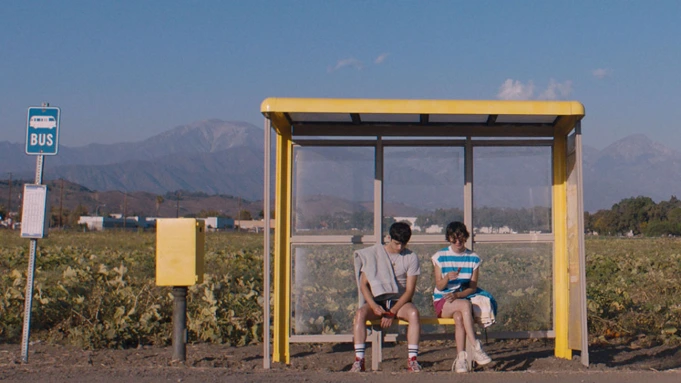
IFH 609: How Directing Star Wars Fan Films Changed My Career with Jason Satterlund

Jason Satterlund has been writing and directing films for about 100 years. He’s directed multiple award-winning feature films and, in 2021, he wrote and directed 28 episodes of television.

His Star Wars film, Kenobi, clocked one million views in 24 hours, and landed on Steven Soderbergh’s watch list. This resulted in a cover page article in the New York Time’s arts section.

His latest feature film, “The Abandon,” just sold to Lionsgate is will be seen in theaters across North America.

When he isn’t busting his hump on his own projects, he enjoys teaching filmmaking workshops and shaping the filmmakers of the future.

Enjoy my conversation with Jason Satterlund.

Right-click here to download the MP3

Jason Satterlund 0:00
Approach that problem optimistically your mind is 30% more active. 30% pessimism literally shuts your mind off. So that as you get angry and twisted and frustrated, it is killing your creativity.

Alex Ferrari 0:17
This episode is brought to you by the best selling book Rise of the Filmtrepreneur how to turn your independent film into a money making business. Learn more at filmbizbook.com

I'd like to welcome to the show Jason Satterlund. How you doing Jason?

Jason Satterlund 0:44
I am fantastic. Thank you.

Alex Ferrari 0:47
Thank you for coming on the show brother. I appreciate it man I've I've been a fan for from a distance for a little while man and I'm glad you reached out dude I saw could no be a while ago because I'm a Star Wars geek. If many of you before my show, I used to have a life sized Yoda that sits in the back behind me. But now Yoda sits over here right there he's right there and right off the camera and I'm never There's never too much there's always there's always a Yoda somewhere and life at one point or another so I am I am as they say a full blown full blown Star Wars geek. So when that came out anytime those kinds of really high quality fan films comes out I always interested in yours was one of the best I've ever seen but we're gonna get into we're gonna get into Kenobi in a bit but first questions dudes. Why God's green earth would you want to be in the film be a filmmaker Insane business sir.

Jason Satterlund 1:44
Same wonderful. Love it. You know what, I love this industry. I love it. I love making telling stories. I've always loved it ever since I was a kid. And I think you know, my story is probably similar to a lot of people where it's, I saw that one movie as a child, you know, and for me, it was close encounters. You know, when I saw those UFOs, you know, the police chasing UFOs down the freeway, I was so hooked. And from that moment forward, you know, when I was a kid, I wasn't allowed to watch movies. You know, I grew up in a very conservative Christian household where movies are bad and Hollywood is the lion's den. And it's don't go there, you lose your soul. My mom still says that. Anyway, I just the magic of Spielberg really captured me as a child and I would I would get to see the movie like once I couldn't go back and see it again. I would imagine it in my room I would just go in and like play the movie over and over my head and I just desperately wanted to be a part of that industry. You know, storytelling is just to see the the on an actor's face, you know, when the camera pushes in and and I just I couldn't I was a dog with a bone. I could not stop until I got there.

Alex Ferrari 2:57
Is there? Is there a filmmaker in modern history or in history of film at all? That has inspired more filmmakers and Steven Spielberg, right. I mean, I'm just I'm, I'm literally like, is there because you think back in a Kubrick IAM, of course, and Kurosawa, and then you can start, you know, you know, lien and all that stuff, but none of them were as popular. And as big as Spielberg made he is when you think directing, Spielberg is the name for our generation. Absolutely. Without question, is the name that pops up. And he's, I've no idea how many people have been on the show. It's amazing, that have been inspired, have inspired by Spielberg, and were mentioned a Spielberg movie that inspired them to become a filmmaker or had the chance to work with them. And, and tell me the stories of how, how they like these insane stories of Spielberg, you know, coming in and working with them. And I said this on the show so many times, he has touched so many filmmakers, personally, like, literally made a phone call and sent a letter who opened the door, gave an opportunity to hundreds of 1000s of filmmakers, let alone people from behind scenes as well over the course of his career. I don't think there's been a more influential filmmaker in the history of cinema. That's just my opinion.

Jason Satterlund 4:22
I think you're right. I mean, the amount of people that I know I mean, the amount of people I have met that are just inspired to do movies because of Jurassic Park. Like that was the one generation Well, I want to make

Alex Ferrari 4:35
Close Encounters Jaws et for me it was et I saw you t for the first time I was like,

Jason Satterlund 4:41
Raiders like who didn't watch raiders and when I want to make one of those like so yeah, that was 100% me as a kid and probably everyone listening is you know, has that film that pops into their brain more than likely a Spielberg film but I had a dad Get into it just now. And it was very difficult for me to get into it because I didn't know anybody but it just that. That magic that's created. I think Spielberg I think the reason why he inspires so much is because especially early Spielberg the golden age of Spielberg, you know, JAWS Ethan, he's a Raiders Last Crusade Jurassic Park. Like, there is a charm to his films that is very rare. You don't see it very often. Yeah, and it and you can create that they have the opportunity to actually build something that feels like that.

Alex Ferrari 5:37
Oh, my gosh, it's just No, it's It's, it's insane. I hope to have him on the show. One day, he is on my bucket list. He is on my bucket list. I'm putting it out into the universe. Everyone listening? Take a second right now. Put it down to get Spielberg on on the show on Alex's show, and I will ask him the questions you guys want me to ask him?

Jason Satterlund 5:59
I don't know him. But I'll make some calls.

Alex Ferrari 6:01
If anyone out there listening, you never know. Who knows? Maybe Steve is listening. I don't know. Wouldn't that be insane? Now, so look, as a director, I mean, I feel like you and I are of similar vintage. We've been we were we've we've we've walked across the same, you know, battlefields. And same, over the same. We have the shrapnel to prove it. What happens as a director when no one gives you have the opportunity to direct because unlike a writer, you can write, but a director, you need an opportunity, you need to do so many things to practice your art.

Jason Satterlund 6:39
So, yeah, that's a really well, it's a great question. And I don't know how much time we have. But I could talk about this a lot. Because it is the one job that's the hardest to get. It's far harder to get a directing job than an acting job, because there's just fewer of them. You know, when you look at you look on any filmmaking website, whether it's Mandy, or you know, where you look for jobs, rarely do you see need director needed, it's always crew. Right. And that's just sort of the nature of the beast, because the director is generally the one creating the project. And it's, you're, you're in a position where all other departments, right, so from producers, DPS, Aedes makeup, all of them get hired by directors or producers. That means and so you're working with your friends, but directors get hired by usually clients, or studios. So it's a different whole universe that you have to be connected to. So stream ly difficult to land directing jobs. And it's very, very difficult for me. And it was a real source of depression, anxiety, frustration for many, many years i i lived in. I grew up in Portland, Oregon, I lived in Nashville, I moved to Nashville when I was in my 20s to pursue filmmaking. I don't know why I didn't go to LA, probably because I don't know why. Because my mom told me it was dangerous there. So I was probably I think that's why I was too afraid. I went to Nashville and could not get. I mean, I wanted to be a director, but who was I? I didn't, I didn't know anything. I didn't know anyone. And I ended up in like doing music videos. Because Nashville's Music City, right? So I worked in music videos as a PA and all sorts of different jobs. And I ended up in corporate work. And, you know, when you're in corporate work, you're shooting like an instructional video or a live event. And I would do hours of this stuff. And still, it's not directing, right? It's not, I might maybe get a chance to do a little short. But the biggest opportunity I got is I wrote a script called searching for winter. And I met a business guy, because you know, that's what you need. You need the business guy to help you get some money to get your film made, right? So I do the I make the script, this business guy liked the script, and he said, I'll help you, like, raise the money. So he gave me a little bit of money. And we shot a little trailer for it. And so excited in the trailer. I mean, it came out pretty well, you know, considering it's however long ago it was. And nobody wanted to touch it. Everybody looked at it and like Yeah, that's cool. Like, but you've never made a movie before. So how am I supposed to know that you can actually make a movie. And that was really devastating because I could show them all the car commercials I've done and music videos like look at this. Isn't this cool? Yeah, but it's not a movie. So that was really disheartening for me. And I kicked around for a long, long time. And finally I realized one day well, okay, if no one's gonna give me the opportunity, I have to make it. So I sat down and wrote up. I wrote a script around the assets that I had access to things that I knew I could do, like I knew how to shoot underwater. And I knew, you know, I noticed dunk guy. And you know, I knew I had some friends in the industry. So I wrote a script kind of using some of those assets. I set out to raise $40,000 I raised 12. That's how much I suck at raising money. So I

Alex Ferrari 10:15
I'm gonna stop you there, right there. So you raise $12,000 For a movie. That's a frickin win my friend. Just because you went for 40 You only got 12 you get over 25% of your budget as a filmmaker. Come on, dude.

Jason Satterlund 10:33
Yeah, it was. It's funny, because this film. It's probably the most proudest accomplishments I've ever done in my life. Because I had no help. Really, the actors didn't really want to be in it. The DP was a really close friend of mine. I kid you not his first comment when I said, I'm just going to make a movie. I just want to make one his first comment to me. He was like my best friend. He's like, I just don't want to make any more crappy movies. Like, Oh, thanks. Wow, thanks. I appreciate that. So I repeated myself. So I had three film interns to two full sail graduates and one guy who just yet full sail. And one guy who just wanted to be in the movie business. They were basically my crew. I had this stunt guy friend of mine and his wife. And that was it. And I shot for six straight weeks over Christmas and shot this thing. We had two underwater sequences, we did mob scenes, we car chases, and all kinds of crazy stuff. And I actually put myself in the hospital from exhaustion. I, I ended up passing out at one point and from I think a panic attacks, probably what it was, oh, yeah, yeah, I've had those. Oh, yeah. Yeah, it. But I did it. I got it across the line. And it was, it really changed a lot for me, essentially, I mean, going back to your initial question, how do you get hired, I just had to invent defend myself, I just had to go out and make it happen. And I did. Now the film never went anywhere, but I at least was able to plant that flag. And I do think that doing the first one helped kind of unlock the dam for future things. Because now I'm a feature film director, I can say that, and no one can take that from me. You might watch the film and say it sucks. Because you can't take the fact that I made a movie. And that's it was a real source of pride.

Alex Ferrari 12:29
I'll tell you what, man, it's exactly what happened to me. I took it took me years before I had the the, I guess the the courage to actually go make a film, I had the skill set probably 20 years prior 15 years prior. But it took me a while before I jumped on that board in this second I did it. I it just opened up the dough, like okay, um, I proved it to myself, I proved that to myself that I could tell a story that looked decent, a shot at myself shot and then eight days, you know, it was a small little film. But we sold it to Hulu. Nice. You sold it internationally and had a really great cast. And it was done in LA and we you know, pulled a bunch of friends together, we made it happen. But you had to kind of go out there and just do it. And I think it's also the idea. And I've said this on the show many times about the the this lottery ticket mentality that we have as filmmakers going like, if it's going to be our first feature has to be Reservoir Dogs, or it has to be JAWS or it has to be, you know, you know, whatever Memento or whatever that film is, that's going to blow us up as a director. And that's generally not, that doesn't happen for most directors.

Jason Satterlund 13:35
Well, there's a reason for that. I think that every filmmaking book that you read, I mean, we've all read Rebel Without a crew and and Kevin Smith's book. I forget the title offhand. But like all those, you know, when they talk about the story of their life, we are kind of sold the dream that we will be cherry picked from obscurity and placed on high into the upper echelon of work and most books are written kind of from that framework. Most How To books about moviemaking are built like that, like you're gonna make, I saw an interview with the Duplass brothers. And I basically laid out just like, you make your first movie, it's gonna get into Sundance or some big festival. From there, you're gonna get a bigger actor interested in your film. From there, you're gonna get the bigger film. Yeah, but what if your first film doesn't get into Sundance? What if it doesn't? What if the only festival it gets into is the Cedar Rapids Film Festival in Iowa? And then that's it, like, how do you then function so this we're all hanging on to the dream that we are that special person that will get cherry picked? And it's not impossible. It still happens like it does happen, which is part of the allure. But that but 90% of us that doesn't happen to it's 99.9% of us.

Alex Ferrari 14:55
It doesn't happen. It's the lights I call it a lottery ticket mentality. Do people win the lottery every day? In Absolutely, the bulk of the people who play the lottery don't win. And that is the mentality that were stuck with. I agree with you 110%. And by the way that do plus example, they shot a movie for $3, which was DV tape called forgot something. What about an answering machine? Dude, that guy was destined. Those guys were destined that just like you look at those stories, and I've studied all of them. And I've had some of those filmmakers on the show. And ask them the questions I got it just kind of worked out. Like they had no indication that a movie about a guy leaving a message on an answering machine for an ex girlfriend shot horribly, to their to their own, they've set it to shut horribly, got into Sundance, and then that kind of led into right, all these other dominoes falling. But you can't live your life like that. You just got to do it.

Jason Satterlund 15:52
We're all we're all we've all been told this. We're all believe this. And I want to make sure that it doesn't come off that I'm trashing the people that this happens to because oh for that, because that's great, like Kevin Smith, if his film had not been seen by Weinstein, like, we wouldn't know who he is today, like, a good for him. I mean, he does these people that make it and and succeed and continue succeeding, they do the work, they've honed their skills, these are talented people. But you know, the majority of the people working that didn't happen to that that Cinderella story. I think it's important to just understand that because I think especially those who don't live in Hollywood, don't live in LA. They're living in Toledo or something, and they're hanging on to that dream that that will happen to them from there. It does happen. I mean, the guy from the guy that directed Shazam, I forget the director's name.

Alex Ferrari 16:47
But David Sandberg I had him on the show. Yeah, his short films

Jason Satterlund 16:52
Exactly the same. He was in Sweden, boom, picked from on high

Alex Ferrari 16:56
Literally told me the whole story. It was fascinating to hear this story. And he's like, yeah, and then I was flown over. And I, we were in LA, and me and my girlfriend didn't know, we didn't know what to do. And, and they were putting us they put us up in a house, it's the lottery. It's literally a lottery ticket, you could be

Jason Satterlund 17:14
And that's what we are hoping for. That's what we all dream that will happen to us. But I do think there is a it's really important to get grounded and understand that it might be a little bit longer of a slog, just a bit. And I don't think that's necessarily a bad thing. I think myself, I'm kind of glad that my first film didn't blow up like that. Because, you know, I didn't know a whole lot back then. Man, I would have been like 25, if that film had blown up, and the amount of times I would have shot myself in the foot just because I'm so young and immature, and didn't know how to deal with people. Because film directing is very much about managing a large group of people and worrying for the biggest client you can imagine. So there is a maturity. That's, I think, very important with that.

Alex Ferrari 18:10
Yeah, I mean, there's no question about it, man, no question about it. Now, you you've, you've gone down, I was looking at your filmography, and you've done a tremendous amount of shorts, you've really kind of dug into shorts a bit. What is the value of making short films? I mean, obviously, other than the lottery ticket idea, which I did that multiple times in my career, but you've really went all in, and we'll talk about the fan films in a minute that you did that short, specifically, what was your value in that you think?

Jason Satterlund 18:40
Well, it's it's interesting, because there's, it's kind of a two prong thing that happened to me personally. For one thing, shorts are not going to make you money. For the most part, I mean, yes, sometimes they'll get bought and put as a package to something but generally that you're not going to get make money from that. You might get noticed from that. That's sort of what we hope. But really shorts as what it boils down to is practice. It's just let me put shoot something and put it out there and see how an audience reacts to it. It's and it's, I think it's vital for everyone to do. I had a really interesting journey, though, because I was doing shorts just like we all do. And it took a lot of work and a lot of effort. But I reached a point in my career, where I had done one movie I was doing, like I said, a lot of corporate work, live corporate work, and I was I found myself being exceedingly depressed and anxious and I was F realized I was very angry a lot. Where I would be I was literally the guy in the platform in the middle of the audience, shooting a speaker walking left and walking right across the stage. And oftentimes, you know, it's a TN T 's annual convention and he's giving the report of Have the annual sales blood riveting riveting stuff revenue. Yeah, eight o'clock in the morning, you're in a suit and tie and you're doing and I'm up there so angry. I'm like, almost in tears like just, this is not where I thought I'd be at 29 or 30, or whatever. I don't even remember what age

Alex Ferrari 20:18
But like you just use but you but you did use the Spielberg analogy, right? Like Spielberg made Jaws at 27.

Jason Satterlund 20:22
That's right. And that we have all these stories that we're continually comparing ourselves to, like, if I'm not doing what Spielberg did at x age than I am a failure as a person I like and wait, that, and I was exactly trapped in that spiral. And it is a terrible spiral to get caught in. And most people I know, struggle with this. And I found myself very bitter, very angry. And just just this twisted up person, and I don't want to be that guy. I don't want to be because no one wants to be around that person. That is not a source of creativity. There's a there's a book I would highly recommend people read called The Happiness Advantage. It's the study of joy. Yeah, so this is study of joy. And in that book, they talk about where if you encounter a problem, let's just say that, let's say you got an edit. And the edit is an actor that wasn't very good. And you have to try to make this work with a bad performance. And if you approach that job with man, I can't believe I have to work with this crappy actor and I can't believe that this is my job and poo poo poo wag this bad pessimistic view versus All right. What do you got for me today after I'm gonna make you look like a frickin rock star? You know, really an optimistic approach to it the problem still the same, but you're approaching it from an optimistic versus a pessimistic mindset. They have done studies where they will attach electrodes to the brain and if you approach that problem, optimistically, your mind is 30% more active 30% pessimism literally shuts your mind off. So that as you get angry and twisted and frustrated, it is killing your creativity. It is these are this is scientifically proven. And I'm finding myself in that same position. And one day I was watching the movie Jurassic Park. And you remember in Jurassic, this is so funny to me, because Jurassic Park, how old is this movie? 30 years?

Alex Ferrari 22:30
93 93 Yeah.

Jason Satterlund 22:32
Okay, so do you remember the scene in Jurassic Park where all the characters are sitting in the little ride? Right in the little, they're getting introduced to the park and they're all inside that theater, and had a little cartoon comes up. This is dyno DNA. Yeah, this movie is 30 years old. And everyone remembers the same, which I'm gonna come back to in a second. And the little cartoon says, This is how you make dinosaurs. Sometimes the mosquito gets stuck in the staff that the staff turns to Amber, we extracted that data and suddenly you have done Oh, DNA, right? That whole scene. That scene is a corporate instructional video, which is exactly the kind of videos I was creating. Do you think when Spielberg went to make that part in his movie, that he pissed and moaned and wind that he has to make a corporate video? Or did he go oh, man, how can I make this thing really cool? How can I make this thing like memorable and fun, and it's the scene in a 30 year old movie that everyone remembers. It is the it is absolutely vital to understand how that movie works. It's the informational piece. Anytime you have a sci fi piece, a time travel movie, there's always a scene where you have to describe the way the mechanics work. That's a corporate video. So here I was. And I suddenly had to select the Epiphany, like, wow, what if I approached my work that I'm getting hired to do in the same exact way? What if I just pretended that this video about how to make car seats? And I just thought about it, like, maybe this is part of a bigger movie, that this is just one little piece of it? It didn't really change much in the way that I shot it necessarily. But well, actually, no, I take that back. It did. I started thinking about how can I make this look more cinematic? How can I move the camera in a way that I would do for my movie? How can I craft the script, so it really pulls the audience in and makes them engaged? I'm telling you, man, everything changed for me in that moment. Everything changed. So I was doing shorts. I had made a movie and then all of a sudden the clients started looking at the little videos I was making and went you know, this feels different than the other videos I'm seeing. Can we hire you to do a short and I have made quite a career out of making shorts for corporations. I just finished one about a month ago. We shot a 20 minute long, epic Roman soldier story about a plague that hit Rome in about 200 ad. And it was essentially the story was about the first hospital that was born, and how it was made. And it was freaking amazing. Like we had a big budget, great actors, we had a full, you know, full on set, we shot in Texas. And we had this really cool middle eastern style we can set and it was so much fun, so much fun. And

Alex Ferrari 25:35
Yeah, so if I can, if I can unpack a little bit of what you're saying here, because I think it's something really valuable for everyone listening, your perspective and your attitude change. definitely change the course of your career. Because if it was, and how many of us know the angry and bitter filmmaker, how many of us know that. And I always tell people anytime I do, anytime I talk in front of people I go, how many people here know an angry and bitter filmmaker and a bunch of people hands right up, if you didn't raise your hand up. You are the angry and bitter filmmaker that everybody else knows. So if you change your perspective on how you approach things, that comes through in the work, and that's exactly what happened to you. And we can't get stuck in this idea that we're all going to be a Spielberg or Fincher or Nolan or Tarantino or Kubrick you, you can't get that stuck. If you stuck. That way, you'll never be able to move. If you wake up every morning going, I need to be as good as Steven Spielberg. You're never going to pick up a camera. Because you're talking about a master, you've got to be the best version of yourself. And I think that's what you did. And then you carved out this beautiful little niche for yourself.

Jason Satterlund 26:49
Yeah, it's been it's been amazing. And you know, when I'm on set doing that stuff? Is it a big Academy Award winning film? No. Am I having the time of my life? Yes, that's, and that's not saying that none of that other stuff ever will happen. I believe that it still will. It's not that you have to let go of your dream. Because here's the big thing that will happen. And I think this is so important. My my flag that I will waive here is that our number one goal, as artists, the number one thing that you have to fight to protect is your mental state, your the way you think about your approach to art, because it your your anxiety that comes up, because we live in a business that is undulating, it's constantly moving, it's you get really busy for a season, and then it crashes to a halt. Sometimes it's the nature of what we do. And I don't care if you've been working for two years straight or two months straight, the minute that work stops, the anxiety begins. And it's usually the same kind of questions. Crap, I hope I work again, you know, I hope I booked another job and that desperate. Think about it like dating, like if you are sitting there going, Gosh, I really wish I was married. I really, really want a wife. I just wish someone would love me go on a date and see how far that gets you that desperate, anxious energy, your partner I mean, imagine being on a date with that person, you're like,

Alex Ferrari 28:12
Oh, Rome, the aromas in the air. It's like yes, like bad your car.

Jason Satterlund 28:18
That's the energy that you're projecting if you don't really carefully watch the mental state that you're in. And another thing a second piece of this is, once I started, you know, the car seat analogy that I used before making a car, this is how you install a car seat into a Mercedes. Well, if you approach that, like, Alright, I'm going to be imagine this as part of my movie. Suddenly, a really interesting thing happens and it happened to me, I start having fun, I start it brings this level of joy to the work. And I think that's a vital because if we don't allow that to happen, and I don't care if you're shooting a wedding video, or a corporate interview with a CEO, if you don't find a way to bring that joy to your work, all you're doing is postponing your joy to somewhere down the line. You're going to sit there and go, I am not going to allow myself to be happy until I get whatever it is that you defined that Universal Studios movie or the Marvel film. I'm going to sit here and be miserable until I get there. All you're doing is setting yourself up for complete disappointment and frustration and you're going to be you're going to become that twisted person that you don't want to be. I think it's so important to think about this.

Alex Ferrari 29:35
Do you know the story of how James James Cameron got his first shot as a director? I do not. So he was working for Roger Corman as a props guy. And he was doing a really bad Roger Corman film back then. And he was like just shooting I think second unit. They gave him like a shot. A shot of maggots. like coming out of some sort of meat. That was it was an insert shot, which is the equivalent of a car seat. It's the equivalent of the car seat analogy that you gave. But Jim was so excited about doing that shot had such great energy that he was trying to make this be the best maggots coming out of meat shot in movie history. This is the way he was looking at it. So what did he do? He was doing something that Roger Corman was walking behind, and he just saw this kid. And then he would turn the camera on and he would give he would he was doing something that made the magnets dance. Ah. Oh, yeah. Electric. Yeah. Great. So so he turns the camera off, and then they stop. And Roger Corman is like if this kid could direct magnets, I'm gonna give him a movie. And he what he was doing was he's sending electrical shots through the sheath through the the meat. So they would just does it and then we just go down. So that was what he was doing. And then he got Parana to the spawning the greatest flying Parana film ever made.

But that was, but look at the look at that example. And look at the career that James can imagine if he would have just said, Man, I gotta shoot. Yeah, I guess I don't want to do that. I want to be making a movie I don't want to be. But I don't want to be doing that. Yeah, who wants to be doing that shot? But he did me super excited about it.

Jason Satterlund 31:30
It's, well think about if you were in charge, looking for a director. And if there was someone who was saying your words, would you hire you? Would you want that energy on your set? I you know, if I'm, if I'm watching the guy doing that same shot, and I see him smiling, and he's just having fun with it. You know, hey, that's the kind of energy that that's that's an optimistic kind of approach. I think there's also this weird it's sort of this unspoken law in film, where there's legitimate and illegitimate kind of work. And I think a lot of us look at every single book written is written towards the upper echelon of Hollywood where we that's where we want to work, we want to work way up here and everything between point A and point B is somehow illegitimate. It's look down your nose at the whatever you call it, you know, the wedding video or instructional videos somehow that's just not. Right,

Alex Ferrari 32:28
Right. And I'll tell you what I had. I had a director on the show years ago. And he has directed over 100 features around features he's made. And he's done a lot of Hallmark and Lifetime movies. He does three to four movies a year. He's been doing it for 30 years, like he's just pounding it, pounding it 345 movies a year. And I was talking, we had a serious conversation. I go, You know what, if anyone has a problem with the kind of filmmaking you're doing, tell them to go screw off, dude. Because you're living the life you're being paid to direct. You have a good life. You live in Los Angeles, you get to fly out to exotic locations and gets directly make the movies you're making. Who gives a crap or what anyone else says? Because a lot of people were like, Oh, he just makes Lifetime movies. Screw off. He's living his dream. If he's happy, what the hell? So like, I would guarantee like most people listening would kill for a career like that, you know? Because we all want to do Jurassic Park man, who does it? You know, I mean, Fincher wants to be Kubrick. Nolan wants to be Kubrick. Spielberg wanted to be Kurosawa. Lucas wanted to be Kurosawa. Coppola wanted to be cooler, or Sawa. Like everybody wants to be something they're not until they figure out oh, I'm going to be the best version of me. And that's greatness happens.

Jason Satterlund 33:44
Yeah, it doesn't mean you let go of any that dream. All it means is, I'm just going to enjoy this what I've got right now. And, you know, are you in your little corporate? Let's say you're doing a corporate training film? Are you not working with a camera? Well, yes, I am. Are you not working with an actor? Actually, we cast for this and there's a subject in front of me doing the thing? Are you not working with a makeup artist or a DP? Like, you're all the elements? It's the same mechanics are there what you're getting to do is someone's paying you to practice your craft you're getting, and now you're not gonna like, if it doesn't work, who cares? It's just an instructional video about how to install a car seat. Big deal if

Alex Ferrari 34:23
You're but if you're directing Tom Cruise, and it doesn't work, you're done. Right! Exactly.

Jason Satterlund 34:28
You get to work out all these kinks along the way, before you actually get there and that there's a real joy in that a real freedom in that and it's,

Alex Ferrari 34:37
I agree with you 100%. Brother. Now there's, there's a, you know, one of the big things that you've did was you've done a couple of two or three fan films that have been very well received. The first question when you reached out to me was like, I have to ask him this. I have to ask because I've been dying to find out because there's fan films that get made all the time. You know, and fan you know, there's like Star Wars fan films and Ghostbuster fan films and so many different types of anthems. And sometimes, you know, the copyright holders are not as friendly, let's say as Lucas Films is now from what I understand Lucas Films has been, has a very open, loving relationship with the fans and fan films and encourages them. But with that said that was before the mouse bottom. And secondly, how do you dance the line between copyright and fandom? Yeah, just something that so many filmmakers out there would maybe want to make a Star Wars project because I've been involved with with with shorts and the post world that the copyright holder said stop it. or We're suing. Yeah. So how did you dance that line? And did you and by the way, did the mouse did the mouse call?

Jason Satterlund 35:46
No, they did not. So there are certain IPs that exist, you're exactly right. There's certain IPs that exists where they are very cool. With people making fan films, the biggest rule is you just can't make money on it. If you start trying to charge for views or something. That's where you'll get in trouble. Star Wars is one of those. In fact, they even have a contest. For the best fan film, I don't know if they still do it. But back when, when for The Force Awakens came out there was a big fan film contest that I think JJ Abrams even was like, hey, send us Your great fan film. They even had music on their website that you could download and use in your film and stuff like that. So they're very encouraging to filmmakers. And that all came from George Lucas. Video games are the same. They're usually very open welcoming to IP. But there are other IPs that are not you should do your research if you're going to do and I think one of those is Doctor Who I don't think that they take too kindly to other people making fan films about Doctor Who I think Harry Potter, they're open to it, you just kind of have to, it's a weird thing.

Alex Ferrari 36:55
BC kind of comes and goes depending on what they want to do. And a very famous idea, the very famous case was Star Trek when they that would have been very, very cool for most of, of its life of the IP it had been very cool for with with fan films, but then the but then they they went too far. They raised like $1.5 million for a fan film. And it was going to be this feature length fan film and it was like one and then that's when Paramount's like okay? Yeah. And they're now there's rules. So they actually had to lay out like a rule set for film people like you can't make it this much money. They're not because it got too big. It got too big the fandom got too big. Because now you have no control over the IP. It's one thing to do a 20 30,000 Maybe even 50 $100,000 you no fan film, but when you're making a $1.5 million fan film, the danger of things going awry becomes exponentially more.

Jason Satterlund 37:50
Yeah, you just you just have to be careful. And before you shoot anything, you should probably make sure before you go through all this effort that you don't end up with a million dollar home movie. Like you want to make sure people actually there's good, go ahead. Go ahead.

Alex Ferrari 38:06
No, there was a there was a filmmaker I had on the show who made a infamous Punisher Oh, really an infamous Punisher fan film. That was like, handed around the comic cons and people were like, but it was so violent. It was I think it was Punisher Wolverine, I think or something. It was like really a badass Punisher, Punisher led fan film, but then Marvel called them. And I think that and then said, That's No. And he had to pull it off. And I asked him like, is it exist? It's like, no, no, I've burned all the copies. Yeah. If you're not if you're not watching the interview, my eyes did a little shifty thing. But I'm like, you know, can I see it? And he's like, I doesn't exist, Alex. So you got to be careful with fantasize always fascinated with fan films. Now you did a fan film. Your first Star Wars fan film without mistake is the force in the fury, which I'm going to put links to all these on in the show notes of the show. And I tell everybody, if you're interested, watch it. It is fascinating to see a well produced fan film of Star Wars. Because there's so many bad ones. There's just so many. Yeah, there's really a lot of bad ones. But this was so beautiful, because you did something that was really interesting. And that's short that you use the environment, which was low cost was like a forest. But it looks so beautiful. And the production value looks so big. It was basically just two people fighting the historic battle inside of of the forest, but the quality of the imagery and the color grading and everything was so solid. So it was so beautiful. How was that film received? Because I was the first big Star Wars fan for me.

Jason Satterlund 39:53
Yeah, well, I did. So I've done three fan films. The first one I ever do is for Splinter Cell Games. So it's called playstyle extraction. So this was my second attempt at doing a fan film. And yeah, it, it did quite well, people really liked it.

Alex Ferrari 40:09
And it didn't do anything for you like on a career standpoint,

Jason Satterlund 40:13
I will say that what it did was grease the wheels. So it didn't necessarily get me in a room, but it got the door open at least. And here's the reason why you do a fan film. I mean, yes, it's fun to play with lightsabers. Of course. That goes without saying, sir. Yes, it's really fun to play in these universes. But the real reason is, you know, if you think about it, you make a short hay, and you get it done. And you're telling your people about it, like, oh, I made the short film. So it's about a guy who doesn't know who he is. But he realizes he's got wings. And he starts to think maybe he's an angel or whatever, you know, I'm just spitballing. But like, and the people listening are like, uh, huh, yeah, cool. Cool. What's the name of it? Oh, it's called a job well done, or whatever. And, and then the next question is always, how long is it? So basically, my point is, you have to talk people into watching, you're short. You're trying to sell it all the time, right? Yeah, your mom's gonna see it. And of course, she's gonna love it. And your all your friends will watch it, you know, I'd be a little premiere. But then beyond that, you're going to have to try to talk everyone else into watching it. Unless it's just so phenomenal. It catches fire and spreads the world. Great, good for you. Or you go. So I made a Star Wars film. Generally the reaction is really, what's it called? On until we're gonna check this out. My cousin loves Star Wars. My mom, let's start we're gonna do the check. That's the difference. The most views I ever got on any short that I ever did was like 20,000 views, 30,000 views. I haven't looked lately to see what force and fury is up to. But it's in the hundreds of 1000s

Alex Ferrari 41:51
I believe 453,000

Jason Satterlund 41:55
And I, I've barely promoted it, like, boom, it's just like everywhere. Kenobi when we did Kenobi that hit a million views in 24 hours. And that's why you do those like because your work and the whole name of the game is to get your work seen, right? You want people to say, oh, this person knows what they're doing. You do a fan film it just more eyeballs watching what you're doing.

Alex Ferrari 42:18
I mean, one of the most famous fan film stories of all time is the Mortal Kombat one, which was done by John. He did the movie Fame, which, okay, I had a miserable death at the box office. And he was pretty much going to be thrown into director jail. I forgot his name is John something I forgot his last name. But he was already he's like, I'm done. I'm done. It's over. I no one's gonna hire me. So he's like, You know what, I'm gonna make a mortal kombat fan film. And he made a such a good Mortal Kombat fan film, that the rights holders hired him to do a web series of it. And then that turned into the feature version of it. And now they're making the sequel of the feature. all started with a fan film. Now he wasn't established director. So he wasn't an unknown quantity. But he took a shot because he had no other choice. He's like, I'm done. He made fame. And I mean, it died. It was like, it's almost as bad as almost as bad as gem in the holograms. When I showed up, it just died. It was dead on arrival. So he that's how he made it and that and then he just dumped it. He just dumped it into the, into the internet. And people lost their mind because it was really cool. It was like basically a violent, cool version of Mortal Kombat with backstory and story arcs. And he went all in. So that's a really famous version of it's I think, that's another thing that filmmakers have a dream of, is when they make they make a Star Wars fan film. And they all want Catherine Kennedy to call them up or John. John favorite to call them up and go, Look, man, I saw your fan film, I'd love you to do an episode of demand DeLorean? We all that's the now the new dream of doing a fan film. Yeah, that hasn't happened to my understanding yet.

Jason Satterlund 44:05
Well, I know that people have seen it. I know it made the rounds at Disney. I know that we actually ended up on Steven Soderbergh put out a list of films that he watched. Whatever year we put that out, I don't remember off top my head, but it was on his list. It actually got me on the cover of The New York Times, which is pretty great. So like, it did get a lot of mileage. Yeah. And you know, that's not to say that the life is over. Like it may come up, but it's all but it has helped get me in the room.

Alex Ferrari 44:36
Because there was a guy who made this car this beautiful short, this is back in the day. 2008 2005 2006 He made Batman versus the predator versus alien. Oh, yeah, that one. I forgot. I forgot his name. He he is so talented, but yet never could get farther than where he went with those things was interesting to me. I always always found that interesting because it was like he's obviously super talented. And he did. He did a few of those. But there was also the timing, I guess it was the timing of it all and things like that. But it didn't go any farther than that. So I'm glad to hear that these films have done good for you. And Oh, for sure. But look, Kenobi Kenobi has done 18 million views. I mean, 87 77 million, sorry. 87 million views. 80. Millions was the trailer for the Kenobi show. I just thought they were next to each other. But you had over 7 million views? For a short that, you know,

Jason Satterlund 45:42
Yeah. And it's been great. Because I know there have been situations where I want to meet somebody, you know, that I would like to connect to. This is Jason, he's done this, that and the other. He deleted and use a lot of times they've seen it. Like, holy crap, you did that? Oh, what what was your name? Jason. So it's, it hasn't necessarily like, I haven't gotten a call from on high. But it has like, opened the door helped grease those wheels. So I would say it was absolutely worth doing. And even if nothing ever happened from it, the people I met on it and the connections I was made through that was really good. Jamie Costa being one of them, who is you know, he's become a close friend. And he's, you know, very successful actor and things like that. So, you know, that's another reason why you do these things, is to like, you know, you're just trying to make as many friends as you can.

Alex Ferrari 46:36
Yeah, and I think that's one of the things one of the reasons I want to jump in and show is to kind of demystify the fan film. And also demystify what you should expect out of a fan film, if you're gonna go down that road. And I love your approach to it, because it's a very practical approach. Hey, man, I get to go play with lightsabers and skirmish repairs, and have a good time and playing. And you came out with Kenobi before they came out with this. So that was, that was pretty awesome. You know,

Jason Satterlund 47:04
We were on set filming when they announced when they announced that they were going to do it.

Alex Ferrari 47:09
That's so cool. Oh,

Jason Satterlund 47:11
We gotta hurry up finish filming.

Alex Ferrari 47:15
Yeah, cuz then I wouldn't be like it would be the same. You better hurry up and get it out there fast.

Jason Satterlund 47:20
Obviously Yeah, if you're gonna do it. First of all, like I said, it's exactly that comparison of like, if you're gonna make a short a fan film was a really good option. A lot of people will watch it if they're fans it same thing with Splinter Cell like people just really like Splinter Cell, they're gonna watch it. I just met somebody recently who said, Dude, I used to work at Ubisoft when Splinter Cell came out, we all loved that film, we were hoping you'd put another one out, you know, it will get eyeballs, they will help you a lot. But but if you're going to, let's say you're gonna make a Star Wars film, make sure that you do it with love and do it with quality, like make sure that you're filling a gap that the audience needs. Don't have Jedi as be for example, I don't want to make a Jedi be an assassin. Because that's just an understanding. You don't understand what the Jedi are. They are not attackers. They are defenders. They are you know, they're monastic. You know, people, they're more about peace. So understand the lore. Because you'll get crucified the audience. Oh my god, could you imagine what people see that stuff is sacred, you know, their precious Star Wars. So like, come at it with that and make sure you know, if you don't understand the lore, get someone who does to help you with the script so that you can really embed it. And it can be a beautiful thing. Beautiful thing if you do it

Alex Ferrari 48:43
Right. Now, I'm going to give you I'm going to ask you a question a little geek fandom. trivia question. What was the first Star Wars fan film?

Jason Satterlund 48:54
Was it troops? Yeah, it was a truth.

Alex Ferrari 49:02
If you can find an SD version of it somewhere on the internet troops was the first time anyone to my understanding or knowledge, took the Star Wars universe and made a fan film from it. And it was basically it was following Storm Troopers on the kind of like cops follows cops. Yeah. As it was. And it was like all about and it was it was a domestic disturbance at Yeah, uncle, Uncle Ben's. And there was late and then there was so funny and hilarious. And that thing. That was what early godmen that must have been a long one. 2002

Jason Satterlund 49:42
I think before that, I think it was like the late 90s

Alex Ferrari 49:45
No, no, it was late 90s. It was the internet. So the internet hadn't really kicked into the good points. So it was probably late 90s And I remember seeing like a thumb like a postage stamp version of it on. Wasn't even quick time I think was flash. Oh Um, you know, playing on the internet and everyone was just like, oh my god, I was like, oh so funny. But that is for everyone. If you curious to see an amazing fanfic those lightsabers no lights it because it couldn't do the visual effects back then. So they just had a bunch of Stormtroopers out there. And it was brilliant. Absolutely brilliant. So when you were making Kenobi man, because it was so well put together, and beautifully shot and I mean, there was there's some complexity to the action sequences and things like that. I gotta ask, there's always that day on set, and I asked a lot of us, there's always that day on set generally is almost every day. But there's one specific day that everything's gone wrong. Worlds coming down crashing around you, and you're making a fan film with no expectations to ever make $1 from it. So now, it's just like, This is pure love, and things aren't going right. What was the worst day of that? Well, and how did you get through it

Jason Satterlund 50:58
Every day was pretty much a disaster on Kenobi. And I know this isn't against any people, like, people were great. We're in the desert. So in a positive side, like Jamie and I worked tirelessly on the script, to like really make sure that we understood who Konami was and we understood this whole planet and where he was in his spiritual journey as a most all that stuff. So when we got to sit there was very little conversation needed because we'd already gone through he was dialed into that character data that it up, but so we shot in two separate locations. One was in Odessa caves, I think it's called Odessa caves. And that went okay, except it was a night shoot and then complicated. And then we went to a place called trona pinnacles which is kind of Near Death Valley. And so we're shooting out there in the middle of the desert with stormtroopers and those helmets, they can't see anything below. Like if you were to take your fingers and put them below your eyes. You can't see your feet. That's what it's like to wear those helmets. They also can't sit down because of the way the armors sits on the body. So they just to like walk around. It's really cumbersome for those guys. Day one, we had wind gusts up to 3040 miles an hour. You we had our props truck got into a car accident on the way to set so we had no landspeeder we didn't have the moisture evaporator. We didn't have anything. We had no set. We had the actors, we had to costume so I was trying to direct the I was basically I had to start backwards to start with insert shots of like, I have no set to shoot on and I've got the winds were blowing so high that I could barely record dialogue. So I had to shoot all these extra pieces. It was the biggest jigsaw puzzle it was so hard. So like the there's a shot where all the stormtroopers come up over this hill and and James Arnold Taylor, sidenote, who is the voice of Obi Wan Kenobi and all the cartoons, comes up on over the hill and he says, oh, and baru greetings on behalf on behalf of the Empire. That scene. It was I have a behind the scenes on my phone. It was. I mean, the wind was just blowing, blowing and blowing. And the stormtroopers kept tripping over rocks and boulders and stuff because they could not see and they're trying to stay in formation. Oh my gosh, you must have shot that 15 times. Try to get that right. The second day. The wind died down and we had a set but then we had a child there. And Audi who played our little Luke preciouses, cutest little kid was just young enough to where he didn't quite understand. They were on it. We were making a movie. So to him, it's sort of like, playtime, pretend and you're having you surround him with these scary Stormtrooper outfits in the hot sweaty desert. He would cry and like we would do a couple takes you'd like it. And it was really challenging. And what kept happening was is we ended up causing, like, I just shoot a whole bunch with him and kept pushing our dialogue.

Alex Ferrari 54:18
You're stressing out as you're

Jason Satterlund 54:22
Oh, man, it was so hard. It kept pushing our dialogue scenes back because all these things that end up happening. So our dialogue, you're getting push, push, push, push, push until the fight sequence came up, and we had no time. So we literally so in the end of that film, he basically fights all the stormtroopers blinded. That's two takes. When we went to shoot that scene, the Sun we were in this bowl, the sun had already disappeared behind the bowl. So there was no sun. We had to run out. And we had to run out to this big open area we and the sun is sitting on the hill. right isn't sitting right there. And I'm like, we're gonna do a wide shot and a close up shot. And then we had the Steadicam operator just run around in a big circle. And there's a behind the scenes shot of, of the sound guy and everyone running as fast as they can like the arms of a clock around this whole lightsaber thing. People are dying to get out of the shot. And that was our entire battle. We shot in two separate takes, and it was like, and then boom, the sun goes below the horizon where you're just, we all just collapsed in a big heap. And we barely had enough to put the fights team barely had enough to put it together, but Well, we got it. Yes. Hair of our chinny chin chin.

Alex Ferrari 55:43
I love these. I love these stories, because you know, filmmakers who have not been able to make the first movie yet or even the first short. This is the reality of what directing is. Oh, yeah. It's all its compromised and problem solving. It's all compromise and problem solving. And by the way, it for everyone listening, it can happen at the level of making a fan film. And it can happen at the level of making a real Star Wars giant, big bunch of Star Wars movie. I've heard the stories they've been people. People go crazy. I had a director on the other day, who made you know, $200 million movie and they're like, Yeah, we were we were with the sun was going down. We had we only had that day with that stat action sequence. So we just shot the damn thing and a wide. And and we have two other cameras, and oh, no, that's that action sequence had seven cameras. When the moment came for the shot, only one two worked. While everything else was done,

Jason Satterlund 56:41
Yeah, that happens. It doesn't matter what the project is. It could be anything. But this is what you plan. This is the importance of planning of meticulous you no further than you even want to go. When I did my first film, the $12,000. One I couldn't throw money at my problems. So I had I went and measured every single location and put it on grid paper and how big each room was. And I could measure like Will it dolly track even fit in this hallway, or is it going to be a moot point so that I could really so when I got to the location, I knew exactly what I was gonna do, because problems, they just will happen. On my last feature the abandoned. We had to do a wartime sequence that opens with these two soldiers caught in a firefight. Well, first of all, we're shooting it's supposed to be at a rack. And we were shooting in Spokane, Washington surrounded by snow. So we had all this snow that we were trying to frame out, we had about four lights and a couple of flame bars and we're setting the scene up and the DP gets a migraine. And it's so bad that he can't stand up straight. And so our entire production grinds to a halt because he is just in agony and can barely hold his head up. By the time we got that fixed, we only had like two hours to get the whole thing. So the only way it worked was because he and I had very meticulously everything was storyboarded, we knew exactly what shots to get and what we needed to pull off of the action scene, the only way you'll get it done. And that's that holds true for every single project that you do. Plan more than you'll ever think you'll need to.

Alex Ferrari 58:23
Now, one last question I have in regards to the fan film brother, the VFX. Man, how did you get those done on a budget and make them look good on all of your all of your fan films because that's something that that's that's always the sticking point. And then if I may, if I may tell you just one little Star Wars fan film story, of course of one I was going to I wasn't going to do it. I was brought in as a VFX supervisor in 2006, I think I think six or seven I was called in because I had done a lot of visual effects on my my first short film that went did viral and did a whole bunch of good stuff for me. And, and this guy came in and he was absolutely mad. Like, he was so mad. In his mind. He was delusional. He was crazy. And he thought that he truly thought that George Lucas was going to come and give him a job. Like, it wasn't even. It wasn't even a thought in his mind that that wasn't going to happen. So they shows me this, like this thing that he's so proud of. And I'm looking at it and I'm like, It's okay, it's okay. It's fine. But then it's like I need you to get rid of all of these. These stunt guys, rig rig and all the cables, all the wiring and all the wiring and the green screen and stuff. But I'm like okay, this is 2006 Okay. 2006 So everyone listening 2006 V effects and capabilities at the budget level of an indie film. And there's no trackers

Jason Satterlund 59:57
Anywhere. Oh man.

Alex Ferrari 59:59
There's no track Think marks anywhere. And it would have to be hand painted, shot by shot in 2006 with 2006 technology, as far as processing power and everything today, it could be done. It'd be a pain, but it can be done much quicker, much easier than it wasn't. And I talked about did you hear it you useless you can't go anywhere with it. And then he's like, Oh, you just don't know what you're doing. And he went off and did it. And he wouldn't often try to get it done somewhere else. And I always wondered whatever happened to it. So a year later, I checked to see if it still wasn't finished. I don't even know if it ever got finished. But it was it was. So the delay, and I'm sure you've run into some delusional filmmakers along your path over the years, and it's sad to see that because we've all have like, we have to be a little delusional to do what we do. Yeah, to think that you could go on to make a Kenobi short film in the middle of the desert with a bunch of Stormtroopers and lightsaber battle. You gotta be a little insane. So there's that got to be a little great. But you got to be able to balance that off. So anyway, that was my little VFX story. So I have to ask, how did you get?

Jason Satterlund 1:01:04
So when it comes to VFX, I tried to be as practical as I possibly can. It doesn't matter if I'm doing because we, I approached my last feature the same way. So with, I've seen a lot of shorts and features that basically never get released. Because of the VFX. I have a friend who's working on a short right now. And they're trying to create this floating orb thing that is given him fits. Because, man, we got to shade it, right. So it looks organic in the scene, like it's, it's and there's like, you know, 50 shots with it in there, like it just grew exponentially grows, because they didn't really think about while they're filming, is there a way to do this where I don't have to make a VFX shot for every single shot. So I think it's really important to think about that. I try not to shoot green screen whenever I can. I try to do as much practical as I can. And if I know I'm going to need to map out whatever a ship flying by in the background, to try to incorporate in as much realism as I can. So here's a perfect example in Kenobi in the beginning of it, he's in a sandstorm. And every single person on the crew weirdly thought I was going to do that digitally. Which was like, why would I do you know we made that we had two leaf blowers and a bag of dirt and a couple of fans. And you're out the door? Well, yeah, like you just had we kind of staggered a couple of fans deeper into the shot so like they would continue to blow the dirt. We had used fuller's earth, it was really light and fluffy. We had a leaf blower right behind the camera blasting Jamie in the face. Wow. And he and I talked about this since like, it's really effective for him as an actor to like have the visceral wind blowing, he's just fighting against it. It really helped him and to keep his face safe. We just blew smoke into his face as opposed to dirt. So it had two layers to it. The dirts heavier the smoke is lighter. And that's it. And it became a I think a pretty realistic windstorm. So lightsabers are pretty easy to do to be honest. Your facts nowadays they are

Alex Ferrari 1:03:17
Yeah, yeah.

Jason Satterlund 1:03:18
Now I will say on forcing the theory. The crew is much smaller. And there is this moment in in the film. I think it's like five minutes and 46 seconds where I've didn't put the I think I missed it in the reflection of a piece of pane of glass. If you scroll through the comments of that video, like everyone's like, four to six, you missed the lightsaber, fake lame, like everybody's like, Oh, by the way you screwed up. Thanks. Thanks for letting me know like, it's it's hilarious asters jerks are not perfect. I know it's hard to really, lightsaber steps are pretty easy. But when you start to go beyond that, I would strive to be as practical as possible. In my feature, the abandoned we had to do some weightless stuff. We there's multiple sequences in the film. And the premise of the film is this guy trapped in this cube. So essentially a large 20 by 20 room. And at several points in the film, gravity starts to change and he gets thrown all around inside the box. We basically used every camera trick in the book to make that happen. We built sets on their side, we built them in V shapes, we had rotating boxes like Inception, we did wire work, we had a camera on what's called a lambda heads so that the camera could be tilted to the side. So when he's going sideways to the camera, it looks like he's flowing from top of the frame to the bottom of the frame. So like we did every kind of trick in the book. And it's crazy how some of those simple camera tricks actually will do huge favors for you. I would go there first when you're doing VFX look at what the camera can do for you, as opposed to this third Green screen up. And I figured out how to do it later that that usually is a recipe for problems

Alex Ferrari 1:05:06
Listen, I have a many good friends who work in the VFX VFX world. And they work on Marvel Movie Star Wars movies, Bond movies, and I've seen some of the shots that they get to clean up and I'm like these aren't these professionals? Aren't these professional filmmakers making these shots? Now like dude, and I'm talking about Oscar winning filmmakers, who just like, whatever, let them deal with it. And they do because they have the money to do so when you're making or making any film. You just can't do that.

Jason Satterlund 1:05:39
Yeah, if you're in a position where you can't throw money at your problems, try to find a way not to use the VFX. And I don't mean that you can't have the effect. Doesn't mean you can't use the explosion or something. But there are so many cool to go look at the original Dracula. Do you ever seen Dracula with the one that was started by Allah 92 So some of the stuff that he did, and that was practical was all magic tricks systems, the

Alex Ferrari 1:06:08
All of it was practical. Very,

Jason Satterlund 1:06:11
I mean, there's facts in there. I can't figure out how they did like when he turns into a demon thing and he backs up into the corner and you just see his eyes. And then the lights turn on and it's all rats. Like that's some sort of in camera trick that they did it is yeah,

Alex Ferrari 1:06:24
I'm kind of an expert in that film because it was one of my favorite films growing theory as the criterion LaserDisc. So I discovered a lot of those. Cool. So just as like Kiana Reeves walks in to Dracula's castle for the first time. This is something so simple. This is Copalis genius. They do a close up shot of his foot crossing the threshold. They shot that in reverse. Oh, they did. And they just that that little hesitation. Just makes you go there's something wrong here. Something as simple as that. And then every other trick he did an old school like, you know from the silent era. He was using all sorts of in camera tricks, matte paintings. That's all he did a lot of hand crank over crank under crank reverse shots. He did every man if anybody wants to see how they how master shoots practically go watch Dracula, Bram Stoker's Dracula with Gary Oldman and went on a writer. Absolutely a masterpiece. Absolutely.

Jason Satterlund 1:07:27
Well, yeah, that's a perfect test. Yeah, that's perfect. Because I would say that's, that's the real key to making practical effects work. So when we didn't Kenobi there's a bunch of laser laser, blasters shooting glasses. laser guns. Wow, I just wow, that's not very Star Wars. The Stormtroopers are shooting blasters. Well, we didn't want to just do the blasters. What we had was we had a paintball gun with dust hits. So we're hitting the ground with actual dust hits. And then when you layer in the blaster shot, it just makes it feel more organic and the same. That is the key to making VFX work is seeing how much you can build on your own. And then the VFX just becomes a nice little polish to the top of it.

Alex Ferrari 1:08:17
So it's a it's a nice layer on the cake. Absolutely. That's same thing I did with my first short film, I use air airsoft guns that actually had blowback shot, I would do the muzzle flash digitally, and I would light up the scene. The guy's face in shake, so we'd light up to face and went but the gun was shooting off. Yeah, and it looked like a real gun. That was the thing I always got. So pissed off about indie films is like, the guns never had blowback. But when I found an airsoft gun, I was like, Oh, that's good. So if you could combine practical with with it, it's always the ethics and if you're smart, and you do it that way in, in, even in a big budget films, that's when things start looking really, really good was a movie that just came out that was well, I mean, I just saw the Bond film. The other day, they knew that no, no time to die. And you just are no no, I was that Top Gun. Yeah, practically all practical. And it just you could sense that you can feel it you can sense that it's something that you just can't do in the camera and digital effects.

Jason Satterlund 1:09:20
That it just it just has that visceral feel like yeah, no difference between Lord of the Rings in The Hobbit like it's

Alex Ferrari 1:09:27
Yeah, no question about it. Now tell me about the new film abandoned, man. How did you get that? How did you get that off the ground? How did you get the financing for it? All that kind of good stuff.

Jason Satterlund 1:09:37
So the abandoned Yeah, it was a really interesting story. So I met the writer at The Austin screenwriter Festival, which if you're a screenwriter, I cannot recommend that festival enough. It is probably one of the best festivals I've ever been to excellent panels and speakers and things like that. So I went there and I met Dwayne oreille. He was on a panel we became fast friends. And he sent me a script that it was one of those I sat down to read it. Thinking, I'll just read the opening scene and go to bed. I read the opening scene, I'm like, Whoa, this is this is really, really good. And I let me just read the next scene. Before I knew it, I'd finished the whole thing. I've never happens, read the script, front to back. I was blown away. And it the whole thing is essentially about a soldier who is in the middle of a firefight in Iraq, he gets hit with a bright light, and he wakes up in this room. That's like a prison cell with no doors, no windows, no exits, no furniture, nobody talks to me has no idea how we got there is all his weapons and equipment. And then things start getting weird. Writing starts appearing on the wall. And, you know, gravity starts to act odd and the room the temperature of the room starts to fluctuate really wildly from freezing, freezing cold to incredibly hot temperatures. And every time you think you know what's happening, it changes. And essentially, the whole premise of the movie is that he's he's got to try to escape. And the only person he can find help him is someone on the phone, who claims to be in identical room. And it's a big mystery from there. And it was an incredible script. And as you're reading it, it's like, this would be a great low budget film, because it's one actor in a room. How easy would that to be? Little did I know. But so I took it to a production company. And they immediately liked it. It was it was just someone else. Actually, I met them in Mammoth, I met them. After one of their screenings, we became fast friends again, pass them the script, they said, This looks good. And boom, it was kind of what you dream of Hope happening when it comes to getting films off the ground. You know, after all the years of struggle, this one just like boop, boop, boop just kind of fell together. And it was very cool. That so that's how it was born. The shooting of it was a whole other thing. Because, you know, when you read a script about one guy trapped in a room, and you think this would be super easy to shoot, then you sit down to shoot it, you're like, How the hell am I gonna shoot this? It's one guy in a room and I can't cut away from the room because it's like, you can't cut to the next day, because you were in the room with him. How am I going to cover that? And man, that was tough to figure out how to do it. It was like directing a play, to be honest. It really forced me to pull out my all the stops when it comes to working with an actor because it's all on the actor space. And it's all about them, giving a good performance and making it believable that he's trapped there. Yeah, so

Alex Ferrari 1:12:52
That's awesome. It's gonna be picked up by Lionsgate?

Jason Satterlund 1:12:57
Right! It got picked up by Lionsgate. I don't know where it's gonna go from there. There's rumors, it'll get the magical. We're all hoping for that. But I don't 100% now. It's called the abandon. Yeah, and I'm exceedingly proud of this film, and very well, it's, it's got a lot of really positive reviews, people are really enjoying it. It's a sci fi thriller on the vein of like, primer or the queue. I mean, the obvious comparison is the cube but as a smarter version of the cube, I think because it's, it's it's very emotional kind of journey to for these characters.

Alex Ferrari 1:13:33
And how did you raise the money for it?

Jason Satterlund 1:13:36
While the production company that I went to Milhouse they, they funded it.

Alex Ferrari 1:13:41
Awesome, dude. That's a great it's good work if you can get it, sir.

Jason Satterlund 1:13:46
Now what, that's what I love about this industry is it's all possible. Anything and everything is possible. You know, it's is it easy is it hard yet? It can be very difficult but but not impossible. You can actually get there and it was this is just one of those cases where everything fell together really well. Yeah, it's I love it. I love it.

Alex Ferrari 1:14:09
I'm so glad maybe you could see could sense the the love coming from the other side of the screen about your project, man. It's It's so awesome. I hope I hope it does. Well for humanity. And you keep and you keep rockin and rollin, man, I want to see some more cool stuff from you, man. Yeah, absolutely. It was nice to see us old folks, you know, man, watch. I know my head still thinks I'm 25 But then when you could feel when it's gonna rain. Oh, clouds coming back.

Jason Satterlund 1:14:45
I love this industry. I love making it. You know what, it's a privilege to do this? Absolutely. I was on a I was on a shoot recently, where we were out in Joshua Tree. We had to get up it was interesting because we got number four o'clock in the morning. It was really long commute. We had a hump all the gear out to the base of this clicker shooting a rock climber. And I looked over at the first AC and the gaffer. And I'm like, isn't as cool. Like, Isn't this cool? What we're doing? And they laughed at me. They were like, they thought I was being sarcastic. I said, No, no, I'm serious. Like, look at where we are. We're in Joshua Tree getting paid to shoot a rock climber. Are we tired? Sure. But we're getting to participate in the magic of storytelling. And it isn't. There's a lot of people in the world who would love to do this who can't. And we're privileged to be a part of it. And it is the best job in the world. As far as I'm concerned.

Alex Ferrari 1:15:47
I agree with you. But I could only imagine that the gaffer in the grip they were talking to were just like this bitch. Carrying all the freaking gear across the rocks of Joshua. And this guy's like, Hey, guys, is this great? It's like, Screw you, man. Screw you, dude. My back's killing me. But you are absolutely right, sir. Now I'm gonna ask you a few questions. Ask all of my guests. Yeah, what advice would you give a filmmaker trying to break into the business today?

Jason Satterlund 1:16:18
You know, find a mentor. Because I personally wasted a lot of time fishing around to try to figure out how to get from A to B years or waste years and years, I burn just not having someone to ask advice to. And they don't have to be Spielberg. They can be anyone who's further down the road than you are like, I wish I wish I had someone to even tell me where to live, or how to budget or anything like that, that could have saved me a lot of pain. Yeah, so yeah. 100% find someone to connect to.

Alex Ferrari 1:16:56
What is the what is the lesson that took you the longest to learn whether in the film industry or in life?

Jason Satterlund 1:17:03
You know, I'm gonna go back to the whole thing about the mental attitude. The Battle of keeping the optimism in your life keeping that spark there. It's become so important to me that I will listen to motivational speakers on my pillow before I go to sleep. I've just heard people like a Tony Robbins, or a Wayne Dyer like, of just keeping your eyes up and not cry into the position that you're in. And you know, a lot and just understanding that the position that you're in is probably the one that you chose. So

Alex Ferrari 1:17:42
And it's temporary. And it's temporary. Yeah,

Jason Satterlund 1:17:44
If life is if there's anything consistent about this business is that it's inconsistent. You know, it's it goes up, it goes down, it goes up put seasons of harvest and seasons of scarcity. It just happens. And just the, it's, and I'm still it's still a process. It's not like I've got it all figured out. But like, seeing this business, for the beauty that it is and the creativity that it can be and how to fight the frustrations that come, you know, to focus on the abundance in your life as opposed to the scarcity. I think it's a big one for filmmakers. Because it's really easy to think about what I don't have the job that I don't have, or that someone else got ahead of me or the money. Gosh, I wish I had x dollars in my account, or I wish I had a manager or an agent, instead of all you're going to do is continue to attract that into your life. If you keep focusing on what you don't have, you're basically going to attract the same thing. So instead of shifting it to look how amazing how many amazing talented friends I have, these are talented, wonderful people who bring opportunities to me. You know, it's like if you find a penny on the ground, you're walking down the street, you see a penny on the ground, you have two ways to look at it. You can say great, that's all I get is a penny. Compare that to what all I can get in my career as a wedding video, great screw your universe, or you can look at that Penny and go. I am so surrounded by abundance, that money is falling from the sky. It changed it can change everything for you so that and it's it's a process to retrain your mind like that. But I believe it's very key to to the survival.

Alex Ferrari 1:19:27
Amen, brother. Amen. Preach brother preach. And, and what are three of your favorite films of all time?

Jason Satterlund 1:19:33
Ah, man three, it's hard to narrow it down. I always fall back to my favorite film of all time as aliens and I'm sure other people probably said that but so just imagine all the elements I love it's it's Semester Action is part thriller. It's comedy. It's got great all the characters are very three dimensional and thought out and it's got great escalations, it's it's a, it's just such I love them and we've always loved it. It's kind of movies I'd love to make I'd have to throw back to the future in their massive back the future,

Alex Ferrari 1:20:04
You could throw the trilogy you could put all three this one, that's fine.

Jason Satterlund 1:20:08
It's about as close as it gets to a perfect movie. It's pretty much the way it's built. The way it's laid out is is absolute brilliance. And you know, I probably put the third one up there as maybe Raiders. Yeah, gotta throw it over. I mean, how cool is that? What a cool. Such a good movie. And all these films hold up, by the way, like you're watching them now. And they're still great. Still.

Alex Ferrari 1:20:34
I'm waiting for the moment that I give my daughters Back to the Future. I'm waiting. I'm waiting. I'm waiting a minute. Just so they understand. And they appreciate it. So I just got them through three seasons of Stranger Things. Oh, there you go. And they were like, Hey, what is that movie that they're walking out of? I'm like this back to the future. Can we watch that? I'm like soon. Soon.

Where can people find out more about you and the work you're doing brother?

Jason Satterlund 1:21:03
Yeah, so you know I've got my website which is Jasonsatterlund.com. I'm also on the old IG at the same place Jason Satterlund and on YouTube Jason Satterlund when you just look me up on YouTube. You'll find me I am here.

Alex Ferrari 1:21:18
Jason man. It has been an absolute pleasure talking to another film geek and and elder statesman in a contemporary sir, I appreciate you brother. Thank you for for the the knowledge bombs you've dropped and hopefully this has helped the filmmaker avoid a little bit a couple of pieces of shrapnel that's going to come their way. But I appreciate you brother. Continued success my friend.

Jason Satterlund 1:21:43
Thank you!

LINKS

SPONSORS

  1. Jambox.io – Royalty Free Music for Indie Films – 20% OFF (Coupon Code: HUSTLE20)
  2. Need Distribution for Your Film? – Check This Out!
  3. Bulletproof Script Coverage– Get Your Screenplay Read by Hollywood Professionals
  4. Audible – Get a Free Filmmaking or Screenwriting Audiobook