IFH 583: Are Film Festivals Worth It Anymore? with Slamdance Co-Founder Dan Mirvish

Dan Mirvish is a director, screenwriter, producer and author. His new feature, 18½, a 70s Watergate thriller/dark comedy is already an award-winner on the festival circuit and will be coming out commercially Summer 2022. The film stars Willa Fitzgerald, John Magaro, Vondie Curtis Hall, Catherine Curtin, Richard Kind, Sullivan Jones and the voices of Ted Raimi, Jon Cryer and Bruce Campbell as Nixon.

Prior to that, Dan directed the award-winning, critically-acclaimed feature Bernard and Huey, scripted by Oscar/Pulitzer-winner Jules Feiffer, and starring Oscar-winner Jim Rash and David Koechner which screened in over 30 film festivals on 5 continents, had a nationwide US theatrical release, and sold to over 49 countries. Dan is the author of the bestselling non-fiction book The Cheerful Subversive’s Guide to Independent Filmmaking: From Preproduction to Festivals and Distribution from Focal Press/Routledge.

The fully updated, post-pandemic 2nd Edition starting selling on July 6, 2021 and hit #1 on Amazon’s New Releases chart. His film Between Us, an award-winning feature starring Julia Stiles and Taye Diggs, played in 23 festivals in 7 countries, and got a 50+ city theatrical release in the US, and sold to 144 countries, plus screening on Netflix, Showtime, Starz and all digital outlets.
SHORTCODE - FILM FEST

Are you Tired of Paying Film Festival Entry fees?

Learn the techniques that worked in 600+ film festival entries. Download our six tips to help you get into film festivals for cheap or free.

Dan was mentored by Robert Altman on his first film, Omaha (the movie), which led him to co-found the upstart Slamdance Film Festival. His film Open House prompted the Academy Awards to controversially rewrite their rules on the Best Original Musical category. Mirvish also co-wrote his bestselling, critically-acclaimed novel I Am Martin Eisenstadt based on the fake McCain advisor who took credit for Sarah Palin not knowing Africa was a continent.

A former speechwriter for U.S. Sen. Tom Harkin, Dan has a master’s degree from USC film school, is a member of the Directors Guild of America, has guest lectured at more than 45 film schools and universities and was named as one of Variety’s Top 50 Creatives to Watch.

Right-click here to download the MP3

Alex Ferrari 0:09
I'd like to welcome back to the show returning champion, Dan Mirvish. How you doing, Dan?

Dan Mirvish 1:04
Good to see you, Alex. Thanks for having me.

Alex Ferrari 1:07
Of course brother, of course. You know you've been on the show a couple times. I mean, we've you were in my last movie.

Dan Mirvish 1:12
Yes. My book was in your last movie.

Alex Ferrari 1:18
But it's maybe your book was in my last movie. You were my last movie. You gave me a great little blurb at the end the back of Rise of the film trip earner. And we've partied a bit over at Sundance back when we could do things like that you could back in the olden days, but I appreciate you coming on man. So for everybody who doesn't know who that Dan Mirvish is, can you give them a quick little rundown on your history and what you what you did and what you're doing?

Dan Mirvish 1:46
Sure. I like most people I grew up in Omaha, Nebraska and, you know, went to but I majored in History and Political Science only did a little bit of film as an undergrad, like super a class and some summer classes at UCLA, then worked in DC for a couple years as a Senate speech writer, then went to USC film school, and got my master's degree there. And while I was there, instead of a short film for a thesis film, I did a feature film called Omaha that movie. And I think I was the first student to figure out the loopholes to do a feature film there. and was lucky enough to be mentored by Robert Altman on that film. And then of course, that film didn't get into Sundance. So I helped co found the slam dance Film Festival in January 95. And still stayed involved with that up till now. And and then meanwhile, I've just kept making indie films along the way and written a couple of books to read the couple editions of the cheerful subversives guide to independent filmmaking. Which, thanks to you, Alex, and your advice is now available also as an audiobook. So thank you for that. And but yeah, but mainly every, you know, three or four or five years, however long between movies I make independent film. So I've done a couple of musicals. I did a film called open house. There was a real estate musical, which was we helped change the rules of the Academy Awards, which is a whole other long story. I did a play adaptation called between us with Julius Stiles and Taye Diggs and David harbor and Melissa George. And the last film I did was called Bernard Huey, which was written by Jules Feiffer, and had David Cameron and Jim Rashon. And then this film 18 and a half, which is an original script I wrote with my friend Daniel Moya. And, you know, he wrote the screenplay, we came up the story together. And but it's upset around the time of Watergate, and it's about a young woman who gets a hold of the missing 18 and a half and a gap in the Nixon tapes and tries to leak it to a reporter and they run afoul of swingers hippies and nefarious forces out to get them

Alex Ferrari 3:56
Well, I'm sure back in the day, looking in hindsight that Sundance wishes that they accepted your film

Dan Mirvish 4:05
Well, eventually it played on the Sundance Channel and in their program notes it actually said and the film played at Sundance, so yeah, I guess they sort of retro actively. Go figure.

Alex Ferrari 4:19
So I wanted to talk to you a little bit about before we get into your do you film 18 and a half I wanted to talk to you about film festivals because you know you you started one of the larger film festivals in the in the country, arguably in the world and one of the easily the top 10 film festivals that actually mean something in the world today slam dance. What is the biggest mistake that you see filmmakers make with Film Festival submissions in general,

Dan Mirvish 4:43
I think just submitting blindly you know, onto film freeway or something or you know, or similar things without any kind of introduction or follow up or connection to the festival is I think that that is a big mistake, you know, or then not doing research on if it's even the right fit for your film. I think that's another kind of related mistake. I think that you know, and it doesn't mean that you have to know someone ahead of time, but you need to try to get to know someone, you know, and reach out to them personally, one way or another, not an intrusive way. But you know, and really say, you know, is this film, the right fit for your festival? Generally speaking, and but then really what that does is it gets the, it gets your name a little bit, you know, floating in their consciousness, like, oh, yeah, that was a person that emailed me or called me or ran into me at another festival. And, you know, and yeah, I'll take their film a little bit more seriously. So I think I think that's the thing is, I think just submitting blindly just doesn't, you know, to any festival is just lowers your odds tremendously. And yeah, so any kind of personal connection you can make to the festival director, the programming director, the artistic director, depending on what the title is, but then also just to help narrow down the number of festivals you're going to submit to because it can get expensive, is do the research, find films that were similar to your own film and genre and length and style? From like, a year or two before and see, where did they apply to? Where did they play? Where did they get in and either contacted the filmmakers or just look on their websites? Usually, you can kind of figure that out. And then, you know, and then at some point, find out, was it good for those filmmakers? Was it a good festival? Was it worthwhile? And in what ways was it worthwhile because, you know, not every festival is going to have a million distributors, you know, you know, hungry to take your film. But there's plenty of festivals that you're going to have great experiences that meet other filmmakers, you meet investors go on a vacation. You know, there's a lot of great reasons to go to a lot of different festivals, and they're not always the same reasons.

Alex Ferrari 7:00
Now, do you? Do you think that it's important for filmmakers? Because I've seen this mistake happen too many times in my films over the years have gotten I think, five or 600 film festivals, I think at this point in the game, back in the day since oh, five when I started submitting to festivals, 18 1805, obviously, even 1905. But But do you believe that it's helpful to have a nice presence on the web, have a trailer have like make your film look a little bit bigger than it truly might be purely through the web through just through your web presence, a nice poster, these kinds of things to make the festival look at it and go, oh, there's some there's something here. There's more value here than just another film from another filmmaker?

Dan Mirvish 7:49
Yeah, definitely. Because you know, every festival programmer at some point and maybe with, you know, when they're first looking at your film, or or when they're making their final decisions, they're going to Google you, you know, and make sure you're not weird, but and yeah, and then you know, they want and they'll all look at IMDb Pro and make, you know, see if you can get your film on there or Wikipedia or whatever it is. And and even if it's a short have a trailer for the short, you know, it doesn't matter, even if it's a one minute short, make a 10 second teaser. Yeah, exactly. Yeah, everybody should be doing things like that. Yeah, I think absolutely. Right. Yeah. Give it as much info as you can.

Alex Ferrari 8:33
No, I have to ask you the question. Because, you know, I've said this so many times on the show before, but I'd love to hear your opinion on it. It's there, you know, film festivals, like filmmakers still think that film festivals have the power that they did back in the 90s and early 2000s. Were back in the day in the 90s. When you got into Sundance, it truly meant, it still means something today, but it was like you were gonna get sold. Just because you got into Sundance or because you have a laurel on your poster, a distributor is going to have a better chance getting it out there, you're gonna make more money with it. But those days are kind of, in my opinion kind of gone to a certain extent. What value does the film festival even the top five or 10 have to the bottom line, not experiences. Because you and I both know Sundance and go to Park City is and slam dance. It is amazing. It's so much fun. You meet people. So there's a lot of other benefits. There's there's lectures, there's webinars, seminars, all this kind of stuff. I'm talking about the bottom line as far as an investment is concerned. Because filmmakers have that kind of delusion that like oh, if I win if I get into Sundance or Sundance or South by or something. It's an automatic where I know and you know, filmmakers who've won Sundance one slam dance one South by one all these and their films didn't get sold or put the needle so what's your opinion on that?

Dan Mirvish 9:54
Well, I think you know, I differ a little bit with you. I think it is still important. I mean, I remember in 95 for directly, you know, fall of 94, your distributors saying, oh, that's we love your film, we want to pick it up for distribution if it gets into Sundance, right, and if it doesn't, we don't. And they were very matter of fact about it cut to, you know, 2000 or one year we 2020 2020 2022. And I still have distributors have the exact same conversation with me, oh, we really love your film. But you know, if it really got if it had played in Sundance or South by or Cannes or Berlin, yeah, we would have picked it up for distribution. But if not, we're not going to now. But the reverse isn't true. I think that's what you're hitting on is that you can still get into Sundance, you can still get into South by and still not get distribution. It's not it, it's, and even in the 90s, that wasn't a guarantee at Sundance either. There were still films that weren't getting picked up. So it's a little bit of a myth in that regard. But if you don't get into those top festivals, it is very, very difficult. Now that said, I've never gotten my homes into Sundance, I have gotten my films into South by but back in 95, when South by was just in second year, so it didn't really mean as much then. But I think what I've been able to do with most of my films, really, pretty much all my films is that is to play at the kind of the next tear down the the a minus and the B plus festivals, and somehow managed to create enough buzz and momentum from a volume of festivals and accumulating awards, audience awards, jury awards, you know, critical reviews, blurbs. And eventually you can get some distributors, someone to pay attention to you in a way that that even just, you know, a failed film at Sundance may not even get that attention. And certainly that was the case with 18 and a half we started playing, you know, last fall. We premiered at the Woodstock Film Festival, which is great film festival, but it's it's not an ageless festival. But it's it's it's certainly respectable. And you know, but also it was partially by design and partially by luck. Yeah, there was this trough between the Delta variant and the and the Omicron variant. I remember that trough where you could have live festivals, you know, because for a year all festivals are virtual, and then they all thought they were going to be back live in 2021. And then delta happen and then it was like, whoo, hang on a second, you know, Toronto was was virtual then. But then, you know, there was about a two month gap there and we're like, you know what, we just finished the film. We're gonna go hard and heavy into festival circuits. We did like 10 festivals in two months. In the US, you know, we won the top prize at Tallgrass in Wichita, we which actually came with money, which was amazing. We played internationally, the International premiere was at Sao Paulo International Film Festival, went to Europe in Spain for the European premiere at the home Film Festival, which is like the third biggest festival in Spain, but around the US, Rome International in Rome, Georgia. And we won a prize, Anchorage, St. Louis, you know, a bunch of festivals, and, and it was based on on those wards and that presence and that kind of geographical spread that we had to prove that it wasn't just a US centric film, Whistler Canada that was there was a Canadian premiere, that based on that we literally that's what got us a distribution deal with a European London based sales agent, international sales agent called one on one film that also does direct VOD distribution in both North America and and and England and the UK and Ireland. And then once we got that, then we got a theatrical distributor, and an airline distributor and a DVD. Blu ray distributor as separate split.

Alex Ferrari 13:55
Do you split? You split up all your deal? Yeah, split up all your rights. Exactly, exactly. So I wanted to kind of point that out to people is that a lot of filmmakers think that you have to just give all your rights to the one distributor. That is not true. I mean, some of them asked for it. Right? But but if you can carve out like not everyone, no one's gonna do airline, if they're not specializing an airline, no one's going to do do theatrical now unless they specialize in that or have strength in it, or DVD, or you know, or or VRS VOD or a bot or T matar and there's 1000 rights that you can give away, you can carve up and then there's International and different countries and things like that. So that's a really great lesson for everyone listening is that you really should think about how you carve out those rights. But also going back to the festival circuit, I agree with you 100% That because I couldn't get into any of the big festivals when I was starting out at all. So what I did, I did the exact same thing on my first short was in 185. And I just stopped Yeah, just after like a year and a half or two years of it because I I submitted to different time periods 2005. But I just kept, and I didn't pay I refuse to pay after like, 40 of them. I was like, Yeah, I'm not paying, right. So I just kept going in there. So it was this volume. Then everyone just said, Jesus, it's gotten into like 100 film festivals, or it's gotten to so many that you lack of quality, you get a quantity. And it helps. So like when I was watching your trailer, I saw with 20 Film Festival laurels all at once, which was impressive. And I recognized in the time that a flash fires like Oh, there I know that festival, and then it was gone. But I knew and I was like, Oh, that's a really great technique on how to use film festivals. Because Film Festival, just other people one Laurel or two laurels. You just like Nah, man, we did 20 film festivals and boom, and so that

Dan Mirvish 15:52
In a global pandemic, you know? Yeah, yeah, cuz after that fall trough, we then did this spring trough tour, you know, between Omicron and world war three, there was a nice little trough of

Alex Ferrari 16:08
Yes, of course, we can't forget world war three, right? Forget or worth three as well. That's, uh, we're joking about it. But we're not really it's not a joke at all about what's going on but and God forbid, knows what the hell that's gonna end up being. But But yeah, so you're I agree with you. And I think we're both on the same page. Because that myth of like, Oh, you just get into Sundance. It's sold is false. But it's still in today's marketplace. Getting into Sundance is great. It's better than not, but the film has to be marketable.

Dan Mirvish 16:45
The film. Exactly. And, and the other thing too, is that, you know, I had a, I had a pretty good feeling, probably more than most people that Sundance wasn't gonna be live this year. You know, they only canceled it before. Claim dance, we canceled like, three weeks before, because we knew, but But even you know, when I was deciding to play Woodstock, I already had enough clues that I you know, this film wasn't going to get in, it wasn't either going to get into Sundance and if it dig in, and Sundance Sundance wasn't going to be live. And if it's not live, you know, I mean, at the end of the day, we're filmmakers we want to engage with an audience you know, for film is virtual, but nobody knows you played it virtually, did you really play it's like the Trojan horse. So I was I'm a big believer, like, go to where ever the audience is, however, you can do it to drive in, if it's a, if it's virtual, but you can engage with an audience great, go for it. But But yeah, I wasn't going to wait around for a virtual festival that I knew I probably wasn't gonna get into. Because also just keep in mind, in these days, 2020, most festivals are showing half as many films as they did before. And meanwhile, there's a backlog of twice as many films trying to get in. So you actually have a 25% of one quarter chance of getting into any given festival than you might have two years ago. So which means you have to apply to four times as many festivals to hope to get into anything. And you've got to be nimble, because festivals are changing. They're like, Oh, we're gonna be live. No, no, there's a new variant, we're gonna go virtual. You know, a festival may call you up a week before and go, Oh, we have a slot that just opened up, do you want to play here, and you've got to be nimble and flexible, and say, You know what, I can't go but my composer can go like he went to Brazil on my behalf or my cinematographer went to Wichita to, you know, represent the film and at Tallgrass, and we wound up winning, I should send her to everything, you know. So you just have to be nimble about all this stuff and just go wherever makes sense it at any given time, but if you wait around for that six months to get rejected from an alias festival, you're gonna be waiting around for another six months for the next day this festival to reject you. So you know, if you can, if you can get out there and somehow find an audience one way or another, do it.

Alex Ferrari 18:59
Now, how many submissions do you guys get and slam dance still? Do you do do you? Are you still like involved heavily or not?

Dan Mirvish 19:07
No, I especially when you know, because we're all filmmakers by unemployed filmmakers, for unemployed filmmakers isn't our motto. And so now when I've been working on my own films, I'm not involved with the programming at all, thankfully. Because it is so time consuming, but it's all done by alumni. So it's nice to get different people every year to be programmers. But we get like 1000 submissions. I mean, I think most of those are shorts, but But it's, it's it's a it's a lot. And you know, and at that level, you know, it's kind of a crapshoot, whether you get in or not, you know, that it's not about how good your film is, because there's a lot of other good films applying to, you know, same with Sundance, you know, at least with slam dance. It's it's, there's no politicking it's, it's there's no early invitations, we don't you know, it doesn't matter if you know, someone or don't know, someone, Sundance that, you know, honestly, their problem is that I think their problem now is that they have so many labs, that they're They wind up obligated to show all these lab films that take up half the slots, or more than half the slots, whether the rooms are good or bad, they kind of have to take them. And so there just aren't as many, you know, and then whatever politicking that goes on as well, you know, that could be a whole podcast, but there just aren't that many, like, openly available slots anymore. And you just have to know that going in and realize your chances are slim to next to none.

Alex Ferrari 20:24
And just so people understand that there is no politics at slam slam dance. I know you. Well, you were in my movie. And that movie did not get into slam dance. That's so. So I mean, the you know, oh, and I shot part of the movie at Slamdance. So no, sorry, does it so there's no politicking so I firsthand experience. There are no politics. It's all good. It's it's that the whole film was such a fun process to go. It's super fun. So can you can you touch a touch upon the economics of film festivals? I think a lot of filmmakers don't understand what it really takes to put on a festival, what the costs are where they make their money. Is it a break? Even Is it a for profit, like all these things, I think if at least from your point of view, doing this for so long?

Dan Mirvish 21:49
So yeah, I mean, and it is good for filmmakers to think about it, like from that perspective. So festivals, most festivals make their money or support their budget, and they don't, most of them are nonprofits or don't profits. But they make them money, their their income from either box office sales at the festival itself, sponsorship either from their local community or, or businesses, or some combination thereof. And submission fees, those those tend to be the the three big I think that's I think that's it and remind me if there's anything else, but merchandise Much, much yeah, and a little bit of merchandise and merch if they can sell, those tend to be the three big drivers of of their things. So if there's a, you know, if there's a global pandemic, or economic downfall or whatever, you know, that's going to impact festivals in different ways, depending on on what they are. I mean, if they're, if 70% of their income comes from Box Office, and there is no box office there, they're tanked. And a lot of festivals went under, you know, or went dormant during the pandemic because of that. But on the other hand, if there is, a higher percentage of their budget comes from submission fees, then then you can survive a little bit longer, just economically, but but the relevant thing to filmmakers is to think about well, all those festivals, especially the ones that are particularly reliant on sponsorship and box office, they need big name actors in their films, they need big name directors to show up and do Q and A's. Just as like, it took me like 20 years to figure this out, like, oh, what's the point of getting stars in your film, like name actors? It's not just to get distribution, it's to get into festivals, too. And there's a reason for it. They, you know, they're trying to get people in their doors and get people to give them money. So once you realize that, like, what then then it makes you realize, okay, what can I offer to that festival? Like, okay, if I have big names, great, you know, if I have, but even just to say it's a premiere, you know, even a short film, you know, to say, oh, it's the Carolina premiere, or the North Dakota premiere, whatever premiere it is, make something up, you know, because that's something that the festival can then use to, to generate some excitement about that film.

Alex Ferrari 24:04
You know, it's really interesting, too, because when I had my film, some of my films had some stars in it and, and people involved in it, and they, in fact, had festivals, like, will that person show up? Before I got accepted? Yeah. That will be the determining factor, essentially. And that's the politics of behind the scenes stuff. Like I've literally had phone calls like will that combat actor show up? And if he can, we have another one done? The next movie online has another actor of similar caliber? Yep. Yeah. And it's so it's not always about if the movie is good or not. Honestly,

Dan Mirvish 24:39
Or if you have a band, will the band play, you know, things like that.

Alex Ferrari 24:42
I remember I remember sitting down and 2000 506 and I had a shorts, shorts package at Sundance, and all of a sudden I see this horribly produced a horribly, horribly produced short film about Batman and Robin on a date Like bat, like Robins on a date and Batman kind of comes in and tries to steal is Robins date? That's basically the whole short, but and I'm like, this is horribly produced. It's bad. And then I'll go oh, well, it's Justin Long is Robin. And Sam Rockwell is Batman. Done.

Dan Mirvish 25:22
There you go. That's it.

Alex Ferrari 25:23
That was a perfect that was the that was the moment that I understood even back then I was like, Oh, these guys need asses and seats. Yep. They need star power as well. If it's not a if it's not actors, then it's a writer or it's a filmmaker, or it's someone of some sort of magnitude that they can bring on. And people other film festival people would love to see them talk or

Dan Mirvish 25:48
I mean, there's a reason. You know, Top Gun Maverick is playing a can. Right? Um, Cruise is there, you know, like,

Alex Ferrari 25:56
Oh, yeah, they called. Will Tom be there? Yeah. Okay. You can you can play. Yeah, you can play. It's George George Miller's new movie. Sure. Well, we'll play George. Right. It doesn't like it just George showing up. Sure. Like, yeah, absolutely. But that's the that's the thing that they don't tell filmmakers, you know, and so many filmmakers are so starry eyed about the process. And there's been so much myth over the years about film festivals, that I really want to kind of pull the curtain back a little bit like, Look, guys, look, this is the reality of what you're going to be dealing with. And now more than ever, things are changing so rapidly, like you were saying, Sunday's canceled. We had friends of mine, like, I booked hotels, I booked flights, I'm losing like it destroy me. Imagine remember South By. Right. And the pandemic blew and blew up?

Dan Mirvish 26:42
Yeah, we shooting 18 and a half at the time. We were like Southwest closed.

Alex Ferrari 26:46
Wow. Like that. After they sold tickets? Yeah. Yeah. I'm surprised that they did not. They were big enough of a festival, because the film festival is like this big, comparatively to exactly the rest of South, which is everything else. So they can handle it. But still, it was pretty. So in the world that we're living today it's not, you know, it's not what everything's always the same. It's changing so, so dramatically. Now, I have to ask you, because you've been around the block, you've been around the block a couple of times. A couple of times, you've you've worked with distributors in the past, I'm assuming that every distributor ever in your life has paid you promptly and has not, has not taken has not taken advantage of you in any way, shape, or form,

Dan Mirvish 27:30
I believe the phrase you're looking for is every distributor has gone bankrupt. So I think that was more.

Alex Ferrari 27:39
And then they reopened a week later under a new name, right? Yeah. And then they buy your and then they buy your your, your the catalog for pennies on the dollar under the new brand. And now they only 100% Things like that, right. So that's, that's another thing too is a lot of filmmakers go to film festivals hoping that the the almighty distributor will come down from Mount Hollywood and write them a big fat check. And they don't have to worry about anything. But in your experience, even in today's world, the fat check doesn't really exist. The ng is very difficult to get nowadays, unless you got major star power or a different level in film for an MG to make sense. You have big stars action, or are certain genres that kind of get those things. But what's your experience with that right now?

Dan Mirvish 28:23
Well, I, I, shockingly, I got a not a huge mg, but an MG is basically minimum guarantee or in advance. We did get one from one of our distributors. So the international sales company, God bless him. And honestly, that was a big reason we went with him because the reality is, you know, some people look at these contracts, and they're like, whoa, I'm getting a bigger percentage on the back end. And this one compared to this other one, I was like, Dude, you're never gonna see that. You know, like, if you're getting any money upfront, take it, cuz that's all you're gonna see. And, you know, and it's not just because distributors are going to actively screw you a lot of times they just passively Screw you. They're like, you know, they can be trying as hard as you are. But they're just not good at it. Or they just go bankrupt. You know, it's like, we tried sorry.

Alex Ferrari 29:10
I love that. I love the term passively. Screw you. That is brilliant.

Dan Mirvish 29:15
Yeah, I don't know

Alex Ferrari 29:17
It's not it's not every distributor is twisting nefarious. Yeah. Twisting their mustache by haha, but not all. Yeah, some and arguably many. But, but there are that just, they just, you're right. Don't know what they're doing. Couldn't figure it out. The market shifted their marketing plan or their bid, their release plan was like DVD and it's 2020.

Dan Mirvish 29:42
Or one of them dies. I mean, that's happened, you know, like, so.

Alex Ferrari 29:47
So again with the film so again, with the film festival aspect, the reason I'm bringing that up is because I want filmmakers to understand that film festivals, looking for a distributor to film festival. Yeah, it's great and it's nice, but if you can get an MGB get some money. But it's not the end all be all again, I love the way you're looking at it more. So we're like you're you're building quantity of film festivals for your movie, which, by the way, make sense? As a film festival style movie is an RD kind of film in that sense. You know what I mean? entertaining, and entertaining? No, but our rd was entertaining. But it plays at festivals where a horror movie doesn't really benefit maybe a little bit here and there, depending on the festival.

Dan Mirvish 30:30
Yeah, I mean, there's a whole there's a whole circuit of of genre festivals now that's becoming just as big or bigger. But the other thing, I think that's interesting that the pandemic is kind of accelerated is the kind of the fuzziness between festivals and art house theaters, which is to say, Now, there's a lot more festivals that are doing revenue sharing, I just got to check yesterday festival, I didn't even know what I was doing revenue share. And I was like, Wow, this I wasn't expecting, I mean, if it wasn't for a lot, but it was for something. And also a lot of festivals are doing year round programming. So even if you don't get into the festival, they may still program you six months later. So you have to be nice to everyone when they reject you. And then likewise, a lot of art house theaters are doing more with Q and A's and zoom Q and A's and, and bringing filmmakers in so there's it's getting a little fuzzy, but you know, there is some revenue you can make. I mean, we've made money on our festival circuit, I mean, bottom line, you know, between awards and revenue sharing that not a lot, but something.

Alex Ferrari 31:29
Yeah. And you know what, I think that is you're right, because it's there, everyone's just trying to survive. So they understand that like a week of film festivals, probably not going to, you know, pay the nut. So we're going to have to do things differently stand out,

Dan Mirvish 31:44
Or they buy theaters, and then they become urine programmers themselves.

Alex Ferrari 31:48
Right! Exactly. They could start making money and then they then there's a revenue sharing person now the filmmakers incentivized to work with them not only for exposure, because maybe it won't be the moment of all the press and attention on that week or two weeks that they're they're running their festival. But now it's a business deal. Okay, we'll run your movie. It's a rev share. Do you want to do it? In Omaha? Yes. Why wouldn't you

Dan Mirvish 32:13
No, I mean, five days ago, we had a screening in Annapolis that was run by the Annapolis Film Festival, which we for whatever reason, we I think I forgot to apply. But they do a year round programming. And that was a revenue share screening, you know, we did as a sneak preview for the film. So yeah, there's a lot of great opportunities out there now.

Alex Ferrari 32:33
Now, tell me about your film 18 and a half, because when I mean, you would you can talk about this for a while now. And if anyone who knows, Dan, if you are in his circle, you will know when he's making a movie, you will know everything about that movie, you will know when he's filmed crowdfunding for it, you will know what has been released. You know, so all the as he drinks from his 18 and a half cup.

Dan Mirvish 32:58
Absolutely.

Alex Ferrari 32:59
So tell everybody what you think you already mentioned what the movie is about. But my one question I wanted to ask you about is how did you raise the money this time for a bunch of different ways?

Dan Mirvish 33:10
Yeah, so with most of my films, I start with crowdfunding. This one we did on seed and spark other films I've done on Kickstarter. And the goal is usually to raise about 10 or 15% of the budget that way, I mean, it's Kickstarter, not kick finisher seed and spark Not, not fire and seeds. Even fire. Yeah. So, um, and, you know, when you do, you know, like, like most people do, like a month long campaign, you know, for for that, and that's, you know, but really, the goal is not about the money. It's about building that community that 300 backers that you get, and you know, Dave, your old bass player, buddy from college may give you $40. But when he posts the video, on his Facebook page, and his brother in law, the Silicon Valley investor gives you $10,000 That's, that's the power of crowd funding. It's it's kind of the Trojan horse to then get you to slightly bigger levels. But the other thing that I do is I always work with a 501 C three as a fiscal sponsor. So the last couple of films has been the film collaborative, because they're one of the few ones that will work with narrative films, there's a lot more than two documentaries. And and I kind of use that as as almost more like a Patreon or only fans page where people can give money, you know, year round, or over the course of two or three years.

Alex Ferrari 34:25
So when you partner with when you partner with a 501 C, that means that they're nonprofits, so that that means it's tax deductible.

Dan Mirvish 34:32
Yeah, for the for the donor, because a lot of rich people, they just want a tax deduction right away, because you know, because I always tell them, Look, you're, you know, you and then the third thing is, is equity investment, like do you want to invest in the film? So I said, Well, look, you can invest in the film, but truthfully, you're not going to make your money back. So if you just want to get a tax write off now this year, then the other way to do it is you donate to the 501 C three, they keep 5% of it for administrative costs for their their kickback and then You get and then the filmmaker gets the rest of the money. And you never have to pay that money back. So it's kind of a win win for the donor, the fiscal sponsor and the filmmaker.

Alex Ferrari 35:09
What was the percent? What were the percentages of each year for the show?

Dan Mirvish 35:13
I think on this film, I think two thirds of the budget came did come from equity investors, from you know, investors. And then you know, that other third was kind of split between crowdfunding through seed and spark and, and and the fiscal sponsor, you know, for the most and yep, donations that came tax deductible donations. So it's, it's, it's winds up paying a fair percentage of it. And again, it can, just by giving people those options doesn't mean they're going to take them, but it shows that you're kind of honest and realistic about your expectations. Like, dude, I told you, you weren't gonna make money. If you want to roll the dice and invest. Great, I'll take it that way. But if you don't, I'll you know, and want to get the deduction this year, that's fine, too. And I think investors appreciate that, like, Okay, well, Dan gave me all the options and was realistic and told me all these distributors were gonna go bankrupt. And while they did, you know, so that's, you know, I put it right there in the business plan. And sure enough, that's what happens every time. So. But, you know, but they're all along for the ride. I mean, I still send them all the same updates and get the same, you know, they get same swag options. And, you know, and and they, you know, they all are part of that community that's building that film.

Alex Ferrari 36:29
That's, that's awesome. Now, casting, you have a pretty awesome cast for for this film. How do you I mean, I mean, obviously, people know who you are, you've done you have, you know, you have, you know, filmography now so it's not like you're starting from scratch. But do you just essentially cast the same way you cast any anybody would cast from you'd send out, call their agent up and go, Hey, or if you have a direct connection, you can try to go to a direct way, and then negotiate afterwards?

Dan Mirvish 36:57
Yeah, my, my kind of, and funny, you should say that there's a chapter in my book about how to get a list actors in a micro budget film, and the name of that books are in the name of the cheerful subversives guide to independent filmmaking. Now avail second edition, available and available on audiobook which I got, but a higher percentage of the print book. But yeah, the main thing I do that may be a little bit unique is I start with New York agents and New York agents, agencies and or the branches of Hollywood agencies in New York. And if you can get in with a junior agent, or an assistant that's about to hit agent, and ask them, they're like, don't come in with a pre existing list. Like, you may have one, but don't tell them about it. Say, look, I respect you, you went to Brown, you have accomplished degree, you know, you're paying back your finance, you know, your student debt. You must be smart, who do you think would be good? And all of a sudden, like, you're asking them their opinion and their advice, and, and then they come back in there pitching people to you, you're not begging people from them. And that just flips the dynamic. And that's exactly what happened on this film. It was a junior agent at one of the ATF paradigm, I think, who I'd worked with on the last film, so I knew him already. And and he had gotten me someone on the last film and on this film, he was like, Oh, you get Dan, you got you. You got to meet with Willa Fitzgerald. I was like Willa, who never heard of her, you know? And and he said, No, no, she's fantastic. Trust me, trust me. Trust me. I was like, Alright, fine. I was in New York. I met with her she was great. And and then I found that she'd been in a film that lucky McKee. It was an old friend of mine from the USC Rian Johnson days. He recommended her he said, Oh, yeah, she's great to work with and, and you know, and, you know, we went we thought considered other people along the way, but it kind of came back around to her, you know, week before shooting, and of course, you know, we shoot the film, she's great. She's wonderful to work with fantastic performance and then she winds up doing reacher afterwards and and just came out as that and shoots up to number two on the star meter like today, we never could have gotten there. But she's still great. You know, she's still wonderful, supportive actress. But I talked to a lot of other directors too. So I was thinking about John Magaro. And I reached out to Kelly Reichardt, who I know just a little bit but she, you know, she said, Oh, yeah, he was great. And first cow, you should cast him and I did you know? You know, someone like Jon Cryer, though, is someone that I met 30 years ago when he and Richard Shankman, were making indie films and they came up to me at a screening and said, Oh, how do you make Omaha the movie, you know, because they were making gone to Coney Island, you know, be back. And so I've kind of stayed in touch with him a little bit through Twitter, but we still had to go through his agency, even though I kind of knew him. You know, Bruce Campbell, who plays the voice of Nixon, you know, was someone that I had? We tried to get him on the last film and schedule didn't work out so I kind of same thing, but I knew his agent, and through his agent was able to get to him. And, you know, but also we made it easy for some of these guys for Bruce and for Ted Raimi and for Jon Cryer, we said, look, it's it's, it's a couple hours of work voiceover because it's there, the 18th, half and a gap. And it'll be sometime in post production, you don't even have to commit to a date at this point. And in the end, we wound up recording that during the pandemic, Jared, we had because we started shooting March 3 2020, what could possibly go wrong, we shot for 11 days had to shut down, we four days left to go. But in the process, we took a six month gap. And during that six months where nobody was doing anything, I was like, You know what, let's do the voice performance now. And let's do it over zoom. We don't have to worry about getting everyone in the same studio at the same time flying people in. It'll be cheaper, easier. They all had pretty decent mics by that point. And they were sitting around not doing anything.

Alex Ferrari 40:47
And it's on a tape that's supposed to be like it's supposed to be.

Dan Mirvish 40:50
Yeah, yeah. So it worked really well for us. But all of a sudden, like June of 2020, where no, no actors were doing anything like we were making part of our movie, you know, over zoom. But availability and schedule is a key thing. I mean, we were already a week into shooting the film. We didn't know who to have our actors were going to be because someone else had dropped out. And again, I called an agent who, who's the head of talent at gershenz guy, Alex Jarosz, who I knew because he was an assistant 20 years ago, and we used to hang out, make photocopies together, you know? And so having that those kinds of relationships, and I could say, Hey, dude, I need someone you know, in 36 hours. He's like, how about Bondi, Curtis all unlike me winter avanti. Cortisol? Yeah, you bet. You know, and sure enough, he shows up. And is amazing in the film, and a lovely absolute treat to work with. So I'm so developing these relationships with talent agents, as opposed to like lit agents. I haven't had my own agent in 15 or 20 years, you know, but having those kind of personal relationships with with agents and managers, you know, because they may have 20 clients. So even if the one person on your list can't do it, they may come back and suggest someone else. You know, that was, that's how I've gotten a lot of people over the years, including Julia Stiles, you know, for my movie between us is because she was in a play. The financing fell through two hours ago. She's completely distraught. And the agents like, do you want her in? Do you want me to send her the script? And I was like, yeah, 24 hours later, she says, Yes, two weeks later, she's in my kitchen rehearsing. Yeah. And so and that was something you know, we learned a little bit from Robert Altman was set that start date, tell everyone trains leaving the station and and see who shows up. You know,

Alex Ferrari 42:34
I have to ask you man, What was it like, you know, haven't haven't worked with Bob. Bob. Like, I know him. Robert, sir, if you will. What was it like having Trotman? You know, mentor you, man.

Dan Mirvish 42:46
Yeah. Well, it was, you know, it was a funny coincidence. I was, you know, I'm from Omaha. And when I went back to Omaha to shoot my film, and I said to the film commission, look, I know, actors here, but I need a local producer. And they say, well, there's this guy, Dana, who, you know, works construction during the day, but he's been producing commercials. He wants to get into, you know, features. So he doesn't have to pour some metal all the time. And they said, Oh, and by the way, his grandfather's Robert Altman, I said he's hired. And so And since then, Dana, and Dana has been Dana Altman still lives in Omaha, and actually lives on a farm outside of Omaha now, and it's still one of my producing partners. But we, you know, then Robert, and Bob, you know, came on board kind of as our mentor on that film, and then I got to know him a little bit after and spend a couple of days on the set of Kansas City watching him work, you know, and, yeah, I mean, it's it, you know, and there's still things that he did that I do, you know, miking every actor individually is a technique that he pioneered with mash and Nashville, and, and I 100% do it on every one of my films. And it's, it's more than just like miking individual actors, but it's also then encouraging them to Okay, now that you've got this mic, talk over each other, you know, like, do overlapping dialogue. And then all of a sudden, even though the script is pretty uncertainly on 80 and a half is a very well scripted script is not a lot of real improvisation, but it's but it's a much more naturalistic performances that you get out of actors by encouraging them to do that, and having the confidence in yourself that in editing, you can work with it, too. But it also means that you never have ADR so you never have those false ADR performances that you're falling back on, which most films do. So there was a lot of other the nuances that I learned from Altman more than just the technical technique, but the kind of the reasons why I mean, he said, point blank, he said, I don't want the lowest paid person on the crew, the boom operator to make the creative decisions about who I was going to listen to, and that's what it was like up until that and he's like, I'm the artist, I'm I want to do you know, I'm gonna be the one making that decision myself. So, I wish we really Blunt Talk, but it was it was true and then you know, and then he combined that With the kind of the wandering zoom lens, which, which I don't do as much of I use in 18, half, there's a lot of zooming. But it's kind of for slightly different, you know, creative purpose. But yeah, but just but also just his philosophy on just make film, make the film, make whatever, you know, I mean, it's amazing how many films he made that most of which most people have never heard of, but he just kept doing it over and over again, you know, and, and he and that feeling of, or that philosophy of set the start date, tell everyone that trains leaving the station. And the interesting thing is, the closer you get to that start date. And you've got to have, you know, iron colonias to pull it off, really, and you have to have backups in mind for cast. But, you know, very often and it's been true in my case, you get better higher level name actors, the closer you get, because actors are not just motivated by money. And agents are mostly motivated by money, but not entirely. They're also all motivated by insecurity and fear. So an agent doesn't want to have an actor calling them up. Why don't I have anything next week? Why don't I have anything next week? And eventually they'll say, alright, fine, fine, this is crappy little indie film, there's no money in it, but just just get out of my hair go to this thing. And and actors love to work, you know, they they hate a vacuum in their schedule, because they never know when they're going to be working next again. So you know, so that was something we really kind of embraced and learn from them.

Alex Ferrari 46:23
That's awesome. Man. That's awesome. I work with people watch your your new movie 18 and a half

Dan Mirvish 46:29
In theaters only. This is not a day and date situation. So you have to go to movie theaters. We are helping bring theaters back whether they want us to or not, and, and bring people back into theater. So on May 27. It is opening in Los Angeles at lumley's for a week long Oscar qualifying run because it's an honor just to be eligible. And, and playing in a few other Lemley theaters around LA and also in New York City, with big premiere may 27 in Brooklyn. And then June 1, we have a big premiere in Washington, DC. And then June 3, it opens coast to coast around the country, North America. And eventually it's going to be probably in about 50 theaters, nationwide, and for for about five weeks until it hits VOD.

Alex Ferrari 47:16
So again, this is through a theatrical distributor.

Dan Mirvish 47:19
Yeah, yeah. Yeah. Adventure entertainment. That's awesome. The company Yeah,

Alex Ferrari 47:24
Dan, you are an inspiration, my friend to say the least. You You inspire me all the time, dude. Seriously, like I see you working and doing your thing, man. I'm just like, you hustle hard, bro. The Hustle recognizes us. Oh, man, there's no question about it. And you're still and like, man, were you still do it, dude, all these, like, you just like you're insane. You are the definition of an insane filmmaker, you are

Dan Mirvish 47:47
I'm doing the same thing over and over again expecting a different result.

Alex Ferrari 47:52
We all do. But you have a good time you have a good time doing?

Dan Mirvish 47:55
Yeah. And that's the key. And I think also, and this is something I remember when I first went to South buy in 95. There was this great panel discussion and it was you know, all the bigwigs of the indie film is Steven Soderbergh and Richard Linklater and, and Robert Rodriguez and and you know, all kinds of B Allison Anders maybe was there. And then Greg Rocky was there. And and I remember something Greg said, because he was there with Doom generation, but he'd made five tiny, tiny, little 60 millimeter weird films. To get to that point. He said, Look, all these other guys got to Sundance hit the ball out of the park got a big homerun their first step back. And, and I didn't do that, you know, he's Greg's, like, you know, I had to keep struggling making one film after another film after another film, but five films later, I'm literally on the same panel with these guys. I'm on the same Pantheon, and I'm making films at a similar budget level. And, and he said, you know, look, you can either hit the ball out of the park at bat, but you know, that we know that's 1% of filmmakers every year. Or you just build a body of work. You just keep at it, and keep making films, and eventually someone will recognize Oh, wow, this filmmakers made a bunch of films that there must be something there, you know, and that, to me is still like, you know, the inspiration just keep on making them because you never, you know, and it's not because you think anyone is going to hit the ball out of the park, you know, they may not, but eventually people are gonna go, oh, wow, this person's made some halfway decent films. You add them together. Maybe there's at least one decent film in there, you know?

Alex Ferrari 49:28
Exactly. Brother, man, thank you again, for coming on the show. You're welcome back anytime, as you know, I'm looking forward to what you do next. What insanity you're coming up with next. And

Dan Mirvish 49:40
Well, there's still plenty plenty of you know, I'm still beating this dead horse. You know, so 80 and a half the soundtrack is out this week on iTunes and, and, you know, Spotify, different things like that. There's talk of turning it into a play. There's some chatter of turning it into a TV series. It's mostly We meet chattering but still, there is chatter. And, you know, and I know it's gonna take a while to do the DVD and the blu ray. So this is going to keep me busy for a while. So yeah, get used to me. So, you know, talking about this for listening to hear. Yeah, exactly. And that's part of what you need to do. Like you can't give up. You know,

Alex Ferrari 50:18
It can't just be like, Oh, I'm done all the final cuts done. Whoosh. Okay, let me start working on my next movie. Now. You got about a year, two years on this one.

Dan Mirvish 50:26
Absolutely. And we're lucky because all of us, you know, had a good time on this one despite a pandemic, or maybe because of it, I don't know. And, and we're all excited to keep working on it together.

Alex Ferrari 50:37
Brother man, thanks again for coming on the show. Keep inspiring us all. My friend. I appreciate you.

Dan Mirvish 50:41
Thank you Alex.

LINKS

SPONSORS

  1. Jambox.io – Royalty Free Music for Indie Films
  2. Bulletproof Script Coverage– Get Your Screenplay Read by Hollywood Professionals
  3. Enigma Elements – Cinematic Tools & Assets for Serious Filmmakers
  4. Audible – Get a Free Filmmaking or Screenwriting Audiobook
IFH 579: I Made a Short Film Now WTF Do I Do With It (Audio Book Preview)

In this episode you get a FREE PREVIEW of the IFH Books release of I Made A Short Film Now WTF Do I Do With It audio book on Audible.

Written by award-winning filmmaker Clarissa Jacobson, I Made A Short Film Now WTF Do I Do With It is jam-packed with hard-earned knowledge, tips, and secrets on how to enter film festivals, promote your movie… and SUCCEED!

I Made A Short Film Now WTF Do I Do With It covers everything from what festivals to submit to, how to maximize your money, secure an international presence, deal with rejection, gain publicity, harness the power of social media, what a sales rep does and much more.

Included are exclusive filmmaker discounts on services/products from the subtitling company, Captionmax, and promo merchandisers, Medias Frankenstein and The Ink Spot.

What Others Are Saying:

“I Made a Short Film Now WTF Do I Do With It is jam-packed with first-hand knowledge, tips, and secrets on how to enter film festivals, promote your movie, and achieve your wildest filmmaking dreams. It’s required reading for every indie filmmaker who wants to gain an audience, stand out on the festival circuit, and work towards a career as a filmmaker.” — Film Daily

“Ultimately, Clarissa’s book is a very thoughtful reflection on her experiences making and marketing her successful and hilarious horror comedy “Lunch Ladies.” This reflection is a wonderful knew resource for filmmakers who are making or have already completed a new short film, but are looking for some help maximizing its audience-seeking potential.” — Horrible Imaginings Film Festival blog

Right-click here to download the MP3

Alex Ferrari 2:51
Now today guys, we have a special episode, we are going to be giving you a free preview to the new IFH books. Audible release of the best selling book I made a short film now WTF do I do with it? A Guide to film festivals, promotions and surviving the ride by the award winning filmmaker Clarissa Jacobson. Now you might remember Clarissa from Episode 538 When she came on the show to discuss her new book at the time. And I was so impressed with her that I decided to publish her audio book through IFH books. Now in this episode, you're going to get a sneak peek to the audio book and hear the first three chapters for free. Now at the end of the episode, I'm going to tell you how to get a free copy of the new audio book. So without any further ado, enjoy your free preview of I made a short film now what the f*** do I do?

Clarissa Jacobson 3:54
Prologue You are amazing. Pep Talk to get you stoked to wade through this book. Congratulations. You are amazing. You dare to dream dare to make a film. raise that money. Save that money. Pinched squeezed and blood that money. slaved over scripts, locations, long nights, early mornings fears, hopes worries argued with the negative voice inside your head and came out alive. Not only alive, but you finished your masterpiece. And it's awesome. NowWTF do you do with it? Well, amazing person. I was you once. I too didn't know the first thing about promoting a film or getting it onto the circuit. I'd heard the tales that politics matter how the odds are stacked against you. What types of films are successful, what types aren't? And short. I knew the word on the street. Why couldn't succeed versus why you could However, I don't listen to that stuff, and neither should you. It does not serve you. First lesson, whenever anything negative comes your way. And there will be a lot. Ask if it serves your film. If it doesn't ignore that will serve you. But I digress. Anyhow, I knew the word on the street, why you couldn't succeed versus why you could. But I also knew my film was terrific. And you must know this too about your film or you've lost already. And I had a goal. I therefore learned everything I could, battled the haters, battle, my insecurities, didn't give up on my short, believed in it, kept my eyes on the prize, worked like crazy, and had an amazing run over 120 film festivals all over the world 45 awards, gold standard distribution, over 100 reviews and interviews and a wide fan base. To be clear, for all you folks who think I had a leg up and anyway, I didn't. This was my first film. I had very few connections. No one on the circuit knew me or my work. Clarissa who and I had a film that didn't fit the mold, a comedy horror genre piece coming in at the appalling length of 19 minutes. Still, it succeeded. And want you to succeed too. And I'm going to pass on all the things I learned how to promote, how to submit to festivals, how to maximize your fest budget, how to think big, how to overcome negativity, how to laugh at rejections, how to love social media, how to get filmmaker, discounts, and more. Let's get started. Chapter One, get a goal, or be a goner. Preliminary first step to keep you focused. I know this probably makes you feel like you're back in junior high, and um, that really annoying teacher who's on your case. But seriously, what is your goal? And what are you going to do with your film, focus your delinquent. Trust me, kids, having a goal is going to make everything so much easier. You put so much time into making your short, but the true marathon is the next 18 months after you finished it. There will be a massive amount of work to do to give it a life. If you look around at the films that succeed, it's not just about quality. There are 1000s of good flicks that never see the light of day, and plenty of bad ones that do. It is also about the filmmakers goal, knowing what they want to achieve. Some people make short films just to create is that you? Some people make short films to practice their craft. Is that you? Some people make short films to get interest in their career. Maybe that's you. Some people make short films as a proof of concept for their feature is that you? Some people make short films because they can't afford to make long ones is that you? Some people make short films because you get my drift.

Figure out why you made your film. When you figure out why you made it. You can figure out what you want from it. Your goal and that will drive you and your strategy. Why do you need a goal and a strategy? Promoting a film is a ton of work. And the only thing that will keep you doing that work, which is absolutely exhausting, is a clear reason to do so. A goal. The only way you are going to achieve that goal or have a chance at it is with strategy. If you have no goal, you are not going to do all the heavy lifting that's required to make it a success. You are going to skip doing social media. You are going to skip entering festivals that require too much work. And you are going to give up with a few rejections. Further if you don't know what your goal is, you will not know what strategy to use to achieve what you want. And that will frustrate you. Figure out first and foremost why you made your film. For example, I'm a screenwriter who made the film versus the director who usually makes the film. More on that in chapter 10. I wanted to get interested in my feature screenplay. Lunch lady's, a surreal, quirky comedy horror with two middle aged female leads. But the industry would often tell me there was no market. I got sick of hearing that nonsense. So I decided I would save my money and make a proof of concept short based on the feature to show the power Here's the be that there were plenty of people who would pay to see lunch ladies and they should fund it. Every step of the process after the short was in the can was with this goal in mind. Number one email every blogger and magazine I could find that wrote about horror and cult film to get them to review it. Why? Maybe some producer out there would read about lunch ladies and want to make it number to prove lunch ladies has a market all over the world and money can be made. This is more drivel, the industry loves to spout that comedy doesn't play overseas. So I wanted to enter as many facts as I could all over the world. Number three, have a great IMDB page. IMDB stands for Internet Movie Database, and I'll explain more about that in depth in chapter two. So have a great IMDB page, put up photos, Film Fest release dates, reviews, awards, keywords, special thanks, etc. A figured anyone wanting to finance my feature, but first go to my IMDB page to check out the short. Number four. Make a Website show industry folks how I would market the film because unless they see the potential, they won't get it. In my site, I have a school store a hairnet club, fan art page, geography lesson announcements and more. Number five, build a fan base. Get busy on social media so I can find my target audience and fans, it becomes crystal clear who that is when you see who follows you. I felt if I knew my target audience, I know who to market it to. And if a producer knows there's a fan base and who they are, that helps to get it made. Number six, be seen. It had to be seen not sit on my hard drive. It must play everywhere it could no matter how small or how big because someone may see it and help. The goal of getting a feature made influenced all my choices in the festival run and gave me a strategy. I wanted to make the feature so bad that it kept me focused and excited. Even when I was exhausted and didn't want to work. I would come home from my day job. write blogs for my website. Each took about two hours. And I wrote over 200 over the course of the film. I post on Facebook, Instagram, Twitter, populate my Pinterest page, right reviewers, talk to fans, talk to other filmmakers, see other filmmakers films, do interviews. And generally Bob till I dropped. I am certain a huge part of lunch lady success on the circuit was because of all those things that I just talked about that I actually did. The film is great. Remember, you got to love your film. And there are a lot of films. It's the work I did that took it to the next level. Have I achieved my goal of getting the feature made? Not yet. But I'm still trying and having a great ride. Who knows what the future brings and when it will happen? Or if it opens the door to something else. So remember, why did you make your film and what is your goal? Get a flipping goal.

Chapter Two, be prepared press kits, websites, social media and being a goody two shoes. I admit it. I was the goody two shoes who always had her book report done a week before, sometimes two weeks before. Okay, fine. Three weeks. I'm not a procrastinator. So it has always been easy for me to do things ahead of time. You have it harder if you aren't a goody two shoes, but it's a must for your sanity on the circuit. press kits, your website, IMDB page, social media handles, promotional pieces. You want to have that stuff done before you start your festival right now while you're making your film. Don't get all crazy. But when you finish the film, why? Stop arguing with me? I'm trying to help you. The reason why Hardhead is because you are going to be so busy promoting getting into festivals and being a world traveler that you won't have time to do anything else. If you don't have time. Then all the stuff you've procrastinated on that you could have done before the run is going to be sloppy, which is why most press kits I see look like a four year old kid and their dog did them. Those filmmakers waited into the festival or publication asked them for a press kit and they either did one of two things. One, they had a nervous breakdown at the thought of adding more work on top of their crazy festival schedule. And they never handed one in therefore missing a huge promotional opportunity. Or two. They took a shot of tequila and made their press kit in a three hour panic. That's not for you. press kits with typos out of focus photos, bad layout, not for you missing a chance to promote your film because you haven't completed work you could have done earlier.

Nope! Not for you. Having a nervous breakdown because you're overloaded with work when you're supposed to be charming and witty on the festival run. Nope, not for you. You aren't going to do anything amateur. Because if you do, no matter how good your film is, you are promoting that you are an amateur. And you aren't. And always remember, keep your goal in mind. If your goal is to get drunk at film festivals, take your clothes off and flip off the establishment, then hey, you don't need to have an IMDB page, you may need a sexy outfit. So choose what you have to tackle. I had to tackle them all based on how it furthers your goal.

Branding, what is branding, it's how you market your product, your film and make it distinctive. You don't have to have your brand fully developed. But it's super smart to have an idea of what it is. So you get off to the right start and don't have to backtrack. There's a ton of stuff that can go into branding. But I just take it to the simplest level. What is the essence of your film. Now bottle it lunch ladies is a rebellious bloody yet full of heart playful, loud and takes place in a jacked High School. Therefore, those specifics became my brand. For example, I designed the lunch ladies website with a high school motif. The cast and crew are listed under rollcall reviews are listed under grades. There's a school store and a study hall with teasers to watch. The writing is in your face liberal fun and can be offensive like the film. Once you have a concept. Stick with it. And your ideas will evolve into a specific identifiable look which captures the heart of the film. Be consistent. Use the same fonts, colors, logos, and writing style. And you'll be golden IMDb IMDb, for those of you who aren't addicted to reading banal information about movies and movie stars is the Internet Movie Database. You want your short listed on IMDb because it's the go to place that people look for information about film, it's going to move your short up in the search on the internet, and it's going to give it legitimacy. I started my IMDB page immediately after the film wrapped well before it was edited. Because my cast and crew worked so hard for so little. The least I could do is get their credit up. Who knows what jobs it could help them land. Get people's credits up as soon as possible. After that's accomplished, add to your page as much as you can. As often as you can get a poster up, get a trailer up, get your special thanks up, get photos up, get your synopsis up, put them up now. Later on you will spend so much time adding reviews wins festivals etc. You won't have time. Your IMDB page will be the place you visit constantly throughout your films life by keeping it up to date. The initial process of getting all the names and credits correct takes work. So do it now. You won't have time later. And your cast and crew are going to be irked if they've waited a year and you don't have their credits up. Not cool. Here's a sidenote, email every single person on your cast and crew and ask them to send you their direct IMDb link. Unless this is their first credit. If you've got a John Smith on your crew, and you link it to the wrong profile, because there's 30 John Smith profiles, it's a nightmare to change. Trust me, I hooked up profiles to the wrong people at first, learn from My Excruciating time wasting experience. I'm not gonna lie. IMDB is a beast, you will be so frustrated from the learning curve. Wait until you have to tackle posting your wins. But you'll be so frustrated you'll swear your head off scream, wallow in self pity, cry and send nasty emails to some employee at IMDb who will ignore you. It's super confusing. In fact, you may need a PhD to figure it out. But just keep at it like I did. And you will learn to tame the beast that is IMDB. Once you get the hang of it, you'll love it. Nothing is more gratifying than adding new information about your film and seeing it show up for the world to see. In addition, once you really get going the IMDB people begin to know you're short. They probably hate you because you're constantly updating and making work for them. But who cares? You're a self centered filmmaker. The point is Eventually, instead of it taking two weeks for information to be approved and go up, it will take two days. Because the powers that be know you are filling the page with real information, not lying and padding it and they will get your updates up ASAP. press kits, I'm not going to sugarcoat it, press kits, or APKs electronic press kits for those in the know, are no fun to make. And it takes a while to get them right. You have to have patience. But that's why you're doing your press kit now, right? Don't be overwhelmed. I know there's a ton of ideas on how to make a press kit and that can freak you out. It did me to listen, just pick a template that speaks to you. Or make up your own style. No one cares. Her no Prescott police. All that people care about is how its organized, how it looks and what it says. There's no right or wrong way. Be creative. Be smart. Make it look good. represent your film. My Prescott took about a month to complete. Choose people you trust to edit it. They'll find the mistakes you miss. put your ego aside, get feedback and listen. Think of it as a job resume, make it as perfect as you can. And if you have 120 people in the cast and crew like I did, you're gonna misspell a ton of names. And that's disrespectful to those that helped make your dream come to life. So get everyone's name right check them over and over before you send it out. For my press kit, I decided not to list my reviews. Although you may want to. I had so many I didn't want to be constantly updating it. But often I will attach the best ones when I send the kid out, depending on who's looking at it. Also, the length of your kit is dependent on you. Mine was long because I had so many cast and crew also like to talk a lot. If you haven't noticed. If you want to check out my press kit, go to lunch ladies movie.com backslash contact and click the download link. I think it's pretty good. If you don't like it. Geez, what are you the Prescott police, social media handles. If you don't despise social media than Wow, you are ahead of the game. Most everyone hates some type of social media and you have to have them all. Instagram, Twitter, Facebook, Pinterest, YouTube, Vimeo, et cetera, et cetera. So stop whining like a baby. Nothing is going to get in the way of your goal. Especially not something as banal as social media. The key to social media is and I'll talk about this more in depth later, you must find a way to love it. Social media is the king pen of all your promotion. Love it like unicorns, puppies, and rainbows. Take it a little at a time. You don't have to have a huge following right away. You don't even need to start posting until the film is on its run. You don't need to do all the social media channels at once. You can build them a little at a time, but get started. Open the accounts, create your handles populate your photos. Because once you're on the circuit, you will need to promote and you won't have time to set it up. For your handles try to remain consistent so people can easily find your film. If your Facebook is the same as your Instagram, you only have to tell people one handle. And that's easy to remember. Some people on the Facebook, some only Instagram, some both. You need all types of social media to really promote or you will miss opportunities. So make the handles as uniform as possible. purchase your domain for your website first, if you decide to make a website, then base all your handles on the site's name. If you do it the other way around, you may find that the handles you've set up are not available for your site. important make sure your website name is 15 characters or less. For my domain, I chose lunch ladies movie.com Because my first choice of lunch ladies.com was taken. In retrospect, I should have chosen lunch ladies film.com because Twitter only allows 15 characters. Therefore, at lunch ladies movie is the handle for all my social media except for Twitter, which is at lunch ladies film. So learn from my screw ups website. My website is my favorite promotional tool, and I highly suggest making one and starting it now as it takes a while to get it up and running. It took about a month learning curve to figure out how to build it, but it has been invaluable. A website will be your go to spot to send people. It has your social media, your blocks if you blog, your announcements, your trailer, your cast crew and synopsis. Everything is there in one beautiful place. Start with picking a great domain 15 characters or less remember, there are many companies you can put purchase that from, but I recommend wix.com. Because it's a one stop shop, you can use their templates to build a website for free, and then purchase the domain and hosting from them at the same time, easy. If possible, make the website yourself, it will save you tons of money because you will constantly need to make updates to your site. If you don't learn how to do it, you will always be paying someone to make the simple changes for you and then waiting around for them to do it. For those of you who have never made a website like I haven't, and don't understand the difference between hosting and domain, like I didn't think of it like real estate. The website is your house. The domain is its address. The hosting is the land it sits on how to pick a domain, you will want your first choice, but often that's already been bought by someone else. So you may have to settle like I did. Remember, I wanted lunch ladies.com and ended up with lunch ladies movie.com. Once you've got a domain you're happy with, it's time to build your website. There are many out there that allow you to use their pre made templates. But Wix had great reviews and was cheap. So I took a chance. Good call. I pretty much love it. The support is super helpful, and the site I created from their template looks legit. Pay for your hosting and off you go. If you're really strapped for cash, you can opt for Wix is free hosting. However, with the free service, they print Wix on the headers and flutters it looks super amateur. So I say cough up the cash and pay for the hosting. Of course, if you're already choking from the aftermath of your overinflated film budget, then okay, go for the freebie some site is better than no site. promotional items. The two things you want to have before your festival run are your postcards and business cards. If you're strapped for cash up for the postcards, eventually you will want both because they are useful for different reasons. postcards are super important because that's what you will use to promote your short at festivals. I hate to be the bearer of bad news, but most audiences aren't going to seek your film out. I know it's awesome, but there's a lot of awesome films. Folks attend fests to support friends see certain genres or something specific, and your baby probably isn't even on their radar. You will get on the radar by having postcards displayed and handing them out. Most fests will have a table where filmmakers can put their cards and people do pick up cards from the table and see films that interest them. Many will see your movie just from you handing them a card and introducing yourself. I highly suggest printing postcards no bigger than three by five or four by six. I had a larger size. And though they were really cool looking. They were a huge pain. They didn't fit in my purse, they didn't fit in my pocket. And I'm sure people would pick them up and be annoyed at how flipping large they were and leave them in the bathroom after printing. Print your image on one side of the postcard and the back will have two columns. One column will be blank. This is where you will put your labels and or addresses if you end up mailing them to specific people. And I'm going to discuss this more in chapter seven. The other column will have your concise logline your website if you have one and your information on how to reach you. I know this is a major duh. But I have seen postcards with nothing but the name of the film and the logline. I envisioned some three piece suit picking it up and saying this film is genius. I must invest 5 million in the sequel. Who do I call? Forget it. I'll invest in that condo instead. Business cards are needed primarily for when you meet industry people. Sure, you can give them a postcard, but it shouldn't have your personal info on it. They send on festival tables for the world to see. And you don't want some stalker calling you on your cell phone. You do however want Guillermo del Toro calling you on your cell phone. So you will want a business card with personal information on it for Guillermo. Business cards are also great for night on the town when you don't want to carry bulky postcards are broadly promote your film. You will meet someone new, possibly someone hot trade cards and they will say oh wow, you made a movie. What's it about? Can I buy you another cocktail? Everyone you meet is a chance for promotion. And of course, a hot date. Have your cards professionally done. I know it's tempting to save money, but don't put them yourself on that dot matrix printer hooked up to your ancient Commodore VIC 20. Cheap cards just make you and your film look cheap. Plus, there's a certain pride in having a nice looking business card feels good passing them out and gives you a boost of confidence. It's perfectly fine to wait until you are in your first festival before printing anything.

But it's best to have the artwork ready to go because it will take time to get it right. This goes for posters as well, which you will want once you start the run. Printing is the least of it, you can do a rush if needed. But rushing artwork is always a bad idea. More promotional items that you can start thinking about include pins, pencils, stickers, and other types of swag. It's not necessary to have swag, but I do think it gives the film a push and pays for itself. In the end. I had some fun things when I started and added more during the run. Chapter Three spreadsheets for success. Get organized. Prevent screw ups.

I'm going to teach you to set up some super organized spreadsheets, which will maximize your money and chances that success on the circuit. It's not glamorous, but it will prevent screw ups. Disclaimer. If you are as Angel as me, then you have permission to skip ahead whenever it gets boring. But for the rest of you delinquents pay attention. The film festival grid First, open an Excel spreadsheet or scribble in a three ring spiral notebook. If you're a Luddite Excel will be easiest as you will want to sort columns. But if you don't have the program, that's okay too. Having any list will be a huge help. Title it film festival dates. Why do you need the spreadsheet? You need it so you can keep track of all the rules and dates to enter. Every film fest has a ton of rules and entry dates and they are all different. You will have to read all those boring rules and keep them straight. Because you don't want to waste money entering your film in a festival where it can't be accepted. They'll still take your money, they'll just disqualify you. With the film festival grid. You can easily track everything so no mistakes are made. Your early bird submission dates, that is the cheapest time to enter which festivals coincide, what length of film is accepted and more. You will also need to track which festivals need premieres. Some festivals not all require premieres and there are several types of premieres world premiere, national premiere, international premiere regional premiere and who knows what else. The first time your film plays, that's its world premiere that will also be either your national or international premiere, depending on where it plays. Then there are regional premieres, festivals that will only demand that you haven't screened in their city before premieres are a pain. Your first run will probably last a year and a half. If you are doing great, it can last longer, but my feeling is get out. Don't overstay your welcome. Go into distribution when your time is up and don't hang around like a 22 year old dude hanging around high school stocking hot freshmen. Of course, if some hot freshman wants to date you, for you to say no, so sure, the infests if they pursue you versus you pursuing them. That's not overstaying Your welcome. You're hot. What can you say? If you ascribe to this way of thinking, and if you don't, that's okay. You can be a creepy old dude stalking hot freshmen. Seriously, no judgments, insert sheets on your spreadsheet for two years, one for this year, one for next, because this year, you won't make the due dates to enter some festivals and will have to enter next year. To recap your pages on your spreadsheet are number one, this year number two, next year. If you're into overkill like me, add one more page called add a glance. This will be where you can easily see which festivals you got in and what you didn't hear you will add all festivals you enter in one column. And in the other two columns, you will pull from that list which festivals you got in and which you didn't only do this if you are nerdy like me, and like to know your percentage of success and failure or which festivals you have entered at a glance. Here's what your spreadsheet tab should look like. This year will be the festivals you will enter this year. Next year will be the festivals you will enter next year. Duh. Now it's time to organize both sheets exactly the same. Number one, title the first column film fests. Here you will list the name of the festival. what platform you submitted it on platforms will be discussed in chapter five. And when the festival notifies filmmakers of acceptance, this will help you in festivals are rude and don't have the courtesy to tell you your film wasn't accepted. If the due date has passed, and you never heard from them, you can be certain they want you to get lost. It's good to know and to get lost and stop dreaming you gotten there festival number two, title the second column International. This is where you make sure The festival takes international entries if it's outside your country, sometimes you will be so excited to enter your film and you forget to read the rules and you pay and then realize they don't take international films. They will never refund your money. Trust me. Basically, this is an idiot reminder to make sure you check. Number three, title the third column Oscar. Only a handful of festivals are Oscar qualify. If you win one, you can be in the running to get nominated. There are other ways to qualify but this is the simplest. This helps with decision making when or if you are low on cash. If you really want an Oscar, you can check that column to see which ones are Oscar qualifiers and can weigh their cost against the others that aren't. Number four, title the fourth column location. This is important because some film festivals require premieres as I mentioned earlier, and premieres are always based on location, so you need to keep track of what area of the world you submit to. For example, most festivals in Austin, Texas are notorious for requiring a premiere. If you decide you want to be an Austin Film Fest, wait to enter South by Southwest because if you get an Austin, you can't be in South by Southwest anyhow. And you'll know South by Southwest is an Austin because you put the location in your spreadsheet. Nothing is more aggravating than paying $50 to enter South by Southwest, getting an Austin then getting in South by Southwest and realizing you flushed $50 down the toilet because they won't let you screen because you already screened in Austin. We'll talk about premieres more in chapter four. Number five, titled The fifth column website. You want the festivals website here so you can click it up easily. It will save you time in the long run as you will want to check their website many times if you get in or see who was accepted if you don't get in number six. The next six columns six through 11 will be the entry dates and fees of the festivals. Titled The columns respectably Early Bird, Early Bird fee, regular regular fee. Final, final fee. This will help you strategize your money. You can obviously sort your spreadsheet many different ways depending on what you need. One way you will sort it is by early bird entry dates. These are the dates you want to enter by and will keep you on your toes to never miss a deadline. The reason you list the fees, even though admittedly it's time consuming to do this is so you can easily keep track of the money you are spending. And you can weigh whether you want to wait to enter at a later date if you don't have the cash at the moment. Sometimes early bird entry fees are not that much cheaper than regular fees. Sometimes they are similar. Sometimes they are drastically different. If you know the consequences of not entering a festival by a certain time, you will be much more likely to make better decisions with your money. Then, once a week like clockwork, sort your spreadsheet by early bird entry date and submit to the ones that are due, you will never miss an early bird entry that way. Number seven, title the 12 column festival begin. This is important so you know which festivals coincide in case you get into that run at the same time. This happens a lot. You can check the dates so you can wisely choose which festival you will attend. That way, you won't annoy the programmer by gushing that you are going then backing out when you realize there's another fest you'd prefer. Number eight, titled The 13 column festival and it's good to know the length of the festival. As mentioned, sometimes you get in festivals that coincide. But sometimes one lasts three days while the other is 12. So you can actually go to both. Why don't you put the festival beginning and ending all in one column such as April 15 through 19th, like I did the first time because then you can't sort the column separately, which you may need to learn from my screw ups. Number nine title the 14 column length. This is how long the film can be for acceptance into the festival. If your short is 15 minutes, and the festival only takes films up to 10 You cannot enter but they still will take your money and disqualify you see a pattern once again. If they get your money, it's theirs forever. If you find out the festival is not a fit. I suggest still keeping it on your spreadsheet and graying it out. You will enter so many festivals you will forget which ones you researched and you will waste time unless it's on your spreadsheet. Hmm, I almost forgot blah blah fast. Why didn't I enter blah blah fest? Blah blah fest is awesome. Let me look up the rules. Oh, that's right. I tried to enter bla bla fest two months ago, but it only takes films that are bla bla. And I wish I had remembered now I just wasted 10 minutes researching bla bla fest a second time. So everything you research, keep it in your spreadsheet. Number 10 title, the 15th column premiere status, do they require a premier, you may even want to consider having a separate spreadsheet for premiers to keep things in line. Because this can get confusing fast. Number 11 titled The 16 column notes, this is for anything else like hey, this festival pays for hotel if I'm accepted, or hey, this festival doesn't give awards, forget it, I need awards. Or this one needs English subtitles to submit or they only take films made in the last 18 months. Have you are a good little rule follower. Your spreadsheet will look fantastic. Excellent job, you'll have your film festival Grid Setup. But wait, you aren't done. You also need to make one more spreadsheet, the viewing grid. This is where you will list every single person outside festivals that you send the film, it will come in handy time and again. Put anyone you sent your short to here. industry people social media folks you've met reviewers press their handles their emails, the dates, you've sent them your film, where they're from notes on who they are created. Now, you will need it when you want to ask people to vote for the film if it's up for an award, or to spread the word when you get distribution. You now have a cultivated list of people to ask for help complete with emails. You will also need it if you can't remember who someone is down the line and they are gushing to you. You can look on your viewing grid and know who they are. Lastly, you will need it when you make the feature as there will be so many who will tell you during the run that they want to be part of it when it happens, you may not be able to hire them. Oftentimes we don't have a say when a film gets produced, but you will have their names and how to reach them. If you do have a say the viewing grid is incredibly useful. Now that you've made these really boring spreadsheets that are super useful. Let's enter some festivals. Wait, what's that you say? You don't have a clue which festivals to enter. Except for? Please no. Please don't say it. I said don't say it. Don't say Sundance, Sundance. I mean, okay, whatever, Sundance fine, enter Sundance Sundance, but listen, Sundance, quit saying Sundance. There's a whole world of incredible terrific festivals out there that aren't Sundance that are just waiting for your film. So let's talk about some of those in the next chapter.

Alex Ferrari 42:59
I really hope you guys liked that free preview. Now if you want to pick up the book, all you got to do is head over to indiefilmhustle.com/shortfilmbook and they'll take you straight to Audible that's indiefilmhustle.com/shortfilmbook. But if you don't have an Audible account, and you want to sign up for one, you can get this book for free. All you got to do is go to freefilmbook.com Sign up for a free account on Audible and you get one free audiobook which of course you can make it this book and download it for free there, listen to it, and enjoy the book. So that's your little free hack. Go to freefilmbook.com If you want to sign up for a free account on Audible and get this book for free. Or you could just buy it if you already have an account and just want to buy this book head over to indiefilmhustle.com/shortfilmbook. I hope you enjoyed this guy's as always keep that hustle going. keep that dream alive. Stay safe out there, and I'll talk to you soon.

LINKS

SPONSORS

  1. Bulletproof Script Coverage– Get Your Screenplay Read by Hollywood Professionals
  2. AudibleGet a Free Filmmaking or Screenwriting Audiobook
  3. Jambox.io – Royalty Free Music for Indie Films

IFH 561: How to Raise $2 Million Using NFTs with Arel Avellino

NFTs are all the rage today but how can indie filmmakers use them to generate revenue? I did an entire episode dedicated to NFT and Indie Films last year and it is, by far, one of the most downloaded episodes ever.

Today on the show we have a filmmaker and creator that was able to raise $2 million for a brand new IP using NFTs. His name is Arel Avellino. His brother and him launched an NFT collection called Strange Clan and raised $2 million dollars in sales of the NFTs which has basically helped kickstart the launch of the Strange Clan IP.

Arel told me:
As someone who is in the film space, I know you know how challenging launching a new IP is which is why so many of our movies today are recycled IPs, spin offs, sequels, and relaunches of old IPs that were successful. I’m not sure if I’ve heard you talk about this yet on your show, but crypto is an incredibly powerful tool for funding new IPs because it is transparent, gives your audience huge exposure to the success of the project, and allows for a deeper level of community engagement.
He wants to see more filmmakers coming to space and taking advantage of the innovations of crypto without getting sunk by the hype.
Enjoy my enlightening conversation with Arel Avellino.


Image credit: (Quantum Ai)

Right-click here to download the MP3

Alex Ferrari 0:00
I'd like to welcome to the show Arel Avellino, how're you doing Arel?

Arel Avellino 0:14
I'm doing good how you doing Alex?

Alex Ferrari 0:16
I'm doing good brother. I'm doing good, man. Thanks for reaching out because I this is going to be a very interesting conversation I, I've had other conversations about NFT's on the show before and kind of were like one of the first shows to even discuss NFT's as a way to generate revenue, sell collectibles, things like that. But you have a very unique way of approaching NFT's. And we're gonna get into that in a second. But before we started talking, or before we started recording, you told me that you had been in the indie film world, you come from the indie film world. So tell me how you got involved in the indie film world? And why in God's green earth did you, were you in this world?

Arel Avellino 0:54
So good question. So when I got out of high school, like literally from high school, I knew I wanted to be an indie filmmaker. Like, that was the dream. Cuz I had a teacher who was a major film buff, and just, you know, talking with that guy about movies just suddenly gave me this, like, massive appreciation for the art form. Storytelling, all of that really interesting to me, especially visual storytelling. So I went in, I didn't know what the path I said, I wanted to be a filmmaker, I didn't even know that there was like, a different classification of filmmaker called an indie filmmaker, I only learned that trying to just find out what the path was at all. Right. And it's very clear path, right? You know, you have, you know, you go to school for four years, and you do the, you know, work on on on set for free, another free or nothing. Yeah. All right. Yeah. So basically, I found out that there is no path and I went to college for a little bit dropped out of that. Then just started finding sets to be on. I played that game for like four years, met a lot of great people. And then I started a podcast where I was still looking for, hey, how do people even make a living doing this, because it feels like it feels like everybody was just inventing it. Like I would talk to people on sets. And I was like, everyone kind of just invented how they made this sustainable. So talking to enough people, I started interviewing people who are in just different cities and stuff like that, give them excuse to talk to me. And after talking with enough people I just started realize that the the path is essentially just go do enough things continue to offer yourself up to enough people. And you'll you'll start to develop what starts to look like a career, but it's always going to kind of be this like freelance lifestyle. And so that kind of actually started me on a journey in business, which ultimately kind of led me to where I'm at right now. But we can kind of break the story up a little bit, too.

Alex Ferrari 3:04
Yeah, absolutely. So um, and then you you said you were, you've been following Indie Film Hustle for a while, and you're the younger back older days.

Arel Avellino 3:11
I read the book.

Alex Ferrari 3:12
Oh, thank you.

Arel Avellino 3:13
Yeah, man. Cuz I, I, to me the most interesting part about filmmaking, like that has just like, even now, even though I'm not making films right now, I you know, it's not to say that I've stopped, right. Still talk about scripts with friends.

Alex Ferrari 3:32
You can't get rid of it, brother. It's, it's, it's a beautiful illness.

Arel Avellino 3:36
Even with what I'm doing right now has major crossover, which I've had to explain to a couple people like, yeah, why are you? Why are you doing, you know, the game stuff? Like, you know, is that really going to, like, you're going to be in this for like, two, three years, at minimum on this game, you know, are you are you sure you're gonna be able to go that long, perhaps about making a movie, I'm like, Hey, I might still make a movie in there. But at the same time, it's not going to be like, you know, somebody else is going to have to go make that movie. I'm going to just help that person out with that movie, or help with a script, whatever. But anyway. So point being is is, yeah, follow your work, phone, a lot of the guys who have been in the indie space, just trying to speak to people who are up and coming just because the thing that was most interesting to me about indie filmmaking is it was an art form that had to in some way, be a business, because it requires collaboration, perhaps more than most other art forms, you know, save a few others that are kind of like in the immediate space. This is one of the like art forms that requires the most collaboration. So you have to have it be a business otherwise, you can't, you can't do it. You know, you think about how many times a painter punches out a painting. It's so many times, but a director, how many movies does he punch out right so

Alex Ferrari 4:54
Exactly at the best case scenario at the highest end, you get Ridley Scott who put butts out one every three months. Especially nowadays, and then you've got in then you got Kubrick and Malik, who you know, busted out like, nine or 10. And their entire life, you know

Arel Avellino 5:09
Right right!

Alex Ferrari 5:10
So it's, it's, it's, I always say that to people like as an artist, you, as a director, you very rarely get to do your art. It takes years, most of your career is getting revved up to do your art as opposed to a painter or a musician or a writer. It's it's a pretty brutal but we love it, but we love it. There's the craziness.

Arel Avellino 5:34
Definitely takes a different type of person for sure. And I think that that's kind of what cued me up into wanting to do anything else that felt like that, like I couldn't, I don't think I could ever go to even even though business has always interested me especially need to get into it with filmmaking. I don't think I could do a business that was just, you know, trying to sell widgets, you know, or you're trying to do some type of other service other than, you know, creating things for people.

Alex Ferrari 6:05
Yeah, no, I completely understand. Now. We're gonna talk about NFT's can you tell people listening? What are NFT's if they don't know what they are already?

Arel Avellino 6:13
Yeah. So I've always had a struggle with the word NFT. Like just the the term because there's very few things that we refer to by such a technical term, but literally, NFT all it means is non fungible token. And it's very technical, because all those words existed before the term non fungible existed before, but we just, you know, call this thing a non fungible token, because some developer said, you know, this makes the most sense to call it this, because that's great, right, it is a non fungible token, then basically, you've probably explained it before in other episodes. For anyone who's hearing this for the first time fungibility is literally just, if I have $1, that dollar is always the same dollar like it doesn't change in value from $1 to another you can have any dollar and it will always be worth the exact same you know, same thing with if I bought an apple apples are always the same value from apple to apple, so long as all things being equal that apples the same no matter what, but a non fungible asset is essentially an asset of any type, where the specific the specificity of that asset itself is important. So for example, a, a baseball card or any collector's item is considered a non fungible asset. Because you know, when that card was minted matters, you know what the what the cards overall value in the marketplace matters. So the almost the serialization of it is what really matters. So you see this a lot with collectors stuff. Probably collectors are some of the most familiar with non fungible assets because they've literally been dealing with these you know, from the get go shoes to one person might be a fungible asset, but shoes to another person might be a non fungible asset, because you know, the the shoe collector is looking at well which print was the shoe the shoe come from, you know, what is the you know, basically going into the specs from every single shoe not just you know, this particular not just this particular brand, or even that it's a shoe this specifically the manufacturing line this thing came out of

Alex Ferrari 8:34
So basically an apple is an Apple because an apple when it was manufactured still had the value of an apple and when it was grown, it was the value of Apple. Whereas a baseball card for example, or or a Pokemon card for the for the youngins listening today, that nods that back man, they're hot now still, like they're huge now apparently.

Arel Avellino 8:56
Way back for me. Yeah. I dont know the names of the Pokemon anymore.

Alex Ferrari 9:03
I mean, I don't even know I didn't know then dude, um, dude, I was Garbage Pail Kids, man if you want to go real back. First series Garbage Pail Kids. Anyway, the but the cost of the creation of that item. Let's say it's five cents to print the baseball card for just better or worse, it's five cents. That is the actual value and cost of creating that, that asset. Now, the in the collectibles world if it's a printed or if it's a printed baseball of a baseball card of a guy you've never heard of who batted you know 150 It costs the same to make him as it did to make a Mickey Mantle rookie card. It's the exact same cost, but the value is associated with that non fungibility into it which is the collectible aspect of it. And that's the difference between us. So that brings us to NF Ts. So now we've actually brought in baseball cards and comic book ideas into a digital space. So the cost to mint as they say, a non fungible token, argue, let's say to argue we'll say still five cents. But the value of what has been minted is in the eye of the beholder based on the collectible market fair, a fair way of saying it?

Arel Avellino 10:28
The reason why the reason why I say it's bad, like it's a bad name, or a bad because NFT, you have to do all the explaining to simply say, Hey, this is actually just a digital item, like this is a way for us to prove ownership of a digital item. And why that kind of matters, is, we've never had the ability for us to sell digital goods on a secondary market. Great. So it wasn't possible. Think about it. If I buy a DVD, or sorry, if I buy a DVD, yes, I'll go down that rabbit hole, I buy a DVD, which very few people do anymore, we have moved mostly digital, I can sell that DVD to yard sale, I can sell them on Amazon, I could sell it on eBay, like I truly own that DVD. But if I were to buy a digital copy of that, and now it's on my Amazon library, I can't sell it back to Amazon, like I now have that stuck in my library. I couldn't sell it to another person, I couldn't give it to a friend. Like it is stuck in my library and it's trapped there. And FFTs actually give us the way to make that function more like an item. So rather than it being about, you know, essentially just you know, you once you have this digital thing, and you got from that guy, yeah, now it has to stay on that guy's website. And you can only go to it when you go essentially to that guy's house. That's kind of a bad deal. Right? Correct. So now we're treating these like real items that you really own, which is you own it. So now now that you own it, you can go sell it to, you know, one of your buddies, you can sell it to somebody online, or you can give it to them doesn't matter. It's yours, you do with it what you want

Alex Ferrari 12:21
It it's the thing is fascinating to me, because when I discovered, you know, I had the same problem with the NFT name and understand it and I'm a fairly technical and educated man. And I had to go really deep down the rabbit hole, I read probably five or 10 books on blockchain. And crypto. And I really just wanted to get understood. I just want to understand this new world. And then NF T's came out and I just educated myself. I watched every movie I could get my documentary on as I could. So I became a fairly well versed in this world. And yet, it didn't click for me until I said, Oh, this is a digital baseball card. God Yeah, it's a digital comic book guy. Because I've been I was a collector for a long time collected comic books, baseball cards, Garbage Pail Kids, since I was a kid, all that kind of stuff. So I was like, oh, that's what this is. But they're, they're so confusing everybody with this terminology in the way they're trying to explain him like, Dude, it's a digital baseball card. And the NBA is literally made digital clips now with NF T's and they're doing they're doing okay, they do. And Major League, Major League Baseball starting to get into it. It's a whole, it's a whole new world. And for people who don't understand why because if they if they're if you're holding on to a book or a DVD, I hold on to like, Okay, this is something I could hold on to this is a product. But to mentally think about that book as a digital item. It's hard for certain people to grasp that concept, because it's, it's beyond their ability. Whereas the new generation growing up, who's been playing, Roblox has been playing all these role player games, who are literally paying sometimes 1000s of dollars for a digital X that they now own, that makes them more powerful inside of the game. That's a digital item that there's so it makes sense to that generation, but not so much to the baby boomers, if that makes sense.

Arel Avellino 14:10
Yeah, yeah. Because they're used to dealing in digital economies already. And so for them, it makes for most people who are, you know, kind of locked into that digital economy. I mean, we now have a generation that's literally only dealt with digital economies. And so, those guys, yeah, just comes very intuitively, that this makes sense. But for the rest of us, what matters the most here is that the innovation itself, there's a ton of hype, there's a ton of hype, right? But the innovation itself that this is a digital item is is the massive part of the innovation, not just the you know, if we're trying to get all technical, like the the non fungibility asked like, if we try to talk about what NF T's are, I think if we keep the conversation on that, hey, these are digital atoms, it starts to simplify it for everyone else. And then they can start to understand the implications or the implications of that. Because again, like, I think what made it click for even people who I know who have been in the crypto space a long time, very educated in blockchain more than I am, when I told them that what I'm trying to make is a game, that when somebody buys it online, like let's say that steam is selling it, which by the way, they said, they won't, they won't sell it. But we'll come to that whatever version of steam sells this game, somebody, somebody, the person who buys it should also be able to sell it themselves. And what's even more is, me as the developer, that game or any indie developer, who makes a game should also get a cut of every single sale of that of that item, that digital item, which is something you cannot do with a physical item. Correct. But at the same time, it's now possible with the digital stuff. But every other rule of what's possible with the physical stuff as far as being able to do a secondary marketplace, is also now finally true digital stuff, which has been a huge user experience problem with the digital space, held back a lot of Indies from being able to really take advantage of their community, essentially helping to market this thing, because sometimes you get a movie because somebody recommended to you or gave it to you or sold it to you. Or you get a game because somebody gave it to you sold it to you,

Alex Ferrari 16:34
Yeah, I mean, back in the day, I mean, I'm dating myself when CDs there used to be CD. Yeah. There used to be CD stores where you could just buy new and use CDs. Yep. And it was cotton into a lot of the market share of music, an artist. And I remember Garth Brooks, like sued to get to stop that. And the Supreme Court said not when you buy an item, it's yours and you can resell it. And it's just like if you bought a refrigerator, you can resell a refrigerator. A CD or movie is no different. But in the digital space, we haven't been given that option up into this time. Like when you buy a movie on iTunes. I've got movies on iTunes, I can't resell it. I can't sell that same movie that I bought for 10 bucks for two bucks later if I want to in a garage sale or in a digital version or in a Metaverse garage sale. Something like that, which will happen for you go. Yeah, imagine if there will be eventually Metaverse Metaverse to garage sales because there's Metaverse real estate too. There's people buying so much Metaverse real estate since like, and that's another thing you can't even comprehend. Like how much did you just spend? I just saw this whole thing was it on? I think it was on 60 minutes or CBS or something like that, where they're doing Metaverse sale real estate deals, and Snoop. Snoop Dogg bought a big piece of real estate. And then the value of the space is next to him. Just blew up and then people bought in because why? Because they want to be neighbors with Snoop Dogg in the metaverse. It was just like, it's, it's, it's hard, it's really hard to grasp, because it's so new and so revolutionary, that people can grab it. But we can go down the NFT and blockchain rabbit hole for at least another 15 days. So the reason I wanted to bring you on is what you've been able to do with an IP. So can you tell me how you use NFT's to launch your new IP strange clan?

Arel Avellino 18:31
Yeah, so So one of the things that I realized real fast and probably most filmmakers realize this is that nobody cares about your story, because the intellectual property behind your story is brand freaking new. And that's why we don't see original ideas anymore within the film space. So we, me and my brother, both been creative guys, we we've had a creative career for a long time, you know, essentially being creative for other people, most of our career has been creative for other people. So when we were watching kind of like the development of NF T's, and you know how people were using them, one of things I kept telling him and I couldn't commit, I felt like I couldn't convince other creators of this. But one of things I was telling them is like, Hey, this is like a launchpad for intellectual property, because I'm seeing board apes now all over the place. So why, like that's, that's brand new intellectual property that if somebody were to then take that, and now make a board a TV show now make like, now people will recognize it, right? And the value of that asset is going to go up similar to Snoop Dogg moving next door. Like the more the more things you begin to attach to these brand new piece of intellectual property, the more you start to get really interesting, but I wasn't seeing projects do that. I was just essentially seeing a ton of like, you know, spammy looking. You know, images come out with no vision of like, where we're supposed to go after this? So we started talking about what what would it look like if we did a, an NFT launch? And where are we do it and, and all that stuff. Because a cerium, the two main problems with Aetherium. It thought the, there's a, there's lots of different reasons why there's a problem with Aetherium. But one of them being that you, if you bought something for 100 bucks, you might spend $200 in fees. So that's kind of an issue. Plus, also the that area is very saturated. So we looked at several places to try to do this. And that was a huge factor into it. And I'll get into that. But basically, what we want to do is we want to create something brand new, completely unique. And we want it to be something that was unique. The second you saw it. So we came up with this idea for strange clan, because we had a guy on our team. He's a concept artist for us, and he really loves art for for our team as a whole. And we started to really grow out our art team underneath him. And he just said, Hey, man, like, we're, this is totally exploratory, like we really want to try to do something, here, come up with some images. And we want to do like animals, we want to do animals that look like people. And we want this to be like kind of a fantasy esque thing. But we also want to look really like lots of different styles present in it. And my brother did a, we did a talk together, just essentially, like every single day, we kind of have this where we're bouncing ideas back and forth. And one of the big conversations was, well, what's the name going to be? And because we kept talking about having like, Well, lots of different, lots of different looks and styles and feels kind of at the start of it. We, we had this feeling of like, well, it's really, it's really just a strange group of people. Because originally, the idea was actually that we're going to pull in more artists. So we wanted the style of our characters to look really wild for a second. So that other strange looking styles that came in would also match up. And the more we looked at the idea of actually collaborating with other artists, the more realized we were it was it was mainly for us to do kind of a community thing, where all of our IPs started all come up. And maybe we do something where we're trying to make sense of why they're all connected. But it actually turned out that our IP took off. And we really didn't need to like pull in other IPs to make that work. So going back to it, we came with this idea of strange when we said hey, it's a clan, it's a family. It's a it's a, it's a tight knit group of people. And there's kind of a strange environment about the world. And the more that we let that idea play, the more the so you'll see over the last several months of like, our development on our social channels, that idea has grown into a much more mature IP, at the very beginning at the launch of these NFT's. This looks like really raw, like the beginning development of what even this IP is supposed to supposed to be. And that's what's strange about the the NFT world and the way that people are treating these because it's almost as if they are looking to the future of what it's supposed to be very similar to how people treat Kickstarters. But instead of it being you know, all about getting a t shirt or you know, getting a hat or getting a copy of the movie. Instead, they're they're taking the messy artwork that you're producing or, or the things that you're producing. And eventually they'll have to get more mature over time as as people get used to seeing a lot of the same style, right? But they're looking at that and they're looking ahead and saying, Okay, how important is it going to be that this with a vision of where the craters are going? How important is it gonna be that I own a piece of this intellectual property, they own a piece of the starting launchpoint like the first Pokemon card as it were like if Pokemon cards came first and launched that IP, it certainly launched in the US but if Pokemon came for Pokemon cards came first and really launched that IP. This is like the Pokemon card and owning the first Pokemon card, especially projects do it right, because that's kind of what we're trying to say is we're only ever going to do 10,000 of these only ever going to do 10,000 of these. So Amelie that set the value of our if we're successful with making a great looking game, then the collector's cards that we're making at this side of things will always be very rare and always have value on a secondary marketplace.

Alex Ferrari 24:42
So yes, kind of like if you would have owned the NFT's of the original concept art of Star Wars

Arel Avellino 24:50
Yeah, yep.

Alex Ferrari 24:51
If that if that would have been a thing if George was trying to get things off the ground and there was a studio in the Susan environment and he had those those awesome Some, I don't know, 10 or 20 paintings Yeah, put those out on NFT. What would the value of that be based off the backtest IP that is Star Wars. So similar, you're doing that similar for a game, but easily this can be translated into a film as well, if properly. So, okay, so you also told me that you raised a substantial amount of money? How much did you raise with this NFT in launching this IP?

Arel Avellino 25:30
So we only launched 5000 of the 10,000. NFT's and with that five, those 5000 NFTEs, we raised $2 million.

Alex Ferrari 25:37
So like every other independent film, basically, so every other Yeah, generally easily, easily can raise $2 million.

Arel Avellino 25:44
We also raise that money for an independent game with unknown developers. You know, they those, those usually get about $2 million.

Alex Ferrari 25:52
So if you're not if you don't understand this as sarcasm, this is extremely people because so people might be listening like, oh, it's that easy. Am I doing something wrong? No, you're not, it is extremely difficult to raise $2 million in any space under any circumstances. But for an independent game from unknowns, is is the equivalent of trying to raise $2 million for an independent film, with unknown actors with unknown filmmakers with unknown producers and everybody else involved as well. So that is a feat that caught my eye when you when you reached out to me, how did you first of all, how did you? Because it Look man, I could I could tomorrow, I tomorrow, I can come up with some strange pictures, and some cool characters, which there are billions of out there right now. And especially in the NFL space, how did you target the audience? And convince the audience on your vision? That was you able to do this fairly quickly? This was not like over five years.

Arel Avellino 26:51
Yeah, we're talking about two to three months worth of time for the even the lead up to it. So if I were to chart the timeline, we came up with the idea in the the conversate. Wall, between me and my brother. We're like, Oh, hey, one. That'd be a great idea around July time. All right. And then last year of last year, of this past year, yep. Yeah. 2021. And then, in August, was when we started some of the art. We opened up the Twitter in September, and I believe one of our first posts on the strange plan quitter was September like early September, September 1, September 2, like with literally within the first week, and then September, October, October, October 15. It was when we launched, we lost the first time and we actually broke our website. So we actually had to launch again, we were open for less than an hour, probably 30 minutes, we broke the website. We took a week to fix a lot of the problems

Alex Ferrari 27:54
Alright so stop for a second how did you generate enough interest to break a website from an unknown IP and unknown creators?

Arel Avellino 28:03
Yeah, no ad spend,

Alex Ferrari 28:04
Right! So how so how did how did they find out about it? How did how did you target your audience? Yeah.

Arel Avellino 28:10
Yeah, so I've This is really hard for me to like, this is really hard for me to also then make sense of with a lot of the things that I have told people and I have also thought myself, but the people who came on were solely people interested in the technology more than they're interested in the IP. And because we were supporting the technology of what they were doing, the IP became important to them so we grabbed on to a neighboring thing that they cared a lot about, and then the IP became important. Okay, so let me just get specific so the, the place that we chose to build on is Cosmos so what for people who don't know you know, you have Bitcoin you have Aetherium, you have polka dot, you have Cardano Well, Cosmos is within like the top 25 blockchains. And the reason nobody was doing a piece on Cosmos the reason why we said that we needed to go to Cosmos was one it was actually it was blue ocean, and I think you've talked about Blue Ocean. Oh, yeah. Yeah, yep. It's a blue ocean. There's not there's not a lot of people who are over there. But also very different from other blockchains was Cosmos reminded me of where the ball is going versus where everybody is paying attention to the ball right now. Because cosmos is not all these all these blockchain, Bitcoin Aetherium. They're what are called layer ones where basically, this is the blockchain like if you want to build on it, you're basically saying, Okay, I'm gonna try to take a piece of this. I do a little copy code and try to make a weird little copy of it that borrows security borrows a lot of different features from this thing, but it's also kind of like a Frankenstein off of the the original blockchain because block chains were not meant to build these Frankenstein blocks. chains off of them. So what cosmos is, is it's basically the internet of blockchains. It's not really a layer one blockchain, it is a thing that you build block chains on. Because it was meant for that, if you think about Bluetooth, and how your phone can connect so seamlessly to your bluetooth headphones, even though they're made by completely different people. The reason is because there's a standard that says, oh, every time Bluetooth every time we're trying to enable Bluetooth, this is the standard for Bluetooth. And this is how we're going to make this connection. So where I saw the ball going, and where my brother like, honestly, here, I'm gonna actually give all the credits like says, Lex easily prove the idea to me, he said, Errol, I think cosmos is the place to pay attention to, because of interoperability. There's a lot of smart people over there who doing some really cool stuff. And he was basically telling me like this concept of Bluetooth, I got it really quick, because I was like, the way that this is going reminds me a lot of the.com Boom. And the way that we saw the internet develop was you had all these disconnected websites. But even before that, just creating the standard of you know, the internet as a whole was important to even get to that place. And then things have become more and more connected. As we have progressed. So much so that I can log into a website using my Facebook login, right. So as we develop these standards, the standard is going to be what's really important. So I saw cosmos is hey, they are setting the standard. And so if we build here, we actually should be able to connect to anybody else in the in the blockchain world. So we build here we might not have ever have to build anywhere else, again, the people who are in the cosmos space, there they are, oh, and also it's green, like I this is important, too. I think a lot of people, it's green, we're not dealing with a lot of high energy usage. You You also have the community as a whole is actually very positive. I like that about them right away. But anyways, to the community that's there. They believe in this idea that this is going to be the internet of blockchains. Everybody, all the blockchains that are out there are going to try to conform to the standard because they're talking about it now. And ultimately, that standard has to happen. And this is the only blockchain that's really said, Hey, we're setting the standard. This is what the standard is, you know, go out and make your blockchains.

Alex Ferrari 32:20
Does it does does Cosmos have a token? Or is it it doesn't have crypto versa? How do you how do you work with that?

Arel Avellino 32:28
Yeah, so cosmos itself is is the standard there is what's called Cosmos hub, which is essentially the first blockchain built on this cosmos standard. So if you want to think about it, like, Hey, this is the web. Well, what if the, you know, internet said, Hey, we're gonna make the very first website internet hub.

Alex Ferrari 32:47
It's like HTTP. It's HTTP basically. Yeah, it's like that's Yeah.

Arel Avellino 32:52
So Cosmos, hub has a coin. It's called atom. It's available on coin base. It's a way to get your dollars into the whole,

Alex Ferrari 33:00
How much is it right now? How much is it right now?

Arel Avellino 33:03
I think it's like 20 27, it hangs around about $30. So so at the time, we, when we launched our entities, we actually had to do a lot of blockchain development, we had to, we had to find guys who could do the blockchain development, which is actually becoming easier and easier. So that part's actually not terribly hard. And the people who are coming into the cosmos space now including us, are helping, you know, essentially set up marketplaces so that it's easy for people to make, make NF T's and mid 80s at without having to go and build, you know, essentially your own blockchains stuff like Juno stuff like stargaze. And then us.

Alex Ferrari 33:46
So So alright, so just so I can I'll kind of translate that for everybody. And because there's, there's a lot though you discussed there. So basically, one of the big pluses you did is you decided to leverage a community that existed already, which is the cosmos. And by leveraging that, that community, it wasn't particularly ready for you, but it was ready for you. Because there was nobody else doing what you were doing in that community. So that you built a product in that community, which is your IP use, like let's put it over here. And they're just like, Oh, my God, you're over, you're over and our party. We're gonna support you purely because you decided not to go to the cool kids party, you came over to us because we're, we're cool, but nobody really knows that. We're cool. And that's and you kind of leverage that. And that's what built the speed up so fast, as opposed to you going to a general marketplace. Right. So the equivalent

Arel Avellino 34:44
Projects,

Alex Ferrari 34:44
Just before I lose my train of thought. It's the equivalent of you trying to sell a movie about aging athletes. Let's say there's a I'm using this as an exact example there. was a documentary about aging athletes, that are athletes who are you know, Centurions and they like go to the Olympics and said, Now you put that into the iTunes marketplace, you might sell some. But if you head over to a convention that is aimed at retirement homes, and they're looking for entertainment, you're going to clean up. And that's exactly what that filmmaker did. They made over a million dollars in a weekend by selling rights to his movie. That's what you basically did with this is a fair a fair analogy.

Arel Avellino 35:33
That's it. That's a That's exactly right. Because the community, so so the way that we also build our audience up, because we have about 20,000 people in our audience, which, you know, pretty decent for only being around for, you know, five, five months, absolutely. And the way that we kind of made that happen is, you know, we went and engage with the people who are already talking to people in the cosmos space, we talked with the influencers, which is a big, it's that that's a that's a word that's probably a little flexible here, because literally, they only had like 2000 followers or 3000 followers. But that starts to add up over time. And then you start to talk to more people or get to know more people who have actually a lot of influence in the space, that seems actually pretty subtle, because they don't necessarily have the follower count that makes you think that but they know all the guys because they've been around for, you know, years. And everybody respects them in the space in the second. And they can give you an introduction to the guy who actually has, you know, 20,000 30,000 or 50,000 followers. Right, right. And so most of you

Alex Ferrari 36:41
You were leveraging you were leveraging the influencers inside of the community to get the word out on your new IP and your new basically everything you were doing. See, I mean, so so that so you know, ad spend, so everyone listening, no ad spend, it's just understanding the community and then going after influencers in that community. And now when you're going after them, did the influencers just were very happy? They're like, dude, I'm just, I want to support you because it's a school? Or did you have to like, hey, you know, I want a piece of the action. How does it How does that work? Generally,

Arel Avellino 37:10
Ohh dude 100%, there they came in, they're like, Hey, this is cool. Because the the thing about thing about a lot of these very connected ecosystems is they have many ways to win without needing to say, Yeah, I need a piece of the action. Because if let's say you launch an NFT collection, and they know about it, like one they can, they have more time to be able to convince you, maybe they can get on the whitelist it so whitelist, by the way, within the NFT world is just essentially like, Hey, you, you, not everybody's gonna get the chance to even buy this thing. And we're making sure that you're on the list to be able to even get into by it. So there's a lot of exclusivity there. So we can make sure we get them on the whitelist and certain things like that. But at the same time, there isn't a there isn't a agreement, essentially that like, hey, you know, you do this for me, I do this for you, it's really trying to develop that relationship with them. Because when we talked to a lot of these guys, it was, you know, Hey, we love what cosmos is doing, we want to make sure that we are supporting that ecosystem, and adding a lot of value to it. So they're all about that. Because, you know, when you're an influencer in a very tight arena, it feels like pulling teeth to get people to even notice this space that you're talking a ton about. Whereas, you know, somebody comes just comes to you and says, Hey, I already love what you guys are doing. I want to come in and support that. I want to bring my project into that. That gets people really excited. And just so you guys know, this isn't a ship that's like sale. Like if you're listening to this. Oh, so we're so we're extremely early, even you don't have to go find your own cosmos. If you were to bring a project in the cosmos. Right now, the community within cosmos is extremely hungry. You can't be a prick. So don't go in and be like, Alright guys, I thought there was a lot of money in here. So fork it up. But at the same time, there's way more opportunity than you're probably used to, in most other avenues because I've tried to launch projects on Kickstarter. I like Indiegogo. I've had to ask for investment money. I've raised 100 grand on Kickstarter, and I felt really good about that one time. And I raised or I was a part of the raised for 200 grand on a but it was all investment money that was coming into this film. And it was just like pulling teeth it was an absolute nightmare. Launching strange plan was one of the easiest things I've ever done. And that was the most amount of money that we have ever seen. especially for a brand new IP.

Alex Ferrari 40:03
Now, um, yeah, it's it's the equivalent of being on MySpace in the early days or being on Facebook in the early days or being on YouTube in the early days. I interviewed a bunch of guys who were on YouTube early on. And it was so early that they were able to figure in seven. Yeah, I mean, I was on I was, I was there in 2005. And I just stopped and I wish it would have kept going. And that's a whole other I actually have minted, and FTEs of the very for I have the have the privilege and the honor of being the first filmmaking tutorials ever on YouTube. I have Yeah, i and i minted those NF T's. And they sold out like that, because I did only one offs on them. But the thing is that early on, if you're in a platform early on, there's things that you'll be able to do there, that in a few years, you won't be able to do so like I interviewed some I interviewed the RocketJump guys, who are very big in the filmmaking, like showing you how to tutorials and stuff like that. But they Freddy, and those guys, they started in like 2011 2010. And even then, they they were like, oh, yeah, man, we figured out how to hack the front page. So we would do stuff to get our stuff on the front page. And that's how they got to like 11 million followers over the bright, right, but you can't do that now. Like, that's, that's gone. You know, but but that's kind of like what you're able to do here, because it's just so fresh

Arel Avellino 41:29
Because like when when they came in, they were doing something different that you hadn't seen yet, right? You too. And so even though it was not day one for YouTube, it was still new for the platform. So if you even as the space within Cosmos, or any one of these marketplaces starts to fill up, there's a lot of new things that you can bring in to these spaces, especially when you think about, you know, well, who is it that I'm that I'm talking to that needs to buy into this. And I would just start that exploration because we had no idea whether or not this was going to do well, it was all exploration all trying to say, you know, alright, let's just have this conversation with them, you know, let's continue to paint our vision. But our vision was always for that for that to three months, our vision was always kind of like, only about a month out really, for what we were like, really trying to plan. And so everything was, you know, making decisions on the spot, really trying to cultivate, you know, what is it that we're, we're ultimately trying to bring to this and listen to people when they said, Hey, I love what you're doing. I think that if you just did this over here. So for example, we didn't even consider the idea of trying to launch your own token, because none of us were like, particularly blockchain developers. We just happen to have some people who had a gist of it. We had no concept of launch our token, people convinced us to do it. And now we're about to do it. And that's a much bigger money raised for the stuff that we're trying to build. Because now we're getting way more ambitious as far as like, the the types of things that we're trying to take on. Yeah, there's

Alex Ferrari 43:12
Multiple, multiple, multiple IPs, multiple everything. All right, so if you are going to go into the cosmos space right now. Yeah, with an independent film project. Mm hmm. How would you go about it?

Arel Avellino 43:25
Yeah. So for me, I would try to pick something that you could actually carry on because there's a difference between, you know, like, for example, you know, you have the, the point about the, like, retired athletes, right? If you're looking at that project, and you're saying like, yeah, I just want to do like this one off thing, right? I don't know, that's a great place to start, I would say, if you if you're wanting to do that project, think more like the the toys that made us or, like brand like IPs that actually have, you know, longevity to him. Because when you think about the toys that made us that's something that could go on for a long time and continue to go on have a life of its own.

Alex Ferrari 44:07
So you wouldn't say so let's say I just want to do I'm going to create an IP. Um, I have I have I'm not doing this by the way. So everyone's like Alex is fishing. I'm not gonna do this, but I have I have a short film called Red princes blues. It's an entire universe that I created years ago. And I created an animated short film prequel of it, I created a full length you know, had some Oscar winner Oscar nominees in it, it was a big IP. It was an IP that was trying to launch back in 2010 before any of this happened. Now don't get pulled up. It is known as a pretty it's pretty badass is a pretty badass idea. But um, if I would bring this to them and go look, I want to make a feature film of this. I need $2 million to generate revenue. I've got this person involved in this person involved in this person involved. Then I've already packaged a nice, you know, I've got this actor who's thinking, this actor is committed, this actor is committed. I've got this Oscar winning producer on I've got this Oscar winning screenwriter on, you know, and I create a really cool package and go, How would you approach that? I'm not doing this, by the way. So no one email me, but I'm just using it as an example.

Arel Avellino 45:21
Yeah. So the I use the I use the example of the toys that made us thing because I there's probably somebody out there who's like, maybe Oh, well I'm not I'm a fantasy guy or I'm not trying to tell like fiction stories like, that's fine. You can tell like real stories, but there's a way to frame it so that it's actually a unique IP, versus like, the toys that made us create a brand, right? And now they've created a brand that's all about idealizing, you know, brands from the past. That's cool. There's something about that, right. But for years, it's that's easy to talk about. Right? Okay, so step one, you got to be on Twitter, if you're not on Twitter, then you're not talking to the community, especially when we talk about Cosmos, but really all of crypto talk and discussion and, and where the real influences are. Like, that's Twitter. I was not a Twitter guy for the longest time because I freakin hate, like the

Alex Ferrari 46:20
Tweeting, you hate tweeting,

Arel Avellino 46:22
I hate tweeting. It's just obnoxious. So the the problem with well, okay, so go to Twitter first. And then when you talk about this package, to me, that's that's your roadmap, right? And everybody understands, like every project needs a roadmap, because if all this is going to be is just an image that lives on a marketplace, then all those, you know, right click copy, guys, you know, those guys are all right there. Correct. Which basically is like, there's a whole argument to well, it's just a freakin image or a JPEG. You know, if I copy this, and then I go mint, this on the same place that you did, what's the difference between yours and mine? Well, alternately, if you have this roadmap laid out, yours is the only one who's got commerce roadmap ideas are worthless, unless there's actually the ability to back them up. And that's what that roadmap is all about. The Roadmap says, Alright, I'm not just going to make these images. I'm bringing on these actors, I've got this plan for where this is going. So mine is valuable because mine has all these things versus yours, which is just a copy of mine. That's it. Okay, so. So I would say that step one is going on Twitter. Step two, is people are gonna start asking you, okay, Discord, what's the discord, you want to go follow the people who are following influencers within the blockchain and trying to build on I would obviously push towards Cosmos, because I think that's one of the greatest communities that's out there. As far as crypto goes. And you want to go follow the people who are talking about projects, especially ones that are in NFT world, because the people who are looking at those, they not only want to support the ecosystem, but they also believe in the power of NF T's and what what that technology is bringing to the ecosystem, which is most of the guys to be honest, you're rarely going to miss. And then from there, it's all about one continuing the dialogue with the community as far as like, you know, this is what we're doing to lead up to the launch. These are the conversations that we're having. I have we have somebody hired on our team who literally her only job is to every single day, have coffee in the morning with our community answer questions, and then tweet out updates. And, you know, post discord updates, you know, all that stuff. So there's a whole process of engaging with community while you're going through this development process. But then leading up to the launch of just ENFPs that first like two months, let's say it's, you know, make the artwork, the posting little bits of the artwork, find ways to collaborate with the influencers, doing giveaways, potentially giving people whitelist spots on onto your NFT launch. And, I mean, all these are very, like community engagement oriented things. But that's, that's, that's where that's where I would lay the groundwork. That's where I would say that that's the that's the foundation point of it.

Alex Ferrari 49:30
And then from there, you launch and then you will launch NFT's. So when you say and if so, because it's such a broad term, when you raised money for your IP, were you selling collectibles, or were you selling pieces of the will you're selling pieces of the IP or the owners? How is that work?

Arel Avellino 49:49
Okay, okay, so we were selling images of the characters that would be in the game, and these would all be characters that were playable in the game. Our main goal was We were trying to launch this IP was one, we wanted to want to be able to make a game. There were several reasons for that, because we were actually working on a project that could essentially be a form of a Metaverse project. Everyone started calling it Metaverse, we called it a virtual event platform. And we wanted something that we could show like, Hey, this is the power and the complexity of what this thing can actually do. But we want it to be very, like, customer focused. So we're like, Let's build a game on this thing. You guys, if we build a game on this thing, I think that people will people come to the game not knowing all what we're doing. And then there'll be attracted to what it is that we're doing with this platform. So the game itself was kind of like always part of the plan. So when we priced out what our NF T's were going to cost one, we knew they were going to be the playable characters. So that was always something that oh, God, we made a ton of artwork around what the character playable characters were. And then I've been by I've been mentoring another guy who mentoring, mentoring is a big word, I would, I would say that I have been talking with a good friend of mine who has a pretty big audience that he wants to launch NF T collection to. And I've been giving him the same counsel, like, you know, these should be playable characters, or these should be access points, you know, into a community, depending on whether or not he wants to go down the route of making a game or whether or not he wants to, you know, give people access to just a community.

Alex Ferrari 51:26
So in other words, I would if I would do references blues, I would actually introduce my main character or multiple characters, I could create NFT's that were playable inside of strange clan, or another community as a as a way to generate revenue. If we wanted to. Yeah, even though it's based on a movie, it's just using those NFT's inside of one more

Arel Avellino 51:50
Metaverse project, because that is that's the other thing too is, so long as somebody is building something on on the same thing that you are building, there's ways to make connection points that but even the easiest thing, because this does not take a lot of money to do is creating a community. The only people with these NFT's get access to the whole board is Yacht Club, the reason why people spend like half a million dollars on a yacht club is because it is a access card into a private community. And if you don't have that access card, you don't get in, it doesn't matter how many times you try to copy that NFT and mint it yourself, it does not matter you cannot get into this community unless you have that NFT.

Alex Ferrari 52:28
So would you would you like be doing you know, concept our character artists, and NFT's? Would you

Arel Avellino 52:36
Character art, Concept art, I love all that.

Alex Ferrari 52:39
You know, you could you could do you know, anything, you can do 1000 Different kinds of NFT's and you can meant, you know, 100 of them, you can one of them, you can make 500 of them, depending on how you want to do it and price them accordingly. But for an unknown IP, but because I've seen this, I've talked to other filmmakers who have gone on to like the main NFT platforms, and they made a little bit of money with it. And some of them has sold their distribution rights through NFT's and you know, all of that, wow, whole life, all of that world. But it's so early on, it's hard to even fathom how that is going to work. Like you're then

Arel Avellino 53:15
I would say that I would say that there's you're not gonna you're probably not going to make too many mistakes here in the beginning, because we don't even know what the mistakes are. So

Alex Ferrari 53:22
It's it's the internet 1997 Man, that's where we're at

Arel Avellino 53:25
Yes 100% percent. So what I would say is, is there's, there's, there's a few big things to watch out for, if you're going down this space, there's a few big things to watch out for. One is creating something that ultimately has absolutely no utility whatsoever. And you don't put any kind of utility into the plan. Like, honestly, I would just say from the get go say this is going to be access point into a private community, at least have that. And then when you do your agreements and stuff with actors and stuff, you know, I would say try to pull those guys into the private community, at least for you know, a time period q&a, stuff like that, like that should be part of the agreement. The second thing is is you have to watch out for language that's insinuates, unless you're ready to do this insinuates that this is going to be a security. So this is what we're dealing with right now.

Alex Ferrari 54:22
That'd be real careful.

Arel Avellino 54:23
Yeah, this is what we're dealing with right now. Because we're now talking about why our RFPs are totally safe. Now we're talking about better offers offered any like profits and stuff if you own the entities or anything like that. The the main thing that we told people was, this is what we're building this is gonna be the starting price. You know, the we never speculate on what the future price could be. We let other people speculate on that. And but the second you say that, hey, you're going to have the profits from x, which a lot of people even Gary Vee has been like, you know, hey, if you if you're a music guy If you make an NFS, if you make your song into an NF t, and then just share all your profits from that, you know, you can make you can make a ton of money doing that. Yes. If you're also ready to, you know, make an agreement with the SEC, and label this as a security, which you can totally do. They're down with it, they'll let you do that. The only issue is, is are you ready to go hire that lawyer? You can, and you can do it in the reverse. And you can, by the way, this is not legal advice is not financial advice. Yeah, of course. Of course, yeah. 100 of that 100% Entertainment is just my opinion. But what you can do is you can say, I'm going to launch this project, we are going to share the profits. And you build into your pricing and your budget, like whatever the prices, you're going to sell each individual and yet, with the understanding that you're going to pay for the lawyer who's going to help set you up with the SEC to be able to do this legally.

Alex Ferrari 55:54
Man, this is man, we are in the wild, wild west right now. It is it is crazy. Even in the short time that I've been talking about NFTs, and blockchain and crypto and all the stuff that we've been able to talk to you about on the show. It's changed dramatically. someone like yourself comes on and does what they do, man, it's just like, I mean, I had a website in 98. I remember what it was like, I mean, I was making $6,000 a month back in 1997. But unfortunately, my server bills were 6000 bucks a month. So really, yeah, it didn't really,

Arel Avellino 56:30
The price of things goes up, the price of things goes down as development continues. It's crazy, man.

Alex Ferrari 56:36
It is. So I remember the wild wild west at that time. And like nobody even remember flash. Like everyone's Oh, Flash is the future. Like, so so many things are in flux right now. And there is opportunities just like there was in the wild, wild west to you know, put a stake in the land that might be worth worthless now, but oh, yeah, I was. I was in California. And I went to Hearst Castle, up in Northern California, where, you know, the guy that they built the basis again on, but he bought mountain side, real estate on the ocean. 19 cents an acre. Wow. 19. So he owns I think about like 10 or 20,000 acres on the ocean in Northern California. That's insane. But that was the wild wild west of the time. Like if you could afford to buy 19 cents of it to buy an acre. You could you could buy it, other people were buying other things. But so it's the exact same thing. We're here. But now we're in the digital world, where real estate and NF T's and you know, crypto and all this kind of stuff. It's still very volatile, and still very crazy. Yeah, but but it is the future

Arel Avellino 57:58
It is more of the more of the things that you want to see happen. Like, honestly, it's a good thing that we have regulators who are now taking it seriously. What they are saying is, is, in a lot of ways, they're saying that what is happening is legal, or just trying to figure out how to treat it. And so like the internet, for example, the internet, like, you have things like regulators, I mean, literally, so this is what we're dealing with is we talk to our lawyer, probably three times a week. And every time we do a conversation with him, not only do we get an update on how things are going with us setting up some of the regulatory needs, because there's very, there's a reality in which we if in order for us to launch the token that we're applying the launch, we will have to be we will have to be a security, there's a reality in which that happens. And so the crazy part is though is that every single week, we have a new update about what the government is still figuring out about whether they want to treat it as a security or what they even consider to be security when it comes to crypto, and there's constant pushback. So we're literally at the bleeding edge of a lot of stuff like you're saying, and so when it comes to when it comes to some of the unknown unknowns, there's a lot of potential upside. You just also have to prepare for the very worst case scenario. And and that's something that we just knew going in was yes, we're going to we're going to have a lot of money suddenly come in. But then how do we also protect our butts? When while the government is still trying to decide how things are supposed to go? So always back to that subject.

Alex Ferrari 59:37
It is it is a crazy, wacky world that we're going into and man I can't see I honestly can't see. Excuse me a a future in the next 10 or 15 years. It doesn't have this stuff. I mean regarding ingrained in our not only society but specifically in the film industry. It is the future I think people will start to Manding fungible copies of their movies and music that they can resell on a secondary marketplace that will become a thing in the future No, no question because it's just people will start demanding it and, and then films will start, you know, Studio will one studio will do it. The studio that's the scrappy one in the corner, like Cannon Films back in the day. I don't know if anyone listening, I just did an episode with one of the founding guys from Canon, who was one of the directors there. He basically he directed American Ninja. So back in the day, and he was telling me he's like, the reason why can and blew up in the 80s was because the studios were scared to get into VHS. Hmm. So because no studio wanted to put their movies up on VHS. There were all these video stores opening up across the country that needed content needed product. So all the independents started coming in. And that's when you had, you know, not the Terminator, but the exterminator and all these other B movies. But they made so much money. I mean, the American Ninja IP was massive around the world. And then after the studio said, well, we'll wait wait a bit. Well, we can't let these guys make all this money. And then the studio showed up and they start throwing their weight around. So that's what's going to happen here too. Right now. Everyone's dipping their toes. Look when Tarantino just dipped his toes into NFT's and and got his hand slapped. I do I'm on. I'm on Team Tarantino on this. Because I think he does have the right to do whatever the hell he wants to do with that. But yeah, it's but I even said it on the show. I'm like, imagine if guaranteed or bust out an NFT. Like who listens, man? Yeah. Well, then if you're listening

Arel Avellino 1:01:47
And he was like, Hey, I that's a great idea.

Alex Ferrari 1:01:49
If someone from Quintin's team is listening, can you come on the show Brother? I would really appreciate it. I'd love to talk to you.

Arel Avellino 1:01:55
So we're trying to did he actually tried to like tokenize each of the frames?

Alex Ferrari 1:01:59
No, no, no, no, no, no, no, not frames, original copies of the script. And he had an audio commentary explaining why he wrote some scenes like complete, original and NFT. But then, the company Miramax sued him? Because like, Oh no, we own the copyright to the pulp fiction trademark and, and the script that we purchased. And so now you're like, Well, wait a minute, this is a one. This is our this is a one off, we're not mass produced. Like there's a whole thing. So it's a really interesting conversation to be had. But like I always said, Imagine if if George Lucas busted out and NFT for Star Wars back in the day, or Raiders of the Lost Ark or any of the Spielberg's movies or any of Cameron's movies or any of that kind of stuff. You know, it's only a matter of time before we have the avatar and a tease, you know, that yeah, you know, James talking through it, and there's two of them. Yeah, is that gonna be valuable? Same way Mickey Mantle rookie cards valuable man or Babe Ruth card is valuable is because there's, there's there's scarcity of it, and so on and so forth. But again, do we could keep talking for hours, but I really appreciate you coming on the show and explaining your process on how you were able to raise $2 million for a brand new IP, it is a really interesting way of looking at how to raise money for independent films, especially, you know, in a world that it is getting tougher and tougher for independent films to get financed. Is this going to be for every project? Probably not. But can it be, but can it be? Can it be, you know, framed in a way like that could sell in a cosmos or an Aetherium, or in another community, another blockchain community. And if you guys want it.

Arel Avellino 1:03:42
The framing is way more forgiving than people think. I almost just want to say to the community, like hey, go give it a shot, go go, like start talking to people, you know, in Cosmos community in, you know, other crypto communities, especially ones where there's a lot of there's, there's there's two different types of people in the crypto world, you got the builders, and you got the hype, guys, and most, most communities are very much filled with a lot of the hype, guys, but not so much the builders, the builders became a very small percentage. There's a massive amount of builders within the cosmos community, and not quite as many hype guys. So the people who the people who are talking right now are people who they're very level headed. It's a very cooperative community because they just need more people present in order for mass adoption to kick in. So the more you find communities that have that kind of sweet spot where they they're in this collaboration mode, they want to be able to connect with, you know, other audiences get more attention, all that stuff. That's a that's a massive sweet spot for a filmmaker to come in and say, you know, all I want to do This documentary or I want to do, I want to actually launch an IP. Because that's the other thing too is there's lots of people out there who are trying to be the person who's going to launch that first major NFT documentary. And I've seen quite a few, raise your hand and say, yep, we're gonna jump in we're gonna be wants to do it.

Alex Ferrari 1:05:21
So it's and Listen, guys, if you want to get more information about blockchain and NF T's, I'll put the other episodes that I did in the show notes as well, because they're, they're pumped full of a lot of information that we didn't cover. But arrowmen I want to appreciate I appreciate you coming on the show. I'm gonna ask you a couple questions. I asked all my guests. What is the lesson that took you the longest to learn whether in the film industry or in life?

Arel Avellino 1:05:44
Hmm, the lesson that took the longest to learn, probably, I'm a slow learner. So it's probably more to do with patience and planning. Because I tend to like to just jump straight in and not take my time. Taking that time like in pre production in setting methodical goals, probably planning,

Alex Ferrari 1:06:11
And three of your favorite films of all time.

Arel Avellino 1:06:16
So Eternal Sunshine of the Spotless Mind, massive one, um, I would say this is kind of funny, because it's like a completely different type of film. But Incredibles, if I somebody asked me and somebody asked me, What is the film that you've watched, like, 12 times? The first Incredibles movie, I watched that so many freakin times. So I have to include it because Sure, sure, sure. I'm grateful. Yeah, yeah. Um, and then the third one, I would say, Hmm, this one's there. There's a lot of good ones, but I'm just gonna be kind of like basic and I'll say inception. Because I felt like that movie. Ah, no, I'm taking it back. Sorry. Inception. You don't get it. You don't get it. Grand Budapest Hotel because that movie I was just about to say that inception was like Christopher Nolan's like, that was what put it all together for like a lot of things that he was on a trip to try and bring together but Grand Budapest Hotel to a whole nother level of that. Sanderson

Alex Ferrari 1:07:16
I love Grand Budapest Hotel great, great film, brother, man, I appreciate you coming on man continued success in the in the wild west. That is the NFT space and, and and please, if if you raise it, let me know how this goes, man. I want to see where this goes. So let me know if you if you're pulling in 10 15 20 mil let me know. I want that success. I want the success story to come back on the show. So I

Arel Avellino 1:07:39
Yes sir, absolutely.

Alex Ferrari 1:07:40
I appreciate you.

Arel Avellino 1:07:41
Let's talk. Let's talk in maybe three months.

Alex Ferrari 1:07:46
That would be an amazing conversation. I appreciate you, brother.

Arel Avellino 1:07:49
All right, appreciate you too.

LINKS

SPONSORS

  1. Bulletproof Script Coverage– Get Your Screenplay Read by Hollywood Professionals
  2. AudibleGet a Free Filmmaking or Screenwriting Audiobook
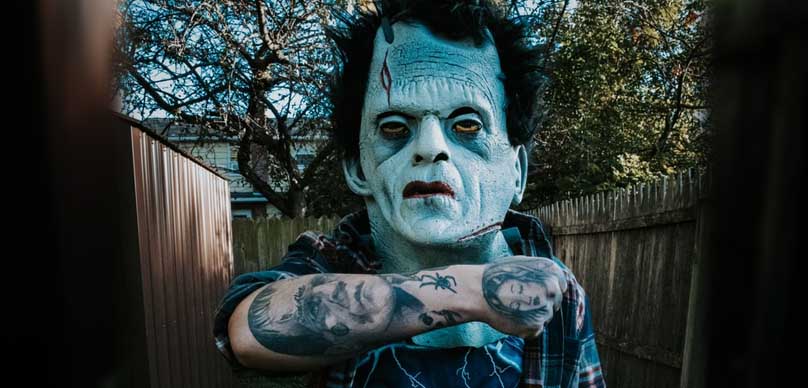
IFH 555: The Frankenstein Self-Distribution Model with Ryan Templeton

Today on the show we have filmmaker Ryan Templeton. Ryan has been developing a “Frankenstein” self-distribution model for the ever-changing filmmaking landscape. Though this interview was recorded before the pandemic it seemed almost Nostradamus-like in its tone.

Ryan and I discuss the changing Hollywood landscape and how indie filmmakers can take advantage of new opportunities that are being created in the vacuum left by the studio model of doing business.

Enjoy my conversation with Ryan Templeton.

Right-click here to download the MP3

Alex Ferrari 0:00
I'd like to welcome to the show Ryan Templeton man, thank you for coming on the show, brother.

Ryan Templeton 0:14
Yeah, man, great to be here.

Alex Ferrari 0:16
We're here to talk about distribution and how to make some money with film in the film business, and your unique approach to it. So we're gonna get into the weeds here, everybody. But before we get started, how did you get into the business? Because I, I heard through the grapevine High School, the musical or something. So please explain yourself, sir.

Ryan Templeton 0:36
Yeah, so I so I started actually at the gateway drug, right, the gateway drug which is acting, that acting bug bit me and I mutated into a carnival freak. And, you know, I started getting a break where I just fell down this, this well, where I just love this business. And I had an opportunity to be in High School Musical. And I did, the best thing to come out of that was that it became a South Park character that when they made fun of when they made fun of High School Musical, they have my character. It basically turned into a South Park character. It was actually yeah, it's that's probably the the highlight of my entire life.

Alex Ferrari 1:16
You, you've arrived, Sir, I don't even know why you're speaking to me so

Ryan Templeton 1:21
Well, you know, the reality is behind it is that once you kind of get into it, and you start to like, see the all the back end side of things like so once you get on the set, you realize kind of how small the actor is, you are the face of the franchise, but at the end of the day, like there's tons of things that are happening kind of all around you and what kinds of things that are happening before you even get there. And after you get there. And so, for me, I just found that I was just fascinated with this whole process. And I really wanted to understand the whole thing holistically. So I started writing, about the time actually that I was in high school musical, which was years and years ago, I don't even remember 15 or more years ago, probably 17 years ago, actually. So I started writing and creating scripts and things for myself, started doing short films, started producing those things started acting in them. And I knew how to edit. So I started doing the post production piece as well. So that's kind of what I ended up. Getting into how I kind of got into this game.

Alex Ferrari 2:28
Yes. So and you you reached out to me, a friend of our Rob Hardy actually reached out to me said, Hey, I had this great conversation with this filmmaker about this new business model, that I think you really should talk to him. So we spoke and I wanted to hear I want you to explain to the tribe, what is this new distribution business models that that's making money or can potentially up filmmakers make money?

Ryan Templeton 2:55
Well, it's not necessarily a new distribution model. It's a Frankenstein of kind of the traditional the traditional business model and the business model that we're now in. So I think it's probably best to talk about maybe let's just go to the traditional business model is getting blown up and you've got an episode about that, which I would encourage people to go and check out. But essentially, the the theatrical exhibition is, is basically going away for the major studios, that is not part of their their business calculus anymore. And so, look at Disney, for example, Disney owns 47% of the market share, but they're only going to create 17 films. So that is not enough to cover all those weekends. And that's only one segment of an audience. And so, you know, the president of AMC, Adam, Aaron basically says like, we need more movies, right? These major studios are in a 16 week or 17 a week, you know, weekends a year. And, but that's not servicing, what is our theatrical exhibition. And so we see reboots, remakes, sequels, tentpole franchises, all this, you know, regurgitation of old IP, because that's the easiest thing to market. But what we're realizing is that, that audiences aren't engaging with those things because the as we become more and more digital, right, you and I are talking right now like not in the same room. And and that's amazing, but what we're actually finding and I this is my background is in marketing is that we want human connection. And so that's what people are engaging with, if you look at online, the influencers, right? We want to connect with human beings and our theatrical spaces is actually a good place to do that to be shoulder to shoulder with somebody enjoying the same thing because when you hear them laugh, right, that gives you you know, that serotonin that makes you feel good and feel like you're part of a community and that's what we need. But those big businesses can't compete in that space because they're not human. They're not human. There's though, who's the face of Warner? are just nice, apparently. You know, Disney, exactly. I mean, it was Walt, but back in the like, but we don't have that face anymore. And this is, you know, and so people want that thing. And so this is why we engage with actors and celebrities, because that's what draws us to things, right? So we recognize that that person as a vehicle of empathy, it's the the protagonist, or the antagonist, or what whoever it is, that is in this film that you, you, you relate to, that's who you travel through the journey of the film with. And as you see, and recognize those people more and more frequently, even though you don't necessarily know that, like, I, again, I'm sitting here chatting with you, I listened to your podcast, and I think you're doing you do great work, right. But I feel like I know you. But this is only that, you know, the second or third time that we've ever chatted. And so you you are a vehicle for me, that that I imbue you with a certain familiarity. And so it's the same thing with our films, the that's why you go out and you get, you know, talent that people recognize it doesn't have to be a list, you just have to recognize the talent because that's how you bring the people in, it's this is my trusted vehicle for how I get into the film. And so independent filmmakers then have a huge opportunity in front of them with the theatrical space, because the the, the major studios are pivoting a huge amount of their resources away from the theatrical space into streaming. And with that, they're gonna now have to start creating crazy amounts of content, almost unsustainable amounts of content. And you look at Netflix, I think is somewhere 1,000,000,015. And then they added to 2 billion just recently. And you can expect that basically everyone is going to follow suit to some capacity, I think Apple is at 8 billion. I heard peacock is somewhere in that 7 billion, you know, Paramount network, and HBO, Max and all these content providers, have, they have this giant catalogue, that's going to get people to start the subscription. But the only way to keep people is new content. And so their business calculus inside that is going to be two things. Does it bring me new subscribers? And does it retain the subscribers that I have? That's it. That's all those business models are going to care about. So and you see this with Netflix, as they dial up the spend on their original series. They dropped a lot more stand up comedy specials and kind of, you know, mid tier documentaries and things like that things that are low cost for them so that they can always have something new.

Alex Ferrari 7:52
Every week, there's a new standard. This is you.

Ryan Templeton 7:55
I mean, man, you how much content do you put out just to maintain the audience you have now? I'm not even kidding. Like, now scale that?

Alex Ferrari 8:03
No, yeah, I don't my spend was 8 billion last year. I'm thinking about a 10 billion on my content, but I'm Miko, just nine I'm not sure yet. But I know that a bit. To be honest, on a business standpoint, one of the reasons why I've been able to really penetrate the audience that I'm going after, which are filmmakers, screenwriters, content creators, is because of the massive amount of content that I put out and the massive amount of energy that I put out on a weekly basis that nobody else has really tried to do or figured out how to do the same way I do it or with the way I do it. And it's that the same model works with what this what the studios in the streaming services are doing. I'm just doing it for less than a billion dollars.

Ryan Templeton 8:43
Well, we don't need you shouldn't also discount the fact that you are doing this genuinely right, like correct. So you are you are the face of your franchise, indie film, hustle is not anything other than basically Alex Ferrari.

Alex Ferrari 8:57
It'd be, it'd be hard to sell indie film hustle without me. So like, if a company came in, like, you could sell Disney, you know, you could sell Apple, I mean, on who'd buy? But you know, who could afford it. You know, you could sell Netflix, but that, but I'm glad that I'm putting into film hustle in that category. So I appreciate you. I appreciate that. But no, it's very difficult to sell this this business without me attached to because I am the face of the business. And that's what makes the business run. And there's many, you know, many companies that do that. And I know like there was a couple other other brands within our niche that tried doing that. But when they lost the main guy and YouTube shows happen all the time where the YouTube show host changes and everything drops. Yes, there's attach that person

Ryan Templeton 9:42
Well, and this kind of goes into exactly what you always talk about, right? Like you talk about the niche, right? Well, the niche is the people who look at Alex Ferrari and go, this is the dude like, this is the guy right? This is the guy whose material that I want to see. And so filmmakers do need to focus on the niche but what niche people Want is actually to then project the thing that they think is niche into a wider space. Right. So a good example, which I try not to use, but like Napoleon Dynamite, right, Napoleon Dynamite, and they use this film all the time to be like, Look, Napoleon Dynamite was maybe

Alex Ferrari 10:20
It's an outlier. It's an outlier. But but the principles are solid.

Ryan Templeton 10:24
The principle behind it is solid, right? Because what is the point of Napoleon Dynamite. It's about a small town in Idaho. And so that's a very niche content. But what that content did is it created a funny affectation of basically like, who these people are. And guess what, those are the people that grabbed on to it, and said, this thing is hysterical. This is about us. And they projected that out into the world. And I mean, everywhere in the world.

Alex Ferrari 10:52
It's same thing with Big Fat Greek Wedding. I mean, I mean, that was another one that was just like, oh, it's about a Greek family, like, no, it's about every family, and then everybody grabbed on to it. And then it exploded to what it became. It's all it's all relative, you know, I actually use napoleon dynamite in my new book, The Rise of the entrepreneur as a model. And I even say like, this is an outlier. But the principles of what happened here are sound, as opposed to Blair Witch Project, or paranormal activity, which were complete lottery tickets, and cannot be replicated. But the concepts behind a Napoleon Dynamite or Big Fat Greek Wedding can be replicated if you use the base concepts correctly. And there has to be a little bit of lightning strike to make that work as well.

Ryan Templeton 11:36
Yeah, but any successful, any successful property has some sort of lightning strike to an extent, right. And that's why because it's such a risky business, like, you look at best practices when it comes to best practices of the business. So just because we're independent doesn't mean that we should not look at what the industry does. That's best practices. And if you look at just the traditional model, what they're doing is they're diversifying their risk across multiple properties. So it's are you familiar with slated? I am sir. Okay, so slate, it has like this rubric, where they basically are talking about independent films and theatrically released independent films, they do a study from, can't remember the dates, I think it's 2012 to 17, or 18, or something like that. But basically, what the they show is that the number of winners and losers at the box office are about equal to about 50%, which shouldn't be terribly surprising, because those are businesses that have actually gotten to their point of sale, which is the theatrical space. And the losers make back, you know, on average, you know, about a point, two, five ROI, but the winners are making back like a 3.35 ROI. So if you put those things together, right, the the overall is a 2.41. ROI.

Alex Ferrari 13:00
And for everybody return on investment, so everybody knows what ROI is

Ryan Templeton 13:03
Yeah, right. Yeah. Yeah, and that's, and so the 2.4 is a decent return. Now, people who invest, they want like the forex and they want the 10x, and they want these giant returns. But a 4x can happen if you have just one of those kind of, let's say you made four films. One of them's a winner, one of them's a loser, one of them is where one of them is a loser. And the rubric basically, is that you would get 2.41 return on investment. That's what sleds data tells us. But investors want that for X number. So you would really need to hit a homerun in one of these things in order to hit that four, or even a 10x. And those are unicorns, right. So if you want make money in the film industry, then you just have to make lots and lots and lots of films. And that's what, that's what everyone says, right? You just have to make lots lots of films. The problem is, is if you don't make a great first film, it's really hard to get your second and it's really even harder to get your third, especially if these two didn't do well. And so what happens is our artists get one chance. And so we put all this pressure on these artists to make a film that's going to give them a career. And that's not fair. Especially for first time filmmaker, that's not fair. Like my first film. Yeah, I would hate to have that be the only thing that people ever judged me on and, and the same sorts of the same sort of pressures put on everyone. And then once you have that first one, how do you get the second one because now you want to try and scale up? You want to try and keep moving the ball forward. And so what we ought to be doing as independent filmmakers, and this is the business model is creating a career play the long game. So get four filmmakers that each have their own story to tell and You work together. But you have to work within the model that exists. So how do we value what a film is? Now we're talking value, what's the value of a film? Well, we know the value of the film based on the budget, because we always talk about the budget of this film is X amount. Budget and cost are not the same thing. It's not the same at all, my budget could be $12 million, but I only ever spend $3 million. So that so that's the value is 12, the spend is only three and how do you calculate the value. So you calculate the value by taking the script and going through it the way that a line producer does. So this is what all the studios do. They go through and they say it cost me X amount of money based on the DGA rules, the WGI rules, sag AFTRA, IRC, and they go through the whole thing, like I absolutely need X amount of things for this film, these are the hard costs and then they make phone calls. And they basically get the bids for what these things cost. And then when the film is actually made, they put those real costs to the film, at the end of the day, and then they know exactly what that film budget is. But it doesn't necessarily mean what was spent, they'll spend on the things that are hard costs, right? They'll spend on you know, renting the equipment, they'll spend on talent, Visscher, the talent and they'll spend on those things they absolutely have to have, but they already have an infrastructure. A lot of these major cities have an infrastructure, so they're portioning. It's an apportionment of their actual people that are inside that is creating this thing called soft money. And soft money isn't like a tangible hard asset. It is Alex Ferrari is working for Warner Brothers at $100,000 a year. But on this film, he is the writer and the director. So you get the DGA minimum, and he gets a right, and he gets a game. And both of those are going to be a combined are going to be somewhere in that, you know, 160,000 or whatever. So because I only pay you 100k A year is my employee, I've created 60k in soft money.

Alex Ferrari 17:18
Okay,

Ryan Templeton 17:19
See, so so you can do this same sort of thing at the independent level. And at the independent level, essentially, it's the same thing. I go through the script, I find the value of the script, if the value of the script is $2 million, which is still a low budget film, this is, you know, and people go $2 million. Yeah, if you're spending $2 million, yeah, you should throw your hands up there and be like, That's ridiculous. But independent filmmakers don't spend the $2 million, they spent a fraction of that because the $2 million value on the film, and you play within the rules of the guilt, because at the end of the day, you want to sell this film, you want to take it to theaters, you want it to live on a streaming service, all those major players play nice with the artist skills. And the reason they do that is because that is the bread and butter of their business. Without the artists, they don't have films. And so it that's what we have to start to talk about is that you play nice inside this budget, but you can dangle the rules to work in your favor. And you do that by creating soft money.

Alex Ferrari 18:23
So I'm confused in regards to the valuation of the of the product. So if you're if you're making a movie for 100,000, and your value yet is 2 million, I still haven't heard the way to do that.

Ryan Templeton 18:34
So all of the positions have to be filled, right. So everything that that is on a film has to be filled. But if I give you a position in writing that you can do that in pre production, and you're my writer, and then I bring you in as my director, and then you are covering two positions, I only pay you for one thing, right? So you get four kind of predator filmmakers together. And you run basically these, you know,

Alex Ferrari 18:59
So you're getting more. So basically the bottom, the model you're talking about is you're creating a bigger bang for your buck. So someone like myself, who can come in, right direct produce, edit, DP bring in their own camera gear, I'm bringing a tremendous amount of value to the project that doesn't install money yet, which is all soft money. So basically, when I made my film on the corner of ego desire, when I made it for about $3,000, hard costs, the value that I presented was probably anywhere between 50 to $100,000. Purely because of all the stuff that I was able to do. As if as if as someone coming into that thing, that's great, but I'm not sure how that how Okay, so continue with your process because you asked me to poke holes so I'm going to poke holes if I see something

Ryan Templeton 19:44
Absolutely. So the the point is like if I get let's say I get for Alex Ferrari, so I get my coning.

Alex Ferrari 19:51
That's impossible. That's impossible. That's impossible, sir. There's only one of me. Obviously,

Ryan Templeton 19:55
There is only one of you. We'll get we'll get some.

Alex Ferrari 19:57
If there was if there was four of me I would rule A world. Let's just put that straight up.

Ryan Templeton 20:03
Okay, so we'll get one of you and then we'll get kind of the second tier Alex Ferrari is it

Alex Ferrari 20:08
Their just copies sir copies of their copies of every copy becomes less and less hustle, because it just degrades by the copy. It's kind of like that old, low to that old movie with Michael Keaton. Multiplicity.

Ryan Templeton 20:17
Multiplicity. Yeah. So we multiplicity, Alex Ferrari here, and then. So we got four of you, right. So now think about all the positions you're going to cover, right, you're going to write, you're going to direct, you're going to shoot, you're going to produce, you're going to make the light all your edit, you're going to do color, you're going to do all your di t, you're going to do your data management, you're going to do everything I need to do your sound design. Well, now, I only have to pay for employees to get all those things, how much did all those other things cost? Now, I'm going to ask you, you for to do that for two years and make me four films, each of you get to run the helm at four films, you do it over the course of two years, now I'm going to pay you your minimum, I'm going to pay you and Alex to and Alex three and Alex for the minimum amount of money you need to survive. And what's going to happen is you're going to see that the difference between what you should have made if you were writing, directing, producing and doing all these things through the unions, what you should have made that giant gap is going to create a huge amount of soft money. That is what you own as, as the filmmaker, right. That's your basically your deferment. And so what you do is then you actually get the hard money to pay you and Alex to and Alex and Alex for you get that hard money for your minimum basic living those that money from an investor, and you pay that money back first. So if you're let's say your minimum amount you have absolutely have to have is $50,000. Now I'm making a movie that might cost me, you know, $2 million. On paper, I have these four people who are creating this huge amount of saving, so maybe a million dollars in savings. So I basically have you guys all for $200,000, I'm saving a million dollars. Now I only need $800,000 In order to make four movies. Because you're going to work for you're going to work for two years on that on that salary, essentially. And that's

Alex Ferrari 22:20
Okay, so you're basically creating a slate of films and basically you're hiring everybody salary to create these these forms of to create these products. So it'd be it's, it's it's simple economics, basically. So as opposed to hiring our freelancers to build your and I always use this olive oil business. So if you if you hire out freelancers to build the bottles, bottle that models do all this and that. So like when I had my, when I had my olive oil company, which again, if no one has heard of this, that's a whole other story for a whole other day. But when I had my olive oil gourmet shop, I had staff, I, you know, I paid them a salary, they sat there and they bottled olive oil by hand in my my factory, which was my my store. So by doing that I was able to create based on paying them an hourly rate, how many bottles could I fill? How much product could I create, based on the hourly now if I would have paid them per bottle, or per groups of bottle as a freelancer, the value wouldn't have made sense. This is right. This is basic economics for any business when you hire a salary versus a freelancer or contract worker, but you're trying to create that model within a cinematic slate of films

Ryan Templeton 23:32
Exactly. And within the independent scene because correct, we talk about independent and part of the problem is that we branded ourselves as independent. So that literally means by yourself. We really, really

Alex Ferrari 23:43
Independent should be independent of the studio system, independent of the system, not independent, like I'm all by myself, somebody had

Ryan Templeton 23:49
But we but we branded ourselves that way, right? By being Renegade and kind of being like solo entrepreneurs and this sort of like look, look at me run around with all my gear all over my body.

Alex Ferrari 23:59
I don't know what you're talking about. I've never done anything at all ever.

Ryan Templeton 24:03
Yeah, there's I'm sure there's some behind the scenes.

Alex Ferrari 24:06
There's a picture of me on this is Meg with like this huge rig with a camera and the mic hanging. I mean, literally, if I had a broom up my butt just like I start cleaning the floors while I shot it was insane.

Ryan Templeton 24:17
Well, that's but that's the whole point. Right? And so as you have this, this independent kind of branding that we give ourselves that we feel like we have to work alone, but we don't in fact, it's actually so much better to work with multiple people because if you put everybody in an equity position, so like I work in post production, you you worked in post production and you know that post production is a service based industry correct. So they come to me and they hand me a film and they hand me money to work on the film and I edit in the you know, we do the assembly or we do whatever we do in the the online, the color, whatever it is that we do the effects. I get paid for that service. I owe nothing when it comes to that film. But the only way to actually scale up your business is to own a piece of equity. And that's, and so what happens is then if you take the the savings that you had in yourself money, that becomes your equity investment in your film. And so when I turn around and I go out, and I raised this at, you know, $100 million, or whatever it is, I then can turn around with that same group of filmmakers and make a very, very strong claim that 50% of this movie actually is mine because of just the equity play.

Alex Ferrari 25:31
Right. And the one thing I've always said multiple times in the shows that if someone showed up with half a million dollars from me, I wouldn't make 10 to 12 movies. With that half a million dollars, I would not try to make one movie, I want it because making a movie is like pulling up pulling a slot machine. So I would rather have 12 shots as opposed to one shot to

Ryan Templeton 25:49
Yeah, sit down and play some hands of poker, right? If we're gonna play this clip, let's not pull the slot machine. Let's play the game. Let's learn the rules. Correct. And let's have a strategy. Shocking. Yeah. Amazing. And, and then, and then place your bets accordingly, right. So if you know that you got one that's a little bit soft in in the slate of films, that's fine. Just do that one as best as you can recoup as much as you can, it can't be zero. But then do the next one. And then maybe you're going to want to gamble a little bit more on that one. And so what you have to do with these films that say, again, I'm using four because it shows you know, you failed, yeah, you can do four films in two years. And you can tolerate any people for two years at a time.

Alex Ferrari 26:35
I've met some people in the business, I'm gonna say I'm gonna call shenanigans on that one. No, you cannot. But you can pick them, you get to handpick them. And if someone has to go, they have to go and you hire and you play somebody else in there. And it's just part of, it's just part of what you're creating. So you're basically just creating a production company that has a slate of films where you're hiring crew, you know, that can do multiple jobs. So like, you know, if you hire a DP, it's a DP will own their own camera, their own lenses, their own grip truck, maybe you and you pay them a salary position where they're getting general, they're getting a steady income guaranteed every day, you know, for months at a time, and something that's going to make sense for them. And or some sort of equity in the project that they're creating, and kind of making it more of a communal way of making films on the making side of it actually producing the product is that basically what you're telling me?

Ryan Templeton 27:29
Basically, yeah, and so because that person, you know, that DP would get hired on maybe one film a year or one every couple of years things? You know, that's it, you know, what I'm doing is, I'm guaranteeing that you will work on at least two films for the next two years. So I'm guaranteeing that that salary. And so then what I'm doing is basically saying your value is based on the DGA, the Directors Guild of America, what you should make working on this, what's the least amount you're willing to take everything that you create in soft money becomes your piece of the equity in the overall budget,

Alex Ferrari 28:06
Which now, so I understand what you're saying. So it's, again, the basics is you're just creating more value by leveraging time and amount of films, and you dialing down was found as well correct. And you're dropping the budgets. Because of that, you're just, you're just being smarter with your money, which sounds great. And I agree with it, I agree with the concept. So the concept of actually, production of the film. Makes sense. And it's something that I've done many times in the past, I haven't done a slate of them, per se I've done it one offs. But if you you know if i People always ask like Alex, why don't you make like five or six movies a year at your budget range, which is gonna be under $10,000? I'm like I could if I want to, but I don't I'm busy doing other things right now. But I could easily do that without question because I have the infrastructure to do it. I have crew that could do it with and your model, I could easily bring two crew members that I work with, and they would be on board without without question. But the question I have for you then is the production is great. And you're able to make your movies at a much more affordable rate. What is the business model to recoup? What is the distribution model? And how can you generate revenue from these films?

Ryan Templeton 29:16
Okay, so yeah, that's great. So essentially, what you're doing is you're going to do kind of a, your day in day is going to look a little bit and I don't know how familiar your audience might be with day and date release. But that's basically you drop it into a theatrical space. And then you put it on a transactional Video on Demand, which means you're paying to either rent or buy that property. So your theatrical, you just go right to you can just go right to exhibitors, and say, I have a finished film. This is my feature film. This is what it looks like. This is Susan, this is the trailer, there's the chiar and they will say yeah, you know, let's do a 6040 or 5050 at the gate. And you show that there's actually like people in your community that one audience see honestly an Audience Yeah. And so that means you have to do that. The work ahead of time to get to that point, but essentially, you're distributing it either directly to the theatrical exhibitors yourself, or you just partner with a theatrical distributor who already exists in a space who does independent films. And there's tons of them that there's tons.

Alex Ferrari 30:16
Yeah, it's always gonna say this. And this is something that I think is one of the big kernels nuggets of gold that you're throwing out there is that there is I do truly believe that the theatrical experience is not a growth industry. For as a general statement, it is not where everyone's going. It is not where I mean tickets, I've either flattened or r&d r&d declined, the occasional big tentpole will maybe jump that number up. But people aren't going more to the theaters, they are watching more streaming content. They're also not renting or buying as much as they used to that that's a holdover from the video store days. And the as the new generations are growing concepts of renting and buying, of buying the movie is pretty awkward, because like, you could just go to Netflix or Hulu, or one of the many streaming services to watch. But the one thing I want to bring out here is that there is a big opportunity for independent filmmakers to fill the void that the studios are leaving behind in the theatrical space. As crazy as that sounds, if you use different models, like I talked about in my book, like the regional cinema model, or being able to bring in an audience, and you can target audiences, or if you go after a niche, and you can prove that and it's the I just released a podcast yesterday on film intrapreneur, which was about how the documentary awake, the life of Yogananda did gangbusters theatrically because they were able to target the audiences of followers of Yogananda in theatrical throughout the country and throughout the world. So there is a huge market there, do you have any advice on how to get into those Viet in those theaters, without, without a middle without a middleman to I would prefer not to go to the theatrical distributor

Ryan Templeton 32:01
This is and this is the thing is like so traditional, you needed to have like a sales agent, someone who's going to help you could roll the sales, right, but because you are your own brand for each of these movies, right, you are the filmmaker, so you are the brand. So what you should be doing with that is be building up the audience that you're going to carry with you into these theatrical spaces, which means, you know, building up that following either on social media platforms, or even a Patreon, a Patreon could actually be your TVOD that actually is realistic to have a Patreon actually be your look at and drop me a buck every month for five bucks every month. And I'll give you all access to everything that I do behind the scenes. And you create kind of like almost like a like a corridor crew. I love those guys put them, you know, kind of like but sure showing how the sausage gets made behind all these films. And then that becomes valuable to an audience who wants to learn about filmmaking, and how this thing was done all the way from start to finish. So that's how you can own your TVOD. Now, if you go to a theatrical space, you can do targeted analytics for a specific theater. There's a company called comScore. If you're, if you're familiar with them, and you can literally go based on look this, this exists right here. And all the films all the comparable films that I have, my films are like this have performed really well in this area. So that means that my demographic is in that area. So now what do I do? I pump money within, you know, maybe 1015 miles, I'm not sure what the exact mobilization rate is around this specific theater, but you start pumping your marketing dollars into that actual radius demographic for those people. And you try and drive them to that one point of sale. And that one point of sale, whether it's successful or not, it doesn't matter, because theatrical is just about marketing. It's just about amplifying the voice that you have. So as soon as my film goes to the theaters, I now have that much more street cred. Right. And now, I am a poster that someone walked by as they went up to the go and see whatever Disney was showing, they saw my poster in there. And then when they see my poster, when they're scrolling, scrolling through Hulu, or Amazon or Apple TV, or whatever it is they go, Oh, I recognize that. That marketing spend that I had called theatrical now causes them to click on it, and that creates revenue for me.

Alex Ferrari 34:26
Yeah, it's just about the model is is it makes sense but the ROI is the issue for me because for you to do a mark, if you can break even on the marketing spend, meaning that if you can break even on theatrical sales, whether that be through actual box office, or actually selling merch, or some sort of ancillary product lines while doing that screening at either conventions, or theatrical or whatever you do, if you can break even or actually make a profit at that point, then this model makes sense. But if you are losing money theatrically, and then you're hoping that people People that happen to pass by look at a poster, or yeah, you stick out. It's gonna be rough.

Ryan Templeton 35:04
Right! But you're not talking about a huge number at $2 million. Like you need 50,000 people to see this movie. That's a lot of people. 50,000 people Yeah, but it's, it's not a lot of people, if you actually turn these things into like events, if you're going to a city, and and you're running an event on a Friday, Saturday, Sunday, and you're going to be there for a q&a afterwards.

Alex Ferrari 35:26
Yeah, you're touring, you're touring. Basically, you're going on tour with the movie. Yeah, it you're, you're basically frankensteining, like you said earlier, you're frankensteining, a bunch of different models trying to put something together, that makes sense, you're taking the best of every little bit trying to put together this entire model. So I understand.

Ryan Templeton 35:45
So because there's multiple Alex's involved in this right one, Alex can be, you know, running their premier event in Philadelphia, and another Alex can be running at the premiere event in a different city. And you can kind of be grooming those those, those markets. And so after you've done that weekend, you've now saturated the market with, you know, maybe two or three or four screenings, and they've got to see you face to face. And there's a reason to come out because it's an actual event, they can get their photo taken. And you saturate that market with maybe 3000 People that are now out there talking about this movie, and they're bringing in new eyeballs. And then the theaters actually want to do a split with you. So if you had to, for wallet for just your little events, because they're like, we're not sure we're not sure that's fine you for a while, just that one. But the theaters need more movies, they just simply need more movies, and they need it for more demographics. And so if you say, like you're been saying, if you you niche down and you know that niche, and you know how to get to them, and you know where they live and where they are, and you can actually mobilize them to the movie theater, then you can put that in front of them. And then there's a whole reason for them to go out into their communities and say, you know, that niche I like, this is a movie about the niche that I like, and that's the word of mouth marketing, or what they call buzz, that actually brings new eyeballs to come and see that. And the the theaters love those kinds of deals, because a 5050 for them is a better deal than they're going to get from any of the studios,

Alex Ferrari 37:12
Right. And the thing is that again, everything you're talking about really does come back down to the riches are in the niches like it is about bringing niching down you're not doing for movies that are broad spectrum, like a romantic comedy, a generalized drama, you know, a generalized horror movie or something like that. You're creating very niche product for niche audiences within this model, which right now you've now now you're not hedging your bets even more, because now you have an audience that you can actually reach. As opposed to creating Oh, I'm just going to make a romantic comedy for $100,000 with no stars in it, and hope somebody finds it like that's you, you'll die. It's over, it's dead. But I do i

Ryan Templeton 37:53
But you got Sorry, what you need you niche down to a place where then you you provide them with material that they then want to announce correct as if if you niche down and it's only something that can be shared within the niche, it's really only got that narrow mountain. And you can do that and make money in directing, but the way but the way to make money in theatrical is actually to grab the niche, and then have the niche want to tell their friends who aren't in the niche about it. That's the word of mouth marketing. That's the piece that creates those 4x and 10x films, that then can carry your whole production slate, and so you're niching down with the content on the screen. But then, in this sort of model, again, if you're showing how the sausage is made on the backside of it, then those people feel the same sort of reciprocity for the person who's sharing that information with them. And they're potentially paying you here in your transactional video on demand or Patreon kind of style window. And then they're also paying for you inside your theatrical window and they're mobilizing themselves and friends, when you come to town with the events. And you you know, you talk about whatever it is if it's the vegan chef, right, you do the vegan chef seminar, you bring in the you know, a vegan caterer to the premiere? Yeah. You know, and have them sponsored the event. And those are the sorts of things that you do at but the you're not going to pay that vegan chef to come there. That's free marketing for them. They're gonna love that. Right. It's a it's a movie, but that's the thing about our business is it is the sexiest business, because everyone wants to be involved in it in some way, shape or form. And because it elevates everything you're doing now. Go ahead. Yeah, you have a question.

Alex Ferrari 39:39
You know, so it's, it's, we I want to just kind of reiterate what you were saying in regards to the, the kind of the reality show style process of explaining and showing you how the sausage is made, you know, to give everybody listening An example is my film on the corner of ego and desire. I've been talking about this movie for better part of two years now. At this point, and people have been asking me left and right, like, when are you going to release it? When are you gonna release it? I've been busy. I've been busy is coming out in January. But the point is that I've talked about this film so much, and it is so perfectly positioned for my niche audience that, you know, now people are dying to see it and also consume other products or other things that I'm creating about it. And I've already been I've already made money before the movie ever got released, because I've been able to create other ancillary revenue streams from just talking about it, because that's a model that I've been able to build up with indie film, hustle. And I did the same thing with this is meg my first film before then. So it is possible. But this is a long game. This is not a short play. This is a long game plan. And that's how filmmakers need to see their film careers.

Ryan Templeton 40:46
But it's a career. You're right. You're

Alex Ferrari 40:49
It's not a lottery ticket.

Ryan Templeton 40:50
But there is no filmmaker who doesn't want to make a career out of it. But you have to like it's exactly what you see, you have to play the game, we have to sit down and play several hands at the same time. And that showing how the sausage is made, like the back side of that thing is so valuable. Consider that like, how many people can't afford to go to film school, or any post secondary for that reason, for that matter. Now. That's an underprivileged underserved community. And we wonder why we don't have stories coming out in those communities. Why it is everything is homogenized through the lens of New York and LA, right, like, because those are prohibitively expensive cities to live in. Right? I live in middle America, I can't afford to live out in New York or LA, I just simply can't. And a lot of storytellers are in the exact same place. But there is no monopoly on story. There is no monopoly on talent. Right? La has got a real housing problem crisis, right?

Alex Ferrari 41:47
Tell me about it. I'm here.

Ryan Templeton 41:50
I'm here. Yeah, but it's too, it's too expensive to go there and do a startup business. That doesn't make sense. It, it makes sense. If you want to go and serve someone else's vision, who's already got like, you know, a strong foothold. But you're talking about regional filmmaking, with regional releases, and then you're making kind of these communities around those things. Are you familiar with them? Dunbar's number?

Alex Ferrari 42:16
I've heard of it. Explain it to me, please.

Ryan Templeton 42:19
So the theory of Dunbar's number is like, you can have close personal relationships with anywhere between you know, 203 100 people, these are the people that are your family, your friends, your co workers. So essentially, what you're doing is you're creating this, you know, within that 200, so you definitely keep some friends and family and keep you know, those things. But then the other people that you want to try and find are people that you want to work with people who are artists, people who are DPS, people who are, you know, willing to serve an idea, and you can all work together to, you know, rise, raise the tide. So you have your filmmaking crew, and you guys live to you, like you live in relatively in those communities, and you make films together, that's regional filmmaking, and then you amplify that into your, you know, little network again, and that network is going to be, you know, 2000, once you get away from that, first, the first 200, or 300, that you can actually have, there's only about 2000 people, because you're going to all have shared connections. So there's only about 2000 people around that community that you call that your tribe. And your tribe is probably bigger, because you've got other people pulling you in. But ultimately, like the real, real hardcore ones, the Evangelicals for indie film, hustle is probably about 2000. And that's enough to create like a sustainable living for one person. But what you're trying to do is expand that over and over and over again. And by creating the content around these 200, and then making a 2000. It's the same thing, the film itself becomes this 200 thing, you need to find those 200 evangelicals for this film, they're going to create these networks around them. So you can create them in different cities. And you can kind of make this tour with your film, all of a sudden, you start being able to feed the whole.

Alex Ferrari 44:05
The thing is that the one thing that I would like to add to this model that you're talking about is that the unlike the olden days, where you had to go around on a tour like this to make money, which you still can, but now these these, these content can live forever, on line. So for me, I release a immense amount of content, but my catalogue of content is watched and listened to every second of every day someone's listening to something or watch something I've done or read something I've done over the course of the last four and a half years. So every day that goes by I add to the catalog. Now the big difference is my addition to the catalog is extremely affordable because it's a podcast, it's an article, it's a video, it's nothing that's cost me hundreds of 1000s of dollars. So if it's right for filmmakers, it's a little bit more costly, but if you start building this this kind of ecosystem, which includes articles includes videos on YouTube includes this kind of ecosystem of products and services that are dedicated to a niche, then you could start slowly building up a business. I mean, I didn't just wake up and, you know, have 4 million downloads or 5 million downloads on my podcast, like overnight, it took years of work to do. And it still takes a lot of work to keep that going. But it's given me the position where I am now where I can go out make a movie, I could write a book, I could do whatever I want. And I'm very happy and grateful for that. And that's where all filmmakers need to come to, they have to build this kind of ecosystem business for themselves. Or if I may, say, a film entrepreneur, like business, around their art, so they can constantly constantly do it. And to a point where the movie, if they're smart, the movie almost becomes a lost leader. If they've created a good amount of product and services around it, were at the beginning, you you're exploiting the movie for actual revenue from the film. But like many examples I talk about in my book, where the filmmakers literally give it away now, they're like, just take it because I know when you watch it, you're gonna come over here, because you're interested in my niche, and look at all the products and services and information that you're actually looking for. How can I be of service to you? And that is the key of filmmakers moving forward, in my opinion.

Ryan Templeton 46:20
Yeah, and, and, and if we look at this, again, let's go back to like the problems that are actually in the marketplace, right. So you take that thing to the theaters or, or you haven't, you don't think that it has theatrical legs, but you've already started to drive an audience to it. Well, guess what, that is now valuable to who, to streamers. Those people who don't have your subscribers already, guess what, when your film goes to their platform, they'll pick up the subscription of, you know, Paramount network, or they'll pick up the subscription for peacock or whatever it is, just watch your film, now you've actually tangibly moved the needle for that business, and it is part of their catalog. That's what those businesses are, right? It's just a giant catalog, they're not really producing their own stuff, for the most part, they're putting money into it. But what they do is they put the money into it, and they hire people in a service agreement, basically all over the country, they go and find the best tax incentive, and they drop the money in there recoup a piece of that tax instead of and so they're reducing the cost of what that that is, and we here in Utah have High School Musical, which is on Disney plus. And we have Yellowstone, which is on the Paramount network, and those are running on. And those are relatively big franchise properties. And it's being done by all my friends, like, it's just people that are in our community, who we rub shoulders with, you know, you see all the time. So you can take those same people who now have pedigrees of working for these major studios, and why not make a business that has those professional resources, if they're good enough professional resources for those big major studios, then they're definitely good enough for your independent films, rally those people together and create the business model model around that. And then if you really want to, like, give an opportunity to another group of people who are underserved, there are investors who actually want to invest in films, and who are not allowed, because if you have the major studios who create these slides of films, so you know, like I said, Disney's going to do 17 films, so they have one giant equity fund, essentially, that's capturing all this money from their private investors. You're either in or you're out. And if you're out, you're basically out forever. So you always have to put this money in doesn't matter what's in the slate of films. But those things make money, they have $5 billion box office returns this year alone. That's, you know, ridiculous. So yes, you want to put money into there. But other investors don't get the opportunity to invest in films that are going to have recognizable talent, and a theatrical release and have some measure of quality. People want that. They want to invest in that because that's fun, it's entertaining, it's sexy, and it's entertaining and, and they want that, but they want to do it prudently. So you diversify the risk by doing it in a slate deal with them. And so you're, you're mitigating their risk. I would never ever, ever, ever, ever advise someone to invest in one single film because that is super dangerous, right? It's super risky. You can lose, you can lose not one single act of God or you will, you will lose it all.

Alex Ferrari 49:39
I mean, it's 2% of film, independent films actually make their money back and there's a reason for that because you're putting all that pressure on one film to carry all the weight where if you if you take like I said, if you have $500,000 you make 10 to 12 movies off of that, which is doable and still very respectable budgets anywhere between 45 and 50,040 50,000. dollars per episode, which I know a lot of people don't, how can you make a real movie without like I've made to that, and they both sold and they're both making money and I don't care. So it's all depending on the kind of stories you're trying to tell. And if you're in within a niche, imagine if you had an the vegan niche, and the vegan chef movie, and witches, by the way. But by the way, there's an entire chapter of that in the rise of the entrepreneur, it's called the vegan chef, and I just broke it down. By the way, I have a name for it. Now it's called Crazy Sexy vegan. So it's just called Crazy Sexy vegan, why not? It's called crazy, sexy vegan. Imagine in that niche, or the surfer niche, or the skateboarding niche. If you made if it was a niche that could support multiple film, imagine if you made 10, vegan themed or plant based themed movies. And you can include some documentaries in there you and imagine you had a slate of those, do you know how much money you would make with those when a movie like game changes just showed up? And just it was the number one documentary of all time on iTunes. And Netflix paid an obscene amount of money to have it two weeks after that original release. You know, that that that demographic is that niche is huge, or a surfer, a bunch of surfer movies, or a bunch of skateboarding movies are a bunch of trombone movies. I don't think that's going to work. But you know, but there's those kinds of films, imagine if you played a slate as opposed to one, one.

Ryan Templeton 51:21
Yeah. And that's and that's exactly what you're doing is you're diversifying the risk for the capital, right. And so then the money wants to invest in this thing. And then, so you have people at the front end who want to invest in a diversified portfolio, because it's going to be fun for two years to have a new movie, every six months, you're getting to go to a film premiere, you can invite your friends, you can bring your family, you get the red carpet treatment, like it feels fun, that's a good use of your money, and you're supporting a local community of filmmakers. These are the people who live within your region, and you want to support them, because they're artists and heaven forbid, you know, you know, you don't get to tell the stories, that of your community and the niches and things like that, that you're involved in. But then you can even now do the business model of the online public offerings, which is the equity crowdfunding, and you had an episode not too long ago about that, which I highly recommend people go back and listen to. But instead of doing the equity crowdfunding up front, you do an equity crowdfunding when the film is done to support your theatrical. So now, I have a film where I'm showing you the key art, I'm showing you the publicity, I'm showing you, all the behind the scenes and the special trailers and things like that, then I create this fund that says, Look, you put 300 bucks in here, and I'm going to share my box office revenues with you. And that's basically your piece of this, that this film. So now what have I done, I've created an incentive, a financial incentive, where they've invested their $300 into this movie, now they have a $300 incentive to broadcast this film to as many people as possible. So I share with them all my Dropbox with with all my all my assets, and they can hit their own audience with it. So then you've created an avenue for people with larger followings, like yourself or other YouTubers or other people with like niche audiences to financially back you. And then also return on that investment because now what you know your mobilization right, wait 300 bucks, oh, yeah, I can send 3000 people to cities across the country, that is going to turn back your money. And you do that just in a few small things with this film. And now your de risking what your theatrical risk goes down your PNA spend comes down. And the filmmakers are de risking themselves in theatrical space, sharing the box office with the audience who will actually mobilize to go and see it.

Alex Ferrari 53:52
The key though, to this entire conversation is to keep the budgets low, to keep the cost of the product low. And that's what I keep preaching again and again. And I was talking about it at AFM when I was there last week, where you you I talking to filmmakers, and like I did, I talked to a couple filmmakers are like how much do you need? Like, well, I have a quarter of a million dollar movie, but we need a million. So I'm like because you have a quarter million cash. Yeah, yeah, we have 250,000 now, but we need a million. And they had this whole package and everything. And it was an I don't wanna talk about exact What kind of movie it was. But it was a movie that and I told them I'm like, do you want me to tell you the truth? And I say yeah, like, you need to make this movie for $75,000. And if you're smart, you'll make two or three movies with that $250,000 If not five movies with that $250,000 Because you're gonna spend another seven years chasing the $750,000 and you won't be able to make money back with this. I promise you, you just like Oh, who's your cast? What's your theme this and it was just it did not pass the mustard. So if you drop that budget as low as possible, and I would I always tell people as well, when I had people that I talked to go look, if you have $30,000, you're like, I know you want that techno crane shot. But can you get away with it? Like, how much does that techno crane add to the bottom? Yeah. What's it worth, it's like, again, I'll go back to my olive oil. So if I have a bottle in my bottle is gold. It's golden bottle. It's made of pure 24 karat gold, it still has olive oil in it, and has a diamond and crusted cap on it or a cork on it. Okay? How much more money am I going to generate? How much how much more revenue can generate by adding really embellishments that the core customer doesn't care about? You know, like, one or two people are going to buy that I'd love to meet these people. But so there's someone's gonna buy a 24 karat bottle of olive oil? Sure, someone will always buy something. But in the long term, does that techno crane add any more dollars to your bank account? Does it add any more Adi? Like, can you tell the story in a slightly more affordable way? I know it's nice. Look, I've shot with a techno crane. If I could live on a technocrat I would it is wonderful. But does it make financial sense to occur that,

Ryan Templeton 56:13
Right and that's the end, that's the calculus that filmmaker you know. And when we're in art mode, like when we're in art mode, I don't think that we actually should be thinking too much about that, like we really should create from a space of purity. But then like, when you take your first steps back, like you need to go, Oh my gosh, this is so not going to happen. So either I have to do something else, or I have to make this fit within the resources and things that I have in order in order to create. But I guess the point that I really want to like emphasize is that this community idea, and that community of face to face, and working with people creates these regional pockets of the film. And those things can live just in those regional areas. There's filmmakers here in Utah, that have been doing this for 1012 years living off living off of just like

Alex Ferrari 57:07
The regional cinema model, the regional center model,

Ryan Templeton 57:10
Regional cinema model, and then they are releasing it just to the small pockets and niche communities in this area. They have been doing that for 10 years. So now what I'm now what you're saying is to build on top of that, that's what you want to do is build on top of that. So now you are bringing in people who want to be involved in the film business. Imagine if at the front of your theatrical screening, you had, this film is brought to you theatrically by. And it's all the people invested in your equity crowdfunding campaign, their Twitter handles or whatever share their businesses are, that is a huge value to someone because it's entertainment, which is what captures eyeballs and attention. And that's what people absolutely want in their businesses. And so you don't need to spend a huge amount of money that $250,000 filmmaker, right, they're already at the point where they can make a million dollar movie because the magic formula is 25% in capital 25% in debt 25% in pre sales 25%. In incentive funding. Now pre sales is going away. So what you're gonna do, it's gone. It's gone. So you've replaced that piece with equity for your service positions. Everyone dials down their cost,

Alex Ferrari 58:23
Right. But the thing is $250,000 in today's marketplace, in today's tradition, the old traditional model is destroyed that by the time this episode airs, I've already released that episode. But it's gone. It's official. Now it's efficient, not like literally the traditional film distribution model is dead. It's dying, a miserable death and people are trying to hold on to it. It happened in publishing, it happened in the music, business. It's happening here. The model of making money with the art in this industry is changed just like it did in music just did in publishing. It's just adjusting. It's a it's a titanic shift in the way we do business and the way we create art, and people really need to understand that and real quick, I want to go back to what we were saying about if the techno crane makes sense or not. Do you remember the you ever hear the story of Michael Bay on bad boys? For that one shot, you guys. Alright, so Michael Bay, his first movie was called Bad boys with Will Smith and Martin Lawrence. And he had no power because he was still just a commercial director. And he wanted to there was a scene in the movie, which I just recently saw so much fun. There's, there's a scene in the movie at the end, where there's a big shootout with all the drug dealers in an airplane hangar. And there's one scene where one of the villains explodes out of the airplane that's parked and it just explodes in a fiery ball of flame into like, explodes out of it and into like a pile of get whatever. He wanted that shot. He wanted that shot so badly that the the line producer wouldn't give it to him. And he's like, what would it cost to come in tomorrow? Early for two hours and get that shot? Shot, and they did the numbers and it was $60,000. To do the shot, the one shot it's on screen for three seconds, four seconds, right. And he paid for it out of pocket. Because he is an artist wanted that shot. Now on a, you know, in there's arguments on both sides here like, did he have to do that with the movie had been successful without spending that $60,000? Yes. And there's no doubt in my mind, the movie would have not lost any box office whatsoever without that shot, but the artist in him wanted to do it. But you know what he did he ponied up his own money to do his art. And that is the big difference that filmmakers don't get. If you want the techno crane, and you want to dig into your credit card, because you want the techno crane shot, and the production can't afford it. Go for it, but understand what you're doing.

Ryan Templeton 1:00:50
Yeah, and this, and this applies to all artists, right? Like, I'm an actor, right? If I get a good script that comes, it comes to me, and I'm like, This is amazing. You pay me just to keep me alive. And I will defer everything else. And other actors are no different. Now, their managers or their agents are going to say no, don't do that. Right. They're gonna say no way. Don't do that. Because for them, they get their percent of their percentage, yeah, their percentage, and then also their publicist and their lawyer. And you know, by the time it gets to them, they're making 40 to 40 cents on the dollar.

Alex Ferrari 1:01:24
10 million doesn't go as far as it used to you only take home maybe three, 4 million after taxes. I mean, it's not really who can live off of that, really.

Ryan Templeton 1:01:33
But independence can go to actors. Yes. And they do all the time, go to an actor and say, Look, I want to pay you a SAG minimum deal to work on this film for however many you know, it should weeks or three weeks, trying to shoot them out as fast as you possibly can. And they will say yes to the things that they think are good. If you've bought a strategy to put that into the theater, then you give them box office bonuses because they are the vehicle they are that the protagonist or antagonist or whatever it is that they're playing in your field that people recognize, that's their brand, and you double them up every time you double up or you give them a you know, the first take off the top in order to get them home. Because at the end of the day, they are artists as well. And that's their sacrifices to work at a lower rate to work on your film. And everyone will do that. It's the the problem is when filmmakers take advantage of people's passion, and say do it for free. And that's a real problem. And there's a lot of filmmakers who don't know how to say no, there's a lot of crew people who don't say no, there's a lot of actors who don't have to say no, because they're being given an opportunity, but you can't live on zero.

Alex Ferrari 1:02:43
You know, without question without question, I neither, you know, when I make my films, I either pay the minimum hour, I give them some value that is worth their time. Whether that be a service, whether that be an exchange of services, whether that be there's something that I give them that that they're willing to do the work for. And it's also I'm not working 20 hour days, it's a lot of things about it. But the one thing I also wanted to say here is that the what we're talking about is with the actors and you know, coming up peace, everybody is becoming everyone's becoming a film Japan or whether they know it or not every all the actors or the crew people to distribute the distribution and everyone's becoming entrepreneurs, you have to become entrepreneurial in the way because the old model is broken is breaking down, if not broken down completely already were stupid, where actors aren't getting $30 million upfront anymore. Those days generally are gone. For the most part. There are exceptions, of course. But I remember that remember the whole days, like when people were paying three $4 million for a script. And then and then you know Arnold was making 25 million for Batman and Robin like those days are gone. Now there's back in participation. There's gross points, there's they're working, they're partners with the studio, and they're leveraging their own fame and talent with the studio's money in marketing, because they understand that. And this is a shift that happened in the in the music industry years ago, where there is very little money now in the music. Like yeah, there are the record sales, and the publishing money that you used to get is not what it was before. Like I wrote an article where, you know, for REL, the the artists who did happy, everyone that song, do you know, I didn't know I'm not gonna do that. He played that movie streamed on Spotify a billion times a billion times is streamed. He owns the right on he's the publisher on that. How much do you think he made on publishing offers off of off of Spotify?

Ryan Templeton 1:04:42
Wow, man. Have a billion a billion of Yeah, but it's so minimal. It's minimal because it's going to be a fraction of a penny back. That's 2 billion.

Alex Ferrari 1:04:50
So how many how much do you think I'm gonna say? It's gonna make it bigger.

Ryan Templeton 1:04:55
So just just under a million, yeah.

Alex Ferrari 1:04:58
$1,857 He made off of publishing $1,857. Not the sales, not the stream. This is the publishing aspect of it. He might have made more off the streaming but it was not much that was made some money. But the publishing we're publishing used to be gold used to make obscene amounts with publishing $1,800. He does a whole article, he's like, I can't argue, if a billion dollar of a billion stream saw makes $1,800 what hope is there. So the the money is not in the music anymore. The money's in the brand, the artists, the ancillary product lines, the sponsorships, that's what they started doing. There's bands that go on to touring, because you can't bootleg a tour, you know, you get bootleg that experience. So now I heard bands who are selling VIP tickets, where you can come backstage for like 250 bucks, get an autograph, and a picture with the band after the show. And that's how they're making their money. Because their access access is uncommon. It's insane.

Ryan Templeton 1:06:01
And it's and the collapse of that industry, though, is actually quite sad because you see artists who are creeping up into their 70s and they're at still on tour because they never quite hit the threshold to retire. And so the Rolling

Alex Ferrari 1:06:15
Stones are doing the Rolling Stones. I mean, Bon Jovi is not correct. I'm not gonna for Bon Jovi Rolling Stones, Aerosmith, they're all doing fine, because they were good, and they're fine.

Ryan Templeton 1:06:23
But it's the ones that it's a little bit lower tier, the ones that have been grinding at it for years. And

Alex Ferrari 1:06:28
I just I just saw that poison Motley Crue. And I think somebody else joined force, Guns and Roses, like the three or four of them for a worldwide tour, which this gonna do fantastic. But that's they have to make the cash man.

Ryan Templeton 1:06:43
Yeah, well, you're seeing a lot of the, the middlemen in every in every position goes away. Right. So it's the people in between the film and the theatrical exhibitions, the people in between the film, and the, the TVOD, or the streaming. And we have that example of distributor aggregator actually just an a relatively well established aggregator going under. This is you know, you're seeing this crunch and it's happening in the industry between the the studios right now and the WNBA even right, because their packaging material, those middlemen are creating that that conflict of interest in the at the ATA and the WG are going at it right now, essentially. And the Go ahead.

Alex Ferrari 1:07:29
No, I was I was about to say this exact issue is what came up I actually got a few people asked me what I thought about it, which was the the like, they got rid of this whole Law of the anti What is it the you can't film studio can't be a theatrical distributor. And they finally got rid of that. And when I when someone asked me like, didn't they already get rid of that? I mean, Netflix 80s Yeah, like nothing. I mean, it was still on the books. But yeah, no one enforced it. Because the second that Warner Brothers was making content for HBO, will that broke that and Netflix and their direct relationships. And that is where everything is going. The theaters that the studio's don't want to deal with the movie theaters, if they can make the money going directly to Disney plus, if Disney can make money going directly to Disney Plus, they won't go theatrical. They if they don't need to share 3040 or 50% of their take, where people are going to show up because, look, you know, right now frozen to the only place frozen to could be seen is Disney plus, I promise you, that'll jump 30 or 40 million subscribers in the course of one weekend. Now will they stay? That's the job of Disney plus to keep you there. But if they start every imagine, just imagine a world and I know this world is coming. Imagine a world that now the new Marvel movies, the new Star Wars movies, they're all designed for the direct output because they don't need to go theatrical. And if they do go theatrical, it's kind of like a specialty event or it's not the main revenue source. It's happening already. It's already happening. I don't know if I don't know if you've heard this and I've said this publicly before I'm not sure that I heard through the grapevine that Disney was showing a lot of their people how they actually made money with their movies. So it was quadrants. It was like box office. It was DVD blu ray home video, and merchandise. And when they came to frozen, it was like an 8010 10 So it was like and that made a billion dollars in the box office. So was a billy box office like a billion or so in home video DVD streaming all that stuff. And then 90% 80% was on merch and then do you know how much and you know how much they made off of the dresses. Just the dresses, the frozen dresses, just the frozen dresses alone, how much they made a billion on the dresses just on did not the other obscene amount of merchandising for frozen. Just the dresses was a billion dollars because that's what they that's what they care about. That's what that's where the money is, man. That's what the money is.

Ryan Templeton 1:10:00
Yeah, and that's why and that's why the theatrical is actually important because it elevates your voice. So now you actually have perceptible value to all kinds of other merchandise creators, who then would come to you and say, let me license this ticket on my mugs. Let me license it to put it on my shirts, let me license this in order to, to create dresses are whatever that piece is. But you have to get to that, that saturation kind of point where people know that you exist. And the theatrical space is the way to do that. And if the current leaders

Alex Ferrari 1:10:30
Currently who knows what's gonna happen,

Ryan Templeton 1:10:32
But here's the thing is like, we don't stop going to sporting events, because we can watch it on TV, we still go to just the cost of going to it is going to goes up, right? And that's what's happening with the theatrical space. Like there's something magical about being showing people screaming and yelling at your favorite team. It's the same thing in the theaters, right? You need to feel like you're part of a community. So that's not going to go away. It's just the cost of going to the theater is going up. And we're seeing that, because like you were saying the ticket sales are going down. But what's happening to the revenue numbers, they're flatline, they haven't gone down in years, because the price because the price gives price goes up. Yeah, it goes up based on the number of people and so but that's why you're seeing nicer recliners, because there's fewer people, you're seeing recliners, you're seeing food show up, you're seeing better screens, you're seeing better sound because now I've got to compete with every home theater system in the entire country, I got to blow those guys out of the water to make this an experience that's actually worth your full subs, your full monthly subscription to, you know, Netflix or Amazon or Disney plus, because this is an experience. And that's the that will never go away. That experience will never go away. Because we will have to have we have to have human contact as human beings.

Alex Ferrari 1:11:44
Yeah, please haven't gone away. You know, Broadway probably still doing gangbusters. So you know, and you know, that, arguably do you need to go see a play now. Because you have to be entertained at home, but it's an experience is a different kind of art form and so on. So I agree with you. I don't think theatrical is going to go away completely. But it will morph into a new thing that we don't recognize right now. Yeah, we wouldn't recognize

Ryan Templeton 1:12:05
And there are smaller exhibitors smaller theatrical exhibitors are hurting badly the content right now. Yeah, and, and it's because there's no dollars upfront, to get into independent film to allow for someone to control their own destiny through this theatrical space. And so you really have to look at the whole game, from end to end on like how you can actually play this game, and create strategies for that, like I have my strategy, and then it might not be the strategies for everybody, right. But at the end of the day, like the whole point of, of, you know, independent filmmaking is to create a story that then other people can get rally around, like, the purpose of art is not to create art, it's to build communities and relationships and give people a reason to talk to each other who wouldn't otherwise talk to each other as a mess apart.

Alex Ferrari 1:12:56
Amen. Brother, amen. Preach it a preach it, preach it. So I'm gonna, because we could talk for another hour about this, but I'm gonna, I'm gonna ask you a few questions that I asked all of my guests are, what advice would you give a filmmaker trying to make it into business today?

Ryan Templeton 1:13:13
Storytelling, focus exclusively on storytelling, but in all phases of storytelling. So you can storyteller on the page, which is the one that we always think about when you can chuck straight pelvis storytelling on the, on the screen, and in post production, but their storytelling that can be done with data. I'm using the data points of my film to tell a story in order to create a narrative. So understood, investors understand what it is that I'm actually talking about. That's a narrative focus on that storytelling, focus on the storytelling of marketing. Why it is people need to get up off their couch and actually experience this event and go to this theater at this specific time, and be a part of a larger community. tell those stories focus on that kind of storytelling, because the better you can get at weaving those narratives, not just in the three phases that exist in film, but in all the swirling stories that go around it. So when you go out and you do your publicity, all those things, you can be telling good stories, because that's ultimately what makes someone want to can engage with you.

Alex Ferrari 1:14:16
Now, what is the lesson that took you the longest to learn whether in the film business or in life?

Ryan Templeton 1:14:21
Fear is just a construct. It is completely in here and it here's a quick story when I was a kid I had I had night terrors for years and years like I would wake up, so soaking wet from sweat, and screaming and I was still in the dream. And I would do this over and over and over and over and over again. Same kind of reoccurring stories and it took being awake to realize like I'm going to make decisions in my dreams. I'm going to make decisions in my dreams to control them. And I became a lucid dreamer. I was actually able to like stop these night terrors because I can take control of my dream. So now I really focus on lucid living. It's the same sort of idea, right? Let's not let the fear of reality stop us from from dreaming in real life. And that's the thing that I you know, you can be a lucid dream, you can put that into the world and you can make things happen on your behalf but you have to be the one in charge of it. You have to be in charge here in here in here.

Alex Ferrari 1:15:28
That's awesome. That's a great answer to that question. Now three of your favorite films of all time.

Ryan Templeton 1:15:33
Oh, man. Man, I'm gonna I can't do favorite of all time here.

Alex Ferrari 1:15:38
I just three that come to your head right now, sir.

Ryan Templeton 1:15:40
Okay, I'm going to give you three that hopefully your audience has either seen or will want to see after I'm done telling you them Amelie.

Alex Ferrari 1:15:50
Amazing film.

Ryan Templeton 1:15:52
A foreign film French. Wonderful. And then in America. Yeah,

Alex Ferrari 1:15:58
I remember that one. Yeah.

Ryan Templeton 1:15:59
Juice Sheraton? Yeah. Really beautiful. And then one just for you, my friend Alex. Fire Ice and dynamite.

Alex Ferrari 1:16:06
Why does it why does that sound familiar

Ryan Templeton 1:16:10
This German film, and the lore, I can't I don't know if it's true or not. But so after James Bond, the one who were there skiing, Roger Moore, whatever the Roger Moore one was. So they filmed that in the Alps in Germany. And after he left, they have this crew of stuntman that worked on this film. And so they, you know, got tight, and they started to work together and someone comes to them with this script called Fire Ice and dynamite. And essentially, it's just the most amazing low budget stunt action film of all time, but it's so passionately done that I recommend it like if you just want to have a full on like turn your brain off and sit back, relax and enjoy. Just 100% Passion, explosions, wild stunts, like this is the film for you.

Alex Ferrari 1:17:03
Well, it's on my list now sir, thank you very much for recommending that and now where can people where can people find you and your work?

Ryan Templeton 1:17:10
I'm online I do some online like free kind of tutorials called previously unknown at previously unknown film on YouTube, Instagram, Facebook, that's where I'm at and then if you want to hit me up on Twitter, I'm @ regular size Ryan.

Alex Ferrari 1:17:28
Craig's twitter handle because I'm assuming at Ryan was taken

Ryan Templeton 1:17:34
Late I got there late and I'll I tweet about it is like soccer so but but you can you can if you got a question for me area that I'm more than happy to engage with people.

Alex Ferrari 1:17:44
Ryan, man, thank you so much for coming on the show, bro. I appreciate it. It's been a pretty cool episode. And I hope it's it's kind of sparked some like some kindling in there in the tribes mind about how you can do things. And this whole Frankenstein model that you've kind of put together is is can work if you're able to. There's a lot of there's a lot of elements that need to fall into place. But if you if you're logical about how you put it all together, it's something that can work with.

Ryan Templeton 1:18:10
Yeah, and I'm already do i mean i I'm not, I'm not espousing this as just an ethereal thing. I'm already doing it. I already have partners. I'm already raising, I'm already putting money right now into an escrow. So like that is it's already happening. So I'm, yeah, I'll keep you updated on how it goes. But please, please, yeah, I we need to pilot this program. Like we need to see what it actually looks like. And if it works, then great. Everyone can use it. And if it's not something that actually works, or if there's pieces that do work, then let's make sure that the information and the good information gets out there to the community of filmmakers that are going to make the stories that myself and every generation after us are going to engage with

Alex Ferrari 1:18:51
Amen, brother. I appreciate them. And thanks for being on the show, man. I appreciate it.

Ryan Templeton 1:18:54
Take care brother.

LINKS

SPONSORS

  1. Bulletproof Script Coverage– Get Your Screenplay Read by Hollywood Professionals
  2. AudibleGet a Free Filmmaking or Screenwriting Audiobook
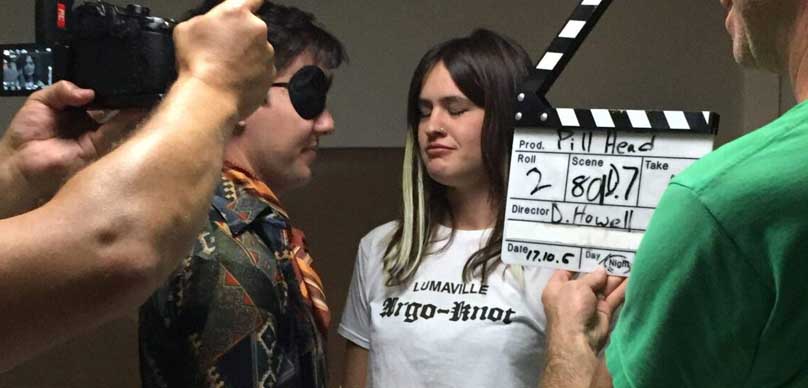
IFH 540: Selling Indie Films with the Regional Cinema Model with Daedalus Howell

Daedalus Howell

Today on the show we have writer/director Daedalus Howell. Daedalus’ film Pill Head is the definition of being a Filmtrepreneur. So much, in fact, I used his film as a case study in my book Rise of the Filmtrepreneur®: How to Turn Your Indie Film into a Moneymaking Business. The method he used was the “regional cinema model.” 

This model is based around developing, producing and distributing a film project targeted to the niche audience of a geographic area. He essentially made an Art House film for his hometown.

Pill Head was entirely a hometown affair — from discounted permits to merchant buy-in and a recent theatrical release through a consortium of local exhibitors (no four-walling!) accompanied by tons of local press.

After an overdose, art student Theda becomes an unwitting specimen in her university’s experimental psych program. There’s a side effect, however — she sees the branching possibilities of reality in an alternate universe. Moreover, an alternate self wards her off the program’s enigmatic researcher Dr. Ashe. Determined to escape, Theda’s salvation lays through the looking glass of quantum quandaries, romance revisited, and the jagged little pill of her own nature.

In this interview, we go deep into the regional cinema model, how he creates multiple revenue streams and how he got that group of local theater owners to four wall his film for free. Enjoy my inspirational conversation with Daedalus Howell.

Right-click here to download the MP3

Alex Ferrari 0:00
I'd like to welcome the show Daedelus Howell man, how are you?

Daedalus Howell 0:14
I'm Grand man, how are you?

Alex Ferrari 0:15
Thank you so much, man. I appreciate you reaching out to me and coming on to the to the podcast and hopefully being you know, dropping some knowledge bombs from your experience because I always look for unique as you know, unique ways of looking at film and you you you hit something I hadn't heard before. Hey, how about using your hometown as a backlot, I'm like, that's a podcast so.

Daedalus Howell 0:38
I had nowhere else to go Alex had nowhere else to go. And I'm with you.

Alex Ferrari 0:43
I appreciate it. But so first of all, man, what made you want to become a filmmaker? Like why did you want to become a carny?

Daedalus Howell 0:52
Well, that's a great question. I, you know, I should back up until you I'm from Petaluma, California, and what you may or may not know about Petaluma, we're north of San Francisco a little bit. This is a movie town. And so we were surrounded by all kinds of film phenomena beginning with like American Graffiti, which was shot here. Lucas, Peggy Sue Got Married was shot here, Coppola and then through the 90s, in many of the Abbotts phenomenon, the leader remake flubber. I mean, it was crazy the amount of like cinematic immersion, just in production that was here for a while. And so growing up in that you get the bug compounding that Lucasfilm was just over the hill in Marin, right. And then you throw in Winona Ryder going to Petaluma high. And this is like Super film consciousness in terms of town. And so a lot of us grew up with, yeah, my cohort and I, with this fantasy that we could do it too. And of course, that was summarily crushed, you know, once we all went to Hollywood and, and, you know, as everyone goes through that process, and so, so I had the bug pretty early. And I had to really figure out how I was going to like, deal with having that in my system. I became a writer pretty early on for local newspapers and that kind of thing. So I was able to kind of build a film adjacent career I could, I could interview film people. And when I did finally go to Los Angeles in like the early 2000s, I was principally, you know, an aspiring screenwriter had some minor breaks, that kind of thing. But you know, I washed out and I was left with the disease, you know, the virus was in me, I wanted to make a film. And it got so bad man. That after, I mean, the infection was really,

Alex Ferrari 2:30
I always refer to the bug or the thing to become a filmmaker. It's like herpes. Like it literally, it once you get it, you've got it for life. It will flare up sometimes, but sometimes it's dormant. But no matter what, it will flare up eventually again, and then you'll and then sometimes it's really bad. You just start like, oh, man, turn into a crack fiend. But go ahead. Yeah.

Daedalus Howell 2:51
Well, that's yeah, that's a great metaphor, because it's really what happened in the gut, it got to the point where it began to forbid myself to like read about, you know, read film books, to look at anything about any film because I didn't want the flare up to come back because I was feeling so negative about myself from never having done it. Yeah. And then I just, I, I got in a situation where I was between jobs in my my partner, girlfriend said, Hey, what do you really want to do now? You know, what, you just kind of wide open and I said, Well, what I really want to do is direct. And she didn't know much about production, anything like that. So she didn't know it was impossible. And so she became a film producer and I became a writer director. And it was just it was just the the drive to do it. That that compelled me but it was really just a you know, after you know you did this with this is Meg 15 years or whatever, you know, you're like, why haven't I done it? There's no really excuse not to apart from manifesting the drive to do so. And so that's what we finally did.

Alex Ferrari 3:49
No, I mean, I mean, I had a I had a horrible experience with a mobster and Hollywood. So that kind of that kind of that kind of stain to me. And so

Daedalus Howell 3:57
I havent read that book Yeah, I'm going to though Yeah,

Alex Ferrari 3:59
It is. It is it definitely I realized it subconsciously stopped me from ever going back into like, why would you go back to the most painful time in your life, and you associate making a movie with the most painful time in your life? So I had an excuse. It was a horrible one, but I had an excuse. Why I didn't do it, but at a certain point, you know, you and I are both have similar vintages. You know, at a certain point, you just go dude, I'm not 20 anymore. Like I can't keep I can't keep doing this.

Daedalus Howell 4:25
Yeah, but the problem is when you bring that filmmaker identity into your consciousness, and you're carrying it that long, and you haven't made that, oh, you know, the feature film, your life is all plot no story, man, you start like you start questioning who you are. And of course, all your friends are like, Dude, are you you're so you're a filmmaker. Really, dude. I mean, where's your movie? And you've got a bunch of shorts on YouTube. Who are you? You know, it's like it's so you just have to do it. You just have to do it. Yeah,

Alex Ferrari 4:51
Yeah. And then I hid behind. You know, I did direct like little commercials or music videos and things like that, but it wasn't what I wanted to do and I hid behind post So I was like I was it was kind of like nice. It's adjacent. It's you're kind of you're still a filmmaker, but you're not doing exactly what you want to do. So it's a great experience but your hide you hide in that in that world. So for me, I hid there for god knows about 20 years. Yeah, dealing. Yeah.

Daedalus Howell 5:16
And then you did a podcast and that, you know,you hid behind the podcast,

Alex Ferrari 5:20
And then I hid behind the podcast and behind this. I'll be honest with you, though, I'll be honest with you if it wasn't for the podcast, and if it wasn't for the tribe, I don't think I would have made this is Meg. The reason why I there was two reasons I did it was because one I wanted to prove to the tribe that it can be done. I wanted to prove to myself it could be done. I also wanted to use the tribe as something to keep me to keep me what's that word? Ah, not compatible, but when you're trying to when you're trying to do something and someone tells you like was watching you. I forgot that word. That term I losing my will never find it now. We'll never find it over. I'm sure someone's yelling at it in their car at the moment. But, but, but I did it for that reason. And then also for whatever odd reason, because I was still doing indie film hustle on kind of a side hustle. Still, it wasn't my full time gig yet. I just said, Well, if it doesn't work out, I always have indie film, hustle, I can just go back to that. So it's like my safety blanket, you know, and it's become this kind of like, oh, I I'm good. I'll just go i It made me more brave to just go out there where it might scare other people because you're like putting yourself out there. i It's the opposite. For me. I find it very comforting knowing that I have an I have not only an audience, I have a tribe, I have a community that I could always go back to. And if it doesn't work, doesn't work.

Daedalus Howell 6:41
Yeah, no, that's that's really I think that was one of the smartest moves you clearly one of the smartest moves you've made, you know, and you did I mean, you've definitely galvanized the community. I mean, I'm, you know, how they say like the Velvet Underground had 100 fans, but each one of them started a band, you know, you've got well more than 100 fans, but I there's gonna somebody, some film historian is going to trace back this explosion of independent film, they're gonna be able to blame one man. Oh, they're gonna go oh, sorry. And that would

Alex Ferrari 7:09
That be amazing. You know what I honestly that would be the most wonderful thing ever. Because if I you know, I'm here just to help and I want to I want to I want that and I get these stories like yours and, and other people who've listened to the podcast for a long time. Like I finally made my movie I finally did this thing. But now it's my my job to teach you how to make money with it. But that's why you're here because because you have a unique story behind it. Now tell me about your film pill head? Because great name, great name.

Daedalus Howell 7:33
No, thank you. Yeah. The the general gist is a young art student takes too many pills in wakes up in what's probably a parallel universe. And it's all about finding her way back to her reality, whatever that may be in a sort of redemptive Alice in Wonderland kind of phenomena. However, we went out this sort of fit, you know, typical sci fi style plot, I think, with an arthouse vengence in so I call it an arts floatation film, this thing I just, it's like your first year in film school, you take a survey course, and it's all shot on Luc Godard and Truffaut and I kind of thing I checked every box, I could man, it's black and white. It's it's moody, it's handheld, it's it's an aesthetic kind of like, hat tip to, you know, the French New Wave and all the films I grew up on and that kind of thing. And so it scratched a lot of itches, you know, that, that the flare up was real. And so it's it's a very different kind of movie. And it doesn't really fit into the general indie landscape, which is a stumbling block, in some ways. It's sort of its differentiator in other ways. And, and I was able to play that to my advantage once, once I accepted that this is my aesthetic, there's no way around it, I have to make the film I'm going to make. But I have to make it in a way that it's meaningful to my audience. And I know and I knew pretty much who they were because I'm in local media and that kind of thing. And I knew that I wasn't going to make the kind of film that's going to scale and explode, I was making a regional film, I was making a film that's going to be meaningful to where I'm from, and the people in my community. And that sounds a little backwards because you want your film to be as big as possible often you want to go everywhere. But I'm really hooked on this notion of regional cinema the way that you know, they used to like regional theater, right? There'd be a you know, like a play house and then they'd put on a regular program that kind of thing. I wanted to start something wherein I could credibly create films and know that I had an audience here and do it on a regular basis. And the trick of that of course is making them inexpensively making them profitable and making it for an audience that you know is going to come back in so I knew was gonna make a Petaluma film.

Alex Ferrari 9:43
That's that's that's a really so that's what regional cinema the regional cinema model is for you because that's the first time I've heard that term. And it might be out there in the zeitgeist, but I've never heard of it. Yeah, I've never heard of it. And generally speaking, if I don't hear it, I've never heard of it. It's a weird thing. cuz I'm pretty much inside of this world all the time. So when I heard that I was like, interesting. So now that's the definition of it. And honestly, it's, uh, you know, we're we're taught as filmmakers, especially our generation, but even younger filmmakers, that everything's got to be huge. It's got to be big, it's got to be blockbuster, you've got to make $100 million. And, you know, what film entrepreneur is about is to start bringing it down, bringing it down to niche audiences to bring it down. Now you've created the, the regional aspect of things, which is awesome, because now you are, you're doing basically what I've been preaching, but doing it on a regional standpoint, as opposed to a niche is a niche, but it's a regional niche. Yeah, but it's a regional niche. And if you as a filmmaker have a region that you know, that you can sell movies to, and you can make those movies for a budget, and you can recoup your money and continue to make that's a business, that that's a business and if it goes somewhere else, and it goes International, or sells outside online, somewhere to a bigger audience, fantastic. But your core audience is what is going to sustain your career. That's a really powerful thing. And it also gets out of your gates, that lottery ticket mentality out of the filmmakers head, which is like I need that make something this movie's got to pop for me, I need to go to Hollywood I need to do you don't, you don't, you could keep it small. And as long as you're cool with not living in the Hollywood Hills, and you could just have a lifestyle, buy, you know, buy a house, you know, pay your rent, you know, and enjoy it, like make money, make enough money to sustain you and your family comfortably and make your art well. Hell That's the dream.

Daedalus Howell 11:41
No, that's that's you're totally right. And that's the metrics of success. Can you do it again, it's a supporting you, versus like you're saying a lottery ticket where it's supposed to make your career overnight? That's just not going to happen anymore. You know, unless you're in a dat system, which you know, I would have I would gamble most of most everyone listening is not clustered in Hollywood. Maybe they are but

Alex Ferrari 12:00
But even if you're here, but even if you're here, it's a lottery ticket. There's one guy like, like you and I were raised in the 90s. Like we came up in the film industry, like in the 90s. When independent film like every frickin week, there was Talentino Robert Rodriguez, Kevin Smith, Richard Linklater, Spike Lee, John Singleton, it just kept the Steven Soderbergh every week, there was a new magic lottery ticket being handed out. And

Daedalus Howell 12:25
Sundance was just stamping these guys out, oh, it led us to believe that that's the system, that's what you do you show up, it happens, and it doesn't. And that could be that could really derail your life artistically. Yeah, tell me about it. So yeah, so So I, you know, I had to get really pulled back and figure that out. And once you scale stuff, to, to not just a level where you can actually make it but you know, who's going to watch it, and you know, that you're going to earn it back and in beyond it, it changes your mindset. And there's a lot more freedom in it, you know, especially if you know, your niche, or you know, you're doing now and I totally agree with you regional cinema is a nation that is the region in this case, and I grew, you know, this where I live is, is it's a very special place. And so I knew this fairly dependable and, but there are ways to, to galvanize that and make it happen. And so we set about with our production, and I have to tell you from the like, I was talking earlier about the exploitation factor, this, I knew this is going to be intrinsically not a mass market film, there's just no way about it. But I knew if I did anything other than that, I wouldn't, I wasn't going to be, you know, my artistic integrity and all that BS wasn't gonna be intact. But if you're going to make a film at RH, after not having made a film, you're gonna make your guide and film the way you want to make. Absolutely. So I had to dovetail that into a concept that would work in so I was on a radio program yesterday, and guy pointed out, because hey, you can pedal it's kind of a character and like, that's right, you know, the town, I made the town look, I wouldn't say beautiful, but I gave it a vision that, that this town hasn't seen itself that way before. And and I think that had resonance, you know, and that's something that's talked about a lot. But to kind of like roll back and like how to do this kind of thing. You're going to do a lot of favors, you're going to need a lot of a lot of buy in from like the sort of civic, you know, like bureaucracies that you have to participate in. And you're going to have to become friends with the local press, and you're going to have to have to have a story that's beyond local filmmaker does good, you know, because they've seen that story, right? It's not 1982 Yeah, no one cares. No one cares. Everyone's making a movie right now. You know, they'd rather write about the YouTube kid than they would use so. So I just hunkered down and wanted to tell the story that I told and but I wanted to make the film. I didn't want to do too much guerrilla stuff. I knew that I had to do it legally. by that. I mean, like permits and insurance and all the things and I needed to keep it cheap, lean and fairly invisible because I couldn't afford to close off streets I couldn't afford To I couldn't ask any businesses to stop their business from me, that kind of thing. And so the first thing was, you know, to ensure the production you have to be permitted. And to get that permit, I had to appeal to the city of Petaluma and I go to them. And you know, so in Petaluma, as I mentioned before, has been has seen a lot of film, right. And they're used to big budgets coming in and they make this cities make money on movies through transitory occupancy tax. That means heads and beds, right crew comes in 50 plus people or more, they, those people are put up at hotels, they're eating local restaurants, local services, so films can be a big moneymaker for a city. So when you come in and say, I got this little itty bitty film, please give me a film permit. They're like, Well, okay, sure. We're not going to deny your your freedom of speech. But what's in it for us, especially since in my case, I wanted a discount. And no one thinks that you can negotiate with the bureaucracy, but you totally can, especially the smaller town because the mayor is your neighbor, right? So I wrote a letter to the city manager, they wanted I think, 200 bucks a day, or 225 a day or something like that, you know, that was their deal to 222 25. And I had like a 20 day shoot, right? That's not a significant amount of money to the city. It's like, what, four grand or so like that. But to me, that was like a budget breaker, right? So I wrote a letter to the city manager an email and I said, Hey, here's the deal. I'm a townie. I'm a local, everyone here is local, it's locally cast. It's all this. Here's the general pitch. And the guy wrote back and said, Have it 300 bucks flat rate. In dying, I'm like, isn't that great? You can do that. Right. And so then I went through Fractured Atlas, which is a nonprofit, sort of fiscal sponsor, you know, there, if you can't receive donations yourself, because you're not a nonprofit, they'll they'll vouch for you and receive those funds. And they have an amazing insurance policy policy situation where they worked out, they broke out some deals, so they get discounted insurance for production. So I was able to take that get discounted insurance, which is what the city wants to do want to want you to mess up anything and they weren't insured. So then I had to go most cities will ask you to go to the local merchants is usually like a chamber of commerce or a downtown merchants society or something like that. Because their main concern and this was a concern in Petaluma. And that kind of led to a lot of productions being shut down or not even shut down, like blocked from coming in. Merchants complain about streets being shut down, sidewalk traffic, ending foot traffic gone, no customers, right, even if they're compensated by a studio or whatever. It's never enough. Everyone's grumpy, and it's so disruptive to local business. So when you have a lean little production like ours, you're not going to impact in that way. But you got to tell them that. And that was the weird part. I didn't expect to go to the local business and say, Hey, man, we're gonna be shooting here. Here's my flyer, you have to, you know, announce it that way. That's where I got the first bit of, like, pushback. I was like, Dude, we're just a small. I mean, we were gonna look like tours. There's only five of us, you know, and I camera, and they were so suspicious. And so kind of like, we remember what happened last time, you know, like, you know, I can't remember the film, but I can't I think screen was shot locally, and it ruined the town for a few weeks. Right? So they're pretty chapped about that. And, and I just had to sit down and talk with him. And eventually I surfaced up to the, you know, the the chairperson of the Downtown Association, and I just, I just pled my case, I made it clear to them that we're not gonna shut anything down. This person happened to be a Mason. And I threw that person's influence. Everyone just jumped in. And then the Masons said, Do you need a building to shoot in and like, yeah, and they gave us their building, we shot in a Mason Temple at one point, it was crazy, man, so awesome. It's so it's that it's that local boy makes good angle. But more like, we're doing this together. We're doing this for these reasons. This is how it aligns with what you're trying to do. And we're not going to cost you a thing. And and we're not going to tell you we're going to make your business look good. It's going to be an advertisement for you or anything like that. But we are going to respect you and your business. And we're going to make this as seamless as possible. And we're gonna make it fun for you. You want a cameo? Great, you know, that kind of thing. And so that's

Alex Ferrari 19:08
The power of the cameo. Oh, yes.

Daedalus Howell 19:10
Which is the most Yeah, as everyone else the most BS thing ever because usually it's the first thing gets cut, right?

Alex Ferrari 19:15
That in the associate producer credit

Daedalus Howell 19:20
Got a couple of those.

Alex Ferrari 19:22
So that's when a merchant buy in is is like that's

Daedalus Howell 19:25
That's how I would characterize it is because you're going to need the streets of your small town as if you're shooting the exteriors you're using their storefronts and their backgrounds and that kind of thing. You're going to get location releases from them you know and that kind of stuff and you're going to you want them to to love what you're doing versus being afraid that you're going to cost them money by blocking their customers from getting an intimidating people or people don't want to be on camera. People are afraid of being caught up in something people that want to be in a movie called pill head I get it, you know and so, so you start just literally on the street level going door to door saying This is what we're doing. We're insured, we're playing by all the rules, we're not going to make a mess. And and we're going to, we're going to try to make this a pleasurable process for everyone. And in most of the time they they get into it, we actually we gained more locations than we were a threat of losing because people said, Hey, why don't you shoot my building to? You know, when we had a place that just scheduled wise wasn't gonna work out? Another guy stepped up? Because he's like, Yeah, this sounds like a lot of fun. You guys are, you know, doing a great thing here and that kind of thing. And so that's, that's the place to start on the street level right. Now, what was the what was the budget of the film? Just a smidge under $30,000?

Alex Ferrari 20:38
Okay, so it's a it's an it's a low budget without What am i It's a argue or people will argue micro budget.

Daedalus Howell 20:44
Totally. It's, I don't even think it qualify for the micro budget sag agreement. Be ultra low. I mean, we didn't we paid. That's the thing. Here's the to keep within the budget, we flat rated all the performers. And so everyone got 100 bucks a day, across the board. And that, and that's great. Because that kind of that keeps the spirit of the thing alive. These people are getting paid, or paid actors, that's huge for them. Because we're often in small towns, just starting their careers. And that kind of thing

Alex Ferrari 21:10
That's huge is normally they wouldn't even get paid to be in a feature in a small town. So that's a big plus,

Daedalus Howell 21:16
You have to do it. You know, in hit us, we used a casting director remarkably, we have one up here, I guess, because there's a lot of extras needed when the big films come in. So and so this was the chance for the casting director to break some talent, and it was great for everyone. But we paid everyone which make some accountable. Right? They show up they take it seriously. But at 100 bucks a day where I think the minimum for a SAG agreement 125 I just couldn't make it pencil man. So they didn't get there, you know, sag units, but they don't care.

Alex Ferrari 21:46
Yeah, it's not about the second is how many days did you shoot, by the way

Daedalus Howell 21:50
20 and so here's the thing, man in the middle of our production, the big California fires in Northern California happened. And Petaluma wasn't affected necessarily, but all the surrounding area was and so we were smoked out and we had to shut down and reschedule which was pretty traumatic for a small scale production. And there's a moment of course, where I'm like, we're never going to get this done. This isn't gonna happen. But it's a Karen has a producer was able to like, triangulate, work it out, get all of the merchants to come back on board on different days. You know, the first thing that happens though, when there's a catastrophe like that is that all of the money's all of the donation kind of stuff, like the free catering kind of thing that goes right out the window, because they're diverting that energy and resources to, you know, people who actually need it, you know, fire victims, and that kind of thing completely makes sense. But that that was, that was something we never accounted for, of course, and we had to figure out how we're going to patch all these holes. You know, fortunately, there's a local woman who makes tamales. And so we, we lived on tamales for a week or so. But it was it was a

Alex Ferrari 22:52
Look can I, I want to tell you a quick story. My first film broken was my first short film in 2005. We shot in a like, it's arguably an abandoned hospital. But we like there's four floors that are abandoned, but the rest of the hospital is functional. So the basement was like in it's like from the 40s. In the 50s. There was like ancient stuff. And like there was entire entire, like floors full of props. Basically, they've just been sitting there for four decades. And they're like, go have it go at it. And they eventually originally, were going to be for 500 bucks. And at the end of it, they had such a good time with it. So like, yeah, don't worry about it. So we got the whole place, we got the whole place for free. But the problem was the week before we reshoot, a hurricane hit us because we're in West Palm Beach. So hurricane hit our area. And when we drove up there, like everything was destroyed. A lot of a lot of flooding happened, all of this stuff. So we just incorporated it all into the story. We just said screw it, we'll just we got a roll where we're shooting in five days is happening. But the best part was that FEMA, because it was a hospital set up shop there. And there was hundreds of 1000s of people in line outside while we're trying to shoot a movie, so you gotta roll with the punches sometimes

Daedalus Howell 24:07
Like now you have great production design and a cast of 1000s. Right. Yeah, that's yeah, that's that's the thing that when you're lean, small production, you're you can pivot like that, you know, and so if you do have a natural disaster, you can actually either incorporate it or at least in our case, reschedule and make it work. But so that that was a setback, but But generally speaking, everyone was appreciative and understanding of it and that kind of thing. And and so throughout our post production, we kept everyone abreast of what was happening, that kind of thing. Because once you go into post production, like, it's like, your film disappears. If you're in the cave for once, totally, and no one knows what's happening, or if it's ever going to or if it's ever going to happen. So we've been driven out.

Alex Ferrari 24:48
Well, I was gonna ask you, did you, you obviously understand who your target is, which you're very it's a very it's a niche audience, but it's a very broad, you know, you got a lot of spectrum of people there. So how did you realize that Your movie, which is an art arts floatation film, would would resonate with this audience. Did you do any mark? Did you do any market testing? Did you? Like what was the other than just being shot in that town? Do you think that was enough to gather everybody to come to see your movie?

Daedalus Howell 25:18
That was a start, that was definitely a platform that we could start with. But that's a great question. I knew that given the sort of demographic makeup here, it's a pretty rd town, we're very close to San Francisco. And there's a lot of a lot of people who go back and forth between here in the city. So it's sort of it's a suburb, so it's got a kind of a cosmopolitan edge to it in some ways. In the local movie theaters are multiplexes and and have the usual stuff. And so there's no arthouse films as such. So I always knew that I was going to pursue some kind of local theatrical distribution to kind of like to slake that thirst for that kind of content in this area, right. And so we're blessed that in that we got a couple of like old school venues that used to be old movie theaters that can still do it, that are now music venues and that kind of thing. And so, I always had an eye to like reviving this art house phenomenon in town. And

Alex Ferrari 26:18
So it's a consortium, if you will, a consortium of local local exhibitors.

Daedalus Howell 26:23
So yeah, that's my job. Because it's, you know, every small town has, most small towns have movie theaters, most movie theaters are gonna be owned by somebody, right. And that's often a local business person. Or if it's a chain, you can figure out where the basis of that chain is. And oftentimes the regionalised in, because of the nature of how these businesses put together, they're often they could be like a big AMC theater, but they're actually local franchisees, that kind of thing. And so, or something, I'm not sure for that particular chain, but that's how it often works. And so you can find through just through some internet sleuthing, like who actually owns the theater, right. And it's usually a small company, that kind of thing. Up here, we had, for, you know, a fairly small market, relatively speaking, two separate exhibition companies, right, that between the two of them represented most of the theaters in town. And so I knew that those guys had to be my friends. Right. And I needed to make a case that our film would be worth the risk of, of slotting you know, against the Avengers in this case, you know. And so, what we did was, I knew that a good healthy cast and crew screening would would, I just at this point, I had faith in the film, it was cut, we had a great mix, I knew that I knew that we had something that was really going to make the town lose their shit, right. And so I booked a theater in town called the mystic, which is one of these used one of these old single screen funky, fairly large venue, beautiful place that has turned into a music venue, but they still had the screen. And I approached them. And I said, Well, you know, what's your rate for single night screening, we're near casting crew, and it was like 3000 bucks. And again, you know, deal breaker for me. And so I made the case, hey, this is a local film, it's local talent. It's local, this local that I just really sold them on. This is your opportunity to be a hero to the cast and crew of this film and their friends and family and bring new eyes to this theater who haven't seen it in this capacity in 30 years. Right? I saw so they're like, yeah, it totally, exactly total muscle in and, and they saw the merit in that and they shaved it down to like 1000 bucks, then, which is great. Still, that's 1000 bucks, right? So then, in fact, I have one here. I got myself, a designer, my producer, and we made a program. And then we sold advertising in that program, right, to underwrite the production, or sorry, the the presentation of the cast and crew screening at the theater. So we sold 1000 bucks worth of advertising. Then, of course, he said to be printed, I go to the print shop, and like hey, man, I could go to you know, FedEx Kinkos or whatever. Or we could keep it local, you know, Petaluma printing, and, and we'll throw an ad in there and the guy just shaved it down to like, practically zero. We had to staple them ourselves. But we totally hustled it, and we pass these out, and everyone was happy. And so, you know, they're it, you know, it's like could put him in a special thanks. I did, you know, the credit roll, but the film was pretty locked to that point. But But all in all these advertisers were like, you know, and of course, they got to come the screening because as the thing, man, I wasn't selling any tickets. Right. I told the casting crew, come on down. Bring as many friends as you want the theaters capacity of 300, something like that. And I set it up on Eventbrite. So I can I could register that capacity and I wanted the on Eventbrite. You know, they show you how many tickets are remaining, even though they're free. You want to see that number like, dwindle and get down, down down in the surges, right? And so we packed that place beyond capacity. Right? We had a line out the door, which everyone wants to see, I invited all of the local press to see that line and the local exhibitors. So they come and they they see this film. And of course, you know, it's casting crew, everyone's cheering every time some new face pops on. It's a round of applause, right? It was a really spirited fun up great event, you know, the film's 80 minutes, so you're in and out, right? But we kept the party atmosphere going, it was really great. And in that what happens is the press the exhibitors, they come up to you like, that was really great. That was really exciting. You know, what's your next step? Next step is a bunch of lunches. The next week, we do a bunch of interviews, and we do some deals, right? We negotiate it with the exhibitors, they have, you know, theatrical exhibition, sorry, exhibition is kind of weird, where they, they need to, they kind of lost lead on the film, right. And so I'm films, right. So they're, they're moving popcorn concessions, that kind of thing. For the first few weeks, right, big film comes in, they take a dive on the ticket price, it but they're there. And then the longer the film stays there, the more their percentage of the box office goes up, as you know, and so I knew that I couldn't really tolerate that threshold, you know, because I needed to make the money now at this point. And so because of the nature of of our sort of awareness aware, the where the awareness we'd created in town and all that, and because I knew some press was coming up and all that, I was able to tell the story of getting into it, how we're having local exhibition, it makes the film seem successful, because no one gets distribution, right. And, you know, if unless you go out of 40 Mile Square radius, you don't know the film's not everywhere, right? It's in the movie theater. Right? And so we did a straight up 5050 split. Right, which is a sound for them. It's huge for them. Yeah. And so they got more money up front, on a Thursday night from our little film than they did with endgame, which is playing the theater next door, because there's five guys in there, right? Because yes, I film it been played out a little bit. And so it was a win for them. And it was a win for us. And, and they have all their stuff wired. So like, you know, they, they're taking the tickets and all that and we had to invoice them at the end of the month, they sent the money in the money shows up. And it's great. And so we ran for a couple of weeks in four different cities. That's the thing. That's what you don't want just one theater, you want it, you want to leverage your press, as as wide as you can. And in as many markets as you can, even though it's ostensibly the same community in the same type of audience. They live in different places sometimes. And we have enough regional media that I was able to, like, push that. And once you get one story, you can push that story to other places. I got lucky because one of the newspaper chains here has reported that, you know, they're cheap on the reporter. So they get the one guy to write it, but they run it in three different papers, right? Mm hmm. Fine by me. So here, here's an example. You know, here's, there's one clip. Right. You know, and this is, of course, the hardcopy, it has more of a life online, you know, is another clip, right? Same article, same exact article, this one was different. This is a shot from the movie, this is the cover man of a local alternative news weekly. And they, they just jumped on it, man, we made it a story. Because we had 300 People who had a great time talking about how great it was, and then looking for the paper. So then that's how you did it, man, you start small and you keep it focused and you and you knock on the doors that you know will open for you in your town and and you keep the spirit alive with it. And so so this all snowballed to our Amazon released but anyway, that's that's kind of like the

Alex Ferrari 33:46
So how much did you make on this theatrical release? What was the kind of revenue generally speaking,

Daedalus Howell 33:51
We were making about 1000 bucks a week. Right? And so it made a dent in in our, our initial outlay, and I say the thing that all the film was in part, underwritten by Indiegogo, right, not significantly but a few 1000 bucks, we got a private donor, right who came in for a couple grand to begin with. And then midway through I'm like, I need more money and and I so I just asked him again and he was cool enough and kick kick down into the few grand and our post we did ourselves we built our own you know system, you know, out of bits and pieces and use Premiere in this case. We got a real break though in the mix Central Post la down there up up arm did our did our mix through. I did some music videos for these guys back when they're running some label stuff. And my brother is kind of a mid level Rockstar worked with those guys. And so they did the mix for free. I mean, that's that was huge. Wow. Yeah. And so I shouldn't say for free they they

Alex Ferrari 34:49
Deferred points.

Daedalus Howell 34:53
And they're great associate producers. I'm very happy to work with them. And if you ever need good postman that's where it's at. Good I see producer credit. But so we we made a dent in that and then or so that's that's for one theater. So that so we had four theaters, some theaters do better than others in ran multiple nights in in most of them. Let me backtrack a little bit. We didn't have enough money to make the film when we started. But we knew that we could keep making money while we're making the film to keep paying everyone and paying it off. And I

Alex Ferrari 35:27
I think that's a dangerous business plan, sir.

Daedalus Howell 35:30
Well, is it though, because you can either not make your film, you can either wait till you have your whole budget and not make the sum or you can know that you're going to you know, you have your day job, and you're going to sink a little bit of your paycheck,

Alex Ferrari 35:43
As long as you have if you have a revenue stream that you know, it's coming to cover your nut, then yes, yeah, I've seen too many filmmakers start, like we got 10 grand, but we really need 50, we're just gonna start, we don't know where the other 40 are coming from. That's dangerous.

Daedalus Howell 35:58
No, that is dangerous. I don't advise that. But I do advise making a film if you know that you that if you don't have the budget all at once that you're at least going to accumulate the budget, actually accumulate it not pretend you are but actually know you're going to earn that money or acquire that money through production and post mostly in archives so that you actually are still making that film, there's nothing worse than having a you know, a film on your hard drive, and waiting for somebody to write a check, that's not going to happen and you never do it. It's better just to keep moving as best you can, and then keep it as cheap as possible. So we're so this is 30 grand, but this is this is 30 grand over 18 months, that's still a lot of money. But that's a lot of money in in smaller chunks.

Alex Ferrari 36:38
So what was it? What was the total that you actually had to recoup? After everything was done?

Daedalus Howell 36:45
Oh, of our own actual outlay? Yeah. Right.

Alex Ferrari 36:48
And investors are donation? Is it all donations? Or

Daedalus Howell 36:52
It was all it was all donations or Indiegogo kind of stuff.

Alex Ferrari 36:55
So like actual money you had like, what was the what was the the, to make this go into the black?

Daedalus Howell 37:01
To recoup our personal out of pocket expenses, we only needed about eight grand. You know,

Alex Ferrari 37:09
If you can't make eight grand with an independent film, then you really shouldn't be making an independent film.

Daedalus Howell 37:14
Right in and you can do that. And the great thing is, you know, we own it, too, you know, and it's part of that. Yeah, and it's part of this growing library. And now it lives online. And you know, Amazon sends us little statements every you know, and so if well, did I need to send it I check every day. But but there's it's better to have done and do and start building your your intellectual property empire and have something to leverage. And here's the thing with Pierhead. It's not a standalone property, the way I constructed it, it speaks to in an actually features other things that I've done. So there's this character who has a book called Quantum deadline. That's a kind of a MacGuffin in the movie, which is also a book that I wrote that's published in so I'm selling the book, in conjunction with the movie product placement product. Yeah, but it's, but it's not just product placement. It's it's a plot device. It's it's transmedia. You see, it's, it's it, they share the same story world. So the movie and the book are kind of exist in the the Luma verse for lack of a better term. And so that's, that's, that's how I'm kind of thinking this long term. It's like keep building in keep building the world and properties that exist within that world, in own all of it. And so it could be a longer game, but it's a better game to play. I think.

Alex Ferrari 38:34
So then how did you How was your online marketing game? Like? How did you guys you know, you have this audience that you're trying to reach? How did you reach this audience? How did you, you know, reach out to this audience, your regional audience, and then also beyond?

Daedalus Howell 38:50
So what I did first for the regional audience, because we did that cast and crew screening, through Eventbrite, which, you know, it's just a, you know, it's a free ticketing service at the level, we were doing it that allowed me to capture all of their emails. So not only did I have my cast and crew emails, I had all their friends and family at that point. And so, so that was a list of, you know, 300 plus people, which doesn't sound huge, but it is huge. When you want your numbers to spike on your on your first day of releasing, as you say, Hey, everyone, remember that great time we all had last month or a couple months ago. If you missed it in theaters, here's here's the chance to really deep dive into this film. And I hope that the film can endure repeat viewings. And so because it's got a lot of easter eggs and stuff like that in it. And so that's how we did it. We just did a blast, encourage everyone to share it. Of course, we leverage social all that you can triangulate through emails, like you know, where people are on different social platforms, and you can invite them to fan you know, like your fan page and that kind of thing. And so that's how I started and then I started with press releases and just sending them out to places that I thought would cover the film. And I'm still in that process in trying to try to Push the online. But that's a little. So that's a little outside of the regional model. That's a whole different kind of, it's more traditional in that this

Alex Ferrari 40:10
It's another revenue stream. It's a hybrid. It's a hybrid model.

Daedalus Howell 40:13
Yeah. And you have to keep doing that and keep that alive, because it keeps in the consciousness. And so I send out a press release, or some sort of appeal to a reviewer or a blogger. And then it doesn't have to be like, you know, a huge place any, any mention helps, you know, and so that's what I do. And it only takes you know, it's templatized at this point, so it takes a couple of minutes every day, or every, every week in my case. And that's what I'm doing

Alex Ferrari 40:36
Now. And do you did you use? Like, have you built an online community on Facebook at all or on different social media platforms?

Daedalus Howell 40:44
Yeah, so I because I was a local author and all that I was able to use my my own kind of presence, right. And so I'm generally the face of the film, even though there's a wonderful cast and crew. This I got to push it right. And so through my own Facebook, you know, I've got like, only 1500 followers, but they're really great. And they're really responsive. And so they're not like your tribe where they you know, if you ask them to, you know, march in and take bullets for you.

Alex Ferrari 41:08
I don't I don't know, you given way too much credit, sir. Giving me a way too much credit

Daedalus Howell 41:13
My tribe goes, Oh, this guy, this asshole again. All right. But it keeps it keeps it moving. And, and I know it's working. Because I see I see the you know, the hockey stick, you know, in my Amazon results, but I also get really great feedback. For whatever reason, pill head is the kind of film that people if they get into it, want to talk about it and tell me about it, which is really great. And so I've I've met people online and just hey, I watch your film, man. I really dig it. Did you mean this by that? That kind of thing. They're trying to decode some things. The dude I was speaking with yesterday on the radio, kind of nerded out on me. I didn't. He was putting out things that were in my opinion in the film, but I was like, Yeah, dude. SURE that you believe that? Let's go for that. And I don't mean that like in like a cynical way. I just mean, like, you know, you know what it's like people find something that you didn't maybe intend, but that's important to them. And it's important to let them have that.

Alex Ferrari 42:06
Oh, there's no question. I mean, I know Kubrick understood that very well.

Daedalus Howell 42:12
Yeah, he was brilliant. Not even talking about anything, you know,

Alex Ferrari 42:14
Exactly. Just like you guys figure out what I meant. I you know, it's much more interesting. Now, did you at any point, did you consider doing traditional distribution? Did you go down that road at all? Or was this planned from the beginning and like, we're doing this all the way?

Daedalus Howell 42:32
Okay, it was planned from the beginning that we were going to make a cause like, a completely comprehensively unmarketable film. Right. In that was in I mean, it sounds weird. It sounds like a like a rational after the fact. But truly, Alex, my producer, and I were like, we had done some conceptual art installations. We were, we were all about the creative, and which can be healthy thing, but also it's not going to make any money. Right. The idea was to make the film, we wanted to make a bout this place for this place. And that was the audience. So as long as we stood, you know, kept kept to the the principle like this is Petaluma film for Peda lumens. That was going to be enough to take it over the the, you know, the hump, but but there is that little part of you. Of course that goes. It would be cool, though, if this got picked up, and it would be a hell of a lot easier if it did. And, and so early on, I looked at the distributors that were distributing the kind of films in the A, the arthouse films have a peculiar kind of psychedelic nature, like like this one. And, and, you know, comes down to like, there's the big ones like Annapurna, and a 24, that kind of thing. And there's like a little ones like oscilloscope, none of those guys want to talk to me, it's, it's so and and I knew that and I kind of needed to lob that out there to confirm for myself that I'm, I gotta stay on my path, right? And even if they wanted to pick it up, if they I don't think there's the investment for this kind of film. And this film was so regional in its in its scope, that it wouldn't make sense really outside in some ways. However, I found it a little more universal mathematically than then. I'm probably giving a credit for but but no, I, you know, there's there's the, the darkness is always lurking, right. And it's in the seduction of, you know, breaking through somehow, as always there but you gotta stick to your own thing. It's the only, you know,

Alex Ferrari 44:34
And then how about film festivals, you didn't decide to go down to film festival route either.

Daedalus Howell 44:38
I considered it and I remember looking at the Filmfreeway you know, lineup and thinking this one looks good. That one looks good. I did the you know, I took pleasure in submitting to Sundance and giving them my $100 to sit.

Alex Ferrari 44:56
So it's a fantastic donation. Yeah. And that's and

Daedalus Howell 44:59
I knew going in. I had never submitted a film to Sundance, I had no delusion that it was going to get in. But I wanted to have participated in that. Finally, does that make sense?

Alex Ferrari 45:09
It's worse. It's such a strange such a strange Sundance is such a unique Film Festival in the in the scope of the world. I mean, unlike any other film festival anywhere in the world, especially for people in the US, Sundance is it, and we know that it's astronomical to get accepted. We know we have almost a better chance of winning a lottery or a scratch off than we do of getting our film in was last year, it was like 15,800 submissions. and 120 P films got in including shorts. So if you go go on the features, it's even less like the chances of you getting in are so astronomical. But then we all turn it to Jim Carrey in Dumb and Dumber you're saying, but there's still a chance. But you're saying there's a chance. And that little dream is what kind of, you know, look, I fell into it. Like when I made the ego and desire, which was a film about Sundance at Sundance, yeah, at Sundance without Sundance permission, I waited a year to submit to them, because I was like, if I'm ever going to get a chance, this is it. And I wasted a year, you know, I wasted a year of my time, you know, chasing that film festival dream. So I always find it fascinating when film, filmmakers now are just saying, You know what, I don't think the film festival route is for me. And it's not for everything. And it's not what it was in the 90s. Like, you know, like Sundance was stamping them out. They don't do that anymore. There is no festival that does that anymore.

Daedalus Howell 46:42
Right in festival, the festival culture has changed quite a bit to in what's considered a festival where the film is way different. Right? And not just in terms of, you know, production value and that kind of thing. But you know, a lot of the one stars a lot of them want

Alex Ferrari 46:56
They want asses and seats, they want asses and seats, they want press and that's look at start, you need star power. There's two ways you get into a film festival star power so that you can prove that you can fill that that those seats in those showings by your audience, whatever, that if you're a YouTuber who made a film, and you say, hey, look, I got 5 million subscribers. And I'm going to get how many seats do you need? 300 filled? Yeah, that's not a problem. Yeah, that's yeah,

Daedalus Howell 47:23
I didn't have that. And so I knew that I would have to, like, make my breaks. The other thing was, I was I put myself on this timeline, right? I booked the first screening before the film was done. Right? Because I needed the deadline. And I needed to, like really push it. And I know that sounds a little risky. But we have the technology, you know, it just takes the drive to finish. And so he did. I mean, like up all night, you know, that kind of stuff. But it was worth it. And it's exciting, you know, but no, this is not a festival film, man. And that was that was kind of a weird thing to accept, you know, because I, you know, I'd been everyone we've been through these festivals, we've seen what the culture is like, it's fun, but it just has changed. And there's such a delusion of content now. And our little black and white weird art flick is just not the kind of thing that's gonna play.

Alex Ferrari 48:13
It's not and trust me, like I, you know, with ego and desire, I was rejected from all the major festivals. I mean, I got into rain dance, I got a world premiere at Rain Dance, which was huge. That's pretty great. Yes, it was really, I was so blessed about that. But I was rejected by every other one. And I realized I was like, you know, I think other festivals just have a big stick up their butt about promoting Sundance at their festival. Like you don't want to be thinking about another festival while you're at my festival. That's interesting. Yeah. And I was like, Yeah, because anyone who watches the film really enjoys it. It's a filmmaking movie. It's about filmmakers selling a movie at a festival. Like why? Why wouldn't that play? It's a perfect film festival movie. Yet it didn't sell. It's odd man. I've seen I've look. I've been in over 600 festivals throughout my career with all my projects. It's changed. So so much in your

Daedalus Howell 49:05
Yeah, tastes are different to me. Like the people who go to film festivals. It's, it's usually an older demographic now. And there's a lot of baby boomers. They're kind of looking for the thing that speaks to them. You know, no one wants your punk rock or your movie, you know, it's better to project it unless Brad Pitt's in it unless Brad Pitt unless Brad Pitt's in it. And if Brad Pitt's in your punk rock movie, it's not a punk rock movie anymore, man. See, I mean, so.

Alex Ferrari 49:24
Exactly. So you've got

Daedalus Howell 49:27
Brad Pitt he's great but

Alex Ferrari 49:28
But there's there there's that whole thing is well, it's It's remarkable, man. But look it also I wanted to say I saw on your website, you have some merch? Have you been selling that merch? Has it made any money? Have you created any revenue off of it?

Daedalus Howell 49:41
Yeah. And so that that's the thing, I put it all on the front page of D howell.com. And that that's a constant stream. It's really great man. It's not like huge, but it's definitely buying groceries. You know selling Yeah, I'm selling the film. I'm selling the books that are related to the film and on the site. You can you see that I kind of make explaining What I'm doing this is all one world. And these are the different pieces and you can you can dive into the book or you can watch the movie and there's more to come and stay with me and that kind of thing. It's just the beginning. But it's, it's, it's like the foundation, you know, for like a personal content empire, you know, it's like,

Alex Ferrari 50:17
But that's that's where the future is man. That is, that's, I believe, truly believe that's where the future of independent film is going. It's not this one movie that's going to get me to where I want to go, it's like, it's going to be the grind. It's the film after film, building a portfolio, not selling out to distributors, or creating some hybrid distribution deal where you maintain some sort of control over your your film, not for 15 years, but for five or three things that there's so many different ways of going about it. And this is the future, I think that what you're doing is fantastic.

Daedalus Howell 50:51
I think that one of the tricks though, is to keep it coherent in its own universe, because people want you know, we see this with binging on Netflix, and that kind of thing, I find that audiences if they're going to invest in your your thing, your story, they want to, they want to be like rewarded for for that investment. And you got to do that by giving them another story. Just like the other one. I'm not saying the same plot thing. I'm saying like the same world, allow them to dive into something that you keep building out for them, that keeps them in, in interested in that world. I think the as filmmakers, we want to always do something new and novel and all that. But if you can commit to a story world with characters within it that you can explore, I think that's better. I think it's better to corral everything under some kind of some kind of unifying concept. Like, you know, I'll use the obvious example of Star Wars. Star Wars is like a world and all this universe, frankly, and all this stuff is in it, right? And there's no dearth of story material, you can, there's always a new spur someplace to go. I think if I can encourage anyone, if you're if you want to build a foundation, that blossoms into a business, keep it consistent unto itself. And another that can feel like you're locking yourself into something, but if at all possible, because synergies develop, right. And I'm not like selling like, you know, millions of copies of quantum deadlines that I've sold more this year with this movie, because of the relationship between those two projects than I that I have prior to that, you know, and hopefully one feeds the other that kind of thing. And as I roll out new material that speaks that place in the same playground, it'll keep growing exponentially.

Alex Ferrari 52:22
And it's similar to what I've done with my films with like, this is mag, and you know, what this is mag is not specifically a filmmaker movie, but it's a movie about the industry. It's about an actress. Yeah, it's about the industry. But it's also, you know, really, it's part of my ecosystem of indie film, hustle. So I created multiple revenue streams off of it, in addition to just the actual sales of it, and licensing and things like that. But now with ego and desire, which is coming out, as of this recording, it's coming out in in less than a month. Hopefully, that is going to be real product placement. And real interesting, because that is a product that is designed for the tribe like it is designed for a filmmaker, an independent filmmaker, like if, I mean, I wanted if I would see this commercial, I see this trailer, I'll be like, I've got to see that.

Daedalus Howell 53:12
Right, right. No, that's Yeah, totally. That's exactly what I'm talking about. You've you, that's your niche is kind of turning the camera back on the camera, you know, and exploring the nature of independent film, that's a perfect sweet spot for you. It's great in everything dovetails perfectly, right, it's a coherent brand proposition, I think you're onto something

Alex Ferrari 53:30
And that's it. That's what I've been trying to do. And I you know, and shooting for the mob, which is a book about my filmmaking, and then I've got the new book, whereas with films like it, there's a there's, you could see the film entrepreneur aspects of my business, you know, I and you have, to an extent, you've created multiple revenue streams coming in, and you're not getting you're not retiring off of them. I'm not retiring off of anything. You know, it's it's work, it's a hustle, but it's, it's a keeps the roof off over my head. Lights are on family is fed, we go on a vacation here or there. Life is good, you know, you know, and I live in Los Angeles, for God's sakes. So I mean, like, I wish I lived somewhere else that you know, house costs, you know, but I'm here and in this kind of world that I'm building out as a film entrepreneur is something that's able to sustain me and my family and and you're doing you're doing something similar so that's one of the reasons why I want to jump on the show, man it's really great stuff, man.

Daedalus Howell 54:29
Oh, cool. Yeah, there's that threshold I think for me it's about 18 months, maybe two years out where I hope that the revenue from all these endeavors begins to catch up in Eclipse you know the other work I have to do you know, I'm a writer so I write regardless so you know, I write for clients or write for magazines or newspapers, that kind of thing. And but I I feel a tipping points coming and eventually it's gonna you know, and that's, that's, if you can make it like that. That's the best way to make it man where you made it yourself. And we all have help along the way and all that Yeah, we help others along the way, I hope but But ultimately, you built your own kingdom you built your own empire Alex and and I think that everyone should endeavor to do that, because I think that we're gonna be a bunch of micro studios in 5-10 years.

Alex Ferrari 55:12
But that's but that's the go to the 100% we have to be our own businesses, we have to be our own corporations, we have to be our own studios. And I got to that tipping point, probably around two, two and a half years in, is I got to that tipping point where I just said to my wife, I'm like, I don't think I need to do post anymore. I you know, if a directing gig comes along, I like it, I'll take it, you know, but I don't have to do it anymore. And that is most wonderful feeling. For someone who's been hustling for 20 odd years in this business to just wake up every morning and go do what I love to do. It's the dream. It really is the dream. I'm so blessed and humbled by it. And and that's what you're doing on your end with your films, man. So congrats, man. Seriously,

Daedalus Howell 55:55
Thank you appreciate it. Yeah. I have to say, though, the way you do things, I really appreciate the openness and the way that you share how you accomplish these things. That's something I'm trying to engineer figure out a way to incorporate into what I'm doing. So because they're the give back factor is pretty huge. I mean, as we talked earlier, I without listening to indie film, hustle all that and kind of keeping the spirit of film alive in my head. I don't think I would have gotten to this point. And I think that if there's a way that filmmakers filmmakers can bake in some kind of way of acknowledging or helping kind of keep the community growing, all the better. I don't know what that is for me yet. Perhaps I'll figure it out. But

Alex Ferrari 56:40
The as as I don't know who said this, but if I forgot who philosopher said this, but he says, If you want to, if you want to succeed, help someone else succeed, right, and steal from them, and then obviously, then knock them over the head and take no, but but I've discovered by giving is, the greatest strength I have is because I am of service to my community, I give as much as I possibly can. Sometimes I give give too much, I give away 95% of my information for free. And I only charge for about 5% of what I do every day on a daily basis. You know, I could easily there's some podcasts that I do some interviews with some people that I'm like, I could charge 20 bucks for this is amazing information. And I give it away for free. Because I just found and I discovered that when you pay it forward, man, it comes back to you. And now it's addictive for me like I can't not give I cannot be of service. It's part of my DNA now. So wherever I meet someone, right, sure, you know, there's only there's only one of me, so I can't do it as much as I would like. But as much as you can give. And as filmmakers, you have to find that, that thing inside of you, that you want to be of service. And that be of service could be making a regional movie for your community of a film, that's a mark, that's a that's a a need in that in that marketplace. And you're being of service to that community, giving them a light that they haven't seen before. It doesn't have to be grandiose, it could be something very small. But when you discover that being of service aspect, and you should incorporate that in any way shape, or form you can through your work it is it's so much better than the Me me me vibe that I had back in the day when I was coming up when my ego was out of control and all sorts of craziness that I've gone through in my my career. That's why That's why anytime I meet a filmmaker, which I'm sure you've met too, who are just so ridiculous. That's why I may be going desire because I just had to had to make fun. It's so ridiculous. That I say it's all good man, don't I there's nothing I need to say to you. The business will take care of you. Life will take care of you. Yeah, it's and you might have some success here there. But I promise you, the hammers coming. It always comes and I don't care who you are, it always comes. So you will be humbled. If it's not. It's not me to do it. I won't humbly tell you, do you.

Daedalus Howell 59:11
I think that there's a tick in filmmakers, I think filmmakers, especially in the indie realm are intrinsically problem solvers. Right? constantly figuring out how to do something, or fix something or whatever, patch the holes of somewhere. And I think when you see problems in, in, like, the community, like in terms of like accomplishing something or making a film, that kind of thing, you there's an impulse to want to fix it or help somebody like, Dude, you're doing this wrong, man, this is how you do it. And I think maybe that's where it comes from. At first. Were you just like, Oh, I gotta help this guy. He's, you know, he's gonna waste everything here and I don't know, it's it's, it's a fascinating place to be and maybe it's just maybe I'm just getting older, you know? And then

Alex Ferrari 59:51
Don't underestimate the power of age, brother. I'm telling you, man, I mean, I look when I was 20 Oh, oh, I would I would slap my You know, it takes years of shrapnel it takes that that that kind of that rhinoceros skin that you've got to develop because of all the just the bruising and the battles and the and the punches and the, you know, the cuts, and the scarring that you have to go through in this business and I'm not being dramatic, it's the truth. Like we all go through it. And as you get older, you just start figuring things out. And that's what I try to do with this podcast. I try to like, give them a little bit of a shortcut. I still want them to go through their pain, but it's one thing to be sideswiped by an MMA fighter who's sitting next to you. And another thing is if someone says, Dude, there's an MMA fighter right next to you, you will be punched any minute now. There's a huge difference between you're gonna get punched, but understanding it preparing for that budget is a whole other story

Daedalus Howell 1:00:51
Well put. Yeah, good. The MMA metaphor. I love it. Yeah,

Alex Ferrari 1:00:54
It's I always call ego is the MMA fighter that sits on your shoulder that that's what ego is because it'll be he'll be quiet. Sometimes you'll be like, quiet down quiet. He's fine. But he's just waiting for that moment, where there's an opening, and there's always that moment, you're like, Hey, maybe I am not that, boom. And that's it. You're out like, Hey, maybe I am really this good. Boom, there you go. You're out. And ego is always there waiting for you. And you've got to kind of flatten it and it takes forever. So I use that analogy all the time that MMA fighters always on my shoulder.

Daedalus Howell 1:01:28
That's good. That's good.

Alex Ferrari 1:01:29
Now I'm gonna ask you a few questions. I asked all of my films or printers, sir. What advice would you give a filmtrepreneur starting a project today?

Daedalus Howell 1:01:37
Really focus on the writing, that's the one thing you can do for free yourself and get right with enough practice and dedication to it. Make sure that script is story worthy and shoot in shooting where they first just, you can't fix, you can't fix bad writing and post you can edit it around some stuff. But even in my own experience, there are scenes where I go eat if I just spent one more day on a draft, I could have cleared up a lot of problems for myself. Just make sure that things written first write it

Alex Ferrari 1:02:06
Fair enough. Now what is the biggest lesson you learned from building your company building what you're trying to do with your film company.

Daedalus Howell 1:02:15
So go in on getting professional advice for setting it up correctly. If you're going to do an LLC, or, or a sole proprietorship, whatever you're gonna do, just make sure you actually set it up as a business and do it legitimately. Sometimes, if you're going to have your business is going to have what they call a fictitious name. And by that it's like again, it's not your own. Yeah, DBA go through the hoops. Just check all the boxes, it's worth it and and it sets you up for success. You don't want to have to like mess with your taxes. You don't want to have to mess with all this stuff. That's just gonna slow you down artistically. Do it right. And if you have to pay a little bit for it, do that.

Alex Ferrari 1:02:52
And get an account.

Daedalus Howell 1:02:54
That's a great point. Accountants, you know, cheap. Total bookkeepers is way cheaper than you think, you know,

Alex Ferrari 1:03:01
A lot cheaper, than you're doing it yourself man. I could tell you that much.

Daedalus Howell 1:03:04
Especially when you mess it up. Yeah, it especially in production. Having a bookkeeper? I didn't didn't have one until ahead. I really wish I did. Because it would have been so much easier just to have it happening every week. Everyone gets paid. Versus do I get my check? It's midnight. I'm you know, like, well, let me get let me get the book out. Yeah, no, just pay the 200 bucks, whatever. It's nothing.

Alex Ferrari 1:03:24
Yeah, it's no, it's it's, it's a good ROI. And an ROTC return on time and return on investment Ah, yes. Yeah. Because, you know, a lot of us, as filmmakers, especially us guys, here at the micro budget level, we always want to save a buck, but you got to be smart on where you save it. Because if you save $5, but if you pay that $5, not $5 will save you an hour or two in work, or time does it makes is your time worth more than $5? Right? Could you be doing something else that could generate more revenue, or help the project farther along? That is such a huge, huge thing.

Daedalus Howell 1:04:03
That's a great point. Let the pros do the pro stuff, you know? Yeah,

Alex Ferrari 1:04:07
Fair enough. Fair enough. Fair enough. Now, what what did you learn from your biggest business failure?

Daedalus Howell 1:04:13
Hmm, well, that wasn't necessarily this project.

Alex Ferrari 1:04:17
No, no, no, no, in this business in general.

Daedalus Howell 1:04:19
Um, there's a lot of people who are often not invested in your success. Shocking. Yes. And it's, it's important to recognize that and get rid of them early. Not that anyone may be intentionally sabotaging you, but they may unconsciously have a grudge and you might be carrying them with you and you want to drop them as soon as you can. We see this in creative stuff. Sometimes, you know,

Alex Ferrari 1:04:48
Some just not all the time just sometimes.

Daedalus Howell 1:04:53
Just sometimes. This guy suck. You know, there's just there are energy vampires, you know that they want to be close to you Because you got the thing and they don't and they're gonna take it from you. Bit by bit drop by drop papercuts death by pet. Yeah, in they may not even know they're doing it, get rid of them. It's okay to get rid of them.

Alex Ferrari 1:05:13
It took me a long time to figure that out a long time to figure that out. Now in your opinion, what is the definition of a filmtrepreneur?

Daedalus Howell 1:05:23
A filmtrepreneur is someone who endeavors to make filmmaking their live their live in livelihood and by pragmatic and judicious execution of the their, their talent in the cinematic space.

Alex Ferrari 1:05:43
Sorry, you're a wordsmith, sir. Obviously,

Daedalus Howell 1:05:45
No that sounds a little put on. That again, I was I was reaching their films I film a filmtrepreneur is is somebody who, who knows that to make films, they have to make films that that sustain them ultimately. And so by by being smart as as, as well as pragmatic, is the way to go.

Alex Ferrari 1:06:08
Now where can people find you your movie and what you're doing?

Daedalus Howell 1:06:12
Yeah, I'm at DHowell. It's Dhowell.com. And if you want to go directly to the business, it's culturedepartment.com culturedept.com. I'm on Facebook at Daedelus Howell don't even bother Dhowell.com. There's links everywhere I swear. And until hits on Amazon, go to Amazon watch pillhead You can see how I did it.

Alex Ferrari 1:06:33
Yeah. Is it on prime? Or is it on just rental? And

Daedalus Howell 1:06:36
It's on prime yeah.

Alex Ferrari 1:06:37
Nice. Fantastic. Are you finding that you're making? You're making good money on prime as opposed to rental and purchase?

Daedalus Howell 1:06:43
That's a great question. I I'm finding it's not quite as juicy. In terms of prime. But I'm prime is kind of a long term play for me, because I'm trying to push it a lot. And it's easy to get people to watch it if they're not paying out of pocket. Sure. Like, it's a little frictionless. And so I'm kind of in a in a marketing push right now. And so I'm sending out links to, you know, bloggers and stuff like that. I want them to be able to click it, watch it, love it, talk about it. So that's kind of where I'm at right now. So yeah, there's a bit of a little bit of decline. But you know, the great thing about prime though, it's like it's opened up in the UK now. So the film's kind of getting a different audience, that kind of thing. less friction, long term play. I'm a little I'm still on the fence about it a little bit to be honest.

Alex Ferrari 1:07:24
But you're but you're huge in Turkey. So that's all really that matters. You can't walk the streets in Turkey, sir. So

Daedalus Howell 1:07:32
I can't anyway, but yeah,

Alex Ferrari 1:07:35
Brother, man, I appreciate you coming on and being so transparent and forthcoming with the tribe, man. So thank you so much for dropping those knowledge bombs, brother.

Daedalus Howell 1:07:44
Oh, thanks for having me. This is a real privilege and pleasure. I really truly appreciate it, man. Thank you. Yeah.

LINKS

SPONSORS

  1. Bulletproof Script Coverage– Get Your Screenplay Read by Hollywood Professionals
  2. AudibleGet a Free Filmmaking or Screenwriting Audiobook
  3. Rev.com– $1.25 Closed Captions for Indie Filmmakers – Rev ($10 Off Your First Order)

IFH 538: I Made a Short Film Now WTF Do I Do with Clarissa Jacobson

So you made a short film, now WTF do you do? Today guest is filmmaker Clarissa Jacobson and she is the perfect person to guide you through the rough waters of getting your short film out to the world.

Clarissa is the writer, producer and creator of the multi-award-winning comedy/horror short – Lunch Ladies – based on her feature. The film garnered forty-five awards and is distributed all over the world.

Her follow up short – A Very Important Film – also got distribution. Her optioned feature screenplay, Land of Milk and Honey, is in development with Elizabeth Avellan and Gisberg Bermudez.

In addition, Clarissa wrote a book – I Made a Short Film Now WTF Do I Do With It: A Guide to Film Festivals, Promotion, and Surviving the Ride.

I Made A Short Film Now WTF Do I Do With It is jam-packed with hard-earned knowledge, tips, and secrets on how to enter film festivals, promote your movie… and SUCCEED!

I Made A Short Film Now WTF Do I Do With It covers everything from what festivals to submit to, how to maximize your money, secure an international presence, deal with rejection, gain publicity, harness the power of social media, what a sales rep does and much more.

Included are exclusive filmmaker discounts on services/products from the subtitling company, Captionmax, and promo merchandisers, Medias Frankenstein and The Ink Spot.

Get a FREE copy of the audiobook I Made a Short Film Now WTF Do I Do, released by Indie Film Hustle Books.

Enjoy my conversation with Clarissa Jacobson.

Right-click here to download the MP3

Alex Ferrari 0:00
I like to welcome to the show, Clarissa Jacobson. How're you doing Clarissa?

Clarissa Jacobson 0:15
I'm doing great. I'm really happy to be on your show because it's so freakin awesome.

Alex Ferrari 0:20
Thank you so much. Thank you so much. We were talking a little bit off air. And I appreciate all the kind words you said about the show and your you know, that you've been listening to for a while. And you found me through distribution, where a lot of filmmakers end up finding me when they start running into that wall.

Clarissa Jacobson 0:36
Leaving gray area is since it's no fun, and nobody knows anything about and we're all terrified.

Alex Ferrari 0:42
Right Exactly. And then of course, after you listen to me, you're even more scared. Because Because I tell you the truth. I'm like, No, you're never gonna make money here. This is how they're going to screw you. They're don't sign this here. And and

Clarissa Jacobson 0:54
Knowledge is power. Even It's scary.

Alex Ferrari 0:56
I'd rather you I rather you be scared than lose your movie. So but um, but I'm happy to have you on the show. And yeah, you reached out to me about your book that you wrote called, I made a short film. Now, what the eff do I do with it's a guide to film festivals, promotions and surviving the ride? Based on the title alone? I said, Well, I have to have her on the show. I I mean, because I was like, this seems like the kind of gal that I can vibe with on the show. Because it's it's no nonsense.

Clarissa Jacobson 1:29
Yeah, that was my title. And then I just never changed it. And it's super long. So now I just call it my WTF book.

Alex Ferrari 1:37
Exactly, exactly. TF. So, so many. So so many filmmakers do make short films. I mean, I have a long history of making short films and having some success with them early on in my career. But there is so much misinformation about short films, how you what you do with them, can you monetize them? How do you run the festival circuit is you know, where do you go with it? All this kind of stuff. So before we jump into the, into the weeds, how did you get started in the business?

Clarissa Jacobson 2:04
Well, I when I was a little kid, I thought I wouldn't be an actress. So I did the whole acting thing. I went to acting school. You know, I went to Indiana University and majored in theater. And then I went to American musical and dramatic Academy in New York City. And I did that whole thing. But I was always writing. And the thing about acting is you need so many people to to do it. You know, so I had all this pent up pent up artistic energy all the time that it can never use because if you're not in a play, or you're not you just can't use it. And I stumbled on so long story how I met my mentor Joe Bratcher who teaches twin bridges writing so on. But I he offered me a class and I was like, Well, I'm an actress. I don't write, you know, like, I'm an actress. But I took like, yeah, and I took a few. But I was kind of getting that burned out stage where I was feeling like the bitter actress, you know, but I was always trying to do my own projects. And then I started screenwriting with him and I just never looked back. And I had like, you know, that weird come to Jesus moment where I had to like, because I always like want to commit to one thing and really be good at it. And I was like, you know, freaked out going, Oh my God, my whole life is saving actress, I'm leaving that behind. I'm a failure at it. And my friend was like, you know, life is like a tributary, you're just taking another, you know, waterway. And that was like 1415 years ago, and I don't miss acting at all. And I just love screenwriting so much. And then I made a short film for a variety of reasons. And that's when I really realized Holy shit. I'm a filmmaker. Like, that's where I fit like, 100% I fit as a filmmaker. I mean, screenwriting first and foremost, but I, I don't want to just give my screenplays over. I like to be part of the whole process. I just freakin love it. So yeah,

Alex Ferrari 3:49
That's awesome. That's awesome. And yeah, it is, you know, a lot of times you walk into this business wanted to do one thing, and then you find yourself doing something else. And it's, I mean, I walked in wanting to be a director. And that still still was my goal. But I fell in love with editing. Because Oh, I can make a living. And I can learn and I can make connections. I'm like, this seems like a good job. And I I get some carpal tunnel. I work in an air conditioned room. I'm good. I'm good to go enough to be on set all day. As a PA because that's thinks you know, when I first started, I was like, three o'clock in the morning call. What did Oh, I'm getting $75 Well, that's fantastic. And by the way, that was $75 back in 1995. Whoa, that's $75 today $75. So fun money man. That was something like that was some mad money back in the day. But um, so So you so let's discuss your book, how I made short films. I made I made my short films on what the heck do I do? How to we're gonna go over a bunch of stuff. But one thing is a question that we always get people asking me about is branding. Because I've done I've done it a decent job branding my show and branding myself over the years. How do you brand a short and your opinion?

Clarissa Jacobson 5:07
Um, well with my situation I just looked at this the story and what what little thing that I could pull from it that would be that people could latch on to and that was my lunch. So my movies comedy horror about lunch, ladies. So first thing I did is I was like, okay, where does my film take place it takes place in a school. So when I made the website, I don't know where I learned this, I learned somewhere along the line that you, you always do the same type of fonts, you do the same. So I got started doing like, you know, it was going to be the century schoolbook font, it was going to look like at school, it was going to have the same attitude as the film. And when when I talked to other filmmakers, short filmmakers about branding, I say, you know, don't don't like freak out about it. Like, you know, you don't have to be some marketing genius or whatever you have to find like that thing that you can pull from it that other people will react to. So like for me, I my life actually reprehensible. They're, they're like, really, they're the bullied all the time. So you kind of you feel for them, but the reprehensible so like I, I kind of went the opposite. I branded it in a way that like, everything was, if they got in a festival they cheated to get in, everything was so I just found that like little niche kind of thing that I could hang my hat on. And then when I would do all the Instagram posts, the Facebook posts, all the products I took, I find that a lot of people just throw stuff together, I took like a really a lot of time, making sure that everything like fit together matched with the fonts look to get looked good, and that it was consistent across all the social media. And even my blogs, like I mean, if you wrote like over 200 blogs during the course of it, but like if you look at my beginning blogs, there's there you can see how it's helped grows. So like I would say you don't need to be at 100. When you start, you just start somewhere and you you branded in a way that also it's information that you'd want to see. Like you have to like create a look for your film, whether it's comedy or drama, or whether ever when you're creating content, that stuff that you want to look at that you would want to look at. Because I see a lot of times people just want to like announce stuff. So

Alex Ferrari 7:27
So it's basically graphic graphic design 101 is basically like you're thinking about everything you just said is graphic design 101, which most filmmakers don't think about, because they're like, oh, I'll just throw it up there, I'll just take a still and I'll grab whatever font that I find in in Canva, or in Photoshop and my cracked version of Photoshop that I got somewhere on my old Mac, and they just slap it up there. And that's where I always find I think that's really separates. You know, projects is the design of the branding how it looks before anyone even sees the movie. More people will see the website, definitely more people will see the trailer and the poster. And that will tell me like anytime I get sent video of a gets sent pitches for being on the show. I'll look at the trailer. I'll look at the movie poster, right? And the second I look at I'm like, no, they obviously don't know what they're doing purely on the scope of the design. Because design is so powerful of a way to kind of introduce you to your world. And if you haven't done a good job with your posts, your your website, your trailer, chances are, I've never I've never once seen an insanely well done short or insanely well done feature that the poster in the trailer sucked.

Clarissa Jacobson 8:48
Right and, I think it's too like you have to come from such a place of creativity like in that you have to think of the branding as just as creative as the film. And you know, like I fought it, I didn't want to do it. Don't want to do this. Don't want to do that. But you know what, like, I just sucked it up, you got to just suck it up. And you have to find a way to make it joyful. So what I did was I found a way to make it joyful, so and I would send out my postcards because it's about lunch ladies, I would wrap them in in butcher wrap. I would send like the pins in like little wax paper bags with little stickers, you know, like, just what would amuse me, you know, and try to make, make it fun. Because if you're not having fun and you're not being creative with it. It's not going to resonate. So that comes from that authenticity of like what is fun, like what excites me about how to how to do it and so that was kind of like always my thing like if if I was creating something or sending something out what I want to receive this and you know, people would say, you know, nobody, nobody cares are just gonna rip through that paper. I'm like, Yeah, but I know when that the programmer opens that package. They have a little smile on their face. You know? Put a smile on my face.

Alex Ferrari 10:02
Right, exactly. And sorry. So the other question is this branding? This is where a lot of think a lot of filmmakers make mistakes, too. Is there a lot of times they'll brand their film for the mass audience? But you need to understand who your audience is. Is your audience. The public? Or is it Film Festival programmers? Or is it studio execs? Or is it financiers? Like, you've got to really understand your audience? Is that a fair statement?

Clarissa Jacobson 10:29
Yeah, I think so. And I and I, you know, and I just think there's like a big thing to be said, for consistency. And putting yourself out there. I mean, I have a whole chapter on this about the fear of putting yourself out there, because everybody, you know, it's so much easier to shout someone else's work out than your own. And you're afraid that people are going to go, oh, I that person is so egotistical, because all they do is talk about their film. But you know, at fucko you got to talk about what you love. And if you have a passion and an authenticity, and you're putting it out there and spending time, like it takes time to like, make your product look good, like did not just slap together to, you know, stay up a little a little later that night. And like make sure you have the right stuff that you're sending out. You know, like, it takes time in that passion and putting it out there. Like people will respond to it.

Alex Ferrari 11:24
It's you know, that's called hustle. That's called work. And yeah, a lot of filmmakers they, they feel that that once they're done with the short, I'm good, I don't need to do anything else. And that's the I don't want to do the non fun stuff. But

Clarissa Jacobson 11:37
That's what you got to make it fun. That's what I did. I try I made I made I made it. I made it as fun as I could. Right and, and i Nobody thinks that's fun. They can throw like, Oh, you have a talent for it. I'm like, You know what, everybody has a talent for it if you want to do it,

Alex Ferrari 11:49
Right. I personally love the branding. I love the marketing of my projects and things like that, because it's, I just think of it as just an extension of the creative process. Yeah, for me,

Clarissa Jacobson 12:00
That's exactly the way I think of it.

Alex Ferrari 12:01
I mean, you look at you look at Fincher, and he's really in a David Fincher, he's really involved with his marketing, Stanley Kubrick was heavily involved with the marketing from the trailers to the artwork to everything, every aspect of the marketing process of his films, because he saw it as well. So to Fincher that way, and I not that I'm putting myself in the same category as Rick,

Clarissa Jacobson 12:24
Right, you're absolutely right, you have to have that creative. Yeah, I mean, that's the best thing to think about. It is like, it's just an extension of the product, you know. And I think, too, you need to know what you want to do with your short, like, if you you don't want to if you just want to go to film festivals and part of your ass off, and you don't care where your film goes, and you don't need to do all that stuff. But if you have a vision that you want it to be like a proof of concept, or you want people to notice you, then you have to find a way to connect the whole thing together make it part of this. I mean, to me, it is part of the same thing. It's not as fun as making the film. But no, it's part of it.

Alex Ferrari 13:00
And I think the the big benefit that everyone has nowadays and now I'm going to put on my old man hat because back in the day, back in the days in the 90s it was a lot more difficult to put something together online. Oh, yeah, I remember. I mean, yeah, when you still had dial up and like DSL, okay, stop and

Clarissa Jacobson 13:21
Rent a camera to like, do a little video.

Alex Ferrari 13:23
No, no, there was no video. We were 10 years away from YouTube. Okay, that's where we that's where I was. That's how old I am everyone

Clarissa Jacobson 13:32
Like my acting things. I mean, I'm aging myself, but like my acting things, and you had to do like a thing. And I had to like hire somebody to bring a little camera. Oh, yeah, a little tiny tape or

Alex Ferrari 13:41
Mini DV tape and they would have to transfer it to a VHS. Exactly. So but the point I'm making here is that when you when you, you now have the ability to make yourself look much larger and much more established than you might be? Because if you've got good design, and you've got a solid website and you've got a solid trailer, agents, managers, financiers festival festival programmers, they'll look at that and go wait a minute, they must know what they're doing. Because that is the depth honestly, a good design and good branding will set you apart you have so much bad

Clarissa Jacobson 14:27
Even just doing it.

Alex Ferrari 14:29
So that so it so there's different levels, not doing it doing it badly. And doing it really well. Yeah, even doing it bad that like well, at least they got a website they must have done. Right. But if you do it really well and that's from my experience. I mean, I was with my first short film in 2005. I was I got into like, I think three or 400 film festivals with that with a with it was a different time. It was awesome. It was a different world back then. But a lot of times it was about The website we put together which was a flash, it was a flash website. But it was so far beyond anything short film should ever have. plus all the extra stuff I did for and everything. So it looks so much bigger I was getting called by like Oscar winning producers. They're like, what's going on here? Can we can we produce your Oh, that's a whole I'll write another book about that whole story. sure one day about about what happened with the journeys I went through with that project. But it was about the festival, the trailer, the branding, and I did it instinctively. I didn't know any better. I didn't go like I got a graphic this economic. I did it instinctively. But

Clarissa Jacobson 15:37
I was the same. Mine was like such a design. Like I knew exactly what I wanted to do with my film. And I was like, if if this fails, it's going to fail. Because not because I didn't do everything I could to make it succeed. So if it fails, then I can go okay, well, I did everything I could write. So it was such a desire to have it succeed. That I just was like, I had to figure and figure out how to make a website, I figured out like, I didn't know how to use Twitter. I was like, pound what they're like, No, it's hashtag. Like, I didn't have a Facebook page. I was not interested in Facebook. I didn't. I was terrified to like, you know, to talk about it a little bit, you know, because everything, she's gonna have an ego, but the passion to get it out there outweighed my fear. And then I became good, getting good at it became better became better and better at it, you know, the more passionate but Absolutely.

Alex Ferrari 16:31
Now speaking of social media, do you think that you need to create a specific social media presence for each film? Or do you create a brand around yourself as the filmmaker and promote all of your projects through that, that those social channels?

Clarissa Jacobson 16:48
Well, I think you could do it either way, like I have. I'm a co creator with my partner, Shane Webber and we have trouble minx. But I still, you know, we have like everything. We have our projects all there. But I still like have a separate website for lunch, ladies, we're doing a feature and I have a separate, separate thing. I mean, it unless you're like Richard Linklater, right, like everybody knows who you are. I think it's I think it's harder to like drive people to it, than it would be just to send somebody your film and just go hey, guess what, go to my website. And they don't have you know, lunch ladies movie calm, and they can just look at their versus going to my rebel makes website, trying to find where it is trying to find what it's about. And you can put a lot more information.

Alex Ferrari 17:35
Well, yes, but not as much on the websites. I agree with you on the websites. I'm talking about social media. So mean, like, Oh, do we have it do have a lunch lady Twitter account, which has maybe x amount of people on it? Or do you go to rebel minx and have that as your main

Clarissa Jacobson 17:50
One for the films because that way you can gauge who's involved in the films, okay. versus, you know, versus just it might just be your they might be in the one film and another so you know, how many you can gauge how many people are into it? I think it's easier for? I don't know, like, it feels like it's, it feels very professional to have a film website. Like, I don't I mean, I haven't really looked at like, you know, the big films out there. But I would bet that like, like, let's say Warner Brothers puts out a film. I bet all those films have their own social media just feels more,

Alex Ferrari 18:25
But they also have $200 million back.

Clarissa Jacobson 18:27
They don't cost anything to open it up Twitter counters or anything. I just work.

Alex Ferrari 18:32
Yeah, it's it's a lot of work. Absolutely. I think it all depends, too is how much how long? What's the long game here? Because if it's just the one movie because it takes so long to get one movie made, let alone trying to do like two or three. So focusing all your energies at the beginning on individual projects would be great. But then you could also coincide that with a company site or branded site like, like trauma. I'm thinking like trauma films. Yeah. If you're making the same

Clarissa Jacobson 18:58
Thing because trauma has I mean, differently good trauma has a very specific niche style, right? If you're a filmmaker maybe who just does so like I have a comedy horror I have a historical horror, I have a feel good drama I have. There's my films are different. So it'd be hard for somebody who likes I mean, you know, they might people I think would like that like my stuff like my voice, but they might not necessarily like my drama, they might only like my comedy horror. So then, um, you know, I just feel like I can groom people so much more just having, you know, but like, like a trauma. You're expecting a cert in there. All those films are kind of the same, the same vibe. Yeah,

Alex Ferrari 19:37
I agree. So if you are a filmmaker who's going to be like, I'm going to be a horror filmmaker. And that's all I'm going to do. That might be something. Yeah, I can see doing that way. Yeah. Or if you're a comedy, and all you do is comedy, there might be something of but if you want to, you know, move across. I gotcha. Gotcha. Now, the big thing with with short films is film festivals. Like how do I get into film festivals? How do I submit the Film Festivals. What's that? What's the it's a land. It's a landmine, field Land, land field related land, field minefield, a minefield of all sorts of do's and do nots and secret. Like you shouldn't do that. But no one's ever told me that before and all this kind of stuff. So what advice do you have for filmmakers submitting to film festivals today?

Clarissa Jacobson 20:24
Well, first of all, and I think I read this in a book a while back and that but I kind of perfected my way of doing it is to have to have a list. But you you can you, you have an Excel spreadsheet where it tells what the early bird is the you know, the so that so that way you can track you can look at that spreadsheet every day and track to get your films to get your film in the early bird. So you can save money that way. And you can kind of organize it by you know, by what you want from your films. So like, Are you a person who wants to have maybe be nominated for an Oscar so like, for example, I was like, Yeah, fuck yeah, I want to be nominated for an Oscar. I'm gonna go I'm gonna go for all the Oscar films for sure. Right? Don't put those all on my list. And then I'm going to go for you know, I'm going to do I did a little research about you know, you like great horror festivals. And so I knew I wanted to be a bunch of horror. So I put those on my list. And then I started really getting into the idea. pretty early on that I was going to get subtitles for everything because even though that's a little bit upfront, you put like 100 bucks or whatever down for 200 bucks for your subtitles. In the end, it saves you so much money because so many festivals across the world are free to enter. And so once I got on the bandwagon of getting first of all, just getting your English subtitles is amazing because once you get your English subtitles, a lot of film festivals will just take your film. Foreign festivals will take your film as your film with the English subtitles and make subtitles for you. So I think that the first festival I got in that was I submitted it with English subtitles was more beat on then they wanted Spanish subtitles. But then all the festivals after that, that I entered, they all made the male made the subtitles for me and then opened up this incredible world in Europe where all the festival first of all, like I went on other other sites because people want always want to just go on Film Freeway, well, there's fest home, there's short film depot, and you can find like the most amazing freakin festivals on there. But your film has got to have some subtitles. But by the time you're done, you're you're you know, so I would what I would do is I go on those those sites and I'd look every week and see what the what ones coming up work, you know, and then I see is that right for me. And if it's free to enter a couple bucks, what do you have to lose nothing, if you got your subtitles. And then you're also having a long game if you have your subtitles, because then if you get picked up by a sales rep, or you do it yourself, then you can, which is harder to do it yourself to get your film distributed in Europe. But if you have a sales rep, then they can go and sell your film in France and Germany, because you already have the subtitles. So I you know, so like, and the other thing is, is a lot of people would say to me, can I have your list? You know, because I want to know, I want to know which ones to enter. And I would say Well, first of all, every film is different. So my film was a 18 minute film. So I didn't there was festivals, I couldn't enter because it was too long, too long. My comedy horror, and in AI and the thing about doing your own list and going out there and researching and like looking at these festivals and see and looking at their websites is pretty soon you start to get a real feel of what's out there, what your film might be right for now, you're always surprised by what your film gets in, like, sometimes you think Oh, for sure that's a shoo in. And other times you don't you know, but you do get a feel, you do get a feel. And I can't say enough even though it's a lot of work to create a list, you know, about what first of all the film, the festivals that you think will fit your film, the festivals that are free. The festivals that maybe are Oscar and you you make that list and you also put the early bird down. So you know that you know how much money you're spending or you know how to weigh it. Once you've made that list. It's like you kind of feel I mean, I like I really got like a real feel of what's out there. And what in what to submit to and how and how to do it, how to get stuff going. So I think it's really important. Like I get filmmakers all the time. I'm like, hey, you know, like, I'll see their phone be like, I bet this film would be great for this or this or this, like I'll give I'm happy to like tell people that. But I but I don't like when people say can I have your list? Because I'm like, how is my list that specific for my film going to help your film? Right? You have to take that time. You have to take that time to create that list. And I was coming from Ground Zero to like I had never been on the festival route. I didn't know I mean, you know, I knew I knew Sundance.

Alex Ferrari 24:50
Yeah. Yes. The five the top five. Okay, no, Toronto. Yeah, yeah, Rebecca

Clarissa Jacobson 24:56
Just got to get out there and just kind of like and then another way that I did it too as I decided that I wanted my lunch ladies to go all over the world. So I'd be like, Oh, God, I gotta get in a festival in Venezuela I haven't been an investor woman is and which ones these have not been Venezuela yet.

Alex Ferrari 25:10
She's still trying, but they didn't they didn't pay your weight. All right, you bet you paid your own way. No, no,

Clarissa Jacobson 25:15
I mean, I met like my, my film, like, I had this feeling like I would create, I created a map of where they had been, because I loved the idea of them going to these, you know, places like in December, it's going to be in Bali. I mean, it's going, you know, so like, There's something so amazing about having your film be seen all over the world. So that's another way to do it, like has your film been seen in Spain and to not get to not give up because it can take a while to break into a country. And then once you break in, it's like, the programmers all talk to each other. And they get to you, they hear about you and the Europeans especially like, I feel like the programmers there really talk to each other and really share films, and really, they'll play your film more than once. So you know, that's another way to do it, too, is like geo geographically or like, which states have by knocking into if you can't decide which ones to enter, you know,

Alex Ferrari 26:05
So the thing, I think one of the big problems that filmmakers have, as well as they always focus on the top five, or 10, the Sundance is and the slam dances and these, these kind of festivals, and the I always tell them, like the chances of you getting your film in are so astronomical. I mean, it was like 30,000 submissions to Sundance last night. And, you know, 110, including shorts get in. So it's so astronomical to get into those kinds of things. And they feel like they're failures when they don't get into the big, the big 10, or the big 20, even bigger, and I always tell them, It's not about you. It's not personal, it's not about your film, you're not hitting what they are looking for that year, that year, they really might be into this kind of film, with this kind of filmmaker attached to it. It's political, it has little to do with the quality of your film, to be honest with you, because I've seen a lot of good projects that don't get in. And then I see projects, sometimes it like, I never forgot this. And forgive me if there's a filmmaker who did this, but I couldn't. I was so angry. I was at Sundance, was such Sundance, and I went I went to the shorts of a shorts block. And I see is called Batman goes on a date, a Robin goes on a date. Okay, and it's Justin Long as Robin and Sam Rockwell as Batman. And, and, and Robin and Justin is like, you know, trying to go on a date, and then Batman's trying to basically move in on Robins date. And that's the short film. And I'm sitting there going, if that was done with anybody other than Justin and Sam rock, it would have never made the Sundance block. And I go, that's just that just upset me. Because I was like, I don't have access to SAM and Justin, especially in 2005. So that it just was like, but that's the way the game is played. It's unfortunate. It's unfortunate. Sometimes, you'll get you know, and then sometimes you'll get the Cinderella stories and sometimes you'll get people that don't have names, get into those festivals, of course, based on their quality and things like that. But that was just one example. It's like, oh, it's not really about my project.

Clarissa Jacobson 28:18
I I find that like you have to go for the big ones. Sure. Because it's fun. But also sometimes like there's ones that are like just so that opened up so many freakin doors. I've had festivals that have opened up so many doors you know that that maybe if that you know cuz I've seen I you know, I talked about this so like, you know, I didn't my film did not get in Sundance. Okay. But,

Alex Ferrari 28:49
Mine either by the way, you're in good company,

Clarissa Jacobson 28:52
You know, but then my film got in Claremont fron and that was the festival that I needed to get it going. Sure. But But, but you know, there's plenty people I mean, come up front is the most amazing festival. There's plenty people don't know, Claremont fry is right. So you know, I got you know, I'd get in that one or I get in some small or into some small festival that I couldn't get in. Or I'd enter another festival that nobody had heard of, but that festival would open another door for something else. So like the idea is like to check out the festivals and make sure they have a real thing going you know, to know that they're legit or not to feel good fake or, and to really just be thankful when you get in them and not. You know, like it was it was a total crazy thing when it got in that one and I wasn't even in the competitive section. And it still was like the most amazing thing in the world. But like, I didn't get in South by Southwest I didn't get in you know a ton of it. But there's always a festival that's that it's for your film and you just got to get out there and just submit some MIT submit and realize, you know, like when I actually did a whole, a whole chapter about that, about why your film doesn't get in festivals, because it's a mindfuck. If you if you go down that path to start believing that your film was bad, you'll drop out and I talked to people that will be like, Oh, I've entered 10 festivals, and I only got one. So I'm dropping out. And I'm like, you know, the average is 10% of the festivals that you get in. So that means you're gonna average film gets in only 10% of the festivals. Oh, yeah. Just get out there and keep, and you can't have, you know, like, there's people that I know, that's a small festival, you know, some of the smallest festivals have been the most amazing.

Alex Ferrari 30:36
Three are the best. They're the best it was ever. I went to I went to when I with my first film, I, I got into so many festivals, but I got into my first 35 festivals turned down from all the major festivals because I had a 20 minute, right, you know, action thriller, not the film festival grading, you know. So, you know, I got into a lot of genre and all that stuff. But after 35 episodes at 35, festivals, I'd spent about $1,000, in submission fees. So I was just like, I didn't know anything about anything. I was just trying to

Clarissa Jacobson 31:10
Bring up the free festivals in Europe.

Alex Ferrari 31:12
I mean there was no free festivals in Europe. I didn't know about any of that stuff. And subtitling costs $10 a minute. So back then it was a whole other world. But then after a while, I said, Well, I got into 35 festivals, no festival that I'm going to get into from this point on is going to explode my career is the way I thought about it. So I'm like, right, I just boycotted paying for festivals anymore. So I just said, I'm not gonna pay for any more festivals. Now. Right? What I did at that point is I didn't stop submitting, I submitted to everybody. And because my branding and my marketing was was so on point with the trailer, my trailer was watched 20,000 times back in 2005. So it was a whole lot like, you know, it's I think it's one of the first trailers ever on YouTube. I'm so old, is I looked it up. I looked it up the other day. I looked it up the other day. And I was like, oh my god, am I the first movie trailer ever on YouTube? And I found, I think Sony Classics had put one up. Oh, my God, I love it. So so it's still up there. And it got like 20 30,000 views back then I've seen and it's a great trailer. Yes. So it was so because of that, I was very confident. I was like, hey, look, I already got some of these other vessels. So what I would do is I would submit to everybody, I mean, I did not discriminate, I submitted to everybody that could be submitted to, and then they would go back and like oh, we like your film, I'm like, great. If you if I'm accepted, I'll be more than happy to pay your submission fee. But I'm not gonna pay a submission fee. If for the mere chance of getting it because at this point in the game, I'm not gonna throw another three or 4000. Right. And I it worked enough that I got into another couple.

Clarissa Jacobson 32:53
And it does get Yeah, I mean, the truth is, is like, you know, if you get that roll going, then people start to come to you. Right. And actually, it takes a little bit, you know, like it's building you know, Jerome Kershaw and calls it a pedigree, it's building that pedigree, I didn't realize that that's what I was doing. When I was like, you know, emailing every single day, you know, someone to write about my film, no matter how small it was, like every single day, like just just building these reviews, building these reveals just creating this buzz for my film. So that after about I would say it took it took a while, but about six or seven months, then I started having people come to me saying, Can I see the film, you don't have to pay the you don't pay the submission fee? Can I see the film? You know,

Alex Ferrari 33:36
It takes a minute, it takes a minute, but once you're able to build up that momentum at a certain point, and don't get me wrong, I got a lot of film festivals. I was like, yeah, no, we need you to pay the submission. I'm like, that's fine. I'm not going to.

Clarissa Jacobson 33:47
And you hustle in the beginning and you always gotta hustle through the whole thing, but it does. But when it starts snowballing and you start getting like people excited and hearing about it and stuff like that, then then it becomes even becomes even more worth it. You know, cuz getting some positive reinforcement.

Alex Ferrari 34:02
And some of the best experiences I've ever had at festivals are always been the small ones. Because it's, it's, it's kind of a mom and pop. Like, you know, everybody, everybody knows you. They treat you like family. Whereas in some larger festivals who shall remain nameless?

Clarissa Jacobson 34:18
Yeah, I can go over that with you.

Alex Ferrari 34:21
After Yeah, I mean, there's a there's one specifically in LA.

Clarissa Jacobson 34:26
I think. That same one. Yeah.

Alex Ferrari 34:29
And that specific one in 2005 It's not Holly shorts, by the way. I love Holly shorts. It but I I do 1005 I submitted and got accepted. And it was a fairly big one. It was an Oscar, whatever qualifier and all this kind of stuff. I flew my ass across the country. Put myself up in Hollywood. Can you imagine I was in a hotel in Hollywood. Me and my friend. I never forgot it. We might meet my producing partner we got into this hotel room and the beds. Like

Clarissa Jacobson 35:10
Shut the window.

Alex Ferrari 35:11
No the beds were they were so they were so close to each other it almost seemed comedic.

Clarissa Jacobson 35:17
Like you want trains and automobiles?

Alex Ferrari 35:20
Like is this is this a cleaning closet? And then like out front when I walk into like, you know Marilyn Monroe stayed here once I'm like I'm sure she did but Jesus guys so it caught it cost us a couple you know, by 1000 bucks. 1500 bucks, if not more back to go over there. So we get to our screening. We were in a block with everybody else. And then at the end, no q&a. No q&a, only thing I wanted. It was a q&a. And I talked to the the programmers there and then everyone's like, Sorry, can't do it. We're running late. I'm like, dude, and oh, by the way, I wasn't even the worst another another poor filmmaker in that block flew from Spain. And he didn't get his his and he only had the one screening. There's nothing so yeah, and that's off air. I'll tell you some other stories. But But, but but but, but some of these smaller festivals like there's a wonderful festival down in Florida called the Melbourne Independent Film Festival. I know those guys really well. They love filmmakers. They treated me like like gold. And they're wonderful. There's so many great film festivals out there that that will treat filmmakers well. So don't always look at the big boys the big boys.

Clarissa Jacobson 36:35
Oh, you do you do a nice little mix and then yeah, and now that they have you know fest home and Short Film depot, you can enter the foreign festivals for like next to nothing. And in I've had just met so many amazing people. Yeah. Let's talk many amazing people in the foreign festivals.

Alex Ferrari 36:53
So let's talk let's talk a little bit about the experience of working a festival because a lot of filmmakers just go there with their eyes full of shiny golden lights. and the like. Oh look the

Clarissa Jacobson 37:04
Right expectations like I had to Morty to see

Alex Ferrari 37:07
Exactly, you're like, oh my god, this is gonna be a mate's gonna be like up because all you think about a Sundance, so you think everything's gonna be like, I'm gonna walk the red carpet, there's gonna be people taking pictures of me everyone's gonna want to talk to me about my genius, and about my my artistic expression and how amazing I am. And then eventually, obviously, Steven Spielberg, or somebody is going to watch me for sure, obviously, from going to that first festival. So when you get there, so can we talk a little bit about how to actually work a festival, how to take advantage of what they have to offer and things like that, because a lot of filmmakers just go they're completely clueless about what this is, and what the true opportunities are. And what the true complete delusions?

Clarissa Jacobson 37:54
Yes, absolutely. So one thing is that you can do is you can always work a festival, even if you're not there. Oh, so that means that when you talk to the programmers, so they know who you are, like, don't be a pain in the ass, but you know, talk to them and say, you know, can I send postcards? Can I can I send a poster and I mean, I've sent them to Europe as many times as I could, because if because if you're not going to be there, at least or postcards will be there. And I will tell you like, even if you're not there the first part of the week, and you hear coming the second part of the week, you want your postcards there on the table, I've had distributors that have gone to see the film, because there was a postcard on the frickin table even though I wasn't there. So that's the first way to work your festival is to make sure you know and you got it you have to ask sometimes festivals don't want your swag and they don't want all that but like, you know, get up try to have a presence, then, you know, earned learned early on don't have expectations about how you think it's going to go. So I have a funny story about Morabito fest, which I just I love it so much. But when I went there, I missed my film both times the first time I got in an Uber X. For the first day I was in such a bad. It was like you know that James Bond movie, I got stuck in a Day of the Dead parade and I was running and I was sobbing and I was like me put me Gouda, which was the only Spanish words I knew. And I was running and I was like I couldn't the taxi cab driver dropped me off on the side of the freeway. I ran up I ran into this huge parade. I got to my film right when it was over and got to do the q&a with mascara running down my face. Said the second time.

Alex Ferrari 39:25
I mean, it was a horror comedy. So that makes sense.

Clarissa Jacobson 39:30
What is it 2000 3000 miles to know I know to do this to do this, right? And then the second time the film play twice. I was like I'm gonna get there really early. So I got there really early, you know, like had a gin and tonic like talk to people. And then I found out two minutes before that it was canceled. Yeah. And then I got in a second Uber accident on the way home. So like you'd think this would be like the worst situation right? Well, it wasn't because first of all I like I said I was telling you earlier I had stood in line for the opening night and I met my director there that of my current film. So if I hadn't gone to morbido Fest, I never would have met him. The grammar was just so wonderful like I I talked to him so many times, they've been so supportive, I wrote about them on my book. So you could look at that experiences like, oh my god, that was the worst experience in a world because you have this expectation that you're gonna go to the more Beto fast which is this amazing festival in Mexico City, you're going to be like hobnobbing, and you're going to Oh, and also I went to there was supposed to be a party and I went, I was there by myself and I speak Spanish and we're supposed to be a party. I go to the party, and the guy goes, no party here. No party here. So I went to a bar by myself drink a margarita. And the next morning, I saw on Instagram that they were all partying at the place where they told me there was no need. So that kind of like week but like, but at the same time, like that's when I was like, I already kind of gotten gone to a few festivals where it was like your expectation of what do you have no freakin idea what its gonna be but like, if you can just open it. Open yourself up to it. Something always something amazing always comes out of it. Even the worst festivals I've been horrible festivals where I meet just one person that's so freakin amazing. And they become like my best buddy. And they helped me so much. So the first thing is to try not to have expectations and know that something positive will always come out of it. And then you want to be as prepared as possible with all your stuff. So like, there was many times when I was the only one there with a poster

Alex Ferrari 41:24
Oh my god a poster and an easel postcards all that.

Clarissa Jacobson 41:27
I mean, it sounds simple. It's a pain in the ass to bring it but yeah, if you have a poster and evil people will see will tend to go to see your film over other people's films.

Alex Ferrari 41:36
Right, exactly. And it's, it's, it's just an interesting the whole thing I remember when I first my first I never forgot my first film festival ever got into because I didn't know anything about premieres or if there was premieres or anything like that. So I submitted and got into the Ocean City Film Festival in New Jersey. It's amazing way to make it. I won Best Director. Right, like right first first festival. I don't like a set. I'm like, This is gonna be easy. Like, obviously, everyone's seeing my changes. Like everyone's seeing my genius right away. This is Oh, I should be directing a studio movie within a year. And then I didn't get another award for a year.

Clarissa Jacobson 42:26
That's hard to like when you get in the you don't get you get rejected. But then you get then you then you don't you know, because it comes in waves get kinds of waves, you'll get accepted to a bunch and then it'll be like eight or nine rejections. Oh, yeah, it's it's never gonna get in another festival.

Alex Ferrari 42:42
No, no, it's crazy. But so but the best part was when I looked them up. And again, guys, this was 2005 when I looked it up on their website, which if you can imagine what a 2005 website done by somebody who doesn't know what a website is? It's absolutely brilliant. It was my film was being played at like Billy Bob's Crab Shack. And that was where they were holding the festival. They were like, basically just projecting it in the back of the bar. And this guy, and I think that went on for like two or three. I think it went on for two, three years. And then what a great story, but one I wish I would have gone. I wish I would have gone it would have been amazing. But yeah, but you just never. You never know who you're gonna meet. My best. My best story of working a festival is working Sundance, because I didn't get into Sundance, but I worked it. So in 2005 when my first film came out, my first short broken came out. I flew to Sundance, even though we got rejected, and we were just gonna like make sure everybody at Sundance knew about our film and we literally walked Mainstreet on Park in Park City, with a DVD portable DVD player really was showing people showing people the trailer. And we had postcards all over the place. And people are like, Where can I see this? And I would just send everybody to our website. And I got so much attention. We actually got more attention than most of the festival film.

Clarissa Jacobson 44:04
Yeah, you have to put yourself out there. You know, like, even if you're afraid and believe me, I'm I. I mean, I was so happy to be like out there doing it. So like, sure, you know, up but but I but yeah, there is fear like that. Yo, how am I going to talk to people, you know, and it's like, you just got to talk to people. You don't just pitch pitch. You get to know people and you like, and sometimes it's even better if you don't have your sometimes it's even better, it's fun, or if you have your team with you. But sometimes it's better even if you're by yourself. Because you need more people that way.

Alex Ferrari 44:35
Yeah, absolutely. And I think that it was at that year that we did I think one year we actually wrote We created our own passes. So my parties, so we actually created of like this ridiculous pass. That would not fool anybody. But again, this is 2005 so Sundance was a little bit different. And it just said All Access. That's all it said. It was just an all access. You have no idea

Clarissa Jacobson 45:00
But that takes so much chutzpah like I love that. They're probably like knew knew it was bullshit, but they were like, Oh man, we got to let these guys in because it's been

Alex Ferrari 45:08
You have no idea how many places we got in to. Because we acted like we were in the festival and we're like, oh yeah. And we will leave our postcards it like Sundance's like headquarters and then like, back in the day, like, Who's this guy? And you see it all in the garbage cans we pick them out of the garbage can we like it was just straight up. It was just straight up porcelain like hard, hardcore stuff, but we met or hustle but we met producers distributors that way we had it led to me flying up to they flew me up to Toronto to when we were going to try to make the feature and all this kind of craziness all because we went to a festival that we weren't accepted in. Yeah.

Clarissa Jacobson 45:49
And you work it you talk to people you like got a really I mean, it was parties we were we were like when I was at Monster palooza. I just walked up and down the line. Because I knew that people were there not to see films. And I just was like here, here's a lunch ladies here. Now we please show up my show.

Alex Ferrari 46:06
So this is so this is so this I'm going to tell the story. I'm I don't know if I should tell this story. But I think

Clarissa Jacobson 46:10
Yes, please do. If it's embarrassing tell it

Alex Ferrari 46:12
It's not embarrassing. It's actually a it's a hack. It's one of the many hacks discovered at Sundance.

Clarissa Jacobson 46:19
The to hacks, man. Okay.

Alex Ferrari 46:20
All right. So that was about it. But it does affect somebody else. So we knew so so because we were hustling so much. There was this one agent at CAA that we met there at some parties. And he was, he was a prick. And he wasn't very nice, but we knew his name. So what we would do is we would go to a party up in the hills at one of these giant houses. And they're like, where's the list? And like, Hi, John, John Smith from CAA. And they're like, go right on, and Mr. Smith, we would get there early before John would get that that was like because, because he treated us badly. So then what we would do is, so I would get in, and then I would walk in and find an exit or somewhere and I would let my buddy and I let my buddy and on the side. So we're there. Like I'd never forgot it. We were at this giant house, in the middle of you know, up in the hills in Park City. And we're like partying next to like, Paul Walker, Elijah Wood. Paris Hilton was there at the time, like, all awesome, man. I mean, we were just like, fifth. It's awesome. Oh my God, I believe we're here. Like love that you did that. But that's it. But you know, there was I was younger, I was more foolish that thing times with different guys times were different. But don't do that to any agents that cool guys, please. But, but it was a way it was. And we and one other trick that we did is we got to Sundance probably a date too early, while they were setting up. And we became we became friends with the door guys. That's smart, too. So we walked in, we became friends. We befriended them, we bought them little drinks here and there. So when the parties were happening on Main Street, we just walk up and like Baba and Baba would let us right in. And that was and that and we were able to get into parties that we had no business being in whatsoever. None. None whatsoever, like people are like is that why are these people? What the hell have these idiots? What's all access? What is that about? So? Oh, no, I should write a book just on my Sundance adventures. That's why I made my movie ego and desire because I'd love I just love.

Clarissa Jacobson 48:32
Yeah, I just started watching it. So fun. I think girls are pissed off, get all the credit.

Alex Ferrari 48:40
Because that never happens. Never happens in filmmaking ever. Never. He goes, he goes in filmmaking. Never in a million years would that happen? So, um, so let me get oh,

Clarissa Jacobson 48:53
And show up. The other thing too, is to show up, like can cost you $1,000 Go to the festivals like I mean, I saved a little nest egg. And I found out you know, using Scott's flights, which is amazing that you could go to Europe for pretty much the same price as you can go to New York City to see a festival because a lot of the foreign festivals will pay for your hotels or they'll put for for you know, food or whatever. You know, and I just can't tell you like how valuable it was just meeting just going and meet new people.

Alex Ferrari 49:23
And especially if you're if you're not in LA or New York or Austin or or a hub where there's a lot of filmmakers or in Atlanta. You you get to interact with your kind. Your your people, you meet other filmmakers, you meet other producers, you meet other writers and the networking that you do at these festivals. Even if it's a little hole in the wall festival is important. There's somebody there that you can meet. You have no idea who you can meet there. And sometimes there's a panelist who's on a panel somewhere and you walk up afterwards, and you and you introduce yourself and it's a Weird thing at a festival? Like you couldn't do that on the streets of LA. But no. But at a festival, it's acceptable to a certain extent. Like if they're at the bar, you can walk up to them. And Oh, totally friend.

Clarissa Jacobson 50:13
What do you do? Yeah.

Alex Ferrari 50:15
Do you have any advice? All that stuff? By the way, if you do meet somebody at a festival that's like, you know, big writer, big director, producer, don't just start asking them for things. Please know where and Can I buy you a drink? You know, what advice do you know? What advice do you have for him? But don't go hey, can you see my movie? Hey, can you Hey, hey, I got this script. Don't.

Clarissa Jacobson 50:37
Don't you know, the other good way to is, I know, this goes without saying, but this happened. I mean, this happened. And I talked about this in book two. Another way to make sure that you work a festival is is freakin support the other filmmakers see their films. And when you go to a block and your film is played, don't get up after yours is done. Watch the rest of the films. Right? Do that not like really? Nothing is like worse will than going to a block and somebody gets up in the middle after their film is done and doesn't watch the rest of the filmmakers to support them.

Alex Ferrari 51:12
Yeah, there's there's that Yeah. Yeah, I've been in those. I've been in those as well. And

Clarissa Jacobson 51:18
Makers are your like best.

Alex Ferrari 51:20
The worst is when you get to a film when you're at a film festival, and like the only people in the audience are you in the crew. And that's and there's like, Okay, we bought 10 tickets. Okay. I see there's some sort of

Clarissa Jacobson 51:33
Every once in a while, there's a small audience and yeah, which is great, which is great. And you're like, Oh, bummer. It's a small audience. But I've learned to love small audiences, too. Because sometimes, you could have a huge audience and not a single person could do anything for you, you can have a small audience, and there's somebody there that can help you in some way or wants to help you. Right? So never look down on even a small audience. You just don't know who's in that audience.

Alex Ferrari 51:55
I'm gonna I'm gonna tell one more story. When I was at the Toronto Film Festival, in 2005, or six, somebody, one of the producers who I was working with at the time to like, Hey, we're distributing this film. Here's a ticket to go see this film. It was like a, an independent film. I'm like, Cool. So I went, and we sat there. And I was with my partner, my producing partner, and we look in the back and the like, is that Roger Ebert? sitting in the corner of the theater? And he goes, I think it is, I'm like, let's go up and talk to him. This is before the movie starts. Like let's, let's go up and talk to Roger Ebert. So we walk up over to Roger Ebert. And Roger, you know, we're like, Oh, my God, Roger, you're like the best. Like, you know, we're such big fans of yours, all this stuff. So we're talking to Roger Ebert. And all of a sudden, and then we start, like, we start yapping about our film, like, Oh, we got this, we've got our movie. And we did it for like $8,000. And it's got like 100 visual effects shots in and we shot it with its digital camera, and it looks like film and all this kind of stuff. And we're disputing things off. There is nowhere in my mind that I believe that Roger Ebert will ever watch my film. That's not even that that has not even crossed my mind at all. I'm just depressing. I'm just expressing. I'm just expressing I'm just expressing to Roger Ebert, who was an idol of mine, what I've done as a filmmaker, right in the middle of the conversation, I see something change in his eyes, and he kind of tilts his head, and he goes, Can I take a picture of you guys? And I said, Sure, Roger Ebert. That would be awesome. That was he had, he had his, like, he carried around the, you know, this is before iPhones. So he carried around his, you know, his, his digital his camera with them. So he, and he, you know, we take a picture, he takes a picture of both of us. And, and the only ignorant thing in my mind is like, well, now I can ask him for a picture too, because he asked for one of ours because I wasn't going to ask him for one until this happened. Because I'm not that guy didn't want to like you get big. But he took one of me. So now it's fair. I want to take a picture with you. And he's like, Sure. So I got a picture with Roger. And and then he's like, you know, this story would make a nice little story from my blog, about up and coming technologies, and all of this cause all the up and coming technologies and filmmakers using this. I'm like, great. Would you like to watch our movie? Bam, here's a DVD. And we happen to have our DVD with us. And he's like, Sure, I'll take this. So we took it. And we're like, great, you know, because originally, as we were talking and talking, he's like, Guys, I can't I can't watch your film. I it's not in the festival and I there's so many hours in a day I have and we're like, Roger, of course you're not going to watch our film. You're Roger Ebert. Why in God's green earth would you watch our little $8,000 short film from West Palm Beach, Florida. Like, hey, makes no sense. I made him want to watch it. Um, so then he grabbed it. He took it and we're like, okay, hold on. Ever watch that, but that was really nice of him to do that we got a picture with Roger, but that's all we got. So we fly back to Florida, when we land, our emails blowing up because everyone's like, Roger Ebert reviewed your film on his blog, and wrote a story about

Clarissa Jacobson 55:15
The jackpot.

Alex Ferrari 55:16
I'm like, what? And we went to his website, and oh, my God, it's there. It's still there. It's still it's still there. He wrote a long article about a bunch of films he watched. And he in that article, he also wrote about us that he watched the film, he gave us two lines in the movie, effective and professional. What did he say? Oh, got it. I used to repeat it, like on verbatim, but he's like, Oh, the mastery of horror imagery and techniques. I'm like, holy cow, Roger,

Clarissa Jacobson 55:49
But he was he was vibing on your authenticity and your passion. So I would I had similar things happen like that. No, but it was situation at Claremont fron were friends 24 There's a million filmmakers. And they came up to me and I got to have my little film on Fritz 24. You know, what it was to me sedative section. But he said, I said, Why me? He goes, because you were so passionate and excited about your film. So that like translates that's uh, you know, that's, you know, bringing it up. I'm sure. That's why he probably was like, There's no way in hell, I'm gonna see these guys film, but your passion and your authenticity about it, not pushing it. He was like, I got to see this.

Alex Ferrari 56:26
And I'll never forget, I will never forget that to the day I die that a giant like Roger Ebert that's insane. Gave a little a little he sprinkled a little magic dust on on us. And then from there ever was still the best bet still the best film critic in history of film critics. Yeah. But he because of that quote. And because of that attention. I that was my lead with zactly every festival I'm like Roger Ebert reviewed it, Roger Avery, because

Clarissa Jacobson 56:55
See, that's what I mean. Like, when you You never know, like, who's gonna be there. And what you're in is going to be I mean, I've talked about this before, like, I've been in festivals, you know, with films that have gone to Sundance where they, the people in Sundance did their film, they did nothing with their film, they didn't promote it, they were just like, if I was in Sundance, right, their film didn't go anywhere. It just wasn't Sundance, that was it? Right. So. So you know, like, you don't have to get in sun. You know, it's what you do with your film where and who you the passion that you exude when you're you're there. And you you meet? Roger you, but

Alex Ferrari 57:28
It was the most and it was such an it was like, like you were talking about earlier is like, how do these things happen? There was no reason for us to be there, there would have been never asked juried in everything. Everything just happened. Like I met this person that

Clarissa Jacobson 57:41
They feel like I feel like you just drew that dude to you

Alex Ferrari 57:44
No, there's there. Yeah, there was an energy there thing there no question. But then you're like, Okay, here's the ticket to the screening of this obscure independent film from Australia, then, and then I just happened he showed up and showed up and oh, my God, there's

Clarissa Jacobson 57:57
The universe gave me the ticket. And a lot of people be like, oh, you know what, I'm just gonna go have a drink with my buddy. You know, you know, like, I'm gonna go next door that Oh,

Alex Ferrari 58:06
And that and that that one moment, or that one moment opened up so many doors, and I got called by, like I said, Oscar winning producer.

Clarissa Jacobson 58:15
Oh, my God. Yeah. Example the proof for

Alex Ferrari 58:19
Yeah, it was in for a short film. That wasn't in the festival in 2005.

Clarissa Jacobson 58:25
He doesn't even he doesn't he doesn't learn there. He does. Yeah, I mean, he does, I think, only times I've ever heard him even

Alex Ferrari 58:31
Reviewing a short. And when I say review, I use that term very loosely. He watched it and gave me to

Clarissa Jacobson 58:36
Talk about it. And he said nothing about it, and you can use it. And it was positive. It said something positive.

Alex Ferrari 58:42
It was sneaky. And he was so kind. I could have said negative. But he was the thing about him is he he was kind when he didn't need to be kind. He was supportive when he didn't need to be supportive. And that is that is the hallmark of a great, great person in our business. Because and I've heard this, I've heard similar stories about Steven Spielberg, constantly do out. I interview many of his collaborators. I've spoken to many people who've worked with him on the writing side, on the cinematography side on the producing side. And I hear the same things about Stephen that he does things behind the scenes that you're just like, oh my god, he has no reason to be. He there's no need for him to

Clarissa Jacobson 59:29
Always here. Good stuff. James Cameron.

Alex Ferrari 59:32
James Cameron. Well, James Cameron, let me I'd love Jim. I mean, Jim is Jim he's, there's no other filmmaker liking

Clarissa Jacobson 59:39
Stuff, good stuff behind the scenes about him. I've heard good stuff, too.

Alex Ferrari 59:42
He helps. He helps when he can help. I've heard there's also those legendary stories about his temper onset. But, um, but he's he's mellowed over the years and I know a lot of people who've worked with Jim as well. Um, I actually know what it is neighbors cuz he told me stories I was like, he has what? What does he do? That's amazing. But there's there's these giants who who are kind when they don't need to be kind, you know, I got a I got a an autograph from George Lucas in middle of from when he was only gonna have to that's just his book I wish I was a Stanley Kubrick. But But yeah, like he didn't have he didn't have to be that nice. So there's these giants who are nice and are that don't need to be nice and that's such a refreshing thing and Roger Ebert story is one of those. But anyway, so that's something we could keep. We can keep yapping about this for hours, where can people where can people buy your book?

Clarissa Jacobson 1:00:48
Um, so you can get it at my website? HeyImClarissaJ, or you can get it on Amazon, Barnes and Noble target Sunbury Press published, so you can get it there. If you get it from my website, I'll send you some lunch lady swag. Book. If you get it from Amazon, you probably can get a cheaper you can get it on Kindle. You know, so yeah.

Alex Ferrari 1:01:11
Is it an audio book yet? Or not yet? No, it's not you right now. But right now that my but when you're stopped when you stop talking to me, you're going to start recording your audio book. And we'll talk about it afterwards. If I ask you a few questions, ask all my guests. What advice would you have for a filmmaker trying to break into the business today?

Clarissa Jacobson 1:01:35
The biggest thing for me always is to surround yourself to find a class and surround yourself with people that will hold you up and help you and to keep learning.

Alex Ferrari 1:01:44
So what is the lesson that took you the longest to learn whether in the film industry or in life?

Clarissa Jacobson 1:01:50
That I am enough. And everybody talks a lot about filmmakers and artists having egos. But, you know, there, I always felt and I know a lot of people feel this way that you just I just wasn't no matter how many classes I took that I just on, no matter how much I did it that there was that I just wasn't enough that I could, I couldn't you know, and then when I just kind of set back into like, I'm enough and they're either gonna get me or not get me. Things started to turn for me, like when you when you can find that belief in yourself. And I have this like, I have this crazy story like when am I in my 20s. So I, I when I was an actress, I wanted to be unmad TV. And I like this is a perfect example. I want to be a man TV and I just bugged them and bug them bug them for an audition. And I finally get to go to the audition. And you had to do three characters and an impersonation. So I decide that I'm going to dress up as my character which was a bingo lady, that the bingo lady and carry a suitcase with all my clothes and do my whole like little stand up thing with them. So I show up to the audition. And I'm the only one dressed up. And all these girls are kind of talking. And I hear like the lady at the front desk doesn't know that here, but I hear her go. Clarissa Jacobson's here, you should see her right. And I felt so mortified and so embarrassed. And so just being in that place of like, Hey, I'm awesome. I showed up. So I went and I did my audition. I did okay, it wasn't. I just was like, I was off. I was off because I was upset about it. I didn't get I didn't get on my TV. But years later, I read that Pee Wee Herman did the same thing for Saturday Night Live. And the difference between him and B was he was so completely in his own like, Fuck, yeah, I'm showing up in my clothes. I'm going to do my thing. And he owned it. And I look back as like a younger artist about thing just not owning. My does.

Alex Ferrari 1:03:46
Yeah, that's that. Yeah. It was so funny. Because I've actually, in my first feature, I worked with Deborah Wilson and, and Joe Michelle McGee on both mad TV alumni. Oh, really? Yes. And they've told me stories all the time about oh my god, it's the golden days of Mad TV and stuff.

Clarissa Jacobson 1:04:03
And I just was like, if so many times if I had just owned because I actually had a frickin good idea of I mean, it was good enough for Peewee Herman. It's just being haters. They were just being haters, you know,

Alex Ferrari 1:04:14
And if you could just be authentic with who you are. That is what's that's what makes you stand out. Yeah, you're authentic and you own your space like Andy Kaufman come out. I mean, come on. He mean, like you look at Andy Kaufman, he owned everything he did, to a level that is beyond normal human capacity. And he did it. He did it in such a level that they're just like, well, we he's we don't understand what he's doing. Let him sit next to that record player and sing my and Mighty Mouse just like it's you like, Oh my God. It's like, but that's the authenticity.

Clarissa Jacobson 1:04:49
So the new idea, don't let the haters get you down.

Alex Ferrari 1:04:53
Own it, own it, own it, own it. If your three of your favorite films of all time.

Clarissa Jacobson 1:04:59
The magic second film Santa song Gray. I don't know if you've seen that.

Alex Ferrari 1:05:03
Vaguely sounds familiar.

Clarissa Jacobson 1:05:05
Okay. A girl walks home alone. And I'm 16 candles.

Alex Ferrari 1:05:14
Nice mix.

Clarissa Jacobson 1:05:17
John Hughes is a genius. John was right teens like even today nobody writes teens like John Hughes.

Alex Ferrari 1:05:23
Amen. Amen. But Clarissa thank you so much for being on the show. It has been fun. It's been a joy talking to you. And I hope I hope a whole bunch of filmmakers go out and read the book because it is a guide to really helping you through these treacherous waters and spiders. And I appreciate you so thank you again for being on the show.

Clarissa Jacobson 1:05:42
Thanks so much, Alex. It was really fun.

LINKS

SPONSORS

  1. Bulletproof Script Coverage– Get Your Screenplay Read by Hollywood Professionals
  2. AudibleGet a Free Filmmaking or Screenwriting Audiobook
  3. Rev.com– $1.25 Closed Captions for Indie Filmmakers – Rev ($10 Off Your First Order)

IFH 537: The Power of a Niche Audience (Saltbox TV) with Jerry Goehring and Patty Carver

saltbox tv, Jerry Goehring, Patty Carver

Today on the show we have Jerry Goehring and Patty Carver. They are the founders of Saltbox TV.

Saltbox TV is the first-ever streaming service dedicated to connecting older adults with diverse, informative, and engaging programming. Through a simple and user-friendly platform, Saltbox TV welcomes even those with no technical experience. Saltbox TV hosts various programs from music, faith, classic film & television, lifelong learning, wellness, documentaries, arts and crafts, Saltbox Originals, and everything in between.

This is the Senior streaming service I represent.  They have an incredible mission and great programming for seniors.  They’re just moving into original programming and currently developing their first reality show SILVER STARS.  Attached is a sheet that highlights that current programming which includes financial assistance, health & wellness, exercise, general entertainment, etc.

The real topic here is ageism, the lack of entertainment focused on this demo from content to devices…SALTBOX has made some incredible partnerships with players in the sr industry from pre-loading Saltbox onto tablets for seniors, playing on closed circuits TV at senior homes, and deals with Roku, Firestick, etc.

In this episode we discuss the power of niche audience, how to serve them, how to build and audience and much more. Enjoy my conversation Jerry Goehring and Patty Carver.

Right-click here to download the MP3


Alex Ferrari 0:00
I'd like to welcome the show Jerry Goehring and Patty Carver. How're you guys doing?

Jerry Goehring 0:16
Oh, great, Alex. Thanks for having us.

Patty Carver 0:17
Hi Alex!

Alex Ferrari 0:18
Thank you so much for coming on the show. I wanted to have you guys come on the show because you have a great product and called saltbox. TV. And, and I just was really interested in using it as a case study as far as how to focus on niche audiences as opposed to going mass market, which so many filmmakers do nowadays, creating their projects and TV thinking that they're gonna compete with Marvel, or Disney or Star Wars, or any of these kind of mass market concepts or even just a general drama or general comedy. It's very difficult in the independent film world to do that, I think focusing on the niche is so so valuable, and you guys have definitely focused on a niche. But before we get down, go down the road with with saltbox. TV. How did you guys get involved in the entertainment business in general?

Patty Carver 1:07
Well, alright.I'll go first Jerry?

Jerry Goehring 1:11
Yeah, go for it!

Patty Carver 1:13
Okay, I'll go first. So I am, I'm a singer and actress. And for the past 20 years, I've been well, Jerry and I have theatre companies. Before that, I traveled across the country doing regional stock, Dinner Theatre, cabaret in New York. And after we got married, we started some theatre companies, including Connecticut children's theatre. And Jerry, of course, has always had his his commercial projects. But as far as I go, after we got married, and we had two children, I sort of had to navigate around all that. And so I created these one woman musical programs, which I started performing in schools, libraries, historical societies, and older adult communities. And as the years rolled by, and I was able to book around my kids growing up and being carpool queen and driving to swim meets my audience flipped to almost exclusively older adult audiences, in communities. And I love this audience. And I have a database of hundreds of communities up and down the East Coast throughout the Midwest, New England. And that's a large part of what I've been doing for the past 20 years after we got married. And yeah, and so when COVID hit theater was shut down. And that and so saalbach was born of COVID. But maybe Jerry, you should just talk a little bit about your background before we start talking about soapbox. I don't know.

Alex Ferrari 3:09
You're a good husband, sir. You're a good husband.

Jerry Goehring 3:13
Fine. So yeah, so my background, my background, I'm on the other side of the footlights. I can't sing dance act, I can't do any of that stuff. But I started producing way back when in the you know, early, late 80s, early 90s, you know, in New York, and produced, I can't even tell you how many shows around the country in London elsewhere through the years, had a knife started nonprofits. For a long time, I was a turnaround guy for nonprofit theater companies when they were in trouble. I did that for a while. I would say in the last 10 years or so I've also started working on a ton of commercial projects, meaning Broadway, Off Broadway and West End. So my my, my focus has always either been on the nonprofit in the theater world and really supporting artists, young artists, young writers, young creators, and conversely, then in the commercial world, taking those artists that have a voice that really wants something to say you can tell me I love this because I pride myself on reaching an audience that is underserved. And we like Patti talked about the children's theater, we started a sound so like oh theater for children. No, no. Here's what we did. We actually got there all of our Broadway friends. We created professional shows and all we did Alex as we went to the inner cities of at risk communities and gave professional theater experiences to only pre K to second graders and at risk community how niches that that's fairly niche. It was such a unique audience that we wanted to serve and we were able to also support a lot of young artists out there that were trying to get their started in the business. So kind of go to Broadway as an example give you a broad example my first Broadway show, you probably know the movie A Christmas Story, of course. Sure. So with Ralphie and leg lamp and all that shoot your eye out. Should we all? So that's right. In fact, guy played Ralphie Peter Billingsley, you may know from the film world, he was my partner on that. And we put up the musical on Broadway with multiple Tony nominations. And we got a composer and lyricist out of University of Michigan bench pastic and Justin Paul, that, as you may know, went on to do lala land and, and, and greatest showmen dear Evan Hanson. So again, discovering young people and helping a demographic that looks like they're there. They're on the outskirts that that they do need some representation. I think that's where Patti and I have found our lives leading in that world. So that's that's kind of, you know, our background.

Alex Ferrari 5:53
Now, Jerry, I just had to ask you a side question. I've always been faster because I don't know a whole lot about Broadway, I have talked to a couple of Tony Award winners on the show. And, and I've talked to a couple people in Broadway, when I see these shows that could pop up every once in a while, which are based on movies. Some are, you know, some, you know, do very well, some don't. But I'm assuming that they're in Broadway, they're trying to tap into an existing audience that knows the property, the IP, it's very similar to what studios are doing with films like The you know, the grab a book, they'll grab a comic book, they'll grab something that already has an existing audience. So something like, obviously, Lion King is a great example, or any of the Disney shows, I remember when Lion King showed up, everyone's like Lion King, watts. And then, of course, it's still running, and it's made a couple bucks along the way. So it's something like the Christmas story is really interesting to me. Because, you know, it's a, it's not a, it's a classic, but it's not, it wasn't avatar. So it's a classic film that has an audience to it. But I guess when you and Rafi put it together, I'm assuming you're trying to tap into that audience. And it's in that as far as the business side is concerned, again, just trying to understand the niche audiences and how you're how you're approaching it.

Jerry Goehring 7:07
That's a very good question. And one I've talked about a lot through the last 10 years, you know, it seems so simple on the surface, hey, let's get an IP property that is branded already it has an audience, and they're going to come because they don't have to worry about as much about having stars or having, you know, huge, great reviews, blah, blah, because some of those don't work in the professional world. But Alex, there's the flip side of that, when you have an audience that is absolutely devotees, and your fans have an IP property, and you want to change that property, you know, you're kind of playing with fire a little bit, right? So here's what I've learned. And and A Christmas Story is a great example is how do you take the essence of an IP property that that is, beloved? And how do you change it to a new medium? Retain What was special for all the fans, but I'll take it to the new medium, like live musicals on Broadway, and how do you enrich and enrich what they and deepen what they love without tearing it apart? And still giving them what they expect? It's a very, very fine line to Krishna is a great example. For us to get to Broadway. We took five years and put it up year after year and changed it and nuanced it to make sure we could hit all those hot buttons. So niche audiences can be really tricky.

Alex Ferrari 8:23
Now, is there a song called you'll shoot your eye out? I'm just asking. Thank you. I just see that was as a fan of like, if there is not a song called you'll shoot your eye out, I you're not gonna have my money.

Jerry Goehring 8:36
Or niche audience expectations.

Patty Carver 8:40
I have to say Jerry, really was a champion of staying true to that story. And making sure that that book reflected the movie and captured the essence. Because it's easy to let that stuff go when it goes to another medium.

Alex Ferrari 8:55
Yeah, it's it's it's I mean, that movie is such a such an interesting case study. Because it did not. If I when it came out in the 80s. I remember saying it was 82. So right so wasn't a monster head. Even when it came out. It was a very male, the box office, it was a very slow burn of a film. And now it's beloved. I mean, it's like now they're they mean just the merchandise alone every Christmas you see those lamps with the leg and, and the outfits for hollow. I mean, it's insane.

Patty Carver 9:28
All over our house.

Alex Ferrari 9:29
Yeah, I'm sure. Thank you. Thank you there. For everyone listening. He just, he just focused the camera onto a leg lamp from the Christmas story. So but yeah, it's it's so which brings us to our conversation today about saltbox now, you know, I wrote a whole book about niche about that's the future of independent filmmaking. That's the future of filmmaking in general for the independent, because if you, you know it'd before in the 80s and in the 90s In the 80s, literally, and I've had this conversation with multiple filmmakers from the 80s, that like if you just finished the film, it was sold. It didn't even matter if it was good or not. If you were able to get 35 millimeter settled, Lloyd edited and put in a can, it's not gonna make money, like it can be sad to be good, but had a shot, you would go into theaters automatically, because you were one of 50 people making movies that year, as opposed to now that there's 1000s and 10s of 1000s of people creating content at a very high level. So now the barrier of entry is not technology, which it was before. Now its audience and finding that audience. So saltbox is such an interesting concept to me. So please tell me what saltbox is, and how was it born?

Jerry Goehring 10:50
I'll throw that to Patty. Definitely. This was at that very beginning.

Patty Carver 10:54
All right. So when COVID happened, we were shut down. I mean, we and I was completely unemployed. And we decided to, you know, since everyone was going virtual, and I was specifically concerned about the older adult communities that were in my database, because I had like six months sold out. And like everybody called me within 48 hours saying, you know, canceled for the time being, yeah. It was really crazy. And of course, not only that happened, but but Broadway went dark. The West End

Alex Ferrari 11:30
Once a generation, it's like once in a generation. Yeah.

Patty Carver 11:33
Yeah, it was just unbelievable. So we had this idea to film, my one woman musicals that had been doing live and offer them to them as a virtual option to these senior communities in my database and beyond. started calling communities one at a time, it started, it became really clear really fast that people needed more wanted more than just a baddie Garver show. They needed all of these activities, directors and communities were being thrown into this frying pan, this virtual frying pan, many were not tech savvy at all. And they were suddenly I mean, having to, you know, do all this virtual programming. So I went home one night, especially after one conversation, in particular with a, an activities director who was exhausted, they're on quarantine. And she said, I would love to purchase your virtual shows, but I don't have any time in the day. Right now. All I'm doing is bringing food to my residents doors, and arranging facetimes with their families. And, you know, I went home that night, said to Jerry, there should be a channel for senior communities, for older adults, especially now when they're so isolated, and quarantined and away the whole world is, but they are that much more. And so the next day Jerry started, we all we both started calling our theatre colleagues, and Jerry in particular, and started the ball rolling with saltbox. TV. You know, as the first phone call started happening, everybody was saying it was a good idea. But it wasn't just that people really wanted to help us. And in particular, older adults that we were reaching out, that were in the industry wanted to help one because they wanted to help but also because they want to work to to, they want to work. And, you know, it was an it's been an interesting journey. Because we're not just becoming a platform for older adults, in many ways. It's becoming a platform by older adults for older adults. And, you know, the interesting thing that's additionally happened is multi generational thing, or intergenerational thing where, if you're an older adult, you're in your 80s and 90s, and might not be tech savvy, your grin son or granddaughter can help you hop on Roku or firestick and get the free app. But I know I skipped a lot in between there because you know, there were celebrities Jerry that the first celebrity that stepped forward to help us a spokesperson was Ed Asner Bless his heart. Yeah. And, you know, he sort of opened the door to a whole bunch of other people that said, whatever you want to, if you need help, we'll help you. So yeah, and, you know, we hired some gerontologists to help with the structure the website with you know, colors and font sizes. And very early on, we realized that older adults They're not going to go on if they have to log in, or put their email in, or remember a password. Even my mom, who's our biggest fan wouldn't go sign into saltbox if she had to leave her email, so we were like, it has to be click and watch. It has to be free. And it has to be clicking watch. And that's what we are. And so we can very, we can we can say to people, you know, just click and watch and it really is that it's easy.

Alex Ferrari 15:29
So you want so you obviously, you went for a VOD platform and advertising video on demand platform as opposed to a T VOD, or s or subscription based video on demand. Was there a conversation early on to make it instead of making it subscription, making it a VOD, because, you know, a lot of people think that subscription is the key to everything, but from my understanding, and from my experience, and my my knowledge AVOD is where the money's at right now, for filmmakers and for content creators. Because there's no barrier to entry. There's no monthly fee, we are subscribed to death right now. There's so many subscriptions that we have going on, and being able to just click and watch, especially the generation in a niche audience who's so used to television from like, you know, that's just, oh, it's commercials. Okay. As opposed to, as opposed to 20 year olds. We're going oh, God, commercials. And I'm like, You think commercials are bad. Imagine having to wait for that next episode a week later? Yeah, right. Right. Yeah.

Jerry Goehring 16:35
You know, Alex, we actually, in full disclosure, we were when we first started with a summer of what Patty 20s When we really got rockin July of 20. So we've been doing this about 18 months now. So we're like Nunu. We were like, Yeah, I'll pay 499. My first business plan was just changed like 1000 times since then. Was that's fine.

Alex Ferrari 16:54
Sure. Because that's the mentality. Yeah,

Jerry Goehring 16:56
Right. I can see the money. It's easy subscriptions. Yeah, I people, I can market to all that good stuff of capturing information, blah, blah, blah. But then what as Patty mentioned, we learned quickly that this particular audience is not going to do that no credit cards are coming out. So

Patty Carver 17:11
We owe 499, a month for this audience.

Alex Ferrari 17:13
No, in that's the thing that's so fascinating about you. Because you know, when you talk about it, I noticed a few certain few key terms there that were very insightful, which are that you were looking at font sizes, you were looking at color schemes, you were doing a deep dive into your audience and really providing value to that audience where so many filmmakers or even businesses, they'll just launch without even thinking about their audience. They'll even they'll write a story. I mean, the same thing goes in theater. I mean, I'm assuming he's a you don't just throw up, hey, let's go put on a show. Let's go spend, you know, obscene amount of money. Let's go put on a show. And hopefully someone will show up there is there was really a good amount of thought put into I mean, even hiring those specialists to come in and and guide you on that it's really very straight very forward thinking.

Patty Carver 18:03
And you know, what, Alex, this audience that we're talking about, we're talking about it with, as if they're a niche audience, but they're huge.

Alex Ferrari 18:16
They're huge, nice. They're huge.

Patty Carver 18:20
And they're, I mean, as far as Geryon are concerned, and they're a neglected demographic in so many ways, and dismissed in so many ways. And, you know, they deserve a font that they can read.

Alex Ferrari 18:36
And also, I mean, they deserve also content that they could that that they're going to connect with, because I mean, look how many look, everyone's not going to be 20 and 30 years old for the rest of their lives. But according to Hollywood, that's what we see. You know, and I'm, I'm not 20 or 30 anymore, in a case, and now it's a lot better than it was 1015 years ago, now. We're seeing multi generational stories, stories for women, women that are not 20 You know, these kinds of things. And I think that, you know, the smartest, the smartest business people always look for the neglected audience that neglected customer underserved. And that's when when this came across my desk, I was like, okay, these guys got it. And I'm like, I can't believe no one thought of this. And then I went to your Santa Ed Asner, who, by the way, I had a short meeting with on a set one day, I was visiting a friend shooting film and I met him. He was the sweetest man. And he was like, he was busting my balls within the first five seconds of meeting him and he was, oh my god, he was so great. He is so so great. But having someone when I saw it as I'm like, okay, these guys get it. They got it. They understand who their audiences. Look at their spokesperson, look at the way the health thing is set up. It was really well. Well, well put together.

Jerry Goehring 19:52
Thank you. We learned a lot as we looked at content, you know, and we learned a lot of times we were completely 100 100 180 degrees wrong. And what we thought as an example, if you go to the site, you'll see that we have, we have cultivated content. So it's always a one stop shop. Yeah, you can get classic movie and TVs, you can also get lifelong learning and be wiped if you're somebody in your family has dementia, there's all kinds of programming to how do you deal with that? How do you Oh, there's all the way to chair yoga for older people. But what here's what I learned is that, as I mentioned, the very beginning, we love young artists, we love new, we new love creep young creators, so we automatically don't go for, you know, the huge blockbusters, we can't afford them anyway. We go for the for the artists that are looking that had this great piece of content, be it you know, 30 years old, or brand new, that come and we put them on our site, we since we're Avon, we do a revenue share deal. So everybody's in the same pod, very standard. But what we learned, I thought people would come because they want to learn about they want to do exercise, want to learn about dementia care, whatever. And then they would stick around and see all all this great entertainment. It's actually the other way around, is everybody wants to get be entertained. And then they're like, Hey, wait a minute, you have this also for my community or for a house. And it just goes to prove that even though you may be 75, you still love the same things you did when you were 25?

Alex Ferrari 21:18
Oh, there's no question. I mean, I would have to ask you. So right now, your current demographic was raised on the Andy Griffith Show. And in Sanford sun and the you know, and I Love Lucy, and those kinds of those things. So when Generation X, which is my generation gets to, is saltbox going to move with it? Is it you know, is there going to be a Gen X, you know, channel, that's which I should create one right now, because I would love to watch a Gen X channel of things just in the 80s 90s. But it's still, there's still plenty of it out there. But like, but you know what I mean? So is it going to be moving along with, you know, the, as far as the generation and the audience because the audience will change? Because I I know of Andy Griffith, I watched it when I was very, very young, but it's not a show that I'm gonna go watch. But if you throw on, you know, different strokes or friends or, you know, a team or night writer, those are the those are the shows that I grew up with. So is that something that you're thinking about as, as your population starts to change as your audience starts to change?

Patty Carver 22:21
Wow, I hope we have that. I hope we have this problem.

Alex Ferrari 22:28
Like, oh, God, it's just too much money.

Jerry Goehring 22:31
You know, what we talk a lot about athletes is, is the term aging up, right? Because even if you look at 65, plus now, what 65 year old and 95 year old, have different entertainment expectations, and even kind of community learning opportunities that that they need. Now, that generation, let's look at 75 and Plus are maybe not as tech savvy as perhaps a 50 year old is, but at the same time, there's a lot of smart 75 year olds out there. So there's we're already in a mixed group of people and their abilities and access to online streaming. So right there, we thought we can tell you where our niche challenges are. That's where they are. Now you look 10 years down the road, that's gonna start to change all the people like Patti and I, we just cut the cord a year ago, we're still kind of dealing with all that we can't just turn on, you know what we want. We're used to it. But in other 10 years, people are like, I cannot believe I described subscribe to a cable channel. How archaic is that? So we are not only thinking about that, but we're actually thinking right now, with our multiple mixed ages and our audience that we're reaching to how do we age up and then look back to the Gen X to the the 50 year olds like us? And how does all that mix together so we can have a business plan that can go forward?

Alex Ferrari 23:48
Yeah, and that's, I mean, I cut the cord, probably about five years ago, probably I cut the cord. And, and then I've never looked back. And every time I move or something, of course, I got to talk to the cable guy. Well, you know, we could do this. I'm like, Dude, if you need to just stop. Or I had DirecTV forever, and they're just like, Well, why don't we uh, we could give you the sweet deal. Like, there's no sweet deal, dude, it's over. I'm probably paid the exact same thing. If not probably more with all my subscriptions on on the apps, there's no question but the ease of use the technology of being able to record everything all the time and have access to all of it at all times, is something that is just priceless in the world. But now, how did you guys develop the technology? Did you use it? You know, are you did you develop it yourself? Did you work partners?

Jerry Goehring 24:38
Uh, yeah, we reached out and made some partnerships with some of my friends in Broadway. So there are some Broadway streaming services out there. We've been friends for a long, long time. So we kind of went in and shared the cost on coders and you know, kind of build it from the ground up. So this is not a template format. As Betty mentioned, we wanted to make sure that we could have a viewer could change the size of font if they need to see you later. You can go on on the homepage and change the size of the font. You can do colors, all that stuff that we worked on all that had to be put into, from from day one. So yeah, we basically are all about partnerships in our world right now.

Alex Ferrari 25:13
I know that I know the feeling. And partnerships are much more affordable than cash out out of pocket.

Jerry Goehring 25:21
Everybody wins. You know, we all bring our, you know, air in front and makes filmmakers and TV makers out there. They're, they're bringing projects to us, because there's a need for all of us. We need great content from artists, and creators. And these artists and creators need as many just distribution channels as they can get.

Alex Ferrari 25:38
There was a filmmaker story, I heard that they directed a documentary about sanitarians, who were at the Olympics, like the Olympics Antarian that, you know, the that that was something like, yeah, yeah. And they, they, they tried to do the normal thing, and it just didn't work. So they will actually went out to these communities, and toured and toured and sold licenses. And they made over a million dollars. Just just like it went to I think they went to a convention. And you guys probably know that convention where all the they all get together to buy content. Right, exactly. So they went in, and they said that in the first, that weekend, they sold $380,000 worth of licenses, just because because there's such a lack for this demographic for this, this niche audience. And it's not like I think we say niche, but we're talking about, you know, 65 and older, there's a few of them. The baby boomer generation is you know,

Jerry Goehring 26:42
Yeah, no, is totally the largest demographic in this country. All those all those baby boomers are over 55. Now, and, and that's it. I mean, we talked about advertisers Guess who has the most disposable income, baby boomers over 55.

Alex Ferrari 26:56
I know, it's and that's why 499 should have made sense. But it didn't.

Jerry Goehring 27:04
You know, what, what's very interesting to me, is that as we look at at to the financial landscape of all of this, that Hollywood does truly, truly focus on the young person. And I get that our kids are in their mid 20s. And they're, you know, they're they do their thing. But there is such not only a market for the for the content, but there is a very huge potential market for artists to be seen by millions to make money from that, and revenue share deals to find a new way to get product out. And to get all these amazing stories that are being told at a high quality and you brought up Alex, there is opportunities out there being created all the time, like saltbox. TV.

Alex Ferrari 27:44
Yeah. And I mean, I was just shocked that no one had thought of this, and no one had done it the way the you guys are doing it. And you obviously considered the technology barriers for your audience, you you you are very well aware that they are not I mean, if if my parents are any indication, they, they I mean, texting was a thing. You know, and like, email was a thing. And God forbid, my father's like, next time you come over, I need you to set up Apple TV, because it sounds really good. But I it because I he loves it when he comes over to my place. And he's like, wait a minute, I watch baseball all day. And like, yes, you can't how much? Is it? What, um, you know, like, but there's that technology barrier. So you guys really thought about that. And again, you know, filmmakers listening now thinking about your niche audience. I mean, obviously, we're talking about a streaming service, which is different than a piece of content. But concepts are still the same. Thinking about your audience and thinking how you can get your product to them. How it can serve them is something that should be upfront, when you're thinking about this. Do you agree?

Jerry Goehring 28:55
No question. I'll give you one less example. I see. Patti wanted to add to that. But when we first started, we said we're gonna take our first two years, and we're still have like six months left. And we're not going to worry about advertisers right? Now let's build our base, we'll just get some investors. And we'll just pay for this the old fashioned way, right. And then we're still doing that. What we did, what we wanted to do is get into these markets so we could actually get real feedback and build our base. So what we started with your point to get to senior communities where they all live together in a community, and they are all in service with content from one provider, and there's a many providers out there. Like right now we're in over 5000 communities nationwide, and each community has two to 250 people in it. Because they we know they can actually watch us because of the technology in those communities. And of course, we did OTT platforms and all that, but that's going to take a while be patient for that to grow to eight people to age into that. So you hit it right on the head. It's about technology and finding the lowest common denominator. How do you get this to them?

Alex Ferrari 29:58
Now how did you What is the marketing plan for this? Because I'm assuming you don't have the $200 million for marketing that universal does for their next Fast and Furious thing. So how I mean, obviously, you had a database, and you knew this audience very well. So I'm assuming that's what you tapped first. But beyond that list, and beyond those original context, how are you planning to reach that audience? What are you doing with that?

Patty Carver 30:22
Well, we're talking to you.

Alex Ferrari 30:25
Well, I'm not sure my demographic is going to be going into salt box. But hey, listen, I have no idea who listens to me sometimes. But, but other how other ways are you doing it?

Patty Carver 30:39
Well, I just have to say, we're doing any, you know, marketing press opportunities that we can at the moment. And we're doing that all the way to giving up postcards, one person at a time, I'm actually doing that going to communities, live gigs are happening again. And I've been to, you know, I go to lots of communities again, which thank goodness, and I'm getting way up, I'm sorry. No, no, no. I'm just kind of just saying that we're really it's a big array of things right now a great big puzzle of different marketing puzzle pieces right now.

Jerry Goehring 31:17
But that's the partnerships for a second, Alex, let's think about, we're not the only ones out there that want to get content to this audience. They want to bring this audience in, right. And so the streamers of various sizes from a tiny new place like us all the way up the chain, are looking for partnerships are looking how to share content, looking at fast channels, looking at linear looking at different ways to get out. I think, ultimately, that's the answer. You're right. We don't have 200 million or two USA Today, ads, and AARP ads and all this stuff that costs so much money, we are going to continue partnering and with other like minded streamers, not only to get our content out, but to also create content together, we're in multiple deals now in pre production to start creating our own content, bringing all of those people together, and telling stories and filming and creating. And we are not doing it by ourselves by any means. And so honestly, that's the truth. That's how we're getting the word out because there's a need, and other people are seeing it too, that have a much have many more eyeballs than we do and a much broader reach than we do. And the same need.

Patty Carver 32:21
Yeah, one of the one of the ways we when we first started gathering content when we first began this, you know, the obvious is movies and sitcoms and documentaries. But we also went surfing YouTube, and finding content providers with big followings. And we just reached out to them, we just got on the phone and found them. And we ended up in some really wonderful partnerships with for instance, tip us know who's like the rock star of, of dementia care. There's a guy and she has hundreds of 1000s of followers on YouTube. And you know, it's a win win, because people see her on saltbox, that directs them back to her site. And it just, it benefits everyone. There's a guy named Greg Pickens who has a show called Finding America, he travels, he travels across the country, with his metal detector. And he digs and he finds these treasures. And he's got a huge following. And he has recently joined us and, you know, we have like 10 of his programs on saltbox. And when you go to salt bucks, you're also directed back to his channel. And, you know, we have that type of partnership with so many content providers, who, especially at the beginning, really kind of took a leap of faith in this new this new company called saltbox that wanted to, you know, do a 5050 Revenue Share, and, you know, partner with us to air their content.

Alex Ferrari 33:54
And that's the thing that I that's interesting about your specific audience is that you can't buy Facebook ads. You can't buy, you know, YouTube ads, you can't do traditional even content marketing is not something that your audience, you know, is not looking on YouTube, or looking on for articles about things generally speaking, I mean, obviously, it's different, but generally speaking, so I think the for the lesson for filmmakers listening is that you are going at the at the at the street level, and partnering with other audiences, which is something I talked about in my book, you go where the audience is, you partner with those people and then try to tap into that audience and try to provide service to them and they provide service to you. And that's much more powerful. I think then Facebook ads, if you if you're able to partner with someone in your niche who's a rockstar in your niche, that's so much more powerful than spending $100,000 on Facebook ads and hoping that someone will click on it. Is that fair?

Patty Carver 34:53
And they bring the passion to that they we had the same mission.

Alex Ferrari 34:58
Right

Jerry Goehring 34:58
Yeah. And what's interesting too Here's what we're discovering on the aging up topic. And this marketing is that, like you had mentioned, your, your parents had enough parents are the same way, maybe a little older than yours. But the same ideas that we're finding that those older adults that truly maybe get a little lost in all of this. The kids or the grandkids are under our understanding that and they want to help their parents or grandparents to be more connected, and then starts connecting families, Mrs. Getting called kind of heartfelt now that we're seeing that happen, we're seeing, honestly a marketing opportunity we didn't anticipate, which is our kids and grandkids helping older adults have access to this content.

Alex Ferrari 35:38
You know, it's so funny that some of the content that is is aimed at your demographic, let's say a show like The Golden Girls, which is a show that I watch, but then Millennials love. And I was I was watching it. I was watching a show like that in the 80s when I was a teenager, I was like I love The Golden Girls like that's one of those shows that like Connor that just jumps through generations. So it's it's really interesting.

Patty Carver 36:07
It's a good story, and it's well done. Everybody loves it.

Jerry Goehring 36:10
Yeah. Look at Grayson Frankie right now. Oh, guess who's watching it.

Alex Ferrari 36:15
Oh, god. Yeah, it's I can't I mean, yeah, I upset I'm obsessed with Grayson, Frankie. I mean, I'm obsessed. My wife and I started watching it. We're like, we are obsessed with this show. Lily Tom and I just hope before the series ends, that Dolly Parton just makes a cameo, please just please bring dolly in. Please. Please, please.

Jerry Goehring 36:38
We agree. Go Dolly.

Alex Ferrari 36:40
Yes, exactly.

Patty Carver 36:43
Now, how do you not I just got word that Dolly Parton is going to make a cameo on the last episode. Okay, have a Achille here.

Alex Ferrari 36:52
Okay.

Jerry Goehring 36:55
We're all learning this together, Alex.

Alex Ferrari 36:56
Well, you heard it here. First everybody Dolly Parton is gonna be on the last episode of grace of Frankie. Well, yeah, there's only a handful of there's a there's only a handful of episodes left and I'm sad but it by nose. And going off topic just for a second. There's no reason why Grace and Frankie should have succeeded in a platform like Netflix. For as long it's like the longest running series in Netflix history like has the most seasons of shows to my knowledge. I mean, even said, yeah, there's there's no other show. I think even Orange is the New Black stop that five or six. So that that it's that makes no sense. Like on paper, this makes no sense. But when you watch it, you're just like, Okay, this this is good. It's just as good writing good performing. I mean, it's, it's amazing. And a question I have to ask you as well with the the A VOD platform, how do you get advertisers? Because that's always a big problem with with with a VOD platforms unless you're tap into one of the big boys like a to b or something like that. How did you bring advertisers in? And how do you you know, get as much as you can tell me, I don't want to get any proprietary stuff out?

Jerry Goehring 38:07
No, I'll give you heads because we had to learn this again, theater people, we don't go out and get commercials, you know. So learn, learn how to do it. So here's here's what I learned a lot about programmatic advertising, and learning how that works in the digital world. And you know, our site right now has no advertising on it, it will start July 1. So we're still just self funding this whole thing. But we are now working with programmatic advertising firms out there that do this work. And then we are coding their their work into our our underbelly, you know, so all of our platform will have full systematic integration of programmatic advertising. So then we do the revenue share, and they're a part of that. But then our goal is over the next five years to start phasing that out having our own sales staff having our own nobody kind of phasing that out. But right now, there's resources out there, because everybody sees this burgeoning streaming market exploding. And there are advertisers that want a specific audience in a specific area, that country of a specific age, oh, programmatic advertising gives that to you.

Alex Ferrari 39:16
Perfect. Yeah. And it's, I mean, I get it through podcasting right now. So as you're listening to this podcast, I've heard that there's been ads that have been local to that specific area that they're listening to the podcast. And as opposed to I mean, there's some general market stuff like a McDonald's or a Honda or something like that. But many times it's local advertising. And I found out when I moved from Los Angeles, to Austin, my ads, I start hearing Austin, local Austin ads, when I'm listening to my, my own show, to test it. I'm like, Oh, okay. So even then, through my through my, my provider, it does that too. So I think we're still getting we're still in it's in the infancy of AVOD very much So very much the infancy of a VOD, and it's getting better and better. But we'll get to the point where, like anyone almost I can't say anyone can get an S VOD going because it's not does take a little bit of there is a barrier to entry to that. But generally speaking, it can still be done where five to eight years ago, if I said I'm going to if you guys said I'm going to open up saltbox it would have been the technology would have been a major hurdle on cost and putting it all out there and everything like that. So yeah, that's that's it. There's, there's a will there's a way without question

Jerry Goehring 40:34
That our our ignorance has paid off, because I don't know how how to do it. So I just do it.

Patty Carver 40:40
Really, it's not and this this programmatic advertising is not my world at all. And I just, I just look at it as this magical thing where you know, that the right advertisements appear before and after, and it's all good.

Alex Ferrari 40:58
Right, and it's all tacked in, and then some, some Gremlins, some sort of Gremlins inside the computer, do it for you. And that's it, little elves or something. And that's it, and then check shows up, it's just fantastic. Um, so it's kind of like residual payments for television or films, like all of a sudden, like, if someone's doing something someone's tracking something, I get a check. It's fine. It's nice. Now what's in your so where do you see the saltbox? In the next 5 10 years?

Jerry Goehring 41:32
I'll take that. Should I start?

Patty Carver 41:34
Well, you know, I, I see it growing. I mean, I we're gathering momentum, I see it growing. And what I'm most excited about is the opportunities that are happening for our in house productions. I want stories by soapbox, TV, that right? On the horizon for us.

Alex Ferrari 41:59
I mean, Netflix figured that out a little bit ago. Yeah.

Jerry Goehring 42:04
I mean, there's only so many I Love Lucy, as you can put up and people will come we need destination content, to be quite honest, we need to go we're used to creating our own shows from scratch on Broadway. So now we're working with the same and more artists from a different field from electronic media. And we're meeting new people every day. So those listening, feel free to reach out, you know, look at this all but we're look we're looking for always to partnerships and content. I think my main goal is to continue cultivating the content for this aging up audience. I mean, right now, in a year and a half, with really no experience doing this, we have almost 400 pieces of content up right now. And more and some have multiple episodes, we're talking well over 1000 pieces that are on our site right now. And we are just now starting to produce our own and work with other production companies to make that happen. So yeah, let's see where it goes.

Patty Carver 42:57
I want to add to that, Jerry? Um, so yes, it's, it's going to grow, it's going to be great. And I'm so excited about all the possibilities to produce softbox productions. But for me, also, the mission will always be to be a resource for communities. soapbox TV started out as a as a resource for communities. And of course, there's such a broader market out there. But that will always be something that's extremely important to me to reach those activity directors and communities that can use saltbox for any number of reasons.

Alex Ferrari 43:39
And, and there's a lesson there for filmmakers to listen to is is is always think about your audience, and not about the money. Now, if you're when you're making movies, and you're being a filmmaker, yeah, you've got to do you have to be financially responsible. But if you don't lead with being of service to the audience, whatever that story might be, look, Marvel does it probably better than anyone else? Disney does it probably better than anyone else, whether you like or hate their films, they're doing it a pretty high level, and they're reaching their audience and they're paying off their audience. It's paying off for their audience. I still remember watching Avengers endgame. And after 10 years of stories, ending with that story, how it just brought the entire audience together and I'm their audience. So it might not be someone else but it but what they did is they did think about how to really touched their audience in a way that a lot of Hollywood productions and a lot of filmmakers don't think about, think about what's hot, like you know what's hot right now salt, like Asian Americans, yes. And if that's that's where the money is, we got to throw things in there. But if there's no heart behind it, it will fail. I feel

Patty Carver 44:46
Right.

Jerry Goehring 44:49
Agree. Yeah.

Alex Ferrari 44:51
Now I'm going to ask you a few questions. Ask all my guests. What is the lesson that took you the longest to learn whether in the entertainment industry or in life?

Jerry Goehring 45:02
Oh, woof. Pat, do you have to go first now? Oh my goodness. Alright. So from the heart on this one is that someday we're all going to be at that moment where we're no longer here, right? You're gonna have a little time to look back and think, you know, you can think of the things first you want to think about the family, your friends, all of that, and then think, can I make a difference? What did I do to help people? What did I do to take what little skills I have, in this case bringing artists together? And did I make a difference? Did I help somebody with what I did? Or was it all just self absorbed, make money, a lot of the story, I'm just determined to make it for other reasons. I learned that as soon as I have a project that is driven like that is driven by an investor or a partnership, that is only seeking the return. That's when it fails. And if there's not somebody that at the top, that trickles down with passion and artistic integrity, and a reason for doing it, that is not worth doing. We've learned that multiple times through the years and we get keep getting reminded that. So there you go.

Alex Ferrari 46:23
That's a great lesson. Great, great lesson. How about you Patty.

Patty Carver 46:29
Mine short and sweet I think always be willing to change the plans. Because the best laid plans are good. Always gonna be a good one. Yep.

Alex Ferrari 46:44
So you made it. So you need to tell me that things don't go as planned in life. Is that Is that what you're saying? Cuz I, I mean, everything I've ever planned. It came out perfect. I don't know what you're talking about. Oh, come here. Oh, my God, when you're young, you think Oh my God. And when you're younger, you think that everything that you're planning is exactly, it's gonna it never happens, exactly how you plan it. And most most of the times even when it's it's bad. In hindsight, it was good. I've always found that even the worst things have happened to you in life, somehow is something that needed to happen or, or, or was meant for some sort of good and I know that's hard to accept sometimes for people because I went through some I got shrapnel. I've got a lot of shrapnel, and I'm sure you guys have shrapnel as well in the in the business? Yes. Not easy. Not easy at all. Now, um, what is the? What did you learn from your biggest failures, artistic or business wise?

Jerry Goehring 47:48
From saltbox, or in life?

Alex Ferrari 47:50
In life? Well, saltbox is still there. So I'm assuming we're still good. Well, let me rephrase that question. What was the biggest lesson you've learned so far from launching saltbox?

Jerry Goehring 48:03
I'll tackle that first is that you get pitched by so many people, and so many people that have decades of experience in this business. And they only see it one way, you have to do it this way. We've always done it this way. It's how Hollywood works. Know how Hollywood works. So when I come in and say, here's how I do that, here's how I'm going to do this. And the lesson I learned from that, because we tried stuff the Hollywood way a couple times. And you know what, it was a miserable failure.

Alex Ferrari 48:32
Mm hmm. Shocking, shocking.

Jerry Goehring 48:34
I know what I'm just gonna kind of do what I know. And do it the way I know how to do it. And if it's not your cup of tea, then Thanks for calling.

Alex Ferrari 48:44
Very good answer. Very good answer. You want to add anything Patty?

Patty Carver 48:48
Um, yeah, what I've learned through soapbox right now is that I have to say, you know, when we started it, it's a great idea. But you know, not, you know, there are so many great ideas out there. What I've learned is that, yes, we can do this. Because we it could because we were a couple of theater people that just dove off a cliff into this new media. And really, and Jerry talks about, you know, ignorance is bliss. It really is true, because ignorance is bliss. And it allows you to pick up the phone and, you know, call somebody that, you know, you know, you wouldn't otherwise. And actually I tell the team here sometimes, if we have an interview, don't tell me too much about this because I don't want to I just want to go talk. I just don't I don't want to know. Anyway, but I also and this kind of piggybacks off of what Jerry was saying. I go with my gut, my intuitive feelings about things and from the get go, I've also been saying that I have just a really good feeling about this. You know, coming into the office and you know, and just day to day stuff and finding a balance.

Alex Ferrari 50:07
That's great. I mean, I was I was completely agree when I picked up a microphone six and a half years ago it started a podcast. I didn't think I would be here that's for sure. My best laid plans were not this and it's so much better than what I ever thought of. So it's been I've been blessed in that sense So ignorance many times is bliss. And last question, guys, three of your favorite films of all time.

Jerry Goehring 50:30
Three Oh my goodness. Okay, Patty. You go first on this one,

Alex Ferrari 50:34
Whatever comes to mind

Patty Carver 50:35
That can can we go back and forth?

Jerry Goehring 50:37
Oh, sure.

Patty Carver 50:40
All right. I like Shawshank Redemption.

Alex Ferrari 50:43
That's my number one. Thank you so much. It's it's it's it's the it's it's the best one of the best written scripts ever and one of the best movies ever and I can watch it a million times and sorry, everyone, everyone who's listening knows my love for Shawshank.

Jerry Goehring 50:58
I know we'd love to work with Morgan Freeman. Just putting that out there.

Patty Carver 51:03
Jerry your turn.

Jerry Goehring 51:05
All right. I've got to say love Scorsese. So I'm going to go with that's a good skirt, the Goodfellas.

Alex Ferrari 51:14
Goodfellas good film can't complain.

Patty Carver 51:18
Silence of the lambs.

Alex Ferrari 51:20
Wow. As you hear the nice kind voice silence of the it's like it doesn't it doesn't connect. It doesn't connect. But also, that's it felt like that wasn't that I didn't think that was gonna come out of your out of your lips. There was a nice,

Jerry Goehring 51:38
She's a tough one. Not me. See. I like Silver Linings Playbook. So you know,

Alex Ferrari 51:41
there you go. That That makes sense. And this next is going to go Texas Chainsaw Massacre. I think that it's a fantastic

Patty Carver 51:54
You know, I have just musicals in general. But I think my favorite musical because I have to include a musical. You know hairspray.

Alex Ferrari 52:08
Oh, nice. Nice. That's a fun movie. That is a fun movie. And last but not least,

Patty Carver 52:14
One more, Jerry.

Jerry Goehring 52:15
All right. I'm thinking I'm thinking, you know, since we're almost in that season, I'm going to say the one that I end up being only one of the house watching most of the time is It's a Wonderful Life.

Alex Ferrari 52:26
Oh, it's a fantastical I mean, not as good as diehard, which is obviously the best Christmas movie of all time. But No, I'm joking. Story, of course, obviously a Christmas story. But I've had I've had multiple conversations on how diehard is a Christmas movie. And it it we actually did the numbers we did research it actually is. It has more Christmas references that home alone does. Oh, you know, for like we did. There's a whole episode I'm going to really I'll probably release it for Christmas movie Jerry. And we actually talked to John McTiernan and to the writer. And both of them said, Well, yeah, it's a Christmas movie now. I love it. That's so great. Jerry, it has been an absolute pleasure talking to you guys. Thank you so much, much success with saltbox. And I hope the audience picks up a little couple of nuggets on how to approach niche audiences and how they can create projects and sell things to a niche audience. It is a very powerful idea and needs to be put out there more but I do appreciate what you're doing. So thank you so much.

Jerry Goehring 53:33
Thanks for having us, Alex.

Patty Carver 53:34
Thank you Alex

LINKS

SPONSORS

  1. Bulletproof Script Coverage– Get Your Screenplay Read by Hollywood Professionals
  2. AudibleGet a Free Filmmaking or Screenwriting Audiobook
  3. Rev.com– $1.25 Closed Captions for Indie Filmmakers – Rev ($10 Off Your First Order)

IFH 514: How to Sell Your Film in Today’s World with AFM’s Jonathan Wolf

Today on the show we welcome back to the show Jonathan Wolf, Executive Vice President of the Independent Film & Television Alliance (IFTA®) and Managing Director of the American Film Market (AFM).

The American Film Market is the most efficient film acquisition, development, and networking event in the world. Unlike a film festival, AFM is a marketplace where production and distribution deals are closed. More than US$1 billion in deals are sealed every year — on both completed films and those in every stage of development and production.

Over 7,000 industry professionals from more than 70 countries converge in Santa Monica every November. They include acquisition and development executives, agents, attorneys, directors, distributors, festival directors, financiers, film commissioners, producers, writers, the world’s press, and all those who provide services to the motion picture industry.

At AFM, participants can discover the entire global catalog of available films and projects, attend 50+ world-class conferences, roundtables, and presentations, and connect with the independent film community’s decision-makers, all in one convenient location without the distraction of a film festival.

The American Film Market 2021 will go on during this crazy time but not how you might think. AFM will be conducted completely online.

  • Industry offices – Connect with over 300 sales and production companies, and industry organizations from around the world.
  • LocationEXPO – Meet Film Commissions with billions of dollars in production incentives that can quickly get films moving, and connect with facilities, service companies, and institutions.
  • On-Demand Theatre – Discover hundreds of films from the world’s best producers – all on demand for convenient viewing.
  • Stage 1 & Stage 2 – Over 200 speakers will participate in more than 70 live sessions – Conferences, Panels, Workshops, Conversations, and Presentations – all with on-demand replays.
  • Networking Pavilion – AFM’s most interactive experience for attendees to meet. Over 50 video discussions, every hour offers endless opportunities to join small groups that share your vision, passion, and goals.
  • MyAFM – The place to create a profile, discover other participants, send messages, and have Zoom meetings from inside the platform.

I’ll also be speaking at this year’s AFM with my good friend and film distributor Linda Nelson on November 3, 2021, at 9am PST.

Jonathan and I discuss how to sell your film on today’s ever-changing world.

Enjoy my conversation with Johnathan Wolf  from the American Film Market.

Right-click here to download the MP3

Alex Ferrari 0:00
I'd like to welcome to the show returning champion Jonathan Wolf, how you doing Jonathan?

Jonathan Wolf 0:16
Oh it's good to see you.

Alex Ferrari 0:18
Good to see you too. My friend every, it's become now an annual event for you to come on the show. You've been what, like four years now? I think

Jonathan Wolf 0:26
Three or four times yeah!

Alex Ferrari 0:27
Yeah, you've been on for like three or four times and I've had the pleasure of speaking at AFM once before, before the world went to hell. And then and even even in the online version last year, and again this year, and it's been it's been a pleasure working with you and AFM and, and having you on the show, and we always have wonderful dialogues, depending on where we are in the world. What's going what's going on in the world. So first of all this year, I was planning to fly back out to LA in November, like when I when I left LA to move to Austin, like I'll be back in November for AFM. I'll fly in. And, you know, we'll do all this stuff. And then of course, the announcement came like, we're going online again, guys. So first of all, how did AFM do last year, with the online I personally enjoyed the online experience. It's not it's not the physical experience, it never will be. But it was damn it was it was really cool. It had little places you can jump off, you can talk to people, it was you guys really did a lot to make it as as realistic as being there as possibly you could be in the digital realm. So it was a very cool experience. But how did AFM do last year in online?

Jonathan Wolf 1:39
It depends on which measure, you look at clearly from our standpoint, from an economic standpoint, you know, we're not going to have the same fundraising activity for our trade association that we would if we were in Santa Monica, but you know, if you tried to look at the glass as being half full, what was really cool is that we had speakers and participants from all over the world that would have never participated couldn't afford to travel. We had speakers from Nigeria, South Africa, Brazil, Australia, New Zealand, France, the UK, all staying in their offices or home participating on sessions, the vast majority wouldn't come to the AFM more than once every four or five years. And the participants that were there, it's the same thing. We have people all over the world, who were the economics of travel, just don't make sense. So from from the standpoint of sessions and the education, and that kind of networking, it was terrific. And as you you mentioned, we brought in some technology that really allowed some of that serendipity of bumping into people take place online, and one of our areas, we call it the networking building, it's literally 150 tables, over 10 floors, where you can go sit at a table online and meet four or five other people at the same table. But you get to mouse over their face in advance to see what their title is see what they do to decide whether you want to be in that conversation or not. And that's where we just got tremendous feedback. Because my analogy sort of is if you walk into a large cocktail party, a networking event, and you go person to person, group to group and you find out they're all talking, you're into Docs, and the first guys are talking about horror, and the next group, we're talking about animation, and you never find any group that is talking about dots, and you leave the networking events thing that was a bust and it happens to all of us, then you come to the our networking pavilion, where there are tables that have themes that are floors that have two themes, you can mouse over the people and see who's there, before you actually join a conversation. And so from a networking standpoint, a lot of people found it even more efficient. The downside is is from for those who participated, the AFM purely for transactional purposes, and I'm talking about producers coming to pitch scripts and pitching in his films. It doesn't work. Because you're not able to do that you're not able to walk into the doors of sales companies and go door after door, see what they're into and see if they're interested in your film. So the transactional piece for producers was less. But in some ways the networking was actually more and the the education was was was was best we've ever done.

Alex Ferrari 4:28
So do you instill into moving moving down the line? Hopefully in the next couple of years, you know this, this pandemic will be a little bit more under control than it is with us. I think it will be with us. It's going to be with us for for a long, long time. But it will be to a place like you'll be a seasonal flu hopefully. Yeah, hopefully something like that moving forward. How do you do see a hybrid version is this changed AFM forever in one way, shape or form?

Jonathan Wolf 4:55
It's probably changed how participants value, an event. If if someone's going purely for the education and the sessions, they can look at this and say, Boy, if it's that's being offered online, I don't need to travel, I don't need to be in the room at that time in the 40th. Row, you know, trying to hear what's going on, I can do it online. So it may have diminished a little bit the desire for education on site. But the parts that I talked about before the ability to pitch to meet people, the word access, you know, we there are a few pillars of the AFM one of them is access, you get access to the industry, you can only really get access face to face, you can't get that online networking, you get a different mix of networking online versus face to face, there's a little bit more serendipity face to face, who do you bump into at a bar, things like that, you know, just some you see an old friend introduces you to someone else, there's more of that we can repeat some of that online. And a key pillar beyond education, access. Networking, is visibility. A lot of people in our industry, this is what you seek out, you want to be noticed whether you're you're on a stage pitching a script, where there's somebody has written something about you, you've been introduced to others that ability to be seen, not just to see but to be seen, that can only happen at a live event successfully, where you can market yourself in that way. So we don't see the live events going away at all. But I think the how we tweak the value of attending may change, for example, we may pull back a little bit on some of the the onsite sessions, we may make the onsite sessions available remotely. Because this is the only part you can really do a hybrid. Like auctions, you can have somebody online or auction and in the room, you can have somebody watching the screen like we're talking now or live in the room. But you actually can participate in a what's a trade show, and, and

Alex Ferrari 7:03
You walk the walk the halls and things like that.

Jonathan Wolf 7:06
And so we may take a piece of this and say for those who can't travel, the piece that we can deliver effectively, which is the education piece, here it is. And yes, we'll set up a networking pavilion also. So for those of you who can't travel, you can speak to each other. What's almost impossible is to get the person who's in Santa Monica, to engage with the person who's taught Trent, excuse me participating online, whether it's a buyer in Santa Monica solar online, the reverse of producer online where the person who has traveled and is at an event is not going to spend any time trying to connect with somebody online. So we may have, we may really bifurcated a bit and offer a smaller online experience for those who can't travel this year. But the bigger physical experience remains.

Alex Ferrari 7:51
Yeah, I mean, unless you have computer screens and every single suite, and then they just like login. I mean, that's the only thing I could think of. But that's

Jonathan Wolf 7:58
Even if you're in an office and somebody walks in your door, and they've traveled halfway around the world at great expense, correct, didn't have a meeting scheduled and says, can you talk and the person online who's sitting on their couch on their iPad? What do you mean, you're interrupting me for the guy who walked in? You get bounced, the person online gets bounced every time

Alex Ferrari 8:18
You're right. You're absolutely you're absolutely right. Yeah, there. I think I think it has You're right. I really did. I did enjoy the experience. And having experienced both the live and the online experience, the online experience was really fun. I was actually very surprised that how smoothly it ran. I think you were you said like, Yeah, me too. It was it was fairly smooth with the technology. But you're right, just being there. There's just there's serendipity that you try to emulate online, but it's very, very difficult to do. And, again, there's just stuff that you can't do. Now I have to ask you the hard question. knowing now that there's this, and this, I think this is a question that every business in the world really needs to ask like, Okay, well, we've been online for the last two years. Now, next year, let's say God willing, we have a in person AFM. Do you think that, you know, huge studios are going to be paying those big, you know, those big ticket items for like offices and stuff like that, like they normally do? Or they're going to be like, ah, you know, we'll just do it. You know, we'll just do the online version. Like, what how do you see that? And I don't I'm it's not a gotcha question mean, me and Jonathan actually spoke about this earlier. So everyone thinking like, Oh, my God, no, this is we had that discussion originally. So what do you what do you think?

Jonathan Wolf 9:35
Well, we didn't have the discussion. You asked the question, and I told you, I'd answer it.

Alex Ferrari 9:39
That's the that's the discussion we had. Yes!

Jonathan Wolf 9:42
It's actually going to be somewhere almost neither of those. Meaning I don't expect the companies, the sales companies and production companies to take as much space as they have in the past. And I don't expect them to find value in continuing to be online. What we witnessed Actually in 2019, when was the last time we were in the Santa Monica Hills maybe two years ago, the industry had all the independent sales and distribution slice of the industry that sector had already started to contract, because of the role of the streamers. If you look today, this is a this is a renaissance period for those involved in production. There are more people in front of a camera, more people behind the camera, more set director decorators more grips working today than probably any time in the history of filmed entertainment around the world. And it's being driven not by independent film. And it's being driven not even by long form, but it's being driven primarily by narrative series around the world had destined for streamers. I think in the US, we've hit 500 narrative series this year, on all the various platforms, it's tremendous. But what it's doing is it's taking eyeballs, we only have a certain amount of time you spend in front of a screen. And and, and it is somewhat a zero sum game. And so it's taking eyeballs away from other places. And it's primarily taking eyeballs away from independent film. That is, because of the marketing difficulty of a one off product. studios are now moving into programming, and sequels. But it's really more a taking a page from the television divisions, which is once you launch a series, you don't have to spend the same amount of marketing. On the second episode that you did on the first, it's now launched, it's it's in orbit, and off it goes and it becomes much more predictable. And having additional episodes is like just making more of the same product until it finally is uninteresting to the audience. When you have a film, whether it's a studio film, an independent film, you're launching a one off marketing can become very $1,000 film or $100 million film, proportional, it's still a very big piece of part of the budget. And it's high risk. And so the studios are continuing with their production, all of the series that we're seeing all the very hope high profile scenery series, all the money that's going into this is really squeezing out somewhat, the independence and then you have the streamers coming in buying the worldwide rights in some cases. So it doesn't mean that independent pendant film is doomed, it just means that its slice of the pie is somewhat smaller. And that those coming to the market may be a little less space, they may have sold some of their films to to streamers, so they're not bringing it to market. So we see the same players, I think we'll see the same amount of attendance. But the amount of transactions that they're doing will be less, which is why we already planned to shorten the market from seven days to five days in 2020. Before we got kicked out by COVID. Right, exactly. We'd already shortened it down. So if you look at the TV markets, they're three and four days.

Alex Ferrari 13:10
Right, exactly. But I have to ask you so you know, in the end, you're absolutely right with what you're saying in regards to the independence being squeezed out and independent film in general, being squeezed out in the 80s, specifically in the 80s and the 90s. In you were you definitely around that time period. And you know, the the it was just money was flying from the sky, it was it was an insanity for people listening, you just don't even understand the kind of money that was flying around. And even going back further, when, in the early days where you have that that stereotypical picture of a distributor, who's behind a desk smoking a cigar saying All I need is a trailer and a poster and I can sell that kid that that that image. In those days, there was such less competition in the world for eyeballs like movies were still movies and TV at three channels, you know, and then slowly but surely things have been getting changed, changing change it to the point where you said very eloquently now is that there's so much tension vying for our eyeballs. Our eyeballs only have so much time during the day that many filmmakers still create product and independent producers still create product with the mentality of the 80s and 90s. And even the early 2000s When DVD where you could put out sniper seven, four and get it pre sold around the world in a matter of minutes. Where in today's world that might be so much more difficult if not impossible to do. In other words, the quality of the product has to elevate to even get a just even to get a fighting chance. So a lot of these independent filmmakers are thinking it's the 90s in the Sundance generation where you could just make your personal initiative film, and expect to get those checks that Ed burns or Robert Rodriguez, Tarantino and those kind of guys got, and it's not that world do you? Do you agree with that?

Jonathan Wolf 15:09
Yeah, I had a couple things to her. Just like the 80s and early 90s, a lot of money flowing around, there's a ton of money flowing around right now, probably more, but it's all targeted at the series. It's all coming this time from the platforms rather than than individual investors in the 80s. If you weren't happy with a 15% return in the stock market, you tried to get 20% out of out of the film industry. Here was a strange time I worked at Newegg World Entertainment, they make a movie for television, and then sell 50,000 cassettes to stores after it was on network television and get $2 million in video revenue simply because there was no video store in the country that couldn't have one of everything. If somebody came into your store, and I have one of everything, there are 30 or 40,000 video stores. So you always sold 30 or 40,000. And you made a million half or $2 million in revenue every time on every film just out of whack. I mean, it was it was it was crazy. But it was it's almost similar today, two platforms that are valuing market share over profit, right need market share of consumers, they don't mind running at a loss they need to build their business while they can. It was the same with the video stores in the 80s, they couldn't have you drive by your store and go somewhere else, they had to have that share of their local audience. So they had to have one of everything. So this is a bubble. But it may not burst right away. This may go on for quite a while because the players are not mom and pop video stores. The players are Disney, HBO, you know, you've got giant players who are in this for the long haul. And I think that's just terrific for everybody who works in film. But if you just happen to work in this slice of the film industry, which is the independent producer, making spec films, you have the highest risk, and it came about at the wrong time. And it's the wrong time. By that. I mean, it would have been better if this was 20 years ago, and we didn't have digital cameras. And production wasn't so inexpensive. The access to to, to being able to film inexpensively, or the aspiring or the emerging producer, the access to crews the access to cameras, the access to do it, you know how you edit all the things that you do are much less expensive, and can be learned more quickly. And then you throw that in and of course of all the growth of all the film schools. And what we've done is we've turned out a lot of people who want to practice their craft who want to bring their art forward, who find that the economics of making it more cheaply, are there. But the marketplace is not in sync with their desires.

Alex Ferrari 17:55
And I think I think also just as filmmakers listening, I think their expectations of what a career in the film business is is not what they were originally told. And that could be, you know, like in AI, that's a very, you know, there's a very pollyannish way of looking at like, oh, you know, you just make your movie. And Hollywood finds out how genius you are, and all this kind of stuff. But originally, when I went to film school in the 90s, it was like you can get a job onset or in production, and you make a movie that came up in the 90s. So you make an independent film, one every couple years, if you're lucky. And use you could build a career off that. In today's world, you got to almost if you're going to do independent films, you've got to make maybe two or three a year to have just a decent living. If and that's at the top 1% of everybody doing it. And that's not what a lot of people listening want to hear. But it's the truth, it is a very difficult thing to generate revenue from being a producer and independent producer, especially when you're starting out. And I know, you know producers as well, who've been doing this for 2030 years and they're in distributing company. They're just like, you don't know what to do. What the game is keeps changing on us like it's insane.

Jonathan Wolf 19:14
It's funny to say that a close friend of mine who's made more than 40 films, some of them very high profile, some of them smaller independents. He basically just shook his head and said, the way it's changed, I can't connect. I'm just going off and doing something else. Now he can have 40 or 50 films. But the difference is he made those films at a time where he kept the rights or they reverted back after licensing deals expire. Today the platforms are taking the Netflix approach, which is Here's your check. Thank you very much. You made a nice profit but that's it and it's ours forever. Producers have become work for hire laborers if you will, versus business builders and owners of their content. And well writers and directors and actors have residuals that they can live off of and help sort of support them between projects. Producers used to have profit participation, ownerships, rights, reverting back to them, that in many cases, that's that's not true anymore if you take a streamers deal. And so they're starting to chip away at you, if you will add the business model for the entrepreneur, to create a business. And now the producer is if you find one, great, here's your fee, go find another, but you're not getting paid in between.

Alex Ferrari 20:33
In that's in that in you said, you know, directors, writers and actors have residuals that's also shrinking dramatically. I mean, the days of the friends cast or the Big Bang cast getting a million dollars a year off of residuals off of syndication, those days are starting to go away too, because

Jonathan Wolf 20:52
I think those big numbers were more their profit participation. Yeah. And then the union residuals. But But sure, all those things. When you see a series on Netflix now that's extremely high profile with Nicole Kidman, you know that she got a big check. And that's it. That's it.

Alex Ferrari 21:09
Yeah, that's it, and but they get a big check up front. So he's like, and same thing for the producers. And same thing for the directors, if you're doing something for the streamers. But if you have a product that you're trying to sell to the streamers, that's a very different conversation there and it was find it funny, because a lot of directors a lot of filmmakers I talked to they're like, Well, you know, Martin Scorsese, or Spike Lee or, or Kevin Smith, or these kind of directors, they'll get deals at the streaming platforms. And I'm like, the only reason they are getting deals is because they were able to build their brand off the back of the studios at a different time when that was possible. If Kevin Smith shows up today with clerks, no one would ever see it. Same thing for El Mariachi, same thing for Brothers McMullen. Basically, almost any movie in the 90s, other than maybe Reservoir Dogs would be lost. And even then Reservoir Dogs could possibly be lost, and they wouldn't have the careers they have today. So it's just such a different world that when

Jonathan Wolf 22:06
For one wonders, where are we going to be in 10 years, when the same system of bringing forward that talent, and allowing them to take risks and be discovered, isn't there? And it's now all conglomerate driven?

Alex Ferrari 22:19
If you were already there?

Jonathan Wolf 22:22
Well, they're still going back and finding the Kevin Smith's and they're finding some of the others. But how Gotcha. You know, it's, it's the entrepreneurs, the producers, they really, they're the risk takers, and they're the ones that discover the new talent. You know, I'm Roger Corman, is the poster child for for having done this so many times in so many careers launched or discovered by him?

Alex Ferrari 22:47
Yeah, and I mean, I just had Jason Blum on on the show, and it was amazing. He's one of the few guys doing it. At 5 million and below level, mind you he has the sweetest deal. I told him that, like you've got the sweetest deal in Hollywood history. And he's like, yeah, no, because I don't think there's going to have that again. But but he's a but if you look at his model, genre based, most of the times genre based 5 million below 3 million below, sequels could go up to 10 million, and even then, only if the director is seasoned, so they'll kill given M Night Shyamalan 10 million, but he and he won't use new directors, he only use seasoned directors. It's really interesting. But that's about a business model that is working right now.

Jonathan Wolf 23:30
But it's interesting, and use the right phrase, it's a business model. And I wish that most producers would look at what he's doing. And understand that he's really starting with the marketplace and with the customer. And working backwards, because his goal is to make a profit. Shocking, shocking. His goal is not to make films that he likes and whatever they happen to do they do and who cares. His goal, and the goal of most successful film companies is to make a profit. And that isn't always the goal of the independent producer who's putting together a film we talked before we started, you know, I'm going to have an ensemble genre with eight or nine characters. And it's a coming of age story set in small us town.

Alex Ferrari 24:19
I need I need 3 million for that. And everybody's going to learn and no cast, no cast that we recognize and crumble. It's an ensemble. So there's nobody, it's all unknowns. And I need $3 million. It's a period piece as well. Let's throw that in there. And then they I've seen I've seen that movie. It's come across my desk and I'm like, Oh my God, these people have no understanding that they will probably never get their money back. And I even told you earlier like even if they went Sundance or get into Sundance or South by or Toronto or any of these big festivals, the days of you know, buying out like I had the director of Palm Springs the writer director of Palm Springs on which sold the has the record 17 point 17 excellent film 17 point $5,000,000.69 The making it the biggest sale ever at Sundance, but it had ended Andy Samberg in it. And it had JK Simmons in it. And it was like this it because it is a big thing that's so people like Oh look they just the biggest sale ever at Sundance. I'm like, Yeah, but look at the cast. That was pre sold almost it wasn't pre sold. It wasn't pre sold there, they actually sold that there. He told me the whole story. But you know, and Hulu by the way, just so everyone understands the business model of that that purchase. Hulu bought that for 17 point 5,000,069 cents, right? The chances of them actually recouping that money in that sale is minimal. And he said that, but the PR the press that they got first buying the biggest movie at Sundance was probably worth about 80 to $100 million. With a PR

Jonathan Wolf 26:00
I've talked about this before to Netflix stated as well, because they're no longer in the business of selling tickets to a film or attracting advertising with eyeballs. They're in the business of subscription. And, and one of the things we've talked about this once before magazine publishers have known for a century that you will maintain your subscription and renew every year, if there are two sections of the magazine that you like and want to keep seeing can be a 300 page magazine. But if they're two sections, you'll keep coming back and Netflix follow that model. They're going to have just enough documentaries that if you like Doc's, you're going to keep coming back just enough Adam Sandler films that if that's your taste, that you're gonna keep coming back, but they don't need more than that. They need just enough to fill each section, so that everybody says that's got something that I want. And I'll maintain my subscription versus how many people actually watch any individual, any individual film, the eyeballs on Doc's may be very low. But you need people that want to have Doc's and they'll maintain their subscription because of it. But each of the brands is different. Disney, of course, handles it completely different.

Alex Ferrari 27:13
Yeah, I mean, when we, when we came on last time to speak, Disney plus was just coming online. And we were just like, Oh my God, what's gonna happen and now they're, the estimates are in the next two to three years, it'll be bigger than Netflix. Because it's a mat. I mean, it's just massive and what they're doing, you can't compete with the mouse. I mean, the mouse is the mouse, it's just so difficult and the kind of money that they have and, and the properties they have between Star Wars and Pixar and, and Marvel and you just can't compete with that. And HBO is trying and they're still not making it.

Jonathan Wolf 27:46
I wouldn't count Netflix out or Oh no, I said five years ago, Netflix will be dead because they'll lose all their studio deals and they won't have any content. And what we tend we'd be in 10 alternative be very us focused and what we do, they are doing terrifically around the world, local content, we think of studios versus studio films versus serious versus independent film, there's that fourth leg of the table. And that's local production around the world. And trust me, the world is just tired of seeing scenes from Hollywood and Beverly Hills in every film that comes on. Did they want to see scenes in their own backyard, they want to see their own talent. So that's another piece of the equation that's, that just has to be considered there.

Alex Ferrari 28:32
I have two words for you squid games.

Jonathan Wolf 28:37
Okay, I've seen about the first five minutes and since I can't get my wife to watch it with me. I'll be looking at it another time.

Alex Ferrari 28:44
So I just finished it with my wife. And she actually because it's your right if you can't watch it with your wife, it's very difficult to to get that situation to go. But I got her to watch the first episode and she saw she got hooked. And look at it. It's a Korean show. They paid apparently according to the leaked documents $21.4 million for it. Biggest show in the history of Netflix, bigger than stranger things bigger than Cobra Kai It's insane.

Jonathan Wolf 29:10
Look, I'm a guy who's who's never raised on subtitles, my view subtitles men art film and art film just didn't happen to you might think they're not bad films. They're just we all have our own thing. Never watched subtitles. I am completely hooked on call my agent. And I haven't seen it I recommended French series. It's called 10%. In France, they change the title. And they've made a strategic decision not to dub it for the US. So it's on Netflix call my agent if you haven't seen it. Another French series we saw I forgot the name of it now. But we've started to see series from other countries which we never Yeah, I mean call my agent. I'm telling you if you haven't seen it yet, it's just terrific. And I think let's not forget our arms getting out. And let's not forget about this. And one of the things started on this ship colleagues that I have in South Africa have told me that if they have white characters in their films, especially romantic comedies, they can't travel at all. But black characters are doing better outside of South Africa than than anything else that they can make. Because there's, they speak English, they have a US way of producing and storytelling, and that they're doing just terrific export. And this is like, a huge piece of their business now is is romantic comedies. romcoms with with black actors, very important, because there is there's almost a shortage of that you write for the world. So you know, this is that fourth pillar, which is films are starting to travel much more than we in the United States may give credit.

Alex Ferrari 30:58
Yeah, and it's I mean, I thinking of watching a squid games or a call my agent that just didn't we didn't have access to it, the occasional foreign film would come in or you would see the chorus our or the Fellini films, or the French New Wave or something like that, that would come in but generally speaking, we weren't exposed to I think the BBC was the closest to anything for and that we would see like Doctor Who or Luther or something like shows like actual series, but now I mean, squid games and the thinking call my agent and things like that the the game is changing so rapidly, and it continues to change. It's such a rapid face that, you know, people who like yourself and if you're looking at this, it's you know, just a second that you feel like okay, alright, SVOD is the way this is the Okay, it's just going to be as far from now on what No, no, no, don't say VOD now. Okay. So now it's a VOD. Alright, so we're in a VOD now, and, and what's going on now? Okay, foreign. Okay, we need it just every year it's changing. It's almost changing month to month, there's it's so difficult to be a film producer. Which brings me to my next question. And we discussed this as well off air, that you have seen a lot of disgruntled and angry independent producers, and independent filmmakers who have such a tough time as everything we've just illustrated in our conversation, finding a sales agent, finding a distributor that I can actually work with and the frustrations that they're having. What advice do you have for that? What do you how do you how do you see them fixing that problem, or at least helping in some way?

Jonathan Wolf 32:39
Well, first, this is probably shrinking a two year Master's course into about 10 or 15 minutes. We hit the highlights we just needed to drill down a bit. Let me start with something which is unpleasant. And then I'll go into all the positive stuff. Okay. Most art is bad. Amen. It's from little kids. Terrible. I got two or three paintings from my grandmother that she would give me every few months. Look what I painted for you went it's still in the closet. Most artists now and most artists understand that they're they're making for themselves. They're making it for the people they like, if you look at most artists in most disciplines, most are not in it for a profit. It's not their business. It's their hobby. It's their passion. You get some matriculate up in there, it's Saturday afternoon, you know, art fairs at the park, you get some that are really at the top and they're in galleries. But most understand that this is this is a passion and it's a hobby. And yes, I'm going to paint the same lake over and over and give it to different family members who say thank you very much. When you look at filmmakers, they, they come into it for different reasons. But ultimately, because of the economics and because of the collaborative nature, there is an expectation among some are all involved, that there will be an audience for the art. My grandmother didn't expect an audience of more than one for her painting when it was handwritten. But when you get filmmakers working on a project, collaboratively, there's an expectation of an audience. And then, which leads me sort of to why to filmmakers, make a film and I believe there's three reasons why an aspiring or emerging filmmakers should make a film. One, frankly, is for the education for the learning experience. There are masters you know, we've heard stories about master painters where they've used x rays and realize there was another painting under the original one you see why because they paint something and decided they didn't like it, just paint over it. That was their their learning experience. That's one reason to make a film and it's a terrific reason. Another is a showcase piece. One that you want to be able to demonstrate the skills of all involved, not just the actors, the director, the writer and the set designer, and so that you can go to festivals and have your film be seen and be somewhat of a calling card. And of course, the third is a profit, you're running it as a business. And there may be a fourth, but those are the three that I see, every decision you make, from the story that you select, to turn into a script, all the way through casting and production has to be driven by one of those three, and it can't be all three. If you're making a profit, you're going to make certain decisions. If it's a showcase piece, you're doing something different. If it's a learning experience, you're doing something different. And it's recognizing first and foremost going in, What's my goal, and if it's one of the first two, which means it's not a profit, then you're looking to have the experience and hopefully have the film scene and have it in festivals, and have everybody you know, have eyeballs, but not necessarily a business. If you're looking at that third pillar, which is this is going to be a profit, you need to start at the very beginning and make sure you've done everything you're going to need to do. Which means did I have a lawyer that wasn't my father's real estate attorney? Who's going to look at this and tell me he knows what's going on? Did I? Did I balance my budget to make the film as marketable as possible? You know, how much money goes into cast versus special effects versus, you know, versus location? Am I looking at the audience, I've always said, If a director comes to you and says, I'm making a film, here's my story. First thing you ask him is who's it for? And if the director can give you a fairly narrow demographic, 18 to 24 year old guys, you know, middle aged women, whatever it is, okay, great, let's kind of target audience, when the director says, by making the film for me, the first thing producer does is sort of backpedal out of the room and then run. Because ultimately, every decision you're making, even if you're looking at theatrical, the rating of a film is highly important. If you're targeting 14 year old girls versus 19 year old young women, the rating and what you put on there, how you cast, even what clothes there were, all of that's impacted by your target audience. So it has to start with that target audience. And then knowing all the way through, I hate hearing about things. I finished the film. Did you have a photographer on the set? No, we couldn't afford? Did you get a good lawyer to make sure that all the rights are taken care of? No couldn't afford it? How's your chain of title working on it?

Alex Ferrari 37:40
What, what what's chain of title exactly.

Jonathan Wolf 37:44
And so there there seems to be, and this is what they miss in film school. Which is, it's it's all about the craft, but not about the business, right. And whatever business you go into, you tend whether you're making shoes, or sweaters or whatever cars, you tend to first look at what is the audience want. And that let me work backwards to talk about Jason blue. He's focused on what the audience wants. They want this type of storytelling. And so it's just whenever you hear I didn't have the budget for and then fill in the blank and whatever they didn't have the budget for was necessary to make the film commercially viable, or to get it into the marketplace. And then you have to step back and and we work it.

Alex Ferrari 38:35
Yeah, it's interesting. Because if if a canvas cost $100,000, a paint brush cost $50,000 And paint cost $25,000 per can, you as a painter would think very carefully about what you paint. And you're like, Okay, now where am I going to sell this painting? And how can I generate revenue with this painting in this so that's why there's so many that so much bad art in the world, because it's so cheap to finger paint, or, and, and to be honest, that's one of the reasons why there's a de Lucia of bad cinema. Because now the cost has come dramatically down because like I've said this so many times on the show before in the 80s the only prerequisite was to finish. If you finished a movie, you made money in it. I mean, it could be in I believe I worked at a video store. I saw the stuff coming through the doors, and I'm like, Are you kidding me? And it would sell and it was just and that that was a completely different world where now not only do you have to finish it, but it has to have this this this this this this this it's just so much harder to hit the baseball because the pitches are so much faster. And things are so much harder to if I use the baseball analogy where before you know when Babe Ruth was around midday didn't throw 9890 905 mile an hour fastballs but baby could hit the 93 or 94 It's all day and that's why he was the best At the top could Babe Ruth, survive in today's world by drinking and smoking and not actually doing other things that he know!

Jonathan Wolf 40:07
He had at home runs because he couldn't run fast.

Alex Ferrari 40:10
He couldn't run, he was out that man was alive as long as he watches me on me. But you know what I'm saying. So it's just the world is different. And I think filmmakers are still trying to hit the baseball of Ty Cobb and Babe Ruth's time where it's now really where we're at now.

Jonathan Wolf 40:24
There's a perception among producers that the marketplace is so big, with the explosion of right platforms all over that whatever they make, there'll be, there'll be a market for right. And while some of those platforms, yes, they're aggregating, they just need content, whatever it is, most of them aren't as selective as any platform has been in the past. And it's expensive to do that. And one of the things that that, that I don't think producers truly understand is the cost of distribution. You know, I hear about, well, the sales agent wanted me to pay the marketing upfront. Well, the sales agents just decided they're going to work on on a fee, but they're not going to take on risk. You know, in every entertainment industry, every film industry transaction decides somebody's paying for something and somebody receiving a risk is being transferred. We talked about Nicole Kidman being on a on a on a big series for Netflix, Netflix took the risk, she got paid a big fee. So somebody else who's working at scale, they're taking the risk. And whoever is funding, it is transferred that risk to that person working at scale, there's always a risk transfer going on. And whenever you look at any transaction, whether it's hiring a writer or selecting a sales agent, at every step of the way, you want to say who's in the risk boat, who's taking that risk. Most distributors are risk adverse, if they were interested in risk, they'd be producers. They are risk adverse, they simply want to earn a fee for the for the service they're being provided. And, and a lot of producers feel that those distributors should one take on risks, but to that the world should be designed to make their dreams come true. This is how you know, and the industry is not designed to make your dreams come true. And so when they go to the sales agent, I'll read things sometimes posted on the Facebook groups that you've seen are part of our oh my god, they asked me for $10,000 upfront to cover the marketing expense, and then they want a 20% fee. Why should I pay them 10,000, they should pay it, it isn't a matter of one being bad or one being good. It's understanding that they're dealing with a company that is risk adverse that isn't taking on anything other than risking their time to do to do the distribution.

Alex Ferrari 42:56
So just just as an example, you know, that the $10,000 marketing costs, which is a very broad thing

Jonathan Wolf 43:03
I just throw out a number, but

Alex Ferrari 43:05
No, but I've heard that number 25 20 25,000 50 100,000 for marketing, quote, unquote, marketing, in today's world, if someone's asking you for $10,000, and that might be for cost to like deliver the film that might be finishing, it might be closed captioning, it might get in the chain of title, do, there's those costs and producers listening have to understand, either you're gonna pay those costs, or they're gonna pay those costs. And you can negotiate differently, if you if you bring it all to them, you can negotiate a better price. But I promise you, if they're going to do it, it's going to cost you more than if you did it by yourself if you know what you're doing, and so on and so forth. But an actual marketing expense. So if a distributor X is asking $10,000, which is going to be purely for marketing, we're just going to get the word out. That is literally like spitting in the ocean, in my opinion, like you can't get any sort of awareness

Jonathan Wolf 43:56
I agree should have a different label.

Alex Ferrari 43:58
Yeah, if there's just no, look at 50,000 100,000. I've worked with some of these distributors, and I've talked to them, they're like, at 50 grand, what do you get? And like, what, what kind of ROI? Is that going to get you? Are you going to get transactional? Are you unique? So it's like that's the that's a real gray area where a lot of distributors I find, you know, are should be labeled something else. But anyone listening, if someone's asking for 10,000 purely marketing, I oh, it just makes no sense. You're right, like just like

Jonathan Wolf 44:30
But the labels should be different and may have to do with the physical the third party costs. Basically the distributor should be earning the fee to cover their staff and their overhead out of whatever percentage they're charging. The third party costs whether like it says it lawyers is a chain of title. Is it all the closed captioning deliverables? Yeah, is it is it dubbing all the various deliverables and things that need to be done the queue sees that may be the risk they're unwilling to take. They can't Read the marketplace. It's somewhat like a consignment shop, we've all been to these, these antique stores with a consignment shop where the consign or consignee or or I forgotten, the person who's bringing the product into the store, they're still paying rent for that space. And if nothing sells in that month, they paid the rent, because the person that owns the business is not willing to take on the rent risk, they're willing to take on the overhead risk of their staff sitting there. And so they still have They get a percentage of each transaction, but they're not willing to take on the fixed cost. And it's, it's the same sort of thing, you have to understand you're putting your your film in the high in the hands of a consigner you're assigning to them, and that they're going to want you to pay certain costs, and they'll cover their overhead out of their feet. And, and so that has to be built in when you're actually financing the film of putting it together. What are all those end costs of deliver, and they are going to need to take care of.

Alex Ferrari 46:08
And the the key is is like if you don't want to play ball with them at the numbers that they're throwing out there, like that's fine. There's 450 other films sitting in line right behind you. And that's where the disheartening problem is for so many filmmakers is that just they don't understand that the marketplace it's not a it's not a seller's market. It is a buyers market, there's way more product and there is need for product level. Yes. Yeah. At that budget level

Jonathan Wolf 46:32
Target over 30 million.

Alex Ferrari 46:34
That's a different wall that yes, yeah, absolutely. Yeah. Once you start getting at 10 million and below, you know, there's just so much so much product out there. That's so difficult, you know, to make a profit, because it's just so much competition. But yeah, once you start doing 30 Millions and you got Bruce Willis in it, and that's a different the, the competition's a lot less in that world. But there's more risk involved.

Jonathan Wolf 46:59
You mentioned, you know, Bruce Willis, okay, I'll go see diehard 44. But there, you have said to the distributor, I have prepaid in marketing, by paying for Bruce Willis, wherever it is, I have bought marketing. So this comes with a marketing element. It comes with a built in, in heart

Alex Ferrari 47:20
But you So the funny thing is, though, and I have to ask you this. You know, we're back. When you when you pay for Bruce Willis to be in your movie, you're paying for 30 years of marketing and brand awareness of the brand that is Bruce Willis. But that was done at a different time in the world where studios were spending obscene amounts of money and movie stars. And getting it out there where it's not as much like that anymore. Yeah, there's the rock. And there's, you know, a couple other but the days of the movie star that just just just because the movie stars in it opens a 20 million, or 50 million. I remember Tom Cruise could open anything. Back in the day, Brad Pitt could open anything back in the day, Arnold Schwarzenegger Salone. And then you know, now that's not the case anymore. So where's our future movie stars going to be? Because if you look at Marvel Marvel's building and making movie stars out of Chris Evans and Chris Hemsworth, and Chris Hemsworth, now becoming a movie star in his own right, and has like other franchises outside of Marvel, through Netflix, whereas, but he again needed the leverage of a studio to put him out there in a way that Chris Hemsworth will work for the rest of his life. Yeah, if Michael Madsen and Eric Roberts and Danny Trejo, and all these guys all work, and that nothing gets any of those guys. They're all wonderful actors. But they continue to work for the rest of their lives based on the cachet that they had earlier in their careers, or projects that they've been involved with. And that's just the way the game is played with with talent. Where's the future gonna be like, because we don't have those movie stars? Where's the next Bruce Willis gonna come out of as the question, is it out of squib games? I don't know. I don't remember any of the actors in Split games. I don't think people look at things like that anymore as much.

Jonathan Wolf 49:11
I don't know. But I think that they'll be there because that's what actually differentiated the US film business from the film business of any other country in the world. How many local stars can we name that are outside the US that are global stars? Yes, one or two out of Hong Kong, one or two out of Italy. And that's about it. What the US was able to create throughout the last century was global stars. And it's what differentiated the US film business from the rest of the world. Nobody else could do that. And they still haven't. They still haven't. And so if there's a chance to continue to do it, it will be the US and when you became a star in the past, if you've been came with a good enough start somewhere else. You're starting Australia, you moved to the US, you know, Nicole Kidman became a US studio star, not an Australian.

Alex Ferrari 50:10
Yeah, Russell Crowe did as well. Yeah. So does Hugh Jackman. Yeah.

Jonathan Wolf 50:13
Yeah. So so we are still we are in the US is still viewed as as the place that can create global stars, where we don't see that elsewhere. And I just I tend to think as long as the US has a leadership role in storytelling. We know how to connect with an audience because the United States is one of the few countries in the world that gets no absolutely zero commercial or economic support from its government. There are countries that maybe they don't have supports, let's say it's, I don't know, China still has China film or motion.

Alex Ferrari 50:50
But Australia, Canada has government support

Jonathan Wolf 50:53
That local films must play in theaters for a certain amount of time, local films must have their version of network premieres, that they have carve outs for local films, and some had subsidies. And some have both the US has neither, which forces us in Hong Kong, by the way was similar, which forces us to take a purely commercial view of filmmaking. And it's why we've been successful, because we haven't actually dependent on those subsidies. In France, you don't make a film for the public, you make a film for that board of financiers who are over the age of 70, who love to see three minute panning shots of a mountain that, you know, I love French films, but some of them should hang in the loop this so slow. And so, you know, their audience is different. And a country that has Nigeria is a great example of no subsidies whatsoever. And they have a great film, tiny film industry, but it's all commercial based. And they're all successful because they can only make what they can sell. And so I think we sort of got I got off topic a little bit, but I think stars will continue to evolve and be created in the US for some time.

Alex Ferrari 52:09
So what do you see what trends do you see coming because I was kind of joking about it earlier with like s VOD. I remember what the first year was at AFM is all s VOD, and OTT s VOD, OTT Asphodel, e, t, and then the year after like, it's all about AVOD. And T VOD is pretty much just, you know, the the, you know, the the side to side thing like, whatever. No one ever makes money in divan anymore. Unless you drive out unless your studio or you could drive traffic, or you have Bruce Willis in, in the movie or something like that. So what are the trends that you're seeing is AVOD. Still the growth area for independence at a certain level?

Jonathan Wolf 52:44
Sure. I mean, it's, it's, there's AVOD, and then there's I forgot the acronym for it. But there's linear advertising, which, which is basically it's being programmed for you. I mean, if you look at the look at any of our broadcast networks, so NBC, its advertising supported, it's just linear versus on demand. And you'll continue to see some of those types of channels being created. Yeah, I agree with you, you know, TV will slowly fade away. Because every the economics for the filmmaker will be such that I'm just not going to put it there. It may have a moment in time, where you'll have releases, you know, what? Disney plus plus or Disney plus?

Alex Ferrari 53:25
Oh, it's a PVOD premium video on demand.

Jonathan Wolf 53:29
Yes, yes, the word Disney actually did this, which is if you subscribe to the channel, you still can't have it in the certain window, you have to pay the premium. And so we'll see some of that premium to offset those who don't want to go to the theaters. But I think the normal transactions if I'm going to go find a small independent film and pay $1.99, we come back to what you said is there's no there's no marketing ability to make that happen. There's no way to create awareness. You look back at the record industry 50 years ago, yeah, you'd see some, some garage bands press 100 singles, Saturday afternoon, outside their school over their trunk, you know, but it's not a business. And self distribution in that way, won't be a business. I mean, I know that people are gonna be listening to this and saying self distribution is an avenue to go onto, well, you might be able to bypass the sales agent and go to netflix yourself or go to some of the platforms yourself. But ultimately, they can't deal with the friction of connecting with individual producers. They need somebody in the middle, they need an aggregator that when they know the file is being sent to them that aggregator Qc is for them. They don't have to do it themselves. They don't need to send out 10,000 profit or statements or whatever. They do have transactions. They just don't need this supplier pool being that big. So there's always going to be those intermediaries. But where do I see it? I think you know, it's it's we'll still have free television because Governments around the world are going to require that those it'll be over the air always will have a VOD Well, I've SVOD the bundle that we used to have on cable will just become a bundle of s VAs where we're paying four or five subscriptions. I mean, in my house. We've got got HBO, we've got Disney. I haven't stepped up for Hulu yet.

Alex Ferrari 55:24
It's well worth it. Well worth it for Hulu by the way.

Jonathan Wolf 55:26
We've got Yes, we got apple. I've got three apple boxes and a bunch of DirecTV boxes. And you know, it's

Alex Ferrari 55:36
You gotta you gotta cut the DIRECTV. That's just insanity. That's insanity.

Jonathan Wolf 55:40
Well, but here's the thing that I still am not able to timeshift live sports.

Alex Ferrari 55:46
Because you haven't gone to YouTube TV, or, or Hulu

Jonathan Wolf 55:50
But there not. They're not all there yet.

Alex Ferrari 55:53
There you go. We can discuss off off air. But I'm almost positive that you have access to not only live sports, but every live sports if you buy the package. So if you want Major League Baseball, you can buy Major League Baseball, you can I cut off DirecTV alongside nothing against DirecTV, but just cable in general cable and all that stuff. Because I love the ability to do everything on demand and record things endlessly. And you know, all that kind of stuff. But if you're going to invest anymore, and this is not an ad for Hulu, the only reason I like Hulu is not as much for their originals is that they have basically all the all the network television recorded all the time. So it's like you get tons and tons of stuff. So it's really a great channel. Sorry, that's done again, I get I get paid nothing for who

Jonathan Wolf 56:39
AVOD knows God are going to be out there. Yeah, those who, who and and I think the channels that we're seeing some of them doing that, that you can have the non advertising versus the advertising, just do you want to pay the less amount or the higher amount? I think that price points in subscriptions are very important to have multiple tiers of price points and understand that audiences have varying levels of ability to pay during levels of interest, right in the content. And so I could see some people going straight to an S VOD for, for things that they like. I mean, I subscribe to a sports, you know, network sports, a sports league rather? At the same amount, I'd be paying for Disney. But it's important to me and other places. I'll go AVOD because it just doesn't doesn't matter so much.

Alex Ferrari 57:29
Right! Exactly. So it's, I mean, our habits is is changed are changing is generally just I mean, I mean, before it was, I mean, remember cable and cable showed up like oh my god 40 channels. And now it's like literally just 1000s of channels around,

Jonathan Wolf 57:44
And there's going to be more because subscription revenue pays more than advertising revenue. The reason we're seeing so much being produced is because what we are willing to pay and those subscriber fees are much higher than they earn through advertising. So they can make more.

Alex Ferrari 58:04
Yeah, I mean, Disney Disney Look, when Disney finally showed up to streaming, it took them, what 1011 years after Netflix showed up. I mean, they came in and they came in hard and quick. And I'm look what they've done. I mean, they just they've they've killed it, where it's something like HBO, who has been around forever, and has the brand recognition and they have great content. They can't. I mean, they're not close to Disney,

Jonathan Wolf 58:32
Disney and like this. This affects everybody that's listening more as a consumer shouldn't a filmmaker, but Disney has long understood the value of brand. 50 years ago, no one went to a universal picture. Disney universal, or Warner Brothers and Paramount, but Disney had a brand. And and this is their core competency. It's why they bought Pixar, Pixar. It's why the Lucas was why they bought Marvel. They understand the value of brand and they're skilled at how to monetize that brand. So when they stepped up and went to, you know, their their channel, they approached it the same way. We're staying in brand segments, or if you look at this, yeah. And put right across the screen, Which brand do you want? And National Geographic and there? You read my mind? Yeah, yeah. And so they are all about brands, they don't want the independent film. It's got to fit perfectly into their brand and it's all in you know, in house. And that's that's what they're doing. There's only in my view, there's only two brands in the world in film. One is Disney and the other is trauma

Alex Ferrari 59:37
On both sides of the spectrum,

Jonathan Wolf 59:39
Yes, yes. If you're a trauma fan and traumas made a film I think I think you know blue houses is is the Blue House is getting there. Yeah, there are there are a few others here and there. But if you want to look multi decade brands in phone, Disney and promo

Alex Ferrari 59:56
You know that is that is a I've never heard that before but you're absolutely Right, if you're a fan of trauma, you're going to watch whatever trauma puts out. And but you won't, but you won't watch whatever Warner Brothers puts out, or whatever universal puts out. It's just not that and Disney is a brand.

Jonathan Wolf 1:00:12
The benefit of brand is it reduces marketing costs, and therefore it reduces risk. And because I'm a fan of Marvel, you don't have to see a $15 million theatrical marketing campaign. Just if you're aware of the next Marvel films out, you're going to see it.

Alex Ferrari 1:00:29
And it's, especially with what they just released the Shang Shang Shi, who is a no offense D level character in the Marvel Universe. And I mean, it's not I mean, I think collection she comics, it's not even in the top 250 of characters, but yet, it made a boatload of money. It's a very good film, from what I hear, Black Panther was a D level character, C, C, D level character. So it's amazing what they've done. And now you're hooked on their storyline, because you've got to see Black Widow and Shengshi to continue the entire the entire storyline that they've created in the in the phases of Marvel now you have to watch that Disney plus shows, because it's all worked in and all that kind of stuff. It's pretty, it's pretty ingenious. I think trauma should do something like that. But, but Jonathan, where can people sign up? Well, first of all, when is AFM this year, dates.

Jonathan Wolf 1:01:30
The first through the fifth of November, sign up online American film market.com. Um, the cool thing about it is it's just all the education we got, I think 48 or 50 sessions, 150 speakers and just just great people who couldn't always even if they were in LA, it's like, well, I can't spend a half day driving to Santa Monica this. But yeah, yeah, you know, an hour in the office, because let's face it, if you're a studio in Burbank, and we've asked you to be at a at a session 11 o'clock in the morning on it. Oh, who's the Santa Monica? That's a half day commitment. You're absolutely right. And so the the caliber of speakers we have is is is terrific. And it's just fun to network on that platform is as you say, but

Alex Ferrari 1:02:13
And I will be there and I will be there talking about distribution with my with my, my guest, Linda Nelson from indie writes as well. So we're going to be talking all about distribution where we're going to be doing that, and

Jonathan Wolf 1:02:26
In video on demand. So

Alex Ferrari 1:02:28
Oh, she's she's fantastic. She's wonderful. And then And then where do people go? afm.com Americanfilmmarket.com is American American film market.com. Jonathan, it is always a pleasure talking to you. And it's always we always have very interesting conversations to say the least about about the world distribution. So I appreciate you my friend.

Jonathan Wolf 1:02:48
Well, thanks for inviting me. Good luck to all the producers who are out there with all their projects.

LINKS

SPONSORS

  1. Bulletproof Script Coverage – Get Your Screenplay Read by Hollywood Professionals
  2. AudibleGet a Free Filmmaking or Screenwriting Audiobook
  3. Rev.com – $1.25 Closed Captions for Indie Filmmakers – Rev ($10 Off Your First Order)

IFH 511: Can You Make Money with Short Films? (Vidiverse) with Alex Proyas

Alex Proyas, Vidiverse

I am excited to have back on the show legendary writer, director Alex Proyas.

The last time he was here, we discussed his career, working within the studio system, dealing with insane interference in his creative vision, why he was shooting short films. At the time, his movie, The Heretic Foundation, and his misadventures in Hollyweird had just been released.

I’ve been following all the cool stuff he’s been working on social media,  his shorts, etc. I’m thrilled for him. It’s nice seeing an artist creating and not waiting for someone to permit them to make.

For those of you who are not familiar with Alex Proyas’s work, he is the filmmaker behind The Crow, Dark City, The Knowing, Gods of Egypt, iRobot, and Mask of the Evil Apparition.

iRobot was directed by Proyas, written by Akiva Goldsman and Jeff Vintar. The 2004 Box Office $346 million grossed film received mixed reviews. It starred Will Smith and was a technophobic cop in 2035 who went on to investigate a crime that may have been perpetrated by a robot, which leads to a larger threat to humanity.

Today, we are talking more about his new streaming platform VIDIVERSE. I really wanted to promote what you’re doing because I know it’s coming from a great place. I need to promote what you’re doing because I know it’s coming from a great place.

VIDIVERSE is a new streaming platform that offers a non-exclusive destination for streaming curated content of all kinds. In time, the platform will partner with creators to help produce content.

Most independent filmmakers are getting away from Youtube, and that was the inspiration behind Proyas’s VIDIVERSE. YouTube seems to have developed stricter policies about who derives any income from content. Even though a few people manage overtime to beat the algorithm, most creators get very few views. Independent creators to continue building through the platform. Vimeo, and others that similarly target filmmakers ease the streaming challenge. Still, there’s nothing between those two ends of the spectrum because YouTube seems to soak it all up through advertising. 

So, someone like Proyas, who has moved effortlessly between helming TV commercials and music videos to feature films, understands the demand for more targeted platforms and fair revenue distribution models. This is what he intends to develop with VIDIVERSE.

Alex also gave us an EXCLUSIVE UPDATE on the development of his Dark City streaming series. This was a fun conversation.

Please enjoy our guest, Alex Proyas.

Right-click here to download the MP3

Alex Ferrari 0:08
I'd like to welcome back to the show returning champion, Alex price. How you doing Alex?

Alex Proyas 0:15
Hey Alex, good, how you doing?

Alex Ferrari 0:18
I'm good, my friend. I'm good. Thank you so much for coming back on the show, I was excited to have you back. Because of the cool stuff that you've been working on. I've been following you on social media and seeing your shorts and seeing all the, you know, the cool stuff that you're doing. And it just, it just tickles my my heart to see an artist creating and not waiting for someone to give them permission to create an AI, you are a champion of that. So at first, before we even get started, thank you for being that inspiration to so many people out there.

Alex Proyas 0:48
Well, you're very, very welcome and ditto to you.

Alex Ferrari 0:51
Thank you, my friend. Thank you. So so we're gonna be talking about your new streaming platform video verse. It, which is sounds amazing. And I really wanted to promote what you're doing, because I know it's coming from a really great place. But before we jump into that I wanted wanted to kind of go out a little bit, in your opinion, what are the major issues filmmakers have with getting their work seen? And then also getting paid to get that work seen?

Alex Proyas 1:20
Yeah, well, I think it's, it's kind of pretty impossible, and, you know, YouTube scene for a while to be a kind of a way through, you know, the fact that we could put our content on, we didn't have to ask anyone's permission. It didn't matter what, how good, bad or indifferent. And when money we'd spent how much money we hadn't spent, whether our friends or family were in the cast, you know, it didn't matter. We could get our films out there and get people to see it. But unfortunately, you know, YouTube seems to have kind of developed a stricter and stricter policy about who derives any income from such content, you know, and look, you know, that, you know, there's always a success stories of people who managed to stream their content and get millions of views. But, you know, most people's situations, and there's some good films out there, I know, because I've been looking, they get very few views, they just don't know how to get their, their films through the sort of, you know, YouTube algorithm, you know. So it's really hard for those people who, you know, to keep building their, their films through that platform. And you know, there's obviously platforms like Vimeo, which can be much more specifically targeted, and you can you know, that your films look better on Vimeo, etc. But, you know, there's really nothing between those two ends of the spectrum where, you know, you can, your films can get seen by people, and maybe you can derive what little small amounts of income your film might generate, you know, YouTube seems to soak it all up through advertising, you know, they, they, they make their billion dollars, but the filmmakers very rarely see any of that, you know,

Alex Ferrari 3:12
I think that's a general statement. I think that's I mean, going back to when the United when the United Artists opened up and Chaplin and Pickford and inflammed got pissed off from the studios that paying them that they opened up their own studio. I think that is, it's isn't that kind of the way it works with with, with Hollywood and generally just in the big business, I think big business in general, when business and art get together in any art form. The artist always seems to get the short end of the stick, no matter what medium it is, is that fair to say?

Alex Proyas 3:47
Yeah, always, I mean, you know, the entertainment industry and not just film music and everything else, you know, work on the fact that it's, there's endless streams of exploitable young people coming through who want to be exploited, you know, I want it to be exploited when I was when I was a young pup, you know, I was like, Yeah, come on, exploit me, let me do this stuff. You pay me some sort of, you know, pittance of money, just so that I can do my thing, you know, and that's kind of always been the way and and the industry you know, the, the corporations have always kind of, you know, succeed based on that. Cannon Fodder, I call them you know, and it's still this the same to this very day. I mean, you know, the Hollywood would rather work with some young pup right now then some schmuck like me who's cynical and who gets how the whole business model works and wants to change it, you know, because it's just easier for them, you know, and they'll make all their money and so YouTube, you know, is is sort of a, you know, an offshoot of that it just works on the same Sort of exploitable principles, you know? Yeah, give us your free content, give it to us for nothing. We'll Shut it. You know, that's what you get out of the equation, and we'll make billions of dollars out of it. I mean, what is it about that business model that works for the filmmakers, you know,

Alex Ferrari 5:17
right. And, you know, it's fascinating because even in the 80s 90s, even the early 2000s, a studio would have never given a young pup $200 million, or $150 million to make a temple film. But that seems to happen much more now. Because of what you're saying, like spirit of specifically Marvel. And a lot of they have a machine basically. And I've talked to people who've worked within the Marvel machine, and they just kind of just, they just, it's like, almost the insert director here. Yes, they're guiding the process. And certain directors have more say than others. But generally speaking, they're giving like I remember I read an article with Ridley Scott Ridley Scott's like, I don't even understand how this is like, why would you give a $25 million and not give Ridley Scott or yourself $100 million to do it and you're right is because you guys know how the game is playing. They don't want to deal with you.

Alex Proyas 6:10
Yeah. And it's also because you know, those films not not to spend another session ragging on Marvel. No, no, I do. We do enjoy it. Right?

Alex Ferrari 6:20
I I

Alex Proyas 6:21
certainly enjoy them as well, those those movies kind of make themselves you know, and it's arguable how important the director is, it's kind of like a long running TV series. Everyone knows what they're doing, you know, and certainly the producers of those movies know what they're doing. They've made many countless successes. So they'll just you know, it just kind of rolls along and the director comes in and talks to the actors and you know, hangs out with the actors I guess is what the role is you know, so I'm not my not my idea of filmmaking really. But you know, look good on him I just I just feel like you know, we we need to be thinking of other other ways forward you know,

Alex Ferrari 7:05
yes, but yeah, especially for for Natalie, young filmmakers, for artists in general filmmakers in general that aim to get not only the work seen, but paid for, but I have to ask you, do you have any stories of your misadventures in Hollyweird with with falling prey to Hollywood accounting or something that you know you were like what I what point did you um so I'm assuming somewhere in your journey you got you got a check and you said I'm sorry what?

Alex Proyas 7:33
Yeah, no, it happens to me on a weekly monthly basis still to this day for movies that you've done I I received a you know there were these things called residuals you know that we used to get which were actually really great they kept us alive between movies you know, because the fact is as filmmakers you know, even if you're very successful as a filmmaker you know, you get your payday once every few years and you get paid you know, I was paid very handsomely but then that money is going to stretch out over many many years and it starts to become significant you know, so I was reliant on residuals to keep me alive as were many filmmakers many filmmakers that I knew that I know very well and unfortunately the residuals you know, Netflix in the stream is don't pay residuals so suddenly they've dropped in the last few years to very small amounts of money to the point where you know, I'll get a check for I got a check for dark city a few months ago which was which was you know, of note enough to post on my Instagram account for $7.36 you know, which which is you know, that's a quote that represents a quarter of the all the total residuals that are received for dark city now that's just kind of insulting I personally I'd rather just not get the check. I'd rather they just held on to it. I keep meaning to call the authorities that deal with the residual and say, just hang on to them in your bank account, maybe they can earn a little bit of interest until they amount to something over at least over 50 or $100 you know, because quite frankly, it actually costs me more to cash that check because it's us US dollar Yeah, it cost me $25 to cash it so I actually I actually lose by doing that you

Alex Ferrari 9:22
know oh Mike it's like that Seinfeld it's like that old Seinfeld episode where he got like, you know, 100 or 501 set residual checks he had to sign all of them Yeah.

Alex Proyas 9:33
What are we doing exactly right so that's where that's where we're at you know and and, you know, cut to a few years ago and you know, we could survive between movies on what we were getting from residuals every every year you know, it would pan out to have to keep you you know, pay your mortgage and feed your family you know, so, so that was great. So you can work on your scripts and work on your projects and not be beholden to, to the, you know, the bank manager, the wolves up Door, you know? So yeah, it's it's not a it's not a good situation we're being pushed into creative people are being pushed into these more and more untenable scenarios, you know, at the moment that's been going on for some time.

Alex Ferrari 10:14
Yeah, I mean, if I always tell filmmakers, if you want to see what's gonna, what's happening is going to happen. Let's just look at the music industry. I mean, music is turned into, it's where it has no worth. It's like literally pennies, pennies, wave fractions, fractions of pennies.

Alex Proyas 10:30
Yeah, it's all about, you know, data rates. And we basically follow where music goes, film follows, you know, which is exactly what's, what's going on. You know, the streaming, the music streaming services are doing very well, as are the film streaming services, you know,

Alex Ferrari 10:47
and the labels.

Alex Proyas 10:48
And the and the labels. Yeah, of course. Yeah. As it's always been, you know. And so, of course, you know, we're looking at all this and it's only been exacerbated as we, as we said, it's only been exacerbated by the, by the pandemic, it's become more and more extreme, you know, I went from dreaming of owning a theater one day, like I wanted to, you know, I've always wanted to own like, my own cinema, you know, like a painting, sure, you know, movie house. And I've gone from that to dreaming of owning a streaming service, because I've just got to face the writing on the wall. It's like, it's just not, you know, we're just not there at the moment. You know, we're not when you know, whether whether or not we'll get through this, some, this pandemic, and another some God help us something else will happen. And we'll be locked down again, who the hell knows who can predict the future? Now? You know, it seems like the only certainty right now is on the internet.

Alex Ferrari 11:40
Yeah, and I think that's where everyone's going to eventually I think hopefully, cinemas won't go away like that, the way of the dodo. But I think it will become much more specific, very much like Broadway is, you know, ticket tickets will be better it will be we will still want to have those events, but going to see an independent film in a mass way, other than if it's an art house is not going to happen. It's just too much content.

Alex Proyas 12:04
I agree. And I think that's really the most pertinent point that you've put so so well is it's more, you know, the cinemas will survive sure, but I think they'll be servicing the Marvel's and the and the end streamers. You know, I think though, there certainly is that demand for that big screen experience that will probably never go away as a few recent, you know, releases have shown us but what about everyone else? You know, I think we have to, sadly, embrace the well not sadly, you know, optimistically and hopefully embrace the the, the internet medium and try and make that our own at least, you know, right.

Alex Ferrari 12:48
And there are and

Alex Proyas 12:49
I remember hearing about Radiohead, you know, when, when the music streaming first started hitting hard A few years ago, I remember hearing about Radiohead releasing an album in that way only available over the internet and I'm like, gee, that's kind of a weird thing to do. But now of course I go Well, that was prophetic. You know, they were really trying to wrestle control back into their, into their camp as individual artists, you know, and I think that's, that seems to be the sort of place where filmmakers are out at the moment,

Alex Ferrari 13:22
but I think but the thing is that it's because like you said earlier in the conversation, every filmmaker could put their movie out, and on YouTube, it's tomorrow and anything could go out. But unfortunately, just like the musicians, they have to not only be artists, but they have to be business people, marketers, web designer, sometimes, they have to have so many other things other than being just the artist to be able to survive as as just to be able to survive. And if you're not lucky enough to be a Radiohead that built their entire view their fan base on the backs on the dime of the label that got them to be that big you know like it same thing with same thing with filmmakers. I mean, I've said this many times like yeah, you know, Kevin Smith, a spike lee, you know, Martin Scorsese, we know these names, because they've been working within the studio system for so long. And that was got their name up there. But like the indie guy who has one indie and didn't have, like, you know, studios pushing it, it's hard to get that name going unless you build your own thing up, you know, by yourself.

Alex Proyas 14:26
Yeah, exactly. Right. That's exactly right. It's, you know, and it's arguable, you know, whether, through the current system, will it get any more of those names coming out of the woodwork, you know, it's very, very, it's becoming increasingly increasingly rare. And, and I feel like that's why it's time for something too, for a new a new way forward. You know, you know, the the the the auditor has been kind of watered down over the years, you know, we've been made to the Commercial concerns have tried to diminish the importance of the otter You know, I've actually read so many articles about why the otter theories is wrong. And you know, I grew up with the otter theory that's what I get the sort of filmmakers that I followed as a kid and that's the sort of filmmaker I wanted to become, you know, and, you know, it's been, you know, a pretty difficult road to get to that point through the commercial system. You know, so I think it's, it's, it's, it's, it's very important that we hang on to that original creator kind of approach to things and it seems to me that the indie world is where those filmmakers appear these days, you know, the one that already the, the mainstream otters that are already there have, I think, have done their dash you know, and don't know that we're going to get that many new ones appearing through that system. And I think the indie world is where they're going going to be coming from in the future.

Alex Ferrari 16:03
I mean, I think the only way that happens is an indie person gets a shot of a big studio movie. That big studio movie makes a lot of noise and then they can go back and start doing their own indie stuff like again, although Toro was a good example of that, but that's still we're still going back 1015 years but to Hickey the guy who did Thor and Thor Randall rock to Hickey I can't add new components and New Zealander

Alex Proyas 16:27
yeah

Alex Ferrari 16:28
wonderful wonderful that's a new name that kind of popped up he was an indie guy got Thor and then and then now he's he's but even then we're still talking about handful. We're talking about maybe 234 but it's the 90s when there was like, you know, Robert Rodriguez Spike Lee you know all these names just started popping up every month it was insane.

Alex Proyas 16:49
Those days are gone. Guillermo is not Guillermo has been around as long as I have I mean he's not he's not a fresh

Alex Ferrari 16:56
No he's not he's not you know, he's not a fresh puppy at all. But yeah, he started off in the indie world, but he wished he came up in the 90s. And he didn't really pop until in the 2000s. But he's been around for a long time as well. So it's, it's it's it's it's disheartening for and I think a lot of creators listening now, who didn't grow up in the 80s 90s in the early 2000s don't understand what that world was like. You know, to have someone like yourself, do the Crow and then do the dark city and to do iRobot in these kind of films. It's just you know, I don't know it's just it's sad. It's just sad. I

Alex Proyas 17:37
think we may have talked about this on the last podcast we did but the you know, in those days, you know, I was like, Hey, I'm gonna do a film based on an original underground comic book you know that no one's heard of and it's like yeah, great. Sounds like a great idea you know, here have money to make a movie you know you know, it was like there was no question about it wasn't people you know, the industry was still interested in original stuff, you know, with dark city in particular you know, hey, I'm gonna make a film based on nothing based on something that came out of my head you know, in this weird world that doesn't exist you know? Yeah, sounds like a great idea let's go let's do it you know, I mean, this stuff just doesn't occur now. Not it's that sort of budget range at least you know, so so it's um, yeah, it is definitely a new new whole new world

Alex Ferrari 18:31
right now. And I think the only one really doing the only one out there who could who could be the tour and also work within the studio system system is Christopher Nolan and he's the only filmmaker I know that has the juice that he's got right now. I mean, I don't know if you saw the details of his deal but I was like Jesus he's got he wants everything I think this is fantastic. Give that man whatever he wants

Alex Proyas 18:52
yeah that's pretty funny know it's like you know he's he's a very rare exception yeah to anyone is in that situation but look, you know, I mean, we're you're only as good as your last movie. Really?

Alex Ferrari 19:06
Correct.

Alex Proyas 19:07
you no matter who you are, I'm sure he's worn his deal probably even better than than the one that's been publicized publicize? I think he's probably taken a little bit of a step backwards based on the box office of Denver last film, you know, so, you know, it's it's

Alex Ferrari 19:24
no one no one's bullet rarity. No one's bulletproof. There was a moment in time when I heard people saying, Oh, it's over for Spielberg. He's done because he did a couple of bombs back to back and then of course, he came out with Jurassic Park and Schindler's List in the same year and said and shut everybody up. He's like, Oh, really, let me do this for you guys. But that's just the way the game is played. That's the way Hollywood is. But I wanted to ask you, you know, we talked about YouTube a little bit. Is there a because obviously there's a lot people making money on youtube and you can make money a living is another question, but you can't make money on YouTube. With a massive amount of content in our very specific niche, but I haven't seen filmmakers make money on, you know, like, I haven't seen short films The

Alex Proyas 20:09
real Yeah, yeah, that's, you know, like what you do is perfect for YouTube and and, you know, doing commentary doing reviews, etc, etc It seems to be an information based success story YouTube, you know, and I know from the sort of stuff that I watch on YouTube, I very rarely, rarely go, hey, let's check out someone's short films. I'm only doing it now because of what I'm proposing, you know, but it's not the place to go for short films, you know, having said that, some filmmakers that I know have had, you know, one off huge successes, suddenly their short film takes off, you know, often that's, you know, that's supercharged by, you know, groups like dust, or these these, these companies sort of ideas that basically promote, you know, genre based content, you know, you know, but it's, it's not, it's not a perfect model. And it's, and it's partly because, and nor is nor is Vimeo, a great model, because you never know what you're going to get, you know, you never know as a viewer, what you're going to get when you you know, buy a subscription to, to, to Netflix. You know, it's it's a little less of a crapshoot, I mean, it's that's a bit of a crapshoot. Still, people don't consider it as much because there's so much more available, but you know, there's a certain quality control that goes into what you're going to be able to tune into. And a lot of it's very heavily promoted an advertiser, you kind of know what you're getting, you're getting, you know, when you subscribe, you know, YouTube could never be that because it is a completely scatto random scattershot kind of approach to, to content, you know, so you know, it's always gonna be that little thumbnail, that grabs your attention, someone being angry about something, usually, is what grabs your attention. and off you go, and you're gonna watch the first 30 seconds before you realize, you know, you don't want to watch this thing and go to the next thing, you know, that's a YouTube thing for you, not conducive to watching a story being told, you know. So, you know, look, that's, I think that's really the key. And that's why it doesn't seem to work for people. Other than, you know, some, as we say that some of these stories can be, you know, a guy watch playing, you know, playing computer games, you know, and it's like, well, you know, I don't know I don't being, you know, someone who wants to watch a story being told, it's not really my cup of tea, but it's obviously the cup of tea of many, many millions of people, you know.

Alex Ferrari 22:41
Now, you know, you've you've had the privilege of working on indie projects, as well as giant studio projects, or feature films. But you tend to keep going back to shorts, I wanted to ask you your opinion on shorts as a medium in general, do you think it's something that is valuable, not only for artists to express themselves, but valuable for filmmakers to either grow their careers or experiment? What's your feeling on shorts as a general statement?

Alex Proyas 23:10
I think absolutely everything you've said, I do think they're very valid. I mean, I equate them to being like, you know, as a writer, you write novels, and you write short stories. I mean, people don't turn away from the short story form, once they've written a novel, it's just as valid a form of, you know, create creativity. And I've always liked short films, I like watching them, I've been the many juries to judge short films, I've been to, you know, in festivals all over the world to judge short films and features. But I think they're just as valid in an art form. And the only reason they haven't been considered by the mainstream is developed, or that is, you can't make any money out of them as a as a, as a producer, or as a as a studio. You know. So that's, that's really the reason it's, I believe the art form has ever really taken off. But as an art form, it's completely valid. As a filmmaker, you learn, you know, there's a real art to telling us six things, three, grabbing someone and grabbing an audience and holding an audience for that short period of time is a huge art form. And it's one that you know, I discovered making TV commercials and music videos way back when you know, and one that I continue to explore and experiment with in, you know, narrative, short story short, short filmmaking, you know, and I encourage everyone to continue doing. It's actually interesting. I've noticed a few filmmakers a few feature filmmakers recently, because I've had, I've had a short pop up in a few festivals around the world, and I've noticed others there's some other feature filmmakers out there like me, who also have been, you know, sending their short films out to festivals to, to because it's one of the few sort of outlets for short filmmakers you know, so It's kind of interesting I think a few a few other people are probably think feeling the way I do about them right about the the medium right now, you know?

Alex Ferrari 25:07
Yeah, it's always it's, you know, monetizing shorts has always been the problem, I've been able to do it a couple times. But many times I failed, being able to recoup my money or actually make a hefty profit. It's rare to be able to do if you have something that's focused on a niche audience may be things like that, but it's tough. It's tough. And I've seen so many people try to figure it out, you know, which brings me to video verse. And what you're doing with video verse. First of all, what is very verse And when did this idea come up to you, when you it wasn't when you when the idea came to you? Was it when you decided I can't buy a movie theater anymore? This is ridiculous. I need a streaming service. When did this come up? And what is it all? Look

Alex Proyas 25:49
it's been, it's been on my mind for many, many years. And in fact, I actually tried to create a filmmakers website 20 years ago, called mystery clock, which was, you know, with, with the view to eventually do what we are now embarking on with, with video verse, it's taken all that time for the technology to get to the point where you're not watching postage stamp size.

Alex Ferrari 26:20
Oh, god, oh, so bad. It was so bad.

Alex Proyas 26:23
Yeah. You know, I built a future proofing my my mark world, my filmmaking world going, this is where it's going to go eventually, back then I had that sort of prophetic vision. And I knew that it would take some time, I just didn't realize how long it would take, you know, so that site, sadly failed eventually. But here we are now in in 2021. And this stuff is doable. And I think, you know, for me, the the the idea came from the fact that, you know, we can't you know, it was it was a multi prong thing, what you know, one is very verse wants to eventually be streaming features and everything, you know, but we're starting with short, too, because shorts, to me seemed the real weak point for independent filmmakers, you know, and I and as I say, because I've been judging so many short film festivals recently, a lot of isolation type style film festivals because of the pandemic. I mean, I've been blown away by the quality of the work. It's really outstanding, you know, and I just did one a few months ago here called flicker Fest, that's a big, a big deal in Sydney. We managed to sneak in between the lockdowns and it was a live event, they did it in a sort of open air area in on the beach, near the beach in Sydney. So we could all you know, occasionally pull our masks down and drink our beers as we were watching the shorts, and it was an awesome, it just reminded me again, of not just this power of theatrical presentation, but moreso the power of the short film medium, you know, the audience had a great time watching, you know, a two hour program of short films from all over the world, different genres, different, different ideas, different narratives. But the one thing they had in common was there was a quality to the mall, they were all really high quality. And it was actually really, really hard. I watched, maybe I was judging the international program. And over over about a couple of weeks, I think I've watched maybe 70 movies, short films. And it was really hard to pick winners because there was so many great ones, you know, we actually ended up creating awards prizes for specific films that were the prizes didn't exist, because we liked the quality of the film so much, you know, I think that process I started thinking you know, it's it's just criminal that these films are not seen by a wider audience beyond the sort of the the, the, you know, the film festival circuit. And I started thinking more and more specifically, at that point about creating a streaming service that could program a bit like the way Film Festival works program, a series of short films that were maybe even more had more common threads to them, maybe genre or stylistic threads, that could bring a program of 678 short films together. And then whether there was some way to monetize that for the filmmakers. And also, of course, for the for the platform to exist to create a market and an A for the for this content, you know, but basically saying, Okay, well, we are me and as I said, at the beginning of this call was, you know, at the moment I'm looking at all the films myself, because to me, the curated aspect of this is really important that you know, I initially and her and her Hopefully, eventually others at vt verse can maintain a standard of curated quality so that, that we do have that guarantee to an audience who are coming into it, and paying money to watch these films that may or may not be available in other parts of the internet, that we're saying, if you come to us, we guarantee that you're going to get a package of great content, great film, filmmaking, you know, and that's really the whole sort of, you know, origin of this of this idea, you know, so

Alex Ferrari 30:32
so very verse at the moment, we'll accept you're accepting short films, you're looking at short films, is there eventually going to be a financial, you know, arrangement with for the filmmakers, as far as you know, profit sharing things like that, or right now, is it just purely an exhibition platform,

Alex Proyas 30:51
we wanted to, to have a, you know, a licensing scenario, and we're not, we don't want to exclusively license because, for me, it's all about, I don't want to limit filmmakers, ways of making money. If they, if they're making money from their films in other ways, I don't want to get in the way of that, you know, and some of the films that we're dealing with yet, they are already on other platforms, you know, so we're not about exclusively licensing, but we are about packaging, short film content with other like minded short film content, to kind of supercharge their potential to make money, you know, you know, we'll be cutting trailers that are not just one person's film, but a series of short films that are all part of the program. And that way, as I say, a subscriber or a or a user of this platform, can at least get a you know, if you like, one, you'll probably like the others kind of approach. And, and watch a program that's not just 10 minutes long, that is feature length long, you know, or maybe even longer of short films, but they're buying into the program as such, and any funds that are generated because, you know, the reality is, this is all highly speculative, whether or not much funds are generated or not, of course, now it remains to be proven. But all those whatever funds are generated will be split between video verse and the film makes involved with each with each package, you know, so is this the least So, at least that's what we're embarking upon. And then if we get when we get into features, and we get into, you know, we want to get into, like, if we like specific filmmakers, we want to get into programs of specific filmmakers work, you know, many of these film makers have created more than one short film so if we like one, we'll probably like more. So we're investigating that with a few filmmakers at the moment to to basically monetize their brand and make their brand something in this quest for the otter, the new otter to create a kind of brand identity within video verse, or individual specific filmmakers.

Alex Ferrari 33:07
Now is this going to be is this T VOD s VOD, a VOD, I want to say that it's transactional is a subscription or is it advertising based

Alex Proyas 33:16
what it's probably going to be a combination of things. And we're still were developing it so it's still trying to knock through the the logistics, let's say. And you know, and we're also trying or specifically but it is a process we're going through right now and part of the reason we're still kind of you know, working that stuff out is because we're not certain right now how big a platform we want to launch You know, this study aleksis started off from me going I just want to get my own stuff out there on a on all my shorts, I'm going to take it off YouTube and get it onto a platform let's just launch that and I've got this project called mascot evil apparition which is doing very well on the first level at the moment. use that as a way let's just try it and see right so when from that and like all my other mad projects, it starts off at a very crude fundamental level and then evolves into this monster and so we're in mid transformation into the monster right now with more and more and I was saying I'm a bit fearful about talking to you and you getting the word out because I'm fearful of how many more short films I'll actually have to watch and how much less of a weekend I'll have with my family. So we're trying to balance all those factors before we go yet his subscription model and, and we don't want people to coming be disappointed by how little content there is, you know, I'm saying it's like it's a balancing act, you know, so in May launch, I wouldn't, you know, personally and there are other people involved other other partners involved with this venture who have their word as well, but personally, I want to say See this launch as soon as possible, my, my feeling is to launch it with whatever we have, you know, and make it like a sampler and maybe give people give subscribers a kind of early adopter discount if you decide to subscribe with the small amount of content that we have, knowing that it's going to grow into something much bigger. So we'll probably end up being something along those lines, you know,

Alex Ferrari 35:25
fair, fair enough. And I you know, this seems First of all, he's been fantastic. I love the idea of what you're doing. I love that you're doing it and your taste and your curation is doing this, which is what I love. Because there's been a lot of other streaming services that pop up, I get contacted by streaming services, new streaming services on a weekly basis, hey, we got this new streaming service, hey, we're for the independent filmmaker, and I look at their sites and it just like, I can't even you know, I've been offered like, would you buy our streaming service? Like no? Like, no, I don't want to buy your streaming service. But the but when I saw you doing it, I was like, Okay, this is something more interesting. It just takes everything up to a different level when you're involved. Because I'm such a fan of your taste and of your filmmaking I think what you're bringing in I think your, your, I guess your, your lens, everything's being funneled through your lens and that's what's exciting and like, Okay, he's going out and bringing in this amazing content. I think that's a big selling point for what you're, you're doing but I'd love to ask what do you what do you what's the what's the goal five years from now 10 years from now do you you know, how big do you want to get what do you want this to eventually be for filmmakers?

Alex Proyas 36:43
I hope this can be a real thing. I really think I you know, I hope that we can make it a viable industry that people can actually create their content, put it on this website and earn enough from their content. And that is, you know, that makes it viable for them to keep making content you know, I mean, we're trying to across the board with everything we're doing right now is reevaluate the economic structure of filmmaking, you know, from producing, to making to, to develop from developing to producing to distributing right and very verse for me is the sort of final prong of the of that triangle triangle of creation which allows filmmakers to get their stuff seen by people because as we've always said, if it's one thing that make you film we all this wonderful technology that makes it affordable and easy to do. If no one sees it then it's like the tree falling in the forest you know, so that this distribution part of this is absolutely essential so I hope that this is the final part of that you know, that can make make it a viral ball a new viable way to make films and to survive and to earn a living making films You know, that's a lofty goal and I certainly think that's a few years off because I'm not guaranteeing that any individual filmmaker who's you know submitting their work to V verse at the moment you know, if I if I managed to get them a check for a few bucks every quarter I'll be like yeah, that's a success story you know, but I hope we can build on that I hope as more as we get more subscribers more people interested we can keep building this as an idea you know,

Alex Ferrari 38:38
now but will the residual check be bigger than your dark city residual check is the question well, you can't guarantee but the hope is that you can

Alex Proyas 38:47
make it on those terms right?

Alex Ferrari 38:50
Isn't that scary?

Alex Proyas 38:51
When you when you look at it in those terms you know i i can I've just made this film called mascot evil apparition which is going to be one of our first launched videos so called reverse originals, right we're going to launch it and say you can buy this short film by this this schmuck prayers for you know, 299 or whatever, whatever, you know, 50 cents or whatever we're going to put on a we don't know, you know, or subscribing you get it for free, or whatever we're going to say, you know, and honestly, I would be amazed if I know, there have been so many people reaching out to me from my own followers going, how can we see this film? Yes, we'll pay for it. Yes, let us know. And we'll we're there. And there's maybe a few 100 people and maybe there's more people out there. You know, maybe some of those people are lying. Maybe they won't pay for it when they see the trailer. But it's gonna be more than 795 you know, I mean, I'm gonna get a little bit more I know. So there you go the model already. I believe

Alex Ferrari 39:53
it's already worth the bar. The bar is low at 795 The bar is fairly low that you've got to break for this to be a success yeah you should frame that you should frame that check in the offices video verse like everyday guys every day that's what we're gonna break that 795 yeah now when So when is this when are you releasing this to the world

Alex Proyas 40:19
well that I can't do this with about either we're hoping before the end of the year or early in the new year and again it's about really reaching that critical mass where we go yeah this is great and you know we're we're building the site again we have no there's no financing behind this it's all me waking up one day and going yeah, I'll put some dollars into that I did that stupid idea and I've got my heretic foundation colleagues who helping me create this this thing so it's a it's a somewhat unplanned there's an app it's an unplanned business plan right now so you know that's why it's a little has to remain a little flex

Alex Ferrari 41:03
Of course of course you're still trying to figure this all out but I think the intentions are good of what you're trying to do and the the idea is solid and I can't wait to see what the what you guys come up with every year and I'm so I'm so and cannot

Alex Proyas 41:17
Can I Oh yes, I'll just be clear though, that the the SOP is always open for submissions you know, we are actually accepting submissions from anyone in whoever whoever wherever they are. We were getting submissions from all over the world right now. And language is not an issue for us as long as there's English subtitles on the project. We're getting really cool stuff out of Europe and and Mexico and all sorts of great great filmmaking centers. And so you know, we're open for business in that respect at least to create what that library is going to be before we launch

Alex Ferrari 41:56
that that's awesome. I am I'm excited to see what you come up with i mean i'm so I'm so happy that you know, filmmakers like you are still going up to the plate and taking the big swings where many many don't many just stick to their own work and their own art but you're actually trying to help other filmmakers and try to give other filmmakers voices in the next generation a way to keep doing this in the way that you know you and I were able to do it while we were you know coming up it's like you no way to sustain ourselves as artists so I'm so I'm so happy that you're still taking those swings my friend

Alex Proyas 42:31
Why thank you very much. I mean, I think we have to it's it's a it's a cognitive existential crisis that we're all in you know, we're all together in our respect. So I feel like it's it's it's got to be done, you know, and you know, I I think what, you know, what you mentioned earlier on is important that, you know, my, my, you know, you are seeing stuff through my lens. I've always said over the years, people always ask me what what I think about people's other other filmmakers work and I guide up, I never want to be a critic or a reviewer of other filmmakers work because I don't, it doesn't matter what I think about the work every film is hard to make, it doesn't matter whether it's good, bad, or indifferent, you know, they should be, you know, they should be encouraged because they've made a film, you know, and it's the same with, with every, with every level of filmmaking, I believe, you know, and it's kind of this is kind of my opportunity to encourage films that I really like, you know, it's, it's, for me a really specific way of doing it. I'm not criticizing other films, all I'm saying is that these films are ones that I think are worth looking at. And, you know, they're the, the, the quality varies the the, the budgets vary wildly, the resources are going into it, the acting quality, whatever, it is just stuff that I think is cool, you know, that's really the, at the end of the day. You know, what, what, what comes through all this, this, this stuff, and I hope that we can carry that through. As we move forward, you know, stuff that's cool, and into something that holds you that engages you to make you want to watch the news, because it's doing something really something you've never seen before something it's weird, it's interesting, that's unusual, or just, it's a very, it could be a very, you know, small, you know, real world story that's being told in you know, without any genre kind of influence or whatever. I mean, it really doesn't matter. It's all about just something that is, as I say, cool, you know, the cool

Alex Ferrari 44:43
factor, the cool factor. Now, I really love you to talk a little bit about what you're doing at the heritage foundation and what and your virtual production studio that you're building in Australia and everything because I'm, I'm a huge fan of the technology but you you really kind of spearheaded this technology, so can you talk bit about that. Yeah,

Alex Proyas 45:02
we built this studio. It's close to a year and a half, two years ago now. Which was, it's a virtual production facility basically, it's a way to create Well, it's, it's actually a bigger idea than that it's a way to bring all the aspects of filmmaking under the one umbrella, you know, I say ironically, now, because we've actually just moved into our own VFX facility, which is a kind of a sister company to heretic, it's still heretic Foundation, but it's like, where all the VFX get done, you know, because we're growing, you know, but it's so it's a way to use virtual production to streamline how films are made to still be able to bring enormous great production value, but at a at a lower budget range, you know, when you don't have to move around when you don't have to go to multiple locations, when you don't have to build big sets, etc, etc. You can, you can work faster and more expediently you can bring the the the cost of the production down. Or, more importantly, you can elevate the production value of low budget indie films, which is kind of the real key for me, you know, now that we've actually we've just completed a we're completing our first feature, not my not my film, one for another director, guy called john Curran. It's a film called mercy road, which is, it's basically it's a movie at night, it's set in real time, a guy in a in a truck, it's a thriller, it's a bit like jewel, but it's more Gothic and sort of dark and spooky, you know, and we've created the entire world for this film, we've made the the orders, you know, he's in the truck, a lot of the time that he gets out, and he goes to various different locations, the whole world is basically being created by, by heretic in, in, in virtual space, and we've shot it with a combination of LED screens and green screen in numerous situations, as well, and it's looking fantastic. It's really quite wonderful what the material that I'm seeing at the moment. So that, to me, is a great example of elevating a fairly low budget, thriller, indie thriller, to a level where the visuals are ones you would associate with a very expensive, you know, studio movie, you know. And that, to me is an exciting success story already of heretic Foundation, and one we hope to keep building on we have numerous other projects, lining up that one is a World War Two, film set on a on a battleship, which again, you know, they wouldn't even consider doing it on the budget that they have. And in fact, they've tried to raise a larger budget and be now unable to, and it's the technology that were able to bring to it, that's a making the film actually achievable. You know, and that's really exciting world to be in.

Alex Ferrari 48:16
Now, when you say vert, and for a lot of people listening virtual reality virtual, it's never true, that virtual production. You know, when I think of virtual production, I think of the Mandalorian. And then the volume and stuff, have you if you created similar volumes, and using green screen, so you have a volume. And then you also do some elements in green screen as well. So it's a hybrid, if you will,

Alex Proyas 48:36
correct. That's right. Yeah, we heretic. We're currently building a LED volume, a large led volume with a, in cooperation with a with another company. And we've been doing mainly green screen, our studio has green screen. I mean, it's quite a small, small stage. I mean, our studio is really designed as an r&d stage. But we're building we've just done this one film in another volume, but we're building a dedicated led volume, it will be led and green screen, because it's the combination of the two that works so well. You know, some there are some things that are like Mandalorian LED screens are not actually that great at doing when you're when your scenes are very dark, there's a lot of blacking frame. There, it's not as not as good, you know, as a green screen can actually work a lot better. But, you know, it's certain things it's, you know, ideally you have both at your disposal, we have our our guys who are running the virtual sets in the middle between a green and an LED volume, and you literally move the cameras backwards and forwards, you know, depending on what shot is serviced by tech tech tech, do you know and that's ultimate. That's the ultimate goal and that yeah, that's what You are you're there for the duration of the production, you don't, right? That's

Alex Ferrari 50:03
your, that's your company move. That's your, you're just moving left or right, that's your company move in, that's how I mean honestly, that's happened for a filmmaker, I mean, anyone who's ever been out and you know, on location, and you're like, Oh, we only could do one company move today because we're in the middle of a desert, you know, but you know, but you could, um, this kind of production, you can do that. And a lot of things also in virtual production. I've had friends of mine who've worked on the Mandalorian. And you know, the press about, you know, you just put the camera and you shoot, to a certain extent that's true, but and I'd love to hear what you think. But there is cleanup work. There is seen you have to see the cleanup seems you got it. So there is it's not like you just shoot in the can you're done? Yes, you get a lot more done than you used to. But there is still a visual effects hand that's going to touch it and clean things up a little bit. Is that true?

Alex Proyas 50:51
Yes, that's very true. And you don't hear that from Mandel. Laurie bit the PR, Amanda Lauria makes it seem like it's, it's, it's a really easy to walk in the park, and let's not forget that they have huge budget. Like, I've put this together again, from my own bank account, at least up until this point, you know, and you know, it's very different to having you know, Disney and ILM behind you. But look, you know, I'm grateful to the Mandalorian team, because they've, they've made this, everyone goes ISO Mandalorian, you know, and they're all you know, it's created a whole sort of mini industry, and it's helped my company enormously, so very grateful to you all there a Mandalorian land. But this is not the, you don't need to do all that stuff to, to make a work as we've just proven on a very low budget movie, and we're continuing to prove its ingenuity a lot of its ingenuity. The but but, yes, to To be clear, there is a lot of cleanup work, but it's but you have to be clever about how you do it. Some shots work perfectly well. And other other shots as we say, you swing around in your on the green, and they will work better on green. And the one thing that you have to remember is that it's a double edged sword, having your having your dailies there done in the can on an LED screen, because if you haven't had the time in pre production to, to get your set your environment fully SPECT out the way you want it, you're stuck with it, you know, in the Mandalorians case, they're not because they can just replace it later on, you know, in our case, it's prohibitive to do that. So we have to make sure that we have it to a level of finish that we're happy to have baked in to the to the to the dailies, otherwise, we'll shoot it on grain. And that's our way of keeping costs down, you know, but you know, look, if you do it, right, if you if you do the right kinds of shots on le G, you shouldn't have to do any cleanup work afterwards, you know, it's it should be done, it is possible to bake it all in and get it all done. For example, in this short film that we've just that we're finishing at the moment, a lot of the stuff out, you know, in all the car stuff with a guy inside the car, outside the window is 100% LSG volume. Because there's so many shots to finish all those two composite all those shots in green are would have been really pro hippy expensive and expensive prospect. So we've only stripped out the shots at an absolutely essential that we do on green screen. There's quite a few of those, but it makes it a much more manageable thing. It's just on the Mandalorian they wouldn't care the Mandalorian they do it they go I didn't work out and we'll do it and you know, we'll do it the other way, you know, because they can afford to

Alex Ferrari 54:05
rotoscoped out the shot and and get up and do whatever and do whatever they want. No, it's it's it's pretty amazing technology. And yeah, I'm always I'm always fascinated by all that. And, you know, the thing that's also really interesting is a lot of people think that you have to do if your virtual production has to be this big sci fi world building thing. But no, you're the story you're talking about the film that you're talking about is not it might be genre and stuff but it's not a sci fi world creating dark city style project, which you know, something like reprojection this is basically just really nice rear projection. with with with being able to move the camera and the camera following the parallax on. But I can only imagine what Stanley Kubrick would do with this technology.

Alex Proyas 54:55
Yeah, well he liked he did it. I mean he did it with that's the funny thing about The Mandalorian claiming to have invented I don't know whether they ever did that other people claim that they claim this projection or direction. Yeah, it's been around since day one, you know, and, and look, the thing about virtual production is that what really is the key is not so much of the screen or whether it's led or green is the marrying a computer generated model. That's that to the to the live camera. And as you move your camera, the model will move accordingly. That is what the two production is. And in fact, I know exactly who invented that. And I can't say that it was me, but it was almost me because the first two films that were done using a very early version of, of video virtual production was was Spielberg's AI and my iRobot right now we're the first films to actually use the the technology we you know, at the time that we did iRobot I didn't know that this stuff actually had already been done that I was like, I had a scene with Will Smith running around 1000 robots and I didn't have anything real I only had wheel Smith and one robot which was used as a standard so I go How do we do this scene? How can I move my camera around and now what I'm seeing through these rows of robots you know that we put 1000 cut bits of cardboard our cardboard net cats or something. And they came up with this thing called encoders called encoder care which was the early rudimentary virtual production thing where we had had the model on on the stage my camera on a techno crane could move around town and I'd see this sort of you know, very rudimentary 3d model move as my camera moved and I was like Wow, this is awesome. This is incredible you know? Yeah. So that really was the origins of virtual production and then now that's been combined with as you say rescreen project a new form of risk group project right?

Alex Ferrari 57:17
Because when I robot was around the LEDs, not so much. Not that affordable. This big, this big was about $10,000 Yeah, it was all plasma back then. I hate this I still got my I still have a plasma TV from like 15 years ago and it still looks fantastic and it's still still rockin at 720 p Now one other thing I wanted to talk to you about a little birdie told me that you might be working on a series for dark city is that true?

Alex Proyas 57:52
I have no idea where you look I mentioned that to one to one person and on a podcast a bit like this and I mean it was great to see so many people picked it up as a story so much so much of the the sort of genre based you know industry picked it up as something to have note which is great it just show me that there's a lot of any kind of new there's a lot of still you know interest still strong there in the in the in the wings for for a dark city a continuation of the dark city story but of course you know, I mentioned way earlier than I should have were still with you know, I should have said and I'm trying to sell a dark city and I'm making a dark as opposed

Alex Ferrari 58:44
to like so so when is the streaming and what is coming out November

Alex Proyas 58:49
is it November people assume it's like it's happening already you've shot it it's been in the Can you just imposed I've had some yeah I've had so many actors applying to screen test and and writers applying to write episodes etc so this is kind of me saying Don't you know let's let's take a deep breath down guys and wait a moment before you know before I say anything too much more about it look the only thing because I like you Alex so much as you know the only thing I can say that I know knowing that's the caveat that where we're just where we're working it out at the moment we're not we don't have we're not we're not greenlit we're far from it. You know, we haven't I haven't even written any of it. Yeah, we're still working on our on our pitch on our onset, you know, but what I will say is, it is very much a continuation of the, the original movie. It's, it's not a re it's not a reboot, as a as a more more of a sequel to the original movie. So that's something that that maybe will, you know, is one bit of information that is make people would want to know about and you know I'm trying to I mean it is it's you know obviously in doing a TV series we have to appeal to a bunch of an audience that maybe don't even know about dark city they've got no idea of this film dark city and there's plenty of those people around but at the same time every year that goes pass more and more people are become dark city fans it you know it this has been going on since the first the original release so many people come have come to come to every year going wow we never knew this movie existed This is a great and become new fans you know so I'm also trying to create a story that that makes those people happy you know and be the bit is faithful to the original fans of the series and and works into what they would want to see you know so i think i think we're there I think we've come up with a with a concept that will work for for both sides of the spectrum and and also as I said bringing in you hopefully bring in new a new audience as well you know

Alex Ferrari 1:01:12
well that's exciting news and I I want you to have that that Canvas to play with him to go visit that world because of such a wonderful and rich world and God I would love to see it so I wish you nothing but the best but everyone listening calm the hell down it's he's he's not in post everybody he's not in post in it already. It's not coming out for Christmas everyone needs to calm the hell down.

Alex Proyas 1:01:37
Sadly that's the case and look you know this also feeds into the technology that we've just been talking about because you know dark city was made at the time and I barely could afford it even then they didn't give me a huge budget but they gave me enough where I built the entire thing we had these massive sets built in is kind of aircraft hangar size space in Sydney we built the entire street that we kept reconfiguring much like the film was to service all our all our different scenes you know and you know obviously the The time has gone you know when you could do that on a film like that but now of course this new technology is is enabling me to make that world in an even better way I believe I don't have quite the fun on the set of hanging out on those in those cool spaces but beyond that, you know the virtual production gives you a world that looks every bit as great and again I'm not having to limit my imagination because even on something like this series which will hopefully be financed by you know a legitimate studio with the money to throw at it that that it necessitates that there's going to be a limit there I'm going to you know they're not going to let me go crazy but in the virtual world I can I can do whatever I want I can visualize it however I want to add and so I think it's the right time for continuing the visual aspect of dark city in a in a new in a new form you know,

Alex Ferrari 1:03:18
I have to ask you just out of curiosity when when you are going to pitch a show like this I obviously there's going to be a lot of concept art but would you create like a sizzle reel like using your technology going look this is what we can do kind of Robert Rodriguez did that with Sin City and and you're like when there's new like technology like Look guys, I know normally would cost $100 million, but we could do it for five. And this is what we could do and this is how we do it. Look what it looks like are you going are you planning on doing something like a little sizzle reel or something?

Alex Proyas 1:03:48
No wait because the movie is a sizzle reel. Right? So there's no real reason so so if there are any executives who have my fate in their hands I say to go watch it go and watch the movie you know right right. And you know look fortunately I have I'm I'm involved with some people who who are big fans on the original movie so so that's that's really that's really key. But they you know, yes. If it wasn't for that, that movie existing Absolutely. You know, that would be the The first thing to do. I've got a film called sister darkness that we are there we're trying to finance at the moment. That is we're doing just that with you know, we've created we've actually created a little, a little trailer and all that sort of stuff. And it's all virtual production. Just to show people that the kinds of the way it's going to look, you know, so So. Yeah, absolutely. It's nice having a studio at my fingertips for such things.

Alex Ferrari 1:04:55
Yeah. Very helpful. I've been I was in post for most of my Career and I love having the ability to just like oh yeah I got my VFX team I've got my post team I can just you know do whatever I want I never even on the budget that's so funny whenever I do a project but the budget line for for post I just never even because I use I'm like I'm gonna do the post I'm going to edit it I'm going to sorry Of course it's free I'm going to call I'm going to comment rate it I'm going to master it I'm going to output it for deliverables all that stuff so I never even think about even scheduling How much does that cost? Jesus Christ I've got a lot of value I should charge more for this. Now where it can people submit to video verse and submit their films,

Alex Proyas 1:05:37
it's very verse.com

Alex Ferrari 1:05:41
that's Vi Vi di verse vi

Alex Proyas 1:05:43
d i diverse yeah vt verse. I expect you you'll get a run it underneath

Alex Ferrari 1:05:50
me. I'll put it in the show notes. We'll put it in the show notes. As you do this, I will have my I will have my team if the team is listening the my patina as do it one more time to do one more time. So very, very verse city, the SATCOM makes Yeah, I'll make sure I'll make sure they do.

Alex Proyas 1:06:10
And yeah, so it's all self explanatory. I hope on if you go to their website, it explains exactly what what is required of you. And, yeah, please send us your films and, and, and we can do something great together. You know,

Alex Ferrari 1:06:27
Alex, I appreciate you being on the show. Again, coming back. I appreciate everything you're doing with Vinnie verse. I love that you continue to take big swings at the play for everybody. And you also have a fantastic first name as well. So thank you, my friend for doing all that you do. And thanks again for coming on the show my friend.

Alex Proyas 1:06:48
Thank you Alex. It's been a pleasure again and hopefully we'll do at least one more time,

Alex Ferrari 1:06:53
at least a few that when you when the dark city dark city series releases, you'll come back and then we talk about it that Thank you. Thank you, my friend.

LINKS

SPONSORS

  1. Bulletproof Script Coverage– Get Your Screenplay Read by Hollywood Professionals
  2. AudibleGet a Free Filmmaking or Screenwriting Audiobook
  3. Rev.com– $1.25 Closed Captions for Indie Filmmakers – Rev ($10 Off Your First Order)

5 Rules on How You Can Make Money in Selling Stock Video

selling stock footage

That’s the life of a stock filmmaker. You follow your whims across the world, building a portfolio of stunning footage along the way. After editing, you simply upload your clips to the Blackbox Marketplace and wait for your 100% commission checks to roll in.

There’s no catch—thousands of videographers make their living like this. However, capturing random footage on camera does not equate to success in stock. It takes a commitment to the craft and an instinct for shots that sell.

Andreas Hohl, owner of Vader Video, spent years in IT before realizing that he needed a more creative career. He’d shot some footage in his spare time and began selling it through an online marketplace. Since then, Hohl has established himself as a leading contributor, so he teamed up with VideoBlocks to offer advice to new and aspiring stock videographers.

Rule #1: If it’s not fun, don’t do it

Look at it this way—if you don’t have a true passion for the process, then stock video probably isn’t for you.

“If it feels like work, then you’ll suck at it, but if you are consistently striving to improve and having fun, then you could succeed.” says Hohl.

A lot of stock filmmakers start by shooting part-time or as a hobby because they genuinely enjoy capturing footage, whether it be a time-lapse of a desert sky or a friend breakdancing in front of a screen. It’s only after building up a library of clips and steady sales that many contributors fully transition to a career in stock. You can test out the idea, see if you love it, and then decide whether or not to make the leap.

Rule #2: Focus on creativity, not numbers

“This is one of the few industries where you can fly free and experiment,” says Hohl. “The hardest part is not worrying about the numbers game.”

Anyone expecting to make a fortune in stock might want to revisit their motivations. Compiling a critical mass of great footage takes time, and economic success rarely happens overnight.

“It took several years for me to get the number of cuts that I now have. And not all are accepted by stock agencies. But who cares? I don’t. I just keep on keepin’ on,” Hohl explains.

Instead, indie filmmakers should enjoy the freedom and creativity of shooting video. One amazing clip that captures your artistic vision could easily outsell a full library of uninspired footage—and you’ll get the satisfaction that comes from producing work you feel proud of.

“Stock video is one of the most creative things someone can do. Period,” says Hohl.

Rule #3: Develop your eye first

Half of the world’s tourists seem to now carry fancy DSLR cameras with them, often set to automatic and languishing in untrained hands. Top of the line gear cannot compensate for a poorly composed shot, so make sure to spend time developing your artistic eye before spending a lot of money on equipment.

“It’s not the gear that makes one succeed, but rather the person behind the camera,” says Hohl.

Experience in photography and videography is always helpful, but those skills can be taught. Plenty of online tutorials exist for this explicit purpose. The aesthetic aspect is a bit trickier and comes more naturally to some individuals than others.

“When all’s said and done, one must have a really good eye in regards to framing and lighting a shot,” Hohl continues. This can be developed through studying the work of filmmakers and photographers that you admire. You’ll gain a sense for the creative elements behind a great shot by researching how it was captured.

Rule #4: Keep track of trends

Like any marketplace, stock footage is a business of supply and demand. Videographers who keep their finger on the pulse of industry trends will reap the profits.

“You can sway the numbers in your favor by paying attention,” Hohl states.

He tries to stay on top of current events and relevant “metaphors” that may emerge. Timely content is usually a big seller. For example, when a solar eclipse occurs, those who make the effort to capture and upload great clips of this celestial phenomena will likely experience a spike in sales during the following weeks (and around future eclipses).

“The biggest challenge is not shooting, lighting, or getting equipment, but rather coming up with original and unique goodies for the buyers,” Hohl says. He encourages videographers to pay attention to major TV commercials, which come from some of the world’s best ad agencies and provide insight into what’s hot in imagery.

Rule #5: Showcase your portfolio

There are many ways to promote your collection of clips. Hohl uses Twitter and Facebook, in addition to a network of websites. He also posts “shorts” to Youtube and Vimeo, usually alongside some sort of valuable information like tips on capturing similar footage.

Year-end recaps and highlight reels are often popular sources of traffic. One well-paced video compilation of your best work can drum up customer interest and also help advertise your services if you wish to work on an assignment.

A growing segment of stock videographers are turning to Instagram for their personal branding. It’s the biggest multimedia platform of the social world and wily contributors are cultivating audiences that number in the thousands. By providing a link to your portfolio on your profile, you can also drive sales to the clips you upload.

Some filmmakers turn to blogs and industry websites for additional exposure. By networking online and in-person, you may be able to get your projects featured on these outlets.

The possibilities in stock are endless, but it takes to drive and creativity to succeed.

“There’s no one looking over your shoulder,” says Hohl.

If you have the internal motivation and a love for video, then you can find a niche in the stock filmmaking world.

Stock Footage + Everything Under the Sun: Using Archival Material to Make Your Good Film Great is the bible of stock footage. It is the only book that gives an overview of the use of archival footage and how it played an expanding and crucial role in documentary and TV films.

NOW HIRING:Curious adventurers with a knack for videography. Unlimited world travel included. No boss, no dress code, no restrictions.