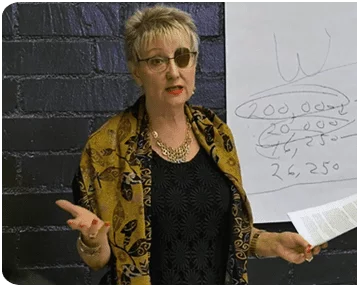
There’s a dangerous illusion that lives inside independent filmmaking—the belief that passion alone is enough. That if you just love movies deeply enough, sacrifice enough sleep, survive enough rejection, and keep grinding long enough, eventually the industry opens its doors. But on today’s episode, Jenna Edwards dismantles that fantasy with the kind of honesty that only comes from experience. Not theory. Not social media inspiration. Real experience.
Before becoming a producer, Jenna was an actress navigating the chaos of Los Angeles. She landed roles on iconic shows like Buffy the Vampire Slayer and Malcolm in the Middle, experiences that taught her something most actors eventually learn: you’re never auditioning for just one role. Every audition becomes an opportunity for someone to remember you later. Sometimes years later. That mindset—staying open instead of desperate—quietly becomes one of the central themes of the conversation. Because desperation, according to Jenna, destroys careers faster than lack of talent ever will.
It’s a brutal truth that many filmmakers and screenwriters avoid confronting. Too many people approach the industry wanting validation before they’ve built anything tangible. They wait to be discovered instead of creating momentum themselves. And in today’s world, that strategy no longer works. “Create your own career,” she explains, emphasizing that filmmakers can’t afford to sit around hoping agents, managers, or investors magically appear.
That idea becomes especially powerful when the conversation shifts into producing. Jenna’s perspective on independent filmmaking is refreshingly practical. Most films don’t fail because the idea is bad—they fail because there’s no roadmap. No distribution strategy. No business plan. No understanding of who the audience is or how the investors get their money back. And that’s the part many creatives resist hearing. Because filmmaking feels like art. But surviving in filmmaking requires thinking like a business.
Jenna repeatedly returns to this idea of intentionality. If your dream is to direct grounded emotional dramas, then every short film, every networking event, every collaboration should move you closer to that goal. Instead, many filmmakers scatter their energy everywhere—making horror films because they seem “easier to sell,” networking with people they don’t align with creatively, chasing trends they don’t even care about. It creates careers with no foundation.
Her analogy is simple but devastatingly accurate: building a filmmaking career is like building a house. You can’t work on the roof before laying the foundation. And you definitely can’t build three different houses at once and expect any of them to stand. That clarity extends into her philosophy about producing itself.
One of the most eye-opening sections of the conversation revolves around ego on set. Jenna points out that many inexperienced producers mistake visibility for usefulness. They create unnecessary problems simply so they can be seen “solving” them later. Meanwhile, truly effective producers are often invisible because they handled the chaos long before production even started. That insight cuts deep because it exposes how much independent filmmaking is driven by insecurity rather than leadership.
And insecurity creates friction. Bad communication. Passive aggression. Endless drama. Entire productions derailed because people need to feel important rather than effective. Jenna’s solution is deceptively simple: remove ego and ask one question constantly—What’s best for the project? Not what protects your pride. Not what gives you credit. Not what makes you feel powerful. What actually serves the film?
It’s the kind of mindset that transforms productions from emotional battlegrounds into collaborative systems. And in an industry filled with fragile egos, that shift becomes incredibly valuable. But perhaps the most powerful part of the episode has nothing to do with filmmaking at all.
After surviving a horrific tragedy that caused years of severe PTSD, Jenna rebuilt her life piece by piece. That experience fundamentally changed how she sees creativity, collaboration, and purpose. There’s a groundedness in her perspective that feels earned—not manufactured. She understands what it means to lose momentum, lose confidence, and slowly find your way back.
And maybe that’s why her filmmaking advice resonates so strongly. Because underneath all the strategy, networking, and business talk is something much more human: sustainability. Not just building projects. Building a life and career that can survive the emotional weight of the industry itself.
In the end, Jenna Edwards offers something many filmmakers desperately need—not motivation, but perspective. The understanding that talent is only one piece of the equation. Success comes from clarity, planning, collaboration, resilience, and the willingness to build intentionally instead of emotionally reacting to every opportunity that appears.
Because filmmaking isn’t just about making movies. It’s about learning how to sustain the person making them.
Right-click here to download the MP3
Alex Ferrari 0:47
Enjoy today's episode with guest host Dave Bullis.
Dave Bullis 1:54
I have a guest who has been on Malcolm in the Middle. She has been on Buffy. She has actually been done a podcast herself. Now she's doing a lot of really great stuff in the producing space with guest Jenna Edwards. Jenna, how are you?
Jenna Edwards 2:10
I'm great. How are you?
Dave Bullis 2:12
Good! Thank you. You know, I was just reading your bio, and that's actually really cool that you, you know, produced the first feature with Hulu, and I definitely want to get into that, but, but the first question I have for you is, is, you know, it's gonna and I ask everyone this, and that is Jenna, how did you find yourself in the film industry? Meaning, is this something you've always wanted to do, or is this something that you sort of just found yourself in one day?
Jenna Edwards 2:37
It's a great question. I have a two part answer to that. I always knew I wanted to be in the entertainment industry. I, truth be told, came out to LA to be an actor in television and got into film, producing kicking and screaming. So not really by choice, but I love it, and I'm so grateful to my friend who kind of drug me into it, and that's really the answer to that question, kicking and screaming and joyfully. So
Dave Bullis 3:10
Well, usually the kicking and screaming part, I can relate to, but joyfully so not so much. But no, I'm just kidding, but yeah, you know, I did look at your IMDB, and I did see you have some really awesome credits, you know, as an actress. So that's why, when I saw that, I said, Wow. I said, Jenna either has tremendous connections or luck or she, you know, she started off as an actress, and that's exactly what happened. Because, you know, you were on a on an episode of unsolved mysteries.
Jenna Edwards 3:40
Yes,
Dave Bullis 3:41
You were on Buffy the Vampire Slayer.
Jenna Edwards 3:43
Yes,
Dave Bullis 3:44
Malcolm in the Middle. And I mean right there. I mean those two shows, right there, not even counting Unsolved Mysteries, those two shows, right there are cult shows that, especially Buffy,
Jenna Edwards 3:54
I still feel like it wasn't me. I sound like, wow, that was really cool. How lucky am I? Yes.
Dave Bullis 4:03
So, so, you know, how did you know, you know, you get the job on Buffy, did you just go to a casting call? Or did you actually, you know, know somebody who just, you know, said, Hey, you know, Jenna, why you come to this, to this casting call, and you know, we'll see what happens. I mean, so, so, how did you get on the show Buffy?
Jenna Edwards 4:19
Sure! I Well, it's all started with Unsolved Mysteries. Actually, I moved to Los Angeles, and my neighbor was an actor as well, and he was here longer than me, and so he introduced me to his manager, and his manager got me the audition for Unsolved Mysteries. And it was I hate saying this so much, because actors hate me when I do Unsolved Mysteries. Was my first audition in Los Angeles, and I booked it, and I got my sag card, and people were like, really? I'm like, Yes, but I did that show, and then I was able to sign with this really great agent. And because I had my site card, and I did a showcase, not an actor showcase, traditional in the traditional format, but I was in a class that had a showcase at the end. And I met this agent, and we met and we got along really great. And I actually started working for him, which I I strongly suggest every actor get their butts into agencies, management companies and casting and see if they can intern or be an assistant, because you learn so much about the other side of the table that I think makes actors much more hireable. But I digress. So then I had an audition for Buffy the year before it see its last season. And you guys, literally, I was the day before the I got this phone call. I was like, That's it. I'm done acting so hard I'm gonna leave you, though. And it was more like just a release of not caring so much about the outcome of certain things, like when, when we're acting, we get in our heads and we're like, so tied to getting this one role. And I literally, the next day woke up and my agent was like, You booked Buffy? And I was like, I don't understand the words that you're saying, because I haven't auditioned for Buffy in over a year, and so I feel like they've made a mistake. He's like, no, they really liked your audition the year before. And I was like, Whoo Buffy. And then I got the script, and it was just this one little seven second scene. And I say that with all the respect in the world, but at the time, you know, as an actor, you're like, oh, they hired me because I can I'm sturdy and I can block a punch. That's literally why I got cast in that role. But then I've had so many amazing experiences with it, because that role, I don't know if you saw it, Dave, but it was the last episode of Buffy the Vampire Slayer, and she was doing this amazing speech, talking about how, like some guys decided that there would be only one Slayer, and we're deciding to change all of that. And so basically, anyone who would be a Slayer is now going to be a slayer, because we need everyone to be empowered. And during that montage, I blocked a punch and rose into frame and inherited her power. And that seven seconds has literally had a huge impact on so many people that I've met that are fans of the show. I had one woman say that it inspired her or empowered her to leave her abusive boyfriend. And so it was this true testament of, there are no small roles. And, you know, you just have to be grateful for every opportunity that you get. And now I get to say I'm a slayer. It's pretty freaking mad,
Dave Bullis 7:55
You know, I agree with you completely, you know, because I have seen, you know, some actors, they'll get a, you know, a role, some in a part in a movie or TV show, and they sort of don't like the fact that they're not the star, right? And, and I have, you know, I've had friends who are actors come to me and they say, I don't want to be in this, in this film, because about blah, blah, blah. And I said, Are you kidding me? I said, you know, we actors would would kill for this, because they could turn that into something else. Because you know what it means. It means you can, you know, you take this, this part, no matter how big or small it is, and you use that to parlay into something else. And I don't mean that in a bad way, like, you know, but I mean that in a good way, because, you know, you know, like the saying Jenna in Hollywood, you're only as good as your last project,
Jenna Edwards 8:38
Absolutely.
Dave Bullis 8:38
And that way you could say, hey, well, hey, you know, I'm sure when you went auditions, they probably you they probably, you probably said, Hey, I was in Buffy. I, you know, I've done, you know, I've, you know, I was the girl in Buffy, you know. And again, the fans that resonated with them,
Jenna Edwards 8:51
Yeah!
Dave Bullis 8:51
Because, like I said, that's a cult show. And, I mean, you know, that has a pretty rabid fan base,
Jenna Edwards 8:55
Yeah, it does. And they're so amazing. It's, it's fascinating, you know, that was my experience with, there are no small roles. You know that saying there are no small roles, only small actors. And then the Malcolm story. I have stories for everything. It's so funny. The Malcolm story was like my realization of, you're never auditioning for one role. You're auditioning for any role. Because I went in there, the audition was for one line in the show. And Bryan Cranston, who is like one of the coolest people, you guys, he directed the episode that I was in, and it was so fascinating to watch him go from how the goofy dad to director. He's just brilliant. And so anyway, I went into the audition to audition for one line, and I ended up booking a whole week's worth of work. Like they they were like, Oh, you need to read for this other role. And I booked the bigger role because I just wasn't attached, like I said in the beginning, to the outcome of what was going to happen. I was just in there so excited to be auditioning again, because I had, I had taken off quite a bit of time from it. And so it's fascinating. It's fascinating the experiences you get to have when you just open yourself up to all the possibilities.
Dave Bullis 10:28
Yeah, I concur. And I, you know, before I continue on, I wanted to ask you, I just want to take one step back very quickly, tell you a funny story real quick.
Jenna Edwards 10:36
Awesome.
Dave Bullis 10:36
Because this is, you know, because just as we were talking about unsolved mysteries in Buffy, I had, I had a short little story I wanted to tell you, and I think you'll get a kick out of this one time. You know, I really don't act, you know, I'm more of the behind the camera type of guy. And I had a friend of mine who was, he owns his own production company, and he said to me, Hey, why don't you come to this casting call we're doing, we're doing it for this, this barbecue thing. It's gonna be a national wide commercial, you know. He's like, you know, and he's like, I just have a feeling, I just want to see you in this, in try out for this role. And I said to him, okay, sure, you know, I'll come, you know. I said, you know, if you want me to, I'll come out. So I went in and, you know, there's, there's the, you know, there's the, it's not a green room, but it's, you know, it's the room, everyone, you know, all the actors, and everyone you check in, and you sit down, you know, everyone's, you know, reading their lines. And well, as I'm sitting there, somebody comes out, I think it was his assistant, and he recognized me. Well, then everybody comes out, like the casting, like, you know what I mean? Like, they were in there doing the auditions. So he so, you know, three people come out, and they're all shaking my hand, like, oh, good to see here, Dave. And the funny thing is, like, some of the actors were giving me a look, like, Who is this guy? And how the hell is do should we even audition? Does this guy already have the role? I was like, I was trying to explain to everybody, like, Look, I'm not anybody famous. I just know the, know the product guy who runs the production company. And I swear, I was like, there's not a shot in hell. I'm getting this. They ended up not giving it to me anyway, but you know, and it was funny too, because afterwards, they were like, Hey, Dave, after these auditions, why don't we go out and grab some lunch? And I was like, Yeah, sure. Why not? So it just funny, because it's really like, you know who you know, but that just was like overkill, because, you know, it just was a funny, funny little story. But I thought you'd get a kick out of it because, because it just, it seems so redundant, but, but, but, you know, so I didn't, I didn't get the role, though, but, but it just reminded me, you're saying, but, but,
Jenna Edwards 12:45
Yeah!
Dave Bullis 12:45
I'm glad that an, you know, an actor who was probably, you know, trying for years it, you know, at their craft, got the, got the commercial spot, and not me, just because I'm friends with somebody, but, but, you know, so, you know, you were on Buffy, The Vampire Slayer. Now, did Josh Whedon direct that episode
Jenna Edwards 13:02
He did.
Dave Bullis 13:04
So what was it like working
Jenna Edwards 13:05
So trip out about it. He you know, so first of all, because I hadn't auditioned. I mean, I was really young when I booked that and and I hadn't auditioned for that specific role, I literally walked around all day on set, thinking they had the wrong person, and that the minute I meet Joss, he's gonna be like, Who the heck is this chick that I don't know. It didn't happen that way, thank goodness. But, um, you know, like, Buffy was my first experience on a really, like, big production, and it was fascinating to me. First of all, I'm going to tell you two stories about Joss Whedon, because it just to me, tells the the story of who he is as a person. The first is, you know, my my role was seven seconds, but I was being abused. That's the whole point of it. Like I was able to finally stand up for myself, because I inherited buffy's powers and there was no way anyone was going to hit me again. But because I was being abused, I talked to him and I said, you know, should I be crying or not? That was my question. And not only did he so let me back up, most directors would probably say no and then walk away and continue to do their thing. Not only did he stop and look at me and acknowledge that I had a question, he explained to me why I shouldn't be crying, and he was like, no, because it's too much for the audience in that small amount of time. And as an actor, when you can get a why to the answer, it makes it so much easier for you to accept it and internalize it and become the character even more. You know, it's like, it's a different way of asking, what's my quote motivation? But the fact that he was like, so amazing. You know, to. Job and give me that attention that or that time that I needed was just, it was, for me, just incredible. And then so I get done. And little trivia, here I was the last scene ever shot on the show. And so when they called, you know, cut, then they said, that's a wrap. It was literally the last time that that crew was going to hear that in this production. And so when they did it, you know, people started crying and they were hugging, and here I am all awkward, like, I have known you people for a total of maybe two minutes now, and I'm gonna go, like, I like, Okay, I'm gonna let you guys have your moment, and I'm going to leave, and my set was in this giant warehouse, and my my role was actually quote trailer girl, because I was in the trailer that was my set. And so I'm in this, like, big Airstream trailer, and I stepped down, and I go to walk across this giant warehouse to leave, and all of a sudden I hear Jenna Wait, like, really loud, and I'm like, Oh crap, do I have, you know, microphone? But no, I wasn't, you know, there was no sound. And I'm having all these thoughts running through my head, and I turn around, and here's Joss Whedon sprinting across this warehouse. And he's like, I just wanted to say thank you, and that you realize you're Joss Whedon, right? Like you realize that you just let me be in your amazing show, Buffy, and you're now thanking me. I was like, shut up. I can't even handle you. And then we took pictures, and it was just really great. It was such a fun experience. But that's the kind of guy he is, you know? He's just, he's just a good guy, and I was so grateful to have that experience,
Dave Bullis 16:45
You know, and that's amazing to hear, because I've always wanted to meet Josh but, and I've always, I'm always interested, because when people who actually work with him, you know what, he's like, his style, everything, I mean, I've always heard nothing but good things, by the way. So because I've never met anybody who has anything bad to say about Joss.
Jenna Edwards 17:02
I can't even imagine somebody having something bad to say. I just but again, that's my experience. So even if you did have a bad experience, I would ignore it, because I love mine so much.
Dave Bullis 17:17
So hopefully one day I will meet Joss and I won't have a bad experience. Yeah, because, because if I, if I, if I did have a big experience, I'd have to call you back and be like, Jenna, I've had a bad experience with them,
Jenna Edwards 17:25
And then I would have to, like, figure out how to get a hold of him again and be like, You need to apologize, because nobody in the world can think you are not the most wonderful human,
Dave Bullis 17:36
You know. So you know, after, you know, buffing the Vampire Slayer, you did take a break.
Jenna Edwards 17:40
Yes,
Dave Bullis 17:41
Now, now I know the story about what happened. Now, do you want to, you know, sort of fill in what happened between, you know, Buffy and when you went back to work as an actor.
Jenna Edwards 17:50
I'm a total open book, but it opens up a can of worms. Are you ready?
Dave Bullis 17:54
I am I am ready Jenna
Jenna Edwards 17:59
So a Buffy aired, and I thought, as an actor, my whole life was about to change, and it was going to be great, and my career was going to take off, and all of this stuff was going to happen. Mind you, this was before social media. I believe that if, if social media existed, it probably would have taken off, and then things might have been even more complicated than they were. My life did change. It changed dramatically, but it wasn't because of acting. It was because I was on a break at work and a man drove through the farmer's market in Santa Monica and killed 10 people and injured over 60 of us, and he hit me, they say at about 60 miles an hour, and I suffered severe post traumatic stress disorder, and I couldn't read, and I stuttered when I talked, and I forgot basic words, and I didn't sleep for eight months. And I ended up in the psych ward, where I thought my whole life, let alone my career, was completely over, and I just didn't, yeah, it was very devastating, and obviously life altering, and it took me three and a half years before I could work again, and over seven years before I didn't have a panic attack or A flashback.
Dave Bullis 19:21
So how did you, you know, start to, sort of, you know, I guess, you know, overcome all this, you know, were, you know, I'm sure you, you know, there had to be, you know, building blocks. You know what I mean, like step by step. So, so where, how did you start your road to recovery?
Jenna Edwards 19:34
Well, it was, first of all, I, my, my family has a history of addiction, and so I I refused medication because I was so afraid that I would become an addict. It nearly killed me, because the my chemicals were so off that I needed that medication to regulate the chemistry in my body and be able to sleep. Then become we'll be right back after a word from our sponsor, and now back to the show. Like I always say I had a mental injury, not a not a head injury or a brain injury, but a mental one, where, just like, things weren't being processed the same way, and so I had to accept that I would be on medication, but I was very clear with my doctors that I wasn't going to be on this medication for forever. So we needed to have a full plan in place, and I needed to see that plan before it even before I would do anything. And then my road to recovery really started when I accepted that I needed more help than I could get outside of a hospital, because I was trying to get the chemicals regulated at home, and it was a really scary process, because some of them were, were affecting me in ways that they weren't supposed to be. And on top of the like people dying in my head every time I closed my eyes, I was also really scared of what the medication was doing, and so I checked myself into the psych ward after a really horrific episode with the medication. I won't get into that, but while I was in the hospital, my recovery started, I truly believe, because Drew Barrymore was sharing her story at the time, and what I mean by that is Drew had a history with addiction, as we, most of us, know. And at the time, there were all of these articles coming out about her coming back into her career, and what she was having to do and all of that. And even though I couldn't read and process all of them, I was like, this woman's an inspiration. And so in my hospital room, I literally put up all these pictures of Drew Barrymore just remembering her story and remembering how, you know, people have the ability to come back from things that they don't think they can come back from. And not only did that experience kind of propel me towards recovery on my own, it also is a really big catalyst for what I believe part of my purpose on earth is, which is sharing like it's so important to share not just your triumphs, but your struggles, so that people that are struggling can see what it looks like when you're done. You know when you're done struggling with whatever you're struggling with. And I also attribute you probably are thinking of this if you've heard any of my interviews, Dave. But I attribute alias a lot to saving my life. And everybody's like, really, alias, yes, alias, listen to me. Like, alias is the best show. I think it's the best show ever made. And it when I when I got out of the hospital, they said you have to create a routine for yourself in order to kind of pavloney and train your brain to go to sleep. And so at the time, alias was my favorite show. So I literally watched an episode every night before I went to bed, and it, when I would watch it, it would train my brain to start to get sleepy, and I started to regulate my sleep, and I, you know, recovered. And I never thought that would happen. While it was happening, I thought this was going to be my life forever, and so when I say that alias saved my life, I'm not kidding.
Dave Bullis 23:48
So have you ever met anyone from alias to tell them this? You know, tell the story.
Jenna Edwards 23:53
But I kid you not. If I do, I'm gonna look like the biggest nerd. Like, how do you even say that to someone I'm sure. JJ, Abrams wasn't thinking, I'm gonna create this awesome show that's gonna save someone's life. Like, what do you even say? Oh? JJ, thanks. No, but if you know anybody, I'm happy to tell them and thank them profusely for doing the work that they did.
Dave Bullis 24:21
I don't know anybody offhand, but if I ever stumble upon anybody, I promise I'll tell them. Do you have to talk to Jenna.
Jenna Edwards 24:29
Oh, thanks. That would be awesome. I would be so excited. I'd probably be I look at me, I'm even nerding out now, like a grown woman is nerding out so bad right now at the idea of meeting those guys.
Dave Bullis 24:44
Yeah? And, I mean, you never know, too, because there you know, there are cons, you know, the comic cons, and then there you know, so you never know where you could bump into them.
Jenna Edwards 24:52
Yeah, I know I've always wanted to go to the cons and stuff, but because the crash happened right after Buffy. See, I feel like it's been way too long, but who knows? You know what? The thing I've learned in my life is, you just never know.
Dave Bullis 25:10
Yeah, very true, because there was actually monster mania was this past weekend, and had a Buffy, wait, yeah, I think I'm sorry throwing a Buffy reunion coming up. That's what it is, because I actually saw it, yeah, because it's, but it's the Buffy the movie, and so with Christy Swanson. So, so I am, but I know they do Buffy the TV show as well. I know. I mean, I've seen them all, you know, all the time.
Jenna Edwards 25:36
That's awesome,
Dave Bullis 25:37
But, but, I mean, I mean, again, you never know, because, I mean, there's always so many people at these cons now, they just keep getting, you know, the more and more. And, I mean, so, you know, you know, as we continue your story, you know, you were able to get, you got on the road recovery, you're able, you know, to get back to, you know, to doing what you wanted to do, and you got the job, you know, on Malcolm in the Middle. So, you know, do you feel? I know this is, you know, an interesting just a question from an actor's standpoint, do you feel Bryan Cranston understood actors in a different way because he is an actor?
Jenna Edwards 26:09
Oh, I'm sure, I'm sure he, um, I can't imagine him not understanding actors in a different way just because of who he is and how he's trained, because he's a very well trained actor, you know, because I was just really excited to be on the show and watch him that I didn't even think about how he interacted with me or the other actors. It was just more my fascination with his ability to switch so efficiently from his character to who he is as a director that I that's all I remember. I do remember one thing, and I'll tell I'll tell all the actors listening this. So I had an insecure actor moment. We all have them, right? And I went up to Brian, and I said, you know, is that what you wanted? And he was so gracious. And said, Look, I'm giving you a piece of advice. He goes as a director, if I don't like something, I will tell you otherwise, just as an actor, assume you're doing brilliant. And I was like, that's amazing. And now, as a producer, and watching the directors that I work with, direct actors, I can totally see that. So any actor listening, you know, you got to kind of hide that insecure actor moment and really understand that if you're not getting notes, then you're doing it perfectly.
Dave Bullis 27:43
You know, that is a, an excellent piece of advice. Absolutely excellent piece of advice. I think that does that. That does well too. If you're directing a, like a, like a scene where that includes a lot of actors, like you're like, three, four or five actors, because, you know, you know what I mean, it's hard to give adjustments to that. You know what I mean.
Jenna Edwards 28:01
It was a big crowd kind of scene that I was asking, actually, now that you say that, let's
Dave Bullis 28:10
See, I'm reading your mind.
Jenna Edwards 28:11
I know I love it, I love it, but, yeah, I've been so lucky to be able to work with people who are really great at giving advice. And I like, I'm so grateful to that, you know, I think that's why I've been able to kind of move my career forward whenever I choose to, because I get to be surrounded by incredible people. You know, so many, so many people think that they're just all sharks in Hollywood. And I just, it's not my experience. My experience has been just gracious, wonderful, creative, collaborative people, and Brian is absolutely at the top of that list.
Dave Bullis 28:52
Yeah, you know, that's something I found too. I mean, not to deviate too much from this conversation, but you know, I have a friend of mine who just posted online. He's a screenwriter, and he's been trying to be a screen reader for like, 20 years. He can't, he can't get anybody to be his agent or manager. And when you see what he posts on Facebook, it's like, this is probably the reason, very angry, very bitter, very condescending and and I'm sitting there thinking to myself, I wonder how he talks to agents and managers. I wonder if he probably just walks in there and goes, You know what, I'm the biggest deal in this town. You just don't recognize my brilliance, you know. And you should be signing You should be begging to sign me. I kind of have a feeling that's what he does when he either, you know, cult makes an email, you know, sends an email or query letter, or anything like that. And, I mean, you know, I've had,
Jenna Edwards 29:46
Yeah,
Dave Bullis 29:47
I'm sorry.
Jenna Edwards 29:47
No, I, I love talking about this subject because so thank you for bringing it up, and I'll let you continue. And then I have, I have stuff to add.
Dave Bullis 29:58
Oh, I was just gonna say excited, one other person, and they actually their production deal fell apart with a producer, and he actually made a post calling the producer out, saying, I mean, oh, I mean, just, just going on and on, and I'm sitting in my sitting there, thinking to myself, who would want to work with you after making a post like that?
Jenna Edwards 30:24
Oh my gosh, yeah. And that's exactly it, right? So I always this is mostly to actors, but really any crew, my whole thing is, and if you could see me now, I'm raising my hand in one hand, you have to be really good at your job. But guess what, guys, there are a lot of people really good at their jobs. I mean, I hate to say it, especially here, like we're in Los Angeles, where the cream of the crop come, you know, to try and make it so it's like, you've got to be not only really good at your job, but on the other hand, you have to be really easy to work with. And I'm not saying you have to be a doormat. That's not easy to work with, but you have to be like my litmus test is, can you do your job? And can I spend 30 days in the middle of a cornfield in Nebraska without wanting to kill you? That's literally how I choose, or how I go through the actors, because and crew, because that's really what happens, like we shot, you know, I've shot several movies in the middle of a cornfield Nebraska, which is hard work, and you don't have all of the luxuries and and available items that you might need when you're shooting in Los Angeles. So you've got to be able to roll with the punches and still do a great job and be fun, and we have to be able to laugh. And people always talk about how much nepotism there is in Hollywood, but here's the way I look at it. I want to work with my friends, you know. So I want my friends to be really good at their jobs, so that I can justify working with them because I trust them. You know, my reputation is on the line when I hire someone or when I cast someone, and if you're going to make life hard for everybody on my team, then they're going to come to me and they're going to be like, what the f did you do? And I'm going to have to justify it. So, you know, you got to be gracious and understand everybody's position. And that person that posted that thing about the producer and the deal falling through, I mean, I don't know the details, but I've had deals fall through that I've worked tirelessly on and so if somebody was going to call me out on it, it would be just like, first of all, untrue, because there's no way I would go into a project without wanting to actually make it happen. And second of all, like, it just shows to me that that person making that post is amateur and doesn't understand the process. And so you've got to be just careful about, you know, showing your hurt feelings, because the producers probably hurt just as much. You know, they put They work tirelessly to get these, these deals together, and a lot of times, they work tirelessly for free to get the deals together, and then, you know, to have their reputation drug through the mud because something didn't happen. It's just not fair.
Dave Bullis 33:30
Yeah, I and you know, this, this screenwriter, there were two different screenwriters, and both of them, you know, always complain about not being able to find money, and especially the one and the other one usually complains with not being able to find representation. And I always go back to, I don't think anybody wants to work with you, because they can tell that you are going to be a huge pain in the air. Yes,
Jenna Edwards 33:51
No, it's true. Well and desperate. I mean, I hate to say it, but I'm sure everybody's heard like you. You can smell desperation. And this goes to pretty much anybody but writers and actors, especially, which is such a great segue into one of my missions, which is empowering people who feel disempowered in this industry. That writer does not need representation. It is 2016 if he really wanted to be a screenwriter, he would figure out how to get his movie made without an agent. You know what I mean. And so it's almost like this gut check for certain people, where do you want to do you want to write because you love to write, or do you want to have a career in writing? Because they're very different. You know, one leads into the other, but the idea of having a career means that you have to treat it like a business. And if you're going to treat it like a business, then you're going to get off your butt and you're going to figure out how to get your writing seen right. Whether it's by an agent, whether it's by other writers, but more the way that I would suggest is go out and find a producer that you do work well with, and get your project made, even if it's a short film, so that you can show people what you've got, instead of counting on them to discover it's the difference between creating your career and hoping to be discovered. And I feel like it's the same with writers and actors and creative people in general, because nowadays you can't. You know, I always used to say this when we were shooting April showers, which was like 2008 you guys. So it was way before social media was what it is now. But I would always say you can't talk about making a movie anymore, because some kid with their iPhone is recording it, making it into some video and putting it up online and making millions like you have to actually make your content now. And if you got a big, giant script that is going to be, you know, the next transformers, then obviously you need to write something smaller that can be made as a calling card.
Dave Bullis 36:08
Yeah, you know. And I understand completely what you mean, you know, because back when I was crowdfunding, you know, 2000 or nine, 2010 you know, nobody knew what Indiegogo was. I had to explain to so many people what Indio was. And they were like, is this legal? Is this bill? And I said, Yes, yes, it's legal. And I got, I had people send me messages saying that it was, you know, you can't actually ask for donations unless you are a for, you know, a charity, yeah, yeah. And he says, he said, You can't, you can't unless you're that he goes, and you can't ask for, you know, money, unless you know you're actually have either actually a corporation yourself, he goes. So crowdfunding that, you know, I don't know what this is, and blah, blah. And I said, Listen. I said, I was I? So I sent back this email explain what it was. I had a producer on the project. All my projects go. He looked at it. He goes, I think we need to make it clear that they're not buying investment in the movie. I said it's clear on the website. I said it's clear as a bell. I said, I don't know what more I can do. And every, every person that I would get aboard the project was, was like, baffled about crowdfunding. And, you know, I hope to crowdfund another project by the end of the year, you know. But I actually want to, I'm actually gonna go with Indiegogo. I mean, with Kickstarter this time, but, but, you know, I, I think, I mean, this is a problem that I find myself, and I don't know, you know, maybe this is something that you find with a lot of your clients, is that I tend to write things that either are too expensive because there's a location that I can't get, or I require some kind of, you know, explosion or whatever. And on the flip side, you know, when I try to write stuff that's more low key, you know, it's just it doesn't have exactly that's my problem, or maybe it's a little too off beat, is what I'm trying to say. Because, you know what I mean, like, it's almost like an indie film that if somebody read the script without having, like David Lynch, or somebody else, you know, on the on the cover, or, you know what I mean, like somebody who can make a film for, you know, four or 5, $6 million and you know everybody, but you know it's going to be, you know, it's a person who, who's who knows what they're doing. You know what? A person who because, because, you know what I mean, they don't want to spend $5 million on some, on somebody new, and you know they're gonna say, well, what's the biggest budget, you know, you ever work with? Do you have a producing team? And you know what I mean, and they don't want to at that point, I I mean, and I still don't, I still don't have a producing team that comes with me. You know what I mean? It's just usually just me, just little old me, Jenna. And they usually are like, Hey kid, you know you're, you know, you got talent, but call us back when you have, you know, when you have some more stuff on your belt,
Jenna Edwards 38:50
Right! Well, here's the way that, if you want, I would advise you specifically regarding that, is create yourself a business plan like so many times I talk to filmmakers, and they have no idea what their ultimate goals are and how and what the steps are to get there. So if you're if you're wanting to create movies that are David Lynch esque, then you make yourself the new David Lynch. And how do you do that? You say, Okay, my ultimate David Lynch movie. David Lynch esque movie, is this project? What other smaller projects do I have, or can I write that will cost maybe, you know, under half a million? Let's say that I can make in order to show people what I've got, so that they'll give me 5 million for my ultimate project, and so that during the making of let's say there's three, they could even be short films, but there's three films that I'm going to write, or I'm going to direct, or I already have in my arsenal that I can use as building blocks to get to this ultimate $5 million project. And along the way, I'm going to get myself a producer that I really love working with that sees my vision. I'm going to get an actor that I know is going to blow up because he's going to he or she is going to be the perfect lead for my $5 million project. Like you start to gather your your team while you're building up to getting that $5 million movie done, and you're building your team with product, right? Like we have to look at our films as product, in order to make some of like, show that you can distribute so you can make the money back on this, like, under half a million dollar project. So that when you do go to investors for the 5 million, you can say, look, here's my track record, not only in the creative sense, but in the funding sense. I made, you know, 10% profit on this one. We were able to check out just or test out distribution models on this one, and we discovered that this works and this doesn't, and this pays and this doesn't, you know, like it's time for filmmakers to start thinking of their careers as true production companies and businesses.
Dave Bullis 41:21
Yeah, you know, I agree. You know, there it should be more of a business acronym to this, there should be more of a thought about, you know, how the investors are gonna get their money back? You know, Jason Brubaker, who I've had on the show, even said, yeah, Jason's a great guy. He even said, you know, hey, we're gonna get my movie into Sundance. Isn't a business,
Jenna Edwards 41:39
Yeah! No, please, yeah, yeah.
Dave Bullis 41:44
But you see, it's funny
Jenna Edwards 41:45
Business plan,
Dave Bullis 41:47
Yeah,
Jenna Edwards 41:47
Which is the business plan, but it's absolutely not a business plan.
Dave Bullis 41:53
And, you know, I had on an I had on Morgan J. Freeman,
Jenna Edwards 41:58
Okay,
Dave Bullis 41:58
And he was episode 99 and he actually won Sundance, and was the first ever, I think, what Triple Crown Champion. And, I mean, he has an, you know, an amazing story about, you know, why the movie was never released. Basically, it all. I mean, he even admits this. So I'm not, you know, not, not, you know, spreading dirt. But he even went all to his head, and he, he got into trouble when he was blowing off meetings with Steven Spielberg,
Jenna Edwards 42:24
Whoa,
Dave Bullis 42:25
Yeah, and, but, but now he'll, he works for MTV. And, I mean, you know, everything I just said, we went over with the interview, but, but, yeah, but, you know, just, you know, that's why Sundance, you know, maybe winning, it isn't the, you know, the best thing that could happen, because, you know, it doesn't, you know, there is no guarantees in life, right?
Jenna Edwards 42:45
Absolutely. And you know, it's so funny, because my first feature, April showers, like everybody behind the scenes, Sundance was our goal. That was our business plan. And so as somebody who made that their business plan, and then was, sadly, like we, we made this amazing movie, but it was about us, about the Columbine story, so not the feel good movie of the year. And while we were shooting, the market crashed, and Sundance started taking comedies, and they shifted their, their kind of film selection criteria, and they, they started to program differently, and our film didn't get in. And so we had to then figure out how we're going to pay our investors back. And we, we did the second day and date, which was on iTunes and in the theaters at the same time. And at that time, it was like, so unheard of. One other film had done it, and the theaters were freaking out. They called us the Horsemen of the Apocalypse, like, like you said about your Indiegogo campaign, like we had to explain how it wasn't going to affect the theatrical release the way that they were thinking. And I kept saying, I kept using the analogy of Wolfgang Puck. I'm like Wolfgang Puck's restaurants didn't go under when he started to serve frozen or put frozen dinners in the grocery store. His profits went up like it wasn't they fed into each other. And so it was a lot of convincing that, you know, the internet isn't actually going to kill your theatrical release. It's going to be a great way for people to, you know, learn about the film in different avenues. And it's like a rock concert. If you want to go to a concert, you want to go to a concert, but you're not going to not buy the CD from the band. I almost think, and this is my theory. I think that theaters need to start selling digital copies of the movies in the lobby. I think after you see like an X Men, and you're so excited about it, you want that. I bet you people would make, they would make so much more money if they started selling digital copies. But that's just my soapbox.
Dave Bullis 44:59
Well I actually think that, you know, going along with that, it's what's gonna happen is a graphics start selling like packages, like, you buy a ticket, you buy a shirt, you buy a hat, you get a digital download when that's released, and maybe some other like, hard to come by collectible that you know can't be 3d printed as readily and, you know, and you get that together, maybe even get to, you know, it's sort of like what Brad Pitt did with World War Z, because it was getting all those, you know, all those, you know, all that bad publicity. And then, you know, he was going to mystery tours around, you know, people were like, oh my god, what if he comes to ours and that? And I think that helped it out and but, you know, it's funny, they're actually, I'm not a sequel to that with David Fincher directing, which I think is completely odd.
Jenna Edwards 45:39
Love this business.
Dave Bullis 45:41
Yeah. I mean, I mean, where was he? I actually, I actually read the book, yeah, and the movie. I was like, What? What is going on here? There's so many times where I was like, What the hell is, why are they doing this? Like, this is, this is my this is the part that really had me laughing there in Jeff, you seen, what was it? Okay, so they're in Jerusalem, and the Israelis have, like, walled off the city, and they're letting in everybody else one by one. Well, when the, I think it was, the Muslims started to sing, suddenly, that what attracted all the zombies? And they said, but I'm like, what about all the helicopters and people talking and like, so what are like this? Is this singing, driving them nuts. And, I mean, it's just, I was like, What the hell is going on here? Because usually I'm the guy everyone asks after we see a movie, like, you know, they want me to explain stuff. And I go, I have no idea about this one. You guys got me how they the zombies can tell the dudes throw these noises and stuff like that. I just don't know. But I'm sorry to get sidetracked there, but
Jenna Edwards 46:40
It's all good. I just, I like action movies, so I'm very good at not analyzing action movies,
Dave Bullis 46:49
You know. But like, something like Die Hard comes along and it's just like, it flips everything. And, I mean, now, because, because, you know, that's how people pitch stuff, it's, it's die hard in a blank I had a friend. I had a friend of mine, pitch die hard in a haunted house.
Jenna Edwards 47:04
Nice,
Dave Bullis 47:08
Yeah. And I was like, how did this not sell? And he's like, Dave, that's a question I ask myself every day. You know, I and, you know, Jen, I wanted to ask, you know, just to sort of continue with this, you know, part of the conversation, you know, what are? What do you think are some of the main roadblocks to getting your film made?
Jenna Edwards 47:26
I'm not having a plan. Is probably the biggest. So, yeah, go ahead.
Dave Bullis 47:33
I was gonna say, so do you think filmmakers, do you think that this, this script, is just too much money, like we're like, we're just saying with me? Do you think that the script maybe isn't, you know, feasible. Maybe they should, you know, aim, sort of smaller scope, you know, make something for maybe 510, 15,000 you know, and shoot that short film first that you know, cost that raise that, you know, crowdfund, that money go from
Jenna Edwards 47:56
Depends on what the goal is. You know, it's, it's really interesting how many filmmakers and actors and people in this industry will just do anything. And what I've learned is until you're at a certain level, you really have to focus on one thing to start. And what I mean by that is like, if you really want to be doing romantic comedy and that's your ultimate goal, please don't make a horror movie because you think it's easier to sell, because then you're you're dealing with distribution companies that aren't in line with what you want to be doing. Ultimately, you're dealing with financers aren't in line. You're dealing with cast and producers and like every single person that you're putting your time and energy into developing a relationship with, when you're making a horror film, they're not over here. They're they're not going to be the ones that help you make your romantic comedy. So instead, start to focus on networking with people in the romantic comedy space, maybe getting some if you want to be a director, getting on some TV shows in the you know, more comedy space, going to film festivals that focus more on romantic comedies rather than the horror like all of the things that you should be doing should be focused in the genre that you really want to be working in. And I'm not saying that you can't make friends with people that are doing things outside of your genre. I'm just saying Be a little more strategic in the choices. Let me rephrase that being a little more specific with the areas that you spend your focused time on. Does that make sense?
Dave Bullis 50:00
Yeah, it makes perfect sense.
Jenna Edwards 50:02
And I mean, I It's heartbreaking to me, because I've seen so many filmmakers not working in the area that they want to be working in, and they work for 10 years, and then they don't have the contacts they need to make the project they actually want to make. You know, this whole business is all about building. It's like, you have to think of it like a house, your foundation, then you got your walls, and you got your drywall and your paint, and, you know, it's, it takes years to build that type of career, but if you're, you know, working on the foundation on this one house, and then you're going over and you're working on walls in a different house, and then you're going over and you're painting a different house, like, it doesn't make sense. So it's really important to think of it as a business. Like, if you were in banking, you wouldn't be networking with a ton of people who were in film. Like, it just doesn't it doesn't make sense. And that's specific networking. And I do have to say that Los Angeles is built for networking, so the people that are outside of of LA or a really strong film community might not have the opportunities to network the same way, but and they also might think of it as a four letter word. And I really want you to stop that, because I used to think that way, like we think, Oh, you're just you just want to meet me because you want something or you need something. But the reality is, in film, everybody wants something and everybody needs something, so when you're networking, it's not an icky thing. It's not like you're going to come in and take advantage, because you're literally like, I of course want to network with directors because I'm not one, so I need one. And they of course want to network with me because they're not producers, and they need one, you know. So it's this wonderful dance of needs and wants, and how can we all help each other, as opposed to thinking, Oh, how I feel gross because I'm just gonna ask for something. It's a big mental shift that needs to happen for a lot of people when it comes to networking and then being really specific about who you're networking with, and not wasting your time networking with somebody you don't like, you know? Yeah, I've really made a deal on myself. I don't work with people I don't like anymore. It's just not worth it. There's too many awesome people in this industry that, you know, why? Why bother? And then you're wasting this is a really great way to look at it for me anyway, because I did really feel icky when I first came to LA but the reality is, if I'm if I'm spending time with someone I know I'm never going to work with, or I know I don't really like, but they might be able to help me. I'm wasting their time as well, and that's just no good for anybody. So only spend time with the people that you actually really want to work with, and you really like and you really you're aligned creatively, you know, you and and energetically, to not,
Dave Bullis 53:09
Yeah, yeah, no, I know what you mean, because, you know, I've had friends who have had producers, you know, they're directors, and they've had producers come on and they just don't gel. And I've always said this to people too, if you're going to be, if you're the type of guy where everything is by the book, and you have to be professional, you have to work with people like that, you know, if you hire, if you hire a producer who's like, you know, hey, nothing's a big deal. Let's just have throw everything to the wind. You know, it's, it's not going to work well, because you're just gonna be a Mitch miss, a mixed match of styles, and it's just not going to work. And, you know, even you know myself, my own projects, I have worked with producers and DPS and actors who just aren't my style. And that's, you know, and I came to the same conclusion, I don't want to work with these people anymore who are time and energy vampires, who want to call you constantly to complain about something that someone did or might do. For instance, I had a project one time, and this one guy kept calling to complain about my producer. And I said, What is the problem here? Like, why do you guys keep freaking arguing? I was thinking myself, how much overlap do you guys even freaking? Have you think being like, what do you guys like bumping into each other in the supermarkets like, you know, any and he would tell me, Oh, the producer is condescending. And I said, Listen, that might this producer is, like, one of the nicest guys. I think he's too nice. In fact, if you told me that, I would agree with you. But you know, it's just, it's just stuff like that, you know what? I mean, yeah. And I mean, some people's egos get, get the Have you ever seen the movie overnight? By it focuses on Troy. Troy Duffy, who did The Boondock Saints?
Jenna Edwards 54:46
No
Dave Bullis 54:47
It basically follows him at the minute he gets his deal to make The Boondock Saints with Miramax. His ego goes off the freaking rails. And, I mean, he ends up the movie gets in turn around. Um. Then they have to, they had to find funding somewhere else. And, I mean, it's just basically about, you know, a guy getting his dream and just destroying it because he's his own worst enemy. And I think it's happened to a lot of people in this business.
Jenna Edwards 55:10
It does
Dave Bullis 55:11
Is that there is their ego just gets in the way.
Jenna Edwards 55:14
No, I love that you're talking about ego, because it's something I I talk about immediately if I'm about to go into a project, because my whole thing is, we have to know what we want to do with the project. So what's the project's goal? Basically, is it to go theatrical? Is it to go to Hulu? Is it to go, you know, a film festival route? Like, what is it? And make that decision, because that's the thing. Also, back to your question earlier, about, you know, what do you think the the things filmmakers don't have in place? And that's part of the plan. Part of the plan is, what are you going to do with the film once it's done? You know, it like it's great. If your mom thinks it's great and you want to show it in the basement, more power to you. But you can't raise money with a plan like that and so, and you also can't make an effective movie if you don't have a plan. So we sit down, my whole team and I, we sit down, and we decide, this is where the project's going. This is how we're getting there. If some other great opportunity comes up in the meantime, we'll obviously talk about it, but this is the plan, right? And then there's a whole conversation about ego, because ego tends to like negative. Ego tends to come from insecurity. And as a producer, I feel like it's my job to make sure that people feel secure in the process, especially the director and the creative people in the project. Because you have to feel secure in order to create big, is my thought on it. But the thing is that in that creating big, if they feel secure, they can remove their ego from it, understanding that everybody is working towards the same goal. And so I do, I flat out say there will be no ego, because our biggest question whenever we're having a conversation and there's a difference in opinion has to be what's best for the project. And so that phrase comes out of my mouth at least 1000 times on every project I work on, because if you can really go, Okay, this issue that we're having, like you've given an opinion and you've given an opinion, but what's which opinion or which plan of action is best to get us to the goal at hand, what's best for the project, and then that way it doesn't matter whose opinion it is, it's just what's best for the project, and all ego can be removed, and everybody can feel happy about it, and it's all good. I found that that's like, literally the secret to having a harmonious production.
Dave Bullis 57:56
You know, that's a very good tip. And, you know, the next film project I do that's, that'd be something I want to talk about, you know, when doing, you know, getting everyone together, all those producers, especially because a produce, you know, because and the producers, you know, I mean, because I've had some producers before, they've come to me to figure out a problem. And I said, I'm trying to write the project here. Why are you coming to me to talk to me about a problem and
Jenna Edwards 58:22
Not okay,
Dave Bullis 58:23
And me and the producer, in the middle of this set got into a huge screaming match. And I'm a fellow ginger, Jenna and and and my I can out scream a lot of people. I those people who hear me on the podcast are like, Nah, Dave's No, and believe me, when I have like that, that ginger temper, where I just start screaming, and she actually walked off and was like, I don't know why you're so angry. I said, you don't know why I'm so angry. You know, it's like, it's one of those. And then she walks away and leaves me with the problem. And then I'm like, then, then she was later on, her and I are arguing again. She's like, well, you weren't directing the actors, and why isn't the camera? Why isn't the this equipment set up? I said, Why aren't you talking to my first ad? Why are you talking to me about this? And again, now we're going back. It's it. So
Jenna Edwards 59:14
Why?
Dave Bullis 59:16
Why she was telling me the problems.
Jenna Edwards 59:18
Yeah, it's because most people who are producers don't actually understand what producers do. It's such a problem like I have to educate people on what producers do all the time. And so another tip that might help is to if you have multiple producers and there's no clear lead producer first. If you can remedy that, if you can put like a lead producer on the on the books, do it, because then the buck stops there, and they would be more like your producing partner as a director, like they would totally be your eyes and ears in production, so that you understood what's going on. But then also, if you have multiple producers, assign them something to be in charge of, because oftentimes they don't know where the buck stops, because there's four of them, for example, and they, you know, there's so many different duties that are going on, and they're like, well, who's in charge of it? And then the ball drops. So you have a producer in charge of of the cast, like, that's really crucial. You have a producer who's in charge of locations and and shaking hands and kissing babies while we're on set, crucial you have a producer who's in charge of crew, and anything that goes wrong with crew, you know, like just making sure that there's one person who's in charge of of these different areas will help, I think, alleviate you getting bothered on set with things that aren't your responsibility.
Dave Bullis 1:00:59
Yeah, you know, very true. I part of the problem was my, my producer was supposed to be, you know, when I'm not around, he was supposed to be the lead producer. He had a crush on this one producer and and that, you know, that whole thing, you know that. So he never really wanted to admonish her or say anything to her. And was always like, everything she did was, you know, the work of, you know, of a god. And we had a long talk about that as well. He and I, after the production. And,
Jenna Edwards 1:01:32
Unfortunately, after the production, right?
Dave Bullis 1:01:34
Yeah, well, because I, you know, I kept saying, you know, why are you making excuses for this woman? And And finally, you know, because I'm very, I'm very see, I have my background in business, and I'm always higher, slow, fire, fast, and as soon as I start seeing problems, I want to start firing. I'm like, I don't even want to deal with this. Because me, you want to me, it's like, pull it's like, going up a mountain top and, and you're going up this mountain, and people are trying to pull you back because they want to talk to you about, hey, hey, what about this? This base camp we were just at, should we talk about this? I don't like the way we're climbing. Why are we in these work clothes? It's too cold up here, you know? And you're like, No, if we just move forward and keep rolling this police. Problems aren't actually problems. You're a problem inventor. You know, there's a problem inventors and problem spot problem spotters and problem solvers. And I kept telling the producers. I was like, You guys are problem spotters. You don't fix problems. And then, you know, of course, I get the whole I get the Conde saying, apply. Jenna, well, we're not as smart as you.
Jenna Edwards 1:02:33
Oh my gosh, too. I feel like indie filmmakers do not feel empowered to fire their producers. And I've been in that situation myself, you have to work in a clause in your contract that you you can't get stuck with people who aren't helpful.
Dave Bullis 1:02:54
Yes, and that is something too I learned, because when I when I went to my entertainment lawyer, I was saying, you know, we weren't drawn new contracts. I was like, I for next project. I was said, I want to have in English, you know, in written word. What happens if they get fired on day one? What happens if they get fired on the last day? What rights do they still have? You know, you know, all that, all that stuff. So basically, by the time I'm done, Jenna, these contracts are like, you know, you could hold it in front of you and it would be like, it could.it could stop bullets, yeah? What I mean?
Jenna Edwards 1:03:26
Totally, yeah, I do. Well, it's interesting to go back to your $5 million project, and that is that this is you testing out which producers you can bring along on that project, which ones are going to actually help you get that project done so that the investor can see, okay, we've worked together before. Here's the thing. With investment, they're not investing in the project. They're investing in you and your team. So it's crucial to remember that and to and to realize that the that you need to stack the deck in your favor, as far as you, as the filmmaker is concerned, you know, I mean, obviously they're going to care about the project, but they're going to care more about whether or not you can get the project done effectively, without any of the drama. And if you can show that you've done it successfully on a couple of other films, then you're more likely to be able to get some money in hand,
Dave Bullis 1:04:26
Yeah, yeah, you know, as you know, as far as when I go to, you know, actually present some of this stuff, that's right, you know, they are trying, they are investing in, you know, in the you in the production and all that, and your team, yeah. And, you know, you have to have that track record and and you know, they want to make sure that you know you're not, you know, obviously you know what you're doing, and you know it's not going to be wasted. You're not gonna come back. I mean, because I've had people who've crowdfunded money, and they've wasted it all because they didn't understand how to budget that money. I mean, yeah, seriously. I mean, I. Go on and on about that. I know we're starting to run out of time. Jenna, but I actually, I had a question come in over Twitter. Oh, I wanted to ask you. And this is from podcast reviews at the hippo critics. And he, his, his, her question was, as a producer, what is the best way to present yourself on set to the cast and crew without overstepping your role?
Jenna Edwards 1:05:21
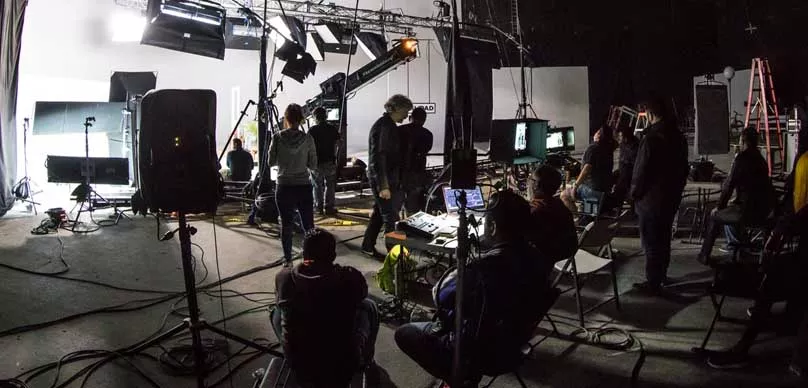
Ooh, good question, right. Here's the thing I wanted to actually say this before. A lot of times, producers are creating problems that they can solve so they can be the hero on set. Here's the great thing about good producers. Production happens before set even exists. So a lot of times, what I mean by that is crew will complain like, oh, that producer is not doing anything except sitting behind video village there. If they're able to sit behind video village and everything is running smoothly, it means they did their job, because your job as a producer is mostly in pre production now, to be able to be a confident producer on set, don't create problems that you're going to just fix right away, and if you if there is a problem, just handle it. Not everybody needs to know that you're doing your job. You know, like we had a set, a saying on one of our sets, because we had a producer like that on it, where we were, like, it's kind of your Epping job. Like, just do your job, you know. But the way to that, I've learned, is the most effective way to get the crew to understand kind of where you're at is be completely open to if they need anything, if they have questions, never, ever say no without looking into it, like if somebody says, hey, I need an extra $1,000 to get this piece of equipment that we really need for this shot, your your response is always, let me check on it. If you and then actually check on it, don't just say it and then sit there and then be like, No, I've seen people do that too, like it's just being a genuine human and not having ego and understanding that everybody on the set is there to create the same vision and be supportive and be, you know, fun. And I think the people that overstep when they're producing on set are the ones that are feeling insecure, and so their ego comes into play. Like, do you know who I am? I'm the producer. Like, honestly, if you don't, if all you have to say is, Hey guys, I'm the producer. I'm here for you. If you need something, let me know. Otherwise, I'm going to be sitting behind the video village, you know, or I'm going to be over here, or whatever, just that's how I would suggest not stepping on people's toes, but still being the leader. And if something is going wrong, feel absolutely free to speak up because it is your I mean, the director likes to think it's their set, but, you know, creatively, it's absolutely 100% the director's set. But if you see a safety issue you go to the ad, understand what people's positions are is really important too. You know, like you said about, like you said Dave, about the producer who is coming to you about schedule and ad stuff. It's like, Don't bother the director with stuff that's not his job. Like, I think it's this important thing to understand that once you're on set, there are jobs, and there are our departments, and there are guidelines, and respect them as much as you respect the crew, they'll respect you as a producer.
Dave Bullis 1:08:46
Yeah, that's very good advice. And you know, because respect is a two way street, right? So yeah, and I know people you know Can, can definitely tell when you know a producer has it together, and then they can also tell when a producer just doesn't give a shit. And they just, kind of, you know, and, I mean, I had real quick to, just to, sort of had this. I had a friend of mine. He went on a set one time, and the there was two producers who were on, just sitting on crates, just playing NBA Jam on their iPads. And he was like, What the hell he's like, they should be getting this to go. This is the first day of film, yeah, and they were just playing, and he said they, you could tell from the get go, there was not going to be good, a good production. Jenna, I know, yeah, it's at that. I honestly, I mean, I guess the The director just, basically, just at that point, just gave up,
Jenna Edwards 1:09:39
Yeah,
Dave Bullis 1:09:39
At the beginning, which this network.
Jenna Edwards 1:09:42
I know that we're almost out of time, but Can I comment on that really quick?
Dave Bullis 1:09:46
Sure.
Jenna Edwards 1:09:46
So here's the deal with what I was saying before about educating people on what producers do. Oftentimes, producers that are inexperienced think that making a movie is literally just me. Making the movie, meaning shooting, getting all the things ready for shooting and then post. But the reality is, a true producer, an indie producer, is somebody who can see the entire project from start to finish. And what that means is, you know, working backwards from distribution to marketing to PR to post to production, to pre production, to development, to funding, all of those areas are the producer's job, right? And so those two producers who are playing freaking MBA jam, like I'm all mad right now, like I would have literally went up to them and been like, are you serious? Do you have distribution for your movie yet? Do you have a marketing plan? Do you have the PR in place? What are you doing to make sure that this film doesn't just die once it's finished? That's the producer's job. So if you're ever on set and you've done a great job getting the set together and you think there's nothing left to do. There's so much more to do. So, you know, get out there and do it. Is basically my advice,
Dave Bullis 1:11:11
And that's very good advice. Jenna, Jenna, where people find you out online.
Jenna Edwards 1:11:16
Jennaedwardsmedia.com at Jenna Edwards on Twitter. Jenna Edwards, media on Facebook and Instagram.
Dave Bullis 1:11:26
Jenna Edwards, I want to say, thank you so much for coming on.
Jenna Edwards 1:11:28
Thank you so much for having me. This was really, really fun.
Dave Bullis 1:11:31
Yeah, it was. It was a total blast. And you know what? I'll have to have you back on some time. We can continue to talk about because, like, there's a lot of stuff we didn't, we didn't get we were, we went on these you know that. And that's, you know that. That's the sign of great conversation. So Jenna, I want to say thank you, and I wish you the best of luck.
Jenna Edwards 1:11:46
Ah, you too. We'll talk soon.
Dave Bullis 1:11:48
Talk to you soon Jenna.
Jenna Edwards 1:11:49
Okay, bye,
Dave Bullis 1:11:49
Bye, bye.
Sign up to receive email updates
Enter your name and email address below and I'll send you periodic updates about the podcast.
LINKS
- Jenna Edwards – Official Site
- Jenna Edwards – IMDb
SPONSORS
- Bulletproof Script Coverage – Get Your Screenplay Read by Hollywood Professionals
- Audible – Get a Free Filmmaking or Screenwriting Audiobook