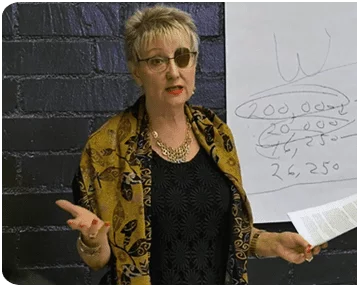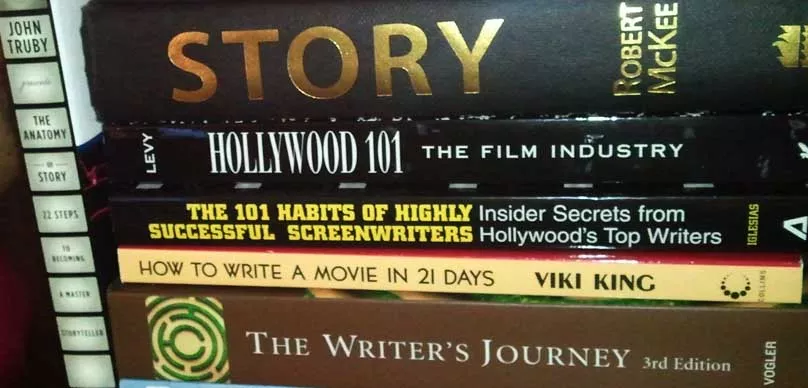
One of the biggest misconceptions about writing is that great stories sell themselves. Most writers assume that if the script is good enough, eventually someone will recognize its brilliance. The reality is much harsher. Before anyone reads page one, before they evaluate the dialogue, the characters, or the structure, they first need a reason to care. That reason often comes down to a single sentence. In this conversation with Lane Shefter Bishop, a producer and development executive known throughout Hollywood as “The Book Whisperer,” the discussion revolves around one deceptively simple concept: if you can’t clearly explain your story, you probably don’t fully understand it yet.
Lane’s journey through the entertainment industry is anything but conventional. She worked throughout Hollywood in a variety of roles, from studio assistant positions to directing and producing, eventually becoming a specialist in developing books for film and television adaptation. Along the way she discovered something surprising. The projects that moved fastest were rarely the ones with the longest manuscripts or most detailed pitches. They were the projects with the clearest concepts. Whether she was setting up a project with major producers or pitching unpublished material to executives, success often depended on reducing hundreds of pages into a single compelling idea.
What makes Lane’s perspective particularly valuable is that she often acquires material before the books are even completed. Instead of waiting for finished manuscripts, she evaluates proposals, outlines, and partial drafts. That means she frequently makes decisions based almost entirely on the strength of a concept. For filmmakers and screenwriters, this offers an important lesson. Industry professionals are constantly searching for ideas that can be communicated quickly and understood immediately. Complexity is not always an advantage. Clarity is.
The central theme of the conversation revolves around the logline. While many writers treat the logline as a marketing tool created after the screenplay is finished, Lane argues that it should exist before the writing process even begins. She describes the logline as the rudder of the story—the mechanism that keeps the narrative pointed in the right direction. Without it, writers often drift into what she calls “event-to-event storytelling,” where scenes happen one after another without a clear objective driving the narrative forward.
One of the most useful frameworks she shares is that every strong logline contains three essential elements: the protagonist, what the protagonist wants, and what is at stake. While this sounds simple, it immediately exposes weaknesses in many scripts. Writers frequently know who their protagonist is and what they are trying to accomplish, but they neglect the consequences of failure. Without meaningful stakes, audiences have no reason to become emotionally invested. If nothing significant happens when a character fails, the story loses its urgency.
This insight extends beyond pitching and into screenplay development itself. During the conversation, several examples emerge where the process of building a logline reveals structural problems in the script. If a writer cannot identify the central goal, perhaps the protagonist is passive. If the stakes feel weak, perhaps the conflict needs to be intensified. If the protagonist isn’t driving the story, perhaps the wrong character is at the center of the narrative. The logline becomes less of a sales tool and more of a diagnostic tool for storytelling.
Another fascinating point is Lane’s emphasis on specificity. Many writers believe broader concepts create broader appeal, but she argues the opposite. Specific details are often what make stories unique. Generic concepts blend together. Distinctive details create curiosity. Her job involves reading hundreds of projects every year, and she repeatedly returns to the importance of identifying what makes a story different from everything else competing for attention. That difference often becomes the heart of the logline itself.
The conversation also highlights the importance of industry access. Lane strongly encourages writers to attend conferences, workshops, and networking events where they can interact directly with agents, publishers, and executives. While many writers focus exclusively on improving their craft, successful careers often depend equally on learning how to communicate ideas and build relationships. A brilliant screenplay hidden in a drawer has little chance of changing anyone’s life. A strong concept presented to the right person at the right time can open doors unexpectedly.
Perhaps the most memorable advice comes near the end of the discussion. Writers are often told to “write what you know,” but Lane references a quote from bestselling author Anne Perry that offers a more useful perspective: “Write about what you care about.” Knowledge can be researched. Passion cannot. The stories that resonate most deeply usually emerge from subjects that genuinely matter to the writer. When combined with strong structure, meaningful stakes, and a clear concept, that passion becomes the foundation for storytelling that audiences actually remember.
For writers, filmmakers, and storytellers at every stage of their careers, the lesson is clear. Before worrying about agents, producers, budgets, or distribution, first answer a simpler question: can you explain your story in one unforgettable sentence? If you can, you may already be further ahead than most writers trying to break into the business.
Right-click here to download the MP3
Alex Ferrari 0:47
Enjoy today's episode with guest host Dave Bullis.
Dave Bullis 1:54
On this episode, we have the person they call Hollywood's Book Whisperer. Her new book, Sell Your Story in a single sentence is out now, which is completely about log lines, which is something I need help with as well. With guest Lane Bishop, hey Lane, thank you very much for coming on the podcast.
Lane Shefter Bishop 2:11
Hey, thanks for having me, Dave. I'm excited to be here.
Dave Bullis 2:13
Oh, I'm excited to have you here, Lane. You know, I was looking at your bio and you just created the book, you know, sell your story in a single sentence. CNN calls you the book whisperer, you have all these amazing products coming on, just great to have you come on, you know, the podcast, so you know, Lane, just to get started, I wanted to ask, you know, how did you get started in the film business,
Lane Shefter Bishop 2:32
You know, I have the most eclectic background of probably anyone in this industry, I was really, you know, I didn't know which area I wanted to be in initially, so I, I was a temp at different studios, and I ended up temping for, like, you know, some of the biggest names you could imagine, and at the time I didn't even realize that it was such a big deal, you know, I was working for the head of, you know, Walt Disney Pictures, but it was really, it was a great experience, because I learned sort of literally every piece of how movies got made, all the drafts and all the notes, and it was just a, it was a great learning experience for me. And during that time I became a director, and I directed for 15 years on and off, and whenever it was off, I was temping again, and I ended up working at DreamWorks. I was like one of the first six people at DreamWorks, I was doing like contracts for animators, I mean, you name it, I've done it. And then, you know, I just, I got to a point where I had spent, you know, 15 years as a director, and I have an Emmy, and I really felt like I got tired of waiting for the phone to ring, so I started to get into producing, and I met a guy who you know had a ton of money and just wanted to be in the industry and he was like you can do all the creative and I'll write the check and you know how do you say no to that so you know in 2006 I started producing and you know I was a lit major before I went to USC film school my undergraduate degrees in literature and then my master's is in film, and so I started to sort of blend the two when I was working for him, and in those two years, 2006 2008 that I was the EVP of TV and movies for him, I literally ended up setting nothing, setting up nothing but books, I mean, it was just weird, like I talked Sandra Brown into coming back into the industry, she's amazing, by the way, and so we became the first company to do a feature film with Sandra Brown, and I set up three TV movies with ABC Family, and all this cool stuff was going on. They were all books. I made a deal with Harlequin. We became sort of their development arm at the time, and you know, people thought Harlequin was like Bodish Ripper, Fabio, and in fact, they have 11 imprints, and only one of them is that, just so I set up a lot of projects, and I just didn't say it was Harlequin, because the material was really great. And then, end of 2008 the guy worked for was sort of like, well, I don't, I don't feel like producing, I think I want to be a screenwriter, oh no, so. So I was trying to figure out what to do, you know, I was producing, I was directing, you know, what do I want to do, and I give all kudos to my husband, who said, you know, you're setting up a lot of stuff, why don't you just keep doing book to screen, and I was like, wow, it's like the worst time at 2008 you know, height of the recession, you know, bad time to start a company, but I thought, okay, I'll do it for a year, and, and I started Vast Entertainment, book to screen only, and I knew a lot of people in New York, publishers, authors, so I thought, I'll see what happens, and in that year it was like crazy, I think I set up like 12 book projects, and I thought, okay, well, that's working, so, so that became sort of my, my bread and butter, and you know it's it's morphed a little as time's gone on, because first of all, nobody wanted to hear the word book in 2008 because 300 pages, you know, that was like so intimidating, so I slowly had to come up with ways of of pitching this material without having them have to read a 300 page book, and that's sort of where the genesis of Sell Your Story in a Single Sentence came from, and I also, you know, had to figure out how to beat all the book scouts, so I ended up spending a lot of time in New York, I still do, and really focusing on books before they became books. So I would say about 90% of what I set up is based on book proposals and partials, like 50 to 100 pages. I just don't wait for the whole book, because you know what, everything's going to change during that adaptation process anyway, as it did for the Duff, which was the very first thing I set up with McG. So, you know, it's, it's just a, it's such a, it's a process of going from something that's on the page to something on the screen, and no matter what, it's going to change, so, so I just don't wait for the book anymore, and that's sort of how Vast has grown, you know.
Dave Bullis 6:46
So I wanted to ask Lane, you know, how do you find the books that you want to, that you want to sort of turn into movies, or maybe even just, you know, set up? How do you find the books that you know? Do you have somebody that sort of gives you recommendations, or are you always at, like, a Barnes and Nobles or something, looking, looking through the bestseller section,
Lane Shefter Bishop 7:03
You know, because my company focuses on like pre-publication material. I get everything from authors' agents in New York. I work with about 60 or 65 now writers' agents out of New York, and I go to New York about five times a year, and I sue with them. I think face to face is really important, you know. A lot of people, they wait till the announcement comes out on Publishers Marketplace, and they have their intern call and say, like, send us the galleys when it's ready. And I just don't think that's the way to do it. I think the way to do it is to go out there and sit with them face to face and say, you know, what do you have coming down the pike that you're excited about that you haven't even gone out with yet. You know, that's where I get most of my material, and I have literally - I set up a project with Peter Chernin on 100 pages, I set up a project with Scott Stuber on an 11 page book proposal. I just have a project with Joel Silver that literally came from an agent calling me, saying, 'Hey, my author just sent me this idea of something that she wants to write. It's only like 20 pages, let me send it to you, and I read it, and I called her and said have her write this right now, because I can set this up on these 20 pages, which I did with Joel. So it's it's just one of these things where you never know what, when you're going to hear it. I read everything myself, I get about 900 books a year, so I do a lot of reading, and a lot of them are unfinished, which is how I like it. I like things really early, because if the concept is good, if I can sell it in a sentence, you know, I can sell it.
Dave Bullis 8:26
Yeah, and you know that's something I wanted to get into too, because you just wrote the book, you know, sell your story in a single sentence, and I think it's so important, Lane, because you know there are so many times I've screenwriters and these just sort of, you know, they say, oh, I can't really sum it up in a sentence, you know, my story's so complex, you know, and there's so many things going on, and you know, I'm sure when you know, obviously, when you're hearing this too, you're probably thinking, well, you don't know what your story's about, then, right? Right. So, imagine pitching to a manager, or an agent, or a studio, and just saying, oh, well, I can't really say what it's about, you know, so you have to read, you'll have to read this to actually understand, so you know, what was sort of the impetus for you to create, you know, to write the book, you know, sell your story in a single sentence.
Lane Shefter Bishop 9:06
I had been talking about this at writers conferences around the country, around the world. I was at the London Book Fair. I have been talking about how to create this log line, this selling sentence, for years, probably six years now, and at the end of each one of these little seminars, I always have obviously authors and screenwriters coming up and saying, 'Do you have a book? Do you have a book? You know, and the answer is no. And then at my last seminar in Boston, a year ago or so, a friend of mine, who's one of the agents I work with, Catherine Sands, came up to me in front of this line of people and said, yes, she does have a book. Like, what are you doing? And she said to me, Lane, all these people are asking you for a book, you have to write this and I said I don't have time to write this, and she browbeat me and said, yes, you do, and I give her full credit, because she also got it to one of the, you know, biggest global publishers in the world, Norton, which is amazing, and, and really, it was, it wasn't as hard to write as I thought, because I had spoken on it for so long, I really developed this system for how to create that sentence. How do you get a 300 page book down into something you can sell? So it was all a matter of just getting it on paper, you know, because I've been speaking about it forever, and you know, to me the big thing is I always tell writers who like, but, but everything's important, and it's my baby, and I said, look, you know, if you can't get someone to read it, it doesn't do you any good at all. So the goal is to figure out what's most unique about your work. What is the most unique thing about it? Because that's what's going to sell it. That's what a logline is. It's one sentence highlighting what's most unique about your work, because everyone wants something new and different, and flavor of the month, and shiny new toy, you know, nobody, nobody wants something that they feel like they've heard before. So, I'll give you my favorite example. I was brought a book, really long, I think it was almost 400 pages, this woman, and it's her life story, it's a real story, and she was into drugs, and her boyfriend was into drugs, and you know, they went to prison, and she was a drug mule, and all this stuff, and I, I said to her, like, I feel like I've seen this, I feel like, you know, it's like the movie Traffic, like, there's, you know, what's different, give me specifics, I'm always saying that, be more specific, because you know what makes it unique is the specifics, and after, you know, hours and days of, you know, slogging through this material, and talking to her, and you know, ultimately I came up with a log line, which will show you how powerful these things are. The log line is it's the story of a woman who, at only 19, became ran the biggest drug cartel in US history. So you have that as your selling sentence, pretty good chance I can set that up.
Dave Bullis 11:58
Yeah, you know, and when you just mentioned that log line, too, you know, that's even seems like something that you know actors will be going after, because you know, in talking with, you know, all the screenwriters and producers on this podcast, and even off the podcast, you know, usually that that's the two big things that producers ask about, right? Is what's it about, and who's starring in it?
Lane Shefter Bishop 12:16
Yep, yep, and believe me, it applies to everything, you can come up with a log line as a writer, as an actor, if you're a businessman selling a new business. I mean, anything you're selling can be crafted into a log line, and should be, because look, the minute is a writer, for example, the minute you say I'm a writer, what's the first question they're going to say? Well, what are you working on? What are you writing? It's the first question, you better have a great answer.
Dave Bullis 12:40
This is also something, too. I found lame is, you know, people do want to inject their own lives into their screenplays, you know. And usually, you know, when they say things like that, like, 'Hey, this really happened to me in real life. Usually, you know, I always say, like, 'Well, you know, I don't know if it would fit in this screenplay. Like, for instance, I had a friend of mine, and he - everything always happened in his life - he would turn into like the screenplay, and finally he wrote one, and it was like a hodgepodge of everything that's like happened to him in the past like three years, and I said, "Do you really feel like this is enough to carry a screenplay, just sort of having all these scenes and stuff? And you know, one of the best pieces of writing advice I've ever been given was through your log line, you can extract everything from your story, so you know when you do have something like that, like you get an idea, like, hey, I, you know, a guy meets a girl and the girl is a drug mule, something like that, you know, you can, you know, you have to take that concept, turn it into a log line, evolve that log line, and then you can extract your story from said log line,
Lane Shefter Bishop 13:39
The log line actually is, is absolutely true. Can tell you what's missing from your screenplay. You know, I've spent so much time talking about the three main tenants of a log line, which are who's your protagonist, what do they want, and what's at stake. And so many times the what's at stake is missing, you know, they'll say, like, oh, it's about a queen who has to get back the stolen gold for her country. Well, why the What happens if she doesn't, you know? So the logline actually can be really helpful in telling you what's missing from your screenplay, and also, you know, in what your example was with your friend, it's like that's what I call an event to event to event screenplay. It's like all this stuff happens, and there's no reason why nobody cares, so you know, without that motivating force, the what do I want you're really, you really have problems. So that's another reason why log lines are so beneficial, because they can really help focus you on what's not in your screenplay, and should be.
Dave Bullis 14:36
And also, what I found, too, is that a lot of screenplays that I read were written by, sort of, you know, amateurs to like semi professionals. There's a lot of times there's no goal, like, do you know what I mean? Like, there's nothing that is pushing this narrative. And then that's when I go back and I'm thinking, well, what would the logline be of this screenplay? And for, let me just give you a quick example. One of them was about a guy who his girlfriend dumps him. His fiance dumps him, and he sort of spends the rest of the screenplay just sort of wandering. I mean, and I kept thinking to myself, what you know, there was no goal, there wasn't even, you know, you know what, Lynn, I would have settled for even the character even saying, like, see that thing, that's what I need. He just come out and said it, because I thought, maybe, you know, maybe there's something I'm missing in the subtext here, maybe there's something I'm missing, and I got to the end, and there was nothing, there was no goal, and I said, "You know, and I said to the person, "You know, I think you need to go back and go through, you know, drafts, because I said, "This is a draft one, obviously, and he looks at me, goes, "Dave, he goes, this isn't a draft one, this is draft 10. I said, "Draft 10, and then all came back laying to the log line, and I said, there's no goal, there's nothing driving this narrative.
Lane Shefter Bishop 15:47
Yeah, the what do I want is completely missing, and because of that, not you know, everything is, you know, just happening, and for no purpose. That character has to have a want, that's what motivates them through this story.
Dave Bullis 15:59
Yeah, very true, and you know, often, and now you know, as I read more screenplays on the professional side, I also, when I'm going through, I always pick out, too, what the theme is, because I mean, the really good writers, you see that theme, and you see, like, you know, all that different stuff come up, sometimes it's very obvious, sometimes it's in the subtext, and you know, that's something that I've been looking for, now, as I read more professional screenplays.
Lane Shefter Bishop 16:21
Yeah, I think you know, I think once you get the basics down, then you start expanding into the cool stuff, like the theme and the voice, and you know, all that kind of cool stuff. And the problem, I think, is a lot of people jump ahead to that without having the basics down first.
Dave Bullis 16:39
Yeah, because, you know, as you know, it doesn't really, you know, matter if we're talking about a novel or a screenplay, or what have you, because that structure is so important.
Lane Shefter Bishop 16:45
Yes,
Dave Bullis 16:46
You know, because I mean, you know what I mean, like that, just, you know, finding the way, you know, what you know, we were just talking about, you know, event screenwriting, but you know what is really driving this narrative, what is taking us from a to b to c to d to e, so that way we can follow this character as they make these decisions, for better or for worse, for themselves.
Lane Shefter Bishop 17:03
That's right, that's right, that's what's driving that story. It's sort of like when people, the first question I always ask is, Who's the protagonist, and they laugh, right? But, but you'd be amazed at how many people have, like, the antagonist as their protagon. I mean, crazy stuff. And I say to them, you know, they'll say, like, oh, I have an ensemble piece, for example. I'll say, well, but even in an ensemble, there's usually one person whose decisions are driving that story forward, who has the most to lose, the most at stake, that is your protagonist, and you'd be amazed at how many people write not knowing their protagonist is.
Dave Bullis 17:37
I completely agree, because you know, and I mean, I can only imagine what you know, all the, you know, all the projects that you see. I mean, I'm just, you know, I read screenplays, you know, from all different sources, and I mean, some of them, you know, I see the logline, and it just, you know, and I, and some of that, even read the screenplay, and it's just, you know, they don't have the right main characters, what I'm trying to say, you know what I mean, like the antagonist is much more thought out, the antagonist is the one controlling the story, yeah, you know, and you know, in reality, it's almost like a protagonist is like an afterthought, like, all right, you know, then here's some guy he could fight, yeah, you know what I mean, like he's just sort of shoehorned in there to the story, so something can happen,
Lane Shefter Bishop 18:14
Exactly, and I think that again, like the log line, by creating that log line, who's the protagonist, what do they want, what is at stake? Then you find out ahead of time what your problem is. If you can't identify your protagonist, that's a big problem, and it's good because it helps you refocus once you discover who your protagonist is, so that you really can make your story, you know, sing. And I think that's one of the one of the things I love most about the log line is, aside from being able to sell your material, it really helps you focus on, you know, maybe some problems inherent in what you're doing.
Dave Bullis 18:48
So, Lane, I don't know if you could think of this off, you know, just off the top of your head, but you know, what are some of your favorite log lines that you have that you've ever read or come across, and it sort of just jumped out at you, and you said, "That's it, that's that's the project I want to go after.
Lane Shefter Bishop 19:03
Sadly, I don't get sent log lines, which is why I started teaching this. Really, want someone else to do the work and then bring it to me. Normally, I'm the one who has to create that. I have one that I use as an example a lot that I pitched to Johnny Depp's company, and a while back, which I just love, because it sort of gives when people are like, what's a log line? I always use this. It's a woman's idyllic homecoming is shattered when she finds herself the target of a coven determined to make her their 13th member. I love that log line. It just, it's so powerful, you know. And any good line log line is powerful, I, there's about, you know, 9 million examples in the book of great log lines, and I, I tried to include a log line for every sort of element I'm trying to teach, but I have also included in the book a whole bunch of workbooks you can practice, because it's really, you know, log lines are all about writing and rewriting. You know, just as much as you would rewrite your script or your manuscript for a book, the logline gets rewritten. You know, I gave an example in the book of like a 10 step process, but really that was 100 step process. I just took 10 out for the book, you know. You're always rewriting, rewriting, rewriting, because you want to streamline it and use more, you know, dynamic vocabulary, and you know, you do everything you can to make it sell. That's the thing. Once you have the perfect sentence like that, you are good to go.
Dave Bullis 20:35
You know, one thing that I've become more conscious of is when I'm watching TV and I hit the TV guide button on my remote, and you know, it comes up a description of the movie, and then I started to realize, you know, these are log lines, you know, because these are these are what's, you know, telling you what the movie's about, and I came on to one on the Sci-Fi Channel, and it was a movie called Ogre, and I remember just reading the synopsis, this, this, well, the log line, and I said, well, that gave me the whole movie, and I can remember it too. It was something like a girl and a guy stumble upon a remote village ruled by an ogre just in time for the yearly human sacrifice, or something along those lines. I may, I may have just completely butchered that, but it was something along those lines, and I said, wow, you know, that that's the log line, right there.
Lane Shefter Bishop 21:22
Yeah, it's, you know, it's interesting to me, like, considering how many bad log lines I get once in a while, you know, I get sent one, and I think, wow, actually, that's that's pretty damn good, you know, it's rare, it's a rare occurrence, unfortunately, but you know, I, it's, I was just sent one, I have a website called Sell It In a sentence.com where people can go and get, you know, log line help, and one woman sent me a log line, which was actually quite good, it needed one little tweak, but you know, I read it and I thought, huh, you know, that's not half bad, you know, and it's terrible to say this, but I'm always surprised by that, because I get so many, so many log lines that are just, you know, like you'll get the people who try to cram their plot into a one sentence thing, so you have like, you know, commas everywhere, and a whole bunch of parentheses, and like, dot dot dots, and like, it's just crazy shit, you know, that they're trying to do to make sure that you, that they can get one sentence out of like everything they feel is important on the planet. I always say that to writers when they try to do that. I say, like, you're not trying to get your book into one sentence. Good luck doing that. What you're really trying to do is find what's most unique about your work and put that into one sentence, you know.
Dave Bullis 22:29
And you know, Lane, what you just said there, I really just extracted something very, very important from so anyone listening that didn't pick up on what Lane just said, she could send a lot of bad log lines. So what I think is, if you actually have a good log line, it seems that you could stand out pretty easily. Is that, is that a good assumption?
Lane Shefter Bishop 22:46
Absolutely, absolutely. I spend a lot of time revamping really bad log lines. Yeah, because I think there's a lot of misinformation on how to create a log line out there that I saw when I was starting to do my book that really don't help you, like, for example, they tell you to do, like, the, you know, this movie meets that movie, you know, and I look at that, and I think, how does that sell your particular story? I will never understand that, that's not a log line, that doesn't sell your work, that sells me two movies I may have seen, you know,
Dave Bullis 23:15
I had a friend who was a, he was a screenwriter, and he actually got a job as a script reader, you know, one of the quote unquote gatekeepers at a studio, and you know, they would give him tons of screenplays to read, and he said, you know, basically he would go through all these screenplays, and I mean, he said it was so hard to get through a lot of these, he said they, you know, it was spelling mistakes, it was grammar mistakes, you know, I mean, he, I know, and he would, at the, at the end, have to do coverage on it, you know, he would have to write, you know, pass, you know, etc. And so he said, whenever he came across a good script, he wanted to send that person, like, a, you know, a dozen roses, and be like, Thank you so much. He's like, because, you know, you know, for every, I don't know, not, you know, 1000 screenplays, 999 are just passes, and that one is actually an accept or recommend, and he said it's, it's just so refreshing to, and he said, really, you can tell, because you know, like, you see on the log lines, he said, you can tell who has an idea of what they're doing versus who has, who's just sort of throwing stuff at the wall and seeing what sticks,
Lane Shefter Bishop 24:17
Absolutely, absolutely makes it so clear, you know, and sadly, you know, as I said earlier to you, when we were chatting, you know, you can be the best writer in the world, but if you can't sell it, it makes no difference at all. So it's really, it's a shame to me when you have a writer who's got an amazing piece of work, but they can't come up with a log line to save their life, you know. So, how they gonna sell it?
Dave Bullis 24:39
So, do you recommend, you know, for writers, you know, who, you know, maybe you're starting a new book or a new screenplay? Do you recommend that they sort of start with a, with a concept, or you know, or even a vague idea of the log line to sort of build from before they even would start trying to write the actual book?
Lane Shefter Bishop 24:55
Yes, yes, yes, yes, you know, I recommend it so often to. Because otherwise you get people, and I mentioned this in the book, who you know they've written 300 pages, but it's an event to event to event book, nothing's motivated, and and it's really sad, because once they figure out the log, then they're like, oh crap, now I got to go back and rewrite the whole thing, because your log line's like your rudder, right on a boat, it's steering you, so I always recommend that writers create the log line first, because it keeps you focused as you write on what's important.
Dave Bullis 25:27
Yeah, and that I like that analogy - it's a rudder of your story, you're rudder of your ship. I really like that analogy.
Lane Shefter Bishop 25:33
Yeah, it keeps you focused. If it's not, if what you're writing doesn't have anything to do with your logline, it shouldn't be in your book or your screenplay.
Dave Bullis 25:40
Yeah, I've oftentimes, too, when I read different screenplays, I see things like, you know, scenes or whatever, or characters that just sort of provide, you know, what I mean, like they're just, why are they there, you know what I mean, and I think, you know, when, if you can take that concept, you know, turn that into a log line, take that log line and start to build upon that, that way you know, you'll know it's, you know, what belongs and what doesn't. It's sort of what Patty Chesky used to do, because he used to do something similar. I think he would, he would boil it down, he would take his log line and take a theme and put it on the wall in front of him and say, if it doesn't match this, it's not going in the screenplay, regardless.
Lane Shefter Bishop 26:16
That's right, that's right. I think it's incredibly valuable to do that log line first, otherwise you're just going to do a lot of rewriting later. Unfortunately,
Dave Bullis 26:26
yeah, yeah, that's something too that I've learned when I'm, when I'm writing, if I didn't have the, you know, at least, you know, you know something to guide me along, you know, it's just you write yourself into a hole and you go, wait, what the hell, where do I go now? What scene comes next? You know, should I now go to see what the antagonist is doing? Well, who's the antagonist? You know,
Lane Shefter Bishop 26:48
It's like it's like if you were, you know, like out, you know, hiking in the wilderness without a map or without a compass, you know, you're gonna get lost.
Dave Bullis 26:57
I was actually just reading the story too about somebody who actually went hiking and didn't have a compass, and she was lost for 50 days.
Lane Shefter Bishop 27:04
Oh God, oh God, that's horrible.
Dave Bullis 27:06
Yeah, she.. I'm sorry, not to get too sidetracked, but I just thought that story was fascinating, because she got up early, and she, she was with a camping group, and she decided to go up by herself without a compass, and didn't know how to, you know, didn't know how to read any of the natures, you know, like, you know, the moss on the side of the trees or the North Star, and got completely turned around very quickly, and had no idea which way, you know, to go, but I started not to get too sidetracked, but I always, I always find stories about, you know, like wilder survival, like that fascinating, because I mean, and that, and that, that was very quickly how that happened to her too, but sorry, but to get back to, you know, talking about log lines and your story. What recommendations would you have for writers, you know, who are setting out now to maybe start writing a book, or recommendations we're trying to, you know, even to sell a book, or even to pitch to, you know, or even to pitch people like you, Lane, you know, what recommendations, you know, do you have for them, what should they be doing?
Lane Shefter Bishop 28:01
Go buy my book. Yeah, I mean, number one, you know, have that log line in place, have a great selling, be able to say, you know, it's a story of a woman who, at 19, ran the biggest drug cartel in US history, you know, have that sentence ready, because that's how you're going to grab someone's attention, my attention, a network exec's attention, anyone you know, that even like when they, if they're writing a book, I always say, like, put that at the top of your query letter to all the agents, for you know, because believe me, it'll get the agent interested in reading, and plus they can use it to sell it to an editor or a publisher as well, so it's sort of this, this gift that keeps on giving, you know, that's it's a great way to start, you know, because aside from helping you write, it really does sell your material, and if you can't sell it, it does you no good to write it anyway,
Dave Bullis 28:54
Yeah, you know, that's very true, you know, because you know, even me, like, sometimes I write, you know, and sometimes I always think to myself, well, if it doesn't sell, it could be a practice script, but then again, you're always, you're always thinking, well, if I write it, I do want to actually, I do want people to actually see it or buy it, or whatever, you know,
Lane Shefter Bishop 29:08
That's right, that's right, and I think the other thing I usually recommend is I tell people to, you know, like, for example, I speak at this great conference called Grub Street Muse in the Marketplace, it's in Boston, and like, these are invaluable places for writers, because you can pay to have a 10 or 20 minute session with these writers' agents. What a great way to get in front of these people, so you're not just in the slush pile with the 9 billion other people sending stuff in that was not solicited, you're actually talking to them face to face about your material. It's a great way to get an agent. It's just a great way to learn the process and practice, you know, talking to these folks and hearing what they like and don't like. I mean, it's just so invaluable. I always recommend going to writers' conferences with that, you know, that provide that option because you know it's the same thing I do going to New York and sitting in front of the author's agents, you know, in person, it's like there's nothing like a face to face,
Dave Bullis 30:16
So Lane, you know, if there was, you know, writers listening to this who have never been to a writer's conference, you know, is there like a top three writers conferences across America? Because most of my listeners are in America, so that's why I said America, but if there's, is there any three, you know, like top conferences, or even just one or two that you would recommend to anyone listening?
Lane Shefter Bishop 30:36
I mean, Grub Street News in the marketplace is one of the best, honestly, it's why I do it every year. I also do a thing called the Next Bestseller out of New York, which is more specialized. They only allow, I think, 10 people in. And then, of course, there's like Thriller Fest. It depends what you're writing. There are a ton of writers' conferences specifically for whatever genre you're doing, but Grub Street is is the one that I always recommend, because first of all, it's incredibly well run, and also just because it's just a, it's an amazing opportunity to literally sit across from a writer's agent and talk to them about your work. How great is that? You know,
Dave Bullis 31:14
Yeah, that is very true. You know, I had a friend of mine go to AFI, the American Film Institute, and they had that, that conference, American Film Market, and I, and he went to there, and he, they, he was looking around, and they said a lot of, lot of, you know, distributors were like, we want no zombie projects and no found footage projects, because the market is saturated, but you know, it's good that he went there, met them face to face, because that's the, that was the people that were in charge of buying in the foreign, you know, the foreign areas, the foreign markets, and everything, and they told him, they said, were we every other pitch we hear is a zombie film or a found footage film or the ultimate lane, which is a zombie found footage film.
Lane Shefter Bishop 31:56
The beauty of that is that he got the knowledge that tells you what they don't want, that's, you know, that's invaluable knowledge.
Dave Bullis 32:03
Yeah, it really is. I mean, and you can see, you know, firsthand what's what's being sold and what's, you know, not being sold, and you know, just what you were talking about with those writer conferences, you know, that that is invaluable information, being able to go there and meet with these people face to face.
Lane Shefter Bishop 32:16
Oh, yeah, honest to God, I think people are more apt to look at material from someone that they've met or know then you know some slush pile, you know, faceless submission.
Dave Bullis 32:28
Yeah, and you know, I had Sean Coin on on the podcast, and he's actually an editor, and you know that that's one of the things he said, you know, he saw because he was 20 years, he was working in as a story editor, and he said he would just, you know, the slush pile, you know, they mean that pile of scripts that they just read, you know, this, there's nothing we could do. He said it would just get so much every day that he ended up writing a book, so it reminded me similar to your story, because you know, the, you eventually, you know, wrote a book, because everyone was saying, you know, you should write a book, you've seen all this stuff, and it's just, you know, it's just pretty interesting, the parallel.
Lane Shefter Bishop 33:00
Yes, yeah, it's, you know, it's one of those things where I think you never think you're going to do it, and then one day you're like, oh crap, I really got to write this down,
Dave Bullis 33:11
You know. Lane, so we've been talking for, you know, about 35 minutes. I know you have, you know, a million more books to read, more log lines. So I just wanted to ask, you know, in closing, is there anything that you, we didn't get a chance to talk about, or anything maybe that you wanted to say that we get, we didn't get a chance to sort of put a period at the end of this conversation.
Lane Shefter Bishop 33:32
I mean, I think I know we brushed on it lightly, but I just, I always like to reiterate to writers to think about what's at stake with their characters, because number one, that's the main thing that's always missing from most log lines, but also because, for example, I had a woman send me one about her character had a brain tumor that was like allowing him to play golf really well, and her logline had to do with him wanting to play in the Masters, and I said to her, you know, it's, it's such a.. the problem is, if he doesn't play in the Masters, so what, he's not playing golf. Oh well, you know what I mean. The stakes aren't high enough, and, and it sort of changed everything for her, because she had been writing based on that premise. It's all about him wanting to play in the Masters, and I said, you know, the stakes are so, so, so, so important, and ultimately the log line on, I can't remember the exact one, was something to the effect of, you know, if he kept that brain tumor, you know, he could either have the surgery, right, which would save his life, but he can't play golf anymore, or keep that brain tumor, play the masters, but die from it. You know, now it's life or death stakes. Now it matters. Now I care. Now that story is so much more powerful. So I really, I spent a lot of time reminding writers that those stakes are so valuable and important that they have to be high enough for us to care. Care, otherwise we're not going to want to read their work,
Dave Bullis 35:03
You know that's actually very good, because when you were describing that, I actually was going to say, well, maybe he wanted to win the Masters for his parents, or you know what I mean, like something like that. But your idea was much better than mine.
Lane Shefter Bishop 35:14
Well, if you think about it, if he doesn't play in the Masters, what does it matter? You know, it's like, oh well, he didn't get to do a golf game, and I'm sure the golfers out there are like, "Oh, come on.
Dave Bullis 35:25
Alan Watt, who was on the podcast, he once said to me, "You know, problems get solved, stories get resolved.
Lane Shefter Bishop 35:33
Oh, that's a great quote.
Dave Bullis 35:35
Yeah, Alan is phenomenal, and that's one of the things, you know, that I sort of been.. I've been noticing more of, too, is, you know, what is a story problem, and how do we resolve that? Because, you know, it's sort of like a character has that dilemma. Well, that dilemma, you know, stems, you have two bad options, you know, and you have to pick one, which is the dilemma of itself, because of the problem, and you know, he sort of says, you know, you have to, how has, how does this get resolved? So, when he was crafting his stories, you know, he was saying, you know, you can't really, and he uses a quote from Einstein, you can't solve the same, you can't solve a problem with the same perception that caused the problem, so you have to have a shift in perception, so, and that's how stories get resolved, but it just reminded me, because that was, I think, you know, your, your idea of stakes and why he's doing it, that was actually very good. I like that, you know. Does he stay, and you know, does he stay in the Masters, but the brain tumor kills him, or does he not play? You know what I mean. I really like that.
Lane Shefter Bishop 36:34
Now you care, right? Now it's like life or death, is it? You know, how important is that game, you know, to him? It's obviously, you know, depending on his choice, it's very important, so and then we care, obviously, but I love that quote, and I, you know, it's funny, I have a.. I always talk about this. I went to a writers conference, and Anne Perry was speaking. I've just set up her books with Lauren Schuler Donner, and she's so prolific, and she has this quote that I also memorized, because I was like, that's so good. A lot of authors will say, or screenwriters will say, Should I write about what I know? I keep being told, write about what you know, and she said, write about what you care about, nobody cares what you know, and I loved that. I thought that was so great. It's like that's always my last little comment to writers, write about what you care about.
Dave Bullis 37:24
Yeah, you know that is phenomenal. That is absolutely phenomenal.
Lane Shefter Bishop 37:28
Million books in print, so you have to quote her anyway.
Dave Bullis 37:31
You can't argue with sales.
Lane Shefter Bishop 37:33
There you go,
Dave Bullis 37:34
Lane. Where can people find you out online?
Lane Shefter Bishop 37:37
I am at Vast V A S T, like a vast array of material, dash entertainment.com or if they want log line help, they go to sellitinasentence.com
Dave Bullis 37:48
And are you on any social media sites?
Lane Shefter Bishop 37:50
I am at Lane Shefter Bish on Twitter, and I'm on Facebook too. I don't know what the thing is, but you can find me on Facebook too.
Dave Bullis 37:57
I just actually followed you on Twitter, by the way.
Lane Shefter Bishop 38:00
Perfect, perfect. I gotta get better at that social media thing. I saw Dave, that you have all these books on social media. I gotta go buy one of those.
Dave Bullis 38:07
I participated in one. I actually, I actually don't have any other books for social media.
Lane Shefter Bishop 38:11
That one on your site, is that the one that you contributed to?
Dave Bullis 38:15
The one with Guy Kawasaki?
Lane Shefter Bishop 38:17
Yes,
Dave Bullis 38:18
Yeah, yeah, yeah. His The Art of social media, I was able to contribute on that, and then I also helped with the book by Paul Colligan on how to podcast,
Lane Shefter Bishop 38:26
Very cool.
Dave Bullis 38:27
So, yeah, those are those are my two small additions to the to the to Amazon. One day, I hope to be in your shoes and be able to, you know, have my own book, so I mean, like, your book is, I'm actually going to pick up a copy very soon of your book. I actually don't know why I didn't pick up a copy yet, but when I do pick up the copy, I'm going to make sure to email you with a bunch of questions. No, I'm just kidding, but, but I will link to every, all of your, all of your website, your all your social media channels in the show notes. Lane, I want to say, thank you so much for coming on.
Lane Shefter Bishop 38:58
Oh, thanks for having me, Dave. I really enjoyed it.
Dave Bullis 39:00
Oh, it was a blast having you on, and if you ever want to come back on, please let me know. The door is always open.
Lane Shefter Bishop 39:05
Awesome, thanks so much.
Dave Bullis 39:07
Oh, my pleasure. Take care, Lane.
Lane Shefter Bishop 39:08
You too. Bye, bye.
Sign up to receive email updates
Enter your name and email address below and I'll send you periodic updates about the podcast.
LINKS
- Lane Shefter Bishop – Official Site
SPONSORS
- Bulletproof Script Coverage – Get Your Screenplay Read by Hollywood Professionals
- Audible – Get a Free Filmmaking or Screenwriting Audiobook