Every screenwriter begins with the same hope: that the first script will somehow reveal hidden genius. Reality, however, has a different lesson planned. In this conversation, Glenn Benest—a veteran screenwriter with films directed by Wes Craven and decades of experience mentoring writers—offers something far more valuable than shortcuts. He presents a philosophy built on persistence, revision, mentorship, and the understanding that professional writing is less about inspiration than continuous refinement.
Glenn’s journey didn’t begin with Hollywood in mind. He initially dreamed of becoming a playwright, studying at Harvard before earning an MFA in playwriting at UCLA. Theater gave him a deep appreciation for dialogue, structure, and performance, but it also taught him a practical reality: very few playwrights make a living. That realization led him toward screenwriting, where storytelling skills could reach larger audiences while still honoring the dramatic craft he loved. Looking back, he makes a compelling distinction. Film school can be invaluable for directors and cinematographers who need equipment and crews, but for screenwriters, the true currency isn’t a diploma—it’s an exceptional screenplay. Your script, not your résumé, opens doors.
One of the defining chapters of Glenn’s career came through working with Wes Craven before Craven became a household name. Collaborating on A Stranger in Our House and later Deadly Blessing, Glenn witnessed firsthand how a master filmmaker approached horror. Craven understood something many writers overlook: audiences come to a genre expecting emotional payoffs. Horror fans want unforgettable scares. Thriller audiences crave suspense. Comedy audiences expect laughter. Character and dialogue matter enormously, but they must ultimately serve the promise made by the genre itself. As Glenn explains, the most memorable films are those that deliver moments audiences have never experienced before. Originality often comes from reinventing familiar ideas rather than inventing entirely new plots.
The conversation becomes especially fascinating when Glenn reflects on mentoring Kevin Williamson during the development of what would become Scream. Rather than merely celebrating the film’s success, Glenn explains why it worked. The screenplay respected horror traditions while simultaneously playfully dissecting them. It balanced wit with genuine suspense, allowing audiences to laugh without ever forgetting they were watching a horror movie. That careful balance of tone is one of the most difficult skills for any writer to master, and Glenn’s recollections demonstrate how workshops, constructive criticism, and collaboration elevate promising ideas into enduring films.
Perhaps the strongest lesson throughout the discussion concerns feedback. Glenn repeatedly argues that writers don’t simply need opinions—they need informed guidance. Random notes from friends or family often create confusion instead of clarity. Productive feedback identifies genuine structural problems while preserving the writer’s confidence. Like elite athletes relying on experienced coaches, writers benefit from mentors who understand both craft and psychology. Every rewrite should move the screenplay closer to its potential. If revisions consistently make the script weaker, the problem often lies not in the writer but in the quality of the advice being followed.
Glenn also dismantles one of the biggest myths surrounding first drafts. Too many writers freeze because they expect perfection immediately. Instead, he encourages writers to simply let the story pour onto the page. The first draft isn’t meant to impress anyone—it’s meant to exist. Only after completing it can real rewriting begin. Problems become solvable once they’re visible. Each successive draft addresses different weaknesses until the screenplay evolves into something genuinely compelling. This patient, iterative approach stands in sharp contrast to the romantic notion of effortless inspiration and offers a far more sustainable path toward mastery.
What emerges from Glenn Benest’s career is a vision of screenwriting built not on talent alone but on discipline, humility, and community. Great scripts are rarely created in isolation. They grow through collaboration, intelligent criticism, repeated revision, and the courage to remain confident even when the work feels unfinished. For aspiring filmmakers, that’s perhaps the most encouraging lesson of all. Excellence isn’t reserved for the naturally gifted; it’s earned by those willing to keep rewriting until the story finally becomes everything it was meant to be.
Right-click here to download the MP3
Alex Ferrari 1:32
Enjoy today's episode with guest host Dave Bullis.
Dave Bullis 1:55
My next guest has written two films for Wes Craven and has been in the film business for over 30 years, so here we go with Glenn Benest. Hey everyone, thanks again for joining me for another episode of the Dave Bullis Podcast. Joining me today is Glenn M. Benest. Glenn is an award-winning writer producer. He received his bachelor's degree at Harvard University and his master's of fine arts at UCLA in playwriting. He has seven produced film credits, including two films he wrote for Wes Craven. In 2004, he wrote and produced his own independent film, Hungry Heart, which was picked up by Shoreline Entertainment for worldwide distribution. Glenn, how are you, sir?
Glenn Benest 2:33
Very good.
Dave Bullis 2:34
Excellent. So, you know, just to get started, you know, so you went to Harvard University and you got your bachelor's degree, and then you went to UCLA to get your master's in playwriting. So you know, when you were going to school at Harvard, did you know exactly what you wanted to do? Like, did you know you wanted to become a screenwriter?
Glenn Benest 2:50
No, I actually wanted to be a playwright, and I was very involved in theater. I love theater. I love the great playwrights that I read, like Harold Pinter, and people like that, and but I knew very little about the actual mechanics of theater. It was mostly just what I had studied. So I decided that I would get a master of fine arts in playwriting and really learn the learn about acting, learn about directing, learn about the stage, and so I went to UCLA, and it was a great experience because we put on plays and we acted, we did certain things like that. But when I graduated, I realized I really couldn't make a living as a playwright because very few people do, maybe a handful of people make a living as a as a as playwright. So I didn't want to do it as a hobby, and I was in L.A. anyway. So I thought, well, playwriting isn't that different than screenwriting. So I'll get into screenwriting. That was my thought process.
Dave Bullis 4:01
So you know, I wanted to. I always ask this to everybody, you know, because you went to school for specifically for playwriting. But you know, I always ask for those who actually went to college for film. So do you do you think it benefited you a lot? You know, looking back, do you think that it was very beneficial that you went to to to Harvard and then to UCLA, or do you think you know? Looking back, you would have taken a different path.
Glenn Benest 4:23
Well, for me, just because my background had been academic, and you know, at Harvard is a very intellectual place, so I really wanted to know the industry. I wanted to really know the ins and outs of theater. So for me, having a theat going into a place that that was big on theater and actually being part of putting on plays was extremely beneficial because it wasn't just some abstract thing anymore. But my point of view about you know. A lot of writers ask me, "Do you think I should go go into a film school, like after they graduate undergraduate and go to a film school like at USC or UCLA or NYU or those places? I for screenwriters, I don't really think that you need to do that. Number one, it's extremely expensive to get a two-year degree at MFA in in screenwriting. Let's say at UCLA or USC or NYU, those big schools, because all you to really make it as a screenwriter, what you need your calling card. Nobody cares if you went to film school. Absolutely nobody. All they care about is can you produce, and if you have a great screenplay, that's your calling card into the industry. People read it and they realize, wow, this guy is a really good writer. This woman is a really great writer. And even if they don't buy that screenplay, they can tend to get you to write a project that they have, so they hire you to do other things. So what you need is not a diploma from USC. You need a great screenplay, and it's a lot cheaper to create a great screenplay in a in a screenwriting workshop or take some classes rather than spend $30,000 a year to go to USC. If you were a, if you wanted to be a cinematographer or even a director, I can see the benefit of going to a film school because all the equipment is there, and you have crews that you can put, you can cobble together from your other students, and you can do shoots. So that's very beneficial. But for a screenwriter, I don't, I don't see the point. I really don't.
Dave Bullis 6:56
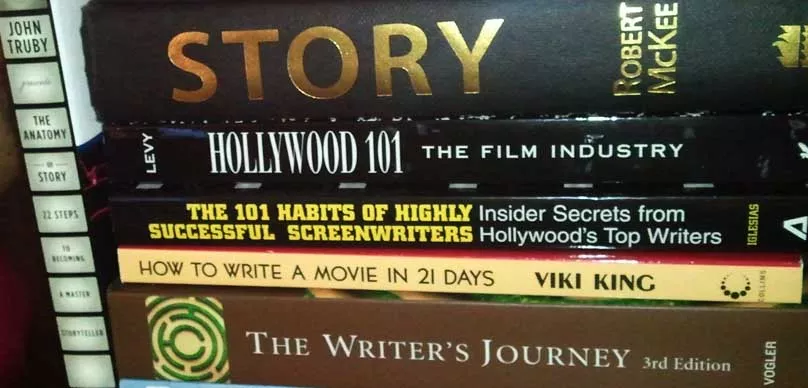
Yeah, you know that's a good point, Glenn. Because you know there's such a plethora now of resources to for people who do want to do screenwriting. I know you can't see me right now because this is the podcast, but to my left, there is just books upon books on screenwriting. There's a few DVDs that I I have been I've collected over the years, like you know the the one of Chris Vogler's DVDs, and like you said, there's online. There's even online screenwriting classes now, you know, where you can actually take a class and actually work through your screenplay through a coach, you know, and you could be living anywhere in the world and and still be in touch with one another.
Glenn Benest 7:30
Yeah, I, you know, I mean, what I would try to do is I would try to study under somebody who really has been in the business, has gotten films produced has has their own films produced and really knows what it takes to take a screenplay and to get it to the point where it can be sold, and that's that's a really unique talent. Not I wouldn't study under anybody who hasn't done that because they can talk all they want, but until you get a film produced, you have no idea really what it takes and what what a screen where you need to take a screenplay, and it's not just writing one or two drafts; it's writing many drafts and keep pushing it to be better and better and better. When I was young, I was lucky because I hooked up with Wes Craven, and Wes Craven at that time was not famous. He had just done a few little independent horror films, but he was definitely someone on the way up, and he knew film. He knew how to get a film made, and he knew what it took to get a screenplay into good enough shape so that it could be produced, and working with him taught me so much. And everybody needs a mentor like that. If you want to be a world-class athlete, you're going to have a coach, and that coach is going to be able to push you to the point where you could win a gold medal, and it's the same with every other athlete. It' the same with tennis players who are professional tennis players on the tour. They all have coaches. There's not one that doesn't have a coach. So, if world-class athletes need coaches, so do artists. Because we're really not that different from athletes. We're trying to get to a higher level of performance, and we really can't do it on our own. We need somebody who has that outside point of view that can keep pushing us knows what it takes and gives us great feedback, just like a great coach would be giving a tennis player great feedback into how to improve their game and that's what writers need as well. So, however you find that person, you know you don't want to just take feedback from just anybody. You know it's got to be not just some friend, your girlfriend, your wife, or whatever. That that can help you absolutely. That does absolutely no good. You need somebody who's a professional who knows what to look for, who knows how to give you really great feedback, so that every time you do a path on a screenplay, it gets better and better and better, and the talent to do that doesn't come around all the time. Even people that work for studios and work for networks, and their job is to give notes. Even those people who supposedly know what they're doing don't always give you the best notes. So you really need to find that mentor, and that is going to be a lot more valuable than going to USC for me, anyway, to to become a screenwriter.
Dave Bullis 11:13
So you know when when you first met you know Wes Craven, your first movie that you that you wrote and that he actually directed was Stranger in our house, which was in 1977, 1978. So, Glenn, if you could, could you take us through, you know, how you wrote the screenplay, meaning your process to actually write it, and how you actually first met Wes, and how you guys developed that relationship?
Glenn Benest 11:34
Well, A Stranger in Our House was based on a book, so I already had it was a novel by Lois Duncan, who's a pretty well-known writer, writes mysteries in suspense. So I already had that groundwork of the story, and that's extremely helpful, as you can imagine, for a screenwriter. You already have the story worked out. So I adapted it as a screenplay, but to tell you the truth, I didn't make that many major changes, and we wanted. It was already sold to NBC. They had a deal with Linda Blair to do movies with her. This is after The Exorcist, and she was a kind of a. I think she was around 16 or 17 at that point, something like that. And so they wanted that movie for for Linda Blair, and we were looking for a horror director, and we knew we known about Wes because he had done he had done The Last House on the Last, and he had done The Hills Have Eyes, but like I said, he wasn't at all famous. Very few people knew about him except people in the independent world, and so they sold West to NBC, which was a great thanks for West because it was his first television movie. It was really his first real mainstream thing, and he did a really good job with that. They it got good numbers, and so when so when I and I wrote the screenplay called Deadly Blessing with my writing partner Matthew Barr, and so we wanted to set that up as a feature, and of course we thought of Wes because we already had this relationship with him, so we worked with Wes. He gave us notes, and we we wrote the script a couple times according to his notes, and then he even did a pass of his own on it. And then we were fortunate enough at the time. It was funny because Deadly Blessing had been around for about three years, and we always got great feedback for it, but nobody was willing to buy it. And then all of a sudden, everybody wanted horror movies. I don't know why that was. It was just like these cycles come and go, and so literally in in a one week, we had two or three offers after three years of not being able to sell it, and we already had Wes attached as a director, so that made it way more attractive, because if you have because it's hard to find the right director if you've already got a great director attached, then it's that much easier to sell a project because they can go right into production, and that's what happened with Deadly Blessing. So they just bought the script, they had Wes, and they started to cast it. It was it was real easy.
Dave Bullis 14:33
So now just going back to what we were just discussing about a mentor and writing you know different drafts of the screenplay. You know what were some of the things that you learned by working with Wes on this film that you were able to sort of carry on to the next project, the next project throughout your whole career?
Glenn Benest 14:50
Well, you know, Wes is the master of horror, so even though I was always attracted to horror, I didn't. Understand horror the way that Wes did, and what he brought to the screenplay was those horror set pieces, where you know a series of scenes that build to a horrifying conclusion. Right, those are set pieces, and they're set pieces in horror, just like they're set pieces in action, or they're set pieces in comedy. And those are the best moments of the film. So you really want to milk those. You have to identify number one: what? Why are people coming to this movie? Okay, they come to a horror movie to be scared, they don't come for character development. They don't come for great dialog. They don't come for great characterization. Not to say that you don't want those things, but that's not why they came to your movie. They came to your movie to be scared, and I think Wes understood that better than anybody. So he would find these moments and then really milk the hell out of them to make them scarier and scarier. So I learned that from him, and it was because I you know after I wrote after I did Deadly Blessing, I didn't do horror anymore. I decided I wanted I didn't want to spend my entire career writing horror movies. I wanted to try new things, so I got into suspense. I did comedies. I did drama. I did westerns. I mean, I wrote in every genre, and but in every genre, like I say, you need to be smart about what you're selling, and if you're selling a thriller, you've got to have great thriller moments. And I think that's the most obvious thing. And yet, writers don't seem to understand that, especially beginning writers. They get so caught up in their characters and their story, and they don't, you know, pull back and go, how, what's going to sell this movie, and what's going to sell your movie if it's a thriller are great moments of thrills. What's going to sell an action film are great action sequences, and the more original they are, the better. So, if you do an action movie and you do an action sequence that no one's ever seen before, like if you do like car chase, is a perfect example. We've seen a million car chases, but what makes this car chase different and original in comparison to all the other car chases we've seen. So you you have to come up with those things, so that audiences who came to be thrilled, to be shocked, to laugh, to whatever they came for, you have to give them that, or they're going to leave unsatisfied, and that goes beyond, like, you know, artistic concerns, esthetic concerns. These are things that you kind of learn as you become more of a professional, and I think Wes, like I said, he taught me that about horror, and now I'm kind of going back to horror. I just wrote a novel called Ink I N K, which is kind of a horror romance. It's a novel that just got published last year, and when I wrote that, I was also like very aware of where am I paying off? People came to be scared. Where are they being scared? And how original is that? And how many great moments can I find like that? And the same now. I just wrote a teen horror film, and I'm very aware of paying off the expectations of the audience, and they, you know, audiences today are very jaded. They've seen everything, so how are you going to give them something that is going to be a little different? That's going to make them when they leave the movie theaters, and they tell their friend, "Oh my God, you've got to go see this movie. It can't just be the same old thing over and over again. It has to be something unique and a little bit different in some way. Even though all plots have been done over and over again, but it's how you tweak those plots to make them your own.
Dave Bullis 19:43
So, Glenn, have you seen any movies recently? Like, let's say in the past five years, like any horror movies that have really stuck out to you?
Glenn Benest 19:51
Yeah. Well, you know, I've I like to see horror movies. Most of the time, I get very disappointed and bored, but there was one I saw last year that I was impressed by called "It Follows, and that was pretty cool. That was different. It was very low budget. It's just these teens, but then I won't. I won't go too much into it because I don't want to ruin it for people. But that is a that was a unique plot that I had never seen before, and it had just enough scares to keep you on the edge of your seat, and it was pretty freaky. And I think the freakier it is, the better. You know, you learn like what is it that horror fans like. Well, one thing they like is freaky stuff. They also like it. They also like gore. You know, when you when you watch The Walking Dead, which is like my favorite TV show now, there's lots of gore. It's it's pretty. I mean, they really pay that off with the with the zombies, and you. though they have great characters and good character development and interesting relationships, but they do pay off the horror. And I'm really surprised today. One thing I'm surprised today about horror is how many women and young, in young women, teens, girls, love horror. That was not so much when I was starting to write horror. It was mostly guys I thought who went to horror and they brought their girlfriends along, but that's not the case anymore. There are a lot of women and middle-aged women, older women, especially younger women, who love horror, maybe more even than guys, and I think that's that that really surprised me.
Dave Bullis 22:09
I actually know I have some girls that are that are friends of mine. They all love horror. Some of their favorites are like the Paranormal Activities,
Glenn Benest 22:17
Right!
Dave Bullis 22:18
Stuff like that. They they they really like that stuff. Not so much like the Saul or the hostiles, but the the paranormal activities, like the spirit supernatural stuff. They really enjoy.
Glenn Benest 22:26
Yeah, I'm not a fan of hostel and and those and saw no, they're just that. Just is not appealing to me. I like core that has really good stories. That used to be, you know, when John Carpenter was making horror films, and like The Thing, and with Craven was at the top of his game with Nightmare on Elm Street and Scream. Scream was written in my workshop, one of my screenwriting workshops, so I know that film really well. That's you know you really good stories with great characters, really good dialog, but it paid off in the the way that you know it was scary. It was very. I see a lot of horror movies. I just don't think they're scary, you know. And I just go, "Wow, this isn't gonna work. I mean, so it's a whole separate genre when you talk about horror. Even though it has similarities with other genres, it's really a genre unto itself, and it has its own rules, and they're not necessarily the same rules as a typical drama or thriller or something like that. But you know, there will always be horror. There will always be zombie movies. There will always be vampire movies. There will always be werewolf movies. But you just have to find a unique take on them. Something that
Dave Bullis 24:06
So so so, but I have to ask. You know, I'm sorry. I sorry. I didn't mean to interrupt you. I just wanted to ask you really quickly. What did you think of the Walking Dead finale? Without giving too much away,
Glenn Benest 24:16
I thought it was really good. I you know I've I love The Walking Dead. The one thing that I, the one criticism I have, The Walking Dead, even though I love the show, it's one of the best shows I've ever seen, is that it seems like it's gone downhill a bit. And one of the things that they do that really annoys me is that they'll start a storyline, like for example Rick and Michonne, you know that love affair, and then they just drop it, or they'll start a storyline like with Carl, Rick's son, that he was he said, "I'm a monster too, and he was getting kind of dark. And then they just stop it. They just drop it, and you get nothing more about it. And I don't know why they do that. They just seem to lose interest. They'll start something going, and then they just seem to lose interest in it. I think that's really frustrating for the audience. Or yeah, or they oh they do something that doesn't make a lot of sense, like Carol, who all of a sudden decides to leave them. She says, "I can't kill for you anymore, or whatever she said, and then she just left, and that made absolutely no sense to me. Like, why would she leave? Why would she want to do that? You know, she's been killing people for for a number of seasons now. She didn't seem to have any problem with it, and now all of a sudden she does, and then she just abruptly leaves. And I just thought, like, this makes no sense. So there's there's there's certain things that they seem to be having problems. I don't know. They, you know, they when it's it's very hard to keep the quality of a show going. You know, year after year after year. This is what their sixth season or something.
Dave Bullis 26:15
Yes,
Glenn Benest 26:15
And and you know it's very difficult to keep the quality up, and that's why you know shows like Feinfeld or Friends or Cheers, you know, they kept the quality up for you know many years, and that's a remarkable thing to do, because most times a show will go five six years and then they just burn out. They they don't know what to do anymore, because it's very difficult, and it looks like they're having those problems now on The Walking Dead. They don't seem to have a good direction of what they want to do. So, although, like I say, I I love that show. I'm absolutely crazy about. I'm on Twitter, and all of my followers basically are like Walking Dead fans.
Dave Bullis 27:04
So, because with the way you know this season, the sixth season ended was the introduction of the character Negan, and yeah, and then when he got you know he he ends up you know killing one of the main characters, but you don't see who because we went to that POV of the character. You know, now some fans are like, "Wow, that was a very cheap way to end it, because now we have to wait to October for season seven to see who we killed, and you know, right? It's you know, I I I mean, I really didn't have that much of a problem with the ending, but you know, I can I think I can see why some people would have you know have an issue with it.
Glenn Benest 27:37
Oh yeah, I mean, the the one good thing that Walking Dead is it about killing off like characters that people like, you know, because like if you really invest in a character and then they kill them, I mean that can drive you crazy, but they seem to have done pretty good. Like one show that has not done well in that way is Game of Thrones. They've killed off the most, you know, the the the characters that you really are rooting for, and that after a while you just go, okay, that's it. I'm not going to watch this anyway, and then it's because they kill off the the characters that are actually the ones rebelling against the Lannisters, and that's really what keeps the show going. Who's going to destroy the Lannisters? Who's going to, you know, lead the rebellion? And once they killed off the main characters leading the rebellion, they just floundered. There was nobody to follow. Like, who am I going to follow now? Who do I care about now? And if you don't do that really well. I know he's the the same with the books. The books are the same. I mean, they follow the books very. Do you watch that show, Game of Thrones?
Dave Bullis 28:49
Oh yeah, absolutely. I honestly, Glenn, like that. That show was one show I didn't even want to get into, and then when I did, I honestly I couldn't wait till every every every episode. I was like hooked beyond belief.
Glenn Benest 29:02
Yeah, no, I love the show, especially except until it hit this the season where they killed off you know the mother and the son who were leading the rebellion, right? And then that which was and then the last seat, which was last season, was after that, and I just thought they were floundering. They they really didn't know. Okay, who am I following now? Whose story do I care about? And I and I I thought they, you know, the only character I think that's worthy of being the protagonist of that show is the Khaleesi, you know, the mother of dragon. She's a great character, unbelievable character, and she's worthy of being the star of that show. And you would follow her anywhere, but she was still kind of in the background. So I think they've got to put that figure out. You know, I think they lost some of their fan base because of that.
Dave Bullis 30:18
And now with this new season coming up, which is going to start at the end of this month, you know, April 2016. The new season now starts, and it's not based on any of the books. Well, it is. Yeah. Well, I mean, I'm sorry. I meant to say is, it is based on the books, but these books haven't been released yet because last season they caught they are all caught up now. So this new season will all be stuff that is going to be. So now it's going to be out before the books are out.
Glenn Benest 30:42
Oh, that'll be interesting. I just hope it's they bring in Khaleesi a lot more because she's got a great story, and she's a very, very interesting character. Very complex. You never quite know what she's going to do. She makes interesting choices, and they all kind of make sense for who she is. But yeah, she's a terrific character. But I mean, like here's like the perfect example: first season of Game of Thrones, the guy that you were following, who you thought was the star of the show, gets killed at the end of the first season, and it was like, what? You know, any other show would never do something like that. You invest in a character, and he's the star, and then you kill him. It was like, oh my god, I can't believe that happened. But you know, that's what they've done.
Dave Bullis 31:38
So you know, Glenn, you know, just to, I'm sorry, I didn't mean to go talk too much about The Walking Dead, but I wanted to talk to well, you know, just to talk more about you know your career and your work. You know, you mentioned that you know during your one of your screenwriting workshops, you know, one of your students actually wrote Scream. You know, that's actually that's actually you know incredibly interesting because I remember the first time I saw Scream, you know, I got it. You know what I mean. And what I mean by I got it means I what I mean by that is it was it was a it was a love letter to the slasher genre because I they they elevated it because they you know it had so many you know twists and turns and and you know Scream was you know created by Kevin Williamson. I actually read the screenplay in a horror class I actually took, and so I wanted to you know if we could you know about developing that screenplay. I mean I think you know any any sort of you know anecdotes or any stories you have about that were you know about you know guiding Kevin through that. If you could tell any to myself and the listeners, I you know I think that would be very beneficial.
Glenn Benest 32:38
In my workshop previously, we had developed another screenplay that he wrote called it ended up being called Teaching Mrs. Tingle, which actually did get produced eventually after Scream. You know, he's a brilliant writer, and he loved horror. Very clever, you know. So part of what I think made Scream so great was that the dialog was very clever, very witty, and then he did the the thing that he did that was so different was that he basically made fun of the horror genre. Right, he deconstructed the horror genre by the characters who you know that were horror fans, and they kept saying, "Well, you know, in all horror films, as soon as you have sex, you get killed, which is really kind of true. That you know, as soon as a couple has sex, you know they're going to die. You know, so he took all those kind of you know little platitudes about horror, and he made fun of them, and at the same time he had a really good story. He had a backstory for the main protagonist about her mother being murdered, and she put the wrong person in jail, and so it had a complexity to it. The same time, he came up with very original scary moments. Very original, like the one where they're in the garage and they try to go through the doggy door, and then the killer comes and then raises the door, and they basically get decapitated up there, I mean that's like I'd never seen anything like that before. That was just totally original. See, that's the kind of suck you want to come up with, you know, horror moments that you go, oh, that was killer, you know, and you'll tell people about it. Those are the kind of things that you you want, but with the only thing that I was a little concerned about with that screenplay was that it verged on comedy at times. You know, and a lot of times when you you don't want to confuse a reader or a studio, whatever. Is this horror or is this comedy? And some people have gotten away with writing horror comedy, like Zombie Land. That was kind of a horror comedy, but it's hard to do that, and it can easily confuse people. Well, am I supposed to be laughing or am I supposed to be scared? You know. So all I I was advising him to stay away from the comedy. Not to say it shouldn't be witty and have funny stuff, but you're never confused about what the tone of this thing is-that it's horror-and it does. And not to say you know really good horror has good moments of of witty dialog that can be funny and humorous, but you're never going to be confused that this is supposed to be funny. It's comedy. I mean, it's horror. So that was the only thing that I kind of was trying to advise Kevin about. You know that you stayed with that tone, but you know what's great about being in a in a writer's workshop, and especially we had a great class at that time. I had I had Melissa Matheson. I'm sorry, Melissa Rosenberg was in that class. She wrote, ended up writing all the Twilight movies. She was the exec. She was a executive producer on Dexter. I mean, she became a major, a major writer, and she's really well known now. I had another student in that class named Dana Barada, who wrote a film called Andre, a true story about this seal that got captured and became like this legend in this town, and she was in that group. So we had a bunch of movies that were produced out of this class. So the better the group is, the better the ideas you're going to get, and that's why it's so great to be in a workshop, is that everybody is throwing out the best ideas they have, and a lot of times you'll go, "Oh wow, what a great idea! I'll I'll use that, you know, and it just makes for better writers, it's just like when in all comedy workshops they work in groups, and everybody throws out funny ideas, and the writer takes what he can, and you just pump up the script that way. Well, it's the same in any workshop.
Glenn Benest 37:38
You have really great writers are going to give you good ideas, and you take them and you say thank you. Well, where would you get those? I you know those great ideas if you weren't in a workshop. You'd be all by yourself and you come up with stuff and you do the best you can. But I want to be around really creative, smart people who give me great ideas, and that's why when I you know as a screenwriter myself, when I was working with a producer who was really good with giving notes, those are the scripts that got made. When I was working with a producer who was like really good with business and he was great in selling stuff and he was had good connections and whatnot, but he didn't know how to give great notes to the writers; those movies never got made. So you really, you know, you're only as good as the feedback you're getting. You're only as good as the feedback you're getting, and you. So I keep, you know, telling writers, and you know, you need great feedback, and it's like the same with athletes; they're only as good as the coaching they're getting. And so, you need a great coach, you need a great team behind you, and you're going to help them, and they're going to help you. So, your script is going to end up becoming at least 25 to 30% better, and that 25% can make the difference between selling something and not selling something.
Dave Bullis 39:12
I agree, Glenn. You know, I've been a part of their own writers' groups. Some notes I think are you know I find very helpful. Some notes I'm kind of puzzled. I'm like, what does what does this mean? You know, and that's sort of you know some of the things that I used to have. Like you know, like for instance, in one screenwriting group, we would write 10 pages of each screenplay, and then that way we would get notes about you know development and stuff like that. And some people, you know, really you know you wrote an outline before they did so, and other people, they just went in there completely blind. They just said, "You know what? I'm just going to find out like the characters, and I'm just going to go in there and write these 10 pages. And it was interesting to see all the different notes you get because some people have you know backgrounds in theater. Some people had backgrounds as as as you know because they're a huge movie buff. And they've seen, you know, you know, 20,000 movies or whatever. You know what I mean? And they they would use that knowledge to sort of okay, this is what this reminds me of. You know, and this is where you could take the story, stuff like that. You know, if you know what I mean.
Glenn Benest 40:20
Sure. I just think it's important that you have somebody really knowledgeable who's leading those groups, because otherwise, like when I was in getting my playwriting degree, we would do these staged readings, and you know, it'd be open to anybody who wanted to come, and they would throw out all this stuff, and you-you could easily leave the reading going. I don't know what to do now, you know. And a writer, because one person says black, and one person says white. One person says I love this, the other person says I hate this. You know, you really need somebody who can lead the group and really identify exactly what is the problem here, and then they you bring they you know we brainstorm with the writers. Okay, we can solve it like this. We can solve it like that because there's always an answer to a problem. So, but it's extremely important to identify exactly what's wrong, and then and then you brainstorm, and you may not like all the suggestions you're getting, but at least you know okay, this is the problem I'm having. So even the ideas that you get are maybe not the right ones, but at least you know exactly what you're supposed to solve, and you should never leave a workshop being confused, never or not knowing exactly what to do next, and that's why I say it's so important. Like when I was a young screenwriter, I would give my scripts to whoever you know, give it to my girlfriend, give it to you know, and and they would give me no, and sometimes it would set me back because they didn't know what they were doing, and they told me some stupid shit that had nothing to do with anything, and you never want that. Like it's very important who you show your scripts to, and who's giving you the feedback, and and that they're knowledgeable, and they they know about screenplays, and they know how to fix screenplays. They're not just somebody who's like either oh that's so wonderful, honey, you know, or they come up with something that has nothing to do with what's really relevant, and they totally confuse you. So, like I said, it's very important who you're getting the feedback from, and you should never be confused. And that's how, when you get the right feedback, every time you do a path on a screenplay, it gets better. And that's the the key, and the evidence that you're on the right track. Okay, this draft is better than that draft, and the next draft was better than that draft. But I used to write drafts, and they would get worse. You know, and that has never happened. Never that you're writing something that gets worse. No, should never get worse. It should always get better and better and better. So all the work you're putting into a screenplay is just elevating that screenplay. And you know, really, you can read all the books in the world. Not to say it's not good to read some books about screenplay, about screenwriting, or you know, take these different classes, but the only way you really learn is by doing it. That's the only way you really learn. You you you start writing screenplays, and the first one's probably not going to be very good, but the second one hopefully will be better, and the third one will be even better than that, and you you're getting really good feedback. Not just somebody who's you know seen a lot of movies and they think they're an expert because analyzing screenplays is a real talent, and even people whose job it is to do it are not always very good at doing it, so it's so valuable when you find somebody who really knows how to help you. You know, go from one great draft to the next great draft to the next great draft, right?
Dave Bullis 44:36
You know, like what I was just saying about getting the notes. You know, that's something too. Is you know sometimes I would come in with a draft. Okay, for instance, you know I wrote this slasher that was kind of like a throwback to Friday the 13th, and you know some people would just give me notes, and some people really enjoyed how I set this up, and then other people would just give me notes that I would say I don't understand. You know what. So I was I, so you know I realized that you know the ones that sort of made it I knew would were I knew as soon as I heard the idea I knew I'd be like okay like a light bulb went off above my head I'm like okay that could actually work
Glenn Benest 45:13
Right right and you will you you know the the when you hear something that's right you will recognize it as right you know you'll go. Oh, of course. Yeah, that's you'll. It just rings true. But like I said, if you're getting a lot of mediocre feedback or stupid feedback or whatever, it can literally set you back, not not help you go forward. And so much of being a writer or any artist is self-confidence, and just like athletes, when athletes lose their self, I don't know if you follow tennis, but Rafa is one of the great tennis players of all time, right? And lately, he's lost his confidence, and he's not winning tournaments anymore. He's not winning majors. He's like number five in the world now, or something. He he used to be number one in the world for many years, but he kind of lost his confidence. So as an athlete, confidence is is everything, and it's the same for artists to be confident about what you're doing. So if you hear the wrong feedback and it makes you start thinking in the wrong direction, and then you get confused, now you're losing your confidence, and you never want that. If you hear the right feedback and you go, oh, of course. And here's how to solve that problem. Now you're feeling confident. I've identified what the problem is, and I have some great ideas on how to fix that problem.
Dave Bullis 46:53
Yeah, you know, when I interviewed Corey Mandell for this podcast, he actually mentioned something along those lines too, because he actually recommended a book about to all screenwriters, and it was a book on psychology because he says you have to have this confidence inside you, and you know he's there's a in the book I think it's a book by I think it's Carol Zwack is her name and inside she she actually talks about the theater of your mind and if you give you know seating so to speak to all these negative thoughts inside your brain, it's like they're getting front row seats on of the stage. But she said, "You you need to take them, put them in the back, and put all your positive, you know, thinking in the in the in the front seats. So that way, you know, it's about having that confidence, about having that you can do that and that positive mental attitude.
Glenn Benest 47:38
Right! No, that makes a lot of sense. And you know, the players like I I relate a lot of things to tennis just because I know a lot about tennis and I watch it. Is what gives a lot of confidence to these players is their team. They all have a team around them. They have a coach. They have a nutritionist. They have you know people that they hit with, they they travel in with teams. You know, and they and they have five or six people that travel with them, and those people give them confidence because they're on totally on their side, and they're doing everything they can to elevate that player to excellence. And it's the same for an artist. You need a team of people around you who are going to be there just for you. They're not there because they're jealous. They're not there because they want to knock you down. They're there to make you great, and they're saying the right things to get you to that next level. So that's why it's important to have that team, that team around you. And and you know when I mean I have many workshops, and every once in a while I get a group that's just unusually talented and great. And as a team, we can do so great on people's screenplays because we're just giving the best ideas, and we're there to help them, just like they're there to help us. So you know that can make all the difference when you're working on a screenplay. You have all these bright, brilliant people who know film, and they're there just to make your screenplay better, and that's your team, and that gives you confidence, and that gives you you know a leg up.
Dave Bullis 49:28
You know that's very that's very true, Glenn. You know I I notice you know by the clock we're we're almost running out of time because I know you you know I don't want to keep to eat up too much of of your time, but um one of the questions that came in um which is that I'm just going to ask because a couple of the it actually came in at a couple different iterations. It's actually do with what we were just talking about about building the team and and you know writing and ideas and stuff. And basically is you know what advice do you have for a screenwriter that's writing their first draft?
Glenn Benest 50:06
Don't be critical towards yourself. In other words, don't number one, don't expect that it's going to come out good, okay? Because most first drafts are not good. Just let it pour out. Don't judge it. Just you know, hopefully you got a decent outline. You know where you're going. You have a beginning, middle, and end, and then just let it pour out. Don't worry about how long it is, how short it is. If you're you know you're having trouble, your your dialog isn't so great. It doesn't matter. Just let it pour out, and then once you've written it and you've got it all there, now you've got something to work with. And then in the second draft you can solve certain problems. In the third draft you'll solve other problems. In the fourth draft you'll solve other problems. You can't solve everything at once. You only solve a few things, and all you want to do is just let it pour out of you, and don't, you know. People, the reason people get blocked is they expect that it's going to come out wonderfully the first time in it. That's ridiculous. I mean, if you were going to learn to play the piano, classical piano, you wouldn't think that you would just sit down and play Mozart. I mean, you just would never think such a thing. And yet, for some reason, people think if I'm writing my first screenplay, it's just going to come out. It's going to be great. No, it's not going to be great. It's going to be very rough, and it's going to need work. But that's okay. You just want to get it down for now. So my biggest advice is to don't judge yourself. Don't don't think it's going to be wonderful. It you're you're just trying to get it out. Let it pour out of you, and you're going to discover things. And then once you have a first draft, that's when you start looking for feedback, and really good feedback, like we talked about, where somebody who's really knowledgeable can help you identify exactly what's working and exactly what's not working, and then you solve the problems of what's not working.
Dave Bullis 52:22
That's a you know great advice. You know, like I said, you know the there's a couple different versions of of that was like the number one question that came in. So I wanted to make sure to ask that. So you know, Glenn, you know, in closing, do you have any any sort of final thoughts that you wanted to sort of add to sort of put a period at the end of this whole conversation?
Glenn Benest 52:39
Well, you know, for anybody that's listening, please feel free to call me at my home. You're perfectly. I like to talk to new writers. I like to help writers. You know, I've been a professional screenwriter my entire career. I'm still at it, but I've also been an instructor, and I have these workshops. I've had six films produced from my groups, and I like to work with young writers. I like to mentor people. So, feel free to call me at my number is 818-396-5724. That's 818-396-5724, or you can email me at [email protected], and I'll be happy to talk to you. And you can tell me what your if you have any questions or any way I can help you. And you know I get I get a great deal of satisfaction from that, especially like something like Scream. You know, if I can help somebody get Scream produced, it gives me a tremendous amount of satisfaction. So I like to work with with young writers, you know, and I like to be a part of the process. And every once in a while, we're lucky enough to get a film produced.
Dave Bullis 54:05
Well, you know that's amazing, Glenn. That you know you allow people to call you, and and and you know everyone. I want you to check out Glenn's website at glennbenest.com. I will link that in the show notes, along with Glenn's latest novel, Inc. I'm going to link to that in the show notes as well. But Glenn, I want to say you know thank you so much for coming on. Thank you for talking to us for you know 50 minutes. I really appreciate it, and you know honestly, Glenn, I I really look forward to just seeing you know everything you come up with, and I might actually email you too. I have some screenwriting questions. Okay, great.
Glenn Benest 54:36
All right, Dave. Well, it's been a lot of fun talking to you.
Dave Bullis 54:38
You too, Glenn. I will talk to you soon, my friend. Take care. Bye bye. Bye.
Sign up to receive email updates
Enter your name and email address below and I'll send you periodic updates about the podcast.
LINKS
- Glenn Benest – Official Site
SPONSORS
- Bulletproof Script Coverage – Get Your Screenplay Read by Hollywood Professionals
- Audible – Get a Free Filmmaking or Screenwriting Audiobook