
There’s a moment in every filmmaker’s journey when the dream begins to feel real. It’s no longer just an idea scribbled in a notebook or a late-night conversation with friends—it’s a production, a team, a budget, a risk. And yet, for all the attention given to cameras, scripts, and performances, there’s a quiet, often ignored foundation that determines whether that dream survives contact with reality: structure.
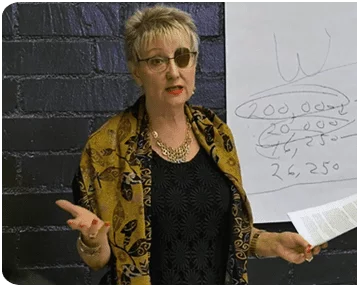
On today’s episode, we explore that unseen architecture with Nellie Akalp, an entrepreneur and legal expert who has spent decades helping businesses come into existence. What becomes immediately clear is that filmmaking, despite its creative soul, is deeply rooted in business decisions—decisions that many filmmakers delay, avoid, or misunderstand entirely.
Her journey into entrepreneurship didn’t begin with filmmaking, but the parallels are striking. Starting her first company in the early days of the internet, she experienced firsthand what it means to build something from nothing. That same principle applies to filmmakers. A film is not just a story—it’s an entity. A living, breathing structure that involves money, people, contracts, and liability. And without the proper framework, it can collapse before it ever reaches an audience.
One of the most eye-opening ideas from the conversation is deceptively simple: every film should be its own company.
“A movie… it’s like an entity of its own,” she explains, emphasizing that each project carries its own risks and responsibilities.
This isn’t just a technical detail—it’s a shift in mindset. When filmmakers treat a project casually, as something temporary or informal, they expose themselves to unnecessary risk. But when they treat it as a business, everything changes. Decisions become more deliberate. Protections are put in place. The project gains a kind of legitimacy that extends beyond the creative process.
This is where the concept of the LLC enters—not as a bureaucratic burden, but as a creative safeguard.
An LLC, as discussed in the episode, offers something filmmakers desperately need: separation. It creates a boundary between the project and the individual. If something goes wrong—financially, legally, or operationally—that boundary can mean the difference between a setback and a catastrophe. And in an industry where uncertainty is the norm, that kind of protection isn’t optional—it’s essential.
But what’s fascinating is how accessible this process has become. There’s a lingering belief that legal structures require expensive lawyers and complicated systems. Nellie dismantles that idea completely. Forming an LLC, maintaining it, even dissolving it after a project wraps—these are processes that can be handled efficiently with the right guidance. The real challenge isn’t complexity—it’s awareness.
And that’s where many filmmakers stumble.
They wait too long. They skip steps. They assume they’ll “figure it out later.” But later often comes with consequences—missed opportunities, legal headaches, or worse, financial exposure that could have been avoided with a few early decisions.
Another key insight from the conversation is the importance of compliance. Starting an LLC is only the beginning. Maintaining it—filing the right documents, managing changes, keeping everything aligned with state requirements—is what keeps the structure intact. It’s not glamorous work, but neither is editing at 3 a.m. or troubleshooting a broken shoot. It’s part of the craft, just on a different level.
And then there’s the broader lesson, one that extends beyond legalities into the philosophy of filmmaking itself.
Filmmakers often think of themselves purely as artists. But the reality is, the most successful ones understand they are also entrepreneurs. They build systems. They manage risk. They think strategically about how each project fits into a larger career. The LLC isn’t just a legal tool—it’s a symbol of that shift in identity.
To create is one thing. To sustain that creation over time—that’s something else entirely.
In the end, Nellie Akalp offers something invaluable: clarity. Not just about LLCs or business structures, but about the responsibility that comes with bringing a film into the world. Because every story deserves to be told—but it also deserves to be protected.