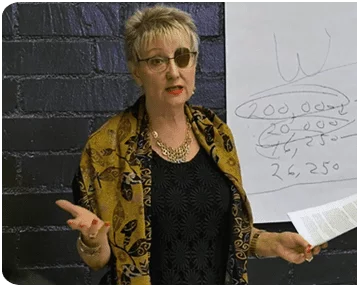
There’s a dangerous illusion that lives inside independent filmmaking—the belief that passion alone is enough. That if you just love movies deeply enough, sacrifice enough sleep, survive enough rejection, and keep grinding long enough, eventually the industry opens its doors. But on today’s episode, Jenna Edwards dismantles that fantasy with the kind of honesty that only comes from experience. Not theory. Not social media inspiration. Real experience.
Before becoming a producer, Jenna was an actress navigating the chaos of Los Angeles. She landed roles on iconic shows like Buffy the Vampire Slayer and Malcolm in the Middle, experiences that taught her something most actors eventually learn: you’re never auditioning for just one role. Every audition becomes an opportunity for someone to remember you later. Sometimes years later. That mindset—staying open instead of desperate—quietly becomes one of the central themes of the conversation. Because desperation, according to Jenna, destroys careers faster than lack of talent ever will.
It’s a brutal truth that many filmmakers and screenwriters avoid confronting. Too many people approach the industry wanting validation before they’ve built anything tangible. They wait to be discovered instead of creating momentum themselves. And in today’s world, that strategy no longer works. “Create your own career,” she explains, emphasizing that filmmakers can’t afford to sit around hoping agents, managers, or investors magically appear.
That idea becomes especially powerful when the conversation shifts into producing. Jenna’s perspective on independent filmmaking is refreshingly practical. Most films don’t fail because the idea is bad—they fail because there’s no roadmap. No distribution strategy. No business plan. No understanding of who the audience is or how the investors get their money back. And that’s the part many creatives resist hearing. Because filmmaking feels like art. But surviving in filmmaking requires thinking like a business.
Jenna repeatedly returns to this idea of intentionality. If your dream is to direct grounded emotional dramas, then every short film, every networking event, every collaboration should move you closer to that goal. Instead, many filmmakers scatter their energy everywhere—making horror films because they seem “easier to sell,” networking with people they don’t align with creatively, chasing trends they don’t even care about. It creates careers with no foundation.
Her analogy is simple but devastatingly accurate: building a filmmaking career is like building a house. You can’t work on the roof before laying the foundation. And you definitely can’t build three different houses at once and expect any of them to stand. That clarity extends into her philosophy about producing itself.
One of the most eye-opening sections of the conversation revolves around ego on set. Jenna points out that many inexperienced producers mistake visibility for usefulness. They create unnecessary problems simply so they can be seen “solving” them later. Meanwhile, truly effective producers are often invisible because they handled the chaos long before production even started. That insight cuts deep because it exposes how much independent filmmaking is driven by insecurity rather than leadership.
And insecurity creates friction. Bad communication. Passive aggression. Endless drama. Entire productions derailed because people need to feel important rather than effective. Jenna’s solution is deceptively simple: remove ego and ask one question constantly—What’s best for the project? Not what protects your pride. Not what gives you credit. Not what makes you feel powerful. What actually serves the film?
It’s the kind of mindset that transforms productions from emotional battlegrounds into collaborative systems. And in an industry filled with fragile egos, that shift becomes incredibly valuable. But perhaps the most powerful part of the episode has nothing to do with filmmaking at all.
After surviving a horrific tragedy that caused years of severe PTSD, Jenna rebuilt her life piece by piece. That experience fundamentally changed how she sees creativity, collaboration, and purpose. There’s a groundedness in her perspective that feels earned—not manufactured. She understands what it means to lose momentum, lose confidence, and slowly find your way back.
And maybe that’s why her filmmaking advice resonates so strongly. Because underneath all the strategy, networking, and business talk is something much more human: sustainability. Not just building projects. Building a life and career that can survive the emotional weight of the industry itself.
In the end, Jenna Edwards offers something many filmmakers desperately need—not motivation, but perspective. The understanding that talent is only one piece of the equation. Success comes from clarity, planning, collaboration, resilience, and the willingness to build intentionally instead of emotionally reacting to every opportunity that appears.
Because filmmaking isn’t just about making movies. It’s about learning how to sustain the person making them.