Some documentaries begin with years of research, development meetings, financing plans, and carefully structured production schedules. Others begin because someone gets locked out of work.
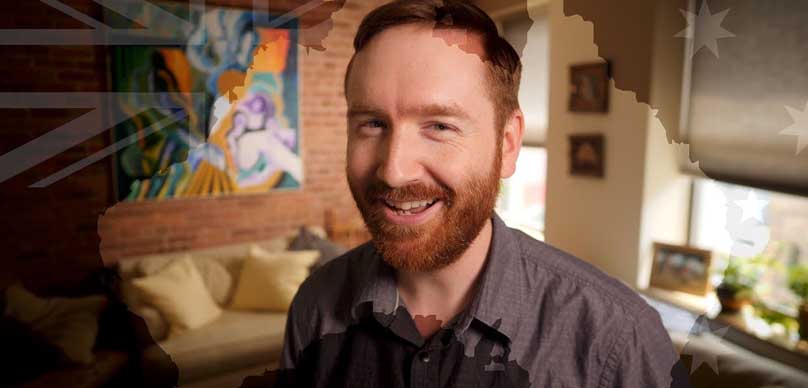
That’s exactly what happened to Mark Phillips, whose documentary The Walking Fool emerged from one of the simplest creative sparks imaginable. Working as a graphic designer in New York, Mark found himself standing outside an office one cold morning while waiting for a perpetually late boss to arrive. Instead of sitting around, he decided to take a walk. During that walk, he noticed details he had driven past for years without ever seeing. A plaque. A historic home. A forgotten piece of American history. That small discovery triggered a much larger question: what else do we miss when we move through life too quickly?
That curiosity eventually evolved into an audacious idea: walk across America. Not drive. Not cycle. Walk. One step at a time from the Atlantic Ocean to the Pacific Ocean. At the time, Mark wasn’t even thinking about making a documentary. He viewed the journey more like an extended public-access television project, a giant adventure that would allow him to capture interesting moments and share them with a small audience. The goal wasn’t fame, distribution, or film festivals. It was simply the excitement of doing something unusual and documenting it along the way.
Like many first-time filmmakers, Mark approached the project with enthusiasm that far exceeded his preparation. His original attempt began in 2001 with limited planning, minimal resources, and an almost reckless willingness to figure things out as he went. Maps were printed, routes were considered, and supplies were packed, but within days he was already improvising. The reality of carrying equipment, managing weight, finding places to sleep, and navigating thousands of miles of unfamiliar territory quickly revealed how different execution is from imagination.
What makes the story particularly compelling is that the first attempt failed.
After making it all the way to South Dakota, roughly halfway across the country, Mark made the difficult decision to quit. The reasons were complicated. Money concerns. Loneliness. Fatigue. Boredom. The psychological burden of constantly documenting the experience while simultaneously trying to live it. He realized that walking across America and making entertainment out of the experience were often competing objectives. The more he focused on filming, the less connected he felt to the actual journey. Eventually, he boarded a bus home and accepted what felt like a devastating personal defeat.
For many filmmakers, that would have been the end of the story.
Instead, it became the beginning.
Over the next decade, the unfinished journey remained in the back of his mind. The experience haunted him. He found himself replaying the decision, questioning whether he had truly given everything he had. What started as regret slowly transformed into motivation. Eventually, after years of working, saving money, and rebuilding confidence, he decided to attempt the journey again. This time, the mission wasn’t about proving anything to other people. It was about finishing something he needed to finish for himself.
One of the most valuable filmmaking lessons in the conversation involves audience building. Mark openly acknowledges that if modern social media platforms had existed during his first attempt, the project might have evolved very differently. He stresses the importance of communicating with audiences throughout production rather than waiting until the film is complete. By sharing updates, involving supporters, and building a community around the subject matter itself, filmmakers can create an audience long before release. In today’s independent filmmaking landscape, that relationship with viewers can be just as important as the finished film.
The conversation also provides a fascinating look at documentary storytelling. Unlike narrative films, documentaries often discover their structure in the editing room. Mark discusses the challenge of transforming years of footage into a coherent narrative while preserving the emotional truth of the experience. Every creative decision becomes a balancing act between entertainment and authenticity. Some of the most powerful moments were never perfectly captured on camera. Others existed only as audio recordings or memories. The challenge wasn’t simply documenting reality—it was finding the story hidden within it.
Perhaps the most inspiring aspect of Mark’s journey is its reminder that failure doesn’t always mean the story is over. In filmmaking, projects collapse. Funding disappears. Scripts stall. Productions fail. But sometimes unfinished work has a way of calling creators back. What matters isn’t avoiding failure. What matters is deciding whether the story is important enough to continue despite it.
For Mark, the answer was yes.
One step at a time.
One mile at a time.
One unfinished dream finally completed.
Right-click here to download the MP3
Alex Ferrari 0:46
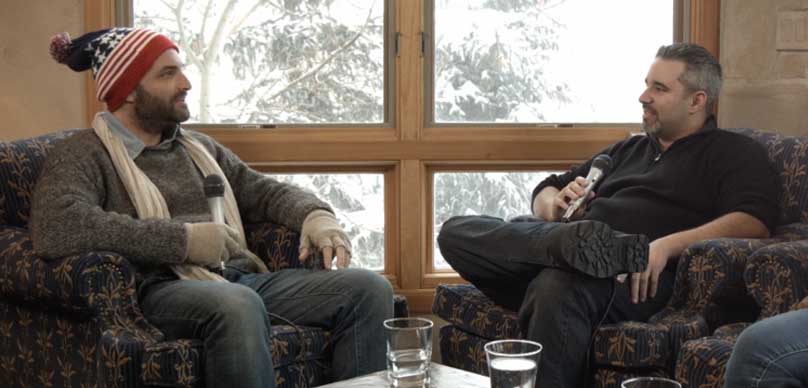
Enjoy today's episode with guest host Dave Bullis.
Dave Bullis 1:55
With me today is is Mark Phillips. Mark Phillips is the star and director of the Walking Fool documentary, where he attempts to actually walk from New York all the way across the country to California. Mark, how are you?
Mark Phillips 2:09
I'm doing fabulous. How are you doing, Dave?
Dave Bullis 2:12
Pretty good, thanks. Pretty good. So, Mark, why don't you tell us a little bit about yourself?
Mark Phillips 2:18
Well, I'm from the New York City area all my life, and I was one of those people that was sort of, you know, always interested in acting, never really pursued it actively. So I did what most people did, just got a job working in the office in front of a computer, where I could just sort of just sort of think about dreaming of being a performer on stage, and I did that for about 10 years, and finally it sort of kind of snapped, and I thought about doing something different, and that's sort of how we evolved into what I'm doing now in the documentary, is walking across the country.
Dave Bullis 3:00
So, Mark, how long have you been a filmmaker for?
Mark Phillips 3:02
Well, I was back, goes back to high school, I was sort of, you know, I got a, I remember getting a video camera, one of those big VHS things, you know, top-loading VHS things was probably about 20 pounds for Christmas, and just started making little, you know, short films, and back in the 90s, that evolved before YouTube, that evolved into what was known as a public access show, which is, you know, all the cable networks, for those who might not know, those cable networks had to have these public access stations where people were allowed to put their own local content on there, so that kind of evolved, the it gave me an outlet, also for that actor in me to sort of perform and be silly,
Dave Bullis 3:48
You know. It's funny that you mentioned that, because I don't think there's any more public access shows around.
Mark Phillips 3:53
Yeah, I don't know, I mean, I'm, I mean, I'm in New York, and I don't have cable anymore, so, but I'm assuming they still exist, because it was actually written in as a law, I believe, when cable stations started developing, people were, you know, saying, "Well, we don't want to have you guys digging holes and putting all this power lines and all that. So they made a compromise saying, "Well, we'll allow you to put up your little, you know, your little shows and your little public community shows in exchange for that. So they may still be built into it, but no one probably really watches them.
Dave Bullis 4:24
Yeah, that could be the case, because I actually, I do work for local township, and Verizon and Comcast actually helped foot the bill for like upgrades and stuff.
Mark Phillips 4:34
Oh yeah,
Dave Bullis 4:35
So that way, yeah, so that way we can like build new stuff, but so, so work when you started making this documentary, Walking Four, what job were you working at when you decided to make this to make Walking Four?
Mark Phillips 4:48
Yeah, I was working in graphic design, so I was originally working at Macy's, and then I started working then for one of the VPs at Macy's. Just left and start her own design firm, so I just basically worked with her, and that's in sort of Westchester County, which is just north of New York City. So I was kind of doing the reverse commute, I was sort of going up into sort of the suburbs to work in a day, and it was actually when I was working there that I came up with the idea of walking across the country because one of the, one of the bosses, who was a notorious alcoholic, was late to work one morning, so I was locked out of the building and had no way of getting in, so when I called him, he's like, "Oh, I'll be there in 10 minutes. Of course, he lived on Long Island, which is about an hour and a half away, so I knew he wasn't gonna be there too quickly. So, instead of like, sort of, it was like October, so it was getting kind of cold, and I was like, "Well, I don't want to just sort of sit on the sidewalk, I'll just go for a little walk. And on that little walk around the town, I sort of discovered things that I never really had the chance to look at. It was like this house, it was on the main thoroughfare that I've driven by many times, but never, you know, looked at too closely. When I got close to it, I noticed that it was actually the home of Madam CJ Walker, who was the first African American woman millionaire, and that was her first mansion. So it was basically the first black woman's mansion in America, and I've been driving by, and if I didn't walk by, I never would have noticed that plaque and figured out what it was, and just sort of, it sort of sparked that excitement of, like, oh, you know, when you're really walking, it's the macrocosm becomes a microcosm, you really get to find the details, and in a sort of, sort of inspired me to say, well, you know, I just, just, just keep on doing this, and just go from one town to the other, and then one state to the other, and ad infinitum.
Dave Bullis 6:48
So, when you, when you decide to do this, Mark, did you tell anybody about it?
Mark Phillips 6:53
Yeah, well, the story is that I actually, this is going back to the year 2000 and and I told lots of people about it, I was so excited, but I was also wary that people were going to my mom, I thought my mom for sure was going to say, Mark, now this is just not very reasonable, I think she's gonna offer something a little bit more reasonable, like why don't you just go for a walk, you know, to Long Island, Long Island. How about that? But she was actually very enthusiastic, and she, she embraced it pretty wholeheartedly. So, and pretty much I was kind of surprised, because almost everyone was enthusiastic. I think there was a few people that were a little, you know, suspicious I was going to make it, and but almost everyone said go ahead and do, which is actually a little disturbing, because I was hoping for a few like naysayers, because I think it motivates you to sort of like prove people wrong, kind of.
Dave Bullis 7:53
So, so did you have a lot of naysayers at all, or was there just mainly everyone was very supportive?
Mark Phillips 7:58
I think almost everyone was supportive. Yeah, I mean, I'm trying to think, I mean, I had a.. I had one friend who, you know, I remember we were sort of working on the route I was going to take, and when I said, okay, you know, I think I think this is the route I should take after I go to Chicago, and as soon as I said Chicago, he gave me a look like, come on, you're not going to make it to Chicago, it wasn't really him being a naysayers, just him saying, being a realist, saying you're not gonna, and then he actually said, I'll get, you know, I tell you, I'll give you 500 bucks if you make it to Chicago. So that was probably the most sort of kind of like challenge that I got, but I remember my dad actually said he was like, actually jealous, he's like, ah, wish I could do that too, like, oh, Dad, sure,
Dave Bullis 8:40
Did you ever tell that alcoholic boss that did you ever say to him, 'Thank you, because for you being an alcoholic, I had this idea for this journey.
Mark Phillips 8:49
No, I haven't done that, but though that might be part of the documentary, because part of the documentary, which I'm working on now, all the footage has been shot on the road, but I'm interviewing other people walked across the country, and I want to interview other family and friends to sort of just paint a sort of, you know, just get a general picture. And I thought about maybe I should interview him, but I don't know if I would necessarily want.. I don't know if he's gonna want to be portrayed as the alcoholic employee slash motivator, so I don't know. So,
Dave Bullis 9:20
So when you did go across the country, how much before you went, though, how much planning actually went into you walking across the country? Did you map out each city you wanted to visit?
Mark Phillips 9:31
Yeah, and actually, again, maybe to clarify for the audience that I actually did do it twice, I back in 2001 I attempted and I failed. And then 10 years later, I built up the courage to finally do it again, and I started from scratch, and I made it across. So on the first one I immediately decided not to do very much planning at all, because I was already dubbing myself the walking fool, and part of that, I thought part of the charm was sort to sort of kind of go in head first and try to figure it out along the way, I did do a little bit, you know, planning. I sort of like back then there was no Google Maps for those MapQuest, so I was sort of mapping it out, printing out all the maps, but then by day two of my walk, I ended up throwing them all out because it was too heavy. I'm like, oh, this, I don't need this, so I, and at that point, I think I was about two days into the walk, I was already pretty much sure I wasn't going to make it, so I, the idea of me having maps of, you know, South Dakota seemed kind of absurd, so I immediately just sort of tossed all those, but I mean, you know, you do plan, and actually my friend, who did the challenge to get to Chicago, he, he was definitely a firm, he did a lot of camping and hiking, and so he was definitely a firm believer of, like, Mark, once you prepare a little bit, once you go for a little test run or something, and I was like, I put on the backpack once, I'm like, okay, this is good, I walked around the city for about, you know, an hour, I'm like, "Oh, this is good. And then it changed very much on the day one of the first walk, because all of a sudden you're putting in more stuff in your pack than you thought you're going to put in, because you're like, "Oh, wait, I need this, oh, I need that. And then all of a sudden you got like an extra 10 pounds on your back that you weren't expecting. So it was definitely a rude awakening,
Dave Bullis 11:39
And you did have that camera you got for Christmas, right? That's how you recorded this with
Mark Phillips 11:43
No, actually, that the old VHS that went to the electronic graveyard by that point, but it was when it was right at the beginning of sort of the mini DV tapes that were coming out, I think in the thing around 1999 is when they started coming out with them, so it was kind of like a high eight camera, so it was small and compact, but still definitely much bigger than the cameras are today, and it used these little miniature tapes, which were digital tapes that you could sort of actually, in theory, transfer the digital material straight onto your computer, so it was technology wise it's kind of funny how technology is changing so rapidly in the film industry right now, but back then it was like kind of a big deal to have like this kind of small and decent quality camera that you could bring on a trip.
Dave Bullis 12:34
Okay, that's, you know, that's because when I was reading about the documentary at something, I was wondering, because I said, man, if he had to carry that thing around by the, by, I mean, after he got into, you know, Pennsylvania, he probably just wanted to throw into the river, because those, those big heavy VHS top loading, top loading on cameras,
Mark Phillips 12:52
Right! Yeah, no, fortunately, technology wise, by that point we did make a slight advancement, and, but it was in that period, like I said, where it wasn't very common, you know. It was before smartphones, obviously, and before video was easily compressed onto a small little device or a disc. So it was really the idea of sort of bringing a camera back in 2001 was kind of a novel idea, and I heard of other people have walked across the country, but no one at that point had filmed it, as far as I knew.
Dave Bullis 13:24
So, just to ask, right now, Walking Fool is your first documentary. Is there any.. I mean, this is before crowdfunding and everything, even before you know social media got big, because this is still 2000 Is there anything that you want to, like, recommend to, like, filmmakers, first-time filmmakers who are making their maybe their documentary or even their first feature film project or short. Is there anything you want to share with them that you've learned at this point?
Mark Phillips 13:50
You mean in sort of relationship with your audience? I mean,
Dave Bullis 13:53
Yeah, sir. Because if you, you with this project, yours, is there anything? Because I mean, I'm just stopping right now and just, you know, before we get onto the journey, is there anything that you actually learned about filmmaking that you wanted to share? This is your first documentary.
Mark Phillips 14:08
Yeah, I mean, what's interesting also is, is it.. I think I mentioned this to you earlier, before the show, is that I, when I did this, I wasn't intending it to be a documentary, so it's difficult to sort of get that my perspective of how I was approaching it. I was approaching it as a public access show, kind of like a web series, if you will, without really much intention of a mass audience. And I'm definitely learning more now as I'm sort of completing the project. It's just changed very dramatically, where you definitely want to constantly be communicating with your audience and trying to get your audience as involved as possible. We could, it was great that we have, I mean, if I had Twitter on my first walk, we've been, it would have been a perfect venue to sort of give updates of my walk, and then you know, build a following. There, so then when you're ready to sort of do either, you know, campaign, you know, to raise money, or if you're trying to do screenings, you already have your audience, because they're interested in the project itself, the subject matter itself. So I think that's the key is to sort of find your audience, or just have an interest in that, and not necessarily maybe in films, but just like what you're, what you're interested in, and what the documentary is about.
Dave Bullis 15:26
Okay, good points. And so, to go back to your first journey, you know, it's 2000 and you're about to start your first journey. So, take us back to that first day. You know, where did you start your journey? And also, you know, what was going through your mind when you first started?
Mark Phillips 15:42
Yeah, I started in New Jersey, and anyone who is from the New York area knows that's the best place to start any journey. No, so it was.. it was mainly because of conveniences, like if I wanted to start in New York, I wanted to start with the Atlantic Ocean, putting your hands on the Atlantic Ocean was sort of the, you know, ocean to ocean was the main parameters of the walk, so if I had to start in New York, I would have had to start way into Brooklyn Lake Coney Island, would have taken me like two days just to get out of, you know, the New York City area, so I figured, well, let's do a shortcut, let's start in New Jersey, I had a bunch of, so I took a ferry with a bunch of friends and family. We, they came over to Sandy Hook, New Jersey, which is just North Shore, and it was, it was great, because you know, it's kind of like you sort of felt like a celebrity for a brief moment there. And then 10 minutes later, on my walk, I'm by myself, I'm like, oh boy, I am really doing this. It's just like it seemed kind of surreal, where you're like, it was like a joke before, and now it's like, okay, now it's I'm really doing it, and I'm like, am I really going to be doing this for the next, you know, six to nine months of my life? It's like it weighs on you really quickly, but it doesn't hit you until you're actually making those first steps,
Dave Bullis 17:02
And then when you first started, was there anybody in particular, like when you were traveling, that you specifically wanted to meet, or did you just want to go town to town, and whoever I meet is that's who will be in the documentary.
Mark Phillips 17:15
Yeah, I mean, again, it's like I was approaching it sort of as, you know, oh, I'm just gonna put together some goofy, you know, fun, you know, video of me walking, and I mean, I used to enjoy just videotaping anything. If I was, like, had a, you know, trip, you know, to the museum, I'd film it and make it into a little goofy, you know, five minute video. So I was sort of just seeing this, like, oh, it's the same thing I've been doing, you know, kind of for the last 10 years of my life, but now you know, times 100 or whatever. So I didn't really have any real goals of meeting anybody. It was just more like I just wanted to sort of go on an adventure and just be able to share it in a humorous way with maybe only a small audience, but you know, hopefully try to, you know, have my pain and suffering be the comical fodder for somebody else,
Dave Bullis 18:04
So in the first trip you, you actually made it all the way to South Dakota. Yeah, and that's where you quit. Now that's not a spoiler for anybody listening, it's not a spoiler or anything that's on Mark's blog, but you actually quit in South Dakota. Was it just too much at the first time, and you just said I can't take this anymore, or
Mark Phillips 18:24
Yeah, it's one of those things. It's one of those questions that people ask me, and it's one of those.. it's a difficult question to answer, because it's hard to know what the factors are. It's.. I mean, you can name the things like.. okay, yeah.. I mean, I was. I was getting lonely, I was getting bored. I was actually running out of money, so it was, you know, the mosquitoes were bothering me. So, there's a lot of things that, you know, we're sort of building up, building up, and you do become reflective, and you're like, okay, why am I doing this? And, like, I said, my original approach was just like, okay, I want to go on an adventure and film it and make it, you know, funny for people, and I sort of felt like, well, I did accomplish that. I think I've, you know, at back then we had, you know, blogs, so they're like Twitter, but longer, and so I mean, we, so my friend was doing a blog, so I felt like, okay, I got it, you know, a bunch of people, they enjoyed it, but part of it also then got to a point where I was like, I didn't like the idea of people knowing what I was doing, is sort of, they were conflicting with each other. The walk itself is a very personal, private kind of thing, in a sense, but then also, you know, you want to turn it into something that's, you know, public and entertaining, but they don't really work well together, so when you're walking, when you're really embracing the walk, you don't really want to feel, you don't want to feel about how am I going to do a joke, how am I going to get this camera angle, should I film this thing, you know, all these sort of logistical things to make a TV show or eventually a documentary. You don't think about those when you're walking, so I think at that point I was like I was too focused on the other thing, and I wasn't focused enough on me and a personal journey, so it kind of made sense at that point for me just to go back home.
Dave Bullis 20:23
And how did you get home?
Mark Phillips 20:26
I walked home. Oh no, wait a minute. No, actually I took a bus, and there's probably nothing more depressing than taking a bus in general, and when you're taking a Greyhound bus after deciding to quit, you know, a magnificent sort of massive undertaking, it's, it's, it's, you know, deeply, you know, saddening, but it was, it was kind of, it was, I had to make that decision in that point, because it was, as I sort of saw it, as the point of no return, it was the South Dakota border, was kind of the halfway point in the walk. I always tell people, if you take an atlas, United States, and open it up, it's usually the crease is right about where I quit. So it was kind of, I had to make that decision at that point, and I knew that it was either continue all the way to the Pacific Ocean or go home, so I went home.
Dave Bullis 21:23
So then at that point, you know, you know, years later, you fast forward to years later, you sort of feel like the plan, do this again.
Mark Phillips 21:31
Yeah, it's one of those things that I sort of was enjoying, you know, the excitement of the travel, but you know, telling people about it was, it was a great conversation piece, but in the back of my head it was, it was, it was always, it started praying in my mind, you know, almost immediately I started having those anxiety dreams, similar to like when you're back in high school and you're late for that, you know, you didn't study for the exam or something, I had the things where I would be all of a sudden back walking across the country in some distant state like Wyoming, and I would be all of a sudden I would accidentally get on a train back home, and I'd be like, "Oh no, I ruined it again. So it was one of these things, just like, "Oh, I got to get this done, because I have to do it for myself.
Dave Bullis 22:18
Did you have a day job at this time too?
Mark Phillips 22:20
Yeah, I went there. I went back to the same job I had before I did my walk, and then it continued on. I'm in graphic design, moved around from one job to the other. I fortunately got into working for an ad agency, a decent ad agency that paid very well. So, part of the inspiration was that I was able to save up a lot of money, or a decent amount of money, so that was kind of key. I knew that if I was gonna do the walk again, that I wanted to build up a bigger nest egg, just to have a bigger safety net, and in case I just wouldn't.. I didn't have to worry about that's one thing I didn't want to worry about, like, oh, can I afford this hotel? Like, if you're going crazy, like I want to take a break for two days. Can I afford this hotel? Yes, you don't want to worry about that.
Dave Bullis 23:06
So, just have cash and no credit cards?
Mark Phillips 23:08
No, I basically had.. yeah, I carried $10,000 and no brilliant move. It's funny people ask that question. I always think.. I always think the answer is obvious. I just had a debit card, so I just saved it up, put it in my checking account, and just sort of, you know, unfortunately, in America now you can find it, you know, an ATM machine pretty much anywhere, and even McDonald's, they'll have a usually an ATM machine there. So I was just, you know, take out money as you needed it, and yeah, and sometimes you're lucky if you were low on cash, you, I looked pathetic enough that you just sort of sat in front of a store, someone probably eventually give you money, so that helped too,
Dave Bullis 23:54
Because you know, I know it does seem like an obvious question, but when I was thinking, when I was reading about the documentary, I'm thinking, what if he did just take a wad of cash around? What if we just threw caution to the wind and just decided to walk around with, like, you know, 15k
Mark Phillips 24:09
Yeah, that would probably be impractical on many levels. One being, you know, being robbed, and then two, the weight, just like, oh, paper, you're always thinking about poundage and ounces, you're like, oh, I mean, you really make it, really makes a big difference between one tent and another tent. It's like a medical, well, this tent is like $100 more, but it's three ounces lighter. You're gonna go over that one at three ounces lighter, because every little bit helps.
Dave Bullis 24:35
So, when did you officially start the second journey? What, what year was that?
Mark Phillips 24:42
Well, I'm not, I'm not revealing the year only for dramatic purposes on the documentary, but we'll say it was, it was approximately, you know, it was a few years ago, so it was about 10 years after the first one.
Dave Bullis 24:55
Okay, so and then, you know, did you also just. You had to quit that job, and then obviously you started across the country. So, what were, without giving away too much, what were some of the craziest stories you have from filming?
Mark Phillips 25:10
Well, certainly, and yeah, I mean, it's one of those things, it's like, oh, you think about all that, all the different crazy things, like every day is like a crazy day, because what's not quite the answer, what you're looking for, but one interesting thing is that when you're walking, time moves extremely slow, so when you are thinking back of what happened earlier that same day, it feels like it was several days ago. It really, it boggles the mind sometimes. You're like, oh, when I did that on Tuesday or Wednesday, I'm like, no, wait, that was this morning, so all the sort of the craziness gets sort of jammed in there, and like I said, it's like a microcosm, so every little bit becomes magnified in your mind, but I got a shotgun pulled on me in West Virginia, so that was crazy and rather unnerving.
Dave Bullis 26:05
Well, you know, I was actually just watching a documentary about West Virginia too.
Mark Phillips 26:08
Yeah, was it a positive or was it a negative?
Dave Bullis 26:11
Negative, very negative. And it was actually called the well, it wasn't, it wasn't about West Virginia per se, but it was about the people of West Virginia, and you know, just about the mining operation there, and, and some of the locals, so I can totally believe, as they're seeing that document, I can totally believe you getting a shotgun pulled on you in West Virginia.
Mark Phillips 26:31
Yeah, I don't want to cast dispersions upon the, the good folks at West Virginia, but
Dave Bullis 26:35
It's all in good, yeah, obviously, you know, I'm just kidding, but
Mark Phillips 26:38
Yeah, no, but, but I mean, one thing I did notice in West Virginia, I mean, when you're walking, one of the keys is you got to find a place to camp out, and so you got to find that right sweet spot where it's like a patch of woods, you're sort of hidden, but also you don't want to be like obviously on someone's land, you know, because you know, I mean, you're going to be trespassing, but you really just don't want to be invasive in your trespassing, so you try to find that nice sort of sweet piece of land that's hidden, but also a nice buffer from anyone's, you know, sort of obvious home, and where they could see you. But at West Virginia, I noticed that it was very difficult to find any spot that wasn't somehow occupied with some sort of hovel structure, like West Virginia, like land, I don't know, just seem to be a lot of sort of squatters on the land, where you think, oh, that's gonna be perfect on camp right here, and obviously you see a little box made out of, like, you know, piece of pieces of sheet metal, and, and, like, you know, a barrel with a fire going there, like, okay, I guess that's some moonshiners, you know, residents there, or something, so it's a very, it's a very interesting, different kind of mentality there, and I think they're certainly a little bit more wary of sort of strangers coming into their area,
Dave Bullis 27:57
I mean, that is, that is, you know, pretty scary that I have a shotgun pulled on you, but again, that you know, thanks for sharing it with us. I want to give too much away. If there was some kind of, you know, you know, incredibly crazy story, because documentaries coming out, but we'll get to that soon. But when the document is coming out, but
Mark Phillips 28:13
Right, yeah, no, I mean, yeah, I mean, I think, I mean, also part of the fun is, I mean, there's also some stories that, you know, which is were crazy, but you didn't, didn't capture on video, so that's also that's part of it too. So, I mean, I did get the, again, goes with sort of the filmmaking, and I did happen to get the audio of the guy when he pulled the shotgun, but I didn't get the video of it, so it's one of those things, it's like you don't know how that's going to work out when it comes to the final, you know, the final cut of the film, whether even to use it or not, because if you don't have the video, I mean, if you don't have the, you know, it's just a shot of the ground basically, but there's also a certain charm, and I think to sometimes in a documentary we don't have that perfect shot, I'm always a little bit suspicious of those documentaries that has nothing but beautiful shots, so I think that's something to go with as well.
Dave Bullis 29:06
Yeah, you can always just superimpose the text on the on the the on the shot too, as well. So, if you have a shot pointing to the ground, I've seen that before too. We know where they, yeah, they don't have the perfect shot, so they just superimpose the audio just in case.
Mark Phillips 29:19
Yeah, I'm actually, and I'm toying with the idea, because I do - I'm working with an animator to, to basically do graphics of the map, more or less, to show the progress, because I find it's very important to sort of get a bird's eye view of like the progress you're making, but I'm also toying with the idea of some of these moments that weren't captured on film sort of do a little animated little sequence of them, especially if I have the audio of it, might be kind of entertaining to actually do a little cartoon with the actual audio, but that's one of those things that you sort of develop when it gets closer to the final edit.
Dave Bullis 30:07
Yeah, I totally get where you're coming from, and yeah, I wish you the best, but animation stuff. I know that can be tricky sometimes, just to find, you know, the right animator and everything.
Mark Phillips 30:16
Yeah, exactly. I mean, you know, I have a friend who, well, sort of a friend of a friend, who's an.. I think he's a fantastic editor, but yeah, it's also a matter of, like, you know, when you're doing a low, ultra low budget, you know, documentary, it's like you want to, you want to spend, you want to make the best film you can, but also you want to know where to spend your money, your priorities of where you need to spend the money first,
Dave Bullis 30:38
Exactly, and I think that's another, you know, a trait that of having a good producer comes in, even for, you know, documentary or feature film, what have you, is just knowing how to allocate budgets properly.
Mark Phillips 30:49
Yeah,
Dave Bullis 30:49
That's a skill on itself.
Mark Phillips 30:51
Yeah, absolutely. And I, it's certainly one of those ones, as you know, as a director, you don't want to think about as much, because you, you want to think more about how can I, you know, how can I make this a great, entertaining film that's going to maybe have some meaning to an audience out there, and it's hard to sort of put on the different hats, and that's why I agree it's good to have a producer that has the enthusiasm, but also has the ability to be able to pull away and say, listen, we can't do that, you know, we can do this, you know.
Dave Bullis 31:21
Yeah, exactly. So, Mark, do you want to take some questions right now from the audience?
Mark Phillips 31:27
Sure.
Dave Bullis 31:27
From our Twitter audience,
Mark Phillips 31:29
Sure.
Dave Bullis 31:30
The first question I have, and this comes from at Emily Russell Act, is: Where is the weirdest place you ever pooped any lot lizard story experiences.
Mark Phillips 31:43
Okay, I don't understand what the second one means.
Dave Bullis 31:46
I don't know what that means either.
Mark Phillips 31:48
Okay, I know what the first one means. Yeah, I mean it's funny on the first walk, I. I never. I never. should we use the the verb poop? I don't know,
Dave Bullis 32:05
Use whatever, whatever verb you'd like.
Mark Phillips 32:07
Okay, no holds barred. No, I mean, I never went to number two, never defecated, other than in public restrooms. But on the second walk, you sort of learned at some point you're like, okay, you know what, I remember the first time I actually shit in the woods and felt like a bear, and I was like, it was actually rather liberating, because you're like, okay, you know, this is, you know, this is part of what we're doing here, I mean, you know, I was always very careful of it not being on again someone's property, but I'm glad we were able to finally get that controversy out in the open.
Dave Bullis 32:46
It's surprise, is that surprising? That's the first question.
Mark Phillips 32:50
It is sort of the as an opener, yeah, that was more, that'd be a closer type of thing, you know, where I could just laugh it off. Anyway, it's great been talking to you.
Dave Bullis 33:00
See you later. No, the second question is this: is by Zia Taylor, and it at made underscore by underscoresia. How many pairs of shoes did it take to walk across the country?
Mark Phillips 33:15
That's funny. I mean, that's actually that was usually like when I was walking, and people had the questions while I was walking, that's the question they loved asking, how many pairs of shoes, and I always, for some reason, I don't know why I was resentful with that question, I'm like, who cares, you know, kind of was like, yeah, who cares about that, and I never had a good answer, because also you're always sort of rotating your shoes, so you're going kind of, you have your main pair, you have your, so your backup pair, but I would say I had probably three main pairs of shoes that sort of got me across, and then probably another two or three secondary pairs I sort of had as backup, and I can even, I can name it out of Merrill's, and and then I ended up with Columbia's, which were super cheap, actually. I got in Casper, Wyoming, and they got me all the way from Casper, Wyoming to, to the, to the sunny shores of California.
Dave Bullis 34:12
Oh, nice.
Mark Phillips 34:13
Yeah, as I mean, then they were pretty cheap, and I was like, I was kind of surprised they're getting, they're getting kind of, you know, getting kind of holy, and, or you know, torn apart by by that time, but they did make me there. They make, get me, get me there. So,
Dave Bullis 34:28
You know, it's interesting. If you, if I wonder, if you ever pitched this to a shoe company, I wonder what their response would have been. Like, if you pitch it to, like, a Nike or an Adidas.
Mark Phillips 34:36
Yeah, I mean, I'm still, I mean, of course, you're still open to that, because I mean, we're, you know, only just now, sort of, you know, entering post production, which can actually be very costly part.
Dave Bullis 34:46
Absolutely,
Mark Phillips 34:47
Especially on a documentary, because that's where kind of the storytelling is being developed. So we're still not, we're not close to the idea of finding any sort of, any sort of corporate sponsorship. Them, if they're willing, but I mean, again, talking to about being first-time directors, it's a little bit more difficult when you don't have a big resume under your belt to be able to get some of those corporate sponsors, but that's also the advantage of sometimes getting a good producer, because if you get a good producer, even if it's only a name that has a decent amount of credits. I definitely found, find that that will open up more doors, at least get you to talk to some people, and maybe pitch some ideas.
Dave Bullis 35:30
Oh yeah, absolutely. And the next question that comes in from at Google Bartel, which is any trouble from police or hostile locals,
Mark Phillips 35:42
Well, we talked about the hostile local. There were a couple other hostile locals, but actually not many hostile locals. It was mostly, but I did encounter the police. Believe it or not, pretty much every state you walk through you get stopped by the police. It just, it's they always claim that just because they give a lot of different reasons why sometimes they give false reasons, you know. Oh, we got a complaint about this or that, but a lot of times it's just strictly you look a little strange, they want to write your name down, and actually a couple of the encounters, encounters do make it into, well, should make it into the final cut of the film, so I did get a couple on video, so definitely, you know, I mean, I built a certain resentment towards our law enforcement people, but I mean, I sort of also understood, you know, why they were doing it, so half the time I was usually okay with it, the other half the times I was like, don't be bugging me, man, I'm just doing my thing,
Dave Bullis 36:44
So it was not gonna be like a police brutality incident in the documentary thing.
Mark Phillips 36:50
Yeah, y'all been brutalizing me ever since Dobbs. Sorry, it's a David Cross thing. Yeah, y'all been brutalizing me. So I mean, but it is, I mean, it does sort of ruin the flow sometimes. Again, if it's the timing is off, you're like, wow, it's.. it also sort of is a good, interesting comment about how things change sometimes from one county to the other. When I was counting from the other, because I was in Kentucky, I was in this one county, went to this one town, everyone was wonderful. There was this.. I was gonna stay in this town for like just a few minutes, just to pick up a package at the post office, but all the people were amazing, they were just like so enthusiastic, they had a great sense of humor, you know, they understood, you know, what my walk was about, it was just like this instantaneous like understanding, and then you go over just a county line, and the next thing you know, you're getting called on by the police, by you know, a nosy neighbor or something, and you're getting this sort of real sort of negative attitude. So I'm just a matter of a couple miles makes a difference in America, which is very unexpected.
Dave Bullis 37:54
Yeah, you know, just as a side, and I think a lot of people in front of European listeners, so you know, I always say this is that America really is like 50 different mini countries, because really I've been all over this country too, and you, you know, just going from state to state, you know, not only does each state they make up its own laws, but you know also you find like different customs, different locals, I mean, really it just, it is amazing how different this country is.
Mark Phillips 38:20
Right, and I always sort of understood that, and then, but it was very fascinating when you discover how it works on even on a smaller level. Just from going from one township to the next township can make a difference too. And it's like you notice there's certain rivalries going on between these towns, like that's a sort of, it's a weird, like understated thing, where like they won't even acknowledge the next town over. I'm like, oh, how far is it to Lewisburg? They're like, I've never heard of Louisburg, and I'm like, it's the next town over. Well, I don't know anything about that. So, it's like, okay, so you.. it's.. it's very.. people are very.. and on that, what is the sort of nationalism on a very local level? So, I don't know, townshipism.
Dave Bullis 39:00
So, our next question is, what was the biggest pain you experienced along the way, mental or physical, and specific incidents, please? And that was from at the, I think, to the Hetherington, I'm sorry, a Hetherington. So again, to reiterate that, that was what was the biggest pain you experienced along the way, mental, physical, and specific incidents, please.
Mark Phillips 39:21
That's now we're getting, now we're getting into deep sadness.
Dave Bullis 39:27
Want me, you want me to come back to that one?
Mark Phillips 39:29
Yeah, maybe we can come back to that one.
Dave Bullis 39:30
Okay, now I have about two or three more questions about you, you know, dropping a deuce or your bathroom habits.
Mark Phillips 39:37
Okay,
Dave Bullis 39:37
Want me to skip those?
Mark Phillips 39:39
Yeah, well, we will. I'll tell one little mini story of actually, there's not much mini story. I just have actually two words for you: Taco Bell. We'll leave it at that. So that caused that, caused a couple close calls, if you will and then, and then the solution usually is a bridge, so going underneath the bridge is sort of your kind of is like a little safe haven, which actually it continues on, obviously, not just, you know, dropping a deuce. It's also it applies to sometimes when it's raining and you want to escape the rain, or you want a place to camp out. If you can't find a place, a lot of times just going underneath a bridge, I found a certain amount of comfort, and that's something I discovered more on the second walk. The first walk, I didn't really do that very much, but on the second walk I sort of started embracing the bridge concept, and maybe I was more hobo or at that point, but you found a certain comfort and you sort of got used to that sound, that whirring sound of the car is going over the bridge above you, you sort of kind of, that was almost like a lullaby, I would send you to sleep.
Dave Bullis 41:03
So, okay, so your advice was, you know, Taco Bell, which is, you know, give run for the border, and then bridges,
Mark Phillips 41:09
Yeah. Well, yeah, I did talk about run for the bridge border, you know, whatever. So that's that's usually what you have to do if you eat Taco Bell. So I would highly recommend not eating Taco Bell when you're walking across the country, but to each their own,
Dave Bullis 41:24
And Cool Saint three is where did, where in the hell did you charge your phone?
Mark Phillips 41:31
Actually, it goes back a lot to the fast food sort of world. A lot of fast food restaurants, and McDonald's was actually one of my favorite places to go, for multiple reasons. One was cheap food. Two was a lot of times they would have an outlet where you could charge your phone and my camera batteries. I had to, you know, I had to charge my battery, the batteries of my camera as well. And it was usually run by, you know, a bunch of teenage kids that didn't really care that much, so you could sort of sit there if you wanted to for hours and hours, and no one would ever, you know, give you a hard time. So those were also really nice places to sort of go. It was kind of like your little pit stop, where you can sort of regroup and do a little quick, I don't know, you would call it a little quick mini mini bath in the bathroom, and get ready for your next leg of the walk.
Dave Bullis 42:26
That's cool. At least you know that's always helpful when you find a group of kids who are just like, yeah, you know, we're not going to take this too seriously.
Mark Phillips 42:33
Yeah, no, and even the adults didn't. I mean, so I mean, I spent a lot of times in like fast food places, and I remember actually I was at a subway and the I was like I was in the corner and I was like looking for something, so I was like pulling everything out of my bag, it was just like I had like you know dirty socks, I had just like you know I had cords for my, you know, my camera all you know all over the place, I'm like looking for them in the manager sort of steps up and it's like hi what's going on and I'm like, oh no, I'm gonna get, I'm gonna get in trouble, I'm gonna get hassled, and he's like, I'm walking across the country, and I'm looking for my battery, and it's like, oh my god, that's so great, and so let me give you some coupons for some free sandwiches you can use along the way, and he was like, so excited, so you, you find most people are so excited about when you tell them what you're doing, because two things: one, it's a great adventure, but also I think they appreciate your exploration of our country, because they just know, hey, this is someone who's taking the time to not just know about Chicago and New York and LA, and you know, maybe Dallas, or whatever, you know, it's someone who's like learning all the little bits and pieces of America. So, I think a lot of people really appreciate that.
Dave Bullis 43:49
Yeah, definitely, I agree with that. So, that is the end of the questions, because a lot of the questions mark are just repeats of what we've already been over, and again, there's a lot of guys seem to want to really know what you did with it for bathroom wise, for
Mark Phillips 44:03
Yeah,
Dave Bullis 44:04
Seems to be like number one question.
Mark Phillips 44:06
It's a number one question about number two. So, yeah, I know it's funny because it does seem like, again, one of those kind of obvious questions. It's like, well, you know, you were in college at one point, at least you know how to do, you know how to do number one, so I'm surprised that people are asking about that, but you know it's a..
Dave Bullis 44:26
I think someone's hoping you're just gonna say, like, yeah, I just threw crap right in the middle of a street, that's what someone's hoping out there,
Mark Phillips 44:34
Maybe that's what they're hoping, but I, not to disappoint, but I did feel like taking a dump in the middle of Las Vegas when I was in there, so only because it's just, it's not a town you want to necessarily walk through, it's not there's some towns are definitely more geared towards walking, and Las Vegas is not one of the ones that sort of, it doesn't really open. In its arms, to you know, to walk as well, it wasn't terrible, but just, it just, you just felt it just didn't feel right, you didn't, you didn't quite mesh in there quite well, which is
Dave Bullis 45:09
Gambling away a college fund or anything.
Mark Phillips 45:11
Yeah, exactly. I wasn't, you know, and it was interesting, but one point I was walking, you know, I had the whole stick and walking through there, and someone just, I definitely got a few stares, and actually, I remember it reminds me when I was walking through New Jersey, I was like, just in Newark, New Jersey, just outside of Newark, New Jersey, walking with a stick, and this big black dude in a football jersey was walking, you know, coming towards me, and he just pointed me and goes mountain man, and just kept on walking, so I was like, hey, you know, again, it was, that was things like that, actually boost your, your energy, because it's just like it's just somewhat acknowledging that you're doing something, and it's like a little moment that you just share with somebody, it's kind of exciting and rewarding,
Dave Bullis 45:57
And as we were talking about before, before the show actually started, you actually were on weeding it on, but you actually tried to get on The Price Is Right, correct.
Mark Phillips 46:07
Yeah, yeah, I was hoping I was hoping that, you know, some people, because actually one time I remember seeing On The Price is Right, someone said I drove 2000 miles to be on The Price Is Right, so I thought, well, I walked 4000 it's like, how could that, how could I not get picked on there? So it's one of those things where you know you're dealing with TV producers and you never know what's going through their minds, and and it's just one of those things that you just are, you hope, hope you're gonna get some excitement, and I got, you know, I got a lot of, definitely a lot of people that were interested in it, so I was like, a lot of times the host of the show was very interested in it, but the producers were never so keen to put anything on. I don't know exactly why, but it's one of those things where it's like a thing, it's just sort of a creative sort of rivalry going on there a little bit.
Dave Bullis 46:55
Yeah, again, yeah, you never know if those TV producers, you know what they were thinking at the moment, and so
Mark Phillips 47:02
Because Bonnie Hunt, I was in the audience of Bonnie Hunt when she had her daytime show, and she, you know, she did a little Q&A, and she found out that I was walking, she was like, "Oh my god, you got to get on the show, we got to put you on the show. So then I went and I talked to one of the producers, and then she, it was like a junior producer, she's like, "Okay, I'm gonna go and see what they think, and then she came back. When she came back, I saw that she had a Bonnie Hunt sweatshirt with her, so I'm like, uh, oh, that's a consolation prize. They're not gonna want to put me. Well, we can't wear the youth right now, but here's a sweater, so whatever. So, but yeah, I mean, that's also part of the perseverance you need in general, making a movie. I mean, talking about producing films, is you have to be confident in it, and you're gonna, you're gonna sometimes hit roadblocks for maybe no real apparent reason, so you have to just sort of keep on going and being confident that what you're producing, the, you know, content and the story you're telling is something that you think is worthwhile.
Dave Bullis 48:05
Yeah, absolutely. And now you have you and your producers are forming an India Gogo campaign for the end of the summer to cover post production, post production on the film, correct?
Mark Phillips 48:18
Yes, that's correct.
Dave Bullis 48:19
Do you have an exact date when there'll be India Gogo campaign supposed to start.
Mark Phillips 48:22
We don't have an exact date yet, because we're, we want to finish up our the interview, so we're trying to finish up sort of the production of filming these people, so but we are anticipating end of the summer, so we're thinking either end of August or beginning of September, so it's coming up soon, but we're gonna hopefully have a solid date by, you know, by July. We'll know when we're gonna be launching that.
Dave Bullis 48:48
All right. Excellent. Then, obviously, after that, you'll know exactly when the film's gonna be released.
Mark Phillips 48:52
Yeah, I mean, you know, certainly then we'll, I mean, we have a timetable, but again, when it comes to the editing, especially on a documentary, you never know exactly, you know, where it's going to be. I mean, there's a great documentary called Cutie and the Boxer, which was nominated for an Academy Award last year, and they, they spent almost, I think they spent almost a year editing. They first started off, you know, doing it for seven months, they thought they were ready, but then they all of a sudden got some new footage that they weren't expecting to get, and then it sort of just changed the editing process again for another three months, so that's the one scary thing. One good thing about my walk is that there's a sort of temporal story there where we are sort of going from one end to the other, you know, of the country, so you can't really mix around with the time, with you know, the narrative of the time, you can't really jump from California to back to Pennsylvania, doesn't really make much sense in most instances, so hopefully it will streamline the editing process, but we are looking for 2000 beginning 2015 to start shopping around with some festivals and look for a distributor.
Dave Bullis 50:20
All right, excellent, and you know, when everything's up, whenever your crowdfunding campaign up, let me know, and I'll definitely tweet it out for you.
Mark Phillips 50:26
Oh, yeah, I'd appreciate that. Yeah, I mean, it's one of those things, it's like you're hoping, you know, you're hoping that you have an interesting enough story that at least bring people to the Indiegogo campaign page and sort of at least check it out, and then hopefully from that get enthusiastic to maybe drop a bill or two,
Dave Bullis 50:45
Yeah, yeah, you never know, and you know, maybe even by then one of those shoe companies might even hear about this project, be like, "Hey, yeah, that guy walked our country with our shoes,
Mark Phillips 50:55
Yeah, and what's also great is when you're walking, you have all the little things that you might be able to, which were also very handy, like Mountain Dew was handy too. So I drank a lot of Mountain Dew, so I'm always looking towards maybe getting on sponsorship from that,
Dave Bullis 51:10
And it can't hurt, because a lot of some of these companies, they're always looking for a new way to just get sponsorship out there, marketing out there, and even something organic like that would be beneficial,
Mark Phillips 51:21
Yeah. And, as a little teaser, I do have a video, a short video, which is basically a montage of me drinking Mountain Dew across the country, so it's kind of a time lapse thing, like, as you've probably seen before, but instead it's me guzzling Mountain Dew across the country. So, look forward to that. It's going to be hopefully I'm going to try to release that leading up to the Indiegogo campaign, get a little an interest from there.
Dave Bullis 51:47
And I wish you the best, Mark. And you know, I thank you very much for coming on the show. Is in closing, is there anything that you'd like to mention, or that I haven't gone over, we haven't talked about already?
Mark Phillips 51:57
Well, also, you know, they're interested, go to Walking pool.com which is the name of the movie. Did we mention the name of the movie? Yes. Okay, I wasn't sure. Yeah, I'm sure you did in the end show, but to remind people, it is called The Walking Fool, and you can go to Walking fool.com which does have a trailer on there, so they can, they can sort of see it, and just from there, you know, try to spread the word. If you're, if you're excited about it, you know, just try to spread the word, because, like, like we've talked about, when you're on a small level, it's important to sort of get your audience, you know, not just people who like documentaries and independent films, but also people that are interested in the actual subject, so hikers and walkers and lovers of America,
Dave Bullis 52:38
Yeah, camping enthusiasts, stuff like that, you know, and again, it's called it's at Walking Full Doc on Twitter, again, I'm a big Twitter guy, and you know, just discuss with a lot of filmmakers, Twitter, you know, it always comes up in conversation, yeah, when they were building a campaign, when they were building an audience, about just getting the word out there,
Mark Phillips 52:57
Absolutely, and what's great is pretty much Walking Fool, the phrase Walking Fool is pretty much your number one hit anywhere you go, and Google or such, so you can always find it just by, you know, doing a search for a Walking Fool, but yeah, Walking Fool Doc is the Twitter handle, and the website is Walking fool.com which you can then you can find Twitter account from there.
Dave Bullis 53:19
Okay, excellent. And again, Mark. Thank you very much for coming on.
Mark Phillips 53:23
Oh, thanks, Dave, for having me. I appreciate it.
Dave Bullis 53:24
Oh, no problem. Again, like, if you ever need anything from me, just let me know. Again, everyone, thanks for listening. Please subscribe to this on either Potomatic or iTunes when it's over there. You can reach me at davebullis.com and again, find me on Twitter at Dave_Bullis. Again, Mark, thanks a lot for coming on, and have a great day.
Mark Phillips 53:42
Keep on walking, Dave.
Dave Bullis 53:44
I'm starting to walk more and more now, because the weather's starting to get nicer here in Pennsylvania. You know, we've had a brutal winter again, and I'm finally starting to get outside more and start to walk.
Mark Phillips 53:54
Yes, enjoy it. That's, and that's also, I'd love to be able to do that, just inspire some people to go for a walk every once in a while, be great.
Dave Bullis 54:00
Yeah, I'm just usually stuck in front of my laptop, trying to work on like 8 million things, and then you know, I was out in the sun yesterday, and I got sunburned from a little bit of sun. I go, man, I have been with doors way too long, but I'm a ginger anyway, so it kind of happens, right?
Mark Phillips 54:14
I don't see what you look like, but I see what your little cartoon avatar looks like, so I assume that you're a little sensitive to the skin and the skin section,
Dave Bullis 54:23
Yeah, I get burned by like heat later to buffets and I'm just like just getting crispy, so it's a constant, you know, I've been constantly on my guard.
Mark Phillips 54:33
Wow, you can never work together, never worked a fry station at McDonald's, then I guess
Dave Bullis 54:37
Yeah or Taco Bell, I can't work there either.
Mark Phillips 54:39
Yeah, it's probably that's probably all for the best, Dave.
Dave Bullis 54:42
So, all right, Mark. Thank you very much, buddy. And again, everyone, check out Mark at Walking Full Documentary. Please Google that and look him up. And again, there are any Google campaign hits on kids very soon, most likely the beginning of August or late July. And again, Mark. Thanks a lot for coming on.
Mark Phillips 55:01
All right, so long, Dave. Thanks.
Dave Bullis 55:02
Take care, buddy.
Sign up to receive email updates
Enter your name and email address below and I'll send you periodic updates about the podcast.
LINKS
SPONSORS
- Bulletproof Script Coverage – Get Your Screenplay Read by Hollywood Professionals
- Audible – Get a Free Filmmaking or Screenwriting Audiobook