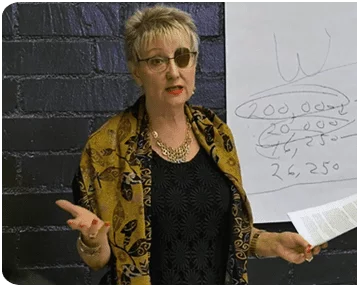
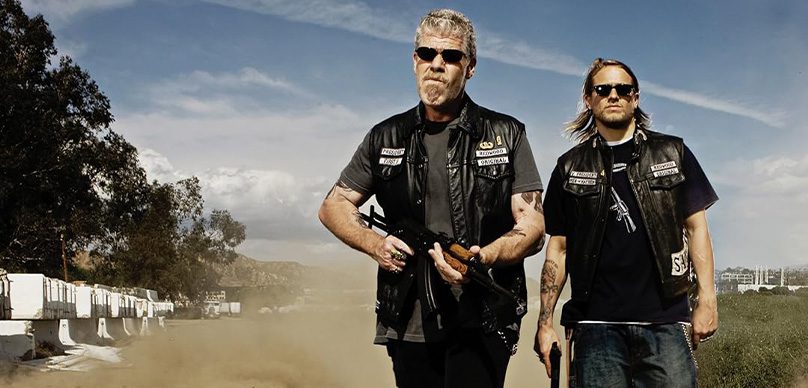
On today’s episode, we welcome Sandra Leviton, a television development executive turned producer and writer who has worked on shows like Sons of Anarchy and It’s Always Sunny in Philadelphia, and now runs her own production company while developing feature films. Her journey is one of evolution—moving through different corners of the industry while learning how the business really works behind the curtain.
From the very beginning, Sandra knew exactly where she was headed. There was never a backup plan, never a moment of doubt about her path. She started young, working in theater and cable access television, eventually landing in Los Angeles with a built-in network from her college community. That early support system became crucial, because as she makes clear, no one truly builds a career in this industry alone. Relationships, connections, and shared growth are part of the foundation of any long-term success.
Her early career is a reminder that the path into filmmaking is rarely linear. Sandra began in reality television, working on shows during a time when that side of the industry was exploding. It wasn’t glamorous, but it was opportunity. From there, she transitioned into agency work, balancing both reality and scripted television before fully stepping into the scripted world. That movement between formats—reality, scripted TV, and eventually film—highlights something many filmmakers overlook: the industry is fluid, and your path can shift as long as you stay in motion.
Her time at FX became a defining chapter. Working during what many consider a golden era of television, she witnessed firsthand how shows were developed, pitched, and brought to life. She was there as projects like Sons of Anarchy and Louie took shape, and she saw how the business evolved from more open pitching environments to a system increasingly driven by established talent and recognizable names. As she explains, what once allowed scrappy creators to break in more easily slowly transformed into a more competitive, gatekeeper-heavy process.
That shift is especially clear when discussing how television differs from film. Many filmmakers assume the two operate similarly, but Sandra makes it clear that television is still deeply rooted in a structured system. Unlike independent film, where you can create, distribute, and build momentum on your own, television typically requires navigating a funnel of agents, managers, networks, and executives. Even success stories like It’s Always Sunny in Philadelphia had access to industry connections that helped them break through. The lesson is not to be discouraged, but to understand the system you’re trying to enter.
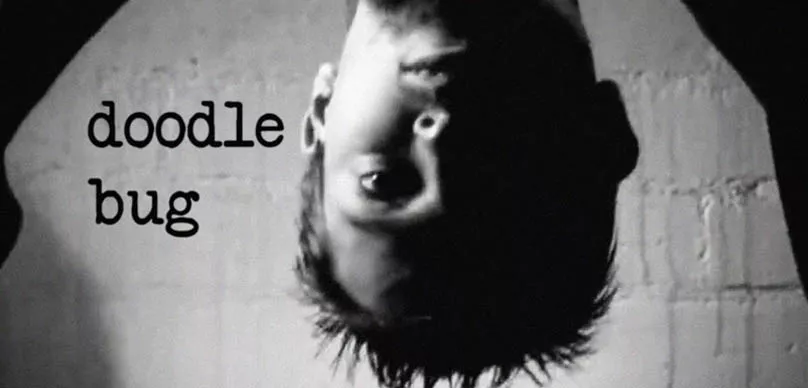
After years in development, Sandra made the conscious decision to pivot. She launched her own company, focusing on producing and writing feature films, where she could have more creative control and build projects from the ground up. Her short film Zone 2 became a stepping stone—proof of concept, creative expression, and a way to re-engage with the hands-on process of filmmaking after years behind the desk. It’s a move many filmmakers eventually consider: stepping away from the system to create something on their own terms.
One of the most practical insights she shares is about strategy. Too many filmmakers pour resources into projects without thinking about the end goal. Shooting a television pilot, for example, may feel like progress, but if the intention is to sell it into the traditional system, it will likely be redeveloped from scratch anyway. Instead, she emphasizes focusing on writing, building a strong portfolio, and understanding how the industry actually evaluates projects. It’s not just about creating—it’s about creating with purpose.
Sandra also speaks candidly about the realities of building a career. There is no such thing as overnight success. Behind every “breakthrough” is often a decade of work, relationships, and persistence. She stresses the importance of networking—not in a transactional way, but in a genuine, human way. People can sense when they’re being used, and the strongest connections come from authenticity. In an industry built on collaboration, those relationships often become the bridge to future opportunities.
Perhaps the most grounded advice she offers is also the simplest: keep creating. Whether it’s writing scripts, producing small projects, or experimenting with content online, the act of doing the work is what builds skill and visibility. Today’s technology has removed many barriers, giving filmmakers the ability to create and share their work instantly. The only real limitation is whether you choose to use it.
In the end, Sandra Leviton represents a filmmaker who understands both sides of the industry—the system and the independent path—and knows when to navigate each. Her journey is a reminder that success in filmmaking isn’t just about talent, but about strategy, relationships, and the willingness to adapt as the industry evolves.