Hollywood has always sold aspiring filmmakers and performers the fantasy of being discovered. You write the perfect screenplay, perform at the right club, meet the right producer, and suddenly someone gives you permission to have a career. But Don Barris built his career around a completely different philosophy: if nobody is coming to discover you, create something they can’t ignore. Don is a comedian, filmmaker, producer, podcaster, longtime Comedy Store performer, and one of the creative forces behind the cult comedy Windy City Heat. His journey through Hollywood is a fascinating example of what can happen when creators stop waiting for traditional opportunities and start manufacturing their own.
Don’s path didn’t begin with a carefully designed filmmaking career. He was performing stand-up at the Comedy Store and gradually realized that nobody was going to magically walk into the room, recognize his talent, and put him in a movie. While hosting the Comedy Store’s potluck night, he noticed something interesting about audiences. Some of the biggest laughs weren’t coming from the polished comedians. They were coming from unusual personalities—the unpredictable characters who seemed completely unlike everyone else. Don began assembling some of those personalities into his own show, originally called Simply Don. Instead of waiting for Hollywood to create a vehicle for him, he started building one himself. The project developed for years before Jimmy Kimmel eventually noticed what Don and his collaborators were doing.
That opportunity took far longer than most aspiring filmmakers would expect. After leaving Michigan for California, Don made a commitment that he wasn’t going to quit. There were periods when his career was going nowhere. He was even kicked out of the Comedy Store and spent stretches of more than six months living in his car. But he continued performing and developing his material. Most importantly, he kept working on the strange comedic universe that would eventually become Windy City Heat. Don says it took 11 years from the beginning of that process until the movie was finally made. That’s the part of filmmaking careers audiences rarely see. They see the finished film, festival premiere, television appearance, or successful deal. They don’t see the decade of experimentation that came before it.
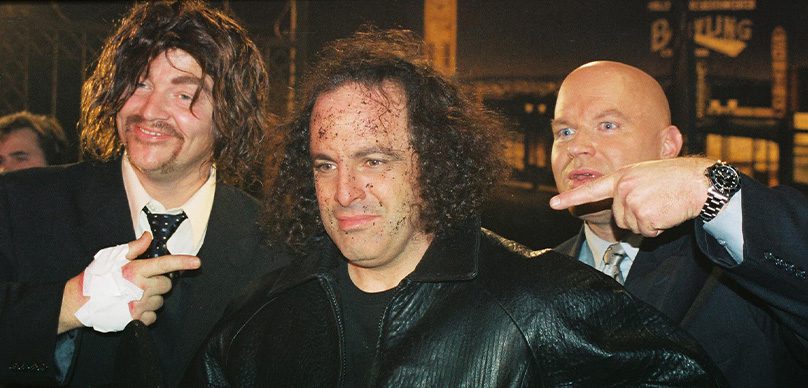
Jimmy Kimmel eventually recognized the potential in what Don had created and wanted to turn it into a movie. The result was Windy City Heat, one of the strangest experiments in comedy filmmaking. The premise essentially placed Perry Caravello inside a movie without fully understanding that the entire production was an elaborate prank built around him. Cameras could exist naturally because Perry believed he was making a legitimate film, while additional footage could be explained as behind-the-scenes coverage. Don describes the concept as the reverse of Andy Kaufman: instead of one performer playing a trick on the entire audience, practically the entire audience understands the joke while one person doesn’t. That concept turned Windy City Heat into something sitting somewhere between a feature comedy, mockumentary, hidden-camera experiment, and real-world performance.
From a filmmaking perspective, the production created an unusual challenge: many moments effectively had one take. When you’re shooting an elaborate prank involving someone who doesn’t know exactly what’s happening, you can’t simply reset the scene and ask everyone to perform it again. Don specifically remembers moments like the snack-table sequence because nobody knew precisely how Perry would react. If he suddenly realized something was wrong or refused to continue, the entire setup could collapse. That unpredictability became part of the movie’s energy. Instead of controlling every performance in the traditional filmmaking sense, the filmmakers created scenarios, positioned cameras, established the world, and then allowed reality to provide the reaction.
What happened after the movie was equally unexpected. Windy City Heat developed a passionate cult following, helped enormously by Jimmy Kimmel, who Don says would buy cases of the movie and give copies to people he thought would appreciate it. Eventually, filmmakers and performers began discovering it through word of mouth. Don recalls Quentin Tarantino enthusiastically discussing the movie and introducing Eli Roth to him backstage at Jimmy Kimmel Live. Jack Black also became a supporter of Don and the Big Three. For independent filmmakers, there’s an important lesson buried inside those stories. A movie doesn’t always find its audience during its initial release window. Some films slowly develop reputations because passionate viewers become their marketing department, repeatedly introducing the work to other people.
Don’s experience also demonstrates how much the filmmaking business has changed. He became increasingly interested in podcasting after watching creators such as Adam Carolla and Joe Rogan develop direct relationships with their audiences. To Don, the internet represented something filmmakers and performers previously didn’t have: their own distribution and promotional infrastructure. Instead of creating a pilot and hoping an executive chooses it, creators can make shows, podcasts, videos, and other projects themselves. Those projects can attract audiences, and those audiences can eventually support larger work. The principle is essentially the same one Don followed before Windy City Heat: don’t build your entire career around waiting for somebody else to say yes.
That mindset becomes especially relevant when Don talks about his plans to create his own entertainment network. He imagines an operation capable of producing podcasts, short-form videos, longer shows, pilots, and eventually movies. Because of his years working in comedy, he also has relationships with performers who might normally cost productions enormous amounts of money but are willing to participate because of those personal connections. That’s another practical filmmaking lesson that rarely receives enough attention. Independent production isn’t only about raising money. Relationships are production value. The people you’ve worked with, helped, entertained, and built trust with can sometimes give a small production access to talent and resources its budget could never otherwise afford.
The career of Don Barris isn’t a traditional roadmap into filmmaking, and that’s exactly why it’s useful. He didn’t follow the standard path from film school to assistant job to studio project. He created comedy, found unusual collaborators, developed a concept for years, connected with Jimmy Kimmel, helped turn that concept into a cult movie, and then continued experimenting with podcasts, pilots, live shows, and digital content. The larger filmmaking lesson is simple: make your own opportunities. Create the pilot. Shoot the short. Build the audience. Develop relationships. Keep producing work even when nobody appears interested. Sometimes the project that finally opens the door is the one you’ve been quietly building for eleven years.