Every great documentary begins with passion — and for Jim Toscano and Danny Gianino, that passion came in the form of an underdog story worthy of the big screen. The Detroit-based filmmakers, who had spent years working on automotive and corporate projects, found their creative spark reignited through The Pretender, a documentary about Mike Kunda, the world’s number one Rocky fan. The film explores how Rocky became more than just a movie for Mike — it became a way of life. Blurring the line between man and myth, the filmmakers set out to uncover where Mike ends and Rocky begins, capturing a story of obsession, identity, and the power of cinema to shape who we are.
When Toscano first met Kunda on the set of Rocky Balboa in Philadelphia, he was immediately struck by the uncanny resemblance — Mike not only looked like Sylvester Stallone’s iconic boxer but spoke and moved like him too. What began as an idea for a short profile piece quickly evolved into a feature-length documentary once Toscano and Gianino realized how deep Kunda’s devotion ran. From his childhood in Philadelphia to his current work as a professional Rocky impersonator, Mike’s life mirrored the determination and heart of his hero. Yet, as filming continued, the story became more complex — a portrait of a man living in the shadow of his greatest inspiration, trying to balance fandom with his own identity.
Making The Pretender wasn’t without its challenges. Toscano and Gianino faced the unpredictability of vérité filmmaking — never knowing what surprises would unfold as they followed Mike through his daily life, from visiting his parents to sending a heartfelt package to Stallone himself. Some days felt spontaneous and electric, while others required patience and delicate handling, especially when Mike would slip into what they jokingly called “TV host mode.” The filmmakers made it a rule to avoid anything that felt staged, ensuring the final cut remained raw and authentic. Their respect for Mike’s story is evident in every frame, as they treat what could have been a quirky premise with sincerity and depth.
For the Detroit duo, The Pretender was also a personal turning point. It gave them the freedom to break from corporate constraints and create something purely from passion. Unlike client work, there was no approval process, no brand message to hit — just storytelling in its purest form. The experience taught them to trust their instincts, stay flexible, and embrace uncertainty, lessons that carried into their later projects. It was also a reminder that compelling stories aren’t always found in glamorous places — sometimes, they’re found in the dedication of an ordinary man chasing an extraordinary dream.
Ultimately, The Pretender is about more than fandom; it’s about the universal desire to become the best version of ourselves. Just like Rocky, Mike Kunda fights for something bigger — not a championship belt, but purpose, belonging, and the courage to live with heart. Toscano and Gianino’s film captures that spirit beautifully, proving that you don’t need Hollywood budgets to tell a powerful human story — only authenticity and love for the craft.
Right-click here to download the MP3
Alex Ferrari 1:49
Enjoy today's episode with guest host Dave Bullis.
Dave Bullis 1:54
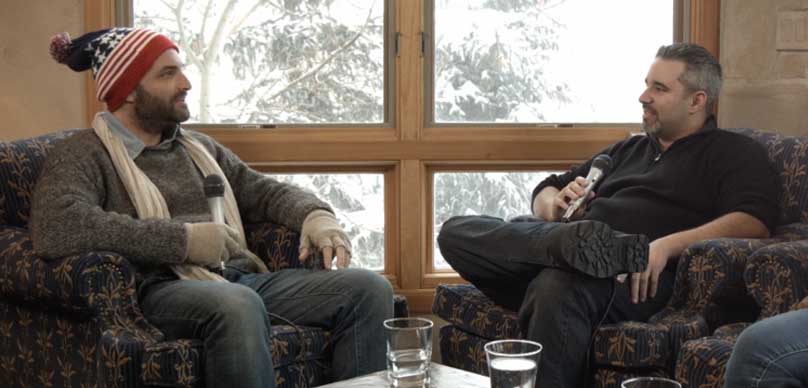
You know, on this week's episode of the podcast, I have two Detroit filmmakers. They're both documentary filmmakers. They did the, you know, the small business, big business thing, and now they're here with a documentary called the pretender. And we're going to be talking about the film that we're going to be obviously, two filmmakers are that came on to discuss called the pretender. It's a movie about a person named Mike Kunda who has an obsession with Rocky and he's a number one rocky fan. And it's kind of like, Where does Mike end and rocky begin? Or maybe that's vice versa. It's a documentary that I've heard great things about, and I'm really very glad we could have them on. So without further ado, with guests Jim Toscano and Danny Gianino.
Jim Toscano 2:37
Well, Danny and I are in Detroit here, and we started, because we're in Detroit, working on a lot of automotive related projects for social media, television, you know, commercials, that sort of thing. And this was our first and biggest passion project, was working on the pretender.
Dave Bullis 2:58
So, you know, being from Detroit. Is there a pretty big film market or industry in there for, you know, independent films,
Jim Toscano 3:09
Not really. I think that there's a big production community based on the automotive manufacturer. So there's a lot of automotive work, and that's, that's where most of the industry is, but I think, you know, people have passion projects. A lot of them are usually about Detroit, almost, yeah, so ours is kind of a, I felt like we're a little bit alone working on a movie that's a documentary that's based in Philly. So, yeah, there's not a huge documentary community here.
Dave Bullis 3:42
It was interesting because a couple years ago, I actually met a She was a former FBI agent, and she actually came to Philly to do this, like seminar about, you know, how to do real effects and movies and stuff. And she was actually from Detroit, and she was mentioning how she was trying to get the film tax credits either upped or back into the city itself, so more people would film there, because she said there were so many cool locations that you could film at, but most people didn't know about them outside of Detroit.
Danny Gianino 4:15
Yeah, about five years ago, I'd say there was a great tax incentive here for filming, and they cut it a few years ago. And since then, pretty much all the production has left the state, really, which is unfortunate, because there was a pretty good community that was forming, and a lot of people were getting, like, on the job training, basically. So it was kind of a cool opportunity while it was here.
Dave Bullis 4:42
Yeah, and that's kind of what happened here in Philly. You know, there is a tax credit in Pennsylvania, but it all goes towards Pittsburgh, just because it's cheaper to actually the union, the union fees and the taxes are cheaper in Pittsburgh. Wow.
Jim Toscano 4:56
Wow. Okay, well, rocky still makes his way to Philly, though.
Dave Bullis 5:01
I think they it's because I think if they made a Rocky movie and it wasn't in Philly, I think Sylvester solo would know, it would just be so disingenuous and so and so, you know, cold, you know,
Jim Toscano 5:14
I could almost, there'd probably be riots at the steps over there in Philly.
Dave Bullis 5:19
Well, the city's been rebuilt after the Super Bowl win. So, so, you know, now starting to get back up on his feet. Now, that's funny, but, you know, just making your films in Detroit, you know, you mentioned that it's a lot about the automotive industry. So is it? Is it like a lot of in your experiences, a lot of like stuff about, you know, filming it for, like, Ford and some of the bigger automotive plants, is it sort of like, like a documentary about the history of companies like that.
Jim Toscano 5:51
It's been like, you know, we did a lot of work for TM and, you know, some Ford and a lot of Chrysler work. And, you know, there is, like, documentary style videos or projects that we've done for them, and you know, it really lungs the gamut, but it all seems to come back to automotive here for the most part. But we also did a documentary for Detroit Public Television, like the local PBS station, about Detroit architecture and some of the architects that came up here in Detroit that was the next project to do
Dave Bullis 6:30
So so, you know, that's pretty cool. So, you know, when you sort of, you know, actually making these documentary films, you know did is that something you wanted to cover, like you wanted to actually like, just cover your town, is because, you know, is it because you had, like, you know, connections, or the right at the right time, the right place, you know what I mean, like, you kind of knew somebody, or, and you could, you know, hey, I could shoot here, you know, or did you kind of, like, you know, have an idea and kind of going that way?
Danny Gianino 6:57
The architecture doc, actually, we knew somebody at EBS, we're looking for a company to take it on, and she approached us, and we just kind of took it as kind of something that we could do to keep ourselves making films, you know. And it was a totally new subject matter, which was kind of cool too, because we learned a lot, and it was good experience.
Dave Bullis 7:22
So, when, so, when you started, actually starting out, you know, making all this, you know, when was the, you know, the kind of, like, the light bulb that went off that this is something you really wanted to start pursuing even more.
Jim Toscano 7:37
I think, I think working on the pretender is what really got us, got us going, got us motivated to do more of it. I mean, it's in the subject matter, and we found ourselves like pouring our heart out into the shoot and mostly get it. I mean, you know, that was, it was cool to really have it. You know, it sounds like such a light premise, you know, like a guy that acts like Rocky and is a super fan, but dealing with someone's personal life and having their story in our hands was like, really made us, like, think about every single edit and, you know, every just the can how people perceived it and and because it was the longest piece that we worked on, you know, it's an hour long, just to keep the energy of it up, and the intro For the viewers in it, there's just a lot that we learned and loved about making the pretender that really got us hooked and got us hungry. We actually did the pretender. First got it done, and as soon as it was finished, we started the architecture doc. So it was, it was great. We rubbed that.
Danny Gianino 8:38
Yeah, I think another thing that was cool about it was it provided like, a break from the corporate industry, stuff that we were working on, and it was really refreshing to not have any constraints that, you know, we were basically like creating everything ourselves. And, you know, we weren't answering to a client, and we were just trying to make like, the best thing we could, you know, and that was really, I think, that kept us going like, it helped not not only like, become better filmmakers, but become better in the industry that we're in.
Dave Bullis 9:14
So when you say, you know, corporate, you know, documentaries or corporate videos, you know, did you work, work for like, a single corporation, or were you like, you know, kind of going to different corporations, and they would kind of tell you, you know, what you wanted, or, I'm sorry, what they wanted, and then you would kind of make something off of that,
Jim Toscano 9:31
Yeah, that's, that's exactly, pretty much the process, you know, they'll, they'll have a concept that they'll present to us, and we kind of put our our spit on it, or our point of view into it, and, you know, kind of give them back our treatment of it, and and then we kind of, you know, collaborate with the, basically, the advertising agencies and the auto manufacturers to kind of collaborate and come up with something that is. You know we like, and we're proud of the agency likes, and you know the client also likes so and we have to make sure it's all legal, right? Everyone's wearing their seat belt.
Danny Gianino 10:18
Yeah! We when you put your heart out into, like this video, and maybe it kind of goes, and you finally get goes into, like, an emotional direction, or something like that. And then you could show it to the client, and they could just be like, well, actually, I think we should just cut this at half and go to the logo, you know. So that's where, like, working on the pretender was, a lot of fun because we really got
Jim Toscano 10:45
Expressers, yeah, and, you know, that's also like, part of the weird part of it, like, I've said this before, is like, you know, we're used to working on projects where someone requested it and hired us, but to sometimes it would Hit us in the middle of this editing the pretender, like no one asked for this. How do we know anyone wants that no one's working on this? So it was, like freeing that sort of weird, you know, like, what are we doing here? I mean, because you spent a lot of time on a lot of pages and the edit suite, so it was kind of scary sometimes because, because no one asks for it. So in the beginning, we didn't even really know we had anything, yeah, you know, so, but now we do.
Dave Bullis 11:34
We, you know, as we talk about, you know, corporate videos, I I've had a couple of guests on who used to do that for a living as well. Some still do some kind of dropped out of it, and I just wanted to get your take on it. You know, do you ever go into a meeting with a client and they would say something like, Well, why would I hire you when I could get my kid to do it with his iPhone? Have you experienced that?
Jim Toscano 11:58
No, not really. I mean, no, we have, I mean, because I think we offer, like, a level of quality and creativity that that we're not really on that.
Danny Gianino 12:13
Luckily, it hasn't happened. I get, and I get to be like, maybe a really, like a small business might have that view where a lot of, like, the auto manufacturers, you know, have the ad agencies that are constantly working with video companies. And so there's, you know, we're not, like, just one video for like, you know, like, but playing card shop down the street or whatever, you know, what I was gonna say, magic, uh, gonna say magic.
Jim Toscano 12:47
No, I think, like, I don't, luckily, no, it doesn't really come up. I think, like, like I said, I think there's, like, a level of quality and professionalism and and, you know, like, with a lot of our clients you need experience working with those clients, because they are a big client, and there's different ways to communicate with them, and I don't, luckily in our industry, it's not still, not that easy. You still need production support and and a touch of quality,
Dave Bullis 13:23
Yeah, because, I mean, whenever somebody brings that up, you know, like, like, for instance, I have a friend who runs a social media agency, and, you know, he goes in there, and some people would say to him, like, Hey, I could have my kid do this. And he would say, you know, and rightfully so. He would say, well, your kids not selling business to customer, or business to business. Is your kids going in there and, you know, taking photos of himself shirtless in the mirror or something he he's not trying to do any, you know, sell your company. So it's kind of like, you know, the same thing where I've had people say that to me, you know, where I used to dabble in this. And I had somebody come up to me before and say, Well, you know, I could just get my kid to do this. And it happened, and I said, Well, you know, best of luck to you. And I gave him, I still gave him some pointers to give to his son. Well, the kid actually ended up calling me up and asking me for help. And he was like, listen, he goes, I've done this. And blah, blah, he's just, we're going, I mean, just running the gamut of the edit. And he talked about some of the shots that he did, and some of the about, you know, some of the stuff he took wasn't, the audio was terrible, or some of the stuff he took he didn't, you know, he took out his phone and he just used auto iris and auto focus, and so, you know, yeah. And so what happened was he tried to, you know, you know, being, you know. And Danny, you know, being an editor. You know, that old phrase, you have to polish a turd. So he was trying to polish this turd, and he was trying to figure out how to do all this. So he called me, and I said, Listen. I said, here's what you do. Tell your dad just to cut me a check and we'll reshoot this whole thing. And that was the and it was, we. Actually did, ended up reshooting the whole thing, and it was, it was still, like, not the whole thing, with the whole subject matter, I still, he told me, was about one thing and then it was really about another. But that's why I kind of see, you know, I'm thankful that you guys haven't seen that yet or experienced that, because, like, you know, it's just, it's so, you know, so redundant to have to keep going over. You know what I mean? Like, while your kid doesn't do this, you know what I mean, your kid doesn't have a pro level grade, whatever. You know what I mean?
Jim Toscano 15:29
Yeah, absolutely. There's so many variables and unknown that, yeah, there's a lot that comes with experience. So, yeah, it's just, it's a, it's a nice thing for them to say that it's not realistic. It's not that easy.
Dave Bullis 15:44
Yeah, yeah. And especially when they they don't realize, because, you know, all amateurs forget about the the audio. That's always the end point of all this. Yeah, exactly. Yep, yep. So, you know, we talked about, you know, you mentioned before about the pretender. I wanted to get into that, you know, how, how did you guys end up, you know, getting involved with the project?
Jim Toscano 16:07
Well, I met, I met Mike just by chance, on the set of Rocky Balboa, which is what rocky six, right? So I met Mike there. I never knew anything about him. I met him there, and everyone was just kind of gravitating towards him, because he looked a little bit like fly, he sounded a little bit like fly. And I just was one of those people that kind of gravitated toward them, hung out with them, workable hours and and then the funny thing was, you know, I was in town in Philly for the week, and he was on the local news, like every night, you know, where they did those like local, you know, Stallone back in in Philadelphia, filming Rocky. And no one's happier than a local Mike kunda and and this happened every night. And he was, like, etched in my brain, so I kind of just kept up with him for a couple years online. And then he wrote a book about his about his life, called cue the rocky music. And I always thought about doing a like, a little, maybe five minute video about him. And when the book finally came out, I said, Well, you know what, I'm going to go ahead and do this before someone else does because I thought it was just a cool story. And once I got out there, interviewed him and his parents, I realized, you know, that this, this needed to be more than just a five minute video. Like this was a kind of a deep and rich story and a fun story. And, you know, honestly, I was, I was a little skeptical, you know, like, about Mike's level of like, fandom. I heard all these stories and all that you know about, like, Oh, I've liked this. So 10 years old and and it was kind of hard to believe, but once we saw Mike and his house, and there was proof everywhere, you know that, and you'll see it in the film, that he really was this, this committed to Rocky, and sort of becoming Rocky. And it was just, it was a really, really impressive and it just kind of snowballed after meeting his parents, really, especially his father.
Dave Bullis 18:16
So you're both on the set of Rocky Balboa. So, you know, well, I assume that that Mike was probably an extra. So, so were you working on crew at that point Jim?
Jim Toscano 18:28
No, I was in a totally different I was working in advertising, and really haven't, hadn't shot anything yet. I was just still sort of dreaming about, you know, shooting documentaries and stuff. And Mike was not an x ray either. He was just standing there with a giant painting that he painted, and it was just been super fan there trying to get a glimpse of Stallone. And I actually had the weekend off from my my job in Philly, and it was just hanging out. And just by chance, ran into him, and kind of never forgot about him. It was totally random that I met him.
Dave Bullis 19:04
You know, I've seen photos of Mike. He's somebody you wouldn't forget, because he does look like, he does look like Rocky from Rocky one.
Jim Toscano 19:12
Yeah, totally, totally and, you know, the security guards were like, thought he was so cool because he sounded like fly. They were getting a kick out of them, and they would give them tips, like, you know, stand right here. Slides coming in an hour. Don't move, you know. So I hung out with him because he started to get, like, the inside scoop on it all.
Dave Bullis 19:32
Yeah, you know, it's funny how if you look and talk a certain way, some people, some people probably may thought he's even sly's Kid,
Jim Toscano 19:40
Yeah, they start to treat them like that. And, I mean, you know, while we were filming, and especially while we're doing the film festivals and going out with Mike, I mean, he comes to Detroit, we are in Jersey City last, last two weeks ago. And like, the hotel worker toddy was like, you know, they're that sure, is this sly? What the hell is this guy? And the guy said, like, you know, one guy didn't know anything. And he said, man, does anyone ever tell you, like, size alone? And, you know, he laughed and everything. And one guy, you know, I was shutting him up, and I did say, like, Yeah, I'm doing this. I did this documentary, and this impersonator is going to be here. And he saw Mike, and he said, Man, you know, Jim said, You look like Sly, but this is unbelievable, man. And you know, Mike signs autographs and stuff because he looks so much like,
Dave Bullis 20:39
Yeah, he really does. And, you know, that's why I think this documentary, and I'm hoping to check it out at first glance. Well, when this podcast airs, it's gonna be this weekend, so I'm gonna refer to this weekend in Philly. But, you know, it's, it's such an interesting, you know, a topic because now, because it's from Philly, obviously, but it's also incredibly cool how, like a movie, can touch someone's life. So, so when, when Jim, when you got there and you started, you know, checking it, you know, just, you know, meeting Mike and meeting his family, and you started, like, talking about making this documentary. What was Mike's response to this?
Jim Toscano 21:21
He was very enthusiastic about it. I don't, yeah, he's very enthusiastic about it and very hopeful, like he was almost like a good producer on this thing, because he kind of, you know, there were things that he wanted to cover, and he knew that we wanted to cover, you know, if he kept us really up to date on, like, Hey, I got a gig coming up. You know, as an impersonator, you might want to check this out. And there's a scene in the movie where he sends a package to Sylvester Stallone, and he waited to do that until, you know, we were able to come down and meet up with him. So he was very, like, keen on that. I don't think, I don't think it Danny can speak to this too. I'd be cool to hear what Danny Says, but I don't think it turned out the way he expected it would. But I know he likes it, but I don't think it was what he thought it was going to be like. What do you what do you think? Yeah, I think Mike, he almost was playing post a little bit when we were filling him. And so we would kind of separate that stuff out from when we were getting, like, you know, natural might, or like, TV host Mike, you know.
Danny Gianino 22:33
And so there was one thing in the edit that we kind of made a rule, and we're like, anytime we get a hint of this, like that, he's playing it up a little bit for camera. We, you know, we didn't include it because it just wasn't honest, you know, yeah, yeah.
Dave Bullis 22:47
By the way, Danny, I like that expression TV host Mike,
Jim Toscano 22:52
It was, it's true, yeah, it's true because, you know, he says that, I know. And when we interviewed him stuff, and, you know, the rocky character when he kind of slips into it gives them competence. He said that. And so we tried to include those rare moments when there was less Rocky and more Mike, you know, yeah, because, I mean, the cameras on you like, I don't blame them. Everyone acts a little different. But when you're, like, a rocky super fan or impersonator, you really,
Danny Gianino 23:23
He's really good with people, and he's really good on camera, you know? So it was helpful in a way, and in some ways it made me went a little bit too far, right? You have to peel back the layers a little bit, and, you know, see what's really going on.
Dave Bullis 23:40
Yeah, it's so true, when the camera does get on you kind of change everyone. It happens to everybody. I mean, you know, look at, I guess, I guess, like some of those reality TV shows, although that's probably a bad example on my part, but you know, you know what I mean, it's kind of like, you know, it's funny. I used to have a friend who did reality TV, and he said, he goes, they don't even, like, they're not a bashed anymore. He's like, they just look for the biggest train wrecks they could find. And he's like, they throw them into a room together. And if, if there's no powder keg itself, he's like, then they'll start, you know, feeding them drama or lines or something, right? But, you know what I mean, but, but, but, you know, he's always, they're always hoping for just, you know, getting in people who have, you know, a chip on their shoulder, or they get a little drinking them, and all of us, you know what I mean. But see, it's so true that we will do, do act differently. But again, I don't, I don't know if that's the best, the best example,
Jim Toscano 24:34
Yeah, right. Well, we were talking about it too, like, you know, this really is, and, you know, we were able to really peel it away and get, get some really natural moments, you know, in this film. And like we're talking like we what that Lady Gaga documentary recently? And like, I don't know what seems like you can't make a real documentary about an Amos person anymore. You know, they're two. Guarded, you know, like they put on, like, a, I don't know where we did with Mike, and I would love to see, like, like, I think our green project would be to, like, do a Stallone or, you know, just somebody, but really, like, real,
Danny Gianino 25:17
I mean, like, everybody's acting to some degree. And then, when you're trying to be, you know, something about somebody who's job, it is your professional actor. Say, how do you get that? How do you Yeah,
Jim Toscano 25:29
It was fun. It was a fun challenge. Shoot in at it,
Dave Bullis 25:34
By the way. You know, speaking of the Lady Gaga documentary, I actually had on one of the Corporate Co directors, I think she was on the podcast. Oh, really, yeah, yeah. It was actually, oh no, I was gonna say it was actually a really cool interview, and she actually touched on what you were saying. Because it got to the point where Gaga actually didn't even know that they were still filming. So she's filming. One day, she had a camera set up, and everything gone came over and said, you know, we're rehearsing. You can't be here. And she's like, No Gong, I remember me. She's like, I'm filming the documentary about you. And she goes, Oh yeah, you Oh, I forgot. Yeah, okay.
Jim Toscano 26:12
Oh, how funny. How funny. Yeah, that's that is interesting. I'd like to hear more about the process. Have to go back and listen to that one.
Dave Bullis 26:23
Yeah, and I'll link to that in the show notes. Everybody to really, really cool interview for the podcast I get, I've been very fortunate, Jim, to have, like, some really cool people on here, and, you know, just to, you know, continue about, you know, the pretender, you know, what were some of the, you know, biggest, you know, obstacles in in filming, you know, like, some of the, you know, some of those days where you get to set, we were, well, in your case, you know, you go to film Mike and his daily life, and something completely unexpected happens that kind of, you know, just throws everything in disarray. So, you know, what were some of the biggest challenges or obstacles you, you faced when, when you were making the film?
Jim Toscano 27:00
Well, I think, like, like, what you just said about how sometimes you you show up and you're throwing a curve ball, that was the most fun. Like, there's and, you know, those are all like, those moments are all in the film. Like, whenever, like, he's really surprised moments, what happened that was the most fun to shoot, and it was the most interesting to like include. And, you know, there's some moments in the film where, like, some things happen that no one saw coming, and they were very those moments were very revealing about Mike and and about the subject matter. And you know, how tough things can be. Add a lot of drama when there was a curve ball thrown. I think, I think the hardest part, the most frustrating parts, were like what Danny said, when it felt more scripted, and it was almost like Mike was too prepared, and it felt a little scripted. And then that, especially my first day shooting him. We actually filmed Larry Holmes, and Mike was Mike, I don't think we, we're still trying to figure out how this would go, like how we would shoot this documentary, and and Mike kind of led that interview and hosted it, and it was, it didn't even make it into the film, because it was, it was a little unnatural. It was a little, I don't know, how would you say, what was it a little like, off topic.
Danny Gianino 28:26
Yeah. I think Mike maybe because he had kind of probably had, like, an agenda of what he wanted to talk about or what, yeah. But really it's about him, yeah? So he kind of flipped it like that, and have to figure out a way to get it back on track, you know, where it was really about Mike, he would, he would be ready right on. He'd be ready, like questions for their homes and questions, you know, yeah, so.
Jim Toscano 28:52
And another thing that was we learned, and that was, Cook was talking to other people, are interviewing other people while Mike was around. They were kind of top like, you know, I thought like they they didn't want to praise him too much, or they didn't want to be too critical of him while he was there. So that was one thing that we learned right away to kind of, you know, like, all right, Mike, we're gonna interview this person. You can kind of hang back so that there was a little learning curve there too, but, uh, so you but it was fun, man. I mean, it was, it was fun. Like anything that was beside that, like when it got too strictly, that was a little cup. But any curve balls, or anything besides that, was just awesome. I mean, it was just adrenaline.
Danny Gianino 29:37
And even just going through all the footage, like the amount of energy that Mike has. It was, like, contagious, like, like he had so much drive and passion for Rocky that he'd be editing it. And you get, I get so sucked into just like watching him, you know, be so excited about meeting Larry Holmes, or doing this or doing that. That was a really cool.
Speaker 1 29:57
Yeah. We'll be right back after a word from our sponsor. And now back to the show.
Dave Bullis 30:09
When you mentioned Larry Holmes appearing, I just then thought he, you know, Mike, went to TV host Mike, like Danny said, and he just kind of opens the door and goes, Oh, Larry Holmes stopped by. What a shock.
Jim Toscano 30:21
I I didn't see you there. Welcome, yeah, yeah, yeah.
Dave Bullis 30:30
You're like, oh, Larry, you know you stopped by suddenly. I didn't expect to see you. It's like,
Jim Toscano 30:36
I know, yeah, it was, it was my first day, too. So it was a little we're getting to know each other, and it was still like, I don't know, it's like I said earlier, it was just amazing that this was all real, that Mike was this committed and passionate about this character. It was, it was, it was shocking. It took a minute to, like, absorb it all, you know. And like, you know, there was, you know, he talked about how he saw rocky three the summer it came out, like 60 something times, yeah. And you're like, Yeah, okay, that's exaggerated, but he had, like, the hash the tally marks, you know, like in his house, where every time he saw it, he would knock off a tally mark. And there, you know, there was, you know, proof he saw 60 something times. And there's many other examples like that, where they're in the film. And like, you can't deny the level of passion that this guy had for him.
Dave Bullis 31:34
Yeah, and that's why I think this documentary, I think it's, it's not even just you know. Is it you know? Is it it's you know, it's, you know, funny, it's, but I also think it's, you know, it's such a great story about a guy who's so touched by this character, you know what I mean? And I kind of get that from the trailer, again, I haven't seen it yet, but I kind of get that from the trailer. This is, like, you know, a really good story, you know what I mean, about just this guy growing up in Philly who's very touched by a character who, you know, is also representing Philly,
Jim Toscano 32:04
Yeah, and, you know, it's like, hey, it's a it's a goofy premise. It could be considered a goofy premise, Aki, but Danny and I, and, of course, Mike, like, we took it serious. We treated it very serious. You know, number one, it's, it's this guy's life, you know, and it's his family, and they're all involved in the and it's, it's his real life. And second of all, you know, it makes a better film to take it serious, you know, with within this subculture, or, you know, you know, passion for Rocky or whatever, nothing is. You know, there's jokes in here and there's funny moments, but everything is taken serious. It's gone through a filter of, you know, a real story, and hopefully, you know, a hard fault story and an honest story. So, you know, that was, that was something that we didn't really even have to discuss. We did say it out loud, but it was something that was very obvious that, you know, in serious, serious topic, which sounds crazy, but someone's life is a serious topic, you know,
Dave Bullis 33:10
Yeah, you know, you're absolutely right, you know. It's kind of reminds me, too, of some of the other documentaries you know that have come out in recent years. Like, you know, what was it called, waiting for searching for Sugarman. I think that was it. I don't know if you guys have saw that Doc, but there's a couple of documentaries I've seen over the past couple of years where you know, the more you know, the more interesting you know you it is. You know you want to see. You know what? You know what this docs really about. Because there's always that, you know, the two layers, there's a surface level, what something's about, there's what it's really about. And then you you know, you start getting in there, and you're realizing that, you know, a lot of this is, you know, this is serious, because it is, you know, people's lives, people's Well, you know, with their comings and goings. And in you know, and in this case, you know is about, you know, this guy just, you know, living his life.
Jim Toscano 34:00
Yeah, absolutely. And searching for Sugarman, that was a Detroit, no shot in Detroit.
Dave Bullis 34:06
See, look at that. Call back. Look at that. Okay, yeah, exactly. And close, but, but, you know, I'm going to link to the trailer everybody in the show notes. And again, you can see this at the first glance Film Festival, which is coming up here in Philadelphia. Do you know what time it's playing off the top of your head? Jim, because I don't.
Jim Toscano 34:30
Yeah, Sunday at two o'clock.
Dave Bullis 34:34
And I'm going to be linking to that everybody in the show notes. And first glance Film Festival is always a pretty good festival here in Philadelphia. It's you know, and it's always you know does well. And like I was saying to Jim and Danny before last year, I had on, you know, three Philly Philadelphia filmmakers. And now, you know, I'm glad to be able to keep you know, you know, a relationship with the festival. And you know, being able to talk to, you know, awesome. Like you Danny and you Jim, and it's just really cool. It's really, you know, really cool being able to just to meet, you know, different people out there, to actually doing stuff. So, you know that that's the whole reason I started this podcast was, you know, no real theory, theoretical only, like, actual stuff. You know what I mean, like, people actually out there doing it, getting their hands dirty. You know what I mean?
Jim Toscano 35:20
Yeah, yeah. And, I mean, that's like Annie said earlier, that's what Mike did for us, man, like he went for his dreams and followed his passion, and Danny got cranked on the thing that nobody asked for and for a super coward, number one, that thought it finished out there. And number two, it's really good,
Dave Bullis 35:40
And you're just as sort of, you know, to sort of put a period at the end of this whole conversation. You know, Danny and Jim. Do you have any sort of parting thoughts or anything you want to say to sort of put a period at the end of this whole conversation
Jim Toscano 35:55
I've always been getting going. I would just say, you know, like, you know, this film is for, you know, rocky fans, and it's also for for non rocky fans. I think it's just hopefully a universal underdog story that everybody can relate to and and the biggest thing, like I said, it might be a goofy premise, but I think our hearts are in this mike is and I hope that everyone has a chance to check it out.
Dave Bullis 36:26
Danny's gonna put any
Danny Gianino 36:27
I wouldn't second that, pretty much my thoughts exactly.
Dave Bullis 36:34
So where could we will find the both of you online. Do you have any social media or any any sites?
Jim Toscano 36:39
Yeah. So thepretendermovie.com is kind of our home, home base there the pretender movies on Instagram, Facebook, and the name of our production company is free age and the website to that is free age productions.com and again, good,
Dave Bullis 37:01
Oh, I'm sorry, Jim, I just stepped on your line. Sorry about that. I about that.
Jim Toscano 37:02
No, I was just gonna say, but if people want to follow the pretender movie, the most updated is probably our Instagram account.
Dave Bullis 37:13
Yeah, you know, Instagram has become, you know, my slowly become my favorite social media site. A lot of really cool stuff, you know, you can get done on there. And you know, a lot not, not a lot of the ads and stuff like the other ones, well, for the time being. But guys, I want to say thank you so much for coming on
Jim Toscano 37:31
Well, thank you. Thanks for having us buddy.
Sign up to receive email updates
Enter your name and email address below and I'll send you periodic updates about the podcast.
LINKS
- The Pretender – IMDb
SPONSORS
- Bulletproof Script Coverage – Get Your Screenplay Read by Hollywood Professionals
- Audible – Get a Free Filmmaking or Screenwriting Audiobook