IFH 057: HollyShorts: Confessions of a Film Festival Programmer w/ Daniel Sol

Have you ever wanted to know what really happens behind the scenes at a top-level film festival like the HollyShorts Film Festival? Well, this week I kidnapped co-founder and film festival programmer Daniel Sol, tied him up in a darkened warehouse and shined a bright light on his face to get the truth out of him.

The interview might not have been that dramatic but Daniel laid down a ton of behind the scenes knowledge bombs for all you Indie Film Hustlers out there

HollyShorts! and I go way back. My first short film BROKEN played at the very first HollyShorts Film Festival over a decade ago and I’ve been friends with Daniel Sol and Theo Dumont (co-founders) ever since.

They truly care about filmmakers and were named one of the Top 25 film festivals in the world worth the submission fee by Filmmaker Magazine. 

Enjoy my candid chat with Daniel Sol from the HollyShorts! Film Festival.

Right-click here to download the MP3

Alex Ferrari 0:04
I would like to welcome to the show the legendary Daniel Sol from Holly Shorts Film Festival. Thanks for coming on the show, man.

Daniel Sol 2:54
Of course. Thank you for having me, Alex.

Alex Ferrari 2:56
So as I've told you guys before I'm a big fan of holly shorts Me Me and Danny go back over 10 years now what 10 11 12 years something like that.

Daniel Sol 3:05
It's 12 years now

Alex Ferrari 3:07
it's been 12 Oh Jesus, my God, we're old. By film my short film broken, was in his very very first film festival with Holly shorts where there was how many people in the room?

Daniel Sol 3:20
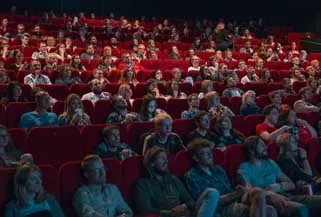
40 seat theater we had 40 seats we had 50 people or so standing room only look at the oversold crowd you know we saw what we could got him in there.

Alex Ferrari 3:28
Yeah and I remember I remember seeing the pictures you sent me I was like wow they look at the standing room only.

Daniel Sol 3:35
You picture like 50 or so folks in there. Yeah we packed it up for the little place it was the space was small but we crammed it up.

Alex Ferrari 3:41
And that was the funniest thing too is the picture I got sent was like all you can see is people like man there must be hundreds there.

Daniel Sol 3:48
You know it looks a little crazier than it was though it was at a good energy and it was very busy. But granted it was a you know 40 seats up East Hollywood hole in the wall but packed it up though we packed it up as best we could.

Alex Ferrari 4:00
And you know what and from where you started your humble beginnings of holly shorts to where it is today. And for you for those listening don't understand how big Holly shorts has gotten Holly shorts has kind of become the Short Film Festival in LA for sure. But one of the bigger films short film festivals in the country if not the world because of of what Danny and Theo the co founders the other co founder as well have done with the with the thing with the with the festival at it is like I was I guess I was invited let five years ago when we did read princess things 2010 effect that was five years ago. Yeah, yeah, we were at the we were at the GG Yeah, we were at the DGA theater at that time. And I was just like I had just gotten to LA a little bit ago after before that and I was just like, oh my god, this is holy cow like

Daniel Sol 4:54
You definitely got to see a little bit of the before and after because I mean granted you weren't there for the first year broken. You saw the pictures. You Participate you know what the process was at the time how we're all this stuff to that where you know we had you know, DGA holds you know almost 1000 people all sold out and the red carpet was crazy with all these celebrities and some good press and and you know great party the energy was high it was it was a drink you know it was definitely you see the scope of change I mean it wasn't clearly obviously wasn't that anymore It was a much bigger event we had a great great spotlight on those films which was what we were excited about and for you because you were there for us with day one yeah like being that and then being able to show your film and have that better platform oh but it was kind of you no way to see both sides to be able to do that

Alex Ferrari 5:39
Oh absolutely man and and being you know, doing the right carpet was so much fun and but the best the best experience it has I've never seen any of my work look as good as it did at the DGA because their screening room is insane

Daniel Sol 5:55
Yeah, that's very good it's a very high quality very very sound picture quality is top notch they do their tests the rejection team is great like it's it was definitely top notch or definitely top notch

Alex Ferrari 6:06
There is no question but then now you move to the Chinese Theater which is not too shabby either.

Daniel Sol 6:12
Not too bad. But once you go to that guy quality that level of quality there's only so many places you can go and if you're staying in Hollywood and you have the DJ you have the Chinese Theater you have the arclight yeah you know and those are kind of basically your main options I mean there's others yeah harmony golden other places like that but that this is they don't compare those are the toddlers for me to top and that comes for quality the size count of seats, we can actually attend the size of the venues out without getting too big I mean Dolby and having tennis places just too massive and right right you know get go that big and afford that we're not a Disney studio premiere you know we don't have a budget for a Marvel or a you know, Star Wars movie Star Wars and Star Wars you're blocking off all of Hollywood for $10 million or whatever they spent

Alex Ferrari 6:55
that was a bigger premiere that was the biggest premiere in history it was bigger than the Oscars

Daniel Sol 6:59
blocked up more than even Oscars two as far street blockage It was crazy but yeah so I mean for our for our area of where we are you know we felt have all those options we've done all those options we've done the DJ we've been at the arclight and now we felt for all those the Chinese Theater became our home and we felt was the best option

Alex Ferrari 7:17
how long How many years have you been there

Daniel Sol 7:19
this is our fourth year okay this will be our fourth year there it goes by pretty quick and we've done different things there we've had parties there and parties outside use multiple screens use the downstairs the main old grommets quote unquote, Chinese Theater for opening night The first time we were there. It was great deal was amazing. Now we use multiple screens for opening night to have the equal c count upstairs in the six Plex but the IMAX they installed is kind of push that up to where that main house is very, very expensive. Now, of course we're in the summertime in August so with the premieres of we're up against with premieres and things like that and big big movies coming out in August you know it's kind of made it more difficult we're working to get back there to get back in there for open night because it was great that we had it there and just have that huge I'm going to be in that that theater you know it's legendary. Oh my god that films there it's really cool. It was a cool moment when we first got there. First year doing that there. It was our first time at the theater now finally the festivals kicking off it's opening night giving a speech you look up and you see this sold out room and in front of you is always people coming to our festival. Yeah, I you know, it's a cool moment I felt it was it was pretty, I guess you could say somewhat validating or pretty cool. Like to say, hey, we've gotten to a certain place to be able to be here. And where I came as a kid to see the fugitive and stuff. And yeah, I know, right? It's like crazy stuff I saw when I used to live here as a kid a little bit in between LA and Miami. Like it was like that now here and it's sold out. And there's always people here and it was crazy. It was cool. It's pretty cool. So it's a great place to be it's a great home for us.

Alex Ferrari 8:48
So um, the question I've been always wanted to ask you, I've never asked you this question. Why the hell did you start a film festival? Because my friend I see, I saw a little bit of behind the scenes of how you guys do what you do. And it's not like By the way, guys, Danny's not like, you know Scrooge McDuck in it in gold bullion, because he's running all these shorts. You know, this is a labor of love. But I have to ask why the hell did you start this? Yeah,

Daniel Sol 9:14
it's a it's a it's a very fair question. It's a question. Sometimes you ask yourself.

Alex Ferrari 9:20
Tell me about it.

Daniel Sol 9:22
You know, to be honest, I mean, but it's, there's a few parts to it. But I mean, mainly, at the time, because again, we didn't have the grand vision of knowing what it couldn't have been where we would go. So take it a step further back, I guess we could say, I mean, we're at the time we were 24. And Theo and I, to give a little quick backstory to you and I grew up together in Miami. And I moved here first. My brother and grandmother were here and they kind of pushed us to move out here and we just felt like you know what, let's just let's just do it. So I came first and I moved out in 2000 and was working the business and he got me some pa jobs. He was an actor, and he had jobs and Tony Kaye film and stuff and and commercials and so he was getting me some gigs so I was working as a PA on set and to try to learn my way I was 2021 and then working the business and then you do a little side acting job standing jobs you know we made some we produce a few little shorts were just knowing people in the business people working and over that time in the field moved out here and he was getting started in public relations and he wanted to create an event we were doing these little one off comedy events and just throwing little we're used to promotions from the Miami culture right you promote oh yeah we had some of that in our blood from doing events we threw parties if you know 1516 in high school we rented out a ranch you know we were throwing parties so we had a bit of an event background in our in our blood it's kind of like the festivities throwing events bringing people together is something that we like doing so thinking back to now more present 2004 view and I had a phone call and we just said you know we should start a film festivals we have friends that have films that in order to show them we didn't we weren't impressive what we saw with the festivals over here at the time and just felt you know we my brother had a little theater the space theater little hole in the wall 40 seat theater we could get from him and we'll get a projector and let's just put on the shelf and he's going to put on a show and just get started we new filmmakers and he didn't want to present work we knew people were actors we knew people in the business we were in the business ourselves trying to break through either got to do something here or you just got to sit back and just talk it's either yeah you're talking you're doing yeah and we met too many people talking we want to do something you mean in LA people talk

Alex Ferrari 11:27
no no never have

Daniel Sol 11:32
so I was like I have enough people on set and things that just taught us like you know I gotta do something you got to make something happen we have some resources we could do something we have some connections we've learned and met along the way and and let's try to bring that together and and bring our background of love events and passion for film and bring it all together and try to make something happen so that was the beginning and that was the idea and then not knowing where that would go we just said let's just get it started and let's see if we could survive it if we do it and it's just bad idea that we didn't like it or it sucked or just a poorly attended event or whatever yeah then I guess we would say you know let's stop this but it went so well that first year we just caught the bug I mean we felt very strong about what we did in that little theater and

Alex Ferrari 12:12
and how many how many submissions Did you get that year?

Daniel Sol 12:15
Oh that first year was like I think it was like we screened 23 movies two days and then had our Friday little party opening night opening night quote unquote party was at this Bongo club on Melrose I'm not sure I think I'm pretty sure it closed down now. I still there but something else I forgot what it's called. And we had like 30 submissions or something 32 sub sub bases I

Alex Ferrari 12:36
was one of those I was one of those 32 submissions

Daniel Sol 12:39
yeah you know it was like there wasn't many outside I didn't get in you didn't get in it's like Damn

Alex Ferrari 12:43
man some happen if you didn't get it in 2005

Daniel Sol 12:47
you know i mean here's like a lock you know, amazingly This is great because there wasn't films comparable especially to now right you know, obviously the scope of films we're getting out of around the world and everything Sure Sure. I mean some films are screening and quite frankly we're you know very on the amateur level this is also you gotta remember 2000 4005 didn't take that long ago but it is like oh that's just like it it's like dog years yeah it's night and day I mean there was this is pre youtube so there was no YouTube yet there was like I feel them and then these these website there wasn't much so people were posting stuff online but digital was still kind of coming on streaming was like a red camera so we're still getting VHS submissions at the time we had VHS submissions as well so we're actually literally had VCRs watching some VHS submission so this is kind of dates us that way

Alex Ferrari 13:30
so salsa boys and girls there's this format called VHS there used to be stores you would have to go to to rent these things.

Daniel Sol 13:40
Yes. You know I'm missing. Oh, man.

Alex Ferrari 13:44
I mean, that's a whole other episode. Yeah.

Daniel Sol 13:49
Yeah, so we just said let's start this thing and we wanted to make something happen. We love film, love doing events, we want to bring people together. We knew a lot of creatives and filmmakers and people that we knew in the business from friendships relationships, my brother's people he knew because he's been in business a while acting and stuff so just felt like let's bring that together. And and it was way to bring us together we moved here separately, but sort of together the discussion of myself and Theo and other people for Florida. We wanted to you know, make something happen here and so all those things combined. It's

Alex Ferrari 14:21
crazy that the reason that crazy idea of like let's open up a film festival and you were Yeah, you were young enough

Daniel Sol 14:26
to find out is kind of crazy because there's so much so much minutia and detail that goes into everything.

Alex Ferrari 14:31
Oh my god, I

Daniel Sol 14:32
do annually and it's an annual thing, right? So you do it and when it's done for that year, it's done. It's like you take that breath and it's like wow, okay, that got through all that and got all that planning done every now and then it's like, okay, let's redo that and start again, I always joke. It's basically like you're, you're planning and getting married or you're planning a wedding or you're getting married.

Alex Ferrari 14:51
But the funny thing is that when you're 24 and you start a film festival, you're naive enough to think that this just like I can do this. You Because if if I would talk to you today with you never doing a film festival prior and going let's start a film festival you would look at me like you're absolutely nuts like

Daniel Sol 15:11
you get more tired you're like oh you know this is running around you can do anything you're like

Alex Ferrari 15:17
that's not what look look look not that we're that old but it's 24 and let's say over 30 is a lot different as far as energy and all that kind of stuff goes yeah, so what's how many submissions Do you get now average annually

Daniel Sol 15:35
so just for the festival on last year, we received basically around 2200 submissions.

Alex Ferrari 15:41
That's a lot better than 32 Yeah,

Daniel Sol 15:44
much much more than 32 was much more than you know, so a lot more watching and that was last year that's just for the festival we also have separate entries for the monthly screening series so some people just want to submit to the monthly screenings for the showcase and just want to screen in a monthly they they submit to that separately so it's a different submission point, lower price point and it's a rolling submission so people can submit any time throughout the year to work so we're continually reviewing those films to see what will place a different monthly events throughout the year. So there's that going on separately so with that combined it's now you're probably talking more like I guess 2500 or so give or take maybe more for the whole year continue adding it all together

Alex Ferrari 16:21
right right now do you do you watch every film that's submitted?

Daniel Sol 16:25
I try to I try to personally personally watch everything now it's more that I try to watch as much as possible there is we have a bigger review team now that's helping because you have to realize that we have to also take a step back or rate myself of trying to always watch everything you know and sometimes multiple times in some films obviously that time wise is just it's just not very viable to do that. You know, I got to kind of balance it out because it's difficult but at this point we still have this year we're gonna do probably more of a process of reverse on a bigger review team we've plucked a lot of entry folks and say hey guys, we help you in some films come in and watch and we're gonna sign films everyone and then we review the scores come in and check and we'll rewatch films of certain scores and that's kind of the process we're going to have with our jury this year that we're implementing so we're still watching a lot of films if not all but used to be where it was like you know, easier to do i mean now it's why remember it was 100,000 Films now we're talking 1000s it's

Alex Ferrari 17:26
it's it's it's physically impossible to do on person to do Yeah, and I was I remember when I came over six years ago to see to show you guys red princess I remember the screening process was it was intense

Daniel Sol 17:44
right? Yeah, we just get we get together I mean, we still do that same process where we get together once every weekend every other weekend because it's a family atmosphere of course Yeah, we're all we've known each other all of our lives with some of the people in the review team Yeah, absolutely you know his family his cousin helps us judge his cousins in the businesses and the director and DP for a long time you know from New York days to Florida to here so we have a team of people that we really trust their opinion and also they've been in business a long time and we get together and for us that we grew up together a lot of us it's it's a family thing so we're we're just getting together we just say sit down we said all day we just pick a day on the weekend and just do it just watch the watch all day and review take notes and discuss give her scores out and then just organize the phones based on that and just so we're still doing that process is just you know with one more help from a strong jury because we just we had we had to lean on some some help with some of that but that process still intact where we get together and just crank out films to watch and discuss and and that way we can have that discussion and still know everything we're getting you know coming through our doors so as we get we want to know what we have we want to make sure we review and leave no stone unturned and make sure we give everyone a fair shot we don't want to just have people submit note and watch films that kind of stuff we hear about the stories I mean I don't for two reasons one it's not fair Of course to to it's also you don't want to be that you don't have egg egg on your face and ourselves we're also we don't we don't you don't watch a film or something in the film is a fantastic film you end up just like kind of putting aside and we were watching I mean I would just I don't understand that you know we want to obviously put on the best show possible and show the best films we can possibly show

Alex Ferrari 19:14
yeah that's what I that's what I love about Holly shorts and what you guys do there's such a love behind what you guys do and and I've been at like I've I've been in you know as well as anyone I've been in over 600 Film Festivals with all of my projects over the course of my career. So I've seen and been to many film festivals even some local ones that I won't discuss that were not as a as nice as you but but the love that you have for what you guys do and it is such a family environment. It is very very much like that. Is it okay if I tell the story of how I submitted red princess oh god yeah, so I I just finished I literally am finishing editing red Princess, and I know Holly shores is coming up and I kind of planned it a little bit. I'm like, you know what? I want to get it to the boys and see if they would be interested in screening it. And I've never once ever since and before I've ever shown anyone my product my film before it's finished. And I, I came over and that's when I saw the screening the screening process. Hold on, hold on one second, I gotta sneeze.

Carter Pilcher 20:21
Oh, yeah.

Alex Ferrari 20:24
That one I've been fighting for about five minutes, we will cut that out. So anyway, so I see this, I see the screening process. And I walk in and I go back into the room where I have a DVD, which is without visual effects without final sound. And it's just basically a final edit, but not fully done by any stretch, I'd say probably about 70% done. And I don't even think I colored it at that point, I don't even think it was color graded either. So I come over and I have this DVD and you want to pop it into your Mac, which was like a g4 in the back somewhere and we pop it in and I just sit there watching it on this little, this little TV, this little monitor to monitor for this g4 and I'm sitting there like, Oh my god, this is this isn't gonna work. And then both of you I think at that point, both of you like yeah, it's in What do you want? Yeah, yeah, sure. We want it No problem. And I think he was either that night or that a few days later, you guys contacted me, he's like, hey, do you would you want to do opening night? You know, with all the other films, I'm like, oh, that would be amazing. So that was my experience with submitting red princess blues to Holly and they got there. And they got the world premiere, you know. And that's another thing that I think a lot of filmmakers don't understand is once they start building relationships with festivals, those are relationships that you can, you know, work with going forward in your career. So like, you know, if I have a short film, you know, Theo and Dan are getting the first call, I'm like, hey, I want to premiere my short at your festival. And that's a good thing for both Danny and for, um, for Holly shorts, and for us as filmmakers, because they get first crack at maybe hopefully something really good and really cool. And we have an access to a wonderful place to show our film.

Daniel Sol 22:12
Well, certainly, I mean, you know, this is a having, like any business is a relationship business. And I know there's some sort of veil covering a lot of festivals and people don't know who's responsible, or there's a certain wall put up. And I understand some of the reasons for that. Obviously, there's, there's reasons for that. But you know, you have to be yourself you have to operate where you need your own philosophy and for us, we are really personable. We love the filmmakers, we don't you know, some? Again, I'm not trying to like downplay the festival, say, we're just comparing, there are some festivals or some events and things that just they don't, it's really like the customer is the filmmaker, but they don't really like the filmmaker, or I don't know what

Alex Ferrari 22:51
they don't take care of them or they don't respect them or

Daniel Sol 22:54
Yeah, there's something there maybe it's there a certain resentment or maybe it's because of the jaded nature of the business or you're doing something a long time or you feel like you know, I was you know, some festivals, you hear the stories, people are a fail filmmaker, they do a festival and so now there's like, resentment things weird dynamic. I mean, we don't have that again, maybe it's back to the start something young, eager, excited, have that mentality. So there's a certain naivete, and that I guess, you know, maybe something like that. But that's our philosophy is just to, to create an atmosphere of a sort of family once you're in and you've been accepted by Holly shorts, we obviously have a certain level of feeling or affection for the work you've done. Not everyone gets into this competitive. So So once that happens, there's a relationship that started and that everyone's gonna be, we're not going to be as close to every filmmaker and be kind of relationships like you and I may have or others, but, you know, every you know, because people involve your two people business, you're gonna, you're gonna make relationships with people and you're gonna say, Hey, I like this guy's work. I like this girl's work, you know, we keep in touch, want to promote and share their stuff, and put them out there. If we believe in any of the people we're screening, and believe in their work. We're gonna want to put them out there in the best way possible. So there's just a reflection on them reflects on us. So it's exciting for us when we say hey, this guy got nominated for Oscar Great, that's, we love that film. We love them. They're great. We're gonna want to promote that kind of thing and things of that nature.

Alex Ferrari 24:14
I mean, it's just you've had some awesome you've had some Oscar nominees, right? Yeah, yep.

Daniel Sol 24:19
Yeah, over the years we have in this year we have one this year. We're very proud of our grand jury winner last year on shock directed by Jamie Donahoe. He is his film is nominated this year and you know, we were open we'll see if he wins it'd be great. Yeah, but we're excited for that because it's you know, the academy shown a stamp of approval for that film and it's a film that one our festival so and we're excited and we got to meet the filmmaker at the festival and get to know him well and it's great guy and his films fantastic and so we're excited for him you know, it's it's a big deal for for a young filmmaker like him to be like this, this opportunity is huge. So

Alex Ferrari 24:53
so so I'm gonna I'm gonna give the opposite side of that what you just said, and I'm not gonna name names, but there is Another festival another short film festival in Los Angeles I will not say their name but they basically treated me completely the opposite of the way Holly shorts treated me and it's something I never forgot and it was a horrible experience and it was with broken and I think it was even the same year because I think it was another I think was the year after I think it was a year after like we had already done like another 40 or 50 festivals we had done at that point. And we got accepted into this big you know, supposedly The Big Short Film Festival here in Los Angeles. And they we flew out on our dime and we were thrown into this block of you know, like faceless you know, like this faceless you know screening with a bunch of other shorts nobody was really there nobody really knew what was going on in a big screen in a big nine a hole in a wall by any stretch in a big theater. And there was a couple filmmakers who flew in from Spain just for this festival and we were expecting to do a q&a afterwards you know something nothing we just got booted out and they're like sorry no q&a no time gotta go and I'm like you sons of bitches like you'd like you know like and I felt bad for myself but I felt really bad for the guy who spent like you know, God knows probably two three grand coming over from Spain for this big screening process and I will never forget that not that I hold grudges but I'm holding one now because that is 12 years ago now that there's 11 years ago that that happened but I anytime anyone asked me about that festival I completely tell them my my my feelings on them and how they treated me and how they treat filmmakers in general because I've heard other stories from other filmmakers as well. And for this the exact same reason why I have you on the show today I also tell people the good stories and anyone ever asked me anything about Holly shorts I always say that's the place to go put your film in there is

Daniel Sol 26:49
obviously you know we couldn't have grown we've grown it's a community thing with everyone Yeah, so if the filmmakers are submitting and happy we can grow we grow do better and give a better spotlight to the films and filmmakers then that benefits the filmmaker so and it benefits us benefits them and everybody can win on that so we're all trying to progress and win basically sort of the true way of saying it i mean you know and with that in fairness to some festivals and and as you know my stance I won't defend that festival you're mentioning but yes then he knows that I speak to that but you know everyone's gonna make this always mistakes made I mean we know there's there's projection issues there's things that happen there's glitches Of course of course of course because there's so many layers of things and things to test especially with shorts there's so many films if there's more short films and program feature film you have one file one film one DCP one whatever with you know a gathering of shorts you have more projects more you know roof air I guess you can say or more I'm sure it's how you handle it. It's like it's how you handle it is what I think is reflection or what matters we do the best we can and trying to handle that stuff well handle the stress of that well be there for the filmmaker if something does happen we understand the importance and know how the feeling can be sometimes even life and death even though it's not that serious but it can feel that way it's very important

Alex Ferrari 28:08
oh my god are you kidding me? Yeah, for a filmmaker I mean like if if I just spent the last year putting together this short and my big premiere is at this festival

Daniel Sol 28:17
is a certain area that we should respect that now obviously nothing can always go 100% perfect you do the best you can some people we've seen the ugly side of people overreacting to things happening and being really nasty that's unfortunate but all we can do is just try to do the best we can to represent our festival on ourselves and the filmmaker well and do what we can do to make good on an error so if something happens you know like we had to worry about the screening a few months ago one of the film files is a little bit off a little audio during the projection but don't know we don't know we know what happened it's everything tested final we QA all the films and somehow there must have been a miss or maybe we missed it in the QA process was was that that glitching and the sound it was 5.1 it was so there could have been some issue there. We said look, we'll rescreen the film let's just figure this out we'll figure out how we can get it in and next time we'll do a DCP we will get it in the festival possibly and so we had the dialogue right then and there so amazing the best we can and say okay, let's fix this and we're here for the filmmaker we're here for you obviously stuff like that happens you can't take it back Are you in the moment it's screened it's done and screening was over. You know and things like that. So you do what you can that's I think what anyone would appreciate it that's all you can really ask.

Alex Ferrari 29:20
That's all you can do like like you know stuff happens. It happens all the time. It's life but how you handle it is something that yes, very

Daniel Sol 29:28
Flipside is others sometimes as we've seen, like your story, don't care. Nothing's handled. It's don't care. And that's I think what people really get upset about what we can't tell people is, hey, it might be like that elsewhere, because we're in the business of you're pointing fingers and demeaning other people. Or we, you know, if we say it, it's coming from us. We have a festival. You're competitive. You're just saying that to be nasty about some other festival. Okay, well, but if you say you're the filmmaker, you're saying this is my experience. Absolutely. That has a validity there. We can sit here just say it, but it's true. It's important that For us I think it's just so it's a philosophy we just have to make sure we're always going to be there for the filmmaker to try to make wrongs right correct what we can when errors do occur and we try to minimize the errors as much as possible because there's nothing I hate worse maybe it's stressful as a filmmaker I hate it is it drives me crazy drives me crazy because I'm stressed out stressed about the whole thing I want I feel like it's my film screening over all these films or screening over and over it's like it feels like it's a lot of pressure you want it all to go so well my god man had reflection on what you're doing so it's you know, it's personal to us we didn't just we're not running someone else's event or something this is we put our name behind it it's our event we started so it's our thing it's reputation of sorts so

Alex Ferrari 30:39
Danny man god god bless you and do man I don't know how you do it because God knows I couldn't do it I'd lose my I lose my mind. You're like you're like a wedding planner like 2424 seven wedding planner like everything has to go off with a hitch it's 1000 So let me ask you so I'm gonna ask you some some hard hitting festival questions. How long should a short film be because I've heard a lot of different debates on this I'd love to hear your take

Daniel Sol 31:06
it's a hard it's a hard one because I mean you know I mean all I can say is I guess I'll just give some honest reflection on some of this but we've had because just taking a step back to it you know, we've had some films that are 3040 minutes so we can't sit here and say you can't do a film of a certain length I guess I'll say a few things one, make the film that you want to make if it is longer and if you really believe in the film you have to make you got to make that film because if you're chopping and cutting just to try to appease festivals or the story might not be very good or complete you even have a short film that's too short and you know it's not satisfying the story's not thorough and then there's issues and you're you watch the programmers watch like hey I feel like I want more from that and then you have the benefits okay it's only 10 minutes now as opposed to maybe it was 20 minutes and they cut down a bunch of time but then it but then the story might be incomplete and then it feels you know the jury watching and watching like hey I feel like this was lacking we wanted more from the story so you can have that as well. Now that said it it does help to be a shorter short programming wise we have two hour programs that run anywhere from you know maximum two hours usually less and gets out for q&a whatnot i mean you know you need time so it helps to have a film if the film's 10 minutes as opposed to 3030 minutes takes up what is that 25% of 25% of the time or so I better be really good so it has to be so it's the film is longer it does have to be in some ways I guess you can you can say it doesn't have to be a bit better has to be a little sharper and you know there's more room for critique or error potentially but that said when we love a film I don't care how long it is if the film is fantastic we love the film oh you know find a way we want to we want to find a way to program yeah we're gonna find a way now there is moments that stuff has happened where there's been a few films over the years that are that long that we've had issue with because of the type of genre the film is and really trying to fit it in properly to a proper program to where it's not like we're just throwing the film up and is what the documentary is all of a sudden you have this like you know graphic horror film it's so all of a sudden is just weird you can't what can you do so you try to find the right home for that

Alex Ferrari 33:11
in that program

Daniel Sol 33:12
that work and then and then if it doesn't work it's like damn well we're kind of we're kind of square peg in a round hole we're kind of screwed here you know so we've had that happen some times where it's very unfortunate you know the beauty is at least we have the monthly screenings now so we're an annual fest so we can say all right, well you know what, we'll program this down the road and let's do that. But we don't want that to happen with the film's we want to program in the score very highly and we love we want to get them in, but then that runtime issue can happen. Because again, it is just there's only so much time and it's very competitive with so many films that are scoring very well and then fit the mold of certain categories and things like that. That it's it's tough. The safer bet Yeah, if your film is shorter, to get any more festivals that is that's basically kind of a fact. I mean you see with other festivals and films that are very short, they get into a bunch of festivals oh I don't know they're probably I don't know the process of other festivals around the world I don't know I only know so many they know the process Muslim I don't know how their process is but I know what they're probably thinking what I see the results of what they program you know, I can see what they program by just seeing the films knowing the festival circuit for so long. I know that some festivals do favor films that are shorter in length and they'll even say as much as the festivals but they'll say much like Hey, your film should be shorter they'll even take submissions that are 2030 minutes in length but they're basically kind of don't want any of them and they do really want shorter films. So from a standpoint of the festival circuit as a whole Yeah, runtime should be shorter and the film should be I'd say the ideal length is probably in that you know 10 to 12 minutes range is probably like that sweet spot. I think for a lot of festivals not for us we don't look at it that way we have more time to play with we have 10 days

Alex Ferrari 34:45
yeah it's a long it's a big festival Yeah,

Daniel Sol 34:47
so we wanted to grow and add to that because of the quality of films we want to keep that up also keep the level high and cooking competition I but we kept growing and getting more submissions and we have we had a seven a day festival like Alright, well let's add these 10 days. We can go into the next weekend and show more films and have a good platform during the weekend and and the quality films have gone up so you know we have room that we can play with for us we're okay with a little bit longer runtime if we love a film because we do have time where it's not going to necessarily bump someone else out. Whereas the festival has only four or five days or two days. Yeah, I mean, it's tough for them to progress in 30 minutes long. They don't have that much time and it means that you're gonna bump some two or three other films out there say 310 minute shorts, as opposed to 130 minute shorts. So they may look at it from that standpoint,

Alex Ferrari 35:32
right? It's like with me specifically like with broken broken was 20 minutes and I that got into 200 film festivals, but I also got a lot of rejections saying you just we love it, but it's too long. We can't program you. Yeah, so then the next one I did was four minutes. And that one got into a ton of festivals. And then princess was 11 minutes and that also got into a ton of festivals. And it also has has had some celebrity power behind it as well. Which does help right i mean having a face or a name that audiences like do help in the whole process obviously it's all about the art Yeah,

Daniel Sol 36:07
yeah, I mean like I always say this I got to be honest I can't it doesn't really doesn't really hurt You're insane. It's not gonna I mean that people sit here said as a matter I'm not gonna see a lot of people will be like, it doesn't matter. It means nothing.

Alex Ferrari 36:18
Its assets. Its asset. It's an asset and seats, right has its cachet

Daniel Sol 36:22
and value. Same time. We've rejected plenty of films that all types of names. And of course, you'd be shocked at some of the stuff we've seen over the years. accuracy, you you literally sit here, you're watching. You're like I cannot believe this guy's in this movie or this. I can't believe it. And we can't put this short film and we can't put this up. It's it's I'm not exaggerating. I'm not gonna obviously just here and point to the name of a guy named. But it's, um, some dead serious, like, it's sometimes pretty shot. You're like, Whoa, like, what were they thinking? Like? It's kind of fun. It's kind of amazing to think that the caliber of actors sometimes doing some of these films are just really poor quality. And it's just not even a level of what they can do. This is really surprising. It's usually I imagine a favorite thing or they must be trying to help someone out. They know just how to do this. Sure. But it's surprising very surprising sometimes. And then they get rejected flat out and they're not good. You're not going to show a film you just because someone's in it. Now, if the film has a certain quality to it, and it's great story, good filmmaking and then it has said caliber actor that's obviously a blessing to help and there's going to be an element of course first ever opening ever opened I usually has we've had the Danny Moore's in the kitchen done. So the world needs people attending ob nine, showing their work. That's what that big platform is for the big splash of getting the big industry out. And what we've done as far as urbanite, it's been part of that process of getting ignite, bring it everyone out to shed light on the whole festival. Hey, guys, as we're showing this this week, this was going on, this wasn't a competition. This is the festival and you know, and let him go and walk that carpet and get to experience but no, it's been Yeah, celebrity factor is gonna play some role in that obviously.

Alex Ferrari 37:51
And you have you guys have kind of become, from at least from my perspective from outside the festival. But you've got to become kind of like the go to festival in Hollywood for celebrities or actors who are directing their first move for directing their first short film, or, you know, or are actors or big actors or in short films. You're the place to go because I remember I remember when I did, I think it was it wasn't where it prints I think was red princess animated the the animated version. I mean, I was on a panel with Josh Brolin and Jessica Alba. Yeah. Now, Jessica Biel.

Daniel Sol 38:26
It's gonna be on rolling where that was. And that was sort of our big, that was our first. That's what set that tone for this going forward. And that was our big first night of kind of, Hey, everyone, here's Holly shorts, and that's when that kind of started Yeah, because that was our fourth year. We were growing we had that was our first year being sunset five now defunct sunset five, which is the Sundance cinemas. Yeah. And that theater was our first time being there. So now we're in a more legitimate theater. No more center space no more, you know, our space theater. Like we were finally growing. Okay, now we're in legitimate theaters. Our opening night, the year before we showcased agent grungy a short, yeah, I remember Tribeca that was at a party space. Yep. Yep. Yep. Hollywood. So

Alex Ferrari 39:04
I was there. I was

Daniel Sol 39:06
great. It was fun. It was great. It was that that that festive party vibe that we liked that we had, it was kind of what we had going for us what we were doing. It kind of set a tone for us. But we needed to be take that and also now take it to a great theater, great, big venue, and just really graduate. And that was that was what that night was we had. Yeah, Josh Brolin. Yeah, Jessica, these are huge names and actually attended support Paul Haggis came up and I was Yeah,

Alex Ferrari 39:29
that's right. Paul Haggis was there I talked to Paul I guess came up to me that night and he's like, hey, not a bet you didn't get a pretty good movie Alex. I'm like, and I literally turned to him I go your stuffs not too bad either. And he just started laughing. But that's the kind of things that you get at these kind of awesome festivals like like qalys like you get to meet these kind of people and I've been blessed to be on, I think two or three opening nights through other projects I've done with Holly shorts. So I've been on those panels with with David Arquette and Paul Haggis all these kind of guys and it's it's just been such a wonderful ride. Yeah,

Daniel Sol 40:05
we want to we want to provide that sort of platform of like, we want to bridge the idea of beings bridging Young Hollywood, early Hollywood, indie filmmakers with Hollywood. Yeah, okay, bring this, this, this group and this group together. Let's sort of make something happened with that you have some some of the hopefully a listers and people that are of that ilk in that influence with that their agents, representatives, people from Gershon ca and things like that. involved in seeing what's going on studio executives coming, sitting the films in the projects getting aware of the festival, and filmmakers want to meet right then and there. I mean, Josh Brolin was great that night, he was hanging out all night talking everyone he was there till close. I mean, I thought he just show up no gowns.

Alex Ferrari 40:43
Hey, Josh was he was there and I think it's his his wife is that Eileen? Yeah, at the time Lane was there

Daniel Sol 40:49
she came. And it was a first experience with all that, and it was a we were lucky to be blessed with that, because that usually doesn't go that smoothly with celebrity and yeah, no, no,

Alex Ferrari 40:57
Josh was I can't even tell you how cool Josh was. I had I had an opportunity to talk to Josh for a little bit. And the best the best thing about Josh is like, during his the on the on the panel, he was like, yeah, you know, I was trying to find someone to do post on this short film I directed and I'm just thinking to myself, dude, are you kidding me? I would have done posed for free for you. I would have killed to do for it. Oh, like, are you? You couldn't find anybody seriously. I was like, really, I would have done it in a heartbeat, sir, in a heartbeat.

Daniel Sol 41:27
So it was a big, it was a big night for us that that was a big starting point of like, Okay, this is how we want to present that opening. This is the formula kind of going forward of having the big, big night, and then go into the week of the festival. And this is that was that was the kick forward of that, you know, having the success rate of ALS celebrities that were involved that night and people that are involved in their premieres, and they're all coming out. Yeah, this was their, you know, and haggis was their dream. And they all came everyone attended in the q&a. And they participated. It wasn't just like, just show up and leave real quick. They were engaged in and participated. I was, you know, it was a big night for us to go from what it was. We were going

Alex Ferrari 42:02
that was sort of a that was that that was the turning point. That was it. Yeah,

Daniel Sol 42:05
I think that definitely was in a cool little sign on that was so eaten, bro. And Josh, his daughter, the red carpet, he was starring in the film. So first kind of foray into acting and whatnot. And with her dad, and you know, so there was a personal project to that for them. And she did the carpet, all that stuff. We met there. And then last year at South by Southwest and chatha film premiering and she's a Richard Linklater party. And, and we went to the party, I mean, Theo, and then ran into her, and she was just like, so excited to see us. And it was like this cool. She's like, Oh, I did that. I was like, older. And it's like, I remember that was my first red carpet thing. And he was speaking so fondly about the night. It was, it was kind of tough, but it was I didn't, you know, it was kind of neat. It was like, what you really like to reflect on I like, that was a cool thing for me, you know, to think of it that way I didn't, you know, it's personal for us. I wouldn't imagine that she would even give it down to me. Not to be but no,

Alex Ferrari 42:54
but the thing is, then, and this is the thing that sometimes you guys, you forget, because you're used to it. But you can't you guys forget that a red carpet for someone who's never walked the red carpet, and a big panel and to be even sitting on the panel with other celebrities or other filmmakers who are of a different statute, or experience is a huge deal to filmmakers, especially to young actresses or young actors or things like that. And now you know, because now you're getting old like me. So slowly, now these kids that grew up watching Holly shorts, it's like a new, it's like the Star Wars generation, they grew up an extra 30 years from now, though, they'll come back and they'll, you know, receive their lifetime achievement award. And

Daniel Sol 43:39
to be doing this for, you know, we like to have this fest go on for

Alex Ferrari 43:42
as long as as long as it doesn't kill you. So what's one of the main reasons why you reject the film from a film festival? I've always wanted to know like, is there is there a number one reason is there a main reason?

Daniel Sol 43:53
Well, they're not just there's not just a one reason because there's there could be a lot of there's various reasons, but there are things you see that, that? It's a big question. There's a lot of different areas you can go I mean, there's just there's some of the obvious. First, first and foremost obvious is if a film is of certain qualities, it's not good or good enough and can't compete on his on his level, you mean,

Alex Ferrari 44:11
it's production, you're talking about production value, production value is sort

Daniel Sol 44:15
of an eyesore and jumps out, if something is just not bad sound, bad pictures, if sound is off, if that acting, yeah, these things are there. It's an automatic, it's just, it's an automatic outside of it being intentional, where you see some stuff that's the midnight should know, kind of stuff like that kind of content where it's done on purpose. And it's very spoofed and silly and funny, and off the wall. And it's kind of stuff which sometimes we love that stuff. That kind of content is great. But if it's not done on purpose, it's a it's an automatic, because you're talking 2000 plus films, you know, we're saying, give or take 300 or 400 are getting in, let's say 20%. So it's already 20% chance to get in at best. So of that. Certain films just won't make the cut based on a lot of other criteria, but that's fine. and foremost if it's off there, it can't compete on that level won't work, it won't work and so it's very important acting thing is very important to go back to acting.

Alex Ferrari 45:11
We'll be right back after a word from our sponsor. And now back to the show.

Daniel Sol 45:22
casting directors and people to help with casting i think is important and an area that maybe I've seen a lot of films fail because people are making a film in Hollywood especially Los Angeles for a friend they want to put themselves out there as actors because we're all in the hustle together and everyone's sharing is accurate so there's a certain like hey, let's help a buddy alysus that just kind of do this again this collaboration is great but you know if you're making a professional project or trying to make something really strong you got to take it to

Alex Ferrari 45:48
a high level man

Daniel Sol 45:49
yeah take it to heart level with that thing It can't just be it because it's acting falls off you can have good story you can be it can be shot beautifully and if actors are just failing it's just it's it's difficult to say hey we're going to program this and this is going to work for the audience or they're not going to feel like a this is this is not a certain quality This is going to distract Oh of course of course you know it's something that we don't we've done in the years past and casting panels casting director panels discussing a process of Hey tough with budgets and whatnot and you know people wonder yourself but you got to have strong acting strive acting fails it's it's like you know, how can we programming score higher amongst other films fantastic acting and and none of actors that are now known there's plenty of great actors that have their fantastic and didn't they're unknown completely exactly you know, there's so much talent here and all over the world of films from all over the world but

Alex Ferrari 46:43
let me ask you an aside On a side note, how many films do you get from around the world as opposed to just a US percent

Daniel Sol 46:49
exact percentage in retail like I don't have the full layout of like the percentages from that number last year say 2200 or so whatever it was exactly submitted of that. What was the world number? I don't know but I know the country wise it's UK is up there UK Australia Canada. As far as percentage of the money you get

Alex Ferrari 47:08
no but no jet but generally like you get the most of your submissions are us obviously Yeah,

Daniel Sol 47:14
but most are still us and then from there it goes like UK Germany Spain, Canada Australia gotcha some heavy countries so

Alex Ferrari 47:23
you're an International Film Festival Yeah. Last year

Daniel Sol 47:26
we screened the number was 23 countries represented oh nice nice is represented last year with more submitted some countries like one film aims to be submitted from a film from you know like maybe one from Norway one from Poland things like sure. But um but yeah, so 23 countries represented last year so you know worldwide I mean we had like I said I mentioned Poland we had a fell from Poland actually, that was great. We had a block of films in Germany that were fantastic. Spain. The UK is heavy always London. A lot of stuff from London. A lot of films in London every year, of course, you know, naturally and then Australia as well in Canada and Mexico and Brazil. I mean, yeah, worldwide. Yeah, definitely.

Alex Ferrari 48:04
Now, um, in your opinion, do you think filmmakers should make a short film before they make a first feature film?

Daniel Sol 48:11
I do. Yeah, I do I do. I just think cuz it's, it's, it's putting that process together. Being able to is a few reasons you can go like say, Alright, so for instance, like the festival side, if you did, if you want to kind of experience all that made a good short, finish that process because it's difficult to make any film. So you learn that process of the process of filmmaking, the pre production, you know, all the stuff that goes into the post, I mean, there's so much so many areas and rooms for potential floor error, learning all that then having a good film to get out there, then you can learn the festival circuit and kind of how that goes. And it can lead other things if you do if you make a really strong short, and get into some great festivals and get some great buzz and word of mouth, and then translate that into online success with whether it's VOD stuff or Vimeo or whatever that can put you on a good path you can meet some really good contacts you got into fest like South by Southwest or Sundance or whatever.

Alex Ferrari 49:01
And then ours are Holly shorts Of course. Yeah. Well,

Daniel Sol 49:04
we don't even like the combination of all that you premiere in Hollywood LA, you can do other festivals or other places. It's it really helps, I think it really would help and then from there, maybe figure out the next steps as far as getting funding for feature we want to work with or, or if you can get exposure to industry and agent maybe get an agent through that stage short and from there, we've seen some people signed through the festival from their shorts so from that, that agent can get you out of the project after you know after that and things like that. So I think that that's important to do that. If you're jumping in just making a feature. It's I mean, it's tough, it's just tough now people have done I know many, many you know, but it's a different ballgame, different distribution. Now, all that said it is the landscape has changed with with Amazon, Netflix and everything with people buying more films than ever AFM even bigger than ever. There's a lot of bad films out there but you can make a feature if you want to make sort of a low level low hanging fruit and try to sell some And that's also possible

Alex Ferrari 50:03
that leads that leads me to my next question, what do what options do you think are out there for short filmmakers to actually be able to sell their movies and make money with their films?

Daniel Sol 50:12
Well, there's there's lots there's lots. I mean, see now there's it's not just for not just features, you have shorts, you have avenues for shorts. Now, with all the online stuff that's going on with with s VOD subscription, with VOD with Vimeo on demand, things like that we have our platform we'll discuss soon with the X. That's now that's now launched. Shorts, TV shorts International. So there's TV Avenue, there's online streaming, there's of course just having your own channel and building your thing up where you have your YouTube channel, it's very strong. You know, Now obviously, that's garnered a lot of use and a lot of use to make any money because the ad rate is so low and you know, it's like,

Alex Ferrari 50:47
but there's a lot of different there's a lot of things if you think outside the box, you could do Yeah,

Daniel Sol 50:51
yeah, you can build yourself up to where you have your following and build something up online. By yourself in some ways, you can do that. So there's that avenue known as not saying it's easy, but it's doable, it is something that can be done, it is an option, whereas before wasn't that way. Now feature films, you have your traditional stuff and it becomes studios distribution. But then now there's the Amazons and Netflix going into Sundance and buying up everything

Alex Ferrari 51:14
Jesus I mean they just killed Sundance they kill Sundance this year. I mean they just destroyed everybody I think well it was one of the one of the studios like we were all playing with guns we were all playing with bullets but Amazon and Netflix brought machine guns Yeah, like they just came in

Daniel Sol 51:29
they came with the money and they're here to spend they have open checkbooks and

Alex Ferrari 51:33
17 point 5 million like for one movie and like 5 million and other ones 7 million they were just oh is insane it's great for filmmakers

Daniel Sol 51:41
original content for them is key is king so for them this is what they want like they have

Alex Ferrari 51:45
distribution but they have to have the thing Yeah, they just need to feed the beast they have the beast already it's it's so different than our traditional soul model

Daniel Sol 51:54
you know in some areas the theater theater owners of course hate all this stuff and they think that's the worst and they're freaking out Yeah, in the film industry as a whole the studio system studios studios want to release their films First they actually then go VOD route in HBO and all those things that you know both theatrical and other their other options but they're losing they're missing out on these films. I still think they're okay they still produce their own films This is the studio system still survive I don't really feel like it's too much for threads as they say it is I don't personally believe that I think there's more options for the better but I guess I'm looking at it from the best filmmaker side make a film they have more options to get distributed. I don't think there wasn't a way

Alex Ferrari 52:27
I don't think the studio system is going to die I think what it will do is have to change and I think it is it's already turned into that like studios generally don't make you know low but there is no $25 million movie anymore like that doesn't exist it's either super low budget 5 million or below or jumps to 5060 $70 million right away. And it's events like you go to the theaters for events now and that's like basically all the studios produce these big event movies. Yeah, and indie films are a lot of indie films indie filmmakers are just going to television because that's where they have the freedom to do stuff and yet TV has

Daniel Sol 53:03
changed a lot this is a big thing that I think what doesn't go on talked about in this it doesn't get discussed but I think part of the discussion has to be TV. I mean TV now has changed. I mean, from when we grew up it's undescribable it's like this is like it's dead to most of us that's the different landscape on TV who's doing TV before as an accurate TV was like this negative thing oh don't do television? No, no everybody wants us to tell them everyone got TV no no it was like the up and coming actor would get a gig on a show and their career arise based on that TV show and they go to movies after right now. You

Alex Ferrari 53:38
TV you jump back

Daniel Sol 53:41
you can rattle off to me Jennifer Lopez on a show now Yeah, Ray Liotta Yoda on and on and on Fishburne you know Oh yeah. Annabelle I mean the show is on it's on and on. It's not just it's not just Netflix. It's also network television as well.

Alex Ferrari 53:54
It's a steady paycheck they get to stay home and they get to do really fun work.

Daniel Sol 53:58
Yeah, and it's the quality of work change there's Game of Thrones as a television show now I mean, think of the quality of production that looks like walking dead Walking Dead shows walking it look at the makeup on the show. I mean, it's a different landscape we're talking about where the quality of shows risen, there's more shows and there's a lot of bad shows that comes with that a lot of bad quality and stuff that's not as good but there's so many shows, but it's an area where now the industry has changed focus where there's all these TV shows we made so it's a it's it's way different now you know the landscape and indie film, it hurts the theatrical side of it probably. I know a lot of indie theaters. digital transformation has taken a hit number 35 you know you have a lot of indie films going the route of our This is premiere and be on Netflix only or something like that where they used to be able to at least have a theatrical release, you know at these in any theaters. Now, independent film, theatrical is is taking a hit and maybe we'll take a worst hit over time. And I mean, maybe that's where that will suffer most. But like you said, the tempo stuff, the studio stuff. That's not going anywhere. I mean, Marvel's not going anywhere. Star

Alex Ferrari 54:59
Wars is not going anywhere. I don't want to see Star Wars on my iPhone. I don't want to see Star Wars. I'm

Daniel Sol 55:05
sorry. You don't want to see that kind of theatrical experience on your phone, you got to do it. But you don't want to Yeah, that's always gonna be the difference. There's always so I always believe in the black box, you go in the box, that situation of sitting in a theater. It's why for us, first of all, we don't believe there's any any issue in that we're not going to lose people to say, Oh, I can watch. Yeah, some of these films are online and everything. But so what people want to see stuff in the theater and experience shared experience other people, that theater experience still is strong, I believe.

Alex Ferrari 55:34
Let me ask you a quick question in regards to online if a film is online, do you guys accept it? or How is your what's your policy? So

Daniel Sol 55:44
for us, we don't because we have we're obviously working towards our online platform where we have an online aspect of our festival, we believe in, in the online experience as well. And I think because filmmakers want to use these platforms to grow their audience. We're not going to tell someone Hey, don't put your film online Don't do like I guess just one quick way of saying is that we just don't want to tell we're not trying to tell filmmakers too much what to do. I don't want to tell you how to you know how to how to run your production company how to sell your get your film out there how to grow an audience I'm not gonna sit here and point the finger Hey, don't put your film on here Don't do this. You know we just don't like that process. I'm not a fan of that process. Obviously for us we love the premiere we love the first time shot here premiere is great. We're not gonna sit here and say we don't love a premiere like a premiere it's always great to have a premiere at the festival people see it their first niggles from there that's all great but as you see now festivals are coming around to this we for a long time have said online go ahead and submit as well the film is online so your films up on Vimeo or whatever and you submit to us it's it's we consider the film equal than the other film we just want to screen again this competition before award categories and also just for the showcase of great films. We're showing what we feel are the best films we can program based on what we get that's sort of the simple philosophy of it that's what we're thinking of doing we're not looking at like oh is this film online? That was not well To hell with that guy we got one of the film that's that's that's, that's not online. Not going to look at it from that standpoint. That's really not something what I like programmer think about we're picking any of the films it's not a part of that process. And people ask us a lot we get the question a lot. Are you okay with films online? Is that disqualify me? And we're always running people that it does not I guess we have to be maybe have to put more messaging

Alex Ferrari 57:20
on that. Because for so many, I mean, so many years. I mean, like if a film was online, you film a festival and even look at it, like oh, no, it's

Daniel Sol 57:27
what we're very negative against it. And it goes back to that theater philosophy, which distribution days when I was in distribution, it was like, the online thing is just like, there's the killer theaters. Hate it is just the VOD thing. TV

Alex Ferrari 57:38
but you know, but but the same thing happened with TV when TV came out. Yeah, in the 50s. You know, the theaters like oh my god, we're never everyone's gonna say at home, no one's gonna come to the theater. It's always survived. It's

Daniel Sol 57:50
a threatening thing. I think that philosophy is short sighted. I understand the basis behind it, like the fear theater, like, Hey, I own this business. And I want people here all the time. And I don't want anyone to do anything else. But come here. But it's not reality. It's not how it's going to be and if things ever changing, and I still, you look at the numbers, these teachers still do well, people still go to theater. They want to see the experience.

Alex Ferrari 58:09
Are you kidding me? I mean, Star Wars just a $2 billion. Yeah, I don't want to hear I just

Daniel Sol 58:14
want to see the big tentpole films, the there's kind of Now again, it goes back to the indie film and some of the more interesting dramas and these kind of films, they may see less of the theaters for that reason. Yeah. And that may affect the theater and that that that margin of the business, possibly Yeah, that's something where it's we're discussion, but it's not worth discussing when you're talking about big studio films, big summer blockbusters like these kinds of films, the experience of IMAX these things, you can't replicate at home, I don't care if you have 3d in your house, we have a surround sound. And I have friends who have awesome systems, they're great. You're not seeing the theater setting, you're still not in the theater, the experience with other people getting the popcorn the hole. If you love that experience or something to that experience, it's a connection thing. It's always going to be there. So that's, I don't feel like that's an issue. So for us going back to that, as a festival, we don't believe that the online should be negated or say, hey, you're online, and insane what you see bigger festivals if they finally figure it out with Sundance and others. They're not worried as much about shorts, premiering and not worrying as much about online. We have a case in point with a reasonable request. really dark comedy, amazing comedy, and we screened the festival last year one Best Comedy Festival, and then Sundance just program and they screened it and it's already on Vimeo Alright, so before Sundance, they put it they put the film on Vimeo films getting love of me all this thing's hilarious the directors great film is just a hilarious story and it's really funny really well acted really well acted Funny, funny comedy, and they programmed it and so we're seeing that that that kind of broken down before where it was like Oh hey, we have to premiered at Sundance first and premiere elsewhere. First, we can't go online yet. You're seeing it there. The The walls are being broken down there when it comes to online and premiere status when it comes to shorts. Now I'm not speaking to features which features a whole different world for distribution for sure, a whole different area when it comes to feature films or what's needed and required but for the shorts, you're seeing some Some progress there I believe with some festival saying hey online thing let's not worry about that is worried about the quality of the film and showing what we feel the best of the submissions we got or whatever their criteria and how we're going about online or premieres because that's the doesn't matter as much in my opinion for the shorts is about showing in the great program and Korean Braga program of films and getting a good audience and not so much about you know premiers winning where and being online so for us yeah online is okay but yeah, we still do some of the festivals that don't they don't like online and they don't want your film online first and I understand the process of waiting out some time since could build up and all that and we again we'd like to premiere and having it before it's online first but I got about online we do have an online festival during the festival now okay 10 days window of the festival the bypass to see the films that agree to be on see the films online if they miss the festival for any reason is geobox in Los Angeles but if you're like in France and you know your friend made the festival and and you can't make it from France you can see that film and other films playing online with his online past during the window the festival only so last year was our first year offering that how was it again that you had the end it was good well there well could have done better we could have been more tough to push it and everything but it did well and nice and it was the first time doing it so it was still good to see that there wasn't a man there and it offers up a service where people can see films and and that are premiering at the festival and things like that during that window

Alex Ferrari 1:01:20
now Where are you guys ever thinking of of expanding this to feature features having some features included

Daniel Sol 1:01:27
what we've screened some features here and there at the festival and at the monthly screenings we're screening a feature film this coming month February 25 we're doing a feature so we're doing that but the festival stuff for Holly shorts we're not going to open a category for features not looking to do that and not looking to add features for this festival now if we do that maybe we do another film festival or create something different around feature films

Alex Ferrari 1:01:48
but you might have specials that you might do a special event or

Daniel Sol 1:01:50
a special event screening stuff we've done like last year our closing film was a really good documentary so because it's closing the awards have happened you know we don't want to show that last program Be sure it's we have party about to go on so we always feel like alright let's show a cool feature at the end of the festival last block you know now that all the films have potentially been shown and party coming up our last party and we've done the awards so things like that I got a competition just showcase screenings or alumni features we've screened feature films from alumni who have gone through our doors they turn maybe that short into a feature like things like that that's still tied to the festival we want to show those kind of films it's great to show a feature film that was a short so it's great that I've done that probably you know four or five times I think something like that where we're you know over the last few years we've been doing that where the last film will throw in the feature film or do a showcase to a feature and things like that during the festival but I'm not making it part of the focus we're not adding a category yeah for the fest itself now we just want to focus on making it the Best Short Film Festival possible feature films if we want to add that as a full competition or other area we would probably just do a different world separate from separate festival next a different world and we don't want to detract from that. So yeah, we do show features and things like that, but okay, but yeah, it's more of that area.

Alex Ferrari 1:03:01
So can you can you tell me a little bit about bit pics?

Daniel Sol 1:03:04
Yes, a bit. pics is a platform that we just launched. Right now we're on amazon fire tv and Roku TV and round robin TVs Roku and, and also online. So right at the moment, it's free viewing, build an audience up. That's our stuff that's not exclusive. It's films in the festival stuff that's also online as well. And we're building it up, we have probably about 200 films on there right now. We're looking to get obviously a huge catalogue of great films and Festival Award winning films. And eventually, it's going to be a subscription based situation. So it's svod probably launching that August during our festival we'll do online festival there during the fest will have the online fest component with depicts and where people can sign up and see the films there. And then we'll have the subscription where filmmakers get paid off of you. So if the more views you get the more pay you get per minute. That's the sort of calculus of how we'll be paying the films out self nice, yes, beauty situation. tuition fee, we don't have all that model just set up you know, say anywhere from a few bucks to 10 bucks something a month depending on what we decide and how the content goes. We have you know the monthly subscription and people that do an annual things like that, so it's gonna be an S VOD situation. And over time we'll build it up to where maybe we'll have premiere content we're going to produce content have stuff be premiere, like how Netflix has their original shows original programming, where it's exclusive to their platform will have stuff exclusive to bid picks, as well as all the non exclusive stuff or just you know stuff in the catalogue of past festivals or Holly shorts and things like that now maybe other festivals so yeah, it's gonna be basically a premiere destination for sure content is the goal. And we've also looked at original programming and television stuff and things of that nature in the future. And it's going to be like I said, svod situation starting probably in August okay now it's just people can check it out now Epix TV calm and you see all the films there and see what's on there and take them peruse and browse and watch films and share it's it's all you know, free viewing at the moment, we didn't want to have ads. When people have a good experience, see good films, build it up and then when we get ready to make a subscription situation only then it'll be describer situations. Got it data subscribe and then they can see the content that way and and yeah and what we'll look to add boxes over time right now like I said it's Amazon and Roku but, you know, smart TVs there's Apple TV there's so many areas we can share Sure, sure. More and more set top boxes essentially are like moissac into more homes. Got it? Got it got it. You know that's how we grow over time. That's what that's gonna be the goal but cool. Yeah, so it's an extension for us for our shirts. We figured Okay, it's time to get into this business this this this world this business because we have such great relationships with filmmakers, some great films for all these years, so many great films. And some of them we see that just kind of go away.

Alex Ferrari 1:05:34
Because they don't know how to sell it. They know how to market it, which is what I try to teach as much as I can an indie film hustle is like, Look, guys, there's ways to make money, there's ways to make your movie. Yeah,

Daniel Sol 1:05:42
we want to build to give that back, see if we can grow this thing. And people can subscribe, and we grow. And there's a pay model for filmmakers as well. So everyone can benefit on that. But also it's getting more eyeballs in the film. So right now it's just previewing such as eyeballs you want people to exposure at this moment is going to be Hey, we want to get as many views as possible for all the content and for the films and put it you know, shining a light on them. Good quality schwartzstein everything so it's just it's really good. But it's we want to offer that opportunity, saying this is what has to go and it's in seeing too many films that after the you know, we used to get that question all the time after the fest is over. How do I see that film? I have a guy still nags me my brother's friend from Florida he came to the festival he saw comedy program. He was here in town for like a day he's like let me just pop in and see some movies and just say hi to you. And he comes he's I love this comedy. Where's that film was I felt like Well, finally getting that film up on depicts like, Hey, we have an avenue where it's going to be online now and being on a platform all these years before it's it was just kind of they did the festival stuff. And then they're like, Alright, well, we'll just we'll post it on YouTube or just forget about it and move on to something else. There is an avenue. No more trying to get it out there and showcase the work. And these are good films. They shouldn't just be nothing should be on the floor. I mean,

Alex Ferrari 1:06:46
yeah, no, no, no, yeah, I completely agree with him. And like listen, I I gave you guys nothing but love and all of the just praise for all the amazing stuff you're doing for independent filmmakers and, and trying to help and trying to get the word out on on great films. So man, thank you so much for the work you do brother?

Daniel Sol 1:07:05
No, of course.

Alex Ferrari 1:07:07
So we have I have the three questions I asked all my all my guests. So are you ready? Sir? What is the lesson that took you the longest to learn in the film industry or in life?

Daniel Sol 1:07:19
Probably just what was the longest learn but it's basically you know, it's it's believing in the process but but also on top of that, it's it's it's really is doing, it's just, it's just, it's simple answering sounds, it's just you have to do it, you have to do things you have to you can't just talk about it, just like there's ideas, we talk we discuss, we have to just follow up and stay the process and do it work out work towards it and do something, you know, that was part of the philosophy of the festival, we just didn't want to sit back and say, let's do this, do this and then get overwhelmed by the fact that it can be such a big task, but there's so much money. You know, sometimes you have to just, if you have an idea or vision, you just go for it, you just got to he's got to keep adding to it. You know, and that's that's there was a time when it was like, hard for us to get that idea. out, you know, it's like are we just, you know, sometimes like,

Alex Ferrari 1:08:09
we can plan as much as you want. Yeah, you

Daniel Sol 1:08:12
can try to get loans process, you know, discuss all these things, and all this stuff, and you can talk yourself out of something all the time. Sometimes if you have an idea, you really believe in it, if you want to do it, even if it's small, or if it's not what you want it to be, you can get there, you got to just keep at it. You just got to do it, you got to just try to go do it and not. And that took us some time to figure out like because it was ideas of growth and things were doing the festival in other areas. It was always like, we just we just we were concerned with too many things. And, and we didn't want to like risk things or missing limbs. You have to just Yeah, you got to just just

Alex Ferrari 1:08:44
just get up and do it. So um, what uh, yeah, so what are your three favorite films of all time?

Daniel Sol 1:08:51
It's a tough one. There's so there's a lot in all different areas. But I'll say the three in no particular way I'll just say, for this particular list and just, I won't hold you to it. Yeah, I'll just say it for me. I'm gonna go Clockwork Orange Godfather, Apocalypse Now, I'm gonna go with those three,

Alex Ferrari 1:09:08
nine and three great choices.

Daniel Sol 1:09:09
It's obviously sort of simple, but there's other choices too in other areas. And like, what about this movie? A lot. There's so many I mean, but those are the ones that make that list. But I will say for me like the most influential movie probably, I guess probably Clockwork Orange. There's a lot of reasons and I'll give you quick backstory a few little. My brother would always he was obsessed with Clockwork Orange and it was probably you know, this is he was watching it at home and so we lived in LA and 80s back to Florida. Yeah. And I was a kid I was saying are five, six years old, like you know, keep watching.

Alex Ferrari 1:09:37
You're not watching Clockwork Orange.

Daniel Sol 1:09:41
Many memories of being six but I do remember these guys always watching this movie over and over. They were watching it obsessively watched it. You know he was a skater Pong thing and he had his way I won't get into what he was watching this movie with his friends over and over and I always wanted to come and join them and just kind of hang with it was fascinating. So what is this movie and there were so obsessed with it? He had his poster and the poster was so cool and trip. Yeah, I was always obsessed with this movie. And then so over time, like well, you know, I finally want to watch this movie in full understanding as an adult because I was a kid kind of seeing this thing and my brother's like, yeah, watch it. And of course, a mom kills him that he's like, you can't let him watch this. What are you doing? You know, so getting of age to be able to watch it finally, you know, as more of adult are watching it as a teenager. You know, it just blew my mind. The filmmaking and Kubrick style is the color.

Alex Ferrari 1:10:31
I'll tell. I actually I went on a Kubrick run a few years ago, where I just was, I became obsessed with Kubrick, like I just went deep down dark into the Kubrick rabbit hole. And I read everything I saw everything I saw every documentary, I read every book, you know, analysis, everything. And I sat and watched all of course, all of them back to back. And I hadn't seen Clockwork Orange since I was a teenager. And when I watched it again, I was just in awe of like, Oh my god, like, if this movie would come out today, it would be you know, controversial, like it just Oh, it just showed up today. It would be so controversial and so impactful if it just showed up today and I can't even imagine what happened when it was released in the in the 1970s

Daniel Sol 1:11:24
there were so many especially like in the UK there was all this like oh yeah, they banned it in the UK. Yeah, it was just like there's all these problems. So it had that that affected obviously Of course these things in the band and movie and it becomes it almost really adds to the movie. Right? Right. Right, what is this about? So it kind of just sort of does the lower the middle one? Yeah, the lower to the movie. And so it kind of creates a different effect than the people who hate the movie are going for. But yeah, I mean, that's a great movie. I just definitely loved Kubrick and even it's one of the you know, as moving here my dad knew I was like he didn't film in the movie business and he bought me books and so he bought me some Kubrick books and things and he was as much as he didn't pay much attention to all this stuff and he was kind of Yeah, he was aware enough to know that I liked them a lot and I love the film so he got me the book and as I read that Cockrell orange book and and also gets all the different stuff on Kubrick and different filmmaker books and things of that nature as a cool little gesture that he noticed that that's awesome thing but he still knew that it was something that that I was into and yeah i mean i think that that's you know there's so many other this

Alex Ferrari 1:12:25
I mean no no

Daniel Sol 1:12:27
that's a good starting point as a certain personal thing for me you know, just just you know the the visual aspect of the poster or the story of the film

Alex Ferrari 1:12:35
so everything that's so now so now what you're gonna get now and this year submissions you're gonna get a lot of Clockwork Orange ripoffs because everyone's gonna say Oh, Danny Danny will love clock reports we got to do some

Daniel Sol 1:12:48
like this and they're gonna try to play but if you do is to be good. harsher curve there come you know making a film it's a week rip off of chocolate Warren Yeah, it's not gonna have any bad memory for sure. But

Alex Ferrari 1:13:06
so um, so last question. What is the most underrated film you've ever seen?

Daniel Sol 1:13:12
I thought a lot about this before it's a hard this is even hardest the hardest question. I'm gonna take it back to to my days at Lions Gate and talk about once a warrior I'm gonna go with Oh man. What

Alex Ferrari 1:13:24
an underrated movie.

Daniel Sol 1:13:26
Yeah, I'm gonna go the warrior because Oh, so there's some stuff and it was like hard it was like I was gonna go this way. I mean, some of the movies aren't really overrated underrated so it's like okay, they're not really underrated so it's like a

Alex Ferrari 1:13:33
warrior is if you guys haven't seen warm air

Daniel Sol 1:13:38
I've actually I felt good I was like wait worried kind of run off physically warrior has to be worried there's a lot of reasons because not just underrated but working on it. It was a tough thing to work on. We had a lot of problems with the movie did not sell theatrically at all No, no. And it was it was a massive struggle and it was a Yeah, it was it was really tough.

Alex Ferrari 1:13:56
It was very strange. Such a good movie. Yeah,

Daniel Sol 1:13:58
because when we screened it so we screened the movie at cinema con in Vegas for all the theater owners in the country sir. What's your why huge the giant the Celine Dion theater at Caesar's Palace? Yeah. 1000 people in this place is huge room. People walking out of there you have exhibitors and tears and it's just like, theater owners into like, Oh man, this is this is like arising in my family. It was crazy. Like the motion. Oh, we got it. You know, so everyone's like, I'm gonna book this movie. I'm booking this I'm gonna push all this excitement from the clients out of it. And then you get down to the tracking and it wasn't there and the marketing wasn't working and the audience's weren't really responding. You're like what is going on here?

Alex Ferrari 1:14:33
It's a tough movie to sell. It's a it's basically an MMA movie. But it's not not it's not it's MMA is a small part of the movie. Yeah,

Daniel Sol 1:14:42
it's tough because women thought it wasn't for them. But it actually is and then when they when the marketing found out about that, like oh, women love this so then it was like a push to too late. But then women don't really want to be marketed the movie because the trailers is speak to them. Right? And I'm seeing the movie and knowing you when they see it, so it was this whole

Alex Ferrari 1:14:59
I saw I saw it in the theater and all I remember is bawling bawling and emotional I was bawling during that

Daniel Sol 1:15:06
No it's great it touches the heartstrings and you know it's it's nothing terribly original in some ways obviously but no but it was just well done it's a good well done actors obviously are now you knew Tom already is going to be the star so knowing that was like this guy is gonna blow up and being there at the time as to do everyone knew that he was going to be this is before Batman and so you're like oh this guy's gonna be huge he's amazing George was good be great another both massive actors now they're both huge like everyone thought they were gonna be and knew they were gonna be

Alex Ferrari 1:15:33
And now everyone goes back and looks at this movie and go oh my god this is so

Daniel Sol 1:15:36
I think it's gonna be a movie that lives on DVD and VOD and blu ray and everything for years to come if we're going to look back and watch it and buy it and it's going to be one of these things Oh, let me let me see this movie Tom Hardy before he was Tom Hardy or whatever this kind of thing I think it's gonna

Alex Ferrari 1:15:48
I think everybody whoever's listening to this today please if you haven't seen the warrior just what it's called warrior yeah go I mean go watch it go rent it go buy it It is amazing. It really isn't great.

Daniel Sol 1:16:02
Well that's what we'll have to drama family drama Nick Nolte. He's awesome and it's amazing so it's like there's yeah I remember when we were screening we're loving it we're like oh you know he felt like such a connection like you want this thing to do? Well you love the movie we

Alex Ferrari 1:16:14
Made and made it I remember that year made a bunch of top 10 lists like

Daniel Sol 1:16:18
People love the movie like it was totally flat. Yeah,

Alex Ferrari 1:16:22
It just it was it was a Shawshank Redemption of year sir.

Daniel Sol 1:16:29
People live on that way that would be

Alex Ferrari 1:16:30
It didn't make any money in the theater but it picked up later on.

Daniel Sol 1:16:33
Yeah, you can have that kind of that kind of live especially those Eno's to the stars the movie at the time you put it on the poster no one knows who the hell these guys are. Right that marketing campaign now everyone's like oh Tom Hardy shirt off fighter okay yeah. People want to see it women love them but back then everyone's like who is this dude you know it was like this kind of you know it's we're all that works but

Alex Ferrari 1:16:52
Yeah, no, that's just the way it is man that's the way Yes. So whereas so where so where can people find you learn about Holly shorts learn about the monthly screenings where Oh yeah,

Daniel Sol 1:17:01
Yeah, so so the monthly screenings are next one coming up is February 25. The Chinese Theater we do screenings once a month the Chinese and the festivals in August the month is going around that so the summer we kind of block off just for the festival and then fall and winter and spring we're doing the monthly screenings. So the next one February 25 in Chinese Theater, all the informations that Holly shorts calm the screening information next monthly ticket links, all that stuff, submission info information as well for that box and feel free we were listening on both of those and other sites click festivals Film Festival life. So we're on all the different submission platforms for the festival. We could find all those links on the website as well in the submission section for Holly shores calm

Alex Ferrari 1:17:38
Your Facebook and what was your what's your social media?

Daniel Sol 1:17:41
Personal festival so if you search Hollywood Film Festival on Facebook, find us there. And Twitter Twitter's Twitter's Holly shorts our handles at Holly shorts Amy's Instagram Instagrams also at Holly shorts so just type in Holly shorts any of those platforms you're gonna our stuff will come up her Facebook, Twitter, Instagram all that we're also on our on our Tumblr as well for our shorts Film Festival. So yeah, yeah, we're pretty easy to find. Yeah, Ron Aaron, I'm on there as well and and yeah, we're we're looking for films always and, and relationships with filmmakers and sponsors and people want to work with us. We're always trying to be open to engaging and trying to grow the festival and work with people and try to make this thing and then

Alex Ferrari 1:18:18
Put on a good show and put on a good show. Danny man, thank you so much for taking the time out to do this brother. It was been it's been wonderful. I hope everybody listening got a little bit of insight behind the scenes look at what it really takes to put a festival on and to listen to someone who really loves Film Fest filmmakers films and really cares about what they're doing. So Dan, thanks again for coming on man.

Daniel Sol 1:18:43
Of course. Thanks Alex.

Alex Ferrari 1:18:45
I hope you guys enjoyed that as much as I did. Danny and Theo have done an amazing job with Holly shorts man I really wanted to spotlight what they've been doing and how they help filmmakers get the word out man so also I wanted to let you know in the show notes you will be able to get a code for submission this year for this year's Holly shorts Film Festival so if you are submitting to to the festival, go to indiefilmhustle.com/055 and I will have some coupon codes there so you can submit to Holly shorts at a discount Danny was nice enough to give us that and by the way, I am not getting paid a dime for this for anything I literally full disclosure just love Holly shorts love what these guys are doing what they've done, and they'll always have a special place in my heart for taking care of me as a filmmaker so many years ago and just wanting to pass the love along guys so you guys are now aware that I am in a soft pre production on my new film Anya and we are creating that membership site that we keep talking about and building it all up soon. But if you want to get be the first to get in on this This whole membership site about how we're making the movie get the behind the scenes of actually what it takes to make a real, independent film and today's world head over to indie film hustle calm for slash full access. So you'll be the first one to be notified when it goes live in the next few weeks or so. And you will get a discount on the monthly subscription cost because you were an early adopter because you jumped in first, so give it a shot guys indie film, hustle comm forward slash full access. And don't forget to head over to filmmaking podcast calm that's filmmaking podcast calm and leave us an honest review on the show. It really helps us out a lot to get the word out on what we're trying to do for filmmakers all around the world. So, as always, guys, keep that hustle going. Keep that dream alive. And I'll talk to you soon.

SHORTCODE - FILM FEST

Are you Tired of Paying Film Festival Entry fees?

Learn the techniques that worked in 600+ film festival entries. Download our six tips to help you get into film festivals for cheap or free.

LINKS

SPONSORS

  1. Bulletproof Script Coverage – Get Your Screenplay Read by Hollywood Professionals
  2. Audible – Get a Free Filmmaking or Screenwriting Audiobook
  3. Rev.com – $1.25 Closed Captions for Indie Filmmakers – Rev ($10 Off Your First Order)
IFH 056: Do You Need an Agent to Make it in Hollywood?

Is an agent or talent agency needed to make it in Hollywood? Well, it helps! Seriously, this is a question I get asked all the time.

In this episode, I go over what you need to do to get an agent and also help you figure out if you need one right now. Below are the seven major talent agencies in Hollywood.

APA Talent Agency

Size: 3,400 clients; 325 employees (210 agents, 15 managing partners); offices in Los Angeles, New York, and Nashville

Origin story: Founded in 1962 by former MCA agents David Baumgarten, Roger Vorce and Harvey Litwin.


CAA Talent Agency

Size: About 5,000 clients; 1,500+ employees; 11 offices worldwide, including in China

Origin story: Founded in 1975 by William Morris agents Mike Rosenfeld, Michael Ovitz, Ron Meyer, Bill Haber, and Rowland Perkins.


GERSH Talent Agency

Size: About 2,000 clients; 175 employees (75 agents, 16 partners); offices in L.A. and New York

Origin story: Founded in 1949 by Phil Gersh.


ICM PARTNERS Talent Agency

Size: 4,500+ clients; 400+ employees (200+ agents and execs, 40 partners); four offices

Origin story: Formed in 1975 with the merger of Creative Management Associates and International Famous Agency.


PARADIGM Talent Agency

Size: 2,500 clients; 370+ employees (160 agents); six offices

Origin story: Founded in 1992 by Sam Gores through the mergers and acquisitions of several boutiques


UTA Talent Agency

Size: 3,000+ clients; 500 employees (200 agents, 46 partners); offices in L.A. and New York

Origin story: Founded in 1991 with the merger of Bauer-Benedek and Leading Artists.


WME | IMG Talent Agency

Size: 4,000+ clients; nearly 5,000 employees (200 agents) in 25+ countries

Origin story: WME | IMG was founded in 2014 with the merger of IMG and WME, which was founded in 2009 with the takeover of William Morris by upstart Endeavor.

Hope this episode helps you out on your journey to get an agent. Good luck!

Right-click here to download the MP3

Alex Ferrari 0:00
So guys, today we're going to tackle a question that I get asked all the time. And it's a question I've asked myself so many times during my career, do you need an agent to make it in Hollywood? Do you need an agent to get you work? Well, it's a catch 22. Guys, it's the egg the chicken in the egg. See, the way it works is that agents and managers, which are there are, they're different, and I'll explain the difference in a minute. But agents specifically, don't want you until you can make money for them. And you can't make money for them until you have them. And a lot of ways, so it becomes a catch 22 for the artists. So the way you should walk into when you start looking for an agent is when you have something to offer an agent when you have. That's why when you see these young directors get picked up at Sundance agents are all over them, because they know they can sell them easy. And that's the thing agents want to be able to sell and make money off of you because that's their job, they're there to represent you get you work, and then they make a commission off that, if it's a hard sell, then they're going to be exerting a lot of energy, not making a lot of ROI or return on investment. So when you have when you like perfect example is your director, you've directed a few things, you haven't really made anything big yet, you haven't even made a feature film yet you just been doing a lot of shorts, or a lot of really low budget features, I haven't really seen any light of day, and you start looking for an agent agents not going to look at you because unless that agent sees something in you that they say, Oh, I can go sell that I can sell this, I can make money with this, then maybe that's the story of what happened with Robert Rodriguez. When Robert had just got to town with El Mariachi, and a short film, he met an agent, a young agent, who now is one of the biggest agents directing agents in Hollywood. But at the time, he was a young agent, still an agent, you know, an agent coming up, but an agent nevertheless. And he saw what Robert did with El Mariachi, he said, I can sell this, and he took a chance on Robert. And within a matter of a few weeks, he was the toast of the town. And those are the legendary stories you hear what agents can do for directors. But those are again, as always, lottery ticket examples. They're not, they are the exception, they're definitely not the norm. It does happen, but not often. So to be more pragmatic about how to approach an agent, is when you have something you can sell. When you have a feature film, when you have some heat on you, when you've won major award at a major festival, when you just sold a big, big movie to you know, let's say you made an independent film an action movie and you were able to sell it for a million dollars. And now you have, you know, a successful feature under your belt, all of a sudden, you become much more appetizing to agents to be able to be picked up from an agency. And even then there's hierarchies of agencies either you're not going to want to get picked up by a big agency right away. You don't want to be picked up by a CA right away because you'll be one of a million clients that they're dealing with. And they're only going to be focusing a lot of their energy on the big ticket guys, that guys were bringing in the 510 million $20 million paydays because that's where that that's where the agency makes the most money. Again, guys, this is a business this is nothing personal. It's a this is a business. So I would start off with a smaller agency and hat because that way, they will give you more attention, you are one of a few as opposed to one of many in a stable. So I would I would focus on getting smaller agencies to pick you up if you have an opportunity to get picked up at all. I have a friend of mine who's a screenwriter. And he won. He won a really big screenwriting competition or multiple amount actually. And because of that, he got an agent, that agent sat on his ass for I'm gonna say a year and a half, two years never got him a dime, never sent him out on anything. He just signed them. And basically my poor buddy just hung out and try to hustle work and then basically anything time, he had a job, or he had a job that he found himself, he would go to the agent and the agent would negotiate it for him, you know, which is hilarious. And then the agent would take 10%, for doing nothing really, literally doing nothing, didn't get any work. So that's what happens. Sometimes when you get an agent, it's not all assaults cracked up to be, just because you get an agent doesn't mean that you're going to automatically start getting checks sent to you, or you're going to be going out for these big major movies or a TV show, directing gig, or commercials or music videos or anything like that, it doesn't happen that way. It takes time. So you have to walk into negotiations with an agent, or an agency in an in a position of power in a position of offering them value, you're selling yourself to them in that sense, because you want them to help you get work. And you have to show that you have if you're a writer, you don't have one script, you've got 10 scripts in your bag, as well as a couple of pilots, and maybe a web series or two. That way, they have something that they can go out and sell directors, if you're a director or Writer Director, you better have two or three scripts back to back, you ready to have your next project lined up, if you have your next project lined up with financing already. And there and this agency is going to help you package this next movie, boom, that's a great marriage made in heaven right there because they can start making money with you, you can start leveraging their resources that help you get bigger, get bigger, get faster, and grow your career at a faster clip. Again, it's mutual guides, you can't walk into an agent's office and just go, what can you do for me? What can you do for me? What can you do for me, because that's not the way it works. It's a mutual beneficial relationship, and you have to be able to offer them something. And you also have to make sure you find an agency and an agent that's going to offer you something in return and not just sign you just assign you and set you on a shelf somewhere. So that happens all the time, the second that they think they can sell you and they can't, all of a sudden you become chopped liver, they throw you up on the shelf, and they never seen you never hear from them, they never work for you. And there you go. So and the difference by the way, guys, between an agent and a manager, and agents of ours is about getting you work, it's about going out there and getting your work while a manager manages your career, they kind of guide you, they're your financial planner, instead of your stockbroker, your stockbroker is there to make a commission and sell and sell you stocks and get you you know, get you stocks and sold. While a business manager or a manager in general, they're there to manage everything, they're looking at long term goals as opposed to short term gains. So that's what a manager is, I always say, try to get a good manager first, before you go after an agent. That way you have someone that can help guide you throughout your career as opposed to just going out and getting you work. And the managers are good managers. They're through the thick and through the thin. They were there when you are getting your Oscar and you're there. They're there when nobody returns your calls. And that's what a good manager does. They manage your career, and they guide you in a way that will hopefully take your career to the next level. So hope this episode helped you guys out a little bit in regards to an agent and what it needs, what you need to do to get an agent. And if you even need an agent right now don't always forget you might not need an agent at the beginning of your career. It's actually kind of a waste because they're not unless they're gonna go knock on doors for you. Which chances are they're not. I would wait until you have something to offer them again before you go out and looking for an agent. All right. Don't forget to head over to filmmaking podcast.com filmmaking podcast calm and leave us a review a good review hopefully, for our show. It really helps us out a lot. All the Show Notes for this episode are an indie film, hustle, calm forward slash zero 56. Also guys, don't forget that we are still taking members of our launch team for the Anya crowdfunding campaign that we're going to be launching in the next coming weeks. So don't forget if you are interested in being part of the launch team and getting inside access on how we actually do this crowdfunding campaign. Head over to launch at our email launch at indie film hustle calm launch at indie film, hustle calm. And if you want to sign up to find out when we're going to release this awesome full access membership site to the entire process of how we make this movie. Head over to indie film hustle comm forward slash full access. Keep that hustle going keep that dream alive and I'll talk to you guys soon.

YOUTUBE VIDEO

LINKS

SPONSORS

  1. Bulletproof Script Coverage – Get Your Screenplay Read by Hollywood Professionals
  2. Audible – Get a Free Filmmaking or Screenwriting Audiobook
  3. Rev.com – $1.25 Closed Captions for Indie Filmmakers – Rev ($10 Off Your First Order)

IFH 055: Michael Hauge – Writing a Screenplay That Sells

You are in for a treat. This week’s guest, MICHAEL HAUGE has been one of Hollywood’s top script consultants, story experts, and authors for more than 30 years.

He coaches screenwriters, novelists, filmmakers, professional speakers, internet marketers, and corporate leaders, helping transform their stories and their audiences using the principles and methods of Hollywood’s most successful movies.

Michael has consulted on films starring – among many others – Will Smith, Tom Cruise, Reese Witherspoon, Julia Roberts, and Morgan Freeman, and has presented lectures and workshops to more than 70,000 participants worldwide.

He is the best-selling author of Writing Screenplays That Sell (now in its 20th Anniversary Edition) and Selling Your Story in 60 Seconds: The Guaranteed Way to Get Your Screenplay or Novel Read. According to Will Smith,

“No one is better than Michael Hauge at finding what is most authentic in every moment of a story.” – Will Smith

After our interview with Michael Hauge and I decide to bring one of his best courses to the IFH Tribe. We called is Screenplay and Story Blueprint: The Hero’s Two Journeys

Right-click here to download the MP3

Alex Ferrari 1:20
So today guys, we have a awesome guest Michael Hague the legendary Michael Hague, Michael Hague has been around as a screenwriting analysts, and screenwriting guru for God the better part of a few decades now. And he wrote the book that's on pretty much every screenwriter shelves, writing screenplays that sell the Complete Guide to turning story concepts into movie and television deals. Michael's list of clients is pretty impressive. He's worked with every single major studio and television network around he has clients like Will Smith, who he helped work on I Am Legend, Hancock, The Karate Kid. And recently he's worked with a Columbia Pictures on the Masters of the Universe reboot, among many other projects he's been working on with the studio. So he is an amazing teacher, and story analysts, story script consultant, and I was I was trying to get him on the show for months. And we finally got him on and we asked him all the tough, tough, tough questions. I discovered Michael through a course that he put out years ago called the heroes two journeys, which he actually co authored with Chris volger, the author of writers journey, who is an another amazing guru, in the screenwriting field. And what we decided to do is Michael and I, and Chris wanted to bring the heroes two journeys to the indie film, hustle, audience, the tribe. So what we've decided to do is put it all together and package it into a new course called screenwriting and story blueprint, the heroes two journeys. This course is a must for any screenwriter, it is a wonderful course that really breaks down the story structure of the hero's journey, which Chris folder is famous for, and Michael's six stage plot structure, and they both go in it back to back kind of really breaking down these amazing story structures for filmmakers for screenplay screenwriters. And when I saw it, it just blew me away. And I've been a fan of Michael and Chris's ever since. So if you want to get a special deal on this new course, at the end of this podcast, I will be giving you guys a link to go to so you can get it for a lot cheaper than it's going to be retailing for. So without further ado, here is my interview with Michael Hague. Michael man, thank you so much for being on the indie film hustle podcast. I really appreciate you taking the time.

Michael Hague 3:59
Oh, my pleasure. I'm looking forward to it.

Alex Ferrari 4:01
So um, tell me, how did you get started in the crazy film business?

Michael Hague 4:07
Crazy business? Um, well, basically, I grew up in Oregon, and I had moved back there after getting a master's in education. And I taught school for three years, but I'd always dreamed of working in the film business, having no idea what that would involve or anything about it. But I just always loved movies. And I figured it's time if I'm going to give this a try. I better get a gun. So I sort of jumped on the turnip truck and went down to Hollywood and move there, discovered a small film school that I started going to and took a variety of classes. And one of those was in what was formerly known as story analysis, which is just the term for being a reader in Hollywood, meaning you read scripts for agents or producers or studios. And you write a synopsis of each script and then you give your comment where you tell them this is terrible. You don't want anything to do. This, so then you give it to them. So they don't have to take the time to read a lot of bad scripts mostly. But it's an entry level job. And after I learned how to do that I, I sort of cold called about 100 different agencies and finally found one that gave me a shot and I became their reader, and then moved over to being the reader for one of their clients who is a producer, he made me his head of development, that's just the next run up, which means I'm now working full time reading scripts for him and working with writers and finding story ideas and so on. And it sort of went from there. Then I worked for a couple other producers. And that led to me on the side teaching at UCLA extension, teaching screenwriting, out of that grew a weekend seminar that I ended up taking over around the world. And out of that grew my book and my consultation business. And that's pretty much where I am now I still consult with writers and filmmakers and storytellers and lecture about screenwriting.

Alex Ferrari 6:01
Very cool, very cool in your book, your book, writing, writing the screenplay that sells writing screenplays that sell Yes, that one's now the 20th anniversary. Yeah, it's it's

Michael Hague 6:11
past that now we get a new edition, the 2020 year mark. And I think that was a couple years ago. So it's gone to 22 years since the first edition came out. And since then, I wrote another book on pitching called selling your story in 60 seconds, and other products and so on. But those two books are the mainstay.

Alex Ferrari 6:33
I took I took your course the the heroes, two journeys, the the DVD course, I guess it was right. That's how I got familiar with your work. And I took that years ago, and it was wonderful. And now we're all we're all familiar with the hero's journey, but you talk extensively about the heroes two journeys. What do you mean by that?

Michael Hague 6:52
Well, to me the way the best way to break down a story or look at story is that there are actually two goals or two journeys, if you will, that the hero of the story takes what is a journey of accomplishment, the hero wants to cross some finish line wants to achieve some visible goal. And then they pursue that through the course of the story. It's a very visible thing that drives the action, it's what we see on the screen. So it might be stopping a serial killer, or an alien invasion or finding a buried treasure or winning the love of the girl or the guy or, or whatever, escaping from some bad situation. It's always something that when we hear that goal, we can envision what achieving it would look like. But underneath that, on most movies, not all some big action movies don't have this. But in most movies, there's a second journey that's under that it's an invisible journey. It's what I call a journey of transformation. And that second journey is one where the hero's conflict comes from within where they are battling or must overcome some long and deep seated fear. Usually that grows out of something in the past, and Intel, they can overcome that fear and find the courage to change, they're not going to achieve the visible goal. And so what I talk about is the way those two things intertwine that visible journey and then that inner journey of transformation.

Alex Ferrari 8:27
So it's kind of like the subtext of the characters development itself, kind of like the hidden the hidden part of of what he's trying to do. It's the characters arc. Got you and the thing and sometimes a character doesn't even know he has that arc until later in the story kind of develops it, I guess, kind of like us in life. We all have our, our inner journeys and our inner issues. And then we don't know that we even have them until later on in life, or things come to us to kind of expose these problems or these issues like oh, that's why you're so angry because you didn't go to that party when you were in third grade, or something along those lines.

Michael Hague 9:01
Yeah, it's usually it's usually not something you didn't do but something that was done or happened to you, that causes what I call the wound, it's that painful or traumatic event, or sometimes it's an ongoing situation, usually from adolescence doesn't have to be but a good example I like to use is goodwill hunting where he was abused by his father got a belt taken to him throughout his whole adolescence, apparently. So now that he's a grown up, he and he's falling in love. He wants to win the love of Skylar, and he does what he thinks he needs to do to do that, but he's never really going to achieve that goal unless he can overcome his fear of letting people see who he truly is of letting her in because he's afraid that he deserved that beating and he's a worthless person. Now he's not aware of that, as you said, this is this is hidden from ourselves. This is we develop this Emotional armor and it's such strong armor that we think that's who we really are. So it takes the course of the movie for the hero to recognize of this is what I'm really dealing with. And this is what I'm going to have to change about myself to accomplish that goal. And in that movie, that transformation is facilitated by Sean the Robin Williams character who helps him see that inner conflict, that identity that he's taken on and help him overcome it.

Alex Ferrari 10:27
And that's why at the end, well, spoiler alert, I got to go see about a girl.

Michael Hague 10:32
That's exactly

Alex Ferrari 10:33
he finally he finally figures it out and says, Hey, I'm gonna go. And I guess you know, as I've I keep reading screenplays and watching movies, and the best ones are those deep seated that when the character actually not not, doesn't beat the bad guy, but beats the bad guy within himself almost, you know, and kind of like, just like, that's why Good Will Hunting is such a wonderful film. And we Everyone's so, you know, what's the word identifies with? Well, because it's, you know, that the inner struggle, I think, is makes characters much more powerful than just the big strong guy that goes around, you know, beating up the bad guys in so many ways.

Michael Hague 11:13
I mean, precisely because, yeah, we may not have been beaten has not fallen in love. But we always believe that there's a part of us we can show to the world, we always believe there's a part of us that isn't worthy, or, or that shouldn't be revealed, or that we're terrified of connecting of someone else, and really being that vulnerable. So that's the universal experience. And then it's just particularized in the story, or in any good story that any screenplay that any of your listeners are writing, it's one of the key questions I always want a writer to ask about their script is what terrifies my hero. And I'm not talking about fear of heights or snow

Alex Ferrari 11:54
Or aliens. That's right right,

Michael Hague 11:57
What what is the emotional fear? What is the what is the wall that I refuse to cross over or break down, no matter how much I want this goal, because it's just too scary. And when a writer can figure out, this is what terrifies my hero, then they're going to get in touch with that inner conflict in that inner journey that the hero takes. And I just think it makes the story much richer, and as you say, much more universal.

Alex Ferrari 12:25
Now, besides goodwill hunting, can you throw one more example out of another one? That that kind of grasp that?

Michael Hague 12:31
Yeah, if you give me too, I could throw out 100. Let me go through a few in Rain Man, his wound was his brother died his No, his brother was taken away, his mother died, his father abandoned him. So now his belief is that anybody I get close to is going to disappear. Now again, I want to emphasize it's not conscious. It's not like if you said to Charlie Babbitt, well, you know, what are you afraid of, and he'd say that he's completely oblivious to it because it's become so much a part of who he is or how he sees himself. But his belief is anybody I get close to will disappear. So his terror is of getting close to anybody. And then he meets this brother, and his reaction to his brother is not to embrace him and say, Oh, well, I've got a brother, it's to just exploit the guy and terrify this brother, because all he really wants at the beginning is his inheritance. But in the course of the journey, what he does is he finds the courage step by step, and gradually to connect with the brother, and comes to realize, even if I get close to this guy, he's not going to disappear. I don't need to be afraid of that consciously or subconsciously. And that's his art. That's his growth. And when he does that, in that case, it's not that he achieves the goal it's he becomes mature enough to let go of that goal and give up on that inheritance and find a better goal, which is to help his brother

Alex Ferrari 13:58
And the brilliance about that specific movie is that Dustin Hoffman's character? He can't be hurt by what Tom Cruise's character is doing to him because he has autistic so he like all these things that like kind of the braiding that he does I guess he doesn't get affected by it so even more so it's kind of like looking in the mirror almost with with Tom Cruise's character like he can't. Can't can't hurt him.

Michael Hague 14:25
Well, yeah, I don't know. I wouldn't agree with that. Because here's the thing is he can hurt Raymond by frightening him so badly. You're right. You're right. You're equipped to deal with the world. Right? here's, here's the parallel I see. It's a care it's a story about a character who has to learn to feel by being with someone who is incapable of expressing emotion up incapable of connecting with another person physiologically, and so but through that character, the the Tom Cruise character, Charlie Babbitt learns to it express his feelings and connect with another person in a way the brother who taught him that is incapable of doing.

Alex Ferrari 15:07
Excellent point. Excellent. But now what are what are the elements of a great scene scene?

Michael Hague 15:15
A great scene? Well, I think, first of all, it has to have the the key foundation elements that any overall story has. And that is it has to be built on character, desire and conflict. In other words, in a good scene, not just the hero of the story are the main character in the scene, but everyone in that scene must want something. And then the, let's say the scene is involves the hero of the story, and he's the one that's driving this movie or driving this goal that moves us along with the story, then whatever it is he wants, or whatever it is, the other characters want. By and large, there must be something standing in their way, there has to be some conflict to be overcome. Primarily because your goal is a screenwriter, your number one goal is a storyteller of any kind. Because I work with internet marketers, and I work with public speakers, and I work with novelists and so on, the goal of any storyteller has to be to elicit emotion and emotion grows out of conflict, not desire. Desire doesn't really isn't really emotionally involving that just is the engine that drives the story. It's the obstacles the character has to overcome, that make the story involving and actually make a story sound commercial as far as that goes. So within each scene, you want to say, okay, who what, how does this scene relate to my hero and that hero's outer journey? How does this move the hero closer to his goal, or create more obstacles to it? And then what does every character in this scene want? And then, if possible, what you want to do is take some of those characters if and put them in opposition. So they want opposing things, that's what's going to create greater conflict in the scene. Sometimes the scene is not about characters in conflict with each other, but teaming together to face some other obstacles, some force of nature, some villain that's on the way, or some, some opponent that has to be overcome, but it's always about what is that conflict? What is that conflict going to be? And then the last thing I would say that's absolutely essential to every scene is you must create anticipation. You want to end every scene with the reader anticipating, okay, what's going to happen next? You want to create a question, okay, now I see where this particular sequence ended, I see where the hero is. Now there's somewhere that they weren't at the beginning. But now what are they going to do about x? Now? What's the next step they're going to take? Or Now how are they going to face this villain that I just saw a scene where the villains planning to kill them, or whatever it might be. So you always want to force your reader to turn the page or to move to the next scene, and try and guess what's going to happen.

Alex Ferrari 18:08
Now, Michael, when you're saying conflict, and obviously conflict is an integral part of every great movie and every great scene. I've heard from a lot of different gurus, teachers, instructors, analysts on story that the one story that really never had the main character didn't have conflict was Forrest Gump. Now, I'm not sure if that's true or not, there's conflict all around him, but he personally never had it. It. Can you explain to me whether that's true or not? Or what your take on that is?

Michael Hague 18:36
I must confess My take is that just sounds bizarre to me. I could not see that he has conflict. Let's take the name through what what is his main desire in that entire movie?

Alex Ferrari 18:50
I would, that would be it getting Jenny getting Jenny.

Michael Hague 18:54
And Jenny keeps getting separated from him and he tries to get her and then she gets involved with others. And and it's, it seems like, always, always, it's let's get back to her. And whenever he encounters her, there's something standing between them. It's It's It's like a love story. But she gets involved with the protesters and the hippies in the late 60s, or whatever else it might be. So there's that. And then there's the fact that when he goes to Vietnam, the bombs are blasting all around him, and he's got to save, save the life of Captain Dave is in the movie, and more than a decade.

Alex Ferrari 19:40
I know, I know. Lieutenant Lieutenant, ohh god!

Michael Hague 19:44
Woody. I think maybe it's hard to recognize what his overall goal is, because it's a very, very episodic story very and because what happens is he seems to overcome the obstacles he faces fairly easily and then go on and have a big effect on other characters. But I would not definitely not say there's not conflict that there are obstacles for him to overcome, or that the audience is wondering how is he going to do this? or How is he going to be able to make money? Get You know, on for Bubba shrimp or whatever? Right? Right? He's trying to do so either either the answer, the short answer would be I don't know. I don't understand the question. Sir, answer would be there wrong. There's lots of obstacles for him to overcome in that movie.

Alex Ferrari 20:40
And now that you've explained it in that way, I completely, totally agree with you.

Michael Hague 20:46
And so on, Louis said, I'm thinking what about his mother and in fact, his mother's dying. I mean, he is able to overcome those obstacles, but so is the hero of any movie, they just go into something bigger. And I think the key is look at the relationship with Jenny.

Alex Ferrari 21:02
Yeah, exactly. And Jenny is his main goal. And it's that's it that's, and I think maybe it's because there's so much other stuff going on around him. And he's in every historical, you know, area, you know, he does so many different things, that you kind of lose track. Sometimes at the end of the day, of course, he just wants to be with Jenny, period.

Michael Hague 21:18
That's it. There's another there's another thing we should point out, too. That is the movies of biography. It's and biographies do not follow the same kind of structure that other films do. I usually say that the, I don't know if it's the most difficult to write, but the least commercial genre is a biography. And what I mean by a biography is the birth to death story of someone's life, or at least birth to, you know, as far along as Forrest Gump gets in that story, because let's take a movie, like the King's speech. The King's Speech is a true story about George the Third, the end, but it's not a biography, because we don't see him being born and his childhood and son, we learn of those things as backstory through dialogue. But it's basically a story about a guy who has a single goal, and that is he wants to give a speech without stuttering. Right? Okay. And his, the whole movie is about how is he going to be able to do that with the help lighten the load, until the speech becomes not just important to him, but important to the whole country because he's got to lead England into World War Two. So that's not my definition of biography. But if you take a movie, like Chaplin, Amelia Earhart, I guess that was called Emilia, I forget what the title was, or, or other movies like that. And notice Malcolm X. So generally speaking, are not do not do well at the box office, then what they do is they'll have an obstacle and then they'll overcome it and then obstacle and overcome it. And it's sort of like, Well, here are pieces strung together into this person's life. And the reason those are generally not commercial, I believe, is because audiences want a singular finish line that they're rooting for that hero to cross. And so that's why Forrest Gump adds the thread of Jenny that runs through that otherwise biography that is about one incident, or one goal after another. And if you take a movie like Braveheart, it's the same thing. The whole story of his life is toward one goal and that is freedom for Scotland. Or Gandhi is about freedom for from England for India. And those biographies are those true stories about real characters who have a singular goal that you can follow creates a much more familiar and stronger spine I believe, than just what you'd call life stories. And so I always recommend you find the one particular incident in the person's life where they had the biggest goal or the most compelling goal and make the story about that. And perhaps because of that, people are not recognizing this the conflict in in Forrest Gump the same way because they're forgetting it's a biography that's going to be segmented into one goal after another.

Alex Ferrari 24:21
Right and generally Our lives are not about one singular goal it's about multiple little goals. That's why

Michael Hague 24:27
that's why movies are better than real. Life is not properly structured.

Alex Ferrari 24:33
It's like my goal is to get to the supermarket and get what

Michael Hague 24:37
I like to say real life is shit happens and then you die and

Alex Ferrari 24:43
Not yet not generally not generally, like our goals now or like I need to go to the supermarket and get this. The crackers are out shoot.

Michael Hague 24:51
Like there's an obstacle,

Alex Ferrari 24:52
But not not not very exciting, though. Very exciting, but freedom from from England. That's that's a much more grandiose goal in life.

Michael Hague 25:01
And then also, that's another good thing to point out that movies are not successful either artistically or commercially, because of the size of the goal. It's only the size of the conflict for the hero that makes a difference. So there's nothing inherently bigger or more important about freedom for England than there is surviving on Mars or goodwill hunting, falling in love with someone who's an inflatable sex doll, I'm giving away an answer to a later question. But it's, it's always what makes it seem impossible for the hero to accomplish this goal. So what that goal is, is only important in that it gives the story its forward thrust and gives the opportunity for those obstacles.

Alex Ferrari 25:54
Very well put very well put now. You know, I'm sure you've read a few scripts in your day. A couple, three, a couple, two or three? What are some of the common problems you see with first time screenwriters and like kind of first time scripts? Well,

Michael Hague 26:10
The number one problem, I think, overall is the writer has not given nearly enough thought to is this commercial. Yeah, it's the writer is assuming apparently, that because this story sounds intriguing to him or to her, or because it's something that happened to them that was fascinating, or because, you know, it makes for a good story around the dinner table. This is something that a million people are going to be willing to pay to see. And that just most of the time is not the case. And while I agree on an emotional level, or a psychological level, you want to write about what you know, what I think is more important is when you come up with a story idea, ask yourself, Is there any movie I can point to, that's made money in the last year or anything that is advertised in today's paper that's playing at the Regal cinema or the art glider whatever, that this is similar to that this is in the same genre that this is going to appeal to the mass audience in the same way. And I think that a lot more respect or attention needs to be paid to is this really something that's going to make money, because I'm assuming that anyone listening who's a screenwriter wants to be a writer, because you want to be heard your what your stories to be seen as films, and for a movie to get made is going to cost a lot of money, and somebody's got to put up that money, and they can't invest that money unless they think it's going to turn a profit. And because movies are expensive, unlike books, which you can publish for pretty cheaply. movies have to have a lot of people buying tickets or tuning in, if it's a TV show, or subscribing to Netflix, if it's that in order for that movie to turn a profit. And so you have to be able to build into that story or build that story on us. One that has a good possibility of making money. And I just feel like lots of writers are not thinking about that. They just it's like for their own edification. Right? Let's say that hurdle is passed. Let's say they found a high concept store or let's say they found a movie that is within a genre that's generally commercial, let's say then the key problems are more within the way the story is told one difficulty I see frequently and this is not limited to new writers. I encounter this with million dollar screenwriters, the story is just simply too complicated. Yeah. Another thing to remember about movies especially if you're pursuing a Hollywood career, if you're talking about pursuing a Hollywood financing a mainstream movie for this country, they're very simple. I mean, hollywood stories are built on very simple ideas. There is I would guess not a single movie playing in theaters right now that came out of Hollywood that I could not with three minutes of thought express the storyline in a single sentence, log lines and basically you know, it's it's simple. Now it doesn't mean the characters aren't layered. It doesn't mean the characters can't be complex. It doesn't mean that there are lots of obstacles to overcome. It's just at the level of story concept. You know what it isn't a group of reporters wants to find out the truth or report the truth about the sex scandal in the Catholic Church. A guy stranded on Mars wants to stay alive until he can be rescued in a year and a half. It's you name it

Alex Ferrari 29:59
Well be right back after a word from our sponsor. And now back to the show.

Michael Hague 30:10
Whatever movie is out there, whatever is, is doing well or even getting made, it's based on a simple story. And then it's not about going off on a lot of tangents, or making that complicated. It's about keeping that straight through line, and then creating interesting and different and increasingly difficult obstacles for those characters to overcome. Now, the final thing, the last thing, and this is, in a way, the simplest, but it's just too many scripts I read are not professionally presented. It's like they're not properly formatted, which astonishes me because I've been around long enough that when I started, there were no, there was no such thing. There was barely computers, there were certainly no such thing as final draft or movie magic screenwriter, and you had to sort of set the margins on your typewriter and things like that. But now, all you got to do is invest in a formatting program, and you're pretty much home free, as far as that's concerned. And all you have to do is use spell checkers or get somebody who knows English to check it for spelling and grammar. And I see a lot of those errors in new scripts. And it's like, come on, spend 24 hours doing a little research or spend a buck to get the program. And you can make this look as good as any other script floating around Hollywood. So those three things, I think its simplicity, professionally presented, and most of all commercial.

Alex Ferrari 31:38
So Michael, you mentioned the term high concept. Can you explain to the audience what a high concept and low concept are?

Michael Hague 31:46
Yeah, well, I haven't really heard the term a low concept before but high concept gets bandied about a lot. And people have different definitions of it. But here's mine, a high concept idea is one that an audience will line up, or tune in to see the movie or the TV series, just based on what the logline is just based on what that movie is about. On a plot level. And high concept stories promise big conflict. And so a good example recently of a high concept movie that did very, very well was the Martian, because it's about a guy who's gets stranded on Mars, and now somehow has to survive, and face all of the elements on his foreign planet and stay alive long enough that the people on earth can send a spaceship to rescue him, let's say. So it sounds like the obstacles are going to be big. It's a genre kind of film, not just science fiction, but it's about someone needing to escape from a bad situation. Now, it comes with a stellar cast, and it got great reviews, and it's good to get nominated for Oscars, and so on. But a high concept does not depend on those things, high concepts or ideas that it doesn't matter who directed it, who's starring in it, what kind of reviews what kind of word of mouth or what kind of awards it gets. It's just the story idea. So jaws speed, those would be typical high concept kind of ideas. If a movie is much smaller, let's take another movie that's going to get a number of Oscar nominations. That was also one of my favorite movies this year called room. Okay, that's a story about a mother who's raised a child from birth in a nine foot by nine foot room, and the child's never seen the outside. So it's how would they what would happen in that situation? And then what would happen if they had the opportunity to go into the outside world? wonderful movie, but I don't think when you hear that story idea, you say yeah, I've got to see that. That sounds exciting. That sounds like an edgier seat suspense. So that movie was released slowly, you can usually tell when a movie is not as high a concept because the release powder will be just a few theaters, and then a little more a little more, because they want the word of mouth to build. Because movies that aren't high concept, low concept, as you, as you say, are dependent on criticism on reviews on word of mouth, on promotion and publicity on the stars that might be in that story. Now one last thing I want to say about high concept, it has absolutely nothing to do with artistic quality. You can have a high concept movie that's great. Martian is an example of that, in my opinion, you can have a high concept movie that is absolutely dreadful, and you can have a look low budget rd not high concept story. That's great. And you can have another one that's dreadful that we're not we're only talking about a commercial issue here.

Alex Ferrari 35:09
Got that makes perfect sense. Now do you have any tips on to screenwriters on how they can get their screen? screenplays actually read?

Michael Hague 35:21
Well, yeah, I wrote a whole book about it actually. So it's it's a tough question, because it's so big. There's so many different things that one can do and you consider, and in those two books we talked about, the book on pitching is all about how do you describe your story in 60 seconds, so that somebody want to read it. And writing screenplays that sell has a whole marketing section. But be that as it may, what I'd say most succinctly is, the smartest thing you can do. to market your script is to follow in the footsteps of those who've done it before. Okay. And the way you do that is you first of all, besides reading as much as you can interviews with screenwriters, especially newer ones, I mean, it's fine to hear the story of how William Goldman became a screenwriter, but it's got nothing to do with you. I mean, that was decades ago, and he's now hugely successful. Those are the, those are the screenwriters that usually get interviewed. But anytime you can see in a film magazine or on your podcast, if you interview someone who's new, but has managed to cross over and broken in, those are the people who have the stories about how they did it that are going to be most valuable. And you want to follow in their footsteps, meaning they might have entered contests, they might have gone to pitch March, they might have composed great cover letters or emails, what they have all done know there are two things they would all have in common one is they write, they write and they write and they write, I've never seen a successful screenwriter that didn't write regularly. That's not a marketing tool. It's just you got to keep writing, even while you're marketing one script to keep working on the other. And the other thing they did is network. And by that I mean they found situations where they could meet other people that could provide them with either more net more contacts or information on how to reach those people. And then beyond that, what you want to do is you want to target the people, you're going after some screenwriters who are trying to break in, they get that writer's guild list of all the agencies and they either limit themselves to the ones with asterisks. who say, well, we will look at unsolicited material, which is a mistake, because those are usually not very powerful agencies, or they send a mass email to everybody or they buy email lists and send it to everybody. And that just doesn't make sense, because 90% of the production companies in Hollywood are probably not going to be interested or be able to mount your particular script, what you want to do is look at movies that are similar, go to a website called the Internet Movie Database, find out who the producers of those movies are, and then contact the heads of development for those companies. Because if if whatever company produced the Martian, I mean, there's certainly scot free because that's really Scott directed it. But there are other companies involved, they obviously have been able to and are interested in bigger budget exciting action kinds of films, you probably wouldn't pursue those companies with room, that movie, I was just describing this very low budget, independent, small movie, and so on, you may if they've done other things like that, but figure out what movies yours is similar to and then go after the people who've made those movies before. And a couple of rules to as you're doing this. One is, as I said, you want to keep writing, you never want to stop writing just so you can market and the other is never wait for somebody else to keep moving forward. Don't send your script to somebody and even to say I'll get right back to you. Don't wait until they get right back to you before you start pursuing other people. Just always keep going after as many appropriate producers, agents, managers, or production companies as you can until you find the one that really is willing to make a deal with you.

Alex Ferrari 39:28
So Michael, what was the lesson that took you the longest to learn in the film business?

Michael Hague 39:32
I don't know if this is what you're going for, because it's not really a lesson about screenwriting or even necessarily the business it's a little bigger than that. But the lesson that I wish I had learned sooner is that the best way the best path to take is to concentrate on the things that I loved and Repeatedly eliminate the parts of what I'm doing that I wasn't enjoying. In other words, focus on what I wanted, or what I loved and not what I thought other people thought I should be doing. Because for a long time, when I came to Hollywood, I was trying to sort of break in or move up the ladder, doing existing jobs or doing them the way other people did. I felt for a while I, I know I can teach this. But I should be a screenwriter, even though I didn't really have a desire to write scripts myself, I like working with other writers, or I should be getting a development job at a studio or I should be doing this or then when I became a consultant, there were things about it, I didn't like I didn't like writing synopses. And I didn't like actually writing much of anything. And so over the years, what I realized is I can just eliminate the things I didn't like. And it wouldn't, it would actually enhance my career. Because the more I limited that I didn't like doing, the more successful I became as a consultant and as a speaker, and so on. Until now, when I do consultations, it's what I love to do. Because I like interacting with writers, I like to feel like a collaborator, I like long sessions, not quick wins. I hate doing notes. I like sitting down with people in the industry and hashing through the projects. I like speaking to groups that have invited me to come but I don't like advertising my own seminars, and I don't do that anymore. And I think if there's a broader lesson from that for anyone, it's make sure that whatever path you're on to keep checking and say, Is this still bringing me joy? And if the answer is at all, no, or if part of it is not say, is there a way to adjust what I'm doing so I get more of the joy and less of the seemingly necessary pain to get there. Now it doesn't mean in the early stages of your career as a screenwriter, anything else there aren't dues to be paid and there isn't some grunt work you got to go through. But at a certain point, you're going to find that there are things you're doing that make it worthwhile and other things that you feel like you got to put up with and the more you can let go the put up with stuff and the more you can stay with the worthwhile stuff. I think in the long run, you'll certainly be happier and probably more successful.

Alex Ferrari 42:30
That entire answer should be on a T shirt.

Michael Hague 42:35
For fat people,

Alex Ferrari 42:36
I was about to say you're gonna have to have a very large base bumper sticker. So Michael, this is a question I always ask all of my my guests. What was the most underrated film you've ever seen?

Michael Hague 42:50
I we should tell people I was queued for this. You sent me this one in advance. Yes, think about it. And I probably wouldn't have been hard to come up with because I use this movie as an example all the time. It's a movie called Lars and the real girl. love that movie. And it may be wrong to say it was underrated because Nancy Oliver who wrote the script actually was nominated for an Oscar. So that's not underrated. And it got good reviews. But it didn't do business. I mean, very few people went to see it. And I consider it one of the great romantic comedies ever. I just love talking about this movie. And I think the reason very few people saw it is because the logline is it's about a guy who falls in love with a sex doll. So it sounds either simi or kind of distasteful or broad R rated comedy, none of which it is. I mean, it's one of the sweetest actually most spiritual kind of movies. It has just a great love story at its core. It's one I love to talk about. I've actually done lectures just about that movie. And this is a chance for me to recommend everyone who's listening find it and see it. It's called Lars and the real girl.

Alex Ferrari 44:05
Yeah, with Ryan Gosling. It's Yeah, he was awesome in that movie. It was a great, great film. I love that movie. So Michael, what are your top three films of all time?

Michael Hague 44:13
Okay, well, I want to tell your listeners just by way of excuse just like the last one, you warned me that this was going to be a question. Yes. And so I emailed you back and said, I don't want that.

Alex Ferrari 44:26
And I begged you to answer it.

Michael Hague 44:28
We do this in every broadcast. And I said okay, what's what's my favorite movie? What was what was the question? my three favorite? Yeah, no, no specific order. So here's my answer. I was incapable of doing that. So here's what the answer I came up with the way the only way I could get even close was if I segmented them. Okay. Okay, so you're gonna have to put up with like nine titles here. Now. The first thing I thought is in terms of favorite movies, what are the three classic movies that I consider just absolutely great films that were very formative for me that maintain after all these years, they're still great movies. And the three I came up with were Casablanca. Still probably the greatest love story Hollywood has ever done. Psycho. Now, perhaps the scariest movie Hollywood has ever done. And Hitchcock's best, I think, unlike vertigo that most people regard and finally the Godfather, which if I had to pick the great hollywood movie, I would probably pick that one. So those are the three favorites in terms of these are great, great movies by any measure. I don't know how they could be improved. Then I thought, okay, the second set is what are three movies that are my favorites, because they meant a lot to me personally, as I was growing up, or as I was falling in love with movies. And the three I picked for that were number one. Bye bye, birdie. Because not not a great movie, although some great numbers but because it was a movie the first movie I remember having a crush on the star cuz Margo got on that treadmill, I was lost forever, that I saw repeatedly that I just loved and, and was just and that I remember going back to see multiple times. So I it's sort of beyond guilty pleasure to say apologetically say to me, the second one was Miracle on 34th Street. My favorite, I think, still probably the best Christmas movie much better than It's a Wonderful Life in my opinion. And that meant a lot to me, because I always love Christmas, but because at one point in my life, I was a department store Santa myself and I tried to model myself after Edmund gwenn in Miracle on 34th Street, so I'm cool. It's it's probably more information. Yeah, that's very, that's a very cool story. Okay, and the third one is A Fistful of Dollars. It's a movie, my favorite Western ever, although if you take that whole man with no name trilogy, it'd be hard to pick sir. But that was an important movie. To me, maybe this is more career as well as personal because it's, I saw it when I was just starting to take some film classes, they didn't have filmmaking at the University of Oregon when I went there, but they had like a film appreciation or a film studies class. And I was learning about all these big name directors, and I happen to see it. And I started noticing a lot going on in the movie underneath the plot, and I actually took notes and sort of compose this whole analysis of what was going on underneath. And that's what I think I really internalize the idea that there's the plot of a movie, and then there's all the layers underneath that can be added that are not, instead of an exciting, in this case, action filled Western or plot or superficial story, if you want to say that, but grow out of that, and are intertwined with that, to make it terrific. So that was the second group. And then the last group that was impossible was really probably what you're asking, and that is, what are my desert island movies, what are the movies that I could see again, and again and again. And the three I came up with, although with if you gave me another day, I'd probably come up with six different ones. One is Sleepless in Seattle, because it's probably still my favorite romantic comedy. It also meant a lot to my career, because it was the first movie I ever lectured about, in its totality at a at a seminar at a conference once. And as I was in the middle of the lecture, I noticed in the back of the room was Jeff arch who wrote it. And I thought, oh my god, I'm talking about his script. And afterwards, he came up and said, everything you said about that movie, it was what I wanted people to get. And we've been friends ever since. So that was cool. So I picked that the Bourne trilogy for action movies, the all three of the Bourne Identity born, you know, supremacy and so on. And, finally, Love Actually, we're talking about Christmas and romantic comedy. And one of my all time favorite writers, Richard Curtis, and I just think is a movie that I could see once a year and often do and still like it. So that's the best I could do with three.

Alex Ferrari 49:34
That was actually one of the best answers to that question we've had on the show,

Michael Hague 49:38
Because I cheated. I drew outside the love.

Alex Ferrari 49:43
Alright, so last question, Where can people find you?

Michael Hague 49:48
Actually, there's only one place people need to go to find out about my coaching about the products I've created, including my books and the heroes two journeys that you mentioned. And also read a lot of articles and Question and Answers I've done and that's to my website it's story mastery.com str y and then mastery with a Y on the end story mastery.com and if you go there there's a lot of things that you can link to and see that I think will sort of expand on some of the questions you asked me and other things about everything to do with the storytelling actually not just screenwriting.

Alex Ferrari 50:29
I will definitely put links to all put I'll put a link to that in the show notes Michael thank you so much for for being on the show we've thrown out a lot of great great nuggets so thank you.

Michael Hague 50:39
Oh good well thank you for having me it was an honor and great fun I enjoyed this a lot and if we do it again I'll come up with three different movies or nine different movies for you how's that

Alex Ferrari 50:49
Thank you so much. I really love talking to Michael it was it was it was a treat to really get to know Michael and now work with him a little bit putting this new course together the story and screenplay blueprint so as promised I'm going to give you guys the link to get the course which we retailing for $67 but you're going to get it for 25 bucks and it'll be 25 bucks for a little while so you have to hurry and get it quick before we before the sale runs out. But it is a launch so all you have to do is go to any film hustle.com Ford slash story blueprint that's indiefilmhustle.com/storyblueprint and that will give you guys directly a link to the course and 25 bucks so definitely check it out guys, I think you really will get a lot out of it. And all the links and things that we talked about in this episode are at the show notes at indiefilmhustle.com/053. As always, please head over to filmmakingpodcast.com that's filmmakingpodcast.com and leave us a honest review of the show. It really, really helps us out a lot and getting the word out and getting all this amazing, great information to other filmmakers who need to hear it. So as always, keep that hustle going. Keep that dream alive. I'll talk to you guys soon.

YOUTUBE VIDEO

LINKS

SPONSORS

  1. Bulletproof Script Coverage – Get Your Screenplay Read by Hollywood Professionals
  2. Audible – Get a Free Filmmaking or Screenwriting Audiobook
  3. Rev.com – $1.25 Closed Captions for Indie Filmmakers – Rev ($10 Off Your First Order)

IFH 054: How NOT to Get Ripped Off in Post Production

Over the years I’ve seen many of my fellow indie filmmakers get completely ripped off when they entered the post-production process. So many promises are given and the rates they charge are criminal. I wanted to put together a podcast to pull the curtain back on the “true” pricing of post-production services.

Now, this is based on my experience working in Los Angeles so the prices might differ depending on where you are in the country or the world.

I hope this episode provides a great amount of value and that it saves you your hard-earned cash while making your next indie film. Enjoy!

Right-click here to download the MP3

Alex Ferrari 0:00
So guys, today's episode is really dear to my heart because it has to do with post production where I've been making my bones for the last 20 odd years editing, feature films and all the other stuff that I do. And one thing I've noticed over the years is how much filmmakers get absolutely ripped off in post production, because they don't have basic knowledge of what things cost, and what to look for when hiring post production personnel. So first and foremost, I want to talk about the big post houses now. Before I start guys, and I know I'm going to get a lot of heat over these numbers, I'm going to get a lot of questions or comments about like, Oh, I can get this thing cheaper here, I can get this thing there. But that's great. And I wish you the best this is these are the numbers and the prices from my experience here in Los Angeles. Currently in 2016. This is what the prices are going for right now. And they're a good barometer doesn't mean that they're the end all and the end all be all that that this is Bible, this is gospel, this is what everything has to cost. No, it is my experience. And what I've seen in my time in the post production trenches. So with that said, let's start talking about big post houses. Now, I've worked for some big post houses in my day, mostly as a freelancer, thank God. But big post houses have a lot of overhead. And I'm going to tell you a little story about what how post houses came to be. Back in the day, when post houses were the only places you can go get post production done for feature films, or commercials or music videos or anything. They charged up the wazoo because they could and they had to because all the equipment, you know, before a color grading suite in. I remember these color grading suites, these were million dollar color grading suites, I mean literally million million and a half dollars worth of equipment in those rooms. So you had to charge $750 an hour just to start recouping their money eventually. But as technology got cheaper, these post production suite started showing up in people's houses like color suites and editing. Now everybody could edit on a laptop, to edit a feature film, you don't have to go to an avid somewhere in a facility that used to cost $200,000 just to edit your movie, you can do that now in the comfort of your own home, things started changing. Now a lot of the mindsets in post production houses didn't change. So they would still try to charge you to like plug in a hard drive. You know, like I remember I took a client to a post house. And I had to plug in a hard drive and I'm like, Oh, that's gonna be 50 bucks. I'm like, What? to plug it in and download something. Are you kidding me. But this is the mindset of post houses a lot of times, especially at the higher end post houses. So I'm I'm talking about independent film, independent filmmakers. I've also worked a lot in commercials, and that's a whole other world. But independent filmmakers. You know, post houses don't make a whole lot of sense. Big post houses don't make a whole lot of sense. And I'll talk about boutiques in a second. But I'm talking about these big monster post houses that everybody knows about in your specific town. So these guys are in a lot of ways rip offs. Now with that said there are deals to be made up the supposed houses, sometimes the post houses are hungry, and they're willing to drop their prices down. Believe it or not, I've had to compete against multimillion dollar post houses on bids for four movies that I'm shocked that they are competing with me one guy in a post sweet comparatively to their big facilities because you know, times were tough and they needed to go they're trying to go after that, that same client so there are deals to be made but to be very wary of them because they will charge you all a cart for so many different things that you won't even see coming. So if you are going to work with them, you have to have an upfront package deal and make sure everything's clear and there's no surprises if you're going to go down that road. But boutiques boutique post houses which are Smaller companies that have a handful of suites, these guys are good to work with, they generally will give you good deals, but packages, you're generally working with the owner of the company, or someone really close to the owner. So it's not like this big monster corporation that you're dealing with, again, package out deals for everything upfront. And don't try to get go by the hour or go by and you're gonna go nuts, and they're gonna rape you. So you know, I always like to package things out. I don't like generally going by ours, purely because it just doesn't make a lot of sense for independent filmmakers, when I bid out stuff, but that's just me. So. So where do you go if you don't go to these big post houses, or if you don't want to go to a boutique? Well, you go to independent contractors, a lot of independent contractors. Now again, I'm calling I'm talking about my perspective, here in Los Angeles, here, there's a million independent contractors, a million small little companies, a million guys in the back of their house, with full blown facilities that would rival anything in a big post house. That's here in Los Angeles, I'm sure there's like that in New York, and some other big cities as well. But here in Los Angeles, they're literally everywhere. But if you can't find someone in your town, then you might have to go to a boutique or to a big post house or ship it off here to LA or New York, or Atlanta, as well, we have a lot of facilities there as well. There's a bunch of places around the country that have a lot of depth with in post production, but New York la are still the two big guys, as far as a lot of big post production, even when companies and movies are made elsewhere in the country. post production generally always comes back to Los Angeles, as far as post production, that visual effects but just straight up post production. So with that said, Guys, independent contractor, so how much does it cost to get an editor to edit your movie, a real editor with real credits. My experience here in Los Angeles, it's around 12 $100, to anywhere from 1200 to 2500 a week, and they'll package out probably a six to eight week run of doing an assemble, cut, a polished cut, a Final Cut, and so on. So it's about a six to eight week process. Sometimes more, sometimes less, it all depends on the deal that you can cut with that editor. Generally, that editor will have his own editing system, whether that be an avid, or a premiere system. Now, even on all Final Cut system is still very feasible nowadays for editorial, especially for independent films, it's still used a lot Final Cut seven. But that's the price that generally, you're going to look for, for an editor. And when you do hire an editor, please look at their credits, make sure they've actually edited feature films, make sure they've actually delivered feature films, and not just hire someone who says hey, I've got an editing system, I can edit your movie. Now you can also edit your movie yourself, there's nothing wrong with that. I wouldn't, I would, unless you're an editor, a professional editor or has a lot of editing experience, I would let a professional editor edit your stuff, it's going to be a better scenario at the end of it. Next color grading, which is where I live a lot of in my color grading suite, color grading ranges anywhere on an hourly range from $200 an hour to $450 an hour. And it can range up all the way up to seven $800 an hour, even up to 1000 depending on the size of the post house and the suite. Now a lot of times filmmakers will get wooed by a big post house because they have a big screening room and they feel like they're you know big stuff sitting down in the in the theater. And they're color grading like all this is the way most James Cameron or Michael Bay must color grade. So this must be cool. You know, that's all wonderful man. And it's great. And if you can get a good deal on those kind of sweets, God bless Go for it. Generally those sweets are you're paying a lot for a good color is no question. But you're paying for extra stuff that you don't need. You don't need to sit in front of a theater in a theater, you can sit very comfortably in a suite with a nice 55 inch or 60 inch calibrated monitor and do wonderful work. And if you want to see a screening of it later on a big screen, you can, but that's going to be that's where I've colored. I mean the arch a bunch of theatrical films that I've done, as well as straight to DVD and VOD movies as well. So there's no real reason to be in those big suites unless you really want to, and you can afford it. But I would I would stay away from it especially in an indie film budget, no need for it other than ego and just being all look how cool I am. So just be aware of that guys. Now sound. Sound is a very mysterious thing to me. We're going to hopefully have a great sound mixer coming on the show in the next next month or two. I want to be recording the interview soon. But general pricing for a feature film independent feature film project and again And this is going to be very, it's going to vary wildly depending on the movie, it is if it's a huge action movie, if the sound has been done horribly on production, there's a lot of variables. So please use this range of money as a real rough reference. But anywhere between $15,000 to $50,000. To do a full mix, ADR Foley real Foley with like a real Foley stage, not just sound effects, sound editing, Final Mix five, one, the whole ball of wax with deliverables, anywhere between 15 to $50,000, is probably a decent range in the independent film world, it could obviously go higher than that. And that's one thing that you actually really do need to go to house, a post house for post production, post production sound is something that's extremely difficult to do in the back of someone house not you can Don't get me wrong, and I know a bunch of guys who do. But in order to get real ADR booth unless that guy's built out a real ADR booth, if they have a real Foley stage, which truly a I've yet to see a Foley stage in someone's back house at that point now that they're turning it into a big post facility. So you know, you need you need a post facility to do that kind of stuff, especially for high end sound, at least for Foley and other things like that. So I suggest going with a post production, audio house, not a big post house that happens to have audio in it, an actual company that specifically does audio, and they will work with you on price. Generally, like I said, I've seen budgets much lower than 15,000 for a full feature. But they were again, they're very variables. If it's an easier movie, if it's a drama that doesn't have a lot of action, the sound was recorded properly, there's a lot of variables that you have to take in consideration. But generally anywhere between 15,050 1000 is a good range. If you have your if you've shot Well, you've got good audio, things are, are are been organized Well, in post production, you have a post production supervisor who's organizing it 15,000 to 20,000 is a pretty fair price, you might get it a little cheaper. But generally you do get what you pay for when you're working with audio as well. So make sure the house has experienced doing this. And I'm going to just say this as a blank statement, guys. And I've heard this too many times. I've heard from other filmmakers from around the country that Lauren let I'm not gonna say the cities, but let's say other cities besides Los Angeles or New York, and they went to their local big post house to do their features. And these guys rape them, raped them, because they're charging them commercial rates. So I would I will come back like yeah, you know, these guys charged 270 $5,000. And I'm like, Oh my god, are you kidding me $75,000 to do all their audio and to do all their, on their color and their editing. And they have no idea what they're doing, because I've never done a feature film before. So if you are going to go with this big post houses, and they're not accredited or have a lot of credits, or have a lot of experience in feature film, independent feature film specifically, stay away, be very, very careful. Because these guys might have good intentions, maybe they just want a credit. They're like, Oh, I want a feature credit under my belt. But you might end up paying more for it later. So be very, very cautious when working with a post production company that does not have credits in independent filmmaking, or independent films, because you will pay for it later. I've seen it happen many, many, many times. Okay, guys. So now let's go on to talk about a little bit about deliverables. Now, their deliverables list could go on deliverables, by the way are things distributors, ask for masters of your movie, when you're all said and done. I'm going to kind of go over this really quickly. This list I can be on I could talk for about an hour to just about this stuff. But I'm just going to go the big boys the big things that you should look out for Okay, so a DCP, a digital cinema package, which is basically your digital film print that ranges anywhere from $800 to $5,000. I remember when they were first came out, you couldn't even find one for less than 5000. Now I've seen them for 700 $800 no problem. Now mind you, when you're paying seven or $800 you might not be able to see it in a screening room. Because the price is so low. When you start going up higher in price at the three $4,000 $5,000 range, you'll be able to view that specific DCP in a screening room to see if it works. If not, you're going to basically just get a bunch of files and then take it to the theater wherever it's going to play and test it there. I think that's fine. You don't need to see it in their in their in that TCP if there is a problem with the DCP they have to replay it has to replace it. They have to do it again. Make sure you negotiate that when doing it. Next, the currently still people are Still mastering to HD s Rs, which are your tape backups. This is still only at 1080 p To my knowledge, I think they might have just released a 2k version. But I'd have to actually go and check on that but so far I haven't seen any deliverables asking for 2k tape masters just yet, but makes dsrs a big post house was going to charge a big dub house is going to charge you 1800 50 bucks if you needed up to $2,000 for an H DSR hdslr will carry your movie your full all your visual as well as 10 tracks of audio. So you can have your five one, your as your, your stereo, your mini tracks, and so on all included in this one master tape. It's very valuable. Smaller houses were more reasonable price to get is around 11 $100. I've seen them cheaper. Just be careful who's doing them. Just because they have a deck doesn't mean they know what they're doing. So just make sure they knew what they're doing. But 11 $100 is about 11 $150 is a fair price for HTS ours. It doesn't matter if they're copies or masters going to tape. And if anyone tries to charge you output to the tape from the the final cut or premiere wherever they're having, and they're charging you extra for the first output. runaway these guys are thieves. No one charges for that. If they do they're thieves don't just find a place that won't charge you for the initial output for God's sakes. That's ridiculous. That's old post house mentality, not current day realities. And finally guys, Digi betas. I know they're archaic, but they are still asked for by a lot of distributors because of overseas a lot of overseas countries are still on Digi betas on standard def they haven't even upgraded to HD yet. So they asked for Digi beta masters. Did you get a Masters on NTSC is about anywhere between 450 like 250 bucks to 450 bucks for a feature film for a 90 minute or 120 minute movie, I would you know a good price anywhere. I mean honestly 450 bucks, 250 bucks, it's around that area. Honestly, it's you we're talking about 100 bucks here might mean a lot to you. But I would say 450 is not a horrible price 352 50 if you can get them, that's the prices you need to look for. And then expect to spend at least another 50 to $100 for pal versions of that, whatever those might be. Some people don't charge more for pal, some people do, you just have to kind of check that out. So I hope this episode was helpful to you guys. It's a way I really don't want my filmmakers and my tribe members to get ripped off in post production. And this is just a real quick glance, real quick overview over that there's so many different things inside of post production that could you know, cause I'd even begin to talk about visual effects, which is a whole other conversation. But there's a lot of different things in post production where you have to get you will you can and will get ripped off. So just be very careful. Do your research, talk to a post production supervisor, like I always say, even consult with them. You know, again, I'm a post production supervisor, I consult all the time, even if you can't afford me as a full blown post production supervisor throughout the entire process. Even a consultation for a couple hours would save you 1000s of dollars going down the road because at least we can guide you in the process of what you really need, what you really don't need, how much to spend, how much not to spend, and so on. So if you guys want to hire me out as a post production consultant, please just head over to indie film hustle.com forward slash consulting and I am currently working on a post production workflow course that's going to cover a lot of the stuff I talked about in much more detail. And really hopefully have a resource for you guys to help you make your movies and not get ripped off in the process in post production. I wish you guys nothing but the best of luck. Don't forget to head over to filmmaking podcast calm and leave us an honest review. It really, really helps out the show a lot. So thank you so much for listening guys. As always, if you want show notes for this, it's going to be at indiefilmhustle.com/054 keep that also going keep that dream alive. And I'll talk to you soon.

YOUTUBE VIDEO

IFH 052: The 5 Lies of Indie Film Distribution

Indie film distribution in a mystery to most indie filmmakers. It is filled with deception, scams, misinformation and straight out LIES! I wanted to put together an episode spotlighting the five major lies filmmakers hear about film distribution.

Like many truths in the world, these might not be easy to swallow but there is hope. If you have a plan “BEFORE YOU SHOOT YOUR FILM” your odds of success go up greatly.

I see so many indie filmmakers killing themselves to make their films but have no idea how to recoup their money or actually make a living doing what they love to do. I hope this podcast helps.

Right-click here to download the MP3

Alex Ferrari 0:00
So I wanted to do an episode guys on the five lies of film distribution these are myths if you will that I feel that a lot of filmmakers are sold and I wanted to clarify it and hopefully do some good today and get some clarification on some of this stuff. So first myth you see that distributors are calling you and emailing you because your movies almost done or in production or about to be done and finished and they want to see it they want to hear and you're like oh my god how they find out about me i'm i'm so special all I got to do is just send it to them and I'll get a distribution deal. Well as I'm gonna say this word a lot in this episode wrong. Generally if you put your movie in the trades in any of the trades variety Hollywood Reporter or so on film distributors are always scanning those always putting them on a list putting these film projects on the list and they're gonna call you you're in the trades, they're automatically going to cold call you just to see what's going on that they're always call you. So don't think you're special by doing this. Now, one big mistake that a lot of filmmakers make is when they do get these calls, and they do get these emails, they're so excited. They think that oh my god, I'm gonna I'm gonna make a fortune, they're gonna pay me a lot. I'm gonna just do what they say. And they ask you, Hey, can you send me a copy of the movie so we can screen it. And then a lot of filmmakers will send a DVD or a Vimeo link or something like that, which is the kiss of death, you'd never ever, ever want to send a distributor, a DVD screener, or a Vimeo link or something else before it has premiered in a festival or in a some sort of premiere where you've kind of unveiled this this project. No film, to my knowledge has ever gotten theatrical distribution based off of a DVD screen or or Vimeo link. So please be very careful with that myth. Myth number two, which is personally one of my favorite myths is that you're just an artist, I'm a filmmaker, I, I just want to tell stories, I just want to create my art. And I don't have to worry about the business. I don't have to worry about marketing. I'll just have somebody else worry about that kind of stuff. Well, once again, wrong. There are some filmmakers that are lucky enough to partner with a great producing partner like Ron Howard and Brian Grazer, or Quentin Tarantino and Lawrence Bender, back in the day, when they were working together, I'm not sure if they are if they're not anymore. But this is the exception, and not the rule. Most of us filmmakers out there are not going to partner up with this amazing producer, who's going to handle all the business. He's just going to write you the checks when you get when the money comes in. And he's going to handle all the marketing and you're just going to be sitting back and creating. These are very, very rare scenarios. You have to understand all aspects of this business, from the marketing, to the business size, the contracts to all that kind of stuff. The more you understand about the business, the better chances you are of having success in the business. If you don't understand this very crucial, important part of the filmmaking process, which is the business of the show business and the marketing of that movie, you will be doomed to fail. All right. Myth number three, my movies in Sundance, all I have to do is show up and I will collect that fat check in my dreams of being a filmmaker are now achieved. And I could just start waiting to get those job offers from the studios and just make movie millions and millions of dollars off this movie that I just made. Because I know you guys just probably listened to all of the sales that went on at Sundance this year that Netflix and Amazon, Fox Searchlight all this sudden you spend 17 million 10 million you're like well I have to do is be at Sundance well. First and foremost this year was extremely unique in the way that movies were sold. I know of multiple movies, multiple movies that have gone in Sundance that I've worked on, I've gone into Sundance, Toronto South by Southwest Tribeca con, all of the big festivals, and did not get a distribution deal, even after winning festivals of that magnitude did not get a distribution deal, or barely made their money back on the movie. You know why? Because it all depends on the movie. Yes, having a winning Sundance movie does open doors. But it doesn't guarantee any sales. There's a lot of great arthouse movies that came out of Sundance that have never been seen or have not been sold in the proper way. Because they don't have the audience, the audience is too small, a wonderful piece of cinema, not a marketable product. So don't think just because you got into one of these big film festivals that you are set, my friend, it is the beginning of a long journey. Even if you are lucky enough, one of the 13 in competition for Sundance out of the 30,000 that submit, that's awesome. But it does not guarantee success. So trust me on that one. Myth number four guys. So I didn't get into Sundance, I didn't get into Tribeca, or South by Southwest, or tell you right or any of these other big festivals. But I'm submitting and I'm getting accepted into all these other kind of second tier, next tier film festivals. So obviously, all I have to do is show up. And I'll get a distribution on one of those festivals, right? I hate to break it to you. But it is hard enough to get a distribution deal at Sundance or at a Toronto Film Festival, if you're an independent film, let alone trying to get a distribution deal at a small, very, very small Film Festival or a second tier Film Festival, that all those distributors were at the main big festivals are not at that one. So chances of you getting a distribution deal at a second to your festival is very, very slim. What you can do at this point, though, is start building up the pedigree of your film with all these film festivals. So you get press coverage, you get quotes from critics, you get as many awards as you can. And that tells the world and it tells distributors that this is some movie that should be looked at. This is a movie that's getting attention. So you start building that pedigree up, you start building up that the image of your film this, this bigger than life thing. And that's what those festivals are amazing at not only for exposure, but to get all those the press coverage, the quotes, from critics, all that kind of stuff. And that's what it takes, it takes a lot of time. And it takes a lot of energy. But you have to be able to do this as well. It is just as creative guys to be marketing a film and a lot of ways than it is to make a film because I guarantee you the creative process behind the insanely great marketing campaign that was Deadpool. And if you guys have not heard me on my my social media, and tweets and Facebook, for God's sakes, if you haven't seen Deadpool go out and see it now it is the greatest superhero movie I've ever seen. Okay, maybe not ever seen. But definitely one of the most fun job fun films I've seen in a long, long time. And one of the most out of the box films I've ever seen in this genre in the superhero genre. But the marketing campaign for that movie was brilliant. And it took months, the creativity involved with that, I argue was as as important as creating an a great, great product as well. So the creative process should be equal on both sides. The movie, and the marketing and the business side have to be shared it is part of the process, and you have to understand both sides of it in order to succeed. And the final lie guys, Myth number five, you know what screw the traditional distribution model that hell with them. I'm going to go my own way, I'm going to self distribute this movie, and I'm going to make tons of cash selling to directly to my fans to my audience. So ton of make a ton of money, selling DVDs, and vo DS and stuff like that. Well, I hate to break it to you. This is one of the scariest of all the lies because you can tell yourself this and you can go down this road. But selling a movie yourself is very, very difficult. I'm not saying it's impossible because we preach in indie film hustle that you should go down the self distribution path. But we also show you that there is strategies plans are planning to goes into all of that you don't just, you know, throw it up on VHS and like hope people show up or throw it up on Vimeo pro and hope people show up. There is a long process of building an audience, engaging with that audience, finding out what they want, working with that audience and then selling the properties. You know, out of the 5000 movies or features that were made out of every 5000 movies, let's say 20 of them make any serious money out of 5000 generally because people don't take the time or don't completely underestimate the amount of work. It's going to Take two make real money with a movie Now with that said if your budgets $10,000 you can make a good you can make a good return selling your movies directly to your fans if that's if you've done a good job if you're if you made a budget of a million dollars and you're going to be strictly on online and DVD sales by yourself my friend I wish you the best of luck it hasn't happened yet I haven't seen anyone do it yet except for a few documentaries but they were so strategic on the way they did it it's very very difficult to do and it's a very lottery ticket mentality which is something we and I completely preach against do not think about the exception and but think about the rule think about what everybody else has to go through and if you're lucky enough to get the exception fantastic but plan plan for the worst and hope for the best that's what I always look for and that's what I always tell everybody in production in general so if you're going to go down this road guys just make sure you have a tremendously good strategy plan you've built up that audience you've taken time but this is going to take a lot of time and a lot of work and there's no guarantees down it I mean right now I'm going through this with with Anya I'm starting to figure out where we're gonna go with this movie and if you if you join our membership program at indie film hustle calm for slash full access sorry sorry for the plug. We're going to be we're having these discussions right now me and Paul are having these discussions about like Okay, do we want to go after big names for the movie? Are we going to try to do big names for the movie? Are we going to try to go more unconventional ways of casting to see if we can leverage social media or self distribute ourselves? Or you know how do we package this how do we angle this story you know, and how do we angle this product this movie that we're gonna put together so these are all questions that are being answered as we speak right now so if you join indie film hustle comm forward slash full access sign up for it and we will email you as soon as we're ready to launch the membership site which will be hopefully up in the next three four weeks or so as we're working things up all this information all these kind of questions are answered and in that in that membership of course not course but in that membership group that will be able to be able to talk and have this kind of communication with but it takes a lot of work guys and I'm going down this path myself right now with Anya so it should be interesting. On a side note, guys I know a lot of you like think of like home video is like oh no, who's wants to go to Home Video who wants to go to Home Video distributors. You know, there's no money in home video DVD markets dying up. You know what, guys last year, it made, I think $17 billion, the home video market 17 billion with a B not million billion with a B. So home video is still also another place where you can go after and go after those distributors. It doesn't have to be theatrical only guys, there's over 100 distributors that are strictly home video, they'll get you in Walmart, they'll get you in Best Buy's, they'll get you on Amazon, and try and get money for your movie. So don't underestimate the power of home video, it's still a very viable option, guys. You know, I see so many filmmakers who kill themselves to make their films, but have absolutely no idea on how to recoup their money, no idea how to make money how to sell that movie, they just, they just kind of throw it out there and hope for the best. And they've spent a year or two or three working on this movie, their Opus, their film, and they can't figure a way out to sell it, how to make money, how to recoup it how to actually make a living doing what they love to do. And that's why I created indie film hustle. That's one of the reasons why because it frustrates me so so much that I see my fellow independent filmmakers not making it not able to sell their product, not able, they spent years wasting away on a project and not understand the end game. So please, if you're making a movie, understand, you have to know the marketing, you have to have a distribution plan in pre production, while you're casting, you have to understand this kind of stuff in order to be successful. and sell your movie recoup your money and actually make money what a shocking concept actually make money doing what you love to do. So it's a lot of work. And it takes a lot of time. But if you're serious about trying to make it in this business, these are things that you're going to have to do. So. I hope this episode was helpful for you guys. I wish I would have had this kind of conversation or understood this kind of these concepts when I was working, starting out as a filmmaker. So now that I'm getting ready to do my first feature film, it is very in front of my head of like, how am I going to sell this movie? Who am I going to sell it to? How are we going to get it out there. So I hope this episode was helpful to you guys in that fashion. So go get them guys. Don't forget to head over to filmmaking podcast calm, that's filmmaking podcast.com Leave us an honest review of the show. It helps us out a lot, and really helps us get the word out on indie film hustle, so we can help more and more filmmakers. Get their movies made. sold. and rinse, repeat. rinse, repeat. So, keep that hustle going. Keep that dream alive. And I'll talk to you soon.

YOUTUBE VIDEO

IFH 051: Are the Oscars Too White…Again? #OscarsSoWhite

So the question of the moment is

“Why are the Oscars® so white again? #OscarsSoWhite

The 88th Annual Academy Awards haven’t even aired yet, and there is a hurricane of drama surrounding Hollywood’s most exciting night. Celebrities like Spike Lee and Will and Jada Pinkett Smith have called for a boycott due to a lack of minority nominees.

If you look at the graphic below (Courtesy of www.mirror.co.uk) you see the Acadamy doesn’t have a firm foundation to stand on.

#oscarstowhite

Courtesy of www.mirror.co.uk

I usually don’t discuss topics like this on Indie Film Hustle but when the opportunity to have a sit-down with RB Botto from Stage 32.com and talk all things Oscar I jumped at the chance.

We discuss not only “Why are the Oscars® so white again? #OscarsSoWhite” but we discuss this year’s Oscar races, surprises, snubs and we talk about the current state of the film business. Take a listen!

Right-click here to download the MP3

Alex Ferrari 0:47
Now this episode is a really special episode guys, we wanted to do an Oscar special This is a shout out to the fan who came up with this idea. I don't know where he is or how I got I got the information. I can't find this tweet anywhere. But this member of the tribe tweeted both me and RB from stage32.com to see if we wanted to do an Oscar special and to talk about not only the Oscars, but the whole controversy this year about Oscars being to white and that whole thing and diversity within the within the Oscars in the academy. So me and me and RB decided to get together have a good long discussion about the Oscars about the film business about the Oscars being too white or not diverse enough. women directors the whole ball of wax and we gave our two cents on all of it. There's a lot of great information in that in this podcast. So definitely hang out. Take a listen. It's a long one. It's the longest podcast I've ever done. It's over it's getting over almost two hours and and a half, almost two hours and 15 minutes. So if you're just sitting around in a car, this is a great, great thing to listen to. But it is a long one but really entertaining a lot of fun. RB was amazing. We had really great chemistry I love doing I felt like I was on Siskel and Ebert back in the olden days. So it was really great to sit down and meet meet RB for the first time in person. And also we recorded at stage 32 headquarters in Manhattan Beach at their studios. So it was so much fun to go out and do this. So sit back, relax and enjoy my friends. I mean me and RB got together. Episode 29 I think we was a guest on my podcast and we became fast friends after that I was one of the best, most recorded downloaded podcast ever had. So someone tweeted us you remember this? Someone tweeted us this. This idea?

RB Botto 4:02
Ohh Really?

Alex Ferrari 4:02
Yes. Someone tweeted.

RB Botto 4:03
Ohh yeah this was a fan idea.

Alex Ferrari 4:04
This was a fan idea which please if your fan is watching, please forgive us. We have not been able to find that tweet again because we tweet so often. But they said hey, RB and Alex, why don't you guys do an Oscar special and then you tweeted back, I think from Sundance or something. I'm like let's do it. Let's do it. I'm gonna interview I'm like, sure why not. So here we are today.

RB Botto 4:24
Here we are. I'm Rich Batto people know me as RB I run stage 32, which is the world's only platform for connecting and educating film, television and theater creatives. We have a half a million people on the site worldwide. If you are in a film in the film business in any capacity if you're an actor, a writer, cinematographer, Director anything, go to Stage32.com And sign up takes about a half minute and you'll be connected to half a million people around the world. I'm also a working writer in Hollywood, as well as an actor, producer and voice actor. So we're here today we have a little knowledge between us. We've been around this for a while. Have you got sort of the vibe of what's happening in the street around here in Hollywood? I'm going to talk Oscars. I'm going to talk from busy to film biz. So we want to start you want to start at the top we want to talk about the year I have my top 10 list. I have all sorts of things so not so much. The questions at any point during this we have our we have a crash step behind.

Host 5:21
We will be taking questions on Periscope momentarily, but you look so angelic right now I'm gonna have you move.

RB Botto 5:27
Oh, yeah. It's a little bit sunny Yes.

Host 5:30
Yes. Yes, I'll give you too angelic. I'll give you a little light hand when the questions come in at the end. And I'll make sure to screenshot all those. So keep your questions coming, everyone.

RB Botto 5:44
Alright. And that is the voice of the stage stage and social media Sar? Noel, yes. And in the corner, silently, looking on. menacingly looking on. It's like a sickly area.

Alex Ferrari 5:56
So I mean, we can we can. We can talk a little bit before we get into the actual nominations. We could actually talk about the whole season, the whole year film, and there has been some controversy this year as well. So we could talk about that, too. So wherever you want to start from, sir.

RB Botto 6:10
Well, I mean, we could start right at the top. And yeah, I think it's been, I think it's been a very good year film. I think the thing that's been interesting to me, is the resurgence of independent film, right. at the box office, I mean, some of these films, you know, we're going to talk about, you know, great turns of the box, a couple of met sort of disappointing ruins. A lot of them actually. Yeah, but but there's also it's been a we're starting to see that tanker turn. And we've been talking about all right, I believe. And you and I talked a little bit about our podcast, that the independent film business is making a little bit of a shift and a turn and coming sort of in vogue again, I think a lot of the streaming has a lot to do that. And then of course, on the on the studio side, which I think the big story of the year, in my opinion, is mednax. Because huge, mainstream film summer blockbuster film, that maybe it will get into it. Maybe it's not a legitimate threat, the best picture? I don't know. I don't know, because this thing is really wide open right now. But I you know, none of the indicators are there. But definitely, it's right, in my opinion in the director category.

Alex Ferrari 7:19
It could be it could be, and I agree with you, I think a movie like Mad Max, I remember when it was coming. I saw the trailers like everybody else did. Like cheeses. This is This is done by more like Warner Brothers. It is like this is like, they just let George run wild. Yeah, with it, and that they market it and I was listening to everyone talk like it. No, it's not gonna make any money. It's like, it's too too out there. It's too this or that. And it's like an old, it's an old reboot again, and all this kind of stuff. But you know, when you see it, it's like, it's an experience. And I guarantee you that most people who saw it had no idea that it was 16 year old 67 or 70. Yeah, a 70 year old man did this like

RB Botto 8:01
And without a lot of, you know, of course, the famous story, the multiple story is without a lot of digital effects.

Alex Ferrari 8:07
Yeah, there was somebody there's obvious but there's a lot of practical a lot. He went old school and a lot of stuff. And and we can talk about sure, at least is not nominated. But we'll talk about that later.

RB Botto 8:18
We'll get into that.

Host 8:20
Quick question. Did it make money?

RB Botto 8:21
Made lots of money to Fortune made a fortune? Yeah, I made a fortune. We have one of the most successful films of the year.

Alex Ferrari 8:29
Yeah. On every level, there's on every top 10 list it was like,

RB Botto 8:32
oh, yeah, every top 10 I mean, money was mean globally.

Alex Ferrari 8:37
100, at least at least, if not more,

RB Botto 8:40
At least, you know. And then of course, the other big story of the year is diversity story. I'm sure a lot of people are curious about our thoughts on that, or some thoughts of their own. If you're on Periscope, and you want to bring in on that. Yes, I have some very strong feelings about this. And we talked about this. I was on a couple of panels at Sundance this year. This came up quite a bit. And, you know, my feeling is, I think that we're, I think the what the academy is doing right now. I think they jumped a little quick. I think there's sometimes when you have controversy, especially with the new when the media jumps on board. And of course, you know, in this day and age, the media jumps on board like that. It's much like just you just going I mean, you know, you know that the house

Alex Ferrari 9:25
It's a big target is a big target. Yeah,Oscars a big target.

RB Botto 9:27
It's a big target. But I think that we're I think the bigger problem is the industry itself. I think the depths are not did not enough if there were more roles, more films that had diverse casts, we would see more nominations. I don't necessarily think the answer is to shift everything. Yes, the academy is old, 63 year old 63 year old average whatever heck it was, you know, 90, whatever. The old and like older like Yes. Okay, well for adding into that cool. Okay. More for that. But I think the bigger problem is the industry itself. And I think, you know, when somebody like Will Smith, who legitimately was probably a short hair away from being nominated for concussion, okay. I mean, it's very close. Right. He was nominated in some of the he was not a Golden Globe and other guilds and everything like that. Absolutely. When you're that close, I think that instead of, and this is just my opinion, instead of banning the Oscars, I think that you can make a strongest statement that maybe making a statement against the industry itself. I don't think the academy is the target. I think it's the industry, the studio system. You know, was dying to see there was an article the other day, I think it's the first one I ran on the weekend blog this week on stage 32. About how they're more female protagonist and films. Yeah, they predominantly white. Okay. All right. So it's going to solve one problem. The other yet right, can make everyone happy and make everyone happy. And that's, I think you got a point of this. Right. I think that I just think that it's an industry wide problem. And not a one night in February problem. I agree. And I think that's, I think that's where I disconnect a little bit. As far as what good, European No,

Alex Ferrari 11:12
I mean, I agree with you. 100%. I think that if you look at studios movie, I mean, this is this is an industry meaning studios. Yeah, the studios are the ones putting out the majority white characters, white situations, all this kind of stuff. And when you look at the independent world, the independent world is like 80, to things like at last, the last check I saw was like 70 or 80% are female, and different ethnicities, you know, Latino, black, Asian, also, you don't see that, but it's because I think that the the studios are so risk averse, that they don't want to take a chance with an A, you know, in their minds, why is going to be the broad spectrum that everyone can can digest that, you know, but you can't have an Asian in Madmax as as Max, like I said, a possible to have you can't have African American or Latino in that in that role. And I get their point. I don't agree with it, but I understand it, and the studios are so risk averse, that that's why the decisions are made, like, you know, we were both around this town enough. You know, you know, I remember when I was chopping out projects, like a female lead in an action movie. On Forget it, just I was never able to get any traction on certain projects. Because most of the projects that I was doing, were all female leads because I want I wanted to do female leads. I love you. I love Ridley you know, an alien. Yeah, I love I love Sarah Connor and like, you know, I love fair. Charlie's thrones for for Furiosa Yes, thanking her for character like that was like amazing. So I love those kind of characters and, and just couldn't get any traction. So I've seen the whole the way things I remember it like, I mean, I'm Latino, I'm Cuban and Latinos and movies about and if it wasn't, you know, Jimmy Smith's got nothing. It's Jimmy. But you know, there was like every there's there's there was a group of five guys who got all the roles, you know, and and God forbid a female, Latina. Like, you know, Salma Hayek was the first in Desperado, she was the first co star Latina in a studio movie in 40 years, prior to Desperado. And then like so a lot of people don't know that. I mean, like sound like I kind of kick the door down a little bit. And then Penelope Cruz and all these other you know, amazing actresses have opened up, as well, Gina Rodriguez now. So it's, I think it's just taking them like you're talking about the boat turning, it's so slow, but it's but we seeing it. And I think it's speeding up a little bit more and more than it used to, right. You know, before it was like, you know, in the 80s Done 90s. But then you're now you're starting to see things happen a little bit quicker. Now, instead of 10 years to do something, it takes five years. And now it's moving a little quicker because technology and everything else is changing so fast.

RB Botto 14:00
Yeah, I think you make one of the points you made, I think is the point which is that this is a studio from this is not an independent film from new right. So again, numbers we've got to somebody like Will Smith, I sit there and I say okay, if you really want to make a statement, say you're not gonna make a studio phone for the next year, put your money where your mouth is and that way to say look, you know, this is a project that I had on the table I'm not doing it and other people will probably follow suit that sending a message I think saying I'm not going to go to the Oscars. I think a lot of people go you know

Alex Ferrari 14:30
Oh, so you're not going to go to another party

RB Botto 14:32
I'll talk Shawn and you know, the limo we were heartbroken Middle America is going please crush me a little more.

Alex Ferrari 14:40
You know, what would be great is I'm going to drop you but like it would be great as like if someone like listen, it's because he's put himself out there. And I believe first and foremost, I'm a huge listener. Yeah, love goes nothing against love them against them. But if you're going to take a stance like this go, You know what, I'm not going to do a studio move for the next year. I'm going to do an independent project myself. I'm going to do at this budget range. I'm going to put myself out there, I'm going to hustle it myself and then do it all myself, and I'm gonna put ever the hell I want in it. Yeah. Well, you know, what do that

RB Botto 15:07
That's a statement.

Alex Ferrari 15:08
That's that's gonna be a statement and all of a sudden when I Will Smith does that, then maybe somebody else does it and maybe another maybe a bigger female, you know, female actress was like, You know what, that's what I'm gonna do. Yeah. And and so on and so on. Maybe they start a trend because at the end of the day is the studios are I mean, they're not as Star reliant as they used to be. But they're still star reliant. No question. You know, I mean, Independence Day, the new one is not star reliant. There isn't I mean, the star is there or not really what the drives, right? It's there that movie, Star Wars kind of Star Alliance, but now going forward? Probably not so much. Right? So. But if the stars start boycotting it and start doing because the technology is there, the ability is there to distribution to imagine if a Will Smith showed up at Sundance with a frickin movie. Can you imagine what what that's a $20 million buy,

RB Botto 16:04
And you're a hero too man,

Alex Ferrari 16:05
And you're a hero, you're gonna make your money. It's just the way it is. So but it's about who has the harness to do something like that?

RB Botto 16:13
Well, and that's the thing. I mean, I think, you know, the, I guess, again, I go back, I'm not trying to be almost no, I love a lot, but I love a lot of willscot. Using this as an example, because he's the one that came out in the media and said boycott is why shouldn't boycott. But if he would have been nominated and would have been one actor of color, you know, in 19? Not what would have been the same thing and will be you know it. I think again, at the end of the day, I think there are two issues here as far as I see it one again, as you said, industry problems studio problem casting problem project problem as far as the studio's are concerned. And then the second thing is garbage. So what's my train of thought? Is? I just lost my train of thought

Alex Ferrari 16:58
I'll bring up why you think yeah, there's a new movie coming out called Gods of Egypt. Yeah. Come on. Yeah, completely whitewash. Yeah, then I loved your book. I'm a big fan of 300. But, dude, you're not Egyptian? Yeah. You know, I'm like, Are you kidding me? Like Dances with Wolves they were all Indian. Yeah, they were all Indian. Wow, what a concept by a great company that which was still around Orion, who was doing some amazing days RoboCop

RB Botto 17:27
It was never good enough at every minute.

Alex Ferrari 17:28
You know? Jesus don't even get me started with that. But, but that look at that, that today, dancers will not be cast out by No, no matter who's in the lead. No matter who's in the lead. It would have never been casted that way. And that movie would have never been one it was so that's the problem I think I agree with it is a studio problem. I think Gods of Egypt are gonna die a miserable I think it's gonna die a miserable that is such a a classic studio, some executive somewhere like we're gonna get your Gerald Butler you know, big movies he did. 300 That's good. Let's just bring them in. Yeah, and then we'll put this other kind of put digital effects everywhere and it's gonna make no it's gonna die a miserable horrible death. Fantastic for did like all those kind of movies like is fantastic for when they actually put a man of color. In a part. I didn't agree. I personally I'm a comic book dude. I know. Johnny storms not you know, he's not an African American guy. Nothing against Michael J. He was great in the in creed. But he wasn't saying when they put Jessica Alban right. Yeah, as storm like, no, no, no, no, no, she's not. No, that's not who that character is. You know, it's like, Come on, guys. So don't jam it in when it's not needed. And don't put it in when it isn't needed. Right. Like

RB Botto 18:40
That was exactly what I was actually gonna make is I feel it's no reaction. I you know, you don't want it I you know, just came back from Sundance and the film that won Sundance, birth and rejuvenation, retire at the Venetian. Right. Great, great. And, you know, here you have, and this bothered me, then this is what I mean by the overreaction. This really bugged me, I got to see the film, it is fantastic. Very well made film. A park is seven years of his life to put, you know, into this film could imagine and, you know, gave up his acting job told us, you know, told his agent, you know, this is what I'm going to do. Now. He wins everything he gets a 17 and a half million dollar deal. And the talk all over Main Street is Is this because of the Oscar diversity thing it that is and that you see another thing is if you're you do not want if you're if you're the filmmaker now, right? And you've spent the seven years, you don't want this to be part of the compensation. You wanted to be on your own merits. People forget that we're only two years removed from 12 years of slave winning a million awards. No, it did really, really well. So I think that again, if you making if you greenlighting those kinds of those kinds of movies that will allow for diverse casting. I think you solve the problem. And I think we've seen it historically. And we don't want to get into this we we are a society that overreacts and overcompensates and No, we're an impulse society. And I hated hearing that conversation up at Sundance, because the movie is fantastic. It probably would have benefited for from a little distance from 12 years of slave. But, um, but it is such an accomplishment that I bought me to have to hear people talk about that as opposed to talking about the film on its own merits.

Alex Ferrari 20:20
Now there's 17 and a half with just streaming rights. So they can still go theatrical. Oh, no. Yeah, no.

RB Botto 20:29
Yeah, no, yeah. There's Fox, there's a movie you're thinking of is infested by the see. Also Excellent. And just finally got they got the Netflix deal? Or they got the Amazon deal. Now they got the dish, but

Alex Ferrari 20:39
If it wasn't for Netflix and Amazon, that's not 17 points. No, they're the ones that

RB Botto 20:43
Netflix actually or for 20. And he turned it down when he wanted the article. Because he ended what ended up happening was, it was a little bit of a fear over what happened with me, this would be kind of a segue into all this in a way. He was a little fearful what happened with VESA donation from Netflix, because the feeling was that it didn't get the best picture nod and it yourself didn't get the best actor now because of Netflix, you know. People didn't see it, and only got a couple of theaters. I put it in a couple of theaters just to get it theatrical. So we'll qualify, but not not enough. Yeah. But it's a good segue. Because, in my opinion, as far as you know, when we're talking about diversity, we're talking about marriage again, to me. And I know you have some feelings, your own will. And I'll just we'll have a little back and forth about this. And the one snub that stood out to me, like my biggest snub of the year, to be honest, is I don't pull Dino for love and mercy. Yeah,

Alex Ferrari 21:40
He was amazing. He was he really wasn't me.

RB Botto 21:42
And I hate to bring up another white actor. But that was diversity. The second one to me, was just like, I look at that performance. And I you know, look at that film. And I do believe that film at the article he there's no question about it. But some of the other names that have been brought up these names. They weren't really factors in any even the Guild awards or something, you know, and but you have some thoughts

Alex Ferrari 22:08
I do. I think that personally, I think that straight out of Compton was completely snubbed. I thought when I saw straight out of Compton at the time I saw it as like, is the best movie I've seen all year at that time. Okay, at that time I've seen other movies but I think it it definitely for what the reason why I love straight out content so much is that it had no business being as good as it is. There hasn't been a rap bio pain other than maybe eight mile that you know, I mean, I wasn't even a bio pic. It was loosely based on Eminem. That that has been done well, yeah, you know, the biggie one stop the, you know, all these other ones they weren't. So it had no business doing as well being as good as it was. And because of that, I was like blown away with it. I think that Shay Jackson isn't Shay's right? Yeah, Shea Jackson, ice cubes kit should have been knotted. Because this is just my opinion. I think what he did with ice cube, I mean, the living embodiment of it. How he obviously lives with his dad, growing up with his dad might have done Could you do Shakespeare? I didn't know what that ice cube ice cube is to do Shakespeare. But he couldn't do what I'm not sure what you did in Compton was amazing. What F Gary Gray did was, I think, should have been a nod in itself. Purely because there was so much going to guess the film like that as opposed to a Bridge of Spies or Brooklyn or not. I'm not saying that they shouldn't I'm not trying to take these out. But like, you know, bring despise filbert, like this is not a real uphill battle guys. You know, Brooklyn, not uphill battle in the scope of

RB Botto 23:49
I disagree with Brooklyn. Okay. A small little indie.

Alex Ferrari 23:53
Okay, okay. Okay. The Martian the RAD I agree with you spotlight Big Short, which are all amazing. Fun. We'll talk we'll talk about them. Yeah. But straight out Compton had there was two more spots available and yeah, straight out calm. That could definitely have been one of them. That's my opinion. I know you differ.

RB Botto 24:08
Yeah. i probably like Roger Zebra is it the the first hour straight out of college. I was I was electric. I loved it. I was showing on it. And I felt like the last hour and a half.

Alex Ferrari 24:25
Hour half was a three hour movie.

RB Botto 24:27
So two and a half personnel for the last hour and a half and say two and a half hours. I actually showed the director's cut which was 45 minutes.

Alex Ferrari 24:33
Okay. Okay, that might have been a little Oh,

RB Botto 24:37
yeah, two hours and 45 minutes. The I felt like the second half was a little sluggish. Okay, you know, so I didn't love it. I respected it wherever I go to get a little melodramatic imports. I thought the acting was good. I don't know who I would have taken out of this top five. Well, a Cranston maybe. You know, well, you know what Cranston and Damon maybe mean? Yeah, maybe maybe but but that's why the leading up, leave support he would have been supported. But I mean, I go back to your cell phone, like, oh, no, no, I agree with you and even pull down. Yeah, you know,

Alex Ferrari 25:13
that's okay. That's a good film. I like that movie. I love

RB Botto 25:16
it. That was the thing. You know, you can't compare Loving You talking about two totally different bands, right, you know, to the scene 10 times me. But the thing I loved about loving mercy was I felt like it felt tight. I felt like Straight Outta Compton could have been maybe 20.

Alex Ferrari 25:28
But then the lesson had all those movies it don't have Paul Giamatti near you.

RB Botto 25:37
Or both the nurse, and he's been happy. Yes. I couldn't believe that. But I'll show you both. You know, I'll show up and watch Paul. Yellow Pages, you know, so watching that. Not to go off on a tangent billions. Oh, I've seen it. Yeah. Watch them on their top in the scenery. Yeah. So I

Alex Ferrari 25:57
think I think what we talked about the diversity, I think, I think one thing, and the Coen Brothers just got hit really bad for what they said, You know, I think everyone's a little too sensitive. You know, I wish this was kind of the 80s or the 90s, where people weren't that the political correctness is not as much. Um, I agree that we need more diversity in our movies, because it's a reflection of society. You know, we are not a white society. And by 2050, there'll be more Latinos than anybody else. In the United States. You know, as things go, there's more ethnicities in the United States than just white, you know, so it is it is a reflection of our society in America at least. But also, we're a global world now. So it's, you know, you have to kind of open up and I think, just from even on a financial business sense, if you don't open up, you know, you're going to lose look at faster look at the fear faster purity series. I mean, there's ethnicity everywhere in that movie everywhere, everywhere. And it was built that way from the first movie. And look and why does it travel? So well? Me the billion dollar the last one made it but when was the last movie that was the seventh of anything? It make a billion dollars and now they have three more in the works? Why not? Right? Oh, no, no, just keep going. Yeah, just keep going. And this basically the new bottle you run out of course. And so you run out of cars. I mean, I don't know what else they're gonna do. I think they're gonna go to the moon and jump off because I mean, their planes buildings, I don't know what else they gonna do, Vinod, you know, but, but look how amazingly well, that's been received. And, again, look at the ethnicity of all of those characters. Yeah, I think. I think the students have to kind of wake up a little bit and,

RB Botto 27:33
and that's what I hope I hope once we get past this to 28th, and everybody takes a breath. We start looking at the business and not because I do think it's not a good to knee jerk. You don't want a knee jerk reaction. Anything that's not fit anybody. It doesn't solve it doesn't solve the problem. I

Alex Ferrari 27:48
love that Chris Rock hangs out. He's he's hanging out. He's not leaving. I also

RB Botto 27:52
love the fact that I looked at Chris Rock one out and said, you know, here he is what he blamed he blamed the studio. She said, Look, because every time I've taken a movie to the studio, and I have a black girlfriend, they say can you make a white? Yeah, exactly. You know, and I'm glad he's saying those names because without having to go I'm not doing it. No, he's just using his keys actually using his platform the right way.

Alex Ferrari 28:11
Right. And I can't wait for him to have this. I can't wait for the opening monologue. It's going to be I think epic only Chris Rock I think honestly, is the only comic alive that is perfect. The timing can't be more

RB Botto 28:26
Oh yeah, to get these things these articles that are hitting the Tres he was like,

Alex Ferrari 28:30
Oh no, he was just He's the perfect comic for the perfect time. And it's just like when Richard Pryor did it back in the 70s he was a perfect guy the perfect time no doubt you know so

RB Botto 28:41
I should know all raising hand over here. Yes, no questions

Host 28:44
@beavixen says and create more powerful roles for women.

Alex Ferrari 28:49
Absolutely. Well, and

RB Botto 28:50
That's the thing the independent film world that's happening you know it listen if you look at the Best Picture nominees I mean, nothing nothing. Brooklyn, female lead Madmax on code you see mostly female lead

Alex Ferrari 29:01
No, surely it's the wrong it's surely the Rochelle female he said five words in the movie. Yeah,

RB Botto 29:05
It's there's no room female lead. Yep. She's about three of your your eight pitches and it really spotlight didn't have a lead. And Rachel McAdams it you know, it was it was a total collaborate. Yeah, absolutely. And that's awful. Thank you for the word. And he wasn't he was his nominee Rachel gams is nominated. She isn't she's not just okay. So I'm saying so there you go. So you can you can make the argument that for the films that have nominated us pictures, I wouldn't say that she's a female lead in The Big Short. It is an ensemble cast, but she is bigger. She is big.

Alex Ferrari 29:37
Oh, absolutely. Absolutely. And I think there's more. I think what's your least did in in Madmax opened up a lot of doors so question a lot of doors for female because it's like, Hollywood is all about oh, it has it hasn't been done. You don't want to try it? You know, so I can't believe that man. Honestly, I can't believe Panamax was made that's it's it's it's a mystery to me that that movie got made in the studio system. It's one of those Things that snuck through. And it was purely because of George Miller and who he is. And you know, but they wouldn't have given a young kid that movie, I don't think you know, or it's just because it was George. And it was an established, there was a lot of pluses going for it. And then they got Charlie Cena that's a big star. We'll be right back after a word from our sponsor. And now back to the show. But I think she's opened up a lot of doors in the action genre, and now I'm praying that she becomes Captain Marvel. I think I think she'd be the captain marvel. There's no love the superheroes. So my comic Bama comic book geek, I, I've been a comic book geek. You know that Marvell? Marvell is right over there. Yes. I know. He's done a movie. I know they had a gun. I know. But I'm a huge Marvel guy. I can talk about the Batman Superman movie if you want me to. I love the Nolan, Batman's were amazing. I mean, you could put up dark night against any crime. Any crime movie,

RB Botto 31:04
I'll even go with your dad.

Alex Ferrari 31:07
I mean, it's I mean, I'm not gonna put it up against heat,

RB Botto 31:10
But was shorter like the The Godfather one of superhero movies.

Alex Ferrari 31:14
I mean, it's pretty much it really is. I mean, you know, the dark night, I put it up against any crime drama, crime thriller, without question. But I am a big comic book geek. And I'm in my Renaissance now, and will be probably and also the Star Wars geeks, I'm in heaven.

RB Botto 31:31
So I know you have some good strong feelings. On this, I think we saw me with the screen writing things and work our way up. But here it is. Well, you know, as, as always, we have another question

Host 31:41
Tenay wants to know, can there be two strong leads? So why are we arguing about who's the main lead

RB Botto 31:47
Ofcourse because we were talking about because somebody asked a question about female leads.

Alex Ferrari 31:53
Female Lead, that's why we're talking about that. So, as Hollywood would say, the screenwriting is on the second page, not really, not really No, not really doesn't really matter. It's like it's not really about the script.

RB Botto 32:04
And I'm a screenwriter, and this is literally listed on the Oscars site as the last two freaking categories.

Alex Ferrari 32:10
It's not even like underwriting it's it's alphabetical. It's all guys, please don't overreact. Well, it's not completely alphabetical because best pictures first, but we'll we'll let that go.

RB Botto 32:21
I'm going to get a letter from Sheldon Isaac's now. She's gonna she's gonna hit. Okay, so let's get let's see my screen reading a little bit. All right. So adapted screenplay. Yeah, we have The Big Short Brooklyn Carol the Martian and room. I I'm just gonna go out there, man. I did not quite get the Martian. All the love for the Martian. And I Ridley Scott,

Alex Ferrari 32:46
I understand the love for Ridley Scott. I love Matt and I literally love that. I think the new Jason Bourne scene Yeah. that I saw. And it's like it's Castaway on on Mars. It's Castaway on Mars. It was an entertaining movie. I'll never watch it again. Yeah, it's not one of those movies. But and really did a great job. But it's not the Blade Runner. It's not Blade Runner. It's it's not. I don't know. I I'm confused as well. I don't know why it was nominated. I don't know. Why isn't that? Yeah. Yeah, I get it. I get it. But it's not like it's not a performance that is for the ages by any stretch. Not nothing against Matt, please. I love Matt. But no, I agree. I'm calling I'm calling it as I see it. But I don't understand the love for it either.

RB Botto 33:29
I don't either. And I look at this list room. I was I love relaunched into that we'll get into the Actress category Raider. She was phenomenally trembling. That kid was unbelievable. did not connect with that either. I mean, the one Brooklyn was one of my favorite movies of the year. I love the film. But the one that I thought was real. I actually like I actually like Brooklyn better than this movie. But I think as far as wrapping this book, short not I mean, just think sortable. I mean, you're talking about a very dense book.

Alex Ferrari 34:02
Ah, and the way he did it. Yeah. I mean, I got it. When I saw the big short. I was like, Oh, this is nice. This is and you could tell it was him. That was out. Okay, right. Yeah. Yeah. So you could tell that it was a comedy dude. Do it it like the guy who did Anchorman did this. I can see in there, but it's done so well. And so, and the way that they cut to, like, you know, famous celebrity, right, yeah. Just to talk about the most mundane financial stuff. Yeah. Brilliant. Yeah.

RB Botto 34:31
Margot Robbie in bed, thinking about subprime loans.

Alex Ferrari 34:35
Just like, it's brilliant. Yeah. So, so arguably, I think that's probably one of the best that's probably the best one in my opinion.

RB Botto 34:42
Yeah, I think that's what's gonna win. And you know, Carol was a film I don't think it has a shot now because it was a film that everybody expected to get a Best Picture nomination, and it just didn't happen. I mean, it got a couple of them got the acting. Not for Okay, ready now over okay. Yeah. Thank you. And, you know, but didn't get the best picture now. So I don't think it has a shot I think I think it's gonna be The Big Short in this category. And I think deservedly so I agree. And then in the original screenplay category of British spies your favorite no Mokena if you're not confident, yeah, Inside Out spotlight and straight out of Compton, we thought,

Alex Ferrari 35:20
Well, I think X Mokena should have been nominated for much more than it was. Yeah, I think it should have been nominated. I think Isaac was surprised I saw Oscar Isaac was inside out. Oh, well,

Host 35:32
We have a comment inside out.

Alex Ferrari 35:34
We're gonna get to I think British spies I felt the first 40 minutes of it was dead. Yeah. And then when it became a thriller, then it picked up again. I'd love Stephen Of course. Yeah. You know, anything he does, but sometimes. Yeah, you know, he Steven X mark and I absolutely spotlight. I spotlights one of my favorite movies of the year. So Mike, is amazing. That movie is remarkable on how it did it. Another movie that I'm not sure I've watched again? Like there's those movies that unite like, perfect on TV. Um, I don't know it's not one of those movies. Yeah, it's not Shawshank like we always talk about me, right? Yeah, go watch that movie a million times this. I'm not gonna watch it, but I respect how amazing it was. Um, and I love Straight Outta Compton. But I'm gonna argue that inside out should pry when Best Screenplay because what I'm Peter did Peter sharp starts off as the director and the writer this what they did it inside out I thought was amazing. I know a lot of people don't like it. I nobody knows an animator at Disney use this, I really hated it. But he hates everything. Like he thinks, you know, Ben Helsing is the best movie of all time. So I always go I always bust his balls about that. But he but inside out i I just sat there and watched the honor if no one's seen it turn away because I'm gonna say a spoiler now, but when the figment of the imagination,

RB Botto 37:05
Yes. Just like boom, boom, boom, boom, boom, boom,

Alex Ferrari 37:08
Whatever, boom, boom, break my frickin heart and that guy. And I went out, and I'm the guy. Okay. So people in the room that hasn't heard about ever there is, but I literally waited till after the credits to see if put your put your years back in. If he came back, because it's easy, is it? And I didn't see him like, oh my god, it's like, it's gone. And then I saw an interview with him and like, we had to bring them back. But it was really I love it was it's Pixar at its peak. Yeah, I think if Pixar at what Pixar does the best, or I think the good dinosaurs with Pixar to work on the most money. It is. Is it like a dinosaur? I watch it a lot with my girls. I was just sitting there going, you got to be kidding me. Like I just was I was beautiful. It'll get gorgeous. But the story was just a you know, I just didn't like it. You know,

RB Botto 38:03
I pretty much agree with everything you just said. I mean, I think that spotlight I thought was technically an incredible film. I thought the script was ridiculously tight to filmmaking I thought was outstanding. It is not a flashy film, which is of course, it's just made against everybody, but it is right. A clinic.

Alex Ferrari 38:20
It's clinical. Yes, Clinical. That's a great word. It's clinical, like textbook,

RB Botto 38:25
Screenwriting filmmaking, I mean, just really the performance I've actually had some friends in the industry as well who have killed spotlight a little bit no character development, but I think when you're dealing with an ensemble piece like that, but the subject matter is

Alex Ferrari 38:39
Like you don't want a character to take over know who the character is the subject matter

RB Botto 38:45
And the ensemble thing was so important on why they didn't you know, one of the cool things about spotlight I know some people I'm sure know this but the cast immediately said even before they started filming, nobody is the lead nobody's going to campaign for Best Actor and no snow so they all went after Best Supporting Actor they said name go after they said they nominate us, they nominated us. They nominate us that was kind of beautiful. And it's only it's wonderful. Yeah. And you chose on the screen because they're all putting in everything and it's the other thing I love it so it's a clinic you know in the writing standpoint and filmmaking step one of the acting standpoint I think it's a brilliant script inside out I could not agree with you more I just think it's genius.

Alex Ferrari 39:24
How do you like that lead? Like how do you do that? Like I was sitting there watching this like Who in their right mind comes up with like they've made characters out of our emotions and it's just like and then the the the lands though? Yeah, and I just and then the just everything was just brilliant. Absolutely brilliant. Now can we before we could move on Callaway

RB Botto 39:51
I'm rooting for and I am pulling for X makan. And the reason why I see you I see I feel you as a screenwriter myself first, you know, this is his first film certain other things before of course, I took the the writing and the execution of it. And again, I want to get to the execution as far as the filmmaking we just talked about the writing, but one does obviously go lockstep with the other. This reminds me of, and it's one of my favorite wins of all time in this category. I was young, but I remember the usual suspects winning and going to usual suspects went up against all these bigger films, and it was a $4 million indie. And not a lot of people had seen it. And Chris McQuarrie went up there and basically said, you know, if I could do it, anyone can do it. This is very positive. And I remember that speech. This x marketed to me feels like and you're right. I think it should be nominated for more things. Oh, absolutely. And but it feels to me like this is sort of a David versus Goliath thing. And I'd love to see it steal it. And and I gotta tell you word around town. Because for a while there, a lot of people didn't say that was a shoo in. And there was a spotlight fans as well. A lot of people around town feel like there's a ton of momentum for this because they feel like it for exactly what we just said, a lot of people around town feel it should be nominated for more, and they want to give it some they want to give it something. So

Alex Ferrari 41:11
It might it might say maybe Pixar doesn't need any more Oscars on its own. So I mean, I'm not I'm not running animation. It's gonna win. No, no, well, no, no. We'll get into that. But before we move on, can we just all come together? And thank God that Michael Keaton's back Oh, God, he was back last year, but that, but he didn't. That wasn't that he didn't pull me to work. Yeah, no, right. Yeah, he didn't, but he just didn't like, ah, and I'm out. Well, he is. He's back.

RB Botto 41:41
And now he's playing Ray Kroc. He's playing he's gonna play the founder of McDonald's. What an exciting gunfire.

Alex Ferrari 41:48
Oh. French fries. It's crazy. Gonna be crazy. No, but Right. Right. But it's great. As you can say, on the street. And at McDonald's and McDonald's and McDonald's. Michael I've been it's clean and sober. Back in the day, night shift night shift night. Sober was like when you first saw him go? Yeah, yeah, Night Shift

RB Botto 42:10
And opportunities and all those other best and Mr.

Alex Ferrari 42:12
Mom, I mean, I wouldn't go back. But Birdman and that we will talk about Birdman because it's been tough. But when I saw Birdman last year, I was just like, Yeah, my mouth was on the floor as a director as it that's, I'm so glad that one last year I'll meet you because it's such an odd pick for the Academy. No doubt that I couldn't believe that they actually want and a Latino one Best Director and Best writer. And that's everything. Yeah. And I think Michael was robbed. I wish she would have just gotten

RB Botto 42:43
So great. And I got the heat to be blunt. We haven't gotten there yet. But I think that he should have been nominated overflow. Spotlight. I don't ruff Lewis. Very good. But I thought Keaton Oh, sorry. The Keaton was fantastic.

Alex Ferrari 42:56
I agree. Okay. All right. So let's move in. Um, we won't go. Well, I mean, I could talk visual effects, but that's just me, cuz I know.

RB Botto 43:09
I get off the space. Alright. I think you should shift that shift to anybody, but you know, six hours.

Alex Ferrari 43:13
All right. Let's just go into let's go to animated features that you Okay. Yep. So, I would agree that inside out pretty much as a lock. Yeah. But Charlie Kaufman, yeah. Joe Kaufman has done something that no one has ever done before.

RB Botto 43:28
I don't know if anybody's seen it.

Alex Ferrari 43:30
I agree. I agree. I don't think anyone's seen it. But if there was someone who could take you could upset it.

RB Botto 43:37
Yeah, it could be that I wouldn't be all that. I just think that this is a foregone conclusion. I was actually surprised. Not surprised. But I did think that there was a very good shot that it would have been in the best category. I thought so So and, you know, I think there might be a prevailing feeling out there that if you put it into the best pitch category, you're wasting it because it's not gonna win. So put it in the animated feature film. Yeah, boy, it's gonna win. Um, I can't see a loser.

Alex Ferrari 44:02
There. Yeah, I know. That's a real dark. Yes, it's a dark horse. I'll get that. cinematography is something I would definitely like to have a conversation about.

RB Botto 44:11
Let's go. Let's name them and read them off.

Alex Ferrari 44:14
Carol. Hateful Eight. Madmax the Reverend and Sicario Hmm. I don't think there's any way that the Reverend doesn't win. Really. Now, with that said, I'm Hateful Eight was gorgeous. But not nothing compared to what the Reverend did. Madmax stunning. But the reason why I'm going with the Reverend is that he used no lights. He's done something that no one has ever done prior to him. And where and I'll talk about the Reverend and my feelings about the movie in general. But on a technical and cinematography standpoint, I can't it such a stunning stunning stunning piece of work that I mean if you watch the behind the behind the scenes documentary but it's like a 45 minute documentary No I haven't. I mean they were they were mad I mean the whole movie was crazy yeah they did it was kill the deal twice I think hopefully they'll get on the Oscars he doesn't try to kill himself anymore. Um I don't think there's anyone and you mean what you mean by that?

RB Botto 45:25
You mean acting voice

Alex Ferrari 45:26
Acting and going so deep as an actor that he almost kills himself not

RB Botto 45:31
Like in a bathroom?

Alex Ferrari 45:33
No not a bathroom and I'm saying as an actor Van Nuys never be caught. Um, so I think the Reverend there's I don't think there's even a question the only one that might upset it would be either Mad Max or Hateful Eight but I think the Hateful Eight with the whole 70 millimeter and deacons. I get it. Yeah, I get it. But the movie takes place. I get 70% inside of a room. Yeah. And Mad Max is gorgeous. But there's so many other things great about Mad Max that I think that what the guy did irreverent is you know,

RB Botto 46:08
I agree with you the most beautiful film of the year. As far as beautiful looking forward. I think this is a really interesting category that you know, would have been more interesting. Had that film not been so beautiful because if it was a little bit closer Sicario I can get into all day Why did not enjoy this film.

Alex Ferrari 46:29
With you? I didn't insurance corporate and either

RB Botto 46:31
I think the first passive female protagonist in the history that made such a big deal out of this female protagonist and she's the most passive female protagonist of film but the first 20 minutes Yeah, yes, fine. And in that scene in the tunnel, fine. But to me, that's the courage to I mean, Deakins is amazing. Oh, is incredible. Even I just want to go see Hail Caesar. And I love the Cohen's didn't particularly love the movie with movies beautiful. He's just unreal. You know, he's just a master. And he's been nominated I think 13 times now. Someone wants and Oh, doesn't know that. He's gonna lose again. And unfortunately, and you

Alex Ferrari 47:04
He won last year.

RB Botto 47:06
Last few years you want for gravity and they went for Birdman. This is what I'm gonna say this might be the one So Carol has no shot hopefully I completely agree with you. 70 millimeter was supposed to be this big, grand, beautiful thing and the revenue blows it away as far as Oh is concerned. And you have the 70 millimeter you know, this whole thing about division and everything in a room and you're in a room you know, for like you said 70 80% of the movie. I think that because he's won two years in a row that they

Alex Ferrari 47:33
They might give a deacon I think they might give it to us. So it's political political not on merit, maybe not

RB Botto 47:39
But there's also I think a lot of people and it's not only thing gonna give it to deacons I think they might give it to min max because I think that it was such a difficult shoot also No, I think it gets minimized because of what the around the Revenant but I think it was such a difficult suit shooting is a gorgeous shoot. It's a beautiful look at that. I think they might go there. So I think that that might be you're upset. Oh, I had a vote though. I'm with you. Because I just think it's incredibly

Alex Ferrari 48:08
It's stunning. It's absolutely stunning. I'm a documentary. It's all you all it's all me it's all you because I have not seen I am sorry.

RB Botto 48:18
I think that you know, I have my top 10 List of films of the year number I think four or five on my list is what happened Miss Simone an incredible movie if you haven't seen it, it's on Netflix. You need to watch it beautifully done. Cartel and just one DGA so that has that going for it. Also a very you know beautiful also on Netflix right now clientele and just just when

Alex Ferrari 48:43
Netflix does not sponsor us, I don't know just Nando if you would like to Netflix please give us a call.

RB Botto 48:49
Yeah, right Yeah. You'd like to stream this cartel and you know, I think has a little bit of advantage because of the of the DGA when certainly it's also topical. It's not and the director I mean, I've heard nothing but he's he's a great guy. Not only is he a great guy, but he put himself in I got to see him speak at the DGA he what he put himself in the middle of his is no joke so I think that that has some really really strong full Amy I thought was is I think number 10 on my list I have three dogs on my list one of them that the one that's not here is listen to me Marlon, which is the Marlon Brando documentary, which I believe is on either Showtime or HBO streaming you got to check that out if you're creative any kind you need to check out the Marlon Brando documentary. All told in his own voice I got Sundance last year he narrates his own documentary basically from from the Andre absolutely amazing, but I think that the one that I love, and I was a little bit surprised by cartella not surprised. Fantastic winning the DGA is what happened to small I just thought it was an incredible film. Okay. This garbage directed it and did an amazing job at it. So I recommend those three out of the five. If you if you and they're all available out there to watch me that was spent Amy is for a movie where you know where it's going is unbelievably heartbreaking. It is such a tough movie to watch, because you see this incredibly talented woman who is surrounded by all the wrong people. And it doesn't play like behind the music, right? Especially you know if these are the human tragedy, right, and, you know, nobody's who are a lifeline. And it was a really fun movie to watch. It really, really was. And, and cool story about Amy is that the director, the film came to him he lives like one town away from where she lived. And I've been to our town, it's really interesting. There's a small, you know, community. And he said that, you know, all you would do is hear stories about our egos. I never wanted to make a film about our egos. And then all of a sudden, nobody wants to talk to me, because but then all of a sudden, one person will talk in the next person will talk and then the whole new views will come out. And then the love would come out. And then he had a movie. And it's really an interesting story. So I gotta tell you, I thought the documentaries this year in particular, were stronger than narratives. I know so many documentaries out there.

Alex Ferrari 51:19
But that's been a theme for a while for a while. Yeah, because documentaries are basically the only journalism Yeah. I can go into that conversation right, very well said.

RB Botto 51:30
Very well said.

Alex Ferrari 51:31
All right, we want to I'm just gonna touch on costume design and touch on it you touch on this is all I'm gonna say Mad Max. Yeah, I'm just gonna say Mad Max because I mean the Reverend there's a bunch of people infer if people infer I'm not gonna downplay that. Danish girls the classic stuff Cinderella's always like all the pretty dresses and Carol saying Carol's people in far man what they did in Madmax is insane. What they did in Mad Max is insane. I totally agree. Um, and then and just because my crowds watching I'm going to talk visual effects for a second. Yeah. Visual Effects I'm gonna say and you might find this surprising Star Wars by far and the reason why I do that I mean yes, the bear was awesome in the reverent but what they did in Star Wars how they did it the mixture of the practical effects how they were able to bring us back into that world. It's by far I think it's the best I think what they did in Mad Max was great. The Martian fine. X Mokena was gorgeous. That was clinical. Like you were saying yeah, you're gonna go but what they were able to add to the story of Star Wars because it's all visual effects. I think it's masterful so that's my opinion of star

RB Botto 52:47
Yeah, it's interesting. I mean, I this we start getting into all these technical technical ones. I wonder if Mad Max is going to run the table and some of these No,

Alex Ferrari 52:54
There's no there's there's absolutely no way Mad Max will let you don't think I did I don't I put money down that there would not be a chance of that maximum

RB Botto 53:03
Visual effects. Yeah. Sound Editing

Alex Ferrari 53:05
I wonder when those are all competing in Star Wars to buddy. But I can see sound mixing or sound editing waiting for Matt Mac not visual. That is the sound that they did in Mad Max crowded Oculus in Chrome and Star Wars is known for sound and all that stuff, but the visual effects that they pulled up in in Star Wars. There isn't anything else out here that has full CG characters that you don't even know if they're CG or not. Because there's a lot of practical guys walking around in mass. Yeah, so you so I like I was looking at like, even with a trained eye, you're like, is that real? Is it not real? So I think what they did this year, what's that's my thing.

RB Botto 53:40
I have a feeling we're going to be talking more about Star Wars. When we get to touch picture.

Alex Ferrari 53:45
I have a feeling that there might there might be there might be a war. There might be a conversation. It might be a conversation. All right. Um, and then the technical ones the production design. I'm going to go mad max on that one as well. Though, the Reverend was beautiful. I mean, again, the world that that created a Mad Max.

RB Botto 54:00
Yeah, is it was insane. I did begin to take a lot of these categories. I like I said, The Sound Editing sound mixing. I like I said, maybe an offset in the cinematography. Possibly, but get used original song. songs that were your own score.

Alex Ferrari 54:16
Oh, score. hatefully it's gonna go because yeah, it's him. Yeah, he asked to get he's never won, right? I don't believe yes. No. No, no, I can say thanks. miracoli Marconi? Yes. He's never won. Um, I don't particularly think it's his best work.

RB Botto 54:34
Well, I'd have to become the thing,right?

Alex Ferrari 54:36
Yes, but it is. Uh, but I think they'll give it to him. I think I don't think John Williams is going to take it again. No. I don't think they're gonna give it to him again.

RB Botto 54:48
Oh, for oh, I should be going. Yeah,

Alex Ferrari 54:50
I don't know. For music. Yeah, yeah. John Williams is not gonna win. Star Wars again. Yeah, makeup. Go Mad Max. Film Editing. Go Mad Max on that one as well though The Big Short that's you know, The Big Short, I would, I would argue on The Big Short

RB Botto 55:07
It's gonna be interesting I think Mad Max has a shot at this one too with you know, a big shot at The Big Short is sort of flashy you know what all the cuts flashing but like

Alex Ferrari 55:19
I mean I've been an editor for years and when I saw the big short I was sitting there watching it going like what they did and how he told that story is so beautiful it's it was

RB Botto 55:30
A pretty big again you know for a story that Sachi Roy and that got me to be able to turn it into what he turned it into. It's pretty impressive. Absolutely. Absolutely. Um, why don't we move into the big boys the acting categories let's go into the big boys. Sorry. So we have Actress in a Supporting Role. Jennifer Jason lay for the Hateful Eight Rudy Marfa Carol Rachel McAdams spotlight. Alicia the panda for The Danish Girl not for X Mokena by the way, and Kate Winslet for Steve Jobs. You know, I gotta tell you, I was surprised by the Winslet nomination. I actually thought she was pretty good but that was the only nomination of Steve Jobs got which was a little bit of a surprise.

Alex Ferrari 56:09
That's that's all Fassbender said.

RB Botto 56:11
But he got no no nothing for work in and yeah.

Alex Ferrari 56:17
Which I thought honestly wasn't good. scrapped. It I mean, for what needed three scenes.

RB Botto 56:21
I thought it was a pretty good movie. I you know, I enjoyed the movie. I didn't hate it. I didn't love it. I thought it was I thought it was pretty well done. Yeah. I was a little surprised by that stuff. I was a little surprised. I wouldn't go to stuff. I was surprised by that admission. The front runner here is is well, it's kind of going back and forth. But pick handers winning a lot of The Guild awards that I loved Jennifer Jason Leigh. Thankfully, she was absolutely the only thing that I really loved about the movie.

Alex Ferrari 56:49
If you want we can talk about the hateful it now since you've already. Alright. I'm gonna I'm gonna preface this by saying I'm a huge, huge, huge kwitansi fan. Absolutely. Monsters Tarantino fan. I've been a fan of it since Reservoir Dogs, Pulp Fiction. I don't like Jackie Brown, one of the first among the few people that don't like Jackie Brown, we will differ we will differ. So maybe I can watch it now. I saw it twice. I haven't seen in a decade. Well, maybe maybe it'll be different. But by far I think the hatefully is the worst Tarantino movie made.

RB Botto 57:22
I agree with you.

Alex Ferrari 57:23
I think it's the worst one. I think that Quinton has drank a little too much

RB Botto 57:28
Tarantino juice he needs an editor. I think he I think he misses his editor at The he misses another I think he needs well, you know what I think the most damning the thing that when I went to I got to this I had the opportunity to see this movie a month before it came out. Which was interesting to me because I really went in on it. Like I was like, I can't wait to see it. I'm getting this I'm getting this advanced, you know, advanced chance to see it and then see it in the 70 millimeter see the roadshow the whole deal. The room I was in we're all people in the industry that when they were outside in the lobby force knocking on their wines and beers, they were all out of their minds excited. Of course you were hyped up there was a horse and you could feel that energy just train coming out of the room. People were not laughing as we mentioned before you came on the show about half the room if not more left for the q&a, which is a it's a no no no, no at the gills you know it doesn't happen at the gills people do not leave. And I will sit in parenting. I was just speaking it was producers. But so you know, there's just kill each other world small business failure. People left and I found myself you know, in the third act I found myself laughing a little bit at it and getting you know, you know that the typical thing that you do with the Tarantino movie conventions over the top, but But it's so over

Alex Ferrari 58:52
The top but it's so over the top? It's it is over the top and I mean, look, he he he killed Hitler. Yeah. Okay, like he's, he's he's over the top. But that's an amazing movie. No, I mean, I mean, seriously. So I mean, it turns out he was known for being over the top I mean, Pulp Fiction and all the other brands. But I just felt that as I was watching I'm like, oh my god, he actually felt that he could pull this off yeah, because this is what he did was not easy like to sit there with basically it's a play. It is a it's a play chamber piece. It's a play. It's a play great acting, and everyone who did the dialogue is of course dialogue international dialogue. But the story I'm just sitting there going dude, this could have been an hour and a half that it could have been an hour and a half out the door. It didn't have to be shot 70 mil you know if it was all outside if it was Ben Hur if it was something that's all epic and Cisco it, I get it but you do that for like the first parts of the movie and then the rest of the movie are inside of a frickin room. Yeah, it's a waste in again, my humble opinion. I don't think you know, I was I was super excited. I heard it I saw the trailer I was I drank the 70 mil of Kool Aid. I mean, I was all into it. I'm like, Oh, I gotta go back and film's back, you know? And like, do this and, and I was I was there but when I saw it, I was just like, wow. We'll be right back after a word from our sponsor. And now back to the show.

RB Botto 1:00:26
And then it just died. No, she's fans ended and it died. Yeah, I think that's the biggest thing about this is that didn't get the writing nomination. No, didn't get

Alex Ferrari 1:00:36
The nominated Look, when you're a screenwriter and you come out and say, This is the best I've written? No, not only that is the best I've written because I need to I need to break the record. And, and when the most best screenplay, like only Woody Allen did, and he didn't like in 12 years. I'm like, damn, I do it in 10. When you have that sense of arrogance, because that's arrogant, and there's confidence and there's arrogance. And we all I love quitting. I love his confidence, and sometimes even like his arrogance, but I think he finally overstep I think he finally did I mean with Death Proof. He kind of did that as well. Though I didn't I didn't tweak that proof a hell of a lot more than I enjoyed APR eight. But I just think he overstepped finally, and I think he got he got smacked sport, I think I mean, curious to see how he's gonna come back. And he's like, I'm only making 10 movies on this whole thing. Like, dude, I get you. You're awesome. You're like, one of the best filmmakers of your generation. There's no I'm not taking anything away from you. But Humble it down a bit.

RB Botto 1:01:32
Well, if you don't feel humbled that this is a smackdown to the academy is getting smacked down by the audience.

Alex Ferrari 1:01:37
It is odd, no one no one showed Yeah, no one showed and he didn't have. I mean, he didn't have any big stars, though, you know, champions in it and all that. But he didn't it Sam Jackson. And Sam Jackson doesn't pull movies like that lesson isn't a Marvel movie, and he's gonna support it

RB Botto 1:01:50
It's perfectly fine.

Alex Ferrari 1:01:51
I think that the performance is worthwhile.

RB Botto 1:01:53
I mean, force is great. And everything like that, I think the thought of is that the Weinstein Company enabled him with the 70 millimeter in the roadshow and then the other bad press with the, the projectors breaking and they just, it was just such a clusterfuck in every way it was, and then the film itself was one as well, in my opinion. Yeah. Which brings us back to Best Supporting Actress and Jennifer Jason Leigh, and why the highlight

Alex Ferrari 1:02:14
Of the entire movie, The highlight of the entire movie was Jennifer Jason Leigh, I think she was I'm just glad that she's back. I love having that. I love having her back. You know, you know for for guys like us and our, from our generation. We all remember being who she was. And not that. I mean, I don't think she's been under our stone for the last 15 years. But she hasn't been in the big yet public eye. And I'm so glad that she's back. And I think she's wonderful, absolutely wonderful in this movie. She's vicious. She's just she's rolling. She was all in. I love Kurt Russell. And I think Ross was very good. I thought Kurt Russell was really good.

RB Botto 1:02:50
I don't know. Everybody was good. I mean, I really didn't. But everybody was fantastic. They were all fine. I thought a couple of the characters on the written I hated seeing Michael Madsen and Nakata rollway had nothing to do. And that was the only thing about the script that really drove me nuts. Was that really outside of Jennifer Jason Leigh, Samuel Jackson and Kurt Russell for pretty much first half of the movie. Not if not a lot of people are really much to do that. The other guy too. I always forget his name these days about Tarantino favorite shower fair,

Alex Ferrari 1:03:17
Or about oh, no, um, I know he was he was

RB Botto 1:03:21
Excellent. He was actually he was excellent. And, you know, but a lot of the other players, the other four of the eight, even though there were like 15 people, you don't even know what He even comes from 15 people by the time he got the third act, there were all these other people that came in and then Channing Tatum comes out of the floor. Boiler looks that's all everywhere. Oil, anything.

Alex Ferrari 1:03:43
But the blood was a bit much.

RB Botto 1:03:46
Well, that's why she was like top. I didn't mean but I know Tarantino so that's not what I'm saying. And you're straight to that. He killed Hitler. That he got to be like, you just got no.

Alex Ferrari 1:03:57
No, it became it became it became and I know he's gone through that a little bit. No, no, no, it was it was it was just like, all right already. It was basically quitting completely unleashed. Yeah, like he had no reins. No, not you could tell he had no one said no. To anything he said. Now, you could argue that he did have the same freedom in Django, which was amazing, and the same freedom and glorious bastards. But if he didn't have those freedoms, he lost. He just I don't know what he was doing to this. But that's

RB Botto 1:04:30
I think you said something terrific to me. I'm curious to see how he rebounds. Now. What does he do from here? Where does he go? I know now he wants to take the Broadway which you know and move a $44 million. You want to go broke because

Alex Ferrari 1:04:40
77 loss plus with all the projectors in the film and all that crap. Must be no but you know. Yeah, they might they might be doing that. But then we'll get

RB Botto 1:04:52
to though I know. There were a little bit of precarious financial position.

Alex Ferrari 1:04:57
And they were and they were in there. Were hoping that this was gonna be the one that was This is the big boy coming out. Yeah, I don't know, because he made such a hoopla over this movie and such a thing. And he kept talking about it, and he kept doing it. And I think that also the whole thing with the cops and stuff that I don't think that helped, didn't help. It didn't

RB Botto 1:05:12
Help, didn't help. It says, Look, you can take all that out of the way. Me. And so I show you a little bit generalization.

Alex Ferrari 1:05:21
I think I I think it's Jennifer. Jason, we,

RB Botto 1:05:24
Again, this seems to be the ingenue of the moment,

Alex Ferrari 1:05:28
I think. But I think what Kate did was amazing what Kate Winslet did and see Josh,

RB Botto 1:05:31
She was very good. I think that again, there also is going to have the advantage of people. I think people love their ex Mokena. And they'll give her some love. Give us some love for that. So she could easily be nominated there. Well, she was well, she was fantastic. And, you know, the fact that she was up against a Redmayne in the Danish Girl and held the Rhone and you know, and all that. Who knows, but I but I would, you know, from a personal deep down heart, I love to see Jennifer

Alex Ferrari 1:05:55
Jason they can bring it back to JL when JJ l will do so but we could just skip right over. Best Supporting Actor because we all know who's gonna win that or you do I least we all hope it's gonna be sly.

RB Botto 1:06:06
Yep. And we got Christian Bale for The Big Short. He was really nice. He was really freaky with that. He was a little creepy.

Alex Ferrari 1:06:13
And I think Tom Hardy I don't agree with Tom Hardy actually thought

RB Botto 1:06:16
I gotta tell you he was gonna we're gonna we're gonna get into I mean, I love Leo. I gotta tell you, I got I got I have my issues. Um, I thought Tom Hardy was great. And I think he's great in anything. i He's the type of guy

Alex Ferrari 1:06:29
What's the most underrated Tom Hardy movie rock. Besides that? Warrior, warrior. Warrior.

RB Botto 1:06:36
These creating every kid I watched him lock and then the drop on Yeah, back to that. Okay. And I was just sitting there going. How is this the same guy? Like, you don't mean that he's

Alex Ferrari 1:06:47
Just unreal. He's an amazing actor. He's he's one of the best of his generation. He's fantastic. He's wonderful.

RB Botto 1:06:52
He won't win here. Oh, no, no, no, no, no. Yes. Yeah, I'm just saying

Alex Ferrari 1:06:55
Mark marks not showing up. He's

RB Botto 1:06:56
Not what Mark Ruffalo is. He's

Alex Ferrari 1:06:58
Boycotting Tim. Oh, he bought Yeah, he bought and Mark marks boycott. Okay,

RB Botto 1:07:01
So Buffalo's not going. I actually thought like I said earlier that Keaton deserve the spot, maybe a little bit more. He was perfectly fine. Just like Keaton, Mark Rylance is somebody that everybody loves? This is this is he's probably the second favorite in this category. As far as what you're hearing around town. Yeah. But there's no way that

Alex Ferrari 1:07:18
I don't I don't see a way that's the lone doesn't let it he's one. Everything else. That I mean, look, man, come on. It's been 40 years.

RB Botto 1:07:26
And he and he was great in the role. He was wonderful. He was terrific.

Alex Ferrari 1:07:30
And this is, and I don't think he's coming. I don't think he's coming back to the podium anytime soon. Yeah, because he hasn't been here. 40 years. Yeah. So this is his moment. And I think everybody knows that. This is this moment, and for God's sakes, what the man has done for cinema history over the course of his career. That's what it's not just crit.

RB Botto 1:07:51
Yeah, it's for everything. And if it was the only character yet ever created, it would have been

Alex Ferrari 1:07:55
If he would have just made Rocky and when it just did the Rocky movies and never did anything else. Yeah, you're good.

RB Botto 1:08:01
When you figured the Rocky movies, JAWS and Shawshank pretty much made TNT and TBS If it wasn't for the Rocky movies towards

Alex Ferrari 1:08:13
The Shawshank they have like a minute cheeses it's on all the

RB Botto 1:08:24
Shawshank we're gonna play we're playing hockey. It hasn't been made yet. And it's gonna be on is I didn't know they're doing another Creek they're gonna do another creed. Yeah, that's the word on the street. Did you hear this? You hear the first rumor that there was another the new creed book they were actually talking about because the computers have advanced so much. No, no, what are you gonna going back in time which the loan and but it's back to the future and Carl Weathers and actually showing them in another movie like between like, three and when he dies and for

Alex Ferrari 1:08:57
That we spoiler alert. I'm joking.

RB Botto 1:08:59
Just said

Alex Ferrari 1:09:05
That. Oh my god, really? No. Well, and let's talk about Creek Creek was one of those movies that people were talking about. Why isn't it nominated? Why isn't this Jordan might be joiner like look, I thought creed was great. I think what the director did with creed is remarkable because he revitalize a franchise that had no business being revitalized because I think what rocky what's the one that was Rocky Balboa

RB Botto 1:09:31
That was good great great send all right we're

Alex Ferrari 1:09:33
Done better than rocky five well rocky five in the bat that just ignore everybody knows rocky five. So wandering from four to Rocky. Yeah, exactly. And

RB Botto 1:09:42
Actually even Rocky Balboa ignored five in the plotline

Alex Ferrari 1:09:46
Completely. You know, we just know Tommy, Tommy God as the dream just just a few weeks. So what he was able to do with creed and to put a snoo spin on Rocky and bring rocking back somehow was great. I think Michael, Michael Jordan, Michael Jordan was awesome in this movie. I don't think he deserved a nod. But I think he was really, really good with it. And I think the director was really good at it. I don't think it was best picture material. Um, but I applaud what he did. And God man, God bless the kid, Greg was the guy. He knocked on the door. He's like, got this script. And he's like, one another Rocky movie. Are you crazy? So I have nothing but props. Nothing but props for him to do what he did. But I don't think he's just because he's African American, and they're all African but it doesn't mean that you have to get announced or not, you know, I'll put straight up a competent ahead of that ahead of that. Me personally.

RB Botto 1:10:42
I you know, even and I again, I didn't enjoy Shreya coming in, but she did, but I think it's a better cinematic experience. As far as if we're talking about this level, and everything like that I took free was excellent. I thought he I couldn't agree with everything you said any more than I couldn't put it even better than you said that way. Great acting. In a popcorn movie. What I feel was more of a popcorn area. A little more prestigious popcorn movie maybe but or a little higher, elevated popcorn movie, but a popcorn movie all the same? I didn't think it was the Best Picture nominee I didn't think was the best director nominee. He was Best Actor nominee. I absolutely get why Sloan was not nominated. First. There are a couple of scenes there is, you know, this old sort of tear up. Yeah. And there's that one moment where I'm not going to give it away. I've seen it but you'll know it when you see it. And it's just the reaction moment. I'm upon him hearing something and it is the reaction there. I went. Like it just it was funny years of that character in his face at that moment. But he is there is no

Alex Ferrari 1:11:45
One that it's him. It's there one in the same Stallone is Rocky. Rocky is the lone it's just more than Rambo more than any other characters ever created. Yeah. He's that guy. And it was just such a it was so beautiful to watch. Yeah, bring that back and he's Mickey. Yeah, he's, he's freaking Nick. Yeah, you know, and it's like Jesus, like, it's brilliant. I wanted

RB Botto 1:12:07
To play him when they rebooted next year. Actress in the Matt Damon. Alright, so, just in a leading role, I'm going to read them down.

Alex Ferrari 1:12:31
Kate Blanchett. Brie Larson for room Jennifer Lawrence for joy Charlotte Rampling for 45 years. And

RB Botto 1:12:38
I can't say I actually looked this up for its sheer show shisha running short run in

Alex Ferrari 1:12:45
Brooklyn. Um, I think breeds a lock. Yeah, I think breeds a lock, because she played in a room.

RB Botto 1:12:57
That was very true to its tail. I mean, at least the first

Alex Ferrari 1:12:59
You don't. You don't get surprises really? Like it's it's it's room. It's a room. She I think she's great. I think Jennifer Lawrence was wonderful and joy. I think I think she just shows I saw joy. I didn't.

RB Botto 1:13:12
Sure. Let's talk a little talk a little bit. Yeah. What the hell was going on in Troy?

Alex Ferrari 1:13:18
You know, I'm going to say that. I'm going to say I enjoy joy. And I'll tell you what, I want to tell you why I enjoy joy.

RB Botto 1:13:26
Please let me sit back and hear this.

Alex Ferrari 1:13:29
I enjoyed. I think it's not as much I enjoy Joy's as much I enjoy Jennifer Lawrence. She's great. And I think she because she is the movie without her. It doesn't go anywhere. I still think it's a little bit all over the place. I think Bradley Cooper just showed up as an a villain, and really wanting medicine. Yeah, like, Hey, what's going on? And it wasn't really, you know, there's problems. Yeah, there's no question. There's problem with the movie, but I was just so enthralled with basically the Meryl Streep of her generation, Jennifer Lawrence.

RB Botto 1:13:57
She is fantastic. The movie is a mess. It's amazing. Like how she

Alex Ferrari 1:14:02
Comments actually, but I still enjoyed it because

RB Botto 1:14:05
I did enjoy the scenes was the end of not giving anything away. But I did enjoy the scene at the end when she morphs into Don Corleone. Yes. I almost came out of my sheet because I was so out

Alex Ferrari 1:14:22
Of the realm. It was just like so you want to be you want to be you never come to come to me when we asked me for QVC you don't buy my maps before a funeral and asked me to be on QVC it's it's it's crazy. I didn't know what the hell

RB Botto 1:14:45
What's going on there. This is a really tough category for me personally, and I'll tell you why. Yeah, and it comes down to these two cats, Brie Larson. And Henry Henry sitting over here is a film producer. We talk about it all the time. Bree was in a movie called short term 12 Two years ago, which is my favorite film, I think of two big block 2013 My favorite independent film,

Alex Ferrari 1:15:04
But isn't then Bree just come out of nowhere and she's an overnight success. She's never 20 years. She just showed up. And just

RB Botto 1:15:11
I know she's been acting since she was six. Yeah, exactly. But she was so great in short terms. Well, I that was one of the it was a film that I think in the wrong hands could have been very cliche, and she was so nuanced and so great. And I love there, you know, instantly in that film. I loved her in the room. I really did. I thought she was the best quality and the kid Tremblay is, um, guys, I didn't know if the film, I loved her, and I love him. And I love the relationship. But shisha, shisha shisha rolling in Brooklyn. I was one of the best performances I've seen in years. I don't It was unbelievable. She's 21 years old. You know, she was I think she was 13 when she was nominated for a tournament. So she has some experiences that opps okay. Yeah, you know, she's been around, she actually has been this is actually a second nomination at 21 years old.

Alex Ferrari 1:16:02
So she's she's the Kate Winslet of her generation. Because that's kind of Billy Kay. Yeah,

RB Botto 1:16:07
I think she was 19 when they filmed this or 20 when they filmed this and you will not see a more nuanced performance at such a young age at such a young age. She blew me out of the water and the unfortunate thing is she's running into this bus. So that's not to say unfortunate cuz I don't mind running either. I think she's incredible. And she's not so she'll be back. But just from a street performance standpoint, man, I don't think I saw better performance this year. There you go. So yeah, we'll see what happens leading role Actor in a Leading Role. Yes, go for it. Well, Bryan Cranston Trumbo, which has a lot of people up in arms and feel they feel like that might have been the spot they took away from like it yourself. Oh, Matt Damon for the Martian another one. Leo for the revenue. Michael Fassbender, Steve Jobs and Eddie Redmayne for The Danish Girl. That, you know, the pushback in this category, when it comes to the diversity issue is that a lot of people feel that they're more,

Alex Ferrari 1:17:01
They're all white? Well. I think you're saying that. They're all like, they're all what they might be from different countries, but they're all whites.

RB Botto 1:17:15
But I think the thing that a lot of people feel the four of the five, you can kind of question what Trumbo was a movie that nobody saw. Right? Matt Damon in The Martian, you sit very well, you know, we love Matt and everything like that. But, you know, I definitely didn't feel like Fassbender was idle. It was phenomenal. And Steve Jobs had a problem with it. A lot of people didn't really see us.

Alex Ferrari 1:17:36
He's not like, he doesn't look like Steve Jobs. But he did play in user perspective. He's also made me

RB Botto 1:17:43
Compliance is incredibly quick. And everybody I mean, you know, obviously won last year, and a lot of people felt you know, had stopped, you know, stunt this not that, but take that away. A lot of people feel like this is the category where when they talk about some of the actors and straight out of content, or some of the or we said earlier it yourself, or Michael B Jordan, that this is where it could be. I don't know if I can argue with that. I would have put yourself ahead of a few of these people. You know, we all know Leo's winning for the Revenant

Alex Ferrari 1:18:14
Well, I mean, honestly, I think I think he was robbed for What's Eating Gilbert Grape. Oh, I think he was robbed for was Eating Gilbert Grape. You know, and, you know, whether you like Titanic or not, I think he should have got it. He should have gotten you know, so look, he's he's a he's always been the, the bridesmaid, never the bride. And I think he's and I think someone said it out there in the blogosphere. He's like, you know, would you please give it to Leo? So he doesn't, so he doesn't stop trying to kill himself. Yeah, doing these parts together. I saw this great. Great thing on Facebook. It was Matthew McConaughey. Yeah. In in in Wolf of Wall Street. But yeah, the Oscar is just on. Like, so it's like, I get it. Leo. Absolutely. should get it. I think. I don't think he out of these. I

RB Botto 1:19:06
Get the performance. So talk to me. Let's take away you know, when he's winning Oscars are winning, you know, just the performance itself,

Alex Ferrari 1:19:13
Which, you know what I mean? what's this gonna lead right into the Reverend conversation, but I think Leo, I think we did a great job. And then I don't think it's his best work by any stretch. Um, I find it bearable for Wall Street. I thought he was better in. I mean, What's Eating Gilbert Raisa planet best performances ever done? He's been better in a lot of movies. I mean, he was better than the department. I thought, you know, I think he he bet he was better in other other parts, but the sheer brutality of what he had to deal with, but I think that's why he's good. That's why he's getting it. He's getting it not purely for his acting, but because he's alive. He made it through as I think one of the main reasons why he's getting it and it's not bad performance by Oh, no,

RB Botto 1:19:57
It's not no but but it's

Alex Ferrari 1:19:59
It's not his best work and I would I would argue that maybe Michael Fassbender was a better choice to win out of these out of these guys. Yeah, I didn't see Trumbo and Bryan Cranston doodle wrong for me. Breaking Bad.

RB Botto 1:20:12
Lifetime pass.

Alex Ferrari 1:20:13
Yeah, lifetime lifetime pass forever. Um, but that's I think what I that's what I felt about Leo's performance in it.

RB Botto 1:20:21
Yeah, I thought that he was I listened I tell us exceptionally it was it was a very tough role. You know, obviously, I do a lot of it alone. Most of it. Listen, I started as an actor and the toughest thing when you're starting as an actor, and something a lot of people who don't act, don't realize is that idea of when you are alone, or when you have to pass them on and it's you're playing obviously playing against yourself. When you're trying to play against the elements you're trying to play against you. You have to come up with that it's not you're not react. Yeah. Somebody else. So from that perspective, it's amazing. Yeah. You know, he didn't have the the, the, the option or even the pleasure of having someone to bounce off to build to build off. Yeah, yes.

That's the point. Yeah. I can't argue with anybody. Certainly, obviously, that you should be nominated and certainly a mock of yourself and winning right there that I kind of agree with you Joe Fassbender. I thought he did an amazing job in that role. Really, I mean, clearly Leo's winning. I'm just saying that I just thought that for what he had to take on in a, you know, obviously a shortened script that requires you know, Sorkin scripts

Alex Ferrari 1:21:24
And generals zillion

RB Botto 1:21:25
Lines of dialogue and nuance and they had to get beyond and everything's got to hit I usually before we move to the best picture and address the revenue, Oh, get directed. So before we even get there we are on Periscope. Yes, sir. And we are on what are we on over here YouTube Google hangouts google hangout Google Hangout to Google Hangouts. Yes, I'm recording this for indie film hustle as well. Put it on stage 32 is what's gonna be freaking everywhere. It's gonna be everywhere. But you people out in Periscope land if you want to ask some questions. We'll do a q&a at the end of this as well. Yes, we get through Stitcher. Yep, absolutely. So feel free to type in your questions and our social medias are

Alex Ferrari 1:22:04
Noel is waiting in the wings is waiting patiently. So um, I definitely have strong feelings and director read them off. All right, Big Short, Mad Max Fury Road, the reverent room and spotlight kind

RB Botto 1:22:16
It bothers me that they have directing in the names of the directors.

Alex Ferrari 1:22:21
I really agree with you. So The Big Short Adam McKay. Amazing job. I agree. Absolutely. Mark wising leads surprisingly again had no business being as good as it was.

RB Botto 1:22:38
And we're talking Adam good people that don't know Anchorman

Alex Ferrari 1:22:40
Anchorman every every every Will Ferrell movie you've seen in the last decade? But the thing was that on paper if you tell me this movie, everyone says it's gonna suck right on paper like oh advocate wrote this script on the you know, this book about the financial crisis, right? Is it a comedy? No, it's straight to drama, but little comedy like on paper makes no sense. Yeah, no sense. But because of I mean, to Adams credit, I mean, he pulled it off in a way that I just I went into Team Big Short completely blind, like I didn't know anything about anything. I just kind of sat there and watched it and I just all I could do is smile through the piece because I man this guy is directing like he is really directing this movie really a straight vision and took such a complicated and goal concept of you know, subprime mortgage or like, and made it so much fun. And I don't think another honestly I don't know what other director could like a Fincher did that.

RB Botto 1:23:41
A different a different movie but that's what you would expect kind of in a way to do this kind of with like a Scorsese a Fincher

Alex Ferrari 1:23:46
Yeah, but yeah, I think that yeah, but it would have been like straight Yeah, wrong. Yeah. Yeah. And the way he brought the comedy aspect into it was so it's not a comedy by any stretch though. Got a lot of holy moments, though, that you can argue that the subprime crisis was comedic and with distance and with it with distance Yes, yes. Very much distance was comedic in the way that it felt went down and they actually laid it out in that exact way. Yeah, this movie comes out and 2010 Not so much. I'm so Mad Max Fury Road about what do you think?

RB Botto 1:24:27
I think Sure. No, I love The Big Short I agree exactly what you're saying. I went in also blind. I didn't want to read anything about it. I had very low expectations. Adam McKay not to bash and advocate it's just that this was you know, he's a comedy. This is what he does. He does the funny to die things. He does. You know, the you know, stepbrothers and Anchorman. Akamatsu. I didn't expect this out of him. Nobody did. So, you know, I thought he did a tremendous job. I thought the film was very good. I thought some of the performances in it that everybody would, you know, a lot of people were raving about a corral to see him not in the accurate category. I don't I think it's okay. It's okay. I think it's okay. Because I thought he was okay. I know some of the forums were okay. Um, but I did like Ryan Gosling. Costumes got it. That's another thing. It's a great piece of writing and oh, by the way suits, that's a made of character. Oh, yeah, he's not that character doesn't exist, right. It exists to serve the plot, right and to move the plot along and serve as sort of football. Yeah, Raider and everything like that. And also move to chess pieces. Yeah. So even that, to me was a great device. already. I believe he was involved with the writing. Yeah, I think it was. Oh, yeah. He's definitely one of I think he co wrote it. Or maybe he wrote himself, he got it. But no

Alex Ferrari 1:25:42
One ever went there. He won't be here. He will not. He will not want here. I don't think so. There's just not it's not maybe in another year, but not this year? I don't think so. I'm Mad Max. Fury Road. George Miller, George Miller, the man the myth, the legend, the man who made us happy feet has also brought us Furiosa he won an Oscar for Happy Feet. Best Animated Picture, which I thought was a robbery cuz it was Monsters Inc. or something. I was against it. I was like,

RB Botto 1:26:10
What's this movie?

Alex Ferrari 1:26:12
Oh, yeah. He directed Happy Feet. He also directed there's

RB Botto 1:26:16
A lot of kids that he also directed vape again, this happens, you know, kids,

Alex Ferrari 1:26:21
And they drink paper. I think he's involved with them. I'm not sure if he directed it or not. But he's involved with it. And I think he directed Babe and produce a pig in the city. But he did vape so from Mad Max, or from grow from Mad Max was not actually original. Right? And then don't worry then next. So from Mad Max, arguably, you know, one of the best independent films ever made for me creative genre, right, you know, to Happy Feet

RB Botto 1:26:47
To Sin City.

Alex Ferrari 1:26:49
He didn't do sensitivity additions. No, no, no, that's Robert Rodriguez. No, who

RB Botto 1:26:52
Did they included the to do? The second one was a George Miller.

Alex Ferrari 1:26:57
Royer. Yeah, he did World War and they did not Max Beyond Thunderdome. did.

RB Botto 1:27:00
He did the second city.

Alex Ferrari 1:27:01
No, they'll probably Rodriguez. I'll bet you Robert Rodriguez and Frank Miller, Frank Miller. Frank Miller, not George Batuan. Yeah, Frank Miller. I

RB Botto 1:27:10
Got my mill is very different.

Alex Ferrari 1:27:12
But what he was able to do as a 70 year old director out in the just just that he's a seven year old man out in the desert for months at a time doing this. i That alone? Yeah. wins. He wins an award. Yeah. But that he was able to do what he did and and do it only in the way he do. He's not doing the sequel. He refuses to say, I heard that he doesn't want to do it. I agree with him. He's like, No, I'm good. I did. I did what I did watch to

RB Botto 1:27:38
Judge the sands that they were leaving. Even like it just leave and go out and I

Alex Ferrari 1:27:42
And he was supposed to do justice league. And, of course, the studio was like, wait a minute, that's way too original. We don't want to do that. Let's go to Batman or Superman, but we'll talk about that later. But I don't know if he's gonna win. I think he is up for it. And I think he is really close. I don't know if he'll win. I think that what Alejandra did in the reverend. And I'm going to tell you what I felt about the reverend. The Reverend is wonderfully directed. wonderfully. I can't say lit. So So cinematography, amazing. Yeah. Um, the the performance is great. The story itself, I didn't think it it I fell for me it's it's it's a very basic story. And I didn't get basic mean, it's a revenge story. But it wasn't intriguing enough, it was more spectacle than anything else. It's not Birdman by any stretch, like Birdman. It's a billion times better than ever. But what are the 100 did as a director to tell that story? Now you could argue like, Well, if he didn't tell a great story, then what's the point of him being the director, I still think what he was able to achieve in the Reverend is something that should be that should be taken seriously, because the man has done something that arguably was probably one of the toughest shoots in history. I mean, I could argue the Abyss I could argue Apocalypse Now as being more tough, but in recent, I mean, what demand is like, yo, let's go on to the forest. Let's take these actors as freeze their ass off. We're gonna we're not gonna shoot with any light. You know, let's just do this like that is and be in a Masters hand because he's a master. Oh, no, he's a master he is and you know, and he's and that whole crew that the three the three Latino amigos Alejandro get more and not babble. The gravity? Does he did? He did 100 to gravity. No, it was the other Yes. Um, yes, him Yes. Those those three guys. Yes. were horrible guys. were horrible hosts. We have no idea. Why do I throw that out? But those those those three filmmakers, Mexican filmmakers are, you know, amazing. Amazing. And I think that's opening up some doors that might have not been open for other Latino filmmakers? Oh, I agree. Yeah. Because I mean, if you look at, I saw the picture of the four of the directors, who they threw out 100 Right in the middle because it's like, white white. We'll be right back after a word from our sponsor. And now back to the show. But that's my feeling or directing the room. I didn't see. Yeah, so I can't say but I'm sure you have your feelings on it. And spotlight. Clinical beautifully done. Beautifully directed. Can't argue it. Um, it was just, it was just cleanly, beautifully executed. It wasn't a stylistic movie. It wasn't a Fincher movie. Like right, like, Fincher. The directors. Stank was not on it. Yeah, it was about telling the story. It was about this while Mad Max had all George Miller stank over Reverend headstamp over and so did the big short. But there was no stank on spotlight, if that makes any sense.

RB Botto 1:31:02
Yeah, but you know, and I'll come back down to that. But I think in a sneaky way it did a little bit. And okay, well, you know, I'll stop there and go backwards. I think that it did because because of the fact that it wasn't flashy because of the fact that he went in it was understood that it was understated. He wanted to show you this and the thing that that sticks with me with spotlight is that you know, there's no car chases, there's no explosions. Nothing right. Yet the tension in this beautiful is incredible. And that is a testament to the writing and directing. And that's where I feel like Tom McCarthy with the with the directing, really just did an amazing job and you sit down you go like Who else could have directly such movies? Why people said like, this is like kind of a paint by numbers when we I think I wouldn't be more

Alex Ferrari 1:31:44
Than I wouldn't be with you. Yeah, I don't think it's a paint by numbers movie. I think it's masterful know, what he did was a masterful, masterful and what he was able to do, he hit those notes.

RB Botto 1:31:52
And I think it's one of these, it's one of three of these five that I think has a legit shot. Although it has some things against it, which I'll go back to the room. You know, with the accomplishment of a I think it's a person, you know, shooting in that room. And if you see the footage of how they shot in that room, and you walk online and see that the technical aspect, the technical aspect of it is pretty incredible. They had them in this you know, in this room, you know, for four or five weeks before they got him out there and the rest of the shoot and everything and he had to shoot around of course the kid schedules so many hours in the day, cutting through the floor shooting through you know, trying to get all the angles still has so much room to work with and having the the actress feel that sense of claustrophobia and all very, very impressive. I didn't look the movie. I you know, fell short for me. The Revenant you could not have nailed it more. As far as my feelings. Does he agree again, completely beautiful to look at first 20 minutes of the movie. I think I sat there my mouth was Oh, absolutely. Oh, I'm watching.

Alex Ferrari 1:32:51
Oh, no. Okay. It's just It's again, some of those shots of you. When when people in the business have to question how they did it. Yeah. That's the point when you go like some of the shots he did. I'm like, like, I'm thinking and I'm a VFX soup as well. Like, I know, I'm like, how did you get the camera like that? It's just like, is it like, what? It's not tech? No, it's not like you're trying to figure it out. It's like so some of the stuff he did was just like, Forget

RB Botto 1:33:17
Amazing. Forget about it again. We got a better just needs to get exactly the thing where came ashore for me his story. Yeah, it was two and a half hours. It is it is a tough movie to sift through obviously never

Alex Ferrari 1:33:30
Wanted to go. It's yeah, it's, you know, I'll watch the bear scene again.

RB Botto 1:33:33
Yeah. I mean, it's totally to sit through and to sift through that kind of movie. You know, he reminded me a little bit of, and it's totally the movie it's, it's just coincidental that heavily on it as well. Totally different movie Titanic. I don't know. A little bit of gangs in New York from the standpoint of it was an event that gangs in New York beautiful. But but it was really at the end of the day. It was it left me a little short. I love Scorsese. Yeah, because it was a revenge story. It ultimately the end of the day, you were going through this whole entire thing knowing that there was going to be this showdown. And that's kind of where I felt with

Alex Ferrari 1:34:09
But I mean, personally between Gangs of New York and this tech games, your everyday everyday, everyday chores.

RB Botto 1:34:15
I agree with you, and it reminded me Yeah, you know where I'm like, where's it gonna go? I know what Yeah, I know what the final showdown

Alex Ferrari 1:34:21
Yeah, exactly. Yeah, but just there's no surprises no nothing. Um, and it's just yeah, it kind of left me flat. I know a lot of people oh my God forever like it kind of left me flat and it is a tough movie to watch. It's like it's it's a long movie and it's rough and it's just kind of like it's not a it's not like a torture porn like like it's not hostile rough but it's like it's rough that way too because it's like a point where like that was getting it's starting to get to that point like how much more you're going to beat these characters off but I get it but yeah, and let go a little bit Poor Leo. He's gonna win the Oscar just enough.

RB Botto 1:34:53
Yeah, no. I agree with you got to a point where I was like, Alright, do we need five Seems the horse like for example, like you know what I'm saying the five more do we need the next morning and the next day? Yeah. So that's how I feel okay? Man, Max nama you know, to be honest with you not my kind of movie in a lot of ways, but loved it. And I thought it was true incredibly well done. I mean, what this guy accomplished is insane to me. And then the big show we talked a lot about To me this is a three horse race. If you would ask me two weeks ago, I would have probably said you was Mad Max and spotlight just based on what was happening in the awards senior you're reading the tea leaves the thing that's for everything. See the whole thing and the chaos was Alejandro winning the DGA? Yeah, because he also want to go anyone who nobody can. Everybody else was saying okay, spotlight one, say one sambal one this Mad Max, you picked up a ton of you know, Australian this this all over the place, and Elijah really wasn't winning those and then all of a sudden you want to DGA? And what the hell's going on here? So now, this is where I feel like we may end up having that split vote, where I think who wins director and I have a feeling it's going to be either Oh, Andrew,

Alex Ferrari 1:36:19
George or George Miller said that says it's a two horse race.

RB Botto 1:36:22
I don't think McCarthy's got a shot. I'm not

Alex Ferrari 1:36:23
Even in a million years. I think he's the I think he's fourth on this list. Really, in my opinion. Is McKay. Yeah. Oh, yeah. I think McCain did better. I think that it didn't say better. It's our it's to argue art like this is ridiculous. But But in general, I think that on a practical standpoint, I don't think it has a shot at all. I don't think anybody else other than

RB Botto 1:36:44
Miller. And I think it's just gonna it's those

Alex Ferrari 1:36:47
Two guys. And the not only the Mercy vote, but I think because I don't think George is going to show up again. Oh, I agree with that. I don't think George is going to show up again. I think you know, you know, I don't I just don't think I think this is his last hurrah. Wow. 100 Just one last year. You know, it's nothing. Yeah, it would be wonderful. If you want two years in a row. I don't even remember the last time a director one two years in a row. Now even Francis did that with the godfather. They waited a year in between. So it would be a huge coup, but for for him but I think I think Georgia is probably like 1% ahead, in my opinion for that. Now, with that said,

RB Botto 1:37:28
Yeah, let's go on to our best pitcher. And just a reminder. Yes, yep. We have a bunch coming in. Okay. Just your mind if you're on Periscope.

Alex Ferrari 1:37:35
Thank you for joining us and

RB Botto 1:37:36
Continuing. Thank you. Yeah, thanks for staying with us for fun so far. Yeah, we're in this for a while.

Alex Ferrari 1:37:39
Yeah, we'll see what happens when to film geeks gets

RB Botto 1:37:46
High. All right, the last category so you know, here we go. Best Picture. It's The Big Short. Yes, spies. Brooklyn, Mad Max Fury Road, the Martian revenant room and spotlight.

Alex Ferrari 1:37:57
We're gonna move we've talked a lot about

RB Botto 1:38:00
What before we go before we get into it name. I think you already have need to put name one on this game, one that you feel like it's missing from this list and Star Wars.

Alex Ferrari 1:38:10
Really do industry that I know I'm going to start with straight out content as well. But I think Star Wars because an avatar gets nominated. Why is the Star Wars nominated? Because Avatar was bashed by every screenwriter I've ever talked to

RB Botto 1:38:22
Deservedly so every time the way they filmed it right here. Yes. It's a slot. Yes. Right. All right.

Alex Ferrari 1:38:28
So if avatar gets a nomination, which I still think he should have won best picture that year over her locker,

RB Botto 1:38:35
Personally, this is where my throat

Alex Ferrari 1:38:37
Okay! The reason why is I don't think that and now we can go into a deeper conversation of sometimes these Best Picture ones. Um, Avatar will be talked about for the next 20 years, if not the next 50 Hurt Locker will not. I agree. And for that reason, and for what James did, and all the stuff that he did back then now we're getting to like Oscars from yesteryear. But that's the reason why I think Star Wars should be on this list. Not only because Avatar was on like, well, if I were to I was watching Star Wars. I think that the the academy, just on a marketing standpoint was foolish not to throw it on there, purely because it would get so many more views. Everybody would want to see if Star Wars would get in. It's stupid. The first Star Wars was nominated in there and it was a good film. And regardless if you want to argue about Star Wars, being a good film or not good film, I enjoyed it. I'm a Star Wars fan. It was what JJ was able to do. A race the prequels. That alone is worth its weight in gold reboot the system and reboot this franchise in such a huge way because now we will have Star Wars every year for the rest of our lives are our waking lives. Unless there's three bombs in a row which I don't see happening anytime in the near future. I think that it should have been nominated just on that. And and I argue that Daisy really should have been nominated.

RB Botto 1:39:56
I thought she was fantastic.

Alex Ferrari 1:39:58
I think she you want to talk about strong female character. Yeah, she was probably one of the strongest female characters I've seen in cinema in the last decade. Next until this year was to start Lisa ROM and her both amazing what that little girl I call a little girl was she's like 2021, whatever she is that young lady, what she was able to pull off with the pressure on her back to carry Star Wars. No one knows you. This is your first movie, and she crushes it. crushes it. That is one of the people that I feel should have been on this list.

RB Botto 1:40:34
Should I agree with you on her? The movie I thought was fantastic. I have a romantic attachment. So it was all done. And went in from, you know, a very low expectation point. I know a lot of people feel that he remade the first one. I personally don't have a problem with that. Even if you want to look at it that way. I thought he did what he had to do. I didn't think it was fan service completely. I thought it was a decent story. I thought the actors are great. That was incredibly well cast. Oh, I agree with you that it wasn't the, you know, ridiculous spectacle of the prequels. And it was a different kind of spectacle. And I thought she was fantastic as well. And I completely will agree with you that the degree of difficulty has been completely lost in the conversation, because that is an enormous amount of pressure for somebody that hasn't, you know, been seen before.

Alex Ferrari 1:41:25
You know, even even Finn was in another couple movies before that. She was literally plucked. She was princess she was Carrie Fisher. I don't think Carrie Fisher do anything before Star Wars. I think she might have done something before to the one or two that wanted to. She was literally plucked out of obscurity and said You You come? Yeah, like from the gods up at the top mount. You come at now you have a career. Yeah, you're good. She can sign autographs at Comic Cons for the rest of her life. If things go downhill. She's good for the rest of her life. Yeah,

RB Botto 1:41:54
Yeah. I mean, just amazing. So that Sure, yeah. Well, I can't see it. You know, I can see where you're coming from. I was just surprised not to see. Oh, no,

Alex Ferrari 1:42:02
I wasn't surprised not to see. Yeah. But you know, if the Martian got on,

RB Botto 1:42:08
That's the thing.

Alex Ferrari 1:42:12
If the Martian if Castaway on Mars got on. I can't go I can't Star Wars beyond they're just marketing guys. And if they think that the Martian is what's going to bring the people in the kids, the kids to watch the Oscars happen if you were to put Star Wars on there. I guarantee it. That's why they built that's why they built this whole eight, eight to 10 was the year that the Dark Knight was nominated. Right. But that's why they did but but

RB Botto 1:42:35
The way it worked this year, of course, was probably Mad Max in a lot of ways, you know, because I don't know worse. But what I'm just saying I'm saying I don't know if, even though we can sit here and say the director may have a legitimate chance to win, because now there's this momentum in this acceptance. We were still back in the days where there were five films.

Alex Ferrari 1:42:53
No, no way. It's okay. No, no, no, no, no, no, no, no.

RB Botto 1:42:56
And we were still talking about the prestige movies versus whatever you would not if it

Alex Ferrari 1:43:01
Was fine. I would say it would be like the big shorts, Bridge of Spies. The reverent and like spotlight war, and there you go, that that would be your top five room would have never made it. The shot. Yeah. I said Brooklyn, Brooklyn. Brooklyn. Shot. Yeah, but Mad Max. What margin? Yeah,

RB Botto 1:43:17
Those things. All right. So let's talk about what year Alright, visually

Alex Ferrari 1:43:21
What I'm thinking Best Picture. I'm gonna say the reverend. Because I just feel that that's where everything's going. I don't think it deserves it. But I think it's where everything is going and I think for what it was. It's something that will probably be studied for years to come because of what the man did. It's not the best story. And it's not the best movie. In my opinion. What I think the best movie should be out of this list is my best movie. Oh, I would I would either go and I'm gonna talk about Mad Max per second. Yeah, I liked it. But I'm not I'm not I'm not like over the moon. Yeah, no way. I liked it. I enjoyed it. And it's amazing cinematic feat. And surely should have been nominated. Snow question surely should have been. I agree. But it's not my favorite movie of the year. And I know and a lot of people agree with me on that. I'm out of if I had to choose out of this. It's between bitumen and spotlight. Yeah, and I think in Big Short I think that's it for me, for me as Best Picture of out of everything here. Yeah. Big Short without question. I think for me that that's what I that's what I would be on this list

RB Botto 1:44:39
For me the the I have a one in a one A and a very, very close, I think spotlight in Brooklyn where my two favorites, Brooklyn. That's such an interesting story, man. It's a simple, simple,

Alex Ferrari 1:44:51
It's your usual suspects. It's

RB Botto 1:44:53
It's beautifully well done. It's the film that came out. It was the only movie that came out of Sundance last year in my opinion, you They have your own Dying Girl who went for 8,000,004 Nine and no I think it went for seven and I think dope went for seven don't make any money didn't make it neither mural Donny girl and but Brooklyn with the nine the one under the radar. A lot of people just didn't smoke quick Fox search and it's been a while yeah, it's it's doing well it's done well people love it it has this sneaky it's a simple story yet I mean beautifully told beautifully shot gorgeous all the way it's the type of movie that when you sit there if you're an independent movie fan you go that's it. You go man that's the reason I love movies like that performance that set up that everything beautifully shot and it couldn't be more different obviously the spotlight right it's a different story different everything spotlight like I said earlier, I just think it's the most lethal year I think it's just the most complete beginning to end writing directing acting more than Big Short, The Big Short Promo The Big Short was I when I said the problem I have with it it's in my top five The reason I maybe didn't like it as much as because it still felt a little dry to me even with everything even with all the stuff and everything like that and you know the tricks and all that good you know

Alex Ferrari 1:46:21
What you know what spotlight reminds me of? Is that movie with Philip Seymour Hoffman Philip Seymour Hoffman Meryl Streep Amy Adams

RB Botto 1:46:29
The now based on the play the nonmoving back killed true not true not killed not

Alex Ferrari 1:46:35
Okay anyone anyone? Anyone doubt doubt that's what spotlight reminds me of not because of the kind of this I didn't think that it was the kind of thing but the same topic but it's just that was wonderfully produced. Yeah, the performance was like every single body was just like pounding it left right. That's what I felt spotlight was like yeah, everything was just done so well. But my sensibilities Big Short was better in the sense that there is so much more personality and the uphill battle to tell that story in my opinion is so much harder not that the spotlight topic was not not that not that the spotlights topic is definitely not controversial. No but as far as trying to look you could tell spotlight and you could tell that story. Yeah. Um, but big short to tell that story there's a degree of difficulty there that did not exist if different kinds Yeah, so I think Big Short for me but spotlight top it's on my top two top two

RB Botto 1:47:37
Now as far as what's gonna win right I think the The Revenant I think that you are in a You're right. I think that there's a little bit of momentum swing here. I I don't know though. The thing that makes me wonder if at The Big Short, had a little bit of momentum, I think that they had killed The Big Short, of course, is that really hasn't won anything, any of the other one. So you have these these indicators, of course, one of them being Alejandro winning the DGA. And they won the Golden Globe and the Golden Book, but the DGA is indicated where I think it's I think it's six in the last only like six times in the last 40 years. Yeah, that's it. Yeah, that by the SAG Award for ensemble is also an interesting one too, because that's been an indicator for a lot of dust pictures as well. And that went to spotlight. So you have all these sorts of indicators. I feel like it comes down to those two, like a month ago, or three weeks ago, I felt like I felt like The Big Short was in it. But then it just hasn't won anything. And I think it needed to win that ensemble award to be in the next. So I think it comes down to those two, but I do I do feel that you're you're on money that they're going to just use up that momentum right now.

Alex Ferrari 1:48:43
It has no it's not it's not the best movie. Um, but I applaud the the artistry of what all the 100 did what Leo did with Tom did with the entire thing. What that cinematography did is it is a masterful piece of filmmaking. I'm not sure if it's a masterful piece of storytelling. Yeah. And that's probably the distinction

RB Botto 1:49:06
While it here's the other thing that we didn't touch on another indicator. Visual effects. No. It's almost impossible for a film the one best pitcher when it hasn't been nominated a screenplay and the revenue.

Alex Ferrari 1:49:20
Oh, really?

RB Botto 1:49:21
So that's the indicator that goes against it.

Alex Ferrari 1:49:25
So that's so then what did you think the spark was?

RB Botto 1:49:30
Just saying not for nothing. Hey. And then you go an hour and 47 minutes? Six or seven categories? We got q&a.

Alex Ferrari 1:49:41
Oh, right. If you guys if you guys 1000 degrees in here, if you guys if you guys are still with us. Thank you.

Host 1:49:50
Our first question is from Newt Lin. Tell us about your opinions on the Sony leak about black actors not selling abroad?

Alex Ferrari 1:50:02
Um, that's not surprising. That's completely what we were talking about the studio's don't don't think that that works. And you know what, on a certain standpoint, I mean, it does it or doesn't it I don't know, I don't know how a black actor would be received in India or in China, I don't know, it's something that is, you know, I don't agree with it or disagree with it. It's like, personally, I disagree with it. But on a business standpoint,

RB Botto 1:50:29
It's the unfortunate thing about the studio system and about big budget films is that there's a formula that everybody goes by, based on an actor how much an actor to sell in a foreign territory, there are certain actors of color, Will Smith obviously being one of them who you know, kills it kills it foreign. But there aren't a ton. And and this is the problem with the studio system is that it's everything is based on money. Whereas in the independent world, you can catch your movie, especially if you if you're guessing movie where you don't have distribution, yet to get you thinking about taking it to festivals or whatever Kasliwal the whole way you want. Yes, you can think in your head, it might have a better way of selling this. But a lot of times, directors and your director, you know, it's yeah, it's the best person for the part, right. And it's in the service of the movie.

Alex Ferrari 1:51:13
The bottom line is that the studios are in the business. They're there, they're not studios anymore. They're just Corporation, that's it, they're not the movie, they're not the guys in the 70s, or in the 80s, or anything before all of those have been bought by conglomerates. And they are about pleasing the widest audience possible, because that's what they're in the business of doing this the bottom line, and the independents or the smaller movies, they take all the risks because the risk is smaller. Look, I'm not going to spend $200 million. And there might be a risk that the lead actor because he's African American doesn't sell China, guess what, he's not going to get the part, right, because there's too much money at play. And it's I can't blame the studios for that, like, I've had $200 million on the budget. I'm like, I'm just gonna roll the dice and see what happens. It has to be strategic. So those are the kind of movies that studios are going to make and continue to make until the entire thing implodes, which might very well happen in the next decade or two, because all of us, because all we're seeing is 200,000,002 100,000,300. And by the time if like Spielberg said after a certain point, like watch a couple of these 300 million plus PNA movies die and knock out a studio, because Disney can handle a lone ranger every once in a while John Carver every once in a while, they've got Marvel Star Wars and Pixar, they're good.

RB Botto 1:52:33
They'll be alright, there'll be okay.

Alex Ferrari 1:52:35
But you know, if Paramount did it? Well, next thing, you know, I'm not the Paramount's of you know, punk, but right in the grand scope of the setup of big boys, they're not as big as they used to be. Right? And if they put up, let's say they put up a $200 million movie and they how would they make 50 bucks on it? It's gonna hurt.

RB Botto 1:52:55
And it's a cyclical business. I mean, like we said, we've seen the sea change, streaming has changed a lot of stuff Television. And by the way, we talked about the diversity issue. Television right now. I mean, it's fantastic. It's like I'm saying so yes, it is.

Alex Ferrari 1:53:10
He knows everywhere, African Americans are being told, Oh, hazing. I mean, it's so it's the Renaissance. It really is.

RB Botto 1:53:17
And you know, what, if, really, if this all comes down to it's just the studio system and everything like that, let them figure it out. And let's not get completely crazy about it, because the independent world is casting beautifully in which they

Alex Ferrari 1:53:28
Just did. But the studios are just a big target. They're the big target. So everyone always aims at the big target. So I get it, but you can't blame the studios for trying to be fiscally responsible. They're not operational. What

RB Botto 1:53:40
You said earlier about, like the Exodus movie, or Oh, horrible homie and horror. That's my story.

Alex Ferrari 1:53:45
That's just ridiculous. On a financial standpoint, you've now become so risk averse, that you are now clogging up the storytelling process and just being ridiculous, right? It's like, what was it after the whole thing is like, you know, okay, who's gonna be cast as Malcolm X now, Channing Tatum? I think he would be an amazing Malcolm X because he sells and you know, overseas, right? There's certain parts that are supposed to be that ethnicity, and you can't, regardless of the budget, you can go and have that answered. Thank you.

Host 1:54:19
Our next question comes from director Z. How do we encourage investors to support stories and experiences which are representative of various voices?

Alex Ferrari 1:54:33
If I may take the lead on that? Yeah. The way you get investors to do that is to show investors that you are physically responsible and are able to make money with your movies. And that's what a lot of filmmakers don't understand is they have to learn the business side of it. The reason why the word show business business has twice as many letters as the word show. There's a reason for that. You have to understand the business you have to be as filmmakers you have to be entrepreneurs, and you cannot just be a filmmaker anymore, that does not exist. Unless you're Chris Nolan, or I've got a studio deal, then you could be, you can be just, I'm just going to be a filmmaker. But if you're in the trenches down here, with me and RP, A, we have, you have to be an entrepreneur and understand the business side of it. So I guarantee you, if you made a 50,000 $50,000 movie that made $100,000, and then you made $100,000 movie, then a $200,000 movie, you're gonna have investors lined up. And you can prove that and you can prove that system works. Again, again, you're gonna have investors lined up, and you'll be able to sustain a career. And then we get into the topic of building a career, building an audience and selling to that audience. And that's a whole other conversation. But first, first things first is you have to think as an entrepreneur, you have to think about and a lot of filmmakers don't want to do that. They just want I just want to tell a good story will then go tell a good story, but you're not going to get to play in the big sandbox, you're not going to be able to play in with real big money, or $100,000 $200,000, or half a million dollars. Because at those levels, you better know what you're doing, because you're going to get one shot. If you do that, you'll never get a shot like that, again,

RB Botto 1:56:11
Totally agree on everything. I think that in this business, you need to know the business is no excuse not to know the business. We talk a lot about this on on stage or with RP, which is a monthly webcast that they do with the state states and community get asked this question a lot. I talked about it every morning, I get up, I read the trades. I know exactly what's going on in the business. I need to know what's going on in the business. To me, it's part of my job as a writer, it's part of my job as producer. It's my job. I don't act as much as I used to as part of my job as an actor. I need to know what's going on. Can you know what's being cast? I need to know where the movers are, who's doing what and whatever. From a business standpoint and investing standpoint, you need to understand what you're looking to do the ins and outs of raising financing. Okay. You talked about the fact that a lot of filmmakers don't want to do that. I always say to people, when people say to me, man, it's so tough out there. There are so many people trying to do the same thing that I'm doing. I go there are but guess what? You get a competitive advantage. Okay? No, you shit. Because most of them over here. No idea. So immediately if you know how to put together a plan, if you know exactly, you should be fiscally responsible, even before that, know exactly what your movie is going to cost, which a lot of people don't you say a few people go, Hey, have a great I have a script. It's fantastic. And you go, Okay, what do you want to shoot for? And they go, Well, you should have for one and we can shoot for 10?

Alex Ferrari 1:57:36
No, no, not that far.

RB Botto 1:57:38
Yeah. But you know, saying no. And what can you shoot it for? What can you reasonably beautiful, you have a chance to actually go out and raise that money. And then you could take something and put it in front of somebody and go, this is the reason why it's gonna cost a million dollars. And people could look at it and go, Oh, I see it. I get that. Okay. A lot of people don't understand that. If you do, you will have an incredible advantage

Alex Ferrari 1:58:00
Over the pack. I mean, and that's what I talk about an indie film hustle all the time is this specific thing, understanding every avenue that's for you. There's so many opportunities for filmmakers to make money today. So many, but it takes this magical word, it's work, work, that's the word it takes work, and it takes ballbusting work and it will take a year for you not to just make your movie, but to market it and sell it and build that audience and it's gonna take work and a lot of filmmakers just just want to make movies because that's what they told me in school and if I just you know, just go make my movie with my iPhone. I'll bet Harvey will pick me up and give me 10 million but it doesn't work that way. You have to you have to learn every aspect of the business you can and then then you can go after investors

RB Botto 1:58:49
Including marketing by the way

Alex Ferrari 1:58:51
Oh big time.

Host 1:58:53
Umm your best pick in sound editing they tuned in late let's rewind

Alex Ferrari 1:59:01
The there's no more tape sir. Um sound editing we mentioned a second ago I think it's between Madmax and Star Wars

RB Botto 1:59:09
Right Yeah, you were you back but I think this might be the area where it could go boy it could go either way. It could be the consolation prizes for Star Wars or it could be no that it could be the run for Mad Max and he's in

Alex Ferrari 1:59:21
It because Max is not gonna win Best Picture but Star Wars. Why is it constellation? Yeah, no, no, no, I was nominated. It's gonna be it's gonna be Star Wars. There's gonna be mad max. It's one of those two. I don't think it'll be in. Yes.

Host 1:59:33
And then this is our last is a comment question. They want your thoughts from note Lin. Why is the academy 96% white males over 60 voting on voting on everything?

RB Botto 1:59:49
The simple answer to it if I can jump. The simple answer to it is that you got to look at the long body when you're when you're if you win something or if you have been, if you if you wish to the earth for life, and if you're nominated if you're into life, right?

Alex Ferrari 2:00:06
We'll be right back after a word from our sponsor. And now back to the show.

RB Botto 2:00:17
And then there are other ways that you get in, you can get into the academy. These people have been in the academy forever, because they can't be taken out. So they've just gotten older. And back in Hollywood, 20 3040 years ago, it was completely white. If you thought it was bad, then you didn't like that it was pretty it was predominantly, I mean, completely Snow White, okay, and male and male. So all these people now who were in their 20s, and 30s, when they were first in the Academy are now 60 7080 and are in the academy. The problem is the bigger problem, besides the fact or, or let's say equal problem is that a lot of these a lot of people that are in their 60s 70s and 80s. They're not accepting the script and are watching the screeners. They're not watching the movies. This is a big problem, too, that a lot of people don't talk about is that they're voting, it becomes a popularity contest to that. Yeah. Oh, we love this guy. Oh, we love that guy, oh, slow and stop. I'm saying Sloan doesn't serve and say, Oh, we know him. We don't know this person. Okay? That's part of the problem. The Academy's answer to that is, of course, is too much flooded a little bit, we younger people and people of color watch or watch. Watching. I don't necessarily have a problem with that, if it's done, like we said at the beginning of the show, and I enjoy the jerk reaction. And not in a way that is sort of haphazard, where we're reversing the effect where people are going to vote just because of color, or, you know, whatever, that whatever their whatever the motivations are, we want people I mean, ultimately, at the end of the day, look, the Academy Awards, if you look at the history, the Academy Awards, there are some terrible pics with the people, you know, movies that have one crash, crash. Right? And go on all day, people who have won and everything like that, at the end of the day, I mean, look, it's an award show, it's never going to be perfect. This is not a thing, which you would want. At the very, very least, if you're going to have something like this, is you want a diverse body that actually folds on the art. Okay, and I don't think you have that all the time. I don't think you will ever have it

Alex Ferrari 2:02:24
Perfect. No, it's never gonna be perfect. We're gonna be perfect to be better. But it needs to

RB Botto 2:02:27
Be better than it is now. I think as we started to say at the top of the show, I know we're getting to the end of this show. I think that the way we're handling it right now, is not exactly the right way. I think that if we would have taken a breath, I think we will come up with a better way. Yeah, that's and that's where I think we're at, but to answer your questions, because people have gotten old that have been in for 20 3040 years done

Alex Ferrari 2:02:51
With the motor present. That's exactly the reason why it is and there just hasn't been a lot of, you know, minorities that have been nominated or gone in any other way. Because there's not a lot of minorities in general in the business, you know, you know, the non Latinos, Asians, African Americans. So it's, it kind of is what it is. It's kind of like, you know, trying to be a female director is rough as hell because it's the boys club. And it has been and I you know, I you know, I'm not feeling hurt, but I'm the one who wanna hurt locker.

RB Botto 2:03:22
Oh, now you see your face.

Alex Ferrari 2:03:27
I see a face to James gamma Zack. Okay, yeah. All right, Bigelow. Thank you, Kathryn Bigelow, you know, she are Yeah, her like Kathryn Bigelow is as a director, she, she shoots action better than a lot of a lot of middle directors. But there's, there's so it's just a closed club. And if I understand a Hollywood as general saying the studio system is closed, it's not open. They're not waiting for new ideas. They don't want new ideas. They want to rehash old ideas over and over over because that's safe. And that's just the way it is. So when you have to make a lot of ruckus, and make a lot of money to get any notice by the studio system.

RB Botto 2:04:06
Now what I will say is, it's turning it is what I was seeing the studies, like I said, like we just an outstanding young protagonist, even though they're white. So now we got to fix that problem. Okay, but but we're seeing an increase in female protagonists. The indie film, or what we said is that as getting more and more diverse, and the indie world indie film world thanks to war theaters, kicking back at the studio, saying we're saving more screens for indies, you know, wish wasn't happening five years ago, streaming deals, direct, you know, in theater on demand deals, these independent films are getting seen more than than they were five years ago. They probably have almost 20 years and a lot of ways since the Renaissance in the end, since 89. Yeah. Okay. So we're seeing more of that. The voice is going to be hard. Okay. We're seeing it in TV. We're seeing it with like I said, independent film. We're seeing it in the studies that it's fun with the increases it's going to happen, it's going to be much, much more difficult to happen in the studio system. Because what we said earlier, and that is money.

Alex Ferrari 2:05:06
I'll leave on this note, the world is changing so rapidly. And maybe not rapidly enough for most people, but it is changing so rapidly that there's a guy on YouTube. His name is cutie pie. Do you know PewDiePie?

RB Botto 2:05:21
Did you not know PewDiePie

Alex Ferrari 2:05:23
PewDiePie has 27 million subscribers he's the number one YouTube guy on YouTube. He has more followers and more eyeballs than all network television. Even more than the Big Bang, wow. He's on YouTube. He plays video games, and makes funny, funny noises.

RB Botto 2:05:46
I know who this guy is. Okay.

Alex Ferrari 2:05:49
That one day, and I hope it soon will start translating into filmmakers having that kind of power. And it will. And the people who follow quitting Tarantino who follow like I'm going to go see a Spike Lee movie, I'm going to go see Mark Scorsese movie, they're not going to be going to the studios anymore, they're going to be going online because that's what those guys are coming up now. And they are going to eventually, you know, I can imagine the Martin Scorsese page having 20 million people looking and waiting for the next mark Scorsese movie and he doesn't have to go to the studios, he doesn't have to do anything like that, because he has 20 million eyeballs. And guess what investors are going to come in because he knows that he'll get 20 million views right off the bat. And there's and then you can just start selling and it's there's so much opportunity. And we are a lot of times I wish I was like oh man, I wish it would have been around for when you know the internet started or when the cars got started or, or when computers first came out, we are in a moment in time that will be looked back on and go oh my God, I wish I would have been in this time. Because there's so much opportunity for filmmakers. I think there's more opportunity now than ever before. But it's about that learning curve. It's about teaching them and it's about taking the old and the established information and knowledge that's out there and updating the new generation with it, which is what both of us are trying to do with our platforms. And I guarantee you in the next 10 years, there will be a director in there probably is already that we just never heard of because they don't care to be known by us. They have all we got 5 million views, five minutes, subscribers, I make my living I'm making making half a million a year, making my movies. I'm good. There's a lot of guys doing that right now. Not on the feature sets, maybe then other content. But that's where everything's going eventually. So you know, and not only films, but TV do men that work in creating their own networks. And everyone out there has the ability to create their own networks and do everything. It's just a lot of other thing called work that you have to put into it.

RB Botto 2:07:51
Well, next thing you said it beautifully. And I'll just add, the only thing I'll add to it is that's why it's so important. If you're out there and you are it doesn't even have to be an average of so much space thinking about doing filmmaking. It could be I know people who have been writing in the South for 20 years who have formed close to the Sun sold a couple of things that got me, you know, everything's gotten to the point where they said you know what? It is this moment in time. It isn't that it's harder to get it done. It's actually easier to get it done. So what they're doing is they're writing material for themselves to film. They're going out and filming it. They are controlling their own destiny. They are making proof of concept films. They are quick. They're creating their own marketing. They're creating their own brands online on social media. And by the way, if you want to look about creating brand, okay, check out indie film. I'm not joking. I got a look what he does on social media. Look at the brandies bill, this came out of dust. Okay? You build it. I mean, you did six months ago, six months ago. Look at the following as a social media, look at the content he puts out there. Look at the output he puts out there. He talked about the dirty four letter word work. This is proof positive of it. It's the right place and the right time to be controlling your own material, creating a brand for yourself cultivating that brand cultivating relationship crowdsourcing of writing a book on film crowdsourcing before. People ask me all the time, they're like, I don't understand it. I mean, why would I want to go out and market to people? Like why would I want to do this, you want to stand out from shape? Get out there and do it. There really hasn't been a more exciting time. And it's gonna get more exciting

Alex Ferrari 2:09:25
As the technology gets cheaper and cheaper and the bandwidth gets bigger and bigger. It's It's just I mean, look at five years ago. Look at five years ago was night and day five years ago, between 1970 1975 NASA. Yeah, between 1970 1999 so much, it really has gone into hyperdrive after 2000. Really, because I mean, I remember 2005 You couldn't even there was no YouTube, you know, so in the last decade, the last 10 years how much has happened and in the last five years So much has happened with the technology with cat. I mean this thing. I mean, seriously, people are shooting movies with this, you know, tangerine was made with this. And you know, before people go, I'm gonna go make a movie with an iPhone, that man, that was his fifth feature and he knew exactly what the hell he was doing. So don't think you're just gonna grow, have an iPhone, go make a movie, there's a lot of work that he put behind. That doesn't mean

RB Botto 2:10:18
Don't go out and do it. The point of the matter is learn that learn. And don't expect that you don't have success. But the thing that you could cultivating that brand cost is owning a every part of it. It's like making contacts. It's like it's, you know, making connections, creating all these things. Take time.

Alex Ferrari 2:10:38
I'll leave with this. RB I think you tweeted me originally, maybe I think originally you tweeted me after a few listen to Suzanne's podcast. Yes, yeah. So I had a podcast with a mutual friend of ours, Suzanne Lyons. And he, he tweeted me he's like, Hey, man, love what you're doing. I'm like, Oh, great. And I knew what stage 32 was. And then we started building relationship got him on the show, we started building a friendship. And but that took time. It didn't happen overnight. You know, we're both busy guys. We're both doing that. It's been like, what, four months since we've been talking. For the first time we are face to face, but we've been talking a lot. But that's the kind of relationships that you know, were rebuilt. And that's something that they have to understand. They have to learn how to build these relationships, and these connections with other people in the business and everyone helping each other. But it takes time to do build that brand up, build that value up. So you can give that value to other people and help you move forward

RB Botto 2:11:34
And and create champions of who you are and of your work. And by the way, they're mutually exclusive. Yeah. I realize yes, yes.

Alex Ferrari 2:11:46
I like the person but not like,

RB Botto 2:11:49
Mutually exclusive. But it better if they go in tandem.

Alex Ferrari 2:11:52
Yeah, yes, yes. Yes. So thank you guys. Again, who

RB Botto 2:11:55
You are, because some people might have come in late. Yes,

Alex Ferrari 2:11:57
I'm Alex Ferrari. I'm the founder of indiefilmhustle.com. We teach you how to survive and thrive in the film business. I do everything myself, right now currently. So I haven't read indiefilmhustle.com. And we also have right now currently the number one filmmaking podcast on iTunes, indie film hustle podcast, where I do two episodes a week, because I'm nuts. And we're here to help. And I'm trying to give you guys as much real information about the film industry as possible. Because I think there's very few sources they 30 to us are, you know, few of the sources that actually tell you how it is. And the reality that they don't teach you in the school and in the in the schools and in the schools. But you learn on the street and through pain in blood and sweat and tears as what, you know, we've gotten where we are. So that's who I am.

RB Botto 2:12:48
I started six months ago, I urge you to check out this site to check out his social media to just see what he does and how he gets himself out there and how he interacts with people. Thank you port. I'm Rich Batto. People know me as rb I run stage 32, which is the world's largest platform for connecting and educating film, television and theater creators have many people worldwide. I'm working screenwriter, actor, producer, voice actor, and author. And if you're in the industry on any level, or you're a filmmaker, an actor, screenwriter, producer, cinematographer crew, wherever you are, go to stage 30 two.com. It's like LinkedIn meets Lynda, which is the biggest educational platform on the web. For film creatives. Takes a half minute to set up an account and it's free. So I hope to see you on there. If you do join, you'll get my mug on your wall. Be sure to say hello.

Alex Ferrari 2:13:35
It's awesome. Guys. It's up. What are these been able to do with say, sir two is pretty remarkable as well. So yeah,

RB Botto 2:13:42
I think I was coming all the way down here. It was here at the stage. Social media, so I know well for saying thank you. Thank you so much. Over there. And thank everybody on Periscope. And everybody who's watching this broadcast will be on the indie film, hustle podcast will

Alex Ferrari 2:13:58
It will be podcast. Yeah, we put it on the podcast.

RB Botto 2:14:00
It'll be on the stage 32 blog, and on YouTube as well. And on YouTube as well. Yep. So plenty of places to watch us drone on for now, two hours and 11 minutes. In case you wanted to watch us again. So on that note, have a great night. They have a lot of fun with the Oscars.

Alex Ferrari 2:14:17
Man, I really loved doing this with RB. It was such a thrill and a lot of fun to just sit back and talk shop, talk about the business. Talk about the Oscars, and I hope we clarify a little bit or at least our point of view of what's going on with the Oscars, diversity issues and all this kind of stuff. I think everyone's going a little crazy with it right now. But I think it is a problem. And it's something that hopefully everyone at the academy and everyone in Hollywood in general are making strides to get this this situation as far as diversity bettered and get it to a better situation. And I know it's a lot better than when I was coming up. And it's a lot better than it was years ago. So hopefully, going forward. It's going to get even better and better for all Voices from all ethnicities from around the world to be seen, not only in the Oscars, but in the film industry as a general statement. So, hope you guys really enjoyed this. And if you are listening to this right now oh my god, you guys hung in there. And I really appreciate that I really, really do guys. So thanks again so much. Don't forget guys to head over to filmmaking podcast.com And leave us an honest review really helps the show out a lot to get the word out to all the people that we're trying to help. And all the filmmakers we're trying to help with indie film hustle and the indie film hustle podcast. So, guys, I really hope you enjoy the Oscars. I'm hoping to do this every year I'd like doing this Oscar special thing. It was a lot of fun. So it just gets the film geek out of me. So thanks again. As always guys, enjoy the Oscars. Enjoy the show. And remember, keep that hustle going. keep that dream alive. And I'll talk to you soon.

YOUTUBE VIDEO

LINKS

SPONSORS

  1. Bulletproof Script Coverage – Get Your Screenplay Read by Hollywood Professionals
  2. Audible – Get a Free Filmmaking or Screenwriting Audiobook
  3. Rev.com – $1.25 Closed Captions for Indie Filmmakers – Rev ($10 Off Your First Order)

IFH 049: How to Pitch Your Film Like a Pro with Stephanie Palmer

Ever wanted to learn the dark craft of being able to pitch your story idea successfully? Stephanie Palmer has made it her life’s mission to help people do just that. Stephanie Palmer is a former MGM Pictures executive and best-selling author of the book “Good in a Room: How To Sell Yourself (And Your Ideas) And Win Over Any Audience”

Stephanie Palmer was the Director of Creative Affairs for MGM where she supervised the acquisition, development, and production of feature films. During my time at MGM, she was named by The Hollywood Reporter as one of the “Top 35 Executives Under 35.” Prior to MGM, she worked at Jerry Bruckheimer Films.

She has heard thousands of pitches. She knows how to and how not to pitch your screenplay or story idea. She worked on films like Legally Blonde, Armageddon, Con Air and was even on an intern on Titanic, there’s a very inserting story there.

Learn how to pitch your screenplay like a pro with Stephanie Palmer.

Right-click here to download the MP3

Alex Ferrari 0:51
Today guys, we have Stephanie Palmer on the show. She wrote an amazing book called good in her room, how to sell yourself and your ideas and win over any audience. She is a very, very cool lady. She's has a heck of a bunch of cool stories we talked about being an intern on the set of Titanic, which she was also a drug mule, or a mule, not a drug mule, but a mule of some sort. We'll go into that story later. She's also worked on amazing films like Legally Blonde one of my favorite Armageddon, Con Air and also work for Jerry Bruckheimer pictures where she got a lot of experience as well as being a director of creative affairs at MGM, where she listened to 1000s of pitches over the course of her career where she then decided that this was a space of, of the of the film industry that needed real help, because people really had no idea how to pitch themselves, how to pitch their stories, how to pitch their screenplays, how a director could pitch their their vision for a film, all of those things. So she put it all together in a book, and has now made it her lifelong mission to help people not only filmmakers, but people to help show them how to sell and pitch their ideas. Now one thing that went little bit wrong technically on this episode is I was barely able to get Stephanie on the phone. She's very, very busy. And I was only able to get her over the phone. So the audio quality is going to be a little bit less than you're used to, but still very acceptable. But the information on the show is remarkable. So sit back and enjoy my conversation with Stephanie Palmer.

Stephanie, thank you so much for being on the show. I really appreciate it. Can you tell me a little bit about how you got in the business?

Stephanie Palmer 2:36
Sure. I started as an unpaid intern on the movie Titanic when I was a senior in college. And then I moved from that job to being an assistant at Jerry Bruckheimer films. And I worked on movies like Armageddon and enemy of the state and conair. And I worked, I was Assistant to the President. So we were involved in all aspects of development and production. And then I moved to MGM as an assistant, and then got promoted to the story editor where I was in charge of supervising the staff of readers, and making sure that all the scripts that came into the studio were properly handled. And then after that, I got promoted to being the director of creative affairs, where my job was basically to help determine which projects we wanted to purchase, develop and produce. So I read lots and lots of screenplays and heard lots and lots of pitches.

Alex Ferrari 3:29
Okay, now, with now, you just dropped that little bit like you were an intern on Titanic, so I'm not gonna let that go. Please tell me a little bit about that experience.

Stephanie Palmer 3:44
Well, I can tell you that my first job on that was to drive boxes that I was not to open over the Mexican border. Because I look like a nice innocent girl from Iowa, which I am and I think the production staff thought, Well, she's not going to get stopped by Border Patrol. In retrospect, I never should have done that and I would not do that again. But as I was a college student and desperate like wow, I don't know anything. I'm going to be on this giant movie how exciting I'll do whatever they asked me. That was my first job.

Alex Ferrari 4:19
Wow, so you were meal basically?

Stephanie Palmer 4:22
Pretty much Yeah, I don't I truly don't know what was in the boxes. But it was very clear I was there you don't know what the No, I have no idea. Yeah, no.

Alex Ferrari 4:34
And I had a few friends of mine who worked on on Titanic too, and I and I've heard the legendary stories of Mr. Cameron and and you know how he was back then. I'm assuming you can concur.

Stephanie Palmer 4:48
Yes. I mean, the funny thing was is I one of my jobs was also to be in the production office and just be basically like a runner or anything that they needed and so I did my best to just disappear When I'd be there unless there was something that was needed, and it was pretty amazing to get to sponge in that information and see how decisions were made, to see who whose opinion was listened to, and who was ignored, just to be sort of in that pressure cooker of so many decisions happening. I mean, there was so much at stake. At that time. No one thought they were making a huge, financially successful movie, everyone thought that it was going to be the most expensive movie ever made. You know the bombs. Right.

Alex Ferrari 5:31
Right, right. Yeah, I've heard I've heard. I mean, we've all studied and know that story quite well. But yes, it's so interesting to hear. It's so interesting to hear from from somebody who was actually inside the belly of the beast. So Young like you just starting off like you were a seasoned pro in the belly of the beast, you were a innocent little lamb.

Stephanie Palmer 5:50
Yes, I was totally innocent. Don't misunderstand me that anyone was consulting my opinion on certain things? I mean, maybe what kind of cups we should have, you know, in the coffee machine or something. But was I physically there? And did I get to witness you know, get to be on the giant set, where on the water where one side looks like the Titanic. And the other side is a giant construction site with the big, you know, industrial cranes and elevators, and all of the extra speaking Spanish and they're beautiful, you know, Titanic gear, playing cards and drinking soda and whatever.

Alex Ferrari 6:32
So I mean, so you go right from Titanic, then I guess you go to another small company like Jerry Bruckheimer, which is, you become an assistant there. And you tell me what you learned while being at that company, which is obviously in its in its heyday. And he's still very big, obviously today. But there was a moment in time for about 20 years to serve more than Jerry was making some of the biggest movies going out in Hollywood. So how was it? How was it? What did you learn from that experience?

Stephanie Palmer 7:04
It was fascinating. The best part of my job was that I got to listen in on phone calls. And it was my first experience, realizing that it's a common Hollywood practice where executives would have an assistant and the assistant is listening in, you know, on both sides. So there'll be two people having a conversation, but there's actually for people listening in that that's standard practice. But it was fascinating to me that I got to really listen into all the negotiations and all the pitches and any, you know, rolling calls and placing calls for my boss, and just really getting to see how deals happen at that really high level. Because obviously, I mean, at that time, but still is definitely the case. People want to be in business with Jerry because he gets movies and TV shows made at a very high level at a very high level. People want to work with them.

Alex Ferrari 7:55
Oh, absolutely. Yeah, I remember the first time I was on a call with an executive. And that happened to me, like the assistant just like, you know, hey, Tom, did you get that and just then I'm like, What the hell just happened was tying

Stephanie Palmer 8:10
in the charade, it's so silly. That's a charade that people pretend that the person isn't listening in but they both know that they are and it's so silly, but

Alex Ferrari 8:20
It is. Now while you were at a Jerry Bruckheimer his company, did you hear any pitches that actually that we that turned into a movie that we might know or have a TV show that might know?

Stephanie Palmer 8:30
I'm sure. Remember the Titans was pitched while I was there. Coyote Ugly was pitched while I was there. Is it called down on under I'm thinking there was a Scott Rosenberg kangaroo project. From my head, whatever that one was,

Alex Ferrari 8:49
that was pitch Jerry was Jerry McDonald was in that right?

Stephanie Palmer 8:53
Yeah, that one. A lot of TV division was basically just starting at that time. So I mean, they just kind of exploded out of the gates. So a lot of TV shows were pitched during that time. And they just have a huge development slate. So there were there were always multiple projects that you know, from deep development, development, pre production, in production and post production basically all happening at the same time.

Alex Ferrari 9:22
So you know, I mean, you have exactly as I say, at an early part in your career, you had access to basically the upper echelon of Hollywood, essentially, whether you being an intern or an assistant, you were you were playing with the boys not maybe at their level yet, but at least you would there you were a fly on the wall, and that must have been invalidly.

Stephanie Palmer 9:41
So it was, it was an incredible experience.

Alex Ferrari 9:46
Now, let me ask you a question, you heard 1000s of pitches, I'm sure 1000s and 1000s of pitches over the years. Why do some pitches connect and others don't? Is there a secret sauce or some sort

Stephanie Palmer 9:59
I think There are some things that people do well when pitching that anyone can implement. And it doesn't matter the kind of project that you have, I mean, some pitches, some projects are naturally more easily pitched. You know, a lot of comedies are generally easier to pitch, or movies that are simpler in plot than character driven pieces or multiple storylines that are, you know, interwoven project like, a lot harder to give a verbal pitch for. But for any project, one of my simple the simplest piece of advice, but that so many people neglect to do is to lead with genre. So if you're going to give a verbal pitch, it's that genre that gives context to the listener. And without that crucial piece of information, it's easy for the person who's hearing the pitch to make incorrect assumptions about their story and get confused. So for example, the writer tells me that he's got a story that involves the CIA, I could assume it's a thriller, like Three Days of the Condor, when it's really a drama, like the Good Shepherd or a comedy, like Meet the Parents. So simply saying My project is a romantic comedy, or my project is an action thriller, is the first, my first tip, it's so simple, it's those it's something that anyone can do. But it's shocking how rare that is.

Alex Ferrari 11:32
Really, people just going into their story, and that tell you the context of their story, because they forget it. So

Stephanie Palmer 11:38
thriller, and spy is a spy, there's a spy, they start talking all about the spy, and then the spy start. So you either think it's a drama or a thriller, or a comedy, but then whatever you think the character starts acting in a really ridiculous way. You're like, What are they talking about? Why are these people dying? I thought it was a comedy, or vice versa. And so just simply describing the genre at the beginning is key.

Alex Ferrari 12:02
Okay, now, are there beats in a pitch? Like, is there a pace that you should follow? Is there some sort of code like, you know, obviously, there's a structure for screenplays? Is there a structure to a pitch?

Stephanie Palmer 12:13
There can be if it's not one size fits all, because obviously, projects are so different. I'm looking for a pitch to be memorable and repeatable. Because it's extremely rare that the first time you pitch a project, someone says, Yes, I want to buy it. The way that projects are purchased is that you pitch it to one person, maybe you pitch it to a producer, and the producer says, Oh, I'm really interested. Okay, now let me take it to a financier. Let me take it to a studio and they re pitch it. And then the studio executive, you know, Junior studio executive says, Okay, let me pitch it to my boss, who's the president of the studio. It's like, you need to have something that's repeatable, and memorable so that if someone's hearing it for the first time, they can say, Okay, I got it, I'm going to go re pitch this to someone else on my team or someone up the chain.

Alex Ferrari 13:00
What you just explained, sounds just torturous. All the bureaucracy that goes on to like, I gotta be this guy than this guy. And this guy, and this, you might have to be pitched this thing 1015 times

Stephanie Palmer 13:12
before if you're 110 50. I mean, 100. Yeah,

Alex Ferrari 13:17
yeah, you're right, because you're constantly pitching to the actors you're taking pitching to different. Yeah, I guess you're right. Any actor

Stephanie Palmer 13:22
you know, you should be in it. Here's why other executives financier's, that's a huge process, the marketing department. I mean, all the way and, and at the end, a lot of times, if it's a really good pitch, it's that same pitch that's frequently used in the trailer to pitch the movie to a potential audience.

Alex Ferrari 13:43
So pitching is basically a skill set that most people don't have. And it's probably one of the most crucial in filmmaking in general,

Stephanie Palmer 13:52
I think it's the second most crucial, I think, one you have to be able to write if you're a writer, you have to be able to write without that. There's nothing. But if you have that skill, and that talent, the next most important as far as having a successful career is being able to pitch effectively. People who are good in a room, like if there's two people who have an equal equally, beautifully written script, the person who pitches it more effectively, their movie is going to get made, they're going to get hired.

Alex Ferrari 14:20
It's all about marketing. And this is just another form of marketing, marketing. The idea of is you're basically marketing the idea, exactly. pitches. So how long? How long do you have as a general statement, to grab someone with a pitch? Do you have 30 seconds? Do you have a minute or before they just start tuning out? Like how long do you really have to grab somebody or is it just varies per person, I guess.

Stephanie Palmer 14:48
I know that I don't have a specific number. I feel like it's under 90 seconds. I mean, it's amazing how long 90 seconds can be like for example I'm going to be leading the pitch conference at the American Film market this Saturday, and just this week have been reviewing, so anyone who wants to pitch from the stage submits a video. And to me, and then I review them with this other panel, and we decide who's going to pitch from the stage. And those pitches are limited to two minutes. But it is amazing how long two minutes is. I mean, it is so hard to pay attention for a two minute pitch.

Alex Ferrari 15:29
Yeah, absolutely. That's sad many, many, many film festivals watching the short films sometimes and you just features and use like, Oh, my God, just stop. With this is the longest 20 minutes longest five minutes of my life,

Stephanie Palmer 15:47
right? And you You want it? Yes, you want it to be great, but two minutes can be very, very long. So the goal for an effective pitch is really to pitch it as simply and as short as you can make it. That still conveys the idea clearly.

Alex Ferrari 16:05
Now, what's the what most turns you off about a pitch?

Stephanie Palmer 16:12
I mean, if there's nothing that makes you care about any of the characters or want to find out what's going to happen. I mean, I think the surprising thing about a lot of pitches is just how, when you that the people are so close to their project, they love it, they know it so well, that they have lost perspective on what someone who's hearing it for the first time needs to know to be able to understand. I mean, a lot of pitches are totally incomprehensible. They're all over the place. You really can't say I have no as someone will finish pitching, I'll be like, I have no idea what you're talking about. Who is the main character? What is the setting? What happens in the story? What happens in the beginning, middle and an end? There are a lot of in No idea.

Alex Ferrari 16:58
Because Because writers they just they just know the story so well that they assume certain things that they're pitching, and forget those little details.

Stephanie Palmer 17:08
And it's totally understandable. Yeah, completely, it's totally understandable. Because you're so close to the characters, you're so close into all the details. But you forget, you know the characters so well. But the audience or the person listening is hearing that for the very first time.

Alex Ferrari 17:24
Right, exactly. Now, this is something I know a lot of people don't do. And I'd love for to get some insight from you what they should do. What kind of research should a writer or filmmaker do on a company or an executive before they pitched the story?

Stephanie Palmer 17:40
Great question. This is so key. So key to having a successful pitch. It is figuring out basically, any individual company studio production company is looking to replicate their past success. So if they have had a movie or TV show that has done really well, the more that your project can be, if it's in a similar genre, that's great. If it has a similar main character, or millea, or budget range, even anything that's similar to what they have done in the past that has done well, it's just going to increase the odds that your project will sell. It doesn't mean that they're looking to make the identical movie again, although, frankly, sometimes people are, it's more like, it's more like it's more like, okay, they really figured out how to market this indie thriller, or they really figured out how to market this mainstream High School comedy. And so they know what that audience is looking for. They know the channels to get this out there. They know what it takes. And so they already are looking for Okay, we figured it out what this one now where some worth another project that we can, you know, release next year at the same time for the same audience that's going to deliver the same experience that this previous success did.

Alex Ferrari 19:08
So a lot of times people just go ahead. No, that's a lot of times a lot of people will, you know, some people I'm imagining would have at some point in time have pitched horror movies to Disney.

Stephanie Palmer 19:20
Oh, absolutely. Definitely. Definitely. And that's just lack of research. Yeah. And so it's figuring out what has, what has this company done in the past? What do they currently have in development? Anything that you can find out about the specific people that you're meeting? One of the questions that I like to ask in a meeting is what's something that you're excited about this year, or something, you know, a sort of open ended question that gives the executive or the producer that you're meeting, a chance to brag about something that they're working on, you know, like, Oh, we just made this big deal with this project. I'm really excited about it, but it also gives you an insight into what's working well, for that person.

Alex Ferrari 20:05
We'll be right back after a word from our sponsor. And now back to the show.

Stephanie Palmer 20:15
So if there's a way for your project to have similar themes or similar budget or similar timeframe, or any of the aspects, you know, you can tell what's important to the person by asking them to brag about themselves, basically,

Alex Ferrari 20:32
that is a beautiful tip. It's a really, really beautiful tip because that is anytime you can have somebody that you're trying to pitch feel good about themselves and talk about

Stephanie Palmer 20:45
they're just gonna like you, you know, you're getting them like you because you're making them feel good about themselves.

Alex Ferrari 20:52
It's it's, it's communication one on one, but it's something that a lot of people don't do. So can you talk a little bit about the business side of being a writer, a lot of writers just like, I just want to write, I just want to this, you know, I just want to tell my story. I don't want to get into the Hollywood business side of stuff, I'm like, well, then you're never ever going to make it as a as a writer or the filmmaker. So can you talk a little bit from your perspective of writers, because I know you work a lot with writers, what they should do, how to they structure their career, what house should they come out to the town? What kind of projects should it things like that.

Stephanie Palmer 21:30
I'm happy to talk anything business, I'm happy to talk money, any anything you want to talk about. I'm happy to talk about it. For me, for writers, the biggest mistake that I see many writers who want to break in do is that they have a number, they know that they need to have more than one project, or a lot of people know that. So which is the case, you definitely need to have, at minimum two to three really polished projects before you start marketing yourself and really try to break in. It's not a business where you're one, it's going to be a one hit wonder, like people always say to me, oh, I'm willing to be a one hit wonder, I want to be a one hit wonder. But that really isn't possible. It's too competitive, it's too competitive. And people need to know, agents are only interested in working with people who are going to have enough longevity and enough projects to be able to sell multiple projects. Because the first projects rarely sell for very much, the agent makes very little money at the beginning. So they want to know, oh, I'm going to be this with this person and representing them over a period of years and a number of deals to make it financially worth me investing in this person. So there really isn't the way to do it as a one hit wonder, in general. But as I was saying before, the biggest mistake that I see a lot of people make is that they write a bunch of different projects in different genres. And also different mediums like they might have a TV show, they might have a reality show. They also have a indie thriller, and they have a studio comedy. And they believe, or they think, Okay, this is really going to show that I have a lot of range, and I can write a bunch of different things. But unfortunately, how that is perceived is more like the jack of all trades, master of none. And that executive the decision makers who are hiring writers want to hire specialists, like they want to hire the person who knows everything that there is to know about comic book movies for their comic book movie, or they want to hire the person who has watched, every horror movie knows the ins and outs of everything that's coming out in the future has been done in the past, what are the classics and make sure that their horror movie really delivers for that, you know, the horror fanatic audience, they don't want someone who they're not looking to hire someone to write a bunch of different projects, it's really the way to break through is to be a specialist in one area. So I recommend that people develop multiple projects in a similar genre. They don't have to all be identical, but at least closely related so that they can show that they have a specialty. Then when they break in, and they've they've shown that they have the facility and expertise in one area. At that point, it is so much easier to branch out and do something else. But you can't try and break in with a wide variety of genres and mediums like it's it's different. It's a different business. It's a different career path to become a TV writer than it is to become a film screenwriter.

Alex Ferrari 24:37
Oh absolutely. It's two different worlds what TV writers are, guess I would imagine that well TV you work a lot more like you You have a steady paycheck. If you're if you're on a show as opposed to screenwriter. Maybe one year you get paid maybe the other year a

Stephanie Palmer 24:54
different model. Yeah, it's a different model, but also the TV writing is generally done in the US. First, like it is an office job where you go to the office and you work with a team of people, whereas screenwriters generally work by themselves at home or, you know, maybe they have an office space, but they're working solely on their own. And on a project that has a long timeframe, whereas TV is tight deadlines, working on a team in an office, extremely intensely.

Alex Ferrari 25:23
Right, exactly, exactly. Yeah, that's a good point. Because I think a lot of filmmakers and writers in general make that mistake, like I'm going to, as a filmmaker, you're like, I'm going to make a comedy. And I'm going to make a horror movie that I'm going to make an action movie and you send it out, and people are like, well, what are you like you? You can't do that just yet.

Stephanie Palmer 25:40
It's not Yeah, and that agents don't know how to sell people who have a bunch of different projects. So it makes them less interested. And something that a lot of people say to me also is like, well, but I don't want to be pigeonholed. And I found that. But I say, why wouldn't you want to be pigeonholed, that means that you are known for doing something really, really well. And likely you are paid extremely well. Like the people who are known for doing something very specific, like whether it's the Michael Bay or its David Mamet or any Guillermo del Toro anyone, anyone who you can who has an identifiable niche or brands you're like, Yeah, but people keep coming back to that person. They keep offering the movies, they keep offering them more and more money to do movies in that genre. It doesn't mean that you always have to say yes to those things. But wouldn't you so much rather be in that position where you're turning down work because you have this great reputation in a particular area? then having no one want to work with you and not having any jobs? Because you're worried about being pigeonholed?

Alex Ferrari 26:48
Right I'm still looking forward to the Quentin Tarantino comedy slap.

Stephanie Palmer 26:57
I will be doing that as well.

Alex Ferrari 27:00
I think I think people could argue that a lot of his movies are a little bit

Stephanie Palmer 27:05
comedy. Absolutely.

Alex Ferrari 27:06
He's is he is a he's a wonderful comedic writer. But I want like a Naked Gun naked go. kwinter Geno's, Naked Gun that I would I would you know, Tarantino's airplane, you know, that's what I'm looking for.

Stephanie Palmer 27:23
Someone will make a short of that and put it on YouTube, I'm sure.

Alex Ferrari 27:27
I'm sure I'm gonna be a perfect example. You said Michael Bay, like, I mean, Michael Bay is Michael Bay. And he is he's, he's great. As well at what he does, he makes amazing pretty pictures if you like, and as a filmmaker, you don't like him as a filmmaker. At least he is known for doing that. You can argue that his images are just stunning. Like what he they are on the screen. They're stunning. And there's nobody there. Honestly, there is nobody else in the business who does what he does. Like they call it Bay ham. It's an actual term for it. You know, it's like it. You know, when anytime you get like a Terran Tino is, you know, when you get to that level of specialty. And you know, Woody Allen that it will it will the Allen asked Robert? Yes, yes. You know, then you have arrived at a certain level in your career where like, that's a niche. That's that's the specific thing they do. And now you know, I mean, look at Spielberg for God's sakes, we start off in a horror movie, basically a thriller with Jaws, and I blew him up. He did a couple before that, but, but duel was similar. And then he kind of branched off into other things. But it took him time to get out of that. And then we will talk about 1941. Because he doesn't want to talk about 1940. So let me ask you, what inspired you to create good in a room and give back to writers and filmmakers? Well, I

Stephanie Palmer 28:49
had been an executive for a number of years, and I felt I had gotten to work on all these different projects. And I really liked the production process. And I loved the development process. But the life of being a studio executive is very stressful. And there really are breaks. I mean, it's a it's a job where you have to be on call 24 hours a day, and I just sort of saw my future and thinking, How much longer do I want this to be my day to day existence? And I knew that the end was coming. It wasn't something where I said, Okay, now I want to move up and be, you know, work my way up to being a studio president or CEO, something like that. That was it just came to a point where that wasn't the lifestyle that I wanted to have. And so I was thinking, well, how can I take this experience that I've had, and take the best part of my job, which is working with writers, that's the part that I love and would do all the time anytime? How could I make that what I do on a day to day basis, and so I thought about it for a while and took some business classes and decided that I would start a consulting firm so when I left MGM, I started getting a room It's now been almost 10 years, which is hard to believe. And I

Alex Ferrari 30:05
You're 21, aren't you?

Stephanie Palmer 30:07
Yes, I am absolutely. I I'm aging backwards. I so I started working one on one, just coaching writers who were pitching projects. And out of that I was interviewed on some TV shows and got a book deal. And so I wrote my book, also called good in the room. And that was published by Random House. And then it continued to expand my consulting business and now have created some online courses. Just because I wanted I knew that one, I can't consult with everybody that wants to just because I'm one person and you know, it's not a scalable business to work one on one you can only I can only meet with so many people in a day. And then that I also wanted to make the information that I share in console's in helping people pitch more effectively and sell their scripts that I wanted that to be available to people wherever they were in the US, especially if they didn't live in Los Angeles. And for a lot of people. I know living in Los Angeles isn't possible, but they still want to get their work considered. And so I've created an online course, that is called How to be a professional writer. And it is a series of videos and ebooks that people can work through to really see how projects are sold, what they need to do to get their work considered.

Alex Ferrari 31:28
Very cool. Very cool. Not Can you tell me a little bit about because I saw, I saw online a video of yours that you were talking about your experience pitching good in a room to the publishers talk a little bit about that experience, which is ironic, but yet very entertaining.

Stephanie Palmer 31:46
Well, so I was interviewed on NPR, the business, which is awesome show that's still going on, it's still on the air, or on the radio. And after I was on the business, I got a phone call from an agent, actually one of the biggest book agents in the world, even though I didn't know him. And he said, You know, I think that what you have is worthy of being a book, I think you should write it, why don't you write a book proposal and then come to New York, and I think I can help you sell it. I was like, This never happens. But amazing, great. Okay, I'll do it. And so I ran out and got every book about how to write a book proposal and put together my proposal and went to New York, was all excited and got into the first meeting with publisher and they were asking me, you know, like, sat down on the couch in the meeting. And there's the executives, and they're like, you know, so tell me about your book. And I just totally froze, because I had not ever been in the position of being the writer actually pitching. I was always the person on the other side of the desk, asking him questions of the writer. And so even though I, obviously my book is called good in a room. In that first meeting, I absolutely wasn't, it was mortifying, and then I went back to my hotel room and got my act together and was like, Oh, my gosh, that's horrible. And thankfully, I had other meetings that week where I, you know, focused on, I got my materials together, and I then was able to deliver a good meeting. But it was kind of a shocking role reversal that you would think I would have known ahead of time, but it all happened so fast that I just, I was caught

Alex Ferrari 33:25
off guard. You were caught off guard. And then thank God your books around now to help people like

Stephanie Palmer 33:33
I can go back and read my own book The next time to make sure that I prepared. Exactly.

Alex Ferrari 33:41
So I'm at it when you were at MGM, you were basically the gatekeeper, right, the first level of getting movies made, right. Yep. So are there Can you tell me any funny stories of a pitch that you were just like, what is this?

Stephanie Palmer 33:58
Well, there were certainly people who would come in costume. There was one gentleman who came in wearing only a diaper and holding a large samurai sword. That standard out.

Alex Ferrari 34:10
I love that. I love that movie. By the way, that's my favorite for samurai sword movie.

Stephanie Palmer 34:19
There also was a couple brothers sister writing team who were pitching a romantic comedy and they were acting out the main characters until the point that they were leaning in for a kiss. Oh, um, they didn't kiss but it was extremely uncomfortable. There also was someone of this poor gentleman who was so nervous and I think he'd been drinking. But he left he was so nervous and sweaty that he left a writer shaped sweat stain on my couch.

Alex Ferrari 34:57
Brilliant Yeah. room the second edition.

Stephanie Palmer 35:04
It would be called Bad in a room. Yeah, bad in a room? Yes, it's

Alex Ferrari 35:08
a sequel bad in a room. Wow. So I'm assuming that people that come in and costume, that's not a good sign, or is that have you have you guys gotten the job?

Stephanie Palmer 35:18
I mean, it's funny. I generally don't like gimmicks like that. I mean, I think because really you're especially at the studio level, you're going to, if you hire this person, it's going to be for, you know, a minimum of about $100,000, you're going to be working with them over a year, it's not like you just buy their project, and then say, Sayonara never talked to them again, you're going to be developing the project with this person. And so you want them to be a professional. So in general, I'm not a fan of gimmicks. But there are times and there certainly are stories of people who have brought in some sort of Prop or video reel or something that really tells the story in a unique way. So it's not that I'm so I can't say no visual aids ever. But in general, things that are gimmicky don't really, in my opinion, don't really help the the story you want, you want to be able to tell the story in a really compelling way that the executive can see the movie and then say, yes, this is a movie I want to see.

Alex Ferrari 36:20
Now, you brought a good point up when you said video reel, Are there times where people come in and use video as a pitch tool. Like they literally just play a DVD of a story either. How would we send proof of concept? Is it done talking? Is it animatics, what

Stephanie Palmer 36:38
all of the above is visual aids, if they have any sort of animation, or there's some sort of creature or they want to show visual, a sense of, especially if they want to direct certainly that's even more common. But but but people are doing more and more demos to prove the concept that they're pitching. This is also kind of a slippery slope. Because especially at the studio level, people have such high expectations for production value that even though it may be amazing, and it is amazing the things that filmmakers can do you know, from their home computer, it may not live up to what a studio can do, because their budget is just so obscenely high for creating, you know, a trailer or proof of concept reel or something. But there definitely have been people who, who can create something that's really compelling. And they they need to show it in video for a movie to get made. And that does happen with some frequency certainly.

Alex Ferrari 37:39
So I, I don't know if you knew this, but I come from a post production background. And I've been a VFX supervisor and post supervisor and all sorts everything in posts I've done at one point or another. And in any filmmakers many times will, you were saying the high level of production value. They a lot of independent film that tried to do visual effects, they'll do them and they'll try to be so ambitious with it. And I keep telling them like, you know, sometimes I get this conversation of like, Alright, so I have this shot. Did you see that shot in Avengers? I'm like, you need to stop right there. You can't afford craft services or the coffee budget Avengers. Okay? Let it go. You need to do something that's within the realm of doing what you can do very, very well, as a beautiful mind to be so ambitious, you know, I would rather be able to hit a nail on a hammer really, really well and try to build the house by myself beautifully

Stephanie Palmer 38:35
said, totally support that. Yes. Second.

Alex Ferrari 38:40
So, um, are there any final advice you would give on delivering an amazing pitch?

Stephanie Palmer 38:48
Um, let's see. I will say that. Um, well, one thing that is super common, that is also easy for people not to do is don't give a positive opinion of your own work. So for example, this is a great story, and you're gonna love it. I mean, how many times have you heard that right? Or this is gonna be amazing, right? So just like every parent, including me thinks their child is brilliant. And every dog owner thinks that their pet is adorable. It's expected that you are a fan of your own work. But some other things to say. Besides not to say Besides, you're going to love this or like don't say this will be number one at the box office. This is going to win the Oscar for Best Picture. This has great international appeal. It's really really funny. It's commercial, any of that sort of stuff. Instead let the listener form their own opinion.

Alex Ferrari 39:44
That's excellent. Excellent advice. Now when you when you're talking you brought you brought a question to mind. I've always heard that. A lot of times when you pitching, you should. You should try to be like it's Pulp Fiction. kangaroo jack?

Stephanie Palmer 40:02
kangaroo jack by the movie you thought of it? Yeah,

Alex Ferrari 40:04
I know. Obviously, like people combined, it's like the matrix meats, you know, you know, unnecessary roughness? I don't know, right? Yeah, those people do that good. Is that that? Is that good or bad?

Stephanie Palmer 40:21
I'm anti. This means that phenomenon, a lot of people promoted. But those are not the people who are buying projects, it is important for you to have an answer. When someone asks you, what project is yours? Most likely? Because that is a very common question. So you do want to have an answer for that. And a lot of times what people are asking is really about tone. Like, how broad is the comedy? Or how severe is the violence? Or the you know, how serious is the sex? Is it just light handed? Are you really seeing, you know, penetration, or whatever it is. They're really asking about tone then. But people often misconstrue this to think that it's about plot or about characters. And so if people lead with this meets that, what often happens is that the person who's listening is going to be going along sort of ticking in their mind. How is this most like Pulp Fiction? How is this like kangaroo jack, where's the kangaroo? Where's the whatever, instead of thinking instead of listening to the story as an original idea, they're just like listening to it as a hack of these two things. And I don't think that's the best way to present a project. And so often the way that people choose this means that I mean, they're totally bizarre and totally off so that you're sitting there listening, you're like, this is like kangaroo jack, or whatever it is. And so that's, that's not so do have an answer for what your project is most like particularly regarding the tone. But don't lead with this means that

Alex Ferrari 41:58
and if you do have that title, or that movie in your in your back pocket, try not to choose a movie that's bombed. Oh, really? It's really like

Stephanie Palmer 42:13
I mean, in my first studio meeting, when I was an executive, and I had found a project that was really like election you remember the Reese Witherspoon? I mean, elections, a great movie. So I was like, This is gonna be the next election and my boss looks across the table at me. And he was like, never say that movie again. Like, okay,

Alex Ferrari 42:34
because they might

Stephanie Palmer 42:34
have like, it was a box office bomb. Yeah, it bombed right. Even though it's a terrific movie, I think. So yeah. only keep your references to things that have been financially successful. If you're, if you're talking to anyone who's a potential buyer or investor financier. That's the they're looking for

Alex Ferrari 42:53
that simple tip. Because I've had people pitch me things, and they're like, it's kinda like Howard the Duck. I'm like, stop. Why are you Why? Why would I want to do that? Right? Yeah. How were the duck is a genius movie. It's very under appreciated. I'm just saying. Okay, so so my last two questions are the most hard hitting and tough so prepare yourself. I'm ready. What are your top What are your top three favorite films of all time? And what is the most one of the most underrated films that you've seen?

Stephanie Palmer 43:27
Oh my gosh, these are hard hitting for me because I really terrible at this kind of question because it's constantly changing. And every time another actor I hang up and I'm like, Oh, I didn't get the right answer. I will say at one of my favorites et at the moment Father of the Bride I know it's no you know, wow we ever made but it's just it's just a classic that's playing around in my house at this moment. And God, I really am totally drawing a blank. I mean, I'll watch Pulp Fiction any day. I mean, there's never enough time to watch that bazillion times and under appreciated let's think I'm trying to think of their election sure. I mean, I think that's totally under appreciated. I love that movie. And I would watch it again right now it's been years since I've seen it. So actually, I wonder if it still holds up but I bet it does.

Alex Ferrari 44:33
Right. And I think we could both agree that Pulp Fiction would have been better with a kangaroo and obviously I'm just saying I'm just say Jerry, Jerry miss out. I'm just saying.

Stephanie Palmer 44:49
Really.

Alex Ferrari 44:51
So where where can people find you?

Stephanie Palmer 44:55
I am easily finable on the web. My website is good in a room calm, and I have Lots of free resources available for filmmakers, lots of screenplays, people can read and also articles for people to help who are going to be pitching a project to give them advice about what they should and shouldn't do. So good in the room COMM And I'm also on Twitter at good in the room and have a Facebook page, also called Getting a rim.

Alex Ferrari 45:20
Great brandy,

Stephanie Palmer 45:21
Thank you. It's consistent, if nothing else,

Alex Ferrari 45:26
Exactly. Stephanie Thank you so much for for being on the show. I really do appreciate it.

Stephanie Palmer 45:32
It is my pleasure. Thanks for having me.

Alex Ferrari 45:35
I don't know about you guys. But I'm going to be working on my pitches going forward after reading her book, Stephanie's book, good in a room, I really realized a lot of the things I was doing wrong in doing my pitches. And pitching is such an important part of filmmaking. As a director, as a screenwriter, as a costume designer, you're always pitching your ideas, you're always selling your ideas in one way, shape, or form. So being as it's basically you're marketing yourself, you're selling yourself but you're selling your ideas, and how to be able to do that with very short amount of time and have in very tight quarters, sometimes like an elevator to be able to express your ideas will give you definitely a leg up on the competition, if you will, moving forward and getting projects made getting screenplay sold, getting movie gigs, and so on. And I think it's definitely a skill that everybody in the world can use in one way shape or form. You're always selling your ideas you're always pitching. Even if it's to your wife on where you want to go to dinner that night or what movie you want to watch. It's a pitch it's a sales pitch of one way shape or form so I've really thanks Stephanie for being on the show. She was awesome. And definitely check her book out good in a room I'll leave all of her links and a link to her book in the show notes which you can get at indiefilmhustle.com/049 and please guys, don't forget to head over to filmmaking podcast calm and leave us an honest review of the show. It really helps us out a lot. Thanks again for all the support guys. We really appreciate it. Hope you got a lot out of this one. Keep that hustle going. Keep that dream alive. And I'll talk to you guys soon.

YOUTUBE VIDEO

LINKS

SPONSORS

  1. Bulletproof Script Coverage – Get Your Screenplay Read by Hollywood Professionals
  2. Audible – Get a Free Filmmaking or Screenwriting Audiobook
  3. Rev.com – $1.25 Closed Captions for Indie Filmmakers – Rev ($10 Off Your First Order)

IFH 048: What to do when people DON’T BELIEVE IN YOU!

I know that everyone reading this has had a moment in time where someone did not believe in them for one reason or another. It’s a part of life and a REAL BIG PART of the film industry. So many times in my career I was told that:

“You nuts! That’ll never work.”

or

“That’s never been done before.”

Well, I love hearing that. It has taken time for me to enjoy when people say “it can’t be done.” I truly use it as fuel. You must first believe in yourself before anyone will believe in you.

Now you also have to be smart about this. You can’t blindly believe in yourself without having a plan, educating yourself and understanding the playing field you’ll be walking on to.

In this episode, I go over exactly that, how to deal with non-believers and how to build a plan to make your goal come true. Please share this episode with anyone who needs to hear it.

Right-click here to download the MP3

Alex Ferrari 0:00
So guys, today we're gonna talk about what to do, when people don't believe in you. When they don't believe in your dream, your passion, you as a person, your abilities, this is something that everybody goes through at one point in their life or another, some more than others, I've had this happen to me, I can't even count how many times I have been denied the Gold Cup with because people didn't believe in my abilities, or there was some politics involved or, you know, blah, blah, blah, many different reasons and how you handle that is so important to your development as a filmmaker and as an artist, you know, I've been around the block a little bit. So I come from a point of view of 20 plus years now in the business. So a little bit a little bit more seasoned and a little bit. Hopefully, I've learned a few things along the way. So this is my perspective, believe me, if you would have been interviewing or talking to the 22 or 25 year old, Alex Ferrari, trust me, the conversation would be very, very, very different. But I'm gonna give you an example of a project that I was working on recently, actually. And they I was talking to somebody who, who knew me and who, you know, who was who I'd worked with in the past, and I was attempting to do something that they never heard of was out of their comfort zone. And they were so kind of insecure about it. And just were so unwilling to think about anything outside of their own comfort zone or their own box, that they just started to try to break it down, turn it to, you know, tear it down, tear down the idea they're in on the concept of what we were trying to do. And I found it fascinating because I sat there for the first time not upset, though I was a little upset but but that didn't overtake me as I would have would have happened in the past, as I'm sure all of you do is you when someone tells you, you can't do something, you get very angry. But this time I actually sat and watched and analyzed what he was doing, why he was doing it. And I realized that it was like, well, this is just not for him, I'm gonna just do my way and I understand, I have a plan of what I want to achieve. He doesn't see that plan. And that's okay. And not everybody will see your plan or your ideas or your your abilities to do what you're saying you're going to do. And that's part of life. There are a lot of small minded people in the world, especially in the film industry, people are very scared in the film industry of anything new, anything outside the box, it's very scary to them. Because this is a very big business. This is a lot about money, it's about being able to produce, you know, if you make a movie for three $400,000 you better make money back if you make a movie, and that's on a very small budget imagine, you know, these 100 million $200 million movies, they're deathly afraid of anything new, or things that would shake the boat a bit at that budget range because there's just too much risk involved. So you're going to run into a lot of small minded people in this business. But before I start talking about like you've got to believe in yourself and no matter what, just keep fighting for your dream. That's all true. But you have to understand that you cannot blindly believe in yourself. You have to have some sort of plan some sort of knowledge because belief in yourself without being informed without being educated without learning without listening from other people. Whether negative or not. You have to it you have to kind of take it all Then filter it through yourself and continue going down the path that you want to go down. But you have to understand you have to educate yourself, you have to have a very clear idea, a very clear plan of what you're trying to achieve. So as you're if you're trying to get a film off the ground, well, you better have a plan on how you're going to make money with that film, or what your plan is for that film, and then adjust your your budget or adjust what you're looking for accordingly, fortune might favor the bold, but don't be foolish, you have to really have a plan, you have to have a plan of what you're trying to achieve. So if you want to be an actor, and you want to make a living as an actor, well then you better have a plan on how to get to that point, don't just say I'm going to go take a couple of acting courses, and hope for the best go out on auditions and hope for the best you should be planning, you should be working on that craft, you should be figuring out how I'm going to make a living while I'm chasing this dream. All these things, don't just be foolish and go after a dream blindly. You have to have a plan. I mean, I mean, I came out here to Los Angeles with a dream. You know, I wanted to come out here and start building a career for myself after I left Florida. And you know, I came out here with a plan, a loose plan, nevertheless, but a plan and a very educated plan where, okay, well, when we get here, my wife will get a job. I'll start editing and I'll have I have all my DVDs that I bought from going out of business Hollywood video. If you guys want to hear the full story of this, you can always go to Episode Five, do I need to move to Los Angeles to make it into the film business, I tell the whole story of how I came out here and why I came out here. But the point is I had a plan, I had a plan of like, Okay, I have six months of reserves. As far as cash is concerned, I have a way of making money while I'm building up my career here. And it worked out wonderfully. But there was a plan, it wasn't just like I just showed up, like I did seven years prior to that to Los Angeles. And like, Okay, I'm gonna try to get a job. And maybe I'll do this or that. I mean, bottom line is you just have to have a plan. But again, when you're dealing with people that don't believe in you, I use nose as fuel to keep going. Like when I was talking about the story, I just told you, when that person said I couldn't do this, I have such a clear idea of what I want to achieve in my mind, and how to get there and certain steps on how to get there that I just said, You know what? Good for you. But it just got me upset. And it got me fueled up, to move forward and to keep going in the direction of what I'm trying to achieve. You know how crazy it is for me for a person to just open up a blog, or open up a podcast out of the blue who's never had any experience with either of those two things, and just show up. And within three months have a very popular podcast on iTunes. And within six months, you'll be have a very popular filmmaking blog, like indie film, hustle is by themselves. It's insane. It's a weird, crazy idea that I would have told people about which I did tell a few people, but everyone was like, Yeah, go ahead, knock yourself out. There was not a lot of risk involved other than my time. My point is, if I would have started listening to what people were telling me, or told me about the chances of me actually doing what I was attempting to do. Within three months, people would have said, You're nuts. You're absolutely not. But because I believed in myself, and I not only believed in myself, but I had educated myself. Nine months prior to opening up in the film, hustle, I studied and studied and studied how to do things online, studied, how to create the blog, how to create an iTunes, how to optimize podcast, how to optimize it for it. I mean, I did so much research, and so much work, that by the time I launched, I was ready to rock and roll. And that's something that I learned probably within the last four or five years, actually you just have to plan and process and learn as much as you can, and then launch what you're doing. And that's why I felt so confident in what I was about to do. By the way, it was not my goal to become one of the top filmmaking podcasts on iTunes, by any stretch of the imagination. I just wanted to help as many independent filmmakers as I could. But I had planned a lot of things to make that launch work. If not, it would have been nuts. And when I did tell a few people about indie film hustle, they were like, Okay, good luck to you. They had no idea how I was going to get there. But I had a very clear plan of attack. Now let's discuss how about if someone doesn't believe in you personally like you as an actor, you as a director? What do you do? All you can do at that point is you cannot change anybody's mind. All you can do is do the best work and take advantage of opportunities as they come. Like the quote that I said originally at the beginning of this show. If you want to be taken seriously as a filmmaker, then you have to do a serious amount of work. And it's so so true because being a real filmmaker, being a real artist takes time takes work takes time to learn your craft takes time to build a plan. on what you're trying to achieve whatever that mountain you're trying to climb is, you just don't jump out of the car at the bottom of Mount Everest, with a pat, you know, a peanut butter and jelly sandwich, a pickaxe, and some snowshoes, and go, I'm off, and I'm gonna go to the top, that's foolish, you have to plan, you have to take it seriously, you have to focus, you have to create so much work and hustle so hard, and hustle harder and longer than everybody else, that people cannot deny you what your goal is, that's what you have to do, you have to work harder than anybody else in the room, you have to hustle harder and longer than anybody else in the room. and ignore the people who don't believe in you listen, because they might be giving you in their own way, advice or knowledge that you can take filter through yourself, and take your take whatever you're trying to do to the next level. But the key is you have to hustle, you have to work. I do everything I do with indie film hustle by myself, currently. And I do so much work. And so and I try to do as much high quality content and work as I can for the for for the the tribe and for the website. And eventually people have to take notice, they just will know what Wait, what is this guy doing, you start creating so much work, you start putting out so much content. At a certain point someone's going to notice, if you start a web series, and you do an episode a week, at the end of the year, you have 52 episodes. That's something you can hang your hat on. That's something you can walk into a meeting with. And then you can go Oh, in the next over the next five years I have this a you do two episodes a week. But do you have 140 episodes? You know, is that something you can walk into meetings with that you can walk into financing with that, look, look what I've done, look what I've built. That's the thing you have to do. You have to go after your your dream your idea, but you have to have a plan, guys have a plan of attack, and then just execute work, learn. Educate yourself as much as humanly possible about every aspect of what you're trying to do. So if you're going to be an actor, you better know not only your acting craft, but how a director talks to you. How would you What's the rules on the set, learn the proper way of being on a set, what to do learn as much as you can about every aspect of the process. If you're a director, you better learn how to talk to an actor, understand their craft understand how to communicate with them. That's why I like the course that I recommend. So highly is Nina fogies course from USC, she actually breaks down the language of actors for directors, which is so amazing. I mean, it's something that I've struggled with as a director for for many, much of my career. And now over the years, I've been learning slowly, how to talk to actors, how to work with them, how to get those performances, how to guide them through their, through their journey through their process, but that's something that you need to learn. And I've know so many directors that walk into an edit suite and have no idea about how the process is. And you know what you might be able to do that when you're old. You know, we're not older, but when you're more experienced, and you're dealing with a lot more budget and bigger budgets, you might not need to know all the details. And that's fine, but you better have a clear understanding of the process. And as I'm fascinated sometimes at directors who walk into an edit suite have no understanding about anything technical whatsoever, not even the editing process, literally they have no understanding of it, let alone color grading have no understanding of it, how to get the movie finished, no understanding of it at a low budget. Like when you have a $50 million movie $20 million movie $5 million movie, you can hire people to do this for you. But at a low budget, my God, you better know everything. You have to know everything, again, a plan of attack for what you're trying to accomplish. And if you think that these big directors and big filmmakers out there, the Chris Nolan's of the world the Steven Spielberg's the Martin Scorsese, the Quentin Tarantino's if you think for a moment that these guys are ignorant of the entire process of filmmaking, you are mistaken all of those guys, all of the directors and filmmakers, at the top of their game, know a lot about what everybody else does on the set. They understand that just because you've made it to the top doesn't mean that you're going to stay at the top, you're going to keep growing and learning all the time. I don't want you to be those guys on Shark Tank. If you guys aren't familiar, there's a show called Shark Tank on ABC. I love it. It's about entrepreneurs that come in and pitch their ideas, to sharks to big basically big, big time investors to see if they'll invest in their company and take them to another take their company to the next level. And you see every week these some people come in with a plan and they've executed that plan or they're executing that plan and they understand their numbers, they understand what they're trying to do they understand their market, they've done their research. And those are the guys who get funded. Those are the guys who get deals from the sharks. Then you got these Yahoo's that come in, who are so blindly like, Oh, yeah, we've been on this project for seven years. And they're like, what are you doing seven years, you haven't made any money? No, no, but you know, this is gonna, it's just around the corner. And it's like, they had no plan. And they're so they're so blind to the process now that they can't even see what's going on in front of them. And that's where I don't want you guys to be as filmmakers. And as artists, you have to be open to all input, but funnel it through yourself. And one last thing I want to talk to you guys about as far as people not believing you is the problem of when people do believe in you. And I know that's counterintuitive to what I'm talking about. But you know, I've experienced this. And I know a lot of filmmakers who've experienced this, that they've been said no to so many times, that when someone finally says yes, they don't understand how to deal with it. They don't understand if they're even willing to accept it. I was talking to one of our former guests the other day, Paul Castro, who wrote August rush, and he was saying that specifically He's like, you know, you know, you have to ask sometimes. Are you willing to accept the opportunity when it comes to you? Are you going to stand in your own way? Do you deserve this opportunity? in your own mind? You have to ask yourself the question, and answered very clearly, do I deserve this opportunity? And you have to say yes, when that opportunity comes in, but a lot of people say no, either either consciously or subconsciously. They're like, No, I don't accept I'm not worth this, I'm not this or that. And now we're getting into a whole other conversation. But you have to be also willing to accept those opportunities, and accept the Yes, when it comes to understand when it's there, take it and run with it, because that door does not stay open long. And I've made that mistake multiple times in my career as well. So I hope I didn't ramble too much on this episode, guys, it was it was an episode I wanted to talk about because I wanted people to understand how I dealt with knows and people not believing in me. And believe me, it happens daily happens all the time. When you lose a job, when you don't get the opportunity, or whatever reasons. And a lot of times when they don't they say they don't believe in you. And it could be a lot of other things politics of the business money, girl, I you know, I want my girlfriend in the movie and all that kind of crap. So don't take it personally. Just move on, learn from it and move on. But have a plan of attack for what you want to achieve in life. Educate yourself, learn as much as you can. And every time someone says no to you use it as fuel to keep going. Don't do it blindly. Don't do it foolishly. Have a plan, have a plan of execution and start working. And if that plan of execution isn't working, be humble enough to pivot. Be humble enough to change your focus not your focus, but change your approach to the dream to the goal. And this could take years depending on how big your goal is, or what you're trying to do. Alright guys, so as always, please head over to filmmaking podcast comm to leave us an honest review of the show. It really helps us out a lot. The show notes for everything we talked about in this episode is in indie film, hustle, calm, forward slash zero 48. Next week is going to be well this week we have Episode 49. But next week will be Episode 50 of the indie film hustle podcast, and I hopefully will be making that big announcement then we have a few things that we're working on. I hope next week, we will be able to bring that announcement to you guys. And I'm really, really excited. I know I've been teasing it out for a few weeks now. But I'm really, really, really excited about what is coming. I'm just trying to get a few more things ironed out. And then we will announce this big, big, big, big news. So guys, keep that dream alive. Keep that hustle going. I'll talk to you soon.

YOUTUBE VIDEO

IFH 047: Yancey Arias – How to Make It as a Working Actor

Want to learn how to make it as a working actor? Well, studying actor, producer, and director Yancey Arias would not be a bad start. I met Yancey Arias years ago and since have worked on several projects together. I’ve always admired how Yancey was able to always keep working.

To date, Yancey Arias has over 70 acting credits in film, television, and Broadway. His credit list is kind of nuts:

I just got tired of typing, his credit list is impressive, to say the least. He’s also worked on huge studio tentpoles live Live Free or Die Hard, Time Machine and the Hands of Stone starring Robert DeNiro.

His first big break came in the Broadway production of Miss Saigon in 1992, which he worked on in different capacities for several years. His breakout role was on NBC’s Mini-Series Kingpin playing the lead Miguel Cadena, which was viewed by 25 million people.

I sat down with Yancey while he was in between setups on the hit show Marvel’s Agents of Shield. He’ll be popping up on the show in 2016. I really wanted to get a seasoned actor’s perspective on what it takes to make it in Hollywood.

We also discuss his work on indie films, his new life as a director and producer with his production company NYC Films and much more. Enjoy!

Right-click here to download the MP3

Alex Ferrari 0:06
Today guys, we have a special treat. We have a really old good friend of mine Yancey Arias. He is an actor who's been in a million different movies. I mean, I can't even explain to you how many movies he's been in. He's been on so many shows. He's been on over seven he officially has 70 acting credits on film, television and Broadway over 70 acting credits on shows like castle NCIS, New Orleans, the sopranos, bones, Hawaii Five o elementary CSI New York and CSI NCIS Los Angeles, or noticed the shield and has been on big huge temple movies like Live Free or Die Hard Time Machine and the upcoming new film coming out with Robert De Niro call Hans of stone. He is a working actor as what I like to call Yancy yanxi is definitely a working actor he's been in the business for years and years and years. He you really won't find a nicer and nicer not only a nicer actor, but nicer human being. I've worked on with Yancey and a few projects in the past and he has been nothing but a pleasure to work with. And he you know, he teaches acting as well. And I you know, I wanted him on the show to kind of, you know, let people know what it takes not only to be a working actor, but to be a working professional in the industry. And a lot of the stuff that he talks about in regards to acting can easily be translated into directing writing, or any other discipline within the filmmaking business. Now if acting wasn't enough, Yancey is also a very good director and producer working with his production company, NYC films. He's producing multiple different projects as a director and a producer, and worked on a wonderful little film called The Shooting Star salesman with one of our former guests as a director Kiko the latter day now Yancey is a very hard man to get ahold of. He's working constantly. I actually got him to do this interview in between takes on the set of Marvel's Agents of SHIELD which he's going to be either has already aired or will be airing soon. So he's going to be in between so you'll hear some things in the background here some doors closing and opening. He's just basically waiting around between scenes, and he was gracious enough to to do this interview for us. So enjoy my interview with Yancey Arias. Yancey, man, thanks so much for being on the show, man. I know you're extremely busy. So thanks again, man.

Yancey Arias 3:13
You're welcome, man, please, anytime.

Alex Ferrari 3:16
So um, we'll get right to it. What was your first experience in the entertainment business?

Yancey Arias 3:21
My grandma, my mom, they were hosting a competition for the new those for the best lip synching group that there could possibly be in the Lower East Side of Manhattan

Alex Ferrari 3:36
Now Menudo is the one direction of our time,

Yancey Arias 3:38
That one direction of our time corrective but the Puerto Rican kids so yeah, and I basically was the intermission entertainment and I actually was singing for real I wasn't them singing I was just kind of like they threw me on stage two as a filler. And everybody sat down when they heard my voice and you know, it was a really nice experience because it was a beautiful song. That that was from the Menounos but it was something that that was touching to them because one of the guys was leaving the group and I sang his song no no v this is a Don't forget me. So all the girls went nuts and they started crying and you know and it was just like an amazing experience of of contacting an audience and giving them something they wanted to hear and also having a voice and being accepted and I was just like wow, okay, this might be something I like to do. And from there on, my mom supported me you know, in everything I wanted to do in terms of my entertainment you know, experience

Alex Ferrari 4:38
Now what what what made you want to be an actor, like there's a difference between jumping on stage on and singing,

Yancey Arias 4:44
Acting correct. So basically, when I went to high school about two years after the fact I was 14, I was 12. When that happened when I got on stage for the first time when I was 14 when I went to a high school by the name of St. John's prep in historic queens, and I met the Wonderful James are green who coincidentally, you know, saw me on the on the train on the seven train actually the nnr train headed back into the city with my with my guys that I hung out with from the baseball team and we were all clowning around singing, you know these these funny songs a lot of like do up and you know 50s greats and and we were singing always in forever I'll never forget forever. And he was like I want all you guys audition for the school play. So, you know, I was the only one who was interested in I auditioned and he gave me the lead role. I was the only one who could really sing that year. And he made a deal with me says I'm going to teach you how to sing. And you're going to teach him how to speak Spanish because he was an opera singer. So he wanted to sing with a better accent is arias. And coincidentally, my name is Yan teoria. So you know what, what a great duo. So he then introduced me to jack Romano, who was the main director of the stage of the place called stagedoor. Manor up in Loch Sheldrick, New York, where I studied acting, and singing and dancing and everything as a little kid from age 14 to 17. So I got a nice scholarship, you know, every summer doing, you know, plays, and during the winter season, I was doing plays with Mr. Green, and then at another high school that I had to end up going because I moved to Staten Island and more more Catholic. So throughout the high school years, I did about maybe 12 plays, right? And mostly musical, and some some some straight plays. But you know, I soaked it all up, man, that's when I knew that this is what I wanted to do for the rest of my life. And it was literally at the age of 15 where I'm where I'm confirmed it like 14 I wet my feet 15 I was like No, this is it. This is me. This is where I am. This is this is my calling. So that's awesome, man. Yeah. And then I went on to college to Carnegie Mellon University. I was accepted there. And I studied there for another two years between age 19 and 20. And, and then at 22. I got Miss Saigon on Broadway and you know, I continually keishon Yeah,

Alex Ferrari 7:21
I must have been, wow,

Yancey Arias 7:23
That was a dream come true. Because when I was in high school, I saw Les Miserables, lay in the front row center seat, and I was bawling. It was just an amazing experience. Imagine I literally said, I'm going to be on this stage someday I will perform on this stage someday. And kid you not. That's exactly what happened. About five years later, I booked. I booked Miss Saigon. And I'm in that that theater in the same very the very same theater, if you can imagine when I was rehearsing for Miss Saigon. And I knew, and I was looking at the play from the audience perspective, because that's what you do before you you know, actually, when you when you jump on a show that's already established, you have to watch the show several times. So you see how it all works before you actually on there. And I was in tears, then, you know, well, I made it I made a very strong commitment and a conviction that I would be at this theater that's very theater working on this very stage and near I am and it was it was a wonderful training ground. It was a wonderful experience. I did it for six years. Yeah, and and during that time, I continue my studies with my coach Alan savage out of New York, and I was there every week doing scenes outside of what I was doing with the show, and he was helping me hone in my skills and just, you know, grow up in it, you know, and, and really just find a sense of like, a sense of like, survival and ownership the same time just like really understanding the journey, you know, that this is and where I really want to take my career and where I want to take my mission and my work. And so he was detriment. It was just, he was pivotal. And he was super important, you know, in summing it all up for me. And then I was doing a lot of you know, guest stars, you know, in all the all the New York cop shows like the law and orders in New York and the cover and NYPD Blue, all those shows that we shoot in New York, NYPD which shot in LA, but they sometimes came to New York. And

Alex Ferrari 9:31
So, ironically,

Yancey Arias 9:34
So I shot you know, anything that was in New York, I was shooting and then I realized that there was some really interesting roles that I never got a chance to be seen for. Once I actually signed on with paradigm back in 1995 years ago, I realized that there was some roles that that that I was missing out on and I had to be in Los Angeles. So that was in 2001 where I decided to move to Los Angeles and and try to compete for some of the more you know more interesting involved roles that that you know would be cast it out of La so that that was then my mission and I came out in online and and I've been here in Los Angeles for close to 15 years

Alex Ferrari 10:22
So so what's the big difference between working in New York and working in LA as an actor

Yancey Arias 10:28
Okay well New York you know you're you obviously have more tangibility to theater so you know you could do you can shoot on on any set in New York you know, between 6am and 6pm and then jump on the on the stage at night you know, and you know, knock out a great you know, as best as possible do your best work possible at night from 730 to 11. You know, and that was my life back then I was that's exactly what I was doing. So, I was I was it was such a wonderful experience to go from set to stage you know, almost every day and I did it quite often and it was amazing it was exhilarating and and definitely for a young person it's like you're on top of the world you feel like such a rock star. Right, right. Right. But you know, I definitely you know, have all the energy for that, um, you know, and La in LA you know, it's more like you know, basically if you don't have the right I guess outlets you could be sitting around because you know, sometimes I me personally, you know, I would work probably, I don't know maybe four or five times in the year so those projects would take me about you know, three weeks to shoot each one you know, and unless I'm on a series and I'm a series regular and it takes me throughout the whole year or at least say you know six or seven months you know, it would be like five to six months you know that I'm working in another five to six months in between that I'm not so what do you do with your time you know, so I found golf I found an adult baseball league we're planning on you know, I found I found poker but I played a cheap program and played expensive program

Alex Ferrari 12:23
Right you know you're not rolling that you're not rolling that hard.

Yancey Arias 12:26
I know I know my limits and now I have a kid right so it's like my baby boy is taking a lot of my time so yeah, a lot of the outlets that I was using is now you know focused on him

Alex Ferrari 12:38
Isn't it amazing that that happens when when kids come around isn't it

Yancey Arias 12:41
Oh I love it and you know it's great because now now I'm in more of like the seat of you know enjoying him you know watch him grow and what and watching him you know accept whatever whatever things that I throw at him and like read through our golf ball ball at him or baseball bat in a ball just to see him pick it up and do something with it and try to guide him through that that's that's just like that's you know, it's just an amazing experience you know where even if I had a girl I would do the same thing with her you know, right right kids period you know it's just like to see their light bulbs go off and then learn every day and just see what they pick up in the downbar 24 to 48 hours a new odd or new thing that they do or new behavior that's like that's like the most amazing production I've ever done in my life so that's that's definitely you know my involvement you know between work now for the last year and a half just just basically being with him and taking him to places to see how you know let's see how he reacts to stuff he's a

Alex Ferrari 13:42
Big guinea pig for you is what you're saying

Yancey Arias 13:43
Is it really good kidney you know it's so much fun because I've had I've had a wonderful life so far and I said I hope to have another 40 years in me you know we'd God Willing at least 4050 years you know but but with all that said you know like in this time of my life at 44 you know I have so much to give to my kids and I say kids because we want another one hit right right so so you know

Alex Ferrari 14:09
And I have to give I have to give you have to give you props man you are actually one of the few actors who actually admit their age of public oh

Yancey Arias 14:17
I don't care I know you I know you though it's after a while you don't you stop caring because when you do some high profile shows like kingpin or something like that or thief when the series that I did you know, sometimes you end up doing press and the press gets the information and then it's all over the place. There's no hiding it

Alex Ferrari 14:35
Not anymore. It's not the 20s or the 30s anymore. There's no hiding anything.

Yancey Arias 14:40
I mean, my look my look, the way I look at cameras is I eat right and I work out hard. So I still look about 35 I can play anywhere between 3536 to about 45 my age. You know so, so the age ranges there. I mean, I Yeah, I keep myself healthy enough throughout my life to be able to warrant that, but But yeah, I mean, the age thing, yeah, there's there's certain sometimes you would, there's, there's a sense of ages in the business in this isms everywhere, man, but you know, you limit yourself. Exactly. I just, I just, you know, do what I do, and I love and I also produce, and I direct and I ride and these are things that I do, you know, also along with, you know, being a dad, but also great outlets and for me to, you know, to stay involved and to stay creative, you know, during any spells that there could be, you know, if there's a dry spell in the business at all, you know, then I'm still creative, you know,

Alex Ferrari 15:44
So let me ask you now I want to get into some acting questions, because I, you know, I'm a director we've worked together on on multiple projects together in the over the years. I've never directed you, though, I do hope one day to to direct you. Yeah. But so I'm gonna ask you some acting questions. So this is a little bit selfish, because I want to know, but also for the audience as well. What makes a good actor, in your opinion,

Yancey Arias 16:09
A good actor is one that takes on the responsibility of the human being that they're representing. Great definition that takes on the rep, the responsibility of the story being told, you know, every story has some truth in it, if not all true, okay, even if the fact even if it's made based on nothing, and it's a fictitious story, someone was inspired enough to write it, that something in their life has changed is something that they had to deal with that was really specific, but they don't want to, they don't want everybody to know about it, it's in there, and you got to find those gems of information in every project that you do to understand that, whether it be, you know, sci fi, or based on a true story biopic that, that, you know, there's a very specific reason and a very specific audience that, that we're trying to reach out to, and to tell a story that is somehow motivate someone. So when you when do we become a responsible actor, then then the actor is now is now committed to communication, communicating that story, and committed to, you know, being a part of a team to bring that, that whole story to light. Whereas, like, if an actor is not that committed, then it really becomes about them, and about all their fears, and about all, you know, ego, when things like that, go and whatever else that has nothing to do with the story. So that to me, defines, you know, what, what a really good actor is.

Alex Ferrari 17:47
Now I, you know, directing actors over the years, one thing I always see sometimes is, a lot of times actors get in their own way. When it comes to playing a character, what would you suggest, as you know, in? I don't know how to say this, but how do you what would you suggest and how to get actors to get out of their own way? And I'm not sure if that makes sense. Does that make sense to you?

Yancey Arias 18:10
Yes, absolutely. Well see, here's the thing, you know, with proper training with the proper coaches, you know, actors find a safe space where they can create and they can be like, little lab rats or be like little scientist and just explore and, and, and, and, you know, work with all the different colors in the, in the spectrum, work with all the different colors on the palette, and just, you know, completely immerse themselves in the training process, so that they can learn to fuck up, learn to, they can learn to, you know, be bad actors to be great actors they do to just just, you know, not think so much, but just to create in the creative mode, you know, because there is no right or wrong. Prayer is there is you know, a commitment to the work and to try to explore so actors without proper training, do get in their own way because they're too worried. They don't have they don't they don't know. They don't, they haven't explored they haven't. You know, it's like, it's like, you know, saying, Okay, listen, young man, you're going to go from from Los Angeles, and you're going to walk all the way to Europe, you're going to walk all the way to a town called York shark. Okay, you're gonna walk away there. Here's a map, good luck. But if you know if, you know, if you, if you take that person, he's okay. I'm going to train you how to use you know, this tool that helps you get through that mountain, and I'm going to train you how to, you know, use this float to get to through the ocean, use this scuba gear and you know, gear him up. You got when you when you got when you go into any kind of, you know, a studio that's worth, you know, going to, they're going to stick in a suit They're going to, they're going to chew you up, they're going to give you a utility belt that you can easily access after many years of training, easily access these tools to understand what you need. So essentially, if you're a chef in a, in a, in a kitchen, in a world renowned kitchen, you got all the spices, you got all the, you know, you got all the materials laid out, and that took years of understanding how all those spices work, right. So, so good, a good actor who has a lot of training, you know, a good training, not just any training, but good training, like in good conservatory has explored a lot of those ingredients, and all of those tools to use in order for them to be able to come to a set or come to a stage. And, and, and live. So what happens it you know, it's a, it's a process in order to, to have that kind of freedom to have that kind of creative freedom to understand when they might be getting themselves into any kind of trouble, like getting getting to, in their own way, or, or when they're actually in the creative flow of it. And so, you know, a good good trained actor knows when, when they're in and when they're out. And so, you know, and they know how to get back in if they're out. Okay, so and that's why a good director, you know, basically will, will try to hire the best possible actors, so they don't, they, that part of the job is easy, they can, they can trust that their actors are going to, you know, show up to work and know exactly what, you know, what, what story they're telling, and, and, and, you know, the director can also then freely create, on many levels, you know, he doesn't have to babysit an actor, he can, you know, think about the shot and think about the lighting and the, you know, the costumes and the colors and all the nuances and a special effect that he might have, you know, so so it's really, you know, it's, it's interesting, being able to interest an actor who is primed to come to set to work that way. So So that's, that's, the key element is good training, to help understand how and when to when a person feels like, you know, an actor feels like they might be getting in their own way, and how do they bring themselves back to the story.

Alex Ferrari 22:14
So it's kind of like, you know, for another analogy is like, kind of going into a boxing ring, you know, you're not going to go up against Floyd Mayweather without any training. Or already fights in general, like, I'm like, I'm just gonna walk in, I'm like, I've seen someone throw a punch, I'm gonna try throwing a punch. And that's where I think a lot of actors do get in trouble. Because they, they look at like, Oh, I see what that guy is doing, oh, I can go do that. And you might get one lucky punch, maybe if you're lucky, but lucky, right? But again,

Yancey Arias 22:45
You got it, you got to follow through, because then it's like, you may win that punch, but you're not gonna win the fight. It's just, you know, that and that's what happens with a lot of young actors who come to Hollywood is that, you know, they come from wherever they come from, if they don't have training, and they don't have to support a support system, they get lost in it, because, you know, they, they feel like, I look good, you know, and I could do that I could be like, you know, dinero, or Brad Pitt or whoever, I can do that. And they show up without, you know, proper training and proper, proper skill or support. And, and, and they get buried, they get buried, all destroyed in Australia. Yeah, because they don't, they don't understand. You know, sometimes there's some people that, you know, that the studios will hire to, you know, because they're so beautiful, you know, and then they'll hire coaches for them on set. And, and, you know, if they're lucky, they take to heart the experience they have with the coach, and they cling on to the coach and the coach guides into their career for the rest of their life. Or if they're too, you know, I guess self absorbed and, you know, prideful, that they think they don't need a coach, well, then that's only going to last them for so long, you know. And that's, that's pretty much it. So you need to be kind of humble in this in this business. And at the same time, you have to be strong willed and know that, you know, if you want a career in this industry, you never stop learning, ever,

Alex Ferrari 24:04
Right! And like I always look at, probably one of the greatest living actors alive now is Meryl Streep. And you watch her, and she just, it just embodies whatever she does, it's, it's magical to watch actually, and like she just changes from character to character, with a fearlessness that and I think that's a big word to use when you're when you're an actor, to be fearless. And it's difficult to get to that point.

Yancey Arias 24:30
I think that there's, you know, the dichotomy of that is, is that, you know, you got to be willing to be fearful Branton oh not to have fear. So that's fine. Like, like when you go when you go to battle, you know, when you're at the top of the mountain and you're looking down at your enemy, you know, you you know, there's something that happens in the gutter, your stomach is like this may not turn out that right. Right, but you're willing to you're courageous enough to try, you know, and so You go and you go into battle so so you can't negate fear because fear is there right but you embrace that fear and and you courageously go into the fight and and and that's what is you know that that's the the amazing part of it is like some people get consumed by fear you know but they don't they don't realize that that that very energy is good energy and you can make that productive for yourself

Alex Ferrari 25:24
Absolutely fear can be a driving force if used properly correct now can you give any advice to actors about the brutal auditioning process which I've been on the I've never been in front to audition for someone who has been auditioning people and I try to be as nice as I possibly can to actors to come in but I've seen other casting casting sessions that are absolutely just brutal what what do you and I'm sure you've I'm sure you have a couple stories what what kind of advice can you give actors about handling that that kind of brutal auditioning process?

Yancey Arias 25:58
Well, this is a this is a 20 pound question. I mean, it's it's a big one but I'll try to break it down as quickly as I can. Basically, you know, when you when you're handed the material from your agent or wherever you get it from, you know, you commit to it 100% and you you learn it and you research it as best as you can so that so that when you go in you have creative freedom so that you're not tied to the page and your hand you know so that you can you know, do your best with that and then give an interpretation of the story that that is you know, on the page already then you know on game day when you before you go in before you go in you know you want to feel like you've put in the hours you put you put in the time you done your best to prepare now just go in and celebrate go and celebrate like you're actually shooting you have to have a sense of like ownership and and acknowledgement of the fact that you know life is a rehearsal you don't have to get it right enjoy the process so you go you go into the room where you're waiting for yes there's 20 other people but you know what, God bless them they're going to get there someday you're going to get your someday it's not up to you you know it's really not up to you all you can do the only thing that we have power over is celebrating our preparation Game Day is celebrating our practice you know when the guys go when the guys go to the Superbowl, you know they've been working hard all season and they continue to still practice they know their weaknesses and then when it's game day when it when they say Okay, it's time to play put it on the whistle goes it's a celebration man and everything else just comes off you may just everything comes through naturally without even thinking about it. And then understanding that you you There's nothing else you could do but that because the director and the producer and the writer, they're in the room and they're looking for what they wrote. So if you don't happen to be exactly what they're looking for, it's nothing against you they love your work and someday they might actually hire you on another project in case in point that's happened to me several times you know I wasn't ripe for a certain part but they loved my work I went in there with that attitude that I talked about and and they love it and then they hired me later on

Alex Ferrari 28:14
Yeah, it like I was trying to tell actors like sometimes just not personal sometimes they're not looking for a 510 Latino, sometimes they're looking for a six foot five black guy, right and it just that didn't get to you. Unfortunately before the auditioning process.

Yancey Arias 28:28
Don't let that shut you down exactly. Rock and Roll because you never know they might even write you in. They write you into the project

Alex Ferrari 28:36
Right and that's happened I've seen that happen many times with actor friends of mine as well, but you just got to do. I was interviewing Robert forester A while ago and he was just always saying the same thing. Like do the best work you can no matter how small the part is, no matter how small the audition is just bring your game. That's right every time and good stuff only good things gonna happen from that might not happen every time but eventually something happens from that. Amen. Um, now what kind of advice can you give about handling rejection? Because I know that's a huge part of being an actor.

Yancey Arias 29:08
Okay, could this be our last question or can we continue this?

Alex Ferrari 29:12
Or do you need Yeah, do you need do you need to head out

Yancey Arias 29:15
I do need to head out but but but I can answer this question and then maybe Yeah,

Alex Ferrari 29:20
Absolutely perfect. Okay.

Yancey Arias 29:21
So So, rejection you know, you have to have like skin of steel, you know, basically and again, if you go back to understanding, you know, how, how and why are we going to, you know, to these to the audition process, then it doesn't matter the rejection because you know, it has nothing to do with you. If you did your best that and you claim and you put your stake or you put your stamp, this is my brand, this is how I work. This is why I am this is what I love to do. This is hard prepare, you know, and it all comes out in the story when you when you tell that story, when you're dealing with the other actor or you're the casting person, and you have this great wonderful general genuine rapport with the other person and you're really in the scene and you really give yourself over to the scene into the other person and invest yourself in that way, then you did your job.

Alex Ferrari 30:10
We'll be right back after a word from our sponsor. And now back to the show.

Yancey Arias 30:21
There's there's nothing else you could do you if you did your job, you did your job, you walk away. And and now next time that you know, I'll do the same thing again. You know, one of my friends, Jacob Vargas is so sweet. You know, I've worked with him several occasions. And kingpin job is etc. And my boy said it right. You know, he says, We're career auditioners, that's our career. You know, we go in every time like, we're on set, we're working, we're getting paid for it. And every so I mean, I saw I went another 1000 jobs maybe in you know, 30 years of experience of this of this entertainment industry. And I, in my mind, I did 1000 projects on IMDB, I did 70 projects. Right? But you know, but that's how you psych yourself out for this whole thing. You just say, you know, you psych yourself up for it, because you say Listen, this is my career. This is what I do. I meet people all the time. That's what I do. And every time I meet him, I give him my best best possible, you know, scenario, my bet my best foot forward, you know,

Alex Ferrari 31:20
Where what would you consider to be your big break

Yancey Arias 31:24
Big breaks for big breaks, I guess would be kingpin because that was the biggest audience that you know, I was able to, you know, share our story with 25 million viewers showed up the first episode, and we beat dragnet and and Sopranos that Sunday, I remember vividly, and then do the, the scheduling of the show got kind of wacky. So the numbers kind of, you know, did a little bit of a jump, but, but we maintained about 15 million viewers by the end of the sixth episode. And until this day, 10 years later, or rather, 12 years later, everyone is like, Hey, what happened to that show? What can we see it again?

Alex Ferrari 32:12
Yeah, I know you say that? Is that what you get? Is that what you get mostly recognized for?

Yancey Arias 32:15
You know, yeah, I mean, I would say 90 Yeah, 90% of the time when people see me they go kingpin. But then, you know, then I have a nice group of people that actually watch a lot of different things that I've been in and you know, they catch me on and whatnot and but I gotta say, that would be the the the show that broke me in and do Alan Coulter and David Mills, God blesses, so rest in peace, they were so great to give me that opportunity into into risk that responsibility onto me

Alex Ferrari 32:48
Now as an actor, what kind of what kind of experience is that? Because that's a very unique experience for an actor, you know, being kind of thrown into the spotlight like that. I mean, it's not like you're an overnight success. You had been working for years before you got that shot. But, but I'm imagining as an actor that what was the experience, like being thrown in front of 25 million people? Like, how does that work for you,

Yancey Arias 33:10
It was fantastic, because you said a key thing I've been in the business a long time prior to that I've already working, you know, on film and television for about 12 years prior to that experience. And in all the experiences I've had in different shows that I've worked on, in my guest starring or recurring roles, you know, I had the opportunity to work with a lot of people that were, you know, the leads in shows and the series regulars and, and, you know, I got a sense of, like, how I wanted to what I wanted to bring to the table for production, in terms of like the family atmosphere, the synergy, the synchronicity, the flow of happiness, and just, you know, I feel like when you're on a series and if you're a series regular, it starts from the top so, you know, spread the love and bring everybody together and make them feel like they're part of something special. So, you know, I made it very clear to everyone number one, number one on the call sheet is not my name, it's the production, it's the show. So it's number one, and we're all here to serve the peace. And I gave you know, I gave everybody the best, you know, support that I possibly could to help them and help me bring the best you know, product out there for the audience. You know, the best performances and the best, you know, the best love you see that kind of camaraderie and that kind of family atmosphere that you get to play with. from day to day, it does show up on the screen that greatness and, you know, that was a wonderful experience for, for me to have to have that responsibility and give people that kind of support and, and and love that, you know, I've always wanted to do when I got my when I you know, eventually someone gave me that responsibility. It's about sharing, it's about, you know, bringing everyone together and like a one big happy party, you know, awesome family. So So yeah, that was fantastic.

Alex Ferrari 34:59
Yes, Real quick, you're wearing your earbuds, right? Yes, they're it's rubbing up against your shirt. So if you could just hold them like apart, that would be awesome. But other than that was perfect. So yeah, so you've done a ton of TV work over the years. Now, how does that differ from your filmmaking experience?

Yancey Arias 35:18
Well, you know, it's because television was the, I guess, the avenue that I ended up being on quite frequently, especially after a show like kingpin and whatnot, you know, it's been a challenge to get into the film world because you know, it's like, you have to be careful not to become too popular on a TV show, you know, but but I'm lucky that I didn't get you know, to overuse or overexposed in any particular production on television. So I've I've been blessed in the way that I've played a lot of different characters you know, and and so when a film producer sees me as an actor, you know, they're like, oh, that guy's interesting he's always doing something different Yeah, you know, I know I know that face but yeah, okay. Yeah, it's a good act Okay, maybe he's right for this role. And if I am great, I'm on the film. And you know, I've been I've been working hard to get myself more into film as of late and for quite a long time rather I since I moved to Los Angeles 15 years ago, every so often I pop up in some films and some big blockbusters a lot of independence you know, and in the independent world, I realized that you know, in order for me to basically you know, kind of bring myself to the attention of the film world I have to kind of create my own project so I started producing, writing and directing and I'm on my sixth project right now coming out in theaters early that next year about March called restored me which is something that I produced on an accident and and then I have about three other films in development that we hope to shoot at least one or two saw, I hope to shoot in 2016 two new films for the public and a lot of my stuff is based on true stories you know, suspense thrillers or maybe even action just because like you know that's kind of the world that I love so much and and if you're going to you know commit time outside of your acting career you know, you better do something that you really love and you you know, you can put a lot of focus and attention to so that so that it you know, it drives your mission forward you know, whatever it is that you want to say in the world you know, and what are your reasons you want to help with it or in the world you know,

Alex Ferrari 37:48
now you've also worked like you said, you work on a huge tent poles and you've worked on small TV shows, what can you tell the actors listening? What is it like working in a bit like a big blockbuster, like kind of like the day to day vibe and also any any advice you can give to any actor who might get on as a day player or you know, on a big show like that, because it's a very different different experience than being on an indie project or on a television show?

Yancey Arias 38:15
You know, it's you know, Indian television Okay, specifically it's not very much different it's pretty much let's you know, let's move you know, you have a lot of pages in one day because for a television series you have you know, a week and a half to shoot what's supposed to be a whole episode that could you know, 45 minutes of you know, a footage and and you know, indie you have to shoot, you know, in 18 days, you're lucky if you get 25 days on an indie film. Yeah. So, so, you have 18 days is not a far stretch from you know, 12 days, you know, so So, you do have to hustle and you have to be in shape and you know, you know, good form that you're you know, you're eating right, you're getting to rest as much as possible you're working hard, you know, you're doing some exercise, you got to stay out there because, you know, there's no time to dilly dally, you know what I mean? So you really have to, you know, understand the PC you're in, give it your 100% you know, emotionally physically, you know, spiritually, mentally the whole nine yards, so you got to be ready for all that, you know, so it moves, it moves, really, you know, it's an animal that is definitely a little bit different from the, from the studio temples, because those films, you know, there's a lot more money involved, there's a lot more time involved, and they and there's a lot more intricacies involved, especially today with the you know, visual effects and all the wonderful you know, you know, toys and gadgets that are involved in some of the big films that you get to play with and all the green screen this and that, there's a lot more waiting around and prep for those kinds of films is is millions upon millions upon millions of dollars involved, you know, and so and right So they want to think they want it to be an amazing cinematic experience. Whereas in television and indie films, it's so much more story story story. And, you know, if we get something spectacular, visually, amen, but, you know, we got to get this movie in the can or TV show, you know, sent off to, you know, to post so that it can make it on time for airtime. I know. Yeah. So so you know, the so in terms of like, you know, the difference really is more, you know, against the, you know, big blockbuster films, you know, versus the TV shows and the independent films, you know, mind you, you know, if you have a week or two weeks to prep for a TV show, or an indie film, you know, you do everything that you can to get, you know, look under every rock creatively, you know, as to understanding what the piece is what you're fighting for, what you're trying to what you're trying to achieve in the whole, you know, story and your relationships with everyone. And understanding, you know, how, you know, the significance and the, the freefall that you're going into working in that speed and giving your absolute best for the story. You know, whereas when you do a big blockbuster, you have about a month or two months, maybe even six months prior to shooting. In one case, I had a whole year before shooting on a blockbuster hit Oh,

Alex Ferrari 41:20
what was that time it was that time machine? Was that time machine?

Yancey Arias 41:24
No at Well, you know what, that was a six month waiting period before I got on time machine and then Live Free or Die Hard was about two month waiting experience. You know, this is an indie film, but not really this is called the hands of stone, which which I was part of, and it's coming out next year to the Weinstein group with Robert De Niro and Edgar Ramirez. And that particular film, I I got the part almost a year before I did the role, so you know, and the role, as you will see is a pivotal one in terms of like, who fights Roberta Duran in New York City for the first time ever, you know, in the history of robidoux re Roberta Duran I coincidently had a whole almost seven eight maybe almost a year like seven eight months to a year before I was on set and it gave me plenty of time to work out you know, boxing wise and I just, I just boxed my butt off for two or three weeks excited to you know, to join the cast and the biggest compliment I got was when I when I finished a couple of the fight scenes I came off the rain came out of the ring and Robert DeNiro comes up to me and he's like hey what you know are you pro i mean you know what Jim what Jimmy workout of oh shit Yes, thank you Lord God thank you Mr. dinero great compliment Mr. Raging Bull. as fuck you know, like as an actor, you want to be able to disappear in your role you know what I mean? And and for him not to know that I was an actor on the set that I was actually thought because I was actually a real fighter. A huge fucking compliment as a huge compliment. It's so so I you know that that was a testament to my hard work for the 17 months to the year before I got on that set.

Alex Ferrari 43:14
And now you're also talking about directing and producing you produced a film with one of our guests prior guests. Kiko. Kiko Yes, the shooting star salesman. Yeah, we're the star of that one. And we talked a bunch about that, that in the in the episode, but that must have been fun. You did a great job in that short, I remember watching it in the beginning. Before it before I got released. I was like, man, it was a must have been fun.

Yancey Arias 43:40
I was fantastic. And you know, I'm trained, you know, classically and I went to Conservatory, Carnegie Mellon in Pittsburgh, and you know, so so when I read the script, I felt like it was such an eloquent piece. And I felt like it was something that you never seen me do before. You know, and so I really wanted to challenge that, you know, myself and the peace to to see a Latino in that role. I mean, when it first came to me, Kiko didn't know what he wanted to do with me on the project if I just wanted to produce a them or not, and I read it. And I was like, who you have in mind for this what we were thinking like a 60 year old white guy, you know, I was like, Well, God bless the 60 or white men love them all. But you know what, I want to play this role. And I want to, you know, I want to do my take, and, you know, and he was like, Oh, wonderful. That sounds like a really good idea. I was like, Yes, it's a brilliant idea that before you change your mind, so we got into it, and he we had the best experience possible. And we were so in love. I mean, the, the show the actual short is playing so much for the last three years in all these different festivals, and it's garnishing awards and whatnot and acclimated. And, you know, we're just like on a shoot of fooling features. So yeah, that's one of the other things we're in development with, that we're trying to make as well. And we're just working on the script right now. So that's awesome. Yeah. So we'll hope hope to see that So I'm in the next two years.

Alex Ferrari 45:01
So speaking of working with the director, what do you look for as an actor and a director?

Yancey Arias 45:07
Okay, well, if I'm working with a director, okay, having having directed already, for me, like, I know, and I appreciate, like, being able to, like, talk to my actors, when they need me, you know, I don't like to be in their face, you know, so. So basically, like, I trust my crew, I trust my actors. And, you know, I set up cameras in such certain ways that it's like, I want, I want them to feel like they're almost onstage and they're having a live performance. So like they're creatively flowing, and nothing technical is getting in their way. You know what I mean? So like, I almost feel like, I'll put zoom lenses on cameras, so that, you know, they were in tight, but they don't know we're in tight, you got I'm saying, so I wanted to feel like we're, I want the audience and the crew to be like flies on the wall, watching something like really dangerous happening right now. You know, so I give them that space, you know, and I like that, you know, I like directors who give us space, you know, as big as because they give, giving us the respect and the honor of knowing that when they hired me that I'm going to bring the goods, I'm going to bring my preparation, and allow that preparation to be a celebration on set, you know what I mean? And it's not that I'm trying to say, like, you know, actors should take over No, that's not what I'm saying is that, you know, if, when I'm hiring somebody, I'm looking at mostly, you know, trusting noise, okay, this person is brilliant, they're great. They, they do, they do their work, they do their homework, they're responsible, they're not there, they're kind of people, they're loving people, they care for the peace, they're going to bring something, let's play, you know, so I like obviously, like, you know, before we actually start production, maybe a week of rehearsal, just to kind of get in there, you know, get dirty with the director, knock out all of these wonderful, you know, moments and scenes talk about things that, you know, we'd like to achieve in in all the scenes, and then, you know, finally, when we get to set that we're all on the same page, we're not, you know, wasting time on things that we didn't explore yet, you know, we're actually expanding on the exploration that we had in our preparation and our rehearsal, you get what I'm saying, if anything, there, anything gets stopped, we think for a second about anything is only about expanding and moving forward, rather than, you know, you know, stopping and not having had that prep time, you know, to get it. And then the other thing is, like, you know, sometimes I feel, you know, and this is nothing against certain directors and whatnot, you know, everybody has a different way of going at it, different roads at the top of the mountain, and as an actor, I understand how to work with all of them, you know, it's my respect to them and their craft, you know, because not everybody's wired the same way. But I do kind of tend to, like some of the directors who, you know, they're brilliant at what they do, you know, and they understand and respect what I do. And, you know, the talking is minimal, you know, it's, it's more about the doing, you know, and and, you know, if I need another tape, let's do another tape, because, you know, I have something special that that just came up out of the moment that perhaps, perhaps I didn't hit or didn't jump off the cliff on. And, you know, let me give you one, you know, hits and giggles, you'll, I'll surprise you, you know, even if it's an improv, you know, it's something that, you know, whether beyond the page or off the page, that it's something that is something creative, that allows us to, you know, to be and so, you know, I feel like sometimes certain directors like to talk for talk, you know, to feel their importance, and it's not, you know, it's sometimes an insecurity thing, and I understand it, I understand it, you know, and I and I respect them for feeling that way. In a way, it's a compliment to me that they want to share that moment with me and they want to talk about something, you know, but, but a lot of times, it's like, you know, just have faith in your guys and just do you know, just lead the way if I'm off track as an actor for anything, please come in and help me get back on track, right? If I'm driving this, and I'm, you know, I'm doing my thing, and they're getting it and I'm attaching the story. You know, some really good directors know how to leave their actors B and just, you know, basically just just be like, Oh, you want another one? No, you're good. Okay, great. Let's move on. You know, right. Right. Right. Right. It's it's not even, you know, it's just knowing when you have it, some some directors don't know when they have it, you know?

Alex Ferrari 49:49
Yeah, that's, that's that's what Robert Forster said. He says, like, I asked him the exact same question He's like, I'd like a director who knows when they have it. Great. That's a big thing.

Yancey Arias 49:59
It's a big thing, it's a big thing because, you know, otherwise, it's like, it's sometimes it gets kind of sticky and little muddy, but, but you know, I think that at the end of the day as an actor, without my directors hat on, as an actor, you have to be able to work with everyone and everyone style, you know, and just basically adapt. And, you know, remember that you're invited to a party, you know, and you have to respect everyone at the party, and the party and all your work on your work. And, and be ready to be ready to, you know, to adapt into I've already said that, but be ready to complement the project and to collaborate with the project because, you know, no matter what you came up with, that is so brilliant for your, you know, that you feel we want to share with the audience and we want to share for the, with the production, you know, things things are going to slightly alter, you know, for one reason or another technical things or, you know, story wise or, you know, whatever, you know, things do change. So be ready to change, be ready to adapt, you're ready to flow. So you know, you it's just like being a fighter, you know, I mean, like you can, you can basically train for, you know, 16 months prior to a big fight or three months or two months or one month prior to a big fight. And in that preparation, you know, you do you think of every possible thing that you have to do to fight that opponent. But when you're in the ring, when it's in the fight night, dude, anything could happen. Anything could, of course, be able to just flow and adapt. And you know, you know, go with it, you know, I'm saying and, and, and, you know, you're brave enough to go through it, you know, try to win. And if you did win, great, but if you didn't, at least you were brave enough to try. You know me, I

Alex Ferrari 51:49
think that's good advice for life in general, just kind of go with the flow. Anything can happen at any time.

Yancey Arias 51:55
Exactly. And don't freak out when something doesn't seem to be wrong, because what you think might be wrong, actually could be a blessing.

Alex Ferrari 52:03
Oh, I've had that too many times in my career. Too many times cop out for right. Yeah, exactly. Exactly. Yes. Um, hold the mic a little bit off, your shirt is still rather good. So I have a couple more questions. Are you good? Are we good on time? Yeah, so far. Alright, cool. Any advice you can give a working actor on how to make it as a working actor in the business?

Yancey Arias 52:32
Well, here's the number one thing, anytime you get the opportunity, remember that it you have to appreciate it with every ounce of your body and your soul. And then, you know, prepare yourself to do the best work you possibly can in the time of your life that you're in. Because every time you go in and do work for any production, you know, it's about being consistent every time. Like always bring your A game and I know it's exhausting, but you do it because you love it. And there's no other reason why you need to be there. Because simply because you love the story and you'd love to be on the project. And and be prepared because once the audience then feels that love that you brought to the table, like basically, like you're serving a dinner, a beautiful dinner, every time that you're going, you know that you put them on a show, you know, and so like every time you invite the audience in, to sit down and give you you know, your attention for you know, 45 minutes to two hours, you know, it's it's this amazing dinner that you prepared for them. So you know, otherwise, if you don't have it that great, then people don't want to come you know, to dinner anymore. So the more that you so the more that you you know, they're always bringing something delicious, different, something great, something interesting, you know, and your work is always on point, you know, you know, 99% of the time, you know, because remember you gotta leave 1% for failure for failure because failure is good thing it's a humbling thing.

Alex Ferrari 54:00
You know, it's a greatest teacher but you don't learn by winning all the time.

Yancey Arias 54:04
Exactly. But you get you'll learn by failure as well. But you know, you know your turkey always gonna be as delicious and scrumptious. You know what I'm saying? But but but no thanks. Yeah, if you're right for Thanksgiving, right? If you're, if you're consistent, right and giving and preparing the most delicious dinner, doing your best work, then, you know, people will pay attention and people want to keep hiring you. And that's how you become a working actor in this business. And the other thing that you have to do to also be you know, a working actor is that you have to have a lot of different things that you do, you have to learn how to dance you have to learn how to sing You have to learn you know, you got to know your shit as an actor, you have to you know, you have to pick up an instrument you have to do a lot of different things. Because sometimes a certain role calls for it and and if you go in on it, and you don't know anything about that, you know, it's going to be Difficult to cast you, you know what I mean? Because then you know you want you want to give the producers and director no reason to say no. You know, I'm saying so you're going for a role, and there's a specific skill attached to that role. You want to know something about that? As a general statement, right? Yeah, exactly that way, that way, you know, so sharpen your skills when you're not working on different things, whether it be dance class, singing class, horseback riding, guitar, horseback riding, motorcycle riding, be safe guys, you know, you know, any kind of contact sport, boxing, martial arts, you know, be good. Respect your body, understand, you can't hurt yourself, either, you know, but but train, train, you know, on all of these different arts, because, you know, you're going to be called upon to have to come up with that skill. And it's very apparent when you don't know what you're doing. And because of television, and television, and independent films move so fast, and the preparation is so small, you know, you want to have a head start. If he so so there's a big thing about vision questing. I call it vision posting, because I say to myself, look, you know, what, I haven't been called yet to play a guitarist, you know, someone who's good, but but like, I think of myself as I'm someday I'm gonna play someone special in history, who played guitar. So I play guitar. So I work on it, like every day, even playing little, you know, Nursery Rhymes to my son, you know, as long as I'm doing it, I, you know, out, you never know, when I really have to do it for a job. You know what I mean? I'm lucky that I do sing. I've been singing since I was a child. And I've done it on Broadway. And, Greg, we talked about before. So if there's a singing role, you know, I sing. So I'm gonna bring that to the table. I say all actors should learn how to do especially learn how to sing or learn how to use their voice, learn how to dance, or do yoga. Because it's really important, you don't just act from the head up, you act with your whole body, you know, you're communicating with your whole body. So you got to learn how to use your instrument fully your full on instrument from head to toe, so that, you know, you can apply that to being consistent at work and also being ready for something that might surprise you later on that, you know, oh my God, I've been in dance class all the time. Oh, this is a big dance movie. Oh, it's a big ballroom dance movie. Like what happened with you know, what was that movie?

Alex Ferrari 57:26
The ballroom of a strictly ballroom strictly ballroom

Yancey Arias 57:29
or another movie that Robert De Niro did the most amazing film of two years ago.

Alex Ferrari 57:35
Oh. Seven line playbook.

Yancey Arias 57:40
So somebody's playbook. Exactly so I mean yeah, I mean the characters didn't have to really know how to dance but it's good to know something

Alex Ferrari 57:47
it helps it helps with the part without question yeah, no are there are there any pitfalls in the business that you can warn actors about

Yancey Arias 57:55
pitfalls you know I would say the pitfalls are like in life don't expect so much don't don't expect you know that everybody's gonna kiss your ass or you know throw flowers you know down you're on your feet you know you know you appreciate every opportunity you have Be humble you know because if not, you know, people people will see that smell that and they don't want to work with people that don't appreciate to be on a project you know what I mean? They know that you know there's a lot of people I know that shot themselves in the foot because you know they think that they're poopoo don't stink you know what I mean? And and they get bad reputations you know so so as you know I say work hard Be humble do your best and and and you know try try and bring love to the table and nothing else you know you know I think also you know good training you know get yourself in a good you know space a good workshop or you know good class you can work out for a couple of years that you feel comfortable with and safe in and you can rock use you know, rock your best creativity you know, find a way to work out in spaces like that so that even you know as a working actor, you're still always growing you know in between and you're still you riding the bike in between work because sometimes you know, if if you don't work for maybe four or five months and all of a sudden you got a job and you got to jump back on the bike and you got to you know, kind of start the pedaling again whereas if you're already there and you've been in you know another production or working on something for yourself you know to expand your muscles and have character that you never played before you know that you know you you're ready and as soon as someone calls like BAM okay hello let's go and and that you know, what happens is some some actors get lazy they don't they don't work on their craft they don't they think that they know it all. And you know, like art art is an evolving thing and so you know, you never got it you're never ready and if you feel like you got it, then you're dead really creatively.

Alex Ferrari 59:56
And the one thing that you said that was I think it should be made a point of is like here's like a For two years you have to do this like this is not a short thing this is a long process to become a really good actor it takes years of determination years of work

Yancey Arias 1:00:08
yeah man still work out and I'm you know I'm 30 years in the business so yeah right you have to I say work out because I look at a class like a gym, right when I'm when I'm in a class I'm a structure I'm working out that's my workout time. That's my therapy time.

Alex Ferrari 1:00:23
So um, last two questions. The toughest questions by far what is the what is one of the most underrated films you've ever seen? And what are your top three films of all time?

Yancey Arias 1:00:38
got three underrated and no

Alex Ferrari 1:00:39
What? No, no, just one underrated three top

Yancey Arias 1:00:42
One underrated film and three top Yeah, that's a good one. I told you it's gonna be the toughest you're gonna give me a second I'm gonna start with the basketball okay maybe maybe the under one underrated one we'll come to but you know godfather of course you know godfather 123567 right That to me is the you know I could I could just you know a film is so great when you can like after 30 years of being in the business anytime it shows up on like you know any network or any you know any cable channel you stop what you're doing you watch and if you don't have time you go like I got to see that again and you go pick up the DVD and put it in

Alex Ferrari 1:01:34
a few of those movies yeah

Yancey Arias 1:01:35
you know and it's now as a director producer writer even more so it's like you know if you have a film like that you you go back and refer to shots and you go oh my god look at that carrot movie. Oh my God look at that amazing you know you know panoramic shot that they have or whatever you know or the way just the interesting lighting or anything you know cinema party decio and love cinema beautiful beautiful farm film that in terms of story and simplicity heart and soul heart soul passion I mean it was you know, just so good it just got me right away you know when we in terms of story and in terms of like all of that you know, inspiration you know is great great you know, it was one of those examples of fantastic movie that was probably shot for very little and very humbly but with a lot of love and care you know what I mean? Okay, so godfather cinnamon para decio and Gosh, I mean Hello

Alex Ferrari 1:02:46
whichever one whichever our wars okay fine

Yancey Arias 1:02:50
you know as a kid you know, it's like you grew up with that and it's so hard to get away from that today. The kid in me is so excited by those Star Wars is coming

Alex Ferrari 1:02:59
it's it's it's I've never seen the anticipation that the last time I've seen anticipation for a movie this much was was probably when the prequels came out. Like that was But even now more even now more so because

Yancey Arias 1:03:12
oh my god. Yeah, because the technology is so amazing. And JJ Abrams, like he's asked with Star Trek one and two that it's like, you can't wait to see what he's going to do with the Star Wars

Alex Ferrari 1:03:23
and you know that most of the most of Star Wars is he shot at old school practical.

Yancey Arias 1:03:28
Wow. Yeah. Well, I can't wait.

Alex Ferrari 1:03:30
I can't wait to see how he pulled it off. So yes, where can people find you?

Yancey Arias 1:03:37
You can find me at www ncrs.com. I check in there all the time. And you know, you can actually go to my forum and ask questions and I answer also on Facebook, Yancey areas and Twitter and Instagram and now Periscope. Your Periscope. Yeah, no, I'm a periscope when I have a good connection like I'm on the set of agents of shields today. And obviously I can't be on set with the periscope thing but I can do that so much. I can be in my trailer talking about it you know, I wouldn't talk about any plot well you know of course of course specific you know, I have to respect my my due diligence and silence of course to the project but you know, I can you know, I can just say Hey, guys, you know, I'm doing you know, this show watch me, you know, in the new year, you know, but But so, so yeah, so you can find me on all those social medias. And, yeah, and this 2016 and at least the first quarter, you're gonna see me quite a bit. I'm on. Agents of SHIELD. I'm on Bosch on Amazon. I'm on. criminal mind criminal my Criminal Minds beyond borders. is the new Gary Sinise show now Gary Sinise. I'm sorry. Excuse me, please scratch that. Wait Is it in New York CSI New York okay was the was the one that

Alex Ferrari 1:05:06
That was the one that was Gary Sinise Yes. Yes. Oh, sorry.

Yancey Arias 1:05:08
Yeah. I'm thinking somebody else I think Craig Kinnear for some reason okay. Similar actors but now yeah Gary Sinise is amazing anyway, so Gary Sinise has a new show called Beyond Borders. Is this the Criminal Minds Rand flagship and I haven't film coming out called restored me and I also have a film coming out called hands of stone so you can catch me in a lot of neat stuff in the first quarter of 2016

Alex Ferrari 1:05:40
And handsome stone is the one with a with with with Bobby I like to call Bobby Brown Yeah, yeah I've actually seen the I saw the trailer I'm not sure the trailer that I saw the poster for sure. I was like oh, and he's like he has he's the he's like the the trainer right

Yancey Arias 1:05:59
The trainer right? Yeah, I mean I'm sorry. Roberta Duran yeah the trainer and and we have you know, and then in my film that I produced is coming out restored me it's got a really interesting avenue that we're going because we're we're bringing a lot of spirituality to a very urban edgy, you know, based on a true story type film.

Alex Ferrari 1:06:23
Oh awesome.

Yancey Arias 1:06:24
So so you know it kind of goes in the faith based market but more but then it also dances in the you know, urban you know, Suspense Thriller world so it's kind of you know, in the end we have some really wonderful actors that you would be amazed that I was able to pull out you know, from my Rolodex of friends over the years that I've worked with and they've supported me and I've supported them and you know, we just try to make it a love fest on set and you know, bring actors you know, like much like George Clooney and Steven Soderbergh use a lot of the same people you know that's that's basically what I'm doing I'm trying to you know, I'm taking a you know page off their playbook and bring friends to the table we have a great time you know, so the classic dinner you know, so you just that's a really fun movie that I think a lot of people appreciate once it comes out restored me because you'll see a lot of the people that I've worked with and you'll go oh my god yeah he worked with on that one and he worked with him on that project and then and that you know in any get it you're like oh, I see what yes he's trying to go with his progress he you know, it's a big you know, Family Affair every time

Alex Ferrari 1:07:28
That's so awesome man thank you so much for taking the time out and sharing the experience your experience with with the crowd and hopefully, people get something out of a lot of this wonderful information that you laid out for us today man.

Yancey Arias 1:07:40
Good stuff man. hopefully help somebody.

Alex Ferrari 1:07:43
Thanks again for being on the show brother. You know, sometimes you just meet people in the industry that you just just love man and and Nancy is one of those guys. I absolutely love Yancey and would go to battle with him. any day of the week. He is one of those souls that is that he says a giving soul and he's such a great, he's also a very great actor. But more importantly, he's just an amazing human being and was blessed to have him on the show and share a little bit of nuggets of gold nuggets of information that he has. Anytime you can hear or listen to somebody who's been in the business for a long time give you advice. It's in your best interest to listen and I was listening as much as interviewing on this one as well. Because I've talked to Yancey a bunch I've never had this kind of detailed conversation with the antsy before so it was a big treat for me and I hope you guys got something out of it as well. Now guys, don't forget to head over to filmmakingpodcast.com and leave the show an honest review. It really helps us out a lot. So thanks again for all the support guys. I hope you I hope you guys are getting a lot out of this. I'm loving it and enjoying doing this show. And I plan to keep doing it for for a long time to come to want to try to help as many filmmakers as humanly possible. So keep that dream alive. Keep that hustle going. And I'll talk to you soon.

YOUTUBE VIDEO

LINKS

SPONSORS

  1. Bulletproof Script Coverage – Get Your Screenplay Read by Hollywood Professionals
  2. Audible – Get a Free Filmmaking or Screenwriting Audiobook
  3. Rev.com – $1.25 Closed Captions for Indie Filmmakers – Rev ($10 Off Your First Order)

IFH 046: Film Festival Hacks: Secrets on How to Get Your Film Accepted

Getting into a film festival is getting tougher and tougher every day. Indie filmmakers can end up spending thousands and thousands of dollars submitting to every film festival around, and there are a ton. At last count, there were over 3000 film festivals around the world. That’s a lot of submission fees.

When I was doing my rounds with my films I learned a few things. A few tricks that I put into a FREE eBook: “Six Tips to Get into Film Festivals for cheap or FREE.”

This eBook was such a success that the Indie Film Hustle Tribe kept reaching out to me to create some sort of “master class” on film festivals. Well, I heard the call and teamed up with arguably one of the leading voices in film festivals Chris Holland from FilmFestivalsSecrets.com.

We got together and create a one of a kind resource for any filmmaker even thinking of submitting to a film festival. We call it Film Festival Hacks!

In this episode, I give you a SNEAK PEEK at Film Festival Hacks and let you listen to a FREE lecture from the course. So get ready to take notes and have a taste of Film Festival Hacks.

Oh, before I forget Chris Holland is also giving you another FREE sample of the course on his podcast so when you are done listening to this head over there for more FREE content.

Right-click here to download the MP3

Alex Ferrari 0:00
As many of you guys already know, a lot of I've been in a lot of film festivals over the course of my career about almost closing in on 600 Film Festivals with all my, my projects I've produced and directed myself. So I have a very unique perspective on film festivals and how to get into film festivals. And you know the techniques behind that and the psychology behind film festivals, what they can do for you what they can help you with and so on now, my buddy over at Film Festival secrets calm Chris Holland, we decided to get together and create the ultimate resource for all filmmakers in regards to film festivals. And we're calling it Film Festival hacks. As you can see, that is a pattern with a lot of the courses and material that I've been putting out lately. But it is a hack. Me and Chris got together and design this course because we saw a need in the marketplace, there is no course available anywhere online or offline. Really breaking down the the weight and really it takes to get into film festivals, how to use Film Festival festivals properly, how to leverage film festivals properly not to spend tons and tons and tons of money. It's a mystery to most filmmakers it was to me when I started. And the brilliance of this course that we put together is that we have both sides of the badge. As Chris says, Chris is on the other side, Chris, for you guys who don't know, has been in the behind the scenes at film festivals for the better part of over a decade. And he's been just on the front lines of film festivals helping filmmakers get their films into film festivals. And when the opportunity came about for us to work together, we thought it would be very interesting to get both sides of the badge, one behind the scenes of what it takes to actually put a film festival together, what film festivals are looking for, how their processes are behind the scenes, and then also the perspective of a filmmaker who has gone through this process so many times and seeing what film festivals have actually done for the filmmaker for films, how we were able to leverage them, how I was able to make money off of them. And then who would who to spend money on as far as submissions, to who not to shoot, we all go to Sundance, should we all not go to Sundance, all these kind of questions. So we decided to put this amazing course together. And it's over four and a half hours, of course that we've put together. And honestly, you know, if you're a filmmaker who wants to get into film festivals, this resource is invaluable. I wish I would have had it. When I was first starting out. It is so chock full of stuff and so well organized and put together if I do say so myself, Chris and I really worked hard on this. And I wanted to give you guys a free preview of one of the lectures. Now this lecture covers how to market your film, to film festivals, which is something that filmmakers Don't think about. Because film festivals are a client, they're a customer, they're there's somebody who wants your product, your product is your film. So if you don't market your product your film properly, the chances of you getting into film festivals are nil to none, and you're just gonna waste money and so on. So this whole lecture we talked about that and it's about 10 minutes long so really gives you an idea of kind of the in depth stuff that we're going to go over in the course itself. So take a listen. And when you come back, I'm going to give you a URL to get a super discount off the course. So get a pen and paper together or an iPad and start taking some notes because there's going to be a lot of knowledge bombs dropped in this sneak preview of Film Festival hacks.

So everyone always talks about marketing your film and marketing how to get it out to the public and get it out to the audiences and how to be able to sell your movie but the one thing that they don't talk about is that if you're trying to go down the festival circuit you have to market to film festivals. film festivals are your customers, so you have to figure out what that customer wants. So you can sell them that product, which is your film. And that's so so important when going down the festival circuit. And that's why so many people waste so much money, and so much time waiting. You know, like if you're doing a slasher film, and you expect to get into Sundance for competition, that's probably not going to happen, because I don't remember a slasher film going through Sundance, and it's in competition and the last 20 years. So that's probably not the best thing. But you're killing yourself to try to get to that deadline to submit to Sundance, which I do, every every season, I get bombarded with films and my post company, all we're running to get out to to Sundance and I look at the movie, I'm like, there's like, you really don't have a chance. But with that said, I did that with one movie. And it won two awards, a Sundance, but it wasn't a slasher film. But anyway, so Chris, what are your thoughts on that?

Chris Holland 5:55
Well, I think that's that's very well said that, you know, you're in this ecosystem of business, and everybody's looking to make, you know, not necessarily money, but they're looking to make something out of the experience. For festivals, they have an audience to serve, they want to put butts in seats. So they're going to pick films that speaks to their audience. They also have, you know, a desire to build prestige and credibility for themselves. And you know, to do that, sometimes they have to defy those audience expectations, and program, something that maybe the audience isn't going to be into, without, you know, and they also have sponsors to satisfy the sponsors really want to see full theaters. So all of these things sort of mixed together into the festivals list of things that they want from a film. And you need to know that your film is a good fit for that festival. If you ever hope to get the film in. A lot of filmmakers resist the idea of simply going to their niche. They got a horror film, and they think, oh, our horror phone is so special. It transcends the horror genre, right? No, probably.

Alex Ferrari 7:10
It transcends horror films.

Chris Holland 7:13
Well, and and, you know, every year or so there is a film that transcends the genre that, you know, that's well,

Alex Ferrari 7:21
that's the lottery ticket, though, isn't it? That's kind of like, that's the exception, not the rule. And that's whatever. Everyone's always sold a lottery ticket, but no one and everyone knows they always shown the winner of the lottery, but they don't see the millions and millions of people who didn't win the lottery. That's that's marketing. That's Hollywood is a general statement.

Chris Holland 7:39
That's precisely correct. The biggest example from the last decade or so that I can think of, is Brokeback Mountain. You know, Brokeback Mountain was a, you know, an LGBTQ film that happened to transcend that genre and crossover into the mainstream. So for a good you know, a few years after that film came out, there were a lot of films that otherwise would have gone straight to the LGBTQ festival circuit that were submitting to regular old film festivals because they thought they could do the same thing.

Alex Ferrari 8:17
But But with that, but with that film, also, you had Ang Lee's the director, you had Heath Ledger, you had Jake Gyllenhaal. So it was it was an independent, but it wasn't an independent.

Chris Holland 8:28
That's that's exactly correct. But people took the wrong lesson from it. The lesson we took was, oh, audiences now you know, we'll watch you know, a film that's primarily about the gay experience. And you know, maybe my phone can do that, too. So a lot of time and energy and money got wasted for people, you know, sort of pursuing that dream. The same thing happens with you know, any niche you can think of, whether it's science, fiction, horror, whether it's Asian, whatever, I think, if you want to be successful, particularly starting out, you need to look at what you've got, and make sure that you've got you know, in in startup parlance, you have product market fit, and try to break out of that market. You know, don't put all your eggs in that make sure that you, you know, can go back to your base, and that you've got them as your safety school or whatever, you know, before your entire festival run is ruined.

Alex Ferrari 9:28
I was watching a documentary The other day about clerks, which is a very famous Sundance, you know, winner and or I don't even know if it won or not, but it got picked up by Harvey then that Harvey Weinstein in that in that year, and then the year right after, there was like, 4500, clerk ripoffs being sent because like, Oh, well, I could do that. I'm like, Yeah, but that that was a magical time. And that specific thing. Yeah. One thing that I think a lot of people don't really get with film festivals is that it's a business. They have, they're in the business of putting assets in seats, because the more assets are in seats, they can get more sponsorships, they can make more money, and they can get more prestige and all that stuff. So one thing I noticed within my festival runs with my films is I had a movie called broken that had no stars. And it was an action movie. We ran 20 minutes. And then I had a movie right after Well, a few years later, that had Robert Forster and had Richard Tyson, who is a face that people would recognize who was in Kindergarten Cop and three o'clock high and to a certain generational, he's he's people who they know it's been a lot of movies. And I had one of the bond girls in it. And that movie I submitted and all of a sudden doors opened wider because of the star power. And I realized at that point, I was like, Oh, my god, they're not above star power. Of course. They're not above it at all. I remember going to Sundance and sitting down on a short film block that they put together. And I saw this horrendous short, horrendous with it was a bat It was a guy dressed up as Batman, and a guy dressed up as Robin on a date, and how Batman kept hoarding in on Robin. He's like, Hey, I'm Batman, you know, you want to go in and do all that stuff. If it wasn't for the stars, who were Sam, Sam, Sam Rockwell, and Oh God, the Justin lien, the guy was the apple commercials. Justin Long, thank you. Those were the two stars in it. And I'm sitting there thinking I'm like, Well, if it wasn't for those two guys in it, this would have never in a million years been programmed at Sundance. But there you go. So never underestimate the power. Even on a short film of stars, the more star power you have, the better chances you have of getting, getting asses in seats in that story that we talked about in a previous lecture about that Oscar winner, guess what, they had a hell of a good festival run, because they had an Oscar winner in that was their big selling point. And they had other Oscar nominees in that movie as well. So never underestimate. What are your thoughts about that and your experiences with stars? And you know, that kind of stuff?

Chris Holland 12:12
Well, two things. I think your Batman and Robin movie of the probably wouldn't have gotten into Sundance without name actors would have done fairly well otherwise correct. Pop Culture parodies are? So of course, you know, a lot of that presupposes that you're thinking about festivals and higher films gonna do at festivals when you're producing your film. And that is not the case. I mean, I would wager that's probably not the case for most of the people who are watching this now, right? Right there people, you know, people don't think about festivals until after they're in it. But for your next film, you know, if festivals are a big part of what you want out of the experience, then maybe you should think about, you know, the subject matter and the people you can get in it. And what sort of already popular things that you know, it's the indie filmmakers version of franchising, right? Right, Hollywood is going to make the sequel to whatever popular thing or comic book or whatever, as long as they can, because they know there's a guaranteed audience for him. And the same thing applies to parodies and pop culture, references, and name actors and all that kind of stuff. There's a built in audience. So some percentage of festivals are pretty much automatically going to take it. That's part of product market fit, knowing that and being able to capitalize on that is part of product market fit. Is it artistically, you know, pristine? No, absolutely not. And if you're in it to make the art, you need to make some peace with the idea that your art is going to appeal to fewer people than the Batman parody. That's just how it is.

Alex Ferrari 13:48
You know, absolutely, no, absolutely. And I think a lot of people have this problem with artists and directors and filmmakers have this general problem of not thinking of their movie, like a product. And at the end of the day, it's a product, you're trying to sell it. Now if you're trying to make a movie, just to express yourself as an artist, and you don't really care and yourself finance, and you don't care about making money, then there's definitely places for those kind of movies. But generally speaking, filmmakers want to make money with their movie so they can continue to make movies. So if you start thinking about your movie as a product, and then selling that product, or marketing that product to film festivals, then you will go farther as a filmmaker, I think, then if you just think of it as art for the art sake, because that's where I've seen so many filmmakers are like I'm an artist, I'm like, great, but if you're not a business person, or don't understand the marketing aspect of things, or understand how this business because it's called show business and the word business is longer than the word show for a reason. Without it, you can't move forward as a filmmaker, you have to understand that that thing and then how festivals are part of that plan with selling your Product

Chris Holland 15:00
Yep, they're your reseller festivals are reselling your movie to the end audience and the reseller has goals to, and you know, your film needs to help them move those goals forward. Generally speaking, it's really hard to make pure art and be a commercial success. So you need to figure out which side of the line you want to be on and, and how to accomplish that.

Alex Ferrari 15:25
So on our next lecture, we're going to talk about researching these festivals researching how you should attack the festivals as far as how you should submit, who should submit to, what festivals are the right fit for you, like what Chris was talking about a little bit about product, and someone who wants that kind of product, and so on. So that's what we'll talk about in the next lecture. And I'll talk to you guys in the next one. I hope you guys got a lot out of that little free preview of Film Festival hacks. You know, I you know, a lot of you guys who've been to the site know that I give away a free six secrets to how to get into film festivals for cheap or free. And it's something that's really dear to my heart, because I know a lot of filmmakers really don't have an any idea of actually what to do with festivals, and what kind of strategies to put together? What should I spend money on? What should I spend money on, you know that I spent over $1,000 on my first short film on submission fees, to a certain point, I just decided, you know what, I'm not going to do it anymore. And then I started applying a lot of the techniques in those six secrets to get in for free. So as promised, if you guys want to get a huge discount, we're going to be selling it for $97 for the course. But if you guys go to film festival hacks.com that's film, festival hacks, calm, you'll get it for 25 bucks. So basically, for the price of a film festival submission fee, you get an insane amount of knowledge. So we're gonna have it for 25 bucks for a fee for probably about two weeks or so after the airing of this podcast. So definitely go and running grab those as soon as humanly possible. So that is Film Festival hacks.com. And as another bonus, because I'm just handing out bonuses left and right today, Chris has also decided to give you guys a free sneak peek of the course on his podcast, as well. So he's going to be giving you a whole other lecture for free on his podcast. And you can find that at Film Festival secrets.com forward slash podcast, that's Film Festival secrets.com forward slash podcast, or you can click on the link that I leave in the show notes. Now a lot of you guys have reached out to to me over the months that indie film hustle has been around and asked me how can I support indie film hustle? How can I help you keep doing what you're doing. And the way I've decided to do that is by creating value a lot of value for you, as opposed to just asking you to support us and give us money or anything like that I want to give you something in return more so than all the free content that I give you. In putting these kinds of courses together, I have a whole bunch of courses coming out. We have some big announcements coming up in the next few weeks, and being able to give you even more access more great value to help you guys on your journey as filmmakers. So by buying this, these courses that we've been putting out Film Festival hacks, filmmaking, hacks and Twitter hacks that really helps indie film hustle out a lot helps me out a lot to keep doing this because guys, you know, I run this entire thing by myself, this entire Empire, the entire indie film, hustle website and everything, the podcast I do everything myself. So it's really hard to keep doing this all so I do need some help. I do need some support to keep all this going as much as humanly possible because it is a lot of work guys, trust me, this is an immense amount of work, especially with the big things that I'm going to be coming up with in 2016. It's even going to get bigger and deeper and harder for me to keep going. But I want to keep this up for you guys. I want to keep giving you all this good quality content. So by helping me out and buying these courses, it really helps support indie film hustle. So thank you guys, as always, and please don't forget to head over to filmmaking podcast calm and leave us an honest review of the show. It really helps us get the word out on indie film, hustle and all the good work that we're trying to do for independent filmmakers. So thanks again guys. Keep that hustle going. Keep that dream alive. And I'll talk to you soon.

SHORTCODE - FILM FEST

Are you Tired of Paying Film Festival Entry fees?

Learn the techniques that worked in 600+ film festival entries. Download our six tips to help you get into film festivals for cheap or free.

LINKS

SPONSORS

  1. Bulletproof Script Coverage – Get Your Screenplay Read by Hollywood Professionals
  2. Audible – Get a Free Filmmaking or Screenwriting Audiobook
  3. Rev.com – $1.25 Closed Captions for Indie Filmmakers – Rev ($10 Off Your First Order)